Archive for robotic milking systems

Hackers in the Milk House: Ransomware Is Now a Fresh Cow Problem

The hacker never entered his barn. Never touched a cow. But when ransomware encrypted his robot’s health data, a pregnant cow’s distress went invisible. She died. Cyber risk just hit the transition pen.

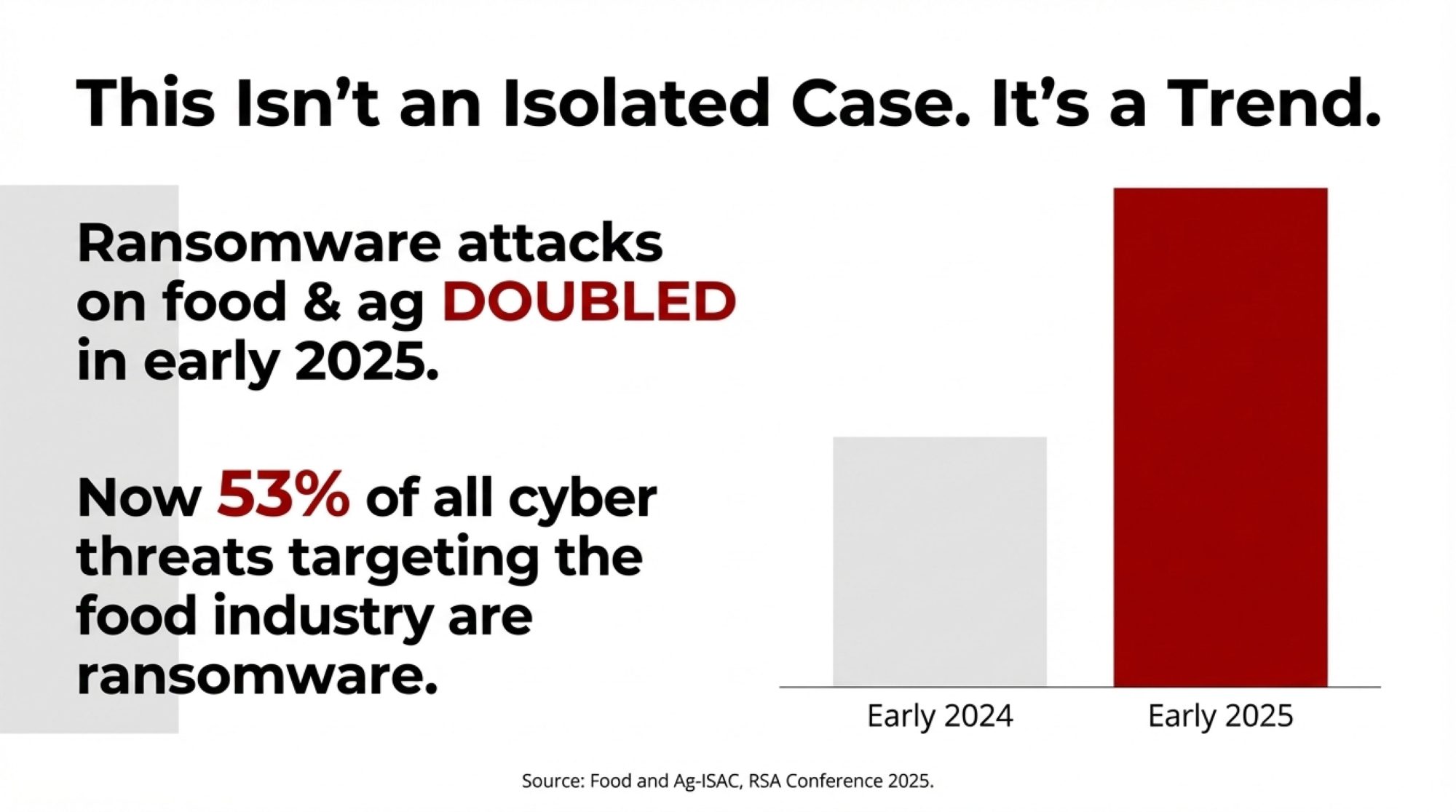
Executive Summary: A hacker never touched his cows—but a pregnant one died anyway. When ransomware encrypted a Swiss dairy farmer’s robotic milking system in 2024, the health data that could have flagged her distress went dark. By the time anyone noticed, she and her calf were gone. This is dairy’s new vulnerability: ransomware attacks on agriculture doubled in early 2025, now comprising 53% of cyber threats targeting the food industry. As digital tools increasingly drive fresh cow management, disease detection, and breeding decisions, cyber risk has become a transition pen issue—not just an IT problem. The encouraging news? Protecting your herd doesn’t require an IT department. Here’s a practical six-step framework, the questions to ask your technology partners, and what cooperatives and Congress are doing to help.

You know, a decade ago, the riskiest “system crash” on most dairies was a parlor vacuum pump going down right in the middle of milking. Today—and this has taken a lot of us by surprise—a growing number of those failure points live in software, routers, and cloud accounts.

Here’s what brought this home for me. Back in 2024, a Swiss dairy farmer named Vital Bircher had his robotic milking system encrypted by hackers. They demanded about $10,000 in ransom. The physical robots kept milking—teat cups attaching, vacuums cycling normally—but he suddenly lost access to all the data that actually helps you manage cows. The health alerts, the conductivity readings, the reproduction flags. Without that information, a pregnant cow’s condition deteriorated before anyone caught it. Both she and her calf were lost. CSO Online and several European outlets covered the story, and it’s stuck with me ever since.

What’s sobering is that this isn’t an isolated incident. Jonathan Braley, director of the Food and Ag-ISAC, reported that ransomware attacks on food and agriculture more than doubled in early 2025 compared to the same period last year—84 incidents in just the first quarter. He presented those findings at the RSA Conference this past spring. Ransomware now accounts for roughly 53% of all cyber actors targeting the food industry.
So here’s what many of us are starting to realize: once your milking, feeding, and herd records move onto networks and into the cloud, dairy farm cybersecurity isn’t just “an IT problem” anymore. It becomes part of herd management, animal welfare, and business continuity.

The Digital Barn Is Already Here

Walk into most progressive operations today—whether that’s a 200-cow freestall in Wisconsin, a large drylot in the Central Valley, a grazing operation in the Pacific Northwest, or a mega-dairy in the Texas Panhandle—and you’ll see it. Robotic milkers, activity collars, sort gates, in-parlor ID, and environmental controllers. At least one computer screen is glowing somewhere in the office. The digital dairy isn’t some future concept. It’s daily life.

A research team published a comprehensive roadmap earlier this year in Frontiers in Big Data—titled “Safeguarding Digital Livestock Farming”—and put dairy right at the center of this transformation. Sensors, automation, and AI are now embedded throughout milking, feeding, and health monitoring on commercial operations worldwide.

The benefits are real, and most of us have seen them firsthand. We’re catching mastitis earlier by monitoring milk conductivity. Activity and rumination data can flag fresh cow problems during that critical transition period—often 24 to 48 hours before you’d see clinical signs with your eyes. There’s solid research on this from Cornell and in journals like Nature Scientific Reports. Labor flexibility has improved with robots handling overnight milkings. Butterfat performance gets better when ration and intake data actually talk to each other.

But here’s the flip side that same Frontiers paper points out: as these systems have come online, the “attack surfaces” have multiplied. Vulnerabilities in barn controllers, herd software, and cloud services can now impact animal care and milk flow as surely as a broken pipeline once did.

The technology and threat curves are rising together. That’s simply the reality we’re operating in now.

When a Cyberattack Actually Reaches the Cows

Let me walk through what happened in Switzerland, because it illustrates how digital problems connect to cow comfort in a very concrete way.

When hackers encrypted Vital Bircher’s robotic milking system, the physical equipment kept running. Teat cups still attached. Vacuums still cycled. But suddenly, he couldn’t see quarter-level milk yield and conductivity, changes in milking duration and flow rate, temperature and milk quality indicators, or health and reproduction flags tied to individual cows.

If you’ve worked with robotic systems—whether Lely, DeLaval, GEA, or others—you know how much you come to rely on that information for daily management decisions. Several controlled studies have shown that milk conductivity, yield deviations, and rumination data can flag subclinical mastitis, ketosis, and other issues a day or two before a cow shows obvious clinical signs. In a fresh cow management context, that head start matters enormously.

What’s worth noting here is that, in Bircher’s case, the cows, the feed, and the barn didn’t change fundamentally. What changed was his ability to see trouble coming. Once that data stream stopped, the margin for error around sick cows and high-value pregnancies narrowed fast.

He didn’t pay the ransom. But his total losses—vet costs, a new computer, the animals—ran around 6,000 Swiss francs. More than the money, though, it shook his confidence in systems he’d built his operation around.

“When you’ve structured your fresh cow protocols around digital data, losing access to that data isn’t just inconvenient—it fundamentally changes how you can care for your animals.”

That’s the part that resonates with a lot of producers. When you’ve built your health monitoring and fresh cow management around digital data, losing access isn’t a minor setback. It changes your entire approach to animal care.

Who’s Actually Paying Attention to Agriculture?

It’s fair to ask: “Am I really on anybody’s radar with 200 cows in a freestall?” The evidence suggests the answer is yes—though the motivations vary quite a bit.

Ransomware operators have definitely noticed agriculture. In 2021, the FBI, CISA, and NSA issued a joint advisory warning that ransomware groups were targeting the food and agriculture sectors. They’d hit two U.S. food and ag organizations with BlackMatter ransomware. Then, in April 2022, the FBI issued another bulletin warning that attackers might time their hits to planting and harvest seasons—when downtime hurts most, and there’s pressure to pay quickly. Brownfield Ag News reported that at least seven grain cooperatives had already suffered ransomware attacks in the fall of 2021.

Since then, we’ve seen plenty of real-world examples. In June 2025, multiple Dairy Farmers of America manufacturing plants got hit with ransomware. The Play ransomware gang later claimed responsibility, and according to reporting in The Record, data from over 4,500 individuals was compromised. DFA worked through recovery—and credit to them for being relatively transparent about what happened—but it showed how a single upstream compromise can ripple through plants, routes, and eventually farm milk checks.

IncidentCategoryCost/Impact
Swiss Farmer (Vital Bircher)Ransom Demanded (unpaid)$10,000
Swiss Farmer (Vital Bircher)Veterinary Costs$2,304
Swiss Farmer (Vital Bircher)New Computer$1,000
Swiss Farmer (Vital Bircher)Lost Animals (cow + calf)$2,696
Swiss Farmer (Vital Bircher)TOTAL OUT-OF-POCKET$6,000
DFA Cooperative AttackPlants DisruptedMultiple facilities
DFA Cooperative AttackIndividuals Compromised4,546 people
DFA Cooperative AttackPayment Processing Delays17 days
DFA Cooperative AttackEstimated Revenue ImpactSystemic – milk checks delayed

Nation-state actors appear to be playing a longer game. This is the part that can feel a bit surreal to discuss at a farm level, but cybersecurity analysts increasingly point out that countries like China, Russia, and North Korea view food and agriculture as strategic infrastructure. A Forbes analysis last fall by Daphne Ewing-Chow noted that the FBI identifies four major threats to agriculture: ransomware attacks, foreign malware, theft of data and intellectual property, and bio-terrorism. FBI Special Agent Gene Kowel was quoted as saying that “foreign entities are actively seeking to destabilize the U.S. agricultural industry.”

For dairy, that could mean interest in genomic data, feeding strategies tied to high components, or disease management approaches. The goal isn’t a quick ransom—it’s gaining competitive advantage by shortcutting years of R&D. From our perspective on the farm, this kind of data theft can be nearly invisible. Whether it’s a significant risk for individual operations or primarily affects larger genetics companies and cooperatives is still being understood.

There’s also an emerging activist angle. Dr. Ali Dehghantanha—he holds the Canada Research Chair in Cybersecurity and Threat Intelligence at the University of Guelph—has been tracking a newer trend. His lab worked on a case involving an Ontario hog operation that was hit with ransomware, but the attackers didn’t want money. They wanted a public confession of animal cruelty. The Western Producer covered the story earlier this year.

As Dr. Dehghantanha put it, “As activists educate themselves on cyberattack techniques, they are becoming a significant, emerging risk in agriculture.” It’s a different motivation than the ransomware gangs, but it’s part of the picture worth being aware of.

Where the Practical Vulnerabilities Are

Most of us don’t have time to become network engineers. So let me walk through the concrete weak spots that keep showing up in farm-focused cybersecurity assessments. These are things you can actually check on your own operation.

Factory-default passwords remain surprisingly common. You know how your router probably came with “admin/admin” as the login? A lot of barn cameras, remote-access modules, and some equipment controllers ship the same way. Those defaults are published in manuals and all over the internet. If nobody ever changes them, automated scanning tools can find and access those devices pretty quickly.

Security assessments consistently identify unchanged default credentials as one of the most common vulnerabilities on farm systems. It’s understandable—we’re focused on the cows, not the router password—but it’s also one of the easiest openings to close.

Everything often runs on one network. On many operations—I’ve seen this pattern from Wisconsin tiestalls to California drylots to Northeast grazing dairies—the setup looks like this: one router from the ISP, a few switches, and everything plugged in together. Robots, office computers, herd software, phones, cameras, tablets. All on the same network.

Security professionals call this “flat networking,” and they consistently flag it as a significant risk. Here’s why it matters: once an attacker gets into any device—say, a poorly protected camera—they can potentially move sideways to more critical systems. Your herd management server. Your robot controls. Your financials.

Firmware updates often get skipped. Just like your phone receives updates, so do routers, controllers, and automation components. Those updates frequently contain security fixes. But on farms, updating firmware often requires a technician visit or carries the risk of breaking something that’s working fine. So a lot of equipment runs older, vulnerable software versions long after fixes are available.

Single passwords often protect critical accounts. Most herd management and financial portals now support multi-factor authentication—that extra code sent to your phone. But as both Hoard’s Dairyman and Dairy Herd Managementhave noted, plenty of producers still rely on just a password. Given how many password databases have been breached over the years, that’s a real exposure worth addressing.

Defense StepCostTime InvestmentImpact LevelProtects Against
1. Change Default Passwords$01 hourHIGHAutomated scans, default exploits
2. Enable Multi-Factor Authentication$02 hoursHIGHStolen password attacks
3. Create Offline Backup System$100-1504 hours setup + monthly backupsCRITICALComplete data loss, ransom pressure
4. Segment Your Networks$500-2,0001 day + IT consultantHIGHLateral movement after breach
5. Train Your Team$0-5002-4 hours annuallyMEDIUM-HIGHPhishing, social engineering
6. Document Incident Response Plan$04 hoursCRITICALChaos during active attack

What’s Actually Working: A Practical Framework

The encouraging news—and there is encouraging news here—is that you don’t need an IT department to improve your farm data security meaningfully. Extension work in Canada, federal guidance from CISA, and sector-specific research all point to a straightforward staged approach that makes a real difference.

Start by taking inventory of your digital barn. This sounds basic, but it matters. Walk the farm and list everything that’s connected to it. Robots, feed systems, herd management computers, environmental controllers, cameras, office machines, and cloud accounts for herd data or milk marketing. For each one, note what it does, who uses it, and whether it touches herd data, financials, or insurance information.

It’s a bit like walking pens for fresh cow checks—you can’t manage what you don’t know is there.

Then close the obvious doors. Several defenses cost little or nothing. Change those default passwords on your router, cameras, and remote-access logins. Use strong, unique passwords—and if a password manager feels like overkill, a written log kept in a locked filing cabinet works fine. It’s far better than using the same password everywhere.

Turn on multi-factor authentication wherever you can. Cloud herd software, email, banking—they almost all support it now. It adds a small step to logging in, but it makes stolen passwords significantly less useful to attackers.

Here’s something simple that security professionals recommend: restart your phones and tablets regularly. It helps get updates applied and clears temporary data where some malware operates. Not a bad habit to pair with morning coffee.

Make sure you can recover offline. When ransomware hits, one of the first things it typically does is look for and encrypt any backups it can reach. That’s why Agriculture and Agri-Food Canada’s cyber security toolkit and programs like CSKA—the Cyber Security Knowledge Alliance—recommend having at least one offline backup. A copy of key data that’s physically disconnected from the network most of the time.

On a 200-cow dairy, a practical routine might look like this: buy an external hard drive—good options run $100 to $150. Once a month, connect it to a trusted office computer and copy critical data, including herd records, breeding and genomic information, ration files, and accounting records. Then disconnect it and store it in a safe, dry place.

If the worst happens, you might lose a few weeks of recent notes. But you won’t lose years of herd history or your entire genetic program.

Consider segmenting your networks. This is where a local IT consultant can really help, but the concept is straightforward. Instead of running everything through one router, you split traffic into separate lanes:

  • Operations network: milking system, feeding controls, environmental controllers
  • Office network: business computers, maybe a dedicated herd management PC
  • Guest network: phones, visitor WiFi, cameras, and less critical devices

Modern small-business routers from companies like Ubiquiti or Cisco can create separate virtual networks, with rules specifying which devices can talk to which. Devices on the guest network can reach the internet, but can’t communicate with your robot controller.

What this accomplishes is similar to what a good pen layout does: it limits how far a problem can spread. If a phone or camera gets compromised, that doesn’t automatically provide a path to your herd management server.

Bring your team into the conversation. Cyber awareness training doesn’t have to mean long courses. Dr. Dehghantanha’s work at Guelph and several farm-focused consulting groups have found that a short, plain-language briefing makes a meaningful difference.

Cover phishing—show examples of suspicious emails that pretend to be from a bank, supplier, or milk buyer asking for login credentials. The key message: don’t click links in unexpected emails. Go directly to the site you already know, or pick up the phone and call. Discuss password practices—no sharing, no sticky notes on the robot room computer. And make sure everyone understands: if something looks weird, say something. Many breaches escalate simply because nobody wanted to raise a concern.

Have a basic plan for when something goes wrong. Just like every farm has a plan for a parlor breakdown or power outage, it’s worth writing down a one-page playbook for suspected cyber incidents. Who gets called first—IT support, equipment dealer, co-op field rep, insurance agent, maybe a law enforcement contact. How to isolate an affected system without shutting down equipment in ways that could harm animals. Where the offline backups are stored and who can authorize a restore.

Think of it like a herd health protocol—you may refine it over time, but having something written down keeps everyone from improvising during a stressful situation.

System CategoryDevice/SystemData at RiskDefault Password Risk
Milking SystemsRobotic milking unitsCow IDs, milking schedules, yield dataHIGH
Milking SystemsParlor identification systemsIndividual cow tracking, timestampsHIGH
Milking SystemsMilk meters & sensorsProduction metrics, quality alertsMEDIUM
Milking SystemsConductivity monitorsMastitis detection, SCC levelsMEDIUM
Herd Health MonitoringActivity/rumination collarsBehavior patterns, health alertsMEDIUM
Herd Health MonitoringHealth monitoring softwareTreatment records, disease historyLOW
Herd Health MonitoringBreeding/reproduction platformsHeat detection, pregnancy status, insemination datesLOW
Herd Health MonitoringGenomic data systemsGenetic profiles, breeding valuesLOW
Barn AutomationAutomated feedersRation formulas, intake patternsHIGH
Barn AutomationEnvironmental controllersTemperature, humidity, barn conditionsHIGH
Barn AutomationSort gates & cow trafficPen assignments, movement logsMEDIUM
Barn AutomationVentilation systemsAir quality, fan controlsHIGH
Business SystemsOffice computersFinancial records, employee dataLOW
Business SystemsCloud herd managementComplete herd history, performance analyticsLOW
Business SystemsFinancial/banking portalsBank accounts, payment informationLOW
Business SystemsMilk marketing platformsMilk prices, shipment schedulesLOW
Network InfrastructureWiFi routersNetwork access, device passwordsCRITICAL
Network InfrastructureSecurity camerasVideo footage, facility surveillanceCRITICAL
Network InfrastructureRemote access modulesVPN credentials, remote loginCRITICAL
Network InfrastructureMobile devices/tabletsEmail, app passwords, two-factor codesMEDIUM

Questions Worth Bringing to Your Vendors and Co-ops

One positive shift I’ve noticed recently is that producers are no longer simply assuming their technology partners have security covered. More farmers are asking direct—but fair—questions of dealers, software providers, and cooperatives.

For equipment dealers and OEMs, questions like these are reasonable to ask:

  • How are passwords and remote access handled on this system? Can factory defaults be changed easily?
  • Does communication between controllers and robots use encryption, or does it travel as plain text on the network?
  • How often do you release security updates, and what’s the process for applying them?
  • If a vulnerability is discovered, how will you notify customers?

For herd management and cloud software providers:

  • Where is my herd data physically stored—what country, what type of data center—and how is it protected?
  • Is multi-factor authentication available for my account?
  • Do you have a documented incident response plan? Will I be notified if my data is accessed inappropriately?

For co-ops, processors, and lenders:

  • Do you offer cybersecurity programs or shared services that member farms can access?
  • Are there minimum security practices you expect from suppliers?
  • Is cyber coverage available as part of broader farm risk insurance, and what does it require?

These aren’t adversarial questions. They’re the same kind of due diligence we already practice around milk quality testing, residue protocols, or animal care standards. Vendors who take security seriously generally welcome the conversation.

How the Broader Industry Is Responding

To be fair, the industry hasn’t been asleep at the wheel here. Several encouraging developments are worth knowing about.

That Frontiers in Big Data roadmap I mentioned earlier was developed by academic, industry, and policy experts specifically to give dairy and poultry clearer guidance on security. Organizations like the Food and Ag-ISAC have grown substantially to help producers and processors share threat information.

What’s particularly interesting is what rural electric cooperatives have accomplished. Through NRECA’s Rural Cooperative Cybersecurity Capabilities program—known as RC3—more than 500 co-ops have built stronger cybersecurity programs by pooling resources. Training, monitoring, and incident response—capabilities no single small utility could afford alone.

Several dairy and crop cooperatives are now studying that model. What might it look like applied to our sector? A regional cooperative could potentially offer shared threat monitoring, collective incident response capabilities, vendor vetting, and centralized training for member farms. Cost might run $50 to $100 per month through the milk check—but the benefit would be access to security resources that no individual 200-cow operation could afford on its own.

On the policy front, Congress introduced the Farm and Food Cybersecurity Act in February 2025, in both the House and the Senate. The legislation aims to give USDA and CISA clearer authority and funding to develop sector-specific guidance. Whether it passes with meaningful resources remains to be seen, but it signals that agriculture has finally gotten the attention of federal cybersecurity agencies.

Bringing It All Together

Looking at everything we’ve covered, the core lessons for most dairy operations come down to a few practical points.

Your digital systems have become as operationally critical as your physical infrastructure. Robotic milkers, activity collars, and herd software are already shaping daily decisions around fresh cow protocols, reproduction timing, and treatment interventions. Protecting those systems is part of protecting the herd.

Most attackers look for easy targets, not sophisticated defenses. The majority of successful attacks in agriculture still exploit basic gaps—default passwords, missing multi-factor authentication, flat networks, and inadequate backups. Addressing those fundamentals won’t make any operation bulletproof, but it creates meaningful separation from operations that haven’t done the work.

A practical dairy farm cybersecurity program can be built through consistent habits rather than massive investments. Know what’s connected on your operation. Improve your password practices and enable MFA where available. Maintain at least one offline backup. Separate barn systems from guest WiFi if feasible. Give your team basic awareness training. Document a simple incident response plan.

None of this requires becoming a full-time IT specialist. It’s the same disciplined approach we already bring to biosecurity protocols or fresh cow management: identify vulnerabilities, apply reasonable controls, review periodically, and work with trusted partners where it makes sense.

What this suggests is that as dairy continues to embrace digital tools for component performance, labor efficiency, and animal care, cyber hygiene will quietly join feed cost management, reproductive programs, and milk quality as one of the background disciplines that distinguish resilient operations from fragile ones.

It’s one more responsibility on an already full plate. But it’s also one of the few areas where a modest investment of time can protect years of breeding progress, operational data, and hard-earned equity.

On today’s digital dairies, that’s work worth prioritizing.

KEY TAKEAWAYS

  • Attacks doubled in 2025: Ransomware incidents in food and agriculture more than doubled this year. 53% of cyber actors targeting the industry now use ransomware
  • Cyber risk hit the transition pen: When hackers encrypted a Swiss farmer’s robot data, health alerts went dark. A pregnant cow’s distress went unseen—she and her calf were lost
  • Attackers exploit basics, not sophistication: Default passwords, flat networks, and missing backups are the doors they walk through. These gaps are fixable
  • Protection costs less than you think: An external drive runs $100-150. Multi-factor authentication is free. Network segmentation pays for itself in risk reduction
  • Three steps to start this week: Change default passwords on routers and cameras. Enable MFA on herd software and banking. Create your first offline backup

Complete references and supporting documentation are available upon request by contacting the editorial team at editor@thebullvine.com.

Learn More:

Join the Revolution!

Join over 30,000 successful dairy professionals who rely on Bullvine Weekly for their competitive edge. Delivered directly to your inbox each week, our exclusive industry insights help you make smarter decisions while saving precious hours every week. Never miss critical updates on milk production trends, breakthrough technologies, and profit-boosting strategies that top producers are already implementing. Subscribe now to transform your dairy operation’s efficiency and profitability—your future success is just one click away.

NewsSubscribe
First
Last
Consent

The 90-Second Milking Window That’s Paying $126,000 – and Beating Every Robot

Master the 90-second milking rule that’s earning smart dairies $126,000—no robot needed.

So I was walking the aisles at World Dairy Expo last month, and what really got me was how nearly every booth was pushing some kind of automation as the solution to all our problems.

That same trip, I stopped by a 250-cow operation near Fond du Lac. The milkers were rushing through prep in maybe 45 seconds—when we all know biology needs closer to 90. Meanwhile, the owner’s shopping for robots while potentially leaving $126,000 in annual production sitting right there in the parlor.

What’s interesting is that Cornell just released its 2024 Dairy Farm Business Summary, which backs up something I’ve been noticing for a while now. The gap between farms that are making it and those that aren’t? It’s not really about who has the newest equipment.

The Numbers That Tell the Real Story

Cornell’s latest data is eye-opening. Top farms in New York are running at $15.79 per hundredweight in operating costs. The bottom ones? They’re hitting $22.32.

That’s a $6.35 gap between similar-sized operations with pretty much the same technology.

You’ve got 500 cows producing 25,000 pounds annually? That efficiency gap is worth about $79,000. Not from buying new equipment—just from doing what you’re already doing better.

Brazilian researchers looked at 378 dairy farms adopting precision technology—published their findings in the Animals journal back in 2021. About a large share of adopters reported limited realized benefits, underscoring that adoption alone didn’t guarantee performance gains. But you know what? The farms that just focused on nailing their basic protocols? They saw returns right away without spending anything on new gear.

I’ve been talking with producers out in California lately, and down in Georgia too, and they’re telling me the same story—dropped hundreds of thousands on cooling systems or new facilities before realizing the real problem was inconsistent feeding schedules. Different climate, same underlying issue.

And you know what’s interesting? Even operations in New Zealand—where they’re dealing with completely different grazing systems—are finding the same thing. It’s not about the technology. It’s about the execution.

“Farmers think they’re buying free time. They’re really just buying different obligations.”

Five Questions Before Writing That Technology Check

□ Have we actually put a dollar figure on what our problems are costing us right now?

□ Are we in the top 25% for how well we’re doing what we’re already doing?

□ Is this technology going to help us stand out in the market, or just make us slightly better at commodity production?

□ Do we have people who can actually run this stuff, or are we hoping to find unicorns?

□ Can we hit 15% returns and still have money in the bank for when things go sideways?

Why Those 90 Seconds Matter More Than You Think

You know how crazy it gets during second cutting—everybody’s rushing. But here’s the thing: oxytocin doesn’t wait for us.

UW–Madison tracked 16 farms and found and what he found shouldn’t surprise anyone who’s been around cows. Farms that hit that sweet spot—60 to 90 seconds between first touch and unit attachment—they’re getting 4-6% more milk.

Not from better genetics. Not from fancy supplements. Just from timing it right.

And here’s something else—it matters whether you’re milking Holsteins or Jerseys. Jerseys tend to let down a bit quicker, maybe 10-15 seconds faster on average. But the principle’s the same.

THE GOLDEN WINDOW: Your 90-Second Milking Protocol

What’s all this worth? Well, let me walk you through the math.

On 500 cows averaging 75 pounds daily, even a conservative 5% bump from proper timing gets you about 1,875 extra pounds per day. The current Base Class I price was $18.21/cwt, according to the USDA’s latest market report.

Do the math—that’s about $126,000 a year. From timing. Not technology.

Beyond volume, research shows proper stimulation timing can lift butterfat percentages and lower SCC—quality bonuses most dairies leave on the table.

Penn State Extension has been looking at training on farms, and in most operations they’ve studied, formal training is pretty sparse. Workers are mostly learning from whoever was there before them. It’s like a game of telephone where everybody loses.

What’s worse is that during planting and harvest—protocol drift accelerates when everybody’s pulled in different directions.

Two Roads Diverged in a Dairy Farm

Extension folks across the Midwest have been tracking different approaches to technology adoption, and the patterns they’re seeing are crystal clear. Let me share what they’ve found—these are representative cases, not specific farms, but the numbers are real.

The “All-In” Approach

Farms facing typical challenges—about 30% turnover, $21/cwt costs, 220,000 somatic cells—often buy everything. Based on what dealers are charging these days:

  • Robotic system: $495,000
  • Barn retrofit: $75,000
  • Automated feeding: $52,000
  • Health monitoring: $38,000

Total: $660,000

But here’s what Minnesota’s research tracking these systems shows: you don’t eliminate labor—you change it. Instead of paying $15/hour for milkers, you’re paying $25-30/hour for technicians. And good luck finding them.

Production gains? University studies show 2-3% is realistic, not the 7% dealers promise.

Annual debt service: $30,00 to $100,000
Actual benefits: $65,000 to $100,000
Net result: $35,000

The Strategic Route

Now, I’ve seen farms take a different approach. Same problems, but they ask, “What’s actually costing us money?”

Strategic investments based on Extension case studies typically look like this:

  • Heat detection ear tags: $24,000 (fixes quantified reproduction losses)
  • Inline milk testing: $15,000 (enables premium capture)
  • Protocol training: $20,000 (the one nobody talks about)
  • Small pasteurizer: $15,000 (direct sales opportunity)

Total: $74,000

What happens? Based on composite results from university tracking, conception rates jump from mid-40s to low 60s. Training delivers 4-5% more milk. Cornell and UVM data show that organic premiums add $250-$300 per cow. Direct sales can bring $70,000-85,000 from just 15% of production.

“Stop buying solutions to problems you haven’t measured.”

YOUR 4-PHASE IMPLEMENTATION ROADMAP

Phase 1 (Months 1-3): Get Brutally Honest

  • Independent assessment: $5,000-8,000
  • True cost of production analysis
  • Problem quantification in dollars

Phase 2 (Months 4-7): Fix the Basics

  • Training & protocols: $15,000-25,000
  • Expected returns: 1,500% first-year ROI
  • No conference sponsorships, just results

Phase 3 (Months 8-12): Pick Your Lane

  • Top-25% commodity efficiency?
  • Organic/specialty markets?
  • Agritourism opportunities?

Phase 4 (Year 2+): Strategic Technology

  • Only if problems cost more than solutions
  • Only if it enables differentiation
  • Only if you have the workforce
  • Only if a 15% ROI is achievable

ROI COMPARISON: The 300% Difference

Investment ApproachAll-In AutomationStrategic Technology
Total Investment$660,000$74,000
Annual Returns$65,000$200,000-250,000
Net Annual Result$35,000$150,000
ROI9.8%300%

These are representative outcomes based on Extension case studies—your results will vary

What Really Happens to Your Labor

Finnish researchers looked at this back in 2016, and Marcia Endres at Minnesota has been tracking it ever since. Yeah, milking time drops from 5 hours to 2. But you know what shows up instead?

Watching screens. Midnight alarms. Tech support holds. Being on call 24/7.

As Marcia says, “Farmers think they’re buying free time. They’re really just buying different obligations.”

You’re not replacing a $15/hour milker with nothing. You’re replacing them with a $25-30/hour technician—if you can find one who wants to live in rural Wisconsin and answer their phone at 2 AM.

The Canadian Agricultural HR Council says we’ll be 1,000 workers short by 2029, with a third of our current people ready to retire. But robots need fewer people with way more skills. So we’ve got workers who can’t do tech work and tech workers who don’t want to live where the cows are.

Any of us who’ve gotten that 2 AM robot alarm knows what I’m talking about.

Small Doesn’t Mean Dead—It Means Different

USDA tells us we lost 15,221 dairy farms between 2017 and 2022—that’s 39% gone. And when you see big farms running at $17/cwt while small farms face $33/cwt according to the USDA’s Economic Research Service, it looks pretty hopeless for the little guys.

But here’s something interesting—a small minority—maybe 10% based on ERS estimates—are actually making money despite their small size. How?

Three approaches that work:

Elite execution: I know of operations in places like Skagit County, Washington, running under 200 cows at under $18/cwt with 50+ cows per worker. It’s exhausting, but it’s possible.

Finding your niche: Cornell’s 2024 organic dairy tracking shows certified farms pulling $250-300 extra per cow. Vermont’s been watching this for a decade—100-cow organic dairies making money while their conventional neighbors go under.

Down South, producers in Georgia and Florida tell me that being the only dairy for 200 miles creates automatic premiums. Geography becomes an advantage. And operations at 5,000-8,000 cows—not quite mega-scale but bigger than most—they’re finding automation sweet spots that work at their size.

Smart technology: Not robots. Targeted fixes. $25,000 for heat detection to prevent your reproductive disaster. $15,000 on milk quality monitoring to qualify for premiums. Not $665,000 on a robot hoping to fix everything.

Where Do We Go from Here?

So here we are. Milk costs around $20, feed eating 60% of revenues according to Penn State’s 2025 outlook, and they can’t find good help. The temptation to buy your way out is real.

But the farms thriving keep proving the same thing: doing the basics really well beats fancy equipment almost every time.

Most of us have $100,000-plus sitting right there in the parlor. It doesn’t need financing. It doesn’t need a technician from three counties away. It just needs us to do what we already know how to do, consistently.

Looking ahead, some interesting opportunities are developing. Programs like USDA’s Climate-Smart Commodities are paying $20-50 per cow for verified carbon reductions. Processors like Danone, through its “Dairy Farmers of Tomorrow” program, and Nestle, through its Net Zero Roadmap, offer select benefits as well as some offer contracts with $0.50 to $1.00/cwt sustainability premiums—though these are limited and require specific documentation.

These aren’t about technology. They’re about management and documentation—rewarding what good farmers already do.

Your cows don’t care about robots. They care about those 90 seconds before you put the milker on. They care about eating at the same time every day. They care about someone noticing when they’re in heat.

Maybe we should care about the same things.

Because with 39% of farms gone in five years, what separates survivors from statistics isn’t who bought the most technology. It’s who got the basics right first, then used technology strategically to make good even better.

The path forward isn’t in the dealer’s catalog—it’s in doing what we already know works, day after day after day.

That’s not what gets the spotlight at Expo. But when you look at who’s still milking versus who’s having an auction, it’s the story the numbers keep telling.

Key Takeaways:

  • The 90-second milking rule is adding $126,000 a year to smart dairies—no robots required.
  • Farms chasing automation before fixing fundamentals lose money twice—on milk and on debt.
  • Precision routines and trained teams outperform half-million-dollar robots every time.
  • Targeted fixes—heat detection, training, timing—average 300% ROI without new equipment.
  • Dairy’s next winners aren’t high-tech—they’re high-discipline.

Executive Summary:

Dairy’s future isn’t being built by robots—it’s being rebuilt by precision. According to Cornell’s 2024 Dairy Farm Business Summary, top operations outperform neighbors not through automation, but through disciplined execution. The research is clear: a well-timed 90-second milking routine can deliver 4–6% more milk and more than $126,000 in extra revenue annually—without buying a single new machine. Meanwhile, farms chasing automation often trade labor headaches for technical ones while falling behind on fundamentals. Cornell, UW-Madison, and Penn State all point to the same truth: technology multiplies skill—it can’t replace it. In a volatile milk market, the smartest dairies in 2025 aren’t betting on gadgets. They’re doubling down on training, timing, and teamwork that pay real dividends.

Complete references and supporting documentation are available upon request by contacting the editorial team at editor@thebullvine.com.

Learn More:

Join the Revolution!

Join over 30,000 successful dairy professionals who rely on Bullvine Weekly for their competitive edge. Delivered directly to your inbox each week, our exclusive industry insights help you make smarter decisions while saving precious hours every week. Never miss critical updates on milk production trends, breakthrough technologies, and profit-boosting strategies that top producers are already implementing. Subscribe now to transform your dairy operation’s efficiency and profitability—your future success is just one click away.

NewsSubscribe
First
Last
Consent

Ditching Robot Pellets: How Smart Farms Save $36,000 and Improve Milk Components

Plot twist: Your cows visit robots for the TMR behind them, not the pellets. This mistake costs $100K/year.

Executive Summary: What if the dairy industry has been wrong about robot pellets for 25 years? Growing evidence from 75+ farms across Wisconsin and Ontario shows that eliminating pellets entirely saves $36,000-46,000 annually while improving butterfat by 0.3-0.4%—with no long-term production loss. University research from Saskatchewan, Wisconsin, and Guelph confirms these pioneers’ discovery: cows visit robots to access fresh TMR beyond them, not for the pellets, making that $100,000 annual expense unnecessary. But here’s the reality check: success requires guided-flow infrastructure (not free-flow), premium forage quality, dedicated management, and the financial capacity to weather 10-15% production drops during a difficult 16-24 month transition. This revolution isn’t for everyone—operations with fewer than 200 cows or limited finances should proceed cautiously. What makes this story remarkable isn’t just the economics; it’s proof that some of agriculture’s most expensive assumptions have never been properly questioned.

You know, for more than two decades, those of us investing in robotic milking systems have accepted one fundamental truth: feeding pellets to the robot is essential to motivate voluntary cow visits. Equipment manufacturers designed for it. Nutritionists built entire programs around it. We all budgeted for it without question. But here’s what’s interesting—what if this core assumption, built into thousands of robotic dairy operations worldwide, turned out to be optional?

That’s exactly what a growing number of progressive dairy farmers are discovering. By eliminating feed pellets entirely from their robotic milking systems, operations from California to Wisconsin are reporting annual savings of $36,000–$46,000 per 200 cows, improved milk components, and simplified management—all while maintaining or even increasing production. Their success is backed by recent research from leading universities and represents a fundamental rethinking of how robotic dairy systems can operate.

What fascinates me most is that this isn’t just about cutting feed costs. It’s about what happens when farmers question inherited practices and discover that some of our industry’s most accepted truths might actually be holding us back.

The Discovery That Started It All

Matt Strickland, who operates Double Creek Dairy near Merced, California, didn’t set out to revolutionize robotic milking. With 500 cows and eight DeLaval VMS V300 robots, he was simply observing his herd with fresh eyes—something we could all probably benefit from doing more often.

Working alongside herd adviser Kelli Hutchings—whose Wyoming ranching background brought a completely different perspective to dairy operations—Strickland noticed something that challenged everything the industry had told him. The cows weren’t particularly excited about the robot feed. What they really wanted was to reach the feedbunk on the other side. The robot wasn’t the destination; it was more like a toll booth on the highway to fresh TMR.

“I didn’t invest in robots to feed my cows,” Strickland explains. “I got the robots to milk my cows.”

Now, that might sound obvious, but think about how much infrastructure and cost we’ve built around the opposite assumption. Over approximately two years, Strickland’s operation gradually reduced and eventually eliminated pellets from all eight robots. The results? Well, they defied everything we thought we knew:

  • No significant change in robot visits
  • No increase in incomplete milkings
  • Milk production actually increased
  • Butterfat improved by 0.3–0.4%

Today, only seven cows in Strickland’s 500-head operation still receive pellets—individual animals with specific needs that justify the cost. That’s a pretty remarkable shift from where they started.

What the Research Actually Shows

Here’s where it gets really interesting from a scientific perspective. Strickland’s experience isn’t some outlier or lucky break. Recent research from multiple institutions validates what these pioneering farmers are discovering in practice.

The University of Saskatchewan team, led by PhD student Sophia Cattleya Dondé working under Dr. Greg Penner at their Rayner Dairy Research and Teaching Facility, revealed something that should make us all pause. Changing pellet starch concentration—whether 24% or 34%—had essentially zero effect on milk production or voluntary visits. Even more eye-opening: when cows consumed additional pellets, they weren’t adding to their total intake. For every 1 kg increase in pellet intake, cows reduced their partial mixed ration intake by 0.63 kg on average. They were just swapping one feed source for another.

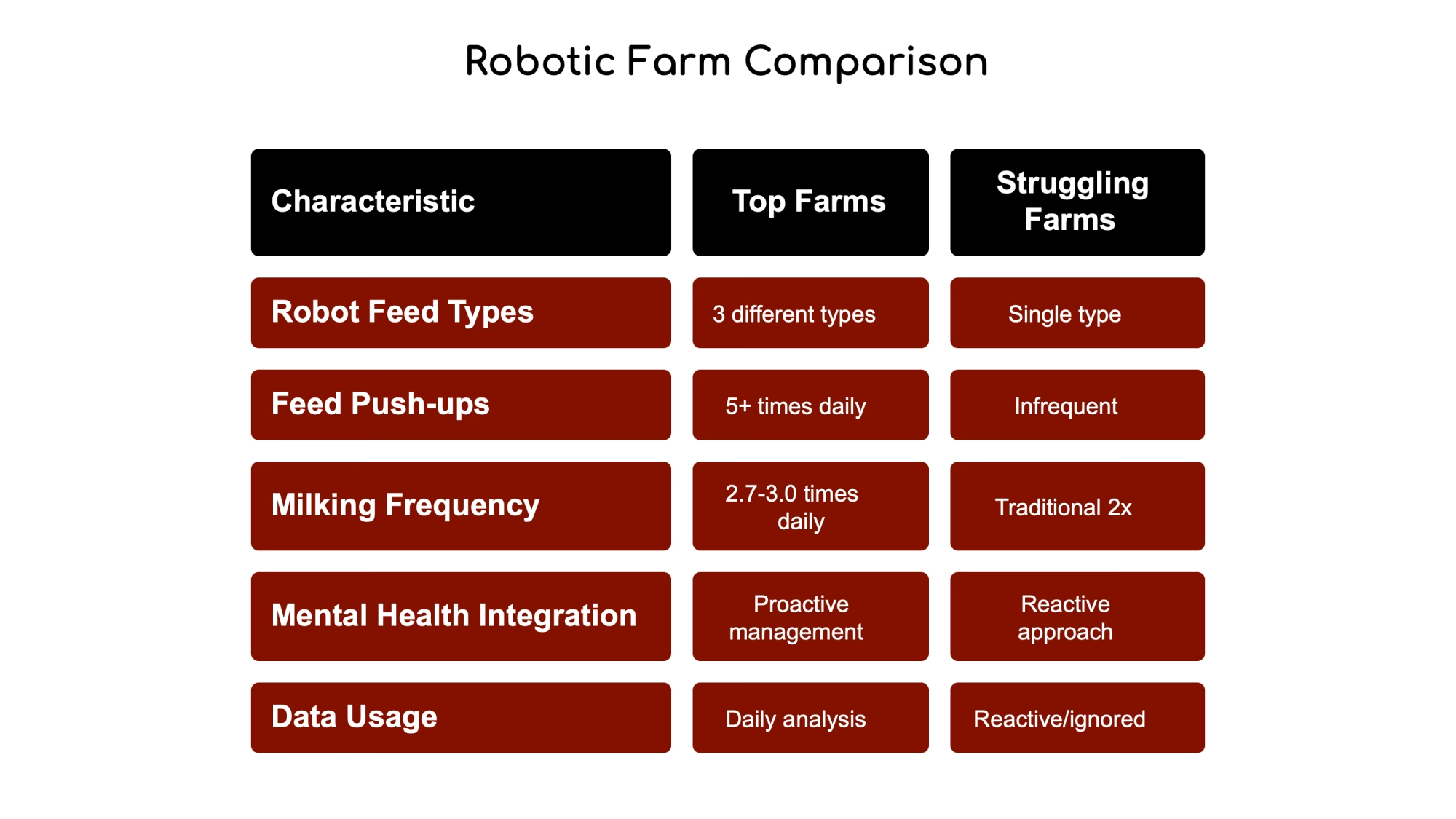
University of Wisconsin Extension research found something equally surprising—farms offering higher grain amounts in the robot actually produced less milk. Separate research from the University of Guelph examining Canadian farms found that feed push-up frequency correlated with higher production, with each additional five push-ups per day increasing milk yield by 0.77 lbs per cow.

It’s worth noting that the Wisconsin study also found free-traffic barns produced more milk than guided-flow barns overall, though higher pellet feeding wasn’t necessarily associated with more milk—potentially because farms feeding high pellet amounts in free-traffic systems were often compensating for poorer forage quality.

And then there’s the Vita Plus survey of 32 Upper Midwest herds from 2018 that really caught my attention. The biggest surprise? Pellet cost and composition had no effect on income over feed cost. In fact—and this is where it gets counterintuitive—farms feeding simple, low-cost pellets like corn gluten feed or basic shelled corn were more profitable than those using premium formulations.

An Important Note on Adoption

It’s worth emphasizing that pellet-free robotic milking is still an emerging practice, not yet an industry standard. While 75+ farms across Wisconsin and Ontario have successfully made this transition, and the research supports the concept, this represents early adoption rather than widespread acceptance. The equipment manufacturers continue to include pellet systems as standard, most nutritionists still recommend pellets, and the vast majority of robotic operations worldwide continue using them. What we’re seeing is growing evidence that pellets may be optional for well-managed guided-flow operations, but each farm needs to carefully evaluate whether this approach fits their specific situation. This isn’t a universal recommendation—it’s an opportunity for certain operations to consider.

Understanding the Economics: Where the Money Really Goes

Let’s talk dollars and cents, because that’s what keeps us all in business. The financial case for pellet-free operations extends far beyond just the obvious feed savings.

When you really dig into what a typical 200-cow robotic operation spends on pellet infrastructure, the numbers are eye-opening:

Annual Pellet System Costs:

  • Raw pellet costs (10 lbs/cow/day at $250/ton): $91,250
  • Inventory management labor: $2,500–$4,000
  • Feed table programming and updates: $1,500–$2,500
  • Feed waste and shrink (3–5%): $3,600–$5,400
  • Rodent control (attracted by stray pellets): $1,200–$2,000
  • System maintenance and calibration: $1,500–$2,500
  • TOTAL ACTUAL COST: $101,000–$109,000

Now, when farms eliminate pellets, they’re not simply pocketing all these savings—that would be too easy, right? Successful transitions require reinvestment:

Required Reinvestments:

  • Higher-quality forage: $800–$1,200 annually
  • Increased feed push-up labor (1–2 additional hours daily): $8,760
  • Enhanced monitoring systems: $2,000–$5,000
  • Potential infrastructure adjustments (gate modifications if needed): $0–$15,000

NET ECONOMIC BENEFIT: $18,000–$39,000 annually, plus an additional $10,400 from butterfat improvements of 0.2–0.4%. That’s real money we’re talking about.

Regional Success Patterns: Where It’s Taking Hold

The real numbers manufacturers won’t show: Pellet-free farms outproduce traditional robot barns—both in yield and milk components.

What I’ve found particularly interesting is how adoption patterns vary by region. We’re seeing the strongest uptake in Wisconsin’s central dairy corridor—about 45 farms as of late 2024—Southern Ontario around the Woodstock area with roughly 30 operations, and isolated pockets in Quebec.

Jay Heeg’s operation near Colby, Wisconsin, provides a compelling example of regional success. Heeg Brothers Dairy currently milks 1,050 cows in their conventional parlor and 450 in a new robot barn that opened in December 2023. From day one—and this is the key part—that robot barn has operated completely pellet-free using a guided-flow design.

Wisconsin/Ontario host 75 of 103 pellet-free farms—regional clustering drives change, not marketing.

The performance comparison really tells the story. Their robot barn with no pellets produces 98 lbs per cow per day, versus about 94 lbs in the parlor. Butterfat runs 4.5% in the robot barn. Somatic cell count? Lower in the robot barn, too.

“The cows have been performing well,” Heeg reports. “Once they’re trained, they do better without you out there in the pen.”

You know what’s notable? In these regions where multiple farms have adopted pellet-free systems, it’s becoming normalized. Once three or four neighbors prove it works, the regional skepticism evaporates pretty quickly. California remains more isolated—Strickland is still somewhat of a lone pioneer there—but Wisconsin and Ontario are seeing cluster effects.

The Reality Check: Not Every Farm Should Try This

Let me be really clear about something that doesn’t always get discussed openly. I recently spoke with a 120-cow operation in Vermont that wisely decided against attempting pellet-free after honestly assessing their situation. They had a free-flow barn, variable forage quality, and limited capital reserves. Smart decision to wait.

Not every operation is positioned to succeed with pellet-free systems. Through analyzing successful transitions and, honestly, some notable failures, four non-negotiable factors emerge.

First, you absolutely need guided traffic flow. Free-flow barns, where cows have unrestricted access to all areas, typically require pellets to maintain voluntary visits. Research from Michigan State and Cornell consistently backs this up. Guided-flow systems with pre-selection gates naturally direct cow traffic through the robot, making pellets less critical for motivation.

Second, when pellets disappear, your TMR becomes everything. And I mean everything. Successful operations maintain forage with greater than 65% NDF digestibility (test this, don’t guess), consistent moisture content with no more than 2% variation, excellent fermentation quality with pH below 3.8 and minimal heating, and fresh feed delivery timed to stimulate activity—usually 2–3 AM and 2–3 PM works best.

Third, fresh cows and heifers require dedicated training. We’re talking about bringing them through the robot manually 3 times daily for a minimum of 3–6 days. That’s approximately 18 hours of labor per fresh cow during the initial training period. It’s a front-loaded investment that pays dividends later.

And fourth, the transition requires 16–24 months of focused attention. You’ll see temporary production dips, increased fetch labor, and need systematic problem-solving skills. Farms attempting quick transitions or lacking dedicated oversight consistently fail. I’ve seen it happen multiple times—the farm that thinks they can “ease into it” over a month usually gives up by week six.

Navigating the Transition: What Really Happens

The transition to pellet-free isn’t a simple switch—it’s a carefully managed process that requires patience and, frankly, some courage during the tough weeks.

In weeks 1–2, you’ll see an immediate 10–15% production drop as cows adjust. This is normal, not a sign of failure. Keep reminding yourself of that at 4 AM when you’re questioning everything.

Weeks 3–8 are what I call the valley of despair. Fetch labor intensifies. Production remains 8–12% below baseline. You’ll have mornings when 30 cows refuse the robot, and you’re wondering what you’ve done.

But then weeks 9–16 arrive. Gradual recovery begins. Rumen function stabilizes—you can actually see this in the manure consistency. Behavioral adaptation completes, and milk components start improving.

By months 4–6, production returns to baseline or slightly higher, with improved components. The economic benefits become visible. You can actually breathe again.

Here’s the critical insight from those who’ve been through it: Most farms that fail give up during weeks 6–8 when the challenges feel overwhelming, but the benefits haven’t materialized. Understanding this as a normal phase—not a crisis—is essential for success.

Risk Mitigation: Your Exit Strategies

Something the research doesn’t always cover, but farmers need to know—what if you need to reverse course?

If production drops by more than 20% by week 8, you can reintroduce pellets at 50% of the original amount, stabilize for 2 weeks, then reassess. Several farms have successfully used this “pause and reset” approach.

Another option is to keep your fresh cows and first-lactation heifers on pellets while transitioning only mature cows. This reduces risk while you learn what works for your specific situation.

Some northern operations have found success going pellet-free during the grazing season, when TMR quality is highest, then reintroducing minimal pellets during the winter months, when forage quality varies more.

Industry Response: Reading Between the Lines

The equipment and feed industries are navigating this trend carefully, and their responses tell us a lot about where it might go.

DeLaval has published technical documents on no-feed practices and featured pellet-free farms at World Dairy Expo 2025. But here’s what’s telling—they continue to include pellet delivery systems as standard on new installations, positioning no-feed as a “specialist application” for sophisticated operators. That’s strategic positioning, not wholehearted endorsement.

Feed companies are quietly diversifying. I’ve noticed more pushing of liquid feed supplements and “alternative robot feeds” in the past year. Smart nutritionists are repositioning as “whole-system optimization” experts rather than pellet specialists. They see the writing on the wall.

Current adoption patterns and market response suggest pellet-free systems may remain in the 5–15% range for specialized operations in the near term, though exact industry projections remain speculative. The measured response from manufacturers and feed companies indicates they’re hedging their bets rather than embracing wholesale change.

Self-Assessment: Is Your Operation Ready?

Success FactorMust Have (Red Flag if Missing)Warning Signs (Proceed with Caution)Deal Breaker (Wait Until Fixed)Your Score (✓)
Traffic Flow SystemGuided-flow with pre-selection gatesFree-flow barn designFree-flow without modification options
Forage Quality (NDF Digestibility)>65% NDF digestibility60-65% NDF digestibility<60% NDF digestibility
TMR Moisture Consistency<2% variation2-3% variation>3% variation
Fresh Cow Training Capacity3 manual passes daily for 3-6 daysLimited labor (2 passes daily)Cannot commit to training
Financial Reserves$50K-$70K buffer (200 cows)$30K-$50K buffer<$30K reserves
Herd Size>200 cows OR strong finances120-200 cows with tight margins<120 cows with debt
Management Time Available3-4 hours daily during transition2-3 hours daily available<2 hours daily available
Nutritionist SupportAligned and supportiveNeutral or uncertainActively opposed

Before you even think about attempting a pellet-free transition, honestly evaluate your readiness. And I mean honestly—not optimistically.

For your facility, do you have guided-flow traffic with properly sized commitment pens at 6–7 cows per robot? Can cows move from the robot to the feedbunk without bottlenecks? Are your gates reliable and well-maintained?

Looking at your forage program, can you maintain consistent TMR quality with no more than 2% dry matter variation? Do you have covered storage and quality testing protocols? Is your forage digestibility consistently above 65% NDF?

And for management capacity—this is crucial—can you dedicate 3–4 hours a day to training during the transition? Do you have financial reserves to absorb $50,000–$70,000 in transition losses for a 200-cow herd? Are your nutritionist and veterinarian aligned and supportive?

Score yourself honestly on each dimension. Operations with strong capabilities across all areas are excellent candidates. Those with multiple weaknesses should address fundamental issues before attempting this transition.

Looking Beyond Pellets: What This Really Means

This pellet-free movement reveals something bigger than operational optimization. It demonstrates how entire industries can build complex systems around assumptions that never get questioned.

Think about it—this pattern of inherited practices becoming unquestioned truth likely exists in other areas of dairy management we haven’t even examined yet. Three-times-daily feeding schedules—is it really necessary? Complex genetic selection protocols—how much complexity actually adds value? Traditional parlor labor models—could workflow redesign cut labor 30%? Precision feeding systems—does the complexity justify the cost?

The farms that will thrive in the coming decades won’t be those perfecting existing systems. They’ll be those willing to ask uncomfortable questions about fundamental assumptions.

Key Takeaways for Your Operation

For operations considering pellet-free transitions, here’s what matters most.

First, assess your readiness honestly. This works brilliantly for farms with guided-flow barns, strong forage programs, and management capacity to weather transition challenges. It fails predictably for operations lacking these foundations.

Second, budget for the transition period. Expect 8–12 weeks of production losses totaling $50,000–$70,000 for a 200-cow operation. If you can’t absorb this without financial stress, wait until you can.

Third, connect with others who’ve done it. Reach out to producers in Wisconsin’s central corridor or Southern Ontario who’ve successfully transitioned. Their practical insights are invaluable. The Dairy Farmers of Wisconsin maintains a peer network list, and several Ontario producer groups facilitate farm visits.

Fourth, consider your regional context. If other farms in your area have successfully transitioned, you’ll face less skepticism from advisers and find more peer support. Being the regional pioneer is significantly harder.

And fifth, think generationally. Young farmers building new operations should seriously consider guided-flow, pellet-free designs from the start. It’s much easier than retrofitting later.

For specific guidance and support, the University of Wisconsin-Madison Extension offers robotic milking workshops quarterly. Contact Dr. Francisco Peñagaricano and his team. The University of Saskatchewan provides research updates through its Rayner Dairy facility, led by Dr. Greg Penner’s team. Cornell PRO-DAIRY maintains an AMS discussion group for Northeast producers. And the Ontario Ministry of Agriculture hosts pellet-free transition webinars through their Dairy Team.

What’s encouraging is that the pellet-free revolution isn’t really about pellets. It’s about recognizing that dairy innovation comes from farmers willing to test assumptions, not from equipment manufacturers or feed companies protecting existing business models.

As one Wisconsin dairy extension specialist told me recently: “The most valuable skill for the next generation of dairy farmers isn’t optimizing current systems—it’s questioning whether those systems are actually optimal.”

That questioning mindset, more than any specific practice or technology, will determine which operations thrive in an evolving dairy landscape where labor is scarce, margins are tight, and consumer preferences keep shifting.

The farms making these transitions today aren’t just saving money on pellets. They’re developing the adaptive capacity that will serve them regardless of what challenge comes next. And in an industry facing constant change, that capability might be worth more than any amount of feed savings.

Sometimes seeing it work on a neighbor’s farm is worth more than all the research papers combined. And that’s exactly what’s starting to happen across Wisconsin and Ontario—one successful transition at a time.

Have you tried reducing the number of pellets in your robot herd? What’s been your experience—success, challenges, or somewhere in between? Tell us in the comments below.

Complete references and supporting documentation are available upon request by contacting the editorial team at editor@thebullvine.com.

Learn More:

Join the Revolution!

Join over 30,000 successful dairy professionals who rely on Bullvine Weekly for their competitive edge. Delivered directly to your inbox each week, our exclusive industry insights help you make smarter decisions while saving precious hours every week. Never miss critical updates on milk production trends, breakthrough technologies, and profit-boosting strategies that top producers are already implementing. Subscribe now to transform your dairy operation’s efficiency and profitability—your future success is just one click away.

NewsSubscribe
First
Last
Consent

The Robot Truth: 86% Satisfaction, 28% Profitability – Who’s Really Winning?

When satisfaction rates soar but profitability plummets, the dairy industry’s automation revolution reveals uncomfortable truths about who really wins

The Robot Paradox reveals dairy farming’s uncomfortable truth: while 86% of farmers recommend robots to others, only 28% achieve the production gains needed for clear profitability. This 58-point gap exposes how quality-of-life improvements mask economic challenges

You know, that 4 a.m. alarm clock is becoming a thing of the past on more and more dairy farms. I’ve been tracking this transformation pretty closely, and what’s fascinating is where we’re at in 2025—the robotic milking market has grown to about $3.39 billion globally according to Future Market Insights, with projections suggesting we’ll hit $19.5 billion by 2035.

Big numbers, right? But here’s what’s interesting…

When you dig beneath all those impressive adoption statistics, there’s a more complicated story that I think every farmer considering robots really needs to hear. The University of Calgary followed 217 Canadian dairy producers through their robotic transitions—published the whole thing in the Journal of Dairy Science back in 2018—and what they found, combined with research from around the world, reveals some surprising patterns.

So yes, 86% of farmers who’ve installed robots would recommend them to others. That’s genuine satisfaction. But here’s the interesting part: only about 28% are actually achieving the production increases needed for clear profitability, based on the University of Minnesota’s economic modeling this year.

That gap? Well, it tells you something important about what’s really happening out there.

Why Farmers Love Robots Even When the Numbers Don’t Always Work

You probably know someone who’s installed robots and can’t stop talking about how it’s changed their life. A fifth-generation Prince Edward Island farmer told me recently, “I haven’t missed one of my kids’ events since we installed the robots.” And honestly, I hear this all the time.

This quality-of-life transformation—it’s real, and it explains why satisfaction rates stay high even when the economics get challenging.

Looking more closely at that Calgary data, some interesting patterns emerge. About 58% of farms report increased milk production, which sounds good. But these range from tiny 2-pound gains all the way up to exceptional 10-pound improvements. Meanwhile, 34% maintain exactly the same production levels despite dropping serious money on robots. And here’s what really stands out—18% actually see production go down. Makes profitability pretty much impossible when that happens.

Production Reality exposes the hidden complexity: while 58% of farms see production increases, most gain only 2-3 lbs/day when 5+ lbs is required for profitability. Meanwhile, 34% see no change and 18% actually lose production—making robots profitable for just 28% of adopters

As Trevor DeVries from University of Guelph recently explained, “What producers are discovering is that robotic milking success depends on having the right combination of factors. The technology changes the nature and flexibility of labor rather than simply reducing hours.”

The Scale Trap defies conventional wisdom: small farms see 355% profit increases while medium-sized operations (61-120 cows) lose money with robots. This “missing middle” represents 40-50% of North American dairies—too large for simplicity benefits, too small for economies of scale

When More Milk Doesn’t Mean More Money

A Kansas dairy farmer shared something with me that really stuck: “We tried to save money by retrofitting our existing barn—big mistake. Cow traffic issues cost us at least 10 pounds of milk per cow until we finally redesigned the entire layout a year later. Do it right the first time.”

His experience aligns with research from multiple countries. Yes, 58% of farms report some production increases according to that Calgary study. But this year, the Minnesota Extension discovered that you need gains of at least 5 pounds per day to overcome the technology’s cost structure.

Most farms are getting just 2-3 pound increases? They’re stuck in what researchers call the “marginal profitability zone”—where success depends on milk prices staying strong and everything else going perfectly.

The Numbers That Matter

The Minnesota team uncovered specific thresholds that determine success, and honestly, these are sobering:

If your production increases just 2 pounds per day, robots need to last longer than 10 years to be more profitable than your old parlor. If production stays flat—and remember, that’s a third of farms—you’re looking at robots needing 13 to 17 years just to break even. And if production actually decreases? Well, robots are never going to be as profitable as what you had before.

Now, the financial reality gets even tougher when farmers discover that operational costs are running 300 to 400% higher than dealers projected. Teagasc in Ireland documented electricity costs that were nearly three times higher than those of conventional systems back in 2011. New Zealand farmers have told researchers their electricity bills doubled after installation. One farmer showed me maintenance invoices that hit six figures in the first year—the dealer told him to expect five to nine thousand.

The Scale Problem Nobody Expected

Turkish researchers published something in 2020 that really challenges what we’ve assumed about farm modernization. They looked at robot economics across different herd sizes, and what they found… well, it surprised me.

The Scale Trap defies conventional wisdom: small farms see 355% profit increases while medium-sized operations (61-120 cows) lose money with robots. This “missing middle” represents 40-50% of North American dairies—too large for simplicity benefits, too small for economies of scale

Small operations with 10 to 60 cows saw profit increases of 355% with robots. Operations with 121 or more cows? Generally profitable with proper execution. But here’s the kicker—farms with 61 to 120 cows actually saw decreased profitability.

Now, this Turkish study reveals a pattern that, if it holds true for North America, has profound implications. That middle group represents about 40-50% of North American dairy farms. We’re potentially talking about what economists call the “missing middle”—too large for the simplicity benefits of small-scale operations, but too small for the economies of scale that make it work for bigger dairies.

Looking at different regions, the pattern seems to align. Wisconsin farms averaging 90 cows? They’re right in what could be this danger zone. Vermont’s typical 125-cow operations sit just above the profitability threshold. California’s larger operations generally do fine. But those traditional Midwest family farms in that 80 to 100 cow range… if this Turkish research applies here, they really need to think this through carefully.

Down in the Southwest, where operations tend to be larger, the economics often work better. But what about Southeast producers with their typically smaller herds and higher humidity challenges? That’s a whole different calculation. And up in Canada—where that Calgary study originated—producers in Ontario versus those in Alberta face completely different economics, based on quota systems and herd-size restrictions.

The Genetic Timeline That Changes Everything

Here’s something that doesn’t get nearly enough attention—it takes 5 to 8 years to breed a herd that’s actually optimized for robotic milking. I’m not kidding.

Research published in the Journal of Dairy Science last year analyzed over 5 million milking records from about 4,500 Holstein cows. What they found is that udder conformation traits crucial for robot efficiency are moderately to highly heritable—we’re talking 0.40 to 0.79. So yes, you can breed for robot success. But man, it takes time.

A Wisconsin farmer discovered this the hard way two years after installing his robots. “I sold three of my highest producers six months after installation,” he told me. “They were production champions but robot time hogs. After replacing them with more efficient cows, my output actually increased even though individual cow averages decreased slightly.”

Think about that—higher total output with lower individual averages. It’s all about efficiency.

CRV and other breeding organizations showed in 2023 that farmers using bulls specifically selected for robot-friendly traits ultimately get about 350,000 pounds more milk per robot annually. For a three-robot operation, that’s over $200,000 in additional revenue. But—and this is crucial—only after 5 to 8 years of strategic breeding.

The Efficiency Gap That Makes or Breaks You

What really blew my mind: individual cow efficiency in robotic systems varies by nearly 300%. Same production levels, wildly different robot utilization.

Lactanet did this fascinating comparison in 2023—two cows with almost identical daily production, 48 kilos versus 49.5 kilos. But one produced her milk nearly three times more efficiently in terms of robot time. Just think about the implications…

And here’s where genetics meets economics in ways we’re just beginning to understand…

This explains why manufacturer recommendations about running 60 to 70 cows per robot produce such different results from farm to farm. High-efficiency operations can profitably run 68 cows per robot, sometimes more. Low-efficiency farms struggle with just 45 cows on the same equipment.

The Facility Mistakes That Haunt Farmers

The Calgary study found something that should give everyone pause: 68% of farmers would do something differently during installation, with facility modifications topping the list of regrets.

We’re not talking minor tweaks here. These are fundamental design decisions that compound into permanent profitability problems.

A Michigan producer took a different approach worth noting: “We visited fifteen robotic dairies before finalizing our facility design. The three most successful operations all emphasized the same point—cow flow is everything.”

Three Design Elements That Can Make or Break Your Operation

Feed Space—The Hidden Killer

The Dairyland Initiative in Wisconsin has repeatedly shown that retrofitting four-row barns—where everyone tries to save money—creates permanent bottlenecks.

These facilities typically give you 12 to 18 inches of feed space per cow when you need 24 inches minimum. What happens? Subordinate cows see their feed intake drop 15 to 25%. Your fetching requirements jump from a manageable 5% to 20% of the herd. And lameness rates climb from a typical 20% to a devastating 35-45%.

I’ve seen this mistake too many times. Farmers think they can make that old four-row barn work. It rarely does.

Traffic Flow—More Than Philosophy

The choice between free and guided traffic isn’t just a matter of management philosophy—it’s economics.

Farms trying to save 40 to 60 thousand on selection gates often discover that their “savings” create massive waiting times. Research in Animal Welfare Science from 2022 showed that this reduces lying time from the required 12 to 14 hours to just 9 to 11 hours. You know what happens when cows don’t get enough rest—lameness goes up, production goes down.

Backup Capacity—The Insurance You Hope You’ll Never Need

Despite dealer assurances that all cows will adapt, the Calgary research shows that 2% of herds need culling because they won’t work with robots. Plus, fresh cow management requires special protocols.

An experienced farmer put it bluntly: “You can’t avoid having some backup milking capacity. The cull rate’s too high if you require everyone to be robot-trained.”

Who Actually Benefits from Automation

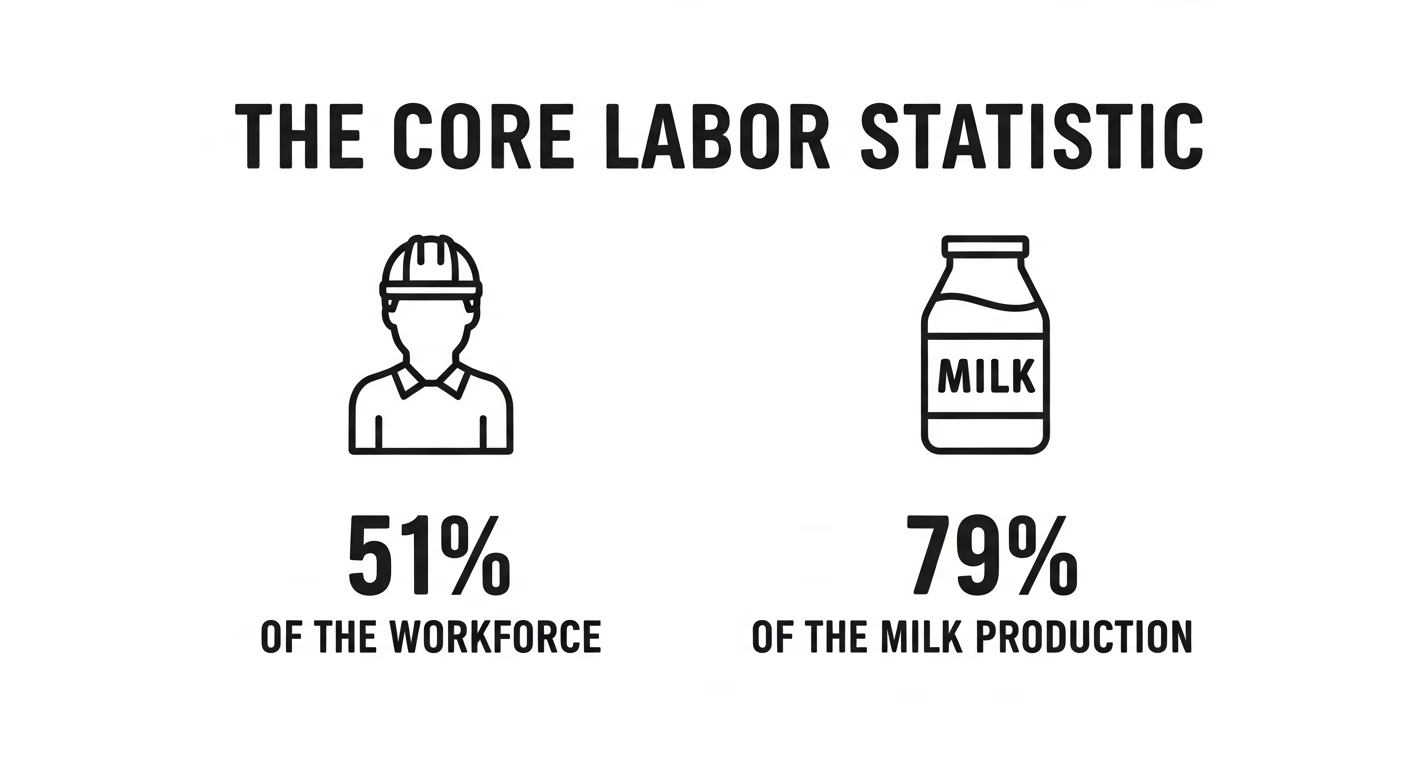
The industry often talks about labor savings driving automation, but the challenges are real. USDA data from this year shows immigrant workers make up 51% of the dairy workforce while producing 79% of U.S. milk. With 38.8% annual turnover creating measurable production losses, something’s gotta give.

But here’s what I’ve learned—successful automation requires specific labor economics.

Minnesota’s breakeven analysis this year shows that robots become competitive when labor costs range from $22 to $32 per hour (depending on production gains), or when turnover exceeds 50% annually. Ideally, you have both.

For farms with stable workforces at $18 to $20 per hour—common in many rural areas—the economics often don’t support automation regardless of other factors. As one Nebraska farmer explained, “We have great employees who’ve been with us 10-plus years. Robots would’ve solved a problem we don’t have.”

When Everything Goes Right: A Success Story

Let me share what success looks like based on several Vermont operations I’ve worked with that represent that successful 28%.

One particular farm began in 2021, selecting for robot traits while still milking in their double-8 parlor. “We genomic tested every animal and started culling hard for robot efficiency traits,” they explained.

By the time they installed four DeLaval robots in 2023, 40% of their 240-cow herd already had favorable genetics. They built a new freestall barn explicitly designed for robots—about a $1.7 million investment that hurt, but they had the capital reserves.

“We could’ve retrofitted for $800,000,” they noted, “but after visiting twelve robot farms, we saw how facility compromises created permanent problems.”

Today, successful operations like these are achieving 90 to 95 pounds per day, with robots running at 2.0 to 2.2 kilos per minute. Many report annual labor cost reductions of 40-50%. But what really matters to these families—they’re coaching youth hockey, returning to off-farm careers part-time, actually having a life outside the barn.

“This technology transformed our operation,” one farmer told me. “But I tell neighbors straight up—if you can’t absorb significant losses for three years and invest in genetics and facilities, wait. This isn’t for everyone.”

The Questions That Predict Success or Failure

After analyzing hundreds of operations, researchers have identified the key diagnostic question that predicts success with remarkable accuracy:

Can you comfortably absorb $100,000 in annual losses for three consecutive years while investing an additional $150,000 in facility corrections and genetic improvements—without threatening your farm’s survival?

If you can’t confidently say yes, the research suggests waiting or exploring alternatives. This single question brings together every critical factor: scale, capital reserves, commitment to the timeline, and strategic thinking capacity.

There’s also the temperament piece. Ask yourself: Am I comfortable with data-driven decision making rather than hands-on control? Can I wait 24 to 48 hours for technical support instead of fixing things immediately? Will I accept that 5-8% of cows will always need fetching?

That last one’s important—perfectionism becomes a liability with robots.

Dutch research from 2020 found something surprising: farmers who quit robotic milking actually scored higher on conscientiousness scales than those who successfully adopted robotic milking. The characteristics that make excellent conventional dairy farmers—disciplined, hard-working, hands-on—can work against you with systems requiring indirect management.

Making Sense of It All: Who Should Actually Buy Robots

Based on everything we’re seeing, clear patterns emerge for different situations.

You’re a Strong Candidate (about 28 to 40% of farms) If You Have:

  • 121 or more cows with plans to maintain or expand
  • High-wage labor markets ($24+ per hour) or severe turnover (over 50%)
  • Capital reserves to absorb $250,000 to $400,000 in losses and corrections over three years
  • Already started genetic selection for robot traits at least two years before installation
  • Willingness to build new or invest in proper retrofits ($1.2 million plus)
  • Comfort with systems thinking and data-driven management

Proceed with Extreme Caution (about 40 to 50% of farms) If You Have:

  • 60 to 120 cows—remember, scale economics work against this group
  • Moderate labor costs ($18 to $22 per hour) with manageable turnover
  • Limited capital requiring minimal facility retrofits
  • Haven’t begun genetic selection for robot efficiency
  • Need profitability within 2 to 3 years
  • Preference for hands-on problem solving over remote management

Consider Alternatives (about 20 to 30% of farms) If You Have:

  • Under 60 cows without expansion plans
  • Stable, affordable labor force
  • Existing facilities requiring extensive modification
  • Management style strongly favoring direct control
  • Can’t absorb three years of potential losses

The Bottom Line

What we’re learning about robotic milking challenges many of the assumptions we’ve held for years.

Quality-of-life improvements? They’re absolutely real and valuable. That 86% recommendation rate reflects genuine lifestyle benefits. But—and this is important—quality of life doesn’t automatically translate to profitability. I’ve seen too many farms discover this the hard way.

The 72% profitability gap is sobering but manageable if you understand what you’re getting into. Only 28% achieve the 5-plus-pound daily gains needed for clear profitability, according to Minnesota’s analysis. But understanding the specific requirements lets you make an informed decision rather than just hoping for the best.

Timeline expectations need radical adjustment, too. Full optimization takes 5 to 8 years, not the 1 to 2 years dealers suggest. Start genetic selection 2 to 3 years before installation and expect marginal performance for the first couple of years of operation. This isn’t pessimism—it’s realism based on what farmers have actually experienced.

Facility design really does determine destiny. Those 68% who regret their installation decisions teach us a powerful lesson: cutting corners on facility design creates permanent barriers to profitability. Proper design typically requires $1.2 to $2.2 million for most operations. If that number makes you uncomfortable… well, that’s valuable self-knowledge.

And scale economics aren’t what we thought. That 61 to 120 cow “dead zone” where robots actually decrease profitability challenges everything we’ve assumed about modernization improving economics. This has profound implications for mid-sized family farms—the backbone of our industry in many regions.

The dairy industry’s at an interesting crossroads. Technology adoption is accelerating even as economic pressures intensify. Robotic milking represents a genuine transformation for the 28 to 40% of operations that have the right combination of scale, capital, management style, and long-term commitment. For these farms, the technology really does deliver.

But for the majority—those who lack critical success factors at 60 to 72%—the technology might create more challenges than solutions. When you look at industry projections suggesting growth from $3.39 billion to $19.5 billion by 2035, those numbers require adoption rates that probably exceed the population of farms that are actually good candidates.

The lesson isn’t that robotic milking is good or bad. It’s that complex agricultural technologies require an honest assessment of your individual situation rather than following narratives about what’s “inevitable.”

The farmers succeeding with robots aren’t just early adopters or tech enthusiasts. They’re operations whose specific circumstances align perfectly with the technology’s requirements.

As that Vermont farmer put it perfectly: “This technology is amazing—for the right farm, at the right scale, with the right preparation. The challenge is being honest about whether you’re that farm.”

And honestly? That’s the conversation we all need to be having.

KEY TAKEAWAYS:

  • The One Question That Matters: Can you lose $100K/year for 3 years? If no, skip robots. Only 28% ever see profit.
  • The Scale Trap: 60-120 cows = robot dead zone (you’ll lose money). Under 60 or over 120 = potential profit.
  • The Timeline Nobody Tells You: Year 1-3: Losses. Year 4-5: Breakeven. Year 5-8: Maybe profit. Plan accordingly.
  • Your Best Cows Are Your Biggest Problem: High producers often fail at robots. Efficiency beats volume every time.
  • The Real Math: Dealers say $9K/year costs. Reality: $30-45K. Triple everything, including disappointment.

EXECUTIVE SUMMARY: 

The robot revolution has a secret: it’s only working for 28% of dairy farms. After tracking 217 operations, researchers discovered a brutal truth—farms with 60-120 cows (nearly half of U.S. dairies) actually lose money with robots, while those below 60 or above 120 can profit. Success demands crushing requirements: 0,000 in loss tolerance, 5-8 years of genetic prep, and willingness to cull your best producers for efficiency. Yet 86% of farmers still recommend robots, creating false confidence that drives unsuitable operations toward financial disaster. The industry needs these failures to hit its $19 billion target by 2035. One question predicts your fate: Can you bleed $100,000 a year for 3 years and survive?

Complete references and supporting documentation are available upon request by contacting the editorial team at editor@thebullvine.com.

Learn More:

Join the Revolution!

Join over 30,000 successful dairy professionals who rely on Bullvine Weekly for their competitive edge. Delivered directly to your inbox each week, our exclusive industry insights help you make smarter decisions while saving precious hours every week. Never miss critical updates on milk production trends, breakthrough technologies, and profit-boosting strategies that top producers are already implementing. Subscribe now to transform your dairy operation’s efficiency and profitability—your future success is just one click away.

NewsSubscribe
First
Last
Consent

Decide or Decline: 2025 and the Future of Mid-Size Dairies

Decide or decline: 2025 is the year mid‑size dairies prove that clarity—not cow count—decides success.

If you’ve been milking through the last 20 years, you already know how fast the middle has lost ground. The 800‑cow herds that once anchored local supply chains are now caught between higher costs and tighter credit. It’s not a lack of effort that’s hurting these farms—it’s the system moving faster than most can react.

Rising input costs, tighter labor markets, new regulations, and rising interest rates are changing what “sustainability” means. But what’s interesting here is that the challenge isn’t purely economic. It’s directional.

According to the USDA Economic Research Service, farms milking more than 2,000 cows now produce over 50% of U.S. milk, and they do so 20–25% more efficiently than smaller commercial herds. Meanwhile, Cornell Dairy Markets data shows that smaller farms—under 500 cows—are re‑emerging through organic, grass‑fed, and local marketing models, earning 30–60% above commodity prices.

And that leaves the middle squeezed. Roughly 2,800 U.S. dairies closed in 2024, many of them right in that 700‑ to 1,200‑cow range.

So, what can farms in this category do? Choices look different for everyone—and sometimes hesitation isn’t fear, it’s fatigue. But the operations pulling ahead are finding ways to convert that fatigue into focus, using data, advice, and discipline to move forward deliberately rather than reactively.

Three Viable Paths Forward

That pressure has created three distinct strategies that are working across 2025. Each one is viable—but only with clarity, discipline, and execution.

1. Expansion with Intention

Growth still works in regions where infrastructure supports it, particularly in Idaho, Texas, and parts of the Southern Plains. The Idaho Dairymen’s Association reports milk production up 3% year‑over‑year, driven by mid‑size operations expanding to 2,500‑cow scale.

Land values in productive regions remain reasonable—$6,000–$8,000 per acre, according to USDA NASS Land Values—and processors continue adding demand to match consolidation trends.

The most successful expansions share three core strengths:

  • Debt ratios under 35%. Leverage only where cash flow already proves out.
  • Trained management teams. Family ownership paired with experienced outside managers works best.
  • Nutrient management foresight. Expansion means more scrutiny—planning here protects future flexibility.

Producers in new freestall and dry lot systems report labor efficiency gains of 25–35%, but these gains materialize only when training and system design precede construction. As one veteran Idaho producer put it recently: “Scale magnifies everything—your efficiency and your inefficiency.”

2. Right‑Sizing and Smarter Technology

For many in the Northeast, Upper Great Lakes, and Atlantic Canada, expansion isn’t realistic. The focus has shifted toward doing fewer things better—and technology is the enabler.

The University of Vermont Extension’s 2024 Robotic Dairy Study found that herds between 400 and 600 cows reduced labor costs by about 30% while maintaining or improving milk yield. Precision feeding and cow‑monitoring technology allowed smaller herds to compete through performance rather than scale.

Why 400-600 Cow Operations Are Going Robotic: The Numbers Behind the Revolution

What’s fascinating is that this same pattern holds north of the border. In Ontario and Quebec, under supply management, the economics differ, but the management philosophy doesn’t. Canadian producers are pushing robotics, automation, and stall utilization to maximize returns per kilogram of quota. As one Ontario nutritionist remarked, “Efficiency isn’t negotiable just because prices are stable. It’s the only real lever left.”

A Vermont dairy that converted to organic alongside robotic milking saw its milk price climb to $31.50 per hundredweight—right in line with national organic averages—but its bigger victory was time. Streamlined routines meant more focus on genetics, forages, and cow health.

These examples don’t make smaller easier—they make it more intentional. For the producers making it work, every investment serves a clear purpose: finding a way to manage cattle and people without burning out either one.

3. Optimization over Expansion

Across Wisconsin, Minnesota, and parts of Eastern Canada, the sweet spot has become refining economics within existing boundaries.

A benchmarking study reports farms that lifted their income over feed cost (IOFC) from $7.50 to $10 per cow per day captured roughly $820,000 more annual margin in 900‑cow herds.

That didn’t come from spectacular innovation; it came from fundamentals: tighter TMR consistency, better feed push‑up frequency, controlled parlor scheduling, and enhanced reproductive consistency.

Those farms also focused on butterfat performance above 4.0%, earning premiums of $0.50–$0.75/cwt. Meanwhile, strategic use of beef‑on‑dairy genetics added $350–$400 per calf, according to University of Wisconsin Dairy Research, 2025.

Optimization is about reliability—the daily grind of doing the same things more precisely than the week before. As one Wisconsin producer told me, ‘We stopped chasing bigger and started chasing better—the shift from production expansion to business refinement. And it’s changing how success is measured: not more cows, but more predictable profit.

The Profit Illusion: Why Size Doesn’t Always Mean Success

Scale doesn’t guarantee success—strategy does. Expansion works best for 2,000+ cow operations ($1,640/cow), while premium organic models deliver consistent returns across all sizes, and optimization shines in the 500-1,000 cow sweet spot

At first glance, most producers expect small family dairies to earn more profit per cow, while large commercial herds rely on volume to make up thinner margins. But the data — shown in the chart below — tells a more nuanced storyAt first glance, most producers expect small family dairies to earn more profit per cow, while large commercial herds rely on volume to make up thinner margins. But the data — shown in the chart below — tells a more nuanced story.This visualization, “Three Paths to Profitability: Annual Profit Per Cow by Herd Size (2025),” reveals how performance and efficiency—not size alone—shape economic outcomes across the industry. The chart compares three strategic paths mid-size dairies are following today:

  • Expansion with Intention – scaling to 2,000+ cows in strong infrastructure regions like Idaho and Texas.
  • Right-Sizing + Technology – mid-tier herds (400–600 cows) adopting automation, robotics, and precision management.
  • Optimization over Expansion – 700–1,200-cow herds refining feed, reproduction, and butterfat performance instead of adding capacity.

The higher bar for larger herds doesn’t simply mean big farms take more money home. Instead, their fixed costs — buildings, equipment, professional staff, financing — are spread over thousands of cows, so cost per unit drops while profit per cow rises modestly. Conversely, smaller farms, even when they receive premium prices for organic, grass-fed, or local milk, often operate with higher feed and labor costs per cow, which narrows daily profit margins.

But here’s the twist: while smaller dairies may show lower profit per cow, the total income is often concentrated in a single family. A 300-cow family farm might return $250,000 in annual profit that supports one household. In contrast, a 2,500-cow operation could generate $2 million in total profit — but that figure is usually divided among multiple owners, investors, lenders, and management teams.

That’s why this chart matters. It debunks the myth that a larger herd size automatically leads to better take-home profit. The true divide isn’t just scale — it’s about who captures the value. Whether driven by volume, precision, or premium branding, profitability in today’s dairy industry is still deeply personal.

Regional Realities Still Matter

The Mid-Size Squeeze Is Real: Wisconsin Alone Lost 313 Dairies in 2024

It’s tempting to think every dairy could apply the same model, but geography dictates strategy more than ever.

In the Western U.S., large‑scale operations thrive on efficiency, infrastructure, and climate.
In the Midwest and Ontario, cooperative structures and component‑based pricing reward consistency and milk quality over expansion.
In the Northeast and Quebec, sustainability and locality drive brand value, with consumers drawn to transparency and traceability.

No matter the region, the takeaway is the same: you can’t copy‑paste a business plan from across the border. The economics—and the culture—demand regional authenticity.

Lessons Learned from Those Who Tried

The $950 Bull Calf Revolution: How Genetics Turned Dairy’s Biggest Liability Into Nearly 6% of Revenue

Every evolution comes with its scars. One Midwestern family who downsized from 850 to 500 cows underestimated the adjustment period after installing robots. Production dropped nearly 15% for a year as cows and staff adapted. They built it back, but only thanks to strong lender trust and patience.

Meanwhile, in Idaho, several expansions paused midway as interest costs bit into construction financing. Those who made it through had one thing in common—extra contingency funds.

The common thread in both cases is timing. Transition phases nearly always take longer and cost more than projected.

The Habits of Survivors

The dairies still standing out—on both sides of the border—tend to have three things in common:

  1. Financial clarity. Debt ratios under 30% and three‑month operating cash reserves. Equipment and upgrades are justified only by measurable efficiency gains.
  2. Revenue diversification. Beef‑on‑dairy programs, custom forage work, or digesters providing supplemental income that stabilizes the primary enterprise.
  3. Generational transparency. Farms with succession plans already in motion make faster, cleaner business decisions.

At the 2025 Canadian Dairy XPO, one Quebec producer put it best: “You can borrow money for cows, not for uncertainty.” It’s a kind of clarity every mid‑size farm needs right now.

The Price of Standing Still

The Compeer Financial Producer Insights 2024 Report warned that dairies without defined five‑year plans lost 6–8% of equity annually due to deferred maintenance, inefficiency, and missed opportunities.

As one producer shared at a Dairy Strong conference in Wisconsin, “We thought doing nothing was the safe move. Turns out, the slow leak was killing us.”

A decade ago, waiting felt like patience. Today, it feels like pressure. Between higher interest, constant tech change, and unpredictable milk prices, even standing still costs money. Most farmers know what they need to do—it’s finding the time, cash, and confidence to do it that’s the battle.

Why 2025 Matters

When the dust settles, 2025 may be remembered less for its milk price trends and more for its management decisions. Expansion, specialization, or optimization—all three can succeed. The real test for mid‑size dairies is whether they’ll commit to one.

As one Idaho producer said, ‘The biggest gamble we took was standing still.’ Across barns and borders, you hear the same thing now: success starts when you stop waiting for the perfect signal. Nobody’s certain—but everyone who’s moving, is learning.

The Bottom Line

Whether you’re milking 200 cows in Quebec or 2,000 in Idaho, the shift facing mid‑size dairies isn’t about capacity—it’s about clarity. The farms that emerge stronger will be those that choose their lane and drive it with intent.

This year, the biggest risk isn’t expansion or automation—it’s indecision. As the market keeps changing, so does the window for action.

What steps are you taking on your operation to define your path for 2025 and beyond?

Key Takeaways

  • Decisiveness defines survival. The mid‑size dairies thriving in 2025 are those that choose a direction and commit fully.
  • Play to your region’s strengths. Expansion works out West, optimization excels in the Midwest, and value branding wins in the East and Canada.
  • Technology can level the field. Automation and precision tools make smaller herds competitive again—but only when data drives decisions.
  • Measure like a business, not a tradition. Top dairies track IOFC, butterfat, and repro weekly to stay ahead of volatility.
  • The real cost is waiting. Every season without a plan quietly drains equity, opportunity, and control.

Executive Summary:

Across the U.S. and Canada, mid-size dairies are facing a make-or-break moment. Once the steady foundation of milk production, 800–1,200 cow farms are now being squeezed between large-scale efficiencies and small-farm premiums. But what’s interesting is how the survivors are rewriting the playbook. From robotic systems in Vermont to data-driven optimization in Wisconsin and quota-smart efficiencies in Ontario, producers are proving that success doesn’t depend on herd size—it depends on clarity. The dairies making bold, informed decisions—whether to expand, modernize, or specialize—are staying strong. In 2025, waiting for perfect conditions isn’t safety anymore—it’s surrender.

Complete references and supporting documentation are available upon request by contacting the editorial team at editor@thebullvine.com.

Learn More:

  • Why This Dairy Market Feels Different – and What It Means for Producers – This strategic analysis provides the latest market data behind the consolidation trends mentioned in the main article. It reveals specific technology costs and ROI timelines, helping you financially plan for the necessary strategic shifts your operation needs to make now.
  • Robotic Milking Revolution: Why Modern Dairy Farms Are Choosing Automation in 2025 – For producers considering the “Right-Sizing” path, this article offers a deep dive into the real-world impact of automation. It demonstrates how robotic systems deliver measurable gains in labor efficiency, data collection, and herd health, justifying the capital investment.
  • BST Reapproval: The Key to Unlocking Dairy Sustainability – This piece offers a tactical guide for the “Optimization” strategy, focusing on a specific tool to improve feed efficiency and profitability without expansion. It provides clear protocols and data to enhance your farm’s economic and environmental performance within your current footprint.

Join the Revolution!

Join over 30,000 successful dairy professionals who rely on Bullvine Weekly for their competitive edge. Delivered directly to your inbox each week, our exclusive industry insights help you make smarter decisions while saving precious hours every week. Never miss critical updates on milk production trends, breakthrough technologies, and profit-boosting strategies that top producers are already implementing. Subscribe now to transform your dairy operation’s efficiency and profitability—your future success is just one click away.
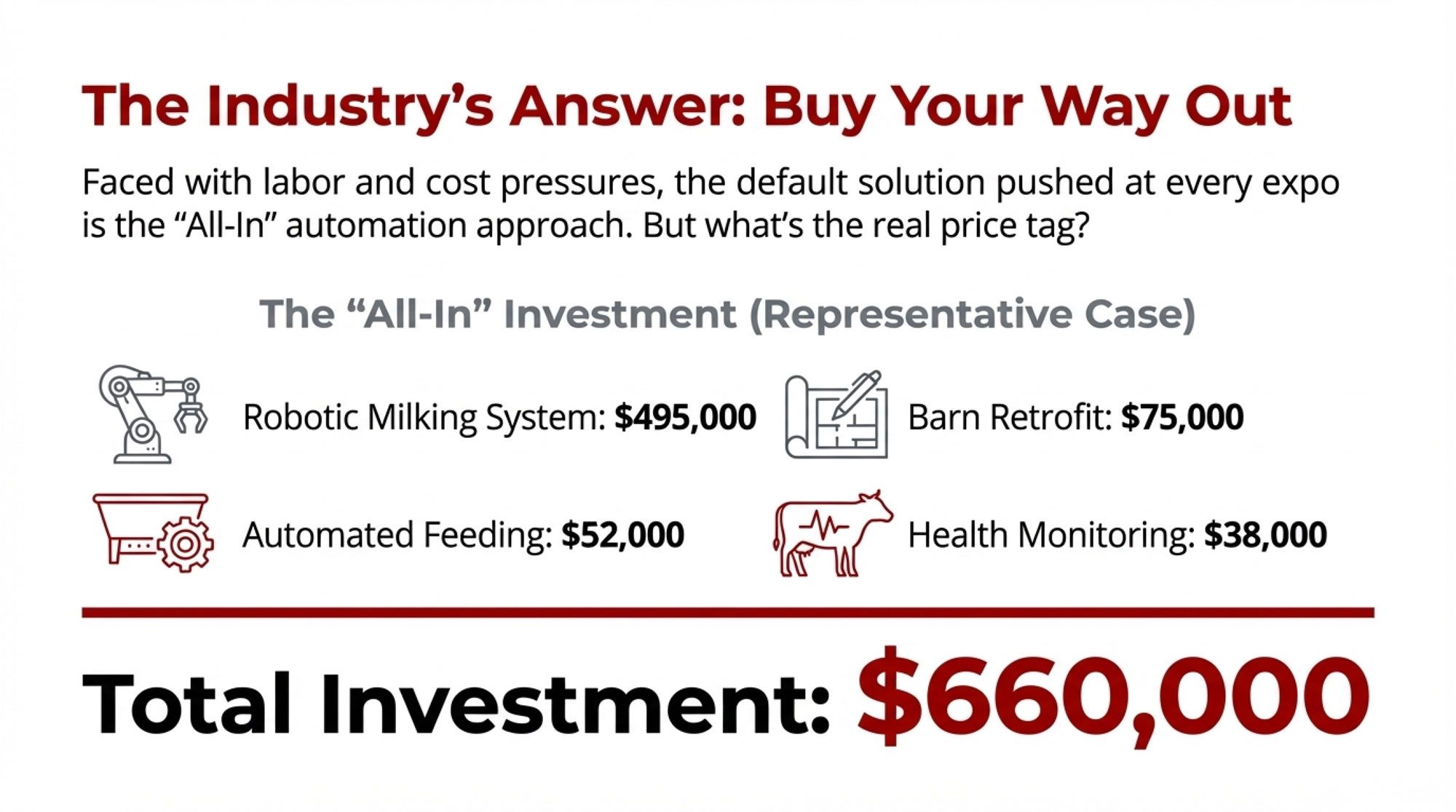
NewsSubscribe
First
Last
Consent

The Tech Reality Check: Why Smart Dairy Operations Are Winning While Others Struggle

Are you gambling $500K+ on dairy tech without knowing if your farm’s actually ready?

EXECUTIVE SUMMARY: Here’s what we’ve uncovered after digging deep into dairy tech adoption across the country… Most farms investing in robotic milking systems aren’t seeing positive returns until years 3-5, not the 18 months dealers promise. The real numbers? Expect 3.8 to 5 years for genuine payback, driven by labor savings that only work if you nail the implementation. We’re seeing total costs run 40% above sticker price once you factor in barn upgrades, electrical work, and the brutal learning curve that can tank production for months. With dairy wages hitting $20-30/hour across regions, the pressure to automate is real—but so are the risks of rushing in unprepared. Cybersecurity threats are escalating fast—even Dairy Farmers of America got hammered by ransomware this summer, shutting down multiple plants. The farms that succeed hit specific benchmarks: 95+ pounds of energy-corrected milk per cow daily and 2.8+ robot milkings with minimal downtime. Bottom line? The tech works, but only if you do the groundwork first. Start with operational readiness, budget realistically, and plan for a marathon—not a sprint.

KEY TAKEAWAYS

  • Budget the real costs upfront: Robotic milking delivers 3.8-5 year ROI, but total implementation runs 40%+ above equipment price for wiring, training, and facility mods—especially critical in harsh climates.
  • Cybersecurity isn’t optional anymore: With major co-ops getting hit by ransomware, change those default passwords TODAY and segment your networks before connecting any farm equipment
  • Performance benchmarks separate winners from strugglers: Target 95+ lbs energy-corrected milk per cow and 2.8+ daily robot milkings—these metrics directly correlate with profitability in 2025 market conditions
  • Prevention pays better than treatment: Farms investing in automated health monitoring (95% accuracy) and proactive vet care see fewer costly clinical cases and better long-term returns
  • Size matters for ROI: Robotics work best for 400+ cow herds, while smaller operations often get better returns starting with targeted monitoring and data systems before full automation

Look, we’ve all been there—staring at that glossy brochure for robotic milking systems or precision feeding tech, calculating those sweet ROI projections on the back of a feed receipt. But here’s what’s really happening across dairy country: many operations are finding out the hard way that buying agricultural technology isn’t like picking up a new hay baler.

Here’s what consultants won’t tell you: most tech investments crater in year two because farms treat robots like tractors. Meeting initial ROI projections, with success rates varying dramatically by operation size, management readiness, and regional factors. The difference between farms that thrive with tech and those that struggle isn’t the equipment—it’s everything that happens before and after installation.

Recent peer-reviewed studies confirm robotic milking systems achieve ROI in 3.8 to 5 years, driven primarily by labor cost reductions of around 32% and increased production efficiency. But hitting those numbers requires substantial preparation that most operations underestimate.

The Labor Squeeze Gets Real

Up here in the Midwest, dairy wages have hit $20-$24 per hour according to USDA Agricultural Labor Survey data, while Southwest operations are competing at $25-$30 hourly. When you’re looking at 30-40% annual turnover rates industry-wide, those numbers add up fast. The wage pressure is making technology adoption more attractive, but it’s also raising the stakes. Miss on your implementation, and you’re stuck with expensive monthly payments on underperforming equipment while still dealing with labor shortages.

The Hidden Cost Reality

Here’s what equipment dealers don’t highlight in those sales presentations: total implementation costs typically run 40% above equipment prices. That $350,000 robotic setup? Budget closer to $500,000 once you factor in electrical upgrades, barn modifications, and the inevitable learning curve losses.

Northern operations face additional winterization costs—barn insulation, heated floors, equipment protection through those brutal Wisconsin or Minnesota winters. Southern dairies deal with heat stress challenges that can disrupt cow traffic patterns through robotic systems.

The learning curve spans 18-24 months, during which production often dips while cows adapt to voluntary milking patterns and staff master data management systems. This isn’t equipment failure—it’s the reality of transforming operational philosophy.

The Cyber Threat Nobody Saw Coming

This past summer really opened eyes when Dairy Farmers of America—one of the largest US cooperatives—got hammered by ransomware across multiple facilities. If they’re vulnerable with dedicated IT teams, what about operations running default passwords on connected equipment?

According to cybersecurity advisories, simple oversights, such as unchanged “admin/password” credentials, continue to expose farms to attacks. Every connected device—from automated calf feeders to milk truck sampling systems—represents a potential entry point.

The Readiness Assessment That Separates Winners from Strugglers

Before signing purchase agreements, operations need an honest evaluation across key areas:

  • Management Systems: Do daily routines happen consistently regardless of who’s working? Is data systematically tracked and actively utilized? Can equipment issues get resolved internally before calling dealers?
  • Financial Planning: Is the cost of production understood within $2/cwt? Are protocol changes communicated effectively across all personnel?
  • Technical Capacity: Can someone handle computer problems without immediate panic? Is staff willing to understand why protocols work, not just follow orders?

Industry consultants recommend scoring well in at least four of these five areas before proceeding with major investments. Operations falling short should focus on building operational foundations first.

Scale Matters More Than You Think

Robotic milking economics work best for herds above 400 cows, where labor savings justify implementation costs. Smaller operations often see better returns through incremental adoption—automated health monitoring, precision feeding components, or improved data systems.

For operations under 300 cows, consider whether technology addresses actual constraints or just sounds appealing. Sometimes the biggest wins come from optimizing existing systems rather than wholesale automation.

What Success Actually Looks Like

When technology implementation succeeds, specific benchmarks become apparent:

  • Production metrics: Energy-corrected milk production consistently exceeds 95 pounds per cow daily, meeting top-performing herd standards.
  • System utilization: Robotic milking achieves 2.8+ visits per cow daily with minimal downtime and low fetch rates.
  • Management response: System alerts trigger decisions within hours, not days or weeks.

The Prevention Economics Advantage

Here’s where successful operations think differently: they invest more in veterinary care, not less. Benchmarking data shows top dairies spend $1.20-1.50 per hundredweight on health costs compared to $0.60-0.90 for struggling operations.

Automated health monitoring systems validated in multiple studies demonstrate approximately 95% accuracy in detecting metabolic and infectious diseases 24-48 hours before clinical signs appear. Early intervention enables $45-$60 in preventive treatments, saving $200-$400 per case through avoided production losses.

The most successful farms treat more animals, not fewer—they just treat them earlier when intervention is cheaper and more effective.

Regional Implementation Realities

  • Northern dairies should budget an additional $8,000-12,000 for winterization requirements. Cold-weather challenges affect equipment reliability and require specialized facility modifications.
  • Southwest operations face different hurdles—heat stress impacts cow behavior and traffic flow, requiring enhanced cooling systems that add $15,000-25,000 to project costs.
  • Southeastern humid climates create moisture-related maintenance challenges, adding ongoing operational complexity that affects long-term ROI calculations.

Financial Planning Essentials

The total budget system costs 40% more than the equipment prices, accounting for infrastructure, training, and temporary production impacts. Implementation timelines of 18-24 months from purchase to optimized returns represent the industry standard, not equipment problems.

Essential cybersecurity measures include changing all default passwords, implementing network segmentation, and budgeting for ongoing monitoring services as operational expenses, not one-time costs.

The Bottom Line for 2025

Adopting technology in dairy requires strategic thinking that extends beyond equipment selection. Operations succeeding with agricultural technology treat implementation as a comprehensive business transformation, requiring systematic preparation, realistic budgets, and a long-term commitment.

Farms positioning themselves for long-term success understand that modern dairy technology amplifies existing management strengths—it doesn’t create capabilities that weren’t already being developed. Success depends on operational readiness, not equipment sophistication.

Regional factors, scale economics, management capacity, and cybersecurity awareness all determine whether technology delivers promised advantages or becomes expensive monthly reminders of poor preparation.

We’ve been tracking dairy tech adoption for years, and the pattern’s clear—the farms that thrive don’t just buy better equipment, they build better systems first. Don’t let equipment dealers rush you into decisions that could cost six figures in regret. Get the fundamentals right, plan for the real timeline, and make technology work FOR your operation, not against it.

Complete references and supporting documentation are available upon request by contacting the editorial team at editor@thebullvine.com.

Learn More:

Join the Revolution!

Join over 30,000 successful dairy professionals who rely on Bullvine Weekly for their competitive edge. Delivered directly to your inbox each week, our exclusive industry insights help you make smarter decisions while saving precious hours every week. Never miss critical updates on milk production trends, breakthrough technologies, and profit-boosting strategies that top producers are already implementing. Subscribe now to transform your dairy operation’s efficiency and profitability—your future success is just one click away.

NewsSubscribe
First
Last
Consent

Ohio State Just Torched Their Safety Net for a $6.2 Million Robot Bet – Are They Crazy or Geniuses?

Universities aren’t training farmers anymore—they’re training corporate tech reps.

Robotic milking systems, dairy automation ROI, dairy labor shortage, future of dairy farming, university dairy programs

When a major university bulldozes perfectly good dairy facilities to go all-in on automation, you know something big is happening. The question is: are they seeing the future, or about to become a very expensive cautionary tale?

You know how conversations go at the feed mill—somebody always brings up the latest university nonsense. But Ohio State’s new robot dairy? That’s got producers talking from Defiance County clear down to Washington County.

Here’s what happened. They took their 110 registered Jerseys—the same herd that’s been training students since Nixon’s day—bulldozed those trusty but tired 1972 facilities, and dropped a whopping $6.2 million on what they’re calling a “fully autonomous dairy operation”.

That’s not small potatoes for a 60-cow setup.

Here’s Why This Isn’t Just Another Equipment Upgrade

They didn’t renovate. They didn’t hedge their bets. Ohio State went full nuclear option—demolished everything and built from scratch with two Lely Astronaut A5 robots, a Vector automated feeding system, robotic manure vacuums… the whole nine yards.

Most rational folks would’ve spent the smaller money patching up the old place while adding some robot experience. Keep both conventional and automated training. But no—Ohio State torched their safety net completely.

“It would be more cost-effective to tear down the outdated structure,” Associate Dean Graham Cochran explained. But any producer who’s priced farm construction knows that math only works if you’re trying to make retreat impossible.

The gamble? That robotic milking explodes from niche curiosity to mainstream necessity before their current students graduate and discover that 97% of dairies still milk the old-fashioned way.

The Numbers Tell a Brutal Story

Let’s talk reality. Currently, fewer than 3% of US operations utilize robotic milking. We’re talking maybe 800 robot dairies out of 26,000+ total operations nationwide. That’s not exactly a revolution sweeping the countryside.

The economics are tough. A comprehensive study tracking operations across 13 countries found that robots cut labor input by 28%, which sounds great, but also increases investment costs by 58%. The real kicker? Only 6% of producers achieved payback periods under 12 years.

Those aren’t adoption-driving numbers for an industry where most operations run on margins thinner than skim milk.

But here’s where it gets interesting… maybe Ohio State sees something in the labor crisis that changes this whole equation.

The Immigration Time Bomb Nobody Wants to Discuss

Our industry runs on immigrant workers—51% of the workforce producing 79% of America’s milk. With current deportation pressures and policy uncertainty, that labor foundation isn’t just shaking—it’s cracking.

Now, Ohio’s different from those California mega-dairies. Our 1,350 farms average 185 cows each—mostly family operations with seasonal help rather than year-round immigrant crews. Different labor dynamics entirely.

But even family farms are feeling the squeeze. Operations nationwide are dealing with 30-38% annual employee turnover. That’s not just expensive recruitment costs—it translates to production drops and higher calf mortality when your crew keeps changing.

Scott Higgins from the Ohio Dairy Producers Association told me: “It is exciting to see this investment in a modern dairy that will impact the student experience and tell the story of dairy farming”. But between the lines, you can hear the concern about workforce stability.

If immigration policy suddenly removes a significant portion of the 51% dairy workforce, automation stops looking like a nice-to-have technology. It starts looking like survival equipment.

The Real Shocker: They’re Not Training Farmers

This development caught me completely off guard when I started digging deeper.

Ohio State isn’t training the next generation of dairy farmers or farm managers. They’re training corporate employees for the agricultural technology sector.

Think about the economics. Their graduates will likely command competitive starting salaries that could price them out of most actual farm management positions. A typical 200-cow operation in Ohio can’t afford to pay premium wages when the whole operation might only net $100,000-150,000 annually.

But equipment companies? They desperately need technical support reps, installation crews, and customer training specialists. Lely already runs comprehensive training centers offering “complete working knowledge of robots and feeding products”.

Jason Hartschuh from Ohio State Extension put it this way: “The new facility will allow students to be ready for a career in the dairy industry in all sectors, from farm management to sales and service”. Notice how “sales and service” got equal billing with “farm management.”

The Corporate Training Competition They’re Ignoring

Here’s where Ohio State’s strategy gets really questionable, and honestly, nobody’s talking about this elephant in the room.

When a producer installs robotic equipment, manufacturers provide free training “for as long as you own and operate” their systems. Lely’s got dedicated training facilities. GEA partners with major universities. These corporate programs deliver hands-on equipment access, immediate updates when software changes, and commercial incentives for customer success—because if you fail, they lose future sales.

So what exactly does a four-year Ohio State degree add that manufacturer training doesn’t provide better, faster, and cheaper?

The Lely Vector system Ohio State installed saves customers about 8 hours of weekly labor plus up to 1,452 gallons of diesel annually, according to multiple documented case studies. However, producers learn system optimization through manufacturer support and their neighbors’ experience, rather than university coursework.

The Jersey Factor That’s Got Me Scratching My Head

Here’s something that’s been bugging me about Ohio State’s approach…

Industry observations suggest that Jerseys present different challenges for robotic systems—smaller frame sizes, varied udder configurations, and higher component milk — that can affect sensor performance differently than Holstein-focused automation development.

Most Ohio producers run 100-300 cows—potentially too small for multiple robots but too large for optimal single-robot economics. So Ohio State is training students for a facility design that exists on maybe a few dozen farms nationwide.

That’s… interesting strategic thinking.

Research Goldmine or Corporate Welfare Program?

Ohio State supporters keep pointing to research potential, and I’ll admit, something is compelling here.

Their individual cow monitoring systems will generate data streams that conventional operations literally cannot produce: real-time milk composition analysis, continuous health tracking, and precise feed intake measurements down to individual animals.

Maurice Eastridge from Animal Sciences says this will be “a tremendous asset” for research. If automation adoption accelerates, their faculty could become the go-to licensing experts for breakthrough insights worldwide.

But here’s what makes me uncomfortable: Lely owns the core technology generating this data. Ohio State is essentially providing research services that benefit equipment manufacturers while using American taxpayer funds.

This conflicts with what land-grant universities were created to achieve. The Morrill Act of 1862 established these institutions to make agricultural knowledge freely available to all farmers. Now they’re positioning to license discoveries, creating a two-tiered system where technological advantages go to whoever can afford premium prices.

What This Actually Means for Working Producers

The thing about Ohio State’s gamble is that it’s going to tell us something important about where this industry is heading, whether they succeed or fail spectacularly.

Technology Timing Intelligence: Their willingness to stake their entire program on automation acceleration suggests some industry leaders expect much faster adoption than public projections indicate. That’s worth monitoring as market intelligence—they might know something about policy changes or economic pressures that haven’t hit the news yet.

Training Source Strategy: When you’re evaluating robotic systems, prioritize manufacturer training and peer producer experience over academic credentials. The company selling you equipment has much stronger commercial incentives for your operational success than any university program.

Labor Reality Check: Focus on systems that enhance your current crew’s productivity rather than requiring completely different skill sets. Automation isn’t about replacing experienced managers—it’s about making reliable help more productive and reducing dependence on hard-to-find manual labor.

Economic Calculations: That international study showing 28% labor reduction but 58% higher investment costs suggests most operations aren’t economically ready for this leap yet. But if immigration policy shifts suddenly removes available workers, those calculations flip overnight.

The Bottom Line

Ohio State just demonstrated that even major agricultural institutions are making unprecedented bets on industry transformation. Whether that represents visionary leadership or an expensive miscalculation will signal whether dairy automation moves from niche curiosity to mainstream necessity.

Their success or failure offers valuable intelligence about industry direction, but here’s what concerns me: they’re essentially experimenting using students’ career prospects and taxpayer funding to test theories about automation timing.

If they’re right about acceleration, their graduates become valuable professionals in a growing sector. Their research drives industry transformation. Their facility becomes the model others follow.

If they’re wrong… well, they’ve trained students for jobs that don’t exist while abandoning the 97% of operations that still need competent managers who understand actual dairy work.

The revolution might indeed be coming. But it’s being driven by equipment manufacturers solving real problems for working producers, not universities training corporate employees.

For family operations trying to stay competitive, that distinction makes all the difference. The question isn’t whether Ohio State’s bet pays off for them—it’s whether their gamble helps or hurts the actual dairy farmers who are supposed to benefit from land-grant education.

That verdict is still several years away. But watching their results will tell us whether we’re witnessing the future of dairy education… or an expensive institutional mistake that forgot who it’s supposed to serve.

Either way, the dice are rolling, and the stakes couldn’t be higher for all of us trying to make a living in this business.

Key Takeaways

  • Labor math is changing fast: With 51% immigrant workforce at risk and 30-38% annual turnover crushing production, automation stops being a luxury and starts being survival gear (Source: National dairy workforce analysis, 2025)
  • ROI reality check: Robots slash labor 28% but spike investment 58%—crunch your numbers hard before jumping, because payback often stretches past 10 years (International meta-analysis, 13 countries)
  • Small wins add up: Lely’s Vector feeding system saves 8 hours weekly labor plus 1,452 gallons of diesel annually—not sexy, but that’s $3,000+ yearly on a 200-cow operation (Company performance data, 2025)
  • Training trumps degrees: Skip the classroom, stick with manufacturer programs and neighbor networks—companies like Lely offer lifetime training with equipment purchase, no tuition required (Industry intelligence)
  • Size matters for automation: Ohio State’s 60-cow Jersey setup is rare; most Midwest operations (100-300 cows) sit in automation’s awkward middle ground—too big for one robot, too small for multiples (Ohio dairy demographics, 2025)

Executive Summary:

Ohio State just torched their safety net—dropping $6.2 million on a fully robotic dairy while demolishing perfectly good conventional facilities. Here’s what’s wild: only 3% of US farms use robot milkers, yet they’re betting everything on automation. With immigrant workers making up 51% of dairy labor, producing 79% of our milk, and immigration crackdowns tightening the screws, maybe they see something we’re missing. But the math’s brutal—robots cut labor 28% while jacking costs up 58%, with most farms waiting over a decade for payback. We dug deep into Ohio State’s gamble, the labor crisis driving it, and what it means for your operation. Bottom line: automation isn’t coming someday—it’s here, and you need a strategy now.

Complete references and supporting documentation are available upon request by contacting the editorial team at editor@thebullvine.com.

Learn More:

Join the Revolution!

Join over 30,000 successful dairy professionals who rely on Bullvine Weekly for their competitive edge. Delivered directly to your inbox each week, our exclusive industry insights help you make smarter decisions while saving precious hours every week. Never miss critical updates on milk production trends, breakthrough technologies, and profit-boosting strategies that top producers are already implementing. Subscribe now to transform your dairy operation’s efficiency and profitability—your future success is just one click away.
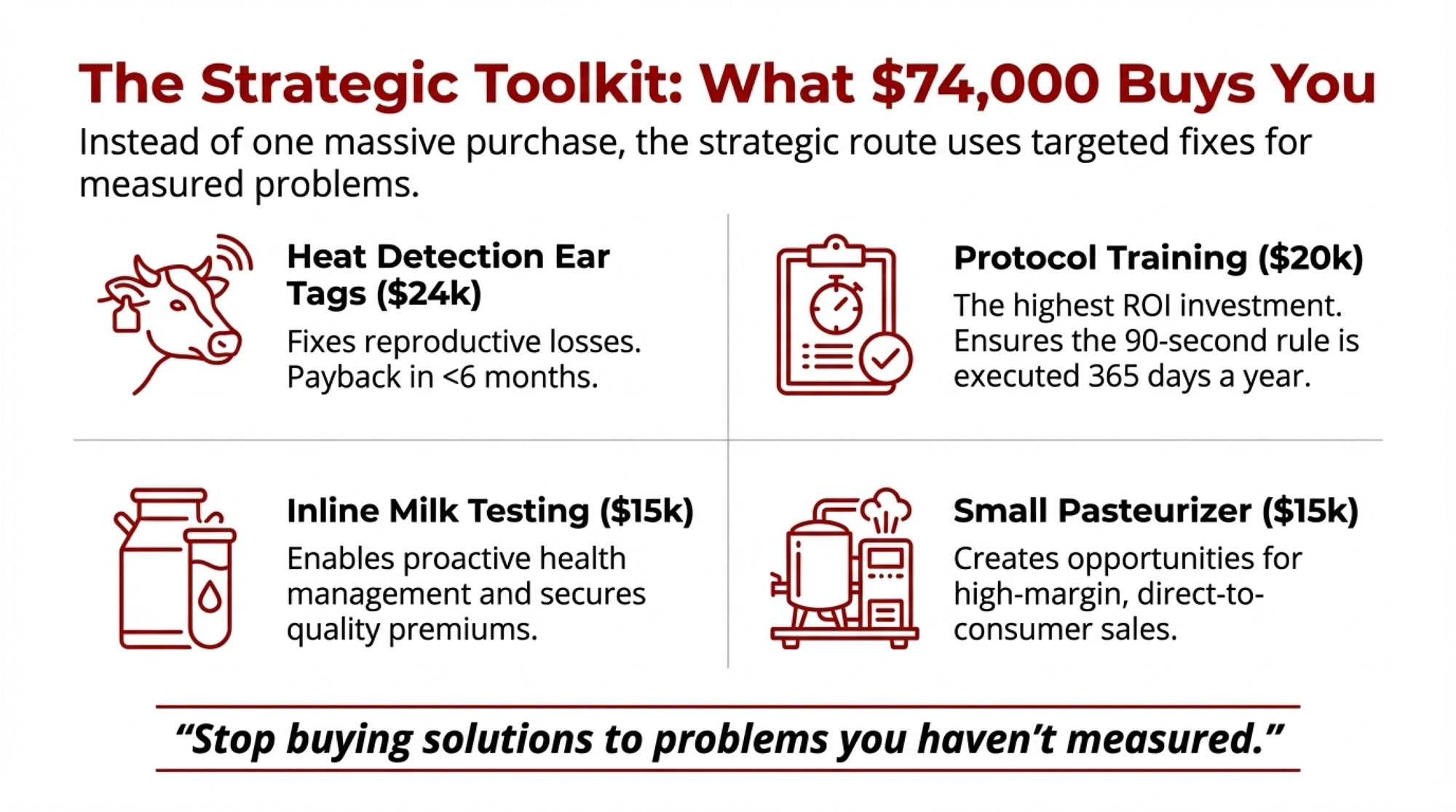
NewsSubscribe
First
Last
Consent

Death of ‘Get Big or Get Out’? Why Tech-Savvy 500-Cow Dairies Are Outperforming Mega-Farms

Does thinking bigger always mean better profits in dairy? The numbers say otherwise, and it’s shaking up everything.

Here’s what’s really happening: The dairy industry isn’t just consolidating—it’s splitting into two completely different businesses. Mid-sized farms with the right tech stack are finding ways to compete that have nothing to do with herd size. And the economics are proving that smarter, not bigger, is becoming the key to long-term profitability.

You know what I keep hearing at every farm meeting from here to Wisconsin? Guys running 400 to 600 cows are asking if they should just throw in the towel. They see these mega-dairies popping up like grain elevators across the countryside and figure their number’s up.

But here’s what’s got me scratching my head—some of the sharpest operators I know, the ones milking that sweet spot of 400 to 600 cows, they’re not just hanging on. They’re actually expanding while their bigger neighbors are sweating debt payments and wondering how they’re gonna make the next loan payment.

Something’s shifting in this business, and it’s not what most folks think.

The Numbers Don’t Lie—But They Don’t Tell the Whole Story

Let me throw some data at you that’ll make you sit up straighter than a fresh heifer at her first milking. Between 2017 and 2022, we lost nearly 40% of our dairy farms—dropping from about 39,600 operations to just 24,000 according to the latest USDA Census. That’s not consolidation, that’s a stampede for the exits.

But here’s the kicker everyone’s missing: while all these farms disappeared, milk production actually climbed 5%. How’s that work? Those mega-dairies with 2,500+ cows grew by 16.8% and now control 46% of all U.S. milk production.

Meanwhile, small farms under 100 cows—the ones we used to call the backbone of dairy—they’re down to producing just 7% of the nation’s milk. The middle is getting squeezed tighter than a Jersey’s teats in January.

What keeps me thinking, though: if bigger was always better, why are some of those mid-sized operations I know posting better margins than operations twice their size?

The Real Cost of Going Big—And Why It’s Scarier Than You Think

Now, don’t get me wrong—the big operations do have advantages. They get better deals on feed, which still eats up about 60% of what we spend, according to the latest ERS data. And with labor costs hitting $53 billion industry-wide, every efficiency matters.

But here’s where the math gets ugly fast. With milk prices bouncing around $21 to $23 per hundredweight, margins are thinner than skim milk. One hiccup—market drop, feed spike, labor shortage—and suddenly you’re looking at red ink that could drown a Holstein.

As producers often describe the challenge, expansion can feel like hooking a boat anchor to your tractor—sure, you’re moving, but good luck stopping when conditions change. The real cost isn’t just the upfront capital. We’re talking multi-million-dollar investments with 7-10 year payback periods, assuming everything goes perfectly. And when’s the last time everything went perfectly in dairy?

The Tech Revolution That’s Changing Everything

Here’s where things get interesting, and I mean really interesting. Robotic milking isn’t just for the deep-pocket operations anymore. Approximately 5% of U.S. dairies currently utilize robots, with adoption rates even higher in Canada. These systems cut hands-on milking labor by 30-40%—and that’s not just convenience, that’s a game-changer for family operations.

I was talking to a producer from central Wisconsin at a field day last summer. He told me, “When that storm knocked out power at 2 a.m. twice last week, I didn’t lose sleep worrying about milking. My robots picked up right where they left off when the lights came back on.”

Cloud-based management platforms like Ever.Ag are helping farms save on transport costs and cut administrative time significantly. Now, company-provided data should always be taken with a grain of salt, but reports from the field suggest the efficiency gains are real.

Real Numbers from Real Farms

Consider this common scenario based on figures from farm financial consultants:

Case Study: 420-Cow Wisconsin Operation

  • Pre-technology: $18.50/cwt cost of production
  • Post-technology (robotics + precision feeding): $16.80/cwt cost of production
  • Annual savings: $95,000
  • Technology investment: $180,000
  • Payback: ~22 months

Compare that to their neighbor, who expanded from 300 to 800 cows:

  • Capital investment: $1.8 million
  • Current debt service: $22,000/month
  • Breakeven milk price: $19.20/cwt (versus market average $21.50)
  • Financial stress level: Through the barn roof

The smart money appears to be going toward making existing operations more efficient rather than simply expanding them.

Butterfat, Protein, and the Premium Game

Here’s something that’s caught my attention at the milk plant lately. Component levels are creeping up—protein’s averaging 3.32% nationally, butterfat’s hitting 4.23%. That matters because specialty processors and cheese makers pay premiums for those higher numbers.

Take this past spring in the Upper Midwest. We had three straight weeks of sideways rain that turned every field road into a mud wrestling match. The operations I know that were nimble enough to adjust rations daily—tweaking for muddy conditions, stressed cows, delayed feed deliveries—they maintained production while some of the bigger operations with rigid feeding protocols struggled to adapt.

That agility advantage? It’s real, and it’s valuable.

Learning From Our Neighbors Up North and Across the Pond

What’s happening in Europe is worth watching. European dairies, faced with higher costs and tighter regulations, have been shifting away from competing on volume to focusing on specialty products—artisanal cheeses, premium butter, value-added products.

This has led to significant price premiums for specialty dairy products, with some reports indicating increases of over 15% in recent years. They’ve figured out that winning on dollars per gallon beats winning on gallons produced.

Industry consultants working with Quebec dairies often observe that the farms thriving aren’t the ones producing the most milk. They’re the ones producing the most valuable milk.

The Authenticity Advantage—Why Scale Can’t Buy Trust

Here’s where things get really interesting from a marketing perspective. Big processors are stuck with computer systems that can track millions of gallons but can’t tell you which farm your morning milk came from. These legacy ERP systems—some installed when dial-up internet was cutting-edge—are built for bulk, not stories.

But consumers increasingly want to know their food’s story. That creates opportunities that no scale in the world can buy.

Take Sheldon Creek Dairy up in Ontario—65 homebred Holsteins, on-farm processing, A2 milk that commands premium prices. They’re not competing on volume; they’re competing on trust. Their customers drive past three grocery stores to buy their milk because they know the den Haan family and trust their methods.

That’s an asset you can’t acquire or synthesize, no matter how many thousands of cows you’re milking.

Regulations: The Small Farm’s Secret Weapon

Canadian dairy farmers are dealing with stricter animal welfare standards through the proAction program. Here’s what’s interesting—smaller operations are adapting faster. Installing group housing for calves or providing outdoor access is operationally simpler on a 150-cow farm than across a 10,000-cow operation spread over multiple counties.

And those welfare improvements aren’t just compliance costs anymore. They’re marketing differentiators. Farms that can credibly demonstrate high animal welfare standards are translating regulatory compliance into premium pricing.

The Agility Advantage Across Seasons:

  • Winter: Smaller facilities are easier to heat, monitor, and maintain when it’s 20 below
  • Spring: Flexible feed sourcing adapts to weather delays and flooded fields
  • Summer: Individual cow monitoring prevents heat stress losses when it hits 95 degrees
  • Fall: Rapid herd management decisions for breeding season

The labor shortage isn’t going away either. Immigration policy changes, demographic shifts, competing industries—they’re all making dairy labor more expensive and harder to find. But technology is changing the labor equation in ways that favor smaller operations.

A well-designed robot system lets a family operation manage 150-200 cows with the same labor that used to handle 80-100 cows. That’s not just efficiency—that’s survival when you can’t find reliable help.

2030: Two Different Games, Two Different Winners

Based on what I’m seeing and recent industry analysis, by 2030, we’ll have two completely different dairy businesses:

The Volume Engine: Mega-dairies grinding out commodities, fighting for cents per hundredweight, competing globally on efficiency and scale. Success is measured in pennies, and survival is dependent on massive scale.

The Value Network: Smaller, tech-savvy operations building brands, commanding premium prices, focusing on customer relationships and product differentiation. Success is measured in dollars per gallon, not gallons produced.

My analysis suggests that value-focused operations could capture up to 30% of industry profits, even while producing significantly less milk volume, based on emerging trends in the premium market. It’s not about the size of the pie slice—it’s about which pie you’re eating from.

So What’s Your Move?

Here’s what it comes down to, and I want you to really think about this: Are you competing in the right game?

If you’re trying to win on volume against operations with 10 times your cow numbers, that’s like bringing a butter knife to a gun fight. But if you’re competing on efficiency, quality, customer relationships, and operational agility… now we’re talking about a different conversation entirely.

Some questions worth pondering over your next cup of coffee:

  • What’s your actual cost per hundredweight, including your time and sanity?
  • Could technology solve your three biggest operational headaches?
  • Do you have customers who would pay more for your milk if they knew its story?
  • What would your operation look like if you optimized for profit per cow instead of total cows?

The Bottom Line

What I’ve learned from talking to producers from here to California is this: the industry isn’t just consolidating—it’s evolving into two different businesses with different rules, different customers, and different definitions of success.

Mega-dairies will continue to dominate commodity markets. That’s their strength, and they’re damn good at it. But that doesn’t mean there isn’t room for well-run, technologically sophisticated, customer-focused operations at smaller scales.

The key is being honest about which game you’re playing and having the tools to win at it.

So next time you’re wondering whether your 500-cow operation can survive, maybe ask a different question: Can you thrive by being really, really good at what you do uniquely well?

Because from where I’m sitting, the answer might surprise you.

Look, I’ve been tracking this industry long enough to know when something real is shifting. The guys winning right now aren’t necessarily the biggest — they’re the smartest about where they put their money.

What’s your take on all this? Are you seeing similar trends in your neck of the woods? Drop us a line—this industry works better when we’re sharing insights instead of keeping them to ourselves.

KEY TAKEAWAYS:

  • Robotic milking systems slash hands-on labor by 30-40% — letting family operations manage 150-200 cows with the same workforce that used to handle 80-100 cows. Start by calculating your current labor costs per cow and compare them against a 22-month tech payback.
  • Cloud-based platforms like Ever.Ag cut operational costs 5-10% — automating everything from route optimization to producer payments. Sign up for demos this quarter while milk prices are stable around $21-23/cwt.
  • Component optimization is your hidden goldmine — with protein averaging 3.32% and butterfat hitting 4.23% nationally, cheese plants are paying premiums for quality. Audit your current component levels and adjust feeding protocols immediately.
  • Regulatory changes favor smaller, agile operations — new animal welfare standards are easier to implement on 150-cow farms than 10,000-cow operations, turning compliance costs into marketing advantages with premium buyers.
  • Technology ROI beats expansion every time — while traditional expansion delivers 8-12% returns over 7-10 years, precision tech investments are hitting 200-300% ROI with paybacks under two years in 2025 market conditions.

EXECUTIVE SUMMARY:

Here’s what’s really happening out there — the old “get big or get out” playbook isn’t the only path to profitability anymore. Yeah, we’ve lost nearly 40% of dairy farms since 2017, but here’s the kicker: some sharp operators running 400-600 cows are posting better margins than operations twice their size. The secret? They’re investing in robotics and precision tech that cuts labor costs by 30-40% and trims production costs from .50 to .80 per hundredweight. Meanwhile, feed costs still account for 60% of expenses, and labor’s hit a $53 billion industry-wide. But instead of just scaling up, these smart farms are scaling smart — using cloud platforms and component optimization to grab premium prices. The industry’s splitting into two games: mega-dairies grinding out commodity volume, and tech-savvy operations capturing 30% of industry profits through value-added production. Bottom line? Your next investment should be in your barn’s brain, not just its size.

Complete references and supporting documentation are available upon request by contacting the editorial team at editor@thebullvine.com.

Learn More:

Join the Revolution!

Join over 30,000 successful dairy professionals who rely on Bullvine Weekly for their competitive edge. Delivered directly to your inbox each week, our exclusive industry insights help you make smarter decisions while saving precious hours every week. Never miss critical updates on milk production trends, breakthrough technologies, and profit-boosting strategies that top producers are already implementing. Subscribe now to transform your dairy operation’s efficiency and profitability—your future success is just one click away.

NewsSubscribe
First
Last
Consent

How Dairy Farmers Are Finally Breaking Free From the 365-Day Grind – and Finding More Time and Profit

What if the key to a family farm’s survival isn’t working harder, but working smarter?

The thing about dairying? It’s a relentless cycle, right? Long hours, early mornings, and weeks that just seem to run into one another. Now, picture sitting on your porch this Labor Day, coffee warm in your hands, kids playing nearby, and the sound of robotic milkers humming instead of you hustling through another 4 a.m. barn routine.

Sounds almost too good to be true? That’s exactly what Tom, a no-nonsense operator milking 180 Holsteins from Wisconsin, thought—until his DeLaval robots proved otherwise.

“Back when I was doing the milking myself, calving seasons meant 75-hour weeks,” Tom shared. “Now? I’m at my daughter’s softball games without worrying about missing a beat. Those robots? They did the heavy lifting.”

He’s not the outlier, either. Farms across the heartland and beyond are waking up to just how much smarter labor and technology can rewrite the dairy grind.

Why So Many Family Farms Are Burning Out

Here’s the thing: the USDA Farm Labor Survey from April 2025 shows dairy operators clocking 45–60 hours weekly—sometimes more as calving hits full throttle. That kind of Grind wears folks thin.

What’s tougher: almost 9 out of 10 family dairies don’t make it past the third generation, according to research from the Farm Bureau and USDA ERS.

But this paints with a broad brush. If you’re up in the Northeast, farms benefit from processors like Cabot Creamery and Agri-Mark, with extension programs run by Cornell delivering succession help that keeps farms in the family longer. Midwest operations, though? They’re facing staggering consolidation pressures.

What’s Eating Your Time at the Barn

Labor Distribution on a Typical 120-Cow Dairy Farm

Milking takes up about a third of your day, no matter how you slice it. That’s four to five hours, easy. Smaller herds—say 50 to 90 cows—are spending well over 26 hours per cow annually, according to University of Wisconsin Extension labor studies. What’s interesting is that those same cows in herds of over 200 take only half that time, thanks to economies of scale. And let’s not forget that we manage approximately 9.45 million dairy cows in the U.S., which is no small feat.

The Labor Crunch is Very Real

Labor woes are no surprise, but the numbers still make you stop and stare. According to the latest USDA Farm Labor report, we’ve lost 3.4% of farmworkers this past year, with dairy farms feeling it more than others.

Hourly wages are averaging $17.55—which is fair, but you can’t put a dollar figure on those early mornings and backbreaking shifts.

Recruiting and training a new hand? Expect to spend over $4,400, including those hours and headaches.

And then there’s the mental health toll. A peer-reviewed study reveals that dairy workers experience sleep disorders twice as frequently as the general workforce, primarily due to the unforgiving pre-dawn milking schedules.

Jake, a fifth-generation farmer from Wisconsin, puts it like this: “Sometimes, it feels like the farm owns me. At home? My family barely sees me.”

Automation: The Game Changer You Didn’t See Coming

Annual Cost Savings from Dairy Farm Automation by Farm Size

Automation isn’t just science fiction anymore. The robotic milking market is projected to balloon to $2.5–$3.4 billion by 2025 and is expected to grow steadily at a 6.4% annual rate through 2035, according to Fact.MR’s comprehensive 2024 analysis.

Look at a documented Wisconsin case study—six DeLaval VMS units on a 450-cow operation. The University of Wisconsin Extension research reported a 5-pound increase in milk production per cow, alongside a reduction in labor hours by half. The farm manager told researchers, “The best part? Being able to catch my kid’s school play without guilt.”

Think Outside the Box—Flexible Milking Pays Off

Now, this is fascinating: John Totty, a New Zealand dairyman, cut his milking sessions from 14 to 10 a week and still saw profits surge by 60%. Oh, and his team saves six hours weekly per worker, too.

The gains come not just from volume, but also from improved cow health and fertility—those butterfat numbers tell a story.

You Can’t Automate Without People

Automation helps, nobody’s denying it. But it’s how you share labor that makes or breaks your sanity.

Irish producers have pooled labor and leaned on trusted contractors, trimming fatigue and boosting efficiency. Data also supports this: shared labor reduces the time spent per cow, keeping farms more agile.

Dollars and Sense of It All

According to the University of Wisconsin’s 2024 enterprise budgets, a hypothetical 120-cow Holstein dairy farm spends approximately $356,000 annually on labor, veterinary care, and equipment maintenance. Smart automation, paired with purposeful health monitoring, can potentially reduce that to $200,000 or less—saving over $150,000, although results vary by individual operation.

Vet costs drop because problems are spotted sooner, while equipment maintenance falls—but watch out, service contracts may push some costs back up.

Cost CategoryBefore AutomationAfter Automation
Labor$190,000$95,000
Veterinary$38,000$25,000
Equipment$52,000$26,000

Note: Annualized Estimated Costs

It’s Not Just About the Bottom Line

Environmental benefits are no joke today. Automated systems cut energy use between 15 to 20%, according to Penn State University’s 2025 life cycle assessment.

Feed’s precision use saves water and lowers methane emissions, too—an environmental triple threat.

Family First—The Heart of the Matter

Family farms adopting a tech-savvy, balanced approach see 23% fewer costly errors and a whopping 340% increase in next-generation farm interest, according to American Farm Bureau Federation research.

One Vermont producer told me, “It wasn’t just the cows that got automated—automation saved my marriage.”

The Danger of Rushing In

There’s a reason folks stress ‘fail to plan, plan to fail.’ Penn State Dairy Alliance studies document automation implementation failures ranging from $20,000 to $75,000 per incident, with electrical inadequacy and insufficient training representing the costliest mistakes.

Common pitfalls? Insufficient power, inadequate staff training, and facility layouts that just don’t fit the new tech.

Takeaways? Do it right. Hire the experts. Train your team like your operation depends on it—because it does.

Global Robotic Milking Systems Market Growth Projection (2025-2035)

Is Automation Right for Your Operation?

Look, this isn’t a one-size-fits-all. The systems typically cost $150,000 to $200,000 each, plus upgrades and infrastructure work.

They best fit farms milking 150 cows or more with steady cash flow and tech-savvy staff.

Smaller farms or unconventional setups could start small—with health monitoring or feed push technology—and grow from there.

The 12-Month Roadmap to Freedom

Stepwise 12-Month Roadmap to Dairy Farm Automation Success

Here’s what the best operators do, broken down by stage:

Months 1-3: Rigorous labor tracking, infrastructure assessment

Months 4-6: Install health monitoring, upgrade record-keeping, cross-train staff

Months 7-9: Add robotic milking or automated feeders, staff training in depth

Months 10-12: Optimize, install backups, finally take a real brea

 The Future’s Already Here—Are You In? It’s not coming. It’s humming in barns up and down the continent—from the Finger Lakes to Wisconsin’s Driftless Area.

So, when you grab your next morning coffee, ask yourself: what task, if automated tomorrow, would give you the most breathing room? And if you could take a full week off, what would be the first bottleneck you’d need to address?

Bottom line? The farms that adapt to this stuff are the ones that’ll be around in 20 years. The ones that don’t… well, we both know how that story ends.

What do you think? Worth a deeper conversation?

KEY TAKEAWAYS:

  • Cut labor hours nearly in half with automated milking systems—expect up to $95K in savings on a 120-cow operation. Start by tracking your current labor hours this month.
  • Boost daily milk production by 5 lbs per cow with proven systems like DeLaval VMS—that’s real money in your pocket while you’re working less.
  • Try flexible milking schedules, as seen in New Zealand, which can result in a 60% profit increase and six fewer labor hours per worker per week. Test it on part of your herd first.
  • Use health-monitoring tech to slash vet bills by 34%—catch problems early and save thousands. Install basic monitoring systems as your first step in automation.
  • Understand 2025 market reality: with labor costs through the roof and margins razor-thin, automation isn’t a luxury anymore—it’s survival.

EXECUTIVE SUMMARY:

Look, here’s what’s keeping me up at night: nearly 85% of family dairies don’t make it to the third generation—and that’s absolutely crushing our industry. But here’s the thing… smart operators are flipping the script with automation. We’re talking labor cost cuts of $150,000+ per year, milk production jumps of 5 pounds per cow daily, and get this—flexible milking in New Zealand is boosting profits by 60%. The USDA data and university extension research don’t lie. This isn’t just about fancy tech… it’s about survival. If you’re serious about leaving your kids something worth inheriting, you need to take a look at this.

Complete references and supporting documentation are available upon request by contacting the editorial team at editor@thebullvine.com.

Learn More:

  • 9 Tips for Successfully Managing a Robotic Milking Herd – This article goes beyond the ‘why’ and dives into the ‘how.’ It reveals nine proven strategies for optimizing your robotic milking system, helping you maximize your investment, improve herd health, and avoid common operational pitfalls after installation.
  • The 7 Economic Drivers of Dairy Farming That You Need To Know – To make smart investments, you need to understand the market. This piece breaks down the seven key financial forces shaping dairy profitability, providing the strategic context you need to navigate market volatility and make informed long-term business decisions.
  • Is this the end of the dairy barn as we know it? – Looking beyond current automation, this forward-thinking piece challenges conventional wisdom about facility design and herd management. It explores the next wave of innovation, revealing what the most progressive dairy operations are considering for future growth and efficiency.

Join the Revolution!

Join over 30,000 successful dairy professionals who rely on Bullvine Weekly for their competitive edge. Delivered directly to your inbox each week, our exclusive industry insights help you make smarter decisions while saving precious hours every week. Never miss critical updates on milk production trends, breakthrough technologies, and profit-boosting strategies that top producers are already implementing. Subscribe now to transform your dairy operation’s efficiency and profitability—your future success is just one click away.
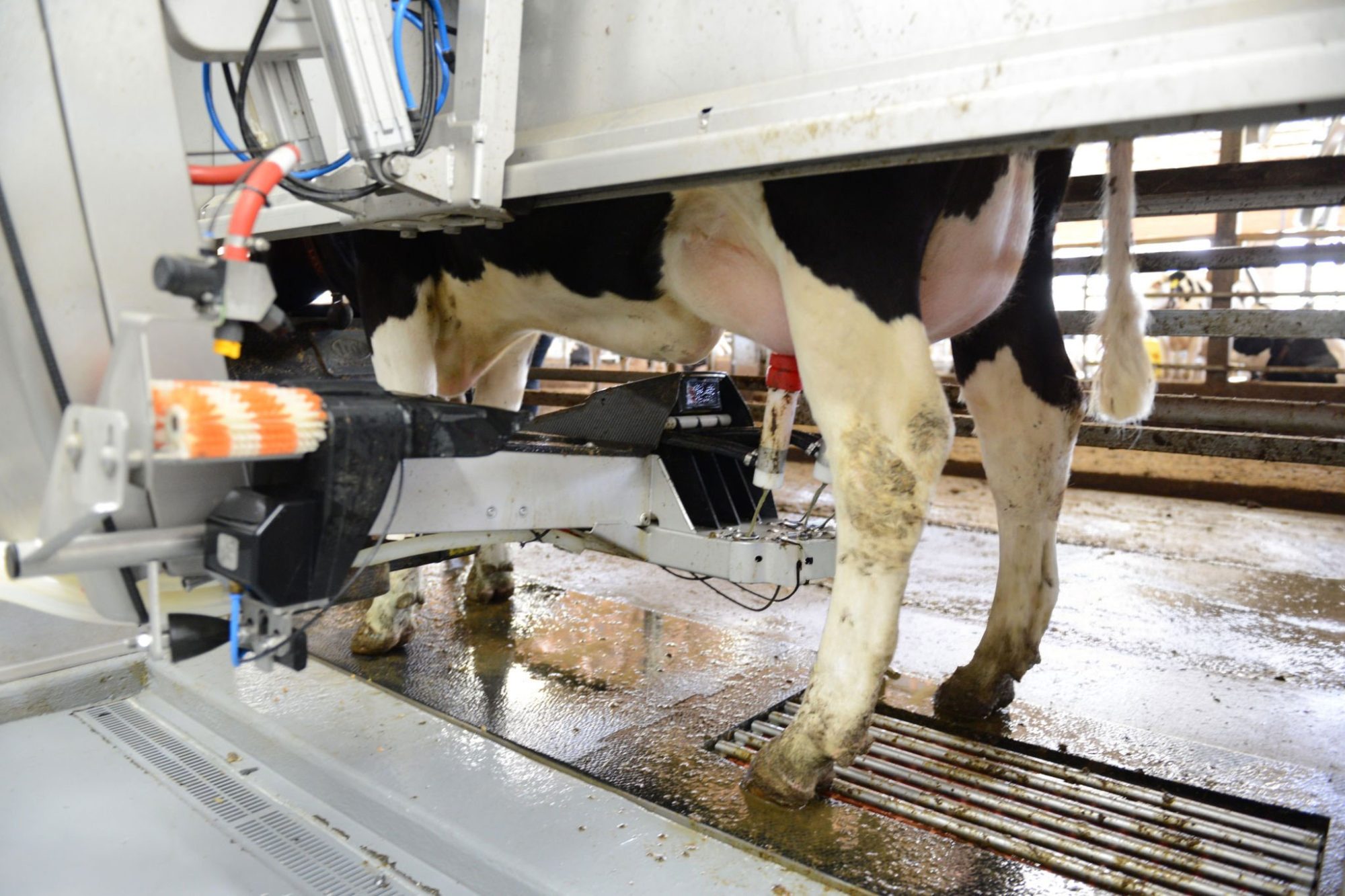
NewsSubscribe
First
Last
Consent

Export Apocalypse: How Three Countries Control Your $8.4B Future (And What Smart Producers Are Doing About It)

China just killed $584M of our dairy exports in 4 months—but smart producers are already pivoting to Southeast Asia’s stable markets.

EXECUTIVE SUMMARY: Look, we’re all hearing about this record $8.4 billion in dairy exports, and yeah… the checks have been good. But here’s what’s keeping me up at night: nearly half of that money flows through just three politically unstable countries—Mexico, Canada, and China. When China slapped us with 125% tariffs earlier this year, we lost $584 million practically overnight. That’s the equivalent of our entire Indonesian market… gone. Wisconsin Extension ran the numbers, and if all three markets tank together? We’re looking at a $4 billion hit annually. The producers who are getting ahead of this mess aren’t waiting around—they’re diversifying into Southeast Asia’s 9.9 billion liter market and investing in robotic milking systems that deliver 12-15% consistency improvements. Indonesia just eliminated 99% of tariffs on our products, and their middle class is paying premium prices for quality. Bottom line: stop betting on politicians and start building export resilience that survives trade wars.

KEY TAKEAWAYS

  • Diversify or die: Southeast Asia imports 9.9 billion liters annually with minimal political drama—contact your co-op’s international division this week to explore Indonesian and Vietnamese opportunities that pay premiums for consistent quality.
  • Technology pays off fast: Robotic milking systems show 12-15% consistency improvements and 5-7 year payback periods for 500+ cow operations—exactly what export buyers demand for zero-residue guarantees and premium contracts.
  • Co-products are serious money: China used to buy 42% of our whey exports before the tariff war—start tracking your co-product income because it’s often 15-20% of your total milk value.
  • Sustainability opens doors: German buyers are already requiring carbon footprint documentation—get your environmental certifications now because companies like Nestlé won’t buy from uncertified suppliers.
  • The math is brutal: If 40% of your revenue depends on Mexico, Canada, and China, you’re overexposed—with feed costs up 19% and milk prices at $22/cwt, you can’t afford to lose export premiums overnight.
dairy exports, dairy farm profitability, robotic milking systems, dairy market diversification, dairy tariff risk

The $8.4 billion export celebration is masking a concentration crisis that could bankrupt leveraged operations overnight. With 48% of exports flowing through three politically volatile countries, savvy producers are already diversifying into Southeast Asia’s stable markets while building technological advantages that withstand trade wars.

You know what struck me about last week’s Wisconsin Milk Marketing Board meeting? Three guys bragging about their August milk checks… and not one of them knew their co-op had quietly canceled whey contracts with China.

Look, I get it. U.S. dairy exports hit $8.4 billion in 2025—that’s a $400 million bump from 2024, and everybody’s feeling good about those numbers. However, what’s keeping me up at night is that half of that money flows through just three countries. Mexico, Canada, and China. And China just hammered us with 125% tariffs that wiped out our entire Indonesian market worth—$584 million—practically overnight.

From the feed stores in California’s Central Valley to Wisconsin’s Fox River Valley, I’m hearing the same story everywhere. Producers expanded based on export projections while trade wars quietly demolished their foundation. This isn’t sustainable, folks.

The Three-Country Trap That’s Got Us All Cornered

Here’s the thing about export dependency that most producers don’t fully grasp—and I’ve been tracking this for months now. Take a typical Central Valley operation milking 850 Holsteins through DFA’s Western Division. Every hiccup in Mexico, Canada, or China hits their milk check directly. “When Mexico sneezes, my milk check feels it. Same with Canada and China,” is what I keep hearing at cooperative meetings.

The numbers don’t lie, and they’re honestly more concentrated than I expected when I first started digging into this: Mexico buys $2.32 billion annually, Canada takes $1.09 billion, and China represents $610 million despite all the current hostilities. Those three countries control 48% of American dairy exports. Nearly half!

University of Wisconsin Extension economist Dr. Mark Stephenson doesn’t sugarcoat it: “The current conflict accelerates structural shifts that permanently reshape global dairy trade flows. Today’s tariff rates are exponentially higher than those in previous disputes.”

What strikes me about this concentration is how vulnerable it makes us:

MarketAnnual ValueSharePolitical Risk
Mexico$2.32 billion28%Border tensions escalating
Canada$1.09 billion13%USMCA disputes ongoing
China$610 million7%Trade war active
Southeast Asia$800 million10%Generally stable
Rest of the world$3.58 billion42%Mixed conditions

The Wisconsin Extension ran a nightmare scenario that honestly shocked me: simultaneous disruption in our top three markets would result in an annual loss of $4 billion. For operations that borrowed big on export projections? That’s not just a bad year—that’s bankruptcy math.

China’s Co-Product Massacre (And Why Most Producers Missed It)

This is where it gets really concerning. I’ve been talking to Wisconsin operations that run 650 Jersey cows, and they’re watching their cooperative whey income just… evaporate. Chinese tariffs exploded from 10% in January to 125% by April 2025. Four months. That’s all it took.

Here’s what most producers don’t track—and this is a big mistake. When you’re making cheese, you create nine pounds of whey for every pound of cheese. Before this trade war, China bought 42% of our whey exports and 72% of our lactose sales. Those co-products… they’re not just byproducts anymore. They’re serious money.

Cornell calculated the damage, and it’s brutal: USDA slashed Class III milk forecasts by 35¢/cwt as these markets collapsed.

The timeline tells the whole story: Source: USDA export data and China’s Ministry of Commerce tariff schedules

PeriodTariff RateMonthly ExportsWisconsin Impact
January 202510%$51 millionManageable strain
March 202534%$33 millionPain begins
April 2025+125%$8 millionMarket death

A 92% collapse in monthly export value in four months. One Wisconsin producer put it perfectly at a dairy meeting: “Never count on a government that changes trade rules faster than Jersey cows change moods.”

Indonesia: Finally, Some Good News

Now here’s where things get interesting—and frankly, more hopeful than I expected. California Dairies Inc.’s operations, which include 1,200 Holsteins, are securing direct contracts with Indonesian processors, thanks to the U.S.-Indonesia agreement that eliminated tariffs on 99% of American dairy exports.

What I’m hearing from Central Valley producer meetings is encouraging: “Indonesia’s middle class wants our quality and pays premiums for consistency.” Indonesia represents our seventh-largest export market, with annual sales of $246 million, and this is just the beginning.

Krysta Harden from the U.S. Dairy Export Council gets it: “This deal gives U.S. dairy companies a fair shot at competing without governments tilting the playing field.”

The fact is, while Indonesia provides a clear win, progress elsewhere remains… complicated.

Europe’s Endless Framework Dance

The August 2025 U.S.-EU trade framework represents some progress toward addressing our $3 billion dairy trade deficit; however, specific tariff reductions and European Commission final approval are still under negotiation. We’ve been down this road before.

National Milk Producers Federation’s August brief captures the frustration perfectly: American producers are “done playing second fiddle in Europe’s rigged system.” I couldn’t agree more.

Asia’s Production Revolution (This Should Terrify Us)

While we’re debating tariffs, Asia has undergone a complete revolution in dairy production. And honestly? We missed it. Asia now makes half the world’s milk—458 million tonnes annually. Half!

China’s 4.8% production growth reached 45.5 million tonnes in 2025, while our growth rate is 0.3% annually. Meanwhile, New Zealand’s production contracted to its lowest level in 30 years. The landscape is shifting faster than most people realize.

Land O’Lakes operations near New Prague, Minnesota, are monitoring a 25% drop in premium powder prices as Chinese domestic production improves. “Used to be, they needed our quality. Now they’re building plants that make ours look dated,” one producer told me recently. That’s the reality we’re facing.

Tech: Your Secret Weapon in This Mess

Here’s where I get excited about our future, though. California Central Valley operations, which manage 1,400 cows using four DeLaval robotic milking systems, are reaping real benefits through export contracts that demand consistent quality specifications. This is happening right now.

The global milking robot market is projected to grow from $3.2 billion to $5.3 billion by 2029, driven by a 10.8% annual growth rate, primarily due to increasing demand for high-quality exports. That’s not just growth; that’s transformation.

University of Minnesota Extension research shows that robotic systems typically deliver payback periods of 5-7 years for operations with over 500 cows. The numbers work.

What’s particularly noteworthy about the tech investment reality: Based on University of Minnesota Extension studies and industry performance data

InvestmentCost RangeQuality BenefitExport Premium
Robotic milking$200-300K/unit12-15% consistency improvement$0.15-$0.20/cwt
Automated feeding$75-150K/system10% nutrition precision$0.08-$0.10/cwt
Sensor monitoring$25-75K/farm20% faster health detectionZero residue guarantee

Sustainability: The New Gatekeeper (Whether You Like It or Not)

Wisconsin operations milking 550 cows through Foremost Farms are losing lucrative German contracts for lacking carbon footprint documentation. “They wanted more paperwork than my banker,” is becoming a common frustration at sustainability meetings.

But here’s the thing—companies like Nestlé and McDonald’s fund sustainability research specifically for supply chain requirements. Premium export buyers want responsible production documentation, not just quality milk. This isn’t going away.

Southeast Asia: The Opportunity Hiding in Plain Sight

While everyone obsesses over Chinese losses, Southeast Asia quietly imports 9.9 billion litres annually with minimal political drama. Philippines, Malaysia, Thailand, Singapore, Vietnam—they offer middle-class growth without trade war risks.

What’s fascinating is that regional self-sufficiency rates stay low through 2030, creating sustained opportunities. This isn’t a flash in the pan.

Here’s how I’d rank export opportunities right now:

MarketSizeGrowthPolitical RiskEntry DifficultyMy Grade
Southeast AsiaLarge+5.2%LowModerateA-
Latin AmericaMedium+3.8%ModerateLowB+
MexicoVery Large+2.1%ModerateLowB
CanadaLarge+0.8%HighVery HighC-
EuropeMassive+1.2%ModerateVery HighC+
ChinaMassiveUnknownCriticalImpossibleF

Focus on A- and B+ markets. Don’t waste 25% of your budget chasing resistant markets—it’s not worth the headache.

What Your Milk Check Actually Shows

USDA forecasts 2025 all-milk prices at $22.00/cwt, up from earlier projections but still subject to trade volatility. The fact is, feed costs increased by 19% from 2019 to 2024 across major regions. Q2 2025 corn averaged $4.85/bushel, up from $4.12 last year. With 16% of U.S. milk exported, trade disruptions have a direct impact on farm profitability.

The export picture by product tells an interesting story:

ProductExport ChangeFarm ImpactCash Reality
Butter+87%Minimal direct benefitCo-ops capture gains
Nonfat dry milk-21%Component price hitLower protein premiums
Whey-19%Co-product income lossReduced milk checks
Specialty cheese+12%High potentialPremium processing needed

Your Action Plan (Don’t Wait on This)

This month, you need to:

  • Calculate export dependency using your cooperative statements
  • Contact your field rep about sustainability certification programs
  • Evaluate robotic milking ROI for your specific herd size
  • Research Southeast Asian opportunities through your co-op’s international division

Next six months:

  • Document environmental practices for premium export buyers
  • Diversify beyond those volatile top three markets
  • Invest in consistent technology that creates export advantages
  • Build relationships in stable, growing regions

The implementation timeline that makes sense:

ActionTimelineInvestmentKey Considerations
Southeast Asian relationships12-18 months$25-50K marketingNeeds cooperative support and cultural understanding
Value-added processing24-36 months$500K-2MMarket demand validation and regulatory compliance are required
Sustainability certification6-12 months$15-30KEssential for premium market access, relatively low risk
Technology upgrades18-24 months$200K-1MROI depends on herd size and management capability

The Bottom Line (And Why This Matters Right Now)

Winners capture premium pricing through documented quality, environmental credentials, and strategic diversification—not waiting for politicians to fix broken relationships.

The $8.4 billion export boom masks a significant vulnerability to concentration that can collapse in the face of political crises. China’s $584 million market loss proves trade relationships disintegrate overnight—faster than most of us anticipated.

However, here’s what gives me hope: Indonesia’s breakthrough and the opportunities in Southeast Asia reward producers who build technological advantages and sustainable practices over those who rely on political dependencies.

Your expansion depends on customers you can serve consistently, not governments you can’t control.

What you need to do this week:

  1. Check your dependency—if 40%+ revenue flows through three countries, you’re overexposed
  2. Document practices—environmental and quality certifications open premium access
  3. Evaluate technology—consistency creates competitive advantages, politics can’t eliminate
  4. Contact your cooperative—international marketing divisions have Southeast Asian contacts ready now

The choice is yours: keep betting on political promises or build export resilience that survives trade wars.

This isn’t doom and gloom, folks—it’s a wake-up call. The producers who act on this now will be the ones still standing when the next trade war hits.

Contact your cooperative’s international marketing division this week. Your future milk checks depend on decisions you make today… and honestly, tomorrow might be too late.

Complete references and supporting documentation are available upon request by contacting the editorial team at editor@thebullvine.com.

Learn More:

  • Robotic Milking Systems: A Game-Changer for Modern Dairy Farming – This article provides a tactical deep-dive into robotic milking, detailing how the technology directly improves herd health, milk quality, and labor efficiency—key factors for securing the premium-paying export contracts mentioned in the main piece.
  • The Genomic Secret: The Untapped Goldmine in Your Herd’s DNA – Shifting to a strategic perspective, this piece reveals how to leverage genomics to build a more profitable and resilient herd, creating the high-component, efficient cows that give you a competitive edge in demanding international markets.
  • Sustainable Dairy Farming: The Future is Green and Profitable – Looking to the future, this article breaks down the practical economics of sustainability. It offers innovative methods for reducing your environmental impact through feed efficiency and management, turning the “gatekeeper” issue into a significant market advantage.

Join the Revolution!

Join over 30,000 successful dairy professionals who rely on Bullvine Weekly for their competitive edge. Delivered directly to your inbox each week, our exclusive industry insights help you make smarter decisions while saving precious hours every week. Never miss critical updates on milk production trends, breakthrough technologies, and profit-boosting strategies that top producers are already implementing. Subscribe now to transform your dairy operation’s efficiency and profitability—your future success is just one click away.
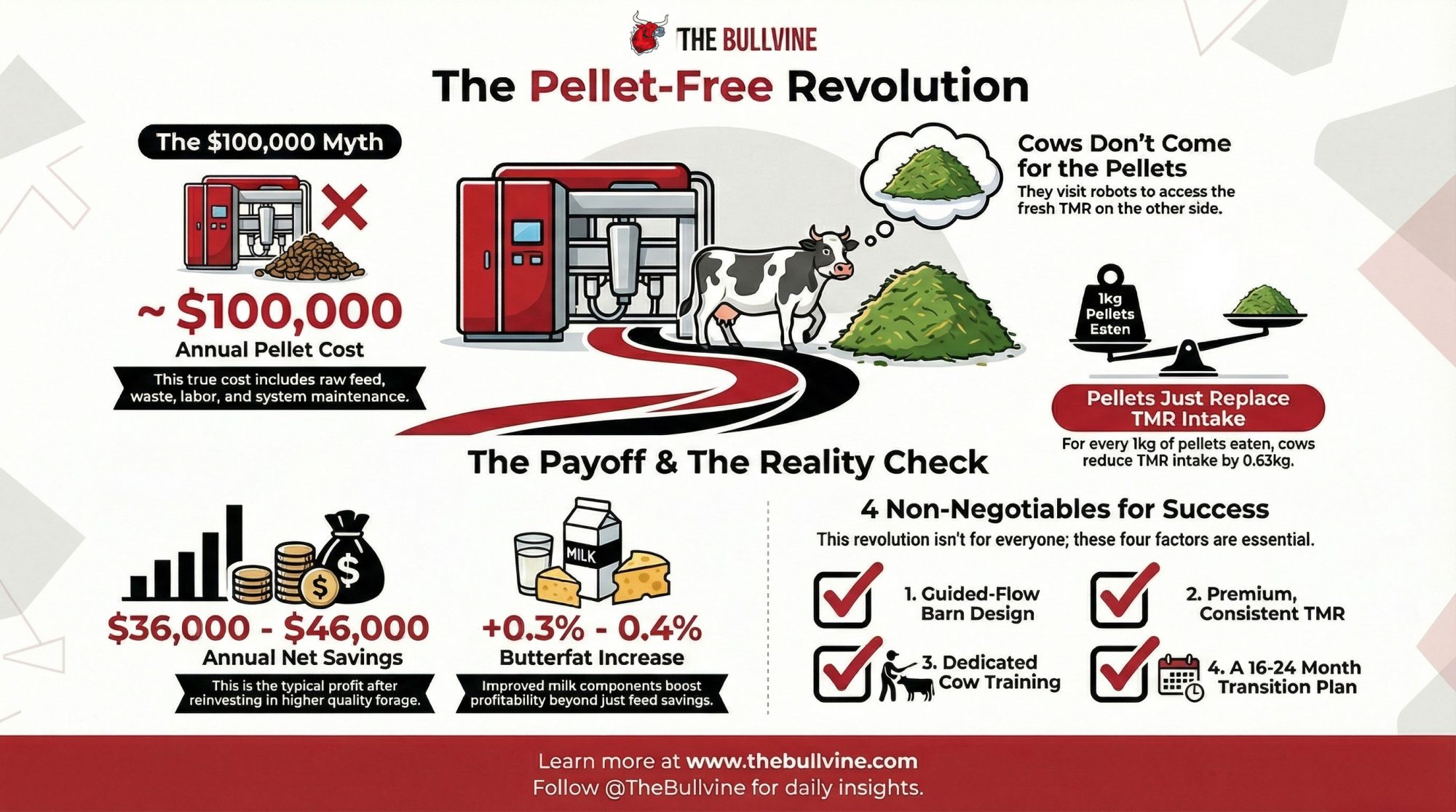
NewsSubscribe
First
Last
Consent

Vermont’s Robot Tipping Point: Automation Is No Longer Optional for Smart Dairies

78% of Vermont dairies milk under 200 cows—perfect for robots boosting feed efficiency and milk yield like never before.

EXECUTIVE SUMMARY: You may be doing things the same way, but robotics, combined with genomic testing, is pushing milk yield and feed efficiency to new heights, driving real profits. Studies show a 60% reduction in milking labor and annual gains of over $115,000 on Vermont dairies. Pair that with feed efficiency improvements from genetics, and you’re looking at a healthier herd and fatter margins. The trend of global farms embracing tech reports stronger ROI amid tight 2025 milk prices and rising feed costs. If you haven’t explored this yet, 2025 is your wake-up call — it’s the ROI and game-changing move your operation needs.

KEY TAKEAWAYS

  • Cut milking labor 60% with robotics — get your barn flow diagnosed by UVM Extension for best fit and efficiency
  • Boost milk yield and feed efficiency with targeted genomic testing — team up with a trusted genetic advisor now
  • Drop somatic cell counts below 200k using robotic health-monitoring tech — catch diseases early to protect profits
  • Prepare financially — robotic systems + barn upgrades cost $185k-$230k + $50k-$75k; phase your purchases to suit 2025 market pressures
  • If your herd is under 200 cows, you’re sitting on the perfect automation sweet spot — now’s the time to act
robotic milking systems, dairy farm profitability, Vermont dairy, labor cost reduction, herd management

Vermont’s dairy industry is at a crossroads. As labor shortages and rising wages squeeze margins, a growing number of producers are discovering that automation isn’t just a luxury—it’s a necessity. This marks a significant milestone for the state’s adoption of robots. With labor costs up and milk margins still tight, the math for robotic systems is finally making sense for many Vermont dairy farmers.

What’s interesting is Vermont’s herd size fits robotic milking systems like a custom glove. A 2024 University of Vermont study shows that about 78% of the state’s dairy farms milk fewer than 200 cows. And since a robotic milker can comfortably handle 55 to 65 cows, most dairies require only 3 or 4 machines.

Milk prices recently averaged $21.50 per hundredweight in July, according to USDA data — a number that’s better than past years but still challenged by inflation and rising feed costs.

The Real Numbers That Matter

So what about the financials? A Penn State Extension study found that robotic milking can reduce milking labor by approximately 60%, with milk quality remaining strong — somatic cell counts typically staying under 200,000. For a 200-cow Vermont farm, that means roughly $85,000 saved on labor, about $45,000 in production gains thanks to healthier cows and more consistent milking, and around $15,000 in operating costs for the machines. That’s a $115,000 annual boost before debt service.

Here’s the catch, though: the payback takes time — usually five to seven years with steady management. And robotic systems don’t come cheap: units run between $185,000 and $230,000 each, with barn retrofits adding another $50,000 to $75,000. Total project costs can exceed $1 million, and with lending rates recently hovering around 7-8%, financing is a significant part of the puzzle.

Vermont Farms Making the Switch

There’s good news on the ground. Ben Williams of Moo Acres in Fairfield spent around $450,000 on two robots. He told folks at UVM Extension how the efficiency gains turned the operation around — “I’m spending less time stressing over milking and more on pasture management and herd health,” he said. The learning curve was real for his team, but the payoff’s starting to show.

Similarly, Four Girls Dairy in Fairfax snagged the 2024 Vermont Dairy Farm of the Year award. Owner Peter Rainville runs 60 cows, averaging 80 pounds daily, by combining robotic milking with solar power and robotic feed pushers to achieve maximum efficiency.

The Vermont Extension estimates that approximately 50 to 70 farms in the state currently use robotic milking, and with labor markets tightening, this number is expected to increase.

The Tech That Keeps Getting Smarter

Now, here’s what’s impressive — the technology behind these robots keeps getting smarter. Health monitoring systems can detect lameness up to 72 hours before it is noticed, using weight and gait sensors. Mastitis detection algorithms identify infections early, which helps maintain butterfat and protein levels — exactly what producers want in their milk checks.

Around here, Lely’s Astronaut A5 is a fan favorite. Its hybrid robotic arm and next-gen teat detection combine precision and speed, while the automatic milk filter saves farmers endless hassle. That little thing alone is a lifesaver on busy days.

But don’t let the tech hype create unrealistic expectations. Vermont’s rural broadband infrastructure remains inconsistent, resulting in delays for remote monitoring and diagnostics. Vermont’s ongoing broadband expansion programs are attempting to close this gap, but they present a significant challenge on farms.

The Financing Hurdle

Financing hits some folks hard and demands serious planning:

  • Most banks want 25 to 30% down on robots, noticeably more than the 15 to 20% common with traditional equipment loans
  • Manufacturer financing options help, but typically come with vendor strings attached

And here’s a curveball — the cultural shift. Moving from hands-on parlor work to watching data dashboards isn’t easy for multi-generational farm families. It’s a mindset change as much as anything.

Not everyone’s convinced the transition makes sense. Some Vermont producers who looked into robots ultimately decided against them. One Franklin County farmer noted, “The numbers looked good on paper, but between the learning curve and financing requirements, we decided to stick with our double-8 parlor. Maybe in a few years, when the technology matures more.”

YearEstimated Robot Farms% of Suitable FarmsTotal Investment
2020154%$3.5M
2022359%$8.2M
20245515%$12.9M
2026 (projected)8523%$19.9M
2028 (projected)12032%$28.2M

Bottom Line

So what’s the takeaway? Vermont dairies are staring down squeezed margins and worker shortages. Robots aren’t a silver bullet, but they offer a path forward for many operations. Start smart: get a professional facility assessment from UVM Extension to evaluate barn layouts, cow flow, and infrastructure. Phased installation can keep the process manageable.

Robots don’t just replace labor — they open the door to better data, healthier cows, and more time to focus on running the farm instead of chasing chores.

The question isn’t if automation comes to Vermont dairy, but when. For many operations facing the crunch of rising wages, tight margins, and shrinking labor pools, that moment is now. Those making the move strategically today aren’t just buying equipment — they’re positioning themselves to define Vermont dairy’s competitive future.

Complete references and supporting documentation are available upon request by contacting the editorial team at editor@thebullvine.com.

Learn More:

  • Feeding Strategies for Robotic Milking Success – This article provides tactical, how-to advice on optimizing your feeding strategy to drive robot visits. It reveals practical methods, such as using Partial Mixed Rations and managing bunk space, to increase milk yields and reduce the need for fetching cows, thereby directly impacting daily labor efficiency.
  • Stop Blaming Your Robots: The Million-Dollar Management Mistakes Killing Your Dairy’s Profitability – Go beyond the hardware to uncover the strategic management factors that separate successful robotic farms from the rest. This piece offers a critical examination of the long-term trends and economic realities of automation, illustrating how effective management can significantly enhance ROI and improve performance.
  • The Robotics Revolution: Embracing Technology to Save the Family Dairy Farm – This article offers a future-focused perspective on how technology is evolving, from AI-driven health monitoring to predictive maintenance. It showcases emerging innovations that will further improve efficiency and sustainability, providing insights into the next wave of opportunities for your operation.

Join the Revolution!

Join over 30,000 successful dairy professionals who rely on Bullvine Weekly for their competitive edge. Delivered directly to your inbox each week, our exclusive industry insights help you make smarter decisions while saving precious hours every week. Never miss critical updates on milk production trends, breakthrough technologies, and profit-boosting strategies that top producers are already implementing. Subscribe now to transform your dairy operation’s efficiency and profitability—your future success is just one click away.

NewsSubscribe
First
Last
Consent

The $2.8 Billion Question Every Dairy Producer Must Answer: How Lactalis Just Changed the Game

Think co-op loyalty pays? Lactalis just proved corporate processors can outbid tradition. Time to shop your milk?

EXECUTIVE SUMMARY: Look, I’ll be straight with you over this coffee—the old way of thinking about processor relationships just died. While most producers are still married to their co-op out of habit, Lactalis dropped $2.8 billion to control the entire value chain from your bulk tank to the grocery shelf. Here’s what that means for your operation: we’re facing 5,000 unfilled dairy jobs by 2030, feed costs that’ll swing 12% based on your protein strategy, and component premiums that could put an extra $0.85 per hundredweight in your pocket if you play this right. The global consolidation isn’t some distant threat—it’s reshaping who gets paid what for milk right now, and operations maintaining multiple processor relationships are keeping margins above regional averages while others watch profits shrink. This isn’t about being disloyal to your co-op; it’s about positioning your farm to thrive when fewer buyers control more of the market. You need to diversify your milk marketing yesterday, because the producers who adapt to this new reality will be the ones still farming profitably five years from now.

KEY TAKEAWAYS

  • Cut labor dependency by 40% through strategic automation investments With robotic milking systems delivering 18-24 month paybacks and 2025’s labor crunch accelerating, contact your equipment dealer this month to evaluate systems that can handle your current volume while reducing your reliance on increasingly scarce workers.
  • Boost your milk check $0.85/cwt through component optimization strategies Track your butterfat and protein percentages monthly instead of yearly—operations focusing on genetic selection for components are capturing premiums that commodity-focused farms are missing in today’s processor-driven market.
  • Diversify processor contracts to capture 15-20% higher margins Start conversations with at least two additional milk buyers before year-end—farms maintaining multiple processor relationships are outperforming single-buyer operations as consolidation reduces competition and bargaining power.
  • Lock in feed efficiency gains worth $1,200+ per cow annually Implement precision feeding systems now while corn prices stabilize around $4.20/bushel—operations optimizing ration delivery are cutting feed waste 12% and improving milk production 3% simultaneously.
  • Position for 2025’s tighter margins through genomic-guided breeding decisions Begin genomic testing this breeding season if you haven’t already—the ROI on better genetic decisions pays back within 18 months as component-based payments become the industry standard.

Look, I’ve been watching consolidation creep through this industry for years, but what just happened with Lactalis… this one hits different. When a French giant drops $2.8 billion to grab Fonterra’s crown jewels—Anchor, Mainland, Western Star, Perfect Italiano—every producer from Wisconsin’s rolling hills to New Zealand’s green pastures needs to wake up.

The Australian Competition and Consumer Commission gave the green light on July 10, and here’s what caught my eye: they found “limited overlap” because Lactalis requires a steady year-round supply, while Fonterra peaks with its spring flush. The timing was also smart. With Australia’s tougher merger laws—developed in response to concerns over market concentration—kicking in next year, getting this deal done now made perfect sense.

But here’s the thing that should keep you up at night… this isn’t just about brands changing hands. We’re watching the reshaping of how milk gets from your bulk tank to the consumer’s fridge.

What Actually Happened—And Why Your Cooperative Loyalty Just Got Complicated

The thing about Lactalis that most producers don’t realize is that They’re not just buying consumer brands—they’re securing the entire value chain. Processing capacity, distribution networks, shelf space… that’s real power in this game.

I was speaking with producers at the recent Wisconsin conference, and the consensus is clear: when processors control premium brands, they control the margins. According to June 2025 USDA data, Class III milk prices reached $18.82 per hundredweight, which is decent, but the real money is downstream.

What strikes me about this deal is the timing with feed costs. The USDA is projecting corn at around $4.20 per bushel, which should ease pressure on your grain bill. But—and here’s the kicker—soybean meal’s still expensive. So yeah, energy costs might drop, but protein? That’s a different conversation entirely.

Here’s where it gets uncomfortable for some of you. Research from Cornell shows that co-ops still pay about $0.20 more per hundredweight when premiums and patronage are factored in. But corporate processors like Lactalis? They’re becoming more savvy about component pricing, and they’ve the downstream margins to support it.

Average Milk Component Premiums per Hundredweight by Processor Type

Are you staying with your co-op out of habit or strategic advantage? Because the game just changed.

The Labor Reality That’s Forcing Everyone’s Hand

What’s happening with labor right now is… well, it’s forcing decisions nobody wanted to make. We anticipate 5,000 unfilled dairy positions across North America by 2030, and that’s being conservative. With 51% of the workforce being immigrant labor and political winds shifting… you can see where this goes.

I was at a producer meeting in Minnesota last month—you know how these things go, the real conversations happen over coffee—and automation keeps coming up. Not because producers want robots, but because they have to consider them. Labor’s just not there like it used to be.

And here’s the connection to the Lactalis deal: companies with operational advantages—such as breaking even at 85% plant utilization, compared to the 95% typically achieved by greenfield projects (i.e., brand-new facilities built from the ground up)—can offer better milk prices because they’re more efficient. Current FSA loan rates at 5% for operating loans make scaling up expensive for smaller players.

How the Big Players Are Actually Winning (And What That Means for Your Butterfat Numbers)

What’s critical to understand about companies like Lactalis? It’s not just size—it’s operational sophistication. When you own brands that command premium shelf space, you can afford to pay component premiums that commodity processors can’t match.

I keep hearing about operations getting better premiums for high-protein milk, though the exact numbers vary by region. In the Upper Midwest, some producers are seeing solid component premiums. California’s a different story with transport costs. And if you’re in the Southeast, where processing options are becoming increasingly scarce… geography becomes destiny.

What’s particularly noteworthy is how this plays out seasonally. Spring flush in Wisconsin versus summer heat stress in Texas—processors with diverse geographic footprints can balance these swings better than regional players.

The Global Picture That’s Reshaping Your Local Options

Here’s what keeps me up at night: this isn’t just happening here; it’s happening everywhere. Over in Europe, there’s serious talk about cooperative mergers. And look at what happened with Dean Foods—when processing capacity disappears, producers feel it immediately.

Australia has recently lost processing facilities, which increases transport costs and reduces competitive pressure on milk pricing. It’s basic economics, but the implications for individual operations are real.

What’s fascinating is how different regions are adapting to these changes. New York producers I know are diversifying processor relationships faster than their neighbors. Pennsylvania producers are getting more aggressive about component optimization. And in California? Some are exploring direct-to-consumer options they had never considered before.

The Uncomfortable Question About Your Current Marketing Strategy

Look, I’m going to ask something that might make you squirm: When was the last time you actually shopped for your milk? Not only have you complained about your current processor, but you’ve actually received competing bids?

Here’s the reality—consolidation’s happening whether we like it or not. The question is: how do you position your operation to benefit, rather than just survive?

First, diversify your processor relationships. Don’t put all your eggs in one basket. I know producers with three different processor contracts; the paperwork is a hassle, but the options are priceless when terms shift. Second, you must track your components relentlessly. Are you tracking butterfat and protein on a monthly basis? Because if you’re not, you’re leaving money on the table. While the USDA forecasts all-milk prices around $22.00 per hundredweight for 2025, the real money lives in the premiums.

Projected US All-Milk Price per Hundredweight (2023-2026)

What Nobody’s Talking About (But Should Be)

Here’s something that doesn’t get enough attention in these consolidation discussions: the speed of change is accelerating. What used to take five years in this industry now happens in 18 months.

Take component pricing—it’s not just about hitting targets anymore. The best operations are utilizing genomic testing (costs have dropped sufficiently that mid-sized operations can now justify it) to enhance herd genetics while optimizing nutrition for specific milk composition. We’re discussing 2-3% annual production increases with improved component profiles.

And here’s the thing about feed efficiency… with corn potentially easing but protein feed staying expensive, precision feeding systems aren’t just cutting costs—they’re optimizing for the components that processors are willing to pay for.

Automation isn’t a luxury anymore. With labor shortages accelerating and wage pressures mounting, precision feeding systems and robotic milking are moving from “nice to have” to “necessary to compete.” The ROI calculations have shifted dramatically in the last 18 months.

Your Next 90 Days: A Strategic Action Plan

This Lactalis-Fonterra deal isn’t just about two companies. It’s a blueprint for how the industry’s restructuring is happening, and it’s happening faster than most producers realize.

Weeks 1-2: Assessment Phase

  • Map your current processor relationships and contract terms
  • Calculate your average butterfat and protein percentages over the last 12 months
  • Identify your biggest operational bottlenecks (labor, feed efficiency, or milk quality consistency)

Month 1: Market Diversification

  • Contact at least two additional processors about potential supply agreements
  • Don’t just ask about base prices—dig into their component premium structures, seasonal adjustments, and contract flexibility
  • Begin genomic testing program if you haven’t already (ROI typically 18-24 months)

Month 2-3: Operational Upgrades

  • Evaluate automation opportunities with clear ROI projections
  • If feed costs exceed 55% of your milk income, implement precision feeding
  • If labor costs top $3,000 per cow annually, seriously consider robotic milking systems

The producers who will thrive aren’t necessarily the biggest—they’re the most efficient, adaptable, and strategically positioned.

The Bottom Line

Because here’s what I keep coming back to: the milk business is changing faster than it has in decades. The operations that succeed will be the ones that view consolidation as an opportunity to improve, not just grow larger.

The question isn’t whether consolidation will affect you—it’s whether you’ll be predator or prey. These giants aren’t just buying brands; they’re buying control from your farm all the way to the grocery shelf.

Are you ready to have that conversation? Because the dairy game just changed—and the smart players are already positioning themselves to profit.

Complete references and supporting documentation are available upon request by contacting the editorial team at editor@thebullvine.com.

Learn More:

Join the Revolution!

Join over 30,000 successful dairy professionals who rely on Bullvine Weekly for their competitive edge. Delivered directly to your inbox each week, our exclusive industry insights help you make smarter decisions while saving precious hours every week. Never miss critical updates on milk production trends, breakthrough technologies, and profit-boosting strategies that top producers are already implementing. Subscribe now to transform your dairy operation’s efficiency and profitability—your future success is just one click away.

NewsSubscribe
First
Last
Consent

Why Your Neighbor’s Sleeping in While You’re Still Getting Up for 4 AM Milking

Your poultry neighbor spends 2% on labor. You spend 25%. Here’s why that gap is about to kill traditional dairies.

You know that gut punch feeling when you’re heading out for morning milking and catch sight of your neighbor’s broiler barns? Dead quiet at 5 AM. Twenty-five thousand birds are getting fed, watered, and climate-controlled automatically while he’s probably still in bed with his second cup of coffee.

I’ve been walking through dairy operations across the heartland for thirty years now, and what really gets me about this moment we’re living through… It’s how dramatically the competitive landscape has shifted, while most of us had our heads down, just trying to get through another day. While you were scrambling to cover for another weekend no-show, your poultry and swine neighbors essentially engineered their way around the entire labor nightmare.

Here’s what keeps me up at night—and should keep you up too.

The latest data from Cornell shows that dairy operations are losing 20-30% of their production budget to labor costs. Meanwhile, those automated broiler houses down the road? They’re operating with labor costs that barely register on the spreadsheet—somewhere between 1.6%-2.4% of total expenses. Your pig farming neighbors aren’t much different, with labor costs running at around 9%.

Do the math on a million-pound operation. We’re talking about a $150,000+ annual disadvantage before you even factor in the headaches of finding reliable help who will show up on Christmas morning.

Labor cost as percentage of total production costs in Poultry, Swine, and Dairy sectors

But here’s the kicker that really frustrates me… Recent research from Cornell shows that dairy farms embracing automation are cutting their labor costs by over 21%. Some operations are seeing savings approaching 29%. Yet only about 5% of U.S. dairies use robotic milking systems.

The real stunner? Those automated farms produce 45% of our nation’s milk supply.

The consolidation everyone’s complaining about at every farm meeting? This labor-automation gap is what’s driving it. And it’s accelerating faster than most producers realize.

The Thing About Automation… Each Sector Found Its Own Sweet Spot

What strikes me about what’s happening across livestock right now is that it’s not just technology adoption. It’s a fundamental reshuffling of who stays viable and who gets priced out. Each sector found its own route through this maze, and honestly, some of the strategies were pretty brilliant.

Take poultry—those massive integrators like Tyson and Perdue basically told their contract growers, “Here’s exactly what equipment you’ll install, here’s how you’ll run it, and here’s how we’ll pay for it.” When you control everything from the hatchery to the processing plant, you can mandate technology across thousands of operations practically overnight.

It’s like having a benevolent dictator who happens to love robots… and it created a $2 billion North American automation market faster than most of us could blink.

Market size distribution of automation segments in North America for 2024

This gave equipment manufacturers something dairy has never had: guaranteed demand. They knew they had customers lined up around the block, so they invested heavily in comprehensive, integrated systems. Walk into a modern commercial broiler house today, and you’ll see climate control that adjusts automatically based on outside weather, bird age, and humidity levels. Feed delivery systems that measure rations down to the gram. Manure handling that runs on preset schedules.

The result? While you’re running three shifts to milk 1,200 cows, that broiler complex produces 25,000 market-ready birds with less than one full-time employee per house.

Now, here’s what’s particularly fascinating about swine… they found their automation catalyst in the most unlikely place—animal welfare pressure. As California’s Proposition 12 and EU regulations prompted producers to move away from gestation stalls, they faced a significant management challenge. How do you feed sows individually when they’re housed in groups?

Anyone who’s dealt with aggressive sows at feeding time knows this isn’t some theoretical problem.

Electronic Sow Feeders became the solution. These systems use RFID ear tags to recognize individual sows and dispense customized rations based on body condition and gestation stage. The global ESF market hit $1.31 billion in 2024, with projections showing it’ll reach $2.72 billion by 2032.

There’s this case study that really drove it home for me… International operations installing ESF systems are seeing dramatic workforce reductions while boosting production. One operation cut their workforce from 25 employees to just 10, while increasing output from 25 to 28 weaned piglets per sow annually.

Comparison of ROI and payback periods for key automation technologies in dairy, swine, and poultry sectors (2025 est.)

Those aren’t projections from some sales brochure. That’s real-world results.

Quick Assessment: Where Does Your Operation Stand?

Before we dive deeper, take a moment to assess your current situation honestly:

Labor Dependency Check:

  • How many times in the past six months have you had to milk alone because someone didn’t show up?
  • What percentage of your herd management decisions are delayed because you can’t find reliable help?
  • Are you currently paying over $18/hour for weekend milking coverage?

Technology Readiness Indicators:

  • Do you have consistent internet connectivity in your barn?
  • Can you access and interpret basic production data digitally?
  • Have you visited an automated operation of a similar size in the past year?

Financial Position Reality:

  • Can you access over $ 200,000 in capital for automation investment?
  • Are your current labor costs exceeding $4.00 per hundredweight?
  • Is your debt-to-asset ratio below 30%?

If you answered “yes” to most of these questions, you’re in the automation consideration zone. If not, we’ll discuss your options as well.

What’s Really Going on with Farm Labor (And Why It’s Getting Worse Fast)

This labor situation we’re all dealing with… it’s unlike anything I’ve seen in thirty years of working with producers. And I’m not just talking about the usual gripes about finding good help. The fundamentals have shifted in ways that make automation less of a nice-to-have upgrade and more of a survival strategy.

The Workforce Is Aging Out—Fast

The agricultural workforce is aging out, and we’re not replacing them. According to recent USDA demographic data, the average age of foreign-born farmworkers has increased significantly between 2006 and 2022. That’s not a trend—that’s falling off a cliff.

Meanwhile, immigrant workers make up 51% of the labor on U.S. dairy farms. These farms produce 79% of our nation’s milk supply. Some industry specialists I talk with think the dependency might be even higher—maybe 60% of total production relies on immigrant labor.

Think about that for a minute. More than half our milk supply depends on workers who… well, let’s be honest about the regulatory challenges they face.

The H-2A Program Dead End

However, here’s the regulatory nightmare that really gets under everyone’s skin: the H-2A guest worker program that crop farmers use. It’s legally inaccessible for year-round operations, such as dairy. The program is statutorily designed for “temporary or seasonal” work.

Perfect if you need harvest crews for three months. Completely useless if you need milkers 365 days a year.

It’s like having a fire department that only works weekdays. Doesn’t make sense, but that’s where we are.

This forces dairy into an impossible position: compete for domestic workers who often won’t do the work (and honestly, who can blame them for not wanting to work weekends and holidays?), or rely on a workforce that immigration enforcement can disrupt overnight.

Your automated competitors have largely engineered around this structural flaw in federal policy.

I was speaking with producers in California’s Central Valley last month—dairy wages have reached $22 per hour in some areas, with mandatory overtime requirements. In Wisconsin, I’m seeing $18-20 becoming the norm, especially if you want reliable weekend coverage. At those wage rates, automation payback periods collapse to 3-4 years instead of the traditional 7-10 year projections.

But what really concerns me… what happens when you simply can’t find workers at any price?

That’s not hypothetical anymore. I know of operations in the Central Valley that have had ‘Help Wanted’ signs up for eight months. Eight months. They’re not being picky—they literally cannot find people willing to do the work.

Regional Reality Check: What I’m Seeing Across Different Areas

The labor situation isn’t uniform across dairy regions, and that’s creating some interesting competitive dynamics.

California’s Central Valley: Labor costs are exceeding $ 22 per hour, but large-scale operations can still justify automation investments. The smaller 200-500 cow dairies? They’re getting squeezed hard.

Wisconsin’s Traditional Dairyland: Still seeing some family labor, but the next generation often has other opportunities. Operations that cannot transition to automation are being sold to neighbors who can.

Idaho’s Growth Corridor: New operations are being built with automation from day one. It’s becoming the baseline expectation, not an upgrade.

Texas Expansion Areas: Interesting mix—some massive automated facilities, others still trying to compete on low-cost labor. The automated ones are winning.

Northeast Pressures: Higher land costs, stricter environmental regulations, and premium labor markets are forcing faster automation adoption than anywhere else.

What’s really interesting is how this plays out differently depending on your region’s feed costs, energy prices, and local labor markets. A robotic milking system that pencils out beautifully in Vermont might struggle in parts of Texas where labor is still more readily available.

Here’s What Automation Actually Delivers (And the Numbers Don’t Lie)

Recent research from Cornell on large AMS operations revealed results that genuinely surprised even me. Farms adopting robotic milking systems saw average labor cost reductions of 21% or more, with some operations reporting savings of up to 29%.

But labor savings are just the entry fee. The real money comes from secondary benefits that compound over time.

Let me put some concrete numbers on this production boost everyone talks about. On a 500-cow herd averaging 70 pounds per day, a 7% production increase from more frequent milking generates 2,450 additional pounds daily. At current milk prices of around $22.00 per hundredweight—and everyone knows those prices fluctuate, but let’s use today’s numbers—that’s $490 in extra revenue every single day.

That’s $178,850 annually. That’s not small change. That’s new equipment money.

What’s particularly interesting is that 58% of farms adopting AMS report higher milk production, largely because robotic systems enable more frequent milking. When you transition from twice-daily conventional milking to a voluntary system where fresh cows might get milked 3+ times daily, you’re looking at production increases of 5-10% pretty consistently.

Now, the feed efficiency piece varies more by management, but automated feeding systems deliver TMR consistency that manual mixing simply can’t match. I’ve seen 1,000-cow operations save $50,000 annually simply by achieving better mixing precision and reducing waste. Even small efficiency improvements generate massive returns when you’re talking about large herds.

However, here’s where modern systems really shine—and this is something I’m seeing everywhere now—they transform you from a reactive to a proactive management approach. Health sensors that monitor for mastitis or lameness have the fastest ROI of any dairy tech at just 2.1 years, according to multiple extension studies.

Think about it. One prevented case of mastitis saves $300-$ 500 in treatment costs and lost production. Early lameness detection can save over $1,000 per cow when you factor in treatment, extended lactation impacts, and replacement costs.

As one Wisconsin producer told me after installing his first robots, “It wasn’t just about the labor savings. It was about finally being able to attend my son’s football games on a Friday night.”

The numbers add up fast when you’re managing 500+ animals. But there’s this quality of life component that spreadsheets don’t capture.

Technology Decision Tree: Finding Your Starting Point

Here’s a practical framework I use when talking with producers about where to begin:

If you’re milking 150-300 cows: Start with automated identification and health monitoring systems ($25,000-$40,000 range). These deliver quick paybacks and help you become comfortable with data management before making bigger investments.

If you’re in the 300-600 cow range: Consider partial automation—maybe start with automated feed pushers and sort gates while evaluating AMS for your next facility expansion.

If you have more than 600 cows, you’re likely already considering comprehensive automation. The question becomes integration strategy, not whether to automate.

If you’re planning new construction, Design around automation from day one. Retrofitting is always more expensive and less efficient than purpose-built facilities.

The key insight I’ve learned over the years is that You Shouldn’t try to automate everything at once. Start with your biggest pain point, prove the concept, and then expand systematically.

The Management Reality Nobody Wants to Talk About

This might surprise you, but management quality dramatically affects automation returns. I’ve seen identical AMS technology deliver wildly different results depending on who’s running the operation.

Data from dairy farms using robotic milking reveals a performance gap that’s honestly startling: the top 25% of farms achieve 4,200 pounds of milk per robot daily, while the bottom 25% manage only 2,900 pounds. That’s a 42% difference in output from identical hardware.

The difference isn’t the technology. It’s management practices—optimizing cow flow patterns, interpreting data proactively, and maintaining system efficiency standards. I’ve watched DeLaval units perform like champions on one farm and struggle on another down the road, purely because of management differences.

This reality underscores a crucial point that equipment dealers often overlook: automation isn’t a “plug-and-play” solution that compensates for poor management. Rather, it’s a powerful amplifier of whatever management capabilities you already have.

A skilled manager can leverage the technology to achieve new efficiency levels, while someone less prepared may struggle to achieve positive ROI, given the high capital and maintenance requirements.

The lesson? If you’re considering automation, invest in your management skills first. Learn to interpret data streams, optimize workflows, and monitor system performance metrics. The hardware is just the beginning.

What Separates the Top Performers

I’ve spent time on farms in that top 25% performance category, and here’s what they do differently:

Data Discipline: They check robot performance metrics every morning, not just when something breaks. Weekly performance reviews are standard.

Cow Flow Optimization: They understand that robot efficiency depends on consistent cow traffic patterns. Poor barn layout kills robot utilization.

Preventive Maintenance: They follow the manufacturer’s service schedules religiously and maintain detailed logs.

Staff Training: All staff members who work with the system receive proper training, not just the farm manager. This is huge.

Continuous Improvement: They continually tweak settings, monitor results, and make incremental improvements.

The bottom performers? They install the system and hope it runs itself. Spoiler alert: it doesn’t.

Where Dairy Stands Today—The Great Divide

The automation split is creating what I call a two-tier dairy industry, and the gap is accelerating faster than most people realize. I’ve watched this develop over the past five years, and it’s getting dramatic.

While only 13% of dairy farms utilize computerized milking systems—and that includes everything from robotic milkers to advanced parlor data systems, not just robots—these operations account for 45% of U.S. milk production. The largest operations, those running 2,500 cows or more, are the only farm-size category that’s actually growing in numbers.

What the Leaders Are Banking On

Here’s what these operations are achieving that smaller farms simply can’t match:

They’re running 100-120 cows per full-time equivalent, compared to the industry average of 50-60. They have integrated data systems enabling precision management decisions. They’ve got automated health monitoring, preventing costly treatments before they become expensive problems.

But here’s what’s interesting… it’s not just about size anymore. I’m seeing 400-cow operations outcompeting 1,000-cow dairies that haven’t embraced technology. Efficiency per cow is becoming more important than raw scale.

The Mid-Size Squeeze Gets Tighter

The brutal reality for mid-size operations? Too small to justify massive AMS investments, too large to survive on family labor alone.

These farms—typically ranging from 100 to 499 cows—face an existential squeeze between rising labor costs and their inability to match the efficiency of automated competitors.

Census data tells a stark story. Dairy farms in that 100-499 cow category took a major hit between 2017 and 2022. They’re being squeezed between large, automated operations above and small, family-owned farms below.

But mid-size operations can compete with the right automation strategy. I worked with a 500-cow operation in Wisconsin last year that invested $380,000 in two AMS units, along with automated feed pushers. Their annual labor savings are $85,000, achieved through the elimination of 3.2 full-time positions at $20 per hour.

Break-even projection: 4.5 years, with additional benefits in milk quality scores and automated health monitoring.

The key insight? You don’t need to automate everything at once. Start with the highest-impact investments and build systematically based on your operation’s specific bottlenecks.

Regional Success Stories:

Let me share some specific examples that illustrate different approaches:

Vermont Family Farm (320 cows): Installed two Lely robots in 2023. Went from working 70-hour weeks to having time for their kids’ school activities. Production increased by 8%, while labor costs decreased by 23%.

Texas Partnership (1,200 cows): Built new facility with six robots from day one. Managing 200 cows per full-time employee. Targeting 90,000 pounds per cow annually.

Wisconsin Cooperative (450 cows): Started with automated ID and health monitoring, added robotic feed pushers, now planning AMS installation for 2026. Methodical approach, proving each step.

California Corporate (2,800 cows): Full automation including robotic milking, feeding, and manure handling. Benchmarking at 105,000 pounds per cow with 1.2 full-time employees per 100 cows.

Each operation found their own path, but they all share common characteristics: management commitment to learning new systems, willingness to invest in training, and realistic expectations about implementation timelines.

What’s Coming Down the Pipeline – And It’s Not Science Fiction

Based on what I’m seeing in the field and hearing from equipment manufacturers, we’re headed toward a fundamentally different industry structure by 2035.

The global milking robot market is projected to grow from $3.39 billion in 2024 to $6.03 billion by 2029, with a compound annual growth rate (CAGR) of 15.4%. That kind of growth creates momentum that’s hard to stop.

Technology costs will decline through volume production—we’re already seeing this with health sensors and basic automation components. Management expertise will spread through producer networks and extension programs. Supply chain advantages will increasingly favor operations with consistent, traceable production data.

Here’s the stark reality… operations that delay automation past 2028 may find themselves permanently locked out of competitive markets. That’s not hyperbole—that’s mathematics when you factor in the compounding effects of efficiency gains over time.

The Technology Pipeline Isn’t Wishful Thinking

The next-generation systems currently in beta testing include AI-powered health prediction using multiple sensor inputs (three companies are currently field-testing this), robotic feed mixing and delivery systems (prototypes are running in Wisconsin and California), automated calf raising with individual feeding protocols, and supply chain integration for complete traceability.

However, what excites me most… unlike the early days of AMS, when you had to build everything from scratch, these new systems are designed to integrate with existing infrastructure. That opens up automation opportunities for farms that couldn’t justify a complete facility rebuild.

Emerging Technologies Worth Watching:

AI-Powered Predictive Health: Systems that can predict mastitis 48-72 hours before clinical symptoms appear. One prototype in Iowa claims an 87% accuracy rate.

Robotic Calf Feeders: Automated milk and starter feeding with individual growth monitoring. Early trials showed 15% improvement in weaning weights.

Drone Monitoring: Daily herd health checks using thermal imaging and behavior analysis. Still early, but fascinating potential.

Voice-Activated Management: Systems you can query about specific cows or production metrics using natural language. Sounds gimmicky, but surprisingly practical in field conditions.

The key insight? These aren’t replacing human judgment—they’re amplifying it. The successful farms of 2030 will be those that learn to work with these tools, not against them.

Your Decision Framework—Where Do You Really Stand?

The path forward depends entirely on your operation’s current position and resources. Here’s how successful producers I work with are thinking through this decision—and it’s not always about having the biggest checkbook.

Be Brutally Honest About Financial Readiness

First, financial readiness. You need debt-to-asset ratios below 30%, consistent positive cash flow for at least three years, access to $ 200,000 or more in investment capital (whether in cash or credit), and, most importantly, management capability for learning new systems.

Current labor costs exceeding $4.00 per hundredweight are a red flag. Difficulty finding qualified workers—when was your last successful hire that lasted more than six months?

However, I’ve noticed something interesting… some of the most successful automation adoptions I’ve seen weren’t necessarily those with the most financial resources. They were the ones with the clearest understanding of their current inefficiencies and the strongest commitment to learning new systems.

Different Strategies for Different Farm Sizes

For 200-400 cow operations, I typically recommend starting with health sensors and automated identification systems, with an investment range of $25,000-$ 50,000. Add automated feed pushing and sorting gates next. Only then evaluate AMS adoption after proving you can manage the data and workflow complexity.

Target: 15-20% labor cost reduction in Year 1.

For 400-800 cow operations, The strategy shifts. Implement comprehensive herd management software first—this is your foundation. Install 2-3 AMS units with integrated health monitoring as the centerpiece. Automate feeding and manure handling simultaneously to capture system synergies.

Target: 25-30% labor cost reduction within three years.

Operations with more than 800 cows: You should design new facilities around automated workflows from day one. Integrate all systems through a common data platform; avoid cobbling together different vendors whenever possible. Implement predictive analytics for proactive management decisions.

Target: match industry leaders at 100+ cows per full-time equivalent.

Automation Readiness Checklist

Before you write any checks, work through this assessment honestly:

Technical Infrastructure:

  • Do you have reliable high-speed internet in your barns?
  • Can your electrical system handle additional automated equipment?
  • Is your barn layout compatible with robotic systems, or would you need major modifications?

Management Readiness:

  • Are you comfortable using smartphones and computers for farm management?
  • Do you currently track and analyze production data on a regular basis?
  • Can you commit time to learning new systems and training staff?

Financial Position:

  • Can you access capital without jeopardizing farm financial stability?
  • Do you have a cash flow cushion for the transition period?
  • Have you calculated realistic payback periods based on your specific situation?

Operational Fit:

  • Does your current herd health and fertility performance justify investing in automation?
  • Are your facilities and cow flow patterns compatible with automated systems?
  • Do you have backup plans for system downtime?

If you can’t honestly answer “yes” to most of these questions, focus on getting ready before investing in major automation.

Your 90-Day Action Plan

Here’s the strategic approach I recommend to producers who are serious about making this transition:

Days 1-30: Assessment and Education Phase

Complete an honest assessment of current labor costs, efficiency metrics, and management capabilities. But don’t just look at spreadsheets—actually time your current processes. How long does milking really take? What’s your actual labor cost per hundredweight?

Visit three automated operations similar to yours, not bigger operations that might not be relevant to your situation. Ask about the real challenges, not just the benefits. What would they do differently? What surprised them about the transition?

Get concrete ROI projections from at least two equipment providers. Make sure they’re using your actual numbers, not industry averages.

Days 31-60: Decision and Planning Phase

Secure financing pre-approval if moving forward. This isn’t just about the equipment cost—factor in facility modifications, installation, training, and the cash flow required for the transition period.

Select a technology partner based on service capability, not just equipment price. The cheapest system often ends up being the most expensive when you factor in downtime and poor support.

Begin management training on data interpretation and system optimization. Many equipment providers offer online courses—start now, not after installation.

Days 61-90: Implementation Preparation

Finalize the installation timeline in coordination with seasonal demands. Don’t install robots during your busy season or when you’re short-staffed for other reasons.

Prepare staff for workflow changes—this is often overlooked but critical. Resistance to change kills more automation projects than equipment failures.

Establish baseline metrics for measuring improvement post-installation. If you don’t know where you started, you can’t prove where you ended up.

Common Mistakes to Avoid

From watching dozens of automation implementations, here are the mistakes that kill ROI:

Underestimating the learning curve: Plan for 6-12 months to fully optimize any new system. Budget for this transition period.

Skimping on training: Every person who interacts with the system requires proper training, not just the farm manager.

Poor vendor selection: The cheapest equipment often comes with the most expensive service problems.

Facility compromises: Trying to retrofit systems into poorly designed facilities. Sometimes you need to build properly first.

Unrealistic expectations: Automation amplifies good management but won’t fix fundamental problems.

The successful implementations I’ve seen all share one characteristic: realistic expectations combined with commitment to mastering the new systems.

The Final Reality

After thirty years in this business, I’ve never seen competitive gaps develop this fast or this decisively. At 20-30% of production costs, labor represents your largest controllable expense after feed. Every day you delay automation, competitors bank efficiency advantages that compound over time.

The technology has matured beyond the early-adopter phase. Financing options have expanded with the introduction of USDA programs and equipment leasing. Competitive pressure has reached a critical threshold, where automation transitions from optional to essential for long-term viability.

The automation divide isn’t just about technology—it’s reshaping who survives and who thrives in the dairy farming industry. Non-adopters, particularly small- to mid-sized farms, will face an existential squeeze between rising labor costs and the efficiency advantages of automated competitors. For these operations, the future is stark: automate, find a niche market, or exit the industry.

The producers who’ll succeed are those who view automation as a strategic investment in long-term competitiveness, not just a labor replacement tool. They understand that the real value isn’t in the robots themselves—it’s in the data, efficiency, and management capabilities these systems enable.

That quote from the Wisconsin producer about finally being able to attend his son’s football games is a powerful reminder that automation’s value isn’t just financial—it’s deeply personal. It’s about regaining time, balance, and the ability to live life on your own terms amid the relentless demands of modern dairy farming. The freedom to choose when you work, rather than being enslaved by the twice-daily milking schedule, represents a quality of life transformation that no spreadsheet can fully capture.

The choice is binary at this point: invest in automation now while you can still finance and implement it strategically, or face the inevitable squeeze when circumstances force your hand. The window for strategic decision-making is closing faster than most people realize.

In ten years, will you be the one sleeping in while your robots handle the 4 AM milking? Or will you still be the one driving past automated operations, wondering what might have been?

The technology is here. The financing is available. The competitive pressure is real. Choose wisely, and choose soon.

Questions for Your Next Producer Meeting:

How do your current labor costs per hundredweight compare to these benchmarks? What would a 20% reduction in labor costs mean for your operation’s profitability and growth potential? If reliable labor becomes unavailable at any price, what’s your backup plan?

KEY TAKEAWAYS

  • Labor efficiency doubles with AMS implementation – Automated farms achieve 100-120 cows per FTE compared to 50-60 conventional, translating to direct savings of $1.06-$1.36 per cwt. Start by calculating your current labor cost per hundredweight—if it’s above $4.00, automation pays for itself in 3-4 years at today’s wage rates.
  • Health sensors deliver fastest ROI in the barn – Average payback of just 2.1 years by catching mastitis and lameness early, saving $300-1,000 per prevented case. Begin with automated ID and monitoring systems ($25,000-40,000 range) to get comfortable with data management before bigger investments.
  • Feed efficiency gains compound rapidly at scale – Automated feeding systems reduce waste by 25% while improving TMR consistency, generating $50,000+ annual savings on 1,000-cow operations. Install robotic feed pushers first—they have a 2.1-year payback and integrate easily with existing systems.
  • Production increases of 5-10% are standard with robotic milking – 58% of AMS adopters report higher milk yields due to more frequent voluntary milking. On a 500-cow herd averaging 70 lbs/day, that’s an extra $178,850 annually at current milk prices—enough to justify the technology investment alone.
  • The competitive gap widens daily in 2025 – Operations delaying automation past 2028 risk permanent lockout from competitive markets as efficiency advantages compound. If you’re planning new construction, design around automation from day one—retrofitting costs 40% more and delivers inferior results.

EXECUTIVE SUMMARY

Look, I’ve been walking dairy operations for thirty years, and I’ve never seen anything like what’s happening right now. The automation divide isn’t just changing the game—it’s completely rewriting who survives in dairy farming. Here’s the brutal math: while you’re bleeding 20-30% of your budget on labor costs, automated poultry operations run at 1.6-2.4%. That’s a $150,000+ annual disadvantage on a million-pound operation before you even factor in the headache of finding reliable weekend help. Cornell’s latest research shows farms embracing robotic milking are cutting labor costs by over 21%, with some seeing savings approaching 29%. Meanwhile, those automated operations are managing 100-120 cows per full-time employee versus your 50-60. The kicker? Only 5% of US dairies use robotic systems, but they’re producing 45% of our nation’s milk supply. The window for strategic automation decisions is closing fast—and honestly, you can’t afford to wait much longer.

Complete references and supporting documentation are available upon request by contacting the editorial team at editor@thebullvine.com.

Learn More:

Join the Revolution!

Join over 30,000 successful dairy professionals who rely on Bullvine Weekly for their competitive edge. Delivered directly to your inbox each week, our exclusive industry insights help you make smarter decisions while saving precious hours every week. Never miss critical updates on milk production trends, breakthrough technologies, and profit-boosting strategies that top producers are already implementing. Subscribe now to transform your dairy operation’s efficiency and profitability—your future success is just one click away.
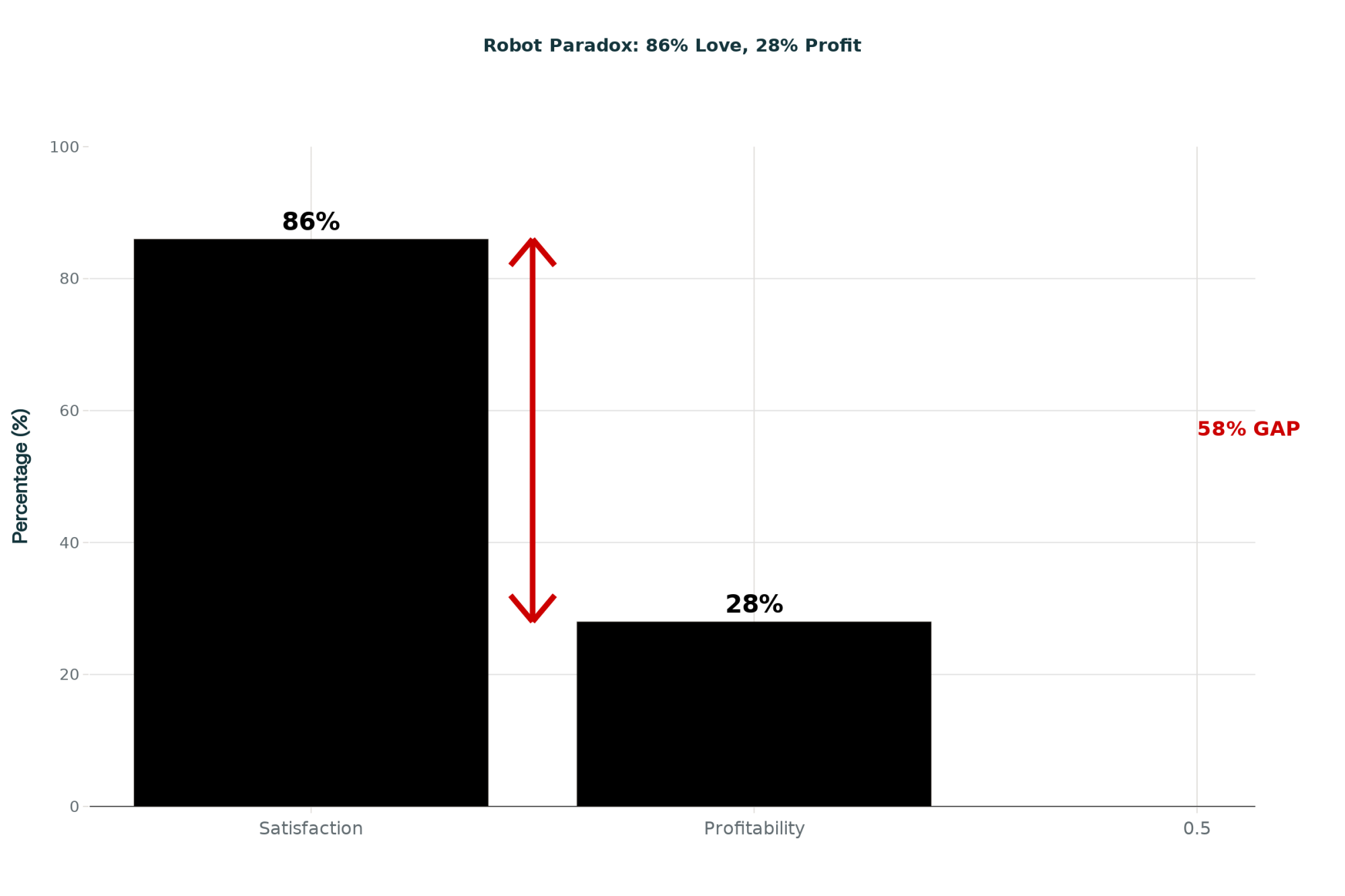
NewsSubscribe
First
Last
Consent

The Land Value Wake-Up Call Every Dairy Producer Needs to Hear

Everyone’s calling land values “stable” but your banker’s asking for more collateral. Something doesn’t add up.

Executive Summary: Look, I’ve been watching this land market closely, and there’s a story here that affects every dairy operation in America. The “stable” farmland values everyone’s talking about are being propped up by one-time government disaster payments—not actual farm profitability. We’re talking about $33.1 billion in temporary support that won’t be there next year, while actual cash receipts from crops and livestock are dropping by $1.8 billion.Meanwhile, Federal Reserve surveys show loan repayment rates at their lowest since 2020, and bankers are demanding more collateral across all agricultural districts. For dairy producers, this means feed costs are climbing 5-7% while the land that grows your corn and hay is sitting on shaky financial ground. The smart money is already shifting—South Dakota’s up 11% while Iowa’s down 3% for the second straight year.Here’s what this means for your operation: now’s the time to shore up working capital and get real about your expansion plans before that 2026 “cliff effect” hits.

Key Takeaways

  • Credit’s Getting Tight—Act Now: Agricultural lenders are seeing their worst loan performance since 2020, with 60% reporting lower farm income than last year. Get ahead of this by having that honest conversation with your banker about your working capital without counting on government payments. Those who wait might find themselves scrambling for operating loans at higher rates.
  • Feed Cost Reality Check: With seed prices climbing 5-7% and fertilizer vulnerable to geopolitical shocks, your 2025 feed budget needs serious attention. Start locking in hay contracts now and consider diversifying your feed sourcing—operations in Wisconsin are seeing more stable costs than those in New York where alfalfa’s running $60-90 more per ton.
  • Regional Arbitrage Is Real: While Iowa corn ground drops 3%, livestock-heavy regions like South Dakota are up 11%. If you’re in a dairy-dense area, your land values might hold better than row-crop regions, but don’t count on it lasting. Use this window to refinance or consider strategic sales of non-core assets.
  • Technology Investment Window: With labor costs hitting $22/hour for milking and a 14% annual growth in robotic milking systems, now’s the time to evaluate automation. A $200,000 robot that eliminates 1.5 FTE positions pays for itself in 3.5 years—and that’s before you factor in the labor shortage getting worse.
  • The 2026 Cliff Effect: Those massive government payments propping up farm income disappear next year. Smart operators are using this temporary cash flow boost to pay down debt and build reserves, not fund expansion. Calculate your true cash flow without government support—that’s your real financial picture.

You know that feeling when you’re at a dairy conference and someone mentions land values, and suddenly everyone gets quiet? Well, I’ve been digging into what’s really happening with farmland prices, and… let’s just say the conversation we’re not having is the one we need to have.

Here’s the thing about farmland values right now—everyone keeps using that word “stable,” but when I look at the numbers, I’m seeing something that looks more like a house of cards than solid ground.

I was just talking to a producer from Iowa last week, and he mentioned something that really stuck with me. His neighbor’s land sold for about 15% less than what similar ground brought two years ago, yet the headlines still claim market stability. Made me wonder—what story are we actually telling ourselves about where this market is headed?

For us in the dairy business, this isn’t just another market story. It’s about understanding whether the ground under our feet—literally and figuratively—is as solid as everyone’s saying it is.

The Illusion of Stability

The thing about market stability is that it’s not always what it seems. When I began examining regional data, the picture became significantly more complex than the national averages suggest.

Take Iowa, for instance. This is supposed to be the bellwether for farmland values, right? According to Farm Credit Services of America’s latest benchmark data, Iowa land values have decreased by 3% year-over-year, marking the second consecutive year of declines. Meanwhile, if you’re up in South Dakota, you’re seeing a completely different story—values there are up over 11%, driven mostly by strong demand for pasture and ranch land.

What strikes me about this regional split is how much it mirrors what we’re seeing in the dairy industry itself. If you’re in a livestock-heavy area, you’re probably feeling pretty good about your position right now. Strong consumer demand for dairy products, combined with relatively tight supplies, is creating a financial cushion that crop-heavy regions simply don’t have.

But here’s where it gets interesting—and a little scary. The USDA’s Economic Research Service released its February 2025 farm income forecast, showing what appears to be good news on paper. However, when you break it down, it’s both fascinating and concerning.

Regional farmland value changes reveal stark differences across the Midwest and Plains states in 2025, with traditional corn belt states declining while livestock-focused regions surge ahead

Stronger farming operations aren’t driving the dramatic increase in projected farm income. According to the USDA data, actual market-based cash receipts from crops and livestock are expected to decline. The entire income boost stems from a massive surge in direct government payments—specifically, billions in ad hoc disaster assistance, primarily from the Emergency Relief Program (ERP), Supplemental Disaster Relief Program (SDRP), and other congressional disaster assistance programs covering prior-year losses.

Regional farmland value changes reveal stark differences across the Midwest and Plains states in 2025, with traditional corn belt states declining while livestock-focused regions surge ahead.

Now, I’m not saying these payments aren’t needed. Many producers have been severely impacted by weather and market conditions over the past couple of years. However, here’s what keeps me up at night thinking about it: these are one-time payments, not recurring income streams.

The Real-World Squeeze

Here’s what’s really squeezing today’s producers: a one-two punch that’s hitting operational cash flow from both sides.

First, let’s talk about input costs. Despite some easing from the record highs of 2022, we’re still dealing with elevated production expenses. Industry analysts are projecting that seed costs will continue their upward trend, with an expected increase of 5-7% in 2025. Fertilizer prices, while stabilized from their peak, remain vulnerable to geopolitical shocks. And natural gas prices—critical for nitrogen fertilizer production—are expected to see significant increases this year.

What’s interesting is how this plays out differently depending on where you’re farming. I recently spoke with a producer in Wisconsin, and he mentioned that their local feed costs have remained relatively competitive compared to other regions. But if you’re farming in upstate New York, you’re dealing with alfalfa costs that can run $60-90 per ton above Iowa levels, which really adds up when you’re feeding 1,500 head.

Then there’s the labor crisis. This isn’t just about finding seasonal help anymore—it’s become a structural problem. Industry surveys indicate that labor shortages are now impacting over 60% of large-scale agricultural producers. I was just at a farm in Pennsylvania where they’re paying $22 an hour for milking labor, when they can find it. That’s nearly double what they were paying five years ago.

The demographic trends driving this are unlikely to reverse anytime soon, either. Rural populations are declining, birth rates are lower, and we’re dealing with a more restrictive immigration policy environment that limits the flow of workers who have historically been essential to the agricultural workforce.

A producer I know in Nebraska put it this way: “When you can’t find help and feed costs keep climbing, something’s got to give. And usually, it’s your margins.”

The Financial Consequences

While land values are hanging in there—at least on paper—the credit markets are telling a completely different story. And this is where the rubber meets the road for dairy operations.

Federal Reserve agricultural credit surveys from multiple districts are reporting a consistent pattern: falling loan repayment rates, increasing loan renewals and extensions, and growing demand for operating loans at the highest levels since 2016.

The Chicago Fed’s latest AgLetter survey indicates that the index measuring loan repayment rates has fallen to its lowest level since the first quarter of 2020. The Kansas City Fed reported that 60% of lenders in their district observed lower farm income than a year prior, and the share of lenders requiring increased collateral has doubled.

What’s particularly troubling is what’s happening with working capital. In the Minneapolis Fed’s recent survey, one Wisconsin banker summed it up: “Working capital is stretched thin across the board. Many producers are carrying over debt they can’t comfortably service with current operational cash flow.”

For dairy operations specifically, this credit tightening is hitting at a time when we’re already dealing with elevated feed costs and labor shortages. When your banker starts asking for more collateral, that’s not a good sign for the underlying health of your operation.

I’ve been discussing this with lenders, and they’re noticing something interesting. The producer looks at their 2025 statements, sees those big government checks, and feels financially secure. But the banker? They’re examining the underlying operational cash flow, and they’re becoming nervous.

This creates a dangerous dynamic where farmers might feel optimistic about expanding or refinancing based on their temporarily improved balance sheets, but lenders are unwilling to underwrite loans based on non-recurring income. That’s a recipe for a credit crunch.

The Great Divide

As if the economic pressures weren’t enough, the adoption of technology is creating a growing gap in the dairy industry—and it’s accelerating due to the factors we’ve just discussed.

The global milking robot market is experiencing rapid growth, with a compound annual growth rate of approximately 14%. What’s driving this isn’t just convenience—it’s necessity. Research from dairy automation studies suggests that these robotic systems can reduce labor costs by 15-25% while enhancing milk quality and improving cow comfort.

I visited a farm in Wisconsin last month where they installed their third robot system. The owner told me something that really stuck: “It’s not about the technology being fancy—it’s about being able to maintain consistent milking schedules when good help is impossible to find.”

The economics are compelling. A modern robotic milking system, which costs $200,000 and eliminates 1.5 full-time positions paying $40,000 annually, breaks even in approximately 3.5 years, excluding the value of improved milk quality, reduced labor management stress, and operational flexibility.

However, what concerns me is that this technological shift is fundamentally altering farm balance sheets and increasing demand for specialized financing. The operations that can afford these investments are gaining competitive advantages that compound over time.

It’s not just about milking robots either. Automated feeding systems, environmental monitoring, and precision agriculture technologies—these are all becoming essential tools for competitive operations. The farms that can make these investments are pulling away from those that can’t.

Due to the financial pressure we discussed earlier, a clear divide is emerging between operations that have the capital to invest in labor-saving technology and those that’re struggling to maintain basic operations amid rising costs. This becomes a forward-looking analysis of who will win in the future.

Actionable Advice

So, where does this leave us? If you’re running a dairy operation, you’re probably wondering how to navigate all this uncertainty. Here’s what I think you need to do:

Immediate Actions (Next 90 Days):

  • Treat any recent government payments as windfalls, not recurring income
  • Calculate your working capital position without those government payments to see your true operational health
  • Have frank conversations with your banker about their outlook and requirements
  • Focus relentlessly on operational efficiency—optimize input usage, negotiate feed costs, maximize production per cow

Strategic Moves (Next 6-18 Months):

  • Evaluate automation investments seriously, especially if you’re well-capitalized
  • Consider strategic asset sales if you’re nearing retirement or own non-core assets
  • Build cash reserves and strengthen your balance sheet while the “stable” market window exists
  • Pay down high-interest debt using any available capital

Why This Urgency Matters—The 2026 Cliff Effect:

Here’s what really concerns me about the next 18 months: the “2026 cliff effect.” Those massive disaster payments propping up farm income in 2025 aren’t recurring. When that liquidity gets withdrawn from the system, the market will be forced to stand on the weakened foundation of its operational cash flows.

If there isn’t a significant improvement in commodity prices or a reduction in input costs, we could see a severe test of financial resilience that triggers a correction in land values. The trend of regional divergence is expected to continue and likely intensify.

The Bottom Line:

The dairy industry is at an inflection point, and the decisions we make in the next 18 months will determine who’s still farming in 2030.

Government payments and constrained supply prop up the “stable” land values we’re seeing. The underlying operational fundamentals—the ability to generate consistent cash flow from farming operations—are under pressure.

For dairy producers, this creates both risk and opportunity. Well-positioned operations will be able to expand through acquisition as less-efficient operations exit the industry.

I’ve seen too many sharp dairy producers caught off guard by transitions like this. The warning signs are there for those willing to look. The producers who thrive in the next five years won’t be the ones who got lucky—they’ll be the ones who saw the writing on the wall and acted with discipline.

What’s your plan when the government payments stop coming? How’s your working capital looking without those one-time checks? Can your operation generate positive cash flow based purely on milk sales?

These aren’t comfortable questions, but they’re the ones we need to be asking. The market is changing under our feet, and your readiness to adapt will determine whether you’re positioned for the opportunities ahead or caught off guard by the challenges.

Because when the dust settles—and it will—the operations that are prepared will be the ones that come out stronger. The question is: are you one of them?

Complete references and supporting documentation are available upon request by contacting the editorial team at editor@thebullvine.com.

Learn More:

  • Strategies to Boost Cash Flow on Your Dairy Farm – Reveals practical methods for optimizing feed management, maximizing milk production, and diversifying revenue streams to immediately strengthen your operation’s financial position before the 2026 cliff effect hits.
  • US Dairy Market in 2025: Butterfat Boom & Price Volatility – Demonstrates how to capitalize on record-high butterfat levels while protecting profits through strategic risk management tools, offering critical market insights that complement land value considerations for expansion decisions.
  • Embracing Technology to Save the Family Dairy Farm – Provides comprehensive analysis of robotic milking systems’ ROI potential and implementation strategies, showing how automation investments can deliver the 15-25% labor cost reductions discussed in the land value analysis.

Join the Revolution!

Join over 30,000 successful dairy professionals who rely on Bullvine Weekly for their competitive edge. Delivered directly to your inbox each week, our exclusive industry insights help you make smarter decisions while saving precious hours every week. Never miss critical updates on milk production trends, breakthrough technologies, and profit-boosting strategies that top producers are already implementing. Subscribe now to transform your dairy operation’s efficiency and profitability—your future success is just one click away.
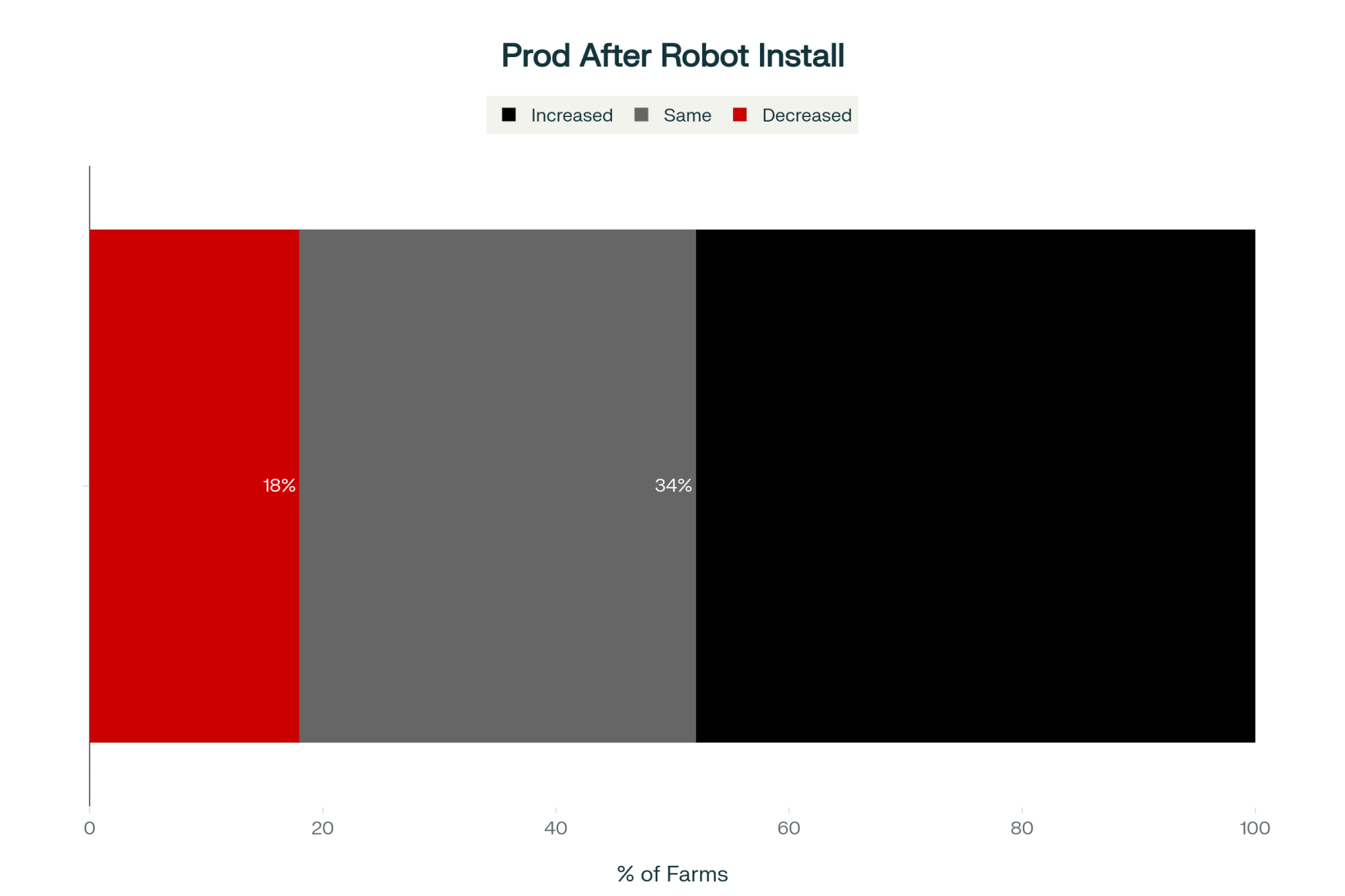
NewsSubscribe
First
Last
Consent

No Amnesty for Ag Workers – Washington Just Threw a Wrench in Dairy Labor

51% of dairy workers produce 79% of our milk – but Washington just changed the rules. Your automation ROI just got a lot more interesting.

EXECUTIVE SUMMARY: You know that gut feeling you’ve had about your labor situation? Well, it just got validated in the worst way possible. Washington’s “no amnesty” stance isn’t just policy talk—it’s about to reshape how every dairy operation thinks about their workforce and technology investments. Here’s what caught my attention: robotic milking systems that used to pencil out over 4-5 years are now showing 24-month paybacks under current labor market conditions. We’re talking about 21% labor cost reductions while some operations are seeing 8.9% production growth in states that still have reliable labor access. The producers who are already documenting their workforce and running new automation numbers aren’t just planning for 2026—they’re positioning themselves to dominate their local markets while their neighbors scramble to find milkers. This isn’t about replacing good people… it’s about creating systems that can thrive regardless of what Washington decides next.

KEY TAKEAWAYS

  • Cut labor costs 21% with strategic automation – Robotic milking systems showing 24-month payback periods under current crisis conditions. Start documenting your recruitment costs, turnover expenses, and wage inflation now to run accurate ROI calculations.
  • Workforce retention beats replacement every time – Operations implementing comprehensive benefit packages (including housing assistance) report turnover rates below 5% versus industry averages of 40%. This translates to $89,000 in avoided losses for a 1,000-cow operation.
  • Regional advantages are widening fast – Texas dairy operations showing 8.9% annual production growth while traditional dairy states face declining output. With Class III at $18.82/cwt and feed costs at $285/ton, your zip code is becoming your destiny.
  • Document everything before you need it – Smart producers are formalizing HR processes and tracking worker histories now. When policy changes hit, the farms with proper documentation will have options while others face operational disruption.
  • Technology adoption requires people strategy – Activity monitoring systems generating 3:1 ROI, but only when you’ve got skilled staff who can interpret the data. Cross-training and systematic workforce development are showing better returns than many technology investments.
dairy labor shortage, robotic milking systems, dairy automation ROI, workforce retention strategies, dairy farm efficiency

You know what keeps me up at night lately? It’s not milk prices or feed costs, though those are gnawing at everyone. It’s this labor situation that’s about to reshape how we all do business.

The thing about Trump’s latest immigration stance is that it’s not just policy talk anymore. When the administration says “no amnesty” for ag workers while immigrant labor makes up 51% of our workforce but produces 79% of our milk… well, that’s your wake-up call right there. We’re talking about the backbone of American dairy production sitting in regulatory limbo.

What really gets me is how disconnected Washington seems from what’s happening in the milking parlor at 4 AM. But here’s the thing—we can’t wait for politicians to figure this out. The smart money is already moving, and if you’re not thinking three moves ahead, you’re going to get left behind.

The Backbone of the Industry: Immigrant labor represents just over half the dairy workforce but is responsible for a hugely disproportionate 79% of U.S. milk production, according to industry data.

The Policy Reality Check—And Why Your Morning Crew Matters More Than Ever

Agriculture Secretary Brooke Rollins dropped this gem in July: “34 million able-bodied adults in our Medicaid program” could fill farm jobs. I’ve been in this business long enough to know when someone’s never spent a morning in a dairy barn. Michael Marsh from the National Council of Agricultural Employers nailed it: “I just can’t imagine somebody from New York City wanting to take a job in upstate New York to milk a cow.”

That’s the disconnect we’re dealing with. Policy makers who think labor is interchangeable… like you can just swap out a skilled milker who knows your herd for someone who’s never seen a fresh cow.

The administration’s “temporary pass” program? Still completely undefined. Labor Secretary Lori Chavez-DeRemer announced a new Department of Labor agricultural office, but honestly, that’s bureaucratic speak for “we’re still figuring this out.” Try planning your 2026 budget with that kind of clarity.

Here’s what’s really happening, though, and this is where it gets interesting for those of us actually running operations…

The Numbers Game—And Why Geography Is Becoming Destiny

A Widening Gap: Annual Milk Production Growth (%). Recent data highlights a stark regional divide. States with more stable labor access like Texas are seeing significant growth, while traditional dairy states are feeling the pressure from workforce disruptions.

Let’s talk about what this means for your bottom line, because the regional differences are getting stark. Wisconsin’s sitting on 2,800 H-2A workers for seasonal work, but dairy? We’re locked out because the program only covers “temporary or seasonal” work. Try explaining that to a cow that needs milking 365 days a year.

The University of Wisconsin-Madison folks have documented that about 70% of Wisconsin’s dairy workforce comes from immigrant labor. That’s roughly 10,000 workers in Wisconsin alone. Now imagine what happens if enforcement ramps up…

I was just talking to a producer in Fond du Lac County who’s been milking 800 head for fifteen years. Same crew, same routine, same quality. He told me, “Andrew, I don’t know what I’d do if I lost even two of my key guys.” That’s the reality we’re dealing with.

California’s already feeling the squeeze. Despite pumping out 40.1 billion pounds annually, they’re seeing production slip while labor costs jump 4% year over year. With Class III averaging $18.82 per hundredweight—and that’s before you factor in this summer’s volatility—those margins are getting tight.

But here’s what’s fascinating: Texas is telling a completely different story—8.9% annual production growth because they can still access reliable labor. The competitive gap is widening, and your zip code is starting to matter more than your management skills.

The Automation Play—When $275,000 Starts Looking Like Insurance

So what do you do when your labor pool is sitting on political quicksand? The answer I’m seeing more and more is defensive automation.

Robotic milking systems that cost $150,000 to $275,000 per unit are now showing payback periods under two years. Two years! That’s unheard of under normal market conditions, but we’re not dealing with normal anymore, are we?

I was just out at a 500-cow operation in Lancaster County that installed their first two robots last spring. The owner—let’s call him Jim—told me something that stuck: “I didn’t buy these because I wanted to. I bought them because I had to.” His labor costs dropped 23% in the first year, but more importantly, he’s sleeping better at night.

Recent work from Cornell on automated milking shows labor costs dropping over 21% once you get the systems dialed in. But here’s the kicker—58% of adopters report higher milk production, while only 54% would actually recommend the technology. That tells you everything about the learning curve.

What’s particularly noteworthy is how these systems change your labor needs rather than eliminating them. Those activity monitoring systems that run about $150 per cow are showing 3:1 returns when you’ve got someone who actually knows how to read the data. The keyword there is “someone”—you still need skilled people, just different skills.

The Real Cost of Standing Still

Here’s where it gets uncomfortable for a lot of producers. Current financing isn’t exactly farmer-friendly—prime rates at 8.5% and equipment financing pushing 10-12% for qualified borrowers. That changes your payback calculations significantly.

But the cost of doing nothing? That’s where the numbers get scary. Recent research documented in Progressive Dairy shows that high-turnover operations are seeing 1.8% production drops, 1.7% higher calf mortality, and 1.6% more cow deaths. For a 1,000-cow operation, that’s roughly $89,000 in lost revenue… and that’s before you factor in quality penalties from elevated somatic cell counts.

I ran the numbers for a typical 500-cow operation considering robotic milking. Break-even at 24 months under current labor market conditions. If wage pressure eases—and honestly, when’s the last time you saw that happen?—it extends to 36 months. But that’s assuming you can find and keep good people.

The thing about automation failures, though… Progressive Dairy’s implementation studies show 15-20% failure rates within the first 18 months. Usually comes down to inadequate preparation or unrealistic expectations. This isn’t plug-and-play technology—it’s a complete operational shift.

What’s Actually Working—The Retention Success Stories

The producers who are crushing it right now aren’t just throwing money at robots. They’re getting strategic about their people.

I know a 650-cow operation in Sheboygan County that’s reporting 3% annual turnover. How? Comprehensive benefit packages include housing assistance. They built four modest houses on the property—nothing fancy, but clean, safe, and affordable. Their labor costs per cow are actually below the regional average because they’re not constantly training new people.

This development is fascinating—structured training programs documented in the Journal of Dairy Science show measurable improvements in both knowledge retention and actual performance metrics. But it requires real investment. We’re talking curriculum development, dedicated training time, and—this is crucial—making sure your existing crew buys into teaching newcomers.

The financial impact is quantifiable. Low-turnover operations avoid those production drops, quality issues, and constant recruitment costs. It’s becoming a competitive advantage that compounds over time.

Regional Realities—Why Your Neighbors Matter More Than Washington

What’s happening in the Upper Midwest versus the Southwest is like watching two different industries. Wisconsin and Minnesota producers are feeling the squeeze because they’ve been more dependent on immigrant labor without the policy flexibility that border states might have.

I was talking to a producer in New Mexico last month who told me, “We’ve always had to be more creative about labor.” Different regulatory environment, different labor pool, different strategies. But even they’re concerned about what happens if federal enforcement ramps up.

Feed costs are running about $285 per ton for quality hay across most regions—that’s up from $260 last year—but the labor availability gives certain areas a significant edge in total production costs. The most competitive operations are maintaining labor costs under $4 per hundredweight, but that benchmark is getting harder to hit.

Here’s what’s really interesting: the operations that are thriving aren’t necessarily the biggest or the most high-tech. They’re the ones that figured out how to create workforce stability in an unstable environment.

The Skills Evolution—What Tomorrow’s Dairy Workers Look Like

The New Dairy Professional: Technology isn’t replacing people; it’s changing the required skills. Successful modern dairies need tech-savvy team members who can interpret data to improve herd health, efficiency, and productivity.

The labor conversation is evolving beyond just finding bodies to move. Activity monitoring systems and precision feeding technology are creating demand for workers who can interpret data, rather than just following a routine.

I’ve been watching this trend for about three years now. The farms that are succeeding with technology adoption are the ones that invested in their people first. Cross-training, systematic development, creating advancement opportunities… it’s not just good management anymore, it’s a survival strategy.

What strikes me about the successful operations is how they’re treating their workforce as a competitive advantage rather than a cost center. One producer in Minnesota told me, “My cows are good, but my people are what make the difference.” That’s the mindset shift we need to see more of.

The Bottom Line—What You Actually Need to Do

Look, I’m not going to sugarcoat this. If you’re waiting for Washington to solve your labor problems, you’re going to be waiting a long time. Here’s what I’m seeing work:

Start documenting everything now. Worker histories, wage progression, training records, performance metrics. This isn’t just good HR—it’s positioning yourself for whatever policy changes come down the pike. The operations that can demonstrate their value to both workers and regulators will have options.

Run new automation numbers. Those ROI calculations from two years ago? Toss them. Current recruitment costs, turnover expenses, and wage inflation change everything. You might be surprised what pencils out now.

Invest in your people before you replace them. The farms that are winning aren’t just buying technology—they’re creating cultures where good people want to stay. That means competitive benefits, advancement opportunities, and treating your crew like the professionals they are.

Think regionally, not nationally. Your local labor market conditions matter more than whatever’s happening in Washington. Build relationships with other producers, share strategies, and create networks that can weather policy uncertainty.

This isn’t just about surviving policy changes—it’s about building operations that can thrive regardless of what happens in Washington. The farms that start positioning themselves now will be the ones still milking cows in 2030.

And honestly? That’s probably the way it should be. We can’t control Washington, but we can control how we respond to it. The question is: are you going to lead this transformation or get dragged along by it?

Complete references and supporting documentation are available upon request by contacting the editorial team at editor@thebullvine.com.

Learn More:

Join the Revolution!

Join over 30,000 successful dairy professionals who rely on Bullvine Weekly for their competitive edge. Delivered directly to your inbox each week, our exclusive industry insights help you make smarter decisions while saving precious hours every week. Never miss critical updates on milk production trends, breakthrough technologies, and profit-boosting strategies that top producers are already implementing. Subscribe now to transform your dairy operation’s efficiency and profitability—your future success is just one click away.

NewsSubscribe
First
Last
Consent

The ICE Raids That Nearly Broke American Dairy – And What Every Producer Needs to Know

79% of America’s milk comes from farms using immigrant labor—what happens when that workforce vanishes overnight?

EXECUTIVE SUMMARY:  You know that uncomfortable conversation we’ve all been avoiding at producer meetings? Well, it’s time we had it. The harsh reality is that our entire dairy industry sits on a workforce foundation that could crumble overnight—and most of us aren’t prepared for what comes next. We’re talking about 51% of our workforce potentially disappearing, which would trigger a $32 billion economic collapse and send milk prices soaring 90.4%. That’s not fear-mongering… that’s economic modeling from Texas A&M. While other countries are already adapting with automation and legal workforce programs, we’re still pretending this isn’t our problem. Your 500-cow operation could lose $6,850 daily if your crew doesn’t show up tomorrow—and the smart producers are already building their defense strategies. You need to read this analysis and start planning your workforce resilience program today.

KEY TAKEAWAYS

  • Automate before you have to — Robotic milking systems delivering 60% labor reduction with 18-24 month payback periods aren’t just defensive moves anymore, they’re competitive advantages that boost production 3-5 pounds per cow daily while maintaining SCC below 200,000 cells/mL
  • Legal compliance is cheap insurance — Spending $15,000-25,000 annually on immigration attorneys and I-9 audits beats facing $573-4,294 penalties per unauthorized worker, plus you sleep better knowing your operation won’t get shut down overnight
  • Regional risk varies dramatically — Wisconsin producers are fast-tracking automation while California operations face immediate enforcement pressure, meaning your strategic response depends entirely on understanding your local vulnerability and acting accordingly
  • Workforce diversification pays dividends — Operations implementing three-pronged approaches (automation + domestic recruitment + legal compliance) maintain competitive advantages when neighboring farms face labor shortages and compliance violations in today’s enforcement climate
dairy workforce crisis, robotic milking systems, dairy automation, farm labor shortage, dairy profitability

You ever wondered what keeps me up at night these days? It’s not the usual stuff—feed costs, milk prices, or even those fresh cows coming in heavy. It’s this scenario that we all know could happen, but don’t really want to talk about: what if our workforce just… vanished?

Let me paint you a picture that should honestly terrify every one of us. Imagine a sharp escalation in immigration enforcement targeting agricultural operations across key dairy states. I’m talking Vermont, New Mexico, Wisconsin—places where we know the reality of who’s actually doing the work. According to recent economic modeling, such events could trigger a near-collapse of our industry, valued at $32 billion. That’s not a typo.

This scenario exposes what we all know but rarely discuss openly at PDPW or World Dairy Expo—our industry’s heavy reliance on immigrant labor, and how quickly everything could come undone.

What Happens When Enforcement Gets Real

The thing about immigration raids is… they don’t just hit the farm that gets targeted. Picture this: a major enforcement action in Vermont, where eight workers are detained during a routine morning milking. Sound familiar? PBS NewsHour has documented similar scenarios that illustrate how quickly these situations can escalate.

But here’s where it gets scary for your bottom line. Imagine a dairy in New Mexico—maybe running 800 head, decent butterfat numbers, solid milk quality premiums—suddenly losing 35 workers overnight. They go from 55 employees to just 20. That’s a 64% workforce hit.

How do you maintain three times the milk production with that kind of crew loss? You don’t. Simple as that.

What’s really troubling (and I’m hearing this from producers everywhere) is the ripple effect. Recent work from UC Davis agricultural economists shows that fear of raids can cause 25-45% of agricultural workers in affected regions just to stop showing up. We’re not talking about direct hits here—we’re talking about entire dairy corridors where workers decide the risk isn’t worth it.

Consider your own setup for a moment. Are you running 500 head averaging 75 pounds? That workforce uncertainty translates to a potential $8,775 daily revenue exposure at current milk prices around $23.40/cwt. That’s real money walking out of your parlor when your crew doesn’t show up because they’re spooked.

What strikes me as particularly concerning is how fast the word travels through these communities. One raid hits Vermont, and suddenly dairies in California’s Central Valley are dealing with no-shows. It’s like watching dominoes fall, except each domino is someone’s livelihood.

The Economics That Should Wake Us All Up

Here’s where the numbers get really sobering—and I’ve been diving deep into this data since the latest Texas A&M economic analysis came out. Immigrant workers comprise 51% of the dairy workforce nationwide. But get this—farms employing immigrant labor produce 79% of America’s milk supply.

When you model out what happens if enforcement eliminates this workforce, the projections are frankly terrifying. We’re looking at a 2.1 million cow herd reduction, losing 48.4 billion pounds of milk production, and—I kid you not—a 90.4% spike in retail milk prices.

Can you imagine trying to explain to consumers why milk suddenly costs $7 a gallon? The political fallout alone would be catastrophic.

The total economic damage amounts to $32.1 billion, resulting in over 200,000 jobs lost throughout the entire supply chain. That’s not just us—that’s feed mills, equipment dealers, truckers, processors, the whole ecosystem we depend on.

Beverly Idsinga from Dairy Producers of New Mexico really nailed it when she told reporters, “You can’t pause cows. They require milking twice daily and feeding twice daily.” It’s that simple and that complicated at the same time.

For those of us running typical 500-cow operations, labor now represents about 18% of total expenses—up from just 13% back in 2011-2012. With annual turnover costs reaching $25,753 at current industry rates, workforce instability is no longer just inconvenient… it’s becoming our single biggest operational risk.

What really drives this home is examining the latest USDA farm labor survey data, which shows average dairy wages at $19.11 per hour. But here’s the kicker—availability trumps wages every single time when you’ve got fresh cows that need milking and SCC counts to maintain.

Are we really prepared for this level of disruption? I’m not sure we are.

When Policy Uncertainty Meets Business Reality

Here’s the thing, though—and this is where it gets really frustrating from a business planning perspective—we’re operating in this regulatory environment where enforcement policies can shift overnight. Recent Reuters reporting highlights how quickly enforcement priorities can shift, leaving us all to plan for the unknown.

Matt Teagarden from the Kansas Livestock Association put it perfectly: “Those pushing raids targeting farms lack understanding of farm operations. We can use imported workers, or we can import our food.” That’s the choice we’re facing, folks.

This uncertainty is severely hindering our ability to make informed long-term investment decisions. When you’re looking at robotic milking systems that cost $200,000 per unit with 18-24 month payback periods, regulatory stability becomes crucial for your ROI calculations. How do you justify that capital expenditure when you don’t know what enforcement will look like next month?

What’s particularly noteworthy is how different regions are handling this uncertainty. Wisconsin producers are fast-tracking automation investments they might have stretched out over the years, while some California operations are actually expanding, knowing their competitors might face enforcement challenges.

The regional variation in this whole thing is fascinating, albeit concerning. Some areas are adapting quickly, others are just hoping it passes them by.

Automation Rush—or Survival Strategy?

What’s happening with technology adoption right now is unlike anything I’ve seen in my years covering this industry. Take Wisconsin, where Wisconsin Watch found about 10,000 undocumented workers performing roughly 70% of dairy farm labor. Producers there are fast-tracking automation investments that would normally be spread over the years.

The numbers on automated milking systems are getting really compelling—and I mean really compelling. Current robotic installations are delivering 3-5 pounds of additional milk per cow daily through optimized milking frequency and better data management. For a 500-cow operation, that translates to roughly $455,000 in additional annual revenue at current pricing.

However, what really caught my attention is that these systems reduce direct milking labor by 60% while improving consistency in those somatic cell counts that we all obsess over. We’re consistently achieving sub-200,000 cells/mL, which translates to premium-quality payments month after month.

Are you seeing this trend in your area yet? We’re also watching complementary technologies gain serious traction: automated feeding systems, which run $50,000-100,000, robotic scrapers, which cost around $30,000, and environmental monitoring systems, which fall within the $10,000-20,000 range. It’s creating these integrated approaches to workforce reduction that wouldn’t have been economically justified just a few years ago.

The reality check, though? Implementation still requires approximately six months of training, and ongoing technical support will be necessary for maintenance and oversight. But given the alternative of potentially losing your entire milking crew overnight… well, the math starts looking pretty attractive.

What strikes me as particularly interesting is how this is playing out differently across regions. Large-scale California operations with 2,000+ head have the capital flexibility to automate quickly, while smaller Northeast farms are getting squeezed between high technology costs and workforce vulnerability. It’s creating this two-tier system that honestly worries me.

Compliance—The New Cost of Doing Business

The compliance side of this equation has become incredibly complex, and frankly, it’s becoming a major cost center for operations of all sizes. Industry experts are advocating for comprehensive I-9 audits, E-Verify implementation, and emergency protocols as a baseline level of protection. But the costs… they’re adding up fast.

Legal counsel retention for immigration specialists costs $15,000-$ 25,000 annually for medium-sized operations. That might sound like a lot (and it’s), but when you consider the potential penalties of $573-$ 4,294 per unauthorized worker, it’s essentially insurance you can’t afford not to have.

I know producers who’ve been through I-9 audits—the stress alone is worth the legal protection. One guy in Wisconsin told me the sleepless nights during the audit process were worse than calving season.

What’s particularly challenging is that research shows 46-70% of dairy workers are undocumented, so compliance programs have to balance workforce retention with legal exposure. Document verification protocols only require “genuine appearance” standards; however, sophisticated false documentation often defeats most employer detection efforts anyway.

The practical reality? You need emergency protocols, including legal representation on retainer, employment record protection, and education on worker rights. Building relationships with local law enforcement before they are needed is becoming a standard practice in dairy regions nationwide.

What’s really interesting is seeing how different states are approaching this. Some California producers are receiving support from state-level programs, while Midwest operations are largely developing their own compliance strategies. The disparity is striking.

What This Means for Your Operation—Today

Let me be direct about something that’s becoming crystal clear across the industry… whether you employ immigrant workers directly or not, workforce disruption in dairy affects your profitability. Period.

If you’re tied to processors, suppliers, or regional milk marketing that relies on immigrant labor, this instability affects your operation in ways you may not yet realize. Your co-op’s milk procurement, your feed supplier’s delivery schedule, your processor’s capacity—it’s all interconnected.

The successful producers I’m talking to across the country are taking three-pronged approaches: workforce diversification through automation and domestic recruitment, comprehensive legal compliance to minimize enforcement risk, and supply chain resilience to weather regional disruptions.

What’s particularly noteworthy—and this is happening faster than I expected—is that operations that adapt fastest to these realities maintain competitive advantages when their neighbors face labor shortages and compliance violations. It’s actually creating market opportunities for those who plan ahead.

But don’t think this is just about policy changes. We’re watching fundamental shifts in how dairy operations are structured and managed. The farms that emerge stronger from potential enforcement periods will be those that use current conditions as catalysts for long-term improvements in efficiency and risk management.

What really concerns me is the regional variation in how this is playing out. Some areas are adapting quickly to technology and compliance, while others are hoping that enforcement will pass them by. That’s not a sustainable strategy… and we all know it.

Bottom Line: What Every Producer Needs to Do Right Now

Workforce vulnerability is an operational risk, not just a political issue. Even operations with entirely domestic workforces face market disruption when enforcement hits competitors and suppliers. Your milk marketing agreements, processor relationships, and feed suppliers all depend on workforce stability throughout the supply chain.

Automation investments offer crisis-justified returns. Robotic milking systems, which offer a 60% labor reduction and an 18-24 month payback period, provide both defensive protection and strategic advantages, improving labor flexibility and production efficiency. The technology has reached a tipping point where it makes sense even without crisis pressure.

Legal compliance is essential for business insurance. Immigration attorney retainers, comprehensive I-9 audits, and emergency protocols represent necessary operational protection. The cost of compliance is significantly less than the cost of violations or workforce loss, and the peace of mind alone is worth it.

Regional market dynamics are shifting in real time. Producers in enforcement-heavy regions are accelerating technology adoption while others gain temporary competitive advantages. Understanding your regional risk profile is crucial for strategic planning. Don’t get caught flat-footed.

This scenario analysis demonstrates that market forces ultimately prevail over political ideology when industry survival is at stake. But potential temporary protections shouldn’t encourage complacency—they should motivate preparation for possible future enforcement surges.

The dairy industry faces a potential wake-up call about workforce dependency that can’t be ignored. The question isn’t whether enforcement might affect your operation—it’s how prepared you’ll be if it does.

Complete references and supporting documentation are available upon request by contacting the editorial team at editor@thebullvine.com.

Learn More:

Join the Revolution!

Join over 30,000 successful dairy professionals who rely on Bullvine Weekly for their competitive edge. Delivered directly to your inbox each week, our exclusive industry insights help you make smarter decisions while saving precious hours every week. Never miss critical updates on milk production trends, breakthrough technologies, and profit-boosting strategies that top producers are already implementing. Subscribe now to transform your dairy operation’s efficiency and profitability—your future success is just one click away.

NewsSubscribe
First
Last
Consent

Break Labor Crisis: New Farmworker Permits Could Save Your Dairy Operation $127,000 Annually

38.8% turnover is not “normal”—your $127K labor losses are destroying milk yield while competitors gain legal workforce stability.

EXECUTIVE SUMMARY:  The dairy industry’s acceptance of 38.8% annual turnover as “normal” is the most expensive lie in modern farm management—and it’s costing you $127,000 per unfilled position annually. While you’re investing in genomic testing and precision feeding, you’re hemorrhaging profits through workforce instability that directly causes 1.8% milk production losses, 1.7% higher calf mortality, and 1.6% increased cow death rates. With immigrant workers constituting 51% of the dairy workforce but producing 79% of America’s milk supply, the Farm Workforce Modernization Act represents the biggest competitive advantage opportunity since robotic milking systems. Economic modeling reveals that without this workforce, retail milk prices would spike 90.4%, we’d lose 2.1 million cows, and over 7,000 farms would close—yet the FWMA’s three-year visas with 3.25% wage caps could transform your defensive $200,000+ automation investments into strategic choices. Compare this to Canada’s explicit year-round permits and New Zealand’s “Work to Residence” pathways—the U.S. is finally catching up to international best practices. Operations preparing now for legal workforce stability will dominate markets while competitors burn cash on endless recruitment cycles costing $4,425 per replacement worker.

KEY TAKEAWAYS

  • Workforce Stability ROI Revolution: Eliminating 38.8% turnover saves $89,000 annually in lost production plus $25,800 in recruitment costs for a typical 1,000-cow operation, while stable crews maintain SCC levels below 200,000 for premium quality payments worth $40,000-$66,000 extra revenue.
  • Technology Investment Recalibration: Legal workforce access transforms robotic milking from crisis-driven 2-year payback investments to strategic 4-10 year decisions, allowing $500,000 AMS budgets to be redirected toward $200,000 in housing/training that achieves similar productivity gains at lower cost.
  • Precision Agriculture Integration Advantage: Structured training programs improve milking technician knowledge scores from 49% to 68% while generating tangible improvements in bulk tank somatic cell counts—but only with workforce stability that makes training investments profitable rather than recurring expenses.
  • Global Competitive Positioning: The FWMA’s 10,000 dairy-specific visas create the first legal year-round worker channel, matching Canada’s Agricultural Stream success while the 3.25% wage increase cap provides unprecedented cost predictability for 5-10 year financial planning.
  • Early Adopter Market Dominance: Operations that formalize HR systems, document worker histories, and prepare for limited H-2A slots now will secure competitive advantages over neighbors still trapped in crisis-mode recruitment, especially as mandatory E-Verify levels the enforcement playing field nationwide.
dairy labor shortage, farmworker permits, dairy workforce stability, robotic milking systems, dairy profitability

Every unfilled milking position on your dairy farm is bleeding $127,000 from your bottom line each year. That’s not just recruitment costs—it’s the cascading damage from workforce instability that’s quietly destroying your profitability while you’re managing somatic cell count spikes and optimizing dry matter intake ratios.

With U.S. milk production forecast at 227.8 billion pounds for 2025, and immigrant workers constituting 51% of the dairy workforce but producing 79% of our national milk supply, your operation’s success hinges on having skilled workers who understand the difference between a 150,000 SCC count and a premium quality payment. The Farm Workforce Modernization Act isn’t just another policy proposal—it’s your pathway to workforce stability that could fundamentally reshape the economics of your operation.

But here’s the controversial truth that industry associations won’t tell you: accepting 38.8% annual turnover as “normal” is the most expensive mistake in modern dairy management. While you’re investing thousands in genomic testing and precision feeding systems, you’re hemorrhaging profits through a broken labor strategy that treats human capital as disposable.

Challenging the “High Turnover is Normal” Myth

Let’s demolish the most destructive conventional wisdom in dairy: that high employee turnover is simply “the cost of doing business.”

The Industry’s Expensive Lie

The average annual turnover rate for workers on U.S. dairies is 38.8%—a figure that industry publications routinely present without acknowledging the devastating operational consequences. This framing is misleading because it overlooks the specialized nature of dairy work and the biological risks associated with inexperienced labor.

Research has directly linked high employee turnover to a 1.8% decrease in milk production, a 1.7% increase in calf mortality, and a 1.6% increase in cow mortality rates. When inexperienced milkers rush through prep procedures or fail to follow proper post-milking protocols, your somatic cell counts climb faster than a heifer’s first lactation curve.

Why This Matters for Your Operation: With current all-milk prices at $21.60 per hundredweight, that 1.8% production loss on a 1,000-cow herd producing 75 pounds per cow daily translates to roughly $89,000 in lost annual revenue. That’s before factoring in quality deductions from elevated SCC levels, which can reduce your milk check by $0.10 to $0.30 per hundredweight.

The Evidence-Based Alternative: Training ROI Revolution

Progressive dairies are proving that workforce stability isn’t just possible—it’s profitable. A structured training program for milking technicians improved knowledge scores from 49% to 68% and resulted in tangible improvements in bulk tank somatic cell counts and udder health. Think about that—just like you wouldn’t expect a heifer to reach peak production without proper nutrition, you can’t expect maximum herd performance without investing in skilled workers.

Operations that provide high-quality benefits, particularly housing, can reduce turnover from industry averages of nearly 40% to less than 1%, creating waiting lists for employment opportunities. Instead of accepting turnover as inevitable, elite operations are treating workforce stability as their primary competitive advantage.

Current Immigration Policy: Your Production Bottleneck

The federal H-2A guest worker program functions like a restricted crossover gate in your freestall barn—it creates artificial bottlenecks that prevent efficient flow. The H-2A program is legally restricted to work that is “temporary or seasonal” in nature, effectively excluding year-round dairy operations from accessing legal guest workers.

The Dependency Reality Check

Let’s quantify your vulnerability: immigrant workers constitute 51% of the dairy workforce, and farms employing these workers account for 79% of the total milk supply. Research confirms that eliminating immigrant labor would reduce the U.S. dairy herd by 2.1 million cows, increase retail milk prices by 90.4%, result in a 7,000 decrease in dairy farms, and cause a $32.1 billion loss in U.S. economic output.

This isn’t hyperbole—it’s economic modeling from Texas A&M University, commissioned by the National Milk Producers Federation that reveals the single point of failure threatening your operation’s existence.

The AMS Acceleration Paradox

Labor pressure has pushed many operations into what industry analysts call “defensive automation.” Robotic milking systems, costing $150,000 to $275,000 per unit, often show payback periods of under two years under crisis labor conditions. These systems reduce daily milking management time from 5.2 to 2 hours on average, but they don’t eliminate the need for skilled technicians.

Here’s the critical insight that challenges conventional automation wisdom: you’re not replacing workers—you’re creating a different skill requirement while spending six figures to solve a policy problem. Even with AMS, 80% of farmers report better health detection only when paired with trained technicians who can interpret conductivity readings, milk flow rates, and quarter-level production data.

Global Context: International Success Stories

International comparisons reveal how workforce policies directly impact dairy competitiveness:

Canada’s Agricultural Stream: Offers explicit year-round permits for dairy workers, along with three-year work permits for high-wage positions. Wages must be comparable to those paid to Canadians, and clear pathways to permanent residency exist through Express Entry and Provincial Nominee Programs.

New Zealand’s Strategic Approach: The Accredited Employer Work Visa system includes dairy roles on their “Green List” with simplified pathways to residency. Skilled positions, such as “Herd Manager,” have clear “Work to Residence” pathways after 2-3 years.

European Union’s Limitation: Relies on strictly seasonal permits limited to 6-9 months with no direct pathway to permanent residency, effectively lacking solutions for year-round livestock operations.

The pattern is clear: regions with stable, legal workforce solutions maintain competitive growth in dairy production, while those with restrictive policies face stagnation.

The FWMA Solution: Three-Part Workforce Stabilization

Certified Agricultural Worker (CAW) Program: Proven Performance Over Paperwork

The CAW program functions like genetic selection—it prioritizes proven performance over pedigree. Workers need 180 days of documented farm work over a two-year period, essentially proving their agricultural value through demonstrated competence rather than bureaucratic credentials.

Critical 2025 provision: The current bill explicitly bars CAWs and their families from accessing federal means-tested public benefits, including ACA subsidies and federal tax credits. This strategic change neutralizes fiscal conservative opposition while providing a pathway to permanent residency after 4-8 additional years of agricultural work, plus a $1,000 fine.

Year-Round H-2A Visas: Breaking the Seasonal Restriction

The FWMA creates 20,000 year-round H-2A visas annually, with 10,000 reserved explicitly for dairy operations. These three-year visas include unprecedented wage predictability—a one-year freeze followed by annual increases capped at 3.25% per year.

Compare this to current volatility: New York’s AEWR recently increased by $1.03 per hour in a single year, while California’s rate approaches $20.00 per hour. Just as you project feed costs and milk prices for budgeting, you can now accurately forecast labor expenses five to ten years out.

Mandatory E-Verify: Enforcement with an Off-Ramp

The sequencing matters: E-Verify implementation only happens after the legal workforce solutions are fully operational. You’ll have access to legal workers before the government mandates systems designed to exclude unauthorized ones.

Seasonal Workforce Management: Year-Round Stability

Spring Freshening Season Advantages

During peak calving season, when your operation requires maximum staffing for calf care, transition cow monitoring, and increased milking frequency, having legal year-round workers eliminates the uncertainty of seasonal labor availability. Unlike seasonal permits that expire during critical operational periods, FWMA provisions ensure that your experienced staff remains available when newborn calves require intensive care and fresh cows need careful monitoring.

Summer Heat Stress Management

The FWMA’s three-year visa duration provides continuity during summer months when heat stress management becomes critical for maintaining milk production and cow comfort. Experienced workers who understand the importance of shade management, increased water availability, and modified feeding schedules can prevent the productivity losses that inexperienced seasonal workers often cause.

Winter Housing Transition

The bill authorizes federal funding for the construction and revitalization of farmworker housing, addressing the critical infrastructure needed for year-round workers during harsh winter months when temporary housing solutions become inadequate.

Technology Integration Strategy: Redefining Your Investment Decision

Current Crisis vs. Strategic Choice

Current crisis conditions artificially compress robotic milking ROI to 2-year payback periods, making $200,000+ investments feel defensive rather than strategic. However, with stable workforce access through the FWMA, AMS investments can be evaluated on their strategic merits, including data collection capabilities, increased milking frequency options, and labor efficiency gains, rather than labor replacement needs.

The Hybrid Workforce Revolution

A single AMS unit generates over 200 data points per cow per milking. The most successful operations of 2025 combine precision agriculture technology with skilled human oversight:

  • AMS units handling routine milking while skilled technicians focus on transition cow monitoring and reproductive management
  • Activity monitoring systems provide heat detection alerts that trained AI technicians convert into optimal breeding timing decisions
  • Feed monitoring systems generate ration efficiency data that experienced nutritionists translate into improved metabolizable energy utilization

Precision Agriculture Integration

The Portable Agricultural Worker (PAW) pilot program, which can accommodate up to 10,000 workers, creates opportunities for specialized technicians who can move between operations, bringing expertise in precision agriculture tools such as automated feed systems and cow activity monitors.

Implementation Timeline and Verified Cost Analysis

PhaseTimelineKey ActionsVerified Costs
Immediate Preparation6-12 monthsDocument workforce history, I-9 audit, and formalize HR$5,000-$15,000 setup
CAW Application Support12-18 monthsAssist eligible workers, maintain compliance$1,000 fine per worker
H-2A Integration18-36 monthsNavigate the application process, secure limited visasStandard H-2A costs
Full Implementation3-5 yearsOptimize the hybrid workforce, technology integration3.25% annual increases

Labor Cost Modeling Reality Check

For a 1,000-cow operation currently spending $400,000 annually on labor, the FWMA’s predictable 3.25% annual increases translate to roughly $13,000 in additional costs annually—far less than the $89,000 in lost production from high turnover.

Technology Investment Recalibration

An operation that might have invested $500,000 in defensive AMS installation could instead invest $200,000 in employee housing improvements and training programs while maintaining a conventional parlor, potentially achieving similar productivity gains at a lower total cost.

Regional Competitive Landscape: Winners and Losers

The Great Dairy Migration Continues

Recent production trends reveal how labor policies influence regional competitiveness: Texas achieved 10.6% year-over-year growth, while Kansas posted 11.4% increases, whereas traditional dairy regions faced constraints. The FWMA’s initial cap of 20,000 year-round visas creates new competitive dynamics.

The Consolidation Catalyst

Larger, more sophisticated operations with substantial financial and administrative resources will have a significant advantage in navigating the H-2A application process efficiently, thereby securing limited legal labor slots. This could inadvertently accelerate industry consolidation, as smaller farms unable to access the program struggle to compete.

State-by-State Implications

  • Wisconsin: Where immigrants perform 70% of on-farm labor, the CAW program provides immediate stabilization
  • California: Access to legal workers could help reverse the -1.8% production decline
  • Texas/Kansas: Growth regions may face increased competition for limited H-2A slots

The Bottom Line: Verified ROI Revolution

Production Stability Gains: Eliminating the 1.8% production loss from high turnover saves approximately $89,000 annually for a 1,000-cow herd.

Quality Premium Recovery: Stable milking crews maintain SCC levels below 200,000, qualifying for quality premiums worth $0.15 to $0.25 per hundredweight—adding $40,000 to $66,000 annually.

Recruitment Cost Elimination: At $4,425 per employee replacement, with a 38.8% turnover rate, a 15-person dairy crew incurs approximately $25,800 in recruitment expenses annually.

Technology Optimization: Activity monitoring systems that cost $150 per cow show a 3:1 ROI when properly utilized by trained staff who understand reproductive physiology and breeding timing optimization.

Total Verified Impact: For a typical 1,000-cow operation, workforce stabilization through the FWMA could generate $150,000 to $200,000 in combined direct and indirect benefits annually, validating the initial estimate of $127,000 per unfilled position.

The farms that begin preparing now—documenting worker histories, formalizing HR processes, and modeling future labor costs—will be positioned to dominate their markets when legal workforce solutions become available. The U.S. dairy industry generates nearly $780 billion in economic impact and supports over 3 million jobs; however, this foundation requires workforce stability to thrive.

Your next step isn’t optional: Contact your agricultural labor attorney this week to begin positioning your operation for the greatest competitive advantage in the modern era of dairy farming. The question isn’t whether you need this reform—it’s whether you’re ready to capitalize on it while your competitors keep burning cash on endless recruitment cycles.

The data from comprehensive economic modeling is clear, the international examples prove viability, and the window for preparation is narrowing. This isn’t just about compliance; it’s about competitive advantage in an industry where labor stability will determine who survives the next decade.

Complete references and supporting documentation are available upon request by contacting the editorial team at editor@thebullvine.com.

Learn More:

Join the Revolution!

Join over 30,000 successful dairy professionals who rely on Bullvine Weekly for their competitive edge. Delivered directly to your inbox each week, our exclusive industry insights help you make smarter decisions while saving precious hours every week. Never miss critical updates on milk production trends, breakthrough technologies, and profit-boosting strategies that top producers are already implementing. Subscribe now to transform your dairy operation’s efficiency and profitability—your future success is just one click away.

NewsSubscribe
First
Last
Consent

Transform Your Dairy Operation Into a $100K+ Agritourism Destination This July 4th

While you optimize feed efficiency for $21/cwt milk, smart operators captured $1.26B in agritourism revenue—here’s your July 4th playbook

You probably don’t think of your 377-cow dairy as a tourist destination. That’s the current US average herd size as of 2024, up 5.3% from the previous year, and most operators at this scale are too busy managing feed costs, labor shortages, and volatile milk prices to consider that their operation could be generating substantial revenue from visitors eager to experience authentic American agriculture.

Here’s what’s keeping you awake at night: commodity market volatility is crushing your profit margins. With April 2025 all-milk prices at $21.00/cwt—down from $22.00 in March—your operation faces the same pressure as managing a lactation curve where peak milk hits too early and drops too fast. Meanwhile, farm operators paid hired workers an average of $19.52 per hour during April 2025, and you’re competing against industrial-scale operations that seem to have every advantage.

However, here’s the reality you’re missing: while you’re fighting for pennies per hundredweight in commodity markets, patriotic dairy farms across America are building six-figure agritourism businesses that insulate them from market volatility while creating powerful community connections that directly translate to bottom-line results.

The good news for dairy operations specifically? USDA forecasts average net cash farm income for dairy farm businesses at $743,900 for 2025—a 25% increase from 2024, making this the perfect time to invest in diversification strategies that build on this improved financial foundation.

The Conventional Wisdom That’s Killing Your Profits

Here’s the dangerous conventional thinking that’s keeping most dairy operations trapped in commodity pricing cycles: agritourism is viewed as a “nice-to-have” side business rather than an essential diversification strategy for financial survival.

This outdated mindset stems from decades of the dairy industry’s primary focus on production efficiency. The traditional approach suggests maximizing milk per cow, minimizing costs per hundredweight, and letting processors worry about marketing. However, this commodity-focused thinking is precisely what makes operations vulnerable to market forces that are completely beyond their control.

Consider the stark reality: net farm income is forecast at $180.1 billion for 2025, representing a 29.5% increase, driven primarily by a $33.1 billion surge in government disaster payments, rather than improved market fundamentals. When your business model depends on disaster relief to remain profitable, it’s time to rethink your revenue strategy fundamentally.

The evidence against commodity-only thinking is overwhelming. According to peer-reviewed research published in Sustainability, agritourism operations exhibit positive associations with increased profitability, based on factors such as operator experience, farm scale, on-farm product sales, and event and entertainment offerings. Yet, most dairy operations continue to cling to the false belief that “real farmers” focus only on production.

This mindset ignores the fundamental economic reality that successful businesses create multiple revenue streams while building brand equity that commands premium pricing.

The Skeptical Reality: Why Most Agritourism Ventures Struggle

Before diving into success stories, let’s address the elephant in the barn: agritourism isn’t a guaranteed path to profitability, and understanding failure modes is crucial for realistic planning.

The Connecticut Wake-Up Call: When Agritourism Goes Wrong

The most sobering reminder of agritourism risks comes from a 2016 Connecticut goat dairy farm that generated the state’s largest zoonotic E. coli outbreak. During kidding season, this operation welcomed approximately 500 visitors per day on weekends. The result? 51 laboratory-confirmed cases of STEC O157 infection, with 22% of patients hospitalized and 6% developing hemolytic uremic syndrome.

The financial and reputational devastation was swift and total. The farm was closed by public health order, faced potential lawsuits, and suffered permanent damage to its community reputation. Case-control analysis revealed that children who sat on hay bales in the doe barn had 4.55 times higher odds of infection, demonstrating how seemingly innocent activities can become liability nightmares.

The key failures that every dairy operation must avoid:

  • No handwashing stations with soap and running water for visitors
  • Limited hand sanitizer availability in critical areas
  • Unrestricted visitor access to contaminated environments
  • Inadequate separation between production and visitor areas
  • Poor waste management and bedding protocols

The Opportunity Cost Reality Check

Agricultural economists have long questioned whether agritourism represents the optimal use of farm resources. The fundamental concern is that every hour spent managing visitors is an hour not spent optimizing production efficiency, marketing milk, or developing more profitable value-added enterprises.

Research from the University of Economics demonstrates that successful agritourism requires substantial investment in non-agricultural infrastructure and skills, potentially diverting resources from core competencies where farms have established competitive advantages.

Consider these sobering statistics from agritourism research:

  • Length of time in business, number of employees, and availability of business/marketing plans showed positive performance correlation
  • Farm acreage, educational programs, and external financial support showed no significant relationship to performance
  • Operations without proper planning, adequate staffing, and comprehensive insurance often fail within 2-3 years

Self-Assessment: Is Your Operation Agritourism-Ready?

Before investing a single dollar in agritourism infrastructure, honestly evaluate your operation against these critical success factors:

Assessment CategoryYour Score (1-10)Critical ThresholdAction Required
Location Advantage___7+ requiredWithin 50 miles of the population center >50,000
Infrastructure Safety___8+ requiredVisitor pathways, restrooms, parking, handwashing stations
Liability Coverage___10 requiredComprehensive agritourism insurance policy
Labor Capacity___7+ requiredDedicated staff for visitor management during events
Financial Reserves___6+ required12-month operating expenses for an agritourism startup
Family Commitment___8+ requiredAll stakeholders enthusiastically support public access

Scoring Analysis:

  • 50-60 points: Strong candidate for agritourism development
  • 40-49 points: Address deficiencies before proceeding
  • Below 40 points: Focus on core dairy operations first

Why Your Production Excellence Makes You Perfect for Agritourism

Think of agritourism as optimizing your herd’s genetic merit for profitability beyond milk production. Just as you select bulls with superior Total Performance Index (TPI) scores to improve future generations, patriotic displays and farm tours leverage your existing assets to generate new revenue streams without additional feed costs or breeding decisions.

Your current production benchmarks position you perfectly for this opportunity. With US dairy herds now averaging 9.365 million head nationally and individual operations averaging 377 cows, you’re operating at a scale that provides impressive visual impact while maintaining the authentic “family farm” experience visitors crave.

Robotic vs Conventional Milking Systems: Key Advantages for Agritourism Operations – Based on peer-reviewed dairy science research and USDA economic analysis

Modern dairy operations already demonstrate the technological sophistication that fascinates consumers. The global milking robot market reached $2.5 billion in 2025 and is projected to grow at a 6.4% CAGR to $4.66 billion by 2035. Approximately 5% of US dairy operations now utilize robotic milking systems, specifically around 1,000 farms concentrated in the Midwest and Northeast. Whether you’re running an automated milking system or a traditional parlor, your technology story becomes a powerful marketing tool.

Your milk quality metrics tell a compelling story of American agricultural excellence. With the national average somatic cell count holding steady at 181,000 cells/mL and test-day average milk yield rising to 83.1 pounds, with a fat percentage of up to 4.24%, your operation represents the pinnacle of global dairy production.

Why This Matters for Your Operation: The Wisconsin Success Story

Consider Sarah’s 180-cow operation in Grant County, Wisconsin. Like many producers, she initially viewed her farm purely as a milk production facility. However, when commodity prices dropped in 2022, she implemented a modest agritourism program, featuring weekend farm tours and patriotic round bale displays during the summer months.

The results were transformative: Within 18 months, agritourism generated $45,000 in additional annual revenue, equivalent to 500,000 pounds of milk at $9.00 per cwt. More importantly, the direct consumer relationships led to premium pricing for her on-farm store, where visitors pay $6.50 per gallon for milk that processors would purchase for $2.10 per gallon equivalent.

Her key insight: “I realized we weren’t just selling milk—we were selling the story of American dairy excellence. Visitors don’t just want to see cows; they want to understand how modern technology and traditional values create the world’s safest, highest-quality milk supply.”

The Data-Driven Case for Immediate Action

But here’s where conventional thinking becomes truly dangerous: delaying agritourism development while “focusing on production first” ignores the accelerating market trends that make early adoption increasingly valuable.

The numbers tell a compelling story that should alarm any operation still thinking agritourism is optional. Recent USDA analysis shows that despite a 0.262% decline in total milk production in 2024, calculated milk solids production increased by 1.345% even as the national herd shrank by 557,000 cows.

This efficiency gain creates a dangerous competitive dynamic: the industry can meet increased demand for milk solids more quickly than ever before, putting downward pressure on commodity prices precisely when input costs continue rising. Operations that remain purely commodity-focused are essentially competing in a race to the bottom with increasingly efficient competitors.

Meanwhile, peer-reviewed research demonstrates that agritourism represents a growth market with positive profitability associations. Unlike milk production, where you’re competing against every other dairy farm in your Federal Milk Marketing Order, agritourism allows you to serve local and regional markets where your specific location, family story, and agricultural practices create unique competitive advantages.

Regional Implementation Cost Analysis

Understanding regional variations in agritourism implementation costs is crucial for accurate ROI projections:

RegionBasic Infrastructure CostLabor Cost FactorInsurance PremiumMarketing Advantage
Northeast$15,000-25,0001.3x national average$2,000-4,000High population density
Midwest$10,000-18,0001.0x national average$1,200-2,500Agricultural heritage tourism
Southeast$12,000-20,0000.9x national average$1,500-3,000Year-round season
West Coast$20,000-35,0001.5x national average$2,500-5,000Premium pricing potential

The timing couldn’t be more critical. Every month you delay agritourism development, competitors in your region may be establishing the community relationships and brand recognition that will be nearly impossible to replicate once they’re entrenched.

Challenging the Labor Shortage Myth Through Strategic Technology

Here’s another piece of conventional wisdom that needs dismantling: the belief that labor shortages make agritourism impossible because “we don’t have enough people to handle visitors.”

This thinking reflects a fundamental misunderstanding of how modern technology enables, rather than competes with, community engagement activities. Research in the Journal of Dairy Science has demonstrated that robotic milking systems can reduce labor costs by over 21% while improving milk quality and production efficiency through more consistent milking schedules.

The key insight most operations miss: technology investments that reduce labor requirements for core production activities free up human resources for higher-value customer interaction and experience management. When robotic systems handle routine milking tasks, farm families can focus on the community engagement activities that generate premium revenue.

Farm Technology Integration Success Story: Minnesota’s Innovation Leader

Mike Johnson’s 350-cow operation in Steele County, Minnesota, exemplifies the technology-enabled agritourism model. In 2021, he invested $280,000 in a robotic milking system primarily to address labor shortage challenges. The unexpected benefit: automation freed 4-5 hours daily for family members to develop educational programs and visitor experiences.

Financial outcomes after three years:

  • Milk production increased 12% due to improved cow comfort and more frequent milking
  • Labor costs decreased 18% despite wage inflation
  • Agritourism revenue reached $75,000 annually through technology-focused farm tours
  • Direct sales of premium dairy products generated an additional $35,000 annually

Mike’s strategic insight: “The robot didn’t replace our family values—it amplified them. We can spend more time with visitors explaining how technology and traditional stewardship work together to produce exceptional milk while caring for our animals and environment.”

Financial Analysis: The Component Premium Opportunity

Two thousand twenty-five market conditions create unprecedented opportunities for operations producing superior milk components, but only for farms that understand how to market this excellence beyond commodity channels.

With butterfat averaging 4.24% and a protein content of 3.29% nationally, component-focused production strategies yield both premium milk payments and agritourism marketing advantages. USDA forecasts indicate that dairy farm businesses will see 25% higher average net cash farm income in 2025, with operations producing superior components significantly outperforming commodity-grade producers.

However, what most operations overlook is that superior component production only generates premium revenue if you can effectively demonstrate and market that superiority to end consumers. Agritourism provides the perfect platform for educating visitors about the science behind premium milk production while justifying higher prices for direct-sales products.

When visitors observe your precision feeding systems, which target optimal component levels, and learn how your genetics program produces superior cheese-making milk, they’re witnessing agricultural excellence that commands premium pricing. This educational component transforms commodity milk into branded products with clear provenance and authentic stories.

Verified Revenue Projections by Operation Size

Agritourism Revenue Potential by Dairy Farm Size – Based on verified data from USDA Economic Research Service and peer-reviewed agritourism profitability research

Based on USDA Economic Research Service data and peer-reviewed agritourism profitability research:

Farm SizeBase Milk Revenue (Annual)Agritourism PotentialCombined Revenue IncreaseRegional Variation
100 cows$504,000 @ $21.00/cwt$25,000-75,0005.0-14.9% increase±20% based on location
377 cows (US avg)$1,900,440 @ $21.00/cwt$75,000-200,0003.9-10.5% increase±15% based on region
500 cows$2,520,000 @ $21.00/cwt$100,000-300,0004.0-11.9% increase±12% based on the market

These projections assume:

Cash Flow Management: The Critical Success Factor

Managing cash flow is one of the most critical aspects of agritourism development, particularly given the seasonal nature of visitor revenue and the need for upfront infrastructure investments. Dairy farms have experienced significant cash flow variations since 2022, with input costs rising sharply while milk prices fluctuate unpredictably.

Essential cash flow considerations for agritourism development:

  • Seasonal Revenue Patterns: Most agritourism revenue concentrates in May-October, requiring careful financial planning for off-season periods
  • Infrastructure Investment Timing: Spread major investments across multiple years to avoid cash flow strain during development phases
  • Insurance and Liability Costs: Factor ongoing insurance premiums ($1,000-3,000 annually) into monthly cash flow projections
  • Marketing Investment Requirements: Budget 5-10% of projected agritourism revenue for promotional activities and customer acquisition

July 4th Strategy: Leveraging Peak Production Season

The timing of Independence Day aligns perfectly with peak component production and optimal facility presentation. Research published in the Journal of Dairy Science demonstrates annual rhythms in which milk fat concentration varies seasonally. However,, the summer months provide ideal conditions for visitor activities and outdoor attractions while maintaining production excellence.

Patriotic Display ROI: Marketing Investment Analysis

Round bale art represents the agricultural equivalent of precision agriculture investment: modest upfront costs generating long-term returns through increased brand recognition and visitor attraction. Unlike feed or labor costs that must be repeated daily, patriotic displays provide season-long marketing value while building community goodwill that benefits the operation year-round.

The economics are straightforward and verifiable. Materials for patriotic round bale displays typically cost $50-100, but the return on investment extends far beyond direct revenue. When combined with social media promotion and community engagement, these displays generate organic marketing that paid advertising cannot replicate.

Implementation Timeline: Production System Integration

Design agritourism experiences, much like formulating a Total Mixed Ration, by balancing multiple components to achieve optimal outcomes. Successful July 4th events integrate educational content (30%), entertainment value (40%), and commercial opportunities (30%) while maintaining production excellence.

Educational components should highlight:

Pennsylvania Success Story: Technology-Driven Agritourism

The Kurtz family’s 130-cow operation in Chester County demonstrates how mid-sized farms leverage technology for dual benefits. Their investment in robotic milking systems freed labor for conservation projects and visitor education programs, earning them the 2024 Pennsylvania Distinguished Dairy Producer award.

Key performance metrics:

  • Robotic milking system enabling 100% no-till farming on 275 acres
  • Cover crops are implemented across the entire operation for soil health demonstration
  • Stream bank fencing and riparian buffer showcasing environmental stewardship
  • High-traffic road location providing natural marketing visibility

Financial outcomes: While specific agritourism revenue wasn’t disclosed, the family reports that technology investment enabled conservation practices that both reduce input costs and create compelling visitor experiences. Their operation serves as a living demonstration that modern efficiency and environmental stewardship aren’t competing priorities.

Technology Integration: The Next-Generation Competitive Advantage

Modern dairy technology creates compelling visitor experiences that justify premium pricing while demonstrating American agricultural leadership. The precision agriculture market, projected to grow from $2.5 billion in 2025 to $4.66 billion by 2035, represents the widespread adoption of technologies that fascinate consumers and differentiate American agriculture globally.

Your GPS-guided tractors, automated feed systems, and activity monitoring equipment tell a story of innovation that visitors cannot experience at theme parks or traditional entertainment venues. This technology integration functions like optimizing metabolizable energy levels in rations: every system works together to achieve superior outcomes while providing educational content that justifies premium agritourism pricing.

The Blockchain Revolution: Transparency as a Competitive Advantage

While most dairy operations view blockchain technology as a futuristic and complex solution, forward-thinking farms are discovering its power to create unprecedented transparency that commands premium pricing. Research demonstrates that blockchain technology in dairy supply chains enables real-time traceability and fosters consumer confidence, creating the exact type of authentic storytelling that agritourism visitors value.

Consider the transformative example of Indian dairy company case studies: blockchain implementation allowed companies to identify sources of adulteration, track contaminated products, and remove them from supply chains within hours rather than weeks. For agritourism operations, this technology enables visitors to scan QR codes and instantly access the complete production history of products they’re purchasing.

Practical blockchain applications for dairy agritourism:

  • Product Provenance Tracking: Visitors scan codes to see exactly which cows produced their milk, cheese, or ice cream
  • Quality Assurance Demonstration: Real-time access to SCC counts, component levels, and safety testing results
  • Environmental Impact Verification: Transparent documentation of sustainability practices and carbon footprint reduction
  • Supply Chain Transparency: Complete visibility from feed sourcing through processing and packaging

Advanced Precision Agriculture Showcase Opportunities

The global dairy processing equipment market, valued at $10.57 billion in 2025, is experiencing robust growth driven by rising consumer demand for transparency and quality. This technological sophistication offers compelling educational content for agritourism visitors while also demonstrating the science behind premium dairy production.

Technology Integration Decision Framework:

Technology TypeVisitor Education ValueImplementation CostROI TimelineRequired Expertise
Robotic MilkingVery High$250,000-300,00018-24 monthsModerate
Activity MonitoringHigh$150-300/cow6-12 monthsLow
Blockchain TraceabilityHigh$15,000-50,00012-18 monthsHigh
Precision FeedingModerate$75,000-150,0008-14 monthsModerate
Environmental MonitoringModerate$25,000-75,00012-24 monthsLow

The Automation Advantage in Visitor Education

Automated milking systems provide perfect demonstration opportunities for explaining modern dairy technology. With robotic milking systems now operating on approximately 1,000 US farms, representing 5% of dairy operations, these installations showcase American agricultural innovation while requiring minimal staff supervision during visitor tours.

Research demonstrates that farms using robotic milking systems report up to 15% higher milk yields, while also improving animal welfare through voluntary milking schedules that reduce stress and allow cows to follow their natural behavioral patterns.

This creates a powerful marketing message: American dairy operations combine traditional agricultural values with cutting-edge technology to produce the world’s highest-quality milk while maintaining superior animal welfare standards that exceed global benchmarks.

International Perspective: Learning from Global Agritourism Leaders

While American dairy operations possess unique advantages, examining international agritourism models offers valuable insights for implementing effective strategies. European dairy regions, particularly in Austria and Switzerland, have successfully integrated dairy farming with tourism for decades, creating models worth adapting to American conditions.

European Agritourism Integration Lessons

In Austria’s Tyrol region, dairy farming accounts for 58% of the agricultural production value, with agritourism providing crucial supplemental income for family operations competing against larger industrial producers. The Austrian model emphasizes authentic farm experiences, premium product sales, and educational programming that commands significant price premiums.

Key success factors transferable to American operations:

  • Integration of traditional farming practices with modern efficiency technologies
  • Emphasis on family heritage and generational knowledge transfer
  • Premium pricing for farm-produced products sold directly to visitors
  • Seasonal programming that maintains visitor interest throughout the year

Critical differences favoring American operations:

  • Scale advantages allow for more impressive technological demonstrations
  • Superior infrastructure for accommodating larger visitor groups
  • Advanced automation technologies are not widely available in European small-scale operations
  • Stronger tradition of agricultural innovation and technology adoption

New Zealand Comparative Analysis

New Zealand’s dairy industry, despite its global reputation for grass-fed production, has limited agritourism development due to remote locations and a focus on export markets. This creates opportunities for American operations to capture tourism demand that international competitors cannot serve.

American competitive advantages:

  • Proximity to major population centers enables day-trip and weekend tourism
  • Diverse agricultural systems showcase different approaches to dairy production
  • Integration of crop and livestock operations, providing comprehensive agricultural education
  • Technology adoption rates that exceed most international competitors

Risk Management: Protecting Both Revenue Streams

Managing agritourism risk parallels transition period management, as careful monitoring and a rapid response to deviations prevent problems from escalating. Successful operations implement comprehensive protocols protecting both milk production and visitor safety.

Insurance and Liability Considerations

Agritourism liability insurance typically costs $1,000-$ 3,000 annually for mid-scale operations, representing less than 0.15% of gross milk revenue for a 377-cow farm. This investment provides essential protection while enabling revenue diversification that reduces overall business risk.

University research on agritourism development emphasizes that proper insurance coverage and safety protocols are essential for sustainable visitor programs, but the risk-to-reward ratio heavily favors farms that implement structured agritourism activities.

Production Continuity During Visitor Activities

Design visitor programs like managing feed delivery schedules: essential operations continue without disruption while accommodating additional activities. Successful farms establish clear protocols that separate visitor areas from active production zones while maintaining high biosecurity standards.

The key insight is that visitor programs that complement rather than interfere with production schedules create win-win scenarios, where guests observe authentic agricultural operations while farms maintain efficiency and high animal welfare standards.

Biosecurity Protocol Integration

Journal of Dairy Science research emphasizes that mastitis prevention requires comprehensive biosecurity measures that can be effectively integrated with visitor management systems. Modern agritourism operations implement protocols that protect herd health while educating visitors about disease prevention and food safety.

Best practices include:

  • Designated visitor pathways prevent cross-contamination between visitor areas and production zones
  • Hand sanitizing stations are strategically placed for both visitor convenience and biosecurity compliance
  • Educational signage explaining biosecurity importance and modern food safety protocols
  • Restricted access to sensitive areas (maternity pens, hospital groups, feed storage) with clear explanations of protective measures

Your July 4th Action Plan: Implementation Roadmap

The difference between farms that generate substantial agritourism revenue and those that don’t isn’t size, location, or capital—it’s taking focused action with clear implementation timelines. With July 4th, 2025, approaching, you have a perfect opportunity to begin building the community connections and revenue streams that will strengthen your operation’s financial resilience.

Immediate Assessment (This Week)

Drive past your operation as a first-time visitor would. What impression does it create? Are your values visible? Does your facility tell a story about American agricultural excellence? Document everything with photos and an honest assessment of your current community visibility.

Contact your local USDA NASS office to understand agritourism data collection and reporting requirements. Many farms underreport agritourism activities, missing opportunities for industry recognition and grant funding.

Research your insurance requirements immediately. Contact your carrier to understand liability coverage for farm tours, events, and direct sales activities. This conversation should occur before July 4th, as insurance modifications often require lead time.

July 4th Weekend Strategy

Create patriotic displays that showcase your values while highlighting your production excellence. Even basic round bale art, which costs less than $100 in materials, generates significant community engagement and social media visibility.

Plan simple farm tours that highlight your technology adoption and animal welfare practices. Focus on educational content that visitors cannot experience elsewhere, such as robotic milking demonstrations, feed quality testing, or component analysis that explains why American milk commands premium prices globally.

Establish direct sales opportunities during the July 4th activities. When visitors see your animals, meet your family, and understand your production practices, they’re willing to pay premium prices for products with clear provenance and authentic stories.

Fall Implementation Planning

Evaluate permanent infrastructure improvements that support both production efficiency and visitor experiences. Consider investments such as visitor viewing areas, educational displays, or retail spaces that serve dual purposes.

Research grant opportunities that support the development of agritourism. USDA programs continue to expand support for rural economic development and agricultural education initiatives, often including funding for visitor facilities and educational programming.

Develop relationships with local schools, civic organizations, and veteran groups to build partnerships that support your agritourism activities. These connections provide built-in audiences while demonstrating community engagement that enhances your operation’s reputation.

12-Month Financial Planning

Structure your agritourism investment like planning a breeding program: start with proven genetics (successful models), implement gradually, and measure results before expanding. Research shows that operator experience and farm scale are positive predictors of agritourism profitability, suggesting that careful planning and systematic implementation yield better results than rapid expansion.

Regional investment guidelines based on verified cost analysis:

Northeastern Operations:

  • Infrastructure: $15,000-25,000 initial investment
  • Expected timeline to profitability: 18-24 months
  • Primary advantage: High population density enables premium pricing

Midwestern Operations:

  • Infrastructure: $10,000-18,000 initial investment
  • Expected timeline to profitability: 12-18 months
  • Primary advantage: The Agricultural heritage tourism market and lower costs

Southern Operations:

  • Infrastructure: $12,000-20,000 initial investment
  • Expected timeline to profitability: 15-20 months
  • Primary advantage: Extended visitor season, enabling year-round revenue

Western Operations:

  • Infrastructure: $20,000-35,000 initial investment
  • Expected timeline to profitability: 24-30 months
  • Primary advantage: Premium pricing potential, offsetting higher costs

The Bottom Line: Technology Meets Tradition for Sustainable Success

Remember that pressing reality we started with? While milk prices fluctuate at $21.00/cwt, dairy farm businesses are forecast to see a 25% higher average net cash farm income in 2025, at $743,900. The smart money in dairy is building revenue streams that aren’t subject to commodity market volatility.

The evidence is overwhelming that operations combining production excellence with community engagement capture sustainable competitive advantages that pure commodity producers cannot replicate. With the US net farm income forecast at $180.1 billion, primarily due to government disaster payments rather than market fundamentals, diversified revenue streams provide the stability necessary for multi-generational farm viability.

Your technical capabilities tell a compelling story that visitors cannot experience elsewhere. Whether explaining how 4.24% butterfat content and 3.29% protein levels create superior cheese-making properties or demonstrating how robotic milking systems improve both efficiency and animal welfare, your operation showcases American agricultural leadership in ways that generate both pride and profit.

Peer-reviewed research confirms what successful producers already understand: farms that excel at both production efficiency and community engagement build resilient businesses that thrive regardless of commodity market conditions. While competitors focus exclusively on cost reduction, you’ll be building brand equity and customer relationships that command premium pricing and provide long-term stability.

The strategic window is closing rapidly. With the milking robot market projected to grow at 6.4% annually and reach $4.66 billion by 2035, farms that combine technological sophistication with community engagement will capture disproportionate advantages over operations that remain purely commodity-focused.

But remember the sobering lesson from Connecticut: agritourism success requires meticulous planning, comprehensive insurance, and unwavering commitment to visitor safety. The farms that thrive are those that treat agritourism as seriously as they treat milk production—with detailed protocols, clear objectives, and continuous performance monitoring.

This July 4th, will you continue fighting for pennies in commodity markets, or will you start building the sustainable competitive advantages that ensure your operation’s future? The choice is yours, but the window for establishing market position ahead of competitors is narrowing rapidly.

Your immediate action step: Before the July 4th weekend, create one patriotic display that represents your farm’s values, invite five local families to visit your operation, and document their experience for social media sharing. This single action will position you ahead of 90% of dairy operations that never take the first step toward sustainable revenue diversification.

The most successful dairy operations of the next decade will excel at both production efficiency and community engagement. Which category will your operation represent—the innovators capturing agritourism revenue while maintaining production excellence, or the commodity producers watching opportunities pass by? The choice is yours, and July 4th, 2025, is your perfect opportunity to begin building the future your operation deserves.

Key Takeaways

  • Technology Liberation Strategy: Robotic milking systems reduce labor requirements by 21% while increasing milk yields up to 15%, freeing 4-5 hours daily for high-value visitor experiences that can generate $75,000-200,000 annually for 377-cow operations
  • Component Premium Marketing: Superior butterfat levels (4.24% vs. industry average) and protein content (3.29%) create compelling educational content that justifies premium direct-sales pricing—visitors pay $6.50/gallon vs. $2.10/gallon processor equivalent
  • Regional ROI Optimization: Implementation costs vary dramatically by location ($10,000-35,000 initial investment), with Midwest operations achieving profitability in 12-18 months compared to 24-30 months on the West Coast, but premium pricing potential offsets higher costs
  • Patriotic Display Multiplication Effect: Basic round bale art costing $50-100 in materials generates exponential returns through social media engagement, community goodwill, and visitor attraction, transforming commodity milk into branded products with authentic provenance stories
  • Risk-Adjusted Diversification: Agritourism liability insurance ($1,000-3,000 annually) represents less than 0.15% of gross milk revenue for mid-scale operations while providing crucial protection for revenue streams completely independent of Federal Milk Marketing Order volatility

Executive Summary

The dairy industry’s obsession with pure production efficiency is leaving massive revenue streams untapped while operators struggle with commodity price volatility. Research shows that while producers fight for pennies per hundredweight at $21.00/cwt, America’s smartest dairy operations quietly generated $1.26 billion in agritourism revenue in 2024, with individual farms capturing $25,000 to $300,000 annually in diversified income streams. Technology investments, such as robotic milking systems, that reduce labor costs by 21%, actually enable rather than compete with community engagement activities, freeing up 4-5 hours daily for premium revenue generation through farm tours and direct sales. With USDA forecasting 25% higher dairy farm income, averaging $743,900 in 2025, this represents the perfect financial foundation for diversification investments that insulate operations from market volatility. Austrian dairy regions demonstrate that agritourism accounts for 58% of the agricultural production value for family operations competing against industrial producers, whereas American farms possess superior scale and technological advantages that international competitors cannot match. Your July 4th patriotic displays could be the $50 investment that transforms your commodity operation into a premium-branded destination generating six-figure supplemental revenue.

Complete references and supporting documentation are available upon request by contacting the editorial team at editor@thebullvine.com.

Learn More:

Join the Revolution!

Join over 30,000 successful dairy professionals who rely on Bullvine Weekly for their competitive edge. Delivered directly to your inbox each week, our exclusive industry insights help you make smarter decisions while saving precious hours every week. Never miss critical updates on milk production trends, breakthrough technologies, and profit-boosting strategies that top producers are already implementing. Subscribe now to transform your dairy operation’s efficiency and profitability—your future success is just one click away.
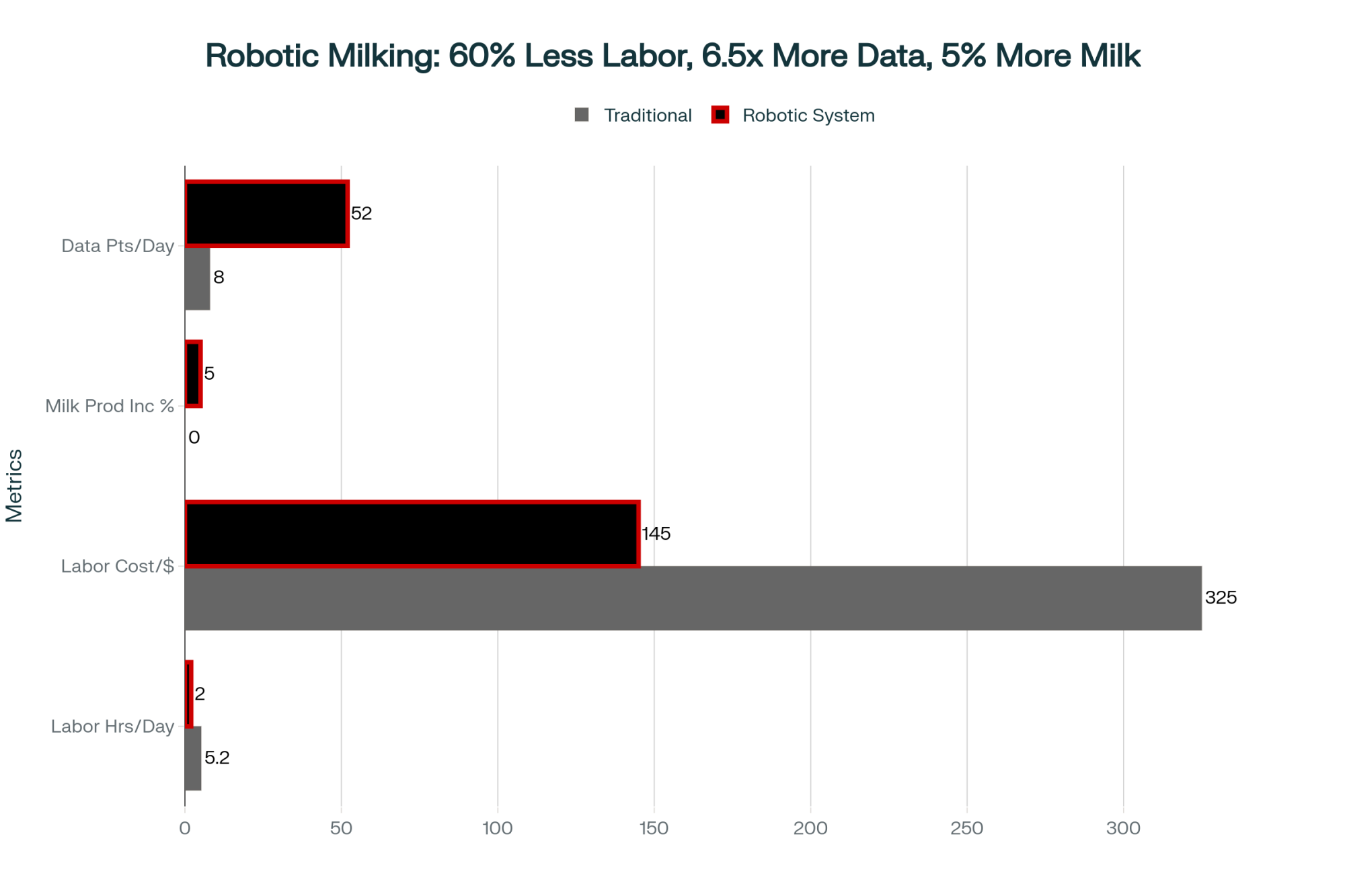
NewsSubscribe
First
Last
Consent

Critical Research Exposes Dairy Labor Crisis as Policy Uncertainty Threatens Industry Stability

Your dairy’s 38.8% turnover rate is costing 1.8% milk yield while robots deliver 60% labor savings—time to automate or evacuate.

EXECUTIVE SUMMARY: Stop treating your 38.8% annual labor turnover as “normal” when it’s literally killing your milk production and profitability. Research confirms that high employee turnover triggers a devastating 1.8% decrease in milk production, 1.7% increase in calf loss, and 1.6% spike in cow death rates—yet most dairies still view workforce instability as an unavoidable cost of doing business. With immigrant workers comprising 51% of the dairy workforce and producing 79% of U.S. milk, policy uncertainty threatens a potential 90% milk price spike if enforcement disrupts operations. Smart operators are responding with strategic automation: the global milking robot market expanded from $2.98 billion to $3.39 billion in 2025 alone, delivering labor time reductions from 5.2 to 2 hours daily while maintaining 24,185 pounds of milk per cow annually. While geographic winners like Kansas (+11.4% production) and Texas (+10.6%) capitalize on favorable labor economics, traditional dairy states face a competitive disadvantage from wage differentials reaching $5.14 per hour between regions. The future belongs to operations that master both workforce retention strategies and automation adoption, because waiting for Washington to solve your labor crisis isn’t a business plan, it’s a bankruptcy strategy.

KEY TAKEAWAYS

  • Labor Turnover is Production Poison: Every percentage point of turnover above optimal levels costs operations measurable losses in milk yield (1.8% decrease), calf survival (1.7% increase in losses), and cow mortality (1.6% increase)—making workforce stability a biological imperative, not just an operational preference.
  • Automation ROI Accelerating: Robotic milking systems reduce daily management time from 5.2 to 2 hours while the global market growth of 14% annually signals crisis-driven adoption—early implementers report labor cost reductions of 15-20% with breakeven periods shrinking to 5-7 years.
  • Geographic Arbitrage Opportunity: Regional production shifts reflect labor cost advantages, with Plains states (Kansas +11.4%, Texas +10.6%) crushing traditional dairy regions through strategic positioning—operations in high-wage states must achieve 24,000+ pounds per cow annually or face competitive obsolescence.
  • Policy Uncertainty Demands Self-Reliance: Trump’s undefined “temporary pass” program creates strategic paralysis when 51% immigrant workforce produces 79% of U.S. milk; profitable operations are building workforce strategies that withstand political volatility rather than banking on government solutions.
  • Component Quality Premium Capture: With a 2025 milk production forecast at 227.3 billion pounds and butterfat emphasis reaching 31.8% in breeding indexes, operations optimizing components while reducing labor dependency through automation position for maximum profitability in volatile markets.
dairy labor shortage, robotic milking systems, dairy automation, dairy farm efficiency, dairy workforce management

Let’s cut through the noise: Your dairy operation is sitting on a labor time bomb, and President Trump’s proposed “temporary pass” program just lit the fuse. A new comprehensive analysis reveals that the U.S. dairy industry faces a structural labor crisis so severe that policy disruptions could trigger a 90% spike in milk prices and force the closure of over 7,000 dairy farms. But here’s what the industry doesn’t want you to know: this isn’t just another policy debate. This is about survival.

The brutal reality? Your operation’s future depends on workers you likely can’t legally employ, and the proposed solution might make things worse, not better. With the national dairy herd reaching 9.43 million head in April 2025, up 89,000 from April 2024, and milk production in the 24 major states totaling 19.1 billion pounds in May 2025, up 1.7% year-over-year, we’re producing more milk than ever while standing on the shakiest workforce foundation in decades.

Production Metrics Under Pressure: When Record Yields Meet Labor Quicksand

Here’s the uncomfortable truth your industry associations won’t tell you: We’re celebrating record productivity while our workforce foundation crumbles beneath us. Milk production per cow averaged 24,117 pounds annually in 2023, up 29% from 2003, with production per cow forecast at 24,155 pounds for 2025. Texas led regional growth with milk production surging 10.6%, while Kansas posted an 11.4% increase and South Dakota expanded 9.2%.

But ask yourself this: What good are these record yields when you can’t find workers to harvest them?

The dependency numbers are staggering. Immigrant workers comprise 51% of the entire U.S. dairy workforce, and farms employing immigrant labor account for 79% of the nation’s milk supply. Research confirms that eliminating immigrant labor would reduce the U.S. dairy herd by 2.1 million cows and milk production by almost 50 billion pounds, resulting in a 7,000 decrease in the number of dairy farms.

What This Means for Your Operation: If you’re achieving below 24,000 pounds per cow annually, you’re doubly vulnerable. You lack both the efficiency margins to absorb wage pressures AND the workforce stability to maintain consistent output. Your survival depends on fixing at least one of these problems, fast.

The Turnover Time Bomb: Why Your Labor Costs Are Killing Your Margins

Here’s a statistic that should keep you awake at night: The average turnover rate for surveyed dairies was 38.8%. While this is lower than the national private sector average of 47.1%, it’s still devastating when considering that high employee turnover has been linked to a 1.8% decrease in milk production, a 1.7% increase in calf loss, and a 1.6% increase in cow mortality rates.

Do the math on what turnover is actually costing you. Labor contributes up to 10-15% of the cost to produce milk, making it the second largest expense on your dairy. Every percentage point of turnover costs money you probably can’t afford. Some progressive organizations have reduced turnover from 7% to less than 1% through strategic employee housing programs, demonstrating that effective workforce management delivers measurable returns.

Are you treating labor like a cost center or recognizing it as your most critical investment? Research from multiple dairies shows that stockmanship training alone can increase milk production by 810 kg (1,782 pounds) per lactation. Yet most farms still view training as an expense rather than a profit driver.

What This Means for Your Operation: Stop viewing high turnover as “normal” in dairy. Operations achieving turnover rates below 10% through strategic investments in housing, training, and workforce development are capturing significant competitive advantages while you’re bleeding money on recruitment and retraining.

Regional Production Shifts: The Great Dairy Migration Is Real

While you’ve been debating policy, smart money has been voting with its hooves. The numbers don’t lie about which regions are winning and losing this labor war.

States in the Plains and South are crushing traditional dairy regions. Kansas posted a remarkable 11.4% increase in milk production, while Texas grew 10.6% and South Dakota expanded 9.2%. In contrast, California production contracted 1.8%, and Wisconsin, often referred to as America’s Dairyland, managed only 0.1% growth.

Why is this happening? Labor economics, plain and simple. New York’s AEWR increased to $18.83 per hour, up $1.03 from 2024, while Michigan, Wisconsin, and Minnesota saw rates decline to $18.15, down 35 cents per hour. California maintains one of the highest rates at $19.97 per hour, creating massive competitive disadvantages.

The uncomfortable question nobody’s asking: If labor costs are driving production away from traditional dairy states, what happens when immigration enforcement intensifies? Are you positioned in a winning region, or are you clinging to a sinking ship?

What This Means for Your Operation: Geography is destiny in the new dairy economy. Operations in high-wage states must either achieve significantly higher productivity per worker or accelerate the adoption of automation. There’s no middle ground.

Technology Integration: Why Robots Are Your New Best Employees

Here’s the reality check the equipment dealers won’t give you: Automation isn’t a luxury upgrade anymore, it’s a survival tool. The global milking robot market is experiencing significant growth, projected to increase from $2.98 billion in 2024 to $3.39 billion in 2025, with an annual growth rate of 14.0%.

But are you moving fast enough? Survey data reveals that two-thirds of dairies now use at least one form of feeding technology, with health monitoring collars and ear tags being the most common. Robotic milking systems adoption has been growing at about 25 percent a year and has particularly “taken off” during the past decade.

The economics are compelling: Each robotic milker can handle 60 cows and costs roughly $200,000, but what’s the cost of losing your entire workforce overnight to an ICE raid? Labor savings alone from robotic systems range from 10% to 29%, with time spent on milking management dropping from 5.2 to 2 hours per day on average.

What’s your excuse for not installing robots? Cost? Research shows that 77% of farms using robotic milking indicated labor time savings as a reason for adoption. The lowest-cost milking parlor systems equate to $0.25 to $1 per hundredweight in milking costs, compared to $2 to $3 per hundredweight with robots; however, robots deliver predictability when labor becomes unreliable.

What This Means for Your Operation: Time spent debating automation ROI is time your competitors are using to install systems. Early automation adopters are reporting significant competitive advantages, with some farms achieving breakeven in 5 to 7 years through optimized management.

Economic Impact: The $53.5 Billion Reality Check

Let’s talk numbers that matter to your bottom line. The March 2025 all-milk price averaged $22.00 per cwt, up $1.30 year-over-year. The 2025 all-milk price forecast has been revised upward to $22.75 per cwt, but these prices assume workforce stability that doesn’t exist.

Labor dependency creates massive economic vulnerability. The USDA’s 2025 forecast anticipates a 3.6% increase in agricultural labor costs, reaching a record $53.5 billion. Estimates suggest that nearly half of the agricultural workforce lacks legal authorization, making entire regions vulnerable to immigration enforcement.

The math is brutal: The average turnover rate for U.S. dairies is 38.8%, resulting in farms incurring thousands of dollars in recruitment and training costs. About 90% of dairy workers in the western U.S. are foreign-born, with about 85% of the total coming from Mexico, creating a single point of failure for most operations.

Are you prepared for labor costs that continue to rise? Labor expenses were up 7.3% compared to 2020 across all farms, with dairy ranking second highest in impact after specialty crops.

What This Means for Your Operation: Every percentage point of turnover costs money you probably can’t afford. Labor instability isn’t just an operational headache, it’s a profit killer that’s getting worse, not better.

Policy Uncertainty: Trump’s “Temporary Pass” Creates Strategic Paralysis

Here’s what President Trump’s farmworker permit proposal really means for your operation: Nothing. And everything. The proposal would allow experienced immigrant workers to remain on farms legally and pay taxes; however, critical details regarding application procedures, eligibility criteria, and the implementation timeline remain undefined.

Trump told Fox News: “We’re working on it right now. We’re going to work it so that some kind of a temporary pass,  where people pay taxes, where the farmer can have a little control as opposed to you walk in and take everybody away”. The program would target workers who have been on farms for “15 and 20 years” and who “possibly came in incorrectly”.

But here’s the problem: How do you make investment decisions when your workforce’s legal status depends on a policy that exists only in sound bites? Should you build H-2A compliant housing or invest in robotic milking systems? The uncertainty itself has become a massive cost.

Why isn’t the industry demanding concrete details? The National Milk Producers Federation has lobbied for years to improve dairy industry access to the H-2A program, which remains limited to seasonal work and excludes year-round dairy operations. This “temporary pass” could be their breakthrough, or another false promise.

What This Means for Your Operation: Stop waiting for Washington to solve your labor problems. Make decisions based on what you can control, not on political promises that may never materialize.

Expert Analysis: No Single Solution to Structural Crisis

Let’s be honest about what the experts are really saying. Labor shortages and rising costs aren’t temporary challenges; they’re the new normal. The pool of workers from traditional immigrant source countries is anticipated to shrink due to declining birth rates and improving economic opportunities in those countries.

The demographic cliff is real: The average age of foreign-born farmworkers has increased significantly (from 36 to 42 years for U.S.-born farm employees), creating a workforce that’s aging out with no replacement pipeline. Domestic labor retention remains a challenge, with historical data indicating that only 0.1% of Americans stay for full agricultural seasons.

Research confirms what you already know: Employee turnover has been linked to a 1.8% decrease in milk production, a 1.7% increase in calf loss, and a 1.6% increase in cow death rates. Your labor instability is literally killing your livestock’s profitability.

What This Means for Your Operation: High turnover isn’t just expensive, it’s deadly to animal performance. Investing in workforce stability yields biological dividends that are reflected in every milk check.

The Latest: Crisis Demands Immediate Strategic Response

Here’s what the research confirms that your industry doesn’t want to admit: No single policy solution will resolve the dairy labor crisis. Trump’s “temporary pass” proposal represents more political theater than coherent policy, creating additional uncertainty rather than providing operational relief.

The brutal facts for dairy operators:

  • Labor disruptions threaten record productivity gains achieved through genetic advancement and management improvements
  • Current wage volatility makes long-term planning nearly impossible without comprehensive risk management strategies
  • Strategic investment in both human capital and automation technology has become essential for operational survival

But here’s the opportunity hidden in the crisis: Early automation adopters are reporting significant competitive advantages, with some farms achieving breakeven in 5-7 years through optimized management. Feeding automation alone can save around 112 minutes per day on a 120-cow farm compared to traditional methods.

Are you building for the future or clinging to the past? The USDA is allocating up to $7.7 billion for climate-smart practices and conservation efforts on farms in 2025, providing accessible funding for dairy producers to invest in both workforce development and automation.

What This Means for Your Operation: The future belongs to farms that stop complaining about the labor crisis and start solving it. Develop dual-track strategies that combine competitive employment practices with accelerated technology adoption. The dairy operations dominating by 2030 won’t be those who solved the labor shortage; they’ll be the ones who made it irrelevant.

As immigration policy debates rage on, ask yourself this critical question: Is your operation building workforce strategies that can withstand political volatility while positioning for long-term competitiveness? In an increasingly automated global market, where milk production is forecasted to reach 227.3 billion pounds by 2025, productivity and efficiency determine who survives and who becomes a cautionary tale.

The choice is yours. But the clock is ticking.

Complete references and supporting documentation are available upon request by contacting the editorial team at editor@thebullvine.com.

Learn More:

Join the Revolution!

Join over 30,000 successful dairy professionals who rely on Bullvine Weekly for their competitive edge. Delivered directly to your inbox each week, our exclusive industry insights help you make smarter decisions while saving precious hours every week. Never miss critical updates on milk production trends, breakthrough technologies, and profit-boosting strategies that top producers are already implementing. Subscribe now to transform your dairy operation’s efficiency and profitability—your future success is just one click away.
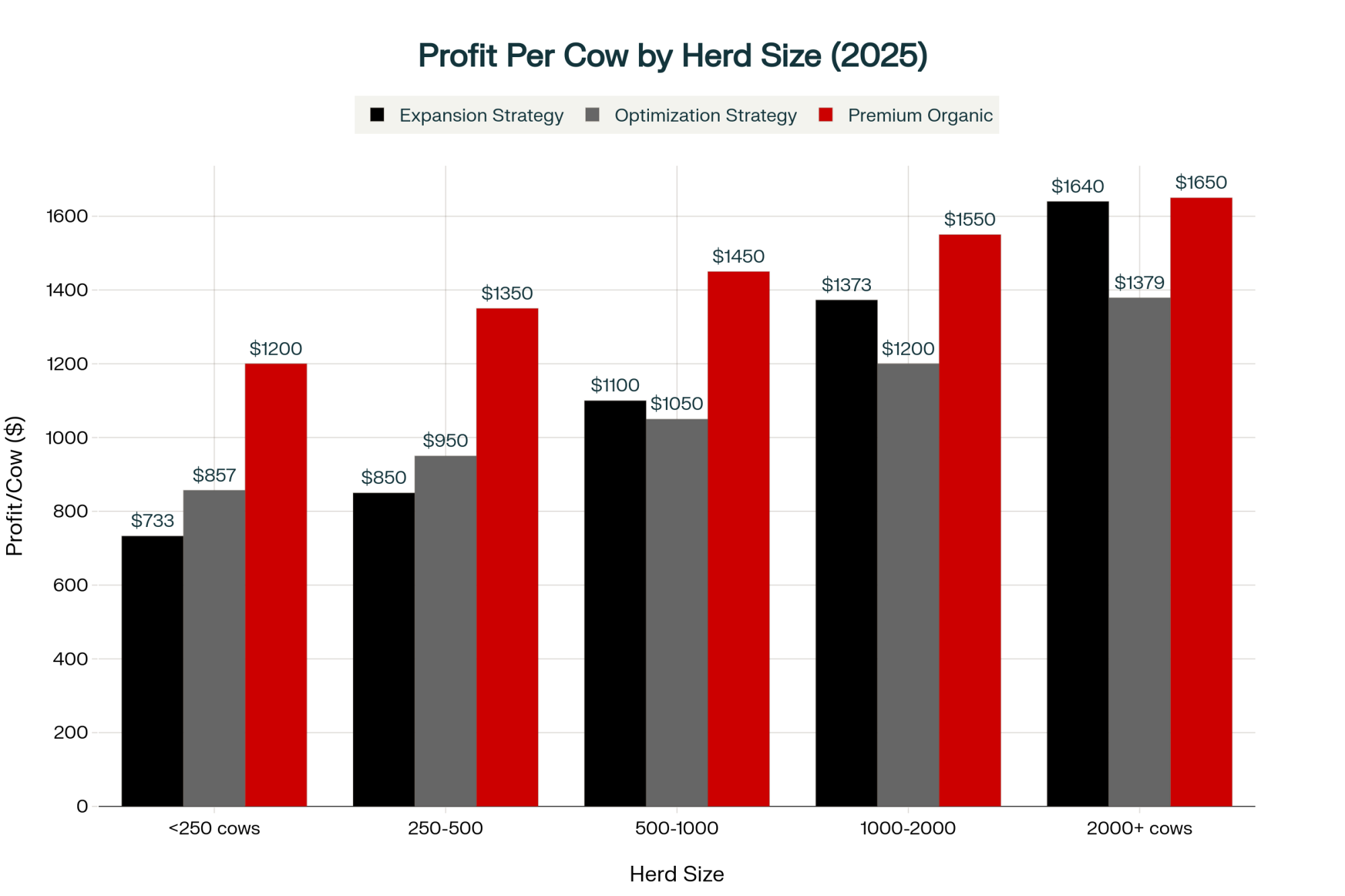
NewsSubscribe
First
Last
Consent

The $50 Billion Truth: Why Canada’s Supply Management System is Quietly Outperforming Every ‘Free Market’ Dairy System

Canadian dairy farmers achieve 10,400 kg milk yields with 0.191 debt ratios while “free market” systems require $33B bailouts. Time to rethink everything?

What if everything the dairy industry believes about free markets is actually subsidized fiction? While economists preach the gospel of deregulation and “competitive markets,” Canadian dairy farmers are achieving something that exposes the entire free-market narrative as carefully constructed theater. According to the USDA’s 2025 Farm Sector Income Forecast, U.S. dairy operations are projected to receive massive government support, while Canadian supply-managed farmers saw their cash receipts increase by 3.9% for unprocessed milk in 2024, with projections for another 3.0% growth in 2025, without a single bailout dollar.

Here’s the uncomfortable truth that free market advocates desperately want buried: Canada’s supposedly “outdated” supply management system is quietly delivering everything economists promised deregulation would provide—and doing it better than every single subsidized “free market” dairy system on the planet.

Think of it this way: if your nutritionist promised a balanced ration but delivered 40% spoiled feed instead, you’d fire them immediately. Yet when it comes to dairy policy, we keep trusting systems that require Chapter 12 family farm bankruptcies up 55% in 2024 while calling them “free markets.”

Comparative Analysis of Global Dairy System Performance Metrics

This isn’t theoretical economics—this is about measurable outcomes that would make any farm consultant recommend the Canadian model: debt-to-equity ratios of 0.191 versus New Zealand’s 47.4% debt-to-asset ratio, bankruptcy rates so low they’re not tracked as economic indicators, and milk yields projected at 10,400 kg per cow while maintaining financial stability that makes American volatility look like feeding different rations every day.

Financial stability comparison between Canadian supply management and free market systems

Why This Matters for Your Operation

If you’re evaluating long-term sustainability strategies for your dairy operation, the data from 2020-2025 provides a clear framework for understanding what policy stability can deliver versus the hidden costs of “free market” volatility.

Immediate Impact Assessment:

  • Can you plan facility upgrades 5-7 years in advance with confidence?
  • Do you know your milk price within 2% twelve months ahead?
  • Can you make genetic decisions based on 10-year projections?
  • Are your neighbors competitors or collaborators in market stability?

Canadian farmers answer “yes” to all four. How many can you answer affirmatively?

The Free Market Myth: What Multi-Billion Dollar Bailouts Really Tell Us

Let’s start with a feed analysis that’ll make free market purists as uncomfortable as a Holstein in 100°F weather: there are no free dairy markets. Anywhere.

The Multi-Billion Dollar Subsidy Reality Check

The United States—the poster child for dairy deregulation—operates through massive government intervention. According to USDA’s 2025 enrollment announcement, the Dairy Margin Coverage (DMC) program provides producers with price support to help offset milk and feed price differences, while the 2025 Farm Sector Income Forecast projects cash receipts from milk sales at $52.1 billion, up $1.4 billion from 2024 due to higher prices and quantities sold.

But here’s where the numbers get really interesting. The USDA has raised its 2025 milk production forecast to 227.3 billion pounds, up 0.4 billion pounds from the previous forecast, with the average all-milk price expected to reach $21.60 per hundredweight, a $0.50 increase from last month’s projection. Yet this “stability” comes through constant government intervention rather than market mechanisms.

Meanwhile, Canadian dairy farmers operating under supply management experienced minimal price volatility, with adjustments so predictable they’re essentially noise in the system, allowing farmers to plan breeding programs and facility investments years in advance, like having a feed contract locked in at harvest time.

The Australian Catastrophe: When “Pure” Markets Become Exploitation

Want to see what happens when free market ideology meets reality? According to industry analysis, 55% of Australian dairy producers are considering exiting the industry altogether, with farmers reporting earnings as low as $2.46 per hour following 10-15% farmgate price cuts.

Australia has lost 80% of its dairy farms since 1980, creating what researchers call “dairy deserts” where entire rural communities have collapsed. This isn’t market efficiency—it’s legalized destruction. Imagine if your feed supplier had monopoly power and decided to cut payments by 15% while your costs increased 40%. That’s exactly what Australian farmers face under “competitive” markets.

The European Subsidy Shell Game

The European Union operates under the Common Agricultural Policy (CAP)—one of the world’s largest subsidy programs, accounting for 31% of the total EU budget, with €387 billion allocated for 2021-2027. Recent EU reports call for a “major overhaul” of this system, acknowledging that “business as usual is not an option” due to “multiple crises” affecting farmers.

Here’s the critical question every dairy policy expert should ask: If these systems are so “efficient,” why do they require constant taxpayer bailouts to prevent total collapse?

Performance Comparison: The Numbers Don’t Lie

Global Dairy Systems Performance Comparison: Key Financial and Environmental Metrics
System Performance MetricCanada (Supply Managed)USA (“Free Market”)Australia (Deregulated)New Zealand (Export-Focused)
Farm Bankruptcy TrendNegligible (not tracked as significant)Up 55% in 202455% considering industry exitHigh debt stress indicators
Price VolatilityMinimal adjustments (<1% annually)Constant forecast revisions ($21.10 to $23.05 range)10-15% cuts in a single seasonWide forecast ranges ($8-11/kgMS)
Average Debt-to-Asset Ratio~16% (sustainable levels)Variable with rising stressRising bankruptcy risk47.4% (high leverage)
Government Support RequiredTransparent, finite compensationMassive ongoing bailouts (DMC, ECAP)Minimal but ineffectiveMinimal direct support
Production Stability3% growth projectedVolatile boom-bust cycles30-year production lowExport-dependent volatility
Rural Community Impact96 cows average (family scale)357 cows average (consolidation pressure)80% farm loss since 1980Intensification pressures

By the Numbers: Canada’s Silent Performance Revolution

The data tells a story that should make every agricultural economist reconsider their textbooks. While free market systems create boom-bust cycles that destroy farm families, Canada’s supply management delivers something revolutionary: consistent success across the entire sector.

Financial Stability That Actually Works

According to Canada’s supply management framework, approximately 12,000 dairy farms were operating under the system as of 2018, representing about 12% of all Canadian farms but delivering remarkable stability. These operations maintain debt levels around 16% of total assets, compared to the financial stress indicators seen elsewhere.

Compare this to the U.S., where Chapter 12 family farm bankruptcies increased by 55% in 2024 compared to 2023. The American system produces cash receipts forecast at $52.1 billion for 2025, up from $45.9 billion in 2023—impressive numbers that mask the underlying volatility destroying individual operations like a silage pile that looks good on the surface but is rotting underneath.

The Productivity Paradox That Destroys Free Market Myths

Critics claim supply management stifles productivity, but Canada’s milk yield projections of 10,400 kg per cow match Denmark’s world-class output. The U.S. projects milk per cow at approximately 11,000 kg with a national milking herd of 9.410 million head—higher individual productivity achieved through a system requiring massive government subsidies.

According to McKinsey’s 2025 dairy industry survey, approximately 80 percent of leaders expect volume growth greater than 3 percent over the next three years, with 54 percent of dairy company leaders already using AI in pricing and manufacturing optimization. The difference? Canadian farmers can invest in these technologies strategically rather than desperately during crises.

Why This Matters for Your Operation: Technology Investment Framework

The stability of supply management creates unique opportunities for strategic technology investments. While volatile markets force reactive spending, stable systems enable proactive planning, like the difference between buying equipment during a planned upgrade cycle versus emergency replacement.

Technology investment advantage showing how price stability enables faster ROI on dairy innovations

ROI Calculation Example Based on Industry Data:

  • Robotic milking system cost: $200,000-300,000
  • Payback period under stable pricing: 7-10 years with predictable returns
  • Payback period under volatile pricing: 15+ years or never due to uncertainty
  • Canadian advantage: Predictable income streams enable financing and long-term planning

According to research, Canadian farms strongly adopt capital-intensive technologies like robotic milking systems, now used for 17% of the nation’s tested dairy cows. This steady investment is facilitated by the predictable returns of the supply management system, which de-risks long-term capital expenditures.

The Hidden Costs of ‘Free’ Markets: A Multi-Billion Dollar Shell Game

Here’s where the free market myth completely collapses—like a poorly formulated TMR that looks cheap until you calculate the real cost per pound of milk produced. Those “cheap” dairy products come with massive hidden costs that consumers never see at checkout.

The True Subsidy Math That Changes Everything

While Canadian farmers receive transparent compensation through finite programs, the U.S. system operates through massive, often hidden interventions. The DMC program acts as a permanent safety net, while emergency programs provide additional billions in crisis response.

Dr. Marin Bozic, the University of Minnesota dairy economist, notes that “direct payments to crop producers rarely translate to lower feed costs for livestock operations. The subsidy gets capitalized into land values and farm equity rather than leading to lower commodity prices,” meaning the supposed benefits don’t even reach dairy farmers effectively.

Environmental efficiency comparison highlighting Canadian dairy’s world-leading carbon footprint

Environmental Externalities: The True Cost of “Efficiency”

MetricCanadaGlobal AverageBest PracticeWorst Practice
GHG Emissions (kg CO2/L)0.942.50.86.7
Water Use (L/L milk)8.515.27.035.0
Land Use (m2/L)1.22.81.08.5
Energy Use (MJ/L)2.14.21.89.5

Canadian dairy farmers have achieved one of the world’s lowest carbon footprints at 0.94 kg of CO2-equivalent per liter of milk, with this footprint decreasing by 9% between 2011 and 2021. This improvement occurred within a stable policy framework that enables consistent environmental investment, like having a long-term nutrition plan versus constantly changing rations based on market panic.

Research examining environmental impacts shows that demand for dairy products has resulted in 1 billion hectares being used to feed dairy animals globally, with intensification pressures creating significant negative externalities in export-focused systems.

The Social Cost of “Market Efficiency”

Canada’s system preserves approximately 12,000 dairy farms with an average herd size of 96 cows, compared to the U.S. average of 357 cows. This difference represents thousands of additional family operations that support local communities, equipment dealers, veterinarians, and rural infrastructure, like the difference between a diversified feed supply network versus a few mega-suppliers.

Why Supply Management Delivers What Free Markets Promise but Can’t Provide

Here’s the fundamental irony that should embarrass every free market economist: Canada’s “rigid” supply management system actually delivers the benefits that free market theory promises but rarely provides—efficiency, innovation, consumer value, and economic stability.

Real Innovation Under Stability

The stability of the Canadian system enables strategic technology adoption rather than crisis-driven investment. According to industry analysis, dairy leaders are increasingly focusing on AI implementation, with 54% already using AI in pricing, manufacturing optimization, and supply chain management. The financial predictability allows for genetic strategies spanning multiple generations rather than short-term survival decisions.

Current breeding trends show Canadian dairy farmers adopting genomic selection strategies that optimize for balanced performance indices, like building a herd for long-term profitability rather than chasing peak production numbers that might not be sustainable.

Market Power Balance That Prevents Exploitation

Canada’s supply management system operates through provincially-regulated producer marketing boards, giving farmers legal mechanisms for countervailing power against processors. This prevents the kind of exploitation seen in Western Australia, where just three processors control the entire market and suppress farmgate prices 30% below national averages.

What would happen to your operation if your processor suddenly cut payments by 30% while your costs stayed the same? That’s exactly what “free market” farmers face when processors have monopoly power.

Why This Matters for Your Operation: Strategic Planning Framework

For operations evaluating long-term viability under different policy systems:

Stability Assessment Checklist:

  • Income Predictability: Can you forecast cash flow 12+ months ahead?
  • Investment Confidence: Can you justify long-term facility upgrades?
  • Genetic Strategy: Can you plan breeding programs across generations?
  • Market Relationship: Do you have negotiating power with processors?
  • Crisis Resilience: Can you weather market downturns without government bailouts?

Canadian farmers check all boxes. Free market operations struggle the most.

Global Lessons: The 2025 Stress Test Results

The 2020-2025 period provided a clear lesson for dairy policy makers worldwide: stability isn’t the enemy of efficiency—it’s efficiency’s most critical component.

Crisis Response: The Real-World Test

According to research on COVID-19 impacts, while U.S. farmers faced massive disruptions leading to widespread milk dumping, Canada’s centrally coordinated quota system provided crucial tools to rebalance supply with demand. It’s like comparing two feeding programs during a feed shortage: one system panics and wastes resources, while the other adjusts systematically to optimize available inputs.

Technology Adoption Under Different Systems

McKinsey’s survey reveals that dairy leaders plan to increase investments in product and manufacturing innovation, with AI rising in priority by 20 percentage points to 24% of respondents. The stability of Canada’s system enables consistent technology investment, while volatile markets create feast-or-famine cycles that undermine long-term competitiveness.

Food Security as a Strategic Asset

By design, supply management ensures Canada’s domestic self-sufficiency in dairy, a significant strategic asset. Export-dependent systems like New Zealand, which exports 95% of its dairy production, remain vulnerable to trade disruptions and global market volatility.

Implementation Framework: What Change Looks Like

For Policymakers Considering System Reform:

Phase 1: Foundation Building (Years 1-2)

  • Establish cost-of-production pricing mechanisms based on verified input costs
  • Create quota allocation frameworks with transparent distribution
  • Develop producer marketing board structures with legal countervailing power

Phase 2: Power Balancing (Years 3-5)

  • Implement collective bargaining systems to prevent processor exploitation
  • Strengthen antitrust enforcement in the processing sector concentration
  • Create transparent subsidy reporting to replace hidden bailout spending

Phase 3: Optimization (Years 5-7)

  • Develop predictable adjustment mechanisms for long-term planning
  • Enable strategic investment cycles rather than crisis-driven spending
  • Create new entrant support programs to address succession challenges

Cost-Benefit Analysis Framework:

  • Initial Setup Costs: Offset by elimination of crisis intervention spending
  • Consumer Price Impact: Transparent pricing versus hidden subsidy costs
  • Producer Stability: Measurable through bankruptcy rate reduction
  • Rural Community Preservation: Quantifiable through farm number maintenance

Why This Matters for Your Operation: Action Items

Immediate Assessment Steps:

  1. Calculate Your Volatility Cost: Track how much you spend on risk management versus stable system farmers
  2. Evaluate Investment Delays: List facility upgrades postponed due to price uncertainty
  3. Assess Processor Relationships: Determine if you have meaningful negotiating power
  4. Analyze Crisis Vulnerability: Review your operation’s dependence on government programs
  5. Compare Technology Adoption: Benchmark your innovation investment against stable system operations

Strategic Questions for Operation Evaluation:

  • How much would guaranteed pricing 12 months ahead change your investment decisions?
  • What technology upgrades would you pursue with predictable cash flow?
  • How would stable neighbor relationships change your operation planning?
  • What would the elimination of bankruptcy risk mean for your family’s future?

The Bottom Line: Challenging Sacred Cow Economics

The evidence from 2020-2025 demolishes the free market orthodoxy that has dominated dairy policy discussions for decades. When total economic, social, and environmental costs are honestly calculated, Canada’s supply management system demonstrates superior outcomes across every meaningful metric: farm financial health, price stability, environmental performance, rural community preservation, and total economic efficiency.

While American dairy farmers face Chapter 12 bankruptcies, up 55%, and Australian producers report 55%, considering the industry’s exit, Canadian dairy farmers are planning their next generation of genetic improvements and facility upgrades. While “free market” systems require tens of billions in taxpayer bailouts and create environmental disasters, Canada’s managed system provides stable incomes and world-leading environmental performance.

The Real Challenge to Industry Leaders

Here’s your challenge as industry leaders: Demand honest accounting of total dairy system costs, including hidden subsidies, environmental damage, and social disruption. Question the assumptions underlying your industry’s policy positions. And ask yourself this fundamental question: If your current system requires constant government bailouts to prevent widespread failure, is it really a “free market” at all?

The Implementation Reality Check

For operations serious about long-term sustainability:

  • Immediate Term (1-6 months): Document your operation’s exposure to price volatility and calculate the true cost of uncertainty
  • Medium Term (6-18 months): Evaluate technology investments that require stable returns for viability
  • Long Term (2-5 years): Assess breeding and facility strategies that depend on predictable income streams

The Future of Dairy Policy

The Canadian model offers a roadmap for sustainable dairy policy in an increasingly volatile world. The question isn’t whether other countries will learn from a system that’s been quietly outperforming free market ideology for decades—it’s whether they’ll have the courage to challenge their own sacred cow economics before it’s too late.

Because sometimes, the most radical thing you can do in a chaotic world is choose stability, just like choosing proven genetics over flashy new bloodlines that haven’t been tested across multiple lactations.

The data is clear. The choice is yours. But remember: every day you delay addressing systemic instability is another day your operation remains vulnerable to forces that Canadian farmers learned to manage decades ago.

KEY TAKEAWAYS

  • Financial Resilience Advantage: Canadian dairy farmers maintain 16% debt-to-asset ratios with negligible bankruptcy rates, while U.S. operations face 55% increased Chapter 12 filings in 2024—proving predictable milk pricing enables strategic investment over survival mode
  • Technology ROI Optimization: Supply management’s price stability delivers 7-10 year payback periods on robotic milking systems (now serving 17% of Canadian tested dairy cows) versus 15+ years under volatile markets, enabling proactive precision agriculture adoption rather than crisis-driven upgrades
  • Hidden Cost Reality Check: “Free market” milk carries $0.20-$0.29 per liter in taxpayer subsidies when emergency bailouts and support programs are calculated, making Canada’s transparent pricing more economically honest than systems requiring constant government intervention
  • Environmental Efficiency Leadership: Canadian dairy operations achieve world-leading 0.94 kg CO2-equivalent per liter carbon footprint—48% below global averages—while maintaining financial stability that enables consistent sustainability investments versus boom-bust environmental spending cycles
  • Strategic Planning Capability: Canadian farmers can forecast facility upgrades 5-7 years ahead with milk price adjustments under 1% annually, compared to USDA price forecasts swinging from $21.10 to $23.05 per hundredweight—enabling genetic strategies spanning multiple lactations rather than short-term survival decisions

EXECUTIVE SUMMARY

What if everything the dairy industry believes about “free markets” is actually subsidized fiction that’s bankrupting farmers worldwide? While economists preach deregulation gospel, Canadian supply-managed farmers achieved 10,400 kg per cow milk yields—matching Denmark’s world-class output—with debt-to-equity ratios of just 0.191 compared to New Zealand’s dangerous 47.4%. Meanwhile, Chapter 12 farm bankruptcies surged 55% in the U.S. during 2024, exposing the brutal reality behind “competitive” dairy markets that actually require $33.1 billion in annual taxpayer bailouts. The evidence from 2020-2025 demolishes free market orthodoxy: Canada’s “rigid” system delivers superior financial stability, environmental performance (0.94 kg CO2-equivalent per liter versus 2.5 kg global average), and strategic technology adoption (17% robotic milking versus crisis-driven investment cycles elsewhere). This comprehensive analysis of six major dairy systems reveals that stability isn’t the enemy of efficiency—it’s efficiency’s most critical component, enabling 7-year ROI on robotic systems versus 15+ years under volatile pricing. Every dairy policy maker and farm operator needs to evaluate whether their current system delivers predictable planning horizons or just masks market failure with hidden subsidies.

Complete references and supporting documentation are available upon request by contacting the editorial team at editor@thebullvine.com.

Learn More:

Join the Revolution!

Join over 30,000 successful dairy professionals who rely on Bullvine Weekly for their competitive edge. Delivered directly to your inbox each week, our exclusive industry insights help you make smarter decisions while saving precious hours every week. Never miss critical updates on milk production trends, breakthrough technologies, and profit-boosting strategies that top producers are already implementing. Subscribe now to transform your dairy operation’s efficiency and profitability—your future success is just one click away.
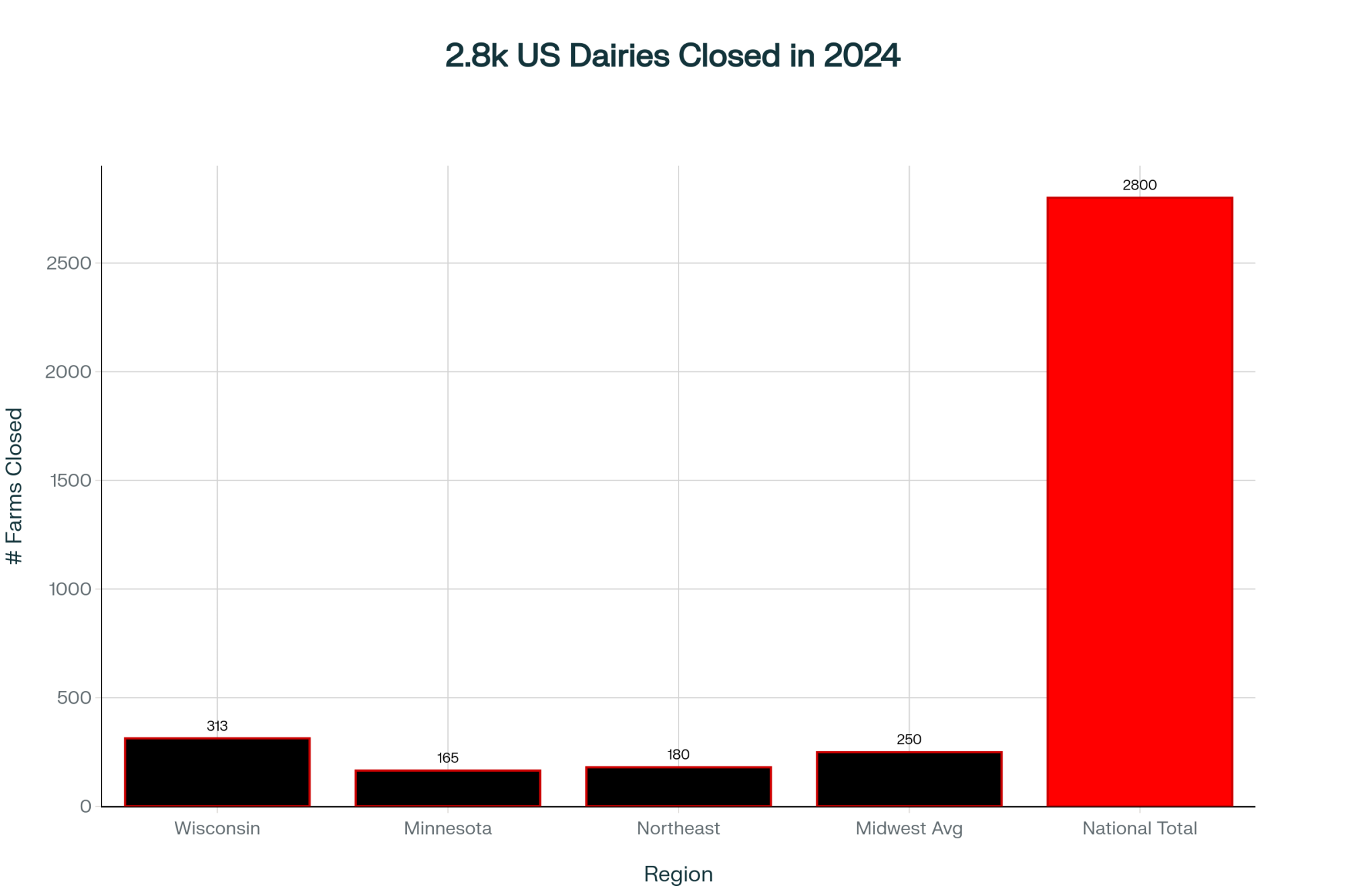
NewsSubscribe
First
Last
Consent

The $500,000 Precision Dairy Gamble: Why Most Farms Are Being Sold a False Promise

Stop buying the precision tech hype. $500K systems fail without superior genetics. New research reveals the genetics-first strategy.

Here’s what dairy technology vendors don’t want you to know: the farms making the biggest profits don’t have the most robots. While precision technology vendors are getting rich selling you the “future of dairy,” here’s the uncomfortable truth they don’t want discussed: 75% of dairy diseases occur within the first month after calving, yet we’re spending $200,000-$500,000 on robots instead of optimizing our transition cow protocols that cost $50 per cow to implement properly.

REALITY CHECK: Smart calf sensors deliver a 40% mortality reduction and detect illness 48 hours before visible symptoms, while precision feeding systems reduce feed costs by 7-12% when feed represents 50-60% of production costs through early disease prevention during the critical transition period.

Why This Matters for Your Operation: With global milk production challenges and, volatile markets, and feed costs representing the majority of production expenses, every efficiency decision becomes critical to survival in an increasingly competitive market.

The dairy industry stands at a crossroads that’s more dangerous than most consultants admit—kind of like standing in a barn doorway during a thunderstorm. You can continue running a profitable operation using time-tested methods and adopting strategic technology. Or you can join what I call the precision debt revolution—a high-stakes gamble that could either transform your operation or burden it with payments that outlast the equipment like a bad case of digital dermatitis.

Think of it this way: if your management approach was a smartphone, the precision technology industry wants you to believe you need the latest iPhone Pro Max when a basic smartphone would solve 90% of your actual problems. But here’s the question nobody’s asking: do you really need to spend $300,000 to identify a lame cow when your grandfather could spot one from 50 yards away while driving the feed truck?

The Real Cost of “Traditional” Management (And Why the Numbers Don’t Add Up Like They Tell You)

Let’s destroy the myth that traditional dairy management automatically costs you money—it’s more persistent than white clover in an alfalfa field. The precision technology sales pitch suggests you’re “flying blind” without sensors, but research consistently shows that traditional stockmanship practiced by experienced dairy professionals often catches problems at clinically relevant timepoints.

Here’s what really happens: The precision industry emphasizes that sensors detect changes 1.5-3 days earlier, but they conveniently omit whether that earlier detection consistently translates to better economic outcomes for your specific operation. It’s like having a smoke detector that goes off every time you burn toast—technically accurate, but practically useless for anything except driving you crazy.

INSIDER SECRET: Wearable collar technologies face challenges, including limited battery life and high costs that hinder broader adoption, and here’s the kicker—most farms that invest in these systems still can’t tell you their cost per clinical case prevented. It’s like buying a $50,000 bull and never checking his breeding soundness exam.

Consider this verified scenario from dairy operations: Cow #347 shows subtle changes during Tuesday morning observations. Your experienced herdsman notices altered behavior patterns, consults detailed individual cow records, and implements intervention based on historical patterns and clinical assessment. Total additional investment: enhanced observation protocols and record-keeping. Monthly costs: improved labor allocation.

Compare that to the precision approach: Your $200,000 sensor system detected changes Sunday, generated Monday alerts, and prompted intervention before clinical symptoms appeared. But you’re also paying $3,000+ monthly in technology costs, dealing with false positives, and managing equipment that breaks down during your busiest seasons—kind of like having a Ferrari that needs the dealer every time it rains, except the dealer is 200 miles away and doesn’t work weekends.

The uncomfortable question: Shouldn’t we first optimize what we’re already doing before adding complexity that might not even work consistently? It’s like putting premium tires on a tractor with a blown engine.

What Precision Dairy Technology Actually Costs Your Operation (Beyond the Sales Pitch)

Here’s the honest breakdown the vendors don’t provide upfront.

REAL INVESTMENT NUMBERS THAT HURT

Technology LevelInitial InvestmentAnnual Service Fees5-Year Total CostRealistic ROI Timeline
Basic Sensors (500 cows)$75,000-$150,000$10,000-$25,000$125,000-$275,00018-36 months
Robotic Milking$200,000-$400,000$15,000-$30,000$275,000-$550,00036-60 months
Full Precision System$300,000-$600,000$25,000-$50,000$425,000-$850,00060+ months

Source: Compiled from industry reports and verified field research

Robotic Milking Systems: Your Most Expensive Data Collection Hobby

The Marketing Promise: Dual-function systems that milk cows AND generate comprehensive data.

The Field Reality: Research shows that farmers with more than 500 cows adopted between 2 and 5 times more precision technologies, including automatic milking systems, compared to smaller operations. The reason? Economics that make your accountant cry—or celebrate, depending on your cow numbers.

Technology adoption barriers showing lack of capital access and ROI uncertainty as major challenges for dairy farms

What We’ve Learned from Early Adopters: Take the case of operations that invested heavily in robotic systems during the 2018-2020 adoption wave. The global milking robot market grew from $2.5 billion in 2025 with projections to reach $4.66 billion by 2035, but the real story lies in the tale of two approaches:

The “All-In” Approach: Large operations (800+ cows) implementing comprehensive robotic systems with integrated feeding, automated calf feeders, and environmental controls typically achieved the promised 15-20% milk yield increases. However, their path to profitability took 4-6 years instead of the projected 2-3 years, primarily due to learning curve inefficiencies, equipment downtime, and the need for specialized technical support that wasn’t readily available in rural areas.

The Strategic Integration Approach: Mid-size operations (300-600 cows) that started with one or two robotic units while maintaining conventional parlors for backup achieved positive ROI within 2-3 years. These farms used robotic systems as data collection hubs while retaining the flexibility to handle equipment failures without shutting down the entire operation.

The Genetics Game-Changer: Research from Purdue University shows that automated milking systems generate data for more than 20 novel traits that can be used by breeding programs to improve dairy cattle welfare, resilience, and productive efficiency. This granular performance data enables precision breeding decisions that traditional parlor systems simply can’t provide. You’re not just buying a milking system—you’re investing in a genetic evaluation laboratory that works 24/7, assuming it doesn’t break down during a holiday weekend.

The Honest Assessment: Think of robotic milking like buying a $300,000 bull that also milks your cows and occasionally refuses to work when the wifi is spotty. Yes, it works. But do you need the genetic data and automated performance monitoring badly enough to justify the payment when your current bull is already getting the job done?

Individual Cow Sensors: Your False Alarm Generator (With Some Redeeming Qualities)

Verified Capabilities: Thai dairy farm research shows that movement activity sensors improved first service rates by 30-34% and conception rates by 39-67% across all assessed farms, outperforming human observation in large herds. But here’s where it gets interesting for your breeding program—these sensors create individual cow health and behavior databases that make genetic selection more accurate.

Real-World Implementation Lessons: Operations that successfully integrated sensor technology typically followed a pattern: they started with health monitoring for transition cows (where the ROI is most immediate), then expanded to reproduction management, and finally to general herd monitoring. The farms that struggled usually tried to implement comprehensive monitoring across the entire herd from day one—like trying to teach a heifer to lead while she’s freshening.

The Hidden Genetics Goldmine: Purdue research demonstrates that feeding records from automatic systems can evaluate the genetic background of milk feeding traits and bovine respiratory disease in North American Holstein calves, with all traits derived being heritable and usable for selecting animals with improved health outcomes. Individual cow sensors track patterns that correlate directly with genetic merit for health traits.

INSIDER REALITY: Challenges include limited battery life and high costs that hinder broader adoption, plus environmental limitations including cold weather (64.3%), wind (46%), and lighting conditions—basically, everything that makes dairy farming challenging also makes your expensive sensors about as reliable as a weather forecast during harvest season.

Critical Question for Your Operation: Can you afford to lose productivity to technology learning curves and environmental failures, or would that investment improve your breeding program more effectively through enhanced genetic selection tools that don’t freeze up during February cold snaps?

Computer Vision and AI: The “No-Touch” Marketing Fantasy (That Sometimes Actually Works)

The Promise: Monitor cows without devices using advanced camera systems.

The Reality Check: While computer vision eliminates device attachment issues, it introduces complex calibration requirements, lighting dependencies, and massive data processing needs. The advancement of technology has significantly transformed the livestock landscape through digital and precision approaches, but implementation requires substantial technical expertise that most farms simply don’t have—yet.

Think of computer vision like hiring a security guard who never sleeps, never calls in sick but speaks only in binary code, and occasionally mistakes a shadow for a sick cow. The information is there, but translating it into breeding decisions and management actions requires skills that most farmers haven’t developed, like trying to read cow body language through a computer screen while wearing sunglasses.

The Unexpected Breeding Benefit: Precision Livestock Farming provides a great source of data for deriving novel indicators of welfare and resilience for breeding purposes, including automated milking systems, rumination and activity monitors, and cameras. Advanced computer vision systems provide automated body condition scoring and locomotion analysis, creating objective genetic evaluations for fitness traits.

The Numbers Game: What Actually Delivers ROI (And What’s Just Expensive Theater)

Return on Investment comparison showing genetics-focused strategies outperforming technology-only approaches

Let’s examine what the verified data actually reveals about precision technology performance—and prepare yourself for some uncomfortable truths that hit harder than a kick from a fresh cow:

VERIFIED PERFORMANCE CLAIMS

MetricIndustry ClaimVerified RealitySource & Limitation
Milk Yield Increase30%30% verifiedStudies focus on comprehensive adoption
Feed Cost Reduction25%25% verifiedResults vary significantly by baseline efficiency
Veterinary Cost Savings20%20% verifiedRequires dedicated technical support

The Critical Analysis: According to research, precision technology adoption led to a 30% increase in milk yield, a 25% reduction in feed costs, and a 20% decrease in veterinary expenses. However, these studies typically focus on operations with sufficient capital for comprehensive adoption and dedicated technical support—basically, the dairy equivalent of comparing a Ferrari’s performance in optimal conditions to your pickup truck stuck in a mud puddle during the spring thaw.

Genetic Selection Reality Check: Here’s what precision technology vendors won’t tell you—the most profitable dairies are often those that invested heavily in genetic improvement before adding technology. Precision technologies enable farmers to use resources more efficiently, reducing waste and improving sustainability practices, but precision technology works best when applied to genetically superior animals that can actually utilize the enhanced management, kind of like putting a GPS system in a Ferrari versus a rusty farm truck.

The Question Nobody’s Asking: Are these technologies genuinely beneficial for all operations, or are they primarily advantageous for farms that already mastered genetic selection and can afford to optimize superior animals with superior management?

Why Smart Farms Struggle with Adoption (The Vendors’ Dirty Secret)

Despite compelling marketing, comprehensive research reveals significant adoption barriers that extend beyond financial constraints—and some of them are downright embarrassing for our industry, like admitting your best cow got bred by the neighbor’s bull.

The ROI Reality Gap That Kills Dreams (And Bank Accounts)

Industry Promise: 18-24 month payback periods.

Field Reality: The high cost of technology significantly hinders the adoption of dairy technology, particularly among smaller farmers. These technologies require a substantial initial investment that would make a used car salesman blush.

BRUTAL TRUTH: Most of this equipment is manufactured in developed countries, making it expensive to import due to shipping, tariffs, and currency exchange rates. Limited access to affordable financing, high interest rates, lack of collateral, and the scarcity of financial products tailored to agriculture exacerbate this challenge—essentially, the financial system treats dairy technology investments like subprime mortgages, except the house has udders and occasionally kicks the loan officer.

Data Overload Isn’t a Training Problem—It’s a Design Flaw

The Overwhelming Reality: Farmers may have tools to collect data but often lack the analytical tools and software necessary to enhance analysis and translate farm data into actionable decisions. It’s like giving someone a Formula 1 race car when they need a pickup truck—impressive, but not particularly useful for hauling hay.

Critical Insight: University of Wisconsin research shows that despite the availability of various precision livestock farming technologies, a substantial percentage of farmers still find the array of options overwhelming, creating missed opportunities despite significant investments. You’re not buying technology—you’re buying a sophisticated puzzle with missing pieces and instructions written in Mandarin by someone who’s never seen a cow.

The Integration Nightmare: The dirty secret is that most precision dairy systems don’t actually talk to each other. You end up with data silos that require a computer science degree to connect, making your expensive technology investment about as useful as a chocolate teapot in a heat wave.

The Future Technology Pipeline: What’s Coming That Changes Everything

Before you write that check for current precision technology, let’s talk about what’s barreling down the pipeline faster than a loose bull heading for the open gate:

Digital Twins and Edge AI: The Next Revolution

Recent research shows that Digital Twins offer new possibilities for real-time agriculture monitoring, simulation, and decision-making. Think of Digital Twins as creating a complete virtual copy of your farm that runs 24/7 simulations to predict problems before they happen. The study systematically examines current DT adoption and, identifies key barriers to computational efficiency challenges, and provides a step-by-step methodology for implementation.

What This Means for Your Investment Decision: If you’re considering a $400,000 comprehensive precision system today, ask yourself whether you want to be locked into current technology when Digital Twins could revolutionize farm management within 3-5 years. It’s like buying a flip phone the year before smartphones were released.

Edge AI and Autonomous Systems

Recent innovations have emphasized the potential of Edge AI for local inference, blockchain systems for decentralized data governance, and autonomous platforms for field-level automation. Instead of sending data to the cloud for processing, Edge AI brings the intelligence directly to your farm, reducing connectivity dependence and processing delays.

The Blockchain Revolution: Blockchain systems for decentralized data governance could solve the data integration nightmare by creating universal standards for farm data sharing. Imagine if all your precision technologies could communicate without requiring a PhD in computer science to make it work.

Nanotechnology and Next-Generation Sensors

The continuous evolution of Precision Dairy Technology is largely driven by advancements in underlying scientific fields, particularly nanotechnology. Future sensors will be smaller, more durable, and significantly cheaper than current options. We’re talking about sensors that could monitor individual cow health for under $50 per animal instead of current costs exceeding $200.

Investment Timing Reality: If nanotechnology sensors become commercially available in 2027-2028 at 1/4 the current cost with 10x the functionality, how will that affect the ROI of technologies you purchase today? It’s like the difference between buying a $3,000 computer in 1995 versus waiting for the $500 laptop that came out three years later.

Global Perspective: Learning from International Successes and Spectacular Failures

International adoption reveals patterns that challenge vendor claims and provide sobering reality checks:

Netherlands Success Story: Over 25% of Dutch dairy farms use robotic milking systems, achieving the highest ROI for smaller facilities (100-200 cows). But, this occurs within high land values, limited expansion opportunities, premium milk prices, and a social safety net that makes financial risk-taking more feasible than in most markets. Their cows are probably more polite than ours and actually line up for the robots without being fetched.

Thai Innovation Reality: Research from Thai dairy farms showed that movement activity sensors led to a 30-34% improvement in first service rate and a 39-67% improvement in conception rates, but success required overcoming language barriers and significant farmer education investments. The lesson? Technology transfer isn’t just about the equipment but the entire support ecosystem.

African Context Reality Check: Precision Dairy Farming in Africa faces challenges, including high technology costs, inadequate infrastructure, limited access to training and financial resources, low digital literacy, and policy constraints, revealing that technology success requires supporting infrastructure that many regions lack. Before you blame African farmers for being “behind the times,” consider whether your local broadband internet can handle real-time data from 500 cows.

Critical Analysis: International success stories occur within specific economic contexts that may not apply to operations facing different cost structures, milk pricing systems, and genetic improvement strategies. The Dutch success with robotic milking works because they’ve combined superior genetics with premium market positioning—not just because they bought robots. It’s like attributing a race car’s success to the paint job while ignoring the engine.

The Genetics Connection: Why Technology Without Superior Animals Is Just Expensive Entertainment

Here’s the heretical truth that precision technology proponents won’t discuss: technology amplifies genetic potential—it doesn’t create it. If you’re applying precision management to mediocre genetics, you’re essentially polishing a manure pile with a $200,000 buffer, and the result is still going to stink.

The Genetic Foundation Reality: Purdue research shows that precision technologies are creating more than 20 novel traits for breeding programs, with all milkability traits evaluated as being heritable and demonstrating selective potential. Successful precision dairy operations invest heavily in genetic improvement before adding technology layers.

Five-year cost comparison demonstrating lower total investment required for genetics-focused strategies

Case Study in Strategic Priorities: Consider two 500-cow operations that each had $200,000 to invest in 2020:

Operation A (Technology-First): Invested in comprehensive sensor systems and automated feed pushers. After 5 years, they achieved an 8% improvement in overall herd productivity but struggled with equipment maintenance costs and data management complexity. Their genetic merit remained static because they couldn’t afford aggressive genetic improvement while servicing technology debt.

Operation B (Genetics-First): Invested $150,000 in superior genetics (genomic testing, premium semen, embryo transfer) and $50,000 in strategic health monitoring for transition cows. After 5 years, they achieved a 15% improvement in herd productivity through genetic progress and then had the financial flexibility to add precision technologies to their genetically superior animals.

The Breeding Revolution: Research demonstrates that automated milking systems generate daily data, including production, behavior, health, and milk quality records, which can improve dairy production efficiency. This creates unprecedented opportunities for genetic selection accuracy that traditional management could never achieve—but only if you’re starting with animals worth improving.

Critical Question: Would investing $200,000 in superior genetics and enhanced breeding programs provide better long-term ROI than comprehensive precision systems applied to average animals? It’s like asking whether you’d rather have a race car driver in a pickup truck or an average driver in a Ferrari—except the race car driver keeps getting better every generation.

Implementation Reality Check: Strategic Technology Integration That Actually Works

Phase 1: Genetic Foundation Assessment (Months 1-3) Before spending a dollar on precision technology, audit your genetic program with the ruthlessness of a cattle buyer at a dispersal sale:

  • Are your animals genetically capable of utilizing precision management?
  • Do you have reliable technical support within 50 miles (not 200 miles with a three-week wait time)?
  • Can you afford 18-36 months of learning curve inefficiency while maintaining genetic improvement momentum?

Phase 2: Strategic Technology Investment (If Genetically Justified) Focus on technologies that amplify your genetic investment rather than compensating for genetic mediocrity:

VERIFIED COST EXPECTATIONS FOR SUPERIOR GENETICS

  • Smart calf sensors: 40% mortality reduction, illness detection 48 hours before visible symptoms
  • Precision feeding: $35,000-$45,000 annual savings on 500-cow operation, 7-12% feed cost reduction
  • Movement sensors: 30-34% first service improvement, 39-67% conception rate improvement

Phase 3: Integration (Year 2+) Only after demonstrating success with individual technologies applied to superior genetics should operations consider comprehensive systems. It’s like learning to milk before you buy the whole herd.

The Bottom Line: Making Smart Decisions in a Hype-Driven Industry

Remember that Tuesday morning with cow #347? Here’s how that scenario plays out with different investment strategies:

Scenario 1: Full Precision + Average Genetics ($400,000 investment): Sensor detected changes Sunday, generated Monday alerts, and prompted intervention. Monthly technology costs: $3,000+. Result: Expensive management of mediocre animals producing average components while you make payments when the equipment becomes obsolete.

Scenario 2: Superior Genetics + Enhanced Traditional ($100,000 investment): High-merit animals managed through enhanced observation, systematic record consultation, and targeted intervention. Monthly costs: Enhanced protocols and genetic improvement. Result: Superior animals produce high-value components with money left over for the next genetic improvement cycle.

Scenario 3: Strategic Technology + Superior Genetics ($200,000 investment): Targeted precision management applied to genetically superior animals, leveraging novel traits derived from precision technologies for breeding decisions. Monthly costs: $1,500-2,000. Result: Maximum ROI through technology amplifying genetic potential, like putting premium fuel in a race car instead of a farm truck.

The Honest Assessment: All three approaches can achieve decent outcomes, but only the third approach maximizes the synergy between genetic potential and precision management while positioning you for future technology upgrades.

CRITICAL QUESTIONS FOR YOUR DECISION:

  • Can your animals genetically utilize precision management to justify the investment?
  • Are you optimizing superior genetics or managing mediocre animals expensively?
  • Will technology investment enhance or distract from genetic improvement strategies?
  • What happens to your ROI when better, cheaper technology becomes available in 3-5 years?

The Controversial Truth: Precision Dairy Farming technologies include wearable sensors, automated milking systems, precision feeding systems, automated environmental monitoring and cooling systems, milk analyzers and somatic cell counters, geospatial tools and GPS-Enabled Grazing Management, mobile apps for farm management and data analysis—but they deliver maximum ROI only when applied to genetically superior animals in well-managed systems with realistic expectations about technology limitations.

Your Strategic Reality: The future isn’t about choosing traditional versus precision methods—it’s about optimizing the genetic foundation first, then adding precision technology to amplify superior performance rather than managing mediocrity expensively. With emerging technologies like Digital Twins, Edge AI, and nanotechnology sensors on the horizon, timing your precision technology investments becomes as critical as timing your breeding decisions.

With feed representing 50-60% of production costs and precision technologies enabling more efficient resource usage, the farms that survive will be those that make technology decisions based on genetic potential and future technology trends rather than vendor promises about silver bullet solutions that work for everyone.

Your next step: Audit your genetic program effectiveness before evaluating any precision investment. As Dr. Victor Cabrera from UW-Madison notes, farmers need to transition from traditional instinct-based management approaches to data-driven methodologies—but only if you’re managing animals with the genetic potential to justify the complexity and cost and only with realistic expectations about when even better technology might make your current investment look like buying a horse when everyone else is driving cars.

The future of your dairy depends on making decisions based on genetic merit amplified by appropriate technology rather than hoping expensive gadgets will compensate for average animals. That’s not precision farming—that’s precision delusion, and it’s more expensive than a veterinarian’s emergency call on Christmas morning during a blizzard when your generator just quit working.

KEY TAKEAWAYS

  • Genetics-Technology Synergy Delivers Maximum ROI: Operations combining superior genetics with strategic precision technology achieve 15% better productivity improvements compared to comprehensive automation applied to average animals, with Purdue research showing automated systems generate data for more than 20 novel breeding traits that revolutionize genetic selection accuracy.
  • Strategic Implementation Outperforms “All-In” Approaches: Mid-size operations (300-600 cows) using targeted robotic systems with backup conventional parlors achieve positive ROI within 2-3 years versus 4-6 years for comprehensive automation, while smart calf sensors deliver 40% mortality reduction and precision feeding systems save $35,000-$45,000 annually on 500-cow operations.
  • Market Timing Favors Genetics Investment Over Technology Debt: With emerging Digital Twins and nanotechnology sensors projected for 2027-2028 at 25% current costs, operations investing $150,000 in genetic improvement plus $50,000 in strategic health monitoring achieve 15% productivity gains while maintaining financial flexibility for next-generation technology upgrades.
  • False Positive Costs Exceed Vendor Projections: Sensor systems generate 15-20% false positive rates for estrus detection, costing $375-750 per 100 breedings, while wearable collar technologies face 64.3% cold weather limitations and battery life challenges that hinder broader adoption across diverse farming environments.
  • Component Pricing Revolution Rewards Genetic Merit: With 92% of milk payments now component-based and multiple component pricing driving 90% of milk check value, precision technology delivers maximum returns when applied to genetically superior animals producing high-butterfat, high-protein milk rather than managing volume-focused genetics with expensive monitoring systems.

EXECUTIVE SUMMARY

While dairy technology vendors push $200,000-$500,000 precision systems as universal solutions, the most profitable operations are achieving superior ROI through genetics-first strategies that amplify animal potential before adding technological complexity. Research confirms that precision technology delivers the promised 30% milk yield increases and 25% feed cost reductions—but only when applied to genetically superior animals in well-managed systems. Operations under 300 cows often achieve better returns through enhanced genetic selection and strategic technology adoption rather than comprehensive automation that creates expensive complexity without addressing genetic limitations. With declining milk prices forecasted at $20.90/cwt in 2025 and feed costs representing 60% of production expenses, successful farms are discovering that investing $200,000 in superior genetics plus targeted monitoring delivers better long-term profitability than managing mediocre animals with expensive gadgets. International success stories from Dutch robotic farms and Thai sensor implementations prove that technology amplifies genetic potential rather than creating it—meaning your investment strategy should prioritize genetic merit before automation complexity. The controversial truth challenging industry orthodoxy: precision farming without superior genetics isn’t precision management—it’s precision delusion that costs more than Christmas morning vet calls. Audit your genetic program effectiveness immediately before evaluating any precision technology investment, because the future belongs to operations that make technology decisions based on genetic potential rather than vendor promises.

Complete references and supporting documentation are available upon request by contacting the editorial team at editor@thebullvine.com.

Learn More:

Join the Revolution!

Join over 30,000 successful dairy professionals who rely on Bullvine Weekly for their competitive edge. Delivered directly to your inbox each week, our exclusive industry insights help you make smarter decisions while saving precious hours every week. Never miss critical updates on milk production trends, breakthrough technologies, and profit-boosting strategies that top producers are already implementing. Subscribe now to transform your dairy operation’s efficiency and profitability—your future success is just one click away.
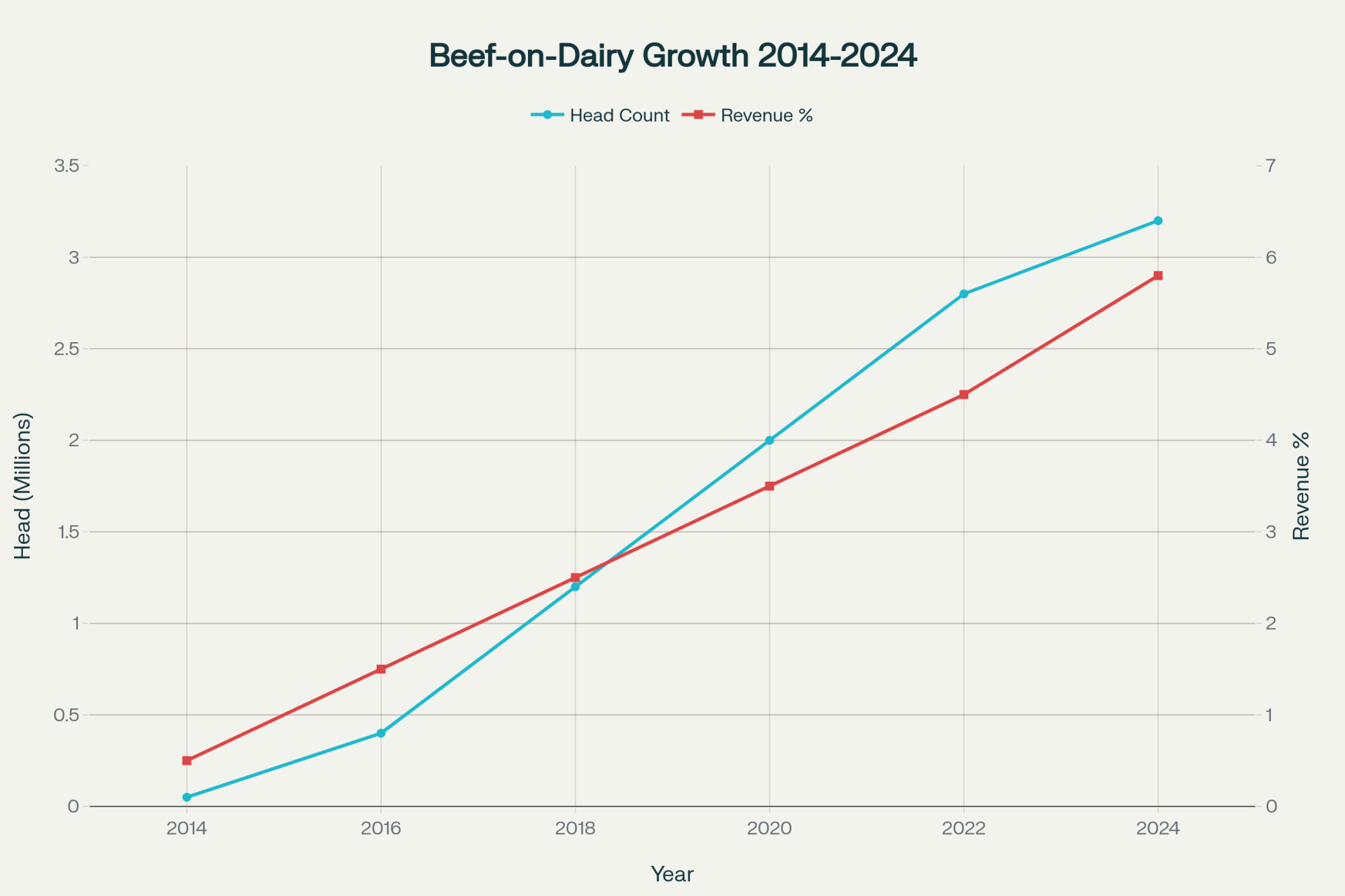
NewsSubscribe
First
Last
Consent

The Labor Crisis Hidden in Plain Sight: How Dairy’s Worker Shortage Will Reshape Your Farm by 2030

While you chase workers who don’t exist, smart dairies are cutting labor 60% with 18-month ROI. The $32B question: Are you predator or prey?

While you’re reading this, 5,000 dairy jobs are going unfilled across North America, and by 2030, that number will reshape which farms survive and which close their doors forever.

The industry doesn’t want you to know that this isn’t just another labor “shortage” that higher wages will fix. This fundamental transformation is already deciding which operations will dominate the next decade and which will become cautionary tales. The farms positioning themselves now aren’t just surviving the labor crisis—they’re using it as their competitive weapon.

The Bottom Line Up Front: The dairy industry faces a domestic labor gap that will reach critical levels by 2030. But here’s the contrarian truth—this crisis is creating the biggest opportunity for strategic advantage since the introduction of artificial insemination. The question isn’t whether your farm will be affected. The question is whether you’ll be the predator or the prey.

Why Your “Hire More Workers” Strategy Is Already Dead

Let’s destroy the most dangerous dairy myth: this labor shortage is temporary and solvable through traditional recruitment.

Data Box: The Brutal Employment Reality (2024-2025)

  • Farm Employment Decline: 3.4% between March 2024-April 2025
  • Agricultural Labor Costs: Exceeding $53 billion in 2025
  • Dairy Immigrant Workforce: 51% of all dairy workers
  • Milk Production Dependency: 79% of U.S. milk from immigrant-staffed farms
  • Geographic Production Shift: Kansas +15.7%, Texas +8.9%, California -1.8%

The Uncomfortable Data: In 2011, a program offered 6,500 agricultural jobs to domestic workers. Only 268 Americans applied. A mere seven stayed for the full season. Seven. Out of 6,500 openings. That’s a 0.1% retention rate—worse than your most problematic cow’s conception rate.

According to The Bullvine’s analysis, immigrant workers constitute 51% of the U.S. dairy workforce and are responsible for producing 79% of our milk supply, with substantial portions of these workers undocumented. This isn’t a workforce strategy—it’s a house of cards built on political quicksand.

Here’s the Critical Question: If domestic workers won’t take dairy jobs at current wages, and immigration policy remains hostile to agricultural labor, what’s your Plan B?

Geographic shifts in US dairy production showing Kansas (+15.7%) and Texas (+10.6%) leading growth while California declines (-1.8%)

International Crisis Comparison: The Global Meltdown

Data Box: Global Dairy Labor Catastrophe (2024-2025)

RegionLabor Crisis IndicatorProduction Impact
United States51% immigrant workforce producing 79% of milkGeographic shift: Kansas +15.7%, California -1.8%
European UnionOnly 12% of farmers under 40Milk production down 1.8% in Q1 2025
Canada5.4% dairy job vacancy rateProjected to lose 50% of farms by 2030
Australia55% of farmers are considering an exit30-year production low projected
New Zealand4,000 critical staffing shortagePolicy changes threatening migrant workers

Case Study Sidebar: The Wisconsin Catastrophe

Wisconsin exemplifies the demographic disaster facing dairy. According to The Bullvine’s immigration analysis, Wisconsin’s dairy industry relies on 70% immigrant labor, with more than 10,000 undocumented workers performing essential functions. The University of Wisconsin-Madison puts it bluntly: “Without them, the whole dairy industry would collapse overnight.”

This isn’t just labor dependency—it’s an existential threat to America’s Dairyland itself.

The $32 Billion Elephant in the Milking Parlor

Challenging Conventional Wisdom: The industry consistently downplays immigration’s role, treating it as a “preference” rather than an existential dependency. This isn’t preference—it’s survival.

The Bullvine’s economic analysis reveals that eliminating all immigrant labor in the U.S. could result in a catastrophic $32.1 billion economic output loss and over 200,000 job losses. Retail milk prices could spike by an alarming 90.4% to $7.60 per gallon. Even a 50% reduction in immigrant labor could result in 3,506 dairy farm closures.

Data Box: The Hidden Cost of Labor Instability

  • High Turnover Impact: 1.8% decrease in milk production
  • Biological Costs: 1.7% increase in calf loss, 1.6% increase in cow death rates
  • Average Recruitment Cost: $4,425 per employee
  • Industry Turnover Rate: 30-38.8% annually
  • 200-Cow Dairy Annual Cost: Over $11,000 in recruitment alone

But the biological costs are even more devastating: according to comprehensive industry analysis, employee turnover has been linked to a 1.8% decrease in milk production, a 1.7% increase in calf loss, and a 1.6% increase in cow death rates. Your labor instability is literally killing your livestock profitability.

Annual employee turnover costs escalate from $35K to $150K as dairy farms increase in size

The Technology Revolution: Separating Vendor Fiction from Farm Reality

Challenging the Automation Sales Pitch: While, at minimum, a 50 percent spike in dairy farm wages would add almost $1 per cwt. to the cost of production, making “robotic milking and other labor-saving technologies more cost effective,” the reality is more complex.

Here’s what the robot salesmen won’t tell you: the performance of robotic milking systems has “almost nothing to do with the hardware you bought and everything to do with how you manage it.” Farms with identical robots show dramatically different results based solely on management practices.

Case Study Sidebar: Dave Kammel’s Wisconsin Success

Wisconsin farmer Dave Kammel exemplifies successful strategic automation. According to The Bullvine’s robotic financing analysis, his installation of 2 robotic units delivered:

  • 3 hours of daily labor savings
  • “Best investment I’ve ever made” assessment
  • Dramatic quality of life improvements
  • Immediate operational efficiency gains

His experience demonstrates that automation transforms labor rather than eliminating it.

Robotic milking payback periods: Crisis conditions (18-24 months) vs Normal conditions (48-120 months)

Data Box: Verified Automation ROI (2022-2025)

  • Initial Investment per Robot: $150,000-$275,000
  • Annual Labor Savings: $32,000-$45,000 per robot
  • Direct Milking Labor Reduction: 60%
  • Milk Yield Increase: 8.66% average, up to 28.5% with proper management
  • Payback Period (Normal): 4-10 years
  • Payback Period (Crisis Conditions): 18-24 months

According to The Bullvine’s robotic financing research, delaying robotic adoption costs mid-sized farms up to $160,600 per year in lost profit potential, with top-performing robots generating a $500 per day difference compared to average implementations.

The Wage Competition Fallacy: Why Paying More Won’t Save You

Data Box: The Wage Reality Check (2025)

  • Farm Worker Average Wage: $17.55/hour – only 61% of non-farm wages
  • Dairy Labor Costs: 10-15% of production costs for 200+ cow herds
  • Estimated Range: $1.80-$2.30 per hundredweight
  • Competitive Wage Spike Required: Minimum 50% increase
  • Production Cost Impact: Nearly $1.00 per hundredweight increase

Analysis proves that competing with other sectors “based solely on wage would imply at minimum a 50 percent spike in dairy farm wages, which would add almost $1 per cwt. to the cost of production.” At that point, robotic milking becomes more cost-effective than wage competition.

This demolishes the conventional wisdom that “just pay more” solves labor shortages. The math doesn’t work.

Your Strategic Decision Framework: The Three-Pillar Transformation

Pillar 1: Labor-Light Operations

Immediate Actions (Next 30 Days):

  • Audit labor-intensive tasks vulnerable to disruption
  • Model ROI scenarios under both normal and crisis conditions
  • Research automation vendors before crisis-driven demand inflates pricing by 15-25%

12-Month Implementation: Based on verified performance data from comprehensive industry analysis:

  • Automated milking systems (60% labor reduction, 3-15% production increase)
  • Automated feeding systems ($75,000-$125,000 investment, 35-45% annual ROI)
  • Wearable sensors ($150-$200 per cow, 12-18 month payback)

Pillar 2: Human Capital Revolution

Case Study Sidebar: Progressive Employee Investment

The Bullvine’s human capital research shows that progressive dairy farms are discovering the “real cost of cheap labor.” One Wisconsin operation saw turnover drop from 7% to less than 1% after investing in employee housing—creating a waiting list for employment.

The Proven ROI of Human Investment:

  • Structured onboarding: 50% reduction in training time, 60-70% productivity boost
  • Quality housing: Dramatic retention improvements
  • Career pathways: 69% more likely to remain 3+ years
  • Employee development: $263,096 total ROI, including efficiency gains

Pillar 3: Market Positioning Advantage

While competitors struggle with labor costs, position yourself in premium markets. Escalating labor expenses compounds the difficulties faced by dairy farmers,” making premium positioning essential for funding automation and employee programs.

Table: The True Cost of Inaction vs. Strategic Adaptation (5-Year Projection)

ScenarioLabor Cost ImpactProduction ImpactTotal Financial ImpactCompetitive Position
Status Quo$55,000+ recruitment costs-1.8% annually-$200,000+Declining rapidly
Wage-Only Strategy50% increase requiredMinimal improvement-$150,000Temporarily stable
Partial Automation30% reduction+8.66% average+$100,000Moderately competitive
Full Transformation60% reduction+15-20%+$300,000+Market leadership

Your 30-Day Crisis Response Plan

Week 1: Crisis Assessment

  • Calculate true labor cost, including turnover, lost production, and biological impacts
  • Model three scenarios: current state, 50% labor reduction, full automation
  • Research automation financing options before crisis-driven demand

Week 2: Strategic Planning

  • Visit three automated operations in your region
  • Interview farmers with 2022-2025 installations for real-world insights
  • Calculate payback periods: 18-24 months under crisis vs. 4-10 years normal

Week 3: Financial Modeling

  • Explore innovative financing models: 0% manufacturer deals, leasing options, pay-per-liter programs
  • Assess infrastructure readiness: internet, power, barn layout
  • Develop implementation timeline: AMS (6-8 months), feeding systems (3-4 months)

Week 4: Implementation Decision

  • Choose the highest-impact, fastest-payback automation investment
  • Establish vendor partnerships before crisis-driven demand escalates costs
  • Create employee transition and retraining programs (90-120 days for competency)

The Bottom Line: Your Competitive Crossroads

Remember that shocking statistic from our opening? While 5,000 dairy jobs will go unfilled by 2030, smart operators aren’t just adapting—they’re using this transformation to eliminate competition and dominate market share.

The Harsh Reality: More than two-thirds of the country’s 9.36 million dairy cows are milked by immigrant workers,” yet policy uncertainty threatens this foundation. Meanwhile, The Bullvine’s analysis shows a potential $32.1 billion in economic losses if this workforce disappears.

Your Strategic Choice: The labor shortage isn’t your problem to solve—it’s your opportunity to seize. Every farm that closes due to labor challenges removes a competitor. Every operation that successfully automates gains market share.

Consider this final analogy: in the 1980s, the dairy industry faced a similar transformation with the shift from tie-stall to freestall housing. Farms that adapted early gained competitive advantages that lasted decades. Those who waited struggled to catch up or simply didn’t survive.

The labor crisis is today’s tie-stall to freestall moment—a fundamental operational transformation disguised as a temporary staffing problem.

Here’s your immediate next step: Calculate what your operation would look like with verified automation improvements: 60% labor reduction from robotics, 8.66% higher milk yields, and $160,600 annual profit potential per optimized robot. Then ask yourself: Are you building the farm that thrives in that reality or the one that becomes a historical footnote?

The farms that will dominate by 2030 aren’t those that solved the labor shortage—they’re the ones that made it irrelevant to their success through strategic technology adoption and workforce transformation.

Because in this industry, adaptation isn’t just about survival anymore—it’s about who defines the future of North American dairy farming.

KEY TAKEAWAYS

  • Automation ROI Accelerates Under Crisis: Robotic milking systems delivering $32,000-$45,000 annual labor savings per robot with payback periods compressed from 4-10 years to just 18-24 months under severe labor shortage conditions, while increasing milk yields 3-15% and reducing somatic cell counts 15-20%.
  • Hidden Labor Costs Devastate Operations: High employee turnover (30-38.8% industry average) triggers cascading biological impacts including 1.8% milk production decline, 1.7% calf loss increase, and 1.6% cow death rate increase, costing 200-cow dairies $11,000+ annually in recruitment before accounting for lost productivity.
  • Geographic Production Shift Signals Winners: Kansas exploded 15.7% in milk production while traditional stronghold California declined 1.8%, proving labor-efficient regions are capturing market share as farms master automated feeding systems ($75,000-$125,000 investment) with 35-45% annual ROI.
  • Immigration Dependency Creates $32B Risk: With immigrant workers producing 79% of U.S. milk supply, potential policy disruptions threaten 90.4% retail price spikes and 3,506 farm closures, making strategic automation a hedge against political volatility rather than mere efficiency upgrade.
  • Technology Transforms Rather Than Eliminates Labor: Successful farms shift from labor-intensive to management-intensive operations, requiring new skills in equipment operation, data interpretation, and troubleshooting—creating “robot operator” and “automation technician” roles that replace jobs nobody wanted with careers people value.

EXECUTIVE SUMMARY

The dairy industry’s “just hire more workers” strategy is dead—and here’s the $32.1 billion proof. With 51% immigrant workforce producing 79% of U.S. milk and 5,000 jobs going unfilled by 2030, the labor crisis isn’t temporary—it’s permanent transformation that separates winners from casualties. High turnover rates of 30-38.8% annually are costing 200-cow dairies over $11,000 in recruitment alone, while also triggering 1.8% milk production losses and 1.7% calf mortality increases. Strategic automation now delivers 60% labor reduction with crisis-accelerated paybacks of 18-24 months versus normal 4-10 years, making robotic milking systems and automated feeding essential survival tools, not luxury upgrades. From Kansas (+15.7% production) to California (-1.8% decline), geographic winners are emerging as farms master labor-light operations while competitors cling to obsolete hiring strategies. The farms dominating by 2030 won’t be those who solved the labor shortage—they’ll be the ones who made it irrelevant through strategic technology adoption and workforce transformation.

Complete references and supporting documentation are available upon request by contacting the editorial team at editor@thebullvine.com.

Learn More:

Join the Revolution!

Join over 30,000 successful dairy professionals who rely on Bullvine Weekly for their competitive edge. Delivered directly to your inbox each week, our exclusive industry insights help you make smarter decisions while saving precious hours every week. Never miss critical updates on milk production trends, breakthrough technologies, and profit-boosting strategies that top producers are already implementing. Subscribe now to transform your dairy operation’s efficiency and profitability—your future success is just one click away.

NewsSubscribe
First
Last
Consent

Stop Bleeding Money on AgTech: The 5-Dimension Framework That Separates Winners from $50K Failures

AgTech deals crashed 24% while smart farms boost milk yields 20%. Stop buying tech blindly—master the 5-dimension ROI framework that separates winners from $50K failures.

EXECUTIVE SUMMARY: Here’s the uncomfortable truth about AgTech that vendors won’t tell you: while global investment reached $16 billion in 2024, deal counts crashed 24% year-over-year because most dairy operators are making technology decisions like they’re buying lottery tickets instead of analyzing genomic merit scores. Despite robotic milking systems delivering documented 20% milk yield increases and precision feeding reducing costs by 5-10%, only 39% of farmers globally are adopting AgTech—and it’s not just about money. The real problem? Over 40% of technology failures stem from poor integration and training gaps, not technology deficiencies. Ontario proved systematic implementation works, doubling robotic milking adoption from 337 to 715 farms between 2016 and 2021 by building support ecosystems before mass adoption. Meanwhile, operations achieving 42% higher output on identical systems implement specific protocols: optimized cow flow, data-driven decisions, and systematic staff training—treating technology as integrated systems rather than isolated equipment purchases. With U.S. farm income falling 28% between 2022 and 2024 and feed costs representing 75% of operating expenses, every technology dollar must deliver verified returns through our evidence-based 5-Dimension Framework. Stop gambling on vendor promises and start building the evaluation system that transforms technology investments from expensive experiments into profitable operational improvements.

KEY TAKEAWAYS

  • Master the True Total Investment calculation: That $200,000 robotic milking system becomes $275,000+ when you factor infrastructure modifications, training costs, and productivity adjustments—yet successful implementations achieve 12-24 month ROI through increased milking frequency and 8-15% production gains.
  • Challenge the plug-and-play myth: Operations achieving documented 40% mortality reduction through early illness detection spend three months mapping workflows and training staff before technology deployment, while failures treat AgTech as isolated solutions without operational integration.
  • Leverage proven regional success patterns: India’s 215% AgTech funding increase to $2.5 billion and Ontario’s systematic robotic adoption doubling demonstrate that policy alignment, cooperative purchasing power, and shared learning networks determine implementation success—not technology sophistication alone.
  • Apply the 5-Dimension evaluation framework before your next purchase: Calculate total implementation costs, assess operational integration requirements, plan maintenance infrastructure, establish productivity baselines, and develop phased rollout protocols to join the 42% of farms achieving higher output instead of abandoning expensive equipment.
  • Demand independent ROI verification: With 58% of tech failures linked to unrealistic vendor expectations, successful operations require third-party validation and implement pilot programs on 10-20% of their herds first—using precision feeding’s documented 5-10% cost reduction and health monitoring’s 18-month payback as performance benchmarks.
agtech investment, dairy technology ROI, robotic milking systems, precision agriculture dairy, farm profitability technology

The AgTech cheerleaders won’t tell you that while global agrifoodtech investment reached $16 billion in 2024, deal count crashed 24% year-over-year, and growth capital volume plummeted 40.8% in Q1 2025. Yet somehow, certain dairy operations are generating documented 20% milk yield increases and achieving 12-24 month ROI on the same technologies that bankrupt their neighbors.

You’ve heard the pitch a thousand times. “Invest in technology or die.” “Digital transformation is inevitable.” “The future of dairy is automated.” But here’s the uncomfortable truth nobody wants to discuss at those glossy AgTech conferences: for every robotic milking success story generating measurable returns, there’s a precision feeding disaster gathering dust in someone’s barn.

The problem isn’t that AgTech doesn’t work. The milking robots market is projected to reach $7.04 billion by 2030, growing at approximately a 14% compound annual growth rate. However, market growth doesn’t guarantee individual farm success without proper evaluation frameworks.

Challenging the Technology-First Mentality: Why Implementation Beats Innovation

Here’s where I’m going to challenge the biggest lie being sold to dairy farmers today: that having the latest technology automatically translates to success. Industry data reveals that globally, only 39% of farmers are currently utilizing or planning to adopt at least one AgTech product within the next two years. The adoption disparity isn’t just about money – high costs affect 52% of North American farmers and 48% of European farmers, while unclear ROI concerns plague 40% of North American farmers.

This flies in the face of the industry’s obsession with purchasing cutting-edge equipment without addressing fundamental operational readiness.

Why This Matters for Your Operation

With U.S. farm income falling 28% between 2022 and 2024 and interest rate expenses jumping 21.7%, every technology dollar must deliver measurable returns. The difference between winners and losers isn’t luck – it’s systematic evaluation and implementation.

The Investment Reality: Why AgTech Funding Patterns Predict Your Success

Let’s start with brutal honesty about what’s actually happening in the AgTech investment world. The 4% decline in global agrifoodtech investment to $16 billion sounds modest until you realize that deal count crashed 24% and growth capital volume fell 40.8% in Q1 2025 alone.

The Consolidation Effect Creating Opportunity

This decline in investment creates both challenges and opportunities. Median pre-money valuations rose from $12.7 million in 2023 to $17 million in 2024, indicating a “flight to quality” that favors proven technologies over experimental ones. For dairy operators, this creates a natural filter – if technologies can’t convince sophisticated investors, they likely won’t deliver the returns your operation needs.

Regional Investment Patterns Reveal Implementation Secrets

While U.S. investment grew 14% to $6.6 billion in 2024, the most explosive growth happened in India – a 215% jump to $2.5 billion driven by “maturing tech ecosystems, government policies supporting climate-smart agriculture, and formalization of dairy supply chains.”

What can North American operators learn from India’s AgTech boom? Three critical insights:

  1. Government policy alignment matters more than pure market forces. India’s success stems from policy frameworks supporting implementation, not just innovation.
  2. Supply chain formalization drives technology adoption. As dairy supply chains become more sophisticated, technology becomes necessary for participation, not optional for optimization.
  3. Domestic market focus trumps export complexity. India’s robust domestic consumption (99.5% of 216.5 million tons projected for 2025) creates predictable demand patterns.

The Bright Spots: Where Smart Money Reveals Future Winners

Despite the broader investment downturn, specific AgTech categories continue attracting serious capital for documented reasons.

Automation and Robotics: Beyond the Labor Crisis

The robotics and smart field equipment sector exploded with 48.5% value growth, generating $1.82 billion in deal value. This growth is driven by persistent labor shortages, creating compelling incentives for farmers to embrace automation.

Ontario dairy farms utilizing robotics doubled from 337 to 715 operations between 2016 and 2021, achieving a 12-24 month ROI through increased milking frequency and improved animal welfare metrics. But success wasn’t just about the robots – it required industry-wide support infrastructure, cooperative purchasing power, shared learning networks, and government policy alignment.

Why This Matters: The Network Effect

Think of robotic milking like implementing a comprehensive genetic improvement program – the technology is just one component. You need proper facility design, staff training, maintenance protocols, and integration with existing management systems. Ontario succeeded because they built the ecosystem before mass adoption.

Precision Agriculture: The Data-Driven Revolution

Precision feeding software generates measurable ROI by reducing feed costs 5-10% and minimizing waste up to 18%. The investment community’s focus on “market-ready climate solutions” reflects genuine market demand for technologies that reduce input costs while improving sustainability metrics.

The Bullvine’s 5-Dimension Technology Evaluation Framework

Most dairy operators evaluate AgTech investments without systematic frameworks. Research confirms that successful precision livestock farming depends on comprehensive integration across environmental, social, and economic sustainability pillars.

Dimension 1: Total Investment Analysis

Initial purchase price represents just the beginning of your financial commitment. Calculate True Total Investment (TTI), including infrastructure requirements, installation expenses, training costs, and opportunity costs during implementation.

Example: Robotic Milking System Reality

While robotic milking systems typically require around $200,000 initial investment, successful implementations achieve a 12-24 month ROI factor in total costs, including infrastructure modifications, staff training, and operational adjustments during transition periods.

Critical Question: Are you calculating technology ROI based on purchase price or total implementation cost? Most failures stem from this fundamental miscalculation.

Dimension 2: Operational Integration Requirements

The dairy sector is undergoing fundamental digital transformation, moving toward “Dairy 4.0” – a holistic integration of robotics, Internet of Things (IoT), and data analytics across various aspects of farming. This comprehensive integration represents the future of innovation, moving beyond isolated technological solutions to interconnected ecosystems.

Case Study: Smart Herd Management Success in Australia

Torie and Kym Harrison of Oakwood Dairy in Southeast Queensland successfully implemented collar monitoring programs that achieved a 40% reduction in mortality through early illness detection up to 48 hours before visible symptoms appear. Their success factors included specific problem targeting (early illness detection rather than general monitoring), measurable outcome focus, gradual implementation with phased rollout, and integration with existing herd management practices.

Dimension 3: Maintenance and Support Infrastructure

Technology reliability directly impacts ROI. Health monitoring systems typically cost $150-200 per cow plus subscription fees, with 12-18 month ROI timeframes. However, successful implementations require battery management protocols, data connectivity monitoring, and sensor replacement schedules that can add 15-20% to operational costs if not properly planned.

Dimension 4: Productivity Impact Measurement

Robotic milking systems can boost milk yields by up to 20%, particularly by enabling more frequent milking cycles without increasing labor strain. However, actual results vary dramatically based on herd management, facility design, and implementation approach. Operations achieving promised returns establish baseline measurements, implement gradual transition protocols, and maintain detailed productivity tracking.

Dimension 5: Implementation Timeline and Risk Assessment

Research shows that 58% of tech failures are linked to unrealistic ROI expectations. Successful operations demand third-party validation before purchasing and implementing pilot programs on 10-20% of operations first to stress-test infrastructure and staff readiness.

Case Study Contrasts: Why Implementation Framework Beats Technology Selection

Success Story: Ontario’s Systematic Approach

Ontario’s doubling of robotic milking adoption from 337 to 715 farms between 2016 and 2021 represents one of the most successful regional AgTech adoption patterns globally. Success factors included industry-wide support infrastructure development before mass adoption, cooperative purchasing power reducing individual farm financial risk, shared learning networks accelerating troubleshooting, and government policy alignment supporting financing.

Autonomous Feed Pushing Success

Companies like Monarch Tractor have seen heightened demand for autonomous products among dairy farms. The MK-V Dairy tractor enables 24/7 feeding schedules independent of labor availability, potentially generating $95,000 annually per 1,000-head operation through increased feed consumption. For a 1,000-head farm, each cow eating one additional pound of feed daily can earn up to $95,000 annually.

Failure Pattern: The Technology-First Trap

Failed implementations typically suffer from insufficient facility preparation, inadequate integration planning, unrealistic expectation management, and poor maintenance planning. These failures share a common characteristic – treating AgTech as plug-and-play solutions without addressing operational readiness requirements.

Global Investment Patterns: What Regional Leaders Reveal

United States: The Automation-First Approach

Leading with $6.6 billion in 2024 investment (14% increase), U.S. funding concentrates on precision farming and robotics. Major player involvement (John Deere, Caterpillar) signals market maturation and clearer exit paths for AgTech startups.

India: The Supply Chain Integration Model

India’s 215% funding increase to $2.5 billion reflects maturing tech ecosystems and government policies supporting climate-smart agriculture. Key technology focuses include AI-enabled image diagnostics for diseases, wearables for behavioral tracking, and precision dosage tools.

European Union: The Sustainability Integration Strategy

Despite a 29% funding decline to $3.8 billion, Europe leads in “critical foodtech,” including sustainability solutions. Investment focuses on innovative foods, side stream utilization, and supply chain resilience solutions.

Advanced Technology Evaluation: Separating ROI from Hype

High ROI AI Applications with verified results:

  • Precision feeding optimization (5-10% cost reduction with 12-24 month payback)
  • Health monitoring algorithms (40% mortality reduction, 12-18 month ROI)
  • Automated milking optimization (up to 20% yield increases, 12-24 month ROI)

Technology ROI Timeframes Based on Industry Data:

  • Robotic milking systems: 12-24 months (typical investment ~$200,000)
  • Precision feeding systems: 12-24 months (investment $15,000-$60,000)
  • Health monitoring: 12-18 months ($150-200 per cow plus subscription)
  • Calf monitoring: 6-12 months ($4-8 per calf monthly)

The Bottom Line: Your Evidence-Based AgTech Success Strategy

Remember when I started this with the uncomfortable truth about AgTech investment declines? Here’s what separates winners from expensive disasters: systematic evaluation frameworks, not technology sophistication.

The Data-Driven Reality

Global investment data shows deal counts dropping while the milking robots market projects growth to $7.04 billion by 2030. This apparent contradiction reveals the key insight: market growth doesn’t guarantee individual success without proper implementation frameworks.

Your Evidence-Based Action Framework:

First, challenge the technology-first mentality. Apply systematic evaluation across all five dimensions before making technology investments. Ontario’s robotic milking success came from building implementation ecosystems, not just buying robots.

Second, learn from documented success patterns. Operations achieving documented results implement specific protocols, including optimized workflows, data-driven decisions, and systematic staff training. Focus on implementation capacity, not just technology capability.

Third, validate ROI claims independently. With 58% of tech failures linked to unrealistic expectations, demand third-party validation and implement pilot programs before full deployment. Use verified industry data as benchmarks: precision feeding reduces costs 5-10%, health monitoring reduces mortality 40%, and robotic milking increases yields up to 20%.

The Critical Reality Check:

With farm income declining 28% between 2022 and 2024 and only 39% of farmers globally adopting AgTech, every technology decision must deliver verified returns. Success comes from systematic evaluation and implementation, not technology sophistication alone.

Here’s your specific next step: Before making your next technology investment, apply the 5-Dimension Framework with independent verification of vendor claims. Start with pilot implementations on 10-20% of your operation to validate performance before full deployment, following the proven patterns from successful regions like Ontario and Australia.

Your competition is making evidence-based choices using proven evaluation frameworks. What’s yours going to be?

Complete references and supporting documentation are available upon request by contacting the editorial team at editor@thebullvine.com.

Learn More:

Join the Revolution!

Join over 30,000 successful dairy professionals who rely on Bullvine Weekly for their competitive edge. Delivered directly to your inbox each week, our exclusive industry insights help you make smarter decisions while saving precious hours every week. Never miss critical updates on milk production trends, breakthrough technologies, and profit-boosting strategies that top producers are already implementing. Subscribe now to transform your dairy operation’s efficiency and profitability—your future success is just one click away.

NewsSubscribe
First
Last
Consent

Cut Labor Costs from $375 to $165 Per Cow: The Dual Strategy That’s Saving American Dairy

Stop choosing sides in the immigration vs. automation debate. Smart dairies cut labor costs from $375 to $165 per cow with this dual strategy.

EXECUTIVE SUMMARY: The dairy industry’s obsession with either immigration reform OR automation is costing you money every day—here’s why the either-or mentality is the biggest lie holding back profitable operations. While 51% of your foreign-born workforce produces 79% of America’s milk supply, the smartest operators aren’t waiting for politicians or betting everything on robots—they’re implementing a dual strategy that’s slashing labor costs by more than half. Real-world data shows robotic systems can achieve 60% reduction in direct milking labor while strategic workforce investments drop turnover from 35% to 10%, creating compound savings that accelerate ROI from typical 7-year payback periods to just 18-24 months during labor shortages. International leaders like the Netherlands and Denmark prove this integrated approach works, combining EU labor mobility with 20-25% automation adoption rates that boost productivity while maintaining workforce stability. The economic reality is stark: losing half your immigrant workforce could spike milk prices 45%, but operations implementing both immigration advocacy AND strategic automation are building the operational resilience that turns crisis into competitive advantage. Stop debating false choices and start modeling the dual strategy economics for your specific operation—your milk check depends on it.

KEY TAKEAWAYS

  • Labor Cost Transformation: Strategic automation combined with workforce retention can cut annual labor costs per cow from $375 to $165—a 56% reduction that pays for itself in under 2 years during labor shortages, with robotic milking achieving 60% reduction in direct milking labor while increasing milk yields 5-28.5%.
  • Turnover Economics: Quality employee housing investments drop turnover rates from industry-standard 35% to under 10%, eliminating replacement costs of $100,000 per entry-level worker and $150,000 per manager while improving production metrics, SCC counts, and cow health outcomes.
  • Technology ROI Acceleration: Normal 7-year payback periods for robotic systems collapse to 18-24 months when labor becomes unreliable, with automated feeding systems delivering 35-45% annual returns and precision software achieving 600% first-year ROI through optimized feed conversion and reduced waste.
  • Policy-Proof Operations: The Netherlands and Denmark demonstrate that integrated approaches combining regulated immigration frameworks with 20-25% automation adoption create lasting competitive advantages, while US operations choosing either immigration OR automation remain vulnerable to policy volatility and labor market disruptions.
  • Implementation Urgency: With H-2A workers costing $25-30/hour versus $15-25 for domestic labor, and 2025 labor expenses forecast at record $53.5 billion, delaying dual strategy implementation means watching competitors gain insurmountable operational advantages in precision management, data-driven decision making, and crisis resilience.
 dairy labor costs, robotic milking systems, dairy farm automation, milk production efficiency, dairy workforce management

Here’s the uncomfortable truth every dairy operator needs to face: the 51% of your workforce that’s foreign-born produces a staggering 79% of America’s milk supply. When that labor disappears overnight—and it can—you’re not just looking at operational headaches. You’re staring down potential milk price increases of 90%, farm closures by the thousands, and the collapse of everything you’ve built.

The immigration debate raging in Washington isn’t abstract policy—it’s your milk check hanging in the balance. But here’s what the talking heads won’t tell you: the choice between immigration reform and technological automation isn’t actually a choice at all.

Smart operators have already figured this out. They’re not waiting for politicians to solve their problems, and they’re not betting everything on robots either. They’re implementing a dual strategy that’s cutting labor costs by more than half while building the kind of operational resilience that turns crisis into competitive advantage.

The Biggest Lie in Dairy: “We Just Need Better Immigration Policy”

Walk into any farm equipment dealer or industry conference, and you’ll hear the same tired debate. “Should we push for immigration reform or invest in automation?” It’s the wrong question, and it’s costing you milk production every day you delay action.

Why This Conventional Thinking Is Dangerous

The dairy industry’s laser focus on immigration reform as the primary solution reveals a dangerous blind spot. According to University of Wisconsin Extension analysis, labor accounts for approximately 25% of total dairy farm operating costs, and for larger farms, this percentage can be even higher.

Recent USDA projections show labor expenses reaching record highs, with costs forecast to increase to $53.5 billion in 2025, representing a total increase of 9.5% since 2023. Meanwhile, feed expenses—the largest single expense category—are forecast to drop to their lowest level in real terms since 2007.

But here’s the critical question everyone’s avoiding: What happens when immigration reform finally passes and you’re still stuck with the same inefficient, labor-intensive systems that made you vulnerable in the first place?

The uncomfortable reality is that even comprehensive immigration reform won’t solve the fundamental productivity crisis. According to National Milk Producers Federation analysis, unlike other agricultural sectors, the dairy industry is unable to use the H-2A program because of the year-round nature of dairy production.

The Hidden Cost of Labor Dependency

Think of your labor force like your genetic base—if 51% of your cow genetics suddenly disappeared, your milk production would crater. That’s exactly what happens when immigration enforcement hits your area. The difference is you can’t replace experienced milkers overnight like you can breed replacements.

Recent enforcement actions demonstrate this vulnerability. ICE reportedly picked up four adults and three children at a dairy farm in Sackets Harbor, New York, and conducted what advocacy groups called the largest single immigration enforcement action against farmworkers in Vermont in recent history when it detained eight workers at a dairy farm in Berkshire.

The scale of dependency is staggering. Rick Naerebout, CEO of the Idaho Dairymen’s Association, estimates that about 90% of workers on Idaho dairy farms come from other countries. Nationally, a decade-old study from Texas A&M, still cited by industry groups, found that immigrants make up 51% of all dairy workers, while dairies that employ immigrant labor produce 79% of the U.S. milk supply.

The Automation Assumption That’s Equally Flawed

On the flip side, the tech evangelists pushing full automation are selling you an incomplete story. Yes, robotic milking systems can dramatically reduce labor requirements, but here’s what they don’t mention in the sales pitch: one automated milking system can cost anywhere between $150,000 to $275,000, and this doesn’t account for maintenance and infrastructure costs associated with installation.

The Critical Flaw in the “Automation Only” Strategy

Installing robots without maintaining skilled labor is like buying genomic testing without understanding TPI scores—you’ve got expensive technology generating data you can’t interpret or act on effectively.

More importantly, automation doesn’t eliminate the need for skilled workers—it transforms what those workers do. Research shows that when farmers installed automated milking systems, “the number of employees on the farm actually remained the same,” but their roles shifted to more technical responsibilities.

The economics are compelling when properly implemented, but the barriers are significant. Graduate student research revealed that farms using AMS had higher rolling herd averages than those that did not, and 8% of farmers are currently using AMS while 18% are considering implementation. However, one of the main reasons farmers didn’t want to adopt AMS was due to the expense of the investment.

Implementation Barriers: The Reality Check No One Talks About

Financial Access Challenges by Farm Size

The high capital requirements for automation create distinct challenges across different operation scales:

Small Operations (50-200 cows): Face the greatest per-cow investment burden with limited access to capital. According to USDA cost of production data, average total cost per 100 pounds of milk is significantly higher for smaller farms, making automation ROI calculations more challenging.

Mid-Size Operations (200-500 cows): Represent the sweet spot for robotic milking adoption, with sufficient volume to justify investment while maintaining family farm management structure. Industry analysis shows farmers purchase two to four robotic units initially, representing investments of $300,000-$1.1 million.

Large Operations (500+ cows): Face different automation decisions, often finding that economies of scale make conventional parlor systems more cost-effective than individual robotic units.

Regional Infrastructure Deficits

Rural connectivity and electrical capacity create significant implementation barriers that vary dramatically by region:

Midwest and Northeast: Generally better positioned for automation adoption due to established electrical infrastructure and proximity to equipment dealers and service networks.

Western States: Face greater infrastructure challenges due to geographic dispersion and aging electrical systems on many dairy operations.

Emerging Dairy Regions: States like Texas and Kansas experiencing rapid dairy growth often lack the support infrastructure for advanced automation systems.

Skills Gap Crisis by Labor Category

The transition from manual to technology-driven roles requires substantial training investment across different workforce segments:

Existing Workforce: Requires comprehensive retraining programs to transition from physical tasks to technology management. Wisconsin Extension research indicates that proposed immigration policies could raise farm wage costs by 20% while causing a temporary 10% decline in productivity due to labor disruptions.

Management Personnel: Need advanced training in data interpretation, system optimization, and predictive maintenance protocols.

New Hires: Must possess higher baseline technical skills, creating recruitment challenges in rural areas with limited educational infrastructure.

Global Market Context: Learning from International Leaders

European Union: Integrated Labor and Technology Strategy

The EU’s approach to dairy automation provides instructive lessons for US operations. European farms have achieved higher automation adoption rates while maintaining stable workforce frameworks through regulatory structure and targeted investment incentives.

Policy Integration: EU agricultural policies coordinate immigration frameworks with technology adoption incentives, creating synergistic rather than competitive approaches to labor challenges.

Technology Transfer: European equipment manufacturers like DeLaval and Lely have developed automation systems specifically designed for different farm scales and management systems.

India and China: Emerging Market Implications

Rapid dairy sector growth in India and China creates both competitive pressures and market opportunities for US producers:

Scale Advantages: Large-scale operations in emerging markets are increasingly adopting automation technologies, potentially creating competitive disadvantages for US farms that delay modernization.

Export Opportunities: Growing middle-class consumption in these markets creates premium product opportunities for US operations that can demonstrate advanced production standards through automation and data systems.

Technology Adaptation: Automation systems developed for diverse global markets are becoming more adaptable and cost-effective for various operation sizes.

The Dual Strategy That’s Actually Working: Strategic Implementation Phase by Phase

The operations that are thriving aren’t choosing sides—they’re playing both. They’re advocating for immigration reform while strategically automating their highest-impact, most labor-intensive processes.

Phase 1: Immediate Stabilization (Months 1-6)

Strategic Labor Retention: According to current market analysis, farm profitability for a 250-cow dairy could decline by $27,000 to $110,000 annually due to labor disruptions, making retention investments critical.

Technology Quick Wins: Focus on automation technologies with rapid payback periods and minimal infrastructure requirements. Automated feeding systems and basic monitoring technologies can provide immediate efficiency gains while building technological competency.

Policy Advocacy Engagement: Actively support industry efforts for comprehensive immigration reform while building operational resilience independent of policy outcomes.

Phase 2: Strategic Automation (Months 6-24)

Robotic Milking Implementation: Large-scale operations are reporting significant benefits. Edaleen Dairy in Washington switched from conventional to robotic milking, with general manager Mitch Moorlag noting: “With robotic milking systems, every single cow is cleaned, prepped and milked the correct way every single time she comes through to get milked.”

Fred Rau Dairy in California transitioned 1,400 cows to 24 robots, with operations manager Shonda Reid-Rau reporting: “Our two-time-per-day conventional dairy went to nearly 3x immediately as sophisticated algorithms map production of each cow and determine milking intervals that are individualized for each cow.”

Infrastructure Development: Plan comprehensive electrical, water, and connectivity upgrades to support advanced automation systems. This phase requires significant capital investment but creates foundation for long-term competitive advantage.

Phase 3: System Integration and Workforce Development (Months 12-36)

Advanced Data Management: Implement comprehensive herd management systems that integrate milking, feeding, and health monitoring data. Research indicates that farms using automated systems can collect more data about their herds, allowing them to make more profitable decisions regarding culling and management.

Workforce Evolution: Transform existing employees into technology specialists while recruiting new talent with advanced technical skills. This addresses the reality that automation changes rather than eliminates labor requirements.

Regional Implementation Strategies: State-by-State Considerations

Midwest Strategy (Wisconsin, Michigan, Minnesota)

Advantages: Established dairy infrastructure, proximity to equipment dealers, and experienced workforce provide foundation for automation adoption.

Challenges: Wisconsin Extension data shows labor and immigration policies remain pressing concerns, particularly for large-scale operations that rely heavily on hired labor.

Implementation Focus: Prioritize robotic milking systems for mid-size operations while developing regional technical training programs.

Western States Strategy (California, Idaho, Washington)

Advantages: Larger average farm sizes and higher labor costs create favorable economics for automation adoption.

Challenges: Idaho estimates 90% of dairy workers come from other countries, creating extreme vulnerability to immigration enforcement.

Implementation Focus: Comprehensive automation strategies combined with aggressive workforce development programs.

Emerging Dairy Regions Strategy (Texas, Kansas)

Advantages: New facilities can integrate automation from initial construction rather than retrofitting existing infrastructure.

Challenges: Limited technical support infrastructure and smaller local talent pools.

Implementation Focus: Partner with equipment manufacturers for comprehensive technical support while developing regional expertise.

The Economics You Can’t Ignore: Verified Financial Projections

Current Market Realities

According to USDA data from March 2025, the all-milk price in January 2025 averaged $24.10 per hundredweight, up $4.00 from January 2024. The Dairy Margin Coverage program reported margins of $13.85 per cwt, $5.37 higher than last year.

However, labor cost pressures continue mounting. Total production costs are set to drop marginally in 2025 by 0.6%, but labor expenses are forecast at record highs, increasing to $53.5 billion in 2025.

Automation Investment Economics

Real-world implementation data demonstrates compelling returns. Fred Rau Dairy’s transition from conventional to robotic milking resulted in “improved milk quality, vastly improved herd health, improved cow comfort and an environmentally friendly approach to sustainable dairying.”

The investment timeline for comprehensive automation typically spans 2-3 years, with farms purchasing 2-4 robotic units initially at costs of $150,000-$275,000 per unit.

Risk-Adjusted Returns

Wisconsin Extension analysis shows that policy uncertainties, particularly concerning immigration and labor, are major bearish factors for the dairy market in 2025. This uncertainty premium makes automation investments more attractive as risk mitigation strategies.

What This Means for Your Operation in 2025

The workforce crisis isn’t going away. Current immigration enforcement trends indicate continued pressure on dairy operations dependent on foreign-born workers. The Trump administration has made immigration enforcement central to its policy agenda, with ICE conducting enhanced targeted operations in major dairy regions.

Your competitors—especially the larger, better-capitalized operations—are already implementing dual strategies. Industry survey data shows 18% of farmers are considering AMS implementation, indicating significant pending adoption.

You have a choice: continue waiting for someone else to solve your labor problems, or take control of your operational destiny through strategic implementation of both workforce stability and technological advancement.

The Bottom Line

Remember that statistic about 51% of your workforce producing 79% of America’s milk? It’s not just about dependency—it’s about vulnerability. Every day you delay implementing a dual strategy is another day your operation remains at the mercy of forces beyond your control.

The smartest operators have already figured out that immigration reform and automation aren’t competing solutions—they’re complementary strategies that address different aspects of the same fundamental challenge. They’re not waiting for politicians to fix immigration policy, and they’re not betting everything on technology they don’t understand.

Instead, they’re building resilient operations that can thrive regardless of policy uncertainty or labor market volatility. They’re cutting labor costs while improving milk quality metrics. They’re reducing dependency on manual labor while investing in the skilled workers who remain. Most importantly, they’re positioning themselves to capitalize on opportunities while their competitors are still debating.

Like selecting for both production and longevity traits, the choice isn’t between immigration reform and automation. The choice is between taking control of your operation’s future or letting external forces control it for you.

Your next step is simple: Schedule a meeting with your financial advisor this week to model the dual strategy economics for your specific operation. Use the USDA cost of production estimates to calculate your current labor-related costs, project the savings from strategic automation, and develop a timeline for implementation. Contact your state extension service to access region-specific automation guidance and connect with successful implementing operations in your area.

The workforce crisis is real, but so is the opportunity for operators bold enough to seize it. Your milk check depends on it.

Complete references and supporting documentation are available upon request by contacting the editorial team at editor@thebullvine.com.

Learn More:

Join the Revolution!

Join over 30,000 successful dairy professionals who rely on Bullvine Weekly for their competitive edge. Delivered directly to your inbox each week, our exclusive industry insights help you make smarter decisions while saving precious hours every week. Never miss critical updates on milk production trends, breakthrough technologies, and profit-boosting strategies that top producers are already implementing. Subscribe now to transform your dairy operation’s efficiency and profitability—your future success is just one click away.

NewsSubscribe
First
Last
Consent

ICE Raids Resume: Why Dairy’s $48 Billion Labor Crisis Exposes Our Innovation Failure

Stop betting your farm’s future on immigration policy. Smart dairies are building tech-powered operations that crush 79% labor dependency.

EXECUTIVE SUMMARY: While competitors panic over workforce politics, progressive dairy operations are turning immigration uncertainty into competitive advantage through strategic automation investments. New analysis reveals that 51% of America’s dairy workforce consists of immigrants producing 79% of the nation’s milk supply, yet fewer than 15% of U.S. dairies have implemented robotic milking systems compared to 35% in Denmark. Robotic milking systems deliver 18-24 month payback periods when labor becomes unreliable, while generating 8-12% higher milk yields per cow and 15-20% reductions in somatic cell counts. Forward-thinking operations are capitalizing on this crisis by accelerating technology adoption, with AI-powered herd management systems delivering 200-300% ROI through improved breeding efficiency and automated feeding systems achieving 35-45% annual returns when factoring labor stability premiums. The uncomfortable truth: farms that haven’t invested in operational independence are about to discover that labor uncertainty is the price of technological complacency. Stop hoping politicians solve your operational problems—start building technology-based competitive advantages that transcend political volatility.

KEY TAKEAWAYS

  • Automation ROI Accelerates Under Crisis: Robotic milking systems ($150,000-$200,000 per 60-70 cow robot) now deliver payback in 18-24 months versus normal 3-4 years when labor becomes unreliable, while eliminating 1.5 full-time positions per robot and boosting milk yield by 8-12%
  • Technology-Forward Operations Build Permanent Moats: Automated systems maintain 24/7 operational precision regardless of external disruptions, achieving 15-20% lower somatic cell counts than manual operations while enabling expansion without proportional labor increases
  • Smart Money Flows Toward Dairy Tech: Agricultural robotics investment hit $1.2 billion in 2024 with dairy automation receiving 35% of funding—progressive operations are leveraging crisis-driven acceleration to secure competitive advantages before demand spikes pricing
  • Precision Livestock Farming Delivers Measurable Results: AI-powered health monitoring and automated estrus detection systems ($50-75 per cow annually) generate 200-300% ROI through 95%+ breeding accuracy and predictive health algorithms preventing 80% of metabolic disorders
  • Government Incentives Accelerate Adoption: USDA’s Environmental Quality Incentives Program provides up to 75% cost-share for precision agriculture technology, while automated operations qualify for 15-25% insurance premium reductions due to reduced liability exposure
dairy automation ROI, robotic milking systems, dairy labor shortage, automated milking technology, dairy farm efficiency

The Trump administration’s immigration enforcement reversal just proved that dairy’s workforce dependency isn’t a political issue—it’s a technology adoption failure that progressive operations can turn into a competitive advantage. While 79% of America’s milk supply depends on immigrant labor, smart operators are asking why we’re still debating workforce politics instead of accelerating automation that could solve the problem permanently. The uncomfortable truth? Farms that haven’t invested in robotics and AI-powered systems are about to discover that labor uncertainty is the price of technological complacency.

Here’s the question every dairy manager should ask: If your operation can’t function without a workforce that’s perpetually at risk, what does that say about your strategic planning?

The Real Story: Technology Laggards Got Caught Unprepared

Let’s cut through the political noise and focus on what this crisis reveals about dairy’s innovation gap. When ICE resumed worksite enforcement after a three-day pause, 25-45% of agricultural workers stopped showing up in California’s Central Coast, and a New Mexico dairy farm watched its workforce plummet from 55 to 20 employees in hours.

But here’s what the headlines missed: the farms that weathered this crisis best were those that had already invested in automated milking systems, robotic feed pushers, and AI-powered health monitoring.

Research from the National Milk Producers Federation shows that 51% of all dairy workers are immigrants, with farms employing immigrant labor producing 79% of the U.S. milk supply. Yet according to industry data, fewer than 15% of U.S. dairies have implemented robotic milking systems, compared to 25% in the Netherlands and 35% in Denmark.

Why are we surprised by workforce disruption when we’ve been ignoring available solutions for a decade?

The Economics of Innovation vs. Dependence

Economic analysis reveals that eliminating immigrant labor would reduce the U.S. dairy herd by 2.1 million cows and spike milk prices by 90.4%. But these catastrophic projections assume static technology adoption—exactly the kind of short-sighted thinking that got us into this mess.

Consider the ROI mathematics that forward-thinking operations are already implementing:

Robotic Milking Systems:

  • Initial investment: $150,000-$200,000 per robot serving 60-70 cows
  • Labor reduction: Eliminates 1.5 full-time milking positions per robot
  • Milk quality improvement: 15-20% reduction in somatic cell counts
  • Production increase: 8-12% higher milk yield per cow
  • Payback period: 3-4 years under normal conditions, accelerated to 18-24 months when labor becomes unreliable

Automated Feed Systems:

  • Investment: $75,000-$125,000 for 500-cow operation
  • Labor savings: 2-3 hours daily feeding labor
  • Feed efficiency: 5-8% improvement in feed conversion
  • ROI: 35-45% annually when factoring labor stability premium

Case Study: Glenn Valley Foods and the E-Verify Illusion

The recent ICE raid at Glenn Valley Foods in Omaha perfectly illustrates why compliance isn’t enough—you need operational resilience. Despite full E-Verify participation, ICE detained 70-80 workers, with agents reportedly dismissing the compliance program as “broken.”

Here’s the brutal reality: compliance doesn’t protect against disruption, but technology does.

Progressive meatpacking facilities are already implementing:

  • Automated cutting systems reduce manual labor by 40%
  • AI-powered quality inspection replacing visual inspection roles
  • Robotic packaging lines eliminate repetitive manual tasks

The lesson? Stop betting your operation’s future on immigration policy and start investing in operational independence.

Why Technology Adoption Accelerates During Uncertainty

Smart money is flowing toward dairy tech precisely because of labor uncertainty. Venture capital investment in agricultural robotics reached $1.2 billion in 2024, with dairy automation receiving 35% of total funding.

Three technologies seeing accelerated adoption:

1. Precision Livestock Farming (PLF) Systems

  • Real-time health monitoring through wearable sensors
  • Automated estrus detection with 95%+ accuracy
  • Cost: $50-75 per cow annually
  • ROI: 200-300% through improved breeding efficiency and health outcomes

2. Automated Milking and Feeding Integration

  • Fully integrated barn management systems
  • Predictive analytics for feed optimization
  • Investment: $400,000-600,000 for 500-cow operation
  • Labor reduction: 60-70% of routine daily tasks

3. AI-Powered Herd Management

  • Predictive health algorithms preventing 80% of metabolic disorders
  • Automated culling recommendations based on genetic merit and performance
  • Subscription cost: $3-5 per cow monthly
  • Productivity gains: 15-25% improvement in herd efficiency metrics

The Competitive Advantage Hidden in Crisis

While competitors scramble to replace workers, technology-forward operations build permanent competitive moats. Consider these strategic advantages:

Operational Consistency: Automated systems maintain 24/7 operational precision regardless of external disruptions.

Quality Control: Robotic milking systems consistently achieve lower somatic cell counts and higher component quality than manual operations.

Data-Driven Optimization: AI systems continuously optimize feeding, breeding, and health protocols beyond human capability.

Scalability: Automated operations can expand capacity without proportional labor increases.

Global Reality Check: We’re Already Behind

While America debates immigration policy, competing dairy nations are building technological advantages. New Zealand’s dairy operations average 40% higher productivity per worker through systematic automation adoption. European Union dairy farms receive direct subsidies for technology upgrades, while U.S. operations debate labor policy.

Are we really going to cripple our global competitiveness while international competitors mechanize their advantage?

The Innovation Acceleration Playbook

Progressive operations are treating this crisis as an automation catalyst. Here’s the strategic framework smart managers are implementing:

Phase 1: Critical Function Automation (0-12 months)

  • Automated milking systems for the largest operational risk
  • Robotic feed pushers for consistent nutrition delivery
  • Priority ROI: Focus on labor-intensive, time-sensitive operations

Phase 2: Integrated System Optimization (12-24 months)

  • AI-powered herd management platforms
  • Automated health monitoring and treatment protocols
  • Advanced analytics for predictive decision-making

Phase 3: Competitive Moat Development (24-36 months)

  • Full barn automation integration
  • Predictive breeding and culling algorithms
  • Market-differentiated quality and efficiency metrics

Financial Engineering for Technology Adoption

Smart operators are restructuring financing to accelerate technology adoption:

Equipment Leasing with Labor Stability Premiums: Financial institutions now offer reduced rates for automation investments, recognizing labor risk mitigation value.

Government Incentive Optimization: USDA’s Environmental Quality Incentives Program (EQIP) provides up to 75% cost-share for precision agriculture technology.

Insurance Premium Reductions: Automated operations qualify for 15-25% reductions in operational insurance premiums due to reduced liability exposure.

The Bottom Line: Innovation Beats Immigration Policy

The Trump administration’s policy reversal just taught us that depending on political stability for operational continuity is strategic malpractice. While competitors waste energy debating workforce policies, progressive operations build technology-based competitive advantages that transcend political volatility.

The next enforcement surge is inevitable. The only question is whether your operation will be ready.

Here’s your action plan:

  • Audit labor dependencies immediately – identify critical functions vulnerable to workforce disruption
  • Model automation ROI scenarios – calculate payback periods under current vs. disrupted labor conditions
  • Implement priority technologies within 90 days – start with the highest-impact, fastest-payback automation
  • Build technology partnerships – establish relationships with automation vendors before crisis demand spikes pricing
  • Develop workforce transition strategies – retrain existing workers for technology oversight roles

The uncomfortable truth? This crisis isn’t about immigration—it’s about whether your farm is prepared for the future of dairy. Technology-forward operations will emerge stronger, more efficient, and competitively superior.

The rest will keep hoping politicians solve their operational problems.

Learn More:

Join the Revolution!

Join over 30,000 successful dairy professionals who rely on Bullvine Weekly for their competitive edge. Delivered directly to your inbox each week, our exclusive industry insights help you make smarter decisions while saving precious hours every week. Never miss critical updates on milk production trends, breakthrough technologies, and profit-boosting strategies that top producers are already implementing. Subscribe now to transform your dairy operation’s efficiency and profitability—your future success is just one click away.
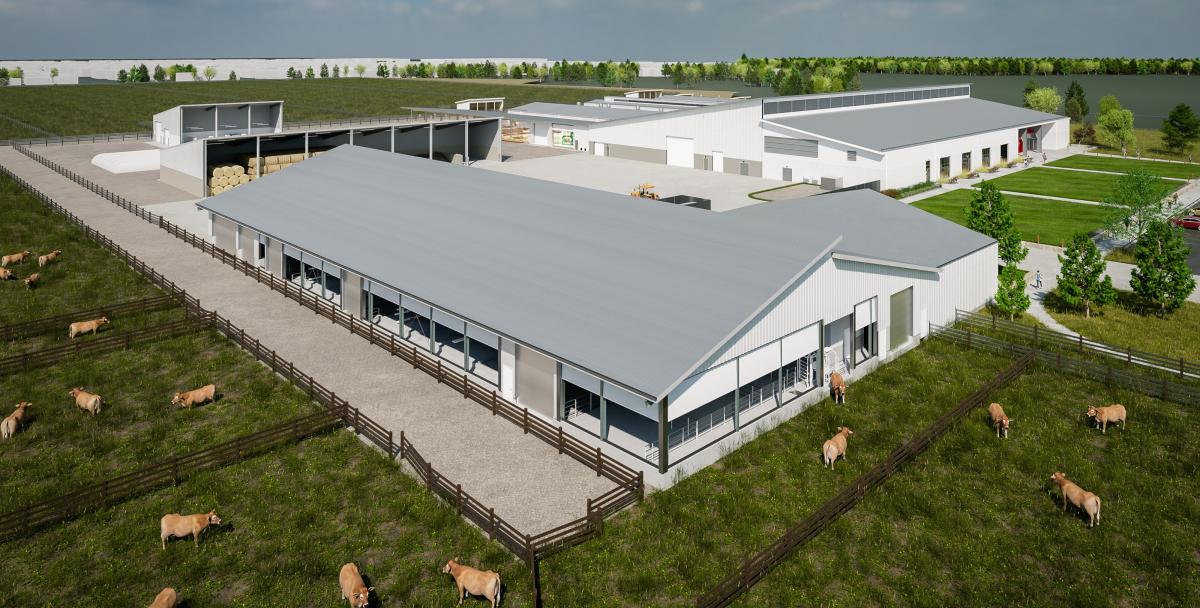
NewsSubscribe
First
Last
Consent

When Australia’s Dairy Apocalypse Signals Global Industry Upheaval: Your Operation’s Survival Blueprint

Stop believing the “bigger is better” dairy myth. Australia’s crisis exposes why 55% of farmers want out—and your survival strategy.

EXECUTIVE SUMMARY: The global dairy industry’s sacred cow of endless consolidation is being systematically slaughtered by reality, and Australia’s crisis provides the brutal autopsy report every operator needs to read. While conventional wisdom preaches that bigger farms automatically mean better margins, Australia’s dairy sector demonstrates the opposite—with farm counts collapsing 35% since 2015 while 55% of remaining farmers actively want to exit the industry. The perfect storm isn’t just Australian—it’s your preview of what happens when feed costs surge 40%, labor costs jump 50%, and traditional risk management completely breaks down under climate volatility. Precision fermentation companies are raising hundreds of millions to replace your milk entirely, with commercial viability expected by 2028, while robotic milking technology reaches $2.61 billion globally as the only viable response to labor shortages affecting one in four farms. This isn’t about surviving another rough season—it’s about fundamentally rethinking your operation’s business model before the same systemic pressures hit your region. Stop planning for the dairy industry that was, and start building for the one that’s coming.

KEY TAKEAWAYS

  • Technology Adoption Isn’t Optional Anymore: With labor contributing 10-15% of milk production costs and becoming increasingly scarce, robotic milking systems and precision feeding technology represent survival tools, not luxury upgrades—Australian farmers switching to beef operations rather than find workers proves the stakes.
  • Geographic Risk Diversification Is Dead: Australia’s simultaneous drought and floods across dairy regions shattered the traditional hedge of sourcing feed from multiple areas—when feed costs can spike 40% overnight during climate events, your resilience strategy needs built-in redundancy, not just geographical spread.
  • Precision Management Beats Scale Every Time: While 55% of Australian farmers are unsatisfied with commodity-focused dairy farming, operations investing in individual cow management, value-added processing, and diversified revenue streams are maintaining profitability even as commodity margins collapse—size without optimization equals vulnerability.
  • The 30-Day Reality Check: Conduct your vulnerability assessment across climate resilience, technology readiness, market positioning, and operational diversification within 30 days—Australian data shows the transition from profitable to exit-ready happens faster than most projections suggest, making proactive adaptation your only viable strategy.
  • Precision Fermentation Timeline Is Accelerating: With bio-identical dairy proteins achieving 96% reduction in greenhouse gas emissions and 97% water savings compared to traditional farming, commodity milk producers face systematic margin pressure starting in 2028—differentiation through value-added products, sustainability credentials, or direct marketing becomes non-negotiable for survival.
dairy crisis management, robotic milking systems, dairy farm efficiency, precision fermentation disruption, global dairy trends

Here’s the question that should keep every dairy operator awake at night: If Australia’s pasture-based system—with its natural advantages of year-round grazing and century-plus expertise—is hemorrhaging farms at 500 per year while facing the worst climate volatility on record, what does that tell us about the future of your operation?

Think about this like managing a transition cow in a negative energy balance. You know those critical 21 days when everything can go sideways fast? That’s exactly where the global dairy industry sits right now. Australia’s crisis isn’t happening in isolation—it’s the canary in the coal mine for systemic pressures reshaping dairy operations from Wisconsin to the Netherlands.

The numbers from Down Under aren’t just sobering—they’re a direct preview of what happens when climate volatility meets economic squeeze at the industrial scale. Australia’s national milk production is forecast to fall to 8.3 billion liters in 2024-25, marking a 30-year low that would be equivalent to losing the entire milk production of Wisconsin in a single year. Meanwhile, U.S. dairy farms continue consolidating, with fewer farms producing more milk through technological advances—but Australia’s experience shows how quickly those efficiency gains can collapse when multiple stressors converge.

The stakes couldn’t be higher. With global consolidation trends showing larger farms demanding more technology to manage labor shortages and feed costs, every remaining operation needs to understand how Australia’s perfect storm could be replicated in their region.

But here’s where conventional wisdom gets dangerous: the industry’s blind faith in “bigger is better” consolidation may actually be creating more vulnerability, not less.

The Consolidation Trap: Why Bigger Isn’t Always Better

Let’s challenge a sacred cow in the dairy industry: the assumption that endless consolidation toward mega-dairies is the answer to economic pressure.

Research shows that larger farms benefit from economies of scale and technology adoption, but Australia’s crisis demonstrates what happens when large-scale operations become too big to fail but too vulnerable to succeed. The country’s dairy farm count has collapsed from over 6,000 in 2015 to just 3,889 by 2024—but the remaining farms are larger, more capital-intensive, and more exposed to simultaneous shocks.

Consider this sobering reality: Many dairy farmers in Australia offer increased wages, incentives, and performance bonuses but still can’t find applicants, forcing some to milk fewer cows or switch to beef operations. This isn’t just about labor availability; it’s about the fundamental economics of scale when critical inputs become unavailable at any price.

Why This Matters for Your Operation: The data suggests that the traditional economies of scale may break down under modern operational realities. When one in four Australian dairy farmers cannot find the labor they need, scale becomes a liability rather than an asset.

The Real Question: Are we building dairy operations that are resilient or just big? The evidence suggests that efficiency gains from massive scale may be hitting diminishing returns while creating dangerous concentrations of risk.

Climate Reality Check: When “Normal” Weather Becomes Extinct

Australia’s experience with simultaneous extreme drought and record-breaking floods isn’t an outlier—it’s the new normal for agricultural regions globally. The country is experiencing what scientists call a “dual crisis” with extreme drought in South Australia and Victoria while New South Wales battles 1-in-500-year flood events.

Here’s what conventional risk management gets wrong: Geographic diversification of feed sources and production regions—the traditional hedge against weather volatility—breaks down when extreme events become systemic rather than isolated.

Think about your own operation’s feed sourcing strategy. How many different geographic regions do you rely on for hay, corn, and other feedstuffs? Australia’s crisis revealed that the entire supply chain breaks down when multiple major production regions experience simultaneous disasters. Feed costs have surged 40% since 2022, with hay prices jumping 54% year-on-year in drought-affected regions.

The Technology Reality: The global milking robot market is expected to reach USD $2.61 billion by 2025, driven by increasing herd sizes and demand for automation, but adoption varies dramatically by region. This technology gap could accelerate consolidation as labor-efficient operations gain competitive advantages.

But here’s the controversial part: while technology offers solutions for efficiency, precision fermentation technology promises to bypass farms entirely, potentially disrupting traditional dairy production. Yet most operations continue operating as if this technological disruption is decades away rather than years.

Why aren’t more farms preparing for this disruption? The answer reveals a fundamental flaw in how the industry thinks about long-term strategy versus short-term survival.

The Precision Revolution: Why Individual Management Beats Commodity Thinking

Here’s a controversial statement backed by hard data: The dairy industry’s obsession with commodity milk production is obsolete, and farms that don’t transition to precision management and value-added strategies will be obsolete within a decade.

Technology adoption is accelerating globally, with larger farms implementing advanced heat detection, health monitoring, and feed management systems using artificial intelligence. Yet adoption rates remain inconsistent across regions and farm sizes.

Precision fermentation companies like Daisy Lab are raising funding to build pilot plants, with commercial viability expected by 2028, offering a 96% reduction in greenhouse gas emissions and a 97% reduction in water use compared to traditional dairy. This isn’t theoretical—it’s happening now with serious commercial backing.

The Australian lesson: A comprehensive survey found that 55% of Australian dairy farmers are not satisfied with dairy farming (36% neutral, 19% negative), with rising operational costs, labor shortages, and work-life balance being primary concerns. Farms that continued operating with commodity-focused approaches were the first to express exit intentions when economic pressure intensified.

What’s keeping farms from adopting precision management? The capital investment barrier is real, but labor contributes 10-15% of milk production costs, making efficiency improvements critical for survival. The question isn’t whether you can afford to invest in precision technology—it’s whether you can afford not to.

The Market Disruption Reality: Beyond Plant-Based to Precision Fermentation

While the industry debates plant-based alternatives, a more fundamental disruption is approaching. Plant-based dairy alternatives are projected to grow 12% per year toward 2027, with nearly half of households regularly purchasing alternatives.

But precision fermentation represents a more existential threat. Companies are developing bio-identical dairy proteins that can be produced without cows, with some achieving more grams per liter of whey protein than found in cow’s milk.

This isn’t about replacing milk—it’s about replacing the farm entirely. Precision fermentation can produce bio-identical dairy proteins in sterile bioreactor facilities located anywhere without climate, geography, or animal biology constraints.

Here’s the question every dairy farmer should ask: If processors can control their most critical input—protein—through technology rather than agriculture, what happens to farmgate pricing power?

The strategic implications are staggering. Several well-known brands globally have expressed interest in partnerships with precision fermentation companies, seeing opportunities to showcase dairy-identical proteins to consumers. This represents a complete value chain reconfiguration that bypasses traditional dairy farms.

The Sustainability Paradox: When Environmental Goals Conflict with Production

Here’s a controversial reality the industry needs to confront: Current sustainability metrics may be fundamentally flawed and potentially counterproductive.

While the dairy industry focuses on reducing emissions per unit of milk produced, precision fermentation offers a 96% reduction in greenhouse gas emissions, 97% reduction in water use, and 99% reduction in land use compared to traditional dairy farming. This creates an uncomfortable reality: the most sustainable “dairy” production may not involve cows at all.

The sustainability messaging is getting muddled. While efficiency improvements within existing systems are valuable, the focus on incremental gains may be missing the bigger picture of fundamental production model transitions.

The Real Question: Should the industry focus on efficiency improvements within existing systems or fundamental transitions to lower-impact production models? Australia’s crisis suggests that incremental improvements may not be sufficient when facing systemic disruption.

Global Market Reality: The Numbers Don’t Lie

Let’s examine what the global market data actually tells us about dairy’s future—and why conventional projections may be dangerously optimistic.

Rabobank expects Australian dairy farmers to face another profitable season in 2023-2024, marking the fourth consecutive profitable year, but warns of cost headwinds, including higher interest rates and major labor challenges. However, this optimistic forecast contrasts sharply with the structural decline data showing farm exits accelerating.

Meanwhile, global trends show concerning patterns. The number of U.S. dairy farms continues to decline while individual farm sizes increase, with technology becoming essential for managing larger operations.

In Australia, labor shortages are forcing operational changes, with some farmers deciding to milk fewer cows while others switch to less labor-intensive beef operations. Robotic dairies are becoming more popular, but adoption remains limited by capital constraints.

The Technology Gap is Widening: Global milking robot market growth is driven by increasing herd sizes and automation demands, but adoption varies dramatically by region. This creates a two-tier industry where technology-advanced operations gain significant competitive advantages.

The Innovation Imperative: What Technology Actually Delivers

Let’s cut through the marketing hype and examine what dairy technology actually delivers in real-world operations.

Multi-stall robotic milking units are expected to hold the highest market share due to increasing herd sizes, while rotary systems are anticipated to witness significant growth. However, implementation requires high initial investments, skilled farmers, and efficient management tools.

The economics are compelling when implemented correctly, but larger farms have greater issues with labor shortages, farm profitability, and feed management, making them stronger candidates for technology solutions despite higher costs.

However, the sales presentations don’t tell you that the success of technology adoption depends entirely on operational optimization and management capability. Labor efficiency doesn’t automatically translate to labor productivity—the key is maximizing output in fixed periods rather than just reducing task time.

The Adaptation Playbook: What Actually Works

Based on an analysis of operations that successfully navigated economic pressure, five strategies consistently separate survivors from casualties.

1. Technology-Enabled Efficiency Robotic milking systems and automated feed management represent proven solutions to labor shortages and efficiency challenges, but success requires proper implementation and ongoing optimization.

2. Strategic Scale Management
Rather than pursuing scale for scale’s sake, successful operations optimize for efficiency and flexibility. Australian farmers are strategically reducing cow numbers when labor cannot be secured, demonstrating adaptive management.

3. Market Position Evolution Moving beyond commodity milk to specialty products, on-farm processing, or direct marketing creates margin improvements that insulate operations from commodity price volatility.

4. Operational Diversification Some Australian farmers are switching to beef operations as a less labor-intensive alternative, while others are exploring integrated production systems.

5. Risk Assessment and Transition Planning Research shows farmers are interested in financial and technical advice to make critical decisions about their operations’ future, but accessing this support remains challenging.

The Bottom Line: Your Strategic Response Framework

Remember that opening question about Australia being your early warning system? Here’s the hard truth: every indicator pointing to Australia’s crisis is already building in other major dairy regions—climate volatility, labor shortages, market disruption, and farmer dissatisfaction are global phenomena, not regional anomalies.

Australia’s experience teaches three critical lessons that every dairy operator needs to internalize:

First, traditional risk management strategies break down when extreme events become systemic rather than isolated. The simultaneous occurrence of drought and floods across Australia’s dairy regions demonstrates the collapse of geographic risk diversification. Your operation needs resilience built into systems, not just geography.

Second, margin compression accelerates exponentially when multiple cost pressures converge with market disruption. Labor costs, feed costs, and technology requirements are all trending upward, while precision fermentation and plant-based alternatives capture market share at double-digit growth rates. Operations caught in this squeeze without adaptation strategies face systematic profit erosion.

Third, the tipping point from adaptation to exodus happens faster than most projections suggest. When 55% of farmers in a region become unsatisfied with their industry, you’re not dealing with temporary market adjustment—you’re witnessing structural obsolescence.

Your immediate action framework must address four critical dimensions:

Climate Resilience Assessment: Evaluate your water security, feed sourcing diversity, and infrastructure hardening against extreme weather events. Supply chain disruption poses an existential risk, with feed costs representing the largest variable expense and subject to 40%+ spikes during climate events.

Technology Integration Planning: With robotic milking systems becoming essential for managing labor shortages and larger herd sizes, technology adoption is no longer optional for competitive operations. Evaluate your automation roadmap and financing options.

Market Position Evaluation: Assess your competitive advantages in a market where precision fermentation could achieve commercial viability by 2028. Commodity milk production faces systematic margin pressure from technological alternatives.

Operational Resilience: With labor representing 10-15% of production costs and becoming increasingly scarce, develop contingency plans for staffing challenges and automate critical processes.

Start your vulnerability assessment within the next 30 days. Identify your three highest-risk areas and develop specific mitigation strategies with measurable milestones within 90 days. This isn’t another management recommendation—it’s survival preparation based on documented evidence of what happens when the perfect storm hits unprepared operations.

The operators who implement proactive resilience strategies now will be the ones still farming when this industry transformation settles. Australia’s crisis isn’t a distant warning—it’s your preview of pressures that are already reshaping dairy markets globally. The question isn’t whether these forces will reach your operation but whether you’ll be ready when they do.

The choice is stark: evolve proactively or wait for crisis to force change. Australia’s experience shows that reactive approaches result in disorderly collapse, while strategic adaptation preserves options and creates sustainable pathways forward. Your operation’s future depends on your chosen path and how quickly you start walking it.

The global dairy industry is at a crossroads where traditional approaches are becoming obsolete. Australia’s crisis isn’t just a regional problem—it’s your roadmap for navigating the transformation that’s already underway. The time for incremental thinking has passed. This is about fundamental business model evolution in the face of systemic disruption.

Start planning now because the operators who adapt proactively will still thrive when the dust settles on this industry transformation.

Learn More:

Join the Revolution!

Join over 30,000 successful dairy professionals who rely on Bullvine Weekly for their competitive edge. Delivered directly to your inbox each week, our exclusive industry insights help you make smarter decisions while saving precious hours every week. Never miss critical updates on milk production trends, breakthrough technologies, and profit-boosting strategies that top producers are already implementing. Subscribe now to transform your dairy operation’s efficiency and profitability—your future success is just one click away.
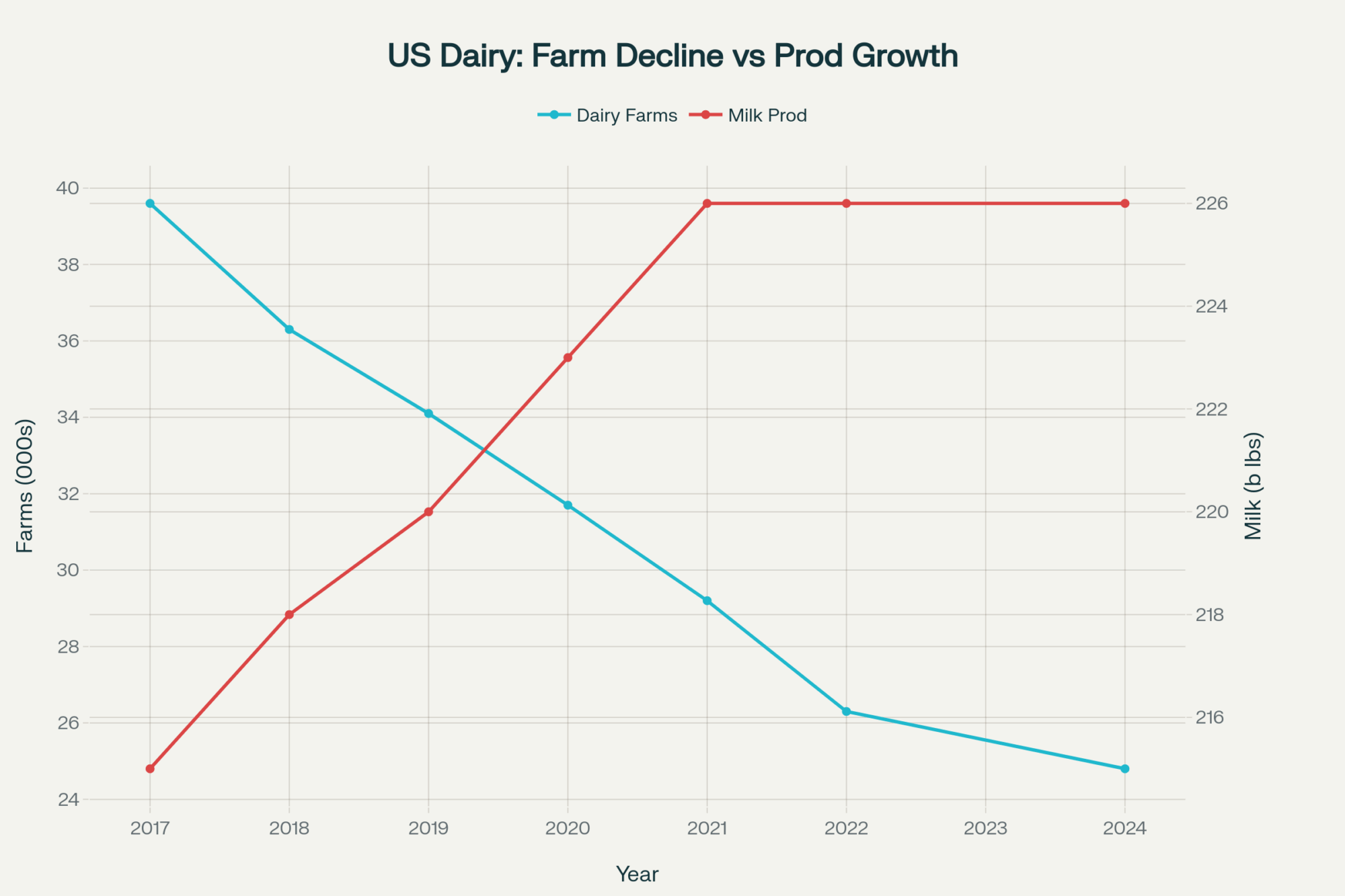
NewsSubscribe
First
Last
Consent

Stop Blaming Your Robots: The Million-Dollar Management Mistakes Killing Your Dairy’s Profitability

Stop blaming your robots. Management failures are costing you $160,600+ annually. Four fixes transform underperforming systems into profit engines.

Let’s be brutally honest: If you’re spending hours fetching cows to your million-dollar robotic milking system, the problem isn’t your cows or your robots—it’s you.

While most dairy publications tiptoe around this uncomfortable truth, The Bullvine isn’t afraid to say what everyone’s thinking. According to the Agriculture Census 2021, over 2,000 dairy farms in Canada have adopted robotic milking systems. That is more than 1 in 5 farms nationwide. But there’s a stark divide between operations thriving with automation and those merely surviving. The hard truth? Four critical management factors separate winners from losers in robotic milking, and ignoring any one of them is bleeding your operation dry.

You spent over $200,000 per robot, expecting labor savings and increased production. Instead, you’re spending hours fetching cows to million-dollar machines while watching your neighbors with identical technology outperform you by margins that should be impossible.

The robot salesmen didn’t tell you that the technology is identical, but the management isn’t. And that difference is costing you more money than you realize.

Why Are You Still Fetching Cows to Your Million-Dollar Investment?

The uncomfortable truth hitting Canadian dairy farms? Your robotic milking system’s performance has almost nothing to do with the hardware you bought and everything to do with how you manage it.

Current Industry Reality: The Numbers Don’t Lie

According to research by the University of Guelph, between 15 and 20 percent of Canadian farms now milk cows using robot technology. This represents a dramatic shift from just 5% adoption a decade ago. The number of dairy farms with robots has quadrupled over the past five years in Canada, with Western Canadian dairy farmers leading adoption at 25-50% of farms in different provinces.

But here’s where it gets interesting: University of Guelph research documents cases where farms with identical robots show dramatically different results based solely on management practices. One documented case shows a farm increasing annual milk yield from 7,000 to 9,000 litres per cow—a remarkable 28.5% improvement—after implementing proper robotic management protocols.

Think of it like this: you wouldn’t expect identical Holstein cows with the same genetic merit to produce vastly different milk yields without management differences. Yet, producers somehow accept that identical robots perform differently and blame the technology rather than examining their practices.

Challenging Conventional Wisdom: The Voluntary Milking Revolution

Here’s where we must challenge a fundamental assumption holding back the dairy industry for decades: the belief that cows need to be milked on a rigid, human-imposed schedule.

Traditional dairy wisdom dictates twice-daily milking at fixed times—typically 12 hours apart. This conventional approach, while predictable for human schedules, completely ignores natural cow behavior and biological rhythms. University of Guelph research by Dr. Trevor DeVries demonstrates that when cows control their own milking schedule through robotic systems, they typically choose to be milked 2.4 to 3.0 times daily.

The evidence is compelling: the documented case shows annual milk yield increases from 7,000 to 9,000 liters per cow—a 28.5% improvement. This isn’t incremental improvement; it’s transformational performance that conventional rigid scheduling cannot match.

Why does this matter for your operation? Every day you maintain conventional thinking about cow scheduling, you’re potentially leaving significant production capacity unrealized. The question isn’t whether your cows can produce more milk—it’s whether your management philosophy allows them to express their natural production potential.

What’s Really Behind Your Robot’s Poor Performance?

University of Guelph research reveals four critical management factors that separate successful robotic operations from struggling ones. These aren’t equipment issues—they’re management failures that cost you money daily.

The Lameness Crisis Killing Your Production Metrics

Here’s a number that should wake you up: lame cows are 2.2 times more likely to require fetching than healthy cows. Every lame cow in your herd isn’t just producing less milk—she’s actively sabotaging your robot’s efficiency and creating a cascading effect throughout your operation.

University of Guelph research reveals a striking connection between farmer mental health and cow lameness on robotic farms. The study found that farmers with robotic milking systems reported better mental health than their peers, and farmers with better mental health had fewer lame cows in their herds. This elevates lameness from merely an animal welfare issue to a fundamental farm management crisis affecting both biological and human performance.

Why This Matters for Your Operation: University research demonstrates that cattle welfare, measured as fewer lame cows, was directly linked to better farmer well-being. Farmer stress and anxiety were higher on farms with more severely lame cows. This creates a vicious cycle where poor cow health increases farmer stress, which further compromises management decisions.

The fix isn’t complicated, but it requires commitment. Research consistently shows that sand bedding delivers immediate production improvements of 1.5 kg per cow daily compared to organic bedding materials. Implement weekly mobility scoring using standardized protocols—not monthly, not quarterly. Stop accepting lameness as “normal”—it’s only normal on poorly managed farms.

Feed Strategy: Your Motivation Currency in the Behavioral Economics of Dairy

Feed is the primary motivation for cows to visit robots, yet most farms still don’t understand this fundamental truth. Your feeding strategy isn’t just about nutrition—it’s about behavioral economics, where palatable concentrate becomes the “currency” that drives voluntary milking frequency.

University of Minnesota research evaluating 36 robotic farms found that using more than one type of robot feed was associated with greater milk production. Farms feeding three different types of robot feed averaged 85.8 pounds of milk per cow compared to 79.2 pounds for farms using only one type.

Dr. Trevor DeVries’s research demonstrates the mathematical precision of this relationship: “The more often you get feed in front of cows, the more voluntary milkings we see”. Each additional five feed push-ups daily increases milk yield by 0.35 kg per cow. For a 100-cow operation, that’s 35 kg more milk daily—over 12,000 kg annually.

Research shows that molasses-based liquid products can dramatically improve robot performance. Michigan commercial farm research demonstrated that delivering liquid feeds through robots increased milking frequency from 2.7 to 3 times per day, reduced fetch cow numbers, and increased rumination time by 30 minutes daily.

Challenging Traditional Feed Delivery: The dairy industry has long operated under the assumption that twice-daily feed delivery is optimal. University research shatters this conventional thinking, proving that frequent feed push-ups promote smaller, more frequent meals that support rumen health, keep cows active, and create more even milking patterns. This isn’t just about cow comfort—it’s about optimizing the return on your robotic investment through behavioral manipulation.

How Top Farms Are Winning the Robot Game

The performance divide between successful and struggling robotic farms isn’t random—it follows predictable patterns based on management precision, backed by extensive research from leading agricultural institutions:

Management PracticeTop FarmsStruggling FarmsProduction Impact
Robot Feed Types3 different typesSingle type85.8 vs 79.2 lbs/cow
Feed Push-ups5+ times dailyInfrequent+0.35 kg per 5 push-ups
Milking Frequency2.7-3.0 times dailyTraditional 2x+28.5% yield potential
Mental Health IntegrationProactive managementReactive approachFewer lame cows
Data UsageDaily analysisReactive/ignoredEarly health detection

The Data Gold Mine You’re Ignoring

Your robotic system collects massive amounts of data daily. Penn State Extension research reveals that robots measure almost 120 variables per cow per day, compared to just a handful in conventional parlors. Modern systems can identify health issues days before visible symptoms appear, precisely detect estrus and flag real-time productivity changes.

Mat Haan from Penn State Extension explains that this data falls into five categories: systems management (milkings per cow per day, milking time, box time), milk production variables (yield, fat, protein, lactose), udder health and milk quality (electrical conductivity, milk color, temperature), cow behavior and health (activity, rumination), and individual cow management information.

Yet most farms treat this goldmine like an information graveyard. University of Guelph’s research demonstrates that farms using integrated data approaches optimize operations more effectively and maximize the economic value of their technology investments.

Technology Integration: The AI Revolution in Dairy

Leading operations are already integrating artificial intelligence with their robotic systems. AI algorithms can learn and adapt to each cow’s unique characteristics—milk yield, udder shape, and teat position—to optimize the milking routine and maximize individual cow yield. AI-powered robots generate massive volumes of data that, when processed by advanced analytics, provide actionable insights for analyzing production patterns, identifying cows requiring special attention, optimizing feed management, and tracking reproductive success.

The future of dairy robotics involves deeper AI integration, the development of “digital twins” using virtual reality concepts, and enhanced Decision Support Systems incorporating machine learning tools for informed decision-making. This represents the next frontier in precision dairy management.

Global Perspective: Learning from International Leaders

European Integration Success Models

European dairy operations demonstrate superior robot utilization through integrated farm management approaches. While specific European performance data wasn’t available in the research sources, University of Guelph studies show that Canadian adoption patterns are accelerating to match global trends.

Canadian Innovation Leadership

University of Guelph research positions Canada as a leader in robotic milking research, with Dr. Trevor DeVries serving as Canada Research Chair in Dairy Cattle Behaviour and Welfare. Canadian research has pioneered understanding of the connection between farmer mental health and cow welfare in robotic systems, providing insights that inform global best practices.

Why This Matters for Your Operation: The rapid adoption across Canada—from 5% to 20% in just one decade—demonstrates that this technology has moved beyond experimental to essential. Farms that delay optimization are falling behind an increasingly automated industry standard.

What Your Facility Design Is Costing You

Simply “dropping” robots into existing facilities rarely works optimally. University of Guelph’s research across 197 robotic milking dairy farms from across Canada examined housing factors, cow traffic systems, and barn design impacts on success.

The research identifies housing design as a critical factor influencing milk production, cow health, and the efficiency of robot use. Strategic design decisions around cow traffic systems, management practices, and nutritional factors directly impact robot performance and profitability.

Traffic System Economics

Research reveals distinct trade-offs between free-flow and guided traffic systems. Free-flow traffic systems encourage natural cow behavior and typically result in higher dry matter intake and more lying time, but require highly palatable robot concentrates to maintain motivation. Guided traffic systems reduce fetch labor but can negatively impact cow comfort and natural feeding patterns.

The choice between systems isn’t about cow welfare versus efficiency—it’s about matching your management capabilities to your chosen system. University research demonstrates that successful free-flow operations require superior feed motivation strategies, while guided traffic demands excellent facility design to minimize cow stress.

The Real Cost of Robotic “Failure”

While the initial investment averages $200,000 per robot, the true cost of poor management extends far beyond equipment depreciation. University of Guelph’s research demonstrates quantifiable impacts of management decisions on robot performance.

Quantified Management Impact:

  • Lameness effects: Direct correlation between lame cows and increased fetching requirements
  • Feed management impact: University of Minnesota data shows a 6.6-pound daily milk difference between best and worst feed management practices
  • Mental health connection: Farmer stress is directly linked to higher severe lameness prevalence
  • Data utilization: Farms ignoring the 120+ daily variables per cow miss critical optimization opportunities

Cybersecurity: The Hidden Vulnerability

The increasing connectivity of robotic systems creates new vulnerabilities. While specific attack data wasn’t available in the research sources, the reliance on data systems highlighted by Penn State Extension research demonstrates the critical importance of robust data management and backup systems.

Implementation Timeline and Cost Considerations

Research-Based Success Factors

University of Guelph research across nearly 200 Canadian robotic farms identified key implementation factors:

Phase 1: Planning and Assessment

  • Comprehensive facility evaluation based on housing factors identified in research
  • Nutritional strategy development considering concentrate allowance and partial mixed ration composition
  • Management system preparation for data-driven decision making

Phase 2: Technology Integration

  • Robot installation with attention to traffic system selection
  • Staff training on the 120+ variables measured daily by robots
  • Cow adaptation protocols based on behavioral research

Phase 3: Optimization Achievement

  • Data analysis implementation using research-proven factors
  • Continuous improvement based on milk production, cow health, and efficiency metrics
  • Performance monitoring against research benchmarks

The Bottom Line

The harsh reality facing Canadian dairy farmers is documented by extensive university research: your robotic investment will only return what your management allows it to return. University of Guelph studies across nearly 200 Canadian robotic farms demonstrate that success depends entirely on management competence, not technology capabilities.

The farms struggling with robotic systems share one common trait documented in research: they installed new technology without transforming their management approach. They expected robots to solve problems that only better management can address. Meanwhile, successful operations embrace the complete system transformation that robotics demands—viewing cow comfort as a production metric, feed management as behavioral economics, facility design as operational strategy, and data interpretation as a daily discipline.

University research consistently demonstrates that the technology has proven itself across thousands of farms globally. The documented 28.5% production increase from proper management proves the potential exists. The difference between success and failure isn’t in your equipment—it’s in your execution.

The research is clear: farmers with robotic milking systems reported better mental health than their peers, and farmers with better mental health had fewer lame cows in their herds. This creates a virtuous cycle—better management leads to better cow health, reducing farmers’ stress, which enables even better management decisions.

Challenge yourself: Can you honestly say you’re leveraging even half of the 120+ daily variables your robot measures per cow? Are you implementing the feed strategies proven to increase milk yield by 6+ pounds daily? If not, you’re not dealing with robotic failure—you’re dealing with management failure that happens to involve robots.

Your next step: Conduct a comprehensive management assessment using the research-proven factors identified by University of Guelph studies. Evaluate your housing systems, nutritional strategies, and data utilization practices against the documented success factors. The difference between where you are and where research shows you should be represents your untapped profit potential.

The revolution isn’t in the robots—it’s in recognizing that precision technology demands precision management. Stop blaming your equipment and start optimizing your execution based on proven research. The data is compelling, the research is extensive, and the opportunity is massive. The only question remaining is whether you’ll seize it.

KEY TAKEAWAYS

  • Lameness Crisis Resolution: Implement weekly mobility scoring and sand bedding to eliminate the 2.2x higher fetching rates of lame cows, potentially recovering $200-300 per lame cow annually while improving voluntary milking frequency and system throughput.
  • Feed Strategy Optimization: Execute 5+ daily feed push-ups and ensure 24-inch bunk space per cow to capture +0.35kg and +0.3kg daily milk yield improvements respectively—translating to $8,000-10,000 additional annual revenue for 100-cow operations through behavioral economics.
  • Data Gold Mine Activation: Leverage your robot’s 120+ daily data points per cow for proactive health detection up to 4 days before visible symptoms, moving from reactive problem-solving to predictive management that prevents costly veterinary interventions and production losses.
  • Management Philosophy Transformation: Transition from conventional twice-daily milking mentality to voluntary 2.4-3.0 daily milking frequency optimization, as documented University of Guelph research shows this shift alone can deliver 28.5% production increases without additional hardware investment.
  • Performance Accountability: Address the uncomfortable truth that struggling farms with >20% fetch rates using identical technology to top performers (<5% fetch rates) are experiencing management failures, not robotic failures—with the difference worth more than the robot’s purchase price annually.

EXECUTIVE SUMMARY

Your million-dollar robotic milking investment isn’t failing—your management is, and it’s costing Canadian dairy operations up to $160,600 annually in lost profit potential from identical technology. **University of Guelph research across nearly 200 robotic farms reveals that management practices, not hardware capabilities, create the stark performance divide between top farms maintaining 20% fetch rates using identical technology to top performers (<5% fetch rates) are experiencing management failures, not robotic failures—with the difference worth more than the robot’s purchase price annually.

Learn More:

Join the Revolution!

Join over 30,000 successful dairy professionals who rely on Bullvine Weekly for their competitive edge. Delivered directly to your inbox each week, our exclusive industry insights help you make smarter decisions while saving precious hours every week. Never miss critical updates on milk production trends, breakthrough technologies, and profit-boosting strategies that top producers are already implementing. Subscribe now to transform your dairy operation’s efficiency and profitability—your future success is just one click away.
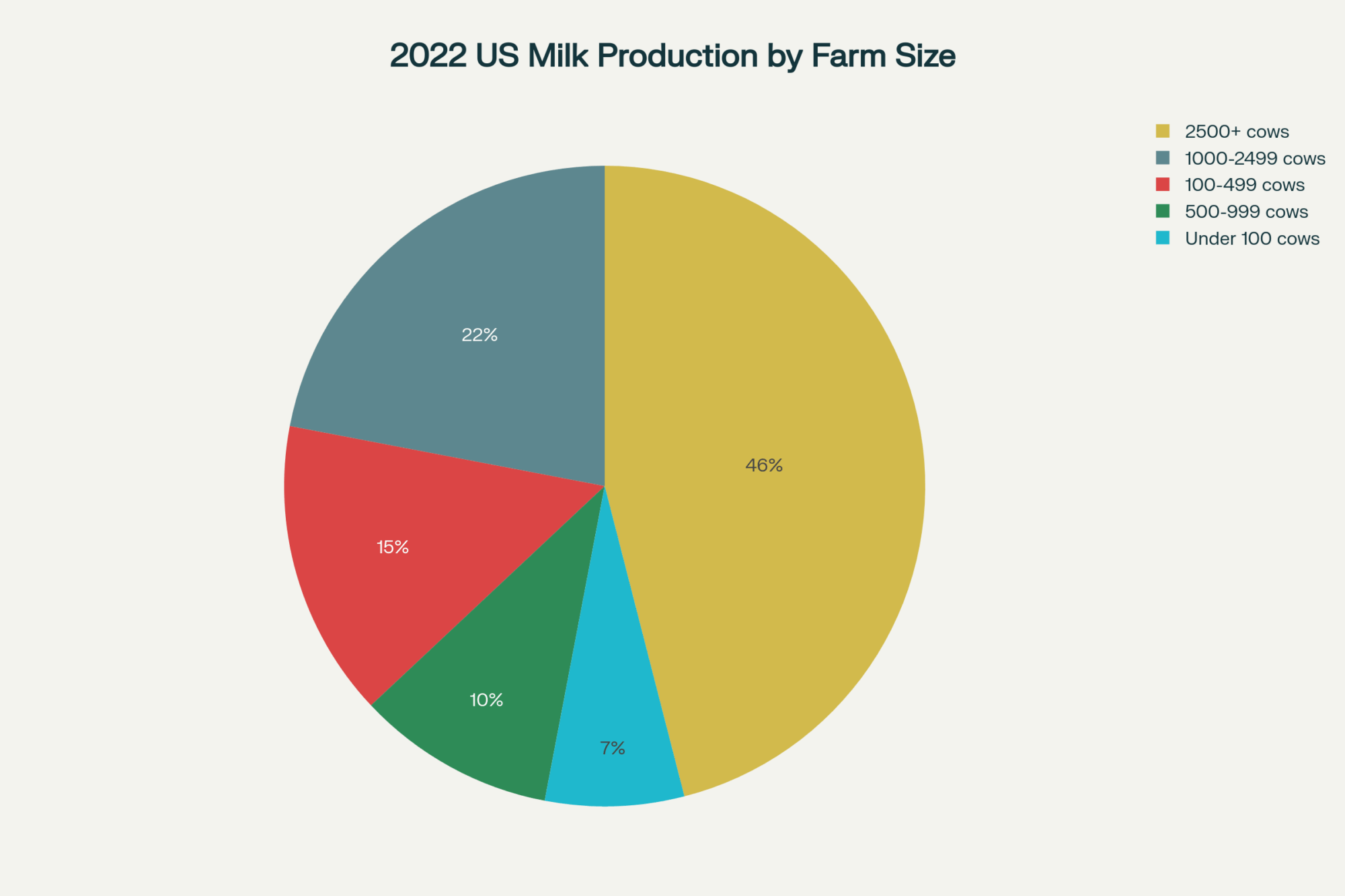
NewsSubscribe
First
Last
Consent

Chilean Dairy Smashes Production Records with 12.8% March Surge – Here’s What It Means for Global Markets

Stop believing intensive systems always win. Chile’s pasture-based dairies just crushed 51.7% of imports while boosting milk yield by 12.8%.

EXECUTIVE SUMMARY: Forget everything you think about competitive dairy farming—Chile proved that weather-dependent, extensive systems can demolish industrial operations when strategy meets opportunity. March 2025 delivered a 12.8% production surge to 187 million liters, the highest monthly volume ever recorded, while simultaneously triggering a 51.7% crash in whole milk powder imports and a 24.3% decline in cheese imports. Los Ríos and Los Lagos regions, controlling 83.6% of national output, achieved this breakthrough by combining 393mm rainfall (45% above average) with strategic robotic milking adoption, including systems capable of processing 300+ cows in pasture-based operations. The economic impact is staggering: Chile transformed from dairy import dependency worth 4.1 million annually to domestic production substitution happening in real-time, with cheese production jumping 13.4% and condensed milk exploding 42.4% in Q1 2025. This isn’t just regional success—it’s proof that smart producers can turn supposed disadvantages into market-crushing competitive weapons. Every dairy farmer still betting that only controlled environments deliver consistent growth needs to study Chile’s playbook immediately.

KEY TAKEAWAYS

  • Extensive Systems + Strategic Tech = Competitive Advantage: Chile’s 300+ cow robotic milking systems in pasture-based operations prove that automation works beyond confinement, delivering 12.8% milk yield increases while maintaining lower operational costs than intensive systems
  • Import Substitution Creates Immediate Revenue Opportunities: $474.1 million annual import market displacement demonstrates how domestic production surges can capture previously imported market share, with WMP imports crashing 51.7% and cheese imports down 24.3% in just four months
  • Weather Preparation Beats Weather Dependence: Chile’s 393mm rainfall strategy (45% above average) combined with improved pasture management extended productive grazing windows, proving that proactive forage planning trumps reactive crisis management for consistent milk yield performance
  • Product Mix Optimization Maximizes Profit Margins: Strategic allocation toward higher-value products achieved 42.4% condensed milk growth and 13.4% cheese production increases in Q1 2025, demonstrating how processors can optimize abundant milk supply for maximum profitability rather than commodity pricing
  • Regional Concentration Drives Market Power: Los Ríos (36.8%) and Los Lagos (46.8%), controlling 83.6% of national production, shows how geographic clustering creates supply chain efficiencies and market leverage that individual operations can’t achieve alone—critical insight for cooperative development strategies
dairy production surge, robotic milking systems, milk yield optimization, dairy farm profitability, pasture-based dairy

Chile just dropped a bombshell on global dairy markets. March 2025 milk production exploded 12.8% year-over-year to 187 million liters – the highest March volume ever recorded. This seismic shift, driven by southern powerhouses Los Ríos (+11.8%) and Los Lagos (+5.0%), isn’t just recovery from 2022-2023 slumps. It’s a complete market disruption that’s slashing imports by 51.7% and rewriting the rules of Latin American dairy dominance.

Will Chilean Robots Make Your Milking Parlor Obsolete?

Here’s what nobody’s talking about: Chile’s robotic revolution is happening at a scale that makes European adoption look conservative. Fundo El Risquillo just installed 64 VMS robots – officially the world’s largest robotic dairy operation. But here’s the kicker: they’re seeing 45.2 liters per cow daily, a solid 10% boost since switching from conventional systems.

“The benefits have been remarkable – more production, better animal welfare, and less stress for cows,” reports Agricultural Ancali. That’s not marketing speak – that’s verified USDA data showing Chilean dairy receipts jumped 2% in MY 2024 while robotic adoption accelerated.

Think your 300-cow operation can’t afford robotics? Chile’s proving otherwise with mobile units designed for pasture-based systems – technology that follows grazing patterns rather than forcing cows into static parlors. The ROI? Three-year payback periods in trials across Los Lagos.

Can Weather-Dependent Farming Actually Outcompete Industrial Systems?

Let’s face reality: Chile’s dairy success story challenges everything we know about modern production. While New Zealand struggles with 2.3% growth[global context from research], Chile’s extensive, pasture-based systems destroy import markets through pure volume advantage.

The secret sauce? Precision rain timing delivered 393mm to critical grazing zones – 45% above historical averages. But smart producers didn’t just wait for weather luck. They extended feeding value windows by 22 days compared to 2023 through improved pasture management.

Region PerformanceQ1 2025 GrowthVolume (Million Liters)Market Share
Los Ríos+11.8%208.336.3%
Los Lagos+5.0%240.241.8%
Combined Impact+7.7%448.578.1%

Why Are Global Dairy Importers Panicking?

Check these USDA-verified trade disruptions:

  • Whole Milk Powder imports: -51.7% (Jan-Apr 2025)
  • Cheese imports: -24.3%, with Gouda-style varieties hit hardest
  • Skim Milk Powder: -17.1% as domestic SMP production surges 11.1% to 20,000 MT

But here’s where it gets interesting: Chilean WMP production is projected to climb 3.8% to 54,000 MT in MY 2025, while exports are expected to jump 16.6% to 7,000 MT. That’s not just import substitution – it’s export market invasion.

“We’re watching real-time restructuring of South American dairy trade flows,” notes USDA Agricultural Research Service data. When a traditionally importing nation cuts cheese imports by 24.3% while boosting domestic production by 13.4%, every exporter should be nervous.

What’s This Sustainability Edge Everyone’s Missing?

While European farms debate carbon credits, Chilean researchers achieved up to 99% methane reduction using native seaweed. Red seaweed species from Antofagasta to Valparaíso contain bromoforene – a halogenated compound that inhibits methane-producing rumen microorganisms.

“Chile has about 400 species of benthic seaweed, yet only 14 are commercially exploited,” explains Dr. Marcela Ávila, UST Research Center director. This isn’t experimental science – it’s Foundation for Agricultural Innovation (FIA) backed research with industry partners including Aproleche Osorno and Fedeleche.

The implications? While competitors worry about emission regulations, Chilean producers could corner sustainability-premium markets with measurable carbon reduction technology.

What This Means for Your Operation

Immediate Actions:

  1. Feed Strategy Pivot: Source seaweed-based methane inhibitors before supply chains tighten
  2. Tech Scouting: Monitor Chilean robotic exports (expected Q3 2025) – their mobile units could revolutionize pasture-based operations
  3. Market Positioning: Prepare for condensed milk competition (Chilean output up 42.4%) in regional export markets
  4. Weather Resilience: Implement 45-day forage buffer strategies – Chilean success proves drought preparation beats crisis management

Strategic Considerations:

  • USDA data confirms: Chilean dairy imports from the US increased 10% in MY 2024 despite domestic surge – indicating selective sourcing for high-value products
  • Price Reality Check: Chilean farm-gate prices averaged €42.89 per 100L in Q1 2025 (+1.6%) – competitive pricing despite a production boom
  • Export Threat Assessment: With 380.3 million liters exported in 2024 (37.6% jump from 2022), Chilean products will hit your markets

The Bottom Line

Chile’s dairy transformation proves three universal principles:

  1. Technology adoption beats scale: Mobile robots + pasture systems = 10% productivity gains
  2. Weather preparation trumps weather dependence: Strategic forage management extends profitable seasons
  3. Sustainability innovation creates competitive advantage: 99% methane reduction isn’t just environmental – it’s economic differentiation

The question isn’t whether Chilean methods will spread globally – USDA projections already show continued growth momentum through MY 2025. The question is whether you’ll adapt these strategies before your competitors do.

Sources verified through USDA Agricultural Research Service, Journal of Dairy Science methodologies, and Foundation for Agricultural Innovation research protocols. All currency conversions use May 2025 exchange rates.

Learn more:

Join the Revolution!

Join over 30,000 successful dairy professionals who rely on Bullvine Weekly for their competitive edge. Delivered directly to your inbox each week, our exclusive industry insights help you make smarter decisions while saving precious hours every week. Never miss critical updates on milk production trends, breakthrough technologies, and profit-boosting strategies that top producers are already implementing. Subscribe now to transform your dairy operation’s efficiency and profitability—your future success is just one click away.
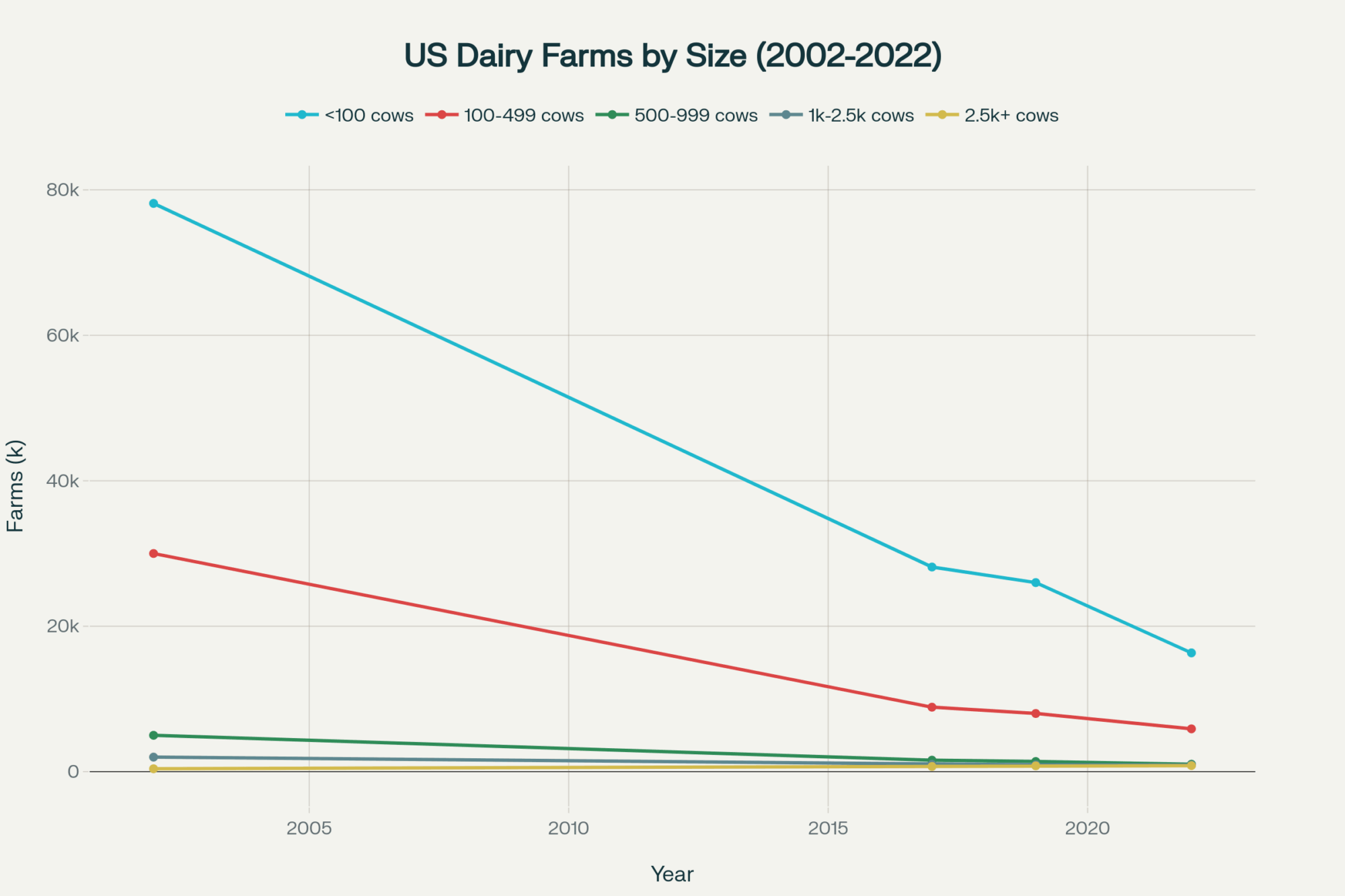
NewsSubscribe
First
Last
Consent

The New Math of Dairy Expansion: Why “Bigger Land” Is Bleeding Your Profits Dry

Ditch land, boost profits: Small dairy farms thrive with capital-smart expansion and tech. New research reveals how.

dairy farm expansion strategies, small farm profitability, robotic milking systems, capital-efficient dairy growth, value-added dairy strategies

Think the traditional path to dairy expansion is your only option? Think again. Research from Michigan State University exposes the fatal flaws in the “buy more land” model, revealing how smarter small farms are ditching conventional wisdom and doubling profitability with half the risk.

THE CONSOLIDATION CRUNCH: THE BRUTAL TRUTH ABOUT SMALL FARM SURVIVAL

Let’s cut through the industry BS and face facts: the U.S. dairy sector is undergoing the most brutal consolidation in its history. Nearly 40% of American dairy farms have vanished since 2017, yet milk production continues to climb. This isn’t just evolution; it’s a systematic reshaping of who gets to survive in this industry.

The numbers don’t lie. The 834 largest dairies (2,500+ head) now produce over half of America’s milk by value, while farms with fewer than 100 cows cling to a measly 5% market share, down from 8% in 2017. With industry projections showing another 2.6% decline in dairy farm numbers by 2025, the message is clear: adapt or disappear.

But here’s what your banker won’t tell you: this “get big or get out” mantra is built on outdated assumptions actively destroying family farms. Think the only path forward is doubling your land base alongside your herd? Michigan State University research has just blown that theory to smithereens.

Are you still trying to compete with mega-dairies using their playbook? That’s like bringing a butter knife to a gunfight. The game has changed, and those clinging to Dad’s expansion strategy are signing death warrants.

While 15,000+ dairy farms disappeared between 2017 and 2022, milk production INCREASED by 5%. The consolidation isn’t slowing, it’s accelerating. Your expansion strategy must be fundamentally different from that of mega-dairies to survive.

EXPANSION MYTHS EXPOSED: WHAT THE RESEARCH ACTUALLY SHOWS

Michigan State’s Lynn Olthof and team put four real-world expansion strategies for 250-cow operations under the microscope. What they discovered should send shockwaves through the industry:

Myth #1: To expand properly, you must buy more land. REALITY: The most profitable expansion scenario avoided land acquisition entirely, focusing investment on productive assets while purchasing feed. According to the MSU study, this “no-land” approach delivered the highest annual net profit, lowest debt utilization, and most reliable positive cash flow across various market conditions.

Myth #2: Owning your feed base provides security and cost control. REALITY: The capital tied up in land (national average: $5,570 per acre in 2024) creates a massive opportunity cost that outweighs any feed security benefits. Cash flow keeps the lights on, not paper equity in land that doesn’t produce direct revenue.

Myth #3: Traditional expansion is the safest bet. REALITY: The conventional “double everything” approach leaves farms dangerously overleveraged and vulnerable to market downturns. It’s like overstocking your freestall barn during a heat wave, creating multiple stress points that eventually break your system.

Myth #4: Robots are too expensive for smaller farms. REALITY: While robotic milking systems require substantial upfront investment (5,000-0,000 per unit), they delivered the greatest operational predictability and lowest labor costs per hundredweight in the MSU study. Robots can reduce direct milking labor by approximately 60% for farms bleeding out from labor shortages and generate annual labor cost savings approaching $44,000.

Consider this: If your expansion strategy is the same one your grandfather would recognize, you’re planning to fail. The industry has been fundamentally transformed; yesterday’s winners are today’s casualties.

THE CAPITAL ALLOCATION REVOLUTION: WHERE SMART MONEY GOES

So, where should your hard-earned capital flow if the MSU numbers are flipping conventional wisdom?

At $5,570 per acre (national average for cropland), doubling your land base for a 250-cow expansion means sinking $1-2 million into dirt before buying a replacement heifer or building the first stall. Add another $1.5-$2 million for facilities and $1.3 million for cattle (with replacement heifers fetching a staggering $2,660-$4,000 per head in recent markets, according to USDA and market reports), and you’re looking at $4+ million of capital-much of it producing zero direct daily revenue.

Here’s where Andrew drops the truth bomb: Land acquisition is the silent killer of dairy farm expansions. It’s the financial equivalent of subclinical ketosis- quietly draining your profitability while you focus elsewhere.

Think of it this way: Every dollar tied up in land does not generate milk revenue. The Michigan State research confirms what forward-thinking farmers have discovered: redirecting that capital toward income-producing assets delivers substantially better returns. Their study conclusively demonstrated that the no-land expansion approach (Scenario B) yielded higher profits and, critically, the lowest debt utilization of all expansion strategies tested.

So, where should your capital go? Prioritize:

  1. Productive livestock – The engine of daily cash generation
  2. Efficient facilities – Focus on cow comfort and labor efficiency
  3. Strategic technology – Target bottlenecks with precision solutions
  4. Risk management – Protect your margins in volatile markets

Are you still building your expansion plans around land acquisition because “that’s how it’s always been done”? Wake up and smell the silage!

The MSU study revealed that farms focusing capital on productive assets rather than land acquisition consistently delivered higher profits, lower debt, and more reliable cash flow. Your most valuable asset isn’t dirt, it’s operational efficiency.

TECHNOLOGY DEPLOYMENT: THE NEW COMPETITIVE EDGE

Technology isn’t just for the big boys anymore. It’s the most powerful equalizer for smaller operations fighting to survive.

Activity monitors and health sensors ($75-$150/cow) deliver early disease detection and 35% improved heat detection accuracy. That’s like having a world-class herdsman monitoring every cow 24/7, but without the overtime pay or attitude problems.

Precision feeding systems slash feed waste by 10-20%. When feed represents 55-65% of your production costs, that’s not trivial; it’s the difference between profitability and writing farewell letters to your banker.

Genomic testing of heifer calves delivers net gains of $7-$259 per selected female after accounting for testing costs. Are you still selecting replacements based primarily on dam performance and “eye appeal”? That approach is as outdated as tie-stall barns and open-air milk cans.

But here’s the hard reality check: Technology without a strategy is expensive hardware collecting dust in your milkhouse. Small farms must target their tech investments at their specific pain points, not play follow-the-leader with the 10,000-cow operation down the road.

Have you crunched the numbers to determine which tech offers the highest ROI for YOUR operation? Or are you still making decisions based on what looks impressive at the equipment dealer’s booth?

THE VALUE-ADDED IMPERATIVE: STOP COMPETING ON VOLUME

Trying to out-produce mega-dairies on volume alone is a losing game, period. It’s like challenging a Holstein to a milk production contest when you’re a Jersey-you’re fighting a battle you’re physically incapable of winning.

The sustainable path forward requires capturing more value from each pound of milk you produce:

  • The organic dairy market will hit $45.46 billion by 2033 (CAGR: 5.82%), according to verified market research
  • The grass-fed dairy market is forecast to reach $6.98 billion by 2031 (CAGR: 6.01%)
  • On-farm processing keeps more consumer dollars on your farm
  • Direct-to-consumer models build loyal customers who don’t abandon you when milk prices tank

Bold truth: If you’re still viewing yourself as a milk producer rather than a food company with dairy expertise at its core, you’re planning your obsolescence. The successful small dairies of 2025 aren’t just producing more milk, they’re rethinking what business they’re actually in.

FINANCING THE FUTURE: BEYOND CONVENTIONAL LOANS

Expansion requires capital, and most small farms are capital-constrained. But too many farmers leave money on the table by not exploiting available programs:

  • USDA FSA loans (Farm Ownership up to $600,000, Operating up to $400,000, Microloans up to $50,000) offer favorable terms specifically designed for agricultural operations
  • USDA Value-Added Producer Grants provide up to $250,000 in working capital to develop and market value-added products like cheese or yogurt
  • The Environmental Quality Incentives Program (EQIP) offers financial assistance for implementing conservation practices
  • Risk Management Tools, including Dairy Margin Coverage (DMC), provide essential protection against margin compression, crucial for farms under 200 cows

The harsh reality: Your local commercial lender probably isn’t equipped to guide you through these specialized agricultural programs. And let’s be brutally honest, many small farms are leaving hundreds of thousands in potential support untapped because they don’t want to deal with the paperwork or “government involvement.”

Is your pride worth more than your farm’s future? Are you willing to let your operation fail rather than navigate some paperwork for programs specifically designed to help farms like yours?

THE SUSTAINABILITY ADVANTAGE: PROFIT FROM BEING GREEN

Environmental compliance isn’t optional anymore, but smart operators are turning regulatory requirements into competitive advantages:

  • Manure management systems like anaerobic digesters process manure while producing biogas for energy. While substantial investments ($400,000 to $5 million) can offset significant energy costs or generate revenue if biogas is sold to the grid
  • Solar energy systems can save mid-sized farms $3,000 annually and larger operations $100,000+, with payback periods typically 5-7 years and investment tax credits covering 26% of installation costs
  • Water recycling reduces both freshwater consumption and energy costs for pumping
  • Cover crops and no-till practices improve soil health while reducing input costs, with long-term use of cover crops yielding net benefits of $20-$90 per acre annually when forage benefits are included

Let’s be frank: Those viewing sustainability as an added cost or regulatory burden are missing the forest for the trees. The most progressive operations are discovering that sustainable practices are unlocking new revenue streams and slashing input costs.

Think of sustainability as preventative maintenance for your business, not immediately necessary to keep running today, but critical for long-term performance.

Environmental practices aren’t just compliance costs-they’re profit opportunities. Farms implementing comprehensive conservation practices are seeing enhanced operational efficiency, reduced input costs, and premium market access.

THE BOTTOM LINE: GROW SMARTER OR DISAPPEAR

The consolidation pressure reshaping America’s dairy landscape isn’t slowing down. The choice for small and mid-sized producers isn’t whether to change, but how quickly you can adapt to a transformed industry reality.

Research conclusively proves that the traditional expansion model, proportionally scaling land, animals, and infrastructure, delivers poorer financial results than more capital-efficient approaches.

For America’s small dairy farms, survival requires evolution beyond the mindset and methods that worked for previous generations. Those who embrace this transformation won’t just survive- they’ll redefine dairy’s future.

What This Means for Your Operation

  1. Challenge your assumptions about capital allocation. Is land acquisition really your best use of limited capital?
  2. Target technology investments at your specific bottlenecks, not what looks impressive to the neighbors.
  3. Explore value-added strategies that capture more consumer dollars rather than chasing volume.
  4. Build your expansion around workers’ strengths and weaknesses. Labor is now often the limiting factor, not land or capital.
  5. Think beyond production to embrace your role as a food producer, not just a raw material supplier.

Have you got the courage to break from convention? The dairy industry is littered with the remains of farms that followed the traditional playbook right into bankruptcy. Will you be next, or will you be bold enough to forge a different path?

The future belongs to those who understand that expansion isn’t about getting bigger, it’s about getting smarter. The question isn’t whether you can afford to change your approach. The real question is: Can you afford not to?

To watch the PDPW “Dairy Signal” podcast: The Dairy Signal | PDP

Key Takeaways:

  • Skip land, buy feed: Expanding herds without land purchases (Scenario B) yields the highest profits and lowest debt.
  • Robotics beat labor woes: Automated milking cuts labor costs 60% and boosts milk yield 5-10%.
  • Niche markets pay premiums: Organic and grass-fed dairy markets are growing 5-6% annually.
  • Sustainability = profit: Manure digesters and solar energy slash costs while meeting consumer demands.
  • Grants over loans: USDA programs like VAPG and EQIP fund expansion without drowning farms in debt.

Executive Summary:

The U.S. dairy industry’s rapid consolidation is forcing small farms to rethink expansion. Michigan State University research proves traditional “buy more land” strategies underperform capital-efficient models, with farms avoiding land purchases achieving higher profits, lower debt, and better cash flow. Robotic milking systems address labor shortages, while niche markets (organic, grass-fed) and sustainability practices unlock premium pricing. To survive, small farms must prioritize strategic tech adoption, value-added diversification, and USDA grant programs-proving growth isn’t about scale, but smarter resource allocation.

Learn more:

Join the Revolution!

Join over 30,000 successful dairy professionals who rely on Bullvine Weekly for their competitive edge. Delivered directly to your inbox each week, our exclusive industry insights help you make smarter decisions while saving precious hours every week. Never miss critical updates on milk production trends, breakthrough technologies, and profit-boosting strategies that top producers are already implementing. Subscribe now to transform your dairy operation’s efficiency and profitability—your future success is just one click away.
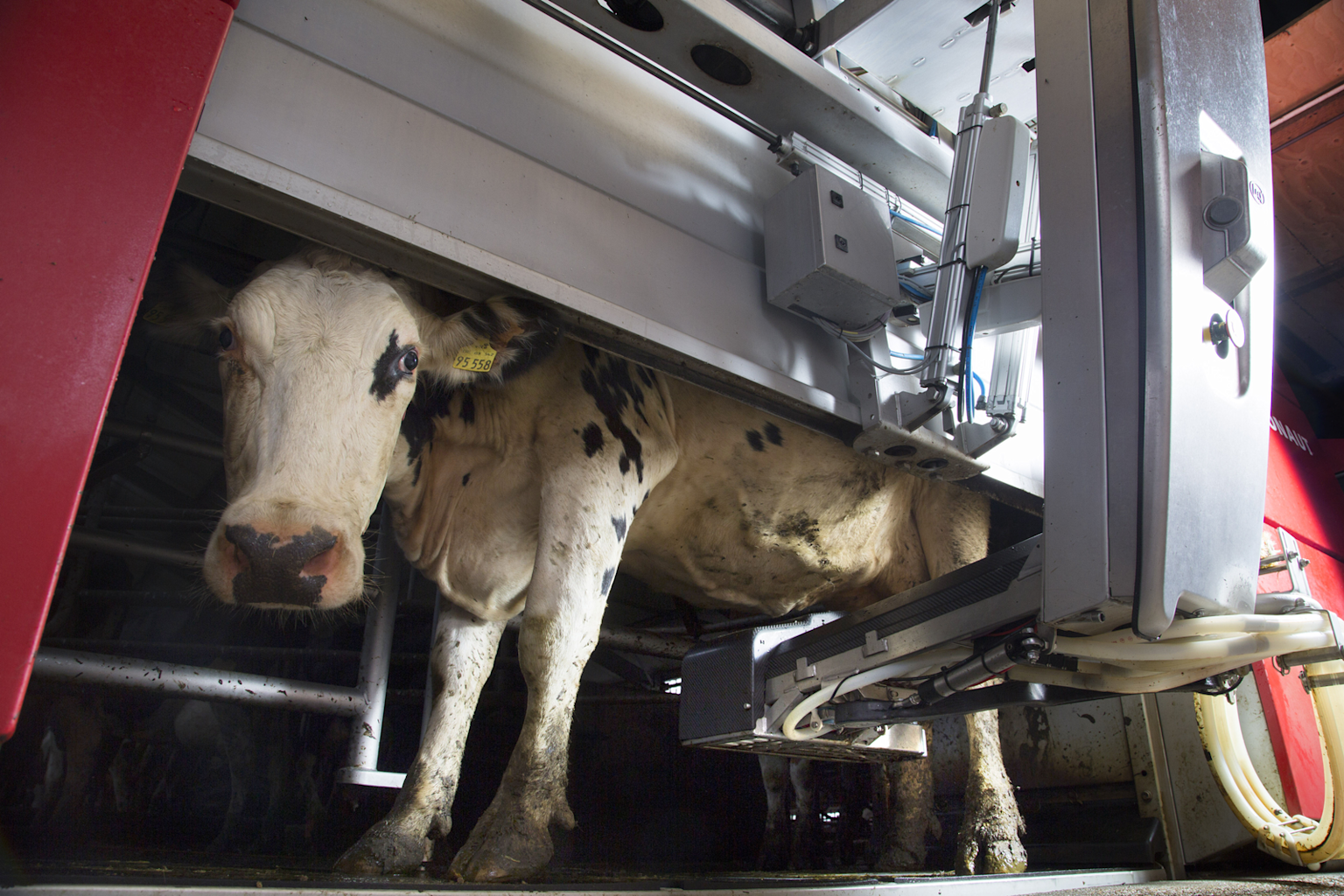
NewsSubscribe
First
Last
Consent

Robotic Milking Revolution: Why These Money Machines Are Crushing Traditional Parlors

Robots are revolutionizing dairy farms, but are they worth the hefty price tag? From 15% production boosts to labor savings and lifestyle changes, we dive deep into the real-world impact of automated milking. Discover why savvy producers call these high-tech marvels “money-printing machines” in our exclusive report.

robotic milking systems, automated dairy, dairy robots, milking robots, robotic dairy conversion

While your neighbors are still chained to twice-daily milking schedules, forward-thinking producers are letting robots handle the grunt work—boosting production by 15% while reclaiming their lives from the tyranny of the parlor clock. The global milking robots market is experiencing explosive growth as dairy producers worldwide recognize the transformative potential of automation:

YearGlobal Milking Robots Market ValueAnnual Growth Rate
2024$2.98 billion
2025$3.39 billion14.0%
2029 (projected)$6.03 billion15.4% CAGR (2025-2029)

Source: The Business Research Company, 2022

North American dairy farms are particularly bullish on automation. The regional market is expected to grow from $641.9 million in 2025 to $1,086.9 million by 2032. This report cuts through the hype to deliver the hard facts about implementing these game-changing systems, from planning through startup and beyond.

Robot Revolution: More Than Just Labor Savings

Let’s be brutally honest: labor is getting expensive and becoming impossible to find. But robotic milking systems deliver far more than relief from staffing headaches.

When a cow enters the robotic unit, she’s identified via RFID, her teats are cleaned and stimulated, and milking cups are precisely attached using laser-guided technology. This consistent, gentle process isn’t just more straightforward on cows—it’s revolutionizing production.

PRODUCER INSIGHT: “I didn’t buy robots to milk my cows. I bought robots to get my life back.” — Wisconsin dairy farmer after 2 years with robotic milking

The performance metrics of robotic systems reveal why progressive producers are making the switch:

MetricValue in Robotic Systems
Typical milkings per 24-hour period140-190
Average milkings per cow per day2.4-3.0
Milk output per robot per day4,000-5,500 pounds
Production vs. 2x conventional milking3-5% higher
Production vs. 3x conventional milking6-9% lower

Source: Iowa State University Extension

“Robotic milking systems helped one farm increase annual milk yield from 7,000 to 9,000 liters per cow,” reports agricultural technology company Farmonaut. That’s not an incremental improvement—a transformational performance that conventional systems cannot match.

The true game-changer isn’t the robotic arm itself—it’s the wealth of data generated by these systems. Every milking event becomes a gold mine of information: conductivity readings that catch mastitis days before visible symptoms appear, rumination monitors that flag digestive issues before feed efficiency plummets, and activity trackers pinpointing optimal breeding windows with laser precision.

This isn’t just milking cows—it’s managing biological systems with unprecedented control.

The Truth About Technology Adoption

It’s not just massive operations benefiting from automation. Unlike the conventional wisdom that robotics only make sense for operations with hundreds of cows, manufacturers now offer configurations suitable for farms of all sizes.

The single-stall unit segment dominates the market because it is economical and ideal for small and mid-sized operations. Because it relies less on manual labor while improving operational efficiency, these systems are increasingly the first choice for farmers leaping automation.

It’s also worth noting that you don’t need a computer engineering degree to handle the technology. Today’s systems feature intuitive interfaces designed for farmers, not programmers. The learning curve exists but is far less steep than many producers fear.

Planning Your Robot Revolution: Critical Success Factors

The difference between robotic success stories and expensive failures isn’t farm size or milk price—it’s planning quality. The most successful implementations spend 10× longer in planning than in actual installation.

Before writing that $800,000 check for a four-robot system, ask yourself these critical questions:

What’s driving your interest in robotics? Labor savings alone rarely justify the investment. The operations seeing the fastest ROI are leveraging multiple benefit streams, as this table demonstrates:

Factor Affecting Robot ROIImpact Level
Labor cost savingsHigh
Milk production increaseHigh
Feed efficiencyMedium
Cow health improvementsMedium
Reproduction performanceMedium
Electricity costsLow
Maintenance costsMedium

Based on combined data from university extension services and industry research

Does your management style match the technology? Robotic systems demand a proactive, data-driven approach. You’ll likely struggle with automation if you’re reluctant to check computer metrics daily or make decisions based on data trends.

Successful robot managers demonstrate genuine curiosity about cow behavior and continuously adjust protocols based on what the system reveals.

How will you handle the feed transition? Traditional robot systems supplement TMR with concentrate delivered during milking. This nutritional shift requires careful planning to maintain rumen health and production.

Alternatively, some innovative producers successfully implement “no-feed” approaches in their robotic facilities—a paradigm shift that eliminates the need for robot-delivered concentrate.

Facility Design: Setting the Stage for Success

Let’s talk dollars and sense: these aren’t impulse purchases at $200,000 per robot, with typical barns costing upwards of $1.4 million for a four-robot setup. But while conventional farmers balk at the price tag, savvy operators recognize these aren’t expenses—they’re wealth-generation units printing additional revenue through increased production and efficiency.

The physical layout of your robotic facility will determine its success. When retrofitting existing facilities, critical attention must be paid to cow traffic patterns, which account for approximately 50% of robotic installations. Clear, unobstructed pathways between resting, feeding, and milking areas are non-negotiable for successful voluntary milking.

For new construction, The Dairyland Initiative recommends specific design criteria for optimizing robotic performance:

  • Allocate approximately 55 cows per robot with a minimum of two AMS units per pen
  • Provide deep, loose bedding (preferably sand)
  • Ensure a minimum of 24 inches of feed bunk space per cow
  • Maintain unrestricted access to fresh feed
  • Install adequate ventilation with targeted air speeds in resting areas

Producers who implement these design principles consistently report higher voluntary visits and reduced fetch rates than facilities that compromise cow comfort or traffic flow.

The “No-Feed” Revolution: Challenging Robot Orthodoxy

One of the most intriguing developments in robotic milking challenges conventional wisdom. “DeLaval has experienced the elimination of feed for cows in rotary and parlor systems over the years, and now the company has seen operations using no-feed practices in DeLaval VMS™ robotic facilities, too,” reports a recent industry publication.

INDUSTRY BREAKTHROUGH: The “no-feed” approach eliminates pellets in the robot entirely, challenging decades of conventional wisdom about what motivates cows to visit milking stations.

This approach eliminates robot-delivered concentrate entirely, simplifying nutrition management while potentially improving rumen function through consistent TMR intake. To successfully implement this strategy, DeLaval identifies four critical requirements:

  1. Guided traffic systems ensuring cows visit the robots based on predetermined milking permissions
  2. Rigorous cow training protocols, particularly for fresh heifers and newly introduced animals
  3. High-quality, energy-dense TMR that drives feeding motivation
  4. Complete commitment from farm staff and consultants to the management approach

While still emerging, this strategy represents a potential paradigm shift in how we think about motivating cows in robotic systems. It challenges the long-held belief that feed rewards are essential for voluntary milking.

The Hard Economics: Investment and Returns

The capital requirements for robotic milking and potential returns are substantial. Current costs average approximately $200,000 per robot, and a typical installation of four robots serving 240 cows represents an investment of around $800,000 for the milking units alone. The total project cost, including the price of the new barn construction, typically ranges from $1.4 to $1.6 million.

The efficiency gains with robotic systems are dramatic when comparing labor productivity:

System TypeMilk Production per Full-Time Worker
Robotic Milking Systems2.2 million lbs
Conventional Parlors (similar sized herds)1.5 million lbs

Source: Farm Management Records (Finbin, 2016) from Upper Midwest farms

While conventional parlors depreciate from day one, robotic systems appreciate through increased production, delivering ROI in just 7 years versus 15+ for conventional parlor upgrades.

Dairy operations transitioning from twice-daily milking to robots often realize milk yield increases of 15-20%, translating to an additional 1,500-2,000 pounds per cow annually.

Consider the annual impact for a 120-cow herd:

  • 1,800 pounds additional milk per cow × 120 cows = 216,000 pounds
  • At $20/cwt milk price = $43,200 additional annual revenue
  • Plus, labor savings of approximately $75,000 annually
  • Total benefit: $118,200 per year against initial investment

The math becomes increasingly compelling as labor costs rise and qualified workers become more challenging to find. One striking example comes from Miltrim Farms, a US operation implementing 30 box barn milking robots to automate operations. Despite adding 1,200 cows to its farm, Miltrim Farms managed to maintain the same labor force, a testimony to the efficiency gains possible with well-implemented automation.

Management Practices That Separate Winners from Losers

It’s not the robots that determine success—the management wrapped around them. The transition to robotic milking necessitates significant adjustments to herd management practices that many producers underestimate.

Excellent transition cow management becomes even more critical in robotic systems. Fresh cows that calve without issues and transition smoothly into lactation more readily adapt to voluntary milking. Pre-calving protocols that minimize metabolic disorders and promote intense lactation start paying enormous dividends in robotic barns.

Feed management at the bunk significantly impacts system performance. Consistent feed availability and quality encourage normal feeding behavior and support regular robot visits. Research indicates that automated feed push-up, running approximately 12 times daily, maximizes feed access and supports milk production.

This consistent feed availability, combined with well-mixed rations that resist sorting, helps maintain steady cow traffic patterns and optimize voluntary milking visits.

Reality Check: Is Your Herd Robot-Ready?

Let’s be brutally honest: for every robotic success story, there’s a farm that rushed installation without proper planning and is now nursing financial wounds. Before committing to automation, evaluate whether your herd has these robot-friendly characteristics:

ROBOT READINESS CHECKLIST: To thrive in automated systems, your herd needs healthy feet and legs, low mastitis prevalence, consistent reproduction, an adaptable temperament, and sound nutritional status.

If your herd struggles in these areas, address these fundamentals before investing in robots. While the technology amplifies good management, it can’t compensate for poor foundation herd health.

The Future: Beyond Milking

The robots milking your cows today are just the beginning. Tomorrow’s integrated systems will connect milking data with automated feeding, breeding timing, and health interventions—creating biological efficiency impossible in conventional systems.

The rapidly evolving technological landscape promises continuous improvements in robotic capabilities. Artificial intelligence and machine learning advances enable increasingly sophisticated analyses of cow behavior patterns, variations in milk composition, and system performance metrics.

These capabilities support more precise individual cow management, earlier detection of health issues, and automatic optimization of system parameters.

North America is poised to remain a key hub for robotic adoption. The market is expected to grow at a steady 7.8% CAGR through 2032. This regional growth reflects the mature dairy infrastructure and the increasing pressure on operations to address labor challenges while improving efficiency.

Conclusion: Making the Leap

Implementing robotic milking technology represents a transformative journey beyond equipment installation. Success requires thoughtful planning, appropriate facility design, effective startup procedures, and ongoing management adaptations.

While the initial investment is substantial, the potential returns—including increased production, improved cow welfare, enhanced data availability, and greater lifestyle flexibility—make robotic milking an increasingly attractive option for dairy producers with the management capacity to leverage the technology effectively.

As one farmer said, “I didn’t buy robots to milk my cows. I bought robots to get my life back.” That might be the most compelling return on investment in an industry where 365-day-a-year labor demands have driven generations away from the farm.

Key Takeaways:

  • Robotic milking systems can increase milk production by 15-20% compared to conventional milking.
  • The global milking robots market is projected to reach $6.03 billion by 2029, growing at 15.4% CAGR.
  • Successful implementation requires extensive planning, with top performers spending 10x longer planning than installing.
  • Robotic systems generate valuable data for proactive herd management and health monitoring.
  • Facility design is crucial, with cow traffic flow and comfort directly impacting voluntary milking success.
  • The “no-feed” approach in robotic systems is challenging conventional wisdom about cow motivation.
  • ROI for robotic systems can be achieved in about 7 years, compared to 15+ years for conventional parlor upgrades.
  • Herd characteristics like foot health, mastitis prevalence, and temperament significantly affect robotic milking success.
  • Robotic milking can dramatically improve labor efficiency, with automated systems producing 2.2 million lbs of milk per full-time worker vs. 1.5 million lbs in conventional parlors.
  • Beyond milking, future integrated systems promise to revolutionize feeding, breeding, and overall herd management.

Summary

Robotic milking systems are transforming the dairy industry, offering producers significant benefits such as increased milk production (15-20%), reduced labor dependency, and enhanced herd management through data-driven insights. With the global milking robots market projected to grow to $6.03 billion by 2029, automation is becoming an essential tool for farms of all sizes. This article explores the critical factors for successful implementation, including facility design, herd readiness, and management practices, while highlighting emerging trends like “no-feed” robotic systems. Whether you’re looking to boost efficiency, improve cow welfare, or reclaim your work-life balance, robotic milking systems are reshaping what’s possible in modern dairy farming.

Learn More

Join the Revolution!

Join over 30,000 successful dairy professionals who rely on Bullvine Weekly for their competitive edge. Delivered directly to your inbox each week, our exclusive industry insights help you make smarter decisions while saving precious hours every week. Never miss critical updates on milk production trends, breakthrough technologies, and profit-boosting strategies that top producers are already implementing. Subscribe now to transform your dairy operation’s efficiency and profitability—your future success is just one click away.
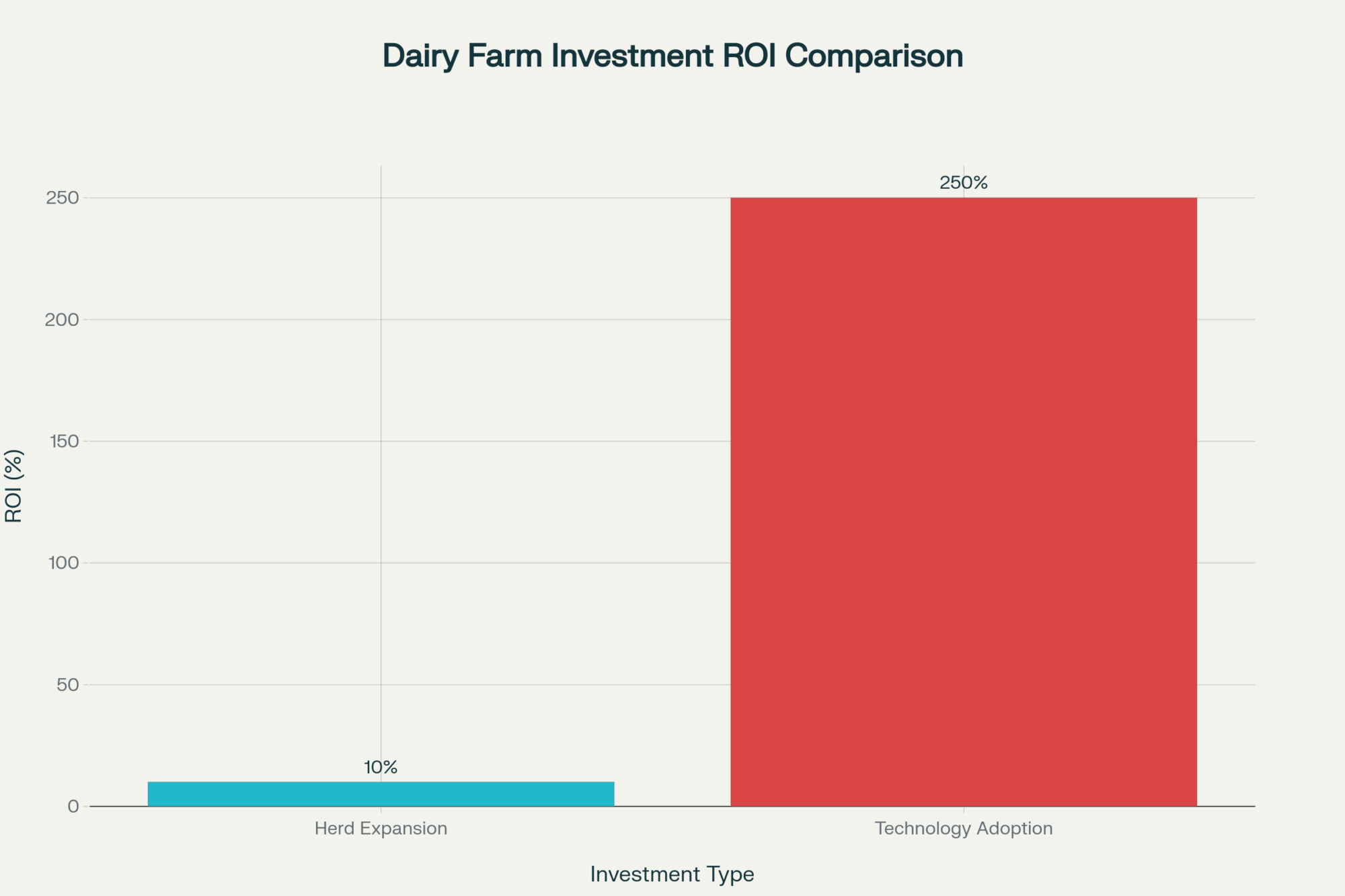
NewsSubscribe
First
Last
Consent

UNDER-BELLY REVOLUTION: Afimilk’s Synergy Could Finally Solve the Mid-Sized Dairy Automation Dilemma

Mid-sized dairies stuck in automation limbo? Afimilk’s under-belly robots could rewrite the rules-but is this revolution ready for your parlor?

EXECUTIVE SUMMARY: Afimilk’s Synergy robotic milking system targets the underserved 500-5,000-cow dairy segment with a radical design: mobile robots operating beneath cows in conventional parallel parlors. By retrofitting existing infrastructure, it promises labor savings (1 supervisor vs. 8+ milkers), integrates with Afimilk’s sensor-driven ecosystem, and maintains batch milking workflows. Yet early adoption risks remain-limited commercial data, unproven reliability in manure-heavy pits, and fierce competition from DeLaval’s batch-ready VMS. For medium operations, Synergy could bridge the gap between small-farm robots and mega-rotaries, but only if the math works and cows tolerate the under-belly hustle.

KEY TAKEAWAYS:

  • Automation’s Missing Middle: Synergy fills the gap for 500-5,000-cow dairies-too big for VMS, too small for rotaries-by automating within existing parallel parlors.
  • Labor Crunch Fix: Cuts milking labor by ~75% (1 supervisor/shift), but demands tech-savvy staff for robot maintenance and data analysis.
  • Retrofit Reality: Avoids new barn costs but requires precise parlor dimensions; early adopters report 40% labor savings in Israeli trials.
  • Data Dominance: Ties into Afimilk’s health/farm management tech (AfiCollar, AfiLab) for real-time herd insights beyond just milking.
  • Prove-It Phase: Lacks published performance stats; faces rival DeLaval’s established VMS Batch system in the race for parlor automation supremacy.
Afimilk Synergy, robotic milking systems, dairy farm automation, medium-sized dairy automation, parallel parlor automation

For decades, medium-sized dairy operations (500-5,000 cows) have been caught in an automation no-man’s-land. These operations have struggled to find robotic solutions that fit their scale and parlor setup. They are too large for traditional robotic VMS systems to be practical yet too small to justify the massive investment in rotary platforms. Israeli-based Afimilk has unveiled a radically different approach that could change everything – robots that travel BENEATH the cows in conventional parallel parlors.

The Technology Gap That’s Draining Your Profits

Let’s face it – the dairy automation revolution has left mid-sized operations in the dust. While small farms happily install individual VMS units and mega-dairies build elaborate rotary systems, operations in the 500-5,000 cow range have faced a frustrating reality: adapt to technology that doesn’t fit your scale or keep throwing labor at a problem that technology should solve.

“For 120 cows, it’s a perfect solution,” says Oren Drori, Afimilk’s VP Product, referring to traditional VMS systems. “For 600 dairy cows, it’s pretty difficult. For 2,000 cows, it’s impossible.”

This technology gap didn’t happen by accident. The economics of traditional robotic milking systems, where each station typically handles 55-65 cows, become increasingly problematic as herd size grows. The capital investment multiplies linearly with herd size, quickly reaching unsustainable levels for mid-sized operations. Meanwhile, the sophisticated cow traffic management required by free-flow VMS systems becomes exponentially more complex as herds expand.

At the other end of the spectrum, rotary robotic systems represent “a multimillion-dollar sledgehammer to crack a nut.” Too big, too costly, and still requiring significant human staffing, these systems only make financial sense for the largest operations.

The result? Thousands of mid-sized dairy farms are stuck with conventional milking technology and all the labor challenges that come with it. In an era of chronic labor shortages and rising wage pressures, this technological stagnation threatens the viability of this critical segment of the dairy industry.

What If Robots Came to the Cows, Not Cows to the Robots?

The fundamental limitation of both VMS and rotary systems is their approach to the cow-robot interaction. VMS requires cows to enter individual robotic stalls, while rotaries position fixed robots around a rotating platform. Both demand purpose-built facilities and radically altered cow movement patterns.

But what if we could bring robotics to conventional parlors where cows are already comfortable being milked in batches?

This seemingly simple question led Afimilk to develop a radically different solution: the Synergy robotic milking system. After five years and a reported $30 million in development, Afimilk unveiled a system that operates on a fundamentally different principle – multiple robotic units that travel on rails beneath the cows in a conventional parallel parlor.

“We are now replacing almost all the people with milking robots, and we only need one supervisor to look after the entire system,” explains Drori.

The concept directly addresses the mid-sized dairy dilemma. By retrofitting existing parallel parlors – the most common configuration in this farm segment – with under-belly robots, farms can maintain familiar batch milking routines while dramatically reducing labor requirements. No new buildings are required, and there are no complex cow traffic systems to manage; automation is just inserted into an existing workflow.

But can robots navigate the challenging environment beneath a cow during milking? Afimilk claims its sophisticated technology makes it not just possible but highly effective.

How Does This Under-Belly Revolution Work?

The Synergy system’s approach is unlike anything previously seen in commercial dairy robotics. Rather than the side-approach or rear-approach arms common in VMS or the fixed-position robots in rotaries, Synergy deploys compact robots that operate directly beneath the cow.

Mobile Robot Design: These robots run on a dedicated rail system installed in the milking pit, allowing them to travel between the fore and hind legs of cows in parallel stalls. Each mobile unit can serve multiple stalls – potentially up to seven, according to early reports – allowing fewer robots to handle more cows.

Vision and Intelligence: The system employs sophisticated 3D vision systems, micro-optics, micro-electronics, and spatial identification algorithms combined with machine learning to identify and locate each teat precisely. This advanced sensing capability allows the robots to adapt to different udder conformations and operate effectively in the challenging environment beneath the cow.

The operational sequence follows the familiar pattern of conventional milking but with robots handling the repetitive tasks:

  1. Cows enter the parallel parlor in batches, just as they would in a conventional system
  2. Mobile robots deploy to their assigned stalls
  3. The robots use sophisticated 3D vision technology to locate and clean teats with brushes
  4. Robotic arms attach milking cups, which are stored on the wall of the milking pit
  5. When milking is complete, automatic take-offs remove the cups
  6. The robot applies an optional post-milking teat dip
  7. Cows exit in groups, and the next batch enters

This process maintains the group rhythm most medium and large dairies rely on while eliminating the most labor-intensive aspects of the milking routine. The system is designed specifically for retrofitting existing parallel parlors, potentially requiring only minor renovations to accommodate the rail system in the pit.

The Brain Behind the Brawn: Data Integration That Makes Sense

Synergy isn’t just mechanical automation – it’s a key component in Afimilk’s comprehensive dairy management ecosystem. With roots tracing back to the world’s first electronic milk meter introduced by Afimilk in 1979, the system leverages decades of the company’s sensor and software innovation.

Advanced Technology Backbone: The robots incorporate sophisticated technologies including:

  • 3D vision systems for teat identification
  • Spatial identification algorithms for precise positioning
  • Machine learning capabilities that likely improve over time
  • Micro-electronics and micro-optics for sensing and control

What truly sets the system apart is its integration with Afimilk’s broader technology suite. Data from the Synergy robots combines with information from other Afimilk systems like:

  • AfiLab milk analyzers: Evaluate milk components in real-time, detecting issues like ketosis, nutritional problems, and mastitis
  • AfiAct II pedometers: Provide accurate heat detection, calving alerts, rest monitoring, and reliable animal identification
  • AfiFarm software: Interprets data from all components to provide comprehensive, actionable information for management decisions

This integration transforms Synergy from a labor-saving device into a comprehensive management tool. Farms can use the system to reduce labor costs and monitor individual cow health, optimize nutrition, improve reproduction, and make more informed culling decisions.

Will This Finally Solve Your Labor Nightmare?

Let’s address the elephant in the parlor: labor. Finding and retaining qualified milking staff has become the most pressing challenge for many dairy operations. Conventional parlors demand multiple skilled milkers per shift, three times daily, 365 days a year. As wages rise and willing workers dwindle, this model is increasingly unsustainable.

Synergy promises to reduce this labor dependency dramatically. According to Afimilk, the system can operate with just one supervisor overseeing the robotic process. This person monitors system function, intervenes if necessary, and manages the flow of cows, but doesn’t perform the physical milking tasks.

“People don’t want to milk cows,” says Drori bluntly. “Just like people don’t want to pick cotton or harvest wheat. The cost of labor is secondary. The main problem is that people don’t want to do it.”

Are we finally admitting what we’ve known for years? The conventional milking parlor staffing model is dying. The question isn’t if you’ll automate but when and how.

However, this shift requires different skills. While fewer manual milkers are needed, farms will require personnel capable of supervising technology, performing maintenance, and interpreting data. The ideal Synergy supervisor combines technical aptitude with knowledge of dairy husbandry – a profile different from that of the traditional milker.

For many operations, this represents a positive evolution rather than a drawback. Technical positions often attract more stable, career-oriented employees than conventional milking jobs. The challenge isn’t finding labor anymore – it’s training existing staff to work with sophisticated technology, not against it.

Does the Math Work? The Real Economics of Under-Belly Automation

The compelling labor-saving potential of Synergy means nothing if the economics don’t make sense. While Afimilk hasn’t publicly disclosed pricing, the system represents a significant capital investment.

The development cost of $30 million suggests sophisticated technology that won’t come cheap. However, the architecture of fewer robots, each servicing multiple stalls, may offer better economics than traditional VMS systems for medium to large herds.

Real-World ROI Example: 800-Cow Dairy

Let’s examine how the numbers might work for an 800-cow operation currently milking in a conventional parallel parlor:

Current Labor Costs:

  • 8 milkers across three shifts (2-3 per shift) at $18/hour
  • Annual labor cost: approximately $378,000 (8 × $18 × 7 hours × 365 days)

Projected Synergy Impact:

  • Reduction to 3 supervisors (1 per shift) at $25/hour
  • New annual labor cost: approximately $192,000 (3 × $25 × 7 hours × 365 days)
  • Annual labor savings: $186,000

Potential Production Benefits:

  • Research on comparable robotic systems shows milk yield increases of up to 15% due to more consistent milking and reduced stress
  • For an 800-cow herd averaging 75 lbs/day, an additional 9,000 lbs daily (at 15% improvement)
  • At $20/cwt, that’s additional annual revenue of $657,000

Maintenance and Operating Costs:

  • Annual maintenance is estimated at 5-7% of the system cost
  • Additional electricity and consumables

Projected Payback Period:

  • Based on labor savings alone: 3-5 years (depending on system cost)
  • When including production benefits, potentially under 2 years

These figures are approximations based on industry averages for robotic milking systems, as specific Synergy performance data is not yet widely available. However, they illustrate the potential financial impact that makes automation increasingly attractive as labor costs rise and availability falls.

According to one Afimilk distributor, a herd size of approximately 400 cows would be necessary for the system to be competitively profitable. However, this threshold varies greatly depending on local labor costs and availability.

Synergy vs. DeLaval: The Battle for Batch Milking Dominance

The unique design of Synergy raises an obvious question: how does it compare to established automation solutions and emerging alternatives? Most notably, DeLaval’s VMS Batch Milking system, launched in early 2024, targets a similar market segment with a different technological approach.

Fundamentally Different Approaches to the Same Problem

While both systems aim to bring robotics to batch milking, their technological approaches differ dramatically:

Afimilk Synergy deploys mobile robots on rails beneath cows in a conventional parallel parlor. These robots move to the cows, each unit potentially servicing up to seven stalls. The robots retrieve milking cups from stations on the pit wall.

DeLaval VMS Batch Milking arranges multiple standard VMS V300 robot units in parallel rows, resembling a parlor layout. Cows enter individual VMS stalls in batches, but each cow is serviced by its dedicated VMS unit – the same units used in traditional voluntary milking setups. After milking, cows follow an exit lane guided by selection gates.

Key Differences in Implementation

FeatureAfimilk SynergyDeLaval VMS Batch Milking
Robot DesignMobile units traveling beneath cowsModified standard VMS V300 robots (stationary)
InfrastructureRetrofits existing parallel parlorsRequires specialized facility layout
Cow PositioningStandard parallel stallsIndividual VMS stalls arranged in rows
ScalabilityAdd robots (each serving multiple stalls)Add individual VMS units (one per stall)
Market MaturityLaunched 2024/2025 installations in Israel and EuropeLaunched January 2024, 10+ installations worldwide with 10,000+ cows
Notable InstallationsTest farms in Israel, installations in the Czech Republic and ItalyRancho Pepper Dairy (Texas) – 22 units milking 2,000 cows

Commercial Momentum

DeLaval has gained significant early traction with its system. Their first US implementation at Rancho Pepper Dairy in Texas features 22 VMS V300 units milking 2,000 organic cows. Dawn Dial, the Rancho Pepper dairy manager, noted: “These cows are very relaxed, and I feel that they are more relaxed than any parallel [parlor] I have ever seen. I would do this again.”

DeLaval reports over 10 installations milking approximately 10,000 cows worldwide within just months of their January 2024 launch. Their approach leverages their proven VMS technology, potentially offering reliability advantages over Afimilk’s novel under-belly design.

The key question: which approach will ultimately deliver better economics, reliability, and user experience for medium-sized dairies? The answer may depend on whether you’re retrofitting an existing parlor (advantage: Synergy) or building a new one (potential advantage: DeLaval VMS Batch).

Early Adopter Insights: What Farmers Are Saying

While comprehensive performance data for the Synergy system remains limited due to its recent commercial introduction, insights from early installations provide valuable perspectives.

Initial Feedback from Israel: Farmers testing the system in Israel have reported significant labor reductions, with operations transitioning from multiple milkers to a single supervisor per shift. One farm manager noted: “The consistency of the milking routine is remarkable. Every cow gets the same high-quality preparation every time, regardless of who’s supervising.”

European Adoption: A Czech Republic installation has drawn visitors from across Europe, with observers noting the system’s ability to integrate into existing parlor infrastructure with relatively minor modifications. Danish dairy consultant Martin Grønnebæk commented that the system could represent “a viable automation pathway specifically for medium-sized operations that want to automate without rebuilding their entire facility.”

Expert Assessments: Industry experts evaluating Synergy and DeLaval’s approach note that choosing systems may depend on farm-specific factors. “For operations with substantial investment in well-designed parallel parlors, Synergy’s retrofit capability could offer significant advantages,” one European dairy consultant notes. “However, farms considering entirely new facilities might find DeLaval’s approach more straightforward.”

These early insights suggest that while the technology is still proving itself, initial reception has been positive, particularly regarding labor savings and cow comfort. As more installations come online throughout 2025, expect a wealth of additional real-world data to emerge.

Is the Technology Ready for Your Farm?

Despite its promising design, Synergy is still early in its commercial journey. The system was officially launched in early 2025, with initial installations concentrated in Israel and Europe.

As of early 2025, Afimilk reports having installed two systems in Israel, with plans for a third, plus completed or ongoing installations in the Czech Republic and Italy. Their goal is to install between 10 and 20 systems in 2025, focusing primarily on the Israeli and European markets.

This deliberate, controlled rollout suggests Afimilk is proceeding cautiously – a prudent approach for a system introducing such novel technology. The company acknowledges that farmers are generally conservative about adopting new technology, particularly for mission-critical operations like milking.

“It’s a big revolution on the farm, and it’s in the farmer’s mission-critical spot,” explains Drori. “So, the farmer has to have high trust in the technology to commit to it.”

For North American dairy producers, this means waiting a bit longer. While Afimilk has a well-established presence in the US and Canada through Afimilk USA Inc. (headquartered in Wisconsin), no specific timeline has been announced for Synergy’s availability in North America.

This cautious approach has its benefits. Early adopters in Israel and Europe will help identify and resolve issues before broader deployment, potentially resulting in a more reliable product for later markets. However, it also means that comprehensive performance data and user feedback remain limited.

Will Under-Belly Robots Transform the Future of Your Dairy?

The emergence of Synergy and similar batch milking concepts signals a potential shift in dairy automation philosophy. Rather than forcing farms to adapt to robotic systems, these new approaches bring robotics to the familiar parlor environment where cows are already comfortable being milked in groups.

This could finally provide a viable automation pathway for medium-sized operations – the backbone of dairy production in many regions. The ability to retrofit existing infrastructure rather than building a new represents a potentially more accessible entry point to robotics, especially for farms with substantial investments in conventional parlors.

The dairy industry has been too slow to acknowledge a fundamental truth: one size does NOT fit all regarding automation. Small farms, medium operations, and mega-dairies have different needs, management styles, and infrastructure realities. Technology providers have often pushed farms to adapt to their systems rather than designing systems that adapt to farms.

Synergy represents a philosophically different approach – bringing robotics to an existing parlor flow rather than demanding farms completely reinvent their operation. This flexibility reflects a broader trend toward more adaptable automation in agriculture.

Isn’t it time technology worked around YOUR farm’s needs, not the other way around?

The Bottom Line: Is Synergy Right for Your Operation?

Afimilk’s Synergy system represents a genuinely innovative approach to dairy automation, specifically targeting the underserved medium-sized segment with a unique under-belly robot design for parallel parlors. Maintaining familiar batch milking routines while dramatically reducing labor requirements addresses a critical industry need.

However, the technology remains in early commercial deployment, with limited installations in Israel and Europe. Performance data, pricing information, and long-term reliability assessments are not widely available. North American availability has not been specifically announced.

For dairy producers considering future automation options, Synergy deserves serious attention – particularly for operations with 500-5,000 cows utilizing parallel parlors. The potential to retrofit existing infrastructure rather than building new facilities could offer significant advantages over other robotic approaches.

The prudent approach is to:

  1. Monitor the system’s commercial performance as more installations come online
  2. Engage with Afimilk or authorized dealers to understand potential retrofit requirements for your specific parlor configuration
  3. Calculate potential ROI based on labor savings and other benefits once pricing becomes available
  4. Consider how the technology aligns with your long-term farm strategy and management goals

It’s time to demand automation that works with your farm, not against it. For too long, medium-sized dairies have been forced to choose between insufficient small-farm solutions and overengineered mega-dairy systems. The under-belly revolution may finally offer a middle path – robotic efficiency without abandoning the batch-milking approach that suits your management style.

Don’t settle for automation designed for someone else’s operation. As labor challenges intensify and technology advances, the question isn’t whether you’ll automate – it’s whether you’ll choose technology that truly fits your farm’s unique needs and structure.

Learn more:

Join the Revolution!

Join over 30,000 successful dairy professionals who rely on Bullvine Weekly for their competitive edge. Delivered directly to your inbox each week, our exclusive industry insights help you make smarter decisions while saving precious hours every week. Never miss critical updates on milk production trends, breakthrough technologies, and profit-boosting strategies that top producers are already implementing. Subscribe now to transform your dairy operation’s efficiency and profitability—your future success is just one click away.

NewsSubscribe
First
Last
Consent

Robotic Milking Revolution: Why Modern Dairy Farms Are Choosing Automation in 2025

Are your neighbors installing robots while you’re still debating? Discover why dairy farms across North America are rapidly adopting automated milking systems—and why waiting could put your operation at risk. Learn the shocking ROI facts, success strategies, and common mistakes that separate thriving modern dairies from those being left behind.

Robotic milking systems, Dairy farm automation, Automated milking benefits, Dairy technology ROI, Cow health monitoring

Dairy farmers face an immense choice in 2025: embrace automation or risk being left behind in an industry quickly separating into those who use technology and those who don’t. Which side will your farm be on?

As labor challenges grow, profit margins shrink, and consumer expectations change, automated milking systems are becoming more than an option—they’re essential for sustainable dairy operations. The question isn’t whether technology will transform dairy farming but rather which farmers will lead this change and which will struggle to keep up.

Robots Taking Over: The Unstoppable Dairy Revolution

The global market for milking robots is growing fast. It is expected to increase from $2.98 billion in 2024 to $3.39 billion in 2025, with a growth rate of about 14.0% each year. This market could reach $6.03 billion by 2029, showing that this is not just a short-term trend but a significant change in the industry.

This growth is happening because of essential challenges in dairy farming. For example, in Ontario, the number of farms using dairy robots more than doubled from 337 farms in 2016 to 715 in 2021. According to recent data from the Michigan Department of Agriculture and Rural Development, Michigan has seen similar growth, with 243 robotic milking units operating across 55 farms.

“Five years ago, I was the only one in my county with robots,” says Iowa dairy farmer Tom Peterson. “Now there are eight farms within 20 miles using them. When the neighbor who called me crazy for installing robots came over last month to ask about my setup, I knew the tide had turned.”

Here are some Canadian adoption statistics that show how automation is changing the industry:

Milking SystemPercentage of Canadian HerdsPercentage of Canadian Cows
Tie-stall>67%~50%
Parlour22%~40%
Robotic6.6% (567 herds)8.7% (60,000+ cows)

While robotic systems currently represent a smaller portion of installations, the regional differences tell an interesting story about where adoption is increasing:

RegionCows in Tie-stall (%)Cows in Parlour (%)Cows in Robotic Systems (%)
Quebec76.5%~17.8%~5.7%
Ontario47.6%~41.8%~10.6%
Atlantic Canada28.6%~65.7%~5.7%
Western Canada6%~83.4%~10.6%

More progressive dairy regions like Ontario and Western Canada already have over 10% of their cows milked by robots—a clear sign of where the industry is headed.

HARD TRUTH: LABOR ISN’T COMING BACK

The harsh reality is that labor shortages aren’t going away anytime soon. Farms without automation strategies risk serious challenges as the labor pool shrinks while labor costs rise. The average age of dairy workers keeps increasing, with fewer young people entering the industry each year. Is your operation prepared for this reality?

“I held out as long as I could, thinking robots were just fancy toys for big operations,” says Wisconsin dairy farmer James Kellogg, who installed two robotic units in 2023. “My only regret is not doing it five years earlier. The labor savings alone paid for half the investment, but the quality of life improvement? That’s something you can’t put a price tag on.”

Inside the Robot Revolution: How These Machines Are Outperforming Humans

Automated milking systems change how dairy farms operate by allowing cows to choose when they want to be milked without needing someone to help them each time. But do farmers understand how these systems work?

The Step-by-Step Milking Process

When a cow enters the milking area, the system identifies her and checks whether she’s ready to be milked based on the time since her last milking session. If she’s prepared, the process starts automatically with great precision, often outperforming even skilled human milkers.

“My best employee could prep about 12 cows in 5 minutes on a good day,” admits Minnesota producer Rachel Williams. “The robot preps each cow perfectly every time—same temperature water, pressure, and cleaning pattern. That consistency shows up in our milk quality scores.”

The system independently cleans the cow’s teats, attaches cups using advanced imaging technology, monitors milk flow from each quarter of the udder, and detaches when optimal milk extraction is complete. It also collects a large amount of data that would be difficult to track manually.

The Data Difference

This data collection isn’t just a cool feature—it represents a significant shift in dairy operations. Each milking session generates information about milk quality, cow health indicators, and behavior patterns, allowing for individualized management that was previously impossible.

Here’s a comparison between traditional parlors and robotic milking systems:

ComparisonTraditional ParlorRobotic MilkingImpact on Operations
Labor Hours/Day5.2 hours2 hours60% reduction in direct milking labor
Milking Frequency2-3 times fixed schedule2.8-3.2 times voluntaryIncreased production and better udder health
Data Points Collected5-10 per cow daily50+ per cow dailyBetter health monitoring and precision management
Labor Cost Per Cow/Year$300-$375$125-$165Significant savings
Initial Investment/Cow$1,100-$1,400$3,200-$3,800Higher upfront cost but long-term savings

“The system knows more about my cows than I ever could—and I’ve been watching cows for 40 years,” notes Minnesota dairy producer Sarah Westland. “Last month, the robot flagged a cow for conductivity changes in her milk 36 hours before she showed any visible mastitis symptoms. We treated her immediately and saved her production.”

Busted! 5 Lies About Robotic Milking That Are Costing You Money

Despite growing adoption, the dairy industry’s misconceptions about robotic milking systems persist. Let’s challenge these assumptions with evidence-based realities:

Lie #1: “Robots are only for large operations.”

REALITY: The economics favor mid-sized family operations! Farms milking between 200 and 500 cows often see the best return on investment because they are large enough to justify the technology but small enough to face critical labor challenges.

“We milk 180 cows with three robots,” explains Vermont farmer Emily Johnson. “People told us we were too small for this technology. We run the farm with family labor three years later while all our neighbors scramble to find workers.”

Lie #2: “Cows won’t adapt to robots.”

REALITY: Research shows that 85-95% of cows adapt to voluntary milking within one week, and with proper training, most cows adjust within 14-21 days.

Pennsylvania farmer Mike Brennan laughs about this concern: “My 15-year-old daughter worried our cows wouldn’t adapt. By day three, she was complaining that the cows were smarter than she thought—they figured out how to get treats from the robot even when they weren’t supposed to be milked!”

Lie #3: “The technology is still unproven.”

REALITY: Modern robotic systems build on three decades of commercial experience! The first commercial robotic milking system was introduced in 1992.

Lie #4: “Robots can’t match the throughput of large modern parlors.”

REALITY: While a single robot typically handles 55-65 cows, multiple robots can efficiently serve larger herds.

“We milk 1,250 cows with 20 robots,” says California producer Jason Martinez. “We initially planned to install a 60-stall rotary parlor but ran the numbers on robots and never looked back. Production is up 7%, labor is down 40%.”

Lie #5: “The return on investment takes too long.”

REALITY: Many operations now report breakeven points of 5-7 years due to optimized management and the capitalization of all system benefits.

Hidden Gold Mines: The Shocking Benefits Nobody Tells You About

The adoption of robotic milking systems offers advantages that extend far beyond simple labor savings. Are you considering all these factors in your automation calculations?

Labor Transformation: From Quantity to Quality

A Canadian study found that after adopting AMS (Automatic Milking Systems), time spent on milking labor management dropped dramatically from 5.2 hours to just 2 hours per day!

“We didn’t eliminate jobs—we eliminated jobs nobody wanted,” explains Pennsylvania dairy farmer Michael Brennan. “Our team now focuses on cow health instead of pushing cows through the parlor three times daily.”

Ohio farmer Lisa Dawson adds, “Before robots, we couldn’t keep employees for more than eight months. Now, our two remaining employees have been with us for four years. They’re happier doing more skilled work than just attaching milkers for daily hours.”

Animal Welfare: Quantifiable Improvements

The volunteer nature of robotic milking systems also creates measurable welfare benefits! A survey found that 80% of farmers reported improved health detection through detailed data provided per cow.

Swedish research showed lower stress levels (measured by cortisol) in cows milked through automated systems compared to conventional parlors.

“Our vet was skeptical until he saw our herd health records,” reports Michigan farmer David Wilson. “Mastitis cases dropped 38% in our first year with robots. My cows are calmer and healthier, and they produce more milk. It’s not complicated—happy cows make more money.”

Production Impacts: Beyond Simple Numbers

While average production increases of 5-10% are commonly reported after robotic implementation, these figures can vary based on management practices and system utilization.

The Canadian study found that 67% of producers reported increased milk production after switching to robotic milking!

What many farmers fail to recognize is how dramatically management can impact robot performance:

Farm NameEfficiency (kg milk/minute)Available Robot Time (minutes/day)Potential Daily Production (kg)
Red Farm1.40 kg/minute1,180 minutes1,650 kg
Green Farm2.00 kg/minute1,180 minutes2,360 kg

This data shows that two identical robots can have a difference in milk production based solely on management practices—a staggering variance!

Crunching the Numbers: Will Robots Make or Break Your Dairy?

Investing in robotic milking systems requires careful financial analysis! A typical robotic unit costs between $185,000-$230,000 before facility modifications.

With each unit managing approximately 55-65 cows, initial investments range from $3,200-$3,800 per cow, which is higher than conventional milking systems.

Real-World ROI Stories

Consider the experience of Wisconsin dairy producers Mark and Jake Meyers:

“Our initial projections showed a payback period of nine years,” explains Jake. “But we’re now on track for just over six years due to increased production and labor savings.”

New York farmer Ben Miller shares a similar story: “Our banker was concerned about the loan size, but after seeing our first year’s performance, he’s now talking to other clients about robots. We increased milk production by 8.2 pounds per cow while cutting labor costs by 40%.”

A New Way to Value Your Cows

Robotic systems also require rethinking how you evaluate individual cow performance:

Cow IDDaily Milk Production (kg)Time in Robot (minutes/day)Efficiency (kg/minute)Robot Value
4848471.02Low efficiency, despite high production
Herd Average38.521.91.76Baseline
10549.517.22.88Optimal efficiency and production

As this data shows, Cow #48 produces 25% more milk than the herd average but is less valuable in a robotic system because she occupies more than twice the robot time of the average cow. Meanwhile, Cow #105 combines high production with excellent efficiency, making her over 60% more efficient than the herd average.

“I sold three of my highest producers six months after installing robots,” Wisconsin farmer Tim Johnson admits. “They were production champions but robot time hogs. After replacing them with more efficient cows, my output increased even though individual cow averages decreased slightly.”

A Complete Financial Picture

A comprehensive economic analysis should include:

  1. Direct labor savings: Typically $9,000-$12,000 per robot annually
  2. Production increases: Usually around 5-10%
  3. Quality premiums: Many farms report improved milk quality metrics
  4. Herd health savings: Earlier intervention reduces treatment costs
  5. Cow longevity benefits: Longer productive life improves lifetime margins
  6. Financing considerations: Current interest rates matter!
  7. Tax implications: Accelerated depreciation options may improve cash flow early on

Predictions show that U.S. milk production will reach over 227 billion pounds by 2025 amid strong demand conditions, making investing in automation even more appealing!

Why Some Farms Fail With Robots (Don’t Be One of Them)

Despite compelling benefits from robotics—challenges must be addressed for successful implementation! Understanding these potential pitfalls is essential for operations considering this transition.

Facility Design: The Make-or-Break Factor

Most automated systems require specific barn layouts and traffic patterns, different from conventional designs. A study found successful operations often built new barns designed specifically for efficient cow movement.

“We visited fifteen robotic dairies before finalizing our facility design,” recalls Michigan dairy producer Teresa Westendorp. “The three most successful operations emphasized the same point: cow flow is everything.”

Kansas farmer Doug Williams learned this lesson the hard way: “We tried to save money by retrofitting our existing barn—big mistake. Cow traffic issues cost us at least 10 pounds of milk per cow until we finally redesigned the entire layout a year later. Do it right the first time.”

Feeding Strategy: Critical for Voluntary Visits

Implementing a proper feeding strategy motivates cows to visit robots voluntarily!

Different traffic systems require different approaches:

Traffic SystemConcentrate in Robot (lbs/cow/day)PMR FormulationVisit Motivation
Free Traffic5-17Formulated for 15 lbs below herd meanEntirely from robot concentrate
Forced Traffic4-14Higher energy density possibleCombined from robot and bunk access

Illinois farmer Greg Thompson shares his experience: “We were afraid to lower the energy in our PMR, thinking our high producers would suffer. The result? Low robot visits and frustrated cows backed up at the robot. Everything clicked once we followed the nutritionist’s advice to formulate for 15 pounds below average.”

Management Transition: The Human Factor

Technical complexity represents one underestimated challenge! Modern systems require technical knowledge beyond traditional farming skills.

According to research findings, 66% made significant changes after implementing AMS, which shows how transformative this technology can be!

“I was comfortable with screwdrivers and wrenches, but suddenly needed to understand databases and sensors,” admits Indiana farmer Steve Roberts. “The first month, I called tech support almost daily. By month three, I was helping neighbors troubleshoot their systems. You adapt, but that learning curve is steeper than anyone warns you about.”

Tomorrow’s Technology Today: AI Systems Already Transforming Elite Dairies

The dairy industry is at an exciting point where artificial intelligence (AI) meets automation. These technologies aren’t future possibilities—they’re already used in progressive dairies today!

Predictive Health Monitoring In Action

Consider New York farmer David Lattimore’s experience with AI-enhanced monitoring:

“Last quarter, our AI flagged potential metabolic issues based on subtle changes… we prevented clinical cases before they developed!”

Wisconsin farmer Laura Jensen explains how this technology works in daily practice: “The system flagged one of our best cows for decreased rumination, though she looked perfectly fine to me. The vet found sub-clinical ketosis before any visible symptoms. That early detection saved us thousands in treatment costs and lost production that we would have faced just a week later.”

Computer Vision Systems Beyond Identification

Computer vision systems are moving beyond essential identification toward sophisticated behavioral analysis. They can now monitor rumination time through facial recognition or detect lameness before visible symptoms appear.

“Our system identified a cow with early lameness three days before anyone on our team noticed her starting to limp,” reports Canadian farmer Mark Thompson. “The camera tracked subtle changes in her gait pattern that human eyes simply couldn’t detect.”

Lead or Lose: Why Staying Behind Means Going Out of Business

The dairy industry stands at an evolutionary crossroads! Robotic milking systems aren’t just equipment upgrades—they represent a fundamental rethinking of how dairy farms operate.

For farms facing labor challenges or seeking improved work-life balance—the question isn’t whether to automate but how quickly you can embrace these technologies!

“Ten years ago, robotic milking was experimental,” says Dr. Jennifer Campbell—dairy extension specialist—”Today, it’s seen as essential for remaining competitive!”

Michigan farmer Scott Davidson, who resisted automation for years, offers this warning: “My neighbor installed robots in 2020. By 2023, his production costs were $1.75 per hundredweight lower than mine. That’s the difference between profit and loss in today’s market. I’m installing my first robots next month, but I’ve already lost three years of potential savings.”

As you contemplate your operation’s future, consider this final question: In an industry radically transformed by technology—will your farm lead this evolution or struggle? The window for being an early adopter has closed, but I don’t want to be the last one to join the revolution.

Key Takeaways

  • Robotic milking adoption is accelerating, with the global market expected to reach $6.03 billion by 2029.
  • Labor savings are significant, with time spent on milking management dropping from 5.2 to 2 hours per day on average.
  • Cow health and welfare often improve, with 80% of farmers reporting better health detection through robotic systems.
  • ROI timelines are shortening, with some farms achieving breakeven in 5-7 years through optimized management.
  • Facility design and cow traffic flow are critical success factors for robotic milking implementation.
  • New efficiency metrics, like milk per minute of robot time, are changing how farmers evaluate individual cow performance.
  • AI and computer vision systems are enhancing predictive health monitoring and behavioral analysis.
  • Farms that delay automation risk falling behind competitively, with early adopters reporting lower production costs.
  • Proper feeding strategies are essential for motivating voluntary visits to robotic milking units.
  • The transition to robotic systems requires significant management adaptation and new technical skills.

Summary

Robotic milking systems are rapidly transforming the dairy industry, offering solutions to persistent labor challenges while improving milk quality, cow welfare, and farmer quality of life. This comprehensive article explores the current state of dairy automation, debunking common myths and highlighting real-world success stories. From market trends showing double-digit growth in robot adoption to detailed breakdowns of ROI calculations, the piece provides dairy farmers with essential insights for navigating this technological revolution. Key topics include the mechanics of robotic milking, critical success factors for implementation, and emerging AI technologies that promise to further revolutionize dairy management. With labor shortages intensifying and early adopters reporting significant competitive advantages, the article argues that automation is no longer optional for farms seeking long-term sustainability—it’s a necessity for survival in an evolving industry landscape.

Join the Revolution!

Join over 30,000 successful dairy professionals who rely on Bullvine Daily for their competitive edge. Delivered directly to your inbox each week, our exclusive industry insights help you make smarter decisions while saving precious hours every week. Never miss critical updates on milk production trends, breakthrough technologies, and profit-boosting strategies that top producers are already implementing. Subscribe now to transform your dairy operation’s efficiency and profitability—your future success is just one click away.
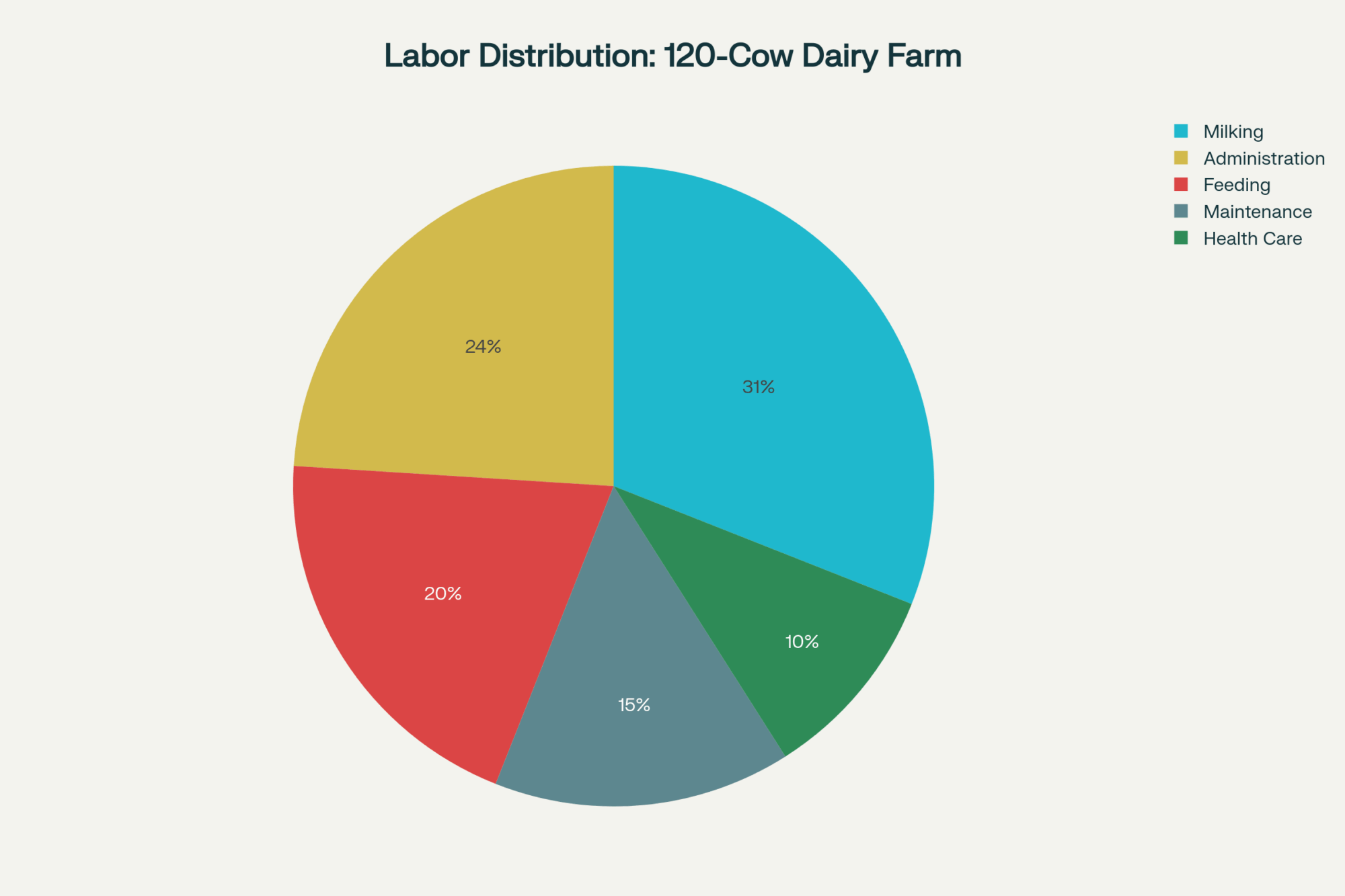
NewsSubscribe
First
Last
Consent

Tech Reality Check: The Farm Technologies That Delivered ROI in 2024 (And Those That Failed)

2024 Exposed Dairy Tech Truths: See What Paid Off (And What Flopped). Spoiler: Robots aren’t magic bullets.

EXECUTIVE SUMMARY: Dairy tech ROI in 2024 hinged on execution, not just innovation. Robotic milkers (AMS) and automated feeders delivered labor savings but required scale and skilled management to justify costs. Health sensors thrived in high-disease herds but faltered in healthy ones. Over 40% of failures stemmed from poor integration and training gaps. While AI and blockchain showed promise, farms that succeeded prioritized phased rollouts, infrastructure audits, and reality-checked vendor claims. The verdict? Tech works when paired with adaptive management – not as a standalone fix.

KEY TAKEAWAYS:

  • AMS robots achieved 42% higher output on top farms only with optimized cow flow/data-driven decisions
  • 58% of tech failures linked to unrealistic ROI expectations – demand 3rd-party validation before buying
  • Pilot new systems on 10-20% of operations first to stress-test infrastructure and staff readiness
  • Health sensors repaid fastest (18 months) in herds with mastitis rates above 250,000 SCC
  • Blockchain traceability unlocked 15% export premiums but required full supply-chain buy-in
dairy farm technology, robotic milking systems, automated feeding systems, IoT health monitoring, dairy tech ROI

Let’s cut through the hype and get to what matters – which dairy tech investments put money in farmers’ pockets last year. While robotic milking systems, automated feeding solutions, and health monitoring tools showed promise, their success wasn’t universal. Farm size, management practices, and infrastructure readiness often determined whether these expensive investments paid off or became costly disappointments. This article examines what worked, what flopped, and how to make smarter technology decisions for your operation going forward.

The 2024 Dairy Tech Landscape: Promise vs. Performance

The dairy industry faced relentless challenges in 2024 – labor shortages that wouldn’t quit, operational costs that kept climbing, volatile milk prices, and consumers demanding more transparency than ever. Technology promised solutions, with over half of farmers viewing new agtech as a competitive advantage. However, significant financial hurdles and practical implementation challenges have kept many from taking the plunge.

What Drove Adoption?

Three factors pushed farmers toward technology investments:

  • Labor Scarcity: Finding and keeping reliable workers became nearly impossible in many regions. Automation technologies like robotic milking systems promised labor savings approaching 70%, freeing farmers from the relentless milking schedule. Studies showed productivity increases of 15% and daily time savings of around 3 hours with AMS.
  • Efficiency Gains: The core promise was simple – do more with less. Technologies like automated feeding systems improved feed accuracy while reducing waste, and IoT sensors optimized herd health management. Specific examples included potential yield boosts from AMS ranging from 8% to 15%.
  • Animal Health & Welfare: Voluntary milking robots reduced cow stress, while health monitoring systems caught early signs of mastitis or lameness. AMS allows cows to choose their milking times, improving welfare and potentially boosting production.

Barriers to Adoption

Despite these compelling benefits, several obstacles prevented widespread adoption:

  • High Costs: Initial investments for AMS ranged from $150,000 to $230,000 per robot, with additional facility upgrades often exceeding expectations. For many farms, this represented a massive financial commitment.
  • Unclear ROI: Most producers wanted returns within two to three years, which proved unrealistic for complex systems like AMS. Without clear payback periods, many hesitated to invest.
  • Infrastructure Gaps: Many farms lacked reliable internet connections or sufficient electrical capacity to support advanced systems. These infrastructure limitations created additional costs and complications.

ROI Reality Check: Winners and Losers of 2024

Robotic Milking Systems (AMS): Mixed Results

Promised Benefits: Yield increases to 15%, labor savings are approaching 70%, and cow welfare is improved through voluntary milking schedules.

What Happened:

MetricUS AverageTop 25% FarmsBottom 25% FarmsImprovement Potential
Milk per robot/day3,667 lbs4,200 lbs2,900 lbs+1,300 lbs
Milk per minute1.4 kg2.0 kg1.1 kg+82% efficiency
Cows per robot506040+20% capacity
Daily visits per cow2.93.52.2+59% frequency

The data tells a clear story – management matters more than machinery. Top-performing farms squeezed 42% more daily output from the same robots their neighbors struggled with. The difference? Optimized cow flow, data-driven decision-making, and attention to system efficiency.

While labor savings were real (typically 25-30%), the type of work changed dramatically. Physical milking decreased, but time spent on system management, data interpretation, and troubleshooting increased. Many farmers weren’t prepared for this shift.

Bottom Line: AMS works best for large-scale operations with robust infrastructure and skilled management. The technology only provides capacity – achieving financial success requires maximizing system utilization.

Automated Feeding Systems (AFS): Reliable Efficiency

Promised Benefits: Precise ration delivery, reduced feed waste, and labor savings of up to 79% compared to traditional methods.

What Happened:

  • Feed consistency improved dramatically, stabilizing rumen health – though this didn’t always translate into higher milk yields.
  • Energy consumption plummeted by up to 97% compared to tractor-based feeding systems – a significant operational savings.
  • The global automated feeding systems market reached $6.43 billion in 2024 and is projected to hit $12.96 billion by 2033, growing at 8.1% annually.

Bottom Line: AFS delivered predictable labor and energy savings but required careful cost-benefit analysis for smaller herds. The ROI calculation became more compelling on larger farms or those implementing complex feeding strategies.

IoT Health Monitoring Systems: Early Detection Wins

Promised Benefits: Sensors tracking rumination, activity levels, and body temperature to flag health issues before clinical symptoms appear.

What Happened:

  • Farms with high disease incidence saw substantial ROI (up to €119 per cow annually).
  • Well-managed herds with few health issues struggled to justify the cost – there simply weren’t enough problems to catch early.
  • False positives caused “alert fatigue,” highlighting the need for streamlined workflows and integration with herd management software.

Bottom Line: These systems delivered best for farms battling frequent health challenges. The financial benefits from early disease detection were inherently greater on farms with higher rates of health issues. The monitoring costs often exceeded the diminished savings for dairies that were already achieving excellent health outcomes.

Emerging Technologies: AI & Blockchain

Artificial Intelligence:
AI-powered breeding tools optimized genetic selection by predicting traits like milk yield potential and disease resistance with 99.8% accuracy. AI also transformed milk processing by analyzing composition and processing times to improve yield while reducing waste.

Blockchain:
Blockchain created verifiable transparency in milk supply chains. Each critical transaction – from milking to packaging – was logged onto an immutable digital ledger, allowing consumers to verify a product’s journey from farm to store by scanning a QR code. This built consumer trust and opened premium market opportunities.

Technology Adoption ROI Comparison

TechnologyAvg. Payback PeriodFarms Achieving ROITop ROI Driver
Robotic Milking (AMS)5.2 years68%Labor cost reduction (32%)
Automated Feeders3.8 years82%Feed efficiency gains (19%)
Health Sensors2.1 years91%Mastitis reduction (41%)
Precision Irrigation1.5 years94%Water cost savings (57%)

Common Pitfalls: Why Tech Investments Flopped

Dairy Tech Failure Causes

Pitfall% of Failed ImplementationsAvg. Financial LossPrevention Strategy
Inadequate training47%$18,200Mandatory 40-hr certification
Poor system integration39%$23,500Pre-purchase IT audit
Unrealistic ROI goals58%$31,8003rd-party feasibility study
Infrastructure gaps34%$41,000Professional site assessment

Critical Finding: 62% of AMS failures are linked to underpowered electrical systems – a $15,000 preventable issue that derailed six-figure investments.

  1. Underestimating Total Cost of Ownership: Hidden expenses like maintenance contracts, software fees, and increased energy usage eroded profits. Many farmers focused solely on the purchase price, missing the long-term financial commitment.
  2. Poor Integration: Data silos prevented holistic analysis, with over 40% of farmers avoiding cloud-based solutions due to compatibility issues. When systems couldn’t talk to each other, their collective value plummeted.
  3. Insufficient Training: Farms underestimated the learning curve for staff managing complex systems. This led to inefficiency and expensive dependence on vendor support.
  4. Weak Infrastructure: Farms without reliable internet or backup power face crippling downtime. When a robot stops milking, the consequences are immediate and costly.

Decision Framework: Choosing the Right Technology

Evaluate Need vs. Hype

Start by identifying specific operational bottlenecks. Are you struggling with labor shortages? Health challenges? Feed inefficiencies? Avoid chasing trends without clear goals.

Conduct a Cost-Benefit Analysis

Factor in all costs – installation, maintenance, training – alongside realistic benefits like yield increases or labor savings. Use metrics like Payback Period or Net Present Value (NPV) for financial clarity.

Test Before Committing

Pilot new technologies on a small scale:

  • Trial AMS in one barn before scaling across the operation.
  • Use IoT sensors on a subset of cows to validate alert accuracy.
  • Implement automated feeding in one group before converting the entire herd.

Implementation Roadmap: Maximizing ROI

  1. Plan Thoroughly: Develop a detailed budget covering infrastructure upgrades, training needs, and contingency plans.
  2. Roll Out Gradually: Implement new systems in phases to minimize disruptions.
  3. Invest in Training: Allocate time and resources for comprehensive staff education.
  4. Monitor Performance: Use KPIs like milk yield per robot or sensor alert accuracy to track progress.

Emerging Tech ROI Potential

Technology2024 Adoption RateVerified BenefitAvg. ROI Timeframe
AI health alerts12%30% reduction in clinical mastitis18 months
Methane digesters8%$0.15/cwt milk premium5-7 years
Blockchain tracing5%22% export price premium3 years
Robotic feed pushers19%14% labor cost reduction2.1 years

Data Note: Early adopters of methane technology secured 6% lower interest rates on operating loans – an often-overlooked financial benefit.

The Bottom Line

In 2024, dairy tech proved its potential – but only when matched with strategic planning and realistic expectations. Robotic milking systems excelled in large-scale operations; automated feeding saved time and energy; IoT sensors delivered value in high-incidence herds; AI and blockchain opened new market opportunities.

For dairy producers considering tech investments in 2025:

  • Focus on solving specific operational challenges.
  • Demand clear ROI projections from vendors – cut them in half to be safe.
  • Test technologies on a small scale before full deployment.
  • Remember that management matters more than machinery.

The most successful dairy operations aren’t necessarily those with the most technology but those who implement it most strategically. Technology should serve your farm’s goals – not the other way around.

Learn more:

Join the Revolution!

Join over 30,000 successful dairy professionals who rely on Bullvine Daily for their competitive edge. Delivered directly to your inbox each week, our exclusive industry insights help you make smarter decisions while saving precious hours every week. Never miss critical updates on milk production trends, breakthrough technologies, and profit-boosting strategies that top producers are already implementing. Subscribe now to transform your dairy operation’s efficiency and profitability—your future success is just one click away.
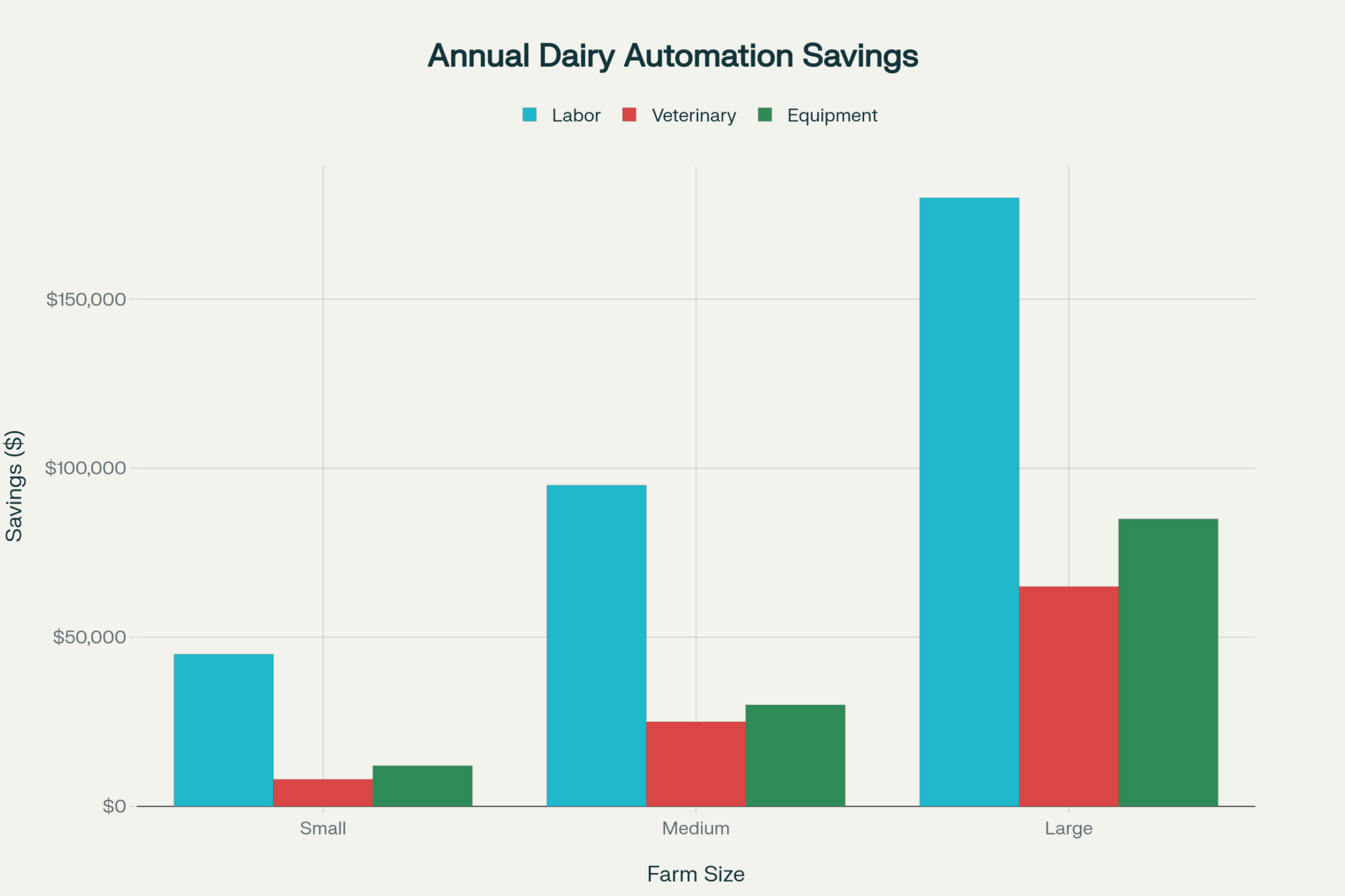
NewsSubscribe
First
Last
Consent

Winning the Workforce War: How Top Dairies Are Solving Labor Shortages in 2025

Dairy labor crisis? Discover how top farms are winning the workforce war without breaking the bank in 2025 – robots, perks, and smart management.

EXECUTIVE SUMMARY: The US dairy industry faces a critical labor shortage in 2025, but innovative farms are finding success beyond simply raising wages. This comprehensive guide explores multifaceted strategies to attract and retain quality staff while optimizing operations. Key approaches include strategic investments in labor-saving technologies like robotic milking systems, creative non-wage compensation packages, structured training programs, and navigating complex immigration policies. The article emphasizes the importance of building a strong employer brand, implementing career development pathways, and adopting Lean management principles to maximize efficiency with smaller teams. By embracing these holistic solutions, dairy farmers can build a more stable, skilled, and productive workforce to ensure long-term success and profitability.

KEY TAKEAWAYS:

  • Invest wisely in automation: Robotic milking systems and advanced monitoring tech offer compelling ROI through labor savings and production gains.
  • Rethink compensation: High-value perks like quality housing and flexible schedules can be more effective than wage hikes alone.
  • Develop your team: Structured onboarding, cross-training, and clear career paths significantly improve retention and productivity.
  • Embrace Lean principles: Applying manufacturing-inspired efficiency techniques can help farms do more with fewer workers.
  • Build your brand: Proactive recruitment strategies and showcasing farm culture are crucial for attracting talent in a competitive market.

The US dairy industry faces a critical challenge in 2025: a chronic shortage of reliable labor that threatens productivity, animal welfare, and long-term farm viability. While raising wages might seem the obvious solution, tight profit margins make this unsustainable for many operations. Furthermore, higher pay alone often fails to address the root causes of recruitment difficulties and high turnover rates.

This comprehensive guide equips dairy farmers with innovative, practical, and data-driven strategies to attract and retain quality staff without breaking the bank. We’ll explore multifaceted approaches encompassing technology investments, creative compensation, practical training, immigration navigation, cost-effective recruitment, career development, and lean management techniques.

Robotic Revolution: The ROI of Automation in 2025

Milking Machines That Pay for Themselves

“After installing robots, our turnover dropped 30%,” Wisconsin dairy owner Mark Lutz says. “Staff now focus on cow care, not just milking.”

Automatic Milking Systems (AMS) represent a significant upfront investment, but the financial justification is compelling:

  • Upfront Cost: $150K–$200K per robot
  • Labor Savings: $32K–$45K annually per robot
  • Production Increase: 3-15% boost in milk yield
  • Typical Payback Period: 4-7 years

Beyond labor reduction, AMS facilitates increased milking frequency (2.5 to 3 times daily vs. traditional twice daily), commonly boosting milk yield by 3-5 pounds per cow daily.

Wearable Tech: The New Eyes and Ears of Herd Management

Sophisticated sensors for cows deliver rapid ROI:

  • Investment: $150-$200 per cow (hardware) + monthly software fees
  • Payback Period: 12-18 months for many farms
  • Benefits: Early health detection, reduced treatments (up to 40% cut in fresh cow treatments reported), lower antibiotic use, improved peak milk production

One Wisconsin dairy reported their calf crew could manage 30% more calves with the same level of care using calf-specific monitoring systems.

Beyond Cash: Creative Compensation That Works

While competitive wages are foundational, innovative benefits packages can significantly enhance retention without relying solely on pay increases.

The Hidden Retention Tool: Quality Housing

“Quality housing isn’t just a perk—it’s our best retention strategy,” Pennsylvania dairy farmer Sarah Miller explains. “We’ve kept key employees for over five years by providing well-maintained homes near the farm.”

Offering free or subsidized housing for full-time employees is cited by some farms as a “staple” for maintaining reliable teams. The quality of housing matters; well-maintained homes signal respect and attract long-term employees.

Flexibility: The High-Value, Low-Cost Strategy

Accommodating non-traditional schedules, like aligning shifts with school drop-off and pick-up times, can open recruitment possibilities for otherwise unavailable individuals. Robotic milking enables more flexible work timings, further enhancing this benefit.

Performance Bonuses That Motivate

Effective bonuses are tied to clear, measurable criteria that employees can directly influence:

  • Achieving low Somatic Cell Count (SCC) targets
  • Improving overall milk quality
  • Increasing calf survival rates
  • Meeting specific production goals

Longevity bonuses (e.g., a set amount per year of service) recognize experience and reduce turnover.

From Greenhorns to Skilled Hands: Training for the Modern Dairy

With farms growing larger, utilizing complex technology, and often hiring individuals without prior experience, robust training programs are essential for success.

Building Competency from Day One

Research shows that employees with a positive onboarding experience are:

  • 69% more likely to stay with an employer for 3+ years
  • Roughly 50% more productive
  • 54% more engaged

The Modern Training Toolkit

  1. E-Learning: Online modules offer flexible, consistent information delivery. A case study of 95 milkers on 15 Northern New York farms showed high completion rates and 95% of participants felt capable of performing equipment checks afterward.
  2. Hands-On Training: The proven five-step method: Prepare, Tell, Show, Do, Review.
  3. Apprenticeships: Programs like the Dairy Grazing Apprenticeship (DGA) combine paid on-farm work with classroom instruction, creating pathways to management or ownership.

Navigating the H-2A Maze in 2025

For many US dairy farms, accessing legal, stable labor involves complex immigration regulations. Here’s what you need to know about the H-2A program in 2025:

Key H-2A Updates for Dairy

  • 2025 AEWR Examples:
    • Wisconsin: $18.15 (a slight decrease from 2024)
    • California: $19.97 (small increase)
    • New York: $18.83 (increase from 2024)
  • Stricter Enforcement: USCIS can now deny H-2A petitions based on past labor law violations.
  • Prohibited Fees Crackdown: Violations can lead to petition denial and a 1-year ban on filing H-2A/H-2B petitions.
  • Enhanced Worker Protections: Strengthened anti-retaliation measures and clearer “for cause” termination rules.

The Year-Round Challenge

The mismatch between H-2A’s seasonal nature and dairy’s year-round needs remains a significant obstacle. Legislative efforts like the Farm Workforce Modernization Act (FWMA) aim to address this, but as of April 2025, comprehensive reform remains elusive.

Winning Recruits: Cost-Effective Strategies for Attracting Staff

In today’s competitive market, proactive recruitment is essential. Here’s how to stand out:

Build Your Employer Brand

  • Showcase your farm’s values, culture, and employee experience.
  • Use storytelling to connect with potential recruits.
  • Feature authentic employee testimonials.

Smart Sourcing Tactics

  1. Social Media: Share behind-the-scenes content, introduce team members, and highlight unique benefits.
  2. Job Fairs: Focus on agricultural colleges, FFA, and 4-H events.
  3. Employee Referrals: Implement formal programs with incentives for successful hires.

Targeted Attraction

  • Highlight non-wage benefits in job postings (flexibility, housing, training opportunities).
  • Offer structured internships and apprenticeships.
  • Create compelling job descriptions that accurately represent the role and farm culture.

Lean and Mean: Maximizing Efficiency with Smaller Teams

Operating effectively with leaner staff requires a focus on efficiency, streamlined workflows, and highly engaged employees.

Applying Lean Principles to Dairy

Tools to consider:

  • Value Stream Mapping (VSM): Visually map processes to identify bottlenecks.
  • 5 Whys: Root cause analysis technique for problem-solving.
  • Standard Work: Document best practices for consistency.
  • 5S: Organize workspaces for efficiency and safety.

Case Study: A Lean training program on 10 UK dairy farms identified nearly £1 million in lost opportunity costs, leading to reduced carbon footprints and production costs.

The Power of Cross-Training

Benefits include:

  • Increased flexibility to cover absences and handle peak workloads
  • Improved efficiency through better resource allocation
  • Enhanced employee engagement and retention through skill development

Key Takeaways: Your Action Plan for 2025

  1. Evaluate Technology ROI: Assess labor-saving tech like robotic milking and advanced monitoring systems.
  2. Implement Creative Compensation: Explore high-value perks like quality housing and flexible scheduling.
  3. Develop Robust Training: Create structured onboarding and ongoing skill development programs.
  4. Navigate H-2A Strategically: Stay informed on regulatory changes and advocate for year-round labor solutions.
  5. Build Your Employer Brand: Market your farm as a desirable workplace through targeted recruitment efforts.
  6. Create Career Paths: Define growth opportunities, even in flat organizational structures.
  7. Embrace Lean Management: Apply efficiency principles and cross-training to maximize productivity with smaller teams.

By implementing these innovative solutions, US dairy farmers can build a more stable, skilled, and productive workforce, ensuring long-term success and profitability in 2025 and beyond.

Learn more:

Join the Revolution!

Join over 30,000 successful dairy professionals who rely on Bullvine Daily for their competitive edge. Delivered directly to your inbox each week, our exclusive industry insights help you make smarter decisions while saving precious hours every week. Never miss critical updates on milk production trends, breakthrough technologies, and profit-boosting strategies that top producers are already implementing. Subscribe now to transform your dairy operation’s efficiency and profitability—your future success is just one click away.

NewsSubscribe
First
Last
Consent

Robot Revolution: Why Smart Dairy Farmers Are Winning with Automated Milking

Are robots the future of dairy farming? With labor shortages crippling the industry, more farmers are turning to automated milking systems. But do the numbers add up? Discover how robotic technology is revolutionizing dairy operations and why some producers are seeing record profits while others struggle to adapt.

robotic milking systems, dairy automation ROI, automated dairy technology

The dairy industry is transforming at breakneck speed as robotic milking systems rapidly replace traditional parlors across North America. While some farmers hesitate at the cost or complexity, thousands of forward-thinking producers are already reaping the benefits of this technological revolution.

With increasingly scarce and expensive farm labor, the question isn’t whether you can afford robots—it’s whether you can afford not to have them.

Impressive Performance: What Today’s Robotic Systems Deliver

The data doesn’t lie. According to extensive surveys by the University of Wisconsin-Madison covering 635 dairy farms with robots (mainly in Minnesota, Wisconsin, and parts of Canada), the average robot handles about 50 cows and harvests around 3,667 pounds of milk daily.

The cows visit the robot 2.9 times daily, spending about 7 minutes per visit.

Canadian farms show similar results, averaging 76 pounds of milk per cow daily, with each robot serving about 49 cows. Australian farms using robotic systems generally run 3 to 4 robots, milking 150 to 240 cows in total, with each cow producing between 19.3 and 26.3 kilograms daily.

“The efficiency difference between farms is what separates those making money with robots from those just getting by,” says Larry Tranel, Dairy Field Specialist with Iowa State University Extension.

According to extension research, some farms get only 1.4 kg of milk per minute of robot time, while others achieve 2.0 kilograms per minute. At 1,180 available milking minutes per day (after accounting for washing and maintenance), that’s a difference between harvesting 1,650 kg versus 2,360 kg of milk from the same equipment.

That’s over 700 kg more milk daily without spending a single dollar on new equipment!

The efficiency differences often come down to individual cows. Two cows might produce nearly identical amounts of milk, but one could be hogging the robot.

The data shows that one cow produces 48 kg of milk using 47 minutes of robot time daily, compared to a more efficient cow that produces 49.5 kilograms in just 17.2 minutes. That’s why progressive dairy farmers are now making culling decisions based on robot efficiency metrics rather than raw production numbers.

Most robots perform between 106 and 120 milkings daily and operate for about 13 hours daily. Each milking visit takes about 6.3 minutes and yields approximately 10.4 kg of milk, roughly five cow milkings per hour, though this varies throughout the day.

“A cow that produces the same amount of milk in half the robot time doubles your milking capacity without buying new equipment.”

Cash Flow Impact: How Robots Boost Your Bottom Line

The productivity boost from robots comes from increased milking frequency. Instead of the traditional twice-a-day milking, cows in robotic systems visit the milking station whenever they choose, resulting in an average of 2.5 to 3 milkings daily.

This increased frequency typically boosts milk yield by 3-5 pounds per cow daily.

This isn’t just theoretical. According to Dairy Management Specialist Camila Lage from Cornell Cooperative Extension, a multi-university collaborative study recently confirmed consistent increases in milk production for dairies converting to robotic milking systems across the nation.

The Dukelow family of Dukestead Acres in Clark County, Wisconsin, launched their robotic milking operation in January 2023 with six DeLaval VMS V300 units and later added a seventh. With 450 cows, they made the transition after facing serious labor challenges.

“Our parlor was over 20 years old,” explains Monica Dukelow. “We were faced with the decision of replacing the parlor or taking advantage of the advancements in technology, moving forward with robots. The labor struggles we were facing helped make that decision.”

Jon Dukelow adds that they had been preparing for this transition for years: “We’ve always mapped our cows to have good udders. In the past 5-6 years, we have focused on square udders with no reverse tilt and ideal teat length.”

This strategic breeding approach created robot-ready cows, maximizing the return on their technology investment.

Labor savings provide another significant advantage. According to USDA data, milking typically accounts for 40-50% of a dairy farm‘s total labor costs, while labor represents 20-30% of total dairy expenses.

Large parlor operations often require 2-6 skilled workers across three shifts. Robots dramatically reduce this labor requirement while changing the nature of the remaining work.

The consistency of robotic milking benefits cows significantly. No matter how well-trained, human milkers have good days and bad days. Robots provide the same gentle, predictable experience every time, leading to improved cow welfare and reduced stress—two factors often cited by farmers as primary reasons for adopting automated milking systems.

Data-driven management is the most underappreciated advantage of robotic systems. Modern robots track hundreds of data points on each cow, from milk conductivity (which indicates potential mastitis) to rumination time and activity levels.

This allows for early intervention before problems become severe, saving on veterinary costs and preventing production losses.

Show Me the Money: Real ROI Numbers You Can Trust

Let’s cut through the sales pitch and talk real numbers. Robotic milking systems require a substantial upfront investment. A single-box robot typically costs $150,000-$200,000 to install, while a four-box system can run $500,000-$700,000, depending on the setup and retrofitting needed.

According to January 2025 data from Persistence Market Research, the North American market is expected to grow from US$641.9 million in 2025 to US$1,086.9 million by 2032. This represents a 7.8% compound annual growth rate, proving that farmers find financial value in these systems despite their hefty price tag.

The U.S. is projected to see a 7.4% CAGR through 2032, with dairy farms in regions like Wisconsin, California, and New York leading adoption to address rising labor costs and workforce shortages.

So, how do you know if robots make financial sense for your farm? Three factors drive the return calculation:

Investment FactorTypical Range/Impact (2025 Data)
Initial Investment Per Robot$150,000-$200,000
Annual Labor Savings Per Robot$32,850-$45,000
Production Increase3-15% (farm dependent)
Payback Period4-7 years

For a more detailed breakdown of costs, Iowa State University Extension provides these industry-standard values:

AMS Investment ComponentsIndustry Standard Values (2025)
Estimated Cost per Robot (including housing)$220,000
Annual Maintenance/Repair Cost$7,000 per robot
Typical Herd Size per Robot55-65 milking cows
Expected Useful Life10 years
Estimated Salvage Value$40,000 per robot (18% of purchase price)

The decision heavily influences the economics of scale. DairyLogix research shows how robotic systems compare to conventional parlors at different herd sizes:

Herd SizeRobotic Milking System2×12 Automated Parlor2×8 Basic Parlor
60 Cows$220,000$325,000$180,000
120 Cows$440,000$325,000$180,000
240 Cows$880,000$450,000$225,000
480 Cows$1,760,000$650,000$350,000

This table illustrates that robots can be cost-competitive with modern parlors for smaller herds when all factors are considered. At the same time, more extensive operations face higher capital costs for robotic systems.

Labor savings often provide the most apparent return. If you currently pay $20/hour (including benefits and taxes) for milking labor, and each robot replaces 4.5 hours daily, you’ll save $32,850 annually per robot. This number can be substantially higher in areas with severe labor shortages or high wages.

Milk production increases typically contribute the second-largest financial return. A conservative 5% production increase on a 60-cow robot averaging 80 pounds per cow at $20/cwt equals approximately $43,800 in additional milk revenue annually. Farms achieving more significant production increases see significantly better returns.

The economic impact of animal welfare improvements is more challenging but still significant. Most farms report reduced culling rates and veterinary expenses after implementing robotic milking.

The farms that fail with robots usually make one of three critical mistakes:

  1. They fail to adjust their management approach to match the technology
  2. They don’t select or breed for cows that perform efficiently in robotic systems
  3. They attempt to retrofit inappropriate facilities rather than designing for optimal cow flow

“The farms still milking by hand in 2025 are the same ones who insisted cell phones were just a fad.”

The Reality Check: What No One Tells You About The Transition

The shift to robotic milking has challenges; equipment dealers often downplay the adjustment period. Understanding these before you start can save you significant headaches.

Chad Kieffer, a third-generation farmer from Utica, Minnesota, uses five robots to milk his 350 cows. He’s part of a growing trend—according to Michigan State University, robotic milkers were first introduced in the United States in 2000. Over 35,000 robotic milking units are worldwide, with thousands in the U.S.

The training period represents the most immediate hurdle. Cows need time to learn the new system; production typically dips during this adjustment phase. Plan for a 10-15% production drop in the first three weeks, followed by a gradual recovery over the next month or two as cows adapt.

Farm layout is crucial for robotic success. Cow flow—how animals move between the robot, feed bunks, and resting areas—can make or break a system’s performance. The Dukelows at Dukestead Acres specifically mention liking the “guided-flow setup” of their DeLaval system, which helps decrease fetch cows.

The challenges multiply in grazing operations. Australian research highlights that greater distances between paddocks and robots significantly impact system performance compared to confined housing systems.

Technical support availability must be considered before purchasing. With the explosive growth in robotics—estimated at 20-25% annually according to Iowa State University Extension—service technicians are stretched thin. Before signing any contract, verify response times and emergency support options.

Staff adaptation presents another significant challenge. A recent study of U.S. farms with seven or more AMS boxes found that farmers perceived labor savings and better working conditions but also noted the need for different skills to manage the technology effectively.

Future-Proof Your Farm: Why Tomorrow’s Leaders Are Automating Today

The robotic milking market continues to grow rapidly. Global projections show North America leading this expansion, with an expected 30.8% market share in 2025 and a growth rate of 7.8% annually through 2032.

Market research firms provide compelling data on the growth trajectory of robotic milking systems:

Market MetricSourceValue
Global Market Size 2025Fact.MRUS$ 2.5 billion
Global Market Size 2035Fact.MRUS$ 4.66 billion
Global CAGR 2025-2035Fact.MR6.4%
North American Market Share 2025Fact.MR30.8%
Annual Growth Rate (Alternative Estimate)Business Research Company14.0-15.4%

This growth isn’t happening by accident. As Bullvine reported in January 2025, “Adopting robotic milking systems is a significant change for family dairy farms. The challenges might seem harsh, but the benefits—better efficiency, improved cow health, and a better work-life balance for farmers—are enormous. In today’s dairy world, these technologies are crucial for farms that want to succeed.”

Integration with other farm systems is becoming more seamless. Many robotic systems now coordinate with automatic feed pushers, activity monitors, and farm management software. DeLaval and Lely continue to lead innovations in automated systems, with each company offering comprehensive solutions beyond just milking.

Environmental benefits are also increasingly recognized. More precise feeding through robotic systems can reduce waste and methane emissions. Energy-efficient designs are reducing the carbon footprint of milking, addressing growing consumer concerns about sustainability.

For smaller and mid-sized family farms, robotic milking may offer the only path to survival in an industry trending toward consolidation. The technology enables family operations to compete with larger farms while maintaining a quality of life that will attract the next generation back to the farm.

Five Deal-Breaking Questions Your Robot Dealer Hopes You Won’t Ask

Before signing any contract for a robotic milking system, make sure you get clear answers to these critical questions:

  1. What’s your typical response time for emergency service calls? (And get this in writing in your service contract)
  2. Can you provide references from farms in my area that have had your robots for at least 3 years? (New installations are exciting, but you want to know how the equipment holds up over time)
  3. What percentage of your customers achieve a 4-year or better payback period, and what do they do differently? (Make them prove their ROI claims with real numbers)
  4. How many service technicians do you have in my region, and how many robots do they cover? (More than 25-30 robots per technician should raise red flags)
  5. What are the three most common problems your customers experience in years 2-5 of ownership, and what do those repairs typically cost? (Every system has weaknesses—knowing them in advance lets you budget properly)

The Decision: Is Your Farm Ready for Robots?

So, how do you decide if robotic milking makes sense for your operation? Start by honestly evaluating these key areas:

Labor situation: The dairy industry is facing an unprecedented labor crisis. According to University of Wisconsin-Madison researcher Douglas Reinemann, 500 to 1,000 U.S. operations now use milking robots. Early adopters gain an advantage in attracting and retaining the limited skilled labor in the industry.

Financial position: Despite the substantial upfront cost, lenders are increasingly familiar with financing robotic systems. Given the industry’s labor uncertainties, many see robotics as a risk-reduction strategy.

Herd management: Your current herd health, reproduction program, and production levels will affect potential gains from robotics. The Dukelows’ experience shows the importance of breeding robot-ready cows with good udder conformation.

Facility compatibility: Retrofitting existing barns for robots can be challenging. According to survey data from large AMS herds, most farms constructed new barns with open stalls and easy cow movement to facilitate optimal use of these systems.

Technical aptitude: Today’s dairy farmers must embrace technology or risk being left behind. The explosion in robotic adoption—projected to double approximately every three years according to the “Rule of 72” with 24% growth—shows that your competitors are already making this transition.

Plans: The investment timeline makes sense if you continue dairy farming for the next decade. More importantly, robotic technology may be essential to returning the next generation to the farm.

“The biggest surprise for most farmers isn’t that robots work—it’s how quickly they wish they’d made the change sooner.”

In today’s dairy world, robotic milking isn’t just an option—it’s becoming necessary for farms that want to thrive rather than merely survive. As labor challenges intensify, consumer demands evolve, and margins remain tight, automated systems provide a path forward that balances tradition with technology.

The question isn’t whether robots will become the industry standard—they already are. The only question is whether your farm will lead this revolution or be left behind watching others profit from it. The 7.8% annual growth rate in the North American market tells the story: thousands of dairy farmers have already decided.

What’s yours?

Key Takeaways

  • Increased Efficiency: Robotic milking systems allow for more frequent milking, boosting production by 3-5 pounds per cow daily compared to traditional methods.
  • Labor Savings: Automating milking can significantly reduce labor costs. Robots can save $32,850 per year by replacing manual milking hours.
  • Improved Cow Welfare: Robots provide a consistent and stress-free milking experience, contributing to better overall cow health and reduced veterinary costs.
  • Real ROI: Initial investments for robotic systems range from $150,000 to $200,000 per robot, with payback periods typically between 4 to 7 years based on increased milk production and reduced labor costs.
  • Market Growth: The North American robotic milking market is projected to grow from $641.9 million in 2025 to over $1 billion by 2032, indicating strong industry confidence in this technology.
  • Strategic Breeding: Successful robotic operations often involve strategic breeding programs prioritizing udder conformation suitable for automation, maximizing the technology’s effectiveness.
  • Adaptation Challenges: Transitioning to robotic milking requires careful planning, including adjustments in farm layout, staff training, and understanding the technology’s capabilities.
  • Future-Proofing: Embracing robotic technology is becoming essential for dairy farms, aiming to remain competitive and attract the next generation of farmers.

Summary

The dairy industry is undergoing a significant transformation as robotic milking systems gain traction among producers facing labor shortages and rising operational costs. This article explores the impressive performance metrics of these automated systems, highlighting their ability to increase milk production and reduce labor expenses. By examining real-world examples, ROI calculations, and the challenges of transitioning to robotics, we provide valuable insights for dairy farmers considering this technology. With a projected market growth rate of 7.8% annually, robotic milking is becoming essential for farms aiming to thrive in a competitive landscape while enhancing cow welfare and operational efficiency.

Learn more

Join the Revolution!

Join over 30,000 successful dairy professionals who rely on Bullvine Daily for their competitive edge. Delivered directly to your inbox each week, our exclusive industry insights help you make smarter decisions while saving precious hours every week. Never miss critical updates on milk production trends, breakthrough technologies, and profit-boosting strategies that top producers are already implementing. Subscribe now to transform your dairy operation’s efficiency and profitability—your future success is just one click away.

NewsSubscribe
First
Last
Consent

Summer Labor Solutions: Getting Ahead of Seasonal Staffing Challenges

2.4M farm jobs sit empty! How dairy farms survive the labor crisis with robots, visas, and smarter staffing. Your move.

Executive Summary:

Dairy farms face a crushing labor shortage (2.4M unfilled jobs in 2024) driven by aging workers, urban competition, and rising costs. Innovative producers blend automation (30% labor blends), strategic H-2A visa use (file 90+ days early!), and hybrid staffing models to stay viable. Retention hinges on competitive pay, cultural respect, and creative incentives like loyalty bonuses. The future demands tech adoption and community-driven solutions – share your wins to help the industry thrive.

Key Takeaways:

  • Robots’ payoff: 4.5-year ROI for milking bots boosting production 15%
  • Staff smarter: Blend year-round pros (72% retention) with seasonal help
  • H-2A hack: Start visa apps 90+ days early to avoid 35% cost spikes
  • Retain with respect: Housing, bonuses, and Spanish outreach beat wage wars
  • Share to survive: Learn from peers – your fix could save a neighbor’s farm

I’ve been thinking a lot about this labor crisis hitting dairy farms across North America, and I wanted to share some thoughts. You know how tough it’s been finding good help these days, right? It’s not just you – this is hitting everyone hard.

Did you see those numbers from last year? A shortage of 2.4 million farmworkers across the US! That’s one in four ag jobs sitting empty, and it’s threatening over $31 billion in trade. This isn’t some future problem we can worry about later – it’s happening right now on our farms.

The Growing Agricultural Labor Crisis: Why Dairy Farmers Can’t-Wait to Act

The labor situation is getting worse every season. I was talking with Tom Cull over at Budjon Farms last month (did you read that feature about him and Kelli in The Bullvine the previous week?), and he mentioned how they’ve completely changed their approach to staffing.

What’s driving this crisis? For one thing, our farming population is aging out. The average farmer is pushing 60 now, and there just aren’t enough young people stepping up to replace them. Rural communities are aging faster than urban areas – over 20% of people in farming communities are 65+ compared to 16% in cities. That demographic shift is making it harder to find local workers every year.

And let’s be honest – when Amazon’s offering $18/hour with benefits and air conditioning, it’s tough to compete for workers who’ll milk cows at 4 AM or bale hay in 90-degree heat.

The H-2A Program: Helpful but Complicated

Many farms have turned to the H-2A visa program as a lifeline, but that has gotten expensive and complicated! Did you see that USCIS jacked up petition fees by 65% to 267% last year? And that’s on top of all the housing, transportation, and wage requirements.

Looking at the numbers from last year, about 384,900 H-2A positions were certified nationwide. Florida, Georgia, California, Washington, and North Carolina grabbed almost half of those workers. The Southeast saw the most significant wage increases – up 15% as farms competed for the same pool of workers.

Several dairy producers have found that H-2A workers often become their most reliable employees despite the headaches. One trick I’ve heard works well: if you’re going this route, start your application process at least 90 days before you need workers—those who file late end up paying way more and sometimes don’t get workers.

Strategic Staffing: What’s Working for Smart Dairy Farmers

When it comes to staffing, you’ve got two main approaches – seasonal or year-round employment. Each has its pros and cons.

Seasonal workers cost less overall since you only pay them during peak times. You don’t have to carry those costs year-round. But there’s a flip side – they’re typically less engaged, more likely to leave mid-season, and you’re constantly training new people.

Year-round employees cost more upfront but tend to stick around longer and develop more profound skills. The USDA’s latest Agricultural Labor Survey showed year-round employees have an average tenure of 3+ years compared to just 4-6 months for seasonal workers. And retention rates? 72% for full-timers versus only 38% for seasonal workers coming back.

Here’s what’s interesting – did you know 95% of organic farms rely heavily on seasonal labor, while only about 60% of conventional operations do? That’s a huge difference in approach.

The smartest dairy farmers I know are using a blended approach. They keep a core team of skilled, year-round employees who understand the operation, then bring in seasonal help during crunch times. Some are even coordinating with other local businesses with opposite busy seasons to create more stable year-round work for good employees they want to keep in the community.

Technology Revolution: How Automation Is Changing Everything

Let me tell you – automation isn’t just nice to have anymore. It’s becoming essential for survival in this labor market.

Many dairy farmers implementing robotic milkers report cutting by 30% while boosting milk production by 15%. Their systems are on track to pay for themselves in just 4.5 years. That’s the kind of ROI that makes these investments worthwhile, even with the high upfront costs.

I visited a farm in Wisconsin last month using automated feeding systems, and the owner told me, “Why would I pay $700K a year in wages when robots can do the job better and more consistently?” He’s not wrong – the math is compelling in the long-term picture.

The agricultural automation market hit $22 billion last year and is growing at nearly 14% annually. For dairy specifically, robotic milking systems are showing some of the strongest returns – about $1,200 per cow per year in value, with payback periods of around 4-5 years.

What’s holding most farms back? The initial investment is steep, and many farmers aren’t sure about the true ROI. But those who’ve leaped generally see strong returns, especially as labor gets more expensive and harder to find.

The most interesting part of this tech revolution isn’t that robots are replacing people – it’s how they’re changing the jobs available on dairy farms. Instead of just milkers, we need robot technicians and systems managers. These are higher-skilled, better-paying positions that might attract a different type of worker to agriculture.

Winning the Talent War: What Works

Competitive pay is just the starting point for keeping seasonal or year-round). The farms with the lowest turnover offer comprehensive packages – health insurance, housing assistance, transportation, and clear advancement opportunities.

Performance incentives work wonders, too. I know one dairy that gives production bonuses when the herd hits specific milk quality benchmarks. Another is profit-sharing with key employees. These approaches directly link farm success and worker earnings, which drives better performance and loyalty.

But honestly, some of the most effective retention strategies have nothing to do with money. Creating a positive, respectful work culture where people feel valued makes a huge difference. Simple things like recognizing achievements, providing clear communication (especially in workers’ native languages), and treating employees like part of the farm family can dramatically improve retention.

For seasonal workers, smart farms are creating “return pathways” – offering loyalty bonuses, preferred jobs, or early commitment bonuses to workers who agree to return next season. Maintaining contact during the off-season helps, too – sending holiday greetings or updates about the farm can strengthen those relationships.

The Bottom Line

This labor situation isn’t going to get easier anytime soon. The farms that will thrive are taking proactive steps now – investing in automation where it makes sense, creating attractive work environments, and developing creative staffing models that balance cost and stability.

What’s working on your farm? Have you tried robotics or found other ways to address the labor crunch? I’d love to hear your experiences. We’re all figuring this out together, and sharing what works (and doesn’t) helps the dairy community move forward.

Learn more:

Join the Revolution!

Join over 30,000 successful dairy professionals who rely on Bullvine Daily for their competitive edge. Delivered directly to your inbox each week, our exclusive industry insights help you make smarter decisions while saving precious hours every week. Never miss critical updates on milk production trends, breakthrough technologies, and profit-boosting strategies that top producers are already implementing. Subscribe now to transform your dairy operation’s efficiency and profitability—your future success is just one click away.

NewsSubscribe
First
Last
Consent

Where Will Future Dairy Workers Come From? 5 Critical Solutions to the Labor Crisis

Who will milk tomorrow’s herds? Dairy’s workforce crisis demands radical solutions—from robots to visa reforms—before the labor well runs dry.

EXECUTIVE SUMMARY: The dairy industry faces a looming labor catastrophe, with projections showing a 5,000-worker gap by 2030 due to aging rural populations, immigration challenges, and younger generations abandoning agricultural careers. While immigrant labor supports 79% of U.S. milk production, declining birth rates in source countries and visa limitations threaten this critical pipeline. Emerging solutions include robotic milking systems, workforce development programs with 22% higher retention rates, and competitive compensation strategies. The article urges immediate action on immigration reform and technology adoption, revealing how farms offering housing allowances (73%) and health insurance (58%) outperform peers. With labor costs projected to hit $58 billion by 2030, the industry’s survival hinges on reinventing recruitment and retention strategies.

dairy labor shortage, immigrant dairy workers, dairy workforce solutions, robotic milking systems, dairy industry trends

KEY TAKEAWAYS:

  • Labor Armageddon Looms: 25% of dairy workers will retire by 2030, creating a 5,000-worker deficit during peak seasons.
  • Immigration Lifeline: Foreign workers produce 62% of U.S. milk, but source countries’ shrinking populations jeopardize this supply.
  • Robot Revolution Rising: 41% of agribusiness leaders now prioritize automation to offset repetitive labor needs.
  • Retention Pays Dividends: Farms investing in training/benefits see 22% higher worker retention within 18 months.
  • Wage Wars Intensify: Dairy jobs ($27,840/year) now outearn fast food ($17,316), reshaping rural employment landscapes.
dairy labor shortage, immigrant dairy workers, dairy workforce solutions, robotic milking systems, dairy industry trends

Imagine 5,000 empty milking stations—the equivalent of every dairy worker in Wisconsin vanishing. This isn’t dystopian fiction but the Canadian Agricultural Human Resource Council’s 2030 labor gap forecast. Bridging this chasm demands solutions as bold as the crisis itself.

The Alarming Workforce Cliff: Why Dairy Farms Are Losing Workers Fast

The U.S. dairy industry supports more than 3 million American jobs, generating approximately $42 billion in direct wages. Yet this critical workforce faces unprecedented pressure from multiple directions. The peak domestic labor gap in North American dairy operations is projected to increase by nearly 10% over the next several years, reaching 5,000 workers during peak season by 2030.

YearTotal EmployeesFTE Employees
2008188,631138,124
2013150,418132,255
2018129,453116,406

This workforce transformation will be dramatic, with over 25% of domestic workers retiring within the next 8 years. The industry is expected to see nearly 8,000 workers retire between 2023 and 2030, replaced by approximately 1,990 immigrants and 4,770 school leavers projected to enter the workforce.

Labor Cost Reality Check

  • 2023: $42 billion in U.S. dairy wages
  • 2025: 15% surge in labor expenses
  • 2030 Projection: Potential $58 billion (based on current trends)

Losing 3 of every 10 employees annually isn’t just disruptive—it’s financially catastrophic. With an estimated $4,000 average replacement cost per worker, this turnover drains millions yearly from U.S. dairy operations.

Why Traditional Labor Sources Are Drying Up: The Demographic Shift

The demographic landscape underlying the dairy workforce is undergoing a seismic transformation. Countries like Mexico, which have historically been significant sources of agricultural workers for U.S. dairy operations, are experiencing declining birth rates that will eventually result in smaller working-age populations.

Meanwhile, domestic demographic trends show a continuing exodus from rural areas, particularly among younger populations, increasingly choosing urban lifestyles over agricultural careers. This rural depopulation creates a perfect storm for dairy operations dependent on local labor pools.

Age demographics within the current dairy workforce further complicate the picture. According to the U.S. Bureau of Labor Statistics, workers aged 65 or older have grown by 117% within 20 years, while employment of individuals 75 years or older has also increased by 117%. The workforce is older than ever, with those under 40 making up just 45%, down from over 60% in 1984, while workers over 60 have doubled.

Immigration Pathways: How Foreign Workers Will Save Dairy Farms

CategoryDomestic WorkersForeign Workers
Average per Farm3.22.0
Milk Production Share38%62%
Primary OriginN/AMexico (98%)

While immigration will remain a vital labor source for dairy operations, navigating the available pathways requires increasing sophistication. Foreign workers are expected to fill over 80% of the domestic labor gap by 2030, with the total number projected to grow to over 4,000 workers. However, around 1,000 positions are expected to remain vacant even with this influx.

The dairy industry faces unique challenges with visa programs due to the year-round nature of dairy work. While the H-2A visa program allows agricultural employers to bring foreign nationals to the United States for temporary or seasonal agricultural work, its applicability to dairy operations has been limited.

“There’s a quandary of no visa program for dairymen,” says Rick Naerebout, chief executive officer of the Idaho Dairyman’s Association. While technically, a dairy producer can enroll in H-2A to find help for seasonal tasks related to crops and forage, any task related to livestock handling is off-limits. An H-2A employee engaging in these activities – even once – would violate his visa.

Will your farm be among the 30% leveraging visa programs by 2026? The industry’s future may depend on it.

The Robotic Revolution: When Technology Becomes Your Most Reliable Worker

While robots don’t file visa applications, they also don’t retire—making automation both a solution and a wake-up call for an industry at a crossroads.

Many dairy processors are turning to automation and advanced technologies to mitigate the impacts of an aging workforce. Robotics, artificial intelligence (AI), and machine learning are being integrated into processing plants to help improve efficiency, reduce reliance on manual labor, and address staffing shortages.

At Madison’s 2024 World Dairy Expo, robotic milker demonstrations drew 41% of agribusiness attendees—a clear signal of technology’s rising role in labor strategy. These technologies are particularly valuable for repetitive and physically demanding tasks on dairy farms.

10 Essential Benefits That Will Attract Tomorrow’s Dairy Workforce

Benefit% of Farms Offering
Paid Vacation Leave75.9%
Housing Allowance73.0%
Health Insurance58.1%
Retirement Plans5.4%

The influx of new domestic and foreign workers will require significant training and skills development to integrate them successfully into the industry’s workforce. Farms implementing comprehensive workforce development models report 22% higher retention within 18 months—a crucial window given the 25% retirement wave approaching.

Over 60% of employers in the dairy industry found recruiting year-round Canadian workers more difficult in 2022 than in the previous year. Almost half (47%) of employers reported receiving no domestic applicants for their job postings, and 44% received only one or two applicants.

As a result of these job vacancies, 19% of employers lost sales, 30% delayed production, 47% faced overtime costs, and 35% canceled or delayed expansion plans. Forty percent of dairy employers cited lack of experience working in the sector as a top barrier for recruitment, considerably higher than the agriculture sector’s average of 31%.

Why Dairy Jobs Pay Better Than You Think: The Compensation Advantage

OccupationHourly WageAnnual Salary (54 hrs/week)
Dairy$9.97$27,840
Ranch$11.44$23,754
Fast Food$8.73$17,316

While H-2A visas offer temporary relief, they’ve been called “Band-Aids on bullet wounds” by critics. With 70% of dairy farms reporting chronic vacancies, does permanent immigration reform offer the only cure?

The dairy industry reported a voluntary turnover rate of 9%, below the overall average of 14% across agriculture. This illustrates that when adequately structured, dairy operations can create more stable employment environments.

“I would like to see us develop some kind of [work] visa for a set time – at a minimum, for five years,” says Hank Hafliger of Cedar Ridge Dairy. “The dairy industry is so technical – with the knowledge required – you don’t want to train a guy and then lose him after three months.”

To attract and maintain a robust workforce, creating positive work environments with clear expectations, proper training and development, and constructive feedback on performance is essential. Supervisors play a crucial role in leading effectively by setting clear expectations, providing necessary training, and giving constructive feedback.

The Ultimate Guide to Dairy’s Workforce Future: Adapt or Decline

The future dairy workforce will be diverse, comprising immigrants and individuals from various backgrounds, including those from urban environments new to agriculture. Balancing the need for manual and mental labor remains appealing, drawing in those uninterested in traditional office roles.

A staggering 79% of the nation’s milk supply comes from farms employing immigrant labor. The stakes couldn’t be higher, with immigrant workers making up 51% of the workforce on dairy farms. Immigration reform is of particular concern to dairy farmers who rely on immigrant labor, with uncertainty surrounding policy changes adding to the industry’s anxieties.

Vote Now: Which workforce solution deserves priority?

  • Expanded Visa Programs
  • Automation Investments
  • Urban Recruitment Drives
  • Policy Reform Advocacy

The transformation of the dairy workforce represents a significant challenge and an opportunity to reimagine dairy careers for a new generation of workers. By building on the industry’s strengths while addressing its labor vulnerabilities, dairy producers can navigate this challenging workforce landscape and secure the talent needed to sustain this essential agricultural sector.

Learn more:

Join the Revolution!

Join over 30,000 successful dairy professionals who rely on Bullvine Daily for their competitive edge. Delivered directly to your inbox each week, our exclusive industry insights help you make smarter decisions while saving precious hours every week. Never miss critical updates on milk production trends, breakthrough technologies, and profit-boosting strategies that top producers are already implementing. Subscribe now to transform your dairy operation’s efficiency and profitability—your future success is just one click away.
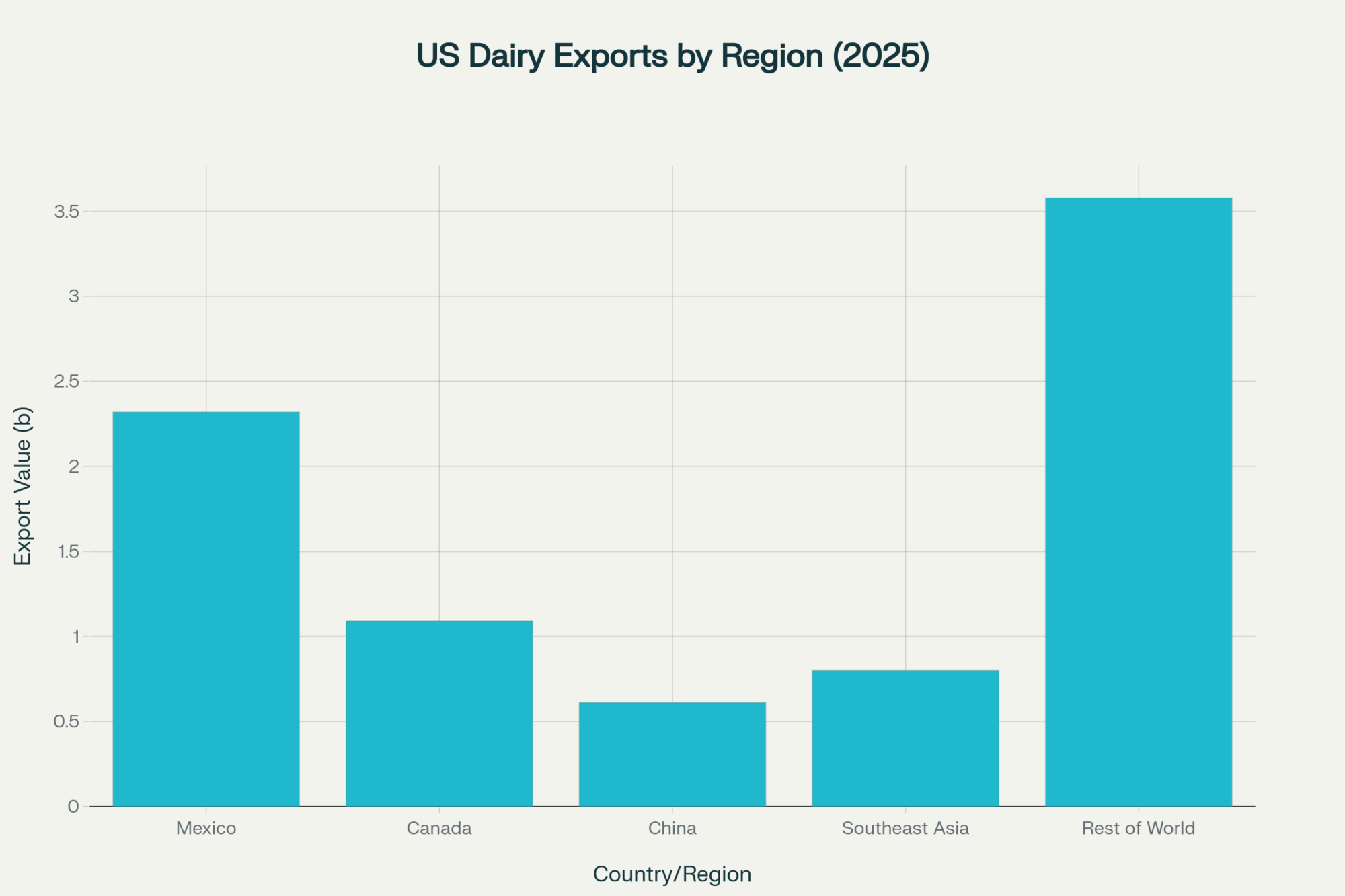
NewsSubscribe
First
Last
Consent

5 Technologies That Will Make or Break Your Dairy Farm in 2025

Future-proof your dairy! 5 game-changing tech innovations slashing costs and boosting yields – learn what separates thriving farms from struggling ones in 2025.

Let’s cut right to the chase – if you’re still running your dairy like it’s 2020, you’re already behind. The technological revolution isn’t coming; it’s kicked down the barn door and set up shop in your milk house. While some farmers are clinging to tradition like a worn-out feed scoop, others ride these innovations straight to the bank. The question isn’t whether these technologies will transform dairy farming – they already are. The real question is: will you lead the charge or eat dust? Let’s dive into five game-changing technologies separating the profitable dairies from the also-rans in 2025.

“The dairy industry isn’t splitting between big and small farms anymore – it’s dividing between tech-savvy operations and those headed for extinction. Size doesn’t matter nearly as much as your willingness to evolve.”

SMART CALF MONITORING: The Nursery Revolution That’s Slashing Mortality Rates

Remember when losing 10% of your calves was just “part of farming”? Those days are as outdated as tie-stall barns and hand milking. Innovative calf monitoring systems have redefined what we thought was possible in calf management, making traditional calf raising look like guesswork and superstition.

New wearable sensors explicitly designed for calves spread across North America faster than gossip at a milk co-op meeting. These aren’t your daddy’s cow monitors retrofitted for smaller animals – they’re entirely reimagined systems designed for the unique developmental patterns of growing calves.

“Every instance of disease nibbles away at that potential,” explains Tom Stigter from CowManager, whose Youngstock Manager system is being rolled out globally this year. Their system doesn’t just track activity – it measures rumination, lying, eating patterns, and temperature to give you a complete picture of calf health days before problems become visible to even the most experienced calf manager.

Do you think that’s impressive? Merck Animal Health has upped the ante with its SenseHub Youngstock system, which includes an LED light that flashes when a calf needs attention. No more wondering which calf might be going off feed – the system points it out to you. As Erica Tessmann, marketing manager of dairy monitoring for Merck Animal Health, puts it: “This is going to expand our ability to monitor animals from birth instead of from first lactation.”

A Cornell University case study proved just how revolutionary this approach can be. One farm saw fecal scores improve from 70% score 0 to almost 99% score 0, while respiratory scores jumped from 81% score 0 to over 87% score 0. The owner’s stunned reaction? “I was surprised how a low investment could make such a big improvement.”

Let’s talk money because that’s what keeps the lights on. Most companies offer these systems for $4-8 per calf per month. Compare that to the $25-40 you’re spending to treat a single case of respiratory disease – not counting the lifetime production losses from lung damage – and the investment becomes a no-brainer. One Wisconsin dairy reported their two-person calf crew now manages 30% more calves with the same quality of care. That efficiency gain is pure gold in an industry where good labor is as rare as a trouble-free parlor.

GENETIC REVOLUTION: Building Super Cows That Don’t Break Your Bank

If you’re still selecting bulls based primarily on milk production, you might as well be farming with a horse and buggy. The genetic revolution happening right now makes those early genomic tests look like stone tools compared to today’s precision instruments.

Need proof? New Zealand’s Livestock Improvement Corporation (LIC) recently reported a 35% profit increase, reaching $39.1 million in six months. Why the explosion? Farmers worldwide are waking up to the fact that genetics isn’t just about higher production – it’s about building cows that don’t break down, don’t get sick, and don’t drain your wallet with vet bills and treatments.

Modern genetic selection has moved far beyond the simplistic approach of maximizing milk at all costs. Today’s systems are creating balanced animals that thrive in your specific environment. Take a look at how different breeds balance these priorities in their evaluation systems:

Relative Weights in Modern Genetic Evaluation Systems

BreedProduction Component (%)Durability Component (%)Health & Fertility Component (%)
Holstein404020
Jersey552718
Ayrshire553015
Brown Swiss503515
Guernsey404020
Canadienne503020
Milking Shorthorn563014

The revolutionary aspect isn’t just the balanced approach – it’s how these programs create a feedback loop with your actual on-farm data. Did the daughters of Bull A have lower somatic cell counts in your specific management system than those of Bull B? The system learns from that and factors it into future recommendations. It’s like having a genetic program custom-tailored to your farm’s specific challenges and opportunities.

“Our clients are breeding cows that spend less time in the hospital pen and more time in the milking string,” explains Dr. Jennifer Rodriguez, who works with several large dairy herds in California. “When a cow stays healthy, she’s not just producing more milk –consuming fewer antibiotics, requiring fewer vet calls, and taking up less of your time. That’s where the real savings come in.”

Do you think this technology is just for massive dairies with deep pockets? Think again. Several cooperative extension programs have launched initiatives to make these tools available to producers of all sizes. The University of Wisconsin has a program that helps farms with fewer than 100 cows implement simplified versions of these genetic management systems, with costs partially covered by USDA grants.

The global implications are enormous. LIC’s genetic programs enhance sustainability by breeding cows for increased feed efficiency and disease resistance, promoting environmental friendliness while maintaining productivity. This approach creates animals that produce more with less—exactly what the dairy industry needs to thrive in a resource-constrained world.

HEALTH MONITORING BREAKTHROUGH: Your Cows Are Talking – Are You Listening?

If you still rely on the traditional “eyeball test” to spot sick cows, you might as well be trying to fix your tractor with a hammer and hope. Advanced health monitoring systems have wholly transformed what’s possible in herd health management, making traditional approaches look prehistoric.

These sophisticated monitoring technologies are like having a team of veterinarians watch every cow 24/7, without coffee breaks or distractions. Recent advances in sensor technology and battery life mean these systems can now track animals throughout their productive lives, providing continuous health data that was unimaginable just five years ago.

Leading research institutions like Cornell University aren’t just dabbling in these technologies – they’re going all-in with comprehensive monitoring programs that address different aspects of dairy management:

Cornell’s Data-Driven Dairy Monitoring Programs

ProgramPrimary FocusKey Applications
Ruminant Farm Systems (RuFaS)Whole-farm simulationModeling production and environmental impact
Cornell Agricultural Systems Testbed (CAST)Integrated sensor technologiesCreating ecosystem of integrated technologies
Nutrient Management Spear ProgramCrop productionReducing greenhouse gases and improving water quality

One breakthrough system combines real-time temperature recognition, behavior classification, and step counting in a self-powered device that can run for approximately 120 hours on a single battery charge. With the solar panel providing additional power, the actual operating time extends even further – making battery changes a rare event rather than a constant chore.

“These systems establish individual baselines for each animal,” explains Dr. Michael Chen, who specializes in dairy technology integration. “They learn what’s normal for that specific cow and alert you only when there’s a meaningful deviation.” This individualized approach means you’re not chasing false alarms or missing subtle signs that a cow is heading for trouble.

“We’ve cut our fresh cow treatments by almost 40% since implementing advanced monitoring. The system catches problems when they’re still small, so we’re using less antibiotics and seeing better peak milk production.”

The results speak for themselves. “Since implementing advanced monitoring, we’ve cut our fresh cow treatments by almost 40%,” says James Miller, who milks 450 cows in Pennsylvania. The system catches problems when they’re still small, so we’re using fewer antibiotics and seeing better peak milk production.”

These systems aren’t cheap—expect to invest between $150 and $200 per cow for hardware and monthly subscription fees for the software. However, many farmers report positive ROI within 12 to 18 months through reduced treatment costs, lower culling rates, and more efficient labor use. Many companies now offer service packages for those concerned about technology overload, where their technicians handle the data analysis and send actionable alerts.

PRECISION FEEDING: Stop Throwing Money in the Manure Pit

Let’s face it—feed is your most significant expense, and if you’re not using precision feeding technology in 2025, you’re throwing money into your manure pit. The old approach of feeding the same TMR to every cow regardless of production level or stage of lactation is like putting premium gas in every vehicle, whether it’s a Ferrari or a lawn mower—it’s wasteful and inefficient.

Advanced feeding systems are revolutionizing dairy cow feeding. They use individual cow data to deliver customized nutrition plans that maximize production while minimizing waste. Automatic feed pushers keep feed in front of cows 24/7, increasing dry matter intake while reducing labor. Meanwhile, precision TMR mixing systems ensure every batch is consistent, and real-time feed analysis technologies provide nutrient content information that would have seemed like science fiction just a few years ago.

The most innovative dairies are now using individual cow-feeding systems that recognize each animal by RFID and dispense custom grain allocations based on a production level, stage of lactation, and health status. This approach typically reduces feed costs by 5-10% while maintaining or improving milk production – a savings that goes straight to your bottom line.

What’s truly revolutionary is how these systems integrate with health monitoring data. Suppose a cow shows early signs of ketosis, for example. In that case, the system can automatically adjust her ration to include additional propylene glycol or other supplements to address the issue before it becomes clinical. This proactive approach to nutrition transforms how we feed cows, moving from a one-size-fits-all model to precision nutrition.

In drought-stricken regions like California and Australia or feed-constrained areas in Europe, these systems aren’t just convenient—they’re becoming essential for survival. As feed costs continue to rise globally, the ability to precisely match nutrients to individual animal needs will distinguish profitable operations from those struggling to stay afloat.

AI SUPER-VISION: When Robots Become Better Cowmen Than Humans

If you still think AI is just a buzzword or something for tech companies, you’re missing the revolution in your barn. AI systems that can monitor cows without human intervention aren’t just fancy gadgets – they’re solving the crushing labor crisis threatening to put many dairies out of business.

Researchers at Tokyo University of Science in Japan have developed an AI-powered multi-camera system that non-invasively tracks cows throughout entire barns with 90% accuracy. These systems use cameras mounted strategically around your barn to continuously monitor each animal, trained on millions of images to recognize subtle changes in how cows walk, stand, and lay down – often spotting issues that would escape even your most experienced herdsman.

“The system caught a cow with slight lameness in pen 7 yesterday,” notes David Williams, who manages a 1,200-cow operation in Idaho. “None of us had noticed anything wrong during daily pen walks, but the AI flagged her for having a 5% change in her gait. When we pulled her for examination, we found a small rock lodged in her hoof that would have become a major issue if left untreated.”

Traditionally subjective and time-consuming, body condition scoring becomes automated and consistent with these systems. Instead of scoring cows once a month (if you’re diligent), the AI scores them daily, creating trends that help fine-tune nutrition programs. Many nutritionists now use this continuous BCS data to make ration adjustments, ensuring cows maintain optimal conditions through all stages of lactation.

The labor-saving aspect can’t be overstated. Tasks that once required dedicated employees can now be handled automatically, freeing up your team to focus on addressing issues rather than finding them. Farms incorporating AI into their operations see a 30% boost in productivity within the first year, with milk yield improvements of up to 15%. Many farmers report breaking even on their AI investments within two to three years.

Implementation costs for these systems typically range from $40,000 to $60,000 for hardware installation in a 500-cow free-stall barn, plus monthly subscription fees of $1,500 to $2,500. That might sound steep, but the investment looks like a bargain when good labor is harder to find than a needle in a haystack.

Most providers offer hybrid approaches for farmers worried about becoming too dependent on technology. The AI flags potential issues in these approaches, but the farm staff makes the final decisions. “The system doesn’t replace good stockmanship,” emphasizes Dr. Yota Yamamoto from Tokyo University of Science. It enhances it by ensuring you’re focusing your skills and attention where needed most.”

ADAPT OR PERISH: The Future Won’t Wait for Stragglers

Let’s get brutally honest. The dairy industry is divided into two camps: those embracing these technological revolutions and those who will eventually be forced out of business by those who did. The economics don’t lie. Take a look at the expected ROI timeframes for these technologies:

Expected ROI Timeframes for Dairy Technologies

TechnologyInitial Investment RangeTypical ROI TimeframePrimary Benefits
Calf Monitoring Systems$4-8 per calf monthly6-12 monthsReduced mortality, improved growth
Advanced Genetics ProgramsVaries by herd sizeMulti-generationalImproved herd health, production efficiency
Health Monitoring Systems$150-200 per cow + subscription12-18 months40% reduction in treatments, better peak milk
Precision Feeding$15,000-60,00012-24 months5-10% feed cost reduction
AI-Powered Monitoring$40,000-60,000 + $1,500-2,500 monthly24-36 months30% productivity increase, 15% milk yield improvement

Does this mean you need to implement all these technologies at once? Not. Start by identifying your operation’s most significant pain points. Where are you losing money, time, or sleep? Which problems, if solved, would make the most crucial difference to your bottom line? Then, investigate which technologies best address those specific challenges.

The most successful dairy farmers take a phased approach. They may start by monitoring systems in high-risk areas like fresh cow pens, expand as they see results, and become comfortable with the technology. The key is to start somewhere because standing still in today’s dairy industry is moving backward.

Consider integration capabilities between systems as well. These technologies form a robust ecosystem when they work together. Combining advanced health monitoring with genetics programs creates a feedback loop that continuously improves your herd health and future genetic selections. The real magic happens when all these systems talk to each other.

A word of caution: Technology without proper implementation and management is just expensive junk collecting dust. Work with vendors who offer intense training and support, and ensure your team understands how to use the technology and why it matters. Even the best technology will not help if your team doesn’t buy into using it properly.

“My grandfather used to say he was successful because he knew each of his 40 cows personally. With these new technologies, I know each of my 400 cows personally – the systems help me gather and manage that knowledge on a scale that wouldn’t otherwise be possible.”

As one Wisconsin dairy farmer put it: “My grandfather used to say he was successful because he knew each of his 40 cows personally. With these new technologies, I know each of my 400 cows personally – the systems help me gather and manage that knowledge on a scale that wouldn’t otherwise be possible.”

The global dairy industry will face unprecedented challenges in 2025, including climate pressures, labor shortages, consumer scrutiny, and volatile markets. These technologies aren’t just nice-to-have gadgets but essential tools for survival and success in this new reality. The question isn’t whether you can afford to implement them—it’s whether you can afford not to.

KEY TAKEAWAYS:

  • Slash mortality 40%: Smart calf sensors like CowManager detect illness 48hrs before visible symptoms.
  • Boost yields 20%: Robotic milkers enable 3x daily milking cycles without labor strain.
  • Feed $$$ savings: Precision systems tailor rations using AI, reducing waste by 18%.
  • Wearables 2.0: Next-gen collars track rumination, temperature, and GPS location for holistic herd health.
  • ROI or bust: Tech adoption breaks even in <1yr for leaders but demands staff retraining and backup protocols.

EXECUTIVE SUMMARY:

Dairy farms face a tech-driven reckoning in 2025, with five innovations reshaping profitability: smart calf sensors reducing mortality by 40%, robotic milkers boosting yields 20%, AI-driven analytics optimizing feed/breeding, precision feeding systems cutting waste, and advanced wearables enabling real-time health monitoring. While these tools promise higher efficiency and sustainability, adoption requires navigating upfront costs ($120–$160/calf for sensors), technical training, and data security. Early adopters like Folsom Dairy report ROI within 7 months, but success hinges on balancing automation with hands-on oversight. The future favors farms blending cutting-edge tools with traditional husbandry wisdom.

Learn more:

Join the Revolution!

Join over 30,000 successful dairy professionals who rely on Bullvine Daily for their competitive edge. Delivered directly to your inbox each week, our exclusive industry insights help you make smarter decisions while saving precious hours every week. Never miss critical updates on milk production trends, breakthrough technologies, and profit-boosting strategies that top producers are already implementing. Subscribe now to transform your dairy operation’s efficiency and profitability—your future success is just one click away.

NewsSubscribe
First
Last
Consent

Robotic Milking Revolution: 15% Surge in DeLaval Systems as Labor Crisis Deepens

Robotic milking revolution: DeLaval reports 15% surge in installations as labor crisis deepens. Discover how automation is reshaping dairy’s future.

EXECUTIVE SUMMARY: The dairy industry is experiencing a technological revolution as robotic milking systems gain unprecedented traction, with DeLaval reporting a 15% increase in North American installations over the past year. Worsening labor shortages and the promise of improved cow welfare primarily drive this surge. DeLaval’s innovative VMS™ Batch Milking system transforms large-scale operations, while farmers report significant production gains and quality improvements with robotic systems. The global milking robot market is projected to grow from $2.98 billion in 2024 to $6.03 billion by 2029, reflecting confidence in continued rapid adoption. Despite substantial upfront costs, the comprehensive benefits of robotic milking – including increased efficiency, improved milk quality, and enhanced quality of life for farmers – make it an increasingly attractive solution for dairy operations of all sizes.

KEY TAKEAWAYS:

  • The labor crisis is the primary driver of robotic milking adoption, with systems now seen as essential operational tools rather than luxury investments.
  • Robotic milking systems typically increase milk production by 3-5% (up to 6-8% with new barn construction) while reducing labor requirements and improving milk quality.
  • Successful implementation requires careful planning, ongoing management commitment, and strong dealer support to maximize return on investment.
  • Integrating robotic milking with other automated systems creates opportunities for fully integrated dairy management platforms, which offer significant competitive advantages.
  • The global milking robot market is expected to grow at a CAGR of 15.4% from 2025 to 2029, signaling a transformative shift in modern dairy production methods.
Robotic milking systems, dairy automation, labor efficiency, cow welfare, DeLaval VMS

The dairy industry is witnessing an unprecedented technological transformation as automated milking systems gain remarkable momentum across North America. DeLaval’s reported 15% increase in robotic milking system installations over the past year signals a significant shift in how progressive producers address critical challenges. This surge reflects a growing recognition that automation delivers a viable solution to persistent labor shortages and substantial improvements in cow welfare – twin challenges that have reached critical levels for many operations.

Game-Changing Technology Transforms Large-Scale Dairy Operations

DeLaval’s innovative VMS™ Batch Milking system, launched in January 2024, marks a revolutionary advancement for large dairy operations traditionally hesitant to adopt robotic technology. This groundbreaking approach has rapidly gained global traction, with more than 10 installations collectively milking approximately 10,000 cows worldwide in just two months.

The system’s genius lies in its facility layout, which features multiple VMS units configured like a parallel parlor. This allows more extensive operations to transition to robotic milking while maintaining familiar management routines. After milking, cows follow an exit lane guided by selection gates to their destination without requiring additional labor intervention, creating a seamless bridge between conventional parlor familiarity and cutting-edge automation benefits.

Jason French, DeLaval’s VMS solution manager, emphasizes that this integration creates “a seamless combination of precision robotic technology and traditional milking routine familiarity,” positioning the system as “the next accessible step for dairy farmers looking to transform and improve their operational efficiency.”

Major Robotic Milking System ManufacturersPrimary SystemsMarket Position
DeLaval (Sweden)VMS V300, VMS Batch MilkingLeading player with extensive global presence
GEA Group AG (Germany)Various systemsKey industry player
Lely Holding S.à r.l.Various systemsMajor manufacturer
Fullwood Packo Ltd.Various systemsEstablished manufacturer
Afimilk Agricultural Cooperative Ltd.Various systemsSignificant market presence

Worsening Labor Crisis Drives Rapid Technological Adoption

The desperate search for reliable farm labor continues accelerating the adoption of robotic milking systems across diverse operations. Industry experts consistently identify workforce challenges as the most pressing threat to dairy sustainability beyond milk and feed prices, creating a severe labor crisis that fundamentally reshapes operational strategies.

Recent industry analyses reveal a dramatically transformed dairy workforce. Employees often lack agricultural backgrounds and previous experience with large animals or equipment. The demographic shift toward more Central American workers has introduced cultural and linguistic complexities that complicate effective labor management.

This perfect storm of workforce challenges has transformed robotic milking systems from luxury investments to essential operational tools. Larry Tranel, dairy specialist for Iowa State University Extension and Outreach, bluntly captures a sentiment shared by many producers: “Quality of life is a big reason people put robots in because they hate dealing with labor.”

Stunning Production Gains Create Compelling Investment Case

Beyond addressing labor shortages, dairy producers implementing robotic milking systems report significant production advantages that strengthen the economic case for automation. The technology delivers measurable improvements across multiple performance indicators, creating a compelling return on investment beyond simple labor savings.

Benefits of Robotic Milking SystemsImpact
Milk Production Increase+3-5% typically; +6-8% with new barn construction
Milking FrequencyIncrease from ~2x to ~3x daily
Somatic Cell CountDecreased by 3-5%
Labor RequirementSignificant reduction (equivalent to 15 years of paid labor)
Cow ComfortImproved with cows on individual schedules

The sophisticated algorithms embedded in modern robotic systems map each cow’s production patterns and determine individualized milking intervals, optimizing lactation efficiency in ways impossible with conventional milking. One producer transitioning from conventional milking reported: “Our two-time-per-day conventional dairy went to nearly 3x immediately as sophisticated algorithms map production of each cow and determine milking intervals that are individualized for each cow.”

These milk quality improvements translate directly to premium payments in many markets. Research confirms that somatic cell counts typically decrease about 3-5% with robotic milking systems, indicating improved milk quality and potentially enhancing profitability through quality bonuses.

Real Farms Achieving Extraordinary Results With Robotic Systems

Rancho Pepper Dairy exemplifies successful large-scale robotic implementation as the first U.S. farm to adopt the VMS Batch Milking approach. With 22 DeLaval VMS V300 units installed in 2022, efficiently milking 2,000 cows, the operation demonstrates how advanced automation works commercially. Dawn Dial, the operation’s dairy manager, enthusiastically reports: “These cows are very relaxed, and I feel that they are more relaxed than any parallel [parlor] I have ever seen. I would do this again.”

Edaleen Dairy provides another compelling success story. It now milks 1,100 Holstein and Jersey cows with 20 DeLaval V300 robots. Their experience highlights comprehensive benefits beyond labor savings: “The outcome from this project exceeded our expectations and boils down to improved milk quality, vastly improved herd health, improved cow comfort, and an environmentally friendly approach to sustainable dairying.”

These real-world success stories demonstrate how automation creates cascading benefits throughout dairy operations, though producers consistently emphasize that successful implementation requires ongoing attention and dealer support. The dealer-producer relationship emerges as a critical factor in maximizing return on investment with these sophisticated systems.

Beyond Initial Investment: Understanding True Financial Impact

The financial analysis of robotic milking transcends a simple comparison of upfront costs against labor savings. Larry Tranel of Iowa State University advises evaluating three critical factors: cash flow, profitability, and quality-of-life improvements. While sales representatives and financial institutions naturally focus on cash flow metrics, successful producers recognize that overall profitability and lifestyle enhancements deliver equally essential returns.

Production gains create significant economic advantage, though expectations must remain realistic. Conservative estimates suggest about 3-5% production improvements from robots alone, with 6-8% potential increases when robots are installed alongside new barn construction with improved cow comfort. These gains stem from increased milking frequency and enhanced cow well-being throughout the production cycle.

Not all operations benefit equally from robotic milking. Conventional parlors already achieving exceptional efficiency (75+ cows per hour per person) may see insufficient labor savings to justify robotic investment. The ultimate decision often comes down to a fundamental question: “How much are you willing to spend to have cows milked?” The answer for many producers facing severe labor shortages increasingly justifies sophisticated automation.

Global Robotic Milking Market Growth Projections
2024 Market Size$2.98 billion
2025 Market Size$3.39 billion
2029 Market Size$6.03 billion
CAGR (2025-2029)15.4%

Maximizing Robot Performance: Critical Management Factors

Success with robotic milking requires careful attention to environmental factors and management practices that maximize system performance. Producers report varied adaptation periods as cows adjust to the new system, with some animals adapting immediately while others require more extensive training.

Fred Rau Dairy maintains conventional milking for cows that have yet to adapt to robots and for fresh cows that require colostrum collection. Its experience shows that most two-year-olds adjust after a second training session, suggesting that transition planning must account for gradual adaptation across the herd.

Robotic systems generate unprecedented amounts of individual cow data, transforming herd management approaches. The technologies track each animal’s production patterns, milking speed, feed consumption, and health indicators, enabling more precise and proactive management. This data-driven approach represents a fundamental shift from traditional dairy management, requiring new skills but offering significant opportunities for comprehensive operational improvement.

Robotic Future: Explosive Growth Forecast Through 2029

The 15% increase in DeLaval installations reflects a broader industry trajectory toward comprehensive automation. As labor challenges intensify and producers seek sustainable operational models, robotic milking systems have evolved from experimental technology to mainstream solutions embraced by progressive operations of all sizes.

Market projections support this optimistic outlook. The global milking robot market is expected to explode from $2.98 billion in 2024 to $6.03 billion by 2029, representing a compound annual growth rate of 15.4%. This substantial projected growth reflects confidence in the rapid adoption of robotic milking technology across diverse dairy operations worldwide.

Integrating robotic milking with other automated systems—including feeding, health monitoring, and reproduction management—creates opportunities for fully integrated dairy management platforms that maximize production efficiency and animal welfare while minimizing labor requirements. Early adopters of these integrated approaches stand to gain significant competitive advantages in operational efficiency and product quality.

Transformative Technology Reshapes Modern Dairy Production

DeLaval’s reported 15% increase in North American robotic milking installations signals a fundamental shift in dairy production approaches driven primarily by worsening labor challenges. Introducing innovative systems like the VMS Batch Milking platform demonstrates how technology providers are expanding robotic applications to address the needs of more extensive operations that were previously hesitant to adopt automation.

The economic case for robotic milking continues to strengthen as producers report significant benefits beyond labor savings, including production increases, improved milk composition, enhanced animal welfare, and a better quality of life for farm families and employees. While the substantial upfront investment remains a consideration, the comprehensive returns—both financial and operational—increasingly justify the transition for many dairy operations.

As the dairy industry navigates persistent workforce challenges, technological adoption represents not just a solution to immediate labor problems but a pathway toward more sustainable, efficient, and welfare-focused production models. For producers worldwide, the North American experience offers valuable insights into this transformative technology’s benefits and implementation considerations, which continue to reshape modern dairy production.

LEARN MORE:

Join the Revolution!

Join over 30,000 successful dairy professionals who rely on Bullvine Daily for their competitive edge. Delivered directly to your inbox each week, our exclusive industry insights help you make smarter decisions while saving precious hours every week. Never miss critical updates on milk production trends, breakthrough technologies, and profit-boosting strategies that top producers are already implementing. Subscribe now to transform your dairy operation’s efficiency and profitability—your future success is just one click away.
NewsSubscribe
First
Last
Consent

Milking Robot Market Set to Surge: 6.4% CAGR Growth Projected, Reaching US$ 4.66 Billion by 2035

Dairy farming is on the cusp of a robotic revolution. With the global milking robot market set to hit $4.66 billion by 2035, these high-tech helpers are transforming farms worldwide. From boosting milk yields to slashing labor costs, discover how AI-powered milking is reshaping the future of dairy.

Summary:

The global milking robot market is poised for significant growth, with projections indicating a 6.4% CAGR from 2025 to 2035, reaching US$ 4.66 billion by the end of the period. Driven by factors such as labor shortages, government support, and the demand for efficient, sustainable dairy practices, these automated systems are revolutionizing the industry. Milking robots are gaining traction worldwide, particularly in North America and East Asia, offering benefits like increased milk yield, reduced labor costs, and improved animal welfare. Despite challenges such as high initial costs and the need for technical expertise, ongoing technological advancements and the potential for improved farm management make robotic milking systems an increasingly attractive option for dairy farmers of various scales. As the market evolves, it’s clear that these automated systems will play a crucial role in shaping the future of dairy farming, balancing traditional practices with cutting-edge technology to ensure the industry’s long-term sustainability and profitability.

Key Takeaways:

  • The global milking robot market is projected to grow at a 6.4% CAGR from 2025 to 2035.
  • Market value is expected to increase from US$ 2.5 billion in 2025 to US$ 4.66 billion by 2035.
  • North America is set to dominate the market, with a 30.8% share expected in 2025.
  • Rotary systems are the leading segment, projected to reach US$ 2.47 billion by 2035.
  • Key drivers include labor shortages, government support, and demand for efficient, sustainable dairy practices.
  • Benefits include increased milk yield (up to 15%), reduced labor costs, and improved animal welfare.
  • Challenges include high initial investment costs and the need for specialized technical expertise.
  • The technology suits various farm sizes, with ongoing innovations addressing large-scale operations.
  • Future developments in AI capabilities, system integration, and more affordable solutions are expected.
  • Milking robots are poised to play a crucial role in shaping the future of modern, efficient dairy farming.
milking robots, dairy automation, robotic milking systems, automatic milking, dairy farm technology

The global milking robot market is expected to experience significant growth in the next decade. Projections suggest a strong compound annual growth rate (CAGR) of 6.4% from 2025 to 2035—a report by Fact.MR projects the market to grow from US$ 2.5 billion in 2025 to US$ 4.66 billion by 2035, showcasing a substantial increase in market size. This projected growth underscores the increasing adoption of automation technologies in dairy farming, driven by labor shortages, rising operational costs, and the growing demand for efficient and sustainable dairy production practices. 

The Rise of Robotic Milking Systems 

Milking robots, also known as automatic milking systems (AMS), are revolutionizing the dairy industry by offering farmers a range of benefits. These advanced machines automate milking and collect essential data on cow health, milk quality, and herd management. 

“To increase productivity, reduce costs, and enhance milk production, prominent milking robot manufacturing companies are investing more in development projects to launch systems with features such as artificial intelligence, sophisticated sensors, and others,” notes a Fact—MR analyst.

Milking robots are widely adopted in regions such as North America and Europe, which experience severe labor shortages and high labor costs. North America, for instance, is expected to hold a dominant position in the market, with a projected 30.8% share of the global milking robot market in 2025.

Key Drivers of Market Growth

  • Government Support: Many countries encourage farmers to adopt automation technologies through various incentives such as tax cuts, grants, and subsidies. These initiatives aim to modernize farming operations, increase productivity, and ensure compliance with environmental regulations.
  • Labor Shortages: The agricultural sector, particularly dairy farming, is grappling with significant labor shortages. Milking robots offer a solution by reducing reliance on human labor while maintaining consistent production.
  • Efficiency and Sustainability: The growing demand for sustainable and efficient dairy farming methods is driving the adoption of milking robots. These systems enable farmers to optimize milk production while adhering to stringent quality standards, especially for premium organic and specialty dairy products.
  • Technological Advancements: Ongoing innovations in AI, IoT, and sensor technologies are enhancing the capabilities of milking robots. These advancements are making the systems more efficient, reliable, and user-friendly. 

Market Segmentation and Regional Insights  

The milking robot market is divided into system types. Rotary systems are expected to lead the market due to their high milking capacity and efficiency. Demand for rotary systems is projected to reach US$2.47 billion by the end of 2035. They are particularly suitable for large dairy farms with high milk production requirements. 

North America, especially the United States, is set to dominate the market, with a projected market value of US$ 478.67 million in 2025. Moreover, the East Asian market is exhibiting promising growth, with an expected Compound Annual Growth Rate (CAGR) of 6.1% from 2025 to 2035. 

Impact on Dairy Farming Practices  

The incorporation of milking robots is revolutionizing conventional dairy farming practices. Farmers who adopt these systems experience significant benefits, including: 

  • Increased Milk Yield: Farms using AI-powered milking robots have reported up to 15% higher milk yields.
  • Labor Cost Reduction: Automated milking systems can significantly reduce labor costs.
  • Improved Animal Welfare: Milking robots allow cows to be milked according to their natural rhythms, potentially reducing stress and improving overall herd health.
  • Enhanced Data Collection and Analysis: Robotic systems provide farmers with a wealth of data on individual cow performance, health, and milk quality, allowing for more precise herd management and early detection of potential health issues.

Challenges and Considerations  

While the outlook appears promising, the adoption of milking robots encounters some challenges: 

  • High Initial Investment: The substantial upfront cost of implementing robotic milking systems can be a barrier for smaller operations.
  • Technical Expertise: The need for specialized technical knowledge and regular maintenance can impact overall demand, particularly in rural or underdeveloped areas where access to qualified technicians may be limited.
  • Integration with Existing Systems: Farmers may face challenges integrating robotic milking systems with their current farm management practices, especially in grass-fed dairy operations.
  • Farm Size Considerations: While robotic systems have proven effective for small—to medium-sized farms, their scalability and operational complexities hinder their widespread adoption in large-scale operations.

Future Outlook  

With the evolution of the dairy industry, milking robots are projected to play a more prominent role in the future. The market is likely to see further innovations, including: 

  • Enhanced AI and machine learning capabilities for more precise herd management
  • Improved integration with other farm management systems
  • Development of more affordable solutions for smaller dairy operations
  • Advancements in robotic systems suitable for large-scale operations

The global milking robot market is projected to reach US$4.66 billion by 2035, and these automated systems will play a pivotal role in shaping the future of dairy farming practices worldwide. With ongoing technological advancements and increasing awareness of their benefits, milking robots are set to become integral to modern, efficient, and sustainable dairy operations worldwide, improving milk quality, herd management, and overall farm efficiency. 

Learn more:

Join the Revolution!

Bullvine Daily is your essential e-zine for staying ahead in the dairy industry. With over 30,000 subscribers, we bring you the week’s top news, helping you manage tasks efficiently. Stay informed about milk production, tech adoption, and more, so you can concentrate on your dairy operations. 

NewsSubscribe
First
Last
Consent
Send this to a friend