Archive for dairy technology

Your State’s Next: How Smart Dairies Turn Methane Compliance into $200K+ Annual Revenue

California lost farms while others made millions—the difference wasn’t technology, it was timing and scale

EXECUTIVE SUMMARY: What California’s methane compliance journey reveals isn’t just about environmental regulations—it’s a roadmap showing how dairy economics fundamentally shift when compliance costs hit different sized operations. The patterns emerging from California show operations over 3,000 cows can generate substantial revenue through digesters and carbon credits, while dairies between 500-1,000 cows face increasingly marginal economics that challenge long-term viability. Feed additives that achieve dramatic reductions in laboratory settings deliver substantially lower performance in commercial applications, highlighting the gap between promises and farm reality. Early movers who position infrastructure before regulatory deadlines consistently capture better financial terms, while those forced to react face compliance costs without offsetting revenue streams. The consolidation accelerating across the industry isn’t simply about farm size—it reflects fundamental economic thresholds where compliance costs create dramatically different outcomes based on scale. States developing their own approaches are learning from California’s experience, creating opportunities for prepared operations to capture value through strategic positioning. The message for dairy farmers is clear: understanding where your operation falls on the scale spectrum and making strategic decisions aligned with your resources determines whether environmental regulations become profit centers or existential challenges.

You know, if you’d told me five years ago that California dairies would be making serious money from methane reduction, I’d have thought you were pulling my leg. But here we are at the crossroads of environmental necessity and economic opportunity—and what’s happening out West is reshaping how we all need to think about the future of dairy, whether we’re managing herds in Wisconsin’s rolling hills, Pennsylvania’s river valleys, or anywhere in between.

I should mention upfront—I’m not here to tell anyone what to do with their operation. We all know our own farms best, our own soil, our own markets. But sharing what’s happening and what others are learning? That has always been valuable, especially when we face industry-wide changes that affect us all.

The Technology Reality: Lab Versus Farm

What’s particularly noteworthy is the gap between laboratory promises and on-farm reality with these methane reduction technologies. You’ve probably seen the headlines about seaweed additives—those impressive reduction numbers from controlled trials that make it sound like we’ve found the silver bullet.

University feeding trials have demonstrated significant reductions in methane emissions with the use of Asparagopsis seaweed under controlled conditions. But here’s the thing—commercial applications generally achieve substantially lower reductions than laboratory conditions. And there’s a fascinating reason for this disconnect.

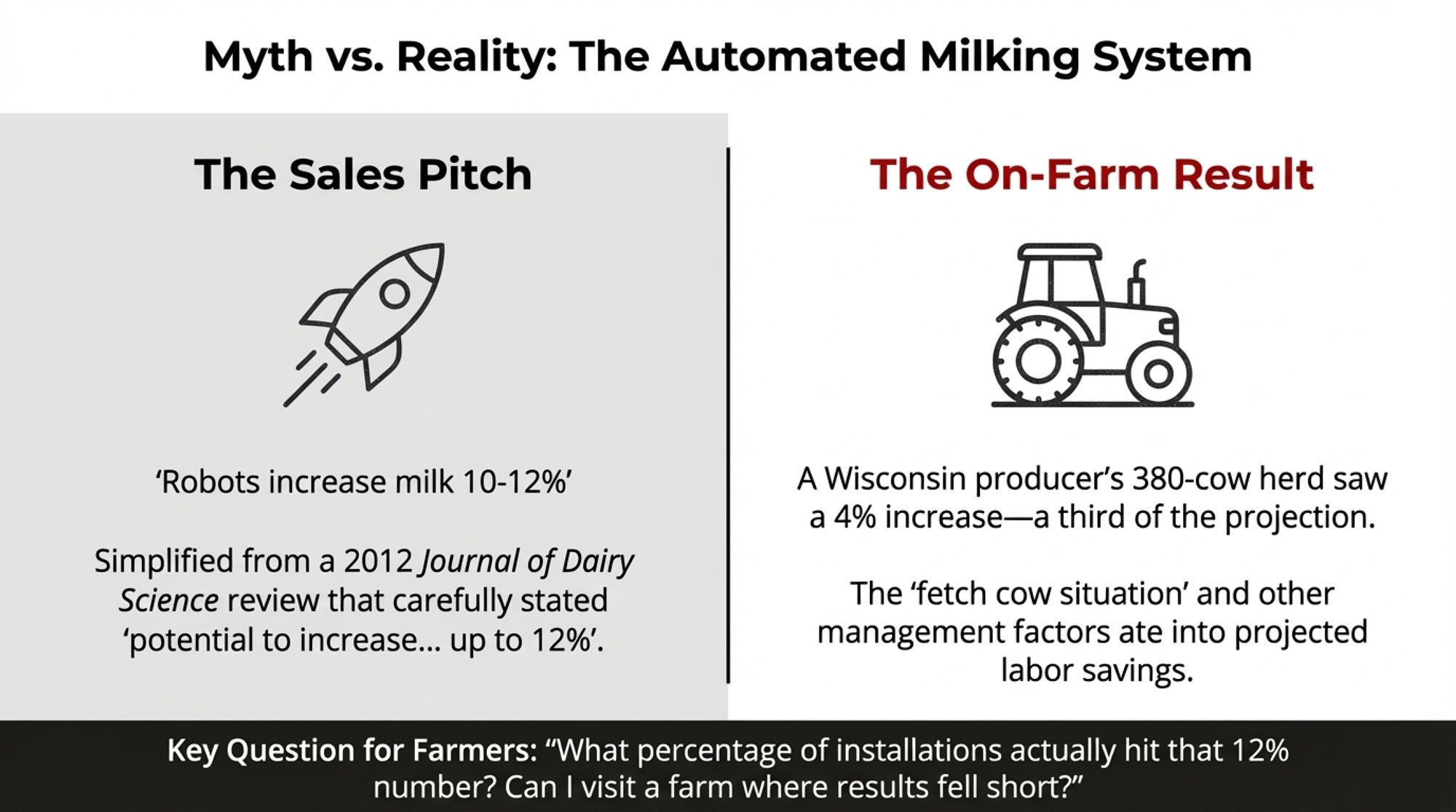
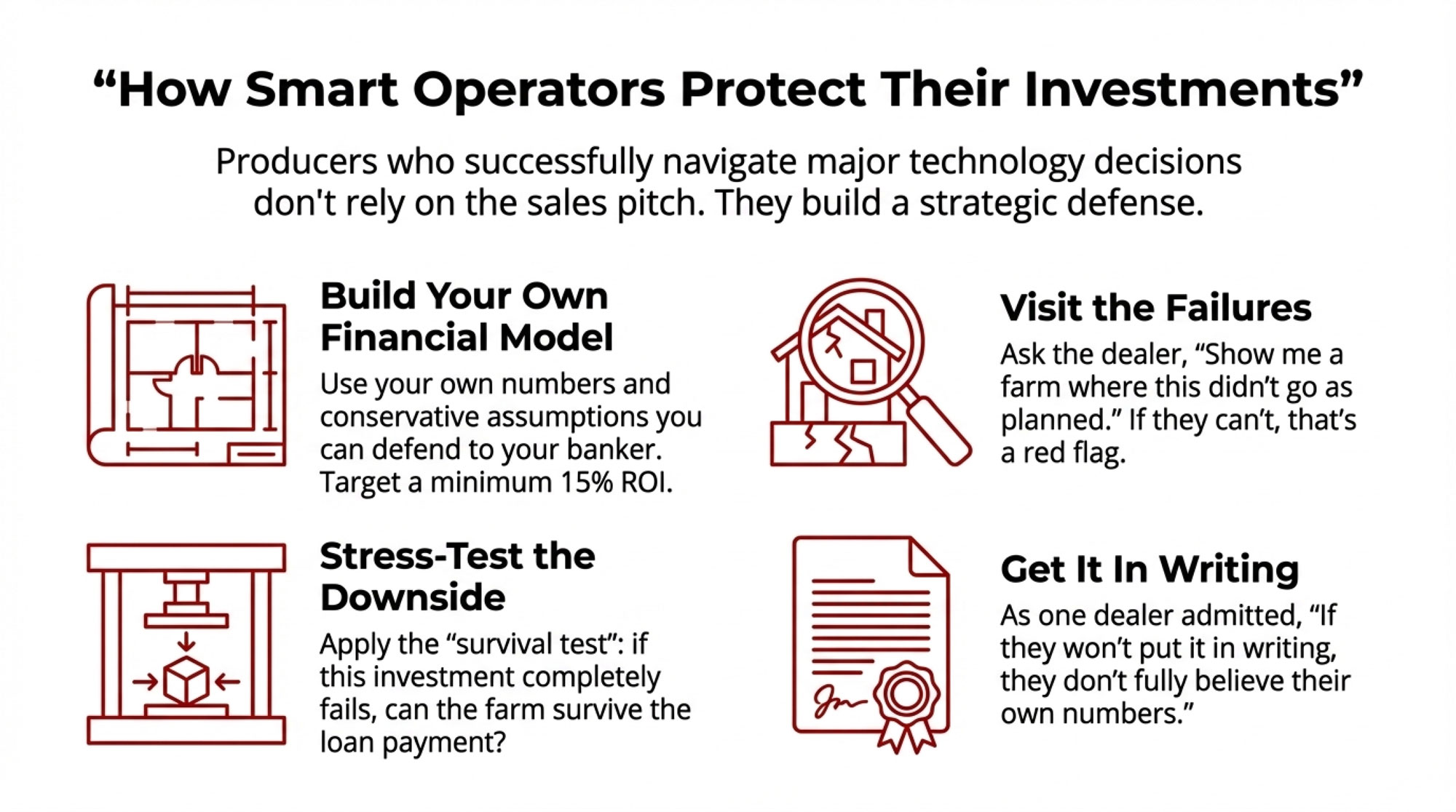
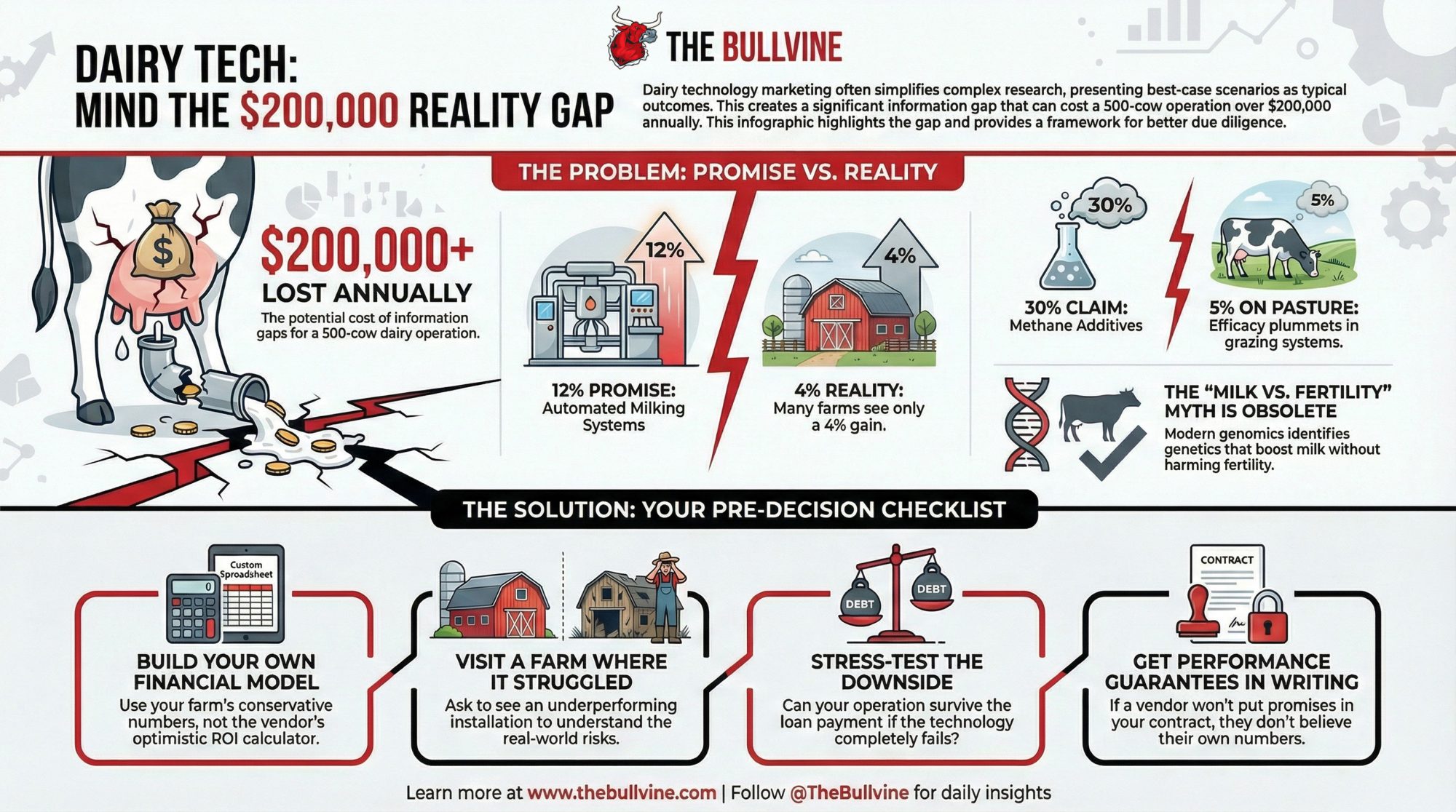
The 57% lie: Seaweed additives promise 82% methane reduction in labs but deliver just 25% on actual farms. Before investing $50K in ‘miracle’ solutions, know the difference between university press releases and feed bunk reality.

The active compounds in seaweed break down faster than anyone expected once they leave controlled conditions. What works beautifully in a university feeding trial—with fresh product, immediate feeding, controlled temperatures—doesn’t always translate to the reality of your feed bunk. Especially after the product has been shipped across the country and stored in your commodity shed through a hot summer, that’s just the reality of moving from lab to farm.

This builds on what we’ve seen with other feed technologies over the years, doesn’t it? Remember when bypass protein was going to revolutionize everything? Great concept, variable field results. The same story with numerous “game-changing” innovations.

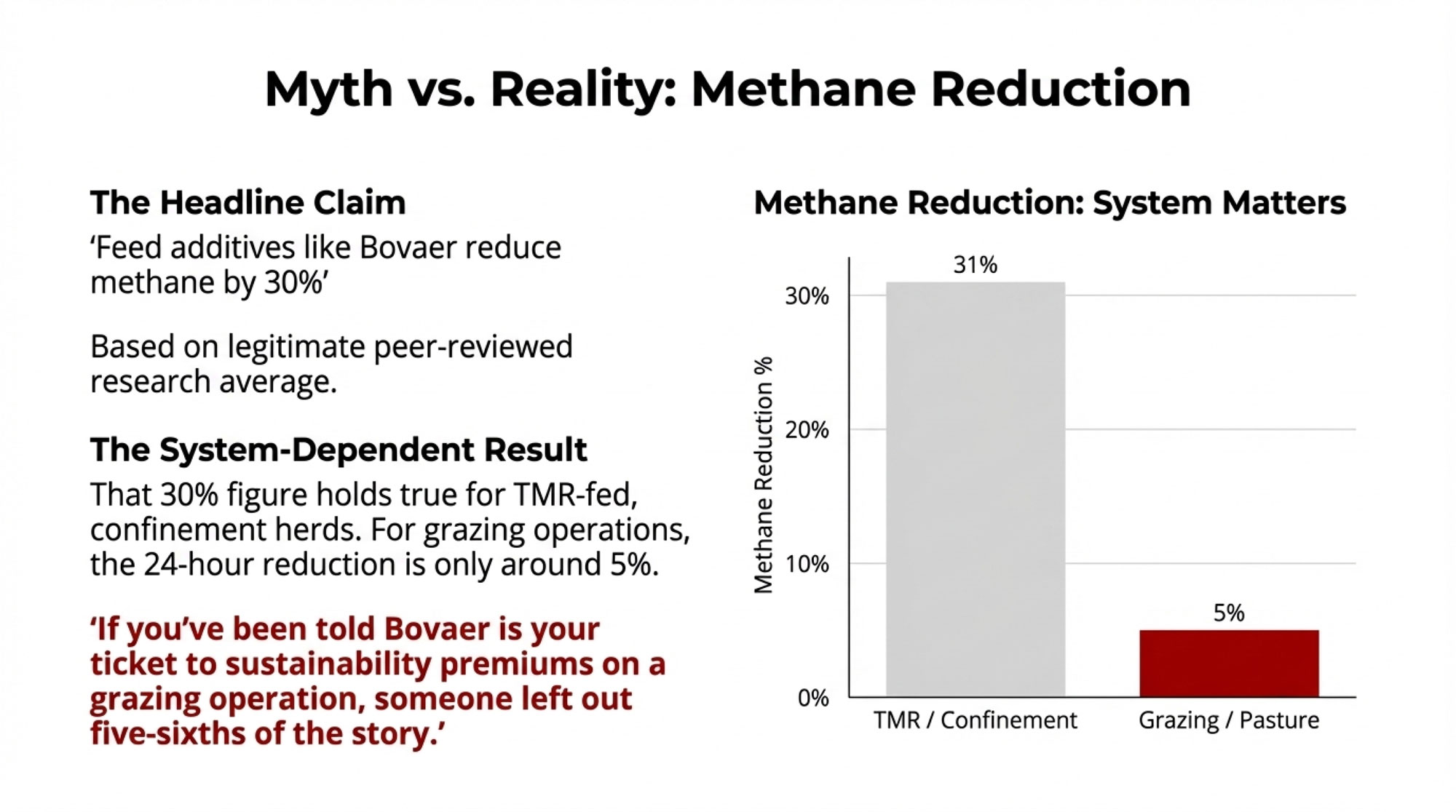
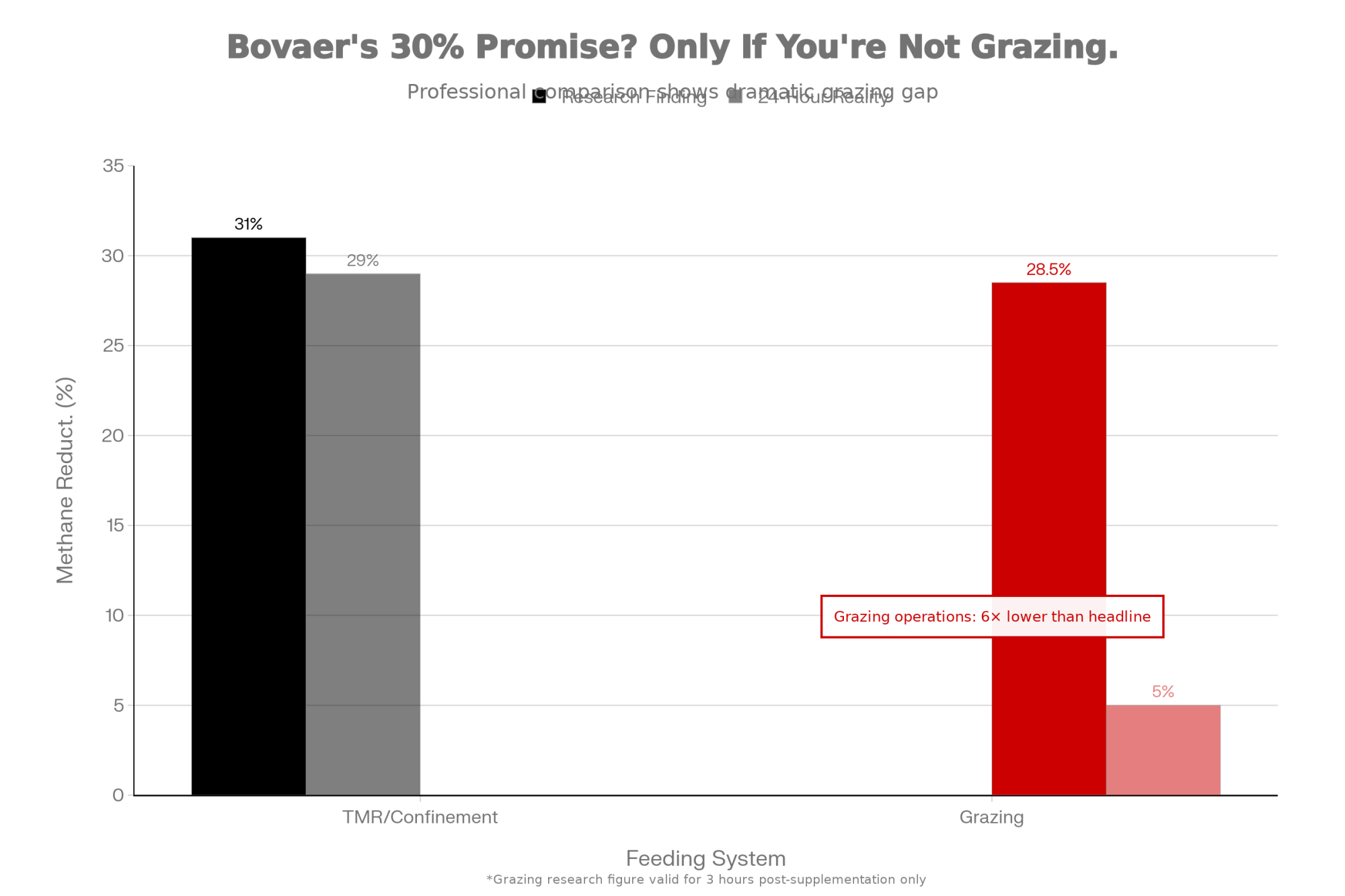
And those synthetic options like 3-NOP? Research suggests they can reduce methane emissions in total mixed ration systems, delivering more consistent results than seaweed. But effectiveness varies significantly in high-forage feeding systems, particularly in grazing-based operations common in the Northeast. The compound requires precise mixing and doesn’t distribute well in pasture situations.

Understanding the Real Economics: Scale Matters More Than Ever

What I find most instructive is examining how the economics actually play out across different-sized operations. The patterns emerging from California show clear economic thresholds that determine viability.

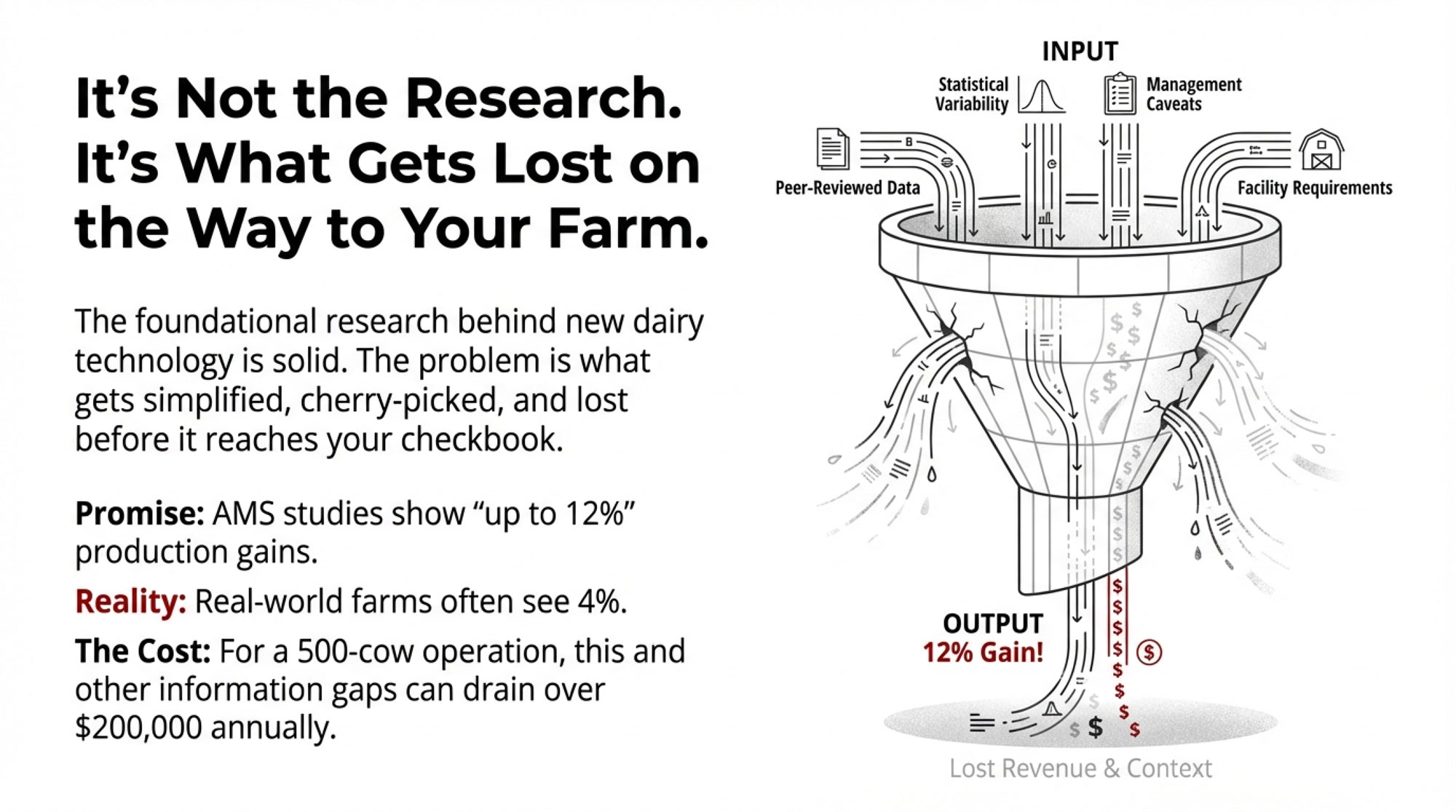
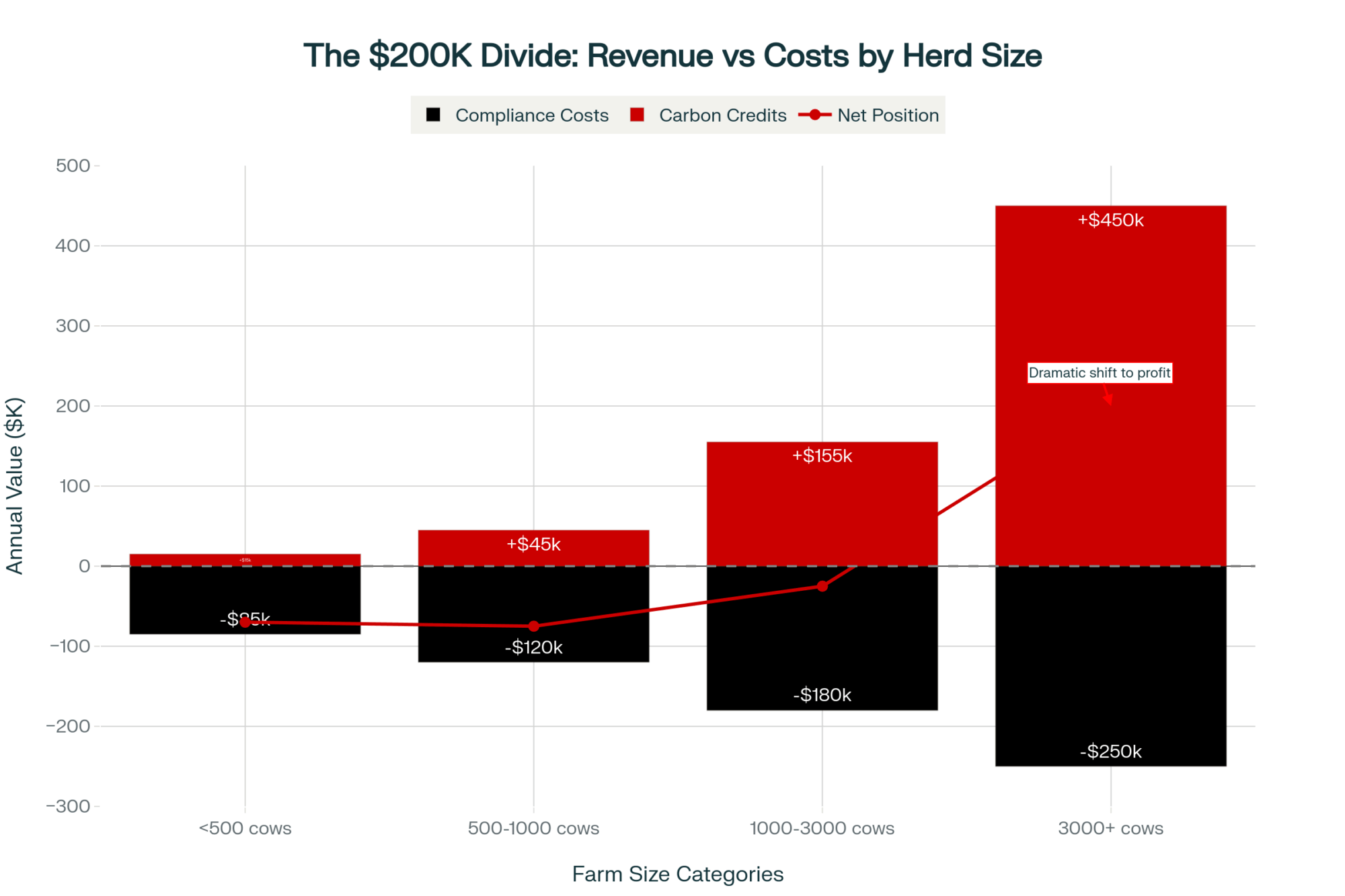
Scale Dictates Profitability. This is the hard math of methane compliance. Larger dairies can see payback on digester investments up to twice as fast as mid-sized operations, turning regulation into a revenue stream. For dairies under 500 cows, the economics rarely work, forcing them to find entirely different strategies to survive.

For those running larger operations—let’s say over 3,000 cows—digesters can actually generate substantial revenue through carbon credits and renewable energy programs. Larger California operations report favorable payback periods when carbon credit programs are available.

Now, for operations between 1,000 and 3,000 cows—and that’s a significant portion of our industry—the economics require patient capital. Payback periods typically extend longer for medium-sized operations, and your financing structure matters enormously.

Those 500 to 1,000 cow dairies face the toughest economics. Too large for niche markets but too small for economies of scale. Economics becomes increasingly challenging at this scale, testing even the most patient and financially capable individuals.

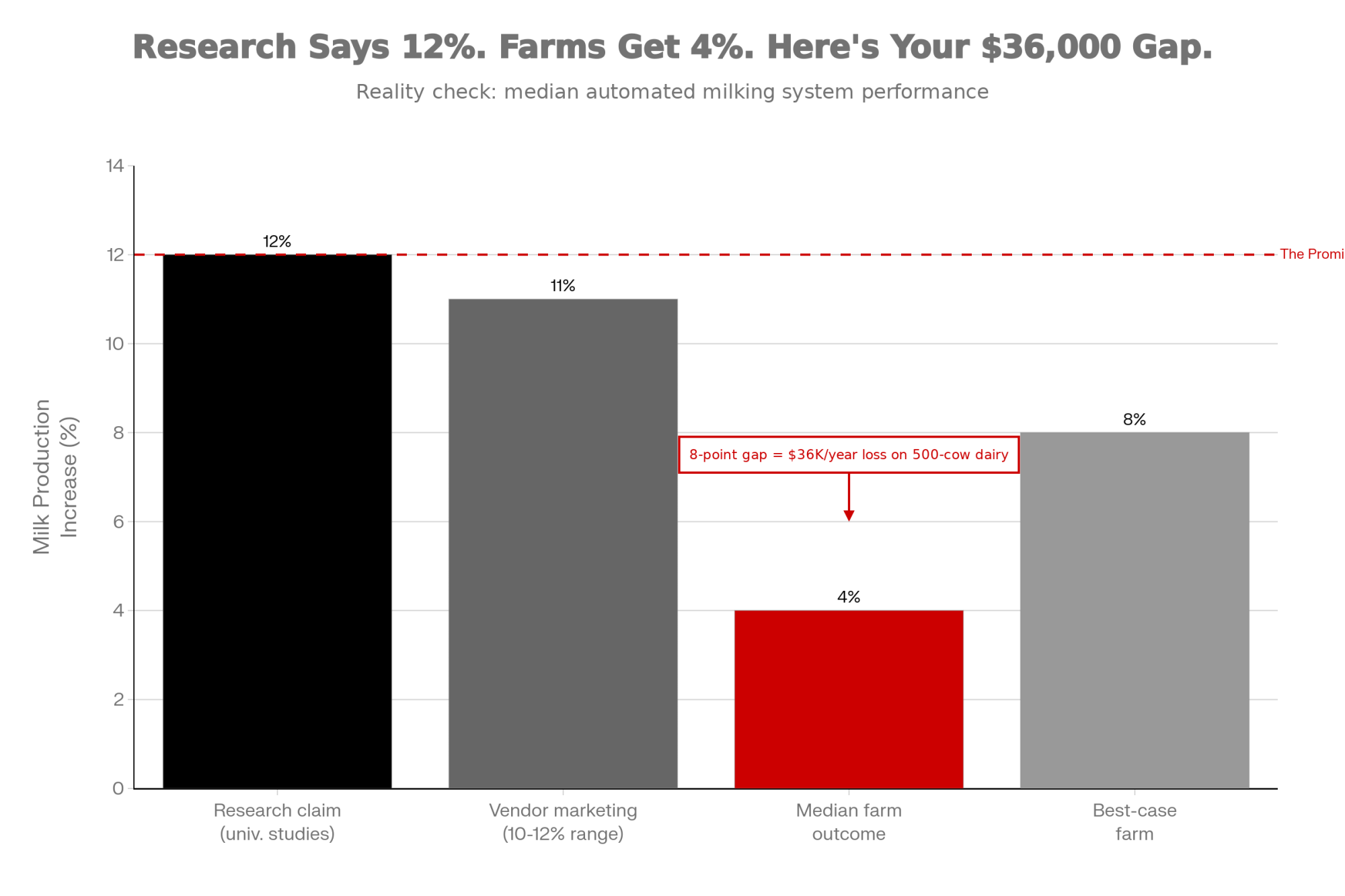
The $200K reality check: While mega-dairies turn compliance into profit centers, mid-size family farms face an existential squeeze. This isn’t just about technology—it’s about survival thresholds that reshape American dairy.

And for dairies under 500 cows? Large-scale technologies rarely pencil out. However, creative alternatives are emerging—shared composting facilities, cooperative manure management systems, and simplified solid waste separation. These approaches require different thinking, but they can be effective.

What’s crucial to understand is how dependent these economics are on local carbon credit values and renewable energy incentives. Voluntary carbon markets typically offer lower credit values than California’s specialized programs, creating dramatically different economics depending on your location.

I’m curious to see how this plays out in states with strong traditions of grazing. Will they develop crediting systems that recognize carbon sequestration in well-managed pastures alongside methane reduction?

The Portfolio Approach: Diversification Beyond the Milk Check

Strategy<500 cows500-1,000 cows1,000-3,000 cows3,000+ cows
DigestersNot viableMarginalOften justifiedStrong ROI
Composting/Manure MgmtViableViableViableViable
Feed AdditivesRarely economicalEconomic only in confinedMore effectiveBest fit
Direct Marketing/Value AddedHigh potentialPossible nicheSupplementaryAuxiliary

The most successful operations aren’t betting everything on any single technology. They’re building diversified strategies that create resilience when individual components underperform.

Production efficiency forms the foundation. Increasing production per cow significantly reduces methane intensity per unit of milk produced—without any new technology. Better heat abatement, tighter fresh cow protocols, optimizing starch levels and fiber digestibility—these improvements compound over time.

This aligns with what progressive nutritionists emphasize: good management is environmental management. Better feed efficiency, improved reproduction, lower SCC—these traditional metrics reduce environmental footprint while improving profitability.

Alternative manure management provides middle-ground solutions. Composting, separation systems, and mechanical scraping—these technologies work at various scales. New research on biochar-enhanced composting shows promise, though commercial viability remains uncertain.

Some traditional practices deserve renewed attention. Rotational grazing, well-managed pastures, and focus on cow longevity—these approaches sequester carbon while reducing emissions intensity.

Digesters work effectively when you have the right conditions: a liquid manure system, consistent feedstock, technical expertise, and sufficient scale to spread capital costs. Success depends heavily on the quality of management and local market conditions.

Feed additives continue evolving. Current products work best in confined feeding situations with precise ration control. Costs should decrease as production scales up, but these remain supplementary tools rather than complete solutions.

The Timeline Pressure: First-Mover Advantages and Late-Adopter Penalties

Various states are establishing different incentive structures and compliance timelines. Early movers consistently capture the best opportunities.

California’s experience proves instructive. Their programs lock in favorable terms for early infrastructure development. Miss those windows, and you face compliance costs without offsetting revenue.

Agricultural lenders see this bifurcation clearly. Early strategic movers maintain financing options. Those forced to act later find limited and expensive choices.

The pattern remains consistent: capture value by moving early, face costs by waiting. Each year of delay in regulated markets potentially sacrifices a significant portion of the lifetime project value.

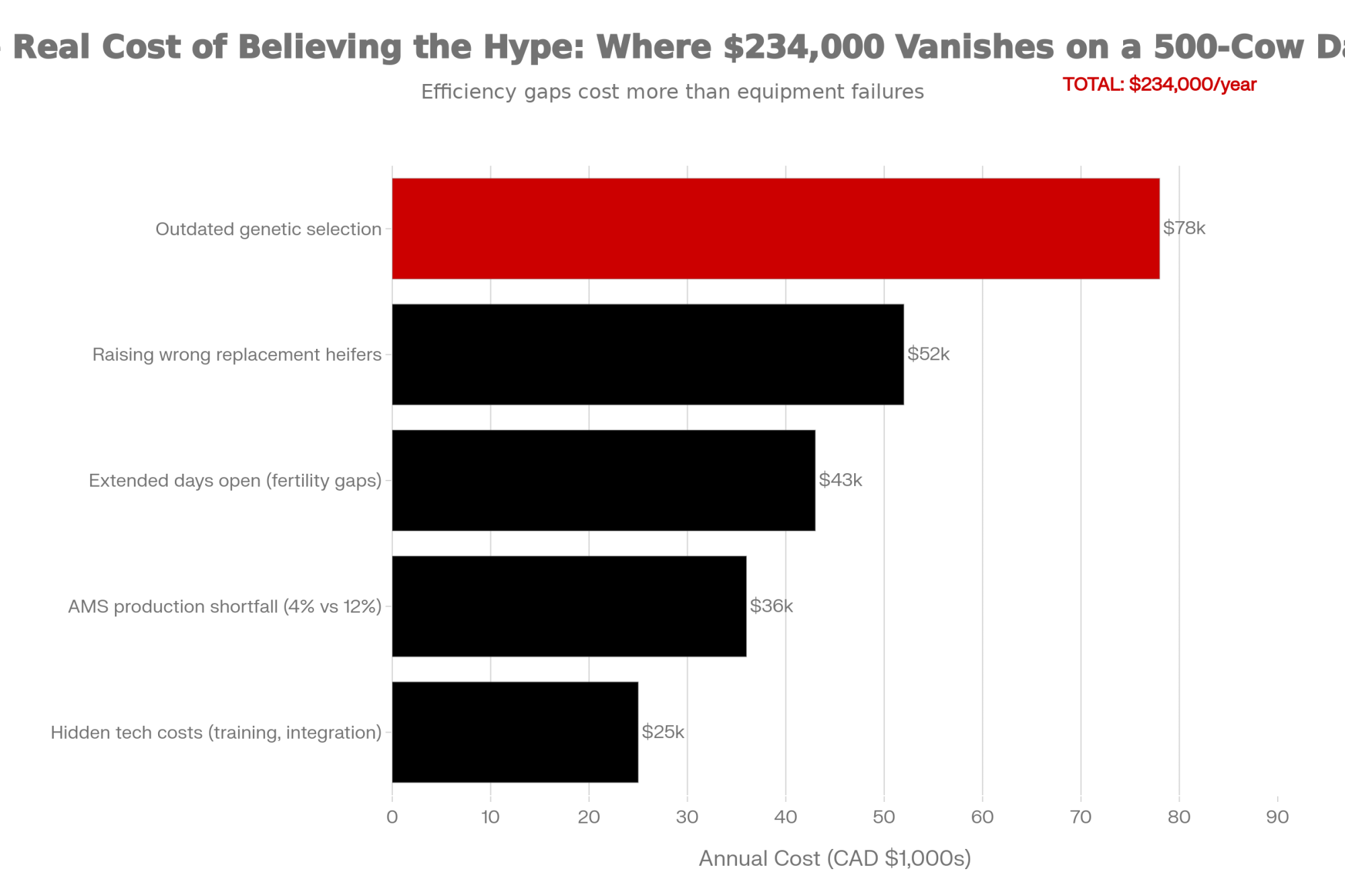
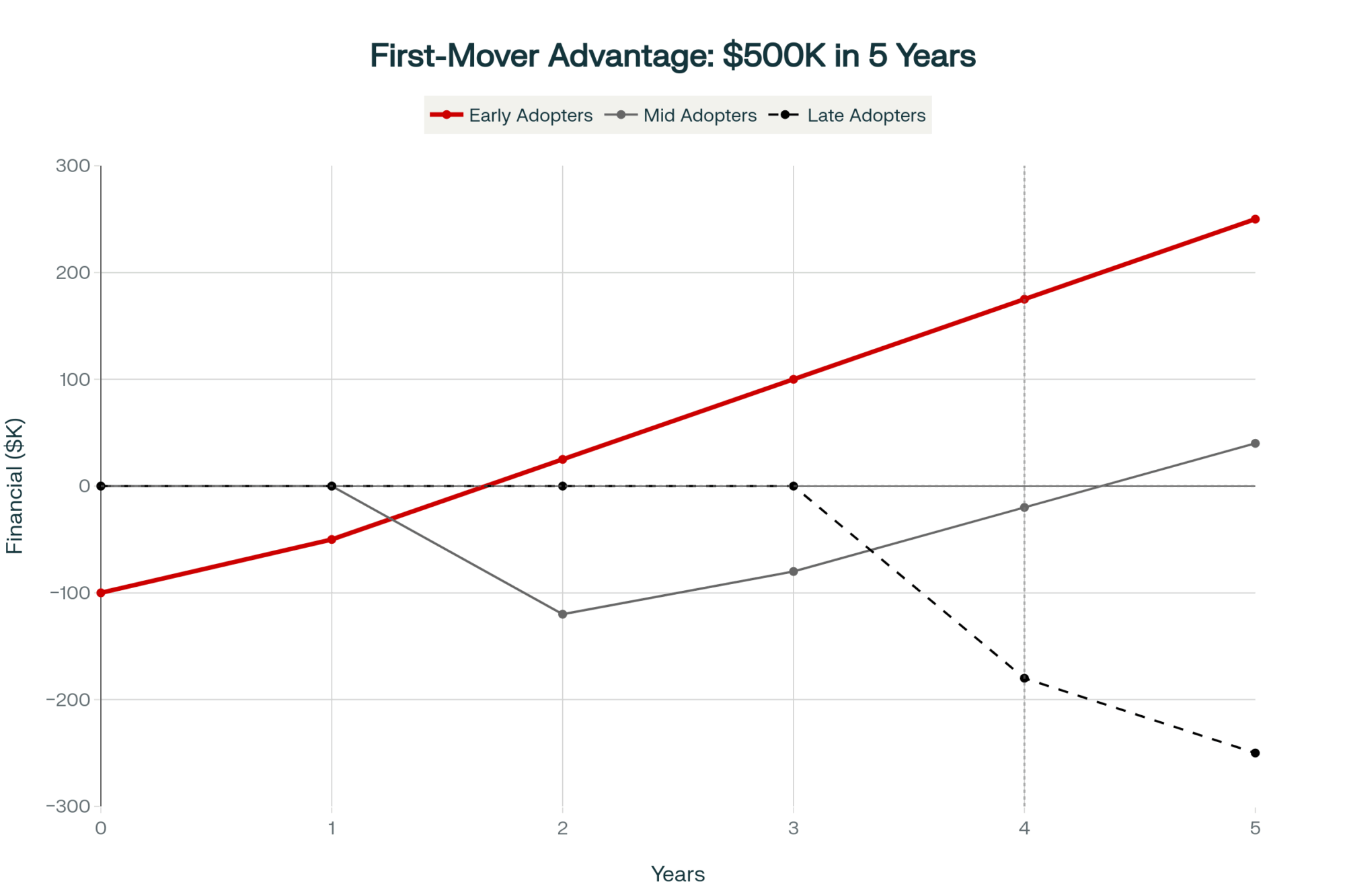
The half-million-dollar procrastination penalty: Early movers capture $250K in credits while late adopters lose $250K to compliance costs. Every month you wait, someone else locks in your potential revenue stream.

Processors are increasingly factoring environmental performance into their supply relationships. Some develop sustainability programs, although the value of meaningful premiums remains uncertain.

Industry Consolidation: The Structural Reality

USDA data confirms accelerating consolidation in dairy farming, with environmental regulations adding pressure in certain regions.

Mid-sized operations (500-1,000 cows) face existential challenges. They can’t easily access niche markets or achieve the scale for technology economics. Multi-generational family farms confront difficult succession decisions under this pressure.

These operations remain profitable today, but face uncertainty about the regulatory landscape of tomorrow. This uncertainty complicates planning, financing, and family transitions.

Smaller operations encounter different challenges. Per-unit compliance costs run higher without scale advantages. However, some thrive through direct marketing, value-added processing, or agritourism—creating businesses that sidestep the pressures of the commodity market.

Custom operators navigate unique complexities working across multiple farms with varying capabilities and requirements. Standardizing practices while maintaining flexibility poses a challenge for these essential service providers.

Regional Adaptation Strategies

RegionAvg Herd SizePrimary StrategyIncentive $/cowCompliance TimelineSuccess Rate
California1,850Digesters + Credits$285Active Now65%
Northeast85Grazing Credits$452027 Start82%
Upper Midwest195Co-op Models$752028 Start78%
Southwest2,200Water + Methane$1952026 Start71%
Southeast450Voluntary Programs$352029+ StartTBD

States are learning from California while developing approaches suited to their conditions and farming systems.

Northeast states initially emphasize voluntary programs, recognizing their smaller average herd sizes and pasture-based systems. They’re exploring how to credit both methane reduction and soil carbon sequestration.

The Upper Midwest investigates incentive structures that value well-managed grazing systems. Some states explore digesters for medium-sized farms through cooperative models. Others examine manure-to-energy opportunities linked with existing utility infrastructure.

The Southwest links water conservation with methane reduction, recognizing their interconnected resource challenges. Different regions focus on integrating energy infrastructure or enhancing drought resilience alongside emissions reduction.

Some states are exploring how to credit both methane reduction and soil carbon sequestration—potentially game-changing for grazing operations. Others develop programs recognizing diverse farm scales and production systems.

Implementation Realities: What the Planning Documents Don’t Tell You

Field experience yields critical insights that extend beyond theoretical planning.

Infrastructure costs typically exceed initial estimates, often by a substantial amount. Beyond primary technology, you need storage modifications, handling equipment, monitoring systems, and team training. Budget extra for contingencies—you’ll need it.

Seasonal operations create challenges vendors rarely acknowledge. Winter functionality at sub-zero temperatures differs dramatically from summer operations. Heat stress impacts both cows and technology performance. Spring mud season complicates manure handling. These realities affect system design and operating costs.

Supply chains for newer technologies remain immature. Quality varies between suppliers, availability fluctuates, and prices reflect market volatility. Multiple supplier relationships provide essential backup.

You must document everything. Carbon credit verification, regulatory compliance, and management decisions all require baseline data. Start measuring before implementing changes—retroactive documentation doesn’t work.

Emerging Opportunities: Beyond Compliance

Strategic positioning creates opportunities beyond mere compliance.

Carbon credit markets evolve rapidly with significant regional variation. Some areas generate meaningful revenue streams; others offer minimal returns. Understanding your local market conditions drives decision-making.

Milk processors and food companies develop sustainability programs with potential premiums for verified low-emission milk. Whether these deliver meaningful value or just create requirements remains uncertain.

Technology continues advancing rapidly. Today’s impractical solution might become viable within a few years. Stay informed without chasing every innovation.

Taking Action: Your Next Steps

Here’s your practical roadmap:

Assess your position honestly. Evaluate your scale, resources, and timeline for major decisions. Consider retirement, succession, and expansion plans realistically.

Gather region-specific information. Attend extension meetings, engage with neighbors, and explore NRCS programs. Local knowledge is often more valuable than general advice.

Start documenting now. Begin baseline measurements even before making changes. This data becomes invaluable later.

Think strategically, not reactively. Success comes from thoughtful decisions aligned with your specific circumstances, not from following prescriptive solutions.

The Strategic Bottom Line

After observing nationwide developments across different regions and scales, success requires making thoughtful strategic decisions with available information, building adaptable systems, and maintaining flexibility.

The shifts in emissions thinking, environmental impact assessment, and value creation aren’t future considerations—they’re current realities in some regions and near-term probabilities everywhere else.

Learn from others’ experiences while recognizing your unique situation. A large New Mexico operation differs fundamentally from a smaller Vermont farm. Someone with returning children faces different decisions than someone approaching retirement.

Stay informed, think strategically about your specific operation, and make decisions aligned with your long-term goals and values. The dairy industry will look different five years from now—that’s certain.

Is change concerning? Perhaps. But it also creates opportunities for those prepared to adapt thoughtfully. The question isn’t whether change arrives—it’s how we position our operations to thrive.

Consider this as you head into another season managing the operations you’ve built. The future of dairy isn’t distant—it’s being shaped now by decisions each of us makes on our farms, in our communities, within our circumstances.

The conversation continues, and we’re all part of it.

KEY TAKEAWAYS:

  • Digesters generate positive returns for 3,000+ cow operations with favorable payback periods when carbon credit programs are available, but economics become marginal below 1,000 cows and typically unviable under 500 cows
  • Production efficiency improvements offer universal benefits—increasing milk per cow through better management reduces methane intensity without requiring permits, infrastructure investment, or regulatory approval
  • Early strategic positioning captures value while delayed action faces costs—agricultural lenders report producers who move before regulatory deadlines maintain better financing options and terms
  • Portfolio approaches outperform single technologies—combining production efficiency, manure management alternatives, and selective technology adoption creates resilience when individual solutions underperform
  • Documentation starting now strengthens your position—baseline measurements before implementing changes become invaluable for carbon credit verification, regulatory compliance, and informed decision-making regardless of operation size

Complete references and supporting documentation are available upon request by contacting the editorial team at editor@thebullvine.com.

Learn More:

Join the Revolution!

Join over 30,000 successful dairy professionals who rely on Bullvine Weekly for their competitive edge. Delivered directly to your inbox each week, our exclusive industry insights help you make smarter decisions while saving precious hours every week. Never miss critical updates on milk production trends, breakthrough technologies, and profit-boosting strategies that top producers are already implementing. Subscribe now to transform your dairy operation’s efficiency and profitability—your future success is just one click away.

NewsSubscribe
First
Last
Consent

The Great Dairy Realignment: What’s Really Happening as Global Production Reshapes Competition

India now produces 31% of the world’s milk—reshaping global dairy production in unprecedented ways.

EXECUTIVE SUMMARY: India has surged to lead global milk production, with a roughly 31% share, outpacing the EU, US, and New Zealand combined, driven by a rising middle class and the expansion of cooperatives. Asia now accounts for 45% of global milk production, reshaping market dynamics, while Europe and North America hold approximately 36%. Robotic milking adoption varies dramatically—23% in Europe versus under 10% in other regions—with emerging producers leveraging mobile and AI tech as cost-effective alternatives. What’s particularly encouraging is that sustainably managed dairies are earning an estimated €6.22 more per 100kg milk produced, while carbon footprint variations increasingly shape market access. Trade tensions and certification requirements are shifting competitive landscapes, but this creates opportunities for operations that can adapt quickly. What this means for your operation depends on your region, scale, and infrastructure—with success coming through targeted efficiency improvements, sustainability practices, and understanding niche markets. Recent research shows the key is local adaptation, and staying informed about these industry shifts will position you for long-term resilience.

KEY TAKEAWAYS:

  • Precision pays off: Dairies adopting targeted feeding strategies and fresh cow management protocols can achieve up to 15% improvements in butterfat performance and overall milk quality—critical for premium market access.
  • Smart tech choices matter: Consider scalable technology investments that match your infrastructure. Mobile monitoring and AI-driven herd management can deliver 60-70% of the benefits of robotics at a fraction of the cost.
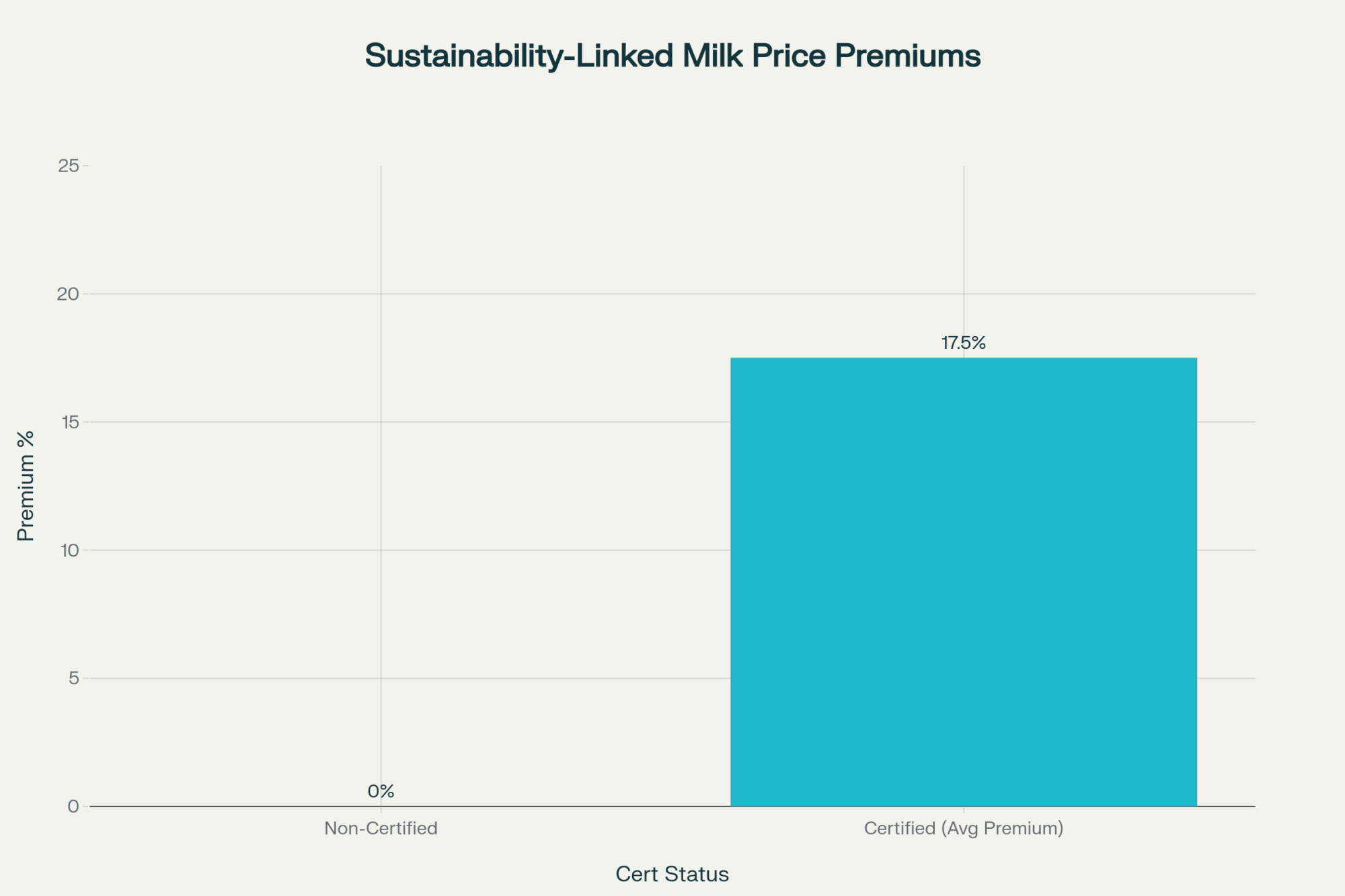
  • Sustainability drives profits: Environmental practices aren’t just compliance—they’re opening premiums up to 25% while improving herd health and operational consistency, making them essential for market competitiveness.
  • Regional strategies work best: Production dynamics vary widely—Asia leads in volume, Europe in efficiency—so your approach should reflect your farm’s unique context, resources, and market position.
  • Market access is evolving: Stay current with trade policies and certification requirements, as premium market entry increasingly depends on meeting sustainability and traceability standards.
dairy profitability, global dairy production, farm efficiency, milk production trends, dairy technology

You know, I was chatting with a colleague from Punjab just last month, and he mentioned how the dairy landscape has shifted dramatically. India, for instance, has surged ahead to become the world’s leading milk producer, clocking in around 216 million metric tons this year. That’s roughly a third of global milk production. To put this in perspective, that’s more than the combined output of the European Union, the United States, and New Zealand.

What’s fueling such growth? Well, it largely stems from a rapidly expanding middle class embracing dairy consumption across all regions—from Punjab’s lush fields to Gujarat’s vibrant cooperatives. This shift is not just about sheer volume but a complex blend of geography, demographics, and how technology and infrastructure get deployed.

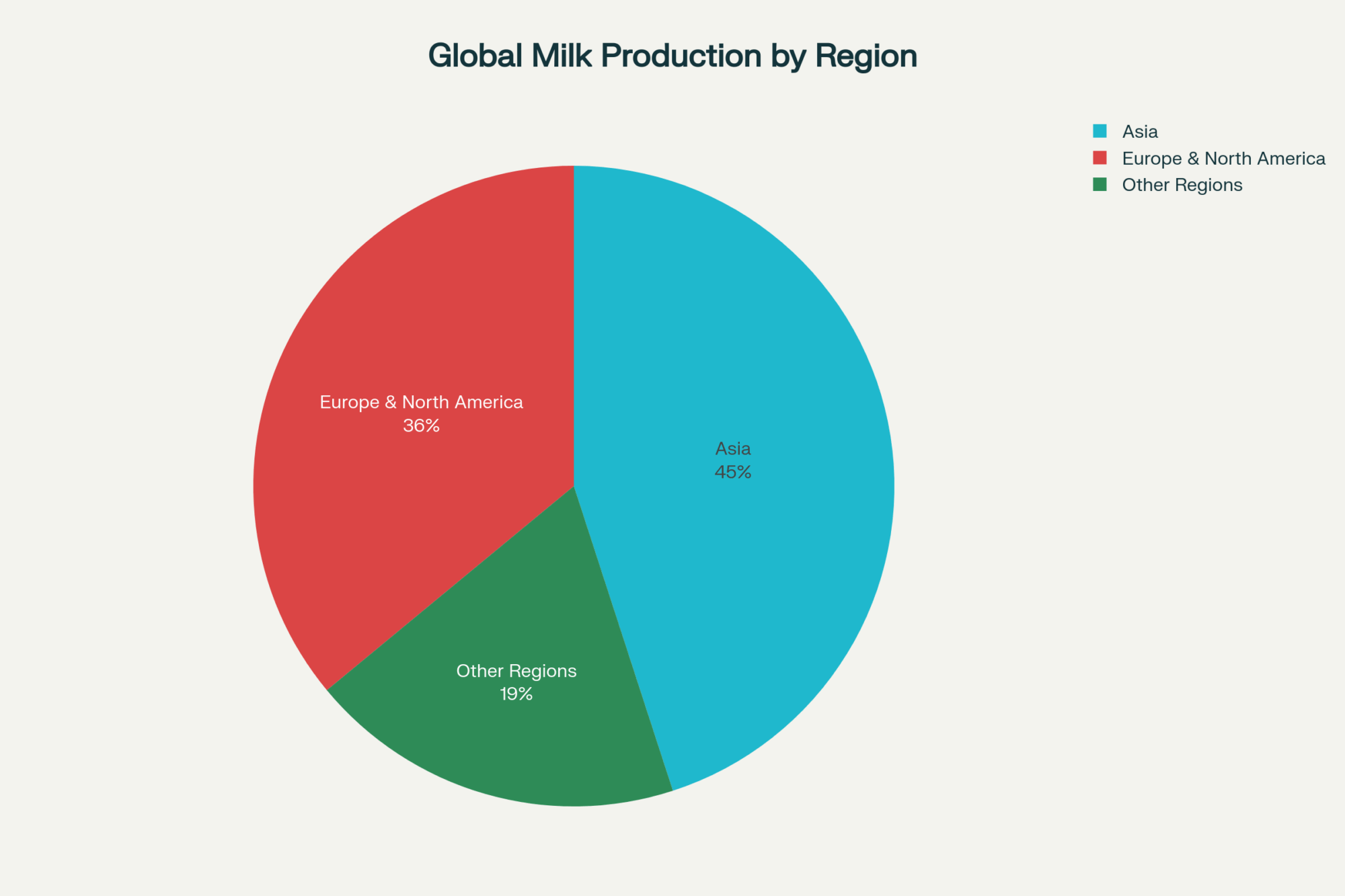
We’re seeing Asia holding about 45% of the global dairy production, while North America and Europe together make up around 36%. This isn’t just shifting numbers on a chart—it’s reshaping the whole industry.

Technology Adoption: Different Paths, Different Results

Now, when I think of technology, the story gets a bit nuanced. I had a great conversation recently with a California dairy operator who told me his investment in robotic milking paid off in just under three years. However, friends in India shared that their investments took six years or more to recover due to inconsistent power and internet issues.

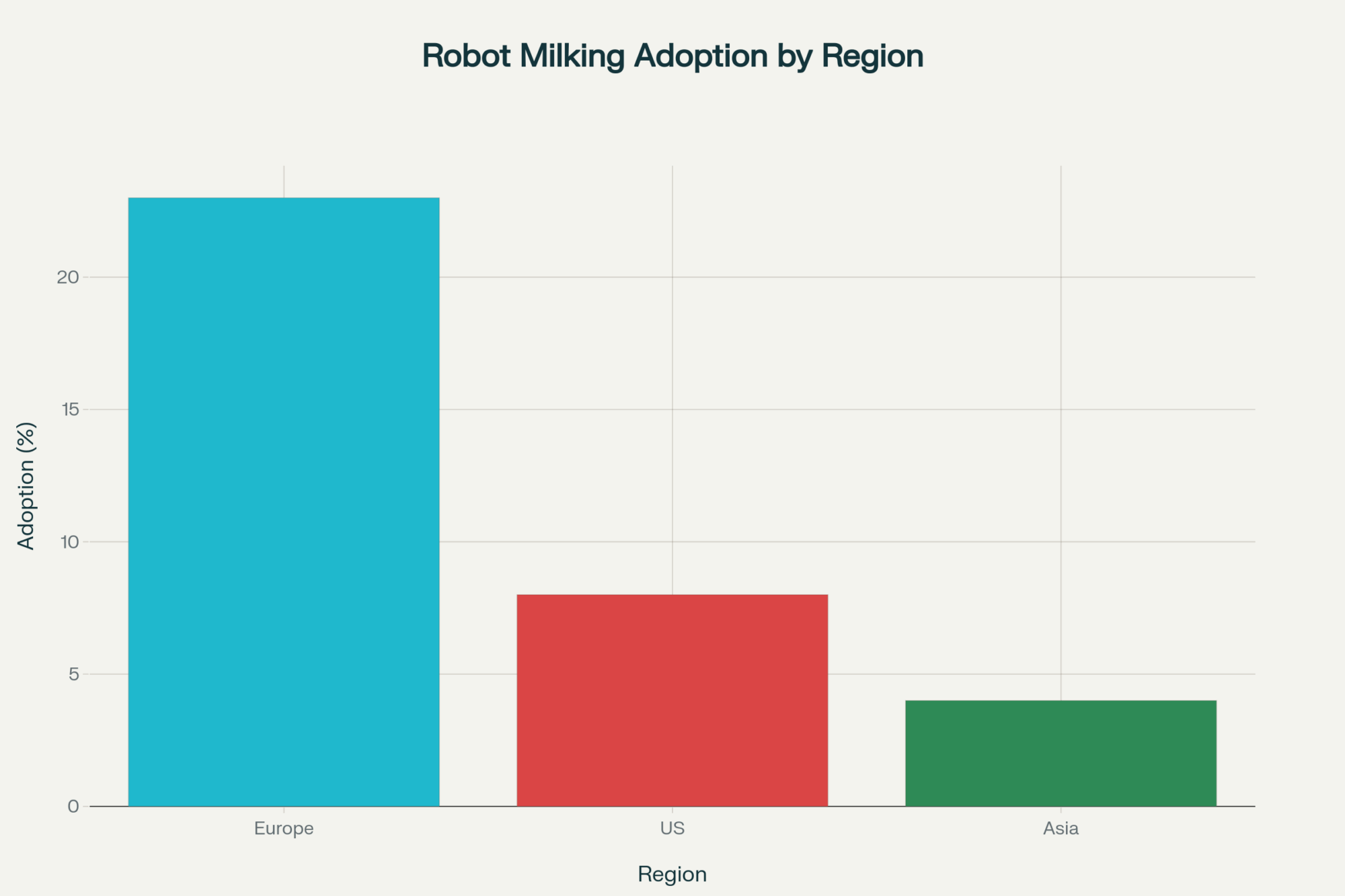
In Europe, about 23% of dairy farms are using robotic milking, whereas adoption in the US is around 8%, and many Asian countries are still at 2-6%. But what’s really fascinating is how many producers in emerging markets are adopting mobile apps, IoT monitoring, and AI-powered herd management to capture much of the same benefit without the high costs.

It’s worth noting that this approach—skipping expensive automation for targeted tech solutions—is proving surprisingly effective for operations that can’t justify the infrastructure investment.

The Efficiency Story Gets Complicated

When it comes to efficiency numbers, the Netherlands leads with around 8,500 liters per cow annually, while India is closer to 1,200. That’s a massive seven-fold difference.

But here’s what’s interesting—both systems fit their setups. European operations target premium markets by optimizing butterfat and protein components, focusing heavily on fresh cow and transition period management. You probably know how critical those first 100 days in milk are for setting up the whole lactation curve.

India’s volume-based model taps into cooperative networks and benefits from lower input costs. Millions of smallholder farms, each with just a few animals, collectively create enormous production capacity.

That volume-based approach is facing pressure, though, as rising land prices and shrinking rural labor pools challenge traditional cost advantages. And that’s pushing even small-scale operations to think about genetic improvements and feed efficiency.

Sustainability: From Compliance to Profit Center

Here’s something that caught my attention—sustainability is no longer just a buzzword. It’s impacting profitability. Wageningen University research shows sustainable farms can boost income by around €6.22 per 100 kilograms of milk produced, combining cost savings and price premiums. For a mid-sized dairy, that adds up fast.

Buyers are increasingly seeking sustainability certifications, paying up to 25% premiums for compliant farms. What’s encouraging is that sustainable practices also tend to improve herd health and production consistency—so it’s a genuine win-win.

Carbon footprints are part of the equation, too. New Zealand’s dairy farms average around 0.9 kg of CO2 per liter of milk production, compared with India and Brazil, where footprints can be two to three times higher. This is starting to influence market access and pricing structures in ways we hadn’t seen before.

Trade Dynamics Keep Us on Our Toes

Trade tensions, such as the ongoing challenges between the US and Canada, have resulted in billions of dollars lost in trade opportunities. Meanwhile, Australia and New Zealand are strategically benefiting from shifting Chinese demand and their sustainability advantages, while Russia’s subsidy of export logistics is shaking up the competitive landscape.

Certification, auditing, and traceability now form essential gatekeepers to premium markets, favoring farms with robust infrastructure. That puts farms in regions like Europe and New Zealand in a strong position, while farms in lower-resource areas need to adapt rapidly.

The Plant-Based Reality Check

The plant-based market certainly has traction, holding about 12% in mature dairy markets. But it’s not the tsunami that some predicted. Meanwhile, lactose-free dairy is gaining quietly but steadily, appealing to consumers wanting milk without digestive issues.

We’re also seeing strong growth in niche categories, such as organic, A2, and probiotic-enhanced milks, many of which command price premiums of 15-25%. And interestingly, consumers increasingly blend plant-based and dairy products depending on use—what’s sometimes called “hybrid consumption.”

What This Means for Your Operation

So, what’s the takeaway for you—whether you’re running a 500-cow operation in Wisconsin, a family dairy in Punjab, or a cooperative setup in Canterbury? Understand the unique strengths and circumstances of your operation.

Higher-cost regions can benefit from targeting efficiency and sustainability to tap into premium markets. That means mastering fresh cow protocols, optimizing dry period management, and meeting the certification requirements that open doors to better pricing.

Emerging regions should emphasize scalable, cost-appropriate technologies and gradual efficiency improvements while maintaining their cost advantages.

One-size-fits-all strategies are a thing of the past. Success comes down to mastering the details—fresh cow care, transition management, butterfat performance—while adapting to your local market and environment.

There’s a lot to consider, of course, but what’s encouraging is that curiosity, flexibility, and informed decision-making are what will keep the best farms moving forward. After all, adapting to change has always been at the heart of successful dairy farming.

The key is staying ahead of where the industry’s heading rather than just reacting to where it’s been.

Complete references and supporting documentation are available upon request by contacting the editorial team at editor@thebullvine.com.

Learn More:

  • Global Dairy Market Trends 2025: European Decline, US Expansion Reshaping Industry Landscape – This article provides a strategic market overview, revealing how production trends in Europe and the US are creating new opportunities. It offers a crucial context to the main article’s global realignment theme by showing how regional economic shifts directly impact your business, helping you prepare for future market volatility.
  • The Future of Dairy Farming: Embracing Automation, AI, and Sustainability in 2025 – While the main piece touches on technology, this article dives deeper into how specific innovations like whole-life monitoring and AI are becoming essential. It offers a future-oriented perspective and shows how these smart tech choices can deliver significant efficiency gains and improve herd health, positioning your farm for long-term competitiveness.
  • 7 Proven Strategies to Perfect Silage Quality for Maximum Milk Production – This tactical guide provides actionable, on-farm strategies for improving feed management, a key driver of profitability. It complements the main article’s focus on efficiency and sustainability by offering practical steps you can implement immediately to increase milk quality, a crucial factor for accessing premium markets.

Join the Revolution!

Join over 30,000 successful dairy professionals who rely on Bullvine Weekly for their competitive edge. Delivered directly to your inbox each week, our exclusive industry insights help you make smarter decisions while saving precious hours every week. Never miss critical updates on milk production trends, breakthrough technologies, and profit-boosting strategies that top producers are already implementing. Subscribe now to transform your dairy operation’s efficiency and profitability—your future success is just one click away.

NewsSubscribe
First
Last
Consent

Why This Dairy Market Feels Different – and What It Means for Producers

USDA reports U.S. milk production up 3.5% in July 2025—a surge not seen in years. Are you milking all you can

EXECUTIVE SUMMARY: Colleagues, here’s what we’re seeing: The U.S. dairy industry is undergoing a seismic shift driven by unprecedented productivity gains and structural market changes that are rewriting the rules of profitable farming. Recent USDA data shows milk production jumped 3.5% in July 2025, with per-cow yields climbing 36 pounds to 2,081 pounds—that’s nearly 2% year-over-year growth from fewer, more efficient operations. Meanwhile, the 2022 Census reveals almost 40% of smaller dairy farms have exited since 2017, consolidating production into larger herds that now account for 67% of national milk volume. This isn’t just about scale anymore—it’s about technology adoption as the key differentiator between survival and profitability. Wisconsin trials we’ve analyzed show farms integrating digital monitoring and genomic tools achieve milk yield improvements of 8-15% within 18 months. Globally, we’re seeing similar patterns, with European production up 1.2% this summer despite environmental pressures. Looking ahead, this means operations that swiftly adopt data-driven practices and systematic technology won’t just survive market volatility—they’ll dominate it. The conversation about dairy’s future isn’t theoretical anymore… it’s happening in barns across the country right now, and the results speak for themselves.

KEY TAKEAWAYS

  • Digital Monitoring Delivers Immediate ROI: Adopting integrated health and feeding monitors can boost milk yield by up to 15% within 18 months—we’re talking real production gains plus improved animal welfare that pays for itself (Wisconsin research trials).
  • Genomic Selection Acceleration: Targeted breeding programs now deliver nearly 2% annual productivity gains per cow, essentially doubling traditional genetic progress rates—meaning your breeding decisions today impact profitability for years (Recent genetic advancement studies).
  •  Scale Strategy Shift: With larger herds producing 67% of U.S. milk, strategic technology choices now determine market power more than herd size alone—efficiency trumps scale when margins tighten (USDA Census analysis).
  • Infrastructure Investment Priority: Nearly 40% of smaller farms face broadband limitations that lock them out of modern management systems—upgrading connectivity isn’t optional anymore, it’s survival (University Extension connectivity surveys).
  • Financial Planning Imperative: Complete automation packages typically require $500,000-$800,000 over 18 months, making debt restructuring and strategic financing crucial before technology adoption—plan the money before you plan the machines (Industry modernization cost analysis).
dairy farm profitability, milk production trends, dairy technology, herd management, farm efficiency

Lately on farms across Wisconsin and the Midwest, you can hear something stirring—prices are low, milk’s flooding the market, and conversations in the feed aisles have taken a serious tone. This isn’t your typical down cycle. Something structural is changing.

Production is Growing, Despite Shrinking Farm Numbers

USDA’s report from July 2025 tells the real story: 24 major dairy states produced 18.8 billion pounds of milk, a 3.5% increase from last year. What really jumps out is per-cow production, rising 36 pounds to 2,081 pounds in July 2025. Combine that with an extra 154,000 cows, now at 9.04 million head, and we’re swimming in milk.

However, the number of farms continues to decline. The USDA Census shows a drop to 24,082 dairy farms in 2022—down nearly 40% since 2017. Larger operations now produce roughly 67% of U.S. milk.

Prices Are Falling Hard

Butter prices plunged to $1.86 per pound, the lowest since 2021, with cheddar hovering around $1.68. October Class III milk futures settled at .31, with no signs of a bounce back soon.

This isn’t a seasonal blip; it’s a market overhaul fueled by new technology and herd management.

Technology’s Growing Role

In a 2025 Minnesota Extension survey, around two-thirds of dairy farms use automated calf feeders, but robotic milking is found on only 23% of smaller herds under 500 cows. Wisconsin studies document 8-15% milk production increases within the first 18 months of integrated technology adoption.

Genetics keep pushing progress too: genomic selection has nearly doubled annual productivity gains, now near 2% per year.

The Growing Divide

The efficiency gap widens as better-equipped farms turn profits at prices leaving others behind. Those who aren’t monitoring feed, health, and reproduction data closely risk falling out of the race.

Consolidation’s Impact

USDA’s 2022 Census notes that despite losing over 15,000 dairy operations since 2017, total milk output rose 5% during the same period. Larger operations have taken in assets from exited farms, raising overall production efficiency.

What Europe’s Data Tells Us

According to CLAL.it, EU milk production rose by 1.2% year over year in July 2025, despite environmental and health challenges. This global trend reinforces the structural shifts dairy farmers face everywhere.

Regional Challenges and Connectivity Issues

While some Midwest dairies have strong broadband and support systems, almost 40% of smaller farms struggle with internet access, limiting technology adoption. Grazing systems in Western states add complexity due to different management styles and tech compatibility issues.

The Cost of Keeping Up

Modernization typically costs $500,000 to $800,000 over about 18 months, including:

  • $80-$120 per cow for sensor collars
  • $150,000-$300,000 for automated feeding systems
  • $250,000-$500,000 per robotic milking system
  • $25,000-$75,000 annually for data integration and software

Reorganizing debt obligations comes before investing in tech upgrades for many farms.

Next Steps for Your Operation

If you milk fewer than 400 cows, it’s time to either ramp up efficiency fast or reconsider your options.

For operations milking 400-800 cows, move stepwise: start with health monitoring tech, then feeding systems, and finally milking automation.

Above 800 cows? Use your scale to invest strategically and consider acquiring distressed neighbors.

Beware the Lure of Price Spikes

Experience shows price jumps to $22+ lull many producers into postponing critical investments—only to get hit harder when prices fall again.

Those who invest steadily through the cycles are the ones who survive and thrive.

The Future: Three Clear Paths

  1. Ultra-efficient commodity producers thrive at $15-$17 milk
  2. Premium producers add value to command $20-$25
  3. Niche artisanal farms charge $30+

If you don’t fit clearly in one, it’s a very tough road ahead.

The Bottom Line

The days of the traditional dairy model are over. This industry demands you bring tech and data into every decision.

Are you ready to be a tech-driven dairy business? Or will you be left behind in the changing herd?

All data reflects USDA Monthly Milk Reports, 2022 USDA Census, CME Market Data, Minnesota Extension Surveys, Wisconsin Research Trials, and European Production Data from CLAL.it.

Complete references and supporting documentation are available upon request by contacting the editorial team at editor@thebullvine.com.

Learn More:

Join the Revolution!

Join over 30,000 successful dairy professionals who rely on Bullvine Weekly for their competitive edge. Delivered directly to your inbox each week, our exclusive industry insights help you make smarter decisions while saving precious hours every week. Never miss critical updates on milk production trends, breakthrough technologies, and profit-boosting strategies that top producers are already implementing. Subscribe now to transform your dairy operation’s efficiency and profitability—your future success is just one click away.
NewsSubscribe
First
Last
Consent

Cents and Sensors: How Top Dairies Are Cashing In

Farms boosting profits by $400 per cow? It’s happening, and here’s how.

Executive Summary: Here’s the deal—precision tech isn’t a future dream anymore; it’s putting real money in farm checks. Farms adopting these tools report an extra $200–$400 net profit per cow annually. Feed costs can drop by up to 25%, and automated health checks catch lameness with 85% accuracy—double what a quick barn walk finds. From Europe, trimming carbon footprints by 6–9%, to bold moves in Denmark and the Midwest, this trend marries profit with sustainability. Cornell and UC Davis experts warn that the gap between adopters and laggards is widening. With milk selling for around $19/cwt, squeezing margins, this is a no-brainer ROI play—you should consider this now.

Key Takeaways

  • Cut feed costs by up to 25% with AI-optimized rations—talk to your nutritionist about precision feeding to lock in savings this season.
  • Save $300–$500 per cow annually by catching lameness early—install automated health monitors as per Journal of Dairy Science findings.
  • Expect a 2–5 year payback on robotic milking investments, which is critical when $19/cwt milk prices erode margins.
  • Confirm your infrastructure: 480 V three-phase power and at least 25 Mbps upload—tech only pays if it runs smoothly.
  • Watch regional trends: the Midwest races toward robotics, the West maximizes feed efficiency in drought, and Europe drives carbon cuts—tailor your strategy accordingly.
dairy technology, robotic milking ROI, farm efficiency, herd health monitoring, dairy farm profitability

Let’s be clear about AI in dairy: it’s not theory anymore—it’s cash in your pocket. Farms using these tools are seeing an extra $200–$400 in annual cash flow per cow. This isn’t just one miracle gadget; it’s a savvy mix of feed savings, sharper health monitoring, and production boosts.

Slashing Feed Costs, Boosting Herd Health

Feeding has long been the farm’s biggest cost drain. Precision feeding systems can pay for themselves in as little as two years, typically by year four. According to a 2024 University of Illinois Extension bulletin, AI-optimized rations trim about $0.30 per cow per day in feed costs without denting yields.

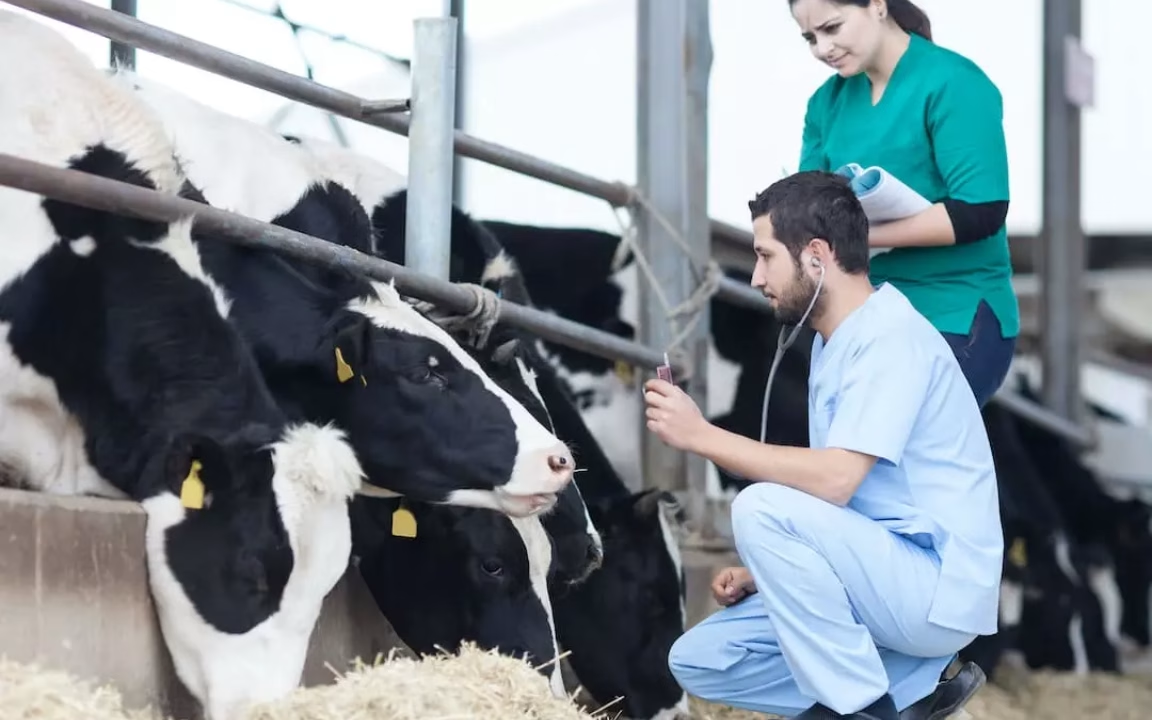
Health monitoring is quietly emerging as a key player. A 2023 Journal of Dairy Science study found that automated systems spot lameness with 85% accuracy—double the accuracy of what we detect by eye—saving around $300–$500 per cow annually and boosting fertility, as confirmed by Cornell research.

At milk near $19 per hundredweight and feed gobbling over half the check, automation is no longer a luxury. European farms under strict sustainability mandates reduce their carbon footprints by up to 9% while maintaining—or even increasing—production.

From Robots to Lameness Detection: Tech in Action

Today’s tech watches over 50 cow behaviors—from chewing time to standing duration—flagging trouble days before visible symptoms. Here are a few standout examples:

  • SCR’s Heatime system hits 95% accuracy in detecting heats. With its acquisition of CattleEye, GEA now monitors over 100,000 cows worldwide for lameness and changes in condition.
  • The Vray Holsteins farm in France, a roughly 200-cow operation, recorded a 10% production increase after installing Lely A4 robots, with fresh cows regularly producing over 40 kg/day.

Calculating the Real Cost of Automation

The initial investment for robotic systems ranges from $75,000 for small setups to over $ 600,000 at scale. Brazilian studies suggest a typical payback near five years. Additionally, budget for annual maintenance (15–20% of capital costs), software subscriptions, and increased electricity bills.

Avoiding the Implementation Pitfalls

Implementation hurdles often boil down to wiring and team training. Purdue’s Dr. John Bernard recommends phased rollouts—start small, build confidence, then scale.

  • Infrastructure: Rock-solid 480 V three-phase power and ≥ 25 Mbps upload.
  • Integration: Systems must “talk” or data silos stall progress.
  • Cybersecurity: Swiss dairies faced ransomware freezes—plan defenses now.

Smart Start: Actionable Tech Tips for Dairy Operators

  • Review 30-day feed costs; target a 20% cut with AI rations (UIUC Extension).
  • Audit robotic milking weekly; aim for ≥ 2.8 visits/cow/day (Midwest benchmark).
  • Flag 3–5 high-risk cows weekly via lameness alerts; treat within 48 hrs.
  • Verify electrical/internet readiness before upgrades: 480 V three-phase, 25 Mbps upload.
  • Phase rollouts over 3–6 months, prioritizing staff training and data integration.

The Verdict: Adapt or Be Left Behind

Halter’s $100M raise vaulted its valuation past $1B; McKinsey forecasts up to $90B in ag-AI value by 2030. Regional flavors matter: Midwest automation for labor, West precision feeding amid drought, Europe’s sustainability tech, and Denmark’s near-universal robotics.

Dr. Sarah Johnson of UC Davis warns that the gulf between adopters and laggards is widening. Cornell’s Dr. Michael Gould of the Dyson School offers a stark conclusion:

“At Cornell, we say waiting could cost you your competitive edge—the time to act is now.”

This isn’t tinkering at the edges; it’s a farm-management revolution. The pack is already sprinting. The only question is whether you’ll lead it or watch it disappear over the horizon.

Complete references and supporting documentation are available upon request by contacting the editorial team at editor@thebullvine.com.

Learn More:

Join the Revolution!

Join over 30,000 successful dairy professionals who rely on Bullvine Weekly for their competitive edge. Delivered directly to your inbox each week, our exclusive industry insights help you make smarter decisions while saving precious hours every week. Never miss critical updates on milk production trends, breakthrough technologies, and profit-boosting strategies that top producers are already implementing. Subscribe now to transform your dairy operation’s efficiency and profitability—your future success is just one click away.
NewsSubscribe
First
Last
Consent

AI and Precision Tech: What’s Actually Changing the Game for Dairy Farms in 2025?

One million U.S. cows are under AI surveillance—and they’re making 20% more milk. Here’s how.

EXECUTIVE SUMMARY: Look, I’ve been saying this for years—the old “gut feeling” approach to dairy management is done. The farms crushing it right now are using precision tech to slash input costs by 25% while boosting milk yields 10-20%, and it’s not just the mega-dairies doing it. We’re talking real money here: $200-400 per cow in feed savings, plus another $300-500 saved on vet bills when you catch lameness early. The numbers from North America and Asia indicate that these technologies pay for themselves in 2-4 years, even with milk prices fluctuating around $18 per hundredweight. Small farms, big farms—doesn’t matter. What matters is selecting the right technology for your setup and actually utilizing it. Bottom line? If you’re not at least exploring this area, you’re leaving significant money on the table while your competitors pull ahead.

KEY TAKEAWAYS:

  • Cut feed costs 15-25% — Start with precision feeding systems that optimize your TMR and individual cow rations. With feed making up 50-60% of your expenses, better feed conversion efficiency isn’t a nice-to-have anymore—it’s a matter of survival in 2025’s tight margins.
  • Boost milk yield 10-20% — Robotic milking systems keep your protocols consistent and reduce cow stress through more frequent milking. Labor shortages aren’t improving, so implementing solid milking protocols via automation makes financial sense now.
  • Save up to $500 per cow on health costs — AI-powered lameness detection and reproductive monitoring catch problems before they cost you big. With vet bills climbing and animal welfare scrutiny increasing, automated health monitoring is becoming essential.
  • Achieve your ROI in 2-4 years — Precision feeding pays back the fastest, often within 3 years. Virtual fencing and health monitoring follow close behind. Even robotic milking, with its higher upfront costs, delivers solid returns when labor savings and consistent protocols are factored in. Here’s the takeaway: these technologies aren’t just shiny toys. They’re real tools that can put more money in your pocket and give you more time for what matters. If you haven’t looked into precision feeding, robotic milking, or AI health tools yet, you’re missing a trick in today’s fast-evolving dairy game.
precision dairy farming, farm profitability, dairy technology, robotic milking, farm management

With volatile milk prices squeezing dairy margins, farmers are turning to precision technology not just to survive, but to thrive. With Class I and Class III prices hovering around $18 and $17 per hundredweight, operations utilizing AI and automation are discovering smarter ways to reduce costs and increase yields.

The precision dairy-tech market is projected to reach $5.59 billion by 2025 and is expected to expand at a rate of 9-15% annually, driven by tangible on-farm benefits. Early adopters report slashing labor costs by 20-50% and lifting milk yields by 10-20%, according to a Data Bridge Market Research report.

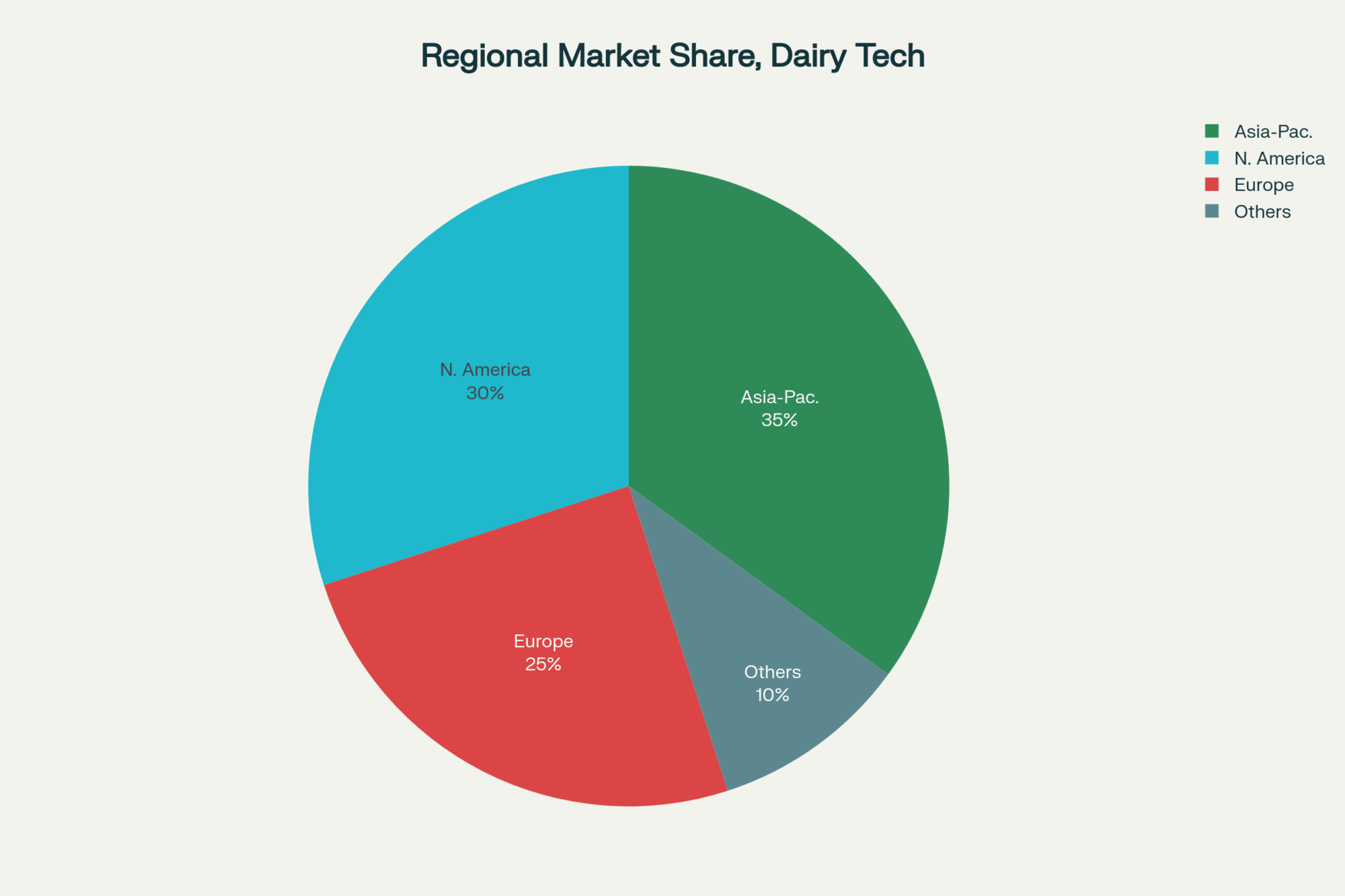
Regional Market Share for Precision Dairy Technology Adoption in 2025

Regionally, North America accounts for about 30% of the market, driven by labor cost pressures and solid tech infrastructure. European advances are driven by strict environmental and welfare regulations that encourage precision livestock farming tools. The Asia-Pacific is the fastest-growing market segment, modernizing dairy farming traditions with AI and robotics at a rate of approximately 6% CAGR.

Health & Reproduction Monitoring: The New Eyes in the Barn

AI health monitoring is no longer just a buzzword. Over one million U.S. cows are under continuous AI surveillance, with research from Liverpool University showing a lameness detection accuracy of nearly 85%. Catching lameness early can save $300-500 per cow annually.

Platforms like CattleEye and Ever.Ag identify heat cycles up to 24 hours before visual detection, leading to conception rate improvements of 8-12%. Dr. Sarah Johnson from Texas A&M confirms these systems can cut vet bills 25-30% while boosting herd fertility—benefits that farms see reflected quickly.

What producers should do: Consult with your veterinarian to select systems that integrate well with your existing herd health programs. Start with one technology rather than trying to implement everything at once.

Precision Feeding: Cutting Costs and Boosting Conversions

Feed costs chew up 50-60% of their total expenses. Precision feeding systems typically pay for themselves within 2 to 4 years, delivering feed savings between 15-25% per cow. European milk prices hold steady at €50.60 per 100 kg, making input control essential.

AI-driven feeding cuts feed expenses 5-10%, saving $200-400 annually per cow, depending on scale and prices. Real-time ration adjustments prevent $50-$ 75 per cow losses caused by nutritional imbalances.

Lucas Fuess from RaboResearch notes this tech improves feed conversion by 15-20%, a crucial edge in tight feed markets.

Implementation advice: Carefully assess your current feed costs and waste patterns to optimize your feed management. Consider exploring government grants or financing options specifically for agricultural technology to help with upfront costs.

Milk Yield Improvement by Precision Dairy Technologies

Robotic Milking: Why Automation is a Growing Investment

In Ontario, the number of farms using robotic milking systems doubled between 2016 and 2021, with many reporting milk yield gains of 2.5 to 2.9 kg per cow per day due to consistent milking protocols that reduce stress and allow for more frequent milking.

Mike Thompson from Progressive Dairy Solutions points out that robots don’t just replace labor—they trim $15-25k annually in labor turnover costs by keeping milking protocols reliable.

Key considerations: Ensure you have reliable system support and invest heavily in crew training. The technology is only as good as the management behind it.

Pasture Management Reinvented: The Rise of Virtual Fencing

Virtual fencing contains herds 99% of the time, cuts fencing maintenance by as much as $15,000, and frees up 20-40 labor hours weekly. The GPS-enabled collars guide cattle movement through audio cues and mild stimulation, eliminating most physical barriers.

University of Wisconsin research highlights a 17% boost in pasture utilization, converting underused land into productive feed. Recent regulatory approvals in areas such as New South Wales further support the adoption.

Before implementing: Evaluate local regulations and ensure you have strong cellular coverage. Begin by testing the effectiveness of a small section of your operation.

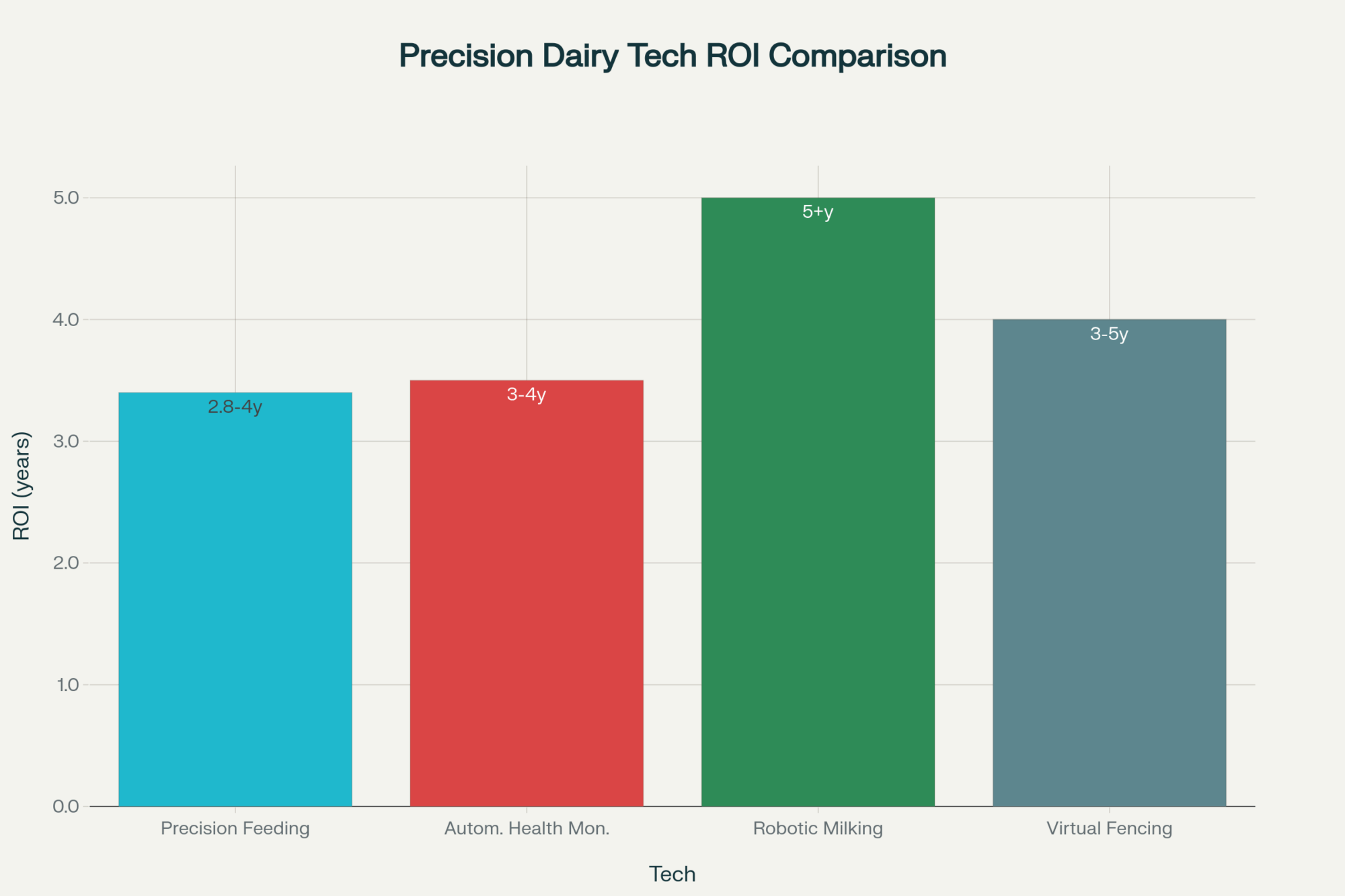
Typical ROI Timelines and Primary Benefits

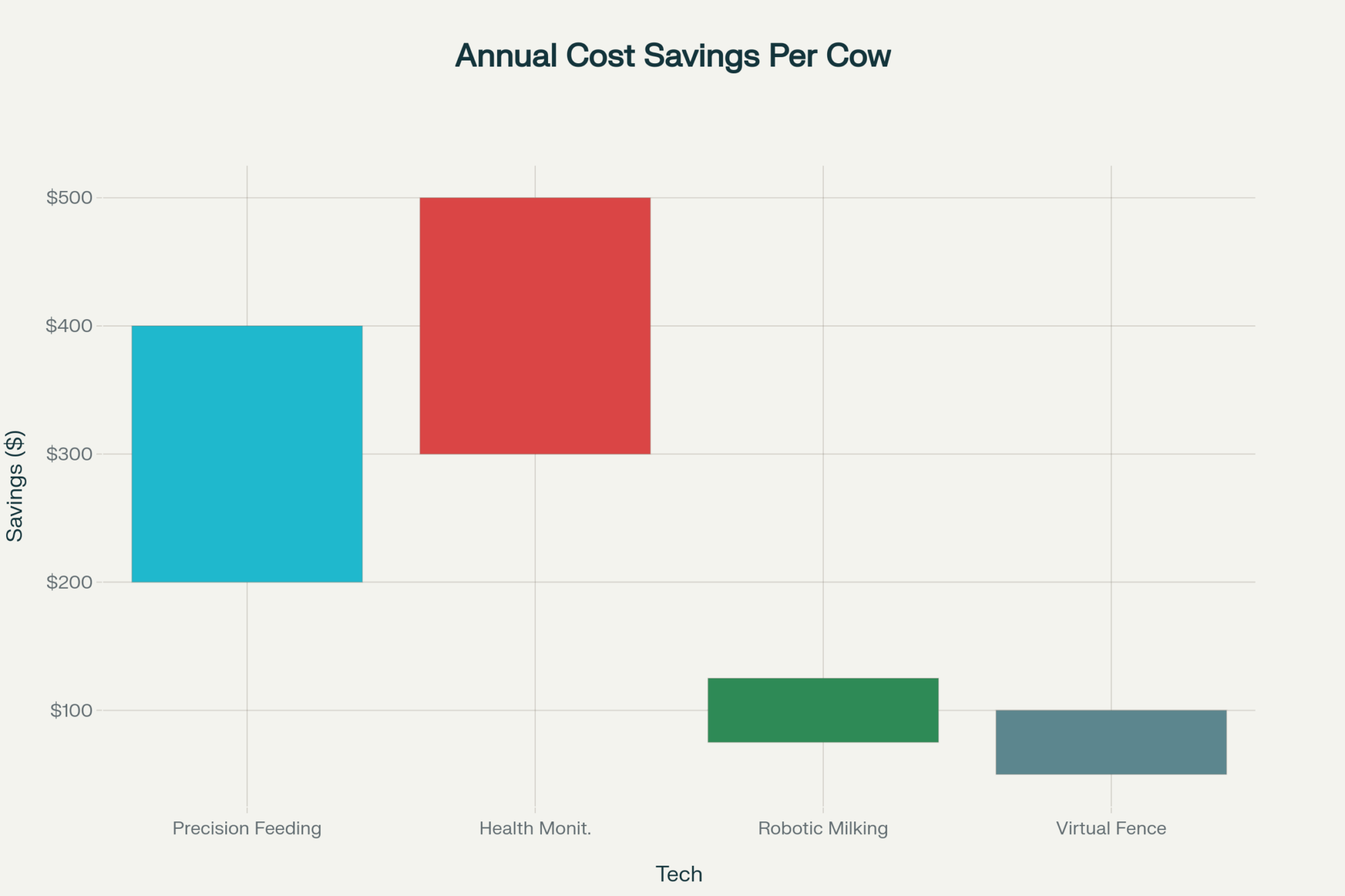
Typical ROI Timelines and Primary Benefits of Key Precision Dairy Technologies
  • Precision Feeding: 2-4 years – Feed cost savings (15-25%)
  • Automated Health Monitoring: 3-4 years – Reduced vet bills, increased yield
  • Robotic Milking: 5+ years – Labor savings, increased milk yield
  • Virtual Fencing: 3-5 years – Labor savings, enhanced pasture use
Estimated Annual Cost Savings per Cow from Precision Dairy Technologies

Scale matters: smaller farms (50-200 cows) see fastest payback through health monitoring and precision feeding. Larger operations benefit more from robotic milking and integrated automation systems.

The Real Challenges of Adopting Precision Tech

Adoption is not without its challenges. Nearly 30% of tech projects stall due to tight cash flow and inadequate staff training, according to Dr. Jennifer Walsh of Cornell. Training, management buy-in, and ongoing education are decisive factors.

Training & Management: Success requires time and investment in staff education, as well as new management skills to interpret and act on data. Many farms underestimate this learning curve.

Maintenance & Support: Equipment downtime can quickly erode expected savings. Establish relationships with reliable local dealers and develop comprehensive support plans before installation.

Data & Integration: Many systems lack effective communication, resulting in frustrating data silos. Invest in a central farm management platform for seamless integration—budget for additional software and consulting costs.

Cybersecurity: Connected operations must protect their data from growing cyber threats. Develop and regularly update data protection plans, as well as security protocols.

Solutions: Explore government financing programs, start with pilot projects, and prioritize vendor relationships with strong local support networks.

Looking Ahead: What the Future Holds

Precision tech adoption is forecast to triple by 2030. Mike North at EverAg warns that farms ignoring automation will face shrinking margins as labor becomes tighter and costs escalate.

Those embracing these technologies early enjoy not only cost savings but also improved animal welfare and sustainability certifications that open doors to premium markets, which are increasingly demanding transparency and environmental stewardship.

Bottom Line

The drive to precision technology isn’t a fad—it’s a strategic imperative for farms of all sizes. While the benefits are clear, success hinges on thoughtful planning, solid financing, committed training, and a willingness to evolve management practices.

The farms that will win in the long term won’t be those that buy the fanciest gadgets first—they’ll be the ones that better harness these tools to become smarter, more resilient businesses. Technology is the enabler; smart management remains the differentiator.

Start small, plan thoroughly, and remember: the goal isn’t just to adopt technology, but to use it strategically to build a more profitable and sustainable operation.

This analysis draws on the latest USDA data, peer-reviewed research from universities such as Liverpool and Wisconsin, and insights from leading dairy market analysts, extending through 2025.

Complete references and supporting documentation are available upon request by contacting the editorial team at editor@thebullvine.com.

Learn More:

  • Profit and Planning: 5 Key Trends Shaping Dairy Farms in 2025 – This article takes a step back from specific technologies to focus on the big-picture economic trends. It reveals how to leverage technology to navigate volatile markets, offering actionable advice on feed conversion ratios, genomic testing, and cleaning up your balance sheet to prepare for future investments.
  • The Robotics Revolution: Embracing Technology to Save the Family Dairy Farm – Beyond the headlines, this piece provides practical insights and case studies from real farms that have successfully implemented robotic milking systems. It demonstrates how to calculate ROI, busts common myths about automation, and shows how robots can transform a farm’s labor structure and improve quality of life.
  • 5 Technologies That Will Make or Break Your Dairy Farm in 2025 – This article delves deeper into the specifics of cutting-edge technology, from next-generation calf monitoring to advanced TMR systems. It highlights the tangible benefits and potential savings, providing a roadmap for what to invest in and what to expect in return.

Join the Revolution!

Join over 30,000 successful dairy professionals who rely on Bullvine Weekly for their competitive edge. Delivered directly to your inbox each week, our exclusive industry insights help you make smarter decisions while saving precious hours every week. Never miss critical updates on milk production trends, breakthrough technologies, and profit-boosting strategies that top producers are already implementing. Subscribe now to transform your dairy operation’s efficiency and profitability—your future success is just one click away.

NewsSubscribe
First
Last
Consent

Smart Dairy Tech Isn’t Just Hype Anymore—It’s Your Competitive Survival Plan

 While 62% of dairies adopted digital tools, feed efficiency improvements save $470/cow annually – are you missing out?

dairy technology, automated milking systems, dairy farm ROI, precision dairy farming, IoT agriculture

EXECUTIVE SUMMARY: Look, here’s what’s really happening out there… While most producers are still thinking “more milk equals more money,” the smart operators are using IoT to slash feed costs by 15% and boost operational efficiency by 20%. We’re talking real money here – feed efficiency improvements alone can save you $470 per cow annually, and with robotic milking systems now showing payback periods as low as 6 years instead of the traditional 9-10, the math is getting pretty compelling. Digital record keeping is cutting administrative time by 40%, which means you’re spending less time on paperwork and more time on what actually matters – your cows and your bottom line. The global trend is clear: operations embracing precision agriculture and IoT monitoring are positioning themselves for long-term competitive advantage while others get left behind. With milk prices at $21.60/cwt and margin pressure continuing, you can’t afford to ignore technology that delivers measurable ROI. Bottom line? If you’re not exploring IoT integration for your operation, you’re essentially giving your competition a head start.

KEY TAKEAWAYS

  • Immediate Feed Cost Reduction: IoT monitoring systems deliver 15% feed cost reductions through precision tracking and optimization – start with a pilot program focusing on your highest-producing group to measure baseline efficiency improvements before expanding herd-wide.
  • Labor Efficiency Gains: Digital record keeping slashes administrative time by 40%, freeing up labor for higher-value tasks – implement automated data collection systems for milk quality monitoring and reproductive management to capture immediate time savings in 2025’s tight labor market.
  • Predictive Maintenance ROI: Smart monitoring prevents costly equipment failures while extending machinery lifespan by 20-30% – install sensors on critical systems like milking equipment and cooling tanks to avoid the $50,000+ repair bills that can devastate cash flow.
  • Genomic Testing Integration: Feed efficiency traits show heritability of 0.43, meaning genetic improvements compound annually – combine genomic testing with IoT data collection to identify your most efficient cows and use them as the foundation for your breeding program.
  • Market Positioning Advantage: Consumer demands for transparency and sustainability verification are driving premium pricing – implement IoT traceability systems now to access higher-value markets as processors increasingly require data-driven welfare documentation.

You know that feeling when you’re walking through a dairy operation and something just feels… different? That’s what I’m experiencing more and more when I visit farms that have embraced IoT technology. The producers who’ve leaped aren’t just talking about better butterfat numbers—they’re fundamentally changing how they think about dairy farming.

And here’s the thing that’s got my attention: this isn’t some distant future scenario anymore.

What’s Actually Happening Out There Right Now

The thing about dairy technology adoption is that it’s creating this fascinating divide across our industry. Recent research in the Journal of Animal Science analyzing precision livestock farming systems shows that real-time continuous monitoring is enabling more precise tracking and management of health and well-being, but—and this is important—the quality of implementation varies dramatically from farm to farm.

I was talking to a producer in Wisconsin last month (3,500-head operation, pretty typical for that region), and he mentioned something that’s stuck with me. His operation has seen significant efficiency gains with digital systems, but it took him nearly two years to get there. Two years. That’s not exactly plug-and-play territory, especially when you’re trying to justify the investment to your banker.

What strikes me about the current market situation is how the economics are forcing producers’ hands. Research published in Animals demonstrates that IoT technologies are creating new opportunities for dairy farmers through enhanced monitoring and management systems, and with the USDA projecting the all-milk price at $21.60 per hundredweight for 2025, every efficiency gain matters more than ever.

Here’s something that caught my attention: automated milking systems are gaining serious traction, with reports showing over 1 million US cows now under AI-powered monitoring systems. That’s a pretty significant jump from where we were just a few years ago, and it tells me this technology is moving beyond early adopters into mainstream consideration.

What’s particularly fascinating is how regional adoption patterns are emerging. The EU’s regulatory pressure is creating different incentives than what we’re seeing in the Upper Midwest or California’s Central Valley.

The Real Numbers Behind All the Hype

Let’s talk dollars and cents because that’s what matters when you’re trying to keep the lights on. Recent work published in Sustainability analyzing AI transformation of dairy supply chains shows operations are seeing significant productivity improvements, but—and this is important—those robotic milking systems will run you anywhere from $185,000 to $275,000 per unit, depending on your setup requirements.

I’ve been looking at payback periods across different operation sizes, and what’s interesting is how much they vary. Recent studies show that while initial projections often show nine-year paybacks, many operations are achieving returns in just over six years. That’s largely due to increased production and labor savings that weren’t fully captured in the original projections.

The maintenance story is where things get really compelling, though. Research demonstrates that predictive maintenance systems can significantly reduce unplanned downtime while extending equipment lifespan. A producer in New York I know (processing about 80,000 pounds daily) told me this technology saved him over $1,200 just last week when sensors caught a bearing issue before it caused a major problem.

What’s particularly noteworthy is how labor efficiency is improving. With skilled dairy workers harder to find and commanding premium wages—we’re seeing $22-25/hour for experienced milkers in California—any technology that can reduce administrative burden or improve workflow efficiency becomes critical for maintaining profitability.

The quality control piece hits differently, too. Current research published in Animals shows that IoT-based monitoring systems can achieve high accuracy in detecting quality parameters, which prevents the kind of contamination issues that can cost processors millions. One bad batch can wipe out years of profits… just ask any processor who’s been through a listeria recall.

How This Tech Actually Works in Your Parlor

The practical side of IoT implementation centers around what I call the “holy trinity” of dairy automation—and it’s not as complicated as the vendors want you to think. Research from Cambridge shows that sensors embedded in milking equipment can collect comprehensive data in real-time, while processors use these same systems for automation and optimization.

Real-time monitoring is where you see immediate impact. Temperature, humidity, and location tracking throughout your transport and storage chains can prevent the kind of excursions that used to go unnoticed. This is becoming more common, especially in regions dealing with extreme weather patterns.

A producer in Texas shared something interesting with me last month. His cooling system used to cycle on and off based on time intervals, but now IoT sensors trigger cooling based on actual milk temperature and ambient conditions. Sounds simple, but it’s cutting his energy costs by 15% during those brutal summer months when electricity rates spike.

The sophisticated stuff—predictive analytics—is where things get really fascinating. Recent studies published in scientific journals analyzing precision livestock farming demonstrate that these technologies enable real-time decision-making optimization, improving both product quality and safety while ensuring complete traceability. But here’s what the research doesn’t tell you… Integration with legacy systems remains a nightmare.

According to Dr. Jim Smith from Penn State’s dairy science department, who’s been studying IoT implementation for five years: “The technology works beautifully when it’s properly integrated, but we’re seeing failure rates of 30-40% in the first year when farms underestimate the infrastructure requirements.”

Regional Realities That Nobody Talks About

Here’s where it gets complicated, though. The regulatory landscape is shifting faster than most producers realize, and it’s creating different adoption pressures across regions. The EU’s Green Deal is pushing sustainability metrics that require comprehensive data collection—IoT basically becomes mandatory for compliance in many European markets.

What’s interesting is how differently this is playing out across regions. California’s Sustainable Groundwater Management Act (SGMA) has over 1,100 dairy members in monitoring programs, driving water usage monitoring that integrates naturally with IoT systems. Producers there are seeing dual benefits—regulatory compliance plus operational efficiency. But try explaining that to a producer in Nebraska, where the regulatory pressure is minimal.

Meanwhile, New Zealand’s emissions pricing discussions continue to evolve, with DairyNZ advocating for practical frameworks that give farmers access to necessary tools and technologies. The current government has shelved immediate implementation, but the writing’s on the wall for environmental accountability in dairy operations globally.

European milk production continues to decline under Green Deal pressure, with November 2023 showing a 2.5% year-over-year drop. This trend is creating market opportunities for North American producers who can efficiently implement sustainable practices through technology.

The labor angle varies dramatically, too. In regions with tight labor markets—thinking Upper Midwest, parts of the Northeast—IoT adoption is accelerating out of necessity. But in areas with more available skilled labor, the economic justification gets trickier.

Real-World Case Studies That Matter

Let me tell you about a 2,800-head operation in Vermont that implemented comprehensive monitoring last year. The producer was skeptical about the substantial investment, but the numbers don’t lie. His somatic cell count dropped from 180,000 to 110,000 within six months, and his milk quality premiums increased by $0.85 per hundredweight. That’s roughly $150,000 annually in improved milk quality alone.

But here’s what’s really interesting—his biggest benefit came from something unexpected. The system’s reproductive management capabilities improved conception rates by 12%, which reduced replacement costs by about $85,000 annually. Nobody talks about that in the marketing materials.

Another case that caught my attention comes from recent research on precision dairy farming implementation. A 1,200-head operation in Idaho focused purely on feed efficiency monitoring and achieved an 18% reduction in feed costs. The key? Real-time adjustment of TMR formulations based on individual cow requirements.

What’s particularly noteworthy is how the implementation timeline affected results. Producers who took a phased approach—starting with milk quality monitoring, then expanding to feed management, then predictive maintenance—consistently reported better outcomes than those who tried to implement everything at once.

Dr. Sarah Johnson, who led a comprehensive study of robotic milking adoption at Cornell, told me: “The farms that succeed are the ones that view IoT as a management philosophy, not just a technology purchase. They understand that data collection is only valuable if it changes behavior.”

The Implementation Strategy That Actually Works

The producers who are getting this right aren’t trying to boil the ocean. Recent analysis of precision livestock farming shows that step-wise approaches enable a gradual transition while capturing automation benefits. Start with your biggest pain point, get that working, then expand.

What’s happening in smaller operations is particularly interesting. Research demonstrates that IoT can be deployed cost-effectively using mobile applications and specialized sensors, making the technology accessible to operations that previously couldn’t justify the investment. A 400-head operation in Pennsylvania is utilizing smartphone-based monitoring for heat detection, achieving 92% accuracy.

Here’s the thing, though—current financing conditions are adding complexity. Agricultural equipment loan rates have increased significantly, but consumer demands for transparency and welfare verification are becoming essential for market access, so these systems are becoming necessary for competitive positioning regardless of immediate ROI.

Mark Thompson, a dairy technology consultant who’s worked with over 200 farm implementations, shared his perspective: “The most successful installations happen when producers understand that IoT is about optimizing decisions, not replacing them. Technology amplifies good management—it doesn’t create it.”

What Nobody Warns You About

Let’s be honest about the challenges here because the vendors sure won’t be. Implementation failure rates can be substantial when planning is insufficient or infrastructure support is inadequate. The most common failure points? Underestimating integration complexity, inadequate staff training, and insufficient network infrastructure.

A producer in Minnesota told me something that stuck: “The technology works great… when it works.” His system goes down periodically, usually due to network connectivity issues. Rural broadband is still a limiting factor, and 5G coverage is spotty at best in many dairy regions.

The cybersecurity aspect is also escalating. Recent research indicates that dairy farms are facing increasing digital transformation and cybersecurity challenges, with connected farm systems becoming prime targets for cyberattacks. A notable example from Switzerland involved hackers exploiting farm network vulnerabilities to deploy ransomware, disrupting milking schedules and endangering animal health.

And here’s something the consultants don’t emphasize enough—technology evolution means ongoing investment. Systems purchased today will need significant upgrades within 5-7 years. Factor that into your financial planning.

According to cybersecurity expert Dr. Lisa Rodriguez, who specializes in agricultural technology, “Dairy farms are becoming attractive targets because they have valuable operational data and often lack robust security protocols. A successful attack can shut down operations for days.”

Learning from the Pioneers

What’s fascinating about successful implementations is how much data strategy matters. Leading operations are seeking complete visibility across the product lifecycle, working to unify information flow from farm to consumer. But here’s what they’re not telling you—data ownership becomes a real issue.

A large processor in Wisconsin shared something interesting: they’re now requiring their suppliers to provide IoT data as part of their quality assurance program. That data becomes valuable intellectual property, and the ownership questions get complex.

The competitive timing is also becoming time-sensitive. Research from the University of Milan shows that precision livestock farming offers greater sustainability benefits than traditional techniques, with carbon footprint reductions of 6-9%. Operations that embrace these technologies are now positioning themselves for a long-term competitive advantage.

Professor Michael Chen from UC Davis, who’s been tracking IoT adoption patterns, noted: “We’re seeing a clear divide emerging between farms that embrace data-driven management and those that don’t. The gap in operational efficiency is becoming too large to ignore.”

Where We Go from Here

The evidence from current research published in the Journal of Animal Science on precision agriculture adoption suggests we’re at an inflection point. The technology works, the economics are improving, and the competitive pressure is intensifying. But success requires realistic planning and phased implementation.

If you’re considering IoT for your operation, start with a focused pilot targeting your most pressing challenge. Don’t try to revolutionize everything at once—pick one area where you can measure clear ROI and build from there. Evaluate your infrastructure first, budget for the full implementation cycle, and find vendors committed to long-term partnerships.

The window for competitive advantage through early adoption is narrowing, but it’s not closed. The producers making this transition thoughtfully—with realistic expectations about challenges and long-term benefits—are positioning themselves for success in an increasingly technology-dependent industry.

This isn’t about chasing the latest tech trends anymore. It’s about leveraging proven tools to maintain competitiveness, improve operational efficiency, and meet evolving market demands. The question isn’t whether to implement IoT—it’s how quickly you can do it effectively while managing the risks and maximizing the returns.

The dairy industry has always been about adapting to change, from the first milking machines to artificial insemination to genomics. IoT represents the next evolution in that journey, and the farms that embrace it strategically will be the ones writing the success stories five years from now.

But here’s what really excites me about where we’re headed: this technology isn’t just making us more efficient—it’s making us better stewards of our animals and our resources. And in an industry that’s been feeding families for generations, that matters more than any profit margin.

What’s the single biggest tech challenge or breakthrough you’ve experienced on your operation? Share your story in the comments below—I’d love to hear how you’re navigating this digital transformation.

Complete references and supporting documentation are available upon request by contacting the editorial team at editor@thebullvine.com.

Learn More:

Join the Revolution!

Join over 30,000 successful dairy professionals who rely on Bullvine Weekly for their competitive edge. Delivered directly to your inbox each week, our exclusive industry insights help you make smarter decisions while saving precious hours every week. Never miss critical updates on milk production trends, breakthrough technologies, and profit-boosting strategies that top producers are already implementing. Subscribe now to transform your dairy operation’s efficiency and profitability—your future success is just one click away.
NewsSubscribe
First
Last
Consent

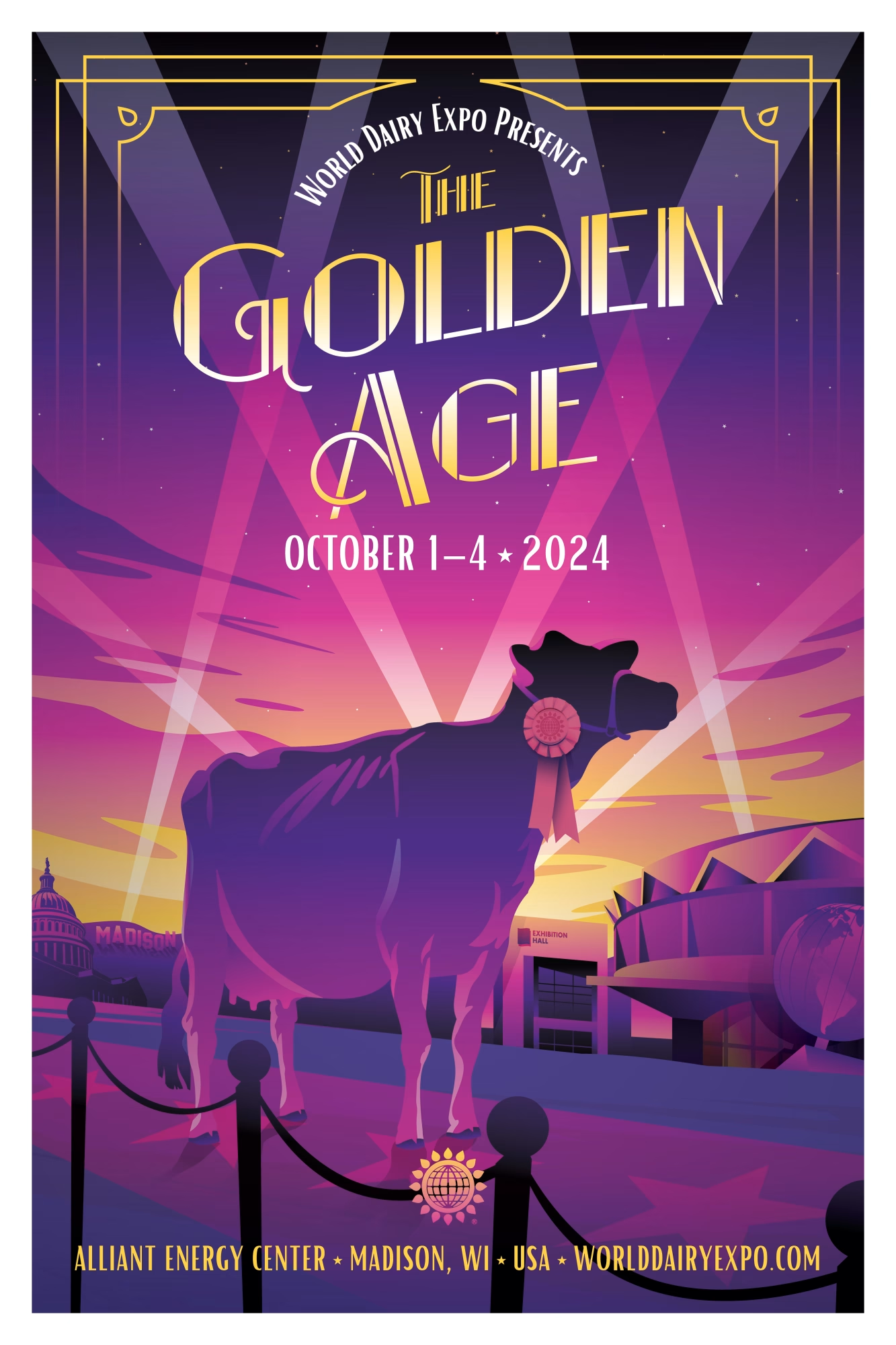
Why You Can’t Miss the Golden Age of Dairying at World Dairy Expo 2024!

Explore the future of dairying at the World Dairy Expo 2024! Check out innovations, meet experts, and celebrate excellence. Ready to join the Golden Age?

Summary: World Dairy Expo 2024, set from October 1-4, showcases the Golden Age of dairying, drawing parallels with Hollywood’s technological advancements in film. This year features over 600 companies presenting the newest innovations in genetics, feed, calf care, etc. Attendees can expect interactive sessions, expert advice, and networking with global producers from 100 countries. Key awards will honor industry contributors, while the cattle show will highlight some of the greatest dairy cattle in the world. The 40th anniversary of the World Forage Analysis Superbowl promises top-notch forage samples and seminars. New highlights include an upgraded Supreme Junior Champion Ceremony and a subscription-based ExpoTV for remote viewing.

  • World Dairy Expo 2024 celebrates the Golden Age of dairy, focusing on technological advancements.
  • Over 600 companies will showcase innovations in dairy management, including genetics, feed, and calf care.
  • Attendees can participate in interactive sessions, gain expert insights, and network with producers from 100 countries.
  • Awards will honor significant contributors to the dairy industry, including International Person of the Year and Dairy Producer of the Year.
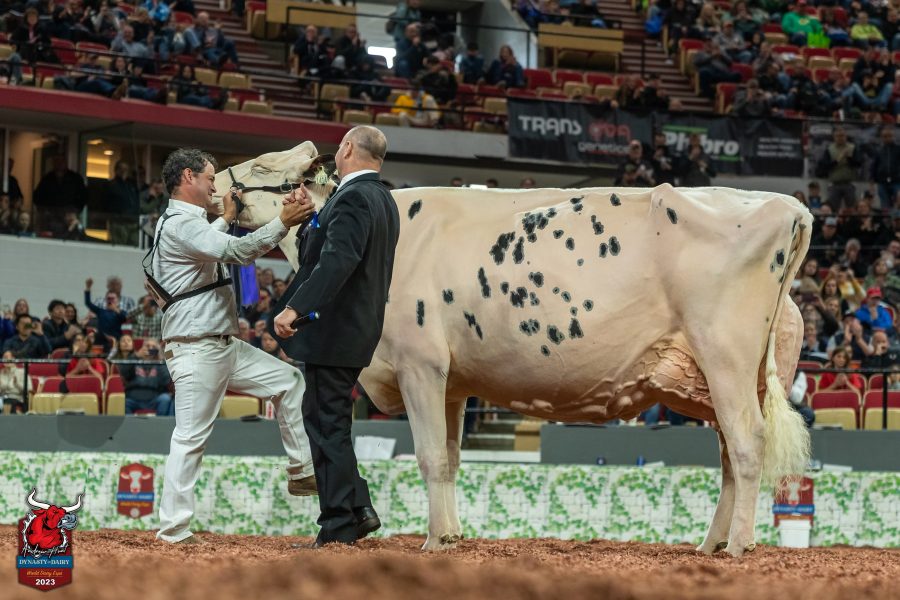
  • The cattle show will feature top breeds, with nearly 2,600 animals competing for the Supreme Champion title.
  • The World Forage Analysis Superbowl celebrates its 40th anniversary with high-quality forage samples and educational seminars.
  • New features include an upgraded Supreme Junior Champion Ceremony and a subscription-based ExpoTV for remote viewers.

The World Dairy Expo, a remarkable event that heralds the Golden Age of dairying, is an unparalleled learning opportunity! This year’s Expo, scheduled from October 1-4, 2024, will feature approximately 600 companies showcasing cutting-edge milking equipment and sophisticated genetic research. It’s a one-of-a-kind chance to learn from worldwide dairy finance, regulatory, and sustainability specialists. The Expo will also showcase must-see trends, major recognition prizes, fascinating cattle displays, and instructive seminars like the World Forage Analysis Superbowl. Stay tuned; you’re in for a unique and enriching learning experience!

Have you ever heard of the Golden Age of Hollywood? 

Imagine a transformation in the dairy industry, akin to the Golden Age of Hollywood, when movies began talking and exploding into bright colors, changing how tales were delivered on screen. This year’s World Dairy Expo has a concept similar to that but for the dairy business. They’re calling it “The Golden Age of Dairying,” an idea that’s more than just a name; it’s a call to action, a motivation for dairy farming’s future. This event is not just about showcasing innovations; it’s about inspiring the next generation of dairy farmers. You do not want to miss it.

This gorgeous motif is made possible by modern technologies. Advanced technology is transforming dairy production, much as sound and technicolor altered the silver screen. Ever wonder how the most recent advances in genetics, manure management, and calf care are changing the industry? That is precisely what the Expo is about this year.

Think about it for a second. During Hollywood’s Golden Age, technological advancements made films more entertaining, gorgeous, and accessible to viewers worldwide. Modern dairy technology improves farm efficiency, productivity, and sustainability. The possibilities seem limitless, ranging from 3D simulation modeling and Bovaer 10, which significantly cuts methane emissions, to remote monitoring of milking parlors.

Ready to Transform Your Dairy Farming World? 

Are you enthusiastic about the dairy industry’s innovative trends? This year’s World Dairy Expo will bring together over 600 enterprises to display cutting-edge advances. Consider the possibilities of the latest in genetics, manure management, feed and forage, calf care, milking equipment, housing, and cow comfort. Consider how these advancements may improve your daily operations, making them more efficient and successful. It’s a promising look into the future of dairy farming and a unique chance to network with other dairy farmers and professionals worldwide.

It’s about having the latest technology and learning how to manage your dairy cows to increase overall farm output effectively. Innovative data collecting and usage techniques and technologies will be prominently shown, delivering essential insights that will assist you in making better choices.

Consider this: more inventive farming with data at your fingertips, allowing you to optimize your herd’s health and productivity. These technologies are intended to drive your farm into the future, keeping it competitive and sustainable in an ever-changing sector. Take advantage of this unique chance to learn, develop, and network with other dairy farmers and professionals worldwide. By attending, you can gain practical insights and strategies to increase your farm’s output and efficiency.

World Dairy Expo Spotlights 

Recognition awards play a pivotal role in the World Dairy Expo, embodying the event’s celebration of excellence and innovation within the dairy industry. These awards aren’t just about trophies and titles; they spotlight individuals and teams whose relentless dedication and groundbreaking work push the boundaries of dairy farming. 

For 2024, the honorees include: 

  • International Person of the Year: Paul Larmer, former CEO of Semex, Ontario, Canada
  • Industry Persons of the Year: Jim Barmore, Marty Faldet, and King Hickman, founders of GPS Dairy Consulting of Minnesota, USA
  • Dairy Producers of the Year: Mike, Ed, Barb, Sandy Larson, and Jim Trustem of Larson Acres, from Wisconsin, USA

The honor will be placed on Wednesday evening, October 2, during the distinguished honor Banquet in The Tanbark at the Expo. It is a ticketed event, so get your tickets at www.worlddairyexpo.com by September 20, 2024.

Step into the Ultimate Dairy Showdown: Where Excellence Meets Passion

Imagine strolling into a world where North America’s best dairy cattle battle for the coveted Supreme Champion title. The excitement is apparent as over 2,600 animals march before the judges, representing the world’s best from seven distinct breeds. With over 1,800 exhibitors from 36 U.S. states and five Canadian provinces, you can sense each participant’s prestige and dedication to the event.

This is more than simply a competition; it displays dairy farming expertise. The barns are bustling with activity and provide a unique setting to meet breeders, see the lovely animals, and acquire vital insights. And suppose you want to invest in champion bloodlines. In that case, there are plenty of options here—both via private sales and the four breed sales conducted throughout the week.

Celebrating 40 Years of Forage Excellence: The World Forage Analysis Superbowl

This year marks the 40th anniversary of the World Forage Analysis Superbowl, which has focused on increasing dairy forage quality for four decades. With eight distinct categories, the event encourages forage producers to present their best forages. Over 300 submissions are examined annually, and entrants compete for over $26,000 in awards.

Winning samples will be displayed in the Trade Center during the exhibition, and farmers will be honored at the Brevant Seeds Forage Superbowl Luncheon on October 2. This event is more than simply a competition; it is about developing the whole field of dairy foraging.

In addition to the Super Bowl, renowned forage research specialists will provide cutting-edge knowledge at entertaining lectures from October 2 to 4. These seminars provide a wealth of information, owing to the participation of industry experts such as Dairyland Laboratories, Hay & Forage Grower, the U.S. Dairy Forage Research Center, the University of Wisconsin, and the World Dairy Expo. Attendees may expect to hear about the most recent advances in forage management from some of the industry’s sharpest minds.

Exciting New Features and Changes Await! 

This year’s World Dairy Expo will introduce exciting new features and adjustments you will take advantage of. One of the attractions is the updated Supreme Junior Champion Ceremony. Imagine the greatest heifers strutting their thing under the limelight in a high-energy event on Thursday, October 3, immediately after the International Holstein Heifer Show. It promises to be a memorable event!

But that is not all. Can’t get to Madison? Not a problem! ExpoTV is getting interactive. For the first time, ExpoTV subscribers may watch live coverage of the Expo from the comfort of their own homes. It’s not enough to merely observe; you must also participate in the activity, even from a distance. This interactive feature lets you engage with the event in real time, making it a truly immersive experience.

The Bottom Line

The World Dairy Expo 2024 promises to be a must-see event for anybody in the dairy sector. Everyone may find something to enjoy, from cutting-edge technology and innovative trends to industry leader awards and breathtaking livestock exhibitions. This Expo has everything, from learning about the newest research to networking with specialists worldwide. The blend of in-person and virtual encounters allows you to engage no matter where you are. So, why not mark your calendars and join the Golden Age of dairying?

For the most up-to-date information and to plan your visit, check out the official website at www.worlddairyexpo.com. Get ready to experience the future of dairy farming!

Learn more:

How Apple’s High Standards Are Transforming Dairy Tech: Achieving Efficiency and Sustainability

Explore how the high standards set by Apple are transforming dairy technology. Are these groundbreaking innovations raising the bar too high for efficiency and sustainability in the dairy farming sector?

Apple’s reputation for setting and demanding high standards in the tech industry is legendary. Every product, every innovation, and each facet of the ecosystem experience is finely crafted with unwavering attention to detail. This distinctive ethos has set an unparalleled benchmark in consumer electronics and a swath of diverse industries. Surprisingly, the dairy industry is one sector that feels the forceful ripple effect of Apple’s influence. As we delve into this unexpected interaction, we explore how Apple’s stringent standards revolutionize dairy technology – promoting unprecedented efficiency and encouraging sustainability.

The Apple Ethos: Setting New Standards in Dairy Technology 

This is surprising. How exactly can a company renowned for unique consumer electronics heavily impact a sector as distinct as dairy farming? The answer is rooted in the principles that define Apple’s unparalleled success. Apple’s triumph hinges on a foundation fortified by meticulous design, unflagging dedication to excellence, and a never-ending pursuit of quality and innovation. 

So, what are these fundamental principles? The core elements are simplicity, practicality, and a relentless drive for excellence. These factors have fostered a distinct culture within Apple, permeating every component of the company’s extensive operations. Whether it’s the intertwined supply chains adept at global product delivery, the tenacious software development teams crafting robust solutions, the stringent adherence to international standards by production units, or the customer service team known for unparalleled support – Apple’s ethos continually resets the industry standard. 

Remarkably, these principles are not just making waves, but also stirring up progress in the dairy sector. The potential rewards of this unexpected alliance are immense—enhanced resource efficiency, elevated animal welfare, and superior product quality. The dairy industry, once considered archaic, is now on the cusp of a technological revolution, all thanks to Apple’s renowned standards. 

Are you intrigued by the potential of Apple’s ambitious ethos to transform dairy farming? Stay with us as we unravel this fascinating transformation and envision the potential future of dairy technology, inspired by Apple’s extraordinary ethos. The possibilities are endless, and the future is bright.

Apple-Style Precision Meets Dairy Technology 

Gone are the days when the dairy industry was considered archaic and resistant to change. Today, it is actively embracing technology to boost productivity and sustainability. Surprisingly, Apple’s renowned standards have played an instrumental role in shaping this sector, signaling the convergence of two unlikely worlds. Let’s enumerate these exciting transformations: 

  • Design Simplicity and User Experience
  • Dairy tech companies, taking a leaf out of Apple’s book, are leaning into user-centric designs to revolutionize the dairy domain. From milking robots to herd management software, equipment interfaces are being reimagined to be farmer-friendly, reducing the learning curve and promoting swift adoption. Furthermore, drawing parallels with Apple’s seamless device ecosystem, these firms strive to create integrated platforms where health monitors, feed management, and production data coalesce, enabling effortless, real-time insights for farmers. 
  • Quality Control and Data Accuracy
  • Emulating Apple’s uncompromising commitment to high-quality standards, the dairy industry is seeing the onset of improved precision farming practices. Thanks to cutting-edge sensors and analytics tools, subtle shifts in cow health, milk quality, and feed efficiency are promptly detected, ensuring superior product quality. Inspired by Apple’s rigorous product testing, dairy tech firms are implementing more stringent testing protocols for their equipment, resulting in longer-lasting, more reliable machinery that bolsters productivity while reducing downtime. 
  • Sustainability Initiatives
  • As Apple continues its concerted efforts to mitigate its carbon footprint, dairy tech companies are following suit by focusing on sustainability measures. Automated milking systems and precision feeding techniques minimize water use and curtail food waste, substantially reducing environmental impact. Using Apple’s renewable energy initiatives as a cornerstone, dairy farms are exploring analogous avenues to transition toward sustainable energy production. Advanced manure management systems now enable farmers to recycle waste into biogas and organic fertilizers, heralding the dawn of circular agriculture. 
  • Supply Chain Optimization
  • The ripple effects of Apple’s meticulous supply chain management practices are palpable within dairy supply chains. Farmers are leveraging logistics software to fine-tune milk collection routes, reducing transportation costs and guaranteeing fresher product delivery. Similar to how Apple anticipates potential disruptions in its supply chain, dairy tech firms are leveraging predictive maintenance tools to minimize equipment downtime, ensuring a smooth and consistent production pipeline. 
  • Customer Support and Education
  • As we can see in Apple’s customer support echelons, dairy tech companies offer comprehensive after-sales support. This includes accessible 24/7 helplines, on-site maintenance, and digital manuals. Also recognizing the paramount importance of continuous education, these firms provide online training courses and webinars for farmers, reflecting Apple’s commitment to customer education as seen in their retail stores.

Embracing the Apple-Inspired Agricultural Revolution 

In a world driven by innovation and user-centricity, as exemplified by Apple, it’s not surprising to see echoes of this approach in agricultural technology. Despite the unique challenges of rural connectivity, data collection, and environmental conditions, dairy farmers are demonstrating a strong demand for technological solutions that offer advanced functionality, practicality, and ease of use. This demand is not just a trend, but a testament to the potential of Apple-inspired dairy technology to address the unique challenges of the agricultural sector. 

As proof, consider the surge in the sales of wearable devices for dairy, helmed by leaders like Merck’s Antelliq, Cow Manager, and Nedap. Farmers here are choosing cow collars, Fitbits, or ear tags not just based on functionality but also for their straightforward installation process and intuitive data platform usage. 

New entrants in the tech race, like SmaXtec, are leaving their trail of impact, too. Their smart rumen bolus, an innovation already used by hundreds of thousands of cows in the US, is revolutionizing dairy farming. The tech offers continuous health monitoring—a significant leap that can prevent issues and potentially save hundreds of dollars per animal annually. 

Companies like Labby are ushering in the real-time milk quality analysis age. They demonstrate that advanced functionality and accessibility can marry perfectly to yield technology that’s not only groundbreaking but also easy to install and use. 

As more and more dairy tech firms borrow from Apple’s principles, the farming landscape is seeing an intriguing shift. Camera sensors for behavioral observation and feed availability checks are facing similar challenges. Yet, industry stakeholders remain undeterred, emphasizing ease of installation and realizing the value of innovative farming solutions. 

Eco-driven and profit-conscious, the dairy industry embraces the technological revolution, molded in the Apple image. The path ahead promises an exciting blend of vision, innovation, and transformative evolution. 

Eco-driven and profit-conscious, the dairy industry embraces the technological revolution, molded in the Apple image. The path ahead promises an exciting blend of vision, innovation, and transformative evolution. 

The Bottom Line

Apple’s exceptional standards establish an example that resonates beyond personal electronic devices. By embodying these principles, you – the dairy industry – are not simply attaining enhanced performance but also integrating environmentally friendly practices that hold the potential to revolutionize the future of farming. This paradigm shift, influenced by Apple’s vision, epitomizes a fresh epoch where inventiveness, efficiency, and long-term sustainability coexist. Apple’s influence on dairy technology is paving the way for a more advanced, sustainable, and efficient future of farming.

Key Takeaways:

The convergence of Apple’s user-focused design principles and modern dairy technology has created high expectations in the agricultural sector. This article explores how Apple’s reputation for intuitive interfaces, reliability, and sustainability is inspiring dairy tech innovations. 

  • Apple’s legacy of making technology accessible has set a high bar for user-friendly agricultural solutions.
  • Dairy farming presents unique challenges, such as connectivity, environmental conditions, and complex requirements, making tech adoption slower.
  • Despite these hurdles, there’s a growing demand for impactful, easy-to-use agtech solutions that borrow from Apple’s design principles.
  • Leading companies like Merck’s Antelliq, Cow Manager, and Nedap are at the forefront, offering practical devices suited to the demanding conditions of dairy farms.
  • Successful adoption of dairy tech is driven by ease of installation and intuitive data platforms, essential for real-time animal monitoring and management.
  • Solutions like SmaXtec’s smart rumen bolus and Labby’s instant milk quality analysis represent the latest advancements, promoting efficiency and sustainability in dairy operations.

“The future of dairy farming is promising, with pioneering companies leading the way towards more efficient, sustainable, and technologically driven operations.”


Summary: Apple’s reputation for high standards in the tech industry has led to a revolution in dairy technology, promoting efficiency and sustainability. Dairy tech companies are combining Apple-style precision with user-centric designs, reimagining equipment interfaces to be farmer-friendly and reducing the learning curve. They create integrated platforms that integrate health monitors, feed management, and production data, providing farmers with real-time insights. Quality control and data accuracy are implemented, resulting in longer-lasting machinery and reduced downtime. Sustainability initiatives include automated milking systems and precision feeding techniques, minimizing water use and food waste, and optimizing dairy supply chains through logistics software and predictive maintenance tools. Apple’s customer support is evident in dairy tech companies offering comprehensive after-sales support, 24/7 helplines, on-site maintenance, digital manuals, and online training courses for farmers. The dairy industry is embracing the Apple-inspired Agricultural Revolution, as farmers demand advanced functionality, practicality, and ease of use. The path ahead promises an exciting blend of vision, innovation, and transformative evolution, integrating environmentally friendly practices that hold the potential to revolutionize the future of farming.

Learn More:

Navigate the World Dairy Expo Like a Pro: The Ultimate Guide for Dairy Enthusiasts

Planning to attend the World Dairy Expo? Discover essential tips, must-see events, and insider advice in our ultimate guide for dairy enthusiasts. Ready to dive in?

Welcome to the greatest celebration of all things dairy—the World Dairy Expo! For everyone who loves dairy, this yearly spectacle is not just any event; it’s a must-see site. Drawing people from all over the world, the World Dairy Expo presents a special fusion of knowledge, creativity, and community. Still, what really distinguishes it? 

Imagine thousands of dairy experts, farmers, and enthusiasts gathering in one location to exchange information, investigate the most recent technical developments, and honor their shared dairy passion. Here, you’ll be able to:

  • Witness world-class dairy cattle competitions.
  • Explore cutting-edge dairy technology and equipment.
  • Attend educational seminars and workshops.
  • Network with industry leaders and fellow enthusiasts.

The ideal forum for this is the World Dairy Expo. It’s where worldwide innovation meets enthusiasm for dairy. The World Dairy Expo is more than simply an event for people who like dairy; it’s an experience that will inspire, inform, and link you with the core of the dairy community.

The World Dairy Expo: From Humble Beginnings to Global Renown

The World Dairy Expo has a storied history that dates back to 1967. Originally conceived as a regional event, its primary goal was to showcase the best dairy cattle from the Midwest. Over the years, it has evolved into an internationally renowned gathering, attracting participants from over 90 countries. Today, the Expo is not just about cattle; it’s a comprehensive celebration of all things dairy. From cutting-edge technology displays to robust educational seminars, the World Dairy Expo represents the pinnacle of dairy industry achievement and innovation. 

“The World Dairy Expo is where the global dairy industry meets.” – A sentiment echoed by countless attendees year after year.

This transformation from a modest regional fair to a global powerhouse is a testament to the industry’s dedication to progress and excellence. Whether you’re a seasoned dairy farmer, an agri-business professional, or a passionate enthusiast, attending the Expo provides unparalleled opportunities for growth, learning, and networking.

Your Essential Guide to the World Dairy Expo 2024 

Held yearly in Madison, Wisconsin, the World Dairy Expo is the main event for those who like dairy products and attracts a varied worldwide attendance. Set for October 1–5, 2024, this five-day event turns the Alliant Energy Center into a hive of dairy innovation and legacy.


With more than 850 businesses exhibiting the newest in dairy technology, genetics, equipment, and services, participants may fully explore a plethora of goods and knowledge. Breed exhibits, Knowledge Nook educational seminars, and networking events like the evening Happy Hours at The Tanbark abound at the fair.

Who Will You See? Dairy farmers seeking to improve their operations, business leaders investigating the newest developments, and dairy product aficionados ready to find fresh, creative ideas draw a diverse audience to the World Dairy Expo. This broad mix of participants guarantees dynamic and exciting surroundings, promoting learning and teamwork.

The World Dairy Expo has something for everyone, regardless of your level of experience or merely enthusiasm for dairy. This is a unique chance to interact with business professionals, learn from their experiences, and honor the dynamic world of dairy.

Planning Ahead: Practical Tips for a Seamless World Dairy Expo Experience 

Making the most of the World Dairy Expo requires advance planning. These helpful guidelines will help you to guarantee a flawless and fun experience:

Travel Arrangements 

First things first, figure out your Madison, Wisconsin transportation. Book your flights early to maximize the discounts. Just a short drive from the event, the nearest airport is Dane County Regional Airport (MSN). Although there is plenty of parking at the Alliant Energy Center for those driving, it is advisable to come early to guarantee a place.

Accommodation Options 

Madison offers lodging to suit various budgets. For convenience, consider booking a hotel room near the Alliant Energy Center. Popular choices include the adjacent Clarion Suites and the Sheraton Madison Hotel. Look at local Airbnb properties or bed and breakfasts if you want a more homelike vibe. Book early, as accommodations fill up quickly during Expo week!

What to Pack 

  • Comfortable Shoes: You’ll be on your feet often, so wear comfortable walking shoes.
  • Weather-Appropriate Clothing: Wisconsin weather can be unpredictable, so pack layers.
  • Reusable Water Bottle: Stay hydrated while exploring the exhibits and attending sessions.
  • Notebook and Pen: Jot down insights from Knowledge Nook Sessions and breed shows.
  • Business Cards: Perfect for networking with industry professionals.

Must-See Attractions at the World Dairy Expo 

The World Dairy Expo is bursting with exciting events covering every aspect of the dairy business. Every dairy lover will find anything from modern technological displays to animal demonstrations.

The cattle exhibitions scheduled from Sunday through Friday are among the attractions. These events provide an opportunity to see the best dairy cattle, highlighting outstanding breeding successes and genes. These exhibitions are both fascinating and instructive regardless of your level of breed passion or just curiosity about several varieties of dairy cattle.

The dairy product samples are worth visiting if you like dairy delights. From luscious yogurts to matured cheeses, you may taste a great variety of dairy products from across the globe. This is a great chance to investigate unusual tastes and discover your favorite dairy product.

Like those housed at the Knowledge Nook, the exhibition hosts instructional sessions. Deep dives into market trends, creative ideas, and new findings abound from scheduled presentations at 9:30 AM, 10:30 AM, 11:30 AM, 12:30 PM, 1:30 PM, and 2:30 PM. Anyone trying to keep current with industry developments or increase their expertise will find these sessions perfect.

Ultimately, the technological exhibitions show how innovation meets agriculture. These displays highlight the newest dairy innovations, from sophisticated herd management software to automated milking equipment. Visiting these areas may provide an understanding of the direction of dairy farming and offer possibilities for implementing new technology that might increase production and efficiency in your business.

All in all, the World Dairy Expo is a treasure trove of knowledge, taste, and experience of the best the dairy business has to offer.

Enhance Your Knowledge: Educational Opportunities at the World Dairy Expo

One of the World Dairy Expo’s most vital points is the wide range of educational possibilities it presents. The Expo is meant to be a center for the professional growth and education of the dairy community, in addition to a show. 

Several Knowledge Nook Sessions will be held during the event, each providing priceless analysis of the most recent developments and dairy business trends. For example, you might go to events including:

  • 9:30 AM – 10:15 AM: Start your day with a deep dive into advanced dairy genetics, focusing on cutting-edge techniques for improving herd quality.
  • 10:30 AM – 11:15 AM: Learn about innovative dairy farm management practices to enhance productivity and sustainability.
  • 11:30 AM – 12:15 PM: Explore the latest in dairy nutrition to ensure optimum health and yield from your herd.
  • 12:30 PM – 1:15 PM: Get updated on new dairy technologies and how they transform farm operations.
  • 1:30 PM – 2:15 PM: Engage in case studies discussing real-world challenges and solutions in dairy farming.
  • 2:30 PM – 3:15 PM: Discover insights on dairy market trends and how to stay competitive globally.

Anyone trying to keep ahead of the fast-changing dairy sector depends on these courses. They provide a unique opportunity to network with other professionals, get fresh ideas, and learn from subject-matter specialists. Maximizing your experience depends on the World Dairy Expo’s educational programs, whether your goals are to increase the efficiency of your farm, dig into the most recent studies, or investigate new business ideas.

Networking at the World Dairy Expo: Your Gateway to Industry Connections 

At the World Dairy Expo, networking offers opportunities to meet business partners, industry leaders, and other dairy aficionados. The Expo’s multifarious layout creates an atmosphere ready for meaningful connections.

Spend time at exhibitors’ booths. These areas are networking gold mines for more than exhibits and demonstrations. Talk with exhibitors to learn more and build relationships. Feel free to trade contact details for further projects.

Breed exhibitions and competitions, which will take place Sunday through Friday in 2024, draw a varied group of dairy experts. Use these meetings to network with colleagues and professionals. Sharing your passion and knowledge will inevitably spark significant discussions and possible cooperation.

Sponsored by Kemin Animal Nutrition & Health, Happy Hour from 4:00 PM to 6:00 PM at The Tanbark is not to be missed. These laid-back environments are ideal for socializing with new people. Carry business cards and be ready to discuss your initiatives and interests.

Attending Knowledge Nook Sessions is a great way to meet others who are equally passionate about something. These meetings are held every day and provide perfect chances to discuss the most recent ideas and market trends. Be active during Q&As and mingle with speakers and attendees afterward. 

Utilize Social Media: Leverage platforms like LinkedIn, Twitter, and Facebook to connect with attendees and follow Expo-related hashtags. Many industry professionals will share their experiences online, making it an excellent way to continue conversations and build relationships even after the event. 

To make the most of these interactions, be prepared with a brief yet impactful personal introduction and an elevator pitch. Have plenty of business cards, and follow up with fresh connections after the Expo to keep the dialogue continuing. Recall that every interaction is a chance for dairy business growth and learning.

Diving into the Local Culture and Cuisine of Madison, Wisconsin 

The World Dairy Expo 2024 isn’t just a showcase of dairy excellence; it’s also a launchpad for the latest efforts in sustainability and innovation within the industry. These themes resonate throughout the event, emphasizing their critical role in shaping the future of dairy farming. 

Start your culinary adventure by visiting local favorites like The Old Fashioned on Capitol Square, a restaurant renowned for its cheese curds and traditional Wisconsin fare. For a unique farm-to-table experience, head to L’Etoile, where locally sourced dairy products take center stage. 

Don’t take advantage of the Dane County Farmers’ Market, held every Saturday morning around the state capitol. It’s the perfect spot to sample and purchase artisan cheeses, fresh milk, and other dairy delights directly from local producers. 

If you’re interested in dairy-related attractions, a University of Wisconsin-Madison’s Dairy Barn tour is necessary. This historic barn is part of the university’s dairy science program. It offers a fascinating glimpse into modern dairy farming techniques. 

For a deeper dive into the region’s dairy history, The National Historic Cheesemaking Center in nearby Monroe, Wisconsin, provides an engaging and informative look at cheesemaking traditions through exhibits and hands-on experiences. 

Whether you indulge in gourmet meals or explore the local dairy industry, your time in Madison will be both culturally enriching and deliciously satisfying.

Driving the Future: Sustainability and Innovation at the World Dairy Expo 2024 

The World Dairy Expo 2024 isn’t just a showcase of dairy excellence; it’s also a launchpad for the latest efforts in sustainability and innovation within the industry. These themes resonate throughout the event, emphasizing their critical role in shaping the future of dairy farming. 
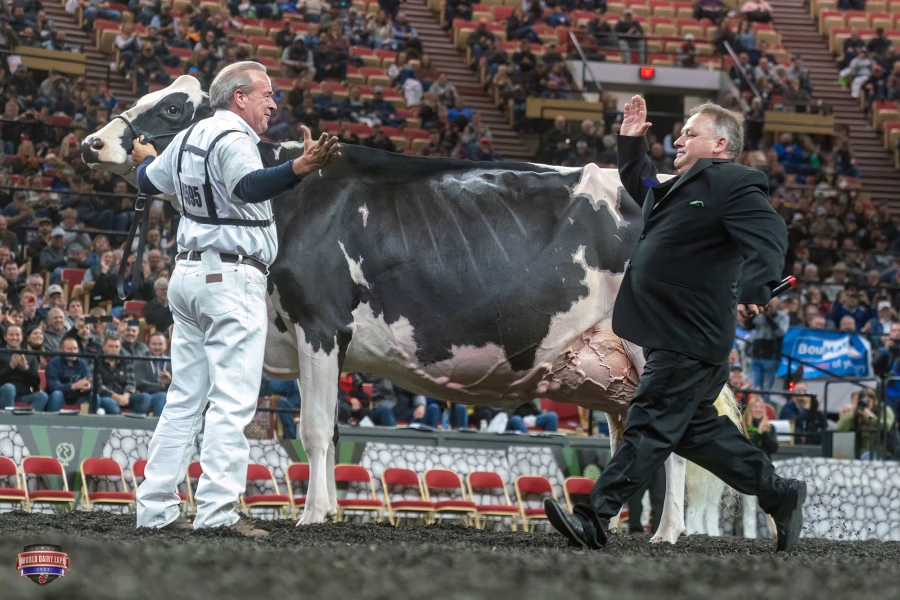
You’ll find that sustainability is not just a buzzword here; it’s a commitment seen in various exhibits and sessions. Exhibitors showcase technologies focused on reducing the environmental footprint of dairy farming, from advanced manure management systems to eco-friendly feed options. This year’s standout features include live demonstrations of cutting-edge dairy equipment designed to enhance efficiency while minimizing waste. 

The importance of these themes cannot be overstated. As the global demand for dairy grows, the industry must adapt to ensure environmentally sound and innovative practices. The World Dairy Expo is a powerful platform for sharing knowledge, sparking new ideas, and encouraging the adoption of practices that guarantee the industry’s economic and environmental future. 

By engaging with these sessions and exhibits, you’ll expand your knowledge and contribute to a broader movement towards a more sustainable and innovative dairy industry. Take advantage of this transformative conversation.

The Bottom Line

The World Dairy Expo is a pinnacle event for anyone passionate about dairy. There’s something for everyone, from the sprawling trade show and top-tier cattle showcases to many networking opportunities and educational sessions. The Expo brings together the best in the industry and provides a platform for learning, connecting, and innovating. 

So, whether you’re an industry veteran or a newcomer eager to dive into the dairy world, start planning your visit now. Seize the chance to expand your horizons, forge meaningful connections, and immerse yourself in the vibrant culture of the dairy community. With so much to explore and experience, the World Dairy Expo 2024 is a must-attend event that promises to enrich your daily journey in ways you can’t imagine. 

Don’t take advantage of this extraordinary opportunity. Mark your calendars, book your tickets, and prepare for an unforgettable experience at the heart of the dairy world. We’ll see you there!

Key Takeaways:

  • Plan your travel and accommodation early to secure the best options.
  • Pack appropriately: think comfortable shoes, weather-ready clothing, and essential items for networking.
  • Allocate ample time to explore must-see attractions, educational sessions, and innovative exhibits.
  • Take advantage of networking opportunities and engage with industry leaders and peers.
  • Dedicate time to enjoy the local culture and cuisine of Madison, Wisconsin.
  • Stay updated on sustainability trends and innovations driving the future of the dairy industry.


Summary: The World Dairy Expo, held annually in Madison, Wisconsin, attracts over 850 dairy businesses to showcase the latest dairy technology, genetics, equipment, and services. The event attracts dairy farmers, business leaders, and enthusiasts seeking to improve their operations. Attendees should pack comfortable shoes, weather-appropriate clothing, a reusable water bottle, a notebook, pen, and business cards for networking. The event offers attractions like modern technological displays, animal demonstrations, and cattle exhibitions, as well as instructional sessions providing insights into market trends and creative ideas. Technological exhibitions showcase dairy innovations like herd management software and automated milking equipment. Attendees can also engage in discussions, exchange contact details, and enjoy local attractions like The Old Fashioned on Capitol Square, L’Etoile, and the Dane County Farmers’ Market.

Send this to a friend