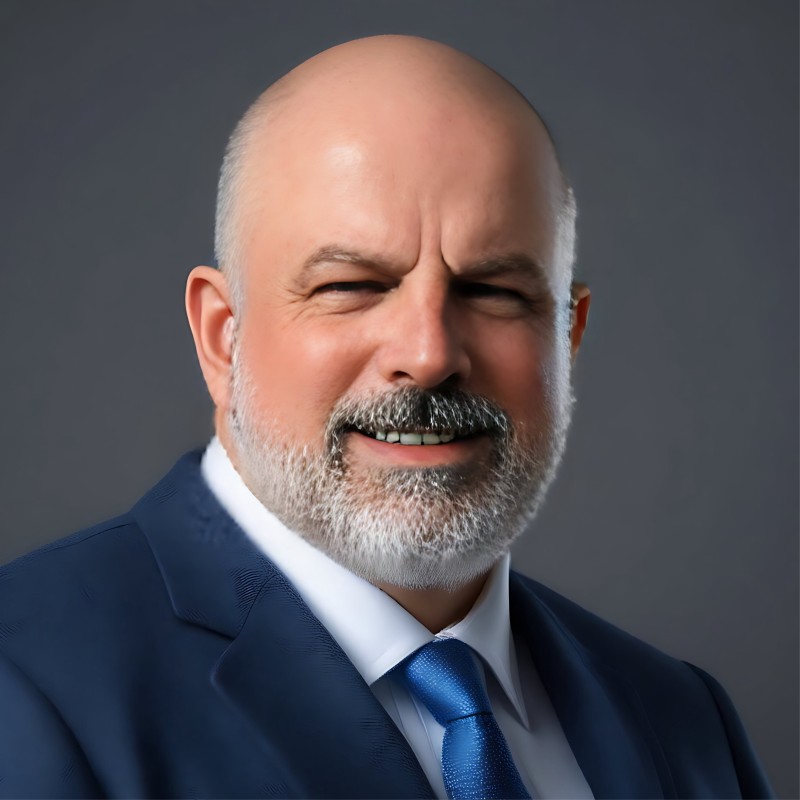
Gary Hanman built more than a cooperative. He built a promise that no matter how dark things got, someone would always come for the milk.
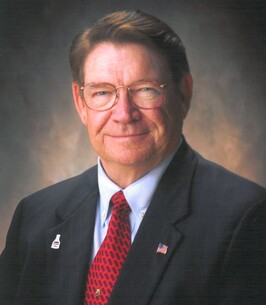
I’ve written about dairy farmers for years—the triumphs, the heartbreaks, the families who’ve milked cows for generations and lie awake wondering if their grandchildren ever will.
Gary Hanman’s story stopped me cold in a way I wasn’t expecting.
The call that every dairy farmer dreads—the one where someone says there’s no market for your milk, no truck coming tomorrow, no future for the farm your grandfather built—that call never came for more than 11,500 families.
Not during the 2008 crash when milk prices fell below the cost of production. Not during the pandemic when the world stopped and processors scrambled. Not during the brutal years when farms vanished from the countryside like morning frost.
Gary Hanman made sure of that.
On December 5, 2025, the founding CEO of Dairy Farmers of America passed away at his home in Platte City, Missouri. He was 91 years old.
“Gary was probably the only person in the country who could have brought dairy farmers together to form Dairy Farmers of America,” said Randy Mooney, DFA’s current Chairman. I’ve turned those words over in my mind since I read them. The only person. In the whole country. That’s not corporate praise—that’s recognition of something rare.
The largest dairy cooperative in American history. The second-largest dairy company on Earth, trailing only France’s Lactalis in Rabobank’s global rankings. Thirty percent of America’s milk flowing through 83 plants across 48 states. Numbers that would make any business school case study.
But here’s what moved me most: the numbers don’t tell the real story. The real story is 11,500 farm families who’ve never had to wonder if there’d be a market for their milk tomorrow.
That certainty has a name attached to it. And it started with a farm kid born in a blizzard who understood something most people never learn.
Nobody makes it alone. Not in dairy. Not ever.
A Storm, A Grandmother, and the Beginning of Everything
January 30, 1934. Enterprise, Missouri. A blizzard so fierce the doctor couldn’t make it through.
According to family accounts, Gary Edwin Hanman entered the world delivered by his grandmother’s hands on a six-generation family farm.
There’s something in that beginning worth sitting with. A child born into the hands of family because no one else could get through. Maybe that’s where he learned it—the understanding that when the roads close and the professionals can’t reach you, family is what you’ve got.
His 2008 Cooperative Hall of Fame induction captured what those early years meant: “Growing up on a general livestock farm in Missouri, Gary Hanman was steeped in the cooperative tradition at an early age. Both he and his sister Mary Jo witnessed firsthand the value of cooperative marketing by helping their father on the farm and watching him conduct business with the local cooperative.”
He met Shirley Warren in high school. They married in 1953 while both still at the University of Missouri—Gary working two jobs to make it happen. Welder by day. Busboy by night. I think about that sometimes, the physical exhaustion of it. The faith it takes to pour everything into a future you can only imagine.
Four children would come: Vicky Lea, Sandra Jeanne, Cynthia Kaye, Theodore Edwin. A family built on the same foundation as the farms he’d later fight to save.
But none of it would have happened without Shirley.
When she passed in December 2017, her obituary called her “a tower of strength to Gary as his responsibilities grew in his work for the dairy industry. Always by his side in Mid-Am, and Dairy Farmers of America.”
I’ve been around this industry long enough to know what those words really mean. The late nights when dinner went cold. The holidays interrupted by crisis calls. The stretches when he belonged more to dairy farmers across the country than to the family waiting at home. Behind every leader who transforms an industry stands someone holding everything else together—usually without recognition, usually without complaint.
The Cooperative Hall of Fame record reveals what made Hanman different: “A tireless evangelist, Gary spent many nights attending producer meetings and urging dairy farmers to maximize their returns by marketing their milk cooperatively.”
Night after night. Farm meeting after farm meeting. Country roads in the dark, standing in front of skeptical farmers who’d heard promises before, making a case for something most of them couldn’t quite imagine yet.
How do you keep showing up when half the room doesn’t believe you?
Something in Gary Hanman refused to stop trying.
September 9, 1997: Eight Men and a Prayer
Picture this: eight men gather in a St. Louis conference room. They represent four major dairy cooperatives—Southern Associated Milk Producers, Mid-America Dairymen, Milk Marketing, and Western Dairymen Cooperative.
Each organization has its own history. Its own culture. Its own way of doing things. Its own members who aren’t sure this merger is a good idea.
And these eight men are about to bet everything that unity is worth more than independence.
Tom Camerlo from WDCI. Herman Brubaker from MMI. Carl Baumann from Mid-Am. Charles Beckendorf from Southern AMPI. Their CEOs beside them. Gary Hanman representing the cooperative he’d helped save from collapse two decades earlier.
“With approval, Dairy Farmers of America would be open for business January 1, 1998,” wrote Hoard’s Dairyman at the time.
Three months. They had three months to combine four organizations into something that had never existed before.
I’m not sure how they found the courage. Mergers fail all the time—egos collide, cultures clash, someone decides their way is the only way. But something held these eight men together through the arguments and the doubts and the moments when walking away would have been easier.
What that merger meant for farm families—this is where I need you to really understand what was at stake.
A Cornell University study later found that cooperative members received $0.20 to $0.31 per hundredweight more than independent producers when you factor in premiums, lower hauling costs, and patronage refunds. For a 500-cow operation producing 11 million pounds annually, that differential translates to $34,100 in additional revenue.
Every. Single. Year.
I’ve sat at kitchen tables where farm families did the math out loud. Thirty-four thousand dollars is a used skid loader that saves your back. It’s the part-time help that means you’re not doing morning milking on three hours of sleep for the fifth year running. It’s tuition for the kid who wants to come back to the farm after college. It’s the difference between your children seeing farming as a future and seeing it as a sentence.
A separate analysis of Florida milk markets found that cooperative bargaining strength captured 73% of the negotiable surplus value in processor negotiations. Without that collective power? Processors pocket that value instead—money that flows to corporate shareholders rather than farm families trying to make the next payment.
Hanman understood this math before the academics proved it. He’d spent decades watching what happened to farmers who faced the market alone.
And then… on January 1, 1998… 11,500 families stopped facing it alone.
2008: The Year That Nearly Broke Everything
If you were milking cows in 2008, you don’t need me to explain it.
You remember watching the feed bill and the milk check cross paths going opposite directions. You remember the processor bankruptcy announcements landing like punches—one after another, companies you’d shipped to for years suddenly gone. You remember looking at cows you’d raised from calves and doing math you didn’t want to do.
Feed costs had spiked to levels that made no sense. Milk prices collapsed below what it cost to produce. Farmers across America were dumping milk into lagoons because there was literally nowhere to ship it.
Industry analysts predicted a wave of farm failures that would reshape American agriculture permanently. The question wasn’t whether farms would go under—it was how many.
The cooperative’s commitment held firm: member milk would be collected, regardless of how brutal the market became.
No conventional business would make that promise. The economics didn’t pencil. But cooperatives aren’t built on conventional economics—they’re built on the understanding that some things matter more than quarterly returns.
They launched five herd retirement rounds through Cooperatives Working Together to remove surplus supply. The Cooperative Hall of Fame noted that Hanman “helped incubate Cooperatives Working Together, a voluntary supply management program funded and directed by participating dairy farmers.” When the crisis hit, that program became a lifeline.
They negotiated with processors to keep plants running when shutting down would have been the business-school answer. They extended credit to members drowning in feed costs. They made promises that cost money to keep—and kept them anyway.
I’ve talked to farmers who remember those years. The way their voices change when they describe the moment they realized the truck was still coming. That someone hadn’t forgotten them. That the system Gary Hanman built was holding.
In 2020, when COVID triggered another market crisis, DFA distributed $46 million in patronage cash to members—$27 million in equity plus $19 million in dividends—at exactly the moment farm families needed cash flow most.
By 2022, when milk prices finally climbed to record levels, DFA members received an average of $25.53 per hundredweight compared to $18.37 the year before. For that 500-cow operation, the $7.16 jump meant $787,600 in additional annual revenue.
The cooperative Gary Hanman built didn’t just survive the crises. It carried its members through.
The Truth About Building Something That Lasts
Here’s what I’ve come to understand researching Hanman’s career, and I don’t think I can honor his memory without saying it plainly.
Building something big enough to matter means making choices that keep you up at night.
DFA’s growth strategy was aggressive. To expand rapidly into new regions, the cooperative acquired processing plants and signed exclusive supply agreements that sometimes left farmers with a stark choice: join DFA or find another buyer for your milk. In an industry where processors were vanishing monthly, that second option often meant watching everything you’d built disappear.
That dominance attracted scrutiny. A 2013 federal court settlement addressed concerns about pricing practices in the Southeast, resulting in mandatory changes to how DFA disclosed deductions, conducted audits, and allowed members to vote on governance.
I’m not going to pretend these tensions don’t exist. They’re real, and reasonable people can disagree about whether the tradeoffs were worth it. Cooperative leadership operates in moral gray zones that family farmers never have to navigate. When you represent 11,500 members, every decision helps some and hurts others. There’s no clean path through that complexity.
But here’s what the Cooperative Hall of Fame said about Hanman’s guiding principle: “Under Gary’s visionary leadership, DFA grew into the nation’s largest dairy cooperative. During this growth, he never lost sight of one extremely important idea—that the cooperative existed to serve its members and thus must function for their benefit.”
Whether DFA always lived up to that ideal—that’s a question dairy farmers will wrestle with for years. But the vision itself? The belief that collective action could give family farms the market power they’d never achieve alone?
That vision saved farms. Thousands of them.
The full picture includes both the achievement and its costs. I think Gary Hanman would want us to wrestle with that complexity rather than pretend it doesn’t exist.
The Man Who Came Back
In March 2023, they gathered in Kansas City for DFA’s 25th annual meeting.
And there they were in a photograph Hoard’s Dairyman shared: Charles Beckendorf and Gary Hanman—two of the eight men who’d signed that original merger agreement—standing with Rick Smith (the second CEO), Dennis Rodenbaugh (the current CEO), and Randy Mooney (the current Chairman).
Two of the originals. Still here. Still watching over what they’d built.
Hanman was 89 years old. He’d been retired for 18 years. He didn’t have to come. Nobody would have blamed a man approaching ninety for staying home.
But he came anyway. Because some things matter enough to show up for.
I keep thinking about what was going through his mind that day. Twenty-five years since that St. Louis conference room. Twenty-five years of crises weathered, farms saved, promises kept. The doubters who said it couldn’t work, proven wrong. The farmers who trusted him, vindicated.
Gary had lived without Shirley for nearly six years by then. His tower of strength, gone since December 2017. According to family, he continued on “without complaint”—finding joy in the five great-grandchildren born after she passed, holding the family together the way she’d held him together for sixty-four years.
That’s the kind of quiet courage that doesn’t make headlines. The kind that just keeps showing up, day after day, carrying what needs to be carried.
His funeral will be held December 27, 2025, at the United Methodist Church of Platte City. Eight grandchildren—Matthew, Tyler, Anne, Amanda, Peter, Ian, Michael, and Lydia—will say goodbye to the grandfather who built an empire while staying rooted in a six-generation family farm.
What They Inherit
What Gary Hanman leaves behind is simpler than the numbers suggest—and more profound.
DFA processes 65.4 billion pounds of milk annually. That’s roughly 179 million pounds every single day—milk that flows from more than 11,500 family farms across 48 states into a system designed to ensure it always has somewhere to go.
In an industry that lost 39% of its farms between 2017 and 2022. Where consolidation accelerates at 4% annually. Where the question isn’t whether farms will disappear but which ones.
More than 11,500 families still have a guaranteed market for their milk.
For forty years, one man made sure the system held together—even when holding it together meant making choices that cost him sleep. Negotiating deals he wasn’t proud of. Defending decisions that drew criticism. Building something bigger than any single farm, any single family, any single life.
The Cooperative Hall of Fame put it simply: “For 40 years, Gary Hanman has dedicated himself to improving the lives of rural America and its small farmers. He has worked diligently to unify dairy farmers and the industry and has made a difference locally, regionally, and nationally. His legacy is undeniable.”
Undeniable. That’s the word they chose. After reviewing four decades of evidence, the people who study cooperative leadership couldn’t find another word that fit.
Dennis Rodenbaugh, who now leads the cooperative Hanman built, described his philosophy this way: “At DFA, we’re constantly working to build that bridge between where we are today, where our farmer-owners will need us and where global consumers will expect us to be in the future.”
That bridge exists because Gary Hanman poured the foundation.
The Trucks Will Keep Coming
On December 28, 2025—the day after Gary Hanman’s funeral—dairy farms across America will wake before dawn.
The barns will fill with sounds that haven’t changed in generations: the rhythmic pulse of milking equipment, the shuffle of hooves on concrete, the quiet routine that defines what it means to be a dairy family.
DFA trucks will arrive on schedule. The milk will flow into tanks and travel to processing plants. Checks will be issued. Families will make mortgage payments, buy feed, look at their children and wonder about the future—the same way farmers have always wondered.
This is what Gary Hanman built. Not just an organization, but a system. Not just market share, but a promise kept daily across 48 states.
The dairy industry will keep changing. Technology will transform operations in ways we can’t predict. Markets will shift. The tensions Hanman navigated—between scale and responsiveness, between organizational strength and individual farm needs—will persist as long as cooperatives exist.
But more than 11,500 families will milk their cows tomorrow knowing someone will come for the milk.
That certainty. That fundamental assurance that you’re not facing the market alone. That’s Gary Hanman’s most enduring legacy.
He built something that lasts—and lived long enough to see it tested and proven. He kept a promise that 11,500 families depended on, even when keeping it cost more than breaking it would have. He gave dairy families solid ground when everything else was shifting.
And in the end, that’s what cooperative leadership really means: making sure that when the truck pulls up at dawn, it pulls up for everyone.
Gary Edwin Hanman, 1934-2025
Farm kid. Husband. Father. Grandfather. Great-grandfather. Builder of something that outlasted him.
“The cooperative existed to serve its members and thus must function for their benefit.” —Cooperative Hall of Fame citation, 2008
The trucks will keep coming at dawn.
That was always the point.
The Hanman family has requested memorial contributions be directed to the United Methodist Church of Platte City or a charity of the donor’s choice.
Visitation: December 27, 2025, 9:00 AM – 12:00 PM Funeral services to follow at United Methodist Church of Platte City