As farmers prepare for the season ahead, the Situation and Outlook report ensures farmers and the industry have access to current market insights and future projections to inform farm business decisions.
High costs have pressured Australian dairy farmers, resulting in lower milk production and low farmer confidence. Well-balanced global markets, exchange rates, competition among processors and autumn rainfall are all in dairy farmers’ favour. As dairy farmers look to take advantage of some of the highest farm-gate prices in recent years, grain, hay and water prices will be the key to profit.
Access episode six of Dairy Australia’s podcast to hear Dairy Australia Trade and Strategy group manager Charlie McElhone discuss key insights from the report with senior analyst John Droppert.
On the Chicago Mercantile Exchange milk futures closed higher again Thursday supported by strength in cash markets and increasing slaughter numbers. Futures contracts closed higher across the board in Class III up double digits in certain months. June added a penny to $16.29 while July traded 16 cents higher and August was up 15. September through December moved 6-10 cents higher and first half 2020 added 205 cents per cwt. Class IV milk results were mixed. June through October ranged from 3 lower to 6 higher.
Cheese trade led markets higher on Thursday. Barrels up $0.03 at $1.72. Seven trades were made ranging from $1.70 to $1.72. Blocks up $0.0225 at $1.8225. Three trades were made ranging from $1.8150 to $1.8225. Dry whey unchanged at $0.3425. Butter up $0.0125 at $2.3875. One trade was made at $2.39. Nonfat dry milk down $0.0050 at $1.04. Two trades were made at that price.
Grain markets rebound Thursday after a brief 2 day drop. Corn added 9 cents of value back to its price closing at $4.50 per bu. in July and $4.61 in December. Soybeans jumped 12.25 cents to a new crop price of $9.41 per bu. Bean meal added $6 a ton. The wheat complex was mixed with Chicago gaining 5 cents, Kansas City up 2-3, and Minneapolis was down 3.
The good news is milk prices continue to improve. The Class III price which was as low as $13.89 in February will improve about $2.40 in June to around $16.30. The Class IV price which was as low as $15.48 in January will improve about $1.30 to around $16.80 in June. Much lower milk production is the driver for improved milk prices. For the U.S. compared to a year earlier, April’s milk production was up just 0.3% with May down 0.4%. Cow numbers in May were 9.333 million head, down 89,000 since January or 0.9% lower than a year ago. The continued exiting of dairy producers and the slaughter of cows running 5.0% higher than a year ago is reducing the size of the dairy herd. Milk per cow was also well below trend being up just 0.6%. Of the 24 reporting states 14 had fewer cows and 11 had lower total milk production.
In May two states lead the way in increases in milk production, Texas at 5.4% and Colorado at 3.6%. Production for other Western states were: California and Idaho up 1.3% and 1.4% respectively with production down 0.8% in New Mexico and 4.3% in Arizona. In the Northeast production was up 1.0% in New York, just 0.4% in Michigan and down 7.0% in Pennsylvania. In the Midwest production was up just 0.4% for South Dakota with production down 0.2% for both Iowa and Minnesota and 0.4% for Wisconsin. In the Southeast production was down 4.9% in Florida and 10.1% in Virginia.
Lower milk production relates to lower dairy product production. Compared to a year earlier April butter production was 4.8% lower, American cheese production 2.8% lower with cheddar 3.3% lower, total cheese production just 0.2% higher, nonfat dry milk production 2.6% lower and dry whey production 13.7% lower.
Butter and cheese sales continue to show modest growth. But, fluid (beverage) mill sales continue the downward trend with April sales 3.1% lower than a year ago and year-to-date sales 2.5% lower. While lower than a year ago, dairy exports are supportive of milk prices. With lower milk production exports do not need to be as high to support milk prices. For the first four months of the year exports on a volume basis were the third highest with 2018 being the highest and 2014 the second highest. Much lower exports to China is the major factor for reduce volume of exports. China’s retaliatory tariffs and the African swine fever resulted in April exports to China being 64% lower than a year ago. Cheese exports have held up. While April cheese exports were one percent lower than a year ago, year-to-date exports are 7% higher. April exports were down 25% for nonfat dry milk/skim milk power, 71% for butterfat and 31% for total whey products. Yet on a total solids basis exports were equivalent to 14.4% of milk production.
The stock level of dairy products is also improving. Compared to a year ago April 30thstocks were 5.4% lower for butter, just 0.3% higher for American cheese stocks and 4.0% higher for total cheese stocks. However, dry whey stocks and nonfat dry milk stocks were 8.9% and 1.6% higher.
Milk prices should improve further as we progress through the rest of the year. USDA now forecasts milk production for the year to be just 0.3% higher than 2018, the result of cow numbers averaging 0.7% lower and milk per cow 1.0% higher. It looks like feed prices will be higher. Alfalfa hay prices will be higher. Current hay stocks are tight and there are reports of significant winter kill in some areas along with a challenge of harvesting quality first cutting due to wet weather. Delayed corn planting and unplanted acres means higher corn prices. Tighter feed supplies, lower quality forages along with higher feed prices will likely continue to reduce cow numbers and dampen milk per cow this fall and winter.
Butter and cheese sales are expected to continue to show modest growth. While exports will be lower exports will still support to milk prices. It doesn’t look like the trade dispute with China will end soon. In May U.S. increased tariffs on China’s goods and China in turn increased tariffs levied on U.S. dairy products. But, in May U.S. eliminated tariffs on steel and aluminum from Mexico and Mexico in turn eliminated its tariffs on U.S, cheese. This could be positive for cheese exports later this year and going into 2020.
As of now we could see the Class III price in the low $17’s by August and in the mid to high $17’s by fourth quarter. Some are predicting Class III even in the $18’s. Class IV could be in the low $17’s by July and in the mid $17’s fourth quarter. If this holds true, Class III would average about $16.30 for the year compared to $14.61 in 2018 and the Class IV price would average about $17.00 compared to $15.09 in 2018.
On the Chicago Mercantile Exchange milk futures closed higher Wednesday supported by strength in cash cheese markets and a mostly favorable milk production report. Class III milk was unchanged for June at $16.28, July gained 8 cents to $16.95 and August gained 6 cents to $17.24. Second half months were even to 8 cents higher averaging $17.24 per cwt. Jan- March of 2020 averages $16.49 per cwt. Class IV milk was not as strong. June was unchanged at $16.80, July fell 1 cent to $17 even, and August fell 4 cents to $17.24.
A strong day of trading in the CME spot product trade maintains the gains made to Class III milk made yesterday. Dry whey unchanged at $0.3425. Blocks up $0.02 at $1.80. Three trades were made ranging from $1.79 to $1.80. Barrels up $0.0450 at $1.69. Five trades were made ranging from $1.68 to $1.69. Butter up $0.0125 at $2.3750. Two trades were made at $2.3725 and $2.3750. Nonfat dry milk down $0.0050 at $1.0450. Three trades were made ranging from $1.04 to $1.450.
Grain and feed markets retracted off of their recent rallies. July corn fell 8 ¾ to $4.41 per bu., July Soybeans fell 10 ¼ to $9.03 ¼, and July SBM fell $5.10 to $316.90 per ton
African swine fever’s annihilation of China’s hog population is driving down the global prices of the various products used to make hog feed — including milk.
And America’s dairy farmers are feeling the pain.
Before the outbreak, the United States was China’s main supplier of a milk byproduct called whey. Whey is a substance that is left over after milk is made into cheese. It is made mainly of lactose (or sugar), protein, vitamins and minerals. The pork industry uses it to make feed more protein-rich.
“Whey prices have significantly fallen, which has a direct impact on farmer milk prices,” said William Loux, a global trade analyst with the U.S. Dairy Export Council. “The reason African swine fever is so important for whey markets is China was by far the largest importer of whey in the world.”
China held more than half of the world’s 780 million pigs before the outbreak, but experts say that number is dropping fast. The food and agribusiness bank and research firm Rabobank estimates that some 200 million of China’s pigs have been infected with the disease, which is deadly to the animals but does not infect humans.
Experts predict China will have lost between 25 and 35 percent of its herd in the next two years, Loux said.
China already was importing less whey from the United States before African swine fever began killing its herd. In June 2018, China placed a high retaliatory tariff on the dairy product — including whey — in response to similar tariffs levied against Chinese goods.
U.S. whey exports to China dropped by 43 percent under the tariff, according to the U.S. Dairy Export Council. Since African swine fever hit, they’ve fallen 61 percent.
“Now, with African swine fever on top of the tariff, not only has the U.S. market share shrunk, but the entire market has shrunk,” Loux said.
This is the latest blow to the already suffering dairy industry.
Various economic factors — including overproduction — have kept milk prices historically low over the last four years. Dairy farms across the country are going out of business in record numbers.
“We’re really struggling,” said Jim Burdette, the owner of a small, family-owned dairy in Pennsylvania. “We’ve used up most of our savings. In the dairy industry, you’re used to ups and downs. But three years, now going on four, is just too long. It’s too long.”
Dairy isn’t the only agricultural industry impacted by the combination of trade tensions and the viral outbreak. Soybean growers are in similar straits.
Before last year, the United States exported about 30 percent of its soy to China for hog feed. Those exports all but stopped after China placed a high retaliatory tariff on the oilseed, and now industry experts worry that African swine fever will eliminate the demand for soy even after the tariffs are removed.
Event 238 of the Global Dairy Trade took place on Tuesday with the overall index declining 3.8% from the last event to $3,208 per ton. Global dairy prices slipped for the third time in a row. The price drops, which were broad-based across most products, were likely due to ramped up supply, according to analysts.
Butter, cheddar and whole milk powder saw the largest decreases in prices while rennet casein reported the only increase, up 2.3 percent. A total of 24,239 tonnes was sold at the latest auction, an increase of 22 percent from the previous one, the auction platform said on its website.
Although forecasts of lower U.S. milk production could support prices over the coming months, analysts cautioned that signals pointing to slower demand posed a risk.
“Slowing economic conditions in some of our key trading partner economies, including China and some European countries, signal headwinds for prices,” said Satish Ranchhod, senior economist at Westpac Bank in New Zealand, the world’s largest dairy exporter.
The auction results can affect the New Zealand dollar as the dairy sector generates more than 7 percent of the nation’s gross domestic product. However, the Kiwi currency was largely flat at around $0.6527 on Wednesday morning.
GDT Events is owned by New Zealand’s Fonterra Co-operative Group Ltd, but operates independently from the dairy giant.
On the Chicago Mercantile Exchange milk futures closed mixed for a second day this week as did cash trade while global trade continues to decline. Class III milk markets ended Tuesday on a slightly lower tone. June milk lost a penny while July added 5 cents and the remainder of the year dropped 1-8 cents per cwt. The second half of 2019 settled at $17.20 per cwt. The Class IV market trade finished with July 16 cents lower, September down 9, and October 8 cents softer.
The CME spot product trade had cheese markets 3 cents higher in blocks and 4 higher in barrels. Dry whey down $0.0125 at $0.3425. Ten trades were made ranging from $0.3425 to $0.3525. Barrels up $0.04 at $1.6450. Seven trades were made ranging from $1.6250 to $1.6450. Butter down $0.0150 at $2.3625. Nonfat dry milk down $0.0025 at $1.05
On the Chicago Mercantile Exchange milk futures closed mixed as did cash trade. Class III milk had a hard time maintaining gains during Monday’s trade. June Fell 3 cents to $16.28 and July fell 4 cents to $17.17/cwt. Oct – Dec however saw 3-5 cent gains to give a second half average at $17.20/cwt. 2020 saw a mixed trade with February 2 cents lowers and January and March gaining 2-3 cents. First quarter of 20 is averaging $16.44/cwt. Class IV milk was weaker. June was unchanged at $16.80, July lost 2 cents to $17.17 and August lost 10 cents to $17.32.
The CME spot product trade saw only butter moving higher, up $0.0125 at $2.3775. Three trades were made ranging from $2.37 to $2.38. Dry whey down $0.0075 at $0.3550. One trade was made at that price. Blocks down $0.0325 at $1.75. Seven trades were made ranging from $1.75 to $1.7650. Barrels unchanged at $1.6050. Nonfat dry milk unchanged at $1.0525.
On the Chicago Mercantile Exchange milk futures closed mostly higher Thursday with mostly supportive cash trade. Class III milk followed cheese. June was our only outlier, falling 1 cent to $16.31, July gained 15 cents to $17.21, and our July – December average moved higher finishing at $17.21. We also saw more movement in our 2020 market. Jan-March gained 6-13 cents and finished with a first quarter average at $16.42/cwt. Class IV milk was unchanged nearby, but gained 5-6 cents in the remainder of 2019 months. June finished at $16.80/cwt, July at $17.21 and a second half average at 17.50/cwt.
Dry whey up 0.0050 at $0.3625. Two trades were made at $0.36 and $0.3625. Blocks up $0.0150 at $1.80. Ten trades were made ranging from $1.7950 to $1.8050. Barrels up $0.05 at $1.6025. Eleven trades were made ranging from $1.60 to $1.6025. Butter unchanged at $2.3925. Eleven trades were made ranging from $2.3875 to $2.40. Nonfat dry milk unchanged at $1.0550.
On the Chicago Mercantile Exchange, Class III milk contracts closed lower for the first time this week Wednesday. June futures lost 6 cents while July – September dropped 9-11 cents and the fourth quarter declined 2-5 cents. At the close, second half pricing in Class III was offering $17.07 per cwt. Class IV second half prices settled at $17.46 per cwt.
CME spot product trade was led by butter on Wednesday. Butter down $0.0125 at $2.3925. Sixteen trades were made, ranging from $2.3850 to $2.3950. Dry whey unchanged Wednesday at $0.3575. Blocks down $0.01 at $1.7850. Barrels steady at $1.5525. Nonfat dry milk no change, closing at $1.0550. Two trades were made at $1.0550.
On the Chicago Mercantile Exchange milk futures closed higher Tuesday after a mostly supportive supply and demand report and higher cash trade. Class III milk followed the parade of green. June gained 5 cents to $16.35/cwt, July gained 13 to $16.84 and the second half average gained 4-14 to finish at $17.13/cwt. Class IV milk gained 0-4 cents and had June at $16.80, July at 17.20 and second half finished Tuesday averaging $17.42/cwt
The CME spot product trade also showed nice gains. Blocks up $0.01 at $1.7950. One trade was made at that price. Barrels up $0.0175 at $1.5525. One trade was made at that price. Butter up $0.0175 at $2.4050. Four trades were made ranging from $2.39 to $2.4050. Dry whey unchanged at $0.3575. Nonfat dry milk unchanged at $1.0550.
Milk futures on the Chicago Mercantile Exchange closed higher Monday as traders remain optimistic about increased trade with Mexico. Class III settled 4-7 cents higher and closed at a second half average price of $17.04 per cwt. Class IV had similar trading activity as months gained 2-12 cents per cwt. to a second half average of $17.40 per cwt. Prices were supported Monday by a higher cheddar block trade. Blocks added 3 and a quarter cent to $1.78 and a half cents per lb. One trade was moved while one bid was left uncovered in the market.
Dry whey down $0.01 at $0.3575. One trade was made at that price. Blocks up $0.0325 at $1.7850. One trade was made at that price. Barrels unchanged at $1.5350. Four trades were made ranging from $1.52 to $1.5350. Butter down $0.01 at $2.3875. Six trades were made ranging from $2.3850 to $2.4050. Nonfat dry milk unchanged at $1.0550.
Applications for Fonterra’s new fixed milk price offer open on Monday.
The fixed price programme, a financial tool to help farmers manage their exposure to global price volatility, will be referenced to the NZX milk futures market.
A Fonterra spokeswoman said following this week’s Global Dairy Trade (GDT) auction, Fonterra would take the simple average of the final NZX futures settlement price of June 5, 6 and 7 to determine the price.
Farmer-shareholders would be informed of the price and the volume of milk available on which a price could be fixed and could apply from Monday.
Farmers who successfully apply will have to pay to participate.
A service fee of 10c per kilogram of milksolids will completely self-fund the new programme, New Zealand’s biggest company has said.
The average New Zealand dairy cow herd produces about 158,000kg of milksolids per season. Farmers will be able to fix the price of up to 50 per cent of their milk production over the 2019-2020 dairy season, which started on June 1.
Fonterra’s forecast milk price range for the new season is $6.25-$7.25/kg milksolids.
The GDT price index fell 3.4 per cent this week from the previous auction. Whole milk powder, which determines the farmgate milk price, fell 1.5 per cent to US$3138 a tonne – the fifth consecutive decrease in this powder index.
Farmers will be able to participate in the fixed price scheme up to 10 times a year.
Because the amount of monthly milk volume available for a fixed price will be limited, applications may be accepted in full or in part.
Participating farmers aren’t being asked to fund the new scheme because of Fonterra’s financial squeeze. Farmer advocate, the Fonterra Shareholders’ Council, unanimously approved the programme.
Chairman Duncan Coull said payment was required so shareholders of the big cooperative who didn’t participate weren’t unfairly burdened with the administration costs.
A previous fixed price scheme called the guaranteed milk price introduced in 2014 did not require farmers to pay a service fee.
That scheme was based on the company’s forecasted milk price whereas the next offer is based on an independent market price.
The previous programme, which was limited to twice a year participation, provoked dissent among some of Fonterra’s 10,000 farmer-owners who said it was against the spirit of cooperative principles. It was scrapped after three dairy seasons in 2016.
On the Chicago Mercantile Exchange milk futures closed higher Thursday following strength in the cash market. Class III milk markets followed product and ended slightly higher. June jumped 10 cents, July 7 and August through December closed even to 3 cents stronger. Class IV markets were even to a penny higher in July and January 2020.
Cheddar blocks added 2 1/4 cents on three uncovered bids to $1.74 3/4 per pound. Barrels added 2 cents to $1.52 following six loads moving from seller to buyer. Dried whey gained 2 cents to 36 3/4 cents on one trade and three bids. Butter unchanged at $2.3875. Four trades were made ranging from $2.38 to $2.39. Nonfat dry milk unchanged at $1.0550. Two trades were made at $1.0475 and $1.0550.
On the Chicago Mercantile Exchange milk futures found strength at midweek after cash trade got a shot in the arm. Class III milk followed the product trade today and bounced back higher. June gained 20 cents to $16.12/ cwt and July gained 17 to $16.48. The second half months gained 2-17 cents to finish with an average at $16.394/cwt. First quarter of 2020 saw a dip in prices however. January was unchanged at $16.36 and Feb and March lost 2-3 cents. Class IV milk was also stronger. June was unchanged at $16.80/cwt, and July gained 12 cents to $17.07.
Dry whey up $0.0050 at $0.3575. Blocks up $0.0050 at $1.7250. Two trades were made at $1.7225 and $1.7250. Barrels up $0.0150 at $1.50. Eighteen trades were made ranging from $1.4850 to $1.5025. Butter up $0.0375 at $2.3875. One trade was made at $2.39. Nonfat dry milk up $0.0025 at $1.0550. One trade was made at that price.
The Global Dairy Trade auction index in New Zealand declined for the second event in a row. The index declined 3.4 percent from the last event to $3,423 per ton. Declines in cheddar, butter, and butter milk powder were more than 10 percent, while rennet casein was only up slightly more than four percent.
AMF index down 5.7%, average price US$5,752/MT
Butter index down 10.3%, average price US$4,805/MT
BMP index down 10.1%, average price US$2,807/MT
Ched index down 14.0%, average price US$3,950/MT
LAC index up 0.4%, average price US$897/MT
RenCas index up 4.2%, average price US$7,201/MT
SMP index down 4.0%, average price US$2,436/MT
SWP index not available, average price not available
On the Chicago Mercantile Exchange milk futures where lower Tuesday pressured by declining global markets and flat cash trade. Class III milk was softer across the board Tuesday. June to September fell 11-16 cents while the 4th quarter lost 7-9 cents per cwt. The 2nd half of 2019 closed with an average price of $16.82. January through April declined 1-3 cents as well. Class IV dropped 2-7 cents June through September while the 4th quarter was unchanged. The 2nd half average Class IV settled with an average of $17.26 per cwt.
CME spot product markets were highlighted by the barrel market while not much happened in the other product markets. Barrels down $0.03 at $1.4850. Eight trades were made ranging from $1.49 to $1.5125. Dry whey unchanged at $0.3525. Blocks unchanged at $1.72. One trade was made at that price. Butter unchanged at $2.35. Nonfat dry milk unchanged at $1.0525. Five trades were made ranging from $1.05 to $1.0525.
FONTERRA has released an opening price of $6.60 per kilogram of milk solids for the 2019/20 season.
Rene Dedoncker, Fonterra Australia’s managing director, said announcing the milk price in May would help farmers make decisions.
“As our industry and business evolve to deal with a smaller milk pool, we have a stronger focus on servicing local demand which brings greater opportunity for certainty on pricing,” Mr Dedoncker said.
“The broader global supply and demand picture is positive, with demand expected to remain strong across key trading partners and a favourable exchange rate.”
Mr Dedoncker said it was a competitive price for the company’s farmers and it would allow Fonterra to maintain a sustainable model. Fonterra recently announced it would close the Dennington factory due to a smaller milk pool.
On the Chicago Mercantile Exchange milk futures were down and cash dairy prices were mixed Monday. Class III started the day up 5-10 cents and turned following the start of the CME spot trade. June falling 16 cents to $16.04/cwt, July off 16 to 16.47, and Second half being mixed with the average at 16.92/cwt. Class IV milk fell 2 cents in June to $16.86, was unchanged in July at $17.02 and has a second half average of $17.28/cwt.
The CME spot product trade drove Class III milk lower on Monday as both Cheddar Barrels and Butter sold off on Monday. Dry whey was unchanged at $.3525 cents per pound. Two bids were offered but no sales were recorded. Forty-pound blocks were up $.0050 at $1.72 per pound. One bid of $1.71 was offered and two sales at $1.7250 were recorded. Barrels were down $.0225 to $1.5150 per pound. Nine sales were recorded from $1.52 to $1.54. There were also five bids offered between $1.47 and $1.50. Grade AA Butter was down $.01 at $2.35 per pound. Two sales were recorded at that price, and a bid was received at $2.33. Nonfat dry milk was down $.0025 at $1.0525 per pound. Four bids were offered, but no sales were recorded.
On the Chicago Mercantile Exchange milk futures were up and cash dairy prices were mixed Thursday. Class III milk continued to trudge higher despite a lackluster CME spot product trade on Thursday. May was unchanged at $16.38 per cwt, June gained 11 cents to $16.18/cwt and second half average gained 10-14 cents to raise the average to $16.93/cwt. Class IV milk was unchanged at $16.26 in May and $16.90 for June.
Dry whey was up $.0050 at $.3575 cents per pound. Three bids were offered but no sales were recorded. Forty-pound blocks were unchanged at $1.6825 per pound. One bid was offered but no sale was recorded. Barrels were down $.0025 to $1.54 per pound. Nineteen sales were recorded from $1.54 to $1.5425. Grade AA Butter was down $.0225 at $2.35 per pound. Twelve sales were recorded from $2.3425 to $2.3625. Nonfat dry milk was up $.0050 at $1.05 per pound. Six bids were offered, but no sales were recorded.
University of Wisconsin’s Bob Cropp says milk prices could approach $18 by the fall, a more than $4 per hundredweight increase since the beginning of 2019. Cropp says dairy product production is down, stocks are tightening, and everything is indicating stronger prices for the fourth quarter.
“I’m saying in June we’re going to be in the $17s and keep increasing to at least the high $17s for the fourth quarter. If things really tighten and the feed situation plays out, exports improve, $18 is not out of the possibilities.”
Since January, Wisconsin has lost more than 300 dairy farms and Cropp says that’s a trend that’s expected to continue nationwide, keeping cow numbers down. He also sees improvements in exports to Mexico by the end of the year with the removal of retaliatory tariffs on cheese.
On the Chicago Mercantile Exchange milk futures closed higher with little to no movement on the cash market. Class III milk futures had June a penny lower and the second half 6-14 cents higher. The 2nd half average closed at $16.82 per cwt. Class IV milk lost 4-10 cents per cwt June through September.
Dry whey unchanged at $0.3525. Blocks unchanged at $1.6825. Barrels unchanged at $1.5425. Butter down $0.0350 at $2.3725. Eight trades were made ranging from $2.3725 to $2.39255. Nonfat dry milk unchanged at $1.0450. One trade was made at that price.
Weekly European dairy prices are mostly lower on the week and the year with continued gains in skimmed milk powder. Butter prices continue to post the most losses.
In Oceania milk production reported last week, year over year, April production fell 10% to 4.2 billion pounds. Australia has been hampered by drought all year long and is the main culprit of their drawdown to 1.23 billion pounds. New Zealand production totaled 3 billion pounds in April as rainfalls slowed down as well and pastures dried up.
On the Chicago Mercantile Exchange Milk futures closed Tuesday lower with a weekend holiday haze over the markets while cash prices remained mixed. Class III milk fell sharply losing 23 cents in June to $16.08 and 12 in July to 16.40. May continues to hold unchanged at $16.38 as we wind down the month of trading. Second half months saw losses of 5-12 cents and finished with an average at $16.70, 30 cents off our peak average of $17 we witnessed last week.
Dry whey down $0.0075 at $0.3525. Two trades were made at $0.3535 and $0.36. Blocks unchanged at $1.6825. Barrels down $0.0375 at $1.5425. Nine trades were made ranging from $1.54 to $1.58. Butter up $0.02 at $2.4075. Two trades were made at $2.4050 and $2.4075. Nonfat dry milk unchanged at $1.0450. Four trades were made at that price.
On the Chicago Mercantile Exchange milk futures traded mostly higher Thursday as a second Market Facilitation Program payment and increasing dairy cattle slaughter brings optimism to the market. Class III milk was up strongly through June of 2020. Gaining 5 cents in May to $16.38, 10 cents in June to 16.44 and July – Dec months gained 8-12 cents to average $16.87/cwt.
Dry whey down $0.0075 at $0.3575. Two trades were made at $0.3575 and $0.36. Blocks unchanged at $1.6825. Barrels up $0.0125 at $1.6150. Eleven trades were made ranging from $1.6075 to $1.6150. Butter up $0.0475 at $2.3875. Five trades were made ranging from $2.37 to $2.3875. Nonfat dry milk up $0.0050 at $1.0525. Eight trades were made ranging from $1.05 to $1.0525.
USDA announcements of MFP payments also caused Corn, Soybeans, and wheat to drop sharply. Though many details are still unknown, it appears payments will be made to corn, soy, and wheat growers as well as dairy producers. It was not announced what amount each will see.
Cooperatives Working Together (CWT) member cooperatives accepted 6 offers of export assistance from CWT that helped them capture sales contracts for 335,103 pounds (152 metric tons) of cream cheese and 599,657 pounds (272 metric tons) of whole milk powder. The product is going to customers in Asia and South America. The product will be delivered during the period from May through September 2019.
These contracts bring the year-to-date dairy product totals to 26.696 million pounds of American-type and Swiss cheeses, 3.962 million pounds of butter (82% milkfat), 2.308 million pounds of cream cheese and 26.511 million pounds of whole milk powder. The products are going to 24 countries in six regions and are the milk equivalent of 547.1 million pounds of milk on a milkfat basis.
Assisting CWT members through the Export Assistance program positively affects all U.S. dairy farmers and all dairy cooperatives by strengthening and maintaining the value of dairy products that directly impact their milk price. It does this by helping member cooperatives gain and maintain world market share for U.S dairy products. As a result, the program has significantly expanded the total demand for U.S. dairy products and the demand for U.S. farm milk that produces those products.
The amounts of dairy products and related milk volumes reflect current contracts for delivery, not completed export volumes. CWT pays export assistance to the bidders only when export and delivery of the product is verified by required documentation.
All dairy farmers and all dairy cooperatives should invest in CWT. Membership information is available on the CWT website, www.cwt.coop
On the Chicago Mercantile Exchange milk futures continued mostly lower at midweek. Class III milk markets lost 9-13 cents per cwt in June-December. The Second half of 2019 closed with an average of $16.77 per cwt. Class IV milk closed mixed ranging from 3 cents lower to 6 cents higher.
Dry whey down $0.0050 at $0.3650. Three trades were made ranging from $0.3650 to $0.37. Blocks up $0.0025 at $1.6825. Barrels unchanged at $1.6025. Butter up $0.0125 at $2.34. Nonfat dry milk unchanged at $1.0475. Two trades were made at $1.0450 and $1.0475.
The Global Dairy Trade auction index in New Zealand declined for the first time since November. The index declined 1.2 percent from the last event at $3,417 per ton. It was a lightly traded session with declines reported in butter, whole milk powder and anhydrous milk fat. But it wasn’t all doom and gloom. Cheddar cheese shot up 15.2% to $2.20/lb. Skim milk powder (SMP) was up 0.5% to 1.15/lb. Butter, however, did slide back to $2.40/lb, a drop of 3.2%. Whole milk powder also declined 2.1% to $1.44/lb.
“Demand from China looks to have remained reasonably firm over the last month,” Westpac economists said in a research note. “Ongoing firm demand from China will be key in determining whether dairy prices are able to remain near these levels”.
Prices have been rising due to weak supply from New Zealand, combined with strong demand, particularly from Asia.
The Global Dairy Trade auction is operated by U.S.-listed CRA International Inc. GDT Events is owned by New Zealand’s Fonterra Co-operative Group Ltd, which controls nearly a third of the world dairy trade, but operates independently from the dairy giant.
A total of 15,510 tonnes was sold at the latest auction, up 0.9 percent from the previous sale, the auction platform said on its website.
The auction results can affect the New Zealand dollar as the dairy sector generates more than 7 percent of the nation’s gross domestic product.
The currency was largely flat on Wednesday, trading just above $0.6500 and lingering near seven-month lows, largely on the back of global trade concerns and this month’s central bank rate cut.
A number of companies, including Dairy America and Murray Goulburn, use the platform to sell milk powder and other dairy products.
The auctions are held twice a month, with the next one scheduled for June 4.
On the Chicago Mercantile Exchange milk futures closed lower Tuesday pressured by declining world prices. Class III milk gave back some of its gains from late last week. May was even at $16.29/cwt, but June fell 7 cents to $16.44. The second half months lost 12-17 cents to fall off our $17 average to $16.88. $17 continues to be a strong resistance to rallying milk prices. Class IV milk was unchanged in May to 16.28, July fell 10 cents ot 16.94 and August fell 14 cents to $17.08/cwt.
The CME spot product trade had a similarly mixed day. Dry whey up $0.02 at $0.37. Blocks up $0.0075 at $1.68. One trade was made at that price. Barrels down $0.0225 at $1.6025. Nine trades were made ranging from $1.6225 to $1.6275. Butter down $0.0125 at $2.3275. One trade was made at that price. Nonfat dry milk up $0.0025 at $1.0475. Three trades were made ranging from $1.0425 to $1.0475.
Milk futures on the Chicago Mercantile Exchange started the week mostly higher while cash markets remain quiet.
May Class III milk down a penny at $16.29. The second half of 2019 ended at $17.00 per cwt. even. CME spot product markets were nearly unchanged across the board. The only settlements were Grade A nonfat dry milk. Dry milk declined a quarter cent following 7 trades, 7 uncovered bids and 10 offers.
Dry whey up $0.01 at $0.35. Two trades were made at$0.34 and $0.35. Blocks unchanged at $1.6725. Barrels unchanged at $1.6250. Three trades were made ranging from $1.6250 to $1.6275. Butter unchanged at $2.34. One trade was made at that price. Nonfat dry milk down $0.0025 at $1.0450. Seven trades were made ranging from $1.0425 to $1.05.
On the Chicago Mercantile Exchange milk futures traded mixed Thursday with little to no direction from the cash market. Class III milk markets witnessed very little trade and change Thursday. Months ranged from a penny lower to six cents higher. The second half 2019 average closed today at $16.73 per cwt. Class IV activity was limited as well. May added 8 cents while the remaining moths were minimally higher. The second half of Class IV for 2019 is averaging $17.36 per cwt. Outside of the dairy complex we saw broad based buying once again.
CME spot product markets were mainly unchanged on Thursday. Cheddar blocks, barrels, Grad A nonfat dry milk and dry whey each ended even on the day. Blocks closed at $1.65 and three-quarters respectively. Dry milk finished at $1.05 and dry whey at 34 cents per lb.
On the Chicago Mercantile Exchange milk futures traded mostly higher Wednesday while cash markets were mixed. Class III milk showed some strength in Wednesday’s trading. May moved lower late in the day falling 2 cents to $16.27/cwt, June gained 5 cents to $16.24 and July gained 10 cents to 16.41. Second half months gained as many as 13 cents to finish with an average of $16.68/cwt
Butter led the market again on Wednesday in the CME spot dairy product trade. Gaining 2 ¼ cent on 8 trades to finish at $2.37 ¼. Dry whey unchanged at $0.34. Blocks down $0.0025 at $1.6575. One trade was made at that price. Barrels up $0.0125 at $1.61. Four trades were made ranging from $1.61 to $1.6125. Nonfat dry milk down $0.0075 at $1.05. One trade was made at that price.
Grain markets were up strong early following yesterday’s gains, however, lost some momentum as we closed trading. May corn was up ¾ cent to 3.69 ½, May Soybeans finished up 4 to 8.35 ½ and July Soybean meal gain $1.80 to $299.80/ton.
On the Chicago Mercantile Exchange milk futures traded higher Tuesday while cash markets were under pressure. Class III milk markets ranged from 3 cents lower in May and 7 cents higher in both August and September. June up three cents at $16.19. July three cents higher at $16.31. August up six cents at $16.62. September through January contracts were four to seven cents higher.
Dry whey unchanged at $0.34. Blocks down $0.0075 at $1.66. Five trades were made ranging from $1.66 to $1.6625. Barrels down $0.0375 at $1.60. Ten trades were made ranging from $1.60 to $1.63. Butter down $0.01 at $2.35. Five trade was made ranging from $2.3325 to $2.35. Nonfat dry milk down $0.0025 at $1.0575. One trade was made at $1.06.
Cooperatives Working Together (CWT) member cooperatives accepted 4 offers of export assistance from CWT that helped them capture sales contracts for 1.627 million pounds (738 metric tons) of whole milk powder. The product is going to customers in Asia and South America. The product will be delivered during the period from May through July 2019.
These contracts bring the year-to-date dairy product totals to 27.137 million pounds of American-type and Swiss cheeses, 3.962 million pounds of butter (82% milkfat), 1.973 million pounds of cream cheese and 25.911 million pounds of whole milk powder. The products are going to 24 countries in six regions and are the milk equivalent of 544.2 million pounds of milk on a milkfat basis.
Assisting CWT members through the Export Assistance program positively affects all U.S. dairy farmers and all dairy cooperatives by strengthening and maintaining the value of dairy products that directly impact their milk price. It does this by helping member cooperatives gain and maintain world market share for U.S dairy products. As a result, the program has significantly expanded the total demand for U.S. dairy products and the demand for U.S. farm milk that produces those products.
The amounts of dairy products and related milk volumes reflect current contracts for delivery, not completed export volumes. CWT pays export assistance to the bidders only when export and delivery of the product are verified by the required documentation.
All dairy farmers and all dairy cooperatives should invest in CWT. Membership information is available on the CWT website, www.cwt.coop
On the Chicago Mercantile Exchange Monday except for butter which had a strong day, milk futures and cash dairy prices fell, especially block cheese. Class III milk fell 3 cents in May to 16.30, June fell 15 cents to $16.16 Second half months traded 3-10 cents lower with an average at 16.53/cwt. Dry whey was down $.0075 at $.34 cents per pound. Two sales were recorded at that price. Forty-pound blocks were down $.0125 at $1.6675 per pound. One sale was recorded at that price. Barrels were down $.0725 to $1.6375 per pound. Seven sales were recorded from $1.6375 to $1.67.50. Grade AA Butter was up $.02 at $2.36 per pound. Four sales were recorded from $2.35 to $2.36. Nonfat dry milk was down $.0075 at $1.06 per pound. One sale were recorded at that price.
On the Chicago Mercantile Exchange milk futures and cash dairy prices were mostly down Thursday. Class III milk fell 6 cents in May to 16.35/cwt and 8 cents in June to 16.35. Second half months fell 9-16 cents finishing Thursday with an average of 16.64/cwt. The milk futures from September through next April ranged from zero to fifteen cents lower.
Dry whey was unchanged at $.3475 cents per pound. No sales sales were recorded. Forty-pound blocks were down $.0050 at $1.6975 per pound. One sale were recorded at that price. Barrels were down $.0125 to $1.7250 per pound. Two sales were recorded at that price. Grade AA Butter was up $.0250 at $2.31 per pound. One sale was recorded at that price. Nonfat dry milk was down $.0050 at $1.0675 per pound. No sales were recorded.
Speculation is building as opening forecasts for the 2019-20 dairy season are due to be announced over coming weeks.
In Rabobank’s latest Agribusiness Monthly, dairy analyst Emma Higgins said processors might choose to be more bullish than in previous years, given the supply and demand fundamentals at play.
Rabobank was expecting a milk price of $7.15kgms for the new season which begins on June 1.
Commodity prices remained elevated as the “supply crunch” continued.
United States milk supplies were 0.4 per cent lower for March year-on-year.
Germany, France and the Netherlands continued to act as a handbrake on European milk production, with February milk flows lower by 0.2 per cent year-on-year.
Australian supply was expected to plummet 8 per cent year-on-year to a two-decade low.
In New Zealand, milk flows had pared back and March production was behind 8 per cent compared to the same time last year.
That pulled season-to-date milk collections lower to 3.2 per cent.
In light of the sharp decline in milk flows for March, Rabobank now expected full-season production to land closer to 2 per cent year-on-year by the close of the season, Higgins said.
New Zealand shipments of dairy products to China reached new levels for March with the highest volumes shipped for the month ever.
Rabobank expected a slowdown in import growth before mid-year as the supply chain digested the strong import activity.
In ASB’s latest Commodities Weekly, economists saw upside risks to next season’s $7 forecast, although cautioned again the season was not yet under way and unexpected movements could happen.
Its prediction came with “a large margin of error” and the bank would be watching production numbers in the coming months for signals on the supply-side drivers of the milk price.
Westpac senior economist Anne Boniface also saw some upside risk to Westpac’s $7 forecast for the new season, saying it looked likely it would start “on a firmer footing”.
The ANZ world commodity price index pushed up 2.5 per cent in April, following a revised 4.1 per cent rise in March. That put the index 2.1 per cent ahead of this time last year.
The NZD index lifted 4.2 per cent in March month-on-month as commodity returns in local currency terms also benefited further from the lower New Zealand dollar.
Dairy prices gained 4.4 per cent in April, having moderated from the strong lift recorded the previous month, ANZ agriculture economist Susan Kilsby said.
Markets continued to be supported by tighter global supply which should underpin milk powder and butter prices in the coming months.
Volumes traded in the next month or two would be seasonally low, but as higher volumes of new season product were offered to the market, prices typically tended to come under some pressure.
This season low global supply should help underpin the market which should see prices at least hold near current levels, she said.
On the Chicago Mercantile Exchange milk futures continued lower Wednesday as cash markets and trade tensions with China weigh on markets. May closed 4 cents lower at $16.41 per cwt. and June lost 12 cents to settle out at $16.43. The second half of 2019 was sold off even more. July through December marks declined 14-18 cents per cwt and closed with a second-half average of $16.76. First quarter 2020 declined 4-11 cents as well. Class IV trade was much more lackadaisical. 2019 prices ranged from a penning higher to 3 cents lower. The second half 2019 class IV average closed at $17.35 per cwt. CME spot product markets mainly struggled on Wednesday. Butter dropped a penny to $2.28 and a half cents following three trades and one uncovered offer. Blocks fell a half-cent also on three trades and one offer. The block price ended at $1.70 and a quarter cents per lb.
Dry whey remained unchanged at $0.3475. Blocks down $0.0050 at $1.7025. Three trades were made ranging from $1.7025 to $1.7075. Barrels down $0.0025 at $1.7375. Three trades were made ranging from $1.7375 to $1.74. Butter down $0.01 at $2.2850. Three trade was made ranging from $2.2850 to $2.2925. Nonfat dry milk up $0.0125 at $1.0725. Two trades were made at $1.07 and $1.0725.
For the 11 consecutive twice monthly auction, the Global Dairy Trade (GDT) event in New Zealand reached plus territory today. The index increased 0.4 percent from the last event at $3,490 per ton. Volume was also low, with just 15,375 metric tons of dairy products changing hands. Gains by rennet casein, up 3.1 percent, skim milk powder, up 2.8 percent, and anhydrous milk fat, up 1.4 percent offset declines in other categories including butter milk powder, down 10.3 percent.
On the Chicago Mercantile Exchange milk futures closed lower Tuesday despite strength in the cash prices as trade tensions with China weigh on markets. May Class III milk down a nickel at $16.45. June down seven cents at $16.55. July 11 cents lower at $16.69. August down a dime at $16.99. September through January contracts were one to eight cents lower.
Dry whey unchanged at $0.3475. Blocks up $0.0075 at $1.7075. Seven trades were made ranging from $1.6975 to $1.7075. Barrels up $0.04 at $1.74. Two trades were made ranging from $1.7275 to $1.74. Butter up $0.0125 at $2.2950. One trade was made at that price. Nonfat dry milk up $0.0075 at $1.06
Cooperatives Working Together (CWT) member cooperatives accepted 10 offers of export assistance from CWT that helped them capture sales contracts for 544,542 pounds (247 metric tons) of Cheddar and Colby Jack cheese, 846,575 pounds (384 metric tons) of whole milk powder, and 33,069 pounds (15 metric tons) of cream cheese. These products are going to customers in Asia, North Africa, and South America. The product will be delivered during the period from May through October 2019.
These contracts bring the year-to-date dairy product totals to 27.137 million pounds of American-type and Swiss cheeses, 3.962 million pounds of butter (82% milkfat), 1.973 million pounds of cream cheese and 24.284 million pounds of whole milk powder. The products are going to 24 countries in six regions and are the milk equivalent of 532.3 million pounds of milk on a milkfat basis.
Assisting CWT members through the Export Assistance program positively affects all U.S. dairy farmers and all dairy cooperatives by strengthening and maintaining the value of dairy products that directly impact their milk price. It does this by helping member cooperatives gain and maintain world market share for U.S dairy products. As a result, the program has significantly expanded the total demand for U.S. dairy products and the demand for U.S. farm milk that produces those products.
The amounts of dairy products and related milk volumes reflect current contracts for delivery, not completed export volumes. CWT pays export assistance to the bidders only when export and delivery of the product is verified by required documentation.
On the Chicago Mercantile Exchange milk futures and cash dairy prices were mostly up Monday. Class III milk prices were 13 cents higher in May, 1-4 cents higher in June-September and 1-3 lower in the fourth quarter. Class IV markets were 2 cents lower to 8 cents higher. While milk prices were steady Monday, political news that broke continue to show how vulnerable this market could be moving forward.
Dry whey was unchanged at $.3475 cents per pound. No sales sales were recorded. Forty-pound blocks were up $.0250 at $1.70 per pound. Five sales were recorded from $1.68 to $1.70. Barrels were up $.0375 at $1.70 per pound. No sales were recorded. Grade AA Butter was up $.01 at $2.2825 per pound. No sales were recorded. Nonfat dry milk was unchanged at $1.0525 per pound. No sales were recorded.
To provide the best experiences, we use technologies like cookies to store and/or access device information. Consenting to these technologies will allow us to process data such as browsing behavior or unique IDs on this site. Not consenting or withdrawing consent, may adversely affect certain features and functions.
Functional
Always active
The technical storage or access is strictly necessary for the legitimate purpose of enabling the use of a specific service explicitly requested by the subscriber or user, or for the sole purpose of carrying out the transmission of a communication over an electronic communications network.
Preferences
The technical storage or access is necessary for the legitimate purpose of storing preferences that are not requested by the subscriber or user.
Statistics
The technical storage or access that is used exclusively for statistical purposes.The technical storage or access that is used exclusively for anonymous statistical purposes. Without a subpoena, voluntary compliance on the part of your Internet Service Provider, or additional records from a third party, information stored or retrieved for this purpose alone cannot usually be used to identify you.
Marketing
The technical storage or access is required to create user profiles to send advertising, or to track the user on a website or across several websites for similar marketing purposes.
To provide the best experiences, we and our partners use technologies like cookies to store and/or access device information. Consenting to these technologies will allow us and our partners to process personal data such as browsing behavior or unique IDs on this site and show (non-) personalized ads. Not consenting or withdrawing consent, may adversely affect certain features and functions.
Click below to consent to the above or make granular choices. Your choices will be applied to this site only. You can change your settings at any time, including withdrawing your consent, by using the toggles on the Cookie Policy, or by clicking on the manage consent button at the bottom of the screen.
Functional
Always active
The technical storage or access is strictly necessary for the legitimate purpose of enabling the use of a specific service explicitly requested by the subscriber or user, or for the sole purpose of carrying out the transmission of a communication over an electronic communications network.
Preferences
The technical storage or access is necessary for the legitimate purpose of storing preferences that are not requested by the subscriber or user.
Statistics
The technical storage or access that is used exclusively for statistical purposes.The technical storage or access that is used exclusively for anonymous statistical purposes. Without a subpoena, voluntary compliance on the part of your Internet Service Provider, or additional records from a third party, information stored or retrieved for this purpose alone cannot usually be used to identify you.
Marketing
The technical storage or access is required to create user profiles to send advertising, or to track the user on a website or across several websites for similar marketing purposes.











 As farmers prepare for the season ahead, the Situation and Outlook report ensures farmers and the industry have access to current market insights and future projections to inform farm business decisions.
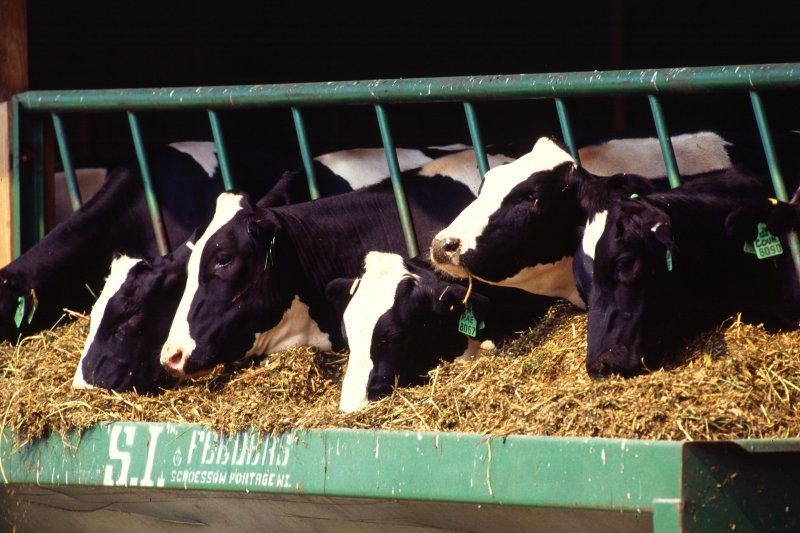 African swine fever’s annihilation of China’s hog population is driving down the global prices of the various products used to make hog feed — including milk.
/arc-anglerfish-syd-prod-nzme.s3.amazonaws.com/public/WNJEY55DPNHHBDIG2QJPBX7G5U.jpg) Applications for Fonterra’s new fixed milk price offer open on Monday.
Applications for Fonterra’s new fixed milk price offer open on Monday. FONTERRA has released an opening price of $6.60 per kilogram of milk solids for the 2019/20 season.
/arc-anglerfish-syd-prod-nzme.s3.amazonaws.com/public/EZSK2CW5RFC67AYLGMOPZHUDCQ.jpg) Speculation is building as opening forecasts for the 2019-20 dairy season are due to be announced over coming weeks.
Speculation is building as opening forecasts for the 2019-20 dairy season are due to be announced over coming weeks.



