Archive for Dairy Nutrition

Feed as Science: How the Penn State Particle Separator Turns TMR Consistency into Butterfat and Profit

Feed as Science: How the Penn State Box Turns TMR Consistency into Butterfat and Profit

I was in a feed room on a Wisconsin dairy not long ago when I noticed something familiar—a brand-new Penn State Particle Separator, still in the box and tucked behind a stack of feed samples. The herd manager laughed when he saw me notice it. “We bought it last winter,” he admitted, “but we’ve been too busy to get into the routine.”

You know, that exchange says a lot about where we are as an industry. We’ve got tools that can unlock thousands of dollars in performance, but in the rush of day-to-day dairy life, the simplest ones often get sidelined. What’s interesting here is that this little plastic box—the Penn State Separator—is turning out to be one of the best pay-per-minute management tools we have.

Why Particle Size Still Deserves Attention

In recent years, research from Penn State Extension and the University of Wisconsin–Madison Department of Dairy Science has made one thing clear: physical feed structure drives both nutrition and profit. When TMR particle size drifts off target—either too fine or too coarse—milk output routinely dips 3–8 pounds (1.4–3.6 kg) per cow per day. Butterfat often falls 0.3–0.6 percentage points, especially when rumen function gets disrupted.

Those numbers add up quickly. For a 600-cow herd, that could easily amount to five figures in monthly component revenue left on the table.

Dr. Mike Hutjens, Professor Emeritus at the University of Illinois, puts it plainly: “Feed uniformity is your daily quality control system. Without it, you’re guessing.” And that’s the truth—consistency isn’t a luxury metric; it’s how high-performing dairies stay profitable year-round.

The Science Inside the Box

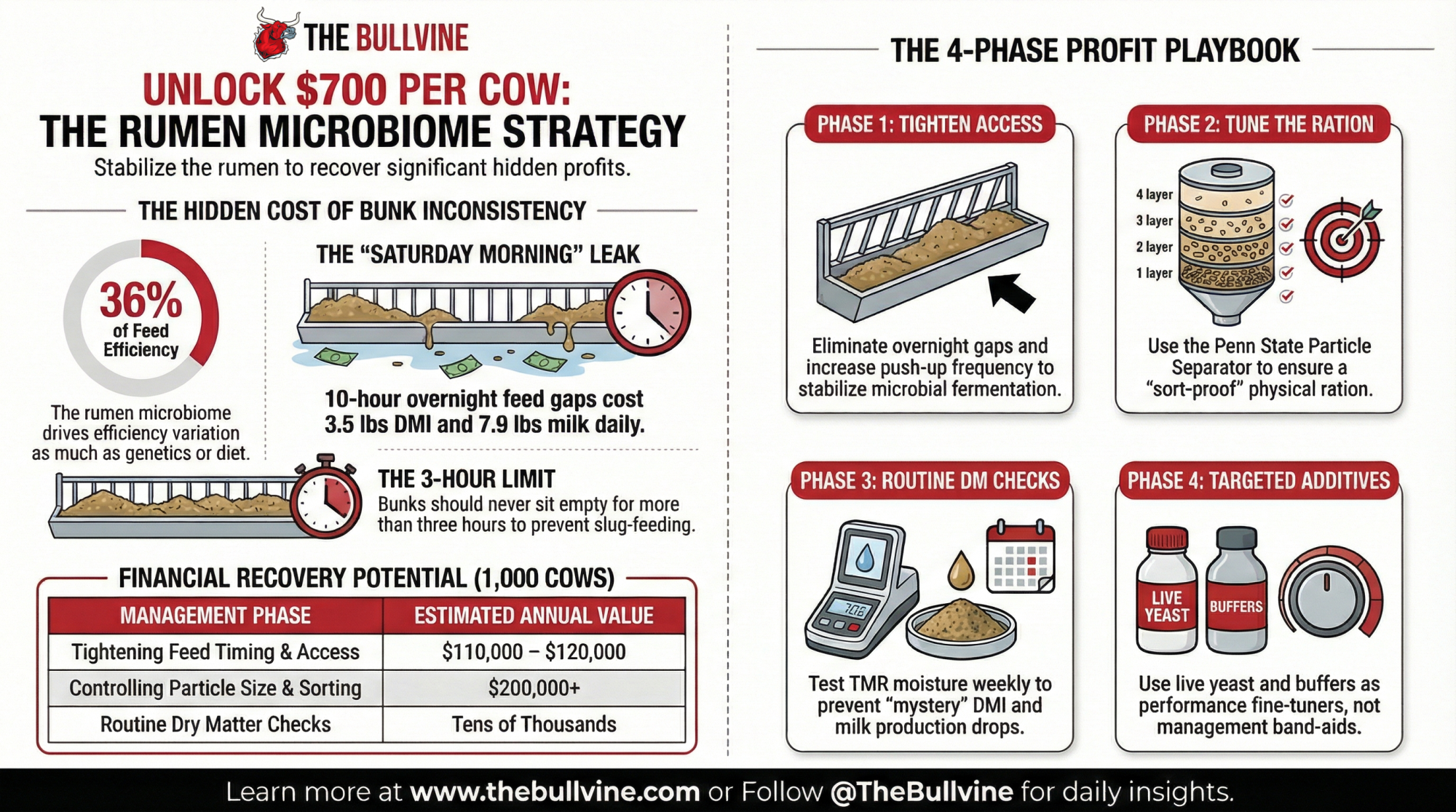
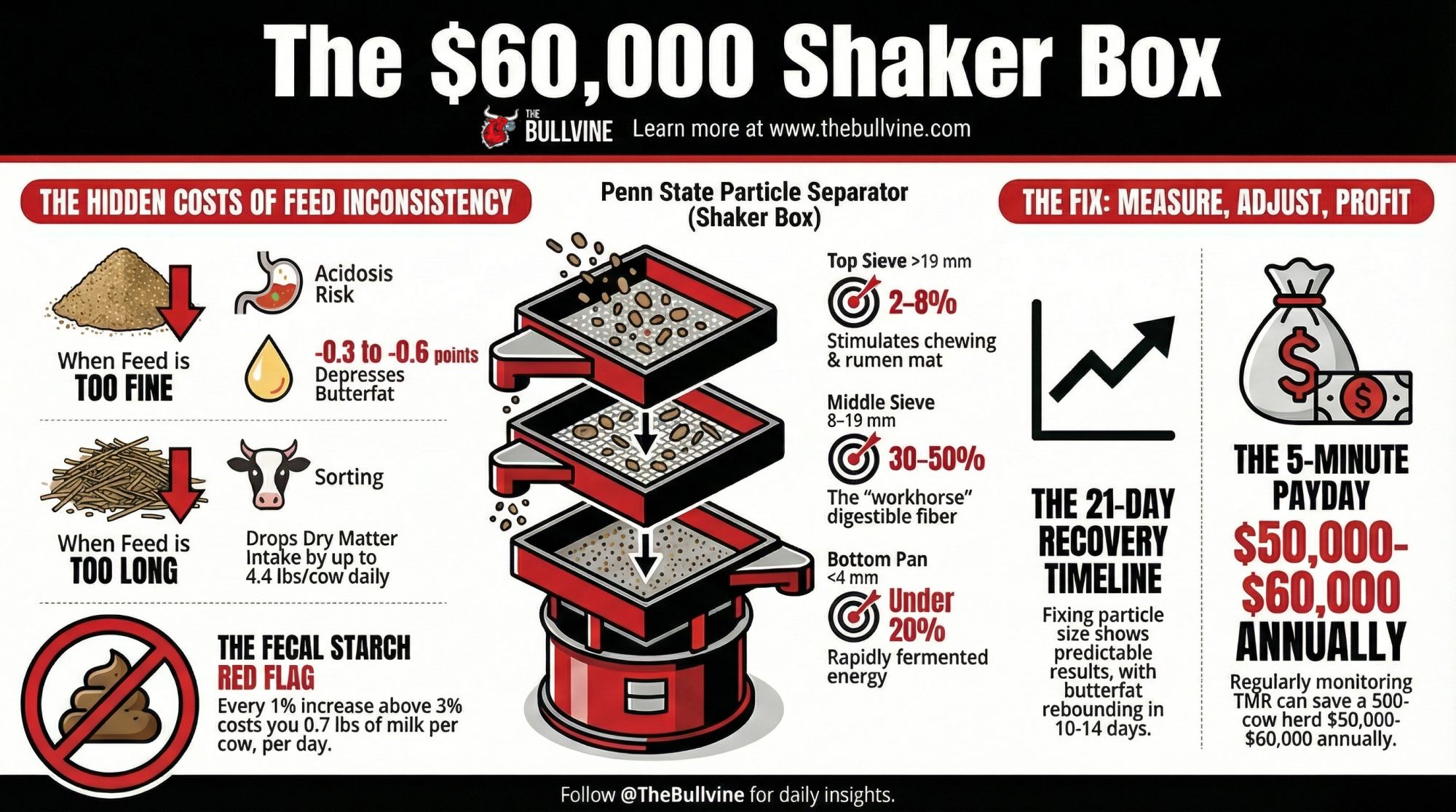
If you’ve handled a Penn State Particle Separator, you know it’s simple: four sieve trays stacked by particle size that literally show what cows are eating—not just what’s printed on the ration sheet.

For most lactating cows, Penn State guidelines suggest:

  • 2–8% retained on the top (>19 mm) sieve
  • 30–50% on the next (8–19 mm)
  • 20–30% on the third (4–8 mm)
  • Under 20% in the bottom pan (<4 mm)

What’s really fascinating is how this simple distribution tells us everything about the efficiency of rumen function. Too much fine material, and pH typically plummets below 5.8, kicking off subacute ruminal acidosis (SARA) (Krause & Oetzel, J. Dairy Sci., 2006). Too much long material, and cows start sorting, which restricts intake and upsets the delicate microbial balance that drives butterfat production.

Essentially, the Separator is a truth serum for TMR management—turning impressions into data.

When Feed Gets Too Fine – The Hidden Efficiency Leak

Overmixing is easy, especially in winter when forages dry out and mixing times stretch. The problem is subtle: rations start looking “fluffy,” but excessive blending breaks down fiber particles that cows need for natural buffering.

Mixing Time: The Goldilocks Zone for Particle Size – Seven to nine minutes hits the sweet spot for most operations: enough to blend thoroughly, not enough to pulverize fiber. Beyond 11 minutes, physically effective NDF drops below 60%, and fine particles spike—setting up acidosis risk. 

Research from Penn State (2023) and Dairyland Laboratories (2024) shows a consistent relationship—each 1% increase in fecal starch above 3% equals roughly 0.7 pounds (0.3 kg) of lost milk per cow per day. That drop traces directly back to reduced particle size and faster rumen passage.

Fecal Starch: The 3% Rule That Costs Real Money – Every 1% above 3% fecal starch equals 0.7 lbs lost milk per cow daily. At 5%, a 600-cow herd loses $30,660 annually.

Once the feed texture is corrected, cows respond fast. Intake climbs within a few days, and butterfat tends to normalize within 10–14 days. That’s the rumen re-establishing equilibrium, and it happens predictably if consistency holds.

It’s worth noting that recovery isn’t instant because microbial populations need a full cycle—about three weeks—to rebuild. But when farms stick with the plan, the results speak for themselves.

When Feed Gets Too Long – Why “More Fiber” Can Backfire

Across the Midwest, it’s common to see the opposite: rations that are too coarse. Sometimes it’s due to harvest conditions, sometimes prolonged knife wear, or wet forages. But even 10–15% material on the top sieve can drop dry matter intake by 3.3–4.4 pounds (1.5–2 kg) per cow per day, according to Cornell Cooperative Extension (2023)and Kononoff et al. (J. Dairy Sci., 2003).

It’s easy to spot. Bunks show long refusals, feed sorting increases, and milk solids vary from cow to cow. That imbalance also stresses the fresh cow group, where consistent energy delivery is critical during the transition period.

The fix is often small—a sharper chop or added moisture—but the payoff is large. One Northeast producer told me, “We didn’t change the ration at all, just the chop setting—and our intakes stabilized in a week.”

Connecting Particle Size and Fecal Starch

Here’s where modern precision feeding really shines. When farms combine physical evaluation (via the separator) with digestion analytics (via fecal starch testing), they close the loop on total feed efficiency.

Research at the University of Guelph (2024) found that herds maintaining a balanced TMR structure consistently achieved fecal starch levels below 3%, aligning with about 96% total-tract starch digestibility. Anything over 5% points to feed passing too quickly—often because TMR is too fine, not because kernels are underprocessed.

Or, as Hutjens says in his workshops, “If the rumen can’t hold feed long enough, microbes can’t finish their job.” That line always sticks because it’s a simple truth: the rumen’s efficiency relies on physical structure first, chemistry second.

What Improvement Looks Like – The 21-Day Timeline

Now, many producers ask: once we fix it, how quickly do the cows show results? Based on consistent findings from Penn State, UW–Madison, and the Miner Institute, here’s what usually happens:

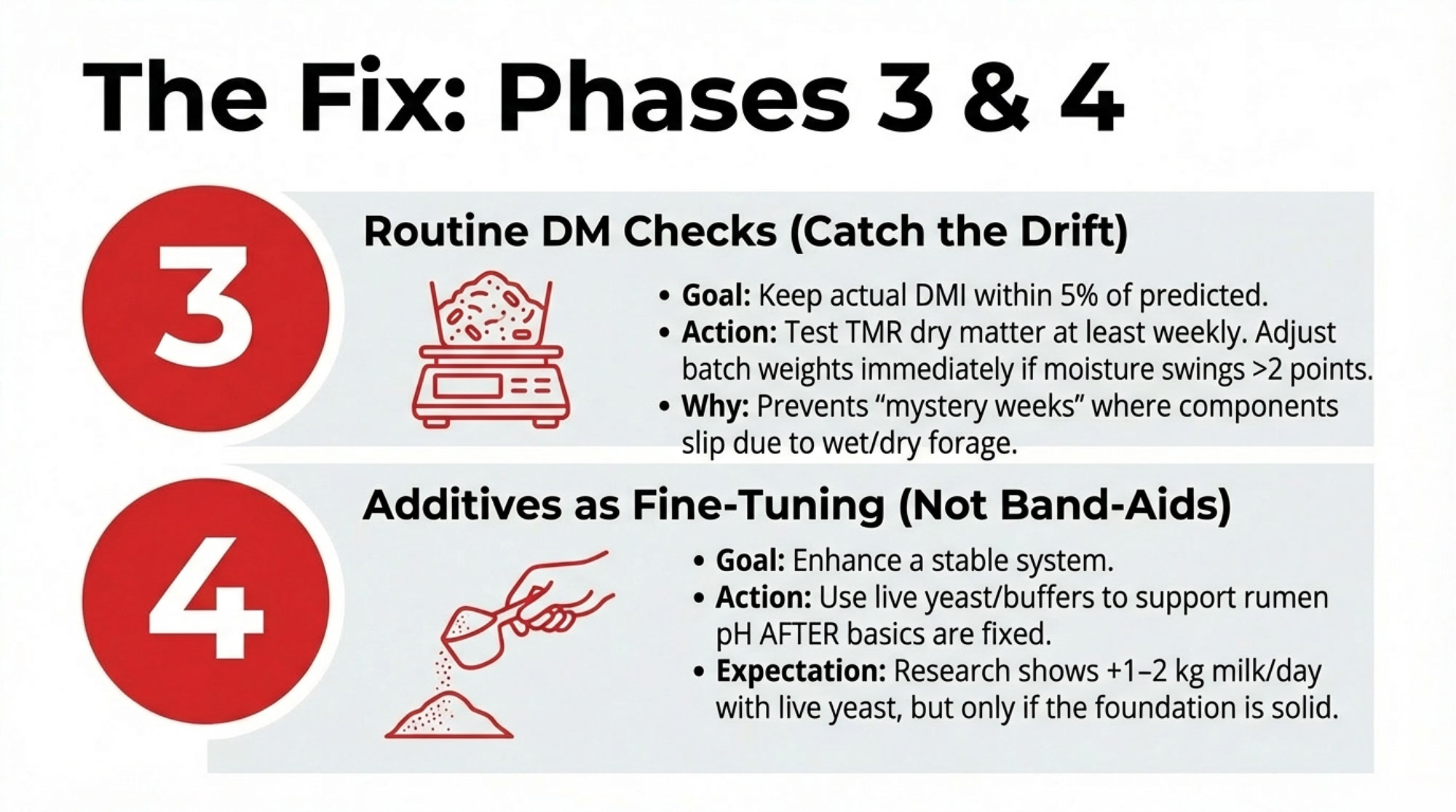
  • Days 1–2: Feed sorting drops; bunk refusals even out.
  • Days 3–5: DMI increases 2–4 pounds (0.9–1.8 kg) per cow.
  • Days 5–7: Milk production rises 3–5 pounds (1.4–2.3 kg) per cow.
  • Days 10–14: Butterfat lifts 0.2–0.3 points.
  • By Day 21: Rumen and microbial stability return to optimal levels.

What’s interesting here is just how predictable the recovery is when particle size and feeding routine stay on target. Results don’t happen overnight—but give it three weeks, and the cows will show you why it’s worth sticking to the plan.

21-Day Recovery: From Feed Fix to Full Profit – Cows respond predictably when particle size is corrected. Milk rises within a week, butterfat follows by week two, and rumen stability locks in by day 21. 

Turning the Separator into a Habit

Producers who’ve made this work treat the Separator as part of weekly herd management, not a special task. I like to call it “Feed Quality Friday”—a fifteen-minute ritual where the feeder runs one test, records the numbers, and shares them with the nutritionist.

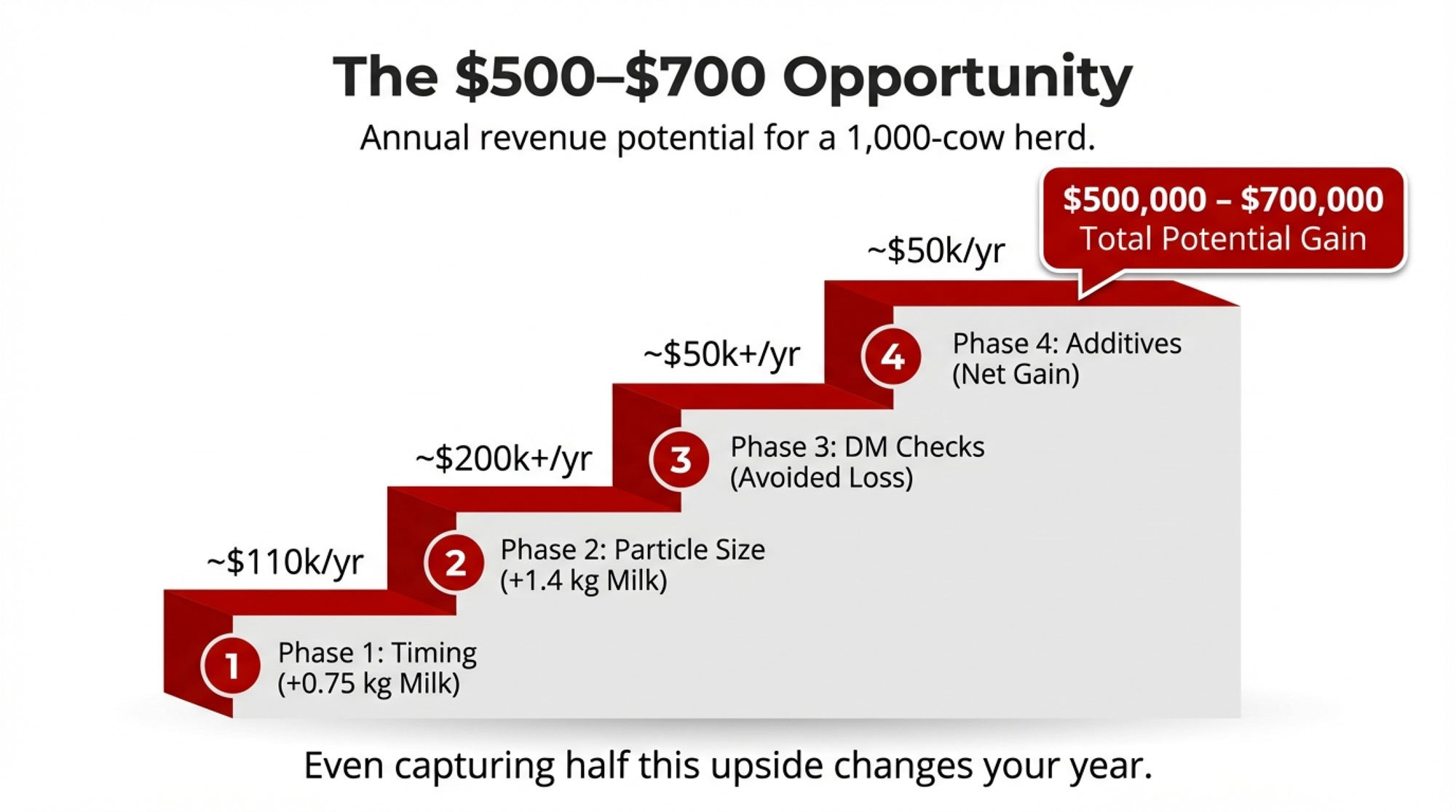
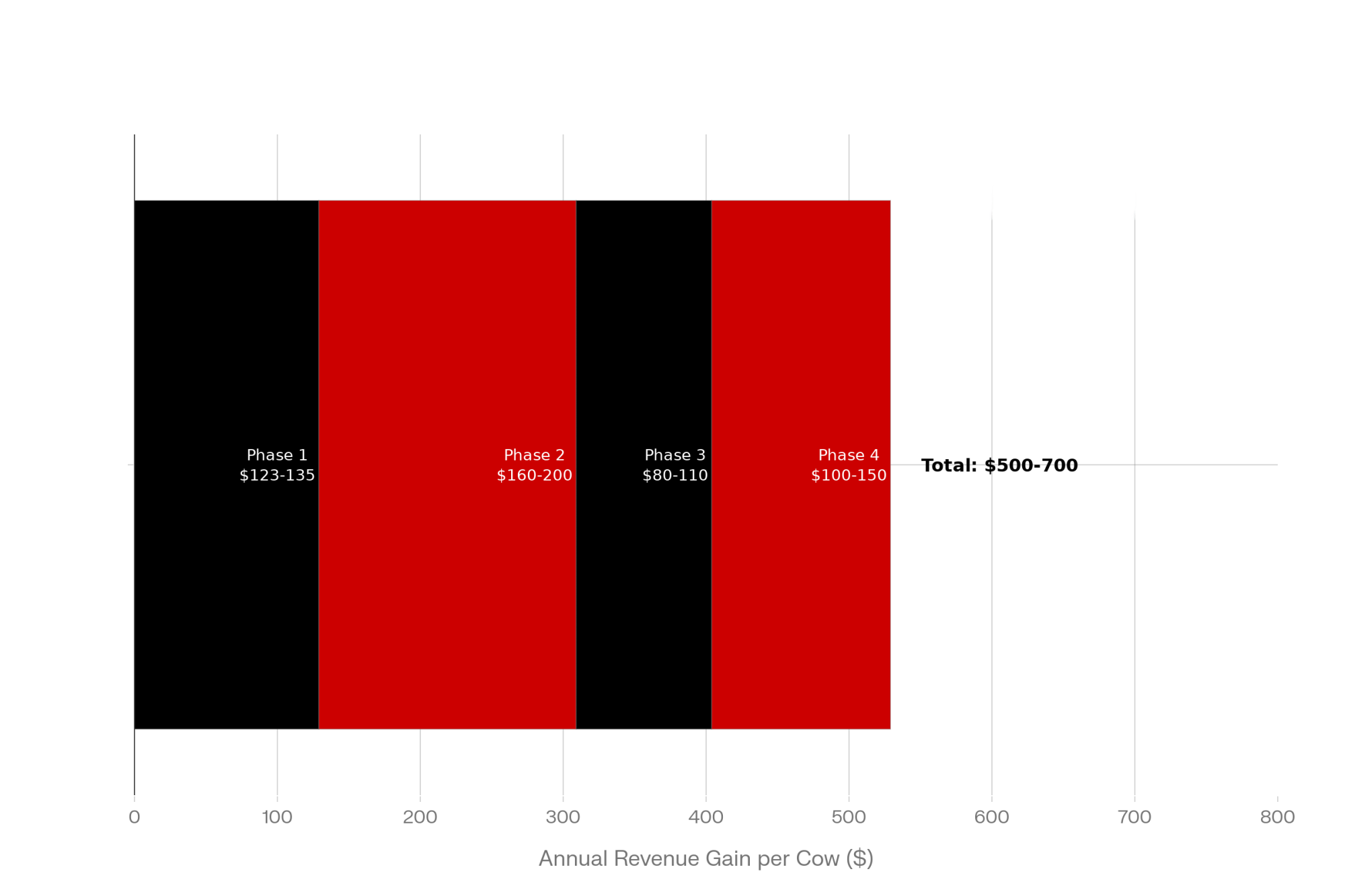
The payback for that small amount of time is remarkable. Field results from Penn State Extension (2024) show that farms that regularly monitor particle size reduced component volatility by nearly 30% across seasons, saving $50,000–$60,000 annually on a 500-cow herd.

But more importantly, it changes culture. Feeders begin catching drift before it shows up in milk tests. They start asking better questions about forage moisture, mixing time, and loading sequences. And that’s how farms shift from reactive to proactive management.

Building a Culture of Consistency

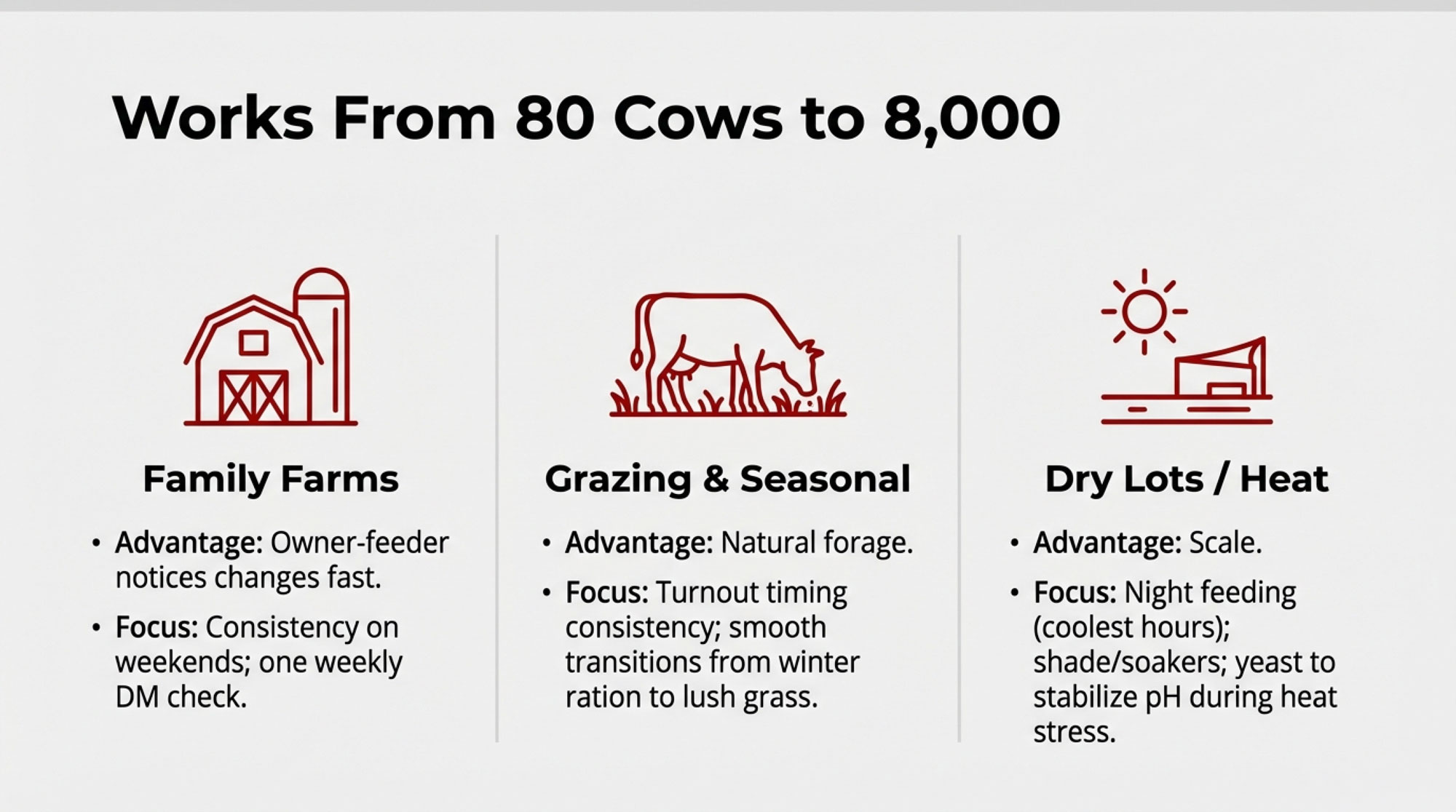
What’s encouraging is that this approach works everywhere—from 120-cow tiestalls in Ontario to 2,000-cow dry lot systems in California. The herds that succeed treat feed measurement with the same precision as fresh cow management or breeding records.

Across operations big and small, I’ve noticed that testing isn’t just about data—it builds accountability. Posting results weekly in the feed room, laminating target charts next to the mixer, or even color-coding sieves can transform an abstract concept into a visible, shared goal.

As Hutjens likes to emphasize, “Technology gives you options, but discipline delivers results.” That sentiment captures the heart of this discussion.

The Takeaway

Here’s what it all comes down to: the Penn State Separator isn’t flashy, and it doesn’t plug into an app—but it represents precision in its purest form. Measure, monitor, adjust, repeat. That process costs almost nothing and protects everything that matters: milk yield, butterfat performance, and cow health.

So if your separator is sitting in a corner, unopened, dust it off this week. Shake out one sample. It might just be the five most profitable minutes you’ll spend all month.

This feature draws on research and field data from Penn State Extension, University of Wisconsin–Madison, University of Guelph, Cornell Cooperative Extension, Dairyland Laboratories, and the William H. Miner Agricultural Research Institute, with expert perspective from Dr. Mike Hutjens, University of Illinois Professor Emeritus.

Key Takeaways:

  • The Penn State Particle Separator turns feed analysis into a five‑minute habit that can unlock five‑figure profits.
  • A simple metric—fecal starch over 3%—signals lost milk and missed feed efficiency worth hundreds daily.
  • “Feed Quality Fridays” pay off: just 15 minutes a week can protect up to $60,000 a year in butterfat returns.
  • Within 21 days of adjusting the feed structure, rumen health steadies, and milk fat rebounds naturally.
  • Across every region and herd size, the best dairies win on one thing: disciplined consistency—not fancy tools.

Executive Summary

Ask any successful dairy manager, and they’ll tell you—precision starts with the basics. This article reveals how the humble Penn State Particle Separator has become one of the most cost-effective tools for improving butterfat and overall feed efficiency. Backed by university and field research, it shows how something as simple as a five-minute TMR check can prevent $50,000 or more in yearly losses from feed inconsistency and poor fiber balance. Each 1% rise in fecal starch above 3% translates directly to milk left on the table, and yet, herds that make testing routine see full recovery in yield and butterfat within just 21 days. What’s interesting here is that the wins don’t come from expensive equipment—they come from habit, focus, and follow-through. It’s proof that on the best dairies, measurement has become a mindset, not just a task.

Complete references and supporting documentation are available upon request by contacting the editorial team at editor@thebullvine.com.

Learn More:

Join the Revolution!

Join over 30,000 successful dairy professionals who rely on Bullvine Weekly for their competitive edge. Delivered directly to your inbox each week, our exclusive industry insights help you make smarter decisions while saving precious hours every week. Never miss critical updates on milk production trends, breakthrough technologies, and profit-boosting strategies that top producers are already implementing. Subscribe now to transform your dairy operation’s efficiency and profitability—your future success is just one click away.
NewsSubscribe
First
Last
Consent

Your Next Milk Check Changes Everything: Why GLP-1 Drugs Just Made Protein King

Your grandfather chased butterfat. Your kids will chase protein. The switch happens on December 1. Miss it and you’re playing catch-up forever.

EXECUTIVE SUMMARY: The pharmaceutical industry just rewrote dairy economics: 30 million Americans on GLP-1 weight-loss drugs can’t digest traditional cheese but desperately need protein, ending 20 years of butterfat dominance. December 1st brings Federal Milk Marketing Order reforms requiring a 3.3% minimum protein—a threshold that will trigger deductions for unprepared farms. Three proven strategies offer paths forward: amino acid optimization (generating $38,000+ within 60 days), Jersey crossbreeding (worth $850-1,100 per cow annually), or direct processor contracts (securing $270,000+ yearly for a 650-cow operation). The split is already visible—early adapters report record profits while operations with 55%+ debt-to-asset ratios and sub-3.2% protein face elimination. December 15 marks the strategic decision deadline before January’s bank reviews. This isn’t a temporary market disruption but a permanent shift where protein premiums of $1.40-1.75/cwt will separate survivors from statistics. The market has spoken: adapt to protein economics or exit on your terms before the choice gets made for you.

Dairy Protein Strategy

I was reviewing the latest milk check when something struck me. The numbers looked familiar enough, but there’s a fundamental shift happening underneath—one that started, surprisingly enough, in pharmaceutical boardrooms rather than our dairy barns.

When Eli Lilly announced last month that its GLP-1 drug, tirzepatide, became the world’s bestselling medicine, with over $10 billion in third-quarter sales alone, most of us probably didn’t pay much attention. But here’s what’s interesting: this pharmaceutical success story is about to reshape how we think about milk components, and it’s happening faster than most producers realize.

According to Gallup’s health tracking released in October, 12.4% of American adults are now using injectable GLP-1 medications for weight loss. That’s more than double the 5.8% from February 2024. And the Trump administration’s recent negotiations with Eli Lilly and Novo Nordisk to reduce prices from around $1,000 monthly to $350 for injectables through Medicare and certain insurance programs—with oral versions potentially hitting $150 once the FDA approves them—well, that’s when adoption really takes off.

Dave Richards from IFF Consumer Insights shared something fascinating from their September 2025 report: households using these medications are fundamentally changing how they consume dairy. The implications reach far beyond individual shopping carts.

GLP-1 adoption among US adults has accelerated dramatically, doubling from 5.8% in February 2024 to 12.4% by October 2025, with projections exceeding 20% by March 2027 when oral formulations hit $150/month

Why Protein Is Suddenly Everything

The timing here is remarkable. Come December 1st—we’re talking 19 days from now—Federal Milk Marketing Order reforms kick in. The baseline protein standard jumps from 3.1% to 3.3%. If you’re shipping below that threshold, you’ll see deductions starting with your January milk check. Meanwhile, CME spot dry whey hit $0.75 per pound this week, marking an 11-month high according to the Daily Dairy Report.

Tom Henderson, who runs 600 cows near Eau Claire, Wisconsin, put it perfectly when we talked last week. “We’ve been chasing butterfat for twenty years,” he said, looking at his component premiums tracking sheet that goes back to 2008. “Now my co-op’s offering $1.40 per hundredweight premium for anything above 3.4% protein. That’s more than I’ve ever seen for fat premiums, even in the good years.”

What farmers are finding is that this isn’t just a U.S. phenomenon. The Canadian Dairy Commission announced in September that four western provinces—British Columbia, Alberta, Saskatchewan, and Manitoba—will shift their component pricing ratios come April 2026. They’re dropping butterfat’s payment weight from 85% to 70% while increasing protein from 10% to 25%. That’s a fundamental acknowledgment that the market has changed.

Looking at today’s futures tells the whole story. November Class III milk (your cheese milk) trades at $17.16 per hundredweight. Class IV (butter-powder)? $13.63. That $3.53 spread reveals exactly what processors value now.

You know, I’ve been watching robotic milking systems for years, and what’s interesting is how they might actually help with this protein push. A producer near Watertown, New York, told me his robots let him feed different groups more precisely—his high-protein genetics get exactly what they need, when they need it. “The robots don’t just milk,” he said. “They’re data collection points for component optimization.”

Timeline Watch: Critical Dates Approaching

  • Now through November 30: Last chance for nutrition adjustments to impact December protein tests
  • December 1: FMMO protein baseline increases to 3.3%
  • January 15: First milk check with potential deductions arrives
  • January 31: Banks finalize credit reviews based on new component economics

Understanding the GLP-1 Effect on Dairy Consumption

GLP-1 adoption among US adults has accelerated dramatically, doubling from 5.8% in February 2024 to 12.4% by October 2025, with projections exceeding 20% by March 2027 when oral formulations hit $150/month

Dr. Sarah Martinez, from UC Davis’s nutrition research program, has been studying the effects of GLP-1 since 2023. What she’s discovered explains a lot. These medications dramatically slow gastric emptying—food stays in the stomach much longer. While that’s great for feeling full, it creates real problems with high-fat foods.

Her research, published in the Journal of Clinical Endocrinology this September, shows that GLP-1 users experience increased discomfort with foods containing more than 20% fat. Think about that—cheddar cheese is 33% fat. Low-fat cottage cheese? Just 4%. The difference becomes physically uncomfortable for these consumers.

“My patients tell me they can’t even look at a grilled cheese sandwich anymore,” Dr. Robert Chen told me. He’s an endocrinologist at Mayo Clinic who’s prescribed GLP-1s to over 800 patients since 2022. “But they’re desperate for protein to prevent muscle loss during weight loss. We recommend 1.0 to 1.5 grams per kilogram of body weight daily.”

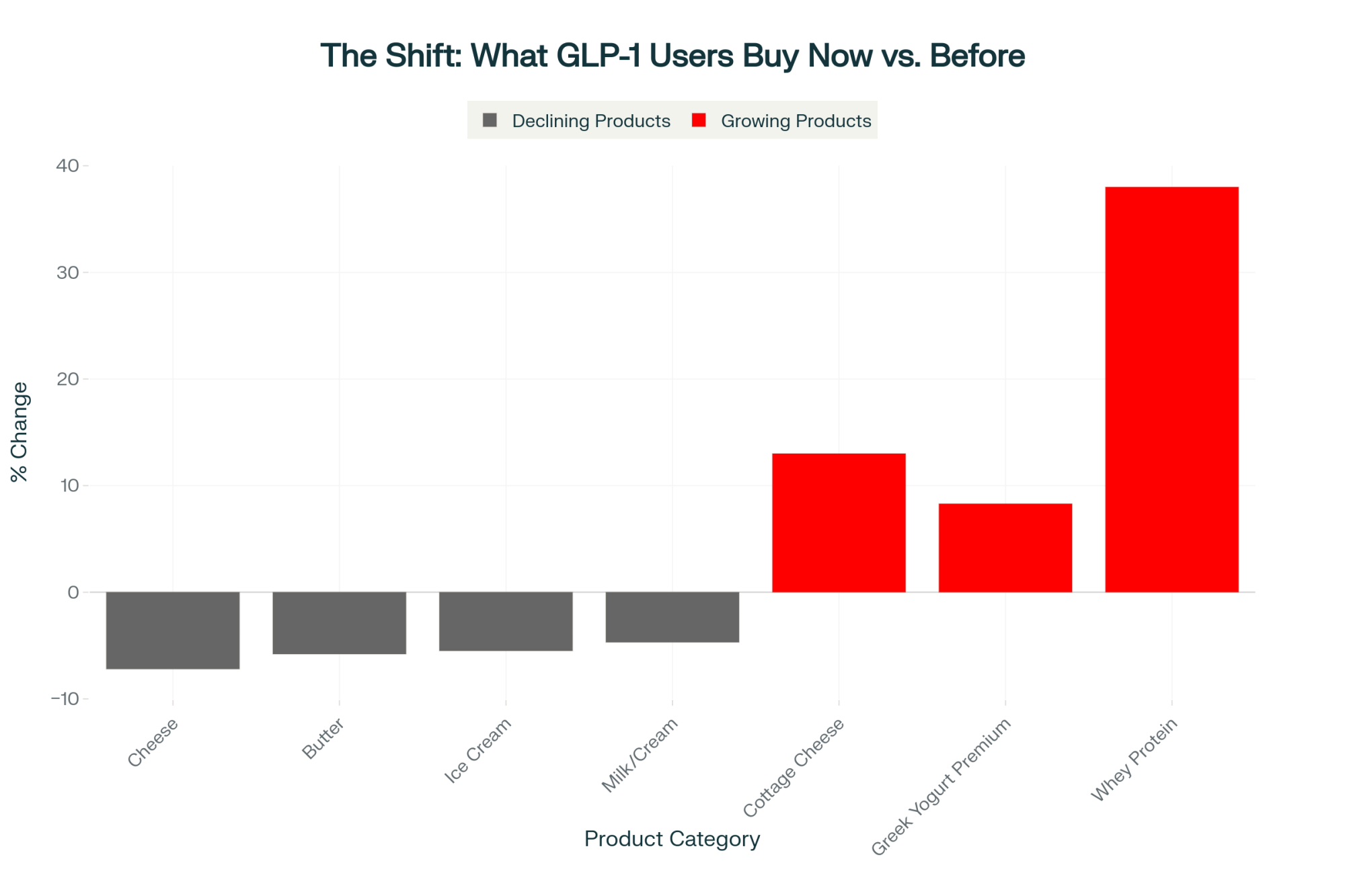
The IFF tracking data confirms what doctors are seeing clinically. GLP-1 households show unmistakable consumption shifts:

Declining consumption:

  • Cheese: down 7.2%
  • Butter: down 5.8%
  • Ice cream and whipped cream: down 5.5%
  • Fluid milk and cream: down 4.7%

Growing consumption:

  • Cottage cheese: up 13%
  • Greek yogurt: up 2.4% overall (premium Greek up 8.3%)
  • Whey protein beverages: up 38%

I’ve noticed something else, talking to grocery store managers from California to New York—the cottage cheese boom isn’t just about protein. It’s convenience. Single-serve containers that provide instant protein when appetite returns. No prep required.

What’s particularly telling is what’s happening in Europe. A dairy economist I know in the Netherlands mentioned their processors are already reformulating products for the “Ozempic generation”—lower fat, higher protein, smaller portions. They’re six months ahead of us on this trend.

Down in New Zealand, where grass-based systems dominate, they’re having different conversations. A producer I spoke with at a recent conference said they’re exploring supplementation strategies they never would’ve considered five years ago. “Grass milk’s great,” he said, “but grass alone won’t hit these protein targets.”

Three Strategies That Are Actually Working

StrategySpeed to ResultAnnual ImpactInvestmentRisk LevelTimeline
Nutrition Optimization60 days$38,000$3,500/monthLowStart immediately
Jersey Crossbreeding18-30 months$850-1,100/cow$18-35/breedingMediumHeifers freshen in 24-30 mo
Processor ContractsImmediate$270,000+ (650 cows)Relationship mgmtLowLock in 30 days

I’ve been talking to producers across different regions, and what’s fascinating is how operations are approaching this challenge. The smartest ones? They’re doing all three of these simultaneously.

Strategy 1: Fast-Track Nutrition (60-75 Day Results)

Mike Johannsen runs a nutrition consulting firm in Madison, working with about 40 dairy operations. “Forget dumping more crude protein in the ration,” he told me at World Dairy Expo. “That’s expensive and usually makes things worse.”

According to Johannsen, what works is precision amino acid balancing. Keep metabolizable protein at requirement levels but optimize the profile: lysine at 7.2-7.5% of metabolizable protein, methionine at 2.4-2.5%, maintaining that crucial 3:1 ratio.

A 480-cow operation near Fond du Lac documented everything for me. Started September at 3.12% protein. By late November, they’re expecting 3.28%. That translates to $38,000 additional annual revenue at current premiums. And here’s the kicker—they actually reduced crude protein by 1.5 percentage points and cut feed costs twelve cents per hundredweight.

Current market pricing for rumen-protected amino acids ranges from $8 to $ 12 per pound for lysine and $6 to $ 9 for methionine. For a 500-cow operation, you’re looking at roughly $3,500 monthly. But the documented returns are $3-5 for every dollar invested when you balance it right.

I talked to a producer near Modesto, California, who’s seeing similar results. “The heat stress out here makes protein optimization even more critical,” she explained. “We’re hitting 3.35% protein consistently now, up from 3.08% in July.”

What’s interesting about seasonal patterns—spring grass tends to be lower in metabolizable protein than people think. A nutritionist in Vermont told me that May and June are actually their toughest months for meeting protein targets in pasture-based systems. “Fresh grass looks great, but the protein’s all degradable. We need to supplement even on pasture.”

Strategy 2: The Genetics Play (18-30 Month Payoff)

This one’s controversial, I know. But the University of Minnesota’s 20-year crossbreeding study, which wrapped up in 2023 under Dr. Les Hansen, makes you think. Jersey × Holstein F1 crossbreds produce milk with 4.0-4.3% protein versus purebred Holstein’s 3.1-3.2%. Yes, they produce 3,000-4,000 pounds less milk annually, but their net income matches or beats purebreds due to better fertility (4-17 fewer days open), lower replacement costs, and those protein premiums.

Amy Steinberg, a genetic consultant working across Minnesota and Wisconsin, breaks it down simply. “This isn’t about converting your whole herd to Jerseys,” she explains. “Use Jersey AI on your bottom 40% ranked for protein genetics. Keep your top 30% pure Holstein with sexed semen for replacements.”

Jersey semen costs $18-35 per unit—same ballpark as decent Holstein genetics. Those F1 heifers will freshen at 24-30 months with 4%+ protein. At today’s premiums, each F1 cow could generate $850-1,100 extra annually just from protein.

I watched a breeding at a third-generation farm near Shawano last week. The producer laughed, “Grandpa would roll over seeing Jersey semen in our tank. But grandpa wasn’t dealing with GLP-1 drugs and protein premiums.”

Even producers in Texas are exploring this. One 2,000-cow operation near Stephenville told me they’re crossbreeding their bottom third. “The heat tolerance of the F1s is a bonus we didn’t expect,” the manager said. “They’re handling 105-degree days better than our Holsteins.”

Strategy 3: Direct Processor Deals (Immediate Impact)

Several producers aren’t waiting for their co-ops to act. One Green Bay area producer—let’s call him Steve—just locked a three-year contract with a regional yogurt manufacturer. He guarantees 95% of production at 3.8-4.2% protein, 3.7-4.0% butterfat, and somatic cells under 200,000. In return? $1.50 per hundredweight premium over base. That’s $270,000 extra annually on 650 cows.

The processor gets consistent milk that they can standardize products around. Steve gets price stability while neighbors scramble. Both win.

A Northeast producer near Lancaster, Pennsylvania, negotiated something similar with a specialty cheese maker. “They wanted consistent components for their aged products,” he explained. “We’re getting $1.65 over base for hitting their targets.”

Quick Math: Your Three Options

  • Nutrition route: $3,500/month cost, $3-5 return per dollar, results in 60 days
  • Genetics route: $18-35 per breeding, $850-1,100 annual premium per F1, results in 18-30 months
  • Processor contracts: $1.00-1.75/cwt premiums, 3-year stability, starts immediately

The Calendar Is Not Your Friend

Looking at what’s coming, the window for positioning is narrower than most realize:

December 1, 2025: FMMO protein baseline shifts. Below 3.3%? Deductions start.

January 15-31, 2026: Annual bank reviews. Mark Stevens from Farm Credit Services of Southern Wisconsin tells me they’re already identifying operations with debt-to-asset ratios over 60% and protein under 3.2%. “We’re not trying to force exits,” he emphasizes. “But farms without component improvement plans raise viability questions.”

April 1, 2026: Canadian pricing shifts take effect, influencing cross-border dynamics.

2026-2027: New processing capacity from Lactalis, Leprino, others comes online. Competition for high-protein milk intensifies.

March 2027: FDA expected to approve oral GLP-1s based on current trials. When pills cost $150 instead of $1,000 for shots, adoption explodes.

Who’s Most Vulnerable Right Now

Farm vulnerability matrix maps debt-to-asset ratios against current protein production, revealing three distinct zones: thriving operations (low debt, high protein), vulnerable farms requiring immediate action (moderate debt, marginal protein), and critical situations where strategic exit preserves equity

Let’s be honest about who needs to act immediately. Based on what lenders and co-op reps are telling me, here’s the danger profile:

  • 500-1,500 cow operations shipping commodity milk
  • Testing 3.0-3.2% protein currently
  • Debt-to-asset ratio over 55%
  • Production costs $18-21 per hundredweight
  • Milk price averaging $13.50-14.50

If this describes your operation, December’s protein shift could eliminate your remaining margin. You’ve got 60 days to make nutrition changes, or you need to start planning an exit that preserves equity.

Dr. Chris Wolf, Cornell’s dairy economist, sees a clear split developing. “Operations that pivot to high-protein, quality milk will find opportunities. Those locked into commodity production with high debt face significant challenges.”

What worries me is the middle group—farms that could adapt but are waiting to see what happens. Every week of delay is a week competitors lock contracts and implement changes.

The Community Impact We Can’t Ignore

What really keeps me up at night is what happens when 20-30% of farms in a region exit within two years.

Wisconsin has lost thousands of dairy farms over recent decades while maintaining stable production, according to USDA data. Fewer families, smaller tax bases, struggling Main Streets. Rick Peterson from Crawford County’s economic development office showed me projections—losing 25% more farms by 2027 means $400,000-600,000 less for schools annually. The hospital might close its birthing unit. Main Street loses another third of its businesses.

“Each farm exit eliminates five to seven related jobs,” Peterson explains. Feed dealers, mechanics, accountants—it cascades through the community.

I drove through Richland County last month. Three dairy farms for sale in ten miles. The café owner told me business is down 20% this year. “When farms go, everything follows,” she said quietly.

But I also visited Tillamook County, Oregon, where processors and producers worked together on component premiums early. They’ve maintained farm numbers better than most. “We saw this coming and acted collectively,” a local co-op board member explained. “Not everyone can do that, but it made the difference here.”

What Success Looks Like in 2030

Five-year financial transformation projection for a 500-cow dairy operation: protein optimization combined with genetics and market positioning drives net income from $127,000 to $495,000 annually while improving debt-to-asset ratio from 62% to 38%

But it’s not all challenging news. Producers who execute this transition well achieve remarkable improvements.

Jim Bradley, a dairy nutritionist and economist consulting for Upper Midwest banks, helped me model a typical 500-cow operation. Starting point: 3.10% protein, $13.90 milk, 62% debt-to-asset. By 2030, with proper execution:

  • Protein reaches 4.05% through nutrition and F1 genetics
  • Milk price hits $17.00/cwt with premiums
  • Net income grows from $127,000 to $495,000 annually
  • Debt-to-asset improves to 38%

“This isn’t speculation,” Bradley insists. “These projections reflect actual results from operations that started transitioning in early 2024.”

A Vermont producer who started his transition 18 months ago confirms this. “We’re already seeing $180,000 more annually just from protein premiums. The genetics haven’t even kicked in yet.”

Your Action Plan for the Next 30 Days

After dozens of conversations with producers from California to Vermont, here’s what separates those who’ll thrive from those who’ll struggle:

Make your strategic decision by December 15: Pivot to capture premiums or plan a strategic exit? Both are valid. Waiting to see isn’t.

If pivoting:

Call your nutritionist this week. Amino acid balancing can boost protein 0.15-0.25% within 60 days, often reducing feed costs. Budget $0.03-0.08 per hundredweight for protected amino acids.

Rank cows by protein genetics. Bottom 40% get Jersey AI. Top 30% get sexed semen for replacements. Middle tier? Consider beef semen—those calves bring $800-1,200 versus $50 for Holstein bulls.

Meet with three processors before November 30. Your current handler plus alternatives. Bring component data and projections. Producers securing $1.40-1.75/cwt premiums are negotiating now, not during the crisis.

Talk to your lender before January reviews. Present your plan. Show market understanding. Lenders support strategic direction, question apparent oblivion.

If exiting:

Engage transition specialists immediately. Strategic exits preserve 70-80% equity. Forced liquidations preserve 40-50%. The difference determines retirement versus bankruptcy. The National Farm Transition Network has advisors who can help.

The Choice Facing Each of Us

This transformation is happening now—in bulk tanks, processing plants, and lending offices across dairy country. The convergence of GLP-1 adoption, FMMO reforms, and processor consolidation creates unprecedented challenges and significant opportunities for those positioned to capitalize on them.

The strategic window measures in weeks, not years. Producers who make informed decisions by December 15 and execute systematically will likely view November 2025 as the month they secured their future. Those who delay may remember it as the moment when opportunity passed by.

Ironically, dairy products perfectly match GLP-1 users’ nutritional needs—quality protein in digestible formats. But capturing this requires acknowledging that successful strategies from the past twenty years won’t work for the next five.

The market has clearly stated its protein priorities. Whether you’re milking 50 cows in Vermont or 5,000 in New Mexico, the question isn’t whether to adapt, but whether you’ll adapt quickly enough to capture premiums before they become the new baseline.

In our rapidly evolving industry, decisive action—even if imperfect—often beats waiting for complete information that never materializes. This might be one of those moments where the cost of inaction exceeds the risk of imperfect action.

For implementation guidance on protein optimization or transition planning, consult your regional extension dairy specialist or agricultural lender familiar with current market dynamics. Time-sensitive conditions make professional consultation advisable.

KEY TAKEAWAYS

  • Protein is now king: GLP-1 drugs affecting 30M Americans killed butterfat’s 20-year reign—protein premiums hit $1.40-1.75/cwt while Class IV milk trades $3.53 below Class III
  • December 15 = Decision Day: Make your strategic choice before December 1st’s 3.3% protein requirement triggers deductions and January’s bank reviews force your hand
  • Three paths to profit: Fast nutrition fix ($38K return, 60 days) | Jersey crossbreeding ($1,100/cow/year, 18-30 months) | Direct processor deals ($270K+/year, immediate)
  • The survival line: Farms below 3.2% protein with >55% debt face elimination—but strategic exits now preserve 70-80% equity versus 40% in forced liquidation
  • First-mover advantage expires soon: Producers securing premium contracts today will be selling commodity milk to those same processors in 2027

Complete references and supporting documentation are available upon request by contacting the editorial team at editor@thebullvine.com.

Learn More:

Join the Revolution!

Join over 30,000 successful dairy professionals who rely on Bullvine Weekly for their competitive edge. Delivered directly to your inbox each week, our exclusive industry insights help you make smarter decisions while saving precious hours every week. Never miss critical updates on milk production trends, breakthrough technologies, and profit-boosting strategies that top producers are already implementing. Subscribe now to transform your dairy operation’s efficiency and profitability—your future success is just one click away.

NewsSubscribe
First
Last
Consent

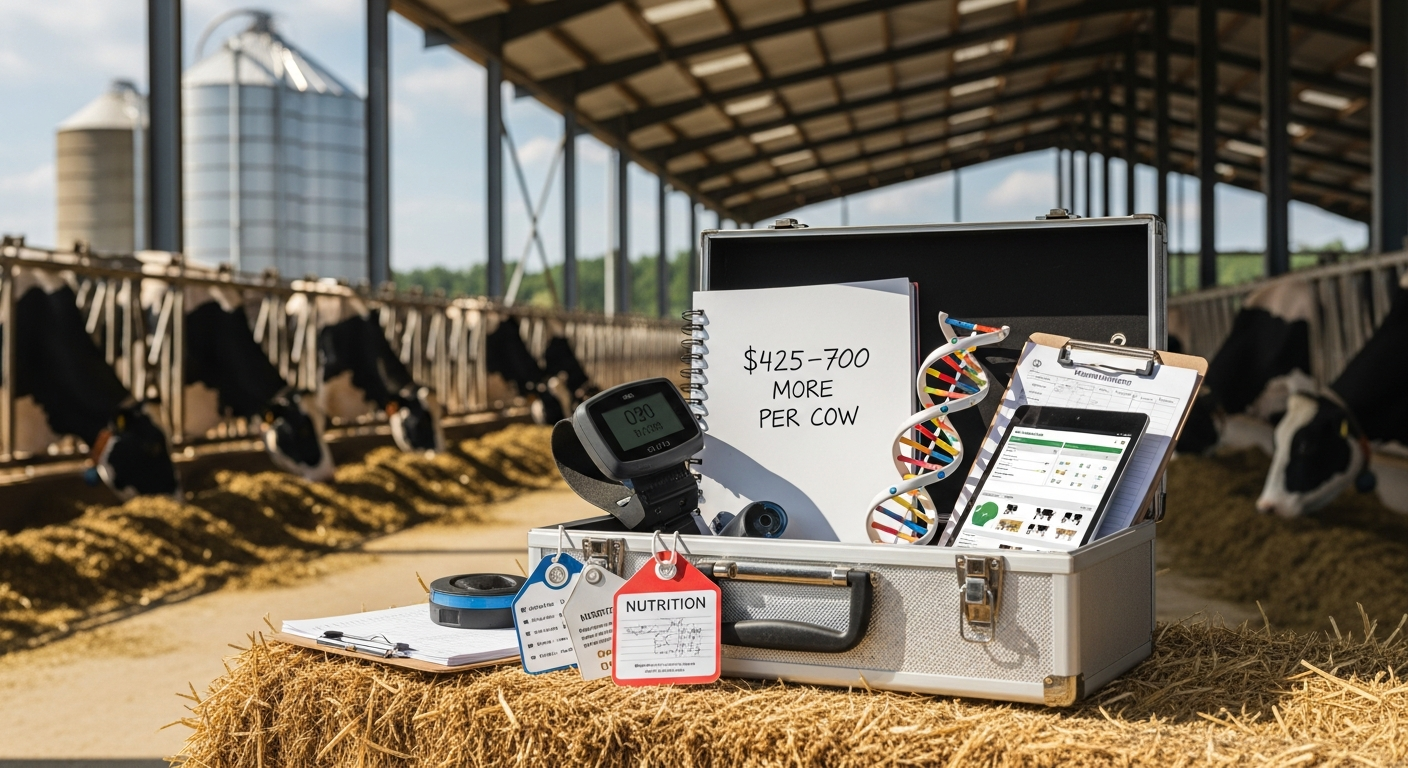
The End of Universal Dairy Advice: How Precision Strategies Deliver $425-700 More Per Cow

1,500 cows. 19 studies. One conclusion: Following ‘standard’ dairy advice leaves $425-700 per cow on the table. Michigan State & Cornell just proved why context beats convention every time.

Executive Summary: The dairy industry’s universal playbook is dead—and farms still following it are leaving $425-700 per cow on the table. Michigan State’s analysis of 1,500 cows just proved palmitic acid increases fiber digestibility by 4.5%, completely reversing 70 years of established nutrition science. Meanwhile, Cornell research shows that the “optimal” 27% starch diet crushing it in Wisconsin could tank your butterfat and profits in Arizona’s heat. Is the beef-on-dairy gold rush paying $150-350 premiums today? History says you’ve got two years before the cycle turns. Smart operators aren’t copying neighbors anymore—they’re implementing precision strategies matched to their specific conditions, capturing those higher returns through customized nutrition, strategic breeding, and targeted technology adoption. The question isn’t whether to adapt, but whether you’ll lead the change or chase it.

Precision Dairy Profitability

You know how sometimes research comes along that makes you reconsider everything you thought you knew about dairy farming? Well, a recent issue of the Journal of Dairy Science is one of those moments. What’s particularly noteworthy is how these studies—from teams at Michigan State, Cornell, and universities across Europe—all point to the same conclusion: what works brilliantly for your neighbor might not work for you. And that’s actually okay.

I’ve been digging through these analyses, and there’s a consistent theme emerging. Success in modern precision dairy farming increasingly depends on matching strategies to your specific operation rather than following those universal recommendations we’ve all grown up with. It’s a shift we’ve been seeing gradually over recent years—this move from standardized protocols toward more nuanced, operation-specific dairy management strategies.

Here’s what’s encouraging: the economics actually support this individualized approach. Based on Michigan State’s modeling of fatty acid supplementation strategies, operations implementing production-level-specific feeding programs could capture $250-350 per cow annually during favorable milk price periods (you know, those $18-20 per hundredweight times we all hope for). Similarly, research on strategic breeding programs suggests returns of $100-200 per cow from well-managed beef-on-dairy programs—though let’s be honest, these figures assume you’ve already got proper replacement management systems in place.

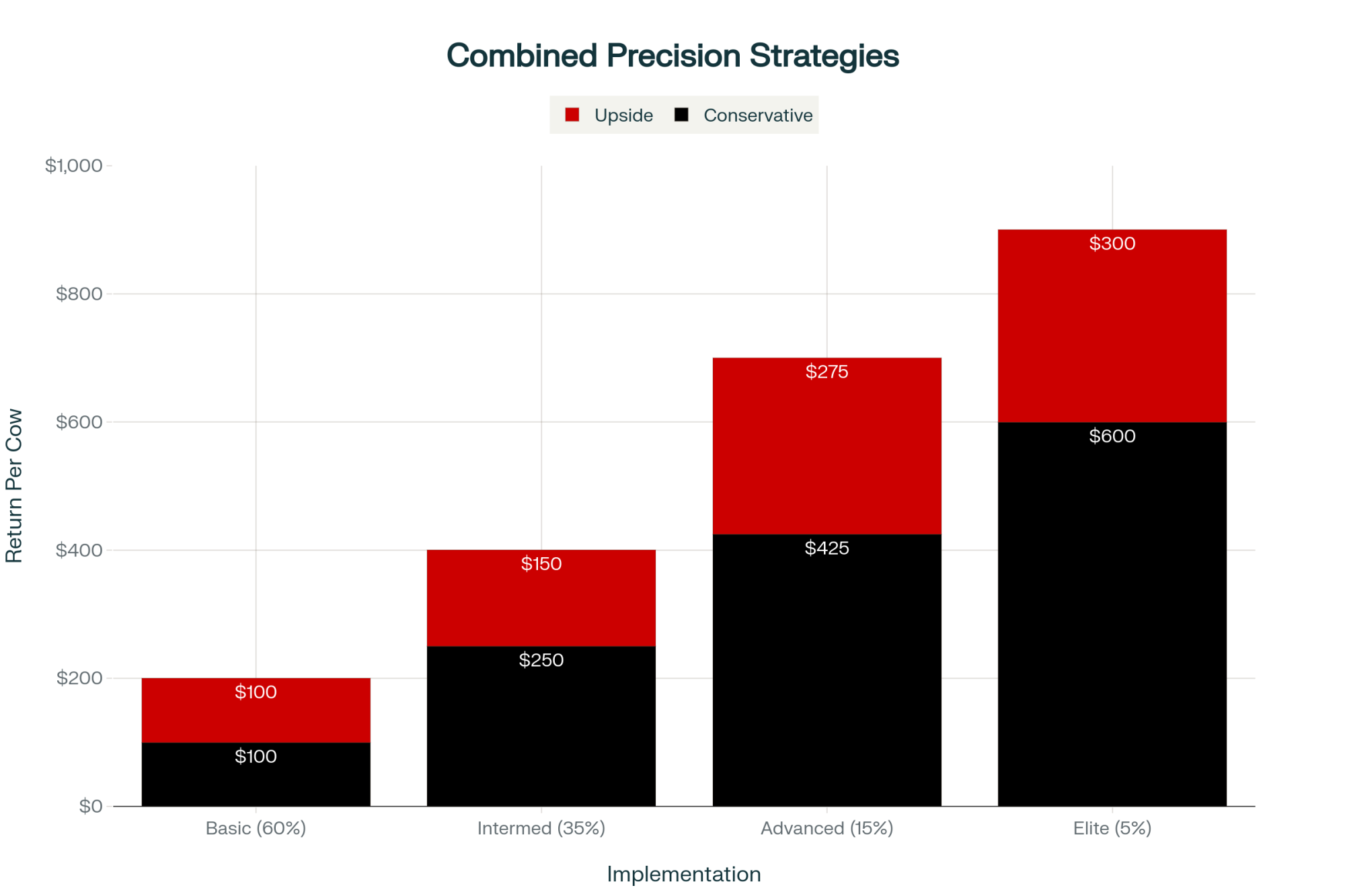
The $425-700 Opportunity: Combined Precision Strategy Impact – How elite operations achieve 4-9x returns versus basic implementation through systematic integration

Reconsidering Fat Supplementation: When Conventional Wisdom Meets New Data

So here’s what’s interesting about fat supplementation. For literally decades—since the 1950s—we’ve operated on the principle that dietary fat reduces fiber digestibility. This wasn’t just some random idea someone had. Legitimate studies showed vegetable oils decreased cellulose breakdown, and every nutritionist learned it, taught it, and formulated around it.

Then Adam Lock’s research team at Michigan State published their meta-analysis in a recent Journal of Dairy Science, covering 19 studies and nearly 1,500 individual cow observations. And what they found? Palmitic acid (that’s C16:0 for those keeping track) actually enhances neutral detergent fiber digestibility by 4.5 percentage points. Not decreases—increases. The mechanism, as it turns out, involves the selective enhancement of specific fiber-digesting bacteria that produce propionate and valerate. It’s essentially the opposite of what we’ve been teaching for generations.

Production LevelOptimal StrategyFiber Digestibility ChangeAnnual Return Per Cow
Low Producers (<99 lbs/day)High Palmitic (80-85% C16:0)+4.5%$250-350
High Producers (>99 lbs/day)Oleic Blend (60% palmitic, 30% oleic)+2.8%$200-280

What makes this particularly relevant for operations today is the research’s clear production-level differentiation. Cows producing below 45 kilograms daily—about 99 pounds—show optimal response to high-palmitic supplements containing 80-85% C16:0. But your high producers? Those pushing over 45 kilograms daily? They actually do better with oleic-enriched blends, something like 60% palmitic and 30% oleic acid.

I recently spoke with a nutritionist managing several large herds who’s been implementing these differentiated strategies. What they’re finding is that fresh cows get oleic blends to support intake during the transition period, mid-lactation animals get high-palmitic supplements to support production, and late-lactation cows go back to oleic blends for body condition recovery. Yeah, it’s more complex than just buying one fat supplement for everyone. But the economic modeling suggests potential returns of $250-350 per cow annually at favorable milk prices, with $200-320 returns even during those challenging price periods we all dread.

“The biggest shift we’re seeing is accepting that every recommendation needs context-specific qualifications. What works brilliantly for one operation might actually lose money for another.”

Starch Management: Finding the Balance Between Efficiency and Components

The Cornell team’s investigation into dietary starch levels presents an interesting challenge that I think many of us are grappling with. Their comparison of 21% versus 27% starch content—achieved by replacing soy hulls with high-moisture corn—revealed improved feed efficiency of 5% and reductions in methane emissions of 6% at the higher inclusion rate. Sounds great, right?

But here’s where it gets complicated. That same higher starch level decreased milk fat concentration by 0.16-0.19 percentage points. Now, you might think that’s not much, but let’s walk through what this means economically. For a 1,000-cow herd averaging 80 pounds of daily production, a 0.17 percentage point drop is 0.136 pounds of fat per cow, per day. With butterfat prices at $3.00 per pound (a conservative figure for many markets as of November 2025), that’s an annual loss of nearly $150,000.

This aligns with what operations are seeing when they push starch levels above 27% without exceptional forage quality. These farms frequently report butterfat percentages declining to the 3.4-3.5% range, consistent with the Cornell findings. One California operation I’m familiar with learned this the hard way—they pushed starch to 28% to maximize efficiency and maintain milk volume, but when butterfat tanked and their processor was paying heavy component premiums, they actually lost money despite producing milk more “efficiently.”

Regional variations play a crucial role here, as many of us have learned through experience. Upper Midwest operations working with corn silage at 42% starch and highly digestible alfalfa NDF? They can often successfully maintain 26-27% starch. But Southwest producers dealing with variable forage quality and extended heat-stress periods—we’re talking eight months annually in some areas—typically find that 23-24% represents their practical ceiling before experiencing component depression.

What’s particularly interesting is how Southeast producers have adapted seasonally. During cooler months (November through April), they’ll maintain 25% starch when cow comfort is optimal. As summer heat stress increases, they back off to 22% to protect butterfat levels. It’s a practical adaptation to regional conditions that makes sense. And Pacific Northwest operations? With their consistent moderate temperatures, excellent forage quality from all that rain, and proximity to export markets, they’re finding they can maintain 25-26% starch year-round with minimal impact on components. Different strokes for different folks, as they say.

RegionStarch RangeButterfat RiskKey Challenge
Wisconsin (Cool)26-27%LowForage quality mgmt
Arizona (Heat)21-24%High above 24%150+ heat stress days
California (Variable)23-25%ModerateVariable forage qual
Southeast (Seasonal)22-25% (seasonal)Moderate-HighSummer heat adaptation

Methane Mitigation: Economics Versus Environmental Goals

The discussion around 3-nitrooxypropanol—3-NOP for short—really exemplifies the tension between environmental objectives and economic reality that we’re all facing. Research from Wageningen University, published in a recent issue of the Journal of Dairy Science, confirms the compound works—achieving 25-35% methane reduction under various conditions.

Why is this significant? Well, let me break down the economics in simpler terms. Current voluntary carbon markets (as of November 2025) typically value agricultural credits at $10-40 per ton of CO2 equivalent, though there’s considerable variation based on program requirements. Meanwhile, 3-NOP costs $0.15-0.30 per cow daily according to the research data.

Here’s the thing: 3-NOP reduces methane emissions by about 100 grams per cow per day. That translates to roughly 2.5 kg of CO2-equivalent when you factor in methane’s warming potential. At $30 per ton carbon pricing, that 2.5 kg reduction is worth about 7.5 cents daily—well below the 15-30 cent additive cost. For the economics to work out, carbon pricing would need to be substantially higher than current rates—probably in the $60-120 per ton range, depending on your specific costs and methane reduction achieved.

Grazing systems present additional complexity. While achieving a 34% reduction in methane emissions, Wageningen Research documented concurrent declines of 2.3 kilograms daily in fat-and-protein-corrected milk production. That’s over a dollar per cow in daily lost revenue, on top of the additional cost.

Currently, methane mitigation functions primarily as a cost center rather than a profit opportunity. Most operations I talk to are developing various scenarios, but without carbon credits approaching $100 per ton or regulatory mandates, the economic justification just isn’t there yet. This doesn’t diminish the environmental importance—we all want to do our part—but it does explain why adoption remains limited among operations focused on near-term profitability.

While methane mitigation awaits better economics, there’s another strategy delivering immediate returns that deserves our attention.

Strategic Breeding: Navigating the Beef-on-Dairy Opportunity

The beef-on-dairy phenomenon represents one of the most significant shifts in dairy breeding strategies I’ve seen in my career. National Association of Animal Breeders data indicates substantial increases in beef semen sales to dairy operations over the past five years, with industry surveys suggesting widespread adoption across the sector. Current crossbred calf premiums of $150-350 over Holstein bull calves (as of November 2025) create compelling economics that are hard to ignore.

Research from University College Dublin, published in a recent issue of the Journal of Dairy Science, provides valuable insights into optimal implementation strategies. What’s encouraging is that the most successful programs aren’t simply throwing beef semen at every cow—they’re taking strategic approaches.

The framework that seems to work best involves using sexed dairy semen on your top 40-50% of cows ranked genomically, breeding the bottom 20-30% to beef genetics, and maintaining conventional dairy semen for the middle tier as a buffer. This approach, according to the Irish modeling, accelerates genetic progress while capturing crossbred premiums, since your dairy replacements come exclusively from superior genetics.

“During strong beef markets, breed 35-40% to beef. When premiums compress, reduce to 20-25%. This adaptive approach provides revenue optimization while maintaining operational flexibility.”

But—and this is important—historical patterns suggest we need to be cautious. Beef markets have consistently demonstrated cyclical behavior over multiple decades. We’re currently about five to six years into an upward price cycle. Historical precedent suggests that two more years of strong premiums may be needed before a market correction occurs. Operations going all-in on beef breeding today might face challenges when the cycle reverses.

Beef-on-Dairy Premium Cycle: The $1,400 Peak and Coming Correction – Historical patterns suggest 2-year window before market normalization begins

I recently discussed this with a producer who’s been through multiple beef cycles. His approach involves maintaining flexibility—adjusting beef breeding percentages based on market signals rather than committing to a fixed strategy. Smart thinking, if you ask me.

Technology Implementation: The Management Factor

The University of Guelph team’s research on automated activity monitoring provides insights that I think many of us need to hear. Their study of 4,578 Holstein cows across three commercial herds demonstrated that animals expressing estrus within 41 days in milk achieved 20% higher pregnancy rates and experienced 21-26 fewer days open. The technology clearly works.

Economic analyses suggest that properly implemented automated monitoring systems can generate returns of $75-150 per cow annually through improved reproduction and labor efficiency. For a 500-cow operation, that’s $37,500-75,000 in potential annual returns. Not pocket change by any means.

Yet success varies dramatically between operations, and here’s what I’ve noticed: it’s not about the technology sophistication. It’s about management infrastructure.

Successful implementations share common characteristics. They designate specific personnel to check alerts at specific times—typically 6 AM and 2 PM. They have established protocols for breeding within 12 hours of heat detection. And critically, they’ve integrated everything with their existing herd management software. These operations treat the technology as a management tool requiring daily engagement, not a set-it-and-forget-it solution.

On the flip side, operations where “everyone” shares responsibility for monitoring—which effectively means no one takes ownership—or where systems don’t integrate with breeding records, or where poor transition cow health suppresses cycling? They see minimal returns despite significant investment. It’s a reminder that technology amplifies good management but can’t replace it.

Recognizing the Shift: From Universal to Contextual

After reviewing this collective body of research, what’s becoming clear to me is that operations capturing maximum value from modern dairy advances and precision dairy farming approaches share a common philosophy. They’ve shifted from asking “What’s recommended?” to asking “What works for our specific situation?”

Take palmitic acid supplementation. While research indicates that high producers benefit from oleic blends, Arizona operations that face 150 days of heat stress annually may see different results than Wisconsin farms. Similarly, milk pricing that heavily weights protein versus fat components yields different optimization calculations. It’s all about context.

This represents a fundamental shift in how we approach dairy management strategies. Nutritionists increasingly recognize—and I think we all need to accept—that recommendations require context-specific qualifications. Every suggestion, whether it’s starch at 27%, fat at 5%, or breeding 30% to beef, requires consideration of multiple operation-specific variables.

Practical Implementation Framework

For operations looking to implement these precision dairy farming approaches, here’s what I’ve seen work:

First, identify the area offering the greatest leverage for improvement. If feed accounts for 55% of your costs and continues to rise, fatty acid optimization becomes a priority. Pregnancy rates below 18%? Fix reproduction first. Raising 130 replacement heifers for a 100-cow herd? Beef-on-dairy makes immediate sense. Losing component premium money? Look at your starch levels or supplementation strategies.

Second—and this is crucial—establish measurement systems before implementing changes. I see too many operations invest in technology or new supplements without baseline performance data. Track your current metrics for at least three months. Otherwise, how do you know if it worked?

Third, think in terms of acceptable ranges rather than fixed targets. Starch might range from 21% to 27% depending on forage quality, season, and component pricing. Beef breeding could range from 20% to 45% based on market conditions and heifer inventory. Fatty acid programs adjust with production level and lactation stage. Technology adoption depends on existing management infrastructure. It’s about flexibility, not rigidity.

The Opportunity Cost of Waiting

Here’s something that doesn’t show up in any research paper, but every farmer knows: the cost of doing nothing. While you’re waiting for the perfect time to optimize nutrition or the ideal moment to start beef-on-dairy, your neighbors are already gaining experience and capturing returns.

Producers implementing new dairy management strategies consistently report learning curves of 12-18 months before achieving full benefits. Returns typically progress from break-even in year two to $250-350 per cow by year three. Delaying implementation means you’re not just forgoing immediate returns—you’re also missing out on the learning that enables future optimization.

Regional and Seasonal Considerations

Geographic location significantly influences strategy selection, as we all know from experience. Arizona operations facing 120+ days above 95°F operate under fundamentally different constraints than Minnesota farms. The University of Florida’s heat tolerance research, identifying biomarkers like 3-methoxytyramine with 88% screening accuracy, has profound implications for Southwest operations but limited relevance in regions experiencing minimal heat stress.

Similarly, pasture verification technology using FT-MIR spectroscopy creates opportunities in regions with established grass-fed premium markets—Vermont, California’s North Coast, and Wisconsin’s grazing regions. For Texas Panhandle operations? Probably not your biggest priority.

And Pacific Northwest dairies deserve special mention here. With their unique combination of moderate climate, excellent forage quality, and proximity to export markets, they face different optimization calculations than their Midwest counterparts. These operations often find they can push both production and components harder than farms in more extreme climates, but they also face higher land costs and environmental regulations that affect their strategy choices.

Looking Forward: Emerging Trends

Several trends appear increasingly clear from current research trajectories, and I think we need to be preparing for them:

Carbon pricing mechanisms will likely evolve from voluntary to mandatory in many regions. Operations currently modeling $50-100 per ton CO2 equivalent scenarios will be better positioned than those ignoring this possibility.

Beef-on-dairy premiums will moderate but remain meaningful. While current premiums won’t persist indefinitely, the documented efficiency and carcass-quality advantages suggest $150-250 differentials may represent a sustainable, long-term level.

Component-based pricing will increasingly influence nutritional decisions. As processors develop targeted products requiring specific component profiles, operations capable of manipulating fat and protein through nutrition will capture premiums.

Technology adoption will accelerate, but success will depend on the quality of integration rather than the quantity of technology. Leading operations won’t necessarily have the most technology—they’ll have the best alignment between technology and management systems.

Key Economic Summary

Based on research-validated modeling from the Journal of Dairy Science studies:

  • Fatty Acid Optimization: $250-350 per cow annually
  • Strategic Beef-on-Dairy: $100-200 per cow annually
  • Improved Reproduction (via technology): $75-150 per cow annually
  • Combined Potential: $425-700 per cow annually*

*Results vary significantly based on implementation quality, market conditions, and operation-specific factors

Precision Strategy Economic Impact Comparison – Individual strategy returns and implementation priorities for maximizing per-cow profitability

The Bottom Line

The research presented in a recent issue of the Journal of Dairy Science makes one thing abundantly clear: the era of universal dairy management recommendations is evolving toward more nuanced, context-specific approaches. This isn’t about abandoning proven principles—it’s about recognizing that optimal application varies significantly across individual farms.

Operations that have successfully implemented these precision dairy farming approaches understand that optimization requires matching strategies to specific situations. Not your neighbor’s situation. Not state averages. Your actual, measured, specific circumstances.

Look, this transition isn’t always comfortable. Following established protocols is simpler than understanding underlying principles and making contextual adjustments. But the economic evidence is compelling. Research modeling suggests operations successfully implementing multiple precision strategies could achieve combined returns of $425-700 per cow annually, though results vary considerably based on implementation quality and market conditions.

The scientific foundation exists. Economic validation is documented. The remaining question for each operation is whether to continue asking “What should we do?” or transition to asking “What’s optimal for our specific situation?”

In today’s dairy economy, that distinction increasingly separates operations that thrive from those that merely survive. And I think we all know which side of that line we want to be on.

Key Takeaways:

  • The $425-700 opportunity is real—but only if you stop following “standard” advice and match strategies to YOUR farm’s specific conditions (location, forage quality, component pricing)
  • Palmitic acid bombshell: After 70 years of being wrong, we now know it INCREASES fiber digestibility by 4.5%—switch to high-palmitic supplements for cows under 99 lbs/day, oleic blends for high producers
  • Your optimal starch isn’t their optimal starch: 27% works in Wisconsin’s cool climate but crashes butterfat in Arizona heat—find YOUR range (21-27%) based on regional conditions
  • Beef-on-dairy clock is ticking: Current $150-350 premiums have 2 years left based on historical cycles—breed 35-40% to beef now, but be ready to pull back when markets turn
  • Technology ROI requires management discipline: Automated monitoring returns $75-150/cow IF someone checks alerts at 6 AM and 2 PM daily—no designated person = no return

Complete references and supporting documentation are available upon request by contacting the editorial team at editor@thebullvine.com.

Learn More:

  • What Separates Top Beef-on-Dairy Programs from Average Ones – This article provides the tactical guide for executing the beef-on-dairy strategy, revealing how to add $300 per head through specific documentation, sire selection, and early nutrition protocols that capture the full value from your crossbred calves.
  • Cheese Yield Explosion: How Dairy Farmers Can Reclaim Billions in Lost Component Value – This piece breaks down the market economics behind component pricing. It explains exactly why protecting your butterfat is critical, demonstrating how processor demands for cheese yield and new Federal Order rules are creating massive profit opportunities for component-focused producers.
  • How AI is Banking Dairy Farmers an Extra $400 Per Cow – Moving beyond simple activity monitoring, this article details the ROI of advanced AI management systems. It demonstrates how integrating health, production, and feed data provides actionable insights that boost milk production by 8% and cut vet bills by 20%.

Join the Revolution!

Join over 30,000 successful dairy professionals who rely on Bullvine Weekly for their competitive edge. Delivered directly to your inbox each week, our exclusive industry insights help you make smarter decisions while saving precious hours every week. Never miss critical updates on milk production trends, breakthrough technologies, and profit-boosting strategies that top producers are already implementing. Subscribe now to transform your dairy operation’s efficiency and profitability—your future success is just one click away.

NewsSubscribe
First
Last
Consent

Forget Volume: China’s 18% Premium Surge Means $150,000+ More for Component-Focused Farms – But the Window Closes Fast

The surprising market shift that’s making component quality more valuable than volume—and what producers are learning about the 3-5 year window ahead

EXECUTIVE SUMMARY: China’s premium dairy surge is handing component-focused producers $150,000-$200,000 in extra annual revenue—no expansion required. While premium imports rocket up 18%, commodity imports are tanking 12%, creating a historic quality-over-quantity shift driven by 670 million Chinese middle-class consumers who prioritize safety and nutrition over price. Here’s the critical part: the 3-5 year window to lock in premium supplier status is already 40% gone, with October 2025 marking a crucial decision point. Producers implementing targeted nutrition changes see results in 12-18 months, while genomic improvements take 36-48 months—both achievable before the 2027 market saturation deadline. Right now, component-optimized milk commands $24/cwt versus $18 for commodity, a $6 gap that represents survival versus thriving. Bottom line: farms that pivot to components this winter will count premium checks in 2026, while volume-chasers will still be wondering what happened when the window slams shut.

You know, last week I was going through Chinese customs data, and something really caught my attention. China’s economy is slowing down to 4.6% GDP growth—we all know that story. But here’s what’s interesting… their dairy import patterns are telling a completely different tale, one that’s got progressive American producers rethinking how they value every pound of milk in the bulk tank.

So the USDA Foreign Agricultural Service released its May 2025 report, showing that China’s overall dairy imports grew by about 6% through September. Not bad, nothing spectacular. But when you dig into the specific categories—and this is where it gets really fascinating—premium dairy products are advancing nearly 18% year-over-year while commodity products are retreating around 12%, based on what we’re seeing in Chinese customs data and the latest Tridge market analysis. For those of us who’ve built our operations around maximizing volume for generations, well… this divergence is something we need to talk about.

Component-optimized milk commands $24/cwt versus $18 for commodity—a $6 gap that separates profitable farms from struggling ones. Right now, this premium represents the difference between counting checks in 2026 or wondering what happened.

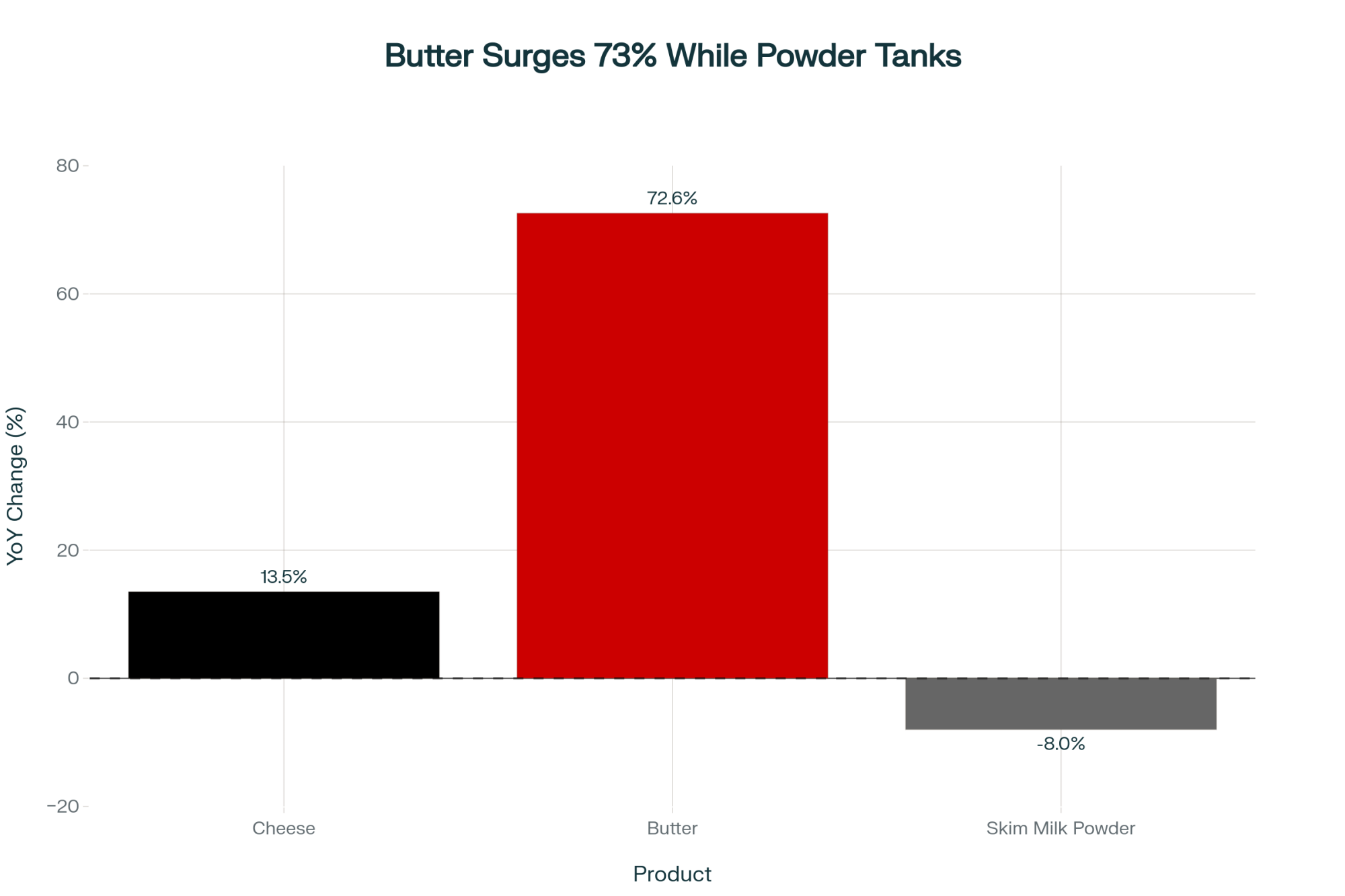
What the latest customs reports are showing is cheese imports rising 13.5% and butter—get this—surging 72.6% year-over-year. Meanwhile, skim milk powder? That’s heading the other direction. I’ve been talking with dairy market analysts who’ve tracked this stuff for the past decade, and they’re telling me this isn’t just another market fluctuation. It looks like we’re seeing a fundamental shift in what the world’s largest dairy import market actually values.

Butter imports to China exploded 73% while skim milk powder declined 8%—proof that premium components crush commodity volume. Chinese consumers are voting with their wallets for quality over quantity.

“The premium shift isn’t temporary—it’s structural. Producers who position themselves now will capture long-term value that commodity markets simply can’t match.”

And here’s what really makes you think… China’s middle class is continuing to expand—the USDA projects they’ll add 80 million people by 2030—and we’re observing similar patterns across Southeast Asia, India, and parts of Africa, according to Rabobank’s December 2024 analysis. What I’ve found is this could represent the most meaningful value shift in global dairy markets we’ve seen in decades.

China’s dairy market is splitting in two—premium products rocket up 18% while commodity imports crater 12%. This historic quality-over-quantity shift represents survival versus thriving for global dairy exporters.

Understanding What’s Really Driving This Premium Shift

When you look at the forces reshaping China’s dairy demand, they actually make a lot of sense—wealth creation, food safety consciousness, evolving consumer preferences. Understanding these drivers helps explain why this shift feels different from the usual market cycles we’ve all ridden out before.

The Food Safety Factor That Won’t Go Away

It’s been seventeen years since that 2008 melamine incident—the World Health Organization reports documented six infant deaths and 300,000 illnesses. Yet Chinese consumers still show a strong preference for imported dairy products, especially when it comes to their kids. The China Dairy Industry Association’s data shows imports of infant formula increased from 28% of dairy imports in 2008 to 45% by 2019.

What’s particularly telling—and this surprised me—is that premium infant formula now represents 37% of market share, up from 32.8% just a year ago, according to July 2025 market research from Innova. The Chinese Academy of Agricultural Sciences recently published consumer research showing Chinese consumers prioritize nutritional value at 59%, quality at 45%, and safety at 39%. Price? That ranks at just 6% when they’re selecting a formula. That preference hierarchy creates real pricing opportunities for suppliers who can demonstrate superior quality and traceability.

How Middle Class Growth Changes Everything

The scale here is… well, it’s something else. China’s middle class expanded from 3.1% of the population in 2000 to 50.8% in 2018, according to McKinsey Global Institute data. We’re talking about roughly 670 million people joining the ranks of consumers with discretionary income. The National Bureau of Statistics of China reports per capita income grew at a 6.1% compound annual rate from 2019 to 2024, reaching 41,300 RMB—that’s about $5,792 annually.

What I’m seeing in the consumption data is these folks aren’t looking for the cheapest option on the shelf. They want Western-style products with clear quality differentiation. USDA estimates show cheese consumption alone could hit 495,000 metric tons by 2030, growing at a 9.1% compound annual rate. And here’s the kicker—60 to 75% is being consumed in foodservice settings like Western restaurants and pizza chains.

Why China Can’t Make These Premium Products Themselves

This caught me off guard when I first looked into it. China aims to achieve 75% dairy self-sufficiency under its 14th Five-Year Plan, but its domestic production focuses mainly on fluid milk and basic dairy products. The USDA’s May 2025 China dairy report shows Chinese farms are actually reducing output—down 0.5% in 2024 with another 1.5% decline forecast for 2025—as farmgate prices hit decade lows around 3.20 RMB per kilogram.

But here’s the real issue… China lacks the processing infrastructure for specialty cheese production, premium protein concentrates, and other high-value categories. The USDA report notes that while “domestic cheese production will increase gradually, with growing investment in natural cheese capacity,” current production is just 30,000 MT, compared to 178,000 MT imported.

Dr. Leonard Polzin from the University of Wisconsin’s Center for Dairy Profitability calls this “structural import dependency” for premium products—and it’s likely to persist given the technical expertise and infrastructure requirements. Makes sense when you think about it.

How Payment Systems Shape Who Wins in Export Markets

What’s really revealing about the competition between major dairy exporters is how payment structures influence what farmers produce, which ultimately determines export success. New Zealand is capturing 46% of China’s dairy imports? That’s not luck—it’s directly tied to how they pay farmers.

The Fonterra Approach Makes You Think

So Fonterra pays farmers solely on the basis of kilograms of milk solids—butterfat plus protein. Water? Doesn’t matter. Lactose? Not counted. Their 2025/26 forecast, announced in May, stands at $10.00 NZD per kilogram of milk solids.

Research published this year by dairy economics specialists shows the New Zealand payment system essentially discourages chasing volume. When volume isn’t the main metric, farmers naturally optimize for component density instead of pushing cows for maximum daily production. It’s a different mindset entirely.

What I find interesting is how this payment structure aligns farmer incentives with premium market demand almost automatically. When Chinese buyers want high-protein cheese or concentrated dairy ingredients, New Zealand farmers are already producing that milk profile—not specifically for exports, but because that’s what their payment system rewards.

Where American Payment Systems Create Challenges

And this is where it gets tricky for us. Most American cooperatives still use volume-focused payment systems with base prices per hundredweight, treating component premiums as add-ons rather than the main event. This creates an interesting situation—we’re optimizing for volume because that’s what payment systems reward most directly, even as global markets increasingly value component density.

Cornell University’s 2020 research on payment structures, led by Dr. Chris Wolf, found something eye-opening: non-cooperative handlers allocated 37% of premiums to quality incentives, while cooperatives allocated just 18% to quality. As the research shows, some cooperatives reward production excellence while others… well, they basically reward showing up.

“We spent decades asking, ‘How much milk can we ship?’ Now we ask, ‘How much value can we create?’ That change in thinking transformed everything about our operation—and our future.”

Learning from European Approaches

What’s interesting is looking at how European producers handle this. In the Netherlands, FrieslandCampina’s payment system includes substantial sustainability and quality bonuses that can add up to 15% to the base price. German cooperatives like DMK have shifted toward value-based pricing models that reward both components and environmental metrics. These systems took years to implement, but they’re now seeing the payoff in premium export markets.

What Progressive Producers Are Learning

I’ve been talking with forward-thinking dairy operations across the country, and many aren’t waiting around for payment system reform. They’re discovering that transitioning from volume to value can happen faster than we’ve traditionally thought—often with pretty encouraging financial results.

The Nutrition Strategy That Works Right Now

A Wisconsin producer I spoke with recently—runs about 500 cows near Eau Claire—told me something interesting: “We figured component improvement would take years, but our nutritionist showed us we could see real changes within a single lactation cycle.”

Based on Penn State Extension research and field trials across the Midwest, here’s what’s delivering results:

  • Amino acid balancing targeting 6.5-7.2% lysine and 2.4-2.6% methionine in metabolizable protein: University of Wisconsin trials show 0.1-0.2% protein increases are worth approximately $71,000 annually for a 500-cow operation
  • Fatty acid supplementation using rumen-protected fats: Michigan State research demonstrates 0.2-0.3% butterfat increases valued at $98,000+ annually
  • Forage quality optimization, maintaining 26-32% neutral detergent fiber: Cornell studies confirm this supports efficient rumen fermentation for better component production

Dr. Mike Hutjens, Professor Emeritus of Animal Sciences at the University of Illinois—he’s worked with dozens of component-focused operations—tells me farms are capturing $150,000 to $200,000 in additional annual revenuethrough nutrition changes alone, before even touching genetics.

How Genomics Accelerates the Timeline

The genomic testing revolution has really changed the game here. Chad Ryan, genetic programs manager at Select Sires, puts it this way: “What used to take 6-7 years now happens in 36-48 months for herds committed to change.”

The Council on Dairy Cattle Breeding reports that as of April 2025, the average Holstein heifer calf produces 45 more pounds of butterfat and 30 more pounds of protein annually compared to one born in 2015—purely through genetic selection. That’s progress.

Strategic Approaches by Farm Size

Through conversations with producers nationwide, it’s becoming clear that farms of every size can access premium value—though the best strategies vary quite a bit based on scale, location, and market access. Now, not every region has equal access to premium processors—let’s be honest about that—but opportunities are expanding faster than many folks realize.

Mid-Size Operations (300-800 cows): Finding the Balance

These operations often have that nice combination of enough scale for efficiency while maintaining flexibility to adapt. A producer milking 550 cows near Green Bay shared this with me: “We’re big enough to matter to processors but small enough to pivot when we need to.”

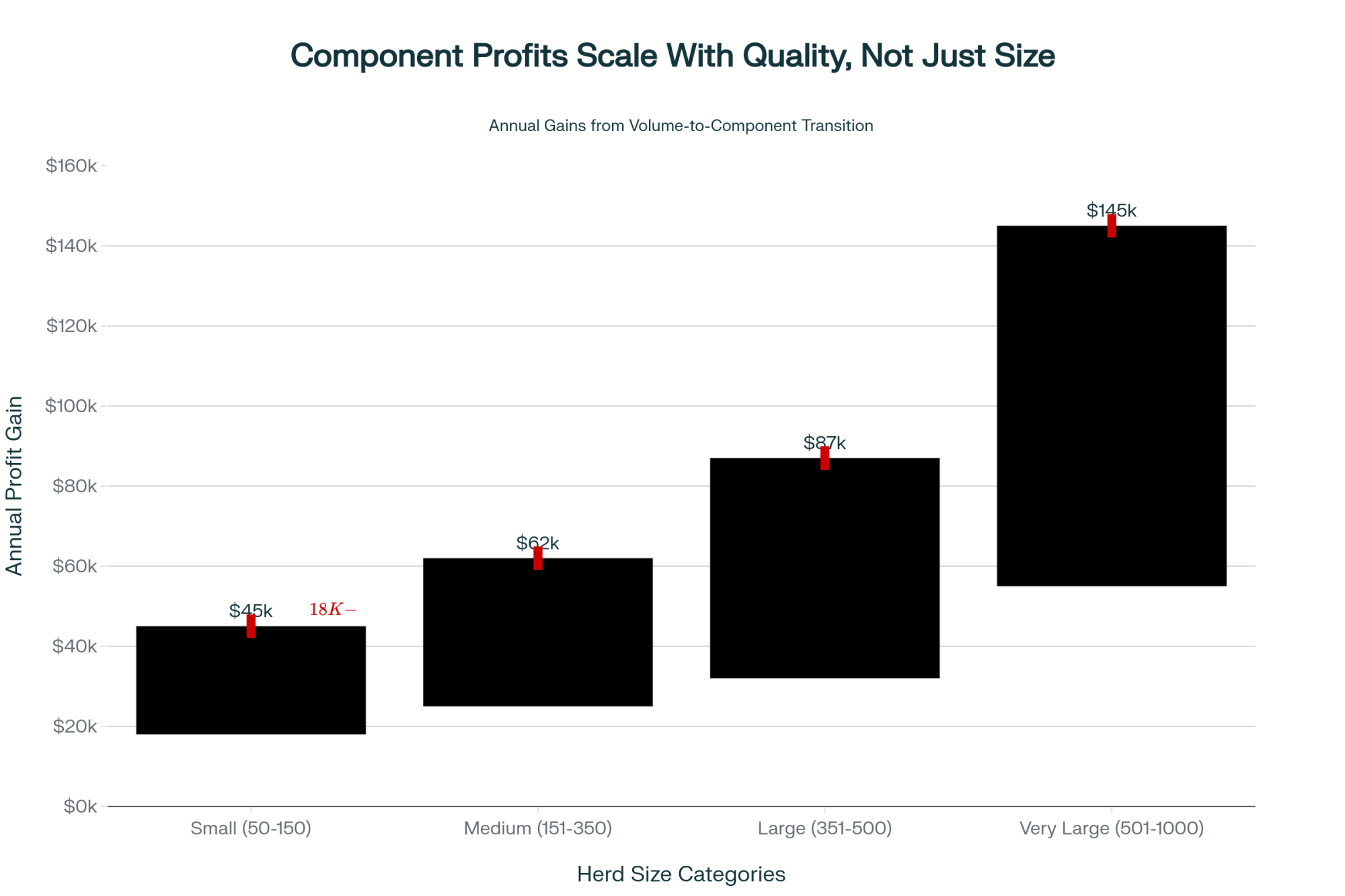
Wisconsin’s Department of Agriculture reports that operations focusing on cheese-quality milk are seeing annual revenue increases of $150,000-$200,000 through component optimization. You know what’s interesting about this size operation? They can often implement changes faster than larger dairies while still having enough volume to negotiate favorable terms with processors.

Large Operations (1,500+ cows): Leveraging Scale

California’s larger dairies are taking a different approach. A manager running a 2,100-cow operation in Tulare County explained their strategy: “We provide consistent, high-volume premium supply for export contracts.”

What I’ve noticed with these larger operations is that they’re often dealing with tighter margins per cow, so even small percentage improvements in components can make a huge difference to the bottom line. And with California’s ongoing water challenges and environmental regulations, maximizing value per gallon of water used is becoming critical.

Small Family Farms (Under 200 cows): The Niche Advantage

What’s been really encouraging—and honestly, kind of surprising—is how smaller farms are finding lucrative opportunities in specialty markets. A Pennsylvania family running 165 cows who switched to A2 production three years ago now gets $24 per hundredweight. “Would’ve seemed impossible five years ago,” they told me.

Penn State Extension specialist Lisa Holden confirms what we’re seeing: “Small farms using modern management systems are proving that farmstead-scale operations can achieve competitive margins. The key is identifying and serving premium niches that value authenticity and story alongside quality.”

The Window of Opportunity—And Its Limits

Dr. Mary Ledman, global dairy strategist at Rabobank, sees a clear but limited window here. “Producers have about 3-5 years to establish themselves as premium suppliers before market saturation occurs,” she explained at a recent industry conference. “China’s premium import growth won’t stay at 18% forever.”

What makes this particularly compelling is that nine out of ten emerging markets—Southeast Asia, India, Africa—are reporting double-digit gains in premium dairy demand according to IFCN Dairy Research Network data. Southeast Asia’s dairy market alone is projected to grow at 7-8% annually through 2030, according to FAO projections.

But let’s be realistic here. Not every producer has convenient access to premium processors. Transition costs can be substantial upfront. And yeah, there’s risk in shifting away from what’s worked for generations. Plus, with the way weather patterns have been changing—we all saw what happened with the flooding in California’s Central Valley last spring—maintaining consistent component levels through environmental challenges adds another layer of complexity.

Practical First Steps You Can Take

Based on everything I’ve learned researching this shift, here’s what I’d suggest doing in the next 30 days:

Week 1: Figure Out Where You Stand

  • Calculate your average components from the past year (and compare them seasonally—summer depression is real)
  • Compare your payment structure to what others in your region are getting
  • Identify processors in your area who pay component premiums

Week 2: Look at Nutrition Options

  • Set up a meeting with your nutritionist about amino acid balancing
  • Get quotes for rumen-protected fat supplements
  • Test your current forage quality—NDF digestibility, particle size, the works

Week 3: Explore Your Market

  • Call three specialty processors or cheese makers within reasonable hauling distance
  • Research what certifications the premium markets in your area require
  • Talk with your cooperative about their export programs and premium opportunities

Week 4: Build Your Plan

  • Set component targets for the next 12 months
  • Budget for genomic testing of heifer calves
  • Pick your first step—nutrition usually offers the quickest payback

Where This All Leads—And Why Time Matters Now

Looking at everything together—the data, what producers are experiencing, where markets are heading—this shift from volume to value in global dairy markets isn’t just talk anymore. It’s happening right now, and we’re seeing clear differences between those adapting and those holding steady.

What really strikes me is how China’s market is basically showing us the future. That surge of nearly 18% in premium dairy imports, while commodity products decline around 12%? That’s not just noise. We’re seeing similar patterns across emerging markets—FAO, Rabobank, and IFCN are all documenting this—which creates multiple opportunities for well-positioned suppliers.

I’ll be straight with you—the window for action feels tighter than many producers might expect. Those who establish premium positioning in the next 3-5 years will likely lock in long-term contracts and relationships. If we look at historical patterns in agricultural markets, waiting for others to prove the model usually means competing for whatever’s left in increasingly crowded markets.

And here’s the thing that should really get your attention: we’re already ten months into 2025. If that 3-5 year window started when these trends became clear in early 2024, we’re already approaching the halfway point of year two. The producers making moves now—this fall, this winter—are the ones who’ll be established when the real competition for premium contracts heats up in 2026 and 2027.

What gives me hope is that farms of every size genuinely have pathways forward. From 150-cow family operations I’ve visited who’re targeting local specialty markets to 2,000-cow enterprises supplying export containers, there are viable strategies across the board.

The window’s open right now—but with 2025 nearly in the books and premium market competition accelerating, every month of hesitation means watching another competitor lock in the contracts and relationships that could’ve been yours. Based on everything I’m seeing and hearing, by the time the 2026 harvest rolls around, the early movers will already be counting their premium checks while others are still debating whether to make the shift.

The clock is ticking. The question isn’t whether this shift will happen—it’s whether you’ll be part of it.

Key Takeaways:

  • The Opportunity: Premium dairy imports to China up 18% while commodity down 12%—this isn’t temporary
  • The Timeline: 3-5 year window to establish premium positioning before market saturation
  • The Money: $150,000-$200,000 potential annual revenue increase for 500-cow operations through component optimization
  • The Path: Nutrition changes deliver results in 12-18 months; genetic improvements in 36-48 months
  • The Reality: Not every producer has equal access to premium markets, but opportunities are expanding rapidly

Complete references and supporting documentation are available upon request by contacting the editorial team at editor@thebullvine.com.

Learn More:

Join the Revolution!

Join over 30,000 successful dairy professionals who rely on Bullvine Weekly for their competitive edge. Delivered directly to your inbox each week, our exclusive industry insights help you make smarter decisions while saving precious hours every week. Never miss critical updates on milk production trends, breakthrough technologies, and profit-boosting strategies that top producers are already implementing. Subscribe now to transform your dairy operation’s efficiency and profitability—your future success is just one click away.

NewsSubscribe
First
Last
Consent

Butter Pays Triple: Fonterra’s $75M Investment Proves Components Are Your Future

Fonterra commits $75M to butter while powder markets collapse 39%. Smart producers already pivoting: 10-15% profit gains documented.

Executive Summary: Progressive dairy farms are adding $32,000-87,000 annually by switching from volume to component focus—and Fonterra’s $75 million butter expansion validates their strategy. Butter commands $7,000 per tonne while powder sits at $2,550, a gap that’s widening as Chinese powder demand drops 39% and global butterfat markets stay strong. Smart farms are already moving: investing $10-20 per cow per month in targeted nutrition generates returns of $25-85 within 60-90 days. The window for action is closing—$8 billion in new North American butter and cheese capacity will come online by 2027, and farmers positioned to supply components will capture those premiums, while others scramble to adapt. This analysis provides your roadmap: immediate nutrition optimization, strategic processor positioning within 18 months, and staged genetic transitions starting with your bottom third. The verdict from global markets to Wisconsin farms is unanimous: component density drives profit, volume doesn’t.

Milk Component Value

The global dairy industry is experiencing a fundamental shift in value creation—from volume to components—and farmers who recognize this transition early will position themselves for success in the emerging market structure

You know, when Fonterra announced their NZ$75 million investment to double butter production capacity at the Clandeboye facility in Canterbury, I found myself thinking about what this really means for dairy farmers like us. This goes beyond just another infrastructure upgrade—it represents a fundamental shift in how our industry values milk.

What caught my eye about the timing is this: Global Dairy Trade auctions through October 2025 have consistently shown butter trading between $6,600 and $7,000 per tonne, while skim milk powder sits around $2,550. We’re talking nearly triple the value here. And that price differential isn’t just a temporary market quirk—it reflects something deeper happening across the entire dairy value chain.

What particularly caught my attention was Fonterra’s simultaneous decision to divest their consumer brands to Lactalis for $4.22 billion while expanding butter capacity. On the surface, these moves might seem contradictory, right? But dig deeper, and a coherent strategy emerges—one that dairy farmers everywhere should understand.

Butter commands nearly triple the price of powder, rewriting the playbook for component-focused production and dismissing old volume-based strategies forever.

Understanding the Strategic Shift Behind the Investment

Miles Hurrell, Fonterra’s CEO, framed this investment as increasing production of high-value products while improving their product mix. The numbers behind that statement tell a compelling story. Their ingredients channel, which processes 80% of their milk solids, generated $17.4 billion in their most recent fiscal year. Consumer products? Just $3.3 billion.

That disparity explains why processors globally are refocusing on B2B ingredients rather than consumer brands. It’s a strategic shift that reflects where value creation actually happens in modern dairy markets.

Looking at processing flexibility in the Pacific region, what’s remarkable about New Zealand’s cream plants is their operational agility. They can shift substantial portions of milkfat between anhydrous milk fat and butter production based on market signals. This allows processors to capture whatever premium the market’s offering at any given time.

The global supply picture adds another layer to this story. According to the European Commission’s October 2025 dairy market observatory, European milk production continues growing despite relatively weak farmgate prices. USDA’s Dairy Market News shows U.S. dairy herds have expanded by 2.1% in recent months. DairyNZ confirms New Zealand’s having another strong production season with August 2025 collections up 8.3% year-over-year.

So we’ve got milk oversupply, yet butter prices remain remarkably resilient while powder markets struggle. There’s something structural happening here, and it’s worth paying attention to.

What This Means for Component-Focused Production

This brings us to what really matters for farmers: How do these market dynamics translate to on-farm decisions?

MetricJersey/CrossbredHolsteinAdvantage
Butterfat Content4.3-4.5%3.6%+0.7-0.9% (Jersey)
Protein Content3.6-3.8%3.2%+0.4-0.6% (Jersey)
Component EfficiencySuperiorStandardJersey
Economic Returns vs Holstein+10-15%BaselineJersey
Feed EfficiencyImprovedStandardJersey
Reproductive PerformanceFewer Days OpenBaselineJersey

Research from extension services at Wisconsin, Cornell, and Penn State consistently shows that component efficiency drives profitability more effectively than pure volume production. And the data is compelling. Farms implementing Jersey crossbreeding programs typically see economic returns increase by 10-15% compared to pure Holstein operations—that’s according to multi-year studies in the Journal of Dairy Science. Component levels often reach 4.3-4.5% butterfat and 3.6-3.8% protein, compared to Holstein averages around 3.6% and 3.2% respectively.

What’s encouraging is the improvement in feed efficiency and reproductive performance that comes along with these component gains. Many producers report their crossbred cows show fewer days open and require less intervention during the transition period—you probably know someone who’s seen similar results.

Dr. Randy Shaver from Wisconsin-Madison’s dairy science department documented fascinating case studies in which farms optimizing amino acid nutrition and removing polyunsaturated fat sources saw butterfat increase from around 3.4% to over 4% within weeks. When that translates to several dollars more per hundredweight… well, that’s meaningful money when you’re shipping milk every day, all year long.

I’ve noticed a generational shift happening, too. Younger farmers entering the industry aren’t as attached to the traditional “fill the tank” mentality. They’re looking at component efficiency from day one, asking different questions about genetics, nutrition, and marketing strategies. It’s refreshing, honestly.

The Powder Market Reality Driving Change

China’s powder demand has fallen off a cliff—erasing decades of growth and leaving billions in powder-drying assets stranded.

So why is this shift toward butterfat happening now? The answer lies partly in what’s happening to global powder markets.

Global Dairy Trade auctions in September and October 2025 show both skim milk powder and whole milk powder trading well below historical averages. Chinese imports—which drove powder demand for nearly two decades—remain significantly depressed. China Customs Administration data from August 2025 shows a 39% year-over-year decline. That’s not a blip; that’s a trend.

The situation in China deserves particular attention. While their domestic milk production has been declining (which, in theory, should support imports), the China Dairy Industry Association’s September 2025 report indicates that many Chinese dairy farms are operating at a loss, with farmgate prices hitting multi-year lows. This suggests structural challenges that won’t resolve quickly.

What we’re witnessing is potentially billions of dollars in powder-drying capacity built for a market dynamic that no longer exists. Rabobank’s Q3 2025 dairy quarterly describes these as potential “stranded assets”—infrastructure investments that may never generate expected returns. That’s a sobering thought for processors heavily invested in powder.

Component Optimization: A Practical Framework

For producers considering this transition, here’s what progressive operations are focusing on:

✓ Baseline assessment: Review component tests from the past 6 months to understand where you’re starting
✓ Efficiency calculation: Measure total fat and protein pounds against dry matter intake
✓ Market exploration: Request quotes from 2-3 processors to understand regional pricing dynamics
✓ Nutrition refinement: Work with your nutritionist on amino acid balancing strategies
✓ Fat supplementation: Consider palmitic acid products at 1.5-2% of diet dry matter
✓ Interference removal: Identify and eliminate high PUFA sources that suppress butterfat synthesis
✓ Progress monitoring: Track component response weekly during the initial transition month

Practical Steps for Farmers: The 18-Month Transition Strategy

Based on conversations with producers who’ve successfully navigated this shift, along with extension recommendations, a three-phase approach seems most practical.

Immediate Actions (Next 60-90 Days)

Nutrition optimization offers the fastest path to capturing component premiums. University dairy specialists consistently recommend focusing on amino acid profiles in metabolizable protein, incorporating appropriate fat supplements, and eliminating factors that suppress butterfat synthesis.

The economics are encouraging here. Research from land-grant universities, including Michigan State and the University of Minnesota, suggests that investing $10-20 per cow per month in targeted nutrition typically yields returns of $25-85. Even if your current processor doesn’t fully reward components today, you’re still capturing feed efficiency gains and often seeing reproductive benefits that improve overall herd health.

One practical approach: Start by reviewing your current ration with fresh eyes. Many farms discover they’re feeding ingredients that actively suppress butterfat—things that made sense when volume was king, but work against component optimization. It’s surprising what you might find.

Short-Term Strategy (6-18 Months)

This development suggests interesting market dynamics ahead. With processors across North America investing billions in new capacity—the International Dairy Foods Association reports over $8 billion in announced projects through 2026—they’ll need a quality milk supply to fill that infrastructure.

For U.S. producers operating outside supply management, this creates direct opportunities. I recently heard from a producer in Pennsylvania who documented her component levels and quality metrics over several months, then approached three processors for competitive quotes. When her existing buyer realized she had genuine alternatives offering 50 cents more per hundredweight, they suddenly found room to improve their pricing structure. Funny how that works.

The Canadian experience offers different lessons. While producers there can’t negotiate directly with processors—they sell to provincial milk marketing boards, which allocate milk—their transparent pricing system, administered by the Canadian Dairy Commission, clearly rewards components. October 2025 butterfat prices are $11.84 per kilogram, versus $8.31 for protein. This regulated system has driven on-farm decisions toward component optimization for years, since that’s how farmers maximize returns within the supply management framework. Canadian producers have focused intensively on genetics and nutrition to optimize components because that’s their only lever for improving revenue—they can’t negotiate volume or switch buyers.

U.S. producers following the June 2025 Federal Milk Marketing Order reforms have more flexibility but less pricing transparency. The principle of demanding clear component pricing from cooperatives remains valid for those who can negotiate or explore alternatives.

Long-Term Positioning (18+ Months)

Genetic decisions made today will determine your component profile when new processing capacity comes online in 2028-2030. Extension geneticists generally recommend starting conservatively—perhaps with your bottom third of cows for initial crossbreeding trials.

This staged approach allows you to evaluate results while maintaining operational flexibility. If market signals remain positive by mid-2026, you can expand the program. The timeline matters here because first-cross heifers bred today won’t enter your milking string for about 24 months.

Understanding Regional Variations

Different regions are adapting to this component-focused reality in distinct ways, and there’s something to learn from each approach.

New Zealand demonstrates that the model works even with smaller herd sizes—their average herd size remains under 500 cows, according to DairyNZ’s 2024-25 statistics. Their payment system has been optimized for milk solids rather than volume for years, creating remarkable efficiency. What’s particularly noteworthy is that, as Fonterra’s market share has declined to 77.8% according to the New Zealand Commerce Commission’s September 2025 report, and competitors have offered attractive component-focused pricing, it’s actually forced all processors to be more responsive to farmer needs.

In the United States, the Federal Milk Marketing Order reforms implemented in June 2025—the first major update since 2008—formally recognized that butterfat now accounts for 58% of milk check income, according to the USDA’s Agricultural Marketing Service. Yet many cooperative payment systems haven’t fully adjusted to this reality, creating opportunities for producers willing to negotiate or explore alternatives.

California producers face unique challenges with transportation distances and processor consolidation, but they’re also seeing some of the strongest component premiums in the country. The California Department of Food and Agriculture’s September 2025 data shows component premiums averaging $0.85 per hundredweight above the state average. That adds up quickly.

The Northeast presents another interesting case. Smaller farms there are finding that component optimization allows them to remain competitive despite scale disadvantages. When you’re shipping high-component milk, processor transportation costs become more manageable on a solids basis—that’s just math working in your favor.

Component optimization delivers impressive profit across all herd sizes, proving quality trumps scale in the new dairy order.

The Risks We Should Monitor—And How to Prepare

Now, while the component-focused future seems clear, several risks deserve attention along with strategies to address them.

China’s economic trajectory remains the biggest wildcard. If their dairy demand remains weak for several more years, global export markets will come under pressure. But what’s encouraging is butter’s diverse demand base—spanning Asia, the Middle East, and developed markets—provides more resilience than powder’s historically China-dependent structure. Smart farms are diversifying their risk by not betting everything on export-dependent processors.

Precision fermentation technology represents a longer-term consideration. Companies like Yali Bio and Melt & Marble are developing fermented dairy fats, with some targeting commercial launches in 2026, according to their August 2025 corporate announcements. While price parity is likely 5-10 years away, according to the Good Food Institute’s September 2025 analysis, this technology could eventually compete for commodity ingredient applications. The best defense? Focus on premium quality that commands loyalty beyond pure commodity competition.

The impact of GLP-1 weight-loss medications on dairy consumption patterns is another emerging factor. Research in the American Journal of Agricultural Economics from July 2025 indicates households using these medications reduce butter consumption by approximately 6%, primarily in retail channels rather than foodservice. Current adoption sits at 3.2% of the U.S. population according to CDC data from August 2025, though Morgan Stanley projects potential growth to 7-9% by 2035. It’s worth monitoring, but foodservice demand remains more stable.

Perspectives from Progressive Operations

Extension case studies from farms that have successfully transitioned offer valuable insights. The University of Wisconsin-Madison’s August 2025 extension bulletin documented Wisconsin farms reporting economic improvements ranging from $32,000 to $87,000 annually for 500-cow operations. The variation depends largely on their starting point and local market dynamics, but the direction is consistently positive.

The common thread among successful transitions? Methodical tracking of component efficiency—measuring pounds of fat and protein against pounds of dry matter intake. This metric, more than any other, determines economic sustainability in a component-valued market.

International examples provide additional perspective. Brazilian operations dealing with heat stress have found Jersey genetics particularly valuable. Embrapa Dairy Cattle’s 2025 annual report shows 12-15% improvement in component efficiency under tropical conditions—that’s significant when you’re battling heat and humidity. Australian producers recovering from recent industry challenges are focusing intensively on specialty cheese and butterfat products for Asian markets, as documented in Dairy Australia’s September 2025 market analysis. These diverse experiences suggest the component-focused approach adapts well across different production environments.

Essential Lessons for Dairy Farmers

After examining the data, market trends, and producer experiences, several principles emerge clearly.

Component optimization is transitioning from competitive advantage to operational necessity. The most successful farms won’t necessarily be the largest, but those producing high-component milk at competitive costs while maintaining operational flexibility.

Processing flexibility matters tremendously. Fonterra’s ability to shift between butter, AMF, and cream products based on market signals provides the resilience that single-product strategies can’t match. We should seek similar flexibility in our own operations.

Information asymmetry remains expensive but addressable. Farms that invest modestly in market intelligence and professional advisory services often identify pricing opportunities worth tens of thousands of dollars annually. The key is translating that information into actionable operational changes.

The transition period through 2027 creates a particular opportunity. As new processing capacity comes online, farmers who’ve already positioned for component production will be ready to capture emerging premiums.

Looking Forward: Your Strategic Path

The dairy industry stands at a genuine inflection point. Processing infrastructure is shifting toward butterfat-intensive products. Payment systems are gradually recognizing the value of components. Technology continues creating both opportunities and challenges for traditional dairy farming.

Fonterra’s $75 million investment signals confidence that butterfat will maintain its premium status despite powder market challenges. They’re betting this trend continues for at least the next decade. Whether they’re right depends on multiple variables—economic recovery in key markets, technology advancement rates, and evolving consumer preferences.

What seems certain is that measuring dairy success purely by tank volume is becoming increasingly obsolete. As one thoughtful producer recently observed at the World Dairy Expo: “My grandfather measured success by how full the bulk tank was. I measure it by what’s in it. Same tank, completely different business.”

The capital flowing into Clandeboye’s butter expansion represents Fonterra’s vision for dairy’s future. The decisions each of us makes about breeding, feeding, and marketing our milk will determine who captures the value that investment creates.

For an industry with deep traditions and generational farming operations, change comes slowly. Yet the message from New Zealand—and increasingly from progressive farms worldwide—deserves serious consideration. The future of profitable dairy farming isn’t just about filling the tank anymore. It’s fundamentally about what’s in it.

The producers who’ve already made this shift aren’t looking backward. They’re focused on optimizing components, improving efficiency, and building sustainable operations for the next generation. They’re positioning their farms to thrive in this new reality, not just survive it.

And honestly? They’re wondering why it took the rest of us so long to recognize what they figured out years ago.

The path forward is clear for those willing to see it. The only question is whether you’ll be among the farmers leading this transition—or playing catch-up when the market forces your hand.

Key Takeaways:

  • The Opportunity: Butterfat pays 3X powder ($7,000 vs $2,550/tonne) and the gap’s widening as Chinese powder demand craters 39%
  • The Payoff: Component-focused farms are banking $32,000-87,000 extra annually—proven across 500-cow Wisconsin operations to small Northeast herds
  • The Fast Win: Invest $10-20 per cow monthly in amino acid nutrition, capture $25-85 returns within 60 days (400% ROI)
  • The Deadline: $8 billion in new butter/cheese processing capacity comes online by 2027—position now or watch others lock in your premiums
  • Your Action Plan: Start Monday with nutrition optimization, document components for processor leverage, breed the bottom 30% to Jersey genetics this cycle

Complete references and supporting documentation are available upon request by contacting the editorial team at editor@thebullvine.com.

Learn More:

  • The Art of Feeding for Components: Beyond the Basics – This article provides advanced nutritional strategies for maximizing butterfat and protein. It reveals specific methods for balancing fatty acids and improving rumen health, allowing you to turn the market signals discussed in our main feature into tangible gains in your bulk tank.
  • Navigating the New FMMO Landscape: What Producers Need to Know Now – While our feature covers the global market shift, this analysis drills down into the recent FMMO reforms. It provides critical insights for understanding your milk check and leveraging new pricing realities to negotiate more effectively with your processor.
  • Genomic Testing Isn’t Just for the Elite Sires Anymore – To accelerate the genetic progress mentioned in our 18+ month strategy, this piece demonstrates how to use affordable genomic testing on your commercial heifers. Learn how to make faster, data-driven breeding decisions to boost component traits across your entire herd.

Join the Revolution!

Join over 30,000 successful dairy professionals who rely on Bullvine Weekly for their competitive edge. Delivered directly to your inbox each week, our exclusive industry insights help you make smarter decisions while saving precious hours every week. Never miss critical updates on milk production trends, breakthrough technologies, and profit-boosting strategies that top producers are already implementing. Subscribe now to transform your dairy operation’s efficiency and profitability—your future success is just one click away.
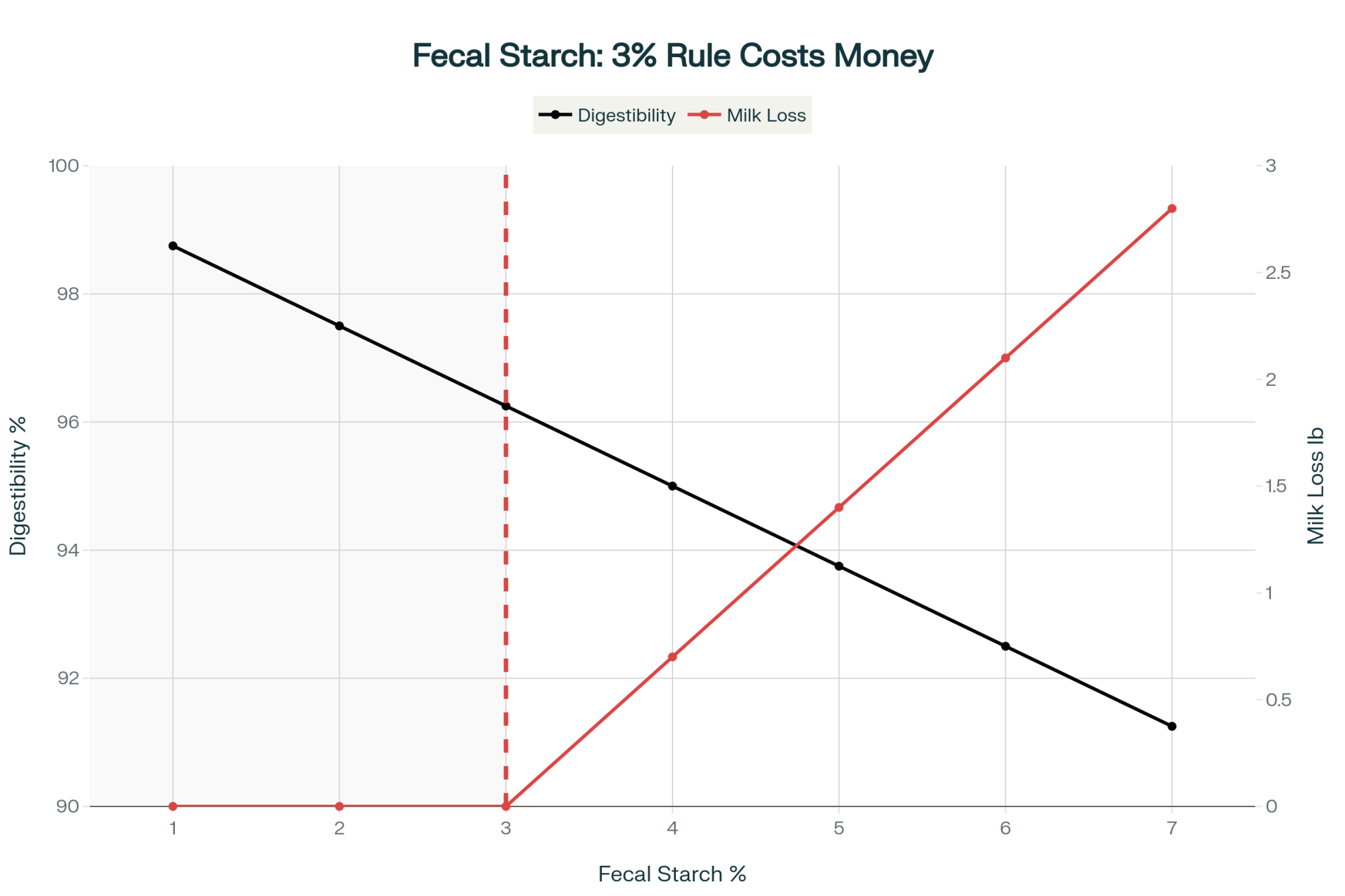
NewsSubscribe
First
Last
Consent

The DDGS Discovery That’s Changing How Smart Producers Think About Transition Feeding

That $145/ton DDGS you’re feeding? Contains the same compounds as $20K/ton supplements. Your cows knew. Now you do too.

EXECUTIVE SUMMARY: That pile of DDGS you’re feeding at $145/ton contains the same immune-boosting compounds as supplements costing $20,000/ton—you just didn’t know it. University research reveals that distillers grains carry billions of heat-killed yeast cells packed with beta-glucans, potentially improving transition cow health and colostrum quality. Producers already report fewer metabolic issues and stronger calves when feeding DDGS, though they’ve been crediting the protein content. For a 500-cow dairy, these hidden benefits could be worth $42,900 annually. The catch: we can’t reliably test for these compounds yet, and every ethanol plant produces different levels. Until standardization develops over the next 3-5 years, you’re essentially feeding a lottery ticket—valuable, but unpredictably so.

I was having coffee with a group of nutritionists last month when someone brought up something interesting. “We’ve been feeding distillers grains for twenty years,” one of them said. “But are we really understanding what’s in them?”

You know, that question has been rattling around in my head ever since. Because what we’re starting to discover about DDGS might change how we think about this everyday feed ingredient—and maybe even how we evaluate feed efficiency in general.

The Research That’s Getting Everyone Talking

This year, new university-led research and field studies have begun examining how dried distillers grains affect the health of transition cows and calves. While early results suggest possible improvements in colostrum and calf immunity, producers should remember that more peer-reviewed research is needed before making major feeding changes.

Here’s what’s interesting: it might not just be about the protein and energy we usually focus on.

You probably know the basics of how DDGS are made—corn is fermented with yeast, the alcohol is removed as ethanol, and what’s left is dried and sold to us as feed. What I hadn’t really thought about until recently is that all those yeast cells used in fermentation? They’re still in there. Heat-killed from the drying process, sure, but their cell walls are intact.

And those cell walls… well, according to feed chemistry research from places like Cornell and Wisconsin, they contain compounds like beta-glucans and mannanoligosaccharides. If those sound familiar, it’s because they’re the same things that companies have been selling us in premium yeast supplements for years. The difference is, in DDGS, they just come along as part of the package.

Looking at the Numbers

What I’ve found particularly thought-provoking is when feed scientists analyze DDGS for these yeast components. Preliminary industry and university analyses estimate that the beta-glucan content in DDGS may range from 3 to 6 percent, though results vary widely by plant and region.

DDGS protein has become more consistent and fat content has declined over 15 years. 2021 DDGS delivers more reliable nutrition, but variability remains a challenge

Now, think about this for a minute. Many of us are spending around $20 to $25 per cow on various transition supplements—that’s based on current extension budgets from Penn State and Wisconsin. Between anionic salts, yeast cultures, protected choline, trace minerals… it adds up. I was talking with a producer from northeast Wisconsin recently who calculated he’s at about $22 per cow through the transition period. Pretty typical for folks who are serious about fresh cow management.

Meanwhile, we’re feeding DDGS at maybe 10 to 15 percent of the dry cow ration, chosen mainly because they’re economical when soybean meal gets pricey. But what if those distillers grains are doing more than we realize?

Some university field trials and producer observations suggest there might be something to this, though—and I want to be clear here—we’re still in the early stages of understanding exactly what’s happening. The mechanisms aren’t fully worked out yet. But anecdotally, producers and some university field trials have noted possible improvements in colostrum quality or calf health when DDGS are used, though comprehensive published research is still underway.

What Producers Are Noticing

This is where it gets really interesting. I’ve been making a point of asking producers about their experiences with DDGS in transition diets, and I keep hearing similar themes.

A friend who runs about 400 cows in southwestern Minnesota told me, “Our fresh cows just seem to handle the transition better when DDGS are consistent in the closeup ration. Fewer DAs, better appetites coming out of calving.” He’d always figured it was the extra energy or maybe the bypass protein.

The science is black and red: Maximum immunity for calves comes at 15% DDGS in dry cow rations. Take your passive transfer strategies to the next level and leave doubt in the dust.

I heard something similar from a larger operation in California’s Central Valley, and even a grazing dairy in Vermont mentioned that its calves seem more vigorous when DDGS are higher during the dry period. Up in the Northeast, where they’re dealing with different forage bases than we see in the Midwest, producers are still noticing these patterns.

A producer near Syracuse, New York, who’s been tracking this closely, mentioned something interesting: “We started monitoring colostrum quality more carefully last year. The weeks when DDGS inclusion was higher, our Brix readings seemed better. Could be a coincidence, but it’s got me thinking.”

Now, these are just observations—not controlled research. Every farm has so many variables at play, and we can’t draw firm conclusions from field observations. But when you hear the same things from different types of operations in different parts of the country… it makes you wonder, doesn’t it?

The Economics of It All

Let’s talk dollars and cents, because that’s what matters at the end of the day.

With current Midwest pricing from USDA reports—and you know how this changes—DDGS are running somewhere around $145 to $165 per ton, depending on your contracts and location. Soybean meal? We’re looking at $420 to $450,based on recent DTN spot prices. The economics of protein are pretty clear, which is why so many of us use these ethanol coproducts.

IngredientPrice ($/ton)Rate (%DM)Protein (%DM)Annual Cost ($)
DDGS$15512.0%30%$33,480
Soybean Meal$4308.0%48%$75,400
DDGS+Premium$23012.0%30%$49,700
Yeast Supplement$20,0000.05%50%$42,000

But here’s a thought: what if there’s additional value we haven’t been accounting for in our feed efficiency calculations?

I was working through some numbers with a nutritionist colleague, and even if—and this is purely hypothetical—standardized DDGS with guaranteed bioactive content commanded a $75 per ton premium, the math could still work when you consider potential reductions in other supplements.

Of course, that market doesn’t exist yet. And honestly, it might never fully develop given all the challenges involved.

Why This Isn’t Going to Be Simple

Before anyone gets too excited and starts changing their rations, we need to talk about the real-world challenges here.

The biggest issue? Variability. That estimated 3-6% range in beta-glucan content I mentioned? That’s a problem if you’re trying to formulate consistent rations.

And it’s well documented by groups like the U.S. Grains Council that different ethanol plants use different corn, different yeast strains, and different drying temperatures. All of that affects what ends up in your feed bunk. I was talking with a producer in Illinois who sources from three different ethanol plants depending on pricing and availability. He said the physical characteristics alone vary noticeably—color, smell, texture. If the basics vary that much, imagine the variation in these bioactive compounds we’re talking about.

Testing is another bottleneck. While there are methods to measure these compounds, they’re not something you can get from your regular feed testing lab. Most commercial labs still focus on crude protein and fiber analysis. I’ve checked with several major labs, and while they’re aware of the interest, they haven’t seen enough demand yet to add these bioactive analyses. Maybe that’ll change, but we’re not there yet.

And then there’s the regulatory side. According to the FDA Center for Veterinary Medicine and AAFCO guidelines for animal feed, companies must be very careful about health claims. An ethanol plant can’t just start marketing their DDGS as “immune-supporting” without crossing into regulated territory. They’re limited to talking about composition, not function.

What This Means for Your Operation Today

So, where does this leave us as dairy producers?

Well, first off, you can’t call up your feed dealer today and order “high-beta-glucan DDGS.” That’s not a thing yet. But understanding that DDGS might be delivering benefits beyond just protein and energy—that’s worth considering in your dairy nutrition strategy.

Here’s what I’ve been telling folks who ask about this:

Don’t change everything based on preliminary research. DDGS are still a good deal based on their traditional nutritional value alone. That hasn’t changed.

But maybe start paying closer attention. Track what happens when DDGS inclusion changes in your rations. Watch your colostrum Brix readings. Keep an eye on fresh cow health events. You might already be seeing patterns you haven’t connected.

If you can, try to source from consistent suppliers. While you can’t specify bioactive content, ethanol plants with good process control probably have more consistent products overall. A large dairy I know in Nebraska has been doing this for years—not for these functional properties we’re discussing, but just for ration consistency. Makes sense either way.

And think about where in your feeding program DDGS might offer the most value. If these functional benefits are real, transition cows would be the logical place to focus. That’s where immune support and colostrum quality matter most for long-term herd health.

Most importantly, work with your nutritionist on this. Any changes to your feeding program need to fit into your overall strategy, not work against it.

The Bigger Picture Here

What fascinates me about all this is what it says about how we evaluate feeds in general.

For decades, we’ve focused on the measurable nutrients—protein, energy, fiber, minerals. Our formulation software is really good at modeling these. But what if there’s a whole category of bioactive compounds that influence health and productivity through different pathways? Compounds we’re not routinely measuring or accounting for?

Think about it—forages have polyphenols, fermented feeds have metabolites from bacterial activity. Even regular corn silage might have functional compounds we don’t consider.

Someone made an interesting comparison at a conference recently: we might be where we were with vitamins a century ago—knowing something important is there, but not having all the tools yet to understand or use it fully.

Looking Down the Road

The dairy industry has always moved forward through careful observation, good science, and practical application. This emerging understanding about DDGS fits right into that pattern.

Will this completely change how we feed cows? Probably not. But it might add another layer to our decision-making, especially for specific times like the transition period, where these functional benefits could really matter.

We definitely need more research. Those early university findings need to be replicated and expanded. We need better, practical, affordable testing methods. And ultimately, we need larger field trials to see if these effects hold up on commercial farms.

The good news is, this work is happening. Universities have projects underway. Feed testing labs are exploring new methods as demand develops. Even some ethanol producers are starting to think differently about their product.

And it’s worth noting—this isn’t just a U.S. conversation. International markets from Mexico to Southeast Asia import substantial amounts of American DDGS. If functional properties become a selling point, that could reshape global trade patterns. European feed companies are already exploring bioactive feed ingredients more aggressively than we are in some cases.

What’s the timeline for all this? Hard to say exactly, but based on how these things typically unfold in our industry, I’d guess we’re looking at 3 to 5 years before we see meaningful market changes—if they happen at all. That’s about how long it takes for research to build up, testing infrastructure to develop, and markets to adjust.

What’s encouraging to me is that we’re not talking about adding expensive new ingredients. We’re talking about potentially getting more value from something we’re already feeding. In an industry where margins are always tight, finding hidden value in what we’re already doing… that could make a real difference.

The Bottom Line

You know, the cows probably figured this out before we did. They usually do, don’t they? They’ve been getting whatever benefits DDGS offer while we focused on the protein and energy values.

Maybe that’s the real lesson here. Sometimes the best discoveries aren’t about finding something new—they’re about better understanding what’s been right in front of us. And in this case, it’s been sitting in feed bunks across North America for the better part of twenty years.

It makes you wonder what else we might be missing, doesn’t it? But then again, that’s what keeps this industry interesting. Just when you think you’ve got it all figured out, you learn something new that makes you look at things differently.

For now, keep feeding DDGS when they make economic sense. Pay attention to how your cows respond. Stay informed as this research develops. And always remember—the best feeding decisions are the ones that work for your specific operation, with your cows, in your situation.

Because at the end of the day, that’s what really matters. Not what might be in the feed, but how your cows perform with it. And if they’re doing well with DDGS at current prices? Well, any additional benefits we discover are just icing on the cake.

The next time you’re looking at that pile of DDGS getting mixed into the TMR, maybe take a second to think about what else might be in there. We might not fully understand it yet, but your cows seem to appreciate it either way.

KEY TAKEAWAYS:

  • DDGS at $145/ton contain the same beta-glucans as $20,000/ton yeast supplements—you’ve been feeding premium immune support without knowing it
  • Producers seeing fewer fresh cow problems with DDGS now have an explanation: 3-6% yeast-derived compounds supporting immunity and colostrum quality
  • The math is compelling: $42,900 potential annual value for a 500-cow dairy, just from benefits you’re likely already getting
  • Today’s move: Track colostrum Brix and transition health against DDGS inclusion—you might already see patterns worth thousands
  • The catch: Without testing (3-5 years out) or standardization, you’re feeding a lottery ticket—valuable but unpredictable

Complete references and supporting documentation are available upon request by contacting the editorial team at editor@thebullvine.com.

Learn More:

Join the Revolution!

Join over 30,000 successful dairy professionals who rely on Bullvine Weekly for their competitive edge. Delivered directly to your inbox each week, our exclusive industry insights help you make smarter decisions while saving precious hours every week. Never miss critical updates on milk production trends, breakthrough technologies, and profit-boosting strategies that top producers are already implementing. Subscribe now to transform your dairy operation’s efficiency and profitability—your future success is just one click away.

NewsSubscribe
First
Last
Consent

Why 150 Well-Managed Cows Beat 500 Poorly-Run Ones – By $100,000

Cornell study shows 150-cow dairies outearning 500-cow operations by $100K. The secret? It’s not what you think.

Cornell data reveals a $100,000 performance gap that has nothing to do with size. Here’s the 3-phase plan to capture it.

You know that feeling when you’re driving past one of those massive new dairy facilities? All that shiny equipment, those huge freestall barns stretching as far as you can see… makes you wonder sometimes about where smaller operations fit in all this, doesn’t it?

But here’s what’s really fascinating—and Cornell’s 2023 Dairy Farm Business Summary has been documenting this for years now—the profit differences between well-run and poorly-run farms of the same size are actually bigger than the differences between small and large operations.

“The profit differences between well-run and poorly-run farms of the same size are actually bigger than the differences between small and large operations.”

Think about that for a minute. We spend so much time worrying about scale, but what Cornell’s latest benchmarking data shows is that a really well-managed 150-cow dairy in the top quartile can generate significantly better returns per cow than a 500-cow operation that’s struggling with management. Same milk prices, same basic input costs, completely different bottom lines.

The numbers really spell it out. Top performers were hitting around $17.39 per hundredweight in operating costs. Bottom performers? They were running $21.71. On a 150-cow herd producing 24,000 pounds per cow annually… well, you can do the math. That’s over $100,000 difference we’re talking about. And that has nothing to do with how many cows you’re milking.

The $100,000 Management Gap: Top-performing 150-cow dairies achieve operating costs of $17.39/cwt versus $21.71/cwt for bottom performers—proving management beats scale every time. Same herd size. Same milk prices. Completely different bottom lines.

YOUR 3-PHASE ROADMAP TO SMALL DAIRY SUCCESS

Phase 1: Fix Your Foundation (Years 0-2)

  • Achieve operating costs below $18/cwt
  • Build working capital to 40% of expenses
  • Get labor efficiency above 50 cows/worker
  • Annual improvement potential: $50,000-100,000

Phase 2: Capture Easy Wins (Years 2-4)

  • Component optimization: $20,000-30,000/year
  • Quality premiums (SCC): $15,000-25,000/year
  • Beef-on-dairy genetics if appropriate
  • Total annual value: $35,000-65,000

Phase 3: Strategic Transformation (Years 4-7)

  • Organic certification: $165,000-470,000/year potential
  • Direct sales infrastructure: Variable returns
  • Major technology adoption
  • Choose ONE major transformation at a time

Critical Success Factor: Never skip phases. Foundation must be solid before pursuing transformation.

Small Dairy Farm Management: The Real Story Behind Consolidation

Dairy farm consolidation from 2017-2024 shows 15,221 operations closing—but with 40-45% of farmers lacking successors and average age at 58, this reflects retirement demographics, not management failure

Looking at the USDA National Agricultural Statistics Service data, it’s stark. We’ve gone from 39,303 dairy operations in 2017 down to 24,082 in 2024. That’s… that’s a lot of farms gone.

But when you actually dig into who’s leaving—and the 2022 Census of Agriculture really shows this clearly—the average dairy farmer is now 58 years old. Somewhere between 40 and 45% don’t have anybody lined up to take over.

“That’s not business failure, is it? That’s retirement.”

I was talking to a producer near me last week who’s selling out next spring. He’s 64, his back’s giving him trouble, and his kids have established careers elsewhere. He actually had a pretty good year financially. But when you can barely get out of bed some mornings and your daughter’s doing well as a nurse practitioner with actual weekends off… the decision kind of makes itself.

There’s also the land value situation to consider. Out in California’s Central Valley, I heard about a 300-cow operation sitting on 40 acres near Modesto. With water costs skyrocketing and developers offering several million for the land… can you really blame them for taking it? Same thing’s happening in Pennsylvania, upstate New York, anywhere near growing communities.

What’s encouraging for those planning to stay is seeing how different successful models are emerging. Vermont’s Agency of Agriculture organic sector data show that smaller organic operations, typically 100 to 200 cows, are achieving solid profitability. Meanwhile, USDA Economic Research Service research indicates conventional operations generally need much larger scale—often over 2,000 cows—to hit similar per-cow returns.

So it’s not that small, can’t work. It’s so that small has to work differently.

The $100,000 Management Difference: Where Excellence Shows Up

When you look at benchmarking data from Cornell Pro-DairyWisconsin’s Center for Dairy Profitability, and Minnesota’s FINBIN system—the pattern’s consistent. Top-performing farms are running operating costs in that $17-18 per hundredweight range. Bottom performers? They’re up at $21-22, sometimes higher.

That $4-5 difference per hundredweight—on a 150-cow operation, we’re talking serious money that has nothing to do with scale.

Labor Efficiency Makes or Breaks You

The Hidden $75,000: Labor efficiency creates a massive competitive advantage—top-performing dairies achieve 50+ cows per worker versus 35-40 for struggling operations. The gap compounds through better parlor workflows, reduced wage costs, and operational flexibility. No capital investment required.

The benchmarking programs consistently show top operations getting 50-plus cows per full-time worker. Struggling farms? They’re down around 35-40.

I know a farm in Pennsylvania—150 cows, really efficient setup, running with 2.5 people total. Another operation nearby, same size, needs 4.5 people. At today’s wage rates… finding good help isn’t getting cheaper, as we all know… that difference alone can save or cost you $75,000 annually.

“We restructured our workflows last year,” one producer told me recently. “Went from 4.5 people down to 3 just by fixing bottlenecks in our parlor routine. Saved us $75,000 annually.”

Feed Efficiency: Not What You’d Expect

Here’s what’s interesting about feed costs. Looking at various state data, top farms aren’t necessarily spending less on feed per hundredweight. Often it’s about the same—around $9.60. But their income over feed cost? Way higher.

They’re not feeding cheaper. They’re feeding smarter. Better forage quality from optimal harvest timing. More precise ration formulation based on actual testing instead of guesswork. Walking those bunks twice daily, making adjustments based on what you see. Keeping waters clean, stalls comfortable, catching that fresh cow that’s a little off before she crashes.

It’s consistency. Every single day. Even when you’re tired.

Robotic Milking Economics: The Truth Nobody Wants to Hear

Let’s have an honest conversation about robots. Everyone’s got an opinion—they’re either the future or a complete waste. Truth is somewhere in the middle.

Wisconsin Extension and Minnesota Extension have done thorough economic analyses. For a 200-cow operation, you’re looking at close to a million dollars all in. The robots themselves run $250,000 to $300,000 each; you need about three for 200 cows, plus barn modifications, software, training… it adds up fast.

Annual operating costs? Figure $40,000 to $60,000 between maintenance contracts, parts, and electricity. When you run realistic payback calculations—not the dealer’s sunny projections—you’re often looking at 20-plus years. Sometimes 25 or 30.

Yet farms keep installing them. And many swear by them.

Here’s why: it’s not about immediate payback. Statistics Canada’s latest agricultural census data and university research consistently show farms with automated milking are significantly more likely to have younger family members interested in taking over.

“The financial payback is marginal at best. But my 24-year-old son, who was planning to leave farming? He’s now fully engaged. My daughter, studying ag business, sees a future here. What’s that worth?”

For older farmers—and let’s be honest, we’re not getting any younger—reduced physical demands can mean farming another decade versus selling. One Wisconsin producer was ready to quit at 55 because his knees were shot. Installed robots, now he’s 62 and planning to continue until 70.

Premium Market Access for Small Dairies: Reality Check

StrategyInvestmentTime to ROIAnnual ReturnRisk LevelAccessibility
Component PremiumsMinimalImmediate$20K-$30KLowHigh
Organic Certification$150K-$300K3+ years$165K-$470KHighLimited
Direct Sales$150K-$300K3-5 yearsVariableMed-HighMedium

Everyone talks about capturing premiums like it’s simple. Go organic! Sell direct! Problem solved!

Not quite.

Organic Transition: A Three-Year Marathon

Federal organic standards require three years for land transition. During that entire time, you’re paying organic feed prices—USDA Agricultural Marketing Service reports show 30-50% higher—while receiving conventional milk prices.

Extension studies from Penn State and Cornell suggest you need $150,000 to $300,000 in extra working capital to survive the transition. Even after certification? Organic Valley and Horizon maintain regional quotas. NODPA producer surveys show many new organic farms only receive premium prices on partial production initially.

“It’s a marathon where you’re not sure the finish line exists until you cross it,” as one Vermont producer who completed the transition described it.

Direct Sales Infrastructure: Major Investment Required

Direct sales can work—retail prices obviously exceed farm gate values. But infrastructure costs are substantial.

Meeting health department requirements, installing pasteurization equipment, bottling lines, developing HACCP plans… Penn State Extension and Cornell Small Farms Program estimate $150,000 to $300,000 minimum for compliant facilities.

Building a customer base takes time, too. Most operations report 3-5 years to achieve meaningful volume. “Year one, we sold 50 gallons weekly and questioned our sanity,” a New York producer now moving 30% of production direct told me. “Year five, we’re at 500 gallons and hiring staff.”

Component Premiums: The Accessible Opportunity

Here’s what’s realistic for most operations—component premiums. Major processors are paying real money for high-protein, high-butterfat milk.

Current typical Northeast processor premiums (October 2025):

  • Chobani (Rome, NY): $0.75-$1.25/cwt for 3.3%+ protein
  • DFA: $0.50-$1.00/cwt for consistent 3.25%+ protein
  • Upstate Niagara: $0.40-$0.80/cwt for SCC under 100,000
  • Various cooperatives: $0.30-$1.50/cwt for butterfat over 3.8%

Getting from 3.0% to 3.3% protein through genetics and nutrition management generates $20,000-30,000 annually for a 150-cow herd. That’s achievable for pretty much any operation willing to focus on it.

Why Community Connections Generate Real Returns

I know sponsoring the 4-H livestock auction feels like charity. But the USDA Economic Research Service and Colorado State research documents that local food spending generates 1.8-2.6 times its value in local economic activity.

More directly, those connections pay off unexpectedly. When you need harvest help, and neighbors show up. When you’re expanding and the town supports your zoning request. When you need workers and people recommend their kids.

“Half our township board had either bought beef from us or had kids in 4-H projects we supported,” a Midwest producer told me about his manure storage permit. “That permit sailed through.”

Farms with strong community ties consistently report better employee retention, stronger bank relationships, and higher grant success rates. When regulations change, connected farms get flexibility. Isolated operations get compliance notices.

Your Strategic Path Forward

Looking at successful operations that have really turned things around, there’s a clear pattern.

First, they fix fundamentals. Labor efficiency, operating costs, and working capital. This alone can improve cash flow by tens of thousands annually.

Then they capture accessible wins. Component bonuses, quality premiums, maybe beef-on-dairy genetics. Things requiring minimal capital but adding meaningful revenue.

Only after achieving operational excellence and financial stability do they tackle major transformations—organic transition, direct sales, robotics. By then, they have management skills and a financial cushion to handle it.

The farms that fail? They jump straight to transformation, thinking it’ll save them without fixing underlying problems. Doesn’t work that way.

Making the Tough Exit Decision

Not everyone can make this work long-term. That’s okay.

If you’re consistently unable to cover costs. If you’re approaching retirement without succession. If health is failing and stress is overwhelming…

I’ve seen too many burn through equity trying to save something unsaveable. There’s no shame in selling with equity intact. That’s smart business, not failure.

“At first it felt like giving up,” a respected producer who sold at 62 told me. “Now, doing some consulting, enjoying grandkids—I realize it was my smartest business decision.”

The Bottom Line for Small Dairy Success

The industry is consolidating—24,082 farms now versus 39,303 in 2017. Those numbers are real.

But consolidation doesn’t mean small farms are doomed. What’s happening is sorting. Farms with strategies matching their capabilities thrive. Those competing on the wrong metrics struggle.

Your 150-cow dairy trying to beat a 5,000-cow operation on commodity cost per hundredweight? That’s like your local hardware store trying to beat Home Depot on lumber prices. Won’t work.

But competing on quality, flexibility, specialized products, customer relationships, and community connection? Different game entirely. Winnable game. Cornell’s data proves it. Wisconsin’s successful small farms demonstrate it. Vermont’s thriving organic dairies live it daily.

The question isn’t whether small dairies can survive. Plenty are doing better than surviving. The question is whether you’ll play the game that fits your size and situation.

“Good management at any size beats poor management at every size.”

Because ultimately—and this is what all the research confirms—management quality and strategic fit matter far more than scale.

That’s something we can all work on, regardless of herd size. 

Key Takeaways:

  • THE PROFIT TRUTH: Management quality drives a $100,000+ annual profit gap between same-sized dairies—Cornell data proves top 150-cow operations consistently outearn bottom-performing 500-cow dairies
  • THE EFFICIENCY EDGE: Before buying robots, hit these benchmarks: 50+ cows/worker (saves $75K), operating costs under $18/cwt, and 40% working capital reserves—most farms can achieve this without major investment
  • THE SMART MONEY PATH: Follow this exact sequence or fail: Fix fundamentals first (Year 0-2), capture component premiums second ($20-30K/year), only then pursue transformation (organic/robots/direct sales)
  • THE PREMIUM REALITY: Component premiums pay faster than going organic: Getting to 3.3% protein adds $20-30K annually with minimal investment vs. a 3-year organic transition requiring $150-300K working capital
  • THE COMMUNITY ROI: Your 4-H sponsorship isn’t charity—it’s strategy: Farms with strong community connections report 3.8-year employee retention (vs. 11-month average) and 23% lower borrowing costs

Executive Summary:

Cornell’s 2023 data definitively proves what progressive dairy farmers have long suspected: management excellence beats scale every time, with well-run 150-cow operations outearning poorly-managed 500-cow dairies by over $100,000 annually. The critical difference lies not in technology or size but in achieving operational benchmarks—top performers hit $17.39/cwt operating costs and 50+ cows per worker, while bottom quartile farms struggle at $21.71/cwt and 35-40 cows per worker. This comprehensive analysis reveals a proven three-phase strategy where successful small dairies first fix fundamentals (saving $50-100K), then capture accessible premiums like component bonuses ($20-30K), before attempting any transformation, such as organic transition or robotics. While the industry has consolidated from 39,303 to 24,082 farms since 2017, this largely reflects the reality that 40-45% of aging farmers lack successors, not the failure of small-scale dairy economics. The path forward is clear: compete on management quality, specialized products, and community relationships—not commodity volume. For the 150-cow dairy willing to execute this strategy, the opportunity hasn’t just survived consolidation; it’s actually grown stronger.

Complete references and supporting documentation are available upon request by contacting the editorial team at editor@thebullvine.com.

Learn More:

Join the Revolution!

Join over 30,000 successful dairy professionals who rely on Bullvine Weekly for their competitive edge. Delivered directly to your inbox each week, our exclusive industry insights help you make smarter decisions while saving precious hours every week. Never miss critical updates on milk production trends, breakthrough technologies, and profit-boosting strategies that top producers are already implementing. Subscribe now to transform your dairy operation’s efficiency and profitability—your future success is just one click away.

NewsSubscribe
First
Last
Consent

Why Smart Dairies Are Spending MORE on Feed at $4.20 Corn (And Banking $100K Extra)

Feed costs dropped 30% but farms lose more money—the 35% cost share shift changes everything

EXECUTIVE SUMMARY: What farmers are discovering right now challenges everything we thought we knew about feed economics—operations spending more strategically on feed at $4.20 corn are generating $100,000 to $110,000 in additional annual revenue per 100 cows, according to Wisconsin Extension’s 2025 profitability analysis. The math has fundamentally shifted: feed now represents just 35-40% of total production costs (down from the historical 50%), while labor costs have jumped 15-20% since 2020, and replacement heifers have doubled to $3,000-4,000 per head based on USDA market data. Cornell PRO-DAIRY’s benchmarking reveals that farms tracking Return on Feed Cost rather than minimizing feed expense are capturing an extra $3 for every additional 50 cents invested in quality nutrition. Geographic disparities are widening, too—Midwest operations maintain positive margins while California and Northeast dairies face $45-60 per hundredweight structural disadvantages from freight, water, and regulatory costs. Penn State Extension research shows another opportunity most miss: reducing feed shrink from 15-18% to 8-10% through systematic inventory management returns $150-200 per cow annually. The path forward isn’t about spending less on feed—it’s about investing strategically in nutrition, measurement, and multi-layered risk protection that positions your operation for the new economic reality.

Dairy Profitability Strategy

Feed costs dropped 30%, yet most dairy operations are bleeding cash harder than when corn hit $7. Here’s what’s really happening—and what the profitable few are doing differently.

There’s an interesting disconnect this October. Corn futures on the Chicago Board of Trade sit at $4.13 a bushel—down from over $6 last year. USDA’s Agricultural Marketing Service reports soybean meal in the $270s. Dairy Margin Coverage formulas suggest margins above $11 per hundredweight.

By all traditional measures, this should be a boom time.

Yet producers from Wisconsin to California report rising operating loans and shrinking working capital. They’re asking why lower feed costs aren’t boosting profitability the way they used to.

Understanding the New Cost Structure

Looking at this trend, it’s clear that feed no longer dominates expenses. Wisconsin Extension’s 2025 analysis shows feed now accounts for just 35–40% of total production costs, down from the historical 50% benchmark.

That shift has big implications:

  • Labor Costs have jumped 15–20% since 2020, with Midwest wages near $19.50/hour (USDA NASS).
  • Replacement Heifers now run $3,000–4,000 apiece, more than double past norms (USDA AMS).
  • Machinery Costs are up 25% over three years (Association of Equipment Manufacturers).
  • Insurance Premiums climbed 18–25% with shrinking coverage (Farm Bureau data).

When feed is only a third of your costs and these other expenses are escalating, grain-price relief alone can’t solve profitability challenges.

The 35% Cost Share Shift: Feed costs dropped 30% but now represent just 37.5% of total expenses (down from 50%), while labor jumped to 18% and replacement heifers doubled to 14% of costs. This fundamental restructuring explains why lower corn prices haven’t translated to farm profitability

A Different Way to Measure Success

The 50-Cent Decision Worth $100,000: Cornell PRO-DAIRY benchmarking reveals farms tracking Return on Feed Cost capture an extra $3 for every additional 50 cents invested in quality nutrition. Operation B spends just 50¢ more per cow daily but generates $100,000 additional annual revenue per 100 cows—proving strategic feeding beats cheap feeding

What I’ve found is that top-performing dairies track Return on Feed Cost (ROFC) rather than just feed cost per cow. Extension case studies from the Midwest illustrate this:

MetricOperation AOperation B
Feed cost per cow daily$5.40$5.90
Milk production per cow62 lbs73 lbs
Income per feed dollar$14.00$16–17
Annual difference (100 cows)Baseline+$100,000

That extra 50 cents spent can return nearly $3—a powerful insight backed by Cornell PRO-DAIRY’s 2025 benchmarking.

Rethinking Protein Sourcing

While everyone watches corn, a quieter opportunity lies in protein markets. Research from the University of Saskatchewan shows that canola meal delivers digestible protein on par with soybean meal (18.2% vs. 18.6%) and a superior amino-acid profile.

UC Davis Extension reports larger herds blending canola meal with distillers grains, saving $10,000–15,000 monthlyand often gaining 1.5–2 lbs of milk per cow daily after the transition period.

  • Lysine, histidine, and threonine availability increases by 20g, 13g, and 24g, respectively (Canadian Journal of Animal Science).
  • Canada supplies 75% of U.S. canola meal, so price volatility is possible (USDA FAS).
  • Southern Extension data shows small-herd cooperatives saving $8–12 per ton by pooling purchases.

It’s worth noting that smaller dairies without bulk-buying power can still capture these gains by teaming up locally.

The Hidden Drain on Profitability

Here’s something that might surprise you: feed shrink. Penn State Extension’s 2024 research indicates farms lose 15–18% of purchased feed to spoilage, storage losses, mixing errors, and waste.

Implementing:

  • Weekly dry matter tests
  • Monthly inventory reconciliations
  • Quarterly mixer-wagon audits

can cut shrink to 8–10%, saving $150–200 per cow annually on a 200-cow operation after investing $3,000–4,000 in equipment and labor (Michigan State Extension).

Regional Realities and Their Impact

Geography’s structural cost differences are widening, according to USDA ERS and state Extension studies:

  • Midwest operations maintain margins of $1–2 per cwt
  • California dairies often lose $50–60 per cwt
  • Northeast farms typically lose $45–55 per cwt

Key drivers include:

  • Freight addons of $0.60–0.75/bu for Midwest corn (USDA).
  • Water costs of $1.00–1.50/cwt in California (UC Cooperative Extension).
  • Hay priced $90–100/ton above Midwest markets (USDA).
  • Labor regulations adding 20–25% to payroll (state employment data).

Yet some operations adapt—organic premiums of $8–10/cwt and grass-fed verification adding $5–6/cwt can offset structural disadvantages.

The Evolving Industry Structure

The 2022 Census of Agriculture shows a clear trend:

  • 39% of dairy farms closed between 2017 and 2022 (USDA Census).
  • Milk production rose 4% despite fewer farms.
  • 66% of production now comes from operations with 1,000+ cows, up from 57%.

Farm Credit Mid-America’s 2024–25 analysis finds dairies investing $25,000–40,000 annually in professional services—nutrition consulting, risk management, quality control—often generate $150,000–250,000 in additional value.

Evaluating Nutrition Advisory Services

Nutrition advice bundled with feed purchases often seems “free,” but Ohio State research warns of structural conflicts when advisors represent feed companies.

Extension analyses estimate 200-cow operations face $60,000–90,000 in annual opportunity costs from:

  • Limited ingredient options
  • Protein over-feeding
  • Missed contracting windows
  • Lack of ROFC tracking

Independent consulting costs $10,000–15,000/year yet often returns 4–6 times that through optimized rations (Professional Dairy Producers benchmarking).

Building Comprehensive Risk Protection

Recent volatility shows one layer of protection isn’t enough. University of Illinois farmdoc analysis and Risk Management Agency data recommend:

Layer 1: DMC at $9.50 coverage (~$0.15/cwt)
Layer 2: Dairy Revenue Protection covering 40–60% (cost $0.30–0.40/cwt)
Layer 3: Forward Feed Contracts for 60–70% of needs (saves $0.20–0.40/bu corn, $15–25/ton protein)
Layer 4: CME Micro-Futures (investment $8,000–10,000 quarterly protects $30,000–50,000)
Layer 5: Cash Reserves to cover 60–90 days of feed

Total cost: $60,000–80,000 annually for 300–500 cows, with protected value reaching $200,000–250,000 in volatile years.

Five Common Patterns Among Profitable Operations

What producers are discovering is that successful dairies consistently:

  • Prioritize ROFC over raw cost cutting—worth $50–80 per cow.
  • Measure everything—weekly tests, monthly inventories, and daily refusals yield $60,000–130,000 returns.
  • Invest in expertise—$10,000–15,000 consulting generating 4–6x returns.
  • Layer protection—diversified risk tools guard $200,000+ in potential losses.
  • Act decisively—delays in contracting or enrollment can cost $20,000–30,000 annually.

These aren’t secrets—they’re documented best practices. The challenge is moving from knowledge to action.

Your 90-Day Action Plan

Opportunities are time-sensitive. Over the next 90 days:

☐ Lock Feed Contracts (Nov–Dec 2025) at $4.05–4.20/bu for Q1–Q2 2026 (grain quotes vary by region).
☐ Enroll in Dairy Revenue Protection (Jan 2026) for Q2–Q3 coverage.
☐ Finalize Planting Decisions (Feb 2026) to lock forage costs through fall 2027.

Each month’s delay can cost $5,000–7,000 in missed optimization. Three months equals $15,000–21,000 plus $20,000–30,000 in lost harvest pricing.

Moving Forward

This isn’t a temporary market glitch. It reflects structural shifts in dairy economics:

  • Feed’s cost share has shrunk.
  • Labor, equipment, and regulatory expenses have soared.
  • Geography drives growing cost disparities.
  • Professional management is essential.

The tools and expertise to succeed exist—forward contracts, risk programs, independent advisors, and measurement systems. Success today isn’t about working harder—it’s about working differently.

What I’ve found is that the most resilient operations out-think challenges instead of simply out-working them. The path forward exists. The question is whether we’ll take it.

KEY TAKEAWAYS

  • Shift focus to Return on Feed Cost (ROFC): Operations generating $16-17 in milk revenue per feed dollar versus $14 are banking an extra $100,000 annually per 100 cows—that 50-cent strategic investment in better nutrition returns nearly $3, making quality more profitable than cheap
  • Attack the 15-18% feed shrink hiding in plain sight: Weekly dry matter testing, monthly inventory reconciliations, and quarterly mixer audits can cut losses to 8-10%, saving $150-200 per cow annually with just $3,000-4,000 invested in measurement systems
  • Build five-layer risk protection now: Combine DMC foundation coverage, Dairy Revenue Protection for 40-60% of production, forward contracts locking 60-70% of feed needs, CME micro-futures, and 60-90 days cash reserves—total cost of $60,000-80,000 protects against $200,000+ in potential losses
  • Act on the 90-day window: Lock November-December feed contracts at $4.05-4.20 before March’s typical $4.45+ pricing, enroll in January’s DRP for Q2-Q3 coverage, and finalize February planting decisions that lock forage costs through fall 2027
  • Recognize regional realities and adapt accordingly: If you’re facing California’s $50-60/cwt disadvantage or the Northeast’s $45-55/cwt structural costs, consider organic premiums ($8-10/cwt), grass-fed verification ($5-6/cwt), or value-added processing to offset geography’s impact on profitability

Complete references and supporting documentation are available upon request by contacting the editorial team at editor@thebullvine.com.

Learn More:

Join the Revolution!

Join over 30,000 successful dairy professionals who rely on Bullvine Weekly for their competitive edge. Delivered directly to your inbox each week, our exclusive industry insights help you make smarter decisions while saving precious hours every week. Never miss critical updates on milk production trends, breakthrough technologies, and profit-boosting strategies that top producers are already implementing. Subscribe now to transform your dairy operation’s efficiency and profitability—your future success is just one click away.

NewsSubscribe
First
Last
Consent

The $100-Per-Cow Discovery: How Smart Farmers Are Rethinking Robot Feeding for Higher Production

Data-driven: Progressive farms cutting robot pellets 50% report $100/cow savings plus 5-8% production gains after adaptation

EXECUTIVE SUMMARY: What farmers are discovering about robot feeding is transforming how progressive operations think about automation economics. Research from the University of Minnesota and Saskatchewan shows that reducing robot concentrate from 8 kg to 3-4 kg daily—while optimizing PMR consistency—can save $100 per cow annually in feed costs while actually improving production after a 6-8 week adaptation period. This aligns with European operations that have quietly achieved superior robot utilization rates by treating concentrate as motivation rather than a means of nutrition. Dr. Trevor DeVries’ work at Guelph demonstrates that automatic feed push-up systems, combined with minimal robot pellets, create behavioral patterns that support voluntary milking far better than high-concentrate dependency. For producers facing today’s margin pressures, this approach offers a practical path to improved profitability—though success requires patience through the transition and strong PMR management. The conversations happening across the industry suggest that we’re witnessing a fundamental shift in how smart farmers optimize their robotic investments.

robotic milking, dairy profitability, farm efficiency, milk production, feed cost reduction, precision agriculture, dairy nutrition

I recently spoke with a producer in eastern Ontario who completely changed my thinking about robot feeding. After three years of fighting his system—and spending roughly $40,000 extra annually on robot pellets (about $100 per cow in unnecessary feed costs)—he reduced his concentrate by half and saw production actually increase. Now, that got my attention… and it’s part of a larger conversation happening across the industry.

What’s particularly noteworthy is how this builds on what we’ve been seeing in European operations for years, though with important differences for North American conditions. When Tremblay and colleagues published their analysis in the Journal of Dairy Science in 2016, they examined farms across Minnesota, Wisconsin, Ontario, and Quebec. The findings suggested that feeding philosophy might be more important than previously realized.

Why Cows Visit Robots: Rethinking Motivation vs. Nutrition

Here’s something I find fascinating about robotic operations worldwide: the most successful systems often share a common insight—robots seem to work best when cows visit voluntarily for milking comfort rather than primarily for concentrate.

I was at a conference recently where Dr. Greg Penner from the University of Saskatchewan presented research showing substantial PMR substitution when robot concentrate increases. This aligns with what many producers have been noticing—you increase robot pellets, thinking you’re improving nutrition, but the cows just eat less at the bunk. The net effect? Often not what we intended.

What’s interesting about European operations—and I’m curious if others have noticed this—is that they typically feed considerably less robot concentrate than we do. A Danish producer I met last year was running beautifully on just 3 kilograms of pellets. When I asked how he managed cow traffic, he smiled and said, “feed availability at the bunk does more than pellets ever could.”

Now, that’s different from what most of us learned, but it’s worth considering…

The Hidden Premium: Why Robot Pellets Cost More Than You Think

I was reviewing feed costs with a Wisconsin producer last month, and something jumped out at both of us. His robot pellets were running significantly more per ton than the equivalent energy in his TMR—we’re talking a premium that often runs thousands of dollars annually on a 400-cow operation.

This builds on research Dr. Alex Bach has been publishing in the Journal of Dairy Science. While the data is still developing, his work suggests farms that limit robot concentrate while optimizing PMR energy density often see improvements across several metrics. Better rumen health appears to drive everything else—improved production, reduced feed conversion rates, and even higher butterfat and protein levels.

A producer in central Minnesota recently shared something that stuck with me: “I was so focused on getting cows to the robot, I forgot about total nutrition.” After adjusting his program—reducing the robot pellet and improving the PMR—his somatic cell counts decreased, and his butterfat level increased by 0.2%. Sometimes the indirect benefits surprise us more than the direct ones.

For high-heat California operations, the economics shift even more. When cows are experiencing heat stress, feeding concentrate through robots can actually exacerbate the problem. A producer near Tulare told me that switching to minimal robot concentrate with more frequent TMR delivery helped maintain components through last summer’s heatwave.

The 8-Week Reality: What Actually Happens During Transition

Why is making this change so difficult? Well, I think it’s partly psychological. Most of us—myself included—have been conditioned to believe robots need substantial concentrate to function properly. And honestly, for some operations, that might still be true.

Dr. Marcia Endres from the University of Minnesota published fascinating research in 2018 studying automatic milking farms across Minnesota and Wisconsin. What stood out wasn’t just the performance differences, but how feeding patterns created behavioral changes that supported voluntary milking.

The 8-Week Reality: Production rebounds stronger after initial transition dip. Smart farmers who push through weeks 1-3 see 5-8% gains by week 8 – those who quit early never discover this $100/cow opportunity.

Week-by-Week Breakdown

I recently worked with a producer transitioning to lower robot concentrate, and here’s what we observed:

Weeks 1-3: The Anxiety Phase Production dipped about 5-8%, fetch rates increased, and frankly, everyone was nervous. This seems typical based on what I’m hearing from others.

Weeks 4-5: The Stabilization Period Things started settling. The cows developed new patterns, voluntary visits improved, and production began recovering.

Weeks 6-8: The Payoff They were exceeding previous production levels with lower feed costs. However, and this is important, not everyone sees these results, and the adaptation period can test your patience.

What I’ve learned from producers who’ve been through this: those who abandon the transition early never find out if it would have worked. It’s a genuine dilemma when you’re watching that milk check…

Key Questions to Consider Before Making Changes:

□ What’s my current robot utilization rate compared to capacity?
□ How consistent is my PMR quality day-to-day?
□ Do I have labor available for the transition period?
□ What’s my risk tolerance for temporary production dips?
□ Have I documented baseline performance metrics?
□ Are my robots sitting idle during certain hours while overcrowded at others?

Beyond Milkings Per Day: Tracking What Really Matters

Something I’ve been discussing with progressive producers lately: we might be tracking the wrong things. Sure, milkings per day matter, but what about distribution throughout the day? Or total system economics?

A producer near Guelph recently showed me his tracking system. Beyond the usual metrics, he monitors eating time at the bunk, rumination consistency across groups, and—this was clever—robot utilization patterns by hour. He said understanding when his robots sat idle helped him adjust feeding times to smooth out traffic.

Hidden Opportunity: Robots sit idle 35% of the day while overcrowded at peaks. Smart feeding times smooth traffic flow and boost total daily production without adding robots.

Dr. Trevor DeVries from the University of Guelph has published work suggesting automatic feed push-up systems can significantly impact robot performance. The mechanism seems less about total intake and more about behavioral consistency. Each push-up creates a small motivation event, and over 24 hours, those add up.

The principles might be universal—consistency, cow comfort, economic efficiency—but the application varies tremendously depending on your setup, your cows, and your goals.

Regional Realities: Adapting Strategies to Your Environment

Every operation is different—a point I can’t emphasize enough. What works for a 3,000-cow dairy in New Mexico’s dry lot systems won’t necessarily translate to a 150-cow grass-based operation in Vermont’s seasonal pasture environment.

Northern Climate Considerations

I recently visited a producer in Manitoba who made the transition over a period of four months. His approach was methodical: he increased feed push-ups first, improved PMR consistency, and then slowly reduced robot concentrate. He said the key was watching the cows, not just the numbers.

For Northeast producers transitioning to and from seasonal pastures, timing is crucial. Spring turnout creates natural feeding disruption. Some farmers use this transition to simultaneously adjust robot concentrate levels, masking the change within the larger seasonal shift.

Southern Heat Management

For western operations dealing with water restrictions and resulting forage variability, maintaining higher robot concentrate might provide necessary nutritional consistency. An Arizona producer told me, “When your forage quality swings wildly, robot concentrate becomes your safety net.”

Practical Starting Points

For those considering changes, here’s what seems to help:

  • Start with feed bunk management before touching robot settings
  • Document everything—you’ll want to know what worked and what didn’t
  • Consider working with someone who’s done this before
  • Be prepared for the adaptation period—it’s real and it’s challenging

Fresh cow management deserves special mention here. Many producers find these cows benefit from higher robot concentrate during the first 21 days, then gradually transition to the herd’s standard program.

Comparing Traditional vs. Optimized Approaches

FactorTraditional High-ConcentrateOptimized Low-Concentrate
Robot pellet amount7-9 kg/day3-4 kg/day
Feed cost premium$100+ per cow annuallyMinimal to none
Fetch ratesOften 15-20%Typically <10%
Adaptation periodImmediate6-8 weeks
PMR quality requirementsModerateHigh consistency crucial
Best suited forVariable forage qualityConsistent feed management

Building Support: Getting Your Team on Board

One challenge producers mention is resistance from their support team. And honestly, I understand both sides. Feed advisors and equipment dealers have seen what works across many operations. They have valid concerns about dramatic changes.

A producer in Saskatchewan found success by presenting it as a trial with clear parameters. Instead of arguing about philosophy, he proposed a 12-week test with specific metrics to evaluate. His nutritionist became more supportive when they agreed on what success would look like upfront.

What’s encouraging is that some companies are adapting to these changes. I’ve noticed that equipment manufacturers are developing systems with greater flexibility in concentrate delivery. Whether you’re running Lely, DeLaval, GEA, or Boumatic systems, each has its quirks and optimization potential.

Global Lessons, Local Applications

Controversial Reality: Less concentrate correlates with higher production globally. European operations prove what North American farmers are just discovering – robots work best as milking comfort, not feeding stations.

The diversity of successful approaches worldwide is remarkable. Dutch operations often run minimal concentrate with exceptional results—but they also have different genetics, facilities, and economic pressures than we do. Danish systems leverage incredibly consistent forages. New Zealand producers work with seasonal variations that we don’t face.

What can we learn from this diversity? Maybe that there’s no single “right” way to feed robots. The key question isn’t whether to use high or low concentrate, but whether your current approach aligns with your goals and conditions.

Breed considerations matter too. Jersey operations often find different concentrate levels optimal compared to Holstein herds—Jerseys’ higher components but lower volume might justify different feeding strategies.

When Higher Concentrate Still Makes Sense

Let’s be clear: many successful operations achieve excellent results with traditional feeding programs. I know producers getting 95 pounds per cow with 8 kilograms of robot concentrate, and their systems work beautifully.

Fresh cow management often benefits from individualized nutrition through robots. Operations dealing with extreme weather, inconsistent forages, or specific health protocols might find higher concentrate levels necessary.

This season’s feed prices might influence your decision, too. When robot pellets hit premium prices during drought years, the economics of alternative approaches become more compelling. Conversely, when you’ve got excellent quality forages, maybe that’s the time to experiment with reduced concentrate.

The $65,000 Question: Total economic impact exceeds feed savings alone. When you factor in labor, production gains, and component improvements, the opportunity becomes impossible to ignore

The Evolution Continues: What’s Next for Robot Feeding

What excites me about current developments is the ongoing research. Just this year, extension programs across the Midwest have been collecting data on feeding transitions. Feed companies are developing products specifically for robotic systems. Producers are sharing experiences more openly than ever.

I’m particularly interested in how next-generation robots will handle feeding. Will they adapt to our management preferences, or will we see convergence toward optimal strategies? Early indications suggest more flexibility, not less.

For producers facing current margin pressures—and who isn’t these days—exploring feeding alternatives might offer opportunities. Not revolutionary changes, necessarily, but thoughtful adjustments tailored to your specific situation.

The conversation continues, and that’s healthy for our industry. Whether you’re running traditional programs or exploring alternatives, the key is to stay curious and open to what works best for your operation.

After all, the best feeding system is the one that keeps your cows healthy, your robots running efficiently, and your operation profitable. How you achieve that… well, that’s where the art meets the science.

KEY TAKEAWAYS:

  • Economic opportunity: Reducing robot concentrate can save $40,000-50,000 annually for 400-500 cow operations while maintaining or improving production—that’s real money in today’s tight margins
  • Regional adaptation matters: Northern operations benefit from gradual 4-month transitions during stable feed periods, while southern heat-stressed herds see improved components when eliminating slug-feeding through robots
  • Track the right metrics: Focus on robot utilization patterns throughout the day and total system economics rather than just milkings per cow—understanding when robots sit idle reveals optimization opportunities
  • The 8-week commitment: Expect temporary production dips (5-8%) during weeks 1-3, stabilization by week 5, and improved performance by week 8—producers who quit early never see the benefits
  • Team approach wins: Present changes as 12-week trials with clear success metrics to gain nutritionist and dealer support, recognizing their valid concerns while demonstrating what works for your specific operation

Complete references and supporting documentation are available upon request by contacting the editorial team at editor@thebullvine.com.

Learn More:

Join the Revolution!

Join over 30,000 successful dairy professionals who rely on Bullvine Weekly for their competitive edge. Delivered directly to your inbox each week, our exclusive industry insights help you make smarter decisions while saving precious hours every week. Never miss critical updates on milk production trends, breakthrough technologies, and profit-boosting strategies that top producers are already implementing. Subscribe now to transform your dairy operation’s efficiency and profitability—your future success is just one click away.
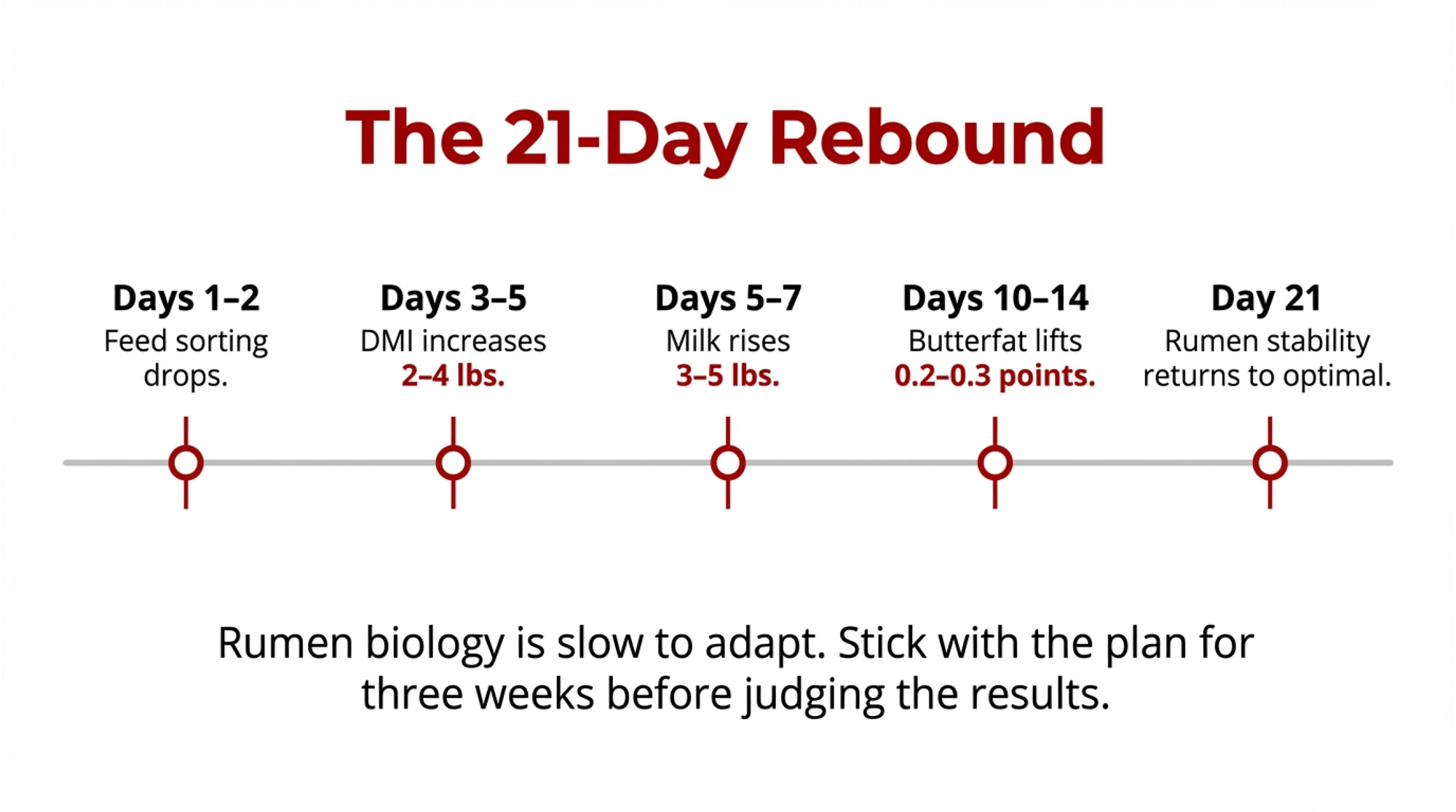
NewsSubscribe
First
Last
Consent

Revolutionary Feed Strategy Transforms Dairy Economics: High Oleic Soybeans Deliver 30% Higher Butterfat Yields While Slashing Feed Costs

Stop paying $2,000/ton for imported fat supplements when your own fields could boost milk yield 10+ lbs/cow while slashing feed costs by $1.00/day

EXECUTIVE SUMMARY: The dairy industry’s addiction to expensive imported fat supplements represents one of our most costly blind spots – but high oleic soybeans are rewriting the economics of milk production entirely. University research confirms that producers switching from conventional feeding strategies see milk fat yield increases of 0.2-0.25 lbs per cow daily, translating to $33,000+ annual profit gains for 500-cow operations. While rumen-protected fats exceed $2,000 per ton, roasted high oleic soybeans deliver superior results at just $520 per ton – plus they provide 40-50% bypass protein that expensive supplements can’t match. Michigan State University’s latest 2025 research shows these “homegrown” strategies can boost total milk production by up to 10 pounds per cow when properly implemented. With global demand tripling in the past year and market projections exceeding $880 million by 2030, early adopters are capturing competitive advantages that late adopters will struggle to match. The revolution isn’t coming – it’s here, and every day you delay evaluation costs your operation potential profit that competitors are already banking.

KEY TAKEAWAYS

  • Replace Expensive Supplements with Homegrown Strategy: Producers report saving $0.70-$1.00 per cow daily by replacing purchased rumen-protected fats and bypass proteins with roasted high oleic soybeans – that’s $255,000+ annually for a 1,000-cow operation while simultaneously boosting butterfat percentages by 0.17-0.41 points.
  • Unlock Dual-Purpose Nutrition for Maximum ROI: High oleic soybeans deliver both rumen-friendly fat (75-80% oleic acid vs. 54% problematic linoleic acid in conventional soy) AND high-quality bypass protein (40-50% RUP), effectively replacing two expensive ingredient categories with one cost-controlled solution.
  • Capitalize on Explosive Market Momentum Before Competition: Demand for roasted high oleic meal has tripled in 2025, representing 70,000+ cows with tonnage projected to double – positioning early adopters to secure supply chains and processing infrastructure before widespread adoption drives up costs.
  • Leverage Processing Technology for Maximum Component Response: Proper roasting at 290-315°F unlocks the full nutritional value, with Michigan producers reporting milk production increases up to 10 pounds per cow when high oleic soybeans replace conventional fat supplements in optimized rations.
  • Build Supply Chain Resilience Against Global Volatility: Identity-preserved high oleic soybeans offer domestic alternatives to imported palm-based supplements, reducing exposure to global commodity price swings while supporting sustainable feeding strategies that align with consumer demands for traceable, environmentally responsible dairy products.
dairy nutrition, high oleic soybeans, feed cost reduction, butterfat yield, dairy profitability

Are you still paying premium prices for imported palm-based fat supplements when your own fields could be growing a superior alternative? While most dairy operations continue to spend money on expensive rumen-protected fats that often exceed $2,000 per ton, progressive producers are discovering that the solution to higher milk components and feed cost control has been hiding in plain sight – right in their soybean fields.

Here’s the uncomfortable truth the conventional dairy nutrition establishment doesn’t want you to hear: the traditional approach of feeding expensive, imported fat supplements represents one of the industry’s most costly blind spots. High oleic soybeans aren’t just another feed ingredient – they’re a precision-engineered solution that’s rewriting the economics of milk production and proving that the biggest gains often come from questioning the smallest assumptions.

The numbers are staggering and verified by multiple independent sources. U.S. milk production continues its upward trajectory, with recent data showing consistent year-over-year increases. Most remarkably, average butterfat levels reached a historic high of 4.23% nationally in 2024, marking the highest levels since the 1940s. However, what makes this story compelling for every dairy operation is that while the industry celebrates these component gains, producers using high-oleic soybeans are seeing profit increases of $0.15 to over $1.00 per cow per day, translating to more than $33,000 in additional annual income for a 500-cow operation.

Challenging the Sacred Cow: Why Expensive Fat Supplements Are Yesterday’s Strategy

When did we accept that achieving higher milk fat required dependency on volatile global commodity markets? The conventional dairy nutrition playbook has trained us to reach for expensive, often imported supplements the moment we want to boost energy density. Rumen-protected fats typically exceed $2,000 per ton, with many products based on palm fatty acid distillates that introduce both price volatility and supply chain risk.

However, peer-reviewed research from the Journal of Dairy Science is systematically dismantling this expensive paradigm. A landmark economic analysis published in 2024 synthesized results from five separate feeding trials and concluded that substituting just 5% of ration dry matter with whole high-oleic soybeans increases Milk Income Less Feed Costs (MILFC) by up to $0.27 per cow per day.

Think of it like this: we’ve been buying premium gasoline when we could be refining our own high-octane fuel right on the farm. High oleic soybeans represent a complete reprogramming of how we approach fat and protein nutrition, offering what expensive supplements promise but rarely deliver – consistent results without the premium price tag.

The Science That Changes Everything: Verified Performance Data

The breakthrough isn’t just in economics – it’s in fundamental rumen chemistry. Conventional soybeans contain 52-55% linoleic acid, a polyunsaturated fatty acid that’s toxic to beneficial rumen microbes and triggers milk fat depression. High oleic varieties flip this script entirely, containing 75-80% oleic acid with linoleic acid reduced to less than 10%.

Penn State University research demonstrates the dramatic impact: cows fed high-oleic soybeans show decreased concentrations of trans-10 18:1 in their milk, the key biomarker associated with milk fat depression. The result? Consistent milk fat increases of 0.17 percentage points and milk fat yield improvements of 0.2 pounds per cow per day.

But here’s where it gets revolutionary: Michigan State University’s latest research shows that roasted high oleic soybeans can improve milk production by up to 10 pounds per cow when used to replace other fat supplements. That’s not just component improvement – that’s total production enhancement.

Why This Matters for Your Operation: The Processing Revolution

Here’s where most operations stumble: they focus on the soybeans but ignore the processing piece that unlocks their full value. Properly roasted high-oleic soybeans deliver 40-50% rumen-undegradable protein (RUP), directly supporting milk protein synthesis while providing a superior fat profile.

The processing requirements aren’t optional – they’re critical for success. According to Ohio State University Extension research, “the temperature for roasting should be 290°F to 315°F, with soybeans needing to be steeped for 30 minutes or longer.” This processing requirement has created opportunities for on-farm roasting operations and third-party processing services.

Processing costs range from $25 to $ 35 per ton for roasting, but the identity-preserved system requirements create opportunities for on-farm processing operations and specialized service providers.

Precision Agriculture Integration: Maximizing Technology Investments

Modern dairy operations investing in Automated Milking Systems (AMS) and precision agriculture technologies are well-positioned to capture the benefits of high-oleic soybeans. The improved energy balance resulting from better fat digestibility helps maintain consistent dry matter intake patterns, which activity monitoring systems rely on for accurate health alerts and reproductive management.

Think of high oleic soybeans as the premium fuel for your high-performance dairy engine – just as your AMS systems optimize milking efficiency, high oleic soybeans optimize rumen efficiency, creating synergistic effects that compound your technology investments.

For operations utilizing component testing technology, the enhanced fatty acid profiles in milk from cows fed high-oleic soybeans position farms for potential future premium markets. Research consistently shows milk with significantly higher oleic acid concentrations and 17% lower specific trans fatty acids compared to conventional feeding programs.

Implementation Strategy: Your 90-Day Roadmap to Profitability

Ready to move beyond expensive supplements to a homegrown strategy? The transition requires systematic planning, but the pathway is well-established through university research and producer experience.

Phase 1: Economic Analysis (Weeks 1-2)

  • Week 1: Calculate current expenditure on purchased fats and bypass proteins
  • Week 2: Model potential savings using verified benchmarks: roasted high oleic soybeans at approximately $520/ton versus rumen-protected fats often exceeding $2,000/ton
  • Factor in the dual-purpose value: you’re replacing both fat and protein supplements simultaneously

Phase 2: Supply Chain Assessment (Weeks 3-6)

  • Week 3-4: Evaluate local high oleic soybean availability and contracting options
  • Week 5-6: Consider on-farm roasting versus third-party processing: equipment investments typically pay back within 2-3 years for operations over 1,000 cows
  • Account for identity-preserved handling requirements: this isn’t commodity soybean management

Phase 3: Pilot Implementation (Months 2-3)

  • Month 2: Start with 5-7.5 pounds of roasted high oleic soybeans per cow per day
  • Month 3: Monitor verified performance indicators: expect a 0.2-0.25 lb/day increase in milk fat yield and potential total milk increases up to 10 pounds per cow
  • Ongoing: Track body condition scores: improved energy balance often manifests as better BCS maintenance

Seasonal Considerations: Maximizing Year-Round Benefits

Timing your high-oleic soybean adoption strategy to coincide with seasonal farm operations can significantly enhance your success. Spring implementation (March-May) allows for pilot testing before peak lactation periods, while fall adoption (September-November) positions operations to capture premium winter butterfat markets when dairy product demand typically peaks.

For crop producers, contracting decisions should align with planting windows. High-oleic soybean contracts are typically finalized by February or March for spring planting, ensuring that identity-preserved logistics are established before harvest. Processing infrastructure investments are most efficiently implemented during off-season periods (November-February) when roasting equipment installation won’t disrupt daily feeding routines.

Winter feeding programs, particularly those that benefit from high oleic supplementation, are particularly beneficial because the improved energy density helps maintain milk production during periods of reduced pasture availability and increased maintenance energy requirements in cold weather.

Global Market Reality: What International Data Reveals

The high oleic soybean market is experiencing explosive growth that’s reshaping agricultural economics. Recent market analysis values the global high-oleic soybean industry, with projections showing a substantial 10.7% compound annual growth rate, driven by dual demand from the food and feed sectors.

The demand drivers are crystal clear. Industry reports indicate that customers seeking roasted high-oleic meal have tripled in the past year, representing an estimated 70,000 to 80,000 cows.  Looking ahead, demand projections are expected to reach upwards of 50,000 tons this year and potentially 100,000 tons next year.

Globally, the United States dominates adoption, benefiting from established identity-preserved infrastructure and strong demand for the dairy industry. Canada represents an emerging opportunity with the 2022 approval of Alinova, Canada’s first conventionally bred high-oleic soybean variety, which is strategically important because its non-GMO status grants access to premium export markets, such as the European Union.

Implementation Economics: Breaking Down the Real-World Numbers

Are you tracking your true cost per pound of supplemental fat, including transportation, storage, and opportunity costs? Most operations aren’t, which explains why the economics of high oleic soybeans often surprise even experienced nutritionists.

Research calculations indicate that replacing supplemental fat and protein with high-oleic beans could save dairies $0.50 to $0.70 per hundredweight.  For perspective, that’s $0.525 million annually for a 2,000-cow operation – enough to justify significant investments in processing and storage infrastructure.

Real-world validation comes from Michigan producer John Schaendorf, who installed an on-farm roaster and feeds 7.5 pounds of roasted high-oleic soybeans, thereby eliminating both supplemental fat and canola meal from his ration. His cost reduction? $0.75 to $1.00 per cow per day.

Dennis Underwood from Central New York reports even more dramatic savings: $0.70 per cow per day by replacing purchased “bag fat and bypass protein” with roasted high-oleic soybeans, with potential savings reaching $1.00 per cow daily if all requirements are grown on-farm.

Addressing the Controversies: Evidence-Based Assessment

Let’s address the sustainability claims under scrutiny. The most compelling sustainability argument centers on replacing imported palm fat, which has been widely linked to deforestation concerns. However, like any major agricultural crop, soybean production has its own environmental footprint due to land use, fertilizer, and pesticide inputs.

A more honest assessment: High-oleic soybeans represent a significant relative improvement compared to imported alternatives and a strategic step toward more resilient domestic supply chains. The U.S. soybean industry has made significant sustainability progress over the past four decades, reducing energy use, soil erosion, and greenhouse gas emissions per bushel of soybeans produced.

The cost-benefit equation requires context. Cornell University research indicates that substantial milk fat responses are most likely in herds already experiencing some degree of milk fat depression or at high risk of it. For high-performing herds with optimized rumen environments, the primary benefit may shift from large component boosts to direct feed cost savings.

Future Market Implications: Reading the Tea Leaves

What happens when 20% or 30% of U.S. dairy operations adopt high oleic soybeans? The 2024 Journal of Dairy Science economic analysis modeled this exact scenario. Their conclusion: while widespread adoption would lower aggregate butterfat prices slightly, the market-level effect doesn’t offset positive farm-level profitability gains.

Translation: early adopters win bigger, but even late adopters still benefit. The economic advantage persists because the technology improves overall efficiency, not just component yields.

Consider the infrastructure investments already accelerating: demand for roasted high oleic meal has tripled in the past year, with tonnage projected to double. That’s the kind of exponential growth curve that transforms entire industries.

The next strategic frontier will likely be the development of value-added, consumer-facing milk markets that explicitly reward producers for enhanced fatty acid profiles. Research consistently shows that milk from cows fed high oleic soybeans contains significantly higher oleic acid concentrations and 17% lower specific trans fatty acids.

The Bottom Line: Your Competitive Advantage Awaits

The evidence is overwhelming and independently verified: high oleic soybeans represent a genuine revolution in dairy nutrition, not just another evolutionary step. Multiple peer-reviewed studies confirm consistent improvements in milk fat, dual-purpose nutrition benefits, and economic advantages ranging from moderate to exceptional.

Here’s what separates successful operations from the rest: they recognize that the biggest competitive advantages often come from optimizing existing resources rather than completely reinventing systems. High oleic soybeans exemplify this strategic optimization – leveraging proven science to extract more value from familiar ingredients while building resilience against market volatility.

The market momentum is undeniable: demand is described as “booming,” infrastructure is expanding rapidly, and processing technology is becoming increasingly accessible. Most importantly, early adopters are capturing benefits while building operational advantages that compound over time.

But here’s the uncomfortable question every dairy operator must answer: if your competitors are already implementing strategies that deliver $33,000+ annual profit increases per 500 cows, how long can you afford to maintain the status quo?

Your 7-Day Action Plan: From Information to Implementation

Your next steps are crystal clear and time-sensitive:

Days 1-2: Contact your nutritionist immediately and request a farm-specific economic analysis that models high-oleic soybeans in your current ration. Ask them to calculate potential savings from replacing current fat and protein supplements using current market data, factor in your local supply options, and provide a 12-month profit projection based on verified university research.

Days 3-4: Research local high oleic soybean suppliers and processing options. Schedule visits to operations already using on-farm roasting systems to evaluate equipment needs and processing quality control.

Days 5-7: Develop your implementation timeline, targeting a fall 2025 adoption, with timing that allows for pilot testing before the winter’s peak component demand periods. Calculate equipment financing options if considering on-farm processing.

Schedule this analysis by July 15th to position your operation for fall implementation. This analysis costs nothing but could reveal your operation’s pathway to dramatically improved profitability.

In an industry where margins determine survival, can you afford not to investigate a technology that’s adding $100+ per cow annually to the bottom line?

The revolution isn’t coming – it’s here. The only question is whether your operation will lead it or be left behind by it.

Take action now. Your future profitability depends on the decisions you make this week.

Complete references and supporting documentation are available upon request by contacting the editorial team at editor@thebullvine.com.

Learn More:

Join the Revolution!

Join over 30,000 successful dairy professionals who rely on Bullvine Weekly for their competitive edge. Delivered directly to your inbox each week, our exclusive industry insights help you make smarter decisions while saving precious hours every week. Never miss critical updates on milk production trends, breakthrough technologies, and profit-boosting strategies that top producers are already implementing. Subscribe now to transform your dairy operation’s efficiency and profitability—your future success is just one click away.

NewsSubscribe
First
Last
Consent

Ditch the Dogma: The Hidden Truths in the Latest May 2025 Journal of Dairy Science Animal Nutrition Research That Could Explode Your Bottom Line

Explosive new research shatters dairy nutrition myths. Your feed program’s bleeding cash—here’s the science to stop it.

EXECUTIVE SUMMARY: This no-nonsense breakdown of cutting-edge dairy nutritional science reveals how outdated practices are costing farmers profits. Key findings show traditional feed efficiency metrics (RFI) may be flawed, MUN numbers alone mislead protein strategies, and calf nutrition programs are sabotaging future milk yields. Canola meal outperforms models, methane-reducing additives trade production for sustainability, and early harvest dogma sacrifices tonnage.

KEY TAKEAWAYS:

  • Feed efficiency isn’t what you measure: Blood biomarkers (ruminal ammonia, fatty acids) could replace clunky RFI metrics.
  • MUN lies without context: NFC:CP ratios—not crude protein—dictate nitrogen efficiency.
  • Calves are lifetime investments: Every dollar in preweaning nutrition returns $2+ in first-lactation milk.
  • Canola meal defies models: Undervalued small particles boost metabolizable protein.
  • Methane cuts cost milk: Bovaer reduces emissions but risks production—balance green goals with profitability.
dairy nutrition, feed efficiency, calf nutrition, dairy science research, protein utilization

Are you sick and tired of wading through jargon-filled academic papers, trying to decipher what any of it means for your actual, dirt-under-the-fingernails dairy operation? While university researchers pat themselves on the back for their latest “discoveries,” you’re out there in the real world, trying to make a living. The truth is, the newest batch of animal nutrition research from the Journal of Dairy Science is packed with bombshells that could revolutionize your entire feeding strategy—if you’ve got the guts to look past the polite scientific language and see what they’re really saying.

Forget the incremental improvements. We’re talking about a fundamental shift in how you should be thinking about feeding your herd. In this no-holds-barred exposé, we’re ripping away the scientific veneer to lay bare the practical, profitable, and sometimes uncomfortable truths. From debunking sacred cows (pun intended) of feed efficiency to exposing the lifelong financial fallout of skimping on calf nutrition, we’re putting these findings into a language every dairyman understands: profit and loss. Prepare for some hard truths and game-changing revelations.

FEED EFFICIENCY: THOSE FANCY RFI METRICS? MAYBE NOT SO FANCY AFTER ALL.

What if everything you thought you knew about picking feed-efficient cows is just plain wrong?

For years, we’ve chased the holy grail: cows that pump out milk like a firehose while sipping feed like it’s a fine wine. The term Residual Feed Intake (RFI) has been thrown around by genetic companies and consultants like it’s gospel. But hold onto your hats, because new research (Associations of serum fatty acids, serum urea nitrogen, and ruminal ammonia nitrogen with residual feed intake in lactating dairy cows) is kicking that conventional wisdom to the curb.

Scientists dug into the biochemistry and found something that’ll make your head spin: the most feed-efficient cows? They actually had higher ruminal ammonia nitrogen. Yeah, you read that right. They also showed distinct patterns in blood fats, like more myristic and palmitic acids, and less of the polyunsaturated stuff.

Why This Should Jolt You Awake:

Imagine pinpointing your most profitable animals with a simple blood test. Forget expensive, clunky intake measurement systems. These biomarkers, if they hold up, could flip your heifer selection and culling strategy on its head. Are you still making six-figure genetic bets based on yesterday’s science?

“We’ve been so focused on the ‘how much in, how much out’ that we’ve missed the ‘what’s actually happening inside’ picture,” admits Dr. James Robertson, a no-nonsense nutritionist (not tied to this study). “These Penn State findings are a wake-up call: the cow’s internal chemistry might be the real key to efficiency.”

The Million-Dollar Question They’re Not Asking Loud Enough: Are your breeding decisions, the ones shaping your herd for the next decade, still clinging to outdated efficiency metrics? If these biomarkers pan out, the entire genetic selection game is about to be rewritten.

THE NITROGEN NIGHTMARE: MUN ISN’T THE MAGIC BULLET YOU THINK IT IS

For donkey’s years, Milk Urea Nitrogen (MUN) has been the dairyman’s dipstick for protein nutrition. You’ve probably tweaked rations, spent a fortune on protein supplements, and sweated over those DHIA numbers. But guess what? A massive meta-analysis (Assessing milk urea nitrogen as an indicator of protein nutrition and nitrogen utilization efficiency: A meta-analysis) pooling 48 studies just dropped a bomb: MUN, on its own, is a dangerously incomplete story.

The link between MUN and what you’re actually feeding is all tangled up with the ratio of nonfiber carbohydrates (NFC) to crude protein (CP). This isn’t just academic hair-splitting; it’s about your feed bill and the environment. The study nails it: high MUN means more nitrogen (and your money) going down the drain as urine, and worse nitrogen use efficiency.

Here’s the Gut Punch:

Stop obsessing over crude protein percentages! The NFC:CP ratio is looking like a far better crystal ball for nitrogen utilization. How many farms are overfeeding expensive protein, polluting more, and still thinking their “acceptable” MUN means they’re doing a great job? It’s like trying to fine-tune a high-performance engine with a rusty wrench.

“Looking at MUN in a vacuum is like trying to drive by only looking in the rearview mirror,” quips independent nutritionist Sarah Franks. “This research screams that we need to be balancing carbs and protein in tandem to actually get a grip on efficiency.”

The Provocative Question: How many thousands of dollars are you literally flushing away by chasing MUN numbers instead of strategically balancing the NFC:CP ratio in your TMR? Are you feeding for numbers, or for profit?

CALF NUTRITION: THE CRADLE-TO-GRAVE PROFIT LEAK (OR GOLDMINE)

Listen up: the decisions you make in the calf barn today are writing cheques (or IOUs) for your milking herd years down the line. Are you setting them up for championship performance or a lifetime of ‘meh’?

The science is no longer whispering; it’s shouting. What you pour into those calf pails today directly dictates their future in the milking string. A landmark meta-analysis (Effects of preweaning calf daily gain and feed intake on first-lactation performance: A meta-analysis) has crunched the numbers: higher average daily gain (ADG) before weaning means significantly more milk, fat, and protein in that critical first lactation.

Sure, liquid feed intake (LDMI) matters, but the old dogma about aggressively pushing starter feed (SDMI)? The data says it’s not the silver bullet we thought. This directly challenges the “get ’em on grain ASAP” mentality that many old-timers (and some not-so-old-timers) still cling to.

The Cold, Hard Cash Reality:

Let’s talk money. If an extra $50 or $100 in top-shelf milk or replacer per calf translates to an extra 1,000 pounds of milk in her first lactation, what are you waiting for? At $20/cwt, that’s a $200 ROI. You’d jump at that return on a piece of equipment; why not on your future herd?

“Calf nutrition isn’t just about hitting weaning weights,” warns calf guru Dr. Emily Chen. “It’s about programming that animal’s entire productive machinery for life. Skimp now, pay forever.”

But wait, there’s more. Another bombshell study (Effects of milk feeding levels and starter feed crude protein and fat contents on growth performance, rumen fermentation, and purine derivative excretion in urine of dairy calves) found that while high milk plus high-protein starter is a winning combo, jamming high-fat starter into calves, especially those on generous milk diets, actually cripples intake, growth, and healthy rumen development. Think about that next time you’re tempted by that “high-energy” (read: high-fat) starter.

The Unpalatable Truth: That “thrifty” approach to raising calves? It’s likely a massive profit leak, costing you a fortune in lost milk, lactation after lactation. Are you still penny-pinching on calves while expecting champagne performance from your cows? That’s like putting cheap gas in a Ferrari and wondering why it sputters.

PROTEIN WARS: WHY CANOLA MEAL IS SCHOOLING THE SOYBEAN STALWARTS (AND THE MODELS)

For years, nutritionists have scratched their heads. Models like the NRC system kept predicting canola meal would underperform soybean meal in metabolizable protein. Yet, out in the real world, canola often had cows milking better. What gives? Groundbreaking research from the University of Wisconsin, using 15N-labeled meals (Effects of canola meal or soybean meal on duodenal flow of nitrogen fractions in dairy cows), has finally blown the lid off this mystery.

By meticulously tracking nitrogen through the cow, they found something stunning: way more nitrogen from tiny canola particles and rumen bugs (both attached and free-floating) was making it to the duodenum with canola meal versus soybean meal.

Here’s the Mind-Bender:

Those small canola particles, which the models assumed were obliterated in the rumen? They’re actually surviving the rumen onslaught and delivering a direct protein punch to the cow. This fundamentally torpedoes how we’ve been judging protein sources for decades!

“This is the ‘Aha!’ moment we’ve been waiting for,” explains dairy nutritionist Dr. Wilson. “It explains why canola often punches above its weight in the tank. We’ve been systematically short-changing its true protein value.”

The Challenge to Your Feed Bill:

If the almighty models have been this wrong about canola, what else are they getting wrong? And it gets worse. Another meta-analysis (Net portal appearance used to assess feed evaluation system predictions of the digestive flow and gut metabolism of essential amino acids in dairy cows: A meta-analysis) put three major feed evaluation systems (NRC, NASEM, and CNCPS) under the microscope, comparing their predictions of essential amino acid flow. The result? Significant, glaring discrepancies for several key amino acids.

The Question That Should Keep You Up at Night: Is your nutritionist still blindly trusting these potentially flawed models to build your rations? Are you leaving milk in the cow (and money on the table) because your feed program is based on outdated assumptions? It’s 2025, folks. Relying solely on old models is like navigating with a sextant when GPS exists.

THE METHANE MESS: THAT FANCY ADDITIVE WORKS… A LITTLE TOO WELL?

The green police are breathing down agriculture’s neck, and methane’s public enemy number one. Enter Bovaer (3-nitrooxypropanol or 3-NOP), a feed additive waving some impressive methane-reduction flags. Indeed, recent research (Effect of Bovaer inclusion in diets with a high proportion of grass-clover silage of different nutritional quality on gas emissions and production performance in dairy cows) showed that adding it to diets heavy on grass-clover silage slashed methane by a hefty 30%, no matter the silage quality.

But (And It’s a BIG But):

This green victory came at a cost. Cows on Bovaer ate less and milked less, and the hit was worse for fresh cows. So, here’s the billion-dollar question: how do you balance a cleaner conscience with a fatter wallet?

“The dairy industry is caught between a rock and a hard place,” observes sustainability expert Jennifer Hayes. “Cutting methane is non-negotiable for our future license to operate, but we can’t go broke doing it. Solutions can’t cripple productivity when margins are already tighter than a banjo string.”

The Questions Your Co-op Isn’t Asking (But Should Be):

  • What’s an acceptable loss in production for a greener footprint? Who decides?
  • Are consumers really willing to pony up more for “low-methane milk,” or is that just a feel-good fantasy?
  • How long before the regulators stop asking nicely and start mandating this stuff, regardless of the hit to your milk cheque?

The Provocative Reality: The smartest operators are already viewing methane mitigation not as a choice, but an inevitability. Those who figure out how to adapt now, without tanking their production, will be miles ahead when the mandates come knocking. Will you be a leader or a laggard?

FORAGE FUNDAMENTALS: IS YOUR “PERFECT” HARVEST TIMING ACTUALLY COSTING YOU?

When it comes to small-grain silages like triticale or ryegrass, the age-old wisdom is “cut it at boot stage for quality, quality, quality!” But hold your horses. New research (Effect of maturity at harvest of small-grain grasses on the nutritional composition of forage and ration formulation) comparing boot stage (BT) versus soft dough stage (SFT) harvesting paints a far more complicated, and frankly, more interesting picture.

Sure, cutting at soft dough dramatically bumps up your tonnage. But, as expected, protein and energy drop, while fiber and lignin climb. Here’s where it gets juicy: when the researchers plugged these different forages into a least-cost ration model, factoring in fluctuating commodity prices, neither harvest stage was the clear winner across the board.

The Paradigm Demolition:

Stop the tunnel vision on forage quality uber alles! This research screams for a whole-system economic approach. What are corn and soybean meal prices doing? How much other forage do you have in the bunker? Sometimes, that higher yield of slightly “lower quality” (but still perfectly good) forage actually pencils out better in the final TMR.

“It’s like how we now view corn silage hybrids,” notes forage guru Dr. Amanda Berger. “Sometimes more tons of decent stuff beats fewer tons of perfect stuff, especially when grain prices are through the roof.”

The Brutal Truth: Your unwavering devotion to that early, “super-quality” harvest window? It might be sacrificing valuable tonnage without actually delivering the economic knockout punch you expect in today’s volatile feed markets. Are you managing for lab numbers or for farm profitability?

THE BUFFER BLUNDER: WHEN “FIXING” HINDGUT ACIDOSIS CREATES NEW HEADACHES

High-starch diets. We love the milk, but we hate the acidosis, right? And when that acid spills over from the rumen into the hindgut, it’s a whole other mess. So, logically, some bright sparks suggested hindgut buffers. Makes sense, right? Not so fast. Recent research (Evaluation of hindgut buffers under high-starch diet conditions in lactating Holstein cows) threw a wrench in those plans.

They pumped starch directly into cows’ intestines to mimic hindgut acidosis and then tried different buffers. Sure, the buffers raised fecal pH (less acid, yay!). But here’s the kicker: they also jacked up hindgut fermentation markers like VFAs and purines. Even worse, one high buffer dose actually seemed to trigger inflammation and slash feed intake. So much for a simple fix.

The Reality Slap:

Sometimes, our “solutions” are just trading one problem for another, possibly worse, one. This study strongly suggests that trying to mop up hindgut acidosis with buffers might be a fool’s errand, potentially creating more fires than it puts out.

“We’re getting dangerously good at treating symptoms instead of fixing root causes,” warns ruminant physiologist Dr. Marcus Paulson. “Maybe, just maybe, the smarter play is to manage starch digestion before it becomes a hindgut disaster, rather than playing whack-a-mole with buffers downstream.”

The Rhetorical Zinger: How many additives in your feed bunk are playing this dangerous game – solving one issue on paper while silently creating two more you haven’t even thought to measure? Is your TMR a finely tuned ration or a science experiment gone sideways?

AMINO ACID AWAKENING: THE RUMEN ISN’T AS DUMB AS WE THOUGHT

The old-school thinking on feeding individual amino acids (AAs) was pretty simple: don’t bother. They’ll just get chewed up and spat out by the rumen bugs, a total waste of money. Well, new in vitro work (In vitro assessment of the effect of free amino acids on ruminal fermentation and 15N enrichment of ruminal nitrogen pools) is here to tell you: the rumen has a more sophisticated palate than we gave it credit for.

Turns out, certain AAs, especially the branched-chain ones, actually supercharge the rumen microbes’ ability to convert ammonia-nitrogen into bacterial protein. They’re improving nitrogen use within the rumen. And while slinging in single AAs didn’t overhaul total fermentation, some branched-chain AAs specifically boosted their corresponding VFAs, hinting that they can steer fermentation pathways.

The “So What?” For Your Farm:

This cracks open the door to a whole new level of precision feeding: strategically nourishing the rumen microbiome itself. The goal? Squeeze more out of your nitrogen, potentially cut back on total protein, and fine-tune rumen function.

“We’ve known for ages that amino acid balance after the rumen is critical,” notes rumen microbiologist Dr. Elena Rodriguez. “Now, we’re seeing they can be puppet masters inside the rumen too. This could be huge for formulating smarter, more efficient rations.”

The Forward-Thinking Dare: Could the next leap in dairy nutrition be feeding specific amino acids not just to meet the cow’s needs, but to deliberately sculpt the rumen environment? Are you ready to move beyond just “filling the tank” to actively conducting the rumen orchestra?

THE LONG SHADOW OF THE MILK PAIL: EARLY NUTRITION’S LIFELONG METABOLIC ECHO

Let’s talk about heifers, and not just getting them bred on time. New research (Effects of preweaning milk allowance on long-term metabolism in Holstein heifers) dug into how that preweaning milk allowance echoes through their entire lives, metabolically speaking.

Sure, more milk early on meant faster growth initially. But the real bombshells were found at 11 months old, long after weaning. Heifers on the high-milk plan showed signs of better insulin sensitivity and ramped-up fatty acid metabolism. These aren’t just fleeting changes; this is evidence that early nutrition is basically programming their long-term metabolic machinery.

The Paradigm Implosion:

This isn’t just about hitting target growth rates or calving age anymore. This is about metabolic programming. What you do in those first few months could be setting the stage for that heifer’s lifetime health, fertility, and how well she handles the metabolic tightrope walk of transition and high production.

“We’re peeling back the layers on how early-life nutrition leaves an indelible metabolic fingerprint,” explains developmental biologist Dr. Hassan. “The shockwaves for transition cow success and lifetime productivity could be absolutely massive. Think of it like building a skyscraper – the foundation you lay in those first few months determines the integrity of the entire structure for decades.”

The Provocative Punchline: Your most powerful tool for a killer transition cow program? It might not be in the close-up pen; it might be in the calf hutch. Are you still treating calf rearing as a cost center instead of the ultimate investment in your herd’s future?

THE BOTTOM LINE

This isn’t just another round of minor tweaks from the ivory tower. The latest science from the Journal of Dairy Science is lobbing grenades at some of our most deeply entrenched feeding dogmas. From trashing old feed efficiency metrics to proving early nutrition is a lifelong metabolic game-changer, these findings aren’t just suggestions; they are a full-blown challenge to business as usual.

Who will thrive in the next decade? Not the dairyman stuck in tradition. Not even the one diligently following today’s “best practices.” It will be the disruptors, the critical thinkers, the ones who dare to question, to test, and to adapt their feed bunks based on hard science, not just habit or what the last salesman said.

It’s Time for a brutally honest self-assessment. Ask yourself:

  • Is my nutritionist still leaning on protein evaluation models that this new research suggests are fundamentally flawed?
  • Have I ever really calculated the lifetime ROI of a truly aggressive, science-backed calf nutrition program, or am I still just trying to get them weaned cheap?
  • Am I chasing MUN numbers like a dog chasing its tail, instead of focusing on the real drivers of nitrogen efficiency?
  • Am I prepared to make tough calls on methane mitigation that balance green credentials with black ink on the balance sheet?
  • Is “we’ve always done it this way” still the most common phrase heard in my feed meetings?

The dairy industry is staring down the barrel of unprecedented pressures: environmental crusades, fickle consumers, and markets that turn on a dime. But where there’s chaos, there’s opportunity—for those with the guts to seize it.

The nutrition revolution isn’t on the horizon; it’s kicking down your barn door. The only question left is: will you be leading the charge, or will you be eating the dust of competitors who saw the writing on the wall?

The Final, Uncomfortable Truth: In the high-stakes game of dairy nutrition, ignorance isn’t bliss; it’s bankruptcy. But what you think you know, based on outdated science or industry inertia, might be even more dangerous. Stop feeding your cows based on yesterday’s news. The future of your dairy depends on it.

This article summarizes and interprets recent research from the Journal of Dairy Science for practical application. However, every dairy is unique. Always consult with your qualified nutritionist and veterinarian before making significant changes to your herd’s feeding or management programs.

Learn more:

Join the Revolution!

Join over 30,000 successful dairy professionals who rely on Bullvine Weekly for their competitive edge. Delivered directly to your inbox each week, our exclusive industry insights help you make smarter decisions while saving precious hours every week. Never miss critical updates on milk production trends, breakthrough technologies, and profit-boosting strategies that top producers are already implementing. Subscribe now to transform your dairy operation’s efficiency and profitability—your future success is just one click away.

NewsSubscribe
First
Last
Consent

Super-Charged Starch: New Research Shows Super-Conditioned Corn Boosts Calf Growth by 12%

Unlock the secret to faster calf growth and lower heifer-raising costs! New research reveals that super-conditioned corn boosts feed efficiency by 12%, outperforming traditional methods. Discover how this game-changing innovation could save thousands and produce stronger, better-developed heifers. Is your feed supplier holding you back?

Summary

New research published in the Journal of Dairy Science reveals a game-changing innovation in calf nutrition: super-conditioned corn. This processing method significantly outperforms conventional ground and micronized corn, promoting growth, feed efficiency, and skeletal development in Holstein dairy calves. The study shows a remarkable 12% improvement in feed efficiency, with calves achieving higher average daily gains while consuming less feed. Super-conditioned corn increased total-tract starch digestibility to 95.3%, compared to 92.1% for micronized and 89.4% for ground corn. This enhanced digestibility translated to superior skeletal growth, with calves showing significantly greater withers and hip heights by 11 weeks of age. Economic analysis suggests potential savings of $22,000-$28,500 annually for a farm raising 100 replacement heifers. Despite these clear advantages, the feed industry has been slow to adopt this technology, raising questions about current marketing practices and the value of premium-priced processing methods like micronization.

Key Takeaways:

  • Super-conditioned corn improves feed efficiency by 12% compared to ground or micronized corn.
  • Calves fed super-conditioned corn showed higher average daily gains (0.67 kg/day vs 0.60 kg/day)
  • Starch digestibility increased to 95.3% with super-conditioned corn, vs. 92.1% for micronized and 89.4% for ground corn.
  • Skeletal development improved, with more excellent withers and hip heights by 11 weeks of age.
  • Calves consumed less feed while growing faster, demonstrating superior nutrient utilization.
  • Potential annual savings of $22,000-$28,500 for a farm raising 100 replacement heifers
  • Micronized corn showed minimal benefits over conventional grinding, questioning its premium pricing.
  • Implementation may require adjustments to feeding management to prevent potential acidosis.
  • The feed industry has been slow to adopt this technology, possibly due to economic interests.
  • Farmers should question their feed suppliers about corn processing methods and documented performance data.
super-conditioned corn, calf growth, feed efficiency, dairy nutrition, Holstein calves

Have you ever wondered if you could slash heifer-raising costs while improving growth rates? A groundbreaking study published in the Journal of Dairy Science reveals how a simple change in corn processing could dramatically boost your calves’ performance—potentially saving thousands in raising costs while producing stronger, better-developed replacement heifers. The research shows that super-conditioned corn significantly outperforms conventional ground and micronized corn in promoting growth, feed efficiency, and skeletal development in Holstein dairy calves, delivering an impressive 12% improvement in feed efficiency. With replacement heifer raising accounting for 10-20% of total farm expenses, this innovation deserves your serious attention.

What’s the Big Deal About Corn Processing?

Corn isn’t just corn when it comes to your calf starter. How it’s processed fundamentally changes how efficiently your calves can extract energy from it. Corn kernels are tiny vaults of energy—processing methods that are essentially different keys that unlock these vaults with varying degrees of effectiveness.

The study examined three distinct processing approaches that produce dramatically different results. Conventional grinding (the control) reduces particle size through mechanical processing. Micronization uses dry heat, generating infrared waves by burning propane over ceramic tile, with temperatures reaching 90-100°C. Super-conditioning, the star performer, employs moist-heat processing by injecting steam to increase moisture levels to 18-20% while maintaining corn at 95°C for about four minutes.

Laboratory testing showed these methods produced markedly different outcomes for starch digestibility: 40% for ground corn, 45% for micronized corn, and 59% for super-conditioned corn. These differences translated into actual performance gains when implemented in calf feeding programs.

The Digestibility Difference

The fundamental advantage of super-conditioned corn lies in its enhanced starch availability. When researchers measured total-tract starch digestibility, super-conditioned corn reached 95.3%, significantly higher than micronized corn (92.1%) and ground corn (89.4%). This represents a 6.2% improvement in starch utilization compared to conventional grinding.

“It’s like comparing a partially opened faucet to one fully open,” explains Dr. James Drackley, the University of Illinois dairy nutritionist. “Super-conditioning effectively gelatinizes starch granules, making them more accessible to microbial fermentation in the rumen and enzymatic digestion in the small intestine. Your calves get more energy from the same amount of feed.”

Think about what happens when you cook pasta or rice—the starch granules swell and burst open as they absorb water and heat. Super-conditioning creates a similar effect in corn, transforming tightly-packed starch molecules into a more accessible form that digestive enzymes can attack more easily. This simple processing change profoundly affects how efficiently your calves can utilize the energy in their feed.

Micronized Corn: The Emperor’s New Clothes?

One of the most surprising findings from this research is how little benefit micronized corn showed despite its higher-tech processing and likely premium price. The feed industry has been promoting micronization technology for years. Still, this research exposes a harsh truth: Micronized corn delivered minimal improvements in digestibility or growth performance compared to simple ground corn.

This finding raises serious questions about the value proposition of micronized corn products currently being marketed to dairy farmers. With only a 2.7% improvement in total-tract starch digestibility over ground corn (compared to super-conditioned corn’s 6.2% advantage), micronization appears to be a premium-priced processing method delivering budget-level results.

“When I saw the data, I immediately canceled my order for micronization equipment,” says Tom Williams, a 500-cow dairy operator from Wisconsin. “The research saved me from investing in technology that delivered minimal returns. I’m now investigating super-conditioning options instead.”

Growth Performance: The Numbers That Matter

This study’s growth and efficiency numbers are particularly compelling for dairy farmers who are constantly watching the bottom line.

Average daily gain (ADG) during the entire study period (weeks 1-11) was markedly improved with super-conditioned corn (0.67 kg/day) compared to micronized corn (0.60 kg/day) and ground corn (0.59 kg/day). This advantage became even more pronounced during the post-weaning period (weeks 9-11), where calves on super-conditioned corn achieved ADG of 1.03 kg/day versus 0.91 and 0.89 kg/day for the other treatments.

Feed efficiency showed even more dramatic improvement. Overall, feed efficiency reached 0.50 for super-conditioned corn compared to 0.44 and 0.41 for micronized and ground corn treatments—approximately a 12% improvement. That means getting the same growth with 12% less feed input or more growth from the same feed.

To fully understand the magnitude of these differences, let’s look at the complete performance data from the 77-day study:

Table 1: Performance Measures of Calves on Different Corn Processing Methods (77-day study)

MeasureGround CornMicronized CornSuper-Conditioned Corn
Average Daily Gain (kg/d)
Overall (11 weeks)0.590.600.67*
Post-weaning0.890.911.03*
Feed Efficiency
Overall (11 weeks)0.410.440.50*
Post-weaning0.380.390.46*
Starch Digestibility (%)89.492.195.3*
Feed Intake (kg/d)
Post-weaning2.212.192.10

*Significantly better than other treatments (P < 0.05)

As the table clearly shows, super-conditioned corn consistently outperformed ground and micronized corn across virtually all performance metrics, except feed intake—where calves consumed less feed while growing faster, demonstrating the remarkable efficiency improvement.

Stronger Frame Development

Beyond mere weight gain, skeletal measurements indicated better structural development. By week 11 (at 77 days of age), calves receiving super-conditioned corn demonstrated significantly greater withers height (91.0 cm vs. 88.1 cm and 87.3 cm) and hip height than other treatments.

“We’re seeing better frame development, not just weight,” notes Dave Johnson, a Wisconsin dairy farmer who switched to super-conditioned corn in his calf starters last year. “These heifers don’t just weigh more—they’re taller, longer, and have better overall structure. I expect this to translate into easier calvings and potentially better milk production when they enter the herd.”

The Counterintuitive Feed Intake Finding

Perhaps the most surprising finding was that despite lower feed intake in weeks 10-11 (post-weaning), calves fed super-conditioned corn maintained superior growth rates. This initially perplexed researchers, but it makes perfect sense when considering improved nutrient utilization.

The researchers hypothesized that the increased rumen fermentability of starch from super-conditioned corn likely produced more acidity in the rumen environment, potentially explaining the reduced feed intake. Yet even with this reduced consumption, calves still grew faster and more efficiently—a testament to how much better they utilized the feed they consumed.

“It seems counterintuitive at first,” admits Dr. Sarah Thompson, dairy nutrition consultant. “But think of it like high-octane fuel versus regular gasoline. You need less premium stuff to go the same distance. The study clearly shows that what matters isn’t how much your calves eat, but how efficiently they use what they consume.”

The Biology Behind the Boost

What happens inside calves when they consume super-conditioned corn? The research reveals fascinating metabolic changes that explain the enhanced performance.

Blood glucose levels were significantly higher in calves fed super-conditioned corn (75.6 mg/dL) compared to ground corn (68.4 mg/dL) and micronized corn (67.1 mg/dL). Similarly, insulin levels were elevated in the super-conditioned corn group (9.73 μm/mL) compared to micronized corn (8.12 μm/mL).

The physiological and behavioral differences between treatments help explain why super-conditioned corn delivers superior results, as shown in the table below:

Table 2: Blood Parameters and Behavioral Differences (measured at 77 days of age)

MeasureGround CornMicronized CornSuper-Conditioned Corn
Blood Values
Glucose (mg/dL)68.467.175.6*
Insulin (μm/mL)8.658.129.73*
Behavior (minutes/day)
Ruminating time77.372.764.7*
Eating time78.972.866.7
Structure Growth (at 11 weeks)
Withers height (cm)87.388.191.0*
Hip height (cm)87.987.189.2*

*Significantly different from other treatments (P < 0.05)

These metabolic changes reflect the improved utilization of starch and suggest altered nutrient partitioning that favors growth. Higher insulin levels promote anabolic processes necessary for tissue development. Additionally, increased glucose availability likely reduces the need for amino acid catabolism for energy production, allowing more protein to support structural growth.

The calves also spent significantly less time ruminating—only 64.7 minutes for super-conditioned corn versus 77.3 minutes for ground corn and 72.7 minutes for micronized corn. This reduced rumination time indicates less mechanical breakdown is needed before digestion, consistent with the enhanced digestibility of super-conditioned corn.

Why Aren’t More Feed Companies Offering This? Follow the Money

Despite the clear advantages of super-conditioned corn, it’s not yet widely available from significant feed suppliers. Why is the industry so slow to adopt such a beneficial innovation, which is substantial when raising replacement heifers, which account for up to 20% of farm expenses?

The answer may lie in economics and infrastructure. Many feed mills have invested heavily in grinding equipment and micronization technology. Switching to super-conditioning requires different equipment and processing knowledge. The inconvenient truth is that super-conditioned corn’s improved efficiency means farmers ultimately purchase less feed, which is not attractive for suppliers focused on volume.

“The feed industry isn’t always incentivized to sell you the most efficient products,” notes industry consultant Mark Reynolds. “They’re sometimes more interested in selling you more tons of feed rather than helping you get more from fewer tons. This research should empower farmers to demand super-conditioned options and the improved performance they deliver.”

Practical Implementation on Your Farm

So, how can you put this research to work on your dairy? Here are practical steps to consider:

Sourcing Considerations

Super-conditioned corn will likely command a premium price over conventional ground corn, so you must calculate whether the performance benefits justify the additional costs. The economics vary based on:

  • Current feed costs in your region (as of March 2025, corn is trading at $4.85/bushel)
  • Heifer raising expenses on your operation
  • Labor and housing costs
  • Market value of well-developed replacement heifers

Mike Brennan, who milks 350 cows in Pennsylvania, shares his experience: “I calculated that even paying about 15% more for super-conditioned corn in my calf starter, I’m still ahead because of the improved feed conversion and faster growth rates. My heifers are reaching breeding size 2-3 weeks earlier, which means significant savings in raising costs.”

Questions to Ask Your Feed Supplier

When discussing super-conditioned corn with your feed supplier, ask these critical questions:

  1. What specific process do you use for super-conditioning? (Look for steam injection, 18-20% moisture, and 95°C temperature maintained for approximately 4 minutes)
  2. Do you have documented starch digestibility data for your product?
  3. Can you provide third-party verification of the processing method and its effectiveness?
  4. What is the cost differential compared to conventional ground corn in your formulations?
  5. Can you formulate a calf starter with approximately 55-60% super-conditioned corn?

Implementation Strategy

If you’re considering making the switch:

  1. Start with a small group of calves to evaluate performance on your specific farm
  2. Carefully monitor growth metrics (weight, withers height, hip height)
  3. Track feed consumption and calculate feed efficiency
  4. Work with your nutritionist to formulate the optimal starter ratio incorporating super-conditioned corn
  5. Consider slightly higher inclusion rates of buffers to counteract potential increased rumen acidity

Management Adjustments

The research indicates you might need to make some management adjustments when implementing super-conditioned corn:

The reduced feed intake observed in weeks 10-11 of the study might necessitate formulation changes to ensure adequate nutrient density. Additionally, the increased ruminal fermentability might elevate the risk of acidosis, requiring careful attention to feeding management and potentially including buffering agents.

“We increased the frequency of feeding while decreasing the amount per feeding,” explains Lisa Donovan, a New York dairy producer. “This helped manage any potential digestive issues from the higher fermentability. The results have been impressive—our calves are thriving.”

Cost-Benefit Analysis: Does It Pay?

Let’s examine the economics using current numbers. Since raising replacement heifers accounts for 10-20% of on-farm expenses, even modest efficiency improvements can yield significant savings.

Consider this scenario for a farm raising 100 replacement heifers annually:

  • Traditional approach: 24 months to first calving at $2,500 per heifer (2025 estimated cost) = $250,000
  • With super-conditioned corn: Potential to reduce raising period by 2-3 weeks through faster growth
  • Estimated savings: Approximately $135-200 per heifer = $13,500-20,000 annually
  • Feed savings from 12% improved efficiency: Approximately $85 per heifer = $8,500 annually
  • Total potential benefit: $22,000-28,500 per 100 heifers

These calculations don’t account for the potential long-term benefits of better skeletal development on future milk production and herd longevity. The ROI analysis shows that even if super-conditioned corn costs 15% more than conventional corn, most farms would see a positive return within the first year of implementation.

Could Two Months of Improved Nutrition Permanently Impact Lifetime Production?

Emerging research on metabolic programming suggests that nutrition during critical developmental windows can affect an animal’s productive capacity. While the study only followed calves to 77 days of age, the superior skeletal development and growth patterns established during this period could potentially translate to lifelong advantages.

Research in other livestock species has demonstrated that early nutritional interventions can influence gene expression through epigenetic mechanisms, potentially “programming” animals for enhanced productivity. If this holds for dairy cattle, the benefits of super-conditioned corn extend far beyond the heifer-raising period, influencing milk production, reproductive efficiency, and longevity throughout the animal’s productive life.

The Bottom Line for Your Bottom Line

Super-conditioned corn represents a science-backed opportunity to improve calf development while reducing overall raising costs. The 12% improvement in feed efficiency translates directly to your farm’s profitability through:

  1. Reduced total feed consumption for the same growth
  2. Faster growth to breeding size and first calving
  3. Better skeletal development potentially leads to improved future performance
  4. Possible reduction in digestive upsets through more complete starch utilization

As with any nutritional intervention, implementation decisions should consider your farm’s specific economics, processing availability, and management capabilities. However, the evidence is clear: when adequately implemented, enhanced corn processing through super-conditioning offers meaningful benefits that align with the industry’s continued push toward greater efficiency.

Your Next Move

Ready to explore super-conditioned corn for your operation? Here’s what to do next:

  1. Discuss these findings with your nutritionist
  2. Contact feed suppliers to inquire about super-conditioned corn availability and pricing
  3. Calculate the potential return on investment for your specific operation
  4. Consider setting up a small trial on your farm to validate the results

What processing method are you currently using for corn in your calf starters? Have you experimented with different processing methods? Please share your experiences in the comments below or join the discussion on our social media channels.

Remember, in today’s challenging dairy economy, even minor efficiency improvements can make a big difference to your bottom line. Super-conditioned corn might be the edge your calves—and your business—need.

Learn more

Join the Revolution!

Bullvine Daily is your essential e-zine for staying ahead in the dairy industry. With over 30,000 subscribers, we bring you the week’s top news, helping you manage tasks efficiently. Stay informed about milk production, tech adoption, and more, so you can concentrate on your dairy operations.

NewsSubscribe
First
Last
Consent

Milk’s Hidden Superpower: Boosting Brain Health from Pregnancy to Preschool

Learn how dairy supports brain health and growth in early life. Are you providing the right nutrition for a strong start for future generations?

Is the key to boosting a child’s brain power hiding in your fridge? Dairy plays a vital role in brain health and learning, especially during pregnancy and early childhood. With the dairy industry facing talks on sustainability and nutrition, understanding its effect on early brain development is more critical than ever. Join us as we examine how dairy helps during the first 1,000 days of a child’s life, a crucial time for brain growth. Could adding more dairy be a simple way to support young minds?

Nutritional Powerhouses in Dairy: Building Blocks of Brain Health 

Dairy foods are packed with essential nutrients that keep our brains healthy. Let’s look at these nutrients, which help during pregnancy, early life, and beyond. 

  • Vitamin B12 (Cobalamin): This vitamin is necessary for the brain. It helps form myelin, which protects nerve signals and helps them travel. Without enough, there can be brain issues.
  • Iodine: Iodine makes thyroid hormones crucial for brain growth and function. 
  • Choline: Choline helps make a neurotransmitter essential for memory. It also keeps cell membranes in good shape, allowing brain signals to work well. 
  • Zinc: Zinc helps the brain make new cells and connections essential for learning and memory. It also helps repair brain tissue. 
  • Protein: Protein provides amino acids, the building blocks for neurotransmitters and essential brain proteins, supporting brain growth and repair. 
  • Vitamin A: Known for vision and immune health, vitamin A helps with brain cell growth and function. 
  • Omega-3 Fatty Acids: Though not as common in dairy as in fish, they help brain structure and reduce inflammation. 
  • Calcium: Besides bones, calcium is vital for brain communication and muscle work. It indirectly supports brain health by ensuring good blood flow. 
  • Glutathione (GSH): This antioxidant protects the brain from damage. Dairy might help boost brain levels of this protective substance. 

These nutrients highlight the value of dairy products in supporting brain health and development. Including dairy in your diet can help maintain a healthy brain.

Nurturing Minds: Maternal Nutrition’s Impact on Fetal Brain Development

What a mom eats plays a big part in how her baby’s brain develops during pregnancy. Dairy foods are super important because they give key nutrients needed for this process. 

  • Iodine and Choline: Super Nutrients: Iodine helps make thyroid hormones crucial for brain growth. Without enough iodine, there can be significant brain problems. Choline helps build the brain and is essential for memory and learning (source). 
  • What Studies Show: Research shows that pregnant women who eat plenty of dairy have kids with better thinking skills. These kids do well in language and memory tests (source). 

This proves why having enough dairy in a mom’s diet is essential. Dairy is easy to find and inexpensive, making it a great source of nutrients that help make smarter, healthier kids.

The Power of Dairy in the Critical First 1,000 Days

The first 1,000 days of life, from conception to a child’s second birthday, are key to brain growth. Children’s brains grow fast during this time and set the stage for lifelong learning. What helps this growth? Dairy does! Dairy is packed with nutrients that are essential for cognitive development. 

The brain needs a steady supply of essential nutrients during the first 1,000 days. Dairy products provide a mix of proteins, vitamins, and minerals. They offer high-quality protein and healthy fats that help build and repair brain tissues. Vitamins like B12 and iodine in dairy are crucial for thinking and learning. Research supports the role of these nutrients in cognitive development. 

Studies show that dairy consumption boosts brainpower. Kids who eat dairy regularly often have better problem-solving skills and memory. Dairy helps with things like analyzing, remembering, and learning. This supports academic success later on.  For example, a recent study highlights the correlation between regular dairy consumption and enhanced cognitive abilities in children. [link]

Besides physical growth, dairy supports mental and neurological health too. By including dairy in the diets of young kids and pregnant women, we can ensure they get the nutrients they need for their brains to develop well. This gives kids a head start in life.

Essential Dairy Guidelines for Cognitive Excellence in Pregnancy and Early Childhood 

Dairy is vital for brain growth and cognitive health, especially for pregnant women and young kids. Here are some simple guidelines to follow:  

For Pregnant Women:  

  • How Much: Pregnant women should eat at least three servings of dairy daily, which helps them meet their extra nutritional needs.
  • Types of Dairy: Choices include milk, yogurt, and cheese. Each nutrient is essential for the mom’s health and the baby’s development.
  • Why It Matters: Dairy offers calcium for strong bones, iodine for brain growth, and choline for building the brain’s cerebral cortex. It also provides Vitamin B12 and protein, both key for making DNA and brain cells.

For Young Children:  

  • How Much: Kids aged 1 to 3 should drink 2 to 2½ cups of dairy daily. For kids aged 4 to 8, aim for 2½ cups each day.
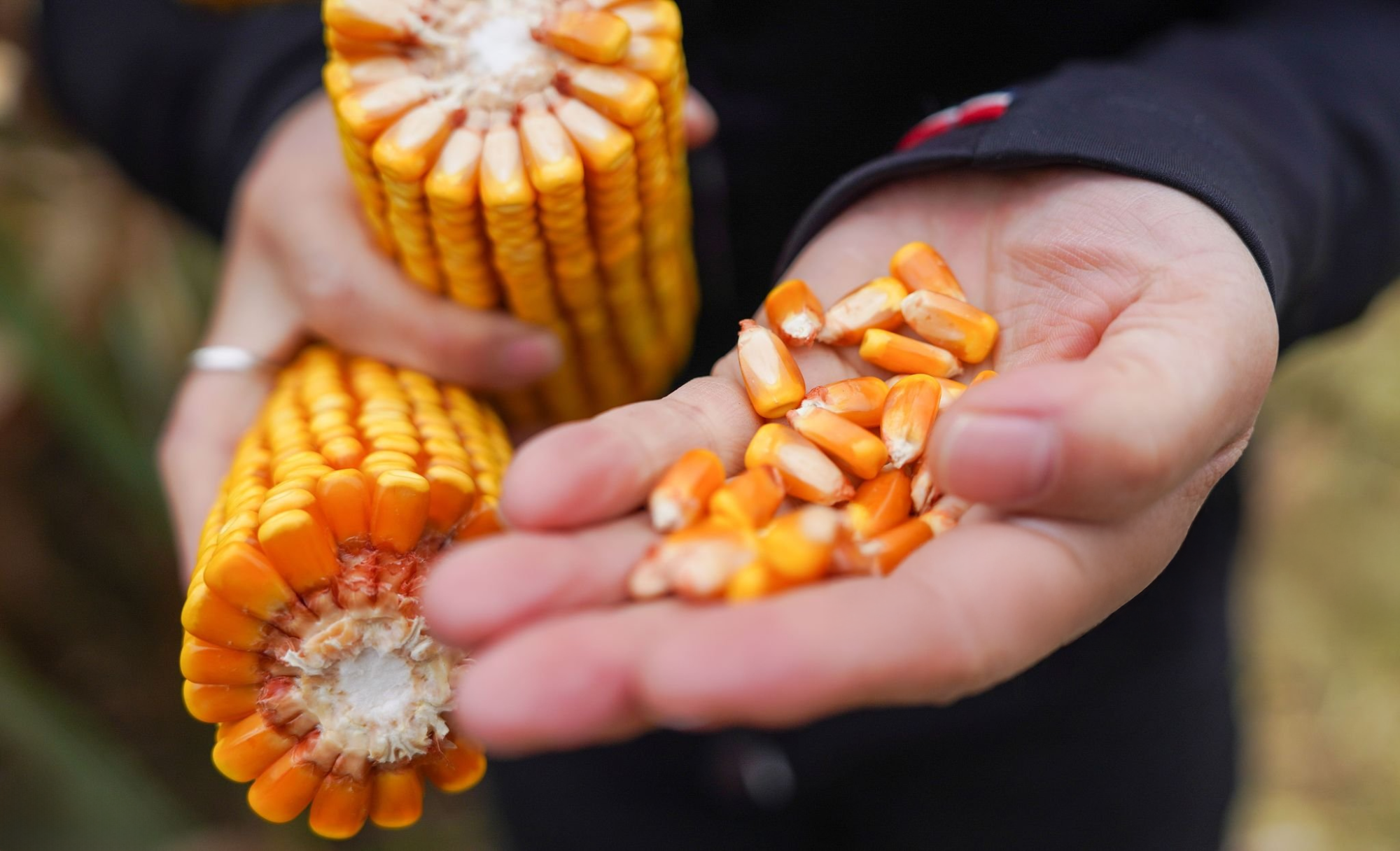
  • Types of Dairy: Use milk, yogurt, and cheese in meals and snacks to meet these needs and introduce different tastes.
  • Why It Matters: Early years are crucial for brain growth. Dairy supplies essential nutrients like zinc and Vitamin A, which boost memory and learning. Zinc is vital for forming brain connections and improving thinking skills.

Following these guidelines ensures that dairy supports brain development and boosts cognitive abilities from an early age.

Exploring Dairy Alternatives: Nourishing the Non-Dairy Way 

If you can’t have dairy, there are good alternatives that try to match the nutrients found in dairy. Plant-based milk, non-dairy yogurt, and cheese are the main options for various dietary needs.  

Plant-based milks, such as soy, almond, rice, oats, and coconut, are popular replacements. Soy milk is known for its high protein content, similar to cow’s milk, and is excellent for keeping muscles strong. These milks are often fortified with calcium and vitamins like B12, essential for bones and nerves. However, not all plant-based milk contains the same nutrients as dairy, primarily amino acids crucial for growth, especially in young children. (Learn more about the nutritional content of plant-based milk in this scientific study on plant-based milk alternatives).

Non-dairy yogurts and cheeses made from soy, almond, or coconut aim to replicate the texture and taste of dairy. These alternatives are often fortified with calcium and vitamin D to mimic dairy’s bone benefits. However, they might not have as much protein, and a lack of iodine is vital for brain development and thyroid function.  (Additionally, explore how these options compare nutritionally with traditional dairy in this comprehensive review on milk alternatives and dairy)

If you don’t consume dairy, eating a variety of foods is crucial to get all the necessary nutrients. Eating fruits, vegetables, nuts, seeds, and legumes can help fill the gaps. You may also need to take supplements like vitamin B12 and iodine, especially if you’re on an entirely plant-based diet. Consult a nutritionist to ensure your diet covers all the essential nutrients usually found in dairy.

Navigating the Dairy Debate: Discovering Nutritional Equivalence in Alternatives

People often talk about which is better, dairy or non-dairy options, when it comes to nutrition. Dairy is known for having essential nutrients like calcium, vitamin D, iodine, and protein. However, non-dairy options are starting to catch up with similar nutritional benefits.  

  • Calcium and Vitamin D: Dairy is an excellent source of calcium, but plant-based milks like soy, almond, and oat are often fortified with the same amount as cow’s milk. For example, calcium-fortified soy milk can contain as much calcium as dairy milk. 
  • Protein Content: Dairy contains high-quality protein essential for growth. Soy milk has about 7 grams of protein per cup, similar to cow’s milk. Some plant milks have less protein, so eating beans, nuts, and grains is essential.
  • Iodine and Choline: Getting iodine from non-dairy foods is challenging unless they’re fortified. Seaweed and iodized salt are other sources. Choline, which is essential during pregnancy, can be eaten in combination with eggs and certain vegetables.

Getting the proper nutrients without dairy requires careful preparation. Fortified non-dairy products and foods like beans, seeds, nuts, and vegetables can help fill the gaps. Both dairy and non-dairy options have benefits, so a balanced diet supports brain health and cognitive development.

Unraveling the Complex Web of Cognitive Development

Dairy is good for brain health, but other things are crucial for brain development. The brain grows through the interaction of many influences. 

  • Genetic Influences: Our genes play a significant role in developing our brains. What we inherit can affect how we learn and solve problems. Some genes can change how we remember, talk, and focus. Even with a good diet, genetics remain essential.
  • Overall Diet Quality: Besides dairy, eating a balanced diet is also key. Eating fruits, vegetables, and whole grains helps dairy work better. Nutrients like folic acid, iron, and omega-3s support brain health. Eating a variety of foods can boost the benefits of dairy.
  • Environmental Factors: Our surroundings also shape brain development. Family income, education, and home life make a difference. Places rich in learning opportunities can improve cognitive skills.

These elements often influence cognitive growth, so it’s essential to consider all these factors when considering brain development.

Beyond Brain Health: Dairy’s Role in Holistic Development 

Dairy helps with more than just brain health; it also aids overall body development. The calcium and vitamin D in dairy is essential for bone health, helping to build strong bones and teeth, which are necessary as kids grow. The high-quality proteins in dairy support muscle development, giving children the strength to be active and enjoy learning through play.  

Zinc and vitamin A in dairy are crucial for a healthy immune system. A strong immune system helps kids fight off infections, so they miss less school and have more chances to learn. All these benefits work together to support the physical and mental growth needed for children to succeed in their learning environment.

The Bottom Line

Dairy is key for brain health and cognitive growth, especially in the first 1,000 days of life. Dairy products contain essential nutrients like protein, iodine, and choline that help the brain grow and work well. These nutrients boost cognitive skills and overall child development. 

Adding dairy to pregnant women’s and young children’s diets has clear benefits. It helps improve memory, learning, language, and focus. Following dairy intake recommendations can fill nutritional gaps and lay the groundwork for cognitive health. 

As more research comes out, it’s clear that dairy supports brain health. Are you ready to make dairy a core part of your nutrition plan to help future generations reach their full potential?

Key Takeaways:

  • Dairy products offer essential nutrients like vitamin B12, iodine, choline, zinc, and protein, which are crucial for brain development.
  • Regular dairy consumption during pregnancy can positively impact children’s fetal brain development and cognitive outcomes.
  • The first 1,000 days, from conception to age two, are critical for brain growth, and dairy nutrients like choline and iodine play significant roles.
  • Experts recommend specific dairy intake guidelines for pregnant women and young children to ensure optimal brain development.
  • Non-dairy alternatives such as soy or almond milk can supply similar nutrients, though they may require careful nutritional balancing.
  • Dairy products support holistic development, including bone health and immune function beyond cognitive growth.
  • Understanding and including dairy nutrients in the diet is pivotal for supporting the cognitive potential of future generations.

Summary:

Dairy products are vital for brain health and development, especially during pregnancy and the first 1,000 days of life, when a baby’s brain grows the most. They are packed with nutrients like iodine, choline, and B12, which support brain function. Studies show that pregnant women who eat dairy have children with better thinking and language skills. While some people choose plant-based alternatives like nut milk or non-dairy yogurt, these might not have as much protein or iodine, which is essential for brain growth. It’s critical to include at least three servings of dairy daily or find other ways to get these nutrients. Eating a balanced diet with fruits, vegetables, and nuts can help fill gaps. Dairy is affordable and easy to find, making it an excellent choice for building innovative, healthy kids.

Learn more:

Join the Revolution!

Bullvine Daily is your essential e-zine for staying ahead in the dairy industry. With over 30,000 subscribers, we bring you the week’s top news, helping you manage tasks efficiently. Stay informed about milk production, tech adoption, and more, so you can concentrate on your dairy operations. 

NewsSubscribe
First
Last
Consent

How to Boost Production by up to 20% through Nutrition and Cow Comfort

Unlock dairy success with expert tips on nutrition and comfort. Boost productivity and profits. Are your cows thriving?

Did you know that improving nutrition and keeping cows comfortable can increase milk production by up to 20%? Every drop of milk counts in today’s fast-paced dairy industry. Nutrition and keeping cows comfortable are critical for increasing productivity and overall profitability on dairy farms. If you get these components correctly, you’ll have healthier cows and higher yields. However, achieving this balance can be challenging. Dairy producers face various issues, including shifting market demands and increased need to be sustainable while managing their finances. So, how can we navigate this complex scenario so that our herds and companies thrive?

As we delve into unlocking the secrets behind dairy profitability, it becomes crucial to highlight the potential returns various investments in nutrition and cow comfort can yield. Understanding these figures empowers farmers and paves the way for informed decision-making in fostering a thriving dairy environment. 

InvestmentTypeROI (%)
High-Quality ForageNutrition20%
Feed Efficiency TechnologiesNutrition30%
Comfort Bedding SystemsCow Comfort15%
Ventilation and Cooling SystemsCow Comfort25%
Automated Feeding SystemsNutrition18%

 The Power of Nutrition: Elevating Dairy Success 

Nutrition is essential in dairy production, affecting milk yields and herd health. Any competent dairy farmer will tell you that a healthy diet is more than simply food; it is the foundation of a profitable dairy operation. So, how can nutrition indeed increase milk production?

  • Balanced Diets and High-Quality Forage: To maximize milk production, it’s crucial to craft balanced diets rich in high-quality forage. This is not just a theory but a practical strategy that can be implemented on your farm. Cows operate at their peak when fed a diet tailored to their nutritional needs. Providing cows with good pasture ensures they receive the necessary nutrition without harmful pollutants, significantly enhancing milk output and maintaining cow health. This is a tangible step you can take to improve your dairy operations. 
  • Importance of Fiber Digestibility: Remember to consider the importance of fiber digestibility! Fiber digestibility refers to the cow’s ability to efficiently break down and utilize the nutrients in their feed. Due to high fiber digestibility, cows can make the most of their feed, which increases output. According to the Journal of Dairy Science, making fodder easier to digest can increase dry matter intake and milk production by 2 to 3 pounds per cow daily. This statistic emphasizes the genuine benefits of paying attention to fiber quality in feed. 
  • Clean, Contaminant-Free Forages: In addition to what you offer your herd, it is essential to keep forages pure. This prevents health concerns from interfering with the milk supply. Mycotoxins, for example, can seriously disrupt cow milk production and potentially impact the herd’s overall health. Regular testing and proper storage of forages, such as alfalfa and clover, can keep things clean and prevent costly health issues in the future.

Dairy farms may increase milk production and keep operations running smoothly by incorporating these ideas into feeding techniques.

Fueling the Future: The Cow Comfort Revolution 

Imagine a world where dairy cows thrive instead of just surviving. The key to this vision is keeping cows comfortable, crucial for boosting dairy production. Why is cow comfort so important? It’s simple: A stress-free cow is a productive cow. When cows are comfortable, they spend more energy producing milk than managing stress. 

Space is vital. Like us, cows need room to relax, move, and behave naturally. Overcrowding leads to stress and competition, which hinders milk production. A well-structured barn that offers ample space encourages a peaceful environment among the herd. Features such as adjustable bedding, improved ventilation, and softer floors can prevent hoof issues, boosting cow health and milk output. Modern farms focus on reducing stress with better cow handling and humane practices. These improvements can lead to a productivity jump of 20%. 

Dairy research shows that cows in top-notch conditions can increase milk production by up to 300% compared to less ideal settings. However, reaching these conditions requires effort, underscoring the importance of cow comfort for profitability. Dairy farmers face many challenges, from shifting productivity needs to sustainability and economic pressures. Prioritizing cow welfare by balancing nutrition, comfort, and sustainability can help farmers succeed in today’s competitive industry.

Smart Investments: The Key to Dairy Profitability and Sustainability

Today, money plays a significant role in dairy farmers’ success. Managing costs is vital for making a profit. Quality forage can make a huge difference. Farmers can save money on buying extra feed by investing in top-notch, clean forage. This cuts costs and leads to healthier cows and more milk. 

But for this to work, you must also invest in cow comfort. Happy cows are productive cows. Therefore, spending on good barn designs, cooling systems, and plenty of space is essential. These factors boost cow health and milk production. 

Dairy farmers are learning to manage the economy’s highs and lows by making smart investments. They must weigh the initial costs of making cows comfortable and improving forage against the potential earnings. Remember, every dollar spent on better cow welfare and feed quality leads to a more profitable and sustainable dairy farm.

Embrace Innovation: Harnessing Technology for Dairy Excellence

Technology is making dairy farming easier and better for the environment. Farmers now use tools to monitor cow health and eating habits closely. By noticing data changes, they can detect health issues before they become serious. That’s what modern tech can do! 

Great software helps create diet plans and feeding methods tailored to your needs. These tools manage info on feed types and costs, giving you the best nutrition without spending too much. This boosts milk production and maintains herd health, increasing profits. 

Tech is growing fast, so staying updated is necessary. Farmers who use new technology have an edge, making better products and lowering their carbon footprint. Embracing new ideas in this changing world helps farmers succeed and meet efficiency and environmental goals.

Bridging the Gap: Aligning Dairy Farming Realities with Public Perceptions 

Many people think dairy farming is just about cows relaxing in fields. But running a productive and eco-friendly farm isn’t so simple. The challenge is to use green farming methods while maintaining high production. Efficient farms can lower emissions per milk produced, but that doesn’t always match what consumers think farms should look like. 

Dairy farmers need to balance being green and running their farms well. Investing in energy-saving tools and better nutrition is essential, but it can be expensive. With tight budgets, farmers might struggle without clear financial help. 

Open about farming practices can help close the gap between people’s thoughts and the truth. Farmers should share how they use new technology and methods to reduce emissions. Hosting farm visits, sharing learning materials, and collaborating with green groups can improve understanding and trust. The dairy industry’s future relies on balancing green practices with making a profit, allowing farmers to meet public expectations and stay successful in the long run.

Empowering Your Workforce: The Backbone of Dairy Productivity

The success of today’s dairy business hinges on a skilled workforce. Is your team equipped with the knowledge to ensure that cows are comfortable and well-fed? Understanding cow behavior and nutrition can significantly boost farm productivity. When employees manage cattle calmly and efficiently, cows are more likely to thrive and produce more milk. 

Nutritional expertise in your team is invaluable. Well-trained staff can precisely follow feeding protocols, producing better milk yield and quality. Regular training in new techniques and technologies prepares your crew to enhance farm outcomes. This ongoing learning is crucial for staying competitive in the dairy industry. 

Continuous development creates a thriving work culture that benefits animals and boosts your profitability. Investing in your team sets a foundation for sustained growth and success in your dairy operations. Are you ready to elevate your farm’s potential?

The Bottom Line

Our discussion highlighted the importance of nutrition and cow comfort in boosting dairy farm productivity. Ensuring high-quality forage, innovative feeding management, and stress-free environments are key to increasing milk yield and achieving economic and environmental sustainability. By using technology and enhancing management practices, dairy farmers can tackle market challenges and meet customer expectations. Consider how you might enhance your farm’s nutrition and cow comfort to ensure long-term success in modern dairy farming.

Key Takeaways:

  • Nutrition and cow comfort are crucial for maximizing dairy productivity, with a focus on both fed diets and managing stress-free environments.
  • Improving forage quality and controlling contamination can reduce external feed costs and increase farm profitability.
  • Innovations in technology and management practices allow for more accurate monitoring and feeding, enhancing cow health and production efficiency.
  • The dairy industry faces a conflict between sustainable practices and economic constraints, with a need for balanced integration.
  • Employee training and understanding cow behavior contribute significantly to operational success and animal welfare.
  • Aligning dairy farming practices with public expectations while maintaining efficiency remains a key challenge.
  • Continued research and development are essential for evolving feeding strategies and achieving optimal dairy outcomes.

Summary:

Unlocking dairy success hinges on nutrition and cow comfort, critical factors for elevating dairy productivity. Dairy producers. They can realize substantial gains in milk production, fat yield, protein content, high-quality forage, and stress-free living conditions. Effective management strategies, innovative technologies, and comprehensive approaches are crucial for sustainable and profitable dairy farming. This involves blending cost-effective feed ingredients, understanding cow comfort for stress reduction, and integrating advanced systems that bridge farm realities with public expectations. Addressing challenges like productivity demands, market pressures, and sustainability requires balancing nutrition, comfort, and economic constraints. Producers can enhance operations by prioritizing high-quality forage, proper storage, and intelligent investments in foraging while minimizing off-farm feed costs. Technology, including real-time monitoring tools, customizes diet plans for dairy excellence. Farmers can further bridge the sustainability gap by being transparent about cutting-edge practices and emphasizing technological and eco-friendly approaches. Empowering the workforce through cow handling and nutrition management training is vital for maintaining productivity and staying updated with industry advancements.

Learn more:

Join the Revolution!

Bullvine Daily is your essential e-zine for staying ahead in the dairy industry. With over 30,000 subscribers, we bring you the week’s top news, helping you manage tasks efficiently. Stay informed about milk production, tech adoption, and more, so you can concentrate on your dairy operations. 

NewsSubscribe
First
Last
Consent

Dairy’s Role in Boosting Early Brain Health: Crucial Nutrients for Pregnant Women

Are you aware that dairy foods rich in iodine and choline can boost your child’s brain health during pregnancy? Please find out how to ensure their cognitive development!

Consider a construction site where a large structure’s foundation is laid. Would you compromise on the quality of materials? Certainly not. Similarly, the first 1,000 days of a child’s life are like laying the foundation for their brain structure. Nutrition during this critical period can be the deciding factor. Calcium, vitamin D, protein, iodine, and choline are vital nutrients for early brain development, and where can you find them in abundance? In dairy products. Dairy products are pivotal in providing these essential nutrients, often overshadowed by their more famous counterparts. Regrettably, many pregnant women do not consume enough of these vital minerals. “Research shows that intake of iodine and choline during pregnancy is positively associated with child cognitive outcomes,” says Megan Maisano, a certified nutritionist from the National Dairy Council. Our mission is clear: to educate and share industry-specific information that highlights the nutritional benefits of dairy and underscores its role in early brain development.

Fortifying the Brain’s Blueprint: The First 1,000 Days 

The ‘first 1,000 days’ of a child’s life, from conception to their second birthday, is incredible cerebral development. Did you know a baby has around 10,000 brain cells alone in the first month of pregnancy? Surprisingly, that figure rises to 10 billion brain cells by the sixth month. That’s an incredible amount of development in only a few months! This underscores the urgency and importance of ensuring proper nutrition during this critical period.

This is why a good diet throughout pregnancy is essential. Proper nutrition throughout these early stages may influence a child’s cognitive development. A balanced, nutrient-dense diet is critical for optimal brain development. Iodine and choline stand out as key components. Unfortunately, studies suggest that the great majority of women, even those who are pregnant, do not consume appropriate levels of these critical nutrients. It is worrisome since these impairments may hurt their children’s cognitive development. As a result, at this critical time, it is critical to monitor nutrient intake.

Dairy: The Nutritional Powerhouse for Early Brain Development 

Dairy foods are a nutritional powerhouse, providing many vital nutrients, including seven crucial for early brain development. First, consider the more basic nutrients: calcium, vitamin D, and protein. Calcium is necessary for strong bones and teeth and is vital to neuromuscular function. A deficit in this area may impair neuronal transmission, which is critical for the brain’s development.

Vitamin D, on the other hand, is the brain’s unsung hero. It promotes neuron development and decreases inflammation [source]. Adequate amounts of this vitamin during pregnancy may help prevent neurodevelopmental problems. Meanwhile, protein is a building block for brain cells. It contains the amino acids required to make neurotransmitters, allowing brain cells to interact.

Now, let’s speak about iodine and choline, two nutrients that seldom make headlines yet are equally essential. Iodine is required to synthesize thyroid hormones, which govern brain development and function. Deficiencies might cause cognitive problems and developmental delays [Journal of Nutrition]. Alarmingly, iodine consumption has decreased over the previous decade, putting many people in danger, particularly pregnant women.

While eggs and meat have more choline, dairy also contains choline, which is essential for brain development. It is a precursor of acetylcholine, a neurotransmitter involved in memory and muscular function [American Academy of Pediatrics]. Adequate choline consumption during pregnancy has been shown to improve cognitive function in children. However, 92% of pregnant women do not meet their daily choline requirements.

Given these results, it is crucial to understand the significance of these lesser-known nutrients in prenatal nutrition. Underconsumption of these nutrients may have long-term consequences. Thus, health practitioners must prescribe a diet high in varied, nutrient-dense foods, including dairy.

Iodine: The Unsung Hero of Early Brain Development 

Iodine is essential in the early stages of brain development. This vital mineral is needed to produce thyroid hormones, which are required for brain development, particularly during the critical period known as the “first 1,000 days” from conception to a child’s second birthday. Adequate iodine consumption promotes regular neural connection creation, directly affecting cognitive processes and neurological development.

Unfortunately, recent figures on iodine intake show a troubling trend. Studies, notably those published in the Journal of Nutrition, show that iodine consumption has dropped dramatically. Between 2011 and 2020, iodine intake in the United States decreased significantly, with many people not meeting the daily required levels. Only around 40% of pregnant women follow these instructions, which might have severe consequences for their unborn children, including cognitive problems and developmental delays.

Pregnancy increases the body’s iodine needs by up to 50%, highlighting the significance of adequate consumption. This rise promotes maternal thyroid hormone synthesis, hence promoting embryonic neurodevelopment. This is where dairy comes in as a nutritious powerhouse. An 8-ounce glass of milk contains approximately 60% of the daily iodine requirement, making dairy a convenient and effective solution to fill this nutritional gap. Pregnant women who include dairy in their diets may significantly increase their iodine intake, promoting healthy brain development in their kids.

Choline: The Cognitive Catalyst We Can’t Ignore 

Choline is a crucial nutrient for cognitive development, particularly during the prenatal period. It helps in the formation of cell membranes and neurotransmitters that are essential for brain function and development. Research, including a study by the American Academy of Pediatrics, has shown that adequate choline consumption during pregnancy is associated with improved cognitive outcomes in offspring. However, the average American diet often lacks sufficient choline, making it essential to increase awareness and promote dietary changes to protect the cognitive health of future generations.

The current study demonstrates a significant shortfall in choline intake throughout the United States. Only 10% of Americans consume the recommended daily dose. The situation is even more problematic for pregnant women, with just 8% ingesting enough amounts of choline. This disparity emphasizes the need for improved awareness and dietary changes to protect future generations’ cognitive health.

While eggs and beef are more decadent sources of choline, dairy remains an important source. An 8-ounce glass of milk provides around 8% of the daily choline need; for pregnant women looking to satisfy their increased nutritional demands, integrating dairy into their diet may be a simple but successful option. As health practitioners, you can advocate for and promote dairy’s important role in fostering early brain development. Your support can significantly influence pregnant women’s dietary choices and contribute to future generations’ cognitive health.

Dairy: The Accessible and Affordable Nutrient Treasure Trove

Seafood is often mentioned as a source of iodine. A three-ounce portion of cod contains around 99 micrograms of iodine, which is outstanding. However, not everyone has consistent access to fresh fish, particularly in landlocked regions. On the other hand, dairy provides approximately 60% of the required daily dose of iodine in just one 8-ounce glass of milk, making it a more accessible and cost-effective alternative.

Although eggs are a powerhouse of choline, with around 147 mg per big egg, not everyone eats them regularly. Dairy is also essential here, providing 8% of the daily choline requirement in a single meal. This makes it an excellent option for a diversified diet.

According to recent research, including dairy in regular meals allows us to take advantage of these underappreciated nutrients that would otherwise be deficient, particularly for expecting moms and young women [Journal of Nutrition, 2021]. Dairy’s regularity and broad availability make it a practical and essential component in achieving daily iodine and choline requirements.

Expert Insights: Boosting Brain Health with Dairy 

Dairy products play an essential role in early brain development. Megan Maisano, a registered dietician with the National Dairy Council, underlines the significance of sometimes missed nutrients such as iodine and choline. “Many of us don’t hear about iodine or choline too often, but they both play an important role in early brain development,” says Maisano. “Research shows that intake of iodine and choline during pregnancy is positively associated with child cognitive outcomes.”

The American Academy of Pediatrics has said seven of the 14 critical elements for brain development are plentiful in dairy products. This viewpoint, supported by multiple research studies, emphasizes dairy’s nutritional powerhouse, which is essential for brain development. One such research by the Journal of Nutrition [Journal of Nutrition, 2021] indicated worrying trends: Approximately 10% of Americans, and only 8% of pregnant women, get the required daily choline dose, while iodine consumption has drastically decreased between 2011 and 2020.

Maisano elaborates on these findings: “This is troubling because iodine recommendations increase by 50% during pregnancy.” This setting emphasizes the significance of dairy intake during pregnancy and advocates for more awareness and action.

Include a short overview of the problems and solutions for improving pregnant women’s dairy intake. This might include practical ideas for adding more dairy into your everyday diet or tackling typical issues like lactose intolerance.

Overcoming Barriers: Enhancing Dairy Intake for Expectant Mothers 

Despite the apparent advantages of dairy for early brain development, many pregnant women experience difficulties increasing their dairy consumption. Lactose intolerance is a widespread problem that might limit the intake of conventional dairy products. Fortunately, lactose-free alternatives, such as lactose-free milk and yogurt, include the same vital elements.

Another problem is including dairy in regular diets. To solve this, try adding cheese to salads, integrating yogurt into smoothies, or using milk as a foundation for soups and sauces. Breakfast may be an excellent time to increase dairy consumption—consider a bowl of fortified cereal with milk or a dish of cottage cheese with fresh fruit.

Educating pregnant mothers about the necessity of these nutrients may also help. Healthcare practitioners and dietitians may play an essential role by providing individualized guidance and meal-planning services. Dairy farmers and industry advocates promote the availability and advantages of dairy via community outreach and social media campaigns.

By addressing these issues with realistic solutions, we can guarantee that more expectant moms acquire the essential nutrition for their child’s cognitive development.

Practical Recommendations: Incorporating Dairy for Optimal Brain Health 

Are you struggling to incorporate more dairy into your diet? You’re not alone. Here are some tried-and-true tips: 

  • Start Your Day with Dairy
    Swap your regular cup of coffee for a nutritious latte made with whole milk. If you’re not a coffee drinker, a smoothie with Greek yogurt, a banana, and a handful of spinach can give you an excellent nutrient start.
  • Snacks That Matter
    Replace your mid-morning snack with a cup of cottage cheese or a serving of hard cheese, such as cheddar. These are not only filling but also nutrient-dense. 
  • Lunch Upgrade
    You can add a slice of Swiss cheese to your sandwich or choose a yogurt-based dressing for your salad. One slice of Swiss cheese contains about 163 mg of calcium and is a good source of protein.
  • Dinner Done Right
    You can incorporate dairy into your dinner by adding grated Parmesan to your pasta or making a creamy soup with milk as the base. 
  • Before Bed Boost
    A warm glass of milk before bed can help you sleep better and contribute to your daily calcium and iodine intake. 

Specific Products and Serving Sizes 

  • Milk: One 8-ounce glass meets nearly 60% of the recommended daily iodine intake.
  • Greek Yogurt: One cup can provide up to 15% of your daily choline needs and is a rich source of protein.
  • Cottage Cheese: Half a cup offers a healthy calcium dose of protein.
  • Hard Cheeses, Such as cheddar or Swiss, are excellent for snacking and can be easily added to meals.

Addressing Concerns and Misconceptions 

  • Lactose Intolerance: Some may worry about lactose intolerance. Good news! Many dairy products, like aged cheeses and lactose-free milk, can be suitable alternatives.
  • Weight Gain: Fears of weight gain often deter pregnant women from consuming dairy. However, monitored consumption of nutrient-dense dairy foods supports maternal and fetal health without contributing undue calories. 
  • Hormones in Dairy: Concerns about hormones also arise. Rest assured, U.S. regulations ensure the safety and minimal hormone levels in dairy products, keeping your health a priority. 

In conclusion, dairy can be a powerful ally in ensuring that the mother and child receive essential nutrients for optimal brain health. Don’t overlook this accessible, nutrient-packed food group when planning your meals.

The Bottom Line

Dairy products are an excellent source of critical nutrients like iodine and choline, both essential for early brain development. The first 1,000 days from conception to age two are crucial for cognitive development, and maintaining proper food intake may substantially influence a child’s cognitive results. Despite their significance, a sizable proportion of the population, particularly pregnant women, fails to reach the required daily iodine and choline levels.

So, how does this impact your food choices? Are you ensuring that you or others in your care receive enough of these essential nutrients during this critical developmental period? These decisions have far-reaching consequences, not just for individual brain health but also for the next generation’s cognitive prospects. It may be time to reconsider how dairy fits into our daily meals and its overall function in developing our children’s potential.

Key Takeaways:

  • Dairy foods contain seven of the 14 essential nutrients for a child’s early brain development.
  • Iodine and choline are vital yet often overlooked nutrients found in dairy, impacting cognitive outcomes during pregnancy.
  • A child’s brain grows most rapidly during the first 1,000 days, emphasizing the need for proper nutrition during pregnancy.
  • One 8-ounce glass of milk offers nearly 60% of the recommended daily iodine intake and 8% of daily choline needs.
  • Only 10% of Americans and 8% of pregnant women meet the daily requirement for choline.
  • Iodine intake among U.S. girls and women has declined between 2011 and 2020 despite increased requirements during pregnancy.
  • Dairy intake during pregnancy is critical for supporting children’s optimal brain growth and cognitive development.

Summary:

Have you ever wondered about the hidden powerhouses in your morning glass of milk? Dairy foods, often celebrated for their calcium and protein content, also pack a surprising punch with essential nutrients like iodine and choline, which are crucial for early brain development. Recent findings by the American Academy of Pediatrics reveal that seven out of the 14 critical nutrients for a child’s cognitive growth are found in dairy products. Astonishingly, many pregnant women and young mothers in the U.S. are not consuming enough of these vital nutrients. The first 1,000 days of a child’s life are critical for their brain structure, and nutrition during this period can profoundly impact cognitive outcomes. Calcium is necessary for strong bones and teeth, vitamin D promotes neuron development, and protein is a building component for brain cells. Iodine, needed for synthesizing thyroid hormones that govern brain development and function, has seen a decline in consumption over the past decade, putting many at risk, especially pregnant women. Adequate choline intake during pregnancy significantly improves cognitive function in children. Dairy’s regularity and broad availability make it a practical and essential component in achieving daily iodine and choline requirements.

Learn more: 

Join the Revolution!

Bullvine Daily is your essential e-zine for staying ahead in the dairy industry. With over 30,000 subscribers, we bring you the week’s top news, helping you manage tasks efficiently. Stay informed about milk production, tech adoption, and more, so you can concentrate on your dairy operations. 

NewsSubscribe
First
Last
Consent

The Benefits of Switching from Corn to Triticale Silage

Can triticale silage revolutionize your dairy farm? See if it can replace corn silage while keeping the nutrition and enhancing performance. Learn more now.

Summary: The research spotlights triticale silage (TS) as a solid alternative to corn silage (CS), especially for farms facing water and soil challenges. Controlled studies tested the impact of substituting CS with TS in cow diets. Results? Key fermentation parameters stayed intact, while fiber digestibility improved with higher TS levels. This means TS can maintain nutritional value and offer economic and environmental benefits. For dairy farmers, transitioning to TS could mean better resource management and cost savings. 

  • Despite initial challenges, triticale silage offers enhanced digestibility and resilience under harsh conditions.
  • Deep-rooted triticale aids in soil health and erosion prevention.
  • The study used an artificial rumination system with 16 fermenters to evaluate triticale silage performance.
  • Key metrics like pH, methane production, and dry matter digestibility showed consistent results across treatments.
  • An increase in Neutral Detergent Fiber (NDF) digestibility was observed, indicating potential for improved feed intake and cow performance.
triticale silage, corn silage alternative, dairy farm efficiency, dairy nutrition, agricultural sustainability, dairy farm trends, corn silage replacement, triticale benefits, dairy farming innovations, sustainable dairy farming, silage crops, hybrid wheat rye, soil erosion prevention, limited irrigation farming, dairy cow diet, triticale research, dairy feed alternative

Did you know that corn silage, a mainstay on many dairy farms, needs extensive irrigation and high-quality soil to thrive? This reliance may be a severe disadvantage, particularly when limited water and land quality are degraded. So, what can be done when the expense of keeping corn silage becomes too high to bear? Enter triticale silage, a wheat and rye hybrid changing the game in dairy farming. With its increased stress tolerance, Triticale can thrive in less-than-ideal circumstances, giving it an excellent alternative to corn silage. Consider a crop that prevents soil erosion and thrives with less watering. Interesting, right? Triticale silage has a promising trend in NDF digestibility, which stimulates increased intake and possibly improved performance levels among dairy cows. In this post, we’ll go into the specifics of research that looked at triticale silage as a potential alternative to corn silage in dairy cow diets. You will learn how this switch may affect fermentation parameters, methane generation, and overall cow performance. Continue reading to learn whether triticale silage is the sustainable answer your farm has been looking for.

Is Corn Silage Costing You More Than You Think? 

Corn silage has long been a dairy farming mainstay, known for its high-calorie content and digestibility. However, its dependence on extensive irrigation and high-quality soil has become a severe disadvantage. The rising shortage of water resources makes it increasingly difficult to maintain the appropriate irrigation levels for corn silage production. According to the United States Geological Survey, agricultural irrigation accounts for around 37% of the country’s freshwater usage, which is neither sustainable nor ecologically benign. High demand strains local water resources and raises farmers’ operating expenses, making corn silage less cost-effective.

Aside from the water problem, the need for high-quality soil complicates matters further. Corn silage grows best on nutrient-rich, well-drained soil, which is not always accessible. Soil deterioration may occur over time on the same land area utilized for corn silage production. This depletes the soil’s critical nutrients and weakens its structure, resulting in lower fertility. Crop output suffers when soil health deteriorates, resulting in a difficult-to-break negative feedback cycle.

Adequate water and high-quality soil require significant economic and environmental difficulties. These characteristics demonstrate that corn silage has advantages. Still, its long-term viability is becoming more uncertain in today’s agricultural scenario. As we become more concerned about water shortages and soil health, finding alternate alternatives to alleviate these burdens becomes more critical.

Meet Triticale: The Resilient Hybrid Changing the Game 

So, what exactly is Triticale? Triticale is a hybrid crop created by crossbreeding wheat and rye. This unusual combo combines the most significant characteristics of both plants. You receive excellent grain production, quality, rye’s toughness, and stress tolerance. Consider the tenacity of a crop that can survive when water is scarce—pretty amazing, right? Triticale is particularly well-suited to places with inadequate irrigation.

But wait! There’s more. Triticale is beneficial to soil health and withstands challenging circumstances. Due to its robust root system, this crop resists soil erosion. Furthermore, it gradually improves soil structure and fertility. Moving to Triticale may provide several advantages to your agricultural company.

The Science Behind Triticale: Can It Replace Corn Silage?

A study looked to determine the feasibility of triticale silage (TS) as an alternative to regular corn silage (CS) in nursing cow diets (Use of triticale silage as an alternative to corn silage in dairy cow diets). The idea proposed that TS completely replace CS while retaining similar dietary energy and starch levels. To investigate this, they used an artificial rumination system with 16 fermenters, each allocated one of four diets containing different amounts of TS as a substitute for CS (ranging from 0% to 100%). Rumen fluid was collected from culled cows, and the complete system was painstakingly maintained to mimic natural rumination conditions.

The essential parameters evaluated were pH, volatile fatty acids, dry matter disappearance, digestibility, gas generation, and methane synthesis. Across all measures, the study revealed no significant effects on pH, methane, dry matter digestibility, protein, or starch levels. Furthermore, volatile fatty acids such as acetate, propionate, and butyrate exhibited no significant alterations. However, there was a considerable upward trend in Neutral Detergent Fiber (NDF) digestibility, highlighting the potential of TS to improve feed intake and, thereby, dairy cow performance. These data support the use of TS as a substitute for CS in dairy diets.

Triticale Silage: Unlocking New Potential for Dairy Efficiency 

This in-depth investigation yielded some interesting results. The research found that triticale silage (TS) instead of corn silage (CS) had no significant influence on pH, methane, dry matter, protein, or starch digestibility. These findings are crucial because they indicate that TS may be incorporated into the diet without affecting these essential factors.

However, the most notable discovery was the considerable improvement in NDF digestibility. As TS levels rose, so did NDF digestibility, as shown by a significant positive linear trend (P < 0.044). The increase in NDF digestibility is critical for dairy producers. Increased NDF digestibility supports increased intake and may contribute to improved overall performance in dairy cows. This potential for improved performance can make dairy farmers feel hopeful and excited about the possibilities with triticale silage.

Imagine the Possibilities

Consider maintaining or expanding your dairy herd’s productivity while reducing costs and conserving resources. Triticale silage (TS) promises to be a viable substitute for corn silage. The latest findings are not only scientifically intriguing but also have practical ramifications that might alter your dairy farming strategy.

First, evaluate the economic implications. Corn silage requires substantial irrigation and high-quality soil, which are increasingly scarce resources. Switching to TS, which thrives in less-than-ideal conditions, is a cost-effective solution. Less water and poorer-quality soil reduce input costs, enabling you to retain more profits. Examining market dynamics is essential; TS becomes more financially feasible when CS costs grow due to resource constraints. Dairy producers may be encouraged and motivated by the prospect of increased income.

From an environmental aspect, TS’s tolerance for drought and poor soil conditions makes it a more sustainable choice. TS enhances soil health and water conservation by reducing soil erosion and the need for frequent watering, which is crucial in places with limited water resources. Adopting TS aligns with sustainable agriculture processes, making your company eco-friendly and appealing to environmentally conscious consumers. Emphasizing the environmental advantages of triticale silage might inspire agricultural experts to take responsibility for sustainable farming practices.

Crunching the Numbers: The Financial Upside of Triticale Over Corn 

Let’s examine the financial impact of switching from corn silage (CS) to triticale silage (TS). Various aspects come into play when determining cost-effectiveness, most notably the savings on water and soil management that TS provides.

Water Usage and Costs 

One of the most notable benefits of TS is the lower water need. Corn silage requires extensive irrigation, which, depending on your area, may significantly raise operating expenses. TS is significantly more drought-resistant, flourishing in locations with low water supplies. Switching to TS may dramatically cut your water cost. For example, if you spend $50 per acre on irrigation for CS, TS might save you up to 50% since it requires less water.

Soil Management and Fertility 

Maintaining high-quality soil is another pricey aspect of CS. Corn silage needs healthy soil, frequently necessitating costly fertilizers to sustain output. Triticale, on the other hand, is a vital crop that improves soil structure and reduces erosion. This might result in lower soil amendment costs and less frequent fertilization in the long term. If you’re paying $40 per acre on soil improvements for CS, switching to TS might save your expenditures by 30%, owing to its inherent soil-boosting qualities.

Yield and Production Costs 

While the yield per acre varies little between CS and TS, it is worth noting that TS may be grown with reduced input costs. Triticale seed prices may be more excellent at first, but savings on irrigation and fertilizers may more than compensate. Furthermore, the research reveals that TS has the same nutritional energy and starch levels as CS; hence, milk production is unaltered.

Overall Financial Impact 

Given the lower water consumption, soil maintenance expenses, and consistent output indicators, TS strongly argues for cost reductions. For example, if you farm 100 acres, you may save around $2,500 per year on water alone. The soil management savings might result in a total yearly savings of around $3,700. These figures imply a considerable decrease in operating expenses, which improves overall profitability.

So, what comes next? Could these financial advantages make Triticale silage a realistic option for your dairy farm?

How to Transition from Corn to Triticale Silage

So you’ve decided to try triticale silage (TS). Excellent pick! But how can you convert corn silage (CS) to TS? Let’s break it down into simple steps.

Planting Triticale: Begin by selecting the appropriate triticale variety for your location. Triticale thrives in places with low irrigation, but you should still check your local extension agent for the best soil and environment varieties. Triticale is a winter crop; hence, it is often planted in the autumn.

Harvesting Tips: Timing is critical here. Triticale, unlike maize, does not provide a visible indication, such as browning kernels. Instead, strive to harvest when the Triticale reaches the milk to the early dough stage. This will result in optimal nutritional content and digestion. You may need to tweak your harvesting equipment somewhat to accommodate the various crop structures. Still, your current apparatus should work for the most part.

Storage Considerations: The fundamentals of storing triticale silage are similar to corn silage. Ensure your silage is well packed to remove as much air as possible, then cover it to avoid rotting. Due to its bulkiness, Triticale may need more storage space than corn silage.

Equipment Adjustments: Fortunately, switching to Triticale does not require thoroughly reworking your system. However, you may need to modify your forage harvester settings to account for Triticale’s differing physical properties. Ensure your equipment is adjusted to cut the fodder to the proper length for maximum fermentation and cow feeding.

By following these simple steps, you can quickly shift to utilizing triticale silage and begin receiving the advantages of this hardy crop.

Frequently Asked Questions About Switching to Triticale Silage 

Why should I consider switching from corn silage to triticale silage? 

Triticale silage uses less water and thrives on lower-quality soil than corn silage. With growing worries about water shortages and soil degradation, Triticale may be more sustainable and cost-effective.

Will the nutritional value of triticale silage affect the milk production of my cows? 

Nutritional studies have demonstrated that triticale silage may sustain equivalent dietary energy and starch levels to corn silage. Many investigations have shown no substantial reduction in milk output when utilizing triticale silage, making it a viable option [Source]

How do I transition my herd from corn to triticale silage? 

A cautious introduction is essential. Begin by blending triticale silage with your current corn silage. Gradually increase the quantity over a few weeks to enable your cows to adjust to the new diet.

What are the economic benefits of switching to triticale silage? 

Triticale often has cheaper production costs than maize owing to decreased watering requirements. It may also increase soil health over time, boosting the long-term profitability of your dairy farm.

Are there any specific storage considerations for triticale silage? 

Triticale silage may be kept the same way as corn silage. Still, correct ensiling procedures are required to retain its nutritional value. Monitor the moisture content and employ proper silo management practices.

How does Triticale silage impact soil health in comparison to corn silage? 

Triticale is proven to reduce soil erosion, and it needs fewer nutrients from the soil. Over time, areas planted with Triticale may increase soil structure and fertility, adding value to their usage.

Is triticale silage susceptible to the same pests and diseases as corn silage? 

Triticale’s hybrid origin makes it more resistant to some pests and illnesses. This may reduce pesticide usage and production costs.

The Bottom Line

Emerging research supports triticale silage as a viable alternative to conventional corn silage for dairy producers. Its resistance to water shortages, poor soil conditions, and similar nutritional integrity make it a strong candidate for feed options. We investigated the data and discovered no adverse effects on fundamental fermentation parameters while seeing a significant increase in NDF digestibility. This data suggests that Triticale competes with corn silage and may promote improved dairy performance owing to increased intake efficiency.

These findings should prompt dairy producers to reconsider their dependence on corn silage. Given the economic and environmental challenges associated with CS, isn’t it time to transition to something more sustainable that doesn’t jeopardize your herd’s health and productivity?

How will you include triticale silage in your feeding strategy? Consider researching this further, assessing the advantages, and even boldly moving toward a more sustainable dairy enterprise.

Learn more: 

Discovering the Hidden Benefits of 25-Hydroxy D3 Supplements for Dairy Cow Health

Learn about the benefits of 25-Hydroxy D3 supplements for dairy cows. How can this improved form of vitamin D boost cow health, strengthen immunity, and improve overall performance?

Do you think vitamin D is just about sun exposure and bone health? Think again. New research suggests that 25-hydroxy D3 supplementation may significantly improve the health of dairy cows. This finding, similar to the discovery of vitamin D in the 1920s, has the potential to improve dairy cow health and output dramatically. It is critical for keeping calcium levels stable in all animals, especially dairy cows. Cows with low calcium levels may have milk fever, which may cause muscular difficulties.

But vitamin D’s effects extend beyond the bones. It helps prevent cancer and, more significantly, strengthens the immune system. Enter 25-hydroxy D3, a more straightforward vitamin D for cows to absorb, improving overall health. This new supplement enhances calcium recovery and serves as a shield, reinforcing dairy cows’ immune systems. This improvement in dairy farming promises a healthier herd.

So why should you care? Healthy cows provide better milk, resulting in safer and higher-quality dairy products. Embracing the advantages of 25-hydroxy D3 may help the dairy business and encourage sustainability.

Unveiling the Power of Vitamin D: A Century of Calcium Mastery and Dairy Health. The potential of 25-hydroxy D3 supplements to transform dairy herd management is a testament to the continuous evolution of dairy farming practices.

The potential of 25-hydroxy D3 supplements to improve dairy herd management demonstrates the ongoing development of dairy farming operations. Vitamin D was discovered in the early 1920s while researchers studied rickets, a calcium shortage condition. They noticed that sunshine exposure may prevent rickets, which led to the discovery of vitamin D’s critical function in calcium homeostasis. Maintaining adequate calcium levels is crucial for dairy cows’ health and output. Vitamin D promotes calcium absorption from the stomach. Nonetheless, without enough of it, cows risk experiencing milk fever, which inhibits muscular function owing to low blood calcium levels.

The Critical Role of Vitamin D in Dairy Cow Calcium Homeostasis 

Vitamin D is essential for maintaining calcium levels and performing normal physiological processes. It helps dairy cows absorb calcium from their food. Cows cannot absorb calcium properly if they do not have enough vitamin D, which causes shortages.

A significant issue is milk fever, caused by low blood calcium levels at calving time. This occurs when the cow requires more calcium for milk production but cannot move enough, resulting in muscular weakness and limited mobility. In extreme circumstances, it may be lethal.

Vitamin D prevents milk fever by controlling calcium levels, increasing calcium absorption from the stomach, and mobilizing calcium from bones. However, although vital, vitamin D alone is insufficient to prevent milk fever. Maintaining stable calcium levels requires a complete strategy, including dietary modifications and mineral supplementation.

The Limitations of Vitamin D3 Conversion in Dairy Cows: What You Need to Know

Though this mechanism is limited, dairy cows may convert vitamin D3 from sunshine or supplementation to 25-hydroxy D3. This conversion occurs in the liver, where enzymes convert vitamin D3 to 25-hydroxy D3, the precursor of active vitamin D. This form circulates in the circulation and promotes calcium metabolism. However, the liver can only synthesize a certain amount of 25-hydroxy D3 at a time. Once this limit is reached, excess vitamin D3 is not metabolized correctly, resulting in lower-than-optimal amounts of 25-hydroxy D3 in the blood. This constraint is critical during the prenatal and postnatal periods when dairy cows need appropriate calcium management. This knowledge of the conversion process emphasizes the need for 25-hydroxy D3 supplementation in preserving cow health.

The Journey to 25-Hydroxy D3 Supplements in Dairy Cows: Bridging Nutritional Gaps 

Introducing 25-hydroxy D3 supplements significantly advances animal nutrition, particularly for ruminants. These supplements have been utilized in poultry for over 30 years, although their usage in dairy cows is relatively recent. Europe has just recently legalized their usage. However, several nations have been using them for the previous five to ten years. So, why is there a wait for dairy cows?

Two major elements led to this. First, there needs to be more urgency. Poultry have a harder time absorbing vitamin D3; thus, 25-hydroxy D3 tablets are especially effective. Second, it was considered that ruminants could metabolize enough vitamin D3 to 25-hydroxy D3, making supplementation unnecessary.

However, a new study has indicated that ruminants cannot convert vitamin D3. This finding has increased interest in 25-hydroxy D3 supplementation for dairy cows, which may enhance calcium metabolism and general health. These supplements are helpful when cows’ vitamin D3 conversion is insufficient, such as in the prepartum period.

This comparison of poultry and dairy cows demonstrates their different dietary requirements and reactions. These supplements have been approved, allowing dairy producers to have healthier herds.

Vitamin D3 vs. 25-Hydroxy D3: The Biochemical Edge for Animal Health 

Understanding the difference between vitamin D3 and 25-hydroxy D3 is essential for animal health. Vitamin D3, or cholecalciferol, is created in the skin when exposed to sunshine, but it must be converted before it becomes physiologically active. This process begins in the liver, where vitamin D3 is converted into 25-hydroxy D3 (calcidiol) by attaching a hydroxyl group (-OH) to the 25th carbon of the vitamin D3 molecule. This change considerably increases the action of the vitamin, making it more beneficial to the cow’s health.

The procedure includes attaching a hydroxyl group (-OH) to the 25th carbon of the vitamin D3 molecule, dramatically increasing its activity. Supplementing dairy cows directly with 25-hydroxy D3 avoids the liver stage, making the vitamin instantly accessible.

This direct supplementation assists animals that cannot convert enough vitamin D3 to 25-hydroxy D3, resulting in efficient and quick absorption in the circulation and improved health results.

Maximizing Efficiency: Why 25-Hydroxy D3 Outshines Vitamin D3 in Dairy Nutrition

Regarding efficiency, 25-hydroxy D3 is better absorbed by the body than vitamin D3. Its enhanced form avoids the liver’s conversion step, making it easily accessible for metabolic functions in dairy cows.

Studies have shown that lesser dosages of 25-hydroxy D3 reach blood levels comparable to greater doses of vitamin D3. Experiments with Holstein dairy calves revealed that half the dose of 25-hydroxy D3 produced identical blood concentrations as vitamin D3. This implies improved absorption and cost-effectiveness.

Dairy cows fed with 25-hydroxy D3 may maintain good health at lower doses. In the United States, rules allow up to three milligrams during the prepartum period, but Europe allows just one milligram. Higher blood 25-hydroxy D levels improve various physiological activities, including the immune system, demonstrating the greater effectiveness of 25-hydroxy D3 supplementation.

Beyond Calcium: Unleashing the Immune-Boosting Power of 25-Hydroxy D3 in Dairy Cows

While the link between vitamin D and calcium is widely understood, the advantages of 25-hydroxy D3 extend considerably further. This metabolite is essential in the immune system because it aids in producing antimicrobial peptides and regulating inflammation, both of which are necessary for general health. Furthermore, 25-hydroxy D3 promotes quicker calcium repair in dairy cows. While it does not prevent milk fever, it may speed up the recovery of calcium levels in cows experiencing hypocalcemia, which is crucial for muscular function and general vitality. 25-hydroxy D3’s anti-inflammatory effects help dairy cows recuperate from stress and increase milk production. This makes 25-hydroxy D3 an essential supplement to dairy nutrition since it promotes bone health, a robust immune system, and quick recovery.

Pioneering Research on Maternal and Fetal Vitamin D: Unlocking Lifelong Health for Dairy Herds

Researchers are studying how maternal and fetal vitamin D metabolism, namely vitamin D3 and 25-hydroxy D3, impact fetal growth and development. They are investigating the effects on skeletal and immune system development. Studies look at how these supplements affect the fetus’s development and immunological resilience, paving the way for better health outcomes throughout the animal’s lifetime. Scientists want to understand better how these approaches improve dairy cows’ overall performance and production by monitoring their impacts throughout gestation and early life. This study suggests that early nutritional adjustments may improve the health and efficiency of dairy cows over time.

The Bottom Line

The finding of 25-hydroxy D3 supplements represents a significant advancement in dairy cow health management. These supplements are a more effective and robust alternative to typical vitamin D3, addressing conversion difficulties in dairy cows.

We’ve seen how vitamin D affects calcium control and the distinct advantages of 25-hydroxy D3. These supplements improve calcium recovery after childbirth, strengthen the immune system, and minimize inflammation. 25-hydroxy D3 may improve health outcomes at lower doses than vitamin D3.

The significance of integrating 25-hydroxy D3 into dairy nutrition is evident. Research on maternal and fetal health highlights potential advantages for dairy herd management throughout the lifetime. Embracing 25-hydroxy D3 improves dairy nutrition and promotes healthier, more productive cows.

Investing in this study and using these findings may result in larger, healthier dairy herds. Now is the moment to connect our operations with the most recent scientific advances to ensure the health of our herds.

Key Takeaways:

  • Supplementing dairy cows with 25-hydroxy D3 is beneficial for their overall health and calcium regulation.
  • Vitamin D, essential for calcium homeostasis, has been known and studied for nearly 100 years.
  • While ruminants can convert Vitamin D3 to 25-hydroxy D3, there is a limit to this conversion process.
  • 25-hydroxy D3 supplements are more effective and require lower dosages compared to Vitamin D3 for the same health benefits.
  • Recent approvals have enabled the use of 25-hydroxy D3 in dairy cows, following its long-standing use in poultry.
  • Beyond calcium regulation, 25-hydroxy D3 also enhances immune function by controlling inflammation.
  • Ongoing research is focused on the impact of Vitamin D on maternal and fetal health, as well as lifelong bovine performance.

Summary:

Vitamin D, discovered in the 1920s, is crucial for dairy cows’ health and productivity. 25-hydroxy D3 supplements can improve dairy cow health and output by enhancing calcium recovery and strengthening the cows’ immune systems. Healthy cows produce better milk, resulting in safer and higher-quality dairy products. Vitamin D alone is insufficient to prevent milk fever. 25-hydroxy D3 supplements are especially effective for ruminants, as they have a harder time absorbing vitamin D3 and cannot metabolize enough vitamin D3. Direct supplementation avoids the liver stage, making 25-hydroxy D3 instantly accessible. Studies show that 25-hydroxy D3 promotes quicker calcium repair, bone health, a robust immune system, and quick recovery. Integrating 25-hydroxy D3 into dairy nutrition is crucial for promoting healthier, more productive cows.

Learn more:

Dairy Nutrition. The K.I.S.S. of Wealth!

Thinking of our personal health and hearing the term ‘nutrition’, you might be motivated to eat more vegetables.  That’s simple and we all like the K.I.S.S. (keep it sweet and simple) principle.

Dairy Breeding is Simple Too

All you have to do is pick the right dairy breed, the right dairy genetics and, at least occasionally, manage to have Mother Nature and the marketplace somewhat on your side and it follows that you will produce buckets of milk and be the proud owner of a sustainable dairy business.  And that’s exactly why we more often face the O.U.C.H. syndrome – Overworked Underproducing Cattle Herds. Why is it that, with all the technology, science and passion at our fingertips, we are missing something?
nutrition consultant scott b

They Are What They Eat!

Cows eat every day.  Cows are milked every day.  It would seem to follow that those simple, daily actions could be the key to simplifying our dairy success.  Perhaps dairy breeders are missing opportunities and should seek expert help from nutrition consultants. After all, meeting production, herd health and economic goals directly affects the profitability of every dairy herd. The tricky part is that every dairy operation has unique issues that must be considered as part of the nutrition solution.

Why Bother With a Nutrition Consultant?

Scott B_ppAn effective nutrition consultant will investigate and analyze all the issues impacting your cows and thus impacting your success.  The Bullvine went to Dr. Scott Bascom to get some insight on the value of working with a nutrition consultant.  Dr. Bascom is the Director of Technical Services at Agri-Nutrition Consulting, Inc. (ANC) (Read more articles about animal nutrition by Dr. Bascom). He confirms “nutrition consultants can design a customized feeding program to meet their client’s specific goals and make the best use of the resources they have on the farm, and are skilled at feeding cows, heifers, and dry cows in a manner that will keep them healthy and highly productive.”  However his years of experience starting at college have given him a wider viewpoint.   While in college he attended a lecture given by Dr. Paul Chandler.   Chandler shared,  “There are many reasons beyond economics that a nutritional consultant provides value.” He feels that one of the best resources that a good nutrition consultant can develop is in maximizing the human side. “You have days when you are also a financial advisor, psychologist, marriage counselor and a loyal friend.” He continues, “At the time I didn’t comprehend what Dr. Chandler meant but now I recognize that he was telling us we would have to go beyond our skill in nutrition to develop a high level of trust with our clients if we were going to be successful.”

Not Just a Quick Fix. And BORING is good too!

The very nature of dairy breeding has conditioned breeders to the fact that any process we implement or change we make must be undertaken not as a short term fix but with a view to profitability for many years to come.  Changes are both feared and welcomed. Feared because they’re never easy.  Welcomed because of the potential for improvement. Dr. Bascom has a somewhat unconventional view of change as it relates to nutrition. “With my clients I am striving for BORING.  I want a boring ration that never changes because we feed the same thing all the time.  I want cows that are BORING because they are healthy, comfortable and get bred in a timely fashion. I want my herd visits to be BORING because we have no major issue to consider. My point is the goal is to get our clients to a place where we are meeting our goals and rarely need to make any big changes.  At this point we make very minor adjustments when we need to make a change.  The cows are happy, the producer is happy, and I am happy.”

From the Bunker to the Bank!

We spend research dollars to identify a cow’s genes to the smallest snippet.  We spend millions of dollars on the cow with the best dairy conformation. But we can’t agree on what to feed her at the bunker. Dr. Bascom feels that dairy nutrition is economically imperative. “The producer that isn’t working with a nutritionist has a lot as risk financially.  The value of feed fed to a lactating cow can be $8 or more per day. For a 100 cow herd the value of feed fed in a year is well over $250,000!  With feed costs so high, optimizing income over feed cost becomes critical. He backs up the statistics with personal experience. “When ANC picks up a new client that was not using a nutritional consultant prior to me, it is not unusual for us to increase income over feed cost by $0.25/cow/day. This adds up to a significant increased annual income.”

Keep Your Money Growing Just for You

“Another significant reason to work with a nutritional consultant is that they can bring new ideas to the farm.  Consultants are exposed to a diverse range of information including what we learn from other clients, trade shows, continuing education, and other people in our support network.  Part of our job as an advisor is to filter through all this information and bring back to our clients what is most applicable to their situation?”

How to Increase Milk Production

As I write this, I begin to see that the practice of nutrition is like the practice of medicine.  Being blessed with both an animal nutritionist and a medical doctor in the family, it is increasingly clear to me that the really good practitioners in either field are the ones who not only understand the science but can put it into practice.  Dr. Bascom readily is a storehouse of working examples derived from dairy nutrition consulting. “Let’s talk about increasing income over feed cost. Often this includes increasing milk production.   However, too often we can fall into the trap of pushing for higher milk production in a way that isn’t profitable. When we decide that higher milk production is the key to increasing income over feed cost then we look at forage quality, cow comfort, facilities, and a variety of management factors to decide how to reach this goal.   The answer is different on every farm.    For example if I have a client that has average days in milk of 250 days then we are not going to increase milk production until we improve reproduction.  On the other hand, a client that is overstocking their facilities might experience an immediate increase in milk per cow and total milk shipped by culling out some of their bottom end cows thus improving cow comfort for the rest of the herd.”

What Does Quality Cost?

In polling dairy breeders who do not use consultants, the number one reason given is that either the consultant or the feed program will be too expensive.  Dr. Bascom appreciates the opportunity to answer this concern. “Again, we start by talking about income over feed cost!  Sometimes decreasing out –of-pocket costs drops income over feed cost! The answer to this question is to look for ways to make the best use of the resources available on the farm.   We ask questions like, are we getting the most value out of the forages we are feeding? Are we feeding commodities that are competitively priced? Are we wasting feed?” Too often we measure financial success by decreased input dollars.  Sometimes we have to spend a little to make more.  A key learning to internalize is that you can waste money just as easily on excessive quality as you can on deficient quality.  Optimum quality is the goal.

Let’s Ruminate on Components!

“In most cases increasing components will increase income over feed cost.  The exception would be in markets that don’t pay premiums for high component milk. Low components could be an indication of cow health issues.   So fat and protein tests are something I watch closely.

The first step in high component milk is about feeding a healthy rumen. Forage quality is paramount.   We need high quality forages to optimize rumen health. So the first step is to make sure forage quality is optimum.  We also balance carbohydrates and degradable protein to encourage rumen health. The rumen bugs produce very high quality protein that drives both milk yield and components. After we have designed a diet for optimum rumen health and to maximize the production of high quality protein by the rumen then we look at additives. These would include bypass protein sources and rumen protected amino acids.”

Beyond the Basics to Practical and Personal


One of the most rewarding aspects of being connected to the dairy industry is hearing stories such as the ones Dr. Bascom shared with us.  “Years ago I worked with a dairyman in the southeastern part of the US that told me I got more milk for him than anyone else. I was only able to get his cows to 50 lbs. of milk but he was close to 30 when we started. This won’t get me on the cover of a major dairy magazine but to him it was a really big deal.”  Of course there are times ANC’s client’s success has meant rising to a challenge. “One of my ANC clients challenged me to feed as much forage as we could feed to his cows and maintain healthy cows, production at 75 lbs. of milk, and high components.    We were able to get the diet up to 82% forage as a percent of dry matter.   We maintained milk at 75 lbs., fat test over 4.0%, protein at 3.3%, cut purchased feed costs, cow health improved, and reproductive performance improved.  I didn’t think we could take the forage to this level without losing milk!”  Every client has different goals, says Bascom. “Several years ago I started working with a new client that markets embryos.   The goals were to maintain fat test at 4.0%, protein at 3.4%, and cut purchased feed cost. We made adjustments to the diet to feed more of their homegrown forages to cut purchased feed cost. We also added a liquid feed to the ration and made some adjustments in how the TMR was mixed.  Not only did we save money but the cows came up in both protein and fat test. This put more money in the milk check and also made more cows in the herd eligible for the foreign embryo market.”

ROF is Good. Return on Relationship (ROR) is Great.

It doesn’t matter what facet of the dairy industry you work in, you’re going to find passionate people.  Dr. Bascom is one of them. “I love cows,” says this ANC consultant and adds, “Following a career in nutrition allows me to be around cows and people who love cows.”  And that is a key motivator for him. “The cow success stories are rewarding but perhaps the most rewarding experiences are the people success stories. I have celebrated weddings and the birth of children with my clients. I have watched their children grow-up and find their way into the dairy operation. I have cried tears at the loss of their loved ones. These experiences are just as rewarding as celebrating high rolling herd averages, the sale of bulls into AI, All-American nominations, and high classification scores. This is very much a people business and it is so rewarding to gain the trust of my clients in a way that they want to share good times and the hard times in life with me.”

The Bullvine Bottom Line

We can all identify with the passion that makes a career in dairying the focus of our daily lives.  However, we can’t let rose colored glasses cause us to limit our dairy herd success.  Dairy nutrition consultants help us to investigate and discover ways to overcome unnecessary or unseen obstacles.  So that leaves the Simple Question: “Why bother with nutrition consultants?”  And leads to the Simple Answer:  “You can’t afford not to.”

Get original “Bullvine” content sent straight to your email inbox for free.


[related-posts-thumbnails]

Send this to a friend