Archive for butter market trends

The Butter Revolution That’s Rewriting Dairy Economics: Why Smart Farmers Are Laughing All the Way to the Bank

Stop chasing milk volume. Smart farmers banking 32¢/lb butter gains while you’re missing the component revolution that’s rewriting profitability.

EXECUTIVE SUMMARY: The biggest “I told you so” moment in modern dairy just hit: while everyone obsessed over milk volume, the real money was hiding in plain sight – and butter markets just proved it with a stunning $0.32/lb surge. CME spot butter exploded from $2.24/lb spring lows to $2.56/lb peaks while most farmers focused on the wrong metrics, missing the component revolution that’s fundamentally changed dairy economics. Your Holstein genetics now produce 4.40% butterfat compared to 3.70% two decades ago – that’s nearly 20% more profit per pound of milk, yet most operations still get paid like they’re running 1990s genetics. Americans are consuming butter at 1965 levels despite having 150 million more people, April 2025 consumption hit an all-time record of 200.1 million pounds (up 23%), and U.S. butter trades at a 60% discount to EU prices creating unprecedented export opportunities. Meanwhile, corn at $4.60/bu and favorable feed costs create a golden window for locking contracts while margins remain strong. Stop optimizing for volume and start maximizing component value – the farmers who understand this shift are literally banking the difference.

KEY TAKEAWAYS

  • Genetic Goldmine Unlocked: First and second lactation Holstein cows now average 5% butterfat in top herds, with national averages jumping from 4.01% to 4.33% since 2021 – farms optimizing for components over volume can capture $7,430 additional annual profit per 100 cows through strategic feed cost management
  • Export Arbitrage Opportunity: U.S. butter’s 60% discount to EU prices ($5,140/MT vs $8,250/MT) creates immediate export competitiveness, with 2025 exports already doubling to 42.6 million pounds through April – position now before this pricing advantage disappears
  • Consumer Demand Explosion: Americans consumed 746.8 million pounds of butter through April 2025 (up 8% year-over-year), with March and April setting all-time monthly records – this isn’t seasonal baking, it’s structural market transformation driven by Gen Z’s preference for natural products
  • Component Economics Reality Check: Despite milk production growing just 15.9% from 2010-2024, butterfat pounds surged 30.6% – operations still focused on volume metrics are missing the profit revolution happening in their own bulk tanks
  • Strategic Risk Management Window: CME futures pricing butter at $2.60-$2.70 for Q3 while current spot prices sit around $2.43 creates optimal hedging opportunities – implement tiered coverage at 60-70% while maintaining upside exposure to capture this unprecedented component premium
butter market trends, dairy component pricing, milk profitability strategies, butterfat production optimization, dairy farm economics

The butter market just delivered the biggest “I told you so” moment in modern dairy history. While everyone obsessed over milk volume, the real money was hiding in plain sight – and it’s about to get a whole lot bigger.

The $0.32 Wake-Up Call That Changed Everything

Here’s what happened while you weren’t looking: CME spot butter exploded from December 2021 lows of $2.24/lb to a stunning $2.56/lb peak on June 5 – that’s a 32-cent swing that should have every dairy farmer rethinking their entire operation.

But here’s the kicker – this wasn’t some random market blip. This was the inevitable result of the most significant shift in dairy economics since we started milking cows.

Why Your Holstein Herd Just Became a Goldmine

Let’s cut through the noise and talk numbers that actually matter to your bottom line. U.S. butterfat levels have quietly skyrocketed from 3.70% to 4.40% over the past two decades. That’s not a gradual improvement – that’s a genetic revolution that’s fundamentally changed the math on dairy profitability.

Think about it: your cows produce nearly 20% more butterfat per pound of milk than in 2000. Yet most farmers are still getting paid like they’re running 1990s genetics.

The Component Reality Check:

  • First and second lactation Holstein cows now average 5% butterfat in top herds
  • Federal Order data shows butterfat jumping from 4.01% in March 2021 to 4.33% by March 2025
  • Despite milk production growing just 15.9% from 2010-2024, butterfat pounds surged 30.6%

This isn’t just data – it’s your competitive advantage if you know how to use it.

Americans Are Eating Butter Like It’s 1965 (But There Are 150 Million More of Them)

Here’s where the demand story gets absolutely wild. Americans consumed 6.5 pounds of butter per capita in 2023 – the highest level since 1965. But here’s what most analysts miss: we had 150 million fewer people in 1965.

The spring 2025 consumption numbers are breaking every record in the book:

  • April 2025: 200.1 million pounds consumed (all-time April record, up 23% year-over-year)
  • March 2025: 209.9 million pounds (new March record, up 3%)
  • Year-to-date through April: 746.8 million pounds, representing an 8% jump over 2024

This isn’t seasonal baking demand – this is structural transformation. And it’s happening while plant-based alternatives are supposedly taking over the world.

The Export Opportunity Everyone’s Missing

While domestic demand explodes, U.S. butter exports more than doubled to 42.6 million pounds through April 2025. Why? Because we’re selling at a massive discount to global prices.

The Global Arbitrage Goldmine:

  • U.S. butter: $5,140/MT
  • EU butter: $8,250/MT
  • That’s a 60% discount that won’t last forever

European butter prices were 45% higher than U.S. levels in April 2025. This pricing differential creates unprecedented export opportunities that could vanish overnight if trade dynamics shift.

Why Feed Costs Are Your Secret Weapon Right Now

Here’s your tactical advantage: corn at $4.60/bu, soybean meal at $290/ton, and alfalfa hay at $159/ton are trending lower than 2024. Smart farmers can lock in these costs and save $7,430 annually per 100 cows.

Your Action Plan:

  1. Audit your milk contract’s component premiums immediately
  2. Consider culling low-fat cows to maximize per-cow profitability
  3. Lock in feed contracts while costs remain favorable
  4. Focus breeding decisions on butterfat genetics, not just volume

The Production Reality That’s Confusing Everyone

Here’s the paradox that’s driving markets crazy: despite reducing the national herd by 557,000 cows in 2024, calculated milk solids production increased by 1.345%.

February 2025 U.S. butter production rose 2.6% year-over-year to 203 million pounds, partly because “weaker cheese, ice cream, and sour cream production freed up some fat for butter.”

This “silent growth” in component output means effective butter supply can continue expanding even if raw milk volume stays flat. That’s why volume-focused farmers are missing the boat while component-focused operations are printing money.

The Class IV Revolution You Need to Understand

Butter now absorbs 18% of the U.S. milk supply on a milkfat basis, up from 16% in 2000. The weighted average retail price has maintained a higher range since April 2022, typically fluctuating between $3.79/lb and $4.68/lb, providing strong support for Class IV milk prices.

CME futures are pricing butter in the $2.60-$2.70 range for Q3, compared to current spot prices around $2.43. If food service cream demand improves and new cheese plants absorb more milk, prices could climb even higher.

What the Smart Money Is Doing Right Now

Current market conditions represent what analysts call a “golden window” for 2025, with futures trading at significant premiums to USDA forecasts. Here’s how forward-thinking operations are positioning themselves:

Risk Management Strategy:

  • 60-70% coverage at current premium levels
  • Maintain upside exposure for potential rallies
  • Lock feed costs while margins remain favorable

Genetic Focus:

  • Prioritize butterfat content over volume in breeding decisions
  • Cull low-component cows that dilute profitability
  • Track component premiums in milk pricing

The Global Reality Check

Plant-based alternatives could capture 15-20% of the U.S. market by 2030. But here’s what the doom-and-gloom crowd isn’t telling you: the growth is happening in premium, organic, and grass-fed butter varieties that command higher prices.

Gen Z consumers are leading a charge toward “better-for-you” and natural products. They’re not abandoning butter – they’re upgrading to premium versions and paying more for them.

The Bottom Line: Component Economics Have Permanently Changed

The butter market’s explosive rally isn’t just about supply and demand – it’s validation that dairy economics have permanently shifted toward components over volume. The convergence of genetic advances producing unprecedented butterfat levels, surging consumption among younger demographics, and export opportunities created by favorable U.S. pricing has created a perfect storm of profitability.

Your competitive advantage depends on three critical decisions:

  1. Optimize for components, not volume – Audit your breeding program and milk contracts
  2. Lock in favorable input costs – Feed prices won’t stay this friendly forever
  3. Implement strategic risk management – Use tiered hedging to capture the upside while protecting the downside

The data is crystal clear: butter demand isn’t just lifting markets – it’s rewriting the rules of dairy profitability. The question isn’t whether this trend will continue but whether your operation is positioned to capitalize on the most significant transformation in dairy economics in a generation.

Americans are consuming butter at levels not seen since 1965 despite having 150 million more people today. Your cows produce butterfat levels that would have been impossible two decades ago. Global pricing favors U.S. exports like never before.

The revolution is here. The only question is: are you ready to profit from it?

Learn More:

Join the Revolution!

Join over 30,000 successful dairy professionals who rely on Bullvine Weekly for their competitive edge. Delivered directly to your inbox each week, our exclusive industry insights help you make smarter decisions while saving precious hours every week. Never miss critical updates on milk production trends, breakthrough technologies, and profit-boosting strategies that top producers are already implementing. Subscribe now to transform your dairy operation’s efficiency and profitability—your future success is just one click away.

NewsSubscribe
First
Last
Consent

CME Dairy Market Report: May 15, 2025 – Cheese and Powder Markets Rally While Butter Retreats

Cheese & powders surge on tight supplies as butter dips amid glut. Class III futures rally while Class IV stalls.

EXECUTIVE SUMMARY: The May 15 CME dairy markets saw cheese blocks (+5.00¢) and barrels (+4.75¢) rally sharply on tight spot supplies and pre-summer demand, while butter (-1.00¢) extended losses due to domestic oversupply. Nonfat dry milk (+1.25¢) and whey (+2.00¢) gained on export interest, widening the Class III/IV milk futures split ($19.45 vs. $17.70/cwt). USDA’s revised forecasts align with cheese strength but highlight butter’s struggles. Global factors like EU production cuts and New Zealand’s value-added pivot contrast with U.S. butterfat surpluses. Producers are urged to hedge Class III exposure amid volatile feed costs and trade uncertainties.

KEY TAKEAWAYS

  • Cheese dominance: Tight supplies and summer demand drove blocks to $1.8975/lb, with futures signaling continued strength.
  • Butter’s paradox: Ample inventories (-1.00¢) offset global price support, pressuring Class IV milk.
  • Powder resilience: NDM and whey gains reflect export competitiveness despite Chinese tariff headwinds.
  • Futures divergence: Class III’s $19.45/cwt premium over Class IV highlights component-driven market splits.
  • Strategic hedging: Producers should lock in favorable Class III prices while monitoring butter’s inventory glut.
CME dairy prices, dairy market report, cheese prices, butter market trends, milk futures

Dairy markets showed decisive strength across most products today, with cheese blocks and barrels posting substantial gains alongside robust increases in both powders. Meanwhile, butter remained the sole outlier, continuing its downward trend amid persistent inventory pressure.

Key Price Changes & Market Trends

ProductClosing PriceChange from YesterdayTradesBidsOffers
Cheddar Blocks$1.8975/lb+5.00¢180
Cheddar Barrels$1.8200/lb+4.75¢030
Butter$2.3325/lb-1.00¢322
Nonfat Dry Milk$1.2275/lb+1.25¢570
Dry Whey$0.5450/lb+2.00¢522

Cheddar blocks surged 5 cents to $1.8975 per pound, marking the largest gain in the complex and building on yesterday’s 6.75-cent increase. This two-day rally of nearly 12 cents reflects increasingly tight spot supplies and strengthening demand ahead of the summer season. Barrels followed suit with a 4.75-cent increase to $1.8200, widening the block-barrel spread to 7.75 cents.

Butter continued its downward trajectory, slipping 1 cent to $2.3325 per pound, as ample domestic inventories weighed on the market despite supportive global price signals. This marks butter’s first notable price movement this week after holding steady at $2.3425 for the previous two sessions.

Nonfat dry milk gained 1.25 cents to close at $1.2275, building on yesterday’s 0.75-cent increase, with active buying interest evidenced by seven unfilled bids at market close. Dry whey posted an impressive 2-cent recovery to $0.5450 after declining earlier in the week, suggesting renewed buyer interest despite ongoing Chinese tariff concerns.

Volume and Trading Activity

Today’s market was characterized by robust bidding activity across multiple products, particularly cheese and NDM. Cheese blocks saw minimal trading with just one sale at $1.89, but ended with eight unfilled bids and zero offers, indicating aggressive buyer interest and potential for further upside. The absence of offers at the close suggests sellers are reluctant to part with supplies at current price levels.

Barrels recorded no sales but closed with three bids and no offers, reflecting similar buyer interest without seller participation. Butter was moderately active with three trades ranging from $2.3225 to $2.3325, with balanced interest shown by two bids and two offers remaining at the close.

NDM trading was particularly active with five sales between $1.2250 and $1.2275, and seven unfilled bids and no offers evidenced strong buyer interest. This buying pattern suggests processors may be securing supplies ahead of anticipated price increases. Dry whey also saw active trading with five sales and balanced closing interest with two bids and two offers.

Class III milk futures volume was substantial, with 1,052 contracts traded, underscoring the significant interest in the milk complex as prices increased decisively.

Global Context

International factors continue to provide a complex backdrop for U.S. dairy markets. The Global Dairy Trade (GDT) auction on May 6, 2025, registered a significant 4.6% increase in its overall price index, offering support for global dairy values. Whole milk powder prices at that auction rose 6.2% to $4,374 per metric ton, while butter increased 3.8% to $7,992 per metric ton.

European milk production remains constrained due to ongoing challenges from the Bluetongue virus, creating potential export opportunities for U.S. dairy products. Meanwhile, New Zealand’s milk production was reported up 2.2% by volume for the season through March 2025 despite drought conditions in several producing regions, somewhat mitigating global supply concerns.

U.S. export competitiveness continues to face mixed signals, with the recent U.S.-Indonesia Dairy Agreement signed on May 1, 2025, potentially opening new channels for U.S. dairy exports. However, Chinese tariffs continue to impact certain U.S. dairy exports, particularly whey and lactose products, though today’s price action suggests traders may be finding alternative markets or seeing improved domestic demand.

The dairy cattle sector in the United States continues to monitor the situation with Highly Pathogenic Avian Influenza (HPAI), which has reportedly affected nearly 1,000 dairy farms across 17 states. However, any production impacts appear localized rather than systemic at this stage.

Forecasts and Analysis

The USDA’s May 2025 WASDE report, released earlier this month, revised most dairy price forecasts upward compared to April projections. The annual Class III milk price forecast was raised to $18.70/cwt (from $17.60/cwt), while the cheese price forecast increased to $1.935/lb (from $1.790/lb). Notably, the butter price forecast was revised downward to $2.375/lb (from $2.445/lb), aligning with the recent pressure observed in cash markets.

Today’s June Class III milk futures settlement of $19.45/cwt represents a substantial $0.65 increase from yesterday and stands significantly above even the revised USDA annual forecast. This premium suggests traders are emphasizing immediate supply tightness and strong demand more than potential longer-term production increases anticipated by the USDA.

Feed costs remain generally favorable for producer margins, with July corn futures settling at $4.4825/bushel and July soybean meal at $296.30/ton. The USDA’s most recent forecast for the 2025/26 season-average farm price for corn is $4.20/bushel, which would support dairy producer margins if realized.

The divergent performance between Class III and Class IV milk futures (currently at .45 and .70, respectively) reflects the strength in the cheese market versus the continued pressure on butter prices. This spread has widened considerably over the past week and bears monitoring for producers with different class exposure.

Market Sentiment

Market sentiment has turned decisively bullish for cheese and Class III milk, with traders responding to evidence of tight spot supplies and strong immediate demand. The extraordinary level of unfilled bids for cheese blocks (eight) and the complete absence of offers suggest that traders expect the upward price trajectory to continue soon.

“We’re seeing classic pre-summer positioning in the cheese market, with buyers becoming increasingly aggressive in securing supplies,” one dairy market analyst noted. “The concern about spot availability is palpable, and few sellers are willing to part with product at current price levels despite the significant rally we’ve already seen.”

The sentiment surrounding butter remains more bearish, as one trader observed, “The domestic butterfat situation continues to create a disconnect between U.S. butter prices and more supportive global values. Butter will likely remain under pressure until we work through current inventories or see a significant export surge.”

The sharp rally to multi-month highs for Class III milk futures reflects growing confidence that cheese and whey markets will maintain their strength well into summer. The substantial trading volume seen today underscores the conviction behind this bullish outlook.

Closing Summary & Recommendations

In summary, today’s dairy markets showed broad-based strength in cheese and powder products driven by tight supplies and robust demand. At the same time, butter continued to face headwinds from ample inventories despite supportive global price signals. The Class III milk futures complex responded with a significant rally, widening its premium over both USDA forecasts and Class IV prices.

Producers should consider implementing strategic risk management programs that capitalize on the current strength in Class III milk futures, which are trading well above revised USDA annual forecasts. With June Class III futures approaching $19.50/cwt, this represents an attractive opportunity to secure favorable margins, especially considering relatively stable feed costs. However, producers heavily exposed to butter prices should remain cautious given the persistent pressure in that market segment.

Processors and end-users may want to extend coverage at current levels for cheese and powder products, as the strong bidding activity and tight spot supplies suggest potential for further price increases in the near term. The widening block-barrel spread also indicates different dynamics between retail and food service segments that merit strategic consideration for buyers with diverse product needs.

For all market participants, continued monitoring of global dairy trade dynamics, particularly the impact of new trade agreements and ongoing tariff situations, will be essential. These factors could significantly influence price direction in the coming weeks and months.

Learn more:

Join the Revolution!

Join over 30,000 successful dairy professionals who rely on Bullvine Weekly for their competitive edge. Delivered directly to your inbox each week, our exclusive industry insights help you make smarter decisions while saving precious hours every week. Never miss critical updates on milk production trends, breakthrough technologies, and profit-boosting strategies that top producers are already implementing. Subscribe now to transform your dairy operation’s efficiency and profitability—your future success is just one click away.

NewsSubscribe
First
Last
Consent

CME Dairy Market Report: May 12, 2025 – Block Cheese Declines While Butter Strengthens

Butter climbs as cheese blocks tumble 3.75¢. Global dairy tensions & USDA forecasts signal volatility ahead—key insights for producers & traders.

EXECUTIVE SUMMARY: The May 12 CME dairy markets saw divergent trends, with butter gaining 2¢ amid tight inventories while cheddar blocks plummeted 3.75¢ on buyer hesitancy. Nonfat Dry Milk increased with active trading, while Dry Whey stagnated due to export challenges. Global factors like Australia’s rising milk production and China’s whey tariffs contrast with bullish USDA forecasts for Class III milk prices. Market sentiment remains cautious as narrowing block-barrel spreads hint at shifting demand patterns. Stakeholders face a balancing between current supply tightness and anticipated production increases, with feed costs offering margin support. Strategic recommendations emphasize risk management and monitoring trade policy impacts.

KEY TAKEAWAYS:

  • Butter-Cheese Divide: Butter (+2¢) strengthened on inventory concerns, while blocks (-3.75¢) retreated despite last week’s gains.
  • Global Pressures: Australia’s milk growth and China’s whey tariffs create export headwinds, offsetting strong GDT auction results.
  • USDA Forecast Gap: Class III futures ($18.65/cwt) outpace USDA’s 2025 forecast ($17.60), signaling market optimism.
  • Actionable Insights: Producers were educated to optimize milk components; traders were aware of volatility from the new processing capacity.
CME dairy prices, butter market trends, cheese price volatility, USDA milk forecasts, global dairy exports

The Chicago Mercantile Exchange (CME) dairy markets opened the week with mixed signals as butter prices gained 2 cents while Cheddar blocks fell significantly, dropping 3.75 cents. Meanwhile, barrels held steady, narrowing the block-barrel spread. Nonfat Dry Milk saw modest gains amid relatively active trading, while Dry Whey remained unchanged with minimal activity. Today’s session highlights ongoing tension between immediate supply tightness in certain products and broader concerns about future production growth and export market access.

Key Price Changes & Market Trends

ProductClosing PriceChange from Friday (May 9)
Butter$2.3500/lb+2.00¢
Cheddar Blocks$1.7800/lb-3.75¢
Cheddar Barrels$1.7700/lbUnchanged
Nonfat Dry Milk$1.2100/lb+0.25¢
Dry Whey$0.5425/lbUnchanged

Market Commentary: Butter continued its upward momentum today, gaining 2 cents as inventories remain tight despite seasonal production increases. Cheddar blocks reversed last week’s strengthening trend, falling 3.75 cents as buyers stepped back after recent price increases. The block-barrel price spread narrowed to just 1 cent, suggesting convergence in demand between retail and food service sectors. NDM edged slightly higher amid steady domestic and international demand, while Dry Whey held steady for the second consecutive session amid ongoing export challenges.

Volume and Trading Activity

Trading activity varied considerably across products today, providing insight into market participants’ conviction levels and overall liquidity.

Cheddar blocks showed moderate activity with four trades executed, alongside three bids and one offer, indicating some buyer hesitancy at current price levels despite the day’s decline. Barrels saw comparable activity with three trades and three offers, but no bids by session’s end.

Butter trading was notably light, with just one transaction completed despite the price increase, suggesting that the move was higher due to the limited volume. NDM was the day’s most actively traded product with 12 loads changing hands and robust bidding activity (6 bids), supporting its modest price gain. Dry Whey saw no trades for the third consecutive session, with only two bids recorded, highlighting persistent liquidity challenges in this market segment.

Global Context

International developments continue to influence U.S. dairy markets significantly. The recent Global Dairy Trade (GDT) auction on May 6 showed substantial gains with the index rising 4.6%, led by increases in cheddar (+5.4%), butter (+3.8%), and whole milk powder, providing underlying support to domestic markets.

Australia’s milk production is forecast to increase by 1.1% in 2025 to 8.8 million metric tons after strong growth of 2.7% in 2024, potentially adding to global supply pressure later this year. Meanwhile, New Zealand is experiencing production challenges but focusing on higher-value products, which could support global prices for products like cheese and butter.

Trade policy tensions remain a significant concern, particularly affecting the whey market. China’s retaliatory tariffs on U.S. whey products continue to disrupt traditional export channels, forcing U.S. suppliers to seek alternative markets. These trade barriers create persistent headwinds for the whey complex despite relatively firm domestic prices.

Forecasts and Analysis

Current CME spot prices continue to show divergence from USDA’s 2025 annual average forecasts, highlighting the tension between immediate market conditions and longer-term expectations:

ProductCurrent Spot Price (5/12/25)USDA 2025 Forecast Avg.Difference
Cheddar Cheese$1.7800/lb$1.790/lb-$0.010/lb
Butter$2.3500/lb$2.445/lb-$0.095/lb
NDM$1.2100/lb$1.220/lb-$0.010/lb
Dry Whey$0.5425/lb$0.510/lb+$0.0325/lb
Class III Milk$18.65/cwt (June Future)$17.60/cwt+$1.05/cwt

The USDA projects a 0.5% increase in total U.S. milk production for 2025, driven by modest gains in herd size (+0.4%) and milk yield per cow (+0.3%). This production growth and significant expansion in cheese processing capacity coming online throughout 2025 suggest increased product availability later this year.

Feed costs remain relatively favorable, with corn futures trading around $4.47/bushel for July contracts and soybean meal at $298.30/ton, supporting producer margins despite mixed milk prices. These favorable input costs incentivize continued milk production growth, potentially pressuring prices as the year progresses.

Market Sentiment

Market sentiment remains cautiously divided, with participants balancing short-term supply tightness against expectations of increasing production. As one analyst recently noted, “The market remains sensitive to incoming data and news flow, potentially leading to continued volatility,” reflecting many traders’ uncertainty.

The significant drop in block cheese prices today suggests some traders are becoming wary of sustainability at recent price levels, particularly as milk production seasonally increases. The cautious optimism seen in previous sessions appears to be tempering as market participants assess the impact of expanding processing capacity and potential export challenges.

Traders are particularly focused on the block-barrel spread, which narrowed considerably today. As noted in previous analysis, this spread “bears watching as it could signal shifts in consumer purchasing patterns or inventory positioning”. Today’s convergence could indicate rebalancing between retail and food service demand channels.

Closing Summary & Recommendations

The CME dairy markets began the week with mixed performance as butter strengthened while cheese blocks declined significantly, narrowing the block-barrel spread to just one cent. NDM edged slightly higher on active trading, while Dry Whey remained unchanged amid minimal participation. Today’s session reflected the market’s ongoing balancing act between current product availability and expectations of increasing supplies as the year progresses.

Based on today’s market activity and broader context, stakeholders should consider the following:

For Producers: Focus on optimizing milk components to maximize value in the current market environment. With future prices running above USDA forecasts for the year, risk management strategies should be evaluated to protect against potential price declines as production seasonally increases. Monitor feed markets closely to lock in favorable input costs for 2025.

For Processors and Buyers: Carefully assess inventory positions, particularly cheese, as the narrowing block-barrel spread may signal shifting demand patterns between retail and food service channels. Stay alert to international developments, especially trade policy changes that could impact export opportunities. Consider forward contracting strategies to navigate potential volatility as new processing capacity comes online throughout the year.

For Traders: Watch for technical price levels and changes in trading volume that may signal shifts in market direction. The divergence between spot prices and longer-term forecasts creates risks and opportunities that may require adaptive hedging strategies.

Learn more:

Join the Revolution!

Join over 30,000 successful dairy professionals who rely on Bullvine Weekly for their competitive edge. Delivered directly to your inbox each week, our exclusive industry insights help you make smarter decisions while saving precious hours every week. Never miss critical updates on milk production trends, breakthrough technologies, and profit-boosting strategies that top producers are already implementing. Subscribe now to transform your dairy operation’s efficiency and profitability—your future success is just one click away.

NewsSubscribe
First
Last
Consent

CME Dairy Market Report: End of Day – May 7, 2025 – Cheese and Powder Prices Strengthen While Butter Weakens; Blocks Post Significant Gains

Cheese & powders surge as butter dips; global shifts drive dairy markets. CME report reveals key trends.

EXECUTIVE SUMMARY: The May 7th CME dairy markets saw cheddar blocks jump 3.50¢ amid tight inventories, while butter fell 1.75¢ due to ample domestic stocks. Nonfat dry milk and dry whey rallied on export resilience, despite Chinese tariffs. Global factors, including a 4.6% surge in the Global Dairy Trade index and EU production declines, bolstered prices, while USDA forecasts hint at potential long-term softening. Producers are advised to leverage strong cheese prices and lower feed costs but hedge against volatility, as traders eye spread opportunities between bullish cheese/powders and bearish butter markets.

KEY TAKEAWAYS

  • Cheese dominance: Block prices surged 3.50¢, inverting the block-barrel spread (+2.00¢ premium) on retail demand.
  • Butter weakness: Prices fell 1.75¢ as U.S. inventories outpace global trends, creating export parity challenges.
  • Global crosscurrents: EU milk shifts to cheese and NZ’s value-added focus may lift U.S. powder exports.
  • Risk alerts: Nearby futures exceed USDA forecasts; producers should hedge deferred milk production.
  • Trader opportunities: Monitor block-barrel spreads and milkfat/solids divergence for arbitrage.
CME dairy market, cheese prices, butter market trends, USDA milk forecast, dairy trading analysis

The Chicago Mercantile Exchange (CME) dairy markets on May 7 exhibited divergent trends, with cheese blocks surging 3.50¢ amid tight inventories and strong buying interest. Milk powders also gained substantial ground, with dry whey jumping 2.50¢ to $0.5500/lb. However, butter continued its downward trajectory, falling 1.75¢ as comfortable inventories pressured prices.

Key Price Changes & Market Trends

ProductClosing PriceChange from Yesterday
Cheese (Blocks)$1.8200/lb+3.50¢
Cheese (Barrels)$1.8000/lb+0.75¢
Butter$2.3225/lb-1.75¢
Nonfat Dry Milk$1.2175/lb+1.75¢
Dry Whey$0.5500/lb+2.50¢

Market Commentary: Cheddar blocks surged 3.50¢ to $1.8200/lb, reflecting tight U.S. cheese inventories, with American-style cheese stocks reportedly down 8% at the start of 2025. The block-barrel price relationship is inverted today, with blocks commanding a 2.00¢ premium over barrels, indicating stronger retail demand. Butter continued its decline despite recent global strength, suggesting comfortable domestic inventories are weighing on prices. Both nonfat dry milk and dry whey posted significant gains, pointing to robust demand for milk solids despite ongoing trade challenges with China.

Volume and Trading Activity

Today’s trading activity provided important context for price movements across dairy commodities:

  • Cheddar Blocks: Seven trades were executed with prices ranging from $1.7850 to $1.8300/lb. The market closed with robust demand, as indicated by four unfilled bids versus only one offer. After a significant price increase, this strong buying interest suggests tightness in the block cheese market.
  • Cheddar Barrels: Five trades were completed at prices between $1.7975 and $1.8000/lb. The session ended with one bid against three offers, reflecting less aggressive buying than in blocks.
  • Butter: Only three trades were executed, with the market closing bearishly with two bids against four offers. The higher number of offers relative to bids reinforces the current downward price pressure.
  • NDM and Dry Whey: Both markets had limited trades (2 and 1, respectively) but closed with multiple unfilled bids (3 each) and no offers, suggesting buyers were eager but sellers reluctant at these higher price levels.

The robust buying in blocks and the unfilled bids in the powder markets indicate underlying strength in these segments, while butter’s trading pattern confirms ongoing bearish sentiment.

Global Context

International factors continue to influence U.S. dairy markets significantly:

The Global Dairy Trade (GDT) auction on May 6 delivered a 4.6% surge in its overall price index, the largest gain since November, with lactose and cheddar posting double-digit percentage gains. This positive international sentiment likely supported U.S. cheese and powder prices.

Butter Market Duality: U.S. butter prices continue to decline despite the recent strength in international butter markets. This divergence can be explained by:

  1. Domestic Inventory Levels: U.S. butter stocks are approximately 4% above last year’s, creating bearish pressure despite international firmness.
  2. Export Price Gap: Current U.S. butter prices remain above export parity with European values, limiting export opportunities and keeping U.S. butter within domestic channels.
  3. Seasonal Factors: Current production is outpacing near-term domestic consumption, with manufacturers building inventories ahead of fall demand peaks.

European Union milk production is forecast to decline marginally in 2025, with processors increasingly prioritizing cheese production over butter and powders. This strategic shift in the EU could create export opportunities for U.S. dairy products and support global butter and milk powder prices.

Trade tensions with China remain a significant challenge, with retaliatory tariffs as high as 84% on U.S. dairy products. Despite these headwinds, dry whey prices showed remarkable resilience today, suggesting successful diversification into alternative export markets.

New Zealand milk collections in February 2025 were 2.3% below the previous year, though season-to-date collections remained 2.9% ahead. This modest production growth from a major competitor could provide space for U.S. exports in global markets.

Forecasts and Analysis

USDA & CME Forecasts:

The CME May 2025 Class III Milk futures settled at $18.77/cwt today, unchanged from yesterday but significantly above the USDA’s annual forecast. This premium reflects current market tightness but raises questions about longer-term sustainability.

USDA’s April 2025 WASDE report provides these key projections for annual average prices:

  • Class III milk: $17.60/cwt
  • All-milk price: $21.10/cwt
  • Cheddar cheese: $1.790/lb
  • Butter: $2.445/lb
  • NDM: $1.220/lb
  • Dry whey: $0.510/lb

Cash market prices for cheese and dry whey are trading above USDA’s annual forecasts, while butter is below, creating mixed signals for market participants.

Feed Costs: May 2025 corn futures fell significantly today, closing at $4.4200/bushel, down from $4.6375/bushel yesterday. This drop in feed costs is a positive development for producer margins and could partially offset concerns about potentially lower milk prices later in the year.

Milk Production: USDA projects U.S. milk production for 2025 at 226.9 billion pounds, a modest increase over 2024. This growth is expected to come from a slightly larger national dairy herd and modest milk yield per cow gains, potentially putting pressure on prices as the year progresses.

Market Sentiment

Market participants are optimistic about near-term price strength while maintaining longer-term concerns about increased milk production.

“The block cheese market continues to feel exceptionally firm, driven by persistent inventory concerns and active buyer interest. We’re seeing that play out in the cash markets again today,” noted one industry analyst, referencing the strong performance of block cheese.

Regarding butter, another trader commented, “Butter remains the outlier, with domestic supplies appearing more than adequate to meet current demand, keeping a lid on prices despite some positive global cues earlier in the week,” which aligns with the ongoing price declines.

Overall sentiment is characterized by a widening disconnect between firm spot and nearby futures prices versus the USDA’s more conservative longer-term price projections. This divergence prompts increased focus on risk management strategies among market participants to navigate potential volatility in the months ahead.

Closing Summary & Recommendations

In summary, today’s CME dairy markets highlighted a strengthening in the value of milk solids while milkfat faced continued headwinds. Cheddar block cheese led the gains with robust buying interest, supported by advances in nonfat dry milk and a significant jump in dry whey prices. Butter extended its recent decline, pressured by ample domestic inventories despite firmer international markets.

Recommendations for Stakeholders:

  • Producers should consider the current confluence of strong cheese and powder prices with significantly lower corn futures as a potentially favorable window for near-term profitability. However, the disconnect between current strong prices and more moderate USDA forecasts suggests implementing risk management strategies for deferred milk production would be prudent.
  • Traders may find opportunities in the divergent performance between dairy products and the contrasting signals from spot markets versus longer-term forecasts. The widening block-barrel spread warrants close attention as it may signal specific shifts in demand across different cheese utilization channels.
  • Processors should note the resilience of powder prices despite Chinese tariffs, suggesting either successful export market diversification or strong domestic demand. The impact of new U.S. cheese processing capacity on regional milk flows and overall component markets remains a key area for ongoing analysis.

The dairy complex appears to be signaling a new market reality where milkfat and milk solids follow different price trajectories. Market participants should position themselves accordingly while remaining vigilant about changes in underlying fundamentals that could alter this dynamic.

Learn more:

Join the Revolution!

Join over 30,000 successful dairy professionals who rely on Bullvine Weekly for their competitive edge. Delivered directly to your inbox each week, our exclusive industry insights help you make smarter decisions while saving precious hours every week. Never miss critical updates on milk production trends, breakthrough technologies, and profit-boosting strategies that top producers are already implementing. Subscribe now to transform your dairy operation’s efficiency and profitability—your future success is just one click away.

NewsSubscribe
First
Last
Consent

CME Daily Dairy Market Report: May 2, 2025 – Markets Surge Despite Bearish Forecasts

CME dairy markets surge across all products despite low volume-revealing a stark disconnect between spot market strength and bearish USDA forecasts.

EXECUTIVE SUMMARY: The May 2nd CME dairy markets displayed broad strength with all major products posting gains, led by butter (+2.00¢) and cheese barrels (+2.00¢), despite relatively low trading volumes. This spot market rally directly contradicts the USDA’s recently downgraded price forecasts for 2025, creating a significant disconnect between immediate market conditions and longer-term expectations. Current price strength appears driven by tight inventories (particularly for cheese), aggressive bidding meeting limited selling interest, and demand pull from new processing capacity. However, this optimism is tempered by fundamental headwinds including projected increased milk production (+0.7 billion pounds in 2025), ongoing trade tensions with China (including substantial retaliatory tariffs on whey products), and potential pressure from rising feed costs. This tension between immediate market tightness and bearish long-term indicators suggests dairy markets may face significant volatility as new data on supply, demand, and trade policy emerges in coming weeks.

KEY TAKEAWAYS

  • Market Dichotomy: A striking contrast exists between current spot market strength and bearish USDA forecasts, creating potential opportunities for short-term gains but warranting caution for longer-term commitments.
  • Component Focus Critical: Producers should prioritize optimizing milk component production (fat and protein) rather than just fluid volume, as this aligns with processor demand and available premiums in the current market.
  • Trade Policy Impact: Global trade dynamics, particularly U.S.-China tensions with tariffs up to 150% on whey products, are significantly reshaping export patterns, with Mexico emerging as an increasingly vital alternative market.
  • Risk Management Essential: The disconnect between current prices and forecasts, combined with production growth expectations, makes risk management strategies (futures, options, forward contracts) particularly important for protecting against potential price erosion later in 2025.
  • Processing Capacity Influence: New cheese processing facilities coming online are creating significant demand pull in certain regions while potentially increasing byproduct (whey, cream) availability that could pressure those specific markets.
CME dairy prices, dairy market analysis, cheese trading, butter market trends, dairy export forecasts

The Chicago Mercantile Exchange (CME) cash dairy markets exhibited broad strength on Friday, May 2, 2025, with gains across all major products. Butter and Cheddar Barrels posted the most significant increases, while Nonfat Dry Milk (NDM) and Dry Whey also firmed, despite limited trading activity in some categories. This positive momentum builds on gains observed in the previous session, suggesting strengthening near-term market conditions despite conflicting long-term forecasts.

Key Price Changes & Market Trends

The CME cash dairy markets closed the week with positive momentum across all products, notably in butter and cheese barrels, which both gained 2.00 cents. This price action comes amid reports of tightening inventories for some products and relatively strong demand signals.

ProductClosing Price ($/lb)Change from Yesterday (¢/lb)Weekly Average ($/lb)Prior Week Average ($/lb)
Butter$2.3300+2.00$2.2900$2.3145
Cheese (Blocks)$1.7600+0.50$1.7330$1.7420
Cheese (Barrels)$1.7550+2.00$1.7195$1.7595
Nonfat Dry Milk$1.1950+1.50$1.1850$1.1850
Dry Whey$0.5200+1.75$0.5060$0.4940

Market Commentary:

Butter prices rose by 2.00 cents to $2.3300 per pound, marking a continued recovery through the week. This strength is notable given recent USDA Cold Storage data showing butter inventories 4% above last year’s levels. The current spot price action diverges significantly from the USDA’s latest forecast for the 2025 average butter price, which was recently cut by 7.0 cents to .445 per pound. This suggests immediate market factors such as strong retail or food service demand may outweigh longer-term inventory concerns.

The cheese complex also showed strength, with blocks adding 0.50 cents to close at $1.7600 per pound, while barrels posted a more substantial 2.00-cent gain to $1.7550 per pound. This movement dramatically narrowed the spread between blocks and barrels to 0.50 cents. The stronger performance in barrels today could suggest increased demand for cheese used in processing applications. This spot market strength aligns with reports indicating tighter cheese inventories – American-style cheese stocks were reported down 8% at the start of 2025, and total cheese stocks were down 4.3% year-over-year at the end of March.

NDM prices gained 1.50 cents to settle at $1.1950 per pound despite headwinds from the USDA’s lowered 2025 NDM price forecast ($1.220 per pound) and reports of sluggish export demand in key Southeast Asian markets. U.S. NDM exports to Mexico have remained strong, providing key underlying support.

Dry whey prices increased by 1.75 cents to $0.5200 per pound, which is notable because it occurred despite zero trades being executed, driven instead by unfilled bids. This underlying demand strength persists despite major challenges, including steep retaliatory tariffs imposed by China (reportedly up to 150%) on U.S. whey products.

Volume and Trading Activity

Trading activity on the CME cash markets was generally light on Friday, May 2, especially compared to the previous session.

Butter saw minimal activity, with only one load traded, despite the 2.00-cent price increase. At the close, two bids remained unfilled against one offer, suggesting continued buying interest slightly below the final traded price. This contrasts with the moderate activity (7 trades) observed on May 1.

The trading volume of cheese blocks was moderate, with three loads exchanged. No bids were posted at the close, but one offer remained, potentially indicating sellers were holding out for higher prices. This was lighter than the solid volume (8 trades) on Thursday.

Cheese barrels saw light activity, with just two loads traded, matching the previous day’s volume. Two bids and one offer remained at the close, suggesting a degree of balance near the settlement price.

NDM Grade A trading was light at two trades, a significant drop from the 12 trades executed on May 1. However, strong underlying demand was evident, with four unfilled bids remaining against zero offers at the close.

Dry whey had no trades completed, yet strong buying interest was signaled by three unfilled bids remaining at the close with no offers posted. This follows a light volume (4 trades) on Thursday.

Even as prices increased, the relatively low trading volumes across most products suggest that Friday’s gains were primarily driven by aggressive bidding meeting limited selling interest rather than broad-based market participation.

Global Context

International factors significantly influence U.S. dairy markets, shaping export opportunities and competitive pressures. Exports remain a critical outlet for U.S. dairy solids, accounting for approximately 16% of production.

Export Demand Dynamics:

China remains a pivotal but complex market. Forecasts suggest a decline in Chinese milk production for the second consecutive year (-2.6% in 2025), which could theoretically increase import requirements. However, substantial retaliatory tariffs on U.S. dairy products, particularly whey (up to 150%), severely hinder U.S. access and divert trade flows. While overall Chinese dairy imports surged in March (+23.5% YoY), benefiting competitors like New Zealand, U.S. suppliers face significant hurdles. Demand for specific products like high-protein whey remains strong in Asia, including China.

Mexico and Southeast Asia represent increasingly vital markets for U.S. dairy exports. Mexico has shown strong demand for U.S. cheese, becoming a key destination as exporters pivot away from tariff-impacted markets. Southeast Asia presents opportunities, although recent reports indicated sluggish NDM demand in the region. New Zealand reported strong March export growth to Indonesia (+85% YoY) and Malaysia (+11% YoY), highlighting regional potential.

Global Production Landscape:

New Zealand milk production has shown stable growth through the recent season (+1.2% Feb/Mar, +0.6% March, +2.6% season-to-date), with forecasts projecting continued modest increases (+0.9% for 2025). Producers are increasingly focusing on value-added products like infant formula and specialty cheeses.

The European Union production outlook is mixed, with forecasts ranging from slight declines to modest growth (+0.5%). The region faces significant structural challenges, including declining herd sizes, stringent environmental regulations, and ongoing animal disease risks like the Bluetongue Virus (BTV) and recent Foot-and-Mouth Disease (FMD) concerns in Germany.

Australia is expected to see modest production growth (+1.1%) in 2025, supported by favorable weather and better margins, though higher feed costs remain a factor.

Geopolitical tensions, particularly the ongoing U.S.-China trade dispute and associated tariffs, remain a primary source of disruption and uncertainty for global dairy trade. The complex global dynamic means U.S. market performance will hinge heavily on its ability to maintain competitiveness in accessible export markets and adapt to evolving global supply trends.

Forecasts and Analysis

Market participants continue to grapple with evolving forecasts and underlying production trends. The latest projections from the USDA, primarily reflecting the April World Agricultural Supply and Demand Estimates (WASDE) and related outlook reports, present a more cautious view compared to earlier expectations.

USDA Price & Production Forecasts (April 2025 basis):

The USDA significantly revised its 2025 price forecasts downward. The all-milk price forecast now stands at $21.10 per cwt, a reduction of $0.50 from the March forecast. Similarly, the Class III forecast was lowered to $17.60 per cwt (down $0.35 from March), and the Class IV forecast fell to $18.20 per cwt (down $0.60).

Component price forecasts were correspondingly reduced: Cheddar cheese to $1.790/lb (-2.0¢ from March), Butter to $2.445/lb (-7.0¢), NDM to $1.220/lb (-3.5¢), and Dry Whey to $0.510/lb (-1.5¢).

The 2025 U.S. milk production forecast was increased slightly in the April update to 226.9 billion pounds (+0.7 billion lbs from March). This upward revision was attributed to higher expected cow numbers (+25,000 head) and a marginal increase in anticipated milk yield per cow (+10 pounds).

Feed Cost Trends:

CME futures for feed inputs showed some strength today, with May Corn settling at $4.7300/bushel and May Soybean Meal at $290.40/ton. While feed costs have generally been viewed as more favorable recently than previous peaks, supporting producer margins, any sustained rally in grain prices could pressure profitability later in the year.

Analysis & Market Implications:

A significant disconnect persists between the recent strong performance in the CME spot cash markets and the progressively bearish revisions in USDA’s official price forecasts. Dairy futures markets also reflect this tension; the May 2025 Class III futures contract settled today at $18.43 per cwt, considerably above the USDA’s projected 2025 average of $17.60.

The pattern of consistent downward revisions in USDA milk price forecasts during early 2025 signals an evolving assessment of the market balance, likely incorporating the growing potential for increased milk supply alongside perhaps a more cautious view on demand strength.

The underlying trend of milk solids production (fat and protein) growing faster than overall fluid milk volume is critical. This shift benefits processors focused on manufactured products like cheese and butter and aligns with the demand pull from new cheese plants.

Market Sentiment

Today’s market sentiment can be cautiously optimistic in the near term, buoyed by the firming spot prices across the dairy complex. However, this optimism is tempered by significant underlying uncertainty regarding the accuracy of bearish long-term forecasts, the potential impact of trade policy shifts, and broader economic conditions.

One industry source emphasized the current market tightness: “Spot markets feel well-supported right now, particularly cheese, driven by tight nearby inventories and demand-pull from new plants. Buyers are paying up for immediate needs.” This aligns with the observed price action, inventory reports, and the influence of new processing capacity.

Another perspective highlights the disconnect and risks: “There’s a definite disconnect between the cash market rally and the bearish USDA numbers. We’re closely watching export flows and trade policy – any disruption there, especially with China or Mexico, could quickly change the tone.” This captures the concern over conflicting signals and the high stakes of international trade dynamics.

Key risks frequently cited by industry sources include the potential for escalating trade wars and tariffs, ongoing impacts and uncertainty surrounding Highly Pathogenic Avian Influenza (HPAI) in dairy herds, potential labor disruptions or policy changes affecting farm labor availability, the state of the domestic and global economy influencing consumer spending, volatility in feed costs, and pressures from environmental regulations.

The prevailing sentiment reflects a market reacting strongly to immediate, tangible factors like tight spot supplies and current demand signals pushing prices higher. Simultaneously, there is considerable underlying caution due to future, less certain risks such as higher projected milk production, potential trade disruptions, and weaker official price forecasts.

Closing Summary & Recommendations

In summary, the CME dairy markets closed the week on a firm note, with butter and cheese barrels leading gains, while NDM and dry whey also strengthened despite low or zero trading volumes in some cases. This spot market strength continues to diverge from more bearish USDA price forecasts for 2025. Key drivers appear to be tight nearby inventories, particularly for cheese, aggressive bidding interest meeting limited offers, and potential demand pulls from new processing capacity coming online.

Recommendations:

For Producers: Continue to focus on optimizing milk component production (fat and protein) to capture available premiums, given the market’s clear valuation of solids. Utilize risk management strategies (futures, options, forward contracts) to protect against potential price erosion later in the year, as suggested by lower USDA forecasts and the prospect of rising milk production. Monitor feed cost trends closely, as recent gains in corn and meal could impact margins. Stay informed about HPAI developments and biosecurity measures.

For Traders: Acknowledge the current divergence between spot/futures strength and longer-term fundamental forecasts. Low trading volumes today may indicate thin market depth, potentially leading to heightened volatility. Closely monitor upcoming export data releases, paying particular attention to cheese and NDM shipments to Mexico and Asia. Any developments regarding U.S.-China trade relations or tariffs remain critical market movers.

For Analysts & Processors: Track the operational ramp-up of new U.S. processing facilities and analyze their impact on regional milk procurement dynamics, the availability and pricing of components like whey and surplus cream, and overall market balance. Assess the sustainability of current tight cheese inventories in the face of forecasts for increased milk production. Evaluate evolving global supply and demand balances, noting the significant regional divergences in production trends and market access.

Learn more:

Join the Revolution!

Join over 30,000 successful dairy professionals who rely on Bullvine Weekly for their competitive edge. Delivered directly to your inbox each week, our exclusive industry insights help you make smarter decisions while saving precious hours every week. Never miss critical updates on milk production trends, breakthrough technologies, and profit-boosting strategies that top producers are already implementing. Subscribe now to transform your dairy operation’s efficiency and profitability—your future success is just one click away.

NewsSubscribe
First
Last
Consent

CME Daily Dairy Market Report: May 1, 2025 – Cheese Prices Lead Gains as Trade Tensions Simmer

Cheese surges & butter firms despite bearish forecasts! Today’s CME sees spot strength clash with long-term caution amid trade woes.

EXECUTIVE SUMMARY: The CME dairy cash markets displayed broad strength on May 1st, 2025, with Cheddar cheese leading gains, particularly barrels, and butter prices firming despite bearish USDA forecasts. Nonfat dry milk and dry whey also posted modest increases. This spot market rally contrasts sharply with the USDA’s lowered 2025 price projections, which anticipate higher milk production and weaker product prices, compounded by ongoing global trade tensions severely impacting markets like whey. Trading activity supported the day’s gains, but overall sentiment remains cautious due to the disconnect between immediate market strength and negative fundamental outlooks concerning supply, export challenges, and economic headwinds. Stakeholders are advised to manage risk vigilantly amid this uncertainty.

KEY TAKEAWAYS

  • Spot Market Strength vs. Bearish Forecasts: Dairy prices (cheese, butter, NDM, whey) rose significantly despite recent USDA forecasts predicting lower prices and higher milk production for 2025.
  • Cheese Leads Gains: Cheddar blocks and especially barrels saw strong price increases, narrowing the spread, potentially driven by immediate supply tightness or specific sector demand.
  • Butter Firms, NDM/Whey Edge Up: Butter continued its recovery, while NDM and whey saw modest gains, though whey remains heavily impacted by Chinese tariffs.
  • Global Factors & Trade Tensions: Ongoing U.S.-China trade disputes (especially impacting whey), shifts in EU/Oceania production, and mixed global demand create significant headwinds and uncertainty.
  • Cautious Sentiment Prevails: Despite daily gains, the underlying market sentiment is cautious due to the conflict between spot prices and bearish long-term fundamentals, volatile feed costs, and trade issues.
CME dairy market, cheese prices, butter market trends, USDA dairy forecast, dairy export trade

Cheese Prices Led Gains on Strong Bids, Butter Firms Despite Bearish USDA Outlook, Trade Tensions Simmer

Key Price Changes & Market Trends

Dairy cash markets exhibited broad strength during today’s session at the Chicago Mercantile Exchange (CME), with cheese prices posting significant gains and butter continuing its recovery from recent lows. Nonfat dry milk and dry whey also edged higher. These gains occurred despite increasingly bearish forecasts from the USDA and persistent headwinds from global trade disputes.

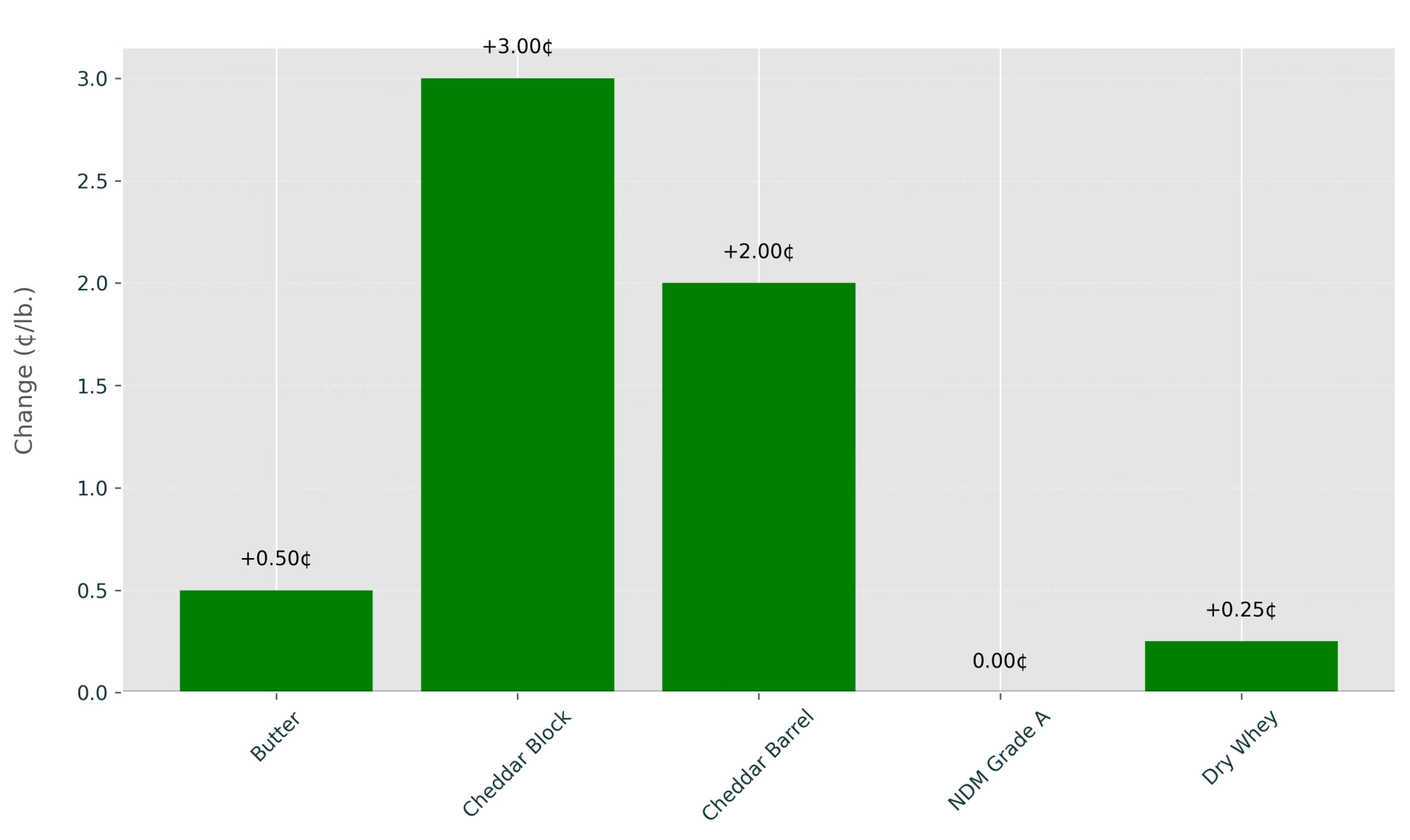
The following table details the closing prices and changes for key CME cash dairy products on May 1, 2025:

ProductClosing PriceChange from Yesterday
Butter$2.3100/lb+1.50¢
Cheddar Block$1.7550/lb+2.50¢
Cheddar Barrel$1.7350/lb+3.50¢
NDM Grade A$1.1800/lb+0.50¢
Dry Whey$0.5025/lb+0.50¢

Commentary:

Cheese (Blocks and Barrels): Cheddar cheese prices surged, with barrels showing strength, gaining 3.50¢ to close at $1.7350/lb, while blocks rose 2.50¢ to $1.7550/lb. This narrows the block-barrel spread. The spot market rally presents a notable contrast to the USDA’s April World Agricultural Supply and Demand Estimates (WASDE) report, which lowered the 2025 average cheese price forecast to $1.790/lb, reflecting expectations of increased milk production. Furthermore, today’s strength follows recent reports indicating tighter cheese inventories, with American-style cheese stocks down 8% at the start of 2025.

Butter: Butter prices firmed, adding 1.50¢ to close at $2.3100/lb. This gain builds on recent rebounds after significant declines earlier in the week and the prior week. While underlying supply fundamentals appear comfortable, with recent USDA Cold Storage data showing butter inventories 4% above last year, today’s price action moves further away from the recent lows. The USDA’s April WASDE report significantly cut the 2025 butter price forecast by 7.0 cents to $2.445/lb.

Nonfat Dry Milk (NDM): NDM prices slightly increased by 0.50¢, settling at $1.1800/lb. This follows a period of relative stability marked by slight weakness earlier in the week. The market faces headwinds from the USDA’s lowered 2025 NDM price forecast of $1.220/lb and reports of sluggish export demand, particularly in Southeast Asian markets.

Dry Whey: Prices ticked up 0.50¢ to $0.5025/lb. This minor gain occurs within a market grappling with severe disruption from trade policy. The implementation of steep retaliatory tariffs by China, reportedly reaching as high as 84% to 150% on whey products, continues to cripple demand from this historically vital export destination.

Volume and Trading Activity

Trading activity varied across products today, providing context for the observed price movements:

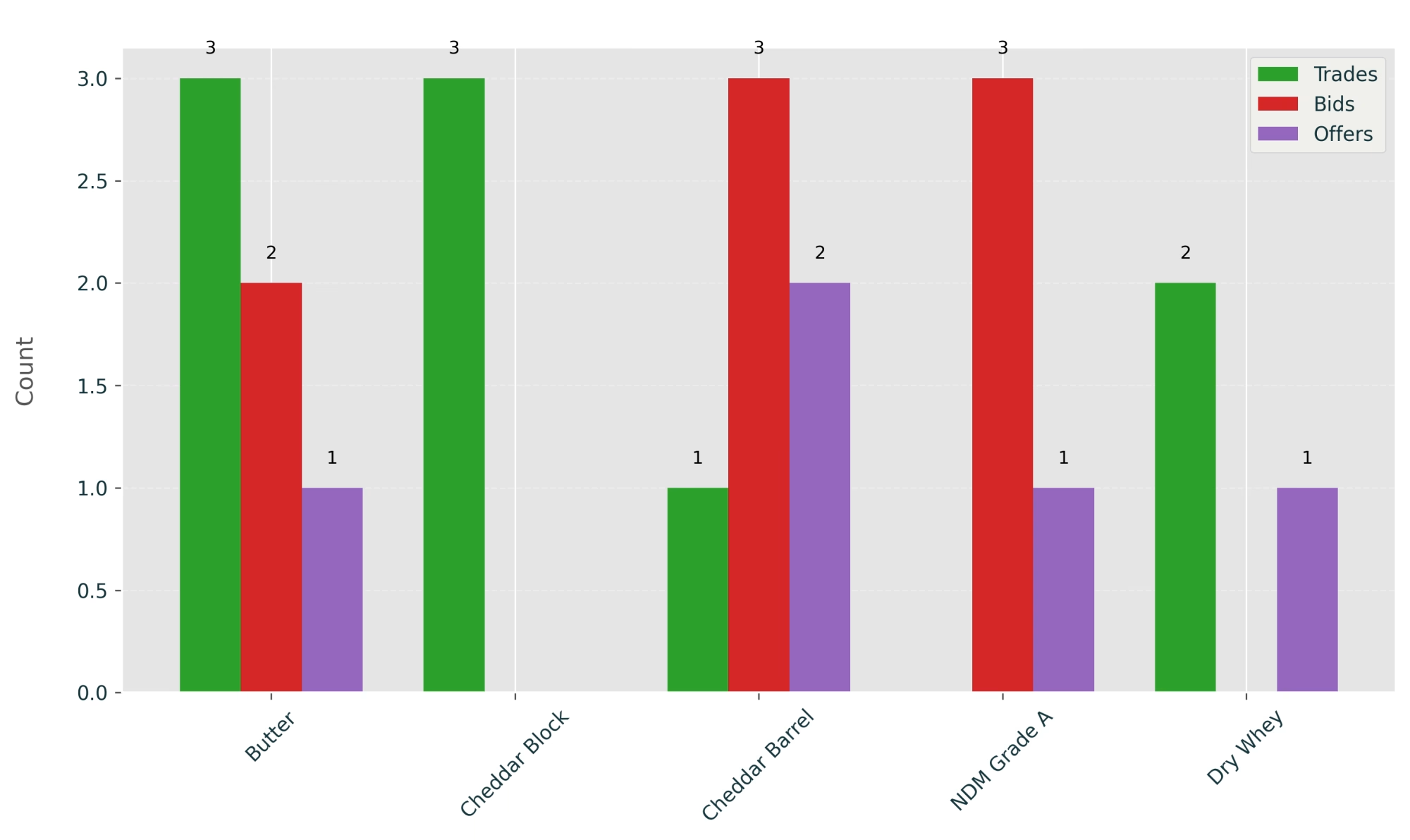
Butter: Moderate activity with seven loads traded. Buying interest appeared sustained, with five bids remaining against seven offers at the close and the final price established on a bid at $2.3100/lb.

Cheddar Blocks: Solid trading volume with eight loads changing hands. The price increase was supported by this activity, with the market clearing at $1.7550/lb on a trade. Three bids and three offers remained at the close.

Cheddar Barrels: Trading was light, with only two loads traded. However, the significant price jump to $1.7350/lb occurred as buyers met offers, indicating strong buying conviction despite the low volume.

NDM Grade A: Experienced the highest trading volume of the day, with 12 loads traded. The market closed at $1.1800/lb on a trade, with four bids and one offer remaining.

Dry Whey: Activity was relatively light, with four loads traded. The market closed at $0.5025/lb on a trade, with four bids and no offers remaining.

Overall, the trading volumes, while moderate, generally supported the upward price movements in cheese and butter, suggesting that active buying interest contributed to the rally.

Global Context

International factors continue to exert significant influence on the U.S. dairy complex, with trade policy and regional production shifts playing key roles:

U.S.-China Trade Relations: The ongoing trade dispute remains a major headwind. Severe retaliatory tariffs imposed by China on U.S. dairy products, reported as high as 84% to 150% for specific items like whey, severely restrict access to this major market. This disruption particularly damages the whey complex, which historically relied heavily on Chinese demand.

China’s Domestic Market Dynamics: China’s internal dairy market is undergoing significant adjustments. Following years of rapid expansion, the sector faces oversupply issues, resulting in crashing farmgate milk prices (declines of 15-28% reported) and falling raw milk collections (down 9.2% in early 2025 vs. the prior year). While shrinking domestic production could eventually necessitate increased imports, China’s current economic challenges limit purchasing power and delay a significant rebound in import demand.

European Union (EU) Production: EU milk production is forecast to contract slightly in 2025 (around 0.2%) due to declining cow numbers, environmental regulations, and lingering animal health concerns. Despite lower overall milk availability, EU processors are expected to prioritize cheese production (forecast +0.6%), potentially at the expense of butter and milk powders.

Oceania Production: Dairy production in Oceania (Australia and New Zealand) is projected to see modest growth in 2025, with Australia potentially increasing output by 0.7% to 1.1% and New Zealand stabilizing or growing slightly after prior declines. Oceania suppliers maintain strong trade relationships and logistical advantages in key Asian markets.

Forecasts and Analysis

The latest USDA projections and market analysis provide a critical context for evaluating today’s market movements:

USDA April 2025 WASDE Outlook: The USDA’s most recent forecasts, released in April, painted a generally bearish picture for the U.S. dairy sector in 2025:

Milk Production: The 2025 milk production forecast was increased by 0.7 billion pounds compared to the March estimate, reaching 226.9 billion pounds. This upward revision was attributed to expectations of larger average dairy cow numbers and slightly higher milk yield per cow.

Milk Prices: Reflecting the higher production forecast and lower anticipated product prices, the USDA made significant downward revisions to its 2025 milk price projections. The all-milk price forecast was cut by $0.50 to $21.10/cwt, marking a cumulative drop of $1.95/cwt since the January 2025 forecast. The Class III price forecast was lowered by $0.35 to $17.60/cwt, and the Class IV forecast was reduced by $0.60 to $18.20/cwt.

Feed Cost Considerations: The feed cost outlook presents a mixed picture. Longer-term projections suggest lower average feed costs in 2025 compared to the highs of 2022-2023, which could support margins. The USDA forecasts an average farm price for corn at $4.20/bushel for 2025, and soybean meal prices are projected to be around $310/ton. Today’s May Corn futures settled at $4.6375/bushel, while May Soybean Meal closed at $307.80/ton.

Analysis & Implications: A significant disconnect exists between today’s stronger spot market prices, particularly for cheese ($1.7550 blocks, $1.7350 barrels), and the USDA’s sharply lower annual Class III forecast ($17.60/cwt). May Class III futures settled today at $18.43/cwt, well above the USDA’s yearly projection, indicating market skepticism or a focus on shorter-term factors. The combination of lower projected milk prices and volatile, uncertain feed costs suggests producer margins will likely remain under pressure.

Market Sentiment

Despite the positive price action in today’s spot market, the underlying market sentiment remains cautious and uncertain, leaning towards bearish in the medium term. This caution stems from several key factors:

Bearish Forecasts: The significant downward revisions in the USDA’s April WASDE forecasts for milk production, milk prices, and dairy product prices have weighed heavily on sentiment. The projected increase in milk supply, coupled with lowered price expectations, signals potential challenges ahead.

Trade Disruptions: Persistent trade tensions, particularly the severe tariffs impacting U.S. dairy exports to China (especially whey), continue to create significant uncertainty and limit optimism regarding export-driven price support.

Economic Concerns: Broader economic headwinds and concerns about consumer purchasing power, both domestically and internationally, contribute to the cautious outlook. Global dairy demand is described as mixed, lacking strong upward momentum.

Spot vs. Fundamental Disconnect: Analysts and traders acknowledge the disconnect between the recent strength in spot and futures markets and the more bearish fundamental outlook presented by official forecasts and trade realities. This divergence fuels uncertainty about the sustainability of current price levels.

“While the spot cheese market showed impressive strength today, it feels disconnected from the fundamental headwinds highlighted by the latest USDA numbers and the ongoing trade friction. We’re advising clients to view this rally with caution.”

Closing Summary & Recommendations

Today’s CME dairy markets exhibited broad strength, led by notable gains in Cheddar cheese (especially barrels) and a firming butter price, with NDM and whey also increasing. This positive price action occurred despite an increasingly bearish backdrop defined by lower USDA price forecasts for 2025, expectations of higher milk production, and significant ongoing challenges in key export markets due to trade tensions. Trading activity supported the price increases, but overall market sentiment remains cautious given these substantial fundamental headwinds.

Recommendations/Outlook:

Producers: Today’s spot market strength presents potential selling opportunities. However, USDA’s sharply lower long-term price forecasts necessitate a continued focus on vigilant risk management to protect margins. Evaluate opportunities to lock in favorable feed costs, particularly for inputs like soybean meal where prices appear advantageous. Consider utilizing risk management tools such as forward contracts or LGM-Dairy insurance to mitigate downside price risk highlighted by forecasts.

Traders: The disconnect between stronger spot/futures prices and the bearish fundamental outlook creates the potential for volatility. Closely monitor key data releases, including inventory reports, export sales data (particularly to alternative markets like Mexico and SE Asia), and global milk production trends to confirm or contradict current price trajectories.

Analysts: Focus research on reconciling the divergence between current market pricing and the underlying supply, demand, and trade policy realities. Track the performance of U.S. exports into non-traditional markets and monitor evolving production dynamics in the EU and Oceania.

Learn more:

Join the Revolution!

Join over 30,000 successful dairy professionals who rely on Bullvine Weekly for their competitive edge. Delivered directly to your inbox each week, our exclusive industry insights help you make smarter decisions while saving precious hours every week. Never miss critical updates on milk production trends, breakthrough technologies, and profit-boosting strategies that top producers are already implementing. Subscribe now to transform your dairy operation’s efficiency and profitability—your future success is just one click away.

NewsSubscribe
First
Last
Consent

CME Daily Dairy Market Report: April 29, 2025 – Cheddar Blocks Defy Bearish Trends as Butter Plunges

Cheddar blocks defy bearish trends with 2¢ surge as butter plunges to 3-year lows amid oversupply and export hurdles.

EXECUTIVE SUMMARY: The April 29 CME dairy markets revealed stark contrasts: cheddar blocks rallied 2¢ on active trading despite bearish USDA forecasts, while butter prices collapsed 3.5¢ to a 3-year low due to bloated inventories. Nonfat Dry Milk and Dry Whey stagnated amid export challenges from China’s tariffs. USDA slashed 2025 price projections, signaling margin pressure for producers, while global trade imbalances and EU production constraints amplified volatility. Traders face fragmented signals, with blocks’ short-term strength clashing with butter’s structural weakness. Risk management and monitoring feed costs are critical as markets navigate policy headwinds and supply-demand mismatches.

cheddar block prices, butter market trends, USDA dairy forecasts, China dairy tariffs, dairy market volatility

KEY TAKEAWAYS:

  • Block Rally vs. Butter Collapse: Cheddar blocks gained 2¢ on 12 trades; butter fell 3.5¢ to $2.24/lb, its lowest since 2021.
  • Trade Barriers Dominate: China’s tariffs (up to 150% on whey) stifle exports, offsetting competitive U.S. pricing globally.
  • USDA Lowers 2025 Forecasts: All-Milk price cut $1.95/cwt since January, reflecting oversupply and weak demand.
  • Market Fragmentation: Active block trading contrasts with powder stagnation, highlighting sector-specific risks.
  • Producer Advisory: Secure pricing during spot rallies but prioritize cost control amid bearish long-term outlooks.

Cheddar Blocks Surge on Active Trading, Defying Bearish Trends as Butter Plunges to Multi-Year Lows Amid Inventory Concerns

Key Price Changes & Market Trends

The Chicago Mercantile Exchange (CME) cash dairy markets displayed dramatic divergence today, with cheddar blocks showing remarkable strength while butter prices collapsed to levels not seen in over three years.

ProductClosing PriceChange
Cheddar Blocks$1.7200/lb+2.00¢
Cheddar Barrels$1.7025/lb-0.25¢
Butter$2.2400/lb-3.50¢
Nonfat Dry Milk$1.1875/lbUnchanged
Dry Whey$0.5050/lbUnchanged

Cheddar blocks demonstrated significant resilience, gaining 2.00 cents despite recent bearish USDA price forecasts. This strength suggests processors may be securing supplies to meet immediate inventory needs or positioning ahead of anticipated seasonal demand improvements.

Butter prices experienced a substantial decline, dropping 3.50 cents to $2.2400 per pound-the lowest closing price since December 2021. This persistent weakness continues despite U.S. butter trading at a substantial discount to international benchmarks, indicating the dominance of domestic market factors, primarily ample inventories.

Nonfat Dry Milk and Dry Whey markets remained inactive with prices unchanged, reflecting ongoing market caution and challenges in export markets.

Volume and Trading Activity

Trading volume today was heavily concentrated in the cheddar block market, with 12 loads changing hands-a robust level of activity indicating significant market participation and price discovery. Trades occurred within a range from $1.68 to $1.72, with buying interest firming the market toward the end of the session.

In sharp contrast, both butter and cheddar barrels saw minimal engagement with just one trade executed in each market. At the close, the butter market showed one unfilled bid, while the barrel market had one uncovered offer.

The complete absence of trading in NDM and Dry Whey markets, with no trades, bids, or offers recorded, underscores the wait-and-see approach currently dominating these segments. This inactivity likely reflects trader hesitancy following lower USDA price forecasts and significant export challenges, particularly for whey due to prohibitive Chinese tariffs.

Global Context

The international dairy landscape continues to exert significant influence on U.S. markets, with divergent regional production trends and substantial trade policy impacts creating market distortions.

European Union milk production faces ongoing constraints, with forecasts pointing to a slight decline in 2025. Factors contributing to this include diminishing cow numbers, tight farmer margins, implementation of environmental regulations, and disease pressures. EU processors are reportedly prioritizing higher-value cheese production, potentially reducing the availability of butter and milk powders for export.

New Zealand is experiencing modest milk production growth, with volumes up slightly in March and for the season-to-date. This contrasts with Australia’s continued downward production trend.

International demand, particularly from China, remains a critical variable clouded by uncertainty. While China’s domestic milk production has faced challenges, significant economic headwinds are tempering purchasing power. Most critically for U.S. exporters, prohibitive retaliatory tariffs imposed by China (reportedly reaching as high as 84% overall and up to 150% on whey) effectively block access for many U.S. dairy products. New Zealand benefits from its Free Trade Agreement with China, holding a distinct advantage in this crucial market.

U.S. dairy products, notably butter and cheese, remain competitively priced on the global stage compared to EU counterparts. However, the substantial trade barriers are preventing U.S. exporters from fully capitalizing on these price advantages.

Forecasts and Analysis

Forward-looking projections from the USDA’s April 2025 World Agricultural Supply and Demand Estimates (WASDE) report paint a challenging picture for U.S. dairy markets, with significant downward revisions from earlier forecasts.

The USDA raised its forecast for 2025 U.S. milk production by 0.7 billion pounds compared to March estimates, now projected at 226.9 billion pounds. This increase is attributed to expectations of higher average cow numbers and improved milk yield per cow.

Reflecting increased production forecasts and potentially weaker demand assumptions, USDA significantly lowered its 2025 average price projections:

CategoryApril 2025 ForecastChange from March
All-Milk Price$21.10/cwt-$0.50
Class III Price$17.60/cwt-$0.35
Class IV Price$18.20/cwt-$0.60
Butter$2.445/lb-7.0¢
Cheese$1.790/lb-2.0¢
NDM$1.220/lb-3.5¢
Dry Whey$0.510/lb-1.5¢

The magnitude of these downward revisions is striking, with the April All-Milk forecast of $21.10/cwt representing a $1.95/cwt decline from the outlook provided in January 2025. This indicates a rapid deterioration in price expectations over just a few months.

Meanwhile, feed futures markets saw sharp declines today, with May corn futures falling approximately 15 cents to settle near $4.61 per bushel, while May soybeans dropped around 11 cents to $10.41 per bushel. While lower feed costs generally support dairy producer margins in the longer term, their immediate impact on daily dairy product prices is often indirect.

Market Sentiment

The prevailing sentiment in U.S. dairy markets appears predominantly cautious, leaning toward bearishness. This mood is heavily influenced by the recent string of downward revisions in USDA’s price and production forecasts, coupled with persistent concerns surrounding international trade relations, especially the high tariffs impacting access to the Chinese market.

While today’s rally in the cheddar block market offered a localized bright spot, the concurrent plunge in butter prices to multi-year lows and the continued lack of activity in milk powders likely exert a stronger influence on the broader market psyche.

As one analyst might observe, “Despite the pop in blocks today, the underlying tone feels heavy. The latest WASDE numbers and the ongoing China tariff situation make it hard to be optimistic about prices holding these levels across the complex”. This reflects concerns about the sustainability of spot rallies against bearish fundamentals.

A trader focusing on the physical market could remark, “Butter finding new lows isn’t surprising given the inventory picture, but the lack of buying interest even down here is concerning. Blocks seem to be living in their own world today, likely driven by specific short-term needs”. This highlights the product-specific dynamics and the worryingly thin support for butter.

Closing Summary & Recommendations

In summary, the CME dairy cash markets on April 29th showcased significant divergence. Cheddar blocks advanced notably on strong trading volume, providing a counterpoint to the prevailing bearish narrative. However, butter prices suffered a sharp decline, reaching multi-year lows amid light trading and ongoing concerns about excessive inventories. Nonfat Dry Milk and Dry Whey remained dormant, reflecting persistent export market challenges exacerbated by significant trade tariffs.

For producers, the current strength in the spot block market presents a potential pricing opportunity, but it should be viewed with caution given the pronounced weakness in butter and the decidedly bearish outlook presented in recent USDA forecasts. Emphasis should be placed on diligent cost control and implementing robust risk management strategies to protect margins against potential further price declines. Closely monitor developments in feed costs and milk component values.

Traders should recognize the current market fragmentation and carefully assess the sustainability of the rally in blocks against the clear weakness in the butter market. Trade policy developments, particularly regarding China, and shifts in global supply/demand dynamics remain critical factors to watch, especially for export-oriented commodities like NDM and Whey.

The current environment, characterized by conflicting signals and significant external pressures, underscores the need for all stakeholders to adopt a comprehensive perspective rather than relying solely on single-day spot price movements, which can be misleading in this complex marketplace.

Learn more:

Join the Revolution!

Join over 30,000 successful dairy professionals who rely on Bullvine Daily for their competitive edge. Delivered directly to your inbox each week, our exclusive industry insights help you make smarter decisions while saving precious hours every week. Never miss critical updates on milk production trends, breakthrough technologies, and profit-boosting strategies that top producers are already implementing. Subscribe now to transform your dairy operation’s efficiency and profitability—your future success is just one click away.

NewsSubscribe
First
Last
Consent

CME Dairy Market Report: April 7, 2025 – Cheese Prices Rally Strongly; Butter Edges Higher Amid Balanced Markets

Cheese prices surge 3¢, butter up 0.5¢ as CME markets rebound—futures signal trader confidence despite global trade risks.

EXECUTIVE SUMMARY: The CME dairy markets saw a strong recovery on April 7, 2025, with cheese blocks rising 3.00¢ and barrels gaining 2.00¢, reversing last week’s volatility amid tightening inventories and renewed buyer interest. Butter edged up 0.50¢ despite ample stocks, while futures premiums for cheese ($1.825/lb vs. $1.67/lb cash) signaled trader optimism. Export markets showed strength, with US cheese shipments up 12% year-to-date, though potential trade tensions loom. USDA forecasts revised milk production downward but highlighted strategic opportunities in forward contracting as markets balance domestic demand growth against global uncertainty.

KEY TAKEAWAYS

  • Cheese leads recovery: Blocks (+3.00¢) and barrels (+2.00¢) rebounded sharply on tight inventories and cleared offers.
  • Futures signal strength: Cheese futures trade at $1.825/lb (vs. $1.67/lb cash), indicating trader confidence in continued price support.
  • Export momentum: US cheese exports surged 22% in value year-to-date, with Mexico and Canada driving 51% of total dairy export growth.
  • Strategic pivot: Producers are advised to prioritize component optimization, while processors should monitor capacity expansions impacting milk supply competition.
  • Risk watch: Feed costs and potential tariff impacts remain critical for Q2 profitability.

Today’s dairy markets showed substantial strength across cheese products, with Cheddar Blocks rising 3.00¢ and Barrels up 2.00¢, extending the recovery from last week’s volatility. Butter continued its modest upward trend with a 0.50¢ gain, while Dry Whey edged increased25¢. The overall uptick reflects recovering domestic demand, tightening inventories for cheese, and substantial futures premiums, signaling trader confidence despite ongoing concerns about global trade tensions. Trading activity was particularly notable in cheese blocks, which cleared all offers, while barrels saw active bidding interest, suggesting further potential gains in coming sessions.

The Chicago Mercantile Exchange dairy markets saw a significant recovery in cheese prices today, with blocks and barrels posting substantial gains as butter edged higher amid balanced trading activity. This price strength comes after last week’s volatility, suggesting renewed confidence in dairy fundamentals despite lingering global trade concerns.

Key Price Changes & Market Trends

ProductClosing PriceChangeTradesBidsOffers
Cheddar Block$1.6700/lb+3.00¢300
Cheddar Barrel$1.6800/lb+2.00¢132
Butter$2.3000/lb+0.50¢321
NDM Grade A$1.1575/lbUnchanged031
Dry Whey$0.4925/lb+0.25¢201

CME dairy markets demonstrated substantial recovery in cheese prices, with blocks gaining 3.00¢ and barrels adding 2.00¢, effectively recapturing losses experienced late last week. The strength follows volatile trading patterns in early April, when cheese markets crashed on April 3 amid softening demand concerns. Butter continued its modest upward trajectory with a 0.50¢ increase, reflecting resilient export competitiveness despite ample stocks. Nonfat Dry Milk remained unchanged, while Dry Whey posted a small gain of 0.25¢.

The cheese market’s robust performance appears to be driven by tightening inventories and renewed buyer interest, reversing sentiment from last week’s market concerns. Current butter prices continue to navigate a vastly different market environment compared to early 2024 when tight stocks drove prices to record seasonal levels, but have since stabilized with rebuilt inventories.

Volume and Trading Activity

ProductBid/Ask SpreadWeekly Change in SpreadTrading Volume
Cheddar BlockNo spread (market cleared)-2.00¢3 trades
Cheddar Barrel1.00¢-0.50¢1 trade
Butter0.75¢-1.25¢3 trades
NDM Grade A0.50¢Unchanged0 trades
Dry Whey0.25¢-0.50¢2 trades

Trading activity showed a balanced market with clear signs of buyer interest across multiple product categories. Cheese blocks recorded three trades with no remaining bids or offers at session close, indicating a well-cleared market with potential for continued upward momentum. Barrel cheese saw more limited trade execution with just one transaction, but three active bids suggest strong underlying buyer interest that could support prices in upcoming sessions.

Butter markets demonstrated healthy activity with three trades alongside two bids and one offer remaining, reflecting balanced market dynamics. Despite three active bids and one offer, NDM saw no trades, indicating buyer interest that failed to match seller expectations. Dry Whey recorded two trades with one offer remaining close, suggesting stable market conditions with moderate trading interest.

The weekly comparison highlights mixed price trends compared to last week’s averages:

ProductCurrent Avg.Prior Week Avg.Change5-Year Seasonal Avg. (Early April)
Butter$2.3000/lb$2.3290/lb-$0.0290/lb$2.2750/lb
Cheddar Block$1.6700/lb$1.6455/lb+$0.0245/lb$1.7200/lb
Cheddar Barrel$1.6800/lb$1.6605/lb+$0.0195/lb$1.6950/lb
NDM Grade A$1.1575/lb$1.1665/lb-$0.0090/lb$1.1800/lb
Dry Whey$0.4925/lb$0.4935/lb-$0.0010/lb$0.4875/lb

Cheese prices remain slightly below the 5-year seasonal average compared to typical early April patterns, while butter is trading above historical norms for this time of year. This seasonal divergence suggests potential for continued price recovery in cheese markets as we move deeper into Q2.

Global Context

Export MarketYoY Change (Jan-Feb 2025)Value (Jan-Feb 2025)
Mexico+10%$396.2 million
Canada+41%$232.3 million
China+20%$203.4 million
Japan+35%$86.6 million
South Korea+39%$79.5 million

The global dairy landscape shows significant regional divergence, creating challenges and opportunities for US producers and exporters. European milk production is projected to decline by 0.2% in 2025 due to regulatory pressures and shrinking herd sizes. Meanwhile, the US dairy sector is experiencing expansion, with producers adding 34,000 dairy cows between July and December 2024.

The FAO Dairy Price Index reached 148.7 in February 2025, its highest level since October 2022, driven by strong demand for cheese and whole milk powder despite seasonal production challenges in Oceania. This global price strength supports US export opportunities, particularly for butter and specialty cheese products.

US dairy exports have shown remarkable strength in early 2025, with total export value reaching $1.43 billion in January-February, up 14% from last year. Cheese exports have been robust, increasing 12% in volume and 22% in value during the first two months of 2025. Chinese import patterns continue to evolve favorably for specific product categories, with whey imports surging 52% year-over-year. However, potential trade tensions loom as proposed US tariffs could trigger retaliatory measures, potentially threatening the 18% of US milk production tied to exports.

Forecasts and Analysis

According to the most recent USDA forecasts released on March 17, 2025, the US dairy herd is projected to average 9.380 million head, up 5,000 from previous estimates. However, milk production projections have been revised downward to 226.2 billion pounds (-0.7 billion from the prior forecast) due to slower-than-expected growth in output per cow.

The all-milk price forecast is $21.60 per cwt, $1.00 lower than the previous month’s forecast. Class III and Class IV milk price forecasts have been adjusted to $17.95 and $18.80 per cwt, respectively. These adjustments reflect changing expectations for component prices, with cheese values showing more resilience than butter, nonfat dry milk, and dry Whey.

Current CME futures markets show April Class III milk at .10 per cwt and Class IV at .86 per cwt. The significant futures premiums for cheese ($1.825/lb vs. $1.67/lb cash) and butter ($2.445/lb vs. $2.30/lb cash) suggest traders are anticipating strengthening markets in the coming weeks despite recent volatility.

The current spread between futures and cash prices creates strategic opportunities for producers and processors. Producers may benefit from exploring forward contracting options, while processors could consider the current basis levels for strategic inventory building.

Market Sentiment

“Despite cash market weakness last week, futures premiums for cheese and butter suggest traders anticipate a rebound as we move deeper into Q2,” a Midwest dairy broker noted in a recent market commentary.

“The whipsaw action we’re seeing in cheese markets underscores the fundamental uncertainty about domestic demand as we head into what should be the spring buying season,” observed another analyst. “Today’s strong trading activity suggests buyers are returning to the market after last week’s price declines.”

“The divergence between cash and futures markets points to trader expectations that current weakness is temporary. The substantial premium built into April cheese futures indicates confidence in strengthening fundamentals despite last week’s cash market declines,” commented a dairy economist with a primary agricultural lender.

Industry perspectives remain cautiously optimistic about domestic demand despite ongoing export uncertainties. The significant new cheese processing capacity coming online in 2025 (potentially expanding US cheese manufacturing by approximately 6%) creates opportunities and challenges. While this expansion could pressure cheese prices later in the year, the tight inventory situation provides near-term support.

Rabobank’s global dairy quarterly report identified key watch factors for 2025, including potential tariff impacts on US exports, exchange rate volatility affecting trade flows, and sustained support for butterfat prices. These factors suggest a market environment where strategic positioning and risk management will be critical for dairy stakeholders.

Closing Summary & Recommendations

In summary, today’s dairy markets showed significant strength, particularly in cheese prices, which rebounded sharply from recent declines. Butter continued its upward trend with a modest gain, while other products remained relatively stable. Trading activity was balanced across most categories, with particular strength noted in cheese blocks.

The current market environment presents several strategic considerations for stakeholders:

For producers, component optimization rather than volume maximization should remain the priority, as cheese-driven returns continue supporting milk prices despite other sectors’ uncertainties. The current futures premium over cash markets offers potential opportunities for forward contracting a portion of production.

For processors, the evolving supply situation warrants careful inventory management strategies. The planned expansion in cheese manufacturing capacity creates the potential for increased competition for milk supplies in certain regions despite the overall growth in national milk production.

Looking ahead, stakeholders should monitor three critical factors: 1) export demand developments, particularly any shifts in trade policy affecting key markets; 2) domestic milk production trends as we move through the spring flush period; and 3) feed cost dynamics, which have provided some relief through lower corn prices but remain a significant factor in overall dairy profitability.

The Bottom Line

The April 7th CME dairy markets demonstrated renewed strength across most product categories, suggesting market participants may be finding balance after recent volatility. The substantial gains in cheese prices and strong futures premiums indicate confidence in the market’s fundamental support despite ongoing global uncertainties. With mixed signals from domestic and international markets, strategic risk management and flexibility will be essential for navigating the evolving dairy landscape through Q2 2025.

The key challenge lies in balancing the growth in US processing capacity against the backdrop of constrained milk production growth while simultaneously adapting to shifting global trade dynamics. Those stakeholders who can align their operations with these emerging trends will be best positioned to capture value in what appears to be an increasingly complex but opportunity-rich dairy environment.

Learn more:

Join the Revolution!

Join over 30,000 successful dairy professionals who rely on Bullvine Daily for their competitive edge. Delivered directly to your inbox each week, our exclusive industry insights help you make smarter decisions while saving precious hours every week. Never miss critical updates on milk production trends, breakthrough technologies, and profit-boosting strategies that top producers are already implementing. Subscribe now to transform your dairy operation’s efficiency and profitability—your future success is just one click away.

NewsSubscribe
First
Last
Consent

CME Dairy Market Report: March 18, 2025 – Cheese Prices Plummet as Butter Softens; Dry Whey Provides Lone Bright Spot

Cheese prices dive 7¢ as butter weakens, while dry whey bucks the trend. Is this a buying opportunity or the start of a steeper decline?

CME dairy prices, cheese market decline, dairy trading analysis, butter market trends, dairy industry forecast

EXECUTIVE SUMMARY: The March 18 CME dairy markets witnessed significant pressure on cheese values, with cheddar blocks plummeting 7.00¢ to $1.5750/lb and barrels falling 5.50¢ to $1.5700/lb, while butter continued its downward trend, dropping 0.75¢ to $2.2950/lb. Only dry whey provided positive movement, gaining 1.00¢ to close at $0.4600/lb amid improved export demand. Trading volume was light, with just 10 trades across all products, reflecting market hesitation, yet multiple offers on cheese suggest that further price pressure may be coming. Despite the current weakness, future markets and USDA projections indicate potential recovery later in the year, with experts noting that sharp corrections create potential buying opportunities for processors. At the same time, suggesting producers implement risk management strategies to protect against further declines. Global factors, including improved New Zealand production, constrained European output, and modest Chinese import recovery, continue to influence domestic price trends, highlighting the increasingly interconnected nature of dairy markets.

KEY TAKEAWAYS

  • Cheddar blocks fell sharply by 7.00¢ to $1.5750/lb (a 4.3% single-day decline), continuing a concerning pattern. Blocks are now 21.7¢ below last week’s average—one of the sharpest weekly declines in recent months.
  • The trading activity showed significant seller presence with four uncovered offers for blocks at close, suggesting potential for further price weakness, while the narrowing block-barrel spread to just 0.5¢ indicates processors are reassessing actual demand versus projections.
  • Market sentiment has turned cautious, with multiple industry voices suggesting the current weakness creates buying opportunities, particularly with USDA projections indicating more substantial prices later in 2025.
  • Both producers and processors should closely monitor upcoming Cold Storage and Milk Production reports while preparing for Federal Order changes that fundamentally alter milk pricing formulas.
  • Regional variations in market conditions require stakeholders to develop market-specific approaches rather than one-size-fits-all strategies, with proximity to processing facilities becoming increasingly crucial for negotiating premiums.

Today’s CME dairy markets saw significant pressure on cheese values, with cheddar blocks and barrels posting substantial declines. Butter continued its downward trend, while dry whey provided the only positive movement in an otherwise bearish trading session. Nonfat dry milk remained unchanged amid moderate bidding interest but limited actual trading. This continues the bearish trend observed throughout March as the market contends with improving milk supplies, international market pressures, and growing competition from plant-based alternatives.

Key Price Changes & Market Trends

ProductClosing PriceChange from YesterdayTrading Volume
Cheddar Blocks$1.5750/lb-7.00¢2 trades
Cheddar Barrels$1.5700/lb-5.50¢1 trade
Butter$2.2950/lb-0.75¢6 trades
Nonfat Dry Milk$1.1550/lbUnchanged0 trades
Dry Whey$0.4600/lb+1.00¢1 trade

Daily Price Changes for Dairy Products – March 18, 2025

Cheddar block cheese took the hardest hit today, falling 7 cents to $1.5750/lb, representing a significant 4.3% single-day decline. This continues the concerning pattern established earlier this week, with blocks now falling 21.7¢ below last week’s average, representing one of the sharpest weekly declines in recent months. Market participants indicate this sharp drop stems from improved milk availability in key cheese-producing regions and slower-than-expected retail demand heading into spring.

Barrels followed blocks lower, dropping 5.50 cents to $1.5700/lb, narrowing the block-barrel spread to just 0.5 cents. This narrowing spread suggests processors are stepping back to reassess actual demand versus projected needs ahead of the spring flush.

Butter markets continued to show weakness, slipping 0.75 cents to $2.2950/lb amid reports of adequate cream supplies and continued pressure from imported butterfat. Current butter prices have declined for three consecutive sessions, falling below the psychological $2.30/lb threshold for the first time since early February. Higher butterfat supply had pushed some spot cream multiples below 1.00, with cream availability outpacing demand compared to last year when multiples were sold at premiums above the spot market.

Dry whey provided the only positive movement today, gaining 1 cent to close at $0.4600/lb, buoyed by improved export demand reports and some domestic protein shortages. This gain comes despite the overall weekly trend showing dry whey down from last week’s average of $0.4715/lb to $0.4550/lb.

Volume and Trading Activity

Today’s CME spot market displayed relatively light trading volume, with just 10 trades executed across all dairy products, representing a 42% decrease from the previous Monday’s session. This reflects hesitancy among market participants as prices continue to adjust lower.

Butter showed the most active trading, with six trades completed, indicating sellers were working to test market support levels. The session featured sellers willing to unload cheese inventory, with multiple offers appearing throughout.

Cheddar blocks saw limited activity with just two trades but had four uncovered offers at the close, suggesting potential for further price declines. According to the daily CME trading data, the bid/ask dynamics showed more selling interest for blocks with these four uncovered offers, while barrels traded once with balanced interest shown via one bid and one offer at the close.

Nonfat dry milk saw no trades despite having six bids and three offers, indicating market hesitation and price discovery challenges. The lack of transactions suggests buyers and sellers remain apart on valuation expectations. Dry whey managed a single trade but showed strong buying interest with five bids compared to only two offers, potentially signaling further strength ahead. This reflects the improved export demand from Mexico as competition from European suppliers has decreased amid geopolitical tensions affecting shipping lanes.

Global Context

International dairy markets are providing mixed signals for U.S. producers. According to USDA’s Dairy Market News data, New Zealand milk production has improved seasonally, putting pressure on global butter and milk powder values.

Meanwhile, European milk output remains constrained by environmental regulations and higher production costs, preventing a global oversupply. The EU milk production is forecast to remain relatively stable in 2025, with an increased focus on cheese production despite overall milk production constraints.

China’s dairy imports, which have decreased in recent years, are projected to show modest improvement in 2025. This modest recovery in Chinese demand has primarily benefited Oceania suppliers due to freight advantages.

Recent strength in the U.S. dollar against major trading partners has dampened export opportunities, with dairy export forecasts revised downward. This lack of price competitiveness mainly affects export volumes to Southeast Asia. Mexican buyers support U.S. dry whey markets, likely contributing to today’s price increase.

Forecasts and Analysis

Near-term futures markets reflect today’s spot market weakness, with March Class III milk futures settling at .46/cwt despite the cheese declines. This disconnect suggests traders anticipate the current cheese market weakness may be temporary. Class IV futures settled lower at $18.42/cwt, influenced by ongoing butter market softness.

Looking ahead to Q2 and beyond, USDA projections indicate expectations for an improved balance between supply and demand as spring flush milk production modifies and food service demand increases with warmer weather and tourism activity.

Feed markets show continued stability, with corn futures showing minimal movement, settling at $4.6650/bushel for the March contract. Similarly, soybean meal has decreased modestly to $299.70/ton, potentially providing some margin relief for dairy producers in the coming weeks.

The cheese futures market is projecting a recovery from today’s significant drop. Later-month contracts show premiums to spot values, suggesting traders view the current weakness as potentially overdone.

Market Sentiment

“The speed of today’s cheese price correction caught many by surprise,” one veteran dairy trader noted. “We’re seeing processors step back to reassess actual demand versus projected needs, which is creating temporary indigestion in the market.”

A market analyst observed, “The cheese market appears to be adjusting to improved milk availability, though the fundamentals remain reasonably balanced for this time of year.” This view is echoed by traders at leading dairy risk management firms, with one commenting, “We’re seeing typical seasonal pressure on prices, but the long-term outlook remains constructive due to tightening milk supplies and strong domestic consumption.”

From the processor perspective, a representative noted that “current prices present buying opportunities for extending coverage, especially given projections for higher values later in the year.” This suggests that while the market is bearish, some industry participants view the significant price drops as potential buying opportunities.

Overall, market sentiment has turned cautious following several weeks of relative stability. Many market participants are waiting to see if today’s significant cheese price drop attracts fresh buying interest or signals the beginning of a more prolonged correction.

An emerging factor affecting market sentiment is the growing pressure from plant-based alternatives. Major coffee chains have eliminated surcharges for non-dairy options in many markets, potentially increasing the consumption of alternatives. Additionally, plant-based milk producers have expanded partnerships with major retailers, suggesting mainstream retail increasingly embraces these alternatives.

Closing Summary & Recommendations

Today’s CME dairy markets showed significant weakness in cheese, with blocks and barrels dropping substantially, while butter gradually declined. Dry whey provided the only positive price movement, gaining a penny on improved export interest. This bearish trend continues from yesterday’s session when blocks fell 4.75¢ and barrels dropped 6.50¢.

The block cheese price of $1.5750/lb sits significantly below USDA’s projections for Q2, creating potential buying opportunities for processors. For producers, the current price environment warrants consideration of risk management strategies given today’s price volatility, particularly for cheese production margins. With block prices falling below $1.60/lb, protection against further downside risk may be prudent.

Both producers and processors should monitor upcoming Federal Order changes, which will fundamentally alter milk pricing formulas and likely create market volatility requiring proactive planning. Additionally, all market participants should closely monitor upcoming Cold Storage and Milk Production reports for further direction on price trends in late March and early April.

Regional variations in market conditions and production capabilities continue to shape dairy economics across major production areas, requiring dairy stakeholders to develop market-specific approaches rather than one-size-fits-all strategies. Those within efficient hauling distance of new processing facilities may find themselves more favorable positions for negotiating quality and volume premiums.

Learn more:

Join the Revolution!

Join over 30,000 successful dairy professionals who rely on Bullvine Daily for their competitive edge. Delivered directly to your inbox each week, our exclusive industry insights help you make smarter decisions while saving precious hours every week. Never miss critical updates on milk production trends, breakthrough technologies, and profit-boosting strategies that top producers are already implementing. Subscribe now to transform your dairy operation’s efficiency and profitability—your future success is just one click away.

NewsSubscribe
First
Last
Consent

DAIRY MARKET ALERT: Cheese Markets Signal Major Shift as Blocks Rise, Barrels Tumble on March 10

Cheese markets diverge as blocks rise and barrels tumble, widening spreads. Learn how these shifts impact your milk check and what actions to take now.

Executive Summary

Today’s CME dairy markets revealed significant shifts, with cheddar blocks rising 1.00¢ to $1.6325/lb while barrels fell 2.50¢ to $1.6050/lb, widening the block-barrel spread to 2.75¢. Butter held steady at $2.3100/lb, reflecting seller confidence, while NDM showed slight strength with a 0.25¢ gain to $1.1575/lb despite ongoing pressure in powder markets. These movements highlight the strategic importance of butterfat production as butter markets remain stable amid volatility in cheese and powder categories. Futures settlements suggest potential price recovery in cheese and butter, creating opportunities for producers to optimize margins through component-focused nutrition and targeted risk management strategies. Global factors, including European butter strength and constrained New Zealand milk production, support U.S. dairy prices despite near-term challenges.

Key Takeaways

  • Block-Barrel Spread Widening: Blocks rose by 1.00¢ while barrels fell 2.50¢, creating a 2.75¢ spread that signals shifting cheese demand dynamics.
  • Butterfat Advantage: Butter prices held firm at $2.3100/lb, reinforcing the value of optimizing butterfat production for higher milk check returns.
  • Futures Opportunities: March futures suggest potential price recovery in cheese ($1.758/lb) and butter ($2.4158/lb), offering hedging opportunities.
  • Feed Cost Stability: Corn at $4.58/bu and soybean meal at $302/ton provide favorable conditions for precision feeding strategies.
  • Global Context: Tight global milk supply and selective Chinese demand support U.S. butter prices but pressure powder markets.
cheddar cheese prices, butter market trends, dairy market analysis, block-barrel spread, milk production strategies

Today’s CME dairy markets sent unmistakable signals that demand immediate producer attention. Cheddar blocks gained 1.00¢ to close at $1.6325/lb while barrels plummeted 2.50¢ to $1.6050/lb, creating a significant 2.75¢ block-over-barrel spread. This fundamental shift from last week’s market structure suggests a substantial realignment in cheese demand patterns.

Butter maintained its position at $2.3100/lb with minimal trading activity but strategic offer positioning, revealing seller confidence despite pressure in other dairy categories. Meanwhile, NDM showed resilience with a 0.25¢ increase to $1.1575/lb on moderate trading, indicating selective buyer interest despite the concerning weekly trend.

For progressive producers, these movements carry immediate component value implications – reinforcing the strategic importance of butterfat production optimization as butter markets demonstrate relative stability while cheese markets undergo structural change.

CME CASH DAIRY PRICES: THE NUMBERS THAT MATTER

ProductClosing PriceChange (¢/lb)TradesBidsOffers
Butter$2.3100/lbNC013
Cheddar Block$1.6325/lb+1.00561
Cheddar Barrel$1.6050/lb-2.50132
NDM Grade A$1.1575/lb+0.25342
Dry Whey$0.4900/lbNC000

TRADING PATTERNS REVEAL INSIDER SENTIMENT

Today’s block cheese market activity tells a compelling story innovative producers must recognize. With five completed trades and an aggressive 6:1 bid-to-offer ratio, buyers show remarkable confidence despite recent market weakness.

This starkly contrasts barrel trading, where a single transaction and balanced bid-offer activity suggest hesitancy and potential further weakness. The divergence between these two cheese categories typically signals a fundamental shift in demand patterns that directly impacts your milk check.

WEEKLY TREND ANALYSIS: SPOTTING CRUCIAL PATTERNS

ProductMonTueWedThurFriCurrent Avg.Prior Week Avg.Weekly Volume
Butter$2.3100$2.3100$2.29750
Cheddar Block$1.6325$1.6325$1.63805
Cheddar Barrel$1.6050$1.6050$1.70051
NDM Grade A$1.1575$1.1575$1.17503
Dry Whey$0.4900/lb$0.4900$0.49800

The emerging block premium over barrels completely reverses the inverted spread pattern that dominated late February trading. This structural shift typically signals a strengthened retail cheese demand relative to food service and processed cheese applications – a critical indicator progressive producers must recognize immediately.

This spread reversal has significant implications for your operation’s Class III milk pricing and for how you should approach component optimization in your herd management strategy.

MAXIMIZE YOUR MARGINS: STRATEGIC POSITIONING NOW

COMPONENT OPTIMIZATION: THE HIDDEN OPPORTUNITY

Compared to significant barrel cheese declines, the stability in butter prices creates a clear advantage for operations focused on butterfat maximization. Cheese plants typically adjust manufacturing practices that directly affect your component premiums when barrels decline faster than blocks.

With March butter futures settling at $2.4158/lb (significantly above today’s cash price of $2.3100/lb), market expectations point to strengthening butter values. To capitalize on this market dynamic, leading producers are already implementing nutrition programs that enhance butterfat production.

FEED COST ADVANTAGE: LEVERAGE THIS WINDOW

Current feed futures provide a strategic planning opportunity that won’t last. March corn at $4.58/bushel and soybean meal at $302.20/ton create margin enhancement potential for operations implementing precision nutrition programs.

With each 0.1% increase in butterfat potentially worth $0.25-0.35/cwt under current market conditions, feed efficiency focused on component optimization rather than milk volume yields substantially better returns.

FUTURES INSIGHTS: WHAT THE SMART MONEY SEES

Futures ContractMonday Settlement
Class III (MAR) $/CWT$18.41
Class IV (MAR) $/CWT.$18.30
Cheese (MAR) $/LB.$1.758
Blocks (MAR) $/LB.$1.813
Dry Whey (MAR) $/LB.$0.485
NDM (MAR) $/LB.$1.19
Butter (MAR) $/LB.$2.4158
Corn (MAR) $/BU.$4.58

The March cheese futures at $1.758/lb reflect trader expectations of block-barrel convergence above current barrel values but below current block prices. With feed inputs showing stability, progressive operations protect milk-feed margins using options strategies that provide downside protection while maintaining upside potential.

GLOBAL PERSPECTIVE: INTERNATIONAL FORCES SHAPING YOUR MILK CHECK

European dairy markets report firming butter prices against relatively stable cheese values – a pattern now emerging in U.S. markets. This global alignment suggests structural rather than transitory forces reshape dairy product relationships.

New Zealand production reports indicate a slight recovery from earlier season shortfalls but remain below previous year levels. Despite near-term market hesitancy, this constrained global milk supply creates underlying support for dairy product values.

Chinese import activity shows highly selective re-engagement, with a more substantial interest in butter and cream products than powders or cheese. This targeted import demand aligns perfectly with today’s price movements and reinforces the strategic advantage of butterfat-focused production systems.

YOUR 3-STEP ACTION PLAN: WHAT PROGRESSIVE PRODUCERS ARE DOING NOW

1. IMPLEMENT COMPONENT-FOCUSED NUTRITION IMMEDIATELY

With butter futures ($2.4158/lb) significantly above cash prices ($2.3100/lb) and the block-barrel structure normalizing, leading operations are implementing feeding strategies that optimize both butterfat and protein components. Consider strategically using rumen-protected fats and precision carbohydrate management to enhance component yields without sacrificing production efficiency.

2. EXECUTE TARGETED RISK MANAGEMENT THIS WEEK

The current future settlements create specific opportunities that won’t last. The March cheese futures at $1.758/lb suggest a potential upside from current cash values once the block-barrel relationship normalizes. With feed inputs showing stability (corn at $4.58/bu), now is the time to protect milk-feed margins using strategies that provide downside protection while maintaining upside potential.

3. MONITOR THE BLOCK-BARREL RELATIONSHIP DAILY

Today’s emerging block premium (blocks at $1.6325/lb versus barrels at $1.6050/lb) represents a critical market structure change from last week. Forward-thinking producers track this spread daily as a leading indicator of the cheese market direction and Class III value potential.

Block premiums typically signal strengthening retail demand, while inverted spreads often indicate manufacturing capacity constraints or weak retail demand – intelligence you can use to optimize your marketing strategy.

BOTTOM LINE: WHAT THIS MEANS FOR YOUR OPERATION

Today’s dairy markets show a structural realignment, with blocks establishing a premium over barrels, butter holding firms finding selective support, and NDM finding selective support. Progressive producers are capitalizing on the relative strength in butter markets by implementing component-focused nutrition programs that enhance butterfat yields.

The consistent bidding activity for blocks despite recent market weakness suggests underlying confidence in cheese demand fundamentals once the current supply-demand imbalance resolves. With futures values indicating potential strengthening in cheese ($1.758/lb) and butter ($2.4158/lb), innovative risk management strategies should focus on protecting downside risk while participating in potential market recovery.

The emerging block premium over barrels signals an improving market structure that typically precedes broader price strengthening in cheese markets. Leading producers recognize today’s market signals demand immediate action: optimize components rather than volume, implement targeted risk management, and closely monitor the evolving block-barrel relationship as an early indicator of market direction.

Learn more:

Join the Revolution!

Join over 30,000 successful dairy professionals who rely on Bullvine Daily for their competitive edge. Delivered directly to your inbox each week, our exclusive industry insights help you make smarter decisions while saving precious hours every week. Never miss critical updates on milk production trends, breakthrough technologies, and profit-boosting strategies that top producers are already implementing. Subscribe now to transform your dairy operation’s efficiency and profitability—your future success is just one click away.

NewsSubscribe
First
Last
Consent

Spot Block Prices Surge to Two-Month High as Butter Weakens: Key Impacts on the Dairy Market

Discover how the rise in spot block prices and the drop in butter prices might affect your dairy business in 2025.

Summary:

The CME Dairy market is experiencing some ups and downs right now. Spot block cheese prices have hit their highest point in two months, but spot butter prices have dropped, showing differences in market performance. Meanwhile, Class III futures are seeing a bit less trading, yet there’s still a good balance of buying and selling, which keeps investors interested. The European Union’s milk exports have not met expectations, with cheese and butter exports falling behind, though whey exports are doing well. There’s also worry about the Foot and Mouth Disease outbreak in Germany, even though it’s now under control and restrictions have been lifted. On January 16, 2025, the market saw significant changes, with spot block prices climbing and butter prices dropping. This led to a 2% drop in Class III futures prices, but trading interest stayed steady. These market movements could be important for dairy farmers, especially with the uncertainty around Foot and Mouth Disease.

Key Takeaways:

  • The spot block market has shown resilience, with barrel prices reaching a two-month high despite recent volatility.
  • Class III futures are experiencing mixed dynamics, with a slight dip in volume but stable open interest, hinting at a balanced market.
  • Spot butter prices are under pressure due to a surplus of cream, influencing future market projections.
  • EU milk equivalent exports underperformed, with cheese and butter exports falling short, while whey exports remain strong, possibly leading global trade shifts.
  • Foot and Mouth Disease in Germany has not spread, and restrictions have been lifted. However, its potential impact on dairy exports is still being monitored.
  • The market adapts to evolving dynamics, showcasing strategic resilience while navigating global dairy market fluctuations.
CME dairy market, Class III futures prices, butter market trends, Foot-and-Mouth Disease impact, dairy farmers strategies

On January 16, 2025, the CME dairy market witnessed a significant shift. Spot block prices surged to a two-month high, while spot butter prices plummeted. This led to a 2% decrease in Class III futures prices. Despite this, open interest remained steady, indicating sustained investor interest. The increase in trading activity by 5% is a positive sign. It’s crucial to Monitor the impact of Foot-and-Mouth Disease in Germany, as it could influence future trends. Understanding these market movements is vital for dairy farmers, enabling them to make informed decisions in a dynamic market.

  • Barrels in the spot block market reached a two-month high, increasing by 5 cents to $1.9650 on January 16, 2025, following a single trade with high volume. Blocks also climbed by 6.75 cents to reach $1.88 with six trades. This jump signals recovery from recent trading ups and downs.
  • Class III futures trading slightly dropped in volume, with over 1,500 contracts traded. Still, open interest grew by about 114 contracts, showing a stable balance between buyers and sellers.
  • The butter market faced pressure as spot prices dropped by 3.25 cents to $2.5350 due to extra cream. This led to more futures trading, with 511 contracts, boosting open interest by 219. This could be a crucial factor for spot buyers, similar to what was observed in mid-December.
  • The European Union milk equivalent exports, including EU27 and UK, fell by 2.5% in November compared to last year instead of the expected flat rate. This decline was seen in cheese, butter, Anhydrous Milk Fat (AMF), Skim Milk Powder (SMP), and Whole Milk Powder (WMP) exports. On the other hand, whey exports were strong, competing with U.S. markets due to price differences.
  • Due to Germany’s Foot and Mouth Disease situation, the Non-Fat Dry Milk (NFDM) market stayed steady for two sessions. Because of stable prices and only 142 contracts traded, futures trading results were mixed.
ProductPrice Change (cents)Number of TradesFutures VolumeOpen Interest Change
Spot Block+6.7561,500+114
Spot Barrels+5.001
Spot Butter-3.254511+219
Spot NFDM0.000142

Barrels Surge to New Heights: Dairy Market Sees Signs of Recovery Amid Volatility

The spot block market is showing signs of resilience, with barrel prices reaching a two-month high after a period of volatility. This positive step should reassure the market despite recent ups and downs.  The increase in barrel prices is a testament to the market’s ability to handle challenges well. Higher prices often mean better market confidence and could lead to more production and supply chain stability, which is good news for everyone in the dairy industry.  Traders have seen barrel prices increase by 5 cents, indicating a market on the mend. More trading activity caused blocks to gain back 6.75 cents after previous losses.  Several reasons explain this upward trend. More trades in barrels show renewed interest and confidence. Additionally, after six loads traded on the spot, the resistance encountered helped balance the market. This led to a positive shift, bringing barrels to a higher position. 

However, dairy farmers should be cautious, as recovery often comes with volatility. The recent changes might indicate shifts in supply and demand, which farmers need to watch closely. These fluctuations highlight the need to manage expectations during unpredictable times, possibly affecting future decisions. It’s crucial for farmers to be prepared for potential market shifts and to adjust their strategies accordingly. 

While barrel price recovery signals market health, it also requires careful stakeholder observation. Although it encourages dairy producers to expect better margins, it stresses the importance of tracking market trends to handle potential challenges. This vigilance is crucial in a dynamic market environment.

Navigating the Subtleties of Class III Futures Trading Dynamics

Understanding Class III futures requires examining trading volume and open interest. Recently, trading volume dropped slightly, with just over 1,500 contracts traded. This dip shows that traders might be unsure due to changing spot block prices. However, open interest, which increased by 114 contracts, stayed stable. This stability means an even amount of buying and selling, suggesting a balanced market. It shows that traders have different views but are not leaning too strongly. This balance is essential for traders as it implies less extreme speculation and a stable environment for trading decisions. The steady open interest also means that traders expect future changes in the market and are waiting to see what happens before changing their strategies.

Butter Market Faces Pressures Amid Cream Surplus: Future Projections 

The spot butter market recently decreased by 3.25 cents to $2.5350. This drop is mainly due to the high amount of cream available, pushing butter prices down. With this abundance, there has been more action in futures trading, with 511 contracts traded and open interest rising by 219 contracts. This means more people are interested in speculating as they deal with the high supply. 

The substantial supply of cream caused the price drop, indicating market oversaturation. Rising production expenses and international trade limitations hindered previous efforts to raise butter prices to $2.75-$2.80. Market players carefully consider these supply factors as they face this challenging situation. 

Looking ahead, future trends in the butter market will likely depend on changes in cream supply and overall dairy market trends. If cream supplies stay high, prices might continue to drop, discouraging buyers. However, less cream or higher demand might push prices back up. Past patterns in mid-December showed similar buying interest at the mid-$ $2.50 level, indicating that prices could stabilize or even rise if buyers return. 

Overall, the butter market is on alert. Everyone watches supply changes and international trade dynamics that could impact strategies and prepare for sudden market changes.

EU Milk Exports Face Headwinds: Whey Emerges as Strategic Leader in Shifting Global Trade

Recent statistics show a 2.5% drop in EU27+UK milk exports compared to last year, against the expected 0% change. This decrease is most noticeable in cheese and butter. The decline is due to changing market demands and competition from outside Europe. Cheese exports, like the rest of the market, are struggling. Butter also faces issues, likely because too much cream is available, pushing prices down and hurting its global competitiveness. European producers now face challenges in keeping their place in significant international markets, possibly needing to adjust strategies. 

In contrast, whey exports are doing well, gaining a strong position worldwide due to reasonable pricing and smart market moves. The strength of whey exports shows a shift in market dynamics. The U.S. could see more competition and might need to rethink its strategies to maintain its market share. This might also push the U.S. dairy sector to focus more on innovation and efficiency to stay competitive as the market changes.

Impact of FMD Outbreak in Germany on Global Dairy Trade: A Mixed Forecast

Germany’s Foot and Mouth Disease (FMD) outbreak has raised concerns about its potential impacts on global trade. Initially, there were worries about the effect on German dairy exports, a major player in the European food trade. However, German authorities acted quickly to control the disease. The measures were effective, and the disease did not spread beyond the original sites. Consequently, Germany has lifted the restrictions it had imposed. This is an essential step for the dairy market, especially for importers concerned about supply chain issues. Even though the immediate danger seems controlled, buyers worldwide are now more careful about where they source their dairy products. If importers decide to look for other suppliers as a precaution, it could affect market supply and prices. 

Any changes in German exports can significantly affect competition for dairy products. Suppose German exports decrease due to ongoing worries. In that case, demand for U.S. and New Zealand dairy products might increase, impacting prices in those regions. However, with the restrictions lifted, German exports should return to normal, which will help stabilize trade as long as there are no new outbreaks. 

It is essential to continue monitoring the FMD situation closely. Market players are paying attention to any changes that might cause another shift in buying behavior. The lifting of restrictions is a good sign for market stability. Still, to avoid unexpected disruptions, it’s essential to continue monitoring the long-term effects on consumer confidence and trade agreements.

Strategic Resilience in the Face of Evolving Dairy Market Dynamics

The current trends in the dairy market affect farmers differently. The rise in whey exports gives new opportunities. At the same time, the drop in Class III futures creates risks, influencing decisions and profits. Spot block prices have reached a two-month high, which is good news for producers facing changing market conditions. Whey exports are growing, showing that different dairy products are becoming critical, offering farmers a chance to diversify. However, the decline in Class III futures volume, despite steady open interest, means farmers should be careful and manage risks. This is crucial as the fall in spot butter prices shows that the market might remain unpredictable due to extra cream supply. 

Farmers should also watch international issues like the EU milk export challenges and the Foot and Mouth Disease outbreak in Germany, as these directly affect their decisions. With EU exports falling short, U.S. dairy products might compete better globally. However, changes in European prices can still impact world pricing. These factors highlight the need to adjust farm strategies quickly, reconsider product focus, and emphasize whey production. A flexible approach to future contracts and hedging can help manage market uncertainties. Monitoring global signals and using innovative farm management strategies are crucial to navigating the dairy market.

Understanding Spot Block Market Volatility: An Overview of Historical Trends and Resilience

The spot block market is crucial for setting the prices of dairy products. It shows market trends and affects how much we pay for dairy items. This market often changes due to supply chain problems, global economic changes, and shifts in what people want. For instance, during the COVID-19 pandemic in the early 2020s, dairy prices, including blocks and butter, dropped significantly. However, they quickly bounced back because the market adapted to new ways of buying and delivering products. 

The butter market often changes because of the seasons and changes in international trading rules. These changes affect how much butter costs and how much is available. Butter prices usually fall when there’s too much cream, like in the fall of 2019, and futures markets prepare for this extra supply. In 2018, trade tensions and rule changes between large dairy-producing and importing countries also made prices unstable. 

In the past, changing milk production limits and ending the EU milk quota in 2014 helped stabilize the dairy market during price swings. Dairy market players often use futures and options to manage price risks. International dairy groups work together to keep prices steady by being open and balancing supply and demand. These strategies have helped the dairy market recover after disruptions, showing its strength and ability to adapt.

Strategizing and Adapting: Navigating the Impacts of Dairy Market Volatility

The current fluctuations in the dairy market, particularly with spot block prices and Class III futures, could soon affect the global dairy trade. Although barrel prices have risen, suggesting stability in the cheese sector, price unpredictability persists due to underlying factors such as fluctuating demand. 

Dairy farmers should monitor butter market trends closely. An excess of cream is causing a decline in butter prices. If this continues, farmers might need to change how they produce to avoid financial losses. Monitoring butter futures is crucial, as markets may need to adjust to manage the excess supply, potentially leading to price fluctuations. 

EU milk exports are down, which might give U.S. products a chance, but whey exports are strong. This could change competition for the U.S. and countries like New Zealand. Farmers should consider export plans and increase whey production as global trade shifts to exploit the market. 

The recent Foot-and-Mouth Disease outbreak in Germany highlights how health threats can disrupt export channels, impacting the global dairy trade. While control measures are working now, staying alert is key. Farmers should be ready for changes that could suddenly affect global supply chains and demand. 

These factors vividly depict the uphill battle ahead for the international dairy markets. Farmers need to stay flexible and make wise decisions. Monitoring trade policies and political shifts is crucial, as they can unpredictably sway dairy exports and pricing. Leveraging data analysis and preparing for diverse scenarios can provide farmers with a competitive advantage in addressing and adapting to the challenges posed by market uncertainties.

Assessing Future Pathways in the Dairy Market Amid Global Challenges 

When looking at the future of the dairy market, decision-makers need to think about different outcomes that could happen. The changing commodities market, global trade, and health issues like Foot and Mouth Disease (FMD) in Germany means we need a complete plan to predict future effects. Adapting to the fast-changing market means understanding what’s happening now and preparing for different future scenarios. 

The main scenarios to consider are: 

  • Spot Block Prices Keep Rising: If prices continue to rise, it shows strong demand and a stable market. This might lead to more production to meet the demand.
  • Ongoing Pressure on Butter Prices: With too much cream available, butter prices might stay low, which could mean smaller profits for producers who may need to change their strategies.
  • Different Responses to EU Export Issues: As EU milk exports struggle, countries like the U.S. and New Zealand might benefit by gaining market share or facing more demand challenges.
  • Changes in Trade Due to Health Concerns: If FMD becomes a concern again or new health issues emerge, supply chains might change, pushing buyers to find different sources to reduce risks.

These scenarios highlight the need for quick thinking and planning, helping manage risks and find opportunities in the dairy industry.

The Ripple Effect: How Current Dairy Market Fluctuations Could Impact Retail Prices

The current changes in the dairy market, with spot block prices going up and some volatility, affect what consumers pay at the store. As the cheese market bounces back with barrels at a two-month high, this might change retail cheese prices soon. Likewise, lower spot butter prices could make butter products cheaper for consumers, at least for now. However, these market changes don’t always quickly affect prices at the store because of other factors, like transportation costs and how stores price products. 

While immediate changes in consumer prices might not be significant, ongoing trends could noticeably change prices in supermarket dairy sections, especially for cheese and butter. People concerned about grocery costs should pay attention to these market updates as they may suggest future price trends. Market experts advise checking quarterly reports for more insights into how these wholesale changes might affect everyday prices for consumers. 

The Bottom Line

Recent changes in the CME Dairy market bring challenges and opportunities for dairy farmers. Spot block prices have reached a two-month high, hinting at a possible recovery despite ongoing market instability. However, there is an oversupply of cream in the butter market, creating challenges and affecting future prices. Class III futures balance buying and selling, showing a stable but cautious trading environment. Around the world, EU milk exports have decreased, leading to trade changes as whey exports do better than other dairy products due to changing market demands and pricing. The situation with Foot and Mouth Disease in Germany causes trade issues, which might affect how much is exported and the prices in the dairy market. Dairy farmers need to stay updated on these trends. By observing market changes, farmers can make smart decisions to adapt and succeed in a changing environment. It’s important to be ready and able to adjust to handle future challenges in the dairy industry

Learn more:

Join the Revolution!

Bullvine Daily is your essential e-zine for staying ahead in the dairy industry. With over 30,000 subscribers, we bring you the week’s top news, helping you manage tasks efficiently. Stay informed about milk production, tech adoption, and more, so you can concentrate on your dairy operations. 

NewsSubscribe
First
Last
Consent

CME Dairy Market Update: Block Cheese Rebounds Amid California Milk Challenges

Check out the latest CME dairy market trends. How’s California milk production affecting cheese prices? Find insights and strategies for dairy farmers now.

Summary:

The CME Dairy Market report for January 5th, 2025, showcases a recovery in Class III and Cheese futures following a recent sell-off spurred by limited cheese supply and decreased California milk production due to bird flu. Tight inventories have prompted increased block cheese prices since early December, with block cheese reaching $1.9200. The market is stabilizing, partly aided by steady dry whey prices, supporting Class III pricing. Although fluctuating prices persist, butter may see upward movement if key levels are exceeded. Meanwhile, the NFDM market attempts to align with significantly higher U.S. prices than global ones, which are affected by unique production challenges. Overall, producers should leverage current conditions amid prevalent market volatility.

Key Takeaways:

  • The CME dairy market has shown resilience, recovering in Class III and Cheese futures despite previous fluctuations.
  • Block cheese prices have rebounded significantly, suggesting potential market adjustments to supply constraints.
  • Tight cheese inventories and demand dynamics influence market movements and price settings.
  • Dry Whey prices remain stable, contributing to the steadiness of Class III futures.
  • The butter market shows signs of potential upside momentum, pending key price levels being surpassed.
  • NFDM prices in the US have diverged from global trends due to unique supply challenges, notably bird flu impacts.
  • Market attempts to establish equilibrium prices across commodities, reflecting broader production and demand trends.
CME dairy market, dairy prices surge, Class III futures, cheese market stability, tight inventories impact, block cheese prices, dry whey stability, butter market trends, global dairy influences, dairy sector recovery

Imagine waking up to a 30% spike in the price of your morning coffee. That scenario unfolds in the CME cheese market, where prices have surged by nearly 30 cents to $1.9200 since early December. This isn’t just a minor fluctuation; it’s a significant signal of the dairy sector’s current state, affecting producers and consumers. Today’s CME Dairy Market update is a vital resource for dairy farmers grappling with supply and demand challenges. Key factors such as the bird flu’s impact in California and the shifting production capacities are pivotal in shaping the economic landscape for dairy producers. Understanding the impact of tight inventories and global influences on the market is essential for effective planning and success in 2025.

CommodityCurrent Price (as of Jan 5, 2025)Price Change since Dec 2024Market Trend
Block Cheese$1.9200+$0.30Rising
Barrel Cheese$1.8750+$0.28Rising
Dry Whey$0.70Stable
Spot Butter$2.5525+$0.05Volatile
NFDM$1.30-$0.02Rangebound

Resilient Rebound: The CME Dairy Market’s New Year Revival

As of January 5th, 2025, the CME dairy market shows promising signs of recovery and balance. Class III and Cheese futures have rebounded after the New Year’s Eve drop, indicating a shift toward stability. Prices have modestly climbed with lighter trades, a notable change in this volatile market. The block/barrel average has slightly risen to $1.8750, with block cheese at $1.9200. This reflects the industry’s efforts to adapt to December’s price movements, where spot block cheese gained 30 cents in three weeks. This underscores the market’s ability to adjust to supply constraints and active demand, offering a cautiously optimistic outlook for cheese futures.

Unraveling the Surge: Block Cheese’s 30-Cent Rebound 

The recent jump in block cheese prices, rising nearly 30 cents in three weeks, is primarily attributed to several key factors. Firstly, new cheese production capacities promised to ease supply issues but haven’t been delivered yet, leading to tighter supply and higher prices

Another challenge is boosting milk production amid uncertainties. This is primarily due to the bird flu that hit California, causing a 9.2% drop in November. Since California is crucial for US dairy, this affects the cheddar supply and raises prices. 

The bird flu impacts raw milk supply and hits cheddar production, which struggled last year. With inventories tight due to production gaps and strategic management, the market is sensitive to demand shifts, sparking the current price surge. 

Understanding these challenges involves grasping the current market dynamics and balancing significant and minor economic forces. Balancing immediate market needs and long-term plans is crucial as the industry adapts. Understanding market dynamics is crucial for navigating the dairy market’s delicate balance of demand and supply.

Navigating Tight Supply: The Cheese Market’s Delicate Dance with Demand

As we examine the supply and demand dynamics in the current cheese market, tight inventories have played a crucial role in influencing price movements. The recent uptick in block cheese prices, evidenced by a nearly 30-cent gain, underscores a significant shift in market conditions driven by supply constraints and active demand. 

The limited availability of cheese inventories has been a notable factor on the supply side. Several potential reasons contribute to these reduced inventory levels. A primary concern is the higher costs of money, which have likely led stakeholders within the cheese pipeline to maintain minimal stock levels to avoid further financial strain. When capital costs are elevated, businesses may limit their holdings, only responding and replenishing inventories when necessary. This conservatism in stock management can amplify the effects of demand fluctuations on prices. 

Although not reaching unprecedented levels, the consistent demand for cheese has increased prices. Consumers and industry players alike have shown persistent interest, fueled perhaps by the perception of potentially scarcer supply in the near term. This demand-pull scenario suggests that even moderate increases in cheese consumption can significantly influence prices when inventories are constrained. 

The interplay between these supply constraints and consistent demand explains why cheese prices have continued to rise despite expectations of production capacity expansions. Demand still reigns supreme in the delicate balance of market forces, driving prices as traders navigate these choppy market waters. 

Strategic Rally: Navigating Class III and Cheese Markets Amid Supply Constraints

Recent market developments have been notable, especially with the swift Christmas rally in Class III and cheese prices. This shows how the market is trying to handle supply issues and unexpected challenges like the bird flu. Class III price increases show a balance between supply problems and strong demand. Futures markets play a vital role here, helping buyers and sellers find a “price area” that makes sense. The cheese market aims for a range between $1.85 to $1.95, indicating where things might settle soon. 

  • Class III & Cheese Prices: Experienced a swift rise after Christmas.
  • Equilibrium Pricing: Futures markets help stabilize prices.
  • Target Range for Cheese: Set between $1.85 – $1.95.

While cheese prices have been in the spotlight, Dry Whey has remained stable, staying in the mid-70 cent range for two weeks. This stability is crucial as Dry Whey supports Class III pricing. It helps keep Class III prices steady when cheese prices fluctuate, adding predictability to a usually unpredictable market.

Butter Market on the Brink: Awaiting the Next Big Leap

Recent movements in the butter market have sparked interest among traders and dairy farmers. In December 2024, spot Butter prices fluctuated between $245.000 and $258.000, ending the month at $255.250. This suggests a potential for price increases. There’s been growing market momentum hinting at future upward movement. Think of it as a pot close to boiling—ready for more action. If prices break past $258.000, we could see a significant rise. Despite a slight dip last week, technical signs point to stability, with $2.50 as a potential price floor unless California’s milk production picks up. California’s milk output is critical; a recovery there might ease supply pressures and stabilize the market. For now, the butter market is on standby, watching for signs that could either confirm current steadiness or push prices up. It’s a scenario where every change is closely watched, offering caution and opportunity.

NFDM Market’s Balancing Act: Navigating Unexpected Price Gaps 

The Nonfat Dry Milk (NFDM) market is interesting, especially with US prices nearly 20 cents above global Skim Milk Powder (SMP) prices. This difference is mainly due to the Bird Flu outbreak in California, which produced 50% of US milk powder in 2023. Supply worries are overshadowing usual demand changes, creating this price gap. Yet, NFDM futures have remained stable since October as the market looks for a balance between supply issues from avian influenza and demand. Right now, that balance is in the high $130s. We’ll have to see if things change or stay steady in the coming months.

The Bottom Line

The first week of January 2025 has been eventful for the CME dairy markets. We’ve seen cheese futures bounce back and a delicate balance of supply and demand affecting prices. Bird Flu’s impact on California’s production and strong cheese and butter market dynamics highlight essential shifts. Are the current trends surprising you? How have they influenced your views or strategies in dairy trading? Please share your experiences with us! Your insights can spark new understandings and discussions. 

Learn more:

Join the Revolution!

Bullvine Daily is your essential e-zine for staying ahead in the dairy industry. With over 30,000 subscribers, we bring you the week’s top news, helping you manage tasks efficiently. Stay informed about milk production, tech adoption, and more, so you can concentrate on your dairy operations. 

NewsSubscribe
First
Last
Consent

Global Dairy Boom: How Surging Butter Demand is Reshaping Farmgate Prices Globally

Discover the impact of rising butter demand on global farmgate prices. Are you prepared to adapt to the changing dairy market?

Summary:

According to Rabobank’s latest report, global farmgate prices are on the rise, driven by surging butter demand. With milk prices reaching new heights, averaging $0.50 per liter worldwide, dairy farmers are experiencing significant profitability. Robust domestic markets in Europe and the United States propel this trend, pushing increased butterfat production. As Mary Ledman, Rabobank’s global dairy analyst, points out, the US market benefits distinctly from strong consumer butter demand. Meanwhile, New Zealand anticipates record-breaking farmgate prices, promising lucrative prospects for dairy producers globally. Rabobank predicts a 0.8% uptick in world milk production for 2025, highlighting the optimistic outlook for the dairy market. However, industry leaders must address strategic challenges like sustainability and adapt to evolving market dynamics despite these opportunities.

Key Takeaways:

  • Farmgate milk prices are reaching unprecedented highs globally, fueled by strong butter demand and robust domestic consumption in Europe and the US.
  • New Zealand’s dairy farmers anticipate record farmgate prices, with optimistic forecasts for 2025, while the US and Europe follow similar upward trends.
  • China’s milk market shows an unusual shift, with domestic prices falling below global averages, potentially impacting future production growth.
  • Rabobank projects a modest 0.8% increase in global milk production for 2025, signifying a recovery to near-2021 production levels.
  • The US dairy sector is witnessing a resurgence, driven by increased production and substantial farmer profitability due to favorable feed costs.
  • Global trade in the dairy sector is expected to flourish in 2025, supported by sustained demand and expanding production capacities.
butter market trends, global dairy industry growth, butter demand increase, Rabobank dairy report, farmgate prices rise, sustainable dairy farming, US butter sales growth, European butter market, dairy production challenges, milk production forecast 2025

Imagine a world where butter leads a global economic change. This might seem like a fictional story, but it’s an actual situation today. Rabobank’s recent report shows a big jump in farm prices worldwide, mainly driven by a massive demand for butterfat. We could call this a ‘Golden Age’ for butter. Dairy farmers and industry experts should pay attention—these are not just numbers going up but trends with real effects on businesses and jobs worldwide. 

“US prices are a bit lower than others, but butter stands out because of strong demand,” said Mary Ledman, Rabobank’s global dairy analyst, in a recent webinar that caught the industry’s attention.

This is important because the demand pushing these prices up is changing market dynamics, business models, profit margins, and the future of milk production globally. The demand for butter has never before set the pace for such major economic shifts, giving dairy farmers new opportunities alongside significant challenges.

Butter’s Revival: A Culinary and Nutritional Shift Fueling Global Demand 

The surge in butter demand directly results from a shift in dietary habits. People are altering their eating and cooking patterns, fueling the current butter boom across the globe. The preference for natural fats like butter is rising, contributing to its increasing popularity. 

Butter used to be criticized for its fat content, but research shows it might not be as bad for you as once thought. Diets like keto and paleo, which are low in carbs and high in fat, are helping butter become popular again. People want organic and natural foods, and butter fits that trend. 

Changes in how people cook and eat are also significant. Many try new recipes, and butter is often used in home and professional kitchens. Cooking shows and famous chefs often show butter as a must-have ingredient, which helps make it popular. 

Rabobank’s report shows that not all countries are experiencing this butter boom similarly. Europe and the US are seeing the most significant increases. China is slower to catch up because it produces butter locally. The International Dairy Foods Association says butter sales have increased by 4% each year in the US over the last ten years, which shows this trend is strong. 

As the demand for butter continues to soar, dairy farmers and industry leaders are presented with a significant opportunity for profit. However, this also brings forth the challenge of ensuring the sustainability of their methods. The industry is currently engaged in discussions and initiatives to address this issue. Strategic planning and innovative solutions will be key in navigating this period of high demand. 

Navigating the Butter Boom: Global Market Dynamics Elevate Farmgate Prices

The current market situation shows that farmgate prices are increasing worldwide, mainly because of the higher demand for butter. Rabobank’s recent findings show that this rise is causing noticeable price increases in key dairy-producing areas like the United States, Europe, and New Zealand

In the US, demand for butter has helped push farmgate prices up about 5% from the year before. This is because more people choose butter for its taste and cooking uses despite ongoing health concerns about fats [Source: Rabobank Webinar]. 

Europe is seeing a similar trend but to a smaller extent, with farmgate prices rising close to 4%. This is mainly due to the recovery of restaurants and cafes, where butter is essential in fancy and traditional recipes. Less supply makes farmers more money [Source: European Dairy Association]. 

As a top dairy exporter, New Zealand is experiencing an even more significant impact, with farmgate prices jumping over 6%. This increase comes from demands both nearby and around the world, and it’s also because local production can’t keep up, which means more profits for dairy farmers [Source: NZX Dairy Derivatives]. 

These market changes offer a hopeful but challenging situation for dairy farmers. With these higher prices, they can earn more, but they must also be more efficient and productive to make the most of this opportunity. As people worldwide continue to talk about butter and its uses, dairy farmers are in a good spot to benefit. Still, they also have to deal with the challenges in the global dairy market.

Regional Dynamics: A Global Dairy Landscape Divided by Production Trends and Pricing Strategies

The differences between milk production and prices in each region are pretty straightforward. In places like Europe and the United States, prices rise because of strong demand from within the country and good global trade conditions. But in China, things are different. Here, fast-growing local production is lowering prices below the global trend. 

These differences show both problems and chances in these markets. China’s growing dairy sector has kept local prices below world averages. This means that even though they have the potential to grow a lot, they might not compete globally right away. This local pricing can slow down the expansion that other regions are enjoying. 

On the other hand, places like New Zealand and the US are taking advantage of current global price trends. They use strong trade relationships and consumer demand to grow production and help farmers make more money as farmgate prices increase. 

In China, the focus is on producing enough for themselves rather than competing globally. This makes their market less affected by international price changes. However, it also means they must find ways to connect their production with global market demands. This could lead to new partnerships and ideas to balance domestic supply with global needs.

Charting New Horizons: Incremental Growth in Global Dairy Production Signals a New Era

The global dairy industry is preparing for growth. Rabobank predicts milk production will increase by 0.8% in 2025, which might bring the industry back to the high levels it reached in 2021. Europe is a major player in the dairy business, contributing 33% of the world’s production, which amounts to 160 million metric tonnes a year. Europe’s strong milk output significantly impacts exports and trade. 

With its large pastures and innovative dairy operations, New Zealand comes next, holding 25% of the world’s milk production. Combining nature-friendly farming and technology has helped New Zealand become a strong competitor. The United States is third, producing 15% of the world’s milk. It is seeing growth again, especially in the Midwest, which helps balance losses in areas affected by diseases. 

These production boosts from top dairy regions are good news for the global dairy trade. As more milk is produced, there are more chances to export and reach new markets, improving trade and bringing economic benefits to everyone in the dairy supply chain, from farmers to sellers. 

US Dairy Market Resurgence: A Testament to Tactical Resilience and Regional Adaptation

The recovery of the US dairy market shows a story of strength and innovative changes. After a tough time with significant drops in production, especially on the West Coast, the industry is now growing again. This bounce-back is due to several factors, mainly changes in how different regions produce milk and how this affects profits. 

The Midwest is leading this comeback. Lucas Fuess, Rabobank’s North American dairy analyst, says that strong recovery efforts and good conditions are helping this growth. Dairy farms here have used lower feed costs, which are at their lowest in three to four years, to run more efficiently and boost production. 

On the other hand, the West Coast’s recovery has been more challenging. States like California have seen setbacks, including a nearly 4% drop in production because of the avian flu outbreak. Despite these challenges, farms continue to adapt and find new opportunities. 

Across the country, the combination of high milk prices and low feed costs has allowed farmer profits to rise to their highest in years. Fuess notes that these changes make 2025 look promising, allowing US dairy farmers to earn more as market conditions improve. Overall, the industry feels hopeful as these regional and economic differences shape the future of the US dairy market.

Surmounting the Peaks of Prosperity: Strategic Challenges and Opportunities in the Global Dairy Industry

The global rise in farmgate prices, driven by high butter demand, is hopeful. Still, the dairy industry faces many challenges that need careful handling. Dairy farmers must address environmental issues and reduce their carbon footprint, as there is growing pressure to operate in an eco-friendly way. Consumers care more about how dairy affects the environment, pushing the industry to be greener. 

Another hurdle is market changes. These include unpredictable feed costs, trade route troubles due to geopolitical issues, and changes in consumer preferences. These factors can dramatically affect farmers’ incomes and the industry’s stability, requiring thoughtful planning to keep profits steady. 

These challenges also offer opportunities for innovation and growth in the industry. Technology is essential, with improvements in precise farming, better animal breeding, and the use of data to make farming more efficient and enhance animal well-being. 

Going green is crucial for the environment and a chance for progress. Implementing sustainable practices like regenerative agriculture, using waste-to-energy systems, and saving water can make dairy farms more resilient and profitable in the long run. Aligning environmental care with managing the supply chain helps meet rules and satisfy consumer expectations. 

Moreover, using blockchain technology to trace and verify the source and quality of dairy products can improve consumer trust and help dairy products stand out in the market. As the industry tackles these issues, those who embrace new technologies and sustainable practices will likely shape the future of dairy farming.

The Bottom Line

The article has explored the recent rise in global farmgate prices, mainly caused by a significant increase in demand for butter. This trend is changing dairy production priorities worldwide. Regions like New Zealand, Europe, and the United States greatly benefit, while China deals with competitive challenges and price changes. Rabobank’s insights show that small milk production and planning growth could bring more value globally. However, as we move into 2025, we should ask: What are the lasting environmental effects of focusing more on butter production? How can dairy farmers get ready for possible market changes? Are there ways to ensure the benefits are shared fairly across different areas? These questions encourage industry leaders to not only make use of current market trends but also to prepare wisely for their future in a global dairy market that could be unpredictable but promising.

Learn more:

Join the Revolution!

Bullvine Daily is your essential e-zine for staying ahead in the dairy industry. With over 30,000 subscribers, we bring you the week’s top news, helping you manage tasks efficiently. Stay informed about milk production, tech adoption, and more, so you can concentrate on your dairy operations. 

NewsSubscribe
First
Last
Consent

CME Dairy Markets Update: Strong Butter Demand and Mixed Cash Prices on October 16, 2024

Check out CME dairy trends. Strong butter demand? Mixed prices? Learn how these affect your strategy today.

Summary:

The Chicago Mercantile Exchange (CME) dairy markets are experiencing dynamic fluctuations, with cash dairy prices presenting a mixed picture. Butter has taken center stage, achieving record trade volumes and rising to $2.6350 per pound, even as it contends with historical highs. This surge reflects strong market demand and offers opportunities for producers to capitalize on by potentially increasing production. Meanwhile, European butter and cheese prices maintain a notable premium over U.S. and New Zealand prices, with the EU leading at $2.52 per pound. Such global pricing dynamics pose challenges and opportunities for U.S. dairy farmers, highlighting the need for informed and strategic decision-making. As these market shifts unfold, industry professionals must remain vigilant and ready to navigate the complexities of a fluctuating market landscape.

Key Takeaways:

  • Spot butter demonstrates a robust market presence, achieving its third-highest trading volume in CME history with an upward price trajectory.
  • Cheese prices experience gradual increases, with both blocks and barrels showing slight economic improvement.
  • Class III futures rise steadily, correlating with the upward movement of cheese prices, while Class IV futures display mixed results.
  • European butter and cheese maintain a price premium over U.S. products, reflecting global market dynamics and pricing disparities.
  • Milk production in the U.S. exhibits signs of growth despite disruptions like avian flu impacting output in critical regions such as California.
  • NFDM prices remain stable, with limited bullish factors to propel short-term growth amidst global challenges and stimulus uncertainties in China.
  • The dairy markets show resiliency, with specific segments confronting challenges head-on, demonstrating robust trade, and offering strategic opportunities for hedges and investments.
CME dairy markets, butter market trends, dairy price fluctuations, cheese pricing analysis, dairy production reports, spot butter market activity, Class III milk futures, global dairy pricing, US dairy production challenges, October 2024 dairy market

On October 16, 2024, the CME dairy markets again grabbed the spotlight with compelling movements that deserve further examination. While specific cash dairy prices remained mixed, demand for butter increased, setting the tone for the day. This dynamic market scenario raises the question: What insights can we derive from price swings, and how can they impact the dairy industry’s future? Let’s examine the details to understand better the causes driving these industry developments.

Surging Waves and Subtle Eddies: Navigating the Current of CME Dairy Markets

The Chicago Mercantile Exchange (CME) dairy markets are a fascinating terrain full of confusing signals and dramatic movements. On a day like today, cash dairy prices fluctuated, highlighting the complexity and fluidity of market dynamics. This mix of movements is visible across a wide range of dairy goods; while some, such as cheese blocks and barrels, see tiny price rises, others, such as dry whey, see slight decreases. The butter market, in particular, stands out for its high trade volumes, indicating strong demand despite shifting prices.

Such variations reflect more enormous patterns, in which certain market factors push prices upward while others push them downward. For example, increased trading activity can increase butter costs while nonfat dry milk remains stable. Today’s mixed market highlights the complex balance of supply and demand factors, international price patterns, and other economic indicators influencing dairy commodities.

Overall, CME dairy markets exhibit stability and volatility, requiring stakeholders to negotiate these nuanced market dynamics carefully. Local production reports and worldwide pricing patterns impact these fluctuations, making it critical for dairy professionals to remain educated and adaptable.

The Butter Bonanza: A Commanding Presence in Today’s Market

Butter demand confidently takes the stage as trading volume soars to new heights—not just any heights—the third-highest in CME history. This designation is not quickly gained, indicating a fierce customer appetite as tactile as the creamy richness of butter itself.

What distinguishes this rise is the consistent, nearly constant activity in the spot butter market, with 127 cargoes exchanged in the last week. Consider this: multiple parties fighting for a butter pie slice. This is more than just a market frenzy; it represents significant demand that has outpaced even in recent strong years.

As demand drives trade activity, prices automatically rise. With butter rising to $2.6350 a pound, up two cents despite heavy trading, the market is stabilizing and poised for further upward momentum. This is a classic example of supply straining to keep up with rising demand.

The consequences of such a persistent spike in demand are twofold. Producers may take advantage of favorable price conditions by ramping up production. Second, it lays the groundwork for prospective price increases since continued consumer and business interest indicates that the market is unlikely to relinquish its buttery cravings anytime soon.

As long as appetites remain insatiable, we may expect the spot butter market to maintain its current level, if not rise further. Market participants, including dairy farmers and investors, may see this as an opportunity to implement tactics corresponding to the current positive trend. After all, in the dynamic dance of supply and demand, effective planning can benefit both sides.

Cheese’s Quiet Climb: Analyzing the Drivers Behind Incremental Price Increases

The recent increase in cheese pricing for forty-pound blocks and barrels has piqued the interest of market analysts and industry participants alike. Blocks rose to $1.9425 and barrels to $1.93 per pound, indicating underlying tendencies in the dairy markets. But what motivates this stealthy rally?

The minor increase is primarily due to improved domestic demand and producers’ prudent inventory management. As customer preferences shift, the desire for cheese types with diverse flavors and textures becomes more prominent. This move pressures conventional block and barrel categories to maintain competitive pricing amidst diverse offerings.

Furthermore, export markets are becoming increasingly complex. The United States continues negotiating a situation where global cheese prices, impacted by higher European rates, compete with U.S. products. However, the minor increase in local prices could be a strategic move to maintain market share abroad while balancing domestic supply and demand.

Looking at more significant market dynamics, the cheese pricing revisions are consistent with a slight comeback in dairy product demand following periods of stagnation. As technical breakthroughs enhance production efficiency, producers are better positioned to capitalize on home and international prospects, causing cautious optimism in the industry.

While the present price increases in cheese blocks and barrels may seem small, they reflect a more significant industry rebalancing. As dairy producers and market participants see these transitions, understanding the dynamics driving them can provide significant insights into future planning and strategy.

Class III and IV Futures: Interconnected Paths and Divergent Stories 

Focusing on Class III and IV Futures: Class III milk futures are now riding the wave of rising cheese prices. Class III futures follow suit as cheese blocks and barrels rise in price. The nearest contract settled at $22.55 per hundredweight, with a modest increase in Q4 prices to $21.66. These movements are consistent with cheese market trends, illustrating the interconnectedness of dairy commodities.

For those keeping a careful eye on this, even little fluctuations in cheese prices should not be disregarded. If you manage dairy production, these details could be the key to predicting short-term contract fluctuations. Could this result in improved hedging tactics for you?

Class IV futures reveal a different story. They’ve presented a mixed tableau, reflecting market volatility. October futures fell marginally to $21.06 per hundredweight, while Q4 prices rose to $21.10. This paradox indicates underlying doubts or a holding expectation pattern.

These contrasting patterns in Class IV futures indicate an imminent forecasting difficulty. The varied results may keep some industry participants on their toes. Understanding these variations may be critical for workers in the field, particularly when setting long-term production targets.

These patterns significantly affect dairy farmers, producers, and market experts. The Class III pricing swings highlight the importance of cheese markets, indicating a viable area for strategic planning and concentration. Meanwhile, the mixed signals from Class IV futures demand careful attention, as they may include lessons about market volatility and future opportunities. Is it time to rethink your risk-management strategies? Perhaps. But one thing is clear: staying informed is critical.

Transatlantic and Transpacific Market Dynamics: Navigating Butter and Cheese Premiums

When we look across the Atlantic to European markets and then across the Pacific to New Zealand, we can see a clear trend emerge. European butter and cheese costs remain significantly higher than those in the United States and New Zealand. E.U. butter prices averaged $3.83 per pound this week, much exceeding New Zealand’s $2.87 and the United States $2.62 per pound (prices adjusted for 80% butterfat). A similar trend can be seen in cheese prices, with the E.U. leading at $2.52 a pound, compared to $2.13 in New Zealand and $1.92 in the United States.

Why are European dairy products so expensive? Several factors may be involved. One possible explanation is the perception of quality and history associated with European dairy products, which frequently influences customer choices and prices. Furthermore, the E.U.’s rigorous laws and policies may drive up production costs, which may be reflected in product pricing.

This worldwide pricing situation creates both obstacles and opportunities for U.S. dairy producers. On the one hand, the premium on European products provides a competitive advantage for U.S. companies by allowing them to offer lower prices. On the other hand, it may indicate an uphill battle in markets where the European dairy label is heavily contested.

Understanding international price patterns is critical for U.S. producers seeking to navigate global markets efficiently. The pricing difference also includes innovation and marketing tactics that showcase their particular assets, such as sustainability and local sourcing, to attract premium market segments domestically and internationally.

Riding the Roller Coaster of U.S. Milk Production: Opportunities Amid Challenges

Milk production trends in the United States have recently been volatile, with various factors influencing the ebb and flow. A major component has been a discernible improvement in output growth. During the summer, the United States dairy herd showed indications of recovery. By August, the trend showed a 0.4% reduction in the year-over-year herd drop and a 0.4% rise in milk production per cow. This remarkable reversal drove overall headline milk output, garnering attention as it nearly returned to positive territory after months of decline.

However, not everything is rosy in the dairy industry. California leads the nation in dairy production, and its difficulties with avian flu significantly influence milk output. The outbreak in late August most likely slowed growth, preventing what could have been a more vigorous production trajectory. As a result, an otherwise promising increasing trend was thrown off track.

However, the impending USDA Milk Production report contains a silver lining of possibilities. Historically, these quarterly reports have been more rigorous and may contain crucial adjustments, particularly over the summer months. The dairy product output numbers for July and August may indicate that earlier milk production figures were underestimated, implying that upward revisions are possible. However, while prior month revisions may boost September’s forecasts, California’s avian flu may still throw a shadow, reducing the optimum growth rate.

Butter’s Resilient Floor and NFDM’s Steadfast Dance: Market Analysis and Future Implications

The spot butter market continues to be active, with noteworthy resilience in the $2.60 to $2.65 price band. Over the last three sessions, 127 loads have transacted, establishing a solid price floor—at least for now. It’s an attractive time for buyers who may have hesitated to hedge their Q4 investments or transition into Q1, as price stability in the $2.70 to $2.75 region piques curiosity. However, pressures on the forward curve may emerge if the spot market maintains its current vigor.

In contrast, the NFDM (Nonfat Dry Milk) market is exceptionally stable, with October prices trading within a tiny one-cent band. This stability, however, obscures a complicated set of influences. A recent drop in futures prices could be attributed to disappointing results from the Global Dairy Trade (GDT) auction and robust milk production data from New Zealand. Dairy prices in the Northern Hemisphere generally fall, exacerbated by uncertainty over Chinese government stimulus efforts. Meanwhile, the United States has local issues, notably California’s avian flu outbreak. This state accounts for roughly half of the country’s SMP/NFDM output. This health issue may suddenly boost NFDM prices due to probable supply disruptions.

The Bottom Line

The complicated ballet of the dairy industry continues, with butter leading the charge and demonstrating extraordinary resilience to global pressures while cheese gradually gains a foothold. This increase in pricing dynamics and diverse trends in Class III and IV futures reveals a complex landscape rife with opportunities and problems. Transatlantic and transpacific dynamics, combined with variable U.S. milk production numbers, make it increasingly important for industry professionals to stay watchful and educated about these movements. As we look ahead, we must evaluate how changing global policies and environmental issues influence dairy markets’ supply and demand fundamentals. Staying aware of these shifts could make all the difference in navigating these tumultuous waters.

Learn more:

Join the Revolution!

Bullvine Daily is your essential e-zine for staying ahead in the dairy industry. With over 30,000 subscribers, we bring you the week’s top news, helping you manage tasks efficiently. Stay informed about milk production, tech adoption, and more, so you can concentrate on your dairy operations. 

NewsSubscribe
First
Last
Consent

Dairy Market Insights: August Production Surge and Export Trends Amidst Bird Flu Challenges in California

Unpack August’s dairy boom and export shifts. How is bird flu in California shaping the market? Find critical insights for dairy pros.

Summary:

August’s dairy market showcased opportunities and challenges as U.S. milk equivalent exports rose by 2.6%, driven by significant increases in cheese and butter production at 1.7% and 14.5%, respectively. However, Nonfat Dry Milk (NFDM) production dipped 10.1%, reflecting potential shifts in the market. The surge in Milk Protein Concentrate (MPC) with a remarkable 77.8% rise opens doors for diversified applications, yet complexities arise with abundant cream supplies affecting butter prices. Meanwhile, the troubling bird flu outbreak in California looms over future production, as the need to decipher spot and future pricing becomes essential for farmers to remain competitive amidst this evolving landscape.

Key Takeaways:

  • August showcased significant growth in dairy product production, notably with cheese and butter seeing double-digit increases.
  • Global cheese export trends provide U.S. dairy farmers a lucrative opportunity despite recent price declines.
  • The dairy market experienced divergent prices, with spot prices lowering and futures prices remaining robust.
  • California’s dairy sector is grappling with a bird flu outbreak, potentially impacting state and national milk production figures.
  • Abundant cream supply has led to a notable rise in butter production, yet prices continue to fall due to surplus.
  • NFDM production dropped, while domestic consumption declined steeply, contributing to inventory buildup.
  • Dairy professionals must remain vigilant and adapt to capitalize on emerging market opportunities and challenges.
dairy industry growth, cheese production increase, butter market trends, Milk Protein Concentrate expansion, nonfat dry milk decline, U.S. dairy exports, bird flu impact on dairy, cheese market changes, futures pricing in dairy, strategic planning for dairy farmers

In August, the dairy industry saw a surprising jump in production, going against what everyone expected and breaking new ground. Cheese production increased by 1.7%, and butter had a massive jump of 14.5%. This rise, though, comes with its challenges. The bird flu situation in California is getting serious, with almost 100 confirmed cases on dairy farms. It raises a fundamental question: how are these dynamics influencing the dairy market?

August was a testament to the dairy industry’s resilience, showcasing both growth and challenges. Understanding and adapting to the dairy scene has become more critical than ever amid these dynamics. Balancing production peaks with potential threats is a complex situation that could redefine the industry. Let’s explore how these forces reshape the market and the inspiring opportunities they present for everyone involved.

August’s Production Surge: A Double-Edged Sword for Dairy Farmers

August’s dairy production numbers show a surprising jump that has grabbed the interest of many folks in the industry. Essential dairy items like cheese, butter, yogurt, and ice cream saw some solid gains compared to what was expected. Cheese production increased by 1.7%, and butter took off with a 14.5% jump. So, yogurt and ice cream got a nice little boost, with yogurt up 7.7% and ice cream up 5.9%. This spike raises questions about what’s behind it. It could be due to increased demand, improved production techniques, other factors, and what it means for dairy farmers and others involved.

Milk Protein Concentrate (MPC) Takes the Spotlight 

One of the top performers, Milk Protein Concentrate, saw a fantastic growth of 77.8%. This boom could open up more chances for producers to get creative and expand their use of MPC in different food products. More and more people are looking for high-protein ingredients, which is excellent news for MPC to thrive.

Nonfat Dry Milk (NFDM) Struggles Amidst Growth

On the flip side, nonfat dry milk dropped by 10.1%, which could mean some changes in the market are happening. This downturn and the drop in domestic disappearance we’ve seen lately bring some challenges we must tackle. Farmers who depend on NFDM must roll with the punches and might want to check out different production methods or mix things up with what they offer.

What Does This Mean for the Industry? 

These production changes present a myriad of opportunities and challenges for dairy farmers. The increased output in popular products like MPC could pave the way for better markets. Simultaneously, other sectors, especially NFDM, might require some innovative changes. The industry’s ability to adapt, manage higher production levels while meeting market demands, and monitor inventory is essential. By doing so, farmers and companies can maintain stability and foster growth in this ever-evolving field.

Riding the Global Cheese Wave: An Unmissable Opportunity for U.S. Dairy Farmers

In August, U.S. milk equivalent exports increased by 2.6%. This rise isn’t just a number; it shows how much the world wants U.S. dairy products. But the real standout was cheese, with exports jumping 15.2% compared to last year. These numbers are a nudge for U.S. dairy farmers to seize new opportunities.

What’s up with the massive demand for U.S. cheese overseas? You can find the answer in the incredible variety and quality of products that American dairy farmers are famous for. As people worldwide get bolder with their food choices, the fantastic range of U.S. cheese hits the mark and goes beyond what they want. Mix that with solid trade deals and lower tariffs; you have an excellent recipe for boosting international sales.

These trends are shaking things up in the U.S. dairy market. Better export numbers show that American farmers are more than aren’t depending on local sales, which can be a bit hit or miss. They have a presence in international markets where people might shop differently. Dairy farmers can mix things up with their income and protect themselves from the ups and downs of the local market.

The robust cheese export numbers should catalyze dairy farmers to diversify and expand their product offerings. It’s crucial to continue riding this global demand wave by exploring new markets and niche segments. Farmers can also enhance their herd management and milk production processes. Establishing robust supply chains that can cater to local and global needs is paramount. This is an exciting time for the dairy industry, with ample opportunities for growth and innovation.

The U.S. dairy market has challenges, but tapping into the current global demand boom could shake things up for the industry. Dairy farmers must develop innovative strategies to stay competitive in this growing export market.

It is diverging Paths: Spot and Futures Prices in the Dairy Market.

Understanding how spot and futures prices relate is critical in any market, especially in the dairy world. Spot prices tell you the prices for cheese and butter, while futures contracts lock in prices for future delivery. The newest information shows that spot prices stay the same or go down while futures prices hold steady or climb up. That’s a pretty cool situation! What’s up with this?

Could this difference mean a shift in how the market vibes are on the way? When futures prices are above spot prices, it often suggests that the market feels optimistic about future price increases. The market crowd thinks there might be less supply or some more robust demand on the horizon. Since spot prices aren’t showing this now, we should consider what’s happening.

So, regarding cheese and butter, are we dealing with a short-term thing or something that could hang around for a bit? For now, the cream supply and solid butter production might hold off any price hikes. For now, the futures market could be watching some changes that aren’t obvious in the current supply situation. These tips can help dairy farmers deal with price fluctuations more smoothly.

Checking out these price changes can help producers and market analysts understand and prepare for what’s ahead in the market. History has shown that these differences can open up opportunities for strategy or highlight risks we should keep an eye on. It’s an excellent opportunity—maybe a brief—to consider adjusting business strategies to take advantage of these shifting market vibes.

California’s Dairy Industry Faces a New Threat: Bird Flu Outbreak Raises Concerns

California’s dairy scene is dealing with a surprise issue: almost 100 confirmed cases of bird flu. This outbreak could shake up the state’s milk production in October, potentially decreasing the broader U.S. dairy market. California has always been a big player in milk production, significantly impacting the national total. But right now, the health crisis will likely change things up, causing U.S. milk production to dip by about 0.5% after a steady year-on-year run.

How the market reacts to this situation shows a pretty exciting gap. Even though there’s a drop in output coming up, it seems like no one is really worried or freaking out about it right now. Traders and industry folks don’t seem too worried because there’s already a surplus of cream and butter that could soften the short-term supply hit. But if the bird flu situation worsens, the long-term effects could be severe. Dairy farmers and industry pros must stay sharp and plan competent to handle the current disruptions and prepare for future impacts. Is this a chance or a challenge to rethink how we do production?

Cheese Market: Navigating a Tempest or Skimming Uncharted Waters?

The U.S. and EU cheese market is experiencing some significant changes this season. In August, U.S. cheese production exceeded expectations, showing a tremendous increase of 1.7% compared to last year. Production went up simultaneously, and exports shot up by 15.2% compared to last year. Cheese consumption at home held firm, with a decent disappearance rate of 1.1%.

But as we roll into September and October, the market is figuring things out in some unknown territory. Cheese prices in the U.S. and EU have been decreasing lately, thanks to changes in production and maybe shifts in what consumers want or competition from abroad. Last week, CME blocks got a bit of support, but overall, the market vibe is feeling bearish. What’s this all about for dairy farmers and those involved? Are we seeing the start of a longer-term price stabilization or just a short-term bump?

With solid August numbers giving us some breathing room, the next step is to get a grip on how things are changing for the rest of the year. It’ll be interesting to see if these trends stick around or change, depending on how people spend their money, chances for exports, and any unexpected shifts in the global market. If you’re in the industry, keeping up with all the changes is critical to making the most of your investments and handling risks like a pro.

Butter Market Conundrum: The Surprising Effects of a Cream Surplus

Is it any surprise that with so much cream around, U.S. butter production jumped by a whopping 14.5% in August compared to last year? This spike has changed the butter market scene. So, why aren’t butter prices going up, too? The answer is all about the basic economic principles of supply and demand, which are at odds.

With all this cream around, butter production is kicking into high gear as processors take advantage of the extra raw materials. But here’s the thing: the market’s already packed with butter. There’s a lot of extra supply out there, pushing prices down since producers have to sell their stuff at lower prices to get people to buy more. This situation is different from how markets usually react when there’s a significant boost in production.

Butter prices have been slow lately and, in some cases, even dropping, which is strange given that production is doing so well. Too many products in the market can water down their value, making the perks of high production levels less noticeable. This situation has many folks in the industry feeling puzzled as they try to figure things out in these tricky times. Having less of something doesn’t just lead to lower prices; it also creates issues with storage and logistics, making things even trickier.

We must also consider what this cream oversupply might mean for the long haul. It might look like a bump in the road, but it could lead to better pricing and help U.S. butter reach more markets worldwide. This trend highlights how important it is to plan and think strategically when dealing with production booms, turning today’s challenges into opportunities for the future. Are producers ready to take on the challenge? We’ll have to wait and see.

Navigating the NFDM Labyrinth: Balancing Production and Demand in a Complex Market

The NFDM market has been on a pretty interesting path, with prices staying steady despite a noticeable production drop of 10.7% compared to last year in August. Usually, when production drops, prices go up, but that’s not happening here, which shows things are a bit complicated in the market. One big thing to note is the drop in domestic disappearance in July and August, with declines of 80.1% and 37.7%, respectively. The drop in demand caused a buildup of inventory, which helped keep the market stable and avoided price increases.

So, what’s the deal with the powder market going forward? The current inventory is building up, so the supply should handle sudden demand jumps pretty well, keeping prices steady. Producers should reconsider their game plan if the domestic disappearance trend continues. Does this mean we see a push for more exports or a rethink of production to match what people want right now? We’ll have to wait and see. Dairy farmers and industry folks need to keep an eye on these changes because even a tiny shift in how the market feels can mean significant changes in their game plan.

The Bottom Line

Looking at what’s happening, we see that the dairy industry is at a turning point with impressive production boosts and big market challenges. The significant increase in cheese and butter production is excellent. Still, it also shows how tricky it can be to handle supply when demand changes—something every savvy dairy farmer gets. California’s bird flu situation and the ups and downs of unpredictable futures markets make things even more complicated in an already shaky situation.

Even with the hurdles, it’s clear that there’s an excellent chance for clever positioning right now. The gap between spot and futures pricing could hint that market players should look past the short-term challenges and consider what’s coming down the road. With the world craving more cheese, U.S. dairy farmers can take advantage of excellent international chances if they play their cards right.

So, it’s not just about getting through the tough stuff but also making the most of what’s happening right now. Is the butter surplus pushing us to develop fresh ideas to boost demand, or will we keep dealing with this extra stock without a plan? Finding the right mix of uncertainty and opportunity makes us rethink our game plans, keeping the dairy industry strong and looking ahead.

Learn more:

Join the Revolution!

Bullvine Daily is your essential e-zine for staying ahead in the dairy industry. With over 30,000 subscribers, we bring you the week’s top news, helping you manage tasks efficiently. Stay informed about milk production, tech adoption, and more, so you can concentrate on your dairy operations. 

NewsSubscribe
First
Last
Consent

Butter Price Plunge: Navigating the Market’s Dramatic Shift

Why are butter prices dropping, and how does it affect dairy farmers? Discover insights and strategies now.

Summary:

The butter market’s tumultuous ride has seen U.S. prices spike above $3 per pound this summer, echoing past trends of high year-end prices, only to unexpectedly drop to $2.65 per pound as the holiday season nears. This volatility arises from robust domestic production and healthy inventories, in spite of strong demand and higher summer butterfat content in milk. As U.S. butter emerges more competitively priced globally, stakeholders face the challenge of navigating this dynamic landscape. Heightened global trade and environmental unpredictability contribute to the market’s volatility, with production up by 4.8%—a 14.5% jump in August compared to the previous year—and a surplus of 323.284 million pounds in storage suggesting a surplus-induced price drop. Dairy farmers must adeptly manage production, inventory, and risk to maintain profitability amid these price swings.

Key Takeaways:

  • The recent dip in butter prices is primarily due to increased butter production and strong inventories.
  • Despite high summer butter spot prices, a significant inventory build-up suggests a stable domestic supply chain.
  • Current U.S. butter prices create advantageous export opportunities, potentially stabilizing the market.
  • Understanding these price dynamics is crucial for dairy sector decision-makers and market strategists.
  • Close attention to the market developments is essential as the holiday season approaches, which traditionally affects demand significantly.
Butter market trends, Butter price fluctuations, U.S. butter production increase, Global butter trade dynamics, Dairy market risk management, Butter inventory strategies, Historical butter price analysis, Butter market surplus effects, International butter buyers, Future of U.S. butter industry

The butter market has had quite the ride, with prices dropping from record highs to levels we haven’t seen since early 2021. This significant change isn’t just a number; it’s a huge deal. The drop in price, from $3.1975 to $2.65 per pound, could shake things up for operations and profits, highlighting how urgent the situation is.

DateSpot Butter Price ($/lb.)
August 31, 2024$3.1975
September 15, 2024$2.95
September 30, 2024$2.75
October 7, 2024$2.65

Butter Market Rollercoaster: From Summer Highs to Autumn Lows

The butter market has been all over the place, with prices shooting up during the summer and then dropping recently. Butter prices on the U.S. CME spot market kicked off some ups and downs when they crossed the $3/lb mark on May 1. They stuck around that price for a good chunk of the summer, hitting a high of $3.1975/lb in late August. But as things got more relaxed, the market’s excitement faded too. The price took a nosedive, falling by 54¢ to hit a low of $2.65/lb. as of yesterday. This shows a significant drop and the lowest price since late January, a significant shift from our record-high prices.

Learning from the Past: Historical Echoes in Butter Price Fluctuations

When we check out the history of butter prices, it’s clear that the market has been all over the place. Back in January 2009, just over ten years ago, butter prices were dealing with some tough economic times and were pretty low. Looking back at recent years, we’ve seen some crazy record highs, all thanks to economic, political, and climate events. So, back in 2015 and 2016, butter prices shot up because everyone started wanting more fats as their views on health changed. Recently, butter prices shot up past $3/lb, like what we saw back in 2017.

But if you look at how things used to be and compare it to what’s happening now, the market is way more volatile. This is partly because global trade is moving faster, and the environmental effects on production are unpredictable. After a long stretch of high prices, the current drop feels like past ups and downs. Still, the quick drop in price—54¢ in just a month—catches the eye.

Butter markets have always been up and down, mainly because of supply and demand issues and outside factors like trade policies. The main thing is the complexity of today’s geopolitical tensions and supply chain issues. As dairy farmers and industry folks, understanding these market dynamics is crucial. It can help us develop intelligent ways to handle the ups and downs. Does this mean we will see more strategic stockpiling or mixing up of how we use crops in the future? We’ll see what happens, but our knowledge of the history can guide us in this process.

Domestic Swells and Creamy Surprises: Unpacking the Butter Price Dip

The recent dip in butter prices is mainly due to what’s happening in the domestic market—stuff experienced folks like you are watching. There’s been a big jump in butter production lately, with the first eight months of the year showing a 4.8% rise in output compared to last year. August had a remarkable 14.5% increase compared to last year. So, you might be curious about this sudden increase, right?

Robust butterfat tests have boosted production vibes. Even with the ups and downs of summer milk production, the high butterfat content has kept the cream flowing smoothly into the butter churns. This has kept the busy lines running and satisfied with what the market wants.

Also, looking at the current inventory situation helps make the price drop easier to understand. By the end of August, a solid 323.284 million pounds of butter was hanging out in storage, up 10.8% from last year. In the last few months, this steady stock buildup looks like a safety net that markets can rely on, at least for now. These healthy, or as some might call it, plentiful inventories show a market surplus, which usually means prices will drop.

Spotlight on U.S. Butter: Global Stage Emergence Amid Price Tumbles

With spot prices dropping, U.S. butter is gaining attention on the global stage. The attractive pricing could open up new export opportunities, hinting at a potential comeback for American butter. This change isn’t just about the stats; it’s a beacon of hope for the future of U.S. butter on the global market.

Could this change be a win-win for both producers and global buyers? It’s something to think about. U.S. producers usually focus on local tastes and might find new interests abroad. This situation could provide a helpful buffer against falling domestic prices. This market expansion isn’t just a one-time chance; it’s a smart move for the long haul.

International buyers might find this interesting. Now that cheaper American butter is available, they might reconsider how they source their ingredients. This might change how trade works and help U.S. producers achieve consistent sales while giving international buyers budget-friendly choices.

As we see this play out, the chance to settle down looks promising. The back-and-forth between what we have at home and what the world wants could be the trick to dealing with those price ups and downs. Watch; the market’s reaction will create new paths on local and global maps.

Navigating the Ripple Effects: Strategic Planning for Dairy Farmers Amidst Market TurbulenceIf you’re a dairy farmer, you’re probably thinking about how these crazy butter price changes affect your profits. Dealing with this crazy market requires intelligent planning and the ability to roll with the punches. So, what’s your plan to keep things steady with all these price ups and downs?

Alright, let’s chat about production management. With all this extra supply, finding a good balance between how much is being produced and what people want is super important. Think about working with processors to tweak your butterfat production to match what the market wants. This laid-back strategy might help ease the impact of oversupply on your earnings.

Managing inventory is super important, too. It’s wise to watch your stock levels closely when high production and prices drop. Rather than clinging to extra inventory and waiting for things to pick up, check out ways to cut down on stock. Consider looking into both local and global sales options. Hey, have you thought about reaching out to new markets? It could open up some new ways to make money!

Also, futures contracts or other risk management tools should be considered to secure reasonable prices before the markets change again. Talking to financial advisors or market experts might give you good insights into these options. Is it time to mix up your risk management strategies to help soften the blow from future market dips?

Ultimately, keeping up with what’s happening and reacting quickly to market vibes is super important. By watching these trends and thinking about how they could impact your decisions, you set yourself up to respond and plan better. How could adjusting to these market changes open fresh chances for your business to grow?

The Bottom Line

The crazy journey of the butter market keeps going in its wild way, drawing in dairy farmers and traders, too. The drop from high summer prices to lower autumn ones shows how unpredictable the industry can be. With production on the rise and solid inventories, things are looking better now. Still, the global scene suggests some excellent chances ahead for U.S. butter. As we deal with all this stuff, folks in the industry need to stay sharp and tweak their strategies to keep up with the changes. Are you all set to switch things up and take advantage of these changes to make sure your business thrives in the future?

Learn more:

Join the Revolution!

Bullvine Daily is your essential e-zine for staying ahead in the dairy industry. With over 30,000 subscribers, we bring you the week’s top news, helping you manage tasks efficiently. Stay informed about milk production, tech adoption, and more, so you can concentrate on your dairy operations. 

NewsSubscribe
First
Last
Consent

CME Cash Prices See Mid Week Drops

milk prices, dairy market, CME dairy prices, cash dairy pricing, dairy commodities, milk futures, cheese market analysis, butter market trends, dry whey prices, nonfat dry milk, dairy price updates, dairy trading data

Feeling the squeeze in the dairy market lately? You’re not alone. Many of us have been watching the Chicago Mercantile Exchange like hawks, and Wednesday’s numbers threw us a curveball, didn’t they? With cash dairy prices mostly down, it’s time to look closely at what’s happening out there. 

CME cheese prices took a hit today. Barrels dropped by 12.5 cents to $2.1250 per pound with just one lot traded. Blocks weren’t spared either, falling by 6.5 cents to $2.0750 per pound, also with one load exchanged. Nonfat dry milk (NDM) slid to $1.3050 per pound, shedding a penny with five lots traded.  Fourth quarter Class III futures showed mixed results, averaging $21.88 per hundredweight, down by nine cents. Meanwhile, Q4 Class IV futures slipped 15 cents to $22.64 per hundredweight. Grain futures aren’t faring much better. September corn settled at $3.6525 per bushel, down by two cents, while the nearby soybean contract finished at $9.5850 per bushel, losing nine cents.

Let’s break down the numbers: 

  • Dry whey: Down $0.0125, now at $0.5525. We saw five trades between $0.5525 and $0.56 in this range.
  • Blocks: D by $0.0650, now standing at $2.0750. Only one trade occurred at that price.
  • Barrels: Dropped $0.1250, coming in at $2.1250 after just one trade.
  • Butter: Stayed unchanged, holding steady at $3.1975.
  • Nonfat dry milk: Fell by $0.01 to $1.3050, with five sales in the range of $1.30 to $1.3150.

Daily CME Cash Dairy Product Prices ($/lb.)

 FinalChange ¢/lb.TradesBidsOffers
Butter3.1975NC000
Cheddar Block2.075-6.5102
Cheddar Barrel2.125-12.5121
NDM Grade A1.305-1523
Dry Whey0.5525-1.25510

Weekly CME Cash Dairy Product Prices ($/lb.)

MonMonTueWedCurrent  Avg.Prior Week Avg.Weekly Volume
Butter3.1753.19753.19753.193.15916
Cheddar Block2.142.142.0752.11832.0828
Cheddar Barrel2.252.252.1252.20832.2252
NDM Grade A1.29751.3151.3051.30581.27932
Dry Whey0.5650.5650.55250.56080.5617

CME Futures Settlement Prices

 MonTueWed
Class III (SEP) $/CWT.22.5422.5522.12
Class IV (SEP) $/CWT.22.2722.5922.59
Cheese (SEP) $/LB.2.2052.1942.155
Blocks (SEP)$/LB.2.142.142.14
Dry Whey (SEP) $/LB.0.540.540.54
NDM (SEP) $/LB.1.27751.30451.2875
Butter (SEP) $/LB.3.19953.21753.2175
Corn (SEP) $/BU.4.243.67254.2625
Corn (DEC) $/BU.3.863.9253.905
Soybeans (SEP) $/BU.9.60759.6959.5925
Soybeans (NOV) $/BU.9.819.87759.765
Soybean Meal (SEP) $/TON312.2317.3310.5
Soybean Meal (DEC) $/TON308.1312.4308.3
Live Cattle (OCT) $/CWT.176.98179.18178.68

Trading commodities futures and options entails considerable risk. Investors must carefully balance these risks with their financial status. Although we obtained the material from credible sources, it has not been independently confirmed. This article represents the author’s viewpoint, not necessarily that of The Bullvine, and is meant as a solicitation. Remember that previous performance does not guarantee future outcomes.

Send this to a friend