










Foremost partnered with Ginkgo in 2023 to upcycle billions of pounds of co-products. Meanwhile, most plants still pay ~$300 a load to dump acid whey a buyer would happily take.
Executive Summary: Foremost Farms partnered with Ginkgo Bioworks back in November 2023 to upcycle “billions of pounds” of dairy co-products — and most co-ops still haven’t asked why. Here’s the number that should make them: a plant moving one 6,000-gallon tanker of acid whey a day pays roughly $300 a load to dump it, about $110,000 a year against a liquid you treat as worthless. That liquid just became feedstock. Fungal protein companies like Maia Farms and Ithaca’s Capro-X want the lactose in acid whey as a carbon source, and VTT in Finland has already confirmed that three filamentous fungi will grow on it. The trap is the sweet-whey rerun — hand over raw substrate at pennies a gallon and watch the margin land two steps downstream. The 30-day move is dull but decisive: inventory your volume, location, and real per-load disposal cost, so when a buyer comes shopping in your region, you negotiate from your number instead of theirs. Whether you run your own yogurt line or sit on a co-op board, that one figure determines whether this shows up on your milk check or somebody else’s.
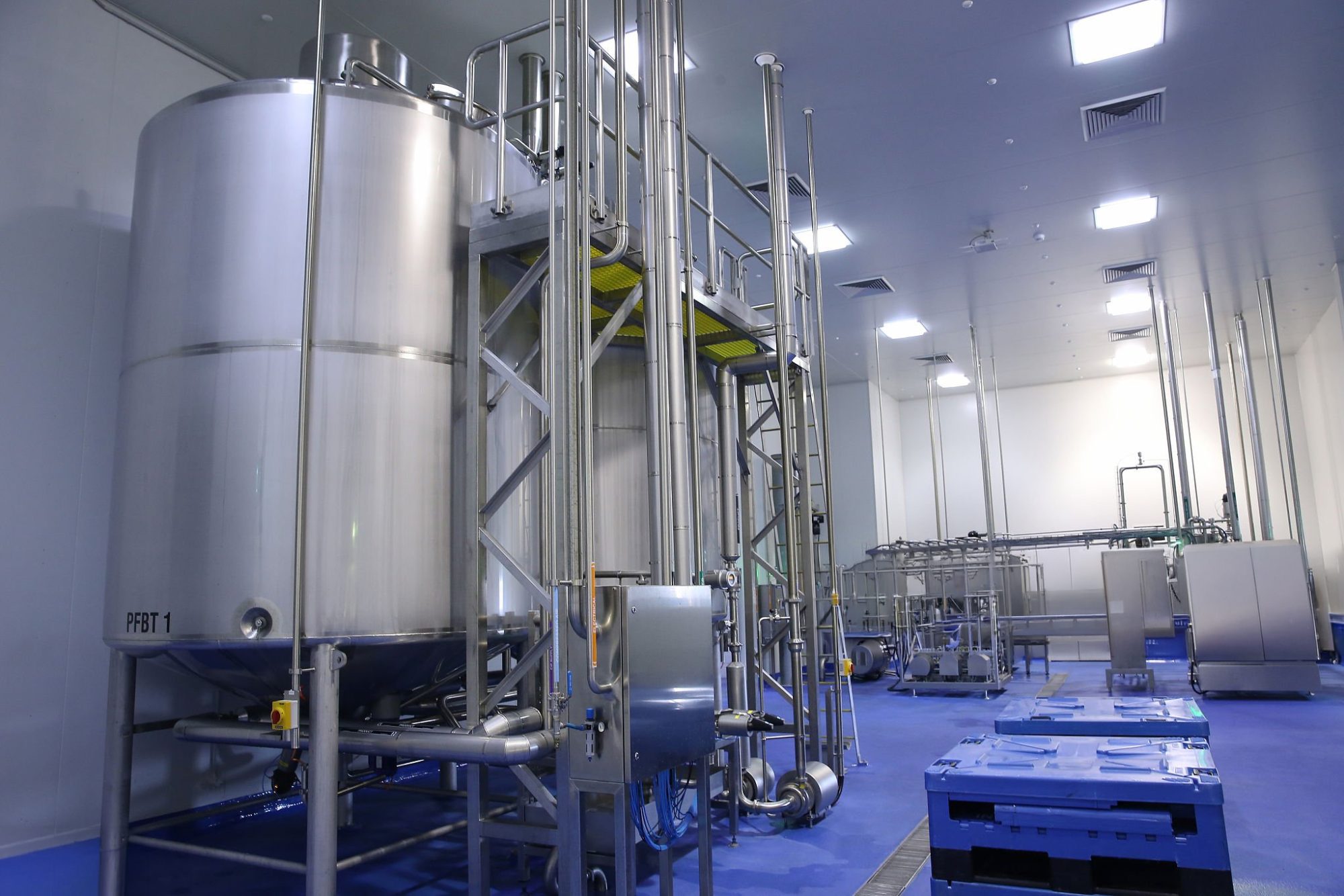
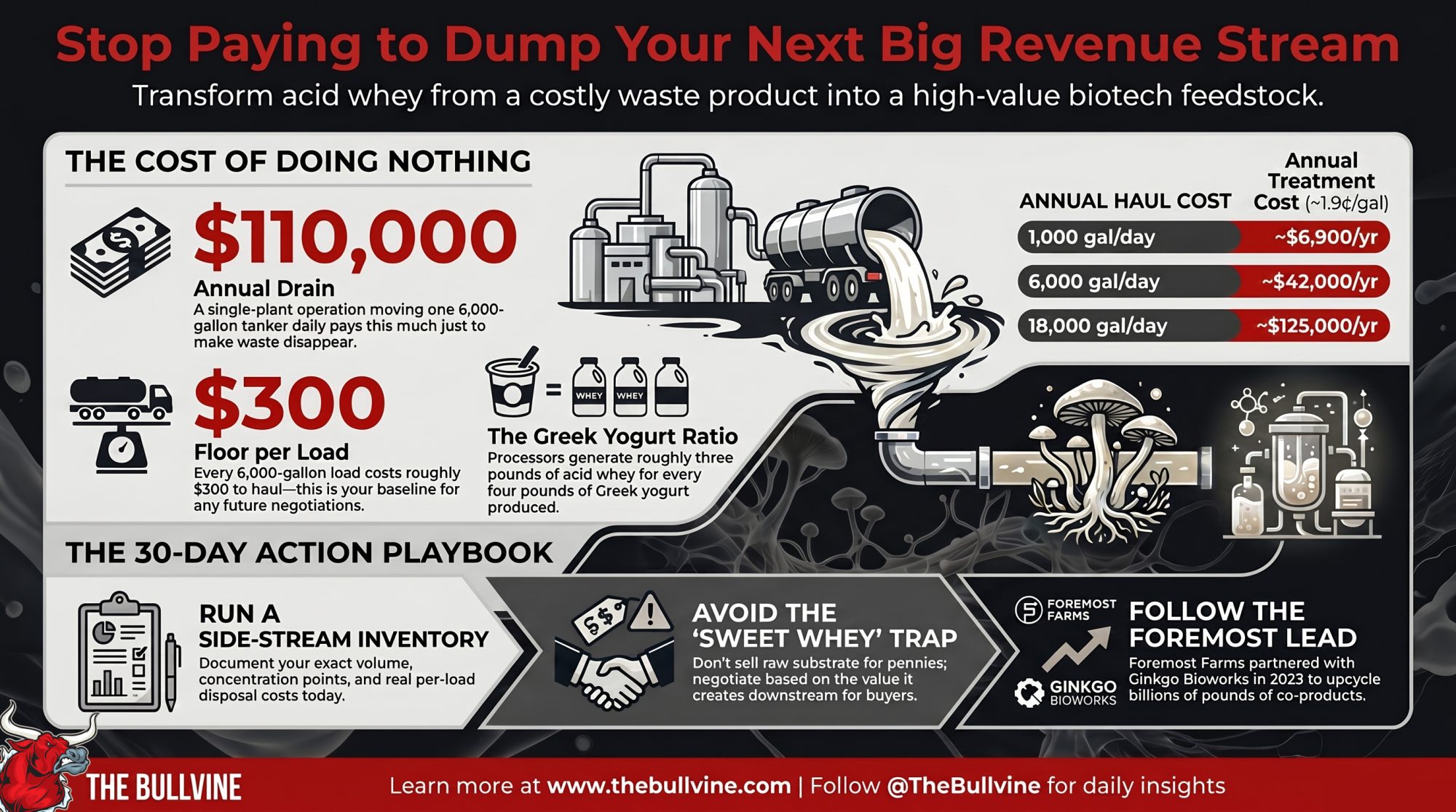
Start with the number that should sit on every processor’s desk. A plant moving one 6,000-gallon tanker of acid whey a day pays roughly $300 per load to make it disappear — call it a nickel a gallon — and roughly $110,000 a year out the door. That’s not a feed cost or a labor line. That’s a recurring check written against a liquid your operation currently treats as worthless. And the people on the hook are specific: Greek yogurt and quark processors, farmstead cheese and yogurt lines, and the co-op member-owners who never see the tanker but carry the cost on a balance sheet somewhere.
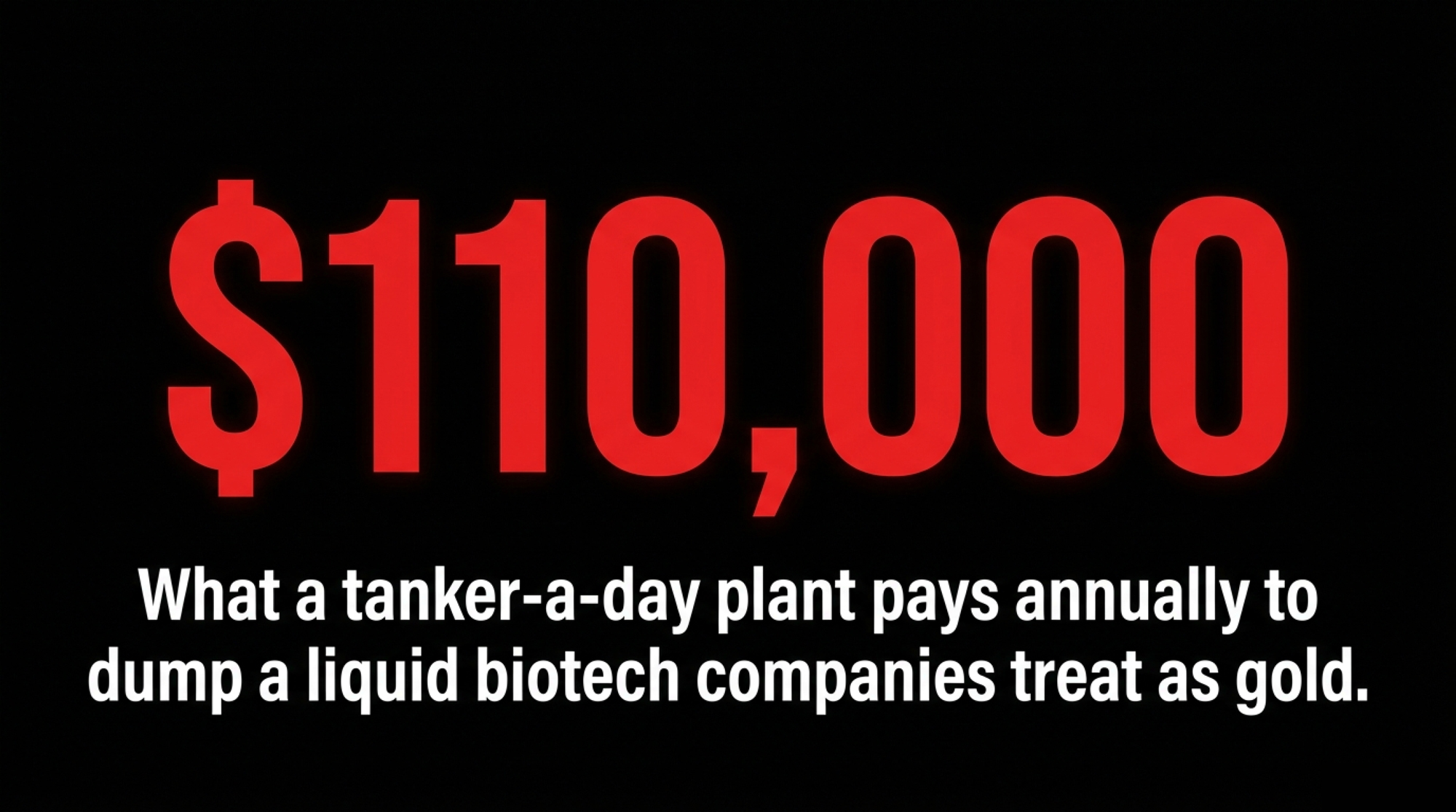
Here’s the trap. That same acid whey just became something a buyer wants — and the dairy side is walking toward the deal with no idea what its own raw material is worth.
Why a Disposal Headache Turned Into a Shopping List
For most of the last decade, the story didn’t change. Greek yogurt threw off roughly three pounds of acid whey for every four pounds of product, and nobody could make money on it. By 2013, the trade press was calling it Greek yogurt’s “dark side,” and Chobani and Dannon were quietly paying farmers to haul it off. Too acidic to dump, too high in biological oxygen demand to land-apply carelessly — strip oxygen from a creek and you kill fish.
The cost never shrank with scale. Chobani eventually installed reverse-osmosis filtration at its Twin Falls plant to pull value back out of the stream, and when the company announced a $1.2 billion New York plant in 2025, acid whey disposal was right there in the coverage as an open environmental question. Bigger plant, more acid whey. The math doesn’t forgive you for growing.
What changed isn’t the liquid. It’s that fungal protein companies finally figured out how to make money from it, and they need yours to do it.
What the Fungi Are Actually Buying
Fungal protein companies grow mycelium — the root network of fungi — into a dense, meat-like ingredient. Their bottleneck is feedstock. Clean inputs like soy cost money; side streams don’t. So they’ve gone hunting through brewing waste, potato processing fluid, and dairy byproducts like whey and acid whey.
The pivot is almost too neat. Acid whey is loaded with lactose, and to a mycelium-forming fungus, that lactose is a carbon source — sugar to grow on. The acidity that makes it a disposal nightmare in a waterway is, in a controlled tank, just a growth medium. Researchers at VTT in Finland fed acid whey from quark production to three filamentous fungi — Paecilomyces variotii, Rhizopus oligosporus, and Trichoderma reesei — and it worked as a sole nutrient source right at the flask stage.
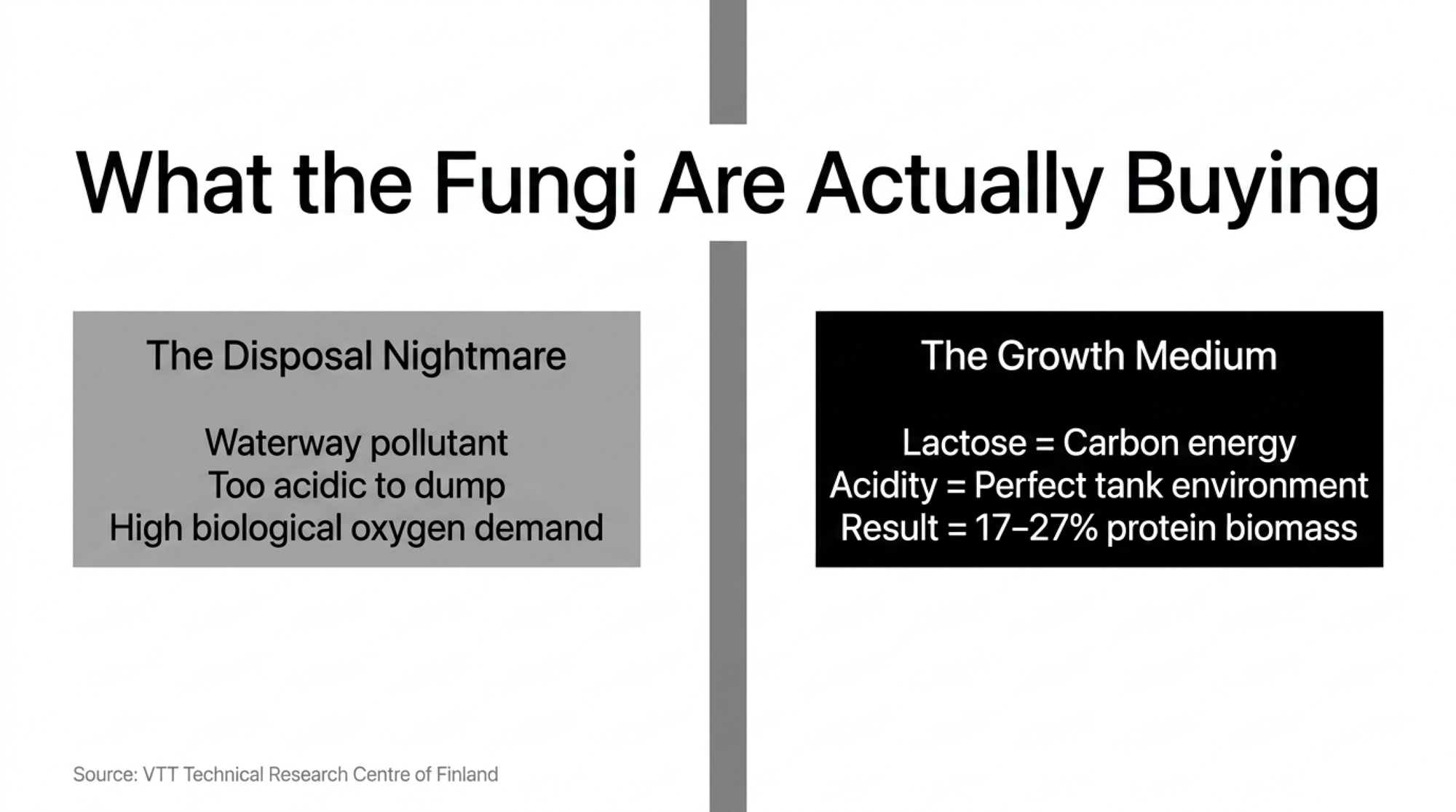
Don’t misread the study’s headline number. The top bioreactor yield, 36.5 grams per litre dry weight, came from a glucose-boosted potato stream — a different feedstock, not a verdict on acid whey. On the dairy input, Trichoderma reesei hit optimized growth on acid whey alone, and across the runs the biomass landed at 17 to 27% protein and 23 to 30% fiber, clearing the FAO’s essential amino acid bar. That’s food-grade territory. Which is why the regions buried deepest in acid whey are exactly where a buyer goes shopping.
It’s Already Running in Shipping Containers
This isn’t a someday story. Capro-X, a Cornell spin-off in Ithaca, runs a fermentation system it calls Whey Away that uses microbes to break acid whey’s lactose down and rebuild it into caproic and caprylic acid — flavor and fragrance ingredients normally sourced from palm oil.
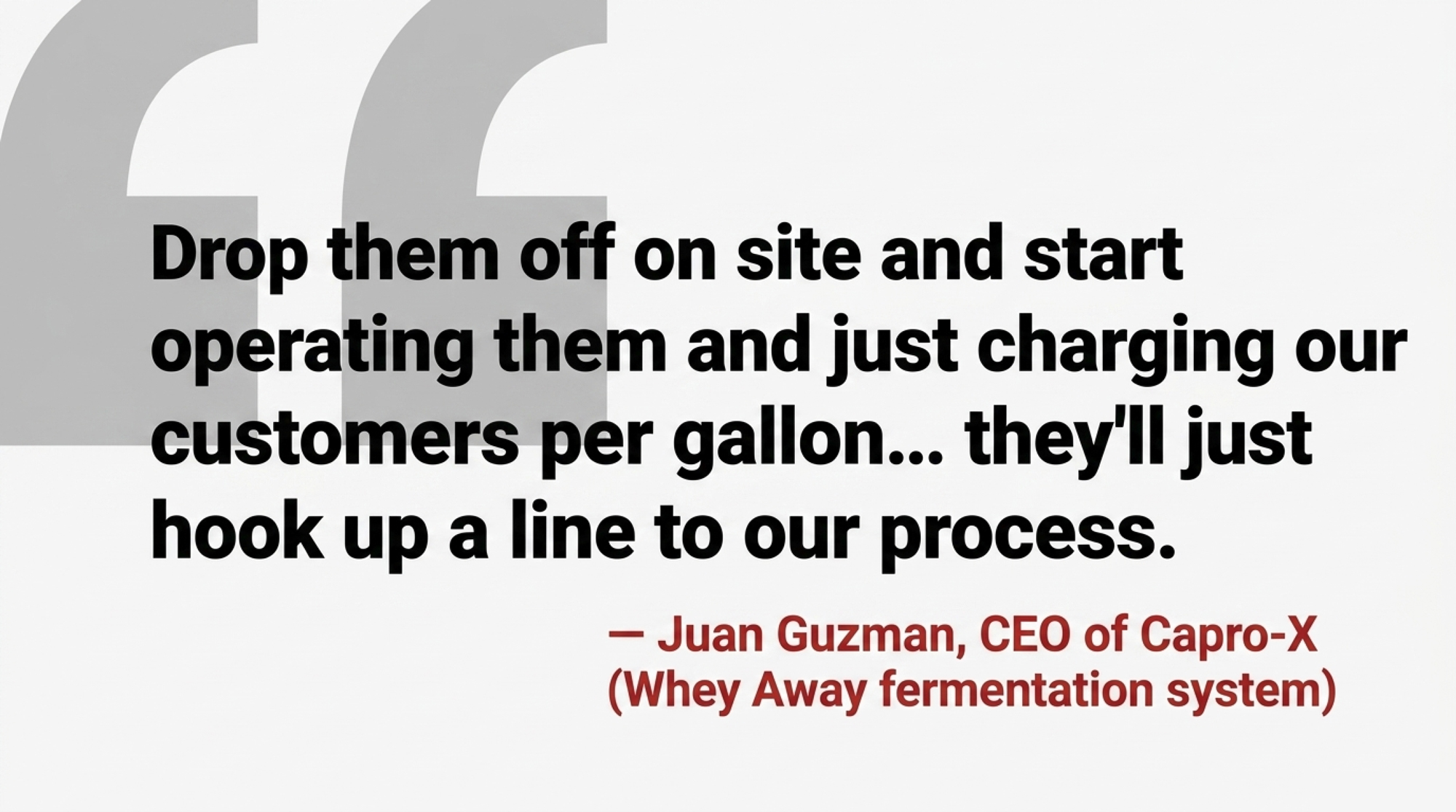
The business model is the part every co-op manager should read twice. As co-founder and CEO Juan Guzman put it in the company’s FoodBytes! pitch: “Our initial goal is to target smaller customers that we scale and develop our technology with — essentially units of shipping containers. Drop them off on site and start operating them and just charging our customers per gallon… they’ll just hook up a line to our process.” Treating just 10% of New York State’s acid whey, the company says, could yield 500,000 gallons of bio-oil a year.
Read where the leverage sits. Capro-X solves the plant’s disposal problem, takes the feedstock, and keeps the margin on the finished chemical. Three slots capture value in that chain — feedstock, infrastructure, finished ingredient — and the dairy side usually ends up holding only the first.
| Factor | Capro-X / Whey Away Model | Foremost + Ginkgo JV Model |
|---|---|---|
| Deployment | Shipping containers on-site | Co-processing at scale |
| Dairy’s role | Feedstock supplier | Co-investor / partner |
| Revenue model | Per-gallon disposal fee | Revenue share / co-product sales |
| Dairy margin capture | Low (per-gallon rate only) | Higher (equity/processing upside) |
| Scale required | Small — 10% of NY State acid whey cited | Large — “billions of pounds” |
| Dairy capital at risk | None | Yes — JV capex required |
| Technology risk | Low (microbe fermentation, operating) | Medium (early-stage biotech integration) |
| Key concern | Lock-in at low per-gallon pricing | Member appetite for biotech exposure |
Running the Numbers: What Your Acid Whey Costs to Dump
Before you can value acid whey as a feedstock, you have to know what it’s costing you as waste. The physical ratios are fixed: a cheese plant generates about 8 litres of whey per kilogram of cheese, and Greek yogurt throws off roughly three pounds of acid whey per four pounds of product. The disposal side has two real anchor rates — Chobani’s roughly $300 per 6,000-gallon haul (~5¢/gal), and the University of Wisconsin Center for Dairy Research’s ~1.9¢/gal wastewater-treatment operating cost.
Running the Numbers — Annual Acid Whey Disposal Cost
Formula: gallons/day × rate/gallon × 365
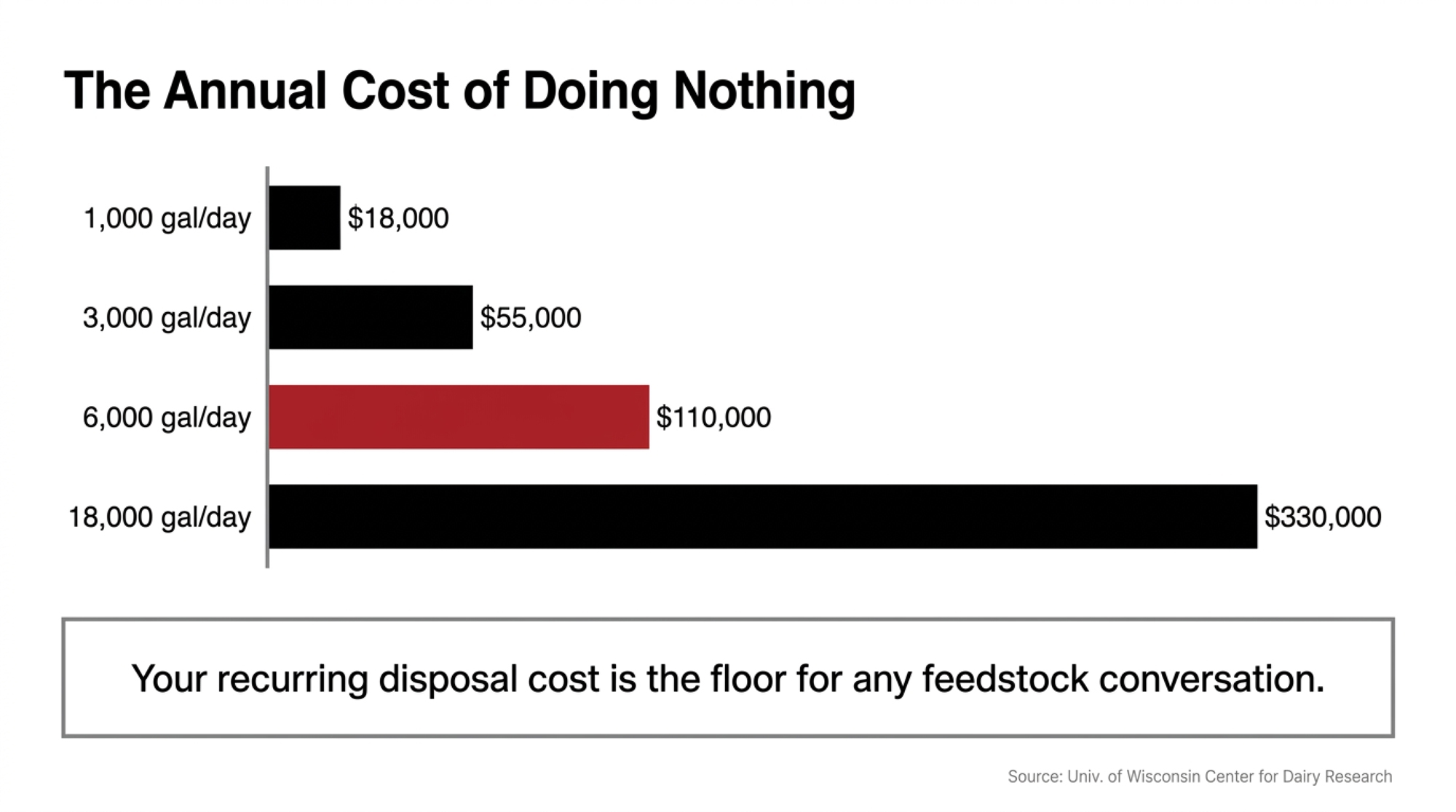
| Daily volume | Haul rate (~5¢/gal) | Treatment (~1.9¢/gal) | Who this fits |
| 1,000 gal/day | ~$18,000/yr | ~$6,900/yr | Small farmstead line |
| 3,000 gal/day | ~$55,000/yr | ~$21,000/yr | Mid-size independent processor |
| 6,000 gal/day | ~$110,000/yr | ~$42,000/yr | Single-plant, tanker-a-day |
| 18,000 gal/day | ~$330,000/yr | ~$125,000/yr | Large or multi-line co-op plant |
Read the column that matches how you actually move the liquid. The haul rate assumes a willing local taker; the treatment rate is in-plant processing cost — two different structures, not two prices for the same option. Figures are straight arithmetic (volume × rate × 365), rounded. Your real number swings with hauling distance and method.
That recurring cost is your floor for any feedstock conversation. You’re not sitting on a gold mine you can dig tomorrow — the bioreactor belongs to the fermentation company, not your barn. But the second that liquid lands somewhere that knows what to do with it, it has proven feedstock value. So pin down your own per-load number before a buyer pins it down for you. It’s the figure every offer gets measured against.
Haven’t We Watched This Movie Before?
| Dimension | Sweet Whey (1980s–2000s) | Acid Whey (Now) |
|---|---|---|
| Origin | Cheese manufacturing byproduct | Greek yogurt / quark byproduct |
| Initial status | Disposal headache | Disposal headache |
| Key barrier | No processing economics | High BOD, acidity, no buyer |
| Turning point | WPC / WPI drying technology | Fungal protein fermentation |
| First buyers | Animal feed, then food ingredient co.s | Maia Farms, Capro-X, Ginkgo ecosystem |
| Who won early | Processors who invested in dryers | TBD — co-ops moving now vs. waiting |
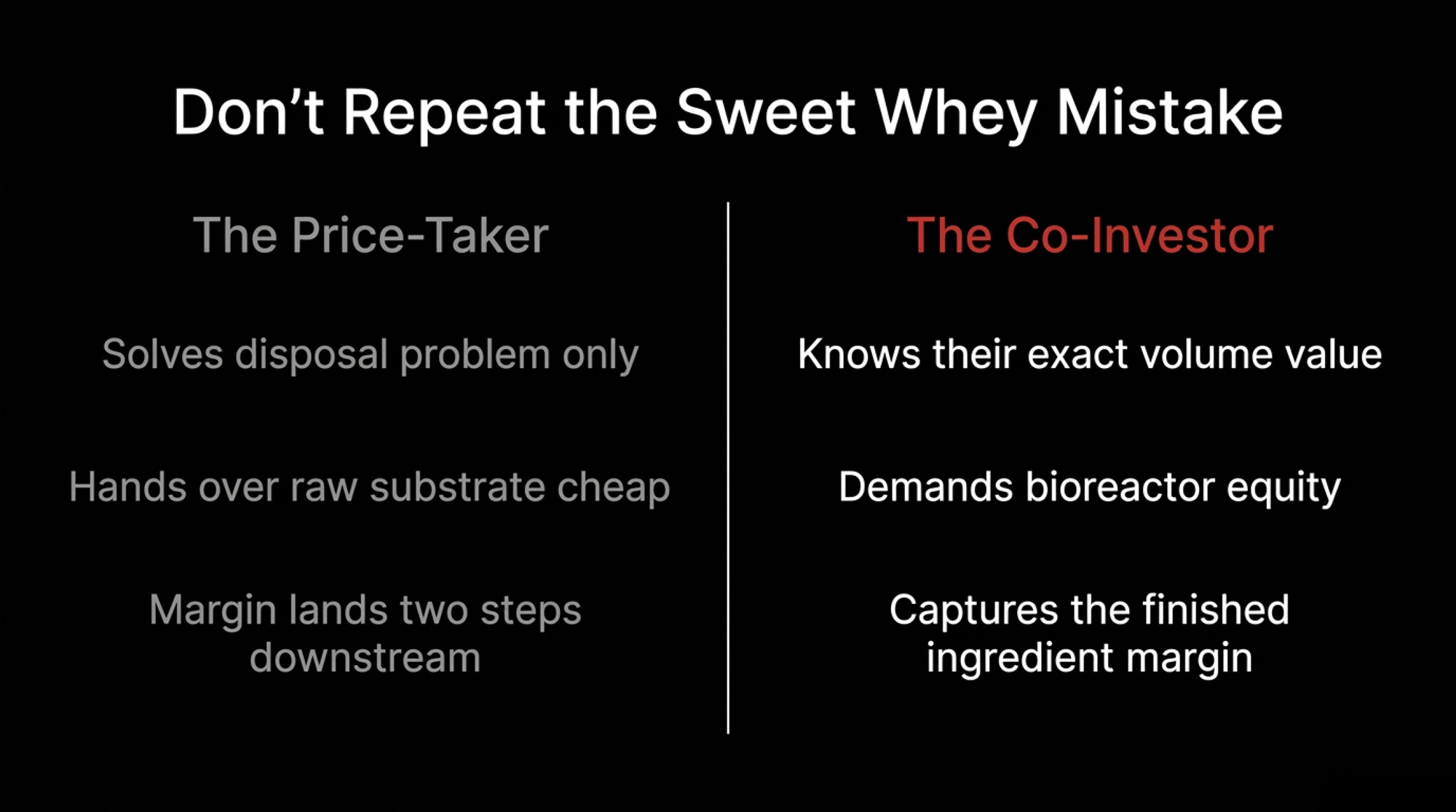
| Dairy margin outcome (laggards) | Sold raw whey cheap; lost WPC margin | Risk: sell raw acid whey cheap; lose bio-ingredient margin |
| Lesson learned? | Partially | ❓ Ask your board |
We have. Producers who lived through the rise of whey protein concentrate remember when sweet whey was a cheese plant’s headache, not its asset. The operations that came out ahead invested in drying and processing. Everybody else sold raw whey cheap and watched the margin show up two steps down the chain.
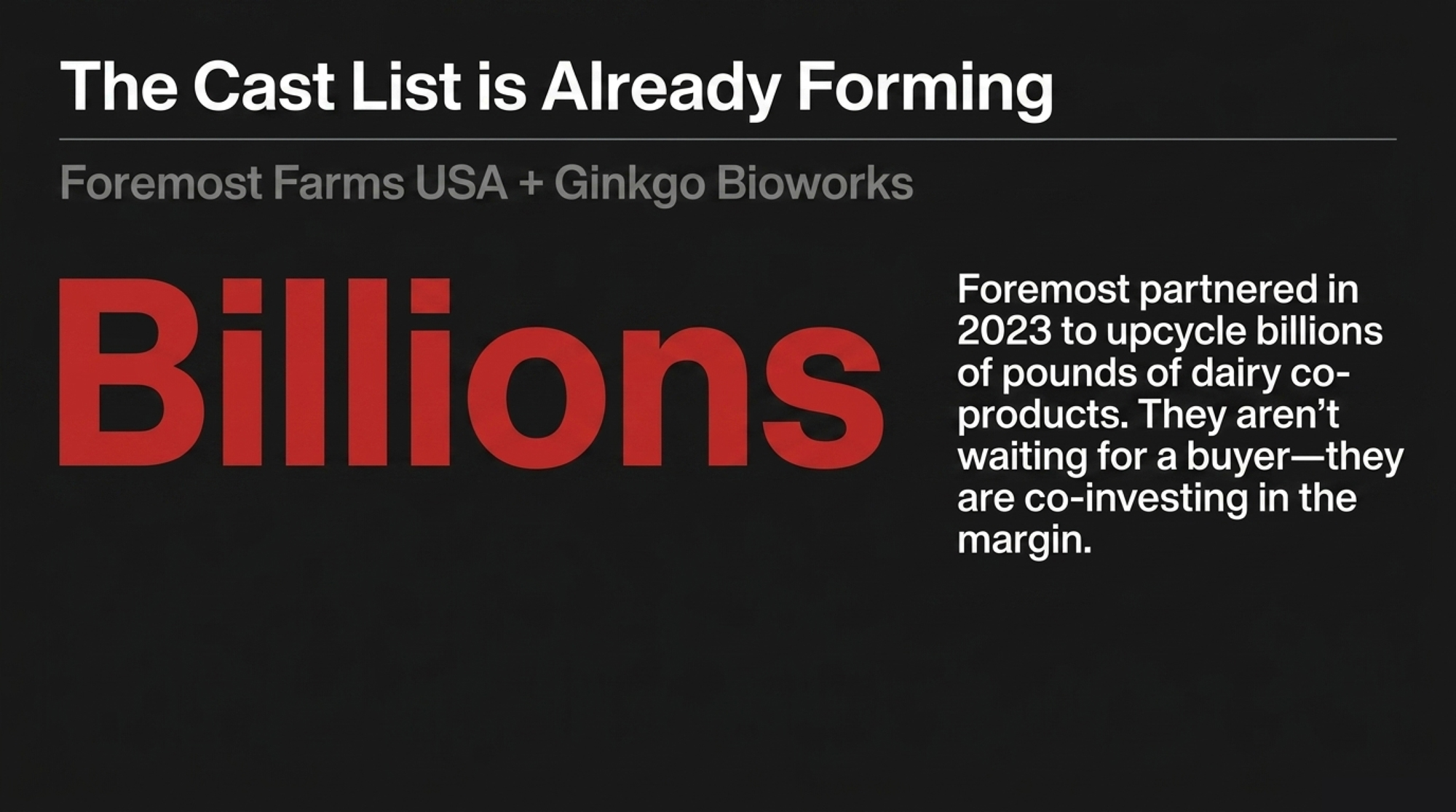
Acid whey is the rerun, and the cast list is already forming. Foremost Farms USA didn’t wait — it partnered with Ginkgo Bioworks in November 2023 specifically to upcycle “billions of pounds” of dairy co-products into new revenue. That’s the tell. When a Midwest co-op of that size commits capital to the second and third slots in the value chain, it’s signaling where it expects the money to land.
Maia Farms in Vancouver is coming at it from the protein end — co-founder Ashton Ostrander frames the cow itself as a bioreactor, and the company won the Canadian Space Agency’s Deep Space Food Challenge before closing a $2.3 million pre-seed in 2024 to scale its CanPro ingredient. Note the scale, though. Pre-seed money is early money. This reaches your region on its timeline, not yours — which is exactly why the prep work matters now.
What Does Waiting Actually Cost You?
Nothing, in cash. That’s the trap. You’re already living with today’s disposal reality, so sitting still feels free.
But the slide from potential partner to price-taker happens in those quiet months. Once a buyer has several feedstock sources lined up and a clear read on its leverage, it negotiates cents per litre — not equity, not revenue share. There’s also a path that could shrink the feedstock pool entirely: Arla Foods Ingredients launched a “Maximum yield, no acid whey” concept in October 2024, using a milk-protein range that lets strained-dairy producers skip the separation step and run at 100% yield. If that catches on at your plant, you cut disposal cost — but you also erase any deal you might have struck on the stream. Which side of that you land on depends on your process, and it’s worth asking before someone asks it for you.
Is Your Co-op Built to See Side Streams as Strategy?
This runs deeper than acid whey. It’s whether your cooperative treats byproducts — whey, permeate, manure solids, cull flows — as inputs to other value chains, or just as costs to manage.
If your co-op has never run a side-stream inventory, has nobody assigned to circular-economy or ingredient strategy, and only talks about ingredient innovation in the past tense, then acid whey is a stress test, not a one-off. The University of Wisconsin Center for Dairy Research has flagged acid whey as hard to dry and low-value as-is — which is the whole reason the upcycling route matters. The honest question is whether your board learned the sweet-whey lesson, or whether it’s about to watch the same movie with a new cast. cdr.wisc
The 30/90/365-Day Playbook for Plants Like Yours
| Action | Timeframe | Cost to Execute | Risk of Not Acting | Priority |
|---|---|---|---|---|
| Run disposal-cost inventory (volume × rate × 365) | 30 days | Near-zero (1 spreadsheet) | Negotiate blind against a buyer who knows your number | 🔴 Critical |
| Confirm who owns the disposal contract | 30 days | One phone call | Baseline arrangement ends the day a buyer arrives | 🔴 Critical |
| Open specs/pricing conversation with a buyer | 90 days | Ingredient/sustainability staff time | Lock into commodity per-gallon pricing early | 🟡 Medium |
| Evaluate “no acid whey” yield process vs. feedstock deal | 90 days | Process review cost | Eliminate stream before pricing it; lose both options | 🟡 Medium |
| Scope co-investment / JV for bioreactor equity | 365 days | JV due diligence capex | Permanently capped at feedstock-slot margin | 🟢 Strategic |
| Brief co-op board on Foremost/Ginkgo 2023 precedent | 30 days | Board agenda slot | Board makes uninformed capital allocation decisions | 🔴 Critical |
The right move depends on who you are and how much acid whey you actually control. Run the inventory step first regardless — it’s cheap, and it arms every conversation that follows.
30-Day Actions (urgent checks)
- Run the disposal-cost inventory. Pull your acid whey volume, where it concentrates, and your real per-load disposal cost. Requires: a spreadsheet and one afternoon. Trigger: if you’re paying anywhere near the ~5¢/gal haul rate on a tanker a day, that’s ~$110,000/yr you can now put a value against. Watch: don’t average across sites — a buyer cares about concentrated volume within a hauling radius, not your total.
- Confirm who actually owns the disposal contract. Requires: a call to your hauler or plant manager. Watch: if a farmer is being paid to take it, that arrangement is your baseline, and it ends the day a feedstock buyer shows up.
90-Day Actions (structural moves)
- Open a specs-and-pricing conversation with a buyer — Maia, a Ginkgo-style biotech, or an on-site processor like Capro-X. Requires: ingredient or sustainability staff and your inventory in hand. Trigger: a buyer scouting your region. Watch: an early contract can lock in low per-gallon pricing and cast you as a commodity supplier — leverage depends on how many other clean sources sit near you.
- Decide any “no acid whey” yield change alongside the feedstock question, not before it. Requires: process review against the Arla-style approach. Watch: eliminating the stream cuts disposal cost but erases the deal you could have struck on it.
365-Day Moves (strategic positioning)
- For co-ops with processing infrastructure and a value-added track record, scope co-investment — a claim on the bioreactor and finished-ingredient margin, not just feedstock. Requires: JV due diligence on tech, market, and regulatory risk. Opportunity signal: if a buyer is already running in your region and your concentrated volume clears their minimum, you have room to negotiate for slots two and three, not just one. Watch: the sector’s early — Maia’s $2.3M pre-seed proves it — and not every member wants a biotech headline.
What This Means for Your Operation
If you run your own line, the decision is yours this quarter: know your disposal number before anyone offers you pennies a gallon, and treat “solve my disposal problem” and “capture feedstock value” as two separate deals — the second is where the margin lives.
If you’re a co-op member-owner, your lever is the agenda. Force the acid whey inventory onto it inside 30 days, ask leadership why Foremost moved in 2023 when most boards haven’t, and hold off on any “free money” feedstock pitch until you’ve seen the contract structure. Raw substrate deals with no equity or volume-linked premium hand the margin downstream — exactly like sweet whey.
The whey protein wave already taught this industry what happens to operations that wait for certainty before they move. So before your next co-op meeting, get blunt with your own books: when a fermentation company comes shopping for feedstock in your region — and the odds say one will — does your operation already know what its acid whey is worth, or do you find out from the buyer? And what does your current disposal contract actually say happens to that liquid the day it stops being worthless?
We’re running the full per-litre math, disposal-cost-by-herd-size scenarios, and the contract clauses that decide who keeps the margin in an upcoming Bullvine Weekly breakdown. That’s where the real numbers live.
Key Takeaways
- That acid whey you pay to dump — roughly $300 a 6,000-gallon load, near $110,000 a year on a tanker-a-day plant — is the floor for any feedstock deal. Pin down your real per-load number before a buyer pins it down for you.
- Run the 30-day inventory: volume, where it concentrates, and current disposal cost. A buyer cares about concentrated supply within a hauling radius, not your total across sites.
- Foremost moved on this with Ginkgo in 2023; most boards still haven’t asked why. If anyone pitches acid whey as “free money,” hold off until you’ve seen whether the contract gives you equity or a volume-linked premium — not just a per-gallon rate.
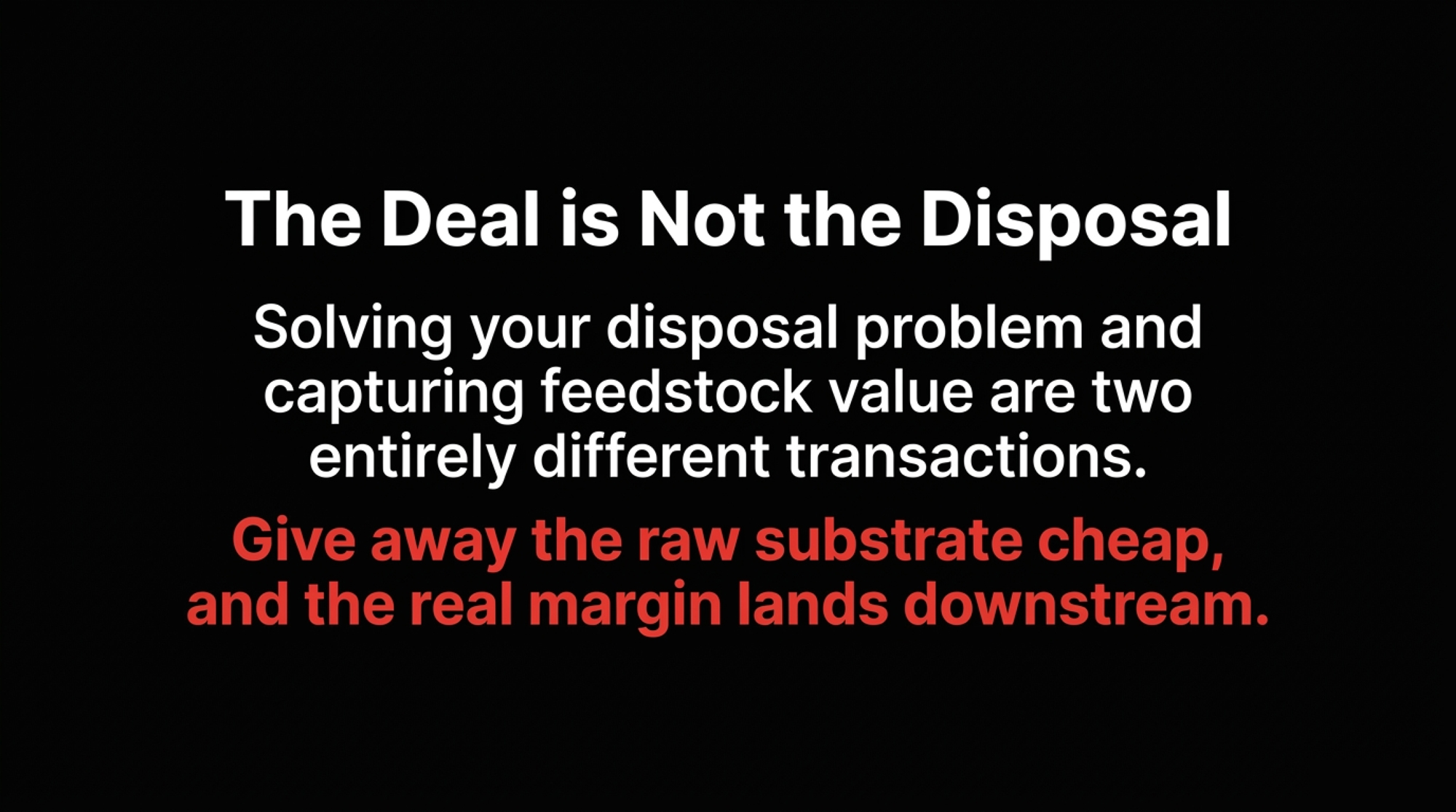
- Solving disposal and capturing feedstock value are two different deals. Give away the raw substrate cheap and you’ve run the sweet-whey play again, with the margin landing two steps downstream.
Learn More
- $11 Billion Dairy Rush: Is Your Milk Cheque Telling You You’re in a Growth Corridor or a Dead Zone? — Breaks down how multi-billion-dollar processing expansions shift regional component values, delivering hard numbers on the massive margin spread between raw milk solids and highly fractionated, premium whey ingredients.
- The Dairy Market Shift: What Every Producer Needs to Know — Arms you with an explicit value-ladder analysis mapping out why commodity processing returns are flattening while advanced high-protein whey concentrates and isolates achieve explosive double-digit annual market growth.
- Data That Pays: How Verified Sustainability Can Secure U.S. Dairy’s Global Advantage — Reveals the hidden monetization framework for agricultural side streams, exposing how to turn operational compliance into a continuous cash machine through performance-based clean fuel incentives and private carbon registry payouts.




