Archive – Page 8

The TAG GAME PLAN – 5 Years from “Startup” to “Game ON!”

There are very few who have looked at dairying in the first decades of the 21st century and then decided that it was a good time to start something new.  Few or not, that was the decision arrived at by Patrice Simard and Alan Bryson because as they saw it. “Industry priorities seemed outdated for the direction that the international marketplace was heading.”

One Size Didn’t Fit All. For Bryson and Simard It Also Didn’t Fit the Future!

In 2008 Bryson and Simard had the courage of their convictions to make the next move. They formed Trans-America Genetics or TAG as it is widely known five years later.  This new kid on the AI block was different from the others.  “Here was group of forward thinking breeders who were united to become the TAG Partners.  It was formed from an “unusual partnership” rather than the more common coop setup. We would win or lose together.” It was a bold no guts… no glory move but already the founders felt empowered. “Forming the partnership was a big challenge but it also represented the first success for TAG.” Founded on partnership, it isn’t at all surprising that Patrice’s life partner, Natalia Rodrigues, is also a business partner. Indeed the teamwork of the TAG President, Patrice, and Vice-President, Natalia, is the ultimate real-life example that shows how sharing the burdens of business and supporting each other are at the very heart of this new undertaking.

Ready! Set! Start UP!  TAG is into Game Changing!

“TAG was created to provide options that weren’t available in the market”   asserts Patrice who envisioned a framework that would provide realistic opportunities for breeders to make new choices. Today, with five years under its belt, TAG has the perspective to look back and gauge how well that vision has been implemented. “TAG has devoted our attention to helping dairy enterprises become more profitable through genetic selection and focus on quality products.” That attention has been successful for TAG. “Our unique philosophy of partnering for success is the “raison d’être” or reason for being that provides the foundation that Trans-America Genetics is building upon.”

“Success is a Whole Team Relationship”

TAG had a special vision in assembling an exceptional team as well. “It was imperative right from the early stages for the company to surround itself with quality people.” From the outside looking in, the uniqueness of the TAG team is readily apparent. First there are their varied backgrounds including American, Brazilian, French, French Canadian, English Canadian, and Cuban. Then there are the qualities they all possess: energy, passion, enthusiasm and commitment.” The entire team loves to demonstrate those qualities that have grown the vision and makes TAG partnership a reality for each partner, client and staff person!!”  Patrice sums up the learning curve of the first 5 years. “The most important lesson has been the value of relationships. Every success at TAG has been the result of relationships earned throughout life and treating those people with honesty and integrity.”

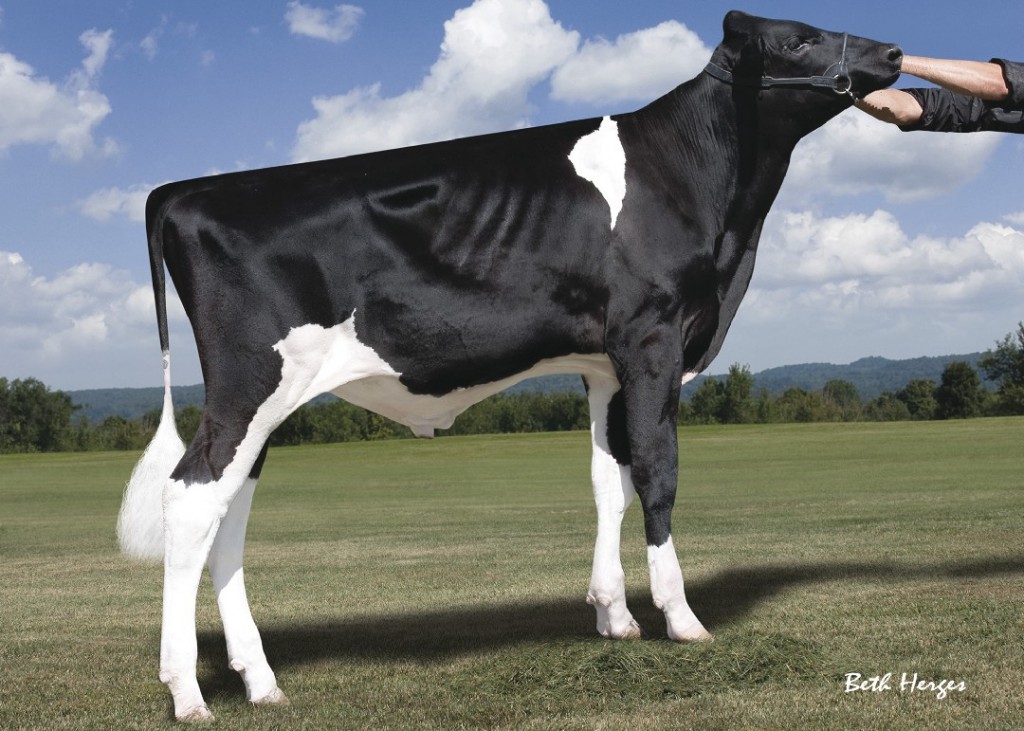
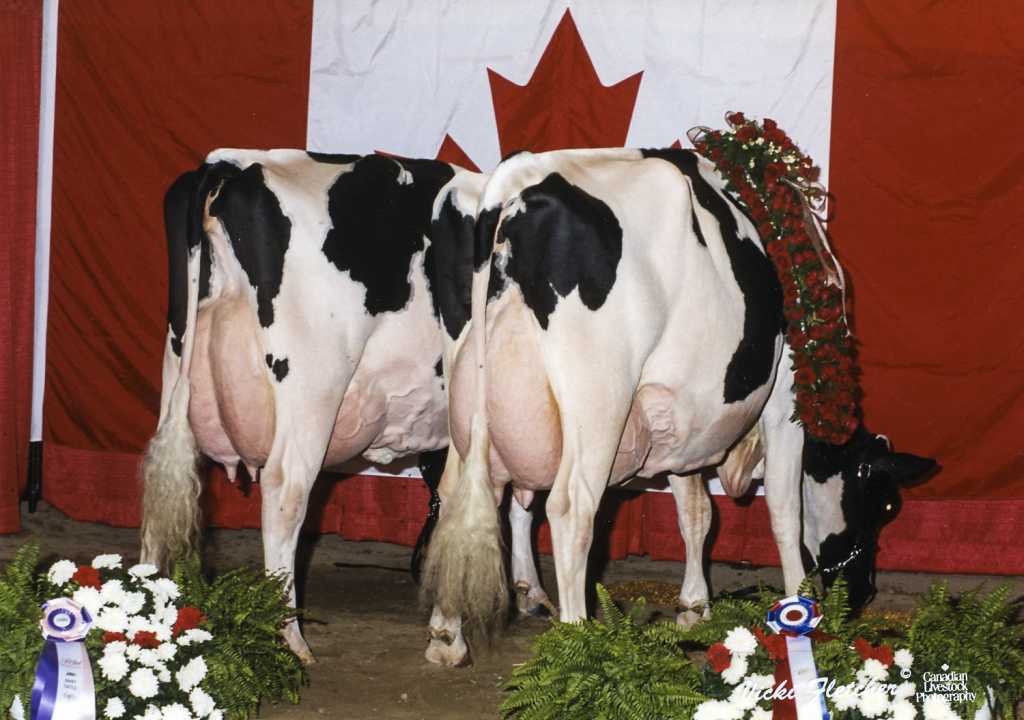
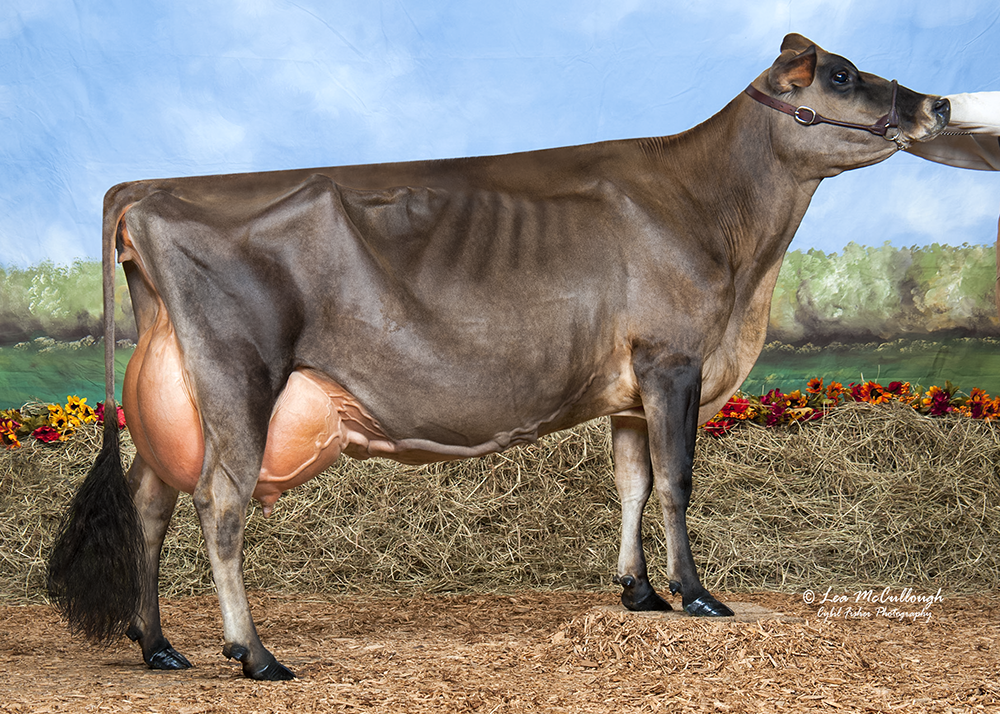
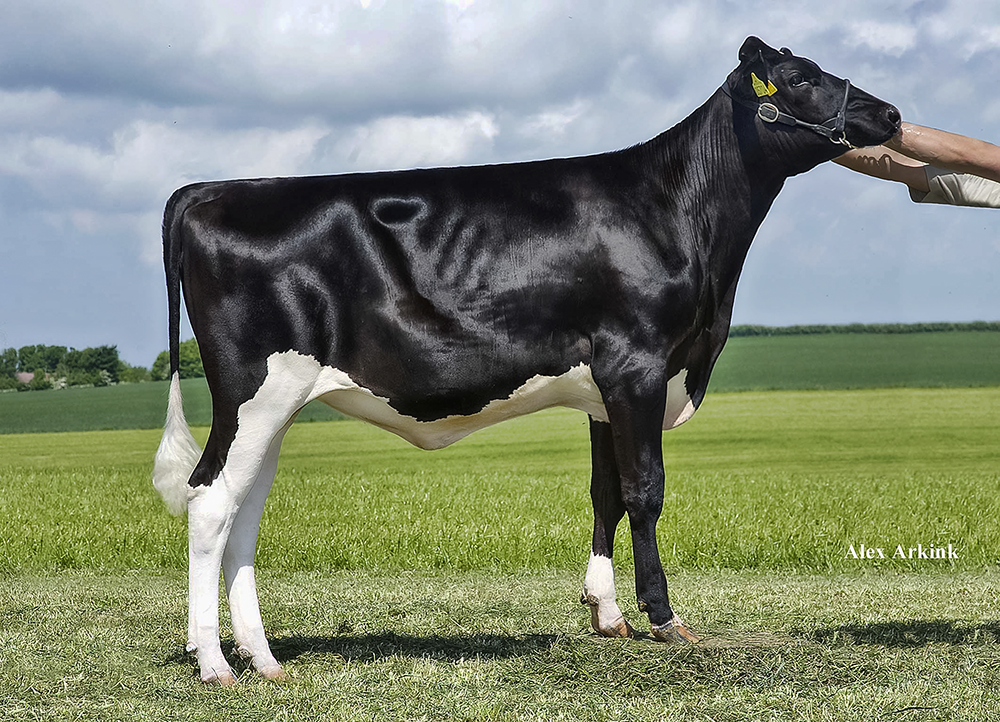
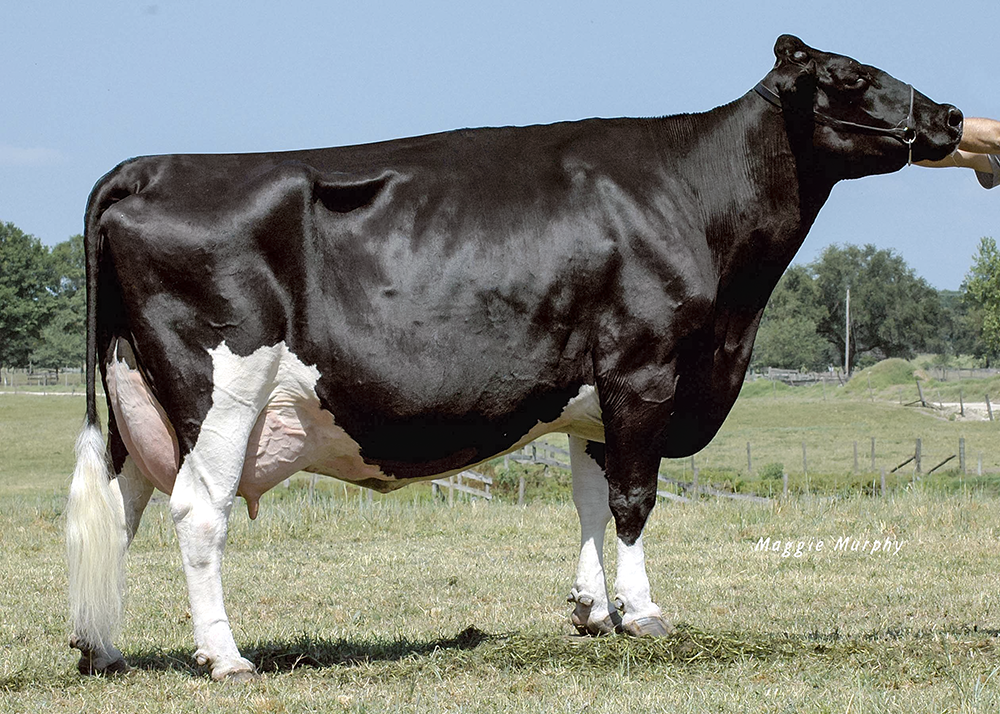
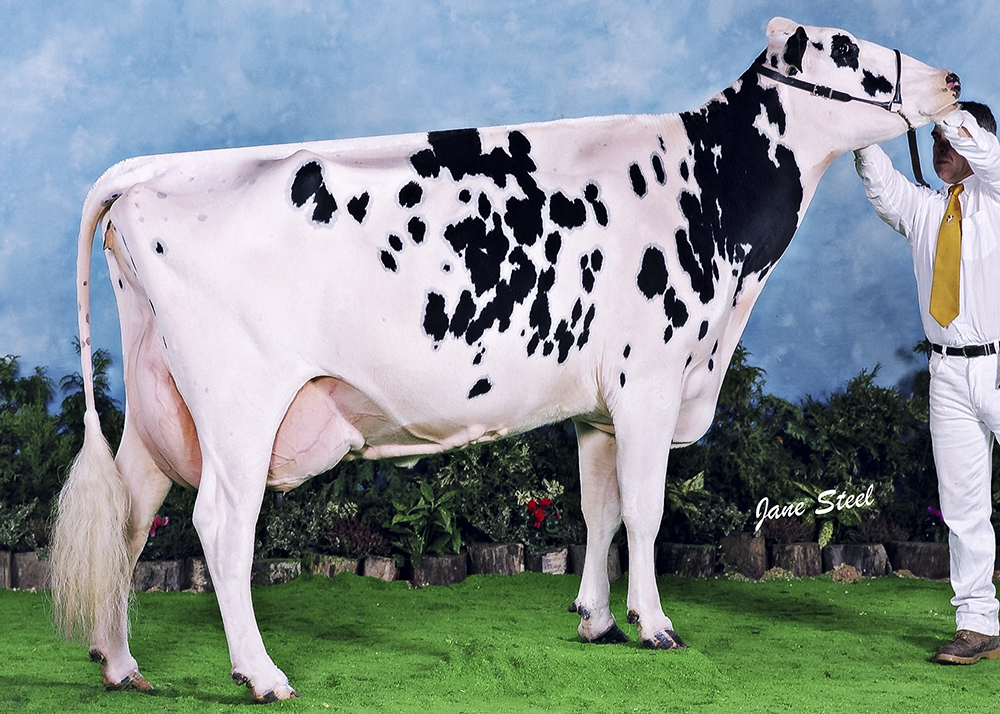
Seagull-Bay Miss America
One of the early stars of the TAG embryo and female program

The Global Game Starts “Now!”

Whether you’re looking at five years or fifty years, it’s easy to see that progress is not a straight road from start to finish.  When you throw genetics into the mix, you can be sure that there will be ups and down and sometimes even high speed. Patrice confirms how this impacted TAG. “The situation in the international marketplace demonstrated a need for a company with a focus on different priorities.” Having said that and recognizing that profitability is the ultimate goal for everyone regardless of their place in the dairy industry TAG was prepared to evolve into a more fluid business that could include multiple and varied options.  Simard is happy for the success of that model. “The international market ratified the ideals of TAG and demonstrated their support by the speed in which the markets developed and multiplied.”

Moving At the Speed of the Marketplace

The speed of change is the new reality of the dairy industry regardless of what country you are in and it can be a factor affecting everything says Patrice. “Speed has definitely been the biggest surprise!  If we look at the original business plan things have been bigger, better and faster than we ever imagined. The number of bulls we have marketed, the number of distributors in place and international influence achieved, five years in business we are at a very different place than what the original business model projected.”  Being able to evolve was important. “Our growth in developing business plans and financial models has increased exponentially.”  There are new questions and the need for new and better answers on a daily basis! For this young company change is no longer on the horizon it is here!

Putting the Genomics Pedal to the Metal

Nowhere is speed more apparent in the dairy world than in new technologies such as genomics.  TAG feels their growth has been similar. “We have exceeded our goals in every way.  We can look at TAG as the marketing parallel to how genomics has impacted the industry.” Nevertheless he remains clear sighted in his assessment of this new tool. “Genomics has brought many benefits. However, it also brought a current period of instability, due to the speed with which it impacted dairy breeding.” While technology can pave the way, it is not without its speed bumps.

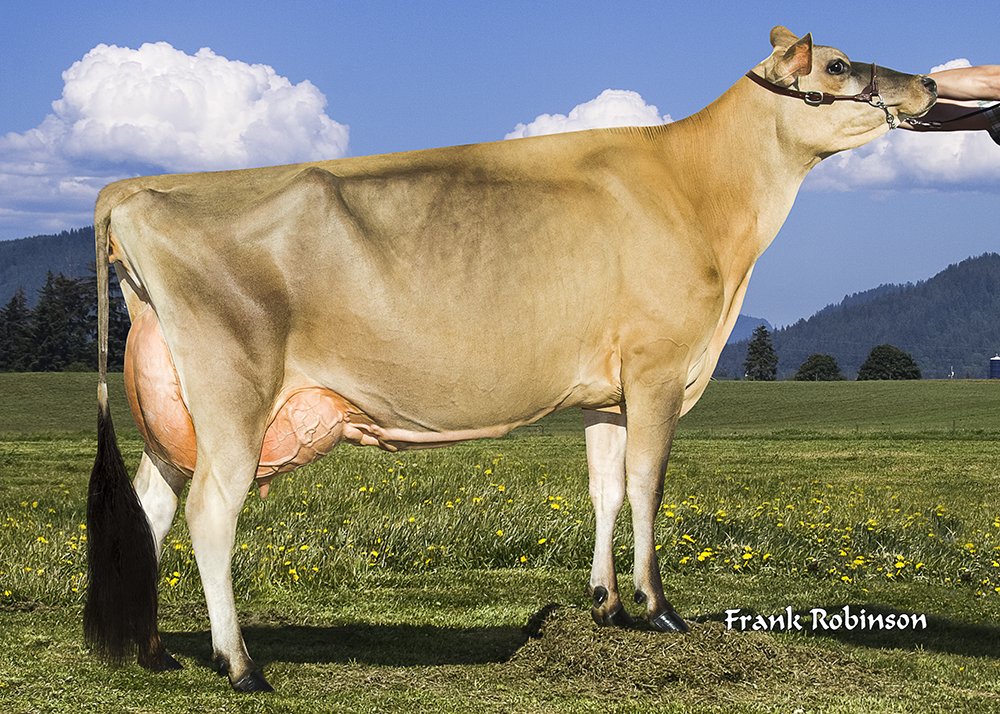
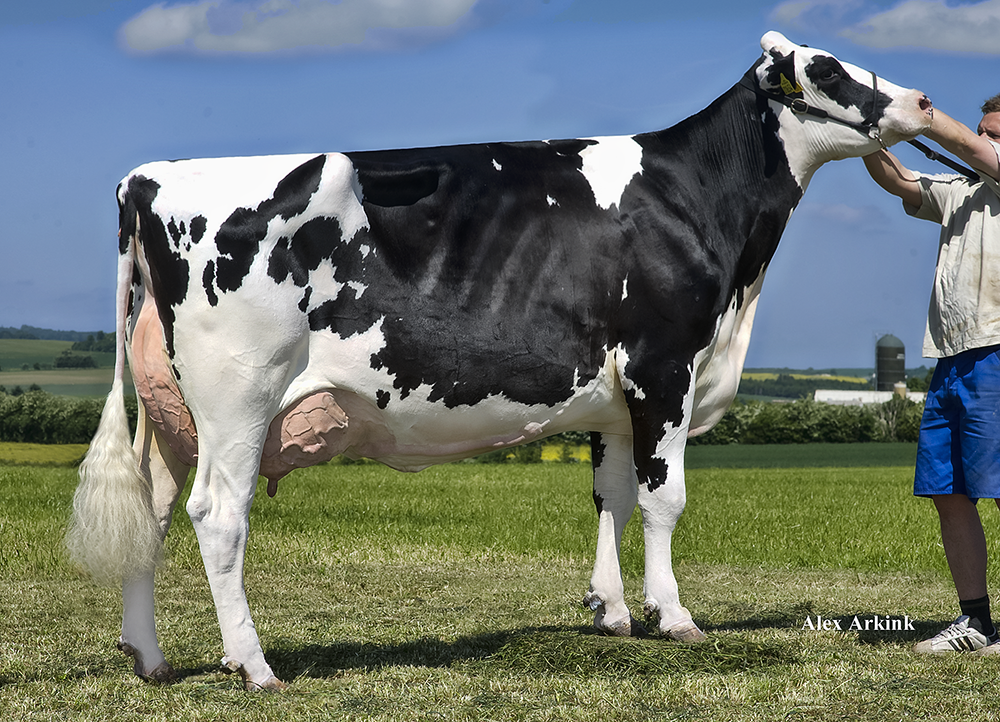
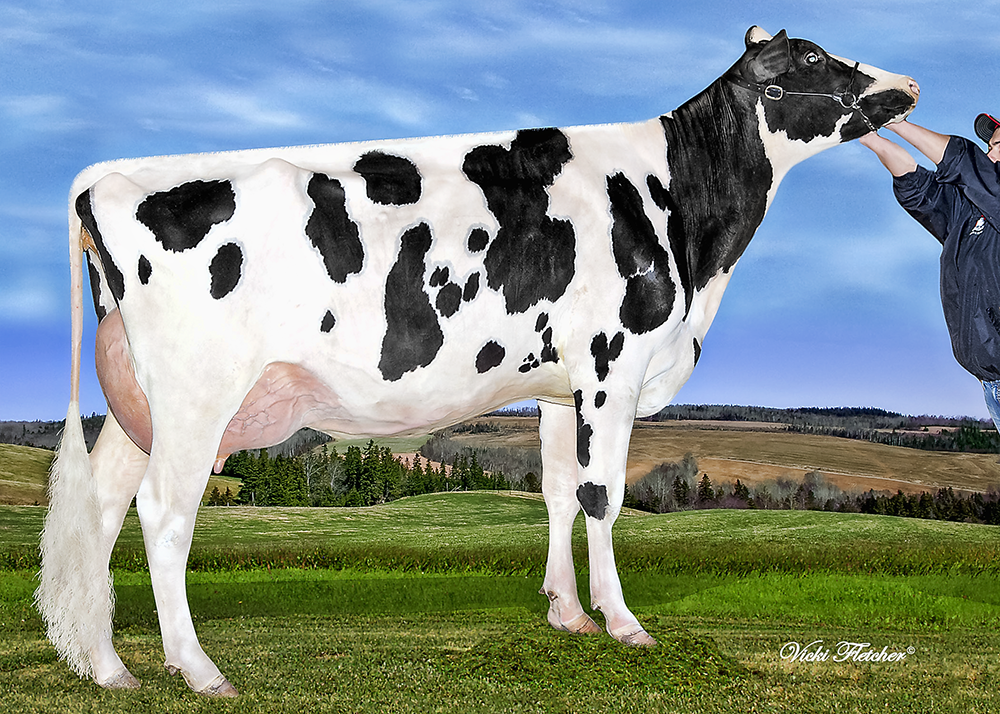
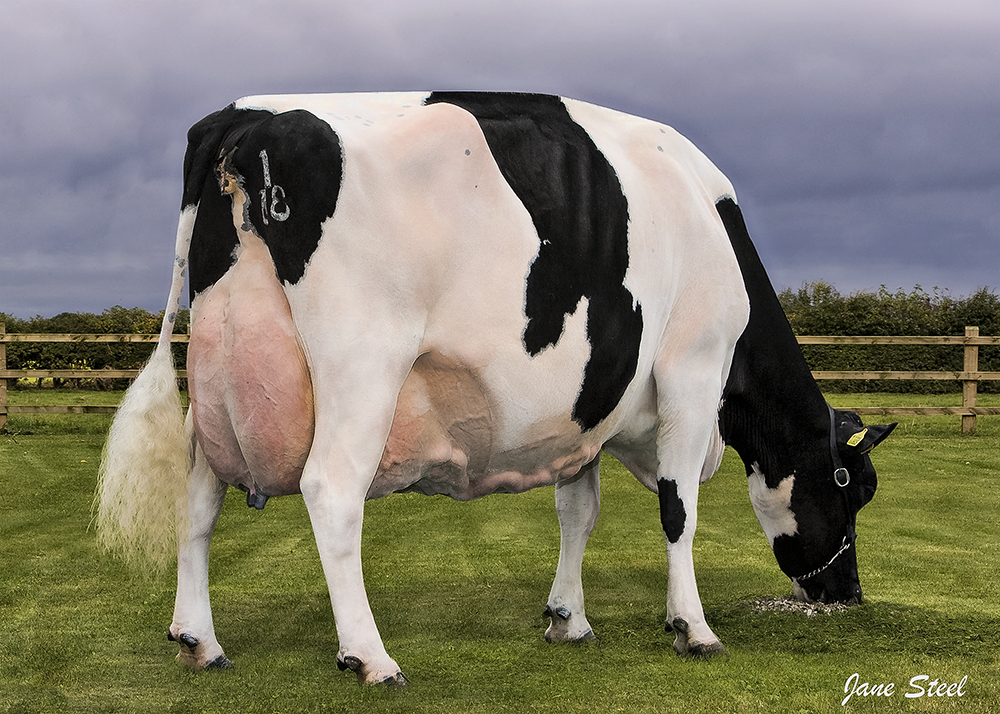
RONELEE TOYSTORY DOMAIN-ET

TAG Success Growing by Leaps and Bounds

It is always reassuring when a new company successfully reaches five years. Patrice reports that there are many great successes stories that started right from the beginning. “One big success came with the August ’09 proof round. It was an incredible round for TAG and a turning point for the young company.” If TAG was writing a book about success the title would be “Domain, Domain, and Domain!” Simard explains, “Domain received his first genomic profile and ranked 3rd in the population for GTPI!” From there success continued on the sales front. “Sales have doubled every year for the past three years.  The company has had to expand the management team to respond to the every-increasing interest!” Looking back at goals set by the partnership the glow continues as Patrice points out an exceptional exploit for the young company. “In 2012 the milestone of one million doses of semen produced was reached.”

TAG is All About “Now You See Us!”

In a hugely competitive marketplace, where the danger can be that everyone looks like everyone else, TAG has had success in creating innovative marketing platforms. “TAG has managed or co-managed 4 sales to date for combined gross revenues of over $10 million dollars.” Those were profile raising opportunities to follow Domain’s success.  “The great success with Domain permitted TAG to contract a few more important sires and start moving ahead exploring possibilities abroad.” Of course, whether it’s sales, semen or sires you’ve got to have visibility to the consumer and part of that is in how you brand yourself. Patrice is proud of this growth area as well. “TAG’s distinctive marketing style became quickly recognized. Whether it was modern ideas for ads, clothing or new views for photos, breeders are vocal in their appreciation of TAG’s marketing products.”

TAG Game Plan = Continuous Transparent Collaboration

It doesn’t matter what stage your company is at there is never a time to say, “There! We have done enough!”  For TAG who began with the goal of impacting their partners’ success by providing something different, the challenge is ongoing. “The TAG philosophy means working with farmers to develop profitable genetic strategies for their herds.” In these first years market reaction has been favorable but there is always work to do. “TAG feels that as a company which from the start believed in genomics, they have a responsibility towards dairymen to help them understand the developments and possibilities that genomics bring to them.”  There are always new concerns. “Fertility has become one of the greatest impediments to commercial farm profitability and TAG’s objective is to put the focal point on fertility and health traits.

Wrong Way. Right Turns.  Quick Response

Of course, with growth come both challenges and opportunities.  Looking back is always easier than looking forward. “The original TAG model was based on having products to distribute which never materialized.” This could have meant game over but the TAG partnership is always prepared to respond to new issues. “We had to accelerate the search and development of our own products” Having the flexibility to change proved to be a key. “Change was quickly implemented. The original business model was to grow from a domestic oriented company towards international distribution.”  The speedy success in the international marketplace inspired a new direction.  By continually building on their goal of meeting the needs of particular breeding operations, TAG is confident that they will gain in the Canadian marketplace too. “The domestic market hasn’t been as receptive to the TAG philosophy probably due to the difference in the commercial dairy industry here in Canada.” TAG continues to be unique even when facing challenges. Many start-ups focus intensely on growth, sometimes to a business-ending fault.  “For TAG the focus now and in the future is based on the needs of the customer and then on follow-through. The only thing that will never change at TAG is the core belief of integrity and transparency towards partners and clients.”

The Bullvine Bottom Line

As TAG continues to innovate and make their mark in the dairy genetics industry, they have encouragement for others. “Ideas are important but TAG has learned that courage is the main ingredient for success. The courage to go forward with your ideas, the courage to face adversity, the courage to admit that you need to modify the plan and the courage to launch the next idea.”  Congratulations and High 5s all around. When it comes to dairy passion, enthusiasm and commitment “TAG You’re It!”


Get original “Bullvine” content sent straight to your email inbox for free.


[related-posts-thumbnails]
KUEFFNER DAIRY TEAMWORK “2 Dream the Impossible Dream!”

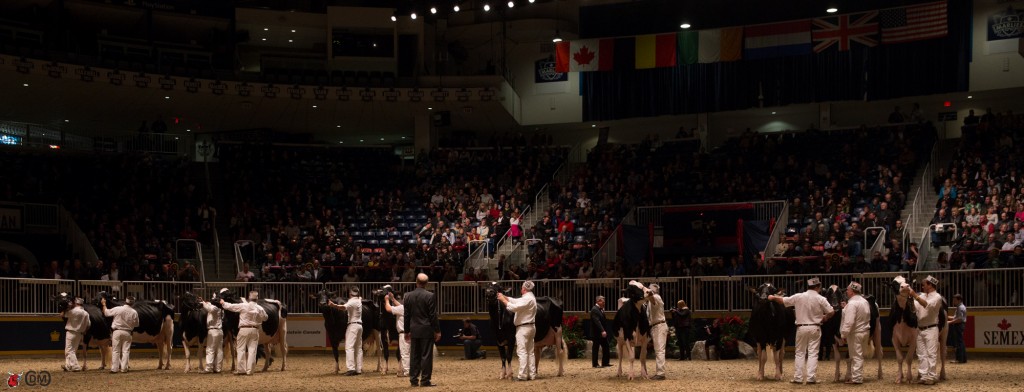
1044772_138370643033411_538080046_n[1]To have a winner at a major dairy show is a dream for those who are passionate about dairy breeding.  To lead a Grand Champion at World Dairy Expo or the Royal Winter Fair are moments that only a special few can experience.  For Ernie Kueffner, of Kueffner Holsteins and Jerseys in Maryland,  once was not enough and, as a result, he and Terri Packard have shared a countdown of achievement that hits those big first places not just once or twice, but four times.

“The Without Compromise Kueffner Countdown”

Here’s the Kueffner Top 4 Countdown: FOUR Royal Champions in THREE  Different Breeds; TWO  World Dairy Expo Supremes in 2 Breeds and ONE All-Time All- American 4-year old. He looks back and urges simplicity.  “Some people ask for advice from too many sources, and then they collect it all and don’t know where to go with it. Decide what kind of cattle you like and stick with it. Know the traits that are most important to you and don’t compromise when you are making mating decisions!” This particular focus has been the foundation Kueffner counts on, builds from and wins with!

1377185_170896726447469_1347065838_n[1]

“Good Ring Sense From Good Cow Sense”

If you`re thinking of ways to either start showing cattle or how to improve, Ernie has some advice derived from his observations. “I do think there are a couple things to watch.  Rear udders have become extremely important – maybe too much so. I feel that fore udder attachments and teat placement play a bigger role in the longevity of a cow. And the emphasis on big rear udders in the show ring has increased the pressure to get the udders extremely full. As you watch the great cow classes at our major shows, you see many that have lost the definition of crease and the quality of their mammary. It is not attractive.” Having shared his thoughts about udders, he goes on to other areas that shouldn’t be overlooked. “Feet and legs is the other area I am concerned about. This is not always emphasized as much as I think it should be which may be related to the focus on rear udders. In reality, feet and legs will have much more effect on a cow’s longevity.”

“They’re Always Seeing Stars!”

Having developed superior Holsteins and Jerseys, it isn’t surprising that more than one have won special places in Ernie and Terri’s hearts.  For Ernie there are three in particular. “They are – Tri-Day Ashlyn-ET, KHW Regiment Apple-Red-ET and Huronia Centurion Veronica. (Read more KHW Regiment Apple-Red – Beauty, performance, and even more record accomplishmentsGreat Show Cows: Can they pass it on? and The 12 Greatest North American Colored Breed Show Cattle of All-Time)  All three are great cows – all have been Grand Champion at World Dairy Expo – two have been Supreme Champion at Expo – and all three have been voted World Champion within their breed.”  As glorious as their show records are, what they have accomplished through their offspring (both sons AND daughters) for multiple generations makes them special in Kueffner’s eyes. “It continues on and on – it is amazing to me. You can talk about the best show cows in the world, but we all know that very few of them became respected brood cows. Some of the greats produced a good son or a couple nice daughters, but it is rare to have a cow transmit superior genetics to her sons and her daughters. Ashlyn, Apple and Veronica have distinguished themselves through what they have done both inside and outside the show ring. And they aren’t done yet – they continue to raise the bar.”

Huronia Centurion Veronica at 10 years old. Photo take  by Karen Knutsen at NY Spring Show

Huronia Centurion Veronica at 10 years old. Photo take by Karen Knutsen at NY Spring Show

Teamwork “Running Rings Around the Best”

Ernie and Terri express their feeling for their cattle in the sign which has hung in more than one of their barns, “Every cow in this barn is a lady, please treat her as such.” Perhaps this respect sums up the “Ladies’ First” achievements that their girls have delighted them with. “It was a great thrill to have Supreme Champion & Reserve Supreme Champion at 2004 WDE from the same string – two cows that we purchased for the owners, then developed and managed.” As well there have been four Grand Champions at The Royal in three different breeds.  There is justifiable pride in other career highlights which include purchasing a Holstein 2-yr old who stood 14 at Expo and then developing her into the All-Time, All-American 4 year old.  They earned the WDE Premier Breeder banner in two breeds during the time they managed Arethusa Farm and in 2009 had the All-American Produce of Dam for both Holsteins and Jerseys. Oh yes and both of the dams were past Supreme Champions at World Dairy Expo. Impossible feats are simply expected successes for Ernie and Terri.

“I’m Seeing Barbara From A New Perspective”

barbara

First impressions sometimes disappoint later but, in all respects, Butz-Butler Gold Barbara was everything she appeared to be when Ernie saw her in Madison in 2012. “Barbara is one of the few cows, in any breed, that offers a complete package. She is an outstanding show cow with a great pedigree, and that combination gives her worldwide marketing appeal – which makes the financial investment worthwhile. All of this makes her special.” With such obviously strong inclinations toward owning this cow, it isn’t surprising that great partners could be convinced to share his enthusiasm. “When I heard that she was for sale in August, I made a trip to Illinois. She looked outstanding but was recently fresh. I thought waiting a few weeks would help me to make the proper decision. The package price for Barbara and 10 offspring made it difficult to purchase her alone. Tim Abbott joined me on the return trip to Butlerview. After they paraded her at milking time, it was an easy decision….we agreed that it was time to own another Barbara.” Then another opportunity presented itself. “Hearing about my trip, our friend and veterinarian, Dr. Matt Iager, mentioned that he would like to invest in a great young cow if we would take care of her. Shortly thereafter, the representative from River Valley contacted us expressing their interest in investing in a Holstein. Tim and I agreed that the four potential partners all had something to offer – each brought a unique talent/skill to the partnership.” (Read more SOLD – All-Canadian & Unanimous All-American Senior 2 Year Old to Kueffner, St. Jacobs, and Dr. Matt Iager UPDATE: River Valley now a partner) Beyond Ernie’s first instincts and the impact she’s making through her offspring, Barbara continues to surprise. “Now we have worked around the cow for six weeks. And we’ve learned that Barbara is special in other ways – her attitude, appetite, great willingness to milk, and the way she responds to attention make you look forward to going to the barn.”

IMG_8379

“Your Reputation is Your Marketing Brand. Share it on Social Media”

Ernie and Terri know that good business starts with the trust people have for the work you do and the cattle you promote. Ernie points out how important that can be. “In this business, you must build a reputation for marketing your best. We always sell cattle with deep pedigrees that the buyer can build on. And we always want to see buyers do well.” For eleven years they have used their website as a marketing tool, but recently launched a Facebook page. Terri is enthusiastic. “I am amazed at the interest this generates. It helps us grow the “brand” and allows people to feel a connection to our business, no matter where they are located around the world. Now we use Facebook to get news out quickly – whether information about a consignment, show winnings or new photos – and this leads people back to our website. I feel that combining the immediacy of social media and the substance of a good website works together to successfully promote our herd.”

 “Mother Knows Best”

Terri Packard looks back to her parents, Richard and Marilyn, for life lessons that led to cows she worked with becoming well-known successes. “My mother taught me about preparing an animal for a show and she was tough! She had a winning calf at the National Show in Chicago as a teenager. She paid attention to every detail – something she learned from her father. I have clear memories of pulling all the dead (brown) winter hair off the heifers in the days before body-clipping; washing animals with bluing and putting them in the sun to whiten; having to rewash animals because she found dander; using a piece of glass to smooth the hooves; and more. But my mother felt that everyone was on an equal playing field when it came to fitting and showing. It didn’t matter how good your calf was. If you used soap and “elbow grease” and put in the time, you would be competitive.”

“Change is Good.  Natural is Better”

ashlyn and tobi

Along with collecting numerous awards, Ernie Kueffner has witnessed changes in the show ring. “The biggest change for me has been the appearance of the cattle. Cows have much more dairy character, angularity and style. Ashlyn was a great cow, but when we look at her pictures from 2001 and compare them to cows competing today….the changes are obvious. Many cows today have a flatter, cleaner bone. They may not have as much strength and depth as in the past, but there is more style and more milk. More emphasis has been placed on breeding/buying cows with outstanding mammaries now that the major shows have been cleaned-up. And cows are going to the ring with their udders full of milk. This has been a positive change. Being somewhat familiar with what goes on at WDE, I find it a great compliment to the cattle people that they have weaned themselves from the udder tampering that went on in past decades. Almost 100% of the cattle are natural now.”

 “With a Heart for Cows and a Head for Business”

For Ernie the family farm was the ultimate training ground for the business man he would become. He outlines the process.  “After high school, I went to auctioneer school in Billings, Montana. Eventually, I joined my father (Ernie Sr.) as a partner in the cattle and auction businesses. In my mid-20’s I purchased my father’s share of the sale barn. I really enjoyed this business because I could travel to several states, and Ontario, purchase cattle and resell them to my customers in Wisconsin. I was very particular about what I purchased and sold, so I established an excellent customer base that appreciated what I offered. As time went by, I expanded into different businesses including a real estate company (owned with my brother) while continuing to help my father with his auction business.” With a growing resume under his belt, Ernie was ready to focus on what was closest to his heart. “At the age of 34, I sold the sale barn and moved to North Carolina to work for Arlen Buttke. We were partners on some cattle and I also helped manage his operation.”

“Talk, Look and Listen”

Both Terri and Ernie had their love of dairy cattle inspired by their parents.  Terri recalls her parents’ influence. “My father enjoyed the breeding side of the business and loved to “talk cows” (or bulls) with anyone else that shared his passion.” It was similar for Ernie. “When the sale barn opened I was 10 years old. After school and on weekends, I would travel with my father to different farms to look at cattle to purchase or sell on consignment. As soon as I got my drivers’ license at 16, my father put me on the road to buy cattle. I was given a lot of responsibility and the opportunity to take it as far as I wanted.”  Kueffner was introduced early to exceptional cattle buyers and sellers. “My first experiences were with four Jewish cattle dealers in Wisconsin and Illinois. They were very wise and I enjoyed listening to them. One of the dealers had many sayings that I still quote to this day. My favorite example is – ‘the good deals never quit winning and the bad deals never quit losing.’ For me, this applies to cattle, business and dealing with people on an everyday basis.”

“The ‘Glamour Purse’ Sets a Shining Example

Having been an eager student of cattle dealing, Ernie was always destined to become involved in that side of the dairy business.  He fondly recalls one sale that still ranks high as a personal-best   achievement.  “Global Glamour (2008) was a huge undertaking and a resounding success with an average over $96,000 on 40 lots and the money was real. We co-managed the sale with Isaac Lancaster and Dan Donor of ADI and wanted it to have an international appeal.” He offers these insights into what it took then and now to build the success of the sale. “A lot of effort went into providing an “experience” for those that attended – from organizing a pre-sale trip to New York City, to the cattle presentation and the atmosphere before, during and after the sale. GG set a standard for high-focus sales in our industry and you see a lot of those ideas used today. “

The Bullvine Bottom Line

Success in the Show Ring.  Success in the Sales Ring. Achieving either one is admirable. Achieving outstanding success in both areas is a mark of exceptional focus and commitment.  Teamwork over the past 16 years has earned a lineup of awards second to none …and still growing! It only seems impossible until we watch Ernie Kueffner and Terri Packard doing it! Congratulations!


Get original “Bullvine” content sent straight to your email inbox for free.


[related-posts-thumbnails]
Canadian Genetic Evaluation System: Who’s Leading? Who’s Following? Who’s A Few Bulls Short of a Proof Run?

Are you anxious about where dairy genetics are heading? How are you affected by the impact of genomics? Do you have concerns about health and fertility? What about the over-riding pressure to be profitable in a dairy genetics marketplace that sometimes resembles a global roller coaster of competing proof runs and bull lists?

Last week, I attended the Open Industry Session presented by CDN on behalf of the Genetic Evaluation Board.  I went into the meeting feeling interested and invulnerable because, after all, what you don’t know can’t hurt you. Right? But I soon learned I was wrong and not just because I was “a pair of genes short of a geneticist”.

DAIRY INDUSTRY TODAY: In the Running OR Run of the Mill?

On the plus side the Open Industry Session provides an opportunity for the manager and staff of CDN to demonstrate how they are fulfilling their mandate to fine tune genetic evaluations. It’s exciting to catch the enthusiasm for making genetic progress.  As pointed out throughout the day, a key measure of that progress is whether the science, the research and the results can be translated into on-farm applications for management, breeding and profitability.

Take A Genetic Bite Out of Mastitis

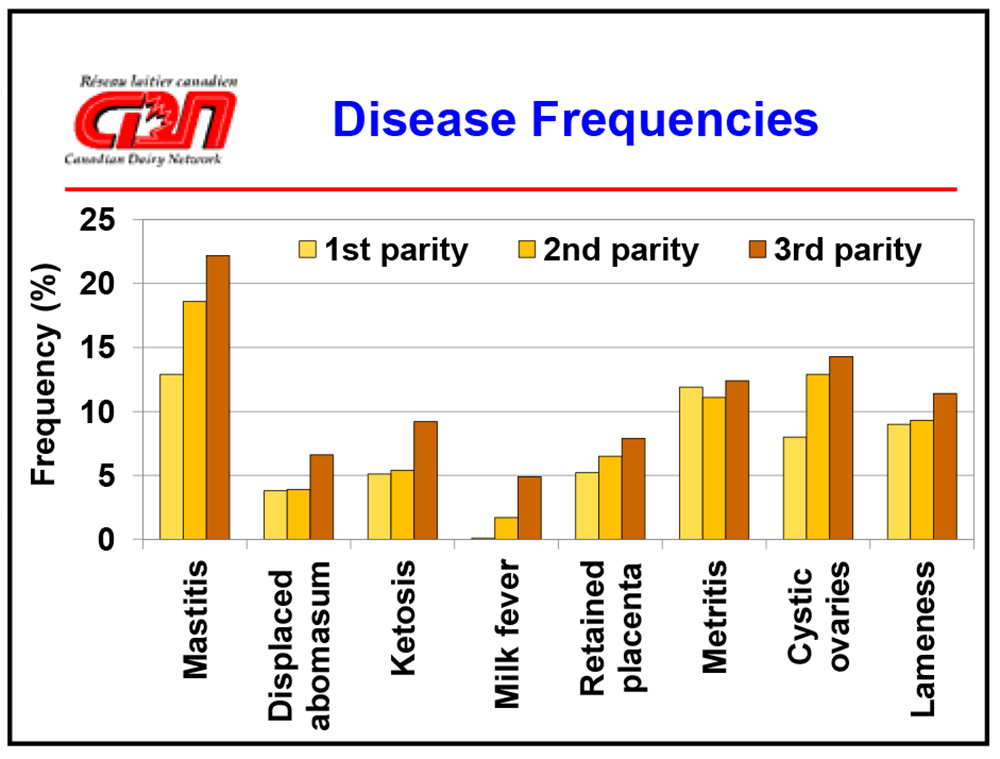
Mastitis is at the top of the list of 8 diseases that have an economic impact on dairy herds. Identifying genetic markers could have a significant effect on dairy profitability.  As with any index the quality of the data is the game changer here. Since 2007 40% of Canadian breeders have mastitis recorded. Prior to 2007 there is “ZERO” data. The good news behind those stats is that it is possible to build an index using correlated data from SCS and Type indexes.  In fact it was reported that Reliability gains were significant from using a multivariate model combined with historical data. The new genetic evaluation for Mastitis Resistance incorporates three predictors – Somatic Cell Score, Udder Depth and Fore Udder Attachment – as well as recorded mastitis, Body Condition Score and several other measurements associated with somatic cell count.  It reduces complexity by having one index that puts all the data together. This approach results in an evaluation that explains as much as 72% of the genetic variation in Mastitis Resistance and increases the accuracy of genetic evaluations provided by CDN.

disease frequencies

GENOMICS: The Fast and the Curious

Simplified estimation of DGVs allows CDN to move forward to more frequent releases of genomic evaluations for genotyped heifers and young bulls. Couldn’t help but sense the attention when BVD said, “We could release and update on a weekly basis.” The logistics appear to be fairly simple. “DNA genotyping labs would need to move to “continuous” genotyping for dairy animals.” VanDoormaal feels that at least moving information turnover from monthly to weekly (roughly from the current 6 weeks to 2 weeks) expands the opportunity for better decision making.

Bulls, Bias and Barriers

Genetic evaluations depend on data.  Huge volumes of data.  And not only is that data collected in 30 different countries but also with different methods, weighting and formulae. This means that bias is present and must be accounted for.  Canada has made extra effort to ensure that young bulls are not over-inflated relative to PT (progeny tested) bulls. Interbull GMACE can only recognize our GPA’s if we participate.  Italy, UK Canada and USA all plan to participate.

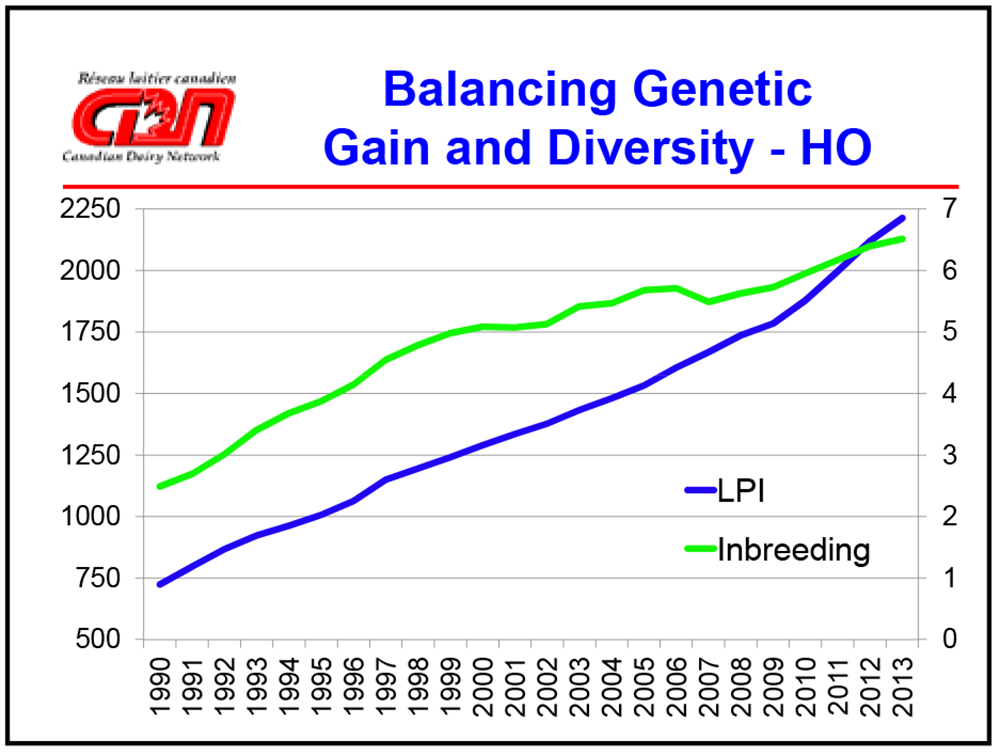
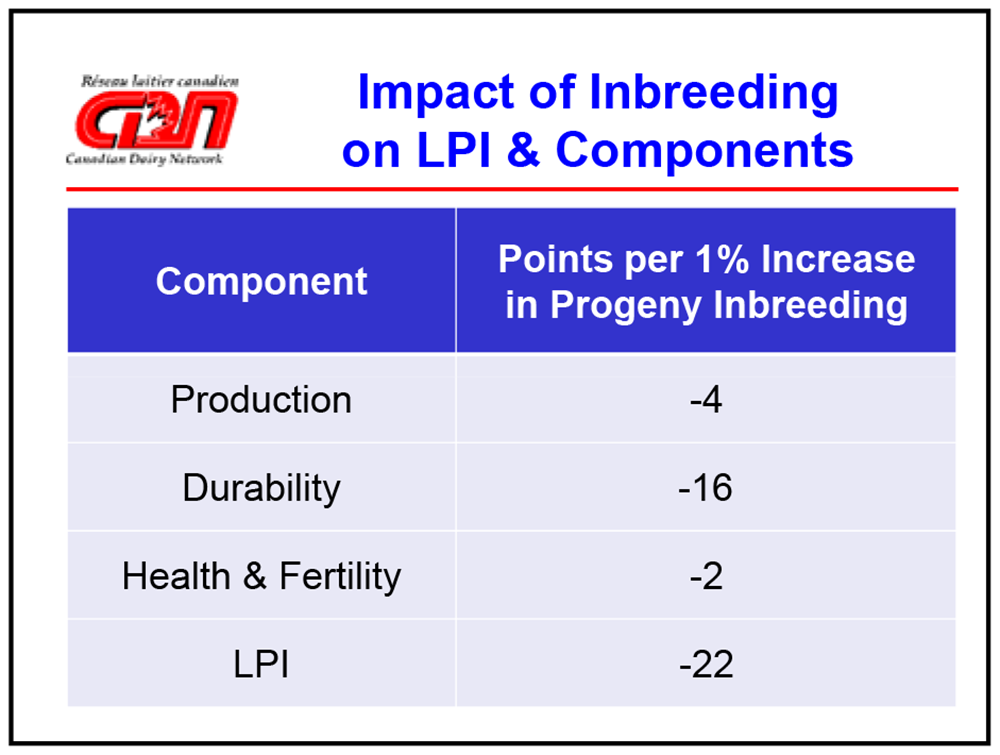
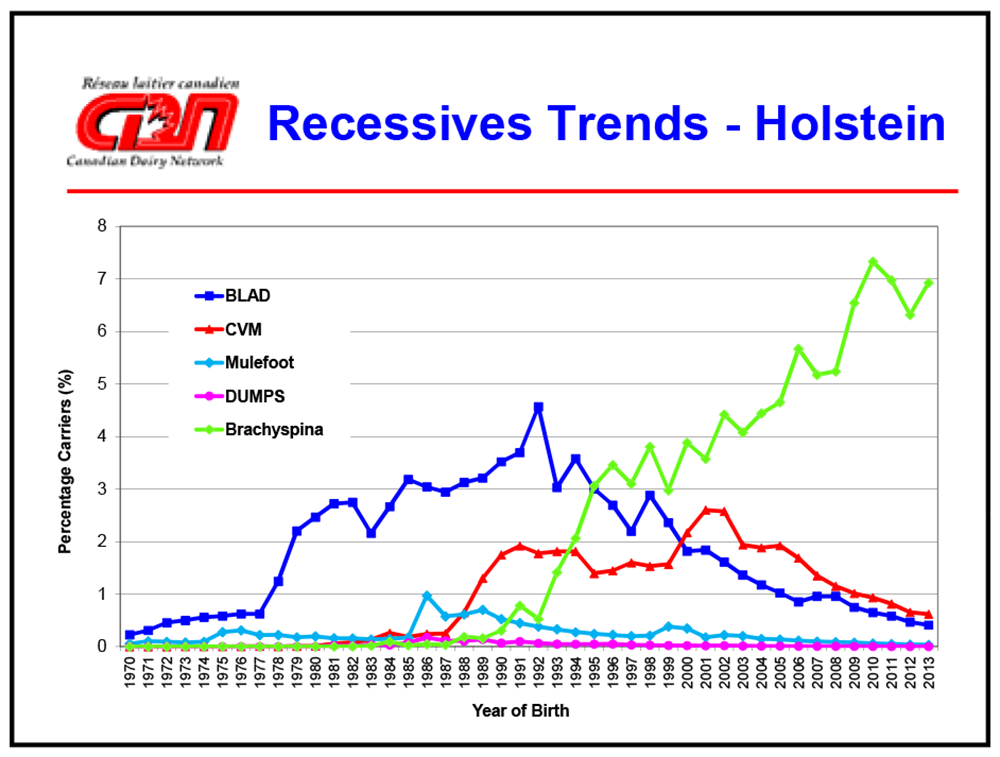
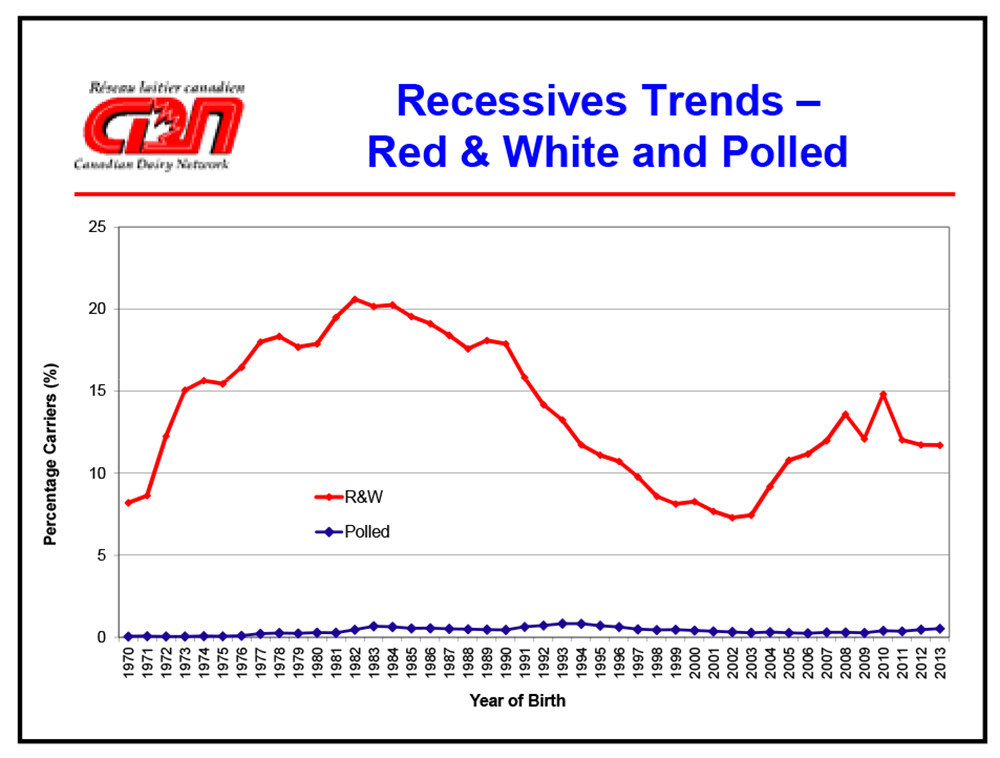
One of the most interesting opportunities for those at the industry session is seeing graphs demonstrating challenges, opportunities and actual genetic progress.

balancing genetic gain and diversity

impact of inbreeding on lpi and components

recessives trends - holstein

recessives trends - rw and polled

Take-home insights included:

  • 150 LPI points of genetic improvement represents $23.5 million dollars.
  • Graph representing within herd re-ranking of heifers with genomics. (There have been both high profile and large commercial herds regularly genotyping all heifers every year!)
  • With the right indexes and the right data it is ultimately possible to quantify the dollar value of right decisions vs. wrong decisions on heifers to keep as replacements.
  • Especially as regards inbreeding, dairy breeders are not paying enough attention to inbreeding. Therefore including it in the formula is a step forward. There isn’t significant loss in genetic progress but there is going to be population gain in having outcrossing taking place.
  • Adjusting Mendelian Sampling, by using only cow indexes based on male ancestors, can detect biased cow evaluations and thus determine the ones that are outliers (i.e. deviate excessively from Pedigree Index).

Each one of these breakthroughs represents tools that can be applied to improved profitability for the industry.

Canadian LPI:  The Less Stretched Index

Trying to boil down 1000s of hours of computerized “fine tuning” and “tweaking” into an easily understood Open Industry Session is a challenge for both presenters and audience.  With all the progress represented by the “new and improved” indexes the prime focus of the industry is to find the solution to bias in bull proofs.  “When we encourage industry participation, we hope dairy breeders care enough and are confident enough to stand up and try to make things change.”

Twenty years of a dynamic LPI has shown to be a great process.  That trajectory increased substantially with genomics. Now CDN is examining the best options for update to the LPI formula.  Two good questions were raised:

  1. “Are we going to lead with LPI or are we going to follow?”
  2. “Is there going to be breeder buy in to revised trait emphasis in the LPI?”

“Barking up the wrong fee!”  and “Who is responsible for this Hot Mess?”

Everyone attending the Open Industry Session requires dairy profitability for their daily survival whether that happens in a barn, an office, research lab, or at an editor’s desk. That is probably why ears perked up when the $7500 per bull fee for genetic evaluation results was raised … again!  It is a contentious issue for those A.I. organizations and some breeders who feel that they freely provide the information which becomes available to 30 countries. Therefore it should be available back to them.  Some feel the cost is too high. Others are concerned that too much or not enough information is disclosed. This oft-recurring and touchy issue makes its way to every open meeting where it is consistently deflected with the answer, “Fees are a policy decision not a genetics issue!”  Well then if this is an “open” session. Who sets the policy?  Who sets the fees? Who collects the money?  What is it used for?  If three out of four of these questions have the same answer, then let’s get to the table and make the decision and then live with it!

THE LANGUAGE OF PROFITABILITY!  Bulling for Dollars!

The meeting started seeing dollar signs again, after another perceptive question was raised, “If LPI is Lifetime Profit Index where does the Profitability come in?”  It was agreed that the aim is the profitable cow and we could do a lot better job of expressing the profitability value in dollars which is a language everyone understands.  That led to an “Aha!” moment!  It doesn’t matter how clear and accurate our calculations are, if they don’t translate well into the commerce side of the marketplace.  The key word here is “translate”. For those working in the global marketplace, language is another hurdle to overcome.   A few examples of how hard it currently is and how easily it could be done and it seems that multi-language translations of GEB / CDN publications is in the future.

The Bullvine Bottom Line

The Open Industry Session literally opens the doors to the future. We know what we want.  We know that time is passing.  We have the information and the means.  The final key is that dairy breeders, scientists and board members must have the will to move forward. Together? Are we dedicated to progress or just the perception of progress? The challenge is to figure out the answers and thereby shorten the distance between the future and the present.  Otherwise… A lot sooner than we think… we could end up on the outside looking in:  “Just a few great bulls short of a proof run!”


The Dairy Breeders No BS Guide to Genomics


Not sure what all this hype about genomics is all about?

Want to learn what it is and what it means to your breeding program?

Download this free guide.


[related-posts-thumbnails]


Wee Acres Spider Clara Bell Spins her Winning Ways at Expo! Six Times!

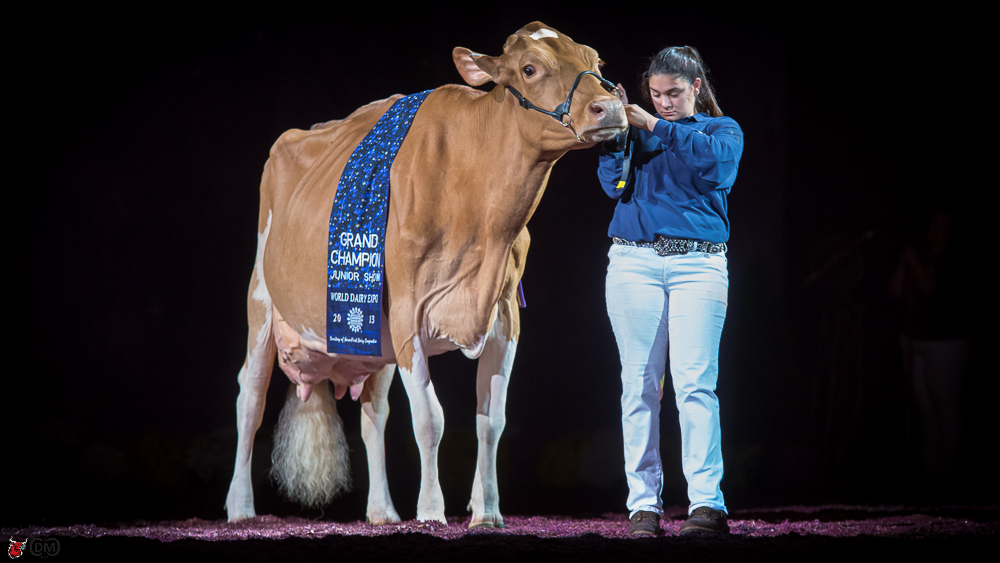
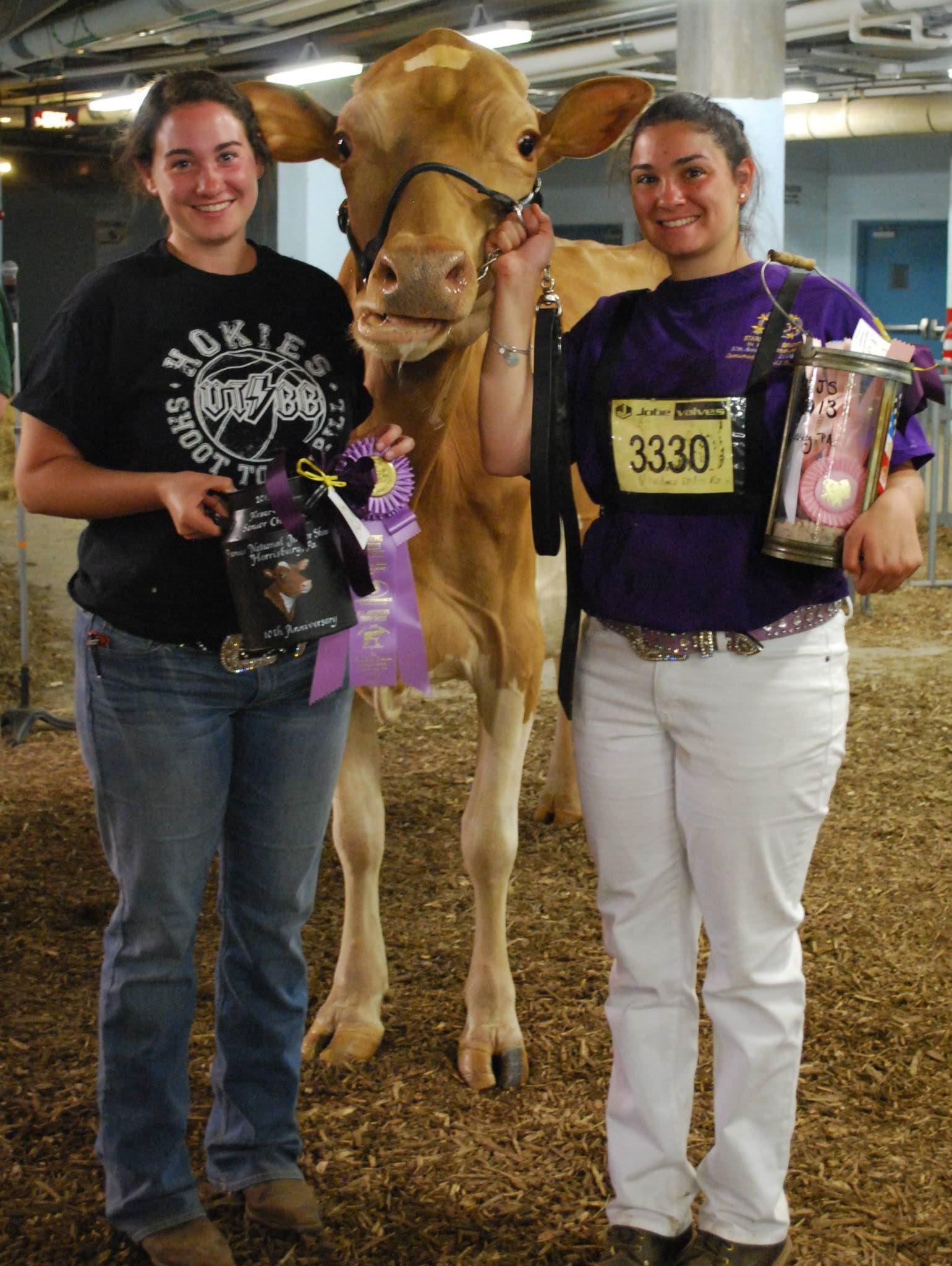
We often encourage youth to seek results that are good for everybody involved and, therefore, to create a win-win situation. Virginia Tech freshman Cara Woloohojian and her six year old aged cow, Spider Clara Bell, conducted a master class at both ends of the halter as they walked away from the Guernsey spotlight at the 47th World Dairy Expo with a win-win-win, win-win-win title.  An unparalleled six firsts certainly puts these two in a class by themselves.

Epic Experience

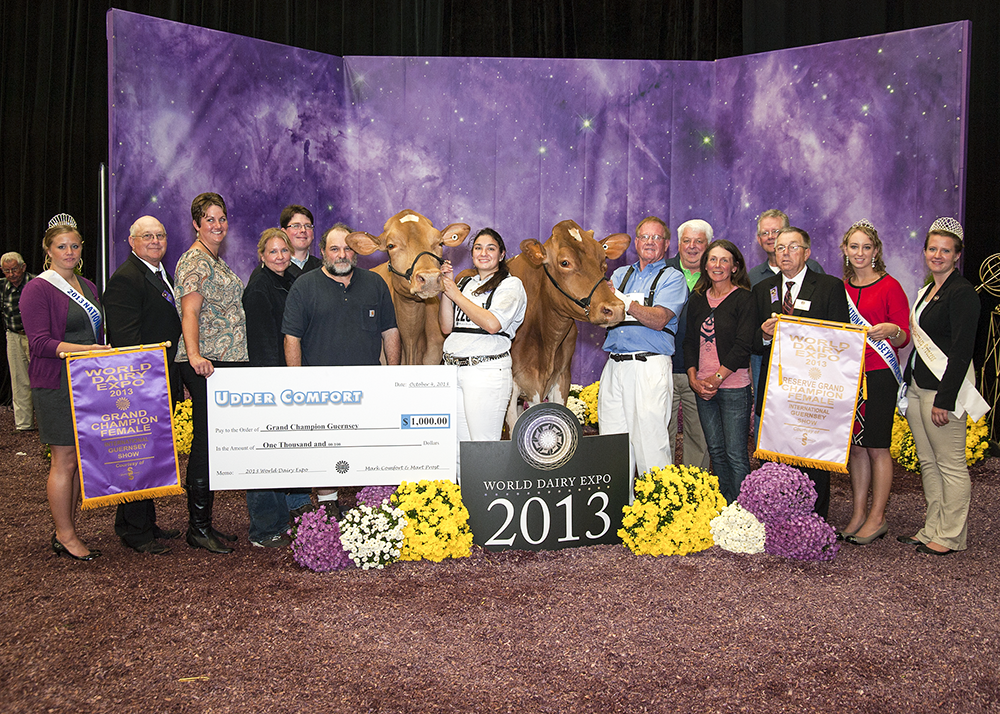
Cara Woloohojian started her epic experience by showing Wee Acres Spider Clara Bell to first place in her class.  Then the pair rang the bell again by winning Senior Champion.  Cara and Clara Bell were delighted to top off their winning performances when their names were called for Grand Champion of the Junior Show (best Guernsey cow in the US owned by a youth). But the two were destined to stroll the red carpet another three times. Cara was proudly on the halter representing herself and sister Lauren as Wee Acres Spider Clara Bell paraded first in her class, then as Senior Champion and then as Grand Champion of the Open Guernsey Show.

IMG_8790

“Parade of Champions is the Chance of A Lifetime”

Being able to take part in the Parade of Champions at World Dairy Expo is something that not many people can say they have done.  Cara appreciates how special it was. “Winning Grand Champion of both the Open and Junior Guernsey Show at World Dairy Expo against so many great cows has been my greatest accomplishment so far. I am especially grateful for having the chance to participate in both the Open and Junior Supreme Champion parades and while I was only 18 years old. I hope that I will be able to have more great accomplishments with my future calves, embryos and Clara Bell’s bull, Cactus, and I hope to be able to start my own great cow family.”

Sisters Teamwork Foreshadows Guernsey Show Ring Success

With the polish and focus that took Cara to the top of the International Guernsey Show there was also grace and sincere affection when the announcers included her thanks to her best friend, mentor and sister Lauren Woloohojian. Indeed, the story of Wee Acres Spider Clara Bell started with the enthusiasm shown by both girls at an early age. “I first got started in dairy cattle because, while at a 4-H meeting 13 years ago, my 4-H leader asked ‘Who wants to start a dairy project?’ and, without any hesitation, my sister Lauren and I raised our hands. Once my sister and I decided we wanted Guernseys, we began our search for them. Many people told us that we would never find a Guernsey and they laughed at us, but looking back 13 years I will never regret my decision to get Guernseys.”

Cara and her sister Lauren at the All-American Dairy Show where Clara Bell was Reserve Grand Champion.

Cara and her sister Lauren at the All-American Dairy Show where Clara Bell was Reserve Grand Champion.

From Calving Pen Pick to Parade of Champions Selection

The search for the “right” Guernsey could indeed have been difficult but in fact this part of the story is as unique as the success that would eventually be recognized in the spotlights of World Dairy Expo. “Since Clara Bell is bred and owned we did not have to search through sale catalogs or talk to people to find her. We literally found Clara Bell in the calving pen with Clover, one of our original cows from Lois Whitcomb from Maine.” For Cara the history shared with Clara Bell makes this already unique story even more extraordinary. “I think Wee Acres Spider Clara Bell is exceptional because she is bred and owned and she is out of one of our original three Guernsey’s, Clover. I also believe that Clara Bell is special because we raised her and were able to bring her to a high level of competition. She represents our breed so well and has been honored as one of the best Guernseys in the country.”

“Take Pride in Walking the Colored Shavings”

With this rare double-win at both the Junior and Senior level, Cara is put in the position of mentor to others who are considering entering the dairy show ring. “My advice to other young people would be that it takes time but you never know which calf can grow to become that next great champion cow. Pick a breed, stay with it, get as much advice as you can both good and bad, weigh the options, make good decisions, and reach out to all levels of expertise in your breed. It is important to be a part of your breed association. Finding yourself a mentor is key too. If you are a youth, don’t be afraid to show your cow against adults at national shows. Although it is scary the first time out on the colored shavings, you do not want to regret not showing your own cow. I am so thrilled that I was on the halter when Clara Bell was named Grand Champion!”
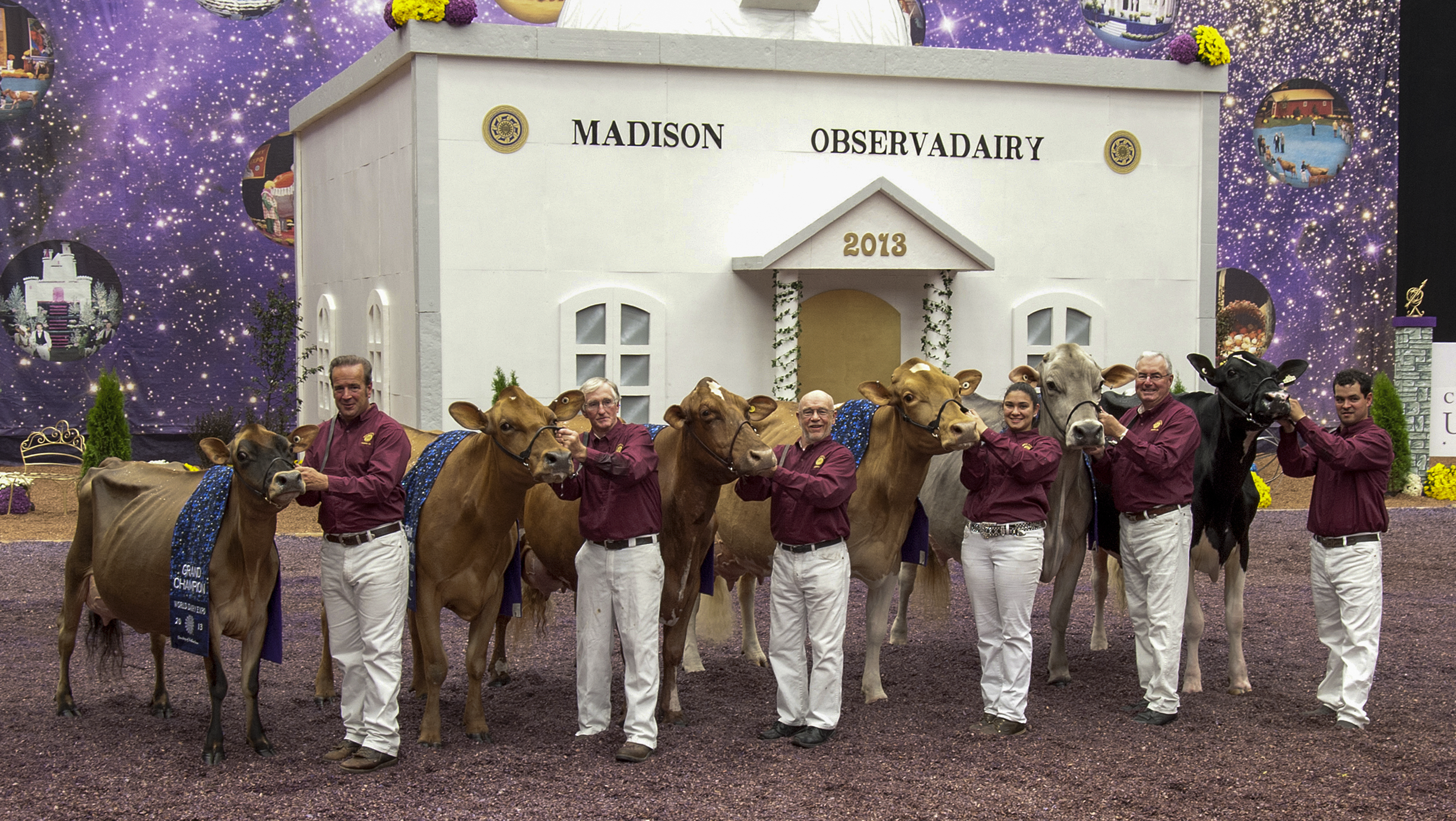
2013 Supreme Champion Lineup-Open

FAMILY: Small Herd. Big Encouragement. Strong Support.

The Woloohojian family have a small family herd of Guernseys and Ayrshires in Rhode Island. Cara and Lauren’s parents feel strongly about cattle ownership as their mother explains. “I think owning and caring for an animal teaches the greatest lessons. It teaches many life lessons including responsibility, how to deal with success and failure, decision making and how to follow your own instincts. Sharing a common bond, it helps establish many long term friendships.” Of course, having children with cows is not a short term commitment and so the Woloohojian parents outline what it has meant. “When Cara wanted to get cows we said, “Sure, why not?” When she wanted to show at every local fair, we packed everything up and spent the summer at almost every dairy show we could find. We took her to watch shows to learn about showmanship and judging, to dairy camp and spent hours learning quiz bowl! Christmas and birthday presents always included fitting supplies, clippers, blades and topline scissors. We always encouraged her to do her best and tried to support her as best we could.”

In Good Hands with Guidance from Special Family and Friends

There were probably many times on Cara’s journey when she had to push her comfort zone, however, she is confident that she always had great input to inspire her. “The biggest influences on me I would have to say are my family, my sister, Lauren Woloohojian, Craig Hawksley, Pamella Jeffrey, Kyle Thygesen and Seth Johnson. They have all been influential to me in their own way. My family has been very influential to me because we began this project together knowing very little about cows and farming. My parents never let that get in the way or deter us. I have always looked up to my sister, Lauren. She was always the one to beat in showmanship which inspired me to get better. Craig Hawksley and Pam Jeffrey from Rhode Island have been influential because of their passion for animals. Craig’s success with Sweet – Pepper Black Francesca has always inspired me. (Read more: The Magic of Francesca) Pam was my 4-H dairy club leader and she was always supportive of me and helped teach me about showing. Kyle Thygesen, of Farmstead Genetics in Tunbridge, Vermont, provided the expertise and care which prepared Clara Bell for show. Seth Johnson supported us when this 4-H family with no dairy experience settled on the Guernsey breed. He has answered numerous questions, directed us to sales and has provided much guidance along the way.”

©World Dairy Expo

©World Dairy Expo

“We are so incredibly happy for her! She is a hard worker and never gives up!”

Cara’s mother puts this latest success into Wee Acres perspective. “We have a small family herd of Guernseys and Ayrshires. We currently farm 70 acres and recently purchased a 356 acre farm in Addison, Vermont, where we would like to continue to build our herd with the emphasis on breeding good foundation cows.” She characterizes the growing success with a mixture of pride and humor. We like to think of it as a 4-H project gone haywire! That keeps it fun!!” was Cara’s dad’s, Jim Woloohojian favorite quote.

The Bullvine Bottom Line.  Now That’s Remarkable!

Those with a passion for dairy cattle and the show ring are used to the well-rounded resumes belonging to more senior members of the show ring circuit. It therefore comes as no surprise that, even though she is young, Cara excels outside the ring too.   “In addition to her success at World Dairy Expo, we are so impressed by how she always helps others with their dairy projects. Whether it was giving up a run for our state fair’s princess contest so she could work with 4-Hers in NY or spending an afternoon working with new dairy project members, her passion for dairy is remarkable.”  Remarkable effort!  Remarkable results!  That’s the essence of the Cara Woloohojian win-win situation!  Congratulations Cara.

Get original “Bullvine” content sent straight to your email inbox for free.


[related-posts-thumbnails]
Richard Caverly: A Passion for Perfection – Winner Gives All!

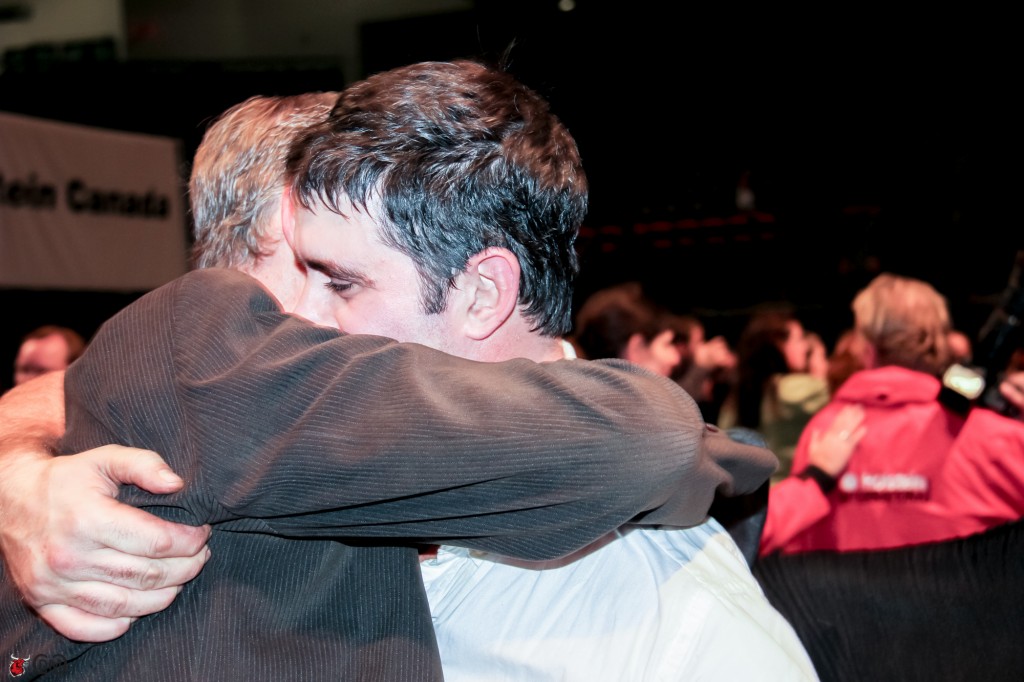
Richard Caverly (award)No one is ever truly prepared for massive peer recognition such as that experienced by Richard Caverly when his name was announced at the 2013 recipient of the Klussendorf-Mackenzie Award at The 47th World Dairy Expo. (Read more: Maine Native Wins Klussendorf-Mackenzie Award)  It was obvious that Richard was deeply moved. “This honor to me is so humbling.  The generation I competed with is an amazing group!  There is no way to compare yourself to the likes of Mark Reuth, Joel Kietzman, Ken McEvoy, Paul Petriffer, Scott Hussey, Barrie Potter and the list goes on!  (Read more: Charlie McEvoy: As Good as Gold)  This is a generation who competed with dedication and passion!  They were not at the show to try to sell you their cow, they were there to win, and every cow was special to them!  This generation learned from the generation before them and learned early how to do it all.  They are specialists, only they specialized in every aspect of the show.  The wheelbarrow is as familiar to them as a pair of clippers.” Richard sums up his admiration with this unforgettable phrase.

IMG_7234

“They would make a hummingbird look like it had no work ethic!”

Now that’s a picture to keep in your mind’s eye from now on, whenever you think of those men and women who have the perfect touch when it comes to working with cattle.  The ability to lift each animal they are focused on to a whole new level.  As Richard Caverly heard the applause which signified that he had earned a special place among dairy industry peers, we wonder which came first for him– the passion? Or the perfection?  Richard himself would humbly divert the attention and tell you that he owes most to the people themselves– his wife, family, friends, dairy co-workers and mentors.

Caverly’s Love Cows and Produce Champions

Richard’s passion lifelong passion for cows began young and began at home. “My start with cattle came at an early age, as my father “E.C.”, along with his two brothers Frank and “Pudge”, were owners of Caverly Farms in Clinton, Maine.  They started their Ayrshire herd as a 4-H project that was their own responsibility, as their father was the head of the highway commission and constantly “On the road”!  They received help from my great Uncle Edgar – my wife Beverly’s Deer Hill herd resides on his farm today.  The brothers bred and developed many All-American and All Canadian cattle, including the a Royal Junior Champion in the ‘60’s and 1978 Madison Grand Champion and Reserve Junior Champions.  The farm is unique in that along with these dairy champions my cousins have had National Champion with their Beef Shorthorn cattle as well.” Richard appreciates these strong family ties. “I am blessed with amazing family support, all the way from my Uncle Frank to my youngest sister, Leah.” He then zeroes in on the one who means so much to him.

“Of everyone in my life, my wife Beverly Donovan is my biggest hero.”

It isn’t surprising that Richard and Beverly share a common vision for what they believe in. He proudly identifies the strengths of his soul mate.  “Her passion for success and her dedication to making sure her animals get their due is unmatched!  Commitment should be her middle name as she truly puts the Ladies of Deer Hill at the top of her life.  She is thankful for those who have helped her, and she is free with her help to others.”

Picking a Winner – “It Starts with Seeing the Potential”

When someone becomes exceptional at what they do, we want to credit it to some extra special gene that propels their performance. Laying no claim to special powers Richard feels success is simply a process. “For me, I enjoy watching an animal reach her potential. You need to identify what you can do to help her reach it. Then it is very special to watch a cow rise above and get to the level that you envisioned.  There is an extreme amount of trust given to any individual blessed with the care of an animal.  Most important is the trust of the animal. It takes a lot of dedication to properly care for and handle them.  I have many tired friends who share the passion; their dedication wakes them up on cold damp mornings and it is their commitment that makes them stand out in such a demanding industry!”

Richard’s Role Models “They believe vacation is a place where they can take their animals!”

Richard has learned from those he admires. “My Uncle Frank at 72 is still the hardest worker I have ever known along with the biggest supporter of my endeavors!  Craig Hawksley the breeder of Sweet Pepper Black Francesca is a man I idolized as a kid.  Craig is perhaps one of the most under-the-radar people I know as his passion for breeding is unmatched!”

Richard’s Dairy Tale “Follow the Bread Crumbs

The stories of those who have led Richard on his journey are many and important to him.  “Steve Briggs and his family developed a friendship with my family before my time. Then they trusted me when I was young, helping me every step along the way.  Steve has the “Hansel and Gretel” approach as he feeds you one bread crumb of knowledge at a time yet allows you to learn so much through patience and dedication. “Richard has been accompanied by fine dairy teachers and teammates too. “Ernest Kueffner and Terri Packard are the most attention-to-detail, micro-managing team that I know!  Rick Allyn – I remember when we were kids and he put up a topline on an Ayrshire yearling heifer I held for him. That was a thousand heifers ago for him! Ralph Gushee went to shows with my Uncle Pudge throughout North America and luckily he took me on many trips with him throughout life!  Jim Strout is a very dear friend who along with son Jamie and friend Wayne Schofield have taken countless hours and invested them on the road and at home with the Deer Hill ladies as well.”

When Talking Cows, Every Word from Nabholz Counts!”

Perhaps the secret to Richard’s success not only has to do with how hard he works at his craft but at how hard he listens and learns from those around him.  He appreciates even the smallest daily input. “Bill Taylor is always good for an early morning text to check on me while he is mixing feed.” and values words from his heroes.  “Norman Nabholz, with his wisdom and intellect, five words can inspire!” (Read more: HALTER, PEN and GAVEL. That’s Just the Norm) Steve White and Mike Duckett took time from their own endeavors to help with Francesca.  David Wallace, who shared a friendship with my family, allowed me into his own family and always encouraged me.”  Some of Richard’s mentors were the silent type. “Gary Bowers is perhaps the quietest achiever in the industry.” No matter how they have shared their expertise with Richard, he is convinced that they also share a special skill. “All of these people get 26 hours out of a 24 hour day and take advantage of all 8760 hours a year gives you! “ Above and beyond that they have inspired Richard to the realization that “The friends you make along the way truly are always priceless!”

The Caverly Cavalcade of Firsts!

With justifiable pride this Maine native looks back on dairy cattle that he has sent to bask in national and international spotlights. “Glenamore Gold Prize makes me smile even today. So many times I was seen as “The guy who clips Prize”.  She had about as much hair as an eel, yet her success made people think I had magic clipper blades!” And the list goes on. “Oak Ridge Bruis Helga she was the first cow to have an Allen Hetts Memorial Trophy come to Maine.  Moy-Ayr Bell Beladina at 97.1 is North America’s highest classified cow ever.  This massive cow spent countless hours being paraded around by my cousin Vanessa who barely came to her knees.” His hard work earned him some fantastic memories. “Nadine’s first championship while still owned by Potwell is something I shall never forget. She made Peter Stern proud being named Supreme in Ohio and later I would work with her again with Patrice Simard at World Dairy Expo – that cow made two good friends proud!”

Richard’s Recollections – The Stuff Legends are Made of!  

There have been times when this behind-the-scenes star maker is thankful for that old adage about a picture being worth a thousand words.  One of Richard’s most awesome experiences has been preserved for posterity. “Ashlyn, Tobi, and Delilah were part of the US tandem that took the Royal by storm and Han Hopman took a priceless photo of the three with Legends Dyment, Frasier, and Brown on the straps and Empey making his final decision!” (Read more: Han Hopman: Shooting Straight at Holstein International)  For Richard, that was the shot of shots and goes into Caverly history along with this story of international success that he had a part in making. “I’ll never forget Butch Crack on the strap of Crackholm CV Roview the 2x Brasillian National Champion for the Morro Aguido herd of Claudio Mente.” And the love list goes on. “Veronica and Melanie. One trip to Ontario and two legends are acquired.”

Iconic photo by Han Hopman of Ashlyn, Tobi, and Delilah.  Three cows Richard had the pleasure of working with in his career.

Iconic photo by Han Hopman of Ashlyn, Tobi, and Delilah. Three cows Richard had the pleasure of working with in his career.

Sweet Talk. Bitter Sweet Memories.

Whenever stories are told — and there will be many, many of them — Richards thoughts will always turn to one particular cow . “Of course that is  Sweet Pepper Black Francesca, four consecutive years as National Champion to her name!” Once again it goes beyond the winning. “Most important of all Francesca made the dreams of so many people I love come true.  Francesca and Beverly showed the world that no matter who you are, or where you come from, with passion and dedication you too can achieve your dreams!”  (Read more: The Magic of Francesca)

“The Passion Too Strong to Resist!”

The 23rd Duncan Mackenzie Award winner is philosophical about the future. “Countless things change in life.   New opportunities arise.   Great things from the past remain just that, in the past.  Each generation finds its own way eventually, as it is the job of the preceding generation to help with the progress of the next.” And helping with the next generation is where Richard is focusing his talents next. “The decision has been made to work with George and Michael Liberty developing the Juniper Elite Holsteins, while continuing with wife Beverly and her Deer Hill Ayrshires as well.  George is an enthusiastic young man at the age of 19 with a dream and passion for the Holstein industry driven to take his father’s love for Juniper Farm to high levels.  It means leaving a job working with a wonderful family the Flood’s who I shall miss, yet the opportunity to work with great genetics both Ayrshire and Holstein is a passion too strong to resist.”

The Bullvine Bottom Line

The dairy industry moves forward with those like Richard Caverly who can inspire each of us with his passion, perfection, persistence and hard work. To Richard we say, “Well done!” and thanks for sharing the spotlight with all those you care about. They are a special part of your story. We at the Bullvine and your friends, family and hummingbirds salute you as you take a well-deserved place beside the exceptional examples of dairy industry character, sportsmanship, ability and endeavor exemplified by the Klussendorf-Mackenzie Award. Congratulations Richard Caverly!

All the best for all your days!!!”

Get original “Bullvine” content sent straight to your email inbox for free.


[related-posts-thumbnails]
World Dairy Expo Proposal – First comes cows then comes vows!

2013ectMarriage is an age-old sacred union between two people.  We are all familiar with the romantic progression from “First comes love then comes marriage.”  For Bryn Quick and Mark Hornbostel, World Dairy Expo 2013 rewrote that romantic timestamp to “First comes cows then comes vows!”

propose1

“Aisle” Be Seeing You at Expo 2010

Bryn was at World Dairy Expo exhibiting for the first time with her sister and two friends.  Mark was there, also for the first time, helping a breeder friend haul tack and show his Guernsey’s for the week.  They set the scene for us.  “We were tied up in the center aisle of Barn 1” and “Being the social event that Expo is, we began talking and hanging out and doing night line together.”  Neither one of them had anticipated romance at Dairy Expo.  Bryn says, “I never once thought that I would meet someone at Expo.  I went there to show and socialize with friends and that was all that I really intended to do.  So I surprised myself when I found a guy whom I bonded with instantly.  It’s funny when I think about it now because my friend, Stephanie Lemay, kept asking me that whole week if I had a crush on Mark and if I would date him.  I thought that she was being ridiculous.  There was no way that I would jump into dating a guy I had just met that week and would probably never see again—after all, he lived seven hours away in another state.”  Mark reports that they spent a few months connecting through Facebook and phone calls and then their relationship changed somewhat.  “Just before Christmas I received a card from Mark and that was when I knew there was something different about this guy.”

284204_2269431664071_3315262_n[1]

Right girl.  Right time.  Right place.

A marriage proposal is a big step in everyone’s life and for Mark it was both exciting and stressful.  “I guess you could say I have been thinking about it for quite some time.  I knew that if I was ever going to ask her it would have to be at Expo, there was just no other place that seemed so perfect for us.  But I guess you could say that I really committed to it late this summer when I went and bought the ring and really started planning exactly how I was going to do it and how I wanted it to all play out.”  He provides details.  “I have to give credit to Bryn’s twin sister Allison. She was the only one that knew how it was all going to play out.  She did an amazing job at keeping it a secret and doing what I needed her to do to make it all happen.“

Parental Blessing

From the outset, Mark wanted to make sure that his plans for getting hitched would go off without a hitch.  I asked Bryn’s father for his blessing.  Given the fact that we are seven hours apart that is by far a conversation to have face to face.  I was forced to do it just a few days prior to proposing.  I have to thank her sister Allison for keeping Bryn distracted at school while I was out with her father having dinner and asking for his blessing.”

clipping

Expo “Knee Mail” From Her One True Love

Mark describes how his plan went into action.  “When I had asked Bryn to show one of my cows that morning she had no idea that while she was in the ring I was getting her ring and getting everyone in to the position that they needed to be to make it all happen. “  He continues speaking from his successful experience.  “As you can imagine her reaction was like most women when they see the man they love get down on one knee.  She was surprised and her hands went instantly to her mouth and she was crying before I could even open the ring box.  And between the crying/laughing she couldn’t even say the word yes after I asked, all she could do was shake her head yes.”  Bryn confirms that it was very exciting.  “I think that the video my friend captured of the moment really answers this question well.  I was ready to get back to the barn after the show but instead we made an unexpected pit stop to a grassy area where Mark told me that he had a question to ask.  I was so beyond confused at that point…that is until he knelt down on one knee.  We had talked about engagement in the past and he hinted on a time period that it may occur and I always figured that Expo would be the perfect place for it but I never thought too in depth about when and I sure wasn’t imagining it this year.”

walking

1383511_10202053974292412_1813451385_n[1]Expo 2013 Becomes the Centre of the Dairy-Marry-Me Universe

Mark always knew where this special moment would take place.  “Like I said earlier, in my mind there couldn’t be a better place than Expo to propose to her.  It was where we met and ultimately where everything all started.  It was a place that we shared a love of something and a place that meant a lot to both of us.  We have always said “Thank God for Expo” because if it wasn’t for Expo I don’t know that I would have met the love of my life!”

First You Propose.  Then Everyone Knows!

When you propose in public at a dairy show billed as the “Centre of the Dairy Universe,” in front of people that you might think care more about cows than romance, you might be as surprised as Mark and Bryn were at the results.  “Not for a second did I think that our special moment would go viral.  I thought it was normal for couples to have their engagement documented by friends and family but today’s social media takes that to a whole new level.  I barely had a chance to call family before it was all over Facebook!  It spread like wildfire and I can’t help but laugh every time I hear that Mark and I are on another page or someone else has shared it.  It’s unbelievable.  We have done nothing to deserve such attention but, believe me; we appreciate every bit of it.”  Mark sums it up for both of them, “It is the greatest thing that has ever happened to me in my life and it is exciting to see that so many people are so excited for us.”

ringShe said, “Yes!”

In books, movies and advice from already married friends they always say something that proved true for Mark.  “They say that you just know when you meet the person that you are meant to spend your life with and honestly I didn’t believe that until I met Bryn.  She is smart, funny, beautiful, caring and loving and everything I had ever imagined in a woman.  I guess the biggest things that I fell in love with the most was that she had the same dreams I have and she loves this life style and everything that comes with it.  And the major thing that I think I fell in love with the most is her understanding of this life style, you know in the job things don’t always work out the way we plan them, things go wrong and you don’t always make it to the things you want and you may not make it there on time and with us being so far apart it gets tough sometimes for us to see each other and yet through all of that she has been so understanding of it all and I can never express to her just how much that all means to me.  So I guess you could say there are a lot of things that were just right with her and there just wasn’t a doubt in my mind that she was the one for me.”

He is “The One!”

Bryn too knew that Mark was very special.  “He has Brown Swiss!  How could a girl not be attracted to that?  But seriously, we share the same love for cows and the dairy industry and the same urge to make a difference in this field.  His integrity is absolutely amazing.  He is a true sweetheart and is so beyond thoughtful (thus the perfect proposal).  I never considered a long distance relationship but he made me change my mind completely.  I connected better with him than the “city-boys” at home.  He was worth getting to know.  I thank God for Expo every day.”

BOTTOM LINE:  REAL life REAL LOVE

We have heard much about the passion and engagement that is necessary to build success in the dairy business today.  Bryn and Mark have taken “engagement” to a whole new level.  Congratulations to this lovely couple. Stay tuned to see if they go from tied up across the Dairy Expo aisle to tying the knot at World Dairy Expo!  All you need is love!

Get original “Bullvine” content sent straight to your email inbox for free.


[related-posts-thumbnails]


The Udder Side of World Dairy Expo

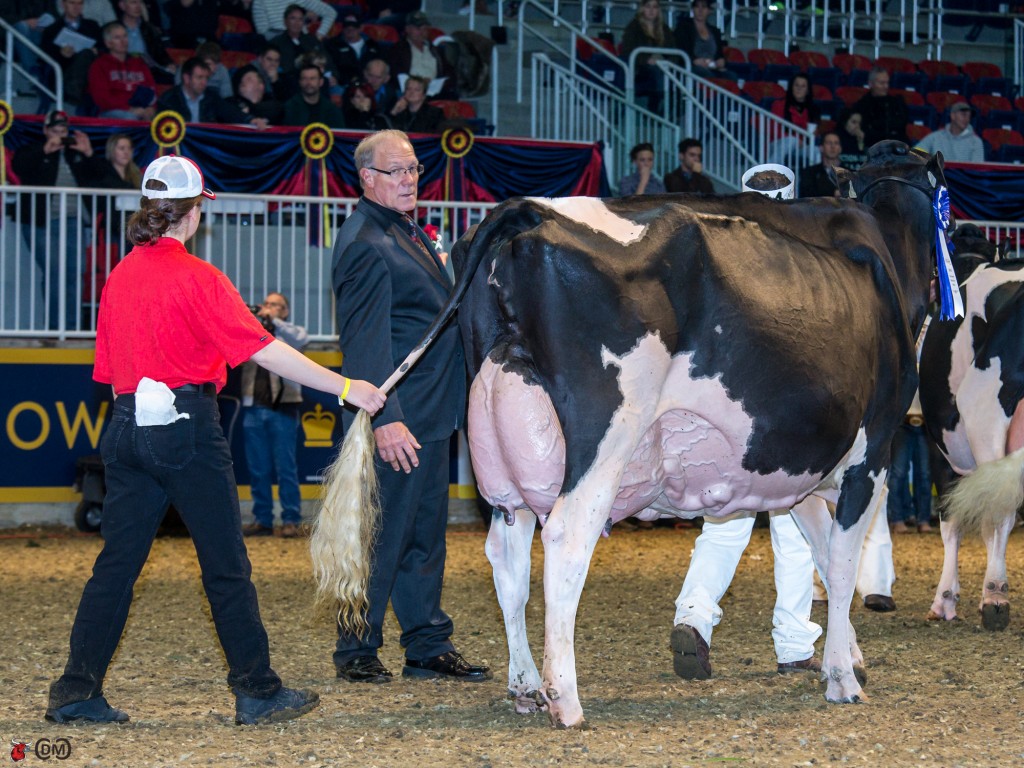
I thoroughly enjoyed sitting at ringside at 2013 World Dairy Expo in Madison, Wisconsin and applauded the Judges as they expertly placed the lineups. As 2500 dairy cattle were being placed it became obvious that the difference between the winners and the also rans often has a lot to do with the udders. At every dairy show, the Judges’ comments waxed eloquent about “mammary systems”.  Spectators too were impressed. More than once I overheard, “I would be delighted to take the bottom three in that class home to my milking string!”

For an Ontario girl travelling with the Bullvine team, the challenge wasn’t whether I could place the classes or accurately rhyme off the pedigrees of the cattle in the ring. No. For me the challenge is to come back to the table with a bigger, better, brighter story than my two geneticist and perfectionist cow men. As I watched those milking classes and thought of the practical side of dairy operations, I was inspired to take the opportunity to take a closer look at the more than 400 commercial exhibits that bring their displays, videos, brochures and energetic sales teams to World Dairy Expo.

Imagine my delight when I discovered well-informed enthusiasts who shared their passion for the dairy business from a slightly different perspective than the show ring.  It didn’t take too long for me to confirm a simple truth that I already knew. While all of us cannot achieve the udders that place 1 to 20 at World Dairy Expo, every dairy operation succeeds or fails on the quality and quantity of the milk produced every day and thus, by extension, the health and quality of the udder itself.  Thus I set out to find out what is new relating to udders and what specifically can I learn that I can share with others who seeking improvement.

Cross-Over Technology

Two companies that stand out looking back on my WDE experience, are Qscout (Advanced Animal Diagnostics) and Vi-Cor.  Both use the non-agricultural expertise, to provide solutions for dairy related issues.  Too often we as an industry can be blamed for trying to reinvent the wheel.  With so many similarities to human health, reproduction and even environmental issues, years are wasted when dairy solutions could leap forward on a parallel path.

Catch the Symptoms Before Mastitis Catches You

Dairy operations have many recurring issues to deal with, but one for the most frustrating and costly is mastitis. By the time it’s obvious, you are already losing money and days of delayed milk shipment due to the time required by commonly used current tests.  Although there are effective treatments on the market, it is exciting to consider faster less costly options.

In April 2013 Advanced Animal Diagnostics (AAD), a developer of rapid on farm diagnostics closed a $6 million dollar venture capital financing from Intersouth Partners, Novartis Venture Funds and private investors to launch Qscout™ MLD. Looking slightly larger than a car battery, the Qscout™ MLD is an easily portable unit which is used for more accurate detection of subclinical mastitis in individual quarters. With very simple, ergonomically designed operation the Qscout was a crossover envisioned from human health diagnostics by 2001 AAD founder Rudy Rodriguez

Each test on the market or in development at AAD will be processed by the Qscout™ automated reader, so producers will be able to run multiple tests on the same instrument.

The first test marketed by AAD is the Qscout™ MLD. The benefits of minimizing subclinical mastitis in the fresh cow have long been documented through increased milk yield and quality and improved reproduction.  A recent study showed detecting subclinical mastitis with the Qscout MLD and treating only infected cows at dry-off also has benefits.  Antibiotic use was cut by 47% without an increase in infection rates 10 days after calving when compared to more costly traditional blanket antibiotic treatment.  According to AAD, funds will also be used to study use of the Qscout MLD test at other times during lactation.

Gary Winter shares his enthusiasm for Qscout. “ It is new breed of technology that sees infection long before symptoms occur. It’s a brand new way to detect mastitis.  More accurate than CMT and SCC, and providing more rapid results than culture.” He backed up the claims with financial figures. “Mastitis costs the U.S. dairy industry $2 billion annually – that’s $200 per cow.  With reliable early detection made possible by QScout MLD, you can reduce that cost and generate an extra $50 per cow.” Most convincing for me was that all four quarters are individually tested and not the more common averaging which could let a cow slip below the early detection radar. An average is not nearly as useful as 4 specific tests, which is what you get with a differential cell count by quarter. Secondly, the testing takes just 3 minutes (on average) per cow. At approximately, $15,000 this technology is not cheap unless or until you accurately add up current costs incurred by Mastitis across staff time, withheld milk, medication costs and, most importantly, the effect on the healthy growth, development and reproduction of the milking herd.

Water, Water Everywhere… it’s more than just a drink

Water touches the dairy operation in countless ways from the obvious use for drinking to countless cleaning applications, not only for the cows, but for the facility, equipment and mixing into feed and medication. In fact, any applications that water have for human health, apply also to bovine health.  We are all recognize how crucial a safe water supply is to our town water systems. Bou-Matic is currently working on dairy farm applications that derive from that well-established, well-tested, statistically effective supply of water. In speaking with Tony Spaeth he outlined how test farms in the north east, north west, Florida and New Mexico are gathering results. “Phase one will focus on water supply, parlor hoses and pre-dip.  The next phases will look at hoof issues and post dip treatments.” There are four sizes of this system, ranging from $20,000 to $85,000.  Once again, the value comes from working out the savings earned from vastly improved SCC counts, healthier teat ends, and improved skin condition and the corresponding savings in reduced medication, improved health and the bottom line effect of improved herd health.

Mastitis … How Are Your Cows Behaving?

Once early detection of mastitis becomes a priority in your dairy management program, you will be attracted to leading edge technologies such as those developed by AfiMilk. With data and trials and satisfied customers backing up their claims, their tool is another that has great potential. Attachment times, flow rates, milking curves and milking times are gathered by AfiFlo and processed by AfiMilk herd management software in the computer. This data is extremely helpful in analyzing herd health and parlor efficiency. AfiFlo, combined with the AfiMilk system can detect mastitis at a very early stage. This factor alone makes AfiFlo extremely economical.

Of particular interest, is the foot monitor that by monitoring activity, including resting periods, is proving to be a valuable tool in monitoring herd health.

Udder Health — From the Inside Out

Once the subject of udder health comes into focus, you have to start looking for ways to learn more.  I had a brief but intriguing conversation with Mario Flores of ViCOR.  He described the Udder Dissection seminars that they have been conducting.  Too often he feels that we treat the udder from an outside-in, end of the teat method. He explained the physiology of the udder and that by dissecting the udder everyone gets a practical understanding of what a healthy udder looks like and the best practices for maintaining udder health.

The Bullvine Bottom Line

Standing at the bottom of the line in the show ring at World Dairy Expo still sets you in the top percentile of show winning dairy breeders.

Placing at the bottom of the line in the milking line means you are less than exceptional. It also means that your profitability and sustainability is negatively affected.

Udder health must be the #1 priority. New technology is responding with innovative solutions to these issues. What are you doing to be udderly exceptional?

Get original “Bullvine” content sent straight to your email inbox for free.


[related-posts-thumbnails]
 

Dare To Show Your Facebook! Twitter And YouTube!

The sales and marketing strategies that worked a decade ago are no longer viable. When our family was young there was a battle for the Holstein Journal … and the winner locked his or her self in the washroom to fend off contenders.  Today’s reach goes far beyond the throne room. Whenever the family gathers, there are several (never less than one) handheld devices in the room. This guarantees that the most familiar view that we get to see of spouses, offspring and grandchildren is the top of their heads!

Obviously, if you are reading this you know how to connect to the Internet.  Perhaps you are also following The Bullvine on Facebook and Twitter.  Perhaps one of your new pastimes is Pinterest. If these social media applications have made it to your house, they should also be making it into your marketing plan for selling your dairy cattle or dairy goods and services.

Here Are 9 Ways The Dairy Marketplace Has Changed And How We Can Stay Relevant Today!

  1. Don’t Waste Your Money!
    Everyone is watching their money these days.  The days of high spending and quick cash from international sales of bred heifers have gone the way of the dial telephone. Everyone is careful.  Everyone is informed (or should be). For many dairy operations, cash flow is tighter than it has been and they are looking to stretch their resources by purchasing less, but higher quality genetics, cattle and services.
  2. Get More Bang for Your Buck!
    Dairy breeders are looking to get the biggest bang for their buck.  When they decide to buy dairy genetics they are looking for cost savings or added value benefits. They seek to buy animals that will move them closer to achieving the goals they have set for their herd. Breeders must have “buy in” before they “shell out”. They want to be sure that the genetics, the production numbers or the conformation are going to move them ahead before they tap their resources.
  3. Go Where the Action Is
    Social media, social networking and the dominance of the internet in our everyday lives means you are now fighting for attention in a very “noisy” marketplace. If you choose to avoid the very visible interaction of social media, you are choosing to be invisible to the most dynamic and growing part of the modern dairy industry.  At the very least, not choosing social media, means not impacting the young breeders which are the future of the industry.
  4. Have Something to Say
    It isn’t enough to be seen … you must also be heard! In order to be heard, your content needs to be creative, dynamic and engaging. Okay doesn’t cut it.  You might as well surrender now if you have decided to simply move your same-as-everybody-else pictures from hard copy ads in breed magazines to social media sites.  Others will put in the time and resources it takes to create great content which will be shared and gain new life across the web. We are seeing live videos and you tube clips giving streaming pictures. Anything less will soon become another murmur that gets drowned out by the voices that are bold enough to stand out.
  5. Sharing is Caring
    It may sound childlike but sharing really is caring in our social savvy, hyper-connected marketplace. Word of mouth has always been important in how you and your cattle are known but today through social media that word is spreading to your friends, and their friends, family and social connections. Today, followers share your content on Face book, tweet their positive, and yes, negative experiences on Twitter and refer you through reviews on Yelp and Amazon.  They will send instant photos of your cows, heifers and calves and share your fan page and blog posts with their networks, which can have a reach of thousands.  It`s important to make your content easily sharable.  There are many tools that can help, but the key is to ensure that sharing is easy for them.
  6. The Social Media Farm lane is a TWO-WAY Street
    To miss out on testimonials and word of mouth that social sharing provides is a sure-fire strategy to sink into dairy obscurity.  Your most successful competitors are facilitating social sharing, 24 hours a day 7 days a week.  The Internet doesn`t sleep.  Take advantage of your audience`s interests in sharing what’s happening in your herd with their networks.
  7. Go Mobile
    You have to meet your dairy customers where they are with messages that are relevant to them.  It`s not enough to blanket traditional marketing channels with generic messages.  Today`s cattle buyers spend less time reading ads in magazines and newspapers. Traditional advertising is getting bypassed. Even when your target audience is watching their favorite shows today, they are using their DVR to bypass the commercials or using the commercial breaks to browse the Internet or flip through their iPads.  To grab their attention you have to meet them where they are.  On their mobile devices.  If your website is not optimized for mobile, you are doing your web marketing a severe disservice.  If you are not spending time on Facebook, Twitter and Pinterest, then your potential customers, who are getting their fill of social interaction on these sites, all day long, are finding other dairy genetics providers to interact with.
  8. Are You Listening to Me?
    And if you`re failing to listen as much as you are taking on these social sites, then you are ignoring an opportunity to mine valuable research on what your target consumers are interested in, what motivates them, and what they are looking for.  Track your analytics and listen to what people are saying about you, and to you, on your social sites.  You can`t gather information that is more relevant and useful than customer feedback freely provided online.

One of the quickest ways to gain the attention of buyers of dairy genetics is to listen to them. Consumers want to be heard. It’s no longer enough to push out your message, no matter how well-crafted and attention getting your message may be. Today’s marketing has to be a two-way conversation between you and the buyer. Engagement is the best way to make an impact. Increase awareness of who you are and what you’re offering and you win the loyalty of those you are targeting.  Dairy breeders are passionate. Social sites are essential in creating that bond and ultimately the trust that is built on your care and shared interest in them, their dairy business and their feedback.

THE BULLVINE BOTTOM LINE “Are you still marketing to last decade’s customer?”

To learn how to get your farm on Facebook download this free guide.


[related-posts-thumbnails]

PAUL EKSTEIN – 2013 Recipient of the Prestigious McKown Master Breeder Award

PaulCongratulations to Paul Ekstein of Quality Holsteins, Vaughan, Ontario for being selected by the Klussendorf Association as the fifth Robert `Whitey`McKown Master Breeder Award winner!

“This award recognizes a well-managed breeder herd that has been successful at showing and judging and emphasizes all qualities of the Klussendorf Award, including ability, character, endeavor and sportsmanship.”

Paul Ekstein has earned his place alongside these masters of dairy cattle breeding. Paul has bred 200 Excellents: 163 females and 37 males. He has received three Holstein Canada Master Breeder awards. Quality Holsteins has been honored with the title of All-Canadian Breeder’s Herd eight times in the last 23 years. Paul’s Quality Holsteins exhibit has earned Premier Breeder at the Royal Winter Fair four times. (Read more: Quality Holsteins – Well-deserved Congratulations and Quality Cattle Look Good Every Day)

Through his multi-faceted dairy breeding career, Paul has embodied the passion and originality that it takes to be exceptional in this business.

Paul and his son, Ari.

Paul and his son, Ari.

Ari Ekstein, Paul’s son, is proud of his father. “There is no doubt in my mind that he is a deserving recipient of this award.  There are very few men in this business that have the passion to breed great cows like my dad.  His desire and work ethic have been incredible and it shows through the “Quality” cows that have gone through our barn in the last 30 years.” Don and Linda Schwartz who have worked with Paul throughout those years confirm. “There is no one who has bred and developed cow families like Paul has. This award ideally suits what he has accomplished in his career that spans almost 60 years.”  Family, friends and peers agree on what makes Ekstein unique. “Every day is spent on how he can develop the herd even further to his own standards.” Paul has shown that with hard work and dedication anything is possible. He truly understands the Holstein dairy cow.  Ari has learned much about breeding success from his father. “The biggest lesson he has taught me is to never give up on any animal, if you believe in the cow family and its potential.”

Paul Ekstein will be presented with the McKown Master Breeder Award during the Calf Classes at World Dairy Expo.  He joins an exceptional list of recipients.

  • 2009 Jim Burdette
  • 2010 Bernetta Gable
  • 2011 Vernice and Dan Moon
  • 2012 Jason and Donna Myers

The Robert “Whitey” McKown Memorial Breeder Award was made possible by the family and friends of the 1997 Honorary Klussendorf honoree. Whitey joined the Holstein World staff in 1956 and became widely respected as he traveled nationally and internationally, reporting on shows, sales, meetings and other Holstein events. The 1987 National Dairy Shrine president also developed MooKown Holsteins in Belleville, N.Y. Whitey had great admiration for the farmer breeder.

Paul and wife Nili

Paul and wife Nili

There are a number of milestones that have contributed to the breeding success that qualifies Paul Ekstein for this award. Son Ari points out two that are at the top of that list. “Number one, the most special, was his induction into the Canadian Agricultural Hall of Fame. Then, secondly, winning the Supreme Grand Champion at the Royal Agricultural Winter Fair two years in a row.”  All agree that there is now another highlight as Don Schwartz says. “The McKown Award suits what Paul’s whole life has been about.” (Read more: DON SCHWARTZ: “Love what you do and do the best you can!”)

The Quality story began in 1980 founded upon all of Paul’s hard work with his company Quality Seeds. Currently the Quality Herd, situated on 60 acres of land which is part of the Greater Toronto Area, is 95 percent homebred.  Art, science and having a “good eye for cattle” have all come together in Paul Ekstein who has the ability to pick a winner.  The purchase of Plushanski Valiant Fran led to seven Excellent and 29 Very Good daughters, and five Excellent and 10 Very Good sons.  Fran earned 35 stars and the title of the highest Star Brood cow in Canada for many years.

Barn Pix

Ari, Paul and Quality B C Frantisco (Ex-96-3E-19*

From Fran came Quality B C Frantisco (Ex-96-3E-19*), and Frantisco’s granddaughter, Quality Goldwyn Flansco (Ex-95), Canada’s first and only third generation Excellent-95 homebred cow.

2002 Cow of the year award presentation

2002 Cow of the year award presentation

Paul has certainly developed a long list of fine dairy cattle including the bull Quality Ultimate who sired many show winners. Over the years Paul feels his success has been founded on a simple philosophy. “It is imperative to love what you do and to work hard to succeed.  Attention to every minor detail can lead to major success.” This is a key lesson Ari Ekstein learned from his father and he also shares this insight. “My dad is a man that has never been afraid to speak his mind.  You always know where you stand with him and because of this some might have taken him the wrong way. As tough as he seems on the outside, he has a heart of gold on the inside.”

Don Schwartz agrees based on his many years of experience working at Quality Holsteins. He points out that Paul has shown and participated at 59 consecutive Royal Winter Fairs and consistently exhibits at every major show in Ontario. “A lot of people see Paul at cattle shows and misinterpret his drive and how excited he would get in the moment.” That passion is there every single day. “The cows have been a huge part of his life and he only ever wants the best to come from all the effort he and everyone at the farm puts into those cows on a daily basis. If they could only see the love and passion he has back at the farm, they would see a wonderful atmosphere which makes every day a learning experience. You don’t have a main core of 3 men each working for you for over 25 years if they don’t respect your values.”

Ekstein, who immigrated to Canada as a child has built a dairy breeding legacy with Quality Holsteins.  There is no doubt that there will be more to come as the likes of Quality Carlton Pam, Canada’s first 97-point bred and owned cow leave their mark on Holstein genetics.

It is truly a pleasure to invite you to join in congratulating Paul Ekstein the 2013 recipient of the McKown Master Breeder Award. 


Get original “Bullvine” content sent straight to your email inbox for free.


[related-posts-thumbnails]
ROYALTY RIDGE – Success is Founded on Royal Families

Ryan Lancaster grew up on his parents Jersey farm, Family Hill Farm in Ferndale, Washington.  Freynie Lancaster grew up on her grandparents Guernsey farm in Tillamook, Oregon.   Both Ryan and Freynie were involved with showing cattle from an early age.  They were both members of their collegiate judging teams.  Ryan graduated from Ohio State University in Dairy Science, while Freynie graduated from Oregon State University in Agricultural Business Management.  Ryan outlines the logistics of their dairy operation. “We purchased our farm in Tillamook, Oregon in October, 2010.  We farm 45 acres, milk 50 cows and have about 50 young stock.  Our goal is show excellence, longevity and high components.  We do most all the work ourselves, with one part time guy and help from Freynie’s dad.” Their family is growing right along with their dairy operation.   Ryan and Freynie have 3 children, son Logan (7) and daughters Tatum (5) and Harper (1).

royalty ridge family shot

The Next Great One

Harper and 15 year old Pleasant Nook Berretta Felice EX 95.

Harper and 15 year old Pleasant Nook Berretta Felice EX 95.

Living up to a regal prefix can be a challenge in itself but Freynie quotes Ryan’s breeding philosophy. “Big timers that last” And then she points out exactly what is his goal each time. “He swings for the fence with every mating! Pretty much he tries to make the next great one with every mating, while also concentrating on components and milk production.  We love show cows that also milk well and have high components.  It’s very important to build strong families, like our “F” family.”

Royalty Ridge Crown Jewels and an Heir to the Throne

Indeed the royal lineup at Royalty Ridge is the “F” family and the crown jewel of them all is Pleasant Nook F Prize Circus EX 97. “She is the greatest cow that Ryan has ever bred and owned.  Circus was 2x National Champion in 2003 & 2006.” She is indeed a worthy queen to found Ryan and Freynie’s Royalty Ridge family.

Pleasant Nook F Prize Circus EX 97 National Grand Champion 2003 & 2006

Pleasant Nook F Prize Circus EX 97
National Grand Champion 2003 & 2006

Of course, it is gratifying to have this breeding and show ring success. “We have more AI interest in our operation all the time.” Freynie and Ryan report and add. “Semex just released Royalty Ridge Firepower.  Firepower is a Tequila son out of Family Hill Comerica Firefly EX 93. Granddam is Family Hill Avery Fire EX 95.”

Family Hill Comerica Firefly EX 93 (max score) Dam: Family Hill Avery Fire EX 95 Firefly's Tequila son, Royalty Ridge RF Firepower is at Semex

Family Hill Comerica Firefly EX 93 (max score)
Dam: Family Hill Avery Fire EX 95
Firefly’s Tequila son, Royalty Ridge RF Firepower is at Semex

Royalty Ridge Bull Picks

The Lancasters take specific care in choosing the bulls they use. “We are using Steinhauers Iatola Applejack and Hawarden Impuls Premier for our milk, component and udder bull.  For our type bulls we are continuing to use are Tower Vue Prime Tequila and Bridon Remake Comerica.  We use Tequila for size and stature. Comerica makes the most well balanced cows for us. Ryan’s program is based on having a purpose for each bull.”

Family Hill SD Favorite EX 95 All American Jr. 3 year old & Res Int Champion 2004 Res All American 4 year old and Premier Preformance Winner 2005 Dam is Pleasant Nook Berretta Felice EX 9

Family Hill SD Favorite EX 95
All American Jr. 3 year old & Res Int Champion 2004
Res All American 4 year old and Premier
Preformance Winner 2005
Dam is Pleasant Nook Berretta Felice EX 9

And The Royalty Line Continues

Although their Royalty Ridge operation is young, the Lancasters have worked with quite a regal lineup which includes:

  • Family Hill MB Action Funny EX 93 (max),
  • Governor Angel of Family Hill EX 94 (max),
  • Family Hill Comerica Firefly EX 93 (max),
  • Family Hill Comerica Gwen EX 93 (max),
  • Family Hill Sultan Foxy EX 94 (max),
  • Family Hill Comerica Firework EX 91 (max) is an exciting part of Royalty Ridge.
  • Family Hill Socrates Flynn EX 90 was 3rd Jr. 2 at the All American, 2011.  Her dam is Pleasant Nook Berretta Felice EX 95.  “Flynn is owned with Lee Mahovlic, Derrick Frigot and James Cross.  She is one of our 4 year olds out this year.”
Family Hill Sultan Foxy EX 94 (max score) Reserve All American Aged Cow, 2012 5th 5 yer old All Amerian, 2011 5th 4 year old All American, 2010 3rd Junior 2 All American, 2008 Dam: Family Hill HR Fashion EX 93 Gdam: Goldcrest Mr X Fashion EX 91 Owned by Frigot, Lancaster & Mahovlic

Family Hill Sultan Foxy EX 94 (max score)
Reserve All American Aged Cow, 2012
5th 5 yer old All Amerian, 2011
5th 4 year old All American, 2010
3rd Junior 2 All American, 2008
Dam: Family Hill HR Fashion EX 93
Gdam: Goldcrest Mr X Fashion EX 91
Owned by Frigot, Lancaster & Mahovlic

The Latest Word from Royalty Ridge

Royalty Ridge believes in marketing every day. “Royalty Ridge has a Facebook page that helps connect us with potential clients all over the world and recently we started using Twitter.  Both can be found under Royalty Ridge.  We have flyers made by Karen Bohnert that we take with us to the shows that showcase our cows for that particular year.”

Family Hill MB Action Funny EX 93 (max) 1st 4, Senior and Grand Champion, Western National, 2013 Best Bred and Owned, Western National, 2013 Honorable Mention ABA All American Sr. 3, 2012 3rd Senior 3 All American 2012 Dam: Family Hill Ren Fun EX 91 Gdam: Pleasant Nook Berretta Felice EX 95 3 more EX dams follow.

Family Hill MB Action Funny EX 93 (max)
1st 4, Senior and Grand Champion, Western National, 2013
Best Bred and Owned, Western National, 2013
Honorable Mention ABA All American Sr. 3, 2012
3rd Senior 3 All American 2012
Dam: Family Hill Ren Fun EX 91
Gdam: Pleasant Nook Berretta Felice EX 95
3 more EX dams follow.

Royalty Ridge Early Training

Circus and Ryan

Circus and Ryan

A good foundation is what great breeding families and cow families are built on. Ryan and Freynie appreciate the growing demand for the Jersey cow and, as well, both Lancasters appreciate their own roots and mentors. “Our parents taught us the value of hard work, dedication and responsibility.  After college, Ryan had the opportunity to farm with Pleasant Nook Jerseys in Ontario, Canada.  Bill Fletcher taught Ryan the history of cow families, Jersey bloodlines and taking care of show cattle.  Working with the Fletcher family was an invaluable experience for Ryan.”

Royalty Ridge Headlines

Royalty Ridge has majestic experiences to support their regal prefix. At the top of that list has to be breeding and owning National Grand Champion Cow Pleasant Nook F Prize Circus EX 97.  And that wasn’t a one crowning says Freynie. “We also owned World Dairy Expo Grand Champion Gloamin Ren Libby EX 96.  No less than 7 All Americans were homebred by Ryan who has bred eleven EX 95 cows and 1 EX 97 point cow.” The stately history of Royalty Ridge   Breeder of the only trio of sisters that are all scored EX 95.  Also, breeder of the first cow in breed history to be third generation EX 95 with Family Hill Connection Faith EX 95.

Gloamin Ren Libby EX 96 Grand Champion WDE, 2001 3rd Aged Cow, 2003 All American Reserve All American Aged Cow 2005 & 2007 Dam of 6 EX and 2 VG daughters Owned with Aaron Lancaster and Buster Goff

Gloamin Ren Libby EX 96
Grand Champion WDE, 2001
3rd Aged Cow, 2003 All American
Reserve All American Aged Cow 2005 & 2007
Dam of 6 EX and 2 VG daughters
Owned with Aaron Lancaster and Buster Goff

Maintaining Royalty Family Lines

Continually improving your breeding herd and show records is hard work even when you’re name is Royalty Ridge. Ryan and Freynie have a key piece of advice for breeding success. “Buy into great cow families versus buying into a great cow to breed from and start your herd.  Great cow families are the foundation of Royalty Ridge.” For example, Royalty Ridge currently has had high success with flushing using sexed semen. Despite some people thinking that flushing is near impossible using sexed semen, they report considerable success. “ We have 55 embryos all made with sexed semen out of cows from the “F” family, Circus’ Vindication daughter and the dam to 2nd place Jr. At WDE 2013 Family Hill Tequila Ruby EX 91 (max). We just started working with AMS Genetics to start marketing these.”

Governor Angel of Family Hill is EX-94 (MAX) 1st Sr 2, Intermediate Champ & Res Grand Champ Western National, 2010 2010 All American Senior 2 1st Sr. 3 Western National, 2011 3rd Sr. 3 All American, 2011 1st 4 year old Western National, 2012 5th 4 year old All American, 2012 3-03 305d 2x 18,450M 5.5% 1,006F 3.7% 684P Dam: Family Hill First Noel EX 91 Gdam: Family Hill Lester Allison EX 92 3rd dam: Leaning Acres Samson Angle EX 95 Angel is owned with Ahnie Seaholm, Tillamook, OR

Governor Angel of Family Hill  EX-94 (MAX)
1st Sr 2, Intermediate Champ & Res Grand Champ Western National, 2010
2010 All American Senior 2
1st Sr. 3 Western National, 2011
3rd Sr. 3 All American, 2011
1st 4 year old Western National, 2012
5th 4 year old All American, 2012
3-03 305d 2x 18,450M 5.5% 1,006F 3.7% 684P
Dam: Family Hill First Noel EX 91
Gdam: Family Hill Lester Allison EX 92
3rd dam: Leaning Acres Samson Angle EX 95
Angel is owned with Ahnie Seaholm, Tillamook, OR

The Bottom Line

Never losing focus on great cow families as their base, the Lancasters look to the future. “We plan to continue to breed and develop more show cattle.  As well, we will increase genomic testing in order to market more bulls to studs.  We have marketed embryos internationally for the last 5 years and will continue to market domestically and internationally.”

We wish Ryan and Freynie Lancaster well and congratulate and encourage them on their dedication and commitment to Royalty Ridge. “Reign on!”


Get original “Bullvine” content sent straight to your email inbox for free.


[related-posts-thumbnails]
SEXING TECHNOLOGIES: Gender Vendors in a Changing Marketplace

Predetermined sex in offspring is the brass ring that dairy breeders seek in managing in the ever more competitive marketplace. Most definitely this control is becoming more achievable.  Sexed semen end user price has dropped to one third of the price it was when it was first introduced.

Sexing Technologies (ST) is a well known, worldwide provider of sexed semen and embryos. Juan Moreno, who is co-owner of ST with Maurice Rosenstein, outlines the business that has been built by this company.

THE STORY BEHIND SEXED SORTED SEMEN

Sexing Technologies owes its origin to a company called Genetic Resources International (GRI) which got started 22 years ago as a Custom Semen and Embryo collection facility and Genetics Exporter servicing the Southern US.  While considering expansion into the IVF world 12 years ago.  They discovered that sexed semen, although technologically possible, was not commercially available because it was consider too expensive and of lower fertility and therefore did not have commercial viability. He outlines the steps taken in forming Sexing Technologies. “The partners in the business 11 years ago went heavily into debt to obtain a license from XY Inc., additional partners came into the business and Sexing Technologies started its commercial sexed semen production 10 years ago having Select Sires as its first large commercial customer.”

AT YOUR SERVICE: The Rising Tide of Technology

“Our philosophy is to generate value for the end user.” Explains COCEO Moreno, who is excited about the growing possibilities. “High genetic level bulls are available now. For example the #1 Proven Jersey bull in the world is available in sexed semen. There is every reason for the same to be available in Holsteins. Producers are using sexed semen in both heifers and cows.  Sexed semen has become part of modern management strategies on the farm.”  Today ST sexed semen is in every day use on thousands of farms (both beef and dairy) in 15 countries around the world confirms Sexing Technologies COCEO. “ It is being produced by more than 25 bull studs. Our production is estimated at 10 million straws annually and over 30 million calves have been born.”  The ST co-owner lists five of the many services it provides to breeder customers:

  • As a commercial service we are one of the largest exporters of dairy heifers having shipped over 40,000 animals in two years.
  • We offer custom semen collection services for both conventional and sexed semen and reproductive services in Embryo Transfer and IVF.
  • We process sexed semen in Deer, Elk, Sheep, Goats and soon in Horses and Pigs.
  • We service the industry by progeny testing Holstein, Jersey and Brown Swiss bulls.

SEXING TECHNOLOGIES – TEAMWORK and ADDED VALUE for EVERYBODY

Juan speaks with both pride and humility when sharing the growth of Sexing Technologies. “ Today more than 28 families have ownership in Sexing Technologies and the ST family team of over 500 men and women proudly services an industry that feeds the world. We are very thankful to our customers and to the ST team that has provided us with the support to improve the fertility of the product and reduce the cost to the end user.”  What he feels in unique about this undertaking is that the entire team has a common goal. “We believe in team effort and being part of an industry that includes, breeders, farmers, bull studs, breed associations, testing services, researchers and others, all working for a common effort of producing in milk, a nutritious quality product, at a fair price that the end consumer can enjoy.”

TECHNOLOGY and the SEX STARVED MARKETPLACE

Potential users of sexing technology are always hungry for advice from those who have experience. Moreno shares his viewpoint. “ The technology has changed dramatically, especially in the last 5 years. A considerable amount of resources and time has gone into developing new generations of equipment, changing procedures, media improvements and user awareness. For example in the last 5 years we have gone through 5 different new models of sperm sorters, each one an improvement on the previous one. Thus production efficiency has improved considerably and the end user has benefitted by seeing a significant price reduction in the cost for their sexed semen since ST introduced it in the market place 10 years ago.”

TECH TACTICS:  SELECTIVE SEX AND THE DAIRY FARM

It’s important to use sexed semen as part of an overall management strategy on the dairy farm.  It facilitates the allocation of resources by allowing for the selection of higher quality replacement females. It allows you to significantly reduce calving difficulties. It allows for greater income  by marketing extra heifers or even introducing cross breeding with beef bulls to produce a product of a higher value in the market and, most importantly,  fertility is improving.  We are expecting the publication of several articles on large trials ran by independent researchers in different countries corroborating the improved fertility. It’s time to use it for first service in cows.”

“What`s In It For Me?”

With any leading edge tool that requires adapting to change, breeders are concerned about how it can work for them. “That is a tough question.” Asserts Juan Moreno. “Markets are always changing and unpredictable. My crystal ball has failed me many times in the past. However, I do believe that many technologies are coming together at this point” As Moreno looks to the best impact of sexing technologies, he points out 3 specifically.

  1. Sexed semen can be used to generate female only embryos 99% of buyers don’t really care about having bulls. Only bull studs care about the bulls, most breeders would like to improve their female base. Making embryos with conventional semen makes 50% of the resulting product (bulls) non marketable. Produce for the 99% not the 1%.
  2. Genomic testing allows targeting embryo production for different niche makers like higher protein, A2 milk, Show, Polled, Color, Milk, Fertility or Net Merit or TPI.
  3. New Technologies will drive the market to the selection for traits such as fertility, health, feed efficiency, robot adaptability, etc.

DO THE IVF MATH

A full consideration of sexing technologies must not overlook InVitro Feriliaztion. Moreno provides particularly interesting statistics and suggestions for their use.

  1. 30% of the donors make 80% of the embryos. Don’t keep on trying with low embryo producers.
  2. make an assessment of the marketability or value within your own herd of the resulting offspring 24 months down the road. Don’t measure today expecting to forecast tomorrow.
  3. Producing 90%-95% females gives you a much better chance of maximizing your investment . Almost all females from top donors will have a place in your herd. Only 1% or less  of the bulls born will ever find a home. Therefore the investment does not compensate the return if you continue producing 50% bulls.

IVF PERSPECTIVE on ELITE

According to Juan Moreno, it’s not the technology that floods the market, it’s the users that choose to produce embryos from a higher number of donors. “I believe the success of IVF provides the opportunity to be more selective as to the genetic quality of donors being used. Technologies such as IVF provide the greatest benefit when used only on elite cattle. Maybe the excitement of Genomics has lead to a definition of “Elite” that is too relaxed.”

THINKING THROUGH IVF PROCESS:

Moreno suggests definite steps in using IVF. “First and foremost the genetic value of the animal today and a year down the road needs to be evaluated.  The statistical possibility of that donor generating an offspring that will have market viability 18 to 24 months down the road must also be forecasted. Secondly animals must go through a very thorough schedule of vaccinations and heath testing. Donors are then placed on optimized nutritional regimens based on age and reproductive status. Thirdly reproductive examinations and evaluations on the animal are performed prior to her start in the donor program and they are continued through her life as a donor. The most important fourth step is that the animal must be evaluated after the first three aspirations to determine her ability to produce sufficient number of oocytes and embryos to compensate the investment.” Moreno concludes with a key statistic. “Breeders must always keep in mind that 30% of the donors produce 80% of the embryos.”

IVF RESULTS

ST confirms that IVF results are influenced by breed, age of the donor, reproductive status of the donor, aspiration frequency, nutritional status and hormonal treatments. “We favor a more natural and conservative approach with no hormonal treatments. This approach benefits the long term well being of the animal. In Bos Indiscus breeds like Brahman we average over 7 embryos per aspiration and on Holstein cows  3.3 embryos per aspiration, dropping to 2.2 embryos in heifers. Embryo pregnancies depending on the time of the year range from 43% to 55%.”

IVF LABS and IMPROVEMENTS

ST has been doing IVF for more than 10 years and embryo transfer since the original company was created 20 years ago. ST operates 2 IVF labs in Brazil and 4 in the United States. Two of the US labs are operated as Research and Development laboratories which have been fundamental in testing procedures for sexed semen, leading to a series of improvements in the process that have lead to increased fertility in sexed semen.

CONTINUOUS GENETIC PROGRESS

“We dedicate a considerable amount of funds and resources to Research and Development in Animal Reproduction from heat detection devices, estrus synchronization technology, sexed semen, in vitro fertilization and genetic development programs.” reports Moreno adding that, “  A great deal of emphasis is being dedicated to genetic advancement programs researching new economically significant traits for which prior genetic pressure has not been applied.”

COMBINING TECHNOLOGIES CAN DELIVER EVEN BETTER RESULTS

Once again as breeders, we are being urged to recognized that putting different technology tools together can provide advantages that they couldn’t deliver alone. Moreno says the list is long on the technologies  and we should look at in combination. “Some of the technologies have been around for a long time but they will become more relevant in the future because, when paired with new technologies, they lead to greater value.  For example: Genomics, Embryo Transfer, IVF, Sexed Semen, Robot Milkers, compliance data systems, Universal Animal Identification, Gene identification , they all have to lead to milk being produced in a more efficient manner so that dairying can be a profitable business for generations to come.”

THE BULLVINE BOTTOM LINE

Technology is not a tool that you can choose to do without. As is always the case with technology driven evolution those who choose to ignore it may be ignoring their own sustainable business. Sexing Technologies is on the leading edge. At the end of the dairy day, those who readily and effectively adapt to the “new world” will succeed and those who don’t won’t!


Not sure how much to spend on that great 2 year old or heifer?
Want to make sure you are investing your money wisely?
Download our Dairy Cow Investment Calculator.


[related-posts-thumbnails]

Farm Succession: Kicking the Hornet’s Nest?

Do you freak out when you hear the words farm succession? Do your palms sweat and does your heart pound when you look toward the future?  Do you self-medicate with Tums and an entire quart of Chocolate Ice Cream? Family farm succession has the potential to be not just a nightmare but a nightmare that can result in serious anxiety, fights, financial loss, betrayal, and even litigation. The Bullvine article, “Farm Succession: Which Exit is Yours?” looked at this subject and started a considerable buzz. Today we consider how much sting this subject holds for today’s families.

ARE YOU READY TO KICK THE HORNET’S NEST?

Many times the decisions on how to hand down a family farm gets completely stopped at the very first questions. Which child will ultimately take over? How do you fairly divide the dairy operation when one child works day-to-day in the business and others do not? Can you maintain good family relationships with the entire brood while working closely with just one or two? Can children achieve healthy independent lives while each side has TMI (too much information) about each other’s personal lives and wallets?

FIVE STINGERS THAT YOU WANT TO AVOID

Having identified that farm succession can be a hornet’s nest of complications, there is still the opportunity to manage through it without getting stung.  Here are potential stingers to avoid.

  1. STINGER #1:  “Show Me the Money”
    A family business can be a great thing, but being saddled with debt or the need to fix a mismanaged situation can be tough for those inheriting dairy operation. It is important to get a good handle on what is the real value a buyer might pay you for your business today. Both the current and the future generation need to close the gap between that number and what one side needs for retirement (realistically) and what the other side needs (realistically) to move forward.  With those numbers known (and accepted) then you have plenty of time to work on ways to build transferrable value in the dairy operation before selling it.
  2. STINGER #2: “You Have the Right to Remain Silent”
    In most families everybody feels that their voice is a given right in all matters affecting one or more family members. Sibling rivalry, bothersome brothers and the ongoing beat of sister acts is only slightly less harmful than that ever popular pastime of pitting Mom against Dad.  Regardless of the source any squabbling based on the emotional immaturity and family role playing is an immediate red flag warning that succession plans are heading for trouble. As little children we often fight back when faced with something we don’t want to do with that never effective shout “You’re Not the Boss of Me!” Then and now it merely signifies that time wasn’t taken to groom all the individuals for the job at hand. Anything said in the heat of emotion expresses far more about the shouter’s maturity level than it does about their target of wrath. Emphatic is good. A spirited discussion can be extremely productive. But if a dialogue can’t happen in a spirit of productivity, you’re better off to hold off until you’re sure that it can. Unfortunately after the first confrontation the tendency is to hold off too long!
  3. STINGER #3: “Hands-On and Hands-Out?”
    This is where potential hurt raises ugly welts. In family dairy operations there are children who expect to own the business and parents who expect to retire. Unfortunately neither position in a well-run business comes with these entitlements. They must be worked for. Having said that, there is an entire legal and financial industry set up for the purpose of transferring farms as a “gift” to children.  Now that is a huge mistake that brings with it too many stings to cover in one article.  Simply stated a family business needs “buy in” from all parties.  As well a successful business needs “work” input from all parties. As an owner of a family business, do you have rules, both financial and work, in place that your children have to follow if they join the business?  Do you have rules for lessened work load and responsibilities for those leaving?  “I am your child” or “I am the parent” is the worst possible justification. Much better is an actual record of the revenue or new revenue streams being produced or improved.  In other words, everyone involved in the succession should be able to point to what they bring to the table that will allow the dairy operation to continue successfully.
  4. STINGER #4: “You OWE Me More than This!”
    No matter when someone shouts this classic argument, it leaves little doubt that the negotiations are in trouble. Children raised on dairy farms who inherit the business can think that they are entitled to exactly the wealth and lifestyle their parents currently have. In the worst case scenarios they don’t even do the most basic math: If the farm is inherited by more than one child, by definition they will 50% or less of what Mom and Dad have. Unrealistic expectations can be powerful enough to destroy good farm operations that could otherwise continue or be sold at a decent price.
  5. STINGER #5: You Can’t Handle This!”
    Dairy farmers must decide: Does the family serve the business, or does the business serve the family? If parents take the attitude that blood is thicker than ability when choosing a successor, chances are the business won’t be around long enough to serve anybody. Even in successful family farms, it’s tough to leave entrenched emotional patterns in the parking lot.

Old attitudes and arguments surface. Parents may feel strange consulting with their children as equals. Kids fret that their bosses during childhood are still their bosses in the workplace

Different viewpoints can clash. If added to that there is perceived lack of respect or a tendency not to take (new) ideas seriously.  The roles and power struggle have to flex to meet the needs of the business.

THREE BUZZ CUTS YOU NEVER WANT TO BE PART OF

As much as we might hope to get through farm succession discussions painlessly, it is probably unlikely that you are so well prepared that it will happen that way.  Regardless, you must still keep a sharp eye for three particular dangers that could completely derail both the succession plan and your family. These are the Buzz Cuts that are both harmful and hurtful.

  • BUZZ CUT #1: The Prince Charles Syndrome.
    Parents who treat succession plans like living wills—to be carried out only in the case of death or incapacitation—undercut  their offspring’s authority, stifle their opportunities to lead, and provoke justifiable resentment. “I will die in harness” is a declaration that makes the next generation cringe. It doesn’t matter if the work is getting done.  This divine rule will definitely prevent the next generation from developing skills that move the farm  forward. It completely cuts off the opportunity for younger family to leave their personal mark on the business that nevertheless will consume their entire working life. Self-esteem is a two way farm lane.
  • BUZZ CUT #2: Stay, stray or Grow?
    While it is valuable to learn the dairy operation from the ground up, being forever kept in low level jobs builds zero credibility with farming peers and customers. Regardless of the business you are in it is valuable to test your mettle where reviews, compensation, and feedback are not colored by family relationships. By the time succession happens you need to have the confidence and experience that is needed. Returning from outside work experiences brings the maturity and perspective gained during time away and helps all sides to appreciate each other’s strengths.
  • BUZZ CUT #3:  The LONG HAUL or THE BIG HOLE?
    The major goal for succession is the determination of the viability of the dairy business for the next generation… out 20 plus years. Assumptions that were prudent in planning and forecast when previous generations took over the farm are now mostly irrelevant. Unfortunately, most of those in the farm succession consulting professions such as accountants, financial planners and attorneys get stuck in the tools of legal and financial succession. Far too many family members and their advisers assume “perpetual farm viability”  and start their plans from the erroneous assumption that the next generation can simply assume business viability for another 20 years. Just because you are related and recognize that family farms require dedication to “the long haul” it still doesn’t mean that you must accept a “big hole” simply because you are the next one in line.

THE BULLVINE BOTTOM LINE

It is far better for everyone to determine with all the tools available whether or not there is a window of opportunity for the dairy operation or whether it has already closed. Regardless of what your dairy operation is buzzing about always try to keep it positive. A dysfunctional family farm can “sting like hell” but when a dairy succession works “everything and everyone hums right along”.

Get original “Bullvine” content sent straight to your email inbox for free.


[related-posts-thumbnails]


Michele Payn-Knoper – Standing Up and Speaking Out for Agriculture!!

512[1]“When you choose to stand up for a good cause you have to believe that you can make a difference.”  Too many of us become discouraged with the negative picture of agriculture that is portrayed in the media. Even more disillusioning is the misinformation shared by friends and non-agricultural neighbors.  Thus it is refreshing and reinvigorating to meet agvocate, Michele Payn-Knoper who has the courage and commitment to read, write and speak up for agriculture.

Passion, Energy and Connections With Holsteins

Born and raised on a dairy farm in southern Michigan, Michele explains that her passion for agriculture started early. “I bought my first registered Holstein when I was nine, invested in a $7000 heifer when I was 12, and the rest is history. This agriculture agvocate, entrepreneur and farm and food connector started has shown cattle, developed Paynacres Holsteins, and judged all through 4-H and Michigan State. These dairy experiences are where Michele started seeing what activists said about agriculturists. With 12 years as a sought-after speaker and five years as “Gate to Plate”  blogger and “No More Food Fights” author, Michele still manages to keep her Holstein roots close by. “Descendants of Mobilecrest SWD Perfect-ET GMD are roaming my front yard today.”

How Michele Got the BLOG Rolling

Michele started the Gate to Plate blog to help connect farm gate to the food plate and give a voice to people who feed the world. She points to others who are active in agvocating as a source of inspiration and, in particular, The AgChat Foundation.  Initially the blog was added resource for use by Michele`s speaking audiences. Today it has evolved into materials that challenge people around the plate to connect with each other. She has been joined by many others. “Over 50 people have contributed to my blog, many of which ended up as contributors to my book No More Food Fights! I’m constantly humbled and inspired by the passion others  bring to moving the food and farm conversation closer together.”  This covers a variety of topics. “Thought leadership for the discussion around food and farm is the umbrella which guides the blog. This covers anything related to advocacy, a personal look at agriculture (such as the Lessons Learned on a Show Halter), information for dietitians, challenges for farmers, how to have the conversation, or response to misinformation that makes me mad!”

Agvocacy. Write On! Hang on! Hold On!

It isn’t surprising to hear that Michele lists “Finding enough time in the day!” as her biggest challenge. She reports that it’s tough to not drown in the information overload or get bogged down in the incredibly contentious discussions around farming. Some are very close to her heart. “My family losing our farm was unquestionably the greatest dairy challenge I’ve faced – and there are lessons in that experience I try to share with every audience I touch. And it makes me so thankful for my friends next door that house my cows and help me with our heifers.”

859223_10151728798897786_1264329335_o[1]Michele’s Message: STAND Up!  Reach Out!

If the Ag community is going to stem the tide of negative perceptions we have to take a stand urges Michele. “Ultimately, it’s about protecting your right to farm as you best see fit. Only 1.5% of the U.S. population is on a farm, so if we’re not talking about what we do – we need to understand that the conversation is happening without a firsthand farm perspective. Is it always easy? NO! One of the last pieces I added to No More Food Fights! (MPK’s new book) was a story about a downed cow. It wasn’t pretty, nor was it easy to write. However, sharing our real experiences on the farm provide people off the farm a different reference point – and makes us trustworthy. How can we expect people who are 3-4 generations removed from the farm understand robots, embryo transfer or calf care if we never share what’s happening in our barns? If we can change the reference point by offering a glimpse of what farmers really do – in advance of the next HSUS claim, we establish trust rather than operating in defense mode.”

The Agvocacy Two Step: Speak Out!  Speak UP!

When faced with a challenge that seems to put us on the defensive from the outset, Michele has an absolutely simple starting point. “Talk.” For this dynamo who has been known to get her audiences on their feet and boxing to represent the fight agriculture is in she says talking is the starting point. “It really is that simple. We have a tendency to be modest, stubborn and independent – and extraordinarily busy milking cows, putting up hay and taking care of business. However, telling your story is a business practice today! It’s all about the conversation – whether it’s having a conversation in the church parking lot, putting a photo with a quick explanation on Facebook, tweeting out some dairy goodness, talking with an elementary school classroom or visiting with an elected official.  Once you take the initial step to connect with people off the farm, spend some time listening (bite your tongue) and learn what they think about milk, animal care, and farmers. Try to connect with what’s important to them – not just shove science, facts and research in their faces – rather, relate to them as a human first.”

Michele Payn-Knoper2

Sometimes you Shake it Up! Sometimes you Shake it OFF!

It is human nature to hear the negative even when there are obviously great successes.  Despite tremendous response from agriculture, audiences and readers, there are occasions when Michele is subject to negative voices including claims that she is a paid corporate hack.  She stands proudly on her record. “Anyone who has heard me speak over the last 12 years knows how shy I am about stating my opinions, especially as it relates to agricultural advocacy (heavy sarcasm). I consider it a blessing to able to serve a cause that is much bigger than me and have learned to shake the rest off.” Unquestionably, the posts about animal rights and those that are deeply personal seem to be the most popular. However, Michele sends a special message to Bullvine readers. “I will caution your readers about evaluating influence based upon numbers only. If only five people read a post and all of them took action, I consider that to be more successful than a post that was shared 500 times. It’s not only the reach – it’s the touch of people’s heads and hearts – which in turn, incites action.” Well said.

Follow your Dream … Model your Mentors .

Michele Payn-Knoper finds inspiration for her creativity in many places and envisions conversations that could stoke the fires of her enthusiasm. “I would talk to MSU basketball coach Tom Izzo because he’s brilliant in his ability to extract leadership from people and, in turn, motivates them to work together to be the best (yes I’m a proud Spartan!). I also wouldn’t mind learning innovation from Steve Jobs or talking global agriculture with Bill Gates – or I’d like to learn to paint with water colors. Too many choices! I see life as an opportunity every day if we choose to watch, listen and learn. “

The Bullvine Bottom Line “Walk the Talk”

When it comes to daily goal setting, once again Agvocate Michele keeps focus on her personal muses. “My daughter inspires me every day to build a better future.” And then she looks to cows. “Because they keep us sane and make ice cream!” Let’s learn from Michele Payn-Knoper.  Start talking agriculture. Start talking today!

Get original “Bullvine” content sent straight to your email inbox for free.


[related-posts-thumbnails]

Vieux Saule Holstein: Rooted In Family Values

The most successful family dairy operations have strong values that are deeply rooted in shared goals and memories.  Every generation looks back fondly on that special purchase, special ribbon or memorable record or classification score! These are the underpinnings of the decisions that are made every day at Vieux Saule Holsteins were the family roots have physical representation in the 100 year old willow tree that inspired the farm prefix.

The Perreault Family Farm: Around the Ring to Around the World

Lynda, Mario and Jimmy Perreault operate a 200 acre family farm in Saint-Esprit, in the Lanaudière region of Quebec.  This Master Breeder herd milks 44 cows and grows seed corn, silage corn, hay and oats. In 2009 they built a new barn.

Show Winning Inspiration

Everyone has a vision of what they would like their dairy breeding success to look like.  For Jimmy Perreault it was the first taste of success in the show ring that reinforced the passion he shares with his father, Mario who is his biggest mentor. “In 1993 I first showed Vieux Saule Prelude Josiane (great grand dam of Vieux Saule Malicieux EX, #6 TPI bull in 2008). I started in the 4H and always washed, walked and clipped heifers from our family farm back them. The dream started when in 2003 I went for the first time at Hays Classic Royal Toronto (now known as Canadian Dairy Classic) and showed Vieux Allen Dragonfly. When Dragonfly finished 2nd in a class of 91 spring yearlings, I was on a cloud. After in 2008 I went with Vieux Saule Dolman Shaina (Dolman x  Dragonfly) I finished 3rd and 5th in the open Royal show. It gave me the taste of showing and meeting people.” Today they emphasize, “We love to show at the Royal and Madison.” And, like their family generations, one success begets another one, “We export to 26 countries.”

Vieux Allen Dragonfly

The Speed of Genetic Change

Having been bitten by the show bug, Jimmy was also bitten with the passion for breeding exceptional cattle. This too presents challenges and opportunities. He recognizes that show winners have their value but to put it simply, “If you don’t have a bit of genomics, it is hard to sell.” Having said that there are challenges in changing your breeding approach.  “To adjust your breeding program quickly and see results can be time consuming. Now, with genomics, we ask ourselves, what do we choose, gLPI or gTPI? Personally I like both systems even though I still have questions. Which system will produce the cow the world would like to milk?”  If only all winners were easily identified. Jimmy looks back on his favorites. “Three bulls that I respect the most are Comestar Outside, Sandy Valley Bolton and Badger-Bluff Fanny Freddie. I love what they bring to the breed. Although very different, what I like is how they have changed the breed and the way they are consistent.”

Vieux Saule Genomics:

In 2008 when genomics arrived is when it all started for Vieux Saule. “We tested 60 offspring in the Dragonfly family and we were surprised at the high results and consistent offspring. Dragonfly had 4 daughters by Toystory 2 went 85 2yr and 2 86 2yr we didn’t know which one to flush so we flushed them all.”

Hail to Haley

Genomics is still a new learning curve for many and that also happened for Vieux Saule. “The one that tested higher wasn’t the fanciest one but we discovered that she was our hidden card in 2013. Her name is Toystory Haley she starts her legacy with one 86 2yr Freddie, one 85 2yr Freddie,  one Man o Man (at Bryhill),one Freddie and super are 83. We expect two 86 2yr next week (2 other Freddies). Haley has more than 200 embryos produced sold in 11 countries and has 7 Bulls in AI. She transmits her health trait very strongly. Now we work with her daughters to make numbers and show ring. Freddie Isabella NC finished fourth junior 2 at Rive Nord Show 2013. She has daughters by Shamrock, Freddie, Super, Sid, Atwood in the barn we can count 56 females!!

Hurrah for Halia

Jimmy emphasizes that Halia VG 87 2yr must not be left out of the success story. “This beautiful Bolton daughter transmits genomics on both side of the border. So far she has one 86 2yr Bogart, 2VG Freddies, one 83 Freddie. We expect 3 more VG x Freddie next week.  Halia sold for 72 000 in the Sale of Stars in 2009. Her offspring sold very well last year now the third generation from Halia are well known all around the globe with August new sensation Vieux Saule Flame (Uno x Freddie Felicia). One of our favorite bull is out of Freddie Cynthia her Mogul son is Vieux Saule Madden over 3450 DGV +15Conf 16MS 114 HL (was 2434 GTPI in April) no Goldwyn, no Shottle, no Planet and no Man o Man which is very rare these days. Madden is born in November. His Brother x Lexor (Vieuxsaule Cynique) is at GenerVations over 3300DGV +15 conf +16 MS and 400health and fertility

VIEUXSAULE FREDDIE FELICIA VG-2YR GPA LPI 2973 DGV 2991 GTPI 2286

VIEUXSAULE FREDDIE FELICIA VG-2YR
GPA LPI 2973 DGV 2991 GTPI 2286
Her son Vieuxsaule Flame is the #1 GTPI Genomic Young Sire at + 2561

Seeing Red at Vieux Saule

On the Red side Vieux Saule has sold 2 Red bulls Vieux Saule Lucas Red (Shaquille x Salto Rouquine Ex 91- 1*) and Vieux Saule Toppi (Mr Top x Salto Rouquine Ex 91- 1*) same family as Prelude Josian and Vieux Saule Malicieux. Vieux Saule Toppi is very popular +16conf +16 MS DGV and Red (August proof).  Toppi sold to Browndale sires.  Jimmy points out that they also have a notable red carrier cow. “One cow that we put a lot of emphasis on is Vieux Saule Destry Dreamy RC  VG 87 2yr 88MS she is 2024GTPI and 2.84Type + she is the #1 GLPI and Type Destry in Canada.”


Vieuxsoule Salto Rouquine Ex 91- 1* Dam of Toppi at Browndale Sires

Vieuxsoule Salto Rouquine Ex 91- 1*
Dam of Toppi at Browndale Sires

Moving with the Times

Polled is coming at Vieux Saule we have a Dolo P brother to Flame that will be tested in September. We have several pregnancies x Venture Freddie Maria P RC #5GLPI polled cow in Canada (around 1900GTPI). Her Red and polled Ladd daughter is at 2180GTPI and over 2800 GLPI.” Sometimes the most special attributes a cow can have are because of what she is missing. “We love her. She has no Lawnboy, Colt, Magna, Mitey, Goldwyn, Man o Man, Planet or Shottle in her pedigree.”

While they firmly move with the marketplace of today, they also look ahead to the future. “We work currently with Freddie daughters from Haley and Halia and also Lexor daughters out of Freddie Cynthia. Later we will work with Day x Seagull Bay Planet Pauline and Determine and Shan x Freddie Felicia.”

At Vieux Saule the main bull lineup is as follows:Vieux Saule Toppi, O Style, Long P, Vieux Saule Madden, Vieux Saule Flame, Atwood, Aftershock, Goldwyn, Sid and Destry

As they look toward the future Jimmy sees changes in the marketplace. “    I see less players for genomics but more competition probably more investors and I see also that all breeders in the world will play an important role and the AI will have to adjust to buy those superstar bulls.”

Planning: Based on Parents, Partnerships and Programs

“We have partnerships and investors and we try to diversify our revenue streams by providing good cow families that are outcross or different. We work both the show side and genomics.” This family operation is entering its third generation and Jimmy gives credit to his father Mario for his support and encouragement. “My dad is the one who had the biggest influence on me. He challenged me every day. He let me buy sell and he let me travel in Europe and US so I could learn from the best ambassadors of the breed.” Jimmy also learns from the advice of others in the breeding business. “Several AI persons, mainly from Semex, Genex, ABS and TAG, have helped me make decisions.”  For those new to the industry he advises, “Listen to the mentors.  Analyze your options. Then make it happen.” But he cautions that staying grounded is important. “Most of all, even if you finish first at the Royal or breed that great bull, always stay simple and be yourself.”

The You Tube Point of View

Vieux Saule put videos on YouTube. When their videos hit more than 40,000 visits, Jimmy reports with classic understatement. “That is pretty cool I think.” Cool indeed. When considering Vieux Saule achievements he goes back to their vision. “Our show successes with genomics combined have been quite an accomplishment I think.” Jimmy sums it up his personal feelings this way. “To have Mary Sol at 14 years of age in December and 12 Year old Dragonfly watching their progenies having success is pretty exciting.”

The Bullvine Bottom Line

The pace of change is a challenge for everyone but Jimmy Perreault shares his best Vieux Saule advice.”Try to be in the show market and Genomics and make room for family values even though this world moves fast and makes less and less time for family farms. I still believe Family is first and Cows second, but it is a drug and it’s hard to walk away from it — even for the new generation.” Whether it’s cow families or farm families, at Vieux Saule the family tree is the focus that keeps them successfully rooted and growing their dairy business.

Get original “Bullvine” content sent straight to your email inbox for free.


[related-posts-thumbnails]

Mistyglen Take Two: “Siblings and Robots Inc.”

Each new dairy generation adds a chapter to the “home farm’ story.  Mistyglen Holsteins, a 42 head tie stall herd, was started by Murray and Betty Pettit in Elgin County, near Belmont, Ontario. Today the 265 acre dairy farm is run by their children Suzanne and Tom. The brother sister dairy operation not only continues the Pettit family story, they’ve got it documented as well! Although it isn’t showing on Reality TV or at your local cinema (yet), Mistyglen has had the foresight to capture their story for posterity in YouTube clips and pictures!

mistyglen new

Sibling Makeover at Mistyglen: Responsibility and Review

The move from one generation to another on any farm is something that presents a lot of challenges – personal, logistical and financial.  For the Pettit’s each step was given careful consideration and obviously began long before the two offspring came home after finishing their educations. Suzanne picks up the story, “When we graduated from Ridgetown College in 1999, we began the process of assuming responsibility for day-to-day operations.”

mistyglen old new insideResponsibility and then Review were the first priorities.
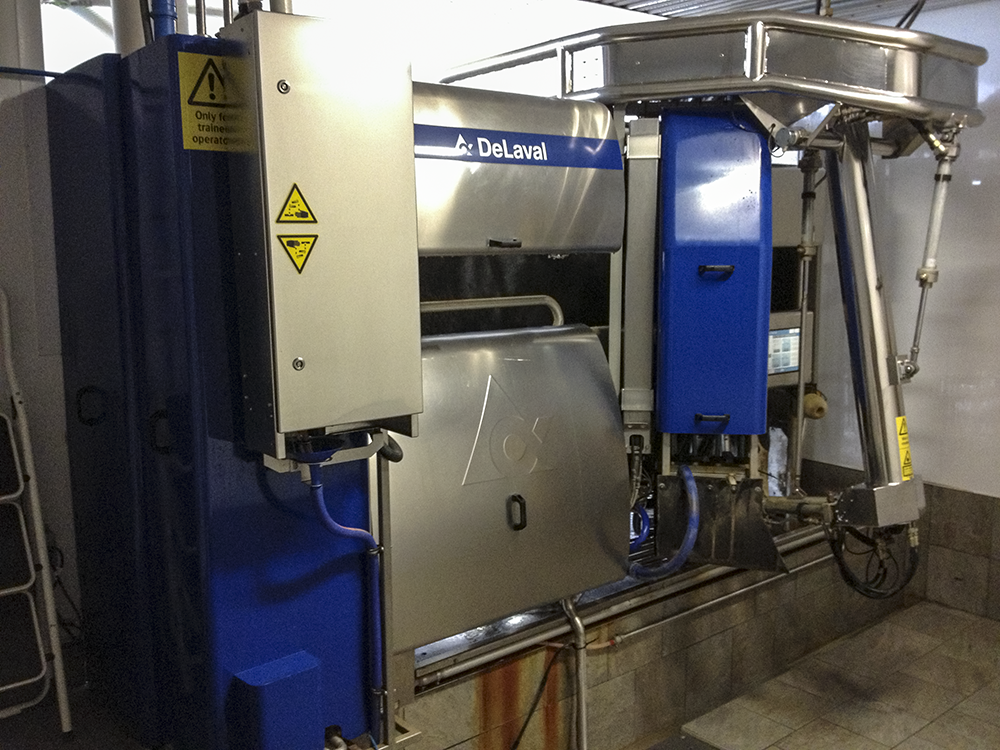
“Simply put, we were out of room.  Dry cows were being forced to stay in a small barn with anything from yearlings on up.  Making quota in the summer without swinging cows was difficult on pasture, dealing with the heat and the environment.  After returning from college, we added a high moisture corn Harvestore and a silo for haylage but dry hay/pasture in the summer and corn silage comprised most of our feed.” These changes and others brought them to the same conclusion. “Although we made many changes in feed and management, we had reached the maximum potential of that system.”

From Family Ties to Robots in the Family

It’s one thing to know that change is needed.  It’s another thing entirely to know how to carry it out. The Pettits were thorough. “We looked at everything.  Initially, we thought about expanding the existing tie stall barn.  Taking into account the expense of having to alter our manure management, and the fact we’d still be limited in our feeding options, it didn’t make financial sense to add on to the old barn.  We then considered building a new tie stall and visited several in the area.  Although that was appealing to us for the ability to see and interact personally with the animals, it seemed like we wouldn’t be taking a step forward.  Then we thought about a parlor, but having been involved in tie-stalls all our lives, it wasn’t an attractive option.”  Both Pettits are open about their learning curve. “Robotic milking was something we mocked early on in the process, but as we began exploring and researching, we found it held a lot of positive attributes for our particular situation.”

mistyglen robot 1

Siblings Push the Robotic Button

When it comes to pushing each other`s buttons, Suzanne and Tom have taken it to a whole new non-sibling-rivalry level.  The buttons they push are robotic. “On May 15, 2012, we started milking in a 70 ft by 240 ft, 3-row freestall barn with a DeLaval VMS robot.  It is a free traffic system, with 67 freestalls, and box stall space for dry cows and calving pens.  It is cross ventilated with climate controlling curtains, three 24 foot fans, automated alley scrapers, a hanging brush and a built-in footbath.  The stalls have Legend mats and are covered with chopped straw.  The old tie stall barn has been converted into heifer pens.”

Pettit’s Choice Awards

Before committing to the exact robotic system they would use, Suzanne and Tom did their homework.  “Given our size, we only required a single robot, so Lely and DeLaval were our main options at the time.  We went to Open Houses and then did a tour of several DeLaval units.  We eventually decided on the DeLaval because a) our tie stall equipment had been handled by Norwell Dairy Systems as well and we were very happy with their service, and b) it was possible (at the time) to purchase a used model that was fully upgradable.  The robot met our needs for a number of reasons.  Tom’s wife Kris works full-time and with two young daughters (Madison, 8 and Kadie, 5), he wanted more freedom to attend their activities that inevitably occurred during milking.  We were also intrigued by the prospect of getting more milkings per day and the potential increased production.”

The next generation at Mistyglen showing at Aylmer Fair

The next generation at Mistyglen showing at Aylmer Fair

Mistyglen Gives A Whole New Meaning to “It’s Show Time”

It’s easier than you would think for people interested in the Mistyglen robotic experience to see the “big picture” so to speak. Not only are they using technology to milk their cows they use it to talk about them. “Social media has played an interesting role in our development.” says Suzanne and goes on to explain. “We created a Facebook page mainly to have a place to track the progress of construction of the barn for our own purposes, and found that many people were curious about our plans and the changes we were making.  It’s a great way to interact with other breeders and people who are in the same position we were in a couple years ago, and we’re happy to assist anyone looking for advice or ideas.  We documented the building process in pictures from the ground up so anyone can scroll through our old albums.  While we’re not famous for our cows (yet), we have created a much greater following than we would have anticipated and it’s a fun aspect of the journey.”

Robotics Zoom In on Production

At the end of the day everyone wants to know how robotics actually perform for Mistyglen. Suzanne reports. “Numerically, the changes have been astounding.  Our BCA in May 2012 was 213-202-214 with a standard milk of 32.6 kg. 15 months later, we are now at 246-292-251 with a standard milk of 40.1 kg.  Our pregnancy rate has increased, I believe due to activity monitoring and the consistency in environment and diet.  The cows are generally less stressed milking an average of 2.7 times/day.  During the hottest week of this summer, our cows actually climbed a kg/cow.  With the ventilation and big fans, the heat of summer is now a non-factor.”

mistyglen robot 2

Mistyglen Feed and Feedback

Change is an ongoing phenomenon at Mistyglen says these dairy managers. “The other major change we were able to make was to switch to a TMR.  We now know our cows are getting a much more balanced and consistent feed, which has helped production tremendously.  We added an OCC (online cell counter) to our robot and it is a tool we recommend.  Knowing SCCs after every milking is very useful and allows us to be proactive about mastitis and possible sickness.”

The Sibling Outlook at Mistyglen

Of course, it’s clear that the status quo will never be the option of choice for these two. Suzanne outlines their aspirations.  “Our goal is to eventually reach Master Breeder status.  It’s still a ways off but we are slowly developing some homebred cow families.  We generally breed for type first, preferring cows with good width and depth of rib, strong udder attachments and good mobility with an increasing eye on health traits.” Tom rounds out the current picture. “Very little has changed in our breeding philosophy since making the move.  We pay more attention to Rear Teat Placement and Teat Length, but other than that, criteria remains quite similar.

Mistyglen Jetta Blockbuster and Mistyglen Kweens Throne, the morning they both moved to EX-4E.

Mistyglen Jetta Blockbuster and Mistyglen Kweens Throne, the morning they both moved to EX-4E.

Moo-Vie Stars from Mistyglen

Of course, the real stars of any dairy story are the cows. Suzanne talks of favorites. “Probably the best cow we’ve ever bred is Mistyglen Jetta Blockbuster (EX-92-4E).  Tom Byers made her our first ever Excellent in May 2009.  She was recently raised to 92 points and was the 2nd place mature cow in this year’s Elgin County Breeder’s Cup.  Her sire, Cityview Blockbuster, is a Leduc son of the great Shoremar S Alicia (EX-97) that we used as a young sire.  While he didn’t return to service, he left us with a beautiful foundation cow.  Jetta has daughters by “Dempsey”, “Throne”, “ReDesign” and “Marino”, as well as “Goldwyn” embryos due in the fall.  She is nearing 70000 kgs for lifetime production and is bred back to “Dorcy”.”

Siblings Stick Together to Make a Difference

Youth is on their side and the Pettits keep a balanced eye on the future. “Being 35 and 33, we feel our career is just getting started, but the shift from tie-stalls to robotics, and the growing divide between “commercial” dairymen and “breeders” has been evident over the last 15 years.  We are trying to enjoy the best of both worlds.”. “In the dairy industry, we aspire to the consistency of herds like Quality and Ebyholme (Read more: Quality Holsteins – Well-deserved Congratulations, Quality Cattle Look Good Every Day  and Ebyholme – The End of an Era) To carry out that process, Suzanne and Tom have purchased foundation animals from both these herds with a view to achieving Mistyglen’s goals. “There is still room in this industry for breeding long-lasting, true breeding families that can produce in any environment.”

Pettits See the Future – Precision Management
With their picture- documentary recording their experience of converting to robotics, the Pettits are enthusiastic about the future of this technology. “Robotics is going to continue to expand and be integrated into more milking systems.  Advancements like the Herd Navigator will continue to increase the amount of information available to a producer as farming becomes less and less physically demanding and more about management.” Both Suzanne and Tom enthusiastically encourage others go this route. “If you are considering a robot, talk to as many robotic farmers as you can and get out there and see different barns.  Robots seem to be most effective in new construction, so look carefully at your barn design and ensure it fits your needs now and in the future.  Be aware of the costs of operation and the potential pitfalls.  If you think because you have a robot you can ignore your cows, DO NOT get a robot.  Management is crucial to success with this technology.”

Making Moos, Moves and Movies – Show and Tell!

From camera updates, to regular robotic monitoring the Pettits find that things are clicking right along at Mistyglen. “Jumping into this transition to robotic milking may be our greatest accomplishment (so far) because we believe it will lead us to many of our goals.  It was a great financial risk, but one that is slowly but surely paying off.  We are purchasing quota every month, and we will eventually have this barn at capacity of 55-60 cows.”

The Bullvine Bottom Line

The final cut of Mistyglen story is far in the future for these enthusiastic dairy producers. “There is still much room for improvement in production, and many tweaks to be made to increase feed efficiency and visits to the robot, and breeding goals to accomplish.”  Nevertheless, for Suzanne and Tom Pettit Mistyglen is always ready for, “Lights, camera, action!”

Get original “Bullvine” content sent straight to your email inbox for free.


[related-posts-thumbnails]

Farm Succession: Which Exit Is Yours?

Handing down the family farm is not a simple event like hosting a twilight meeting or an occasional herd reduction sale.  No.  Farm succession is a journey that happens over time. Putting that time in, sooner rather than later, is an investment that could not only save your dairy farm legacy but your family relationships as well.

A Head Start Now Prevents Heart Break Later!

Unfortunately passing on the farm business is not something you can practice like training calves, improving milking procedures or modifying your feeding program.  Most of us will be involved in this hand-off only twice – and at that — it will be from opposite sides of the bargaining table: coming in and going out! While each position provides a learning experience, it isn’t likely something you will do often enough to become good at it. In fact, each trip to this turning point loads each of us down with baggage which may or may not have an effect on whether the farm moves from “A” to “B” without upsets.

Having said that, we could all sit around the living room and discuss grapevine tales of the horrors, nightmares (and occasional successes) of families who have tried handing off their dairy business to the next in line.  The reason we don’t have as many successes to bandy about is because the very fact that the successes were probably handled seamlessly makes them less of a community talking point.

The passion for dairy farming can start at a young age, but with out a good succession plan, that passion can quickly be lost.

The passion for dairy farming can start at a young age, but with out a good succession plan, that passion can quickly be lost.

Un-Spoken EQUALS Un-Successful

It only makes sense that something a family has felt passionate about doing for more than two generations is going to be a passionate issue when it comes to discussing successful succession. It’s the successful part that is the crunch. When you look at the timeline of a dairy farmer – he or she quite often will have invested forty or more years in the business.  A gold watch and a farewell dinner aren’t going to cut it, when it’s time to make changes at the top. Long before the fond farewells the family has to talk – not only about who’s in charge and when — but about expectations for income both pre and post “retirement” and the realistic sustainability of the dairy operation.  Get talking.  And use the word retirement often. I can’t imagine any dairy farmer who ever accepts full retirement.  While some of the perks (travel, hobbies) beckon, they never really see themselves retired!  And therein lies the rub!

Dairy Farming is a Living Legacy

If you were the one who taught your offspring how to properly hook on the milking machine, along with a thousand other chores that they struggled with at first, you may be reluctant to get out of the driver’s seat for this young upstart.  But that’s exactly what you have to plan for.  If you’re going to be that one dairy farmer in ten that sees grandchildren take over your farm, you’ve got to be able to step aside and let the next generation learn – and fail — and learn some more! Don’t leave the planning until it’s too late to meet the needs of those depending on the business. (Read more: What’s the plan?, Flukes and Pukes – What Happens When You Don’t Have a Plan and Are you a hobby farmer or a dairy business?) When it comes to expectations about your dairy farm legacy both sides have to be open and up front about what they’re hoping and dreaming about.  If you assume that one generation will just fall into place — as it did in the past — you’re setting yourself up for that ass-of-you-and-me situation.

IMG_2237

In order for your legacy to continue you need to feed that passion, and good succession plan can help you do that.

LATE Expectations!

You can’t just decide one afternoon that you’re ready to quit dairying. If you’re lucky, any decisions about farm succession will not be forced upon you by illness, financial pressures or any of the numerous dysfunctions that introduce cracks into the apparently firm foundations of the family farm business. We all recognize that maintenance is key whether it’s farm buildings, fields or dairy cattle … but we live in denial when it comes to realistic assessments of physical ability, revenue streams and long-term financial planning.

Start Early to Celebrate the Strengths of Your Particular Family

For years you have both benefited from the economies of scale and shared passion that are more beneficial than each family member owning their own operation.  After all, that’s one of the reasons you’re in this situation to begin with.  Likewise, there are all the benefits of the dairy lifestyle that have made your family memories rich.  Favourite cattle, records achieved, shared work ethic and the ups and downs of a business affected by the vagaries of weather, markets and politics. And you can’t overlook the benefits of being your own boss, or the boss’s kid, 24-7! Seriously.  The time to plan for the future is before you NEED to!

IMG_1225

Who’s The Boss?

The most familiar cog in the wheel of farm turnover happens when those at the front aren’t ready for change.  Speaking personally, I will always be of sound mind and body and therefore planning ahead is redundant in my particular situation.  Of course, there are those who are quite convinced that they are the only ones who could run their particular dairy operation. Making all the decisions, doesn’t prepare you or your successor for the future. No wonder our “kids” (even though they too are middle-aged) are considering mandatory retirement as an option.  Our fear is that these upstarts aren’t willing to put in the 70 hour workweeks that we did. “Our heels are dug in.”  “Our minds are made up.”  “Don’t try to confuse us with facts!” It’s hard to tell which generation is talking isn’t it?

Share the Health BEFORE You Siphon the Wealth

There are two occasions in the business lifetime of a dairy operation that are challenging. The first is at setting up and the second is when it’s time to transition down.  Unfortunately, when it comes to farm succession these two often contrary events are happening simultaneously for those involved.  It stands to reason that these changes and the acceptance of them can be difficult. Both sides perceive the other as suddenly unreasonable. Too few families looked ahead while they are in the smooth middle years where everything was chugging along and made plans for ways to keep the farm providing the lifestyle to which everybody had become accustomed or at least comfortable with.

IMG_2189

The Time to Get “Buy In” Is BEFORE You Have to “Sell Out”!

Even more frustrating is the situation, becoming more familiar today, where the dairy farm is not at its highest performance level.  Financial constraints may be throwing the entire future of the operation into question and here comes one or more family members looking for a deserved break. Advance planning would provide a way to get money out of the dairy operation without causing cash flow problems. The goal should be to use a combination of methods, insurance, wages and share purchases to name a few, to provide for those who are transitioning out, without creating a huge debt load for the next generation.  The goal is for the family to continue to embrace the future in a way that is achievable and sustainable.

It's never too early to start your succession plan.

It’s never too early to start your succession plan.

The Bullvine Bottom Line – Don’t Leave Trust in the Dust

At the end of the day, the family is more important than the money.  If everyone involved keeps their eyes on maintaining the relationships, everything else will fall into place.  There are many advisors, consultants and financial planners that can assist you. Their help is valuable but getting them up to speed is another challenge in an already challenging situation. All in all, when it comes to planning your dairy legacy you can always recognize success. A successful succession plan saves THE FARM AND THE FAMILY!

Get original “Bullvine” content sent straight to your email inbox for free.


[related-posts-thumbnails]

Burket Falls Holsteins: Rebels without a Horn!

Dave Burket receiving the Red and White Master Breeder Award from Elmer Carpenter in 2000.

With so many choices to make when facing breeding decisions, the results we achieve inevitably brand us.  For third generation dairy farm, Burket Falls Holsteins, the label “rebel” goes back to ten years after the farm transitioned from Guernseys to Holsteins in the 1950s.

Father Dave and son John Burket give us a summary of the breeding philosophy at Burket Falls Holsteins, “We have always strived to breed eye-appealing, profitable, and long living dairy cattle.  Solid cow families were always preferred over jumping on the latest breeding fad.” Some would describe it as ironic that the 80%+ naturally polled herd is right in the thick of today’s latest breeding trend. However, having focused on polled for more than 50 years, the Burket’s definitely move out of the follower column and hold top spot on the visionary list. Dave gives us a glimpse of how it all started.

The Oft Polled Tale 

“Our first polled animal was born on the farm in 1960.  That cow, Princess Fayne Houtwje, produced seven consecutive records of 1100 pounds of fat in the late 60’s and early 70’s.  It was the unique combination of no horns and high production that got our attention that we indeed had a special cow.” Princess traced back 21 generations to Holland.

All Told They’re Polled

Many things in breeding serve to focus our goals and provide a foundation for our breeding plans. For some it’s production.  For others it is show winners.  For Dave Burket who took over the farm from his father, Frank, after graduating from high school in 1950, it was that productive, horn free purchase of Princess that clarified his breeding vision. Today Burket Falls Holsteins includes approx. 500 acres of corn, alfalfa, and alfalfa/grass mix.  They still pasture quite a bit. But there ends the familiar part of their resume. For this farm located in south central Pennsylvania that started with l1 registered Holsteins now milks 100 Registered Holsteins.   The herd is 80%+ naturally polled and about 3/4 are red or red factor.”

“Do what you do best… and let someone else do the rest”

We hear the above quotation many times when seeking advice from the elite breeders in the dairy industry. Burket Falls Holsteins has followed this motto for three generations and today

Dave and John and their families are involved in executing that vision every day. “Whatever type of cattle you desire, strive to breed that kind and don’t try to appeal to all markets.” Advises Dave. He emphasizes, “The breeders who have stayed focused with a particular goal, seem to be the most successful.”

On a Roll with Polled

We all feel justified when the breeding decisions we have made bear results. Such is the case with Burket Falls Holsteins. Developing a herd of predominantly polled Holsteins has attraction national attention and international appeal. The focused approach, combined with red, has yielded animals that have competed at the national show level and produced large amounts of milk. They are sought after in the market place.  A good plan is invaluable and takes daily commitment. Additionally, Burket Falls Holsteins feels they have been fortunate in breeding good cows due to advice from a very special mentor. “Bill Weeks, the founder of aAa, (Animal Analysis Associates) has had probably the biggest impact.  We were fortunate enough to have Bill as a friend and visitor to our farm. It was Bill’s genius over 40+ years that has made the biggest impact.”

Burket Falls Elevation Sophia EX93 4E GMD DOM

Burket Falls Elevation Sophia EX93 4E GMD DOM

Polled is Gold Generation after Generation

At Burket Falls Holstein they have stayed loyal to their founding family. “We are working with descendants of Burket Falls Elevation Sophia EX93 4E GMD DOM.  They now have more than eight generations of polled from Sophia. Sophia’s lifetime production is 241,000 and 4.1% fat. She is a polled Elevation daughter that was a granddaughter of the original polled cow, Princess. Dave Burket enumerates her successes. “Sophia now has over 150 Excellent descendants in our herd alone and countless others around the world.  She is the foundation of the only “all polled” five generation, GMD DOM, all VG or EX, all over 130,000 4.0% lifetime pedigree.”  Additionally, Sophia was recently voted one of seven of Pennsylvania’s Favorite Cows by the membership of the Pennsylvania Holstein Association in recognition of their 100 Year Celebration.

Burket-Falls Sizzle-Red EX-93-2E Lifetime to date: Over 180,000m 4.2%f 3.2%p Dam: Burket-Falls Conv Saphira-RC-PC EX-92-2E EX-MS 2nd Dam: Burket-Falls PP Shine-Red-PC VG-86 3rd Dam: Burket-Falls BS Savina-ET-RC EX-91-2E GMD DOM 4th Dam: Burket-Falls Shania-Red-ET VG-85 GMD DOM 5th Dam: Burket-Falls Ca-Lil Silver-ET VG-86 GMD DOM 6th Dam: Burket-Falls Elevation Sophia EX-93-4E GMD DOM

Burket-Falls Sizzle-Red EX-93-2E
Lifetime to date: Over 180,000m 4.2%f 3.2%p
Dam: Burket-Falls Conv Saphira-RC-PC EX-92-2E EX-MS
2nd Dam: Burket-Falls PP Shine-Red-PC VG-86
3rd Dam: Burket-Falls BS Savina-ET-RC EX-91-2E GMD DOM
4th Dam: Burket-Falls Shania-Red-ET VG-85 GMD DOM
5th Dam: Burket-Falls Ca-Lil Silver-ET VG-86 GMD DOM
6th Dam: Burket-Falls Elevation Sophia EX-93-4E GMD DOM

Genomics, Polled and the Value-Added Proposition

The Burkets feel fortunate that in today’s marketplace where the spotlight is on genomics, polled is considered of “added value”.  John notes, “Genomics has made the majority of our herd worth less money.  Unless you have the very cutting edge of genomics, or the high show ring type, most registered cattle today are worth commercial price.” Although they are aware of the swing of the marketplace, they remain committed to their original vision when choosing sires. Dave confirms.” We continue to try to use the best sires available to incorporate into our polled and red breeding programs. We use many of our own polled sires, plus a few of the top genomic sires from solid maternal lines”

The Future is Polled

Looking ahead both Burkets see much that is positive in dairy breeding. “The industry has finally accepted that the future will be polled.”  John explains their reasoning “This is primarily because of the demand in the market place and prices that polled animals have been commanding.” This is gratifying for the Burket Falls Holsteins breeding program but they see that there are other challenges that polled breeding can provide answers to. “We know that the animal welfare issues are not going to go away.  As an industry, we (polled breeders) can be proactive in eliminating an undesirable routine on the farm. “Realistically Dave and John see that changes are coming in all directions. “For breeding we think some of the most beneficial aspects will be disease resistance and feed efficiency. Right today we are in the genomic bubble, but the pendulum will again swing back to a more balanced approach.”

The Bullvine Bottom Line

There are many variables beyond the control of our dairy breeding programs and, while we should definitely be aware of them, we can learn from the Burket Falls Holsteins example. “Our breeding goals have never changed. We have always strived to breed eye-appealing, profitable and long living dairy cattle. Solid cow families were always preferred over jumping on the latest breeding fad.”  With heartfelt commitment they see their vision being achieved. “We are not sure what the color of the dairy cow of the future will be…But we are sure that she will be POLLED!”

Get original “Bullvine” content sent straight to your email inbox for free.


[related-posts-thumbnails]

Farming With the Stars!

From soap bubbles of the past to the milk moustaches of today, farming is putting stars in our eyes!
Whether it’s famous celebrities like Dwayne Johnson or Carrie Underwood or newly minted rising stars like the Petersen Brothers, agriculture is turning on the star power! Actors used to sell soap and cars and endorse life insurance. Today they’re milking farming for all it’s worth.  Well known and wannabe stars both see the benefit of appealing to the rural roots of the spending public.  Milk jugs and melting butter are sharing the spotlight with bachelors and beauties down on the farm!

We Have Stars in Our Ears!

There’s big money in celebrity-endorsed advertising and the agents who spend their days poring over Nielsen ratings and viewer demographics are happy to have their stars in the agricultural spotlight.  From the consumer side, we feel we “know” these folks and because of that familiarity and their obvious success, we tend to listen to what they’re saying.  Rightly or wrongly we are prepared to trust these folks who are high above us in the stratospheres of fame. They capture our attention.

Agriculture’s Rising Star

There is no question that the “So God Made a Farmer” commercial that aired at Super Bowl XLVII on February 2013 resonated with millions of viewers.  It began:  “And on the eighth day, God looked down on his planned paradise and said, “I need a caretaker.”  Entirely comprised of pictures it nevertheless told a story that engaged the audience and generated an avalanche of comments.

Star Roars

Not all celebrity attention brings a pat on the back.  On April 18th 2013, singing star Carrie Underwood posted her viewpoint on the so-called ag-gag bill on Twitter and Facebook.  It rapidly went viral with huge numbers of views and comments.  Probably unwisely Tennessee State Rep Andy Holt responded that Underwood “should stick to singing”. Carrie’s prompt comeback verified how wrong it is to try to shut-down social media or to bully the opposition. She replied. “I should stick to singing? Wow…sorry, I’m just a tax paying citizen concerned for the safety of my family.”

Look Who’s Talking

There are two sides to every story.  Celebrity draws the attention.  Agriculture needs to respond with the same desire for what is best for the consumer, while making reasoned explanations of the valid issues facing farmers.  When the bright light is shining on the stars it can also pick out all the details of any skeleton’s agriculture might prefer to have in the shadows.

Farmers Are Stars Too!

You don’t have to have millions of dollars and an advertising slot at the Super Bowl to become an agricultural celebrity. The video filmed by the 11 year old sister of the Peterson Farm Brothers proved that.  Their parody “I’m Farming and I Grow It’ is a parody of LMFAO’s “I’m Sexy and I Know It.” It was uploaded to YouTube on June 25th. Three days later the video had broken the 1 million views mark and continues to generate a phenomenal response.  At this writing it stands at 8,644,701 views and continues to light up farm Agvocacy with lively discussions around the issues of growing the food we need to survive.  Another of their parodies is my personal favorite.  Entitled “Fresh Breath of Farm Air” it is a Fresh Prince Parody and is making stars of these three farm boys simply by showing every day farming exactly like it is.

The Bullvine Bottom Line

While we might hope that all the publicity farming gets is positive, at the end of the day what is most important is that agriculture is being talked about.  Open communication is the first step toward positive progress.  Personally – good or bad — bright or dull — I love it “when the stars come out!”

Get original “Bullvine” content sent straight to your email inbox for free.


[related-posts-thumbnails]

Dairy Nutrition. The K.I.S.S. of Wealth!

Thinking of our personal health and hearing the term ‘nutrition’, you might be motivated to eat more vegetables.  That’s simple and we all like the K.I.S.S. (keep it sweet and simple) principle.

Dairy Breeding is Simple Too

All you have to do is pick the right dairy breed, the right dairy genetics and, at least occasionally, manage to have Mother Nature and the marketplace somewhat on your side and it follows that you will produce buckets of milk and be the proud owner of a sustainable dairy business.  And that’s exactly why we more often face the O.U.C.H. syndrome – Overworked Underproducing Cattle Herds. Why is it that, with all the technology, science and passion at our fingertips, we are missing something?
nutrition consultant scott b

They Are What They Eat!

Cows eat every day.  Cows are milked every day.  It would seem to follow that those simple, daily actions could be the key to simplifying our dairy success.  Perhaps dairy breeders are missing opportunities and should seek expert help from nutrition consultants. After all, meeting production, herd health and economic goals directly affects the profitability of every dairy herd. The tricky part is that every dairy operation has unique issues that must be considered as part of the nutrition solution.

Why Bother With a Nutrition Consultant?

Scott B_ppAn effective nutrition consultant will investigate and analyze all the issues impacting your cows and thus impacting your success.  The Bullvine went to Dr. Scott Bascom to get some insight on the value of working with a nutrition consultant.  Dr. Bascom is the Director of Technical Services at Agri-Nutrition Consulting, Inc. (ANC) (Read more articles about animal nutrition by Dr. Bascom). He confirms “nutrition consultants can design a customized feeding program to meet their client’s specific goals and make the best use of the resources they have on the farm, and are skilled at feeding cows, heifers, and dry cows in a manner that will keep them healthy and highly productive.”  However his years of experience starting at college have given him a wider viewpoint.   While in college he attended a lecture given by Dr. Paul Chandler.   Chandler shared,  “There are many reasons beyond economics that a nutritional consultant provides value.” He feels that one of the best resources that a good nutrition consultant can develop is in maximizing the human side. “You have days when you are also a financial advisor, psychologist, marriage counselor and a loyal friend.” He continues, “At the time I didn’t comprehend what Dr. Chandler meant but now I recognize that he was telling us we would have to go beyond our skill in nutrition to develop a high level of trust with our clients if we were going to be successful.”

Not Just a Quick Fix. And BORING is good too!

The very nature of dairy breeding has conditioned breeders to the fact that any process we implement or change we make must be undertaken not as a short term fix but with a view to profitability for many years to come.  Changes are both feared and welcomed. Feared because they’re never easy.  Welcomed because of the potential for improvement. Dr. Bascom has a somewhat unconventional view of change as it relates to nutrition. “With my clients I am striving for BORING.  I want a boring ration that never changes because we feed the same thing all the time.  I want cows that are BORING because they are healthy, comfortable and get bred in a timely fashion. I want my herd visits to be BORING because we have no major issue to consider. My point is the goal is to get our clients to a place where we are meeting our goals and rarely need to make any big changes.  At this point we make very minor adjustments when we need to make a change.  The cows are happy, the producer is happy, and I am happy.”

From the Bunker to the Bank!

We spend research dollars to identify a cow’s genes to the smallest snippet.  We spend millions of dollars on the cow with the best dairy conformation. But we can’t agree on what to feed her at the bunker. Dr. Bascom feels that dairy nutrition is economically imperative. “The producer that isn’t working with a nutritionist has a lot as risk financially.  The value of feed fed to a lactating cow can be $8 or more per day. For a 100 cow herd the value of feed fed in a year is well over $250,000!  With feed costs so high, optimizing income over feed cost becomes critical. He backs up the statistics with personal experience. “When ANC picks up a new client that was not using a nutritional consultant prior to me, it is not unusual for us to increase income over feed cost by $0.25/cow/day. This adds up to a significant increased annual income.”

Keep Your Money Growing Just for You

“Another significant reason to work with a nutritional consultant is that they can bring new ideas to the farm.  Consultants are exposed to a diverse range of information including what we learn from other clients, trade shows, continuing education, and other people in our support network.  Part of our job as an advisor is to filter through all this information and bring back to our clients what is most applicable to their situation?”

How to Increase Milk Production

As I write this, I begin to see that the practice of nutrition is like the practice of medicine.  Being blessed with both an animal nutritionist and a medical doctor in the family, it is increasingly clear to me that the really good practitioners in either field are the ones who not only understand the science but can put it into practice.  Dr. Bascom readily is a storehouse of working examples derived from dairy nutrition consulting. “Let’s talk about increasing income over feed cost. Often this includes increasing milk production.   However, too often we can fall into the trap of pushing for higher milk production in a way that isn’t profitable. When we decide that higher milk production is the key to increasing income over feed cost then we look at forage quality, cow comfort, facilities, and a variety of management factors to decide how to reach this goal.   The answer is different on every farm.    For example if I have a client that has average days in milk of 250 days then we are not going to increase milk production until we improve reproduction.  On the other hand, a client that is overstocking their facilities might experience an immediate increase in milk per cow and total milk shipped by culling out some of their bottom end cows thus improving cow comfort for the rest of the herd.”

What Does Quality Cost?

In polling dairy breeders who do not use consultants, the number one reason given is that either the consultant or the feed program will be too expensive.  Dr. Bascom appreciates the opportunity to answer this concern. “Again, we start by talking about income over feed cost!  Sometimes decreasing out –of-pocket costs drops income over feed cost! The answer to this question is to look for ways to make the best use of the resources available on the farm.   We ask questions like, are we getting the most value out of the forages we are feeding? Are we feeding commodities that are competitively priced? Are we wasting feed?” Too often we measure financial success by decreased input dollars.  Sometimes we have to spend a little to make more.  A key learning to internalize is that you can waste money just as easily on excessive quality as you can on deficient quality.  Optimum quality is the goal.

Let’s Ruminate on Components!

“In most cases increasing components will increase income over feed cost.  The exception would be in markets that don’t pay premiums for high component milk. Low components could be an indication of cow health issues.   So fat and protein tests are something I watch closely.

The first step in high component milk is about feeding a healthy rumen. Forage quality is paramount.   We need high quality forages to optimize rumen health. So the first step is to make sure forage quality is optimum.  We also balance carbohydrates and degradable protein to encourage rumen health. The rumen bugs produce very high quality protein that drives both milk yield and components. After we have designed a diet for optimum rumen health and to maximize the production of high quality protein by the rumen then we look at additives. These would include bypass protein sources and rumen protected amino acids.”

Beyond the Basics to Practical and Personal
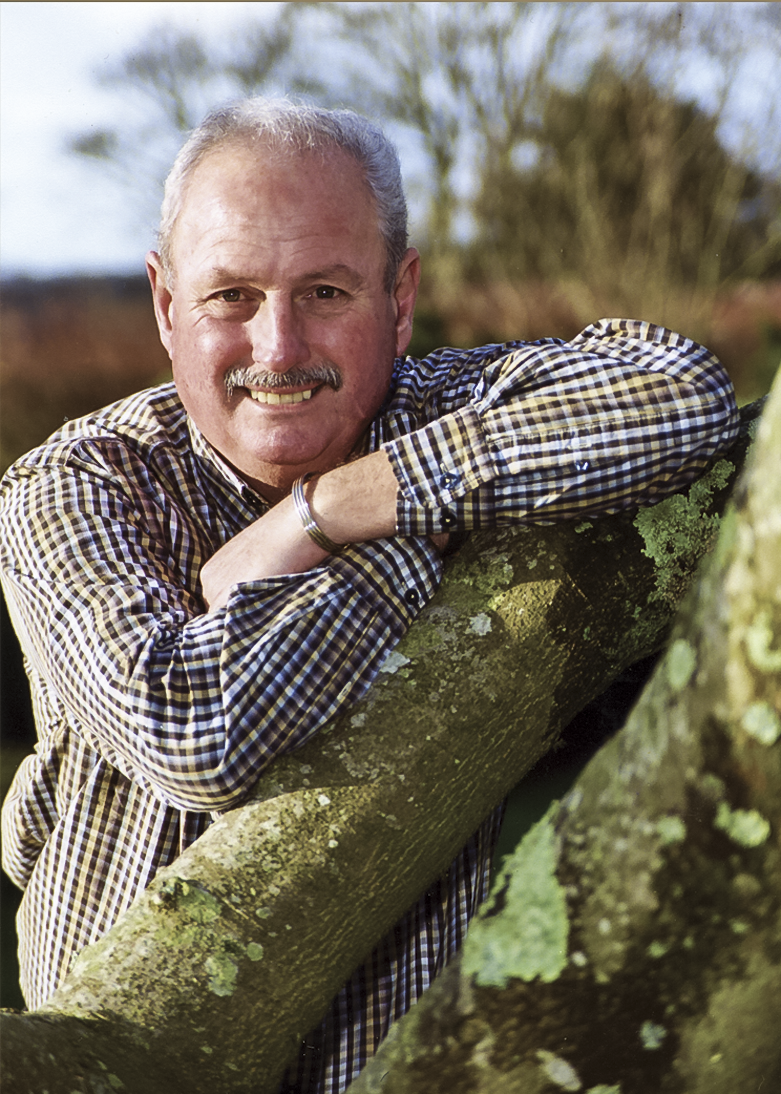
One of the most rewarding aspects of being connected to the dairy industry is hearing stories such as the ones Dr. Bascom shared with us.  “Years ago I worked with a dairyman in the southeastern part of the US that told me I got more milk for him than anyone else. I was only able to get his cows to 50 lbs. of milk but he was close to 30 when we started. This won’t get me on the cover of a major dairy magazine but to him it was a really big deal.”  Of course there are times ANC’s client’s success has meant rising to a challenge. “One of my ANC clients challenged me to feed as much forage as we could feed to his cows and maintain healthy cows, production at 75 lbs. of milk, and high components.    We were able to get the diet up to 82% forage as a percent of dry matter.   We maintained milk at 75 lbs., fat test over 4.0%, protein at 3.3%, cut purchased feed costs, cow health improved, and reproductive performance improved.  I didn’t think we could take the forage to this level without losing milk!”  Every client has different goals, says Bascom. “Several years ago I started working with a new client that markets embryos.   The goals were to maintain fat test at 4.0%, protein at 3.4%, and cut purchased feed cost. We made adjustments to the diet to feed more of their homegrown forages to cut purchased feed cost. We also added a liquid feed to the ration and made some adjustments in how the TMR was mixed.  Not only did we save money but the cows came up in both protein and fat test. This put more money in the milk check and also made more cows in the herd eligible for the foreign embryo market.”

ROF is Good. Return on Relationship (ROR) is Great.

It doesn’t matter what facet of the dairy industry you work in, you’re going to find passionate people.  Dr. Bascom is one of them. “I love cows,” says this ANC consultant and adds, “Following a career in nutrition allows me to be around cows and people who love cows.”  And that is a key motivator for him. “The cow success stories are rewarding but perhaps the most rewarding experiences are the people success stories. I have celebrated weddings and the birth of children with my clients. I have watched their children grow-up and find their way into the dairy operation. I have cried tears at the loss of their loved ones. These experiences are just as rewarding as celebrating high rolling herd averages, the sale of bulls into AI, All-American nominations, and high classification scores. This is very much a people business and it is so rewarding to gain the trust of my clients in a way that they want to share good times and the hard times in life with me.”

The Bullvine Bottom Line

We can all identify with the passion that makes a career in dairying the focus of our daily lives.  However, we can’t let rose colored glasses cause us to limit our dairy herd success.  Dairy nutrition consultants help us to investigate and discover ways to overcome unnecessary or unseen obstacles.  So that leaves the Simple Question: “Why bother with nutrition consultants?”  And leads to the Simple Answer:  “You can’t afford not to.”

Get original “Bullvine” content sent straight to your email inbox for free.


[related-posts-thumbnails]

“The Dairy Queen” has All the Answers!

jerseyadMany of us grew up with the jingle, “Let’s all go to the Dairy Queen!”  The promise then – and now – is that dairy products, especially fresh frozen ones, are a delicious answer to the question, “What should we do now?”

Derrick Frigot, WJCB President, was raised on a well-known dairy farm on Jersey.  Today as an co-author and with an international team of researchers and contributors, he has helped carry to completion the book “The Dairy Queen.”  This isn’t a cold calorie laden dairy dessert but it does dish up dairy information about Jersey cattle that is magnetic in its appeal, broad in scope and richly satisfying.

The Isle of Jersey Marks the Beginning

Derrick thoroughly enjoyed those early days on his uncle’s farm. “He was a leading breeder and exporter of Jersey cattle. As a youngster it was exciting to meet well-known North American Jersey importers like Paul Spann and Lea Marsh.” This experience prepared Derrick for his career path. “When leaving school, I worked in the office of the Royal Jersey Agricultural & Horticultural Society for six years, followed by a couple of years in a livestock feed company, and finally as manager of the Jersey Artificial Insemination Centre Ltd, the Island’s first AI company.”

Co-Author Derrick Frigot

Co-Author Derrick Frigot

Artificial Insemination Provides the Background for Authorship

AI on the island of Jersey became the next influence on the unfolding of Derrick’s career. “In 1975 the island’s government took over the local operations of artificial breeding and our company concentrated on cattle and semen exports from Jersey.  In the mid 1980s we began importing international Jersey semen into the UK and became the leading suppliers to UK Jersey breeders. “

Now not everyone who works in the AI field automatically becomes an author but for Derrick writing “The Dairy Queen” was a welcome extension of his interest in Jersey dairy cattle. “I was delighted to be asked to assist with the completion of this book so ably started by Hans Norgaard who is a dedicated Jersey breed historian from Denmark. “

Co-Author Hans Norgaard

Author Hans Norgaard
(Photo by Niels Damsgaard Hansen)

“The Dairy Queen” is the Unique Written Record of an Exceptional Breed

jersey bulletinA book for anyone interested in dairy cattle, The Dairy Queen, is the first truly global account of the development of the world’s most efficient dairy producing cow. Derrick points out the unique features of this special book. “It tells the story from the early origins of the breed to modern times, throughout the world.  It will appeal to all dairymen interested in cattle breeding and its 300-plus pages with over 700 pictures is a glorious presentation of the Jersey breed.  The great cattle breeders and individuals who influenced the historical progress of the Jersey cow are well documented along with anecdotes of incidents that literally changed the progress of the breed.  For example, the concerns of cattle breeders in the Island of Jersey in 1947 when dockworkers refused to load cattle onto ships for export – they were concerned about shortage of milk for island families following the five-year occupation by German forces in World War II.
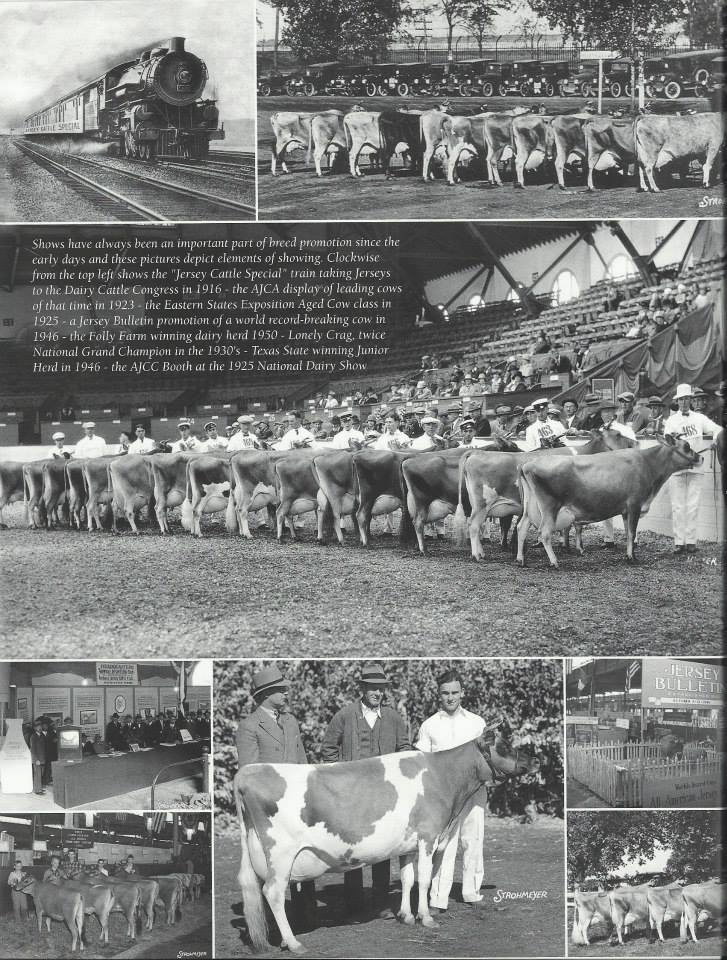
tank

Another example is the introduction of multiple component pricing that triggered the strong move to Jerseys in the USA coupled with the success story of Hilmar Cheese in California, owned by a group of Jersey cattlemen that has expanded the breed greatly in that state and also Texas.”

Showing in the first half of the 20th Century (A page from the book)

Showing in the first half of the 20th Century (A page from the book)

The Written Word is Inspired and Supported by Jersey Enthusiasts

Such a significant undertaking obviously would require a huge commitment of time.  Derrick appreciates those who influenced his work on the book. “Anne Perchard, MBE who was the Patron of the World Jersey Cattle Bureau and a long-time close friend of mine.  Anne was the World Dairy Expo’s “International Person of the Year” in 2011 and the first woman to be awarded honorary membership of the American Jersey Cattle Association. She wrote the foreword for the book and sadly, passed away just a month before publication.”  Derrick also appreciates “All the Jersey breeders of this world for sharing their stories.  It has been my privilege in working with the dairy industry all my life, which your readers will agree, is the greatest industry in the world.”
cover

The Bullvine Bottom Line

The Bullvine does agree with Derrick Frigot that dairying is the world’s greatest industry and so we congratulate him on the publication of “the Dairy Queen” and for answering so thoroughly the question “And why is that?” So next time you need to discover more about the people and passion that have made such a positive impact on the Jersey Breed, you would be wise to go to “The Dairy Queen!”

To learn more about how to get your copy of “The Dairy Queen – A History of the Jersey Breed Worldwide” check out their Facebook page.

[related-posts-thumbnails]

“Got Milk” is becoming “Got More”

“Drink your milk.”  Dairy farmers aren’t the only ones who have been raised with this mantra and its follow-up don’t-argue-with-me reasoning, “It’s good for you!”  There are many parenting proverbs that haven’t stood the test of time. but milk`s goodness has.

Milk has Already Got More Good Stuff

There is significant recent scientific research to prove that milk contains several disease- fighting compounds. Research is also evaluating the potential health benefits of proteins that are found in milk.

Cows are Putting More Good Stuff Into the Milk

With the proof of milks’ already healthy properties, comes the good news that scientists have learned that these properties can be increased by feeding cows specialized diets. The potential is definitely here for dairy farmers to change the way they feed their cows and thereby raise the health-enhancing properties of milk.

For example, in a recent study, Oregon State researchers were able to increase the level of omega-3 fatty acids in milk.  They also were able to decrease the amount of saturated fat.  Both these results came through feeding flaxseed to cows. This is great news for consumer health.  Less cholesterol and more omega-3 fatty acids in our human diet reduces the risk of heart disease.

What More Has Milk Got for Me?

Research trials have shown that consuming butter with elevated levels of CLA can reduce the size of cancerous tumors. CLA is Conjugated Linoleic Acid and is a naturally occurring anti-carcinogen. Researchers at several universities, including Cornell. have discovered they can increase the level of cis-9 trans-all CLA by feeding cows certain nutrients.

Other news from this area reports that a2 brand milk comes from cows specially selected to produce A2 beta-casein protein rather than A1. Most cow milk contains both types of beta-casein protein – A2 and A1. The A1 beta-casein protein has been linked with digestion and health issues so having more A2 is a plus.

A2 Corporation, the manufacturer of a2 brand milk products, targets three areas of growth: building its beverage business in Australia and New Zealand, capturing niche shares of global milk and dairy product markets and developing an infant formula business with an initial focus on China.  In April 2012, they announced a strategic agreement with Synlait Milk Limited in New Zealand to manufacture a2 brand nutritional powders, including milk powders and infant formulas for A2C.  According to A2C managing director Geoffrey Babidge, the a2 brand’s growing credibility will provide a platform for the firm’s expansion plans in the UK, Ireland and China. In December 2012 production of the China-destined a2 branded infant formula was set to begin.

Milk has Got to Have More Taste!

When a food has earned the label “good for us”, we sometimes choose not to eat or drink it claiming it doesn’t register on our taste scale.  Since the 1970s milk consumption has been declining and certainly consumer taste preferences are part of that statistic.  In the U.S. the volume of total liquid dairy is declining. Consumption of white milk is forecast to decline by 6.5% between 2011 and 2015.  But then comes the “good taste” news.  Consumption of flavored milk is growing and expected to increase to 9.5% by 2015. Flavored milk, the second most widely consumed Liquid Dairy Product (LDP) after white milk, is forecast to increase globally by a compound annual growth rate (CAGR) of 4.1% between 2012 and 2015, rising from 17.0 billion liters to 19.2 billion liters.

The World Wants More Flavors

In the past five years, 2009 to 2013, four emerging countries – Brazil, China, India and Indonesia – are driving the increased demand for flavored milk. While developing countries accounted for 66% of flavored milk consumption, this is forecast to rise to 69% by 2015.

Research shows that China, South Asia and Southeast Asia drink more than half the world`s flavored milk. In fact, just six Asian countries – China, India, Indonesia, Malaysia, the Philippines and Thailand – consume 47% of the world`s flavored milk.  This highlights that emerging economies are the growth engines of the dairy industry.

North America`s Got Apple Pie Milk and More

While not leading the consumption of flavored milk, North America is certainly not out of this tasteful picture.  Just in time for birthday celebrations on Independence Day Shatto Milk Co. of Osborn, Mo., stocked store shelves with apple pie-flavored milk to celebrate its own 10th anniversary.  Other flavors this flavorful company produces include cherry chocolate and mint chocolate milk. According to Dennis Jonsson, President and CEO of Tetra Pak Group “For consumers unwilling to compromise on taste, health or convenience, flavored milk is proving to be an increasingly popular alternative to other beverages.”
Flavored Milk’s Got More with Less Packaging

Cartons have become the established packaging format for flavored milk, according to Tetra Pak.  They accounted for 62% RTD (ready to drink) flavored milk packaging in 2012, up from 57% in 2009, and are expected to rise to above 64% in 2015. Portion packs are expected to reach 81% of RTD flavored milk consumption.

Milk’s Got More Added Value

Whether you`re attracted to milk for its high nutrition, health benefits or good taste, milk products today can meet a huge range of  needs.  It starts with the desire for nutritious and healthy food.  Developing countries are turning to nutrient-rich milk products.  In prosperous urbanized areas of the world the fast pace of modern life demands tasty, flavored milk in convenient packaging. Consumers are eager to try new and unusual food and drinks. New varieties of milk products will most definitely increase milk consumption.  Additionally, these “designer” dairy products could sell for premium prices.

The Bullvine Bottom Line

Kudos to dairy producers, the scientific community and marketing wizards.  The production of milk with so many “Got-More” features means we are improving the health of the consumer and the health of the dairy industry simultaneously! Now that’s more like it!  So “Drink your milk!  It’s good for you!”

Get original “Bullvine” content sent straight to your email inbox for free.


[related-posts-thumbnails]

Who Will Feed The World? Global 4-H Summit Takes Action Packed Focus on Feeding the World

feedingahungryplanetThe Global 4H Summit which will be held in Calgary, Alberta from August 19th to 25th is shaping up to be an outstanding event targeting the vital issue of “Feeding a Hungry Planet”.  As a natural extension of the 100th anniversary theme of “Food for Thought” the summit will tackle food challenges facing the world today. The global representation includes 60 Canadian delegates from across the country, 20 American delegates, and 40 international delegates from 22 different countries (Australia, Brazil, Chile, Finland, France, Germany, Ghana, Indonesia, Italy, Japan, Kenya, Mexico, New Zealand, Nigeria, Pakistan, Poland, South Africa, Taiwan, Uganda, United Kingdom, Zambia, and Zimbabwe), plus 25 mentors and other staff, for a total of 161 representatives will attend and participate in the Summit.

Tammy Oswick-Kearney, Special Projects officer for 4-H Canada, provides some background on why feeding world populations is such an important issue. “In November 2011, the United Nations declared that the planet’s population surpassed 7 billion people. By 2050, experts predict an additional 2 billion people will need healthy food and nutrition. No one person, company or nation holds the answer, but through discussion, collaboration and innovation, these young adults know ground breaking agricultural solutions can be found, acted upon and achieved.”  Fortunately, there were groups who saw the need and stepped up to address the possibilities. The Summit came about because of the 100th anniversary of 4-H in Canada. 4-H and their partner, Bayer Crop Science wanted to host a “unique” event that would address “Feeding a Hungry Planet” and be in line with the 100th anniversary theme of “Food for Thought”.  In the intervening time, much has already taken place. “The summit will use a combination of pre-summit work, guest speakers, group discussions, tours and a facilitated process towards viable actions, to enrich the experience of participants from around the world. There will also be the opportunity for youth from around the world to be engaged in the summit, even if they are unable to participate.”

Click on map for enlargement

Click on map for enlargement

Over 400 Applications Received

It is obvious that 4-H youth today are inspired by the urgency of the issue.  Applicants were given the following question to address in an essay or video presentation.  Over 450 applications were received from around the world.

“In the next 40 years the world’s population will grow from 7 billion to 9 billion, yet already today, 1 billion people do not have enough safe and nutritious food to eat.

Using your own village, town, city or country as your point of reference, tell us what YOU think the underlying causes of food insecurity are and why, and the effect it can have on a population (both locally and globally). Explain how sustainable agricultural practices could solve these issues and how you would use the Global 4-H Youth Ag Summit to advance your solution(s).”

The Summit Marks Commitment to New Beginnings

Through combined pre-summit work, guest speakers, group discussions, tours and a facilitated process towards viable actions, youth will have the opportunity to create, discuss and further implement their action plans when they return home. Each delegate will leave the event with three personal actions that they will commit to follow through on with the support of their mentor, upon returning home. We encourage that these individual actions are S.M.A.R.T.: Specific, Measurable, Actionable, Realistic and Timely. The entire delegation will develop a collective action plan that all delegates are willing to commit to, using the content of the working group presentations, to build a shared action statement.

Click on image for enlargement

Teamwork brings a great idea from concept to reality

There are many times when a wonderful plan breaks down on the long road through red tape, finances and other logistics of international endeavors.  There can never be too many “Thank you’s” extended to Bayer Crop Science who has been working alongside 4-H Canada to ensure that this Summit comes to fruition, as well as continuing beyond the August 19-25th dates.  It boggles the mind to think of how many dedicated volunteers have worked tirelessly behind the scenes to also ensure that this Summit is successful.  Tammy emphasizes their importance. “Without the volunteers, we may not have been able to deliver such a diverse opportunity to so many deserving young adults around the globe.”  There is an extensive list of sponsors who support this Summit including – Agriculture Canada, Alberta government, Cargill, Agrium, John Deere, Richardson Pioneer, Farm Credit Canada, Alberta Innovates Bio Solutions, who have come to the table to ensure the success of this event. As well Agri-Trend, Alta Genetics, the Calgary Stampede, Canadian Cattlemen’s Association, Copithorne Ranch, McDonald’s Canada and Sunterra who are participating by providing speakers and/or giving tours.

Passion with a Purpose

The purpose of the Summit is to identify, connect and create ideas, all aimed at progressing agriculture around the world with the next generation of agricultural participants.  This collaborative approach aims to leave participants with actionable ideas that they can take back to their home country as well as their personal operations/careers.  The core themes throughout the week are: Goal setting, innovation, Sustainability, Leadership and Celebration.

A Lofty Goal for the Global Summit

It is exciting to even consider such incredibly challenging topics.  To do so with enthusiasm and with the ultimate goal of taking action is astounding.  Speaking on behalf of the committed visionaries and volunteers Tammy Oswick-Kearney says, “I hope the delegates will take away their action items and implement them quickly. I want the delegates to continue to use their mentors for support and advice as they move to implement the united Youth Ag Summit plan. I want the conversation, ideas and solutions to continue long after the Summit has come to a close. With the growing world population set to reach 9 billion by 2050, we cannot let this conversation, these ideas and solutions, die.”

A “Working” Committee with Milestones to Reach

Organizers report that a working committee will be established to carry forward the work that will be completed over the course of the Youth Ag-Summit.  From its inception the Youth Ag Summit milestones have been:

To create awareness and garner interest in the global food crisis by inviting youth ages 18-25 to apply to attend an expense paid trip to Calgary, Alberta, Canada to address the issue of “Feeding a Hungry Planet”. This gathering will provide an avenue for agriculturally focused 4-H youth from around the world to dialogue on how they can address feeding a growing world population in an atmosphere that fosters international networks and friendships and provides the opportunity to produce youth-driven action plans focused on feeding a growing world population, for themselves and policy makers around the world.

The Ultimate Goal of the Global Summit

The three key outcomes of the summit are:

  1. To provide an avenue for agriculturally focused 4-H youth from around the world to dialogue on how they can address feeding a growing world population.
  2. To create an atmosphere that fosters international networks and friendships.
  3. To produce youth-driven action plans focused on feeding a growing world population, for themselves and policy makers around the world.

The Bullvine Bottom Line

The global 4-H Youth Ag Summit [YAS] will bring young people together to share knowledge, while pursuing a vital cause.  They will also share understanding and become a forum for future leadership at the highest levels. We can only applaud and encourage these young minds and hearts that are prepared to put their hands to work to feed their families, their community and the world!  Bravo!

Get original “Bullvine” content sent straight to your email inbox for free.


[related-posts-thumbnails]

ANDERSTRUP HOLSTEIN: Danish Breeding Rises to the Top!

There are many pivotal moments on the way to cattle breeding success.  Niels Erik Haahr is clear about his personal ones, “I was born with the virus to be a breeder.” His father was interested in horse breeding and cattle breeding but the next big impetus came when Niels Erik was thirteen. “I invested in my first Holstein calf and she was successful.” There is no inoculation that can cure that fever but it burned even hotter after Niels Erik visited Glen and Vanda McNeil when he was 18. “I went to Heather Holme farm in Canada and, from that moment, it was clear in my mind that my mission was to create a top Holstein herd.”  (Read more: Glen McNeil: Communication, Common Sense and Respect for the Speed Bumps Delivers Holstein Leadership)

It Isn’t Lonely for Anderstrup at the Top

Located in Denmark, Niels Erik Haahr of Anderstrup Holsteins in some respects has a somewhat unique dairy resume. “Today I farm together with my brother. We have an operation of 300 milking cows, 500 heifers, and 100 bulls. We milk 3 X. The herd average is 14,350 Kg 3.7 % F 3.3 P somatic cell last 12 months 103,000.” So having noticed the 100 bulls, the details on this herd continue to catch our attention. “The average score is VG 86.5.” The logistics are also interesting. “We handle 350 hectares of land with grass and corn. We make 175-200 ET calves every year.” For this dairy breeder, the main market is Scandinavia (NTM), Germany (RZG), and Holland (NVI). But the outstanding piece of information is that this single herd has produced four of the top 10 bulls on their AI list. And an outstanding further addition is that “In the last 12 months 32 bulls from Anderstrup Holstien have been accepted into A.I.!”

Anderstrup Goldwyn Mali VG-89-DK 2yr. She has 8 sons in AI She has 9 daughter which 8 of them are already contracted @ CRV She is the highest producing 2yr. Old in her herd Maternal sister to the #1 Jango son World Wide: Dukefarm Highlife @ Semex Same family produced the great sire Long-Langs MAN-O-MAN

Anderstrup Goldwyn Mali VG-89-DK 2yr.
She has 8 sons in AI
She has 9 daughter which 8 of them are already contracted @ CRV
She is the highest producing 2yr. Old in her herd
Maternal sister to the #1 Jango son World Wide: Dukefarm Highlife @ Semex
Same family produced the great sire Long-Langs MAN-O-MAN

Anderstrup Aims High

Not everybody can build such a resounding success story.  Niels Erik gives credit to his parents influence.  “My mother and father always taught us that if you work hard and you have a little bit of talent, in the end you will succeed at whatever you are working with.  To make good results in breeding you need to be hard working the year around. With the genomic world you need to try to be up front every day to make the next high one. If you slow a little bit down you can very fast be out of the game of selling bulls to Al.”

What Makes the Difference?

The Bullvine always encourages breeders to pinpoint the differences.  Niels Erik starts with obvious national ones. “I think the difference is getting smaller and smaller – but no doubt our cost per kg of milk produced is higher in Denmark than in the US. We have more debt per cow because of high prices of buying land and quota for the production and the salary level – for staff- is also higher than in the US.”

Those would appear to be hurdles rather than easy steps.  Haahr continues. “My passion has always been to breed great cows. When I was young I did focus mostly on breeding great show cows – but with the years it changed.  Now I go for total breeding with high production, with good secondary traits combined with great type. But we still want to make some top show cows so we have a small part of the herd that is bred to top type bulls. So today the herd is split in 3 groups 1 – Cows/heifers with high genomic potential 2 Type cattle 3 Recipients”

Anderstrup MoM Carien

Anderstrup MOM Carine VG-89-DK EX-91-MS 2yr.
The #3 GTPI Man-O-Man daughter in Europe!
She is dam to the #1 & #2 GTPI Bookem dtrs in Europe and to the #1 & #2 Levi dtrs in Europe
The #1 genomic cow in Denmark with +40 NTM

Carine Means Success — Pure and Simple

Of course, the Anderstrup method is working well. “My best home bred is Anderstrup Didrik Carine EX 92. She managed to be a show cow together with making 365 D  18,255 kg 4.5 F 3.5 P in her 2 lactations.  In her 2nd lactation, she was flushed to Man O Man. The result was the number 1 bull in Scandinavia Viking Mandel and the Number 1 cow in Scandinavia Anderstrup Man O Man Carine VG 89 2 Y. This Man O Man is also testing well in the US with a gTPI of 2292. She is the dam of number 1 and 2 Bookem and the number 1 and 2 Levi in Europe.” Those are astounding benchmarks to be set by a single herd.

Anderstrup Levi Classi he #1 GTPI Levi-daughter in Europe! Her full sister is the #2 GTPI Levi in Europe Dam is the #3 GTPI Man-O-Man in Europe - #6 GTPI Cow in Europe and #1 NTM Cow in Denmark - Anderstrup MOM Carine VG-89-DK EX-91-MS 2yr.

Anderstrup Levi Classi
he #1 GTPI Levi-daughter in Europe!
Her full sister is the #2 GTPI Levi in Europe
Dam is the #3 GTPI Man-O-Man in Europe – #6 GTPI Cow in Europe and #1 NTM Cow in Denmark – Anderstrup MOM Carine VG-89-DK EX-91-MS 2yr.

At the Top with Anderstrup

The success story continues to build.  Anderstrup is working with several high cows and heifers including

  • Anderstrup Man O Man Carine and daughters by Bookem, Levi and Massey
  • Anderstrup Snowman Heaven (Snowman x Boliver VG 87) is the Number 1 gTPI Snowman in Europe and the highest RZG heifer in Germany at 159.  At the moment there are 25 pregnancies coming from her.
  • Tirsvad Big Time Noma (Big Time x VG 87 Stol Joc x VG 87 Oman, owned with Tirsvad Holsteins). She is the dam of Tir An Uno Nyala gTPI 2525 RZG 155. She sold in the Eurogenes summer sale at 84.000 Euro. Noma is also the dam of several heifers above gTPI 2400 and over 150 in RZG. Her 2 Lexor sons are numbers 2 and 3 of all European bulls tested in Germany both at RZG 161. Noma has 2 full sisters and in total there are 25 heifers from the 3 sisters. One of them is the number 1 heifer in Scandinavia sired by the German bull Maximum. Niels Erik reports that the 3 sisters will soon be fresh and they look promising.
  • Anderstrup G-Force Malin (G Force x VG 89 Bismark x VG 87 Baxter) is the number 2 heifer in Denmark and the number 5 in Germany at RZG 158.
  • Calbrett Supersire Barb RC (Supersire x Rainyridge Super Beth VG 86 x Talent Barbara EX 95) gTPI 2527. Number 1 gTPI RC in the world. She is owned with Diamond Genetics and Drakkar Holsteins. Recently topped the Cormdale Summer Sale at $265,000.  (Read more: Cormdale Summer Sale 2013 Results)
IMG_0316

Topping the sale Cormdale Summer Sale at $265,000 was the #1 gLPI and gTPI *RDC heifer of the breed Calbrett Supersire Barb. The Seagull-Bay Supersire daughter from the extremely popular Superstition daughter Rainyridge Super Beth VG-86-2yr projected to 222-218-239% BCA who sold for $75,000. The next dam is Rainyridge Talent Barbara (Ex-95-2E-USA-2*), the “Talent” who was All-Canadian and All-American 5-year-old in 2010 who traces to the noted Rainyridge Tony Beauty (Ex-5E-9*). Offered in the sale by Cormdale Genetics Inc. and their partners Diamond Genetics of Holland and Al.Be.Ro. Land & Cattle of Italy, she was purchased by Anderstrup Holsteins with partners Diamond Genetics and Drakkar Holsteins.

Investing in the Top End is The Key to Exceptional Dairy Breeding.

Niels Erik says: “Invest in the genetics from the top end.” Currently at Anderstrup they are using the following bulls:

Genomic :        Mandel (DK), Miracle (DK), Boss (DE), Big Point (DE), Balisto (US), P.Aiko (Tjekk), Seargeant (US), Shottglass (US), Aikman (US),Model (US), Predstine (US), Chevrolet (NL), Picanto (DE)

Type:   Gold Sun (US), Goldwyn (CA), Attwood (US), Bradnick (US), Fever (CA), Lauthority (CA), and Meridian (US).

Anderstrup Gets Genomics and Gets the Calls!

Once again, we learn how important it is to get name recognition. ““We do a little bit of advertising in different magazines. We try to get our best cows’ pictured so we have them ready for the catalog and future Ads but the only thing that really works is to have your cattle high on the genomic list. That is what makes people start calling.” He goes on to describe why genomics is a big part of the Anderstrup program. “For us genomics has been great. It has been a big challenge to get the Al to travel the long way to come to Denmark. With the genomic test it makes it so much easier to catch the attention of customers around the world. It has not changed the dairies in Denmark but we have picked up genetic speed. Hopefully the results will mean there are more profitable cows for the commercial farmers.”

Anderstrup has been was the Premier Breeder and Exhibitor for the last 8 National shows they have been at in Denmark. 2013 will mark a end to this streak as Niels will be the judge.  Pictured here is part of the 2012 team, Gr.Champion Anderstrup Goldwyn Jolly EX  Res.Gr Champion Anderstrup Stormatic Krista EX Hon Mention Gr Champion Anderstrup Damion Jenny EX.

Anderstrup has been was the Premier Breeder and Exhibitor for the last 8 National shows they have been at in Denmark. 2013 will mark a end to this streak as Niels Erik will be the judge. Pictured here is part of the 2012 team, Gr.Champion Anderstrup Goldwyn Jolly EX, Res.Gr Champion Anderstrup Stormatic Krista EX, Hon Mention Gr Champion Anderstrup Damion Jenny EX.

Where Do you Go When You’re Already at the Top?

Having already inputted an amazing 40% of the top 10 bulls on the Scandinavian AI list, you might assume that Erik Niels would have rested on his laurels for awhile.  You would be wrong to do so! This committed dairy over-achiever still had very definite targets that he aimed for and achieved. He shares them. “In the Index world to breed the number 1 bull, Mandel (Man-O-Man), and 2 bull, Miracle (Miracle) in Scandinavia and the number 1 and 2 female in the same year 2013.” The herd has 6 females in the top 10 females in Scandinavia. He already had set his sights on the show world and was the Premier Breeder and Exhibitor for the last 8 National shows they have been at in Denmark. And the icing on the dairy breeding cake for this gentleman who started judging at 16 came when he judged the European Red and White Show in 2013.  No doubt with such focus even more aspirations will become achievements.

Don’t Overlook the Challenges

With such commitment and enthusiasm also comes an awareness of the challenges. Niels Erik confirms his concerns. “I am nervous that the Al companies only focus on making the next top bull and forget our bigger and bigger inbreeding problem in the Holstein breed, we are all focused on making the new leader – and in that battle we all forget to make enough outcross combinations because that what the breed really needs. I am also nervous that in the future the laboratory breeding will more or less take over the influence that breeders have today. If we see what has happened in the last 5 years in the labs I am really concerned that in the future it is more important that Al companies work with the best labs and then they work with the best breeders”.

Anderstrup Roumare Gisela VG-89-DK 2yr. Former #1 GTPI Roumare in Europe Dam is the full sister to DT Improver and DT Impress Dam is maternal sister to Tenetic @ Amelis, France Her Grand dam Genua has over 20 sons at European AI's

Anderstrup Roumare Gisela VG-89-DK 2yr.
Former #1 GTPI Roumare in Europe
Dam is the full sister to DT Improver and DT Impress
Dam is maternal sister to Tenetic @ Amelis, France
Her Grand dam Genua has over 20 sons at European AI’s

Better Management = Better Performance. Better information = Better Decisions.

For those who can only dream about such a high level of achievement, Niels Erik has clear advice. “Start with putting your management of the herd at the highest level. Visit top farms. Get inspired and try to copy all the things that can bring your herd to a top management herd. If you have a top management herd, the chances for success in breeding are much higher.” Along with high management levels, Haahr feels that there has to be equally high information. “Be updated at all times about what is going on in the breeding world.  Ask leaders in the breeding world that you trust to advise you. You need to be a 100 % updated to be up front.”

The Bullvine Bottom Line – Dairy Passion:  Catch it. Breed It. Live it.

“Work hard and be focused on what your goal is.”  Niels Erik Haahr knows that actually doing that can sometimes be easier said than done. He encourages dairy breeders. “Don’t lose your focus if the results are not coming. We are working with spreading of Mendel in the genetic world so you also need luck – but – in the end, you will succeed if you keep your focus on your goals and work hard to reach them”  Good advice from someone who caught the dairy passion and lives it at the highest level.

Get original “Bullvine” content sent straight to your email inbox for free.


[related-posts-thumbnails]

Are We Playing Hide and Seek With Supply Management?

When it comes to supply management, many proclaim to know the absolute truth. They either profess “It will never be sold out.” or they’re emphatically on the other side stating “Supply Management is dead!” (Read more: Why the Future of the North American Dairy Industry Depends On Supply and Demand) Unless you can read the minds of the politicians (and even The Bullvine won’t pretend to go that far), you are putting your future in someone else’s hands.

Come Out Come Out Wherever You Are!

The issue of supply management raised its head in the late 60s. Many think that once implemented that’s all there was to it! WRONG.  In 1976 the MSQ was decreased by 18% in response to a serious surplus of production.  RIGHT MOVE. Then later on the word was out that Supply Management was coming to an end. Some prepared instantly. WRONG.  Today many aging dairy farmers want to retire … but their children are not sure whether the “security” their parents had is going to continue.  Others worry that a closed off dairy industry will be unable to provide the opportunities they’re looking for.

In the Beginning

Supply-management was introduced by the federal government in the 1970s as a way to ensure local farmers could meet domestic demand and be rewarded fairly for their effort.  The introduction of quota levels helped to control supply while creating stable prices for Canadian consumers. Prices for milk worldwide had led to fluctuating prices and instability in Canadian markets.  The government sought to fix this by implementing a system to provide milk and poultry for the Canadian market by Canadian producers.

Is Government the Game Changer?

Why do we modern day business people never ask ourselves what our parents did to adapt to change? Unlike them – we accept that their solution is “forever”. At a certain age somewhere between 40 and 65, we assume that we have done all that there is to do and the way things are right now is the way they should remain…. full STOP.  But that’s just the problem.  Why would the next generation want to come into an industry that is fully stopped?

But back to the issue of supply management.  What if— supply management ends in the next 5 to 10 years? What if supply management stays?  How will your children continue dairying? Oh! They’re not interested you say.  Well then how will the next generation of dairy farmers get interested in getting into the industry?  We know it’s an awfully expensive entry price.  And, if we keep the status quo, the industry is shrinking from both ends of the marketplace.  Less consumption.  Fewer producers.  What’s the game changer that we MUST find?

Is Everybody Playing Fair?

Canada`s milk supply management is increasingly a hot button issue when it comes to trade negotiations.  Many quote rules of fair trade that exclude supply management never acknowledging that there are hidden subsidies supported by other players in other countries.  Subsidies accounted for only 14% of gross farm receipts (2011) in Canada.  Considerably less than the 19 per cent average of among OECD countries.  This raises the question of what would happen if in the interest of big picture trade negotiations Canadian officials eliminate farm marketing boards and subsidies while other countries were able to keep subsidizing their farmers?  In Japan, South Korea, Norway and Switzerland that means more than half of what farmers earn is from government support.  Yes! Over 50%!!

Are Governments Changing the Playing Field?

Everyone loves to throw the term “level playing field” into the discussion.  But is it really possible?  After all can you name any industry that isn’t subsidized?  And secondly, is a level field really what you want when it involves food production.  After all, without food we die.  That’s more level than I’m looking for!

True Lies

The theory is that if supply management was terminated, larger more efficient farms would readily compete against cheaper imports.  Really?  And who is prepared to deal with how “larger” farms will rile up the anti-large contingent?  But consumer prices will be lower and that makes it all worth it, right? WRONG. The cost comparison between supply management and the market-determined price is like comparing apples and oranges. When the market sets the price, the direct expense to consumers does not generally reflect the outlays incurred by the farmer.  As a result, government must provide billions of dollars worth of subsides annually to farmers if they are to stay in business. The critics of supply management do not factor these hidden taxpayer dollars into the cost of a litre of milk, no matter how critical that support may be to its production.

Is Free Trade Fair Trade?

Economists Jason Clemens and Alana Wilson of the Fraser Institute unfortunately get it wrong in their assessment of Canada’s supply-management system for dairy products in their May 15 column: “Free market for groceries is better for the poor”. Where is their proof that there is suddenly a lower retail price without supply management? A real example is the experience in New Zealand.  They once had supply-management before switching to a free-market situation in the mid-1980s. Surprisingly, to some, prices increased for consumers and a monopoly was established where one dairy controls 90 per cent of the milk farms.  A parliamentary investigation has been undertaken to determine why prices increased. Milk is known there as white gold.

It’s Better for the Consumer

Opponents claim that supply management gouges consumers at least when compared with prices set by “the market”. They talk glowingly about free trade and the positive impact of open markets on industry.  Where do they look when there are market meltdowns, rising unemployment and natural catastrophes? It’s obviously their choice to turn a blind eye to the crutch provided by governments in these “healthy” economies. Even if we could accept the global marketplace who decides the priority markets when drought devastates the food supply of your global partner?  I suspect that the home market would be highest on the list.

Who (or What) is Hiding?

There are certainly a considerable number of issues with the Canadian food system. Surface comparisons would suggest that food is much cheaper in the States.  Closer to reality, is the fact that there are 300 million more people to share the cost of subsidizing the industry. Ron Versteeg of Dairy Farmers of Canada says Canadians have nothing to hide. “We stand alone in providing, clean, consistent and transparent access to our market, while other countries hide behind phony non-tariff barriers.” There is no hidden subsidy provided by Canadian taxpayers to dairy farmers.  Each time consumers buy milk or cheese they contribute to dairy sustainability and resilience, to say nothing of this country’s food security.   By comparison, U.S. Subsides to dairy producers represent about 40 per cent of American dairy farmer incomes, when it reaches them.  These subsidies come directly from taxpayers’ pockets.  At the store, the U.S. consumer pays only a portion of the overall cost of producing milk.  The rest is paid through their taxes. Without that hidden support, American dairy products would be much more costly for consumers, and much more expensive than the equivalent Canadian product.

But You Can’t Get Into the Game!

The quota value for a small forty cow operations is over $1 million. Barrie McKenna, columnist with the Globe and Mail, suggests decline in farms is directly related to barrier of entrance in the industry. Making it impossible for young farmers to finance that in addition to cattle, land, barns and equipment.  Supporters of supply-management argue the high quota shows that the industry is healthy and, like other profitable businesses, dairying require high start-up costs, similar to purchasing franchise fees to begin operations. There are many other non-agricultural businesses that no longer have “mom and pop” operations.  Decreasing economies of scale make it difficult for small businesses to compete; this decline in numbers extends beyond the dairy industry.  Having said that, just because the problem is difficult does not mean that we should give up.

The BULLVINE BOTTOM LINE “Nowhere to Hide!”

You can hide in the bushes and hope that it will all turn out right in the end. But wouldn’t you rather be “It!”  In the past successful builders of the dairy industry did not wait for the dreaded pronouncement “You must be caught!”  Supply management was their solution.  What is ours?


Get original “Bullvine” content sent straight to your email inbox for free.


[related-posts-thumbnails]

NORTH FLORIDA HOLSTEINS. Aggressive, Progressive and Profitable!!

Don Bennink2013ect “With persistence and a plan anything is possible”.  Don Bennink grew up in Western New York in a small family who were not farmers. Early cattle purchases which he housed in the garage were the first remarkable chapter of this lawyer-cattleman’s inspiring story.  Don looks back. “I started accumulating Holsteins while in junior high school and high school and managed to maintain them through college.  On graduating from college, a 35 stall tie stall barn was rented and a small Farmers Home loan obtained.  Eventually several farms were purchased and the herd size expanded cow by cow.  In 1980, the move from New York to Florida was made.” He makes the evolution sound easy but we know that there are many blanks that had to be filled in between those early highlights and the 10,000 head that comprise the current operation known as North Florida Holsteins!

North Florida Holsteins Sets Example of 180 Degree Turn Toward Healthy and Profitable

North Florida Holsteins is the single largest dairy in Florida and home to roughly 4800 cows and 4400 heifers.  The balance are bulls and steers. The current acreage is about 2,400 acres.  Don outlines a very clear mission statement for their dairy genetics. “We believe that the function of a seed stock producer is to produce the animal that is the most profitable for the commercial dairyman.” He doesn’t mince words in referring to the breed association. “Don feels that the current philosophy of the Holstein Association is very contrary to this.” He gives three main targets that he seeks out as profitable. “High production with health traits and feed efficiency are our by words.  The present classification and type evaluation system are 180 degrees away from cattle that pay the bills.  Bigger, taller, sharper doesn’t cut it.  The latest correlation of final type score with stature is .77.  Worse yet, the correlation of udder composite with stature is .57.  That means if you breed 100% for udder composite, you will increase stature at more than half the rate that you would if you bred for stature alone.” There is only one conclusion for this dairy farmer. “The current 88 and 89 point 2 year olds are dysfunctional for the guy making milk for a living.” (Read more: The Perfect Holstein Cow)

NO-FLA_Oman_Heidi_20611

NO-FLA Oman Heidi 20611 VG-87
2-01 305D 25760M 861F 739P
3-06 275D 25260M 101F 806P

Focused on Generations of High Health Produces Results

With such extensive experience, it is exciting to have Don describe an outstanding example of North Florida breeding. “The individual cow that has had the largest effect on our breeding is NO-FLA Oman Heidi 20611.  Heidi was the result of us stacking high health sires up for generations.  We have not used a negative DPR bull for decades.  One of her sons is either the highest or second highest DPR available in AI.  He also has a 9.1 PL.  An added bonus is he is a 4 on both sire and daughter calving ease.” Thus it isn’t a surprise that nearly every major bull stud has one or more of her active sons and Don expands on Heidi’s impact. “Her daughters are among our best individuals and indications are they are transmitters.  Her dam is an Excellent Mtoto with over 200,000 milk and the next dam an EX Rudolph.  This is a cow family that came down with us from NY.  A major portion of the herd traces to this family.”

NO-FLA DA RUDO SUE 15039 EX-94 Lifetime 259,313 8069F 7374P Dam - EX-93 Blackstar

NO-FLA DA RUDO SUE 15039 EX-94
Lifetime 259,313 8069F 7374P
Dam – EX-93 Blackstar

Major emphasis has been placed on established cow families.

Early North Florida breeding decisions were very specific. “These were largely centered around tough, rugged, long lived, high producing, consistent individuals.  Commonly whole herds were bought to get a cow family.  Don prefaces this list with the comment, “These kind of folks are way under recognized! Some of our best cow families came from Joe Dell in New York, Dick Wheeler in Pennsylvania, Brian Young, CV Vincent in Tennessee, Ted Olsen in Kentucky, David Greene from Tennessee, DeWitt Head from New York and the Newberry family from Georgia.  We then used the best production and health traits sires that were outcrosses to them and balanced their weakest traits.”

By-My Rudolph Salley

By-My Rudolph Salley

“Genomics has added an enormous opportunity to breeding Holsteins.”

So says this early adaptor of many leading edge technologies. “When I was young, a common statement was you have a maximum of about 10 generations of dairy cattle breeding to prove yourself as a breeder.  That was because a bull or cow was about 5 or 6 years old before you knew whether he or she met the standards you were breeding for.  Now that I am in my seventies, with a new generation every year, we can do 10 generations in a decade. With a considerable number of examples in stock to prove it, I place a lot of confidence in production and health trait genomics. “

Woodwind Juror Gutele

Woodwind Juror Gutele

“I place no confidence in type genomics.”

Once again Don holds a firm position supported by numbers.With the current correlation of .59 between udder composite and stature, it is not unusual to see the same udder scored good on a short or medium sized heifer that is very good on a tall heifer.  No study including the ones done by Holstein show any real correlation of foot and leg composite with foot health or herd life.  Bulls with + 3 and + 4 type proofs have daughters that are too big and too sharp for commercial dairymen.  For this reason gTPI or TPI are essentially ignored in bull or female selection.  Net Merit $ has some value.”

Jerseys Show and Work.  Holsteins are the Princess Breed.

My good friend in New Mexico, Buster Goff, and his son milk 5,000 Holsteins on one farm and 5,000 Jerseys on another.  Buster loves to show.  He shows his Jerseys because when the shows are over, he can take his Jerseys home and turn them in with the other cows.  If he were to show winning Holsteins, he would have to have a special barn because show type Holsteins can’t survive commercial conditions.

WAKEUP HOLSTEIN AMERICA!

Don feels strongly about the urgency of the issues facing the Holstein dairy industry. “Today in the US, 3 % of the dairy farms make half the milk.  A decade ago Jerseys were 2% of the cow population.  Today 15% to 17% of the population is Jersey and Jersey crosses.  There are about 7 herds over 30,000 cows.  These are either all Jersey or switching to Jersey. The difference between 1% too much milk in the market and 1% too little milk in the market is $4 per cwt.  The difference between 15% too many Holstein heifers in the market and 15% too few is $500 to $1,000 per head.  The people that used to buy surplus Holstein heifers in volume are switching breeds.” This is a crisis which Bennink sums up this way, “ The US Holstein Association badly needs a wakeup call.  Our Holstein cow and our Holstein breeders are the losers if we continue to ignore the obvious long term stable customer.”

Choose Lifetime Achievement Over Star Chasing

With almost his entire lifetime devoted to dairy cattle, Bennink accepts the changes as well as the challenges. “Early on the grade dairyman looked to the purebred breeder as a source of genetic improvement.  Today the commercial dairyman looks at a purebred breeder as someone chasing stars.  The incomes of a substantial number of commercial dairymen are on par with CEO’s of substantial corporations and that of professional sports stars.  Rather than tap this resource, the typical purebred breeder is trying to market to someone wanting a winning show cow or a fly by night individual with a dream of owning some fancy cows.”  Certainly never one to be defined as “typical”, Don outlines the parameters that he uses.

“We are using the highest production and health sires we can find.

All AI matings have inbreeding coefficients run on them.  About two thirds of our heifers and a substantial portion of our cows are pregnant to IVF embryos from the top 3% of our females.  We breed the type of cow that is most profitable for us.  The market is ignored.  If folks like what we are doing and want to be part of it, they are welcome to see if there is a fit.  Our milk market doesn’t pay for protein but we emphasize it because it is in our future.”

Making Milk for a Living

Don urges all dairy breeders to weigh decisions carefully.Even though bigger, taller, sharper means shorter life, lower feed efficiency and fewer bottom line dollars, the show ring and the classifier prevail. What we have found to be the best index for the person making milk for a living is one put out by John Metzger.  It prioritizes factors according to their effect on bottom line.

With sixty years of experience Don recommends anyone starting out not to use the established dairy farm as his example.  “The first test is to be sure that you have the right stuff in the form of integrity, knowledge, ambition, reliability and performance. If you have these, opportunities will come because you are a commodity in short supply.”  After that Don Bennink, progressive dairy breeder, has five important principles that he feels are key to dairy success.

  1. Pay your bills and keep your word.
  2. You can rent a lot better setup than you can own when funds are low.
  3. Don’t be too proud to milk three titters or whatever to get your start.
  4. Don’t try it if your family is not behind it and willing to participate.
  5. Seven day weeks and long days will be in your future for some time.

The Best of Mentors. A Network of Friends.

As a responsible mentor himself, Donn Bennink looks to a special friend who excelled in this role. “Undoubtedly the major influence on me was Pete Blodgett.  The last 15 years of his life, he would come by and stay with us 4 or 5 days about 8 to 10 times a year.  Much time was spent on how to create the kind of beast that would best pay the bills for a dirt farmer like myself.  Digging out early health trait data any way we could was actively pursued.” Whether it’s staff, customers, friends or peers, Don puts people first on every major list at North Florida Holsteins.  “Our greatest accomplishment in dairy farming and Holstein breeding is the network of friends that we have established around the country and around the world.  They inspire us and add satisfaction to the challenges of a 24/7 lifestyle.  Helping them achieve as they have helped us achieve is the reward.

The Bullvine Bottom Line

When it comes to the Bottom Line, as every sustainable business should, Don has a clear formula for success. “The quality of the team is a major contributor. We have tools available to fix the problem within our breed. The future is to be had by those that please the commercial producer and the consumer.”  Wise words from a recognized advocate, educator and leader. No doubt there will be continuing achievements for North Florida Holsteins!


Get original “Bullvine” content sent straight to your email inbox for free.


[related-posts-thumbnails]

Ferme J.P. Poulin: You’re Always Welcome! Toujours Bienvenu!

At Jeanlu Holsteins a growing dairy business is run with the passion and commitment we have learned to expect from Holstein dairy breeders. However the cows aren’t the only ones who receive special care and attention. Upon arriving in St-Georges in Quebec, all visitors to Ferme J.P. Poulin & Fils will be welcomed by the warm hospitality of this passionate dairy farm family that had its beginnings in 1956 with Lucille Labbé and Jean Paul Poulin.

Photo de famille

(l-r) Maxime,Karine, Jeannine, Simon and Sarah

This Farm Family Keeps Up the Good Work

Ferme J.P. Poulin has been owned by Simon Poulin since 1982. At that time he had his brother Daniel took over the farm operation from their parents. In 1999, Simon’s wife bought Daniel’s share.  In January 2013 their daughter Sarah (23) joined her parents and became the third partner in the current farm.  There are two other siblings, Karine (25) who works for Agropur in Granby and Maxime (19) who works on the farm. Karine’s boyfriend Samuel Jacques is one of two full-time employees.  With family and a few students every year, they have created a great team to take care of over 300 head of cattle on 650 acres of land (500 owned and 150 rented).

vaches Jeanlu

Their Passion Shows Results in the Show Ring and in the Barn

Sarah admires her father’s passion for showing cows. “He started to show his own cows in 1988 and has never stopped since then.”  Every year Jeanlu has a full string at their county show and they take a few cows or heifers to the Quebec Spring Show, Quebec Fall Show and sometimes to World Dairy Expo and the Royal. These show strings are the natural result of the Jeanlu breeding philosophy which as Simon says, “The goal is to breed great show cows.” He loves that his cows have awesome udders and everyone who visits the herd can see that!!  The Jeanlu herd is comprised of 100 milking cows.  They aren’t just pretty to look at they have production too. The herd classification is 16EX, 68 VG and 25 GP. The milking average is close to 10,800 kg with 4.1% Fat and 3.2% Protein.

For Sarah It Starts with Love

There can be no holding back, according to Sarah, when you are buying a heifer or cow. “You have to love her when you first see her and love her pedigree.” She goes on from her personal experience. “Every animal that I bought I fell in love with them!”  She encourages others to do the same. “Don’t be shy.  Talk with other people that you trust. You have to have a budget.  Sometimes it’s a lot of money but, most of the time it’s worth it because, if you buy a good one, you will make money!”

Ms Chassity Freddie Cala VG-2YR Freddie x Regancrest S CHassity - EX-92 DOM GMD 4*

Ms Chassity Freddie Cala VG-2YR
Freddie x Regancrest S Chassity – EX-92 DOM GMD 4*

Simon Says Hello to Genomics

In the past few years Simon has started to introduce genomics into his breeding. Sarah reports that in 2009 they started to buy high genomic heifers – some from sales and some privately. She updates the success they have had. “We are currently working with three amazing cows!”  The three she is referring to are MS Chassity Freddie Cala now VG 2yrs, Farnear Brocades Bea (Observer) now VG86 2 yrs and Speek-NJ Observ Fandango now VG86 2 yrs.  When Sarah and Simon buy heifers or cows they have definite parameters that have to be met.  “They have to be from a great and strong cow family (like Barbie, Adeen, Debutante-Rae, Pledge) and they have to be nice heifers too – with great feet and legs, good rumps and they must look good underneath.”

Farnear Brocades Bea VG-86-2yr 2885 GPA LPI / 2946 DGV / 2156 GTPI +17 in type! Sired by Observer  Dam Regancrest G Brocade EX-92  DOM

Farnear Brocades Bea VG-86-2yr
2885 GPA LPI / 2946 DGV / 2156 GTPI
+17 in type!
Sired by Observer
Dam Regancrest G Brocade EX-92 DOM

Genomics on the Sire Side

Simon believes in genomics as long as the sires are from a great cow’s family, and that he likes the cross and likes the proof of the sire.  Sarah describes the process “There are so many new bulls we have to choose the great ones. Sometimes we need to talk with people that know both bulls and genomics in order to make a good choice.” Simon likes to talk with Yvon Chabot and Thierry Laberge to find the best breeding cross on his best genomic cattle.  He and Sarah recognize that genomics represent big changes for breeders in the past few years.  They feel, “Everyone has to use genomics a bit, if they want to make their herd progress faster.  Some people don’t trust or believe in genomics, but if we make a smart choice in our cross, it does improve the genetics and the breed.”  Sarah notes. “When we choose a sire, we make sure he is a good type bull, low SC and good in health and fertility.  We are currently using some genomic sires like Anton, Distinction, Eloquent, Flame, Bookkeeper, Gold Chip, Mccord… We also use Fever, Aftershock and we still use Goldwyn.”

Ransom-Rail Explode Pati VG-86-2YR-CAN  Her dam: Welcome Mac Peytan VG-87 2nd dam: Welcome Goldwyn Penya VG-89 2 yr-old

Ransom-Rail Explode Pati VG-86-2YR-CAN
Her dam: Welcome Mac Peytan VG-87
2nd dam: Welcome Goldwyn Penya VG-89 2 yr-old

Working to Build the Future of Jeanlu

There are successes both past, present and future for this dairy breeding family. “Probably the best heifer that we bred is Jeanlu Stardust Fidele who was Junior Champion in 1998 at both World Dairy Expo and the Royal Winter Fair. She was owned by Comestar Holsteins.” The current scene is looking good too. “We are flushing Ransom-Rail Explode Pati VG86 2 yrs from the Welcome Goldwyn Penya family. We are excited for MS Brasilia Bryce (Gerard) who has calved and looks amazing! Her Supersire daughter is the highest GLPI heifer at Jeanlu.  She is at 3342 GLPI and 3491 DGV. We also have a Bookem from Scientific Deluxe Rae EX and a Goldwyn from Windy-Knoll-View Prairie EX-92. They are both due this fall. We also have 4 daughters of Adeen: a Goldwyn VG-86, Alexander VG and a Jeeves GP83 2 yrs. The fourth will be sold this summer.

Speek-NJ Observ Fandango- VG-86-2yr Only 3 weeks fresh on the pic! 2058 GTPI 8 EX dams!

Speek-NJ Observ Fandango VG-86-2yr
Only 3 weeks fresh on the pic!
2058 GTPI – 8 EX dams!
Her Mogul daughter sells in the International Intrigue Sale

Hot Summer Sellers

The Poulin family welcomes the hot days of summer, especially if it involves heated interest in their cattle that are being offered for sale. Referring to what she considers their best of four Adeen daughters, Sarah says, “We are selling BVK Casino Adrian VG87 2 yrs! She is a fantastic Jr 2 with an awesome udder.  She is a powerful young cow with a great future! She is probably the first Casino in milk.” Casino is the full brother of Gold Chip so this is an incredible cross with Goldwyn, Adeen and Barbie in the same pedigree. She goes further.” We are also proud to offer in the International Intrigue Sale the highest Mogul Daughter of Speek-NJ Observ Fandango.  This heifer is 3284 gLPI, 3429 DGV and 2397 gTPI. Fandango has 8 generations Excellent dams!” In August they will be selling a calf in the Heatwave Summer Sale. “We are selling an awesome calf by Numero Uno from Farnear Brocades Bea (Observer). Jeanlu Uno Beauty is 3086 gLPI, 3123 DGVand 2395 gTPI.” For both Simon and Brian Craswell Beauty has it all. “She is the complete package: Numero Uno x Observer x Goldwyn x Barbie.”  It is clear that Poulin can be passionate about both the buying and the selling of great dairy cows!

BVK Casino Adrian VG-87-2yrs
CASINO x MS KINGSTEAD CHIEF ADEEN EX-94-2E-USA DOM 3*
Sells in the International Intrigue Sale

Jeanlu is Ready to Learn from the Best!

The Poulin family have been inspired by great Holstein breeders like Brian Craswell and Jeff Butler for their “exceptional sales.” They also praise Simon’s close personal friend, Marc Comtois.  Sarah says, “For Simon, Marc is one of the best breeders in the world.  He is an awesome guy, always positive and enthusiastic to develop the Holstein breed. He keeps investing in great cows and selling some good ones too. He made the Comestar prefix well-known worldwide and we would like to do the same with the Jeanlu prefix!”

Jeanlu Invites You to See Their Best

No doubt by now you would like to get an eyeful of the Jeanlu herd.  You may have seen their magazine ads in Cowsmopolitan, Holstein Journal and the Revue Holstein Quebec. Sarah gives other sources. “We have a website that we keep updated and you can find our website on the Holstein World and Cowsmopolitan websites. “We also have a Facebook page. We think it’s the best advertising we can do for free!” On the “reality” side of promoting the herd, Simon feels his biggest accomplishment was buying a second farm and land close to the main barn two years ago. “We renovated the whole barn to make it look like a show barn.  This is where we put the show cows and heifers and the high genomic heifers.  It’s a sweet barn where cattle are comfortable and happy!” During the 2012 Holstein Quebec convention Jeanlu presented a Tag Sale there.  In residence now is Jacobs Baxter Brune VG89. She was 5th Jr two year old at World Dairy Expo in 2011 and was nominated All-American, All-Canadian and All-Quebec that year.  “She is fresh now as a 4yr old and looks fantastic!”

Jacobs Baxter Brune VG-88
Nom. All-American, All-Canadian and Tout-Québec 2011
5th Jr 2 WDE 2011 2nd Jr 2 Expo Québec
1st, best udder & Honorable Mention Expo Bassin de la Chaudière
1st & best udder Expo de Beauce
Dam: Jacobs Goldwyn Brillance EX
Full sister of Goldwyn Britany EX-96 2E

The Bullvine Bottom Line

Jeanlu Holsteins enjoy the challenge of running a successful dairy enterprise.  One of the keys to their success is that they don’t measure it in prizes won or animal indexes alone but in the connections they make with people. They take care of their cows.  They especially take care of their family, friends and fellow breeders.  That’s the way Ferme J.P. Poulin & Fils takes care of business. Merci Beaucoup!

Click here for more details about the International Intrigue Sale 2013 Edition hosted by Ferme Blondin

[related-posts-thumbnails]

International Intrigue: The World Will Be Watching the 5th Edition at Ferme Blondin

If you’re looking for the excitement of genetic discovery or want to keep updated on the mystery of what is the best and you are hoping to find it all rolled up in a wonderfully hospitable event … you need to make your way to St. Placide, Quebec for the International Intrigue Sale 2013 Edition hosted by Ferme Blondin on July 27, 2013. This could be one time where delving into Intrigue may cost you money but could also put you further ahead as you build your herd of top genetics, genomics and cow families.

According to Simon Lalande there will be something for everyone.

International-Intrigue-2013_web750[1]“The sale will be offering the best of all worlds, high genomics heifers, big time show cows and heifers and well-known cow families.  Kim Cote enthusiastically agrees. “Jeff, Ed, Tim and Simon had done an amazing job when taking consignments to assure that it was only the best!!!  People that attend the sale can expect an amazing line-up of cattle and an opportunity to visit with other Holstein breeders with the hospitality going on from Friday afternoon to late Saturday night.  We want that everyone attending the sale have a great time and relax with good friends!”  Of course there will be the usual amount of exacting attention paid to every detail from the catalog to extensive advertising.  Everything pulls together to make this a must-attend event where you can see some of the top animals in the world and have a lot of fun at the same time.

If enthusiasm is any indication, then the 5th Intrigue sale is already headed for success.

With their customers’ best interests in mind, some changes have been incorporated into this sale. “The program of the sale will be similar to the last sale but we will have more live animals selling this time and less choices.  For Ferme Blondin, it is important to have something for every kind of breeder.  “We want everyone to find what they like in the sale and have the chance to bid and buy one whatever their budget is.  In the future, we want to keep doing lower profile sales at our farm so we don’t want to scare our customers with only high prices. “

Ms Pride Gold Invite 761 VG-89-CAN 3yr

Ms Pride Gold Invite 761 VG-89-CAN 3yr
Res. Intermediate Champion Quebec Spring Show ’12
Grand dam is the dam to the very popular bull Regancrest AltaIOTA!
Family with al lot of proven bulls like Durham, Dundee, Damion, Mac, Million and many more!
Goes back on the legendary brood Cow Snow-N Denises Dellia EX-95
3 daughters selling in the sale

Obviously “International Intrigue” is good for cattle buyers but it has proven benefits for the hosts such as Ferme Blondin too.

“Hosting the Intrigue sale the first time was really good for us because it brought us a lot of people that never had the chance before to come and visit the farm.  We made a lot of new contacts in the business and a lot of new friends!” Kim Côté has encouraging words for future hosts, “If someone has the potential of hosting one of the future sales, they should go ahead!  It has been a pleasure for us to work with Jeff, Ed and Tim.  They are great people that all share the same passion: cows!

IMG_7226-2

Ronbeth Alexander Pearl (Alexander)
1st place Senior 2 Year Old Maxville
Sells as lot 21

Ferme Blondin will be selling 50 head in the sale

With 2/3 that are milking cows, Kim highlights some of the lots. “We will be offering some of our best show cows, Pearl (1st Sr 2 Yr Old at Maxville), Lulabelle 1st Jr 3Y old at Maxville) and three daughters of Invite (Grand at Maxville).  We will also be offering some of our best genomic calves (a choice of 2nd and 3rd highest Uno daughters from Apple and the #1 Phoenix in Canada from the Smithden Allen Allison family).  The Barbie and Supra families will also be well represented with several family members selling.”

Polestar Goldwyn Lulabelle (Goldwyn) 1st place Junior 3 Year Old Maxville - See more at: https://www.thebullvine.com/news/maxville-holstein-show-2013-results/#sthash.wo9wFaWk.dpuf  Read More at www.thebullvine.com/news/maxville-holstein-show-2013-results/ ©www.thebullvine.com

Polestar Goldwyn Lulabelle VG-88-2YR
1st place Junior 3 Year Old Maxville
Sells as lot 14

Ed Fellers, co-owner of Butler and Fellers is super happy with the lineup for this Intrigue Sale.

So much so that he refuses to narrow his list of favorites. “I will say that we have 15-20 heifers and young cows that have the potential to contend or win at this year’s National Shows! We also have at least 6 high genomic heifers selling with over 2500 gTPI! Additionally, we have the #1 Polled RC female in the World selling, the highest and 2nd highest gTPI polled females ever to be offered at public auction, and several more breed leading flush age Red and RC polled offerings! Choices sell from the number 1 gLPI cow in the World and the number 2 gTPI cow in the World as well as from the #1 flush age polled female in the World!”  There is undoubtedly a favorite for every dairy breeder with a specific focus.  Two that stand out are MOM Kool who sells as Lot 1 and is the number 2 Protein cow in North America.  Aubry sells as Lot 5 with the potential to become a truly incredible Brood Cow….. And the list goes on!

Ms C-Haven Oman Kool (hd)

Ms C-Haven Oman Kool VG-87 VG-MS 2YR
Former #1 GTPI Man-O-Man daughter in the US
The 2nd highest Protein Cow in North America
Sells as lot 1

From the benchmark 5th year of the International Intrigue Sale we look back to where it all began.

Jeff Butler describes the process that got it all started. “Dallas Burton and Ed Fellers were still managing Burton Fellers Auctions and we had an extremely successful inaugural Parade of Perfection Sale in 2008.  After World Dairy Expo 2008, I talked with Ed about the Milk Source display etc. and how it would be great to have a sale at their farm.  So Ed and I went up there in October 2008 and booked the sale for summer 2009. Milk Source did a fantastic job. We got some great consignments and had one of the best sales ever!” After that first sale at Milk Source, International Intrigue continued its momentum at Mapelwood in Ontario, Blondin in Quebec, Butlerview and Blondin again this year.  Here’s an opportunity to mark your forward calendar because Jeff tells us, “The 2014 International Intrigue sale is currently scheduled to be at Milk Source again!”

Regancrest S Chassity EX-92 EEEVE DOM

Regancrest S Chassity EX-92 EEEVE DOM
Her Goldwyn daughter Cash is one of the hottest young cows in the world, she sold for $205,000 and has progeny testing way above parent average!
Dam of Gold Chip…one of the most popular genomic sires in the World & Mr Chassity Colt 45-ET *RC, *PO, +2248 GTPI, the #1 RC Polled Bull in the World, available through Jetstream Genetics!

Tales of Intrigue

Every International Intrigue Sale has recorded sales of terrific animals – both type and genomic. With the growing records, there are numerous examples to prove that the excitement doesn’t end when the sale is over. Jeff Butler provides a few highlights to illustrate the continuing impact of those carefully chosen lots. “In 2009, Chassity and her offspring/pregnancies sold for $1.5M.  This was just prior to the genomic era.  Gold Chip was one of the pregnancies that sold with her.  Dubeau Dundee Hezbollah also sold that day and was Intermediate Champion at Madison that same year.  Rubens Marla also sold that day and was Grand Champion Red and White Cow at Madison 2 months later.  In 2011 Licorice sold.  In 2012 Camomile, Monique, and Gold Barbara sold.”

Cookview Goldwyn Monique EX-92 3yr EX-95 MS

Cookview Goldwyn Monique EX-92 3yr EX-95 MS
All-Canadian & Unanimous All-American Senior 3 Year Old 2012
1st Senior 3 Year Old, Intermediate Champion & HM Grand Champion Royal Winter Fair 2012
1st Senior 3 Year Old, Intermediate & Reserve Grand Champion WDE 2012
Sold in last years sale

The Bullvine Bottom Line

History confirms that International Intrigue Sale animals have gone on to become breed leaders and produce some of the best genomic offspring the breed has ever seen.  Likewise the type animals have proven their worth as Champions and All Americans and All Canadians.  Take the opportunity to be at Blondin on July 27th.  Not only could you buy a top animal with the obvious benefit to your breeding program but you will have the fun of sharing the excitement with the best marketers in the Holstein industry.

Click here for more details about the International Intrigue Sale 2013 Edition hosted by Ferme Blondin

[related-posts-thumbnails]

World Markets: Who Is Minding Our Business?

In North America we are accustomed to having the freedom to pursue our chosen business, in our case dairying and to proudly wave our American and Canadian flags at every opportunity. We assume that all is well with the world when we can raise cattle, make milk and pay the bills on a regular basis.  In June 2013 I read a Hoard’s Dairyman article by Utah dairy producer, John Nye entitled, “Opportunity Knocks, New Zealand’s Fonterra Answers”.   It turned out to be a wakeup call for me.

I don’t have a background in finance and economics but I will admit I am reassured by headlines that say things like “Markets well supported at mid-year” or “U.S. exports reach record levels in April”

The shrinking world is a fact of everyday life.  It’s exciting to correspond with fellow dairy breeders from every corner of the globe and share our dairy passions.  We can – and do – learn from one another.  Dairy genetics, dairy technology and dairy sales are being shared worldwide.  What we may be missing is the very important point of who controls what we are taking to the bank today and, most definitely, what our financial success will be tomorrow.  When our hard earned dairy dollar takes a dive we blame it on the weather, the government,  the fickle market or numerous variables that are out of our control.  Realistically, we should be blaming at least some of the effect on ourselves!

We take huge care to see that genetics inputs and management don’t skim off our profits but then we leave the economics of the marketplace in other hands.

Three facts from the previously mentioned Fonterra article stood out for me. Firstly, Fonterra owns enough supply in the US that they could dump supply domestically thus lowering prices and therefore making the export of US product more affordable for them.  Secondly, Fonterra’s partnership in mega dairies (10,000 to 20,000 cow dairies in China) gives them the financial leverage to pay twice what Americans can afford for alfalfa hay. And thirdly this raised the question for John Nye, “How does New Zealand that produces about as much milk as Wisconsin, control the world`s market like they do?”

As a Canadian, with supply management in place, it’s hard to imagine that our hard earned dairy income could be manipulated by outside forces from another county.  Or is it?  If we are so focused on keeping a protected wall around our shrinking dairy market, would we even notice if a third party came in and quietly scooped up the opportunities for growth and development?

What is the growing edge of the dairy industry in 2013?  If you can’t answer that question, that is exactly what has allowed companies like Fonterra and investors from offshore to make billions of dollars at the expense of a naive North American dairy industry.  As Nye quotes in the article, “Fonterra’s attitude is that dairymen in the U.S. could not agree on what kind of rope to hang themselves with.  As long as we are divided on dairy policy, Fonterra is very happy to take advantage of us.” The finger of blame for who is responsible for this predicament points squarely at us, “They are pretty sure we will never get together as an industry with one voice in this country.”

We are not only divided we are in opposition to each other.  It is so much easier to pick a fight with the neighbour you see – whether he’s over the fence or on one side or the other of the USA-Canada border.  While we are wrangling over the fine details of who has bragging rights for being the “best” and how to prevent each other from chipping away at our market share — the well-organized, unified and government supported visionaries from other countries are scooping up not only the opportunities but doing it with our permission.

The challenges for the USA and Canada include:

  • Politicians (some with no ag understanding) are making crucial decisions
  • Politicians with their own agenda have the final say
  • Outside interests are getting their voices heard first
  • Is short term financial gain the best way to “sell off” our commodities?
  • Why do processors have so much more influence than producers?
  • Pricing schemes (and even price protection) don’t work if, in the long term, we are preventing the sustainability of our dairy industry
  • Everyone can state that the dairy producer’s price is being eroded.  Who is doing anything about it?
  • Even if we appear to be holding our own today, what about the future of the industry?

Being able to state the problem is the first step.  Doing something about it is next.

Who PAYS THE (export) PIPER?

Regardless of which side of the border you’re on (actual residence or political leaning), you have to have an informed answer to the question, “Is there a downside to the market for dairy exports?”  What this means is that there is the potential that not ALL exports are good. At the end of the day, is the farmer getting any benefit?  Working 24-7 with more and more members of the family working off the farm doesn’t seem the best way to keep a healthy bottom line.

Let’s Mind Our Own Business

Politics, economics and world markets have tremendous impact on the dairy industry.  Like us those areas have experts who can weigh the pros and cons and their lasting effects.  Once again it isn’t necessary to “win” or “beat” these interests.

The Bullvine Bottom Line

We need to cooperate and work together as dairy businesses with shared interests and common goals.  The potential is there. If we don’t mind our own business, who will?


Get original “Bullvine” content sent straight to your email inbox for free.


[related-posts-thumbnails]

Riverside Jerseys: Travelling Hearts – A Girl, A Guy and Their Jersey Love Story

There are many reasons to love working in the dairy industry but Bullvine readers are beginning to realize that one of the best ones is that dairying leads to romance, love and marriage.  Whether it’s a matter of miles in the same province or state (Read more: Hometown Jerseys: Against All Odds, Hometown Jerseys: Beating the Odds and Alice In Dairyland: This Wonderful Dairy Tale Begins with Alice!) or when the distance is between two different countries (Read more: Dean and Dianna Malcolm: Forward in Five Gears! That’s Aussie D.I.Y., Dean and Dianna Malcolm: Gobsmacked in Australia, and Isaac Lancaster: The British Are Coming. The British Are Coming), shared passion for cattle can bring couples together.

Such was the case for Karin Chittenden from the US and Corey Couch from Australia who both have three generations of dairy pedigrees behind them. They first met while travelling in each other’s countries and like dairy travellers everywhere found that it was an amazing experience (Read more: DAIRY YOUTH WILL GO FAR: Exchange Is Good!). For these two, it ignited the spark that inspired marriage in June 1999 and in the happy intervening years they have built Riverside Jerseys and a family of seven in Victoria, Australia.

1993 Turning Point for Two

Like her three brothers, Karin caught the dairy bug early at Dutch Hollow farm in Schodack Landing New York.  On Corey’s side, he pinpoints a tour of “Sunset Canyon Farm” in Oregon, USA in 1993. “I was blown away be seeing (Jersey) cows milking 50 litres per day.” That trip was extended and Corey describes its importance. “This was to be the turning point in my whole life.”  Of course, he’s referring to a little help from cupid, also known as Eric Silva who began by mentoring Corey. “We devised a plan for me to import as many embryos as possible from the great cow families in his herd.” And then, while travelling together to the All American Jersey Show in 1996, Eric introduced Corey to Karin Chittenden … his future wife.  A turning point indeed!

With Embryos and More Embryos Riverside Pushes Boundaries

Inspired by what he’d seen in the USA, Corey was now firmly on board with developing a purebred Jersey herd. He commenced herd testing, AI and eventually with the help of John Rundle, Boggabilla Jerseys, registered all the milking true to type Jerseys through the Genetic Recovery scheme. Corey imported 300 embryos and Karin later added 20 embryos she imported from her own cows.  Looking back Corey recalls how it started. “The first ET’s were born in May 1997 with subsequent years of ET’s to be born as we slowly implanted embryos till the tank was empty.”

Riverside Legion Summer

Riverside Legion Summer EX90
Photographed as a 5 yr old
Her dam is an AVERY x STORM. Next dam is the foundation cow originally purchased by Corey’s parents from Moynalla Jerseys

From the perspective of sixteen years, which included such management changes as feeding the cows to maximize their genetic potential, Karin points out their successes. “Our herd averaged over 8000 litres of milk/cow  in 2004, while milking 3x per day. thus becoming the first Jersey herd to crack over 8000 and milk 3x. The record still stands with Jersey Australia .”  The current herd system at Riverside Jersey Farm is a 30 unit fully automated rotary  of about 230 cows with 170 milking most of the year as they have a split calving rather than seasonal. Corey jokes, “If you asked Karin she would say we simply calve all the time!  We are only milking twice a day as family commitments take up a lot of time and we feel the stars haven’t aligned to truly capitalize on the return of milking 3x a day, when you consider grain price, milk price, season and labor.  The herd averages around the 7500 liter mark each year!”

CHANGES FOR THE BETTER – ALWAYS PUSHING the POTENTIAL

This team at Riverside professes that they have no set breeding philosophy. “We like to breed cows that last long and produce at the same time.” says Karin. Corey expands a little. “We began to classify our cows for the first time and it was with Karin’s steady push that she introduced showing cows at our local show and then Dairy Week.  It was noticing the various type traits in the cows we liked worldwide that prompted a shift in our bull selections again.  I don’t think you can ever lose sight of milk production but it isn’t the be all and end all for us.  Our cows had frame, rear udders, milk and out here that is about all you need to get classification points.  We started using more bulls with better fore udder ratings and shallower udders. That move has changed our herd for the better. We also realized we could afford to use straight type bulls on our “milky” cows and although as a 2 yr old the resultant cow might lag behind, they soon catch up and are more often than not the cows everyone loves in the herd today.  We like to use bulls from deep cow families with generations of great type and production.”

Riverside Country Lollypop

Riverside Country Lollypop EX93
1st Sr 2 in milk IDW 2011 and Reserve Intermediate Champion
2011 Champion Cow WDJBC On Farm Challenge
1st Sr 3 in milk IDW 2012 and Intermediate Champion, Best Udder of Show
2012 Champion Cow WDJBC On Farm Challenge
1st 5 yrs in milk IDW 2013, Best Udder of Show, Senior Champion, Grand Champion Jersey

MAKING HISTORY. Ready for the Future.

It is remarkable to consider the significant success Karin and Corey have had in such a relatively short period of time. From the beginning, they never settled for the status quo and have great results to show for it. Their first success came when a daughter they bred from an initial import became the number ONE index Jersey in Australia! Then Riverside Berretta Sharna EX92 was bred from their Australian base and has 8 EX daughters!! She is the dam of Riverside’s top 10 bull on the current system in Australia. Riverside Renaissance Ivy scored 2EX93! Next you take note of Riverside Country Lollypop EX93. Most people would say that Lollypop is the best cow Riverside ever bred.  As Karin tells it. “After creating a stir with Ivy amongst several breeders, Lollypop was one that no one seemed to argue about, well that we know of.” Now that’s an understatement!  Lollypop won as a Sr 2 and was Reserve Intermediate champ in 2011.  She won as a Sr 3 and was Intermediate Champion in 2012 and then returned this year to claim the 5yr old and Grand Champion at IDW.  All of this success and it isn’t only because she has the right look.  She was Riverside’s top production 2 yr old, 3 yr old, and will top her age group again this season.  Her genomics are also well above her parent average at the same time.  Karin is justifiably proud. “She is the first cow we have bred that ticks all the boxes.  Her maternal line runs deep….back 100 yrs to Jersey Island…she is 7 generations Excellent.  Her Granddam ‘Select Lollypop’ was one of the original ET heifers Corey imported.”   And it doesn’t stop there.  Karin and Corey still have a foot in the index/genomic camp with a few descendants they have from the MAID family. Riverside Headlining Maid in Sept 2011 stats would have sat at the #7 heifer spot on the Canadian gLPI listing.  As they await the genomics for her Visionary bull calf, they look ahead. “She is only just fresh but, with genomics playing their role, we are sure she could be the one for the future.”

RIVERSIDE EXCITEMENT EXCITATION x RIVERSIDE COUNTRY LOLLYPOP Marketed in North America by Taurus and Browndale Sires.

RIVERSIDE EXCITEMENT
EXCITATION x RIVERSIDE COUNTRY LOLLYPOP
Marketed in North America by Taurus and Browndale Sires.

GETTING ON OUR MARKETING FEET WITH FACEBOOK

Of course, it is important to get your prefix, your herd and yourself known in the marketplace and they recognize this at Riverside.  Corey reports. “Karin is on Facebook daily and although she doesn’t block newsfeed like Russell Gammon (LOL), we do have a following.  Our market has never been to the older Australian Jersey breeder. It has always been the youth of all breeds whether that be in age or mindset!” In the past, Riverside has used hard copy magazines, most extensively the Australian Jersey Journal for marketing but rarely now due to constraints and currently limit that area to “Crazy Cow” (Read more: Dean and Dianna Malcolm: Forward in Five Gears! That’s Aussie D.I.Y., Dean and Dianna Malcolm: Gobsmacked in Australia) and or own Facebook page.

Riverside Colette's Covergirl EX92 Sire: Bridon Remake Comerica 1st 4yo IDW 2013 and Best Udder  Reserve Senior Champion IDW 2013

Riverside Colette’s Covergirl EX92
Sire: Bridon Remake Comerica
1st 4yo IDW 2013 and Best Udder
Reserve Senior Champion IDW 2013

LOVE SHOWS

Both Karin and Corey have been immensely inspired by the cows and people they have seen on the show circuit. “When you start going to the All American or Expo, I think it is only natural to want to breed a cow that comes close to what you see there.” says Karin. Corey agrees. “We have shown almost every year at International Dairy Week since 1998 thanks to a push by Karin to have a go the first time.  Up until 2 years ago we only took at times 1 or 2 animals, growing slightly to 6 in 2011.  We began on our own just paying to get someone to clip and blow a top the first year. We then proceeded to have Ross Easterbrook as our fitter for several years following.  It was Ross who took our first cow to championship heights in 2001. Riverside Best Ivy EX91 was our first National Champion.”

Riverside Sambo Maiden

Riverside Sambo Maiden EX90
Riverside’s first ever IDW entry, she placed 2nd in the 2yr old class

JUST PICTURE IT

Both Karin and Corey appreciate and applaud Easterbrook’s talent. “Ross was also our Aussie photographer and one of the best things anyone can do is get a good photo of their cow.  Again with financial and time constraints, we tended to only photograph cows that went to the show over the years but with the move onto the scene of Brad Cullen as a full time photographer we have taken to getting a lot more pictures taken over the past 18 months.  On the fitting side, we moved on through the years with Matt Templeton and Lisa Thompson and had even greater success at IDW with their team effort producing 2 Intermediate Champions, 2 Reserve Intermediate Champs, a Junior Champion and of course back to back Grand Champions with R. Ren. Ivy 2 EX93.  In the past 2 years we have invited Mike Berry and Louis Cozzitorto to come help us at IDW resulting in our best years ever. We’re not sure if we could ever really top them.  We have had no greater exposure worldwide than with ‘Lollypop’”. How sweet it is!

Riverside Renaissance Ivy 2 EX-92
Jersey Supreme Champion IDW 2010
2008 Intermediate Champion IDW
2007 Reserve Intermediate Champion IDW
2006 Reserve Junior Champion IDW
2005 Junior Champion IDW & Melbourne Royal

Been There Loved Doing That

Anyone looking from the outside in would find it hard to imagine getting as much done as Riverside did in the space of 10 years. Expanding the time period out to 15 years adds even more to their show ring success and, at the same time, shows that they maintained milk production. Their achievements make a fabulous “Bucket List” of accomplishments!
  • No 1 ABV (Australian breeding value) Cow
  • First Jersey cow in Australia to produce in excess of 12,000 liters 305 days
  • Highest producing herd in Australia for the last 10 years give or take a couple of years where we may have had the liters but not the solids
  • Bred and Won the National Senior and Grand Champion Jersey cow 4 times (3 cows)
  • Bred and Won the Reserve National Senior Champion cow once
  • Bred and Won the National Intermediate Champion Jersey cow 3 times (3 cows)
  • Bred and Won the Reserve NICJ cow 3 times (3 cows)
  • Bred and Won the National Junior Champion Jersey heifer twice, RESERVE 3 times
  • Bred the first dam and daughter pair to be National Grand Champions
  • Bred the first cow to win all 3 major National Age level Championships (IDW)
  • Over 40 bulls put into AI service in Australia as well as some sampled overseas
  • Graduated a top 10 Australian bull “Spiritual”
  • Bred the highest genomic fat bull in the breed in the world 12 months ago in Riverside Max Appeal (obviously genomics have already moved him down the line)
  • Had the highest producing Jersey Cow for lifetime production in Australia
(L-R) 2013 IDW Jersey Champion Riverside Country Lollypop, Riverside Colette's Covergirl who was Reserve Grand Champion Jersey and Rockwood Meadows PT Fantasy who was 2nd in the mature cow class at IDW 2013.  (Photo by Bradley Cullen Photography http://ow.ly/n3Kvw)

(L-R) 2013 IDW Jersey Champion Riverside Country Lollypop, Riverside Colette’s Covergirl who was Reserve Grand Champion Jersey and Rockwood Meadows PT Fantasy who was 2nd in the mature cow class at IDW 2013.
(Photo by Bradley Cullen Photography http://ow.ly/n3Kvw)

Absolutely fabulous by any measure but nevertheless not what Karin and Corey consider their single biggest accomplishment.  “Personally we believe and hope that is our family.” The Couch Family Five encircles: Brody (13), Jackson (12), Ella (10), Ruby (7) and Ethan (4). And more importantly Karin sums it up by taking  it beyond just their immediate family “If there is one thing I hope we can do it is to inspire the generation behind us to go better, harder and lead the way!
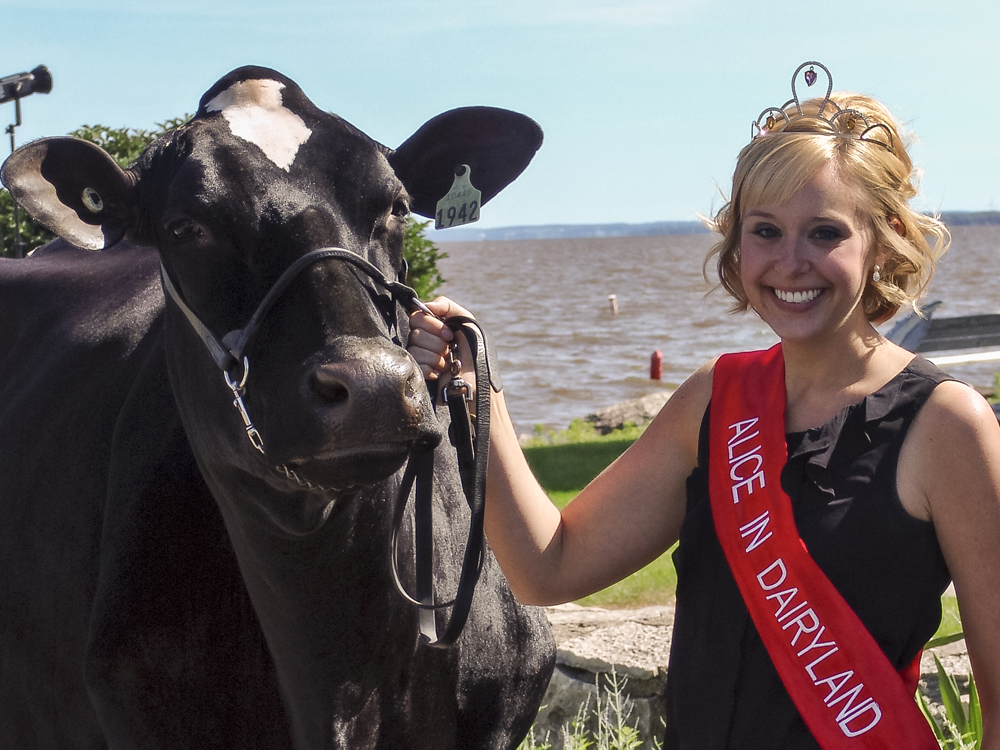
Love Grows Inspired by Greats Past and Present

Karin says, “Travelling often with my father to sales, shows and conventions, I learned to always keep my ears and eyes open, absorbing as much as I could and learning from so many of the Breed’s greats past and present. I was brought up in the times of the breeders from High Lawn, Highland, Briarcliff and Ogston.”  Corey too pays tribute to his roots. “My parents’ work ethic also had a great influence. Growing up my father would get up early to go outdriving a grader on road construction while mother did milking, raised three  kids and worked off the farm as well.” Great training for growing a dairy farm family in Australia.

Jersey Love Affair … Heartaches and Heart Throbs

Like dairymen worldwide, Karin and Corey face particular national challenges “Our dairymen want the same things, profitability, fertility, type … it really is universal.” Having said that, they both long for a more global approach to breeding Jerseys.. “In breeding in Australia there is a 6 to 12 month lag at times getting the latest genomic bulls or hot bulls in Australia which proves to be a major challenge if you want to be a frontrunner in the genomic game. “ Another difference is raised by Corey and Karin. “Australian proofs are less reliable for type data because cows are only classified once as 2 yr olds in nominated herds, unless they are in the registered sector and, even then, the second classification will not go into the proof.  This is not to say that Australian cows are lacking. Karin points out. “I think many would be impressed with our class of Jerseys here and I am sure they would compete on a world stage with the best of them. “ Corey adds to this.”Australia has much to offer but unfortunately our export restrictions make it not impossible but over the top pricey to sell embryos to the world. There are only a few places which you can use as export facilities and only one of which can handle milking cows. We are destined to remain a very large importer of North American Genetics unless restrictions can be changed.  This is very frustrating, given that we are actually one of the cleanest countries you can export from.

Dairy Life and Family Life.  The Jersey Love Continues.

Anyone who has the opportunity to read the colourful writings of Jersey super-enthusiast Russell Gammon will understand what Karin means when she says, “It is through people in the Jersey community like Russell Gammon that I have found the most support in shifting countries.  He is a wealth of inspiration and positivity and I don’t think he would have any idea what his cheers, tweets and Facebook statuses do keep me going from time to time.” It’s hard for any of us reading this to imagine what it’s like to be completely separated from the family surroundings that inspired your decisions.  Karin remains positive about the ups and downs involved in her decision to shift over 16,000 kilometers away from everything she owned and knew and proclaims, “Home is where you make it.”

Family Love Moves Forward

It is now over 13 years since Karin has been back to the US but she carries her hopes and dreams forward with her family the driving force in Australia. “The kids keep us young and very busy.  I hope we can unlock their potential in the years to come and support them in what they decide to follow.”  For Karin and Corey the sparks are still flying. Says Karin. “We don’t always agree. In fact we rarely agree.  Sometimes we flush cows to 2 bulls – one each to see what matings are better.”  Corey adds. “We bounce ideas off of each other all the time. We are primary support for each other as well as the primary criticizer.” At the end of the day, they both agree that they complement each other well. Karin adds glowingly, “When we do agree the result is usually MAGIC.”

The Bullvine Bottom Line

And so we learn that there are a million details that have had an impact on young lovers that travelled great physical and emotional distances to be together.  For Corey and Karin Couch and their family at Riverside Jerseys, the journey will always take new turns but together these travelling hearts have found a shared home.


Get original “Bullvine” content sent straight to your email inbox for free.


[related-posts-thumbnails]

Introducing The New Pick Your Own Crops: Education, Litigation and Regulation!

Many dairy farmers wear the name “Jack-of-All-Trades” with pride knowing that the extra skills they have mastered from welding, to machinery repair, to construction are positive contributors to the day to day work of dairy farming.  However, three new job skills are finding their way onto the farmer resume: teacher, lawyer and media expert. Although they have nothing to do with crops, cows or milk they are becoming necessary to keeping farming sustainable in the long term. It’s ironic that some of the biggest challenges facing the modern day food provider revolve around politics, legal challenges and negative publicity.  How they are handled, particularly, in developed countries could have a huge impact on choices on both sides of the agricultural fence.

It is hard to imagine that any passionate cow breeder would have foreseen the day that they would reach out to regulators, lawyers and reporters in an attempt to find common ground.  Of course, there are still many who don’t see any of these as a logical part of their farm team …. and are facing the fallout as a result.

In an earlier Bullvine articles, “GMOs Beyond Right and Wrong” and we urged farmers to speak up in order to clear up misconceptions regarding dairy farming from motivation to production.  Many excellent spokespeople continue to do exactly that but, for those who are keeping score, there have been both hits and misses on the target of using communication to avoid litigation and regulation.  At the same time that any one area leads us forward (for example genomic selection), there are fifteen “anti” positions that demand answers and throw up roadblocks.  The same is true, if we expand our viewpoint to include environmental issues. And that doesn’t begin to cover what happens when you stir media and emotion into the mix.

Of course, it is part human nature and part media hype that means that the most negative stories are the first to come to mind.  Five years ago DeRuyter Brothers Dairy in Outlook Washington became the defendant in a suit brought by the Community Association for Restoration of the Environment.  Although the suit was eventually dropped it was two years of legal hell for the DeRuyters.  Sadly, at the end of the day, the activists weren’t really as concerned about air quality as they were at making headlines.  The issues that were addressed barely blipped on their radar.

Also in Washington State, twelve dairies in Yakima County worked with air-quality scientists and regulators to reduce air emissions (for more information see reports of the Western Dairy Air Quality Symposium).  Their efforts and responsible approach to the issues didn’t inspire the dramatic headlines that accusations of guilt earn on the front pages.

It is unfortunate that the assumption of farmer guilt is the starting point.  With this negative mind set it actually works against agriculture to present scientifically backed arguments.  Remember when Mother used to be suspicious of overly long protestations of innocence?  Today any positions proclaiming a scientific defence are seen as “extravagant claims” that can’t possibly be lived up to. And, of course, if it’s a benefit to the farmer, it must obviously follow that there will be environmental and health issues for the non-farming public.

Somewhere in the evolution from a time when everyone was connected to a farm or farmer, we consumers appear to have lost trust in our food providers.  Is it possible to return to that “rosier” time?  Not likely.  However if full trust is unattainable we can still use common sense.  I have to ask why it is assumed that dairy farmers – who also must eat to survive — would invest a million dollars (at the least) to provide food that does harm to themselves and their children? The profit motive doesn`t stretch that far. So where does that leave us?

There is no quick and easy answer.  Education is slow.  Regulation is slow.  Conflict, on the other hand is fast and furious.  What we need are credible current studies. We also need to pay for them! Another rub as how this solution hits producers’ wallets. Proven facts need to be placed alongside the emotional fallacies.  And this adds even more time investment problems in an industry that already faces the time constraints of raising animals from birth to production and also  deals with the seasonal calendar of crop production. Which brings us to even more slowdowns as the anti movement puts the brakes on crop production development.  There are many examples. France and Austria are anti-biotech with the result that some GM crops have waited 10 years and there is still no progress.  The current regulatory delay sits at 5.5 years – a substantial increase from 3.7 years in 2002. (“Worried Sick about GMOs”)

These are very real concerns.  Then you add in the financial implications.  CropLife International is a global federation representing the plant science industry (Read more www.croplife.org). A CropLife report suggests that it costs nearly $140 million to discover and commercialize a new crop.  To these two issues we can add the continuous growth of the bureaucracy that builds around them, including regulation, education and litigation. This is growing heavier all the time.  In ironic contrast, the growth in crop yields in major food crops is stagnating.  This is completely upside down to what is needed. The crop growth statistics are the ones we need to see growing if we intend to provide food for future populations.

You can’t have it both ways. You can’t insist on less productive methods – such as organic– and then turn around and say that land must not be turned from nature to agriculture.  Agricultural innovation is being strangled by a suffocating avalanche of regulations which are not based on any rational scientific assessment of risk. But logic doesn`t always win the day. You can literally play “true or false” until the cows come home but what is really needed is continuous support of myth-busting (particularly in the media) and comprehensive rules and regulations that support the proven science.  Now this should be welcomed by those sides.  However, there currently are not such comprehensive systems in place and past history leads us to fear that when rules are enforced and regulations met, the fallback position frustratingly becomes that “either the rules or the enforcers are insufficient, ineffective or in some way defective”.

The Bullvine Bottom Line

At some point, we have to admit that we cannot allow the conflict to become more important than the issues that need to be solved. What we really need are more cool heads and fewer hot buttons.  Now that`s something I would like to see on resumés from both sides of the debate!


Get original “Bullvine” content sent straight to your email inbox for free.


[related-posts-thumbnails]

Worried Sick About GMOs!

Arguing about the methods used to grow our food is a luxury of people living in affluent nations.  There are one billion chronically undernourished people of low income in underdeveloped countries. They would find it appalling to reject a plate of food based on whether it was natural or genetically modified. Daily they face a life and death situation. So called “consensus based best practices” mean nothing to their struggle.

We need to put food production into its proper perspective.  Biotech or organically produced food inspires wildly opposing positions. But are they really so far apart?  The answer is “Yes!” if you hold the all or nothing position that natural is all good and artificial is all bad.

I have been part of conversations (usually after eating too much of a delicious meal) where the proposal from full stomachs is that the world would be a “better place”  if we in the west ate less meat and fewer calories so that people in developing countries would have more.  Pardon me.  But that is baloney! Appreciate what we have? Definitely. Believe that our restrictions can be fairly doled out by some imaginary balanced delivery system?  No way.

Do I dislike natural?  No.  But there are good reasons why most of us live longer than our natural farming forefathers. That reason is that some of the natural killers like e-coli and mould are not now taking their toll on our crops, our food and our years. I am also a realist and decided when my children were young to make it a mother-task to take classes in Materia Medica and Pharmacology. Like everyone, I am surrounded by naturals such as foxgloves, castor beans and lily of the valley that are all natural and all poisons that I keep away from my loved ones. Natural sugar, a not so obvious poison, is a particular sick-maker in our family. You won’t find me saying, “It’s natural so how much harm can it do?”  “Natural,” “naturally made,” “naturally grown” and “all natural” are the holy grail of anti-GMO law makers who seek to keep those terms off of genetically modified or genetically engineered crops. The label alone won’t make any difference if sustainable agriculture becomes impossible.

Natural does not mean harmless. Everything has a chemical makeup which can be studied and copied and or modified – hence Genetically Modified Organisms.  We are chemical beings.  The good and the bad are derived from the combinations not the source of the combinations!  So if you’re forewarned and realistic about natural, what is your position on modern technology?  If it’s new, shiny, computerised and different…. does it necessarily follow that there will be health risks?  We need to be responsible for the choices we make to nourish ourselves.

There has to be reasoned decision making.  For example in 2011 natural organic bean sprouts were the cause of fifty-three deaths and thousands suffered kidney failure in Germany. The bean sprouts from Egypt were infected by animal manure.  Closer to home, I have often marvelled at neighbouring organic farmers, who without bias use manure from their less enlightened neighbours to raise “all organic” food products that are then sold at a premium price.  Talk about a loaded pitchfork. Any natural organism can be infected by pollution from ALL sources around it. Like the people in Germany, consumers chose this food because they thought it was safer, healthier and natural.  The unfortunate conclusion.  There are many natural ways to get sick and die.

In the 60’s we were bombarded with warnings that, because of overpopulation, millions of people would soon starve and that there was absolutely nothing that could be done to prevent it.  Thankfully Paul Ehrlich’s “It’s already too late” warning in his book “Population Bomb” was proven to be wrong.  His advice to allow people in India to starve sooner rather than later also never became the solution to population growth.  Instead, Norman Borlaug, who did not succumb to this “truth”, was inspired to create the Green Revolution.  Malnutrition was cut dramatically and India became self sufficient.  Poverty and malnutrition continue to need addressing.  Today there are close to 800 million people who go to bed hungry each night.  They are the ones who need food that is safe to eat.

We are told that GM foods have not been shown to be safe to eat.  If you accept that statement, there is nothing to be said to help you.  If twenty years of people consuming genetically modified corn, soy and other crops isn’t proof enough, nothing will be. In actual fact corn has been genetically modified since the first Europeans arrived in North America.  Imagine the trillions of meals consumed without a single substantiated case that GMOs have caused harm. Where do the naysayers place the documented cases of death from organic causes?  Organizations including the World Health Organization and the National Academy of Science believe GM foods pose no likely health risk.

Let’s turn to the potato for another example.  A blight-resistant potato was being developed by both the Sainsbury Lab and Teagasc, a publicly-funded institute in Ireland.  However the Irish Green Party was so adamantly opposed that they took court action against it. The attack was undertaken despite the fact that the blight-resistant potato would require 15 less fungicide sprays per season. Further pollen transfer was not an issue because potatoes are clonally propagated.  The offending gene came from a wild relative of the potato.  The case was won and for the second time in their history, the Irish suffered potato loss.  The first time a million or more died during the 19th century famine. In the 21st century they lost the opportunity to defeat blight.

There are emotional stories on both sides of the GMO issue.  It affects me personally and several members of my family. We would suffer if there was a total GMO ban. As a diabetic and two-time cancer survivor, I am really quite happy to keep chugging along with GMO insulin. Facing the issues with a balanced approach and trusting in the science makes an informed decision the healthiest one for me.

The issue is never about who is right and who is wrong.  It is about who is fed.  Who is healthy?  As discussed in today’s challenge is how we will manage to feed 9.5 billion people by 2050 (Read more: GMO’s Beyond Right and Wrong).  How can we do it on about the same land as we use today because we do suffer if natural areas are taken over by agriculture. How do we achieve this production using limited fertiliser, water and pesticides in the context of a rapidly changing climate?

Angry voices are raised by people who would not have their own children grow up to be farmers or grow food themselves.  They are angry about how the food is produced – despite the abundance. Yet in countries where growing your own food is the only option, these same voices insist that food production must be done in the slowest method possible. Sitting at a computer where you can “share” anti-GMO sentiments with the tap of a finger does nothing to provide for those with empty stomachs.  The image of natural works best when you have three meals a day!

The Bullvine Bottom Line

Today we face risks as food producers and consumers.  But the risk is definitely not who will be harmed by GM food but who will be denied enough food.  Yes the image of “natural” has appeal!  But only for the rich.  And that’s exactly what has me worried sick.


Get original “Bullvine” content sent straight to your email inbox for free.


[related-posts-thumbnails]

Alice In Dairyland: This Wonderful Dairy Tale Begins with Alice!

Sixty-six years ago, did organizers know that fairy tales would be getting renewed attention in the 21st Century? Last year there was Snow White And The Huntsman and then Hansel And Gretel: Witch Hunters  and now Jack The Giant Slayer. None of them however have the hands on experience (pun intended) of “Alice in Dairyland”, who writes a new chapter of dairy memories in Wisconsin every year. It may not start, “once upon or time” but for 25 year old, Kristin Olson, who is the current Alice in Dairyland, carrying out this role is definitely a dream come true.

aliceindairylandko

Seeing the World Through The Milking Glass

Every good dairy tale starts on a farm and Kristin‘s story is no exception.  The 2013 Alice recounts some of the benchmarks that prepared her this role. “I grew up in Fond du Lac, WI with my family’s small show herd, Crestbrooke Holsteins and Jerseys, with my parents, Tim and Barb, and brother, Kyle. Throughout my youth, I was very active in the Wisconsin Holstein Association, as well as 4-H and FFA. I pursued a degree in Life Sciences Communications from UW – Madison, where I held numerous leadership roles in the Association of Women in Agriculture, Badger Dairy Club and National Agri-Marketing Association, and several internships, before graduating in 2010. After graduating, I worked at Accelerated Genetics in Baraboo for about three years as the Dairy Advertising Coordinator, before being selected for my current role as the 66th Alice in Dairyland last month. I reside in the Windsor-Deforest area with my husband, Trent, who is still involved with his home farm in Lewiston, MN, and is also employed with ABS Global in Deforest.”

Kristin (Natzke) Olson, with her family.

Kristin (Natzke) Olson, with my parents, Tim and Barb, and hubsand Trent and brother, Kyle.

Kristin has always felt a magical connection with agriculture!

We should always remember no matter what role we play in business, life or the dairy industry that we are making lasting impressions on formative young minds.  Such was the case for Kristin. “Having first met Alice in Dairyland in 4th grade, Alice has always been a figure I’ve looked up to and respected throughout my life. All of my combined experiences during my youth and college years really developed my passion for communicating agriculture’s story.”  With such strong early impressions of Alice and her lifelong ties to agriculture, it isn’t surprising to hear her say, “I am so excited to now be able to share my passion with Wisconsin and hopefully inspire people along the way!”
alice and swine

Waving the Agriculture Wand On Behalf of Wisconsin!

Kristin’s enthusiasm is exactly what the Wisconsin Department of Agriculture, Trade and Consumer Protection looks for in their official agricultural ambassador. Becky Paris, the Alice In Dairyland Program Manager, outlines how the selection of this one year, full-time public relations employee is made. “Each year a diverse group of highly qualified applicants make the position selection a difficult process.  The Alice in Dairyland selection puts everyone through a rigorous three day series of interviews including public speaking, writing, TV and radio interviews, tours and an individual interview.” The 66th Alice in Dairyland Finals were held in Calumet County in the Northeast section of Wisconsin. Speaking of the  selected candidate, Becky notes “Kristin proved she possessed the ability to positively impact Wisconsin agriculture in the role of Alice in Dairyland.” Kristin deflects the emphasis from herself and onto the host county. “Calumet County’s agriculture is so diverse, which was showcased on the agri-business tours they put on. We enjoyed a wide variety of tours from an innovative dairy farm featuring a rotary parlor, to Honeymoon Acres greenhouse which offers a variety of plants for everyone and sells over 15,000 hanging baskets annually, to the world renowned Sargento cheese. There was so much to see and learn!”  A gracious  Alice indeed!

Kristin doing an interview with WSAW channel 7

Kristin doing an interview with WSAW channel 7

Dairyland: “All the better to delight you with!”

With her banner and tiara and her ongoing passion for dairying, Kristin will go far and experience much as Alice in Dairyland. “Throughout my year as Alice, I will travel nearly 40,000 miles, make over 400 appearances and speak with 10,000 students on the importance of Wisconsin’s $59 billion agriculture industry. I’m very much looking forward to traveling throughout the state and meeting people from all backgrounds and walks of life while sharing the message of Wisconsin agriculture!” Becky Paris tells us the ways in which this is a one-of-a-kind program is constantly changing to reflect innovations in Wisconsin’s agriculture industry.  “Alice is unique in the versatility of her role: one day her role is relaying the modern picture of agriculture to a growing urban population, the next she is educating students on careers in agriculture, and the next she is reaching out to all consumers through TV interviews discussing one of the many diverse agricultural facets in Wisconsin.  Working with our agricultural industry partners, Alice provides a relatable link between producers, processors and consumers.”

Thanks to the Wisconsin Corn Promotion Board Alice in Dairyland will travel 40,000 miles in the flex fuel Tahoe across the state on E-85, a cleaner burning fuel made from corn!

Thanks to the Wisconsin Corn Promotion Board Alice in Dairyland will travel 40,000 miles in the flex fuel Tahoe across the state on E-85, a cleaner burning fuel made from corn!

Alice’s Ag Adventure is Just Beginning

Alice in Dairyland is contracted public relations position for which Kristin will receive a $40,000 state paid salary.  Coinciding with Dairy Month, the fully packed year of activities is off to a good start says Kristin. “Having started on June 3, I’m just beginning to scratch the surface of all of the wonderful opportunities that lie ahead for the year. So far, my greatest experience has been traveling throughout the state and meeting wonderful people while being able to celebrate June Dairy month in America’s Dairyland and share my passion of the dairy industry with others.”

aliceindairyland-working with kids

Life Before Alice In Dairyland

No doubt there will be many times during the coming year when Kristin will reflect on the experiences, training and personal support that led her to this exciting opportunity.  She gives much of the credit to her parents Tim and Barb Natzke. “At a very young age my parents   taught me the importance of hard work, dedication and perseverance. From practicing leading stubborn calves for hours and hours on end as a little girl in order to win that showmanship contest, to preparing for the Alice in Dairyland finals in order to make a dream a reality, they’ve always been there for encouragement and also to push me to my highest potential.”

kristin olsen showing

The Bullvine Bottom Line

Both Kristin and Becky encourage others to seek out this once-in-a-lifetime opportunity. “Whether you’re considering the job of Alice or not, I advise people to cultivate their passion for all things agriculture and spread its message to those you meet. It is our food, fiber, fuel and for many, a way of making a living.” Kristin agrees with Becky and invites people to follow Alice on her travel blog or on Facebook and Twitter and adds this endorsement. “Consider the role of Alice in Dairyland and then absolutely go for it.”

It is indeed a wonderful dairy world out there. Congratulations to Kristin and warm thanks for inspiring our Bullvine readers to share the Alice in Dairyland message “Agriculture! Happily ever after!”


Get original “Bullvine” content sent straight to your email inbox for free.


[related-posts-thumbnails]

MARK NUTSFORD: The British Invasion Continues On Three Fronts

Mark, Susan and family

Whether it’s wartime or rock music, we have learned to expect the best from the British.  The dairy industry is no exception. As The Bullvine gets to know our international peers better, we travel to Ravenscroft Hall Farm in the heart of Cheshire, England.  Here Mark Nutsford and his wife Susan run the Riverdane Herd.  Targeting real goals has helped them achieve their dairy aspirations says Mark. “My granddad on my Mother’s side was a dairy farmer, so from an early age I spent as much time on the farm as I possibly could. Dairy cows have always been my passion and I always knew that one day I would have my own dairy farm.” Having said that, they don’t rest on their laurels but continue to charge ahead to broaden their dairy horizons.

Not Ready to Surrender to the Status Quo

Trained as an embryologist and ET technician, Mark’s main job is to run Celltech Embryo Transfer. Additionally, the Nutsfords have a semen company called KingStreet Sires. It is run by Susan and their general sales manager Sam Wake.  Mark explains how this arm of their business endeavours came to be. “KingStreet Sires was born out of the frustration of not being able to get a decent price for our bulls entering into AI or even purchase the kind of semen we wanted to use on our cows.”

Appleview Rudolph Mattia  EX 97

Appleview Rudolph Mattia EX 97
Mattia scored max. every lactation

Reconnaissance to Build Genetic Potential

Immediately after they sold their first herd in 2008 to the Willsbro herd in Cornwall, the Nutsfords began to scour the world to purchase embryos” We wanted to purchase from what we thought were the best breeding families. This resulted in purchasing embryos and calves from such renowned families such as Attlees, Ashlyns, Red/Black Roses, August, James Rose, Roxys, Jolies etc. but we also kept some embryos from our own established families which came originally from North America, such as the Tony Beauties, Sara’s, and Mattias. As well as from three 97 point cows that were at Riverdane. Pansys Dilys and Mattia the latter still alive at Riverdane may be the only 97 point cow ever to be scored max points in every lactation i.e. and the British system, 89 as 2 years, 90 second calf, 93 third calf, 95 fourth calf and 97 fifth calf. We have bred or owned 13 VG 89 2 yr olds and numerous max pointer cows of which there are four on the farm at the moment.”

Bressingham Raider Pansy 2 EX-97-4E Pictured after 12 calves

Bressingham Raider Pansy 2 EX-97-4E
Pictured after 12 calves

Strategic Planning “Develop a profitable cow”

Mark describes what they look for. “Our breeding philosophy is to develop a profitable cow.” He expands on the reasoning. “Because maize silage, grass silage and whole crop wheat is what we can grow on our farm fairly efficiently and is our cheapest source of feed, we want a cow that can produce on average 60/70n tons in five lactations, can consume large amounts of forage and then synthesize it into milk.  We are looking for a cow with great quality and plenty of dairy strength as well as the traits that everyone else wants such as great feet and legs and udders. It is very important to us when we choose a bull that we can see where the greatness comes from or he will not interest us. Most of the bulls we use now are genomic bulls from great cow families that have strength and depth.”

Lavenham Adeen 1st Senior Cow and Black & White Champion AgriScot 2012

Lavenham Adeen EX-90-UK
1st Senior Cow and Black & White Champion AgriScot 2012 & UK Dairy Expo

Generating Milk Pail and the Show Ring Awards

Mark emphatically points out his favourite cow. “The greatest cow I have ever owned is probably Appleview Rudolph Mattia  EX 97. Her accolades are too numerous to mention but she has scored max points in every lactation and also been nominated every time as well as being crowned All Britain in 2004. She has produced 150+ tonne of milk and at 16 years of age is still the boss! Her breeding accolades are also impressive and we are currently showing a granddaughter by Goldwyn that was undefeated as a 2 year old and as a 3 year old in her class. As far as a show cow we have a daughter of the great Skychief Adeen by Durham that has been Grand Champion at both her recent outings at Agriscot and the UK Dairy Expo under two of the greatest judges of all time John Gribbon and Barclay Phoenix.”

Lavenham Durham Adeen EX-90-UK Sister to the dam of  MD-Delight Durham Atlee EX-92-USA

Lavenham Durham Adeen EX-90-UK
Sister to the dam of MD-Delight Durham Atlee EX-92-USA

The Genetic Torch Marches on from Renowned Families

Persistently seeking the best is showing results for Riverdane. “Most of our better cows are from world renowned families such as Shottle Autumn VG88 2 year from Roy Autumn All American Milking Yearling and Junior Champion at Madison.  Goldwyn Atlee VG89 is a full sister to Ariel and Atwood. Durham Adeen, from Skychief Adeen, is from a family I have known well from the days I used to travel to Aitkenbrae. I even remember Starbuck Ada’s dam as a 2-year-old (Sheik). Talent Ashlyn granddaughter of the all world cow Tri day Ashlyn is one of our best growing cows and has recently being raised to max points as a second calver. A cow that I own with ADI and Ponderosa has just being made max points 93 as a third calver just back from winning the 5 year old class at the European show. She is on flush to Goldwyn or Gold Chip. One 2 year old heifer that has just calved is a Goldwyn from a Dundee from James Rose that is showing great promising qualities for the future.”

Riverdane Talented Ashlyn EX90 3YR All Britain Intermediate Heifer in Milk Champion 2012 1st Milking Heifer & Supreme Champion Holstein & Best Udder Cheshire County Show 2012  1st Junior 2yr & Reserve Champion Holstein Heifer Great Yorkshire Show 2012

Riverdane Talented Ashlyn EX90 3YR
All Britain Intermediate Heifer in Milk Champion 2012
1st Milking Heifer & Supreme Champion Holstein & Best Udder Cheshire County Show 2012
1st Junior 2yr & Reserve Champion Holstein Heifer Great Yorkshire Show 2012

Irresistible Sire Stack

Mark has specific requirements when purchasing cows too. “The most exciting one that I have ever purchased is Ridgefield Goldwyn Atleen (A Goldwyn from Durham Atlee). For me the stack up of sires in that pedigree was irresistible:  Goldwyn, Durham, Storm, Skychief, Starbuck and Shiek. For me these are six of the greatest sires of all time The family seems to produce an all fronts whether it’s genomics, milk, fat, protein, shows or just great to work with.”

The Outcross Search is On

Adding it all up, Mark has what he calls “30-ish” years in the dairy industry. “We are in an era where the two greatest bulls of all time are having a massive influence, Shottle and Goldwyn. Our herd is based on these two great bulls either through them or their sons, so at the moment we are looking for outcrosses. This is proving very difficult at the moment as we are not great fans of the Oman and Planet bloodlines. The sires that I am currently working with are Goldsun, Goldchip, Cashcoin, Cashmoney, Explode, Aftershock, Atwood sons Brady and Mars Yorik.”

Riverdane Shottle Amber VG-88-UK 2yr High Shottle daughter from the full sister to Atwood!

Riverdane Shottle Amber VG-88-UK 2yr
High Shottle daughter from the full sister to Atwood!

Following Distinguished Mentors

Finding exceptional mentors has been an easier task for Mark. “Peter Heffering was always my mentor although I didn’t know Peter that well, we used to speak occasionally and I followed his career. I was inspired by his attitude, work ethic and his ability to take things to another dimension. (Read more:  Hanover Hill Holsteins: Peter Heffering 1931-2012) Martin Roburge from Quebec was also a great friend and teacher. In the UK two great cowmen John Gribbon and the late Harold Nicholson have had a massive influence on my showing and judging career. John in my opinion is one of the greatest cattle judges the world has seen in recent years, it’s not just how he judges it’s the way he also handles people especially the crowd and how he involves them with the show, I think the Europeans are better at the then the North Americans.”

Learning the Art of Judging

I have been lucky enough to have twice been invited to the Canadian judging school which also includes tutorials as well as judging. One of the subjects we talked about and were tutored on was mentoring. Dan Doner gave a great tutorial and one I will always remember and try to practice, so anyone starting out in the business which is always a good idea to have a role model to ask advice and try to copy their strengths as I did with the likes of Peter Heffering, Harold Nickolsen and John Gribbon and with judging, people like Richard Keane from New York who today is still one of the best judges I have been able to learn from (style, manner, accuracy and professionalism) and admire.
mark nutsford judging

Success Before the Judge

My greatest accomplishment was in 2003 when we were champion (Reserve once) at every major show (8 Majors) in England + Scotland with different cows at every show except the royal Highland but we bred the champion there. We were also the second highest yielding herd in the UK according to National Milk Records. Peter Heffering did it with Charity in her prime which was always a major influence with me.”

…..And When He Is the Judge

The influence of mentors continues when Mark himself is the Judge. “I’ve judged in a lot of European countries and most of the big shows in the UK and Ireland but never in North America. Not a lot of Europeans get asked to judge in North America which is a shame because I think a lot of the best judges and cow men are in Europe. It is always a good idea to bring someone in that is not part of the ‘scene’ to give a fresh prospective. A lot of North Americans have judged in Europe over the years and have done a great job. It would be nice if these invitations were reciprocated back to North America.”

Dairy Breeding Never Stands Still

It is unrealistic to think that there will be a time when all the problems are solved and the battles won. Mark has had to deal with many events already. “The biggest change I have seen is happening at this present time. It is genomics and affects the way we breed our cows and choose our bulls. I am a big believer in the formulas e.g. in the TPI formula 20% of the formula is made up of productive life 9% (8% heritable) and daughter pregnancy rate 11% (4% heritable) is this wisdom. In the UK our PLI formula is 45.2% PIN 21.1% Lifespan (6% heritable) Fertility 18.5% (3% heritable) Scc 5.5%, Udder 5.6% and locomotion at 4.1% so nearly 40% of the formula is approximately 4.5% heritable . To me this is a hoax on a large scale.

Select Sires in the U.S have a TPI formula that makes sense to me, 40% production traits (Milk (PTAM), fat pounds (PTAF), protein pounds (PTAP), 40% type traits (Udder composite(UDC) Feet + Leg composite (FLC, Strength) 20% Fitness traits – productive life (PL), Somatic Cell Score (SCS), Daughter Pregnancy Rate (DPR), Calving ease (DBH). Bulls are excluded from receiving the designation if they do not meet predetermined levels for udder composite, feet and leg composite and Type. I think most discerning dairy farmers would agree to this common sense approach to breeding.”

Isaac Lancaster, Mark Nutsford and John Gribbon taking a toast to the last ever Royal show in England.

Isaac Lancaster, Mark Nutsford and John Gribbon taking a toast to the last ever Royal show in England.

Today’s Selection Criteria and Future Skirmishes

You can’t make decision without having a realistic perspective on dairying.  Mark considers one rising dilemma. “AI companies are paying a lot more money for the bulls that meet their criteria so a lot of breeders are spending a lot more money to achieve their goal to try and push the TPI, LPI, PLI boundaries. This is ok if you are happy with the formulas but if like me you are reticent about the formulas but have more confidence in the individual breakdowns, to a certain degree that nothing has changed it just another set of figures to work with. A more ‘balanced’ formula for type, production, and health traits is the way I see going forward especially when the genomic figures become more refined in the future.”
It’s All About Breeding and Balance

Mark anticipates where the industry is going. “I think the genetic companies will continue to buy in to the female lines to save money on sire procurement which will push the prices of the top female lines up. Bull prices will continue to make record highs as AI companies compete for the top genomics possible on on-line auctions or special bull sales. There will be a trend in Europe to cross breed, but most people who try it usually come back to Holsteins when they realize the cross breeds aren’t as efficient in milk production and that’s what pays the bills. I still think that the true type model cow (The British one) is still the best model and if you want a definition of what balanced is look at the British Holstein model cow!”

The Bullvine Bottom Line

Mark and Susan Nutsford hope to keep broadening the horizons of KingStreet Sires, Celltech, and Riverdane. “We want to try to be a part of and influence the Holstein breed in whatever small part possible.”  It’s no wonder that The Bullvine feels this British invasion is, once again, music to our ears! “Charge on!”

Check out more about the British Invasion – Isaac Lancaster: The British Are Coming. The British Are Coming


Get original “Bullvine” content sent straight to your email inbox for free.


[related-posts-thumbnails]

DAIRY YOUTH WILL GO FAR: Exchange Is Good!

“Life begins at the end of our comfort zone” quotes Katie Kearns of Wisconsin, USA about her dairy exchange experiences. She explains. “Traveling or working abroad pushes me to continue with more experiences.  Sure, it can be nerve wracking to move to another continent but that is what is exciting about it as well. It is a chance to immerse yourself in a new place, surround yourself with new faces and push yourself above your limits.  What you know about dairy cattle can take you somewhere you have never been.” She concludes with her favorite sales pitch, “I promise you, you will never regret it.”

Katie Kearns & Ryanna Allen Topsy EX94 (Hon Men Champion IDW 2010)

Katie Kearns & Ryanna Allen Topsy EX94 (Hon Men Champion IDW 2010)

Out of Country Experiences

From the hosting side of dairy exchanges, Dianna and Dean Malcolm of Blue Chip Genetics (Read more: Dean and Dianna Malcolm: Forward in Five Gears! And Dean and Dianna Malcolm: Gobsmacked in Australia), confirm all that is good. Dean says “The reason why we considered hosting international guests was because when I travelled through North America the hospitality from everybody was phenomenal. I always thought if I was ever in the position to take someone in or share what we have with someone, I’d be all over it.” Dianna evaluates their success. “In the main, we have been incredibly lucky with the caliber of young people who have stayed with us.”  She enthuses about several stand-outs who have lived with them so far.” Definitely Ben Yates (UK, Wyndford Farms), Sheila Sundborg (Suntor Holsteins, Canada), Darci Daniels (USA) and Katie Kearns (now at Gen-Com).” They have also welcomed guests during International Dairy Week who have developed into close friends and partners in cattle. “Chris McGriskin (Canada) has been with us for seven years.  Jamie Farrell (Canada) is another regular and Thomas Deuschel (Canada) is another special member of our IDW team. They are now all part of our extended family and Dean considers Chris as his brother … he just loves those guys and appreciates their extreme ability with cattle, natural teamwork, sense of humour and deep friendship.”

Dianna and Dean Malcolm of Blue Chip Genetics have played hosts to youth from around the world.

Dianna and Dean Malcolm of Blue Chip Genetics have played hosts to youth from around the world.

Where Dairy Passion Meets International Opportunity

There are many good stories from both sides about how like minded people found each other.  Sheila Sundborg’s story started with a picture. “While in Australia in 2010, I had taken some candid shots of Dean and Di’s Grand Holstein /Supreme Champion Bluechip Drake Whynot at the Royal Melbourne. I emailed the photos to share with them.” Friendly emails and a farm visit established their connection. For Darci Daniels the internet played a role. “I did a few Google searches for dairy farms in Australia and Bluechip showed up. I saw some of the cow families and genetics that they were working with and it looked like a beautiful place. I also saw their Journal, CrazyCow and read how passionate they were for their cattle and I knew I wanted to work there.” Di recalls how they met Katie Kearns through their network and connections with Ernie Kueffner and Terri Packard. “Katie had worked at Arethusa full time for three years and she was looking to spend some time in Australia and I believe she got our contact from them.” Katie had strong reasons for wanting to try an exchange, after her work experience at Arethusa Farm and because of her goal of always working with the best possible dairy cattle.  “I wanted to find somewhere to work that had high expectations of themselves and employees.” Even though this meet up seemed very well thought out, Dean Malcolm attributes the matchups to “good luck” from their end of the deal. Dianna enthuses. “Dean met Chris McGriskin at the World Dairy Expo through his UK friend, Ben Yates (who was Dean’s best man at our wedding), and once they had a drink together there was no going back!!! Perhaps it is also a slight case of, ‘birds of a feather flock together’.” Serendipity or not, the Malcolm’s feel strongly about the results. “We wish all these people lived closer to us so that we could visit with each other much more often.”

australia dairy

Broadening Perspectives

One of the benefits for both exchange hosts and their guests is the opportunity of seeing yourself through each other’s eyes. Dean agrees.”It’s great to share experiences with such a diverse and talented group of young people.” Darci speculates. “Growing up and living my whole life in Wisconsin has led me to under appreciate the resources for the dairy industry that are in my back yard. We have such a wealth of knowledge, ideas and products. I met many people in Australia who would die for the opportunity to come to World Dairy Expo.” For Katie Kearns her expectations were very targeted. “One thing I knew about going to Bluechip was that Di was one of the best in the business when it came to raising calves, an area I was looking to gain more experience in. I was fortunate to spend a heap of time with her in the calf area.  Being able to observe and work with her on a daily basis was a great learning opportunity for me.” Sheila Sundborg drew from Di’s marketing background. “I was able to learn a lot about marketing and the step-by-step process of publishing a magazine (Crazy Cow) including layout, stories and interviewing people.”

australia grey scale

Eliminating Fears and Misconceptions

Those who haven’t had exchange experiences may have fears about the myriad details of dairy exchange logistics. Speaking for Bluechip Genetics, Dean outlines their cow focused philosophy, “We don’t try to jam our ideas into the visitors. But I guess we have our way of doing things.  Our biggest thing is being kind to the animals and listening to them so they know them inside and out.” We have, of course, had a few young people that have not fitted with us. And in those instances we generally try and find them another gig, so their trip is still what they hoped it would be. We try to keep it all positive and we understand that not everyone gels with each other and the important thing is to be aware of it and fix it before it becomes more complicated.”

Top price at the Bluechip sale was Bluechip Goldwyn Frosty, Goldwyn X Dundee x Harvue Roy Frosty, sold for Top price $72000 (Pictured here with the outstanding sale crew)

Katie was part of the team at the recent Bluechip sale that saw a top price of $72,000 for Bluechip Goldwyn Frosty, Goldwyn X Dundee x Harvue Roy Frosty (Pictured here with the outstanding sale crew)

Expanding Dairy Insights

Katie provides her viewpoint and compliments Dean and Di and the effort they put into their cattle. “They consistently turn out cattle that are quiet and easy to work with.  It makes for an enjoyable experience when you work with animals that are properly taken care of.” Darci also appreciates the influence that the Malcolms have had on her (and now her husband too),”I admire how Dean and Di have the softness to raise such calm animals, yet have the strength and the drive to set big goals and accomplish them one after another.”  Sheila zooms us out to the big picture, when talking about her bigger viewpoint. “Working in Australia and visiting NZ showed me how dairying is without a quota system and barns.   It also gave me a better perspective on global marketing and trade.”

Katie Kearns and Kelvin taking a much earned break after the show at the recent International Dairy Week

Katie Kearns and Kelvin taking a much earned break after the show at the recent International Dairy Week

Travel is the Great Teacher

“You learn so much about yourself when you travel and completely commit yourself to soaking up every opportunity.” says Katie Kearns. “After I finished university,  it didn’t take me long to figure out that as long as I was willing to work hard and find  some connections, showing cows could take me around the world and then some.”  Sheila concurs. “Working abroad with local farmers/breeders for me is the best way to travel and learn. You get a different perspective than if you were just passing through as a tourist.”  She has had work placements during college that took her from the Maritimes to the Rocky Mountains in Canada and travel experiences in the UK, Europe, and Australia. Katie also participated in two different study abroad trips: the first to Ghana, Africa and the second a combination trip to Egypt, Tunisia, and Spain.  She sums up her experience. “Since then I have been hooked on traveling and seeing the world. I can find myself and discover what I’m made of.

early moring australia

Lasting Life Lessons from a Once-in-a-Lifetime Experience

Because of the relatively brief time that hosts and visitors spend living together it is important that they share interests and are on the same page regarding their expectations.  Di sees it as win-win situation for both sides. “We like genuine people, who love animals, who are hard working, fun and willing to learn.  And we learn a lot from them too.”Sheila encourages anyone who has the opportunity to go for it and make the most of it. “You only live once so make the most of it. Everyone has positive things to offer. Learn from those you work with.”  Katie Kearns is building a considerable resume of work experiences with memorable time spent with people and cows. “I have had great opportunities to work for many different show strings and sale crews – all giving me valuable working experiences and creating awesome connections in this industry.” Darci’s advice is emphatic. “Go do it and don’t let anyone talk you out of it.” Exchange has meant a lot to her personally. ‘It taught me how to live in the moment because I knew that on many of the journeys I took abroad it would be the only time in my life that I would be able to experience that.” Darci seconds Katie’s enthusiasm for exchange and encourages those with the opportunity to “live in the moment.” She expands on the theme. “When you’re 10,000 miles away from home, you probably won’t get to go back to many of those places again and will never get those moments back.”

Darci and Justin Daniels

Darci and Justin Daniels

Building International Bridges

The Malcolms hope others will take the opportunity to host a dairy exchange. “As an example of young people forging their way in the world, we are routinely blown away and inspired by Katie, Darci, Justin and Sheila’s intelligence, focus and work ethic. Katie is just so together and fun to be around; Darci and Justin’s push to buy their own farm and stock it with good cattle is single-minded and Sheila’s talent in so many areas (including photography) tells us that we have actually been the lucky ones to have these exciting young people in our lives. To be honest, our time in this industry would be much less interesting without our regular contact with them.

“They are incredible people to be around, whom, we have no doubt will excel in whatever they do. We were just lucky enough to be a port of call in their journey of life.”

Dean summarizes by saying that hosting young people has been very positive for them.

“We couldn’t recommend it more highly.  This is one of the reasons our industry is so global. It’s a fantastic experience and you often make connections and friendships for life. North American young people universally have so much understanding of the work involved in show cows and developing young cattle, often thanks to the 4H program. We’re so jealous it’s not in Australia. We find the young North Americans intelligent cattle people who understand the detail work that it takes with high-end cattle. It has made it so easy to welcome them into our home.” Speaking as a young person who has had opportunities to travel extensively in Canada and parts of the US, Sheila Sundborg says “It was just natural to want to explore more of the world.” She confirms that connections are relatively easy to make in the dairy business. “Through working with Reece Attenborough (of Australia) at Rapid Bay Jerseys, I made close contacts in Australia.” Now she enjoys the two way street that exchanging offers. “My travels have allowed me to promote Suntor genetics and the farm has received many visitors over the years from people I have met while working or traveling.”
australia dairy landscape

The Bullvine Bottom Line

Katie Kearns expresses what exchanging to Australia meant to her. “I cannot even begin to describe how thankful I am to Dean and Di for giving me the opportunity to travel to Australia and have an amazing six months with them.  My experience there has reinforced my belief and my love for the show cow industry.  What other profession could I have that would allow me to travel around the world doing what I love, create life-long friendships and give me experiences and memories to last forever? Sheila Sundborg concludes that a dairy exchange always boils down to one thing. “It’s the people you meet along the way. The further you go the smaller the world gets. It’s a great industry to be a part of.” All three exchangers endorse her future plan. “I am using my network to give the chance to other young dairy enthusiasts to have similar experiences.” Obviously they all agree that a great dairy exchange is definitely a change for the best!”


Get original “Bullvine” content sent straight to your email inbox for free.


[related-posts-thumbnails]

MODERN DAIRY MARKETING: Winning Hearts, Minds and Wallets

It’s haying season here.  A wonderful time of year for dairy farmers who produce the food that feeds the cows that produce the milk that feeds the consumers.  As we are watching the weather with one eye and with the other one on the cows and machinery, do we ever spend any time thinking about the next person who buys our dairy genetics? We love dairying and we do it to the best of our ability.  Our hearts and minds are engaged.  Do we consider engaging the hearts and minds of our genetics customers? Or are their wallets all we care about?

We have to be careful that we don’t think only of the pay cheque and forget that we are providing a product for real people.  In today’s marketplace we have two distinct customers.  First, the milk drinkers who we are more or less involved with, depending on the product we produce and what country we produce it in.  And secondly, the cattle buying customer.  Just as our future in the dairy aisle depends on the product we deliver, our future in the genetics industry depends on what we deliver and not what we can get away with.

The milk drinking public gets turned off by the media message of scary farm practices, rising health issues and poor animal care.  These concerns reflect badly on each one of us in the dairy industry.  We can’t separate ourselves from the message. Likewise, when it comes to selling cattle, we have to respect ourselves and our customers enough that buyers know what we stand for. If we allow ourselves to be the type of business where responsibility ends once the cheque is cashed, then we deserve to have our sales drive out the lane and forget us the next time they buy.

Dairy Sales Are All About People First

If you ever found it impossible to find out details about animals in a sale. If you have been disappointed after purchasing an animal to find out that there is an issue that wasn`t revealed. If you ever found that you were taken in by the fine print in a contract, you know where bad feelings start. “It’s nothing personal.” is the exact opposite of how you feel.  It’s very personal!

Good Business is Built on Trust

Good dairy business kicks in when marketers are smart enough and brave enough to work side by side with their buyers for the same end result – good dairy cattle.  When full disclosure allows you to make informed decisions, you remember it.  You will go back to that source again and again.  Of course, this means that a huge opportunity exists. You will likely do best if you avoid misdirection and pandering and instead embrace an honest approach to doing business. RULE #1: Build trust by treating your customers like respected peers and admired family members.

As Good as Your Word

Think about the last time you were impressed by how you were treated in a sales transaction.  It’s unfortunate that it’s rare enough to be remarkable. It is so refreshing to find your issues meaning more than a dollar sign and receiving more than was promised and not simply the legal bare bones. Today – especially with the instant sharing possible through social media – your happy transactions and your sad ones are shared far and wide. The word gets out and has instant repercussions on your business credibility and bottom line.

Marketing is More About the Stories than the Sales

Social media has found its way into the dairy business and is having a tremendous impact. Everyday there are new blog posts, videos and press releases. While this is fantastic for agriculture as a whole, it can be really hard to get your dairy business noticed. If you want to rise above the herd, you have to have a good story that captures attention. You need to share what you believe in, who you are and what you stand for.  The invisible face behind a magazine ad or an AI brochure listing is too easily lost in the 21st century crowd.

Today You DON’T Get What You Pay to Advertise For

In the not too distant past dairy players where the ones with the money to step up to the marketing table. It took advertising money to make money. Today, with social media, a business of any size can connect with customers and do it without spending a dime on paid advertising. Social media has changed the game and now anyone can compete regardless of the size of their marketing budget.

Where to Go?  What to do?

No sooner do you get comfortable with one or two pieces of modern technology, then a whole handful more present themselves to your flying fingers. Sites like Facebook, Twitter, Reddit, and YouTube have totally changed the relationship we have with present and future customers.  It can be challenging to figure out where to focus your time and energy. Here again it’s not the single choice of one site over another.  In easily understood farmer terms, it’s about cultivating relationships. Find the way to tell your story in a way that is comfortable, honest and open and you will engage customers loyal to you and your business.

Talk is NOT Cheap

This may sound like a complete reversal from the “free” advertising mentioned earlier but, in this case, it is referring to what happens after everyone finds you and then has the ability to share their experience and thoughts, not just with the neighbor over the fence, but with hundreds to thousands of people.  Today, more than ever, you must walk the talk and be accountable to your customers.  The minute what happened in your barn, in your office or at your auction sale hits the wires it becomes the measure of your business.  Believe it!  When bad news gets out there it’s going to be shared so quickly it will make your head spin and your bank balance shiver in fear.  In the past when bad news raised its ugly face, you had a certain amount of time to plan how to respond.  Today, if you wait to respond, it can be too late.  Responding in real time with real information will be more successful in transforming negative publicity into a building opportunity.

The Bullvine Bottom Line

Is there a way to use social media so that you won`t have to suffer through scary mistakes?  No! Mistakes happen in any environment.  Equipment fails.  Hay weather upsets the routine.  Cows get sick. And that’s just one farm.  Ramp that up to real-time techie interaction on the web and you can’t expect perfection of yourself or anyone else.  Rather than worrying about making mistakes, you should be worried about not making them!  If you’re not experimenting with social media that means you’re missing out on a myriad of ways to win hearts, minds and wallets!


To learn how to get your farm on Facebook download this free guide.


[related-posts-thumbnails]


Isaac Lancaster: The British Are Coming. The British Are Coming.

“That Isaac Lancaster, I bet he’s never milked a cow…….!”  If that’s your first impression upon meeting the third of four Lancaster siblings from I-Cow Holsteins in North Yorkshire, UK you would be very wrong.

Although this comment makes Isaac smile when he travels to North America, he does prefer to set the record straight. “I have three siblings, two older sisters, Rebecca and Jennifer, and a younger brother Luke. We all worked on the family farm with our parents, Richard and Ann Lancaster, from a young age helping to milk before going to school and again when we returned. Running a dairy farm is something I’ve been involved in all my life.”  

Growing the I-Cow Possibilities

I-Cow Holsteins fully represents the dairy passion of this young family starting with the pre-fix selection. Perfectly named I (for Isaac), C (for Claire), O (for Oliver) and W (for William) the I-Cow passion for detail and family planning continues with their dairy herd. “We feel that to milk as many cows as possible for the size of your farm is the only way forward in today’s dairy farming industry as your set costs remain the same. We are currently milking around 160 cows three times per day at I-Cow, but plan to increase to 300 as quickly as we can. Since my brother went to work at Ponderosa Holsteins in Spain, I have taken over the running of the farm along with my wife Claire and our sons William & Oliver. I also buy elite cows for different clients as well as dealing in commercial cattle which brings in extra income. My parents are partners in the farm and they work on the farm too, helping to rear the young stock in the winter months. They spend the summer in the south of France where we have a villa that we rent out for holiday lets.

Perfectly named, I-Cow stands for I (for Isaac), C (for Claire), O (for Oliver) and W (for William).

Perfectly named, I-Cow stands for I (for Isaac), C (for Claire), O (for Oliver) and W (for William).

A “Model” Plan and Sire Stacks

When you strive for dairy excellence, your breeding philosophy shapes the growth of the business. Isaac confirms this. “My breeding philosophy has always been breed for the true type model. When you have 300 cows in one herd they need to be functional. You need good udders, stature, dairy strength and most of all sound feet and legs because, if they can’t walk, it doesn’t matter how good the rest of the animal is. Also sire stacks are very important.  I feel that they do not get enough attention.  We have always used high type sires but now and again we throw a higher production sire into the pedigree to maintain the production. If you look back at the great sires throughout time, you will find it in their pedigrees also.” Looking ahead Isaac outlines future plans. “We will use mainly high type sires on our herd.  It doesn’t matter if some are a bit old as I will milk the daughters through the herd and I like to know what I am getting. Therefore, Atwood, Goldchip, Lauthority, and Sid. We will use a high genomic sire on the genomic cows but still have to like the pedigree, so we are using Cashcoin, McCutchen and Colt 45 at present.”

“It’s hard to pick a favourite cow”

The question of choosing a favourite cow is difficult.  Part of the reason for that is that passionate breeders are always looking ahead to the perfect one that is yet to come.  For Isaac choosing his favourites presents problems for him as well. “This is difficult. I have been lucky enough to own some world famous cows in partnership deals. Lylehaven Lila Z, Wabash Way Emily Ann and Drakeview Leduc Allure to name a few, but to choose one I would have to say Lila Z at this time. She wasn’t the greatest show cow ever, but the way her daughters have bred now with high type and high Genomics I will have to choose her. Her sire stack was great. Durham x Formation x Starbuck x Astrojet. And now with Goldwyn, Planet, Snowman etc. added to the pedigree, is why they are high in the genomic listings and still remain high in type.”


LYLEHAVEN LILA Z EX-94-CAN 16* ALL-CANADIAN JR.2-YR,JR.1-YR HM. ALL-CANADIAN 5-YR,4-YR HM.INT. ROYAL 2004

LYLEHAVEN LILA Z EX-94-CAN 16*
ALL-CANADIAN JR.2-YR,JR.1-YR
HM. ALL-CANADIAN 5-YR,4-YR
HM.INT. ROYAL 2004

Bovines Beyond Borders

Also I have to mention taking a string of U.K cows to Fribourg, Switzerland to the European show. Myself, Mark Nutsford and Ben Yates made the decision to go even after the members of our breed society had been told it could not happen.  This was due to different government health regulations but with meetings, various discussions and perseverance, we made it happen and took seven head to the show. (Read more: GB Line-Up for the European Championships Announced!) The results were very good. One 1st placed animal, two 5th placed animals and some 7th and 8th placed too.(Read more: Decrausaz Iron O’Kalibra Wins Grand at the 2013 All European Championship Show)  So we proved our point. Remember, we only had three herds to choose from whereas all the other competing nations had their whole country’s herds to choose from.  I believe that we did pretty well considering that we only had six weeks to organize it. In addition, the Spanish team that won the group competition consisted of two animals from the four that I bought in the UK for Ponderosa Holsteins:  Huddlesford Duplex Medora (Intermediate Champion) and Wyndford Atlas Winsome (2nd place 5yr old). Again, this is something the UK can be proud of. It is something that I feel does not get the promotion or recognition that it deserves for such a large accomplishment.”

HUDDLESFORD DUPLEX MEDORA VG89 Intermediate Champion European Holstein Show 2013

HUDDLESFORD DUPLEX MEDORA VG89
Intermediate Champion
European Holstein Show 2013

Mapping a Bigger Marketplace with UK Records

When it comes to accomplishments, those who organize cattle sales are well aware that it takes 110% commitment and loads of hard work. It takes even more to set benchmarks.  Isaac describes the logistics behind the Global Glamour Sale at Arethusa Farm. “The average of $97,500 at that time (pre-genomic) was a great result and I don’t think that this will ever be surpassed now for animals without genomic data. I spent nearly seven months of my time in the U.S. and Canada that year organising the sale animals with Ernest and Terri and enjoyed every minute of it. We had three unanimous All- Americans in the Sale (Apple, Hazel and Dundee Mona) and also a number one TPI Animal in Wabash Way Emily Ann.  Also, we sold an R.C Shottle Heifer (Riverdale Redrose from Lavender Ruby Redrose that was born in England to Willsbro Holsteins of the UK for $255.000 (£127,000 at the time) which is still a breed record price for a U.K animal to be sold. Unfortunately, this never gets a mention which is typical U.K policy not to promote animals on an international level………..anyway don’t get me started on that one.” From an appreciative point of view, Isaac turns to those who provide outstanding support.  “I would like to give special mention to Wayne Stead, our head Herdsman, and Nathan Smith who do an excellent job in running the farm on a daily basis. Without them as part of the team it would not be possible for me to have the free time to travel and concentrate on other business.”

Genomics and Genetics.  Setting our GPS for Future.

Always prepared to accept change, including his beard going grey, Isaac weighs in on the impact of genomics. “In the last five to six years it has turned into the be- all and end- all of the future of the Holstein Breed.  Having said that, I find it strange that herds and individuals who sold only a few bulls to AI are now supplying large numbers of AI bulls to our industry.” This raises a further question for Lancaster. “Is it that all the clever cow men and sire analysts were not breeding or selecting the right bulls in the pre genomic era?? I think the idea of genomics is correct and we cannot and will not stop progress in any way, shape or form, but let’s hope that the people responsible have set the correct formula to move the Holstein breed in the right direction. That is the question we should be asking and only time will provide the answer.”

“Genomics is a great tool if it is not abused.”

Isaac feels genomics hasn’t changed things that much for I-Cow because they use it as a breeding and information tool. He explains. “If I buy a high genomic heifer for myself or a client I have to appreciate the pedigree and the individual animal not just the highest heifer in the sale which I feel some people get suckered in to. The number one GTPI heifer should not necessarily be bred to the number one GTPI bull. Check out the type linear on the heifer to see if she compliments the linear on the bull you are using on her. If this is not the case, you may have to use a sire further down the list because, if you don’t, you will get found out eventually.” Using genomics correctly as a tool is important but there are other considerations for Lancaster. “The biggest problem I can foresee is that the genetic pool is getting smaller and we won’t know what to use. The polled bulls will be used more I feel because there are different sires in the pedigrees that give us that option to gain entry to different bloodlines, so I can see the polled animals becoming more prominent.”

Projecting The Prominence of Polled

Looking deeper into the impact of polled genetics Isaac foresees changes. “I feel the polled business will get larger because in the modern world that we live in, animal husbandry and welfare will get to be a major issue. Some countries are now speaking of banning dehorning.  This could be a major change we see in the next 10-20 years. Also, and I hope I am wrong, but the way show cows are presented may change because of the same reasons which will be a disaster for everyone. I love showing cows and there is nothing better than seeing the Grand Champion at Madison stand there with the spot light on her in the centre of the ring chewing her cud. She doesn’t look that stressed out to me. But some people don’t understand and make ridiculous decisions.”

Riverdane Woelkechen 1st 5yr old 2013 All European Championship  Owned with Riverdane and Ponderosa

Riverdane Woelkechen
1st 5yr old 2013 All European Championship
Owned with Riverdane and Ponderosa

Mentors Pave the I-Cow Pathways to Success

Dairy breeders have long recognized that four areas have tremendous impact on dairy success: marketing, business decisions, personal connections and family support.  Isaac feels well served in all these areas. “I’ve been lucky enough to be involved with some of the biggest players in the industry through my time spent working in North America.

On the marketing front I will say Albert Cormier. He was great with me when I ran the A.D.I Edition Sales and gave valuable advice on how to market and discuss individual cows and different families when talking with potential clients and also offered expertise on advertising in breed magazines and forming syndicate groups on high priced animals.

On a business front I will say Ernest Kueffner. We worked together on the Global Glamour sale. Ernie is an individual that will never be replaced because of his way with people and his thought towards business and having the best financial results. His attention to detail on a daily basis is second to none and with Terri Packard they make a great team.

On a personal level Dan Doner is the best family man I know and someone that we can all learn from. Life is not just about cows and money all the time, this can sometimes get in the way of what really matters in life, so special mention to him.

Also all of my family, especially my brother.  He’s my best friend and I am very proud of the job he is doing at Ponderosa Holsteins.  I hope that one day we can work together on the same project in the same country.

Isaac and his brother Luke, who is also the herd manager at Ponderosa Holsteins in Spain

Isaac and his brother Luke, who is also the herd manager at Ponderosa Holsteins in Spain

Positive publicity. Shared conversations.

Keeping the I-Cow name in the minds of the right people at the right time is an ongoing priority for Isaac. “We advertise in different Magazines at the moment and will advertise more in the near future. I like using Facebook because you can see who likes your posts and receive positive feedback (most of the time!) I feel that we do more business through Facebook than we would do through a website and it seems to work well for us. I think that it is an easier and more fun way to communicate rather than through e-mail and with today’s technology it’s a much faster way of communicating as many farmers now own smart phones.”

High Point Golden Rose VG-89-3YR-CAN Goldwyn x Damion  1st 4yr old Ontario Spring Show 2013)

High Point Golden Rose VG-89-3YR-CAN
Goldwyn x Damion
1st 4yr old Ontario Spring Show 2013)

Meeting the Marketplace

The marketplace is always right.  Isaac describes their philosophy. “We try to cover every potential market but use breeding sense.  If you have something for everyone you can always sell. We are currently working with a number of different animals to cover every market. Genomic, Outcross, Showring and Polled. Willsbro Emily Angel VG 86 2yrs (Planet x Emily Ann), Broeks Elfer VG 87 2yrs (Outcross sister to Snowman), Highpoint Golden Rose (Goldwyn x Damion – 1st 4yr old Ontario Spring Show 2013) and Rainyridge URW Ella P Red (Laron P X Destry x Mr Burns x Shottle) from the Tony Beauty family.  I have to fall in love with the animal’s type when I buy them and like to think they can all show no matter what market they will cover and all these cows do that for me. Also their sire stacks are what I like for their prospective markets.”

Willsbro Emily Angel

Willsbro Emily Angel VG 86 2yrs
Planet x Wabash Way Emily Ann (Who was purchased by Willsbro in Global Glamour Sale at Arethusa Farm co-managed by Isaac)

6 Steps to Success According to Isaac

There are really five… but only Isaac can claim the good fortune of having his wife for a partner.  After that he shares these five steps. “1. Keep your options open. 2. Don’t put all your eggs in one basket because if one basket breaks then you’ll need to have another to fall back on. 3. Remember every day is a school day and you can always learn something new however clever you think you might be and whatever your age may be.  5. Be friendly with everyone and don’t try to be something you’re not.” The most important thing to keep in mind is number 7 – last but not least. “There has always been an art to cattle breeding and that will never change so you have to ensure that you use the information correctly.”

The Bullvine Bottom Line – “Cheers to I-Cow”

With passion, hard work and humour Isaac Lancaster looks forward to a long and rewarding career in the dairy business for himself and his family.  The Bullvine and our readers wish the I-Cow all the best and assure Isaac that, upon hearing his name, many are already saying, “That Isaac Lancaster! Isn’t it amazing how passionate he is about the dairy business…..?”


Get original “Bullvine” content sent straight to your email inbox for free.


[related-posts-thumbnails]


CHRIS & JENNIFER HILL: Calling All Cows

What has two heads, four eyes, eight limbs and can raise, show and sell cattle? That would be the ultimate dairy couple, otherwise known as Chris and Jennifer Hill of MD-Hillbrook.  The Hills are marriage-partners as well as business partners and it all started from their shared farm backgrounds, Chris raised at Wauwatosa Ayrshires and Jenn at Glad Ray Farm.  As they proceeded through education and work experiences they developed resumes that when combined provided a great foundation for their business.

The Lure of the Crowd

Chris worked for Maple Dell Farm in high school and went on the road as a full time fitter afterwards. Jen rounded out her agricultural roots with a degree in communications and a minor in marketing.  With this broad spectrum, the couple was well prepared for a full service dairy business with emphasis on show animals and auction sales. Throw in a motivated crowd, microphones and the possibility to set new records and who among us doesn’t envy them the opportunity to work every day in the industry’s two showplace settings – the show ring and the auction ring?

Chris is certainly one of the best in the business when it comes to selling elite dairy cattle.

Chris is certainly one of the best in the business when it comes to selling dairy cattle.

Call to Auction

Chris Hill’s show fitting skills provided him with a large network to build from for his business. He graduated from auctioneering school in 1990 and managed his first sale – the start of the March Madness Sale series – in 1993.  Today, with so much riding on the buying and selling of top animals, Chris has mastered the technique of making the crowd comfortable and keeping it light with a little humor.  Words come easily for him and both Chris and Jen say that for them the real measure of success is a satisfied client.
jennifer hill

Two’s Company: From Feed Pails to Shows and Sales

Chris and Jenn Hill live 5 miles away from Jen’s parent’s farm where their cattle are housed. They develop primarily show heifers with a few genomic or polled females.  Jenn works at the farm five days a week. Between the two of them they oversee the development and marketing of both show cattle and auction sales.  With such a constantly changing work schedule, Chris and Jenn’s enterprises provide a daily barometer for what is happening in the show and sale end of the dairy business.

Expo 2012 Display

Finding Their Calling

Through tapping into each other’s strengths the husband-and-wife team has a unique ability to provide customers with everything that is needed from genetics, to animal fitting and marketing. “Being a sale manager and auctioneer gives us many purchasing and marketing opportunities.”  Together they build excitement for the sale or the show animals being exhibited.  Jenn outlines some of the tools they use. “We use print media such as Cattle Connection, Red Bloodlines and Holstein World. We also have a website and Facebook page.” Referring to the latter Jenn points out why it’s effective. “Facebook brings a lot of traffic and is the fastest way to ‘spread the word’.” Whether it’s giving orders, taking orders, receiving order or everything in between Chris and Jenn make a great team.  Jenn says “We don’t think of it as balancing endeavors, we look at it as everything working together.” Chris points out that it has definite paybacks. “Being contacted to sell or manage/assist with a sale is a huge compliment for us.”

From Raising Cows to Raising Hands

Jenn outlines the parameters they work within. “Our breeding philosophy changes depending on what market niches we are in at the time.” Regardless of the area she makes one thing quite clear. “We always keep in mind a solid pedigree and try not to sacrifice type.” She goes on “Roxy has been a tremendous influence but the Ada family is gaining ground lately with popularity of Aftershock, Atwood, Attic, etc.”  She outlines four in particular:

Palmyra M-O-M Manhattan

Palmyra M-O-M Manhattan

Palmyra M-O-M Manhattan ET: She is owned in partnership with Ryan Shank. She is the number 2 Red/RC cow of the breed. We purchased this cow for her outcross pedigree as well as being a high genomic RC Man O Man and realized her numbers would rank in the top of the breed. She has flushed well. We have exported embryos and have several pregnancies. The cow herself will be offered in this year’s National Red and White Sale.

Bella View Shot of Gin VG-89 Nom. All-American Fall Yearling 2012 Shottle x EX-92 Goldwyn x VG-89 Cousteau x EX-92 Skychief x EX-96 Blackrose She Sells in the International Intrigue!

Bella View Shot of Gin VG-89
Nom. All-American Fall Yearling 2012
Shottle x EX-92 Goldwyn x VG-89 Cousteau x EX-92 Skychief x EX-96 Blackrose
She Sells in the International Intrigue!

Bella View Shot of Gin: We purchased her because she has a great pedigree and was a Shottle that could show. She is now VG89 as a two year old. She will sell July 27 at the International Intrigue. He stall mate, Briar Berry Contd Tabby Red is VG89 as a two year old as well.

Briar Berry Contd Tabby-Red VG-89 1st Sr. 2-year-old NY Spring Show 2013 Nom. All-American R&W Winter Yearling 2012

Briar Berry Contd Tabby-Red VG-89
1st Sr. 2-year-old NY Spring Show 2013
Nom. All-American R&W Winter Yearling 2012

Whitdale D Hvezda Sky Red: Reserve All American as a fall calf and Reserve Junior Champion at Madison last year and All American as a Yearling. We purchased her as a calf based on her type and pedigree, potential 9th generation EX Red Roxy. She is just fresh and we are excited about her future

Whitdale D Hvezda Sky  Reserve All American as a fall calf and Reserve Junior Champion at Madison last year and All American as a Yearling

Whitdale D Hvezda Sky
Reserve All American as a fall calf and Reserve Junior Champion at Madison last year and All American as a Yearling

Greenlead Redl Mi Red: Purchased with Chad Umbel and James and Sharon Keilholtz as a calf. She is turning into a nice brood cow. She produced Glad Ray More Fun Red 3x All American nominee. Junior Champion at the Royal as a yearling and unanimous All American that year, Grand Champion at the Eastern National as a 2 yr old. Her full sister Glad Ray Mamajuana Red was Res. AA Summer Yearling last year and is due in June to Alchemy. We have done IVF work on her and have several more females due.

MS GLAD RAY MORE FUN-RED 1st Jr. 2-year-old & Intermediate Champion, All-American R&W Show 2012 1st Jr. 2-year-old, NY State Fair R&W Show 2012 Res. Sr. & Res. Grand Champion, NY State Fair R&W Jr. Show 2012 Unanimous All-American R&W Spring Yearling 2011 Junior Champion RWF R&W Show 2011 HM Junior Champion Grand International R&W Show 2011

MS GLAD RAY MORE FUN-RED
1st Jr. 2-year-old & Intermediate Champion, All-American R&W Show 2012
1st Jr. 2-year-old, NY State Fair R&W Show 2012
Res. Sr. & Res. Grand Champion, NY State Fair R&W Jr. Show 2012
Unanimous All-American R&W Spring Yearling 2011
Junior Champion RWF R&W Show 2011
HM Junior Champion Grand International R&W Show 2011

From a Ringside Seat

Both Hills are naturally drawn to those areas that bring out the drama, the competitive streak and the heart pounding excitement.  This has led to considerable success in the show rings as well. “The greatest cow we have ever bred and owned is MD-Hillbrook Sunburst Red EX92 (max score). Undefeated in red competition 4x All American R&W. Reserve All American Black and White Senior 2. Sold for $200,000 at the 2011 International Intrigue and continues to do well (Intermediate Champion, Res Grand of the 2012 Red Show at WDE)  for her new owners. Chris has had the honor of working with Cathland Lilac EX97, C Aitkenbrae Starbuck Ada EX94 and C Hanson Prestar Monalisa EX95.”

MD-Hillbrook Sunburst Red EX92 (max score) UNDEFEATED in red competition the last four years. 4x All American

MD-Hillbrook Sunburst Red EX92 (max score)
UNDEFEATED in red competition the last four years.
4x All American

Keeping Pace with Change

The Hills feel quite strongly that recognizing and adapting to change is the key to success in today’s constantly evolving marketplace. High type and solid pedigrees (that we started with and continue to appreciate) are no longer the driving force in the industry. The biggest change that we have seen most recently is the impact of the index system. When genomics hit now, it’s like a lottery system. The game now is to see who can get the largest four digit number without paying attention to essential breed characteristics. There is also more of an impact from polled. We see more of a unique pedigree coming into play with the genomics as it continues to grow.”

THE BULLVINE BOTTOM LINE

Undoubtedly there are many opportunities ahead for MD-Hillbrook but Jenn and Chris are already happy with the successful business which makes it “possible to do a job we love.”  Jenn and Chris appreciate their parents for the work ethic that keeps them productive. They appreciate each other’s talents for teamwork.  To the passionate dairy breeders they strive to please, they give this advice. “You need to be open-minded and take risks. No one ever succeeds by standing on the sideline.”  Now that’s a good call!!


Get original “Bullvine” content sent straight to your email inbox for free.


[related-posts-thumbnails]

CHUCK WORDEN: For this Holstein President Dairy Focus Thrives Best on Diversity and Uniqueness

No two dairy breeders are exactly the same. They should not be stereotyped as one group but rather considered as a whole that when brought together is better than the sum of its parts.

This is direction we are pointed toward upon getting to know the thoughts of Holstein USA President Chuck Worden.  Chuck is descended from a diverse dairy background himself and encourages others, including his three sons, to develop their own unique dairy philosophy. “My start in dairy cattle came through my family farm, Glen Cove Farm.  My father and uncle took over their farm from their father.  They had both Holsteins and beef, Scotch Shorthorns.  In genetics they had more success in the beef than dairy.  Today all of my three brothers also have dairies and all of my three sons have returned to our dairy.”  The pride in family, uniqueness and diversity rings through every word.

Chuck and his wife, Vanessa (Picture taken at his son Wayne's wedding this past weekend)

Chuck and his wife, Vanessa
(Picture taken at his son Wayne’s wedding this past weekend)

“It’s a love of genetics that keeps all of our family in cattle.”

Chuck and his wife, Vanessa, point with pride to the dairy passion of their family.  “Without question the biggest success story of Wormont Dairy is the interest of the next generation.  All four of our children have a great passion for genetics and fine cattle. We are most proud of this.”

Wayne, Eric, Vanessa, Kate, Mark and Chuck Worden

Chuck also points back to his own father for inspiring his love of cattle. “My father’s love for cattle genetics spanned both Holstein and Scotch Shorthorns, although most of his success was in beef cattle, having bred many All Americans.  At one point he had both the International Supreme Champion (1961) and the World record Shorthorn bull at $36,000 on our farm at one time.  He also served on the American Shorthorn board and was voted “builder of the breed”.

A terrific role model for future generations of Wordens.”

Wormont Dairy: Growing and Moving

Whether it’s in New Mexico or New York, Wormont Dairy has always kept their herd evolving with the market.  “Currently we’ve got 275 cows, both Holstein and Jersey, all registered.  We’ve relocated several times from 60 cow tie stall in the 80’s and 90’s in New York to New  Mexico where we had up to 1400 cows on a dry lot and back to New York where we are currently located.” He sums up the successes of their program. “Many families, both bred and purchased, have made useable females for us to breed from.  As we’re working into genomics and marketing from them we’re finding surprises as we continue to test females.  While in New Mexico a young Outside son of Regancrest Jolt Diantha was used.  I loved the calves and bought 700 more doses of him.  While at Madison, I bought a pick out of Diantha and chose Outside as the sire.  I ended up getting a daughter from this mating.  Today Destiny stands at Ex-93 and is our favorite cow.” Looking back Chuck singles out Wormont Blackstar Dorian-ET. “She was our best cow in the 1990’s. She sold 16 sons into AI and spearheaded a family that put over 100 bulls into AI over a ten year time span.”

Solo Outside Destiny-ET  EX-93 2E  93-MS Dam: REGANCREST JOLT DIANTHA-ET VG-87 GMD DOM

Solo Outside Destiny-ET EX-93 2E 93-MS
Dam: REGANCREST JOLT DIANTHA-ET VG-87 GMD DOM

“Stay focused on your goal!”

Focus is a recurring theme of this dedicated President and Holstein breeder.  “Whether you are in love with the showing or breeding for high genomics, you must stay focused on your goal.  Many young breeders that I visit with will jump back and forth and never reach their goals because they lose their focus.” He supports his viewpoint with perspective gained working with the Holstein Association. “The biggest challenge we face as dairyman in the US is profitability.  In tough times we’ve had to make many compromises on our dairies.  One area we’ve tried not to compromise on is genetics when buying semen.  With our breed association the biggest challenge will always be doing what’s right for members and the Holstein cow.  There is no compromise that would take the breeding decision away from the breeders.”

Chuck explains how they walk the talk at Wormont Holsteins. “Our breeding philosophy focuses on genomics as we strive to get back into a market based breeding program for diversity in income. Over 30 young high genomic sires are always on hand based on GTPI TM and uniqueness of pedigree.  We’re not on any AI exclusive list so we get new bulls as they’re available like most everyone else.” The Wormonts keep up with the changing times in their approach to marketing as well. “Although we’re in the building stages of our genomics marketing program, we use Facebook and our website, wormontdairy.com.  Lindsey, our daughter, does our website and other marketing initiatives.”

Wormont Shottle Percell    VG-87    87-MS GTPI +2108    PL +5.4    DPR +2.7

Wormont Shottle Percell VG-87 87-MS
GTPI +2108 PL +5.4 DPR +2.7

Proud of People and Opportunities

Chuck Worden speaks glowingly of the experiences he has had as President of Holstein Association USA Inc. and points to the people especially.  “I am humbled by the many great breeders that I served on the HAUSA board with and now call them and their families our friends.  Two that stand out for their focus and resolve are Marvin Nunes of Ocean View and Bill Peck of Welcome, both headed our Genetic Advancement Committee and help influence the direction of our breed.  The initiatives put forth by our CEO John Meyer when he was first hired stand out to me.  He started “Complete,” our whole program that has led to increased use of many of our core programs.  His Management by Objective, MBO, way of measuring success has given HAUSA about ten years of outstanding bottom line success while saving our members money on the services they use.  It also allowed the board and staff a chance to see the success as it was accomplished.”  Speaking of services he goes on. “Field services have never been free, but all data collectors, DHIA, DRPCs and breed associations have always operated at very conservative margins.  The way they charge for services rendered has and probably will change a great deal as more and more marketing is done off of genomic predictions.  All allied industry partners will work together to fund research.”

Chuck is very proud to represent Holstein USA.  Seen here with 2011 Distinguished Leadership Award Recipient L-R: Holstein USA President Chuck Worden, Judy and Charles Iager, and Holstein USA CEO John M. Meyer

Chuck is very proud to represent Holstein USA. Seen here with 2011 Distinguished Leadership Award Recipients Judy and Charles Iager as well as Holstein USA CEO John M. Meyer

Ready to Face Challenges too!

With his commitment to American dairy breeding, Chuck doesn’t downplay the very real issues they face.  “The biggest challenge that I’ve ever focused on any board has been the work done on transfer of the service work on genetic evaluations and genomic predictions from USDA to the dairy industry.” He feels quite strongly about what is needed. “This is not something we can afford to take lightly.  It means protecting the integrity and preserving the “Gold Standard of the World” GTPI.”

Years of experience have given Chuck Worden a reasoned perspective on change. “The breeding industry is a constantly swinging pendulum.  It‘s easy to get depressed when you feel like the breed has gone too far in one direction.  I do believe the rapid rise in genomic bulls has slowed.  Many great breeders I’ve witnessed don’t let the pendulum control their breeding program.  They do make adjustment to their breeding programs to fit their marketing strategies, focus on your goals, not the popular bull of the month.”

“The challenge to any president is to do the best job of representing our members and our association.”

Although Chuck has spent a lot more of his “extra” time as Holstein President flying than pursuing his hobby of fishing, he is proud of the association he represents “The North American gene pool is the greatest, most in demand in the world.  It’s up to our breed associations to maintain the credibility of our breed by maintaining an unbiased, accurate data collector and genetic predictor.  I think we’re done a fabulous job of that.”

The Bullvine Bottom Line

No doubt family, friends and fellow dairy breeders count themselves lucky to be associated with the commitment, leadership and dedication of Chuck Worden.  There is also no doubt that he feels he has benefitted most. “I’ve got a great deal of respect for the many breeders and industry leaders I’ve gotten to know and work with over the last 15 years.  What makes the registered Holstein industry special is the uniqueness and diversity of our breeders.  I personally realize that getting involved is worth it.  I’ve gained far more than I could ever have imagined.   Our involvement does make a difference!”  To Chuck Worden, The Bullvine joins our readers in acknowledging your fine focus toward pulling uniqueness and diversity together for the benefit of the members of Holstein Association of America and say, “Thank you!”

Get original “Bullvine” content sent straight to your email inbox for free.


[related-posts-thumbnails]


RAINYRIDGE HOLSTEINS: A Turn in the Road

There is an old proverb that says, “The more things change the more they stay the same.” For Karen and Ron Boerchers and their sons, Steven and Charles, that has proven to be true.  Ron provides this update. “In 2009 Steven left the farm with his partner Ellen Gorter to start Optimal Dairy, a 100 cow free stall herd four hours away in Beausejour, Manitoba. Our son Charles who still farms with us at our 65 head tie stall dairy operation in Laurier, Manitoba did not want to continue the dairy operation so we decided it was time to sell.” (Click here for sale details and catalog) That is the emotion filled part that fathers, sons and dairy families are well acquainted with. Ron Boerchers puts a special twist however on “the same” part. “I have always said I wanted to go out at the top of my game. In early January we announced the dispersal date and place. Not even two weeks after, we received the culmination to my dairy farming career, our first Master Breeder shield.”  Looks like it was an optimum opportunity shared by the whole family.

Rainyridge last classification.  (l-r Devin O'hara, Tom Byers, Karen and Ron Boerchers

Rainyridge last classification occurred June 10th 2013 .
(l-r Devin O’hara, Tom Byers, Karen and Ron Boerchers (Photo by Darrel K Barkman)

Rainyridge Reflections: Beauty Won Madison. Barbara Won Hearts.

After years dedicated to dairying, there are many special moments that Ron looks back on. “Beauty’s win at Madison” comes instantly to mind. He explains. “She became the oldest cow to win the Supreme title at 14.5 years of age. That was quite remarkable.” This dairyman and sports fan draws an analogy. “That is comparable to Wayne Gretzky’s points record in the NHL. It is hard to imagine it could ever be broken.”  Yet the Boerchers’ lineup had other stars to focus on. “It was special watching Barbara work her way to fame.  Barbara made people stop and remember some of her predecessors in this family line. Cows that have all made people stare and imagine.  Although, it might have never been spoken, we’re sure many thought ‘Just wait till she has had a couple more calves’.” (Read more: LASTING LEGACY: A Tribute to Rainyridge Talent Barbara)

RAINYRIDGE TONY BEAUTY EX-5E-CAN 9* ALL-CANADIAN MATURE COW 1999,1995,1993,1992 ALL-AMERICAN MATURE COW 1999,1995,1992 GRAND ROYAL 1993 GRAND MADISON 1999 RES.GRAND ROYAL 1999,1995

RAINYRIDGE TONY BEAUTY EX-5E-CAN 9*
ALL-CANADIAN MATURE COW 1999,1995,1993,1992
ALL-AMERICAN MATURE COW 1999,1995,1992
GRAND ROYAL 1993
GRAND MADISON 1999
RES.GRAND ROYAL 1999,1995

That Everyday Black and White Magic

While striving to breed the best dairy cow, Rainyridge took a two step process. “At first we bred to bulls with extreme stature and conformation. Once we had the size, we changed to breeding great udders and strong feet and legs.” Like all passionate dairy breeders the Boerchers are inspired to dream big. “It was always our belief that every animal in the barn had a magical mating cross that could result in an EX cow or even an All Canadian. Some were more obvious than others of course.”

RAINYRIDGE TALENT BARBARA EX-95-5YR-USA  2* ALL-CANADIAN 5-YR 2010 1ST 5-YR ROYAL 2010 1ST 5-YR MADISON 2010

RAINYRIDGE TALENT BARBARA EX-95-5YR-USA 2*
ALL-CANADIAN 5-YR 2010
1ST 5-YR ROYAL 2010
1ST 5-YR MADISON 2010

Rainyridge Has Got Talent

Dairy breeders love to talk about their favorite cows.  Ron is no different but he thinks his choice might surprise a few people. “Some might think Beauty would be the favorite but without a doubt it was Talent Barbara. Beauty might have accomplished more in the public eye but we were directly responsible for Barbara’s accomplishments leading up to her sale at Madison to Ernest Kueffner and St Jacobs.  After we sold Barbara we had 3 red carrier Super daughters, 3 Shaquille daughters, 1 Dusk, and 1 Rampage daughter still at the farm as well as 2 female pregnancies to come sired by Lauthority and Vieuxsaule Lucas. It was a marketer’s paradise!”

RAINYRIDGE SUPER BEAUTY  VG-2YR-CAN    SUPERSTITION x TALENT BARBARA

RAINYRIDGE SUPER BEAUTY VG-87-2YR-CAN
SUPERSTITION x TALENT BARBARA

Insights and Highlights from the Bright Lights

As the June sale approaches, Rainyridge continued to develop their inventory. “We are currently flushing the following heifers B-S-D Hunter Paris 6081, Rainyridge Epic Leisure RDC, Farner-tbr-bh Vegas and Sully Giafeeti 299. Two cows being flushed include Rainyridge Super Beauty VG RDC who sells and will make her new owner very happy as she is a good embryo producer. Rainyridge Goldwyn Caution VG-86 is a special young Jr 2 Goldwyn from 4 Ex dams thru our Lee Candice line.”

B-S-D HUNTER PARIS 6081 One of the highest Hunter Daughters in the World (gLPI 3173), Sells in the Sale

B-S-D HUNTER PARIS 6081
One of the highest Hunter Daughters in the World (gLPI 3173), Sells in the Sale

The Bull Pen at Rainyridge

Knowing your customer is almost a cliché in marketing but it is the foundation that Rainyridge was built on. “We have two very different markets and programs that we cater separately. For the most part the type program is mainly proven bulls such as Fever, Windbrook, Sid, Atwood, Aftershock and Jordan. Our customers in this market DO NOT like surprises and are very hesitant for the most part to use unproven bulls unless it is for a red mating.

In the genomic and polled market we use the most recent bulls available in order get the most attention. Anton, Ballisto and Earthquake have been used lately along with Chevrolet and Eloquent. Polled bulls include Colt 45, Pine-Tree Overtime and Wilder Kanu. We have also started to breed lines of Immunity Plus genetics. This is a trait we believe has a lot of value to every producer and will be a coded trait one day with a huge potential to market genetics from.”

RAYVERLEY LEADER EZRA

RAYVERLEY LEADER EZRA EX-CAN 7*
2nd dam TONY BEAUTY
ALL-CANADIAN MATURE COW 2003
1ST MATURE COW ROYAL 2003
GRAND MORRIS 2003
GRAND MB SPRING 2003
Owned with Wilsongrove & Erinbrett

Strategic Marketing Initiatives

Running a dispersal sale is a unique business proposition. The Boerchers adjust their marketing method according to the customer they want to reach.  “Our experience with advertising through social media vs. traditional advertisements in magazines is that the solid type families get a better response from the traditional advertisements. The much more fast paced world of genomics follows Facebook and twitter much more closely.” The Boerchers must keep an eye on many important details and weigh the options on the many moving parts.  “For the most part this dispersal sale is not filled with fast paced genomic genetics.  We have some very exciting high genomic lots to sell but 90% is good solid type cows from great families that can be shown and marketed anywhere in the world.”

MDF GOLDWYN BREEZER 40 VG-86-2YR 3rd Dam Tony Beauty Her choice of 2 July 2012 sid heifers or 2 March 2013 Damions sells June 24 in the sale

MDF GOLDWYN BREEZER 40 VG-86-2YR
3rd Dam Tony Beauty
Her choice of 2 July 2012 sid heifers or 2 March 2013 Damions sells June 24 in the sale

Looking Back and Looking Forward

Ron is very proud to see both Steven and Charles follow their dreams like he followed his: Steve in cattle breeding and Charles in hay and grain farming.  Ron knows the value of good mentors too such as the ones he had in his earlier years. Martin Carrico, Glen Waldon, Ray Brown and Robert Crowe all offered opinions and advice along the uphill journey he had to make.   Before son Steven moved to Optimal Dairy he was in charge of the marketing at Rainyridge and still helps out Ron to market his genetics and this dispersal sale. Steven is glad to be mentored by Ron “He taught me that you can try whatever you want to.  If it works run with it. If it doesn’t work fix it or don’t do it again.” And like his father, Steven is very grateful for other mentors from the dairy industry. “In my time showing and marketing at Rainyridge, I had one mentor in particular that always helped me and challenged me to do better. Jeff Donohoe (Lakefield Farms) has taught me so much over the years.  I really appreciate all of his help.”

Three generations of Rainyridge posing for a moment at the 2013 National Holstein Convention. Thanks to Christina Crowley for getting the shot

Three generations of Rainyridge posing for a moment at the 2013 National Holstein Convention. Thanks to Christina Crowley for getting the shot

Genomics Brings Dramatic Change

The dairy journey has many twists and turns.  Genomics is one that presented itself to Rainyridge.  Ron and Steve have this insight on this new tool. “Genomics affected our operations dramatically. It forced us to diversify our breeding program to accommodate the changing client base. Show type and cow families are still our passion but in order to keep embryo and genetic sales at their previous levels, we had to cross reference our good families so to speak.”

Rainyridge Rampage Barb VG-86 Due in September she sells along with 4 Meridian and 4 Sympatico embryos

Rainyridge Rampage Barb VG-86
Due in September she sells along with 4 Meridian and 4 Sympatico embryos

Rainyridge Afterglow.  What’s Next?

After the sale Ron and Karen will take some much deserved holidays and enjoy life away from milking. Rainyridge Farms LTD. will still operate its grain and hay land and the commercial beef herd. The Rainyridge prefix will move over to what is now Optimal Dairy. Ron, with Steve and Ellen, will continue to be involved in the dairy industry. This past year Ron chaired the Cow of the Year Committee. His involvement as a Holstein Canada national director has been very fulfilling for him and he will pursue that as well.

Recommendations from Rainyridge

“Investing in good cattle is a lot like spending money on advertising. It is sometimes hard to gauge its return unless you could compare your results without the purchase.” So says Steven as he recalls a sale that he wasn’t completely “sold” on. “I remember giving Ron an extremely hard time about buying one particular heifer at a dispersal sale. He saw something in her I definitely didn’t. He paid $6200 for what became one of the matriarchs of our herd. The animals name was Hanson Broker Candace EX 90-4E 10* the dam of 4 Ex and 6 VG including Rainyridge Lee Candice EX 94-2E 8*.” Sometimes you just have to rely on a Master Breeder’s experience and good judgement.

Bullvine Bottom Line

As the Boerchers set out on a new path, their sale will provide opportunities for other breeders who invest in Rainyridge genetics. For Steve and Ellen it will be an opportunity to continue to expand their horizons as dairy cattle breeders and marketers. For Ron and Karen the sale marks a major turn in the road for their dairy journey but they leave great signposts for those who would follow the dairy dream.

RAINYRIDGE_cover[1]

Click on image to check out more about the sale.

[related-posts-thumbnails]

Boarded Up? Above Board? or Bored Silly?

There are basically three ways that boards operate that are familiar to dairy farmers. First there are the ceremonial ones that largely rubber-stamp whatever the CEO wants.  Then there are the traditional boards that try disjointedly to attempt to influence.  Finally there is the progress board that is comprised of a group of experienced leaders who add value. I have no doubt that you have experienced at least two of these three main board types.

We all give lip service to the fact that we would like to have the highest performing boards leading our dairy associations. Are we successful? A quick check of how we put board members in place might hint at a less than performance-oriented selection process.  Boards are only as good as the directors that sit on them.

To my mind, a healthy board is one where there are numerous potential candidates eager to lead.  Healthy boards have a rigorous nomination process and, after the directors are in place, there are periodic checks of board performance and, more and more frequently, peer evaluations.  Do these steps sound familiar?  Probably not.

There was a time when members were face to face with board directors often enough to have a real idea of their position on issues and ability to deal with them. Boards today often cover much larger geographical areas and rely on electronic reporting.

Nothing is more disappointing then having the opportunity to vote on qualified candidates and then discover the individuals can’t, won’t or don’t deliver as expected.

After all, this isn’t like government (or we say it isn’t) where the expectations are already low and there is skepticism. But on most dairy boards the directors are our friends and peers.  They’re nice. That’s the conundrum.  It would be easier to accept if they were grumpy, snarly and complete strangers.  That NOT being the case , we are faced with living out our disappointments when we realize that the change we hoped for isn’t going to happen or, unfortunately, the problems are getting worse.

Boarded Up!

Sometimes we need to identify the root problem that causes some directors not to grow. That problem is often a loss of passion and enthusiasm on the part of members of the Board. For whatever reason they either didn’t have or have lost their spark. An effective board is composed of people who have real excitement for the work of the organization and can sustain that excitement. Of course, that’s easier said than done.

If only we were able to build good boards from the get-go! Clearly, the framework of the board as a whole, and of each director, is paramount.  The stakes are even higher when selecting directors today when the talent pool of people who are willing to accept new directorships is shrinking while the need for effective decision making by dairy organizations is becoming even more crucial.  At the very least, the board as a whole needs at least eight competencies represented by several directors:  business judgment; general management experience or perspective; finance; industry knowledge and trends; leadership; international markets; strategic thinking ability and crisis management expertise. Depending on the organization, the threats and opportunities may require more depth in some of these areas than others.

Plank by Plank the Board Platform is Built

With the right people in place it is imperative that they know what their role is.  It is far too easy for Board members get bogged down in the administrative details. After all, many of them run their own businesses.  They are comfortable with the details.  However staff focus is on the details and the Board focus is on vision, policies and financial oversight. There are three main areas that every board member should be aiming to contribute toward.

  1. Lead domestically, collaborate globally. (Even national or local Boards must keep the global picture in mind).
  2. Innovate continuously for a sustainable future
  3. Inspire the next generation

Above Board

We need to raise our expectations. For the sustainability of our industry, boards need to become more results oriented. And we as members need to hold them accountable. Too often we see Boards getting mired down in the administrative details that should be left to staff to carry out.  It is the vision and policy (and of course finances) that are the concern of the Board.  A strategic plan with measureable outcomes and assignment of tasks is the main work of a Board.  It doesn’t end there.  It needs to be dynamic.  The biggest weakness of any Board occurs when they do not have an “ACTION” agenda that is reviewed, revised and put in place.

Tracking Open Action Items is key to Board effectiveness. One of the first indicators that an organization is struggling is that open action items are not tracked and reviewed. (Open action items are required actions that have not yet been completed.) Instead, directors only see and react to the latest “fires” that are presented around the board table. Whether open action items are critical to address now or not, they should not entirely be forgotten.

Tracking Board and Chief Executive effectiveness is also key.  Too often (especially if there isn’t a crisis) there isn’t a procedure in place to evaluate BOTH roles.  Quite often boards just go through the motions. In the end this could weaken the entire structure of the organization.  Commitment comes from having a stake in the outcome.

Silly Board or Bored Silly?

With decades of board experience, I no longer have the patience for what I term” silly agendas”. It’s frustrating to commit time and energy to find that you are merely required to rubber stamp the agenda of the CEO, Staff or a particular interest group. In those cases, it might have been more honest to send out a report, ask for an email vote and have the vote sent in.

When you are not actively involved, another weakness can take hold— the “numb out” factor. One of the first signs that a board is in trouble is when members have opinions that they don’t express during meetings. If you find yourself sitting in a board meeting and realize you have “numbed out”, then you’re not doing your duty as a board member.  Effective boards guard against this by providing full backgrounds to directors at least a week before each meeting. One of the clearest indicators to board members that the organization is not taking them seriously is if they don’t get materials in time for adequate review before board meetings. Committee reports, action reports, financial report and  materials that can help board members act on any major decisions should be available before decision-making is required.

Once directors are fully informed the entire board should be invited to comment. Really invited—not just presented with the rote question, “Is there any discussion?  Whenever there’s good dialogue and everybody feels like their opinions are valued and that it’s okay to open their mouths, that’s when progress will be made.  Directors should get their work done in between meetings not in between agenda items as the meeting is progressing. Good director research will be brought to the table. Good information will form the basis for discussion. The board will be aligned and involved and transparent. This is the kind of Board that makes a difference to the industry.

In all of this discussion we mustn’t forget to ask, “What is the role of the membership?” Regardless of the people and the goals of the Board, unless the membership is engaged no progress will be made.  The work of the Board doesn’t start and end at the Board table.  There must be commitment to keeping open, transparent communication with the membership. And the membership is responsible to keep it going both ways.  Support works best when it comes from both sides.

The Bullvine Bottom Line

A healthy board process creates dynamics in which everyone is engaged and listening, adding value, supportive of open and authentic exploration of ideas and participating in balanced ways.  You know you have the right directors in place, when they are providing the membership with a springboard to a sustainable dairy future!

Get original “Bullvine” content sent straight to your email inbox for free.


[related-posts-thumbnails]

Plugin by Social Author Bio

Send this to a friend