Archive for dairy farm technology

Get Ready for The Dairy Event of the Year: World Dairy Expo Opens Its Gates This Month

The countdown to Madison is officially on! World Dairy Expo 2025 is rolling into the Alliant Energy Center September 30 through October 3, and if you haven’t locked in your tickets yet, you’re playing with fire on pricing.

Here’s the bottom line on tickets: Buy before September 30 and you’ll pay advance pricing – $15 daily or $40 for a season pass. Wait until the gates open, and you’re looking at $20 daily or $50 season passes. That extra ten bucks might not seem like much, but when you’re already investing in travel, lodging, and time away from the farm, every dollar counts.

The smart play? Download the World Dairy Expo mobile app right now and buy digitally. Your tickets sit right in the app – no paper, no hassles, just scan and go. Ensure you use the same email address for both your app account and ticket purchase to keep everything synced.

Can’t Make It to Madison? ExpoTV Has Your Back

Not everyone can drop everything for four days in Wisconsin, and Expo organizers get it. That’s where ExpoTV comes in clutch. For twenty bucks plus tax, you get streaming access to the Dairy Cattle Shows. You also have on demand access to the dairy shows as well as award presentations and educational seminars through January 1.

This year’s streaming highlight: The International Holstein Show will feature exclusive ringside commentary only available through ExpoTV. That means if you want the full experience with expert insights during the most prestigious show of the week, streaming is your only option to get that level of detail.

What Makes This Expo Worth Your Time and Money

World Dairy Expo isn’t just another farm show – it’s the premier global dairy forum where real business gets done. We’re talking about the world’s largest dairy-focused trade show with over 450 companies from 16 countries. Last year pulled in 55,209 attendees, including 2,731 international visitors. That’s serious networking power packed into four days.

The numbers that matter:

  • More than 1,600 dairy cattle exhibitors are showcasing genetics
  • Educational programming covering the latest industry innovations
  • Virtual farm tours highlighting cutting-edge operations

The Dairy Cattle Show: Where Champions Are Made

The cattle action kicks off Sunday, September 28, with the International Junior Holstein Show at noon. This isn’t your county fair competition – we’re talking about the finest dairy genetics North America has to offer, all competing on those iconic colored shavings that have become synonymous with excellence.

Show schedule breakdown:

  • Sunday, September 28: International Junior Holstein and Guernsey Shows start the week
  • Monday through Friday: Breed shows follow split-day schedules with heifer and cow classes
  • New for 2025: Holstein Genomic awards for the highest ranking GTPI animals in top placing positions, sponsored by Siemers Holsteins

Innovation Unveiled: Technology That’s Changing Everything

The trade show floor is where the future of dairying gets unveiled. Based on global dairy technology trends, expect major showcases around methane reduction solutions, advanced sensor technologies, and AI-powered farm management systems.

Hot technology categories to watch:

  • Methane reduction feed additives: The fastest-growing segment as the industry tackles emissions
  • Next-gen wearable sensors: Lighter, more powerful GPS and LoRa tags at lower costs
  • AI-powered monitoring: Body condition scoring, mobility assessment, and automated health detection

Educational Programming That Delivers ROI

World Dairy Expo’s educational lineup targets the issues that directly impact your bottom line. The Virtual Farm Tours at 10:00 a.m. daily in Mendota Room 1 showcase operations using cutting-edge technology for real-world results.

Featured operations for 2025:

  • Hurtgenlea Holsteins (Tuesday): 160-cow robotic operation with internal monitoring technology
  • MoDak Dairy (Wednesday): 130-year operation milking 2,600 head with advanced breeding programs
  • Norm-E-Lane (Thursday) milking 4,100 cows in 2, double-25 parallel parlors (2 locations), raising 3,200 youngstock and operating 7,700 acres of cropland.
  • Wagner Farms, Inc. (Friday) milking 950 cows in a double-16 parallel parlor with a focus on cow comfort and care for the environment

Knowledge Nook Sessions throughout the week provide rapid-fire insights from industry leaders covering everything from fly control strategies to federal investigations. These aren’t fluff sessions – they’re targeted 45-minute deep dives designed to solve specific operational challenges.

Industry Networking That Moves Markets

The real value of World Dairy Expo happens between the formal sessions. With attendees representing 100+ countries and spanning the entire dairy supply chain – from producers (30%) to agribusiness professionals (41%) – the networking opportunities are unmatched.

Strategic networking opportunities:

  • Commercial Exhibitor Party: Tuesday evening in Exhibition Hall Atrium (badge required)
  • Happy Hour: Daily 4:00-6:00 p.m. at The Tanbark
  • Recognition Awards Reception & Banquet: Wednesday evening (ticket required)

Making Your Expo Investment Count

With advance daily tickets at $15 and parking included, World Dairy Expo delivers exceptional value for the industry intelligence and connections you’ll gain. Whether you’re scouting genetics, evaluating new technologies, or building supplier relationships, four days in Madison can reshape your operation’s trajectory.

Pro tip: Use the mobile app’s custom itinerary-building and interactive maps to maximize your time. With over450 exhibitors and dozens of educational sessions, strategic planning separates the successful attendees from those who just wander the grounds.

The dairy industry is evolving faster than ever, and World Dairy Expo remains the essential gathering where that evolution gets showcased, discussed, and implemented. Don’t let this opportunity pass by – Madison is calling, and your operation’s future might just be waiting in those exhibition halls.

Get your tickets now at worlddairyexpo.com or through the mobile app. September 30 is coming fast, and advanced pricing won’t last forever.

The Tech Reality Check: Why Smart Dairy Operations Are Winning While Others Struggle

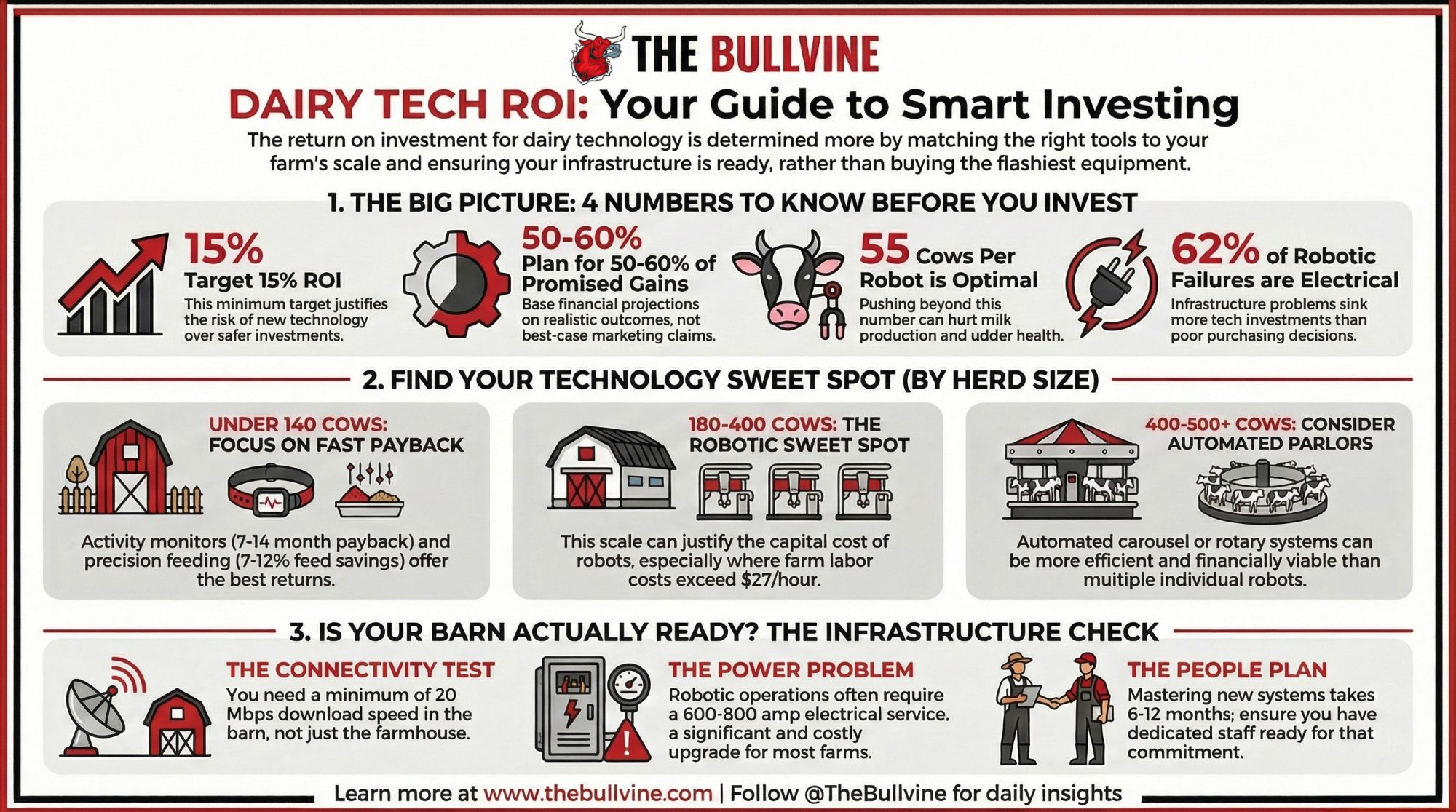
Are you gambling $500K+ on dairy tech without knowing if your farm’s actually ready?

EXECUTIVE SUMMARY: Here’s what we’ve uncovered after digging deep into dairy tech adoption across the country… Most farms investing in robotic milking systems aren’t seeing positive returns until years 3-5, not the 18 months dealers promise. The real numbers? Expect 3.8 to 5 years for genuine payback, driven by labor savings that only work if you nail the implementation. We’re seeing total costs run 40% above sticker price once you factor in barn upgrades, electrical work, and the brutal learning curve that can tank production for months. With dairy wages hitting $20-30/hour across regions, the pressure to automate is real—but so are the risks of rushing in unprepared. Cybersecurity threats are escalating fast—even Dairy Farmers of America got hammered by ransomware this summer, shutting down multiple plants. The farms that succeed hit specific benchmarks: 95+ pounds of energy-corrected milk per cow daily and 2.8+ robot milkings with minimal downtime. Bottom line? The tech works, but only if you do the groundwork first. Start with operational readiness, budget realistically, and plan for a marathon—not a sprint.

KEY TAKEAWAYS

  • Budget the real costs upfront: Robotic milking delivers 3.8-5 year ROI, but total implementation runs 40%+ above equipment price for wiring, training, and facility mods—especially critical in harsh climates.
  • Cybersecurity isn’t optional anymore: With major co-ops getting hit by ransomware, change those default passwords TODAY and segment your networks before connecting any farm equipment
  • Performance benchmarks separate winners from strugglers: Target 95+ lbs energy-corrected milk per cow and 2.8+ daily robot milkings—these metrics directly correlate with profitability in 2025 market conditions
  • Prevention pays better than treatment: Farms investing in automated health monitoring (95% accuracy) and proactive vet care see fewer costly clinical cases and better long-term returns
  • Size matters for ROI: Robotics work best for 400+ cow herds, while smaller operations often get better returns starting with targeted monitoring and data systems before full automation

Look, we’ve all been there—staring at that glossy brochure for robotic milking systems or precision feeding tech, calculating those sweet ROI projections on the back of a feed receipt. But here’s what’s really happening across dairy country: many operations are finding out the hard way that buying agricultural technology isn’t like picking up a new hay baler.

Here’s what consultants won’t tell you: most tech investments crater in year two because farms treat robots like tractors. Meeting initial ROI projections, with success rates varying dramatically by operation size, management readiness, and regional factors. The difference between farms that thrive with tech and those that struggle isn’t the equipment—it’s everything that happens before and after installation.

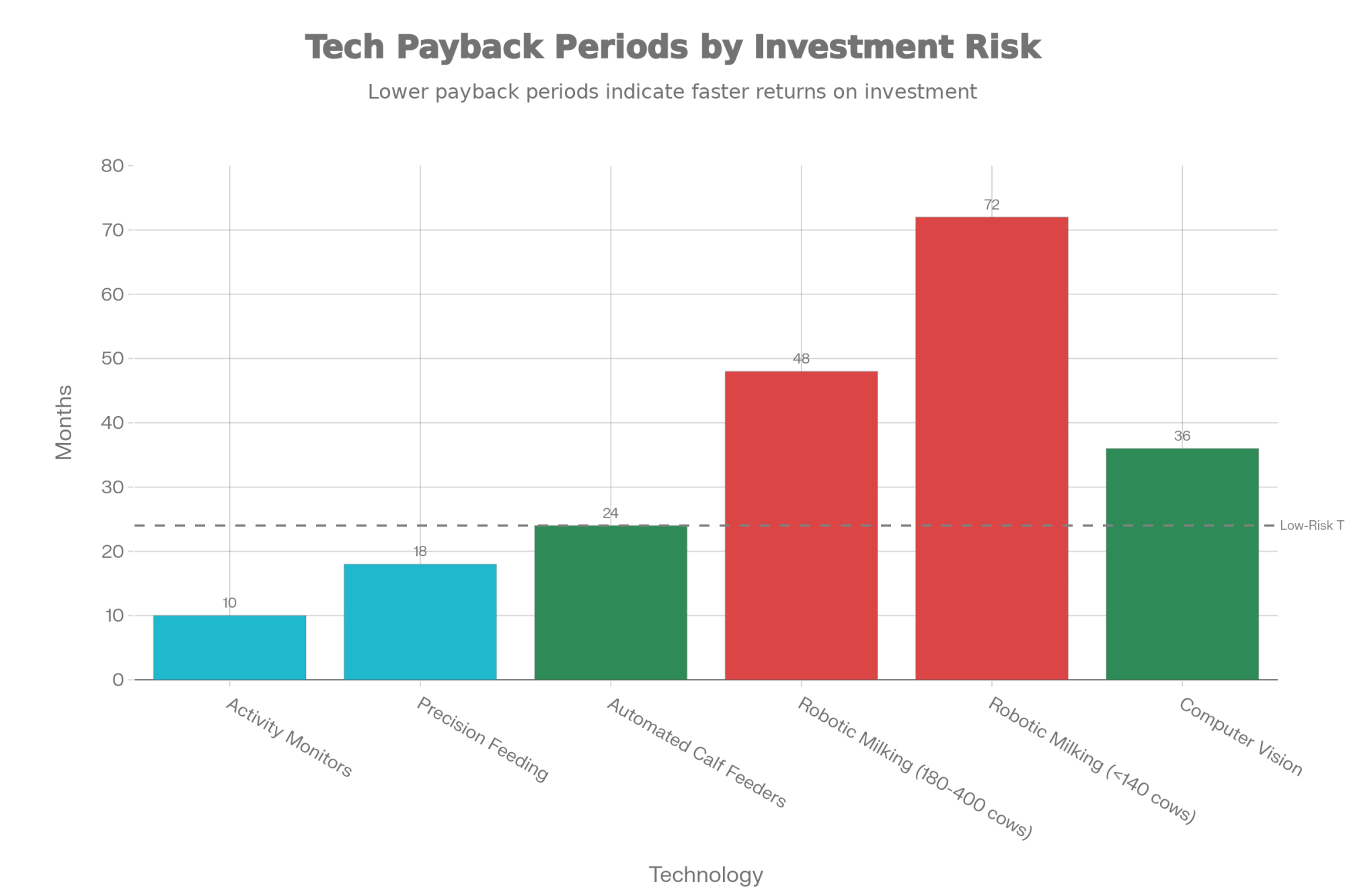
Recent peer-reviewed studies confirm robotic milking systems achieve ROI in 3.8 to 5 years, driven primarily by labor cost reductions of around 32% and increased production efficiency. But hitting those numbers requires substantial preparation that most operations underestimate.

The Labor Squeeze Gets Real

Up here in the Midwest, dairy wages have hit $20-$24 per hour according to USDA Agricultural Labor Survey data, while Southwest operations are competing at $25-$30 hourly. When you’re looking at 30-40% annual turnover rates industry-wide, those numbers add up fast. The wage pressure is making technology adoption more attractive, but it’s also raising the stakes. Miss on your implementation, and you’re stuck with expensive monthly payments on underperforming equipment while still dealing with labor shortages.

The Hidden Cost Reality

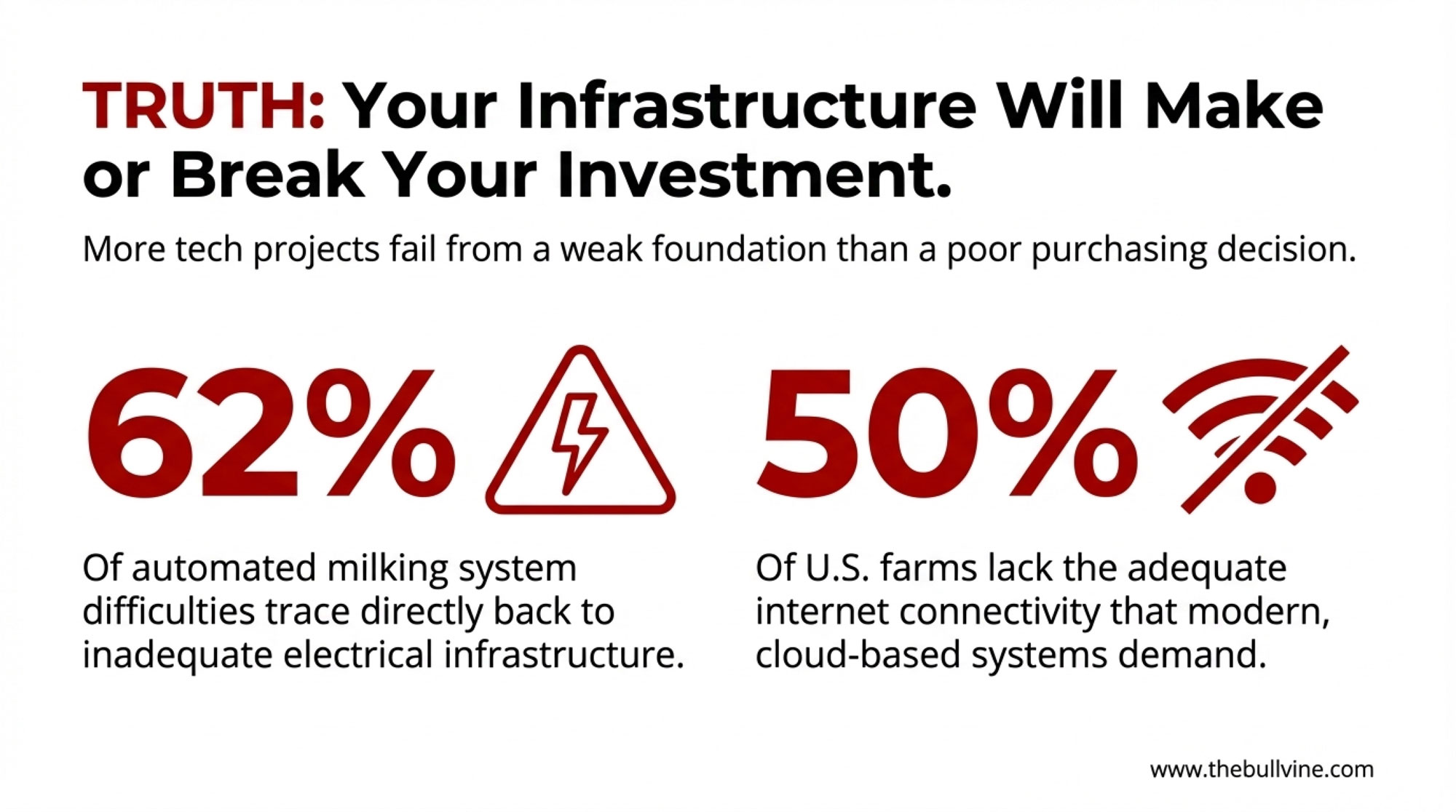
Here’s what equipment dealers don’t highlight in those sales presentations: total implementation costs typically run 40% above equipment prices. That $350,000 robotic setup? Budget closer to $500,000 once you factor in electrical upgrades, barn modifications, and the inevitable learning curve losses.

Northern operations face additional winterization costs—barn insulation, heated floors, equipment protection through those brutal Wisconsin or Minnesota winters. Southern dairies deal with heat stress challenges that can disrupt cow traffic patterns through robotic systems.

The learning curve spans 18-24 months, during which production often dips while cows adapt to voluntary milking patterns and staff master data management systems. This isn’t equipment failure—it’s the reality of transforming operational philosophy.

The Cyber Threat Nobody Saw Coming

This past summer really opened eyes when Dairy Farmers of America—one of the largest US cooperatives—got hammered by ransomware across multiple facilities. If they’re vulnerable with dedicated IT teams, what about operations running default passwords on connected equipment?

According to cybersecurity advisories, simple oversights, such as unchanged “admin/password” credentials, continue to expose farms to attacks. Every connected device—from automated calf feeders to milk truck sampling systems—represents a potential entry point.

The Readiness Assessment That Separates Winners from Strugglers

Before signing purchase agreements, operations need an honest evaluation across key areas:

  • Management Systems: Do daily routines happen consistently regardless of who’s working? Is data systematically tracked and actively utilized? Can equipment issues get resolved internally before calling dealers?
  • Financial Planning: Is the cost of production understood within $2/cwt? Are protocol changes communicated effectively across all personnel?
  • Technical Capacity: Can someone handle computer problems without immediate panic? Is staff willing to understand why protocols work, not just follow orders?

Industry consultants recommend scoring well in at least four of these five areas before proceeding with major investments. Operations falling short should focus on building operational foundations first.

Scale Matters More Than You Think

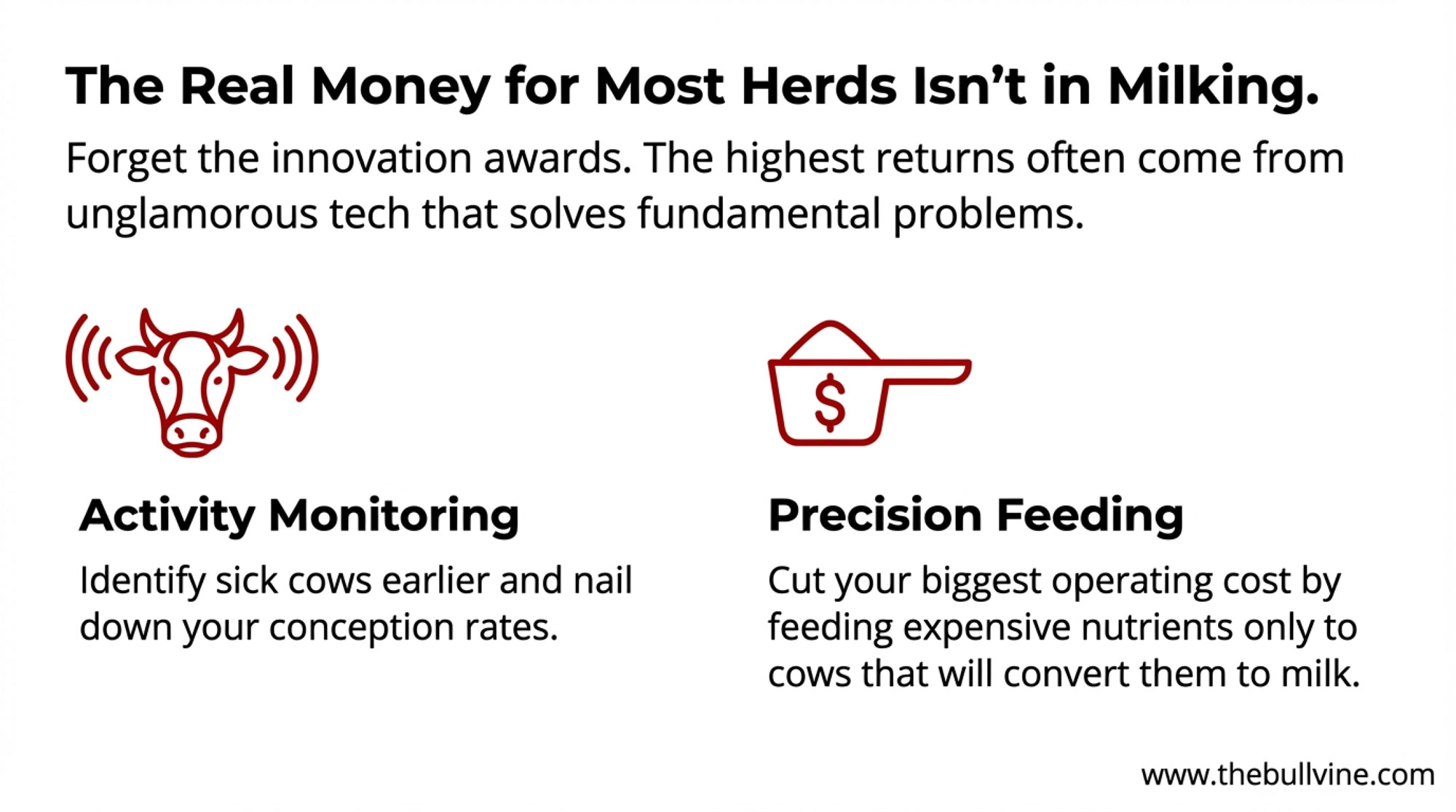
Robotic milking economics work best for herds above 400 cows, where labor savings justify implementation costs. Smaller operations often see better returns through incremental adoption—automated health monitoring, precision feeding components, or improved data systems.

For operations under 300 cows, consider whether technology addresses actual constraints or just sounds appealing. Sometimes the biggest wins come from optimizing existing systems rather than wholesale automation.

What Success Actually Looks Like

When technology implementation succeeds, specific benchmarks become apparent:

  • Production metrics: Energy-corrected milk production consistently exceeds 95 pounds per cow daily, meeting top-performing herd standards.
  • System utilization: Robotic milking achieves 2.8+ visits per cow daily with minimal downtime and low fetch rates.
  • Management response: System alerts trigger decisions within hours, not days or weeks.

The Prevention Economics Advantage

Here’s where successful operations think differently: they invest more in veterinary care, not less. Benchmarking data shows top dairies spend $1.20-1.50 per hundredweight on health costs compared to $0.60-0.90 for struggling operations.

Automated health monitoring systems validated in multiple studies demonstrate approximately 95% accuracy in detecting metabolic and infectious diseases 24-48 hours before clinical signs appear. Early intervention enables $45-$60 in preventive treatments, saving $200-$400 per case through avoided production losses.

The most successful farms treat more animals, not fewer—they just treat them earlier when intervention is cheaper and more effective.

Regional Implementation Realities

  • Northern dairies should budget an additional $8,000-12,000 for winterization requirements. Cold-weather challenges affect equipment reliability and require specialized facility modifications.
  • Southwest operations face different hurdles—heat stress impacts cow behavior and traffic flow, requiring enhanced cooling systems that add $15,000-25,000 to project costs.
  • Southeastern humid climates create moisture-related maintenance challenges, adding ongoing operational complexity that affects long-term ROI calculations.

Financial Planning Essentials

The total budget system costs 40% more than the equipment prices, accounting for infrastructure, training, and temporary production impacts. Implementation timelines of 18-24 months from purchase to optimized returns represent the industry standard, not equipment problems.

Essential cybersecurity measures include changing all default passwords, implementing network segmentation, and budgeting for ongoing monitoring services as operational expenses, not one-time costs.

The Bottom Line for 2025

Adopting technology in dairy requires strategic thinking that extends beyond equipment selection. Operations succeeding with agricultural technology treat implementation as a comprehensive business transformation, requiring systematic preparation, realistic budgets, and a long-term commitment.

Farms positioning themselves for long-term success understand that modern dairy technology amplifies existing management strengths—it doesn’t create capabilities that weren’t already being developed. Success depends on operational readiness, not equipment sophistication.

Regional factors, scale economics, management capacity, and cybersecurity awareness all determine whether technology delivers promised advantages or becomes expensive monthly reminders of poor preparation.

We’ve been tracking dairy tech adoption for years, and the pattern’s clear—the farms that thrive don’t just buy better equipment, they build better systems first. Don’t let equipment dealers rush you into decisions that could cost six figures in regret. Get the fundamentals right, plan for the real timeline, and make technology work FOR your operation, not against it.

Complete references and supporting documentation are available upon request by contacting the editorial team at editor@thebullvine.com.

Learn More:

Join the Revolution!

Join over 30,000 successful dairy professionals who rely on Bullvine Weekly for their competitive edge. Delivered directly to your inbox each week, our exclusive industry insights help you make smarter decisions while saving precious hours every week. Never miss critical updates on milk production trends, breakthrough technologies, and profit-boosting strategies that top producers are already implementing. Subscribe now to transform your dairy operation’s efficiency and profitability—your future success is just one click away.

NewsSubscribe
First
Last
Consent

Mexico’s $4.1 Billion Dairy Investment Signals Major Shift for U.S. Suppliers

Think feed efficiency can’t improve? Mexico has just revealed a 280% yield gap that we’re ignoring.

EXECUTIVE SUMMARY: Mexico’s throwing $4.1 billion at their dairy industry, and here’s what caught my attention… they’ve got farms producing 9 liters per cow while others hit 37 liters daily—that’s a staggering 280% difference. Now, they’re importing 8,000+ Australian Holsteins and betting big on genomic selection to close that gap. The kicker? Research shows that they could see a 20% productivity gain just from better genetics. Meanwhile, their precision feeding systems are paying for themselves in 18-24 months, even with heat stress reducing summer production by 25%. With cheese demand climbing 5% this year and lending rates around 11-12%, the message is clear: upgrade now or watch your margins shrink. Don’t let your neighbors get ahead while you’re still trying to figure out genetics.

KEY TAKEAWAYS:

  • Close that productivity gap quickly — genomic testing and elite breeding can boost your yields by 15-20%. Contact your genetics representative this week and inquire about genomic selection programs.
  • Precision feed equals precision profits — Install automated feeding systems that tailor rations to each cow. Track your feed conversion rates monthly to see where you’re leaving money on the table.
  • Beat the heat, keep the milk — Invest in cooling systems and water conservation technology now, before summer heat steals 25% of your production, as it does in Mexico.
  • Finance smart in this rate environment — With lending at 11-12%, explore government subsidies and co-op financing to make capital improvements pencil out.
  • Ride the cheese wave — Partner with local processors targeting the 5% growth in cheese consumption. Value-added products mean better milk prices for you.
 Mexico dairy market, dairy farm technology, genomic selection dairy, dairy farm profitability, dairy farm efficiency

Mexico has launched a $4.1 billion initiative to increase dairy production by 13% and reduce milk powder imports by 30% by 2030, reshaping its dairy industry and altering North American trade dynamics.

Currently, Mexico accounts for nearly 30% of U.S. dairy exports, totaling approximately $2.47 billion in 2024, making it America’s largest foreign dairy market—surpassing exports to Canada and China combined (USDA Foreign Agricultural Service). The Mexican government plans to invest roughly 13.6 billion pesos (~$680 million) in 2025 to upgrade dairy processing infrastructure.

A massive productivity gap defines the central challenge: farms in southern Mexico produce approximately 9-10 liters per cow daily, while northern operations achieve 37 liters—a 280% difference (The Bullvine). This disparity highlights the urgent need for genetic advancements and improved management, rather than simply expanding herds.

To address this deficit, Mexico imported over 8,000 Australian Holstein heifers, averaging 10,220 kilograms per lactation, demonstrating a commitment to genetic improvement. Research confirms genomic evaluations can deliver productivity gains up to 20% when implemented effectively.

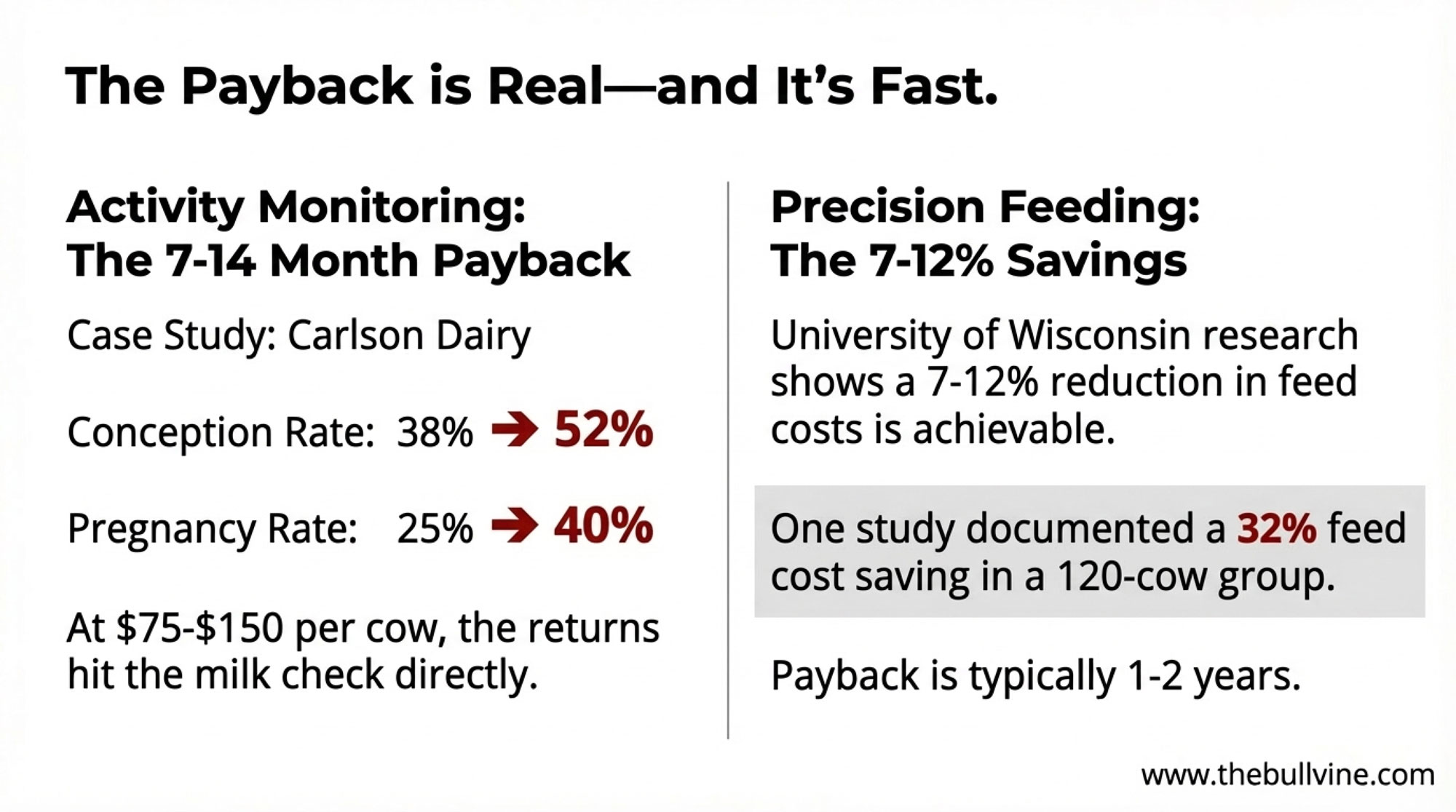
Technology adoption accelerates rapidly. Precision feeding and automated milking systems are estimated to have payback periods of 18-24 months, depending on farm conditions. Meanwhile, heat stress reduces milk yields by up to 25% during summer months (Frontiers in Veterinary Science) in northern Mexico, driving demand for cooling and water conservation technologies.

Financing remains challenging, with lending rates ranging from 11% to 12% (Trading Economics), necessitating clear returns on investment. Government subsidies and innovative financing models support adoption.

Consumer demand continues to expand, with cheese consumption projected to grow 5% in 2025, opening new avenues for specialized dairy ingredients and advanced processing technology.

The dairy sector is bifurcating into a public segment focused on self-sufficiency and import reduction, and a dynamic private sector pursuing innovation and operational efficiency.

To capitalize on this shift, U.S. suppliers should focus on three key areas:

🧬 Genetic Improvement: With a documented 280% productivity gap, the demand for elite genetics is undeniable. Genomic testing, embryo transfer, and high-quality semen offer immediate solutions to Mexico’s biggest operational challenge.

🤖 Precision Agriculture: Technologies addressing heat stress and water scarcity are critical tools in Mexico’s challenging climates. Cooling systems, water conservation tech, and automated feeding deliver measurable returns.

⚙️ Processing & Automation: A wave of government and private spending targets plant modernization, creating sustained demand for everything from pasteurizers to advanced automation and quality control systems.

Regional differences necessitate tailored approaches; northern producers exhibit higher technology adoption rates and greater financial capacity compared to southern operations.

Mexico’s dairy transformation signals opportunity rather than market exit for U.S. industry participants. The documented productivity gaps and infrastructure investments create sustained demand for proven genetics, advanced technology, and operational expertise.

The question is no longer if U.S. suppliers can succeed in Mexico, but who will move fast enough to capture the opportunity. The smart money isn’t just selling products anymore; it’s selling solutions.

This analysis incorporates data from USDA, industry reports, and credible sources to provide accurate market intelligence for dairy industry professionals.

Complete references and supporting documentation are available upon request by contacting the editorial team at editor@thebullvine.com.

Learn More:

  • Genomic Testing: A Step-by-Step Guide for Dairy Producers – This guide provides a practical framework for implementing the genomic selection programs discussed in the main article. It details how to interpret results and make breeding decisions that directly boost herd productivity and profitability.
  • The 5 Key Trends Shaping Dairy Farm Profitability in 2025 – For a wider market view, this article analyzes the economic forces impacting dairy operations. It offers strategic insights into navigating market volatility and aligning your business model with long-term trends beyond the immediate opportunities in Mexico.
  • Automated Dairy Farming: A Case Study in Efficiency and Profit – See precision agriculture in action with this deep dive into a fully automated operation. The piece demonstrates the real-world ROI of robotic milking and automated feeding systems, revealing methods for maximizing labor efficiency and animal welfare.

Join the Revolution!

Join over 30,000 successful dairy professionals who rely on Bullvine Weekly for their competitive edge. Delivered directly to your inbox each week, our exclusive industry insights help you make smarter decisions while saving precious hours every week. Never miss critical updates on milk production trends, breakthrough technologies, and profit-boosting strategies that top producers are already implementing. Subscribe now to transform your dairy operation’s efficiency and profitability—your future success is just one click away.

NewsSubscribe
First
Last
Consent

Dairy’s Bold New Frontier: How Forward-Thinking Producers Are Redefining the Industry

Discover how tech, sustainability, and bold strategies are revolutionizing dairy farming’s future.

The U.S. dairy landscape is undergoing unprecedented transformation. While milk prices continue their volatile dance and input costs steadily climb, a new generation of innovative producers is shattering outdated paradigms, embracing technology, diversifying revenue streams, and reimagining what success looks like in an industry being reborn. Their blueprint isn’t just about survival; it’s the roadmap for thriving in dairy’s next chapter.

The New Dairy Paradigm: Evolution, Not Extinction

The narrative surrounding dairy farming in America has frequently focused on decline, fewer farms, tightening margins, and mounting challenges. However, this perspective misses the remarkable reinvention occurring across the industry. Today’s dairy sector isn’t dying; it’s evolving at an unprecedented pace.

“What we’re witnessing isn’t the end of an era, but rather the birth of a new one,” observes Dr. Megan Richardson, agricultural economist and dairy industry analyst. “The most forward-thinking producers aren’t just adapting to change-they’re actively driving it, much like breeding for genetic improvement rather than accepting what nature provides.”

This evolution is evident in recent industry data. While the total number of dairy operations continues to decrease, with approximately 24,000 remaining as of 2022, representing a 39% decrease from 2017-those that remain display remarkable resilience and innovation. According to USDA Census of Agriculture data, this consolidation occurs at what industry experts describe as a “breathtaking pace,” with projections suggesting a potential 20-25% reduction by 2027. Despite these structural shifts, over the last five years, more than two-thirds of established dairy producers have maintained profitability despite volatile markets and rising input costs.

Are you positioning yourself among the innovators shaping the industry’s future, or are you merely reacting to changes as they come?

Several concurrent revolutions characterize the industry’s transformation:

Technology Integration: Two-thirds of U.S. dairies now employ at least one form of advanced feeding technology, with adoption rates for robotic milking, AI-driven health monitoring, and integrated data systems accelerating rapidly, creating “connected barns” that would be unrecognizable to previous generations.

Revenue Diversification: Approximately 80% of dairy operations now generate income from sources beyond the traditional milk check, with three-quarters involved in at least one beef-on-dairy practice, blending the historically separate worlds of dairy and beef production.

Sustainability Implementation: Over 60% of producers are engaged in at least one formal sustainability practice-from precision manure application to methane digesters-though awareness of comprehensive programs remains an industry challenge.

Workforce Evolution: Many operations now rely on non-family labor for at least half their workforce, with strategic automation helping address persistent labor shortages that threaten daily milk harvests.

Succession Planning: With a quarter of current operators planning to retire within five years, representing over a million cows changing hands, the industry faces a critical transition of assets and knowledge to a new generation.

Behind these statistics are real producers making strategic choices, reshaping the industry’s future. Let’s explore how these transformations play out and what they mean for your operation.

The Technology Revolution: From Adoption to Integration

The dairy barn of 2025 bears little resemblance to its counterpart from even a decade ago. Technology has moved beyond gadgetry to become the backbone of progressive operations, touching everything from TMR mixing and milking to health monitoring and data analysis.

The New Economics of Automation

The business case for technology adoption has never been stronger. Consider these returns on investment:

  • Robotic milking systems: While requiring substantial upfront investment ($150,000+ per robot), these systems deliver 5-10% increases in milk yield and labor savings of $0.75-$1.00 per hundredweight. According to recent studies published in the Journal of Dairy Science, farms implementing automatic milking systems (AMS) have reported 5-10% milk yield increases alongside significant reductions in labor requirements, up to 75% for milking-specific tasks and 29% for overall labor. On a 200-cow dairy, this can translate to $75,000+ in annual savings while improving milk quality metrics like SCC and butterfat percentage.
  • Precision feeding technologies: Farms implementing advanced TMR systems report 7-12% reductions in feed costs alongside improved feed efficiency. Research from Cornell University’s CNCPS (Cornell Net Carbohydrate and Protein System) nutritional modeling shows these technologies can decrease nitrogen and phosphorus excretion by 15-20% while enhancing feed conversion. When feed represents 40-60% of production costs and the milk-to-feed price ratio determines profitability, these savings quickly accumulate, potentially adding $100+ per cow annually to the bottom line.
  • Health monitoring wearables: Early detection of mastitis alone can save $444 per case (including treatment costs, discarded milk, and production losses), according to economic analyses published in Preventive Veterinary Medicine. AI-enabled health monitoring systems predict illness 24-72 hours before visual symptoms appear, with machine learning algorithms like Support Vector Machines (SVM) demonstrating 97% accuracy in classifying cattle behaviors based on sensor data.

But here’s the uncomfortable truth most tech vendors won’t tell you: without proper management protocols, even the most advanced technology becomes an expensive band-aid on deeper operational problems. The farms seeing transformational returns aren’t just buying equipment- they’re reimagining their entire management approach.

Dan Webber, who milks 320 cows in Wisconsin, saw his labor costs drop nearly 30% after installing robotic milkers. “Beyond the numbers, there’s a quality-of-life improvement that’s hard to quantify,” he notes. “No more 4 a.m. milking shifts means I can attend my kids’ school events without constantly checking my watch. It’s like the difference between being tied to the parlor three times a day versus letting the cows set their schedule.”

From Data Collection to Decision Intelligence

The most sophisticated operations move beyond simply collecting data to creating integrated systems that transform information into actionable intelligence. This is similar to how a skilled herdsman reads subtle cow signals at scale and with greater precision.

“Five years ago, we were drowning in data but starving for insights,” explains Sarah Chen, a fourth-generation dairy farmer managing 1,200 cows in California. “Today, our integrated platform pulls together everything from individual cow activity and rumination patterns to milk components, DMI, and weather forecasts. The system doesn’t just tell me what happened yesterday: it helps predict what will happen tomorrow, like knowing which fresh cow might crash before her CMT turns positive.”

This predictive capability represents the next frontier in dairy technology. Farms leveraging IoT and advanced data analytics report 15-20% productivity improvements, with particularly strong returns in reproduction efficiency (conception rates up 5-7%), feed optimization (F: Y ratio improvements of 0.05-0.10), and early health intervention.

The real question isn’t whether you can afford technology, it’s whether you can afford to be left behind as the technological divide between progressive and traditional operations widens by the day.

However, technology adoption isn’t without challenges. Access to capital remains a significant barrier, with 26% of producers citing it as their primary limitation, according to a multi-state survey of dairy farmers conducted by land-grant universities. Additionally, the availability of local technical support was identified as the most critical factor in technology selection decisions, followed by proven research results and simplicity of use.

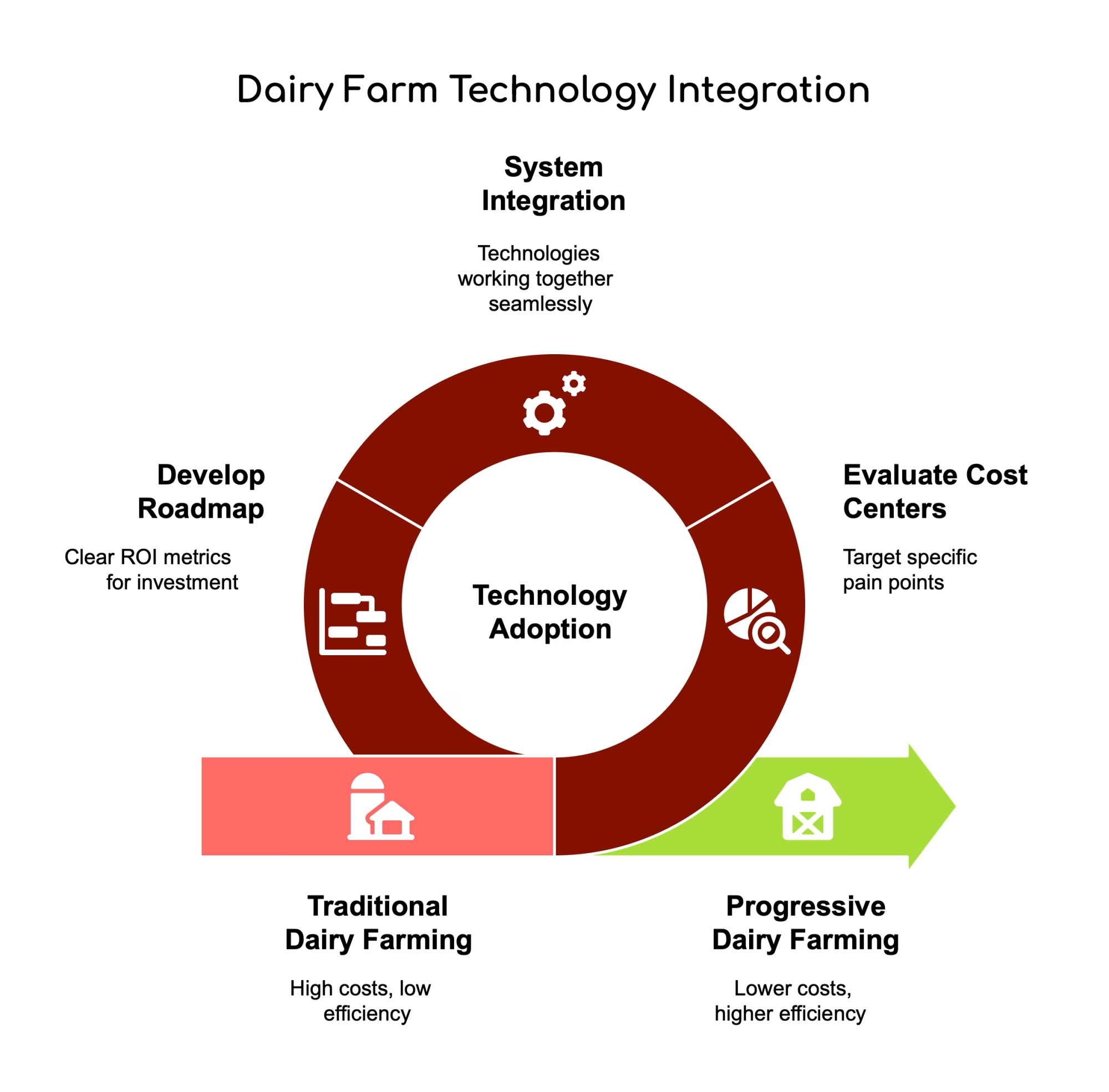
The Bullvine Bottom Line for Your Operation:

  1. Evaluate your largest cost centers and bottlenecks first, and target technologies that specifically address these pain points
  2. Consider how different technologies work together as a system rather than in isolation
  3. Develop a 3–5-year technology adoption roadmap with clear ROI metrics for each investment

Beyond the Milk Check: Diversification as Strategic Imperative

For decades, dairy farming meant one thing: selling milk. Today, however, most successful operations view themselves as milk producers and diversified agricultural enterprises. This shift from single-commodity focus to multiple revenue streams isn’t just a hedge against price volatility; it’s becoming a cornerstone of modern dairy business models.

The Beef-on-Dairy Phenomenon

Perhaps no diversification strategy has gained more traction than beef-on-dairy (BoD) crossbreeding. According to comprehensive industry surveys, an impressive 72% of U.S. dairy farms now incorporate beef genetics into their breeding programs. This represents a fundamental shift in breeding philosophy, evidenced by semen sales data: 7.9 million units of beef sires were sold for use in dairy cattle in 2023, representing 31% of total dairy semen sales.

Yet I’m still encountering producers who view dairy and beef as separate enterprises, refusing to consider how strategic crossbreeding could transform their bottom line. When was the last time you critically evaluated your breeding program’s economic impact beyond producing replacement heifers?

The economics are compelling. According to market analyses from three major land-grant universities, crossbred calves command premiums of $350-$700 per head compared to straight Holstein bull calves, with 80% of participating farmers receiving such premiums. A 500-cow dairy breeding 200 cows annually to beef sires represents potential additional revenue of $ 70,000- $ 140,000, similar to improving your milk price by $0.70-$1.40 per cwt across your entire production.

The beef-on-dairy trend also benefits from favorable market conditions. U.S. cattle inventory recently hit a 73-year low, supporting strong beef prices. The impact on the beef supply chain is already substantial, with BoD cattle accounting for 7% of total U.S. cattle slaughter in 2022 (approximately 2.6 million head), and projections from the USDA Economic Research Service indicate this share could rise to 15% by 2026.

James Thornton, who operates a 400-cow dairy in Pennsylvania, began breeding the bottom quartile of his herd to Angus sires four years ago. “Initially, we were just looking to get better value for our bull calves,” he explains. “But we’ve since expanded into raising some crossbreds to finishing, and now we’re selling branded beef direct to consumers. What started as a minor sideline now accounts for about 15% of our total farm revenue; it’s like adding a profitable heifer-raising enterprise without the same headaches.”

Creating Value on Your Terms

While selling day-old crossbred calves represents the entry point for many, other producers are moving further up the value chain. Recent industry data shows that while the number of producers raising beef-on-dairy animals to finishing weight has moderated, there has been a notable increase in the sale of branded beef products directly from dairy farms.

This follows broader consumer trends showing increased demand for branded beef, particularly high-quality products with specific breed claims and traceability stories. Sophisticated dairy producers are capitalizing on this trend by developing their own branded products and marketing channels, similar to how some have succeeded with farm-branded artisanal cheese.

Let’s be brutally honest: Clinging to a “we just milk cows” mentality in today’s market environment isn’t loyalty to tradition; it’s a failure of imagination that’s leaving money on the table.

Beyond beef-related ventures, successful diversification strategies include:

  • On-farm processing: Converting raw milk into cheese, yogurt, ice cream, or flavored milk products to capture retail margins exceeding $20 per cwt equivalent.
  • Agritourism: Farm tours, educational workshops, on-farm stores, and event hosting provide additional revenue and valuable community connections, turning your operation’s daily routines into experiences consumers will pay for.
  • Crop and forage sales: Leveraging existing land and equipment to produce feed for sale to other operations, particularly in regions with high land values and favorable growing conditions.
  • Energy production: Methane digesters and solar installations turn waste products and underutilized space into revenue-generating assets, harvesting manure twice: once for energy and again for fertilizer.

The Bullvine Bottom Line for Your Operation:

  1. Conduct a resource inventory and identify underutilized assets (land, livestock, skills) that could generate additional revenue.
  2. Start small with diversification-test, test market demand before major investments
  3. Consider your competitive advantages- what makes your farm uniquely positioned for specific alternative ventures?

Environmental Sustainability: From Regulatory Burden to Competitive Edge

The concept of sustainability in dairy has evolved dramatically. What was once viewed primarily as an ecological obligation or regulatory burden is increasingly recognized as a business imperative with potential economic benefits. Today’s most progressive producers find that sustainable practices can drive efficiency and market advantage.

Adoption Trends and Business Benefits

Recent industry research reveals that 63% of U.S. dairy producers now implement at least one sustainable practice, according to comprehensive national surveys. However, this statistic masks significant variation in depth and breadth of adoption. Leading operations are going beyond piecemeal approaches to implement comprehensive sustainability strategies that deliver multiple business benefits:

  • Water recycling and conservation: On advanced dairy farms, water is recycled up to six times, used for cooling milk in plate coolers, cleaning equipment, flushing barn lanes, and ultimately irrigating crops. According to research from the Innovation Center for U.S. Dairy, this reduces both utility costs and environmental footprint.
  • Manure management and nutrient cycling: Beyond regulatory compliance, sophisticated manure handling systems capture value through biogas production while reducing fertilizer expenses. Studies from the University of Wisconsin Dairy Innovation Hub show some operations report annual savings of $70-100 per cow through optimized nutrient management, turning what was once considered a waste disposal problem into a valuable farm resource.
  • Precision feeding: Advanced ration formulation and TMR management reduce feed waste and minimize excess nutrient excretion. Cornell University research shows this can decrease nitrogen and phosphorus output by 15-20% while improving feed conversion efficiency.

The industry’s collective progress is measurable: producing a gallon of milk in 2023 required 30% less water, 21% less land, and generated a 19% smaller carbon footprint compared to 2007, according to lifecycle assessments published in the Journal of Dairy Science. These efficiency gains represent both environmental progress and economic savings, like how genetic improvements have simultaneously increased production efficiency and reduced resource intensity.

Global Context: The Dutch Experience

In the Netherlands, where environmental regulations are among the strictest in the world, dairy farms have pioneered circular farming practices that integrate crop production, livestock management, and energy generation. Dutch farms utilizing closed-loop nutrient management systems have demonstrated that sustainability can drive profitability, reducing purchased fertilizer inputs by up to 65% while maintaining or increasing forage yields. This model of regenerative dairy farming offers valuable lessons for U.S. producers facing increasing environmental scrutiny.

The Market Incentive

Forward-thinking producers recognize that sustainability credentials are increasingly valuable in the marketplace. Major processors and retailers are establishing sustainability requirements for their supply chains, and some offer premiums for verified sustainable production practices.

The sustainability divide is widening while some producers view environmental initiatives as costly distractions, others use them to secure price premiums and preferential market access. Which side of this divide will your operation be on five years from now?

“We initially implemented our methane digester because of regulatory pressure,” admits David Keller, who operates an 850-cow dairy in New York. “But we’ve since discovered it’s also a marketing advantage. Our processor’s sustainability program pays a $0.15 per hundredweight premium for farms that meet certain environmental metrics. That’s adding about $45,000 annually to our bottom line, similar to boosting components across the herd.”

Despite these opportunities, a significant awareness gap persists. Many producers implement sustainable practices without connecting them to broader industry programs or failing to document and communicate their efforts for potential market benefit. This disconnect is particularly pronounced among smaller operations and those outside the Western U.S., where sustainability programs have gained stronger traction.

The Bullvine Bottom Line for Your Operation:

  1. Identify which sustainability practices you’re already implementing but not getting market credit for
  2. Research processor sustainability programs that offer premiums or preferential contracts
  3. Start measuring and documenting your operation’s environmental impact; you can’t improve or market what you don’t measure

The Human Element: Solving Dairy’s Most Critical Challenges

With all the advancements in technology and business models, the future of dairy ultimately depends on the people who manage the operations and those who will lead them tomorrow. Two interrelated human capital challenges threaten the industry’s continued evolution: workforce shortages and succession planning gaps.

The Workforce Dilemma

The dairy labor landscape has transformed dramatically. Many operations now rely on non-family employees for at least half their workforce, with immigrant labor particularly vital. A comprehensive national survey found that immigrant workers account for 51% of all dairy labor nationally and produce 79% of America’s milk supply. In Western and Southwestern regions, this dependency approaches 80% according to analyses from the National Milk Producers Federation.

Let’s confront an uncomfortable truth: our industry has become utterly dependent on a workforce that lacks secure legal status or reliable pathways to obtain it. We can’t claim to be strategic business operators while ignoring this existential threat to our labor supply.

Despite this reliance, hiring and retention remain persistent challenges. The physically demanding nature of dairy work, often involving early hours and weekend shifts, makes attracting domestic workers difficult even at competitive wages. Meanwhile, immigration policies add another layer of complexity, as the H-2A agricultural guest worker program is poorly suited for year-round dairy labor needs, unlike seasonal harvests.

Economic modeling published in the Journal of Agricultural Economics demonstrates the potential severity of labor disruptions: a 50% reduction in immigrant dairy labor could result in a $16 billion hit to the U.S. economy. In comparison, complete elimination could increase retail milk prices by as much as 90%.

Innovative producers are responding with multi-faceted solutions:

  • Strategic automation: Beyond labor savings, technology investments are reshaping the nature of dairy work. “Our robotic milking system didn’t eliminate jobs-it transformed them,” explains Miguel Rodriguez, herd manager at a 600-cow operation in Idaho. “We now need fewer people in the parlor but more skilled technicians and cow managers. The jobs are less physically demanding and more intellectually engaging, more like herdsmen than milkers.”
  • Enhanced compensation strategies: Leading operations are moving beyond competitive wages to comprehensive packages including quality housing, flexible scheduling where operationally feasible, and performance-based incentives tied to milk quality or reproductive efficiency, similar to how premium genetics command higher prices.
  • Professional development pathways: Structured training programs and clear advancement opportunities improve retention by showing employees they have a future in the operation. “When we implemented our three-tier advancement program, turnover dropped by 40%,” notes Amanda Chen, HR director for a multi-site dairy enterprise. “People want to know there’s a path from milker to herdsman to manager, just like we develop heifers into productive cows.”

The Succession Imperative: A Step-by-Step Framework

Parallel to workforce challenges is the critical need for effective succession planning. Industry data from multiple national surveys indicates that approximately 25% of current dairy operators plan to retire within the next five years, yet nearly half lack a formal succession plan or are uncertain about their transition strategy.

The numbers are stark: less than one-third of family agricultural businesses survive the transition from first to second generation, and only about 16.5% make it to the third generation. Are we honestly prepared to confront that most dairy farms are one generation away from extinction?

Financial and family dynamics often complicate transitions. Modern dairy operations represent substantial capital investments- land, facilities, equipment, and livestock can easily total millions of dollars. Navigating fair distribution among multiple heirs while maintaining operational viability requires sophisticated planning and open communication.

“My parents avoided the succession conversation for years,” recounts Thomas Weber, a 32-year-old who recently took over management of his family’s 280-cow dairy. “When we finally engaged a transition specialist, we discovered the process would take far longer than anyone expected. Start five years before you think you need to, then double that timeline, much like how you’d begin breeding and raising replacements long before your herd needs them.”

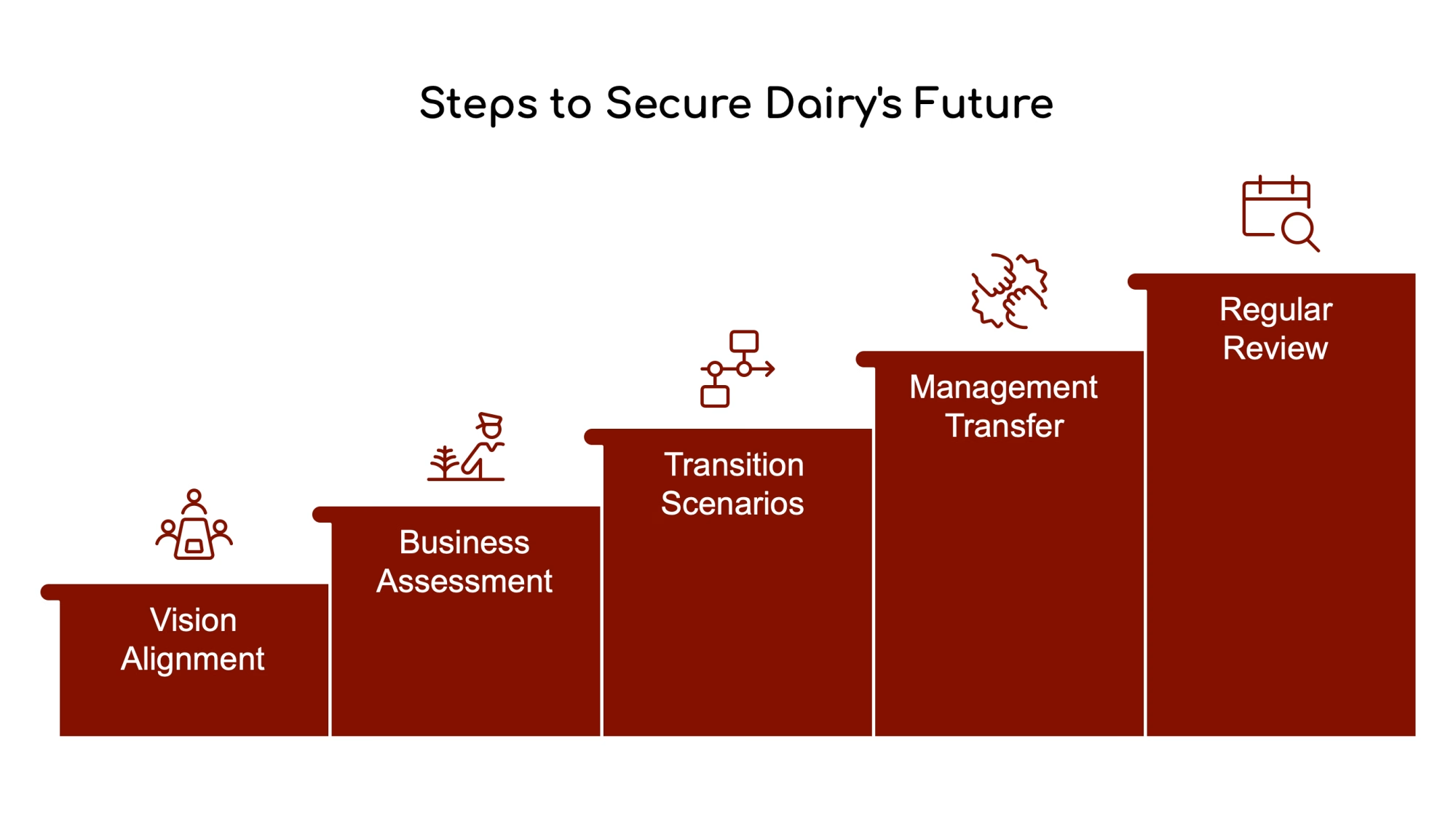
Initial Framework for Kickstarting Your Succession Plan

  1. Start with vision alignment meetings: Before discussing financial or legal details, gather all potential stakeholders (on-farm and off-farm family members) to discuss values, goals, and aspirations. Use a neutral facilitator to ensure all voices are heard.
  2. Conduct comprehensive business assessment: Work with agricultural financial specialists to determine true farm value, operational efficiency, and viability. This provides the factual foundation for all future decisions.
  3. Develop multiple transition scenarios: Develop 2-3 potential transition models with your advisors rather than assuming a single pathway. These might include gradual transfer of management/ownership, partnership structures, or innovative approaches like equity partnerships with non-family members.
  4. Create a management transfer timeline: Successful transitions typically separate management transfer from ownership transfer, with the next generation assuming increasing management responsibilities before financial ownership changes hands.
  5. Establish regular review and adaptation processes: Once initiated, commit to reviewing the succession plan quarterly during the transition period and annually thereafter, adapting to changing circumstances, tax laws, and family dynamics.

Despite these challenges, there are encouraging signs. A new generation of dairy leaders is emerging, characterized by technological savvy, business sophistication, and environmental awareness. Various programs, including university extensions, dairy producer organizations, and private foundations, offer these aspiring dairy professionals educational resources and financial support.

The Bullvine Bottom Line for Your Operation:

  1. Schedule your first succession planning meeting within the next 30 days, even if just to establish timeline goals
  2. Build your advisory team, identify legal, financial, and farm transition specialists with specific dairy experience
  3. Conduct an honest assessment of your operation’s transferability, and what changes would make it more attractive to the next generation?

The Next Frontier: Integrating Innovation Across Your Operation

The most successful dairy operations recognize that individual technological advancements, diversification, sustainability, and workforce management don’t exist in isolation. The true pioneers are creating integrated systems where these elements work synergistically, amplifying benefits and creating resilient business models that can withstand market volatility.

The Systems-Thinking Advantage

Ryan Kimball, whose family operates a 750-cow dairy in Wisconsin, describes their approach: “We stopped thinking about ‘projects’ and started thinking about systems. Our robotic milkers weren’t just a labor solution; they generated data that improved our nutrition program, reducing feed costs while enhancing cow health and reducing veterinary expenses. Everything connects, much like how a well-balanced ration addresses multiple nutritional needs simultaneously.”

This systems thinking extends to business models as well. Operations that successfully integrate milk production, value-added processing, and direct marketing create multiple revenue streams while building a buffer against price fluctuations at any point in the value chain, similar to how genetic diversity in a herd protects changing market demands.

Is your operation still addressing challenges in silos, or have you begun to recognize the interconnected nature of modern dairy management?

Consider how these elements might work together in your operation:

  • Technology investments that simultaneously address labor challenges, improve animal welfare, and enhance sustainability metrics, like how automated calf feeders improve growth rates while reducing labor and enabling precise nutrition
  • Diversification strategies that utilize existing assets and capabilities while creating new market opportunities, similar to how crossbreeding leverages your dairy herd for beef production
  • Sustainability initiatives that reduce costs while positioning products for premium markets, such as precision manure application that saves on fertilizer while improving environmental credentials
  • Workforce development approaches that combine competitive wages with meaningful work and growth opportunities, creating career paths, not just jobs

Case Study: The Integrated Operation

The Sanchez family dairy in California exemplifies this integrated approach. Their 900-cow operation combines robotic milking technology, intelligent feeding systems, and advanced health monitoring. They’ve installed solar arrays that supply 80% of their electricity needs and implemented water recycling that reduces consumption by 40%.

On the diversification front, they breed 35% of their herd to beef sires, raising some animals to finishing weight while marketing others through regional beef brands. They’ve also developed a small on-farm creamery producing specialty cheeses sold through local retailers and direct-to-consumer channels.

“Each piece reinforces the others,” explains Maria Sanchez. “Our sustainability practices reduced costs while creating a marketing advantage for our specialty products. Our technology investments addressed labor challenges while improving animal welfare, which became part of our brand story. It’s all interconnected how cow comfort simultaneously impacts production, reproduction, and longevity.”

The Bottom Line: Your Blueprint for Future Success

The dairy industry is experiencing evolution and revolution in technology, business models, sustainability practices, and human capital approaches. While challenges abound, so do unprecedented opportunities for operations willing to break from convention and embrace strategic change.

As you consider your operation’s future, focus on these key principles:

  1. Think systems, not silos: Look for synergies across different aspects of your business, from production practices to marketing approaches-just as you’d view herd health as an integrated system rather than isolated treatments.
  2. Invest strategically in technology: Prioritize investments that address your specific pain points and offer multiple benefits across the operation, similar to focusing breeding decisions on your herd’s limiting factors.
  3. Diversify thoughtfully: Explore alternative revenue streams that leverage existing assets and capabilities while creating resilience against market volatility, creating enterprise diversity just as you’d diversify your genetic program.
  4. Embrace sustainability as an opportunity: Move beyond compliance to view environmental stewardship as a potential source of competitive advantage, turning potential regulatory burdens into marketable attributes.
  5. Prioritize people: Develop comprehensive workforce development and succession planning strategies to ensure long-term continuity, investing in human capital with the same diligence you apply to herd improvement.

Challenge yourself today: What conventional practice on your farm most deserves critical reevaluation? Whether it’s your breeding program, labor management, or business model, commit to an honest assessment of one area where innovation could transform your operation’s trajectory.

The dairy producers who will thrive in this new landscape combine operational excellence with strategic vision, maintaining the best traditions of animal husbandry and land stewardship while embracing innovations that enhance efficiency, sustainability, and profitability.

The industry’s transformation presents challenges, but for those willing to adapt and innovate, it also offers a pathway to renewed prosperity and purpose. Like the cow that peaks early in lactation with proper transition management, those who invest in preparation and adaptation now will enjoy stronger performance in the years ahead. The future of dairy belongs to the bold.

What’s one bold change you’ve implemented in your operation that’s paying dividends? Share your experience in the comments below; your innovation could be exactly what another producer needs to hear right now.

Key Takeaways:

  • Tech is non-negotiable: Two-thirds of dairies use advanced feeding systems, with robotic milkers cutting labor costs by 29% while boosting yields.
  • Diversification dominates: 80% of operations now earn beyond milk sales, led by beef-on-dairy crossbreeding ($350–$700 premiums per calf).
  • Sustainability pays: Farms using precision nutrient management cut nitrogen waste by 15–20% and tap into $0.15/cwt processor premiums.
  • Labor & succession crises: 50%+ of workforces rely on non-family labor, while 46% lack succession plans despite 25% retirements looming.
  • Growth mindset wins: 44% of producers plan to expand, blending tradition with tech to future-proof their operations.

Executive Summary:

The U.S. dairy industry is undergoing rapid transformation, driven by technological adoption (robotic milking, AI health monitoring), revenue diversification (72% use beef-on-dairy crossbreeding), and sustainability initiatives (63% of farms implement eco-practices). Despite labor shortages and a looming retirement wave (25% of operators plan to exit in 5 years), younger innovators are leveraging data-driven strategies and alternative revenue streams to boost resilience. While consolidation continues, proactive operators are redefining success through efficiency gains, branded products, and holistic integration of systems-proving adaptability is key to thriving in dairy’s new era.

Learn more:

Join the Revolution!

Join over 30,000 successful dairy professionals who rely on Bullvine Weekly for their competitive edge. Delivered directly to your inbox each week, our exclusive industry insights help you make smarter decisions while saving precious hours every week. Never miss critical updates on milk production trends, breakthrough technologies, and profit-boosting strategies that top producers are already implementing. Subscribe now to transform your dairy operation’s efficiency and profitability—your future success is just one click away.

NewsSubscribe
First
Last
Consent

6 Game-Changing ID Technologies Every North American Dairy Farm Needs Now: 17% Efficiency Boost Proven

While you’re still reading ear tags, tech-savvy competitors are banking $78,000/100 cows using ID tech that spots sick cows 3 days before symptoms appear.

Forget ear tags—your competition uses rumen biosensors that text heat alerts and facial recognition that spots lame cows before they limp. Did you miss this tech shift? You’re leaving 17% efficiency gains in the parlor pit.

While your neighbor agonizes over missing heifers, early adopters are banking significant returns from advanced ID systems—enough to cover a new robotic milker’s monthly payment.

For North American operations battling persistent labor shortages, these technologies aren’t luxuries; they’re survival tools that transform how modern dairy farms operate, track, and profit from their animals.

THE DIGITAL REVOLUTION: WHY NORTH AMERICAN DAIRIES CAN’T AFFORD TO FALL BEHIND

The dairy industry faces unprecedented challenges: labor shortages, volatile markets, and increasing pressure for sustainability and animal welfare. Digital transformation isn’t optional in this environment—it’s essential for survival.

“Finding and keeping qualified labor is our number one challenge,” says a 400-cow operation near Drummondville, Quebec, who has embraced digital tracking. “Before implementing collar technology, we needed six full-time employees. Now we operate with four while monitoring more health metrics than ever.”

According to the U.S. Chamber of Commerce, the country currently has about 10.4 million job openings but only around 5.7 million unemployed workers. This labor crisis drives unprecedented technology adoption as operations struggle to maintain production with fewer skilled workers.

For companies like GEA Farm Technologies, which recently moved manufacturing of their rotary parlor platforms to Galesville, Wisconsin, the surge in demand reflects this shift. “There’s been a surge in rotary parlor demand as dairy farmers look to milk more cows using less labor,” says Matt Daley, president of GEA Farm Technologies, Inc.

Modern ID technologies have evolved far beyond simple record-keeping tools. Today’s integrated systems create comprehensive digital identities for each animal, generating actionable insights that drive profitability from rumination patterns to health predictions. These technologies serve as round-the-clock digital herdspersons, allowing producers to make data-driven decisions that enhance productivity while improving work-life balance.

INNOVATORS VS. LAGGARDS: WHERE DO YOU STAND?

Before diving into specific technologies, it’s crucial to understand where your operation falls on the technology adoption curve. According to Everett Rogers’ “Diffusion of Innovations” model, dairy producers typically fall into five categories:

  1. Innovators (2.5%): These forward-thinking producers actively seek out new technologies, willingly invest in emerging solutions, and accept the risks of being first.
  2. Early Adopters (13.5%): Slightly more cautious than innovators, these producers quickly implement proven technologies after seeing initial successes.
  3. Early Majority (34%): These pragmatic operators adopt technologies only after early adopters have thoroughly tested them.
  4. Late Majority (34%): Often skeptical of new technologies, these producers wait until adoption is widespread before implementing changes.
  5. Laggards (16%): The most tradition-bound segment, these producers only adopt new technologies when necessary.

Research consistently shows that structural characteristics explain the difference between frontrunners (innovators and early adopters) and laggards. Farm size, market position, financial solvency, and operator age are all significant predictors of adoption behavior.

A comprehensive study from Wageningen University found that larger farms with better market positions tend to adopt innovations earlier. At the same time, older farmers with limited financial resources are more likely to be laggards. However, behavioral characteristics like active information-seeking and openness to external advice were even more critical in distinguishing innovators from early adopters.

One expert noted, “You don’t have to have the latest technology, but you have to compete with those who do.” With two-thirds of U.S. dairy farms disappearing in a generation while milk production increased by a third, the choice is clear: adapt or be left behind.

RFID: THE FOUNDATION YOUR HERD MANAGEMENT CAN’T SUCCEED WITHOUT

Radio-frequency identification (RFID) has revolutionized livestock identification, creating the foundational layer upon which advanced dairy management builds. Traceability systems across North America rely on RFID technology for individual animal identification throughout the supply chain.

In Canada, RFID tagging forms the backbone of DairyTrace, the national dairy cattle traceability program administered by Lactanet Canada. Various state and industry programs in the United States utilize RFID technology for animal tracking and disease management.

At Progressive Dairy Solutions in Chilliwack, BC, consultant Dave Taylor has seen the financial impact firsthand: “One 150-cow operation was losing approximately $11,500 annually just from misidentified animals. After implementing RFID with automated readers, their breeding errors dropped by 84%, and they’ve documented a 9.2-day reduction in days open. That’s real money.”

“In Denmark, 73% of herds now use RFID integrated with other monitoring systems as standard equipment,” notes Dr. Lars Nielsen of Aarhus University. “Our trials show direct improvements in management precision with every technology layer you add. When RFID enables accurate individual monitoring, we’ve measured a 0.23L/day milk yield increase per 0.1 pH unit improvement.”

Investment Breakdown: Basic RFID implementation costs approximately $20-35 per cow, including tags ($3-5 each), readers ($1,000-2,500), and software integration. Most operations recoup this investment within 12-18 months through reduced breeding errors, improved transition cow management, and enhanced parlor efficiency. For a 200-cow dairy, expect an initial investment of $8,000-12,000 with annual benefits of $15,400 based on industry averages.

Here’s the kicker—choosing traditional ear tags over advanced RFID systems is like using sundial-to-time parlor rotations—you’ll function but never optimize.

FACIAL RECOGNITION: THE TECHNOLOGY THAT SEES WHAT YOU’RE MISSING

While RFID provides excellent identification capabilities, cutting-edge computer vision and facial recognition systems take dairy identification to remarkable heights. These technologies can identify individual cows without physical tags, using their unique physical characteristics as natural identifiers.

Recent research has developed a novel unified global and part feature deep network model (GPN) that learns more discriminative and robust features to facilitate cow face representation. The GPN model builds three branch modules to extract features at different dimensions, creating a comprehensive digital identity for each animal.

Facial Recognition PerformanceStandard MethodsGPN-ST ModelImprovement
Rank-1 AccuracyBaseline+2.8%More accurate identification
Mean Average Precision (mAP)Baseline+2.2%Better overall performance
Dataset SizeN/A130,000 images/3,000 cowsRobust training foundation
Challenging Conditions HandledLimitedOcclusion, viewpoint changes, illumination varianceSuperior real-world performance

At Birkdale Farms near London, Ontario, early adoption of camera-based identification has transformed operations. “We installed four strategic cameras covering our holding area and return alley,” explains operations manager Melissa Burton. “The system flagged a cow with asymmetric gait three days before our herdsman noticed any lameness. That early intervention saved us roughly $300 in treatment costs and 240kg of lost milk production for that single animal. Multiply that across a year, and the technology paid for itself in under eight months.”

At Cornell University’s Agricultural Systems Testbed (CAST), researchers are developing and testing advanced monitoring systems that combine multiple sensor streams, including facial recognition, to improve dairy cow health management. Research has shown that automated sensors are as effective as intensive human inspection in reducing labor requirements.

Investment Breakdown: Camera-based identification systems require an initial investment of $15,000-25,000 for a mid-sized operation, including cameras ($600-1,200 each), server hardware ($3,000-5,000), and software licensing ($4,000-8,000 annually). While more capital-intensive than RFID, these systems deliver additional value through early lameness detection, automated BCS scoring, and non-invasive monitoring. The payback period ranges from 12-24 months, with operations realizing approximately $9,400 in annual benefits per 100 cows through earlier intervention in health issues.

The bottom line? These systems can identify health problems days before they become visible to human observers, enabling earlier intervention and dramatically reducing treatment costs.

RUMEN BIOSENSORS: YOUR 24/7 EARLY WARNING SYSTEM FOR HERD HEALTH

Perhaps the most revolutionary development in dairy cattle management is the emergence of internal biosensors—devices that monitor cows from the inside out. Smart boluses placed in the rumen continuously transmit data about internal temperature, pH levels, and activity patterns directly to farm management systems.

These devices are particularly valuable for monitoring rumen health and detecting acidosis, which occurs when rumen pH falls below 5.6 for an extended period. Normal rumen pH ranges between 5.5 and 7.0, and when it drops too low, feed consumption and rumination time decrease significantly.

Acidosis Detection ParametersNormal RangeSubacute AcidosisAcute AcidosisImpact on Production
Rumen pH5.5-7.05.1-5.5<5.0Key indicator for early intervention
Duration Below pH 5.6Temporary drops>3 hoursPersistentLonger durations increase severity
Feed Intake PatternConsistentReduced & variableSeverely reducedDirect impact on milk production
Rumination Time7-10 hrs/dayDecreasedMinimalAffects butterfat content and health

Jean-Philippe Breton of Ferme Bréton in Saint-Hyacinthe, Quebec, deployed rumen boluses in his high-production group after battling recurring acidosis issues. “The ROI calculation was simple,” Breton explains. “Each clinical acidosis case cost us approximately $285 in lost production, treatment, and extra labor. With subclinical cases, we saw a 2.7kg daily production drop that wasn’t connected to visual symptoms. After implementing boluses, we’ve reduced treatment cases by 63% and maintained an average pH of 6.06 versus our previous 5.91. That translates to $18,200 in annual savings for our 140-cow group.”

Investment Breakdown: Rumen boluses typically cost $120-180 per unit, with an additional $3,000-5,000 for base station equipment and software integration. Most operations focus initial implementation on transition and high-producing animals to maximize ROI. For a 300-cow dairy, outfitting the top 100 animals costs approximately $15,000-22,000 with annual benefits of $13,000 per 100 monitored cows. Most operations achieve full payback within 12-18 months.

Stop waiting for sick cows. Smart rumen boluses can detect these pH changes in real-time, allowing immediate intervention before production losses occur. As noted in Dairy Herd, “Being able to monitor movement, productivity, rumen function and health of cows, before health issues arise, can save hundreds of dollars per year for each animal on the average U.S. dairy farm and so will become indispensable.”

COLLAR TECH: TRANSFORMING COW BEHAVIOR INTO PROFIT-DRIVING DATA

Wearable collar technologies have emerged as a comprehensive solution for tracking multiple aspects of dairy cow health and behavior. These advanced devices combine activity monitoring, rumination tracking, and temperature sensing in easy-to-implement collars that provide 24/7 oversight.

Systems that operate via collar or pedometer continuously monitor activity and behavior patterns such as rumination and lying time. These can identify health issues days before symptoms become visible, allowing for earlier intervention and reduced medication use.

Dutch Dairy in Thorp, Wisconsin, was among the first U.S. farms to implement CowManager’s ear sensor technology. “The CowManager technology has taken a step up,” says Sander Peterman. “It’s the first thing I look at in the morning. The results for our farm have been very positive. The use of synchronization protocols for breeding has been reduced by 90 percent, and the pregnancy rate is currently 29 percent. We have also seen labor savings in animal care and reduced animal health costs.”

Millbrook Dairy Farm near Guelph invested in collar technology primarily for heat detection but discovered the system’s health monitoring capabilities delivered even greater value. “We were missing about 22% of heats using visual observation alone,” herd manager Ryan Woodall said. “The collar system increased our submission rate from 51% to 76%, translating to a 14-day reduction in days open. That’s worth approximately $129 per cow annually. But the real game-changer was early health alerts. We’ve reduced antibiotic usage by 36% because we’re catching issues before they require aggressive treatment. That’s better for our bottom line and our sustainability commitments.”

Investment Breakdown: Activity monitoring systems range from $80-150 per cow for hardware (collars/ear tags), plus base station equipment ($2,500-5,000) and software licensing ($1,800-3,600 annually). Implementation costs for a 200-cow dairy typically run $18,000-35,000 with monthly subscription fees of $150-300. The payback period averages 8-14 months, with most farms seeing significant improvements in 21-day pregnancy rates and fresh cow health. Expect annual benefits of $12,900 per 100 cows through improved reproductive performance alone.

Work smarter, not harder. This technology improves work-life balance by acting as a 24/7 herdsperson, alerting farmers to issues only when needed rather than requiring constant monitoring.

AI & MACHINE LEARNING: TURNING DATA OVERLOAD INTO MANAGEMENT GOLD

The true power of modern identification technologies emerges when artificial intelligence and machine learning are applied to the vast amounts of data collected. AI transforms simple metrics into predictive insights that drive proactive management decisions.

According to MarketsandMarkets, the Farm Management Software market is projected to reach US$5.8 billion by 2029 from US$3.4 billion in 2024, growing at a CAGR of 11%. This rapid growth reflects the increasing value of AI-powered solutions in agriculture.

AI Application AreaTechnology UsedBenefitsImplementation Complexity
Facial RecognitionGPN-ST with ResNet5092.1% accuracy in cow identificationModerate – requires camera installation
Health MonitoringML with biosensor dataEarly detection of acidosis (pH < 5.6)Low with rumen boluses already deployed
Reproduction ManagementPattern recognitionImproved heat detection accuracyLow with existing collar systems
Feed EfficiencyPredictive analyticsOptimized ration formulationModerate – requires integration

“The misconception is that AI requires a huge operation to be cost-effective,” explains Dr. Elsa Vasseur, Research Chair in Sustainable Life of Dairy Cattle at McGill University. “Our field trials with mid-sized operations showed that even farms milking 80-120 cows saw a 3.9:1 return on investment within the first year. The key is choosing systems that integrate with existing infrastructure and focusing on high-impact areas like reproduction and early health intervention.”

As the Digitizing Dairy guide from Ever.Ag notes, “The next iteration of digital solutions focuses on building digital solutions that not only serve internal needs but can benefit partners, suppliers, and customers across the supply chain… solving highly complex problems and achieving mutual efficiencies and synergies that enhance business operations.”

Investment Breakdown: AI systems typically build upon existing sensor infrastructure, with costs primarily in software licensing ($5,000-15,000 annually) and potential consulting services for implementation ($3,000-8,000). Many providers now offer AI capabilities as part of their standard subscription packages or as premium add-ons ($3-5/cow/month). The investment delivers significant value through predictive health alerts, optimized culling decisions, and improved reproductive timing. The expected payback period is 6-12 months with proper implementation.

AI doesn’t replace your expertise—it amplifies it. These systems excel at analyzing rumination patterns, activity levels, and physiological parameters simultaneously, creating a comprehensive picture of herd health and productivity that would be impossible for even the most attentive manager to achieve alone.

BLOCKCHAIN: SECURING YOUR FARM’S DIGITAL FUTURE

Blockchain doesn’t just track your heifers—it creates an immutable record of all farm data, ensuring transparency, traceability, and data integrity throughout the supply chain. This distributed ledger technology serves as the secure foundation upon which modern dairy management systems increasingly rely.

Blockchain offers a compelling solution for North American dairy processors facing increasing demands for transparency and traceability. The technology can track everything from feed sources to medication treatments to milk processing, creating an unbroken chain of custody.

“We’re receiving a $0.04/L premium for our verified production protocols,” notes Bill Van Nes, whose Cottonwood Holsteins in Seaforth, Ontario, sells to specialty processors. “The blockchain system documents everything from our feeding program to health treatments to milking procedures, giving processors verified records they can share with consumers. For our 250-cow herd, that premium adds roughly $105,000 to our annual revenue.”

Investment Breakdown: Blockchain implementation costs vary widely depending on scope, from essential participation in processor-led programs (minimal direct cost) to comprehensive on-farm systems ($10,000-30,000 for setup). Annual maintenance costs range from $2,000-8,000. The value proposition centers around premium market access, with operations reporting $0.02-0.06/L premiums for verified production practices. For operations marketing through conventional channels, value comes primarily through enhanced management capabilities rather than direct premiums.

Consumer trust equals premium prices. In combination with technologies like rumen pH monitoring for acidosis detection, blockchain can create verifiable records of health interventions and treatments, demonstrating responsible antibiotic use and sustainable farming practices to consumers increasingly concerned about these issues.

BARRIERS TO ADOPTION: WHAT’S HOLDING YOU BACK?

Despite the clear benefits of these technologies, adoption isn’t universal. According to research from AgFunder News, dairy farmers face several key challenges when implementing new technologies:

  1. Financial constraints: Implementing technology requires significant upfront investment. As Manuel Soares, CEO at California-based Milc Group, explains, “Not all dairy farmers are willing to spend the money required to reinvest in R&D. Technology is an expensive process, and the only way companies will invest in it is if they can sell enough product to invest back into the operation.”
  2. Data confusion: Many farmers struggle with siloed data systems that don’t communicate with each other. “One of the biggest challenges encountered was cow ID. It is hard to know which cow is in the milking stall at which time because they are all closed-off systems that link back to different sensors. We have been on farms where a cow has four different tracking systems that link back to four different sensors collecting similar data,” notes Bethany Deshpande, CEO at SomaDetect.
  3. Rural connectivity: Reliable internet access remains a challenge in many dairy regions, limiting the effectiveness of cloud-based solutions.
  4. Technical support: When technologies malfunction, prompt support is essential—but not always available.
  5. Resistance to change: Some producers prefer traditional management methods and resist technological solutions.

TRADITIONAL VS ADVANCED ID TECHNOLOGIES: COST-BENEFIT COMPARISON

Management AreaTraditional MethodAdvanced TechnologyAnnual Benefit Per 100 Cows
Animal IdentificationVisual ear tagsRFID + automated readers$7,700 (reduced errors, labor)
Health MonitoringVisual observationRumen boluses + collars$13,000 (earlier intervention)
Heat DetectionTail chalk, visualActivity monitoring$12,900 (improved conception)
Lameness DetectionVisual scoringComputer vision$9,400 (earlier treatment)
Labor EfficiencyManual record keepingIntegrated data systems$24,500 (reduced labor hours)
Premium Market AccessPaper recordsBlockchain verification$10,500 (price premiums)
TOTAL ANNUAL BENEFIT $78,000 per 100 cows

THE BULLVINE’S TAKE: STOP WASTING TIME – THE TECH TRAIN HAS LEFT THE STATION

Let’s cut through the BS here. You’re already behind if you’re still debating whether to adopt these technologies. Period.

While “wait and see” farmers hemmed and hawed over activity monitoring systems five years ago, their progressive neighbors were quietly banking an extra $129/cow annually in reproductive gains alone. Now, they’re exploring AI-integrated systems while the laggards are finally considering basic collar technology.

Here’s an uncomfortable truth: approximately 63% of U.S. dairy farms disappeared between 2003 and 2023, while total milk production increased by a third. Do you think that’s a coincidence? Think again. The operations that thrived were those that embraced technological efficiency.

Do we believe every farm needs all six technologies tomorrow? No. However, we are convinced that progressive implementation of these systems is non-negotiable for any dairy operation planning to exist a decade from now. The math is simple—when labor costs $20+/hour and supplies a fraction of these systems’ monitoring capability, the question isn’t whether you can afford the technology. It’s whether you can afford not to adopt it.

Look at the trajectory: milk production per cow has doubled since 1970, mainly through genetic improvement and management. The next doubling won’t come from genetics alone—it will require precision management enabled by these digital technologies. Early adopters will reap the benefits while traditionalists fight to survive.

THE BULLVINE BOTTOM LINE

The six ID technologies revolutionizing dairy herd management—RFID, computer vision, biosensors, wearable monitors, artificial intelligence, and blockchain—deliver measurable benefits for North American producers battling labor challenges and market pressures. The evidence is clear:

  • RFID systems reduce misidentification by up to 84%
  • Facial recognition systems achieve 92.1% accuracy without handling stress
  • Rumen boluses cut acidosis treatment costs by 63% through early detection
  • Collar systems increase heat detection rates from 51% to 76%
  • AI integration improves first-service conception rates by up to 18%
  • Blockchain verification enables access to premium markets worth $0.04/L

From 2003 to 2023, U.S. milk production soared by 33% to 226.4 billion pounds, while dairy herds plummeted by 63% to just 26,290. This stark contrast illustrates the power of technology to maintain and even increase productivity despite significant industry consolidation.

Large dairy operations, particularly those with over 1,000 cows, have leveraged technological advancements to thrive, seeing a 60% increase from 2002 to 2022. Meanwhile, smaller operations with fewer than 100 cows declined by more than 70%, unable to achieve the same economies of scale without technological assistance.

As milk prices fluctuate and labor becomes increasingly scarce, these technologies aren’t merely optional upgrades but essential tools for maintaining competitiveness in a challenging industry. Whether you’re managing 80 cows or 8,000, the ROI on these systems is compelling, with most technologies paying for themselves within 8-16 months.

Remember this hard truth: “You don’t have to have the latest technology, but you have to compete with those who do.” This observation has never been more relevant in today’s challenging dairy market.

The future belongs to those who embrace digital transformation, using advanced identification and monitoring technologies to create more productive, efficient, and sustainable dairy operations. The question isn’t whether you can afford these technologies—it’s whether you can afford to be without them.

Key Takeaways

  • Operations using collar systems have slashed synchronization protocols by 90% while maintaining 29% pregnancy rates
  • Rumen boluses cut acidosis cases by 63% with early intervention, maintaining pH at 6.06 vs. 5.91 in untreated cows
  • Facial recognition technology identifies early lameness 3 days before visual detection, saving $300 per case
  • Implementation costs vary by technology: RFID ($20-35/cow), rumen boluses ($120-180/unit), collars ($80-150/cow)
  • Total combined annual benefit across all six technologies: $78,000 per 100 cows, with most systems paying for themselves within 8-16 months

Executive Summary

North American dairy farms face a stark choice: embrace game-changing identification technologies or risk becoming part of the 63% of operations that disappeared. At the same time, total milk production increased by a third. Six revolutionary technologies—RFID, facial recognition, rumen boluses, smart collars, AI, and blockchain—deliver documented ROI within 8-16 months, regardless of herd size. Progressive producers implementing these systems report 17% efficiency gains, 84% reduction in misidentification errors, and 36% decreased antibiotic usage while freeing up critical labor hours. With comprehensive digital monitoring systems acting as 24/7 herdspersons, farms detect health issues days before visible symptoms appear and gain access to premium markets worth $0.04/L through verified production protocols.

Learn more:

Join the Revolution!

Join over 30,000 successful dairy professionals who rely on Bullvine Weekly for their competitive edge. Delivered directly to your inbox each week, our exclusive industry insights help you make smarter decisions while saving precious hours every week. Never miss critical updates on milk production trends, breakthrough technologies, and profit-boosting strategies that top producers are already implementing. Subscribe now to transform your dairy operation’s efficiency and profitability—your future success is just one click away.

NewsSubscribe
First
Last
Consent

Tech Reality Check: The Farm Technologies That Delivered ROI in 2024 (And Those That Failed)

2024 Exposed Dairy Tech Truths: See What Paid Off (And What Flopped). Spoiler: Robots aren’t magic bullets.

EXECUTIVE SUMMARY: Dairy tech ROI in 2024 hinged on execution, not just innovation. Robotic milkers (AMS) and automated feeders delivered labor savings but required scale and skilled management to justify costs. Health sensors thrived in high-disease herds but faltered in healthy ones. Over 40% of failures stemmed from poor integration and training gaps. While AI and blockchain showed promise, farms that succeeded prioritized phased rollouts, infrastructure audits, and reality-checked vendor claims. The verdict? Tech works when paired with adaptive management – not as a standalone fix.

KEY TAKEAWAYS:

  • AMS robots achieved 42% higher output on top farms only with optimized cow flow/data-driven decisions
  • 58% of tech failures linked to unrealistic ROI expectations – demand 3rd-party validation before buying
  • Pilot new systems on 10-20% of operations first to stress-test infrastructure and staff readiness
  • Health sensors repaid fastest (18 months) in herds with mastitis rates above 250,000 SCC
  • Blockchain traceability unlocked 15% export premiums but required full supply-chain buy-in
dairy farm technology, robotic milking systems, automated feeding systems, IoT health monitoring, dairy tech ROI

Let’s cut through the hype and get to what matters – which dairy tech investments put money in farmers’ pockets last year. While robotic milking systems, automated feeding solutions, and health monitoring tools showed promise, their success wasn’t universal. Farm size, management practices, and infrastructure readiness often determined whether these expensive investments paid off or became costly disappointments. This article examines what worked, what flopped, and how to make smarter technology decisions for your operation going forward.

The 2024 Dairy Tech Landscape: Promise vs. Performance

The dairy industry faced relentless challenges in 2024 – labor shortages that wouldn’t quit, operational costs that kept climbing, volatile milk prices, and consumers demanding more transparency than ever. Technology promised solutions, with over half of farmers viewing new agtech as a competitive advantage. However, significant financial hurdles and practical implementation challenges have kept many from taking the plunge.

What Drove Adoption?

Three factors pushed farmers toward technology investments:

  • Labor Scarcity: Finding and keeping reliable workers became nearly impossible in many regions. Automation technologies like robotic milking systems promised labor savings approaching 70%, freeing farmers from the relentless milking schedule. Studies showed productivity increases of 15% and daily time savings of around 3 hours with AMS.
  • Efficiency Gains: The core promise was simple – do more with less. Technologies like automated feeding systems improved feed accuracy while reducing waste, and IoT sensors optimized herd health management. Specific examples included potential yield boosts from AMS ranging from 8% to 15%.
  • Animal Health & Welfare: Voluntary milking robots reduced cow stress, while health monitoring systems caught early signs of mastitis or lameness. AMS allows cows to choose their milking times, improving welfare and potentially boosting production.

Barriers to Adoption

Despite these compelling benefits, several obstacles prevented widespread adoption:

  • High Costs: Initial investments for AMS ranged from $150,000 to $230,000 per robot, with additional facility upgrades often exceeding expectations. For many farms, this represented a massive financial commitment.
  • Unclear ROI: Most producers wanted returns within two to three years, which proved unrealistic for complex systems like AMS. Without clear payback periods, many hesitated to invest.
  • Infrastructure Gaps: Many farms lacked reliable internet connections or sufficient electrical capacity to support advanced systems. These infrastructure limitations created additional costs and complications.

ROI Reality Check: Winners and Losers of 2024

Robotic Milking Systems (AMS): Mixed Results

Promised Benefits: Yield increases to 15%, labor savings are approaching 70%, and cow welfare is improved through voluntary milking schedules.

What Happened:

MetricUS AverageTop 25% FarmsBottom 25% FarmsImprovement Potential
Milk per robot/day3,667 lbs4,200 lbs2,900 lbs+1,300 lbs
Milk per minute1.4 kg2.0 kg1.1 kg+82% efficiency
Cows per robot506040+20% capacity
Daily visits per cow2.93.52.2+59% frequency

The data tells a clear story – management matters more than machinery. Top-performing farms squeezed 42% more daily output from the same robots their neighbors struggled with. The difference? Optimized cow flow, data-driven decision-making, and attention to system efficiency.

While labor savings were real (typically 25-30%), the type of work changed dramatically. Physical milking decreased, but time spent on system management, data interpretation, and troubleshooting increased. Many farmers weren’t prepared for this shift.

Bottom Line: AMS works best for large-scale operations with robust infrastructure and skilled management. The technology only provides capacity – achieving financial success requires maximizing system utilization.

Automated Feeding Systems (AFS): Reliable Efficiency

Promised Benefits: Precise ration delivery, reduced feed waste, and labor savings of up to 79% compared to traditional methods.

What Happened:

  • Feed consistency improved dramatically, stabilizing rumen health – though this didn’t always translate into higher milk yields.
  • Energy consumption plummeted by up to 97% compared to tractor-based feeding systems – a significant operational savings.
  • The global automated feeding systems market reached $6.43 billion in 2024 and is projected to hit $12.96 billion by 2033, growing at 8.1% annually.

Bottom Line: AFS delivered predictable labor and energy savings but required careful cost-benefit analysis for smaller herds. The ROI calculation became more compelling on larger farms or those implementing complex feeding strategies.

IoT Health Monitoring Systems: Early Detection Wins

Promised Benefits: Sensors tracking rumination, activity levels, and body temperature to flag health issues before clinical symptoms appear.

What Happened:

  • Farms with high disease incidence saw substantial ROI (up to €119 per cow annually).
  • Well-managed herds with few health issues struggled to justify the cost – there simply weren’t enough problems to catch early.
  • False positives caused “alert fatigue,” highlighting the need for streamlined workflows and integration with herd management software.

Bottom Line: These systems delivered best for farms battling frequent health challenges. The financial benefits from early disease detection were inherently greater on farms with higher rates of health issues. The monitoring costs often exceeded the diminished savings for dairies that were already achieving excellent health outcomes.

Emerging Technologies: AI & Blockchain

Artificial Intelligence:
AI-powered breeding tools optimized genetic selection by predicting traits like milk yield potential and disease resistance with 99.8% accuracy. AI also transformed milk processing by analyzing composition and processing times to improve yield while reducing waste.

Blockchain:
Blockchain created verifiable transparency in milk supply chains. Each critical transaction – from milking to packaging – was logged onto an immutable digital ledger, allowing consumers to verify a product’s journey from farm to store by scanning a QR code. This built consumer trust and opened premium market opportunities.

Technology Adoption ROI Comparison

TechnologyAvg. Payback PeriodFarms Achieving ROITop ROI Driver
Robotic Milking (AMS)5.2 years68%Labor cost reduction (32%)
Automated Feeders3.8 years82%Feed efficiency gains (19%)
Health Sensors2.1 years91%Mastitis reduction (41%)
Precision Irrigation1.5 years94%Water cost savings (57%)

Common Pitfalls: Why Tech Investments Flopped

Dairy Tech Failure Causes

Pitfall% of Failed ImplementationsAvg. Financial LossPrevention Strategy
Inadequate training47%$18,200Mandatory 40-hr certification
Poor system integration39%$23,500Pre-purchase IT audit
Unrealistic ROI goals58%$31,8003rd-party feasibility study
Infrastructure gaps34%$41,000Professional site assessment

Critical Finding: 62% of AMS failures are linked to underpowered electrical systems – a $15,000 preventable issue that derailed six-figure investments.

  1. Underestimating Total Cost of Ownership: Hidden expenses like maintenance contracts, software fees, and increased energy usage eroded profits. Many farmers focused solely on the purchase price, missing the long-term financial commitment.
  2. Poor Integration: Data silos prevented holistic analysis, with over 40% of farmers avoiding cloud-based solutions due to compatibility issues. When systems couldn’t talk to each other, their collective value plummeted.
  3. Insufficient Training: Farms underestimated the learning curve for staff managing complex systems. This led to inefficiency and expensive dependence on vendor support.
  4. Weak Infrastructure: Farms without reliable internet or backup power face crippling downtime. When a robot stops milking, the consequences are immediate and costly.

Decision Framework: Choosing the Right Technology

Evaluate Need vs. Hype

Start by identifying specific operational bottlenecks. Are you struggling with labor shortages? Health challenges? Feed inefficiencies? Avoid chasing trends without clear goals.

Conduct a Cost-Benefit Analysis

Factor in all costs – installation, maintenance, training – alongside realistic benefits like yield increases or labor savings. Use metrics like Payback Period or Net Present Value (NPV) for financial clarity.

Test Before Committing

Pilot new technologies on a small scale:

  • Trial AMS in one barn before scaling across the operation.
  • Use IoT sensors on a subset of cows to validate alert accuracy.
  • Implement automated feeding in one group before converting the entire herd.

Implementation Roadmap: Maximizing ROI

  1. Plan Thoroughly: Develop a detailed budget covering infrastructure upgrades, training needs, and contingency plans.
  2. Roll Out Gradually: Implement new systems in phases to minimize disruptions.
  3. Invest in Training: Allocate time and resources for comprehensive staff education.
  4. Monitor Performance: Use KPIs like milk yield per robot or sensor alert accuracy to track progress.

Emerging Tech ROI Potential

Technology2024 Adoption RateVerified BenefitAvg. ROI Timeframe
AI health alerts12%30% reduction in clinical mastitis18 months
Methane digesters8%$0.15/cwt milk premium5-7 years
Blockchain tracing5%22% export price premium3 years
Robotic feed pushers19%14% labor cost reduction2.1 years

Data Note: Early adopters of methane technology secured 6% lower interest rates on operating loans – an often-overlooked financial benefit.

The Bottom Line

In 2024, dairy tech proved its potential – but only when matched with strategic planning and realistic expectations. Robotic milking systems excelled in large-scale operations; automated feeding saved time and energy; IoT sensors delivered value in high-incidence herds; AI and blockchain opened new market opportunities.

For dairy producers considering tech investments in 2025:

  • Focus on solving specific operational challenges.
  • Demand clear ROI projections from vendors – cut them in half to be safe.
  • Test technologies on a small scale before full deployment.
  • Remember that management matters more than machinery.

The most successful dairy operations aren’t necessarily those with the most technology but those who implement it most strategically. Technology should serve your farm’s goals – not the other way around.

Learn more:

Join the Revolution!

Join over 30,000 successful dairy professionals who rely on Bullvine Daily for their competitive edge. Delivered directly to your inbox each week, our exclusive industry insights help you make smarter decisions while saving precious hours every week. Never miss critical updates on milk production trends, breakthrough technologies, and profit-boosting strategies that top producers are already implementing. Subscribe now to transform your dairy operation’s efficiency and profitability—your future success is just one click away.

NewsSubscribe
First
Last
Consent

Thermal Imaging Revolution: How Advanced Heat Detection Protects Your Dairy Investment

Thermal imaging is revolutionizing dairy farming by detecting equipment failures and mastitis early, saving farmers thousands and boosting efficiency.

EXECUTIVE SUMMARY: Thermal imaging technology is transforming dairy operations by offering early detection of equipment failures and livestock health issues like mastitis. This innovative solution saves farmers between $21,546 and $64,638 annually in mastitis-related costs alone. By identifying heat anomalies in machinery and animals, systems from companies like FLIR and Testo allow for proactive interventions that prevent costly breakdowns and improve herd health. Farmers report reduced downtime, extended equipment life, and better treatment outcomes for livestock. With system costs ranging from $500 for basic devices to $25,000+ for advanced setups, ROI is typically achieved within 12-18 months. Beyond equipment monitoring, thermal imaging is proving valuable for lameness detection, heat stress evaluation, and calf health monitoring. This technology is a must-have for progressive dairy farms aiming to protect their investments and improve operational efficiency.

KEY TAKEAWAYS:

  • Early Detection Saves Thousands: Thermal imaging can save $21,546-$64,638 annually in mastitis-related costs alone by enabling early treatment.
  • Proactive Maintenance: Detects heat anomalies in equipment like motors, bearings, and electrical systems to prevent costly breakdowns.
  • Affordable Options: Systems range from $500 (handheld) to $25,000+ (advanced), with ROI often achieved within 12-18 months.
  • Versatile Applications: Beyond equipment monitoring, it aids in lameness detection, heat stress evaluation, and calf health tracking.
  • Farmer Success Stories: Real-world users report reduced downtime, extended machine life, and improved livestock health outcomes.
thermal imaging, dairy farm technology, mastitis detection, equipment monitoring, livestock health

Thermal imaging systems are bringing military-grade technology to dairy farms, offering producers early warnings against equipment failures and animal health issues. Companies like FLIR, Fluke, and Testo have developed specialized systems that identify dangerous heat signatures in machinery and detect subtle temperature changes in livestock before visible symptoms appear.

Unlike reactive systems that sound alarms after problems arise, thermal cameras detect temperature anomalies invisible to the human eye. This proactive approach gives dairy farmers the ability to intervene early—saving time, money, and resources.

FROM MILITARY TECH TO DAIRY INNOVATION

The Evolution of Thermal Imaging

Thermal imaging originated in the military during the 1950s for nighttime surveillance. By the 2000s, advancements in affordability and portability made the technology accessible to agriculture. Livestock monitoring applications emerged in the early 2010s, with researchers at institutions like the University of Glasgow pioneering its use for cattle health.

Dr. Stewart Rhind of the Macaulay Land Use Research Institute noted: “The beauty of infrared thermography is that it’s totally non-invasive. We can monitor animals from a distance without handling them, which reduces stress and provides more accurate readings.”

Today, thermal imaging is a vital tool for dairy farms worldwide.

PROVEN APPLICATIONS: REAL-WORLD RESULTS

Mastitis Detection Saves Thousands Annually

Mastitis detection is one of the most impactful uses of thermal imaging in dairy farming. According to industry research, European farmers lose approximately $21,546 to $64,638 annually due to mastitis. Systems like Agricam’s CaDDi Mastitis detect inflammation in udders before clinical symptoms appear.

Ellinor Eineren, founder of Agricam, explains: “Mastitis can be treated very easily if diagnosed early. Thermal imaging gives us that critical lead time.”

By placing cameras at milking parlor entrances, farmers can capture udder temperature data. Early intervention reduces antibiotic use by up to 85%, according to The Journal of Dairy Science.

Dairy Farmer Success Stories

Tom Kestell of Ever-Green-View Farms in Wisconsin implemented thermal imaging for both equipment and livestock monitoring. “We identified a failing bearing in our milk pump before it caused a breakdown,” Kestell says. “That single catch saved us from losing an entire tank of milk.”

Dr. Jennifer Burton, a veterinarian specializing in herd health, adds: “Thermal imaging gives us a 24-48 hour head start on treating mastitis. It reduces treatment time by 60-70% and improves outcomes.”

Equipment Monitoring Prevents Costly Failures

Thermal imaging excels at identifying potential equipment failures before they happen. Cameras from FLIR, Fluke, and Testo can detect abnormal heat patterns in:

Equipment ComponentCommon Issues DetectedPotential Consequences
Electrical boards/wiringLoose or corroded connectionsElectrical fires/system failure
Motors/bearingsFriction damage or lubrication failuresMechanical breakdown/fire
Gearboxes/belts/couplersAlignment issues or excessive wearEquipment downtime
Conveyors/elevatorsFriction or material buildupSystem failure/combustion risk

Early detection allows maintenance teams to address problems before they escalate into costly repairs or downtime.

WHY THIS MATTERS FOR YOUR OPERATION

Unique Challenges for Dairy Farms

Dairy farms operate equipment continuously—milking systems, feed processors, cooling units—creating conditions ripe for mechanical failures. With individual machines costing hundreds of thousands of dollars, even a single fire or breakdown can devastate operations.

Unlike seasonal farms that can afford downtime, dairy farms need solutions that ensure uninterrupted operation year-round. Thermal imaging systems meet this demand by offering continuous monitoring and predictive maintenance capabilities.

HOW THERMAL IMAGING WORKS

Capturing Invisible Heat Patterns

Thermal cameras detect infrared energy emitted by objects or animals and convert it into visual images showing temperature variations. Modern systems can identify differences as small as 0.1°C.

FLIR’s A310 cameras are widely used on dairy farms for automated monitoring. These systems work by:

  1. Capturing heat patterns
  2. Analyzing data with specialized software
  3. Sending alerts when anomalies are detected
  4. Creating historical records for trend analysis

This non-invasive method ensures accurate monitoring without disrupting operations.

INVESTMENT AND ROI: WHAT YOU NEED TO KNOW

System Costs and Options

Thermal imaging systems range widely in cost based on functionality:

System TypeCost RangeFeatures
Basic/Entry-Level$500-$2,000Handheld devices/smartphone attachments
Mid-Range$2,000-$10,000Portable cameras with analysis software
Professional/Advanced$10,000-$25,000+Building-mounted cameras with analytics

Major manufacturers like FLIR and Testo offer solutions tailored specifically for agricultural applications.

Calculating ROI

For a mid-sized dairy operation (200 cows), implementing a mid-range system often achieves ROI within 12-18 months through:

  • Prevented equipment failures ($5,000-$20,000 saved annually)
  • Reduced mastitis cases (20-30% fewer cases)
  • Improved animal health outcomes

David Kammel from the University of Wisconsin-Madison states: “The most expensive equipment is the one that isn’t running when you need it.”

EXPANDING APPLICATIONS BEYOND EQUIPMENT

Thermal imaging isn’t just about machinery—it’s also being used for:

  • Detecting lameness in cattle
  • Monitoring heat stress
  • Assessing calf vital signs

This versatility makes it an invaluable tool for modern dairy operations looking to maximize efficiency while improving animal welfare.

THE FUTURE OF THERMAL IMAGING IN DAIRY FARMING

As thermal imaging technology continues to advance, its applications will only expand further into areas like nerve damage detection and skeletal assessments in livestock. For forward-thinking dairy producers seeking proactive solutions to protect their operations and investments, thermal imaging represents a game-changing innovation.

LEARN MORE:

Join the Revolution!

Join over 30,000 successful dairy professionals who rely on Bullvine Daily for their competitive edge. Delivered directly to your inbox each week, our exclusive industry insights help you make smarter decisions while saving precious hours every week. Never miss critical updates on milk production trends, breakthrough technologies, and profit-boosting strategies that top producers are already implementing. Subscribe now to transform your dairy operation’s efficiency and profitability—your future success is just one click away.

NewsSubscribe
First
Last
Consent

AI-Powered Multi-Camera System Revolutionizes Dairy Cow Monitoring

A revolutionary AI-powered cow tracking system is transforming dairy farming! Japanese researchers unveil noninvasive technology that boosts milk yields by 15% and farm productivity by 30%. With 90% tracking accuracy, this multi-camera setup promises early disease detection and improved breeding management. The future of dairy is here!

Summary:

The AI-powered multi-camera system developed by researchers at Tokyo University of Science is set to change how dairy farms monitor their cows. This innovative technology non-invasively tracks cows throughout entire barns, using location data instead of complex images. It offers impressive 90% accuracy in tracking movements and identifying cows, helping detect early disease signs and manage breeding, which boosts milk production and herd health. While the initial cost is high, many farmers have reported breaking even within two to three years, achieving up to a 30% increase in productivity. This advancement improves both farm operations and animal welfare.

Key Takeaways:

  • The AI-powered multi-camera system developed at Tokyo University of Science offers a non-invasive approach to track dairy cows, enhancing health monitoring and productivity.
  • Overlapping camera views and an innovative focus on location data ensure accurate and consistent tracking across entire barns.
  • The advanced system achieves approximately 90% tracking accuracy and an 80% Identification F1 score, significantly improving over traditional methods.
  • Farm Adopting such AI systems can lead to increased milk yields, early disease detection, improved breeding management, reduced animal stress, and enhanced operational efficiency.
  • Initial investment costs for these systems can be high. Still, many farmers experience a positive return on investment within two to three years due to increased productivity and reduced labor costs.
  • Future developments aim to automate camera setup, enhance illness detection, and expand monitoring capabilities to support various dairy farm processes.
This multi-camera system tracks dairy cows using location data instead of image features, ensuring more reliable health monitoring and barn management

Japanese researchers have made a massive leap in dairy farm technology by introducing a pioneering AI-powered cow tracking system. Researchers at Tokyo University of Science (TUS) in Japan have made a significant breakthrough in dairy farm technology by introducing this innovative cow tracking system. Equipped with multiple cameras, this technology offers valuable insights into animal health and behavior, eliminating the need for invasive procedures. 

Led by Assistant Professor Yota Yamamoto from the Department of Information and Computer Technology at TUS, the research team has designed a system that emphasizes location data over complex image features. This innovative approach promises more reliable health monitoring and efficient barn management, responding to critical challenges faced by the dwindling dairy industry even as the demand for high-quality milk continues to soar. 

Revolutionizing Cow Tracking with AI and Multi-Camera Technology 

The new system represents a remarkable advancement as it monitors dairy cows across the barn using multiple cameras. Dr. Yamamoto explains the distinctive approach as follows: 

“This is the first attempt to track dairy cows across an entire barn using multi-camera systems. While previous studies have used multiple cameras to track different species of cows, each camera typically tracks cows individually, often the same cow as a different one across cameras. While some methods can track across cameras consistently, they were restricted to using two or three cameras that covered only a section of the barn.”

By leveraging overlapping camera views, the system ensures accurate and consistent tracking of dairy cows as they traverse different camera fields of view. Careful management of camera numbers and placements is crucial in enabling seamless monitoring and minimizing the effects of obstacles such as walls or pillars, which often disrupt coverage in intricate barn layouts. 

Addressing issues that have traditionally hindered tracking technology, such as cows’ speckled fur patterns and lens distortions, these advancements have significantly enhanced accuracy rates compared to conventional systems. 

Impressive Accuracy and Performance

During rigorous testing in a barn environment where cows moved closely together, the new tracking system showed remarkable performance: 

  • Achieved approximately 90% accuracy in tracking cows, as measured by Multi-Object Tracking Accuracy.
  • Around 80% Identification F1 score for identifying individual cows.

These results mark a substantial improvement over conventional methods, which often struggled with accuracy, especially in crowded or complex barn environments. The system’s versatility is further highlighted by its ability to perform well in various situations, including when cows move slowly, stand still, or lie down. 

A unique adjustment to the cow height parameter, set at 0.9 meters, ensured accurate tracking of cows in various positions. By setting this to 0.9 meters, lower than the height of a standing cow, the system maintained high tracking accuracy despite changes in the animals’ positions. 

The following table summarizes key performance metrics and benefits of AI-powered cow tracking systems: 

MetricPerformance
Tracking Accuracy~90% (Multi-Object Tracking Accuracy)
Individual Cow Identification~80% (Identification F1 Score)
Milk Yield IncreaseUp to 15% (from 22 to 25 liters per cow daily)
Overall Farm Productivity BoostUp to 30% within the first year
Re-tracking of Missing CowsSuccessful after 20-72 frames of occlusion
New Cow DetectionSuccessful within 30 frames

Benefits for Dairy Farmers and Cow Health

The implications of this technology for the dairy industry are profound and far-reaching. Through the analysis of individual cow movements and behaviors, farmers can promptly identify health issues, leading to improved milk production and enhanced animal welfare. Dr. Yamamoto emphasizes the system’s potential: 

“This method enables optimal management and round-the-clock health monitoring of dairy cows, ensuring high-quality milk production at a reasonable price.”

Key benefits of the AI-powered tracking system include: 

  1. Early Disease Detection: Farmers can identify potential health issues much earlier than traditional methods allow by monitoring changes in cow behavior and movement patterns.
  2. Improved Breeding Management: The system’s ability to track individual cows consistently can help manage breeding cycles more effectively.
  3. Stress Reduction: Unlike invasive monitoring methods that require physical attachments to cows, this camera-based system is non-intrusive, potentially reducing animal stress.
  4. Enhanced Productivity: Better health monitoring and management will likely make cows healthier and more productive, potentially increasing milk yield.
  5. Operational Efficiency: The automated tracking system can reduce the need for manual observation, allowing farmers to allocate their time and resources more efficiently.

Real-World Applications and Industry Adoption 

Adopting AI-powered monitoring systems is already yielding promising outcomes in the dairy sector. Farms utilizing similar AI-driven systems have reported a potential increase of up to 15% in milk yields, elevating daily production from 22 to 25 liters per cow. This demonstrates the tangible benefits that such technologies can bring to dairy operations. 

Investment Considerations and ROI 

While the benefits of AI-powered cow monitoring systems are clear, dairy farmers need to consider the investment required. Although the initial cost of installing such systems can be substantial, many farmers find that the long-term benefits outweigh the upfront expenses. 

Key investment considerations include: 

  • Equipment Costs: The price of the multi-camera system and associated hardware.
  • Facility Modifications: Existing barns may need to be retrofitted to accommodate the new system.
  • Training and Support: Both farmers and staff require an adjustment period to adapt to the new technology.
  • Maintenance and Upkeep: The long-term cost analysis should include regular servicing and potential repairs.

According to industry analyses, farms that incorporate AI into their operations see a 30% boost in productivity within the first year. Many farmers report breaking even on their AI investments within two to three years, and earnings increase thereafter. 

Future Developments and Industry Impact 

The research team is dedicated to enhancing the system’s capabilities and making future implementation more efficient. Future developments include: 

  • Automated Camera Setup: The team aims to streamline the installation process, making it faster and simpler to set up the system in various barn layouts.
  • Enhanced Illness Detection: Researchers are working to improve the system’s ability to detect early signs of illness or other health issues in dairy cows.
  • Expanded Monitoring Capabilities: Future system iterations could monitor the calving season and a broader range of processes, from the estrus period to postnatal care. This will enable the prediction of fertilization timing and management of calf health during the growing process.

These advancements could significantly impact the dairy industry, providing farmers with powerful tools to manage their herds more effectively and efficiently. Although the technology poses particular challenges, especially regarding initial investment and data management, the potential benefits of enhanced herd health, heightened productivity, and operational efficiency could be significant. 

Continued research and enhancements to the system have the potential to offer dairy farmers globally tools to improve operational efficiency and deliver superior-quality milk to consumers shortly. The AI-powered tracking system represents a significant advancement in aligning increased dairy production with improved animal welfare, showcasing remarkable accuracy, noninvasive techniques, and future potential for enhancements. 

Learn more:

Join the Revolution!

Bullvine Daily is your essential e-zine for staying ahead in the dairy industry. With over 30,000 subscribers, we bring you the week’s top news, helping you manage tasks efficiently. Stay informed about milk production, tech adoption, and more, so you can concentrate on your dairy operations. 

NewsSubscribe
First
Last
Consent

Top Housing and Feeding Tips Every Dairy Farmer Should Know

Revolutionize your dairy farm’s calf care with top housing and feeding tips. Discover how pair housing, automated feeders, and colostrum can boost calf health and productivity.

Summary: 

This article highlights the significance of calves in dairy farms, focusing on pair housing, automated calf feeders, and behavioral aspects of feeding. Pair housing reduces cross-sucking and promotes healthier rumen development. Automated feeders provide accurate milk volumes, early illness diagnosis, and improved behavioral outcomes. Data analytics can prevent infections and monitor feeding schedules in real-time. Colostrum, a liquid gold in the dairy industry, boosts calf health and productivity.

Key Takeaways:

  • Pair Housing Benefits: Promotes early grain intake, better growth, and early socialization.
  • Automated Calf Feeders: Increases feeding efficiency, helps track calf health, and supports precision dairy technology.
  • Meal Sizes and Schedules: Proper meal sizes reduce cross-suckling behaviors and ensure calves are satisfied, leading to better health outcomes.
  • Early Disease Detection: Automated feeders can collect data to predict and prevent disease, offering an 80-85% accuracy rate.
  • Colostrum Beyond Birth: Supplementing colostrum even after the initial feeding can significantly improve calf immunity and overall health.
  • Precision Dairy Technology: Integrating technology in calf management offers comprehensive monitoring and tailored care routines.
  • Cost-Benefit Analysis: Modern technologies provide significant returns in terms of calf health and growth, justifying the investment.
calves in dairy farms, pair housing benefits, automated calf feeders, calf feeding behavior, rumen development in calves, dairy farm technology, colostrum importance, calf health management, data analytics in dairy, preventing calf infections

Have you ever wondered what the secret sauce behind a thriving dairy farm is? It’s the calves. Like us, young calves require meticulous care and attention to grow healthy and productive. As a dairy farmer, you understand that how you house and feed your calves now impacts the future success of your herd. In this article, we’ll go over the most recent research and practical tips to help you optimize calf care on your farm, from the benefits of pair housing and the efficiency of automated calf feeders to the behavioral aspects of calf feeding and precision dairy technology for disease prediction, providing actionable strategies to improve calf welfare and productivity.

Transform Your Calf Care: The Game-Changing Benefits of Pair Housing 

Pair housing, a novel idea in calf raising, involves housing two calves in the same enclosure. This strategy provides a balanced approach to individual and communal housing systems, allowing the calves to mingle while ensuring they have adequate personal space to avoid stress and disease transmission. Recent studies highlight the critical advantages of pair housing, making it a viable choice for dairy producers.

One notable benefit of pair housing is that it reduces cross-sucking activity, typical in separately housed calves. Research from the University of Wisconsin-Madison revealed that offering a Braden bottle, a specialized feeding tool, to pair-housed calves significantly decreased unwanted behavior. The Braden bottle, designed to mimic the natural suckling process, helps fulfill the calves’ suckling drive, preventing them from seeking out other calves to suck on.

Another significant advantage is the encouragement of early grain consumption and development. Calves reared in pairs begin consuming grain sooner than singly housed calves. This early grain intake is critical because it promotes better rumen development, which leads to higher growth rates. A Holstein-Friesian calves study found that pair-housed calves consumed more food from day five and grew faster than their individually housed counterparts.

From a practical standpoint, implementing pair housing on a dairy farm is not as daunting as it may seem. Farmers can easily combine existing hutches by connecting two fences or turning a portion of a barn into two housing pens. This adaptability enables simple adaption without the requirement for a significant expenditure.  Specifically, for those new to pair housing, it is essential to consider the following tips: 

  • Feeding Equipment: Utilize Braden bottles or similar feeding tools to facilitate grain intake and reduce cross-sucking.
  • Calf Pen Setup: Ensure the pens are spacious enough to comfortably accommodate two calves, promoting social interaction and reducing stress.
  • Meal Size and Frequency: Set minimum meal sizes at 1.5 liters and maintain consistent feeding schedules to ensure calves remain satisfied and healthy.
  • Environmental Enrichment: Include brushes, chains, and other distractions in the pen to keep calves engaged and reduce the likelihood of cross-sucking.

The UK experience provides further insights regarding the effectiveness of pair dwelling. Tesco stipulated in 2018 that one-third of milk produced originates from dairies that use pair housing. The collected data revealed no higher risk of illness, dispelling health concerns and emphasizing the superior welfare and development of pair-housed calves.

Pair living tackles behavioral difficulties such as cross-sucking. It promotes healthier and more robust calves by increasing grain intake and development. Dairy farms may effectively deploy pair housing by utilizing existing infrastructure and making practical improvements, resulting in several advantages. Moreover, the integration of precision dairy technology and financial aid can enhance calf care and provide long-term economic benefits, giving dairy farmers a reason to be optimistic about the future.

Unlocking the Secrets of Automated Calf Feeders: Boosting Growth, Health, and Efficiency 

Let’s look at the several advantages of automatic calf feeding. These advanced technologies guarantee that calves get constant and exact milk or milk replacer volumes. This precise feeding improves growth rates and general health. The University of Wisconsin-Madison discovered that calves fed using automated systems had a 13% greater average daily growth than those fed manually  (Cornell University).

One of the most notable benefits of automated calf feeders is their effectiveness in illness management. By monitoring individual intake and feeding behavior, these feeders may warn farmers of possible health problems before they become problematic. Research published in the Journal of Dairy Science found that employing automatic feeders reduced respiratory illness incidence in calves by 20%. This early detection skill is critical for keeping a healthy herd and may save veterinary expenditures.

Furthermore, automatic feeders lead to improved behavioral outcomes in calves. Calves were given more milk each meal and, in correctly proportioned quantities, had less aberrant habits such as cross-sucking. This is not just theory; it is supported by evidence revealing that cross-sucking incidences decreased by 25% when calves’ meals were raised to 1.5 liters each  (Frontiers in Veterinary Science). 

Furthermore, these technologies facilitate the weaning process. Gradual, step-down weaning is more straightforward with automated feeders, resulting in a smooth transition and less weaning stress. Calves weaned gradually, had a more developed rumen, and exhibited better post-weaning growth.

Automated calf feeders improve calf-rearing procedures, resulting in healthier and more productive animals. Their ability to deliver constant, monitored, exact feeding, early illness diagnosis, and better behavioral results make them an excellent investment for any dairy farmer seeking to enhance calf health and development.

Mastering Calf Feeding: Why Meal Sizes and Schedules Matter More Than You Think 

A significant facet of calf feeding that requires attention is calf behavior, specifically how meal sizes and feeding patterns affect health and behavior. Cross-sucking and other aberrant behaviors must be consistently eliminated to provide a calm and productive environment for newborn calves.

Calf feeding habit is strongly impacted by meal size. Providing too little a meal during feedings may cause calves to feel unsatisfied, leading to undesired behaviors such as cross-sucking, in which a calf begins to suck on pen mates rather than eat. According to research, limiting meal portions to at least 1.5 liters may help to reduce this habit and promote more normal and healthy development patterns (Rushen et al.).

Feeding regimens have a substantial impact on calf behavior. Regular and regular feeding times assist in building a habit, which may lead to reduced anxiety and, as a result, less odd behavior. Automated feeders may help by providing meals at specific times throughout the day, ensuring that no calf goes hungry or upset due to unpredictability.

Implementing healthy feeding habits also includes providing an atmosphere that promotes normal behavior. Pair housing has shown potential because it mimics natural social structures, enabling calves to engage and encourage each other’s eating patterns. This strategy increases grain intake and development while reducing time spent participating in stress-inducing activities (Rushen et al.).

Practical advice for setting up feeding systems includes: 

  • Ensuring minimum meal sizes can satiate hunger and curb cross-sucking tendencies.  
  • They maintain a consistent feeding schedule to help calves establish a reliable routine.  
  • We use automated feeders to deliver precise meal portions at intervals, reducing human error and variation.  
  • We are designing housing systems that encourage natural social interactions and reduce solitary stress behaviors. Pair housing, as previously noted, is highly beneficial. 
  • We regularly monitor and adjust feeding protocols based on observed calf behavior and health outcomes to ensure ongoing effectiveness. 

By focusing on these elements, dairy farmers can foster a healthy, efficient, and behaviorally stable calf-rearing environment.

Harnessing Data Analytics: Automated Feeders as Early Disease Detection Systems in Calves 

Using automated feeders to anticipate and prevent infections in calves is a cutting-edge technique that uses data analytics. These systems may identify tiny changes in eating patterns that suggest health problems before they become apparent. For example, changes in milk consumption, feeding frequency, and meal size might indicate the development of diseases such as diarrhea or respiratory infections.

Recent research has shown fantastic accuracy in these systems. One study, reported in the Journal of Dairy Science, validated a milk feeding behavior alert, correctly categorizing calves at risk of diarrhea with an 80-85% success rate. This early diagnosis enables prompt action, reducing the severity and spread of illnesses.

Furthermore, researchers discovered that combining these signals with preventive therapies like supplementary colostrum might significantly lower the frequency and severity of respiratory disorders. These results highlight the value of feeder data in illness prediction and improving overall calf health and well-being.

Precision Dairy Technology: The Ultimate Game-Changer for Calf Care 

When discussing precision dairy technology, we refer to a complex network of technological instruments to improve dairy farming accuracy, efficiency, and production. This sophisticated technology is more than simply convenient; it is also about using data to make educated choices that may dramatically enhance calf care.

Automated calf feeders are one of the most common uses of precision technology in calf care since they can monitor and alter feeding schedules and volumes in real-time. These methods guarantee that each calf gets adequate nourishment, improving growth rates and general health. This is critical in recognizing early indicators of sickness, such as changes in eating habits, which may suggest health problems before they worsen.

Another use is environmental monitoring systems, which track and manage calf housing conditions. These devices can monitor temperature, humidity, and air quality to ensure that calves are housed in an environment that promotes their health and lowers the risk of respiratory infections. However, the effectiveness of precise technology is strongly dependent on having a specialized individual to handle and understand this data. With someone competent and attentive to monitor the systems, the produced data may be used or disregarded, invalidating any possible advantages. This expert must understand both technology and calves’ requirements and assess data to conduct timely treatments.

Customization Examples: 

  • Environmental Control: Precision technology can be customized for farms in colder regions to include heating systems that activate based on temperature drops, ensuring calf pens remain at a stable and comfortable temperature.
  • Feed Scheduling: On farms with varying calf feeding behaviors, automated feeders can be programmed to provide smaller, more frequent meals or to adjust the feeding times based on the calves’ activity levels, ensuring they meet their nutritional needs.
  • Health Monitoring: Precision technology such as wearable health monitors or sensors can be tailored to track specific health metrics like heart rate or body temperature, providing early warnings of potential health issues particular to the herd’s unique challenges.

Precision technology’s scalability allows it to be scaled and changed to match various farm configurations, whether a small family-run dairy or a substantial commercial business. The challenge is incorporating the technology into the farm’s current workflow and ensuring that the data collected is usable and results in concrete gains for calf health and overall farm production.

Going Beyond the First Feeding: The Ongoing Benefits of Colostrum Supplementation 

Colostrum is sometimes called liquid gold in the dairy business. Still, its advantages continue long beyond the first feeding shortly after birth. Emerging evidence demonstrates the benefits of colostrum supplementation at birth and throughout a calf’s early life. Proper colostrum management provides optimum calf health during the first few hours after delivery. Consumption of colostrum at this vital phase is essential for the passive transfer of immunity, which protects newborn calves from various diseases. Research constantly highlights the need for timely and appropriate colostrum consumption, stating that calves should be given at least 150 grams of immunoglobulin G (IgG) during the first two hours of life to enhance absorption. This early intake of excellent colostrum is critical because it includes high quantities of antibodies, essential minerals, and growth factors that support the calf’s growing immune system.

Studies have shown that giving colostrum beyond the first day may considerably improve a calf’s immune response, lowering the frequency and severity of diseases, including diarrhea and respiratory infections. Recent studies have shown the sustained effects of colostrum. According to one research study, giving colostrum to calves up to 28 days of age reduced their chances of getting respiratory difficulties by 60%. This suggests that colostrum’s immunoglobulins and other bioactive components may offer persistent immunological support, strengthening calves against infections encountered during their first life-hours.

Another noteworthy study discovered that giving colostrum during the first 14 days of life decreased the intensity and length of diarrheal episodes. Long-term supplementation helps preserve gut health, boosting overall immunity and development. These reported advantages are primarily due to the protective components found in colostrum, such as antibodies and lactoferrin.

So, how can dairy farmers ensure their calves adequately intake this critical resource? To maximize the benefits of colostrum: 

  • Consistent Quality Checks: Ensure that colostrum fed to calves meets a quality threshold, typically above 22%, on a Brix refractometer scale. High-quality colostrum should be the standard for both initial and subsequent feedings.
  • Sufficient Quantities: Aim to provide 300 grams of immunoglobulin G (IgG) over the first few feedings. If natural colostrum is unavailable in sufficient quantity or quality, consider high-grade colostrum replacers.
  • Regular Supplementation: Continue feeding colostrum beyond the first few feedings, especially during high-risk periods such as weaning or when the calf shows early signs of illness. Research suggests continued benefits when colostrum is fed intermittently for up to 28 days.
  • Hygienic Handling: Maintain clean equipment and proper storage protocols to prevent contamination. Poor handling practices can significantly diminish colostrum’s effectiveness if exposed to pathogens.

By incorporating these practices, dairy farmers can leverage the incredible benefits of colostrum beyond its initial nutritional boost, boosting calf health and setting the stage for more resilient and productive adult cattle.

Investing in the Future: The True Cost-Benefit of Modern Calf Housing and Feeding Technologies

When implementing new calf housing and feeding methods, it is critical to assess the economic implications carefully. While the initial expenses might be frightening, the long-term advantages often outweigh the investment, primarily via enhanced calf health and productivity.

First, let’s look at the cost-benefit evaluations for various technologies. Automated calf feeders, for example, cost $10,000 to $20,000. When labor savings and increased growth rates are considered, the return on investment (ROI) becomes apparent. Traditional feeding systems can entail significant work, needing numerous daily feeding occasions. In contrast, automated systems can accurately manage feed dispersal, lowering labor costs and guaranteeing that calves get nutrients more consistently, resulting in higher growth rates and lower mortality.

Pair housing systems are another technical innovation that has significant economic repercussions. While modifying existing calf hutches or building new shared areas is not inexpensive, increased social contact and lower stress levels in calves may lead to better overall health. Research from the Journal of Dairy Science revealed that calves reared in pair housing gained greater weight and were less susceptible to illnesses, resulting in decreased veterinary expenditures and improved long-term output.

Real-world examples demonstrate the advantages even more. After introducing automatic feeders and pair housing, one Iowa farm saw a 15% rise in calf growth rates and a 10% decrease in veterinarian interventions. This resulted in significant cost savings and increased future milk supplies.

Financial aid is also available to help cover the initial cost. Farmers interested in using innovative technology that increases animal welfare and operational efficiency might benefit from programs like the USDA’s Environmental Quality Incentives Program (EQIP), which provides subsidies and cost-sharing alternatives. Furthermore, specific state-level initiatives and dairy cooperatives offer support for technical improvements, helping farmers reduce the financial burden of modernization.

The final line is that although the initial expenditures of new calf housing and feeding technology may be substantial, the long-term economic benefits—from cheaper labor and veterinary expenses to increased productivity and lower mortality rates—make these investments beneficial. Farmers can look into various financial aid programs to reduce early expenditures and position themselves for long-term success.

The Bottom Line

Integrating new calf care strategies is critical in today’s ever-changing dairy production world. Exploring pair housing, automated calf feeders, precise dairy technologies, and continuous colostrum supplementation has dramatically increased calf welfare and production. Now is the moment to use these sophisticated strategies to improve calf care, sustainability, and profitability in your dairy company. Investing in calf welfare means investing in your herd’s future; therefore, consider your next steps in altering your calf care regimen.

Learn more: 

Join the Revolution!

Bullvine Daily is your essential e-zine for staying ahead in the dairy industry. With over 30,000 subscribers, we bring you the week’s top news, helping you manage tasks efficiently. Stay informed about milk production, tech adoption, and more, so you can concentrate on your dairy operations. 

NewsSubscribe
First
Last
Consent
Send this to a friend