Archive for US dairy market

Taiwan Deal Requires 100,000 Pounds Monthly – Here’s What That Really Means for Your Farm

Taiwan imports $600M+ dairy annually but requires 100K pounds monthly—shutting out 85% of U.S. farms

EXECUTIVE SUMMARY: What farmers are discovering about the Taiwan dairy memorandum of understanding is that access requires scale, which most operations simply don’t have—a minimum of 100,000 pounds monthly is required just to qualify for export programs. USDA data confirms that Taiwan imports over $600 million in dairy products annually, with domestic production covering less than a third of its needs. However, there’s a catch: New Zealand already dominates with tariff-free access, while U.S. dairy faces 15-20% duties plus three weeks longer shipping times. For the 2,000-head operations that can absorb certification costs and manage 60-90 day payment terms, Taiwan represents a genuine opportunity and a gateway to Southeast Asia’s rapidly expanding markets. Yet for mid-size dairies—the backbone of many rural communities—the economics suggest focusing on regional institutional buyers, value-added production, or collaborative export ventures might deliver better returns without the complexity. The most successful path forward depends on honestly matching your operation’s capabilities to market requirements, not chasing opportunities designed for different scales. Your cooperative needs to hear from members about developing tiered programs that recognize these realities—because the future of rural dairy depends on strategies that work for more than just the most significant operations.

dairy export profitability

You know, when USDEC and NMPF announced their memorandum of understanding with Taiwan’s Dairy Association, it really got people talking. Now, let me clarify something upfront—an MOU isn’t a binding trade agreement. It’s essentially a framework for cooperation, a statement of intent to work together on market development. Unlike a formal trade deal that might reduce tariffs or guarantee market access, this MOU signals that both sides want to explore opportunities. Think of it as laying groundwork rather than breaking ground.

There’s good reason to pay attention—USDA Foreign Agricultural Service data show that Taiwan imports over $600 million in dairy products annually, with its domestic production covering less than a third of its needs. That’s a substantial opportunity by any measure.

However, what’s interesting as we delve deeper into the requirements and market dynamics is that this opportunity unfolds very differently depending on your operation’s capabilities. Let me share what the data’s revealing.
Understanding Taiwan’s Market Position

Taiwan’s dairy market has been steadily expanding, and federal trade reports confirm that they’re importing more than half a billion dollars’ worth of dairy products each year—a figure that continues to trend upward. This builds on broader Asian dietary shifts that we’ve been watching for the past decade, where dairy consumption continues to grow as incomes rise and dietary preferences evolve.

What’s particularly noteworthy is their institutional demand through school milk programs. You probably know this already, but these kinds of programs typically provide stable, predictable volume—something we all value in today’s volatile markets. And Taiwan’s infrastructure? They’ve invested heavily in cold chain capabilities that rival what you’d find in Wisconsin or California.
The strategic piece that’s worth considering… Taiwan’s position potentially makes them a gateway to Southeast Asian markets. FAO statistics show that the region has the fastest-growing dairy consumption globally. So we’re not just talking about one island market here—we’re looking at potential access to something much broader.

TAIWAN EXPORT REQUIREMENTS AT A GLANCE:

  • Volume: 100,000+ pounds monthly minimum
  • Components: 4.2%+ butterfat, 3.3%+ protein
  • Payment: 60-90 day terms standard
  • Competition: New Zealand tariff-free access

The Reality of Export Requirements
Now, when you look at what the major cooperatives require for export programs—and DFA, Land O’Lakes, and others have been pretty consistent about this—there are some significant thresholds to meet.

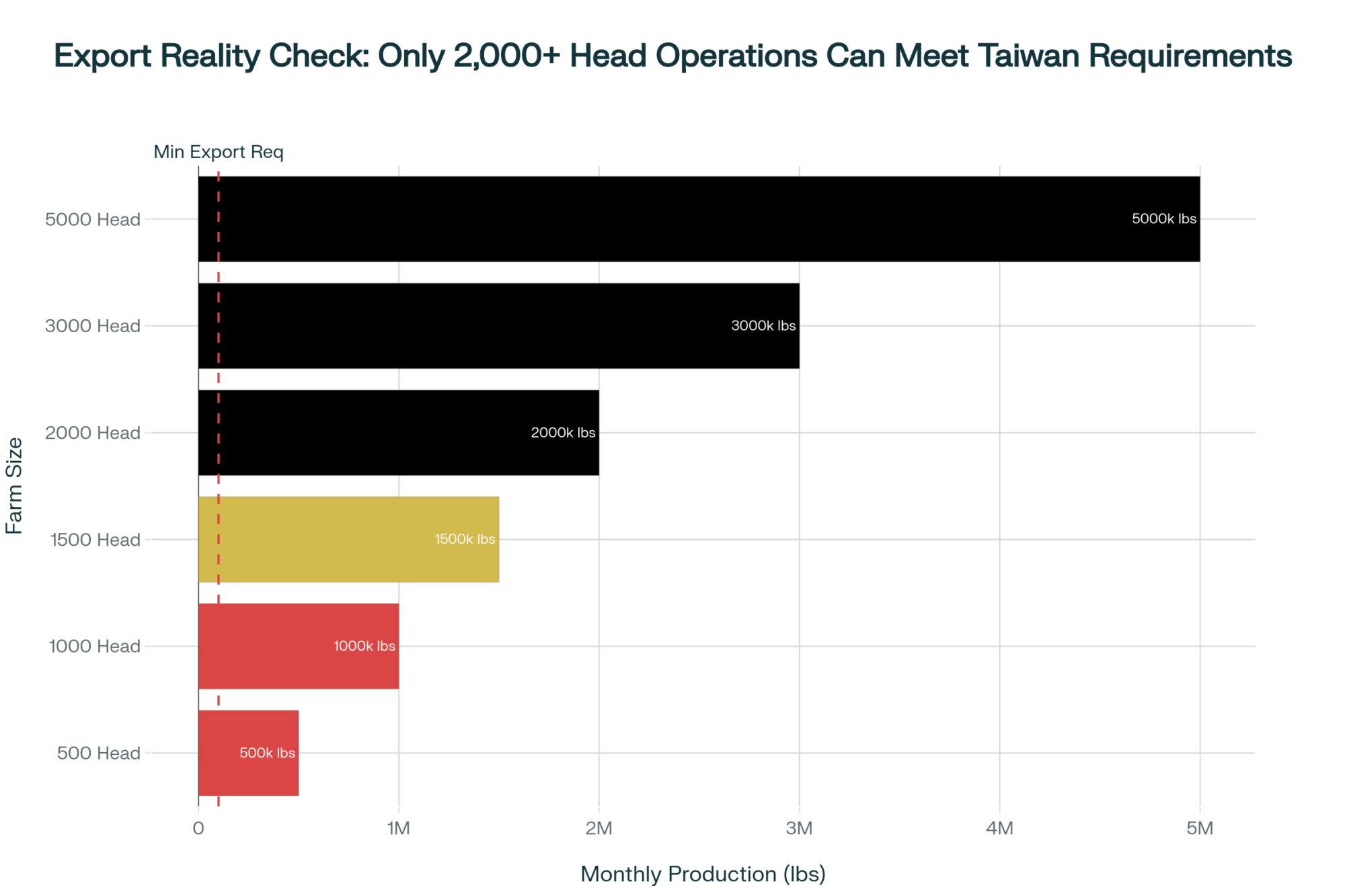
Volume commitments typically begin at a minimum of two truckloads per month. That’s roughly 100,000 pounds, give or take. For perspective, if you’re running 500 head that produce around 12 million pounds annually, you’re generating about one truckload per month. See where this is going?

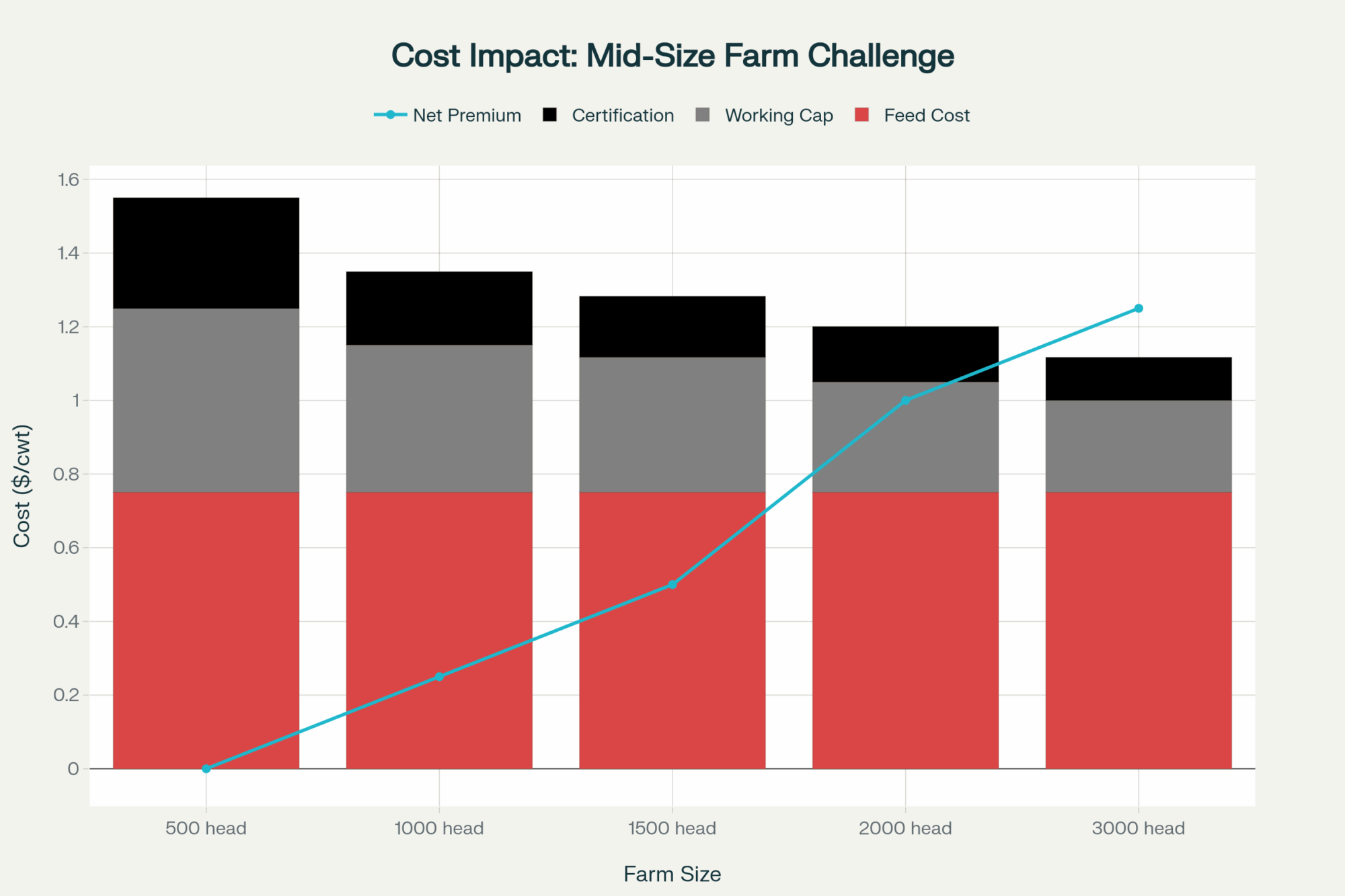
Why does this matter? Fixed costs for export certification, enhanced testing protocols, and documentation systems need to be spread across your total volume. A 2,000-head operation can absorb these costs much more efficiently. Basic math, but the impact on your bottom line is profound.

Then there’s the component specifications. Export buyers consistently want butterfat above 4.2% and protein exceeding 3.3%. Jersey herds naturally tend to hit these levels more easily—that’s just breed characteristics at work. Holstein operations often require significant ration adjustments or long-term genetic selection strategies. And changing your herd’s component profile… that’s not something that happens overnight.

New Zealand’s Built-In Advantages

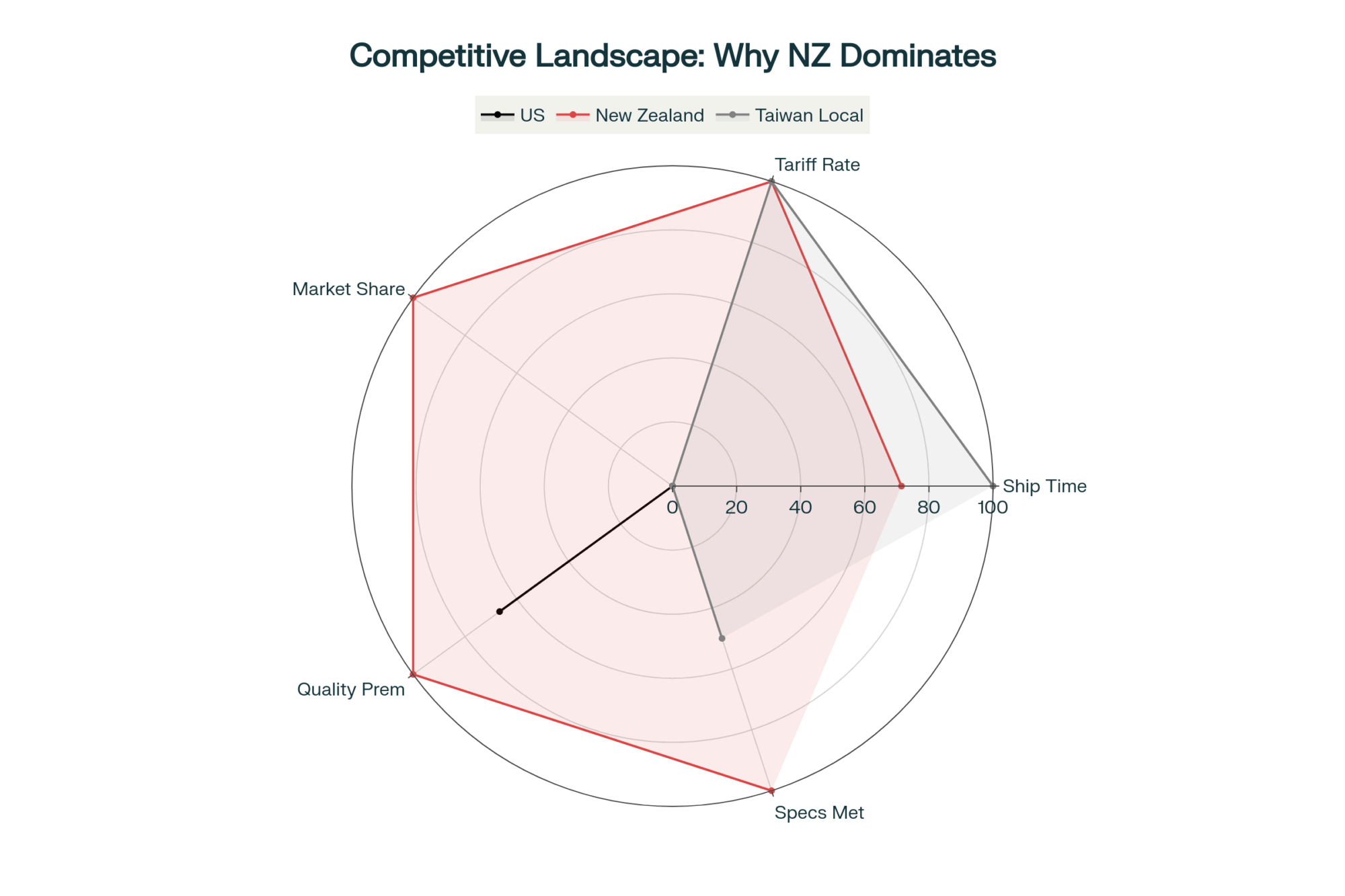
Here’s something that really shifts the competitive landscape: New Zealand achieved complete tariff elimination with Taiwan through their Economic Cooperation Agreement. Meanwhile, we’re still facing duties ranging from 15% to 20%, depending on the item being shipped. That’s documented in Taiwan’s customs schedules and various trade analyses.

Think about what this means practically. New Zealand can deliver to Taiwan in under a week from their ports. From our West Coast? We’re looking at a minimum of three to four weeks. When you combine zero tariffs with shorter shipping times and lower freight costs, their delivered price advantage becomes significant.

Trade data shows New Zealand already captures the largest share of Taiwan’s dairy imports, and with these structural advantages locked in through trade agreements, that position seems secure. Though U.S. dairy often commands quality premiums that can partially offset some disadvantages, particularly for specialized products where our consistency really shines.

Cash Flow and Operational Realities

One aspect that is not discussed enough is the impact of exports on working capital. Domestic milk payments typically arrive in your account within two to three weeks. But export contracts? Industry-standard terms typically run 60 to 90 days, sometimes longer.

For operations already managing tight cash flow—and let’s be honest, that describes many of us these days—that extended payment period creates real challenges. You’re still paying feed bills monthly, covering payroll every two weeks, but waiting two to three months for that milk check. The premium might look good on paper, but cash flow is what keeps the lights on.

Export-qualified milk typically receives priority scheduling for pickup to ensure that quality specifications are maintained. Makes perfect sense from a logistics standpoint, right? But farms not participating in export programs might see their pickup windows shift to less optimal times. Your milk sits in the tank longer, potentially affecting domestic quality premiums. Small things add up.

Community and Consolidation Impacts

What university extension programs have documented—and what many of us are seeing firsthand—is how consolidation patterns affect entire rural economies. Each mid-sized dairy operation supports a whole network of local businesses, including veterinary practices, feed suppliers, equipment dealers, local banks, and schools.

When smaller operations exit and their production is absorbed by larger farms (often located in different areas), the economic activity shifts accordingly. The local vet might lose enough business to cut back hours. The equipment dealer might close their satellite location. School enrollment drops. These ripple effects are real and lasting.

This isn’t an argument against efficiency—we all need to stay competitive. However, it’s worth understanding these broader impacts as we consider how export opportunities might accelerate existing trends.

Alternative Strategies for Premium Capture

Not every premium opportunity requires access to export markets. What’s encouraging is seeing different approaches work across various regions.

Institutional buyers—such as hospitals, schools, and corporate food service operations—have increasingly paid premiums for locally sourced dairy products. These arrangements often involve simpler logistics and much faster payment terms than export programs. When you factor in reduced complexity and faster cash flow, the net return can be comparable or even better.

Value-added production continues to show promise as well. Small-scale processing—whether it’s farmstead cheese, yogurt, or bottled milk—can capture retail premiums that rival export opportunities. Yes, it requires learning new skills and developing marketing channels. But you maintain control over your product and pricing in ways commodity markets never allow.

Producer collaborations are gaining traction, where multiple farms pool resources to meet export volume requirements while sharing certification costs. When economics get divided among several operations, they become more manageable—though it requires significant coordination and trust among participants.

Examining operations in Texas and Idaho, where large-scale dairies already predominate, we’re seeing interesting hybrid approaches. Some are partnering with smaller neighbors to aggregate volume while maintaining individual farm identity for certain premium markets. It’s a model worth watching.

The Cooperative Perspective—And Your Role in It

You know, cooperatives face genuine challenges here. They need to stay competitive in global markets while serving members ranging from 50 to 5,000 cows. Export program development represents one path toward accessing growing markets and potentially improving returns for all members.

Cooperative governance increasingly reflects the perspectives of larger operations. Not through conspiracy—it’s a practical reality. Larger farms typically have more resources to participate in leadership, attend meetings, and serve on committees. That naturally influences how programs get structured and priorities get set.

However, here’s the thing: if you’re not satisfied with how your cooperative is managing export opportunities or any other programs, sitting on the sidelines won’t make a difference. When’s the last time you attended your co-op’s annual meeting? Reviewed the board election slate? Actually read those governance proposals?

The question we should be asking our cooperatives: Can you develop tiered programs that recognize different member capabilities? Some co-ops are already experimenting with this—offering different service levels and cost structures based on volume and participation. If your cooperative isn’t exploring these options, bring it up at the next member meeting. Get it on the board’s agenda. Find other members who share your concerns and present a unified voice.

Your cooperative is only as responsive as its members are engaged. If export programs feel designed for operations three times your size, that’s feedback your board needs to hear—repeatedly and from multiple members.

Making the Right Decision for Your Operation

So, where does all this leave us with the Taiwan opportunity? The market is real, the demand is growing, and for operations with appropriate capabilities, the returns could be meaningful.

If you’re running a business with over 2,000 employees and strong component genetics, along with solid banking relationships, these export programs may align well with your business model. The premiums can justify the investment, and accessing growing Asian markets provides important diversification.

However, if you’re managing a mid-sized operation—particularly one already facing margin pressure—the requirements create hurdles that may be difficult to overcome profitably. And that’s okay. Not every opportunity needs to be your opportunity.

What seems to be working for many mid-size operations is focusing on regional markets. Building relationships with local institutions. Exploring value-added possibilities. Finding niche markets that value specific attributes—whether that’s grass-fed, local, family farm, or sustainable practices. These strategies might not generate headlines, but they’re delivering solid returns.

Looking Ahead

This Taiwan MOU illuminates broader dynamics in today’s dairy industry. Opportunities are increasingly differentiated by capability and resources, and understanding where your operation fits—along with what alternatives exist—is becoming crucial for long-term success.

Recent volatility has taught us that resilience comes from matching strategy to capabilities. Large operations might find their advantage in export markets and global supply chains. Mid-size farms often succeed through regional focus and differentiation. Smaller operations increasingly thrive through direct marketing and value-added strategies.

The most successful producers share common traits. They honestly assess their strengths and limitations. They understand market requirements thoroughly. They choose strategies aligned with their operational realities rather than chasing every opportunity that comes along.

As we head into another year of uncertainty, with milk prices volatile and input costs unpredictable, these strategic choices matter more than ever. The Taiwan opportunity offers a valuable perspective for examining our individual positions and options.

What’s working in your region? Because ultimately, that’s what makes our industry strong—sharing knowledge, learning from each other’s experiences, and finding paths forward that work for our individual operations while strengthening the broader dairy community. The Taiwan MOU is just one piece of a much larger puzzle we’re all working to solve together.

Key Takeaways:

  • Component and cash flow impacts: Achieving 4.2% butterfat and 3.3% protein specifications often requires feed cost increases of $0.50-1.00/cwt, while 60-90 day export payment terms versus 15-20 day domestic payments can strain working capital by $40,000-60,000 for mid-size operations
  • Regional alternatives delivering results: Direct institutional sales to hospitals and schools are capturing $0.50-1.00/cwt premiums with simpler logistics, while producer collaborations pooling volume among 6-8 farms are successfully accessing export premiums through shared certification costs
  • Cooperative engagement opportunity: Members should actively push boards to develop tiered export programs, recognizing different scales—attend meetings, join committees, and build coalitions, because governance increasingly reflects large-farm perspectives unless smaller operations organize
  • Strategic decision framework: Match your operation’s strengths to appropriate markets: 2,000+ head farms can justify export infrastructure, 500-1,000 head operations often maximize returns through regional differentiation, while smaller dairies thrive with direct marketing and value-added strategies

Complete references and supporting documentation are available upon request by contacting the editorial team at editor@thebullvine.com.

Learn More:

Join the Revolution!

Join over 30,000 successful dairy professionals who rely on Bullvine Weekly for their competitive edge. Delivered directly to your inbox each week, our exclusive industry insights help you make smarter decisions while saving precious hours every week. Never miss critical updates on milk production trends, breakthrough technologies, and profit-boosting strategies that top producers are already implementing. Subscribe now to transform your dairy operation’s efficiency and profitability—your future success is just one click away.

NewsSubscribe
First
Last
Consent

US Dairy Market Faces Volatility: Cheese Prices Rise, Butter Dips, and USDA Reforms Loom

Manage the changing US dairy market: cheese prices go up, butter drops, and USDA rule changes are coming. How will these affect your dairy farming plans?

Summary:

The US dairy market is facing ups and downs this week. Cheese prices are bouncing around due to strong exports and new factories, while butter prices have dropped because of too much cream. Whey and nonfat dry milk prices are stable. The USDA plans changes to milk pricing starting June 1, 2025, which might lower minimum pay prices. Meanwhile, a disease outbreak in Germany threatens European dairy, and rising corn and soybean costs make feed more expensive for farmers. Farmers might need to find new feed options or change their farm practices to save money.

Key Takeaways:

  • The US dairy market is experiencing significant volatility, driven by mixed trends across various dairy products.
  • Strong exports and reduced stocks support cheese prices, but potential trade wars, a strong dollar, and increased production from new facilities can cause uncertainty.
  • Whey and nonfat dry milk prices maintain stability amidst tight milk supplies, with whey supported by protein demand.
  • Butter prices have declined sharply due to an oversupply of cream, despite sustained high demand in the domestic market.
  • Futures markets show a decrease in Class IV prices and an increase in Class III prices, reflecting shifts in market demand and USDA reforms.
  • The USDA is implementing significant reforms in federal milk marketing orders, which will affect formula prices and potentially decrease minimum pay prices starting in June 2025.
  • The foot and mouth disease outbreak in Germany poses economic challenges. It is projected to cost €1 billion to agriculture and impact European dairy exports.
  • Rising grain prices, particularly corn and soybeans, reflect smaller crop outputs, influencing feed costs and posing additional challenges to US dairy producers.

The US dairy market is going through many changes. Cheese prices are rising due to strong exports, but new factories add uncertainty. Butter prices are dropping because there’s too much cream. Whey and nonfat dry milk prices are stable, showing mixed market signals. Possible trade wars and a strong US dollar add to the unpredictability. Upcoming USDA changes might affect how farmers get paid. Dairy farmers need to adapt quickly to handle these challenges and opportunities. 

ProductPrice Change (¢)Current PriceMarket Trend
Cheddar Blocks+7$1.89/lbRising
Whey-0.2573.75¢/lbStable
Nonfat Dry Milk (NDM)+0.75$1.3725/lbStable
Butter-7$2.53/lbFalling
Class IV Futures (Feb-Apr)-45$20.60/cwtDeclining
Class III Futures (May)+27$19.58/cwtRising

Cheese Market Analysis: Navigating Uncertainty Amidst Expanding Production Capacities 

The cheese market is facing uncertainty with several factors at play. Potential trade wars could change export paths and prices. A strong US dollar makes it harder to compete abroad, which could hurt exports. New cheese plants, including ones in Kansas and Lubbock, Texas, add to the mix. These plants could boost production but lead to market saturation if demand does not rise. However, strong exports and lower US cheese stocks have helped keep prices high, with CME spot Cheddar blocks recently closing at $1.89 per pound. This suggests good demand and a balance between supply and market needs. The future of the cheese market depends on growth opportunities and risks from expanding production amid economic changes. Policymakers and economists will play significant roles in shaping the market’s future. 

Understanding Market Movements: Stability in Whey, Rebound of Nonfat Dry Milk, and Plummeting Butter Prices

Whey prices are stable at 73.75ȼ, thanks to steady protein demand. People are focused on healthy eating, boosting the need for protein products like whey. This has helped keep whey prices steady even as the more considerable dairy market changes. Meanwhile, nonfat dry milk (NDM) prices have increased by 0.75ȼ to $1.3725 due to a tight milk supply. This limited supply increases demand, leading to higher prices. The market shows how supply and demand affect prices. For butter, prices have dropped by 7ȼ, reaching a one-month low at $2.53 per pound. According to the latest report, this drop happens because there’s too much cream in the market, and dairies are working at full speed. The ample supply of cream is pushing down butter prices despite high butter consumption of 241 million pounds in November 2024, a notable increase. Producers need to carefully manage the cream surplus to keep butter prices steady in the future. 

Futures and Pricing Trends: Unpacking the Dynamics Behind Class IV and Class III Price Movements

The futures and pricing trends for Class IV and Class III futures contracts are changing due to several important factors. This week, Class IV contracts for February through April dropped by 45 cents to about $20.60 per cwt. This drop is primarily because of too much cream, which has lowered butter prices and affected future contracts. 

On the other hand, May Class III futures went up by 27 cents to $19.58. This rise is due to expected changes from the USDA’s milk pricing reforms, which may make milk more expensive. These changes include new pricing formulas and higher make allowances recognized with better milk components. However, most other Class III contracts fell a bit. 

The differences between Class IV and Class III futures show that the dairy market is complex, with changes in demand, supply chain, and government rules. We might see more changes as new policies are implemented and market conditions shift. Because of these changes, the market will continue adjusting prices, revealing the broader trends in the dairy market. Stakeholders should be ready for ongoing fluctuations as these dynamics continue to develop. 

Anticipated USDA Reforms: Transforming the Federal Milk Marketing Framework from June 2025

The USDA is planning significant changes to milk pricing nationwide. Four of these changes will occur starting June 1, 2025, and they’re expected to lower the minimum pay prices by about 30¢ per cwt. Another significant change will occur on December 1, 2025, when the rules for pricing skim milk components will be updated.

For context, the 2025 all-milk price is projected to rise to $23.05 per cwt, compared to a downward adjustment of $22.60 per cwt in 2024. The Progressive Dairy website updates milk prices, reflecting how these reforms might influence higher milk prices. 

Adjustments in the Class I differential could benefit the Southeast, which means areas without enough dairy supply might see better pay prices, encouraging more milk production.

Dairy farmers need to consider how these changes will affect their farms. They may need to improve efficiency and maximize higher recognition for components to keep making money despite lower baseline pay prices. Notably, the November 2024 margin forecast stood at $14.65 per cwt, with anticipated drops in milk prices and feed costs suggesting that higher feed costs could outweigh the gains from improved milk prices. How well dairy farmers adapt to these changes will impact their success in the new market environment. 

Global Health Crisis: Dissecting the Recent Foot and Mouth Disease Outbreak in Germany and Its Far-Reaching Implications for the Dairy Industry 

The recent foot-and-mouth disease (FMD) outbreak in Brandenburg, Germany, is causing much concern in Europe’s dairy industry. Over 14 infected water buffalo have been culled, and movement and exports from this area are now restricted. Germany won’t be able to issue the necessary veterinary certificates for 90 days, possibly costing the agriculture sector around €1 billion. 

This issue is not just a German problem. Countries like the NetherlandsFrance, and Poland are improving their livestock tracking efforts. When FMD broke out in the past, it led to cautious trading, so European importers may be more careful until the situation is resolved. 

The European FMD crisis presents both challenges and opportunities for US dairy farmers. While European imports might face disruptions, US producers could benefit if European dairy output decreases, leading to a tighter global supply. According to the latest WASDE Milk Production report, US butter and cheese exports rose due to competitive pricing in 2024 and 2025, and they could increase further as they meet international demands wary of European dairy safety. 

In the long term, this highlights the importance of intense disease monitoring and planning in the global dairy industry. US dairy farmers should monitor these events and prepare for regulation changes and trading patterns. Maintaining herd health and adjusting market strategies will be crucial to remaining stable and maximizing opportunities during global uncertainties.

Feed Markets Overview: Analyzing the Surge in Corn and Soybean Prices and Their Implications for Dairy Farming Economics

The grain markets have changed, with corn and soybeans increasing in price. This week, March corn futures increased by 13ȼ, ending at $4.85 per bushel. March soybean futures also rose by 10ȼ, reaching $10.35. The increase in corn prices is due to a smaller crop size, which reduces supply and raises prices. The soybean market is facing similar supply issues and strong demand.  

Higher grain prices mean more expensive animal feed costs for dairy farmers, which could lower their profits. Farmers might need to find other feed options, change herd sizes, or use better farm management practices to control expenses. Given the projected 2025 all-milk price increase to $23.05 per cwt, balancing feed costs becomes even more critical. 

In these times, dairy farmers should stay alert and flexible, monitoring market trends and adjusting their strategies to handle rising costs. A recent report indicates that higher feed costs may outweigh gains from more substantial milk prices, underscoring the need for strategic planning.

Evolving Dynamics in Milk Production and Consumer Preferences: An Analysis of USDA Data and Market Shifts

Recent data from the USDA shows that U.S. milk production is rising, with the 24 major dairy states seeing a 1.5% increase compared to last year. This recovery highlights better farming methods and technology in the industry. However, the dairy market is facing changes in consumer choices. More people are now choosing plant-based options like almond, soy, and oat milk because they care about health and the environment. This trend is affecting traditional dairy producers. They need to adapt and may consider offering more plant-based or hybrid products. As consumer interests change, the dairy industry must innovate to keep up and remain important in the market.

The Bottom Line

The dairy market has experienced ups and downs. Cheese prices have changed due to intense export demands and new production facilities. At the same time, butter prices have decreased because of too much supply. The USDA is changing how milk prices are set, and a disease outbreak in Germany could further affect the market. Dairy farmers need to stay flexible and ready to adapt to these changes. 

Monitoring market signals and adjusting production or sales strategies can help. Farmers might consider diversifying their products to avoid depending too much on one thing, like butter or cheese. It’s also essential to watch feed markets, as the rising prices of corn and soybeans could affect costs. Using innovative feed management practices and looking for alternative sources can help maintain profits. 

While these challenges may seem complicated, being proactive and informed will help dairy farmers get through them and succeed in these changing market conditions. 

Learn more:

Join the Revolution!

Bullvine Daily is your essential e-zine for staying ahead in the dairy industry. With over 30,000 subscribers, we bring you the week’s top news, helping you manage tasks efficiently. Stay informed about milk production, tech adoption, and more, so you can concentrate on your dairy operations. 

NewsSubscribe
First
Last
Consent

HPAI Scare in California Dairy Farms

Could an HPAI outbreak in California spike milk prices? Be ready for market changes. Learn more now.

Summary: The possibility of highly pathogenic avian influenza (HPAI) striking California’s dairy farms has farmers on edge. Recent spikes in milk and dairy product prices, largely fueled by whispers of HPAI, indicate potentially severe implications for the industry. If confirmed, the virus could worsen the already strained milk production, impacting national cheese and milk powder outputs. California, a key player in the U.S. dairy industry, could see significant disruptions. While the California Department of Food and Agriculture (CDFA) conducts investigations and assures that pasteurization ensures milk safety for consumers, the potential economic impact of HPAI remains a critical concern. Preventative measures include banning the movement of possibly infected dairy animals into the state and collaborating with health professionals to monitor and manage the virus.

  • HPAI potential in California dairy farms fuels price spikes in milk and dairy products.
  • Virus confirmation might worsen milk production and affect national cheese and milk powder supplies.
  • California’s significant role in the U.S. dairy industry could lead to widespread disruptions.
  • CDFA assures pasteurization guarantees consumer safety for milk despite virus concerns.
  • Economic impacts are a major concern if HPAI is confirmed in California dairies.
  • Preventative measures include halting movement of possibly infected dairy animals and enhanced virus monitoring.
highly pathogenic avian influenza, HPAI, California, US dairy market, dairy cattle, coughing, nasal discharge, swelling joints, decreased milk production, virus dissemination, infected animals, contaminated equipment, milk supply, animal loss, containment, treatment, milk and dairy product prices, economic pressure, dairy producers, ill cows, California Department of Food and Agriculture, CDFA, Central Valley, USDA, preventative measures, movement ban, virus evolution, public health initiatives, milk production, nonfat dry milk, NDM, butter production, supply deficit, price increase, reduced profits, market trends, allegations fallout, milk safety concerns, pasteurization, dairy products

With the threat of highly pathogenic avian influenza (HPAI) looming over California, the dairy industry is on high alert. Reports of a significant increase in ill cows among some dairy farmers have raised concerns about the potential spread of this dangerous virus. While HPAI has not been confirmed in California, the mere suspicion has already led to a surge in milk and dairy product prices. The possibility of a large-scale epidemic in California’s dairy sector could disrupt the entire U.S. dairy market, underlining the gravity of the situation.

Highly Pathogenic Avian Influenza (HPAI) is a severe strain of avian flu that may potentially infect dairy cattle. Symptoms include coughing, nasal discharge, swelling joints, and decreased milk production, which may potentially be fatal. The virus is disseminated by contact with infected animals, their fluids, and contaminated equipment. An HPAI epidemic may lead to decreased milk supply, animal loss, and higher expenditures for containment and treatment. It can also raise milk and dairy product prices, causing economic pressure for producers.

California Dairy Farmers on High Alert: Is HPAI the Culprit Behind Sick Cows? 

California’s dairy producers are on high alert after recent reports of an unprecedented increase of ill cows in their herds. These findings have sparked concern, with many believing that highly pathogenic avian influenza (HPAI) is at play. The California Department of Food and Agriculture (CDFA) promptly responded.

The CDFA is heavily engaged in examining these instances. They’ve begun analyzing samples from three dairy farms in the Central Valley, a region critical to the state’s milk supply. These samples were forwarded to the California Animal Health and Food Safety (CAHFS) lab for preliminary examination. If the tests are positive, the results will be transmitted to the USDA for confirmation.

The CDFA’s response to the potential threat of HPAI goes beyond testing. They have proactively engaged with private veterinarians, local farmers, ranchers, and state and federal partners to develop comprehensive reaction strategies and maintain active monitoring of livestock and poultry across California. If HPAI is confirmed, the CDFA is prepared to implement swift reaction measures, similar to those used in previous outbreaks, to minimize the impact on the dairy industry.

Preventative measures are also in place. The CDFA has prohibited the entry of potentially infected dairy animals into the state. Furthermore, they collaborate with health professionals to gain a better understanding of the virus’s evolution and support public health initiatives. This proactive and coordinated strategy underscores their commitment to animal welfare and public safety, providing reassurance to the audience.

Market Jitters: Pricing Surge Amidst HPAI Fears 

The mere mention of HPAI possibly infiltrating California has sent shockwaves through the dairy industry. But how are these speculations and the likely existence of HPAI influencing milk prices? Let’s dig in.

Fear and uncertainty have resulted in a substantial increase in milk and dairy product costs. This isn’t just a slight change; prices have risen to unprecedented heights as the market prepares for potential disruptions. Spot Cheddar prices rose to their highest levels in 2024 only this week, prompted by concerns over HPAI’s influence on milk supply networks and production quantities.

Let’s delve into the numbers. Current market statistics show that the price of nonfat dry milk (NDM) has reached record highs, driven by a reduction in milk supply and increased market fear. This significant increase in commodity prices, not seen in months, underscores the dairy sector’s deep-seated fear of a potential epidemic in California, the largest milk producer in the country.

Furthermore, the stakes are high since California produces 18% of the nation’s milk and 42% of its NDM. The Golden State also leads Class IV output, accounting for 32% of U.S. butter production and 42% of national nonfat dry milk (NDM) production. These data demonstrate why any possible health catastrophe in California’s dairy industry has far-reaching consequences for the national market. Disruptions in production might lead to a supply deficit, increasing prices and reducing profits for dairy processors and farmers.

The rumor of HPAI has sparked concern about the dairy industry’s vulnerability to health issues, even if it has not been substantiated. As we wait for more solid answers, the market remains tense, with prices reflecting this concern.

So, dairy producers monitor market trends and prepare for any swings. The fallout from these allegations is already being felt, and remaining informed is your most significant protection in navigating these unpredictable times.

Brace For Impact: What Confirmed HPAI Could Mean For California’s Dairy Industry 

So, what happens if HPAI is verified in California? You may be asking, “How bad could it get?” Well, the ramifications are tremendous.

  • Milk Production Disruption
    First and foremost, California is the nation’s leading dairy state. If HPAI spreads here, the effect on milk output might be huge. Fewer healthy cows equals less milk, which might spread to other critical dairy states with HPAI. Consider a domino effect in which productivity decreases across the board.
  • Ripple Effects on Supply Chains
    A decrease in milk production affects more than simply the raw milk supply. The strain affects the whole supply chain. HPAI has already impacted milk input at cheese manufacturers in Idaho and the Central Plains. If California’s milk production is jeopardized, cheese, butter, and milk powder companies around the country would suffer supply problems.
  • Dairy Product Availability Nationwide
    Less raw milk and disturbed supply networks result in lower dairy product availability. Customers may find fewer selections on grocery store shelves, and those that remain may be more expensive. Remember how spot Cheddar and nonfat dry milk (NDM) prices soared to 2024 highs? If California’s output plummets expect even greater hikes.

Although it is not a verified catastrophe, the potential consequences are catastrophic. HPAI on California dairy farms might result in interrupted production, stressed supply systems, and fewer dairy products countrywide. Stay informed, plan your operations, and hope for the best while preparing for all possible outcomes.

Concerned About Milk Safety Amidst HPAI Whispers? Rest Easy 

Concerned about the safety of milk and dairy products in light of HPAI whispers? You can rest assured. Pasteurization, a standard practice in dairy production, effectively eliminates the virus. This means that your milk, cheese, and other dairy favorites are safe to consume, providing you with a sense of security and confidence in your consumption choices.

But that is not all. The California Department of Food and Agriculture (CDFA) is wary. They are actively tracking and examining probable HPAI cases. The CDFA works with federal and local authorities, veterinarians, and farmers to manage and reduce outbreaks. Rapid response has been emphasized, ensuring that any positive instances are handled immediately, with samples provided to the USDA for final confirmation.

Rest assured that significant efforts are being implemented to safeguard the dairy sector and consumers.

Expert Voices: Shedding Light on HPAI and Your Dairy Herds 

According to Jeremy Luban, a molecular scientist at the University of Massachusetts, “We often see alerts regarding such viruses, but the overlap with dairy farms needs diligent attention.” This viewpoint might help you comprehend the possible hazards around your dairy cattle.

State Veterinarian Annette Jones tells farmers, “Our multi-agency partnership is critical. We have methods to deal with instances like HPAI efficiently, lowering the danger to animals.” Knowing this makes you feel more confident that state officials are on top of the situation.

Peg Coleman, a scientist who formerly worked for the U.S. federal government, raises an important question: “How reliable is the evidence linking avian influenza to food products?” This information may assuage consumer worries about dairy product safety during the epidemic.

The Economic Impact: What Could HPAI Cost You?

Let’s discuss money. If HPAI infects your herd, you will face significant costs. First, consider the expense of veterinarian treatment. Sick cows need extra vet visits, drugs, and sometimes even quarantines. That’s not inexpensive.

Then, think about productivity. Sick cows make less milk. Milk output will decrease, which will have a direct impact on your profits. That is income wasted daily; your herd must perform at full potential.

As if that weren’t enough, consider increasing feed costs. HPAI outbreaks may disrupt supply networks, leading to rising feed prices. Higher feed prices, coupled with reduced milk supply, might result in a financial double whammy.

According to Dairy Herd Management, outbreaks of HPAI in other states have shown how rapidly these expenses may accumulate. For example, the typical price per diseased cow might vary between $500 and $1,000. When you multiply that by the number of your herd, it becomes clear why monitoring is essential.

The financial dangers associated with HPAI are not merely hypothetical; they are real. Keeping an eye on your herd’s health and being proactive may help you save much money.

HPAI H5N1: A Growing Threat to U.S. Dairy Farms and Public Health

The emergence of highly pathogenic avian influenza (HPAI) H5N1 in dairy cattle has raised serious concerns. The first reported occurrence occurred on March 25, 2024, and the virus has since been detected in 192 dairy herds spanning 13 states, including Idaho, Michigan, and Ohio. Four uncommon human cases have also been connected to sick dairy cattle, emphasizing the possibility but low risk of mammal-to-human transfer [CDC].

The FDA and USDA are actively monitoring the issue, creating testing standards, and enforcing biosecurity measures such as heat treatment of milk to reduce hazards. These measures prevent future spread and safeguard public health and the dairy business [USDA APHIS].

Most afflicted states are dairy-producing centers, adding to the urgency. The virus’s presence in these locations might impair milk and cheese production, affecting costs and availability. Public health officials carefully monitor flu-like infections among people who deal closely with affected livestock  [FDA].

The Bottom Line

Dr. Annette Jones, the State Veterinarian, emphasizes the necessity and need of monitoring. “While the current risk to the general public remains low, dairy farmers must enhance biosecurity measures and collaborate closely with veterinarians to protect their herds,” the spokesperson said. Dr. Jones recommends remaining informed from credible sources and proactively addressing avian influenza issues in the dairy business.

The essential conclusion is clear: be educated, plan, and collaborate to protect your dairy business.

Learn more:

Send this to a friend