Archive for Royal Winter Fair

The Royal’s Empty Chair: Where Six Dreams Meet One Legacy

Six operations. Three generations. One empty chair. The 2025 Royal Winter Fair just became about more than banners.

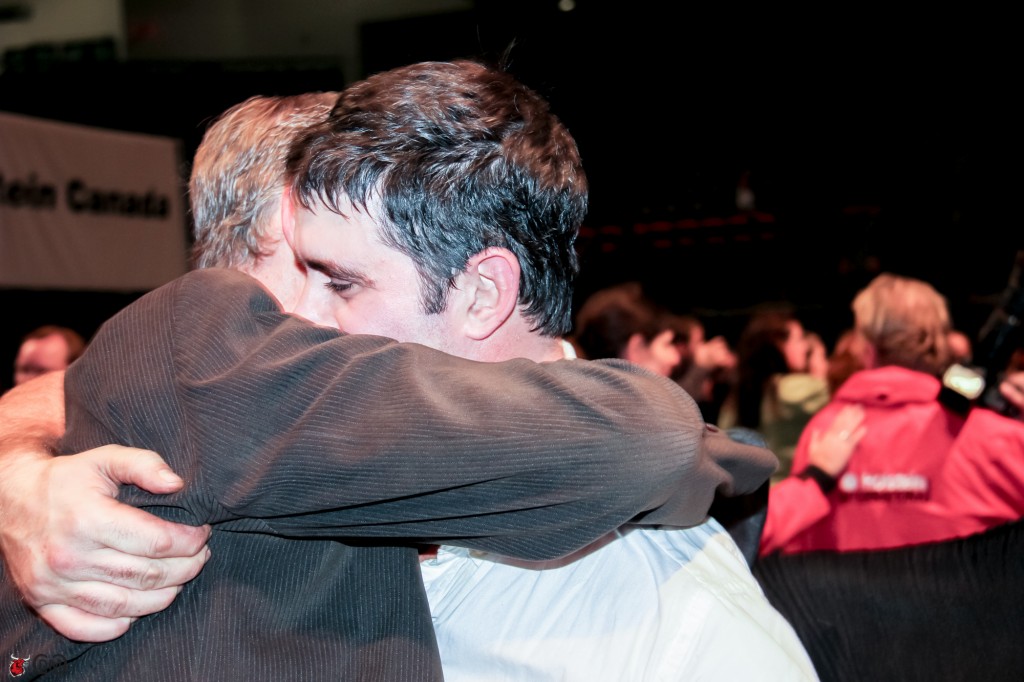
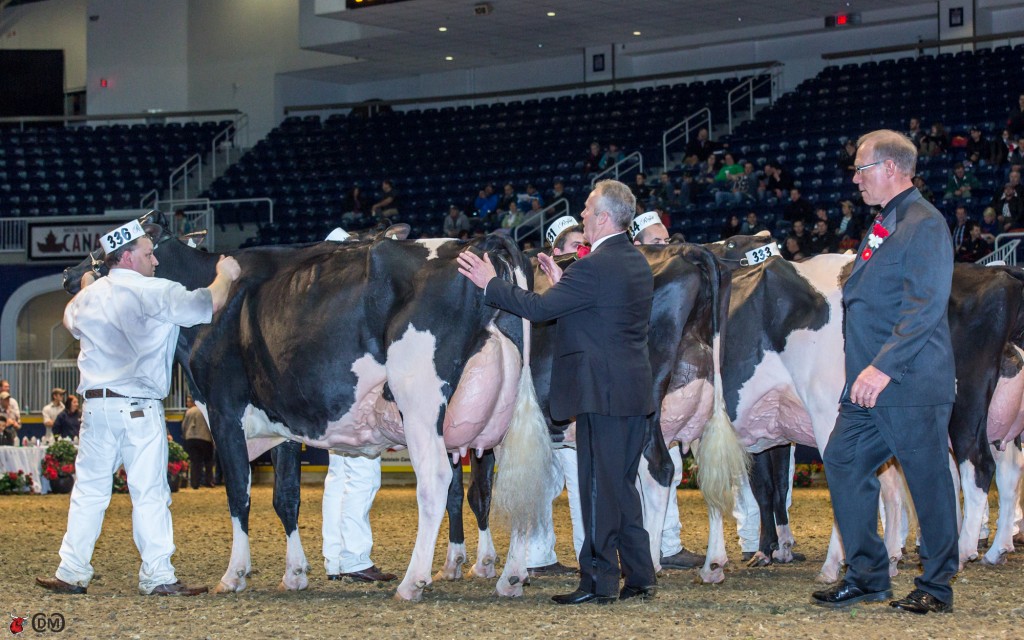
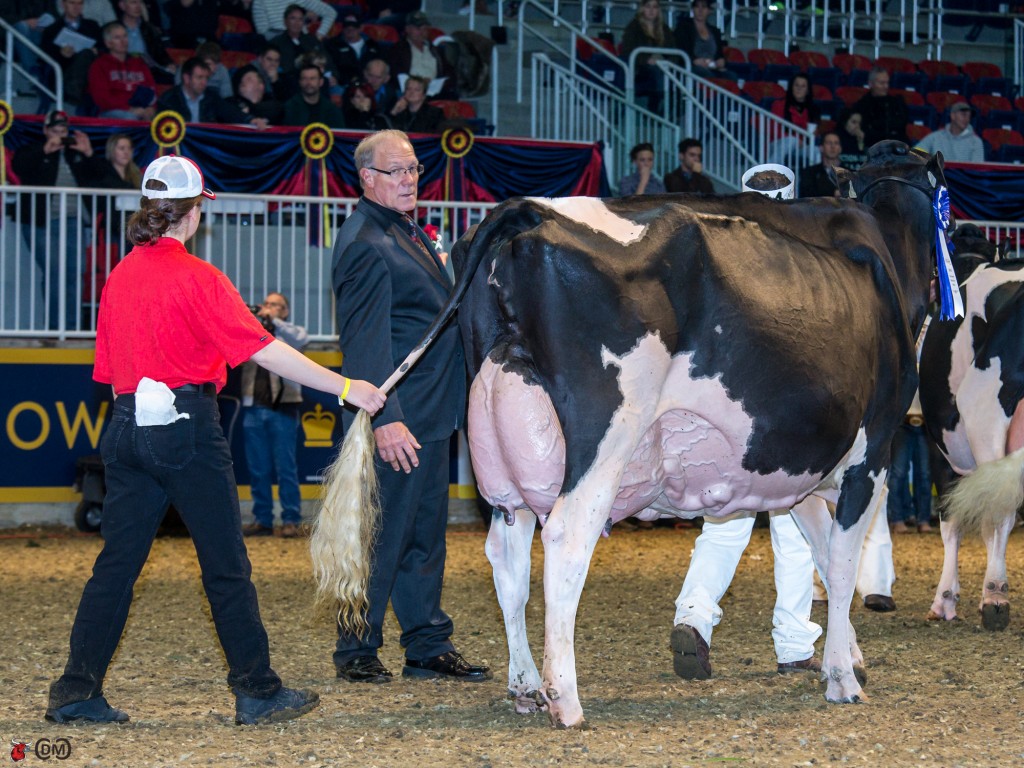
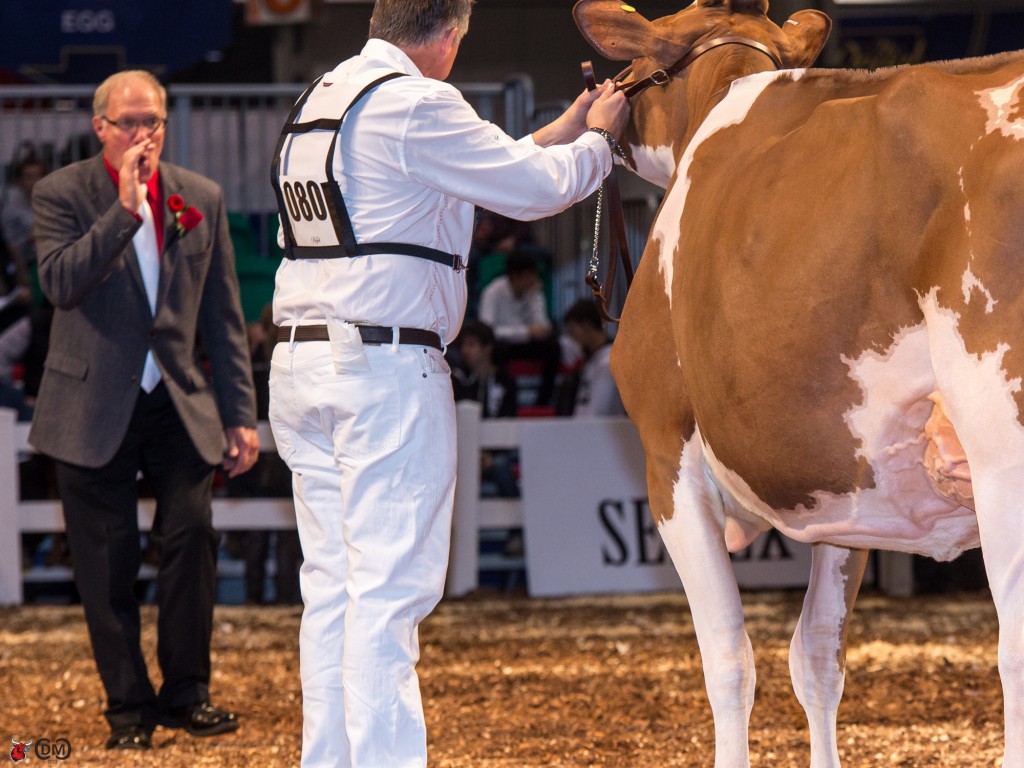
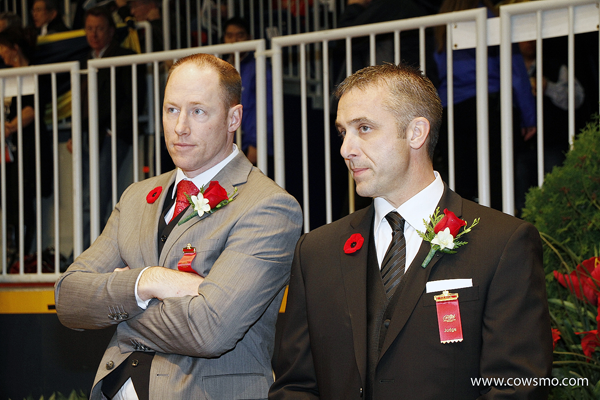
A ringside moment from the 2014 Royal: Paul Ekstein and Ari Ekstein. For decades, this was their post—sharing the focus, the details, and the passion that built Quality Holsteins. This November, Ari carries forward the 70-year legacy his father began.

Standing in the Quality Holsteins barn earlier this week, watching Ari Ekstein prepare for the 2025 Royal Winter Fair, I felt the weight of what wasn’t there. For over 70 years, Paul Ekstein attended The Royal Winter Fair. This November will be the first without him.

Ari doesn’t talk about it directly. But you can see it in how he runs his hand over the leather lead that’s been in the family for decades, the same one his father used. Paul passed away earlier this year at 91—that unbreakable soul who escaped Nazi-occupied Czechoslovakia as a boy and built one of Canada’s most respected breeding programs from absolutely nothing. Now it’s Ari carrying forward that vision, maintaining the 95% homebred genetics, those 200 Excellent cows they’ve bred together over the years. (Read more: From Czechoslovakia to Quality Holsteins: Paul Ekstein’s Unbreakable Legacy)

“He taught me that attention to every minor detail can lead to major success,” Ari mentioned quietly as he adjusted a show box that’s seen five decades of Royals.

One of the ‘fading prints’ from a 70-year legacy: Paul Ekstein (second from right) stands with fellow industry legends (L-R) Peter Heffering, Connie Heffering, and Bert Stewart, presenting the 1963 Royal Sale of Stars high-seller, Greenview Citation Nettie. It’s images like this, capturing decades of Royal triumphs, that his son Ari now carries forward.

What happened next changed my perspective on this entire show. Ari was sorting through old photographs for the collage we’re creating—decades of Royal Winter Fairs captured in fading prints and yellowed edges. Paul with young champions that would go on to become foundation cows. Moments of triumph caught mid-celebration. Quiet conversations between classes. Each image tells part of a story that spans 70 years. The kind of legacy you can’t download or buy. Just earn, year after year, Royal after Royal.

The Dreams That Drive Them Forward
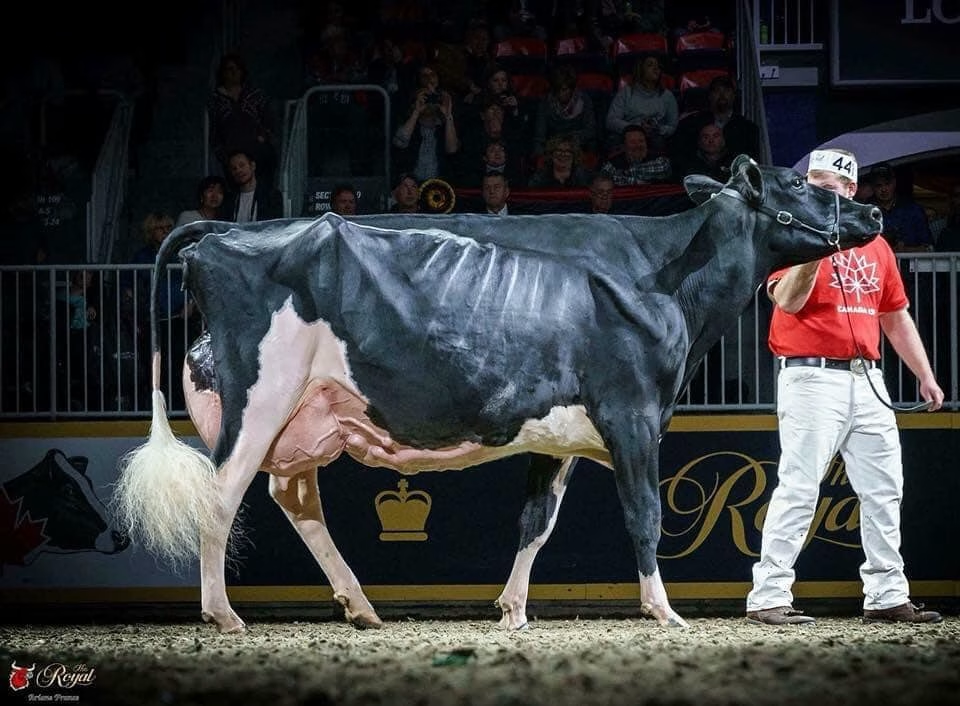
Knonaudale Jasmine EX-96 dazzles at the Royal Winter Fair, showcasing her exceptional type and presence as one of Kingsway Holsteins’ most iconic cows.
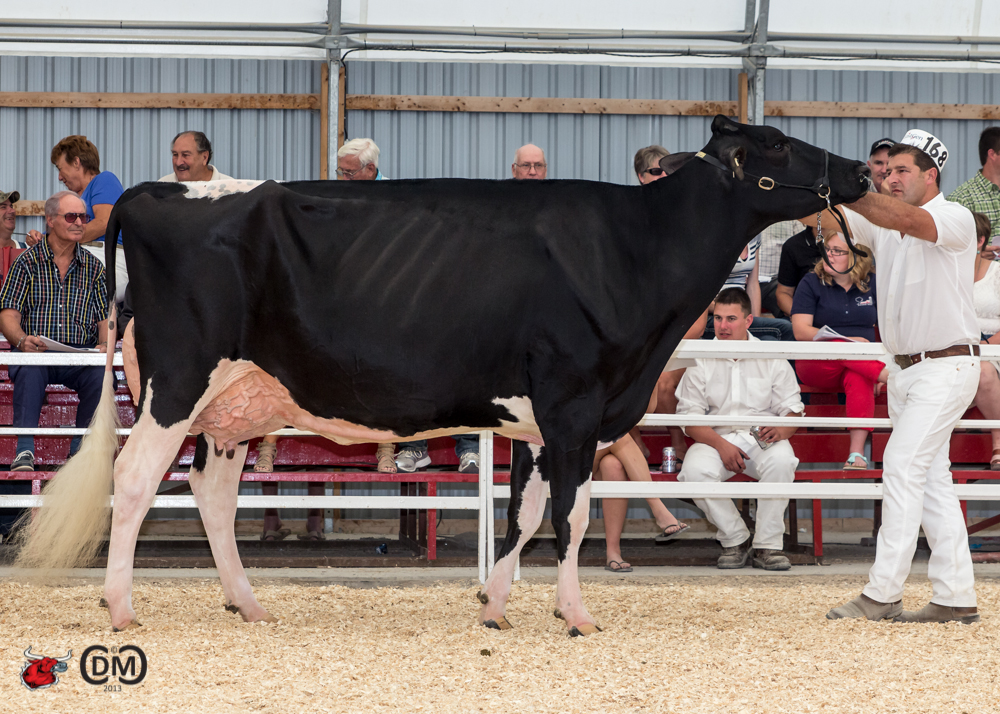
Kingsway’s iconic Knonaudale Jasmine (EX-96) on the Royal’s ring. Jasmine represents the world-class type and decades of work the McMillans have poured into chasing the one “empty space” on their wall—the Grand Champion banner.

Ethan, Morgon and Gord McMillan from Kingsway Holsteins are preparing for The Royal next week, carrying their own weight of expectation. In their barn, photos spanning four decades of Royal Winter Fairs cover the walls. Champions from years past. Near-misses that still sting. And somewhere, that one empty space—reserved for a Grand Champion banner that hasn’t come home yet.

Gord has been chasing this dream for longer than Ethan and Morgon’s been alive. The weight of that—inheriting someone else’s dream while building your own—stays with you.

What’s remarkable about their ranking as Canada’s number two breeder of all time for Excellent cows is their surprise when they learned about it. They had no idea. Kingsway markets a lot of heifers and cows every year—animals scoring excellent in other herds, adding to a total they never tracked. That kind of humility, that focus on the work rather than the recognition, tells you everything about who they are. (Read more: The Heart of Excellence: Getting to Know the Family Behind Kingsway Holsteins)

Their foundation cow, Kingsway Sanchez Arangatang, died earlier this year at nearly 15 after producing 18 Excellent daughters. Her genetics now thrive in robotic dairies in Saskatchewan, grazing operations in the UK, and show herds across North America. Her influence keeps spreading, even after she’s gone.
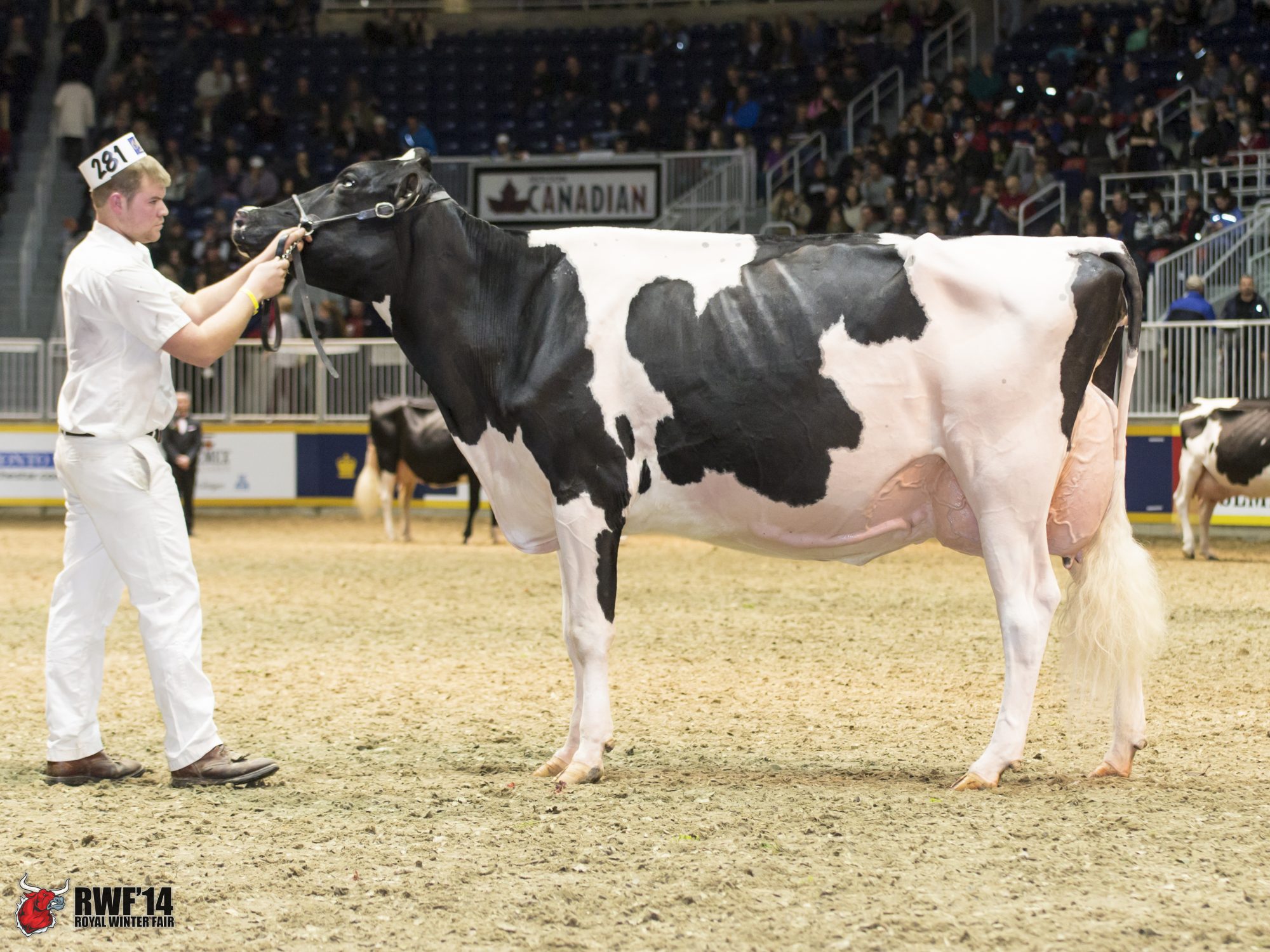
A moment that defined a legacy – Ethan McMillan with Kingsway Sanchez Arangatang at the 2014 Royal Winter Fair. This remarkable cow would produce 18 Excellent daughters, her genetics now thriving in robotic dairies in Saskatchewan, grazing operations in the UK, and show herds across North America. Though Arangatang passed this year, her granddaughters will enter the ring next Thursday, carrying forward a bloodline that changed Kingsway Holsteins forever.

As Arangatang’s granddaughters are prepped for next Thursday’s heifer show, there’s something profound happening. Both Kingsway and Quality are entering The Royal, carrying forward the work of those who can’t be there to see it. That changes everything about what winning means.

The Ferme Jacobs Legacy

The moment that proved their philosophy: Jacobs Windbrook Aimo gets the slap for Grand Champion at the 2018 Royal Winter Fair. This win, part of an unprecedented homebred Grand and Reserve sweep, was a thundering validation of the Jacobs family’s “cow families first” breeding wisdom.

Nobody expected what happened at the 2018 Royal Winter Fair.

Ferme Jacobs didn’t just win—they swept both Grand Champion with Jacobs Windbrook Aimo and Reserve Grand Champion with Jacobs Lauthority Loana. Both homebred, both extrodinary in there own ways. The first time any Canadian breeder had swept Grand and Reserve with homebred animals since 1969—a historic achievement that complements their record 11 Premier Breeder banners.(Read more: Ferme Jacobs – “Dreams without goals are just….dreams”)

Jacobs Windbrook Aimo: Grand Champion
Jacobs Lauthority Loana: Reserve Grand
Both homebred. NOT sisters. Two different cow families.
First time since 1969.

The moment that changed everything wasn’t the winning, though. It was what happened after. In an industry increasingly obsessed with genomic testing and data analytics, here was old-school proof that traditional breeding wisdom—cow families first, genomics last—still mattered. The Jacobs family refuses to use any bull that’s minus for milk. They never flush cows during show season, believing it compromises the natural bloom judges reward.

Teaching the next generation matters to them. Not just about cattle, but about character. How to win with grace. How to lose with dignity. How to keep going when neither happens.

Their preparations reveal something extraordinary—three generations working together, each with specific roles, nobody needing to be told what to do. This is knowledge passed hand to hand, season to season. The kind you feel in your bones after enough cold mornings and late nights.

Passion as a Business Model

Passion personified: Simon Lalande (left) with his sons and Dann Brady, celebrating Supreme Champion Blondin RD Unstopabull Maple Red at the 2022 Royal. For Ferme Blondin, the show ring isn’t just competition—it’s the engine that drives a thriving global business, proving that passion can be the ultimate competitive advantage.

Simon Lalande walks differently than other breeders. There’s an energy, an urgency that makes sense when you understand Ferme Blondin’s reality.

For Simon, the show ring isn’t just competition—it’s the engine that drives his entire operation. With cattle and embryo sales forming the core of his business model, every Royal appearance creates ripples that reach buyers worldwide. His Premier Exhibitor titles at major shows didn’t come from having the deepest pockets. They came from understanding that passion, properly channeled, becomes its own competitive advantage. (Read more: FERME BLONDIN “Passion with a Purpose Builds Success”)

“Success is built on three things,” Simon explained. “Passion, hard work, and perseverance. But passion comes first. Without that, the other two don’t matter.”

That same marriage of passion and business acumen defines Pierre Boulet, who has achieved something extraordinary—more EX-97 cows than anyone in the industry. EX-97 represents near perfection, and he’s done it repeatedly. Like Simon, Pierre has built his operation around cattle sales, understanding that the show ring creates market demand. That’s not luck. That’s a lifetime of recognizing excellence early and systematically developing it. (Read more: FERME PIERRE BOULET: First Comes Love Then Comes Genetics)

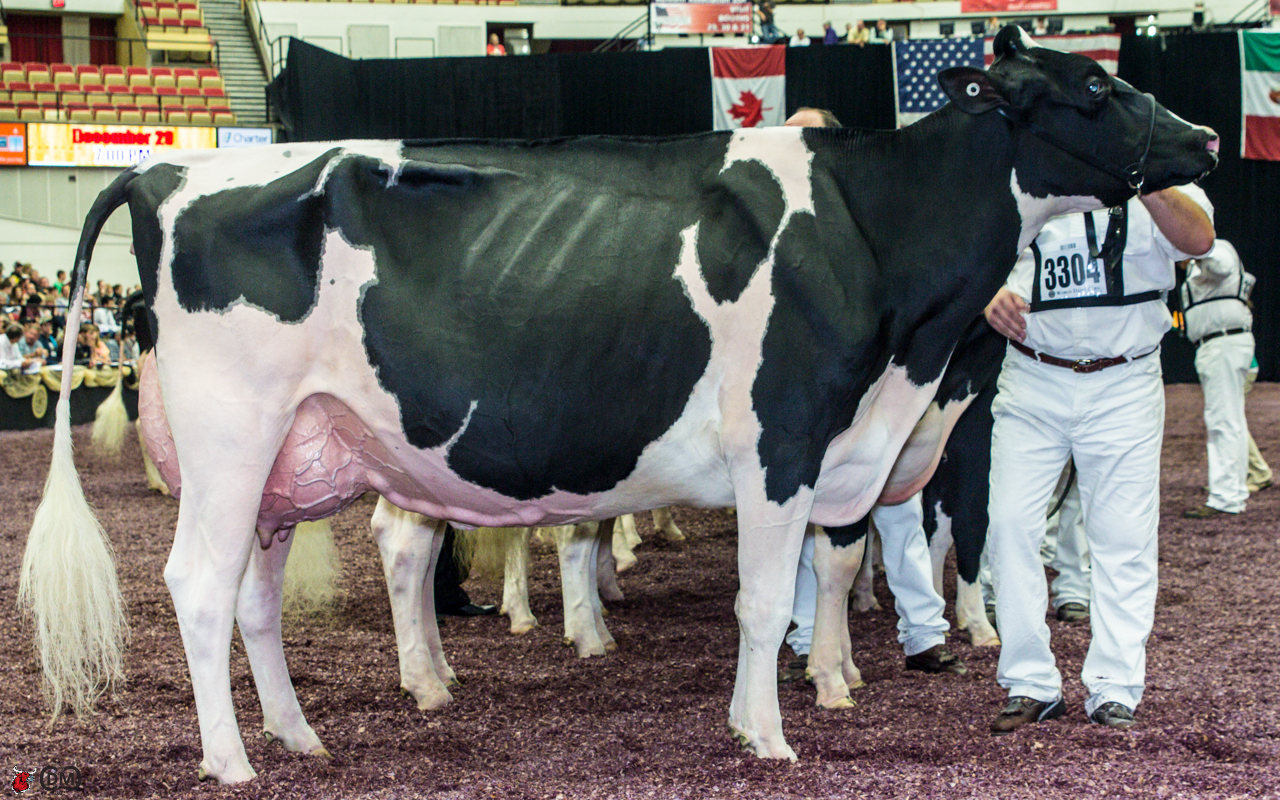
Pierre Boulet, who has achieved more EX-97 cows than anyone, at the halter of Loyalyn Goldwyn June, the 2015 Royal Grand Champion.

Both men have turned their eye for exceptional cattle into thriving businesses where passion and profit reinforce each other. These aren’t just breeding operations. They’re places where dreams take physical form, where excellence becomes tangible in the arch of a topline, the depth of a rib, the walk of a champion.

The Scale of Dreams

The numbers from Westcoast Holsteins sound impossible at first: operations spanning multiple farms across provinces, thousands of milking cows, thousands more young stock.

Excellence could easily get lost in those numbers. Instead, they’ve created systems that identify individual brilliance within an industrial scale. Their elite show prospects live in group housing specifically designed to maintain competitive appetites. It takes a team of dozens, each trained to spot that one-in-a-thousand spark that separates good from great. Even with thousands of animals, they understand that champions need individual attention.

Proof that the Westcoast Holsteins system works: Jacobs Gold Liann, their 2016 Royal Grand Champion. In an operation with thousands of cows, it takes a dedicated team to spot that “one-in-a-thousand spark” and develop it into a champion. This is systematic excellence at a scale that shouldn’t be possible.

Their past Royal successes prove the model works. What’s remarkable is imagining the logistics—the moment someone in that vast operation noticed one special heifer, pulled her out, and invested months of preparation. That is systematic excellence at a scale that shouldn’t be possible, yet somehow is.

The Moments That Define Everything

Right now, these operations are deep in final preparation. What started eight to twelve weeks ago with strategic feeding programs has evolved into something approaching devotion. As anyone who has aspired to success at The Royal, you know its a 24 hour a day, 365 days a year task.

Earlier this week, a young woman spent 45 minutes working on a single heifer’s topline. Not because anyone told her to, but because she could still see room for improvement. Her grandmother stood nearby, occasionally offering suggestions drawn from decades of fitting cattle. Three generations of knowledge concentrated in one moment of preparation.

At Quality Holsteins, this preparation carries extraordinary weight. These are the same routines Paul perfected over 70 years. Now Ari executes them with matching precision. “Dad always said superior care allows cows with great genetics to look amazing day in and day out,” Ari mentioned while checking water buckets for the third time.

Paul Ekstein in the ring at the Royal—a single moment representing over 70 years of “showing up.” This is the legacy Ari’s tribute poster will honor: the boy who fled Czechoslovakia, built excellence from nothing, and inspired generations with his relentless dedication.

But preparation goes beyond the physical. These families have spent months building trust with their animals. Loading them on practice trailer rides. Inviting visitors to desensitize them to crowds. Teaching them that the chaos of the show ring is just another day with people who care about them.

Last year at The Royal, a young handler sat quietly in the straw beside her heifer, just being present. No agenda. No training. Just companionship. She reminded me of the kids who’ll be competing in the TD 4-H Classic starting Monday, where the next generation learns these same lessons. Having competed in that event myself for over a decade, when it was the Scotiabank Hays Classic, I know firsthand what those quiet moments of connection mean. That’s the preparation you don’t see in the ring—the relationship that makes an animal trust you enough to show at their best when everything matters most.

When Different Roads Lead Home

What’s amazing is that, after covering dairy breeding for years, these six operations couldn’t be more different in approach yet consistently produce champions.

Ferme Jacobs prioritizes cow families over genomics. Kingsway favors proven sires whose names stay in the marketplace long enough to build real pedigrees. Quality, under Ari’s careful hand, pursues uncompromising type while maintaining production—honoring Paul’s vision while adapting to current realities. Simon Lalande and Pierre Boulet have built their businesses on show ring excellence and cattle sales. Westcoast leverages massive scale to accelerate genetic progress.

Next Thursday’s heifer show and next Friday’s cow classes won’t care about philosophy. Judge Joel Lepage and his associate JP Proulx will evaluate what’s in front of them—structural soundness, mammary quality, dairy strength, that hard-to-define presence that separates good from great. Yet somehow, all these different approaches converge on the same fundamental truth: excellence is excellence, regardless of how you achieve it.

Standing in these barns, what’s clear is that they’re all optimizing for permanence. Building something that lasts. Whether through cow families or genomics, passion or scale, they’re creating genetics that will influence the breed long after the banners are forgotten.

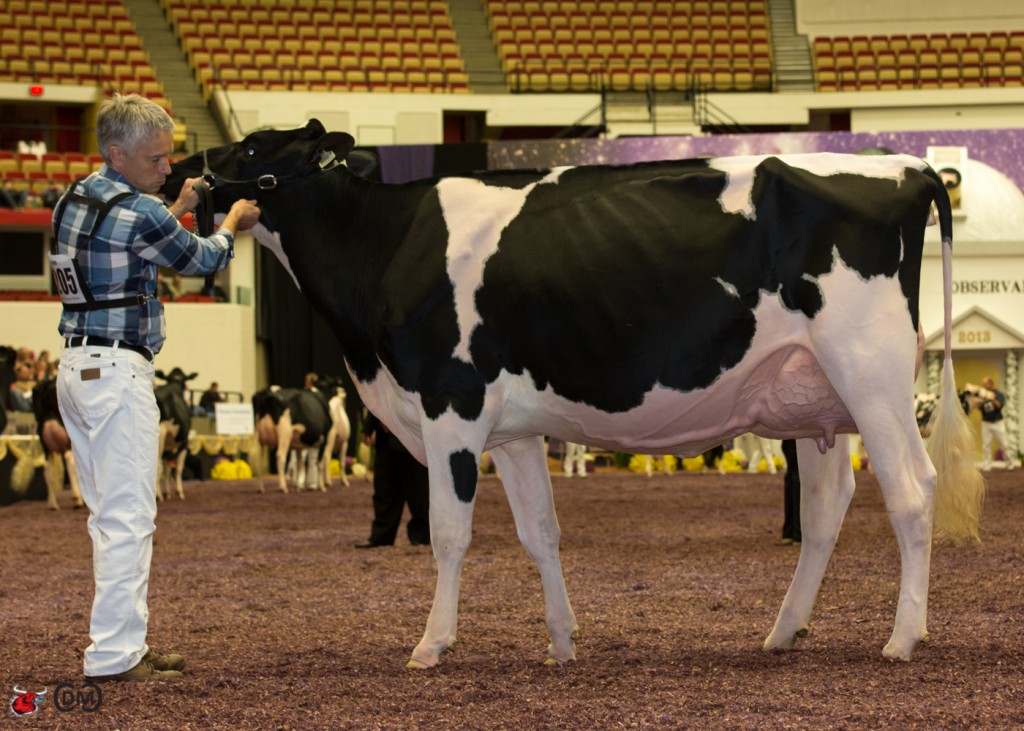
The moment a champion is made: 2013 Grand Champion Robrook Goldwyn Cameron gets the winning slap. This cow, co-owned by Budjon Farms, is a perfect example of the elite US operations that cross the border to compete. This is the “shared dedication to excellence” that brings two nations’ worth of dreams into one ring.

The competition intensifies with elite US operations crossing the border. Budjon, Triple-T, Currie, Ackley, Milksource, and Butlerview, among others, bring their own decades of excellence to the ring. These American powerhouses remind everyone that excellence knows no borders—and that next Thursday and Friday, Judge Joel Lepage and JP Proulx will evaluate cattle from two nations’ worth of dreams. Yet somehow, with Paul’s empty chair and these families’ intertwined stories, this year feels less about international rivalry and more about shared dedication to excellence. (Read more: Making Dreams Come True: The Journey of Tom & Kelli Cull)

The Ripples That Reach Worldwide

Last year, Canada exported $201.2 million in dairy genetic material to over 70 countries. Behind every shipment is a story like these—families who’ve sacrificed, persevered, refused to compromise even when easier paths beckoned.

When Kingsway genetics influence herds across the United Kingdom, when Arangatang’s daughters thrive in places she never saw, that’s an impact transcending individual achievement. These aren’t just genetics being exported—they’re decades of decisions, generations of selection, countless moments when someone chose the harder path because it was the right one.

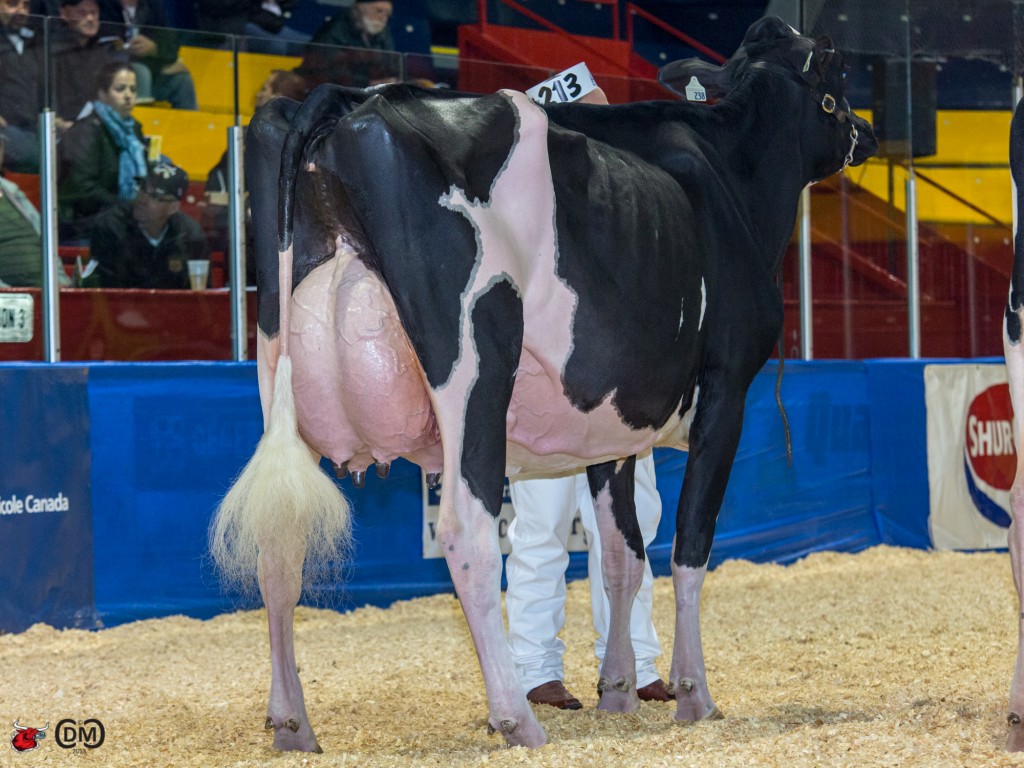
Kingsway Solomon Gorgeous, the 2017 Royal Junior Champion. This is a perfect example of the “ripples that reach worldwide”—a champion representing the very genetics born from Kingsway’s decades of decisions, which are now exported to influence herds across the globe.

This year feels different, though. With Paul Ekstein’s passing, we’re witnessing a transition. The giants who built the foundation are passing the torch. What matters now is how brightly that torch continues to burn.

The Lesson for Every Farm

This Breeder’s Herd victory represents everything Paul Ekstein taught us: Excellence isn’t inherited, it’s earned—Royal after Royal, generation after generation. Paul started with nothing after fleeing Nazi-occupied Czechoslovakia. Seventy years later, this is what refusing to quit looks like. Thursday, Ari walks these same bloodlines into the ring, proving that true legacies aren’t about resources—they’re about showing up when it’s hard, especially when your heart is breaking.

Standing in the packed stands at The Royal next week—or reading about it afterward—you might wonder what these elite operations mean for your own farm.

These aren’t stories about unlimited resources. Kingsway started with a grade herd. Quality began when Paul Ekstein arrived in Canada with nothing except determination. Simon Lalande and Pierre Boulet built their operations on passion and an eye for excellence, not deep pockets. They share something more valuable than money: the conviction that excellence is possible.

The transformative lesson here is that excellence takes decades, not years. Paul Ekstein attended The Royal for over 70 years. Ari worked alongside him for twenty years before taking the lead. There’s no app for that. No shortcut. No genomic test that replaces time and dedication.

Whether you trust data or intuition, whether you’re breeding for your own herd or building a business around genetics, what matters is consistency. Showing up. Keeping going when progress feels invisible. In an age where technology promises quick fixes, these operations remind us that some things can’t be rushed.

The Quality Holsteins exhibit at a Royal decades ago. This is the very ‘lesson for every farm’ put into practice: excellence is built on consistency. The professionalism of this display is the same “attention to every minor detail” that Paul taught Ari—the ‘showing up’ that takes decades to build a legacy.

The Moment Everything Converges

Next Thursday’s the heifer show. Next Friday’s cow classes. Minutes in the ring that represent decades of decisions.

For Ari Ekstein, it’s his first Royal without his father—but with Paul’s spirit in every animal they present. He’s created a poster tribute to his father that will be displayed at the show, a visual reminder of the legacy being carried forward. For Gord McMillan, it might finally bring the Grand Champion banner that completes Kingsway’s journey. For Simon Lalande and Pierre Boulet, it’s another chance to prove that passion drives profit.

What gives me chills is knowing that young breeders walking past that tribute will see Paul’s story captured there. A boy who fled Czechoslovakia. Who built excellence from nothing. Who showed up for over 70 straight years, always willing to share what he’d learned. Somewhere in those barn aisles, a young person will decide: this is what I want to do with my life.

That’s how legacies work. Not through genetics alone, but through inspiration passed person to person, generation to generation.

The Victory That’s Already Won
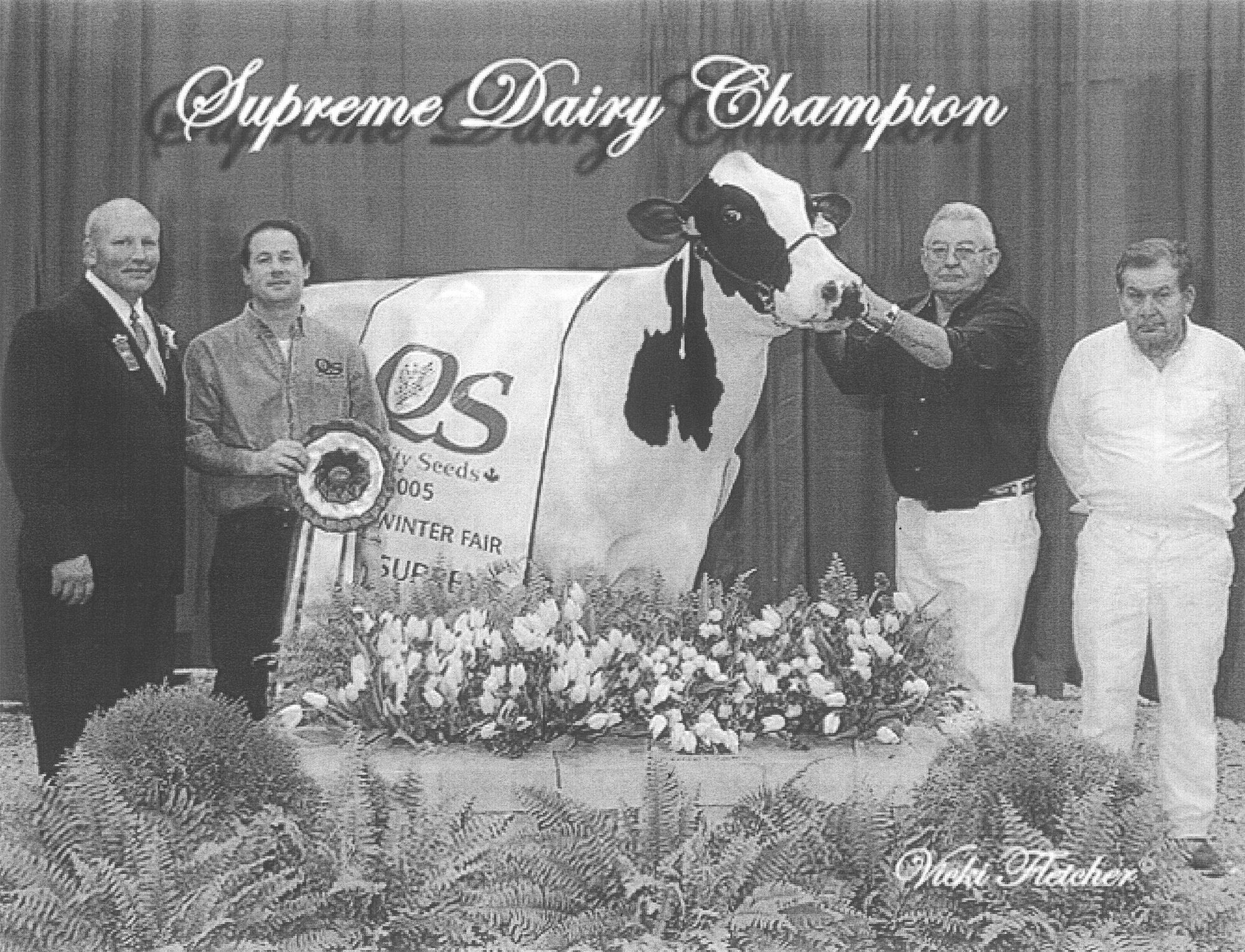
Paul and Ari Ekstein with their 2005 Supreme Champion, Quality BC Frantisco. This photo is the very definition of “The Victory That’s Already Won.” It’s a moment that validates decades of pre-dawn decisions and proves that legacies don’t die with their founders—they are simply carried forward by the next generation.

When Joel Lepage points to Grand Champions next Friday, when people pause at Ari’s tribute poster to remember Paul, when these six operations walk their cattle into the ring, those gestures will represent more than one day’s achievement. They’ll validate decades of decisions made before dawn, sacrifices nobody saw, and the courage to keep pursuing excellence even when your heart is breaking.

But here’s what covering The Royal all these years has taught me: every one of these operations has already won. They’ve proven that legacies don’t die with their founders. They’ve shown that passion can build sustainable businesses. They’ve demonstrated that in an industry of increasing scale and technology, there’s still room for operations driven by conviction and love.

Next Thursday and Friday at The Royal Winter Fair, we won’t just watch cattle being judged. We’ll witness what happens when dreams collide with reality, when preparation meets opportunity, when the next generation carries forward what the previous generation built.

The banners will be awarded. Champions will be crowned. But this year, with Paul’s spirit present in his absence, with multiple generations showing together, with dreams both fulfilled and still pursued, The Royal means something more.

It’s proof that some things can’t be stopped. Not by loss. Not by markets. Not by time itself.

Just farmers, their families, their cattle, and dreams that refuse to die.

That’s already victory enough.

KEY TAKEAWAYS: 

  • The empty chair that fills the barn: After 70 consecutive Royals, Paul Ekstein’s absence makes his legacy more present than ever—proving that true excellence transcends loss
  • Six operations, zero excuses: From Kingsway’s grade herd beginnings to Westcoast’s thousands of cows, these operations prove that excellence isn’t about resources—it’s about refusing to quit
  • Decades beat data every time: While others chase genomic shortcuts, operations like Ferme Jacobs (cow families first) and Quality (95% homebred) prove that time and consistency create lasting genetics
  • Dreams outlive dreamers: With foundation cows like Arangatang gone but granddaughters competing, The 2025 Royal shows how excellence passes through generations—in cattle and families alike
  • Your farm’s lesson: Whether you’re breeding for your herd or building a business, what matters isn’t your starting point but your staying power—excellence takes showing up, not showing off

EXECUTIVE SUMMARY: 

Paul Ekstein attended The Royal Winter Fair for 70 consecutive years—this November, his empty chair transforms the show from competition into a testament. As his son Ari prepares Quality Holsteins’ cattle with routines his father perfected, five other elite operations bring their own dreams and losses to the ring: Kingsway pursuing their first Grand Champion after four decades, Ferme Jacobs proving cow families still trump genomics, Lalande and Boulet showing passion drives profit, and Westcoast achieving excellence at industrial scale. What unites these diverse operations isn’t philosophy but persistence—Kingsway started with grades, Quality with nothing —and both built dynasties by showing up decade after decade. This year carries extra weight as foundation animals like Kingsway’s Arangatang have passed, but their granddaughters compete, while US operations like Budjon and Triple-T remind everyone excellence knows no borders. When Judge Joel Lepage and JP Proulx evaluate cattle next Thursday and Friday, they’ll judge more than conformation—they’ll validate lifetimes of pre-dawn decisions by families who chose the harder path. The 2025 Royal proves that legacies don’t die with their founders but live on through genetics, families, and dreams that refuse to quit.

Join the Revolution!

Join over 30,000 successful dairy professionals who rely on Bullvine Weekly for their competitive edge. Delivered directly to your inbox each week, our exclusive industry insights help you make smarter decisions while saving precious hours every week. Never miss critical updates on milk production trends, breakthrough technologies, and profit-boosting strategies that top producers are already implementing. Subscribe now to transform your dairy operation’s efficiency and profitability—your future success is just one click away.

NewsSubscribe
First
Last
Consent

The Night Shift Revolution: How Chandler Barber, a Beekeeper from North Carolina, Became the Tanbark Trails’ Most Dedicated Guardian

A beekeeper with no farm background just revolutionized elite cattle care over night at dairy shows, the night shift, redefining what dairy excellence looks like.

The barn at Toronto’s Royal Agricultural Winter Fair falls into that peculiar stillness that only comes after midnight. Most exhibitors have long since retreated to their hotels, leaving behind the gentle sounds of cattle settling into their straw beds. But in the Kingsway Farms string, a young man from North Carolina moves through the shadows with the quiet intensity of someone who understands that greatness is often built in the margins – in those overlooked hours when everyone else is sleeping.

Chandler Barber sweeps the floor for what might be the dozenth time tonight, his movements deliberate and practiced. Every few minutes, he pauses to check on the animals, speaking softly to a restless heifer or adjusting a fan that’s been running too cold. “Keep going, girls,” he murmurs, his voice carrying that particular tenderness reserved for those who truly understand the weight of responsibility resting on their shoulders.

It’s 3 AM, and most people would be fighting to stay awake. But Chandler is dancing – actually dancing – to the rock music streaming through his earbuds, transforming what could be a lonely, grinding shift into something that looks almost joyful. He’s shaking out straw, organizing equipment, and ensuring that when the day crew arrives in a few hours, everything will be pristine, professional, and ready for the business of showing cattle at the highest level.

This is the night shift – the invisible foundation upon which the entire show cattle industry rests. At just 19 years old, Chandler Barber has become its most passionate evangelist and first-ever recognized champion.

The Unlikely Journey from Hives to Herds

Chandler Barber tends to his beehives in Statesville, North Carolina—the unlikely training ground where he learned the vigilance and attention to detail that would later make him the dairy industry’s most sought-after night man. “You pay attention to every detail,” he explains. “Cows, I think just the same way.”

If you had told Chandler Barber five years ago that he would become the first-ever Night Man of the Year at the Royal Agricultural Winter Fair – one of North America’s most prestigious cattle shows – he would have looked at you with genuine confusion.

“What’s a cow show?” he might have asked, his attention focused instead on the wooden frames filled with hexagonal cells and the constant hum of 100,000 bees working in perfect harmony.

Chandler’s story begins not in the traditional dairy show heartland of Wisconsin, Quebec, or Ontario but in Statesville, North Carolina, where, at age 13, he watched in awe as his neighbor’s tree became the center of a biblical swarm of bees. When Thomas Batty arrived to collect the swarm – climbing the tree in nothing but jeans and a long-sleeved shirt – young Chandler witnessed something that would shape his understanding of fearlessness and dedication.

“He took that branch and shook them all down right into the box, put the lid on them, climbed down, didn’t even get stung,” Chandler recalls, his voice still carrying traces of that original wonder. “I was like, what?”

Thomas became his first mentor, teaching him the mechanics of beekeeping and the philosophy that would later define his approach to everything: respect the creatures in your care, understand their needs, and never be afraid of hard work. Under Batty’s guidance, Chandler learned to work hives without a suit, using only a smoker and hive tool, taking as many as 60 stings in a single day during the honey season.

“The first thing he said to me after I got stung in the ear was ‘don’t be such a pansy, shake it off, let’s keep going,'” Chandler remembers with a laugh that suggests he’s grateful for that early lesson in resilience.

From Vigilance to Progression

The transition from bees to cattle wasn’t as unlikely as it might seem. Working with Thomas taught him vigilance – the need to monitor every detail, from the number of eggs in each cell to the honey border patterns that indicated hive health. “You pay attention to every detail,” he explains. “Cows, I think, just the same way. Because not only are you vigilant about every little thing, cows are… cows can tell when something’s changed”.

This attention to detail would prove crucial when Craig Connolly, a former commercial beekeeper, introduced Chandler to Charlie Payne, a retired organic dairy farmer in Harmony, North Carolina. Charlie kept a single Jersey cow as a “little souvenir” of his dairy days – a cow whose udder had been destroyed by coliform mastitis but who had survived and now lived peacefully in his pasture.

When Chandler looked at her one day and saw potential, asking if they could breed her to get a show animal, Charlie’s casual “yeah, I’m not doing nothing else with her” opened a door that would change everything.

Chandler Barber with on of his first Jersey’s Prince, bred from Charlie Payne’s retired dairy cow in Statesville, North Carolina. It was working with Charlie where Chandler got the bug for dairy cattle.

The Night That Changed Everything

The calf that came from that breeding wasn’t much to look at. “She wasn’t too pretty,” Chandler admits, “but she was mine.” When they took her to the North Carolina State Fair, she placed second in her class – respectable but not the highlight of Chandler’s experience.

The real revelation came after dark.

As Chandler worked to keep his heifer clean and comfortable through the night, other exhibitors began to notice. First, Brittco Farms, then Deer View Jerseys, and then Cherub Jerseys asked if he could help with their strings, too. By the end of that first night, he cared for nine strings and earned nearly $900.

“It was insane,” he says, the memory still carrying the electric shock of possibility. “That really struck my love for night shifting.”

This wasn’t just about money, though the financial opportunity was eye-opening for a young man without a traditional farm background. It was about discovering a calling that seemed to match his temperament and skills perfectly. The attention to detail learned from beekeeping, the patience to work through the night, and the understanding that small creatures depend entirely on your vigilance translated perfectly to the world of show cattle.

Among those first strings was Deer View Jerseys, owned by Wayne Lutz, a legendary figure in the Jersey world who was responsible for breeding Valson, the bull that made Spritz, the 97-point Jersey that became an industry icon. Wayne became another mentor, and though he has since passed away, his influence on Chandler’s approach to animal care remains profound.

Mastering the Science of Overnight Progression

Walk into any barn at 2 AM during a major cattle show, and you’ll witness what most people think is simple maintenance: someone distributing hay to hungry animals. But watch Chandler work, and you’ll see something far more sophisticated – the practical application of what industry professionals now recognize as cutting-edge cattle conditioning.

“I like to go in a bell curve when I’m feeding,” Chandler explains, moving methodically down the line of cattle, his experienced eye assessing each animal’s condition and appetite. On the first night, he observes each animal’s response to small amounts of hay, watching their bodies settle into the stressful environment of a major show. By the second night, he’s building their capacity, feeding more aggressively while rotating different types of forage. “Third day, depending on which show I’m at, I’m either feeling or continuously going.”

This isn’t theoretical knowledge – it’s practical expertise that produces measurable results. At the Northeast All Breed Spring Show, a red and white heifer under his care won JC Red as well as Reserve JC in the blacks. The success wasn’t accidental; it was the direct result of his systematic approach to maximizing each animal’s potential through careful nutrition management during the crucial nighttime hours.

Reading the Signs

But feeding is only part of the equation. Chandler has developed what industry professionals call “an eye for illness” – the ability to detect subtle changes in animal behavior that might signal health problems. He can spot trouble in how a cow’s ears feel when he checks them for temperature, in the smell or appearance of their manure, or in that indefinable “sick look” in their eyes.

“You can look in their eyes and say something’s not right,” he explains, “because you know how a cow will give you that sick look versus a healthy one that’s constantly looking around, constantly slurping up more hay.”

This vigilance becomes even more critical in challenging environments. Chandler learned to manipulate fans and ventilation systems to maintain optimal conditions at the Royal, where temperatures can plummet well below freezing. “You have to know when you want to cut the fans off and when you don’t because the barn can get kind of dusty, but as long as you keep some air moving through there… you can cut maybe one or two fans off, and then cut them back on, just to keep air moving, keep cows healthy, keep them eating, keep them looking healthy”.

Chandler Barber at World Dairy Expo, where a simple Facebook post asking “Would anybody like a night man for Expo?” launched his career into the national spotlight. Working his first major show with Kyle Stockdale’s crew, Chandler discovered the profound satisfaction of contributing to young exhibitors’ victories—and proved that sometimes the most important connections happen in the digital margins of agricultural social media.

The Facebook Post That Built a Career

By 2023, Chandler had built a reputation on the regional show circuit but was still relatively unknown on the national stage. That changed with a simple Facebook post in the “Fitter Friends” group chat hosted by KY Vision.

Looking for an opportunity to work at World Dairy Expo – the Olympics of dairy showing – Chandler posted: “Would anybody like a night man for Expo?”

Kyle Stockdale was the first to respond.

That connection led to Chandler’s first major show, working for a crew managed by Kyle and owned by Ryan Ferris. The experience was transformative, not just for the exposure but for the relationships built and the standard of work expected at that level. Kyle’s crew was focused on success for the children, showing the animals, and Chandler discovered the profound satisfaction that comes from contributing to those victories. “There’s just nothing like having a kid go to that ring with their animal, get success, and then having them flash that showtime smile at you after they get a medal. Absolutely unreal”.

But it was Kyle’s next call that truly changed Chandler’s trajectory. After the Expo, Kyle contacted him about an opportunity at the Royal Agricultural Winter Fair, working for Kingsway Farms – one of the most prestigious operations in the industry.

“Kyle called me and said, ‘Hey, you want to come to Royal?’ Like, yeah, for sure. ‘Kingsway wants you.’ Like, Kingsway? Who the heck is Kingsway?” Chandler laughs at the memory of his own ignorance. Without the weight of expectation or intimidation, he could simply focus on doing what he did best.

Chandler Barber at Kingsway Farms, owned by Ethan and Morgan McMillan, where his career trajectory would change forever. When Kyle Stockdale first called about an opportunity to work for “Kingsway” at the Royal Agricultural Winter Fair, Chandler’s response was honest: “Kingsway? Who the heck is Kingsway?” Within weeks, this young man from North Carolina would not only earn the first-ever Night Man of the Year award but also receive an unprecedented lifetime contract offer from one of the most prestigious Holstein operations in North America. Sometimes the biggest opportunities come disguised as simple phone calls.

The Royal Treatment and Recognition Revolution

The Royal Agricultural Winter Fair represents the pinnacle of livestock showing in Canada. For Chandler, arriving in Toronto in the middle of winter was like entering an alien world. “I was on the plane. I was looking outside. I was like, man, what is all that white stuff on the ground? I’m not used to this”. He had never seen snow or experienced cold that made him worry his “lips were going to fall off.”

But the physical discomfort paled in comparison to the pressure. This was Kingsway Farms – an operation known for producing 95-point cows, including legendary animals like Allie, Gummy Bear, and Arrangatang. The McMillan brothers, Ethan and Morgan, had built their reputation on excellence, and they were trusting their entire string to a young man from North Carolina who had been doing this seriously for just two years. (Read more: The Heart of Excellence: Getting to Know the Family Behind Kingsway Holsteins)

Building Excellence Through Details

Chandler’s response was to double down on everything that had made him successful. He arrived at the barn between 4 and 6 PM each day, socialized briefly with other crew members, and then threw himself into work with an intensity that bordered on the obsessive.

“I would constantly shake straw for them so it’d be ready in the morning. I would sweep the floors. I would clean the shoot, wrap up everybody’s cords, and just try to make the string look as pretty as possible while keeping the cows dandy,” he recalls.

His obsessive attention to cleanliness wasn’t just aesthetic – it was strategic. “My cows have to be spotless,” he says. “I can’t stand it when they have manure on them. It just messes with my mind”. This isn’t perfectionism for its own sake; it’s an understanding that every detail communicates professionalism to potential buyers walking through the barn.

The results spoke for themselves. Other exhibitors and industry professionals began to take notice of the young man who seemed to approach night shift work with a level of dedication and professionalism they had rarely seen. The animals looked exceptional on show day, and the level of organization and cleanliness in the Kingsway string became the talk of the barn.

Chandler Barber stands with the banners representing Kingsway Farms’ success at the 2024 Royal Agricultural Winter Fair, including Premier Breeder and Junior Premier Breeder honors. The victories these banners represent were built on countless hours of meticulous overnight care—the invisible work that transforms good cattle into champions. His lifetime contract with Kingsway and the creation of the Night Man of the Year award marked a turning point in recognizing that excellence in the show ring begins in those quiet hours when most people are sleeping.

Creating Recognition for the Invisible

The Night Man of the Year award was created specifically because of what people witnessed that week at the Royal. Industry leaders, including the McMillan brothers and other prominent exhibitors, were so impressed by Chandler’s work that they felt compelled to create formal recognition for a previously invisible role.

“That award meant the world to me,” Chandler says. “It really skyrocketed my career”.

But perhaps more meaningful than the award itself was what followed. Ethan McMillan approached Chandler as he was sweeping the floor with a push broom and asked him to come to the table.

“He said, ‘So Chandler, I really like how you work. How would you like to have a lifetime role as Kingsway night man?’ I was like, are you serious? Because I thought he was joking,” Chandler recalls. “He was like, ‘Yeah, I’m real. You want to be our lifetime night man for the Royal?'”

Chandler Barber with Ethan McMillan of Kingsway Farms, whose recognition of Chandler’s exceptional work ethic led to both the creation of the Night Man of the Year award and an unprecedented lifetime contract offer. “He said, ‘So Chandler, I actually really like the way you work. How would you like to be a piece of Kingsway from night shift from here on now?'” This moment, captured after Chandler was sweeping floors with characteristic dedication, represents a turning point in the industry’s recognition that night shift work is not just maintenance—it’s specialized craft that directly contributes to an operation’s success.

A lifetime contract. In an industry where relationships are often transactional and short-term, this represented something extraordinary – a recognition that Chandler had elevated night shift work from a necessary service to a specialized craft that directly contributes to an operation’s success and bottom line.

The Economics of Excellence

The business impact of quality night care extends far beyond clean animals and swept floors. In the high-stakes world of elite cattle showing, where a single class placing can determine an animal’s future value, overnight work directly affects an operation’s financial success.

“That little walk through the ring, that class that she’s in, could change her life forever,” Chandler explains. “If she pulls a medal and gets top 10, or gets top five, or even places first in her class, everybody will look at that animal differently from that moment on”.

The economic implications are significant. A heifer that places well at a major show like the Royal or World Dairy Expo can command premium prices for her offspring, genetics, and embryos. The careful feeding, monitoring, and conditioning during the night shift directly contribute to an animal’s performance in the show ring and to the operation’s financial returns.

This is why operations like Kingsway Farms are willing to offer lifetime contracts to exceptional night shift workers. The return on investment is measurable: better-conditioned animals perform better, better-performing animals generate more revenue, and operations that consistently produce winning cattle build reputations that command premium prices across their entire program.

Chandler understands this connection intimately. His work has contributed to success stories like the red and white heifer that won at the Northeast All Breed Spring Show – victories that translate directly into enhanced reputations and increased values for the animals he cares for. When he talks about treating cattle like “athletes” with “contracts with different AI companies,” he recognizes the economic reality that underlies the emotional connection.

The Competitive Edge and Industry Evolution

Chandler’s approach to night shift work is intensely competitive, driven by a philosophy that excellence requires constant effort to stay ahead of the competition. “I’ve always been competitive. I’ve always wanted to be the star out of the bunch,” he admits.

This competitiveness manifests in his approach to other night shift workers. “I will intentionally try harder to work than them just to take away their shine,” he says, acknowledging that “it’s not really a good thing” but explaining that “people are going to naturally move towards the person that works harder than the other as well as the person who gets better results.”

But this isn’t just ego – it’s professionalism applied to an industry where being good enough isn’t enough. His grandmother, who raised him, taught him to “always give it 100%”, and that philosophy has become the foundation of his professional approach.

Inspiring the Next Generation

Chandler’s success has had implications beyond his own career trajectory. His social media presence, particularly on Facebook’s “Fitter Friends” group, has helped change perceptions about night shift work throughout the industry. Through posts and stories, he’s demonstrated the skill required and the satisfaction of doing it well.

“I actually really want to inspire others because daytime is fun and all – yeah, you get to the party, yeah, you get to see your friends and whatnot – but fitting and night shifting are probably the two most important jobs in the barn,” he explains.

The recognition he’s received has also helped elevate the profile of night shift work throughout the industry. At the New York Spring Show, Chandler observed two young women working nights for Maple Down Farms – one about 20, the other about 12. “That 12-year-old was keeping up with the 20-year-old,” he recalls. “For how young she is, I think she’s going to be a great night woman one day.”

This represents exactly the kind of industry development Chandler hopes to foster. “Maybe I can spark a couple of people to get into it myself,” he says. “Like, that’d be pretty amazing to do. have someone say, what got you into night shift? Oh, yeah, I watched this kid do this and this work and I got inspired”.

The Philosophy of Service

What distinguishes Chandler’s work isn’t just technical competence – it’s his fundamental understanding of what the work represents and why it matters. When he talks about his role, he consistently frames it in terms of service: to the animals, the day crew, and the exhibitors who have trusted him with their most valuable livestock.

“It’s not about you, it’s about the animals you’re taking care of,” he explains. “What can you do to help that animal succeed on the shavings? How can you get that animal to grow rib? How can you get that animal to look better than the day before?”

This philosophy extends beyond individual animals to the entire operation. When Chandler works a string, he’s not just maintaining animals overnight – he’s actively contributing to their progression, building their capacity, and preparing them for peak performance. “The nightmare not only helps the cattle but also makes it easier for the day crew whenever they come in,” he notes.

Treating Athletes Like Professionals

Perhaps most importantly, Chandler has redefined how the industry thinks about showing cattle themselves. “I feel like if I was in a pack and I had someone taking care of me, I’d want the best care they can give me,” he explains. “After all, show cow is in their name, so I feel like we should treat them like the princesses they are.”

But his language goes beyond anthropomorphism to something more specific: “In my opinion, they are athletes. They have contracts with different companies like Sexed Semen Technologies and some other sire directories”. This framing – cattle as professional athletes with contracts and careers – represents a fundamental shift in how care providers approach their work.

Chandler Barber with Russell Gammon, whose recognition of Chandler’s achievement as Night Man of the Year underscores the industry-wide impact of his work. When Gammon reached out acknowledging Chandler’s importance, it highlighted how this young professional from North Carolina has become a symbol of the evolving agricultural workforce—one where specialized skills, dedication, and non-traditional backgrounds are reshaping what it means to excel in dairy. Their meeting represents the bridge between established industry leadership and the next generation of agricultural professionals who are redefining career paths and setting new standards for excellence in livestock care.

Looking Forward: The Future of a Profession

Today, Chandler works 15-25 shows and sales per year, traveling from his home base in North Carolina to venues across the United States and Canada. He’s become a full-time night man, something he never could have imagined when he was getting stung by bees in his neighbor’s backyard.

His goals remain focused on continuous improvement and industry advancement. “I want to do the night shift. I want to do it full time one day if I can. And I just want to commit to that,” he says. But beyond personal success, he’s become an advocate for recognizing and developing the specialized skills that the industry needs.

“There’s a shortage” of people who can “do everything,” he notes, referring to the all-around cattle care professionals the industry requires. “We need more of those”.

Part of the solution, he believes, is helping people understand how important – and potentially rewarding – these roles can be. Through his work and his public presence, he’s demonstrated that careers in agricultural support roles can be both financially viable and professionally fulfilling.

The Continuing Revolution

His influence extends beyond individual career paths to broader industry evolution. The creation of the Night Man of the Year award represents formal recognition of work that was previously invisible but has always been essential. Young people are beginning to see night shift work as a legitimate career opportunity rather than just a way to make extra money at shows.

Chandler’s story also highlights the industry’s evolution from basic animal maintenance to sophisticated performance optimization. The “bell curve” feeding strategies, environmental management techniques, and behavioral monitoring he employs represent a professionalization of cattle care that mirrors trends throughout agriculture.

Chandler Barber stands with the Kingsway Farms crew, no longer the outsider who once asked “Who the heck is Kingsway?” but now an integral part of one of the industry’s most prestigious operations. From his humble beginnings as a beekeeper in North Carolina to earning a lifetime contract with the McMillan brothers, Chandler represents the evolution of agricultural careers and the recognition that excellence can emerge from the most unexpected places. His journey from that first Facebook post seeking work at World Dairy Expo to becoming an essential member of championship-level operations demonstrates how dedication, skill, and unwavering commitment to animal welfare can transform not just individual careers, but entire industries.

The Lasting Legacy

As night falls once again on barns across North America, Chandler Barber continues his work with the same quiet intensity we first witnessed at the Royal Agricultural Winter Fair. He moves through darkened spaces, speaking softly to the animals in his care, ensuring that every detail is perfect for the day ahead.

In an industry that often focuses on the visible moments – the show ring, the sales, the public recognition – Chandler has found purpose and success in the margins, proving that some of the most important work in agriculture happens when most people are sleeping. His journey from beekeeping to becoming the first Night Man of the Year illustrates how passion, opportunity, and a relentless work ethic can create success in unexpected ways.

“If you take care of them, they will take care of you,” he says about the animals he works with. “And I’m a firm believer in that.”

More importantly, his story shows how one person’s commitment to excellence can elevate an entire profession, creating recognition and opportunity for others while setting new standards for what’s possible in agricultural careers. Through his work, he’s demonstrated that caring for others – whether human or animal – remains agriculture’s highest calling and that those quiet hours when excellence is built through countless small acts of dedication continue to be where the industry’s future is truly shaped.

KEY TAKEAWAYS

  • Non-traditional backgrounds can drive dairy innovation: Barber’s beekeeping experience taught him the vigilance and systematic animal monitoring that now commands $900/night rates – proving that transferable animal husbandry skills often outperform conventional dairy experience in specialized roles.
  • Overnight animal progression directly impacts profitability: His “bell curve” feeding strategy and environmental management during night shifts contribute measurably to show-ring placings that can increase animal values by 300-500% and enhance breeding program genetics marketing.
  • Professional cattle care creates competitive advantages: Kingsway Farms’ lifetime contract offer demonstrates how investing in specialized animal care expertise generates measurable ROI through improved animal performance, enhanced buyer impressions, and reduced day-crew labor costs.
  • Industry skills shortages create premium opportunities: The dairy sector’s shortage of “jack-of-all-trades” professionals means operations willing to invest in comprehensive cattle care specialists can capture significant competitive advantages while command premium service rates in an underserved market.
  • Systematic animal welfare drives economic returns: Barber’s philosophy of treating cattle as “athletes with contracts” reflects how professional-level animal care standards translate directly into improved feed conversion, reduced stress-related health costs, and enhanced reproductive performance across commercial operations.

EXECUTIVE SUMMARY

The dairy industry’s most successful professionals aren’t always the ones who grew up milking cows – sometimes they’re the ones who understand that animal care excellence transcends traditional boundaries. Chandler Barber’s journey from North Carolina beekeeper to the first-ever Night Man of the Year at the Royal Agricultural Winter Fair proves that specialized cattle care skills can command premium wages of $900 per night while revolutionizing how elite dairy operations approach animal management. His systematic “bell curve” feeding strategy and obsessive attention to detail helped animals achieve show-ring success that translates directly into enhanced genetics values and breeding program ROI. Working 15-25 shows annually Barber has demonstrated that professional-level night shift management can be the difference between good and exceptional animal performance – leading Kingsway Farms to offer him an unprecedented lifetime contract. His success challenges every dairy operation to reconsider whether they’re truly maximizing their animal care potential during those crucial overnight hours when feed conversion, rumination, and stress recovery determine tomorrow’s champions.

Learn More:

  • 13 STEPS TO EXTREME COW COMFORT – For readers inspired by Chandler’s dedication, this article provides tactical strategies for improving animal welfare. It demonstrates how to implement practical changes in housing, bedding, and daily routines to boost comfort, health, and ultimately, productivity and profitability.
  • DAIRY FARM LABOR – THE HIRING AND TRAINING CRISIS – This piece offers a strategic look at the labor shortage Chandler highlights. It explores the root causes of the crisis and reveals methods for attracting and retaining top talent, framing specialized roles like Chandler’s as a critical competitive advantage.
  • THE FUTURE OF GENETICS – IS IT ALL ABOUT HEALTH AND EFFICIENCY? – Building on the idea that show success drives genetic value, this article looks to the future of dairy breeding. It examines the shift toward health and efficiency traits, providing an innovative perspective on long-term herd development and profitability.

Join the Revolution!

Join over 30,000 successful dairy professionals who rely on Bullvine Weekly for their competitive edge. Delivered directly to your inbox each week, our exclusive industry insights help you make smarter decisions while saving precious hours every week. Never miss critical updates on milk production trends, breakthrough technologies, and profit-boosting strategies that top producers are already implementing. Subscribe now to transform your dairy operation’s efficiency and profitability—your future success is just one click away.

NewsSubscribe
First
Last
Consent

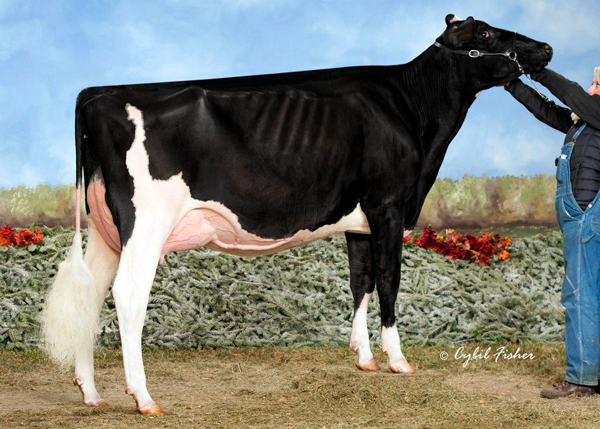
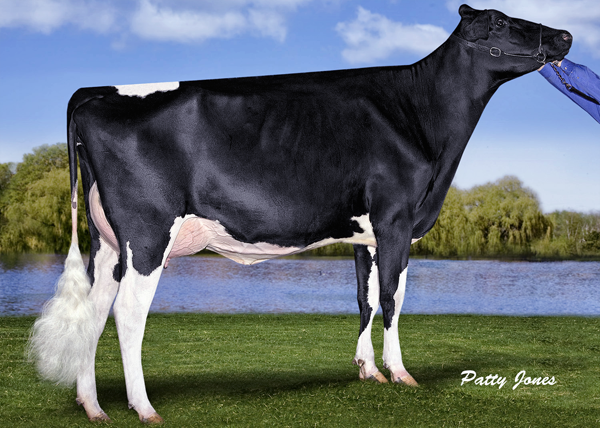
Glenridge Citation Roxy: The Legendary “Queen of the Breed”

Explore the remarkable legacy of Glenridge Citation Roxy, the pioneering cow who achieved unprecedented milestones. Discover how she set new benchmarks in genetic excellence within the dairy breeding industry.

The dairy industry has seen many extraordinary cows, but Glenridge Citation Roxy stands out as the “Queen of the Breed.” She was born over 50 years ago and ushered in a new era for the Holstein breed. Her remarkable lineage and achievements have left a lasting mark on dairy farming worldwide. Bob Miller and Pete Heffering have become legends in the breeding industry with their achievements. The transmitting strength of this family lies predominantly in the female line. No other Holstein family has provided more EX cows than the Roxys. Still today, every significant sale catalog features at least one female descendant of Roxy, showcasing her enduring influence. Join us as we explore her achievements, exceptional genetic lineage, and lasting legacy in the Holstein breed. 

The Birth and Rise of Glenridge Citation Roxy: A Legacy Begins 

Glenridge Citation Roxy was born on the Lorne Loveridge farm at Grenfell, Saskatchewan, on April 15, 1968. Lorne, who took over management of the farm in 1957, bought the herd and changed the prefix from Norton Court to Glenridge in tribute to his wife, Glenna Loveridge. Loveridge switched to R names for Vee’s offspring (Reba, Roxy, and Rocket) instead of continuing with V names, claiming he was “too dumb” to come up with any more V names.

The seeds of the Roxy story began with youth programs and the Royal in the early 50s. As a kid from Quebec, Millar was at the Royal Winter Fair in 1951 for the 4-H dairy judging contest when he saw an impressive cow named Glenvue Nettie Jemima. Jemima would later become the dam of a bull named Rosafe Citation R. Lorne Loveridge, as a kid from Saskatchewan, was at the Royal a year later in the 4-H small grains judging contest. He was able to sneak away from competition long enough to be blown away by the quality of the Holsteins he saw and went home to convince his dad to use frozen semen and A.I. to improve the family’s herd. One of the first bulls they used was Roeland Reflection Sovereign, the sire of a cow named Norton Court Reflection Vale, Roxy’s dam. 

Rosafe Citation R, Roxy’s sire, was purchased as a bull calf for $30,000 by the Ontario Association of Animal Breeders at the 1958 Sale of Stars in Toronto. This acquisition stemmed from the strategic foresight of H.J. Wilcox, who had bought Citation R’s dam, Glenvie Nettie Jemima (EX-13*), hoping she would bear a son. Citation R was aggressively utilized at $7.00 per service, significantly higher than the norm. Despite being a Red Carrier, initially viewed as a drawback, Citation R’s progeny excelled, particularly his daughters, who dominated the show ring. In 1961, Citation R was sold to Santa Monica Ranch in Mexico for $33,000, only to have his semen later repatriated due to high demand in Canada and the US. This timely return facilitated the breeding of Norton Court Model Vee, Roxy’s dam, in 1967, blending top-tier genetics that would lead to the birth of Glenridge Citation Roxy.  Notably, Vee’s lineage traced back to remarkable ancestry, including A.B.C. Reflection Sovereign, while her dam, Norton Court Reflection Vale (VG-4*), underscored this genetic treasure trove. Together, these lines culminated in Roxy, an unparalleled bovine legacy. 

Roxy also had strong ties to Wisconsin Fobes, partly through the Chip of Nettie & Aaggie cross, enhancing her prestigious lineage. Her maternal line began with Ottile 8807 H.H.B., imported from Holland by B.B. Lord & Son in 1883, and Vrouka 448 C.H.B., brought to America by Holman & Collamer in 1884. These cows were instrumental in shaping Roxy’s pedigree. 

As a calf, Roxy was a tall, gangly heifer that didn’t attract much attention until she calved for the second time. At this point, Doug Blair and Lowell Lindsay noticed her. Blair, part owner of Western Breeders’ Services (forerunner to Alta Genetics), and Lindsay, sire procurement officer for United Breeders, were both overwhelmed by her. They contemplated a joint purchase but couldn’t meet Loveridge’s asking price. Enter Bob Miller, a Canadian-born cattle photographer who had immigrated to the US and established the Mill-R-Mor herd. Summoned to photograph Roxy and her dam Vee, Miller had been searching for a cow family with specific requirements: type, production, and longevity. Roxy and her family checked all the boxes for Miller, but he didn’t purchase her immediately. Later, Roxy gained recognition as Reserve Grand Champion at the 1972 Canadian Western Agribition and was nominated for All-Canadian consideration in 1973.

In 1973, Bob Miller bought Roxy and a half interest in her dam, moving them to Illinois, where they continued to thrive.   Subsequently, Roxy, her dam, her grand-dam Vale, and her three-quarter sister Glenridge Emperor Rocket (EX-96-3E) were moved to Mil-R-Mor in Illinois, where promotion and marketing were more feasible.

Achieving Unprecedented Success Under Miller’s Stewardship

In Miller’s hands, Roxy made four records over 1,000 lbs. fat, reaching 26,470 lbs. milk, 4.4% fat in her best year. Her career total was 209,784 lbs. milk, 4.5%, 9,471 lbs. fat, rounding out three generations of 200,000-lb. Producers. A rare Holstein to classify 97 points, Roxy earned a 4E rating at 12 years of age. Her show record included All-Illinois honors (1976-1979), a win in the dry-aged class at the 1979 Central National Show, and two All-Canadian nominations. She was part of eight All-American and All-Canadian groups, and with Glenridge Emperor Rocket, became All-Time All-American produce in 1984. 

Unanimous Acclaim: The Legendary Assessments of Glenridge Citation Roxy

Between them, Andy Clawson and Avery Stafford have classified over 1,000,000 cows. Their assessments of Glenridge Citation Roxy are nothing short of legendary. Clawson, the classifier who initially scored Roxy with an impressive 96 points, declared, “Roxy was closer to perfection than any cow I ever scored,” underscoring her unparalleled quality. Avery Stafford, who elevated her score to an extraordinary 97 points two years later, echoed this sentiment unequivocally. “Roxy was the best cow who had ever come before me,” Stafford remarked, establishing her status as a pinnacle in the field. 

R.F. Brown, known for developing Green Elms Echo Christina, stated, “Roxy was the best I have ever seen,” a high compliment from someone recognized for his discerning eye and high standards.

Roxy captured public affection, winning titles such as Queen of the Breed I & II, Top Cow of the Century, and International Cow of the Century, decided by popular vote in breed magazines. 

A Milestone in Bovine Excellence: Roxy’s Unmatched Legacy and Ubiquity

Roxy was the first cow with ten daughters classified Excellent. Achieved 4E-97-GMD and became a 3rd generation 200,000-lb. Milk producer. Member of eight All-American, All-Canadian, or Reserve All-Canadian groups. The Roxy family is everywhere, consistently appearing in sale catalogs and maintaining their proper type and high milk production legacy.

Miller recognized the potential of embryo transfer, a budding technology at the time, and Roxy produced 30 embryos along with three natural offspring. She had 20 daughters, becoming the first cow to have ten Excellent daughters—16 of her daughters eventually scored Excellent, with additional Excellent and Very Good offspring.

Seven of Roxy’s daughters earned Gold Medals, contributing to a cow family of exceptional persistence. There are 50 direct maternal lines of at least four generations of Excellent descending from Roxy. Her 16 Excellent daughters produced 34 Excellent daughters; these 34 had 52 Excellent daughters, who then had 48 Excellent daughters—virtually a nonstop excellence-producing family. 

Their consistency as breeders is remarkable. Extensive research reveals an impressive lineage: over 381 Roxy descendants have achieved EX status, tracing directly back to Glenridge Citation Roxy. This legacy expands exponentially when considering the progeny of her sons. A standout in perpetuating this excellence is Gloryland Lana Rae EX-94-2E-USA DOM. An impressive 16 out of Lana Rae’s 21 classified daughters have reached EX status, with an average score of 90.9 points. Lana Rae descends from an exceptional line: an EX Lindy daughter of Hanoverhill Tony Rae EX-96-2E, following Hanoverhill TT Roxette EX-94-2E USA, then back to Roxette. 

Good udders, feet, legs, great frames, and diligent milk production mark the Roxy legacy. These cows are healthy, fertile, and resilient, rebounding from stress and not “knuckling under” as some do. 

Roxy’s Most Outstanding Daughter Mil-R-Mor Roxette (EX-30*)

Until 1977, Bob Miller had never sold a daughter. He relented that year when he consigned Roxy’s Elevation daughter to the National Convention Sale in Columbus, Ohio. She was Mil-R-Mar Roxette, born on Valentine’s Day the year before and sold openly. Peter Heffering purchased 17 heads, ringing up a bill of $207,600. Among the cattle purchased was J.P.G. Standout Kandy, the top seller at $41,000, and Mulder Elevation Mazie. He also bought Mil-R-Mar Roxette for $25,000, the third highest price of the sale. 

R Peter Heffering commented, “We felt that Roxy was one of the breed’s great cows and probably the best daughter of Citation R. Elevation was making a lot of good offspring, so when the Elevation heifer was coming up for sale at the National Convention Sale, we bought her as a foundation female for the herd. Roxette flushed well and became one of Roxy’s strongest transmitting daughters.”

After the sale, Miller raised objections regarding the investor’s terms. A rumor persists that the transaction nearly collapsed. However, years later, Miller expressed his gladness that Roxette ended up at Hanover Hill.  Roxette’s son, Hanoverhill Raider (EX-Extra), is sired by Hanoverhill Starbuck (EX-Extra) and ranks among the top Hanover Hill bulls. 

Her notable daughters include: 

  • Hanover-Hill Astra Roxie (EX-GMD) This Paclamar Astronaut’s daughter recorded six consecutive records over 22,000 lbs. milk and 1,000 lbs. fat. She was the dam of three Excellent and three Very Good daughters, including Hanoverhill TTA Roxie (EX), one of the first cows to produce over 50,000 lbs. milk in Canada with her record of 52,879 lbs. milk, 2,200 lbs. fat, and 1,801 lbs. protein in 365 days.
  • Hanoverhill TT Roxette-ET (EX-94-2E-GMD-DOM) Roxette’s Triple Threat daughter was sold for $37,000 in the 1989 Hanover Hill Dispersal. She made 31,790 lbs. milk, 1,303 lbs. fat, and 961 lbs. protein at six years. Her daughter, Hanoverhill Tony Rae, became grand champion at the 1992 Western Spring National and the 1993 Western National. Tony Rae left nine Excellent and 13 Very Good daughters. One of her notable descendants was Scientific Debutante Rae (EX).
  • Hanoverhill Star Roxy (EX-92-3E-GMD-DOM) She was Roxette’s Hanoverhill Starbuck daughter and a full sister to Hanoverhill Raider. As a four-year-old, she produced 31,779 lbs. milk, 1,393 lbs. fat, and 1,054 lbs. protein and left behind six Excellent daughters. One of her exceptional daughters, Hanover-Hill-R MSCT Roxy (EX-93), was sold for $40,000 in the 1998 Hanover Hill Dispersal.
  • Hanover-Hill-R Rhonda-TW (EX-94-4E-GMD-DOM) Rhonda, Star Roxy’s Leadman daughter, mothered Hanover-Hill-R MI Rochelle-RC (EX-93), who was dam to Sir Ridgedale Rustler-Red (EX-95). Rustler was exceptionally popular in Germany.
  • Mil-R-Mor Toprox-ET (EX-94-3E-GMD): This highest-record daughter of Glenridge Citation Roxy produced 43,660 lbs. of milk, 5.3% fat, and 3.4% protein. Described by Mary Briggs of Brigeen Farms as healthy and fertile, Toprox was known for her temperance and capacity—a monument at Mil-R-Mor farm honors Glenridge Citation Roxy’s remarkable achievements and contributions.

Roxy’s Descendants Continue to Make an Impact

Roxy’s descendants continue to make an impact. Their consistency as breeders is remarkable. Breeders who invested in Roxy’s lineage developed strong lines under varied management conditions. Notable descendants still making an impact include:

Golden-Oaks Champ Rae EX-93

Ms Crushable Carolina
Reserve Intermediate Champion World Dairy Expo 2022
(Crushabull x GOLDEN OAKS BY CHARLOTTE ET EX 90 x GOLDEN-OAKS MCC CHARLINA-ET EX-90
x GOLDEN-OAKS ATWD CHARLA-ET EX-93 x GOLDEN-OAKS CHAMP RAE-ET EX-93)

(Calbrett-I H H Champion x Scientific Beauty Rae RC EX-90 x Scientific Jubilant Rae RC EX-90 x Hanoverhill Tony Rae EX-96 x Hanoverhill TT Roxette EX-94 x Mil-R-Mor Roxette EX x Glenridge Citation Roxy EX-97) 
Champ Rae, a foundation dam bred at Golden-Oaks Farm in Wauconda, Illinois, has 47 US-class daughters, with 17 scored VG and 19 EX. Many of these daughters have achieved top records of 35,000-40,000 lb. (18,144 kg) of milk. The dam’s fame is spreading internationally, with Spanish AI Ascol testing Byway son Tec Laureles Sanmames out of granddaughter Charlina. The dam’s daughters and granddaughters have performed well, with Golden-Oaks Sid Charlise VG-87, now at Cherry Crest Holsteins in Canada, and Golden-Oaks Atwood Chloe EX-92 from Cranehill Genetics and Long-Haven Sid Carla EX-94 from Oakfield Corners Dairy. New York’s Kings-Ransom Farm hosts three special sisters: Kings-Ransom Cleavage, Cleo, and Kings-Ransom Epic Cassie, each with EX-94 scores. Jeff King, manager at Golden-Oaks Farm, praises Champ Rae’s enormous frame and her sisters’ functional and productive nature, stating that they give lots of milk with a high-fat test and require minimal attention. The goal is to combine Champ Rae descendants with high-type sires, sacrificing as little as possible for fitness traits and longevity.

Gloryland-I Goldwyn Locket EX-94

Walkerbrae Doorman Locket EX95
HM All American 5yr old 2018
Nominated AA and AC Junior 3 2016
Doormand x GLORYLAND-I GOLDWYN LOCKET 2E94

(Braedale Goldwyn x Gloryland Lakota Rae VG-88 x Gloryland Lana Rae EX-94 x Scientific Liza Rae EX-90 x Hanoverhill Tony Rae EX-96 x Mil-R-Mor Roxette EX x Glenridge Citation Roxy EX-97)
Bred by David Tait, goes back to Hanoverhill Tony Rae EX-96. Locket, classified EX-94, through Scientific Liza Rae EX-90 and the notable Gloryland Lana Rae EX-94. Lana, distinguished for her superb udder quality and excellent feet, produced 32 daughters, with 22 achieving EX status, including the illustrious Gloryland Lexie Rae EX-96 and Gloryland Liberty Rae EX-95, who commanded $410,000 in 2008.  Locket’s exceptional genetics originated from the Canadian Crasdale herd of Brian Craswell, who produced Locket and her full sister through embryo transfers. Bert Tuytel later acquired a share in Locket. 

Brigeen-C Integrit Robin EX-95 

Dirigo-Conant Gold Rissa-ET (Ex-91)
1st Aged Cow, BU and Hon. Mention Champion Louisville 2012
Her dam is Brigeen-C Integrit Robin-ET (Ex-95)

(Robthom Integrity x C Haselmere Prelude Rhoda EX-91 x Brigeen Southwind Rhonda VG-88 x Mil-R-Mor SWD Rockette VG-86 x Mil-R-Mor Toprox EX-94 x Glenridge Citation Roxy EX-97)
In 1985, the Briggs family from Brigeen in Maine bolstered their herd by selecting six members of the Roxy family. Among them was Mil-R-Mor Toprox, a Hilltop Apollo Ivanhoe daughter from Roxy, who set records with figures of 43,660 lbs of milk at 5.3% fat. Toprox was the highest classified at EX-94. The group also included two Valiant heifers who matured into highly regarded cows. A partnership with David Saunders from Canada led to the purchasing of a Southwind heifer, which eventually scored EX-91 and produced the EX-91 Prelude heifer sold at the Maine State Sale in 1999 named Brigeen-C Integrit Robin. Robin, acquired by Steve Keene and Duane Conant, was flushed to Emory before the sale, resulting in notable offspring like Brigeen Emory Raisa EX-92, a Grand Champion in 2005. Robin’s legacy continued with her daughter, Brigeen Convincer Rhonda EX-95, who also became a champion. Brigeen Atwood Regina EX-90 is a standout, holding a national fat record. Robin’s influence extended globally with exports to Japan and Europe, where her descendants continued to excel, including Ladys-Manor Celebrity EX-94 and Plant-Tree Robin EX-90, solidifying the enduring excellence of the Roxy family.

Sancy MAHOU
Grand Champion SUMMIT of Breeding 2021
(Diamondback x Destry x Barbwire mahogany red EX92 x Scientific (Storm)Mahogany Red EX-90-USA x Scientific Jubilant Rae *RC EX-90-USA  x Hanoverhill Tony Rae EX-96-USA 3E x Hanoverhill TT Roxette EX-94-USA 2E x Mil-R-Mor Roxette EX-90 )

Liddlehome Beemer Rockstar Et EX 92
(Beemer x Liddlehome-R Durham Rhonda Et EX 95 xMiss Ridgedale Rhonda Et EX 92 x Hanover-Hill-R Rhonda EX 94 x Hanover-Hill Star Roxy Et EX 92 x A Mil-R Mor Roxette EX 90 xGLENRIDGE CITATION ROXY ET EX 97)

The Bottom Line

Glenridge Citation Roxy’s legacy intertwines excellence and remarkable influence. Her outstanding EX 97-point classification and the groundbreaking achievement of producing Excellent daughters established her lineage as a cornerstone in the dairy industry.  Born over 50 years ago, Roxy inaugurated a transformative era for the Holstein breed. Renowned breeders like Bob Miller and Pete Heffering have become legends due to their work with her progeny. The strength of Roxy’s lineage is evident in her female descendants, with no other Holstein family producing more EX cows. Numerous branches of this family continue to excel globally. Still today, every significant sales catalog features at least one female descendant of Roxy, highlighting her lasting influence. She truly is the Queen of the Breed.

Key Takeaways:

  • First cow in the world to have ten daughters classified as Excellent.
  • First cow to achieve the prestigious 4E-97-GMD classification and be a third-generation 200,000-lb. milk producer.
  • Member of eight All-American, All-Canadian, or Reserve All-Canadian groups.
  • Her lineage is omnipresent in the dairy industry, appearing in sale catalogs worldwide.
  • Renowned for transmitting her superior type and production capabilities consistently across generations.

Summary:

Glenridge Citation Roxy, hailed as the “Queen of the Breed,” is a legendary bovine, noted for being the first cow in the world to have ten daughters classified as Excellent and to achieve the rare 4E-97-GMD designation while also being a third-generation 200,000-pound milk producer. Her remarkable genetics have made an indelible mark on the industry, with her descendants gracing sale catalogs and show rings across the globe. Andy Clawson and Avery Stafford, classifiers who assessed her, spoke in unison about her unparalleled excellence, describing her as the finest cow they had ever encountered. Even decades later, her family lineage continues to influence dairy cattle breeding standards, preserving her legacy of superior type and production. As the definitive example of bovine perfection, Roxy’s influence is perpetuated through an impressive roster of accolades and the enduring popularity of her offspring, ensuring that her name remains synonymous with dairy excellence.

Learn more:

The Untold Story of K-Kuipercrest Inspir Ardath: The Greatest Holstein That Never Was

Uncover the unknown tale of K-Kuipercrest Inspir Ardath, the Holstein cow that amazed the dairy world but never achieved her full potential. Want to find out why?

Once upon a time, there was a Holstein cow named K-Kuipercrest Inspir Ardath. Lawyer and esteemed dairy cattle historian Ed Morwick nearly acquired a half-interest in her. While he ultimately did not secure that half-interest—something that, in hindsight, was fortuitous—it turned out to be quite the setback for David Brown.

First, Let’s Introduce our Two Protagonists.

David Brown, like all of us, had his flaws. Endowed with remarkable skills as a breeder, showman, and promoter, he was often hailed as the finest cattleman of his era. Growing up on Browndale Farms in Paris, Ontario, he had towering expectations to meet. His father, R.F. Brown, was a luminary in the dairy world, winning the esteemed Curtis Clark Achievement Award in 1988 and the Klussendorf Trophy at the 1993 World Dairy Expo. As one of Canada’s most successful breeders, R.F. clinched Premier Breeder and Exhibitor honors at the World Dairy Expo and the Royal Winter Fair. His accolades included five Grand Champions at the Royal Winter Fair: Green Elms Echo Christina (1972 and dam of Browndale Commissioner), Vanlea Nugget Joyce (1974), Marfield Marquis Molly (1978), and Du-Ma-Ti Valiant Boots Jewel (1988). David certainly had big shoes to fill.  And fill them he did. His list of accomplishments was extensive: He led Ontario’s top herd in production in 1991, bred two All-Canadian Breeder’s Herd groups, and produced the All-American Best Three Females in 1998. He was twice crowned Premier Breeder at the International Holstein Show and accumulated 92 awards in All-Canadian and All-American contests from 1986 through 2004. Yet, despite two auction sales in 1991 and 1996 aimed at reducing his debts, financial relief was elusive. Over time, his wife left him, his children moved away, and his prized cattle were sold off. Eventually, David relocated to Colombia, where he passed away. Views on Brown are mixed—some saw him as a charming inspiration, while others regarded him as a rule-bending showman or an irresponsible debtor. Nonetheless, his rapid ascent and remarkable achievements in his lifetime are indisputable. Many wealthy individuals have invested vast sums of money into the cattle industry, chasing the same recognition, only to leave empty-handed. What distinguished David Brown was his nearly mystical talent for preparing animals for the show ring and transforming them into champions.
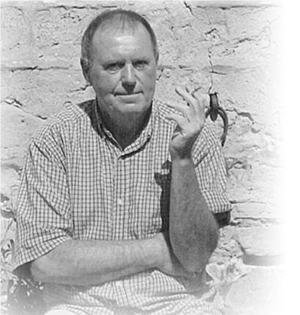
Edward Young Morwick, a distinguished author, cattle breeder, and lawyer, was born in 1945 on the Holstein dairy farm owned by his father, Hugh G. Morwick. His early memories of his mother carrying him through the cow aisles profoundly shaped his trajectory. Although Edward pursued a career in law, excelling immediately by finishing second out of 306 in his first year, he harbored a deep-seated passion for journalism. This led to his later work chronicling Holstein’s cow history. His seminal work, “The Chosen Breed and The Holstein History,” stands as a cornerstone for those delving into the evolution of the North American Holstein breed. In it, he compellingly argues that the most influential bulls were those of the early historical period. (Read more: Edward Young Morwick – Country Roads to Law Office)
The Story of K-Kuipercrest Inspir Ardath 

Arthur Kuiper meticulously built his herd around the cornerstone cow, Stone-Front Prestige Angie, at his Waupun, Wisconsin farm. Angie was a direct descendant of Prestige of Lakehurst, who himself hailed from the legendary Romandale Reflection Marquis, bred by Agro Bros. in Hamilton, Ontario. For those familiar with dairy cattle lineage, Marquis was an icon, undefeated in the aged bull class from 1967 onwards—the year he catapulted onto the premier show circuit. He earned the prestigious title of All-American aged bull not once but twice.

Stone-Front Prestige Angie produced an exceptional Paclamar Astronaut daughter named Stone-Front Astronaut Angela, who was in the dam when arriving at Kuipercrest Farm. Angela achieved an Excellent rating and recorded an impressive output of over 25,000 lbs. of milk. She then gave birth to Kuipercrest Warden Ardela, a Hilltopper Warden daughter. Ardela also achieved an Excellent rating, her pedigree further enhanced by a double cross of Astronaut genetics, tracing back through Warden’s mother.

In the late 1970s, Kuiper decided to sell off his herd. However, his emotional ties to a few members of the Angie family made him hold onto them. Faced with the challenge of finding a place for these cherished animals, he struck a deal with Theron Keller, a promising young farmer from Richland Center, Wisconsin. In exchange for Keller’s commitment to their care, Kuiper offered him partial ownership of some of these prized cattle.

In 1987, Kuipercrest Warden Ardela gave birth to a daughter named K-Kuipercrest Inspir Ardath. The “K-Kuipercrest” prefix honored both Keller and Kuiper, while “Inspir” highlighted her sire, Hanover-Hill Inspiration. Ardath’s early years were typical for a calf, marked by average growth and development. In fact, she flourished much more than the KuiperKeller partnership itself. Primarily a cash crop farmer managing extensive land, Keller wasn’t providing the cattle with the meticulous care Kuiper believed they deserved.

Brown’s Return to Our Story

In March 1993, David Brown made an incidental stop at the Fond du Lac sale barn during a visit to Wisconsin. Positioned in the front row was the enormous K-Kuipercrest Inspir Ardath. Despite her fleshy and ample appearance, Brown’s expert eye was immediately drawn to her front legs, particularly the femur— the skeleton’s longest bone, which connects the knee to the upper body. Even though Ardath was as rotund as a bear preparing for winter, Brown was confident she could be transformed into something extraordinary. The length, shape, and contour of her femur bone unequivocally promised it.

After leaving what was the winning bid with the sales manager, Brown returned to his Cher-Own Farm in Paris, Ontario. Before long, K-Kuipercrest Inspir Ardath had made her way to his barn. You would have encountered her if you stepped through Brown’s milkhouse door in June 1993. She stood in the second box stall, her chin perched on the top rail, with her hindquarters seemingly touching the pen’s eastern wall. Her stature was so impressive and her presence so commanding that one’s initial impression felt almost like an illusion.

Despite being before cell phones and the internet, word of a “special” cow would spread like wildfire through the “dairy industry”. Visitors came in torrents. Mexican and South American buyers on the back roads buying cattle asked their Canadian agents for side trips to the CherOwn farmstead to see K-Kuipercrest Inspir Ardath. They came; they stared in amazement. The cow looked great alongside two Royal Winter Fair Grand Champions, Du-Ma-Ti Valiant Boots Jewel and Merkley Starbuck Whitney, who occupied adjoining box stalls.

When Ken Empey first laid eyes on Ardath, he was struck with awe. He left the stable, sat in his car for a moment, and then felt compelled to return to the barn. He stood there, staring at her for another ten minutes. Finally, he went back to his car and drove off. In Empey’s estimation, K-Kuipercrest Inspir Ardath was superior to Brookview Tony Charity in every conceivable way.

Public interest surged and offers rolled in. Yet, Brown deemed them frivolous, most hovering around $100,000. He stood firm, unwavering in his quarter-million-dollar valuation.

Morwick’s Return to Our Story

To Morwick, the cow seemed undervalued. He speculated that she could potentially rival the legendary Glenridge Citation Roxy or even Snow-N Denises Dellia. From his perspective, investing in her was a far superior choice compared to acquiring a descendant from the Roxy or Lulu families, despite their high demand at the time. Roxys and Lulus were abundant, with hundreds on the market.

Standing there in all her glory: an outstanding bovine specimen with three generations of Excellent-rated dams; her lineage included a twice All-American great-granddam, and she descended from the top sires of their respective eras. Indeed, it is a remarkable pedigree.

”Yes,” said David Brown, “I value this cow at a quarter-million dollars, and I’ll take $125,000.00 for a half interest.

There’s lots of money left in her, even at that price.”

“Surely not for Morwick,” Morwick said. ”You wouldn’t charge him that much, would you?”

“Sure would,” said Brown.

The Enigma

Morwick was taken aback by Brown’s lack of leniency, especially considering the hefty legal bills. Brown had accumulated $25,000 in fees with Morwick’s law office, including costs from suing Holstein Canada over disciplinary actions for supposed ethical breaches at the Royal.

One day when Morwick asked Brown when he might pay, he got choked up and teary. “Surely you can pay something,” Morwick said.

“These bills represent a lot of work.” In the end, he gave Morwick a cheque for $5,000.00. I told him he could forget the rest.

Morwick decided to absorb the loss.

If David couldn’t pay Morwick for quality work faithfully performed, he asked himself, then how did he come up with the $5,000.00 he paid for K-Kuipercrest Inspir Ardath?

This was the enigma.

Morwick felt that “All these show guys are the same. Big shots with not a pot to let go in, they can always come up with enough money to buy a good cow. In these guys, ego always gets ahead of responsibility.”  Morwick felt this way as he had worked with Holstein promoters for twenty-five years.

Thus, despite Morwick’s earlier gift of $20,000.00 to Brown, the latter now expected Morwick to pay the full price for a half share in his prized cow.

Morwick figured an offer in writing might tempt him. He drew up a contract: “Offer to Purchase re: K-Kuipercrest Inspir Ardath,” the document was titled. The parties to the contract were David John Brown (hereinafter “Vendor”) and Edward Young Marwick (hereinafter “Purchaser”).

There were the usual paragraphs, all with appropriate titles. Paragraph 3 said, “The Purchaser hereby purchases, and Vendor hereby sells, for the sum of sixty-five thousand dollars, a one-half interest in K-Kuipercrest Inspir Ardath.  

It said the purchase price will be paid in cash upon closing this transaction.”

Paragraph 4 states, “Purchaser acknowledges that he, his veterinarians, or other persons on his behalf have personally inspected Ardath and are satisfied that she is in sound condition and free from disease or defect.”

The heartbreaker was paragraph 5: “The parties agree to obtain and maintain mortality insurance and insurance against all the usual perils in an amount equal to at least $130,000.00.”

Morwick’s secretary prepared the Offer with blue document covers and red seals for the signatures of both the Vendor and the Purchaser. I placed four copies into an envelope and delivered them to Brown. He extracted one and placed it deliberately atop the milk cooler.

He read the Offer. Very slowly. He came to the dollar amount. “Nope,” he said, “not enough money.” He picked up all four offers, placed them together, shook them up and down, and hit their bottoms on top of the cooler so they were all together in a tight little stack. Then he handed them back. “Give me a hundred and a quarter for a half-interest,” he said. “There’s plenty of money left for both of us.”

The next day, walking up John Street, Morwick passed a coffee shop they called the Donay Cafe. There was a For Sale sign in the window. I called the broker. “It’s listed at $199,000.00,” he told me. “Wanna look at it? It’s a power of sale. It’s going cheap.”

“Sure,” Morwick said. ”I’ll meet you there in an hour.”

Morwick redirected the $135,000 originally set aside for the half-interest in K-Kuipercrest Inspir Ardath and invested it in purchasing a building. Subsequently, he relocated his law practice to the ground floor of this new property.

Ardath Goes Head to Head with Legends

In November 1993, Brown exhibited Ardath at the Royal Winter Fair. When she entered the five-year-old class, she was bone dry; Brown had her on a strict diet to refine her form. Despite her condition, Ardath secured a commendable second place, trailing behind Merkley Starbuck Whitney, who was on her path to the reserve grand championship. Whitney, showcased by Brown for her Japanese owners, was in prime condition, with her udder at its peak. The seasoned judges at ringside could not help but remark, “The second cow’s the better one,” with her longer head, broader muzzle, and more correct front legs.

Later in the year, Whitney claimed the title of All-Canadian five-year-old, with Ardath securing the Reserve position. “Just wait until next year,” Brown declared.

The Unfortunate Ending

A month later, Morwick visited Brown’s farm. Ardath was conspicuously absent from the second box stall. “Where is she?” Morwick inquired.

“She’s dead,” said David. “She developed a lung adhesion.”

Part of her lung adhered to her rib cage. It proved fatal.”

“Too bad,” Morwick said.

Brown’s smile turned rueful as he clutched the top rail of the pen with both hands, his gaze dropping to the ground.

“I should have taken your offer,” he said.

“Why?” Mowrik replied.

“Then she would have been insured,” responded Brown.

“She wouldn’t have passed the vet check,” Morwick said. “The vet would have seen the adhesion.”

“No, She would have. Draper would have passed her.”

“That’s the cattle business,” Morwick said.

The Bottom Line

In the competitive world of dairy cattle showing, the story of K-Kuipercrest Inspir Ardath stands out as a lesson in missed opportunities. Navigating pedigrees, evaluations, and high-stakes valuations, this tale reveals the complex interplay of passion and practicality. From Ed Morwick’s initial hesitation to David Brown’s firm pricing, every decision and negotiation shaped Ardath’s unrealized potential. The emphasis on vet checks, insurance, and legal exchanges underscores the need for diligence and strategic partnerships. Ardath’s journey highlights the cost of pride and the importance of protecting investments with foresight and humility. This story serves as a reminder to balance enthusiasm with prudence to avoid squandering potential through neglected connections and misjudged valuations.

The Chosen Breed and The Holstein History by Edward Young Morwick
Anyone who appreciates history will enjoy either the US history (The Holstein History) or the Canadian History (The Chosen Breed) by Edward Morwick. Each of these books is so packed with information that they are each printed in two separate volumes.  We had a chance to interview Edward – Edward Young Morwick – Country Roads to Law Office and got a real sense of his passion and quick wit which also come shining through in his books.  Be sure to get your copies of this amazing compilation of Holstein history.

Key Takeaways:

  • David Brown’s encounter with Ardath at the Fond du Lac sale barn marked the beginning of a high-stakes saga for this extraordinary cow.
  • Ardath’s impressive physical attributes, particularly her femur bone, created significant public interest and high offers, but Brown’s asking price remained firm at a quarter-million dollars.
  • Morwick, a lawyer with substantial involvement in the dairy cattle industry, initially considered investing in Ardath but ultimately chose to purchase a real estate property instead due to disagreements over the cow’s valuation.
  • Despite being highly touted and drawing crowds, Ardath faced an untimely demise due to a lung adhesion, leading Brown to regret not securing insurance as suggested by Morwick.
  • Morwick and Brown’s professional and financial dealings added a layer of complexity and tension to their interactions, influencing the decisions related to Ardath.

Summary:

The story of K-Kuipercrest Inspir Ardath intertwines the fates of legendary dairy cattle historian Ed Morwick, lawyer, and dairy cattle savant David Brown. Ardath, an exceptional Holstein cow with an impressive lineage, captured the attention and admiration of many, including Morwick, who offered to buy a half-interest in her. However, Brown’s high valuation and refusal to settle on a lower price led Morwick to invest in real estate instead. Tragically, Ardath later died due to a lung adhesion, leaving Brown to rue his decision, as the cow could have been insured had he accepted Morwick’s offer. This tale highlights the complex interdependency of passion, investment, and fortune within the cattle business.

Learn more:

MURRAY REISSNER: The Right Place at the Right Time!

For exhibitors, spectators, photographers and judges — a ring full of dairy cattle can be both exhilarating and exhausting at the same time.  Regardless of where you view each class from it is a demanding process. But imagine if you had to be at the show from the time the first exhibitor walks into the ring until the last exhibitor heads back to the barn.  Murray Reissner knows exactly how that feels because he has done it at the Royal every year for the last 20 years!

October 2013 marked the 20th year that Murray Reissner of Woodstock, Ontario expertly discharged his responsibilities as ringmaster at the Royal. (Read more: Canadian National Holstein Show Results and The Royal Flu – Did you catch it?  ) “The exhibitors know I am there to make each and every one of them look good at all times.” Of course, Murray and his show ring peers cannot correct conformation of the animals in the ring. However they can and do make a tremendous difference by making sure they are seen from the best vantage point – whether you’re viewing the spectacle from ringside, on the halter or as the Judge of the show.

IMG_1647

The Royal Coliseum: A Fine Place to Start

From the viewpoint of 20 years, Murray recalls how it all got started. “Way back in 1992, I received a call from Jane Whaley from Holstein Canada. As it turned out, the Quebec Holstein Rep who had been the ringman at the Royal for years, had suffered a heart attack in mid October and as such, would not be available for the Royal.” Murray was asked to be a one-time Royal Ringman and, amazed at the opportunity and vowing to do his best, he nervously answered. “Yes!”  Needless to say, Murray survived and learned a lot. “My one time shot was over!”

Reissner’s Place is in the Ring

However as luck and history very rarely come into our lives exactly as we expect them to, Murray’s ring experience was about to change. The next year, Murray was invited to “share the duties”.  The team got along quite well so it wasn’t surprising that Murray received another call the next spring when the ring steward position was open. “The Royal was mine if I wanted it.” Murray recalls. “What an opportunity to be up close and personal with so many great Holstein cows!” Of course the rest, as they say, is history.

IMG_0219

Murray Reissner goes that extra mile to make sure every animal looks her best in the ring.

A Place for Everyone.  Everyone in their Place.

Murray has many memories highlighting the special years at the Royal. “Perhaps the greatest memories though are the people in the ring. Just to watch them is a great pleasure. The euphoria of winning, the fist pumps, the hugs and tears. I think of Tom & Kelli Krull this year, that shot of Rob & Brian Eby last year or the tears streaming down Mario Comtois’ cheeks as he leads the Supreme Champion in Madison.”  His enthusiasm for the great moments in the ring is built upon the responsibility he feels when doing his job. “First of all, I have a responsibility to the exhibitors to make their journey into the ring as easy and comfortable as possible. Each and every exhibitor should have the same opportunity to exhibit their animal to the best possible placing.” Undoubtedly this has earned him some respect as well. “Over the years even our seasoned veteran show people are always asking me if they are in the right position or if their cow “looks good back there”.  For the spectators it is obvious to see that Murray’s military-style gets the job done. This friendly drill sergeant has his own way of doing things. “I like strict routine, straight lines, no cutting corners and no stampedes out of the ring. You need to be firm but courteous as well as everyone is under a lot of “stress” on the day”.

IMG_0995

Rob & Brian Eby after winning Reserve Grand Champion at the 2012 Royal Winter Fair.

Judges look forward to the Reissner Routine

Murray Reissner has worked with 18 different judges over his 20 years of experience and is emphatic about one thing. “My utmost responsibility is to the Judge.” In addition, his experience as an official judge himself has proven to be an asset in his role as ring steward.  “When I judge, I like to stand well back and get that first panoramic view of the entire class. This can only happen if we get the entire class into the ring quickly. It also serves to help our judges from judging in the corners. We have lots of room so let’s use it to our best advantage.” Obviously seeing the class through the eyes of the judge is a great help. “We like to keep the individuals fairly close together so it cuts down the “steps” for the judge and fills in the gaps. More decisions are made from 30 feet away than from 3 feet. Getting that first panoramic view is a great first look. The other is having all those animals lined up neat and tidy again for that first view from behind. I’m there to look after all the little details like getting the class into the ring quickly, giving them the best possible view of the animals and moving the animals into a line that is easily viewed and ready for their final assessment.” Having said that he knows he has a balancing act to perform. “My other responsibility is to the spectators who travel long miles, spend excessive amount of money (especially in Toronto) and come to the show wanting to see or have the best view possible. The line up needs to give everyone a great view regardless of where they are seated or standing.” A caring drill sergeant indeed!

IMG_1423

When Murray Reissner is on the job you can be assured that all the cows will be lined up straight and the judge will get optimal views on all animals.

With Teamwork in Place — Everything Works!

Murray clearly understands that it takes everyone working together to make the National Holstein Show run smoothly. “I am just part of a great team.  Jane Whaley was Team Leader for many years.  Now Christa Crowley is the Team Leader and did a great job her first year on her own.” He gives credit for the work it takes. “Christa is the quarterback who calls the plays and gives us the ball. Our job is to run with it. Whether it’s the guys behind the scene, checking the cows in, Valerie translating or Norm announcing.” Like Murray they care about putting on the best show possible. “I am the ‘fortunate one’ who gets to share centre stage under the bright lights.  For that I am eternally grateful and that’s what gives me the adrenaline rush!”

IMG_1520

As the ring steward Murray Reissner knows the importance of working with all the team members to make sure the show goes smoothly and all the cows look their best.

It`s A Multi-Media Show Place

Despite his well-recognized ability to do his job without interfering with the cattle, exhibitors or judge, Murray acknowledges that “You are constantly in the spotlight.” Modern social media has affected his celebrity status in his family as well. “Even my 4 little grandkids who range in age from 3 to 5 were watching “Papa” on the “puter” while he was at the Royal.” Murray enjoys the heartfelt recognition he feels that the focus is best when it’s directed to the cattle. “At the Royal we are showcasing Canada’s best and I want to give every media source the best possibility to get those great shots that go viral in minutes. I want to give every media person the opportunity to get just what they want regardless if its Bullvine, Cowsmopolitan, Holstein World, Holstein International, Holstein Canada or even the fans in the stands who capture some great and unique shots (Carl Saucier – check out some of Carl’s great shots).” For Murray this often means going above and beyond normal ring steward parameters. “I have become more conscience of straight lines, tails set, clean cows, and movement that allows the media to capture this part of history. I guess I’m the only ring steward that makes noise to gets those ears up for those memories in line or the final parade. It’s just my way of making your job easier as a media person covering the National show.” Thanks Murray.

Murray Reissner does not only do a great job assisting the Judge, but he also does amazing work helping the media covering the show get those pictures that breeders around the world love to see.

Murray Reissner does not only do a great job assisting the Judge, but he also does amazing work helping the media covering the show get those pictures that breeders around the world love to see.

The Right Place to Get it in Writing

The ringside is a wonderful place to come up with new and exciting ideas.  Such was the case for Murray Reissner and National and Provincial Holstein association peers, Jane Whaley and Bill Dobbin. At one point the suggestion was made that Murray should compile his experiences into a book. The next thing he knew, he was informed that the two associations were going to split the cost of making this publication so they encouraged him to “get at it”. “After giving it some thought while touring around the countryside in my bull buying capacity, I decided to sequester myself in my office one day and just put down anything that came to mind right from schooling as a judge etc. I started right from the beginning just like I was the judge except that I was the ring steward. I tried to cover everything. If it came to mind, it went on paper. Once I got in the mode, I was full bore until it was done………………22 pages of notes double spaced.” This time he wasn’t only in the right place, he found the write time.  Of course then came the big job. “We had to tear it apart bit by bit, paragraph by paragraph, page by page. Jane and Bill had no idea what I had accumulated in my experiences over the years. “And so “The Dairy Show Ring Steward” became reality. “Little did we know what a “success” this little booklet would be. (Get your copy of The Dairy Show Ring Steward)

The content for this publication was drafted by Murray Reissner,

The content for this publication was drafted by Murray Reissner,

We’ve had a second printing and just may have to print a few more. I receive a lot of nice compliments on the book from right across Canada and some have even been sent around the world or picked up at the Holstein Canada booth the Royal!” Well earned praise for something Murray originally thought was just idle chatter. He has also been on the committee that formulated the publication “You Be The Judge” and the “Leading to Win” video. “What a lot of work that was especially trying to coordinate a book and a video at the same time. I spent hours in Cambridge editing video and sound. All worth it though.”

A Place to Stand A Place to Grow

It’s hard to imagine where Murray finds the time for all the extra-curricular show ring interests he has. He has been on the organizing committee for the 4-H Classic Show at the Royal for over 30 years where he declares. “Over the years we’ve seen it all.” This is Canada’s largest 4-H show and Murray feels it is a great committee that all have the passion and commitment to our youth. “I’m a Gold Sponsor of this event and volunteer my time every year just because it’s so much fun and our kids are just a pleasure to be around.” But there are other youth groups that he finds close to his heart such as the Ontario Inter-Country 4-H judging competition. He points out. “It is so much fun to watch kids succeed.” He outlines the history. “This program has been going for 24 years now with a team going to Madison every year. In the earlier years, we also used to take a team to the North American International Livestock Show in Louisville Kentucky. I had the chance to take every team to Louisville before we discontinued this adventure. Three years ago, I was asked by Jason French to accompany Bertram Stewart with the Ontario Team going to Madison”   While he could never replace the late Hazel Stewart as “4-H Mom” Murray treasures the team experience. “Bertram is a wealth of knowledge and, even at my age, there are still things to be learned from him.”

World Dairy Expo:  A Place Like No Other

Murray is emphatic about what he likes best about World Dairy Expo. “Definitely the best part of being with the Madison team is getting to know the kids. You learn a lot in 10 days on the road. In the few short years, I seen these young people grow and mature and come out of their shell. For many, it’s their first time to World Dairy Expo. I’ve often said that “Madison may not be a life changing experience but, it certainly is life altering” I’m so proud of the young adults that we have sent to Madison. Just to watch them as they step onto the colored shaving is a great feeling.”

The Bottom Line

At the end of every show day, ring stewards are at the hub of the whole experience.  They see what judges, audience and exhibitors see.  They anticipate what is needed before it happens.  When to walk. When to stop.  Where to lineup. They work with recalcitrant calves.  Nervous exhibitors.  They rescue runaways. They build rapport with everybody.

Congratulations to Murray on 20 exemplary years focused on making sure that cattle are seen in the right place at the right time.  For all his family, friends, fans, peers and judges he fulfils the responsible role of Ring Steward to a T…… That’s Reissner Royal-T!!

Get original “Bullvine” content sent straight to your email inbox for free.


[related-posts-thumbnails]

Royal Winter Fair Fantasy Exhibitor – The Results

Even though I wrote the Royal Winter Fair Preview Article and titled it “Expect the Unexpected”, I have to admit that even I was shocked at the final results.  Common sense tells us that we should always be prepared for the unusual because it all comes down to how each cow looks on the day and in the Judge’s opinion.  There were just under 4,000 entries for this inaugural Royal Winter Fair Fantasy Exhibitor competition.  Similar to the Holstein Show itself, you could not just pick the winners from Madison and expect to be a winner yourself.

Junior 2 Year Old

Belfast Goldwyn Lasenza  1st place Junior 2 year old Belfast Holsteins & Mary Inn Holsteins, QC

Belfast Goldwyn Lasenza
1st place Junior 2 year old
Belfast Holsteins & Mary Inn Holsteins, QC

After being upset by Petitclerc Sid Sunkiss at Expo International du Holstein Quebec (Read more: Expo Internationale Holstein Québec Results)  Belfast Goldwyn Lasenza regained the top spot. Having said that, Sunkiss did offer a little better value for those who were trying to squeeze in some more expensive older cows (Please note that Sunkiss’s value was set prior to EIHQ).  With almost 70% (36.9% Lasenza, and 32.7% Sunkiss) of the participants and all of the top 40 participants selecting these two cows, it really was a two-cow race.  When Lasenza entered the ring, she looked the best she has yet.  After viewing her strong rear seam, many who were hoping for an upset knew that it would not be happening on this day.  Another great value pick would have been Jacobs Atwood Vedette, who at $120,000 and placing third and earning 10 points could have certainly helped the more than 100 participants that spent just over the $2,500,000 limit.

Petitclerc Sid Sunkiss 2nd place Junior 2 year old Ferme Blondin & Yvon Sicard, QC

Petitclerc Sid Sunkiss
2nd place Junior 2 year old
Ferme Blondin & Yvon Sicard, QC

Senior 2 Year Old

IMG_1087

Charwill Attic Marcy
1st place Senior Two Year old, and Reserve Intermediate Champion
Gen-Com Holsteins, QC

On a day that was full of surprises, the one sure thing was Charwill Attic Marcy.  She looked amazing, as she has all year, and easily strolled to the top of the class.  With Marcy also earning Reserve Intermediate Champion, she proved to be a very economical choice as well.  For almost 40% of the participants and all of the top 40 Marcy was a must have in order to contend in this year’s competition.

Junior 3 Year Old

Phoenix Sanchez Geo  1st place Junior 3 year old  Breamont Holsteins, ON

Phoenix Sanchez Geo
1st place Junior 3 year old
Breamont Holsteins, ON

Catching everyone by surprise was Phoenix Sanchez Geo.  With less than 3% of the total competitors picking her and none of the top 40, this was certainly a curve ball that many did not see coming.  With the two most popular picks Ehrhardt Gold Beauty, winner at Expo and the full sisters BVK ATWOOD ABRIANNA and BVK ATWOOD ANDREA not making it to the show, this class was certainly a write off for many competitors.  Geo on a day of upsets turned out to be one of the greatest value picks in the entire competition!

Senior 3 Year Old

Aingers Advent Bambi 1st place Senior 3 year old Ferme Blondin, QC

Aingers Advent Bambi
1st place Senior 3 year old and Intermediate Champion
Ferme Blondin, QC

Talking about upsets. Could there be a bigger upset than seeing Aingers Advent Bambi defeat Valleyville Rae Lynn and Butz-Butler Gold Barbara?  Less than 15% of the competitors even included her on their team.  Rae Lynn and Barbara have been much heralded this year and were expected to have a clash of the titans at the Royal.  However, as Bambi’s upset of Barbara at EIHQ showed us, she is not to be forgotten.  With Bambi winning Intermediate Champion and only costing $125,000, she was easily the greatest value in the whole competition.  While many, including myself, discounted this three calf Senior 3 year old, (actually she has had four calves as there were twin heifers by Atwood), Bambi has certainly thrown her name into the ring.  Even though Rae Lynn did earn honorable mention Intermediate Champion, and did so while milking over a year, at $625,000 in our competition, the price may have been too high for many to choose to include her.  However, the real surprise was Barbara, at $625,000 and no bonus points, her third place finish was a team killer for many.

Valleyville Rae Lynn  2nd place Senior Three Year old and HM Intermediate Champion Quality Holsteins, Ponderosa, Al-Be-Ro Land and Cattle, ON

Valleyville Rae Lynn
2nd place Senior Three Year old and HM Intermediate Champion
Quality Holsteins, Ponderosa, Al-Be-Ro Land and Cattle, ON

4 Year Old

Robrook Goldwyn Cameron  1st place 4 year old and Grand Champion St Jacobs, Clark Woodmansee, Budjon Farms & Peter and Lyn Vale, WI

Robrook Goldwyn Cameron
1st place 4 year old and Grand Champion
St Jacobs, Clark Woodmansee, Budjon Farms & Peter and Lyn Vale, WI

In what was to be a rematch from Expo, where Cookview Goldwyn Monique got the upper hand, on this day it was all about Cameron who caught Judge Crowley’s attention and strolled to a convincing win in her class.  Looking better as the day went along and peaking in the Grand Champion parade, Monique proved to be a pretty good choice as well.  However, in order to contend in this year’s Fantasy Exhibitor Competition, you pretty well needed to choose Cameron.  In fact, 75% of the top 40 competitors and 100% of the top 10 all chose Cameron to anchor their team.

Cookview Goldwyn Monique  2nd place 4 year old and Reserve Grand Champion Jeff Butler and Joe and Amber Price, IL

Cookview Goldwyn Monique
2nd place 4 year old and Reserve Grand Champion
Jeff Butler and Joe and Amber Price, IL

5 Year Old

MS Goldwyn Alana 1st place 5 year old and HM Grand Champion P Boulet, Ferme Fortale, Isabelle Verille, QC

MS Goldwyn Alana
1st place 5 year old and HM Grand Champion
P Boulet, Ferme Fortale, Isabelle Verille, QC

With her dominant class win and Honorable Mention Senior and Grand Champion honors, MS Goldwyn Alana was a great pick for many.  All but 1 of the top 40 competitors and over 40% of all competitors had chosen Alana to win. There were no real surprises in this class.

6+ Year Old Class

Calbrett Goldwyn Layla 1st place Mature Cow Comestar, Speranza Holsteins and Ponderosa, QC

Calbrett Goldwyn Layla
1st place Mature Cow
Comestar, Speranza Holsteins and Ponderosa, QC

When it comes to the biggest shocker of the day, that honor has to go to Calbrett Goldwyn Layla.  After finishing ninth at Expo, no one expected Layla to upset World Dairy Expo Supreme Champion, and 1st place 6 year old from EIHQ, BONACCUEIL MAYA GOLDWYN.  Less than 2% of the competitors even had Layla on their team.  This victory had to be even more shocking than Bambi’s victory in the Senior Three Year Old Class.  For those who had gone all in on Maya, her 2nd place finish and no bonus points in Grand was the biggest team killer in the whole competition.  Maya certainly looked good at the Royal, though she did not fit with the style of cow that Judge Crowley was looking for.

Bonaccueil Maya Goldwyn 2nd place Mature Cow Ty-D Holsteins, Ferme Jacobs, Drolet and A & R Boulet, QC

Bonaccueil Maya Goldwyn
2nd place Mature Cow
Ty-D Holsteins, Ferme Jacobs, Drolet and A & R Boulet, QC

What had to be a pleasant surprise for many, as well as to us, was Eastside Lewisdale Gold Missy winning the longtime production class.  As we were not sure if this former World Dairy Expo and Royal Supreme Champion would be making the trip this year, she was left out of our competition.  Nevertheless, seeing her extreme size and dairyness was certainly exciting for all.

Eastside Lewisdale Gold Missy 1st place Production Cow Morsan, Van  Runen Dairy, Mark Butz, Gert Andreasen, AM

Eastside Lewisdale Gold Missy
1st place Production Cow
Morsan, Van Runen Dairy, Mark Butz, Gert Andreasen, AM

The Dream Team

During the team selection period, it was a consistent challenge for many competitors to get all their favorites onto their teams.  Though as it turned out, with the expect the unexpected theme of this year’s competition, the ultimate points team, that would have earned 217 points, would have only cost $2,085,000, almost $500,000 under the $2,500,000 budget.  This team would have been,  Belfast Goldwyn Lasenza, Charwill Attic Marcy, Phoenix Sanchez Geo, Aingers Advent Bambi, Robrook Goldwyn Cameron, Ms Goldwyn Alana and Calbrett Goldwyn Layla.  Yes that is correct, you could have had all the class winners on your team and still had almost a half a million left in your pocket.  It just goes to show, it’s not about how much you spend, but rather how wisely you spend it.

The Winners Are

Colin Uecker of Watertown Wisconsin had the winning team of Belfast Goldwyn Lasenza, Charwill Attic Marcy, Ehrhardt Gold Beauty, Aingers Advent Bambi, Robrook Goldwyn Cameron, Ms Goldwyn Alana and Willowholme Goldwyn Jessica.  Earning 187 out of a possible 217 points.  While a couple of the other top 5 competitors did have higher scoring teams, Colin took full advantage of the bonus points for getting his entry in early to  squeak out the win.  With so many upsets, it is not surprising that no one predicted the exact results.

Place First name Last Name
1 Colin Uecker
2 Ily Genetics
3 Flavio Junqueira Costa
4 Stephen Mast
5 Luke Instone
6 Wayne Houdek
7 Colin Leach
8 Tom Pettit
9 Jean-Philippe Charest
10 Darrel Barkman
11 Kate Cochrane
12 Hannah Roberts
13 Andree Menard
14 Emily Stuff
15 James Woodmansee Sr.
16 Alexandre bapst
17 Gwyn Murray
18 Bryant Hlavaty
19 Maxime Lauzon
20 Austen Schmidt
21 Raphael Chabot
22 Matthew Keffer
23 Allan Merkley
24 Anna Meyer
25 Brett Woker
26 Robin Christman
27 Andy Reynolds
28 Christopher Burne
29 Mireille Cloutier
30 Christian Roberge
31 Olivier Corriveau
32 Cameron Davis
33 Christiaan Viljoen
34 Alana Brown
35 James Whatman
36 Jeff Merkley
37 Genevieve Arbour
38 Brian Coyne
39 Olivier Lapointe
40 Cleocy Mendonça Jr.
41 Susan Armstrong
42 Donna Banowetz
43 Meaghan Thornhill
44 Grant Armstrong
45 Sandy MacGillivary
46 Sean Murray
47 Melissa Marcoux
48 Lysanne Pelletier
49 Fina Martinez
50 Catherine Lauzon
51 Annette Killian
53 Scott Crandlemire
53 Jon Spoelstra
54 Tom Peters
55 Blake Zehr
56 Matt Forestell
57 Nicole Crosbie
58 Adam Nelson
59 Tony Van Lith
60 Sylvain Cormier
61 Mandy Brazil
62 Jacquin Louis
63 James Hoffman
64 Proulx Jean-Philippe
65 Joe Nash
66 Scott Brown
67 Kevin Jacobs
68 Annie Chabot
69 Francis Cournoyer
70 Amelie Poulin
71 Anne-Marie Loranger
72 Burnell Zehr
73 Chris Schulze
74 Chris Steven
75 Shelby Iager
76 Chad Ryan
77 Tom Uber
78 Anthony Brenton-Robert
79 Mike McLaughlin
80 Michael Leclerc
81 Alejo Guichon
82 Max Petitclerc
83 Nathan Ulmer
84 Eric Houdek
85 Jake Dueppengiesser
86 Ashley Knapton
87 Jason Pegg
88 Guillaume Labee
89 Hannah Jackson
90 Chad Popp
91 Ricardo Cuesta
92 Olimar Rupli
93 Kevin Vanzessen
94 Chris Hill
95 Corey Popp
96 Adam Zehr
97 James Woodmansee jr.
98 Deb Knapton
99 Jack Lomeo jr
100 Brent Carmichael

Calculate Your Own Score

Class Name Price Points
Jr 2 year old Beckholm Goldwyn Deelila – $120,000 $120,000 0
Jr 2 year old Belfast Goldwyn Lasenza – $300,000 $300,000 20
Jr 2 year old Comestar Masha Sanchez – $105,000 $105,000 0
Jr 2 year old Dream-Prairie GW Alberta – $135,000 $135,000 0
Jr 2 year old Gen-Com Brett Madison – $105,000 $105,000 0
Jr 2 year old Jacobs Atwood Vedette – $120,000 $120,000 10
Jr 2 year old MS Aubrey Gold Addison – $135,000 $135,000 0
Jr 2 year old Petitclerc Sid Sunkiss – $150,000 $150,000 15
Jr 2 year old RF Duplex Caileigh – $105,000 $105,000 0
Jr 2 year old Weeks Dundee Anika – $225,000 $225,000 6
Sr 2 year olds Arcroix Goldwyn Jamaique-ET – $120,000 $120,000 0
Sr 2 year olds Blondin Goldwyn Bordeau – $150,000 $150,000 0
Sr 2 year olds Charwill Attic Marcy – $300,000 $300,000 28
Sr 2 year olds Jacobs Duplex Anna – $225,000 $225,000 10
Sr 2 year olds Kingsmill Atwood Allison-ET – $135,000 $135,000 0
Sr 2 year olds Pierstein Atwood Rosine – $60,000 $60,000 6
Sr 2 year olds Rosiers Blexy Goldwyn-ET – $105,000 $105,000 0
Sr 2 year olds Starcrest Rhyme Casablanca – $120,000 $120,000 5
Jr 3 year old BVK Atwood Abrianna-ET – $240,000 $240,000 0
Jr 3 year old BVK Atwood Andrea-ET – $180,000 $180,000 0
Jr 3 year old Ehrhardt Gold Beauty-ET – $340,000 $340,000 0
Jr 3 year old Hardy Gold Diamond – $80,000 $80,000 0
Jr 3 year old Jacobs Knowledge Harpe – $180,000 $180,000 10
Jr 3 year old Kingsway Sanchez Arangtang – $140,000 $140,000 9
Jr 3 year old Lindenright Atwood Bounce – $160,000 $160,000 0
Jr 3 year old Ms Ken Dren Sanchez Feather – $100,000 $100,000 5
Jr 3 year old Phoenix Gogo Sanchez – $160,000 $160,000 0
Jr 3 year old Phoenix Sanchez Geo – $160,000 $160,000 20
Jr 3 year old Roquet Jasmine Sanchez – $140,000 $140,000 0
Jr 3 year old Tolamika Dundee Fanta – $120,000 $120,000 3
Sr 3 year old Aingers Advent Bambi – $125,000 $125,000 30
Sr 3 year old Butz-Butler Gold Barbara – $625,000 $625,000 10
Sr 3 year old Cowtown Durham Grasshopper – $200,000 $200,000 0
Sr 3 year old Eastriver Gold Deb 850-ET – $150,000 $150,000 4
Sr 3 year old Ernest-Anthony Allure-ET – $125,000 $125,000 8
Sr 3 year old Kingsway Goldwyn Abba Dabba – $225,000 $225,000 7
Sr 3 year old TC Sanchez Kristina – $75,000 $75,000 3
Sr 3 year old Valleyville Rae Lynn – $625,000 $625,000 21
Sr 3 year old Vioris Alex Pandora – $100,000 $100,000 0
Sr 3 year old Whitake-Kk Goldie Rose – $250,000 $250,000 6
4 year old Cookview Goldwyn Monique – $720,000 $720,000 29
4 year old Craigcrest Rubies Gold Rejoice  $150,000 $150,000 3
4 year old Drumlee Mischief Denison – $240,000 $240,000 10
4 year old Jacobs Goldwyn Valana – $300,000 $300,000 9
4 year old Lampada Goldwyn Katrina – $240,000 $240,000 0
4 year old Ms Pride Gold Invite 761 – $210,000 $210,000 8
4 year old Nordale Goldwyn Ricky – $90,000 $90,000 7
4 year old Quality Gold Danzi – $240,000 $240,000 5
4 year old Robrook Goldwyn Cameron – $570,000 $570,000 40
4 year old RockyMountain Goldwyn Trisha – $240,000 $240,000 0
5 year old Crestomere Lou Victoria – $330,000 $330,000 4
5 year old Gerann Roy Grendel – $330,000 $330,000 15
5 year old Glenwin Goldwyn Calypso – $330,000 $330,000 10
5 year old Ms Goldwyn Alana – $510,000 $510,000 32
5 year old Quality Goldwyn Flinsco – $210,000 $210,000 7
5 year old Rayon D’or Goldwyn Adonial – $240,000 $240,000 5
5 year old Robella Reg Macy – $270,000 $270,000 0
5 year old Rocky Mountain Gold Winter – $240,000 $240,000 0
5 year old Silvermaple Damion Camomile – $210,000 $210,000 0
5 year old Tromley-Dairy Lheros Jewel – $330,000 $330,000 0
6+ year old Bonaccueil Maya Goldwyn – $1,000,000 $1,000,000 15
6+ year old Calbrett Goldwyn Layla – $120,000 $120,000 20
6+ year old Cityview Metro Lucy – $210,000 $210,000 0
6+ year old Jacobs Goldwyn Britany – $240,000 $240,000 9
6+ year old Ms Dundee Belinda-ET – $210,000 $210,000 8
6+ year old Pierstein Goldwyn Sunshine – $90,000 $90,000 5
6+ year old Starbrite Lyster Lyndsay – $480,000 $480,000 9
6+ year old Tween Bay Sara Goldwyn – $180,000 $180,000 7
6+ year old Willowholme Goldwyn Jessica – $300,000 $300,000 10

The Bullvine Bottom Line

In a year that was anything but expected, it is not surprising that this year’s results were all over the board.  Congratulations to Colin Uecker !!!  Be sure to watch for next year’s Fantasy Exhibitor.  There will be many new features added to this amazing competition.


Get original “Bullvine” content sent straight to your email inbox for free.


[related-posts-thumbnails]

The 2013 Royal Winter Fair Holstein Show Preview – Expect the Un-expected

Most years you can expect the results from the Holstein show at the Royal Winter Fair to be pretty much a repeat from that of World Dairy Expo (Read more: World Dairy Expo 2013 Holstein Show).  But this year is going to be different.  From  cows that were at Expo and won’t  make the trip to Toronto, to cows that have freshened since Expo and have made  the trip, you can certainly expect the results from this year’s show to be very different.

The Judge

Tasked with placing this amazing show will be John Crowley.  John and his supportive wife Cynthia and four kids (who are already achieving great things in their own right) are Master Breeders and milk 75 head in Hastings Ontario.  They currently have 40 Ex – 60 VG – 6 GP.  The herd has garnered over 60 All-Canadian, 100 All-Ontario, and 9 All-American nominations including the recent 2011 Unanimous All-American Junior Best Three Females and First Junior Herd at the 2011 Royal Agricultural Winter Fair and World Dairy Expo.  Crovalley is proud to have captured over 100 Premier Breeder and Premier Exhibitor banners at numerous shows across Canada.

Crowley has also judged in numerous US states and has travelled extensively abroad judging in  South Korea, Argentina, Peru, Mexico, Ecuador, Portugal, and Brazil.  In addition, John has had the privilege of judging the Jersey Futurity Class at the Royal Agricultural Winter Fair.  When asked, “What is the biggest thing you want breeders to say after the show?”  John replied, “Of course I want the breeders to be satisfied with the job I did.  I want people to say that it was a fair job, with no politics involved and that I had a real pattern in selecting my animals.”

Assisting John this year will be Don Donnan.  Don hails from Stirling Ontario.   He and his wife Beverly  own Donnanview farms—an 80 cow Master Breeder herd.  Donnanview is proud to have bred 29 Excellent cows in the past three years and has bred and/or owned several All-Ontario and All-Canadian nominees.  When Judge Crowley was asked  how he selected his associate, he replied, “I wanted a close friend, a friend that sees cows similar to me.  I wanted a person who milked cows and one who, when asked a question,  will give me his honest opinion, while acting  in a supportive role, knowing that this is my show to judge.”  We are sure he will get that and a few much needed tension breakers from Associate Judge Donnan.
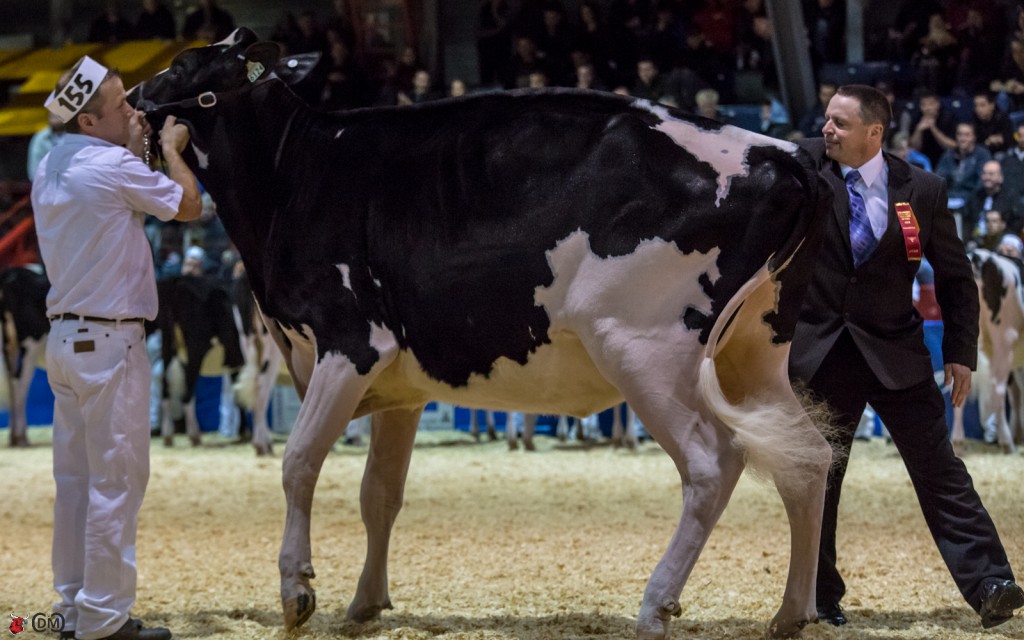
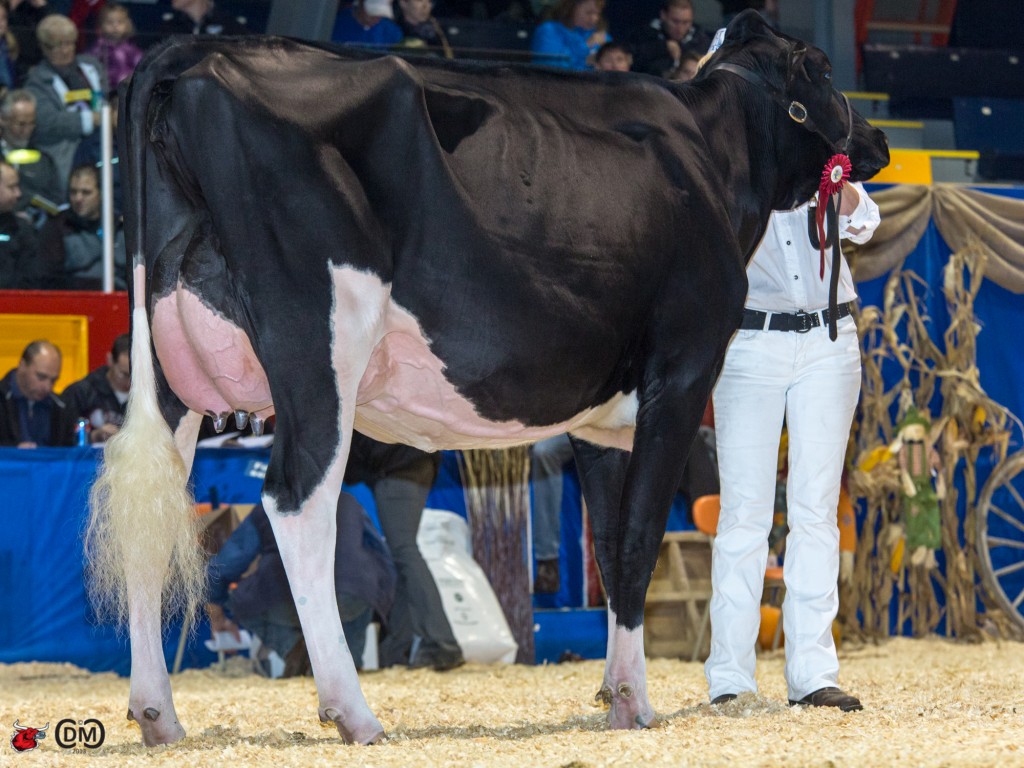
Contenders for Junior Champion

Fanico Reginald Marty

Fanico Reginald Marty

Similar to last year the World Dairy Expo Junior Champion will not be making the trip to Toronto, opening the door for some other very worthy candidates.  Leading the way has to be the Reserve Junior Champion, FANICO REGINALD MARTY, who was also Junior Champion at the recent  Expo Internationale Holstein Quebec (Read more: Expo Internationale Holstein Québec Results).  Other contenders to watch for are a pair of Winter Yearlings AQUAREL OUTBOUND OBE TENTION and PETITCLERC GOLDWYN SIDNEY.  Also watch for a very exciting senior calf class that includes three  big time contenders PETITCLERC GOLD SALTALAMACCHIA, COMESTAR LARION GOLDWYN and DUCKETT FEDERAL TAZ.

The Contenders for Intermediate Champion

Nowhere is the competition at the Royal  going to be more intense  than with the cows that have freshened since Expo (or have had just that much more time since freshening to straighten around) or did not make the trip to Expo than in the Milking Yearling through Senior Three year old classes.

ARETHUSA FEVER ALMIRA

ARETHUSA FEVER ALMIRA

In the Milking Yearling class the World Dairy Expo winner, EXTONDALE SID IAMS is at the Royal, but 2nd place from Expo, ARETHUSA FEVER ALMIRA-ET is coming off a big win in Quebec where she earned many fans and is certainly maturing nicely.  Others to watch for include COMESTAR LAUWINNY WINDBROOK and MS ATWOOD ADRENALINE.

Belfast Goldwyn Lasenza

The junior 2-year-old class is certainly heating up to be quite a  battle.  With the extremely popular and Expo Champion BELFAST GOLDWYN LASENZA getting beat by Expo 3rd place PETITCLERC SID SUNKISS in Quebec, it certainly reminds us that any cow can be beaten on any given day.  Others to watch for include WEEKS DUNDEE ANIKA and DREAM-PRAIRIE GW ALBERTA.

CHARWILL ATTIC MARCY

CHARWILL ATTIC MARCY

Probably the one junior cow class that seems to be the most cut and dried is  the Senior 2 year old class.  CHARWILL ATTIC MARCY has been dominant all year and looked great at both Expo and in Quebec.  However, as we all know there are always contenders and they include FUTURECREST AFTERSHOCK TAHLIA who sells at lot 1 in the Sale of Stars, as well as JACOBS DUPLEX ANNA, JACOBS ALEXANDER BLACKY and HODGLYNN DYNASTY LICORICE.

EHRHARDT GOLD BEAUTY

In the Junior Three Year old class there will be the Expo winner, EHRHARDT GOLD BEAUTY, but gunning for her will be a pair of full sisters, BVK ATWOOD ABRIANNA and BVK ATWOOD ANDREA, and the recent show winners PHOENIX GOGO SANCHEZ and PHOENIX SANCHEZ GEO.  Of course we cannot leave out Jacobs Knowledge Harpe  who is a very popular pick in The 2013 Royal Fantasy Exhibitor Contest (Read more: Fantasy Exhibitor – Royal Winter Fair 2013)

Valleyville Rae Lynn

Probably one of the most interesting twists coming out of Quebec is that, instead of it being a two cow race for the Senior Three year old class, between Expo winner BUTZ-BUTLER GOLD BARBARA and the extremely popular VALLYVILLE RAE LYNN, a third cow AINGERS ADVENT BAMBI has thrown herself into the mix after defeating Barbara in Quebec.  Each one of these cows is very different from the others.  Bambi is a very strong powerful cow, Barbara is extremely dairy, something that may just give her the edge over Rae Lynn who has been milking for over a year.  The other interesting side story to this class is that the owners of each of these animals represent some of the greatest dairymen in the breed today (Read more: KUEFFNER DAIRY TEAMWORK “2 Dream the Impossible Dream!”,and Quality Holsteins – Well-deserved Congratulations).  For me that is what makes picking a winner in this class  very hard.  On each of these cow’s best days, I would say that the win would have to go to  Rae Lynn, but she has been milking over a year, and while the Quality team has done an amazing job, I wonder if that is enough to get around Barbara who is  yet to be- defeated at Expo or the Royal.  And she did defeat Rae Lynn at last year’s Royal.  While I have loads of respect for Bambi, I just wonder if she is  too  different in her style and makeup to win.  You either  have  to win with her or place her 3rd as the other two type in much better together.  If you are looking for a dark horse, keep your eyes open for KINGSWAY GOLDWYN ABBA DABBA grand champion at the recent Autumn Opportunity Show in Ontario.  (Read more: Autumn Opportunity 2013 Holstein Show )  One thing is definite. This  will probably be one of the most watched classes of the day with the winner more than likely  going on to do battle with Marcy for Intermediate Champion.

Butz-Butler Gold Barbara-ET

The Contenders for Senior Champion

COOKVIEW GOLDWYN MONIQUE

COOKVIEW GOLDWYN MONIQUE

Continuing the theme of epic battles, there is the re-match of the four old class from Expo.  At Expo COOKVIEW GOLDWYN MONIQUE got the upper hand on ROBROOK GOLDWYN CAMERON.  However, Cameron made the trip to Quebec and certainly impressed many with her big win and Reserve Champion honors.  Others to watch for include ROCKYMOUNTAIN GOLDWYN TRISHA, JACOBS GOLDWYN VALANA, DRUMLEE MISCHIEF DENISON , MS PRIDE GOLD INVITE 761 and QUALITY GOLD DANZI.

MS GOLDWYN ALANA

With Expo winner ROSEDALE LEXINGTON opting not to make the trip and rematch with MS GOLDWYN ALANA, the win in the class has pretty much been handed  to Alana.  Having said that, there are  many, especially those who were in Quebec where Alana was Grand Champion, who think even if Lexington had made the trip she may not have come away with the victory.  While I totally agree that Lexington deserved to win at Expo, Alana looked much better in Quebec than she did at Expo and would certainly have made things very interesting.  Others to watch for in this class include GLENWIN GOLDWYN CALYPSO, CAVERHILL PEACH DOLMAN and QUALITY GOLDWYN FLINSCO.

Bonaccueil Maya Goldwyn

Bonaccueil Maya Goldwyn

While I certainly expect BONACCUEIL MAYA GOLDWYN to dominate the mature cow class, as Judge Liddle reminded us in Quebec, you cannot just expect to roll to victory.  Adding an interesting twist to this class is the fact that one cow that has been coming on strong, especially since Expo as the truck ride home helped her peel off some weight, is WILLOWHOLME GOLDWYN JESSICA.  Others to watch for include CITYVIEW METRO LUCY, GERANN ROY GRENDEL and TWEEN BAYS SARA GOLDWYN.

In one of the most interesting battles of the day we will see the legend STARBRITE LYSTER LYNDSAY go against a  Royal Winter Fair and World Dairy Expo Supreme Champion, EASTSIDE LEWISDALE GOLD MISSY.  Yep that is correct Missy is in Toronto.  I took a quick look after the long trip from the west and Missy will certainly impress many of her fans.  The question remains, “Will she be able to relive former glory or not?” The answer to  that question is ultimately up to Judge Crowley.

The Bullvine Bottom Line

There is no question that this year’s Royal is going to be a great one.  With so many great cows and passionate breeders the show is sure to make history.  As a passionate dairy enthusiast, I can’t wait to get this show on the road, because I am already expecting the un-expected.


Get original “Bullvine” content sent straight to your email inbox for free.


[related-posts-thumbnails]

Fantasy Exhibitor – Royal Winter Fair 2013

It’s back! Fantasy Exhibitor brings all the excitement of Fantasy Football to the show ring.  After the roaring success of the inaugural Fantasy Exhibitor competition at World Dairy Expo, the contest is back for the Royal Winter Fair.  .

Contest Details

You have $2,500,000 dollars to spend and you must pick an animal from each of our seven milking Holstein classes.  The animals in each class have been given dollar values based on their past performance and their momentum heading into the 2013 Royal Winter Fair.  (Please note this is not an actual estimated sale price value, as this fantasy value is purely based on predicted ability to win the show in relation to others in the class).  As an improvement over the 1st edition, animal values more directly correlate to their chances of earning maximum points under the following point system:

  • 1st place – 20 points
  • 2nd place – 15 points
  • 3rd place – 10 points
  • 4th place – 9 points
  • 5th place – 8 points
  • 6th place – 7 points
  • 7th place – 6 points
  • 8th place – 5 points
  • 9th place – 4 points
  • 10th place  – 3 points

There will also be bonus points as follows:

  • Intermediate Champion  – 10 points
  • Reserve Intermediate Champion – 8 points
  • Honorable Mention Intermediate Champion – 6 points
  • Senior Champion – 10 Points
  • Reserve Senior Champion – 8 points
  • Honorable Mention Senior Champion – 6 points
  • Grand Champion – 10 points
  • Reserve Grand Champion – 8 points
  • Honorable Mention Grand Champion – 6

Cattle Selection

All cattle that placed in the top 10 at World Dairy Expo 2013 and that are expected to attend the Royal are included in our lists.  There are some animals, such as the very popular Rosedale Lexington, winner of the 5 year old class, that we know will not be attending the Royal. She and others in the same situation have been left off the list.  In addition, wherever possible, we have tried to include other contenders that did not attend World Dairy Expo.  For example, Valleyville Rae Lynn, is on the list.

The Deadline

The entry deadline will be midnight Wednesday November 6th.  There will also be a 3 point bonus for each day you submit your entries prior to that.  For example, after trick or treating on Halloween you could come home on a sugar high and feel the urge to get your picks in.  That would be 6 days before the entry deadline and therefore you would receive 18 bonus points.  Also make sure that you don’t spend more than $2,500,000. Any exhibitor string that spends more than $2,500,000 will be removed from the competition.  Winners will be announced on Monday November 11th, 2013.

The Reward

The grand prizewinner receives a one-of- a-kind Bullvine Fantasy Exhibitor Champion Jacket.  All ties will be broken by date of entry. If submitted on the same day, ties will be broken by total dollars spent.

The Bullvine Bottom Line

We here at the Bullvine appreciate your support and enjoy bringing you fun competitions such as this.  This is your chance to show the world your ability to pick the winners and to do it on a budget.  Anyone can pick out a favorite in each class and then say that they are the best judge of cattle, but can they pick a great show string?  And do it on a budget?  As many found in the inaugural competition, putting it all together is a lot harder than you think.  Best of luck and good picking!

Entries now closed – Click here for the results


Is the Show Ring the Center of the Dairy World?

Now there is a question that you will get many different answers to.  From your die hard show supporters that believe the earth revolves around the show ring, to your commercial producers that would tell you there could be nothing further from what really matters.  Everyone has an opinion.  The question becomes, ”Who is right?”  For me personally this question comes up as I prepare to head out to the Ontario Summer Show and then on to the International Intrigue Sale at Ferme Blondin on Saturday.  On the one hand,   I am questioning if this is really that important to 99% of the breeders out there?  And beyond that, how much will the results of this show and the sale affect the dairy industry?

I wonder will the Grand Champion of the show really have any genetic effect on the rest of the industry?

Probably not.  For example, take a look at last year’s World Dairy Expo and Royal Winter Fair Grand Champion, RF Goldwyn Hailey.  Are her genetics setting the breed on fire?  NO.

RF GOLDWYN HAILEY EX-97-2E-CAN  GRAND ROYAL 2012 GRAND MADISON 2012

RF GOLDWYN HAILEY EX-97-2E-CAN
GRAND ROYAL 2012
GRAND MADISON 2012

So then if it’s not from the genetic advancement standpoint, what is it that’s important about dairy cattle shows?

Will the standard from the show ring become the new standard for type classification?  No.  In many cases type classification and show ring evaluation could not be farther apart (Read more: Over-Scored and Over-Rated).  Therefore, it’s not the show ring that is setting the standard for which all other cows will be measured.

So then what is it that has so many breeders excited about showing?

Could it be the thrill of competition?  There is no doubt that as a society we put our great athletes on pedestals and maybe the show cows are just like the great athletes, whom we idolize so much.  Just as in every day society, the vast majority of us could not name the top executives at the world’s Fortune 100 companies, many breeders could not tell you the top ten gTPI or gLPI females in the breed.  HOWEVER … we all can tell you our favorite show cow.  And just like we have Green Bay Packer, Montreal Canadians or Toronto Blue Jays fans who would die for their team, there are fans of the many great show cows that would scorn anyone who says anything negative about them.

I think another great thing about shows is the way   they bring everyone together.  Whether you love showing cows or not, pretty much all breeders are passionate about dairy cattle.  Anytime you can get this number of people together who are passionate about the same thing, you are sure to have a good time.  There is no question that dairy breeders are very passionate about what they do.  You certainly cannot say you got into dairy farming for the money, because there are much greater opportunities to make money in other industries.  However, you certainly will be hard pressed to find a greater community where everyone shares the same passion as they do in the dairy industry.

The Bullvine Bottom Line

Is the show ring the center of the dairy world?  Probably not.  But is it the perfect opportunity to see amazing cattle and talk with fellow breeders about what is great about this industry?  Yes.  I love to show…I love going to shows…..I love looking at great show cows…..most importantly I love talking with dairy breeders about cows. All of these things happen at a show.  So for me, the answer is “Yes!” For that day, that show is definitely the center of the dairy industry!


Get original “Bullvine” content sent straight to your email inbox for free.


[related-posts-thumbnails]

10 Reasons Why or Why Not To Get Rid of the Sr. /Fall Yearling Class Once and For All

For years there has been great discussion about how show type is different from functional type.  Show cattle are bred to be taller, deeper and to have level rumps where functional cattle are bred for maximum feed conversion and sloping rumps (Read more: From Fantasy to Reality – Top Sires to Address Herd Culling Problems).  For the most part, the show ring has always been an exhibition stage for genetic advancement.  However, more recently there has been rising debate about whether the show ring is still achieving this.  For the most part this conversation is centered around the need for a non-milking SR./Fall yearling class at the major fall shows.  You see, by fall shows most of the animals in this class are over 2 years of age and, compared to the average calving age, are behind the majority of their other young cow peers.  With the cancellation of the non-milking Sr./Fall yearling class for Ayrshires (Read more: A Letter to the Editor From US Ayrshire President in Regards to Fall Yearling Class Cancellation ) this discussion has heated up even more.  To get to the bottom of this, the Bullvine decided to look at both sides of the argument.

5 Reasons for keeping the class:

  • Non-Milking Sr./Fall Yearlings  represent about 6-10% of the animals exhibited at each show
  • They show all summer at an age that is under two, and if these shows are to be the championships for the year, should there be a class that animals have competed in all summer.
  • You need to look at the timing of the shows.  Since Madison is in early October and only 1/3 of the yearlings should have calved by then, it doesn’t make sense to cancel the class there.
  • The show ring is about breed promotion, so why not show off as many great animals as possible?
  • There have been some interesting points made about how calving them in early can lead to cows burning out later in life.  A case could be made for this.  When you look at the All-Canadian Mature Cows and 5 year olds over the past 2 years, NONE were nominated in milking form as a yearling.

R-E-W HAPPY GO LUCKY VG-89-2YR

R-E-W HAPPY GO LUCKY VG-89-2YR

5 Reasons for cancelling the class:

  • The quality of the milking yearling class has probably shown the greatest rate of advancement over the past 20 years, compared to any other class.  Yes some of the summer calves are pretty large and cut right, and the 150,000 lbs. class is amazing to see with the great longevity of these animals.  However, if you look at the whole class, from top to bottom and consider the rate of change, none of these highlights compare to that of the milking yearling class.
  • Over the past 5 years more animals have gone on to success in Milking form from the Milking Sr./Fall Yearling class than that of the non-milking class (Read more: Do All-Canadian Heifers Make All-Canadian Cows?)  A great example of this is Valleyville Rae Lynn who was 2nd at the Royal this year as a 2nd calf Milking Senior 2yr old and now has the ability to flush, develop and compete in 2014 as a 3rd calf 4 yr. old.  Just imagine how impressive she will be.  This is also the plan for the very popular and unanimous All-Canadian and All-American Milking Yearling, R-E-W Goldwyn Happy Go Lucky. In fact the two most recent animals to convert heifer success into milking success where CRAIGCREST RUBIES GOLD REJOICE and T-TRIPLE-T GOLD PRIZE where both Winter/Intermediate Yearlings.
  • The Royal is in November when more than 2/3 of the class should have calved and, as a result, it really doesn’t make sense to have the class.  When looking at the non-milking SR. yearling class at the Royal, one of the biggest challenges that is consistent throughout the class is the dairyness or lack thereof throughout the class.  It is very hard to keep these animals clean and dairy.  Jerseys have been well ahead on this from both a breed advancement and a show ring perspective and, as a result, their average age at 1st calving is low and they DO NOT have a Senior Yearling class at the Royal.  (Please note they do have a Fall Yearling class at World Dairy Expo).
  • I have heard the argument that some animals are just not big enough or developed enough to calve that young and I can totally understand that.  Nevertheless, should these animals be rewarded for being behind in their development, when compared to others?  Remember, Dry Cow classes were dropped because they did not showcase milking udders and production ability.  Two major functions of dairy cattle profitability.
  • The dairy cattle industry is a business and dairy cows don’t become profitable until after they calve.  Shouldn’t we be showcasing profitable animals instead of those that are still costing money?  Remember the dairy farming is a business and everyone needs to appease the banker.  The banker is like an undertaker and eventually everyone has to pay the price.

VALLEYVILLE RAE LYNN VG-89-2YR-CAN

VALLEYVILLE RAE LYNN VG-89-2YR-CAN

The Bullvine Bottom Line

While there are many great points on both sides of this argument, if the show ring truly wants to stay relevant and represent the best the breed has to offer than there is no question it needs to be ahead of the curve and not behind it.  That means it should be leading the charge not following it.  The one thing both sides can agree on is this is an issue the breeders need to decided together in order to ensure that dairy cattle showing stays relevant going into the future.  Since the breeders who show at the national level really are a niche group, they need to make sure they stay market relevant or become irrelevant very fast in the eyes of most producers and the breed associations as a whole.

What do you think?  Take our Facebook poll.


Get original “Bullvine” content sent straight to your email inbox for free.


[related-posts-thumbnails]

The 2012 Royal Winter Fair Holstein Show Preview

It would be easy to just take the winners from this year’s World Dairy Expo (Read more – World Dairy Expo 2012 Holstein Show – A battle for the ages) and predict that they will win at the Royal.  But that is not always the case.  It’s a different day, different judge, and new animals have calved and others have been fresh longer.  Instead let’s take a look at the highlights of what is sure to be a truly Royal show.

The Judge

Callum McKinven - 2012 Royal Holstein Show Judge

Callum McKinven – 2012 Royal Holstein Show Judge

At Lookout Holsteins in North Hatley, QC, Callum McKinven, his wife Kathy Beerwort and their three daughters work hard to create a comfortable, low-stress environment for their herd of show winners and genomic stars.  When they first built their facility in the beautiful hills of Quebec, all details were put into place for sensible cow comfort.  Callum has shown well-known heifers and cows to victory at major shows, including World Dairy Expo and the Royal.  McKinven is a very active, respected judge, both domestically and internationally.  Lookout in partnership has had several  sale toppers lately including LOOKOUT PESCE EPIC HUE at the Planet Holstein Sale (Read – The Planet Explodes at World Dairy Expo – 2012 Planet Holstein Sale Recap) and RALMA-RH MANOMAN BANJO VG-88-2yr at the Gillette Visions sale (Read – Gillette Visions 2012 Sale – Great People, Great Cattle = Great Results)

The Contenders for Junior Champion

Lafontaine Aftershock Arrie - Junior Champion World Dairy Expo 2012

Lafontaine Aftershock Arrie – Junior Champion World Dairy Expo 2012

While the Junior Champion from Madison, Lafontaine Aftershock Arrie, certainly has to be considered the early favorite, it really could go any way.  Nowhere is there greater variance every year than in the nod for Junior Champion.  While many might go on to win their class at the Royal, winning Madison does not guarantee the Royal win that many would expect.  Other heifers to watch for include the recent Quebec International Holstein Show Junior Champion Jacobs Jordan Babe (Read more – Expo International Holstein Quebec Heifers Results).  Another one to watch for is Crovalley Knowledge Akika who looked very impressive winning junior champion at the recent Autumn Opportunity Show (Read more – Autumn Opportunity Holstein Show Results).  In addition, note that the Madison Reserve Junior Champion Jaslyn Aftershock Avila will not be there as she is owned in partnership by Lookout Farms.

The Contenders for Intermediate Champion

Cookview Goldwyn Monique (Right ) and Whittier Farms Jasp Kinetic (Left) - World Dairy Expo 2012

Cookview Goldwyn Monique (Right ) and Whittier Farms Jasp Kinetic (Left) – World Dairy Expo 2012

While Cookview Goldwyn Monique looked extremely impressive (Read more – World Dairy Expo 2012 Holstein Show – A Battle for the Ages) and is the early front runner, other contenders include fellow class winners from Madison, Butz-Butler Gold Barbara and T-Triple-T Gold Prize (Read more – World Dairy Expo Winners: Investment Worthy). Other contenders would have to be the recent Intermediate Champions from Quebec, Robrook Goldwyn Cameron and from Ontario Quality Gold Danzi (Read more – Quality Holsteins – Well-Deserved Congratulations).  Another X Factor might be Craigcrest Rubies Gold Rejoice.  While not looking her best at Madison, don’t let her fall too far off your radar.  With her massive frame and dairyness, the two times All-American and All-Canadian is always within striking distance.

The Contenders for Senior Champion

RF GOLDWYN HAILEY- Grand Champion Quebec International Show 2012

RF GOLDWYN HAILEY- Grand Champion Quebec International Show 2012

I would like to say it’s in doubt, but that simply is not the case.  If RF Goldwyn Hailey EX-97 comes out looking as good as she did at Madison and the recent Quebec International Holstein Show, there really is no doubt.  She is on a roll that doesn’t seem to be stopping any time soon, and she should easily assume the crown (Read more – The Story Behind How Two Full Sisters Dominated Expo Quebec).  Other cows to keep an eye out for include Boulet Goldwyn Chalou and Quality Goldwyn Flansco.

The Red and White Story

Blondin Redman Seisme EX-96 (98-MS)

Blondin Redman Seisme EX-96 (98-MS)

Just like Hailey, Blondin Redman Seisme, should be considered the strong favorite to win Grand yet again.

The Bullvine Bottom Line

While you never know how the cows will settle in and what they will look like on show day, this group certainly has to be considered the early contenders.


[related-posts-thumbnails]

CARSCADDEN: The Royal Footsteps

Brian Carscadden grew up on a dairy farm in eastern Ontario. Between the ages of nine and eleven he started down the path that would eventually lead him to a dream come true – Judging the Holstein Show at the Royal Winter Fair.  He recalls. “I was nine or ten and I remember distinctly going with our neighbour Jack James, a sheep farmer, to Ormstown Fair.  I watched the cattle show for a while and I was mesmerized by the judging process.”

STEP BY STEP

Brian defines the three steps that it takes to fulfill a dream such as his.  “You start out with a dream about going to the Royal.  Then comes the dream about showing at the Royal. Then you dream of owning an animal that show at the Royal.  The next step is the dream to be the judge at the Royal.  That is the hardest to acquire.”

For Brian the dream started young.  “When I was eleven I had never been to the Royal.  My dad and grandfather came back that year and talked about it and I said to myself, ‘You know what? I want to go that show!’ The third step was the real beginning. “The next year I went to the Royal and I’ve been there every year since!”  And so it is that Brian fulfilled his childhood dream. “Every young Canadian Holstein enthusiast dreams of that. I started at lower level shows and worked my way up to the big shows to where the Royal was the only big show I hadn’t judged.” In 2011 he was the Royal Holstein Judge. “There’s very few that actually get the opportunity to follow through! The whole experience was very emotional for me.”

Brian congratulating 2012 Grand Champion Eastside Lewisdale Goldwyn Missy

Brian congratulating 2011 Grand Champion Eastside Lewisdale Goldwyn Missy

FIT TO JUDGE

You know that a lifelong dream doesn’t happen just by luck.  Brian was focused on the goal and had a plan for how to make it come true. He advises judges who aspire to the Royal or Madison to be prepared. In Brian’s case, “Prior to Madison I watched videos from the past twenty years to give myself familiarity with the Show.  I saw different ways of doing things because I felt I needed to be aware of them.  Even terminologies that other judges used were an interesting part of the learning process.”  Carscadden then goes on to the physical side of things.  “A lot of the judges are farmers and are busy and in good shape. Callum McKinven is one of the toughest guys I know.  But I’m from the city.” Brian had a plan and he took his fitness to the next level. “Before Madison I started running and got up to ten to twelve miles a day.  At the show, I wore a pedometer.  I walked fourteen miles in two days of judging.” You might ask why Brian felt this was necessary.  He is emphatic. “You can’t judge well if you’re physically exhausted.  This is such an important show to the industry; you must do the best job you can!” Brian epitomizes the reason that Canada sets the benchmark for cattle judging worldwide!

FOR ALL THE RIGHT REASONS

We all wonder what the Judge in the middle of the show ring is thinking as he places the cows we are so passionate about. We want to know what he was thinking. Brian says, “Reasons are pretty important. I’m fortunate that, since the age of ten, I have had microphones in my hand. It is important to justify what you have just done.  If you can tell the crowd and satisfy them as to why their animal didn’t win, they may not agree but they can’t argue with you.” Brian says that his experience as a sire analyst and judge is the foundation that he has built on.”

HONESTY, INTEGRITY and AN OPEN MIND

Brian has always held himself to a high standard in all areas of his work. “I’ve learned the value of being professional.” He is aware that all eyes are on him, both in and out of the ring. “The biggest thing is to give an honest opinion.  Judge each cow on the day: not six months ago or three years ago.” For Brian, this kind of integrity applies outside the ring too.”Before the show, it is important to keep your nose clean.  I do not visit a farm within a month of the show. I don’t go to other shows. You must go into the ring with an open mind.”

At the Royal this year I topped the four year old class with a black cow from Jacobs.  Afterwards, Dave Crack came to me and said, ‘Jacob’s will be happy. That was the cow that was grand last week.’ I didn’t even know who she was.”

Brian Carscadden and Assoicate Judge Dave Crack

Brian Carscadden and Associate Judge Dave Crack

THE BULLVINE BOTTOM LINE

Brian Carscadden knows why he has the energy, enthusiasm and commitment to be a tireless cattle judge in Canada and around the world: “For me it’s a passion.  To be in the middle of the ring and see these great cows coming at you. It makes the hair stand up on the back of my neck —IT’S A RUSH” Brian Carscadden

[related-posts-thumbnails]

Send this to a friend