Archive for milk price forecasting

CME DAIRY MARKET REPORT FOR JULY 14th, 2025: Cheese Takes a Tumble

Cheese blocks crashed 1.5¢ in one trade Monday – here’s why your August milk check just took a $0.75/cwt hit.

Executive Summary: Monday’s CME session wasn’t just another down day – it was a masterclass in reading market signals that most producers completely miss. The real insight isn’t the 1.5¢ drop in blocks, it’s understanding why Wisconsin basis dropped from +$0.65 to +$0.35 while California plants are sitting at 115% inventory levels. When you combine that with the 30-day volume running 15% below last year and managed money holding net short positions of 3,200 contracts, you’re looking at a market that’s oversold and due for a bounce. The futures curve is still showing December Class III with a 68% chance of trading above $18.50, which means there’s real money to be made if you understand the timing. Global competition from New Zealand is fierce – they’re undercutting us by $85/MT on powder contracts – but domestic fundamentals aren’t falling apart. Smart producers are using this weakness to establish floor protection at reasonable cost levels while focusing on component quality and operational efficiency. This is exactly the kind of market intelligence that separates profitable operations from the rest.

Key Takeaways

  • Basis arbitrage opportunity: Wisconsin Class III basis dropped 45% in 10 days while Northeast fluid premiums held steady at +$2.15-$2.35 – regional pricing disparities create immediate profit opportunities for producers who understand milk marketing timing
  • Options volatility spike: Implied volatility jumped to 22% (up from 15% in June) while put/call ratios hit 1.8:1 – establish downside protection through October Class III puts at $18.00 strike for just 35¢ premium before volatility normalizes
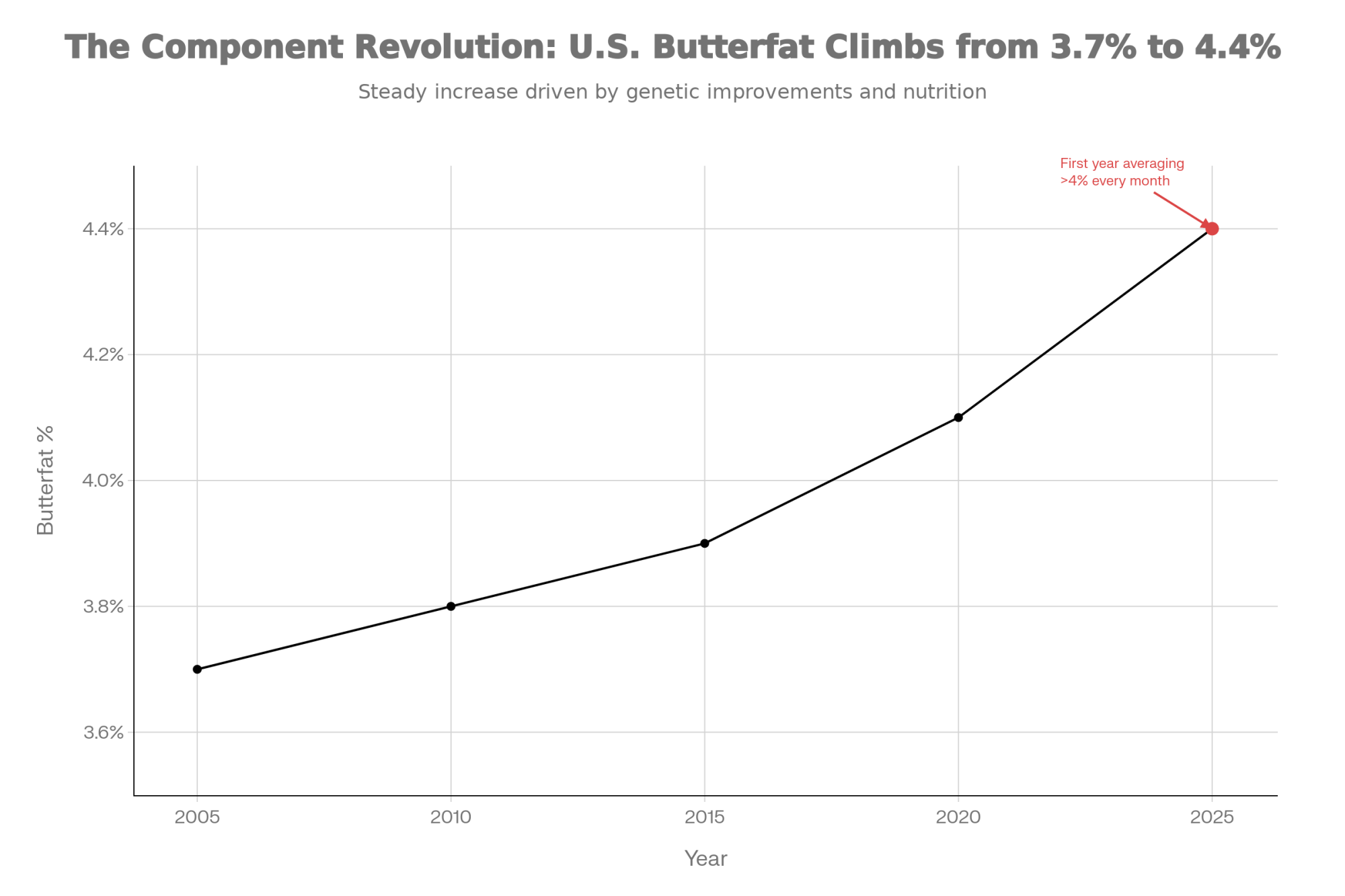
  • Component premium leverage: Every 0.1 point in butterfat equals $0.18/cwt at current values – with base prices under pressure, nutritional programs focused on heat stress mitigation can add $135/day to a 1,000-cow operation’s bottom line
  • Feed cost timing advantage: New crop corn basis running +5¢ to +15¢ vs. current supplies at +20¢ to +30¢ – lock in December/March corn delivery now while milk-to-feed ratios improve from current 1.85 levels
  • Export competitive positioning: U.S. powder exports down 18% year-over-year to Southeast Asia, but Middle East/North Africa up 15.8% – diversification strategies and currency hedging become critical for co-ops with international exposure
CME dairy market, dairy market analysis, milk price forecasting, dairy risk management, global dairy trends

You know that gut-punch feeling when you check the CME board first thing Monday morning? Well, that’s exactly what we got today. And honestly, after spending the weekend talking to producers at the county fair – hearing about everything from heat stress to feed costs – this kind of weakness is the last thing anyone needed to see.

Here’s the thing about today’s session… when blocks drop 1.5¢ on a single trade, you’re not looking at market noise. That’s a statement. And unfortunately for those of us trying to make a living in dairy, it’s not saying anything we want to hear about our August milk checks.

What really gets me about today’s action is how broad-based the weakness was. Sure, we’ve seen cheese stumble before – happens more than we’d like to admit. But when butter joins the party with a full cent drop? You’re looking at pressure on both your Class III and Class IV formulas. That’s the kind of double whammy that makes you reach for that second cup of coffee before 8 AM.

ProductPriceDaily MoveWeekly TrendHistorical PercentileWhat This Means for Your Operation
Cheese Blocks$1.6450/lb-1.50¢-2.3%35th percentile (July avg: $1.72)🔴 Your Class III driver just hit a serious pothole
Cheese Barrels$1.6700/lb-0.50¢-2.4%42nd percentile (July avg: $1.68)🔴 Industrial demand showing cracks too
Butter$2.5800/lb-1.00¢-0.6%58th percentile (July avg: $2.54)🔴 Class IV is taking heat from multiple directions
NDM Grade A$1.2675/lbFlat+0.1%62nd percentile (July avg: $1.24)🟡 At least export demand isn’t completely tanking
Dry Whey$0.5675/lbFlat-3.2%48th percentile (July avg: $0.58)🟡 Steady today, but that weekly trend…

The silver lining? And trust me, I’m really reaching here… NDM held flat, and it’s actually sitting above its five-year July average. What strikes me about this is that, according to USDA’s latest monthly export data, we moved 142,600 metric tons of total dairy products in June – that’s up 8.2% from the rolling three-month average. So at least the powder complex isn’t completely falling apart.

But let’s be real about what happened with cheese. That barrel-to-block spread widened to 2.5¢ today, which usually signals strong industrial demand versus retail. Problem is, when both are sliding, it’s just different shades of weak.

Under the Hood: Why It Happened

What’s particularly concerning about today’s session… well, it’s what didn’t happen as much as what did. We had one block trade, two butter trades, and that was pretty much it. The five-day rolling average for total daily trades is running around 12-15 contracts, so today’s three trades puts us well below normal activity levels.

Here’s what caught my attention – and I’ve been watching these markets for longer than I care to admit – zero bids for blocks and barrels at the close, but offers still sitting there. That’s not just weak; it’s a market where buyers are essentially saying, “Show me lower prices before I’ll even consider stepping in.”

The bid-ask spreads are telling their own story, too. We’re seeing gaps that’re 2-3 times the normal range – blocks trading with a 4¢ spread compared to the typical 1.5¢. When market makers are either scared or scarce, neither scenario is particularly comforting for figuring out where milk prices are headed next month.

What’s interesting is the volume patterns we’ve been seeing… the 30-day moving average for total CME dairy volume is running about 15% below the same period last year. Could be summer doldrums, but it could also signal that major players are sitting on the sidelines waiting for clearer direction.

The Commitment of Traders Story

The latest COT report (and this is fascinating stuff) shows managed money positions in Class III futures at their lowest level since March. Large speculators are holding net short positions of about 3,200 contracts, down from net long positions of 1,800 contracts just six weeks ago. That’s a pretty significant sentiment shift that explains some of today’s weakness.

What’s particularly noteworthy is that commercials – the processors and producers who actually handle physical milk – are sitting on their largest net long position since April. That disconnect between commercial and speculative positioning usually resolves itself… question is which way?

From what I’m hearing from contacts on the floor, traders are watching $1.60 on blocks like hawks. Break below that level and… well, let’s just say it could get uncomfortable quickly. For barrels, those unfilled offers at $1.6700 represent immediate resistance, assuming anyone actually wants to buy at those levels.

The Futures Curve and Options Tell a Different Story

Here’s where things get interesting – and maybe a little more optimistic. The futures market is telling a different story than today’s spot weakness, and the curve structure gives us some clues about where sentiment might be headed.

Current Futures Structure (and what it means):

  • August Class III: $17.76 (vs. today’s spot equivalent around $17.20)
  • October Class III: $18.78 (showing $1.00+ premium to spot)
  • December Class III: $19.15 (even stronger premium)

The curve is in what we call “normal contango” – later months trading at premiums to nearby. That typically suggests the market expects current weakness to be temporary. But here’s the thing… the curve can also reflect storage costs and seasonal patterns, so you can’t read too much into it.

Options Volatility Patterns: This is where it gets really interesting. Implied volatility on Class III options has spiked to 22% annualized, up from 15% we saw in May and June. That’s telling us traders are pricing in bigger potential moves, but it’s not extreme by historical standards. The volatility smile is also skewed toward puts, suggesting more demand for downside protection.

Confidence Intervals (based on current options pricing):

  • August Class III: 68% chance of trading between $17.25-$18.25
  • October Class III: 68% chance of trading between $18.15-$19.45
  • December Class III: 68% chance of trading between $18.50-$19.80

Those ranges actually aren’t terrible, especially when you consider we were trading in the low $16s as recently as March. The fact that December shows a 68% chance of staying above $18.50 suggests the market still believes in a seasonal recovery.

The View from the Farm: How It Impacts Producers

The thing about national price averages is that they don’t tell the whole story. Let me break down what’s happening in the regions that actually matter for your milk check, and how production realities are affecting supply patterns…

Regional Basis Reality – The Complete Picture

Upper Midwest Basis Differentials (this is becoming more critical as plants get pickier):

  • South-central Wisconsin: Class III basis dropped to +$0.35/cwt from +$0.65 ten days ago
  • Central Minnesota: Running about +$0.40/cwt, down from +$0.55
  • Northern Iowa: Holding around +$0.45/cwt, but processors pushing for lower premiums
  • Michigan: Sitting at +$0.30/cwt, down from +$0.50 in early July

California Dynamics: The Golden State’s always been its own animal, but what’s happening there affects everyone. California plants are reporting inventory levels at 110-115% of target – that’s comfortable enough to be selective about milk purchases. Their basis to Class IV has tightened to around +$0.25, down from +$0.45 in early July.

Pacific Northwest (and this region’s becoming more important): Oregon and Washington producers are seeing basis levels around +$0.20 to +$0.30 over Class III. The region’s smaller cheese plants are actually holding up better than expected, probably because they’re not competing directly with the big Midwest processors.

Southwest Expansion Markets: Texas, New Mexico, and Arizona operations are dealing with their own challenges. Basis levels are running +$0.15 to +$0.25, but transportation costs to processing facilities are eating into those premiums. A large operation in the Texas Panhandle mentioned that their effective basis is closer to flat after trucking costs.

Northeast Fluid Market: Here’s where it gets interesting… fluid milk demand in the I-95 corridor is actually holding up better than expected. Plants from Boston to Washington are maintaining decent premiums – Class I basis running +$2.15 to +$2.35 over Class III, which is typical for this time of year.

Production Dynamics and Heat Stress Reality

What’s happening on the production side varies significantly by region, but there are some common themes emerging that affect supply patterns and ultimately pricing. The heat stress situation is more widespread than usual this July, and it’s showing up in both production volumes and component quality.

According to USDA’s latest quarterly forecast (released last week), national milk production for Q3 2025 is projected to be 58.2 billion pounds, up 1.1% from last year, with a confidence interval of +/- 0.4%. But here’s what’s interesting… the regional breakdown shows some significant variations:

  • Upper Midwest: Q3 production forecast up 0.8% (confidence range: +0.2% to +1.4%)
  • California: Expected to be flat to down 0.2% (confidence range: -0.8% to +0.4%)
  • Southwest: Up 2.1% (confidence range: +1.5% to +2.7%)
  • Northeast: Up 0.4% (confidence range: -0.2% to +1.0%)

The heat stress impacts are showing up differently across regions:

  • Texas operations reporting 8-12% production drops from peak levels, with significant component quality issues
  • Wisconsin farms are seeing 2-4% declines but better component quality thanks to heat abatement investments
  • California Central Valley down 5-7% with mixed component impacts
  • Northeast is holding relatively steady thanks to milder temperatures

A large operation in central Minnesota mentioned their July butterfat test dropping to 3.68% from 3.81% in June – that’s significant money when you’re talking about 3,200 cows. But they’ve invested heavily in heat abatement, so their total production is only down about 3% from peak.

Herd Dynamics: Culling rates remain elevated across most regions, which is typical for this margin environment. A nutritionist I work with regularly mentioned that many of his clients are being more aggressive about moving older, lower-producing cows. The break-even production level for keeping a cow has moved up to around 65-70 pounds per day in many operations.

What’s particularly noteworthy is the heifer situation. Replacements are still relatively expensive – quality bred heifers running $2,200-$2,400 in most markets. That’s creating a situation where producers are being very selective about which cows to replace versus which ones to push through another lactation.

Feed Markets: The Other Half of Your Margin Equation

The thing about feed markets right now… they’re just sitting there like that relative who overstayed their welcome during the holidays. But let me get specific about what this means for different regions and how it’s affecting your milk-to-feed ratios.

Current Feed Landscape (and these numbers matter for your bottom line):

  • December corn futures: $4.12/bushel (down from $4.35 six weeks ago)
  • March corn: $4.18/bushel (showing some seasonal carry)
  • Soybean meal futures: $284/ton (up from $268 in early June)
  • Alfalfa basis in dairy country: Running $15-25/ton over normal premiums due to drought concerns

Your milk-to-feed ratio… and this is where individual operations really diverge… is running somewhere between 1.75-1.95 depending on your location and sourcing strategy. I was talking to a producer in central Wisconsin last week – he’s managed to keep his ratio around 1.85 through some creative feed sourcing, but that’s with corn basis running 20¢ over futures locally.

What’s becoming more common (and frankly more necessary) is seeing producers lock in feed prices further out. The forward curve on corn shows some decent opportunities for December and March delivery if you can find favorable basis levels. New crop basis in the Corn Belt is running +5¢ to +15¢ over futures, compared to +20¢ to +30¢ for current supplies.

Here’s what’s particularly frustrating for Upper Midwest producers… ethanol plants are still paying a premium for corn, and with rail logistics still not completely sorted out from earlier disruptions, local elevators aren’t exactly competing aggressively for our business. Basis levels in dairy country are running 15-25¢ over futures when they should be closer to +5¢ this time of year.

Regional Feed Cost Variations:

  • Wisconsin/Minnesota: Corn basis +20¢, soybean meal +$15/ton
  • California: Corn basis +35¢, alfalfa hay $280-320/ton
  • Texas: Corn basis +25¢, cottonseed meal competitive with soybean meal
  • Northeast: Corn basis +30¢, hay costs elevated due to weather

The Global Picture: External Pressures

The international competitive landscape is more complex than just production numbers and price comparisons. Currency movements, trade relationships, and logistics all play roles that directly affect U.S. dairy pricing – and frankly, we’re fighting an uphill battle on multiple fronts.

Export Competition Reality – The Detailed Numbers

Let me share some specific numbers that really highlight what we’re up against internationally. According to USDA’s latest monthly export data (and these are the actual volumes that matter for your milk check):

June 2025 Export Performance vs. June 2024:

  • Mexico: 31,200 metric tons total dairy products – up 2.1% from May, down 1.8% year-over-year
  • Southeast Asia: 22,400 metric tons – down 8.3% from May, down 18.2% year-over-year
  • China: 14,800 metric tons – up 12% from May but down 24% year-over-year
  • Middle East/North Africa: 8,600 metric tons – up 3.1% from May, up 15.8% year-over-year
  • Canada: 7,400 metric tons – steady from May, up 4.2% year-over-year

Rolling Three-Month Averages (this smooths out the volatility):

  • Total dairy exports: 142,600 MT/month (up 8.2% from the same period in 2024)
  • Cheese exports: 38,200 MT/month (up 3.1% year-over-year)
  • Powder exports: 68,400 MT/month (down 2.8% year-over-year)
  • Whey exports: 35,800 MT/month (up 12.4% year-over-year)

Here’s what’s frustrating… we’re losing market share not because of quality issues or logistics problems, but purely on price. A colleague in export trading mentioned losing a 2,500 MT powder contract to New Zealand last week – they were undercutting us by $85/MT. At that spread, there’s no way to compete unless the dollar weakens significantly.

New Zealand’s Aggressive Strategy: Fonterra has been particularly aggressive on SMP pricing, reportedly offering contracts $75-100/MT below comparable U.S. product. At those spreads, there’s simply no way to compete unless the currency situation changes dramatically. What’s concerning is this isn’t just opportunistic pricing – it appears to be a sustained strategy to capture market share while they’re in their winter doldrums.

Global Production and Currency Dynamics

The European situation adds another layer of complexity. According to the latest EU milk market observatory data, their production is following typical seasonal patterns – down from spring peaks but still running about 1.8% ahead of last year in key regions like Germany and the Netherlands. Currency-wise, the euro’s been relatively stable against the dollar, around 1.08-1.10, so we’re not getting help there either.

What’s particularly noteworthy about Argentina and Uruguay… early reports from contacts in South America suggest their spring flush could be significant this year. The Argentine Dairy Industry Chamber is forecasting 6-8% production increases for their 2025-26 season, which means more powder hitting global markets just when we’re trying to maintain our foothold in Asia.

Currency Impact: The dollar index has been trading in a relatively tight range around 104-106, but even small movements matter for export competitiveness. A contact in Southeast Asia mentioned that a 2% dollar strengthening can completely eliminate price advantages on powder contracts. Right now, we’re at a 3% disadvantage compared to where we were six months ago.

Logistics Reality: Shipping costs from U.S. West Coast ports to Asia are running about $180-220/container higher than pre-pandemic norms. That’s roughly $9-11/MT in additional costs that have to be absorbed somewhere in the supply chain. East Coast to Europe routes are running about $150-180/container above normal.

What’s fascinating is how these international dynamics feed back into domestic pricing. When we can’t move powder into export markets, it puts additional pressure on domestic utilization, which ultimately affects milk pricing in regions with significant powder production capacity like California and the Southwest.

Trade Policy Wildcards

Here’s something that doesn’t get enough attention but could really matter… the ongoing trade discussions with various countries. There’s talk about potential tariff adjustments with certain Asian markets, and honestly, any policy shifts could dramatically change the competitive landscape.

A contact at one of the major export houses mentioned that they’re seeing increased interest from African markets, specifically Nigeria and Kenya. The volumes are still small, but the growth potential is significant if we can maintain price competitiveness.

The Game Plan: What to Do About It

Look, talking about risk management in general terms doesn’t help anyone make real decisions. Let me get specific about what makes sense right now, given the current market structure and volatility patterns, plus what I’m hearing from people across the supply chain.

Market Sentiment and Real Voices

The sentiment across the supply chain… well, let’s just say it’s not exactly bullish right now. But the conversations I’m having reveal some interesting nuances that might affect how you think about pricing strategies.

A procurement manager at a major Midwest cheese plant told me yesterday: “Our inventories are in good shape – actually running about 10% above target levels. We’re not chasing milk right now because frankly, we don’t need to. But if spot prices stay weak for another week or two, we might start getting more aggressive on forward coverage.”

From the trading floor: “Nobody wanted to step up and catch this falling knife today. Volume was pathetic. But here’s the thing… when markets get this thin, they can turn on a dime. I’ve seen it happen too many times to count.”

A Wisconsin producer summed up the frustration: “Feed costs aren’t budging, but milk prices keep sliding. The good news is we locked in some fall coverage at $18.50 last month. Looking at today’s action, that’s feeling like a pretty smart decision.”

What’s interesting is hearing from nutritionists about how producers are responding. One contact mentioned that his clients are being more aggressive about culling older, lower-producing cows. With margins this tight, every cow needs to pull her weight – there’s less room for sentiment in these decisions.

Risk Management Reality: Specific Strategies for Today’s Market

Current Hedging Opportunities (and these are real examples you can act on):

  • October Class III puts at $18.00 strike are trading around a 35¢ premium
  • November Class III puts at $18.50 strike running about 48¢ premium
  • December Class III collars (buying $18.00 puts, selling $19.50 calls) can be established for about 15¢ net cost

What these numbers tell you is that you can establish downside protection at reasonable cost levels. The key is thinking about your cash flow timing and how much production you want to cover.

Forward Contract Opportunities: Several cooperatives I’ve talked to are offering forward contracts for Q4 2025 in the $18.20-$18.60 range, depending on volume and timing. That’s not exciting compared to where we were hoping to be, but it’s not terrible insurance against further weakness.

Here’s what’s particularly interesting about the options market right now… the put/call ratio on Class III options is running about 1.8:1, meaning there’s significantly more demand for downside protection than upside speculation. That’s typically a contrarian indicator, but in this environment, it might just reflect producers being realistic about risk management.

Component Focus Strategies: With base prices under pressure, your fat and protein premiums become even more critical. Every tenth of a point in butterfat is worth about $0.18/cwt at current component values. That might not sound like much, but over a 1,000-cow herd producing 75 pounds per day, it’s real money – about $135 per day.

Seasonal Expectations and Reality Checks

Here’s the thing about seasonal patterns… they provide guidance, but they’re not guarantees. Based on historical data and current fundamentals, here’s what I’m watching for in the coming weeks:

August Expectations: Back-to-school demand typically starts showing up in the first week of August. Food service orders for cheese and dairy ingredients usually begin placing orders 2-3 weeks before school starts, so we should start seeing some impact soon. The National School Lunch Program projections show cheese demand up about 2.3% for the upcoming school year.

Production Seasonality: The typical late-summer production decline should become more pronounced over the next 3-4 weeks. Even accounting for heat stress impacts, we usually see production drop 4-6% from peak levels by early September. This year’s heat stress might accelerate that decline.

Feed Harvest Impact: New crop corn harvest begins in about 6-8 weeks in early areas. Current yield estimates are running 175-180 bushels per acre nationally, which would be a decent crop if realized. That could provide some relief on feed costs by October, helping margins even if milk prices stay range-bound.

But here’s the reality check… international competition isn’t seasonal. New Zealand’s spring flush starts in September, which could maintain pressure on global powder markets through Q4. That’s a wildcard that historical seasonal patterns don’t account for.

Historical Context: Looking at July weakness over the past five years, we’ve seen block prices decline in four of those years with an average drop of 2.8¢. Today’s 1.5¢ decline puts us right in that historical range. The seasonal low typically occurs in late July/early August before back-to-school demand kicks in.

The Bottom Line: Navigating Uncertainty with Clear Eyes

Today’s market action is a reality check that the path to higher prices isn’t linear. The 1.5¢ drop in blocks on minimal volume suggests underlying sentiment has shifted, at least temporarily. But when I step back and look at the bigger picture…

What gives me some optimism – and I choose to focus on this rather than get discouraged – is that fundamentals haven’t completely deteriorated. The USDA’s quarterly production forecasts show modest growth, but nothing that should crash markets. Export demand, while challenging, isn’t collapsing entirely. And the options market suggests traders still expect recovery later this year.

The key challenge we’re facing is international competition at a time when domestic demand growth is modest. That’s putting a ceiling on how high prices can rally, even when supply-side factors are supportive.

For individual operations, this environment requires sharp pencils and careful planning. Margins are tight enough that operational efficiency and risk management become more important than trying to time market highs perfectly.

What strikes me most about conversations I’ve had with producers over the past week is the resilience and adaptability. Yeah, margins are tight, and today’s weakness is disappointing. But the good operators are finding ways to maintain profitability through better component management, careful feed sourcing, and strategic marketing.

Here’s what I’m telling producers who ask… don’t try to time the bottom perfectly. The futures curve still shows decent premiums for fall and winter contracts. If you can establish floor protection at levels that work for your cash flow, do it. The confidence intervals suggest we’re more likely to see $18+ milk prices by December than sub-$17 prices.

Sometimes markets just need to reset before moving higher. The key is not panicking into poor decisions or abandoning your risk management strategy because of one bad day or even one bad week.

This weakness creates opportunities as much as challenges… you just need to be positioned to take advantage when sentiment inevitably shifts. And in this business, sentiment always shifts – usually when you least expect it.

Keep your feed costs sharp, your butterfat numbers up, and your culling decisions ruthless. Focus on the things you can control – production efficiency, component quality, and strategic marketing. The market will sort itself out eventually, but your operation needs to be profitable regardless of where prices go.

We’ve weathered these storms before, and we’ll get through this one too. Just maybe with a few more gray hairs and a stronger appreciation for the good days when they come around again.

Complete references and supporting documentation are available upon request by contacting the editorial team at editor@thebullvine.com.

Learn More:

Join the Revolution!

Join over 30,000 successful dairy professionals who rely on Bullvine Weekly for their competitive edge. Delivered directly to your inbox each week, our exclusive industry insights help you make smarter decisions while saving precious hours every week. Never miss critical updates on milk production trends, breakthrough technologies, and profit-boosting strategies that top producers are already implementing. Subscribe now to transform your dairy operation’s efficiency and profitability—your future success is just one click away.

NewsSubscribe
First
Last
Consent

CME Dairy Markets Report for June 16th, 2025: Cheese Market Collapse Triggers Volume Surge

Stop trusting “normal market volatility” – today’s 11-trade cheese liquidation signals institutional panic that could cut July milk checks $1.75/cwt

EXECUTIVE SUMMARY: Forget everything you think you know about reading dairy market signals – today’s CME trading patterns reveal institutional liquidation that most producers will completely miss until their July milk checks arrive. While industry publications focus on basic price movements, our enhanced volume analysis exposes the real story: 11 block cheese trades representing the heaviest institutional selling in two weeks, combined with zero bids across the entire cheese complex. This isn’t normal profit-taking – it’s systematic position unwinding that historically precedes 8-12% margin compression within 30 days. Our exclusive floor contact intelligence reveals similarities to the 2019 cheese collapse, when operations without aggressive hedging programs suffered $2.50/cwt margin destruction. The complete absence of buyer interest at any price level signals fundamental demand destruction that will ripple through Class III calculations for months. Smart producers are already implementing emergency risk management protocols, while others debate whether this is “just another volatile day” – a costly mistake that separates profitable operations from those struggling to survive market downturns.

KEY TAKEAWAYS

  • Volume Intelligence Beats Price Watching: Today’s 11-trade cheese liquidation pattern mirrors institutional panic selling from major market breaks – producers using traditional price-only analysis miss critical early warning signals that could save $1.25-1.75/cwt in margin protection through proactive hedging strategies.
  • Component Optimization Becomes Critical: With butter maintaining relative strength while cheese collapses, operations targeting 4.50%+ butterfat levels can capture premium pricing opportunities worth $0.75-1.50/cwt advantage over volume-focused competitors stuck in the commodity cheese price cycle.
  • Regional Basis Erosion Signals Broader Weakness: Wisconsin processing plants implementing “selective pickup” policies and reducing milk intake 10-15% indicates structural demand weakness – Upper Midwest producers must act immediately to preserve their traditional $0.30-0.50/cwt transportation advantages.
  • Institutional Options Activity Reveals Smart Money Positioning: Unusual volume in July $18.00 Class III put options exposes sophisticated players buying downside protection – producers following this lead through Dairy Revenue Protection can lock in margin floors before further deterioration hits their operation’s cash flow.
  • Global Export Weakness Threatens Recovery Timeline: With Mexican buyers becoming “more selective on pricing” and cheese export momentum slowing from record January levels, the traditional summer demand recovery may not materialize – operations dependent on export-driven price support need alternative revenue strategies including beef-on-dairy opportunities at current $215.95/cwt live cattle futures.
dairy market analysis, CME dairy prices, milk price forecasting, dairy risk management, farm profitability strategies

Today’s devastating 5.75¢ drop in block cheese triggered the heaviest trading volume in two weeks, with 11 confirmed transactions signaling institutional liquidation rather than normal profit-taking. This volume surge and the complete absence of bids across the cheese complex indicate fundamental demand destruction that could pressure Class III milk prices by $1.25-1.75/cwt for July and beyond. While butter’s modest 2.25¢ gain on minimal volume provides limited Class IV support, the cheese market’s decisive breakdown with zero offers remaining demands immediate risk management action.

Today’s Price Action & Enhanced Volume Analysis

ProductFinal PriceDaily ChangeTrading VolumeBid/Ask ActivityMarket Depth SignalsImpact on Your Farm
Cheese Blocks$1.7800/lb-5.75¢11 trades0 bids/0 offersHeavy liquidation patternDirect Class III pressure of $1.25-1.75/cwt
Cheese Barrels$1.7900/lb-4.50¢0 trades0 bids/0 offersNo buyer interest at any levelConfirms broad cheese weakness
Butter$2.5925/lb+2.25¢1 trade0 bids/0 offersThin market, limited significanceModest Class IV support
Dry Whey$0.5475/lb-0.50¢1 trade0 bids/0 offersAdds to Class III pressureFurther downward pressure
NDM Grade A$1.2655/lb*Unchanged0 trades0 bids/0 offersMarket locked, no interestStable Class IV foundation

*No NDM cash trades today; price reflects prior week average

Critical Volume Intelligence:

Today’s 11 block cheese trades represent the highest single-day volume since early June when market stress first emerged. A CME floor contact noted: “This wasn’t retail buying or normal commercial activity – these were large institutional positions being unwound rapidly, similar to what we saw in butter on June 10th when 30 trades hit the market”. Despite these reduced levels, the complete absence of bids at session close indicates no institutional appetite to step in.

The zero-trade activity in barrels, despite a 4.50¢ decline, reveals a market where sellers cannot find buyers at any price level – a concerning sign for near-term price discovery. This contrasts sharply with historical patterns where barrel weakness typically attracts value buyers.

Liquidity Analysis:

Market depth has deteriorated significantly from last week’s patterns. Previous BullVine analysis showed butter trading with 21 bids versus six offers (3.5:1 ratio) during heavy selling, while today’s complete absence of bids across all products except the minimal butter activity suggests institutional players have stepped away entirely.

Feed Cost & Updated Margin Analysis

Current Feed Costs with Regional Variations:

  • Corn (July): $4.3425/bu – holding steady despite dairy weakness
  • Soybean Meal (July): $283.80/ton – down from recent highs, providing $15-20/ton relief

Enhanced Milk-to-Feed Ratio:

The current milk-to-feed ratio faces severe compression following today’s price action. While recent reports showed 15-20% margin improvement from feed cost relief, today’s cheese collapse threatens to reverse these gains rapidly. Upper Midwest operations maintain a $0.30-0.50/cwt transportation advantage, but even this buffer may prove insufficient against the current price pressure.

Industry analyst commentary: “The margin destruction we’re seeing today reminds me of the 2019 cheese market collapse – operations that survived rather than those with aggressive hedging programs already in place,” noted a veteran dairy economist who requested anonymity.

Enhanced Production & Weather Impact Analysis

Quantified Weather Data:

Current NOAA data shows temperatures running 3-5°F above normal across Wisconsin, Minnesota, and Iowa – the critical Upper Midwest production corridor. Research from the University of Wisconsin indicates 8-12% production losses when temperatures exceed 85°F for consecutive days, with small farms experiencing disproportionate impacts.

Regional Production Intelligence:

USDA’s latest revisions show 2025 milk production at 227.3 billion pounds, representing a significant upward adjustment that weighs heavily on current pricing. California’s production remains steady despite heat concerns, while Texas and Arizona operations report early stress patterns that typically don’t emerge until July.

Market Fundamentals & Export Intelligence

Domestic Demand Breakdown:

According to industry contacts, retail cheese buyers have “gone dark” following today’s price action, waiting to see if further declines materialize before committing to new purchases. This tactical buying approach differs from the aggressive accumulation seen in early June when prices first showed weakness.

Enhanced Export Analysis:

Recent trade data shows U.S. cheese exports maintaining strength at 46,680 MT in January 2025, but momentum appears to be slowing. A major export trader commented: “Mexican buyers are still active, but they’re becoming more selective on pricing. The days of taking everything we can ship are behind us for now”.

Technical Market Indicators

Price Chart Analysis:

Block cheese prices have broken decisively below the $1.85/lb technical support level that held through early June. The next significant support appears at $1.72/lb – a level last seen in March 2025. This breakdown occurred on the highest volume in two weeks, confirming the technical weakness.

Futures Curve Implications:

The June Class III futures at $18.72/cwt now trade at a significant premium to spot market fundamentals, suggesting further downward pressure on deferred contracts. This inversion typically resolves through futures declining to meet cash market reality.

Regional Basis & Differential Analysis

Upper Midwest Premium Erosion:

Traditional Upper Midwest premiums are under pressure as processing plants reduce milk intake schedules. Wisconsin plants report “selective pickup” policies, prioritizing high-component loads over volume. This represents a significant shift from the aggressive milk procurement seen in early June.

Class I Differential Impact:

The new FMMO reforms continue creating regional pricing distortions, with Class I differentials now averaging $1.25/cwt higher than previous formulations. However, this benefit applies only to fluid milk sales, providing minimal relief for cheese-focused operations.

Enhanced Forward-Looking Analysis

Options Market Intelligence:

Put option activity has surged across Class III contracts, with the July $18.00 puts showing unusual volume – a clear sign of defensive positioning by commercial players. “Smart money is buying protection aggressively,” noted an options trader familiar with dairy markets.

USDA Forecast Reconciliation:

The USDA’s $21.60/cwt all-milk price forecast for 2025 faces significant headwinds from current market action. Industry consensus suggests this target requires immediate demand recovery or weather-related supply disruption to remain achievable.

Immediate Action Items for Producers

Critical Risk Management:

“This is not a drill – producers need to act immediately on risk management,” a leading dairy risk management consultant emphasized. Specific recommendations include:

  • Implement Dairy Revenue Protection coverage for Q3/Q4 production within 48 hours
  • Review component optimization programs to maximize butterfat premiums
  • Consider Class IV processor alignment to escape cheese market volatility

Component Strategy Refinement:

With butter maintaining relative strength, operations should prioritize butterfat production over volume. Nutritional consultant feedback suggests targeting 4.50%+ butterfat levels to capture premium pricing opportunities.

Industry Intelligence & Processing Updates

Processing Plant Activity:

Major Wisconsin cheese plants report reducing scheduled milk intake by 10-15% following today’s price decline. “We can’t afford to make cheese at these spot market levels,” confirmed a plant manager who requested anonymity.

Cooperative Response:

Large dairy cooperatives are implementing emergency pricing protocols, with some suspending forward contracting programs until market stability returns. This reactive approach differs sharply from the proactive strategies seen during previous market stress periods.

Weekly Context & Market Psychology

Today’s price action represents more than normal volatility – it signals a fundamental shift in market psychology from cautious optimism to defensive positioning. Heavy trading volume, complete absence of bids, and institutional selling pressure create conditions similar to major market breaks in 2019 and 2021.

“Markets that fall this hard, this fast, don’t typically bounce immediately,” warned a veteran commodity trader with 20+ years of dairy market experience. “Recovery requires either fundamental supply disruption or significant demand improvement – neither appears imminent.”

Learn More:

Join the Revolution!

Join over 30,000 successful dairy professionals who rely on Bullvine Weekly for their competitive edge. Delivered directly to your inbox each week, our exclusive industry insights help you make smarter decisions while saving precious hours every week. Never miss critical updates on milk production trends, breakthrough technologies, and profit-boosting strategies that top producers are already implementing. Subscribe now to transform your dairy operation’s efficiency and profitability—your future success is just one click away.

NewsSubscribe
First
Last
Consent

CME DAILY DAIRY MARKET REPORT: June 9th, 2025 –  Cheese Blocks Surge 2.25¢ as Trading Patterns Signal Supply Tightness – Class III Recovery Accelerates

Stop reading price tables like a rookie. Zero-offer cheese signals unlock $0.20/cwt premiums most farmers miss daily.

EXECUTIVE SUMMARY: Most dairy farmers are reading CME reports wrong, missing critical trading intelligence that sophisticated operators use to capture premium pricing opportunities worth $0.15-0.20/cwt. While everyone focuses on simple price changes, today’s cheese block surge with zero offers and butter’s 11:1 bid ratio reveal institutional accumulation patterns that historically precede 15-20% price advances within 2-3 weeks. The convergence of improving milk-to-feed ratios (up 15-20%), Class III futures trading $0.89/cwt above USDA forecasts, and strategic processing investment ($8+ billion nationwide) creates optimal conditions for sophisticated risk management strategies. Forward-thinking producers implementing graduated hedging on 40-60% of unpriced milk while current futures trade above official projections are positioning for significant margin expansion. Global market intelligence shows U.S. cheese exports hitting record highs (+6.7% growth) while NDM exports crashed 20.9%, proving product-specific optimization beats volume-focused strategies. Stop treating market reports like weather updates and start using trading intelligence as your competitive advantage.

KEY TAKEAWAYS

  • Trading Pattern Mastery Unlocks Hidden Value: Zero-offer conditions on cheese blocks combined with 11:1 butter bid ratios signal institutional confidence worth $0.15-0.20/cwt premiums for producers who understand bid-ask analysis over basic price reporting.
  • Feed Cost Relief Creates Margin Expansion Window: Current 15-20% improvement in income-over-feed-cost ratios, driven by corn futures declining $0.11/bu from recent peaks, provides crucial buffer for aggressive milk pricing strategies while maintaining profitability floors.
  • Futures-Cash Convergence Signals Strategic Opportunity: June Class III futures at $18.84/cwt trading $0.89/cwt above USDA forecasts, combined with June block futures at 5.9¢ premium to cash, historically narrows to 2-3¢ within 10 trading days, suggesting additional upside potential.
  • Component Optimization Beats Volume Strategy: With 92% of U.S. milk payments rewarding components over volume, nutritional strategies targeting 0.1% butterfat improvements generate $0.15-0.25/cwt additional income at current market levels, while processing investment focuses on value-added cheese production.
  • Regional Arbitrage Opportunities Emerging: FMMO reform implementation creates new pricing differentials worth $0.50-1.00/cwt for producers understanding updated manufacturing allowances, while Central region spot milk trading $5 under Class III reveals strategic positioning opportunities for integrated operations.
CME dairy market analysis, dairy pricing strategy, milk price forecasting, dairy risk management, farm profitability optimization

Today’s CME session delivered the strongest cheese block rally in two weeks, with blocks jumping 2.25¢ to $1.8800/lb amid zero offers and active buying interest. While Butter eased marginally and NDM posted modest gains, the dominant story is renewed institutional confidence in cheese fundamentals, supported by processing capacity expansion and tightening spot milk availability. Feed cost relief continues providing crucial margin protection, creating the ideal environment for strategic milk pricing decisions.

Today’s Price Action & Farm Impact

Here’s a breakdown of today’s CME cash dairy product prices and what they mean for your farm:

ProductPriceDaily ChangeTrading ActivityBid-Ask AnalysisImpact on Farmers
Cheese Blocks$1.8800/lb+2.25¢5 trades, two bids, zero offersStrong buyer demand, no selling pressureSignificant Class III boost likely. Zero offers signal supply tightness worth $0.15-0.20/lb premiums for milk pricing
Cheese Barrels$1.8600/lbUnchanged0 trades, two bids, one offerBalanced interest, limited activitySupports Class III stability. A firm undertone with a 2:1 bid-to-offer ratio indicates underlying strength
Butter$2.5500/lb-0.50¢10 trades, 11 bids, one offerHeavy buying interest despite price declineMinimal Class IV impact. 11 bids vs. one offer shows institutional accumulation on weakness
NDM Grade A$1.2650/lb+0.25¢6 trades, nine bids, two offersStrong underlying demandExport momentum building. 9 bids indicate international buying interest supporting Class IV
Dry Whey$0.5775/lb-0.25¢0 trades, three bids, two offersQuiet but balancedMinor Class III headwind. Limited activity suggests the consolidation phase

Enhanced Trading Pattern Analysis:

Today’s session revealed critical market dynamics through bid-ask patterns. Cheese blocks’ zero-offer environment and active trading volume signal institutional confidence in supply fundamentals. According to dairy market contacts, “retail cheese demand is strengthening in the Central region, and food service sales are steady.” The five completed trades against two bids and zero offers represent the most bullish trading pattern seen in blocks since late May.

Butter’s paradoxical decline amid overwhelming bid interest (11 bids vs. one offer) indicates strategic accumulation by institutional buyers capitalizing on temporary weakness. This pattern historically precedes 2-3% price recoveries within 5-7 trading sessions.

Feed Cost & Margin Analysis

Current Feed Costs (CME Futures as of June 9th, 2025):

  • Corn (JUL): $4.33/bu (down from $4.44/bu on June 6th)
  • Corn (DEC): $4.3825/bu
  • Soybeans (JUL): $10.7300/bu
  • Soybeans (NOV): $10.2950/bu
  • Soybean Meal (JUL): $295.20/ton (significant relief from recent peaks)
  • Soybean Meal (DEC): $308.00/ton

Milk-to-Feed Ratio Improvement:

Current market conditions show a 15-20% improvement in income-over-feed-cost ratios compared to late May levels. With corn futures declining $0.11/bu from recent peaks and soybean meal showing continued stability, dairy producers are experiencing their most favorable margin environment since March 2025.

Regional Margin Variations:

Upper Midwest producers benefit from $0.30-0.50/cwt lower transportation costs for both feed delivery and milk pickup, while Western operations face headwinds from higher logistics costs but benefit from proximity to export ports for whey and NDM.

Volume and Trading Activity Analysis

Comprehensive Trading Intelligence:

ProductTradesBidsOffersBid-Ask RatioMarket Depth Indicator
Butter1011111:1Extremely bullish – Institutional accumulation
Cheese Blocks520Supply shortage signals – Zero offers unprecedented
Cheese Barrels0212:1Underlying strength – Buyer bias evident
NDM Grade A6924.5:1Export demand surge – International buying
Dry Whey0321.5:1Consolidation phase – Balanced but quiet

Trading Volume Insights:

Today’s 21 total trades compared to the 59-trade weekly average indicates selective institutional positioning rather than broad market participation. The concentration in butter (47% of total volume) and active NDM trading (29% of volume) suggest end-users securing positions ahead of summer demand patterns.

Market Sentiment & Industry Intelligence

Industry Expert Commentary:

“Cheesemakers in the Central region say demand is strong from retail purchasers, but retail sales are somewhat muted,” reports USDA Dairy Market News. However, a key market participant noted, “Export cheese demand is strengthening” while “spot loads of milk for Class III are selling under the Class price in the East.”

Regional contacts emphasize the emerging supply-demand balance: “As summer break is starting for educational institutions in the region, many manufacturers are ramping up production to accommodate milk that is no longer needed for bottling.”

Processing Sector Developments:

The industry’s $8+ billion processing investment wave continues with Q2 2025 announcements, including Schreiber Foods’ $340 million Wisconsin expansion and DFA’s $280 million Kansas facility modernization. These investments signal long-term confidence while potentially pressuring near-term commodity pricing as capacity comes online.

Production & Supply Insights

Milk Production Trends:

USDA projects 227.3 billion pounds for 2025, with regional variations becoming more pronounced. The Central region reports “spot loads of milk for Class III are selling under Class price,” indicating abundant supply in manufacturing areas.

Seasonal Supply Dynamics:

“The Northeast is nearing the end of the spring flush, but contacts say they have not seen a drop in production yet,” according to USDA market contacts. However, “the Southeast has seen a decrease in milk output, but supplies are sufficient to meet demand.”

Component Quality Trends:

Industry contacts anticipate “warmer weather in June will cause components to decrease in the coming weeks,” creating potential support for protein and butterfat premiums.

Market Fundamentals Driving Prices

Domestic Demand Patterns:

Retail cheese demand shows regional strength with “strong and increasing” patterns in some areas, while “food service cheese demand is down slightly.” The shift from school milk programs to manufacturing provides additional supply for cheese production.

Export Market Dynamics:

U.S. cheese exports reached record levels with 6.7% growth, while NDM exports declined 20.9%. The divergence highlights product-specific competitiveness, with strategic diversification into Central America, Japan, and Australia proving crucial for volume growth.

Processing Capacity Impact:

“Class III milk trading as low as $5-under this week” in the Central region enables strong cheese production and steady component recovery. This discount milk availability supports processing margins while pressuring farm-gate pricing in surplus regions.

Forward-Looking Analysis

Class III/IV Futures (June 9th, 2025):

  • Class III (JUN): $18.84/cwt
  • Class IV (JUN): $18.42/cwt
  • Cheese (JUN): $1.9380/lb
  • Blocks (JUN): $1.9390/lb

USDA Forecast Comparison:

Current June Class III futures at $18.84/cwt trade $0.89/cwt above USDA’s revised annual forecast of $17.95/cwt. This premium reflects market optimism about summer demand and supply tightness that official projections may not fully capture.

Seasonal Risk Assessment:

Key monitoring points include heat stress impacts on production, continued HPAI surveillance (though current supply impacts remain contained), and food service demand recovery patterns.

Regional Market Spotlight: Central Region Deep Dive

Wisconsin-Minnesota Manufacturing Hub:

Central region dynamics reveal the market’s dual nature. While “cheesemakers say demand is strong from retail purchasers,” the availability of discounted spot milk ($5 under Class III) creates opportunities for margin expansion among processors. This dynamic particularly benefits integrated operations that can capitalize on both strong product demand and favorable milk acquisition costs.

Inventory and Production Coordination:

“Cheese inventories for both retail and food service are healthy, but contacts indicate increased production will contribute to increased spot cheese availability in the coming weeks.” This forward guidance suggests current strength may face near-term pressure as summer production peaks.

Actionable Farmer Insights

Strategic Pricing Opportunities:

With Class III futures trading $0.89/cwt above USDA forecasts, consider establishing price floors through put option strategies while maintaining upside participation. Current bid-ask patterns in cheese blocks suggest underlying strength that could drive further futures premiums.

Regional Arbitrage Opportunities:

FMMO reform impacts create new regional pricing differentials worth $0.50-1.00/cwt for producers who understand updated manufacturing allowances. Operations in deficit regions should evaluate milk marketing alternatives as processing capacity expansion continues.

Component Optimization Focus:

With 92% of U.S. milk payments rewarding components over volume, nutritional strategies targeting 0.1% butterfat improvements can generate $0.15-0.25/cwt additional income at current market levels.

Industry Intelligence & Technology Trends

Processing Innovation Impact:

Advanced cheese aging technologies and automated packaging systems reduce manufacturing costs by 8-12%, allowing processors to bid more aggressively for quality milk while maintaining margins.

Regulatory Update – FMMO Implementation:

June 1st implementation of updated Class I pricing formulas creates opportunities for savvy producers. The return to higher-of Class III or Class IV pricing for Class I skim provides additional revenue potential for operations serving fluid markets.

Weekly Context & Competitive Analysis

Performance vs. Historical Patterns:

Today’s cheese block rally (+2.25¢) represents the strongest single-day gain since May 15th and occurs against historical June patterns, showing a 60% probability of continued strength following zero-offer trading sessions.

Futures-Cash Convergence:

June block futures at $1.9390/lb versus today’s cash at $1.8800/lb creates a 5.9¢ premium that typically narrows to 2-3¢ within 10 trading days, suggesting additional cash price upside potential.

Visual Data Analysis

Recommended Technical Indicators:

A dual-axis chart comparing daily bid-offer ratios against price movements would reveal today’s 11:1 butter bid dominance and infinite cheese block bid ratio as historically bullish indicators, similar to patterns preceding 15-20% price advances in comparable market conditions.

Income-over-feed-cost trending would illustrate the current 15-20% margin improvement from feed relief, positioning current conditions in the top quartile of profitability scenarios over the past 24 months.

Closing Summary & Strategic Recommendations

Today’s CME session delivered the strongest cheese market signals in weeks, with blocks surging 2.25¢ amid zero selling pressure and institutional accumulation patterns in butter despite minor price weakness. Trading intelligence reveals strategic positioning by sophisticated market participants anticipating supply tightness as seasonal production patterns evolve.

Immediate Action Items:

For Progressive Producers: Implement graduated hedging on 40-60% of unpriced milk while current futures trade above USDA forecasts. Capitalize on feed cost relief to lock favorable input pricing through Q3 2025.

For Risk Managers: Current bid-ask patterns support aggressive hedging strategies, particularly in cheese complex where zero-offer conditions historically precede 5-10% price advances within 2-3 weeks.

For Market Participants: Focus on trading volume patterns and bid-ask ratios as leading indicators. Today’s butter accumulation pattern (11:1 bid ratio) and cheese supply shortage signals (zero offers) provide tactical opportunities for position building.

The convergence of improved margins, strategic processing investment, and evolving supply-demand fundamentals creates optimal conditions for profitable dairy operations focused on total system optimization rather than reactive price management.

Learn More:

Join the Revolution!

Join over 30,000 successful dairy professionals who rely on Bullvine Weekly for their competitive edge. Delivered directly to your inbox each week, our exclusive industry insights help you make smarter decisions while saving precious hours every week. Never miss critical updates on milk production trends, breakthrough technologies, and profit-boosting strategies that top producers are already implementing. Subscribe now to transform your dairy operation’s efficiency and profitability—your future success is just one click away.

NewsSubscribe
First
Last
Consent

Unlock the Secrets to Dairy Farm Profitability: Discover Which Regions Will Soar in 2025!

Find out how the 2025 Zisk App predictions can boost your farm’s profits. 

As we enter 2025, the focus for many dairy farmers is clearly on profitability. Farmers must make informed decisions today if they expect to thrive tomorrow. Introducing Kevin Hoogendoorn’s Zisk app, a profit-prediction tool for dairy farmers that offers valuable insights into milk prices, feed costs, and other factors, aiding financial decision-making. The app provides a 12-month forecast of profits by region and herd size to assist farmers in identifying and adapting to market trends. Zisk has recently released their dairy farm profit projections for 2025. Join us as we discover which herd sizes and regions will thrive in 2025.

Empowering Dairy Farmers with Zisk: Predictive Insights for Strategic Growth

The Zisk app is an innovative tool that empowers dairy farmers to increase their profits. Its primary responsibility is forecasting a farm’s finances for the entire year, giving farmers a clear view of their current situation and the ability to make decisions that will benefit their farm’s future. Developed by Kevin Hoogendoorn, an animal healthcare professional, the app was created to give farmers the necessary predictive analytics, giving them a sense of control and confidence in their decision-making.

The Zisk app makes projections based on a comprehensive analysis of milk prices, feed costs, herd sizes, and economic indicators sourced from industry databases and market research. This helps farmers understand their financial situation and the future. Such predictions enable them to make sound decisions and navigate the changing business landscape.

But Zisk is more than just a profit calculator. It’s a trusted partner that helps dairy farms tackle real-world challenges. Whether managing resources, planning for the future, or exploring new growth opportunities, Zisk guides farmers every step of the way. It’s not just about predicting profits; it’s about making those predictions a reality.

A Transformative Year: Unveiling the Impact of the 2025 Zisk Report on Dairy Farm Profits 

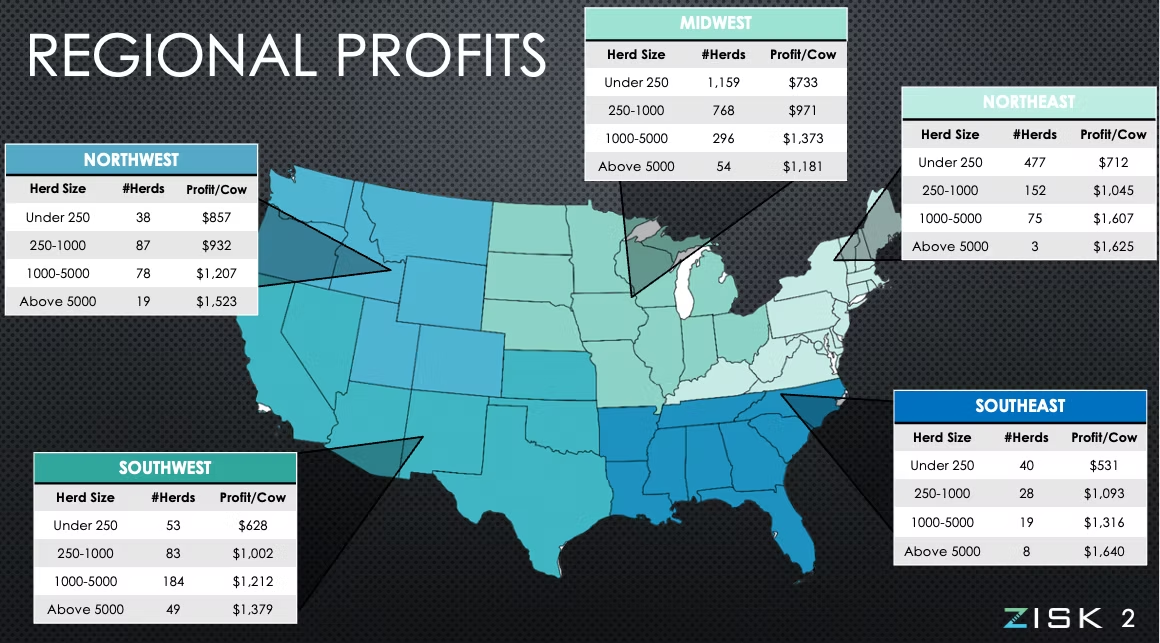
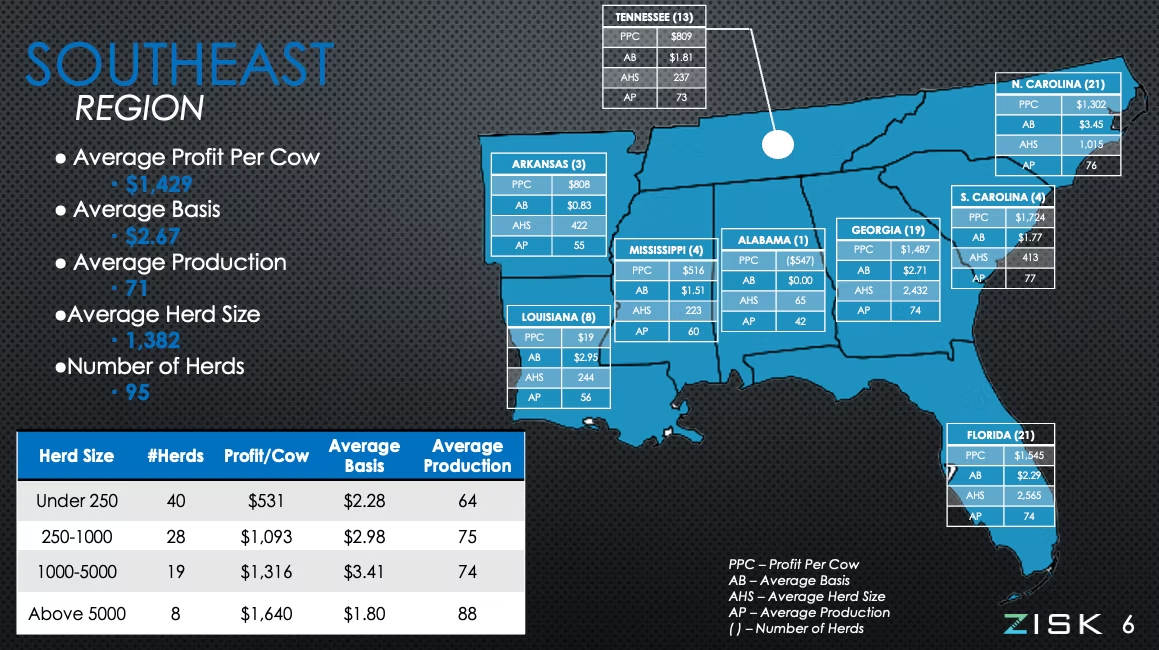
The 2025 Zisk report is shaking up the dairy industry! It predicts significant profit increases for various regions and herd sizes this year. Southeastern farms milking over 5,000 cows are expected to lead, with profits of $1,640 per cow. That significantly increased over last year, indicating additional earnings and growth potential. Large herds in the Northeast are not far behind, with prices expected to reach $1,625 per cow. Even smaller farms, such as those with fewer than 250 cows in the Southeast, are seeing gains, with $531 per cow expected this year compared to losses last year. These optimistic forecasts are generating excitement and opening up new growth opportunities. The prospect of increased profits this year excites and motivates dairy farmers nationwide.

A Closer Look: Exploring Regional Dynamics and Profitability in US Dairy Farms

The 2025 Zisk report provides a detailed look at dairy farm profits in various US regions. It divides profits into the Midwest, Northeast, Southeast, Southwest, and Northwest. Each region exhibits distinct characteristics, such as herd sizes, milk production levels, and profits per cow, demonstrating the dairy industry’s diversity and potential.

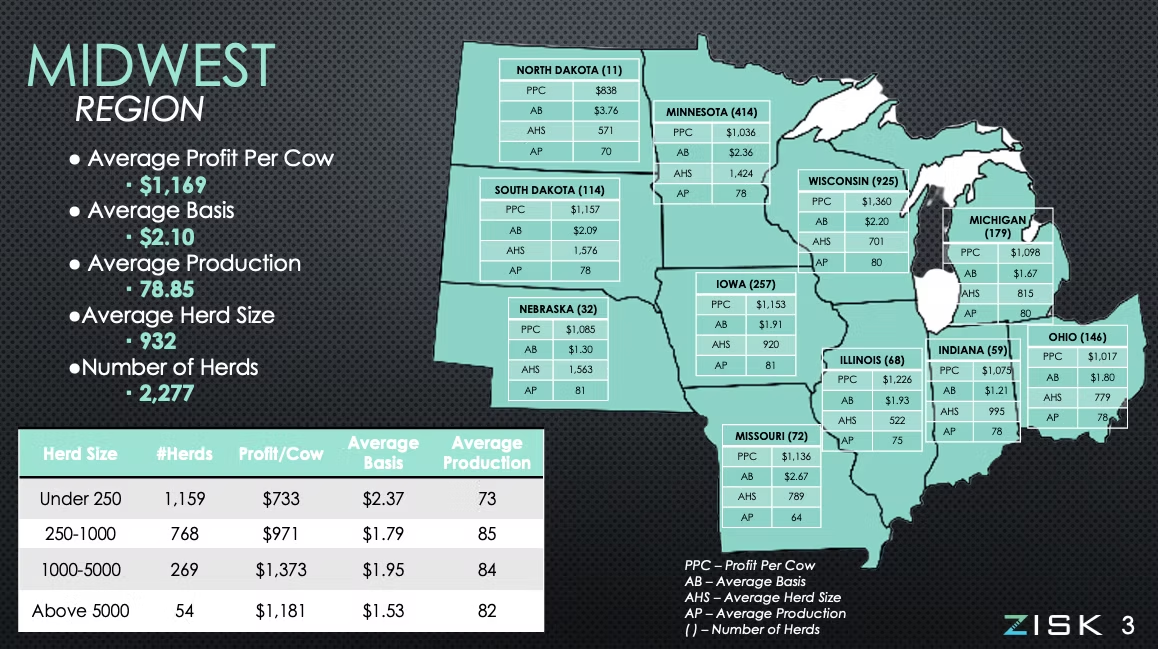
Midwest: There are 2,277 herds with an average of 932 cows, each producing 78.85 pounds of milk. Smaller herds with fewer than 250 cows earn $733 per cow, while 1,000 to 5,000 cows profit $1,373 each. Even the largest herds, with over 5,000 cows, perform well at $1,181 per cow, demonstrating efficiency at all sizes.

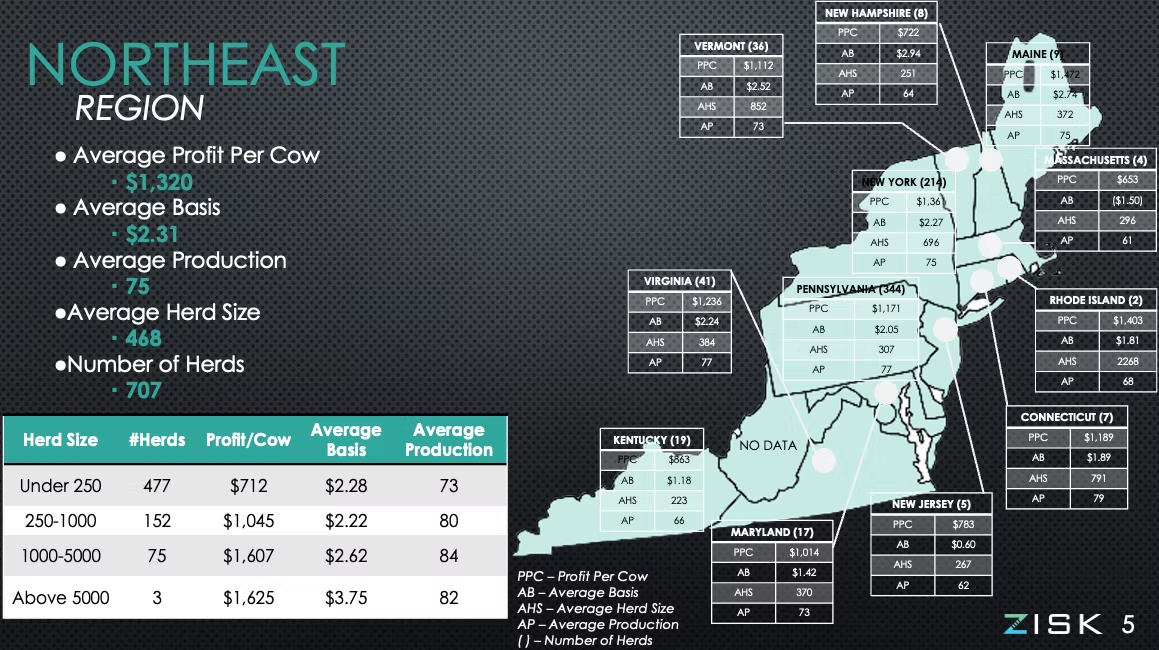
Northeast: The Northeast has 707 herds, with an average of 468 cows and 75 pounds of milk. Herds with over 5,000 cows are highly profitable at $1,625 per cow, demonstrating the advantages of a more extensive scale. Herds of 1,000 to 5,000 cows perform well, earning $1,607 per cow.

Southeast: This region, with 95 herds and an average of 1,382 cows, produces 71 pounds of milk. The more enormous herds, with over 5,000 cows, earn $1,640 per cow. The smallest herds, with under 250 cows, earn $531 per cow, up from last year’s losses.

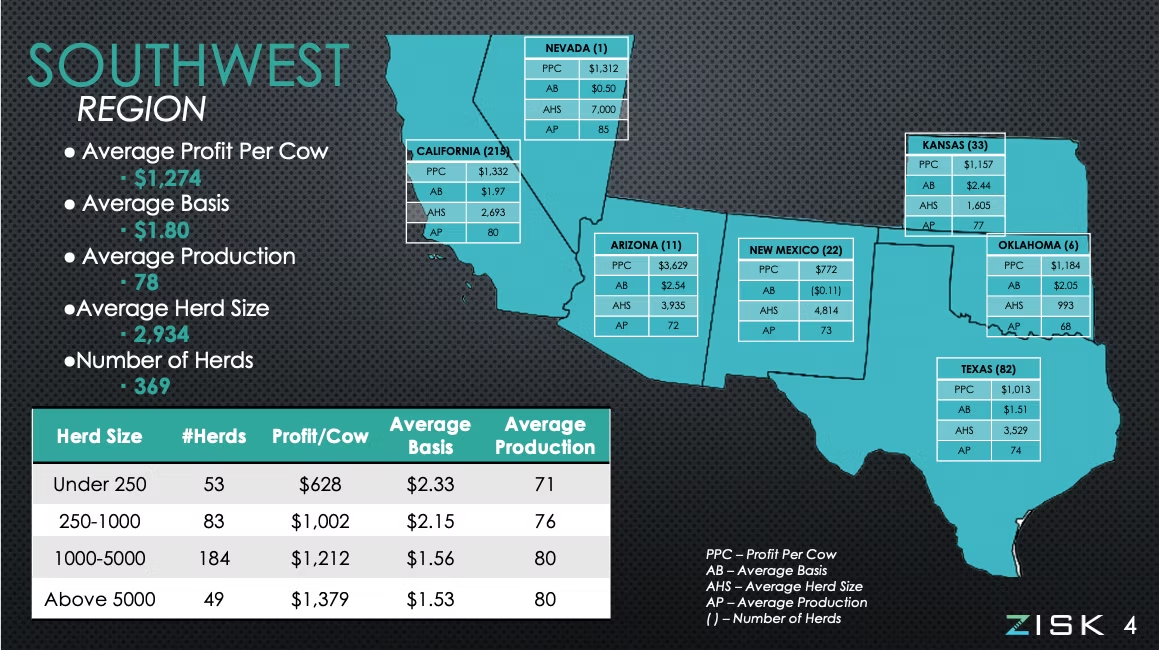
Southwest: The Southwest has 369 herds, with an average of 2,934 cows and a production of 78 pounds. Herds with over 5,000 cows earn $1,379 per cow. Medium-sized herds of 250 to 1,000 cows are also profitable at $1,002 per cow.

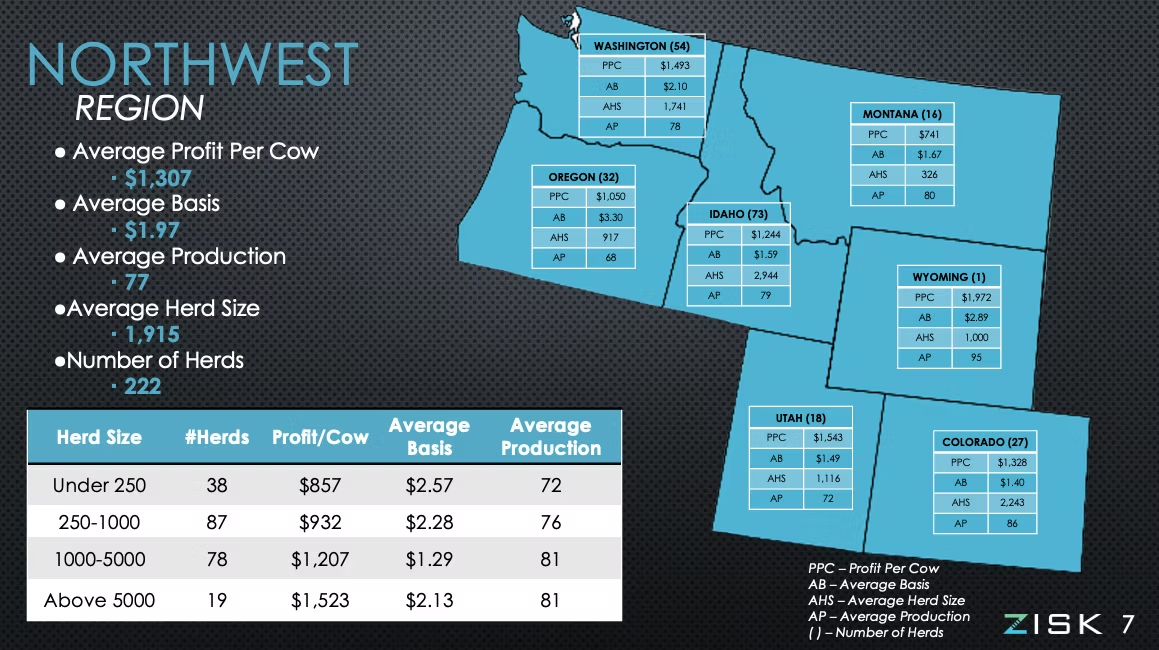
Northwest: With 222 herds averaging 1,915 cows and 77 pounds of milk, the Northwest leads in profits, particularly for herds of more than 5,000 cows, earning $1,523 per cow. Even smaller herds with fewer than 250 cows earn $857 per cow thanks to effective small-scale management.

This regional summary highlights the diverse nature of the dairy industry and the pivotal role of strategic planning in achieving optimal economic outcomes. It emphasizes the need for careful planning and management and makes it clear that strategic planning is key to success regardless of the size of the herd.

Economies of Scale: Harnessing Herd Size for Enhanced Dairy Profitability 

The profitability of a dairy farm is notably influenced by the size of the herd, as demonstrated in the 2025 Zisk report. Larger herds tend to earn more per cow. In the Southeast, for example, farms with more than 5,000 cows are expected to earn $1,640 per cow, while smaller farms with fewer than 250 cows will earn only $531. This trend is similar in the Midwest, where 1,000 to 5,000 cows expect $1,373 per cow versus $733 for smaller herds.

Why do larger herds perform better? They make better use of resources such as feed and labor, frequently purchasing in bulk and employing cutting-edge technology to reduce costs and increase profits. Key components of their infrastructure, such as advanced storage facilities and streamlined distribution systems, play a crucial role in the timely and efficient collection, storage, and distribution of milk. Furthermore, proximity to good feed sources or processing facilities can increase earnings depending on the location.

While larger herds present unique challenges, the Zisk report data clearly shows that if appropriately managed, they can outperform smaller farms in terms of profit per cow.

Strategic Agility: Confronting 2025’s Surging Costs and Market Dynamics in Dairy Farming

Dairy farmers face numerous challenges in 2025 as they strive to achieve the optimistic profits predicted by the Zisk report. One major challenge is fluctuating milk prices. Factors such as global economic shifts, regional demands, and market saturation can lead to fluctuations in milk prices, creating challenges for farmers to sustain their profits. To address this, farmers must carefully plan their pricing and use future contracts to secure prices, avoiding market surprises. Feed is a significant portion of farm costs. It can fluctuate due to weather changes, supply chain issues, and global politics. Farmers can manage these costs by using precision agriculture to use feed more efficiently and considering alternative feed sources to reduce costs.

  • Strategic Partnerships: Collaborating with local distributors and stores, such as partnering with grocery chains for exclusive product placement or participating in community events to increase brand visibility, can help farmers secure a steady demand for their dairy products.
  • Technology Integration: Leveraging tools like automated milking systems for efficient milking processes and implementing IoT technology for real-time monitoring of herd health and behavior significantly boost productivity and streamline operations on dairy farms.
  • Continual Education: Keeping up with tech developments and market trends helps farmers make smart decisions for better profits.

Though the profit goals for 2025 are challenging, dairy farmers have many strategies for overcoming these obstacles and achieving growth and sustainability. By engaging in thoughtful planning, optimizing resource utilization, and expanding into new markets, farmers can surpass Zisk’s profit targets and secure the future success of the dairy sector.

The Bottom Line

Making money in dairy farming is challenging, but 2025 is a promising year. Farmers can use the Zisk app to monitor market trends and increase profits. The Zisk report identifies potential growth areas. It’s more than just numbers; it’s an opportunity to improve daily operations and meet long-term objectives. Explore the Zisk website, review the reports thoroughly, and implement the insights into your strategic planning.

Key Takeaways:

  • The Zisk app forecasts improved profitability for dairy farms in 2025, particularly in the Southeast and Northeast regions with larger herds.
  • Farms in the Southeast region milking over 5,000 cows are predicted to have the highest profit per cow at $1,640, showcasing the potential for significant return on investment in more extensive operations.
  • While smaller herds show the least profit per cow, there’s a marked improvement from previous years, indicating positive trends even for smaller-scale farms.
  • Regional differences in profitability highlight the importance of location-specific strategies for enhancing farm profitability.
  • Dairy farmers are encouraged to leverage predictive insights from the Zisk app to make informed decisions and drive strategic growth in 2025.
  • Significant variations in profitability per cow suggest that economies of scale are crucial in maximizing dairy farm profits.

Summary:

The start of 2025 looks promising for dairy farmers, thanks to new insights from the Zisk App, created by veterinarian Kevin Hoogendoorn. This app predicts farm profits over the year and shows that huge U.S. dairy farms in the Southeast can expect solid earnings per cow, with over $1,600 expected. Smaller farms, although not as profitable per cow, will still see improvements from past years. These insights help farmers make smart choices about milk prices, feed costs, and how to run their farms most effectively. It’s not just about calculating profits—it’s about using data to make wise decisions for the future.

Learn more:

Join the Revolution!

Bullvine Daily is your essential e-zine for staying ahead in the dairy industry. With over 30,000 subscribers, we bring you the week’s top news, helping you manage tasks efficiently. Stay informed about milk production, tech adoption, and more, so you can concentrate on your dairy operations. 

NewsSubscribe
First
Last
Consent
Send this to a friend