



Archive for Dairy cow fertility

Stop Blaming the Bulls: The $50,000 Fertility Reality Check Every Dairy Needs Right Now

71% of AI breedings now use genomic bulls under 2 years old. Your conception problems? Probably not the bull’s fault.

EXECUTIVE SUMMARY: Look, here’s what I’ve learned talking to producers across the Midwest: blaming bulls for fertility problems is costing you serious cash and missing the real issues. We’re talking $5 per day for every cow that takes an extra 10 days to breed—that’s $25,000 walking out the gate on a 500-cow operation. The genomic revolution means today’s bulls are vetted harder than ever, with less than 10% failing quality checks after intense pre-selection. Meanwhile, the real fertility killers are hiding in plain sight: cows slipping into negative energy balance, heat stress knocking 15-20% off conception rates, and AI technicians whose skills can swing results by 10 percentage points. Smart producers are shifting focus to body condition scoring, environmental controls, and timed AI protocols that actually move the needle. With feed costs high and weather getting more extreme in 2025, you can’t afford to keep chasing the wrong problems.

KEY TAKEAWAYS

  • Save $25K annually by preventing breeding delays — Start weekly body condition scoring to catch cows dropping below 3.0 BCS before they hit negative energy balance. With current feed prices, keeping cows in proper condition is your best ROI move for 2025.
  • Boost conception rates 1.5% with better semen handling — Train your AI techs on precise thawing protocols (95-98°F for exactly 45 seconds) and invest in calibrated thermometers. As genomic sires flood the market, proper cryopreservation handling is non-negotiable.
  • Combat heat stress cutting fertility up to 20% — Upgrade cooling systems and shift feeding to cooler hours. Monitor your Temperature Humidity Index daily and consider Timed AI protocols to work around weather challenges hitting dairy regions harder each year.
  • Close the sexed semen fertility gap (now 85-90% of conventional) — Use TAI protocols specifically designed for sexed semen timing. With producers demanding more heifer calves and beef crosses, mastering sexed semen management is becoming essential for profitability.
dairy cow fertility, improving conception rates, dairy farm profitability, body condition scoring, genomic selection

You know that moment when you’re standing around the coffee pot at a dairy conference and someone starts venting about their conception rates? Last month, I had exactly that conversation with a Wisconsin producer running about 500 head. His numbers had dropped 15 percentage points over six months, and his first instinct was to point fingers at the AI company.

“Must be the bulls,” he said, shaking his head. “Quality’s just not what it used to be.”

Here’s the thing that’s got me fired up—that knee-jerk reaction to blame the bull isn’t just outdated thinking, it’s costing dairy operations serious money. And honestly, after digging into the latest research and talking with folks across the industry, I think it’s time we had a blunt conversation about where fertility failures actually originate.

Because here’s the brutal math: every cow that takes an extra 10 days to get bred costs you roughly $5 per day after 100 days in milk. On a 500-cow dairy running 65% conception rates instead of 75%? That’s $25,000 walking out your gate annually. And that’s before you factor in additional semen costs, vet bills, and the compounding effect of delayed rebreeding.

The Bull Factor: More Bulletproof Than Ever

Let me start with something that might surprise you. By 2021, a staggering 71% of all AI breedings in U.S. dairy herds were using genomic young sires—bulls that didn’t even have milking daughters yet[1]. But here’s what that actually means inside the AI stud, and why it changes everything.

Industry insiders will tell you that twenty years ago, the typical collection bull was a mature powerhouse, often over 4 years old, producing between 800 to 1,000 doses per collection. Today? The median age has dropped dramatically to under 2 years, which means we’re shifting from relying on a few high-output older bulls to many younger bulls, each producing fewer doses — typically 300 to 500 per collection — but boasting superior genetics.

This shift goes hand in hand with unprecedented early-life control over these bulls. Leading AI studs don’t just scout for promising prospects at a few months old; they nurture their best genetics from birth. Many bull calves are brought into AI facilities around 6 weeks of age, while still on milk, enabling precise management of nutrition and health — a level of care unimaginable a generation ago. By the time that semen straw hits your farm tank, it’s the survivor of an elimination process that literally starts moments after birth.

What strikes me about this shift is how it’s fundamentally changed the reliability equation. Instead of waiting 4-7 years to figure out if a bull’s any good, AI companies can now analyze tens of thousands of DNA markers right after birth and pick the genetic elite early. The competition is so fierce that most major AI studs are now screening out 10-20 genetically inferior bull calves for every single one that makes it into their collection program.

The genetic screening is so ruthless that the idea of a bull just “not being fertile” is almost off the table. What is the failure rate for young bulls entering the system? Less than 10% don’t make the grade—because the genetic duds have already been identified and removed from the pipeline.

The scientific side has evolved dramatically as well. Yeah, cryopreservation still kills about 40-50% of sperm cells—that’s just the brutal reality of freezing and thawing. But modern extenders aren’t your grandfather’s egg yolk mixture. Today’s formulations are packed with antioxidants, including glutathione, resveratrol, and vitamins, that actively protect sperm DNA and membranes during the freeze-thaw cycle.

And here’s something concrete: the industry’s shift from 0.5cc to 0.25cc straws isn’t just about convenience. The smaller diameter allows for more uniform cooling and heating, resulting in a measurable 1.5% improvement in conception rates. Not earth-shattering, but in a business where every percentage point matters, it makes a significant difference.

Quality control has become ruthlessly objective. Computer-assisted sperm analysis (CASA) systems track hundreds of individual sperm cells, measuring parameters such as progressive motility (minimum 30%) and morphology (minimum 70% normal). Leading studs go even further with DNA fragmentation testing and flow cytometry to identify subtle issues that could impact fertility in the future. They’re even analyzing why a bull might produce great conventional semen but struggle to make a high-fertility sexed product, or vice versa. That’s the level of microscopic detail they’re managing before a single straw is cleared for sale.

Where the Real Action Is: The Cow’s Metabolic Tightrope

This is where things get complicated—and honestly, where I see the biggest opportunities for improvement. The modern dairy cow is performing an almost impossible balancing act, especially during the critical weeks leading up to calving.

Picture this: your fresh cow is producing 80+ pounds of milk while recovering from calving, regaining her reproductive system, and maintaining her body condition. It’s like asking someone to run a marathon while doing calculus. Something’s got to give, and usually, it’s fertility.

Negative Energy Balance (NEB) is the technical term, but what it really means is your cow is burning more calories than she’s consuming. This isn’t just about looking thin—it’s about hormonal chaos. When a cow slips into deep NEB, her hypothalamic-pituitary-ovarian axis basically hits the pause button.

The most practical way to monitor this? Body Condition Scoring. Research consistently shows that cows with a BCS below 3.0 at first breeding have significantly lower conception rates compared to those at 3.0 or higher. I’ve seen herds where getting serious about BCS management—really serious, not just eyeballing it—improved first-service conception by 8-12 points.

But here’s what keeps me up at night: the cascade effect of postpartum health problems. A difficult calving isn’t just a bad day—it’s the starting gun for weeks or months of reproductive challenges. Metritis alone can knock 20% off your first-service conception rate, while dystocia and retained placentas typically cost you 4-10%.

Then you add heat stress to the mix… and that’s a fertility killer if there ever was one. We’re seeing 15-20% drops in conception rates during hot summer months across much of the country. Texas, Arizona, and even parts of Wisconsin and New York during heatwaves—it doesn’t discriminate by geography.

And then there’s lameness—the silent fertility assassin. Lame cows have elevated cortisol levels that actively suppress reproductive hormones. I’ve walked through barns where 15-20% of the cows had some degree of lameness, and the owners couldn’t figure out why their conception rates were in the tank.

The Human Element: Where Small Mistakes Make Big Differences

Even with perfect genetics and healthy cows, poor management can torpedo your conception rates faster than you can say “heat detection.”

That semen straw is stored in liquid nitrogen at -196°C. At this temperature, all biological processes stop—but damage from ice recrystallization starts at just -130°C. That means even brief exposure to the warmer temperatures in your tank’s neck can be cumulative and irreversible.

The thawing protocol isn’t negotiable: a 95-98°F water bath for a minimum of 45 seconds, using a calibrated thermometer and timer. No pocket thawing, no “warming it up in the cow,” no shortcuts.

But here’s something that really gets my attention: the skill gap between AI technicians. Studies show that individual inseminator performance can create 5-10% swings in conception rates. That’s enormous in a business where 2-3% improvements can transform profitability.

The Game-Changer: Your Fertility Action Plan

Here’s where we get tactical. Instead of playing defense and reacting to problems, I want you to think offense. Here’s the systematic approach I use with operations that are serious about fertility:

Week 1: Semen Management Audit

  • Calibrate your thermometer and timer
  • Observe every AI technician’s thawing protocol
  • Check tank nitrogen levels and straw organization
  • Document any deviations from standard protocol

Week 2: Body Condition Scoring Blitz

  • Score every cow in the breeding pen
  • Identify cows below 3.0 BCS
  • Adjust rations for thin cows immediately
  • Set up a weekly BCS monitoring system

Week 3: Postpartum Health Review

  • Pull health records for the last 6 months
  • Calculate the incidence of metritis, retained placenta, and dystocia
  • Meet with your vet to tighten prevention protocols
  • Train staff on early disease detection
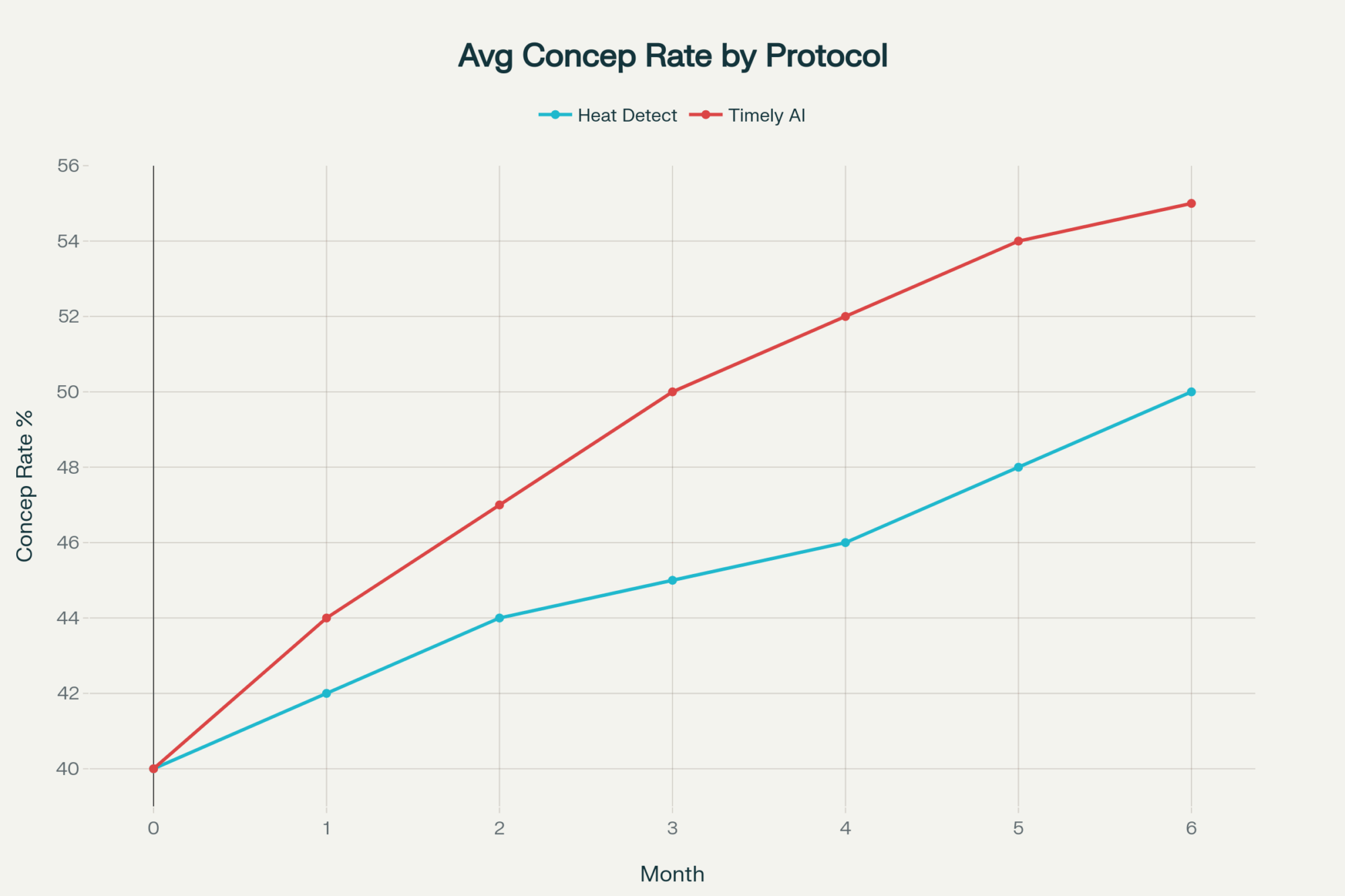
Conception Rate Over 6 Months: Timely AI vs Heat Detection

Week 4: Heat Detection Analysis

  • Review breeding records for missed heats
  • Consider activity monitors or tail paint systems
  • Evaluate the timing of the current AI relative to the observed heat
  • Plan transition to TAI if heat detection is inadequate

Week 5: Environmental Controls

  • Install or service cooling fans and water systems
  • Provide adequate shade for all holding areas
  • Adjust feeding times to cooler parts of the day
  • Monitor Temperature-Humidity Index daily

Week 6: Staff Training and Protocols

  • Retrain all AI technicians on proper technique
  • Standardize record-keeping procedures
  • Establish accountability measures for conception rates
  • Create an ongoing training schedule

Each week builds on the previous one. By week six, you’ve systematically addressed every major controllable factor in your fertility program.

The Bottom Line: It’s About Systems, Not Scapegoats

The evidence is crystal clear: in modern dairy reproduction, the bull is rarely the primary limiting factor. The intensive genomic selection, advanced semen processing, and rigorous quality control systems have mitigated mainly the risks associated with the male contribution.

Instead, conception success hinges on three manageable factors: cow readiness, precise management, and the strategic deployment of reproductive technologies.

The farms that get this right aren’t necessarily spending more money. They’re spending it more strategically, focusing on the factors that actually drive reproductive success rather than chasing ghosts.

So the next time someone in your area starts complaining about bull fertility, maybe suggest they look a little closer to home first. The answers are usually there—in the feed bunk, the breeding barn, and the protocols that govern how everything comes together.

Because at the end of the day, that $25,000 you’re potentially losing? It’s not walking out the gate because of the bull. It’s walking out because of decisions and systems you can actually control.

Take a stand on the things that matter. Your bottom line depends on it.

Complete references and supporting documentation are available upon request by contacting the editorial team at editor@thebullvine.com.

Learn More:

  • The Dairy Producer’s Guide to Breeding Synchronization Programs – This guide offers a tactical deep-dive into implementing Timed AI. It breaks down the pros and cons of different protocols, helping you choose and execute the most cost-effective system to reduce days open and maximize pregnancy rates in your herd.
  • Is Beef on Dairy the Answer to Volatile Milk Prices? – Explore the strategic economics of a “beef-on-dairy” program. This article reveals how to segment your herd to create high-value beef-cross calves from lower-genetic-merit animals, turning a reproductive decision into a powerful secondary revenue stream.
  • Beyond the Pedometer: How AI is Revolutionizing Dairy Fertility – Look to the future with this analysis of precision fertility technologies. It demonstrates how AI-powered sensors are moving beyond simple activity monitoring to predict health issues and pinpoint ovulation, offering a glimpse at the next leap in reproductive efficiency.

Join the Revolution!

Join over 30,000 successful dairy professionals who rely on Bullvine Weekly for their competitive edge. Delivered directly to your inbox each week, our exclusive industry insights help you make smarter decisions while saving precious hours every week. Never miss critical updates on milk production trends, breakthrough technologies, and profit-boosting strategies that top producers are already implementing. Subscribe now to transform your dairy operation’s efficiency and profitability—your future success is just one click away.

NewsSubscribe
First
Last
Consent

Proving The Payoff: Why High-Calcium Acidogenic Diets Are Revolutionizing Transition Cow Management

University of Illinois smashes calcium myths: High-calcium acidogenic diets slash metritis, boost fertility, and protect profits.

Executive Summary: A groundbreaking University of Illinois study reveals that high-calcium acidogenic prepartum diets (-24 DCAD, 2% calcium) dramatically improve transition cow outcomes. Cows fed this diet showed 40% fewer metritis cases, faster ovulation, and higher first-service pregnancy rates while maintaining dry matter intake. The secret? Strategic acidification (urine pH 5.5–6.0) primes calcium metabolism, strengthens uterine tissue, and reduces inflammation. This approach challenges outdated low-calcium recommendations, offering dairy farmers a proven path to cut disease costs, improve reproductive efficiency, and boost ROI. Success hinges on rigorous urine pH monitoring and precise diet formulation.

Key Takeaways:

  • Profit through prevention: High-calcium acidogenic diets reduce metritis risk by 40% and slash transition disorder costs.
  • Breed back faster: Cows ovulate sooner with 46% higher first-service conception rates (vs. 32% traditional).
  • No DMI tradeoff: Maintain feed intake with proper calcium levels in acidogenic diets.
  • pH is non-negotiable: Daily urine monitoring (5.5–6.0) ensures $18B/year subclinical ketosis risks stay in check.
  • Calcium ≠ just milk fever: Strengthens uterine walls, prevents “leaky uterus,” and supports immune function.

While nutritionists debate prepartum calcium levels, your cows are paying the price. New University of Illinois research demolishes the outdated belief that we should limit calcium in close-up diets. The evidence is clear: high-calcium acidogenic diets deliver dramatically better uterine health, faster breeding, and reduced inflammation. Are you still following profit-draining conventional wisdom?

Dairy nutritionists have approached calcium levels in prepartum diets with excessive caution for decades. The prevailing wisdom claimed too much calcium would suppress the cow’s natural mobilization mechanisms, potentially leaving her unprepared for the massive calcium demands at calving. This thinking led many to recommend modest calcium levels (0.4-0.6% of dry matter) in prepartum diets, even when using negative DCAD approaches.

But what if playing it safe with calcium is actually playing it dangerous with your profitability?

“I was skeptical at first,” says Dave Johnson, a progressive Wisconsin dairy producer who manages 850 cows. “My nutritionist kept talking about limiting calcium, but after switching to a high-calcium, fully acidogenic diet, our metritis cases dropped by nearly 40%, and our conception rates at first service jumped from 32% to 46%. The difference was night and day.”

The Study That Changes Everything

A groundbreaking University of Illinois study has turned this conventional thinking on its head, demonstrating that when properly implemented, high-calcium acidogenic diets deliver benefits far beyond hypocalcemia prevention-directly impacting your bottom line through multiple pathways.

The research enrolled 76 multiparous Holstein cows starting 50 days before expected calving and followed them through 73 days in milk. The study compared three dietary treatments:

  1. Control (CON): A positive DCAD diet (+6 mEq/100g DM) with low dietary calcium (0.40% DM)-the traditional approach without acidification
  2. Negative DCAD (ND): A fully acidogenic diet (-24 mEq/100g DM) with low dietary calcium (0.40% DM)-the standard negative DCAD approach
  3. Negative DCAD with high calcium (NDCA): A fully acidogenic diet (-24 mEq/100g DM) with high dietary calcium (2% DM)-the game-changer

Are you still feeding your close-up cows the same way you did ten years ago?

The researchers used a commercial anionic supplement (Animate®) to achieve the target negative DCAD and carefully monitored urine pH to ensure cows on the acidogenic diets maintained pH between 5.5 and 6.0-the sweet spot for metabolic acidosis that primes calcium metabolism without compromising health.

The Shocking Results You Can’t Afford to Ignore

The findings weren’t just statistically significant-they were economically transformative. While both acidogenic diets improved postpartum calcium status compared to the control group, the high-calcium approach delivered stunning advantages:

Reduced Inflammation: Cows fed the high-calcium acidogenic diet showed significantly lower plasma haptoglobin concentrations- a key marker of inflammation- both before and after calving. Less inflammation means fewer metabolic diseases eating away at your profits.

Healthier Uterine Environment: Perhaps most striking were the improvements in uterine health. Cows on the NDCA diet exhibited greater glandular epithelial height (thickness of the uterine lining) and more epithelial cells per gland at 30 days in milk.

The researchers explain the mechanism in plain terms: “Calcium is essential for maintaining the integrity of uterine epithelial cells. When calcium is insufficient, you get what we might call a ‘leaky uterus’-bacteria can slip between compromised cells, leading to inflammation, metritis, and potentially systemic illness”.

Superior Reproductive Performance: These aren’t just microscopic changes-they translate directly to your bottom line. Cows fed the NDCA diet had fewer days to first ovulation and a greater likelihood of becoming pregnant at first artificial insemination.

What would getting cows pregnant one cycle earlier mean for your operation’s profitability?

Debunking the DMI Depression Myth

One of the most persistent concerns about fully acidogenic diets is their potential to depress dry matter intake (DMI). This fear keeps many producers from implementing the aggressive acidification needed to fully activate calcium metabolism.

The industry has been wrong about this for years. The Illinois study addressed this head-on, with surprising results. While cows fed the negative DCAD, low-calcium diet (ND) showed a small decrease in DMI compared to the control group, and adding high calcium to the acidogenic diet (NDCA) eliminated approximately half of this depression.

This discovery challenges conventional thinking-high calcium doesn’t just prevent milk fever-it appears to help maintain appetite under acidotic conditions, making this approach dramatically more viable for real-world implementation. Dr. Jim Drackley noted that these findings prompted “a shift in his own thinking to be more supportive of well-implemented fully acidogenic programs.”

The Economic Payoff: What This Means for Your Bottom Line

Let’s talk about what matters most-your profitability. The physiological benefits translate directly into economic advantages:

Reduced Disease Incidence and Treatment Costs: Fewer cases of metritis and other transition diseases mean lower veterinary bills, less discarded milk, and reduced labor costs. With metritis alone estimated to cost the global dairy industry $5 billion annually, prevention delivers substantial savings.

“You’ll be chasing down fewer sick cows,” one researcher said. “And you’ll notice fewer instances of metritis. Fewer cases of other diseases may also be noted because the cow is no longer handling extra bacteria because the cells in the uterus are very well attached to each other-preventing a ‘leaky uterus'”.

Improved Reproductive Efficiency: Earlier conception reduces days open, increases milk production over the cow’s lifetime, and lowers breeding costs. Research indicates that reducing the calving interval by 60 days can increase daily milk production by 1.11 to 1.51 kg per cow and total lactation yield by 366 to 498 kg per cow.

Lower Culling Rates: When cows stay healthier and breed back sooner, you make culling decisions based on production merit rather than necessity. This improves your herd’s genetic trajectory and stabilizes milk production-like, building your roster with strategic draft picks instead of desperate trades to fill holes.

Labor Efficiency: With fewer sick cows to manage, your team can focus on proactive management rather than reactive treatment.

If you still rely on outdated transition nutrition strategies, how much money is walking out your door monthly?

The Bullvine Bottom Line

  • High-calcium (2% DM) acidogenic prepartum diets significantly reduce inflammation, improve uterine health, and enhance fertility
  • Urine pH monitoring (target 5.5-6.0) is CRITICAL for success-don’t skip this step
  • Economic benefits come from multiple sources: fewer sick cows, better breeding, reduced culling, and maintained DMI
  • High calcium helps prevent DMI depression commonly associated with anionic diets
  • The calcium benefits extend far beyond milk fever prevention to impact immune function and reproductive success

Cost-Benefit Snapshot: NDCA vs. Traditional Approaches

Cost FactorTraditional Low-Ca ApproachHigh-Ca Acidogenic (NDCA) Approach
Feed CostLower initial costSlightly higher ingredient cost
Metritis TreatmentMore cases requiring treatmentFewer cases-potentially 40% reduction
Days OpenLonger calving intervalsEarlier first ovulation, higher first-service conception
LaborMore time treating sick cowsLess time treating, more time managing
Milk ProductionLost production due to health issuesBetter maintained production curve
Culling RateHigher involuntary cullingMore voluntary culling decisions
ROILower long-term profitHigher overall returns despite the initial cost

The Critical Management Factor Most Farms Are Missing

If there’s one takeaway from the Illinois research, it’s this: measuring urine pH isn’t just helpful-it’s essential. Without regular monitoring, you’re flying blind, unable to confirm whether your diet is actually achieving the desired metabolic acidosis.

Too many farms implement partial DCAD programs without this critical verification step. Then, they wonder why the results are disappointing.

The target pH range for fully acidogenic diets is 5.5 to 6.0. This indicates the cow is experiencing the right level of compensated metabolic acidosis, which stimulates calcium mobilization from bone and enhances calcium absorption from the diet.

Mark Peterson, who milks 220 cows in New York, learned this lesson the hard way: “We were adding anionic salts, but never checking urine pH. Once we started measuring and adjusting to keep pH between 5.5 and 6.0, our clinical milk fever cases dropped to zero, and subclinical hypocalcemia went from over 50% to under 15%. Those pH strips cost pennies compared to what we were losing.”

Many factors can influence urine pH beyond just the calculated DCAD (Dietary Cation-Anion Difference) value:

  • Variations in forage mineral content (especially potassium)
  • Fluctuations in dry matter intake
  • Inconsistencies in feed mixing and delivery

Regular monitoring allows you to make timely adjustments if pH values drift outside the target range. Think of urine pH as your transition cow “thermometer,” a critical tool for continuous oversight and fine-tuning.

Addressing the Skeptics: Valid Concerns and Solutions

Some producers and nutritionists remain hesitant about high-calcium acidogenic diets. Let’s tackle these concerns head-on:

“Won’t high calcium suppress the cow’s own mobilization mechanisms?”

This was the traditional concern, but the Illinois research demonstrates that when proper acidification is achieved (pH 5.5-6.0), this suppression doesn’t occur. Instead, the acidification primes calcium metabolism so effectively that the additional dietary calcium enhances overall calcium status rather than compromising it. The NDCA treatment actually resulted in greater calcium flux than the ND treatment.

“Isn’t that much calcium expensive?”

Let’s be honest about costs. Yes, increasing dietary calcium to 2% DM does raise ration costs. However, the economic analysis should consider the substantial downstream benefits-reduced disease treatment, earlier pregnancy, fewer culls, and maintained milk production. Even preventing just one case of metritis (average cost: $250-350) or getting a cow pregnant one cycle earlier (value: approximately $150-200) will typically offset the additional feed costs for multiple cows.

“Is urine pH testing really necessary? It seems time-consuming.”

This is non-negotiable. Without pH verification, you’re guessing whether your acidogenic diet works. Modern pH meters and test strips make this process relatively quick and straightforward. Sampling 5-10 cows twice weekly takes minimal time but provides crucial information to guide adjustments and ensure program success.

“My nutritionist says our current program is working fine. Why change?”

A fair question, but consider: Subclinical hypocalcemia affects up to 73% of cows in third or greater lactation, according to research by Reinhardt et al.. Most operations don’t measure subclinical hypocalcemia, so “working fine” may simply mean “problems not visible enough to notice.” The NDCA approach has demonstrated benefits even compared to standard negative DCAD programs- it’s not just about preventing obvious milk fever but optimizing transition success.

The Knowledge Gap That’s Costing You Money

While many dairy producers understand calcium’s link to hypocalcemia prevention, the University of Illinois research highlights that calcium’s role extends far beyond this single function. This broader understanding is crucial for justifying the high-calcium approach:

“Most farmers understand calcium’s link to helping reduce the incidence of subclinical hypocalcemia but may not fully realize calcium is needed for many other things that impact cow health and performance.”

Calcium plays essential roles in:

  • Immune cell activation and neutrophil function
  • Uterine epithelial integrity
  • Muscle contraction (including smooth muscle in the digestive tract)
  • Cell signaling and communication
  • Enzyme activation

This is why the NDCA diet’s benefits extend beyond simply preventing milk fever. It represents a comprehensive approach to transition cow physiology that addresses multiple interrelated systems simultaneously.

The Bottom Line: Are You Ready to Revolutionize Your Transition Program?

The University of Illinois research provides compelling evidence that feeding a high-calcium (2% DM), fully acidogenic (-24 mEq/100g DM) diet during the prepartum period, with careful monitoring to maintain urine pH between 5.5 and 6.0, delivers significant benefits for transition cow health and farm profitability.

It’s time to ask yourself some hard questions:

  1. Is your current transition program still based on outdated concepts about limiting calcium?
  2. Are you regularly monitoring urine pH to verify your DCAD program is actually working?
  3. Have you calculated the true cost of transition cow disorders on your operation?
  4. What would getting cows pregnant even 10 days earlier be worth to your bottom line?

The dairy industry is facing unprecedented economic challenges. Can you really afford to leave this much money on the table?

Take a hard look at your current transition cow program. Challenge the status quo. Implement high-calcium acidogenic diets with proper pH monitoring. Your cows-and your bank account-will, thank you.

The question isn’t whether you can afford to implement this strategy- it’s whether you can afford not to.

Learn more:

Join the Revolution!

Join over 30,000 successful dairy professionals who rely on Bullvine Weekly for their competitive edge. Delivered directly to your inbox each week, our exclusive industry insights help you make smarter decisions while saving precious hours every week. Never miss critical updates on milk production trends, breakthrough technologies, and profit-boosting strategies that top producers are already implementing. Subscribe now to transform your dairy operation’s efficiency and profitability—your future success is just one click away.

NewsSubscribe
First
Last
Consent

Beat Heat Stress: Boost Dairy Cow Fertility & Profits with New THI Thresholds

Heat stress hits fertility earlier than you think! New THI thresholds & genetic insights mean it’s time to rethink your cooling & breeding strategies.

dairy cow fertility, heat stress, THI thresholds, conception rate, genetic resilience

Your herd’s reproductive performance is taking a nosedive long before you see them panting at the bunk line. Groundbreaking research reveals conception damage begins at surprisingly low temperature thresholds, and the genetic implications could revolutionize your AI strategy in our warming climate. If you’re waiting for signs of heat stress before activating cooling systems, you’re already months behind in protecting your herd’s reproductive efficiency.

The Hidden Fertility Crisis Lurking in Your Barn

If you’re like most dairy producers, you’ve accepted poor summer conception rates and extended days open as an unavoidable seasonal challenge. You’ve probably resigned yourself to watching your 21-day pregnancy rate plummet like milk prices in 2009, chalking it up as just another summer headache along with higher SCC and reduced components.

But what if I told you those fertility losses were starting far earlier than you realize, in conditions you wouldn’t even consider “hot”?

A landmark study published in the Journal of Dairy Science (Genetic analysis of the impact of heat stress on fertility traits in dairy cows in the Netherlands) shatters conventional wisdom about when heat stress impacts dairy cow fertility. The researchers analyzed data from a staggering 416,814 first-parity Holstein cows across the Netherlands, looking at four critical fertility parameters that drive reproductive efficiency and your dairy’s bottom line.

What they found should change how dairy producers approach sire selection strategies and environmental management. But before diving into those findings, let’s clarify exactly what we’re measuring.

Beyond Temperature: Why THI Matters More Than Your Thermometer

You’ve probably heard of the Temperature-Humidity Index (THI). It’s been the gold standard for quantifying heat stress in livestock for decades, and for good reason. THI combines the dual impacts of temperature and humidity into a single value that better reflects what your cows experience.

Because let’s face it, an 85°F day in Arizona feels dramatically different than an 85°F day in Florida. The difference? Humidity. And your cows think it even more acutely than you do.

The researchers in this study used various THI calculations to determine which measurement most accurately predicted fertility impacts. They found that the average THI from three days- the day of insemination plus one day before and after (THI3)-was most strongly associated with fertility outcomes.

Here’s where things get interesting: why this new research is so groundbreaking. The traditional THI thresholds we’ve all been taught (typically that mild heat stress begins around THI 68-72) were primarily established based on impacts on milk production, not reproductive efficiency. As you wouldn’t use the same metrics to evaluate your dry cow program and fresh cow protocols, we shouldn’t use milk production thresholds to predict reproductive declines.

And as it turns out, your cows’ reproductive systems are far more sensitive to heat than we ever realized, about as sensitive as your bottom line is to an extended calving interval.

The Shocking Truth: Fertility Damage Starts in Spring-Like Conditions

The research team identified specific THI thresholds where each fertility trait began to decline:

  • THI 60 for conception rate and interval from first to last insemination
  • THI 50 for the interval from calving to first insemination and calving interval

Let that sink in. THI 50. That’s not even close to what we traditionally consider “heat stress” territory.

To put this in perspective, a THI of 50 can occur at temperatures as modest as 65°F (18°C) when humidity is elevated. We’re talking spring weather in many dairy regions- conditions where your cows aren’t even breaking a sweat, and you’re still more concerned about mud season than heat abatement.

But the data doesn’t lie. At these surprisingly low THI levels, researchers observed:

  • Longer delays from calving to first breeding
  • Extended calving intervals
  • More services per conception (when THI hits 60)
  • Reduced conception rates (when THI hits 60)

These findings force us to reconsider when heat abatement strategies should begin. If you’re only activating cooling systems when cows show visible signs of heat stress-elevated respiration rates, decreased dry matter intake, crowding around waterers-you’re already weeks or months behind in protecting their fertility. That’s like waiting until your bulk tank average drops before addressing a subclinical mastitis problem.

Fresh Cows vs. Breeding Cows: Why Different Thresholds Matter

One of the most fascinating aspects of this research is the discovery of different THI thresholds for different fertility parameters. This isn’t just academic trivia- it has profound implications for managing various cohorts in your herd.

The interval from calving to first insemination begins to lengthen at THI 50, while conception rate doesn’t decline significantly until THI 60. Why the difference?

Early postpartum cows, critical first 60-90 days in milk, are especially vulnerable to mild heat stress. The physiological demands of recovering from the transition period, launching a new lactation, and restarting ovarian cyclicity create a perfect storm of sensitivity. These fresh cows are like high-performance athletes at the start of training season- even small disruptions can throw off their entire program.

For these fresh cows, even moderate environmental challenges can delay follicular development, suppress estradiol production, and push back that crucial first breeding. The hypothalamic-pituitary-ovarian axis is delicately recalibrating after calving, and heat stress throws a wrench in the works by suppressing luteinizing hormone (LH) secretion and altering progesterone levels. This disruption directly impacts the formation of the corpus luteum and compromises ovarian function.

Meanwhile, cows already cycling normally seem to have slightly more heat tolerance before conception rates suffer (THI 60 vs. 50). But make no mistake-both- both thresholds are still far lower than we’ve been taught.

What This Means For Your Operation: Your fresh pen needs superior cooling compared to the rest of your facility, and those cooling systems need to activate at much lower temperatures than you’re likely using now. Just as you wouldn’t feed your close-up dry cows the same TMR as your high producers, you shouldn’t provide them with identical environmental conditions.

The Genetic Breakthrough That Changes Everything

Now we get to what might be the most revolutionary finding in the entire study. And it’s not just about when heat stress impacts fertility, it’s about which cows are affected and why.

The researchers discovered that genetic variance and heritability for fertility traits increased as THI levels increased. In plain language? Heat stress unmasks genetic differences in fertility that remain hidden under normal conditions.

Some cows maintain relatively good fertility even when heat-stressed, while others fall off a reproductive cliff at the first hint of warm weather. It’s like the difference between your rock-solid brood cows that breed back like clockwork regardless of conditions, versus those problematic repeat breeders that give your AI technician nightmares every summer.

Even more striking, they found significant “genotype-by-environment interactions” for all fertility traits. Translation: the daughters of a bull that ranks highly for Daughter Pregnancy Rate (DPR) under cool conditions might perform terribly when heat-stressed, while another bull’s daughters might show exceptional fertility, specifically under heat-stress conditions.

This finding completely upends traditional approaches to genetic selection for fertility, which typically assumes a bull’s fertility ranking applies equally across all environmental conditions. It’s like discovering that the feed efficiency rankings of your TMR ingredients change entirely depending on whether you’re feeding a high-forage or high-grain diet.

Heat Stress Thresholds: Old vs. New Understanding

Fertility ParameterTraditional THI ThresholdActual THI ThresholdWhat This Means
Conception Rate68-7260Fertility decline starts ~10°F cooler than previously thought
Calving to First Insemination68-7250Fresh cows are affected at even milder temperatures
First to Last Insemination68-7260More straws are needed once THI exceeds 60
Overall Calving Interval68-7250Extended days open begin at a surprisingly low THI

Breeding Strategies for a Warming World

The genetic findings from this research open exciting new possibilities for dairy breeders and farmers. Here are strategies worth considering:

Rethink Your Sire Selection

The traditional fertility indexes like Daughter Pregnancy Rate (DPR), Daughter Fertility (DF), or Cow Conception Rate (CCR) may not tell the whole story about how a bull’s daughters will perform in heat-stressed conditions. Ask your genetics provider about heat tolerance data and performance under challenging environmental conditions.

Consider bulls specifically tested and proven under similar conditions for regions prone to heat stress. A bull whose daughters show consistently good fertility across diverse environmental challenges may be more valuable than one with superior performance only under optimal conditions. Your breeding program needs to be more like your nutrition program- adaptable to changing conditions rather than optimized for a single scenario.

Consider Breed Differences

While the Ojo study focused exclusively on Holsteins, other research has demonstrated significant breed differences in heat tolerance. Jersey cattle, for instance, typically show greater resilience to heat stress than Holsteins- their smaller body mass creates a more favorable surface area-to-body mass ratio for dissipating heat.

Research from South Africa found Jersey cows maintained lower rectal temperatures than Friesians under identical heat stress conditions. Jersey heat tolerance is attributed to smaller body size, lighter hair color, thinner skin, and less fat deposits. Studies have shown that fertility rates in Jerseys decline less steeply than in Holsteins as THI increases, particularly at THI levels above 75.

For operations in hot climates, crossbreeding strategies incorporating heat-tolerant breeds might offer a quicker path to improved fertility than selection within a single breed. Like many producers have successfully employed Jersey or Viking Red crossbreeding to improve components or health traits, strategic crossbreeding could be the fastest route to heat-tolerant fertility.

Watch for Emerging Genetic Tools

The increased heritability of fertility traits under heat stress suggests that genomic selection for heat tolerance could be highly effective. As our understanding of the genetic basis for heat tolerance expands, expect to see new genomic tools specifically targeting this trait.

Some breeding companies are already developing heat tolerance indexes. These will become increasingly sophisticated and valuable as more data becomes available from such studies. Heat-tolerance selection could soon become as common in your breeding program as selection for casein variants or hoof health.

Practical Heat Abatement: Starting Earlier and Getting Smarter

Now that we know fertility decline starts at much lower THI thresholds than previously thought, it’s time to rethink our approach to cooling. Here are practical steps every dairy can implement:

1. Revamp Your Cooling Activation Points

Most dairy cooling systems are programmed to activate when temperatures reach 75-80°F. Based on this research, that’s far too late to protect fertility, like waiting until clinical mastitis appears before treating an elevated SCC cow. Reprogram your cooling system controllers to start at lower thresholds- ideally when conditions could create a THI of 50-60.

In practical terms:

  • Fans should begin operating at approximately 65°F when humidity is moderate to high
  • Sprinkler/soaker systems should activate around 70°F, significantly earlier than typical settings

2. Create Fertility Protection Zones

Not all parts of your facility need identical cooling. Create strategic “fertility protection zones” with enhanced cooling in areas where:

  • Fresh cows are housed (most sensitive to THI > 50)
  • Breeding pens are located (to maintain THI < 60 around insemination)
  • Heat detection occurs (to encourage normal expression of estrus)

This approach is similar to how you might group your ration requirements- your high-fertility pens, like your high-production groups, need premium conditions to perform at their best.

3. Implement 24-Hour Cooling During Critical Windows

The 72 hours surrounding insemination (day before, day of, day after) appear particularly important for conception success. Consider implementing 24-hour cooling protocols during these critical windows, even if you typically reduce cooling at night.

It could be cost-effective for larger herds to design a specific “recently bred” pen with premium cooling for cows in their first 3-7 days post-insemination. Think of it as the reproductive equivalent of your fresh pen place where extra attention pays dividends for the entire lactation.

4. Invest in Precision Monitoring

The specific THI thresholds identified (50 and 60) make a strong case for investing in environmental monitoring systems that track temperature AND humidity in real-time throughout your facilities.

Several companies now offer barn monitoring systems that calculate THI continuously and can integrate with automated cooling controls. These systems can help you activate cooling strategies at precisely the right moments to protect fertility. Just as precision dairy monitoring has revolutionized health and feed management, it can transform your approach to environmental management.

The Economic Reality: What’s at Stake

Let’s talk dollars and cents. The fertility impacts identified in this research translate directly to your bottom line.

Consider the cumulative costs of:

  • Additional inseminations at $25-50 each
  • Extended days open at $2-5 per day
  • Reduced milk production from lengthened calving intervals
  • Increased involuntary culling due to reproduction failures
  • Extra labor for heat abatement and reproductive management

For a 1,000-cow dairy, these costs can easily accumulate to tens of thousands of dollars annually, enough to make or break your profit margin in today’s volatile milk market.

But here’s the real kicker: because the THI thresholds for fertility decline are so much lower than previously thought, many operations are experiencing these losses without even recognizing heat stress as the culprit.

Those mediocre summer conception rates you’ve learned to live with? That extended calving interval that seems unavoidable? According to this research, they may not be inevitable; they result from unrecognized heat stress thresholds. It’s like discovering that subclinical hypocalcemia has been quietly draining your herd’s performance for years without obvious symptoms.

What This Means for the Future of Dairy

The implications of this research extend far beyond individual farm management. As global temperatures continue to rise, heat stress is becoming a more pervasive challenge for dairy producers worldwide, even in regions previously considered moderate climates.

The dairy industry faces a choice: adapt our breeding and management practices to this new reality, or watch fertility and profitability decline as temperatures rise. This is eerily similar to the antibiotic resistance challenge; we can adapt our practices proactively or face increasingly difficult conditions reactively.

The good news is that the same research identifying these challenges also points toward solutions. The increased genetic variation in heat tolerance provides the raw material for breeding more resilient cows. And the precise identification of THI thresholds gives us actionable triggers for management interventions.

The Bottom Line

The groundbreaking research fundamentally changes our thoughts about heat stress and dairy cow fertility. The key takeaways every dairy producer should implement:

  1. Recognize that fertility damage begins far earlier than visible heat stress symptoms, THI thresholds of 50-60, not the 68-72 traditionally taught.
  2. Implement cooling strategies earlier in the season and activate them at lower temperature-humidity combinations than you probably use now.
  3. Pay special attention to fresh cows and those approaching first insemination, as they appear most sensitive to mild heat stress (THI 50).
  4. Rethink your breeding program to incorporate heat tolerance, especially if your operation faces significant seasonal heat challenges.
  5. Monitor THI levels in your barn, not just temperature, as the combination of heat and humidity truly impacts your cows.

Are you still waiting for panting cows before activating your cooling systems? Are you selecting bulls based on fertility data that ignores heat tolerance? If so, this research suggests you leave significant reproductive performance and profits on the table.

The days of accepting poor summer fertility as inevitable are over with this new understanding of when and how heat stress impacts reproduction. dairy producers know how to maintain reproductive performance even as our climate keeps warming.

The question isn’t whether you can afford to implement these changes. Given the substantial economic losses associated with heat-induced fertility decline, the real question is: Can you afford not to? After all, managing heat stress is like managing transition cows; an ounce of prevention is worth a pound of cure.

What changes will you make to your cooling and breeding strategies before this summer? Your herd’s reproductive performance and your profitability depend on the answer.

Key Takeaways:

  • Fertility decline begins at lower THI: Calving to first insemination and calving interval are affected at THI 50; conception rate and first-to-last insemination interval at THI 60.
  • Heat stress unmasks genetic differences: Genetic variance and heritability for fertility traits increase under heat stress, making selection for heat tolerance more feasible.
  • Genotype x Environment (GxE) is real: Sire rankings for fertility can change depending on THI levels, necessitating new approaches to genetic selection for heat-prone environments.
  • Actionable thresholds for management: Dairy farmers should implement cooling strategies before THI reaches 50 to protect early reproductive recovery and intensify efforts before THI 60 to safeguard conception.
  • Breeding for resilience is key: The findings support incorporating heat stress considerations into breeding programs to develop inherently more heat-tolerant dairy cattle.

Executive Summary:

Recent research on Holstein cows reveals that heat stress, quantified by the Temperature-Humidity Index (THI), negatively impacts dairy cow fertility at lower thresholds than previously understood. The interval from calving to first insemination and overall calving interval begin to suffer at a THI of 50, while conception rates and the interval from first to last insemination decline above a THI of 60. Crucially, the study found that genetic variance and heritability for fertility traits increase under heat stress, indicating significant genotype-by-environment interactions. This suggests that sire rankings for fertility can change with THI levels, opening opportunities for breeding more heat-resilient animals by selecting for superior performance under thermal stress. These findings call for proactive on-farm cooling strategies at these newly identified, lower THI thresholds and a re-evaluation of genetic selection programs to prioritize heat tolerance.

Learn more:

Join the Revolution!

Join over 30,000 successful dairy professionals who rely on Bullvine Weekly for their competitive edge. Delivered directly to your inbox each week, our exclusive industry insights help you make smarter decisions while saving precious hours every week. Never miss critical updates on milk production trends, breakthrough technologies, and profit-boosting strategies that top producers are already implementing. Subscribe now to transform your dairy operation’s efficiency and profitability—your future success is just one click away.

NewsSubscribe
First
Last
Consent

Beyond Blocks and Blades: Why Your Lameness Treatment Protocol Is Missing a Critical Component

New research: Adding NSAIDs to lameness treatment boosts dairy cow fertility by 42% while improving recovery. Are your protocols outdated?

EXECUTIVE SUMMARY: Claw horn lameness costs dairy farmers millions in lost productivity and fertility, but new studies reveal a game-changer: combining NSAIDs like meloxicam with traditional trimming and blocking. While mechanical treatments address visible lameness, NSAIDs tackle hidden inflammation, leading to a 42% fertility boost—even if gait scores don’t improve. Early intervention with this “TBN protocol” (Trim, Block, NSAID) accelerates recovery in heifers and moderates chronic cases in older cows. Farmers skipping NSAIDs risk prolonged days open and $600/cow losses. The data is clear: modern lameness care requires anti-inflammatories to protect both mobility and reproduction.

KEY TAKEAWAYS:

  • TBN Protocol Wins: Trim + Block + NSAID (meloxicam/ketoprofen) outperforms partial treatments, especially in early-stage cases.
  • Fertility ≠ Gait: Meloxicam increased conception rates by 42% without visible gait improvements—systemic inflammation matters.
  • Early Action Pays: Delayed treatment cuts recovery odds by 50%; weekly locomotion scoring is non-negotiable.
  • ROI Justified: $20 NSAID doses prevent $300+/cow fertility losses and reduce culling risks in heifers.
  • Tailor by Parity: NSAIDs show stronger results in first-lactation cows; multiparous herds still need mechanical fixes first.
NSAIDs for lameness, claw horn lesions, dairy cow fertility, TBN protocol, hoof treatment ROI

The evidence is clear: treating claw horn lameness without NSAIDs is like running your parlor without pulsation. New research reveals that adding anti-inflammatory drugs to your lameness protocol doesn’t just improve recovery—it could dramatically boost your herd’s fertility by up to 42%. Here’s why the industry needs to rethink its approach to one of dairy’s most costly problems.

Lameness remains dairy’s most visible welfare challenge and one of its costliest production issues. While most producers recognize the importance of prompt hoof trimming and blocking for claw horn lesions, many are still missing a critical third component that research shows could be the difference between merely getting cows walking again and restoring their full productive and reproductive potential.

The conventional approach to claw horn lameness—therapeutic trimming and orthopedic blocking—addresses only part of the problem. These mechanical interventions fail to target the underlying inflammation that prolongs recovery and may silently sabotage your herd’s fertility long after the cow stops limping. Recent groundbreaking research reveals that adding NSAIDs (non-steroidal anti-inflammatory drugs) to your lameness protocol could be the missing link to maximizing both recovery and reproductive performance.

The Hidden Cost of Incomplete Treatment

When a cow develops a sole ulcer or white line disease, the visible lameness is just the tip of the iceberg. Beneath the surface lies a complex inflammatory process that mechanical treatments alone can’t address. This inflammation doesn’t just cause pain—it triggers systemic responses that can derail everything from milk production to conception rates.

“Most producers understand that lameness costs money, but they’re underestimating just how much,” says Dr. Helen Mason, lead researcher on a groundbreaking 2025 study examining the fertility impacts of lameness treatments. “A cow might look sound after blocking, but her body is still fighting inflammation silently sabotaging her reproductive performance.”

The numbers are staggering. Lame cows typically take 12-50 days longer to conceive than sound herd mates (Mason et al., 2025). For seasonal calving operations, this can mean the difference between a cow remaining in the herd or facing culling due to late conception or failure to conceive within the breeding window. Even in year-round calving herds, these extended days open translate directly to reduced lifetime production and profitability.

Are you saving money by skipping the NSAID when treating lameness, or just delaying the inevitable cost of extended days open and lower conception rates?

The Science Behind the TBN Protocol

The emerging gold standard for claw horn lameness treatment is what researchers call the “TBN protocol”—Trimming, Blocking, and NSAID administration. This three-pronged approach addresses both the mechanical and biological aspects of lameness:

  1. Therapeutic Trimming: Corrects hoof balance, removes damaged horn, and redistributes weight—like rebalancing an uneven tire
  2. Orthopedic Blocking: Elevates the affected claw to relieve pressure and allow healing—like putting a spare tire on your tractor while repairing a flat
  3. NSAID Administration: Reduces inflammation and pain both locally and systemically comparable to how you’d treat mastitis with both stripping out the quarter and administering anti-inflammatories

While the first two components have been standard practice for decades, the critical third element is still widely overlooked. Yet recent randomized controlled trials show that this comprehensive approach significantly outperforms partial treatments.

A landmark study by Thomas et al. (2015) found that cows receiving the full TBN protocol had a 56.1% cure rate at 35 days post-treatment, compared to just 24.4% for trimming alone. Another study focusing on first-lactation animals showed that cows treated with the complete protocol had 4.5 times higher odds of recovery than those receiving only trimming (Sadiq et al., 2022).

Let’s be brutally honest: if you’re still treating lameness without NSAIDs, you’re using outdated protocols that are costing you money and compromising cow welfare.

Key RCT Findings: The Evidence for TBN

Study (Year)Treatment ProtocolRecovery Rate (Soundness)Fertility ImprovementCulling Risk ReductionNotes
Thomas et al. (2015)TBN (Trim+Block+NSAID)56.1% at 35 daysN/AN/AHighest cure rate vs. trim-only (24.4%)
Mason et al. (2025)Trim+Block+MeloxicamNo significant difference+42% conception hazardN/ABlocks masked gait improvements
Wilson et al. (2025)Trim+Block (Multiparous)No NSAID benefitN/ANo reductionMechanical correction is critical for older cows
Sadiq et al. (2022)TBN (Primiparous)75% recovery at 28 daysN/AN/AReduced pain sensitivity

The Fertility Connection: The Most Compelling Evidence Yet

The most eye-opening research comes from a 2025 multi-farm study in New Zealand’s pasture-based dairy systems. This randomized controlled trial examined what happened when meloxicam (a commonly used NSAID) was added to standard trimming and blocking for cows with hoof horn lesions.

The results were striking. While there was no significant difference in the time it took cows to return to normal locomotion, the reproductive benefits were dramatic:

  • 42% higher hazard of conception for meloxicam-treated cows (Mason et al., 2025)
  • 15% greater probability of conceiving within the first 6 weeks of breeding (Mason et al., 2025)
  • 15% greater likelihood of being pregnant at final pregnancy diagnosis (Mason et al., 2025)

This represents a breakthrough in understanding lameness treatment. Even when cows appear to recover similarly based on locomotion scoring, those receiving NSAIDs experienced substantial improvements in fertility—a benefit that goes straight to the bottom line.

When did you last implement a management change that improved conception rates by 42%? This isn’t incremental improvement—it’s a game-changer.

Why Different NSAIDs Aren’t Created Equal

Not all anti-inflammatory drugs deliver the same benefits. The research shows essential differences between commonly used options:

NSAIDKey BenefitsPractical ConsiderationsBest For
MeloxicamStrong evidence for fertility improvement (42% higher conception hazard); longer-lasting effect from a single doseTypically has a milk withdrawal period (e.g., 5 days)Maximizing fertility benefits; situations where single administration is preferred
KetoprofenGood evidence for improved recovery rates; may reduce future lameness in heifersOften zero milk withdrawal; typically requires 3-day administrationLactating cows where milk withdrawal is problematic; acute cases where rapid pain relief is a priority
FlunixinLess commonly studied for lamenessConcerns about retained placenta when used around calvingGenerally, not first choice for lameness treatment

Why Aren’t More Producers Using the Complete Protocol?

Despite compelling evidence, NSAID use for lameness remains surprisingly low on many farms. Several barriers prevent wider adoption:

  1. Cost concerns: NSAIDs represent an additional expense per treatment
  2. Milk withdrawal inconvenience: Some NSAIDs (particularly meloxicam) require milk discard
  3. Lack of dramatic visible improvement: The benefits may not be immediately apparent in gait
  4. Insufficient awareness: Many producers and even some veterinarians aren’t familiar with the latest research

These practical concerns are understandable but shortsighted when considering the substantial economic benefits, particularly regarding fertility. The cost of a single NSAID treatment pale compared to the value of improved conception rates and reduced days open.

Cost-Benefit Analysis: The Real ROI of Complete Treatment

ItemCost per CowBenefit per CowNet ROISource
Meloxicam (5-day milk discard)$20+15% pregnancy rate ($300 value)+$280Mason et al. (2025)
Ketoprofen (3-day course)$1575% recovery vs. 40% (trim-only)+$150 (milk/fertility)Sadiq et al. (2022)
Chronic Lameness (Untreated)$0-360L milk, +36 days open-$600AHDB (2025)

“When you factor in the reproductive benefits alone, the return on investment for NSAID use in lameness treatment is substantial,” explains Dr. Mason. “We’re talking about a 15% improvement in pregnancy rates from a single injection—that’s a game-changer for seasonal calving operations and valuable for any dairy focused on reproductive efficiency.”

Let’s call it what it is: the dairy industry has been slow to adopt NSAIDs for lameness treatment because we’ve been fixated on visible gait improvement rather than the invisible but far more valuable fertility benefits.

Implementing the TBN Protocol: Practical Considerations

Ready to upgrade your lameness management? Here’s how to implement the complete TBN protocol effectively:

Early Detection Is Non-Negotiable

The research consistently shows that all treatment components are most effective when applied early. Implement a systematic approach to lameness detection:

  • Conduct regular locomotion scoring (minimum weekly) by trained personnel
  • Establish clear protocols for prompt restraint and examination of identified lame cows
  • Train all staff to recognize subtle early signs of lameness
  • Create a dedicated time slot for lameness treatment to avoid delays

If you wait until cows are severely lame before treating them, you’re already fighting a losing battle. Early intervention is the single most important factor in successful treatment.

Step-by-Step TBN Protocol Implementation

StepActionResponsible PartyTimelineKey Tools
1Weekly locomotion scoringFarm staffOngoing5-point scale, trackpad
2Prompt restraint/examVeterinarian≤24 hrsHydraulic chute, hoof knife
3Therapeutic trimHoof trimmerImmediateDutch 5-step method
4Block applicationVeterinarianImmediateWoodblock, Bovi-Bond glue
5NSAID administrationFarm staffDay 0-3Meloxicam (0.5mg/kg) or Ketoprofen (3mg/kg)
6Follow-up scoringIndependent observerDay 7, 14, 28Blinded scoring

NSAID Selection Strategy

Choose the appropriate NSAID based on your specific situation:

  • For maximizing fertility benefits, particularly in seasonal systems, Consider meloxicam despite milk withdrawal requirements
  • For zero milk withdrawal convenience: Ketoprofen offers proven benefits for soundness recovery
  • For first-lactation animals: Consider more aggressive protocols, potentially including post-calving NSAID administration to prevent future lameness

Beyond the Injection: Comprehensive Lameness Management

The TBN protocol works best as part of a holistic approach:

  • Maintain regular preventive hoof trimming schedules (typically twice yearly)
  • Address environmental factors contributing to lameness (flooring, cow comfort, standing times)
  • Monitor digital cushion condition through body condition scoring and transition management
  • Consider the role of trace minerals and biotin in maintaining hoof integrity

Myth vs. Fact: NSAID Misconceptions

MythFactEvidence
“NSAIDs are too expensive for routine use.”The ROI is substantial when fertility benefits are included$20 treatment can yield $300 in fertility value (Mason et al., 2025)
“If the cow is walking better, she’s fully recovered.”Visible lameness improvement doesn’t mean systemic inflammation is resolved42% fertility improvement even without gait difference (Mason et al., 2025)
“All NSAIDs work the same way.”Different NSAIDs have different COX selectivity, duration, and systemic effectsMeloxicam shows stronger fertility benefits than other NSAIDs studied
“NSAIDs only help with pain, not healing.”Anti-inflammatories may modify disease progression and prevent chronic changesEarly NSAID treatment reduces future lameness in heifers (Wilson et al., 2022)

The Bottom Line

The evidence is clear: treating claw horn lameness without addressing inflammation is like treating milk fever without calcium—you’re missing a fundamental component of effective therapy. The TBN protocol—combining therapeutic trimming, blocking, and NSAID administration—represents the current gold standard for treatment, particularly for acute cases caught early.

Most compelling is the dramatic fertility benefit demonstrated with meloxicam, which improved conception hazard by 42% even without accelerating visible recovery (Mason et al., 2025). This suggests that NSAIDs address systemic effects of lameness that mechanical treatments alone cannot reach.

For progressive dairy producers focused on maximizing animal welfare and profitability, implementing the complete TBN protocol is no longer optional—it’s essential. The question isn’t whether you can afford to add NSAIDs to your lameness protocol; it’s whether you can afford not to.

What This Means for Your Operation

  • Review your current lameness protocols with your veterinarian to incorporate appropriate NSAIDs
  • Implement systematic early detection to maximize treatment success
  • Consider the fertility benefits when calculating return on investment for lameness treatment
  • Tailor your approach based on cow age, with particular attention to first-lactation animals
  • Track reproductive outcomes following lameness events to quantify improvements

It’s time to stop treating lameness like it’s just a hoof problem and start recognizing it as a whole-cow issue with profound reproductive consequences. Are you ready to join the progressive producers already reaping the benefits of the complete TBN protocol, or will you continue leaving money on the table with outdated treatment approaches?

The dairy industry has long recognized lameness as a major welfare and economic challenge. By embracing the complete TBN protocol, we can get cows walking comfortably again and ensure they’re performing to their full potential in every aspect of production. Your bottom line—and your cows—will thank you.

Learn more:

Join the Revolution!

Join over 30,000 successful dairy professionals who rely on Bullvine Daily for their competitive edge. Delivered directly to your inbox each week, our exclusive industry insights help you make smarter decisions while saving precious hours every week. Never miss critical updates on milk production trends, breakthrough technologies, and profit-boosting strategies that top producers are already implementing. Subscribe now to transform your dairy operation’s efficiency and profitability—your future success is just one click away.

NewsSubscribe
First
Last
Consent

Double-Ovsynch or Double E-Synch? Which Fertility Program Will Boost Your Herd’s Pregnancy Rates?

Double E-Synch rivals Double-Ovsynch! New research shows 10% fertility boost in high-producing cows & 86hrs/year labor savings. Game-changer?

Executive Summary:

This landmark study of 800 lactating Holsteins compares four fertility programs, revealing Double E-Synch (DES) matches Double-Ovsynch’s effectiveness while offering unique advantages. High-producing cows (≥83.5 lb/day) saw 10% higher pregnancy rates with DES, and its estradiol-based protocol triggered 69% estrus expression vs. 42% in traditional programs. Both approaches achieved 46-53% conception rates, but DES reduced annual labor by 86 hours through fewer handlings. The research validates multiple synchronization strategies, proving producers can choose protocols based on herd productivity, labor availability, and regional hormone regulations without sacrificing reproductive efficiency.

Key Takeaways:

  • Equal Efficacy: Double-Ovsynch and Double E-Synch deliver comparable pregnancy rates (46-53%), giving farmers flexible protocol options
  • High-Producer Edge: DES boosts pregnancy rates by 10% in cows producing ≥83.5 lb/day – critical for elite herds
  • Estrus Matters: 69% of DES cows showed heat vs 42% in traditional programs, with estrus-linked pregnancies having 39% lower loss rates
  • Labor Efficiency: DES requires one fewer handling per breeding cycle, saving 86+ hours annually for 500-cow dairies
  • Strategic Choice: Base protocol selection on milk production levels, workforce capacity, and local estradiol regulations

In today’s challenging dairy economy, reproductive efficiency remains among the few areas where management can significantly impact profitability. While most producers have heard of Double-Ovsynch (DO), an exciting new contender – Double E-Synch (DES), has emerged on the scene. This comprehensive research compares how these protocols stack against each other in real-world conditions, with implications that could reshape your breeding program strategy.

The Hidden Cost of Poor Reproduction: Are You Leaving Money on the Table?

Let’s face it – getting cows pregnant efficiently is the lifeblood of any profitable dairy. With milk prices constantly fluctuating and input costs climbing faster than a heifer’s growth curve, reproductive performance remains one of the few areas where management can still move the needle on profitability. Every day, a cow that stays open beyond your voluntary waiting period burns money faster than wet hay in a tight stack.

As Dr. Paul Fricke from the University of Wisconsin often says, “The most expensive cow on your dairy is the one you can’t get pregnant.” With the average cost of each day open ranging from $3-16 depending on milk price and production level, even small improvements in 21-day pregnancy rates translate directly to your milk check.

But here’s the million-dollar question: Are you using the most effective protocol for YOUR specific operation?

Four Fertility Programs Put to the Test: What the Research Shows

Recently published in the Journal of Dairy Science, Fertility programs for lactating dairy cows: A novel presynch + timed artificial insemination program (Double E-Synch) produces similar ovarian dynamics, synchronization, and fertility as Double-Ovsynch. This groundbreaking study compared four different fertility programs in a 2×2 factorial arrangement, examining both presynchronization strategies and timed artificial insemination (TAI) protocols:

  1. Double-Ovsynch (DO): Traditional Ovsynch presynchronization followed by Ovsynch TAI protocol
  2. Double E-Synch (DES): A novel approach using progesterone and estradiol for both phases
  3. Hybrid combinations: Using different approaches for presynchronization and TAI phases

The research team enrolled 800 lactating Holstein cows, blocking them by expected calving date, parity, and previous lactation performance – creating a real-world test environment similar to what you’d find on any well-managed commercial dairy.

The Results: Impressive Conception Rates Across All Programs

When the dust settled, the results were eye-opening. All four programs delivered impressive pregnancy per AI (P/AI) rates around 46-52% at 32 days and 34-39% at 90 days. These numbers significantly outperform the 30-35% conception rates typically seen with traditional heat detection programs on most commercial dairies.

For the skeptics among us who remember the days of chalk marks and tail paint, these numbers might seem too good to be true. However, Dr. Milo Wiltbank’s research has consistently shown that well-executed fertility programs can consistently deliver P/AI rates in the 45-55% range, even in high-producing herds.

Ovarian Synchronization Success by Protocol

MetricDouble-OvsynchDouble E-SynchPreP4/E2+OvsPreP4/E2+OvsP4/E2
CL presence at d 7 (%)99.098.098.598.5
Ovulation post-d 0 (%)64.372.068.172.0
Multiple ovulations (%)5.98.47.27.2

All four protocols achieve excellent synchronization rates but note the higher ovulation percentage with estradiol-based approaches.

The High-Producer Advantage That Nobody’s Talking About

Here’s where things get particularly interesting for those running high-producing herds. The estradiol-based presynchronization (PreP4/E2) showed a significant advantage in high-producing cows (≥37.9 kg/d or 83.5 lb/day), improving pregnancy rates by 10 percentage points compared to GnRH-based presynchronization.

This is like finding an extra 10 gallons in every milk truck – a substantial 25% relative improvement in reproductive performance among your highest-value animals. For a 1,000-cow dairy with half the herd producing above this threshold, we’re talking about potentially 50 more pregnancies per breeding cycle.

Why aren’t more dairies capitalizing on this advantage? Could industry inertia be costing you tens of thousands in lost pregnancy opportunities?

Fertility Outcomes by Milk Production Level

This is significant because multiple ovulations lead to twinning, which increases pregnancy losses, postpartum health problems, and calf mortality. For every twin pregnancy you prevent, you’re potentially saving $500-800 in lost production, treatment costs, and increased culling risk.

As Dr. Paul Fricke often explains, “Twinning is nature’s way of telling us we’ve pushed cows too far metabolically. These protocols help restore normal ovarian function even in our highest producers.”

Case Study: Wisconsin Dairy Sees 15% Jump in Pregnancy Rates

Tom Bergmann, who milks 650 cows near Portage, Wisconsin, implemented Double-Ovsynch three years ago and saw his 21-day pregnancy rate climb from 18% to 24%.

“The consistency is what sold me,” says Bergmann. “Before, we’d have good and terrible weeks with heat detection. Now, we know exactly what to expect, and our vet can confidently schedule herd checks.”

Bergmann notes that his highest producers (those over 100 pounds daily) show the most dramatic improvement. “Those high cows used to be our problem breeders. Now they’re settling just as well as the rest of the herd.”

Myth vs. Fact: Reproductive Protocols

MYTH: “These protocols are too complicated for my farm.” FACT: While they require attention to detail, modern protocols can be implemented with proper training and clear SOPs. Many farms use color-coded calendars or management software to simplify the process.

MYTH: “My cows won’t show heat with timed AI programs.” FACT: The estradiol-based protocols increased heat expression in nearly 70% of cows, compared to 42% with GnRH-based protocols. Many producers report stronger, more visible heats with these programs.

MYTH: “These protocols are too expensive.” FACT: When accounting for reduced days open, fewer culls for reproductive failure, and improved labor efficiency, these protocols typically pay for themselves many times over. The Wisconsin research shows an annual return of $89.60 per cow.

Ask the Vet: When Should You Avoid Double E-Synch?

Dr. Maria Rodriguez, a reproductive specialist with Dairy Health Services, cautions that while Double E-Synch shows promise, it’s not for everyone. “Farms struggling with basic compliance to their current protocols should master those fundamentals before attempting to implement more complex systems,” she advises.

“Also, herds with significant metabolic issues in early lactation may not see the full benefits of any advanced protocol until those underlying problems are addressed. Focus on transition cow management first, then optimize your breeding program.”

The Bottom Line: Are You Ready to Challenge Convention?

The comparative study of reproductive programs reveals that traditional GnRH-based protocols (like Double-Ovsynch) and newer estradiol-based approaches (like Double E-Synch) can achieve excellent results. This provides flexibility in choosing the system best fits your farm’s circumstances.

When selecting a reproductive management approach, consider the following:

  1. Your herd’s production level and age structure
  2. Available labor and management resources
  3. Regulatory environment regarding hormone use
  4. Your preferences regarding animal handling
  5. Economic goals for your operation

Implementing whichever protocol you choose consistently and thoroughly will be key to realizing the reproductive and economic benefits that directly impact your dairy’s profitability and sustainability.

As one successful New York dairy producer summarized, “Reproductive protocols are like milking routines – consistency is everything. Find what works for your farm and stick with it religiously.”

The dairy industry is constantly evolving. Are you evolving with it, or are you still breeding cows like your father did?

These fertility programs represent a significant advance in reproductive management technology that can help dairy farms of all sizes optimize their reproductive performance and economic outcomes. Can you afford not to consider them in today’s challenging dairy economy?

What’s Your Next Move?

Take a hard look at your current reproductive program. Are you achieving 45-50% conception rates with your first-service TAI? If not, it’s time to have a serious conversation with your veterinarian about implementing one of these advanced protocols.

For those already using Double-Ovsynch, consider whether your high producers might benefit from the PreP4/E2 presynchronization approach if it becomes available in your region. The 10-percentage point improvement in conception rates for your best cows could be a game-changer for your operation.

Share your experiences with these protocols in the comments below. What’s working on your farm? What challenges have you encountered? Let’s learn from each other and push the industry forward.

Editor’s Note: This article is based on research published in the Journal of Dairy Science. Always consult your herd veterinarian before significantly changing your reproductive management program.

Learn more:

Join the Revolution!

Join over 30,000 successful dairy professionals who rely on Bullvine Daily for their competitive edge. Delivered directly to your inbox each week, our exclusive industry insights help you make smarter decisions while saving precious hours every week. Never miss critical updates on milk production trends, breakthrough technologies, and profit-boosting strategies that top producers are already implementing. Subscribe now to transform your dairy operation’s efficiency and profitability—your future success is just one click away.

NewsSubscribe
First
Last
Consent

Transforming Dairy Fertility: Machine Learning Isn’t Just the Future—It’s Here Now

Dairy’s AI revolution is here: Learn how machine learning doubles conception rates, slashes hormone use, and transforms farm profitability.

Look, I’m going to cut right to the chase. If you still rely on visual heat detection alone in 2025, you’re leaving money on the table. The numbers don’t lie—automated monitoring systems powered by back-propagation neural networks deliver 21-day pregnancy rates above 30% in progressive herds while slashing hormone use by 75%. This isn’t just incremental improvement—it’s a reproductive revolution changing the economics of dairy farming.

Why We’re Still Getting Reproduction Wrong (And It’s Costing You)

I’ll be honest—it drives me crazy to see so many good operations still stuck in outdated reproductive management approaches. National surveys show that 51% of dairy farms rely primarily on visual observation for heat detection. Fifty-one percent! Despite overwhelming evidence, visual observation misses more than half of all standing heats.

Think about that for a second. Would you accept a milking system that leaves half your milk in the cow? Of course not! Yet, regarding reproduction, we’re surprisingly willing to take massive inefficiency.

“Reproductive efficiency is a key driver on the economics of a farm,” says Ricardo Chebel from the University of Florida. Captain Obvious statement, right? But here’s what most people miss—poor reproductive performance creates this nasty ripple effect through your entire operation. It’s not just about pregnancy rates. It’s about lactation persistence, peak milk in the next lactation, lifetime production, replacement decisions… the whole economic picture gets warped.

Do you want some numbers that’ll make your coffee taste bitter? For a 500-cow operation, each additional day of average days open costs you about $2,500 in lost profit. If your days open are pushing 140+ days (and let’s be honest, many herds are), you’re talking about $100,000+ annually compared to herds hitting 110-day averages. And that’s not even counting increased culling, replacement costs, and suboptimal genetic advancement.

Here’s the kicker—most dairy accounting systems don’t capture these costs because they don’t connect production, replacement, and genetic opportunity costs. The impact of suboptimal reproductive performance is probably 30-50% higher than you currently estimate. Quickly calculate your average days open beyond 110 by $5 per cow per day. That’s the minimum annual profit you’re leaving on the table.

The Machine Learning Revolution Isn’t Coming—It’s Already Here

Remember when activity monitors first came out? Those glorified pedometers that counted steps? That’s ancient history now. Today’s systems use sophisticated machine learning algorithms that transform behavioral data into unimaginable insights even five years ago.

The real question isn’t whether automated monitoring can improve performance—it’s why we’re still accepting mediocre reproductive results when the technology to enhance dramatically exists.

Modern systems leverage multiple artificial intelligence approaches, but they’re not all created equal. Get this—algorithm performance metrics range from 73.3% to 99.4% for sensitivity, 50% to 85.7% for specificity, and 72.7% to 95.4% for accuracy. The back-propagation neural network (BPNN) algorithm with a 0.5-hour time window consistently outperforms everything else for predicting estrus in dairy cows.

What makes cutting-edge monitoring systems so powerful is their comprehensive data integration. They’re tracking twelve distinct behavioral parameters simultaneously: how long cows stand, lie, walk, feed, and drink, how often they switch between activities, step counts, displacement, velocity, and frequencies of various behaviors; when you run all that through advanced machine learning algorithms, you get reproductive patterns that even your most experienced herdsperson couldn’t detect with 24/7 observation.

While traditional visual observation might—at best—catch obvious standing heats, these systems detect subtle behavioral shifts 12-24 hours earlier. That dramatically expands your effective breeding window, which is especially valuable in high-producing herds where estrus duration has gotten shorter and shorter.

When shopping for technology, don’t evaluate automated monitoring as a single category. The specific machine learning approach makes a massive difference. Request published validation data comparing sensitivity, specificity, and accuracy metrics. Back-propagation neural networks consistently outperform other methods, especially when using 0.5-hour time windows rather than more extended intervals.

Algorithm TypeSensitivity (%)Specificity (%)Precision (%)Accuracy (%)F1 Score (%)Optimal Time Window
Back-propagation Neural Network (BPNN)99.485.795.895.497.50.5-hour
K-nearest Neighbor (KNN)91.378.389.587.690.41.0-hour
Linear Discriminant Analysis (LDA)85.271.484.681.884.91.0-hour
Classification and Regression Tree (CART)73.350.077.872.778.61.5-hour

Are You Treating All Your Cows the Same? What’s Your First Mistake

Can I rant for a minute? The dairy industry’s one-size-fits-all approach to reproductive management is wasting millions on unnecessary hormonal interventions. We’re stuck in this weird time warp where we acknowledge that cows are individuals for milk production, health, and nutrition—but then we treat them identically for reproduction.

Why are we still treating high-fertility cows the same as their struggling herd mates when we have the technology to tell them apart?

Automated monitoring enables a fundamental shift from blanket protocols to targeted reproductive management. Instead of treating every cow the same, you use individual cow data to determine the optimal protocol for each animal. The systems identify cows resuming cyclicity sooner after calving and displaying more intense estrus—characteristics strongly associated with higher fertility and lower health issues.

Chebel explains, “The goal of our lab and other labs with targeted reproductive management was, ‘Well, we have the same pool of cows, but because we have automated systems, we can identify the cows that resume cyclicity and have high-density estrus. We believe that these are the cows that have greater pregnancy rates and lower morbidity. So we tend to believe that these cows are more fertile.'”

The results are excellent. In cows with intense estrus, researchers reduced hormone injections from nine to about two per cow—a 78% reduction! Beyond the obvious cost savings, this approach addresses growing consumer concerns about pharmaceutical use in agriculture.

The economics go beyond just hormone costs. You’re also reducing labor for treatments, decreasing stress on animals from fewer handlings, and identifying problem breeders earlier for intervention or culling decisions. Most importantly, you’re focusing your breeding resources on the animals most likely to conceive, which improves your overall reproductive efficiency.

Want to see what this means for your operation? Calculate your current annual hormone expenditure (multiply total doses by per-dose cost), then estimate a potential 50-75% reduction. Add labor savings from reduced treatment time (typically 1-2 minutes per cow per treatment). For a 500-cow herd using synchronization protocols averaging seven hormone doses per pregnancy at $3 per dose with five labor minutes per treatment at $15/hour, the annual savings exceed $13,000 in direct costs alone—before considering improved conception rates and earlier pregnancies.

When Do These Systems Pay Off? Let’s Run the Numbers

I know what you’re thinking—will automated monitoring deliver ROI on my operation? That’s the right question; the answer isn’t a simple yes or no.

A Dutch research study provides some fascinating insights. They used stochastic dynamic simulation modeling (a fancy way of saying sophisticated economic analysis) to compare visual detection (50% estrus detection rate, 100% specificity) with automated detection (80% detection rate, 95% specificity) for a 130-cow herd.

The results? Visual detection yielded a 419-day average calving interval and 1,032,278 kg of annual milk production. Automated detection reduced the calving interval to 403 days and increased annual production to 1,043,398 kg. That’s an 11,120 kg production difference (approximately 85 kilograms per cow). Significant revenue improvement, but you must weigh it against the initial €17,728 investment (roughly $136 per cow).

Economic modeling consistently shows that artificial insemination approaches outperform natural services economically because they achieve similar or better reproductive performance at lower implementation costs. Within AI programs, approaches combining timed AI for the first service and automated detection for repeat services often deliver optimal economic performance by balancing intervention costs with reproductive efficiency.

The ROI calculation varies dramatically based on your operation’s starting point. If your estrus detection rates are below 60%, either timed AI protocols or automated monitoring can substantially improve reproductive performance and reduce cost per pregnancy. But if you’re already achieving excellent estrus detection rates above 70%, the economic justification must consider additional benefits beyond heat detection.

Before investing, benchmark your current reproductive performance against these key metrics:

  1. Current 21-day pregnancy rate (target: >21%)
  2. Accuracy of heat detection (target: >65%)
  3. Percentage of cows pregnant by 150 DIM (target: >80%)
  4. Average days open (target: <130 days)
Performance LevelCurrent 21-day Pregnancy RatePrimary Benefit of AutomationExpected ROI Timeframe
Poor<15%Dramatic improvement in submission rates12-18 months
Average15-21%Improved timing precision and health monitoring18-24 months
Excellent>21%Labor savings and early health detection24-36 months

Your Highest-Producing Cows Are Your Biggest Fertility Challenge

Have you noticed your highest-producing cows are getting harder and harder to catch in heat? It’s not your imagination—it’s biology working against you. Chebel’s research clearly shows that production levels dramatically affect estrus expression. When a cow has low milk production, the probability of detecting estrus ranges from 70% to 100%. But for high-producing cows? That drops to just 20% to 60%.

Isn’t that ironic? Your genetically superior, highest-value animals are your most challenging reproductive management candidates. As production increases, estrus events become shorter and less intense, making them increasingly difficult to catch through visual observation. “It’s obvious that the high production would complicate the detection of estrus by visual aid,” Chebel notes.

This creates a real challenge for traditional fixed-time AI protocols, too. They treat all cows identically despite dramatic differences in reproductive physiology and behavior. Look at conception outcomes across production strata, and you’ll see conception rates consistently declining as production increases, regardless of the synchronization approach.

Automated detection systems help overcome this challenge by identifying subtle behavioral changes in high-producing cows. They compensate for reduced expression by detecting more nuanced behavioral signatures. However, technology selection becomes increasingly critical as production rises—systems using back-propagation neural networks demonstrate superior performance in high-producing herds.

Calculate your herd’s production stratification—what percentage of your cows produce above 100 pounds daily? Automated monitoring delivers significantly higher value for herds, with more than 40% of animals in high-production categories. If your highest-producing cows show conception rates more than 10 percentage points below your lowest quartile, you have a significant opportunity for improvement.

Production LevelEstrus Detection Probability (%)What This Means For Management
Low (<70 lbs/day)70-100You can detect these cows pretty easily with traditional methods
Moderate (70-90 lbs/day)50-75You’ll benefit from technology but might catch many visually
High (90-110 lbs/day)35-60Technology provides substantial advantage—you’re missing many heats
Elite (>110 lbs/day)20-40Without technology, you’re likely missing most heats in these cows

Connecting the Dots: Why Data Integration Multiplies Your ROI

Let me ask you something—are you collecting data that never becomes actionable information? The future isn’t about isolated systems for individual management areas. It’s about comprehensive data integration that transforms all those numbers into insights you can use.

The most progressive operations implement comprehensive strategies connecting reproductive, health, nutrition, and production information. This integration creates powerful new management capabilities because reproductive data becomes exponentially more valuable when combined with production records, health events, and genetic information.

Modern precision livestock farming approaches leverage artificial intelligence to transform sensor data into actionable management insights. As Penn State Extension explains, “Producers use PLF to make informed management decisions because of the capability behind machine learning algorithms and artificial intelligence.” This data-driven approach represents a fundamental shift from traditional management based primarily on observation and experience.

The integration of reproductive monitoring with health monitoring creates particularly valuable synergies. These systems can detect disease states through behavioral changes days before clinical symptoms appear. Chebel notes one case where “the system detected a drop in rumination a few days before a diagnosis.” That early detection capability can significantly reduce treatment costs and production losses.

Take inventory of your current data collection systems and identify integration gaps. Where are you collecting valuable information that never connects with other management areas? For most operations, reproductive data remains particularly isolated. Prioritize systems with open API capabilities that enable data sharing between platforms. The value of your reproductive data multiplies when connected with health events, production records, and genetic information.

Should Your Genetic Selection Strategy Change With Technology?

Here’s a question worth pondering—how should genetic selection evolve when automated monitoring changes your reproductive management approach? This intersection between reproductive technology and genetic advancement creates fascinating opportunities.

Traditional genetic selection for reproductive traits focused heavily on daughter pregnancy rate (DPR) and cow conception rate (CCR). However, automated monitoring enables more nuanced selection focusing on specific reproductive characteristics like estrus intensity, cyclicity resumption, and behavioral expression during fertility windows.

Integrating genetic selection with automated monitoring creates a powerful feedback loop that enhances both areas. Genetic selection for fertility traits positively affects follicular growth, resumption of ovarian cycles, body condition maintenance, insulin-like growth factor 1 concentration, and intensity of estrus. These improvements collectively enhance reproductive performance while simultaneously making automated monitoring more effective by creating more detectable estrus events.

Scientists are applying machine learning approaches to large breeding datasets to predict pregnancy outcomes and identify animals with high reproductive potential. This research could eventually enable more precise selection decisions, beginning with genomic testing of young calves.

Review your genetic selection criteria to ensure alignment with your reproductive management approach. If implementing automated monitoring, increase selection emphasis on traits associated with strong estrus expression and early cyclicity resumption. Consider allocating 5-10% additional selection emphasis to fertility traits, particularly for herds with high production levels where fertility-production tradeoffs are most pronounced.

Implementation Success: Why Some Farms Get Amazing Results and Others Don’t

I’ve seen this countless times—similar technologies delivering dramatically different results across operations. Why? Because implementation ultimately determines whether technology delivers transformative results or becomes an expensive disappointment.

Several critical success factors consistently differentiate high-performing implementations:

1. Comprehensive Staff Training and Buy-In Technology alone can’t improve reproduction—it requires people who understand and use the information effectively. The most successful implementations involve dedicated training for all staff, clear protocols for reviewing and acting on system alerts, regular team meetings to discuss performance, and consistent follow-through on recommendations.

2. Integration with Existing Workflows The technology must complement rather than disrupt established management routines. Successful operations establish specific daily times for reviewing system alerts, create clear decision trees for different alert types, assign specific monitoring and response responsibilities, and integrate system information into existing management meetings.

3. Veterinary Collaboration Engaging your veterinarian in system implementation dramatically improves outcomes. The most effective approaches involve veterinarians during system selection and setup, developing customized protocols aligned with system capabilities, regularly reviewing performance metrics with veterinary input, and using system data to inform veterinary recommendations.

4. Performance Monitoring and Refinement Continuous evaluation and adjustment maximize long-term value. Leading implementations establish weekly reviews of key performance indicators, monthly comparisons of system recommendations with actual outcomes, quarterly assessments of economic impact, and annual comprehensive reviews and protocol adjustments.

5. Realistic Expectations and Timeline Understanding the typical adoption curve prevents premature disappointment. Successful implementations typically see an initial adjustment period (1-2 months) with limited performance improvement, followed by gradual improvement (3-6 months) as protocols and responses are optimized, and finally, breakthrough performance (6-12 months) once the system is fully integrated.

Before implementation, designate a specific “technology champion” with primary responsibility for system oversight and performance monitoring. Allocate 2-4 hours weekly for this role during initial implementation, transitioning to 1-2 hours weekly for ongoing management. Establish clear performance targets and evaluation timeframes—most operations should expect observable improvements within 3-4 months and significant performance enhancements within 6-8 months.

The Bottom Line: Five Action Steps for Reproductive Transformation

Let’s not sugarcoat it—the evidence is clear. Automated reproductive monitoring systems powered by sophisticated machine learning algorithms can fundamentally transform your operation’s reproductive performance. But technology alone doesn’t guarantee success—implementation quality ultimately determines whether you achieve breakthrough results or disappointing returns.

Your reproductive management approach impacts your bottom line more than any other operational area. The hidden costs of suboptimal reproduction likely exceed your current estimates by 40-60% when accounting for production effects, replacement impacts, and genetic opportunity costs. For most operations, each one-point improvement in the 21-day pregnancy rate represents approximately $35-50 per cow annually in additional profit.

Ready to take action? Here are five specific steps to revolutionize your reproductive performance:

  1. Start with an honest performance assessment. Calculate your current reproductive metrics, including 21-day pregnancy rate, conception rate, submission rate, and days to first service. Compare these with industry benchmarks to identify your specific improvement opportunities.
  2. Quantify your complete economic picture. Go beyond basic reproduction costs to calculate the actual financial impact of your current performance. To estimate the minimum profit opportunity, multiply your average days open beyond 110 by $5 per cow daily.
  3. Select technology aligned with your specific challenges. Choose systems using back-propagation neural networks for superior performance, particularly in high-producing herds. Prioritize comprehensive solutions that integrate health and production monitoring rather than standalone reproductive tools.
  4. Implement targeted reproductive protocols. Develop dual-track approaches using technology to identify animals suitable for natural service versus those requiring hormonal intervention. This targeted approach reduces hormone use by 50-75%, improving overall performance.
  5. Establish clear evaluation metrics and timelines. Set specific performance targets and evaluation points at 3, 6, and 12 months post-implementation. Expect gradual improvement rather than immediate transformation.

The operations that will thrive through the rest of this decade effectively combine technological capabilities with sound management fundamentals. Automated monitoring won’t replace good reproductive management—but it will dramatically amplify your ability to execute your strategy with unprecedented precision.

Isn’t it time your reproductive management strategy evolved beyond approaches that waste money while leaving significant genetic and economic potential untapped? Your reproductive efficiency directly impacts your bottom line—and today’s technology offers unprecedented opportunities to maximize that critical driver of dairy profitability.

Key takeaways:

  • Automated monitoring systems using back-propagation neural networks consistently outperform traditional heat detection methods, with up to 99.4% accuracy rates.
  • High-producing cows benefit most from this technology, as their estrus events are shorter and less intense, making visual detection increasingly unreliable.
  • These systems enable targeted reproductive management, which can reduce hormone use by 50-75% while improving overall herd fertility.
  • Successful implementation requires comprehensive staff training, veterinary collaboration, and integration with existing farm workflows.
  • The economic impact of improved reproductive performance is often underestimated—for a 500-cow operation, each day, a reduction in average days open can represent $2,500 in additional profit.

Executive summary:

Machine learning technologies are revolutionizing dairy reproduction, delivering 21-day pregnancy rates above 30% while reducing hormone use by up to 75%. These automated systems, powered by back-propagation neural networks, detect subtle behavioral changes 12-24 hours before visible estrus, dramatically expanding breeding windows. The technology is particularly valuable for high-producing cows, where traditional methods often fail. While implementation requires careful planning and staff training, the economic benefits are substantial – each one-point improvement in the 21-day pregnancy rate can yield -50 per cow annually. For most farms, the hidden costs of suboptimal reproduction exceed current estimates by 40-60%, making this technological shift a critical driver of future profitability.

Learn more

Join the Revolution!

Join over 30,000 successful dairy professionals who rely on Bullvine Daily for their competitive edge. Delivered directly to your inbox each week, our exclusive industry insights help you make smarter decisions while saving precious hours every week. Never miss critical updates on milk production trends, breakthrough technologies, and profit-boosting strategies that top producers are already implementing. Subscribe now to transform your dairy operation’s efficiency and profitability—your future success is just one click away.

NewsSubscribe
First
Last
Consent

Maximizing Dairy Cow Fertility Through Genetic Selection: Current Strategies and Future Directions

Maximize dairy cow fertility through genetic selection. Explore current strategies and future directions. How can we ensure consistent performance across different systems?

Fertility is the cornerstone of herd productivity and economic profitability. Fertile cows, which conceive sooner after calving and need fewer inseminations, produce more milk and have reduced operating expenses. The primary goal of genetic selection for fertility is to minimize ‘days open’ or the time between calving and conception. This metric is a crucial indicator of reproductive efficiency and herd health. It includes various reproductive processes such as uterine involution and fertilization. Concentrating on heritable qualities that increase fertility can create a strong herd capable of surviving reproductive problems. Join us as we investigate the present state and future directions of genetic selection for fertility in dairy cows, looking at different reproductive management techniques, the underlying genetics, and why they are critical for consistent performance across farming systems.

The Current State of Dairy Cow Fertility: A Reflection of Selective Breeding and Diverse Management Practices 

Dairy cow fertility has improved over time via selective breeding and management approaches. Days open—the interval between calving and successful conception—is critical. It reflects how rapidly cows recover to fertility after calving.

YearAverage Days OpenImprovement from Previous Year
2015120N/A
2016118-2
2017115-3
2018113-2
2019110-3
2020108-2
2021105-3
2022103-2
2023100-3

Different dairy systems use various reproduction mechanisms. Less intensive methods depend on spontaneous estrus detection and minimum hormonal intervention. Days open are a solid predictor of fertility in this context since they include various reproductive processes such as uterine involution and fertilization.

In more advanced systems, hormonal therapies like PGF2α and GnRH may synchronize estrus for scheduled artificial insemination (AI). These strategies may boost pregnancy rates, but they may overshadow the value of specific fertility components. Nonetheless, days open remain a vital statistic.

Historically, genetic selection has been a powerful tool in our efforts to reduce open days and improve reproductive efficiency. By understanding and choosing specific fertility components, we can ensure high fertility in future cows, regardless of our management techniques. This knowledge empowers us to take control of our herd’s fertility.

Genetic selection and management practices influence the fertility landscape. As we get a better knowledge of fertility genetics, we can enhance reproductive efficiency across several systems, resulting in consistent and dependable fertility results.

The Biological Odyssey to a Successful Pregnancy in Dairy Cows 

The path to a successful pregnancy in dairy cows comprises a series of sophisticated biochemical processes, each potentially heritable and contributing to total fertility. Let’s explore these critical phases, beginning with uterine involution.

  • Uterine Involution: Following delivery, the cow’s uterus must return to its pre-pregnancy size and condition, a process known as uterine involution. This stage establishes the foundation for future reproductive activities. Quicker involution, governed by genetics, results in a shorter period between calving and the subsequent successful pregnancy.
  • Estrous Cycle Re-establishment: The cow’s estrous cycle must continue after uterine involution. This process includes hormone control in preparation for pregnancy. The time and regularity of these cycles influence when a cow is ready for insemination again, with genetics having a role.
  • Estrus Expression and Detection: Estrus (known as “heat”) must be visible and identifiable for successful insemination. Although management influences the severity and detectability of estrus activities, genetics also plays a role. Cows that exhibit more obvious estrus behaviors are inseminated at the best moment, increasing fertility rates.
  • Ovulation: Ovulation, the release of an egg from the ovary, occurs after estrus detection. The timing of ovulation and insemination is critical for conception. Genetic differences may influence the time of ovulation and, hence, fertility.
  • Fertilization and Corpus Luteum Formation: After ovulation, the egg must encounter sperm to fertilize. Following fertilization, the corpus luteum develops and produces progesterone to sustain pregnancy. The efficiency of fertilization and progesterone production is genetically determined.
  • Support of Early Cleavage and Pregnancy Establishment: The oviduct promotes early embryo growth, whereas the uterus provides an optimal environment for implantation. Hereditary factors heavily influence early pregnancy stages.

Understanding the genetic basis of dairy cows’ reproductive features is essential and critical. This understanding is vital to improving fertility in a variety of dairy systems. Recognizing genetic underpinnings helps dairy farmers and researchers aim for selective breeding, resulting in more efficient and sustainable farming operations. This emphasizes the urgency and significance of the subject.

Enhancing Reproductive Performance through Genetic Insights 

Understanding the genetic basis of fertility features in dairy cows is critical for improving their reproductive success. Heritability, which measures the proportion of attributes handed down genetically, demonstrates how well humans can choose these traits. Important reproductive factors such as uterine involution, estrous cycle regularity, estrus expression, sperm capacitation, and ovulation have varying heritability levels.

Fertility TraitHeritability
Uterine Involution0.10
Estrous Cycle Regularity0.15
Estrus Expression0.20
Sperm Capacitation0.12
Ovulation0.18

According to research, certain qualities, such as estrus expression and cycle regularity, have moderate to high heredity. Still, others, such as successful fertilization and early embryo development, have lower heritability. This variance emphasizes fertility as a complicated and multidimensional feature. For example, the characteristic days open, representing the time between calving and successful pregnancy, encompasses these separate occurrences, demanding genetic and phenotypic techniques for proper selection.

Dairy farming has developed to prioritize these heritable features via modern genetic testing and genomic technology. Currently, genomic selection is used in breeding programs to estimate the genetic potential of young animals based on DNA markers related to fertility. This method accelerates the genetic increase in fertility.

These methods have resulted in better fertility rates over time. Using genetic data to predict heredity may improve breeding choices, reduce open days, and increase conception rates. However, knowing how genetic factors interact with environmental and management variables is necessary due to the diversity of reproductive management approaches throughout dairy systems.

Effective genetic techniques use balanced selection indices, including productivity and fertility features. This balance ensures that reproductive advances do not compromise other essential qualities. However, it’s important to remember that continuous research and monitoring are crucial for improving these techniques and maintaining high fertility in dairy cows. This ongoing commitment keeps us engaged in improving our herd’s fertility.

Adapting Genetic Selection to Different Reproductive Management Systems 

Understanding the influence of various reproductive management strategies on dairy cow fertility allows for more informed genetic selection choices. In minimum intervention systems, cows are inseminated once estrus is recognized, depending on natural estrus expression and detection. Estrous cycle regularity and sperm viability are essential characteristics in this context.

In contrast, intensive systems employ hormonal therapies (e.g., PGF2α and GnRH) for scheduled artificial insemination. These technologies decrease uncertainty in estrus detection and insemination timing while emphasizing the relevance of the cow’s hormonal response and sperm survival in a controlled environment.

Crucial Genetic Traits for Optimizing Fertility in Dairy Cows

Breeders should prioritize many essential genetic assessment features when selecting enhanced fertility in dairy cows. These characteristics aid in identifying cows with improved reproductive performance, boosting the herd’s overall efficiency and output.  The most significant traits include: 

    • Days Open: The number of days from calving to the cow being successfully pregnant. Shorter days open indicate better fertility.
    • Conception Rate: This metric represents the proportion of inseminations that result in a successful pregnancy. Higher conception rates indicate higher fertility.
    • Calving Interval: This is the period between two consecutive calvings. A shorter interval often indicates improved reproductive effectiveness.
    • Estrous Cyclicity: A cow’s capacity to resume regular estrous cycles after giving birth, suggesting reproductive health and readiness to rebreed.
    • Heifer Pregnancy Rate: The possibility of a cow being pregnant at a certain age. This is critical for determining the future reproductive capacity of young calves.
TraitEstimated Heritability (%)
Days Open5-10%
Conception Rate3-9%
Calving Interval5-10%
Estrous Cyclicity20-30%
Heifer Pregnancy Rate15-20%

Balancing Natural Fertility and Hormonal Management: Lessons from the Global Dairy Industry 

Minimal intervention methods concentrate on natural reproductive characteristics, while intensive systems prioritize hormone responsiveness and uterine receptivity. Understanding the genetics of these features allows cows to function successfully under various management techniques.

New Zealand is an excellent example of effective genetic selection for fertility. Dairy producers have established a breeding program to improve qualities such as calving interval, days to first heat, and conception rate. This program, led by the Livestock Improvement Corporation (LIC), employs modern genetic methods to select bulls whose daughters have greater fertility. Over time, this concentration has dramatically increased herd reproductive efficiency.

Scandinavian dairy industries, notably in Sweden and Norway, provide another example. Their Total Merit Index (TMI) evaluates health and fertility features, resulting in increased milk production and better reproductive performance. Genomic selection has improved their capacity to find fertility-enhancing genes.

How can dairy farmers apply effective tactics for their herds?  Here are some practical steps: 

  • Genomic Testing: Use genetic studies to identify cows and bulls with exceptional reproductive features. This enables educated breeding decisions.
  • Record Keeping: Meticulous records of calving intervals, days to first heat, and conception rates. This information is critical for choosing animals to breed.
  • Consultation: Collaborate with a geneticist or breeding expert to create a customized breeding strategy. Experts may provide insights tailored to your herd’s requirements.
  • Emphasize Health: Maintain proper health habits. There is a substantial relationship between fertility and general health. Ensure enough diet, shelter, and veterinary care.
  • Adopt Technology: Use estrus detection technologies and timed AI procedures to increase breeding efficiency and shorten calving intervals.

Adopting these genetic selection tactics may increase your herd’s fertility, resulting in higher production and profitability.

The Bottom Line

Finally, dairy cow fertility is determined by a combination of genetic factors and reproductive activities. A cow’s rapid return to pregnancy after calving is critical for dairy farm output. Genetic selection aims to reduce the number of days open, but various management approaches provide variable fertility results. Understanding the genetics of fertility events, as well as adopting sophisticated reproductive technology, may help us increase fertility rates. Future advances in genetic selection and reproductive control will contribute to constant fertility in dairy cows, assisting the global dairy sector.

Key Takeaways:

  • Genetic selection for fertility is critical in enhancing dairy cow reproductive efficiency.
  • Successful pregnancy soon after calving involves heritable factors such as uterus involution and ovulation.
  • Dairy systems use either natural estrus detection or hormonal treatments and timed AI for managing reproduction.
  • The primary goal is to reduce ‘days open’ to improve herd health and productivity.
  • Understanding the genetic basis of fertility is essential for consistent performance across diverse management systems.
  • Enhanced reproductive efficiency leads to greater overall productivity and profitability in dairy herds.

Summary:

Dairy cow fertility, a focal point for genetic selection within the dairy industry, hinges on establishing pregnancy soon after calving. This complex process involves heritable factors like uterus involution, estrous cycles, and ovulation. Different dairy systems employ varying reproductive management practices, from natural estrus detection to hormonal treatments and timed artificial insemination (AI). Through targeted genetic selection, the goal is to minimize ‘days open’ (time between calving and conception), thereby boosting reproductive efficiency and herd health. As the industry evolves, understanding the genetic basis of fertility components is crucial to ensuring cows perform well across diverse management setups, enhancing overall productivity and profitability in dairy herds.

Learn more:

Join the Revolution!

Bullvine Daily is your essential e-zine for staying ahead in the dairy industry. With over 30,000 subscribers, we bring you the week’s top news, helping you manage tasks efficiently. Stay informed about milk production, tech adoption, and more, so you can concentrate on your dairy operations. 

NewsSubscribe
First
Last
Consent

Send this to a friend


