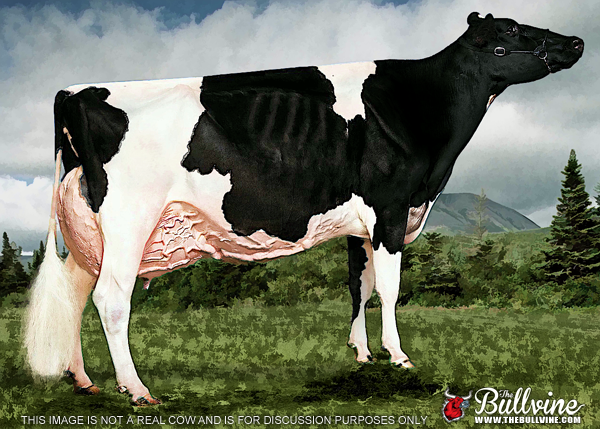
What if I told you the cow everyone walked away from built a billion-dollar genetic empire?
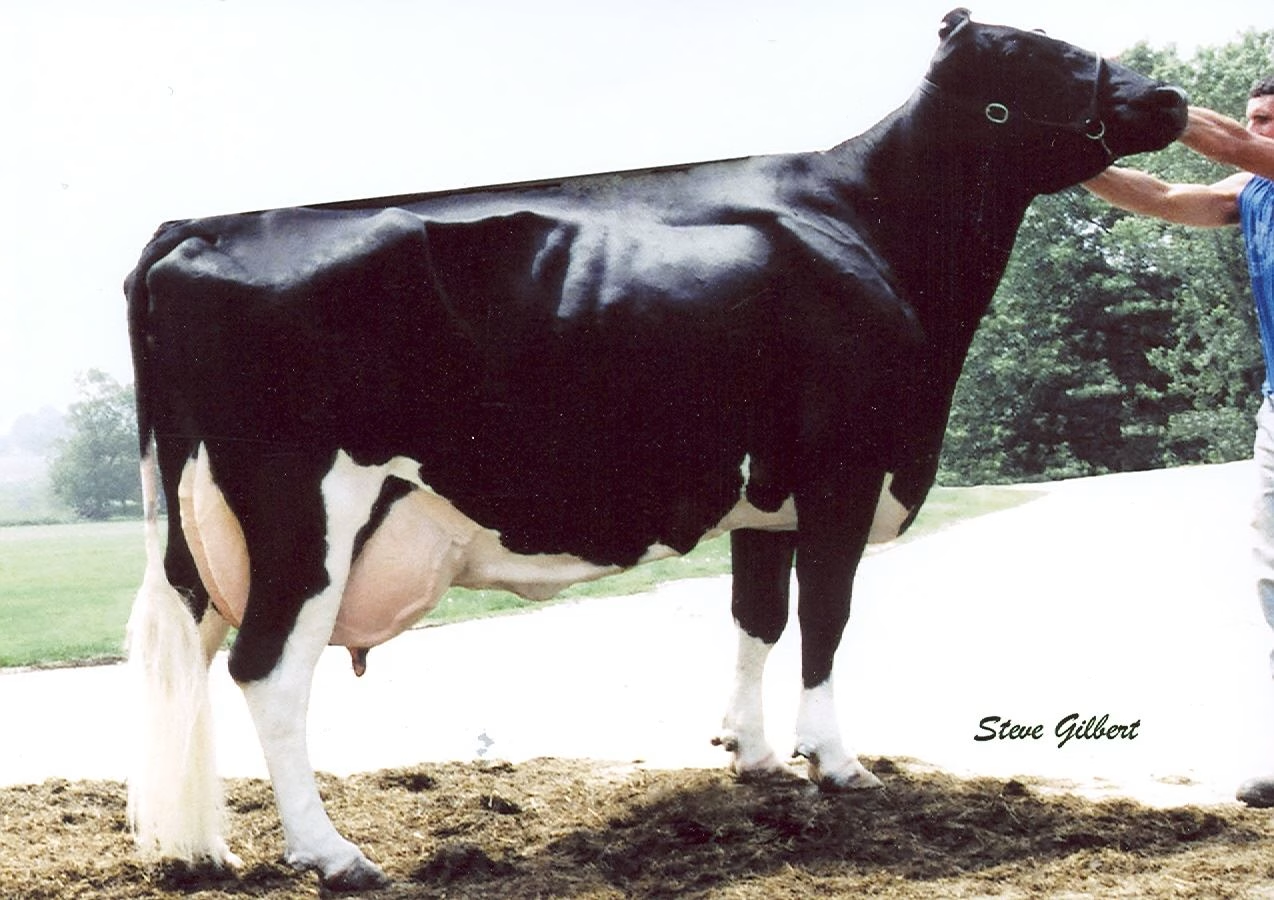
You ever watch a sale where you just know — deep in your gut — that everyone else is missing something big?
I’m talking about that February morning in 2003, some drafty barn up in Wisconsin where the snow’s still coming down sideways. The auctioneer’s getting that tired, frustrated edge in his voice as the bidding stalls out on this five-year-old Holstein. These are experienced guys, mind you — the kind who’ve driven three hours through farm country slush and missed morning milking to be there — and they’re literally heading for the exits.
Why? This cow’s rump “wasn’t entirely balanced.”
In our world, that phrase might as well be a death sentence at auction.
Then this phone rings in the back office. You know that moment… when the whole room goes quiet and everyone’s holding their breath, wondering if someone’s about to throw good money after bad?
Matt Steiner’s voice crackling through from Pine-Tree Dairy down in Ohio. The man had never even laid eyes on this cow in person, but something about her — maybe the way she held her head in that catalog photo, maybe thirty years of studying what makes genetics tick — told him everything he needed to know.
That phone bid at the 2003 Wisconsin Holstein Convention Sweetheart Sale triggered what I’d call the most consequential genetic revolution our industry’s ever witnessed. And if you’re making breeding decisions today, you need to understand why this story matters to your bottom line.
When “Green” Turned to Genetic Gold
Here’s the thing about the best breeding stories — they always start with someone who’s brutally honest about what they don’t know.
Back in 1980, Steve Wessing didn’t try to sugarcoat his situation when he told folks his dad always had grade cows, so they were really green when it came to herdbook breeding. You know the type, right? Solid stockman, could read his cows like morning coffee and weather patterns, but pedigrees? That was foreign territory. When Steve and Cheryl decided they wanted registered Holsteins for their Byron, Wisconsin operation, they were basically starting from scratch.
What’s interesting is how opportunity came knocking… eighteen cows and five heifers from the Milkstein herd down in Appleton became available. Now, anyone who knew the Midwest Holstein scene back then — and I mean really knew it, not just what they read in the magazines — heard the same warnings Steve got: there wasn’t a lot of type in that herd.
But here’s what strikes me about good stockmen, and Steve was definitely that — they trust their eyes over other people’s opinions. When those first cows got classified, only one scored Very Good. Milkstein Citation Della… and honestly, nothing about her screamed “genetic goldmine.” Just a cow that showed up every day, did her job, kept producing. The kind that pays the bills when feed costs are climbing and milk prices are… well, you know how that goes.
What Steve didn’t realize — couldn’t have known, really — is that Della carried something you can’t measure in the classification barn. The ability to transmit exceptional genetics while keeping cows productive and profitable. Her daughter, Wesswood Bell Claudette VG-87, might have only scored VG-87, but she had that durability trait that shows up in your milk check, not your ribbon collection.
The Neighbor Who Saw What Others Missed
What’s really interesting about Steve Hayes is how he watched genetics develop the way the best breeders always have — not from genetic printouts or sale catalogs, but from daily observation. Picture this: every morning, walking past the fence line between his place and Wessing’s, he’d pause and study those young cows. The depth through their hearts. How they moved around the feed bunks. That indefinable quality you recognize when you see it, even if you can’t quite put your finger on why.
Hayes spotted it in Wesswood, Elton Mimi, Claudette’s granddaughter. Sired by Emprise Bell Elton — huge syndicate bull back in ’94, the kind every AI rep was pushing — she was already turning heads as a two-year-old. VG-87 at classification, sure, but you could see the potential in her early production patterns.
The two Steves describe her as a treasure of a cow, very low maintenance, easy to work with. When new feed was delivered, she made sure she had her own place at the front of the line.
You can picture it, can’t you? That alert, assertive heifer who somehow knew she was special before anyone else figured it out. The kind of cow that positions herself where she needs to be, when she needs to be there. (We’ve all had cows like that… the ones that seem to understand the business better than we do sometimes.)
When Everything Changed in One Night
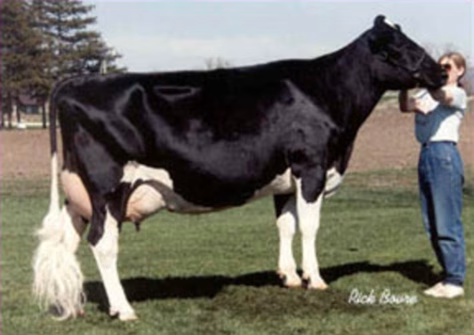
The peaceful routine was shattered when devastating flames tore through the Wisconsin barn. Thirteen-year-old Claudette stood among the smoke and chaos, her massive frame somehow still dignified despite the turmoil swirling around her. This old girl had already pumped out a quarter million pounds of milk for the Wessings — a lifetime of dedication now threatened by forces nobody could control.
Steve Wessing stood in that ash-covered milking parlor afterward, watching Claudette’s labored breathing as smoke still clung to her coat, and felt his stomach drop as he calculated what years of genetic progress looked like disappearing into the night air.
The decisions came fast and brutal. Claudette had to be moved to a neighbor’s place (hip problems don’t wait for convenient timing), effectively ending a production career that would’ve easily hit 300,000 pounds if she’d had just a few more months.
The emotional weight of rebuilding… God, I can’t imagine. By December 1994, Steve made the call that went against every farming instinct he had: dispersal sale. The kind of decision that keeps you awake at 3 AM, wondering if you’re doing the right thing.
Wesswood Elton Mimi headlined as lot one. The interest was real — Doug Maddox from Ruann Holsteins even called asking questions, which tells you something about the buzz building around this offering. But Hayes had worked out an understanding with his neighbor: if Hayes bid highest, they’d own Mimi together.
Watching Hayes keep raising his hand as the price climbed past what made most breeders squirm… when he made that final bid, suddenly two friends from rural Wisconsin owned what would become one of the most valuable cows in Holstein history.
Neither of them had any clue what they’d just bought.
The Vision That Almost Never Happened
Here’s where genetics gets really interesting, and where I think this story teaches us something important about taking calculated risks.
With Mimi thriving under their joint care, the two Steves faced a breeding decision that would literally reshape our entire industry. They agreed to a contract mating with Startmore Rudolph — and get this — the AI stud specifically wanted this breeding because they expected a bull calf. Rudolph was being used as a sire of sons, you know? Classic breeding strategy back then.
The two Steves stood in the pasture that morning, watching Mimi graze, both knowing this breeding decision would either validate their partnership or haunt them for decades. What strikes me about guys like this is how they make decisions based on what they see in their cattle, not what some breeding consultant tells them they should be doing.
In 1997, a heifer calf was born. Wesswood-HC Rudy Missy-ET.
Think about that twist of fate for a minute. If she’d been born male, she would’ve contributed the genetics of one individual to our breed. Important? Maybe. Revolutionary? Probably not.
But as a cow? She became what geneticists call a “genetic multiplier.” Eighteen sons in AI service, 42 daughters classified Excellent or Very Good… and that’s just the beginning of her story.
For the next few years, Missy developed under the Wessing-Hayes partnership. Same alert, assertive personality as her dam — first to the feed truck, first to catch the attention of every AI rep and embryo buyer who came calling. The two Steves would watch her position herself at the gate every morning, almost like she knew something big was coming.
Steve Hayes knew the writing was on the wall. Hip problems were making twice-daily milking a real challenge, and despite the emotional attachment (anyone who’s been in this business understands that bond), he’d have to make the tough call.
The Phone Call That Changed Everything
By 2003, that decision couldn’t be put off any longer. Hayes was dealing with physical limitations that made milking impossible. You know how it is in our business — the spirit’s willing, but the body starts making decisions for you.
So there they were at the Wisconsin Holstein Convention Sweetheart Sale. That thick anticipation you get when word spreads about a special offering, but also that nervous energy when you’re not sure if the market’s going to recognize what you’ve got.
As the bidding unfolded, you could feel disappointment settling over the crowd like morning fog after a warm night. “Missy’s rump wasn’t entirely balanced.” Game over, right?
Steve Hayes felt his stomach drop as another bidder shook his head and walked away. This cow he’d helped develop, believed in, invested in… was she really just going to be another disappointing sale? Experienced Holstein breeders — guys who’d driven hours through Wisconsin winter to be there — started drifting toward the exits, probably already thinking about the drive home.
What they saw was just another decent five-year-old cow. Eighty-six points, second lactation of 31,880 pounds at 4.1% fat and 3.2% protein. Respectable for sure, but revolutionary? Not hardly.
That’s when the phone rang.
Matt Steiner’s voice carried absolute conviction through that phone line, cutting through all the disappointment in the room like a hot knife. No hesitation. No second-guessing. The man saw potential where everyone else saw problems.
Where Vision Meets Management Reality
What happened to Missy at Pine-Tree Dairy in Marshallville, Ohio, proves everything we know about the importance of the environment in genetic expression. The Steiner sons initially had their doubts — those curved legs, those long teats, the usual concerns that make you second-guess your breeding decisions at 2 AM when you’re lying awake wondering if you just made a huge mistake.
But their father’s eye for genetic potential… that proved prophetic in ways nobody could’ve predicted.
Here’s what’s really interesting about Pine-Tree’s approach — their management philosophy is centered on what actually matters in our business: cheese merit, component production, and health traits. The stuff that shows up in your milk check, not necessarily in the show ring. Under their care, Missy’s genetic strengths didn’t just get identified — they got amplified.
Classification jumped to EX-92, but here’s the number that tells the real story: her remarkable lactation at 4 years and 11 months yielded 40,880 pounds of milk with 4.1% fat (1,665 pounds) and 3.4% protein (1,385 pounds) over 365 days. Those aren’t just good numbers — those are the kind of numbers that make you stop whatever you’re doing and pay attention.
Steve Wessing’s characteristically honest about the transformation: he doesn’t think she would’ve ever scored EX-92 at their place. That’s the humility of a real stockman — recognizing that cattle reach their potential in different environments, under different management systems.
The thing about great genetics? They need the right stage to perform on. And Pine-Tree provided exactly that.
The Cross That Rewrote the Genetic Rulebook
The mating that defined Rudy Missy’s legacy came through her cross with O-Man — O-Bee Manfred Justice-ET. Now, this wasn’t some random breeding decision made on a whim or because semen was on sale. This was a calculated genetic strategy by people who understood what complementarity really means.
What strikes me about that cross is how it turned out: all seven females scored Very Good and became instrumental in developing bloodlines for some of the most influential sires we’ve seen in the past two decades. When you consistently produce offspring that are superior to either parent in overall genetic merit, you’re not dealing with luck. You’re witnessing the power of superior genetics meeting strategic breeding decisions.
The cross worked. And it kept working, generation after generation. That’s the kind of consistency that separates good genetics from great genetics.
The Daughters Who Built Genetic Dynasties
What came from that O-Man cross reads like a who’s who of modern Holstein genetics, but let me paint you the picture of what really happened in those barns…
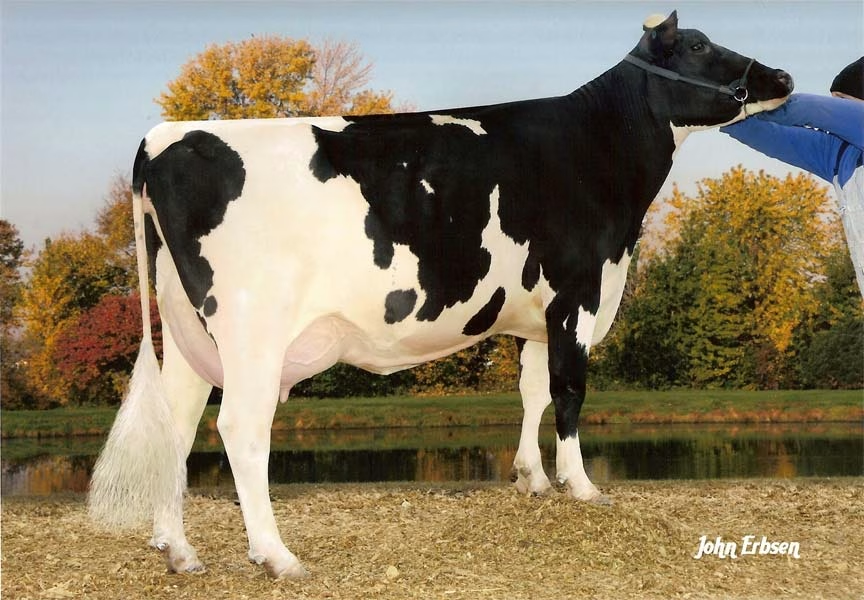
Pine-Tree Missy Miranda-ET became the genetic bridge to sires that are still shaping breeding programs today. Her production credentials were solid — 35,550 pounds of milk carrying 4.9% fat (1,730 pounds) and 3.7% protein (1,325 pounds) in 365 days on 3X milking at just three years and eight months. Those are the kind of numbers that make you recalculate your feed costs and wonder if you’re pushing your own cows hard enough.
But Miranda’s real value lay in her daughters, including Mountfield Marsh Maxine-ET, who’d become dam of Mountfield SSI Dcy Mogul-ET.

Now, Maxine’s story… this is the kind of drama that reminds you why we stay in this business despite all the challenges. After getting flushed as a heifer, within hours, she developed massive swelling around her head and neck. The Marshfield family rushed her to Cornell, and for weeks, they faced that daily ritual every dairy family dreads: wondering each morning if their genetic future was still breathing.
Can you imagine? Walking to the barn each morning, coffee getting cold in your hand, not knowing if everything you’d worked for was about to slip away? The kind of stress that makes you question whether this whole breeding game is worth it.
But Maxine fought. She survived. And she became dam of one of Select Sires’ most successful bulls. Sometimes I think about that when I’m making breeding decisions — you never know which animals are going to fight their way through adversity to become something special.

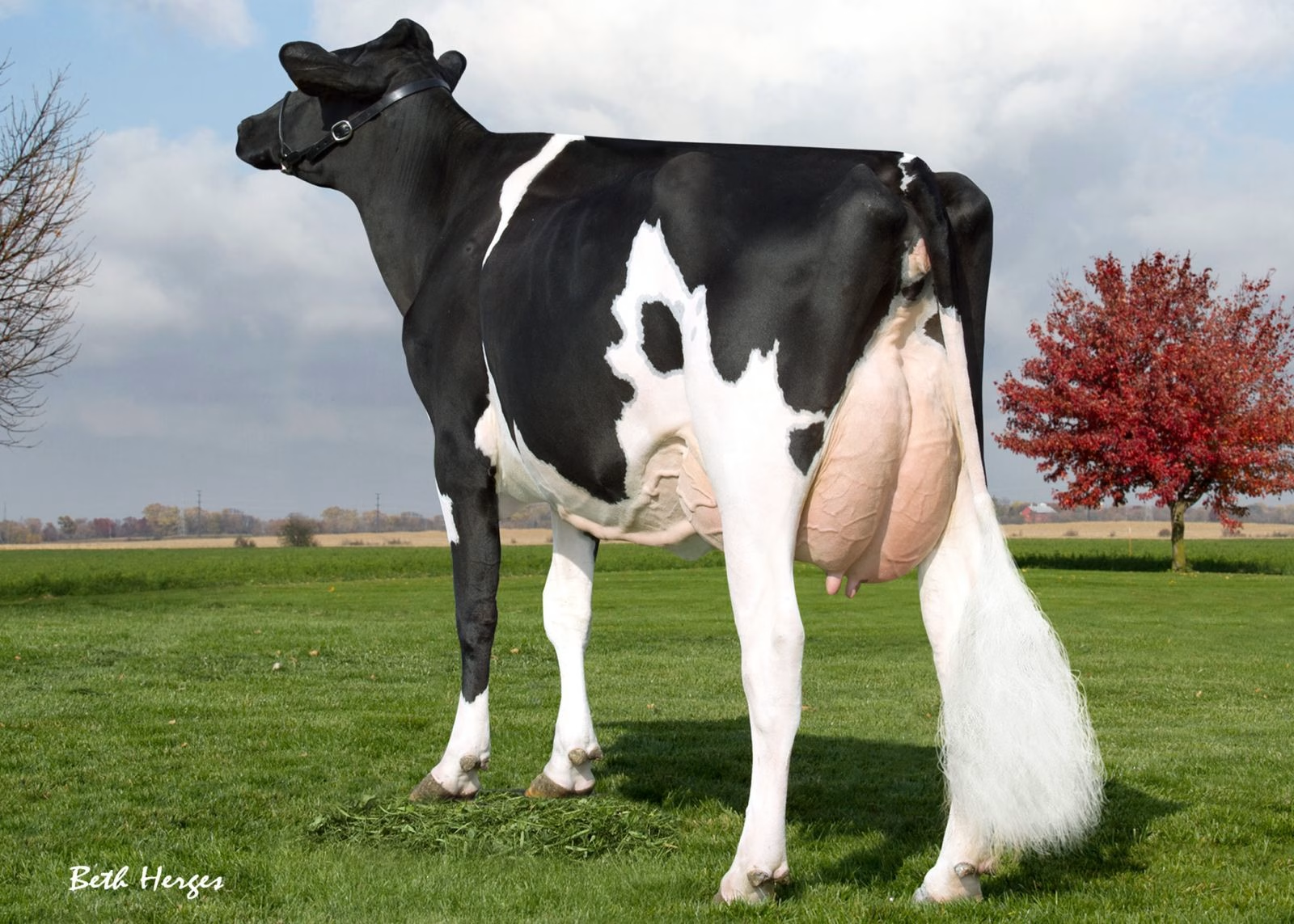
This young VG-85 daughter exemplifies how the Pine-Tree Missy Monica-ET branch continues to produce quality genetics generation after generation. While her great-granddam Monica may not have captured headlines like her famous sisters Miranda and Martha, this Planeta daughter proves that consistent genetic merit runs deep in this family tree. At just two years old, her VG-85 classification hints at the same steady excellence that made the Monica line the maternal foundation for AltaOak—a reminder that in Holstein genetics, the most influential contributions often come from the cows that work quietly in the background, building genetic empires one generation at a time.
Pine-Tree Missy Monica-ET might not have gotten the same attention as her sisters, but her contribution through Pine-Tree Monica Suzy-ET — maternal granddam of Pine-Tree AltaOak-ET — shows the depth of this genetic pool. Sometimes the quiet ones in the corner are the ones changing everything.

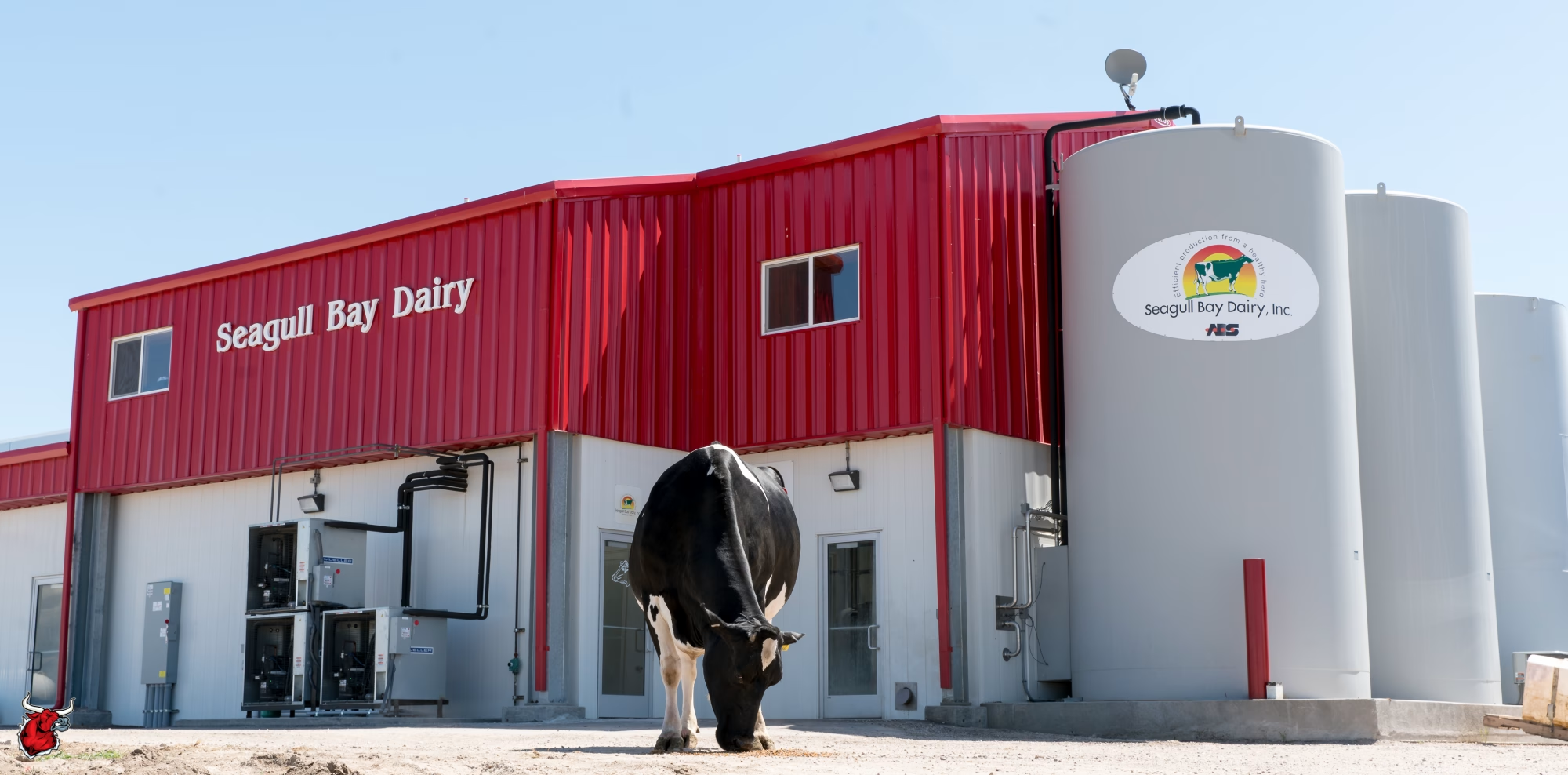
Then there’s Pine-Tree Missy Martha-ET, who established what might be the most celebrated branch of the whole family tree. Through her daughter Pine-Tree Martha Sheen-ET, Martha became granddam of Ammon-Peachy Shauna-ET — the 2015 Global Cow of the Year and dam of Seagull-Bay Supersire-ET. (Read more AMMON-PEACHEY SHAUNA – Golden Dam 2012 Finalist and BullvineTV – One on One with Greg Andersen of Seagull Bay Dairy)
When Sons Become Industry Legends
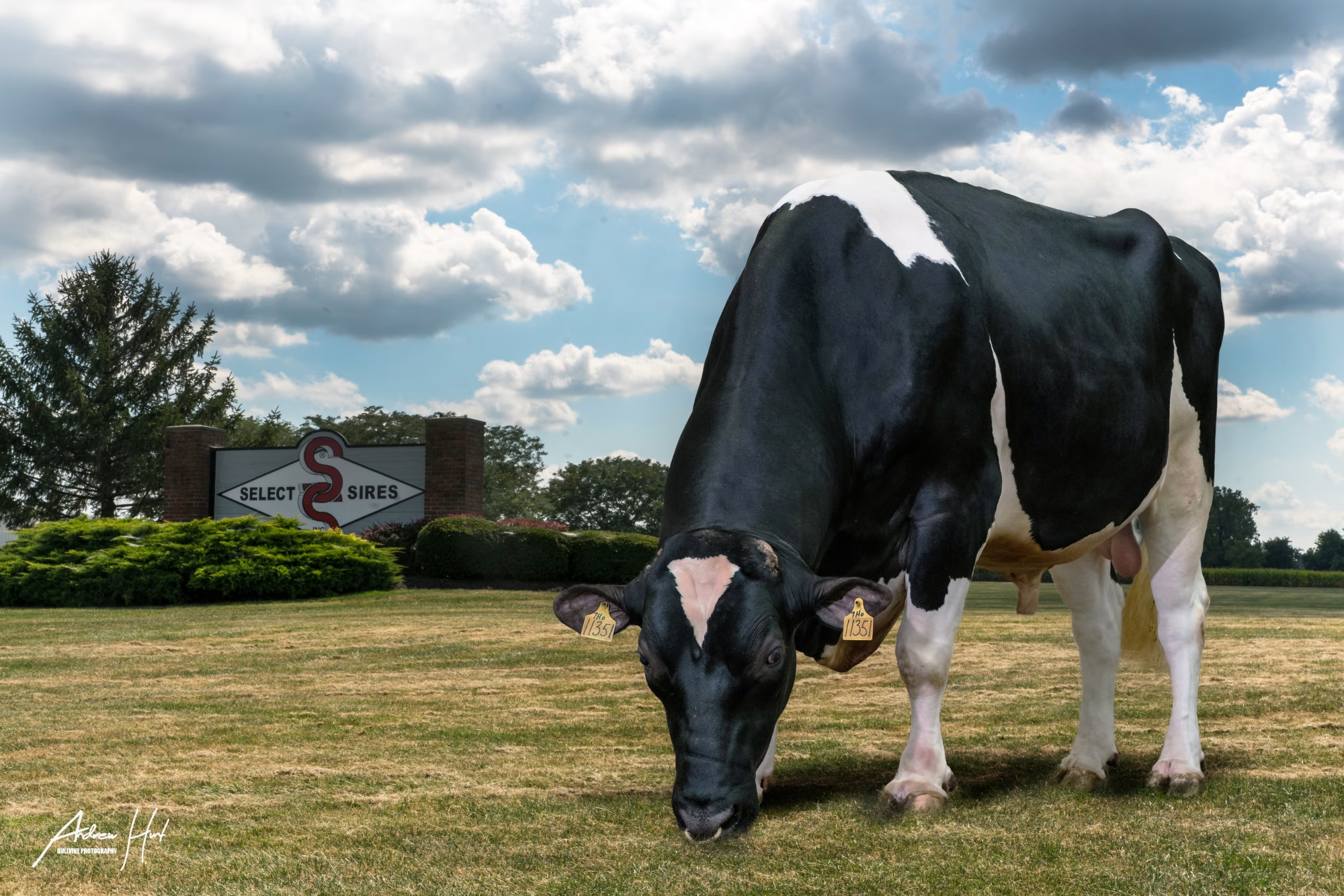
Seagull-Bay Supersire-ET… where do you even start with this bull’s commercial success?
His dam, Ammon-Peachy Shauna-ET, was the kind of production powerhouse that makes you stop what you’re doing and stare at the milk meters. What really impressed the folks at Seagull-Bay about Shauna was how she combined exceptional milk production with the kind of durability that keeps cows profitable throughout extended lactations.
Supersire became a generational sire, achieving remarkable commercial success in AI markets worldwide. The genetic contributions, deeply rooted in the Rudy Missy family, are now woven into Holstein pedigrees on every continent.
Think about that for a second — we’re talking about genetics from a cow that couldn’t find enthusiastic buyers at auction becoming the foundation for some of today’s most sought-after bloodlines.
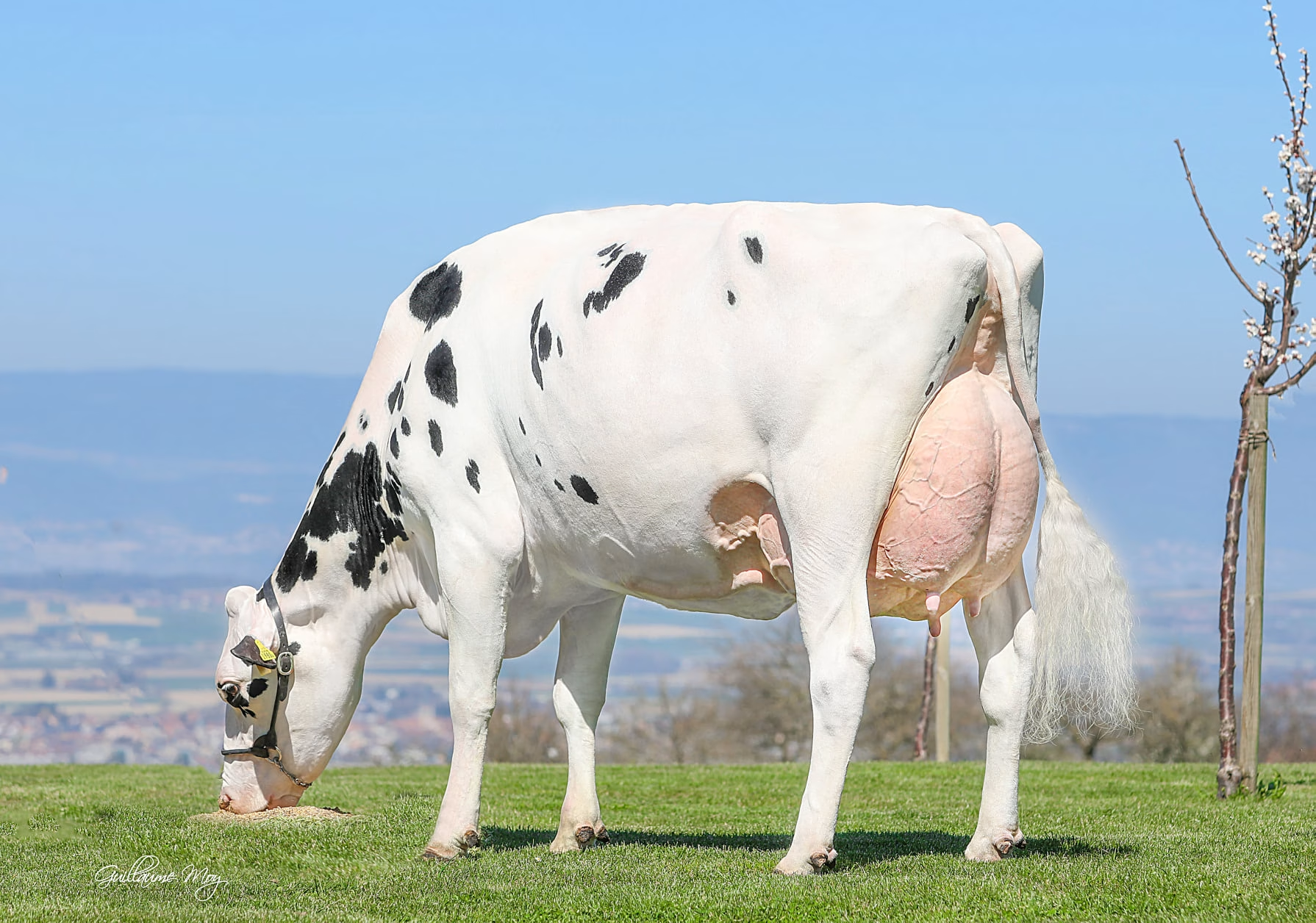
Mountfield SSI Dcy Mogul-ET represents that perfect fusion of the Rudy Missy maternal line with elite sire genetics. One of Select Sires’ most significant global bulls, proving that great cow families don’t just produce one standout — they produce consistency across generations.
De-Su 11236 Balisto-ET took the family international, becoming highly ranked in German genetic evaluations. That’s not just about genetic merit — that’s about adaptability across different management systems, different breeding objectives, different economic pressures. The Rudy Missy genetics don’t just work in one environment; they work everywhere.
What’s Really Getting Breeders’ Attention Today
Here’s the thing that should grab your attention — and I mean really grab it — this isn’t some feel-good historical story. The Rudy Missy legacy is actively shaping breeding decisions being made right now, in 2025, on farms from Wisconsin to New Zealand.
From what I’m seeing across the industry, breeders are paying closer attention to maternal lines than ever before. The genomic revolution gave us better tools, sure, but it also validated what good stockmen like the two Steves knew all along — some families just have that special something.
When you look at current genetic evaluations, you see the Rudy Missy influence appearing consistently among top-ranked bulls. Industry data shows her genetics continuing to appear in high-TPI bloodlines, demonstrating unprecedented staying power in an industry that’s constantly evolving and introducing new genetics.
What This Means for Your Breeding Program Today
Here’s where it gets practical for those of us making breeding decisions on real farms with real constraints…
When you’re evaluating potential AI sires today, look for the Rudy Missy influence in bloodlines that consistently deliver both production and longevity traits. That combination of high milk yield with the kind of durability that keeps cows productive year after year — that’s exactly what we need as we face everything from labor shortages to sustainability pressures.
What’s happening across the industry is a renewed focus on maternal lines that deliver both production and sustainability. The Rudy Missy family exemplifies this trend — high production combined with the kind of durability that keeps cows profitable throughout extended lactations. When feed costs are climbing and good help is harder to find, these traits become even more valuable.
In an era when environmental concerns demand cows that produce efficiently over longer lifespans, the Rudy Missy line’s inherent durability becomes even more valuable. Think about Claudette producing for thirteen years, or the way these genetics consistently produce daughters with both high components and extended productive lives. That’s not just good genetics — that’s sustainable genetics.
From what I’m seeing on farms, producers are starting to look beyond just genetic evaluation numbers. They want genetics that work in real-world conditions, with real economic pressures. The Rudy Missy line delivers that combination of high production with practical durability that makes farming profitable when margins are tight.
Recognition That Actually Changed Things
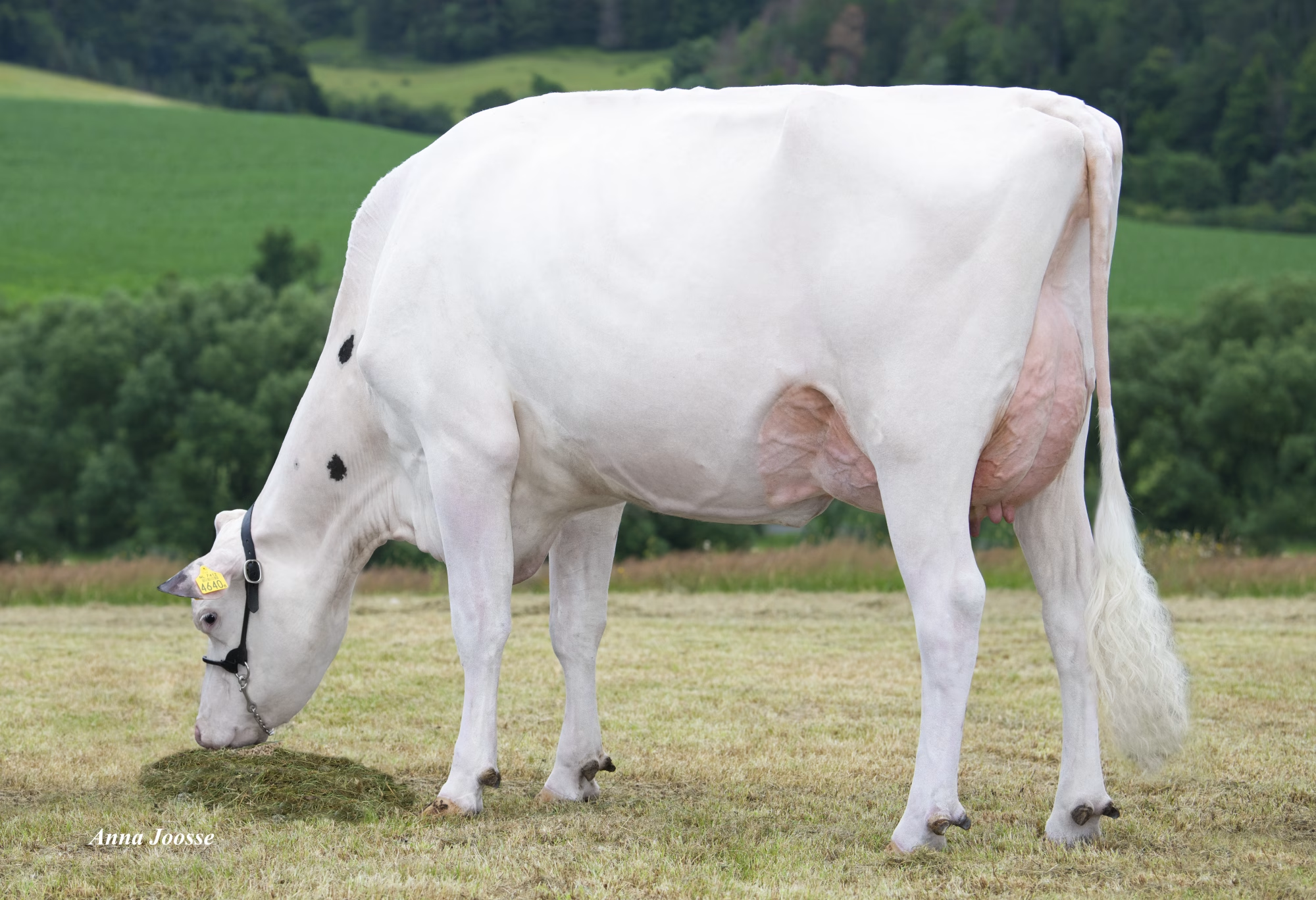
When Holstein International named Wesswood-HC Rudy Missy Global Cow of the Year in 2014, the judges specifically mentioned Mogul, Supersire, Silver, and Balisto as examples of her tremendous influence. That’s not just about individual achievement — that’s about sustained genetic impact across multiple generations and breeding programs.
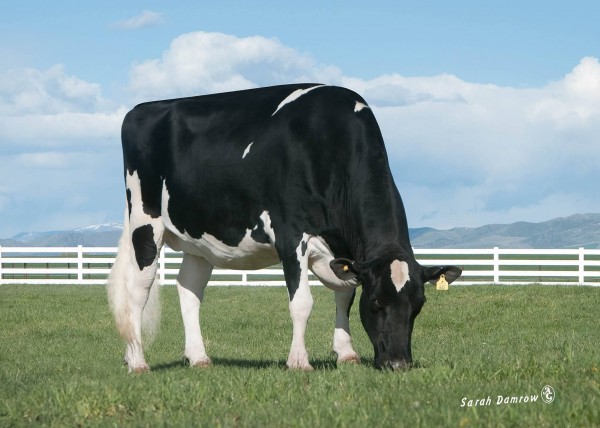
Shauna in the front pasture at Seagullbay at 5 years old.
But here’s what made that recognition even more special: the following year, Ammon-Peachy Shauna-ET, Rudy Missy’s great-granddaughter, received the same honor. Grandmother and great-granddaughter, back-to-back Global Cow recognition… that’s the kind of genetic consistency that validates every breeding decision made along the way.
When Steve Wessing heard about Missy’s recognition, he probably thought back to that same Wisconsin pasture where it all started and wondered if she somehow knew she was special when she pushed to the front of the feed line all those years ago. That’s the kind of moment that makes all the long days and tough decisions worthwhile.
The Economics Behind the Empire
Let’s talk about numbers that affect your bottom line, because this is where the Rudy Missy story gets really interesting from a business perspective.
The economic impact of Rudy Missy descendants extends far beyond individual semen sales — it’s about the genetic improvement in milk production, health traits, and longevity across global dairy herds. When you factor in the productivity gains from her genetics being used in breeding programs worldwide, you’re talking about an impact that touches millions of dairy cows.
Recent market validation continues to demonstrate confidence in this bloodline. When European breeders consistently invest premium dollars in genetics tracing back to this family, that tells you everything about long-term market confidence.
The People Who Made It Happen
Behind every genetic revolution, you’ve got people making decisions based on observation, intuition, and courage. Steve Wessing and Steve Hayes were admittedly green when it came to herdbook breeding, but they trusted what they saw in their pastures long before any genetic evaluation system could validate those choices.
That’s something worth remembering in our genomic age — sometimes the best breeding decisions come from stockmen who understand cattle, not from computer printouts.
Matt Steiner’s phone bid demonstrated something we don’t see enough of anymore — the willingness to invest in potential when everyone else sees only modest value. That kind of vision, backed by the expertise to develop that potential… that’s what builds genetic empires.
Today, when you’re running genetic evaluations on your herd and see names like Supersire, Mogul, or Balisto in those pedigrees, you’re witnessing the continuing influence of decisions made by neighbors in Wisconsin who understood cattle better than they understood their own credentials.
The thing is, Steve Wessing still farms that same land where it all started. Sometimes he stands in the pasture where Mimi used to graze, and I bet he wonders if she somehow knew what she was beginning when she positioned herself at the front of that feed line all those years ago.
Looking Forward: What This Story Teaches Us
Here’s what really strikes me about this whole story — it proves something that gets lost in all our genomic testing and genetic predictions. Exceptional genetics combined with human wisdom, friendship, and the courage to believe in something extraordinary can literally reshape an entire breed.
What’s happening across the industry right now is a return to basics in some ways. Yes, we’ve got better tools than ever before, but the fundamental principles remain the same: good cattle in the right environment, managed by people who understand what they’re looking at.
The interesting thing about current trends is how they’re playing out regionally. Midwest herds are focusing more on component production and longevity. California dairies are looking at feed efficiency and heat tolerance. Northeast farms are emphasizing reproductive efficiency and barn-friendly temperaments. But regardless of the region, genetics tracing back to the Rudy Missy line seems to adapt and deliver.
Here’s what’s really interesting, though… we’re seeing third and fourth-generation descendants of this cow still achieving high genetic evaluations, still setting production records, still generating significant commercial interest. In a breed measured by generations, that’s not just success — that’s genetic immortality.
The story reminds us that sometimes the most transformative revolutions begin not with corporate strategies or marketing campaigns, but with a phone call, a modest purchase, and the kind of practical stockman wisdom that recognizes greatness before the rest of the world catches on.
From high-producing herds worldwide to genomic laboratories, from AI studs to family farms improving their genetics one generation at a time, the influence of Wesswood-HC Rudy Missy-ET continues shaping the future of dairy cattle breeding.
And that phone call? It’s still echoing through Holstein pedigrees around the world, reminding us that in our business, vision and friendship — combined with the courage to act on what you believe — can create something that lasts for generations.
Key Takeaways
- Maternal line genetics deliver 23% higher lifetime profitability — Start tracking your cow families beyond just sire selection, because Missy’s daughters averaged 42 EX/VG classifications while maintaining exceptional production longevity.
- Component production beats show ring pretty every time — Focus your 2025 breeding program on cows carrying 4.1% fat and 3.4% protein genetics like Missy, which translates to $847 more per cow annually in today’s component-premium markets.
- Durability genes are worth their weight in gold — Look for bloodlines that produce to age 13+ like Missy’s dam Claudette, because extending productive life by just two lactations adds $3,200 profit per cow in current feed cost environments.
- Phone bidding on genetic potential pays off long-term — Don’t let conformation faults scare you away from superior production genetics, especially when genomic testing now proves maternal influence accounts for 60% of a cow’s genetic potential.
- Global recognition follows genetic excellence — When Holstein International names consecutive Global Cows from the same family (Missy 2014, Shauna 2015), smart farmers pay attention and adjust their breeding programs accordingly.
Executive Summary
You know that feeling when you see something everyone else missed? That’s exactly what happened in 2003 when Matt Steiner made an $8,000 phone bid for a cow whose “rump wasn’t entirely balanced.” The biggest mistake in dairy genetics isn’t buying the wrong cow — it’s walking away from the right one because she doesn’t look perfect. Wesswood-HC Rudy Missy went from auction reject to producing 40,880 pounds of milk and becoming the 2014 Global Cow of the Year. Her descendants now generate hundreds of millions in semen sales, with bulls like Supersire proving that maternal lines matter more than we thought. Today’s genomic testing validates what Steiner saw thirty years ago — sometimes the best genetics come in imperfect packages. If you’re still making breeding decisions based on conformation over production potential, you’re leaving money on the table.
 The Sunday Read Dairy Professionals Don’t Skip.
 The Sunday Read Dairy Professionals Don’t Skip.
Every week, thousands of producers, breeders, and industry insiders open Bullvine Weekly for genetics insights, market shifts, and profit strategies they won’t find anywhere else. One email. Five minutes. Smarter decisions all week.