Archive for reproductive management

H5N1’s Second Bill: The 90-Day, 0.5-SPC Fertility Hit Most Herds Miss

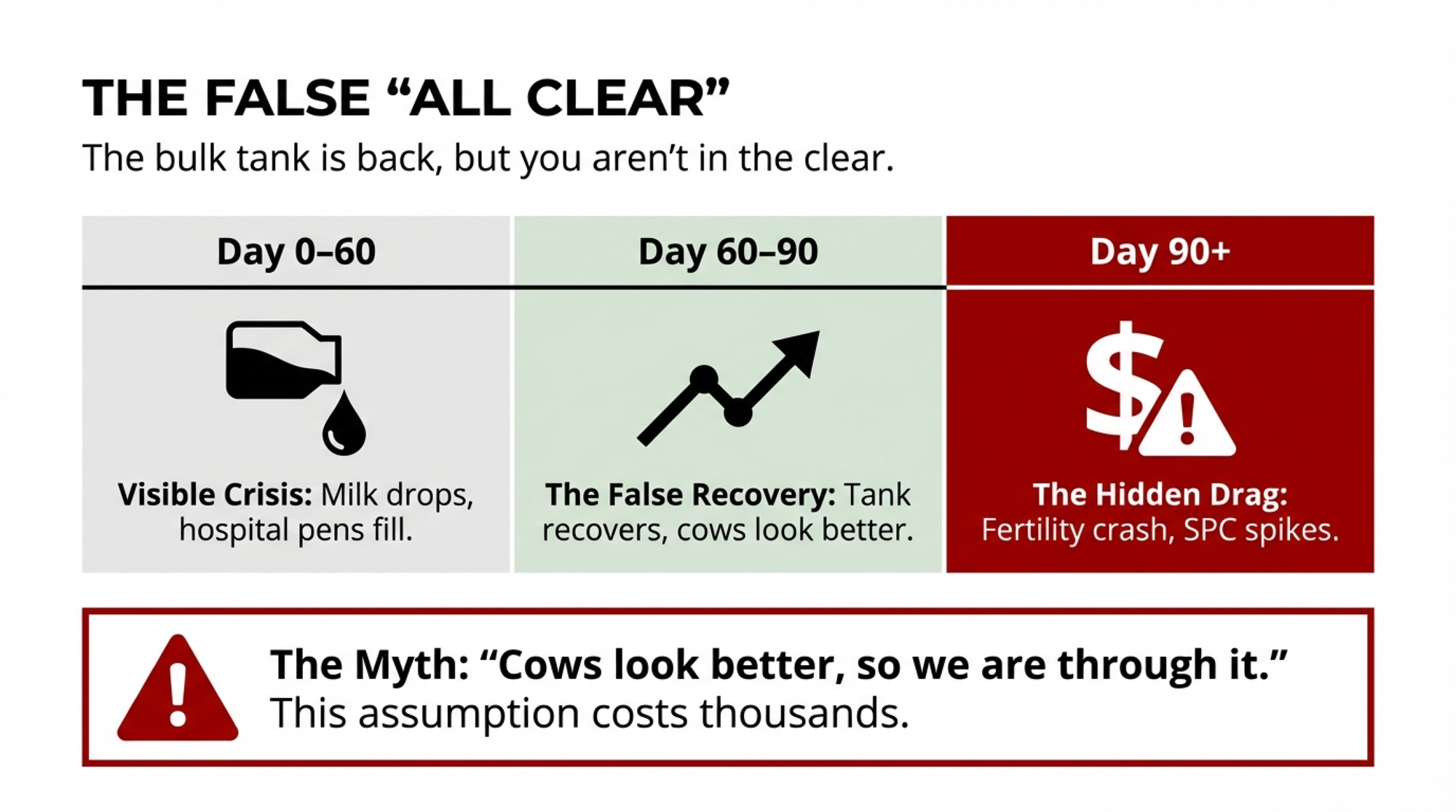
The tank’s back. Your SPC is still 0.5 higher. That’s H5N1’s second bill—it shows up 90 days after you think you’re done. Most herds miss it.

Executive Summary: H5N1’s first bill is the milk crash everyone sees. The second bill—services per conception jumping 0.3–0.5 above baseline—shows up 90 days later, after you think you’re done. Cornell research on a 3,900-cow Ohio herd shows why: 89% of cows seroconverted, but 76% never looked sick. Their immune response still damaged the eggs maturing during the outbreak—the same eggs you breed weeks later. Texas A&M’s preliminary data confirms the pattern: heifer SPC climbing from 1.5 to 2.0 and holding into 2025. For a 1,000-cow herd, that hidden jump can mean $7,500–$10,000 per quarter in extra semen, labor, and days open. Your real ‘all clear’ isn’t when the tank recovers—it’s when your rolling SPC returns to your 12-month baseline, and you should be managing breeding decisions around that 90-day window until it does.
H5N1 fertility hit

When H5N1 hits your dairy, everybody watches the tank. Milk drops hard, cows look rough, and for a few weeks, it’s all about getting through the crash. Two months later, the bulk tank creeps back, the hospital pen thins out, and it’s tempting to say you’re “through it.”

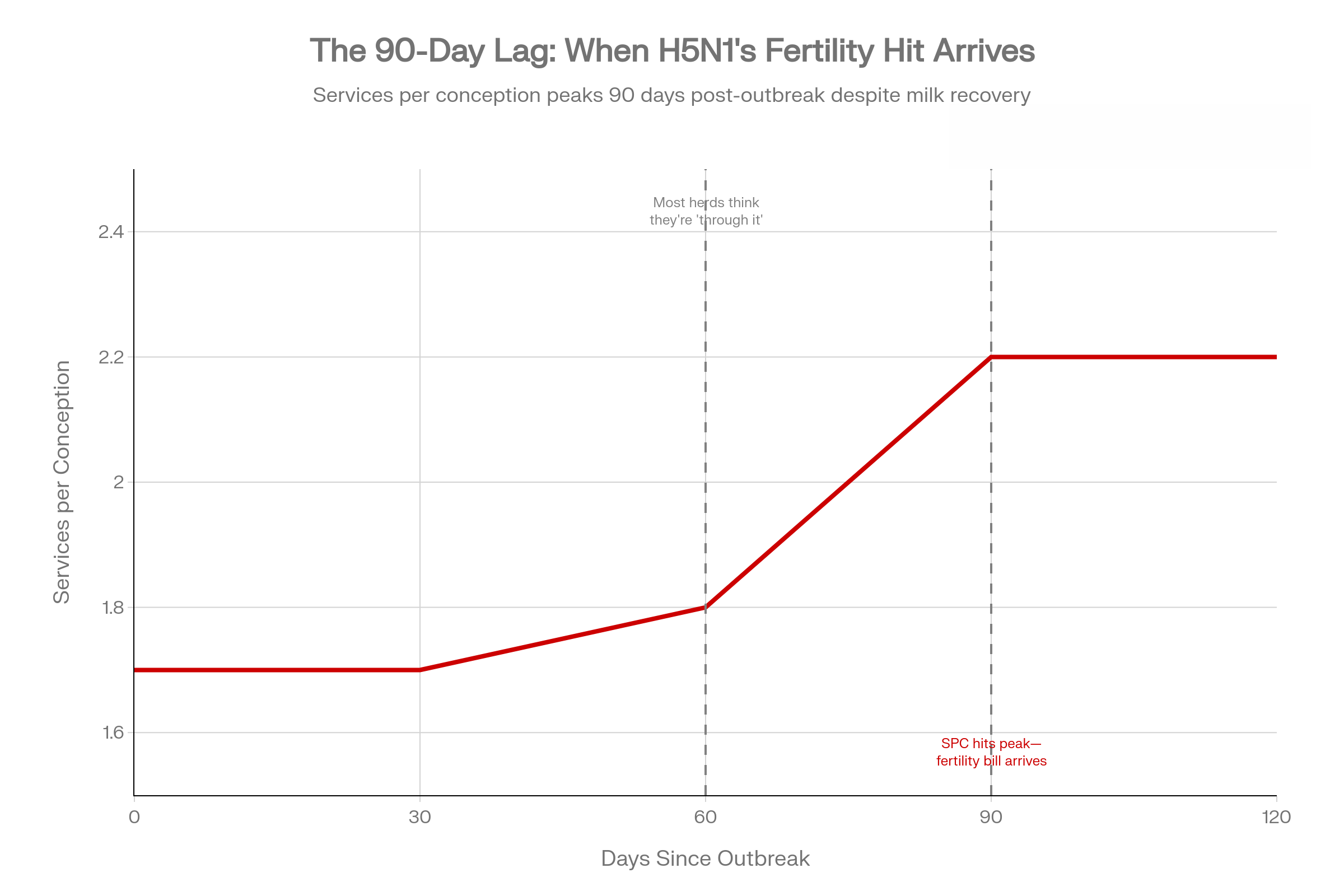
You might not be. Early U.S. herd data suggest one of the easiest costs to miss from H5N1 shows up 60–90 days later, when services per conception climb by roughly 0.3–0.5 above your own 12-month baseline and stay there. For a 1,000-cow herd, that kind of fertility drag adds up fast once you factor in extra semen, extra days open, and extra labor. The example further down walks through what that 0.5 SPC bump can mean when you plug in your own prices.
This is a playbook for treating H5N1 as both a 60-day milk event and a 90-day fertility-and-economics event.

From Milk Crash to Fertility Drag: What Changed After 2024
Once H5N1 jumped into U.S. dairy cattle in 2024, the early focus was all about sick cows and lost milk. A Cornell-led investigation of a large freestall herd in Ohio—about 3,900 milking cows during a 2024 outbreak window—put numbers to what many herds felt.

  • About 20% of adult cows showed clear clinical disease: off feed, reduced rumination, thick colostrum-like milk.
  • Those clinically affected cows lost roughly 900 kg of milk per cow over 60 days—about a full metric ton per cow.
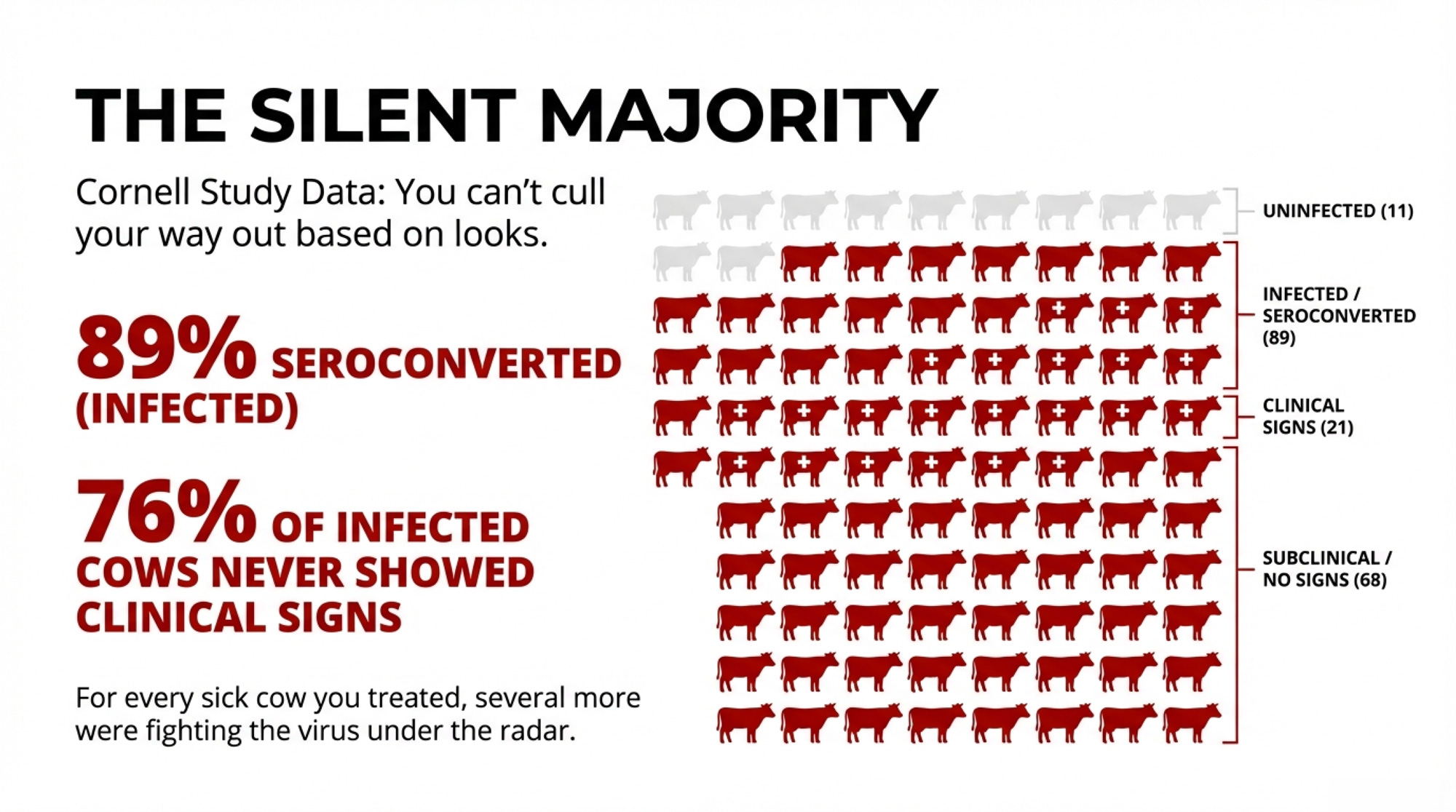
  • Serology showed 89.4% of cows had neutralizing antibodies to H5N1, and 76.1% of seropositive cows had never shown clinical signs.

For every obviously sick cow you were treating, several more were fighting the virus under the radar.

MetricTotal HerdClinically AffectedSubclinical (Silent)Key Takeaway
Cows in study3,900~780 (20%)~2,965 (76% of seropositive)Most infected cows never looked sick
Seroconverted89.4%100% (by definition)76.1% of seropositive showed no signsYou bred their damaged eggs weeks later
Milk loss per cowVariable~900 kg over 60 daysUnknown, likely moderateThe visible cost everyone saw
Fertility impactEmerging dataLikely highLikely high—same immune responseThe hidden cost most herds missed

Federal and state responses framed the risk for U.S. dairies in 2024–2025:

  • In cattle, H5N1 is milk-centric. Virus levels are highest in milk and mammary tissue, not in the lungs.
  • The milking parlor is a primary within-herd engine: clusters, gloves, sleeves, floors, and drains get coated in milk from infected cows.
  • A USDA Federal Order effective April 29, 2024, requires testing of lactating dairy cows before interstate movement, a 30-day hold and re-test on positives, and reporting of results.
  • In December 2024, USDA began rolling out a National Milk Testing Strategy, using plant silo and bulk tank samples to detect H5N1 and help define each state’s herd status.

That’s the disease-control picture. The fertility story is quieter but just as expensive over time.

In the Ohio herd, almost nine out of ten cows were infected, but most never looked sick. Their immune systems are still switched on. Their ovaries and developing eggs remained in an inflammatory environment for a period of time. If you only track the milk crash, you miss the 90-day fertility hit that shows up later on your repro report.

The Repro Signal: When SPC Jumps and Doesn’t Come Back Down

We don’t yet have a shelf full of peer-reviewed H5N1 fertility papers. But enough is coming out of Texas A&M and other projects to treat this as a real risk, not just a bad-luck year.

In a January 2026 episode of The Dairy Podcast Show, Dr. Jennifer Spencer and Dr. Juan Piñeiro from Texas A&M AgriLife walked through preliminary results from a USDA-funded project on H5N1 and reproduction. They’re analyzing herd records from 2021 onward for multiple Western and South-Central U.S. dairies, comparing pre-outbreak, outbreak, and post-outbreak periods.

For one South-Central herd, they discussed:

Heifers

  • Conception rate dropped by about 5 percentage points between March and December 2024—the herd’s outbreak window.
  • Services per conception climbed from around 1.5 up to roughly 2.0 in that same period, and those higher SPC levels still appeared in 2025.

Cows

  • Conception rates declined across parities during the outbreak.
  • First-lactation and 3rd-plus cows appeared to recover toward pre-outbreak levels in 2025, but second-lactation cows lagged—likely because those cows were heifers during the outbreak.

Spencer’s been clear that this is retrospective data with lots of moving parts—semen strategy, heat-detection tools, breeding crew, heat stress, ration tweaks. No one’s saying H5N1 is the only cause. The point is that the pattern—especially that 0.5 SPC jump that doesn’t fall back quickly—lines up with what we know about inflammation and oocyte development.

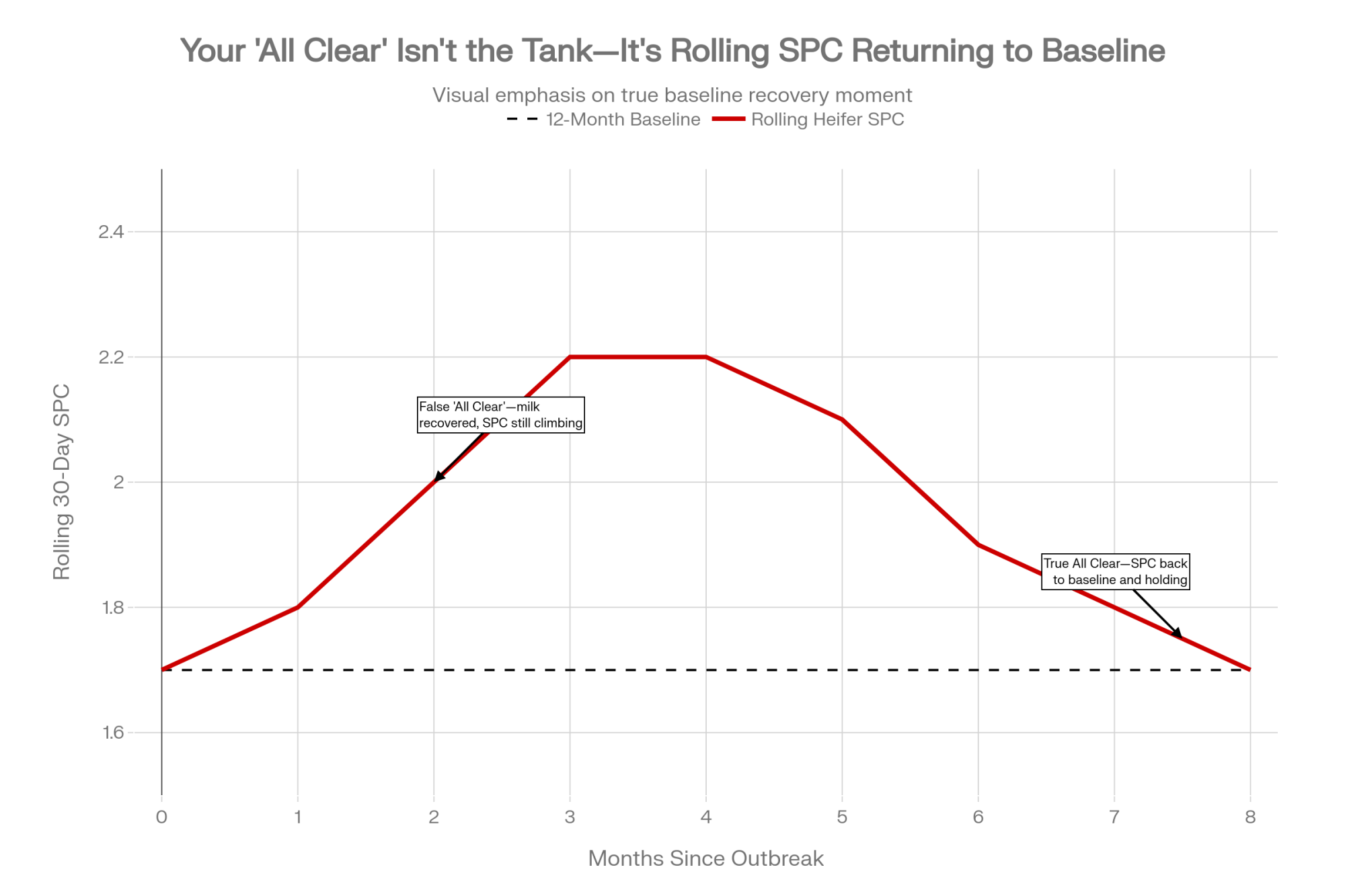
Treat these herd-level patterns as early warning signals, not final verdicts. But if your heifer SPC goes from 1.7 to 2.2 and sits there for a quarter, you don’t need a PhD to know that’s expensive. The real decision is whether you write it off as “one of those years” or treat it as a risk you plan for.

Why the Real Damage Shows Up 60–90 Days Later

The lag between the outbreak and the fertility hit makes sense once you consider how much fuel the immune system burns—and what inflammation does within a follicle.
Inflammation Burns Glucose and Pushes Repro Down the Priority List

An activated immune system is a glucose hog. In a controlled endotoxin challenge, researchers showed that an acutely stimulated immune system in lactating Holsteins can burn more than 1 kg of glucose in 12 hours. That’s glucose that doesn’t go into milk synthesis, hormone production in the ovary, or oocyte and embryo development.
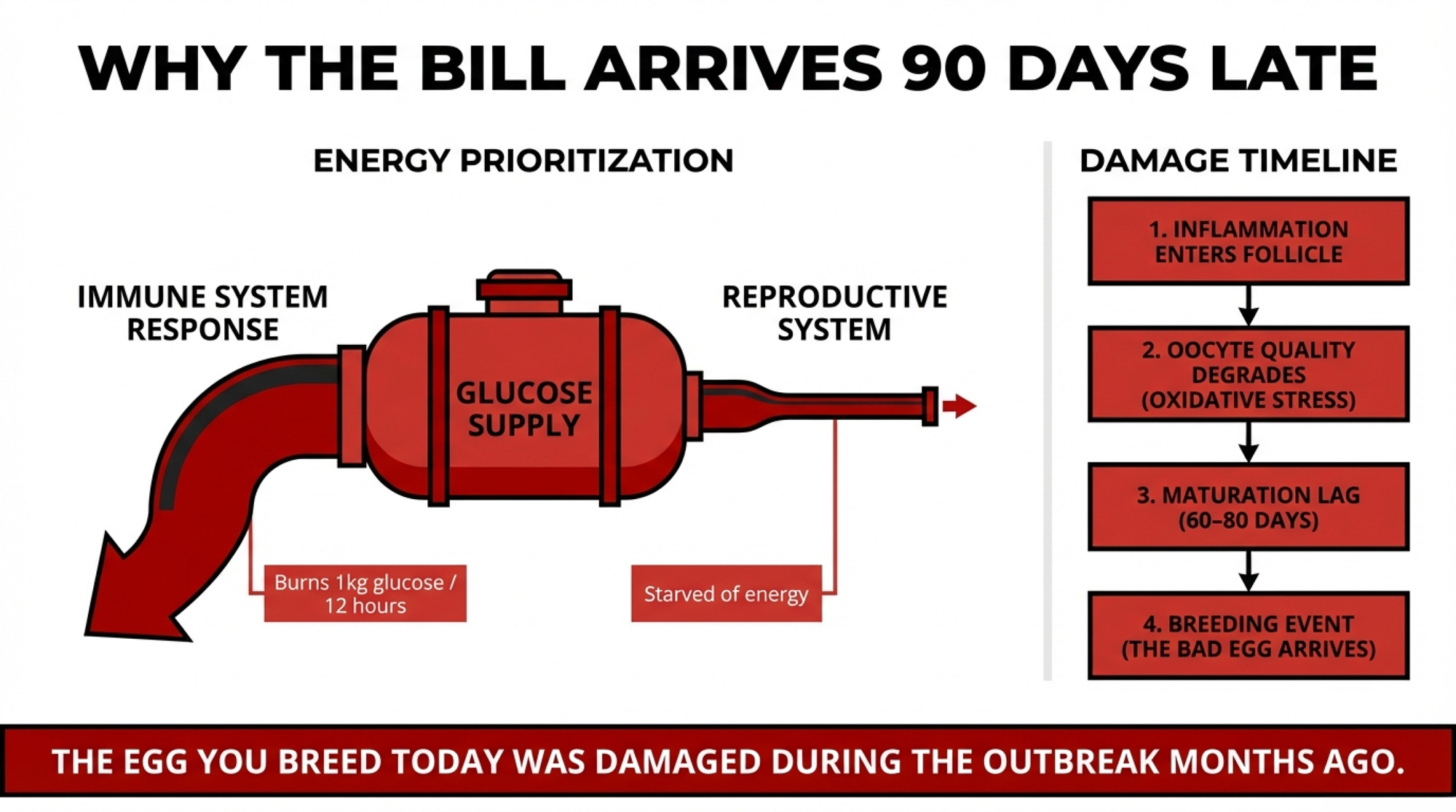
Years of transition-cow work tell the same story. Cows with high NEFA, elevated ketones, and higher inflammatory markers around calving have more trouble cycling, more uterine disease, and lower conception rates. H5N1 drags that biology into mid-lactation instead of just the fresh pen.

Inside the Follicle: Eggs That Look Fine but Were Never Right

Follicles aren’t sealed tanks. Granulosa and theca cells in the follicle express Toll-like receptor 4 (TLR4), so they respond to inflammatory stimuli by producing cytokines directly into the follicular fluid.

In bovine oocyte models in which researchers add LPS or simulate inflammation, they observe abnormal meiotic spindles and misaligned chromosomes, fewer oocytes completing normal nuclear maturation, disrupted cortical granule distribution, and increased oxidative stress and apoptosis.

In plain English: you can have an egg that ovulates on time, in a heat that looks great, that never really had a chance.

The cow’s reproductive system doesn’t automatically weed out that egg. Dominant follicles are selected for estradiol output and hormone responsiveness, not some deep quality-control inspection of the egg’s chromosomes. So yes—sometimes the “junk egg” is the one you breed.

Timing: Today’s Outbreak, Next Month’s Open Cows

Oocyte development is slow. An egg spends roughly 60–80 days progressing from early growth to readiness to ovulate.

So when your herd goes through a big inflammatory hit like H5N1, the eggs you’re breeding two to three cycles later were maturing during that outbreak. That’s when SPC rises, and early embryo loss shows up, even though the tank and the hospital pen look much better.

That’s the same kind of lag Spencer’s team is seeing in the records: outbreak in 2024, repro performance dipping during it, and higher SPC persisting into 2025 for at least one heifer cohort. On paper, it just looks like a rough year. On your bank statement, it’s a hidden fertility bill that shows up long after the milk recovers.

What a 0.5 SPC Jump Really Costs

Let’s put some structure around the math.

Picture a 1,000-cow U.S. herd with about 450 milking cows eligible to breed over a three-month window, baseline heifer SPC around 1.7, and cow SPC around 2.5, and a confirmed H5N1 outbreak in April. By June, milk looks close to normal.

By August, your repro report shows heifer SPC up from 1.7 to 2.2, second-lactation SPC up from 2.5 to 3.0, and that patternis holding for at least three months.

That 0.5 SPC increase means you’re using about half an insemination more per pregnancy in those groups.

Recent work from the University of Kentucky uses a decision-support dashboard to model the cost of extra days open under different herd conditions. With their default assumptions, they report cost per day open ranging from about $0.31 to $1.51 across lactations. They also point out that the old rule of thumb—$3–5 per day open—can easily overshoot or undershoot the true cost for a specific herd.

On the semen side, economic simulation work on beef and dairy semen strategies often uses semen prices of about $15 per conventional or beef dose and $35 per Holstein sex-sorted dose, with labor cost around $10 per insemination. That puts per-service cost in the roughly $25–45 range, depending on semen type.

Illustrative Example: 300 Pregnancies in a Post-Outbreak Window
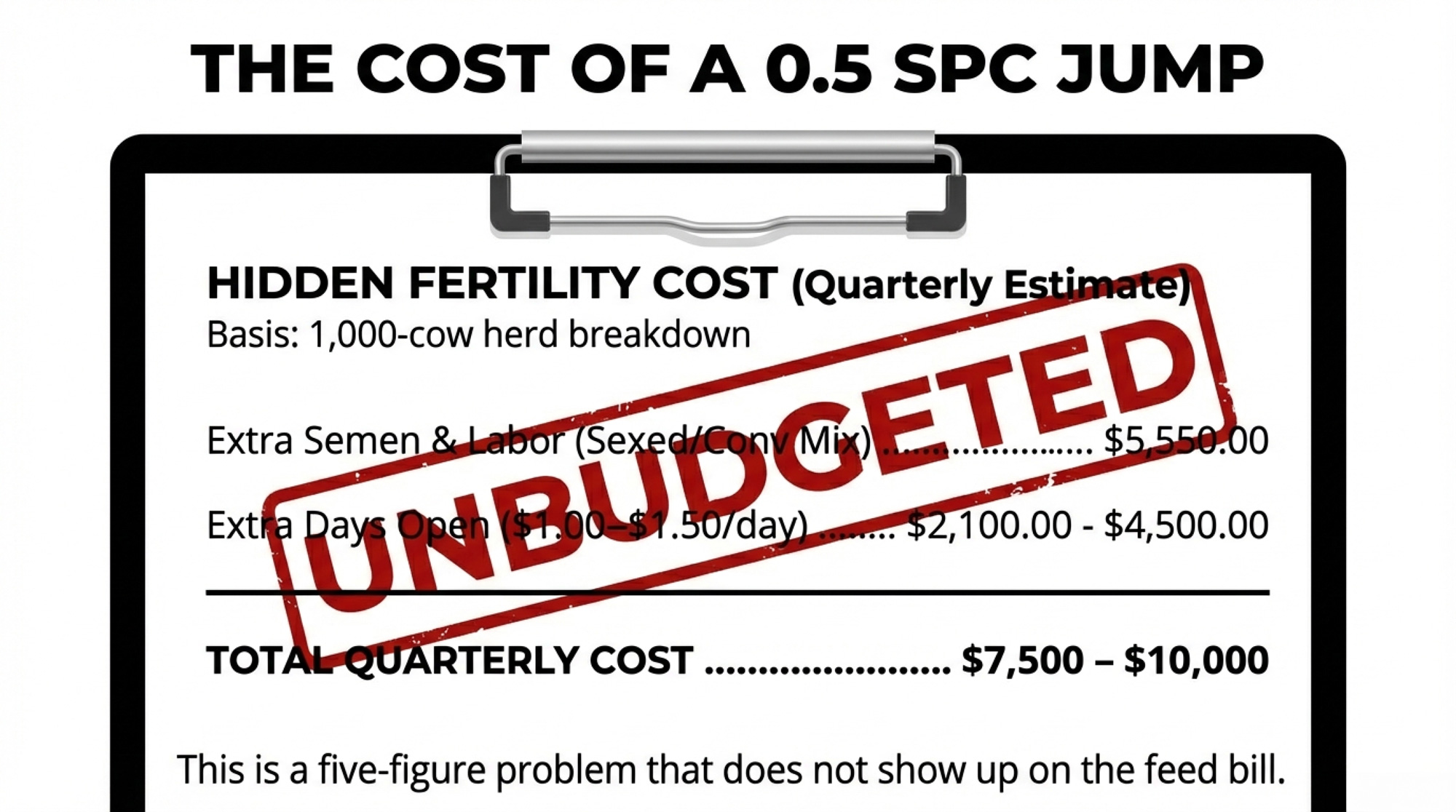
Plug in your own prices and cow counts.

InputValue
Group size200 heifers + 200 second-lactation cows
Baseline SPC1.7 (heifers), 2.5 (2nd-lactation)
Post-H5N1 SPC2.2 (heifers), 3.0 (2nd-lactation)
Pregnancies targeted300
Cost CategoryCalculationLow EstimateHigh Estimate
Extra services needed0.5 SPC × 300 pregnancies150 services150 services
Sexed semen (60%)90 services × ($35 + $10 labor)$4,050$4,050
Conventional (40%)60 services × ($15 + $10 labor)$1,500$1,500
Total semen + labor$5,550$5,550
Extra days open300 pregnancies × 7–10 days2,100 days3,000 days
Days open costAt $1.00–$1.50/day$2,100$4,500
TOTAL added cost (90 days)$7,650$10,050
Annualized (4 quarters)~$30,600~$40,200

Your real number could be lower or higher depending on how much SPC actually moved, your semen mix, and your milk price, feed costs, and replacement value.

The point isn’t to argue over the exact dollar. It’s to get a handle on what your last H5N1 event might already have taken out of your repro program—and whether you want to go into the next one without a plan.

Turn H5N1 into a 90-Day Fertility Project

You can’t control when H5N1 shows up in your neighborhood. You can control whether you treat it as a one-time milk wreck or as a 90-day reproduction and cash-flow problem with a plan behind it.

Map Your Outbreak Window and Your 90-Day “Egg Window.”

Start by pinning down when the herd was actually sick, not just when you got a lab result.

Use milk and rumination deviations to mark when cows started to fall off their norms. Layer in clinical logs and any rapid test positives from the parlor or hospital pen.

From there, define a 90-day “high-risk egg” period starting at the heart of that outbreak window. For cows and heifers on the farm during that time, assume the eggs you’re breeding in those 90 days were maturing during the inflammatory event.

That’s the window where you treat breeding differently.

Tighten Breeding Eligibility and Semen Use
Breeding DecisionExposed Cohorts (On-Farm During Outbreak)Clean Cohorts (Arrived After Outbreak)
EligibilityOnly strong heats or well-managed timed AI; skip thin, lame, or recently sick cowsStandard breeding eligibility
Semen strategy (heifers)Switch to conventional when SPC >1.8Continue sexed semen (baseline SPC 1.5–1.7)
Semen strategy (cows)Switch to conventional when SPC >2.8Continue herd protocol (sexed on 1st/2nd service)
Max services before culling decisionHeifers: 3–4 max; Cows: 3 maxStandard herd protocol (typically 4–5)
Monitoring frequencyWeekly SPC by group; flag if >0.3 above baselineMonthly standard repro reports
Protocol duration90 days from outbreak peak, or until rolling SPC returns to baselineOngoing baseline protocol

During that 90-day window, you’ve got three levers: who you breed, what semen you use, and how many chances each animal gets.

  • Who gets bred: Don’t breed thin, lame, or recently sick cows unless you’ve got a strong reason. Focus on strong, clear heats, or cows on well-designed timed AI programs where you’re confident in ovulation timing.
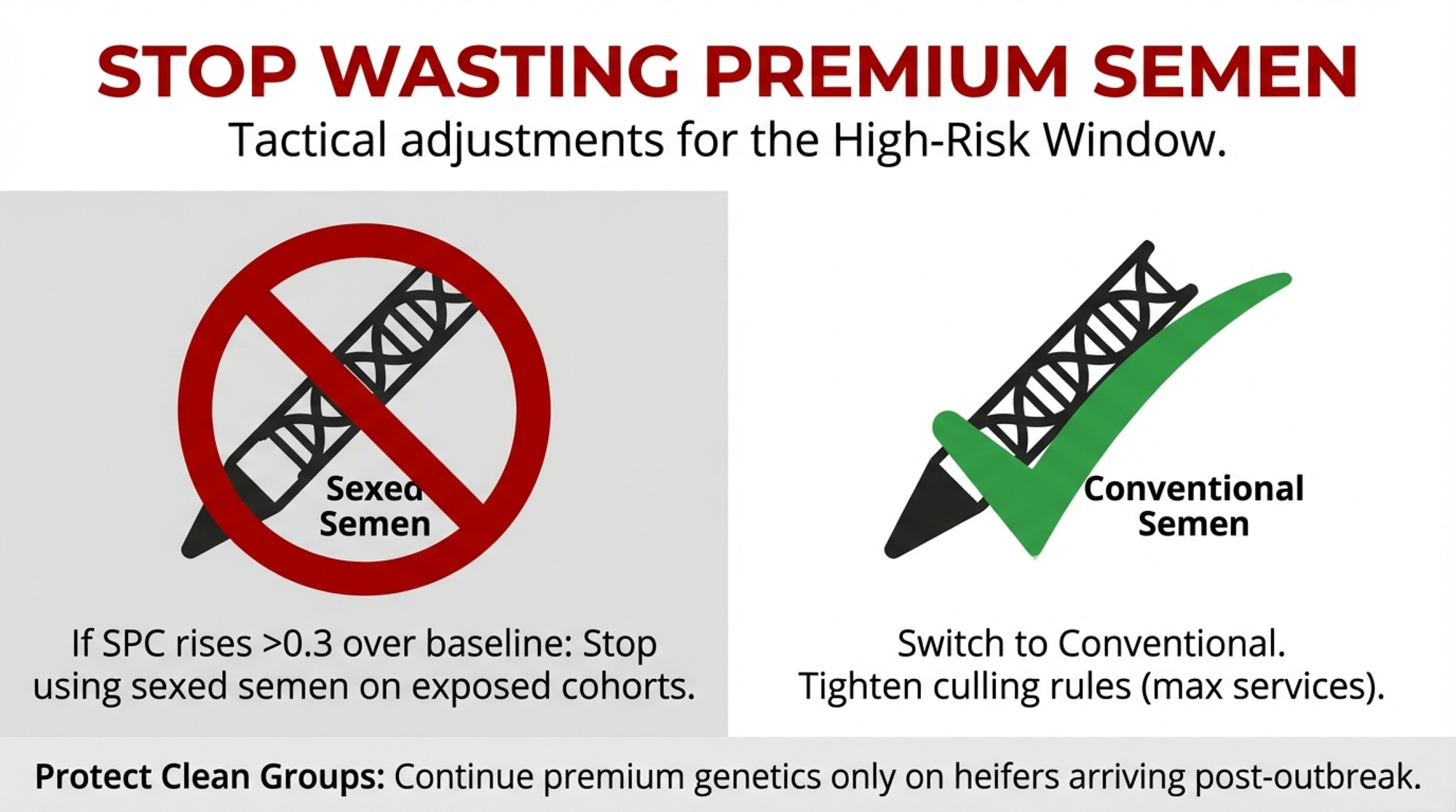
  • What semen you use: For exposed heifers and first-/second-lactation cows, a practical trigger to rethink semen strategy is when SPC in that group rises about 0.3 or more above your own 12-month baseline, or first-service conception drops several points below that baseline. Once you cross either threshold, it’s reasonable to move those exposed cohorts from sexed to conventional semen for the rest of the 90-day window. Keep using sexed semen on your “cleaner” cohorts—heifers that arrived after the outbreak, or groups whose SPC hasn’t budged.
  • How long you keep trying: Set parity-specific limits for maximum services—say three or four for heifers and three for older cows—and stick to them. After that, those cows become replacement and cash-flow decisions, not just repro projects.

You gain tighter control over semen and days-open costs in that high-risk window. You give up some flexibility and some genetic progress in exposed cohorts. That’s the trade-off.

Your “All Clear” Is in Your Rolling SPC

Because most H5N1 infections are subclinical, you’ll never pick out every exposed cow by eye. Your best early warning lives in your group-level repro trends.
By heifers and each parity group, track services per conception, 21-day pregnancy rate, and first-service conception rate.

A practical way to flag potential H5N1 fertility risk: watch for SPC in any group rising about 0.3–0.5 above your own 12-month baseline. See if that pattern sticks around for at least three months. Pay special attention if it starts roughly 60–90 days after an H5N1 outbreak window.

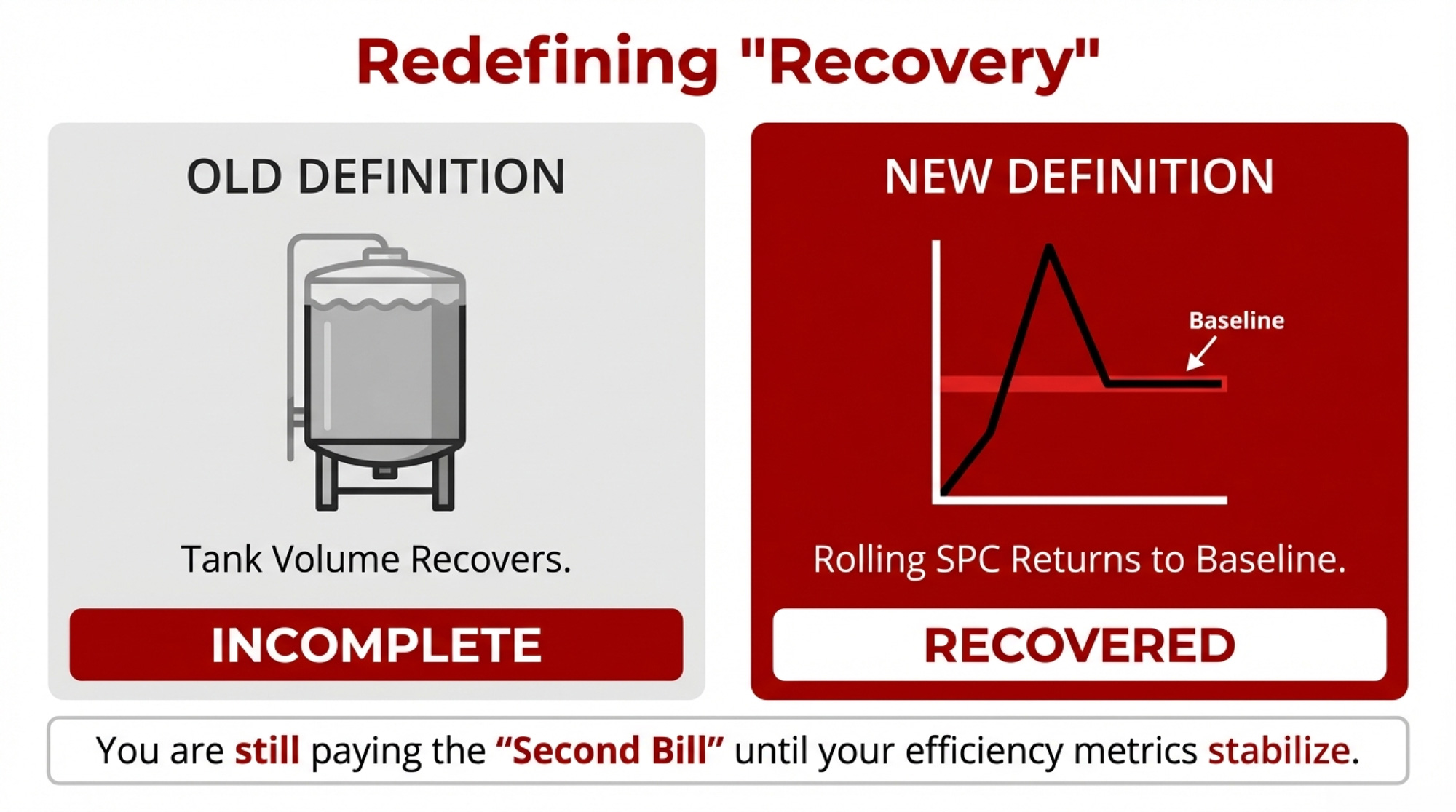
Here’s the important part: your “All Clear” isn’t when the cows look better, or the tank recovers. For practical management, it’s when your rolling SPC average for that group comes back to its 12-month baseline and holds there for a sustained period. Until that happens, you should assume you’re still paying some level of fertility cost from that earlier inflammatory hit.

If the timing and pattern look H5N1-related, turn on your 90-day breeding rules for exposed cohorts, reallocate sexed semen away from those groups, and revisit max services and culling thresholds with your vet and your lender.

Make Parlor Biosecurity Part of Your Cost of Production

Multiple investigations have found H5N1 viral RNA on milking-related surfaces—equipment, floors, drains—and in milk samples from affected dairies. That’s why USDA, AVMA, and others keep coming back to the parlor as a major within-herd driver.
If you’ve had one event or you move cows between states, parlor biosecurity is no longer optional. It’s part of your production costs in an H5N1 world.

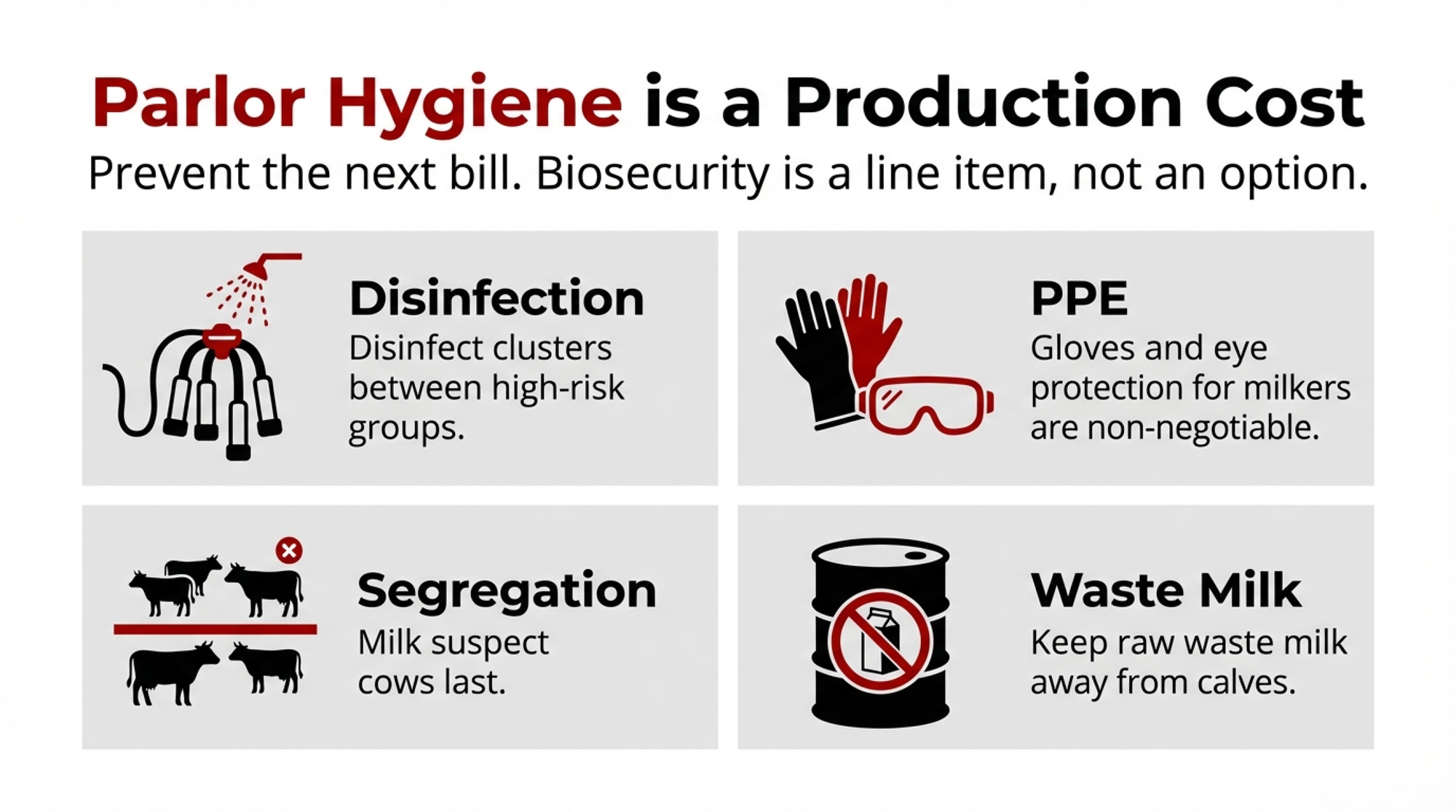
Milking order and grouping: Milk suspect or confirmed-positive cows last, as a separate group. Where possible, dedicate equipment to that group, or run a full hot wash and disinfection before returning it to the main herd.

Cluster and glove hygiene: Disinfect clusters with a proven virucidal product between high-risk cows or groups, not just a quick rinse. Make gloves standard and change them when you move between hospital/suspect cows and the main herd.

Waste milk handling: Keep raw waste milk out of calf diets and away from other livestock; the FDA, CDC, and USDA have all flagged this as a risk. Dispose of or treat waste milk so birds, boots, and tires don’t carry it across your facility.

Milker safety: Protect milkers’ eyes and airways from milk splashes around suspect cows. At least one U.S. dairy worker developed eye symptoms after exposure to infected cattle, and researchers are still studying exactly how those exposures occur. Build eye protection and basic respiratory protection into your standard parlor PPE whenever you’re milking suspect or confirmed cows—treat this as part of the same biosecurity package, not an afterthought.

Here, you trade some extra labor, disinfectant, PPE, and training against the odds of another outbreak—with both a milk crash and a 90-day repro hit attached.

Use Testing and Herd Status as Business Tools

USDA’s Federal Orders and the National Milk Testing Strategy aren’t just regulatory headaches. They shape your risk profile and your market access.

National Milk Testing Strategy (NMTS): Uses plant silo and bulk tank testing to detect H5N1 in milk and trace positives back to source herds.

Federal Orders for H5N1 in Livestock: Require pre-movement testing for lactating dairy cows that cross state lines. Mandate reporting of positive herds and enable enhanced surveillance in affected states.

In parallel, industry and animal-health groups are exploring formal herd-status concepts that link regular testing to a “low-risk” or “unaffected” designation. There isn’t a single national label yet, but the idea is becoming more common as milk testing expands.

From a business angle: if you sell replacements or move cows regularly, investing in testing and a documented herd status can be a marketing edge and a risk-management tool, not just a regulatory cost. If you’re buying, you’ll increasingly want some kind of herd-status information so you’re not importing another farm’s H5N1 and fertility problems.

In practice, you’re choosing between paying for tests and coordination up front, or accepting a higher chance of paying for another outbreak and another 90-day fertility hangover.

Peer-reviewed fertility papers are still in the pipeline—but the early signals are consistent enough to act on

Signals to Watch in 2026

Looking out over the next couple of years, a few signals will tell you how big a line item H5N1 becomes in your repro budget.

High exposure, quiet infection. The Ohio herd’s almost 90% seroprevalence and 76.1% subclinical rate show how fast the virus can move through a herd once it gets in.

Tight replacement pool, steady flow of naïve heifers. U.S. inventory data in 2023–24 showed fewer cull cows going to slaughter and pressure on replacement supplies as producers tried to maintain cow numbers. That means a constant stream of young, naïve animals entering herds that may still pose an environmental H5N1 risk.

Economics lens widening. The first wave of coverage focused on per-cow milk loss during outbreaks. More recent analyses focus on the long-term production costs, replacement needs, and regional competitiveness if H5N1 becomes an ongoing risk rather than a one-off scare.

No one can tell you exactly how long H5N1 stays in the dairy picture. But ongoing detections and expanded milk testing make it realistic to treat it as a continuing risk factor in 2025–26, not just a bad spring in 2024.

The herds that end up ahead are likely to be the ones that fold H5N1 into their repro strategy, parlor routines, and movement decisions now—rather than hoping 2023 conditions come back.

What This Means for Your Operation

Here’s how to turn all of this into specific checks and decisions on your own place.

Pull 18–24 months of repro data by group. For heifers, 1st-, 2nd-, and 3rd+-lactation cows, chart services per conception, 21-day pregnancy rate, and first-service conception rate. Mark the likely H5N1 outbreak window based on milk/rumination dips and any test positives.

Look for the 0.3–0.5 SPC jump 60–90 days later. If SPC in a group rises about 0.3–0.5 above your 12-month baseline and holds there for three months, starting 60–90 days after that outbreak window, don’t write it off as noise. Treat it as a signal to dig into causes, including H5N1.

Define your “All Clear” using rolling SPC. Commit to using your rolling SPC average—not just how the cows look or how the tank reads—as your real “All Clear.” For each group, you’re not truly back to normal until the rolling SPC returns to the 12-month baseline and stays there.

Write down your 90-day breeding rules now. With your vet and repro advisor, decide ahead of time which animals stay eligible to breed in that high-risk 90-day window, when exposed cohorts switch from sexed to conventional semen, and how many services each parity gets before you turn that cow into a culling and replacements discussion.

Run your own example math. Take the example structure above and plug in your SPC change by group, your number of pregnancies in the window, your actual semen and breeding labor costs, and a day-open range that fits your milk price and feed cost assumptions. That gives you a real dollar range for what H5N1-linked repro shifts may already be costing.

Walk your parlor like the virus is watching. Do one focused walkthrough with nothing on the agenda except milk contact surfaces, people flow, waste-milk handling, and milker PPE. Pick two or three biosecurity and safety steps you’ll keep in place all the time, not just during an obvious outbreak.

Decide where testing and herd status fit your cash-flow plan. If your business relies on selling replacements, buying cows, or crossing state lines, talk with your state vet, co-op, or processor about how NMTS and herd-status ideas apply to you, and what it would take to be viewed as a lower-risk supplier.

The Bottom Line

H5N1 is a 60-day milk event and a 90-day fertility event. You’re not really “through it” until SPC and pregnancy rates come back to your 12-month baseline, especially for heifers and second-lactation cows.

Subclinical cows still cost you. In the Ohio herd, most infected cows never appeared sick, yet they still seroconverted and likely experienced inflammatory stress that can damage developing eggs.

A 0.3–0.5 SPC rise is a management trigger, not background noise. When that bump shows up 60–90 days after an H5N1 outbreak and sticks for a few months, it’s time to tighten the breeding strategy and run the economic math.

Your real “All Clear” is in your rolling SPC. The visual recovery is nice, but the economic recovery starts when your rolling SPC averages return to baseline and hold there.

Parlor biosecurity, milker safety, and herd status are now part of your cost of production. You can pay for protocols and testing up front, or you can pay later in milk loss, fertility hits, replacement holes, and market-access risk.

Here’s the hard truth: for herds that have already been through an outbreak, H5N1 effectively becomes a line item in both your milk sheet and your repro budget. You can either put some planning, testing, and parlor discipline behind that 90-day fertility window, or you can keep paying for H5N1 in hidden fertility and replacement costs long after your bulk tank looks “normal” again.

Next time you pull up your repro report, take a hard look at your heifer and second-lactation SPC curves. Are they telling you that your last “finished” outbreak is still quietly on the books?

Key Takeaways

  • H5N1’s second bill arrives 90 days late. SPC climbs 0.3–0.5 above baseline after the milk recovers—and stays elevated. Most herds miss it.
  • Subclinical cows still cost you. In the Ohio herd, 76% of infected cows never looked sick. You bred their damaged eggs weeks later.
  • That 0.5 SPC jump? Roughly $7,500–$10,000/quarter for a 1,000-cow herd in extra semen, labor, and days open. Plug in your own numbers.
  • Your “all clear” is rolling SPC, not the bulk tank. Manage exposed heifers and second-lactation cows differently until SPC returns to your 12-month baseline and holds.
  • Biosecurity and testing now pay for themselves. The alternative: another outbreak, another milk crash, another 90-day fertility bill.

Complete references and supporting documentation are available upon request by contacting the editorial team at editor@thebullvine.com.

Learn More

Join the Revolution!

Join over 30,000 successful dairy professionals who rely on Bullvine Weekly for their competitive edge. Delivered directly to your inbox each week, our exclusive industry insights help you make smarter decisions while saving precious hours every week. Never miss critical updates on milk production trends, breakthrough technologies, and profit-boosting strategies that top producers are already implementing. Subscribe now to transform your dairy operation’s efficiency and profitability—your future success is just one click away.

NewsSubscribe
First
Last
Consent

Maximizing Dairy Cow Fertility Through Genetic Selection: Current Strategies and Future Directions

Maximize dairy cow fertility through genetic selection. Explore current strategies and future directions. How can we ensure consistent performance across different systems?

Fertility is the cornerstone of herd productivity and economic profitability. Fertile cows, which conceive sooner after calving and need fewer inseminations, produce more milk and have reduced operating expenses. The primary goal of genetic selection for fertility is to minimize ‘days open’ or the time between calving and conception. This metric is a crucial indicator of reproductive efficiency and herd health. It includes various reproductive processes such as uterine involution and fertilization. Concentrating on heritable qualities that increase fertility can create a strong herd capable of surviving reproductive problems. Join us as we investigate the present state and future directions of genetic selection for fertility in dairy cows, looking at different reproductive management techniques, the underlying genetics, and why they are critical for consistent performance across farming systems.

The Current State of Dairy Cow Fertility: A Reflection of Selective Breeding and Diverse Management Practices 

Dairy cow fertility has improved over time via selective breeding and management approaches. Days open—the interval between calving and successful conception—is critical. It reflects how rapidly cows recover to fertility after calving.

YearAverage Days OpenImprovement from Previous Year
2015120N/A
2016118-2
2017115-3
2018113-2
2019110-3
2020108-2
2021105-3
2022103-2
2023100-3

Different dairy systems use various reproduction mechanisms. Less intensive methods depend on spontaneous estrus detection and minimum hormonal intervention. Days open are a solid predictor of fertility in this context since they include various reproductive processes such as uterine involution and fertilization.

In more advanced systems, hormonal therapies like PGF2α and GnRH may synchronize estrus for scheduled artificial insemination (AI). These strategies may boost pregnancy rates, but they may overshadow the value of specific fertility components. Nonetheless, days open remain a vital statistic.

Historically, genetic selection has been a powerful tool in our efforts to reduce open days and improve reproductive efficiency. By understanding and choosing specific fertility components, we can ensure high fertility in future cows, regardless of our management techniques. This knowledge empowers us to take control of our herd’s fertility.

Genetic selection and management practices influence the fertility landscape. As we get a better knowledge of fertility genetics, we can enhance reproductive efficiency across several systems, resulting in consistent and dependable fertility results.

The Biological Odyssey to a Successful Pregnancy in Dairy Cows 

The path to a successful pregnancy in dairy cows comprises a series of sophisticated biochemical processes, each potentially heritable and contributing to total fertility. Let’s explore these critical phases, beginning with uterine involution.

  • Uterine Involution: Following delivery, the cow’s uterus must return to its pre-pregnancy size and condition, a process known as uterine involution. This stage establishes the foundation for future reproductive activities. Quicker involution, governed by genetics, results in a shorter period between calving and the subsequent successful pregnancy.
  • Estrous Cycle Re-establishment: The cow’s estrous cycle must continue after uterine involution. This process includes hormone control in preparation for pregnancy. The time and regularity of these cycles influence when a cow is ready for insemination again, with genetics having a role.
  • Estrus Expression and Detection: Estrus (known as “heat”) must be visible and identifiable for successful insemination. Although management influences the severity and detectability of estrus activities, genetics also plays a role. Cows that exhibit more obvious estrus behaviors are inseminated at the best moment, increasing fertility rates.
  • Ovulation: Ovulation, the release of an egg from the ovary, occurs after estrus detection. The timing of ovulation and insemination is critical for conception. Genetic differences may influence the time of ovulation and, hence, fertility.
  • Fertilization and Corpus Luteum Formation: After ovulation, the egg must encounter sperm to fertilize. Following fertilization, the corpus luteum develops and produces progesterone to sustain pregnancy. The efficiency of fertilization and progesterone production is genetically determined.
  • Support of Early Cleavage and Pregnancy Establishment: The oviduct promotes early embryo growth, whereas the uterus provides an optimal environment for implantation. Hereditary factors heavily influence early pregnancy stages.

Understanding the genetic basis of dairy cows’ reproductive features is essential and critical. This understanding is vital to improving fertility in a variety of dairy systems. Recognizing genetic underpinnings helps dairy farmers and researchers aim for selective breeding, resulting in more efficient and sustainable farming operations. This emphasizes the urgency and significance of the subject.

Enhancing Reproductive Performance through Genetic Insights 

Understanding the genetic basis of fertility features in dairy cows is critical for improving their reproductive success. Heritability, which measures the proportion of attributes handed down genetically, demonstrates how well humans can choose these traits. Important reproductive factors such as uterine involution, estrous cycle regularity, estrus expression, sperm capacitation, and ovulation have varying heritability levels.

Fertility TraitHeritability
Uterine Involution0.10
Estrous Cycle Regularity0.15
Estrus Expression0.20
Sperm Capacitation0.12
Ovulation0.18

According to research, certain qualities, such as estrus expression and cycle regularity, have moderate to high heredity. Still, others, such as successful fertilization and early embryo development, have lower heritability. This variance emphasizes fertility as a complicated and multidimensional feature. For example, the characteristic days open, representing the time between calving and successful pregnancy, encompasses these separate occurrences, demanding genetic and phenotypic techniques for proper selection.

Dairy farming has developed to prioritize these heritable features via modern genetic testing and genomic technology. Currently, genomic selection is used in breeding programs to estimate the genetic potential of young animals based on DNA markers related to fertility. This method accelerates the genetic increase in fertility.

These methods have resulted in better fertility rates over time. Using genetic data to predict heredity may improve breeding choices, reduce open days, and increase conception rates. However, knowing how genetic factors interact with environmental and management variables is necessary due to the diversity of reproductive management approaches throughout dairy systems.

Effective genetic techniques use balanced selection indices, including productivity and fertility features. This balance ensures that reproductive advances do not compromise other essential qualities. However, it’s important to remember that continuous research and monitoring are crucial for improving these techniques and maintaining high fertility in dairy cows. This ongoing commitment keeps us engaged in improving our herd’s fertility.

Adapting Genetic Selection to Different Reproductive Management Systems 

Understanding the influence of various reproductive management strategies on dairy cow fertility allows for more informed genetic selection choices. In minimum intervention systems, cows are inseminated once estrus is recognized, depending on natural estrus expression and detection. Estrous cycle regularity and sperm viability are essential characteristics in this context.

In contrast, intensive systems employ hormonal therapies (e.g., PGF2α and GnRH) for scheduled artificial insemination. These technologies decrease uncertainty in estrus detection and insemination timing while emphasizing the relevance of the cow’s hormonal response and sperm survival in a controlled environment.

Crucial Genetic Traits for Optimizing Fertility in Dairy Cows

Breeders should prioritize many essential genetic assessment features when selecting enhanced fertility in dairy cows. These characteristics aid in identifying cows with improved reproductive performance, boosting the herd’s overall efficiency and output.  The most significant traits include: 

    • Days Open: The number of days from calving to the cow being successfully pregnant. Shorter days open indicate better fertility.
    • Conception Rate: This metric represents the proportion of inseminations that result in a successful pregnancy. Higher conception rates indicate higher fertility.
    • Calving Interval: This is the period between two consecutive calvings. A shorter interval often indicates improved reproductive effectiveness.
    • Estrous Cyclicity: A cow’s capacity to resume regular estrous cycles after giving birth, suggesting reproductive health and readiness to rebreed.
    • Heifer Pregnancy Rate: The possibility of a cow being pregnant at a certain age. This is critical for determining the future reproductive capacity of young calves.
TraitEstimated Heritability (%)
Days Open5-10%
Conception Rate3-9%
Calving Interval5-10%
Estrous Cyclicity20-30%
Heifer Pregnancy Rate15-20%

Balancing Natural Fertility and Hormonal Management: Lessons from the Global Dairy Industry 

Minimal intervention methods concentrate on natural reproductive characteristics, while intensive systems prioritize hormone responsiveness and uterine receptivity. Understanding the genetics of these features allows cows to function successfully under various management techniques.

New Zealand is an excellent example of effective genetic selection for fertility. Dairy producers have established a breeding program to improve qualities such as calving interval, days to first heat, and conception rate. This program, led by the Livestock Improvement Corporation (LIC), employs modern genetic methods to select bulls whose daughters have greater fertility. Over time, this concentration has dramatically increased herd reproductive efficiency.

Scandinavian dairy industries, notably in Sweden and Norway, provide another example. Their Total Merit Index (TMI) evaluates health and fertility features, resulting in increased milk production and better reproductive performance. Genomic selection has improved their capacity to find fertility-enhancing genes.

How can dairy farmers apply effective tactics for their herds?  Here are some practical steps: 

  • Genomic Testing: Use genetic studies to identify cows and bulls with exceptional reproductive features. This enables educated breeding decisions.
  • Record Keeping: Meticulous records of calving intervals, days to first heat, and conception rates. This information is critical for choosing animals to breed.
  • Consultation: Collaborate with a geneticist or breeding expert to create a customized breeding strategy. Experts may provide insights tailored to your herd’s requirements.
  • Emphasize Health: Maintain proper health habits. There is a substantial relationship between fertility and general health. Ensure enough diet, shelter, and veterinary care.
  • Adopt Technology: Use estrus detection technologies and timed AI procedures to increase breeding efficiency and shorten calving intervals.

Adopting these genetic selection tactics may increase your herd’s fertility, resulting in higher production and profitability.

The Bottom Line

Finally, dairy cow fertility is determined by a combination of genetic factors and reproductive activities. A cow’s rapid return to pregnancy after calving is critical for dairy farm output. Genetic selection aims to reduce the number of days open, but various management approaches provide variable fertility results. Understanding the genetics of fertility events, as well as adopting sophisticated reproductive technology, may help us increase fertility rates. Future advances in genetic selection and reproductive control will contribute to constant fertility in dairy cows, assisting the global dairy sector.

Key Takeaways:

  • Genetic selection for fertility is critical in enhancing dairy cow reproductive efficiency.
  • Successful pregnancy soon after calving involves heritable factors such as uterus involution and ovulation.
  • Dairy systems use either natural estrus detection or hormonal treatments and timed AI for managing reproduction.
  • The primary goal is to reduce ‘days open’ to improve herd health and productivity.
  • Understanding the genetic basis of fertility is essential for consistent performance across diverse management systems.
  • Enhanced reproductive efficiency leads to greater overall productivity and profitability in dairy herds.

Summary:

Dairy cow fertility, a focal point for genetic selection within the dairy industry, hinges on establishing pregnancy soon after calving. This complex process involves heritable factors like uterus involution, estrous cycles, and ovulation. Different dairy systems employ varying reproductive management practices, from natural estrus detection to hormonal treatments and timed artificial insemination (AI). Through targeted genetic selection, the goal is to minimize ‘days open’ (time between calving and conception), thereby boosting reproductive efficiency and herd health. As the industry evolves, understanding the genetic basis of fertility components is crucial to ensuring cows perform well across diverse management setups, enhancing overall productivity and profitability in dairy herds.

Learn more:

Join the Revolution!

Bullvine Daily is your essential e-zine for staying ahead in the dairy industry. With over 30,000 subscribers, we bring you the week’s top news, helping you manage tasks efficiently. Stay informed about milk production, tech adoption, and more, so you can concentrate on your dairy operations. 

NewsSubscribe
First
Last
Consent

Boosting Dairy Cattle Fertility: The Future of Genetic Selection for Modern Farmers

Boost your dairy herd’s fertility with cutting-edge genetic selection. Discover how modern techniques can enhance pregnancy rates and streamline your farm’s operations.

Consider a dairy farm where cows get pregnant shortly after calving with minimum manipulations. This is not a pipe dream; deliberate fertility selection may make it a reality. High fertility in dairy farming leads to shorter calving intervals, improved milk production cycles, and increased profitability.

Rapid pregnancy following calving is critical for a robust herd and sustainable operations. Pregnancy consists of various stages: the uterus returns to normal after birth, estrous cycles resume, and estrus is recognized. Sperm is subsequently placed and capacitated, ovulation and fertilization occur, and the corpus luteum generates progesterone to keep the pregnancy going. Each phase is heritable and necessary for a successful pregnancy after insemination.

Prioritizing fertility benefits dairy producers by reducing inseminations, lowering veterinary expenses, and increasing herd output. The potential for profitability via genetic selection for features that ensure fast pregnancy after insemination has the potential to change dairy production. This realistic method may improve dairy operations, offering farmers hope and motivation.

Overcoming Fertility Challenges in Modern Dairy Farming: A Path to Sustainability and Profitability 

Modern dairy producers have substantial reproductive issues critical for profitability and sustainability. Reducing the number of inseminations required for pregnancy is vital since each additional effort increases expenses and extends the calving interval, affecting milk output and herd efficiency. ‘Days open,’ or the time from calving to successful insemination is essential in fertility control. Quick pregnancy establishment after calving is critical; delays in uterine involution and estrous cycle re-establishment might impair fertility.

Accurate estrus identification is crucial for maximizing breeding chances and reducing days open. Reproductive management approaches vary in efficacy and depend on cow circumstances and farm management practices. Some systems utilize natural estrus detection, while others use hormonal therapies such as PGF2α and GnRH with timed AI.

Genetics has a significant impact on fertility. While selection tries to minimize the number of days open, the diversity of dairy systems implies that favorable features in one system may not transfer well into another. Understanding reproductive genetics and their interaction with various management approaches is essential for making educated breeding choices. This information gives dairy producers greater confidence and control over their operations.

Achieving high fertility in dairy cows requires careful reproductive management, precise estrus detection, and a thorough grasp of genetics. This knowledge includes identifying heritable features and considering their interactions and possible trade-offs when making breeding choices. Addressing these factors may improve herd reproductive performance, resulting in more sustainable and profitable farming.

The Journey from Uterine Involution to Progesterone Production: A Symphony of Reproductive Success 

The first phase following calving is uterine involution, which restores the uterus to its pre-pregnancy condition and lays the groundwork for future reproductive cycles. After involution, the cow’s reproductive system returns to regular menstrual cycles, preparing for future pregnancies.

The next step involves detecting and expressing estrus. Estrus, sometimes known as ‘heat,’ occurs when a cow is sexually receptive and pregnant. Properly detecting this phase is critical for effective insemination. During estrus, sperm enter the cow’s reproductive canal and undergo capacitation. This process allows the sperm to penetrate and fertilize the egg.

Following capacitation, ovulation occurs when an egg from the ovary enters the oviduct and meets the capacitated sperm. Fertilization is the process of combining sperm and egg to form an embryo. After fertilization, the corpus luteum develops on the ovary and produces progesterone, essential for pregnancy and embryonic development.

Each process, from uterine involution to progesterone production, is critical for obtaining and maintaining pregnancy in dairy cows. Understanding and improving biological processes may boost fertility rates, increasing production and profitability in dairy farming.

Delving into the Heritability of Fertility Traits: From Uterine Involution to Embryo Development 

Exploring the heritability of fertility characteristics requires understanding how each event in the reproductive sequence contributes to the overall fertility phenotype in dairy cows. This process, which begins with uterine involution, characterizes the early postpartum period and is crucial for restoring normal reproductive function. Genetic variables impacting the rate and effectiveness of uterine involution may be heritable, possibly decreasing the time between calving and the following successful pregnancy.

Another critical event is the restoration of estrous cycles. The capacity to resume regular estrous cycles promptly significantly impacts conception rates. Genetic variation affecting the timing and regularity of these cycles is most certainly heritable, influencing how easily and quickly cows may be inseminated again.

The next step is estrus expression and detection. Cows with apparent indications of estrus are more likely to be effectively inseminated. Traits related to estrus expression, such as the strength and length of behavioral indicators, may be handed down across generations, influencing fertility.

Sperm deposition and capacitation in the reproductive tract are equally important. Efficient sperm capacitation for conception requires both male and female genetic contributions. Genes that affect the uterine environment and sperm cell function may increase the chances of successful sperm capacitation and subsequent conception.

Ovulation, an important occurrence, is governed by hormone cycles and is genetically controlled. The time and predictability of ovulation may be chosen, resulting in more effective inseminations. Following ovulation, the creation and function of the corpus luteum (CL), which generates progesterone, is crucial for pregnancy maintenance. Heritable features that promote robust CL development and sufficient progesterone production are critical for establishing and maintaining pregnancy.

Beyond these phases, the oviduct’s involvement in promoting embryonic cleavage and the uterus’ formation of a receptive environment is potentially heritable. Genetic predispositions that favor specific settings may increase embryo survival and development, eventually enhancing fertility rates.

The phenotypic manifestation of fertility in dairy cows comprises many heritable variables, each influencing a particular event in the reproductive process. Selection for these qualities may increase total fertility, making genetic knowledge and selection an essential component of sustainable and lucrative dairy production.

Optimizing “Days Open”: The Pinnacle of Genetic Selection for Enhanced Dairy Cow Fertility

Genetic selection for fertility in dairy cows primarily focuses on minimizing the number of days between calving and pregnancy, sometimes known as “days open.” This statistic is important because it captures the overall influence of several specific fertility components. Each stage of the reproductive process—from uterine involution, re-establishment of estrous cycles, and successful ovulation to efficient sperm capacitation, fertilization, and the creation of a functioning corpus luteum—is critical in determining whether a cow gets pregnant following insemination. By concentrating on lowering the number of days open, dairy producers and geneticists select cows more efficiently, restarting reproductive cycles and effectively conceiving after calving. This complete method guarantees that selection pressures are equally dispersed, resulting in improved reproductive features for sustainable and prosperous dairy production.

Customizing Reproductive Strategies: Navigating Between Minimal Intervention and Intensive Management Systems 

In dairy farming, reproductive management is vital in determining fertility and total herd output. Different approaches improve breeding efficiency, each with unique benefits and uses. Minimal intervention approaches, for example, depend heavily on recognizing natural estrus. Cows in such systems are watched for indicators of estrus, such as mounting behavior or increased activity, and insemination occurs once estrus is recognized. This strategy may improve breeding accuracy by inseminating cows when they are most fertile, perhaps lowering the number of inseminations necessary for pregnancy. However, detecting modest estrus symptoms requires tremendous effort and experience.

On the other side, more extensive reproductive management approaches include hormone therapies and scheduled artificial insemination (AI). To synchronize a group of cows’ reproductive cycles, procedures may consist of giving PGF2α to induce luteolysis and GnRH to trigger ovulation. This synchronization enables timed AI, where insemination happens at a particular time regardless of obvious estrus signals. This strategy has the benefit of being consistent and predictable, which might lead to increased conception rates and more efficient herd management. Nonetheless, this strategy requires exact timing, extra hormone expenses, and strict protocol adherence.

The dairy operation’s unique demands and capacity determine the decision between minimum intervention and extensive reproductive management methods. Minimal intervention techniques may be more practical for smaller herds with enough manpower. At the same time, larger operations may benefit from the efficiency and consistency of timed AI protocols. Understanding each system’s strengths and limitations is critical for improving reproductive results and unlocking the genetic potential of contemporary dairy cows.

Different Management Systems, Different Genetic Pressures: Strategizing ‘Days Open’ for Optimal Fertility 

Different reproductive management systems provide different stresses to the specific fertility components, impacting the selection process for days. Cows are inseminated mainly after estrus is identified in minimum intervention systems, stressing the cow’s inherent ability to have regular cycles and evident symptoms of estrus. Days open to become a composite metric representing several distinct fertility qualities, including estrus detection, sperm capacitation, and ovulation time. Genetic selection in these systems promotes features associated with high natural reproductive success and low human intervention.

In contrast, rigorous management methods that include hormonal therapies like PGF2α and GnRH, followed by scheduled artificial insemination (AI), shift the relevance of reproductive features. In this context, characteristics such as responsiveness to hormone therapies and scheduled AI cycle success rates are relevant. Days open remain crucial, but the various fertility components contributing to it may be weighted differently. For example, the precision and timing of ovulation caused by hormonal treatments may become more important than natural estrus-detecting skills.

Such variances demand a detailed knowledge of fertility genetics to choose cows that perform consistently well across various reproductive management measures. Adaptive genetic selection may retain fertility features across farm operations, leading to better reproductive success and profitability for dairy herds.

Genetic Insights: Paving the Way for Uniform Fertility Performance in Diverse Dairy Management 

Obtaining consistent fertility performance across diverse reproductive management systems will demand a more in-depth knowledge of the genetics of each fertility component. This involves more than simply examining surface-level features; it also necessitates looking into the genetic markers and pathways that regulate each stage of the reproduction process. By identifying and comprehending these genetic characteristics, dairy producers may choose cows that perform well under minimum intervention systems while excelling under more extensive, hormone-based management schemes. Such insights might lead to the establishment of customized breeding plans adapted to the individual needs of various dairy farming operations, improving the herd’s sustainability and profitability. Advanced genomic techniques and technology will be critical in this effort, providing unparalleled accuracy in selecting and breeding tactics. This integrated strategy may improve the reproductive efficiency of dairy cows, leading to a more resilient and productive dairy sector.

Key Takeaways:

  • The primary definition of fertility in dairy systems is the establishment of pregnancy post-insemination.
  • Highly fertile cows establish pregnancy sooner after calving, requiring fewer inseminations.
  • Fertility involves several sequential events: uterine involution, re-establishment of estrous cycles, expression and detection of estrus, sperm capacitation, ovulation, fertilization, and corpus luteum progesterone production.
  • Each fertility event is potentially heritable, collectively contributing to the pregnancy phenotype after insemination.
  • Genetic selection for fertility often focuses on reducing the “days open” period.
  • Dairy systems use varied reproductive management strategies, from minimal intervention to intensive hormonal treatments.
  • Selection pressures on fertility components may differ across systems, impacting overall fertility outcomes.
  • Uniform performance of cows in diverse management systems requires a deeper understanding of the genetic underpinnings of fertility traits.

Summary:

High fertility in dairy farming can lead to shorter calving intervals, improved milk production cycles, and increased profitability. Pregnancy involves various stages, including uterine involution, estrous cycle restoration, estrus recognition, sperm placement, ovulation and fertilization, and progesterone production. Prioritizing fertility benefits dairy producers by reducing inseminations, lowering veterinary expenses, and increasing herd output. Genetic selection for fast pregnancy after insemination can change dairy production, providing farmers with hope and motivation. Reproductive issues are critical for profitability and sustainability, with reducing inseminations increasing costs and affecting milk output and herd efficiency. Understanding reproductive genetics and their interaction with management approaches is essential for making educated breeding choices and improving herd reproductive performance, resulting in more sustainable and profitable farming.

Learn more:

Preventing Poor Fertility and Pregnancy Losses in Older Dairy Cows: Maximize Dairy Farm Profitability

Maximize dairy farm profits by preventing fertility issues and pregnancy losses in multiparous cows. Are you ensuring optimal reproductive management for your herd?

Profitable dairy production depends on maintaining a significant proportion of multiparous cows in your herd. To clarify, multiparous cows are those that have given birth to more than one calf. These cows are more economically advantageous and prolific than primiparous cows, which are those that have given birth only once. Managing the fertility of multiparous cows and avoiding pregnancy losses is therefore crucial. By ensuring at least 70% of your herd are multiparous cows, you can significantly improve milk productivity and financial returns.

Failure to prioritize pregnancy control and fertility management can result in unnecessary slaughter, which can significantly lower the genetic potential and overall output of your herd. As reproductive technologies continue to advance, it becomes increasingly urgent for you to adopt strategies that enhance your cows’ reproductive efficiency. By implementing efficient fertility programs and early interventions, you can significantly reduce these losses and ensure the long-term success of your dairy farm. 

The High Stakes of Managing Multiparous Cows: Fertility and Economic Implications 

Economic Impact AreaCost Impact
Increased Culling$100 – $200 per cow
Lost Milk Production$300 – $400 per cow
Extended Calving Interval$50 – $100 per day
Increased Veterinary Costs$20 – $50 per cow
Replacement Heifer Rearing Costs$1,200 – $1,500 per heifer

Low fertility and pregnancy losses may significantly impact dairy farm profitability and productivity. Because of reproductive issues, significant financial losses might arise from the killing of multiparous cows—those with more than one calf. These cows are very expensive, so early removal disturbs the output of the herd.

Generally speaking, multiparous cows give more milk than younger cows or heifers. Early culling of these productive animals might lower general milk output, affecting profitability. Changing them with younger, less productive animals compounds this loss as heifers need time and money to raise.

Along with opportunity losses from their reduced productive lifetime, the direct expenses of culling include costs for feed, veterinary care, and administration of the culled cows. These direct losses can be substantial, especially when considering the high cost of maintaining a dairy cow. Furthermore, introducing younger cows into the herd adds further financial pressure, which calls for careful management and investment in reproductive programs.

Managing fertility and reducing pregnancy losses is essential to keeping a healthy herd and hence saving the costs related to early culling. Best practices, including scheduled A.I. procedures, regular pregnancy detection, and modern reproductive technology, may assist in maintaining the percentage of multiparous cows, hence promoting long-term profitability and productivity.

Revolutionizing Reproduction: The Impact of Advanced A.I. Protocols in Dairy Farming 

ProtocolPregnancy Rate (%)Additional Benefits
Double Ovsynch45%High synchronization, reduced embryonic loss
G6G42%Improved first service conception rates
G7G39%Enhanced follicular development
Presynch-11/Ovsynch40%Better timing for ovulation, reduced interval between AI services

While advanced reproductive technologies offer remarkable potential, they also come with challenges that must be navigated. Detecting pregnancy early and incorporating a blend of automated activity monitoring with these synchronization protocols can drastically improve fertility outcomes. By aiming for at least 70% of the herd being multiparous, dairy producers can ensure sustainable productivity and profitability.

Advances in reproductive technology over recent years have transformed dairy herd fertility and pregnancy control. For instance, Double Ovsynch, Presynch-11/Ovsynch, G6G, and G7G are advanced reproductive technologies that synchronize ovulation, guaranteeing ideal timing for A.I. These technologies have been proven to significantly increase fertility rates and improve the chances of successful conception, thereby enhancing the overall productivity and profitability of dairy farms.

These technologies mainly help to raise fertility rates. Data indicates that compared to estrus identification with automated activity monitoring, multiparous cows treated with Double Ovsynch had a 260% increased likelihood of conception. This proactive technique reduces calving intervals, therefore improving farm profitability and output.

Early, precise pregnancy diagnosis by ultrasound scanning and pregnancy-associated glycoproteins (PAGs) also enables prompt re-inseminations and pregnancy loss identification. Maintaining many multiparous cows—essential for continuous milk output and economic stability—depends on early identification.

Still, these technologies need careful planning and supervision, which may be time-consuming. While providing genetic advances, techniques including sexed semen or in-vitro produced (IVP) embryos are dangerous for multiparous cows because of lower pregnancy rates and more losses.

Despite the challenges, advanced reproductive technology holds immense potential for the dairy farming industry. By enhancing breeding plans and reproductive control, dairy farmers can substantially increase profitability and efficiency, thereby ensuring long-term sustainability and success for their farms.

Maximizing Reproductive Success: The Imperative of Timed A.I. Before 85 Days in Milk

Successful pregnancies depend on ensuring multiparous cows have timely A.I. before 85 days in milk. Double Ovsynch, G6G, G7G, or Presynch-11/Ovsynch simplify reproductive efforts by lowering the time between calvings, which is the period from one birth to the next, and improving herd efficiency. These systems coordinate estrus cycles, maximizing the breeding window for conception and increasing pregnancy rates. Giving scheduled A.I. top priority helps multiparous cows retain their reproductive capacity, increasing farm profitability and output.

Harnessing Technology: The Synergy of Automated Activity Monitoring and Timed A.I. for Optimal Reproductive Management 

Modern dairy herd management depends heavily on automated activity monitoring devices, particularly for estrus detection in non-pregnant cows. These sophisticated instruments use pedometers, accelerometers, and sensors to track cow movement and behavior in real time. Tracking activity variations helps them precisely detect estrus, which is necessary for timely artificial insemination (A.I.).

Automated monitoring-based estrus detection has many main advantages. It guarantees timely insemination at maximum fertility, therefore increasing conception rates. It also lessens manual observation so agricultural employees can concentrate on more essential management tasks.

Automated activity monitoring improves timed A.I. systems such as Double Ovsynch or G6G when combined. TimedTimed A.I. synchronizes ovulation for optimum inside, the accuracy of breeding plans, and increased reproductive success.

Timed A.I. automated activity monitoring helps to provide complete management. Monitoring helps early, allowing for reduced cycle restoration between prompt and non-pregnant cows by means of further terminus confirmation action. More research improves synergy multip, boosting cows’ economic viability and herd production.

Preserving Herd Fertility: The Critical Role of Early and Recurrent Pregnancy Detection in Dairy Management

Dairy herd management depends heavily on early and frequent pregnancy identification. Frequent tests identify pregnancy losses early, enabling quick interventions and changes in reproductive plans. This guarantees the retention of pregnant multiparous cows and the early identification of possible replacements. Early inspections and twice-weekly rechecks before 120 days post-A.I. allow farmers to get important information on the reproductive health of their herd, therefore improving fertility control and general output.

Strategic Utilization of Sexed Semen and IVP Embryos: Enhancing Genetic Gains While Safeguarding Multiparous Cow Productivity

Particularly in heifers and first-lactation cows, sexed semen and IVP (in vitro produced) embryos provide exciting means for genetic improvement. With their excellent reproductive rates, these younger cows are perfect candidates for these technologies. Their robust reproductive health produces more significant results than older, multipurpose cows.

Multiparous cows face more difficulties. Their reproductive effectiveness usually suffers with many pregnancies and lactations. Stress from past calvings and ongoing milk output may lower reproductive rates. Using sexed semen or IVP embryos in these cows usually leads to reduced pregnancy rates and more pregnancy losses. This compromises initiatives aimed at preserving a high percentage of multiparous cows in the herd.

Economically, the hazards are substantial. Early embryonic losses or failed pregnancies call for more insemination efforts, more expenses, and longer gaps between pregnancies. This affects profitability and herd capacity. Although sexed semen and IVP embryos help younger cows, their usage in multiparous cows should be carefully considered to prevent these hazards. Optimizing results over many cow stages and paries depends on efficient reproductive control, which is the process of managing and monitoring the reproductive health of the herd, using customized methods.

The Bottom Line

Improving pregnancy rates requires synchronizing primiparous cows with sexed semen using fertility programs such as Double Ovsynch or G6G. These algorithms address the reduced conception rates of sexed semen by matching artificial intelligence with cows’ cycles. Double Ovsynch pre-synchronizes the estrous cycle to match scheduled A.I., improving fertility results and raising the likelihood of a successful pregnancy.

In a similar vein, the G6G method precisely synchronizes ovulation using hormonal therapies. This preparation helps the reproductive system react better to A.I., therefore lowering the hazards connected with sexed semen. These fertility initiatives guarantee that primiparous cows are reproductively ready, thus increasing pregnancy rates and improving the herd’s long-term output through genetic enhancement.

Start now by including these cutting-edge reproductive treatments in your herd management schedule. Maximizing reproductive efficiency helps you protect the output of your multipurpose cows and improve the genetic basis of your whole herd. Start today making wise breeding choices for a more lucrative and sustainable dairy farming future.

Key Takeways:

Effective fertility management and minimizing pregnancy losses in multiparous cows are vital for maintaining a profitable and productive dairy herd. Here are the key takeaways to ensure you keep the proportion of multiparous cows high: 

  • Unnecessary culling of multiparous cows can severely impact dairy farm profitability and production.
  • A general aim is to have 70% or more of the herd as multiparous cows at any given time.
  • Implementing advanced reproductive technologies and understanding their benefits and challenges is essential for enhancing efficiency and profitability.
  • Adopt timed A.I. protocols like Double Ovsynch, G6G, G7G, or Presynch-11/Ovsynch, which significantly improve the chances of pregnancy in multiparous cows.
  • Ensure timed first A.I. is administered before 85 days in milk to control fertility effectively.
  • Utilize automatic activity monitoring to track estrus in non-pregnant cows, enhancing pregnancy detection and response times.
  • Detect pregnancies early and recheck frequently, up to 120 days post-A.I., to identify losses and manage replacements proactively.
  • Use sexed semen or IVP embryos selectively, primarily for heifers and first-lactation cows, to balance genetic gains with the risk of reduced pregnancy rates and losses in multiparous cows.

Summary: 

Profitable dairy production relies on maintaining a significant proportion of multiparous cows, which are more economically advantageous and prolific than primiparous cows. Managing the fertility of multiparous cows and avoiding pregnancy losses is crucial, as ensuring at least 70% of the herd is multiparous can improve milk productivity and financial returns. Failure to prioritize pregnancy control and fertility management can result in unnecessary slaughter, lower genetic potential, and lower overall output. As reproductive technologies advance, it is urgent for dairy farmers to adopt strategies that enhance their cows’ reproductive efficiency. Implementing efficient fertility programs and early interventions can reduce losses and ensure the long-term success of their dairy farm. Best practices, including scheduled AI procedures, regular pregnancy detection, and modern reproductive technology, can help maintain the percentage of multiparous cows and promote long-term profitability and productivity.

Learn more:

Understanding the intricate dynamics of managing fertility and pregnancy in multiparous cows is crucial for dairy producers looking to enhance productivity and profitability. For more insights on optimal reproductive strategies and the impacts on dairy farming, consider exploring the following resources: 

Transforming Young Heifers to Mature Cows: Boosting Dairy Herd Longevity

Boost dairy herd longevity for sustainable, profitable farming. Learn how to convert heifers into productive cows, meet consumer demands, and reduce environmental impact.

In the pursuit of a more economical and sustainable dairy industry, the strategy of extending the productive life of dairy cows is not just crucial, but also inspiring. This approach not only boosts milk production and reduces the need for frequent replacements, leading to cost savings and improved farm efficiency, but also meets consumer demands for transparency and animal care, instilling a sense of pride in our work. 

Despite challenges like high replacement costs and disease outbreaks, significant opportunities exist to enhance herd longevity and productivity. The key to modern dairy farming is converting young heifers into mature, productive cows, essential for a sustainable and profitable future. 

This article outlines steps that you, as dairy farmers and agricultural professionals, can take to ensure young heifers mature into productive cows. By implementing these strategies, you are not only improving your dairy operations’ economic health and environmental impact, but also playing a vital role in the future of sustainable dairy farming.

Early Life Management: The Keystone of Dairy Herd Productivity

From birth, a calf’s future productivity takes shape. This early period is crucial for developing “platinum heifers,” which can grow into high-yielding “golden girls,” essential for a sustainable dairy operation. 

Colostrum management is vital in the first hours of life. High-quality colostrum provides essential antibodies and nutrients, boosting the calf’s immune system. It must be administered promptly and in adequate amounts to be effective. 

Early-life disease mitigation is also critical. Respiratory and digestive issues can hinder growth and future productivity. Vaccination programs, vigilant monitoring, and rapid interventions are crucial. 

Starter dry matter intake is equally important. Early nutritional support aids in both frame and weight gain, influencing the heifer’s future size and milk production. 

Meticulous growth tracking is necessary. Using weight tapes and digital scales ensures heifers reach 55-58% of mature body weight at breeding age. This allows timely adjustments to feed and management practices, supporting optimal outcomes. 

This blend of colostrum management, disease mitigation, nutrition, and growth tracking forms a solid foundation for a productive dairy herd. By following these steps, you can be confident that you are enabling heifers to become long-living, high-yielding members, ensuring the sustainability and profitability of your dairy operation.

Nutrition, Genetics, and Management: Pillars of Heifer Development 

While genetics set the foundation for a heifer’s potential, daily management and nutrition shape her future productivity. Nutritional management is crucial for herd productivity. Heifers need a balanced diet rich in essential nutrients from birth to maturity to ensure optimum growth and future milk production.  

Proper nutrition begins with effective colostrum management, providing calves with antibodies for solid immunity. Following this, milk replacers and calf starters with high-quality proteins support early growth. Consistent access to forage and high-quality concentrates ensures steady development as heifers transition to weaning. 

Monitoring heifer growth meticulously avoids underfeeding or overconditioning, which can harm long-term productivity. Achieving the ideal weight and frame size at breeding age is crucial. Lighter heifers may have lower conception rates, while over-conditioned ones could face calving difficulties and fertility issues. 

Genetic selection is vital for developing long-living heifers. Advances in genetic evaluation help identify longevity traits like udder health and fertility. Using sexed semen further improves genetic potential and traits like health and production efficiency. 

Prioritizing animal welfare—such as comfortable housing, adequate space, and proper ventilation—impacts the lifespan and productivity of dairy cows. Regular health monitoring and preventive care, including vaccinations and parasite control, maintain herd health and reduce early culling. 

Combining these pillars—nutrition, genetics, and management—supports the conversion of platinum heifers into golden girls. By focusing on these aspects, dairy farmers can enhance their herds’ productive lives and meet economic and sustainability goals.

Transitioning Heifers: Paving the Way for Productive Lactation 

Smooth transitioning heifers from the growth phase to the lactating herd is critical for a productive and sustainable dairy operation. The key to success lies in meticulous management that ensures heifers are in optimal condition and healthy at calving. 

The transition period, encompassing the weeks before and after calving, demands close monitoring and dietary adjustments. A well-balanced transition diet is essential for helping the rumen adapt to nutrient-dense lactation feed while preventing digestive disorders. Proper feed intake during this period is crucial; any reduction can lead to weight loss, decreased milk production, and a higher risk of postpartum diseases like ketosis. 

Environmental and physiological stressors must also be managed. Implementing heat abatement measures, especially in warmer climates or seasons, can alleviate heat stress and thus support better feed intake and milk yield. Ensuring ample access to clean water, providing shade, and installing cooling systems help maintain optimal body temperature and performance during this critical phase. 

Reproductive management is equally important. Advances in reproductive technologies have made it more reliable for heifers to calve at the ideal age and body condition. However, over-reliance on these technologies can lead to an abundance of heifers, which pressures culling rates and shortens the productive life of older cows. 

Effective management during the transition phase reduces morbidity and mortality rates, setting the stage for heifers to mature into high-producing, long-living cows. By investing in meticulous transition management, dairies can enhance both economic and environmental sustainability, aligning with the goals of increased productivity and meeting consumer expectations for animal welfare.

Optimizing Nutrition and Health for Lactating Cows: A Comprehensive Approach to Sustained Productivity

Nutritional management is crucial for sustaining the productivity of lactating cows. Effective feeding systems must deliver essential nutrients tailored to each cow’s growth and lactation stage. High-yielding cows need rations that balance energy and protein levels while ensuring rumen health. Component feeding, which meets individual cows’ production and metabolic needs, is essential. 

Quality of feed matters as much as quantity. Nutrient-dense forages, high-quality concentrates, and appropriate supplements support lactation, reproduction, and body condition, preventing metabolic diseases and boosting productivity and fertility. 

Managing dietary needs during the transition period—weeks before and after calving—is critical. Transition diets should enhance dry matter intake pre-calving and provide high-energy diets post-calving, avoiding metabolic disorders like ketosis or milk fever. 

Maximizing economic efficiency involves keeping healthy, productive cows through at least their third lactation to increase profitability and reduce replacement costs. Nutritional strategies should aim to extend cows’ productive lives, ensuring better milk yields and a sustainable dairy operation. 

In conclusion, optimizing nutrition for lactating cows requires a holistic approach. This means [specific aspects or components of the holistic approach, such as monitoring and adjusting diets, ensuring high-quality feed, and focusing on transition management], which safeguard productivity and longevity in dairy herds. Such practices enhance farm viability and align with sustainability and ethical objectives valued by consumers.

Extending Dairy Cow Longevity: A Synergy of Economic Gains and Environmental Stewardship

MetricYoung HerdsMature Herds
Culling Rate (%)4525
Milk Yield per Cow (liters/year)7,0009,500
Methane Emission per Cow (kg/year)120100
Phosphorus Excretion per Cow (kg/year)6045
Replacement Heifer Requirement (%)3520
Average Age of Herd (years)35

Strategic management practices can simultaneously achieve economic benefits and environmental responsibility. When dairy producers focus on extending the productive life of their cows, they enhance profitability and contribute to environmental sustainability. This is done by reducing the frequency of replacement heifers, thereby lowering the resources needed for raising young stock. 

Incorporating longevity into breeding goals is critical. Milk production is crucial, but traits like udder health, reproduction, and overall robustness are equally important. Genetic selection favoring these attributes leads to a resilient herd with longer productive lives, reducing health or reproductive issues that lead to culling. 

Extending the productive lifespan also aligns with consumer expectations for ethical animal treatment. Producers commit to animal welfare by reducing frequent culling, enhancing public perception, and building consumer trust. Cows that stay in the herd longer have fewer health issues and benefit from established immunity and stable social dynamics. 

Environmental impacts are reduced when fewer replacement heifers are needed. Raising heifers significantly contributes to greenhouse gas emissions and resource use. Producers can decrease replacement animals by optimizing the herd’s productive life, leading to fewer methane emissions and lower land and water use. 

Achieving longer productive lifespans involves more than genetics and breeding. Management practices, including nutrition, housing, and health monitoring, are crucial. Balanced diets, adequate space, and prompt medical attention maintain cow health and productivity. Advanced monitoring technologies help in early issue detection, allowing for timely interventions. 

Integrating genetic selection, superior management practices, and a commitment to animal welfare enables dairy producers to achieve a productive and sustainable model. This holistic approach benefits farmers, consumers, and the planet, ensuring the long-term viability of dairy operations in an ever-evolving agricultural landscape.

The Bottom Line

Extending the productive life of dairy cows is vital for boosting milk production, cutting costs, and improving farm sustainability. Dairy farmers should adopt strategies to enhance cow longevity, such as proper nutrition, health management, and genetic selection. By prioritizing herd longevity and strengthening the dairy industry’s resilience, farmers can achieve better sustainability and profitability.

Key Takeaways:

  • Productive life is crucial: Improving the productive lifespan of cows leads to higher milk production, better feed efficiency, and greater profitability.
  • Public perception: High culling rates in young herds can be difficult to justify to consumers concerned with animal welfare.
  • Healthy mature cows: Retaining older, healthy cows (the “golden girls”) is essential for reducing cull rates and improving longevity.
  • Environmental benefits: Older cows emit less methane and excrete less phosphorus, contributing to a more sustainable dairy operation.
  • Early life management: Effective colostrum management, disease mitigation, and growth monitoring from birth are critical to developing high-yielding, long-living cows (the “platinum heifers”).
  • Importance of monitoring: Weighing and tracking heifers ensure that they reach the desired body weight for breeding, setting them up for long-term productivity.
  • Sustained productivity: A comprehensive approach involving nutrition, genetics, and management is key to maintaining the health and productivity of both heifers and lactating cows.

Summary: The dairy industry is working to extend the productive life of its cows for a sustainable and profitable future. This involves early life management, disease mitigation, and early dry matter intake to develop high-yielding “golden girls.” Meticulous growth tracking is necessary to ensure heifers reach 55-58% of mature body weight at breeding age. Nutrition, genetics, and management are the pillars of heifer development, with a balanced diet from birth to maturity. Consistent access to forage and high-quality concentrates ensures steady development as heifers transition to weaning. Genetic selection is vital for developing long-living heifers, and prioritizing animal welfare, such as comfortable housing and proper ventilation, impacts the lifespan and productivity of dairy cows. Transitioning heifers from growth to lactation is critical for a productive and sustainable dairy operation.

Send this to a friend