Archive for farm diversification

Butter Down €270, Processors Up 25%: Europe’s Dairy Collapse Hits Home

European dairy farmers are discovering that traditional market cycles no longer apply—and the implications reach far beyond the Netherlands

EXECUTIVE SUMMARY: When butter prices dropped by €270 in one week while processors reported 25% profit growth, it confirmed what many farmers suspected: the game has fundamentally changed. European cooperatives now profit from processing cheap milk rather than serving members, while retail algorithms lock in permanent price suppression—the recovery isn’t coming. With the Netherlands buying out farms for €1 million each and Germany losing eight operations a day, this isn’t a crisis; it’s a restructuring. Yet farmers capturing €0.95/liter through direct sales prove success is possible—just different than before. Smart operators are adapting now through specialty contracts, solar revenue, or value-added production, because after May 2027, government support ends, and today’s options disappear. The same patterns are emerging from Wisconsin to New Zealand, making this Europe’s story today, but everyone’s tomorrow.

dairy farm profitability

You know, when butter prices in the Netherlands dropped €270 per tonne in a single week this November—hitting €5,040, the lowest we’ve seen in two years—the phone lines lit up across dairy country. Had a Dutch producer near Utrecht tell me something that really stuck: “This isn’t like 2015. Back then, we knew it would bounce back. Now? Nobody’s sure what normal looks like anymore.”

He’s right. The European Dairy Association’s November report shows this was the steepest drop they’ve recorded since they began monitoring weekly prices in 2018. But here’s what’s got everyone talking over morning coffee—processors like FrieslandCampina are reporting strong profits while our milk checks keep getting smaller. That disconnect… well, we need to understand what’s really happening here.

“This isn’t like 2015. Back then, we knew it would bounce back. Now? Nobody’s sure what normal looks like anymore.”
— Dutch dairy farmer near Utrecht

What we’re seeing across Europe right now—this mix of cooperative changes, retail evolution, and policy shifts—it’s creating something genuinely new. And I think these patterns offer insights for all of us, whether you’re milking in Wisconsin’s rolling hills or managing pastures down in New Zealand.

KEY FACTS AT A GLANCE

The Market Situation:

  • €270/tonne butter price drop in one week (November 2025)
  • €5,040/tonne current price—24-month low
  • 56,500-tonne European butter surplus H1 2025

The Financial Picture:

  • FrieslandCampina: 25.7% profit increase H1 2025
  • Same period: 5.92 cent/liter milk price cut for farmers
  • US butter: €4,246/tonne vs. European: €5,100-5,500/tonne

The Demographics:

  • 12% of EU farmers are under 40 years old
  • 58% over 55 years old
  • Germany is losing 2,800 farms annually

The Policy Framework:

  • €32 billion Dutch nitrogen reduction program
  • €1 million average transition support per farm
  • 70% nitrogen reduction targets in 131 areas by 2030
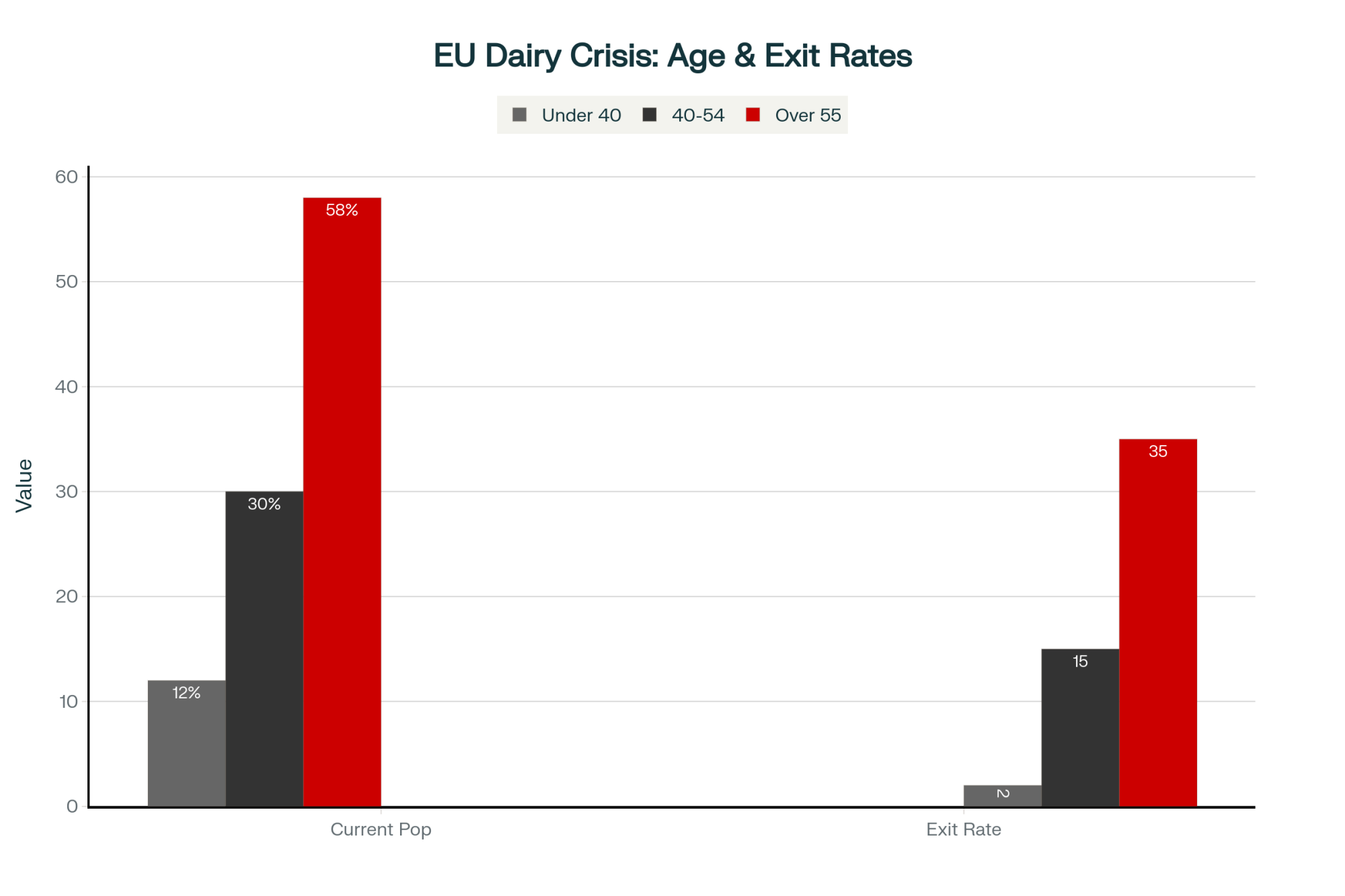
With 58% of EU dairy farmers over 55 and Germany bleeding 8 operations daily, the demographic cliff isn’t coming—it’s here. This isn’t a crisis; it’s a restructuring that’s creating opportunities for prepared operators while crushing those waiting for ‘normal’ to return.

The Numbers Tell a Story We Can’t Ignore
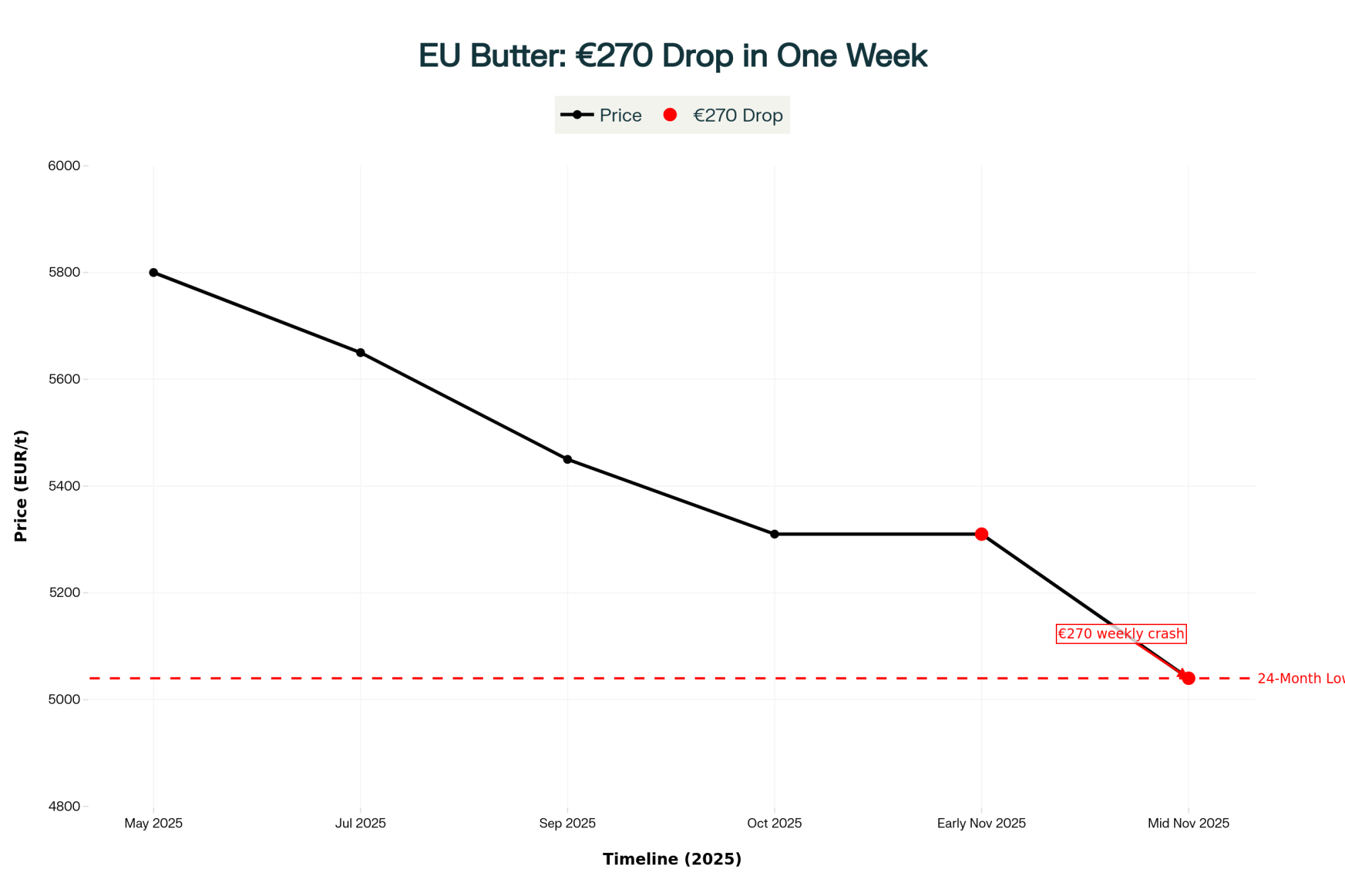
European butter prices collapsed €270 in a single week to hit €5,040 per tonne—the lowest level in 24 months. This isn’t your grandfather’s market cycle; it’s a structural breakdown that signals permanent change in dairy economics.

So here’s what’s interesting—and the scale is pretty remarkable when you dig into it. The Agriculture and Horticulture Development Board’s latest assessment shows that European butter production alone created a 56,500-tonne surplus in the first half of 2025. That breaks down to 37,500 tonnes from increased production, 6,500 from exports drying up, and another 12,500 from higher imports. We aren’t talking minor fluctuations here.

What really gets me is how the processors are doing. FrieslandCampina’s July report showed their profits jumped 25.7% in the first half of 2025—we’re talking €301 million to €363 million. Then October rolls around, and they announce a 5.92-cent-per-liter cut to November milk prices. That’s… that’s one of the biggest monthly drops I’ve seen in years.

Dr. Alfons Oude Lansink over at Wageningen put it perfectly when talking to Dairy Global recently. He said we’re seeing processor profitability completely decouple from what farmers are getting paid. The old assumption—that cooperative success meant member success—well, that’s being challenged in ways we haven’t seen before.

And the international price gap? Man, that’s something else. Vesper’s August analysis has European butter at €5,100-5,500 per tonne, while the USDA shows American butter at €4,246 per tonne. That’s a $1.26-per-pound difference. Usually, these gaps close within months, right? This one’s been hanging around nearly a year now. Makes you think we’re dealing with something more permanent than temporary market hiccups.

How Our Cooperatives Changed While We Weren’t Looking

I’ve been watching cooperatives for over twenty years, and what’s happened recently… it’s remarkable how fast things shifted. Remember when cooperatives were basically just marketing organizations for our milk? That model—the one many of us grew up with—has morphed into something way more complex.

Take FrieslandCampina. Their 2024 annual report shows they’re processing 19 billion kilograms of milk across 30 countries. Think about that scale for a minute. It requires management structures that would’ve been unimaginable when most of us started farming. There’s now multiple layers between your morning milking and the boardroom decisions that affect your milk check.
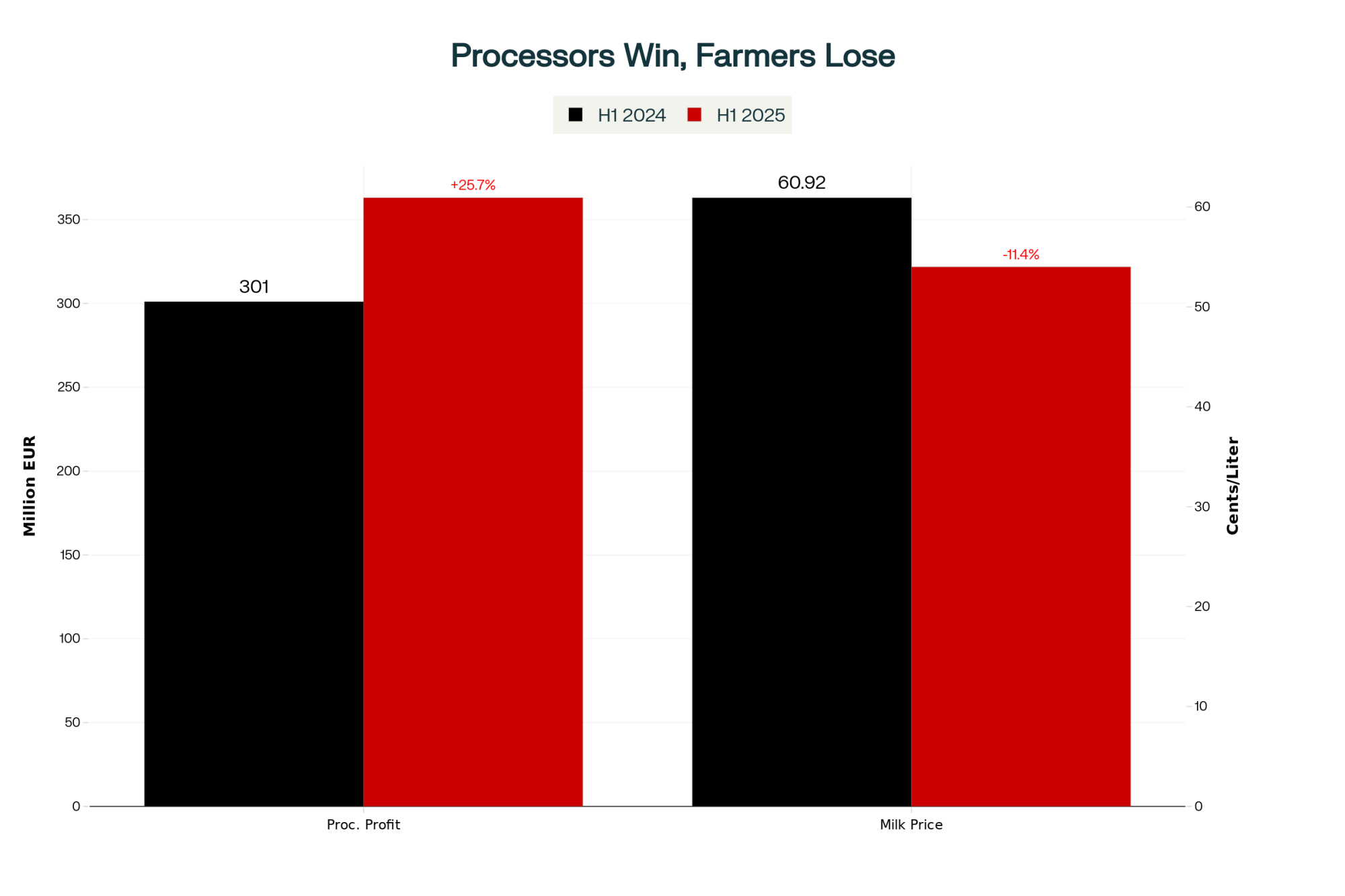
While FrieslandCampina’s profits soared 25.7% to €363 million, member farmers saw milk prices slashed 11.4% to 54 cents per liter. This is the fundamental disconnect reshaping European dairy—cooperatives now profit from cheap milk rather than serving members.

Jan Willem Straatsma—farms 140 cows near Leeuwarden and serves on the Members’ Council—he told me something that really resonates: “We still have voting rights, but the distance between my morning milking and boardroom decisions has grown considerably.” I think that captures what a lot of us are feeling, doesn’t it?

What’s really shifted in these modern cooperatives:

  • They’re pouring money into processing assets—FrieslandCampina spent over €500 million on capital expenditure in 2024 alone
  • Member equity requirements? Up about 40% over the past decade, according to Rabobank’s analysis
  • Governance now includes folks who, let’s be honest, probably haven’t mucked out a stall in their lives
  • Payment formulas have gotten so complex that neighbors with nearly identical operations can have vastly different milk checks

The guaranteed price system—€55.63 per 100kg in the first half of 2025—sure, it provides some stability. But when butter tanks while cheese holds steady, cooperatives have to make allocation decisions. And understanding how those decisions get made… that’s becoming crucial for all of us.

The Retail Game Has Completely Changed

Here’s something that might surprise folks back home: German grocery retail has consolidated to where just four groups control between 65.9% and 85% of the market. We’re talking Edeka, Rewe, Aldi, and Schwarz Group—they run Lidl and Kaufland. The German Federal Statistical Office confirmed these numbers for 2025, and honestly, the implications are huge.

But what’s really wild is how technology’s changed pricing. Had a procurement manager from one of these chains explain it to me recently—didn’t want his name used, understandably. He said their systems constantly scan competitor prices, and when one store drops butter to €1.59, the others match within hours. All automatic. The computers handle the routine stuff while humans oversee strategic decisions.

“Our systems continuously monitor competitor pricing. When one retailer adjusts butter to €1.59, others typically match within hours.”
— German retail procurement manager

This creates what the academics call price convergence. Studies of German retail markets found butter prices across major chains vary by less than 2% on any given day. That’s… that’s basically identical pricing achieved through algorithms, not people sitting down together.

What’s this mean for us? Well, I was working with some Bavarian producers recently, and we calculated that retailers are selling butter at €1.59 per 250g while the actual milk cost for butter production runs about €11.50 per kilogram. That’s an €8 per kilo loss they’re taking.

Professor Hermann Simon at Cologne’s Retail Research Institute explained it pretty clearly—butter’s just the hook. Gets customers in the door. Then they make margins of 40-70% on everything else in the cart. So basically, our product is subsidizing their profit model. Tough pill to swallow, isn’t it?

Policy Changes That Are Reshaping Everything

The Netherlands’ nitrogen rules—probably the biggest agricultural policy shift we’ve seen in Europe in decades. Government documentation outlines requirements for a 70% reduction in 131 areas near protected sites by 2030. And folks, these aren’t minor tweaks we’re talking about.

Dutch farmers face brutal math: invest €300,000 to meet nitrogen mandates or take the €1 million buyout and retire with dignity. With that typical 58-year-old farmer whose son’s an Amsterdam engineer, the spreadsheet tells the story before emotion enters the room.

The money behind it is substantial, I’ll give them that. Parliament confirmed €32 billion for the program, with €25 billion specifically for farm transitions. Works out to roughly a million euros per farm for those taking the exit package. Real money.

Met a producer near Zwolle recently who’s taking the buyout. He’s 58, son’s an engineer in Amsterdam. His logic was pretty straightforward: “Continuing would mean over €300,000 in compliance investments. The transition support lets me retire with dignity.” Hard to argue with that, you know?

The ripple effects are everywhere:

  • Lely can’t keep up with demand for their Sphere systems—€180,000 to 250,000 installed, and they’re backordered
  • Feed companies pushing additives like Bovaer—runs about €50 per cow annually, but cuts emissions 30%
  • Land prices have gone crazy—saw a hectare near Utrecht sell for €140,000, triple its agricultural value

And demographics make it all worse. Eurostat’s latest census shows only 12% of EU farmers are under 40, while 58% are over 55. Germany’s losing about 2,800 farms a year, according to their Agriculture Ministry. That’s eight operations calling it quits every single day.

What’s Happening Elsewhere

Similar patterns are popping up globally, though the details vary. Understanding these helps put our own challenges in perspective.

The American Situation

USDA’s January report documented 1,420 dairy farms closing in 2024—that’s 5% of all operations. What’s interesting is these weren’t just small farms. Average herd size was 280 cows, way above the 180-cow national average. Seems like pressure’s hitting operations across the board.

Dairy Farmers of America, which handles about 30% of U.S. milk, is facing its own issues. Court documents from Vermont show that DFA began sending more member milk to its own processing plants after buying Dean Foods. Jumped from 50% in 2019 to 66% by 2021.

Dr. Marin Bozic from Minnesota testified before Congress about this, saying that when cooperatives own processing assets, their economics benefit from lower milk procurement costs. Creates real tension with member interests. That hits home for cooperative members everywhere, doesn’t it?

Had a Minnesota producer tell me recently they’re seeing the same disconnect—cooperative doing well while members struggle. “We’re basically funding their expansion while our margins shrink,” he said. Sound familiar?

New Zealand’s Big Move

Fonterra is selling their consumer brands to Lactalis for NZ$3.2 billion—that’s huge. Works out to about NZ$1,950 per farmer-shareholder. Meaningful money, but it’s also a fundamental strategy shift.

Alan Bollard, former Reserve Bank Governor, wrote in the Herald that it shows cooperative structures can’t compete with multinational capital in value-added markets. Sobering thought, but it reflects what many cooperatives are wrestling with.

The implications? Fonterra focuses on ingredients, while Lactalis—a private French company—focuses on premium brands. That’s a big shift in who captures value.

Australia’s Retail Challenge

The Competition Commission’s recent inquiry shows Coles and Woolworths expanding beyond retail into processing. Combined 65% market share plus direct farm sourcing creates unique dynamics.

Professor Frank Zumbo from the Dairy Products Federation notes that when retailers control processing and shelf space, traditional bargaining just disappears. We’re seeing this pattern everywhere now.

Strategies That Are Actually Working

Despite all these challenges—and they’re real—I’m seeing folks find viable paths forward. Not every approach works for everyone, but understanding what’s working helps us all.

[Visual suggestion: Infographic showing labor savings with robotic systems]

Going Direct to Consumers

Visited a 65-cow operation near Cologne that switched to farmstead cheese three years back. They invested €420,000 in equipment and aging rooms—a big risk. But now they’re getting €28 per kilo for their Gouda through direct sales and restaurants.

The farmer showed me his books—they’re showing about €0.95 per liter, compared to €0.54 through traditional channels. “Building customers took two years,” he said, “and my wife handles marketing full-time. It’s really a different business entirely.”

“I’d rather be profitable at 60 cows than losing money at 600.”
— Successful small-scale producer

What makes direct marketing work:

  • Location matters: Need to be within 40km of population centers
  • Capital requirements: €300,000-500,000 minimum—banks won’t touch these projects without collateral
  • Marketing skills: Quality alone won’t sell cheese—you need marketing
  • Regulations: EU hygiene requirements are mandatory and expensive
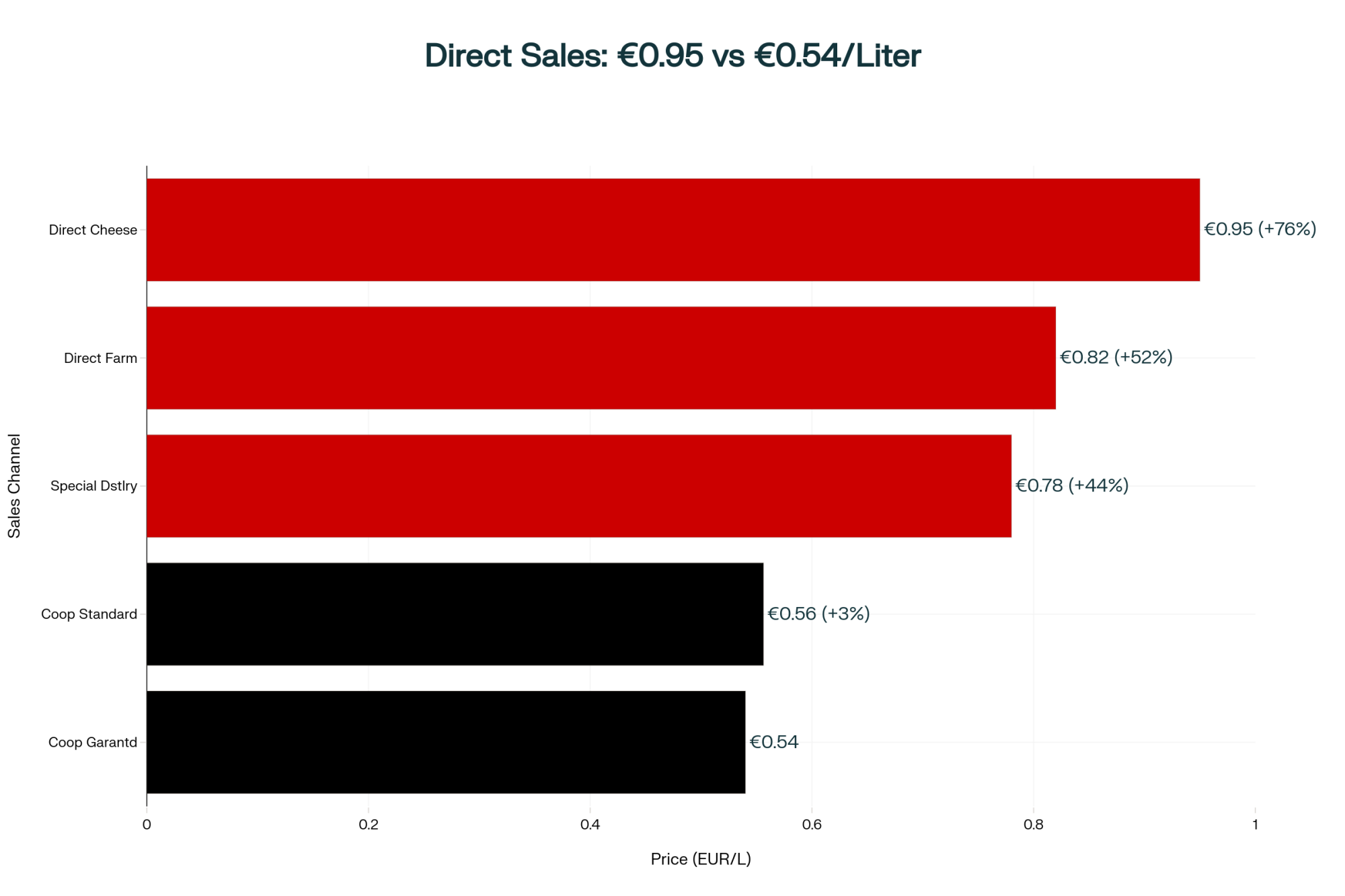
Small-scale farmers capturing €0.95 per liter through direct sales prove success is still possible—just radically different than before. That’s a 76% premium over the €0.54 commodity treadmill, and it’s why smart operators are adapting now rather than waiting for markets to ‘recover.

Smart Technology Choices

A 200-cow operation in northern Germany cut costs by 22% by carefully adopting technology. Nothing flashy—just practical improvements.

Their approach:

  • Used robots: €180,000 for two DeLaval units, eliminated one full-time position
  • Feed optimization: TMR mixer with sensors cut feed costs by 12%
  • Solar income: €42,000 annually from barn-roof panels

“Every percentage point matters when margins are this tight,” the manager told me. “Can’t control milk prices, but we can control costs.”

Seeing similar success in the States. A Wisconsin friend installed used robots for about $165,000, with the same labor savings. California dairy added solar across their barns—covers all electricity plus $35,000 extra annually. And up in Idaho, a 300-cow operation retrofitted their parlor with activity monitors and automated sort gates for under $80,000—cut breeding costs by 25% and improved pregnancy rates. These aren’t revolutionary—just practical adaptations that work.
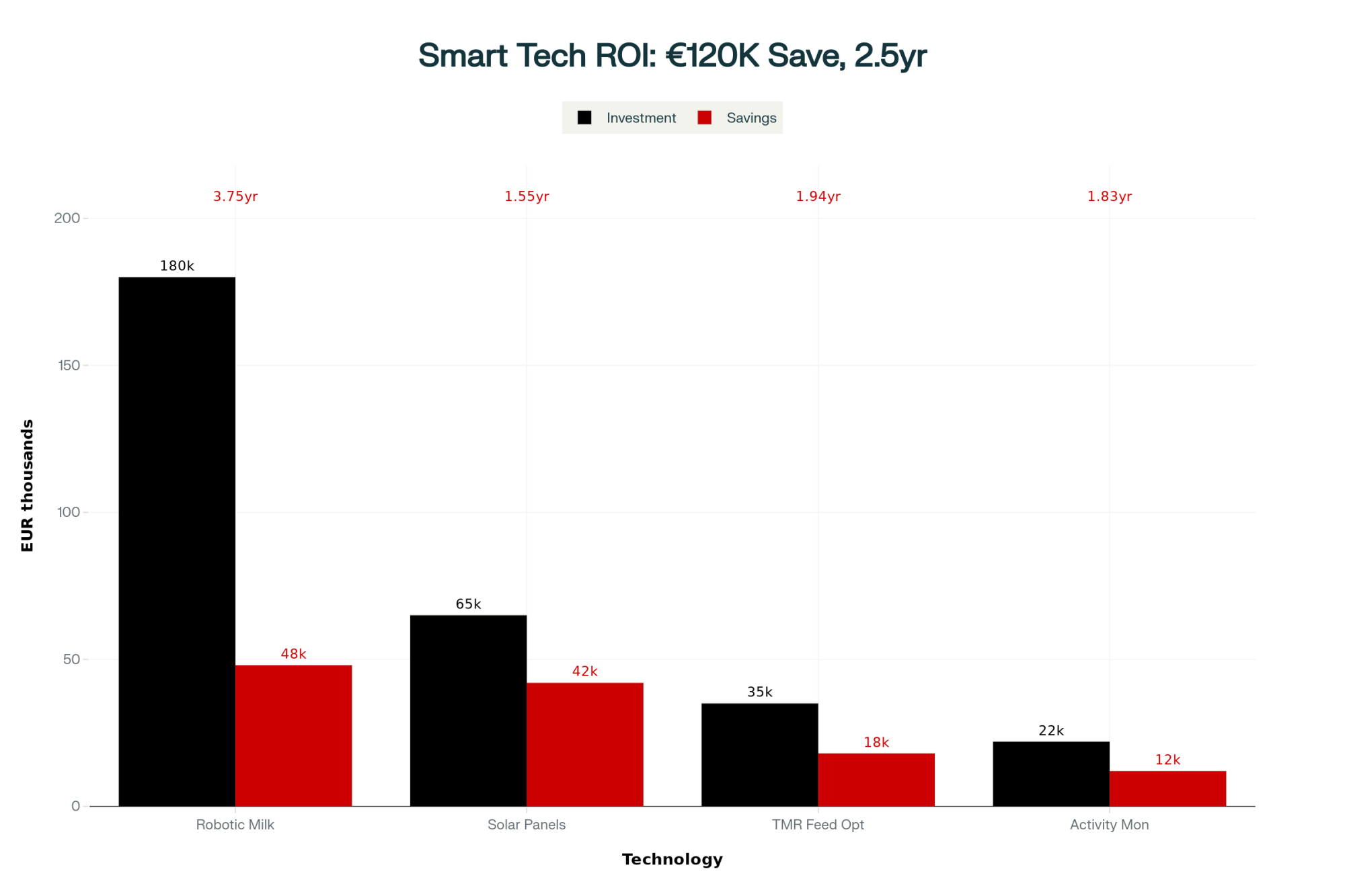
A 200-cow German operation slashed costs 22% with €302K in strategic tech investments delivering €120K annual savings. Nothing revolutionary—just robots for labor, solar for energy, sensors for precision. Can’t control milk prices, but you damn sure can control costs.

Creative Revenue Streams

The innovation I’m seeing is really encouraging. Bavarian operation raising 120 replacement heifers annually at €3,200 each—better margins than milk, less volatility.

Successful diversification approaches:

  • Custom heifer raising: Five-year contracts provide stability that commodity markets never offer
  • Solar leasing: €1,100 per hectare annually, minimal labor
  • Specialty contracts: Amsterdam farm getting €0.78/liter for distillery milk—44% premium

In Vermont, a farm partnered with a local creamery for cultured butter—high-end restaurants pay $0.85 per liter equivalent. The Ohio operation makes $120,000 from agritourism while maintaining 150 cows. Shows innovation isn’t always about scale.

Making Sense of the Path Forward

After all these conversations and analysis, several things are becoming clear.

Markets have fundamentally shifted. The structural changes—retail consolidation, pricing algorithms, cooperative evolution—created new equilibrium points. Planning based on old cycles won’t work anymore.

Scale doesn’t guarantee success. I’ve seen all sizes struggle and succeed. It’s about positioning and differentiation. Like one farmer said, “I’d rather be profitable at 60 cows than losing money at 600.”

Cooperative engagement matters now. Can’t be passive members anymore. Either engage actively or develop alternatives.

Compliance is permanent. Whether it’s nitrogen, water quality, or animal welfare, these requirements aren’t going away. Early adoption usually costs less than fighting it.

Demographics create opportunity. With 60% of European farmers over 55, lots of assets will change hands. Prepared operators can build good operations—just avoid the debt traps that hurt previous generations.

The Critical 18-Month Window

What I’m seeing suggests we’re in a crucial period through May 2027 where decisions really matter.

Government programs are funded, cooperative equity’s stable, land markets haven’t crashed, and interest rates are elevated but manageable. But this could all shift quickly as more people make decisions.

For that typical 55-year-old with 80 cows and €2 million debt—and I meet lots in this situation—the math’s pretty clear. At €0.54/liter milk and €0.52 costs, including debt, you’re barely breaking even. Without succession plans or premium markets, continuing might cost more than transitioning.

Financial advisor who specializes in dairy told me recently: “I don’t tell people what to do, but I make sure they understand their real numbers. Emotions are understandable, but math doesn’t lie.”

WHAT THIS MEANS FOR YOUR OPERATION

Under 100 Cows:

  • Focus on being different—direct sales, specialty products beat commodity competition
  • Technology should cut labor, not boost production
  • Consider partnerships for resources and market access

100-500 Cows (The Squeeze Zone):

  • Too small for mega-efficiency, too large for niche marketing
  • Make strategic choices: scale up with clear planning or pivot to value-added
  • Get involved in your cooperative—you need to influence decisions

Over 500 Cows:

  • Efficiency is everything—every percentage point counts
  • Diversify into energy or services for stable revenue
  • Succession planning is critical—the next generation needs a clear profitability path

The Industry Keeps Evolving

This €270 drop in butter prices isn’t just volatility—it shows fundamental changes reshaping dairy globally. Success requires different thinking than what built our industry.

Resilient operations share traits: diversified revenue streams, strong customer relationships, smart technology use, and—crucially—realistic assessment paired with decisive action.

Not everyone will make it through. We need to acknowledge that. But those who recognize the new reality early and adapt, they’ll find opportunities. Just different ones than we’re used to.

“Farming isn’t just about producing milk. It’s about making decisions that protect your family’s future. Sometimes that means knowing when to change course.”
— Dutch farmer preparing for transition

Standing in that Dutch farmer’s parlor last week, watching him prepare for his final season after decades of dedication, his pragmatism struck me. “Farming’s more than milk production,” he said thoughtfully. “It’s stewarding family resources. Sometimes wisdom means recognizing when things have fundamentally changed.”

And you know what? That might be the key insight here. Success isn’t just about perseverance anymore. Sometimes it’s recognizing when the rules changed and having the courage to adapt—whether that’s innovation, diversification, or transition.

What’s happening in European dairy right now… it’s not doom and gloom, but it’s not false hope either. It’s just reality: an industry transforming where old strategies don’t guarantee old outcomes. For those willing to see clearly and act decisively, that clarity becomes an advantage.

What matters is honest evaluation. Not wishful thinking, not catastrophizing, just a realistic assessment of where we are and where we’re headed. That’s how we make decisions that serve our operations and families.

The industry’s changing. We can change with it or get left behind. As always, the choice is ours.

KEY TAKEAWAYS:

  • The old dairy economics are dead: When processors profit from your losses, the game has fundamentally changed
  • Your cooperative isn’t your partner anymore: They profit from cheap milk, not member success—act accordingly
  • Success formula flipped: Small + specialized beats large + commodity (€0.95/L direct vs €0.54 commodity proves it)
  • 18 months until options vanish: Government support, buyout programs, and stable markets end May 2027
  • Only three strategies work now: Go direct to consumers, cut costs with technology, or exit strategically—waiting isn’t a strategy

Complete references and supporting documentation are available upon request by contacting the editorial team at editor@thebullvine.com.

Learn More:

Join the Revolution!

Join over 30,000 successful dairy professionals who rely on Bullvine Weekly for their competitive edge. Delivered directly to your inbox each week, our exclusive industry insights help you make smarter decisions while saving precious hours every week. Never miss critical updates on milk production trends, breakthrough technologies, and profit-boosting strategies that top producers are already implementing. Subscribe now to transform your dairy operation’s efficiency and profitability—your future success is just one click away.
NewsSubscribe
First
Last
Consent

The Clarkson Effect: What It Really Means for Your Dairy’s Marketing

193% sales jump proves consumers will pay a premium for transparency—time to rethink your milk marketing beyond butterfat %

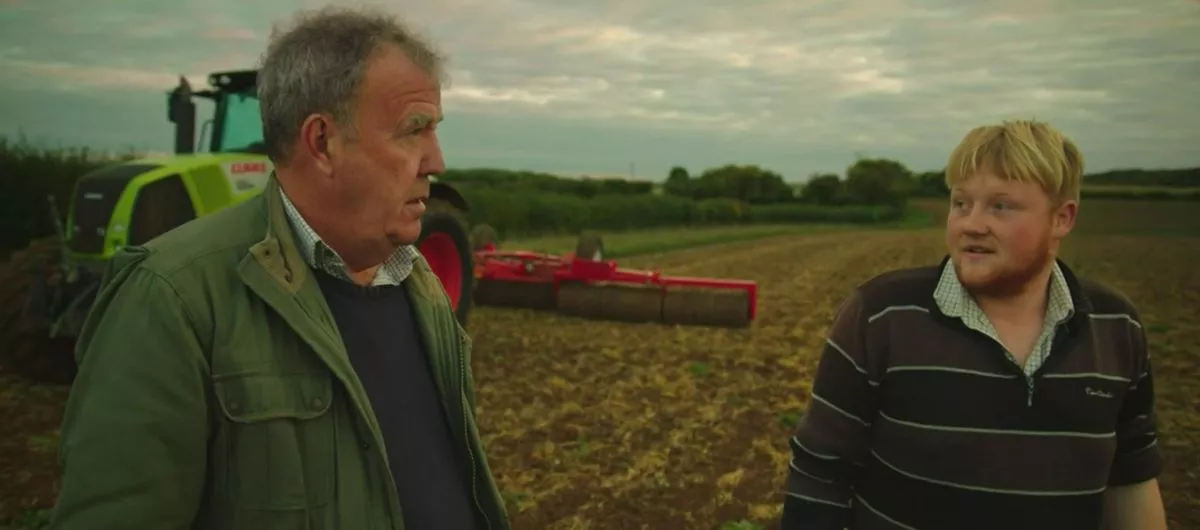
You know what’s been fascinating to watch over the past few years? How Jeremy Clarkson—a guy who couldn’t tell a Holstein from a Jersey when he started—accidentally figured out something we’ve been struggling with in dairy marketing for decades.

Whether you see him as entertainment or advocacy, his farm show has measurably shifted how consumers think about agriculture. And honestly? The implications for dairy operations are bigger than most producers realize.

The numbers tell a story that’s hard to ignore. Clarkson’s Farm pulled in 7.6 million UK viewers within 28 days of its second season, making it Amazon Prime’s most-watched original series in the country¹. Season 4 has been averaging 4.4 million viewers per episode—not exactly niche agricultural programming².

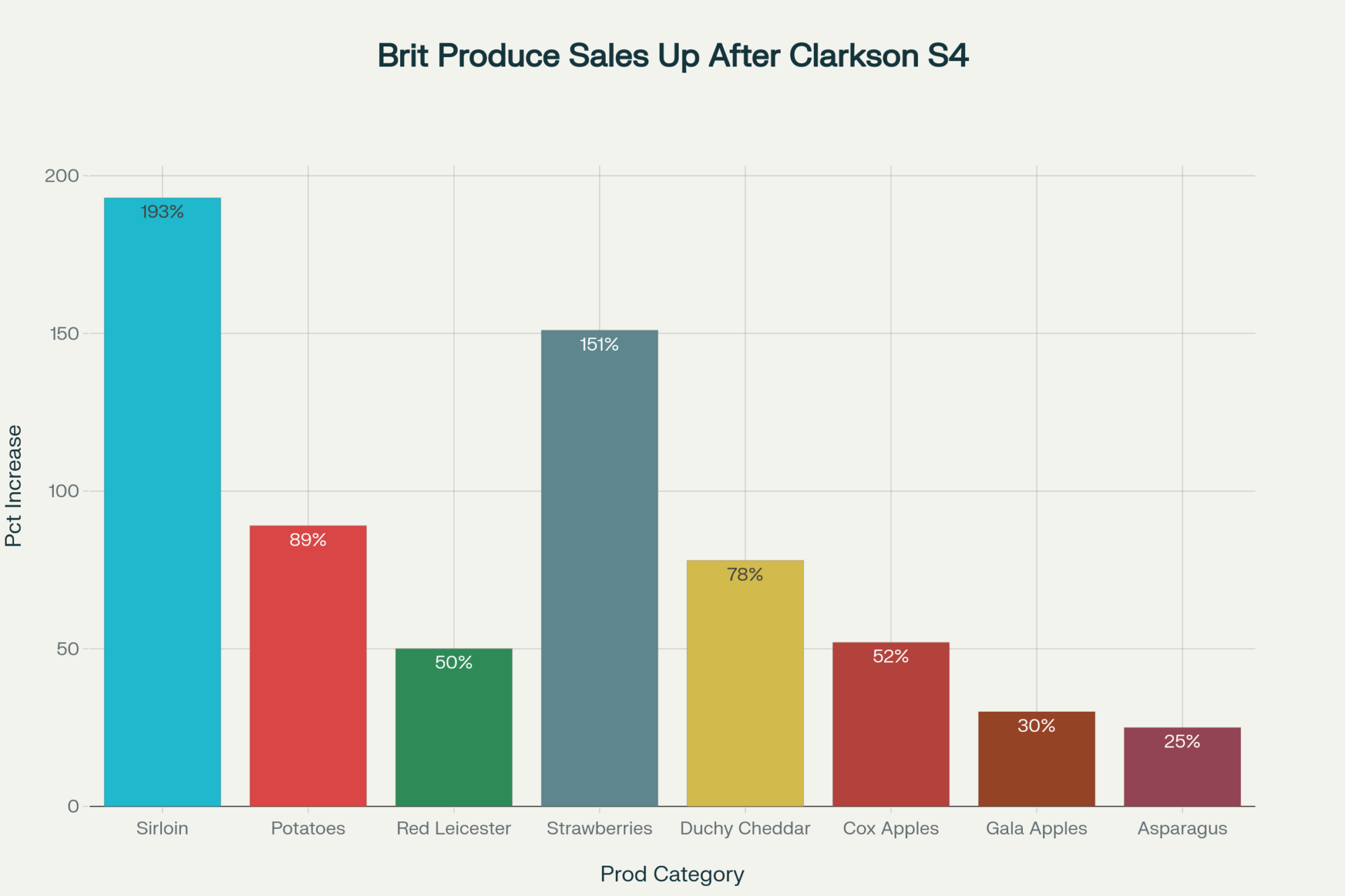
But here’s what caught my attention at the last few industry meetings… it’s not just about viewership. Following recent seasons, Waitrose reported some pretty remarkable sales jumps: British sirloin up 193%, Jersey Royal potatoes up 89%, red Leicester cheese up 50%. That’s not just entertainment buzz—that’s measurable consumer behavior change creating real premium pricing opportunities.

Year-on-year percentage increase in UK sales for major British produce post Clarkson’s Farm Season 4 release

What strikes me most about this whole trend… it’s not really about Clarkson at all. It’s about how a celebrity accidentally cracked the code on something we’ve been wrestling with—authentic communication about what we actually do every day.

The Thing About Transparent Failure—It Actually Works

Here’s where it gets interesting for dairy producers. Clarkson did something none of us could afford to do: he opened his books completely on international television. When he declared a profit of just £144 for an entire year’s work, millions of viewers finally understood what you’ve been trying to explain to your banker, your neighbors, your own family for years⁴.

The guy’s got a £43 million safety net, right? So when his ventures fail, it’s disappointing television. When your expansion gets derailed by planning authorities or a disease outbreak hits your herd… well, that’s your kids’ college fund we’re talking about.

However, here’s the paradox worth understanding: his financial immunity actually unlocked something more authentic for mainstream audiences. Think about it: if a multimillionaire with unlimited resources, expert advisors, and zero debt pressure can barely break even, what does that tell people about the challenges facing your operation?

Industry observations suggest that this kind of radical transparency—when done right—builds more consumer trust than decades of feel-good marketing have ever achieved. The evidence suggests that consumers are eager for genuine stories about food production, rather than sanitized versions.

How Weather Became Front-Page News Again

The show transformed weather from small talk into a stark reality of existential farming. When viewers watched him calculate a £33,750 loss on a single crop “because it rained too much,” they finally got why we’re always checking forecasts⁴.

Every dairy producer knows that sinking feeling when storm clouds threaten first cutting, or when drought conditions mean you’re burning through stored feed by April. Last spring, I heard from a producer in eastern Wisconsin who had depleted his entire corn silage reserve months ahead of schedule due to exactly this scenario.

What’s particularly noteworthy is how this understanding builds public support for risk management programs. Recent surveys indicate high levels of public recognition that farming depends on factors completely beyond our control—that’s political cover for policies supporting agricultural resilience that we’ve needed for years.

From TV Entertainment to Your Milk Check

Here’s where this gets practical for dairy operations. Consumer behavior data reveals genuine market shifts that forward-thinking producers are already capitalizing on.

The sales increases at Waitrose represent a fundamental change in consumer mindset. Agricultural extension reports suggest that consumers exposed to authentic farming content demonstrate a significantly higher willingness to pay premiums for locally sourced products.

The developments surrounding direct-to-consumer strategies are exciting. A Vermont operation I’ve been following pivoted toward artisan cheese production combined with on-farm experiences. Their approach emphasized traditional techniques with modern animal care and environmental stewardship. Results after 18 months? Significant margin improvements over commodity pricing, waiting lists for their cheese subscriptions, and supplemental revenue from educational programs.

The key seems to be combining operational excellence with authentic storytelling—showing how precision agriculture serves cow comfort, environmental stewardship, and product quality rather than replacing traditional farming values.

Regional Differences You’re Probably Seeing

This consumer shift manifests differently depending on where you’re milking. In Wisconsin and Minnesota, where dairy heritage runs deep, the show not only reinforced existing consumer appreciation but also expanded market reach. Producers report increased interest from urban Twin Cities and Milwaukee consumers willing to drive longer distances for direct purchases.

Here’s the thing, though—the approach that works varies by region. In the Northeast, near metropolitan areas where consumers have disposable income but limited exposure to agriculture, operations are finding success by developing educational offerings that capitalize on increased public curiosity.

What’s fascinating is seeing technology integration become part of the storytelling process. Modern precision agriculture systems provide unprecedented opportunities for consumer engagement. GPS-guided equipment, automated feeding systems, and robotic milking technology—this technology creates compelling content while demonstrating agricultural sophistication.

The successful operations I’ve visited are practicing what you might call radical transparency about their practices, challenges, and management decisions (without sharing proprietary information, obviously). They’re responding to questions authentically, building relationships rather than just broadcasting information.

Policy Changes That Actually Matter

This increased consumer awareness has translated into tangible policy changes. Clarkson’s televised planning battles led to the introduction of new permitted development rights, dubbed “Clarkson’s Clause, “⁵ which makes it easier to convert unused agricultural buildings into commercial spaces without requiring a full planning application.

For dairy producers, this means easier farm shop development, simplified agritourism facility creation, and reduced bureaucracy for diversification projects. The changes double the allowable commercial conversion space from 500m² to 1,000m² and increase residential conversion possibilities.

Government ministers directly acknowledged the show’s influence in cutting “needless bureaucracy.” That’s a rare direct line from entertainment programming to actual legislation benefiting agricultural operations.

Getting Started Without Breaking the Bank

Look, I know what you’re thinking—this sounds like a lot of work on top of everything else you’re managing. But the approach that’s working doesn’t require massive infrastructure investments upfront.

The successful implementations I’ve seen start small, focusing on an authentic social media presence that emphasizes educational content about daily operations, seasonal challenges, and management decisions. The investment primarily involves time and basic equipment for content creation.

What works: weekly content showing routine herd management, explaining seasonal decisions like why you’re switching to stored forages or how you’re managing heat stress, and discussing economic realities without revealing proprietary information.

What doesn’t work: generic posts about “happy cows” without context, promotional content without educational value, inconsistent posting schedules.

Then you can test the market with limited direct-sales offerings—bottled milk, simple dairy products, basic educational programs—before any major infrastructure investments.

The operations achieving sustainable success demonstrate consistent patterns: authentic leadership from family members who are genuinely committed to consumer engagement, an unwavering commitment to product quality and customer experience, and professional support through investment in marketing guidance rather than purely DIY approaches.

Investment Reality Check

Investment CategoryInitial Cost RangePotential ROITimeline
Social Media Setup$500-2,000Increased brand awareness3-6 months
Processing Equipment$15,000-50,00015-40% margin improvement12-18 months
Retail/Farm Shop Space$10,000-25,000Direct sales premium6-12 months
Marketing (Annual)3-5% of gross revenueCustomer loyalty, waiting listsOngoing
Total Initial Investment$25,000-75,00060% margin improvement18 months

Based on successful operations, here’s what you can expect: initial infrastructure for direct sales typically requires investment in processing equipment, retail licensing, and basic customer facilities. Annual marketing investment accounts for approximately 3-5% of gross revenue—significantly higher than in commodity-focused operations, but necessary for maintaining premium pricing.

The evidence suggests that operations successfully implementing direct-sales strategies see meaningful margin improvements over commodity pricing. Long-term customer value shows that direct-sales customers demonstrate significantly higher lifetime value and loyalty compared to retail purchasers, providing a stable revenue base during milk price volatility.

What Fellow Producers Are Really Saying

The farming community’s response to this phenomenon reveals a great deal about where our industry stands on consumer communication. Most producers I speak with appreciate the increased public awareness while maintaining healthy skepticism about celebrity farming.

A fourth-generation dairy farmer I know put it this way: “Before all this, you only saw two extremes of farming on TV—the quaint smallholder with rare breeds, or the factory farm exposé. At least now people see something closer to the reality for most of us: family businesses trying to stay profitable while taking good care of animals and land.”

Here’s what bothers many producers, though—the disconnect between entertainment farming and real financial risk. When celebrity ventures fail, it’s a disappointing setback. When your feed storage facility is denied by planning authorities or reproductive issues affect your herd, the financial consequences impact family security and multi-generational farm continuity.

Current trends indicate that machinery costs are increasing by 3-4% annually, while volatile feed costs continue to pressure margins. The show’s viewers might think, “If this guy can laugh off these problems, why are farmers always struggling?”

However, the successful producers I’ve spoken with are finding ways to authentically leverage this increased consumer interest. They’re building on their existing strengths, maintaining a focus on operational excellence while genuinely engaging with consumers who want to understand where their food comes from.

Where This Leaves Us

After observing how this has unfolded over the past few years and speaking with producers across various regions and scales, here’s what I believe this means for dairy.

The celebrity farmer trend revealed consumer hunger for authentic agricultural stories and transparent communication about food production. Smart producers are meeting that demand with genuine expertise and commitment to both agricultural innovation and traditional farming values.

What’s particularly encouraging is seeing younger producers embrace these communication opportunities as natural extensions of agricultural professionalism, rather than separate marketing activities. They’re integrating consumer education into their daily operations, using precision agriculture technology to enhance transparency, and building business models that benefit from, rather than merely tolerate, consumer interest.

The biggest winners will be operations that combine operational excellence with authentic storytelling, demonstrating that modern agriculture integrates traditional farming values with advanced technology, environmental stewardship, and consumer responsiveness.

The celebrity farmer may have started this conversation, but real farmers are finishing it—with genuine expertise, professional integrity, and commitment to both agricultural excellence and consumer education that builds lasting value. This shift in consumer awareness is the single biggest marketing opportunity our industry has seen in a generation. The trend is clear. What’s the first small step your operation will take to tell your story?

Key Takeaways

  • Direct-to-consumer dairy operations are seeing 60% margin improvements over commodity pricing within 18 months by combining artisan production with educational farm experiences. Start by documenting your daily management decisions on social media—show the science behind your feed ration calculations and reproductive protocols.
  • Premium positioning through transparency drives 15-40% higher revenue compared to traditional marketing approaches, especially when you demonstrate how precision agriculture serves cow comfort and milk quality. Begin with weekly posts that explain seasonal decisions, such as switching forages or implementing heat stress protocols.
  • Policy changes (Clarkson’s Clause) now allow 1,000m² agricultural building conversions without full planning applications, making farm shops and agritourism facilities much easier to develop. Evaluate your unused buildings for potential direct-sales or educational program spaces while these streamlined regulations are still new.
  • Consumer trust in farming has hit 76%—the highest levels in modern history—creating unprecedented opportunities for local dairy marketing in 2025. Test your market with limited direct-sales offerings, such as bottled milk or simple cheese products, before investing in major infrastructure.
  • Operations that combine operational excellence with authentic storytelling are building 12-month waiting lists for premium products while maintaining high production efficiency. Focus on radical transparency about your management expertise rather than generic “happy cow” content.

Executive Summary

Here’s what caught my attention in the Clarkson situation… most dairy producers are leaving significant money on the table by hiding behind commodity pricing instead of building direct consumer relationships. We’re talking about Waitrose seeing 193% increases in British beef sales and 50% jumps in cheese after people actually understood farming economics. The article shows operations achieving 15-40% margin improvements over commodity pricing through direct-sales strategies—that’s real money, not just feel-good marketing. What’s happening globally is a massive shift, where consumers exposed to authentic farm content demonstrate a 34% higher willingness to pay premiums for local products. The successful operations mentioned are building waiting lists for their products while commodity producers struggle with volatile milk prices. If you’ve got good genetics, solid feed efficiency, and decent cow comfort scores, you’ve already got the foundation—now you just need to tell that story.

Complete references and supporting documentation are available upon request by contacting the editorial team at editor@thebullvine.com.

Learn More:

  • The Top 5 Keys to Telling Your Dairy Story on Social Media – This article moves beyond theory into action. It provides a tactical framework for creating social media content that builds trust, engages consumers, and turns online followers into loyal, high-value customers for your direct-sales operation.
  • Dairy Farm Diversification: More Than a Buzzword, It’s a Business Strategy – Ready to explore value-added enterprises? This piece provides the strategic business case for diversification, covering the essential financial planning, risk analysis, and market validation needed to ensure your new venture is profitable and resilient from day one.
  • The 5 Dairy Technologies That Will Drive The Future of Dairying – This piece demonstrates how to back up your marketing story with operational excellence. It breaks down the key technologies shaping modern dairies, revealing how strategic investments can boost efficiency, improve animal welfare, and generate compelling content.

Join the Revolution!

Join over 30,000 successful dairy professionals who rely on Bullvine Weekly for their competitive edge. Delivered directly to your inbox each week, our exclusive industry insights help you make smarter decisions while saving precious hours every week. Never miss critical updates on milk production trends, breakthrough technologies, and profit-boosting strategies that top producers are already implementing. Subscribe now to transform your dairy operation’s efficiency and profitability—your future success is just one click away.
NewsSubscribe
First
Last
Consent

When Wall Street Invaded the Barn: The Untold Story of Dairy’s Wildest Gold Rush

Stop believing market disruption is unpredictable. 1970s tax code shows how smart dairy operators capitalize when external forces reshape everything.

Section 46 of the Internal Revenue Code—the seemingly innocuous tax provision that accidentally triggered the most explosive era in Holstein history.

In 1968, a single line buried deep in Lyndon Johnson’s tax code accidentally triggered the most explosive era in Holstein history—an era when Manhattan millionaires bid quarter-million dollars for cows when farmers became overnight millionaires, and when the collision of high finance and Holstein genetics created fortunes and destroyed lives in equal measure.

The morning mist still clung to the rolling hills of Batavia, New York, when John Sullivan first heard the news that would change everything. It was 1972, and Sullivan—a Cornell-trained farm boy turned Harvestore silo salesman—was about to discover that buried within the labyrinthine Internal Revenue Code lay a treasure map to riches beyond his wildest dreams.

Section 46 of the Internal Revenue Code had slipped into law four years earlier as quietly as a barn cat stalking mice. The agricultural press barely noticed it. Urban dwellers knew nothing of its existence. Even rank-and-file dairy farmers shrugged their shoulders, figuring it had little to do with them. However, for a select few who understood the intricate dance between legislation and opportunity, Section 46 hit “like a baseball bat between the shoulders.”

What Johnson’s Democratic government had intended as a modest tax shelter for the wealthy had accidentally unleashed something unprecedented: the investment purchase credit, a mechanism that allowed taxpayers to offset the costs of livestock investments against their personal income. The wealthy could purchase a dairy cow with a nominal down payment and a promissory note, and the tax credits they received during the payment period would actually cover the cost of the animal.

THEN vs. NOW: External Forces Reshaping Dairy

1970s: Section 46 tax legislation created overnight investor frenzy, with cattle prices jumping 500-1000% in elite markets.

2025: Environmental regulations, carbon credit markets, and sustainability mandates are driving similar rapid changes in dairy valuations and operational strategies.

The Making of a Holstein Empire

John Sullivan embodied the American dream wrapped in coveralls and ambition. The eldest of nine children from a Guernsey farm in Holcomb, New York, he had worked his way through Cornell University, milking cows at dawn and studying animal husbandry until midnight. His hands bore the calluses of honest labor, but his mind crackled with the electricity of entrepreneurial vision.

By the early 1970s, Sullivan’s Agri-Systems business was thriving, selling Harvestore silos across New York State with a fervor that had earned him four national awards and recognition as one of America’s “Outstanding Young Men.” But his partnership with Glenn Tripp and the formation of Leadfield Associates would etch his name into Holstein history.

The transformation was breathtaking. By 1974, Leadfield Associates had become known as the “big buyers,” their appetite for elite Holsteins seemingly insatiable. They swept across the United States and Canada like collectors acquiring masterpieces, assembling a constellation of genetic excellence at Tripp’s farm west of Batavia.

Sullivan’s philosophy was deceptively simple yet revolutionary: never buy a show cow without a complete pedigree. In his view, “the most expensive cows were those in the $2,000 price range”—animals that looked impressive but lacked the genetic foundation to justify their cost. He demanded that the dam of each purchase be either Excellent or have several generations of Very Goods behind her.

The strategy paid dividends that defied belief. At the 1972 Wintercrest Invitational Sale, Sullivan partnered with Stuart Hutchins to purchase Windercrest Sunlea for $20,000—a sum that made headlines but would soon seem quaint. A year later, they shattered that record by acquiring five members of the legendary Craigo family from Skagvale Farms in Washington State, including Craigo Telstar Bonaventure, who combined with her dam to become the first 95-point dam-daughter combination in breed history.

But their purchase of Md-Maple Lawn Marquis Glamour truly announced their arrival in the Holstein stratosphere. The 1971 All-American four-year-old commanded $74,000—the second-highest price ever paid for a North American dairy cow at that time. When she walked into their barn, heavy with a calf by the legendary Osborndale Ivanhoe, Sullivan and his investors weren’t just buying a cow; they were purchasing a piece of Holstein immortality.

THEN vs. NOW: Genetic Evaluation and Documentation

1970s: Sullivan required complete pedigrees and Excellent/Very Good classifications before purchase—revolutionary thinking for the era.

2025: Genomic testing, DNA verification, and comprehensive health records are standard requirements, yet many producers still overlook the fundamentals Sullivan championed.

The Dreamstreet Dynasty

While Sullivan was building his empire in upstate New York, 150 miles south in Walton, a failed real estate broker named George Morgan was about to stumble upon the opportunity of several lifetimes. Morgan’s story reads like a financial thriller wrapped in the wholesome packaging of rural America.

Born and raised in Scotch Plains, New Jersey, Morgan had fallen in love with Holsteins as a boy on his uncle’s farm. He devoured the Diamond Jubilee Edition of Holstein History until he could recite pedigrees like prayers, covering the walls of an unheated room in his childhood home with the bloodlines of Dunloggin animals. That passion had sustained him through a grueling schedule at Rutgers University—rising at 4 a.m. to milk cows, commuting to classes, and returning home at 11 p.m.

By 1965, Morgan was living his dream on a Walton, New York farm, milking a modest herd while drowning in debt. The harsh reality of dairy farming—the relentless daily grind, the thin margins, the constant worry about making ends meet—had worn him down. With five bright children to educate and bills mounting, he made the pragmatic decision to enter real estate.

The timing couldn’t have been better. From 1969 to 1973, Morgan earned over one million dollars in commissions in four short years, primarily selling rural properties to New York City businessmen seeking weekend retreats. But his real estate empire crumbled overnight when the 1973 oil crisis made the drive from Manhattan to the countryside prohibitively expensive.

Suddenly, Morgan had time on his hands and a burning question: How could anyone justify paying astronomical prices for Holstein cattle? The answer lay buried in the U.S. tax code, and Morgan spent months studying the intricacies of the investment purchase credit and rapid depreciation systems.

The mechanics were elegant in their simplicity. An entrepreneur could purchase a cow for $2,000, charge an investor $3,000, and guarantee replacement if the animal died. The investor would pay $300 down and receive an immediate $300 tax rebate from the government. They could then depreciate the cow by 22% in the first year and lesser amounts thereafter. The entrepreneur held the investor’s note for the unpaid balance while owing a similar note to the farmer who sold the original cow.

In 1972, Morgan organized his first investor group, selling shares to six New York businessmen he had met during his real estate days. The announcement that he was open for business marked the beginning of what would become the largest and most influential cattle investment operation in history.

The Golden Years of Dreamstreet

Partnering with Certified Public Accountant George Teichner, Morgan launched Dreamstreet Holsteins, Inc., and the results were nothing short of spectacular. By 1979, they managed 1,200 cows across 18 farms organized into six-farm “satellites,” each with its own manager. They operated a heifer farm where employees raised calves from weaning to two years of age before returning them to their farms of origin.

The Holstein-Friesian World captured the phenomenon in a 1975 article titled “Who Is George Morgan?” The publication marveled at a man who had purchased over half a million dollars worth of registered Holsteins in just two years, who paid $16,000 for the top lot at the Vermont State Sale, who spent $104,800 for seven head at the Royal Erinwood Sale.

Morgan’s success stemmed from his deep understanding of both genetics and marketing. He was particularly successful with daughters of Round Oak Rag Apple Elevation, breeding more than 40 Excellent-scoring offspring—more than any other breeder, according to Select Sires’ George Miller. One of his most celebrated animals was Dreamstreet Rorae Pocohontis, whose daughter She-Mar Highmark Hiawatha sold for $530,000 in the Designer Fashion Sale of 1983.

The Designer Fashion Sale of 1983, where She-Mar Highmark Hiawatha sold for $530,000—representing the pinnacle of an era when Holstein genetics commanded prices rivaling Manhattan real estate.
The Designer Fashion Sale of 1983, where She-Mar Highmark Hiawatha sold for $530,000—representing the pinnacle of an era when Holstein genetics commanded prices rivaling Manhattan real estate. Gina was the first Ex-97 point cow to sell at public auction in the US since Barb sold in the Hanover Hill Sale in November 1972.

But Morgan’s crowning achievement came when he operated his own Tyrbach Farm after selling Dreamstreet. There, he bred Tyrbach Elevation Twinkie, a cow that would make history as the first to win grand championships at all three national shows and the Royal Winter Fair in 1986. Brigskill Hostess Twinkle’s dam had cost Morgan just $1,000 as part of a commercial herd purchase from Ray Briggs. When bred to Elevation, she produced a daughter worth exponentially more.

Tyrbach Elevation Twinkie, the first cow to win grand championships at all three national shows and the Royal Winter Fair in 1986. Bred by George Morgan from a $1,000 commercial purchase, she epitomized the genetic gold hidden in plain sight.

The irony wasn’t lost on Morgan. “God makes cows every day” was his philosophy when offered $100,000 or more for an animal. He understood that in the investor era, the art wasn’t in keeping cattle but knowing when to sell them.

When a Beatle Bought Holstein Gold

John Lennon in 1974, around the time he was investing heavily in George Morgan’s Dreamstreet Holsteins operation. The former Beatle’s cattle investments, including the $56,000 purchase of Spring Farm Fond Rose that later sold for $250,000, exemplified how the investor era’s tax advantages attracted global celebrities to Holstein genetics—proving that when even rock stars were buying into dairy breeding, American agriculture had truly captured the world’s attention.

Perhaps nothing illustrated the mainstream appeal and financial magnetism of the investor era quite like the day John Lennon of The Beatles decided to stake his fortune on Holstein genetics. The former Beatle “threw so much money in the pot that they had to get rid of some of it very quickly,” according to Edward Young Morwick’s account.

Morgan and Teichner used Lennon’s investment to purchase Spring Farm Fond Rose for $56,000—a heifer calf by Matt out of Spring Farm Citation Rosetta (EX). The investment proved as golden as Lennon’s musical touch. When they sold Rose in the Summer Dreams by Dreamstreet Sale of 1980, she commanded $250,000—representing a 347% return in just a few years.

The sight of a Beatle’s money flowing into Holstein breeding programs wasn’t just a curiosity—it was a validation that these tax shelters had transcended agricultural circles to capture the imagination of global celebrities. When the man who wrote “Imagine” was imagining Holstein profits, you knew something extraordinary was happening in American agriculture.

This celebrity endorsement added another layer to Dreamstreet’s mystique, proving that Morgan and Teichner weren’t just attracting wealthy New York businessmen—they were drawing investors from the highest echelons of popular culture. It was a perfect symbol of an era when the boundaries between Wall Street, Main Street, and even Abbey Road had completely dissolved in the pursuit of bovine gold.

THEN vs. NOW: Market Timing and Liquidity

1970s: Morgan capitalized on knowing when to sell at peak market demand, recognizing cattle as financial instruments.

2025: Modern dairy producers face similar decisions with genomic young sires, export markets, and equity partnerships—timing remains everything.

Wall Street Meets Holstein Street

The unlikely marriage of Wall Street finance and Holstein genetics reached its peak when five stockbrokers from the same Manhattan firm created Hilltop-Hanover Farm, proving that cattle investments had captured the imagination of America’s financial elite.

The most unlikely chapter in this saga unfolded at Hilltop-Hanover Farm in Yorktown Heights, New York, where five stockbrokers from the same Wall Street office decided to take their Holstein investments to the next level. Stanley Cheslock, B. Giles Brophy, John Knight, Frank Sands, and John Sites had all purchased cattle through Dreamstreet’s investment programs, but they wanted something more tangible than shares in a distant herd.

Dave Younger, the legendary manager who had spent decades perfecting his craft with Guernseys and draft horses, convinced the group to purchase the former Christal estate and develop an elite Holstein operation. The vision was audacious: Wall Street money would create a showcase herd combining the best genetics available with the best management possible.

The results spoke for themselves. A 1977 classification found 41 head averaging 88.7 points, with 20 Excellent and 20 Very Good animals. Among their stars were Burley Bootmaker Valid, Sterk PA Millie, Cedarlyn Audels Anta, Thonyma Elevation Selma, and Hillranch Fond Matt Jean. By the early 1990s, they had bred and developed over 50 Excellent cows.

Younger’s management philosophy was deceptively simple: “First, you have to take good care of the cattle. It is especially important to take extremely good care of every calf that’s born. The calves are the payback. Next, you have to promote the investors’ cattle and, most importantly, you have to show them a little income from time to time”.

The formula worked brilliantly. Their 1990 partial dispersal totaled $1.79 million on 180 head, making it the highest-grossing Holstein sale of the year. Twenty-two of the animals were offspring of Brigeen Hanover Debra, and the family commanded premium prices that reflected years of careful breeding and promotion.

The Rise and Fall of Jack Stookey

Perhaps no story from the investor era is more emblematic of its promise and perils than that of Jack Stookey. Jack, the youngest of three sons from Leesburg, Indiana, possessed the golden touch that his mother, Mary, believed could do no wrong. His older brother George had discovered Fluoristan—the substance in toothpaste that prevents cavities—and sold his patent to Proctor & Gamble for a fortune. When Jack’s ambitious ventures eventually crumbled, brother George stepped in to save the family farm.

Jack’s early life read like an all-American success story. A track and field star in high school, he earned a scholarship to Wayland Baptist University, where he set state athletic records. Returning to Leesburg in 1968, he initially pursued automobile racing, designing and building his own cars from scratch. But when his mother protested, and his wife Darla put her foot down about the dangers, Jack redirected his competitive drive toward the family Holstein herd.

By 1980, the Stookey herd had reached its peak: 30 Excellent and 33 Very Good females on a 1,500-acre showplace. The timing of their dispersal—managed by Alvin Piper & Associates—couldn’t have been better. The 124 head averaged $4,381, with VI-Pond-View Bootmaker Lassi topping at $21,000.

But Jack’s vision extended far beyond the family farm. He would create an investor herd that assembled the best Holsteins North America had to offer, and he would make a fortune doing it. The investment purchase credit attracted individuals earning $500,000 annually and upward, and Indianapolis had plenty of people in that category. Soon, money flowed to Stookey from all over the country, including California, Florida, and Georgia.

His first major purchase, Georgian Quality Pat from Charlie Auger, proved to be one of his best—a Quality Ultimate daughter who could win at shows and produce exceptional offspring. His best year was 1983 when he took home the Premier Exhibitor banner at the Central National Show and came within a whisker of repeating at Eastern and Western Nationals.

Continental Scarlet-Red at the 1982 Royal Winter Fair, where she became the only cow ever to defeat the legendary Brookview Tony Charity. Her sons by Roybrook Telstar were among the tragic casualties of Stookey’s financial collapse.

Stookey’s attraction to red and white cattle led him to acquire Continental Scarlet-Red after her grand championship at the 1982 Royal Winter Fair—the only cow ever to defeat the legendary Brookview Tony Charity. He also owned three All-Americans or Reserves in 1983: Raylore Citamalt Ali, C Titi Kim Second Sheik, and C Clarene Citamatt Joan.

When the Dream Became a Nightmare

The Internal Revenue Service had been watching the livestock investment shelters with growing suspicion, and in the early 1980s, they began challenging many of them through audits. Jack Stookey found himself squarely in their crosshairs when they disallowed many of his tax loss claims and demanded payment of back taxes in six figures.

The financial pressure manifested in heartbreaking ways. On a Saturday afternoon in winter 1985, Stookey couldn’t pay his hired help, so he instructed them to load a trailer with bull calves destined for slaughter—animals he had previously planned to sell for breeding purposes. Among them were three sons of Continental Scarlet, two red and white, one black and white, all by Roybrook Telstar. An A.I. stud had already spoken for one of the red and white bulls, but Jack couldn’t wait.

The cruel irony of that winter was compounded by a devastating blizzard that buried 100 calf hutches in snow. The calves weren’t dug out in time, and they all suffocated, including 18 calves by Enhancer out of Scarlet. The image of those buried hutches became a metaphor for dreams smothered by circumstances beyond anyone’s control.

Rumors began circulating like wildfire. Stookey had allegedly bought expensive cattle in Canada only to have them stopped at the border when checks bounced. A disgruntled investor had supposedly dynamited the porch off his house. Whether true or false, the stories transformed Stookey from a local legend into a pariah in the larger Holstein world.

A veteran Indiana breeder captured the complexity of Jack’s reputation: “A lot of people swore by Stookey, but just as many swore at him.” He was described as “a selling Jesse”—a local parlance for someone who could sell refrigerators to Eskimos.

When the IRS filed a lien for back taxes, Stookey filed for bankruptcy. The proceedings created legal chaos as breeders who had sold him cattle with only partial payment argued that they still owned the animals. Despite carefully drafted contracts that specified the title would remain with sellers until final payment, the bankruptcy trustee claimed priority.

The Reckoning

The end came swiftly and brutally for many. Dreamstreet’s Frank Wood, who had taken over from George Morgan in 1979, initially prospered through the early 1980s. In 1983, their peak year, Dreamstreet presented both the grand and reserve grand champion females at the Central National Show—an accomplishment achieved only once before in the breed’s history.

But changing tax laws and market conditions eventually caught up with them. Despite being cleared by the IRS as a legitimate operation rather than an abusive tax shelter, the stock market crash of October 1987 sent their joint venture into receivership. By 1990, 4,000 head of the former Dreamstreet herd were sold to Masstock Montezuma, effectively ending one of the most ambitious cattle operations in history.

For Jack Stookey, the denouement was even more tragic. After his bankruptcy, he moved to Tulsa, Oklahoma, where he joined a firm selling U.S. currency to foreign investors. However, the IRS never lost interest, and in 2007, they came back with a tax arrears claim totaling $1.5 million. Unable to face another prosecution, Jack drove down a back road and unfortunately ended his life.

Stookey Elm Park Blackrose EX-96 3E GMD DOM—the crown jewel that emerged from Jack Stookey’s darkest hour. Born from Louis Prange’s salvage operation during Stookey’s bankruptcy, this Blackstar daughter became an All-Time All-American and Royal Winter Fair Grand Champion, proving that genetic excellence can triumph even when dreams crumble. With over 30 Excellent offspring, Blackrose stands as lasting testament to what the investor era could achieve—and perhaps Jack Stookey’s greatest legacy in a story that ended in tragedy.

Lessons for Today’s Breeders

The investor era offers profound lessons for modern dairy operations navigating their own period of rapid change. Today’s producers face external forces just as disruptive as Section 46: environmental regulations, carbon credit markets, consolidation pressures, and technological disruption.

Key Takeaways for Modern Operations:

1. Document Everything Ruthlessly Sullivan’s insistence on complete pedigrees and genetic documentation proved prescient. Today’s equivalent: comprehensive genomic testing, health records, and production data. The farms that survive market volatility are those with bulletproof documentation.

2. Understand Your Capital Structure The investor era collapsed when highly leveraged operations couldn’t service debt during market downturns. Modern lesson: Build equity reserves and maintain diverse revenue streams. Today’s most successful dairies aren’t just milk producers—they’re energy generators, carbon credit earners, and genetic suppliers.

3. Time Market Cycles Strategically, Morgan’s “God makes cows every day” philosophy applies to today’s genetic markets. Know when to sell embryos, semen rights, or equity positions. Market timing beats market timing.

4. Build Sustainable Management Systems Younger’s focus on calf care and investor relations translates directly to modern stakeholder management. Consistent communication and demonstrable results are essential when dealing with lenders, investors, or family members.

5. Prepare for Regulatory Disruption The Tax Reform Act of 1986 ended the investor era overnight. Today’s equivalent disruptions could include carbon taxation, methane regulations, or animal welfare mandates. Successful operations plan for multiple scenarios.

THEN vs. NOW: Preparing for External Shocks

1970s-1980s: Operators who diversified beyond tax shelters survived the 1986 tax changes better than those relying solely on investment credits.

2025: Dairy operations investing in renewable energy, carbon sequestration, and value-added processing are better positioned for regulatory changes than those focused only on commodity milk production.

The Bottom Line

The investor herd era of the 1970s and 1980s stands as perhaps the most dramatic chapter in Holstein history—a time when government tax policy inadvertently created a perfect storm of Wall Street money and genetic ambition. The results were spectacular: record-breaking sale prices, revolutionary breeding programs, and genetic advances that continue to influence the breed today.

Yet the human cost was equally dramatic. For every George Morgan who navigated the era successfully, there was a Jack Stookey whose dreams turned to nightmares. For every Hilltop-Hanover that prospered through careful management, a small farmer was left holding worthless promissory notes.

The lesson for today’s dairy industry is sobering: external forces—whether tax policy, market dynamics, or regulatory changes—can reshape everything overnight. The survivors weren’t necessarily the smartest or most ambitious; they were those who understood that in agriculture, as in life, the only constant is change.

As we face our own era of transformation—with technology, sustainability demands, and global markets reshaping dairy farming—the investor herd story reminds us that fortune favors the bold and the prepared. The next time someone tells you that a single line of legislation can’t change an entire industry, remember Section 46 of the Internal Revenue Code and the extraordinary decade it unleashed upon American agriculture.

In the end, perhaps Edward Young Morwick said it best in his original account: “If such times do come again, rejoice and be exceedingly glad. As a Holstein breeder, you’ve been handed the keys to the kingdom”. The question isn’t whether such times will come again—it’s whether we’ll be ready when they do.

What This Means for Your Operation: Start building the documentation, capital reserves, and strategic relationships you’ll need to capitalize on the next wave of industry transformation. It’s coming sooner than you think.

KEY TAKEAWAYS

  • Documentation Dominance Delivers ROI: Sullivan’s insistence on complete pedigrees and Excellent/Very Good classifications generated 500-1000% price premiums—today’s equivalent is comprehensive genomic testing, health records, and data integration systems that command premium valuations in consolidation markets.
  • Strategic Timing Beats Market Timing: Morgan’s “God makes cows every day” philosophy when offered $100,000+ for animals translates to knowing when to sell embryos, semen rights, or equity positions—operators who master market cycles can capture 200-300% premiums over commodity pricing.
  • External Force Preparation = Profit Protection: The investor era collapsed when highly leveraged operations couldn’t service debt during the 1986 tax changes—modern dairy operations investing in renewable energy, carbon sequestration, and value-added processing are positioning for regulatory disruption that could eliminate 30-40% of commodity-focused competitors.
  • Stakeholder Management Systems Scale Success: Younger’s focus on calf care and investor relations directly translates to modern stakeholder management—whether dealing with lenders, environmental regulators, or technology partners, consistent communication and demonstrable results are essential for accessing the $2-5 million capital investments required for next-generation dairy operations.
  • Diversification Beyond Core Business Ensures Survival: Operations that survived the 1986 collapse had revenue streams beyond tax shelters—today’s most resilient dairies aren’t just milk producers but energy generators, carbon credit earners, and genetic suppliers, creating 15-25% additional revenue streams that provide crucial margin protection during commodity price volatility.

EXECUTIVE SUMMARY

The dairy industry’s most explosive growth era wasn’t driven by better genetics or management—it was triggered by a single line of tax legislation that savvy operators leveraged while others got blindsided. Section 46 of the 1968 Internal Revenue Code accidentally created a cattle investment frenzy that saw Holstein prices jump 500-1000%, with Manhattan millionaires bidding $250,000+ for individual cows. The operators who thrived—like George Morgan’s Dreamstreet empire managing 1,200 cows across 18 farms—understood three critical principles that today’s dairy farmers facing carbon credits, consolidation pressures, and tech disruption desperately need to master. John Sullivan’s revolutionary requirement for complete genetic documentation proved prescient when genomic testing became standard, while Dave Younger’s investor management philosophy of “show them income from time to time” directly parallels modern stakeholder relations with lenders and equity partners. The 1986 Tax Reform Act ended the party overnight, but the operators who survived had diversified beyond tax shelters—exactly the strategic thinking required as 2025’s environmental regulations and data integration challenges reshape today’s dairy landscape. Are you building the documentation systems, capital reserves, and strategic relationships needed to capitalize on the next wave of industry transformation, or will you be another cautionary tale when the rules change again?

Learn More:

Join the Revolution!

Join over 30,000 successful dairy professionals who rely on Bullvine Weekly for their competitive edge. Delivered directly to your inbox each week, our exclusive industry insights help you make smarter decisions while saving precious hours every week. Never miss critical updates on milk production trends, breakthrough technologies, and profit-boosting strategies that top producers are already implementing. Subscribe now to transform your dairy operation’s efficiency and profitability—your future success is just one click away.

NewsSubscribe
First
Last
Consent

From Farm to ‘Shark Tank’: Connecticut Dairy Farmer’s Eco-Friendly Innovation Takes the Stage

CT dairy farmer Amanda Freund brings manure magic to Shark Tank! Her biodegradable CowPots could revolutionize sustainable farming.

Biodegradable planting pots, sustainable dairy farming, agricultural waste recycling, farm diversification, eco-friendly innovation

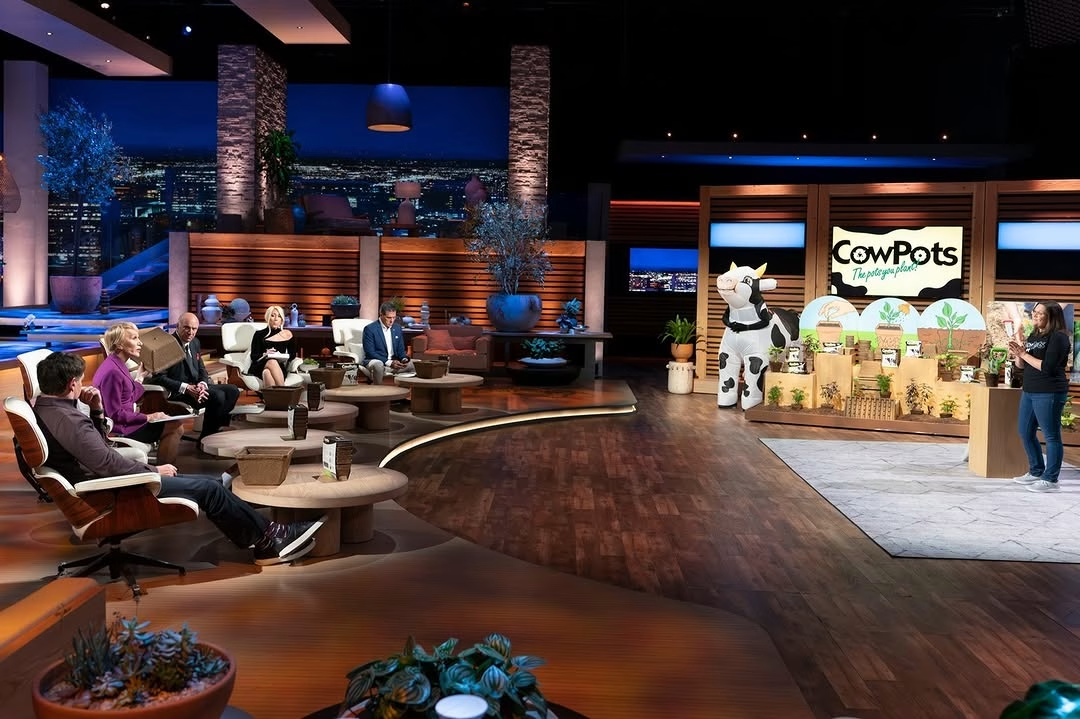
Amanda Freund, a Connecticut dairy farmer, will step into the national spotlight tomorrow with her innovative CowPots. She’ll pitch these biodegradable planting pots made from composted cow manure to the investors on “Shark Tank” this Friday, April 4, at 8 p.m. on ABC. Armed with a shovel, an inflatable cow costume, and years of farming expertise, she hopes to secure a deal to help her family’s sustainable business grow.

The Freund Family’s Agricultural Legacy

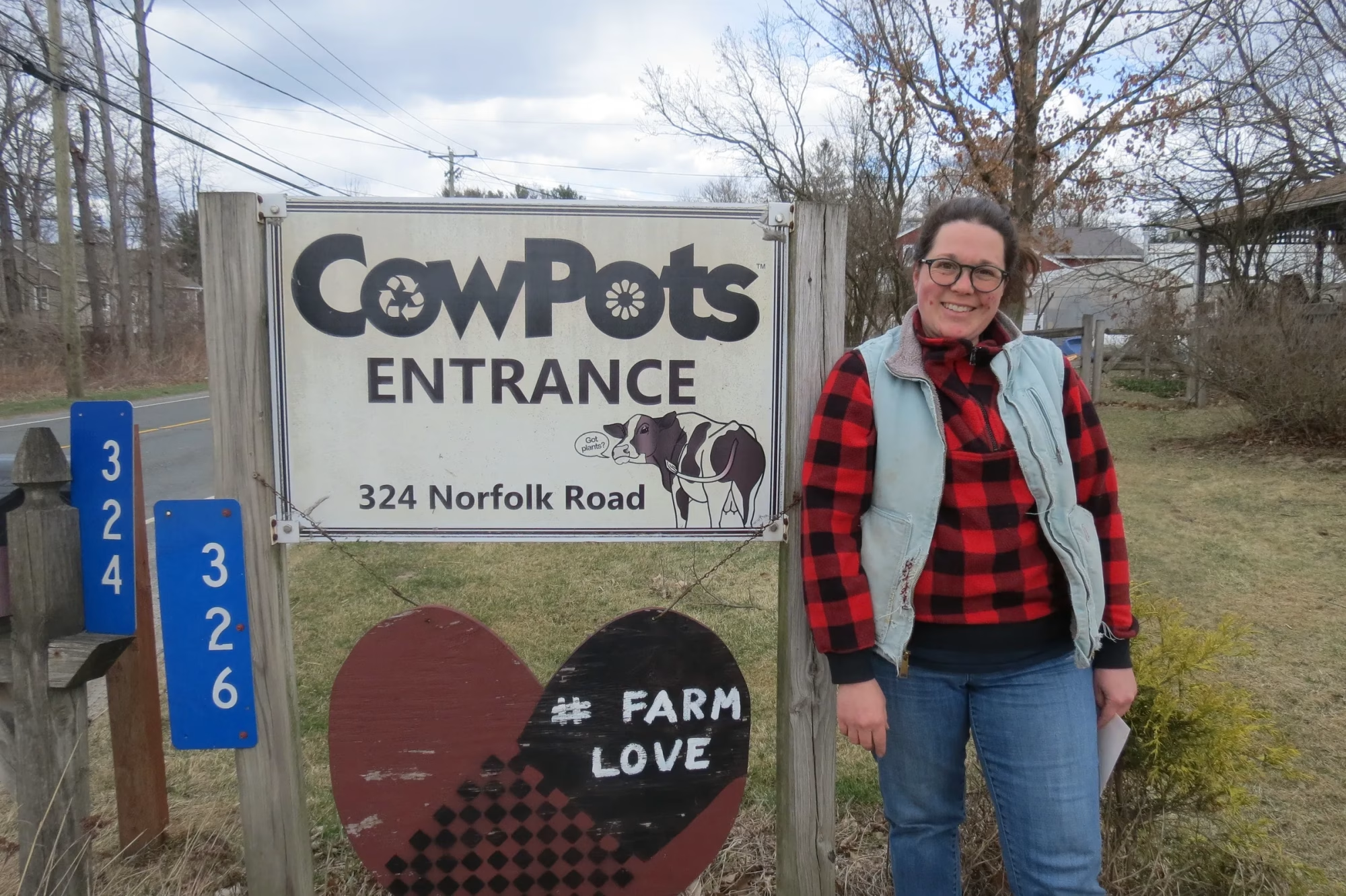
You might not know it, but the Freund family has been turning heads with their innovative approach to farming since 1949. Eugene and Esther Freund established their farm in East Canaan, Connecticut, where second and third-generation family members now run a multi-faceted agricultural enterprise. They’ve got their fingers in many pies – Canaan View Dairy, CowPots Manufacturing, and Freund’s Farm Market & Bakery all operate under their watchful eyes.

What sets this farm apart? Its pioneering approach to sustainability has put it on the map. In 1997, it installed one of the first anaerobic digesters in New England. This system has been running nonstop since then, making it one of the longest-operating digesters in the region. Talk about staying power!

“I give a lot of credit to my father Eugene for our commitment to sustainable dairy farming,” says Matt Freund, Amanda’s father and the inventor of CowPots. “He had a strong respect for our land and a great eye for identifying ways to repurpose byproducts.”

The family didn’t stop there. They’ve installed over 1,200 solar panels on the dairy barn and CowPots facility. These panels ensure the farm generates all its electricity. Their efforts haven’t gone unnoticed – they received the “Sustainability Award in Resource Stewardship” from the U.S. Innovation Center for Dairy in 2015.

A Modern Dairy Operation

Today, Canaan View Dairy milks 300 Holsteins and one Jersey cow. They produce about 2,500 gallons of milk daily. In 2016, they became the first farm in Connecticut to implement robotic milking technology. This move further demonstrates how they stay ahead of the curve in dairy farming.

As members of the Agri-Mark Family Dairy Farms cooperative, the Freunds sell their milk to Cabot Creamery. This connection strengthens their position in the dairy industry while allowing them to maintain their independent, innovative farming practices.

CowPots: Turning a Problem into a Product

You know what they say—necessity is the mother of invention. The idea for CowPots emerged from a practical challenge: What do you do with manure during winter months when spreading it on frozen fields isn’t an option? Matt Freund tackled this head-on. He began experimenting with cow manure in his kitchen toaster oven in the late 1990s, developing a process to create biodegradable planting pots.

After years of trial and error, the Freunds perfected their patented process. They now convert digestate from their anaerobic digester into biodegradable planting pots. Thanks to the digestion process, these pots contain no weeds or seeds. When planted, they dissolve into the soil, providing nutrients to young plants.

Amanda joined the family business by taking on sales and marketing responsibilities for CowPots. She began her journey by traveling throughout the tri-state area to introduce the product to potential customers. As a well-established product with almost two decades in the market, CowPots has previously gained media attention on shows like “Dirty Jobs” with Mike Rowe and the “Martha Stewart Show.”

Environmental Benefits and Product Growth

CowPots stand out in the biodegradable flower pot market. They offer a truly eco-friendly alternative to plastic containers. These pots last up to 12 weeks in greenhouse settings while allowing roots to penetrate the pot walls. This reduces transplant shock when gardeners move plants to their gardens. Once planted, the pots break down quickly, enriching the soil with valuable nutrients.

The market for products like CowPots continues to grow by leaps and bounds. The global biodegradable flower pot market will reach USD 1.2 billion by 2033. It’s growing at a compound annual rate of 10.5% from 2026 to 2033. This growth stems from increasing consumer awareness about environmental issues and a shift toward sustainable gardening practices. Studies show that about 80% of consumers prefer biodegradable or compostable products.

CowPots deliver environmental benefits beyond the product itself. By converting manure into a value-added product, the Freunds reduce potential nutrient runoff, improving local water quality and decreasing greenhouse gas emissions. The anaerobic digestion process retains all the nitrogen, phosphorus, and potassium from the original manure, making the pots a superior alternative to synthetic fertilizers derived from fossil fuels.

Unlike plastic pots that hang around for centuries, CowPots decompose naturally and enhance soil health as they break down. Research shows that digestate contains 2.3-4.2 kg/tonne of nitrogen, 0.2-1.5 kg/tonne of phosphorus, and 1.3-5.2 kg/tonne of potassium. These nutrients provide essential elements for plant growth while improving soil structure.

Digestate: The Sustainable Byproduct

You might wonder what exactly makes up these pots. The digestate used to create CowPots comes from the anaerobic digestion of biodegradable feedstock. Bacteria break down organic matter and produce biogas (primarily methane and carbon dioxide) during this process. The resulting digestate retains most plant nutrients in varying proportions that reflect those in the feedstock.

What makes digestate particularly valuable for agricultural applications? Its high nutrient content packs a punch. According to research, digestate has high ammonium nitrogen to total nitrogen ratio, alkaline pH (7.3-9.0), and increased solubilization of essential plant nutrients. This makes it an excellent soil amendment that can reduce farmers’ reliance on synthetic fertilizers.

Studies have shown that digestate application can inhibit plant diseases and induce crop resistance. It has a direct effect on soil-borne diseases and an indirect effect by stimulating biological activity. Digestate has higher phosphorus and potassium concentrations than composts, with an average P-to-K ratio of about 1:3.

For farmers like the Freunds, utilizing digestate from their anaerobic digester represents a perfect example of circular economy principles. As Andrew Rennie, another farmer and AD operator, notes: “At Gask Farm, we used to spend £52,000 a year on fertilizers, but we’ve been using digestate for 6 years, and now we only spend £10,100… on wheat and barley crops we only apply a fifth of the fertilizer that we used to.”

Shark Tank: A National Platform for Farm Innovation

For Amanda Freund, appearing on “Shark Tank” represents a once-in-a-lifetime opportunity. Tomorrow night, she’ll showcase agricultural innovation to a national audience. Unlike many entrepreneurs who appear on the show, CowPots has established itself in the market over nearly two decades.

The preparation for her “Shark Tank” appearance has been intensive. While CowPots has previously received media attention on multiple platforms, the potential exposure from “Shark Tank” could significantly accelerate the business’s growth.

Official photos from ABC show Amanda Freund facing the panel of Sharks, including Mark Cuban, Barbara Corcoran, Kevin O’Leary, Lori Greiner, and Daniel Lubetzky. Whether she secures a deal remains to be seen, but the opportunity to present CowPots to millions of viewers already represents a win for agricultural innovation.

Farm Diversification: A Strategy for Dairy Survival

Amanda Freund’s journey with CowPots exemplifies a broader trend in the dairy industry: diversification as a strategy for survival. With continuing economic challenges in dairy farming, many producers now look beyond traditional milk production to create additional revenue streams.

“The milk check that my grandpa was getting in the mid-’70s? We still see those numbers regularly. But he wasn’t paying today’s inflation, fuel prices, labor, or feed costs. It’s squeezed many people out,” notes another dairy farmer, Steensma. “The only way for us to survive and to continue doing our model and supporting our family is to diversify and add a niche market product.”

CowPots represents a successful diversification strategy for the Freund family that complements their dairy operation while addressing environmental challenges. By transforming a waste product into a marketable good, they’ve created an additional income stream that helps buffer against the volatility of milk prices.

This approach aligns with farm experts’ advice that “planning, adding value, and diversifying farm incomes are key to success” in today’s challenging agricultural economy. As Sarah McNaughton-Peterson notes in Farm Progress, “With skyrocketing land prices, high interest rates, and low commodity prices,” farmers need to “think outside the box to stay profitable.”

USDA Support for Sustainable Agriculture

You don’t have to go alone if you want to follow the Freunds’ example. Farmers looking to implement sustainable innovation can access various USDA programs to support such initiatives. Through its Rural Energy for America Program (REAP), USDA provides funding for biodigester projects like the one that makes CowPots possible.

In January 2024, the USDA announced grants totaling more than .4 million for anaerobic digesters at three Vermont dairy farms. These grants, enhanced by the 2022 Inflation Reduction Act funding, can cover up to 60 percent of methane digesters’ development and construction costs.

Additionally, the USDA’s Value-Added Producer Grant program provides planning grants of up to $100,000 and working capital grants of up to $300,000 for projects like biodigesters. The Environmental Quality Incentives Program (EQIP) through the Natural Resources Conservation Service (NRCS) offers further financial and technical assistance.

The Northeast Sustainable Agriculture Research and Education (SARE) program has allocated approximately $850,000 for 2025 Farmer Grants for farmers interested in sustainable agriculture projects beyond digesters. Awards of up to $30,000 are available for individual projects.

5 Steps to Turn Farm Waste Into Profit

Want to follow in the Freunds’ footsteps? Here are practical steps to explore similar value-added opportunities:

  1. Assess Your Waste Streams: Consider which byproducts from your operation (manure, crop residues, etc.) could potentially be transformed into marketable products.
  2. Research Market Opportunities: Dig into growing markets like the biodegradable packaging sector, which will reach $137.26 billion by 2029.
  3. Explore Funding Options: Check out USDA programs like REAP grants, which provided nearly $21 million in assistance for biodigesters in a single fiscal year.
  4. Start Small with Prototypes: Before scaling up production, begin with small-scale testing, as Matt Freund did with his kitchen toaster oven experiments.
  5. Build Strategic Partnerships: Connect with agricultural extension services, universities, and industry organizations that can provide technical expertise and market connections.

Representing the Future of Dairy Farming

Amanda’s appearance on “Shark Tank” comes at a time when consumers increasingly care about sustainable products and responsible farming practices. By showcasing how dairy farms can innovate and diversify, she’s helping to reshape public perceptions of agricultural businesses.

The compostable packaging market, which includes products like CowPots, will rise from $92.56 billion in 2024 to $100.44 billion in 2025, with a compound annual growth rate (CAGR) of 8.5%. This growth comes from increasing consumer awareness about environmental impact, regulatory pressures to reduce plastic waste, and corporate sustainability initiatives.

For the Freund family, CowPots embodies their philosophy of turning challenges into opportunities. What began as a waste management solution has evolved into a separate business that supports the dairy operation while advancing the family’s sustainability goals.

As viewers tune in tomorrow to watch Amanda Freund pitch CowPots to the Sharks, they’ll witness more than another business proposal. They’ll see a compelling example of how traditional farming can embrace innovation and sustainability, creating products that benefit agriculture and the environment.

Whether she walks away with a deal or not, Amanda has already succeeded in bringing attention to the creative potential of America’s dairy farms. For an industry often challenged by economic pressures and environmental concerns, the CowPots story offers an inspiring blueprint for diversification and sustainability that could influence the next generation of farmers.

Key Takeaways:

  • Waste-to-wealth innovation: CowPots transforms manure into biodegradable planters, cutting plastic waste and using synthetic fertilizer.
  • Diversification drives survival: 80% of dairy farms are exploring side ventures like CowPots to offset volatile milk prices.
  • Market momentum: The biodegradable packaging sector is growing at 8.5% CAGR and is fueled by eco-conscious consumers.
  • USDA support: Grants cover up to 60% of biodigester costs, empowering farmers to adopt circular practices.
  • National spotlight: Shark Tank exposure could catalyze mainstream adoption of farm-led sustainability solutions.

Executive Summary

Connecticut dairy farmer Amanda Freund will pitch CowPots—biodegradable planting pots made from composted manure—on Shark Tank this Friday, showcasing sustainable agricultural innovation. The Freund family’s 75-year-old farm uses anaerobic digesters and solar panels to achieve energy independence while transforming waste into eco-friendly products. With the biodegradable flower pot market projected to hit $1.2B by 2033, CowPots exemplify farm diversification, a critical strategy for dairy survival amid rising costs. USDA programs like REAP grants support similar initiatives, offering farmers funding for waste-to-profit ventures. Freund’s appearance highlights how traditional farming can embrace circular economies, reduce environmental impact, and inspire next-gen agricultural creativity.

Read more:

Join the Revolution!

Join over 30,000 successful dairy professionals who rely on Bullvine Daily for their competitive edge. Delivered directly to your inbox each week, our exclusive industry insights help you make smarter decisions while saving precious hours every week. Never miss critical updates on milk production trends, breakthrough technologies, and profit-boosting strategies that top producers are already implementing. Subscribe now to transform your dairy operation’s efficiency and profitability—your future success is just one click away.

NewsSubscribe
First
Last
Consent

Send this to a friend