Archive for subclinical ketosis

How Your Ketosis Cut‑Point Is Leaking $25,000 a Year – And the Fresh Cow Playbook to Stop It

Still drenching every cow over 1.2? The latest data says that the blanket rule is costing you more than the propylene glycol.

Picture this. We’re standing at the fresh cow pen, coffee in one hand, ketone meter in the other. A cow reads 1.3 mmol/L on a blood BHB test, she gets flagged as subclinically ketotic, and somebody reaches for the propylene glycol. You know the routine.

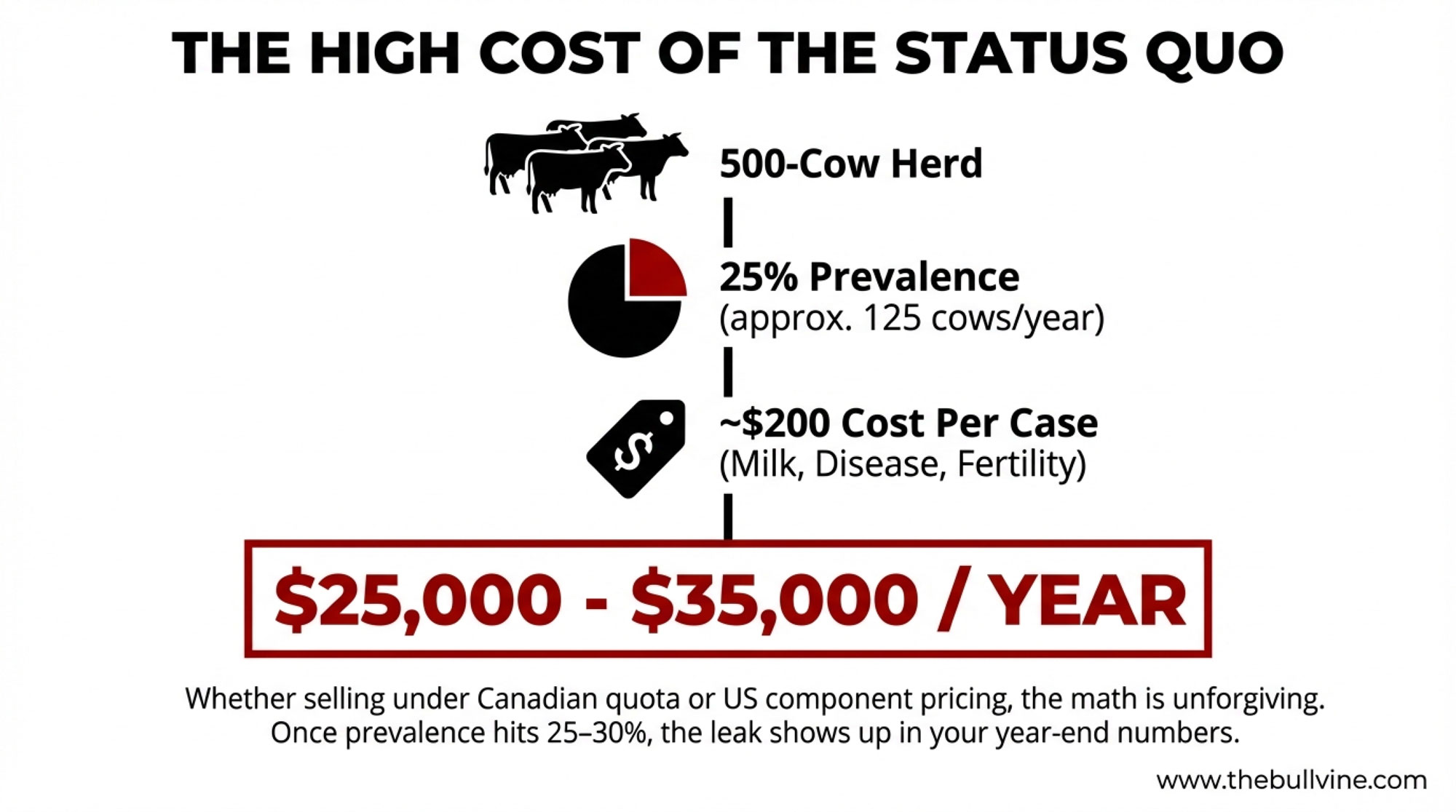
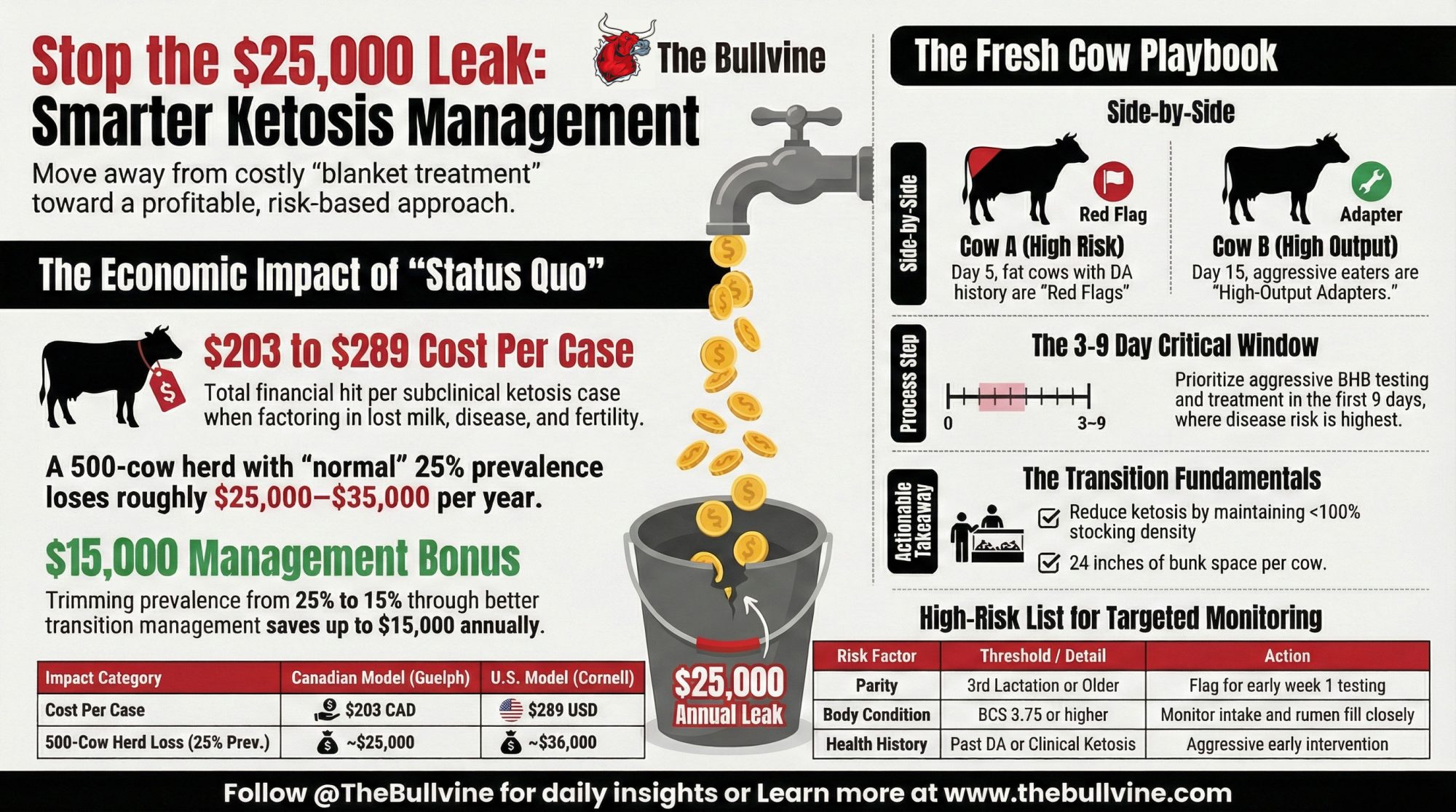
Here’s what’s interesting. When you run the numbers the way the researchers did, how you react to that one reading can swing something like $25,000 to $35,000 a year in modeled losses for a 500‑cow Holstein freestall herd in today’s conditions. A Canadian modeling study based on real herd data pegged the cost of a subclinical ketosis case at about 203 Canadian dollars per cow, once you factor in lost milk, increased disease risk, reduced fertility, and early culling. That work was led out of Guelph and published in 2016, and it’s still the go‑to number many economists use.
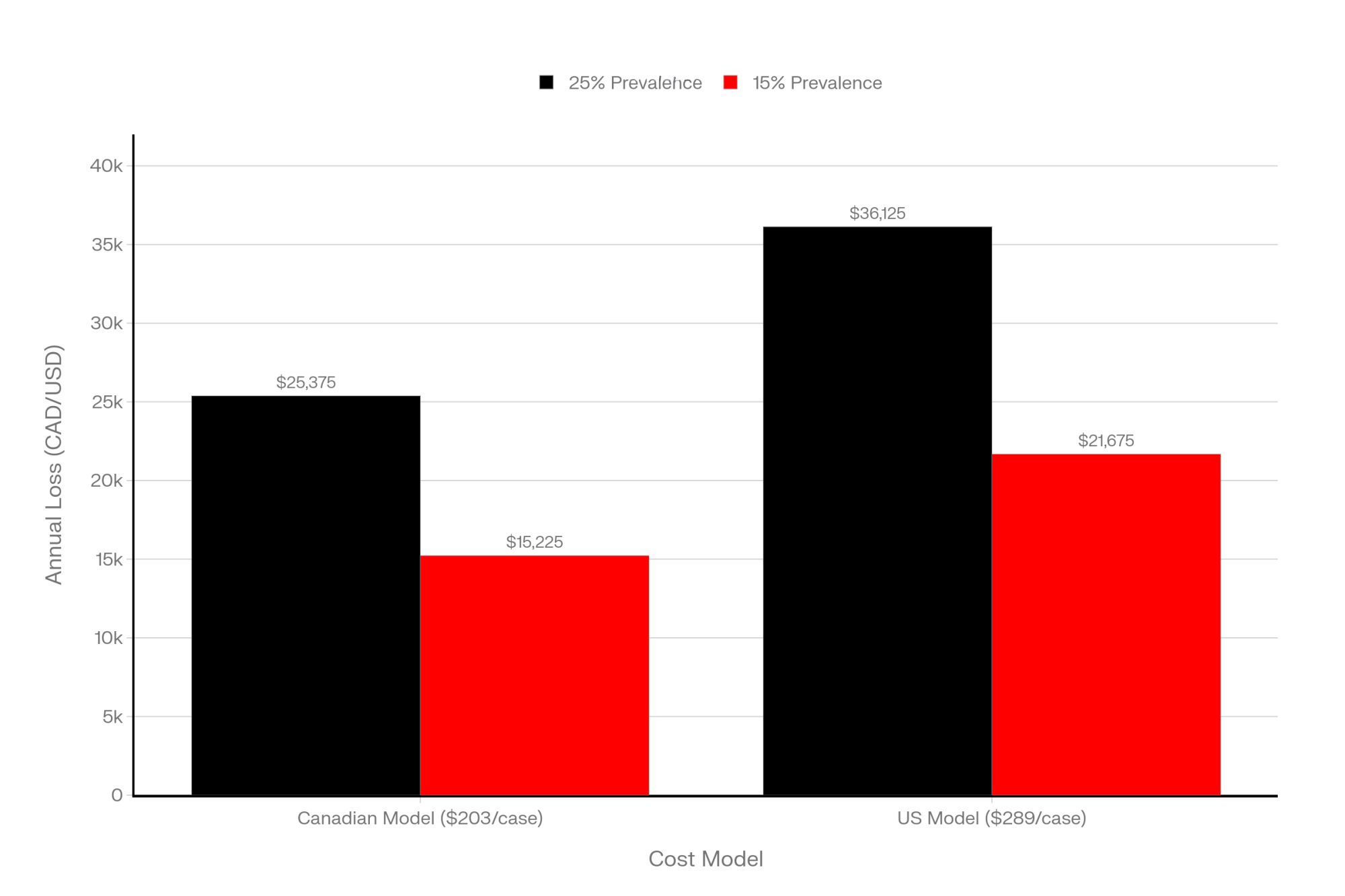
On the US side, a team including Christopher McArt, DVM, PhD at Cornell, developed a deterministic model for early‑lactation hyperketonemia—basically elevated BHB in the first couple of weeks—and came up with an average cost of about 289 US dollars per case when you include the downstream metritis and displaced abomasum that tend to travel with high ketones. That’s a different model and a slightly different definition, but it gives you the same basic message: once cows slide into that high‑BHB zone, the bill adds up.

Now take a 500‑cow herd. If about a quarter of those cows quietly drift into subclinical ketosis in the fresh cow window—which is right in line with big global surveys using a 1.2 mmol/L cut‑point—that’s about 125 cows a year. A multicountry project that tracked 8,902 cows on 541 farms across 12 countries found an average subclinical ketosis prevalence of 24.1 percent using the same 1.2 mmol/L blood BHB definition. At 203 dollars a case, 125 cows comes out to something like $25,000 in modeled losses; plug in the 289‑dollar estimate, and you’re looking at closer to $36,000.

And if that herd can trim SCK prevalence from roughly 25 percent (125 cows) down to 15 percent (75 cows) by tightening transition management and being smarter about which cows actually get treated, the math shifts quickly. That’s 50 fewer cases. On the Canadian model, you’ve just saved a bit over $10,000, and on the hyperketonemia model, you’re up around $14,000–$15,000 in modeled savings.

Whether you’re selling under Canadian quota, US component pricing, milk‑solids contracts in New Zealand, or more volume‑weighted arrangements in Europe, those per‑case costs don’t care. Once herd‑level prevalence creeps from the low‑20s into the 25–30 percent band, the leak becomes large enough to show up in the year‑end numbers.

And yet, on many farms, the whole conversation still begins and ends with one simple line on the meter: 1.2 mmol/L. So let’s talk about where that line came from and why, in 2025, it probably works best as a reference point—not as the only rule you live by.
Where That 1.2 Line Really Came From

It’s worth noting right off the bat that 1.2 wasn’t pulled out of thin air. Over the past couple of decades, researchers have linked blood BHB levels to things you and I lose sleep over: displaced abomasums, retained placenta, metritis, mastitis, lost milk, and open days.

When a pile of those studies were pulled together in an invited review on diagnosing and monitoring ketosis in high‑producing cows, the authors found that cut‑points in the 1.2 to 1.4 mmol/L range did a pretty solid job of identifying cows that were more likely to run into trouble, without burying you in false positives. In practice, 1.2 proved a handy “early tripwire” for subclinical ketosis in many trials and on many farms.

Other reviews that focus on ketone bodies in dairy cows land in roughly the same place. Subclinical ketosis is most commonly defined at about 1.2 mmol/L blood BHB, and 3.0 mmol/L and above is usually where people start talking about clinical ketosis. When you couple those BHB numbers with non‑esterified fatty acids (NEFA), the pattern is clear: cows that come out of the transition period with both BHB and NEFA on the high side see more metabolic disease and poorer fertility.

On the physiology side, the newer work has filled in some of the “why.” A 2024 review on the big metabolic diseases in the transition period, along with related work on body condition and adipose tissue, shows that cows in deeper negative energy balance mobilize more fat, load the liver with triglycerides, and start sending off more inflammatory and oxidative stress signals. Ketotic cows in those studies had higher NEFA levels, more liver fat, and a different inflammatory profile than their herd mates, even when they didn’t appear “sick” in the classic sense. Multi‑omics papers—where they look at dozens or hundreds of metabolites and proteins at once—back that up with a distinct metabolic fingerprint in cows that develop ketosis.

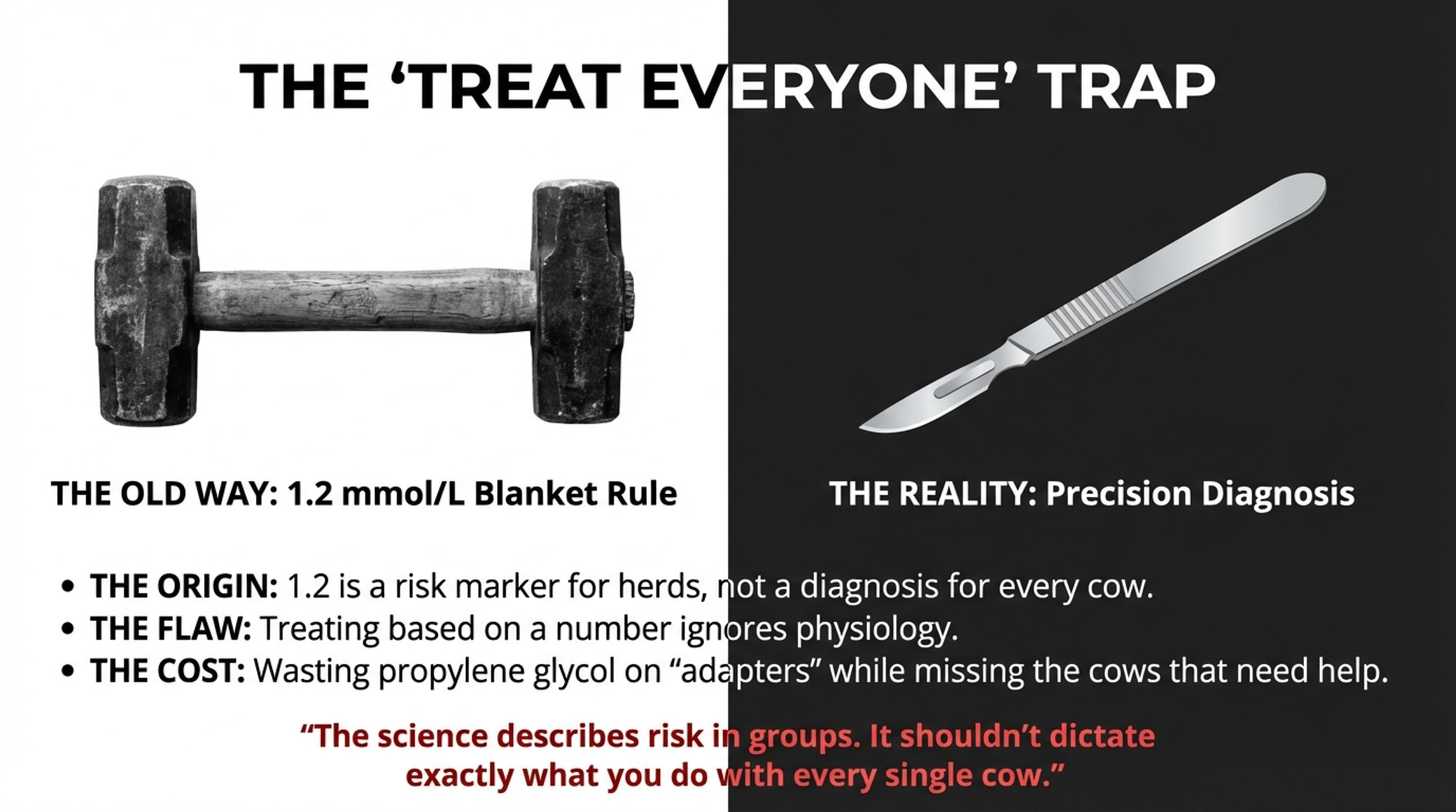
So at the herd level, 1.2 mmol/L is a very useful risk marker. If a high proportion of your fresh cows are over that line, especially in those first couple of weeks, the odds go up for disease, lost milk, and slower rebounds. That’s why you see that number in so much university research and extension material.

But it’s just as important to remember what that line was designed to do. It was meant to describe risk in groups of cows, not to dictate exactly what you must do with every single cow that pings 1.2 or 1.3 on the meter.
Cost ComponentCanadian Model ($203 total)US Model ($289 total)Note
Lost milk (reduced production for 30–60 days)$95$135Largest driver
Increased disease risk (metritis, mastitis, DA treatment)$65$110Cascading costs
Reduced fertility (extended open days, re-breeding)$35$35Long-term impact
Early culling / forced early exit$8$9Replacement herd cost
Total per case$203$289Difference reflects severity & follow-on issues

Looking at the Big Picture: How Common Is This, Really?

If you zoom out from your own herd and look at the global picture, you see pretty quickly that you’re not alone.

That multicountry field project we just mentioned—8,902 cows, 541 farms, 12 countries—sampled cows at 2-21 days in milk and used 1.2 mmol/L as the blood BHB cut-off. Overall, subclinical ketosis prevalence averaged 24.1 percent, but the range across countries was wide: some places were down around 8–9 percent, while others, including some pasture‑heavy systems, pushed above 40 percent.

More recent syntheses that pull together multiple SCK and hyperketonemia studies land in the same ballpark. Global prevalence sits in the low‑to‑mid‑20 percent range when you use something like 1.2 mmol/L as your line in the sand, with individual herd results scattered across the range depending on management, genetics, and climate. The Merck Veterinary Manual and updated transition reviews also underline that most hyperketonemia cases show up in the first two to three weeks after calving, and that multiparous cows are consistently at higher risk than first‑lactation animals.

So if you run a quick fresh‑cow audit in an Ontario or Wisconsin freestall—or in a Quebec tiestall herd—and find that about one in four clinically normal cows in the first three weeks are testing over 1.2, that actually lines up pretty well with what these big data sets describe as “normal” for modern Holstein herds. It doesn’t mean it’s where you want to stay long‑term, but it does mean you’re fighting a battle a lot of herds are in the middle of right now.

What the numbers really help with is this: they tell you that once prevalence drifts into the mid‑20s and stays there, the cost per case math starts to really matter. That’s where it’s worth asking not just “how many cows are over 1.2?” but “which cows are over it, and when?”

Same Number, Two Very Different Cows

This is where the story gets more interesting, once you come back down from the spreadsheets to the cows in front of you.

In barns I’ve walked—Midwest freestalls, Quebec tiestalls, Western dry lot systems—the same pattern keeps showing up. You pull blood on two fresh cows. Both read 1.3 mmol/L. But when you actually look at them, they’re not the same animal at all.
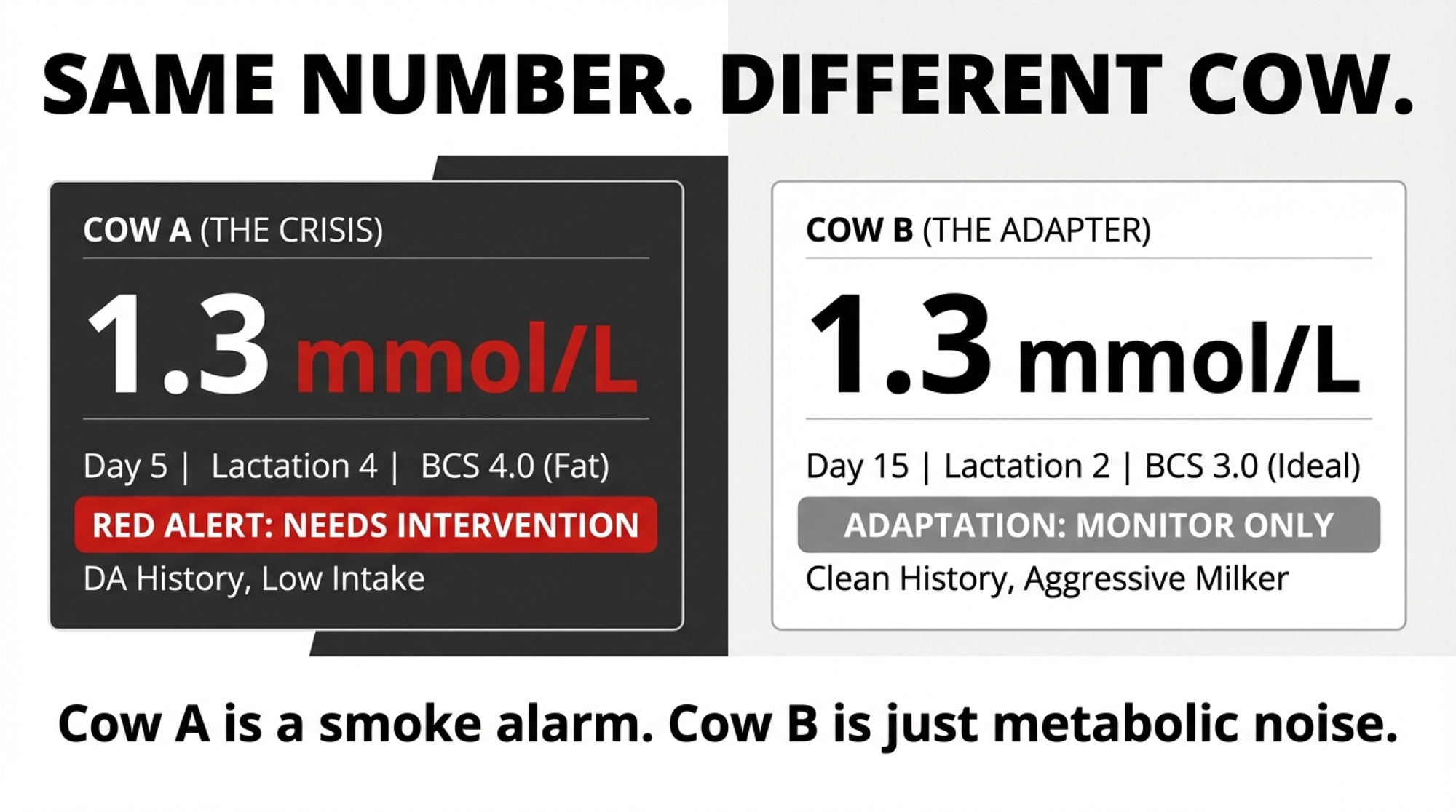
Cow A: Trouble Brewing in Week One

Cow A is the kind of cow many of us could pick a mile away:

  • Day 5 in milk
  • Fourth‑lactation Holstein
  • Walked into the close‑up pen heavier than you’d like (body condition around 3.75–4.0 on a five‑point scale)
  • History of displaced abomasum in the last lactation
  • Hanging back at the bunk; rumen fill looks flat
  • Maybe giving 55 pounds of milk with butterfat levels that feel low for her genetics and stage
  • Blood BHB: 1.3 mmol/L

Cow B: The High‑Output Adapter in Week Two

Cow B, on the other hand, looks like a different species some mornings:

  • Day 15 in milk
  • Second‑lactation Holstein
  • Calved at a tidy BCS of about 3.0–3.25
  • Clean first lactation—no DA, no recorded ketosis
  • Right up at the bunk, every push‑up, rumen fill is excellent
  • Pushing close to 95 pounds with strong butterfat for the pen
  • Blood BHB: 1.3 mmol/L

To make that contrast easier to see, here’s a quick side‑by‑side:

FeatureCow A: Early-Window RiskCow B: High-Output AdapterWhat This Means
Days in MilkDay 3–9Day 10+Early trouble vs. normal adaptation
Body Condition3.75–4.0 (over-conditioned)3.0–3.25 (moderate)Deeper NEB = greater metabolic stress
Clinical SignsPoor rumen fill, sluggish, weak milkAggressive eater, excellent fill, strong solidsFeeding behavior predicts outcome
Blood BHB (1.3 mmol/L)🚩 Red Flag⚠️ Background NoiseIdentical reading, opposite meaning
Treatment DecisionTreat immediately with PG + supportMonitor & retest in 24–48 hoursContext beats blanket rules
Financial Impact$203–$289 loss without treatmentLikely self-resolving; treat waste moneySmarter triage = $10K+ savings

Now, if you lay Cow A alongside what the research is telling us, she ticks almost every high‑risk box. Transition‑period reviews and body condition work show pretty consistently that cows calving with a BCS of 3.75 or higher are more likely to run into ketosis, displaced abomasum, fatty liver, and related problems—especially if they then lose a lot of condition after calving. Multiparous cows in those early days in milk simply have higher odds of subclinical ketosis and its knock‑on effects than heifers do.

A 2024 review on metabolic diseases in the transition period went so far as to say that cows calving at or above BCS 3.75 should be considered at increased risk of ketosis compared to leaner cows, and earlier work supports that. Add in her history of DA and the fact she’s already hanging back at the bunk with mediocre rumen fill, and that 1.3 reading starts to look like the tip of a bigger iceberg.

Cow B, by contrast, looks a lot more like what some people call a “high‑output adapter.” She’s not fat, she’s eating hard, she’s ruminating well, and she’s throwing milk and components. In that context—and especially once you’re past day 10 or so—that 1.3 reading may be telling you something very different.

So what’s interesting here is this: same BHB number, two very different risk stories.

Why Timing and Physiology Change the Story

If you step back and look at this across studies, the timing piece just keeps jumping off the page.
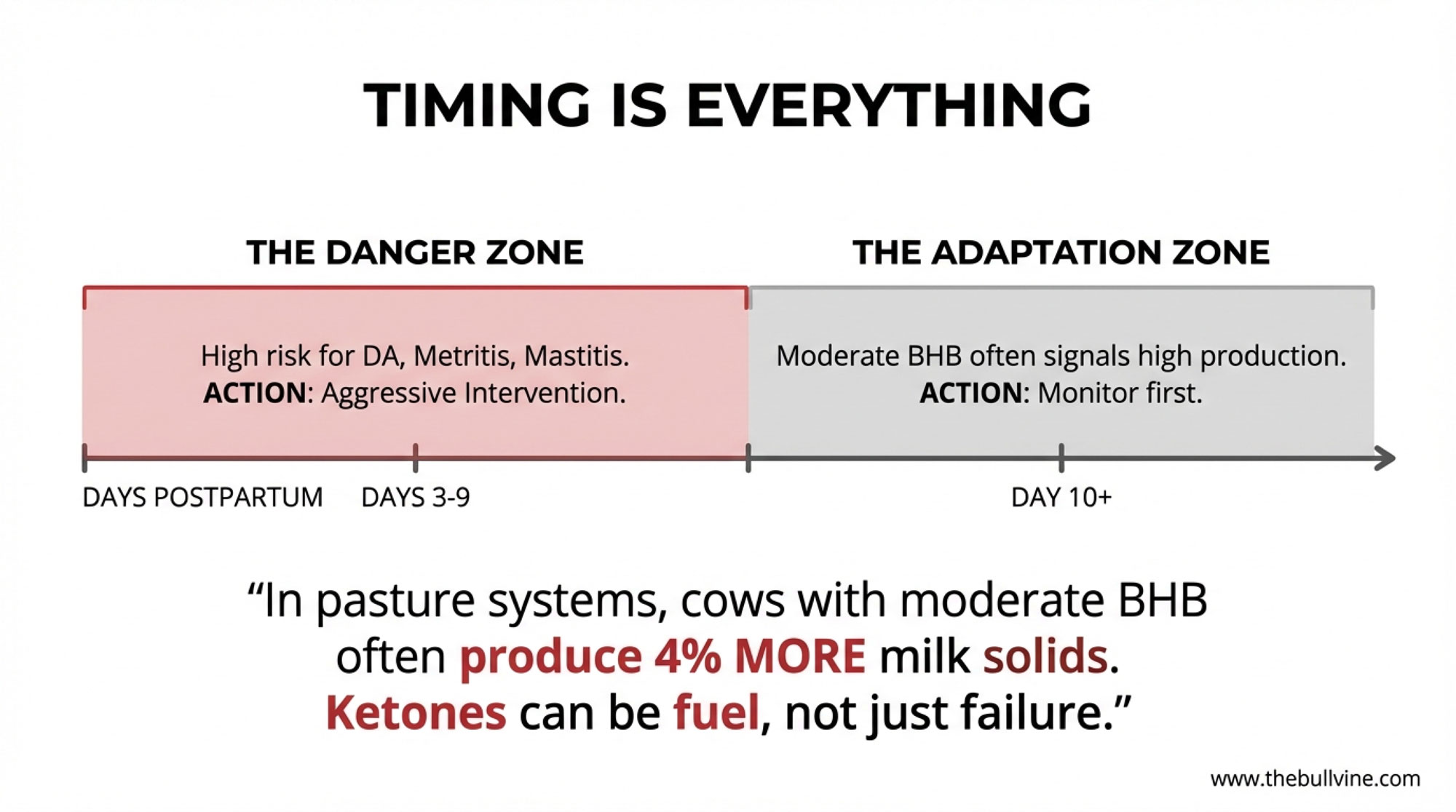
That big multicountry field project sampled cows at 2-21 DIM, and, as many of you have seen, most subclinical ketosis cases clustered in the first part of that window. Transition reviews and metabolic profiling studies repeatedly show that the lion’s share of ketosis and fatty liver issues hit in the first two to four weeks postpartum, with a lot of the real trouble packed into days 3–14.

Some of the more detailed work that follows cows from the dry period into early lactation shows that cows that eventually develop hyperketonemia often have higher NEFA, different liver enzyme profiles, and other “out of balance” signals in the last week or two before calving and the very first week after. In other words, by the time the meter says 1.3 at day 5, the underlying physiology has been heading that way for a while.

On the flip side, newer reviews on ketone metabolism in dairy cows are reminding us of something many of us sensed: ketones aren’t just “bad fuel.” They’re also a normal energy source and signaling molecule. How much risk a given BHB number carries depends a lot on when you see it and what else is going on in that cow’s life—her body condition, her intake, her milk curve, her parity, and so on.

You see this really clearly when you look at pasture‑based systems. DairyNZ’s “Blood BHB and Cow Performance” project followed 980 cows in three seasonal herds and tested blood BHB three times a week for the first five weeks after calving. They defined moderate hyperketonemia as 1.2 to 2.9 mmol/L. In that study, about 76 percent of cowshad at least one test in that moderate range, and about 11 percent had at least one severe result at or above 2.9 mmol/L.

Here’s the twist that sticks with a lot of people: in that specific pasture‑based context, cows that had at least one BHB test over 1.2 mmol/L actually produced about 4 percent more milk solids in the first 15 weeks than cows that stayed below 1.2. And when they looked at uterine health and six‑week in‑calf rates, they didn’t find a consistent negative relationship with those moderate BHB elevations in those herds.

That doesn’t mean ketones are “good” now. What it does suggest is that in some pasture systems, a moderate bump in BHB can just be part of the metabolic dust that comes with high output, especially when cows aren’t over‑conditioned and are eating aggressively.

So a cow like B—two weeks fresh, moderate BCS, strong intake, strong rumen fill, high milk and solid components—can easily show you 1.3 on the meter and still be doing just fine. A cow like A, at day 5, older, fatter, off feed, and with a DA history, is in a very different place. Treating those two cows exactly the same, just because the numbers are identical, is where a lot of hidden costs creep in.

Why “Treat Every Cow Over 1.2” Often Leaves Money on the Table

Once you put Cow A and Cow B side by side, it gets tougher to defend a blanket rule that says, “we automatically treat every cow over 1.2 mmol/L exactly the same way, every time.”

The DairyNZ work is a good example of why. In one of their follow‑up trials, they took cows with moderate hyperketonemia (1.2–2.9 mmol/L) and split them into two groups. Half got daily monopropylene glycol drenches until their BHB dropped below 1.2. The other half were left untreated. As you’d expect, the drenched cows were more likely to bring their BHB down and less likely to progress into severe hyperketonemia over 2.9 mmol/L.

But when the team followed those same cows for milk solids production and six‑week in‑calf rates, the story got more complicated. They didn’t see consistent improvements in milk or reproduction across all herds and seasons. Some groups did better, some didn’t, and overall, they described the performance response as not strongly or consistently positive.

A 2022 open‑access study from Italy looking at subclinical ketosis and early propylene glycol treatment came to a similar kind of conclusion: early diagnosis and treatment can absolutely help in some situations—especially when prevalence and risk are high—but the benefit in terms of production and fertility depends heavily on the herd’s baseline management, the underlying transition program and the economics on that particular farm.

So what I’ve found, and what the data support, is that propylene glycol is still a very useful tool. It’s just that a blanket “treat every cow at or above 1.2” rule doesn’t always pay you back in milk or pregnancy rates, particularly in pasture or hybrid systems where many cows will have at least one moderate BHB bump while still doing just fine.

If your written protocol still says “treat every cow over 1.2,” there’s a good chance you’re spending money and labor on some cows that don’t need it, and not spending enough attention on the cows that really do.

Where the Money Actually Leaks in a 500‑Cow Freestall

Let’s go back to that 500‑cow Holstein freestall many of you are picturing right now—maybe in Wisconsin, maybe in western Ontario or New York State.

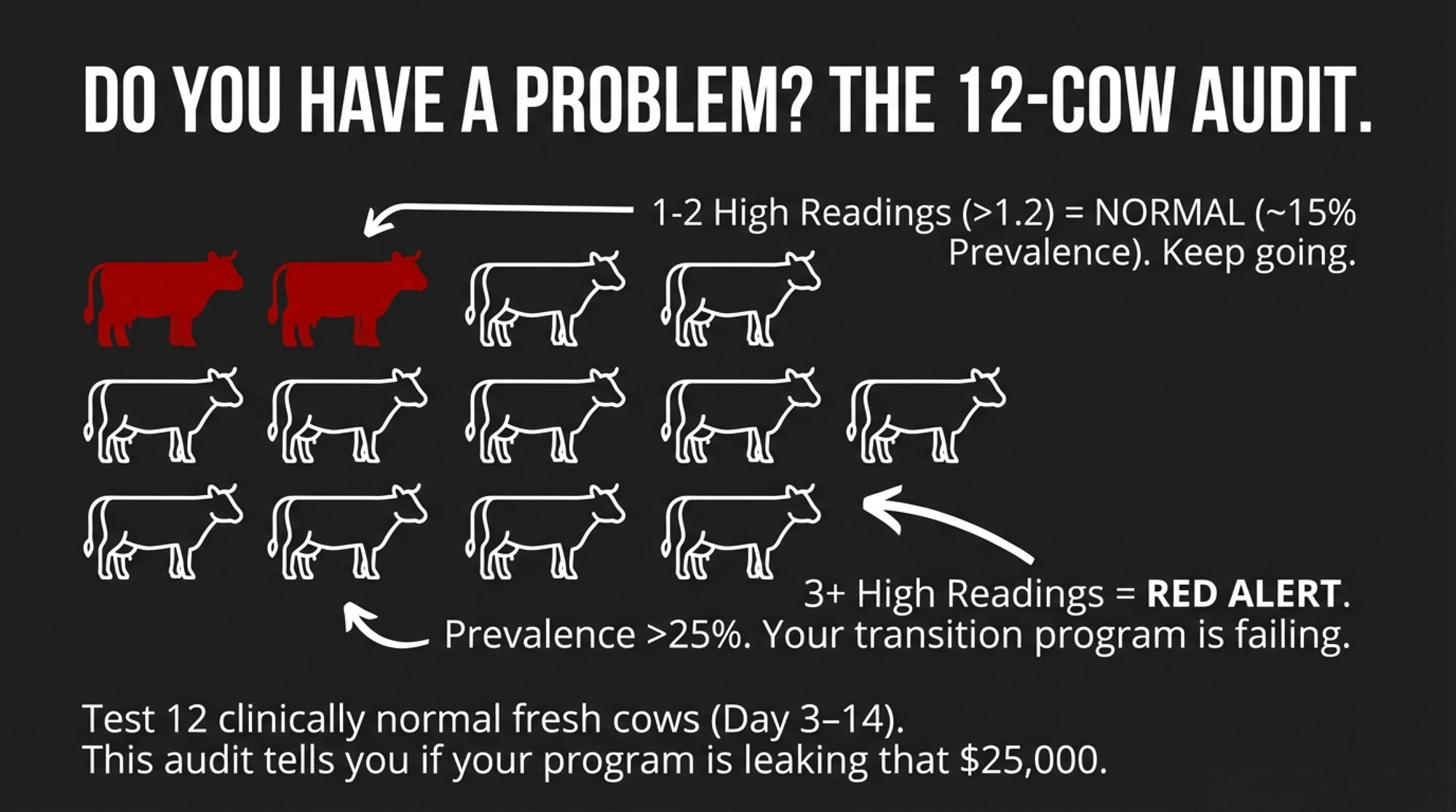
One simple herd‑level check that many vets and extension folks recommend is to grab a small sample of clinically normal, fresh cows—say 10 to 12 animals between days 3 and 14 in milk—and test their blood BHB. You’re not trying to micromanage those particular cows; you’re just taking the herd’s pulse.

Experience and some basic statistics say that if only one or two cows out of twelve come back at or above 1.2 mmol/L, your herd‑level prevalence is probably in the mid‑teens, give or take. Not perfect, but within a range many modern herds find manageable with decent transition programs.

But when three or more out of twelve test at or above 1.2—especially if it’s four or five—you’re probably nudging into that 20–25 percent or higher zone that the global surveys talk about. That’s when the cost‑per‑case math we walked through earlier really starts to bite.

At that point, many Midwest and Northeast herds that have gone through this exercise, often with their vets and nutritionists, found they were doing what a lot of us did at first: testing every fresh cow once or twice a week, treating every reading at or above 1.2, and feeling like they were “on top of ketosis.”

And they were catching more cases than before. But they were also spending a fair chunk of time and PG on:

  • Heifers that were eating and milking well
  • Moderate‑BCS second‑lactation cows with no history of transition trouble
  • Cows that were over 1.2 for a day or two but never showed a real clinical ripple

What’s encouraging is that more and more extension pieces and milk‑recording organizations are now highlighting farms that have moved away from that blanket approach. Instead, they pick out high‑risk cows in advance—older cows, over‑conditioned cows, cows with past DA or clinical ketosis—watch them more closely in the first week, and then use small herd‑level audits like this to see whether the overall transition program is really working.

Those herds often end up with similar or better health and reproduction, fewer nasty surprises in the fresh pen, and less time and money tied up in treating marginal cases that were never likely to crash in the first place.

Timing Really Is Everything

Looking at this trend across study after study and many real barns, timing keeps coming back as the pivot point.

The main ketosis diagnostic reviews and the 2024 transition‑disease papers all say the same thing in slightly different ways: subclinical ketosis and hyperketonemia are most common and most impactful in the early postpartum period, especially the first two weeks. That’s exactly when we see most of the fatty liver, most of the displaced abomasums, and a lot of the metritis and mastitis that really dent early lactation.

Some of the more detailed metabolic profiling work shows that cows that end up hyperketonemic often have “off” metabolic profiles—higher NEFA levels and altered liver enzymes—even three weeks before calving. By the time they’re at day 5 or 7 in milk with a 1.3 or 1.4 reading, you’re seeing the tail end of a much longer energy and lipid story.

Clinicians like McArt and others have been pretty clear in their teaching: you can’t read a BHB number in isolation. You’ve got to look at day in milk, parity, body condition, history, appetite, and rumen fill to decide whether a 1.3 reading is a smoke alarm or just static.

So a pattern that many of us are working with now looks something like this:

  • In roughly days 3–9 postpartum, especially in freestall and tiestall herds, a BHB at or above 1.2–1.4 mmol/Lin a multiparous, over‑conditioned cow that’s backing off the bunk is much more likely to be the start of costly trouble—DA, metritis, mastitis, lost milk, and poor reproduction. That’s the window where catching and treating subclinical ketosis tends to have the biggest health and economic payback.
  • After about day 10, a mild BHB elevation—say 1.2–1.7 mmol/L—in a cow that’s eating well, ruminating, and milking hard (especially if she’s a moderate‑BCS animal with no ugly transition history) often carries much less risk. In pasture and hybrid systems, that kind of moderate elevation is sometimes more of a physiological footprint of high production than a red warning light.

So the better question when the meter flashes 1.3 isn’t “is she ketotic?” It’s “where is she in her fresh curve, and what else about her says she needs help—or doesn’t?”

Building a Simple Risk List That Actually Works

The nice thing is, you don’t need a supercomputer to do a better job of this. Most of you already have the key pieces either in your herd software or in your head.

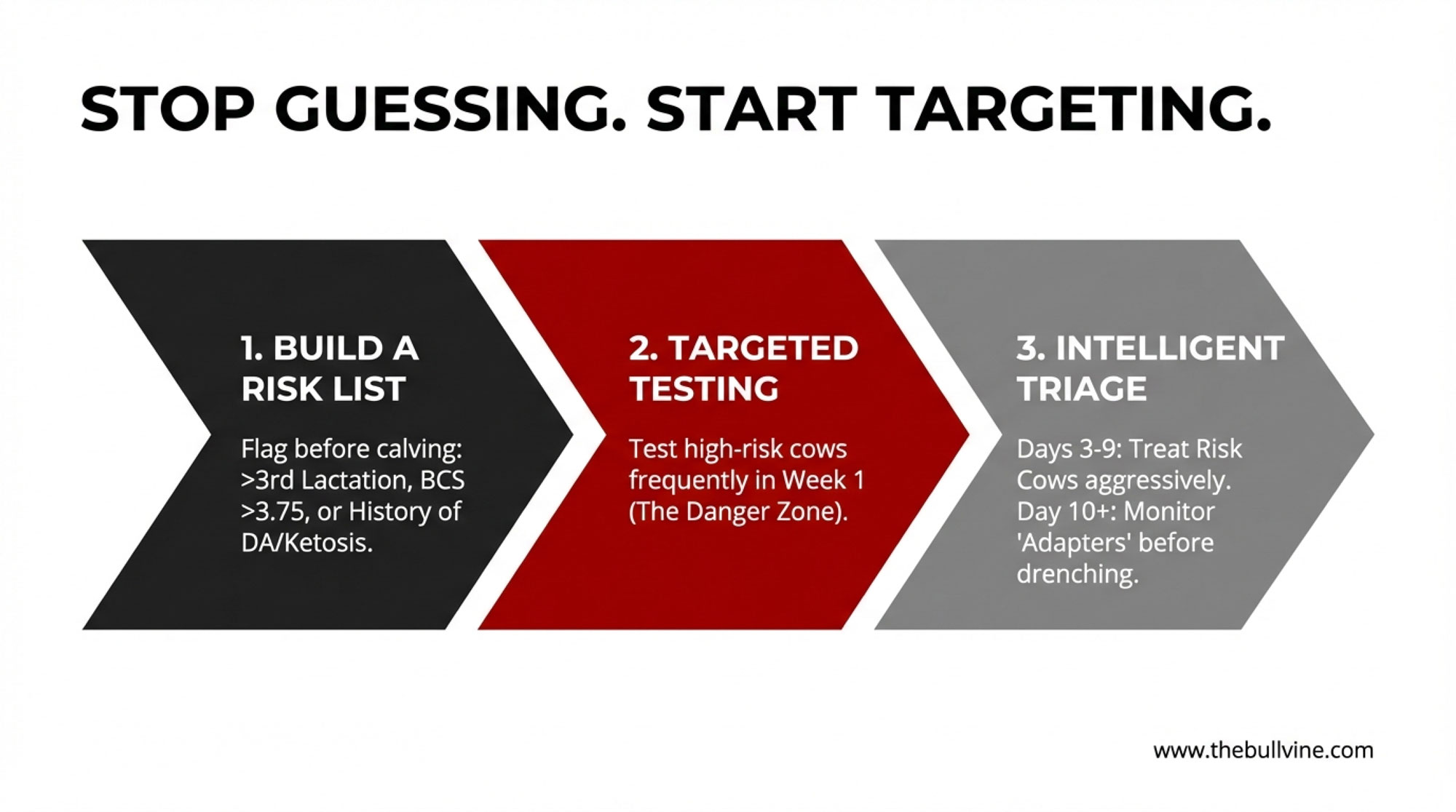
Across Wisconsin freestalls, Ontario and Quebec tiestalls, and Western dry lot systems, the same pattern shows up again and again. The cows at higher risk for subclinical ketosis and transition disease tend to be:

  • Third‑lactation and older animals
  • Cows that calved over‑conditioned (BCS 3.75 or higher)
  • Cows with a previous displaced abomasum or clinical ketosis, or a rough transition with severe metritis or retained placenta

The 2024 metabolic disease review and other transition‑period papers support that. They show higher odds of ketosis and related problems in multiparous cows, and they consistently flag high BCS at calving—especially over 3.75 on a five‑point scale—as a risk factor for deeper negative energy balance, fatty liver, and clinical disease. Epidemiology work and practical field studies also highlight prior DA and clinical ketosis as “repeat offenders” when it comes to risk.

What many herds are doing now, often with their vet and nutritionist at the table, is tagging these cows as “high‑risk” at calving. That might be a note on the calving list, a flag in the herd management software, or even a colored chalk mark on the rump in some tiestall barns. Then they make sure:

  • Those cows get more frequent BHB checks in the first week postpartum.
  • Their appetite and rumen fill are watched more closely.
  • Early treatment decisions factor that risk status into the call.

Meanwhile, lower‑risk cows—heifers and moderate‑BCS second‑lactation cows with clean histories—might get one BHB test somewhere around day 7–10, and then only get pulled in again if their milk, rumen fill, or behavior raises a red flag.

What farmers are finding is that this risk‑based approach lets them concentrate attention and treatment where the payoff is highest, without ignoring cows that actually need intervention. It also lines up pretty nicely with what big milk‑recording datasets and predictive ketosis models are telling us: if you’re going to spend time and money on extra diagnostics, you get the most bang by focusing on cows that already have known risk factors.

Using Herd-Level Audits Without Losing the Forest for the Trees

Risk lists help you with individual cows. The herd‑level audit helps you answer a different question: “is our fresh cow program leaking more than it should?”
Audit Result(out of 12 fresh cows)Estimated Herd PrevalenceHerd StatusAction Required
0–1 cows ≥1.2 mmol/L< 15%✅ HealthyContinue current program; sample annually.
2–3 cows ≥1.2 mmol/L15–20%⚠️ MonitorGood baseline. Tighten BCS at calving; check stocking & bunk space.
4–5 cows ≥1.2 mmol/L20–25%🚩 Action ZoneLikely 25% prevalence. Review stocking, nutrition, heat abatement. Build risk list; test high-risk cows more frequently.
6+ cows ≥1.2 mmol/L25%+🚨 Red AlertCritical. Transition program broken. Vet + nutritionist urgent. Review stocking (<100%), bunk space (24″ min), BCS (3.0–3.5). Major changes required.

As we mentioned earlier, several reviewers and extension teams suggest a simple approach: pull 10–12 clinically normal, fresh cows between days 3 and 14 in milk and check their BHB. You’re not using this to decide who to drench right now; you’re using it to estimate how big the subclinical ketosis problem is in the group.

If only one or two of those cows are at or above 1.2 mmol/L, herd‑level prevalence is likely somewhere under the 15‑percent mark. Given today’s genetics and production, many herds find that level manageable with good transition programs.

If three or more out of the twelve cows are at or above 1.2—especially if the number pops higher than that—you’re probably in that 20–25 percent or higher range that global field work keeps showing. At that point, it’s less about arguing whether optional treatments are “worth it” and more about asking whether the entire close‑up, calving, and fresh cow package is doing what it should.

So that little audit doesn’t just tell you who to treat. It tells you whether your transition period is doing its job or quietly bleeding you of $25–35K a year.

Turning the Research into a Practical Treatment Framework

At some point, all this has to live somewhere other than a good conversation over coffee. It needs to be in the actual fresh cow protocols your team pulls out at 4:30 in the morning.
Here’s one way many herds—working with their vets and within their local regulations—are starting to translate the research and field experience into a more nuanced playbook. This isn’t a one‑size‑fits‑all prescription, but it gives you a flavor of how people are moving beyond the “treat everyone over 1.2” mindset.

  • Days 3–9 postpartum (freestalls or tiestalls)
    • Treat cows with blood BHB readings of 1.8 mmol/L or higher with propylene glycol and appropriate supportive care, especially if they’re multiparous or over‑conditioned. That early window is where high BHB most closely aligns with costly diseases like DA and metritis.
    • Look closely at cows in the 1.2–1.7 mmol/L band if they’re on your high‑risk list—older, heavy cows with a history of transition trouble—and if they’re showing poor appetite, low rumen fill, or milk that’s clearly below their genetic potential. Those cows are often where early treatment pays the most.
    • For cows in that 1.2–1.7 range that are bright, eating, ruminating, and milking as expected, many vets now recommend retesting in 24–48 hours and using the trend plus clinical signs to decide, instead of automatically drenching.
  • Day 10 onward
    • Focus treatment on cows with BHB around 2.0 mmol/L or higher, especially if they’re showing clinical signs or have a rough transition history. In that later window, the cows that are still that high often have deeper problems.
    • For cows with BHB in the 1.2–1.9 mmol/L range that are otherwise healthy, eating and milking well—particularly in pasture or hybrid systems—many teams shift toward closer monitoring, retesting, and watching butterfat levels and rumen fill, instead of reflexively grabbing the PG jug.

This kind of framework still respects 1.2 mmol/L as a meaningful reference point. It just stops letting that single number be the only voice at the table.

And when you sit down with your nutritionist, this kind of structured approach is gold. You can show them your latest audit results, your risk list, and your current treatment rules, and then talk through where ration design, energy density, fiber, bunk management, and fresh cow monitoring can change so fewer cows ever drift into those high‑risk BHB zones in the first place.

Letting Technology Help You Aim, Not Replace You

What I’ve noticed in a lot of Wisconsin freestalls, New York herds, Western dry lot systems, and even some Ontario barns is that technology works best when it helps you aim your eyes and hands, not when it pretends to make the decision for you.

If you’re running activity and rumination collars on your fresh cows, you’ve probably seen this pattern: a cow’s rumination starts to drop, her activity isn’t quite right, and she just looks a bit “off” in the pen a day or two before she really spikes a fever or shows you a nasty udder or uterus.

Several studies using SCR/Allflex and similar platforms have documented that those drops in rumination and shifts in behavior often show up before obvious clinical disease, including metabolic issues and mastitis. More recent work specifically comparing subclinically ketotic cows with healthy cows found significantly lower rumination and distinct activity patterns in the SCK group, which aligns well with what many of us see on farm.

On herds that are using this tech well, the routine often looks like this:

  • The system flags cows whose rumination or activity has clearly deviated from their own baseline and that of their pen mates.
  • The fresh cow manager takes that list out to the pen, checks those cows for rumen fill, manure, temperature, feet, milk, and general attitude, and then decides who gets a BHB test and who just needs a closer eye.
  • Over time, the vet and farm team tweak the alert thresholds so they’re catching most true problems without drowning in false alarms.

Then there’s the milk‑recording side of the story. Fat‑to‑protein ratio (FPR) has been a favorite “quick read” on energy balance for years. Research has shown that high FPR values early in lactation—often in the 1.4–1.5 or higherrange—tend to signal negative energy balance and a higher risk of metabolic problems when you look at groups of cows.

But when people have tried to use FPR on its own to diagnose subclinical ketosis in individual cows, the accuracy just hasn’t been strong enough. One study that used inline FPR to decide which cows got propylene glycol found that FPR was helpful for triage—deciding which cows deserved a closer look—but it wasn’t reliable enough to be the only trigger for treatment.

In the last few years, there’s also been quite a bit of work using machine learning models that combine daily milk yield with traits like fat‑to‑protein ratio, lactose, solids‑non‑fat, and milk urea nitrogen to predict which cows are at higher risk of subclinical ketosis. Some of those models reach reasonably good accuracy, but they’re far from perfect and are best treated as decision‑support tools rather than automatic treatment engines.

On top of that, there’s the mid‑infrared (MIR) side. Several studies now show that you can use MIR milk spectra from routine milk recording to predict blood BHB and related ketosis risk traits with moderate accuracy. One big Canadian dataset was used to develop a predicted hyperketonemia (pHYK) trait, and cows with higher pHYK scores tended to have lower milk and protein yields, higher fat, higher somatic cell counts, and poorer fertility. That’s a genetic and management story rolled into one.

So the message for 2025 is pretty straightforward: use collars, FPR, ML predictions, and MIR risk reports to help you decide where to look more closely—which cows to test, which pens to walk again, which herds might need a transition rethink. Don’t hand over the steering wheel and let them replace your eyes, your hands, and your meter.

The Transition Period: Where the Big Levers Still Live

We can spend all day talking about meters and numbers, but if 20–30 percent of your fresh cows are ketotic, the biggest levers almost always live in the transition period, not in how many times you poke a cow’s ear vein.
A 2024 review on the major metabolic diseases in dairy cattle during the transition period pulled together a lot of what many of you already know from experience:

  • Body condition: Cows calving too fat—BCS 3.75 or above—have a higher risk of ketosis, displaced abomasum, fatty liver, and other metabolic problems. Cows that then lose a lot of condition after calving are more likely to end up in a deeper negative energy balance, which can affect immune function and fertility.
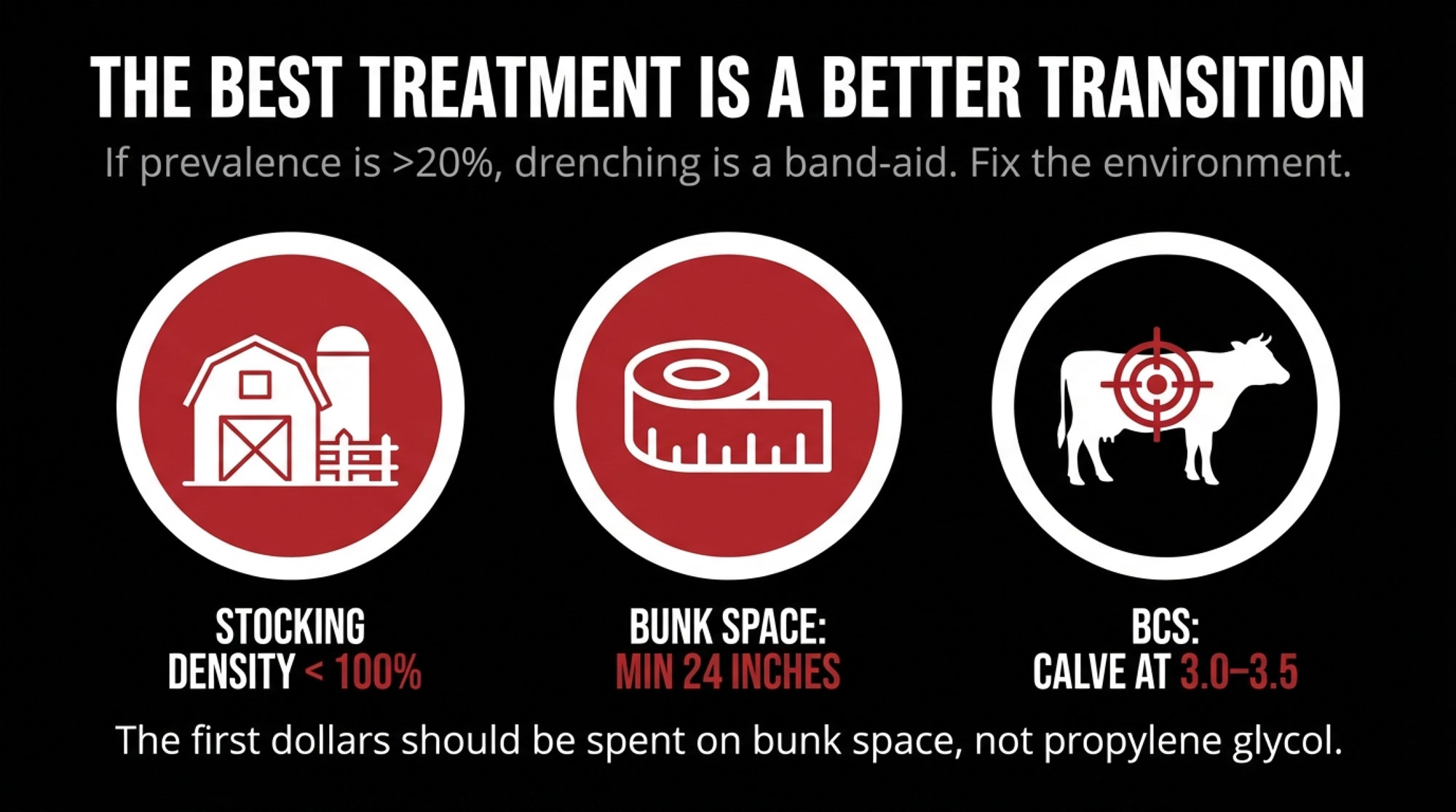
  • Stocking and bunk space: Close‑up and fresh pens that sit at more than 100 percent stocking density for stalls or bunk space see more competition, less lying time, and lower dry matter intake. Extension guidance, including work from Michigan State and others, has been pretty consistent: keep those groups at or below 100 percent and provide at least 24 inches of bunk space per cow if you want to give them a fair shot.
  • Heat stress: Dry and close‑up cows under heat stress eat less, and multiple studies have shown that cooling dry cows with shade, fans, and soakers improves postpartum performance—better intake, more milk, and fewer health issues in the next lactation.

In Canada, Lactanet’s transition benchmarking has helped put numbers to what a lot of producers have been seeing. Herds that keep most cows calving between BCS 3.0 and 3.5, avoid chronic overcrowding in transition pens, and stay on top of bunk management tend to run lower rates of metabolic disease—including subclinical ketosis—while still delivering high milk and components. Similar stories come out of well-managed herds in the US Midwest and Northeast.

So if your close‑up pen is sitting at 115 percent stocking most of the time, or your Western dry cows are riding through too much summer heat without shade and water‑based cooling, it’s not hard to see how some portion of that $25–35K modeled ketosis leak is actually sitting in stocking density, bunk access and heat abatement—not just in how often you test or how much PG you buy.

The data suggest that, in many cases, the first dollars are best spent on getting body condition, stocking density, bunk space, and cooling right, and then using testing and treatment to mop up what’s left, rather than the other way around.

Looking Ahead: Breeding for “Ketosis Resilience”

One more piece that’s slowly moving from research into the barn conversation is genetics.

We’ve known for a while that mid‑infrared milk spectra can be used to predict a variety of traits beyond just fat and protein. Now, several studies have shown that MIR‑based predictions of BHB and related hyperketonemia traits have moderate accuracy and non‑zero heritability. In plain terms, some families of cows are genetically more prone to high BHB in early lactation than others.

That big Canadian study that developed the pHYK trait is a good example. When the researchers looked at thousands of lactations, cows with higher pHYK scores—meaning higher predicted ketosis risk—tended to give less milk and protein, more fat (that classic “ketotic fat cow” profile), and they had higher somatic cell counts and poorer fertility. That’s not just a one‑off cow; that’s a pattern with genetic legs under it.

The Merck Manual and other summaries have also started noting that specific genetic markers and modest heritabilities have been identified for ketosis and related metabolic traits. We’re not at the point where every proof sheet has a big “ketosis resilience” index printed on it, but the building blocks are there.

In the meantime, many breeding programs are quietly adding more health and metabolic traits into their overall indexes, and as MIR‑based BHB and pHYK predictions become more common in national evaluation systems, it’s not hard to imagine that “lower ketosis risk” will become one more dial you can turn when picking bulls and culling cows over the next decade.

So while you’re working on fresh cow management and transition nutrition in the short term, genetics is lining up to be a slow but steady ally in the background.

From “Is She Ketotic?” to “Does She Need Help Right Now?”

So, where does all of this leave you the next time you’re in the fresh group and the meter flashes 1.3?

The research and what many of us are seeing on the ground say the same thing: keep using the meter. That 1.2 mmol/L cut‑point is still a valuable benchmark for understanding herd‑level risk. The large field studies and global summaries are very clear that when too many cows are spending time above that line early in lactation, herds pay for it in disease, lost milk, and poorer reproduction. The cost‑per‑case models remind us that each one of those cows has real dollar signs attached.

What’s changed is how we interpret the number and what we do next. Instead of stopping at:

“Is this cow ketotic?”

it’s a lot more useful now to ask:

“Given this cow’s day in milk, parity, body condition, history, appetite, and BHB value, does she need help right now—and if she does, what kind of help is going to pay us back?”

If you’re looking for a simple, practical way to bring this into your next herd meeting—or your next coffee with your vet and nutritionist—here’s a five‑step checklist that many farms are using as a starting point:

  • Check your prevalence once in a while.
    Pick 10–12 fresh cows between days 3 and 14 in milk and see how many are at or above 1.2 mmol/L. If it’s one or two, you’re probably in the mid‑teens on prevalence. If it’s three or more, assume you’re up in that 20–25 percent‑plus zone, and it’s time to look hard at the overall transition and fresh cow program.
  • Build and use a risk list.
    Flag older cows, over‑conditioned cows, and cows with a past DA or clinical ketosis as high‑risk at calving. Make sure they get more frequent BHB testing that first week, and that their intake, rumen fill, and early milk are watched more closely than the “easy” cows.
  • Rewrite your PG protocol with your vet.
    Shift away from “treat everyone over 1.2” and put day in milk and risk status into the written rules. Treat the early, clearly high‑risk cows more aggressively; be willing to monitor and retest the later, lower‑risk “adapters” before you drench.
  • Walk your transition pens with fresh eyes.
    Look at body condition distribution, stocking density, bunk space, and heat abatement in your close‑up and fresh groups. A lot of the most consistent ketosis wins still come from getting these basics right and then using diagnostics to keep score.
  • Use tech to focus your effort, not to replace your judgment.
    Let rumination collars, FPR, ML predictions, and MIR/pHYK risk reports tell you where to look harder—which cows to test and which pens to fix. But keep the final decisions tied to what you see in front of you: the cow’s behavior, her rumen fill, her milk, her stage of lactation, and her story.

From what I’ve seen in freestalls in Wisconsin and New York, tiestalls in the Northeast, dry lot systems in the West, and pasture herds in New Zealand, the farms that combine solid transition management with this more context‑aware use of ketone testing are the ones quietly getting ahead. They see fewer metabolic surprises in the fresh pen, spend their testing and treatment dollars where they matter most, and have a lot more cows that slide into peak lactation instead of stumbling their way there.

Key Takeaways:

  • The “treat every cow over 1.2” rule is quietly expensive. At roughly $200 per case, a 500‑cow herd running 25% subclinical ketosis prevalence is leaking $25,000–$35,000 a year in lost milk, extra disease and open days.
  • Same number, very different risk. A 1.3 mmol/L reading on day 5 in an over‑conditioned older cow with a DA history is a red flag; that same 1.3 on day 15 in a moderate‑BCS cow eating hard and milking 95 pounds is often just high‑output physiology.
  • Days 3–9 are where the money is. Elevated BHB in that early window lines up strongly with DA, metritis and lost production; after day 10, moderate elevations in otherwise healthy cows usually carry far less risk.
  • Risk lists beat blanket protocols. Flag older, over‑conditioned and previously sick cows at calving, watch them closely in week one, and let lower‑risk cows prove they need help before you reach for the PG jug.
  • Fix transition before you fine‑tune treatment. Stocking under 100%, 24 inches of bunk space, dry cow cooling and calving BCS of 3.0–3.5 cut ketosis prevalence more than any amount of propylene glycol after the fact.
Executive Summary: 

Many herds are still using a simple “treat every cow over 1.2 mmol/L” rule for ketosis, but the economics say that blanket approach is quietly leaking money. In a 500‑cow Holstein freestall, realistic models put the cost of subclinical ketosis at roughly 200 dollars per case, which means a “normal” 25 percent prevalence can drain around 25,000 dollars a year in lost milk, extra disease, and fertility hits, and closer to 35,000 if you use more conservative cost estimates. The science behind the 1.2 mmol/L line is solid for describing herd‑level risk, yet newer work shows that timing, parity, body condition and intake completely change what a 1.3 reading actually means for an individual cow. What’s encouraging is that herds that combine risk lists (older, over‑conditioned and previously sick cows), small fresh‑cow audits, and day‑in‑milk–based treatment thresholds are seeing fewer metabolic surprises while spending less time and money treating marginal cases. The article lays out a practical fresh cow playbook that ties together better transition management, smarter propylene glycol use, targeted BHB testing, and on‑farm tech like rumination collars and MIR‑based ketosis risk to help producers cut subclinical ketosis prevalence from the mid‑20s into the teens. For progressive dairies in 2025, the core shift is moving from “Is she ketotic?” to “Given this cow’s story, does she need help right now—and what’s the most profitable way to give it?”

Complete references and supporting documentation are available upon request by contacting the editorial team at editor@thebullvine.com.

Learn More

The Sunday Read Dairy Professionals Don’t Skip.

Every week, thousands of producers, breeders, and industry insiders open Bullvine Weekly for genetics insights, market shifts, and profit strategies they won’t find anywhere else. One email. Five minutes. Smarter decisions all week.

NewsSubscribe
First
Last
Consent

Global Dairy Cattle Diseases Cost Farmers $65 Billion Annually: How Comorbidities Impact Your Bottom Line

Uncover how diseases in dairy cattle cost farmers $65 billion each year. Learn about comorbidities’ impact and how to reduce your losses.

Summary: A silent crisis might be creeping into your dairy farm, shrinking your bottom line without realizing it. Dairy cattle diseases like mastitis, lameness, and ketosis are silently gnawing at global profits, causing a staggering $65 billion annual loss worldwide. Imagine facing these challenges while also dealing with overlapping health issues or comorbidities that further complicate management and financial recovery. This article dives into the multifaceted impact of these diseases on milk yield, fertility, and culling rates, offering insights from industry experts, regional economic analysis, and practical preventive strategies to protect your assets and maximize productivity. The actual cost of cattle diseases is in lost milk and the ripple effects across the farm. Are you ready to turn the tide against these profit thieves?

  • Dairy cattle diseases are causing a significant $65 billion annual loss globally.
  • Conditions like mastitis, lameness, and ketosis majorly contribute to these losses.
  • Comorbidities, or overlapping health issues, exacerbate management challenges.
  • The diseases negatively impact milk yield, fertility, and culling rates.
  • This article provides expert insights, practical strategies, and regional economic analysis.
  • Understanding the full extent of these impacts can help protect farm assets and maximize productivity.
dairy cow illnesses, mastitis, lameness, paratuberculosis, displaced abomasum, dystocia, metritis, milk fever, ovarian cysts, retained placenta, ketosis, financial losses, early detection, management, subclinical ketosis, low production, reproductive concerns, clinical mastitis, swelling, fever, decreased milk quality, fertility, extended calving interval, increased culling risk, subclinical mastitis, milk production reduction, comorbidities, decline in milk supply, economic losses, strategic management, regular health checks, preventive measures, milking practices, nutrition, foot health programs.

Imagine losing $65 billion each year. That is the enormous yearly loss resulting from dairy cow illnesses throughout the globe. These infections are more than a health issue for dairy producers; they are a financial nightmare. But what if you could prevent a significant portion of these losses? Diseases like mastitis and ketosis, while costly, are largely preventable. Understanding the financial impact of these illnesses is critical for dairy farmers to maintain their livelihood. So, how are these losses estimated, and what can dairy farmers do to prevent them? Stay with us as we break down the data and provide practical insights to help you protect your herd’s health—and your financial line.

Imagine Waking Up to Silent Profit Thieves: Mastitis, Lameness, and Ketosis Hitting Your Wallet Hard 

Imagine waking up daily to care for your dairy cattle, only to discover that problems like mastitis, lameness, and ketosis are slowly eroding your income. Dairy farming is not only a profession but a way of life. Nonetheless, these 12 significant disorders – mastitis (subclinical and clinical), lameness, paratuberculosis (Johne’s disease), displaced abomasum, dystocia, metritis, milk fever, ovarian cysts, retained placenta, and ketosis (subclinical and clinical) – are causing havoc worldwide. Explain why they are essential and how they will affect your finances.

  • Subclinical Ketosis: The Hidden Energy Crisis
    Subclinical ketosis (SCK) is the most costly illness afflicting dairy cows, resulting in yearly worldwide losses of over $18 billion (B). But why is SCK so expensive? It often goes unnoticed because it lacks apparent signs. This concealed component causes protracted periods of low production and reproductive concerns. However, these losses can be significantly reduced with early detection and intervention. Cows with SCK had a substantially lower milk yield—up to 8.4% less each lactation than healthy cows [Raboisson et al., 2014]. A farm that produces 10,000 gallons of milk each year corresponds to an 840-gallon loss, which can be mitigated with early detection and management.
  • Clinical Mastitis: The Visible Threat
    Clinical mastitis (CM) ranks second, resulting in yearly worldwide losses of around $13 billion [Boujenane et al., 2015; Heikkilä et al., 2018; Fukushima et al., 2022]. The illness causes apparent signs such as swelling, fever, and decreased milk quality, forcing producers to take fast action. However, what makes CM so harmful is its complicated influence on cow health. Fertility drops dramatically, extending the calving interval by around 8.42% [Schrick et al., 2001; Klaas et al., 2004]. The culling risk also increases, with afflicted cows being 2.3 times more likely to be killed prematurely [Sharifi et al., 2013; Haine et al., 2017]. Each early culling causes a farmer to spend on a new animal, which increases the economic burden.
  • Subclinical Mastitis: The Silent Milk Thief
    Subclinical mastitis (SCM) ranks third, with annual global losses hovering around $9B [Krishnamoorthy et al., 2021]. Unlike its clinical counterpart, SCM silently lingers, diminishing milk quality and yield without draw­ing immediate attention. Studies reveal that SCM can reduce milk production by up to 6.29% per lactation [Pfützner and Ózsvari, 2017]. Although it does not elevate the culling risk to the extent of CM, it still increases the likelihood by 1.45 times [Beaudeau et al., 1995]. SCM often progresses to clinical mastitis if left untreated, doubling the financial damage over time. 

When you look at your herd, these figures strike home. Each cow infected with one of these illnesses incurs more veterinary costs, reduces milk output, and may need early culling. The financial pressure includes not only immediate expenditures but also missed potential. Implementing effective management methods and early illness identification may significantly reduce losses, proving that your efforts are worthwhile. Understanding and tackling these factors might help you regain control of the economic situation.

Comorbidities: The Overlapping Health Battles 

When addressing illnesses in dairy cattle, it’s critical to comprehend the idea of comorbidities. This word describes several health concerns present in a single animal. Consider a farmer who not only has a terrible back but also suffers from recurrent headaches and hypertension. Each disease is complex, but they all add to the difficulty of everyday existence. The same goes for dairy cows.

For example, a cow with mastitis may have lameness or ketosis. These circumstances do not add up; they may increase one another’s effects. Mastitis affects the milk supply, but if the cow is lame, it may struggle to reach the milking station, resulting in even less milk. When forced into ketosis, the cow becomes even less productive because it runs on empty, lacking the energy required to operate correctly.

Understanding comorbidities is critical for evaluating economic losses. Suppose you overlook that cows might suffer from various diseases simultaneously. In that case, you can conclude that a cow loses 10% of her yield due to mastitis and another 10% due to lameness, for a total loss of 20%. The losses are typically more severe owing to the added stress and many necessary treatments, which may further drive up prices. This makes precise economic evaluations difficult but vital for comprehending the effect on dairy output and farm finances.

By considering comorbidities, we can construct more accurate and realistic models. This allows farmers to grasp the actual cost of illnesses and make better choices regarding preventative and treatment measures. This comprehensive strategy guarantees that no hidden losses are neglected, eventually helping to preserve the farmer’s bottom line.

Field Stories: How Comorbidities Devastate Dairy Farms Worldwide 

Case studies worldwide demonstrate the high toll that comorbidities exact on dairy farms. They generally present as a slew of minor ailments that accumulate into significant economic drains.

  • Take Jim from Wisconsin as an example. Jim, an industry veteran, recently expressed his frustrations: “It began with lameness in a few cows, something we had previously dealt with. But shortly after, we saw an increase in mastitis. It seemed like we were patching one hole to have another open. The vet fees and lower milk output struck us hard—not something we expected.” Jim’s farm had a 15% decline in milk supply in only two months, which was related to the interconnected nature of the illnesses.
  • Karen encountered a different but equally difficult situation in New Zealand. “We’ve controlled ketosis in the past, but this time it escalated. We had cows suffering from milk fever simultaneously, which exacerbated their symptoms. When cows suffer from several health conditions, recovery is delayed and more costly. Our expenditures virtually quadrupled, and we had to cut more than I’d like to admit.” Karen’s dilemma demonstrates the need to control and predict these overlapping health problems.
  • In India, the effects of comorbidities are felt deeply due to the scale of their dairy operations. Rakesh, who manages a 200-head dairy farm, said, “We already struggle with diseases like mastitis and lameness. The cost is enormous When an outbreak and multiple diseases overlap. The productivity dips, and so does the families’ income dependent on these farms. It’s a vicious cycle hard to break without significant support and intervention.” His experience underscores the broader socio-economic impacts beyond just the farm gates. 

These real-world examples highlight the importance of comorbidities in dairy farming. These are not isolated occurrences or figures but pervasive difficulties that farmers encounter daily, making proactive management and sound health regulations more critical than ever.

The Global Economic Impact: How Your Region Stacks Up

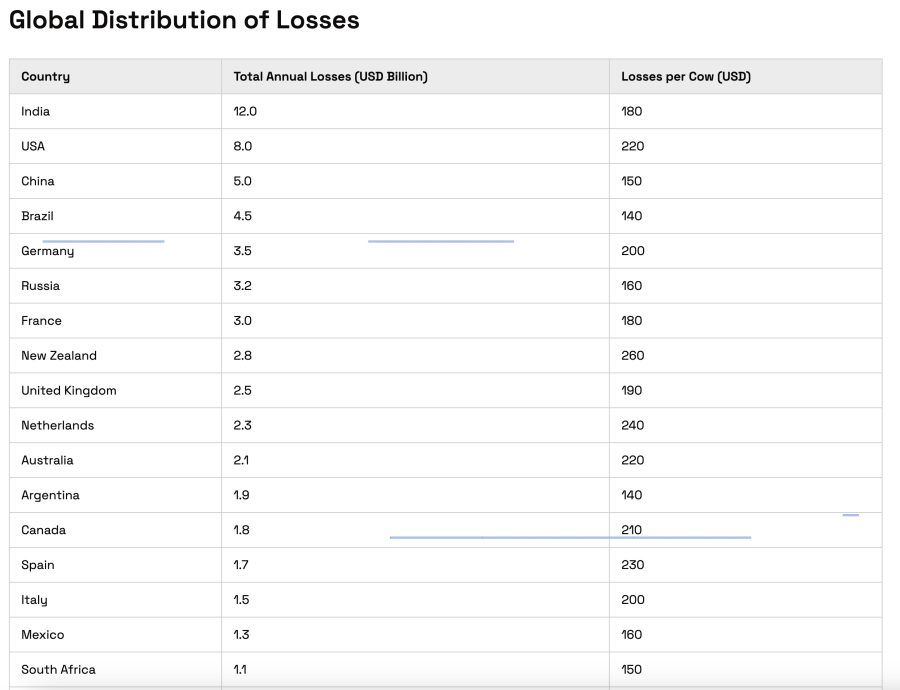
One intriguing conclusion from the research is that the economic burden of dairy cow illnesses varies significantly by area. For example, overall yearly losses differ substantially, with India, the United States, and China bearing the worst economic impacts. Losses in India total $12 billion, outweighing those in other areas. The US is just a little behind, with an estimated yearly loss of $8 billion. China ranks third, with $5 billion in annual losses.

Various variables, including herd size, management approaches, and local economic situations, drive these variances. Herd size is critical; more enormous herds naturally have more significant aggregate losses when illness strikes. For example, Indian farms often have bigger herd sizes, significantly increasing overall loss estimates. Management techniques have a significant impact. Advanced technology in the United States may mitigate certain losses. Still, significant economic expenses remain due to the large amount of milk produced.

Local economic factors further impact regional variances. The cost of veterinary services, medicine, and other inputs varies greatly, influencing farmers’ financial burden. While labor and treatment expenses may be cheaper in certain nations, reduced productivity might be more evident in higher-income areas with higher milk prices, increasing the economic impact per unit of lost output. This geographical variance highlights the need for personalized therapies and illness management techniques that consider these local differences. This guarantees that each area can successfully offset the unique economic repercussions.

Digging Deeper into Regional Variations: Key Players and Economic Factors 

While overall aggregate losses are significant internationally, they vary significantly by area. For example, India, the United States, and China lead the way in absolute losses, with projected yearly estimates of roughly USD 12 billion, USD 8 billion, and USD 5 billion, respectively. Herd size is critical. India has the world’s largest dairy herd, which increases economic losses when illnesses occur. Modern dairy management methods and large herd numbers in the United States imply that health concerns may swiftly escalate into significant financial burdens.

Management strategies vary greatly and have a significant economic effect on dairy cow illnesses. Early illness diagnosis and treatment may help reduce long-term losses in places with innovative herd health management methods, like Europe and North America. However, the economic toll is generally worse in low-income communities, where preventative measures and veterinary care are scarce.

Local economic factors also contribute to inequality. Countries with solid agricultural industries, such as New Zealand and Denmark, may experience huge per capita losses since the dairy industry accounts for a significant portion of their GDP. Larger economies like the United States and China disperse these losses among a broader range of economic activity, resulting in slightly diminished per capita consequences. The heterogeneity highlights the need for specialized measures in controlling dairy cow illnesses across areas.

From Reactive to Proactive: Strategic Management to Combat Dairy Cattle Diseases

Combating dairy cow illnesses requires a proactive strategy to guarantee your herd’s health and production. Strategic management strategies may significantly decrease economic losses.  Here’s how you can get started: 

  • Regular Health Checkups: An Ounce of Prevention
    Regular health checks are essential. Schedule frequent veterinarian checkups to detect and treat problems early. Involve your veterinarian in creating a thorough health plan for your herd. Early diagnosis may save minor concerns from turning into expensive difficulties.
  • Invest in Preventive Measures: Upgrade Your Defense
    Preventive healthcare should be a key component of your illness management plan. Vaccinations, sufficient diet, and clean living conditions are crucial. Implement biosecurity measures to prevent illnesses from spreading. Investing in high-quality feed and supplements may strengthen your cows’ immune systems, making them less prone to sickness.
  • Optimize Milking Practices: Clean and Effective
    Mastitis is one of the most expensive illnesses; reasonable milking procedures are essential for prevention. Make sure that the milking equipment is cleaned and working properly. Train your crew on optimal milking techniques to reduce the danger of infection.
  • Monitor and Manage Nutrition: The Right Balance
    Nutritional abnormalities commonly cause subclinical ketosis. Collaborate with a nutritionist to develop feeds that fulfill the energy requirements of high-producing cows, particularly during transitional seasons. Monitor your cows’ body condition scores regularly and alter feeding practices appropriately.
  • Foot Health Programs: Walking the Talk
    Proper hoof care may treat lameness. Trim cow hooves regularly and ensure they tread on clean, dry surfaces. Implement footbaths and monitor foot health to discover and address problems early. Comfortable, well-kept flooring may help reduce hoof injuries and infections.
  • Data-Driven Decisions: Precision Farming
  • Use technology to monitor herd health. Make educated choices based on health records, milk production, and activity monitor data. Software technologies may identify patterns and detect future health issues before they worsen.
  • Employee Training: Knowledge is Power
  • Ensure that your farmhands are well-taught to spot early indicators of common illnesses and to deal with sick animals. Regular training sessions help your staff stay updated on the newest disease management methods. A competent workforce serves as your first line of protection against illness outbreaks.

These measures may reduce economic losses and improve your herd’s health and production. Proactive management is essential for a sustainable and successful dairy farming enterprise.

Veterinarian Insights: Expert Tips on Disease Prevention

Veterinarians are critical to keeping your herd healthy and your farm profitable. Their knowledge may be very beneficial in controlling and avoiding illnesses like mastitis, lameness, and ketosis. We contacted leading veterinarians to get insight into illness prevention and management. Let’s go into their suggestions.

  1. Early Detection is Key
    The earlier you detect a condition, the more influential the therapy. Regular monitoring and prompt response may mitigate long-term consequences. For example, if detected early, subclinical mastitis may be treated before it impacts milk output. Routine testing and thorough monitoring of your livestock may prevent more severe problems.
  2. Balanced Nutrition
    A good diet is the cornerstone of illness prevention. A well-balanced diet for your cows may help avoid diseases like ketosis and milk fever. Providing your cattle with enough minerals, vitamins, and energy will help strengthen their immune systems and make them more resistant to infections and metabolic diseases.
  3. Clean and Comfortable Living Conditions
    Using clean bedding and keeping barns well-ventilated can avoid many infections. Cramped circumstances and poor sanitation may cause mastitis outbreaks and other illnesses. A clean, pleasant environment decreases stress for your cows, making them less susceptible to sickness.
  4. Regular Vaccinations
    Vaccination regimens should be regularly followed to ensure the herd’s health. Keep your immunization regimen up to date. Many infections that may impede productivity can be prevented with timely vaccinations. Work with your veterinarian to develop a thorough immunization strategy that addresses all significant hazards to your herd.
  5. Consistent Foot Care
    Foot care is frequently disregarded, although it is critical in avoiding lameness. Regular hoof trimming and inspections may detect problems before they develop serious lameness concerns. Implementing a foot health program will keep your cows flexible and productive.
  6. Effective Biosecurity Measures
    Controlling the movement of people, animals, and equipment on and off your farm may help prevent disease transmission. Biosecurity is the first line of protection. Limiting interaction with other animals and ensuring visitors adhere to proper cleanliness practices minimize the danger of new infections entering your herd.
  7. Strategic Use of Antibiotics
    Antibiotics should be administered cautiously to avoid resistance. Antibiotics should only be used when necessary and with a veterinarian’s supervision. Antibiotic overuse may cause germs to develop resistance, making illnesses more challenging to treat in the long term.

Implementing these expert recommendations dramatically enhances disease prevention and herd health. Please maintain open contact lines with your veterinarian and include them in your ongoing farm management approach. Remember, prevention is always preferable to treatment.

The Bottom Line

In this post, we looked at the substantial economic effect of dairy cow illnesses such as mastitis, lameness, and ketosis, which cause billions of dollars in worldwide losses each year. Subclinical disorders such as subclinical mastitis and ketosis may quietly drain revenues without causing noticeable signs, and the existence of many co-occurring diseases exacerbates these losses. Countries like India, the United States, and China suffer the most significant aggregate losses. At the same time, smaller countries with concentrated dairy sectors also bear the burden per capita. To protect your herd and financial success, prioritize proactive health management methods, including frequent checkups, preventative measures, enhanced milking routines, and foot health programs. Think about these ideas and consider adopting them into your operations to reduce losses and increase productivity.

Learn more: 

Join the Revolution!

Bullvine Daily is your essential e-zine for staying ahead in the dairy industry. With over 30,000 subscribers, we bring you the week’s top news, helping you manage tasks efficiently. Stay informed about milk production, tech adoption, and more, so you can concentrate on your dairy operations. 

NewsSubscribe
First
Last
Consent

Shorter or No Dry Periods: A New Frontier in Dairy Cow Management

Learn how reducing or removing the dry period in dairy cows can boost their health and milk production. Could this method enhance your herd’s performance?

Stalveen in de stal van Gerard Hoogland

The conventional 60-day dry period is critical for treating preclinical mastitis, preparing cows for lactation, and promoting mammary cell regeneration in dairy cow management. Could we cut or remove this period?

New methods are reconsidering the dry time and potentially revolutionizing dairy production. Research on Holstein cows comparing conventional, short, and no dry periods, conducted with an exact, data-driven approach, revealed significant increases in dry matter intake (DMI), milk output, and plasma glucose levels. A glucogenic diet rich in maize has further improved energy balance and lowered plasma beta-hydroxybutyric acid (BHVA), reducing the risk of ketosis. The potential to customize dry times based on body condition score (BCS) and milk production capacity offers a promising approach to balancing metabolic health and milk output. During mid-to-late lactation, targeted dietary plans can help cows avoid gaining weight during reduced or no dry spells. Post-peak lactation energy density and food composition management can assist farmers in maintaining lactation persistence and preventing excessive fat formation. These techniques underscore the potential for an exact, data-driven approach to dairy cow management, offering reassurance about the scientific rigor of the research and its potential to improve health, production, and financial feasibility.

Does a dairy revolution seem imminent? Should we abolish the traditional dry period? This work investigates the effects of different dry periods on energy balance, metabolic health, and general dairy production.

Reevaluating the Traditional 60-Day Dry Period: A New Frontier in Dairy Cow Management 

Analyzing the traditional 60-day dry time exposes compelling reasons for either lowering or doing away with it to enhance dairy cow performance and health. Research indicates these adjustments may increase milk output, control energy distribution, and minimize metabolic problems like subclinical ketosis. Dairy farmers may maintain a favorable energy balance by changing dietary control—especially the combination of proteins, lipids, and carbohydrates. A glucogenic diet, rich in starch, such as maize, helps balance the negative energy. It reduces ketone body synthesis, avoiding subclinical ketosis.

Eliminating the dry season might be difficult. Overweight cows run the danger of developing metabolic problems, compromising herd health and production. Moreover, the persistence of lactation might be compromised. Maintaining constant production depends on enough dietary energy and nutritional composition from peak milk output forward. However, careful management of dietary energy and composition can mitigate these risks, ensuring a smooth transition to a no-dry-period schedule.

Lack of a conventional dry time may affect mammary cell renewal, influencing udder health. Adapting to no-dry-period schedules depends on factors such as breed, genetic potential, and body condition score (BCS). For instance, high-producing breeds with a higher BCS may require a longer dry period to maintain their health and productivity. Customized dry spells might cause possible declines in milk sales; these should be balanced against lower illness expenses and better reproductive efficiency.

Although cutting the dry period has metabolic advantages, it requires a whole strategy. Dairy managers must use calculated nutrition changes and monitor cow body condition to maximize health advantages and lower dangers. This includes implementing advanced feeding techniques such as precision feeding, where the diet is tailored to the cow’s specific needs based on its production stage and body condition. It also involves customized cow management plans, which may include more frequent health checks and closer monitoring of milk production and body condition scores. Implementing this creative strategy effectively depends mostly on advanced feeding techniques and customized cow management plans.

Constant modifications in feed energy level and nutritional composition are essential when cows migrate from optimum milk yield. Reducing dietary energy might prevent needless fattening and help induce lactation persistence. This method requires an advanced understanding of every cow’s genetic potential, breed, and BCS.

Eventually, by carefully reducing or eliminating the dry time, dairy farmers have a fresh approach to improving cow health, guaranteeing constant milk supply, and maximizing lactation management. However, conventional 60-day dry cycles have long-standing worth; modern diets provide more flexible, health-conscious choices.

Optimizing Energy Balance: Transforming the Traditional Dry Period for Better Metabolic Health

The standard 60-day dry period significantly enhances dairy cows’ energy balance and metabolic health. However, reducing or eliminating this period could offer substantial benefits by further optimizing these aspects. The conventional dry season causes notable energy demand changes that result in negative energy balance (NEB) and conditions including subclinical ketosis. Reducing this interval helps distribute energy more fairly, supporting a stable energy balance and reducing severe NEB and related problems such as hepatic lipidosis.

Shorter dry period studies of cows show improved metabolic markers, including lower plasma concentrations of non-esterified fatty acids (NEFAs) and beta-hydroxybutyrate (BHVA), both of which are vital indications of improved energy balance and decreased risk of ketosis. Rich in maize post-calving, a glucogenic meal increases glucose availability, promoting energy usage and reducing ketone body synthesis. Improved energy efficiency helps with weight management and raises body condition score (BCS), which is essential for well-being and fertility and produces shorter calving intervals.

Promoting continuous lactation and removing the dry phase helps normalize energy production, matching the cow’s natural metabolic cycle and lowering metabolic stress. This reduces underfeeding in early lactation and overfeeding in late lactation, producing constant milk outputs and consistent lactation persistency.

Precision in Nutrition: Mastering the Dietary Balancing Act for Shortened or No Dry Periods 

Shorter or no dry spells need careful food control as well. Navigating the metabolic hurdles of this strategy requires an exact mix of proteins, lipids, and carbs. For instance, increasing the maize intake in the diet increases the energy availability via glucose precursors, avoiding too negative energy balance and lowering the risk of subclinical ketosis.

Diets intense in simple sugars and extra fats should be avoided because of their poor effectiveness for glucogenesis. Simple sugars cause fast increases and decreases in blood sugar levels, upsetting the energy balance even if they provide instant energy. Usually kept as body fat instead of being turned into glucose, excess extra fats have less impact on maintaining steady energy levels during early breastfeeding. Instead, emphasizing balanced carbohydrates like starch-rich maize will help dairy cows preserve energy and metabolic wellness. Changing dietary contents and energy levels from peak milk production forward helps manage lactation persistence and body condition. Customizing meal programs depending on individual cows provides optimal health and production considering the breed, genetic potential, and body condition score. Effective dairy management with either less or no dry spells requires proactive nutritional stewardship, which enhances metabolic health and preserves milk output.

A Glucogenic Diet: The Keystone to Metabolic Wellness and Energy Optimization in Dairy Cows 

An early lactation glucogenic diet is crucial for maintaining metabolic health and enhancing energy balance in dairy cows. This diet includes more maize, which is high in starch. It increases glucose precursors, therefore supporting glucogenesis and guaranteeing a consistent glucose supply. Early lactation, when cows are susceptible to negative energy balance (NEB), makes this especially crucial.

Preventing NEB is crucial as it lowers the risk of metabolic diseases, including ketosis, which could cause lower milk production and worse reproductive function. A glucogenic diet regulates blood glucose levels and encourages practical energy usage, lowering ketone body generation and preserving metabolic health.

Including extra maize in the diet also helps solve the lower feed intake during the close-up stage, which results from the growing uterine size. This guarantees cows have enough nutrients without undesired metabolic problems or weight increases. In dairy herds, such customized nutritional control enables optimum lactation performance and lifespan.

Balancing Act: Navigating the Risks and Rewards of No Dry Periods

Among the possible advantages of reconsidering dry periods, solving the problems related to the no dry period strategy is essential. Cows run the danger of growing obese without a break and of having lower lactation persistence in the subsequent cycles. This situation emphasizes the need to change dietary energy intake and nutritional content precisely from phases of maximum milk output forward. Dairy management may extend lactation by carefully reducing dietary energy intake post-peak production, preventing unwanted fattening. Customizing dry period treatment to maintain metabolic health and milk production efficiency depends on holistic factors, including genetic potential, breed variety, and body condition score (BCS).

Reassessing Milk Yield: The Challenges and Opportunities of Shortening or Omitting the Dry Period 

Reducing or eliminating the dry phase can provide the potential for milk production as well as problems. Although a 60-day dry period traditionally increases milk supply later, current studies show essential effects from changing this interval. While complete deletion may cause a 3.5% decline in milk output, shortening it might result in a 3% decline. This requires a calculated strategy for changing the dry period.

Furthermore, the consequences of primiparous and multiparous cows are different. First-lactation cows had additional lactating days and showed no drop in milk output when the dry period was reduced. By contrast, multiparous cows had gains in fertility and shorter calving intervals but suffered more production declines. This shows the requirement of tailored dry period plans depending on every cow’s lactation history and metabolic condition.

Enhancing Reproductive Efficiency: The Fertility Benefits of Shortened or Eliminated Dry Periods in Multiparous Cows

ParameterTraditional 60-Day Dry PeriodShortened Dry Period (30 Days)No Dry Period
Days to First Postpartum Estrus604540
Days Open120110100
Services per Conception3.02.52.2
Calving Interval (days)400380360

Shorter calving intervals result from higher fertility, shown by multiparous cows with reduced or abolished dry spells. This leads to a more sensitive and efficient reproductive cycle. Maintaining a stable and healthy herd helps the shorter time between calvings increase milk production and general farm output.

Metabolic Precision: Harnessing Customized Dry Periods for Optimal Health and Milk Yield in High-Yielding Dairy Cows

Modifying dry period durations offers one major benefit, especially for elderly or high-yielding cows prone to severe negative energy balance (NEB): improving metabolism and retaining milk output. High-yielding cows have great metabolic needs and, if improperly cared for, run a higher risk of problems. Cutting the dry time may help these cows maintain a better energy balance, thereby lowering their risk of illnesses like ketosis.

This strategy has many advantages. It helps to avoid the energy deficit that damages health and output by redistributing energy to suit the demands of late lactation and the transition phase. Reduced dry periods also improve metabolic efficiency, thus ensuring cows have sufficient power for upkeep and output without draining their bodily reserves.

Moreover, a customized dry duration helps to sustain the milk supply, preventing the notable drop seen with more extended dry periods. The more consistent and continuous milk supply resulting from this helps control herd dynamics and maximize milk sales.

Matching food plans with these tailored dry spells is very vital. Balanced in calorie content and rich in glucogenic precursors, nutrient-dense meals help the metabolic shift, improving well-being and output. This satisfies immediate metabolic demands and enhances reproductive function, reducing calving intervals and improving fertility results.

Modern dairy management’s strategic approach for reconciling metabolic health with production targets is customizing dry period durations. This guarantees the best performance of high-yielding dairy cows across their lactation cycles.

Assessing Economic Trade-offs: The Financial Implications of Customized Dry Periods in Dairy Management

CategoryTraditional 60-Day Dry PeriodShortened Dry PeriodNo Dry Period
Milk Yield Reduction0%3%3.5%
Feed CostHighModerateLow
Incidence of Metabolic DisordersHighModerateLow
Veterinary CostsHighModerateLow
Body Condition Score (BCS)OptimalVariableHigh
Labor CostsModerateLowLow
Overall Economic ViabilityModerateHighVariable

Analyzing the cost-benefit of tailored dry times means comparing the slight loss in milk sales, usually between 3% and 3.5%, against lower illness expenses. Although this would affect milk revenue, the strategic benefits would exceed losses.

One significant advantage is the savings in illness expenses. Thanks to improved energy balance and metabolic health from tailored dry spells, healthier cows suffer fewer metabolic diseases like subclinical ketosis. This lowers veterinarian and labor costs, as well as potential milk production losses brought on by disease. Improved metabolic health also increases fertility, reduces calving intervals, and enhances reproductive efficiency, raising long-term economic rewards.

Financial effects vary depending on the farm; variables like herd size, baseline health, and economic situation affect them. While a milk output drop is a cost, reduced veterinary bills and less sickness can save substantial money, improving overall profitability. Thus, tailored dry intervals are a reasonable approach, as lower illness expenses might balance or even exceed income lost from reduced milk supply

Consider this scenario with a Wisconsin dairy farm using a no-dry season approach for their 200-cow herd. A notable drop in veterinarian expenses and a decrease in subclinical ketosis cases helped to offset worries about lower milk output. Reduced medical costs and more regular milk output helped the farm to show a 12% increase in net profitability over one year.

Another instance in California was when dry time was reduced to thirty days. Maximizing energy at various lactation phases saves feed expenditures. It provides a 7% rise in cow body condition score, lower metabolic problems, and more excellent total lifetime milk supply. These changes demonstrate how economically beneficial adapting dry spells may be, surpassing first declines in milk output.

These practical examples highlight the possible financial benefits of changing the duration of the dry period and underline the need for careful supervision and customized dietary plans to offset or transform the economic effects.

Striking a Balance: University of Idaho’s Study on Dry Period Lengths and Their Implications for High-Producing Dairy Cows

University of Idaho scientists investigated the effects of either reducing or removing the dry period in high-producing dairy cows. While conventional 60-day dry intervals produced peak milk outputs surpassing 99 pounds per day for primiparous cows and 110 pounds per day for multipurpose cows, shorter or no dry periods improved energy balance and metabolic health at the expense of lowered milk yield. This work underlines the difficult equilibrium between preserving milk output in dairy management and enhancing metabolic health.

The Bottom Line

Dairy cows depend critically on the conventional 60-day dry season, although new research calls for its change. Reducing or eliminating this phase, especially in high-yielding cows, may improve energy balance and metabolic health. Key to this approach is a glucogenic diet high in maize to support energy demands during early breastfeeding and lower chances of negative energy balance and subclinical ketosis. By the conclusion of lactation, this method raises body condition scores. It enhances reproductive efficiency even if milk output somewhat decreases.

Reevaluating the dry phase involves strategic milk production reallocation and exact dietary changes to maintain metabolic health. This approach maximizes general well-being and production, improving metabolic conditions and reproductive performance. Dairy farmers may guarantee cows a good energy balance by carefully controlling the mix of carbs, lipids, and proteins, encouraging consistent milk output and supporting long-term health.

Key Takeaways:

  • Halving or eliminating the conventional 60-day dry period can significantly improve energy balance and metabolic health in dairy cows.
  • This strategy can lead to potential increases in bodyweight and condition score by the end of lactation.
  • Glucogenic diets, richer in starch like those incorporating more corn, support better energy balance and reduce the risk of metabolic disorders such as subclinical ketosis.
  • Avoiding high levels of supplemental fat and simple sugars in the diet is crucial for promoting glucogenesis.
  • Adjusting dietary energy levels from peak milk yield can help stimulate lactation persistency and prevent cows from becoming overweight in later lactation stages.
  • Primiparous cows show no impact on milk yield from shortened dry periods but benefit from an increased number of lactating days.
  • Multiparous cows experience improved fertility and shorter calving intervals with shortened or no dry periods.
  • Customized dry period lengths for older or high-yielding cows can mitigate milk yield reductions and enhance metabolic health.
  • Lower milk yields with shortened or omitted dry periods need to be weighed against reduced disease costs and improved metabolic health.
  • Research indicates that targeted nutritional adjustments are essential to optimize outcomes with shortened or eliminated dry periods.

Summary: The traditional 60-day dry period is crucial for dairy cow management, treating preclinical mastitis, preparing cows for lactation, and promoting mammary cell regeneration. However, new methods are reconsidering the dry time and potentially revolutionizing dairy production. Research on Holstein cows comparing conventional, short, and no dry periods revealed significant increases in dry matter intake, milk output, and plasma glucose levels. A glucogenic diet rich in maize has further improved energy balance and lowered plasma beta-hydroxybutyric acid (BHVA), reducing the risk of ketosis. Customizing dry times based on body condition score and milk production capacity offers a promising approach to balancing metabolic health and milk output. Targeted dietary plans during mid-to-late lactation can help avoid weight gain during reduced or no dry spells. Customized nutritional control during the close-up stage ensures cows have enough nutrients without undesired metabolic problems or weight increases. Customized dry period durations can significantly improve the health and milk yield of high-yielding dairy cows, especially those with severe negative energy balance.

Global Economic Impact of Dairy Cattle Diseases Estimated at $65 Billion

Explore the staggering $65B annual global economic loss stemming from dairy cattle diseases. Understand how critical conditions like mastitis and ketosis hinder milk production and impact the economies of 183 countries.

The global dairy industry, a cornerstone of agricultural economies, confronts a substantial threat—diseases impacting dairy cattle. These ailments, often underestimated, result in significant financial drains on dairy farmers worldwide. The aggregate impact of these diseases amounts to a staggering USD 65 billion in annual losses globally, a sobering reality for farmers striving to sustain their livelihoods and supply chains. 

“Dairy farmers face an immense economic burden due to cattle diseases. Unless addressed urgently, this challenge will threaten the stability and growth of the global dairy sector.”

Economic damage includes decreased milk production, higher veterinary costs, and premature culling of cows. For farmers, losses manifest as: 

  • Reduced milk yields.
  • Increased healthcare costs.
  • Replacement costs for culled cows.
  • Long-term fertility issues.

These factors create a financial burden for farmers, leading to persistent cycles of disease management and economic strain. The need for strategic interventions becomes evident as we explore specific diseases and their economic implications.

Comprehensive Analysis of Dairy Cattle Diseases 

The analysis focused on twelve diseases: mastitis (subclinical and clinical), lameness, paratuberculosis, displaced abomasum, dystocia, metritis, milk fever, ovarian cysts, retained placenta, and ketosis (subclinical and clinical). Through simulations across 183 countries, the impacts on milk yield, fertility, and culling rates were extensively quantified and valued. 

Using standardized meta-analyses, the study gathered data from extensive literature reviews and applied methods like simple averaging and random-effects models. Adjusting for comorbidities, which are additional health issues that can complicate the management of a primary disease, was crucial to prevent overestimations. This revealed that ignoring comorbidities would have inflated global losses by 45%. More details on the importance of managing disease outbreaks can be found here.

Breakdown of Economic Losses by Disease 

DiseaseEconomic Loss (USD)
Subclinical Ketosis18 billion
Clinical Mastitis13 billion
Subclinical Mastitis9 billion
Lameness6 billion
Metritis5 billion
Ovarian Cysts4 billion
Paratuberculosis4 billion
Retained Placenta3 billion
Displaced Abomasum0.6 billion
Dystocia0.6 billion
Milk Fever0.6 billion
Clinical Ketosis0.2 billion

The economic impact of subclinical ketosis is substantial, with annual losses totaling USD 18 billion globally. Often undetectable without specific tests, this condition significantly reduces milk yield and overall herd productivity. The financial burden underscores the need for vigilant monitoring and preventative management to mitigate hidden costs. 

Clinical mastitis incurs losses of approximately USD 13 billion annually. This painful infection reduces milk production and increases veterinary costs, discarded milk, and potential culling. Indirect losses from decreased future productivity make mastitis a critical target for improved control and timely intervention. 

With annual losses of USD 9 billion, subclinical mastitis is another significant economic drain. Often unnoticed due to the absence of visible symptoms, it silently reduces milk yield and quality. This emphasizes the need for regular herd health assessments and robust biosecurity protocols to protect farm profitability.

Global Distribution of Losses 

CountryTotal Annual Losses (USD Billion)Losses per Cow (USD)
India12.0180
USA8.0220
China5.0150
Brazil4.5140
Germany3.5200
Russia3.2160
France3.0180
New Zealand2.8260
United Kingdom2.5190
Netherlands2.3240
Australia2.1220
Argentina1.9140
Canada1.8210
Spain1.7230
Italy1.5200
Mexico1.3160
South Africa1.1150
Japan1.0180
Poland0.9170
Ireland0.8250

The economic burden of dairy cattle diseases varies significantly across regions, highlighting the need for targeted health solutions. Despite advanced veterinary care and management, the costs are high in wealthy areas like North America and Europe due to intensive farming practices, which involve high stocking densities and high milk production values. These practices can increase the risk of disease transmission. For example, the USA faces an annual loss of USD 8 billion, influenced by disease and significant impacts on milk yield, culling rates, and veterinary expenses.

Conversely, in regions with less developed dairy industries, such as Africa and Asia, the economic losses, while significant, represent a more devastating impact on their agricultural economies. Indian dairy farms endure a massive annual loss of USD 12 billion due to high disease incidence and insufficient infrastructure. Similarly, China faces USD 5 billion in annual losses, reflecting their rapid dairy industry growth and challenges in modernizing veterinary care. 

Further complexities arise when assessing economic losses as a percentage of GDP or gross milk revenue. Although affluent nations may see high absolute losses, their diversified economies can cushion the impact. In contrast, in regions where dairy farming is a crucial economic activity, such losses threaten food security and livelihoods. For example, in Sub-Saharan Africa and parts of South Asia, the financial losses relative to GDP are alarmingly high despite lower absolute amounts.

Additionally, costs within countries vary. Factors like herd size, farm management, and milk prices influence the economic burden. For instance, an outbreak affecting 40% of a medium herd could result in losses of up to USD 28,000, showing how local factors impact overall costs.

Given the regional disparities in economic losses, it is clear that tailored policies are essential. However, it is equally important to recognize the power of global cooperation. By sharing knowledge and resources, we can build more resilient dairy farming systems, aiming to reduce economic losses and enhance sustainability together.

The Bottom Line

The economic fallout from dairy cattle diseases is staggering, with annual global losses estimated at USD 65 billion. Subclinical ketosis, clinical mastitis, and subclinical mastitis are the costliest, highlighting the significant impact on milk production, fertility, and culling. These health issues reverberate through the economic stability of milk-producing countries. 

Given the substantial losses and the complex nature of dairy cattle diseases, the potential for improvement is vast. By adopting proactive measures to prevent and control these conditions, we can significantly mitigate economic repercussions and enhance the sustainability of the dairy industry. 

We urge stakeholders, including dairy farmers, veterinarians, policymakers, and researchers, to prioritize disease management efforts. Investments in diagnostic tools, vaccination programs, and education initiatives are critical to curbing these diseases. Together, we can improve dairy cattle well-being, safeguard economic interests, and ensure a more resilient dairy sector for the future.

Key Takeaways:

  • Global annual economic losses due to dairy cattle diseases are estimated at USD 65 billion.
  • Subclinical ketosis, clinical mastitis, and subclinical mastitis are the most costly diseases, causing annual losses of USD 18 billion, USD 13 billion, and USD 9 billion, respectively.
  • Comorbidity adjustments are crucial, as disregarding statistical associations between diseases leads to a 45% overestimation of aggregate losses.
  • Country-specific economic impacts vary, with the highest losses observed in India (USD 12 billion), the USA (USD 8 billion), and China (USD 5 billion).
  • The most substantial economic losses stem from reduced milk production, increased healthcare costs, and premature culling of cattle.
  • Addressing dairy cattle diseases requires targeted health solutions, strategic interventions, and global cooperation to enhance sustainability and reduce financial burdens.

Summary: The global dairy industry is facing a significant threat from diseases affecting dairy cattle, resulting in annual losses of USD 65 billion. These ailments include decreased milk production, higher veterinary costs, and premature culling of cows. Farmers experience reduced milk yields, increased healthcare costs, replacement costs for culled cows, and long-term fertility issues. A comprehensive analysis of twelve diseases across 183 countries revealed the need for strategic interventions. Subclinical ketosis has the most significant economic impact, with annual losses totaling USD 18 billion. Clinical mastitis incurs losses of approximately USD 13 billion annually, reducing milk production and increasing veterinary costs. Subclinical mastitis is another significant economic drain, with annual losses of USD 9 billion. The economic burden of dairy cattle diseases varies across regions, highlighting the need for targeted health solutions. Tailored policies and global cooperation are crucial to build more resilient dairy farming systems and reduce economic losses and enhance sustainability.

Send this to a friend