Archive for herd management software

The $30,000 Question: Who Really Owns Your Farm’s Digital DNA?

You paid half a million for the robots. The data they collect? That belongs to someone else.

Executive Summary: You paid $500,000 for robots, but the vendor owns your data—and wants $30,000 to give it back when you retire. This is the hidden crisis hitting Canadian dairy: producers discovering they don’t control the breeding records, health data, or management protocols they’ve built over decades. While the technology works brilliantly (saving 5+ hours weekly, catching mastitis days earlier), contracts grant vendors permanent rights to aggregate and sell your information back to feed companies and consultants. Mid-size farms (200-500 cows) face the worst squeeze—too big for simple systems, too small for automation economics, locked into 8-10 year paybacks they can’t escape. Before signing anything, get written answers on three things: exit costs, data access rights, and succession provisions. Your breeding data is generational wealth—don’t let fine print hold it hostage.

dairy farm data ownership

You know that moment when a producer realizes they’re not just passing a farm to their kids, but also a ransom note from their software provider? That’s what’s happening across Canada right now. The cost to unlock 20 years of breeding data for succession? I’ve heard figures as high as $28,000.

That’s not a typo. According to ag lending specialists at Farm Credit Canada and other major banks I’ve spoken with, data migration costs during farm transitions now range from $5,000 for basic exports to over $25,000 for complex system conversions. And when quota’s already at $24,000 per kilogram in Ontario, according to the November 2024 DFO Markets Report—with Western Milk Pool values creating massive barriers for young farmers out west—well, these unexpected data transfer costs really sting.

When Digital Integration Works (And When It Doesn’t)

Here’s the thing about the International Dairy Data Exchange Network, launched in late 2020 with Lactanet leading the charge. According to iDDEN’s own reporting, they’ve now got over 200,000 herds across fifteen countries connected. And you know what? The technology actually works pretty well.

University extension research consistently shows that we’re saving several hours per week on data management. Health monitoring systems? They’re catching issues days earlier than we’d spot them manually—especially mastitis, which anyone who’s dealt with knows is worth catching early. Farm management specialists in Western Canada have noted that producers using fully integrated platforms report significant time savings and substantial reductions in treatment costs based on 2024 Western Canadian veterinary fee schedules.

The system creates this common language so your DeLaval VMS can talk directly to Lactanet’s genetic evaluation system, which shares with your nutritionist’s software. According to industry announcements, the major equipment companies all formalized their iDDEN connections between late 2022 and 2023—DeLaval in March 2023, GEA in December 2022, and Lely in September 2023.

But here’s what gives me pause. DataGene mentioned in their recent documentation that consent management trials are still being evaluated through mid-2025. Think about that… we’re five years in, and they’re still figuring out how we control who sees our data.

Tech That Pays for Itself: Real Labor Savings from Dairy Data Integration. Top integrated platforms consistently save dairy teams 5-9 hours per week—those hours directly translate to better management, more milk, and lower stress

The Brutal Math of Scale

You probably already sense this, but the economics vary dramatically with herd size. The USDA Economic Research Service’s 2024 report shows precision dairy technology adoption at 72% for farms with 1,000 or more cows, 48% for farms with 200-999 cows, and just 31% for farms with fewer than 200 cows.

What I’m seeing in Eastern Ontario matches this exactly. Take a typical 650-cow operation investing $1.3 million in four robots plus automated feeding. First-year benefits? Around $400,000-450,000 when you add up labor redeployment, extra milk from more frequent milking, reduced vet bills, and feed efficiency improvements. They’re looking at five-year payback, maybe less if milk prices hold.

But a 350-cow operation making similar proportional investments—two robots for around half a million? The per-cow benefit drops significantly. Based on OMAFRA business analyses I’ve reviewed, these operations are looking at eight to ten years before seeing black ink. That’s a tough pill to swallow.

Why Herd Size Dictates Dairy Tech ROI. Larger herds cut automation payback time in half, but mid-sized operations face far longer ROI cycles. Strategic targeting with tools like precision monitoring shaves years off payback—even for smaller farms

Agricultural economists have long warned of what they call the “technology trap”—farms between 200-500 cows that are too big for simple systems but too small for full automation economics. And that’s a lot of Canadian dairy farms right there.

The Fine Print Nobody Reads Until It’s Too Late

What agricultural law experts reviewing dairy technology contracts have found is pretty concerning. The vast majority—we’re talking close to 90%—grant vendors what they call “perpetual, irrevocable, worldwide rights” to aggregate and analyze farm data, even after you’ve ended your contract.

Consider this typical scenario from Oxford County. A producer discovers their nutritionist has incredibly specific recommendations about metabolic issues in fresh cows in a particular barn. How’s an outside consultant know about location-specific problems? Well, it turns out that robotic milking data is aggregated by manufacturers, packaged with thousands of other farms’ data, and sold as “market intelligence” to feed companies. When producers try to limit third-party access through their system settings, they often find that it disables critical features like heat-detection alerts or even voids their service warranty.

It’s essentially holding your own operational data hostage.

What the Nordic Countries Got Right

Now this is interesting. Danish farmer cooperatives don’t just use their digital infrastructure—they own it outright. When Danish farmers share data through their systems, it flows through organizations where farmers hold the majority of board seats. That’s a completely different power dynamic.

EU Data Act vs Canada Dairy Rights

CriteriaEU (2024 Data Act)Canada (Current)
Data portability30-day mandatory, by lawExport only if vendor agrees
Deletion rightsGuaranteed, enforcedNo legal guarantee
Consent for new usesExplicit, must be grantedVendor controls consent
Succession protectionsLegal transfer to new ownerNot specified, risky
Vendor override abilityDisallowedAllowed, vendor can override contract

With the EU’s Data Act, which took effect January 11, 2024—not September, as some have reported—farmers there gained enforceable rights that override contract terms. The legislation guarantees data portability within 30 days, deletion rights that vendors must honor, and requires explicit consent for any new data uses. Plus, their cooperative structure means any revenue from data monetization flows back to member farms through dividends.

What’s particularly clever about their timing is that Nordic cattle exchanges began developing in 2013, before all the commercial fragmentation occurred. They set up farmer-favorable governance when nobody really knew how valuable this data would become.

Meanwhile, here in Canada? Bill C-27—our Digital Charter Implementation Act—just died on the order paper when Parliament was prorogued on January 6, 2025. That leaves us with PIPEDA rules from 2000 that never contemplated precision agriculture. As one MP on the Standing Committee on Agriculture put it to me, we’re essentially trying to regulate smartphones with rules written for rotary phones.

Fair enough—though it’s worth noting that some vendors are beginning to recognize these concerns. Several equipment manufacturers have recently introduced improved data portability features, though implementation varies widely and often still involves CSV export limitations.

The Succession Planning Nightmare

Here’s where it gets really challenging for farm families. I’ve been hearing similar stories across the country. Farms using software systems for 15-20 years accumulate incredibly detailed records—breeding decisions, health patterns, management protocols. When the next generation wants to use different technology, the costs are staggering.

One family I spoke with near New Hamburg had used the same herd management software for eighteen years, building detailed records on 450 cows. The son wanted to switch to a different system for better smartphone integration. The quote to export their historical data? Nearly $5,000. Converting it to work in the new system? Another $8,000-10,000. Training and setup? Add another few thousand. We’re talking $15,000-20,000 just to keep using their own information.

Ag lenders from TD, RBC, and FCC have all told me they now specifically assess software dependencies when reviewing succession financing. Several deals were delayed this year by data transfer complications, resulting in an average of over $20,000 in unexpected costs.

Data Migration Costs by Farm Size

Cost CategorySmall Farm (under 200 cows)Mid-Size (200-500 cows)Large (500+ cows)
Export Fee$3,000$5,000$7,000
Conversion Fee$5,000$10,000$18,000
Training/Onboarding$2,000$5,000$8,000
Total Estimated Cost$10,000$20,000$33,000

Out in Manitoba, producers at the fall dairy meeting were discussing similar challenges. One mentioned that data conversion alone would cost more than good used equipment. These aren’t small expenses when you’re already dealing with all the other succession costs.

Three Questions That Save Your Farm

Before you sign anything, get these answers in writing:

First, nail down exit costs: “If we change systems in three years, what’s the total cost—data export, format conversion, transition support?” If you get vague responses about “reasonable fees,” that’s a red flag. Get specific numbers.

Second, understand who accesses your data: “Which organizations see our operational data? For what purposes? How do we modify permissions?” Watch especially for words like “perpetual” and “irrevocable.”

Third, address ownership transitions upfront: “How does this contract handle business succession, merger, or if your company discontinues the system?”

Agricultural lawyers specializing in these contracts typically charge $800- $ 1,500 for a review. That’s nothing compared to discovering you can’t access your own data when you’re trying to retire.

Farmers Fighting Back

What’s encouraging is that mid-size operations are finding creative solutions. I’ve heard about Manitoba producers cutting their automation investment from $680,000 to under $400,000 through selective implementation—automating only milking while keeping conventional feeding, joining multi-farm software licensing groups. They’re capturing most of the efficiency gains at a fraction of the cost.

In Quebec’s St-Hyacinthe region, producer groups have formed to negotiate collectively with vendors. With their combined purchasing power—we’re talking thousands of cows—they’ve successfully negotiated data portability clauses into contracts with major vendors. As one coordinator told me, alone, they had no leverage, but together, vendors actually listened.

Organizations are starting to pay attention too. The Canadian Dairy Network Foundation has mentioned exploring standardized data governance frameworks, and Dairy Farmers of Ontario has been discussing digital agriculture issues at recent meetings.

Making It Work for Your Operation

Looking at research from major dairy universities and what Canadian producers are experiencing, here’s how the economics generally break down:

500-plus cows: Technology typically delivers reasonable returns at current milk prices. Focus your negotiation on succession provisions and avoid those perpetual licenses. DFO has contract-review resources on its website worth checking out.

200-500 cows: This is 40-something percent of Canadian dairy farms, according to recent statistics. You’ve got to look at complete costs—not just equipment but electrical upgrades (often $40,000-50,000 according to utility companies), first-year training, annual subscriptions running $4,000-8,000, plus succession planning. Group purchasing through cooperatives can knock 15-20% off costs.

Under 200 cows: University research suggests full automation won’t pencil out at current Canadian milk prices. But targeted tools can work—heat-detection monitors offer reasonable payback periods, and automated calf feeders can significantly reduce labor while improving consistency.

The Bottom Line

Recent research has documented real benefits for integrated herds—improved feed efficiency, better pregnancy rates, and reduced treatment costs. The technology itself works brilliantly.

But the contract structures? They heavily favor vendors over producers. And you know what? That’s not surprising—vendors need returns on their innovation investments. The issue is that the balance has tilted too far.

I keep thinking about what a long-time producer said at a recent county federation meeting: “We created supply management in the 1970s when individual farmers couldn’t negotiate fair prices with processors. Today’s data situation feels awfully similar.”

He’s got a point. The next year or two will likely determine whether Canadian dairy develops producer-favorable data governance or just accepts vendor terms. Parliament’s going to be reviewing digital agriculture when they’re back in session. Provincial organizations are mobilizing. Your voice matters here.

Stop signing contracts you haven’t read. Stop letting vendors treat your data like their property. Stop accepting “that’s just how it works” as an answer.

You own the cows. You own the quota. You damn well better own the data.

Get those three questions answered in writing before you sign anything. Join or form a producer group in your area if you can. Push your provincial organization to take this seriously.

Your breeding decisions, your management insights, your operational data—that’s generational wealth being held hostage by fine print. Time to take it back. 

Key Takeaways

  • Lock in control: require written exit costs, specific data-access permissions, and guaranteed succession transfers before you sign.
  • Budget realistically: set aside $15k–$30k for data export, conversion, and onboarding during succession or platform changes.
  • Fit tech to herd size: for 200–500 cows, prioritize targeted tools with verified ROI, pilot first, and use co-op/group purchasing to trim 15–20%.
  • Use proven guardrails: EU-style rights—30‑day portability, explicit consent for new uses, and deletion—are practical protections for farmers.
  • Time your leverage: ask the three questions during quotes/RFPs, capture answers in the contract, and coordinate with producer groups to secure portability.

Complete references and supporting documentation are available upon request by contacting the editorial team at editor@thebullvine.com.

Learn More:

Join the Revolution!

Join over 30,000 successful dairy professionals who rely on Bullvine Weekly for their competitive edge. Delivered directly to your inbox each week, our exclusive industry insights help you make smarter decisions while saving precious hours every week. Never miss critical updates on milk production trends, breakthrough technologies, and profit-boosting strategies that top producers are already implementing. Subscribe now to transform your dairy operation’s efficiency and profitability—your future success is just one click away.
NewsSubscribe
First
Last
Consent

The Hidden Cost of Every $1,200 Beef Calf: A $4,000 Heifer Bill

The 60-day pregnancy check is becoming the most terrifying day on the dairy calendar.

EXECUTIVE SUMMARY: You’ve been breeding 35% to beef, banking $1,200 per calf while dairy bulls bring just $200—the math seemed obvious until June’s pregnancy check reveals you’re 150 heifers short. With dairy heifer inventory at its lowest since 1978 and replacements costing ,000 each, this “profitable” strategy has just created a 0,000 problem that will take two years to fix. The culprit: not tracking what percentage of pregnancies are dairy versus beef, the single metric that predicts replacement availability 18 months out. Successful operations monitor this number weekly—when it drops below 45%, they immediately increase sexed dairy semen usage, trading $520 in monthly semen costs to avoid a six-figure crisis. The entire monitoring system takes 30 minutes weekly, yet most producers don’t discover the problem until it’s biologically impossible to fix. The difference between thriving and crisis isn’t luck—it’s whether you’re tracking one number that takes five minutes to calculate.

beef on dairy strategy

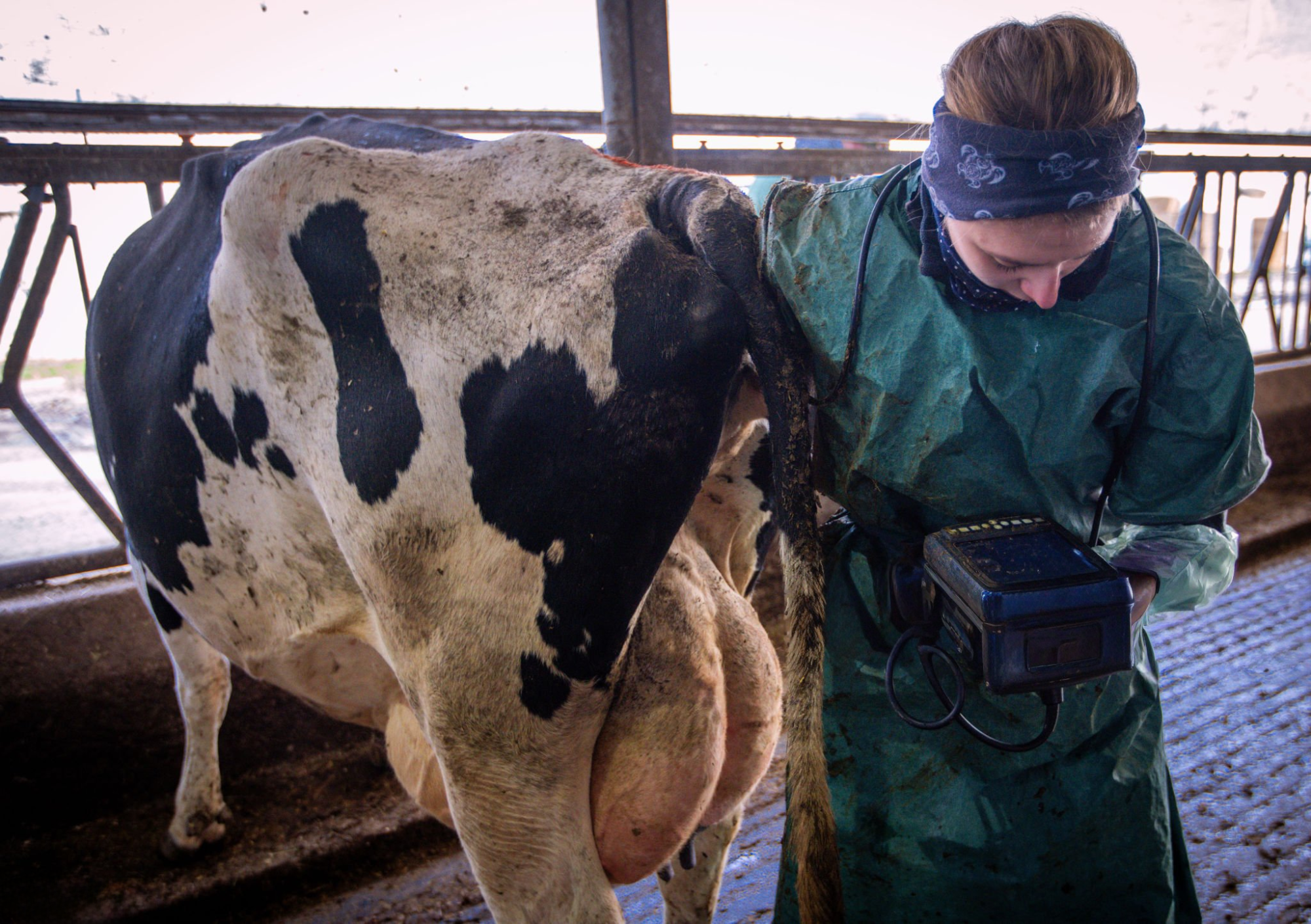
You look at the ultrasound monitor as the technician calls out the results. Bull. Bull. Bull. Heifer. Bull. Your stomach drops. You’ve been breeding 35% to beef, following the plan you set in January. The math was perfect on paper—$1,200 beef calves versus $200 dairy bulls. But now you’re staring at a 120-heifer shortage for next year, and replacement heifers are selling for $3,500 to $4,000 each.

How did this happen? You followed your breeding plan to the letter.

Here’s what’s interesting—the answer lies in a calculation that deserves more attention: the forward-looking replacement inventory formula. The beef-on-dairy movement has certainly delivered valuable calf revenue when we’ve needed it most. Lord knows, those $1,200 beef calves have kept many of us afloat. At the same time, it’s creating what CoBank economists describe as a significant structural adjustment period for operations whose monitoring systems haven’t evolved alongside their breeding strategies.

The New Economics Reshaping Dairy Breeding

You know, the numbers tell a compelling story about where we are as an industry. The National Association of Animal Breeders reports that beef semen sales to dairy operations climbed from 2.5 million units in 2017 to 7.9 million units in 2024—a 216% increase that reflects fundamental changes in how we think about calf value.

Day-old beef-cross calves now command $1,000 to $1,400. Dairy bull calves? You’re lucky to get $100 to $200, and that’s if you can find a buyer. For a 1,000-cow operation breeding 35% to beef, that’s approximately $210,000 to $245,000 in additional annual calf revenue. That’s real money when you’re dealing with volatile milk prices and input costs that just won’t quit.

But here’s what’s particularly concerning—and what many of us are just starting to realize. The Holstein Association has documented that each percentage-point shift toward beef breeding removes approximately 95,000 dairy heifers from the national pipeline each year. The USDA’s January cattle inventory report reveals our dairy heifer inventory has declined to 3.914 million head. That’s a level we haven’t seen since 1978, when we were milking very different cows in very different systems.

CoBank’s dairy quarterly analysis from August makes this clear: we’re facing an 800,000-head decline in dairy heifer inventory before any meaningful recovery begins in 2027. This replacement shortage is becoming increasingly apparent to anyone who’s tried to buy heifers lately. They’re simply not available—at any price in some regions.

What’s worth noting is how this plays out differently across borders. Canadian producers navigating supply management face unique constraints when beef revenue opportunities conflict with quota requirements. European operations are balancing beef-on-dairy opportunities with stricter environmental regulations and different subsidy structures. Australian and New Zealand producers, with their seasonal calving systems, face entirely different timing pressures. But the fundamental challenge—balancing today’s revenue with tomorrow’s replacements—that’s universal.

The Critical Calculation Most Operations Miss

Let me share something that I’ve found most operations overlook:

The Forward Replacement Inventory Formula:

Herd Size × (Age at First Calving ÷ 24) × Cull Rate × (1 + Heifer Non-Completion Rate) = Annual Replacements Needed

ScenarioDairy Pregnancies %Annual Heifer ShortageReplacement CostCrisis Total
Unmonitored Herd (No Weekly Tracking)35%-150$3,500-$4,000$525,000-$600,000
Target Range (Disciplined Monitoring)45-55%On targetN/A$0 (Averted)
Early Warning (April Detection)42-45%-50$3,500-$4,000$175,000-$200,000
Sexed Semen Response50%+ recovery-25$520/month semen$6,240
annual
Late Detection (June Preg Check)35%-120+$3,800-$4,200$456,000-$504,000

Based on conversations with producers across the country—and I talk to a lot of them—most operations make at least one of three common miscalculations that can really bite you later:

First, we tend to be optimistic about heifer completion rates. Many of us plan with the assumption that 90-95% of heifer calves will eventually enter the milking herd. But research from folks at Elanco, based on extensive herd monitoring, shows actual rates are 75-80% on well-managed operations. That 15-20 point gap? It compounds annually, and suddenly you’re wondering where your heifers went.

Second: Age at first calving matters more than we think. Penn State Extension research shows that each month beyond 24 months increases replacement needs by approximately 4%. Push from 24 to 26 months—maybe because your heifer grower had a tough winter or you had some respiratory issues—and a 1,000-cow operation needs 33 additional heifers annually just to maintain herd size.

Third: And this is the one that really catches people—not tracking dairy versus beef pregnancy percentages. Research from UW-Madison identifies this as a critical predictive metric for future replacement availability. You probably know your overall pregnancy rate, but do you know what percentage of those pregnancies are dairy versus beef?

When Reality Hits: The 60-Day Moment of Truth

Here’s how it typically unfolds. You set your breeding plan in January, usually over coffee at the kitchen table or during that annual meeting with your nutritionist and vet. Execute it faithfully through spring. Everything looks fine on paper. Then June arrives with 60-day pregnancy checks and fetal sexing capability.

The ultrasound technician begins: “Heifer, bull, bull, bull, heifer, bull…”

Your expression changes as you realize the sex ratio isn’t what you expected. And here’s the kicker—five months of breeding decisions are now locked into 280-day gestations. A shortage of 120 to 150 replacement heifers is mathematically inevitable. You can’t unbred those cows.

What happens next? Well, I’ve watched this play out too many times:

  • July: You’re calling every heifer dealer in 200 miles
  • August: Prices climb from $3,000 to $3,600 per head
  • September-October: Crisis pricing hits—$3,800 to $4,200
  • November: You either write massive checks or keep those arthritic fifth-lactation cows another year

The Weekly Metric That Changes Everything

What successful operations are doing differently—and this really surprised me when I first learned about it—is monitoring dairy pregnancies as a percentage of total pregnancies weekly. Not monthly. Not quarterly. Weekly.

Your Decision Tree:

  • Dairy % between 45-55%: ✓ Continue current strategy
  • Dairy % at 42-45%: ⚠ CAUTION – Monitor closely next week
  • Dairy % below 42% or declining 3 weeks straight: 🔴 ACTION – Adjust immediately

This 5-minute habit can save you six figures. Think about that for a second. Identifying trends in April or May allows correction before June’s breedings lock in. Waiting for a 60-day pregnancy confirmation means the opportunity has passed. The biology is already set.

The Sexed Semen Solution That Surprises Producers

When dairy pregnancy percentages decline, here’s what seems counterintuitive: increase sexed semen usage despite lower conception rates. But look at the math:

Semen TypeConception RateFemale %Result per 100 Breedings
Conventional40%50%20 female calves
Sexed33%90%30 female calves

Despite an 18% conception penalty, sexed semen generates 50% more females. The cost difference? About $520 monthly in additional semen cost versus $3,500-4,000 per replacement heifer. That’s a no-brainer when you run the numbers.

The 30-Minute Weekly System That Works

Here’s what you need—and you probably already have most of it:

  • Your existing herd management software
  • A basic spreadsheet (or, honestly, even a notebook works)
  • 30 minutes weekly

Track five simple data points:

  1. Week number
  2. Total pregnancies confirmed
  3. Dairy pregnancies
  4. Beef pregnancies
  5. Dairy percentage (calculated)

Veterinarians I work with report that producers have avoided $400,000 replacement crises with nothing more than disciplined weekly monitoring. That’s it. Thirty minutes that could save you from financial disaster.

What Successful Producers Do Differently

They adjust breeding strategies based on real-time data rather than annual projections. When dairy pregnancy percentages drift, they respond within weeks, not quarters. No committee meetings, no analysis paralysis—just adjustments based on data.

They monitor conception rates by semen type. One California producer who asked not to be named noticed a problem when dairy conception was running at 38% while beef was at 44%. Overall, it looked fine at 41%, but the divergence signaled specific dairy bull fertility issues that needed to be addressed immediately.

They plan realistic completion rates. A Pennsylvania producer shared this experience: “We assumed 90% of heifer calves would reach the milking parlor. Reality was 76%. That 14% gap over three years? 180-heifer shortage.” That’s a lesson learned the hard way.

And perhaps most importantly, they resist market timing. When beef prices surge—and they will again, markets are cyclical—disciplined operations maintain their breeding allocation rather than chase short-term revenue.

The Industry Dynamics Creating This Challenge

Several factors are converging that make this more complex than it was even five years ago.

Rabobank identifies $10 billion in new processing capacity requiring 2-3% annual production growth. That milk has to come from somewhere—either more cows or higher production per cow, both requiring careful replacement planning.

Research from UW-Madison shows that keeping older, lower-genetic cows costs several hundred dollars per lactation in unrealized genetic potential. It’s a hidden cost that adds up quickly when you’re holding onto cows past their prime.

CME data confirms we’re seeing unprecedented spreads between beef-cross and dairy bull values. That economic pressure to breed beef is real and it’s intense.

And here’s what makes it tough—once beef-on-dairy revenue reaches a significant portion of farm income, as industry analysis suggests is happening for many operations, returning to previous breeding strategies becomes financially challenging, even when replacement needs suggest you should.

These industry pressures aren’t just numbers on a spreadsheet—they’re reshaping how we make decisions every single day on our farms.

Practical Lessons from the Field

Looking at how these dynamics play out in real operations, the patterns become clear.

One California producer managing 1,500 cows, who preferred to remain anonymous, shared this sobering experience: “We bred 40% to beef without weekly monitoring. By July, we were 180 heifers short. Cost us $650,000 in purchased replacements plus another $80,000 in health and adaptation challenges. Now we monitor weekly—takes 20 minutes, prevents million-dollar mistakes.”

A Pennsylvania operation with 800 cows reported better results: “When our dairy percentage dropped to 43% in April, we immediately increased sexed semen usage. That early adjustment means we’re actually ahead on replacements now.”

And from the other side of the equation, a Minnesota custom heifer raiser tells me: “Three years ago, I had excess capacity. Today, I’m declining inquiries weekly. The offers I’m getting—$500 per head premiums just to accept calves, before any feeding costs—show how desperate the situation has become. But biological realities mean these animals require two years regardless of how urgent the need.”

Looking Ahead: What This Means for Your Operation

The beef-on-dairy opportunity has provided crucial revenue during challenging economic periods—I’m not arguing against it. As replacement availability tightens and prices reach historic levels, though, success will belong to operations that balance opportunity with disciplined management.

This isn’t really about choosing between beef revenue and dairy replacements. It’s about implementing systems that enable real-time response rather than hoping annual projections prove accurate. These principles apply whether you’re managing 3,000 cows in an Arizona dry lot or 200 cows on a Missouri pasture—the mathematics remain consistent, only the scale varies.

So here’s the question that matters: Are you monitoring the right metrics weekly, or are you waiting for problems to become crises?

Tracking dairy pregnancies as a percentage of total pregnancies requires just 30 minutes weekly. The cost of not monitoring? Producers nationwide are discovering it can easily exceed $400,000 when replacement shortages force them to make desperate purchasing decisions.

The beef-on-dairy opportunity remains valuable—genuinely so. But like all agricultural opportunities, it rewards those who measure, monitor, and adjust based on data—not those who set plans in January and hope for the best.

As we approach 2026, your dairy pregnancy percentage might be the most critical metric on your farm. The encouraging news? The tools and knowledge exist to navigate this successfully. It simply requires discipline and perhaps a shift in how we think about breeding management—from annual planning to continuous optimization.

Don’t know your current Dairy Pregnancy %? Go check your herd management software right now. If it’s below 42%, call your breeding advisor today.

KEY TAKEAWAYS

  • Your dairy pregnancy percentage predicts your future: Below 45% means you’re heading for a 150-heifer shortage worth $600,000—monitor it weekly, not annually
  • Timing is everything: Problems discovered in April can be fixed with breeding adjustments; problems discovered at June’s 60-day check are locked in for two years
  • Sexed semen is cheaper than panic: $520/month extra for sexed semen generates 50% more heifers and beats paying $3,500-4,000 per replacement
  • The 30-minute solution: Weekly monitoring of one metric (dairy pregnancies ÷ total pregnancies) has prevented $400,000 crises for disciplined producers
  • Action required today: Check your dairy pregnancy percentage now—if it’s below 42%, increase sexed dairy semen usage immediately

Complete references and supporting documentation are available upon request by contacting the editorial team at editor@thebullvine.com.

Learn More:

Join the Revolution!

Join over 30,000 successful dairy professionals who rely on Bullvine Weekly for their competitive edge. Delivered directly to your inbox each week, our exclusive industry insights help you make smarter decisions while saving precious hours every week. Never miss critical updates on milk production trends, breakthrough technologies, and profit-boosting strategies that top producers are already implementing. Subscribe now to transform your dairy operation’s efficiency and profitability—your future success is just one click away.

NewsSubscribe
First
Last
Consent

Navigate the World Dairy Expo Like a Pro: The Ultimate Guide for Dairy Enthusiasts

Planning to attend the World Dairy Expo? Discover essential tips, must-see events, and insider advice in our ultimate guide for dairy enthusiasts. Ready to dive in?

Welcome to the greatest celebration of all things dairy—the World Dairy Expo! For everyone who loves dairy, this yearly spectacle is not just any event; it’s a must-see site. Drawing people from all over the world, the World Dairy Expo presents a special fusion of knowledge, creativity, and community. Still, what really distinguishes it? 

Imagine thousands of dairy experts, farmers, and enthusiasts gathering in one location to exchange information, investigate the most recent technical developments, and honor their shared dairy passion. Here, you’ll be able to:

  • Witness world-class dairy cattle competitions.
  • Explore cutting-edge dairy technology and equipment.
  • Attend educational seminars and workshops.
  • Network with industry leaders and fellow enthusiasts.

The ideal forum for this is the World Dairy Expo. It’s where worldwide innovation meets enthusiasm for dairy. The World Dairy Expo is more than simply an event for people who like dairy; it’s an experience that will inspire, inform, and link you with the core of the dairy community.

The World Dairy Expo: From Humble Beginnings to Global Renown

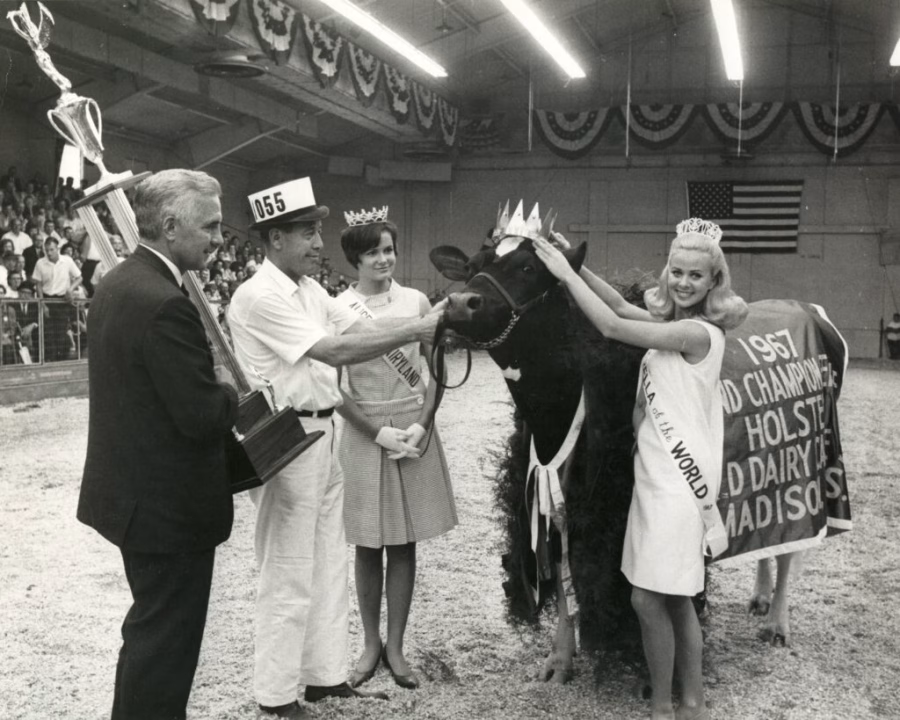
The World Dairy Expo has a storied history that dates back to 1967. Originally conceived as a regional event, its primary goal was to showcase the best dairy cattle from the Midwest. Over the years, it has evolved into an internationally renowned gathering, attracting participants from over 90 countries. Today, the Expo is not just about cattle; it’s a comprehensive celebration of all things dairy. From cutting-edge technology displays to robust educational seminars, the World Dairy Expo represents the pinnacle of dairy industry achievement and innovation. 

“The World Dairy Expo is where the global dairy industry meets.” – A sentiment echoed by countless attendees year after year.

This transformation from a modest regional fair to a global powerhouse is a testament to the industry’s dedication to progress and excellence. Whether you’re a seasoned dairy farmer, an agri-business professional, or a passionate enthusiast, attending the Expo provides unparalleled opportunities for growth, learning, and networking.

Your Essential Guide to the World Dairy Expo 2024 

Held yearly in Madison, Wisconsin, the World Dairy Expo is the main event for those who like dairy products and attracts a varied worldwide attendance. Set for October 1–5, 2024, this five-day event turns the Alliant Energy Center into a hive of dairy innovation and legacy.

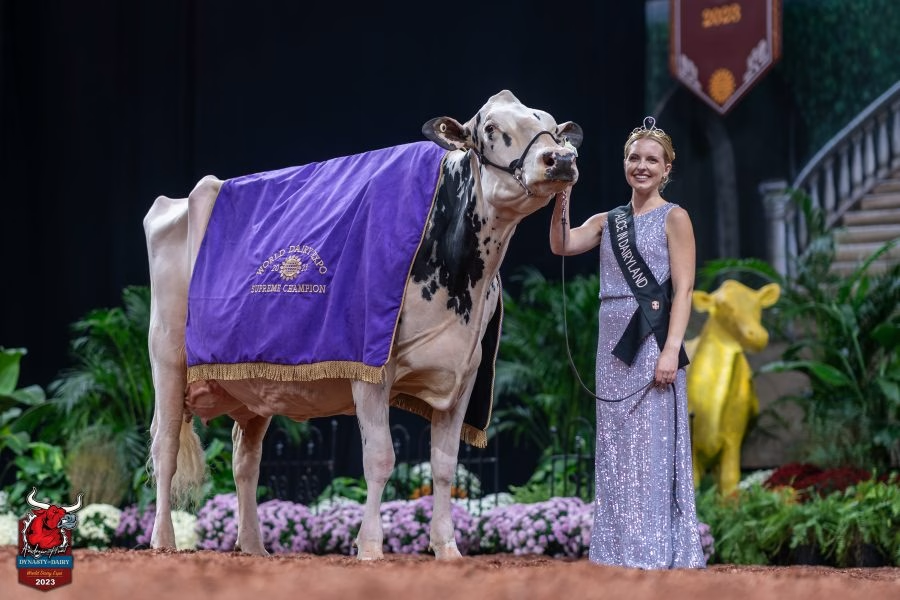
With more than 850 businesses exhibiting the newest in dairy technology, genetics, equipment, and services, participants may fully explore a plethora of goods and knowledge. Breed exhibits, Knowledge Nook educational seminars, and networking events like the evening Happy Hours at The Tanbark abound at the fair.

Who Will You See? Dairy farmers seeking to improve their operations, business leaders investigating the newest developments, and dairy product aficionados ready to find fresh, creative ideas draw a diverse audience to the World Dairy Expo. This broad mix of participants guarantees dynamic and exciting surroundings, promoting learning and teamwork.

The World Dairy Expo has something for everyone, regardless of your level of experience or merely enthusiasm for dairy. This is a unique chance to interact with business professionals, learn from their experiences, and honor the dynamic world of dairy.

Planning Ahead: Practical Tips for a Seamless World Dairy Expo Experience 

Making the most of the World Dairy Expo requires advance planning. These helpful guidelines will help you to guarantee a flawless and fun experience:

Travel Arrangements 

First things first, figure out your Madison, Wisconsin transportation. Book your flights early to maximize the discounts. Just a short drive from the event, the nearest airport is Dane County Regional Airport (MSN). Although there is plenty of parking at the Alliant Energy Center for those driving, it is advisable to come early to guarantee a place.

Accommodation Options 

Madison offers lodging to suit various budgets. For convenience, consider booking a hotel room near the Alliant Energy Center. Popular choices include the adjacent Clarion Suites and the Sheraton Madison Hotel. Look at local Airbnb properties or bed and breakfasts if you want a more homelike vibe. Book early, as accommodations fill up quickly during Expo week!

What to Pack 

  • Comfortable Shoes: You’ll be on your feet often, so wear comfortable walking shoes.
  • Weather-Appropriate Clothing: Wisconsin weather can be unpredictable, so pack layers.
  • Reusable Water Bottle: Stay hydrated while exploring the exhibits and attending sessions.
  • Notebook and Pen: Jot down insights from Knowledge Nook Sessions and breed shows.
  • Business Cards: Perfect for networking with industry professionals.

Must-See Attractions at the World Dairy Expo 

The World Dairy Expo is bursting with exciting events covering every aspect of the dairy business. Every dairy lover will find anything from modern technological displays to animal demonstrations.

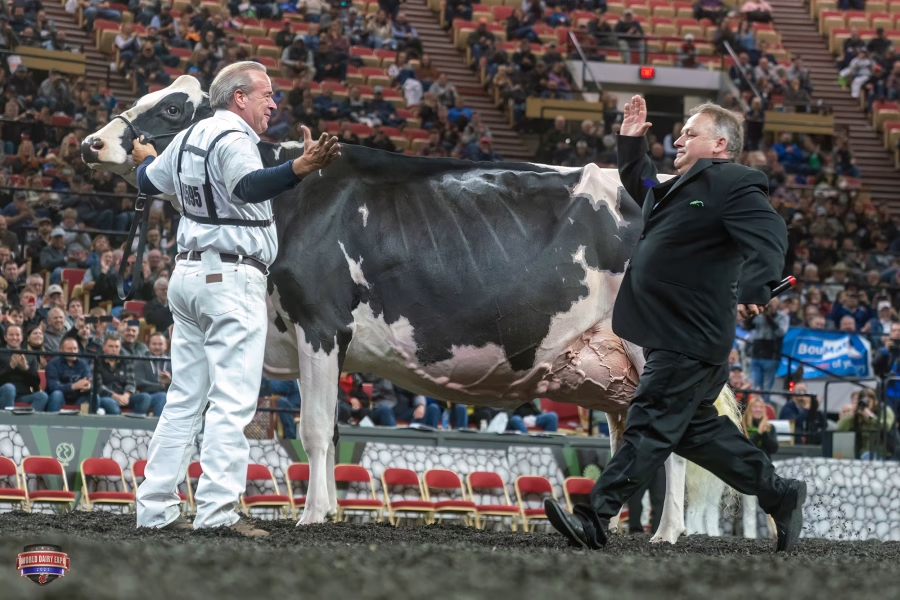
The cattle exhibitions scheduled from Sunday through Friday are among the attractions. These events provide an opportunity to see the best dairy cattle, highlighting outstanding breeding successes and genes. These exhibitions are both fascinating and instructive regardless of your level of breed passion or just curiosity about several varieties of dairy cattle.

The dairy product samples are worth visiting if you like dairy delights. From luscious yogurts to matured cheeses, you may taste a great variety of dairy products from across the globe. This is a great chance to investigate unusual tastes and discover your favorite dairy product.

Like those housed at the Knowledge Nook, the exhibition hosts instructional sessions. Deep dives into market trends, creative ideas, and new findings abound from scheduled presentations at 9:30 AM, 10:30 AM, 11:30 AM, 12:30 PM, 1:30 PM, and 2:30 PM. Anyone trying to keep current with industry developments or increase their expertise will find these sessions perfect.

Ultimately, the technological exhibitions show how innovation meets agriculture. These displays highlight the newest dairy innovations, from sophisticated herd management software to automated milking equipment. Visiting these areas may provide an understanding of the direction of dairy farming and offer possibilities for implementing new technology that might increase production and efficiency in your business.

All in all, the World Dairy Expo is a treasure trove of knowledge, taste, and experience of the best the dairy business has to offer.

Enhance Your Knowledge: Educational Opportunities at the World Dairy Expo

One of the World Dairy Expo’s most vital points is the wide range of educational possibilities it presents. The Expo is meant to be a center for the professional growth and education of the dairy community, in addition to a show. 

Several Knowledge Nook Sessions will be held during the event, each providing priceless analysis of the most recent developments and dairy business trends. For example, you might go to events including:

  • 9:30 AM – 10:15 AM: Start your day with a deep dive into advanced dairy genetics, focusing on cutting-edge techniques for improving herd quality.
  • 10:30 AM – 11:15 AM: Learn about innovative dairy farm management practices to enhance productivity and sustainability.
  • 11:30 AM – 12:15 PM: Explore the latest in dairy nutrition to ensure optimum health and yield from your herd.
  • 12:30 PM – 1:15 PM: Get updated on new dairy technologies and how they transform farm operations.
  • 1:30 PM – 2:15 PM: Engage in case studies discussing real-world challenges and solutions in dairy farming.
  • 2:30 PM – 3:15 PM: Discover insights on dairy market trends and how to stay competitive globally.

Anyone trying to keep ahead of the fast-changing dairy sector depends on these courses. They provide a unique opportunity to network with other professionals, get fresh ideas, and learn from subject-matter specialists. Maximizing your experience depends on the World Dairy Expo’s educational programs, whether your goals are to increase the efficiency of your farm, dig into the most recent studies, or investigate new business ideas.

Networking at the World Dairy Expo: Your Gateway to Industry Connections 

At the World Dairy Expo, networking offers opportunities to meet business partners, industry leaders, and other dairy aficionados. The Expo’s multifarious layout creates an atmosphere ready for meaningful connections.

Spend time at exhibitors’ booths. These areas are networking gold mines for more than exhibits and demonstrations. Talk with exhibitors to learn more and build relationships. Feel free to trade contact details for further projects.

Breed exhibitions and competitions, which will take place Sunday through Friday in 2024, draw a varied group of dairy experts. Use these meetings to network with colleagues and professionals. Sharing your passion and knowledge will inevitably spark significant discussions and possible cooperation.

Sponsored by Kemin Animal Nutrition & Health, Happy Hour from 4:00 PM to 6:00 PM at The Tanbark is not to be missed. These laid-back environments are ideal for socializing with new people. Carry business cards and be ready to discuss your initiatives and interests.

Attending Knowledge Nook Sessions is a great way to meet others who are equally passionate about something. These meetings are held every day and provide perfect chances to discuss the most recent ideas and market trends. Be active during Q&As and mingle with speakers and attendees afterward. 

Utilize Social Media: Leverage platforms like LinkedIn, Twitter, and Facebook to connect with attendees and follow Expo-related hashtags. Many industry professionals will share their experiences online, making it an excellent way to continue conversations and build relationships even after the event. 

To make the most of these interactions, be prepared with a brief yet impactful personal introduction and an elevator pitch. Have plenty of business cards, and follow up with fresh connections after the Expo to keep the dialogue continuing. Recall that every interaction is a chance for dairy business growth and learning.

Diving into the Local Culture and Cuisine of Madison, Wisconsin 

The World Dairy Expo 2024 isn’t just a showcase of dairy excellence; it’s also a launchpad for the latest efforts in sustainability and innovation within the industry. These themes resonate throughout the event, emphasizing their critical role in shaping the future of dairy farming. 

Start your culinary adventure by visiting local favorites like The Old Fashioned on Capitol Square, a restaurant renowned for its cheese curds and traditional Wisconsin fare. For a unique farm-to-table experience, head to L’Etoile, where locally sourced dairy products take center stage. 

Don’t take advantage of the Dane County Farmers’ Market, held every Saturday morning around the state capitol. It’s the perfect spot to sample and purchase artisan cheeses, fresh milk, and other dairy delights directly from local producers. 

If you’re interested in dairy-related attractions, a University of Wisconsin-Madison’s Dairy Barn tour is necessary. This historic barn is part of the university’s dairy science program. It offers a fascinating glimpse into modern dairy farming techniques. 

For a deeper dive into the region’s dairy history, The National Historic Cheesemaking Center in nearby Monroe, Wisconsin, provides an engaging and informative look at cheesemaking traditions through exhibits and hands-on experiences. 

Whether you indulge in gourmet meals or explore the local dairy industry, your time in Madison will be both culturally enriching and deliciously satisfying.

Driving the Future: Sustainability and Innovation at the World Dairy Expo 2024 

The World Dairy Expo 2024 isn’t just a showcase of dairy excellence; it’s also a launchpad for the latest efforts in sustainability and innovation within the industry. These themes resonate throughout the event, emphasizing their critical role in shaping the future of dairy farming. 
You’ll find that sustainability is not just a buzzword here; it’s a commitment seen in various exhibits and sessions. Exhibitors showcase technologies focused on reducing the environmental footprint of dairy farming, from advanced manure management systems to eco-friendly feed options. This year’s standout features include live demonstrations of cutting-edge dairy equipment designed to enhance efficiency while minimizing waste. 

The importance of these themes cannot be overstated. As the global demand for dairy grows, the industry must adapt to ensure environmentally sound and innovative practices. The World Dairy Expo is a powerful platform for sharing knowledge, sparking new ideas, and encouraging the adoption of practices that guarantee the industry’s economic and environmental future. 

By engaging with these sessions and exhibits, you’ll expand your knowledge and contribute to a broader movement towards a more sustainable and innovative dairy industry. Take advantage of this transformative conversation.

The Bottom Line

The World Dairy Expo is a pinnacle event for anyone passionate about dairy. There’s something for everyone, from the sprawling trade show and top-tier cattle showcases to many networking opportunities and educational sessions. The Expo brings together the best in the industry and provides a platform for learning, connecting, and innovating. 

So, whether you’re an industry veteran or a newcomer eager to dive into the dairy world, start planning your visit now. Seize the chance to expand your horizons, forge meaningful connections, and immerse yourself in the vibrant culture of the dairy community. With so much to explore and experience, the World Dairy Expo 2024 is a must-attend event that promises to enrich your daily journey in ways you can’t imagine. 

Don’t take advantage of this extraordinary opportunity. Mark your calendars, book your tickets, and prepare for an unforgettable experience at the heart of the dairy world. We’ll see you there!

Key Takeaways:

  • Plan your travel and accommodation early to secure the best options.
  • Pack appropriately: think comfortable shoes, weather-ready clothing, and essential items for networking.
  • Allocate ample time to explore must-see attractions, educational sessions, and innovative exhibits.
  • Take advantage of networking opportunities and engage with industry leaders and peers.
  • Dedicate time to enjoy the local culture and cuisine of Madison, Wisconsin.
  • Stay updated on sustainability trends and innovations driving the future of the dairy industry.


Summary: The World Dairy Expo, held annually in Madison, Wisconsin, attracts over 850 dairy businesses to showcase the latest dairy technology, genetics, equipment, and services. The event attracts dairy farmers, business leaders, and enthusiasts seeking to improve their operations. Attendees should pack comfortable shoes, weather-appropriate clothing, a reusable water bottle, a notebook, pen, and business cards for networking. The event offers attractions like modern technological displays, animal demonstrations, and cattle exhibitions, as well as instructional sessions providing insights into market trends and creative ideas. Technological exhibitions showcase dairy innovations like herd management software and automated milking equipment. Attendees can also engage in discussions, exchange contact details, and enjoy local attractions like The Old Fashioned on Capitol Square, L’Etoile, and the Dane County Farmers’ Market.

Send this to a friend