Archive for European dairy farming

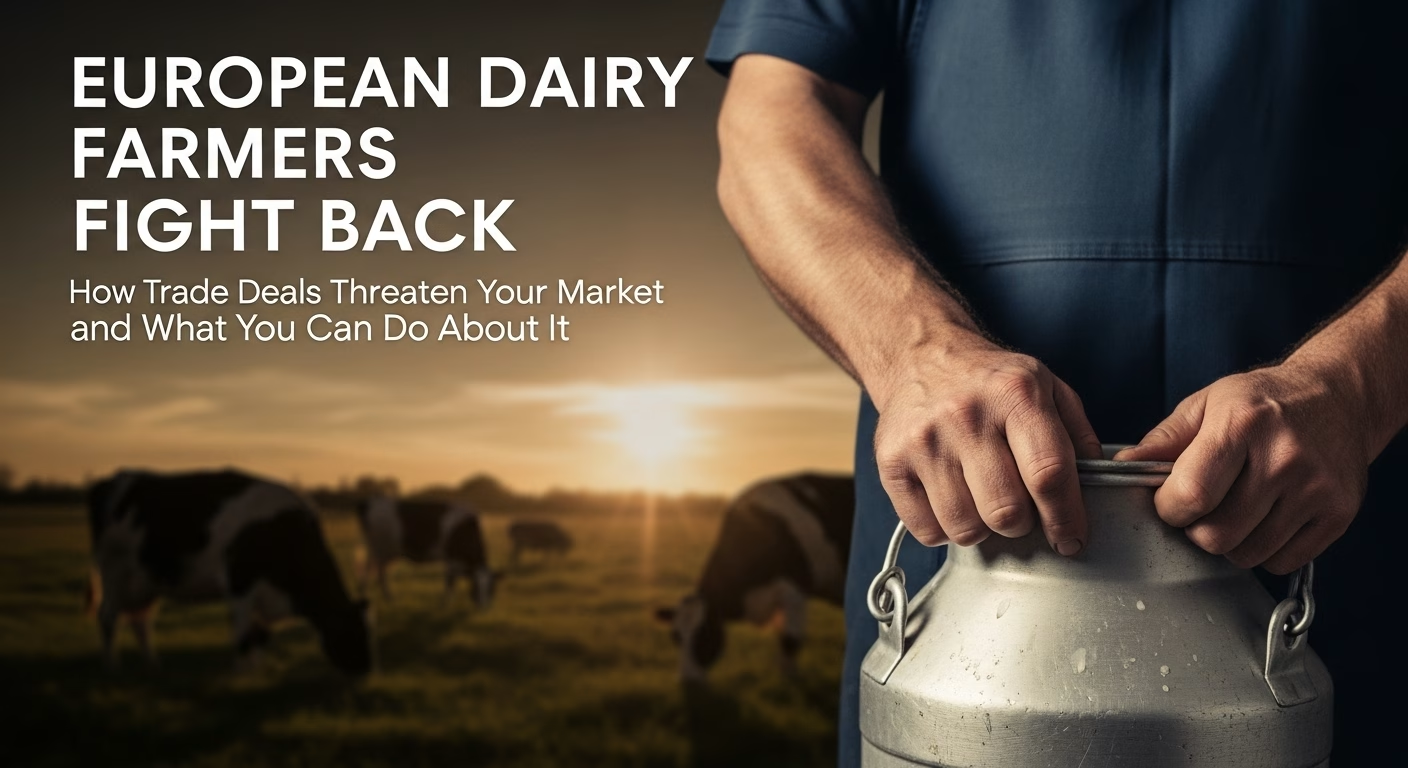
European Dairy Farmers Fight Back: How Trade Deals Threaten Your Market Share and What You Can Do About It

Stop waiting for trade policy salvation. EU farmers cutting losses 15% through component optimization while competitors flood markets with cheap imports.

EXECUTIVE SUMMARY: European dairy farmers are discovering that crying about unfair trade deals won’t save their operations—but strategic component optimization and technology adoption will. While Spanish farmers project €1 billion losses in 2025 from Mercosur and Ukraine import pressure, smart operators are leveraging the fact that cheese production is forecast to increase 0.6% to 10.8 million tonnes despite EU milk production declining 0.2% to 149.4 million tonnes. The uncomfortable truth: farms implementing IoT technology are achieving 5-12% efficiency gains and positioning themselves for premium cheese-quality milk markets, while their neighbors protest quotas allowing 30,000 tonnes of Mercosur cheese into EU markets. Technology adoption isn’t just about staying competitive anymore—it’s about survival in a market where every liter must generate maximum value through optimal butterfat and protein profiles. The EU’s policy shift from “Farm to Fork” to economic sustainability creates a narrow window for operations to build component leadership before import pressure peaks. Instead of hoping politicians will solve your problems, ask yourself: are you producing 4.5% butterfat milk that processors fight over, or 3.5% commodity milk headed for the blending tank?

KEY TAKEAWAYS

  • Component Wars Are Here: With cheese production increasing 0.6% while milk volume drops 0.2%, operations achieving above-average component levels (4.0%+ butterfat, 3.2%+ protein) command premium pricing that cheap imports struggle to match—delivering $120-180 more per cow annually through strategic breeding and precision feeding.
  • Technology = Survival Insurance: Farms implementing precision agriculture and IoT monitoring systems are capturing 5-12% efficiency gains while reducing health-related costs by 30%, creating competitive advantages that work regardless of trade policy changes or import quotas.
  • Policy Pivot Creates Opportunity: The EU’s strategic shift from environmental compliance to economic sustainability under the new “Vision for Agriculture and Food” provides a 2-3 year window for progressive operators to build market positioning before regulatory requirements potentially tighten again.
  • Double Standard = Competitive Edge: While European farmers face strict environmental regulations that Mercosur imports avoid, smart operations are leveraging this “burden” as a marketing advantage, using AI-powered monitoring systems to document quality advantages that consumers and processors increasingly demand.
  • Protest Politics vs. Profit Strategy: Spanish farmers projecting €1 billion losses are learning that waiting for blocking minorities against trade deals wastes time—meanwhile, operations investing in component optimization and technological efficiency are building resilience that survives any import pressure or policy change.
European dairy farming, dairy competitiveness, precision agriculture, milk component optimization, dairy technology adoption

European dairy farmers are facing an unprecedented challenge as massive trade agreements flood their markets with cheaper imports produced under lower standards. While EU milk production is forecast to decline 0.2% in 2025 to 149.4 million tonnes (European Union: Dairy and Products Annual), new quotas allow 30,000 tonnes of Mercosur cheese and 10,000 tonnes of milk powder into European markets at reduced tariffs. With cheese production forecast to increase 0.6% to 10.8 million tonnes despite declining milk supplies (EU Dairy Production Falls as Brussels Pivots from Farm to Fork to New Vision), the question isn’t whether this will impact your operation—it’s how quickly you’ll adapt to survive the component wars ahead.

Why Are European Dairy Farmers Taking to the Streets?

Here’s the uncomfortable truth the industry doesn’t want to discuss: European farmers aren’t just protesting trade policy—they’re fighting against a rigged game where they’re forced to play by premium rules while competing against commodity pricing.

French and Spanish farmers aren’t protesting just for the headlines. They’re fighting for their economic survival against what they see as a fundamentally unfair system that demands premium standards from European operations while opening the floodgates to imports produced under dramatically different rules.

Spanish farmers alone project losses of €1 billion in 2025, largely attributed to trade agreements that have driven prices below sustainable production costs. But here’s what the agricultural establishment won’t tell you: this isn’t just about short-term market disruption—it’s about a systematic dismantling of the European dairy industry’s competitive foundation.

Imagine you’re running a high-SCC penalty system where European farms get docked for anything above 200,000 cells/mL while imports face no somatic cell count requirements. That’s essentially what’s happening with environmental and welfare standards across these trade deals.

But why is this happening now? The answer reveals a fundamental flaw in how European policymakers think about agriculture. They’ve created a regulatory environment that treats farming like manufacturing—optimizing for compliance rather than competitiveness.

According to industry analysis, implementing the European Green Deal could reduce cattle output by 10-15%, with farm revenues varying significantly by region (How the European Green Deal Affects Dairy Farmers). While some farms may see revenue increases, others will face substantial decreases due to regional restrictions and varying CAP fund distributions.

Jean-Michel Schaeffer, head of French poultry industry group Anvol, summed up the core frustration: “Our demands are simple: reciprocity of rules, traceability abroad, and much clearer labeling.” It’s not about protectionism—it’s about fair competition.

What Does the EU-Mercosur Deal Mean for Your Dairy Operation?

Let’s cut through the political rhetoric and focus on the concrete impacts heading your way. The EU-Mercosur agreement, finalized in December 2024, creates specific import quotas that will directly affect your market positioning.

The Dairy-Specific Damage

Here’s the reality nobody wants to discuss: the cheese quota system is designed to fail European producers. The agreement establishes a 30,000-tonne quota for Mercosur cheeses entering EU markets, with gradual tariff reductions from current 28% levels over 10 years, starting with 3,000 tonnes initially.

Milk powder operations face an even bleaker scenario. Quotas expand from 1,000 to 10,000 tonnes over the implementation period, achieving tariff-free status at the end of the 10-year timeline. Considering that EU milk powder exports to major markets declined 20% between January-August 2024 versus 2023, you’re looking at a perfect storm of shrinking export opportunities and increased import competition.

Here’s what the dairy-specific quotas look like:

ProductQuota VolumeTariff ReductionImplementation Timeline
Cheese30,000 tonnes (starting 3,000)From 28% to zero10-year phase-in
Milk Powder1,000 to 10,000 tonnesTo zero tariff10-year phase-in
Infant FormulaVolume unspecified18% reductionImmediate implementation

Why This Matters for Your Operation: These quotas represent more than market access—they’re changing the competitive landscape for component-rich products. The conventional wisdom that European quality commands premium pricing is about to be tested like never before.

How Are Environmental Regulations Creating a Double Burden?

Here’s where conventional dairy industry thinking falls apart completely. The European Green Deal isn’t just an environmental policy—it’s accidentally become the most effective trade protection dismantling mechanism in EU history.

Following the Green Deal requirements could reduce cattle output by 10-15%, with significant variations in farm revenues depending on regional restrictions and CAP fund variations (How the European Green Deal Affects Dairy Farmers). The costs of additional environmental measures represent significant economic considerations for dairy farmers, while imports face no such requirements.

You’re being asked to meet increasingly strict environmental standards while competing against imports without such requirements. These environmental compliance costs aren’t just regulatory boxes to check—they’re substantial cost centers that directly impact your bottom line.

Think of it like this: It’s like running a precision feeding program that optimizes dry matter intake (DMI) to 24 kg/day for maximum metabolizable energy (ME) efficiency while your competitors dump whatever’s cheapest in the feed bunk. Your milk yield per cow might be higher, but their cost per hundredweight crushes yours.

Meanwhile, Mercosur producers operate entirely under different rules. They can use production methods that are restricted or banned in European operations, including GMO feeds and growth promoters. You’re literally being forced to compete with one hand tied behind your back.

But here’s the question nobody’s asking: Why did European policymakers create this system in the first place? The answer reveals a fundamental misunderstanding of how global agricultural markets actually work.

Spanish farmer leader Javier Fatas captured this perfectly: “This happens because of trade deals signed by Spain and the EU as part of geopolitics, bringing us prices too low to sustain our farms.”

The Ukraine Complication: Market Disruption in Real Numbers

The EU’s trade relationship with Ukraine has undergone significant changes that directly impact dairy markets. Following the expiration of the duty-free regime on June 6, 2025, new quotas have been reinstated for Ukrainian agricultural products (European Commission approves quotas for Ukrainian agricultural products).

The specific dairy-related quotas for the remainder of 2025 include:

  • Milk and cream: 5,833 tonnes (from annual 10,000 tonnes)
  • Dry milk: 2,917 tonnes (from annual 5,000 tonnes)
  • Butter: 1,750 tonnes (from annual 3,000 tonnes)

Ukraine could face an estimated loss of $800 million in export revenue for the remainder of 2025 due to these reinstated quotas. However, the damage to European farmers occurred during the period of full liberalization, when Ukrainian products flooded markets with minimal restrictions.

Why This Matters for Your Operation: The initial flood of Ukrainian dairy products during the emergency liberalization period created market disruptions from which neighboring EU farmers are still recovering. Even with quotas back in place, the market memory of that pricing pressure lingers.

Strategic Positioning: How Top Performers Are Adapting

While the trade environment presents challenges, smart dairy operations are already adapting their strategies. But here’s what the industry consultants won’t tell you: the conventional “premium positioning” approach is about to become irrelevant.

Component Optimization: The New Profit Strategy

Despite declining milk production (forecast down 0.2% to 149.4 million tonnes), cheese production is forecast to increase 0.6% to 10.8 million tonnes in 2025 (European Union: Dairy and Products Annual). This shift toward high-value products represents a strategic opportunity for operations willing to invest in specialized production capabilities.

Here’s the uncomfortable truth about component optimization: Most European dairy farmers still think like volume producers in a component world. EU processors are carefully deciding which products to prioritize with available milk supplies, with cheese remaining the primary output goal supported by solid domestic consumption and continued export demand.

This strategic product allocation comes at the expense of butter, non-fat dry milk (NFDM), and whole milk powder production (European Union: Dairy and Products Annual). Smart farmers need to align their production strategies with these processor priorities.

Technology Investment for Efficiency

Here’s where conventional wisdom about technology adoption gets dangerous. With margins under pressure, operational efficiency becomes critical. Technology adoption, including IoT collars and AI milk analyzers, offers 5-12% efficiency gains, helping offset declining cow numbers (EU Dairy Production Falls as Brussels Pivots from Farm to Fork to New Vision).

But here’s what the equipment dealers won’t tell you: Most farms implement technology without understanding the data it generates. The farms that will thrive aren’t just adopting technology—they’re fundamentally using it to rethink their operational philosophy.

Why This Matters for Your Operation: Lower milk production is expected to be only partially offset by lower fluid milk consumption (projected to decrease 0.3% to 23.5 million tonnes in 2025) (European Union: Dairy and Products Annual). This means every liter of milk must generate maximum value through optimal component profiles and efficient production systems.

Policy Response: From Stick to Carrot

Responding to widespread farmer protests, European policymakers have dramatically shifted their approach. The European Commission has replaced its Farm to Fork strategy with a new “Vision for Agriculture and Food” that shifts emphasis from environmental requirements toward economic sustainability, resilience, and simplification (EU Dairy Production Falls as Brussels Pivots from Farm to Fork to New Vision).

This represents a fundamental change in agricultural policy philosophy—moving from “stick to carrot” and “green to lean” approaches prioritizing farm economic viability alongside environmental goals.

But here’s the critical question: Why are European farmers depending on policy solutions instead of building competitive advantages that work regardless of trade policy?

The Vision for Agriculture and Food explicitly emphasizes economic sustainability rather than environmental compliance as the primary driver, marking a clear departure from previous Farm to Fork priorities. However, policy changes alone won’t solve European dairy’s structural competitive challenges.

What This Means for Your Operation’s Future

Here’s the strategic reality the dairy industry doesn’t want to discuss: European dairy farming is entering a new era where traditional competitive advantages no longer guarantee survival.

Immediate Actions You Can Take

Audit your component profile now. With cheese production prioritized despite declining milk supplies, understanding your butterfat and protein percentages becomes critical for strategic decision-making. Operations achieving above-average component levels can command premium pricing that imports struggle to match.

But here’s the critical question: How many European farmers actually know their true component costs versus volume costs?

Implement precision feeding protocols. Optimize dry matter intake and metabolizable energy levels to maximize component production. With technology offering 5-12% efficiency gains, precision feeding systems deliver proven ROI through reduced waste and improved milk composition.

Focus on cheese-quality milk production. Since processors prioritize cheese production (up 0.6% despite milk constraints), positioning your operation to supply high-quality cheese milk provides a competitive advantage and pricing premiums.

Long-Term Strategic Considerations

Technology adoption becomes non-negotiable. The efficiency gains from modern dairy technology aren’t optional luxuries—they’re survival requirements in a more competitive environment.

Here’s the strategic question every European dairy farmer must answer: Will you invest in becoming data-driven, or will you hope that traditional methods somehow remain competitive?

Consider this perspective: Just like transitioning from visual heat detection to activity monitoring collars, adapting to new trade realities requires embracing technology and data-driven decision making rather than hoping traditional methods will suffice.

The Bottom Line

European dairy farmers face their most challenging competitive environment in decades. With EU milk production declining 0.2% to 149.4 million tonnes while cheese production increases 0.6% to 10.8 million tonnes (European Union: Dairy and Products Annual), the farms that thrive will be those who stop waiting for policy solutions and start building component optimization and operational efficiency advantages that work in any competitive environment.

The protest movement across France and Spain represents more than frustration—it’s a wake-up call that traditional European dairy farming approaches are no longer sustainable in a global market. Whether through policy changes or market adaptation, the industry must find ways to ensure that high-standard production becomes economically advantageous, not just morally superior.

The EU-Mercosur deal’s 30,000-tonne cheese quota and 10,000-tonne milk powder quota, combined with reinstated Ukrainian quotas of 5,833 tonnes for milk/cream and 2,917 tonnes for dry milk, represent fundamental shifts in competitive dynamics that require an immediate strategic response.

Here’s your strategic challenge: While your competitors protest trade policies, will you build a component-optimized, technologically advanced operation that can compete regardless of import pressure?

Take action now: Evaluate your component profile using precision testing, identify your competitive advantages through systematic data collection, and start building the operational resilience you’ll need to thrive in Europe’s changing dairy landscape. The farmers who wait for policy solutions will be the ones struggling to survive when the full impact hits their bottom line.

Here’s the final uncomfortable truth: You can either be the operation producing premium cheese-quality milk that processors fight over or the one producing commodity milk that gets relegated to lower-value products. The choice you make today determines which category you’ll occupy when import pressure peaks.

Your decisive moment is now: Are you ready to embrace component optimization, technological efficiency, and data-driven management strategies that successful farms worldwide are already implementing, or will you continue hoping that traditional approaches will somehow compete against operations using every technological advantage available?

The data provides the roadmap. Your response determines whether you’ll lead or follow in European dairy’s rapidly evolving competitive landscape.

Ready to transform your operation? Start with a comprehensive component analysis and technology audit. The farms implementing these strategies today will be the industry leaders tomorrow—while those waiting for easier times may find themselves waiting forever.

Learn More:

Join the Revolution!

Join over 30,000 successful dairy professionals who rely on Bullvine Weekly for their competitive edge. Delivered directly to your inbox each week, our exclusive industry insights help you make smarter decisions while saving precious hours every week. Never miss critical updates on milk production trends, breakthrough technologies, and profit-boosting strategies that top producers are already implementing. Subscribe now to transform your dairy operation’s efficiency and profitability—your future success is just one click away.

NewsSubscribe
First
Last
Consent

From Passion to Prestige: Bel Holstein’s Journey to Becoming a European Dairy Powerhouse

Learn how Bel Holstein turned family love for cows into European dairy success. What hurdles did they overcome, and what’s their secret to thriving? 

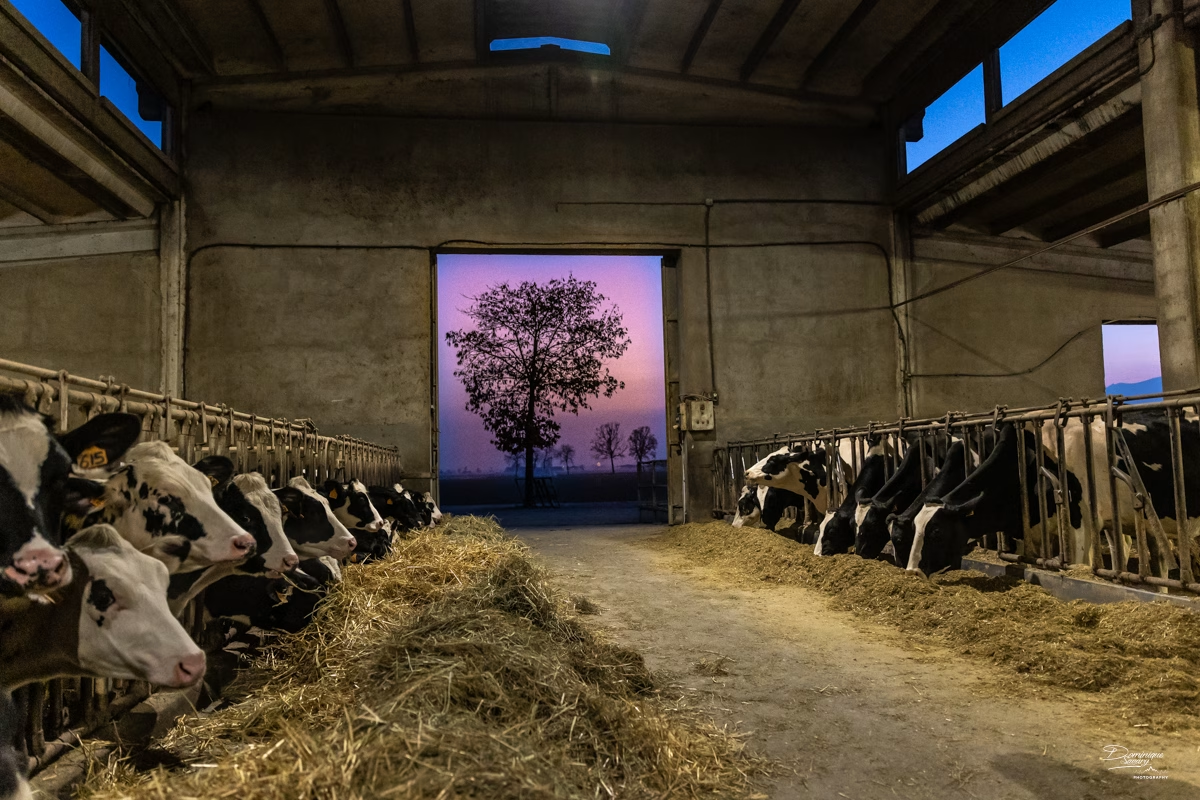
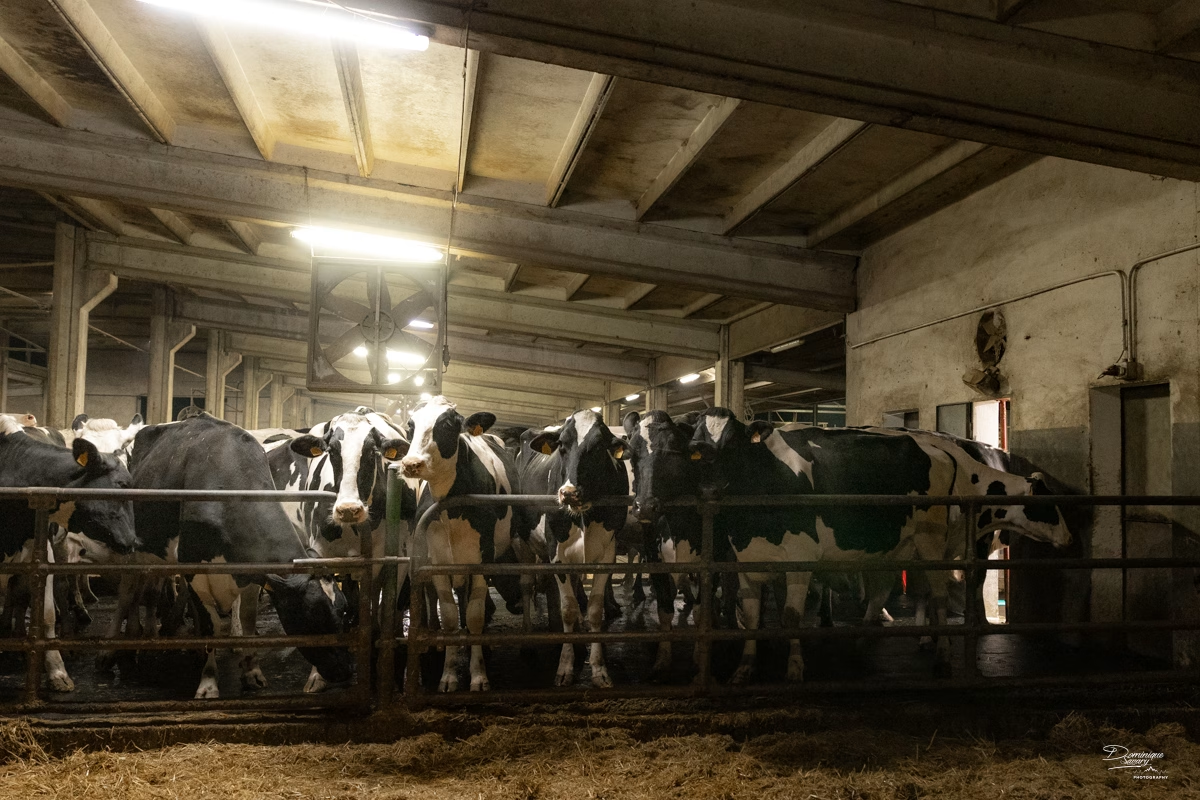
Photo by Dominique Savary 

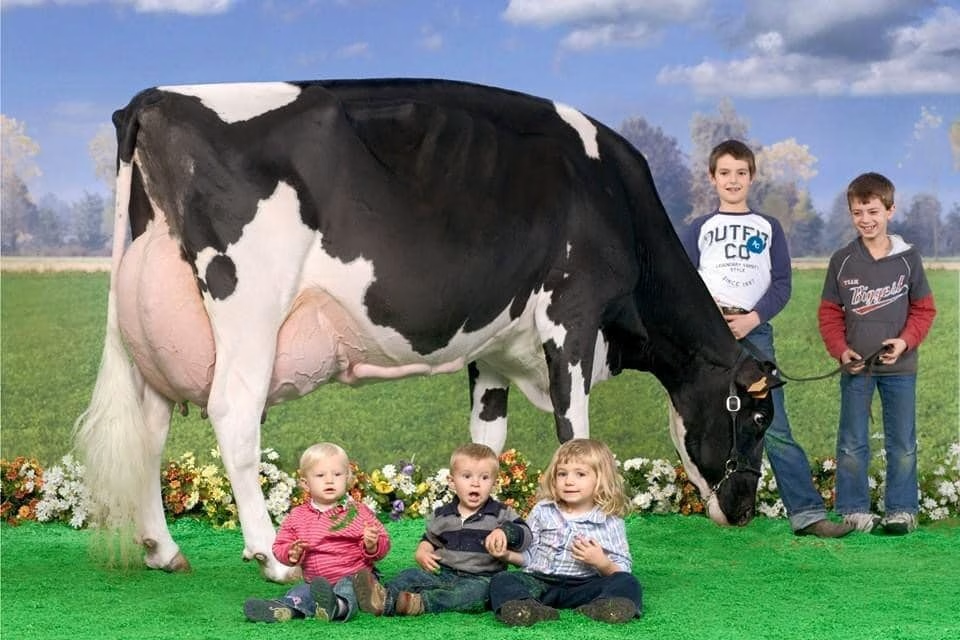
In the beautiful landscapes of Italy, where old traditions meet new ideas, the story of Bel Holstein unfolds like a well-aged wine—rich and celebrated. It all started from humble beginnings, with three brothers, Mauro, Giuseppe, and Piero. Driven by youthful dreams and the wise advice of their father, Renato, they embarked on a remarkable journey. Inspired by their family’s deep roots in caring for animals, they began participating in Holstein shows in the late 1980s. What started as a small effort soon became a mission that pushed them to the top of European dairy farming. Mauro remembers, “Our first heifer impressed everyone back in 1987, and that moment sparked a dream,” highlighting the early ambitions and bold moves of those early years. Through hard work, careful breeding, and a strong focus on quality, Bel Holstein symbolizes pride in Italy’s farming history. This success shows their dedication—a mix of family passion and industry skill that continually shapes the future of Holstein farming. This story isn’t just about farming; it’s about preserving a legacy and ensuring that every cow, show, and sale is marked by excellence.

A New Dawn in Dairy: From Piemontese Traditions to Holstein Triumphs

Bel Holstein’s story begins with a family known for breeding cattle, specifically the local Piemontese breed. This breed was once used for dairy and beef but is now only used for beef. In the early 1980s, the family started breeding Holsteins, motivated by ambition and the excitement of winning in dairy farming. 

This change came with challenges. Before the internet, the Bel family had to rely on magazines like the Holstein Journal to see the top cows from big contests like the Royal and WDE. Their efforts were driven by a genuine love for cattle and dreams of having a champion at the Cremona show, Italy’s top event for Holsteins. 

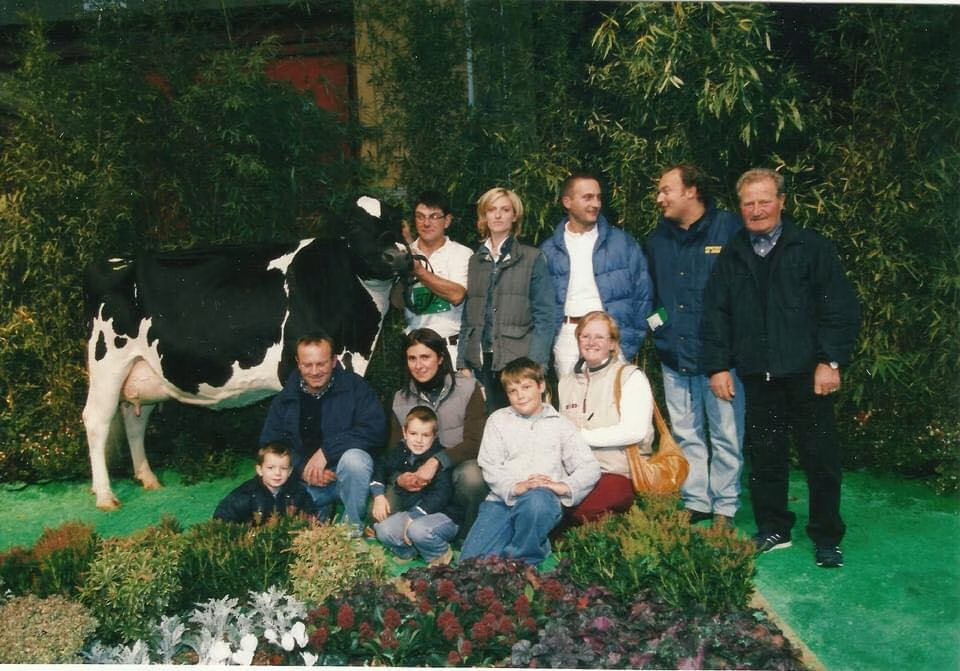
1987, their hard work paid off when they entered their first official Holstein show. Their debut was impressive as a Chairman’s daughter won her class, proving their careful breeding and preparation were successful. This win not only put Bel Holstein on the map but also confirmed the family’s belief in balancing show participation with commercial potential, as suggested by Renato. This first triumph marked the beginning of their respected place in Holstein breeding.

Family Harmony: The Heartbeat of Bel Holstein’s Success 

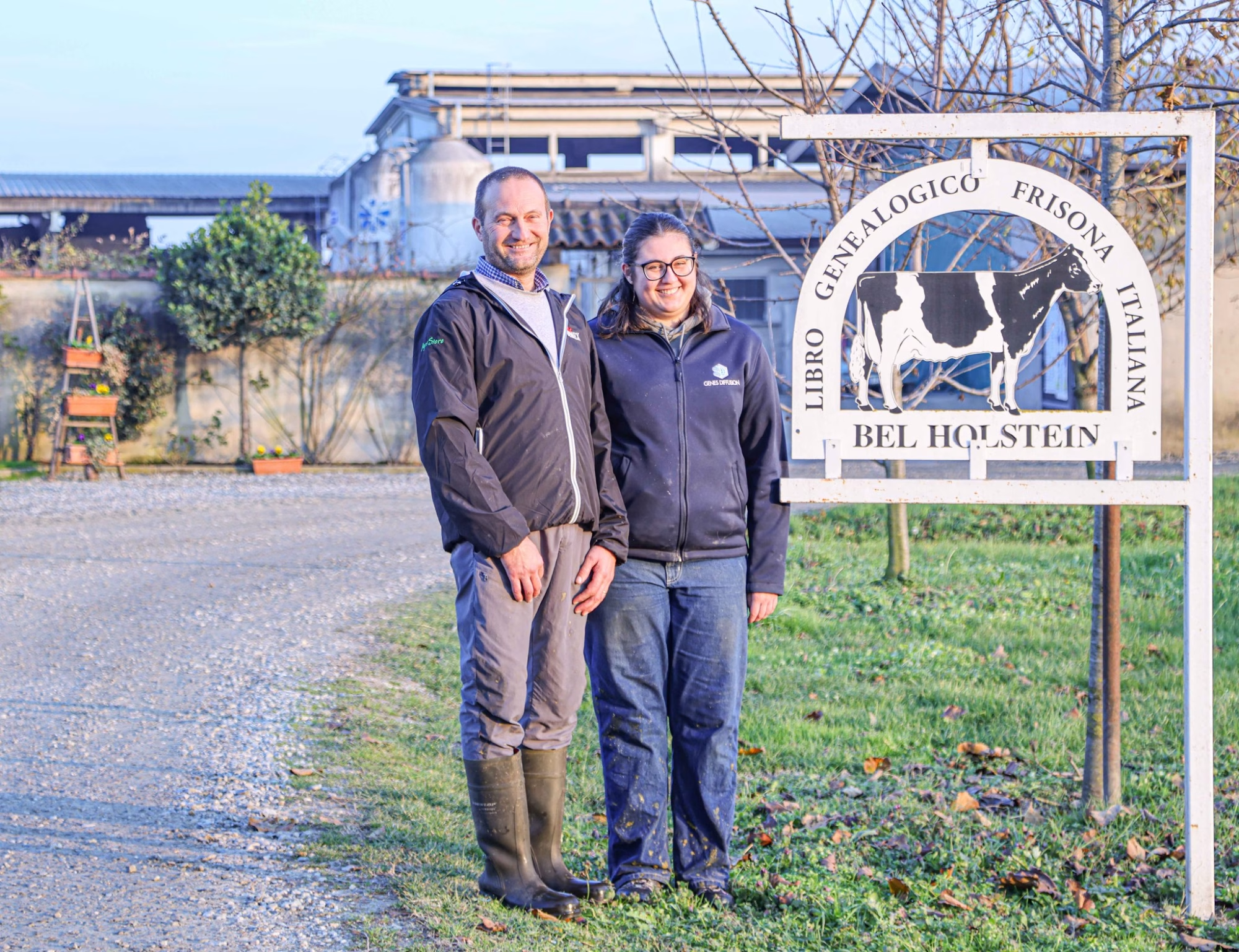
Mauro and daughter Greta Beltramino. (Photo Carl Saucier)

Bel Holstein’s story is a testament to the power of family, where everyone plays a crucial role in shaping the farm’s vision and executing its daily tasks. At its core are two brothers, not just passionate but also skilled, leading the farm into the future. One brother finds joy in working in the barn with the help of two workers and his daughter Greta, a sign of the new generation’s eagerness to learn. With assistance from his sons, Giulio, Paolo, and Andrea, the other brother manages the fields and the biogas plant, ensuring this vital part of the farm runs smoothly. Francesco, the eldest son, his girlfriend Chiara, and their cousin Cecilia take on the intricate task of clipping and fitting the cows—a skill passed down and improved each generation. This family’s dedication and love for their work are truly inspiring, serving as a beacon of hope for the future of dairy farming. 

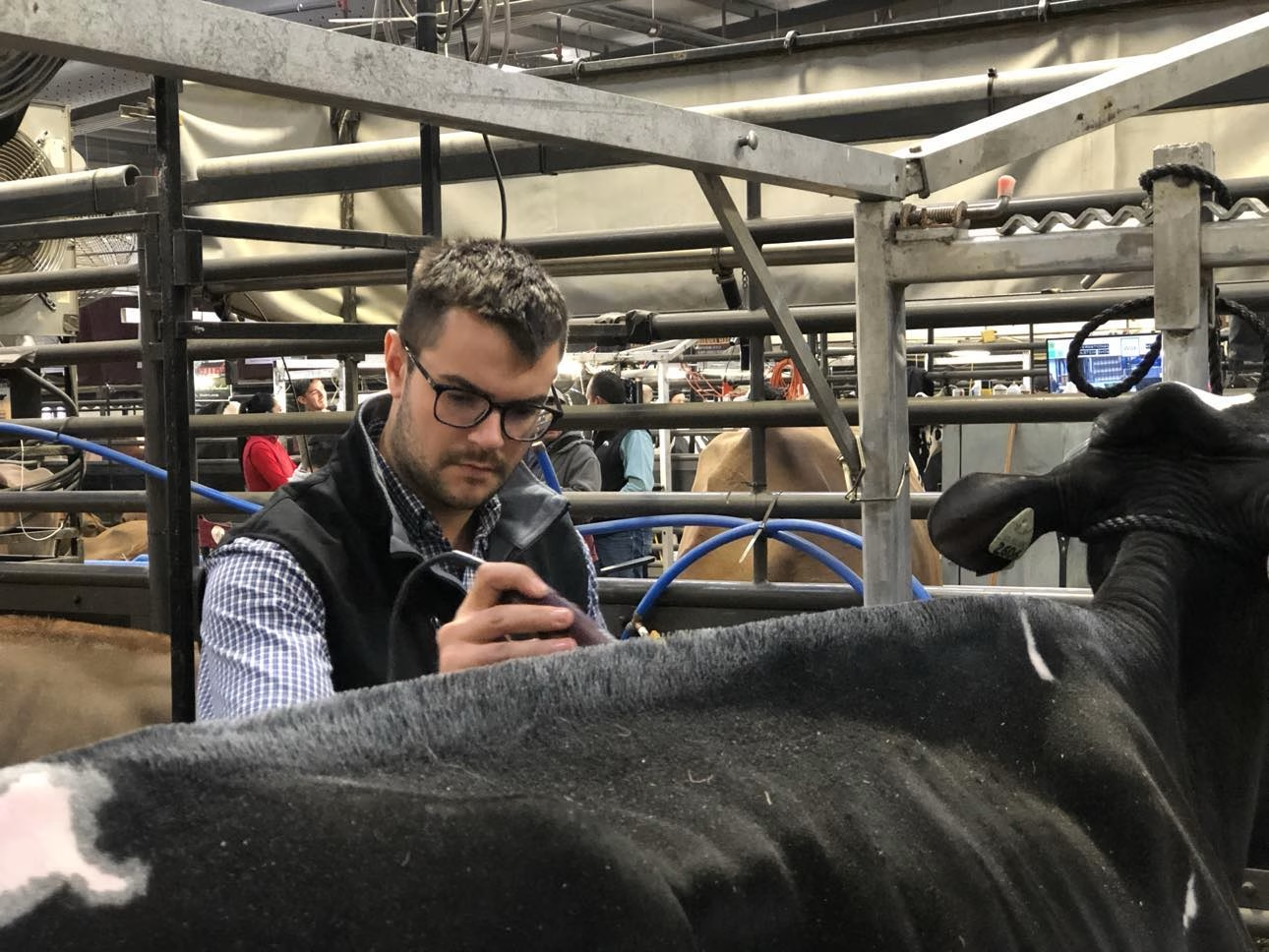
Francesco Beltramino clipping at WDE Madison

It’s about more than today; Giuseppe, though not involved in day-to-day farm work, still shares his experience and contacts from around the world, providing vital continuity and strong ideas. Even those who don’t work daily, like his hardworking wife Barbara and their youngest daughter Emma, contribute during shows and when there are barn visits. This teamwork, blending youthful energy and experienced guidance, reflects the farm’s mission: to strive for excellence in dairy farming, staying strong and hopeful as agriculture evolves.

Giuseppe Beltramino Judging at 2017 Italian National Show

Giuseppe Beltramino Judging at the 2017 Italian National Show

Triumphs on the Global Dairy Stage: Bel Holstein’s Legacy of Excellence

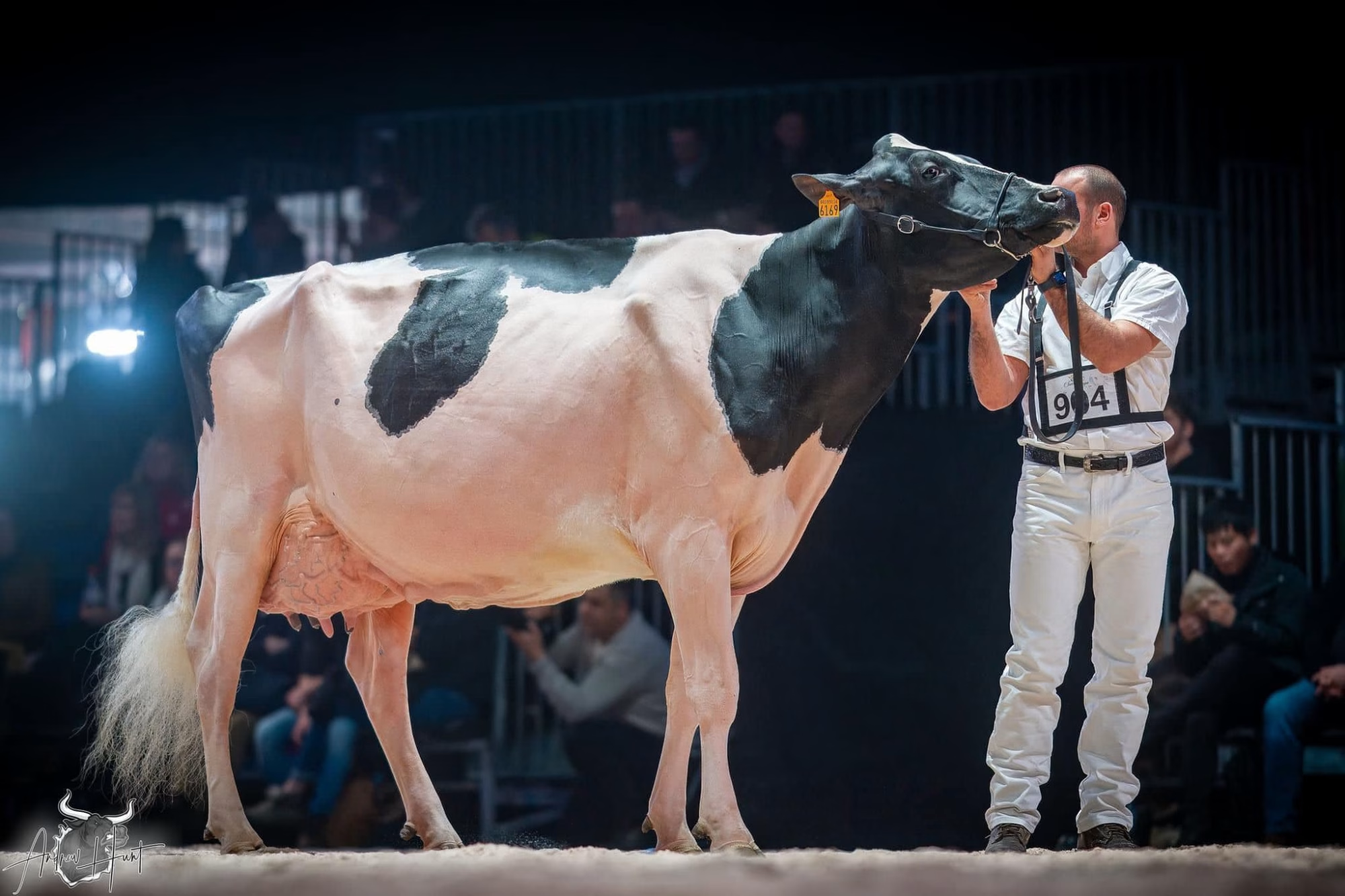
Bel Holstein has made a name for itself nationally and internationally with impressive achievements at significant events like the Cremona Show and the Swiss Expo. The 2004 Cremona Show was pivotal, where Bel Mtoto Diana was crowned Grand Champion. This win, the highest honor at the show, showcased Bel Holstein’s intense breeding and dedication. Al-Pe Doriana won the Reserve Grand Champion title, proving its strength in Italian dairy circles and making a mark with its continuous high performance. 

Al-Pe Doriana

Al-Pe Doriana became a symbol of success, achieving an EX97 classification, which boosted Bel Holstein’s reputation for quality and reliability—a sign of trust for future buyers and partners—Fast-forward to the 2017 Swiss Expo, where their skill was recognized internationally. Winning Junior Champions in the Red & White and Holstein categories, Reserve Grand Champion, and Honorable Mentions showed their strength beyond Italy. 

These achievements are more than just trophies; they have helped Bel Holstein grow and increase their brand’s fame. As their reputation grew, so did their business opportunities, creating partnerships and entering new markets. These successes have made Bel Holstein a go-to name for international dairy colleagues and clients, all eager to connect with such a high-quality producer. Their commitment to developing champions ensures each show ring appearance catches the eye and sets up long-term success in dairy farming.

Resilient Roots: Navigating the Cycles of Dairy Farming with Bel Holstein

The dairy industry is fraught with surprises and difficulties that can test even the most experienced farmers. Bel Holstein’s ability to adapt and remain steadfast has seen them through these challenges. Over the years, they have navigated economic troubles, fluctuating milk prices, new technology, and rule changes. Yet, their approach has remained optimistic but cautious, blending hope with strategic planning. This resilience is a testament to their commitment to the industry and confidence in weathering any storm. 

When dealing with the ups and downs of dairy farming, Bel Holstein stays calm, not letting good or bad times affect their plans too much. This mindset is evident in their daily work and their plans for the future. They can adjust by using family and community support and trying new ideas, showing they understand how the industry changes. 

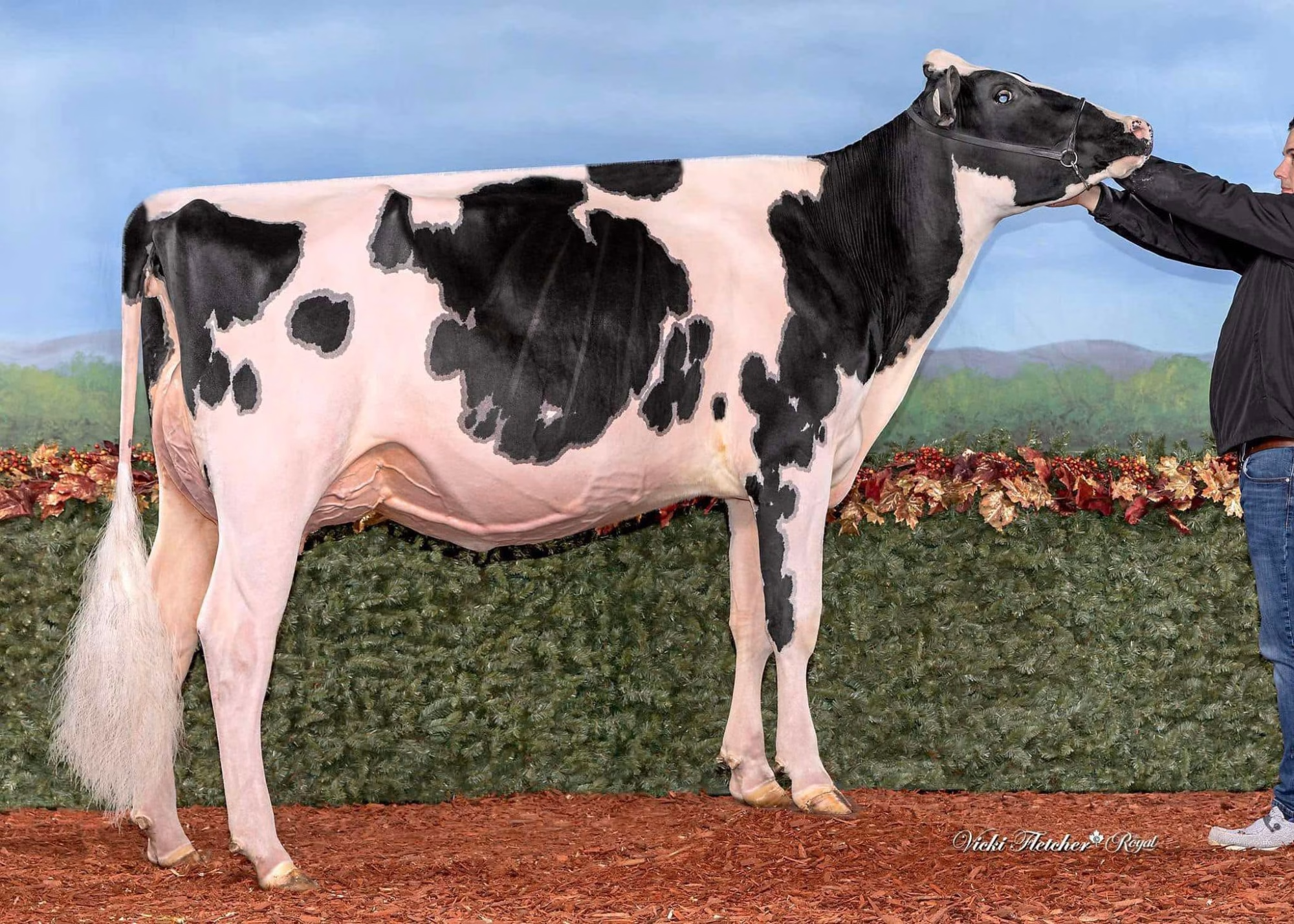
Du Bon Vent Inkapi EX-97-IT
Brawler x VG-85 Knowledge x Du Bon Vent Epopee VG-89-FR
Res. Sr. Champion & HM. Grand Champion Montichiari 2019
Grand Champion Verona Dairy Show 2022

Their success partly comes from watching industry trends while staying true to their traditional values. By building strong connections within their community and industry, Bel Holstein has shared and learned knowledge that helps them stay strong. This network, which includes other farmers, industry experts, and local authorities, also supports them during more considerable industry changes or local problems, like seasonal diseases or changing consumer habits. 

At the heart of Bel Holstein’s strength is their profound love for what they do. They are patient and determined, going above and beyond their daily tasks. They understand the importance of consistently caring for their cows, ensuring their health and productivity despite external pressures. This level of dedication is not just admirable. Still, it also sets a high standard for others in the dairy community, fostering a culture of respect and appreciation for the animals at the core of their livelihood.

The Art of Balance: Breeding for Beauty and Productivity at Bel Holstein

Bel Holstein’s breeding strategy is about creating beautiful and productive cows. This involves picking bulls that improve udders without going to extremes in production and type. By avoiding extreme traits, Bel Holstein keeps a herd that works well and looks good. They believe preparation for shows starts at birth, giving early care to calves so they perform well in milk production or the show ring. Their herd classification proves the success of their strategy, with 15 cows rated Excellent (EX) and 59 Very Good (VG), showing their focus on improving genetics and managing livestock

Bel Holstein is committed to balancing beauty with efficiency. They carefully pick bulls that enhance milk yield and cow shape. These bulls are chosen not for extreme production but for improving udder quality, which is crucial for a cow’s lifespan and productivity. However, there’s a challenge with excessive height, which can look impressive in shows but cause management issues. 

Finding this balance requires planning and continuous effort. By keeping a herd that shows ideal Holstein traits without losing function, Bel Holstein shows its dedication to careful breeding practices. By avoiding too much focus on height traits, they ensure the herd stays healthy and practical, keeping beauty and productivity together without one outshining the other.

Embracing the Human Element: Bel Holstein’s Commitment to Tradition in a Technological Age

While technology is changing dairy farming, Bel Holstein shows the value of traditional methods. While many farms use machines for milking and feeding, Bel Holstein relies on the skills gathered over many years. 

The choice to avoid advanced technology isn’t because technology is bad but because of the special connection between farmer and cow. Machines often need help to replace this connection. This approach emphasizes a key idea: human passion is key to excellence. 

Understanding animal behavior can be as insightful as using any digital tool. Bel Holstein believes machines can only replace the expertise gained from years of hands-on experience. This helps them effectively care for their cows and meet their needs with great understanding. 

At Bel Holstein, focusing on observing and engaging with the herd is central to their success. By sticking to these methods, they keep their herd healthy and productive. This shows that even in a high-tech world, human involvement is crucial for success in dairy farming.

𝐁𝐞𝐥 𝐁𝐚𝐠𝟐 𝐓𝐚𝐧𝐭𝐮𝐦 𝐆𝐞𝐦𝐢𝐧𝐢𝐚𝐧𝐚 𝐕𝐆𝟖𝟔 – A promising 1st calf from the family of the one and only 𝐷𝑢 𝐵𝑜𝑛 𝑉𝑒𝑛𝑡 𝐼𝑛𝑘𝑎𝑝𝑖 𝐸𝑋97!!

Bridging Tradition with Innovation: Bel Holstein’s Vision in the Evolving Italian Dairy Landscape

Bel Holstein stands firm at the crossroads of tradition and innovation in Italy’s dairy industry. The family is focused on a future where they can return to international events. These beloved fairs and shows provide more than competition; they offer essential networking and business opportunities. For Bel Holstein, visibility and reputation at these events highlight their exceptional breeding skills and excellent care practices. 

Bel Holstein’s goals extend beyond the show rings. In Italy, with its varied approaches to dairy farming, the farm envisions a future where both large operations and small farms prosper. This vision depends on adding value to each operation. Whether through direct milk product sales or enhancing their livestock and genetics, Bel Holstein is committed. 

It is key to maintaining their strong genetic portfolio. Bel Holstein breeds for both beauty and productivity, ensuring they meet the needs of local and international markets. Their dedication to improving their herd makes them a top contender in the dairy world

Bel Holstein also wants to strengthen ties with the global dairy community. New collaborations and learning opportunities will emerge as travel and events normalize post-pandemic. The family values knowledge from other respected breeders and sees this as a chance for shared growth and success. 

Bel Holstein blends tradition with ambition, valuing past practices while exploring new paths. Their lasting impact on dairy farming is not just based on past successes but also on a forward-thinking approach that embraces local traditions and global progress. 

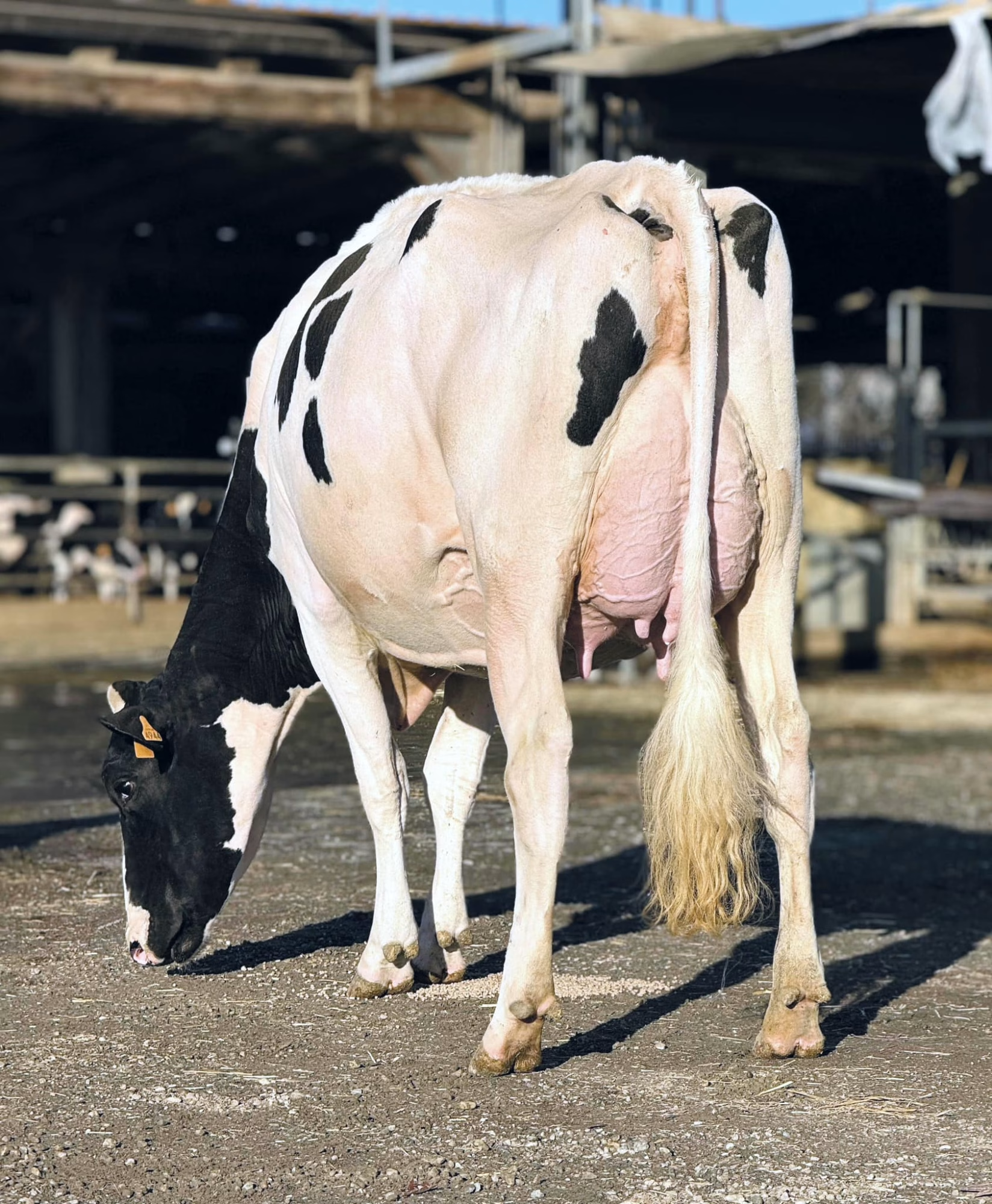
𝐁𝐞𝐥 𝐂𝐡𝐢𝐞𝐟 𝐄𝐬𝐭𝐞𝐫𝐢𝐧𝐚 𝐄𝐗𝟗𝟐, 3rd lactation 4 years old, in her working clothes! Esterina is a Chief granddaughter of 𝑃𝑜𝑧𝑜𝑠𝑎𝑎 𝐺𝑜𝑙𝑑𝑤𝑦𝑛 𝑆𝑜𝑛𝑖𝑎 𝐸𝑋94. Owned with Bag2 & All.Nure

Bold Aspirations and Formidable Resilience: Navigating Bel Holstein’s Future in Dairy Farming

Bel Holstein is looking towards the future with the same ambition that’s marked its past successes. Though it has faced global challenges like the COVID-19 pandemic and regional issues like the Blue Tongue disease, these experiences have only strengthened its resolve. It is eager to return to international shows and fairs, which will help it showcase its cattle and build essential business relationships. As these events happen regularly again, Bel Holstein aims to cement and grow its presence globally, showcasing cattle that excel in looks and production. 

Bel Holstein sees a bright future for dairy farming in Italy, with room for both large and small farms. Their focus is on adding value through high-quality genetics and excellent animals. By selling milk and their herd’s genetics, they stick to a model that values direct sales and show-quality animals. This approach helps them stay competitive in changing industry trends. 

For Bel Holstein, innovation isn’t just about new technology. It’s also about quality human interaction and skilled work. By maintaining their herd quality and engaging with the dairy community locally and internationally, they’re ready to adapt to the changing dairy landscape. They fine-tune their unique selling points, balancing tradition with modern farming needs. This strategy helps Bel Holstein stand out for sustainability, quality, and excellence in the Italian dairy sector and inspires their commitment to progress.

𝐁𝐞𝐥 𝐂𝐡𝐢𝐞𝐟 𝐆𝐮𝐞𝐧𝐝𝐚𝐥𝐢𝐧𝐚 𝐕𝐆𝟖𝟕

𝐁𝐞𝐥 𝐂𝐡𝐢𝐞𝐟 𝐆𝐮𝐞𝐧𝐝𝐚𝐥𝐢𝐧𝐚 𝐕𝐆𝟖𝟕

Guiding Stars: Mentorship and Legacy at Bel Holstein 

Mentorship has been crucial in shaping Bel Holstein’s journey, supporting its success, and encouraging new ideas. In their early years, Farm Alpag in Alessandria had a significant influence. Led by Luigi Manfredini, known for his attention to detail in show preparations, the Bel Holstein team learned the art of showing dairy cattle. These lessons in precision and dedication continue to guide their high standards today. 

Their talks with experts like Donald Dubois also provided valuable insights. Dubois was a respected figure in the industry, moving from fitter to judge. The Bel Holstein team admired his skills and dedication, which matched their values. His example highlighted the importance of expertise in every role, shaping their approach to caring for their cattle and the farm’s legacy. 

𝐉𝐀𝐂𝐎𝐁𝐒 𝐀𝐋𝐋𝐈𝐆𝐀𝐓𝐎𝐑 𝐁𝐀𝐕𝐀𝐑𝐈𝐀 𝐕𝐆𝟖𝟕 Bavaria is an Alligator, daughter of JACOBS HIGH OCTANE BABE EX96 that Bel Holsteins owns with Ferme Jacobs, Elmvue Farms and Cioli Farms!

Today, Ferme Jacobs is admired for its success in showings and farm operations. Their mix of new ideas and traditional values inspires Bel Holstein to achieve a similar balance of beauty and productivity. This effort aims not just for awards but also to improve their herd and farming practices

These mentors and herds teach Bel Holstein to respect tradition, embrace innovation, and strive for quality. Their lessons are reflected in daily work, from the barn to the field and on international stages, forming a legacy built on inspiration and hard work.

Navigating the Twin Pillars of Success in Dairy Showmanship and Sales

Aspiring dairy cattle breeders starting their journey in the busy world of cattle showing and marketing should listen to advice from years of hands-on experience. The key to success lies in showing and selling skills. These two aspects work together and are vital for your reputation and business. 

First, be ready to sell even your best animals. Keeping a flexible inventory is essential for your business and reputation. If a buyer offers a reasonable price, taking it can lead to good relationships and financial success. Each sale helps build your name in the industry. 

It’s also important that your show successes lead to broader recognition. Winning in the show ring is excellent, but the real work is ensuring your animals impress outside the ring, too. Every detail is essential, from preparation before the event to how your cattle look throughout the show. Please keep them in top condition so everyone, from other breeders to potential buyers, is impressed by their quality. This approach will strengthen your reputation and expand your influence in the dairy world, establishing you as a dedicated and skilled breeder.

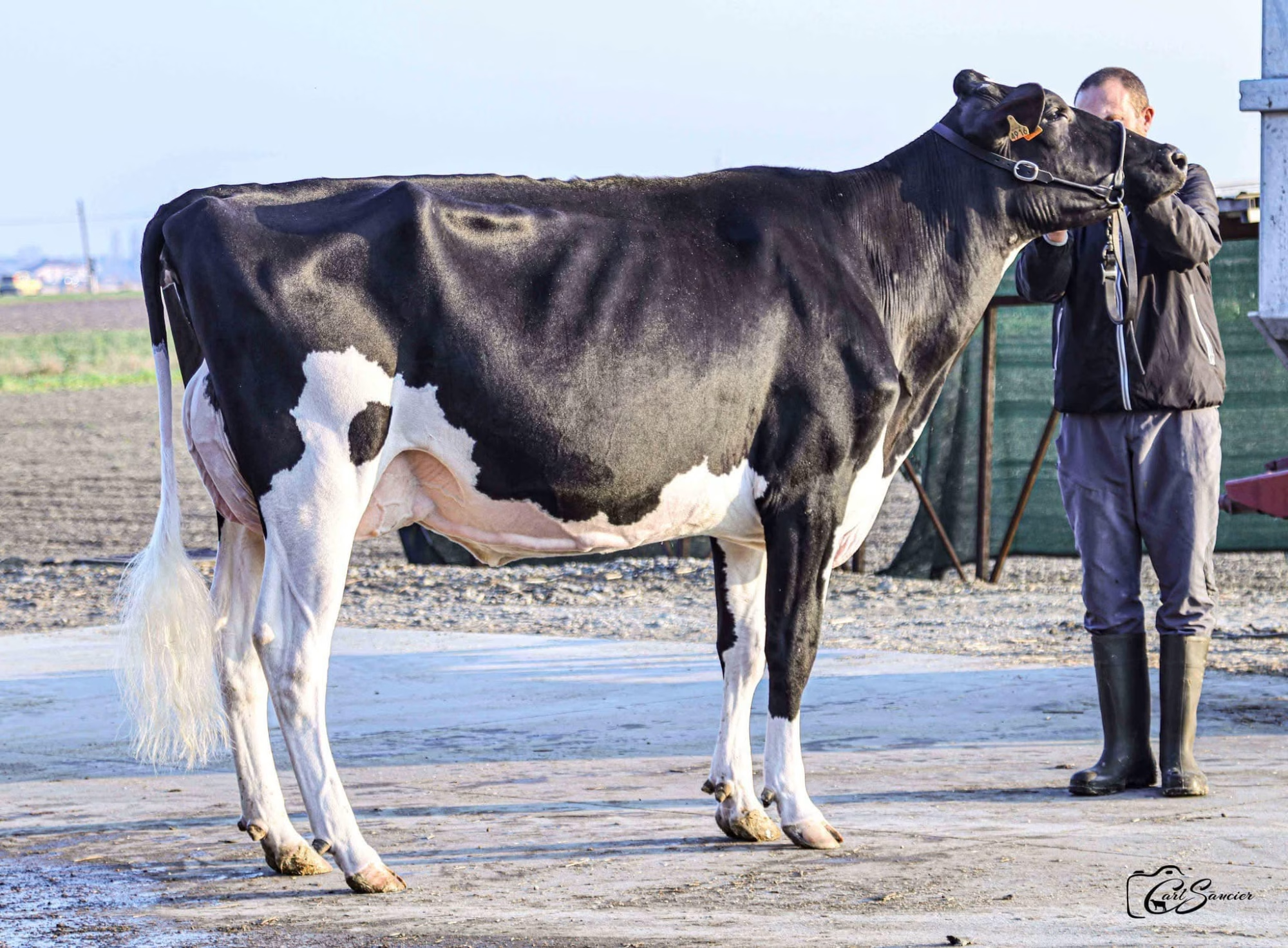
BEL BYWAY CASHMERE EX 93 3*, Cashmere is a 5 years old Byway out of Du Bon Vent Inkapi EX97

Showcasing Excellence: Bel Holstein’s Global Dairy Impact Through Shows and Social Media

Shows have been crucial for Bel Holstein, highlighting their top-notch breeding skills and strengthening their reputation worldwide. Events like the Swiss Expo and the Cremona show have given them immediate attention from breeders, buyers, judges, and a wider audience through digital connections. These shows display Bel Holstein’s excellent cattle pedigree and preparation and reflect the expertise and commitment at the heart of their success. 

Social media has made this impact even bigger, turning these events into ongoing stories with real-time updates. Platforms like Instagram and Facebook allow Bel Holstein to share live events, stunning pictures of their award-winning cattle, and interesting stories that draw international audiences. This online presence helps them reach potential buyers and fans who might not know about them otherwise. 

Additionally, the personal connections made at these shows, where people share a passion for top-quality dairy cattle, often lead to lasting partnerships. These relationships go beyond simple transactions, creating networks that connect breeders, sellers, and global partners. These connections offer markets for cattle and shared knowledge and innovation, which are key to growing in a changing global dairy market

Ultimately, combining in-person showmanship with innovative social media use has boosted Bel Holstein’s profile, making it more marketable in a competitive field and strengthening relationships that enhance its business reach far beyond Italy’s borders. 

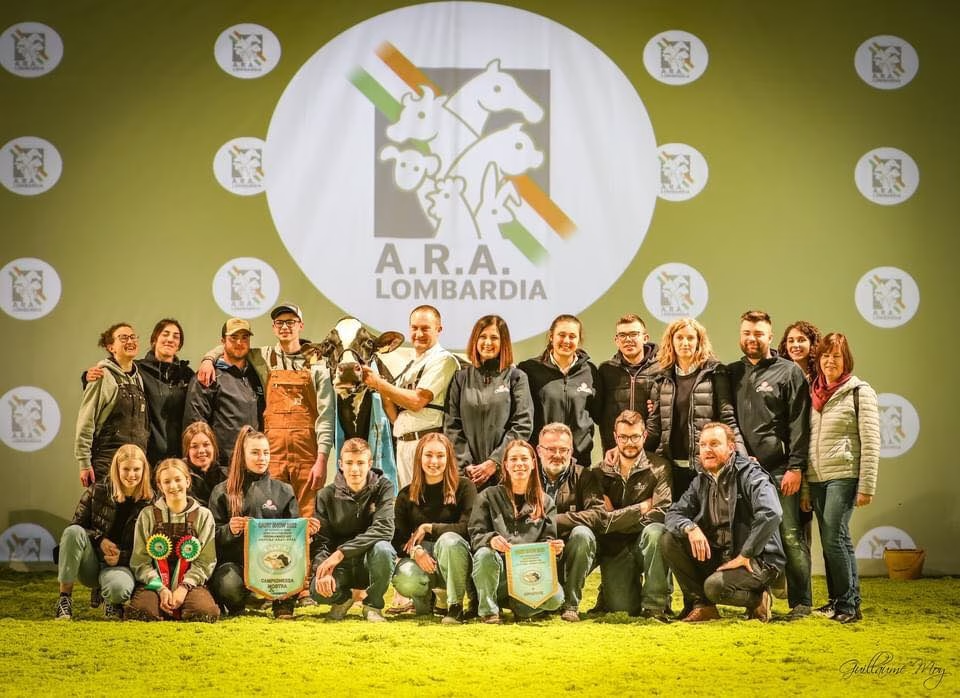
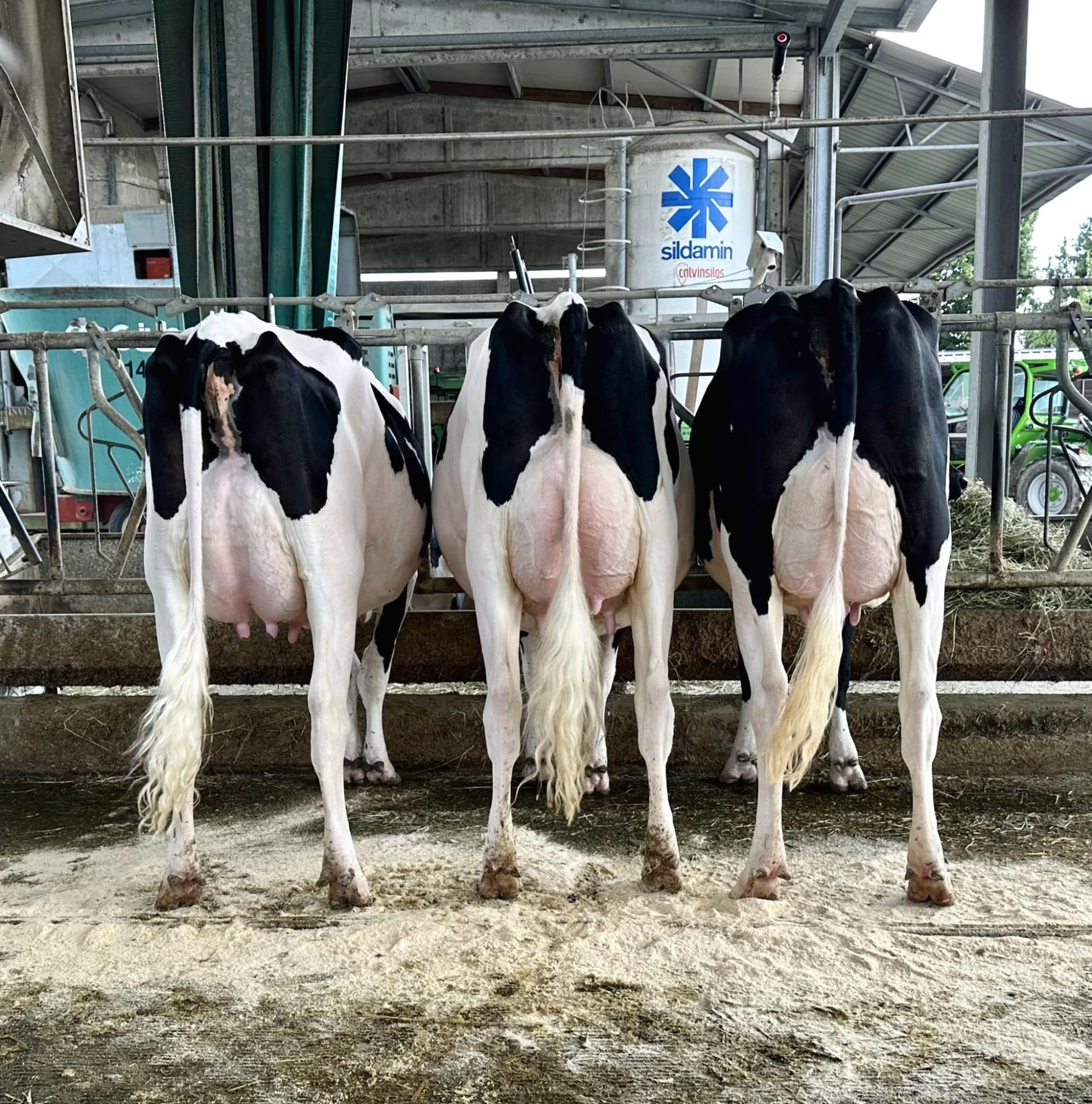
From L to R:Bel Boeing Gondola VG87 EX MS 𝐽𝑢𝑛𝑖𝑜𝑟 𝐶ℎ𝑎𝑚𝑝𝑖𝑜𝑛 𝐶𝑟𝑒𝑚𝑜𝑛𝑎 𝐼𝑛𝑡𝑒𝑟𝑛𝑎𝑡𝑖𝑜𝑛𝑎𝑙 𝐷𝑎𝑖𝑟𝑦 𝑆ℎ𝑜𝑤 2023, 𝑅𝑒𝑠𝑒𝑟𝑣𝑒 𝐽𝑢𝑛𝑖𝑜𝑟 𝐶ℎ𝑎𝑚𝑝𝑖𝑜𝑛 𝑁𝑎𝑡𝑖𝑜𝑛𝑎𝑙 𝑆ℎ𝑜𝑤 2023 – Bel Hotline Georgia VG86 𝐽𝑢𝑛𝑖𝑜𝑟 𝐶ℎ𝑎𝑚𝑝𝑖𝑜𝑛 𝑆𝑤𝑖𝑠𝑠𝐸𝑥𝑝𝑜 2024 – Bel Chief Guendalina VG86 𝑅𝑒𝑠𝑒𝑟𝑣𝑒 𝐽𝑢𝑛𝑖𝑜𝑟 𝐶ℎ𝑎𝑚𝑝𝑖𝑜𝑛 𝑆𝑤𝑖𝑠𝑠𝐸𝑥𝑝𝑜 2024 𝑅𝑒𝑠𝑒𝑟𝑣𝑒 𝐽𝑢𝑛𝑖𝑜𝑟 𝐶ℎ𝑎𝑚𝑝𝑖𝑜𝑛 𝐶𝑟𝑒𝑚𝑜𝑛𝑎 𝐼𝑛𝑡𝑒𝑟𝑛𝑎𝑡𝑖𝑜𝑛𝑎𝑙 𝑆ℎ𝑜𝑤 2023 𝐻𝑜𝑛𝑜𝑟𝑎𝑏𝑙𝑒 𝑚𝑒𝑛𝑡𝑖𝑜𝑛 𝐽𝐶 𝑁𝑎𝑡𝑖𝑜𝑛𝑎𝑙 𝑆ℎ𝑜𝑤 2023

The Bottom Line

Bel Holstein has led Holstein breeding from humble beginnings on their family farm. Their journey shows the impact of passion, dedication, and a drive for excellence. With success at international shows and strong values, Bel Holstein offers essential lessons in perseverance and adaptation. 

Their story highlights the balance between traditional methods and modern innovation and the role of the family in building success. Bel Holstein excels in careful care and imaginative breeding, demonstrating the global reach of good marketing and participation in shows and online. 

As dairy farming changes, Bel Holstein reminds us that success relies on strong foundations of passion and commitment. Their legacy challenges us to consider how our goals can help shape the future of dairy farming. Tradition and progress will work together in the future, powered by a commitment to quality and excellence.

Key Takeaways:

  • Bel Holstein’s origin story is deeply rooted in family traditions, evolving from a predominantly Piemontese background to becoming a notable Holstein breeder.
  • Key family members contribute distinct roles, from barn management and fieldwork to show preparations and strategic business development.
  • Significant accomplishments include notable show victories and the development of high-ranking cows, providing substantial social proof within the industry.
  • Bel Holstein’s breeding strategy emphasizes a balance of beauty and productivity, focusing on udder improvement while avoiding extreme traits.
  • The farm adopts a traditional approach to operations, valuing hands-on work and animal care over technological solutions.
  • Future aspirations include expanding international recognition through participation in significant events and leveraging diversifying opportunities in the dairy industry.
  • Mentorship and learning from acclaimed breeders have been pivotal in shaping Bel Holstein’s breeding and show strategies.
  • Shows serve as a crucial platform for marketing and enhancing global recognition, with the added benefit of social media exposure.

Summary:

Bel Holstein is an Italian family-owned dairy farm that started in the late 1980s, driven by the passion of three brothers, Mauro, Giuseppe, and Piero, inspired by their father’s love for cattle. Today, it’s a leader in European dairy farming, focusing on breeding beautiful and productive cows. Despite challenges like COVID-19 and Blue Tongue disease, the farm remains dedicated to blending tradition with innovation in Italy’s dairy industry, adding value through direct milk product sales and enhancing livestock genetics. They aim to succeed by continuing their presence at international shows and fairs, all while ensuring quality and sustainability in the sector.

Learn more:

Join the Revolution!

Bullvine Daily is your essential e-zine for staying ahead in the dairy industry. With over 30,000 subscribers, we bring you the week’s top news, helping you manage tasks efficiently. Stay informed about milk production, tech adoption, and more, so you can concentrate on your dairy operations. 

NewsSubscribe
First
Last
Consent
Send this to a friend