Archive for 3-nitrooxypropanol

400 of 1,600 Danish Farms Report Bovaer‑Linked Health Issues: EFSA’s 2026 Review and the 3 Methane‑Contract Clauses to Read Twice

Denmark bets on Bovaer to dodge the world’s first cow-methane tax. Then a quarter of farms using it started reporting diarrhea, crashing milk yields, and dead cattle—and now the European Commission wants answers.

Executive Summary: Denmark told 1,600 dairy farms to feed Bovaer or face fines. Most started in October 2025. By November, SEGES Innovation surveys showed two-thirds of responding farms reporting crashed milk yields, reduced intake, and digestive disorders — diarrhea, fever, and cows that couldn’t stand. Norway and Sweden didn’t wait: both countries paused Bovaer trials entirely. Now the European Commission has ordered EFSA to reassess safety, with a data deadline of March 31, 2026. The question isn’t whether Bovaer is dangerous — it’s whether Denmark’s mandate pushed adoption faster than any protocol could handle, and what that means for North American farms that are now being offered the same additive in methane contracts. Inside: the barn math, four hypotheses nobody else is separating, and the three contract clauses to read before you sign.
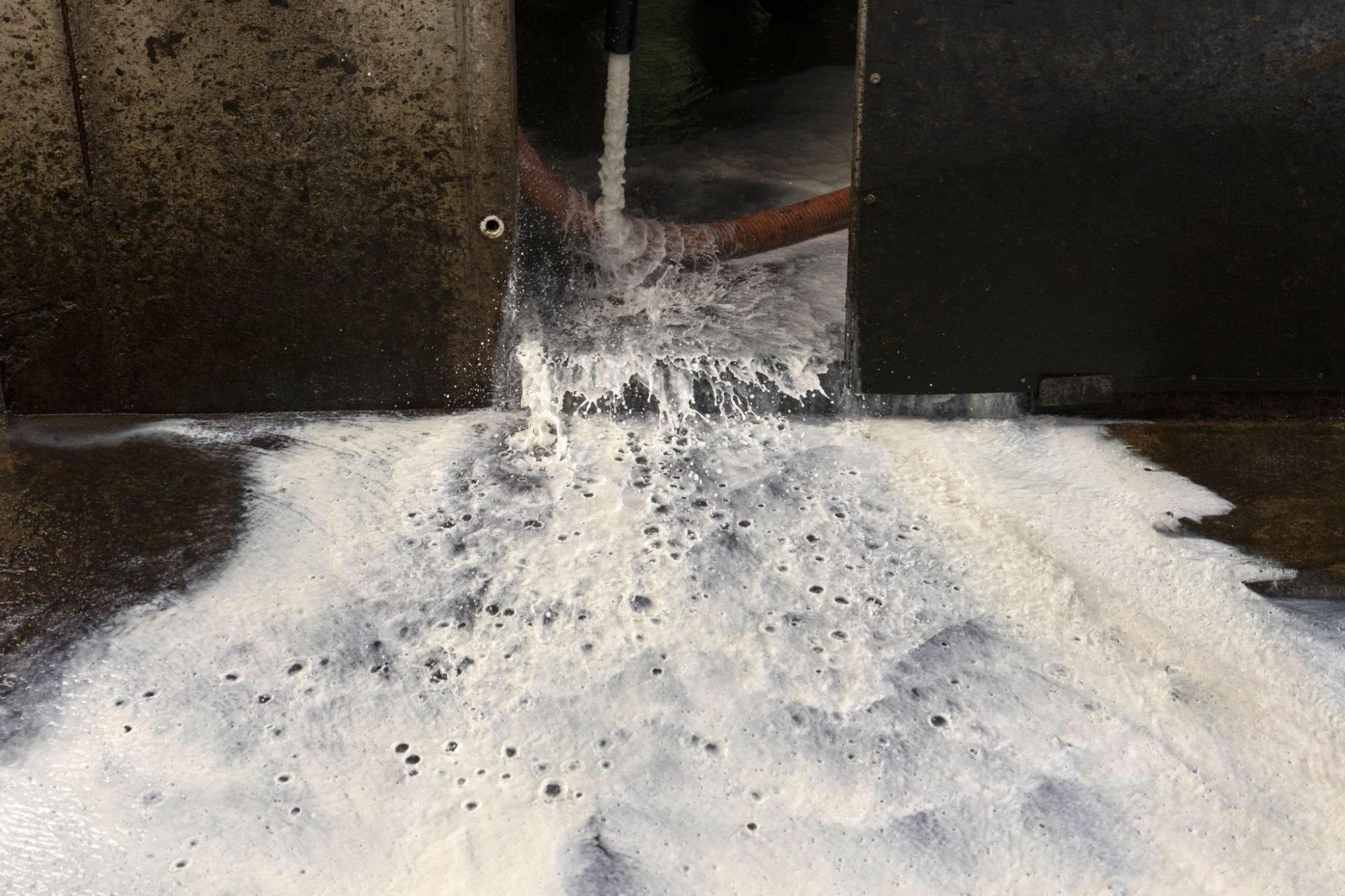
Kent Davidsen started feeding Bovaer to his 1,000-cow herd in Jutland, Denmark, last October — and unlike many of his neighbors, he’d been looking forward to it. Solar panels already covered his barn roofs. He’d voluntarily cut his carbon footprint. As he told Undark Magazine, “I thought to myself that this would be a good way to reduce the climate impact of producing milk”. 
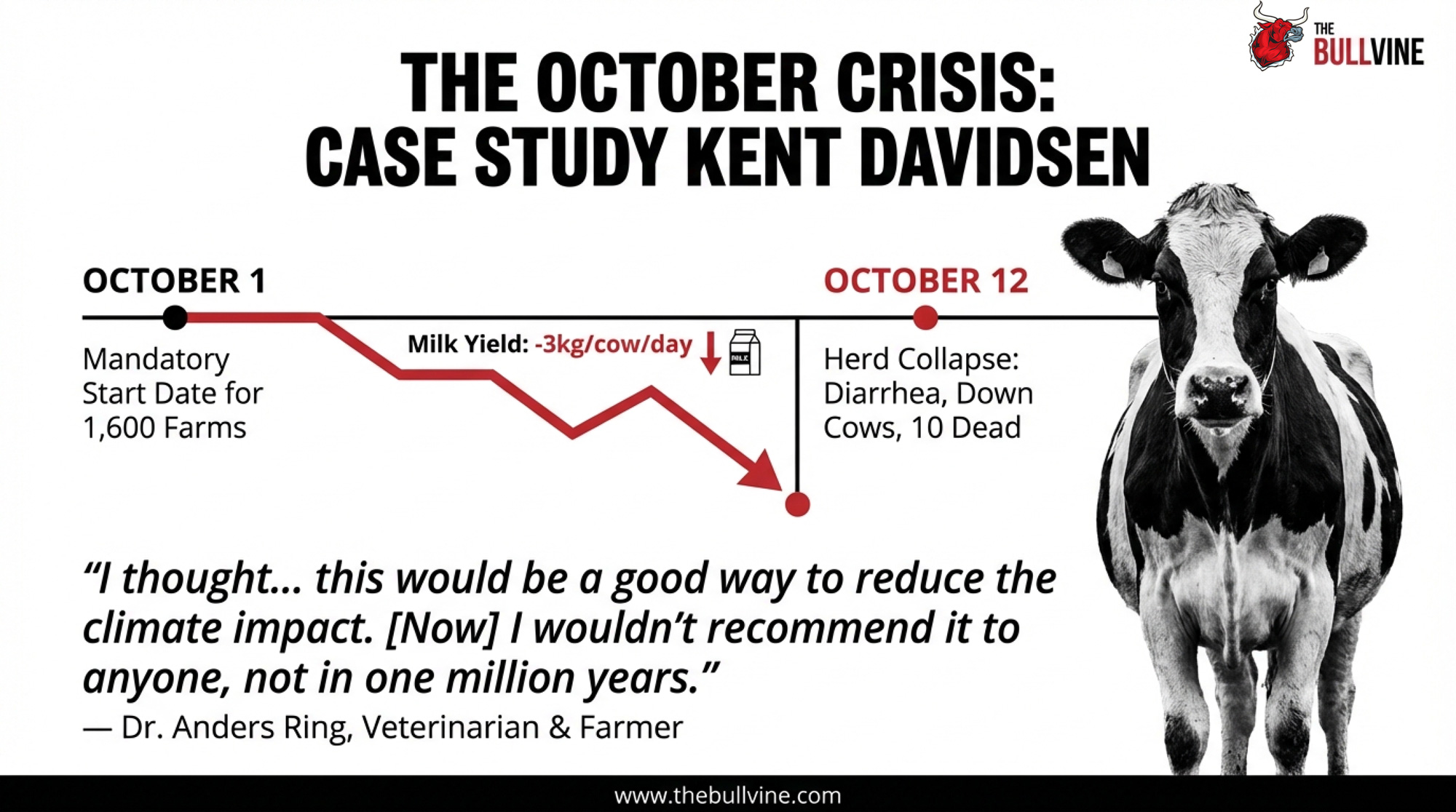
Soon after, his entire herd had diarrhea. Milk production dropped by almost 3 kg per cow per day. After 10 to 12 days, some cows couldn’t stand. Within a month, 10 were dead. 

“It’s not normal for a full herd of a thousand cows to have diarrhea, all of them,” Davidsen said. He stopped Bovaer on November 4. His cows recovered almost immediately. A month later, milk production was back to pre-Bovaer levels. 

Davidsen isn’t alone. He’s one of hundreds.

434 Farms, One Survey, and the Numbers Nobody Expected

Denmark has approximately 1,600 conventional dairy farms milking more than 50 cows. Starting in 2025, those farms were required to feed Bovaer — a methane-reducing additive made by dsm-firmenich containing the active ingredient 3-nitrooxypropanol (3-NOP) — for at least 80 days per year, or switch to a high-fat diet. Organic herds got an exemption. Non-compliance risked fines of up to 10,000 DKK, roughly $1,450 USD. 

About 75% of farms waited until the October 1 cutoff to start, according to dsm-firmenich itself. The reports started flooding in within weeks. 
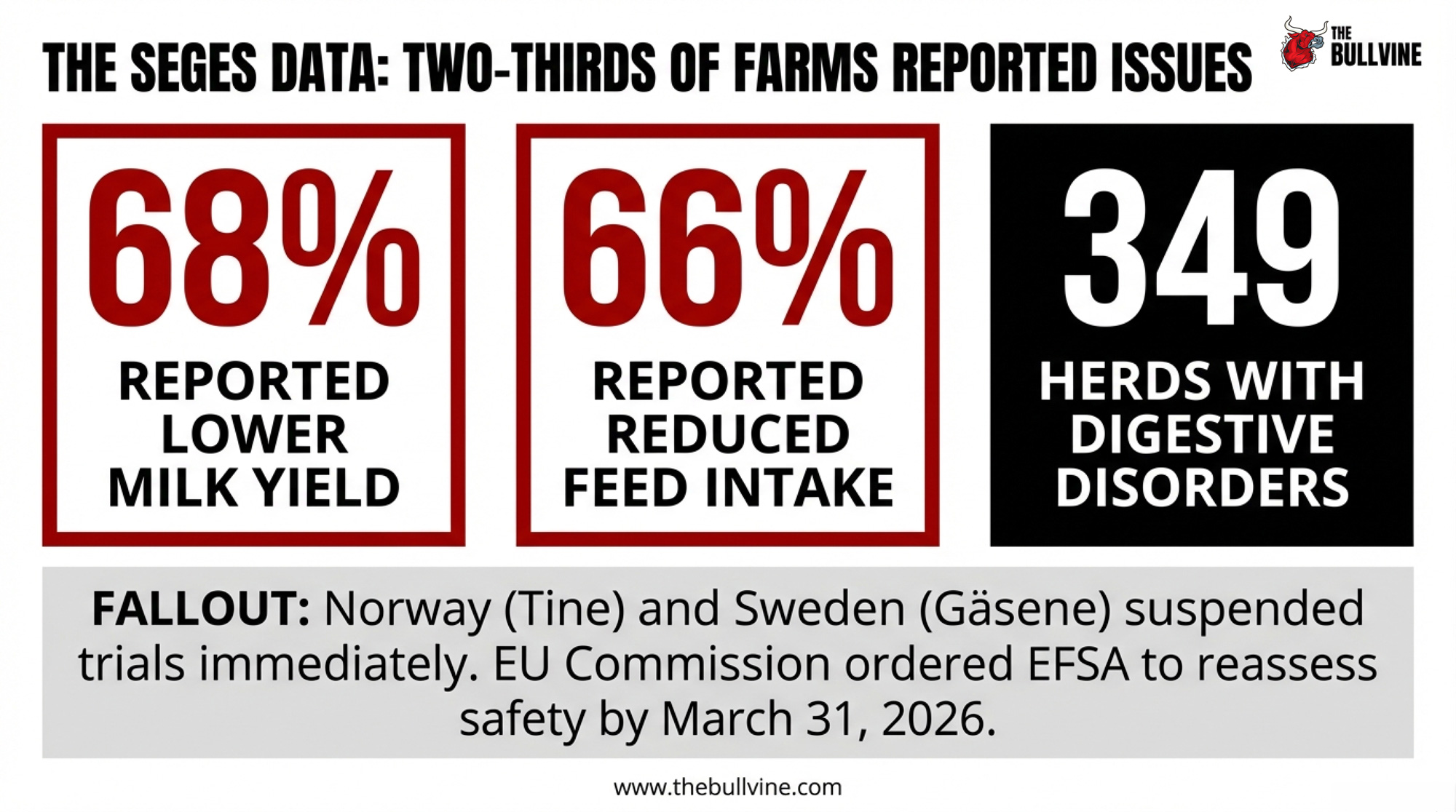
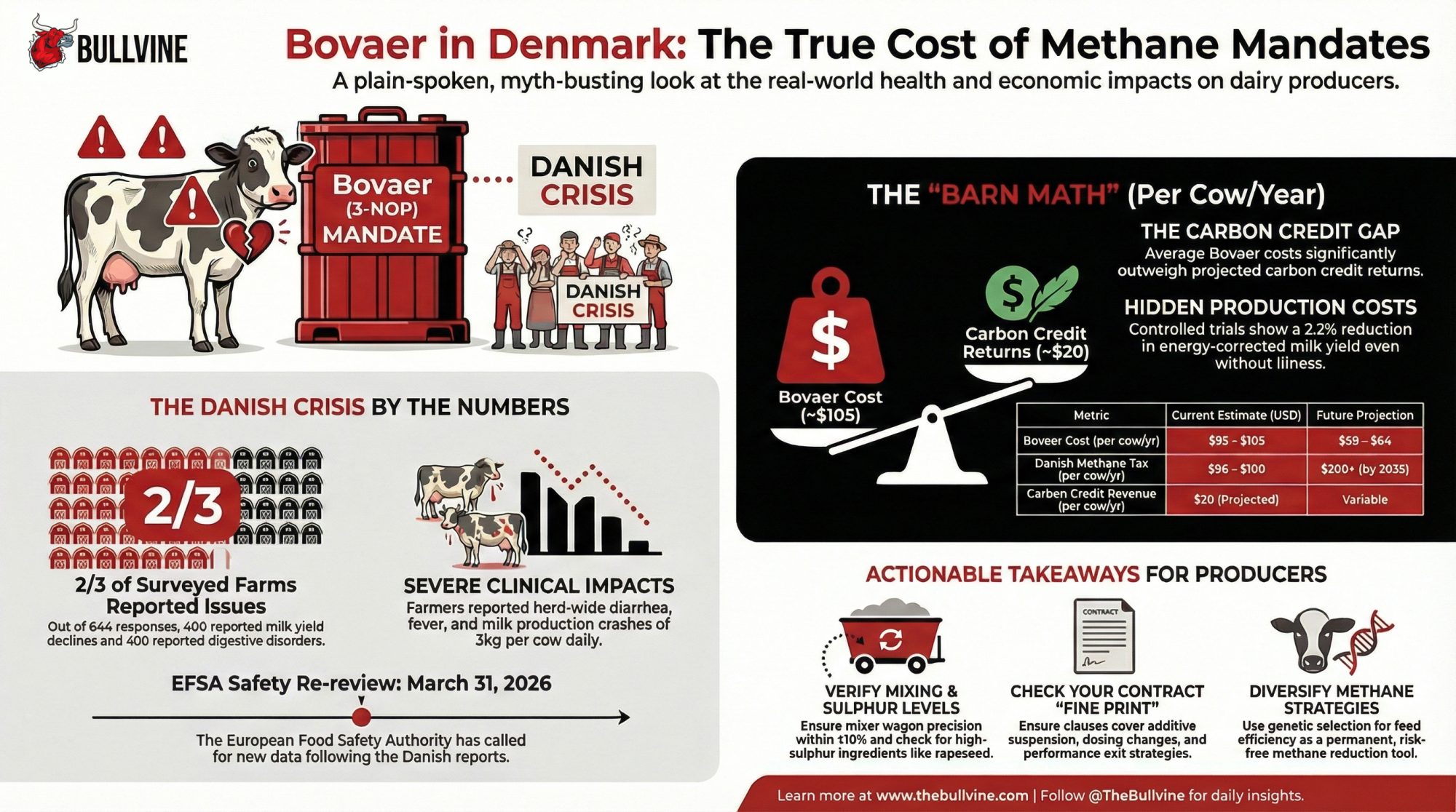
SEGES Innovation, the independent Danish agricultural research body, surveyed those farms. Two snapshots tell the story. A mid-November survey drew 644 responses: 

  • 434 reported a decline in milk yield
  • 419 reported reduced feed intake
  • 410 reported digestive and metabolic disorders
  • 376 reported both reduced feed intake AND lower milk production

A separate SEGES tally of 551 respondents found 68% reporting lower milk yield, 66% reporting reduced feed intake, and 59% experiencing both, plus 349 herds noting increased digestive and metabolic disorders, including diarrhea, reduced rumination, atypical milk fever, and fever. 

Two-thirds of responding farms flagged problems. Clinical signs ranged from diarrhea, fever, and weakness to mastitis, high somatic cell counts, and — in cases like Davidsen’s — animals that couldn’t stand and animals that died. On November 24, the Danish Veterinary and Food Administration clarified that farmers are exempt from feeding Bovaer if their cows get sick. Norway and Sweden didn’t wait for Denmark to sort it out — both countries paused their Bovaer trials entirely. Norway’s largest dairy supplier, Tine, suspended use after multiple reports of collapsing cows. In Sweden, dairy producer Gäsene ended its Bovaer project. 

In early February 2026, the European Commission mandated EFSA — the European Food Safety Authority — to deliver a new scientific opinion on whether Bovaer still meets safety conditions for dairy cows. On February 3, EFSA published a public call for data from farms, research institutions, and national authorities, with a submission deadline of March 31, 2026. The same authority that issued a favorable safety opinion on 3-NOP in 2021 — leading to EU market authorization in February 2022 — is now being asked to take another look. 

Danish Food Minister Jacob Jensen acknowledged farmers were “reporting challenges” in connection with Bovaer use. And Ida Storm, director of the Danish Agriculture and Food Council for Cattle, didn’t sugarcoat the surprise: “Animal welfare must not be compromised. At the same time, we are surprised, since no research or large-scale trials have indicated problems”. 

How Denmark Backed 1,600 Farms Into a Corner

To understand how this happened, you need to understand the policy machinery behind it.

Denmark is committed to cutting national greenhouse gas emissions 70% below 1990 levels by 2030. Agriculture accounts for a significant and growing share of the country’s total carbon output — in part because other sectors have decarbonized faster. In June 2024, the government finalized what it called the Agreement on a Green Denmark, including the world’s first livestock carbon tax, to start in 2030. 

The actual tax math matters because the headline number is misleading. On paper, the rate starts at 300 Danish krone (~$43 USD) per metric ton of CO₂ equivalent in 2030, rising to 750 DKK (~$107) by 2035. But a 60% basic deduction applies to average emissions from different livestock types, giving climate-efficient farmers an economic advantage. After that deduction, Danish farmers will actually pay 120 DKK (~$17 USD) per ton in 2030 and 300 DKK (~$43 USD) per ton in 2035

Danish Dairy Farmers’ Association chairman Kjartan Poulsen estimated the effective cost at roughly 672 krone — about $100 per cow per year starting in 2030, as he told Brownfield Ag News. Other outlets reported the same 672 DKK figure as $96 using the June 2024 exchange rate; Poulsen’s own rounded figure in his July 2024 Brownfield interview was $100. Either way, that’s real money. But it’s quite a bit less than the €130/cow figure floating in some industry reports, which doesn’t account for the 60% deduction. Poulsen told Brownfield that, between deductions and climate-smart practices, “Most will get out of this without paying.” 

But the government didn’t wait until 2030. It required emissions-reducing feeding changes starting in 2025 — and farms that didn’t comply faced fines. The vast majority chose Bovaer. And then came October. 

Is Bovaer Safe for Dairy Cows?

That’s the question the EFSA review is supposed to answer. The honest answer right now: the data is pulling in different directions, and pretending otherwise doesn’t help you make a good decision.

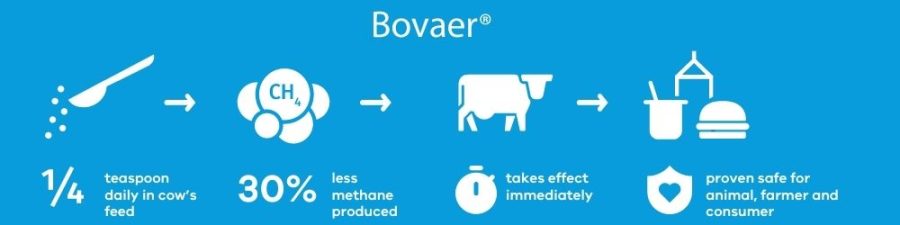
What the science says: EFSA’s 2021 safety opinion drew on more than a decade of research. dsm-firmenich cites over 55 peer-reviewed published studies since that original approval, and more than 150 studies total to date. Bovaer is authorized in over 70 countries and commercially active in more than 25. A Penn State meta-analysis found it reduces enteric methane by roughly 30% in dairy cows, with no significant effect on feed intake or milk yield, and a tendency to increase milkfat by about 0.2 lb per day. The FDA completed its own multi-year review and approved Bovaer for U.S. dairy cattle in May 2024. Canada’s CFIA approved it in January 2024. 

Charles Nicholson of Penn State told AFP that the changes documented in studies “do not seem large enough to reflect or result in other health issues, at least for the average cow”. Luiz Ferraretto at the University of Wisconsin-Madison said, “has been tested extensively worldwide and no concerns about major reductions in dairy cow productivity or health were raised.” 

A six-month FrieslandCampina pilot in the Netherlands — 200,000 cows across 158 farms — reported an average 28% reduction in methane emissions, resulting in a 10,000-ton reduction in CO₂e. Participating farmers said adding Bovaer “did not result in changes to animal health or milk production and composition”. 

One wrinkle worth noting: a 2025 Aarhus University feeding trial published in the Journal of Dairy Science found that Bovaer supplementation reduced dry matter intake by 1.1 kg/day (a 5.0% reduction) and energy-corrected milk yield by 0.8 kg/day (a 2.2% reduction) — with early-lactation cows showing a larger production decline than mid-to-late-lactation cows. That’s a controlled trial, not a commercial farm. But it suggests the “no effect on production” message from the meta-analysis may be more nuanced than the marketing implies. 

What the farms say: Dr. Anders Ring milks roughly 580 cows near the town of Gredstedbro on Denmark’s southern coast. He’s a veterinarian—and he trusts the science. “I’m a veterinarian. I trust the science,” he told Farmers Forum. So when problems started two weeks into feeding Bovaer, he pulled it for two weeks, then tried again. Same problems. He tried a half dose. Same problems. 

“I wouldn’t recommend it to anyone, not in one million years,” Ring said. “Just don’t do it”. 

Ring reported an explosion of digital dermatitis, from bandaging one to three cows a month to a new case every single day. Two days after he stopped feeding Bovaer, the hoof infections ended. He told Farmers Guardian separately that since stopping, “cow health showed huge signs of improvement” and somatic cell counts “fell by more than 20%” within two days. He didn’t mince words with them either: “In my opinion, Bovaer is a poison”. 

Henrik Jensen, a Jutland dairyman with 120 cows, described a similar pattern through citizen journalist Kent Nielsen’s viral video, as reported by Farmers Forum: he pulled Bovaer when his herd fell ill, saw recovery within days, and reported symptoms returning when he reintroduced the additive to meet the mandate’s 80-day requirement. Søren Larsen, a farmer on the island of Funen, reported losing two cows to neurological distress and described a swift recovery when he withdrew the additive, but worse inflammation when he re-dosed. “Our herds are experiments now,” Larsen said. 

Charlotte Lauridsen, who heads the Department of Animal and Veterinary Sciences at Aarhus University, told the BBC: “The pattern of disease now being described in the media — with fever, diarrhea and, in some cases, dead cows — has never been observed in our extensive studies”. 

That gap — between controlled trials and hundreds of field reports — is exactly what makes this so hard to sort out. Aarhus University has launched a dedicated 2025–2028 research project — the first designed specifically to investigate whether Bovaer affects cow welfare. Professor Margit Bak Jensen, who leads it, said: “Several factors can cause reduced appetite and feed intake, and it can be a sign of discomfort. Therefore, there is reason to investigate whether Bovaer has a negative impact on animal welfare”. Her team will track cows’ activity, lying behavior, and comfort behavior, and test whether dairy cows actively avoid feed with Bovaer when given the choice. 

Four Hypotheses Nobody Else Is Separating

Every outlet covering this story frames it as “EFSA reviewing Bovaer.” True. But not useful unless you understand the competing explanations the review needs to sort out.

Could the Product Itself Be the Problem?

The simplest explanation: 3-NOP at commercial dosing causes health problems in some cow populations. If true, those 70-plus country approvals need revisiting. Jan Dijkstra, associate professor in ruminant nutrition at Wageningen University, says the biological mechanism for the reported disease pattern — fever, infection-like symptoms — “is simply not there” based on current science. But hundreds of farm reports are hard to dismiss entirely. 
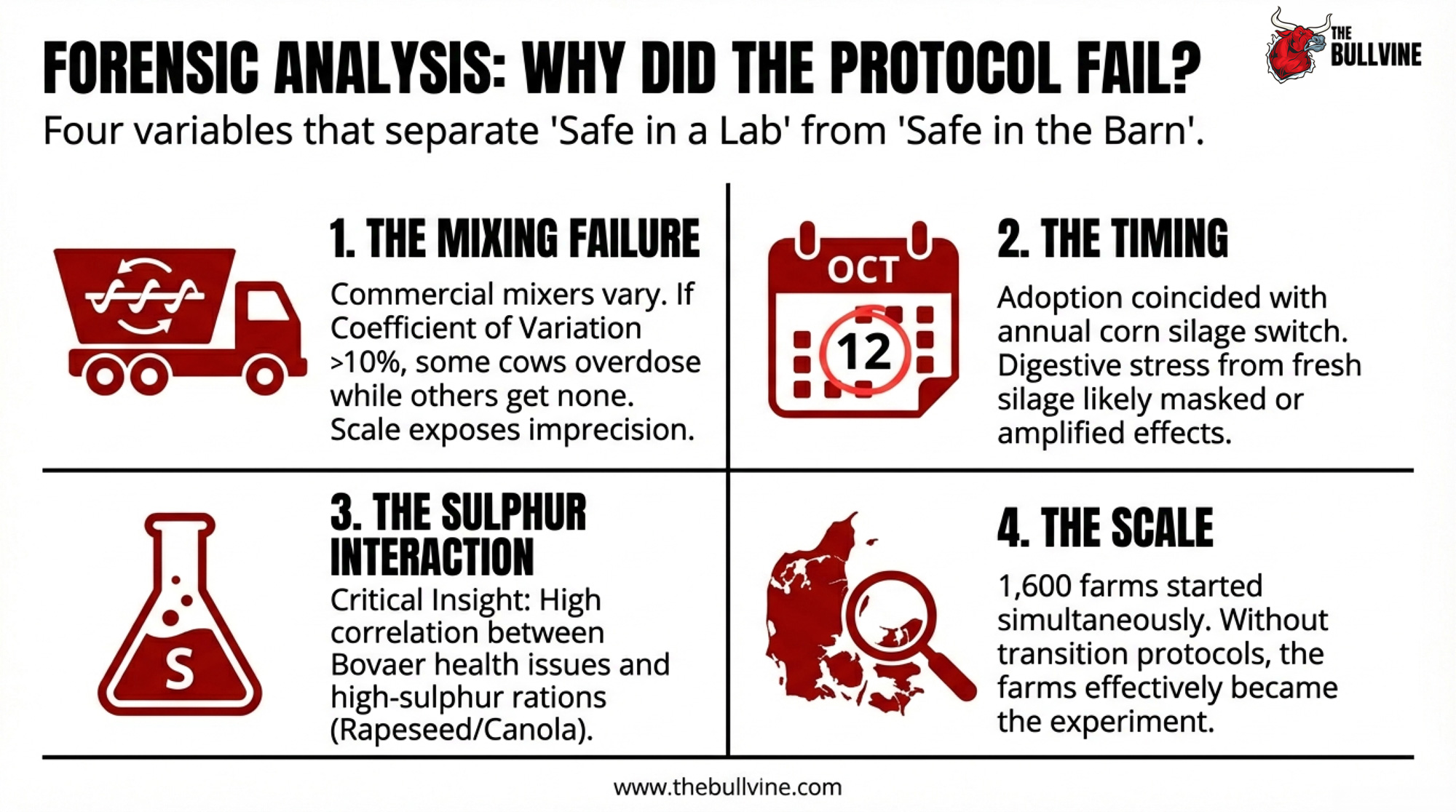
Was It a Mixing and Management Failure?

Lars Arne Hjort Nielsen, senior specialist in cattle production at SEGES Innovation, flagged this directly: “Bovaer must be mixed thoroughly and evenly in the feed ration to avoid overdosing and ensure effectiveness”. On a commercial farm, the mixer wagon does its best with the equipment it’s got. If some cows get double or triple the intended dose while others get none, you’d see exactly the pattern Denmark reported. Ring disagrees—he says his mixing accuracy is 98%, yet he still had problems. Many farms reported mitigating issues by gradually introducing Bovaer, reducing the dose, or stopping entirely. 

Did the Timing Create a False Signal?

Dijkstra raised this one: most Danish farms started Bovaer at exactly the same time they made their annual switch to new corn silage. dsm-firmenich pointed out that October is “the most problematic time of the year for routine health problems in dairy herds”. If that silage was unstabilized or carried unwanted bacteria, it could produce digestive problems that look identical to what’s being blamed on Bovaer. 

And Then There’s the Sulphur Nobody Tested For
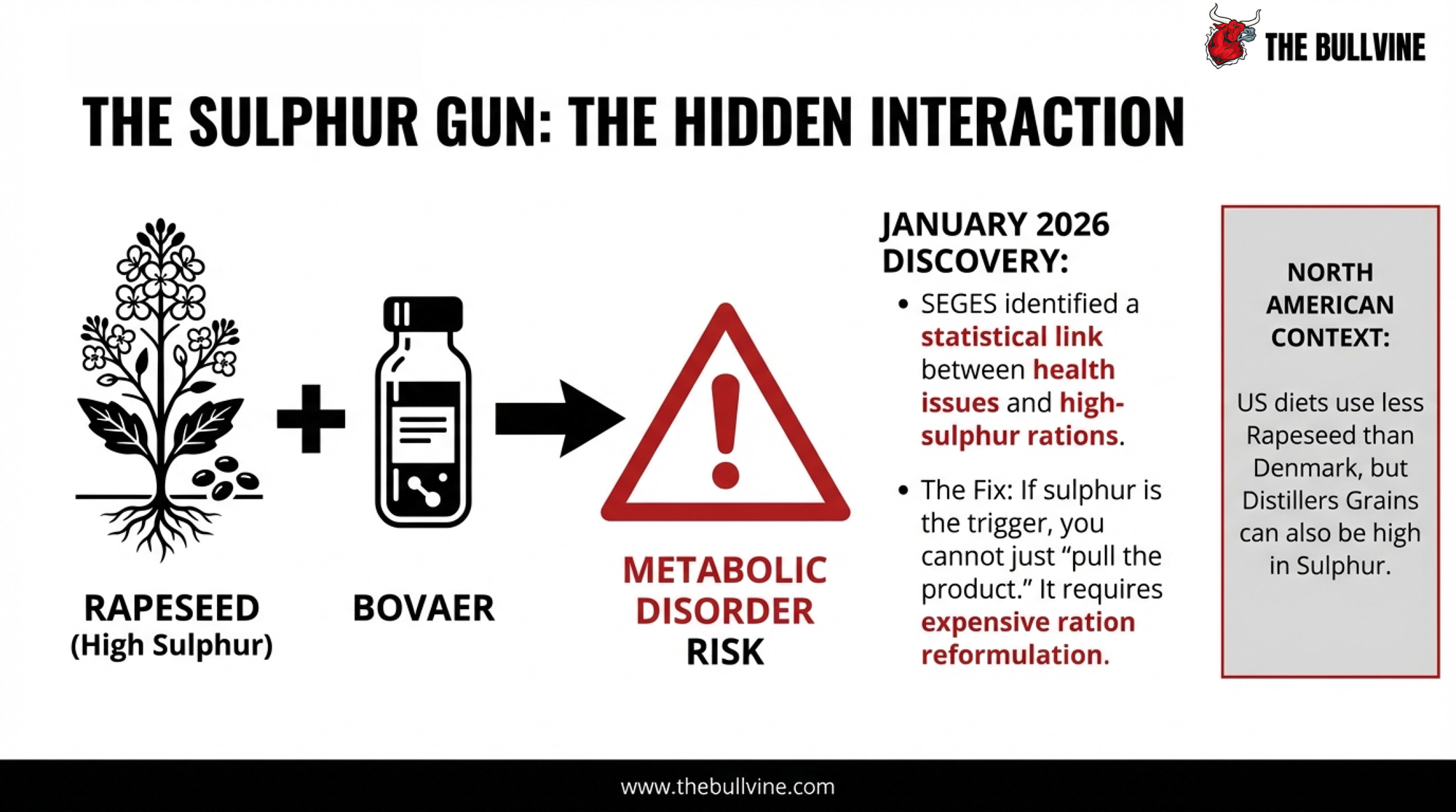
This is the newest — and arguably most important — piece. In January 2026, SEGES data analysis identified a statistical link between Bovaer and high sulphur content in feed rations, indicating an increased risk of metabolic disorders. Rapeseed — common in Danish dairy diets but far less prevalent in North American rations — is a significant sulphur source. Aarhus University announced feeding trials specifically investigating this Bovaer-sulphur interaction, with results expected later in 2026. 

If sulphur turns out to be the primary trigger, the fix isn’t pulling Bovaer—it’s reformulating rations to reduce the sulphur load when Bovaer is in the mix. That’s a fundamentally different problem than “the product is dangerous.”

HypothesisWhat It MeansRisk Indicators for Your FarmWhat to Check Now
Product Toxicity (3-NOP itself)Bovaer at commercial doses causes health problems in some cow populationsAny farm feeding Bovaer, regardless of ration or managementMonitor for reduced intake, diarrhea, fever, clinical signs within 2 weeks of starting
Mixing/Dosing FailureInconsistent mixer precision causes some cows to get 2–3× intended doseFarms with older TMR equipment, high coefficient of variation (>10%)Audit mixer wagon accuracy; verify dosing consistency across pens
Timing Coincidence (Silage Transition)October silage changeover masked real cause of digestive problemsFarms that started Bovaer simultaneously with new corn silage harvestReview silage fermentation quality; test for mycotoxins, unstable pH
Sulphur-Bovaer InteractionHigh sulphur in rations (rapeseed, canola) triggers metabolic disorders when combined with BovaerFarms using rapeseed, canola meal, or high-sulphur foragesRation analysis: check total dietary sulphur content

Here’s the thing, though. These four possibilities don’t cancel each other out. They stack. A product that’s safe under laboratory conditions, mixed imprecisely in commercial settings, introduced simultaneously with a silage change, into rations high in sulphur from rapeseed, across 1,600 farms with no transition protocol — that combination would never show up in a peer-reviewed trial. It only shows up at scale.

The Barn Math: Methane Tax vs. Bovaer vs. Your Bottom Line

Now let’s put numbers on this for a 300-cow herd. Because this is where your decision actually lives.

Denmark’s effective methane tax (starting 2030): After the 60% deduction, Danish cows will cost their owners about $96–$100 per head per year, based on the standard 672 DKK calculation. On 300 cows, that’s approximately $29,000–$30,000/year. By 2035, the effective rate more than doubles — the gross rate jumps to 750 DKK/ton with the same 60% deduction.

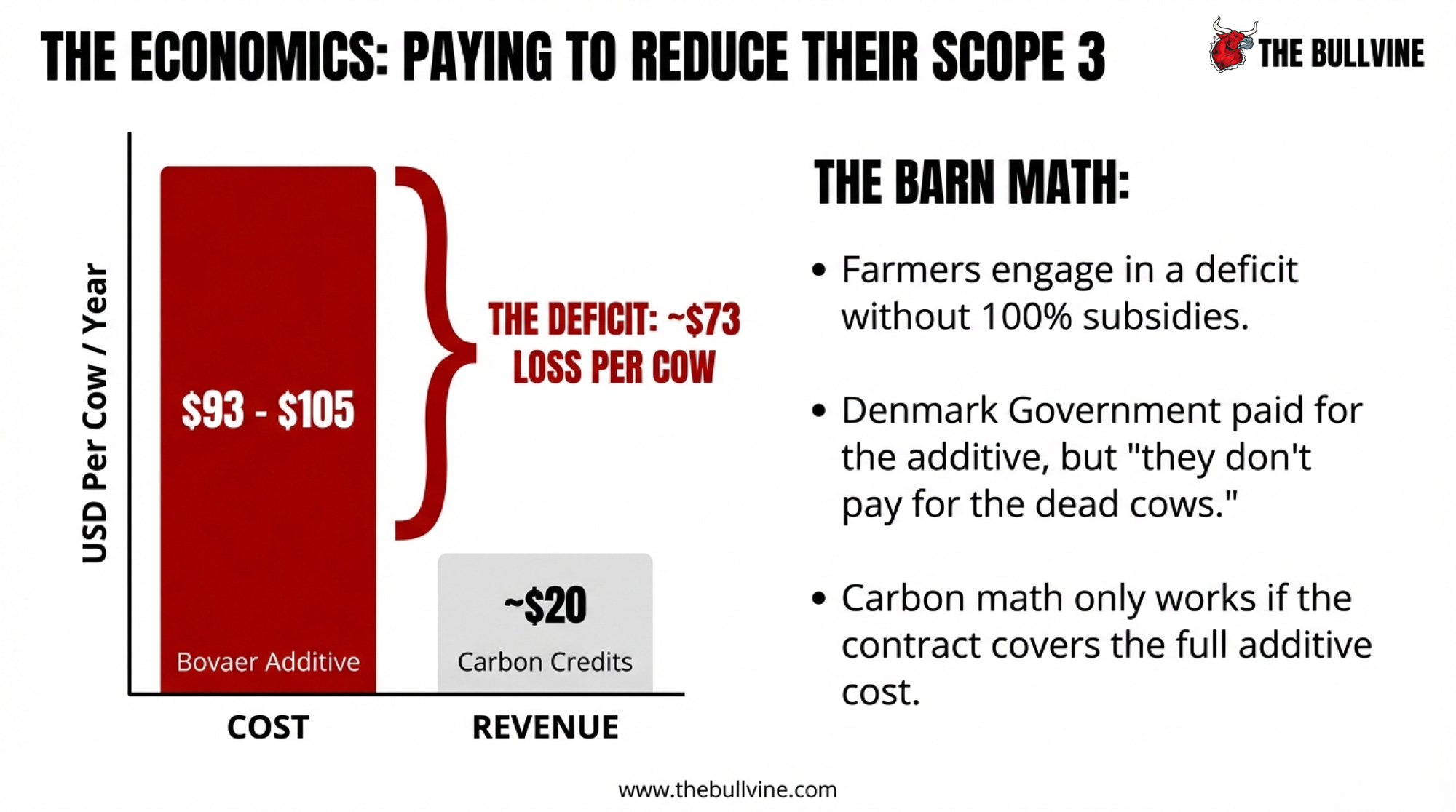
Bovaer’s feed cost: DSM-Firmenich senior marketing director Julien Martin pegged the cost at roughly 1 cent per litre of milk, or about $93–$105 per cow annually in U.S. dollars. Construction of a new manufacturing plant in Dalry, Scotland — slated for completion in 2025 — was projected to reduce costs to approximately $58–$64 per cow per year. dsm-firmenich VP of Bovaer Mark van Nieuwland told Dairy Global the cost in European terms was €80–€90/cow/year, with a projected drop to €50–€55 as manufacturing scales up. Elanco, which holds the U.S. distribution rights, has described the cost as “a few cents a gallon of milk”. 

On a 300-cow herd at the current $93–$105/cow range, you’re looking at $27,900–$31,500/year in additive cost alone. Not nothing. But not the apocalypse, either —if it works as advertised. At the projected post-Scotland-plant pricing of $58–$64/cow, that drops to $17,400–$19,200/year. The Danish government currently pays for the additive itself — “but they don’t pay for the dead cows,” as Ring put it. 

The hidden cost nobody modeled: What happens when two-thirds of surveyed farms report milk yield declines? On Davidsen’s 1,000-cow herd, a drop of almost three kilos per cow per day means roughly 3,000 kg of lost milk daily. Even a two-week disruption at Danish farmgate prices represents significant economic damage — before you count vet bills, dead animals, or the production lag after recovery. And the Aarhus University trial  suggests a 2.2% ECM reduction even under controlled conditions, which on a 300-cow herd averaging 35 kg ECM/day, pencils out to roughly 230 kg of lost production daily. That’s not a health crisis. But it’s a cost that doesn’t appear in any marketing brochure. 

North American carbon credit math: Elanco’s carbon credit platform, Athian, announced in November 2025 that it had facilitated $18 million in payments to farmers since 2024 for emissions-reducing practices, including feed ingredients and alternative manure management — coinciding with the close of a $4 million Series A funding round. In September 2025, Athian announced its first verified carbon credit sale to Dairy Farmers of America, based on reductions from Texas dairy farmer Jasper DeVos — nearly 1,150 metric tons of CO₂e avoided. Elanco’s Katie Cook, VP of Farm Animal Health, projects a potential return of “$20 or more per lactating cow” per year through carbon markets and USDA conservation programs, and over the long term, “more than $200 million of value for the U.S. dairy industry” if the entire industry adopted enteric methane interventions. 

So here’s your per-cow math. On your 300-cow herd: you’d spend roughly $28,000–$31,500 on Bovaer at today’s pricing to generate maybe $6,000 in carbon credits at Elanco’s projected $20/cow. That’s a big gap. And it’s the gap between what the farmer gets paid and what the corporate buyer values those credits at that deserves its own article

Cost/Revenue ItemPer Cow (Current)300-Cow Herd (Current)Per Cow (Future)300-Cow Herd (Future)
Bovaer Additive Cost$93 – $105$27,900 – $31,500$58 – $64$17,400 – $19,200
Carbon Credit Revenue (Projected)$20$6,000$20$6,000
Danish Methane Tax (If Adopted)$96 – $100$28,800 – $30,000$200+ (by 2035)$60,000+
Net Cost to Farmer (Current Economics)−$73 to −$85−$21,900 to −$25,500−$38 to −$44−$11,400 to −$13,200

One important caveat: that $20/cow figure is Elanco’s projected return, not a guaranteed market price. Actual per-cow revenue depends on what buyers will pay per ton of CO₂e, which varies by contract and marketplace. The math right now: you’d spend substantially more on Bovaer than you’d generate in carbon credits. That only works if somebody else is subsidizing the additive — which is exactly what Denmark did, and exactly the model North American contracts need to replicate for the economics to pencil out for the farmer.
MetricCurrent Estimate (USD)Future Projection (Post-2025/26)
Bovaer Cost (per cow/yr)$93 – $105$58 – $64
Danish Methane Tax (per cow/yr)$96 – $100$200+ (by 2035)
Carbon Credit Revenue (per cow/yr)$20 (Projected)Variable
Net Gap (Cost to Farmer)($73 – $85)($38 – $44)

What Does the EFSA Review Mean for North American Farms?

Elanco holds North American distribution rights for Bovaer. Through the end of 2025, the company reported feeding the additive to more than 150,000 U.S. lactating dairy cows, with a farmer retention rate above 90%. Elanco stated it “has not seen the types of issues that are being reported in Denmark”. 

That’s worth taking at face value — for now. The U.S. feeding context is genuinely different. American dairies typically run more precise TMR mixing equipment and work closely with nutritionists. Ration profiles differ too: Danish diets include substantially more rapeseed than typical North American formulations, which matters a great deal if the sulphur hypothesis holds up. 

But 150,000 cows is a fraction of the 9.4-million-cow U.S. dairy herd. Denmark’s problems surfaced during a mandatory, large-scale, simultaneous commercial adoption — approximately 1,600 farms, diverse management systems, and real-world conditions, all starting at once. The U.S. hasn’t done that yet. And the economic pressure to add another per-cow cost is something you should understand before anyone puts a contract in front of you.

In Canada, Bovaer was approved by CFIA in January 2024. But according to Dairy Farmers of Canada’s chief research officer, Fawn Jackson, “To our knowledge, 3-NOP is not currently being sold to farmers to be used commercially in Canada.” The key Canadian research was a two-year Alberta study with 15,000 beef cattle supported by Emissions Reduction Alberta, in which dsm-firmenich reported peak methane reductions of up to 82%. That headline figure deserves context — the established meta-analysis average is roughly 30% for dairy and 36–45% for beef under typical conditions. The 82% likely reflects peak reductions under specific high-dose beef-feedlot protocols, not what you’d expect in a commercial dairy TMR. Stuart Boeve, chair of Alberta Milk, told the Manitoba Co-operator that even at 50 cents per cow per day, the cost wouldn’t “break the bank for most dairy producers”. 

If you’re being offered a methane-credit contract that requires Bovaer, the Danish situation boils down to this: the product’s safety profile at controlled doses is well-documented. Its safety profile under mandatory, rapid, large-scale commercial adoption — with variable mixing precision, diverse rations, and no universal transition protocol — is what just came into question. Those are two very different things.

The rBST Pattern: When Adoption Outruns Data

Dairy farmers over 40 remember this cycle. rBST was approved by the FDA in 1993, supported by strong clinical trial data. Adoption surged because the economics looked obvious. Then came reported complications. Consumer backlash followed. The FDA never withdrew its safety approval, but the market moved anyway. Today, the majority of U.S. milk is marketed rBST-free.
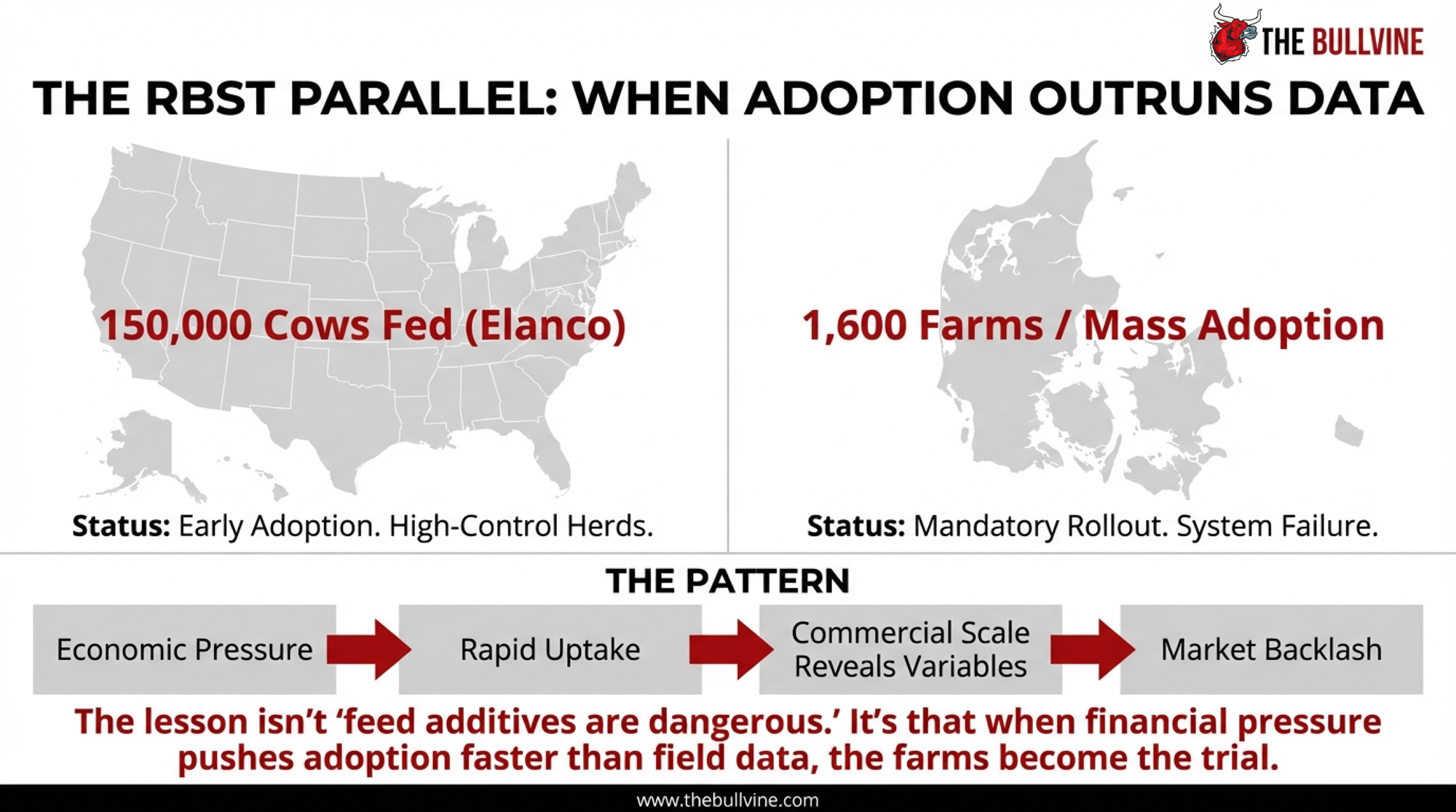
Nobody’s saying Bovaer is rBST. The products are different. The mechanism is different. The science is different.

But the adoption pattern rhymes. Economics drove rapid uptake. Long-term commercial-scale data lagged behind the adoption curve. And the first large-scale mandatory rollout — Denmark — revealed problems the controlled trials didn’t predict. The lesson isn’t “feed additives are dangerous.” It’s this: when financial or regulatory pressure pushes adoption faster than independent field data can accumulate, the farms become the trial.

Ring told Farmers Forum that Danish farmers won’t comply with the 80-day Bovaer mandate again. “They simply won’t feed it to their cows,” he said — adding that they’d flush it down the toilet rather than give it to their herds. 

Options and Trade-Offs for Farmers

If you’re currently feeding Bovaer in the U.S. or Canada, don’t panic and pull it based on Danish headlines alone. Elanco’s North American data doesn’t show the same pattern. But do this within 30 days: pull your feeding protocol documentation and verify dosing precision with your nutritionist. Check the coefficient of variation for your mixer wagon. If you can’t confirm consistent dosing within ±10% across every pen, you’ve got the same exposure Denmark had. Also, check your ration’s sulphur content — SEGES flagged that combination specifically. If you’re running rapeseed or other high-sulphur ingredients alongside Bovaer, that conversation with your nutritionist shouldn’t wait. A phone call costs nothing. A herd-wide feed management review pays for itself even without the Bovaer question

If you’re considering a methane-credit contract that requires Bovaer: Wait for EFSA’s scientific opinion before signing. The data submission deadline is March 31, 2026, and the opinion will follow. That’s not anti-science—it’s risk management. And the straight economics deserve a hard look: at $93–$105/cow/year in additive cost versus a projected $20/cow in carbon credit return, the math only works if the contract subsidizes the additive. If it doesn’t, you’re absorbing the gap for the privilege of reducing someone else’s Scope 3 emissions. Read the fine print. 

If EFSA identifies a sulphur-interaction issue, Bovaer is likely to re-enter the conversation quickly — but with ration-specific restrictions that will complicate adoption and potentially increase per-cow feeding costs. If the review flags a broader safety concern, the North American regulatory timeline could reset. Either way, the contracts being offered today probably don’t account for either scenario.

If you want a methane-reduction strategy that doesn’t depend on a single additive: Build the portfolio. Genetic selection for feed efficiency — Feed Saved, Residual Feed Intake — delivers permanent, heritable methane reduction with zero additive risk. Feed management optimization reduces emissions AND costs. Manure management and RNG can generate standalone revenue. The farms that diversify their methane strategy will have greater contract leverage and less exposure than farms that bet on a single product.
Key Takeaways

  • If you’re feeding Bovaer now, verify two things this month: your mixer wagon’s dosing consistency and your ration’s sulphur load. Those are the two most controllable risk factors identified in the Danish data. 
  • If someone offers you a methane contract requiring Bovaer before EFSA publishes its review, look for three clauses: what happens if the additive gets suspended, who pays if dosing protocols change, and what’s your exit if performance falls short. If those clauses aren’t there, the contract isn’t protecting you.
  • Run the straight economics before you run the carbon math. Current Bovaer costs run $93–$105/cow/year  — roughly five times the $20/cow projected carbon credit return. Know who fills that gap before you sign. 
  • EFSA’s data call closes March 31, 2026. Watch that date. What comes after it will shape the methane-contract landscape for every dairy farmer in North America. 

The Bottom Line

Kent Davidsen said something after the whole ordeal that should sit with you if you’re weighing a methane commitment. After watching his cows crash and recover, after testifying before the Danish parliament, and after losing 10 animals, he started buying organic milk for his family. “It’s a pity,” he said, “when you’re a farmer, and you can’t even buy your own product”. 

No evidence has linked Bovaer to any milk or meat safety issue for consumers — EFSA’s 2021 opinion specifically addressed that. Davidsen’s reaction reflects a loss of trust in the regulatory process, not a food-safety finding. But trust is currency in this business. 

EFSA’s data deadline is March 31. Your methane contract can wait until the science catches up. Check your ration. Check your contracts. And check what happened when Denmark’s mandate first hit the wall.

Next in The Methane Math series: What your methane contract actually says in the fine print — and the three clauses your lawyer should read twice.

Complete references and supporting documentation are available upon request by contacting the editorial team at editor@thebullvine.com.

Learn More

The Sunday Read Dairy Professionals Don’t Skip.

Every week, thousands of producers, breeders, and industry insiders open Bullvine Weekly for genetics insights, market shifts, and profit strategies they won’t find anywhere else. One email. Five minutes. Smarter decisions all week.

NewsSubscribe
First
Last
Consent

Boost Dairy Production and Cut Emissions: New Insights on 3-NOP and Tannin Use in Cows

Learn how 3-NOP and tannins can boost milk production and cut emissions. Ready to improve your herd’s performance? Read more.

Summary: The dairy industry is struggling to balance high milk output with sustainability as regulatory organizations impose stricter limits on methane emissions and nitrogen excretion. 3-nitrooxypropanol (3-NOP) is an innovative feed additive that lowers methane emissions by blocking an enzyme required for methane synthesis in microorganisms, thus improving cow digestion and energy utilization for milk production. Research indicates that cows on a 3-NOP-supplemented diet may reduce methane emissions by 16% to 17% while maintaining milk output. The combination of 3-NOP and tannins has the potential to significantly enhance the dairy industry’s feed efficiency and methane emission reduction efforts.

  • 3-NOP supplementation led to a significant reduction in methane emissions by 16-17%.
  • Brown Swiss and Holstein Friesian cows responded differently to 3-NOP, with Holsteins showing a more significant reduction in methane production.
  • Tannins did not affect milk yield but reduced urinary nitrogen while increasing fecal nitrogen, suggesting better nitrogen utilization.
  • No adverse effects on feed efficiency were observed for 3-NOP or tannin treatments.
  • Combined supplementation of 3-NOP and tannins could offer dual methane mitigation benefits and improved nitrogen management.
  • The study highlights the necessity for further research to optimize additive use and understand breed-specific responses.
dairy industry, high milk output, sustainability, methane emissions, nitrogen excretion, 3-nitrooxypropanol, feed additive, enzyme, microorganisms, cow digestion, energy flow, milk production, environment, farm, research, 3-NOP-supplemented diet, tannins, Acacia mearnsii, naturally occurring chemicals, protein precipitation, nitrogen control, feed efficiency

Are you seeking solutions to increase dairy farm output while lowering hazardous emissions? In today’s world, dairy producers must balance growing milk output with reducing their environmental impact. It’s a delicate balance, but the current study on 3-nitrooxypropanol (3-NOP; Bovaer ®10) and tannin extract (Acacia mearnsii) holds great promise for those prepared to try new things. Imagine the potential of simultaneously improving breastfeeding performance, reducing methane emissions, and optimizing nitrogen utilization. “The dairy industry is at a watershed moment where sustainability and productivity must coexist,” explains Dr. Michael Niu, chief researcher at the ETH Zürich Department of Environmental Systems Science. Ready to embrace a more hopeful future for your farm’s production and environmental impact? Let’s dig in.

Balancing Act: Achieving High Milk Yields with Sustainable Practices in Modern Dairy Farming

One of the most challenging difficulties confronting dairy producers today is reconciling high milk output with the need for sustainability. It’s no longer simply about how much milk your herd can produce; the environmental impact of your enterprise is being closely scrutinized. Regulatory organizations enforce more muscular limitations for methane emissions and nitrogen excretion, encouraging farmers to adopt more environmentally friendly techniques. Meanwhile, customer demand for ecologically friendly dairy products is increasing, placing more pressure on farmers to innovate. The time to strike this balance is now, crucial not just for regulatory compliance and market competitiveness but also for the dairy industry’s long-term survival.

What is 3-NOP? 

3-Nitrooxypropanol, or 3-NOP, is an innovative feed additive used in dairy production to reduce methane emissions. But what does it accomplish, and why should you care? This additive, along with tannin extract, holds the potential to revolutionize dairy farming, reducing emissions and improving performance. It’s a game-changer, and it’s time to get on board.

When cows digest food, microorganisms in their rumen create methane, a potent greenhouse gas. 3-NOP comes into play here. It acts by blocking an enzyme required for methane synthesis in these microorganisms. To put it simply, 3-NOP reduces the effectiveness of methane-producing organisms.

Let us now discuss the positives. Reducing methane emissions benefits both the environment and your farm. Lower methane generation improves the overall efficiency of the cow’s digestive process, allowing more of the feed’s energy to flow into milk production instead of being wasted as gas. According to research, cows fed a 3-NOP-supplemented diet may lower methane emissions by 16% to 17% while maintaining milk output. This is not only excellent news for the environment, but it is also a reassuringly cost-effective solution. It may help you enhance the sustainability of your agricultural methods without breaking the bank.

Unlocking the Power of Tannins: A Game Changer for Dairy Farming 

Let’s discuss tannins, especially the extract from Acacia mearnsii. This extract has received a lot of interest in dairy farming because of its many advantages. Tannins are naturally occurring chemicals that bind and precipitate proteins. In dairy production, they are critical in nitrogen control.

One of the most noticeable impacts of tannins is their influence on nitrogen partitioning. When cows eat feed containing tannins, these chemicals may bind to proteins in their diet. This interaction lowers protein breakdown in the rumen while shifting nitrogen excretion from pee to feces. As a consequence, urinary nitrogen excretion has decreased by around 23.5%. This adjustment benefits the environment by reducing nitrogen’s contribution to groundwater pollution and greenhouse gas emissions.

Additionally, tannins in the diet have been shown to improve milk composition. Tannins, in particular, have been linked to higher levels of milk-accurate protein content and, in certain circumstances, yield. This not only benefits dairy producers but also meets consumer demand for high-protein dairy products. Furthermore, by enhancing nitrogen consumption inside the cow, tannins help to promote more sustainable and effective dairy production operations. This potential for improved milk quality should make you feel optimistic about the future of your product.

The ETH Zürich Study: Harnessing 3-NOP and Tannins for Optimal Dairy Cows Performance and Sustainability

The researchers at ETH Zürich investigated how the combination of 3-nitrooxypropanol (3-NOP) and Acacia mearnsii tannin extract (TAN) impacts lactational performance, methane emissions, and nitrogen partitioning in Brown Swiss and Holstein Friesian cattle. The experiment included sixteen cows, split evenly between Brown Swiss and Holstein Friesian breeds. Researchers used a split-plot design, dividing cows into a repeated 4 × 4 Latin square with a 2 x 2 factorial design across four 24-day periods.

Cows were fed four diets: a baseline total mixed ration (TMR), TMR with 3-NOP, TMR with TAN, and TMR with both 3-NOP and TAN. Milk output, methane emissions, and nitrogen excretion were among the measurements taken. The study found that TAN lowered milk urea nitrogen and urinary nitrogen without affecting milk output, but 3-NOP substantially reduced methane emissions across diets. Although no significant interaction between 3-NOP and TAN was found for any variable, the combination supplementation showed potential methane reduction and nitrogen management advantages.

Three Key Takeaways: 3-NOP, Tannins, and Their Synergy in Dairy Farming

The research presents three key results. First, 3-NOP decreased methane emissions by 16-17%, demonstrating its promise as a methane mitigator. Second, tannins reduced MUN concentration and urinary nitrogen by 23.5% without affecting milk output or efficiency. Finally, although there was no significant interaction between 3-NOP and tannins, their combination supplementation may provide a potential for methane reduction and enhanced nitrogen management in dairy cows.

The Breed Factor: Unearthing Varied Methane Reductions in Holstein Friesian vs. Brown Swiss Cows 

One of the most notable findings when investigating breed-specific impacts is the considerable difference in methane reduction between Holstein Friesian (HF) and Brown Swiss (BS) cows. The research found that methane emissions were significantly reduced in HF cows, with a 22% drop compared to a 13% reduction in BS cows. This divergence highlights the need to study breed-specific responses to nutritional treatments such as 3-NOP.

Why does this variation exist across breeds? While the research provides valuable information, it also raises essential problems requiring additional investigation. Physiological variations, digestive efficiency, and hereditary factors might all influence these results.

More study is needed to determine the underlying processes governing these breed-specific responses. This allows us to adapt mitigation methods better, ensuring that all breeds gain the most from these interventions. As we aim for sustainability in dairy farming, understanding and maximizing breed-specific impacts becomes more critical.

Practical Steps to Embrace 3-NOP and Tannins in Your Dairy Farm 

When contemplating using 3-NOP and tannin supplements in your dairy operations, practical actions may help you get the most significant outcomes. Consult a livestock nutritionist to determine the appropriate dose and mix for your herd’s requirements. 3-NOP at 60 mg/kg DM has been demonstrated to be helpful, whereas tannins may be injected at 3% DM. However, these numbers may need to be adjusted depending on your cows’ nutritional needs and current feed mix.

  • Integration into Existing Feeding Regimens:
    Incorporating these vitamins into your cows’ meals may be simple. To ensure equitable distribution, you may include 3-NOP straight into total mixed rations (TMR). Consider tannins from natural sources, such as Acacia mearnsii extract, which may be added to the diet. Ensure that the supplements are well-mixed to prevent selective feeding.
  • Monitoring and Adjustments:
    After you’ve introduced these vitamins, keep a watchful eye on your cows. Monitor feed intake, milk output, and general health. To determine the advantages, monitor methane emissions and nitrogen excretion. Use essential, accessible tools or work with academics for more sophisticated analysis.
  • Potential Challenges and Solutions:
    One problem may be the initial expense of incorporating supplements into your food routine. To mitigate this, the supplements should be introduced gradually, and the cost-benefit evaluated over time. Another possible concern is the heterogeneity in methane reduction among breeds. Address this by customizing dosages to breed-specific responses, beginning with the suggested quantities and modifying as data is gathered.

To summarize, including 3-NOP and tannins in your dairy business with appropriate planning and monitoring may result in long-term improvements. Despite the early obstacles, the potential for increased feed efficiency and lower methane emissions makes these supplements worthwhile. Consult with specialists, begin with trial stages, and keep adjusting for the best outcomes.

Frequently Asked Questions 

What are 3-NOP and tannins, exactly? 

3-NOP, or 3-Nitrooxypropanol, is a feed additive that decreases methane emissions from cows by blocking a critical methane-producing enzyme. Tannins, especially those derived from Acacia mearnsii, are plant chemicals that increase protein consumption in cow diets by binding to proteins and other nutrients in the rumen.

Are 3-NOP and tannins safe for my cows? 

Both 3-NOP and tannins are safe when used in the prescribed dosages. Extensive research, including a study by ETH Zürich, shows the safety and usefulness of these supplements in lowering methane emissions and improving nitrogen utilization while preserving milk supply.

Will these additives affect my cows’ milk production? 

No substantial detrimental influence on milk production has been detected. According to the research, tannin-fed cows produce the same amount of milk, possibly improving the accurate protein percentage. 3-NOP aims to reduce methane emissions, with no observed negative impacts on milk yields.

How much can I expect methane emissions to decrease? 

The research found that 3-NOP may cut methane emissions by 16% to 17%. Further decrease varies by breed, with Holstein Friesian cows exhibiting a 22% drop and Brown Swiss cows showing a 13% reduction. The combination of 3NOP with tannins provides additional environmental advantages.

What about other environmental impacts? 

Tannins reduce methane emissions while decreasing urinary nitrogen excretion by 23.5%, which may help reduce nitrogen pollution in the environment. This dual advantage contributes to more sustainable dairy production operations.

How do I integrate these additives into my cows’ diet? 

The study recommends adding 60 mg of 3-NOP per kg of dry matter (DM) and 3% tannin extract by DM to the total mixed ration (TMR). Appropriate dose and diet formulation are critical for the best outcomes. Consultation with a nutritionist or veterinarian may help you adjust these supplements to your herd’s requirements.

Are there cost implications? 

While the initial costs of acquiring these additives may be more significant, the long-term advantages, such as increased sustainability, improved nitrogen usage, and less environmental effect, often surpass the expenses. The improved operational efficiency and possibility for premium market positioning may potentially offer a financial offset.

Where can I source 3-NOP and tannin extracts? 

These chemicals are available from specialist agricultural suppliers and nutritional firms. Use high-quality, research-backed goods to guarantee safety and effectiveness. Consulting with industry professionals might also help you locate trustworthy suppliers.

Future Research: Unveiling Untapped Potentials and Answering Pressing Questions 

These results represent a big step toward sustainable dairy production but raise several issues for further study. One crucial need is to investigate the long-term effects of 3-NOP and tannin supplementation on cow health and production in different dairy breeds. While the study found differences between Holstein Friesian and Brown Swiss cows, further research might help determine the ideal breeds or genetic lines that respond well to these supplements.

Furthermore, understanding the processes driving differential methane decrease is critical. Why do Holstein Friesian cows produce less methane than Brown Swiss cows? Answering this question might lead to more focused and effective methane mitigation methods.

Another promising area for future study is determining the economic sustainability of broad deployment. While environmental advantages are vital, dairy producers must understand the costs and possible financial gains. Studies assessing cost-effectiveness and environmental benefits will be critical in building a compelling case for adoption.

Furthermore, combining 3-NOP and tannins with additional dietary supplements might provide even higher effects. Could there be a synergistic impact with other methane inhibitors or feed efficiency increases? These are questions that need investigation.

In the long run, combining 3-NOP and tannins might transform dairy production, making it more sustainable while maintaining productivity. Farmers who keep aware and adaptive will be at the vanguard of this shift, possibly benefiting both economically and environmentally.

Staying up to speed on new research and industry advancements is critical as we anticipate future investigations. Participating in the future of dairy farming has the potential to impact the industry significantly.

The Bottom Line

The combined use of 3-NOP and tannins represents a substantial advancement in dairy production. Using these supplements, you may reduce methane emissions by up to 17%, increase nitrogen usage, and refine milk quality indicators. Such advancements boost your herd’s production while promoting a more sustainable and environmentally friendly agricultural method.

Consider how 3-NOP and tannins might improve your dairy business. Are you prepared to move toward a more sustainable dairy farm?

Learn more:

How Feed Additives Can Cut Methane Emissions on Dairy Farms up to 60%

Find out how new feed additives can cut methane emissions on dairy farms. Ready to make your dairy farm more sustainable and profitable?

Summary:  Methane emissions from dairy farms are a significant issue. This potent greenhouse gas plays a huge role in climate change. Reducing it requires innovative nutrition strategies and feed additives. Farmers can significantly cut methane emissions by adjusting dairy cow diets while boosting farm profitability. Did you know methane accounts for 40% of agricultural greenhouse gas emissions in the US? Farmers can use feed additives and macroalgae to improve digestion and tackle this. Switching to high-quality forages like corn silage can reduce methane yield by up to 61% and increase milk yield by 3 kg/day. However, balancing these benefits with potential downsides like lower milk fat yield and profitability impacts is crucial.

  • Methane emissions are a significant issue for dairy farms, impacting climate change.
  • Adjusting dairy cow diets can cut methane emissions and boost farm profitability.
  • Methane accounts for 40% of agricultural greenhouse gas emissions in the US.
  • Feed additives and macroalgae can improve digestion and reduce methane emissions.
  • Switching to high-quality forages like corn silage can reduce methane yield by up to 61% and increase milk yield by 3 kg/day.
  • Balance these benefits with potential downsides like lower milk fat yield and impacts on profitability.
methane emissions, greenhouse gas, dairy producers, agricultural greenhouse gas emissions, United States, carbon footprint, climate change, feed additives, 3-nitrooxypropanol, macroalgae, Asparagopsis taxiformis, dairy farmers, digestion, health, diet, dairy cows, feed decisions, starch, methane yield, milk yield, high-quality forages, corn silage, brown mid-rib, BMR corn silage, milk fat yield, farm profitability, butterfat

Did you realize that what you feed your cows may help rescue the environment? Yes, you read it correctly. Dairy producers like you are at the forefront of fighting climate change. With the urgent need to reduce methane emissions growing by the day, novel feed additives might be the game changer we have been waiting for [Ocko et al., 2021]. Methane, a greenhouse gas 28 times stronger than carbon dioxide, contributes considerably to global warming. Addressing livestock methane emissions may significantly lower animal products’ carbon footprint while also helping mitigate climate change. So, what if a simple change in your cows’ diet could dramatically improve your farm’s environmental impact? The potential is excellent. Let us explore the intriguing realm of nutrition and feed additives to reduce enteric methane emissions. Are you ready to look at how feeding your herd intelligently might help?

Methane Matters: Why It is Crucial for Dairy Farms

Let us discuss methane. It is a significant problem, mainly when it originates from dairy farms. Why? Methane is a potent greenhouse gas that traps significantly more heat in the atmosphere than carbon dioxide. While it does not stay as long as CO2, its short-term effects are much more severe.

Methane emissions from dairy cows contribute significantly to the issue. Methane from dairy cows accounts for 40% of total agricultural greenhouse gas emissions in the United States [USEPA, 2022]. That is a significant portion. Every cow’s digestive tract generates methane, eventually released into the environment and contributing to climate change.

So why should we care? Reducing these emissions may significantly influence total greenhouse gas levels. Addressing methane can decrease global warming, which will dramatically affect us. This is where nutrition and feed additive innovations come into play, with potential options to reduce emissions.

Innovative Feed Additives: A Game-Changer for Dairy Farming

Dairy farmers are entering a game-changing territory when we speak about novel feed additives. These chemicals are added to cow feed to address one of the industry’s most pressing environmental issues: methane emissions.

Consider 3-nitrooxypropanol (3-NOP), for instance. This supplement has shown promising effectiveness in reducing methane generation in the rumen. It is meticulously designed to inhibit the enzyme responsible for methane production. Recent research suggests that adding 3-NOP to cow feed could reduce methane emissions by up to 30% (Hristov et al., 2022). This is a significant step towards a more sustainable future for dairy farming.

Macroalgae, especially species such as Asparagopsis taxiformis, provide another intriguing approach. The red seaweed includes bromoform, a chemical that affects the rumen’s methane production process. Trials have shown that these seaweeds may reduce methane by up to 98% in certain circumstances (Lean et al., 2021).

As you can see, the proper feed additives improve your herd’s digestion and health and help reduce greenhouse gas emissions. This is a win-win for dairy producers who prioritize sustainability.

Have You Ever Wondered How Tweaking Your Dairy Cows’ Diet Can Help Reduce Methane Emissions?

Have you ever wondered how changing your dairy cow’s diet might help minimize methane emissions? It is about saving petrol and making better-informed, efficient feed decisions. Let us look at how diet modification tactics, such as boosting dietary starch or employing high-quality forages, may substantially impact.

Boosting Dietary Starch

One proven method to cut methane emissions is upping the starch content in your cows’ diet. Starch promotes propionate production in the rumen, which uses hydrogen that would otherwise be converted into methane. For instance, studies have shown that increasing dietary starch from 17% to 22% can significantly reduce methane yield by up to 61% (Olijhoek et al., 2022). Another exciting study found that a 30% increase in dietary starch boosted milk yield by around 3 kg/day while cutting methane emissions (Silvestre et al., 2022).

Embracing High-Quality Forages

Quality forages, like corn silage and brown mid-rib (BMR) corn silage, also play a critical role in methane reduction. Corn silage, which has a higher starch content than legume forages, has been shown to lower methane yield by about 15% when replacing alfalfa silage (Hassanat et al., 2013). BMR corn silage reduces methane emissions and boosts digestibility, increasing feed intake and milk production (Hassanat et al., 2017).

Potential Trade-Offs

However, it is essential to balance these benefits against potential downsides. For example, while increasing dietary starch can reduce methane, it can also lead to a drop in milk fat yield. A study showed that for every 5% increase in dietary starch (from 25% to 30%), methane yield decreased by about 1 g/kg DMI, resulting in a 0.25 percentage unit drop in milk fat content. This drop in milk fat content could potentially impact your farm’s profitability, mainly if your milk pricing is based on butterfat content. Similar trade-offs can occur with high-starch forages, so it’s essential to consider these factors when making feed decisions.

Dietary modification provides a realistic way for dairy farms to reduce methane emissions. You may have a significant environmental effect by carefully increasing dietary starch and employing high-quality forages. Remember to assess the advantages against any trade-offs in milk composition to keep your farm both environmentally friendly and profitable.

Feed Additives: Boosting Efficiency and Profitability

Feed additives promise to lower methane emissions while also providing significant economic advantages. These supplements may immediately benefit your bottom line by increasing feed efficiency and milk output.

Consider this: Better feed efficiency means your cows get more nutrients for the same quantity of feed. This results in cheaper feed expenditures for the same, or even more significant, milk production levels. According to statistics, some additives may improve feed efficiency by up to 15%. Consider the cost savings across an entire herd and a year; the figures may grow.

Furthermore, higher milk production is a significant advantage. Studies have shown that certain feed additives may significantly increase milk output. For example, certain supplements have been shown to boost milk output by up to 6%. This rise is more than a volume gain; it frequently includes enhanced milk quality, which may command higher market pricing.

Furthermore, certain supplements may improve your herd’s general health and production, lowering veterinary bills and boosting lifespan. Healthier cows are more productive and less prone to diseases requiring expensive treatments and downtime.

When contemplating investing in feed additives, weighing the upfront expenditures against the possible savings and advantages is critical. Yes, there is an initial cost, but the return on investment may be significant when considering increased efficiency, milk output, and overall herd health.

Profitability is essential for maintaining a sustainable dairy farm, and feed additives’ financial benefits make them an appealing alternative. They not only promote environmental aims, but they also provide a practical solution for increasing agricultural efficiency and output.

Ready to Take Action on Reducing Methane Emissions on Your Farm?

Are you ready to take action to minimize methane emissions on your farm? I have some practical advice to assist you in making the most of these tactics while keeping track of expenses, availability, and the effects on milk output and profitability.

Choose the Right Feed Additives Wisely

  • 3-NOP: This methane inhibitor may significantly reduce emissions, but its cost must be evaluated. A bulk purchase may lower overall expenditures. To get better prices, ask vendors about long-term contracts.
  • Corn Silage: Including additional corn silage in the diet may be beneficial but may diminish milk fat content. Monitor your herd’s performance to establish the ideal balance for maximum output.
  • Alternative Forages: Experiment with wheat, triticale, and sorghum silage. Begin with minor additions to assess the influence on your herd’s milk supply and adapt appropriately.

Balancing Costs and Benefits

  • Initial Investment: Certain feed additives might be expensive. Calculate the return on investment by considering the possible increase in milk output and enhanced efficiency in methane reduction.
  • Long-Term Gains: While the initial expenses may be more significant, the long-term advantages of lower emissions and maybe enhanced herd health might offset the initial investment. Perform a cost-benefit analysis to make an educated choice.
  • Availability: Maintain a consistent supply of desired feed additives and forages. Work with dependable suppliers to avoid delays in your feeding schedule.

Monitoring and Adjustments

  • Regular Monitoring: Maintain records of milk output, feed consumption, and methane emissions. Use the data to optimize diets and additive amounts.
  • Trial and Error: It is OK to experiment. Not every strategy will be effective immediately. Depending on your herd’s specific reaction, adjustments will provide the most significant outcomes.
  • Consult Experts: Work with animal nutritionists or dairy experts to develop food plans for your farm. Their knowledge may assist you in navigating the possibilities and determining which is the most excellent match for your organization.

Impact on Profitability

  • Milk Production: Some dietary adjustments may lower methane emissions while simultaneously affecting milk fat content. Monitor your herd to ensure that total milk output stays consistent or increases.
  • Farm Profitability: Weigh the cost of feed additives against potential savings in feed efficiency, decreased health risks, and possible incentives for cutting greenhouse gas emissions.

Remember that each farm is unique, and what works for one may not work for another. Begin modestly, observe, and modify as required to get the ideal balance for your agriculture. Implementing these ideas intelligently may lead to a more sustainable and successful dairy enterprise.

Challenges and Questions: Navigating the Complex Landscape of Methane Mitigation in Dairy Farming

While existing feed additives and diet modification tactics promise to lower methane emissions, they have obstacles. For example, the feasibility of applying bromoform-based macroalgae on a large scale remains to be determined, owing to variable effects over time and the potential adaptability of rumen microorganisms. Furthermore, adjusting diets to boost concentrate inclusion or starch levels might reduce milk fat output and farm profitability.

The long-term impacts of these tactics are an essential topic that needs additional investigation. While 3-nitrooxypropanol has demonstrated considerable decreases in methane emissions, its effectiveness may wane with time, emphasizing the need for long-term research spanning numerous lactations. Similarly, the interplay of various feed additives is not entirely understood—could mixing them provide synergistic advantages, or might specific combinations counteract each other’s effects?

Furthermore, we need to investigate how changes in animal diets impact manure composition and consequent greenhouse gas emissions. This aspect is relatively understudied, yet it is critical for a comprehensive strategy to decrease dairy farming’s carbon impact.

Your Questions Answered: Feed Additives & Methane Reduction

What are feed additives, and how do they work to reduce methane emissions?

Feed additives are compounds introduced into dairy cows’ everyday meals to enhance their health, productivity, and environmental impact. Specific additives, such as 3-nitrooxypropanol (3-NOP), target methane-producing microbes in the cow’s rumen, lowering methane emissions during digestion.

Will using feed additives harm my cows?

When used carefully and by the rules, feed additives such as 3-NOP are safe for cows. Many studies have demonstrated that these compounds minimize methane emissions while improving milk output and composition.

Are feed additives cost-effective?

While there may be an initial expenditure, utilizing feed additives may result in long-term cost savings and enhanced profitability. Higher milk production and increased efficiency often balance the expenses associated with feed additives.

Do feed additives affect the quality of milk?

Feed additives do not have a detrimental influence on milk quality. In rare circumstances, they have been demonstrated to marginally enhance milk composition by boosting milk fat content. However, continued monitoring should ensure that additions do not compromise milk quality or safety.

How quickly can I expect to see results from using these additives?

The outcomes might vary, but many farmers see methane reductions and increased milk production within a few weeks of using feed additives. Consistent usage is essential for gaining and sustaining these advantages.

Can feed additives be used with all types of dairy cows?

Feed additives such as 3-NOP have been evaluated and shown to benefit various dairy breeds, including Holstein and Jersey cows. It is always a good idea to contact a nutritionist to customize the addition for your unique herd.

Do I need to change my entire feeding regimen to use feed additives?

Not necessarily. Feed additives may often be introduced into current feeding regimens with minor changes. Monitoring and adjusting the food to achieve the best possible outcomes and animal health is critical.

Where can I find more information on using feed additives for methane reduction?

For more detailed information, visit reputable agricultural research institutions and extension services websites, such as the USDA National Institute of Food and Agriculture or your local agricultural extension office.

The Bottom Line

Reducing methane emissions on dairy farms is more than simply an environmental need; it’s also a chance to improve farm efficiency and production. We investigated how new feed additives and targeted diet tweaks may drastically cut methane emissions. These modifications help make the world a better place while improving milk output and herd health. As the industry transitions to more sustainable methods, it is apparent that every dairy farm has a role to play. So, are you ready to make a change that will help both your farm and the environment?

Learn more:

New Study: How You Can Boost Milk Production by 6.5% and Cut Emissions by 27% with 3-Nitrooxypropanol

See how 3-Nitrooxypropanol can slash methane emissions by 27% and ramp up milk production. Want to know what this means for your farm? Keep reading.

Summary: Methane emissions in dairy farming significantly contribute to greenhouse gases. Reducing these emissions without compromising milk production has been a challenge—until now. Recent research has investigated using a feed additive called 3-nitrooxypropanol (3-NOP) in Holstein-Friesian cows over a year. “The supplementation of 3-NOP led to a 27% decrease in methane production, accompanied by a 6.5% increase in both energy-corrected milk and fat- and protein-corrected milk,” according to the study findings. Enhanced milk fat and protein levels, improved feed efficiency, and the ability to significantly impact environmental sustainability make 3-NOP a valuable addition to dairy farming—3-NOP targets methanogens in the cow’s rumen, thus decreasing methane released into the atmosphere. A ruminant nutrition expert, Dr. Alex Hristov, notes that 3-NOP can reduce enteric methane emissions by up to 30% without negatively impacting milk yield or quality. A study involving 64 late-lactation Holstein-Friesian dairy cows showed that careful management and regular monitoring are necessary to reap the full benefits of 3-NOP, which regulatory bodies like the EFSA and FDA have approved. 

  • 3-NOP reduces methane emissions in dairy farming by up to 27%.
  • Milk production metrics, including energy-corrected and fat- and protein-corrected milk, improved by 6.5% with 3-NOP.
  • Enhanced milk fat and protein levels were observed.
  • Feed efficiency improved significantly.
  • 3-NOP targets methanogens in the cow’s rumen, lowering methane release.
  • Dr. Alex Hristov states that 3-NOP can cut methane emissions by up to 30% without affecting milk yield or quality.
  • A study involving 64 Holstein-Friesian cows showed that careful management and monitoring are vital to maximizing 3-NOP’s benefits.
  • 3-NOP has received approval from regulatory bodies like the EFSA and FDA.
3-nitrooxypropanol, 3-NOP, feed ingredient, reduce methane emissions, dairy cows, increase milk output, greenhouse gas emissions, forage quality, diet reformulation, supplementing lipids, rumen manipulation, methanogens, bacteria, methane-formation process, Dr. Alex Hristov, enteric methane emissions, energy-corrected milk (ECM) yields, fat yields, protein yields, feed efficiency, sustainable, productive, clear strategy, goals, dose of 3-NOP, cows' diet, feed monitoring system, lactation stages, diet quality, food composition, transformative, careful management, regular monitoring, safe for dairy cows, EFSA, FDA.

Imagine a single supplement that could revolutionize your dairy farm, making it more sustainable and productive. It may sound too good to be accurate, but it’s not. Introducing 3-nitrooxypropanol (3-NOP), a game changer for dairy producers worldwide. A recent study has shown that 3-NOP can reduce methane emissions from dairy cows by up to 27% while increasing milk output by 6.5%. This means significant environmental and economic benefits for farmers, as the Dairy Science Journal confirmed.

Why Reducing Methane in Dairy Farming Matters More Than Ever 

Methane emissions are critical in dairy production, and their environmental impact cannot be overstated. According to Food and Agriculture Organization (FAO) research, methane contributes to about 44% of total greenhouse gas (GHG) emissions from dairy production, with enteric fermentation accounting for 92%. This process occurs when cows digest their food and produce methane as a byproduct.

Why is this important? Methane is about 25 times more potent than carbon dioxide in trapping atmospheric heat over 100 years (EPA). Thus, lowering methane emissions has the potential to halt climate change considerably.

Traditionally, farmers have used several methods to mitigate methane emissions: 

  • Improving forage quality: Better-quality fodder may result in more effective digestion and less methane generation.
  • Diet reformulation: Introducing various forage and feed concentrates to change the fermentation process in the cow’s stomach.
  • Supplementing lipids: Adding fat to the diet may help lower methane emissions but can also impact milk composition and cattle health.
  • Rumen manipulation: Feed additives suppress methanogens, bacteria that produce methane directly.

Despite these attempts, conventional approaches are limited. For example, boosting forage quality may only sometimes result in reduced forage quality, diet reformulation is typically expensive, and lipid supplementation might harm milk production and animal health. Furthermore, altering the rumen environment with feed additives can provide short-term results.

Ever Wondered How You Could Significantly Reduce Methane Emissions from Your Herd Without Compromising Milk Production? 

Enter 3-nitrooxypropanol, sometimes known as 3-NOP, an innovative feed ingredient creating waves in dairy production. But what precisely is 3-NOP, and how does it function?

3-NOP is a chemical that targets and interrupts the last stage of the methane-formation process in a cow’s rumen. It inhibits the action of methyl coenzyme M reductase, which rumen microbes require to create methane gas. By preventing this phase, 3-NOP significantly decreases the methane released into the atmosphere by cows.

So, how does this operate in the real world? When cows ingest feed containing 3-NOP, the substance operates in their stomachs by targeting methanogens, which are bacteria that produce methane. Consider 3-NOP, a specialized instrument that accurately removes vital gear in the methane-production machine while leaving the cow’s digestive tract functioning normally.

Dr. Alex Hristov, a well-known ruminant nutrition expert, puts it into perspective: “Our studies show that 3-NOP can reduce enteric methane emissions by up to 30% without negatively impacting milk yield or quality” [source: Hristov et al., 2022]. This implies that you may take proactive steps to reduce greenhouse gas emissions while maintaining or even increasing agricultural output.

A Year in the Life: How 3-NOP Transformed Methane Emission and Milk Yield in Holstein-Friesian Dairy Cows

The study included 64 late-lactation Holstein-Friesian dairy cows and lasted one year. The cows were separated into pairs and randomly allocated to a diet containing 3-nitrooxypropanol (3-NOP) or a placebo; the experimental design sought to determine the long-term effects of 3-NOP on methane emissions and milk production. Throughout the trial, the cows underwent many lactation phases, including late lactation, dry period, early lactation, and mid-lactation, and their meals were modified appropriately. Among the critical indicators assessed were methane emissions, body weight, dry matter intake (DMI), milk output, and dairy components such as fat and protein. The study was conducted in a controlled environment to ensure the accuracy and reliability of the results.

A Dramatic Impact on Methane: Key Findings You Can’t Ignore 

The long-term study on 3-Nitrooxypropanol (3-NOP) revealed significant reductions in methane emissions across various lactation stages: 

  • Late Lactation: 26% reduction in methane yield
  • Dry Period: 16% reduction in methane yield
  • Early Lactation: 20% reduction in methane yield
  • Mid Lactation: 15.5% reduction in methane yield

The chart below depicts these reductions visually, showcasing the effectiveness of 3-NOP over different stages of lactation. 

Boost Your Profits and Quality: ECM, Fat, Protein Yields, and Feed Efficiency

  • Energy-Corrected Milk (ECM): A 6.5% increase in the yields of energy-corrected milk was observed, making milk production more efficient and profitable.
  • Fat Yields: Adding 3-NOP resulted in more excellent milk fat yields, increasing milk richness and quality.
  • Protein Yields: Protein yields also saw a notable increase, enhancing the nutritional value of the milk produced.
  • Feed Efficiency: 3-NOP supplementation significantly improved feed efficiency, improving overall productivity per unit of feed consumed.

Maximizing the Benefits of 3-NOP: Tailoring Its Use for Optimal Results 

Understanding why 3-NOP performs well in specific settings but not in others will allow you to make the most of this intriguing feed addition.  Let’s break down the main factors: 

  • Diet Composition: What your cows consume considerably influences 3-NOP’s effectiveness. Diets strong in fiber, such as those heavy in straw, may diminish 3-NOP’s ability to cut methane. On the other hand, high-quality meals rich in readily digested nutrients may enhance the effectiveness of 3-NOP. The kind of forage and concentrate mix in the feed also impacts.
  • Lactation Stage: The stage of breastfeeding influences how well 3-NOP works. Cows have excellent metabolic rates and variable dietary requirements during early lactation compared to later stages. This may lead to variations in how efficiently 3-NOP lowers methane emissions. The research found that effectiveness fluctuated throughout time, becoming less effective after a lactating stage.

Understanding these aspects allows you to personalize your use of 3-NOP better to optimize its effects. For example, adjusting the meal composition to the breastfeeding stage may help maintain or improve its methane-reducing benefits.

Let’s Dive Into Some Practical Advice. 

So, you’re interested in 3-NOP’s ability to reduce methane emissions while increasing milk production. But how do you apply it on your farm? Let’s look at some practical recommendations.

  • Start with a Plan: Develop a clear strategy before you begin. Determine your goals: methane reduction, increased milk output, or both. Document your objectives to keep track of your development. If you’re interested in exploring the potential of 3-NOP for your dairy farm, consider consulting with a nutrition expert or a veterinarian to develop a tailored plan for your herd. Choose the
  • Right Dose: Utilizing the right amount of 3-NOP is critical. Studies have shown that outcomes vary depending on how much is used, so strictly adhere to the manufacturer’s instructions. Including around 80 mg/kg DM in the entire diet has had excellent outcomes.
  • Consistency is Key: Ensure that 3-NOP is continuously included in your cows’ diet. Mix it well with their regular feed to ensure each cow receives the appropriate quantity. If feasible, employ an automatic feeder to standardize distribution.
  • Monitor Feed Intake: If using a feed monitoring system, monitor how much each cow eats. This will allow you to confirm that the supplement is being taken as intended.
  • Adjust for Lactation Stages: Adapt the feed content to the cows’ lactation phases. For example, early lactation diets may need more energy-dense foods than late ones. To ensure optimal effectiveness, tailor the 3-NOP dose to these modifications.
  • Regularly Assess Diet Quality: Monitor your forage quality and overall food composition. Changes in forage may impact 3-NOP’s efficacy. Examine the chemical composition regularly to make any required changes.
  • Track Performance: Monitor critical variables such as milk output, composition, and methane emissions. This information will allow you to assess the efficacy of 3-NOP and make any necessary modifications.
  • Consult Experts: Consult your dietician or extension officer regularly. They may give valuable data relevant to your business, allowing you to adapt the diet and 3-NOP inclusion efficiently.

Implementing 3-NOP may be transformative, but careful management and regular monitoring are necessary to fully reap the benefits. Maintain your commitment to your objectives and refine your strategy as you collect additional facts.

Frequently Asked Questions About 3-NOP 

Is 3-NOP Safe for My Cows? 

3-NOP has been carefully investigated and proven safe for dairy cows. Research indicates it does not harm cow health, milk output, or quality. Long-term research, including a one-year study, has shown its safety.

Have Regulatory Bodies approved 3-NOP? 

Absolutely. 3-NOP has been approved by major regulatory organizations worldwide, including the EFSA and FDA. Its safety and efficacy have been carefully tested.

Will 3-NOP Affect the Quality of the Milk I Produce? 

No, 3-NOP has no adverse effects on milk quality. Studies have shown that it does not affect the composition of milk fat, protein, or other vital components. You may securely utilize 3-NOP without fear of harming the quality of your milk.

Are There Any Side Effects I Should Be Aware Of? 

Long-term investigations of 3-NOP, including its impact on dairy cow health and production, have shown no adverse side effects. The supplement efficiently minimizes methane emissions without causing injury or pain to the cows.

How Does 3-NOP Benefit My Dairy Farm? 

In addition to considerably lowering methane emissions, 3-NOP has been proven to enhance energy-corrected milk (ECM) and fat- and protein-corrected milk (FPCM) yields, improve feed efficiency, and benefit overall herd health.

Is 3-NOP Easy to Implement in My Current Feeding Program? 

Yes, 3-NOP can be added to current feeding regimens. It combines nicely with regular dietary components and requires no substantial changes to existing feeding procedures.

The Bottom Line

3-Nitrooxypropanol (3-NOP) has established itself as a revolutionary feed ingredient for dairy producers. Adding 3-NOP to your feeding regimen may lower methane emissions by up to 27% while increasing critical milk production indices such as ECM, fat, and protein yields. With these twin advantages, 3-NOP improves your farm’s environmental sustainability and increases production and profitability. Are you prepared to take the next step in creating a more sustainable and profitable dairy farm?

Learn more: 

FDA Greenlights Bovaer: A Revolutionary Methane-Reducing Supplement for US Dairy Cattle, Launching in 2024

Learn how the FDA-approved Bovaer supplement can reduce methane emissions from dairy cattle by 30%. Are you prepared to transform your dairy farm into a model of sustainability and profitability?

“Bovaer’s approval signifies a pivotal shift for sustainable dairy farming, offering a viable solution to one of agriculture’s most pressing environmental challenges,” said Katie Cook, Vice President of livestock Sustainability and Farm Animal Marketing at Elanco.

By adding Bovaer to cattle feed, dairy farmers can reduce methane emissions, a key climate concern. This supplement supports the dairy industry’s sustainability goals. It helps farmers make more money by joining environmental programs and voluntary carbon markets.

Innovative Breakthrough: Bovaer Approved to Combat Methane Emissions in Dairy Farming

Bovaer, also called 3-nitrooxypropanol (3-NOP), is a new feed additive made to cut down methane emissions from dairy cows. The development of Bovaer is a big step forward in agricultural science, aimed at solving a major environmental problem caused by livestock farming. Bovaer’s journey from idea to approval involved a lot of research and testing. Created by dsm-Firmenich, the project included cooperation with experts in animal nutrition and environmental science worldwide. Over the years, many trials showed Bovaer’s effectiveness and safety, leading to a multi-year review by the FDA. This detailed review ensured that Bovaer met all the strict safety and effectiveness standards, resulting in its recent approval for use in the US dairy industry. This approval is critical in pushing for more sustainable dairy farming practices. It highlights the potential of science-driven solutions in fighting climate change.

FDA’s Rigorous and Comprehensive Review Process for Bovaer Ensures Safety and Efficacy 

The FDA’s review of Bovaer was comprehensive. It initially focused on preclinical trials to assess 3-NOP’s chemical properties and impacts on animal health and the environment. Detailed toxicology assessments confirmed the supplement’s safety at recommended dosages. 

Subsequent controlled clinical trials on various dairy farms evaluated Bovaer’s efficacy in reducing methane emissions and its effects on cow health, milk production, and quality. These trials demonstrated a 30% reduction in methane emissions. 

The FDA also reviewed dsm-firmenich’s manufacturing processes and quality control measures, ensuring the supplement’s consistency and purity. Environmental assessments confirmed no adverse impact on soil or water systems. 

Having met these rigorous safety and effectiveness standards, Bovaer presents a viable methane-reducing solution for the dairy industry. The FDA’s approval marks a significant advancement, enabling broader adoption of this innovative technology in the United States.

Bovaer’s Biochemical Mechanism: A Closer Look at the Enzyme Inhibition in Ruminant Methane Production

Bovaer functions inside a cow’s rumen, focusing on a critical enzyme involved in methane production. The rumen is a unique part of the stomach in animals like cows, containing microorganisms that break down plant material. Methane, a byproduct of this process, is mainly produced by microorganisms called methanogens. 

The compound 3-NOP, or Bovaer, stops the enzyme methyl-coenzyme M reductase (MCR), essential for making methane from carbon dioxide and hydrogen. By attaching to the active part of MCR, Bovaer blocks its regular activity, preventing the creation of methane. 

As a result, the hydrogen that would have made methane is used differently, boosting the production of volatile fatty acids. These acids are then absorbed and used by the cow for energy. This reduces methane emissions, a potent greenhouse gas, and increases cows’ energy efficiency, making Bovaer a significant step forward for sustainable dairy farming.

The Environmental Imperative: Unlocking Climate Benefits Through Methane Reduction in Dairy Farming

Reducing methane emissions from dairy cattle holds significant environmental potential, especially in the fight against climate change. Methane is about 27 times more effective than carbon dioxide at trapping heat. Since methane has a short atmospheric lifespan of roughly a decade, cutting its emissions can yield rapid climate benefits.

Lowering methane emissions from dairy operations enhances agricultural sustainability. Fewer greenhouse gases mean less severe climate changes and more stable growing conditions, supporting food security.

Reducing methane also aligns with global climate initiatives, like the Paris Accord. Innovations such as Bovaer help nations meet these targets, promoting environmental stewardship and making the dairy industry a leader in sustainability.

Methane-reducing solutions like Bovaer are crucial for a more resilient and sustainable agricultural future. By tackling a major environmental issue, stakeholders contribute meaningfully to fighting global warming and benefit economically from new programs and carbon markets.

Strategic Alliances and Market Readiness: Preparing for Bovaer’s Landmark Launch in Late 2024

As a result of years of hard work and review, Bovaer will launch commercially in late 2024. This important initiative will bring together expertise from dsm-Firmenich and Elanco Animal Health Inc. The goal is to make the methane-reducing supplement sustainably produced and widely available. DSM-Firmenich, which created Bovaer, uses its advanced biochemical knowledge to manufacture the supplement to the highest standards. On the other hand, Elanco Animal Health Inc. will use its vast distribution network and market presence across North America, making Bovaer accessible to dairy farmers who want to adopt sustainable practices. This collaboration between these industry leaders aims to drive a significant move towards more environmentally friendly dairy farming.

Practical Implementation and Efficacy: Maximizing Bovaer’s Climate Impact in Dairy Farming

Understanding how to use Bovaer and its effectiveness is essential for dairy farmers considering this new option. To put it into practice, farmers must give one tablespoon per lactating cow daily. This small change in daily feeding can reduce methane emissions by about 30%. In simpler terms, this means each cow would produce 1.2 metric tons less CO2e each year, showing the significant positive impact of this supplement on the climate when used widely.

Turning Point in Dairy Farming: Bovaer’s Role in Environmental Stewardship and Economic Sustainability

The approval and impending launch of Bovaer mark a transformative shift in dairy farming. Bovaer offers a powerful tool to reduce the industry’s environmental footprint. For producers, integrating Bovaer into daily operations is not just about meeting stringent ecological regulations; it’s a tangible step toward sustainability. 

Governments worldwide are tightening regulations on greenhouse gas emissions, and dairy farmers face increasing pressure to demonstrate their environmental stewardship. By significantly reducing methane emissions—a key contributor to global warming—Bovaer provides a direct path for farmers to meet and exceed these requirements, thereby avoiding penalties and enhancing the sector’s reputation as a proactive climate leader. 

Financial incentives tied to environmental performance are significant. Using Bovaer allows farmers to tap into voluntary carbon markets, where methane reductions can be sold as carbon credits. This offers both additional revenue and promotes wider adoption of climate-smart practices. Earning up to $20 or more per lactating cow annually adds a compelling economic benefit to the environmental gains. 

Beyond immediate financial returns, Bovaer’s broader adoption will likely inspire innovation and investment in sustainable farming technologies. By setting a new standard for methane reduction, Bovaer can catalyze further advancements in eco-friendly solutions, contributing to a more resilient agricultural sector. 

Ultimately, Bovaer’s approval and US market introduction symbolize a pivotal moment for the dairy industry, highlighting the crucial intersection of environmental responsibility and economic viability. As farmers adopt this groundbreaking supplement, ripple effects will be felt across regulatory frameworks, market dynamics, and the global effort to mitigate climate change.

Financial Incentives and Economic Viability: Unlocking New Revenue Streams with Bovaer for Dairy Producers

From a financial perspective, the introduction of Bovaer presents compelling opportunities for dairy producers. The supplement is cost-effective, with an extra cost of only a few cents per gallon of milk per day. Significant environmental and economic returns balance this small investment. By adding Bovaer to their feed, dairy farmers can achieve an annual return of $20 or more per lactating cow. This return comes from benefits like joining voluntary carbon markets and working with USDA and state conservation programs, which can promote sustainability and create more revenue streams.

Expert Commentary: Katie Cook Sheds Light on Bovaer’s Crucial Impact on Sustainable Dairy Farming 

Katie Cook, Vice President of Livestock Sustainability and Farm Animal Marketing at Elanco, emphasizes the critical role Bovaer plays in promoting sustainable dairy farming. She states, “For just a few cents more per gallon of milk, Bovaer provides a practical solution for dairy producers to cut methane emissions and meet the climate goals of food companies and consumer demands for eco-friendly products.” 

Cook adds, “By joining voluntary carbon markets and using USDA and state conservation programs, dairy farmers can make sustainability practices profitable. Using Bovaer not only helps the environment but can also bring in an annual return of $20 or more per lactating cow, showing its economic and environmental value.” Introducing Bovaer is a significant step forward, creating a self-sustaining carbon market for American agriculture.

The Bottom Line

The FDA approval of Bovaer is a big step for the dairy industry and the environment. Bovaer can significantly cut methane emissions, tackle a major environmental issue, and help fight climate change. The FDA’s thorough review ensures this new solution is safe and effective, with Elanco set to launch it in late 2024. By using Bovaer in dairy farming practices, farmers can reduce methane emissions and gain economic benefits from environmental programs and carbon markets. This dual advantage shows Bovaer’s potential to revolutionize the dairy sector, moving towards a more sustainable and economically sound future.

Key Takeaways:

  • Regulatory Milestone: Bovaer, also known as 3-NOP, receives FDA approval after an extensive multi-year review.
  • Environmental Impact: One tablespoon per lactating cow per day can reduce methane emissions by 30%, equivalent to 1.2 metric tons of CO2e annually.
  • Biochemical Mechanism: The supplement works by inhibiting an enzyme in the cow’s rumen responsible for methane formation.
  • Economic Benefits: Potential annual return of $20 or more per lactating cow through engagement in carbon markets and environmental programs.
  • Market Readiness: Bovaer is slated for a commercial launch in North America by Elanco during Q3 2024.


Summary: The FDA has approved Bovaer, also known as 3-nitrooxypropanol (3-NOP), a feed additive designed to reduce methane emissions from dairy cattle. Bovaer has passed rigorous safety and effectiveness reviews after years of study, setting the stage for significant reductions in methane emissions from dairy cattle. This approval is a significant step forward for sustainable dairy farming and combating climate change. Bovaer, created by dsm-Firmenich, supports the dairy industry’s sustainability goals and helps farmers make more money by joining environmental programs and voluntary carbon markets. Preclinical trials focused on assessing 3-NOP’s chemical properties and impacts on animal health and the environment. Controlled clinical trials on various dairy farms demonstrated a 30% reduction in methane emissions. Bovaer functions inside a cow’s rumen, focusing on a critical enzyme involved in methane production. By attaching to the active part of MCR, Bovaer blocks its regular activity, preventing the creation of methane and boosting the production of volatile fatty acids, which are then absorbed and used by the cow for energy.

Send this to a friend