Archive for workforce development

They Couldn’t Afford Excellence. So They Decided Who They Were Instead.

4 FARM Award Winners Prove the Decision That Matters Most Costs Nothing

Executive Summary: They decided who they were before they could afford it. That’s the pattern connecting the four 2025 FARM Excellence Award winners—and it’s not what most dairy success stories emphasize. Bar E Dairy bet on activity monitoring, even as its neighbors in California called it overkill. The Noll brothers maintained 119 contoured Wisconsin fields while consultants said scale up or get out. Scott Glezen designed employee housing around what workers actually need, not legal minimums. Lisa Ford spent 11 years proving that evaluators could serve farmers rather than just score them. All four have structural advantages that most operations don’t—family backing, generational equity, cooperative support. But the decision that preceded everything else costs nothing: figure out who you are first. The awards came later. They always do.

There’s a moment in every dairy farmer’s life that has nothing to do with milk prices.

Nothing to do with equipment costs. Nothing to do with what the bank will approve.

It’s the moment you have to decide: Who am I going to be?

If you’ve ever sat at your kitchen table feeling trapped between who you want to be and what you can afford—these four stories are for you. Because what I’ve learned watching these families has changed how I think about everything.

For Matthew and Lauren Evangelo, that moment came in 2015. The quote for activity collars sat between them at their Kingsburg, California, farmhouse—tens of thousands of dollars for technology most of their neighbors hadn’t even heard of yet. They had a decision to make, and unlike most dairy families facing equipment investments, they had something unusual: Lauren could actually run the numbers.

A thousand miles east in Alma, Wisconsin, Scott Noll stood on the bluffs overlooking the Mississippi River with his brothers Curtis and Mark. Below them, the river caught the last of the daylight. Above them, 119 contoured fields carved the hillside in patterns their father had started designing back in 1954. They were talking about whether to keep going, whether to build another earthen dam when nobody was requiring them to.
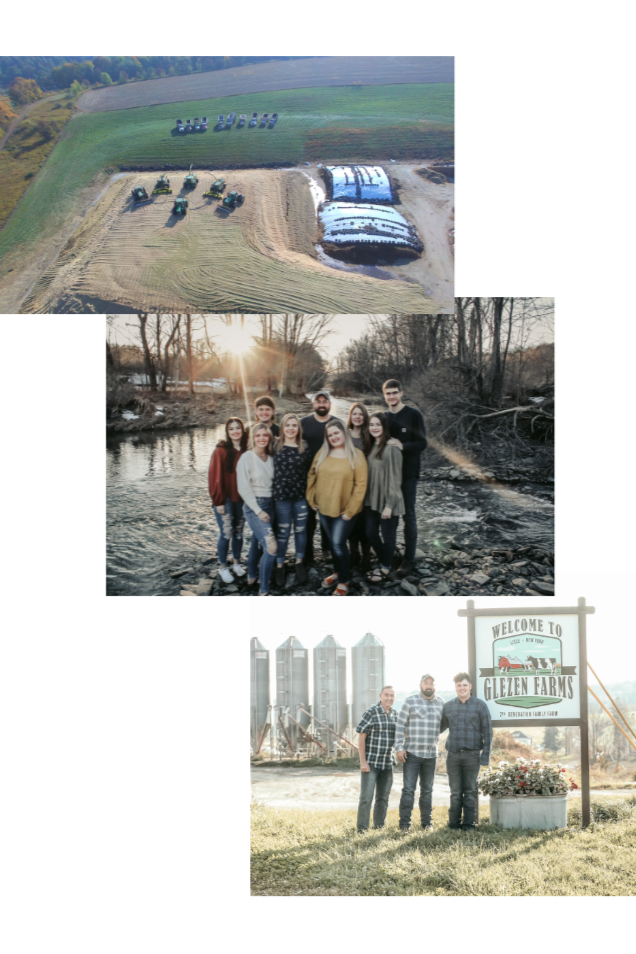
Workforce Development- Glezen Farms, LLC, Lisle, NY, Maola Local Dairies

And in Lisle, New York, Scott Glezen was working through floor plans for employee housing with a design most people wouldn’t think about: separate wings for day-shift and night-shift workers, so nobody’s sleep got disrupted by the opposite crew coming and going. It was the kind of detail that would never show up on a milk check.

He did it anyway.

On November 11, 2025, all three operations collected National Dairy FARM Excellence Awards at the Joint Annual Meeting in Arlington, Texas. When Dr. Meggan Hain called their names, these families heard what their communities had been saying for years: these people are different.

But here’s what moves me most about these stories. It isn’t the awards.

It’s what happened in the years before anyone was watching—the quiet decisions made in kitchens and on hillsides and in conversations that nobody recorded.

These families didn’t pursue excellence to win awards. They decided who they were first. The recognition came later.

And that distinction? It matters more than any trophy ever could.

The Young Couple Who Bet Everything on Data

Matt Evangelo grew up with dirt under his fingernails and Holsteins in his blood. His parents ran D & E Dairy in Hanford, California—a registered operation where excellence wasn’t discussed, it was expected.

When Matt was eight, his dad brought Jerseys to the farm as project heifers for the boys. Holsteins were the family business, but those brown cows became Matt’s obsession. There’s no explaining why some people fall for Jerseys—you either understand it or you don’t.

Lauren’s path crossed his at World Dairy Expo in 2004. He was competing with the Cal Poly dairy judging team. She was there with family and friends. The next year, their paths crossed again—this time with Lauren judging for Cal Poly.

By 2008, they were married.

Their first big investment as newlyweds? A heifer calf named Tiaro Nevada Jazzle, bought with their friend Blake Renner from the Spring Valley 7th Edition sale.

I keep coming back to that moment. Two young people, pooling resources with a friend to buy a single animal because they believed in what she could become. That kind of faith is either naive or visionary.

Turns out, it was visionary.

Jazzle became a Junior Champion of Honor at the World Dairy Expo in 2009, earning an Excellent-93% appraisal. She validated everything Matt and Lauren believed about trusting their instincts.
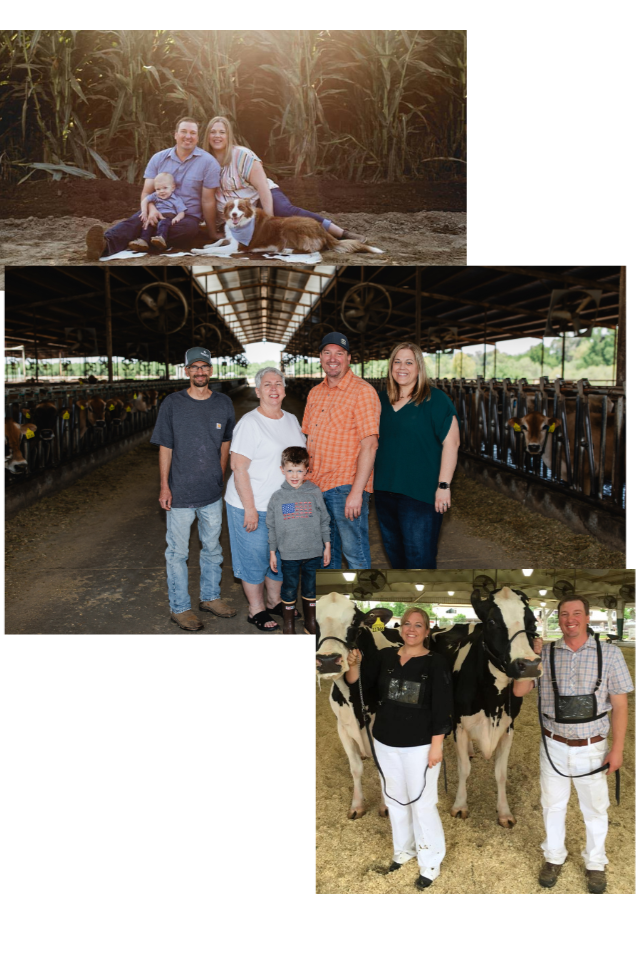
Animal Care and Antibiotic Stewardship – Bar E Dairy, Kingsburg, CA, Land O’Lakes

But here’s what made Bar E Dairy different from the start: Lauren wasn’t just a dairy farmer’s wife learning the business. She spent her days at AgWest Farm Credit calculating equipment ROI for other people’s operations. By 2023, she’d risen to Senior Vice President of Equipment Finance.

When Matt came home talking about activity collars that would track behavioral patterns, rumination, reproduction, and movement 24/7, Lauren didn’t roll her eyes or worry about the cost.

She opened a spreadsheet.

Most dairy families making technology investments do gut-feel math. This feels expensive. Will it pay back? I don’t know. My neighbor says it’s not worth it.

Lauren could model depreciation schedules. Expected treatment cost reductions. Labor savings from early detection. Payback timelines. She wasn’t a dairy farmer trying to understand finance. She was a finance professional who happened to own a dairy.

When they established Bar E in 2014 as a partnership with Matt’s parents, their approach was pragmatic from day one: embrace new technology, measure results, and adjust based on data—not sentiment.

But they didn’t just buy collars and call it innovation.

What struck me was how they completely rebuilt their mastitis treatment protocol around the data. They worked with their veterinarian to develop a system for sampling and culturing milk from affected cows—identifying the specific cause of infection before initiating treatment. Pathogen identification drives decisions rather than symptoms.

The result? Significantly decreased antibiotic usage while maintaining excellent udder health.

And then they did something that tells you exactly who they are.

They volunteered to participate in the Remote Animal Welfare Monitoring Project—a collaboration among Land O’Lakes, Merck Animal Health, and the FARM Program —testing whether automated cow monitoring could improve animal welfare assessments across the entire industry.

That’s not “let’s win an award” thinking.

That’s “let’s prove this works for everyone” thinking.

When the 2025 FARM Excellence Award for Animal Care & Antibiotic Stewardship was announced, it validated what Matt and Lauren’s California dairy community already knew: they’d bet on technology when it wasn’t popular, weathered whatever messy middle came between purchase and payoff, and proven it worked.

The award didn’t make them excellent. The decision did.

Three Brothers and Nearly a Century of Keeping Faith with the Land

If you ever drive Highway 35 along Wisconsin’s western border, slow down near Alma. Look up toward the bluffs.

You’ll see something you don’t expect.

Four hundred acres of crops are divided into 119 contoured fields, strip after strip following the natural curves of the land. It looks like someone painted it.

Someone did, in a way. Four generations of Nolls, working with the hillside instead of against it.

Curtis, Mark, and Scott Noll don’t talk about conservation as if it were a program they enrolled in. They talk about it like it’s who they are.

“Keeping the topsoil in place is the most important thing we do,” Scott has said. “You can’t just go to town and buy new topsoil. Once it’s gone, you never get it back.”

Those words land differently when you’ve watched topsoil wash away. When you’ve seen neighbors lose what took generations to build in a single storm.

The Nolls chose differently. They’ve been choosing differently since 1929.
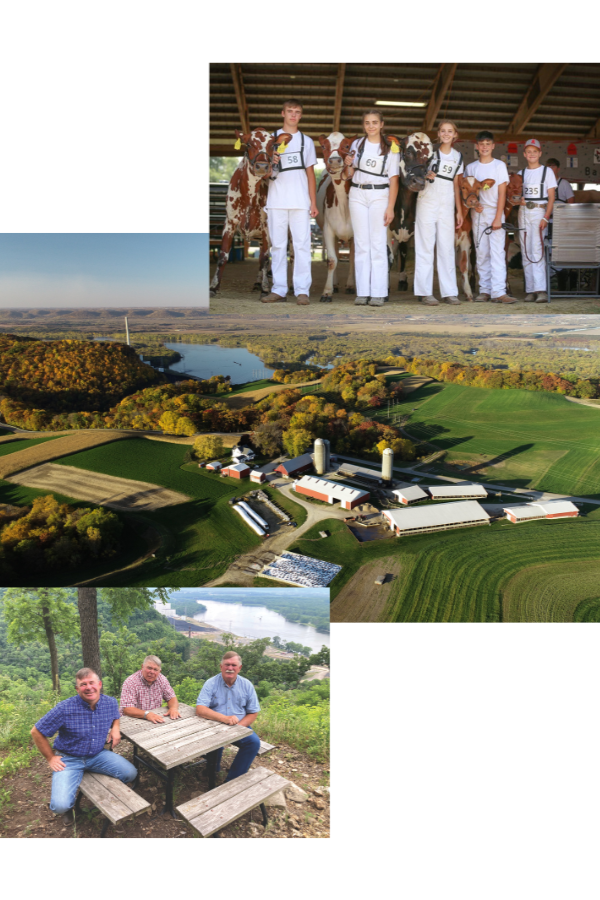
Environmental Stewardship – Five Star Dairy LLC, Alma, WI, Associated Milk Producers Inc.

Today, Five Star Dairy Farm LLC milks 115 cows three times a day. That’s tiny by 2025 standards. Industry consultants would tell them to 10x their size or get out.

But standing on those bluffs—even just imagining that view from Highway 35—you start to realize something.

The consultants are measuring the wrong thing.

The Nolls don’t have 115 cows. They have 850 acres of responsibility—400 in crops, 450 in forest, oak savanna, and remnant prairie that provide crucial wildlife habitat and erosion control. They steward one of the largest dry bluff prairie remnants in Buffalo County.

More than 40 conservation practices. No-till on 90% of crops. Cover crops. Variable-rate fertilizer. Numerous earthen dams were built across decades of patient, deliberate stewardship.

Here’s what struck me about their pragmatism: they used revenue from selectively harvesting mature timber to finance their manure storage facility. Conservation and economics, working hand in hand. That’s the Noll approach in a sentence.

Manure is returned to fields as fertilizer—a closed-loop system their grandfather would recognize, and their grandchildren will inherit.

“When you’re in a generational farm, you don’t always agree,” Scott has acknowledged. “But conservation, our love for the land and animals, is something we’ve always agreed on.”

Three brothers. Nearly a century. 119 fields. A shared commitment that survived every disagreement, every margin crisis, every voice telling them to abandon what made them who they are.

In 2023, they received the Wisconsin Leopold Conservation Award—a $10,000 prize presented at the Wisconsin Board of Agriculture, Trade, and Consumer Protection meeting in Madison. When the 2025 FARM Excellence Award for Environmental Stewardship followed, it validated what Buffalo County already knew.

You can balance productivity with stewardship. You just have to decide that’s who you are—and refuse to let anyone talk you out of it.

The Eighth Generation That Remembers What Matters

Scott Glezen knows what it feels like when something you believe in gets torn away.

In May 2025, the USDA canceled his five-year conservation contract mid-term. He’d entered an agreement to receive approximately $192,000 to cultivate winter wheat on part of his property—not for financial gain, the grant offered him nothing personally—but because it was “the right thing to do” for soil conservation. He’d already planted the crops. They’d already absorbed significant rainfall that spring.

And then, without warning, the contract was gone.

“I just don’t understand how sustainable and conservation practices have become politicized,” Scott said at the time. “It genuinely surprises me.”

There’s something in those words that stays with me. Not anger. Bewilderment. The genuine confusion of someone who did the right thing and still got punished for it.

Congressman Josh Riley intervened. The federal funding was fully restored. Riley introduced bipartisan legislation—the Honor Farmer Contracts Act—to prevent it from happening to other farmers.

But here’s what that story reveals about Scott Glezen: he does the right thing even when it costs him. Even when it doesn’t make financial sense. Even when forces beyond his control try to take it away.

That’s the same philosophy behind the employee housing currently under construction at Glezen Farms in Lisle, New York.

This isn’t your typical farm housing. Scott designed the building to be strategically divided into day-shift and night-shift wings—so employees on opposite schedules can actually sleep without being disrupted by coworkers coming and going.

Think about what that means.

Someone sat down with floor plans and asked, “What do the people who work here actually need?” Not What’s the minimum we can provide? Not What will keep them from complaining? But genuinely: How do we help them rest?

Glezen Farms is an eighth-generation operation. Eight generations. That means somewhere around 1810, Scott’s family started farming that land in upstate New York.

When you carry that kind of history, you’re not building a business. You’re stewarding a legacy. And I believe Scott asks himself a question that most operators don’t: “What kind of farm do I want to hand to generation nine?”

The multilingual employee handbook. The annual performance evaluations. The sexual harassment prevention training is designed to ensure employees feel valued, protected, and empowered. None of it is required by law or program.

All of it is required by who Scott Glezen decided to be.

With 2,400 milking cows and 4,270 total head, he could structure this as a corporate operation. Treat labor as a commodity. Maximize margins. Extract cash.

Instead, he’s investing in people like they matter. Because to Scott, they do.

When the 2025 FARM Excellence Award for Workforce Development was announced, it validated what the Maola Local Dairies community already knew: the Glezens don’t just hire employees. They invest in human beings.

The Evaluator Who Chose Service Over Enforcement
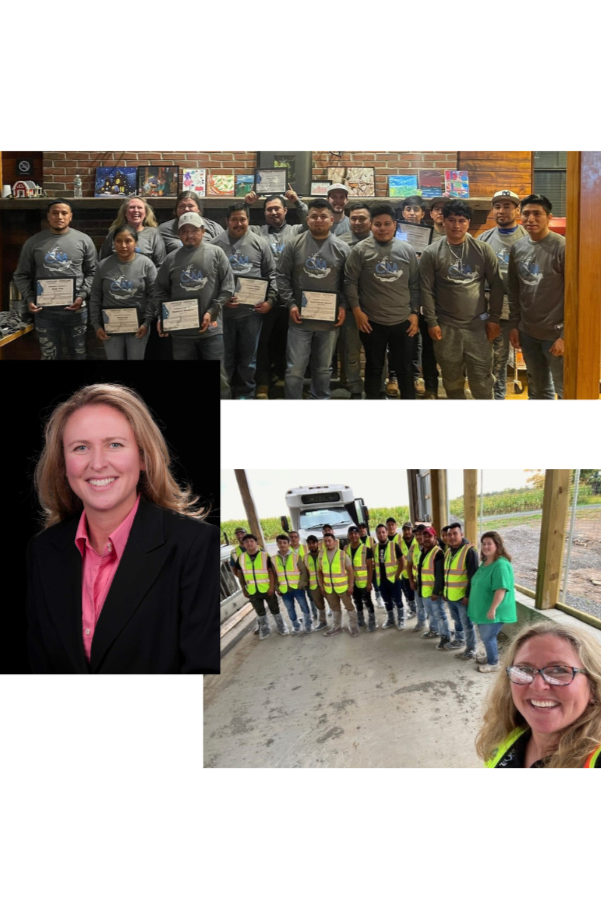
Evaluator of the Year – Lisa Ford, Auburn, NY, Cayuga Marketing

Lisa Ford didn’t grow up on a dairy farm.

She’d never touched a bulk tank or walked a pen until a sustainable agriculture class at the University of Maine opened a door she didn’t know existed. She graduated in 1996 with a degree that would lead her somewhere she never expected.

Since 2014, she’s served as Member Programs Manager for Cayuga Marketing in New York. Eleven years of showing up for farmers. Eleven years of answering the phone when someone needs help.

There’s a reason Cayuga members call Lisa before problems develop—she’s proven, farm after farm, that she’s in their corner.

Here’s what makes Lisa different: most FARM evaluators show up with clipboards. They check boxes, find non-compliances, write up corrective actions, and leave. The farmer watches the truck disappear down the driveway and exhales.

Lisa chose differently.

Questions about training resources? Call Lisa. Stockmanship advice? Call Lisa. Proper antibiotic storage protocols? Call Lisa—even late in the evening, she’s likely still working.

By the time Lisa conducts a FARM evaluation, she’s already been helping that farm for months or years. She’s not the inspector. She’s the person they trust.

Her colleagues describe her as “meticulous, detail-oriented, and known for having a keen eye.” But what strikes me is how she uses that eye—not to catch farms doing something wrong, but to help them get better.

“Her dedication to continuous improvement is evident through her time spent with Cayuga Marketing members, always offering her time, resources, and above all, her complete dedication to improving the dairy industry at large,” the FARM Program noted in announcing her award.

She built two internal programs—CREATE (Cayuga’s Responsible and Ethical Animal Treatment Endeavor) and CM Team—that use FARM standards as baselines but help members exceed minimum requirements. Nobody asked her to do that. Nobody required it.

Lisa saw farms that wanted to improve and built systems to help them succeed.

She also sits on the NMPF Animal Health and Wellbeing Committee. She could use that position to tell farmers what national standards require. Instead, she uses it to tell the committee what real farms actually need to make those standards work.

She’s not representing standards to farmers. She’s representing farmers to standards.

When the 2025 FARM Evaluator Excellence Award was announced, it recognized something Cayuga Marketing members already knew: Lisa had been choosing them, every day, for eleven years.

The Pattern That Connects Them All

Four operations. Four different paths. But the same sequence: identity first, economics second.

That pattern is undeniable.

So is what I have to tell you next.

The Uncomfortable Truth We Need to Talk About

Here’s where I have to be honest with you—and with myself about what these stories really mean.

All four winners have structural advantages that most dairy farms don’t have.

Bar E had family backing, dual professional income, and insider ag lending expertise. Five Star has 850 acres, multiple revenue streams, and decades of participation in conservation programs. Glezen has eight generations of equity and scale to invest in infrastructure that smaller operations can’t afford. Lisa has a cooperative structure that funds her position and values her approach.

The industry is holding up these examples and saying, “See?” Excellence is possible!

And it is. But it’s easier with capital, scale, family support, and cooperative structure.

So what does that mean for the 200-cow operation just trying to survive?

I’ve wrestled with this question. Because if you’re reading this at your kitchen table after a day that started at 4 AM, the last thing you need is another story about people with advantages you don’t have. That’s not inspiration. That’s just another reminder of the gap.

So let me be honest about what I actually learned from these four stories:

What Actually Transfers to Your Kitchen Table

  • Bar E decided “we want to be farmers who use data to reduce antibiotics” FIRST. Then they figured out how to afford it.
  • Five Star decided “keeping topsoil matters more than maximizing production” FIRST. Then they built a business model that made that viable.
  • Glezen decided “we’re accountable to generation nine” FIRST. Then they built workforce systems that reflected that identity.
  • Lisa Ford decided, “I’m here to serve farmers, not police them” FIRST. Then she built programs that made that possible.

Every one of them decided WHO THEY WERE before they figured out HOW TO PAY FOR IT.

Most struggling operations do it backwards. What can we afford? What does the bank allow? What’s the minimum we can get away with? Then they try to build an identity around those constraints.

And they wonder why they’re exhausted and losing ground.

What This Means for All of Us

You might not have Lauren’s finance background. You might not have eight generations of equity. You might not have 850 acres or a cooperative that funds your position.

But you can ask yourself one question: “What’s the one thing I’m willing to sacrifice everything else to protect?”

For Bar E, it was data-driven animal care. For Five Star, it was topsoil and land stewardship. For Glezen, it was treating people with dignity across generations. For Lisa, it was serving farmers authentically.

Maybe for you it’s:

  • Being the farm kids visit to learn where milk comes from
  • Having employees who’ve stayed through the labor shortage—not because they couldn’t leave, but because they chose to stay
  • Leaving soil better than you found it, even when conservation programs get canceled
  • Raising cows healthy enough that your antibiotic costs dropped while your neighbors’ rose
  • Being the operation processors call when they need a farmer who’ll speak at their sustainability summit

Not sure where to start? Answer this: What would make you proudest to tell your grandchildren about this operation?

Pick one thing. Make it non-negotiable. Then build everything else around making that economically viable.

The 200-cow farms that survive the next decade won’t be the ones with the most resources. They’ll be the ones who decided what they stood for, then refused to compromise—even when it was expensive, even when neighbors were skeptical, even when consultants said it was wrong.

That decision costs nothing.

It just requires courage.

Bar E, Five Star, Glezen Farms, and Lisa Ford made that decision years ago—before anyone was watching, before anyone was handing out awards, before anyone told them it was the right choice.

I don’t know if it will work for everyone. I don’t know if it will work for you.

But I know this: You decide first. Then you find out if you were right.

Maybe that’s the only way it ever works.

The awards? They came later. They always do.

Key Takeaways 

  • One pattern, four paths: Bar E bet on technology, neighbors dismissed. The Nolls kept 119 fields that consultants called inefficient. Glezen built employee housing that nobody required. Ford served farmers for 11 years when evaluating them would’ve been enough. All decided who they were before they could afford it.
  • Advantages acknowledged: These winners have family backing, generational equity, scale, and cooperative support that most operations don’t. The framework still transfers.
  • The identity question: “What would I refuse to compromise even if it hurt my margins?” Your answer reveals operational identity more than any business plan.
  • The decision is free: You can decide who you are tonight. Whether the economics follow—you find out after. That’s how it worked for them, too.

The 2025 FARM Excellence Awards were presented on November 11, 2025, at the Joint Annual Meeting in Arlington, Texas. The FARM Program, administered by the National Milk Producers Federation, is open to all U.S. dairy farmers, cooperatives, and processors. For information about program participation and future nominations, visit nationaldairyfarm.com.

Learn More

Join the Revolution!

Join over 30,000 successful dairy professionals who rely on Bullvine Weekly for their competitive edge. Delivered directly to your inbox each week, our exclusive industry insights help you make smarter decisions while saving precious hours every week. Never miss critical updates on milk production trends, breakthrough technologies, and profit-boosting strategies that top producers are already implementing. Subscribe now to transform your dairy operation’s efficiency and profitability—your future success is just one click away.

NewsSubscribe
First
Last
Consent

How Next-Gen Dairy Leaders are Shaping The Future

Uncover the driving forces behind Wisconsin’s next-generation dairy leaders. Explore the passion and ingenuity that fuel their contributions to an industry indispensable to the state’s economic vitality.

Summary: Next-generation dairy leaders are emerging in the agriculture sector, combining modern technologies and traditional expertise. These young professionals prioritize sustainability, good communication, and flexibility, and must possess traits such as adaptability, collaboration, and commitment to navigate the changing landscape. They use data analytics to direct decisions, simplify processes, increase output, and ensure animal welfare. They respond to shifting customer tastes by creating new dairy products like lactose-free, high-protein, and probiotic-infused varieties. They understand the importance of supporting policies, encouraging sustainable incentives, fair trade practices, and negotiating market obstacles to ensure dairy farms thrive. The dairy sector faces challenges and opportunities, including labor shortages and workforce development, and must support policies that attract fresh talent and welcome creative training initiatives. They must also be aware of market trends, diversify product lines, and build close customer interactions using open marketing strategies. The future of the dairy sector depends on their flexibility, teamwork, and dedication.

  • The author’s personal connection to dairy farming traces back to their great-grandparents’ dairy farm from the late 1800s.
  • Currently working with Dairy Farmers of Wisconsin, the author is involved in organizing June Dairy Month activities to align with industry goals.
  • June Dairy Month strengthens public trust by connecting consumers to local farmers and advancing transparency in production practices.
  • Agricultural education initiated at the middle school level promotes early industry engagement and awareness of agriculture’s economic significance.
  • The author’s experiences and internships in agribusiness have been enriched by interactions with industry experts, fueling their commitment to a career supporting dairy farmers and consumers.
  • Encouraging young leadership and fostering educational programs are crucial for addressing future challenges and sustaining the dairy industry’s economic contribution to Wisconsin.
next-generation dairy leaders, agriculture sector, modern technologies, traditional expertise, sustainability, good communication, flexibility, adaptability, collaboration, commitment, data analytics, decision-making, process simplification, increased output, animal welfare, shifting customer tastes, lactose-free, high-protein, probiotic-infused, new dairy products, supporting policies, sustainable incentives, fair trade practices, market obstacles, labor shortages, workforce development, fresh talent, creative training initiatives, market trends, diversify product lines, close customer interactions, open marketing strategies, future of the dairy sector

Next-generation dairy leaders are starting to show up in the ever-changing field of agriculture, prepared to propel the sector toward sustainability and creativity. These people guarantee the dairy business grows by combining modern technologies and innovative techniques with traditional agricultural expertise. Taking advantage of possibilities and overcoming obstacles, their impact is important.

But who are this new generation dairy leaders? Young, aspirational professionals from family farms, agribusiness industries, and agricultural colleges come from Emphasizing sustainability, good communication, and flexibility, they incorporate new technology, support laws, and inform the public on the everyday and financial value of dairy.

Come explore with us the unique traits of these leaders, the projects they spearhead, and the possibilities and problems these leaders face. Understanding their path will help you to value their important part in the direction of the dairy sector. Join us to see what motivates the next generation of dairy executives to keep pushing innovation.

Adaptability, Collaboration, and Commitment: Essential Traits for Next-Gen Dairy Leaders

Next-generation dairy executives have to possess certain traits to negotiate the changing terrain of their sector. Crucially is adaptation and adopting new technology. As Xavier Drake from Lely North America points out, adaptability and lifelong learning are very crucial. This implies not just appreciating technical developments but also actively participating in ideas that increase profitability and efficiency.

Not less crucial are teamwork and good communication abilities. Modern dairy executives have to coordinate well amongst many teams and companies. Lely North America’s Chad Huyser stresses taste, critical thinking, and clear communication as means of overcoming problems. Operations and performance may be much improved by articulating visions, working on plans, and including other points of view.

At last, the dairy leaders of today have to be really dedicated to sustainability and animal welfare. Leaders have to make sure operations are profitable and appropriate for environmentally concerned customers as more people worldwide pay attention on moral behavior. This entails maintaining high standards of animal care and using environmentally friendly technology to build industry sustainability and customer confidence.

Next-Gen Leadership in the Dairy Industry: Sustainability, Innovation, and Advocacy

With their dedication to sustainability, creativity, and advocacy, next-generation leaders are driving the pace in the ever-changing dairy industry.

These executives use data analytics to direct their decisions. From herd health to milk output, they utilize data to simplify processes, increase output, and guarantee animal welfare—all of which eventually helps to improve profitability.

Next-generation leaders responding to shifting customer tastes are creating new dairy products like lactose-free, high-protein, and probiotic-infused varieties. Keeping aware of consumer needs helps them to maintain the dairy sector competitive and relevant with superior products.

Understanding the importance of supporting policies, these leaders encourage sustainable incentives and fair trade practices. Their initiatives seek to negotiate market obstacles and tight rules so that dairy farms may flourish in a favorable environment.

The Multidimensional Landscape: Challenges and Opportunities for Next-Generation Dairy Leaders

Next-generation leaders in the dairy sector have both difficult problems and possibilities as the sector changes. Key problems exacerbated by an aging population include labor shortages and workforce development. Young leaders have to support policies that draw fresh talent and welcome creative training initiatives. The direction of dairy depends on our capacity for creativity and adaptation.

Another great difficulty is shifting market dynamics and competition. Volatile global dairy markets and changing demand threaten traditional strongholds. Essential are a strong awareness of market trends and strategic agility. Next-generation leaders have to investigate fresh export markets, diversify product lines, and build close customer interactions using open marketing strategies.

  • New export markets: Identifying and penetrating untapped markets can mitigate local pressures.
  • Diversified product lines: A broader range of dairy products can cater to changing consumer preferences.
  • Transparent marketing: Building trust through transparency can enhance consumer loyalty.

Using technology to increase profitability and efficiency presents both possibilities and problems. For dairy enterprises, precision farming equipment and data analytics have transforming power. Accepting these technology guarantees sustainability, improves animal care, and best uses resources.

Those executives from next generations who use these technologies will simplify processes and open the path for a strong and creative sector.

 The Bottom Line

The shape of the dairy sector going forward depends much on next-generation dairy leaders. Their flexibility, teamwork, and dedication help them to carry out creative ideas including sustainable ones. These leaders are not just running farms but also include cutting-edge technology, promoting inclusive education, and linking customers with agriculture.

Leaders in the dairy business should welcome these developments as they transform their sector. By means of education, internships, and community involvement, they guarantee the growth and fortitude of dairy farming. Let us preserve quality and environmental preservation while driving innovation and sustainability to fulfill world needs. Your diligence now will determine the achievements of future.

Learn More:

Join the Revolution!

Bullvine Daily is your essential e-zine for staying ahead in the dairy industry. With over 30,000 subscribers, we bring you the week’s top news, helping you manage tasks efficiently. Stay informed about milk production, tech adoption, and more, so you can concentrate on your dairy operations. 

NewsSubscribe
First
Last
Consent

Understanding the Global Skim Milk Powder Market in 2024 – What the Trends Mean for Dairy Farmers

How will 2024’s global skim milk powder trends impact your dairy farm? Are you ready for these changes and new opportunities?

The worldwide skim milk powder (SMP) industry is currently undergoing significant changes, influenced by various factors such as international trade dynamics, supply chain disruptions, and shifting dairy consumption trends. However, amidst these developments, the SMP industry presents a promising opportunity for substantial growth. Understanding these patterns is crucial for dairy producers, as SMP is a significant export commodity and a staple in home markets. This study will dissect the current state of the SMP industry, providing an overview of the main trends, opportunities, and challenges for 2024. Readers can expect a comprehensive understanding of how global market changes may impact their operations and decision-making processes, instilling a sense of optimism for the future.

Navigating Global SMP Market Diversification: A Closer Look at Key Players and Emerging Trends 

The worldwide skim milk powder (SMP) industry is experiencing tremendous diversity and instability. Big players like the United States, New Zealand, and the European Union dominate the production landscape, with each area contributing significantly to the global supply chain. As of 2024, the United States alone is expected to generate an extra 1% of fluid milk, which may supplement its SMP supply. This gives American dairy producers an edge in fierce foreign competition.

However, Australia provides a different situation, with a predicted 1% rise in fluid milk output, indicating possible development in SMP exports. This favorable prognosis gives a light of optimism to market dynamics, notwithstanding the troubles encountered by other areas.

On the import front, rising Asian and Middle Eastern economies continue to have strong demand for SMP. This transition is driven by increased disposable incomes and shifting dietary choices favoring dairy-based goods. However, logistical challenges, particularly cross-border traffic congestion on important trade routes, offer substantial vulnerabilities and potentially disrupt supply chains if not managed correctly.

Modern market trends also show a rising customer preference for health-conscious goods, which has prompted producers to broaden their offers and concentrate on high-protein, low-fat dairy products. Sustainability practices are becoming more critical as customers and regulatory authorities strive for more environmentally friendly manufacturing processes, transforming global operating plans.

Understanding the Global Skim Milk Powder (SMP) Market in 2024: A Key to Navigating Dynamics, Challenges, and Opportunities 

TrendImpact on Dairy FarmsAdditional Insights
11% growth in SMP outputIncreased supply could pressure pricesConsider diversifying product offerings to manage market volatility
3% increase in exportsOpportunities for U.S. dairy farms to expand market reachFocus on enhancing export quality standards to stay competitive
Decline in milk productionPotential strain on SMP production and supply chainAdopt efficient farming practices to mitigate production challenges
Weakened demand from AsiaReduced export revenue for SMPExplore alternative markets to offset demand fluctuations
Regulatory changesImpact on inter-state commerce and market accessibilityStay updated with policy changes and adapt quickly

In 2024, the worldwide Skim Milk Powder (SMP) market is expected to undergo a dynamic transition driven by several crucial variables impacting supply and demand. Notably, the predicted 3% increase in butter output, driven by growing demand for high-fat dairy products, directly influences SMP supply. As more milk is directed toward butter and cheese production, the supply of SMP may tighten, putting upward pressure on pricing. However, the anticipated 1% rise in fluid milk output in the United States, which is expected to generate an extra 1% of fluid milk, may supplement its SMP supply, providing a marginal boost to milk available for powder manufacture. Understanding these characteristics is critical to making sound judgments in the SMP market.

Exports of SMP are expected to climb by 3% to 838,000 tonnes, demonstrating strong worldwide demand despite hurdles such as tariff uncertainty and changing trade policy. This predicted export expansion emphasizes the critical need to maintain competitive pricing and high-quality standards to gain and retain overseas markets.

Price predictions for dairy products in 2024 indicate a moderate 1 to 3 percent rise, putting SMP in a reasonably stable inflationary environment compared to other food categories. This steadiness, despite possible market turbulence, demonstrates the robustness of the SMP market. However, market volatility must be addressed, especially given legislative attempts to reduce greenhouse gas emissions and water consumption, which affect manufacturing costs. The formation of initiatives such as the Dairy Methane Action Alliance represents industry-wide efforts to align with global sustainability goals, which, while potentially increasing short-term expenses, aim to ensure long-term viability and market acceptance, providing reassurance about market stability.

By 2024, the SMP market will face supply challenges due to increased milk diversion to fat-based products and intense worldwide demand. Price stability, impacted by moderate inflation rates, changing regulatory environments, and intelligent international trade policies, will be critical in successfully navigating future market developments.

The Shifting Dynamics of the Global Skim Milk Powder (SMP) Market in 2024

The evolving dynamics of the worldwide Skim Milk Powder (SMP) market in 2024 will have significant consequences for the US dairy industry. These developments may be a double-edged sword, bringing possibilities and difficulties that need our full attention and deliberate response.

First, changes in export demand have a considerable impact. With nations like Australia dramatically increasing their cheese manufacturing capacity, competition in the global market heats up. This implies that we urgently need to improve our value proposition by enhancing product quality, broadening our offerings, and utilizing the “Made in the USA” brand to carve out a distinct niche. Understanding and aligning with global customer tastes may help us sustain a competitive advantage in the face of increasing competition.

The expected 1 to 3 percent rise in dairy product prices is a mixed bag. On the one hand, increasing pricing may boost profits, which is particularly important when operating expenses rise. However, price volatility remains a significant worry. Unpredictable pricing fluctuations strain our financial planning and jeopardize our long-term viability. This volatility could impact the SMP market, potentially leading to changes in demand and supply. Adopting solid financial strategies and hedging methods may reduce certain risks and provide a cushion against market swings.

Furthermore, when multinational companies increase output, there is a danger of market saturation. This could lead to increased competition and potentially lower prices in the SMP market. Identifying new markets and diversifying export destinations might assist in mitigating risk and minimizing reliance on old markets that may become oversupplied. Closer to home, there is a potential for innovation in our local market. Expanding value-added product lines, capitalizing on growing consumer preferences such as clean-label and high-protein alternatives, and improving supply chain efficiency all create significant domestic development opportunities.

Finally, empowering ourselves via invention and cooperation is both advantageous and essential. Forming cooperatives, investing in on-farm technology, and conducting joint research may all lead to on-farm solutions that improve productivity and sustainability. Staying current on global trends and being proactive rather than reactive will be critical in navigating these turbulent seas.

While the worldwide SMP market in 2024 will have unique difficulties, it will also provide opportunities for those willing to pivot wisely and exploit our capabilities. We must remain adaptable, knowledgeable, and unified to capitalize on these global trends.

Strategic Actions for Navigating a Transforming SMP Market: Preparing for the FutureAs dairy farmer managers looking to navigate the evolving SMP market, here are some practical strategies to keep your operations resilient and profitable: 

  • Diversify Product Offerings: Taking Control of Your Market PresenceImprove Production Efficiency: Invest in technology and farming practices that enhance productivity. Precision farming tools, automated milking systems, and sustainable farming techniques can significantly reduce costs and improve yields. Furthermore, collaborating with initiatives like the Dairy Methane Action Alliance can help lower methane emissions and enhance environmental compliance.
  • Explore New Markets: Stay ahead of market trends by exploring emerging markets, particularly regions with growing demand for dairy products. Strengthen export strategies and establish partnerships with international distributors. For instance, Australia’s rising fluid milk production suggests opportunities for collaboration and exchange of best practices.
  • Focus on Workforce Development: Address labor challenges by investing in workforce training and development. Empower your team with knowledge about sustainable farming practices and new technologies. A well-trained workforce adaptable to market changes seamlessly integrates production and product diversity improvements.
  • Adopt Sustainable Practices: Embrace sustainability as a core operational principle. Implement measures to reduce your carbon footprint, such as optimizing feed efficiency or adopting renewable energy sources. Consumers and international markets increasingly favor sustainable products, which can provide a competitive edge.

By implementing these strategies, dairy farmers can better manage the uncertainties of the SMP market, ensuring long-term growth and sustainability for their operations.

The Bottom Line

The Skim Milk Powder (SMP) market will face opportunities and constraints in 2024. Dairy producers must be attentive and adaptive. We examined how expanding demand, sustainability, and shifting rules influence the market. Staying updated is not only beneficial; it is necessary for competitiveness and profitability.

Key insights include:

  • Making sustainability a primary goal.
  • Using modern technologies such as ERPs.
  • Analyzing labor market developments.

Regional production trends, export dynamics, and regulatory frameworks play essential roles. Those who adjust proactively will gain an advantage. The future is hopeful and challenging, with growth, nutrition, and innovation fueling industry confidence.

Stay involved, informed, and proactive. The future of dairy farming seems promising for those willing to develop. Let us use these ideas, embrace change, and drive the sector to higher sustainability and profitability.

Key Takeaways:

  • Divergent Trends: The SMP market is experiencing both growth and contraction in different regions, influenced by varying consumer preferences and economic conditions.
  • Economic Factors: Global economic uncertainties, such as inflation and currency fluctuations, are expected to impact SMP pricing and demand.
  • Technological Innovations: Advancements in dairy processing technologies are enhancing production efficiency and product quality, offering new opportunities for market players.
  • Regulatory Changes: Changing regulations and trade policies in major dairy-producing countries could significantly affect export-import dynamics.
  • Sustainability Focus: There is a growing emphasis on sustainable dairy farming practices, which could influence consumer buying behaviors and market demand.

Summary:

The global skim milk powder (SMP) industry is experiencing significant changes due to international trade dynamics, supply chain disruptions, and shifting dairy consumption trends. Key players like the United States, New Zealand, and the European Union dominate the production landscape, contributing significantly to the global supply chain. As of 2024, the United States is expected to generate an extra 1% of fluid milk, supplementing its SMP supply. Australia is predicted to develop SMP exports with a 1% rise in fluid milk output. Rising Asian and Middle Eastern economies have strong demand for SMP due to increased disposable incomes and shifting dietary choices. However, logistical challenges, particularly cross-border traffic congestion, offer vulnerabilities and potentially disrupt supply chains. Modern market trends show a rising customer preference for health-conscious goods, prompting producers to broaden their offerings and focus on high-protein, low-fat dairy products. Sustainability practices are becoming more critical as customers and regulatory authorities strive for more environmentally friendly manufacturing processes. By 2024, the SMP market will face supply challenges due to increased milk diversion to fat-based products and intense worldwide demand. Price stability, impacted by moderate inflation rates, changing regulatory environments, and intelligent international trade policies, will be critical in navigating future market developments.

Learn more:

Top Tips for Building a Skilled Dairy Farm Workforce Through Effective Employee Training

Boost your dairy farm’s efficiency with skilled labor. Discover top tips for effective employee training, including when to train and the importance of language.

Imagine operating a dairy farm where every employee is competent, driven, aware of their critical contribution, and empowered. This is a realistic result with enough training, not a fantasy. Seen initially as unskilled labor, dairy farm jobs are changing in line with industry awareness of the need for training. Practical training increases operational performance, involvement, and confidence and helps your staff be empowered. For necessary training sessions, many dairy producers depend on professional consultants. With their expertise and experience, these consultants play a crucial role in designing and delivering effective training programs. Frequent, culturally relevant training courses provide a qualified, involved staff that increases production and the working environment. Learning in their mother tongue guarantees that staff members grasp the content entirely. Modern dairy farming depends on sustainability and success, which rely on staff training to equip them for industry difficulties and promote a good work atmosphere.

The Importance of Language in Effective Employee Training 

Training in the employees’ mother tongue serves a purpose beyond practical employee development. It fosters a strong sense of community and inclusiveness among dairy farm employees, ensuring perfect understanding, confidence, and relationships. Sessions in Spanish, for instance, promote clarity and community, enhancing the overall team dynamic. While many people may know English, training in the employees’ mother tongue can further strengthen the sense of community and inclusiveness, making everyone feel connected and part of a team.

Spanish fosters rapport and confidence. Spanish trainers create comfort and involvement by relating more effectively to staff members. This transparency lowers linguistic obstacles and increases interactive training possibilities.

Providing instructions in the employees’ mother tongue goes beyond being a simple communication tool. It is a powerful gesture of respect and appreciation for your staff. When employees receive instructions in their mother tongue, they feel deeply valued and understood, which can significantly contribute to a positive workplace culture and foster respect among team members.

Training in Spanish improves learning, performance, and satisfaction, benefitting the dairy business.

Scheduled Training: A Pillar of Consistency and Excellence in Dairy Operations

Maintaining a consistent training program guarantees dairy workers’ continued competency. The farm should schedule frequent sessions to maintain standards and handle procedural drifts. Procedural drift refers to the gradual deviation from established procedures, which can occur due to changes in staff, equipment, or industry standards. These sessions range in frequency: some farms could find quarterly meetings enough, while others would require monthly training to align with the best standards. Training should also happen as necessary, particularly for fixing procedural deviations or onboarding new staff members.

Training consistency promotes an accountable culture and helps preserve proficiency through constant development. Frequent training courses provide chances to incorporate new technology, test knowledge, and strengthen expertise. Dairy farms guarantee that their personnel are ready for the complexity of contemporary dairy operations by committing to a disciplined training program, improving performance, job happiness, and production.

Assessing the Need for Additional Training: A Holistic Approach 

Deciding when to conduct further training requires a sophisticated strategy. Observing procedural drift and discrepancies between published policies and actual practices is essential. Variations in feed management might affect milk output, indicating the necessity for refresher training.

Another essential training event is onboarding new hires. Managers should find out how many fresh graduates are on staff. Did they show up for the most recent training session? If not, start focused instruction to align them with farm policies.

Beyond these, several indicators suggest further training is needed: 

  • Declining Performance Metrics: Drops in milk yield or calf growth rates may indicate inconsistencies requiring training.
  • Employee Feedback: Check-ins can reveal areas where employees need more guidance.
  • Technological Updates: Ongoing training is essential to adapt to new advancements.
  • Safety Concerns: An increase in incidents should prompt immediate safety training.

Managers must remain dedicated to lifelong learning, track staff involvement, and examine operational statistics. This ensures dairy farmers have a qualified, safe, and efficient crew.

Building Robust Relationships: The Cornerstone of Effective Dairy Farm Management 

In the dairy sector, a good work atmosphere depends on solid bonds between staff members. Training and employee performance are more effective with open communication and trust. Employees who trust their trainers and managers participate more in sessions, ask questions, and apply skills to their work. Regular, polite contacts where staff members feel appreciated help to create this trust.

Good communication guarantees precise directions, helpful criticism, and quick resolution of issues. Frequent meetings and encouraging mutual respect help to convert training into a development possibility. Using workers’ chosen language, trainers such as Brady and Salas enhance understanding, rapport, and clarity, increasing job happiness and dedication to excellence.

Enhancing Training Effectiveness: Practical Strategies for Maximizing Employee Engagement and Learning 

  • Use Real-Life Examples and Pictures: Integrate examples and pictures from your dairy to make the training more relatable and understandable. This helps employees visualize the procedures and their practical application.
  • Focus on Key Skills: Concentrate on the most critical skills and tasks employees must master. This keeps the training concise and relevant, ensuring essential practices are understood and retained.
  • Bilingual Materials: Prepare training materials in both Spanish and English. This ensures that all employees can fully comprehend the training content regardless of their primary language.
  • Employee Safety: Always incorporate safety protocols and guidelines into training sessions. Emphasize the importance of safety in every task to foster a culture of awareness and prevention.
  • Engagement and Interaction: Encourage questions, discussions, and hands-on practice during training sessions. This interaction helps solidify the learning and allows employees to clarify any uncertainties.
  • Monitor and Review: Continuously monitor employee comprehension and application of the training. Use follow-up sessions and observations to ensure that skills are implemented correctly and adjust training as necessary.
  • Respectful Scheduling: Be mindful of your employees’ time by scheduling training sessions at convenient times and keeping them focused and to the point. Providing lunch can also create a more comfortable and conducive learning environment.
  • Regular Refresher Courses: Do not hesitate to retrain employees on critical topics periodically to reinforce their knowledge and address any procedural drifts that may have occurred.

Systematic Monitoring and Evaluation: Ensuring Training Efficacy and Workforce Development

Ensuring efficacy depends on tracking and assessing staff understanding throughout training. Direct observation, interactive questioning, and feedback mechanisms like tests, surveys, and quizzes help achieve this. While interactive questions involve workers and test their knowledge, direct observation lets trainers see how they interact with the content.

Examining statistics, including quiz outcomes and attendance for training, offers insightful analysis of training efficacy. Should several staff members struggle with a specific process during a quiz, retraining or more review is needed.

Monitoring employee behavior after training is just as important. Managers should look for areas of development in everyday activities, work performance, and procedure adherence. Constant procedural drift suggests that the training may have to be changed.

Monitoring and evaluating systematically guarantees not just immediate training effectiveness but also helps to assure long-term worker development. Higher work satisfaction, improved productivity, and general excellence in farm management follow from constant improvement of training programs depending on observed behaviors and data analysis.

The Bottom Line

Transforming farm labor from a perceived unskilled job into a competent workforce able to satisfy current dairy needs depends on training. Regular, language-based instruction produces competent workers with great confidence in their responsibilities. Frequent training courses preserve operating standards and help to correct procedural slippage. Development of trust using linguistic and cultural awareness improves involvement. Using many experts guarantees that training requirements are satisfied from a whole perspective. Constant improvement depends on ongoing observation and evaluation of training efficiency. For sustainability and success, well-organized training courses are essential; they improve work satisfaction, reduce absenteeism, and foster greater loyalty. Well-trained staff members uphold high animal care and farm management standards, directly influencing dairy output and quality. Funding vital training is brilliant and pays off handsomely. Using formal and informal approaches in preferred languages, managers and farmers should prioritize continuous development, improving skill levels, and fostering a positive working atmosphere. Accept thorough training as essential for dairy farm management to develop.

Key Takeaways:

  • Engage experts such as veterinarians, county extension agents, and consultants for comprehensive training support.
  • Conduct employee training sessions in Spanish to enhance comprehension and build trust.
  • Hold regular training sessions, whether monthly, quarterly, or during new employee onboarding.
  • Address procedural drift by regularly evaluating and correcting deviations from standard practices.
  • Emphasize the importance of each employee’s role in the overall success of the farm.
  • Monitor employee comprehension and engagement during trainings to ensure effectiveness.
  • Use visual aids, examples, and hands-on demonstrations tailored to your specific farm operations.
  • Be respectful of employees’ time and consider their feedback when scheduling and planning training sessions.

Summary:

Dairy farms are increasingly recognizing the importance of employee training to improve operational performance, involvement, and confidence. Professional consultants play a crucial role in designing and delivering culturally relevant training programs that provide a qualified workforce. Language plays a significant role in effective employee training, as it fosters a strong sense of community and inclusiveness among employees. Consistency in training promotes an accountable culture and helps preserve proficiency through constant development. A holistic approach to assessing the need for additional training involves observing procedural drift, discrepancies between policies and actual practices, onboarding new hires, and considering factors such as declining performance metrics, employee feedback, technological updates, and safety concerns. To ensure a qualified, safe, and efficient crew, dairy farms must remain dedicated to lifelong learning, track staff involvement, and examine operational statistics. Effective dairy farm management relies on building strong relationships between staff members, fostering open communication, and using practical strategies for maximizing engagement and learning. Systematic monitoring and evaluation are essential for ensuring training efficacy and workforce development.

Learn more:

Send this to a friend