Archive for subclinical mastitis

Abandon Your ‘Wait and Treat’ Mastitis Strategy Before It Bankrupts Your Operation

Stop believing the ‘quick response’ mastitis myth. Cornell’s inflammation test prevents $200 per cow losses before you see clinical symptoms.

EXECUTIVE SUMMARY: Your “rapid response” to clinical mastitis is actually a profit-protection failure – you’re treating problems that started 4-7 days earlier while hemorrhaging $200 per cow annually in hidden losses. Cornell University’s breakthrough cytokine detection technology identifies inflammation 24-48 hours before traditional methods, enabling intervention when treatment costs $50 instead of $300 per case. With the global dairy industry losing billion annually to mastitis and 30-40% of clinical cases showing no bacterial growth on culture, this precision diagnostic represents the most significant shift from reactive symptom-chasing to proactive health management in decades. European operations using similar biomarker monitoring already report 31% reduction in antibiotic use, 23% improvement in reproductive performance, and 15% reduction in culling rates while maintaining production levels. Progressive farms implementing early inflammation detection could prevent ,000 in annual milk losses on a 500-cow dairy while positioning themselves for competitive advantages as sustainability metrics become purchase requirements. The technology gap between early adopters and traditional farms will create a permanent profitability divide by 2027 – making now the critical time to evaluate whether your operation will lead this transformation or get left behind counting preventable losses.

KEY TAKEAWAYS

  • Prevent 1,000-pound milk losses per cow by detecting subclinical inflammation before clinical disease develops, protecting approximately $200 in revenue per affected animal that reactive methods cannot recover
  • Reduce mastitis treatment costs by 60-70% through early intervention protocols that cost $50 per case versus $300 for clinical treatments, while eliminating the $65 daily treatment extension costs that drain profit margins
  • Leverage precision cytokine detection for competitive positioning as EU regulations requiring 50% antibiotic reduction by 2030 force global adoption of biomarker monitoring, creating export market advantages for compliant operations
  • Transform herd health economics through proactive management that addresses the fundamental flaw in traditional SCC testing – which detects mastitis after onset rather than during the critical 4-7 day intervention window where prevention remains possible
  • Prepare for technology commercialization by 2026-2027 by documenting current inflammation baselines and establishing veterinary protocols for integration with existing farm management systems, positioning for immediate adoption when USDA approval occurs
mastitis detection, dairy herd health, subclinical mastitis, precision dairy farming, dairy profitability

While dairy farmers pride themselves on quick responses to clinical mastitis, they’re unknowingly hemorrhaging $200 per cow annually by ignoring the inflammation brewing beneath the surface. Cornell’s breakthrough research proves that by the time you see mastitis symptoms, you’ve already lost the profitability battle – and the numbers are staggering.

Your morning routine probably looks like this: check the automated milking system (AMS) alerts, examine foremilk for clots, and treat whatever shows clinical signs. You’re proud of your sub-24-hour response time and your somatic cell count (SCC), averaging 180,000 cells/mL. But here’s the brutal truth – you’re playing a losing game.

By the time your electrical conductivity sensors spike or that clot hits your strip cup, inflammation has already been wreaking havoc for 4-7 days. Your “quick response” is actually too late, too expensive, and too focused on damage control instead of profit protection.

Cornell University just dropped a research bombshell that’s about to separate profitable dairies from struggling ones. If you’re still relying on visual mastitis detection while your neighbors adopt precision inflammation monitoring, you’re about to get left behind in the most competitive dairy market in decades.

Why Your Current Mastitis Strategy is Bleeding Money

Let’s talk numbers that’ll make your accountant wince. The global dairy industry loses $35 billion annually to mastitis. The bovine mastitis market alone was valued at $2 billion in 2024 and is projected to reach $3.7 billion by 2034 (Bovine Mastitis Market Report 2025).

But here’s where it gets personal for your operation. Every cow with undetected subclinical mastitis costs you approximately $110 annually in lost revenue. Clinical cases hit even harder at $128-$444 per cow annually. On a 300-cow dairy, if just 30% of your herd experiences elevated inflammation, you’re kissing $60,000 goodbye annually.

Here’s what challenges conventional wisdom: Recent research from Michigan State University found that each additional day of treatment costs about $65 per day on average, with milk discard accounting for nearly 80% of out-of-pocket costs (MSU Mastitis Economics Analysis). Early detection doesn’t just reduce treatment costs – it eliminates the need for extended treatment protocols entirely.

Think you’re catching most cases early? Your current detection methods are fundamentally flawed. Traditional somatic cell count testing detects mastitis after onset, missing the critical intervention window where you could prevent 1,000 pounds of milk loss per cow.

Think about this: If nearly half of your clinical cases show no bacterial growth on culture, what exactly are you treating with those expensive antibiotics?

Cornell’s Game-Changing Discovery: Catching Inflammation Before It Catches You

Dr. Sabine Mann wasn’t content watching farmers fight fires instead of preventing them. Over seven years, she and her Cornell team developed something the industry desperately needed: a test that detects inflammation before disease symptoms appear.

Their breakthrough challenges the fundamental assumption that we must wait for symptoms to diagnose problems. Instead of measuring the aftermath of inflammation like SCC does, they’re detecting the molecular switches that turn inflammation on and off.

The Science Behind Early Detection: Cornell’s approach measures cytokines – proteins that regulate immune response and spike during inflammation. “Inflammation is a signal that comes out from the immune system, like a radio broadcast, and cytokines’ role is to turn the volume of that signal up and down,” explains Dr. Anja Sipka.

Recent research confirms the power of these biomarkers. Studies show that IL-10 and β-Def 3 can be considered informative biomarkers in diagnosing subclinical and clinical mastitis, with significantly higher expression in healthy cows than those with mastitis (Analysis of Inflammatory Cytokines in Milk).

The Cornell assay currently detects three specific cytokines with expansion planned. Using advanced multiplex technology, this system provides detection 24-48 hours before traditional methods show positive results .

What This Means for Your Bottom Line

Early inflammation detection transforms mastitis economics. Instead of losing money on sick cows, you’re investing in healthy, productive animals with measurable ROI.

Immediate Economic Benefits:

  • Reduce treatment costs from $300 per clinical case to $50 per early intervention
  • Prevent the 1,000-pound milk loss associated with undetected inflammation
  • Cut treatment duration by 1-2 days, saving approximately $130 per case (MSU Mastitis Economics Analysis)

Research shows cows with abnormally elevated haptoglobin levels after calving produce 1,000 pounds less milk over their lactation. At current milk prices, that’s approximately $200 less revenue per cow – money you’ll never recover through reactive treatment.

For a 500-cow dairy where 25% of cows experience post-calving inflammation, early detection could prevent $25,000 in annual milk losses while reducing treatment costs by 60-70%.

Global Operations Are Already Moving Beyond Traditional Methods

While American farmers debate whether to invest in new technology, operations worldwide embrace precision diagnostics. European Union regulations demand a 50% reduction in antibiotics by 2030, forcing farms to adopt early detection systems.

Progressive operations using biomarker monitoring report:

  • 31% reduction in antibiotic use while maintaining production levels
  • 23% improvement in reproductive performance
  • 15% reduction in culling rates
  • 45% reduction in emergency veterinary calls

International research supports these trends. Studies from Bangladesh show subclinical mastitis prevalence at 41.3% at the animal level, with substantial economic losses primarily driven by decreased milk production and increased treatment costs (Subclinical Mastitis Study).

The Technology That Changes Everything

Cornell’s diagnostic platform uses multiplex assays – technology that simultaneously measures multiple inflammatory markers from a single sample. Unlike traditional electrical conductivity meters that measure general changes, this system provides direct insight into immune system activation.

The multiplex platform uses fluorescent microspheres instead of plastic ELISA plates, resulting in:

  • 87% detection rate for pre-clinical inflammation vs. 60% for current methods
  • Reduced sample volume requirements enabling integration with existing protocols
  • Simultaneous measurement of multiple cytokines and chemokines

Think of it like upgrading from a basic activity monitor to a comprehensive metabolic analyzer. The depth of information enables precision management impossible with traditional tools.

Challenging the Sacred Cow: Why “Quick Response” Isn’t Enough

Let’s address the elephant in the parlor: the dairy industry’s obsession with “rapid response” to clinical mastitis is actually a symptom of failed prevention. We’ve been so focused on treating disease quickly that we’ve ignored the obvious solution – preventing it entirely.

The Evidence-Based Alternative: Cornell’s research proves that inflammation can be detected before disease symptoms appear, enabling intervention when treatment costs $50 vs. $300 per case. Instead of celebrating quick responses to problems, shouldn’t we be preventing those problems from occurring?

The Uncomfortable Truth: Your pride in rapid mastitis response is actually evidence of system failure. Every clinical case represents a missed profit opportunity and animal suffering that precision inflammation detection could have prevented.

The Regulatory Reality: Antibiotic Reduction Isn’t Optional

Here’s what many American farmers are ignoring: regulatory pressure around antibiotic reduction isn’t a distant European problem – it’s coming to the U.S. market whether we’re ready or not.

Cornell’s technology offers a pathway to regulatory compliance while maintaining profitability. Instead of simply reducing antibiotic use and accepting production losses, precision inflammation detection enables targeted interventions that maintain herd health with minimal antimicrobial dependency.

Current broad-spectrum treatments cost $47 per case plus milk withdrawal losses, while early detection interventions average $12 per case with no withdrawal.

Implementation: From Research to Real-World Results

Cornell’s tests aren’t commercially available yet, but the Animal Health Diagnostic Center offers them for clinical research. Smart farmers should start preparing for this technology transition now.

Current Development Focus:

  • Correlating inflammatory markers with farmer-critical outcomes
  • Expanding biomarker panels to include additional cytokines and chemokines
  • Understanding individual cow susceptibility to excessive inflammatory responses
  • Developing integration protocols for existing farm management systems

Commercialization requires navigating USDA APHIS Center for Veterinary Biologics approval – a rigorous process ensuring technology meets safety and efficacy standards. This regulatory framework creates market confidence similar to Dr. Bettina Wagner’s successful Lyme disease panels, released in 2011 and now benefiting millions of animals globally.

The Competitive Divide Coming to Dairy

The technology gap between early adopters and traditional farms will create a permanent profitability divide by 2027. Farms using precision inflammation detection will operate with fundamentally different economics.

Early Adopter Advantages:

  • Intervention costs: $50 vs. $300 per case for early vs. late detection
  • Production protection: Prevention of 1,000-pound milk losses
  • Treatment efficiency: Reduced antibiotic costs and withdrawal penalties
  • Regulatory positioning: Better compliance with evolving requirements

Based on current research, farms implementing early inflammation detection could see:

  • $185 per cow annually in increased profits through reduced culling and improved reproduction
  • 60-70% reduction in mastitis treatment costs through early intervention
  • 15-20% improvement in first-service conception rates by addressing subclinical inflammation

Think about this scenario: Your neighbor implements precision inflammation detection and reduces mastitis treatment costs by 70% while improving milk production. How long before your processor notices the difference in milk quality metrics?

The Bottom Line

Your “wait and treat” mastitis strategy isn’t just outdated – it’s economically unsustainable. Cornell’s inflammation detection technology represents the future of profitable dairy health management, and early adopters will capture massive competitive advantages.

The dairy industry is at an inflection point. Traditional reactive approaches are giving way to predictive, precision management. The technology exists. The economic benefits are proven, with $35 billion in annual global losses providing enormous improvement opportunities.

Action Steps for Your Operation:

  1. Document current baselines: Track mastitis treatment costs, milk losses, and culling rates with specific dollar amounts
  2. Work with your veterinarian: Identify inflammation patterns in fresh cows and high-producers using available biomarkers
  3. Evaluate technology readiness: Assess farm management software and sampling protocol capabilities for integration
  4. Budget for adoption: Plan $25-50 per cow investment for precision diagnostic integration when commercially available
  5. Monitor regulatory developments: Stay informed about antibiotic reduction requirements affecting your markets

The Critical Questions You Must Answer:

  • Can your operation compete against farms preventing problems instead of just treating symptoms?
  • How will you maintain market position when sustainability metrics become purchase requirements?
  • What’s your strategy for regulatory compliance that maintains profitability?

The farms that adapt to precision health management will thrive. Those who don’t will struggle to compete against operations that prevent problems instead of just treating symptoms.

Stop playing defense with your herd health. It’s time to get offensive about inflammation detection before it bankrupts your operation.

The question isn’t whether this technology will revolutionize dairy farming – it’s whether your operation will lead this transformation or get left behind, counting losses that precision diagnostics could have prevented. In an industry where treatment costs $65 per additional day, and milk discard accounts for 80% of expenses, isn’t it time we questioned whether we’re fighting the right battle?

The choice is yours: evolve with the industry leaders or explain to your banker why your neighbors are consistently more profitable with healthier herds.

Learn More:

Join the Revolution!

Join over 30,000 successful dairy professionals who rely on Bullvine Weekly for their competitive edge. Delivered directly to your inbox each week, our exclusive industry insights help you make smarter decisions while saving precious hours every week. Never miss critical updates on milk production trends, breakthrough technologies, and profit-boosting strategies that top producers are already implementing. Subscribe now to transform your dairy operation’s efficiency and profitability—your future success is just one click away.

NewsSubscribe
First
Last
Consent

Global Dairy Cattle Diseases Cost Farmers $65 Billion Annually: How Comorbidities Impact Your Bottom Line

Uncover how diseases in dairy cattle cost farmers $65 billion each year. Learn about comorbidities’ impact and how to reduce your losses.

Summary: A silent crisis might be creeping into your dairy farm, shrinking your bottom line without realizing it. Dairy cattle diseases like mastitis, lameness, and ketosis are silently gnawing at global profits, causing a staggering $65 billion annual loss worldwide. Imagine facing these challenges while also dealing with overlapping health issues or comorbidities that further complicate management and financial recovery. This article dives into the multifaceted impact of these diseases on milk yield, fertility, and culling rates, offering insights from industry experts, regional economic analysis, and practical preventive strategies to protect your assets and maximize productivity. The actual cost of cattle diseases is in lost milk and the ripple effects across the farm. Are you ready to turn the tide against these profit thieves?

  • Dairy cattle diseases are causing a significant $65 billion annual loss globally.
  • Conditions like mastitis, lameness, and ketosis majorly contribute to these losses.
  • Comorbidities, or overlapping health issues, exacerbate management challenges.
  • The diseases negatively impact milk yield, fertility, and culling rates.
  • This article provides expert insights, practical strategies, and regional economic analysis.
  • Understanding the full extent of these impacts can help protect farm assets and maximize productivity.
dairy cow illnesses, mastitis, lameness, paratuberculosis, displaced abomasum, dystocia, metritis, milk fever, ovarian cysts, retained placenta, ketosis, financial losses, early detection, management, subclinical ketosis, low production, reproductive concerns, clinical mastitis, swelling, fever, decreased milk quality, fertility, extended calving interval, increased culling risk, subclinical mastitis, milk production reduction, comorbidities, decline in milk supply, economic losses, strategic management, regular health checks, preventive measures, milking practices, nutrition, foot health programs.

Imagine losing $65 billion each year. That is the enormous yearly loss resulting from dairy cow illnesses throughout the globe. These infections are more than a health issue for dairy producers; they are a financial nightmare. But what if you could prevent a significant portion of these losses? Diseases like mastitis and ketosis, while costly, are largely preventable. Understanding the financial impact of these illnesses is critical for dairy farmers to maintain their livelihood. So, how are these losses estimated, and what can dairy farmers do to prevent them? Stay with us as we break down the data and provide practical insights to help you protect your herd’s health—and your financial line.

Imagine Waking Up to Silent Profit Thieves: Mastitis, Lameness, and Ketosis Hitting Your Wallet Hard 

Imagine waking up daily to care for your dairy cattle, only to discover that problems like mastitis, lameness, and ketosis are slowly eroding your income. Dairy farming is not only a profession but a way of life. Nonetheless, these 12 significant disorders – mastitis (subclinical and clinical), lameness, paratuberculosis (Johne’s disease), displaced abomasum, dystocia, metritis, milk fever, ovarian cysts, retained placenta, and ketosis (subclinical and clinical) – are causing havoc worldwide. Explain why they are essential and how they will affect your finances.

  • Subclinical Ketosis: The Hidden Energy Crisis
    Subclinical ketosis (SCK) is the most costly illness afflicting dairy cows, resulting in yearly worldwide losses of over $18 billion (B). But why is SCK so expensive? It often goes unnoticed because it lacks apparent signs. This concealed component causes protracted periods of low production and reproductive concerns. However, these losses can be significantly reduced with early detection and intervention. Cows with SCK had a substantially lower milk yield—up to 8.4% less each lactation than healthy cows [Raboisson et al., 2014]. A farm that produces 10,000 gallons of milk each year corresponds to an 840-gallon loss, which can be mitigated with early detection and management.
  • Clinical Mastitis: The Visible Threat
    Clinical mastitis (CM) ranks second, resulting in yearly worldwide losses of around $13 billion [Boujenane et al., 2015; Heikkilä et al., 2018; Fukushima et al., 2022]. The illness causes apparent signs such as swelling, fever, and decreased milk quality, forcing producers to take fast action. However, what makes CM so harmful is its complicated influence on cow health. Fertility drops dramatically, extending the calving interval by around 8.42% [Schrick et al., 2001; Klaas et al., 2004]. The culling risk also increases, with afflicted cows being 2.3 times more likely to be killed prematurely [Sharifi et al., 2013; Haine et al., 2017]. Each early culling causes a farmer to spend on a new animal, which increases the economic burden.
  • Subclinical Mastitis: The Silent Milk Thief
    Subclinical mastitis (SCM) ranks third, with annual global losses hovering around $9B [Krishnamoorthy et al., 2021]. Unlike its clinical counterpart, SCM silently lingers, diminishing milk quality and yield without draw­ing immediate attention. Studies reveal that SCM can reduce milk production by up to 6.29% per lactation [Pfützner and Ózsvari, 2017]. Although it does not elevate the culling risk to the extent of CM, it still increases the likelihood by 1.45 times [Beaudeau et al., 1995]. SCM often progresses to clinical mastitis if left untreated, doubling the financial damage over time. 

When you look at your herd, these figures strike home. Each cow infected with one of these illnesses incurs more veterinary costs, reduces milk output, and may need early culling. The financial pressure includes not only immediate expenditures but also missed potential. Implementing effective management methods and early illness identification may significantly reduce losses, proving that your efforts are worthwhile. Understanding and tackling these factors might help you regain control of the economic situation.

Comorbidities: The Overlapping Health Battles 

When addressing illnesses in dairy cattle, it’s critical to comprehend the idea of comorbidities. This word describes several health concerns present in a single animal. Consider a farmer who not only has a terrible back but also suffers from recurrent headaches and hypertension. Each disease is complex, but they all add to the difficulty of everyday existence. The same goes for dairy cows.

For example, a cow with mastitis may have lameness or ketosis. These circumstances do not add up; they may increase one another’s effects. Mastitis affects the milk supply, but if the cow is lame, it may struggle to reach the milking station, resulting in even less milk. When forced into ketosis, the cow becomes even less productive because it runs on empty, lacking the energy required to operate correctly.

Understanding comorbidities is critical for evaluating economic losses. Suppose you overlook that cows might suffer from various diseases simultaneously. In that case, you can conclude that a cow loses 10% of her yield due to mastitis and another 10% due to lameness, for a total loss of 20%. The losses are typically more severe owing to the added stress and many necessary treatments, which may further drive up prices. This makes precise economic evaluations difficult but vital for comprehending the effect on dairy output and farm finances.

By considering comorbidities, we can construct more accurate and realistic models. This allows farmers to grasp the actual cost of illnesses and make better choices regarding preventative and treatment measures. This comprehensive strategy guarantees that no hidden losses are neglected, eventually helping to preserve the farmer’s bottom line.

Field Stories: How Comorbidities Devastate Dairy Farms Worldwide 

Case studies worldwide demonstrate the high toll that comorbidities exact on dairy farms. They generally present as a slew of minor ailments that accumulate into significant economic drains.

  • Take Jim from Wisconsin as an example. Jim, an industry veteran, recently expressed his frustrations: “It began with lameness in a few cows, something we had previously dealt with. But shortly after, we saw an increase in mastitis. It seemed like we were patching one hole to have another open. The vet fees and lower milk output struck us hard—not something we expected.” Jim’s farm had a 15% decline in milk supply in only two months, which was related to the interconnected nature of the illnesses.
  • Karen encountered a different but equally difficult situation in New Zealand. “We’ve controlled ketosis in the past, but this time it escalated. We had cows suffering from milk fever simultaneously, which exacerbated their symptoms. When cows suffer from several health conditions, recovery is delayed and more costly. Our expenditures virtually quadrupled, and we had to cut more than I’d like to admit.” Karen’s dilemma demonstrates the need to control and predict these overlapping health problems.
  • In India, the effects of comorbidities are felt deeply due to the scale of their dairy operations. Rakesh, who manages a 200-head dairy farm, said, “We already struggle with diseases like mastitis and lameness. The cost is enormous When an outbreak and multiple diseases overlap. The productivity dips, and so does the families’ income dependent on these farms. It’s a vicious cycle hard to break without significant support and intervention.” His experience underscores the broader socio-economic impacts beyond just the farm gates. 

These real-world examples highlight the importance of comorbidities in dairy farming. These are not isolated occurrences or figures but pervasive difficulties that farmers encounter daily, making proactive management and sound health regulations more critical than ever.

The Global Economic Impact: How Your Region Stacks Up

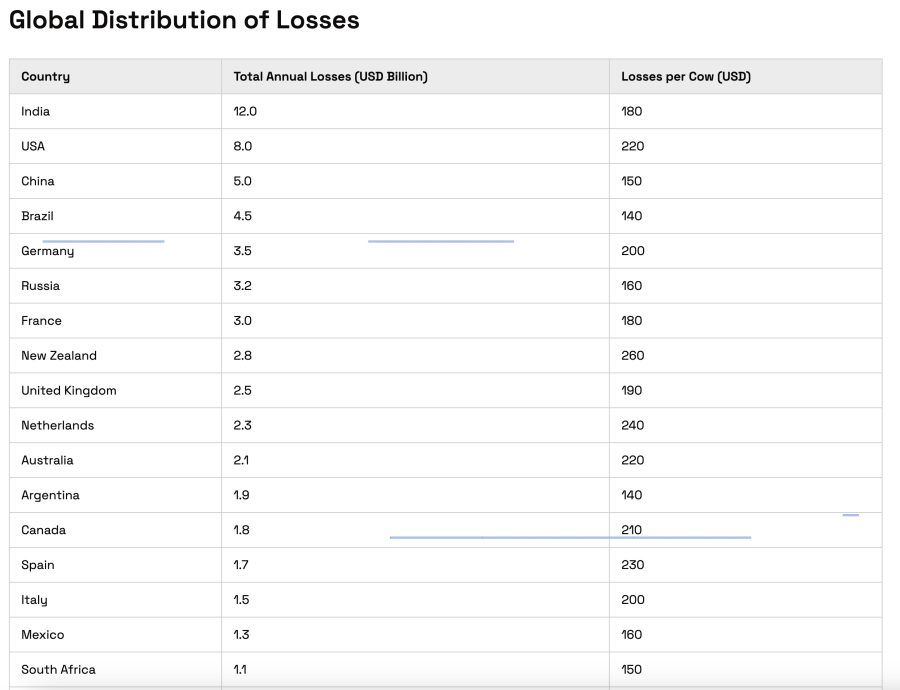
One intriguing conclusion from the research is that the economic burden of dairy cow illnesses varies significantly by area. For example, overall yearly losses differ substantially, with India, the United States, and China bearing the worst economic impacts. Losses in India total $12 billion, outweighing those in other areas. The US is just a little behind, with an estimated yearly loss of $8 billion. China ranks third, with $5 billion in annual losses.

Various variables, including herd size, management approaches, and local economic situations, drive these variances. Herd size is critical; more enormous herds naturally have more significant aggregate losses when illness strikes. For example, Indian farms often have bigger herd sizes, significantly increasing overall loss estimates. Management techniques have a significant impact. Advanced technology in the United States may mitigate certain losses. Still, significant economic expenses remain due to the large amount of milk produced.

Local economic factors further impact regional variances. The cost of veterinary services, medicine, and other inputs varies greatly, influencing farmers’ financial burden. While labor and treatment expenses may be cheaper in certain nations, reduced productivity might be more evident in higher-income areas with higher milk prices, increasing the economic impact per unit of lost output. This geographical variance highlights the need for personalized therapies and illness management techniques that consider these local differences. This guarantees that each area can successfully offset the unique economic repercussions.

Digging Deeper into Regional Variations: Key Players and Economic Factors 

While overall aggregate losses are significant internationally, they vary significantly by area. For example, India, the United States, and China lead the way in absolute losses, with projected yearly estimates of roughly USD 12 billion, USD 8 billion, and USD 5 billion, respectively. Herd size is critical. India has the world’s largest dairy herd, which increases economic losses when illnesses occur. Modern dairy management methods and large herd numbers in the United States imply that health concerns may swiftly escalate into significant financial burdens.

Management strategies vary greatly and have a significant economic effect on dairy cow illnesses. Early illness diagnosis and treatment may help reduce long-term losses in places with innovative herd health management methods, like Europe and North America. However, the economic toll is generally worse in low-income communities, where preventative measures and veterinary care are scarce.

Local economic factors also contribute to inequality. Countries with solid agricultural industries, such as New Zealand and Denmark, may experience huge per capita losses since the dairy industry accounts for a significant portion of their GDP. Larger economies like the United States and China disperse these losses among a broader range of economic activity, resulting in slightly diminished per capita consequences. The heterogeneity highlights the need for specialized measures in controlling dairy cow illnesses across areas.

From Reactive to Proactive: Strategic Management to Combat Dairy Cattle Diseases

Combating dairy cow illnesses requires a proactive strategy to guarantee your herd’s health and production. Strategic management strategies may significantly decrease economic losses.  Here’s how you can get started: 

  • Regular Health Checkups: An Ounce of Prevention
    Regular health checks are essential. Schedule frequent veterinarian checkups to detect and treat problems early. Involve your veterinarian in creating a thorough health plan for your herd. Early diagnosis may save minor concerns from turning into expensive difficulties.
  • Invest in Preventive Measures: Upgrade Your Defense
    Preventive healthcare should be a key component of your illness management plan. Vaccinations, sufficient diet, and clean living conditions are crucial. Implement biosecurity measures to prevent illnesses from spreading. Investing in high-quality feed and supplements may strengthen your cows’ immune systems, making them less prone to sickness.
  • Optimize Milking Practices: Clean and Effective
    Mastitis is one of the most expensive illnesses; reasonable milking procedures are essential for prevention. Make sure that the milking equipment is cleaned and working properly. Train your crew on optimal milking techniques to reduce the danger of infection.
  • Monitor and Manage Nutrition: The Right Balance
    Nutritional abnormalities commonly cause subclinical ketosis. Collaborate with a nutritionist to develop feeds that fulfill the energy requirements of high-producing cows, particularly during transitional seasons. Monitor your cows’ body condition scores regularly and alter feeding practices appropriately.
  • Foot Health Programs: Walking the Talk
    Proper hoof care may treat lameness. Trim cow hooves regularly and ensure they tread on clean, dry surfaces. Implement footbaths and monitor foot health to discover and address problems early. Comfortable, well-kept flooring may help reduce hoof injuries and infections.
  • Data-Driven Decisions: Precision Farming
  • Use technology to monitor herd health. Make educated choices based on health records, milk production, and activity monitor data. Software technologies may identify patterns and detect future health issues before they worsen.
  • Employee Training: Knowledge is Power
  • Ensure that your farmhands are well-taught to spot early indicators of common illnesses and to deal with sick animals. Regular training sessions help your staff stay updated on the newest disease management methods. A competent workforce serves as your first line of protection against illness outbreaks.

These measures may reduce economic losses and improve your herd’s health and production. Proactive management is essential for a sustainable and successful dairy farming enterprise.

Veterinarian Insights: Expert Tips on Disease Prevention

Veterinarians are critical to keeping your herd healthy and your farm profitable. Their knowledge may be very beneficial in controlling and avoiding illnesses like mastitis, lameness, and ketosis. We contacted leading veterinarians to get insight into illness prevention and management. Let’s go into their suggestions.

  1. Early Detection is Key
    The earlier you detect a condition, the more influential the therapy. Regular monitoring and prompt response may mitigate long-term consequences. For example, if detected early, subclinical mastitis may be treated before it impacts milk output. Routine testing and thorough monitoring of your livestock may prevent more severe problems.
  2. Balanced Nutrition
    A good diet is the cornerstone of illness prevention. A well-balanced diet for your cows may help avoid diseases like ketosis and milk fever. Providing your cattle with enough minerals, vitamins, and energy will help strengthen their immune systems and make them more resistant to infections and metabolic diseases.
  3. Clean and Comfortable Living Conditions
    Using clean bedding and keeping barns well-ventilated can avoid many infections. Cramped circumstances and poor sanitation may cause mastitis outbreaks and other illnesses. A clean, pleasant environment decreases stress for your cows, making them less susceptible to sickness.
  4. Regular Vaccinations
    Vaccination regimens should be regularly followed to ensure the herd’s health. Keep your immunization regimen up to date. Many infections that may impede productivity can be prevented with timely vaccinations. Work with your veterinarian to develop a thorough immunization strategy that addresses all significant hazards to your herd.
  5. Consistent Foot Care
    Foot care is frequently disregarded, although it is critical in avoiding lameness. Regular hoof trimming and inspections may detect problems before they develop serious lameness concerns. Implementing a foot health program will keep your cows flexible and productive.
  6. Effective Biosecurity Measures
    Controlling the movement of people, animals, and equipment on and off your farm may help prevent disease transmission. Biosecurity is the first line of protection. Limiting interaction with other animals and ensuring visitors adhere to proper cleanliness practices minimize the danger of new infections entering your herd.
  7. Strategic Use of Antibiotics
    Antibiotics should be administered cautiously to avoid resistance. Antibiotics should only be used when necessary and with a veterinarian’s supervision. Antibiotic overuse may cause germs to develop resistance, making illnesses more challenging to treat in the long term.

Implementing these expert recommendations dramatically enhances disease prevention and herd health. Please maintain open contact lines with your veterinarian and include them in your ongoing farm management approach. Remember, prevention is always preferable to treatment.

The Bottom Line

In this post, we looked at the substantial economic effect of dairy cow illnesses such as mastitis, lameness, and ketosis, which cause billions of dollars in worldwide losses each year. Subclinical disorders such as subclinical mastitis and ketosis may quietly drain revenues without causing noticeable signs, and the existence of many co-occurring diseases exacerbates these losses. Countries like India, the United States, and China suffer the most significant aggregate losses. At the same time, smaller countries with concentrated dairy sectors also bear the burden per capita. To protect your herd and financial success, prioritize proactive health management methods, including frequent checkups, preventative measures, enhanced milking routines, and foot health programs. Think about these ideas and consider adopting them into your operations to reduce losses and increase productivity.

Learn more: 

Join the Revolution!

Bullvine Daily is your essential e-zine for staying ahead in the dairy industry. With over 30,000 subscribers, we bring you the week’s top news, helping you manage tasks efficiently. Stay informed about milk production, tech adoption, and more, so you can concentrate on your dairy operations. 

NewsSubscribe
First
Last
Consent

Global Economic Impact of Dairy Cattle Diseases Estimated at $65 Billion

Explore the staggering $65B annual global economic loss stemming from dairy cattle diseases. Understand how critical conditions like mastitis and ketosis hinder milk production and impact the economies of 183 countries.

The global dairy industry, a cornerstone of agricultural economies, confronts a substantial threat—diseases impacting dairy cattle. These ailments, often underestimated, result in significant financial drains on dairy farmers worldwide. The aggregate impact of these diseases amounts to a staggering USD 65 billion in annual losses globally, a sobering reality for farmers striving to sustain their livelihoods and supply chains. 

“Dairy farmers face an immense economic burden due to cattle diseases. Unless addressed urgently, this challenge will threaten the stability and growth of the global dairy sector.”

Economic damage includes decreased milk production, higher veterinary costs, and premature culling of cows. For farmers, losses manifest as: 

  • Reduced milk yields.
  • Increased healthcare costs.
  • Replacement costs for culled cows.
  • Long-term fertility issues.

These factors create a financial burden for farmers, leading to persistent cycles of disease management and economic strain. The need for strategic interventions becomes evident as we explore specific diseases and their economic implications.

Comprehensive Analysis of Dairy Cattle Diseases 

The analysis focused on twelve diseases: mastitis (subclinical and clinical), lameness, paratuberculosis, displaced abomasum, dystocia, metritis, milk fever, ovarian cysts, retained placenta, and ketosis (subclinical and clinical). Through simulations across 183 countries, the impacts on milk yield, fertility, and culling rates were extensively quantified and valued. 

Using standardized meta-analyses, the study gathered data from extensive literature reviews and applied methods like simple averaging and random-effects models. Adjusting for comorbidities, which are additional health issues that can complicate the management of a primary disease, was crucial to prevent overestimations. This revealed that ignoring comorbidities would have inflated global losses by 45%. More details on the importance of managing disease outbreaks can be found here.

Breakdown of Economic Losses by Disease 

DiseaseEconomic Loss (USD)
Subclinical Ketosis18 billion
Clinical Mastitis13 billion
Subclinical Mastitis9 billion
Lameness6 billion
Metritis5 billion
Ovarian Cysts4 billion
Paratuberculosis4 billion
Retained Placenta3 billion
Displaced Abomasum0.6 billion
Dystocia0.6 billion
Milk Fever0.6 billion
Clinical Ketosis0.2 billion

The economic impact of subclinical ketosis is substantial, with annual losses totaling USD 18 billion globally. Often undetectable without specific tests, this condition significantly reduces milk yield and overall herd productivity. The financial burden underscores the need for vigilant monitoring and preventative management to mitigate hidden costs. 

Clinical mastitis incurs losses of approximately USD 13 billion annually. This painful infection reduces milk production and increases veterinary costs, discarded milk, and potential culling. Indirect losses from decreased future productivity make mastitis a critical target for improved control and timely intervention. 

With annual losses of USD 9 billion, subclinical mastitis is another significant economic drain. Often unnoticed due to the absence of visible symptoms, it silently reduces milk yield and quality. This emphasizes the need for regular herd health assessments and robust biosecurity protocols to protect farm profitability.

Global Distribution of Losses 

CountryTotal Annual Losses (USD Billion)Losses per Cow (USD)
India12.0180
USA8.0220
China5.0150
Brazil4.5140
Germany3.5200
Russia3.2160
France3.0180
New Zealand2.8260
United Kingdom2.5190
Netherlands2.3240
Australia2.1220
Argentina1.9140
Canada1.8210
Spain1.7230
Italy1.5200
Mexico1.3160
South Africa1.1150
Japan1.0180
Poland0.9170
Ireland0.8250

The economic burden of dairy cattle diseases varies significantly across regions, highlighting the need for targeted health solutions. Despite advanced veterinary care and management, the costs are high in wealthy areas like North America and Europe due to intensive farming practices, which involve high stocking densities and high milk production values. These practices can increase the risk of disease transmission. For example, the USA faces an annual loss of USD 8 billion, influenced by disease and significant impacts on milk yield, culling rates, and veterinary expenses.

Conversely, in regions with less developed dairy industries, such as Africa and Asia, the economic losses, while significant, represent a more devastating impact on their agricultural economies. Indian dairy farms endure a massive annual loss of USD 12 billion due to high disease incidence and insufficient infrastructure. Similarly, China faces USD 5 billion in annual losses, reflecting their rapid dairy industry growth and challenges in modernizing veterinary care. 

Further complexities arise when assessing economic losses as a percentage of GDP or gross milk revenue. Although affluent nations may see high absolute losses, their diversified economies can cushion the impact. In contrast, in regions where dairy farming is a crucial economic activity, such losses threaten food security and livelihoods. For example, in Sub-Saharan Africa and parts of South Asia, the financial losses relative to GDP are alarmingly high despite lower absolute amounts.

Additionally, costs within countries vary. Factors like herd size, farm management, and milk prices influence the economic burden. For instance, an outbreak affecting 40% of a medium herd could result in losses of up to USD 28,000, showing how local factors impact overall costs.

Given the regional disparities in economic losses, it is clear that tailored policies are essential. However, it is equally important to recognize the power of global cooperation. By sharing knowledge and resources, we can build more resilient dairy farming systems, aiming to reduce economic losses and enhance sustainability together.

The Bottom Line

The economic fallout from dairy cattle diseases is staggering, with annual global losses estimated at USD 65 billion. Subclinical ketosis, clinical mastitis, and subclinical mastitis are the costliest, highlighting the significant impact on milk production, fertility, and culling. These health issues reverberate through the economic stability of milk-producing countries. 

Given the substantial losses and the complex nature of dairy cattle diseases, the potential for improvement is vast. By adopting proactive measures to prevent and control these conditions, we can significantly mitigate economic repercussions and enhance the sustainability of the dairy industry. 

We urge stakeholders, including dairy farmers, veterinarians, policymakers, and researchers, to prioritize disease management efforts. Investments in diagnostic tools, vaccination programs, and education initiatives are critical to curbing these diseases. Together, we can improve dairy cattle well-being, safeguard economic interests, and ensure a more resilient dairy sector for the future.

Key Takeaways:

  • Global annual economic losses due to dairy cattle diseases are estimated at USD 65 billion.
  • Subclinical ketosis, clinical mastitis, and subclinical mastitis are the most costly diseases, causing annual losses of USD 18 billion, USD 13 billion, and USD 9 billion, respectively.
  • Comorbidity adjustments are crucial, as disregarding statistical associations between diseases leads to a 45% overestimation of aggregate losses.
  • Country-specific economic impacts vary, with the highest losses observed in India (USD 12 billion), the USA (USD 8 billion), and China (USD 5 billion).
  • The most substantial economic losses stem from reduced milk production, increased healthcare costs, and premature culling of cattle.
  • Addressing dairy cattle diseases requires targeted health solutions, strategic interventions, and global cooperation to enhance sustainability and reduce financial burdens.

Summary: The global dairy industry is facing a significant threat from diseases affecting dairy cattle, resulting in annual losses of USD 65 billion. These ailments include decreased milk production, higher veterinary costs, and premature culling of cows. Farmers experience reduced milk yields, increased healthcare costs, replacement costs for culled cows, and long-term fertility issues. A comprehensive analysis of twelve diseases across 183 countries revealed the need for strategic interventions. Subclinical ketosis has the most significant economic impact, with annual losses totaling USD 18 billion. Clinical mastitis incurs losses of approximately USD 13 billion annually, reducing milk production and increasing veterinary costs. Subclinical mastitis is another significant economic drain, with annual losses of USD 9 billion. The economic burden of dairy cattle diseases varies across regions, highlighting the need for targeted health solutions. Tailored policies and global cooperation are crucial to build more resilient dairy farming systems and reduce economic losses and enhance sustainability.

Send this to a friend