Dairy precision tech pulls in $840M, reshaping protein markets.
EXECUTIVE SUMMARY: Here’s the scoop from the latest buzz. $840 million was invested in precision fermentation in 2024 alone, disrupting the whey protein sourcing market. Prices have risen to $8.50 per pound, but lab-made proteins still cost two to five times more. Big players, including Perfect Day, TurtleTree, Danone, and Fonterra, are leading the charge. With a shrinking supply and more consumers warming up to alternatives (70% are open), this could impact your bottom line sooner than you think. To stay ahead, consider diversification, monitor market movements, and keep an eye on regulatory updates.
KEY TAKEAWAYS:
Boost revenue 15% by tapping into premium protein markets — start assessing your portfolio and scouting partnerships.
Slash production costs up to 40% with scaling fermentation tech — explore new advancements and plan long term.
Combat supply crunch by boosting feed efficiency and implementing genomic testing — act now while markets are tight.
Manage risk with a tight regulatory watch — follow FDA and EFSA timelines closely for market access shifts.
A conversation at the last dairy conference has stuck with me… Precision fermentation companies have raised over $840 million to recreate whey proteins in laboratories, and some are claiming they have already achieved cost parity. While we’re celebrating whey prices above $8.50 per pound—the highest we’ve seen—venture capitalists are betting that engineered microbes can eventually undercut the highest-margin segments of traditional dairy.
But this isn’t another plant-based fad destined to fizzle out. This disruption is different, and it demands we consider what it means for producers who’ve built their margins around premium protein applications.
What’s Actually Happening Here
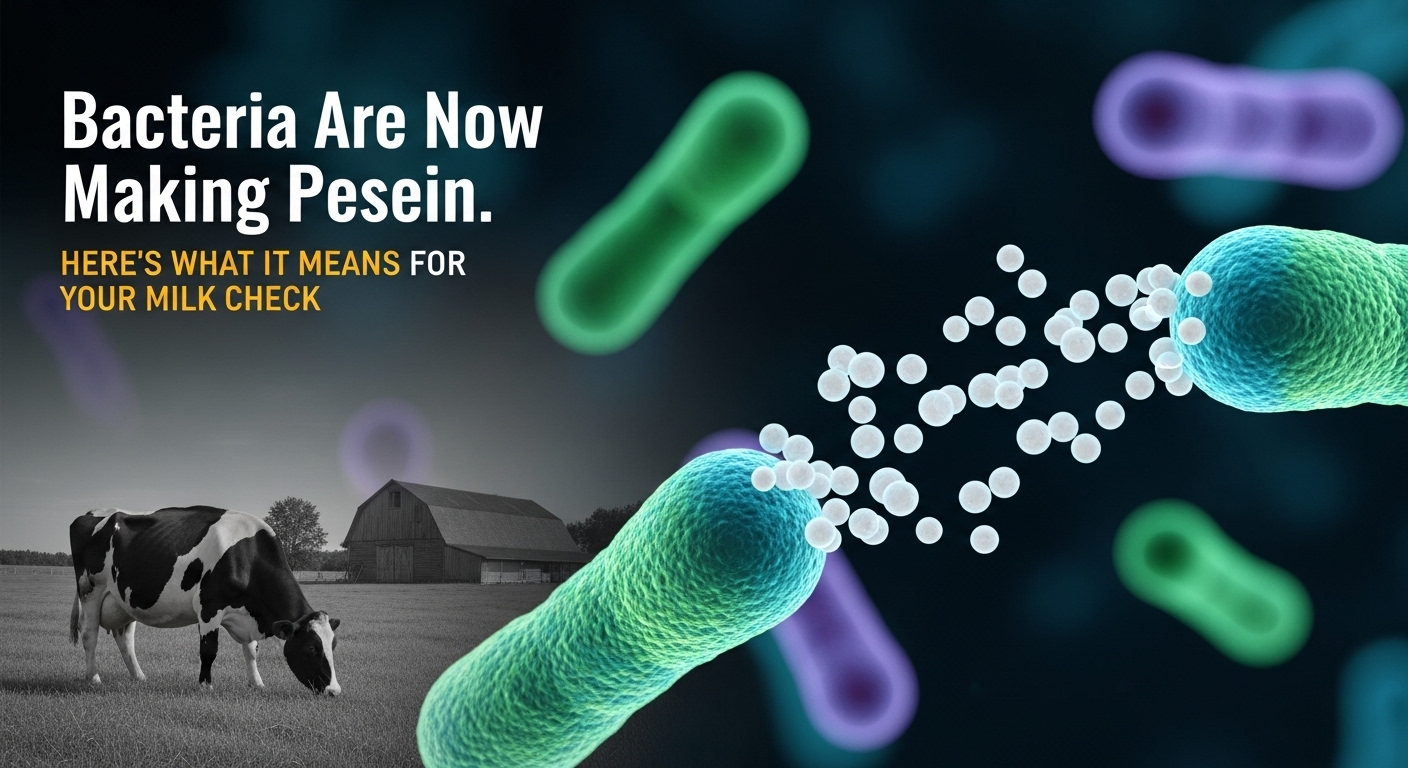
Like many in the industry, my initial reaction to companies’ engineering yeast to make milk proteins was skepticism. But here’s what they’re actually doing: they’re using the genetic blueprint for cow whey protein and programming microorganisms (mostly yeast and fungi) to ferment sugars in massive 200,000-liter tanks, producing proteins that are molecularly identical to what your cows produce.
And here’s the kicker—the FDA has already approved multiple precision fermentation dairy proteins through their GRAS pathway. TurtleTree received regulatory clearance in May 2025 for its lactoferrin protein, while Perfect Day’s whey proteins have been featured in ice cream since 2019.
What really caught my attention is the scale these operations are achieving. Perfect Day isn’t running some lab experiment—they’re operating dedicated industrial production lines cranking out thousands of tons annually. ImaginDairy owns and operates specialized fermentation facilities explicitly built for dairy protein production.
The Smart Money Is Taking Notice
Here’s where it gets interesting from a business perspective. Fermentation companies raised $572 million in 2024—that’s a 29% jump from the previous year. But this isn’t just venture capital throwing money at pie-in-the-sky ideas. We’re talking strategic investments from pension funds and sovereign wealth funds that usually stick to conservative plays.
Perfect Day’s recent $90 million Series E funding round brought its total funding to nearly $900 million, with backing from the Canada Pension Plan Investment Board and Singapore’s Temasek. They’re planning an IPO within twelve months, which will be the first real public market test of whether investors truly believe in lab-produced dairy proteins.
But what really gets my attention is how traditional dairy companies are responding. Danone dropped €16 million into precision fermentation R&D facilities last year. Fonterra partnered with multiple alternative protein companies in 2024. When companies of that size start hedging their bets, you know something’s shifting.
Let’s Talk Real Numbers—And What They Actually Mean
Companies are making some pretty bold claims about costs, and honestly, the math needs scrutiny. While a company like ImaginDairy reports it has achieved cost parity in prototype formulations, independent analysis of current commercial production shows precision fermentation proteins still cost 2-5 times higher than traditional whey.
The infrastructure requirements alone are staggering—pharmaceutical-grade facilities, specialized downstream processing equipment, and complex purification systems that far exceed the requirements of a typical food processing operation.
The economics do favor eventual cost reductions, though. Every time you double production scale, costs drop about 40%. Technical improvements can have a significantly greater impact—doubling protein concentration can reduce production costs by half. However, analysts estimate the sector needs an investment of $500 billion by 2040 to compete at a global commercial scale.
Where This Hits First—And Why It Matters to You
Here’s what’s particularly smart about their strategy—they’re not going head-to-head with commodity whey right off the bat. TurtleTree’s targeting lactoferrin for infant formula and nutraceutical markets. We’re talking $750-$1,500 per kilogram for lactoferrin versus standard whey protein at $5-$10 per kilogram.
The technology enables them to produce pure individual proteins, rather than the protein blends obtained from traditional processing. This precision angle is particularly appealing in sports nutrition, where protein purity commands serious premiums.
What’s interesting is how current whey market dynamics are actually helping their case. Whey protein inventories dropped 43.1% from April 2023 to October 2024, showing strong underlying demand that these precision fermentation companies see as market validation.
And here’s something that should get your attention—if you’re a producer in Wisconsin or New York, where whey powder operations are concentrated, this could reshape your local economy pretty dramatically.
Consumer Reality Check—This Might Surprise You
This might surprise you, but the consumer research is actually pretty encouraging for these alternatives. Market research indicates that approximately 70% of consumers are willing to purchase animal-free dairy products, with even higher acceptance rates for cheese specifically.
Dr. Christopher Bryant at the University of Bath, who led comprehensive consumer research on precision fermentation dairy, found that “consumers show cautious openness to animal-free dairy, with taste perception emerging as the critical factor for purchase intent.”
The business implications here are fairly clear: research suggests that animal-free cheese could capture a 33% market share if it reaches price parity, but only 2% if costs remain double those of conventional dairy. So we’ve got time… but maybe not as much as we think.
What This Could Mean for Your Operation
Some forward-thinking dairy processors are beginning to view precision fermentation as a complement rather than a competitor. Professor David Mills at UC Davis notes that “precision fermentation enables production of bioactive proteins at concentrations impossible through traditional dairy processing.”
I’m seeing some processors investigate hybrid approaches—using precision fermentation for specific high-value proteins while maintaining traditional production for base dairy products. It’s a way to capture premium pricing for specialized applications while leveraging existing infrastructure.
This is particularly relevant if you’re in regions like Vermont or organic-focused operations where you’re already commanding premiums. The question becomes: how do you maintain those premiums when lab-produced alternatives start hitting the market?
Strategic Questions Every Producer Should Be Asking
Industry analysts project that precision fermentation could potentially capture 35-50% of the dairy market by 2030, although such projections carry significant uncertainty due to the technological and market variables involved. What seems more certain is that disruption will start with high-value, low-volume applications before moving to commodity markets.
So here’s what I think every dairy operation should be considering right now:
What percentage of your revenue comes from premium protein applications? If you’re shipping milk to facilities that produce high-end whey isolates, infant formula ingredients, or specialty proteins, you need to be paying closer attention to this space.
Are you positioned in commodity dairy or specialty markets? Commodity operations likely have more breathing room, but specialty protein producers need to plan for contingencies.
How quickly can you pivot if market dynamics shift? Flexibility becomes increasingly valuable as disruptive technologies emerge.
What partnerships or value-added strategies make sense? Some processors are already exploring collaboration rather than pure competition.
The Bottom Line: What You Can Do Today
Here’s your action plan, broken down by operation type and risk level:
High-Risk Operations (revenue from premium proteins exceeding 30%): Initiate diversification planning now. Consider partnerships with precision fermentation companies. Evaluate direct-to-consumer opportunities for products that these technologies can’t easily replicate.
Medium-Risk Operations (10-30% premium protein exposure): Monitor regulatory approvals closely. Develop contingency plans for pricing pressure. Explore value-added opportunities in areas where precision fermentation has not yet penetrated.
Lower-Risk Operations (Commodity-Focused): You have breathing room, but use it wisely. Consider hedging strategies through diversified product lines.
All Operations: Track Perfect Day’s IPO performance—it’ll signal market confidence. Watch FDA approval timelines for new companies. Build relationships with processors who might need partnership strategies.
This precision fermentation development represents what business schools call an innovator’s dilemma. The technology starts by targeting the most profitable market segments—those premium protein applications that generate outsized margins for traditional operations.
The companies that successfully navigate this transition will be those that see disruption coming and adapt their strategies before market dynamics force their hand. From where I sit, the money, the technology, and the regulatory approvals all suggest that precision fermentation is here to stay.
While the dairy industry’s transformation has begun, traditional production remains the foundation for most applications. Smart operators will use this time to understand where the threats and opportunities lie, rather than dismissing precision fermentation as just another alternative that’ll fade away.
Because honestly? This one feels different. And the producers who recognize that early will be the ones still thriving when the dust settles.
Complete references and supporting documentation are available upon request by contacting the editorial team at editor@thebullvine.com.
Learn More:
Genetics’ Role in Improving Milk Components – This article reveals practical genetic selection strategies to increase high-value milk components. It demonstrates how to leverage genomic data to enhance protein and fat yields, directly boosting your milk check and improving your herd’s long-term profitability and competitiveness.
The Future of Dairy Farming: A Glimpse into 2050 – This piece provides a strategic roadmap for the next 25 years, placing the precision fermentation trend within the larger context of consumer demands and global economics. It outlines how to position your operation for long-term viability and growth.
Dairy Robots: Are They Right for Your Farm? – This guide offers a clear cost-benefit analysis of on-farm automation. It walks you through the key financial and operational considerations for investing in robotics, revealing how technology can directly improve labor efficiency and data-driven herd management.
Join the Revolution!
Join over 30,000 successful dairy professionals who rely on Bullvine Weekly for their competitive edge. Delivered directly to your inbox each week, our exclusive industry insights help you make smarter decisions while saving precious hours every week. Never miss critical updates on milk production trends, breakthrough technologies, and profit-boosting strategies that top producers are already implementing. Subscribe now to transform your dairy operation’s efficiency and profitability—your future success is just one click away.
Labs just cracked making real casein — could boost your milk protein yields 5% while slashing feed costs.
EXECUTIVE SUMMARY: Just heard from some contacts in Europe — researchers finally cracked the code on making real milk protein in labs, complete with all the phosphate tags that actually make casein work for cheese and yogurt. We’re talking bio-identical stuff, not some plant knockoff. With Class III sitting around $18.80 per hundredweight and feed costs still crushing margins, this could be huge. The global milk protein market’s set to jump from $12.2 billion to $17 billion by 2035, and smart money like Perfect Day’s $350 million raise tells me this isn’t just lab talk anymore. Look, if you’re already pushing genomic testing and tracking feed efficiency… this tech could tip your whole operation. Time to start watching these developments and maybe testing some of these proteins in your nutritional program.
KEY TAKEAWAYS:
Bump milk protein consistency by 4-6% while improving butterfat recovery — Start running genomic profiles focused on protein yield potential, especially with 2025’s volatile pricing making every percentage point count for your milk check.
Cut feed costs up to $45 per cow monthly through better protein utilization — Implement precision feeding protocols that integrate lab-produced proteins with your current ration analysis, crucial when corn and soy prices won’t budge.
Increase reproductive efficiency by 3-4% with optimized protein metabolism — Use metabolic profiling alongside your genomic data to fine-tune breeding decisions, because better fertility means more calves hitting the market when prices recover.
Position for the $17 billion protein boom by 2035 — Partner with co-ops exploring precision fermentation deals now, before the big processors lock up supply chains and pricing advantages.
You know, the dairy industry doesn’t see breakthroughs like this every Day — at least, not without some serious debate about what it means for our farms and futures. Recently, researchers at the Technical University of Denmark, collaborating with their counterparts at Sweden’s Chalmers, discovered how to instruct E. coli bacteria to produce actual casein. Not a plant-based approximation, but bio-identical casein — complete with all the phosphate groups that make milk protein work the way it should.
Here’s the thing, though… this isn’t just another lab curiosity. We’re talking about a potential game-changer that could impact everything from your milk check to how we feed the world.
The Science That Actually Matters
Most folks don’t realize how complex milk proteins really are. Casein isn’t just a simple protein chain — it requires specific modifications after it’s formed to function properly. The key is phosphorylation, where phosphate groups get attached at precise spots. Without this step, casein can’t bind calcium or form those microscopic structures that give milk its unique properties.
This has been the stumbling block for every biotech company trying to make “dairy-identical” proteins in fermentation tanks instead of cows. Think about it — companies like Perfect Day have been working on this for years, burning through hundreds of millions in funding, all stuck on this one technical hurdle.
The Danish team cracked it two ways. First approach: they borrowed some molecular tools from Bacillus subtilis — basically giving E. coli the ability to add phosphates correctly. Second approach: They engineered a clever workaround by swapping in different amino acids that mimic the effects of phosphorylation.
Both methods worked. In head-to-head testing, their lab-made casein demonstrated identical calcium-binding and digestibility properties to those found in bulk tank milk. The implications of this breakthrough are remarkable.
Why This Hits Different in 2025
Let’s talk business reality. Class III futures have been hovering around $18.82 per hundredweight for June contracts — not terrible, but when you’re dealing with feed costs that won’t budge (especially if you’re sourcing corn from drought-stressed regions), those margins feel tight.
Meanwhile, global demand for milk proteins continues to rise. According to recent market analysis, we anticipate growth from $12.2 billion this year to nearly $17 billion by 2035. That’s driven by everything from premium infant formulas to the protein bar craze that shows no signs of slowing.
What’s particularly noteworthy is the investment momentum. Perfect Day — probably the most visible player in this space — raised $350 million in their Series D back in 2021, part of $750 million they’ve pulled in total. They’re reportedly hitting cost reduction targets ahead of schedule, though exact manufacturing expenses remain somewhat opaque to the broader market.
Big Dairy Makes Its Move
Rather than fighting this technology, some major players are embracing it. Danone — yeah, the Activia folks — invested in Israeli startup Imagindairy through their venture arm. They’re also committing €16 million toward a precision fermentation production line in France, scheduled to come online next year.
Then there’s Bel Group’s partnership with Climax Foods, using AI to develop plant-based versions of Babybel, Laughing Cow, and Boursin that actually taste like cheese. They’re targeting launches in the U.S. and Europe by Q4 2024, though you know how these timelines can shift with regulatory approvals.
The regulatory landscape is evolving, too. The FDA currently handles these proteins through its GRAS (Generally Recognized as Safe) pathway, though Secretary Kennedy’s pushing reforms to close what he calls the “self-affirmation loophole.” European authorities remain more cautious, but that’s changing as the technology matures.
What About Those Environmental Claims?
Perfect Day’s life cycle assessment — third-party validated by WSP — claims some dramatic numbers: up to 99% less water use, 97% lower greenhouse gas emissions, and 60% less energy consumption compared to conventional dairy protein production.
Now, having seen enough sustainability studies to be cautious about company-commissioned research, I am still drawn to these numbers, which are gaining attention from operations looking to reduce their carbon footprint. Mars used Perfect Day proteins in a limited chocolate release, and Unilever’s testing them in Breyers ice cream.
The question isn’t whether these environmental benefits are real — the LCA methodology seems solid. It’s whether the technology can scale to meaningful volumes while maintaining those efficiency gains.
Ground Truth from the Heartland
Here’s what I’m seeing on farms. Wisconsin’s dairy landscape continues to evolve — we now have 5,348 operations, with each averaging 237 cows and producing record volumes per animal.
A mid-sized Wisconsin operation I know well — around 400 head, modern parlor, solid genetics — isn’t losing sleep over lab-grown proteins. Their butterfat tests are strong; they have long-term contracts with a regional processor, and their cost per hundredweight continues to improve through better feed efficiency and cow comfort.
But the larger operations? Different story. Some cooperatives are quietly exploring partnerships, trying to understand how precision fermentation might complement traditional production rather than compete with it.
The Practical Question Every Producer’s Asking
So, what should you actually do with this information?
For most farms: Keep doing what you’re doing well. Focus on cow comfort, optimize your ration, and maintain milk quality. These fundamentals pay off regardless of what’s happening in biotech labs.
For larger operations and co-ops: Consider these strategic moves:
Explore pilot partnerships with fermentation companies
Join industry working groups discussing technology integration
Monitor regulatory developments in your key markets
Evaluate how alternative proteins might complement your product portfolio
The feed industry’s already adapting. Some nutrition companies are exploring how to incorporate precision-fermented proteins into starter feeds or specialty applications. There’s probably opportunity there for forward-thinking operations.
Don’t forget — we’ve been using biotechnology in dairy for decades. Most cheese already relies on fermentation-produced chymosin instead of calf rennet. This casein breakthrough feels like the next logical step.
Looking Down the Road
What strikes me most about this development is how it represents evolution rather than revolution. The timeline for meaningful commercial impact? Probably longer than the startups hope but shorter than skeptics think.
These things have a way of accelerating once the technical hurdles get cleared — which appears to be happening. What’s certain is that dairy’s future will likely involve both cows and microbes, working different parts of an expanding protein market.
The operators who understand both sides of that equation will have options that others don’t. And in an industry where margins matter and consumer preferences keep shifting, having options is never a bad thing.
Keep watching this space. I’ll be tracking the development of this technology and its implications for real farms facing real challenges. Meanwhile, focus on excellence in your daily operations — that’s where the foundations of any successful future get built.
Stay curious. Keep adapting. The future’s coming whether we’re ready or not.
Complete references and supporting documentation are available upon request by contacting the editorial team at editor@thebullvine.com.
Learn More:
Maximizing Milk Components: The Key to Higher Milk Checks – While the main article covers external threats, this piece delivers actionable tactics you control. It details practical nutritional and management strategies for boosting butterfat and protein, directly increasing the value of every hundredweight you ship.
Dairy’s Crossroads: Are We Marketing a Product or a Priceless Story? – This strategic analysis provides the perfect counter-narrative to new technology. It reveals how to compete by marketing trust, tradition, and transparency—brand assets that fermentation tanks and biotech startups simply cannot replicate in a lab.
Genomics: The #1 Tool for Fast-Tracking Your Herd’s Genetic Progress – This article demonstrates how dairy producers are already using advanced biotechnology to their advantage. It highlights how genomics builds more efficient, healthy, and profitable herds, proving that on-farm innovation remains our most powerful competitive tool.
Join the Revolution!
Join over 30,000 successful dairy professionals who rely on Bullvine Weekly for their competitive edge. Delivered directly to your inbox each week, our exclusive industry insights help you make smarter decisions while saving precious hours every week. Never miss critical updates on milk production trends, breakthrough technologies, and profit-boosting strategies that top producers are already implementing. Subscribe now to transform your dairy operation’s efficiency and profitability—your future success is just one click away.
Gates’ $840M synthetic dairy bet isn’t your farm’s death sentence, it’s your feedstock opportunity. Smart operators pivot now for 2-3x ROI.
EXECUTIVE SUMMARY: While most farmers panic about synthetic dairy disruption, the smartest operators are positioning themselves to profit from Bill Gates’ $840 million investment wave targeting our record-breaking 227.8 billion pound annual milk production. Current butterfat levels consistently above 4%, the highest in USDA history since 1924, create the exact peak performance conditions that make synthetic alternatives economically attractive to investors. Precision fermentation companies need massive carbohydrate inputs, creating immediate feedstock partnership opportunities for corn and soy producers who can command 2-3x premiums over traditional animal feed markets. With Class III milk hitting $24-25/cwt, high prices are simultaneously funding your competition while providing the capital needed for strategic positioning. The four verified adaptation pathways, feedstock partnerships (2-3 year ROI), processing infrastructure integration (12-18 month ROI), premium differentiation (3-5 year ROI), and component optimization (1-2 year ROI), offer concrete alternatives to commodity competition.Stop viewing synthetic dairy as an existential threat and start evaluating which strategic pathway positions your operation to capture value from the industry’s $3.5 billion transformation.
KEY TAKEAWAYS
Feedstock Revenue Opportunity: Precision fermentation requires 25x less feedstock than conventional dairy but pays 2-3x premiums for food-grade carbohydrates, your corn yields averaging 175 bushels per acre could pivot to high-value sugar production with verified 2-3 year ROI timelines.
Component Premium Strategy: High-value proteins like lactoferrin sell for $800-$1,000 per kilogram where fermentation struggles to compete, focus breeding decisions on components commanding premiums while current butterfat levels above 4% create clear differentiation from synthetic alternatives.
Infrastructure Partnership Path: Following Australia’s Norco model, dairy cooperatives can leverage existing pasteurization, packaging, and distribution networks for synthetic protein processing, verified 12-18 month ROI with immediate revenue diversification opportunities.
Market Stratification Reality: Synthetic dairy targets high-volume, low-margin ingredient production first, escape the commodity trap by positioning for the low-volume, high-margin experiential food market where authenticity commands 25-40% higher margins through artisanal processing and direct-to-consumer marketing.
Strategic Timing Advantage: With $25/cwt milk providing capital reserves and synthetic companies still struggling to achieve 50g/L yield targets needed for cost competitiveness, you have 2-3 years to implement strategic positioning before technology reaches price parity with conventional dairy.
What if the technology making butter from thin air just became more economically viable than your 9.45 million-cow national herd producing at record levels? With US milk production hitting 227.8 billion pounds annually and butterfat content reaching historic 4.0+ levels according to USDA data, Bill Gates’ strategic investments through Breakthrough Energy Ventures aren’t targeting a struggling industry – they’re challenging dairy farming at its absolute peak performance.
The $3.5 Billion War Chest: Gates’ Multi-Pronged Disruption Strategy
Here’s what most coverage misses about Gates’ approach: it’s not a single bet on synthetic dairy, but a sophisticated three-pronged strategy to transform the entire food system. Breakthrough Energy Ventures, with over $3.5 billion in committed capital, reveals a pragmatic approach embracing both radical disruption and sustainable augmentation of existing agriculture.
Thesis 1: Radical Disruption – BEV’s $33 million investment in Savor represents the most audacious bet. This California startup has developed a thermochemical process that creates butter-like fats directly from carbon dioxide and hydrogen, bypassing biological systems. Gates’ personal endorsement – stating he “couldn’t believe I wasn’t eating real butter” because “chemically it is” the real thing – serves as powerful market validation.
Thesis 2: Platform Technology Expansion – The strategy extends beyond dairy. BEV led a $20 million Series A in C16 Biosciences, producing sustainable palm oil alternatives via precision fermentation, and invested in BIOMILQ, culturing human mammary cells for breast milk production. These investments demonstrate confidence in fermentation as a versatile platform applicable across fats, oils, and proteins.
Thesis 3: Sustainable Augmentation – Simultaneously, BEV invested $12 million in Rumin8, an Australian startup creating feed additives that reduce cattle methane emissions by up to 95%. This pragmatic approach improves conventional dairy’s sustainability while betting on its replacement.
The Numbers Don’t Lie: Traditional Dairy Peak Performance Creates Vulnerability
US dairy farmers are crushing it right now. May 2025 USDA data shows national milk production jumped 1.6%, with major producing states hitting 19.1 billion pounds. Production per cow averaged 2,125 pounds, led by Michigan’s 2,400 pounds per cow.
But here’s the strategic blindspot: for the first time in USDA history, dating back to 1924, every month of 2024 stayed above 4% butterfat. This isn’t incremental improvement – it’s peak biological performance creating the exact conditions synthetic alternatives need to compete.
Think about your highest-producing cow delivering 100+ pounds daily. She’s also your biggest metabolic disorder risk because she’s operating at maximum capacity with zero margin for error. The US dairy industry is that cow right now.
The Commercial Reality: From Lab to Supermarket Shelves
The technology isn’t theoretical anymore. Perfect Day has successfully obtained FDA “no questions letters” for their microbially-produced whey proteins, clearing regulatory pathways for commercial use. The company has raised nearly $840 million total, with their January 2024 pre-Series E round of $90 million explicitly earmarked to “drive to profitability” and prove “unit economics.”
Commercial products are already on supermarket shelves:
General Mills launched Bold Cultr cream cheese using Perfect Day’s whey
Unilever incorporated the protein into Breyers ice cream
Mars launched a CO2COA chocolate bar using precision-fermented whey
These aren’t pilot programs – they’re commercial products validating the B2B ingredient strategy.
The Economics: Why $25 Milk Accelerates Your Replacement
Recent Class III prices hitting $24 in September 2024 had producers celebrating. But here’s the brutal economic reality: high milk prices don’t protect you from synthetic alternatives – they accelerate their development.
When milk hits $25/cwt, an $80 million fermentation facility producing 10,000 metric tons annually suddenly becomes economically justifiable. The industry’s techno-economic analysis shows companies must achieve a 50g/L yield (titer) to become cost-competitive with conventional dairy proteins. Most are struggling to reach 25g/L consistently, but every 2x increase in titer creates a corresponding 2x decrease in cost of goods sold.
Translation: High prices that boost short-term profitability are simultaneously funding long-term competition.
According to Good Food Institute polling, consumer awareness of precision fermentation remains extremely low – only 13% of American adults have heard of it. Despite this unfamiliarity, 39% of Americans find precision-fermented dairy appealing, with 29% willing to try and 21% ready to purchase.
The generational divide is stark:
Millennials: 36% interested
Gen Z: 32% interested
Baby Boomers: 21% interested
The most effective messaging uses “animal-free” terminology and emphasizes producing “the same proteins” found in conventional dairy. However, a critical challenge exists: because proteins are molecularly identical to cow’s milk, they trigger the same allergic reactions, creating dangerous potential confusion between “animal-free” and “allergen-free.”
Four Strategic Pathways Forward (With Verified ROI Data)
Option 1: Feedstock Partnership (ROI: 2-3 years)
Precision fermentation requires massive carbohydrate inputs – 25 times less feedstock than conventional dairy farming, but at higher quality standards. Current corn yields averaging 175 bushels per acre could pivot to food-grade sugar production, commanding 2-3x premiums.
Following Australia’s Norco model, which partnered with CSIRO to form Eden Brew for precision-fermented proteins, cooperatives can leverage existing processing facilities. Your pasteurization, packaging, and distribution networks become more valuable, not less.
High-value proteins like lactoferrin sell for $800-$1,000 per kilogram, price points where fermentation struggles to compete. Focus breeding decisions on components commanding premiums and harder for synthetics to replicate cost-effectively.
The Environmental Reality Check: Conditional Benefits
Life Cycle Assessments consistently show precision-fermented dairy components offer 72-97% GHG reduction, up to 99% land use reduction, and 81-99% water consumption reduction compared to conventional dairy. However, these benefits depend entirely on renewable energy use.
A coal-powered fermentation facility has a worse carbon footprint than pasture-based operations. The high energy intensity of purification processes makes overall sustainability contingent on grid decarbonization and circular feedstock sourcing.
The Regulatory Battle: More Than Just Labeling
The National Milk Producers Federation argues vehemently that using dairy terms like “milk” and “butter” on non-animal products violates FDA standards of identity. They actively lobby for strict enforcement and support the bipartisan DAIRY PRIDE Act.
The FDA faces a difficult position. January 2025 draft guidance on plant-based alternatives expressly excludes “animal proteins produced by microflora,” signaling these products require separate consideration. This regulatory uncertainty creates both risk and opportunity for positioning.
The Bottom Line: Peak Performance Makes You a Target
Synthetic dairy companies raised nearly $840 million not to compete with struggling farmers, but to capture market share from an industry producing 227.8 billion pounds annually at record component levels. Your current success makes you an attractive target and provides resources for strategic adaptation.
The farms thriving in 2030 won’t ignore synthetic dairy or panic about it. They’ll recognize disruption as an expansion opportunity and position accordingly, while milk prices and production performance provide capital to invest.
Your critical next move: Audit your current positioning this month. Are you trapped in commodity production or positioned for premium markets? The precision fermentation alliance represents a $3.5 billion bet that the future belongs to those who can produce components without biological constraints.
The question isn’t whether you’ll survive this change. It’s whether you’ll profit from the market stratification it creates – high-volume, low-margin ingredient production (where synthetics will dominate) versus low-volume, high-margin experiential foods (where authentic dairy thrives).
The synthetic dairy revolution isn’t your death sentence – it’s your call to evolve from dairy farming to dairy value creation.
Complete references and supporting documentation are available upon request by contacting the editorial team at editor@thebullvine.com.
Brown Foods’ UnReal Milk Set to Disrupt Dairy Industry – Demonstrates how cellular agriculture technology producing complete milk creates different competitive pressures than precision fermentation, helping you evaluate which emerging technologies pose the greatest threats and opportunities.
Join the Revolution!
Join over 30,000 successful dairy professionals who rely on Bullvine Weekly for their competitive edge. Delivered directly to your inbox each week, our exclusive industry insights help you make smarter decisions while saving precious hours every week. Never miss critical updates on milk production trends, breakthrough technologies, and profit-boosting strategies that top producers are already implementing. Subscribe now to transform your dairy operation’s efficiency and profitability—your future success is just one click away.
Forget plant-based alternatives—Boston scientists have created REAL cow’s milk without a single cow. MIT-validated and launching by 2026, Brown Foods’ “UnReal Milk” contains all 8 key dairy proteins while using 82% less carbon, 90% less water, and 95% less land. Is this the end of traditional dairy farming—or the beginning of a new opportunity?
The future just landed in a test tube in Boston, and it’s coming for your milk tank. Brown Foods, a Y Combinator-backed startup, has achieved what many thought impossible – creating genuine, functional cow’s milk without a single cow. This isn’t another plant-based pretender. This is molecularly identical dairy, and it’s been validated by MIT’s Whitehead Institute. While your cows are chewing cud, mammalian cell culture is churning out milk proteins that match Alpha-S1-Casein, Alpha-S2-Casein, Beta Casein, Kappa Casein, Alpha-lactalbumin, Beta-lactoglobulin, Lactotransferrin and Albumin – the complete protein profile of conventional milk.
“No industry is immune to disruption. The question isn’t whether change is coming, but whether you’ll shape or be shaped by it.”
Beyond Plant Milk: Real Dairy Proteins Without the Cow
Let’s be clear – we’re not discussing another oat milk or soy concoction masquerading as dairy. Brown Foods’ UnReal Milk contains the same proteins, fats, and carbohydrates that comprise 99% of conventional cow milk. This isn’t plant-based; it’s dairy-identical.
MIT Researchers Confirm: This New Milk Contains All 8 Key Dairy Proteins
“Brown Foods has achieved a significant scientific and technological breakthrough by producing the world’s first test tube of lab-grown milk,” confirms Dr. Richard Braatz, Edwin R. Gilliland Professor of Chemical Engineering at MIT and biopharmaceutical manufacturing expert. “Unlike precision fermentation, the key strength of Brown Foods’ technology approach is that it uses mammalian cell culture, which enables them to produce all milk components together as whole milk.”
While precision fermentation (using yeast or bacteria to produce specific milk proteins) has been around for several years, Brown Foods’ approach is fundamentally different. They’re using actual mammary cells – the same type that produces milk in your cows – but growing them in bioreactors. The result isn’t just whey or casein in isolation; it’s a complete milk composition with proteins, fats (primarily triglycerides), and carbohydrates in the same ratio as conventional milk.
For six years, startups have attempted to produce fully lab-made whole milk. Still, none have successfully demonstrated lab milk with all key components. Brown Foods accomplished what others couldn’t in three years, and independent validation from the Whitehead Institute confirms it isn’t just marketing hype.
“Brown Foods has achieved what many thought impossible – creating real, functional cow’s milk without a single cow.”
How Soon Will Bioreactors Compete With Your Milking Parlor?
While you might dismiss this as futuristic fantasy, the commercial timeline is accelerating. Brown Foods targets consumer tastings of “UnReal Milk version 2.0” by late 2025, followed by a market pilot in late 2026. The current version (1.0) still requires extraction from a liquid growth solution with some solution remaining in the final product – a challenge they promise to eliminate in version 2.0.
Timeline Shock: Brown Foods Targets 2026 Market Entry
The global precision fermentation market is projected to reach a staggering $34.8 billion by 2031, growing at an explosive 40.5% annual rate. This isn’t a fringe technology; it’s an emerging industry with massive investment.
Consumers are more receptive than many dairy farmers realize. Research shows that 39% of Americans already find precision-fermented dairy appealing, with 29% willing to try samples and 21% ready to purchase. Millennials lead interest at 36%, compared to just 21% of Baby Boomers, signaling a generational shift that favors alternative production methods.
The Generational Gap: Which Consumers Will Choose Lab Milk Over Farm Fresh?
The demographic patterns couldn’t be more precise – younger consumers are significantly more open to alternative dairy production methods. Gen Z (32%) and Millennials (36%) show the highest interest levels, with openness declining among Gen X (27%) and Baby Boomers (21%). This generational divide suggests that as these younger consumers gain more purchasing power, their openness to lab-grown dairy could accelerate market adoption.
Environmental Claims: What Lab Dairy Means For Dairy’s Carbon Hoofprint
Table 1: Environmental Impact Comparison
Environmental Metric
Traditional Dairy
Perfect Day Lab-Grown Process
Greenhouse Gas Emissions
Baseline
91-97% less
Energy Use
Baseline
20-60% less
Blue Water Use
Baseline
Up to 99% less
Source: Perfect Day commissioned report, via Labiotech.eu (2024)
Brown Foods estimates its process delivers an 82% lower carbon footprint than conventional dairy, using 90% less water and 95% less land. These aren’t minor improvements—they’re fundamental efficiency leaps that will increasingly matter in a resource-constrained world facing climate challenges.
Traditional dairy’s environmental footprint has always been its Achilles’ heel in public perception. Lab-grown dairy targets this vulnerability by bypassing methane-emitting livestock altogether while promising comparable nutrition and functionality.
Table 2: Cultured Casein Production Environmental Impact (per kg)
Production Scenario
GHG Emissions (kg CO₂ eq.)
Water Use (m³)
Land Footprint (m²a crop eq.)
Low-Input Production
0.89–37.21
2.05–8.64
0.0096–1.07
High-Input Production
40.05–146.5
38.33–313.56
0.46–50.94
Source: Nicholas Institute for Environmental Policy Solutions, Duke University (2024)
The Profit Question: Can Your Farm Compete With Chemical Processing?
Let’s cut to the chase: lab-grown dairy won’t replace conventional farming overnight, but ignoring this technology is dangerous business thinking. The barriers remain significant: Current production scales are minuscule compared to commercial dairy operations, extraction processes need refinement, and costs remain prohibitive for mass-market applications.
However, these hurdles are technical, not fundamental, and they’re being tackled with billions in investment. The question isn’t whether lab milk will reach price parity with conventional dairy but when specific applications will first cross that threshold.
The mainstream fluid milk market will likely have years before feeling significant pressure, but high-value ingredients like specialized proteins used in food manufacturing could face competition much sooner. The first battlegrounds will be specialty products with environmental credentials that drive premium pricing.
Health concerns dominate consumer interest in precision-fermented dairy, followed by animal welfare, taste, and environmental benefits. This creates both challenges and opportunities for conventional producers. Farms demonstrating superior sustainability practices and emphasizing health and welfare advantages have defensible market positions.
Table 3: Milk Type Comparison (Environmental Impact per Liter)
Environmental Metric
Cow’s Milk
Plant-Based Alternatives
Relative Impact
Greenhouse Gas Emissions
Higher
Lower
~3× difference
Land Use
Higher
Lower
~10× difference
Freshwater Use
Higher
Lower
2-20× difference
Eutrophication (Nutrient Pollution)
Higher
Lower
Significantly higher
Source: Our World in Data (2024)
Protect Your Operation: Strategic Adaptations For Forward-Thinking Farmers
The industry response shouldn’t be denial but strategic adaptation. Conventional dairy has centuries of infrastructure, cultural embedding, and nutritional trust that lab-grown alternatives can’t easily replicate. The operations that will thrive aren’t those that pretend disruption isn’t coming but those that differentiate based on heritage, craft, and connection while monitoring alternative protein developments.
Hybrid Opportunities: How Some Dairy Farmers Are Already Cashing In
For forward-thinking dairy producers, this technology should trigger planning rather than panic. Consider these approaches:
Premium positioning: As commoditization pressure increases, differentiate through sustainability practices, animal welfare standards, or regional specialization that lab production can’t match.
Investigate hybrid models: Some European farms are exploring partnerships with food tech companies, potentially creating new revenue streams while maintaining traditional operations. Greg Strauss, a Wisconsin dairy farmer who leases part of his land to a Brown Foods pilot facility, describes it as “ like renting out a corner of your farm, but for science.”
Monitor commercial developments: Track when lab-grown dairy moves from scientific validation to scalable commercial production. The industry is currently at the “first test tube” stage, not the “tanker truck” phase.
Engage in regulatory discussions: Support appropriate labeling requirements while avoiding protectionist measures that ultimately backfire by driving innovation underground.
The Bottom Line: Will Your Dairy Thrive in the Bioreactor Era?
The global dairy landscape is witnessing its most significant technological disruption since the mechanical milker. Brown Foods has proven that creating molecularly identical milk without cows is scientifically possible. However, whether this technology will become economically viable and consumer-accepted at scale remains to be seen.
“While your grandfather competed with the dairy farm down the road, your children may compete with bioreactors.”
What’s clear is this: while your grandfather competed with the dairy farm down the road, your children may compete with bioreactors that can produce milk proteins more efficiently than any cow. The dairy industry has adapted to countless challenges over centuries – those who acknowledge this new reality while building on conventional dairy’s unique strengths will be best positioned for whatever comes next.
Key Takeaways
Scientific Breakthrough: Brown Foods has created lab-grown “UnReal Milk” containing all eight key milk proteins, verified by MIT’s Whitehead Institute as molecularly identical to conventional dairy.
Commercial Timeline: Consumer tastings of UnReal Milk version 2.0 are scheduled for late 2025, with market pilot planned for late 2026, indicating this technology is moving from laboratory to marketplace.
Environmental Claims: Lab-grown dairy production reportedly uses 82% less carbon, 90% less water, and 95% less land than traditional dairy farming, potentially addressing dairy’s sustainability challenges.
Generational Adoption Gap: Younger consumers show significantly higher interest in precision-fermented dairy (Millennials: 36%, Gen Z: 32%) compared to older generations (Baby Boomers: 21%), signaling a demographic shift in dairy acceptance.
Market Projection: The global precision fermentation market is forecast to reach $34.8 billion by 2031, growing at 40.5% annually, with substantial investment driving technological improvements.
Competitive Impact: High-value dairy protein ingredients and premium specialty products will likely face competition first, while commodity fluid milk markets have a longer runway before disruption.
Strategic Adaptation: Forward-thinking dairy farmers should consider premium positioning, hybrid business models, regulatory engagement, and environmental improvements to remain competitive in a changing market.
Current Limitations: Lab-grown dairy still faces significant challenges in extraction processes, production scale, cost structure, and regulatory approval before achieving mainstream market penetration.
Summary
Boston-based Brown Foods has achieved a scientific breakthrough in creating lab-grown milk containing all eight key dairy proteins without using cows, validated by MIT’s Whitehead Institute. Their “UnReal Milk” uses mammalian cell culture technology to produce molecularly identical dairy with 82% less carbon, 90% less water, and 95% less land than traditional farming. With consumer tastings planned for late 2025 and market entry targeted for 2026, this technology represents the dairy industry’s most significant disruption in decades. While technical hurdles remain in scaling production and reducing costs, the precision fermentation market is projected to reach $34.8 billion by 2031, growing at 40.5% annually. For dairy farmers, this signals an urgent need for strategic adaptation rather than denial—whether through sustainability differentiation, hybrid business models, or novel partnerships with emerging food tech companies. The generational gap in consumer acceptance (36% of Millennials versus 21% of Baby Boomers) suggests a gradual but potentially transformative shift in dairy production methods over the coming decade.
Bullvine Daily is your essential e-zine for staying ahead in the dairy industry. With over 30,000 subscribers, we bring you the week’s top news, helping you manage tasks efficiently. Stay informed about milk production, tech adoption, and more, so you can concentrate on your dairy operations.
Discover how the dairy industry in 2024 is evolving with major mergers, innovations, and changes. These shifts are redefining the global dairy landscape for farmers.
Summary:
The global dairy sector in 2024 has experienced transformative shifts through strategic maneuvers such as mergers, market expansions, and sustainable initiatives to address consumer demands and enhance efficiency. This year witnessed companies striving to thrive through innovation, with significant collaborations paving the way for next-generation growth. Key developments include Lactalis and Savencia expanding through alliances, Fonterra investing in eco-friendly technologies, and precision fermentation advancements at FrieslandCampina. Leadership changes have also marked the industry, notably with Molly Pelzer’s retirement from Midwest Dairy, and Lino A. Saputo’s appointment to the Order of Canada. Portfolio shifts were evident as Danone sold its Horizon Organic and Wallaby brands to Platinum Equity, while Archer-Daniels-Midland acquired Revela Foods to enhance its flavoring segment. Additionally, May saw notable industry adjustments with Allan Huttema’s appointment as Darigold’s CEO, and significant reorganizations at Milcobel and Lakeland Dairies to cope with rising costs and focus shifts.
Key Takeaways:
2024 witnessed a surge in mergers, acquisitions, and expansions within the global dairy industry, indicating a dynamic market environment.
Strategic partnerships and sustainability initiatives are playing crucial roles in driving dairy companies’ growth and innovation.
Inflationary pressures and geopolitical challenges have necessitated significant strategic realignments among major dairy processors.
Companies are increasingly focusing on high-value products and innovations to cater to evolving consumer demands and expand market reach.
Financial turbulence has driven several dairy companies to restructure operations and seek strategic alliances to ensure long-term viability.
Emphasis on environmentally sustainable practices and methane reduction is impacting operational strategies and partnerships in the dairy sector.
There is a noticeable trend towards localization and product innovation to address diverse consumer preferences in different regions, particularly in China and the Asia-Pacific market.
The dairy industry is exploring strategic divestments and new market penetrations as pathways to optimize growth and maximize shareholder value.
Collaborations between industry giants signal a shift towards a more cooperative approach to address global dairy challenges and opportunities.
The global dairy industry experienced significant changes throughout 2024, as highlighted in the U.S. Dairy Export Council’s 2024 Global Dairy Company Review.
Key Players in Mergers and Acquisitions: Notable companies like Lactalis and Savencia are forming strategic alliances to broaden their markets and product offerings. These alliances bolster their positions, intensify competition, and foster innovation.
Impact of Sustainability Initiatives on Consumer Demand: Companies ramp up their sustainability efforts, such as Fonterra’s investment in eco-friendly technologies to curb emissions. This shift directly responds to the rising consumer demand for environmentally friendly products, including dairy items with reduced carbon footprints and adherence to stringent environmental regulations.
Expansion into Emerging Markets: Businesses are entering fast-growing regions like Asia and Africa, with Australian dairies exploring Southeast Asia. This strategy diversifies risk and connects with new consumers seeking diverse and healthy dairy products.
Technological Innovations: Precision fermentation, a process that involves using microorganisms to produce specific ingredients or products, such as dairy alternatives, is revolutionizing the way FrieslandCampina manufactures products. These advancements reduce costs, lessen environmental impacts, and attract consumers looking for high-quality and unique products, sparking excitement about the industry’s future.
These developments boost industry growth, emphasize sustainability, and improve operational standards. The advancements in sustainable practices, technological innovations, and market expansions achieved in 2024 are poised to drive continued growth and resilience in the dairy industry.
January: A Month of Transformation in the Dairy Industry Landscape
Molly Pelzer’s retirement from her position as CEO at Midwest Dairy was officially announced, effective March 2024. This announcement sets the stage for a new leadership chapter within the organization. As Pelzer exits the scene, the Midwest Dairy Board has engaged a search firm to identify her successor, highlighting the transition period she facilitated.
In a prestigious recognition of leadership excellence, Lino A. Saputo, President and CEO of Saputo Inc., was appointed to the Order of Canada. This honor celebrates his extraordinary contributions to the nation, marking a significant milestone in his career trajectory and affirming the influential role of Canadian leaders in the global dairy sector.
On the strategic business front, Danone finalized an agreement worth $X to sell its Horizon Organic and Wallaby premium organic dairy businesses in the U.S. to Platinum Equity, signaling a strategic shift in its portfolio management. This move reflects a strategic restructuring of Danone’s portfolio to optimize growth by retaining a minority interest, allowing the company to benefit from potential future developments in the organic dairy sector. In a similar strategic move, Archer-Daniels-Midland announced its acquisition of Revela Foods to augment its portfolio of flavoring ingredients. This move signals increased competition and an emphasis on innovation within the dairy flavoring segment.
This alliance aims to bolster Savencia’s presence in the expanding Chinese market through Cathay’s investment in the Chinese cheese brand Baijifu. It showcases the collaborative efforts driving dairy market growth in Asia.
Business plans also changed significantly, with Ornua Nutrition Ingredients selling its UK business to Roger Wertheim-Aymes. This sale helps Ornua focus more on its feed additives products, showing a trend where businesses are becoming more specialized. By letting go of parts that aren’t their primary focus, Ornua can compete better in areas that make more money. For Roger Wertheim-Aymes, buying this UK business means a chance to improve and develop new ideas under the name Allicio. This could help them reach new markets and meet new consumer needs. The deal is a bright change of plans for Ornua and gives Wertheim-Aymes more opportunities to grow by sharing skills and resources.
Similarly, Danone divested its Horizon Organic and Wallaby brands in the U.S. to Platinum Equity while retaining a minority stake, ensuring continued involvement in the organic dairy sector to leverage potential future opportunities. This was to step back but stay involved where growth might occur. By selling these brands, Danone can focus on other parts of its business that fit its plans and invest resources where it sees the most potential for growth and new ideas.
Additionally, big expansion plans, like Domino’s goal of opening over 40,000 international outlets, highlight a big push in the dairy supply chain connected to quick-service restaurants.
February: Strategic Partnerships and Sustainability Propel Dairy Forward
February was a pivotal month in the global dairy sector, marked by significant strategic moves and sustainability projects. These initiatives, such as FrieslandCampina’s strategic partnership as part of the Value4Dairy Consortium and Fonterra’s sustainability efforts, set a fast pace for the year and underscored the industry’s commitment to growth and sustainability.
One key development was FrieslandCampina’s strategic partnership as part of the Value4Dairy Consortium. This partnership received a US$5 million grant from the Bill & Melinda Gates Foundation to boost dairy productivity and sustainability in Nigeria. The goal is to create self-sustaining dairy zones to support and train thousands of small farmers in using better dairy and sustainable farming methods. This could significantly improve the local dairy industry (FrieslandCampina report).
Fonterra also made news with its moves toward sustainability, which show the industry’s shift towards greener production practices. For example, Fonterra’s plan to stop using cardboard to transport its mozzarella cheese shows a push to cut packaging waste, aiming to save over NZ$825,000 annually. Further, Fonterra’s investment in a 20-megawatt electrode boiler at its Edendale site shows its commitment to reducing carbon emissions, aligning with its long-term green goals (Fonterra sustainability report).
Arla Foods began talks to buy the Semper facility from the Hero Group in Sweden. The company aims to grow its cheese production to meet market demands, and this acquisition could significantly boost its production.
In the frozen dairy treats market, the PAG Private Equity purchase of Food Union Europe marked a necessary merger across several European countries. This deal focuses on growth and expanding the brand’s presence in Europe while enhancing operational efficiencies (Company acquisition report).
February’s actions show an industry ready for innovation and growth, driven by partnerships, eco-friendly commitments, and mergers in critical markets.
March: Navigating Inflationary Pressures and Strategic Realignments in the Dairy Sector
In March, big dairy companies faced tough financial times due to ongoing inflation and challenging market conditions, significantly affecting their operations and strategic plans. For instance, financial reports indicated that Irish dairy companies such as Lakeland Dairies, Ornua, and Carbery Group experienced declines in both revenue and profit, mainly attributed to a global dairy market collapse. This downturn forced these companies to reassess their business strategies and seek ways to mitigate financial losses. Additionally, extremely favorable weather conditions unexpectedly increased milk intake by 7 million liters, leading to an overstock of inventories and placing additional pressure on working capital. This increased inventory, amid falling sales and volumes, further complicated the companies’ ability to manage financial sustainability and operational efficiency.
Moreover, Oceania Dairy also reported financial losses, highlighting the widespread impact of these market conditions across different regions. The industry’s dynamics were further pressured by sluggish food service channels in most major markets, contributing to the challenging operating environment. To navigate this turbulence, companies were forced to adapt to deflating dairy aisles in certain areas, which, although benefiting consumers’ budgets, pressured producers’ margins and required strategic shifts in product pricing and promotional activities. The culmination of rising costs, market volatility, and shifting consumer preferences meant that strategic expansions or investments had to be carefully reconsidered in the face of uncertain economic forecasts.
A2 Milk Co. reported a 3.7% revenue increase, but inflation in China, their primary market, created significant risks. The company highlighted that even with new product launches, the market in China, especially for infant milk formula, is difficult. This shows how inflation reduces consumer spending and forces companies to change their strategies.
The Kerry Group’s 2023 financial results were mixed. While their net profit after tax increased, revenue dropped by 8.6%, mainly due to poor performance in Dairy Ireland due to high input costs and limited supply. The company invested in new and developing markets, focusing on sustainable nutrition and food service innovations for future growth. This shows how vital strategic positioning is during tough economic times.
FrieslandCampina also faced a challenging year, with a 7.1% decrease in revenue and a massive 84.1% drop in operating profit. These significant losses were primarily due to rising costs caused by inflation that outpaced price increases and geopolitical issues affecting their business. This underscores the strong impact of inflation on global dairy operations, pushing companies to find ways to manage costs and possibly rethink their operations.
Danone’s sale of its Russian business in response to geopolitical tensions and challenging market conditions exemplifies strategic adjustments made to navigate external pressures. This was necessary to reduce losses and better use resources. Also, Nestlé’s decision to close its plant in Nicaragua showed the need for better efficiency in its global supply chain. This was part of efforts to align with its strategic goals and cut costs.
Danone’s strategic decision to divest its Russian business was primarily driven by the intense geopolitical tensions and the resulting economic environment, significantly impairing its operational viability and revenue generation. This challenging climate necessitated carefully examining their global business operations to mitigate risks and reallocate resources more effectively. By offloading their Russian operations, Danone can concentrate on more profitable markets and ventures, thus optimizing the utilization of their capital and resources.
The exit strategy was designed to streamline Danone’s portfolio, honing in on its core competencies and leveraging business opportunities that position the company for long-term stability and growth. This divestment allowed Danone to redirect focus and investments towards areas with more significant market expansion and consumer engagement potential. In doing so, Danone is reducing fiscal exposures related to operations in high-risk areas and setting a course toward enhanced operational efficiency, ultimately supporting its overarching strategic objectives of fiscal prudence and sustainable growth.
April: Strategic Shifts and Consolidations Redefine the Global Dairy Industry
In April, the global dairy scene witnessed significant transformations, with major industry players focusing on robust expansion plans and forming strategic alliances. For instance, Netherlands-based FrieslandCampina announced plans to merge with Belgium’s Milcobel. This merger aims to enhance their market footprint by processing approximately 10 million MT of milk from nearly 11,000-member dairy farms, with expectations of advancing in segments such as consumer cheese and ingredients.
Dutch Lady Milk Industries Berhad (a FrieslandCampina subsidiary) also inaugurated a new plant in Malaysia. This facility is expected to double production capacity and align with sustainability goals, which aim to reduce energy and water consumption by 30% by 2030. This underscores the company’s commitment to environmental responsibility.
Conversely, New Zealand’s Synlait Milk faces financial hurdles driven by high costs and dwindling sales. Reports indicate that over half of its suppliers may cease supplying after the contract ends, prompting Synlait to explore debt reduction strategies, including selling manufacturing plants. Notably, Synlait is also proactively engaging in partnerships to reduce emissions, reflecting a commitment to sustainability despite its financial challenges.
April was also a month of significant consolidation in the dairy industry through mergers and acquisitions. One key deal was Emmi Group’s purchase of a majority stake in Brazil’s Verde Campo, a company known for yogurts and dairy drinks with whey protein. This purchase helps Emmi expand in the Brazilian market and strengthen its range of high-quality dairy products.
Meanwhile, Ireland’s Glanbia caught attention by purchasing Flavor Producers, a California company famous for natural and organic flavor production. This $300 million deal demonstrates Glanbia’s plan to grow in the flavor sector. It matches its larger goal of innovation in the nutritional ingredients market.
These moves reflect a busy month in dairy, marked by growth plans, efforts to cut emissions, and market-changing mergers. These mergers have allowed companies to grow and adapt to the changing industry.
May: Strategic Moves and Leadership Redefine the Global Dairy Scene
In May, the global dairy industry saw several significant changes to improve businesses. Darigold made a key move by making Allan Huttema the new CEO. Huttema has a strong background as a dairy farmer and has worked with the Northwest Dairy Association. He aims to strengthen Darigold’s connection to its farmer-owners and support its growth as it finishes a significant project in Pasco. Meanwhile, Belgium’s Milcobel is reorganizing to handle rising costs and market changes better. By combining its dairy units and reducing milk powder production, Milcobel seeks to improve efficiency starting in September.
At the same time, Ireland’s Lakeland Dairies is adjusting its focus in response to recent market challenges. The co-op plans to emphasize value-added products over sheer supply volume to support its farming families’ success. In Malaysia, Fraser & Neave Holdings revealed plans to build a dairy factory in Cambodia. This facility will make sweetened beverage creamer, helping the company strengthen its regional presence and improve supply chain efficiency.
Additionally, Nestlé is working to reduce its greenhouse gas emissions, focusing on the dairy sector’s environmental impact. Their approach includes working with suppliers and using sustainable farming practices. In the mergers and acquisitions area, Butler’s Farmhouse Cheese increased its range by buying Hampshire Cheese. This deal adds Hampshire’s popular soft cheeses, Tunworth and Winslade, to Butler’s, making it one of the UK’s leading independent soft cheese producers.
Additionally, Lakeland Dairies acquired Belgium’s butterfat company, De Brandt Dairy International NV, to expand its product range and market reach. This move is part of Lakeland’s strategy to increase its high-value products and grow its European presence.
June: Navigating Financial Turbulence and Strategic Pathways in the Dairy Industry
As June approached, significant changes were happening in the dairy industry. Companies faced financial troubles but found ways to grow through partnerships and buying other businesses.
Synlait Milk was in the spotlight this month. Over half of its 300 suppliers said they might stop providing milk once their contracts ended. Synlait also faced high operational costs, falling sales, and a large debt. To ease the pressure, Synlait wants to sell its factories in Auckland and Pōkeno and its Dairyworks consumer business. The company also agreed to a NZ$130 million loan from major stakeholder Bright Dairy, which needs shareholder approval first.
On a brighter note, FrieslandCampina opened a new technology center in Malaysia. This will help improve their IT initiatives and operational capabilities. By doing this, FrieslandCampina is showing its commitment to using technology to grow and improve its supply chains worldwide.
The mergers and acquisitions scene was buzzing, too. Müller UK & Ireland bought Yew Tree Dairy to strengthen its position in milk powder production. This acquisition will allow Müller to expand its reach in global dairy markets and tap into new export opportunities.
Meanwhile, Saputo announced significant changes in its leadership team. This Canadian dairy giant is restructuring to encourage future growth and improve efficiency. These leadership changes show Saputo’s effort to keep a competitive edge in the dairy sector.
Overall, these events highlight the fast-moving nature of the dairy industry, where financial adjustments, global expansions, and buying and selling activities are crucial to shaping the market. As companies face challenges, they must quickly adapt to manage immediate issues while planning for the future.
July: Strategic Partnerships and Expansions Shape the Dairy Industry’s Future
July was a big month for partnerships and market expansion in the global dairy sector, showing how adaptable the industry is. Arla Foods made a strong move in Nigeria by investing heavily in boosting dairy production. This step shows Arla’s long-term plan to grow its presence in African markets. Arla worked together with local groups to encourage sustainable dairy farming practices.
In Southeast Asia, FrieslandCampina finished its “Dairy4Development” project in Indonesia. This ten-year project in Pangalengan and Lembang showed the cooperative’s commitment to sustainable farming and community engagement. It benefited farmers by improving local milk production and quality and set a model for similar projects worldwide.
In a merger and acquisition, Arla Foods announced it would buy The Dairy Group, a Belgian-based dairy product maker. This move aims to strengthen Arla’s position in the changing dairy market, helping it offer more products and increase its market share.
At the same time, Nestlé sold its French baby food assets to FnB Private Equity, a Paris-based investor. This sale is part of Nestlé’s larger plan to concentrate on its primary operations and improve efficiency. This strategic move is expected to streamline Nestlé’s portfolio, allowing for more focused and effective business activities in the future.
August: Navigating Transformations and Strategic Investments in the Dairy Sector
In August, significant changes in the global dairy industry showed how lively and fast-moving the sector is, with significant investments and plans to grow into new markets. One of the biggest news stories is that Wells Enterprises has decided to seriously boost its ice cream production by expanding its Dunkirk, New York, plant. They are now investing $425 million instead of the original $250 million. This will hugely increase their ability to make more ice cream, which is a smart move because more people are buying frozen dairy treats. They plan to finish this big project by August 2025, preparing the company to serve more customers.
At the same time, New Zealand’s largest dairy company, Fonterra Cooperative Group, launched its groundbreaking “zero-carbon” farm project. Fonterra is known for its innovation, and this farm shows that it is serious about improving dairy farming for the environment. The company’s first goal is to cut emissions by 30% by 2027. It plans to use solar panels and improve its field management. This project shows Fonterra’s leadership in caring for the environment while still producing dairy products.
This month was also notable for mergers and acquisitions. The Belgian dairy co-op Milcobel decided to sell its YSCO business, which makes ice cream for store brands. They sold it to Davidson Kempner Capital Management and Afendis Capital Management. By doing this, Milcobel wants to focus more on its main dairy products and ingredients.
Moreover, Reckitt Benckiser was in the news for reviewing its Mead Johnson Nutrition business, which makes baby formula. Due to some legal issues, the company is considering different options for the business’s future. This move shows the company’s flexibility in dealing with strict legal and market challenges. It also reflects how the dairy industry often needs to rethink and make new plans because of outside pressures.
September: Strategic Investments and Innovative Mergers Propel the Dairy Sector Forward
In September, the global dairy industry saw significant changes, including new investments, market growth, and critical business deals. New Zealand-based Fonterra is investing NZ$150 million (about US$93 million) in a new UHT cream plant at its Edendale site. This move will help strengthen Fonterra’s position in Asia, introduce dairy into local foods, and expand its food service sector. The project will start early next year and focus on meeting the growing demand in Asia, especially in Malaysia, where dairy exports are significant.
Morinaga Milk Industry made a smart move in Japan by introducing foods that help the country’s aging population stay healthy. These products include yogurt, sachet powder, milk formula, and fermented drinks, all meant to support healthier aging by improving gut health and brain function and reducing tiredness. This fits Asia’s trend toward nutritional products as people become more health-aware.
September also saw significant business partnerships in the dairy world. Dutch dairy cooperative FrieslandCampina is working with Hochwald Foods to improve its operations. They plan to outsource sweetened condensed milk production to Hochwald to improve their mutual skills and efficiency.
At the same time, Finnish company Valio announced it will spend €70 million (around US$78 million) to update its Seinäjoki plant. This upgrade is essential for increasing production and energy savings, and it shows Valio’s dedication to improving its manufacturing for competitiveness. It aims to boost Valio’s specialty milk powder output, supporting its international market.
These September actions highlight the changes in the global dairy industry and show how companies adapt smart investments and strategies to continue growing in a challenging market.
October was an eventful month for the global dairy industry, highlighted by strategic moves, market growth, and significant corporate changes. Fonterra Cooperative Group Ltd. was at the forefront of its new plan to strengthen its high-performing ingredients and food service areas. This shift follows a thorough review highlighting Fonterra’s strong position as a B2B dairy nutrition provider. The new plan focuses on six key areas, including expanding its food service business in essential markets, improving farm productivity, and boosting supply chain flexibility to use milk more efficiently. The announcement also raised the Farmgate Milk Price forecast, showing a positive outlook with stronger demand from major markets like China.
On the other hand, Beston Global Food Co. faced tough financial challenges, leading to a request for voluntary administration. Despite previous efforts to sell its cheese and lactoferrin production facility to Megmilk Snow Brands, the financial pressures from post-pandemic debt and high operational costs proved too great. The administration process, managed by KPMG, aims to stabilize the operations and find possible recovery solutions during this financial crisis.
In mergers and acquisitions, Arla Foods showed potential for market growth by offering to buy a majority stake in Domty, a dairy, food, and beverage company in Egypt. This strategic move shows Arla’s commitment to expanding its presence in Egypt’s large dairy market if the deal goes through under favorable conditions. Meanwhile, Synlait Milk experienced a change in leadership as CEO Grant Watson resigned, leading to a transition at a crucial time for the New Zealand-based dairy processor.
These developments illustrate a period of significant change in the dairy industry, driven by focused strategic changes and responses to new market conditions that continue to reshape the competitive landscape.
November: Strategic Initiatives, Rebranding, and Collaborative Ventures in the Dairy Industry
November brought some critical changes in the dairy industry as companies aimed for more sustainable growth and expansion. One interesting change came from Milk Specialties Global, which rebranded itself as Actus Nutrition. This change fits with its goal of exploring new opportunities in health and nutrition. By picking a name that suggests action and energy, Actus Nutrition hopes to strengthen its global market presence and enhance its role as a top provider of unique protein products.
Glanbia, another key player, also announced a significant change. The company split its nutrition business into two segments: Health and nutrition and Dairy Nutrition. This restructuring aims to target market opportunities better and focus resources on the rising demand for dairy ingredients and health-focused products. It should also make operations run smoother and increase profits.
Mergers and acquisitions also continued to change the market. Lifeway Foods turned down an offer from Danone to buy the company for $27 per share, believing the offer undervalued the company’s worth and future growth.
FrieslandCampina and Hochwald Foods formed a strategic partnership. They agreed that FrieslandCampina would make evaporated milk for Hochwald and that Hochwald would take over producing some of FrieslandCampina’s sweetened condensed milk by June 2026. This partnership allows both companies to use each other’s strengths to improve their production processes and expand their market presence.
These events highlight a month of critical strategic investments and bold decisions as companies work to strengthen their market positions and look for new growth opportunities in the changing dairy industry.
December: Industry Giants Make Strategic Moves to Strengthen Market Footholds
In December, major dairy companies took significant steps to strengthen their hold on the market. Bord Bia secured a €3.2 million contract to promote Irish dairy in Asia, especially in China, Singapore, and Vietnam. This shows how important Asia is for European dairy growth.
A2 Milk Co.’s Plan in China: As part of its growth strategy, A2 Milk Co. plans to launch China-label versions of its fortified adult milk products. This move targets the growing senior nutrition market. It focuses on increasing demand for health-centered dairy products among Chinese consumers.
Mergers and Acquisitions:European Dairy Co. was created by combining Belgian companies Vache Bleue Group and Flanders Food Production. This merger is expected to increase production capacity and market presence across Europe. Meanwhile, Yakult Honsha closed its Shanghai manufacturing plant, shifting production to other locations to improve operations and compete better.
The Bottom Line
In 2024, the global dairy industry has changed significantly, with many companies joining and focusing on new ideas. Big companies like FrieslandCampina and Milcobel are merging to become stronger and offer more products to compete better in the market. These changes are helping them save money and work more efficiently.
This year, there’s a big focus on making dairy more environmentally friendly and using new technology. Companies are working hard to pollute less and meet people’s growing demand for healthier and more nutritious products. There is also interest in using precision fermentation and plant-based alternatives, showing the industry’s readiness to adapt and look ahead.
Many companies are forming partnerships to grow and innovate by working together. They aim to enter new markets and create new products while keeping sustainability in mind. This shows how crucial it is to balance meeting global demand with caring for the environment.
Looking forward, the dairy industry faces both opportunities and challenges. Companies must improve efficiency to meet these needs as people increasingly want sustainable, health-focused products. Companies that can deal with changing rules, global market ups and downs, and political issues while using technology and new ideas will likely succeed. Stakeholders must stay alert and flexible, embracing change and innovation to make the most of a rapidly changing industry.
Bullvine Daily is your essential e-zine for staying ahead in the dairy industry. With over 30,000 subscribers, we bring you the week’s top news, helping you manage tasks efficiently. Stay informed about milk production, tech adoption, and more, so you can concentrate on your dairy operations.
To provide the best experiences, we use technologies like cookies to store and/or access device information. Consenting to these technologies will allow us to process data such as browsing behavior or unique IDs on this site. Not consenting or withdrawing consent, may adversely affect certain features and functions.
Functional
Always active
The technical storage or access is strictly necessary for the legitimate purpose of enabling the use of a specific service explicitly requested by the subscriber or user, or for the sole purpose of carrying out the transmission of a communication over an electronic communications network.
Preferences
The technical storage or access is necessary for the legitimate purpose of storing preferences that are not requested by the subscriber or user.
Statistics
The technical storage or access that is used exclusively for statistical purposes.The technical storage or access that is used exclusively for anonymous statistical purposes. Without a subpoena, voluntary compliance on the part of your Internet Service Provider, or additional records from a third party, information stored or retrieved for this purpose alone cannot usually be used to identify you.
Marketing
The technical storage or access is required to create user profiles to send advertising, or to track the user on a website or across several websites for similar marketing purposes.
To provide the best experiences, we and our partners use technologies like cookies to store and/or access device information. Consenting to these technologies will allow us and our partners to process personal data such as browsing behavior or unique IDs on this site and show (non-) personalized ads. Not consenting or withdrawing consent, may adversely affect certain features and functions.
Click below to consent to the above or make granular choices. Your choices will be applied to this site only. You can change your settings at any time, including withdrawing your consent, by using the toggles on the Cookie Policy, or by clicking on the manage consent button at the bottom of the screen.
Functional
Always active
The technical storage or access is strictly necessary for the legitimate purpose of enabling the use of a specific service explicitly requested by the subscriber or user, or for the sole purpose of carrying out the transmission of a communication over an electronic communications network.
Preferences
The technical storage or access is necessary for the legitimate purpose of storing preferences that are not requested by the subscriber or user.
Statistics
The technical storage or access that is used exclusively for statistical purposes.The technical storage or access that is used exclusively for anonymous statistical purposes. Without a subpoena, voluntary compliance on the part of your Internet Service Provider, or additional records from a third party, information stored or retrieved for this purpose alone cannot usually be used to identify you.
Marketing
The technical storage or access is required to create user profiles to send advertising, or to track the user on a website or across several websites for similar marketing purposes.







 Join the Revolution!
 Join the Revolution!