Archive for H5N1 dairy cattle

H5N1’s Next Hit List: Is Your State in the Crosshairs?

H5N1 alert: AZ & WI dairy herds at high risk; $737K/herd losses possible. Are you prepared?

EXECUTIVE SUMMARY: Arizona and Wisconsin dairy operations face the highest immediate risk of H5N1 outbreaks, per new predictive modeling, with infected herds losing up to $737,500 due to prolonged milk production drops. The virus, spreading via cattle movements and wild birds, has already caused a 9.2% milk production crash in California. Despite federal testing mandates, current controls fail to curb transmission, exacerbated by under-reporting and multiple viral genotypes. Wild birds—especially non-migratory species—are amplifying silent spread, while lax biosecurity and climate-driven migration shifts compound risks. The study urges urgent farm-level safeguards and real-time milk monitoring to avert catastrophic losses.

KEY TAKEAWAYS:

  • Imminent Threat: Arizona and Wisconsin dairy herds are H5N1’s next likely targets, risking industry-wide economic collapse.
  • Economic Devastation: Infected cows lose ~1 ton of milk over 60 days, with herd losses averaging $737,500.
  • Failed Controls: Pre-movement testing misses 80% of outbreaks; reactive measures can’t stop spread via equipment or personnel.
  • Silent Spread: Under-reporting masks true case numbers, while wild birds (e.g., sparrows, grackles) fuel undetected transmission.
  • Survival Strategy: Real-time milk monitoring and ironclad biosecurity (e.g., 30-day isolation of new cattle) are critical to avoid disaster.
H5N1 dairy cattle, avian influenza risk, Wisconsin H5N1, Arizona H5N1, dairy farm biosecurity

The battle against H5N1 in America’s dairy herds isn’t just failing – a landslide is losing it. New mathematical modeling exposes our current defenses as woefully inadequate, with Arizona and Wisconsin dairy operations directly in the firing line. When a single infected cow loses nearly one ton of milk, and your operation faces potential losses upwards of 7,000, this isn’t just another disease challenge – it’s an existential threat being dangerously underreported across the country.

The Dairy Disaster Spreading West to East: Who’s Next?

Listen up because the latest number-crunching paints a stark picture: Arizona and Wisconsin are square in the crosshairs for H5N1. This isn’t speculation – it’s based on sophisticated mathematical modeling that tracked potential viral spread through 35,974 dairy herds across the continental US, factoring in actual cattle movement networks from Interstate Certificates of Veterinary Inspection data.

This projection should set off every alarm bell you’ve got for Wisconsin’s dairy heartland. The researchers didn’t stop there – they’ve flagged Indiana and Florida as significant risk zones, with mid-Western states and Florida as the most probable following locations to declare their first outbreaks.

What’s driving this pattern? The epidemic’s origin in Texas has created a predictable spread pathway, with the virus moving primarily to West Coast states through established cattle movement channels. That’s why California is currently bearing the brunt with 766 affected herds – a staggering 73% of all confirmed cases nationwide.

And the economic pain? California saw a 9.2% drop in milk production year-over-year in November 2024 – the most significant decrease in two decades, representing roughly 0 million in lost revenue. Think about that ripple effect on your operation if H5N1 hits your state next.

Why Are Our H5N1 Defenses Crumbling?

Here’s the unvarnished truth: what we’re doing isn’t working. Period. The mathematical model demonstrates that current interventions have had “insufficient impact,” preventing only a mean of 175.2 reported outbreaks – mere drops in an ocean of infection.

What’s our grand national strategy right now? Testing up to 30 cows per herd before interstate movement. The researchers tested whether bumping this to 100 cows per herd would make a difference. The result? Barely a dent in the outbreak trajectory.

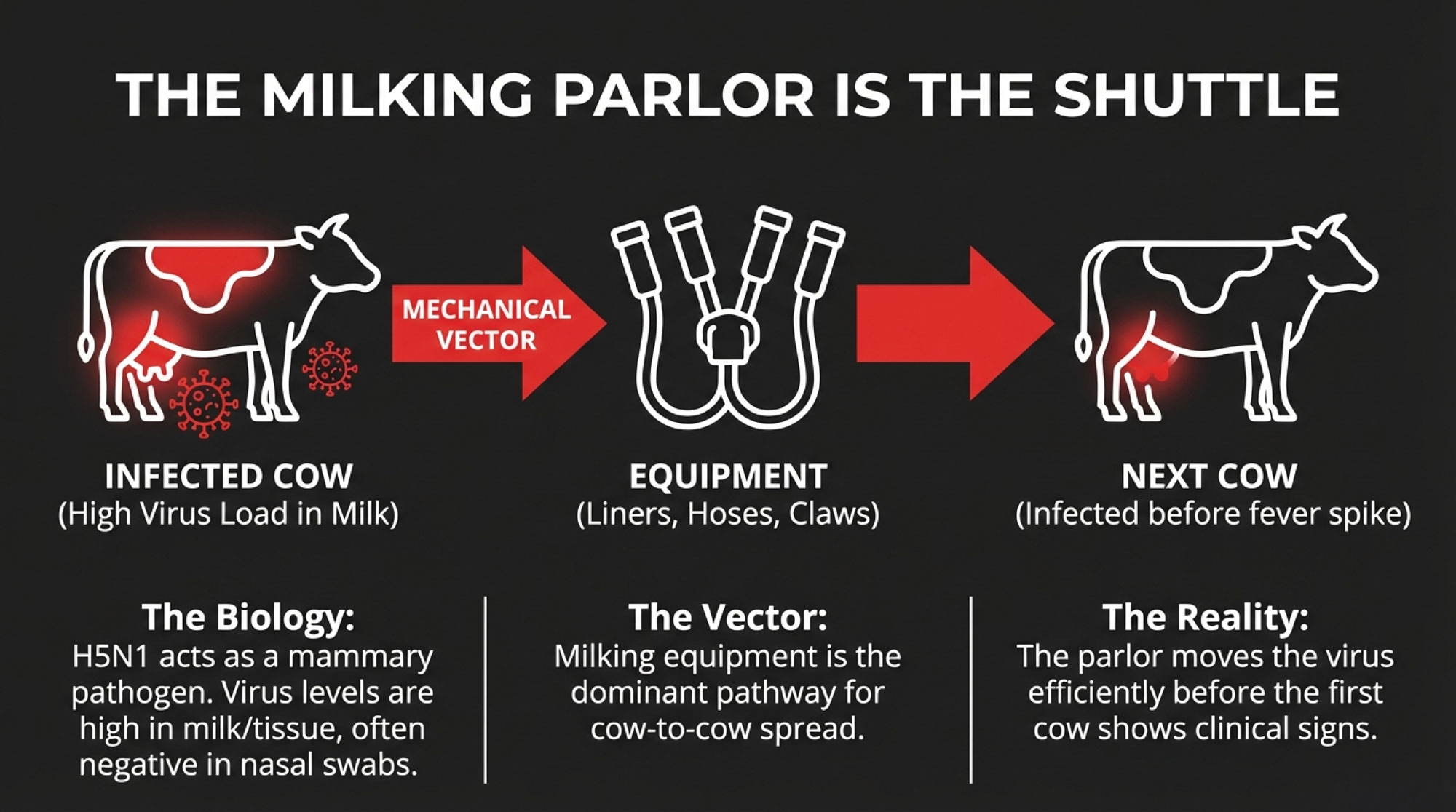
Here’s why pre-movement testing is failing us: it misses animals in early infection stages, doesn’t catch cows infected after testing but before movement, and does nothing about contaminated equipment, vehicles, and personnel. This isn’t just a numbers game – it’s a fundamental misunderstanding of how this virus moves.

And the challenge just got more complex. We’re not dealing with a single virus strain. Two distinct genotypes – B3.13 and D1.1 – are now confirmed in US dairy cattle. The D1.1 genotype identified in Nevada in early 2025 is particularly concerning as it’s the same variant associated with severe human infections. This isn’t just one virus we’re fighting; multiple H5N1 genotypes are spilling over from wild birds. That means your biosecurity has to be ironclad against diverse threats, and it complicates the path to a single, effective vaccine.

Producers can’t afford to be complacent with official numbers, which likely understates the scale’s accuracy. This means rigorous on-farm vigilance and sourcing discipline are more critical than ever.

The $950 Per Cow Question: Can You Afford an H5N1 Outbreak?

Have you crunched the numbers on what H5N1 would do to your bottom line? Two weeks after infection, milk production plummets by 73% – from approximately 35 kg daily to a meager 10 kilograms. That’s not just another mastitis case; it’s a production catastrophe that makes typical mastitis infections (with losses up to 18 kg) look minor by comparison.

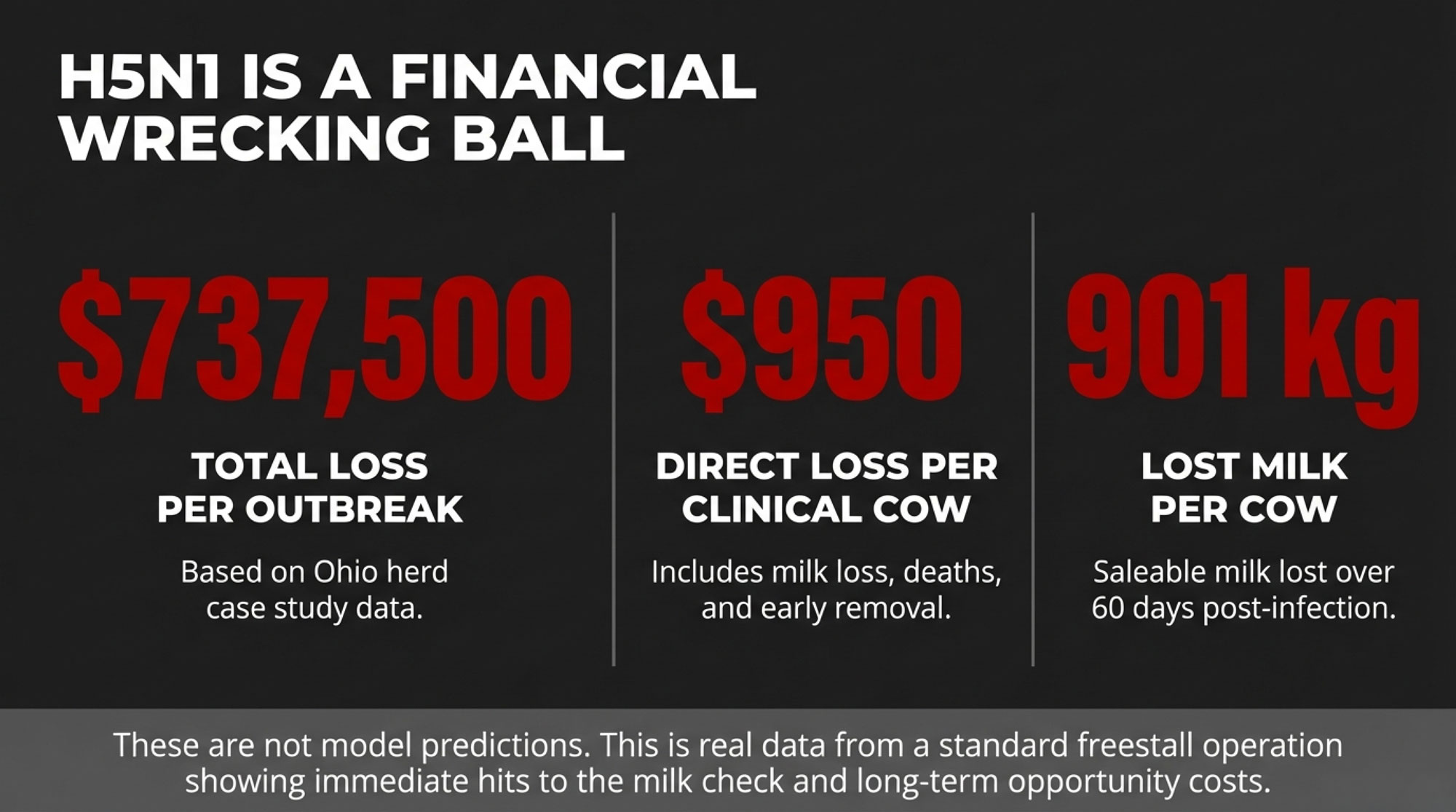
What’s worse, these cows don’t bounce back. Even 60 days after diagnosis, they’re still underperforming, with a cumulative loss of 901.2 kg – nearly one ton of milk – per animal. While your bulk tank might eventually recover as you replace the worst performers, the individual cow data reveals the actual economic carnage.

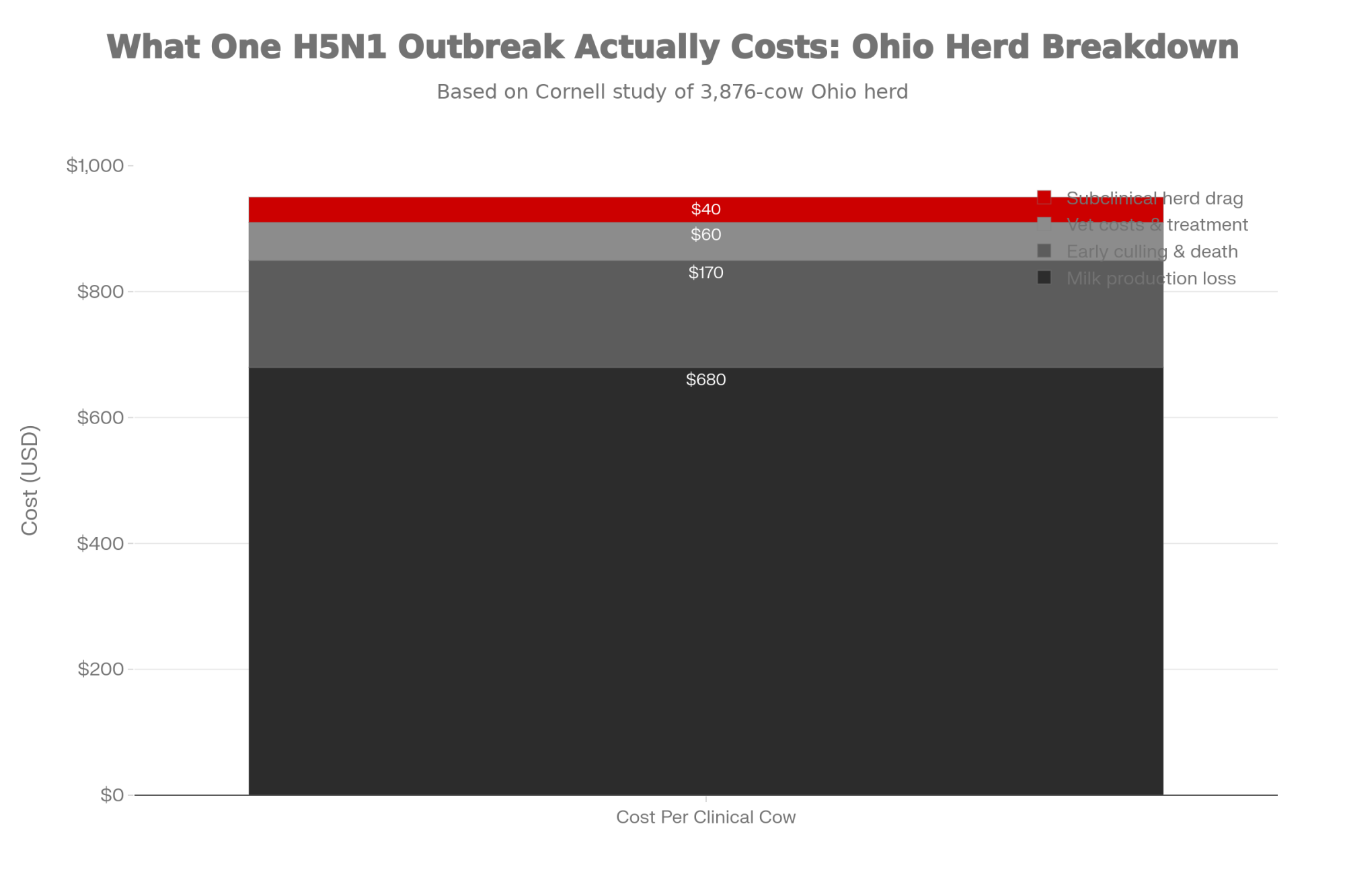
Each case costs you approximately $950, with total losses reaching $737,500 for an affected herd. And that’s likely a severe underestimate since it doesn’t account for “ongoing reproductive adjustments, disruptions to milking time and other important labor considerations, supportive medical care for sick cows, changes in biosecurity, and other unmeasured factors.”

Let me put it plainly: can your operation absorb a hit like that? Because if you’re in Arizona, Wisconsin, Indiana, or Florida, that’s precisely what the models say could be coming your way.

The Silent Spread: Why Official H5N1 Numbers Don’t Tell the Whole Story

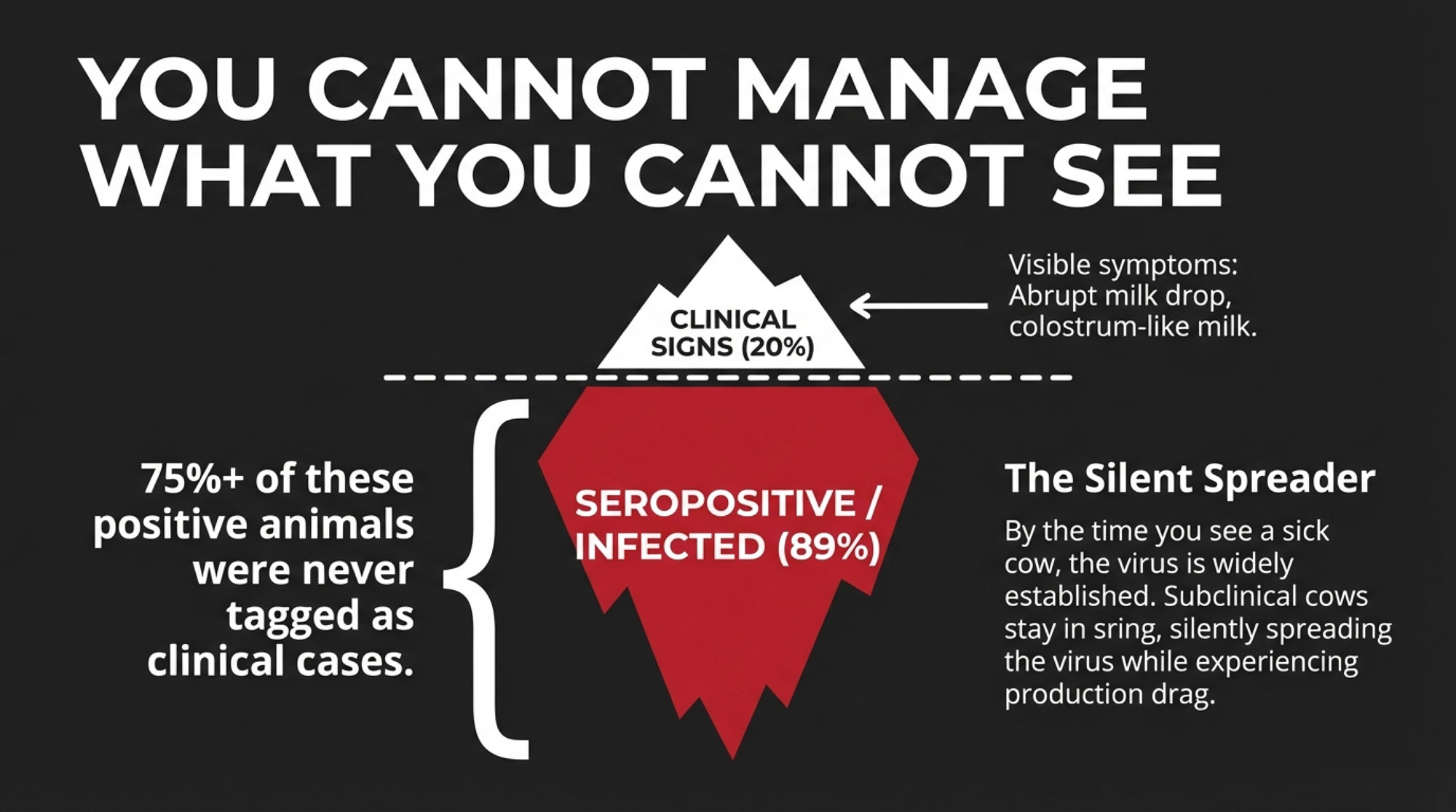
Want to know what keeps epidemiologists up at night? It’s not the cases we know about – the ones we don’t. The mathematical modeling has exposed a troubling reality: we’re seeing only the tip of the H5N1 iceberg.

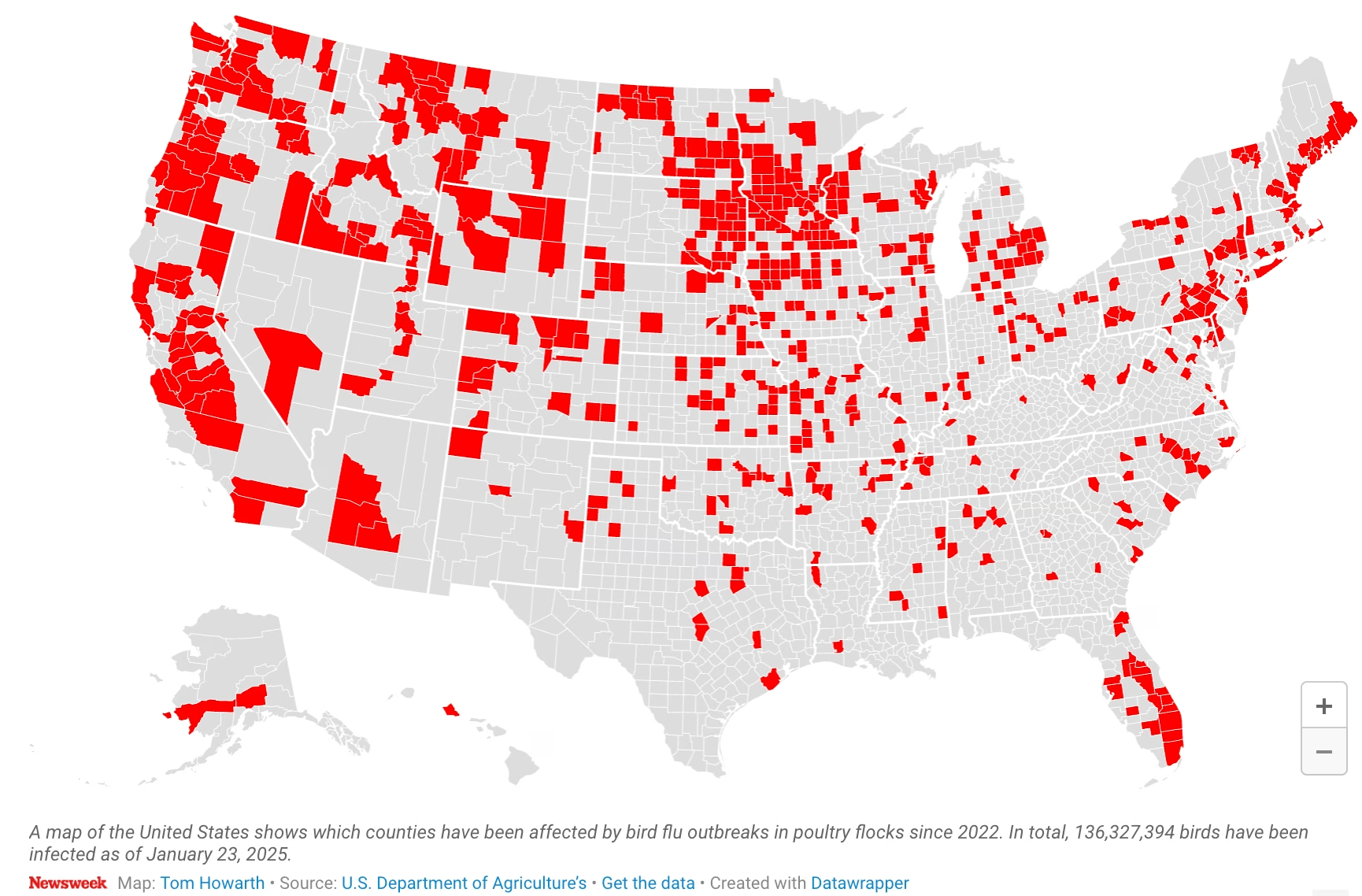
As of May 20, 2025, official records show H5N1 confirmed in 17 states, affecting 1,055 herds. But according to the model, that’s just a fraction of the outbreak. The researchers found that California’s reporting rates are likely higher than those of other states like Texas, Ohio, and New Mexico, creating a distorted picture of where the virus truly is.

Why does this matter to you? Because you might think you’re safe if your state isn’t on the official list – and you’d be dangerously wrong. With underreporting this widespread, the virus could already be circulating in your region, spreading silently to neighboring operations and setting up your herd for the next outbreak.

This isn’t just an academic concern – it’s a practical threat to your operation’s survival. When infections go undetected, infected animals move freely, spreading the virus to new locations. By the time you see clinical signs, the damage is already done.

What Smart Dairy Producers Are Doing Right Now

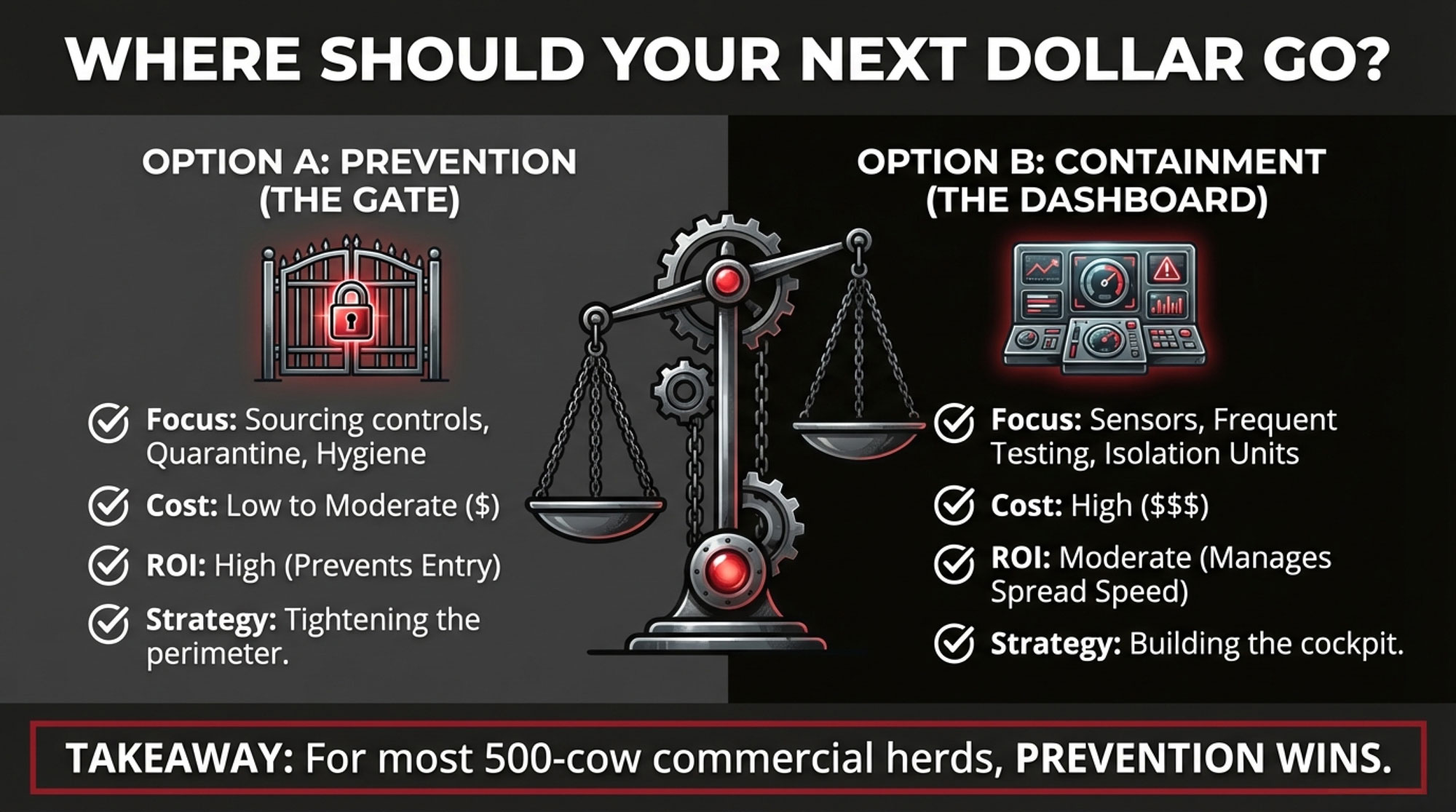
The most forward-thinking operators aren’t waiting for H5N1 to show up in their county or for government agencies to solve this problem. They’re taking matters into their own hands with aggressive prevention strategies far beyond the minimum requirements.

Enhanced Farm-Level Biosecurity: This isn’t just about following checklists – it’s about creating hardened defenses against an opportunistic enemy. The National Milk Producers Federation recommends:

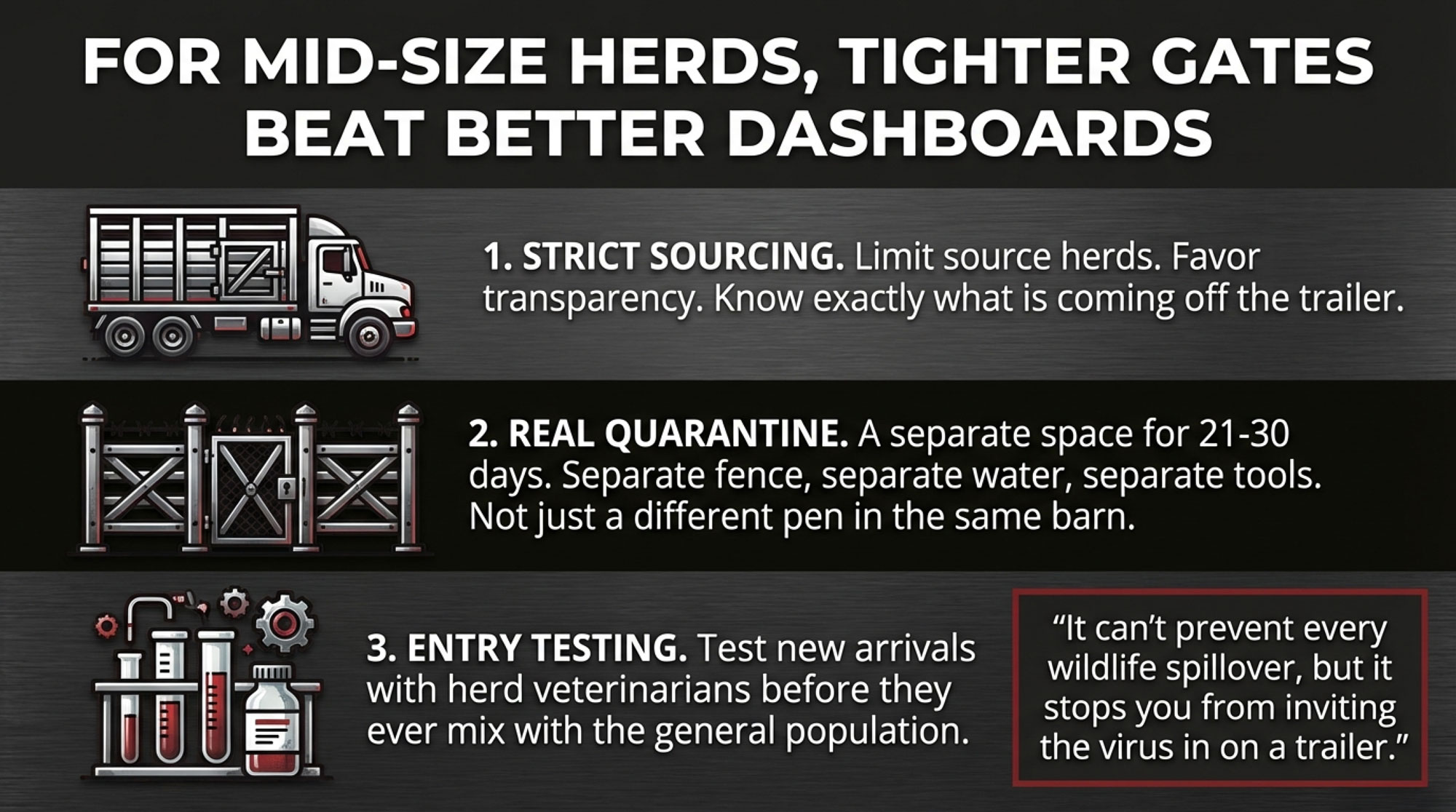
  • Limiting livestock movement and isolating new animals for at least 30 days
  • Delaying or canceling non-essential farm visits
  • Restricting vehicle movement on and off-premises
  • Keeping species separated, especially dairy cows and poultry
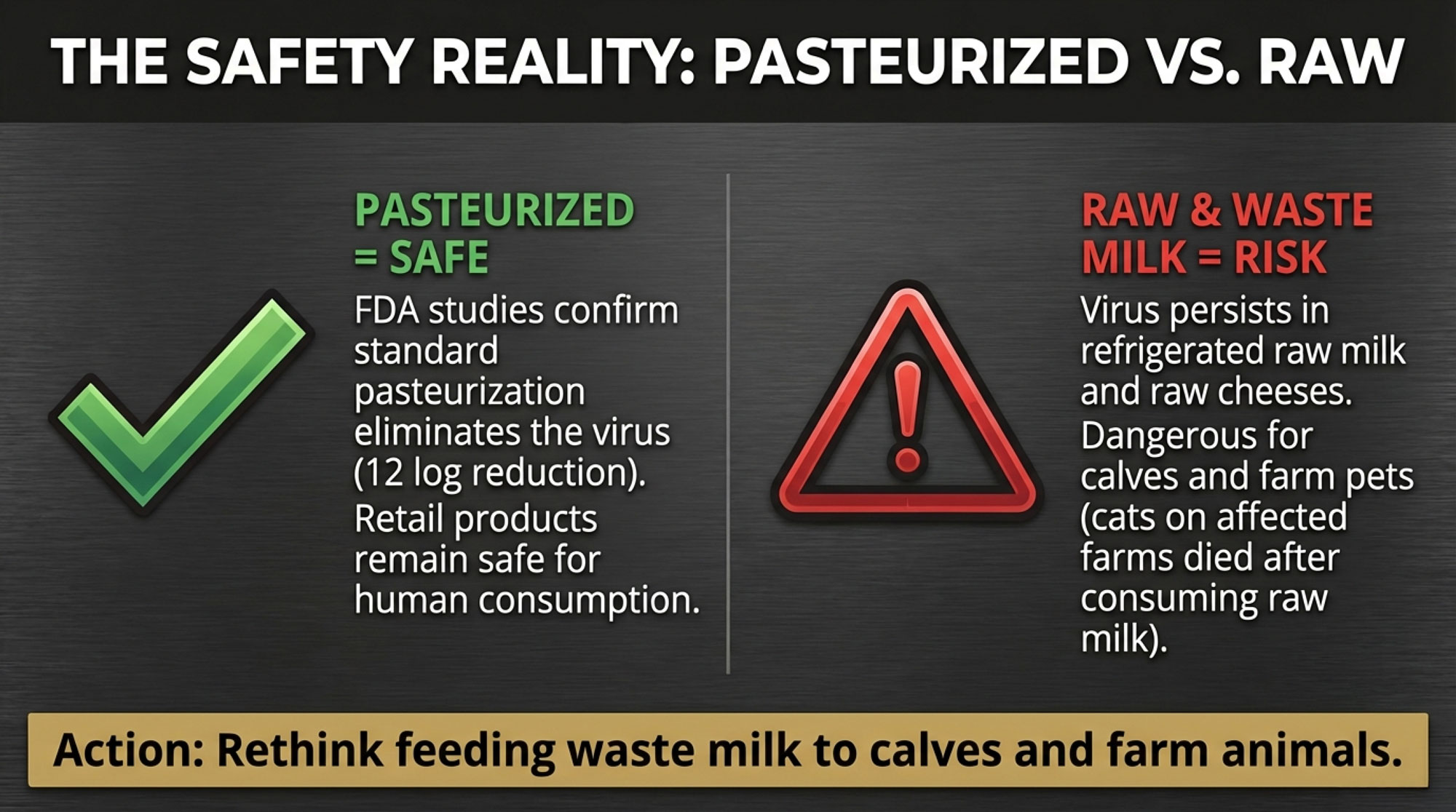
  • Never feeding raw milk to calves or other animals – the virus spreads through milk

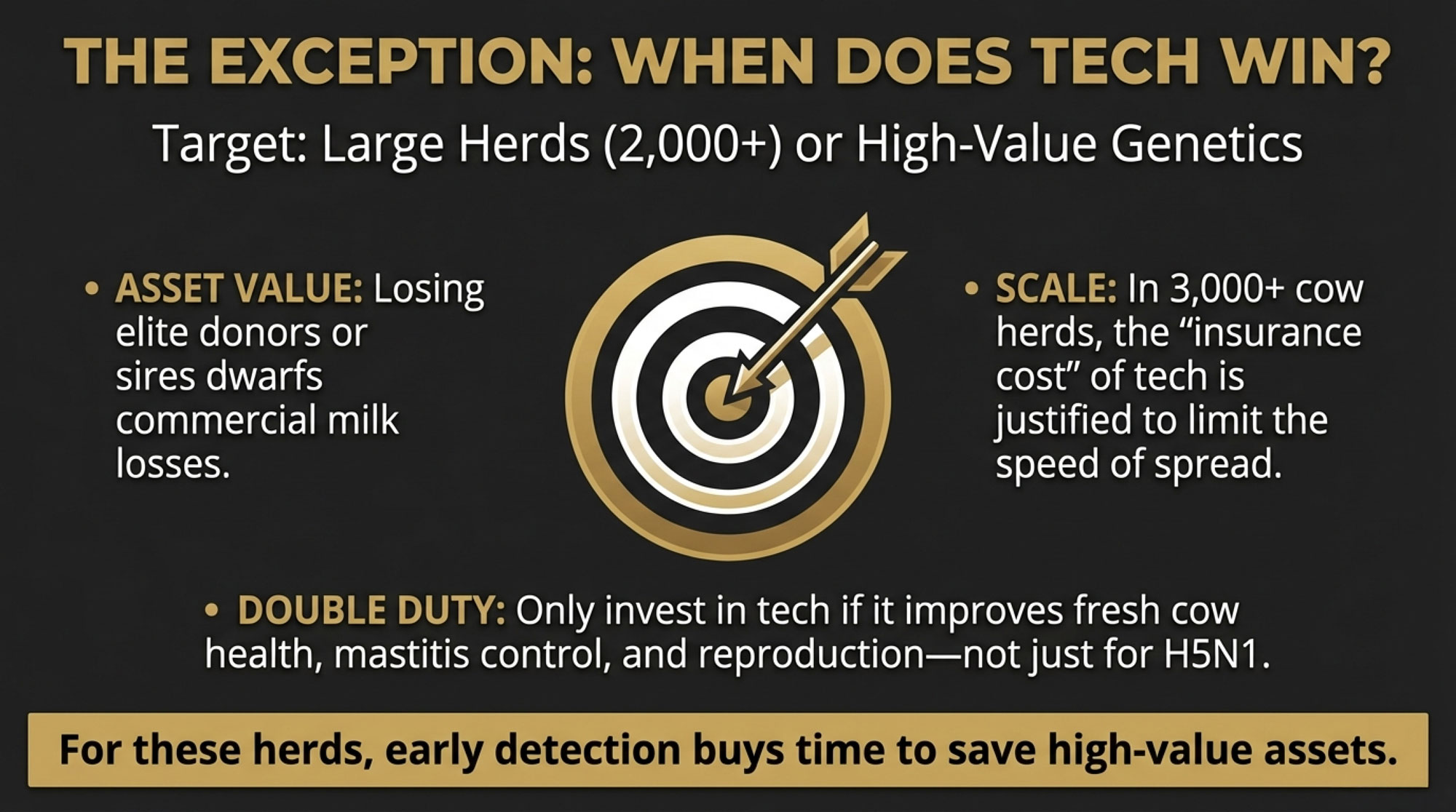
Early Detection Systems: Don’t wait for obvious symptoms – by then, you’re already losing money. Research shows that rumination time and milk production start declining about 5 days before clinical diagnosis. Implementing milk monitoring technology and daily health checks could be the difference between containing a single case and losing your entire herd’s productivity.

Strategic Risk Management: With potential losses of $737,500 per herd, you need financial contingencies specifically for disease outbreaks. Your typical insurance doesn’t cover this – it requires specialized planning that accounts for the unique financial impact of H5N1.

The Bottom Line

Let’s cut through the noise: H5N1 spreads faster and broader than official reports suggest. Current control measures are failing spectacularly, and Arizona, Wisconsin, Indiana, and Florida producers are now in the direct path of this economic wrecking ball.

But here’s the kicker – while these states face the highest immediate risk according to the mathematical models, the reality of cattle movement and the hidden nature of many outbreaks means no dairy operation in America can afford to let its guard down. The onus has shifted squarely back to individual farm resilience and cutting-edge biosecurity.

Early detection and aggressive intervention at the first sign of trouble – particularly watching for milk appearance changes and sudden production drops – may be your only chance to limit the damage. This isn’t about compliance with movement regulations – it’s about survival.

The time to strengthen your defenses isn’t when H5N1 hits your state or county – it’s right now. Your entire operation depends on it.

Learn more:

Join the Revolution!

Join over 30,000 successful dairy professionals who rely on Bullvine Weekly for their competitive edge. Delivered directly to your inbox each week, our exclusive industry insights help you make smarter decisions while saving precious hours every week. Never miss critical updates on milk production trends, breakthrough technologies, and profit-boosting strategies that top producers are already implementing. Subscribe now to transform your dairy operation’s efficiency and profitability—your future success is just one click away.
NewsSubscribe
First
Last
Consent

Acid Test: Why Every Dairy Farmer Should Know About the H5N1 Milk Breakthrough

16 States, 500+ Herds, 70 Human Cases: The Clock’s Ticking—Acidify or Die

EXECUTIVE SUMMARY: UC Davis researchers have discovered that acidifying raw milk to a pH of 4.1-4.2 using ordinary citric acid completely inactivates the H5N1 avian influenza virus after 6 hours of treatment. This groundbreaking finding offers dairy farmers, notably the 97% of small and medium operations that don’t pasteurize waste milk, an affordable and accessible method to neutralize a dangerous pathogen detected in dairy herds across multiple states since March 2024. Unlike expensive pasteurization equipment costing $5,000-$25,000, this simple acidification technique requires minimal investment (under $100) and no specialized equipment yet effectively addresses a critical biosecurity vulnerability in the milk production chain. The research represents the first published evidence that milk acidification can inactivate H5N1, specifically within milk from naturally infected animals, potentially preventing transmission to calves, farm workers, and other susceptible species.

KEY TAKEAWAYS

  • Simple Solution to a Complex Problem: Acidifying raw milk to pH 4.1-4.2 with citric acid completely inactivates the H5N1 virus after 6 hours, with pH 4.4 being less consistently effective
  • Cost-Effective Alternative to Pasteurization: Implementation requires only $10-$100 for pH testing supplies versus $5,000-$25,000 for pasteurization equipment, making it accessible to farms of all sizes
  • Addresses a Critical Biosecurity Gap: With fewer than half of large operations and only 1-3% of small/medium farms pasteurizing waste milk, acidification offers protection against a virus that can persist in refrigerated milk for up to four weeks
  • Beyond H5N1: Acidified milk may provide additional benefits, including reduced bacterial growth, lower incidence of calf diarrhea, and improved digestion, making it valuable even beyond the current outbreak
  • Practical Implementation: The technique works at ambient farm temperatures without specialized equipment or energy inputs and can be integrated into existing waste milk handling practices
H5N1 dairy cattle, milk acidification, citric acid biosecurity, waste milk treatment, on-farm H5N1 prevention

In an industry constantly bombarded with expensive solutions to complex problems, UC Davis researchers have discovered something revolutionary in its simplicity: common citric acid may be your best weapon against the H5N1 threat lurking in waste milk. This game-changing finding could transform how dairy operations of all sizes handle one of their most overlooked biosecurity vulnerabilities.

While government agencies and industry experts have been laser-focused on pasteurization as the gold standard for H5N1 inactivation in milk, the uncomfortable truth is that fewer than half of large dairy operations and a mere fraction of small and medium farms pasteurize their waste milk. This creates a dangerous blind spot in our industry’s biosecurity protocols that could cost us dearly.

But what if the solution doesn’t require expensive equipment or complicated procedures? What if it’s as simple as adding citric acid to achieve a specific pH level and waiting six hours?

Let’s dive into the science, the implications, and why this might be the most important biosecurity measure you haven’t implemented yet.

The H5N1 Crisis: Bigger Than You’ve Been Told

Since March 2024, when HPAI H5N1 (clade 2.3.4.4.b) was first detected in dairy cattle in Texas and Kansas, the industry has grappled with an unprecedented challenge. This marked the first confirmed instance of this virus subtype causing widespread outbreaks in cattle, with subsequent spread to multiple states across the country.

The virus’s affinity for mammary tissue makes this situation particularly alarming. Infected cows may shed astronomical viral loads in their milk—up to 10⁹ TCID₅₀ (tissue culture infectious dose) per milliliter in experimentally infected animals. To put that in perspective, we’re talking about potentially a trillion virus particles per milliliter of milk—enough viral load to make a bulk tank look like a biological hazard zone.

The clinical signs in affected animals often include reduced milk production, low appetite, and apparent systemic illness. But here’s the kicker: even after clinical signs resolve, cows can continue shedding the virus in milk for extended periods. It’s like having a cow that’s gone through a bout of clinical mastitis but continues to pump out high SCC milk long after treatment—except, in this case, she’s pumping out a dangerous pathogen.

Even more concerning is the virus’s remarkable persistence in refrigerated raw milk. Studies have shown that H5N1 can remain infectious in milk stored at 4°C for four weeks. This means that contaminated waste milk sitting in your refrigerator could remain a transmission risk for a month or more—about the same time it takes for that forgotten container of leftovers to start growing something unidentifiable in the back of your fridge.

The Waste Milk Problem No One Wants to Talk About

Let’s address the elephant in the milking parlor: waste milk management is a significant biosecurity gap on most dairy farms.

According to USDA data, only 43.8% of large dairy operations (500+ cows) pasteurize waste milk before feeding it to calves. This percentage plummets for medium operations (100-499 cows) at just 3% and small operations (fewer than 100 cows) at a mere 1%.

This waste milk—including colostrum, milk from fresh cows, transition milk, milk from cows undergoing antibiotic treatment, or milk otherwise deemed unsuitable for the commercial food supply—could be harboring dangerous levels of the H5N1 virus if it comes from infected animals.

When this untreated waste milk is fed to calves or handled by farm workers, it creates a perfect pathway for viral transmission. It’s like intentionally feeding your replacement heifers a pathogen cocktail or asking your employees to handle biohazardous material without proper protection. And let’s not forget the documented cases of severe, often fatal H5N1 infections in farm cats that consumed raw milk from infected cows—nature’s sentinel species giving us a clear warning.

The industry has known about this vulnerability for years, but the solutions offered have typically involved expensive pasteurization equipment that’s simply not feasible for many operations, particularly smaller ones. This has left a dangerous gap in our biosecurity protocols, and the H5N1 outbreak has brought it into sharp focus.

Why are we still treating waste milk like it’s 1950? Isn’t it time we acknowledged that our current practices are risking our herds?

Forget Pasteurizers: Citric Acid Just Made Biosecurity Dirt Cheap

Enter the University of California, Davis researchers, who decided to tackle this problem from a different angle. Their groundbreaking study, published in the Journal of Dairy Science in January 2025, investigated whether simple acidification could effectively inactivate H5N1 in raw whole milk.

The research team, led by veterinary epidemiologist Richard Van Vleck Pereira and Beate Crossley, Craig Miramontes, Daniel Rejmanek, and Rodrigo Gallardo, conducted a series of carefully designed experiments to test this hypothesis.

Their approach was methodical and safety-conscious. Initial trials used Low Pathogenic Avian Influenza (LPAI) H6N2 as a surrogate for the more dangerous H5N1, allowing for preliminary work in a biosafety level 2 laboratory environment. After observing promising results with the surrogate virus, they advanced to the critical test: using milk containing high loads of H5N1 obtained directly from actively infected cows.

The results were nothing short of remarkable. Acidifying raw milk to a pH between 4.1 and 4.2 using citric acid resulted in complete inactivation of the surrogate LPAI H6N2 and the target HPAI H5N1 virus after 6 hours of treatment.

Let that sink in: a simple, low-cost treatment effectively neutralized one of the most concerning pathogens currently threatening the dairy industry. It’s like discovering that the baking soda in your kitchen can prevent ketosis in your fresh cows—sometimes, the simplest solutions are right under our noses.

Why This Matters to YOUR Operation

You might wonder why this matters if you’re running a large dairy operation that already pasteurizes waste milk. And suppose you’re managing a small or medium-sized farm without pasteurization equipment. In that case, you might be skeptical about yet another biosecurity recommendation that seems disconnected from the practical realities of your operation.

But here’s why every dairy farmer should be paying attention to this breakthrough:

For Large Operations:

  • Pasteurization equipment requires significant capital investment and ongoing maintenance. You need a backup plan when your pasteurizer breaks down during calving season.
  • Equipment failures or downtime can create biosecurity gaps—much like when your TMR mixer breaks down, and you’re scrambling to feed your high groups.
  • Acidification could serve as a backup method during equipment maintenance or outages.
  • The simplicity of the process means it can be implemented consistently across multiple locations, whether running a 5,000-cow dairy or managing several smaller facilities.

For Medium and Small Operations:

  • It provides an affordable, accessible alternative to pasteurization equipment—there is no need to drop $20,000 on equipment you can’t justify in your budget.
  • Requires minimal investment in equipment or infrastructure—about as much as you’d spend on a good set of hoof trimmers.
  • It can be implemented immediately without waiting for capital budget approval.
  • Scales easily to the volume of waste milk produced, whether dealing with 5 gallons or 50.

For All Operations:

  • Reduces the risk of H5N1 transmission to calves, other animals, and farm workers.
  • Addresses a critical biosecurity vulnerability that has been largely overlooked—like finally fixing that hole in the fence that keeps letting your heifers escape.
  • It aligns with practices on some farms that acidify milk to inhibit bacterial growth.
  • It provides peace of mind during an ongoing outbreak, and peace of mind is worth its weight in gold when you’re already juggling a thousand other concerns.

Are you willing to gamble with your herd’s health when such a simple solution is available?

The Nuts and Bolts: How It Works

The UC Davis study provides clear parameters for effective H5N1 inactivation through acidification:

  1. Target pH Range: 4.1 to 4.2—about the same acidity as a typical TMR for lactating cows.
  2. Acidulant: Citric acid—the same stuff that’s probably sitting in your feed room for cleaning your milking system.
  3. Treatment Duration: 6 hours—about the time between your morning and afternoon milking.
  4. Temperature: Effective at ambient farm temperatures, without requiring refrigeration—works whether you’re in the scorching Central Valley or the cool Pacific Northwest.

Table 1: Acidification Parameters That Neutralize H5N1
(Source: UC Davis Study)

Target pHAcidulantTreatment TimeMilk Fat %Effectiveness
4.1-4.2Citric Acid6 hours4.1-5.8%100% inactivation
4.4Citric Acid6 hours4.3-5.5%Partial inactivation (50% replicates)

The process is straightforward: add citric acid to raw waste milk until reaching the target pH of 4.1-4.2, verify the pH using a simple pH meter or test strips, and then let it sit for 6 hours before feeding to calves or disposal. It’s not much different from adding a preservative to your silage—a simple step that yields significant benefits.

Notably, the researchers found that pH 4.4 was less consistently effective, with only partial inactivation observed after 6 hours. This indicates the importance of achieving and maintaining the optimal pH range for reliable viral inactivation—much like the critical importance of hitting your target dry matter percentage in your TMR mix.

The study also noted a fascinating finding: milk with higher fat content appeared to enhance the virucidal effect of acidification. While the sample size was too small to draw definitive conclusions, this suggests that the milk’s composition may influence the treatment’s effectiveness—something that warrants further investigation. It’s similar to how colostrum quality can vary dramatically between cows, affecting the passive transfer of immunity to calves.

Beyond the Lab: Real-World Implementation

While the UC Davis findings are compelling, the researchers appropriately characterize their work as a “pilot study,” acknowledging its preliminary nature. The team has indicated plans to conduct on-farm testing to validate the effectiveness of milk acidification under real-world conditions and develop clear, practical implementation guidelines for farmers.

This field validation stage is crucial, as it must address the numerous variables encountered in farm environments, including fluctuations in ambient temperature, variations in milk composition, and challenges in consistently achieving and maintaining the target pH. It’s like the difference between breeding cows on paper versus actually getting them pregnant—theory and practice don’t always align perfectly.

For farmers considering implementing milk acidification as a biosecurity measure, several practical considerations emerge:

  1. Accurate pH Monitoring: Achieving and verifying the target pH range (4.1-4.2) is critical for effectiveness. Simple pH meters or test strips would be necessary tools—about as basic as the CMT paddles you use to check for mastitis.
  2. Treatment Duration: The 6-hour holding time at the target pH must be maintained for complete viral inactivation—similar to the holding time required for proper heat treatment of colostrum.
  3. Milk Composition Effects: The study noted potential variations in efficacy related to milk composition, with some evidence suggesting enhanced virucidal effects in milk with higher fat content. This may be relevant when treating different milk streams on the farm—Jersey milk might respond differently than Holstein milk.
  4. Temperature Considerations: While the method is effective at ambient temperatures, extreme variations on farms might influence efficacy and should be considered during implementation. As your silage fermentation slows in winter, seasonal temperature changes might affect the acidification process.

Some dairy operations utilize milk acidification to inhibit bacterial growth in waste milk for calf feeding. For these farms, adopting a protocol optimized for viral inactivation would represent a logical extension of existing practices—like upgrading from a basic pre-dip to a more effective germicidal formula.

16 States, 500+ Herds, 70 Human Cases: The Clock’s Ticking

The H5N1 outbreak in dairy cattle has prompted a coordinated response across multiple federal agencies, with the USDA focusing on animal health, the FDA overseeing food safety, and the CDC monitoring public health implications.

These agencies consistently affirm pasteurization’s effectiveness in ensuring commercial milk’s safety while strongly advising against consuming raw milk products. The FDA’s extensive retail sampling program has tested hundreds of pasteurized dairy products, finding no viable H5N1 virus in any samples—confirming that pasteurization works as effectively as a good footbath prevents digital dermatitis.

However, research from Cornell University has revealed concerning findings about raw milk products. Studies investigating whether the traditional 60-day aging process for raw milk cheese would eliminate the H5N1 virus found that the virus survived in non-heat-treated raw milk cheese through and beyond the 60-day aging period. This challenges the long-held belief that aging alone provides adequate protection against pathogens in raw milk cheese—much like how we’ve had to revise our understanding of Johne’s disease transmission over the years.

Myth: Raw milk is safe after 60 days. Fact: Cornell proved H5N1 survives in cheese for months.

For dairy farmers, the focus should be on implementing robust biosecurity measures to prevent H5N1 introduction and spread within their herds. This includes segregating sick cows, ensuring milk from infected animals does not enter the food supply, promptly reporting suspected cases to authorities, and utilizing personal protective equipment—the same common-sense approaches you’d use during a Salmonella outbreak.

Since April 29, 2024, a federal order has been in effect, requiring testing of lactating dairy cattle for H5N1 before interstate movement. A second federal order was enacted on December 6, 2024, establishing the National Milk Testing Strategy (NMTS), which requires collecting and testing raw milk samples nationwide. This comprehensive surveillance program is designed to identify affected herds and implement enhanced biosecurity measures quickly.

Acidification represents a complementary approach that aligns with this broader strategy of enhancing on-farm biosecurity. While not replacing pasteurization for the commercial milk supply, it offers a practical tool for managing non-saleable milk. It addresses a critical control point where conventional pasteurization is often lacking—like adding a second lock to your medicine cabinet.

But let’s be honest: how many of us are implementing ALL these recommended biosecurity measures? And how many just hope H5N1 doesn’t find its way to our farm?

The Economics: Cost-Benefit Analysis

Let’s talk dollars and cents. For many dairy operations, especially smaller ones, the cost of pasteurization equipment can be prohibitive. A basic on-farm pasteurizer can cost anywhere from $5,000 to $25,000 or more, depending on capacity and features. Add in maintenance, energy costs, and the labor required to operate the equipment, and the total investment becomes significant—about the same as adding a couple of high-end box stalls to your maternity pen.

Why are we letting $20,000 machines collect dust when a $10 bag of citric acid could save your herd?

Table 2: Acidification vs. Pasteurization – Real-World Costs
(Sources: USDA, UC Davis)

FactorAcidification (Citric Acid)On-Farm Pasteurization
Startup Cost$10-$100 (pH strips/meter)$5,000-$25,000
Daily Operating Cost$0.50 (citric acid)$1.60-$3.20 (energy)
Labor Skill RequiredBasic pH monitoringTechnical operation
Energy UseNoneHigh
Herd Size ScalabilityAll sizesLarge operations only

In contrast, implementing milk acidification requires minimal investment:

  • Citric acid is relatively inexpensive and widely available—about as costly as the iodine in your pre-dip.
  • Basic pH monitoring tools like test strips or a simple pH meter cost between $10 and $100—less than a single dose of prostaglandin for your breeding program.
  • No specialized equipment or energy inputs are needed—unlike the constant electricity demands of your milk cooling system.
  • The process can be easily integrated into existing waste milk handling procedures—no need to redesign your calf feeding workflow.

The potential benefits extend beyond direct cost savings. By reducing the risk of H5N1 transmission on your farm, you’re potentially preventing:

  • Loss of production due to illness in your herd—avoiding the milk drop that comes with any disease outbreak
  • Veterinary costs for treating sick animals—saving those emergency call fees
  • Regulatory interventions if an outbreak is detected—avoiding the headaches of dealing with state veterinarians and movement restrictions
  • Potential zoonotic transmission to farm workers—keeping your team healthy and productive
  • The spread of the virus to other susceptible species on your farm—protecting everything from your barn cats to your backyard chickens

When viewed through this lens, milk acidification represents not just a cost-effective alternative to pasteurization but a prudent investment in your operation’s biosecurity and sustainability—like spending money on good teat dip to prevent mastitis rather than antibiotics to treat it.

With margins as tight as they are in today’s dairy industry, can you afford NOT to implement this simple, low-cost biosecurity measure?

Beyond H5N1: Additional Benefits of Acidified Milk

While the UC Davis study focused explicitly on H5N1 inactivation, acidification of waste milk offers additional benefits that may make it an attractive practice beyond the current outbreak.

Research has shown that feeding acidified milk to calves can:

  • Reduce bacterial growth in milk during storage—similar to how properly fermented silage resists spoilage
  • Lower the incidence of diarrhea in calves compared to feeding untreated waste milk—potentially reducing your scour treatment costs
  • Potentially improve digestion and nutrient absorption—enhancing growth rates in your replacement heifers
  • Reduce labor costs associated with multiple daily feedings, as acidified milk can be fed free-choice—freeing up your calf feeders for other tasks

These benefits align with the industry’s broader goals of improving calf health, reducing antibiotic use, and enhancing operational efficiency—the same principles that guide your transition cow management or reproduction program.

It’s worth noting that acidification is not a new practice in dairy farming. Some operations have used it for years to preserve waste milk and improve calf health. What’s new is the scientific validation of its effectiveness against a specific and concerning pathogen like H5N1.

The Human Element: Protecting Your Workers and Community

While much of the discussion around H5N1 in dairy cattle has focused on animal health and milk safety, we can’t overlook the potential human health implications.

The CDC assesses the risk of H5N1 transmission to the general public as low while considering the risk for individuals with occupational exposure as moderate to high. While human cases reported since the onset of the dairy outbreak have primarily been linked to direct occupational exposure to infected animals, the precautionary principle supports minimizing all potential exposure routes.

Handling raw milk with high viral loads for dairy farm workers represents a potential occupational exposure risk. Implementing effective inactivation methods like acidification before handling or disposing of waste milk could reduce this risk pathway—much like how proper PPE protects your employees during chemical applications or veterinary treatments.

Beyond your immediate farm team, consider the potential community impact of a biosecurity breach. H5N1 is a zoonotic pathogen with the potential to cause severe illness in humans. While the current risk of sustained human-to-human transmission is considered low, reducing any potential reservoir of the virus is a responsible approach to public health—similar to how you might maintain a closed herd to protect against bringing in new diseases.

By implementing milk acidification as part of your biosecurity protocol, you’re protecting your herd and business and demonstrating a commitment to worker safety and community well-being. It’s the dairy industry equivalent of being a good neighbor who keeps their fences mended and their dogs contained.

Have you considered what you’d tell your employees or neighbors if they contracted H5N1 from your farm because you didn’t take this simple precaution?

The Dairy Industry’s Obsession with Pasteurization is Bankrupting Small Farms. Here’s the Fix.

The dairy industry has long relied on pasteurization as the gold standard for pathogen control in milk. This thermal process, developed in the 19th century, has served us well for generations. But its dominance may have inadvertently stifled innovation in alternative approaches, particularly for on-farm applications where pasteurization equipment isn’t always practical.

The UC Davis study challenges us to reconsider our assumptions about what constitutes effective biosecurity. It suggests that sometimes, simpler solutions might be just as effective as more technologically advanced ones—and potentially more accessible to a broader range of operations. It’s like discovering that a well-managed intensive rotational grazing system can be as productive as a high-input confinement operation—different approaches can achieve similar results.

This raises important questions:

  • Have we been overlooking other simple, cost-effective biosecurity measures? What other “low-tech” solutions might be hiding in plain sight?
  • Are there other areas where our industry’s conventional wisdom deserves reexamination? Perhaps our approach to dry cow therapy or transition cow management?
  • How can we better bridge the gap between cutting-edge research and practical on-farm implementation? How do we translate what works in the lab to what works in the parlor?

The acidification approach exemplifies how relatively simple, accessible interventions can offer practical solutions to complex biosecurity challenges. As the dairy industry adapts to emerging infectious disease threats, this innovative thinking will be increasingly valuable—much like how adopting sexed semen technology transformed heifer replacement strategies.

Isn’t it time we stopped assuming that more expensive, more complex solutions are automatically better?

Looking Ahead: The Future of On-Farm Biosecurity

As we look to the future, it’s clear that on-farm biosecurity will only become more critical. Climate change, global trade, and evolving pathogens contribute to an increasingly complex risk landscape for dairy operations—much like how antibiotic resistance has complicated our approach to mastitis treatment.

The UC Davis research on milk acidification represents a promising step toward more accessible, practical biosecurity tools. But it’s just one piece of a larger puzzle, like having a good pre-dip protocol but neglecting post-dip application.

Future research directions might include:

  • Optimizing acidification protocols for different farm environments and milk compositions—tailoring the approach to Jersey versus Holstein herds, for instance
  • Investigating the effectiveness of acidification against other pathogens of concern—like Mycoplasma, Salmonella, or Johne’s disease
  • Developing integrated biosecurity approaches that combine multiple interventions—similar to how a comprehensive mastitis control program addresses various risk factors
  • Creating user-friendly monitoring tools to verify treatment effectiveness—perhaps something as simple as a color-changing indicator that confirms proper acidification

For dairy farmers, staying informed about these developments and adapting practices based on new evidence will be key to navigating this changing landscape—just as you adjust your breeding program based on genetic evaluations or your feeding program based on forage quality.

Taking Action: Implementing Acidification on Your Farm

While we await the results of on-farm validation studies, forward-thinking dairy farmers might consider exploring milk acidification as a potential addition to their biosecurity toolkit. Here’s a framework for approaching implementation:

  1. Consult with Experts: Discuss the approach with your veterinarian, extension specialist, or dairy consultant to determine if it’s appropriate for your operation.
  2. Start Small: Consider a pilot implementation to test the process and resolve any logistical challenges before scaling up.
  3. Invest in Proper Tools: Ensure you have accurate pH measurement tools and a reliable source of food-grade citric acid.
  4. Develop Clear Protocols: Create step-by-step procedures for your team to follow, including pH targets, treatment times, and verification steps.
  5. Train Your Team: Ensure everyone handling waste milk understands the importance of the process and the correct implementation steps.
  6. Monitor and Adjust: Regularly review your process and make adjustments based on practical experience and emerging research.

Remember that acidification is not a replacement for other biosecurity measures but rather a complementary approach that addresses a specific vulnerability in many dairy operations.

The Bottom Line: A Practical Path Forward

The UC Davis pilot study offers compelling evidence that milk acidification represents an effective, accessible, and practical approach for inactivating H5N1 in raw whole milk. By demonstrating complete viral inactivation after 6 hours at pH 4.1-4.2, this research identifies a potentially valuable tool for enhancing on-farm biosecurity, particularly regarding the management of non-saleable milk.

For dairy farmers navigating the ongoing challenges of the H5N1 outbreak, this approach offers several distinct advantages over conventional pasteurization: lower implementation costs, minimal equipment requirements, and accessibility regardless of operation size. These benefits are especially relevant for small and medium-sized dairy operations, which currently have the lowest adoption rates for waste milk pasteurization.

While field validation remains essential before widespread implementation can be recommended, this research represents a significant step toward addressing a critical biosecurity gap in the dairy industry. By offering a practical method for inactivating H5N1 in waste milk, acidification could reduce viral transmission on farms, protect both animal and human health, and strengthen the resilience of dairy operations in the face of emerging infectious disease challenges.

This innovation exemplifies how relatively simple, accessible interventions can offer practical solutions to complex biosecurity challenges. As the dairy industry continues to adapt to the reality of H5N1, milk acidification stands out as a promising technique worthy of further investigation and consideration by producers seeking to enhance their farm biosecurity protocols.

In an industry that often equates technological sophistication with effectiveness, sometimes the simplest solutions are the most powerful. The humble citric acid might just be your most cost-effective weapon against one of the most concerning pathogens currently threatening dairy operations worldwide.

Learn More:

Join the Revolution!

Join over 30,000 successful dairy professionals who rely on Bullvine Daily for their competitive edge. Delivered directly to your inbox each week, our exclusive industry insights help you make smarter decisions while saving precious hours every week. Never miss critical updates on milk production trends, breakthrough technologies, and profit-boosting strategies that top producers are already implementing. Subscribe now to transform your dairy operation’s efficiency and profitability—your future success is just one click away.
NewsSubscribe
First
Last
Consent

Trump’s Liberation Day Tariffs: A $8.2B Gamble for Dairy Farmers

Trump’s new tariffs threaten $8.2B dairy exports. Can farmers survive retaliatory trade wars, H5N1 outbreaks, and collapsing milk prices?

EXECUTIVE SUMMARY: The U.S. dairy industry faces unprecedented risks as President Trump’s “reciprocal tariffs” trigger retaliatory levies from Canada, China, and Mexico, threatening $8.2 billion in annual exports. With milk futures already down 12% and processing plants bracing for oversupply, farmers confront collapsing prices amid H5N1 outbreaks, labor shortages, and rising feed costs. While experts warn of $56,000/year income losses for midsize farms, proactive strategies like securing contracts, diversifying exports, and leveraging USDA risk programs offer lifelines. The article analyzes how tariff tensions intersect with biosecurity threats, production shifts, and policy uncertainty—and what producers can do to protect their operations.

KEY TAKEAWAYS:

  • $8.2B Export Crisis: Retaliatory tariffs from Canada (25% on cheese/butter) and China (10% on milk) jeopardize 18% of U.S. milk production sold abroad.
  • Double Whammy for Farmers: Milk futures fell 12% since February and H5N1 outbreaks strain operations, with federal testing now mandatory for interstate cattle.
  • Survival Strategies: Lock in contracts pre-tariffs, use Dairy Margin Coverage programs, and target emerging markets like Southeast Asia.
  • Hidden Canada Conflict: Tariff-rate quotas (TRQs) block U.S. access to promised Canadian markets more than headline tariffs.
  • Domestic Silver Lining: Reduced import competition could boost U.S. butter/cheese sales—if export losses don’t flood the home market.
For this article please generate:
1. A list of 5 SEO keywords relevant to the main topic and content, separated by commas
2. A focus keyphrase that captures the essence of the article.
3. A meta description under 160 characters that summarizes the article and entices readers to click.
Please ensure the keywords and focus keyphrase are naturally integrated into the meta description.

As President Donald Trump announces his “Liberation Day” tariff measures in the Rose Garden today, America’s dairy farmers and processors face a watershed moment. With a record $8.2 billion export market at stake and retaliatory tariffs already targeting U.S. dairy products, could the industry’s ambitious global expansion plans be derailed just as billions in new processing capacity come online? The timing of this trade confrontation could hardly be worse for an industry already grappling with tight margins, H5N1 outbreaks in cattle herds, and uncertain labor policies.

Understanding the Tariff Dispute

President Trump’s expected “reciprocal tariffs” announcement is designed to match levies that other countries impose on U.S. products. The administration has focused mainly on Canada’s dairy policies, which Trump has characterized as unfair to American farmers.

Trump’s Commerce Secretary nominee, Howard Lutnick, emphasized this position during his confirmation hearings: “Canada treats our dairy farmers horribly. That’s got to end. I’m going to work hard to make sure, as an example for your dairy farmers, they do much better in Canada than they’ve ever done before”.

“Canada treats our dairy farmers horribly. That’s got to end. I’m going to work hard to make sure they do much better in Canada than ever.” – Howard Lutnick, Commerce Secretary nominee.

However, these claims require context. While Canada does maintain high tariffs on dairy products, these rates only apply to imports exceeding predetermined tariff rate quotas (TRQs). Below these quotas, American dairy sales to Canada face zero tariffs under the United States–Mexico–Canada Agreement (USMCA).

The Trump administration has already implemented a 20% additional tariff on Chinese imports, prompting Beijing to place 10% duties on some U.S. milk products. The president has also confirmed that 25% tariffs on Mexican and Canadian imports have now taken effect, despite a prior 30-day reprieve granted to both countries.

“Tariffs make you a little bit nervous when you’re an American farmer,” says Hans Brighton, who owns a dairy farm with about 460 cows in Merill, Wisconsin. This sentiment reflects widespread concern throughout America’s dairy regions.

The impact of these tariff actions is already evident in dairy markets. Since Trump first credibly threatened tariffs in early February, May Class III and Class IV milk futures have lost 12% and 9% of their value, respectively. Milk futures traded in Chicago dropped to their lowest level since April 2024, while whey prices reached a five-month low.

$8.2 Billion and Growing: What’s at Stake

The U.S. dairy industry has transformed dramatically over the past two decades, evolving from a net importer to exporting .2 billion worth of dairy products to 145 countries worldwide. Today, approximately one day’s milk produced on America’s dairy farms each week is exported, representing roughly 18% of all production.

“The U.S. dairy industry is ready to capitalize on a renewed trade agenda in 2025,” said Michael Dykes, president and CEO of the International Dairy Foods Association (IDFA). “Consumers in the United States and worldwide continue to demand more U.S. dairy because we provide an assortment of delicious, nutritious, and affordable dairy products.”

Mexico and Canada—America’s top two global trading partners—account for over 40% of U.S. dairy exports. In 2024, they imported record values of $2.47 billion and $1.14 billion, respectively. China has also been a key market, importing between $500 million and $800 million of U.S. dairy products annually.

The industry has invested more than $8 billion in new processing capacity scheduled to come online in the next few years, a commitment made with the expectation of continued export growth. New cheese production facilities are being established across South Dakota and Texas to capitalize on increasing global demand.

From the Farm: Voices from the Front Lines

The tariff tensions are creating immediate challenges for dairy farmers of all sizes across the country. AJ Wormuth, who manages 3,600 dairy cows at Half Full Diary in upstate New York, reports that he is already experiencing rising expenses due to Trump’s tariffs, while the looming threat of an escalating trade conflict is causing a decline in the price he receives for his milk.

“We’re facing a double challenge — lower prices coupled with increasing costs,” Wormuth explains. He accelerated a barn renovation after being informed that the cost of new metal stalls would increase by $21,000 due to Trump’s 25% tariffs on steel and aluminum. “We can’t simply raise our prices at the market because all our expenses are increasing, leaving us in a difficult position.”

For smaller operations, the concerns are equally pressing. Annie Watson, who operates an organic dairy farm in Maine with 70 cows, highlights the longer-term planning challenges: “As dairy farmers, we work within three-year cycles — from the birth of a calf until it becomes a milking cow. Things don’t happen quickly on our farms, so when policies are implemented swiftly, it poses challenges for those engaged in this cycle”.

Near the Canadian border, Watson sources most of her feed from Canada. She calculates that the tariffs could increase her grain expenses by $1,200 monthly. “It would be more manageable if many of our organic dairy farmers weren’t already financially struggling due to market conditions,” notes Watson, who also leads the Maine Dairy Association. “Many farmers might endure this without accruing further debt, but numerous individuals are already behind on their bills.”

Leonard Poen of the University of Wisconsin-Madison extension says retaliatory tariffs could decrease the income of a medium-sized farm in Wisconsin with about 250 cattle by up to $56,000 per year. “I don’t think any part of the supply chain is going to be insulated from this,” he warns.

Retaliation Risks: Trading Partners Respond

The reaction from America’s trading partners has been swift and targeted. Canada’s package of retaliatory tariffs already includes 25% levies on American cheese, butter, and dairy spreads, while China has placed 10% duties on some milk products.

“It’s kind of a double-edged sword here — not only the uncertainty of reciprocal tariffs but also the uncertainty of those potential port fees on certain ships that would be docking at US ports,” said Lucas Fuess, a senior dairy analyst at Rabobank. “Ultimately, it’s just another one of those proposals adding uncertainty into global trade and US exports.”

The European Union has also declared its intention to impose retaliatory tariffs on American goods, with agricultural products from politically sensitive regions likely to be targeted to maximize political pressure on the administration.

Mexico, which accounts for nearly 25% of U.S. dairy exports, presents the most significant risk. Approximately 40% of cheese exported from the United States moves to Mexico. “It’s our number one market,” notes the Wisconsin Cheesemakers Association executive director, who hopes this will be a temporary situation.

What Producers Can Do: Strategic Responses to Tariff Challenges

Dairy producers aren’t powerless in the face of these trade tensions. Industry experts and economists recommend several strategies farmers can implement to protect their operations and potentially capitalize on changing market dynamics.

Secure Contracts Before Tariff Implementation “Certainly, folks have been gearing up. That’s been good for our trade data so far. We’re moving a lot more product because folks don’t want to be out of U.S. products during these times,” explains Sarah Dorland, a dairy economist with Ceres Dairy Risk Management. Proactively establishing long-term agreements with critical buyers before tariff changes take effect can provide a buffer against price volatility.

Utilize Risk Management Programs “Anything producers can do to manage their risk is a good thing,” advises Leonard Poen from the University of Wisconsin-Madison extension. “One thing right now is that Dairy Margin Coverage, which is offered through USDA Farm Service Agency, is still open.” This program provides a crucial safety net that can help offset losses from market volatility caused by trade disruptions.

Diversify Export Markets With traditional export destinations implementing retaliatory tariffs, exploring alternative markets becomes essential. Countries in Southeast Asia (where food consumption is expected to grow to over 31% of global consumption within the next decade), the Middle East, and Africa offer potential new opportunities. The United Arab Emirates, which imports about 90% of its food, represents another promising market for dairy products.

Focus on Value-Added Products Developing specialized dairy products can open new revenue streams and differentiate your brand in domestic and export markets. This strategy is particularly effective during trade disruptions as value-added products typically command higher margins and may be less sensitive to tariff-induced price pressures.

Streamline Operations and Enhance Efficiency Evaluating production methods and investing in technology that enhances efficiency can help maintain competitiveness despite trade challenges. Implementing precision agriculture techniques and farm management software aids in better decision-making and can lower production costs.

Consider Domestic Opportunities While export disruptions create challenges, they may also reduce competition for domestic sales. For example, tariffs could raise the prices of imported dairy products at U.S. grocery stores, pushing U.S. consumers toward American-made alternatives.

Beyond the Headlines: Understanding the Canada Dairy Dispute

The administration’s focus on Canada’s dairy policies requires a complete understanding of context. Canada operates a supply management system that includes tariff rate quotas (TRQs), which allow a certain amount of dairy products to enter at low or zero tariffs, with dramatically higher rates applied to imports exceeding those quotas.

Under the USMCA, American dairy producers secured increased market access through expanded TRQs. However, U.S. industry representatives argue that Canada has failed to fully implement these provisions, using administrative barriers to prevent American producers from utilizing the agreed-upon market access.

Chuck Nicholson, associate professor at the University of Wisconsin-Madison, explains that “both the US and Canada use a system of tariffs for dairy products that includes two elements, ‘Tariff Rate Quotas’ (TRQs) and ‘Over-Quota Tariffs.’ TRQs indicate an amount of product that can enter the country at low tariff rates (or, in the case of US dairy products to Canada, generally zero tariffs)”.

The dairy industry’s complaint is not necessarily about the high tariff rates that make headlines (which can reach 298.5% for butter) but rather about the restrictions preventing U.S. exporters from fully utilizing their promised duty-free quotas.

Compounding Challenges: H5N1, Production Shifts, and Labor Concerns

The tariff tensions emerge against multiple challenges facing the U.S. dairy industry in 2025.

H5N1 Avian Influenza in Dairy Herds

The spread of H5N1 avian influenza in U.S. dairy cattle presents a significant concern. Since April 2024, dairy farms have dealt with this emerging threat, primarily affecting lactating cows. Common clinical signs include reduced appetite, decreased milk production, and abnormal milk appearance (thickened or discolored). While the virus causes high bird mortality, dairy cattle generally show less severe symptoms, with most animals recovering with supportive treatment.

Federal orders implemented in April and December 2024 require testing of lactating dairy cattle before interstate movement and sampling of raw milk from processing facilities nationwide. This National Milk Testing Strategy (NMTS) has successfully identified H5N1 in some cases before affected cattle developed clinical signs.

Biosecurity remains the best defense against H5N1, with the USDA urging veterinarians and producers to monitor for, separate, and test sick animals, minimize cattle movements, and isolate and monitor any newly received dairy cattle.

Shifting Production and Complex Supply Dynamics

The USDA has adjusted its 2025 milk production forecast downward to 226.9 billion pounds, about 1.1 billion pounds less than previous estimates. This reduction reflects lower-than-expected milk per cow output, revised by 85 pounds to 24,200 pounds per cow.

Despite these downward revisions, the all-milk price forecast has been increased to $22.75 per hundredweight (cwt), reflecting the impact of tighter supplies. This complex market environment creates challenges and opportunities for nationwide dairy operations.

USDA Milk Production Forecasts (2025)Latest ForecastPrevious ForecastChange
Total Milk Production (billion lbs)226.9228.0-1.1
Milk Per Cow (lbs)24,20024,285-85
Dairy Cow Inventory (million head)9.3909.3900
All-Milk Price Forecast ($/cwt)$22.75$22.55+$0.20

Immigration Reform and Labor Uncertainty

Immigration policy remains a pressing concern for dairy farmers who rely heavily on immigrant labor. Approximately half of dairy farm workers are immigrants, making the industry particularly vulnerable to changes in immigration enforcement and policy. This dependency creates additional uncertainty as farms navigate multiple challenges simultaneously.

Market Outlook and Industry Response

The dairy industry’s response to these challenges has mainly been unified, with major organizations calling for resolving tariff disputes while advocating for addressing legitimate trade concerns.

“Any disruption in trade flow is troubling,” stated Jaime Castaneda, vice president of policy at the National Milk Producers Federation. The agricultural community has expressed concerns about broad tariffs rather than more focused measures that could target specific trade barriers.

The executive director of the Wisconsin Cheesemakers Association hopes for a quick resolution: “We would hope that this is a temporary situation, that goals are met through these tactics, and that we don’t see any sort of disruption for a long time.”

While retaliatory tariffs are “top of mind,” Shawna Morris of the National Milk Producers Federation noted that the dairy industry is also “interested to see how the president might be able to use the leverage here, the threat of further actions, to drive real changes.” This suggests that some in the industry see potential long-term benefits if negotiations succeed in removing persistent trade barriers.

The Bottom Line: Navigating Uncertain Waters

The U.S. dairy industry stands at a critical juncture as President Trump announces his “Liberation Day” tariffs. With $8.2 billion in exports at stake and billions invested in expanding production capacity, the industry faces significant threats and potential opportunities in the evolving trade landscape.

The immediate outlook appears challenging, with markets reflecting uncertainty through lower prices and cautious buying behavior. Retaliatory tariffs from key markets like Canada, China, and potentially Mexico could severely disrupt export flows that now account for approximately 18% of U.S. milk production.

For dairy farmers and processors, the most effective response strategies include:

  1. Embrace risk management tools like Dairy Margin Coverage to protect against market volatility
  2. Lock in contracts with strategic buyers before tariff implementation to secure stable pricing
  3. Explore new market opportunities in regions less affected by current trade tensions
  4. Invest in efficiency-enhancing technologies to reduce production costs
  5. Collaborate with industry organizations to advocate for policies that protect dairy interests

These approaches can help buffer the immediate impacts while positioning operations for long-term success. As Hans Brighton from Wisconsin puts it: “The president didn’t factor farmers into account when making this decision… When it comes to milk production or making cheese and the economy of the state of Wisconsin, it’s simply lost on him”. This perspective underscores why proactive strategies at the farm level are so crucial.

Agriculture Secretary Brooke Rollins mentioned last week that her department is exploring methods to “potentially alleviate any economic disasters that might befall some of our farmers” due to tariffs. During Trump’s first term, the federal government provided direct payments to farmers affected by retaliatory tariffs from China, but it remains unclear whether similar support will be available this time.

Despite current challenges, the dairy industry has demonstrated remarkable resilience throughout its history. The coming months will again test that resilience as producers navigate this complex trade environment. Those who implement strategic responses and remain adaptable to changing conditions will be best positioned to weather this storm and potentially emerge stronger when trade relationships stabilize.

Learn more:

Join the Revolution!

Join over 30,000 successful dairy professionals who rely on Bullvine Daily for their competitive edge. Delivered directly to your inbox each week, our exclusive industry insights help you make smarter decisions while saving precious hours every week. Never miss critical updates on milk production trends, breakthrough technologies, and profit-boosting strategies that top producers are already implementing. Subscribe now to transform your dairy operation’s efficiency and profitability—your future success is just one click away.
NewsSubscribe
First
Last
Consent

BIO-SECURITY BANKRUPTCY: How H5N1 Exposed Dairy’s Vulnerability While Threatening Your Bottom Line

H5N1 strikes dairy farms with devastating stealth: 90% infection rates, $737,500 losses, and viral spread BEFORE symptoms appear. Is your herd next?

EXECUTIVE SUMMARY: Cornell research reveals H5N1 avian influenza has established itself in U.S. dairy herds with devastating financial implications, causing approximately $950 in losses per clinically affected cow and striking nearly 90% of animals in infected operations with most showing no obvious symptoms. The virus reaches peak loads within 1-2 days and spreads for 6+ days, often before clinical signs appear, making traditional visual monitoring ineffective. While FDA testing confirms pasteurized milk remains safe for consumers, the rapid transmission kinetics and genetic evolution of the virus demand immediate enhancements to biosecurity protocols. Forward-thinking producers must implement comprehensive biosecurity measures, enhanced monitoring systems, and breeding strategies that prioritize resilience before spring breeding season to protect their operations from potential financial devastation.

KEY TAKEAWAYS:

  • Scientific evidence shows infected cows lose approximately 900kg of milk over 60 days, with total losses reaching $737,500 in a single 3,900-cow operation
  • H5N1 spreads with alarming efficiency – 90% of herd exposure despite only 20% showing clinical symptoms, and virus peaks within 48 hours of infection
  • Immediate action is required BEFORE spring breeding season: implement enhanced milk monitoring, isolation protocols for genetic material, and comprehensive biosecurity plans
  • Breeding programs should track genetic resilience to H5N1, focusing on recovery efficiency and potential markers for superior immune response
  • Standard pasteurization effectively eliminates H5N1 from milk, with FDA testing confirming zero viable virus in 297 retail samples despite widespread bulk tank contamination
H5N1 dairy cattle, avian influenza dairy farms, dairy biosecurity protocols, dairy farm economic losses, milk production H5N1

The nightmare scenario dairy farmers have feared is officially here, backed by complex scientific data and carrying profound implications for herd health and farm economics. H5N1 avian influenza has found a new home in America’s dairy herds, spreading with alarming efficiency and challenging our traditional biosecurity assumptions. While experts continue researching this unprecedented situation, one thing is becoming increasingly clear: the dairy industry must rapidly adapt to this emerging threat before more operations face devastating consequences.

THE INVISIBLE THREAT: UNDERSTANDING H5N1’S STEALTH ATTACK

What makes H5N1 particularly dangerous is how quickly it establishes itself in dairy herds. Recent scientific research published in February 2025 reveals that peak viral loads rapidly reach within 1-2 days following infection, with a population mean Ct value of 16.9. This rapid onset gives producers little time to identify and respond to outbreaks.

“Following infection, dairy cattle reach peak viral loads within 1-2 days and remain infectious for a median duration of 6.2 days – often before showing any clinical symptoms.”

Even more concerning, researchers have identified that dairy cattle remain infectious for a median duration of 6.2 days. During this critical window, infected animals efficiently spread the virus throughout your operation while potentially appearing utterly normal during the early stages of infection.

The smoking gun? Milk. The evidence is clear: raw milk from infected herds contains significant viral loads. In a comprehensive study of 275 bulk tank samples from affected states, researchers found 57.5% tested positive for influenza A genetic material, with 24.8% of those samples containing infectious virus at concerning levels – averaging 3.5 log10 EID50 per milliliter. These aren’t just numbers – they represent unprecedented virus shedding that explains the wildfire-like spread through affected herds.

Texas Outbreak Reveals Dangerous Evolution

The outbreak’s origin in Texas deserves special attention. Groundbreaking research published just this month (March 2025) has identified specific mutations that make this virus particularly concerning. Scientists comparing human and bovine isolates from Texas found that the PB2 protein in the human isolate showed enhanced polymerase activity, primarily due to an E627K mutation. This mutation and others identified (E362G and M631L) contributed to increased viral replication and pathogenicity.

This molecular evidence confirms what many have feared – the virus adapts as it moves between species, potentially becoming more efficient at replication in mammalian hosts. The threat isn’t static but evolving for dairy producers, requiring vigilance and updated protocols as new information emerges.

THE FINANCIAL IMPLICATIONS: COUNTING THE REAL COSTS

When H5N1 hits your dairy, the production impacts can be substantial. While specific financial losses will vary by operation size, management approach, and outbreak severity, the documented economic consequences demand immediate attention from forward-thinking producers.

The Cornell researchers documented precisely how these numbers played out in a real-world outbreak. As shown below, the financial impact is substantial and scientifically verified:

H5N1 Impact MetricsVerified Data from Ohio Outbreak
Economic loss per clinically affected cow$950
Milk production loss per affected cow900 kg over 60 days
Total cost for 3,900-cow operation$737,500
Percentage of herd showing clinical disease20%
Percentage of herd with H5N1 antibodiesNearly 90%

“One Ohio dairy operation watched $737,500 evaporate from their bottom line in just 60 days due to H5N1 – approximately the cost of a new high-end milking parlor.”

The financial math gets serious quickly. With an infected cow’s production potentially compromised for weeks, the cumulative impact across even a moderate-sized herd can rapidly escalate into tens or hundreds of thousands in lost revenue. And that doesn’t account for longer-term genetic and replacement implications that may continue affecting your operation months after the initial outbreak.

THE MILK SAFETY BATTLEGROUND: SCIENCE SPEAKS CLEARLY

While H5N1’s impact on dairy operations is undeniable, the latest research provides reassuring news about milk safety. According to a September 2024 study published in the Journal of Dairy Science, the theoretical transmission of avian influenza through consumption of affected milk depends on several critical parameters that have been closely studied.

Research has evaluated the initial levels of infective virus in raw milk, how long the virus maintains infectivity over time, and, most importantly, the impact pasteurization and other typical milk-processing parameters have on virus inactivation.

These findings were further validated using a pilot-scale continuous-flow pasteurizer that closely simulates commercial processing systems. Among all replicates at two different flow rates, no viable virus was detected post-pasteurization. This provides strong scientific evidence that properly pasteurized milk remains safe for consumption.

The FDA has conducted extensive retail testing to verify that commercial milk remains safe, with results conclusively showing no viable virus in the marketplace:

FDA Retail Milk Safety Testing (2024-2025)Sample SizeViable H5N1 Virus Detected
First FDA survey130None
Second FDA survey (June-July 2024)167None
Total retail samples tested297None

“Despite testing 297 retail milk samples in multiple FDA surveys, researchers found ZERO viable H5N1 virus in the commercial milk supply – pasteurization works.”

However, detecting H5N1 genetic material in one out of five retail pasteurized milk samples in the USA emphasizes the need for continued vigilance and monitoring throughout the dairy supply chain. The research is clear: commercial pasteurization works, but raw milk remains a high-risk product in the context of H5N1.

BREEDING IMPLICATIONS: GENETIC CONSIDERATIONS IN THE H5N1 ERA

The H5N1 outbreak raises critical questions about selection priorities for breeding programs and genetic improvement strategies. While no conclusive research shows genetic resistance to H5N1 infection in cattle, the differential impact on individual animals suggests potential genetic components to disease response and recovery.

Progressive breeding programs should consider the following:

  1. Resilience tracking: Recording which genetic lines maintain better production during and after infection
  2. Recovery efficiency: Monitoring time to production recovery among different sire groups
  3. Cross-breeding implications: Evaluating whether certain breed combinations show improved resistance
  4. Immune response markers: Beginning to collect data on potential genetic markers for superior immune response

The genetic time bomb aspect of H5N1 cannot be overlooked. With each infected animal providing millions of opportunities for viral mutation, strategic breeding decisions become essential for production efficiency and disease resilience.

BEYOND THE MILKING STRING: VIRAL KINETICS REVEAL NEW CHALLENGES

Recent research has illuminated critical insights about how H5N1 behaves in dairy cattle. Scientists have established that a Ct value of 21.5 represents a critical threshold – values above this level indicate little to no infectious viral load. This provides a valuable benchmark for testing and monitoring programs.

“While only 20% of cows showed clinical disease in the Ohio outbreak, Cornell researchers detected H5N1 antibodies in nearly 90% of the herd – revealing the true scale of silent infection.”

The science also reveals why this virus spreads so efficiently through dairy operations. With infected animals reaching peak viral loads within 1-2 days and remaining infectious for nearly a week, the virus has ample opportunity to establish itself throughout a herd before clinical signs might alert producers to its presence.

These findings demand a comprehensive whole-farm approach to biosecurity. Regardless of production status, every animal must be considered in your protection strategy. The rapid infection timeline means traditional visual monitoring alone is insufficient – proactive testing and monitoring systems become essential components of modern dairy management in the H5N1 era.

“In the H5N1 era, traditional visual monitoring alone is insufficient – proactive testing and enhanced biosecurity protocols are essential for operational survival.”

WHAT SAVVY PRODUCERS MUST DO NOW: THE BULL VINE’S SURVIVAL CHECKLIST

The scientific data points to one crystal-clear conclusion: the dairy industry’s standard biosecurity playbook needs significant enhancement. Producers who want to stay ahead of this threat should implement a more aggressive approach:

  1. Enhanced Milk Monitoring: Research shows that 57.5% of bulk tank samples from affected regions test positive for influenza A genetic material. Implement regular screening of your bulk tank milk as an early warning system.
  2. Understand Viral Kinetics: Recognize that infected animals reach peak viral loads within 1-2 days and remain infectious for approximately 6 days. This rapid timeline requires equally rapid response protocols.
  3. Pasteurization Protocols: If you operate an on-farm processing facility, ensure strict adherence to validated pasteurization parameters (72°C/161°F for 15 seconds or 63°C for 30 minutes) to ensure complete viral inactivation.

Before Spring Breeding Season Starts

  • Implement comprehensive biosecurity plans specific to reproductive management
  • Establish isolation protocols for all incoming genetic material
  • Create contingency plans for breeding programs if an outbreak occurs
  • Document baseline production metrics to quickly identify potential outbreaks
  • Train all staff on early detection protocol implementation

5 Questions to Gut-Check Your Operation

  • Does your biosecurity plan account for a virus that spreads before symptoms appear?
  • Can you detect a production drop within 24-48 hours of occurrence?
  • Is your milk testing protocol more comprehensive than your standard SCC tests?
  • Have you calculated your financial resilience to a 2-month production disruption?
  • Does your team understand the critical action steps if H5N1 is suspected?

THE BRUTAL BOTTOM LINE: ADAPT OR FACE THE CONSEQUENCES

The H5N1 situation represents a watershed moment for the American dairy industry. This isn’t just another disease challenge – it’s a fundamental test of our ability to adapt to emerging biological threats.

The combination of rapid viral kinetics, high transmission efficiency, and significant presence in milk creates an unprecedented challenge for dairy operations. The scientific research isn’t just academic – it provides crucial insights for producers determined to protect their herds and livelihoods.

For dairy farmers, the choice is clear: implement enhanced biosecurity protocols based on the latest scientific understanding or risk facing the consequences. The message for industry organizations and regulatory agencies is equally clear: ongoing research, monitoring, and support are essential as this situation continues to evolve.

As one of the most resilient agricultural sectors, the dairy industry has weathered countless storms. With science-based approaches, transparent communication, and proactive management, American Dairy will navigate this challenge as it has so many others – by facing reality head-on and adapting to ensure continued success.

Learn more

Join the Revolution!

Join over 30,000 successful dairy professionals who rely on Bullvine Daily for their competitive edge. Delivered directly to your inbox each week, our exclusive industry insights help you make smarter decisions while saving precious hours every week. Never miss critical updates on milk production trends, breakthrough technologies, and profit-boosting strategies that top producers are already implementing. Subscribe now to transform your dairy operation’s efficiency and profitability—your future success is just one click away.

NewsSubscribe
First
Last
Consent
Send this to a friend