






UK milk prices surge to 43p/liter. What does this mean for dairy farmers? Ready to navigate the market and boost your profits?
Summary: UK dairy farmers are set to benefit from a lift in farmgate milk prices to 43p/liter, a significant milestone for dairy farmers. This growth is driven by increased demand for butter, cream, and cheese and a tightening milk supply. The Global Dairy Trade auction saw wholesale dairy values increase by 5.5%, favoring dairy farmers. However, this rise in demand correlates with a decrease in milk availability in the UK, with deliveries averaging fewer than 32 million liters per day at the end of August. Higher farmgate prices provide immediate financial relief and increased profitability for dairy producers, but they also make it difficult to manage supply and demand effectively. As demand for butter, milk, and cheese rises, producers must ensure their production systems can fulfill it without overburdening resources. Company-specific price adjustments to address the growing demand include Arla Foods increasing its milk price by 0.89p/liter to 43.33p/liter for regular production, Muller paying producers an October price of 41.25p/liter, Barbers Cheesemakers increasing milk payments to 43.03p per regular production liter, First Milk raising its price to 42.6p/liter, and Organic Herd raising its organic milk price to 56p/liter.
- Farmgate milk prices increased to 43p/litre due to rising demand for dairy products.
- Global Dairy Trade auction recorded a 5.5% rise in wholesale dairy values.
- Companies like Arla, Muller, Barbers Cheesemakers, and First Milk announced price hikes for September and October.
- Tightening milk supplies have been a significant factor in price increases.
- Producers have an opportunity to enhance profitability and production efficiency.
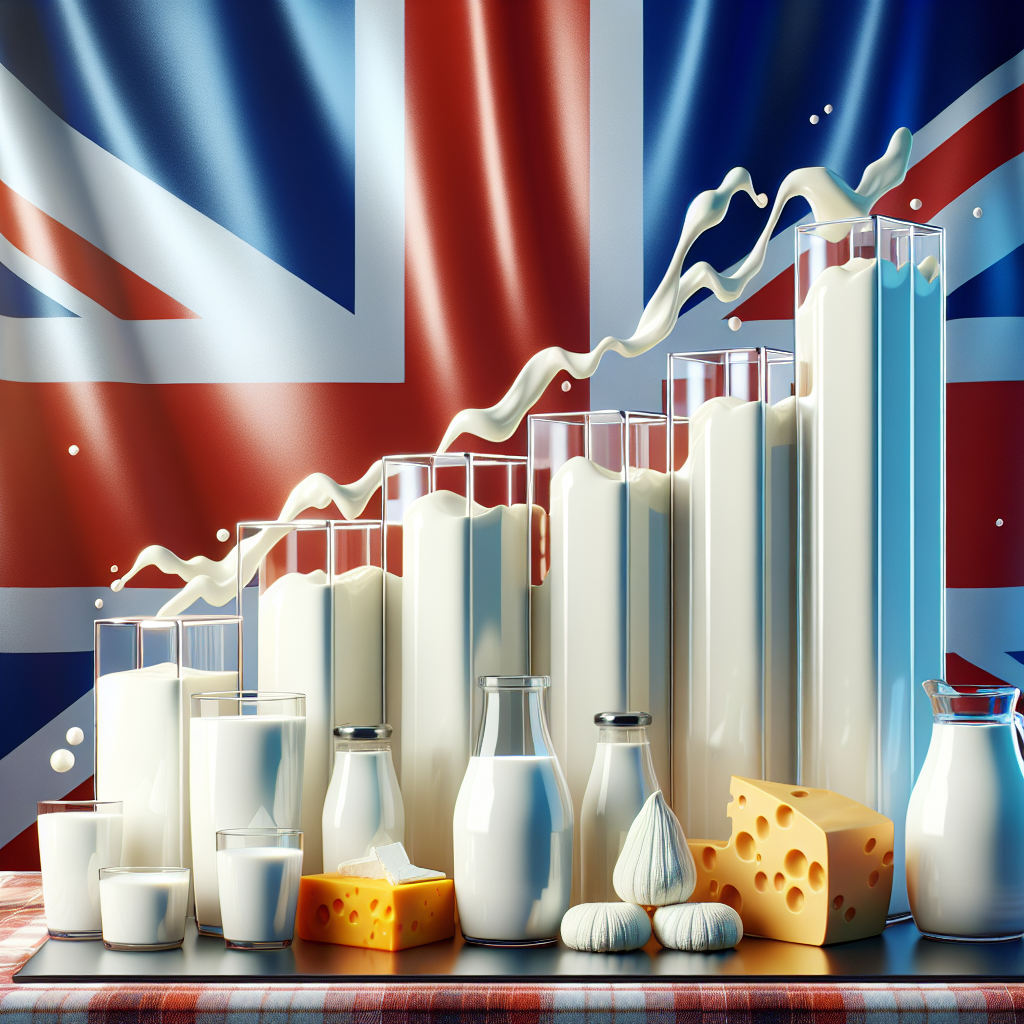
Farmgate milk prices in the UK have risen to an astonishing 43p per liter, representing a key milestone for dairy farmers. Critical reasons driving this growth include increased demand for butter, cream, and cheese and a noteworthy tightening of milk supply. “Strong demand for butter and cream in the EU market is driving prices to near-record levels”— Nick Holt-Martyn, Principal Consultant at The Dairy Group. The recent Global Dairy Trade auction saw wholesale dairy values increase by 5.5%, indicating that market dynamics favor dairy farmers. As you negotiate this shifting terrain, you may question what it means for your dairy farm.
Surge in Farmgate Prices: The Autumn Uplift
As we examine the present status of the dairy industry, it is clear that dairy producers are seeing a considerable increase in milk prices. Farmgate prices rose to 43p/liter in September and October, indicating a prosperous season for dairy production.
Butter, cream, and cheese are in high demand, increasing prices. Nick Holt-Martyn, chief consultant at The Dairy Group, said, “Strong demand for butter and cream in the EU market is driving on to near record levels.” His findings are consistent with a more significant trend in which processors are keen to stockpile milk quantities for the fall months.
Supporting this story, the most recent Global Dairy Trade auction on August 20 recorded a 5.5% rise in wholesale dairy values, with significant price increases for butter and milk powders. The growth in worldwide demand has driven significant profits for processors.
This rise in demand for dairy products correlates with a decrease in milk availability in the UK. Since the spring flush, UK milk deliveries have averaged fewer than 32 million liters per day at the end of August, representing a 0.9% decline from the previous year. This shrinking supply has unwittingly led to price rises as processors try to fulfill increased market demand.
Transforming Challenges into Opportunities
The immediate effect of the price increase on dairy producers cannot be understated. Higher farmgate prices provide immediate financial relief and increased profitability. For many farmers, this additional earnings is a welcome lift after difficult seasons typified by variable milk supply and growing operating expenses. According to Arthur Fearnall, Arla Foods’ board director, “Global milk supplies continue to be stable while retail sales continue to grow.”
However, it is not all easy sailing. While higher prices bring some relief, they also make it difficult to manage supply and demand effectively. Richard Collins, Muller’s head of agriculture, emphasizes this balance, noting, “We’re pleased to see market stability, and following a 1.25p/liter increase to our farmgate milk price in September, we are in a position to increase it again by 1p/liter in October.” We understand the continuous strains on our providing farmers, and we will continue to monitor supply and demand.”
As demand for butter, milk, and cheese rises, producers must guarantee that their production systems can fulfill it without overburdening resources. It’s a tricky balance between profiting from increased pricing and avoiding overproduction. This cautious management will be critical in navigating the following months, ensuring that the advantages of the price increase are fully realized while limiting possible hazards.
Company-Specific Price Adjustments: A Closer Look
Let’s look at the company-specific pricing adjustments to see how each major player responds to the growing demand for dairy products.
Arla has increased its milk price by 0.89p/liter to 43.33p/liter for regular production later in September. The business credits this gain to a steady global milk supply, consistent retail sales growth, and strong demand for fat-heavy goods, particularly butter.
Muller has reacted favorably to the market’s steadiness. The business intends to pay its producers an October price of 41.25p/liter, including the advantage premium. Muller will raise farmgate milk prices by another 1p/liter in October after a 1.25p/liter increase in September. This initiative demonstrates Muller’s commitment to providing farmers despite continued market difficulties.
Barbers Cheesemakers has recently reported an increase in its milk payments. In October, producers who supply this famous cheesemaker will get 43.03p per regular production liter.
First, Milk follows suit, raising its price by 0.6p/liter to 42.6p/liter for a regular production liter, including the member premium. Mike Smith, vice-chairman and farmer director, said that this increase is a welcome respite given the difficult on-farm circumstances of the spring and summer.
Organic Herd stands out with a significant rise, indicating that it would raise its organic milk price by 2p/liter on October 1 to 56p/liter. This considerable increase demonstrates the continuous demand and value put on organic milk in the present market.
Market Dynamics: Riding the Wave of EU Demand
Several variables impact dairy market dynamics, most notably the EU’s constantly fluctuating demand. Farmgate prices in the UK have risen due to increased demand for dairy products like butter and cream, driven by consumer preferences and a shortage of milk. This situation has provided a beneficial climate for UK dairy producers, who have seen price increases into 2024. Demand from the EU remains a key factor, driving volume and stabilizing prices at higher levels.
What will the future hold for dairy farmers? Industry analysts recommend a cautiously positive attitude. Arthur Fearnall, Arla Foods’ amba board director, underscores the stability of global milk supply while highlighting the continued development of retail sales. Although slower than in past years, this rise signals that demand for dairy products will remain strong, perhaps keeping the market robust. The seasonal decrease in milk consumption adds another layer of complication, likely maintaining stable prices in the foreseeable future.
However, it is critical to recognize the uncertainties and possible hazards accompanying this promising trend. Tightening milk supplies, especially since the spring flush, may put processors under pressure if demand continues to outrun supply. Furthermore, significant interruptions in global supply chains or economic downturns in important areas might dramatically alter the situation. Muller’s Richard Collins understands these constraints and reiterates the need to monitor market developments in the coming months attentively.
Although high farmgate prices and increasing EU demand provide a bright scenario for UK dairy farmers, they must stay alert. Seasonal influences, supply limits, and macroeconomic variables will all influence the market’s trajectory. Staying aware and adaptive will be essential for dairy producers looking to take advantage of current good circumstances while also bracing for market changes.
Practical Tips for Farmers
With farmgate milk prices increasing, now is an excellent moment for dairy farmers to optimize their operations and capitalize on market opportunities. Here are some practical tips that can help:
Enhance Milk Production Efficiency
Focus on keeping your herd healthy and productive. Regular veterinarian examinations and proper feeding planning are essential. Use high-quality feed to guarantee your cows produce milk to their total capacity. Consider investing in technology, such as automated milking systems, to help procedures run more smoothly and efficiently.
Cost Management
Reducing expenditures in this favorable price climate may help you optimize your revenues. Bulk purchases of feed and supplies may save money. Energy-efficient devices may help cut electric expenses. Reviewing your spending regularly and discovering areas where you may save money without sacrificing quality is prudent.
Leverage Higher Prices
Securing contracts with processors for a steady income can help you take advantage of increasing milk prices. Expanding your product offers, such as exploring organic or specialized milk products, which may fetch even higher pricing, is also essential. Keep an eye on market developments and adapt your approach appropriately.
Stay Informed
Market circumstances might change quickly. Stay up to speed on industry news, attend local dairy farming conferences, and connect with other farmers to exchange ideas. Joining industry organizations or associations may also give helpful knowledge and assistance.
Be Adaptable
Flexibility is essential for managing the turbulent dairy market. If required, be prepared to change your production levels and expand into other markets. Continuously assess the success of your agricultural operations and be ready to adjust to remain competitive.
The Bottom Line
The recent increase in farmgate milk prices is a watershed moment for dairy producers. With prices rising due to greater demand and limited supply, a unique chance exists to improve profits. Key businesses such as Arla, Muller, Barbers Cheesemakers, and First Milk have all announced significant price increases, underscoring the favorable market conditions. To accept these changes, we must maximize production efficiency, control costs, leverage more excellent pricing, keep educated, and remain adaptable.
How will you make the most of this opportunity? What actions would you take to guarantee that your farm flourishes in these favorable market conditions?
Learn more:
- Stagnation in Opening Milk Prices: Challenges and Insights from Australian Dairy Industry
- Irish Dairy Farms Seek Hike in March Milk Prices Amid Limited Supply – ICMSA’s Call for a Minimum Rate of 42c/L
- US Dairy Farmers’ Revenue and Expenditure Rise Slightly in March
 Join the Revolution!
 Join the Revolution!
Bullvine Daily is your essential e-zine for staying ahead in the dairy industry. With over 30,000 subscribers, we bring you the week’s top news, helping you manage tasks efficiently. Stay informed about milk production, tech adoption, and more, so you can concentrate on your dairy operations.
 David Brown, like all of us, had his flaws. Endowed with remarkable skills as a breeder, showman, and promoter, he was often hailed as the finest cattleman of his era. Growing up on Browndale Farms in Paris, Ontario, he had towering expectations to meet. His father, R.F. Brown, was a luminary in the dairy world, winning the esteemed Curtis Clark Achievement Award in 1988 and the Klussendorf Trophy at the 1993 World Dairy Expo. As one of Canada’s most successful breeders, R.F. clinched Premier Breeder and Exhibitor honors at the World Dairy Expo and the Royal Winter Fair. His accolades included five Grand Champions at the Royal Winter Fair: Green Elms Echo Christina (1972 and dam of Browndale Commissioner), Vanlea Nugget Joyce (1974), Marfield Marquis Molly (1978), and Du-Ma-Ti Valiant Boots Jewel (1988). David certainly had big shoes to fill. And fill them he did. His list of accomplishments was extensive: He led Ontario’s top herd in production in 1991, bred two All-Canadian Breeder’s Herd groups, and produced the All-American Best Three Females in 1998. He was twice crowned Premier Breeder at the International Holstein Show and accumulated 92 awards in All-Canadian and All-American contests from 1986 through 2004. Yet, despite two auction sales in 1991 and 1996 aimed at reducing his debts, financial relief was elusive. Over time, his wife left him, his children moved away, and his prized cattle were sold off. Eventually, David relocated to Colombia, where he passed away. Views on Brown are mixed—some saw him as a charming inspiration, while others regarded him as a rule-bending showman or an irresponsible debtor. Nonetheless, his rapid ascent and remarkable achievements in his lifetime are indisputable. Many wealthy individuals have invested vast sums of money into the cattle industry, chasing the same recognition, only to leave empty-handed. What distinguished David Brown was his nearly mystical talent for preparing animals for the show ring and transforming them into champions.
 Edward Young Morwick, a distinguished author, cattle breeder, and lawyer, was born in 1945 on the Holstein dairy farm owned by his father, Hugh G. Morwick. His early memories of his mother carrying him through the cow aisles profoundly shaped his trajectory. Although Edward pursued a career in law, excelling immediately by finishing second out of 306 in his first year, he harbored a deep-seated passion for journalism. This led to his later work chronicling Holstein’s cow history. His seminal work, “The Chosen Breed and The Holstein History,” stands as a cornerstone for those delving into the evolution of the North American Holstein breed. In it, he compellingly argues that the most influential bulls were those of the early historical period. (Read more:



