



Archive for European dairy production

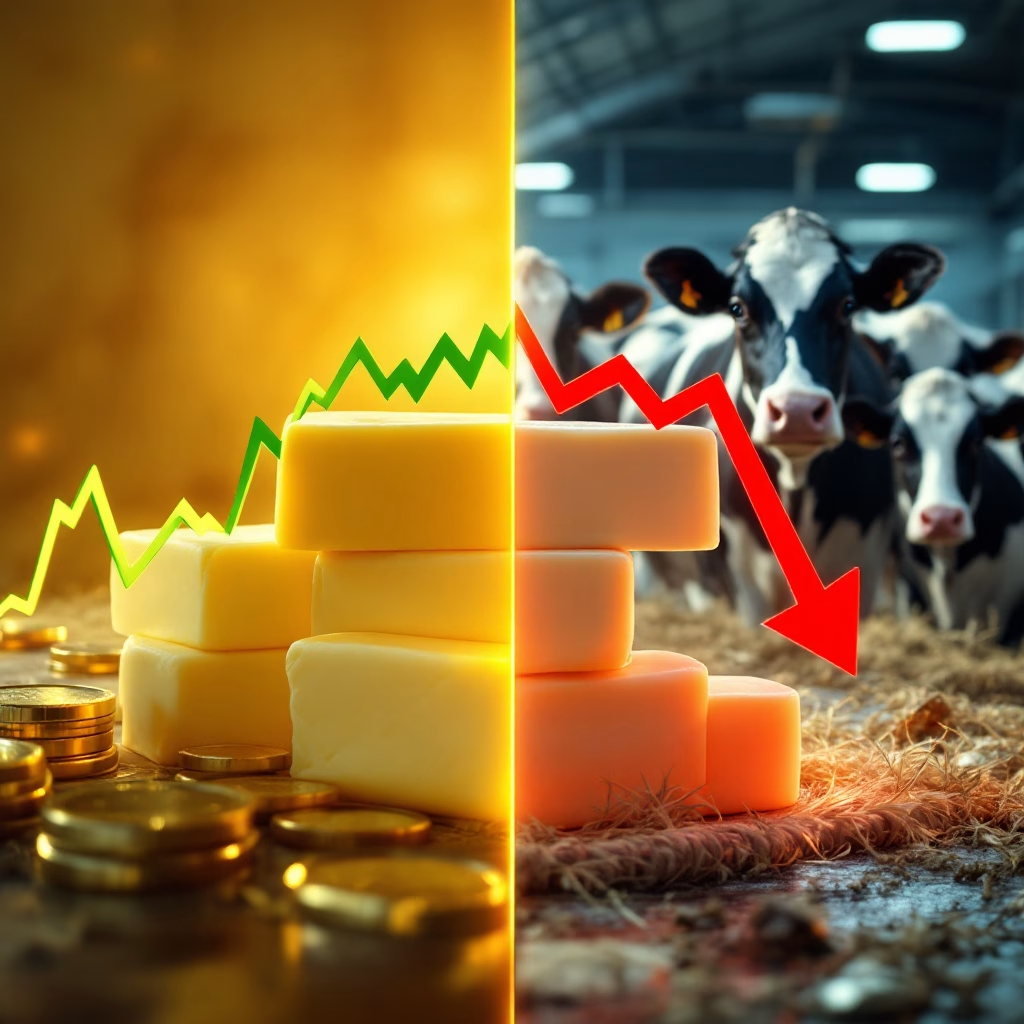
Europe’s Dairy Meltdown: How Germany and France’s Production Crisis Rewrites Your 2025 Profit Playbook

Stop waiting for Europe’s dairy recovery. Germany’s 2.3% collapse signals permanent market shift – smart operators capture €28B opportunity now.

EXECUTIVE SUMMARY: The dairy industry’s biggest myth? That European production challenges are temporary setbacks requiring patience rather than strategic repositioning. Germany’s 2.3% output decline and France’s 1.8% drop in Q1 2025 aren’t cyclical adjustments – they’re structural transformations creating unprecedented opportunities for competitors who can read the signals correctly. With EU milk deliveries falling to 367.6 million litres daily and Bluetongue virus hitting 9,044 French farms with 20-30% yield losses, European dairy is permanently shifting from volume-based competition to premium positioning. This transformation is opening €28.3 billion in annual market disruption while creating .42 per pound butter price premiums that smart operations can exploit. US butter exports already jumped 41% year-over-year by capitalizing on European weakness, while EU processors abandon commodity markets to focus on cheese production. The window for market capture is wide open, but conventional thinking about “waiting for recovery” will cost you the opportunity of a generation. Stop planning for European recovery and start positioning for permanent market realignment – your competitive advantage depends on recognizing this isn’t a downturn, it’s a redistribution.

KEY TAKEAWAYS

  • Disease Management ROI: €24,500-28,000 Revenue Protection – European farms lose 1,000 liters daily during 70-day Bluetongue outbreaks, while operations with superior biosecurity protocols gain permanent competitive advantages as climate change extends disease pressure across global regions
  • Technology Leapfrog Opportunity: $470 Annual Savings Per Cow – Precision agriculture systems delivering 12-15% feed efficiency improvements and 8-12% veterinary cost reductions position forward-thinking operations to capture market share from European competitors struggling with €150,000-250,000 regulatory compliance investments
  • Export Market Capture: $1.42/lb Immediate Price Advantage – EU commodity product shortages (butter down 1%, milk powder down 4-5%) create multi-year windows for aggressive market expansion, with US operations already achieving 41% export growth by targeting price-sensitive markets abandoned by European suppliers
  • Strategic Positioning Timeline: 3-4 Year Competitive Window – European herd rebuilding requires minimum 3-4 years considering breeding cycles and heifer development, creating sustained opportunities for capacity expansion and market penetration before structural recovery becomes possible
  • Margin Optimization Through Cost Structure: 29% European Disadvantage – While European operations face €5/100kg cost increases from energy (+12%), labor (+8%), and regulatory compliance, regions with stable input costs and lower regulatory burdens can leverage permanent competitive advantages through aggressive commodity market positioning
European dairy production, dairy market opportunities, strategic dairy planning, global dairy trade, dairy export opportunities

The European dairy giants just delivered a reality check, reshaping global milk markets faster than a broken bulk tank emptying a day’s worth of production. Germany’s 2.3% output decline and France’s 1.8% drop aren’t just statistics – they’re forcing every strategic dairy operation worldwide to recalculate their competitive positioning for the remainder of 2025.

Think of European dairy as the industry’s heavyweight champion suddenly showing signs of weakness. When your top contenders start stumbling, smart competitors don’t just watch – they position themselves to capture the market share that’s about to become available.

But here’s the million-dollar question: Are you prepared to challenge the conventional wisdom that European dairy will always bounce back?

The Numbers That Should Keep Dairy Strategists Awake at Night

Let’s start with the cold, hard data that’s reshaping global dairy dynamics. EU milk deliveries dropped to 367.6 million litres daily in Q1 2025, representing a 0.3% year-over-year decline. But here’s where it gets interesting for operations thinking beyond their local markets: raw cows’ milk delivered to dairies across the EU-27 took a sharper 1.8% hit during the same period.

Why This Matters for Your Operation: When regions representing 40% of global dairy trade volume contract simultaneously, supply chains shift. If you’re positioned correctly, this creates unprecedented opportunities for market expansion.

Germany’s situation reads like a case study in structural decline. With approximately 3.67 million dairy cows as of May 2024 and nearly 28,000 farms closing over the past decade, the country’s annual milk output of 33 million tonnes is under serious pressure. The projected 2.3% decline for 2025 continues a structural trend that began in 2015 – think of it like watching a once-dominant Holstein bloodline gradually lose genetic merit through poor breeding decisions.

France’s reversal is equally telling. After a modest 1.3% recovery in 2024 that broke a three-year losing streak, the country’s dairy sector has reversed course, with an estimated 1.8% annual decline projected for 2025. That’s like watching a high-producing cow’s lactation curve peak early and then drop faster than expected – the underlying fundamentals weren’t as strong as the surface numbers suggested.

Bluetongue: The Disease That’s Rewriting Milk Quality Protocols

The Bluetongue virus (BTV) isn’t just another animal health challenge – it’s systematically dismantling European milk production with the precision of a poorly calibrated milking system destroying somatic cell counts across an entire herd.

The Production Impact Reality: BTV outbreaks have hit 9,044 farms across 52 French regions, with affected operations experiencing 20% reductions in milk yield and some individual farms seeing drops of up to 30%. To put that in perspective, imagine your 100-cow herd suddenly producing like a 70-cow operation while maintaining the same feed, labor, and facility costs.

Recent data shows infected cows experience lower milk production by roughly 2 pounds per cow daily for nine to 10 weeks. In severe cases, milk production can be impacted at much higher levels, with some German farms reporting milk yield drops of 3%-8% on affected operations.

Real-World Impact: The Northeast France Case Study

Consider the situation in Northeast France, bordering Belgium, which has emerged as a significant BTV hotspot. Here’s what one affected region looks like in practice: farms that were averaging 25 liters per cow daily before the outbreak now see production drop to 20 liters per cow – that’s a 5-liter daily loss per animal. A 200-cow operation translates to 1,000 liters of lost production daily, or approximately €350-400 in lost revenue per day based on current European milk prices. Over a 70-day outbreak period (the typical duration), that’s €24,500-28,000 in lost income before accounting for increased veterinary costs.

Economic Devastation Beyond Milk Loss: Veterinary care and treatment costs alone run €5,000 to €10,000 per farm during outbreaks. A typical 200-cow operation averaging 30 liters per cow daily is equivalent to losing 8-16 days of total milk production value just in veterinary expenses. Factor in movement restrictions, mandatory testing protocols, and potential quarantine periods, and you’re looking at economic impacts that extend far beyond immediate production losses.

Challenging Conventional Wisdom: Here’s where the industry needs to wake up. The traditional approach of reactive disease management – waiting for outbreaks and then scrambling to contain them – proves catastrophically inadequate. Climate change is extending active periods for disease vectors across Europe, making BTV a recurring rather than episodic challenge.

Implementation Barriers and Solutions

The biggest barrier to effective BTV management isn’t technical – it’s economic and psychological. Most dairy operations view disease outbreaks as “acts of God” rather than manageable business risks. This mindset creates three critical implementation barriers:

  1. Underinvestment in Prevention: Farmers hesitate to invest in comprehensive vector control and monitoring systems because the costs are visible and immediate, while the benefits (avoided losses) are invisible until an outbreak occurs.
  2. Fragmented Regional Response: BTV doesn’t respect farm boundaries, but coordinated regional control programs require unprecedented cooperation between traditionally independent operators. The resistance to collective action often undermines the most effective control strategies.
  3. Technology Adoption Resistance: Advanced monitoring systems can detect early infection signs, but many operations resist adoption due to concerns about data privacy, technology complexity, and integration with existing management systems.

Why This Matters for Your Operation: Climate change is making traditional disease management strategies obsolete. Operations in other regions with superior disease management infrastructure and biosecurity protocols suddenly gain significant competitive advantages. Are you still relying on yesterday’s biosecurity protocols to protect tomorrow’s productivity?

The Great European Herd Contraction: Numbers That Tell a Story

The underlying structural decline in European dairy cow numbers tells a story that every strategic planner needs to understand. EU dairy cow populations are projected to fall to 19.219 million head in 2025 from 19.912 million in 2023. That’s a loss of nearly 700,000 dairy cows – equivalent to removing approximately 2,333 average-sized 300-cow operations from production.

Productivity vs. Population Mathematics: While European operations continue improving per-cow productivity through advanced genetics, precision nutrition, and technology adoption, these gains aren’t offsetting the declining herd size. Think of it as trying to maintain total milk production by pushing your cows from 25 liters to 27 liters per day while simultaneously culling 10% of your herd – the math simply doesn’t work long-term.

The Consolidation Reality: Germany exemplifies this trend with brutal clarity. The shift toward larger, more industrialized farms with over 200 cows reflects a fundamental transformation where economies of scale and technology adoption become survival requirements rather than competitive advantages.

Case Study: The German Farm Exodus

Consider the trajectory of a typical 50-cow German dairy operation from 2015 to 2025. In 2015, this farm could generate sufficient income with basic management practices, family labor, and traditional facilities. By 2020, rising regulatory compliance costs for environmental standards required a €75,000 investment in waste management upgrades. The 2023 BTV outbreak cost them €8,000 in veterinary expenses and a 15% production loss for six weeks. In 2025, new emissions reduction requirements demand another €120,000 investment in methane capture technology. The math no longer works: the farm needs to either expand to 200+ cows to spread these costs or exit the industry entirely. This scenario has played out across nearly 28,000 German farms in the past decade.

Precision Technology’s Role: Modern dairy operations increasingly turn to breakthrough technologies to maximize efficiency from smaller herds. Recent innovations in individual cow feed efficiency monitoring can identify feed conversion rates on each animal, potentially saving $470 per cow per year on a 2,500-cow dairy. But are you investing in the right technologies or just buying the shiniest equipment?

Implementation Barriers to Technology Adoption

Despite proven ROI, three major barriers prevent widespread technology adoption among European dairy operations:

  1. Capital Access Constraints: Smaller operations struggle to access capital for technology investments when banks view dairy farming as a declining industry. Traditional lending criteria don’t account for technology’s ability to transform operational efficiency.
  2. Skills Gap: Advanced precision agriculture requires technical expertise that many traditional farmers lack. Training programs exist, but time constraints during critical farming periods limit participation.
  3. Integration Complexity: New technologies must integrate with existing systems, facilities, and workflows. Poor integration can actually reduce efficiency initially, creating resistance to adoption.

Why This Matters for Your Operation: This creates a structural supply deficit that’s not easily reversible. Rebuilding dairy herds takes 3-4 years minimum, considering breeding decisions, gestation periods, and heifer development timelines. Operations positioned to expand in the face of European contraction have a multi-year window of opportunity.

Margin Squeeze Mathematics: The Cost Structure Crisis

European dairy farmers are experiencing what industry analysts call a “perfect storm” of input cost inflation that’s fundamentally altering the competitive landscape. Let’s break down the numbers that matter:

Feed Cost Reality: With feed typically consuming 60% of operational expenses for dairy operations, any volatility creates immediate margin pressure. Spring 2025 has brought severe rainfall deficits across northwestern Europe, including northern France and Germany, creating critically low soil moisture levels that threaten feed grain production and could drive higher feed prices.

Energy and Labor Inflation: Energy prices surged 12% year-over-year, while labor costs increased 8% in 2024 to retain workers. A typical European dairy operation translates to approximately €3,000-€5,000 in additional annual costs per 100 cows just from energy and labor inflation.

Drought Impact Calculations: The European agricultural sector absorbs an average of €28.3 billion in annual losses due to extreme weather, with drought accounting for over half of these damages. That’s approximately €1,420 in weather-related losses per dairy cow annually across the EU – a hidden cost that doesn’t appear on traditional enterprise budgets but significantly impacts long-term profitability.

Real-World Margin Analysis: The French Case Study

Let’s examine a representative 150-cow French dairy operation to understand the margin squeeze reality:

  • 2023 Baseline: €45 per 100 kg milk (farmgate price), costs of €38 per 100 kg = €7 profit margin
  • 2025 Reality: €48 per 100 kg milk (3% price increase), costs of €43 per 100 kg = €5 profit margin
  • Cost Breakdown of €5 increase: Feed costs +€2.50, energy costs +€1.20, labor +€0.80, veterinary/BTV +€0.50

This 29% margin erosion (from €7 to €5) forces the operation to either increase production efficiency by 29% or face financial unsustainability.

Technology as a Solution: Progressive operations leverage precision livestock farming (PLF) technologies to optimize animal production, health, and welfare while reducing costs. These systems encompass sensors for biological information capture, algorithms for data processing, and interfaces for practical implementation.

Implementation Barriers to Cost Management

European dairy operations face several systematic barriers to effective cost management:

  1. Regulatory Compliance Costs: Environmental regulations require significant non-productive investments that increase cost structures without improving efficiency. Unlike other regions, European farmers can’t simply choose the lowest-cost production methods.
  2. Scale Economics Limitations: Small average farm sizes prevent European operations from achieving the scale economies available to competitors in other regions. Consolidation faces significant cultural and regulatory barriers.
  3. Input Price Volatility: European operations have limited ability to hedge against input price volatility due to fragmented markets and limited financial instruments designed for smaller operations.

Why This Matters for Your Operation: European producers now operate with structurally higher cost bases that create permanent competitive disadvantages in commodity dairy markets. Operations in regions with more stable input costs, better water security, and lower regulatory compliance expenses can leverage these advantages for aggressive market expansion.

Environmental Regulations: The Green Deal Cost Reality

The EU Green Deal isn’t just policy – it’s a fundamental cost structure that’s reshaping competitive dynamics globally. These regulations require agricultural emissions cuts of 30% by 2030, often necessitating substantial non-productive investments that directly impact profitability.

Compliance Cost Breakdown: German dairy operations face expensive upgrades to eco-friendly technologies, modern waste management systems, and emission reduction methods. A typical 200-cow operation translates to approximately €150,000-€250,000 in non-productive capital investments over the implementation period.

Challenging the Status Quo: Here’s where conventional thinking gets dangerous. The industry’s traditional response to environmental regulations – grudging compliance while hoping for policy reversals – is proving economically suicidal. Instead of fighting change, what if smart operators treated environmental regulations as competitive advantages?

Operations implementing feed efficiency improvements reduce costs and significantly decrease methane emissions. Studies show that a gain of 20 points in feed efficiency equates to a reduction of approximately 22 tons of methane per year on a 2,500-cow dairy – equivalent to planting 9,240 trees.

Regulatory Acceleration Effect: The Common Agricultural Policy Strategic Plans, outlining intervention strategies from 2023 to 2027, include eco-schemes that critics argue favor industrial farms, with significant fund flows to larger producers. This creates a vicious cycle where environmental compliance accelerates farm consolidation while increasing overall cost structures.

Implementation Barriers for Environmental Compliance

European dairy operations face unique challenges in meeting environmental requirements:

  1. Technology Investment Requirements: Advanced emissions reduction technologies require substantial upfront capital investments with long payback periods, creating cash flow challenges for smaller operations.
  2. Regulatory Complexity: Environmental compliance involves multiple overlapping regulations at EU, national, and local levels, requiring specialized expertise that smaller operations can’t afford.
  3. Competitive Disadvantage: European environmental standards are stricter than most global competitors, creating permanent cost disadvantages that can’t be recovered through efficiency gains alone.

Why This Matters for Your Operation: European producers will continue facing structurally higher baseline costs compared to less regulated regions. For every dollar of regulatory compliance cost that European producers absorb, operations in other regions gain a permanent competitive advantage.

Processing Strategy: The Great Product Mix Pivot

European processors are playing a sophisticated game of “dairy Tetris,” strategically reallocating limited milk supplies to maximize returns. This strategic pivot creates opportunities and threats that every dairy operation needs to understand.

The Numbers Behind the Strategy: Despite the decline in overall EU milk production, cheese output is projected to increase by 0.6% to 10.8 million metric tons (MMT) in 2025). This comes at the direct expense of commodity products: butter production forecast down 1% to 2.1 MMT, non-fat dry milk production declining 4% to 1.4 MMT, and whole milk powder production falling 5% to 580,000 metric tons.

Pricing Premium Reality: This strategic reallocation is creating significant price premiums. US butter prices in May 2025 sat around $2.33 per pound, compared to EU prices of $3.75 per pound. EU cheese prices jumped 19% year-over-year in early 2025. That’s a $1.42 per pound premium for European butter – enough to fundamentally alter global trade flows.

Why This Matters for Your Operation: European processors are essentially conceding commodity dairy markets to focus on value-added products. This creates unprecedented opportunities for operations positioned to supply butter, milk powders, and other commodity products to markets where European suppliers are becoming price-prohibitive.

Product CategoryEU 2025 ForecastStrategic Opportunity
Cheese+0.6% (10.8 MMT)Limited export opportunity due to EU focus
Butter-1% (2.1 MMT)Major export opportunity, $1.42/lb price advantage
Non-Fat Dry Milk-4% (1.4 MMT)Significant market share captures potential
Whole Milk Powder-5% (580K MT)Export expansion opportunity vs. EU suppliers

Technology Integration: Precision Agriculture’s Role in Recovery

While European dairy faces structural challenges, technology adoption represents a critical pathway for competitive recovery and efficiency gains. But are operations investing strategically or just chasing the latest tech trends?

Precision Agriculture Applications: Advanced monitoring systems, automated milking systems (AMS), and data analytics platforms are helping European operations maximize productivity from smaller herds. The adoption of robotic milking systems has grown about 25 percent annually, particularly accelerating over the past decade.

Real-World Technology Case Study: At progressive European operations implementing comprehensive precision farming systems, robotic systems handle 60 cows per unit, enabling three-times-daily milking versus traditional twice-daily schedules. This frequency optimization prevents cows from reaching full holding capacity, maintaining continuous milk production, and increasing overall yield by 12-15% compared to conventional systems.

Genomic Testing Integration: European breeding programs increasingly rely on genomic testing and Estimated Breeding Values (EBVs) to accelerate genetic progress. Operations utilizing Total Performance Index (TPI) scores and genetic merit evaluations are achieving 2-3% annual improvements in milk yield per cow. Research shows genomic analysis can be twice as reliable at predicting future production compared to traditional pedigree methods, with accuracy rates reaching 70%.

Activity Monitoring Revolution: Real-time health monitoring and activity tracking systems help European operations detect diseases like BTV earlier, potentially reducing production losses by 15-20% compared to traditional observation methods. New collar technologies provide monitoring capabilities for dairy calves from birth through 12 months, identifying behavioral changes that indicate health issues often before symptoms are apparent.

Technology Implementation Barriers

Despite proven benefits, European dairy operations face several barriers to technology adoption:

  1. Integration Complexity: Legacy farm systems often can’t easily integrate with modern precision agriculture technologies, requiring comprehensive system overhauls that many operations can’t afford.
  2. Data Management Challenges: Advanced monitoring systems generate massive amounts of data that require analytical expertise, which many farms lack. Poor data utilization can actually reduce decision-making effectiveness.
  3. Regulatory Compliance: Data privacy regulations and animal welfare standards create additional complexity for technology implementation that doesn’t exist in other regions.

Why This Matters for Your Operation: Technology adoption creates opportunities to leapfrog traditional farming methods. Today, operations investing in precision agriculture position themselves to capture market share from regions still relying on conventional management approaches. But here’s the critical question: Are you choosing technologies based on genuine ROI analysis or vendor marketing promises?

Global Trade Repositioning: Reading the Competitive Signals

The European dairy crisis fundamentally reshapes global trade dynamics, creating strategic opportunities for well-positioned operations.

US Market Positioning: US dairy exports are already capitalizing on European weakness. US butter exports jumped 41% year-over-year in January 2025, and cheese exports hit record levels. The US dairy sector projects modest production growth in 2025, driven by favorable feed prices, slightly larger dairy herds, and improved productivity.

Export Market Rebalancing: EU non-fat dry milk exports are forecast to decrease by 6.8% in 2025, largely due to weaker Chinese demand and strong competition from other global players. Whole milk powder exports are expected to decline further, with less demand from China and strong competition from New Zealand.

Structural Market Changes: Industry analysts observe three major structural shifts shaping 2025: federal milk marketing order adjustments, new cheese processing capacity, and evolving trade dynamics. As one senior dairy analyst notes, “What separates a really good year from a really bad year, from a milk price perspective, has been exports.”

Regional Competitive Advantages: While the EU focuses on high-value products and domestic consumption, its reduced commodity output and higher cost structure create market share opportunities for more competitively priced producers.

Trade Implementation Barriers

Operations seeking to capitalize on European trade gaps face several challenges:

  1. Market Access Requirements: Many export markets have specific certification, quality, and traceability requirements that require time and investment.
  2. Logistics Infrastructure: Establishing reliable cold-chain logistics for dairy products requires significant infrastructure investments and partnerships.
  3. Currency and Price Volatility: Export markets expose operations to currency fluctuations and international price volatility that domestic-focused operations don’t face.

Why This Matters for Your Operation: European dairy’s transformation into a high-cost, premium-positioned sector creates permanent shifts in global trade patterns. Operations that can deliver reliable supply at competitive prices have a multi-year window to establish themselves in markets previously dominated by European suppliers.

Implementation Timeline: Strategic Positioning for Market Capture

Timing and sequencing matter significantly for operations looking to capitalize on European dairy’s structural challenges. But are you thinking tactically about the next quarter or strategically about the next decade?

Immediate Actions (Next 6 Months):

  • Evaluate export market opportunities where EU price premiums create competitive advantages
  • Assess current disease management protocols and biosecurity infrastructure against climate change scenarios
  • Review feed sourcing strategies to ensure stable input costs during European supply disruptions

Medium-Term Positioning (6-18 Months):

  • Investigate technology investments that provide productivity advantages over traditional European operations
  • Explore partnerships with processors focused on commodity dairy products abandoned by EU suppliers
  • Develop relationships in export markets where European suppliers are becoming price-prohibitive

Long-Term Strategic Development (18+ Months):

  • Consider capacity expansion to capture market share from constrained European producers
  • Invest in advanced genetics programs to achieve productivity levels that offset European efficiency advantages
  • Build supply chain infrastructure to support expanded market presence

Case Study Integration: Recent studies of top-performing dairy herds show that successful operations typically generate £120,000 more annually than bottom performers, primarily through superior cost management while maintaining strategic investments in cow health and productivity.

The Bottom Line: Your Competitive Advantage Window

Europe’s dairy production crisis represents more than a regional challenge – it’s a fundamental shift that’s creating permanent changes in global competitive dynamics. Germany’s 2.3% production decline and France’s 1.8% drop signal the beginning of a multi-year period where European dairy transforms from a volume-based competitor to a premium-positioned sector focused on value-added products.

The strategic opportunity is clear: European dairy’s structural challenges – disease pressure amplified by climate change, declining herd numbers, regulatory compliance costs escalating under the Green Deal, and margin squeeze from volatile input costs – aren’t temporary setbacks. They’re permanent features of a new competitive landscape that favors operations with lower cost structures, superior disease management, and strategic positioning in commodity dairy markets.

For progressive dairy operations, the implications demand immediate action:

  1. Expand export focus on markets where EU price premiums create competitive opportunities
  2. Invest in disease management infrastructure to avoid the production volatility plaguing European operations
  3. Leverage cost advantages through aggressive pricing strategies in commodity dairy products abandoned by EU processors
  4. Build strategic partnerships with processors seeking reliable commodity suppliers as European focus shifts to value-added products

Challenge Yourself: Look at your current operation through the lens of European challenges. Are your biosecurity protocols adequate for climate-enhanced disease pressure? Are your cost structures competitive enough to capture market share from high-cost European suppliers? Are you positioned to supply the commodity markets that Europe is abandoning?

The question isn’t whether European dairy will recover – the regulatory environment, climate challenges, and structural cost issues suggest permanent transformation rather than temporary disruption. The question is whether your operation will position itself to capture the market opportunities these changes create or whether you’ll continue operating with yesterday’s assumptions about tomorrow’s markets.

Why This Matters for Your Operation: The European dairy crisis isn’t Europe’s problem – it’s your competitive advantage. Operations that recognize this transformation and position accordingly will capture the market share that Europe’s structural challenges are making available. Those who wait for European recovery will miss the opportunity entirely.

The global dairy landscape is fundamentally shifting. Strategic operations will write the next chapter of this story by positioning themselves as reliable, cost-competitive alternatives to European volatility. The window is open. The question is: Will you step through it?

Learn More:

Join the Revolution!

Join over 30,000 successful dairy professionals who rely on Bullvine Weekly for their competitive edge. Delivered directly to your inbox each week, our exclusive industry insights help you make smarter decisions while saving precious hours every week. Never miss critical updates on milk production trends, breakthrough technologies, and profit-boosting strategies that top producers are already implementing. Subscribe now to transform your dairy operation’s efficiency and profitability—your future success is just one click away.

NewsSubscribe
First
Last
Consent

Fat Rules While Protein Drools: Global Dairy Markets Split Along Regional Lines

Fat outpacing protein: Global dairy markets fracture as European SMP plunges while Asian futures soar – component ratios reshaping the industry.

EXECUTIVE SUMMARY: The global dairy market for the week ending April 22, 2025, revealed critical divergences with fat-based products strengthening while protein markets splintered along regional lines. European and Asian dairy futures told dramatically different stories, with European SMP futures sliding 1.4% while Asian-focused contracts surged 3.4%, creating unprecedented regional price gaps. This market split occurs as European milk undergoes a fundamental transformation – fluid volume decreased 0.9% year-on-year, but milk solids increased 0.6%, driven entirely by higher fat content while protein remained flat. German processors have decisively responded by boosting butter production 10.9% at the expense of cheese output, exemplifying a strategic pivot toward capitalizing on the fat premium. Despite various regional pressures, most dairy commodities maintain substantial premiums over last year’s levels (butter +25.2%, whey +33.6%, WMP +21.8%), supporting generally positive margin outlooks for producers.

KEY TAKEAWAYS:

  • Component value trumps volume production: The EU data shows milk solids, particularly fat, driving returns despite lower fluid volume. Feeding strategies that optimize components rather than simply maximizing production volume will deliver superior margins in today’s market.
  • Regional market access increasingly critical: The stark divergence between European and Asian market sentiment for SMP and WMP highlights the importance of processor relationships. Producers selling into export-oriented plants may see completely different signals than those focused on domestic markets.
  • German manufacturing shift creating local pressure: The dramatic 10.9% increase in German butter production is creating temporary European spot price weakness despite strong global signals. This demonstrates how regional processing decisions can temporarily override broader market fundamentals.
  • Mozzarella reveals global-European disconnect: While European mozzarella prices fell 0.9%, GDT auction prices surged 5.4% – signaling booming international demand not reflected in European internal pricing. This creates premium opportunities for export-oriented producers.
  • Long-term butterfat premium persists: Despite some weekly softness, butter maintains a substantial 25.2% premium over last year, suggesting the fat-focused production strategy remains economically advantageous through at least mid-2025.
Global dairy market trends, butterfat price premium, milk component values, European dairy production, regional market divergence

European butterfat values soared to record highs while protein markets struggled in this week’s dairy trading. German processors have dramatically shifted production toward butter (+10.9%) and away from cheese as higher milkfat components reshape the manufacturing landscape.

Fat is king in today’s global dairy markets. That’s the unmistakable message from this week’s trading activity, which saw butter futures climb while SMP markets diverged sharply between regions. European milk production is undergoing a fundamental transformation – while total volume dropped 0.9%, farmers produce milk with significantly more fat content.

The resulting market impacts are creating unprecedented opportunities – and risks – for dairy producers worldwide, depending on which products their milk ultimately becomes.

THE NUMBERS TELL THE STORY

EEX dairy futures saw moderate activity, with 3,440 tonnes traded last week. Butter futures showed notable strength, gaining 1.4% to reach €7,292/tonne alongside expanding open interest – signaling traders are betting on continued butter strength.

Meanwhile, European SMP futures dropped 1.4% to €2,454/tonne despite increased open interest. When prices fall while bets increase, traders are positioning for further declines.

SGX trading volumes were substantially higher at 10,975 tonnes. The contradiction in SGX SMP sentiment was most striking, which gained 3.4% to $2,905/tonne, directly opposing the European outlook.

“We’re essentially seeing two completely different dairy worlds developing,” market analyst Thomas Weber explains. “European traders are bearish on protein while Asian buyers remain aggressively bullish.”

PROCESSORS FOLLOW THE MONEY

German dairy processors have responded decisively to these market signals. February butter production jumped 10.9% year-on-year (adjusted for leap year), while cheese output declined 0.8%.

This manufacturing pivot helps explain current market dynamics. The flood of German butter likely tempers European spot prices despite strong global demand signals from futures and GDT auction results.

European spot markets showed mostly declining prices as of April 16. The EU butter index dipped slightly (-0.2%) to €7,452/tonne, though French butter bucked the trend by rising 1.2% to €7,740/tonne.

SMP showed more pronounced weakness, with the EU index falling 1.9% to €2,385/tonne – consistent with the negative sentiment in EEX futures.

GLOBAL AUCTION SHOWS STRENGTH OUTSIDE EUROPE

The Global Dairy Trade auction painted a more optimistic picture, with the overall price index increasing 1.6% to $4,385/tonne. A substantial volume of 16,718 tonnes changed hands with strong participation from 181 bidders.

WMP made gains among major commodities, climbing 2.8% to $4,171/tonne. European-origin products commanded substantial premiums, with Solarec’s Belgian WMP selling at $4,800 compared to Fonterra’s $4,105 for the same contract period.

The most dramatic price movement came from lactose, which skyrocketed 22.0% to $1,376/tonne, signaling significant supply disruption or sudden demand surge likely related to infant formula production.

MOZZARELLA MARKETS REVEAL GLOBAL-EUROPEAN DISCONNECT

One of the most striking market divergences appeared in mozzarella. While European EEX Mozzarella dropped 0.9% to €4,225/tonne, the GDT Mozzarella index surged 5.4% to $4,763/tonne.

This dramatic contradiction points to booming international demand for pizza cheese that isn’t reflected in European internal pricing. Asian food service growth drives this export demand while domestic European consumption lags.

Most European cheese indices continued declining, with Cheddar Curd and Mild Cheddar down 0.9% and 0.8%, respectively. Only Young Gouda showed resilience with minimal gain.

MILK COMPOSITION DRIVING MARKET DYNAMICS

The February 2025 milk production data reveal a transformative shift affecting the dairy complex. While overall EU-27+UK fluid milk decreased by 0.9%, the composition improved significantly, with average fat content reaching 4.26% and protein 3.48%.

This compositional change increased total milk solids by 0.6% year-on-year despite lower fluid volume. Breaking down the components shows the increase was driven entirely by fat (+1.0%), while protein remained completely flat.

Denmark exemplifies this trend even more dramatically. Despite fluid milk falling 1.4%, Danish milk solids jumped 1.7% due to significantly higher fat content (4.65% vs. 4.46% last February).

This fundamental shift towards higher fat content provides a biological explanation for the relative price strength of butter versus SMP. There’s more fat and no additional protein entering the market than last year.

WHAT THIS MEANS FOR YOUR FARM

For dairy producers, these market signals suggest several key strategies:

Focus on fat production for maximum returns. With European butterfat values remaining 25.2% above last year despite recent softness, the economic signals favor optimizing for fat over volume.

Watch your market exposure. Processors with strong export connections to Asia are seeing dramatically different demand signals than those focused solely on European markets, particularly for products like SMP and mozzarella.

Understand your milk price formula. The growing divergence between fat and protein values means your pay formula’s component weighting will dramatically impact your bottom line this year.

Consider feed strategies that boost butterfat. With EU butter spot prices 25.2% higher than last year, feed additives and ration adjustments that enhance fat production will likely deliver strong ROI.

THE BOTTOM LINE

The global dairy market is experiencing a fundamental restructuring of relative values between fat and protein. This isn’t just a temporary price fluctuation – it reflects changing consumer preferences and biological shifts in milk composition.

Smart producers are already adapting their breeding and feeding programs to capitalize on this new reality. With fat components driving returns despite lower fluid volume, the old model of chasing maximum milk production looks increasingly outdated.

“We’re seeing a once-in-a-generation shift in how milk value is created,” notes dairy economist Maria Gonzalez. “Farmers who understand this component revolution will thrive, while those stuck in a volume mindset may struggle despite producing more milk.”

Learn More:

Join the Revolution!

Join over 30,000 successful dairy professionals who rely on Bullvine Daily for their competitive edge. Delivered directly to your inbox each week, our exclusive industry insights help you make smarter decisions while saving precious hours every week. Never miss critical updates on milk production trends, breakthrough technologies, and profit-boosting strategies that top producers are already implementing. Subscribe now to transform your dairy operation’s efficiency and profitability—your future success is just one click away.

NewsSubscribe
First
Last
Consent

Butter Prices Soar 27% While USDA Slashes Dairy Forecasts.

Butter prices surge 27% while USDA slashes milk forecasts. Will your dairy operation profit or collapse in this contradictory market?

EXECUTIVE SUMMARY: Global dairy markets are sending conflicting signals: European butter prices have skyrocketed 27% year-over-year, while the USDA cut 2025 milk price forecasts by $1.00. Futures trading volumes hit 16,000 tonnes, signaling trader panic over volatility. Fat-rich products like butter and cheese command historic premiums, while protein values (SMP) struggle. The USDA’s surprise production forecast reduction raises concerns about shrinking margins and productivity. Producers must prioritize component optimization, risk management, and cost efficiency to survive these market contradictions.

KEY TAKEAWAYS

  • Fat vs. Protein Divide: Butter (+27%) and cheese (+18%) dominate gains, while SMP prices lag (+1.7%)—optimize milk components for fat.
  • USDA Warning: 2025 milk price forecasts slashed to $21.60/cwt (+0.1% production growth), signaling margin compression ahead.
  • Europe’s Decline: France/Germany milk production drops (-1.7%/-2.2%), tightening EU supply as processors compete for shrinking volumes.
  • Action Plan: Maximize butterfat, lock in risk strategies, slash input costs, and target high-value product streams.
  • Critical Indicators: Watch WASDE revisions, futures volumes (>7,500t = volatility), and fat-protein price ratios.

While European butter trades at a staggering 27% premium over last year, the USDA has just cut its 2025 all-milk price forecast by a whole dollar to $21.60.

As futures contracts trade at dizzying volumes, The Bullvine cuts through the market noise to expose what these contradictory trends mean for your bottom line.

“While European butter trades at a staggering 27% premium over last year, the USDA slashed its milk price forecast by a full dollar. This isn’t a coincidence – it’s a warning.”

DAIRY FUTURES EXPLODE WITH TRADER PANIC

The dairy futures arena exploded with activity last week, with over 16,000 tonnes traded across European and Singaporean exchanges.

This wasn’t casual positioning – it was a feeding frenzy of uncertainty.

EEX reported 5,580 tonnes changing hands, with 1,850 tonnes traded on Tuesday alone. Meanwhile, SGX saw an even more aggressive 10,418 tonnes traded.

THE BULLVINE’S TAKE: When futures traders get this active, they’re not just hedging but panicking. The smart money is desperately trying to lock in positions because they see something brewing that average producers don’t.

This level of activity typically precedes significant market movements. Is your operation protected against the volatility these traders are expecting?

“When futures traders get this active, they’re not just hedging – they’re panicking. The smart money sees something coming that average producers don’t.”

FAT PROFITS VS. PROTEIN PROBLEMS: THE DIVERGENCE NOBODY’S TALKING ABOUT

The market is sending crystal clear signals about where the money is heading. EEX butter futures held firm, with the March-October strip averaging €7,427 (up 0.8%), while SMP plunged 1.8% to €2,501.

This isn’t just a random fluctuation – it’s a fundamental shift in demand patterns that’s being overlooked.

European quotations tell the same story:

  • Butter: €7,407, a jaw-dropping +27.4% above last year
  • Cheddar curd: €4,845, standing +18.5% above previous year
  • Mozzarella: €4,246, representing a +15.7% year-over-year premium
  • SMP: €2,453, down 1.4% week-over-week but still +1.7% above the previous year

Year-Over-Year European Dairy Price Comparison

ProductCurrent Price (€)Change vs Last Year (€)% Change
Butter7,407+1,594+27.4%
Cheddar Curd4,845+755+18.5%
Mild Cheddar4,808+726+17.8%
Mozzarella4,246+576+15.7%
Young Gouda4,400+419+10.5%
SMP2,453+40+1.7%
Whey885+185+26.4%
WMP4,372+697+19.0%

“The days of being paid for white water are numbered. The market is screaming for fat while protein values struggle.”

THE BULLVINE’S TAKE: The fat market shows remarkable resilience while protein values struggle. If your nutrition program is still focused on volume while the market screams for components, that approach could cost you thousands this year.

Progressive producers should maximize components through advanced nutrition and genetics focused on butterfat, not just volume.

USDA BOMBSHELL: MILK FORECAST SLASHED IN SURPRISE MOVE

The USDA dropped a market bombshell in its March WASDE report, cutting the 2025 milk production forecast to 226.2 billion pounds (102.60 million tonnes) – a substantial reduction from February’s estimate of 102.92 million tonnes.

More concerning is the rationale: “lower expected milk output per cow more than offsetting slightly higher cow inventories.”

This creates a puzzling contradiction: Why would milk per cow suddenly decline when producers invest in genetics and management designed to increase efficiency?

USDA March 2025 Forecast Revisions

MetricFebruary ForecastMarch ForecastChange
2025 Milk Production (mil MT)102.92102.60-0.3%
Growth vs 2024+0.4%+0.1%-0.3 pts
All-Milk Price ($/cwt)$22.60*$21.60-$1.00
Class III Price ($/cwt)$19.10*$17.95-$1.15
Class IV Price ($/cwt)$19.70*$18.80-$0.90

*Previous forecast values derived from reported changes

“Are you basing your expansion decisions on government forecasts that change dramatically monthly? That’s a dangerous game few can afford to play.”

The price forecast news is especially alarming. The average all-milk price is now projected at $21.60 per hundredweight, down from 2024’s average of $22.61.

Class III milk prices have been most severely impacted, with projections cut by $1.15 to $17.95 per hundredweight.

Class IV prices also face downward pressure, expected to average $18.80 per hundredweight, a $0.90 reduction.

THE BULLVINE’S TAKE: The USDA’s forecast reductions speak volumes about American dairy’s structural issues. The contradiction between expanding cow numbers and reduced productivity expectations raises serious questions about USDA’s forecasting methodology.

Are you basing your expansion decisions on government forecasts that change dramatically monthly? That’s a dangerous game.

EUROPE’S MILK PRODUCTION CRISIS DEEPENS

European production figures reveal troubling trends that could reshape global dairy trade flows.

France reported that January milk production was down 1.7% year-over-year to 2.02 million tonnes, with milk solid collection dropping even more sharply to 1.9%.

Germany, Europe’s dairy powerhouse, reported January volumes falling 2.2% year-over-year to 2.66 million tonnes, worse than expected.

Only Denmark bucked the trend, with milk production increasing 1.1% year-over-year to 478,000 tonnes. Impressive component levels (4.63% fat, 3.75% protein) drove a 2.0% increase in milk solid collection.

European January 2025 Milk Production Trends

CountryVolume (mil tonnes)Y/Y ChangeMilkfat %Protein %MS Change
France2.02-1.7%4.25%3.34%-1.9%
Germany2.66-2.2%***
Denmark0.478+1.1%4.63%3.75%+2.0%

*Component data for Germany not yet available

Germany represents approximately 23% of EU milk production, making this decline particularly significant for European dairy markets.

THE BULLVINE’S TAKE: The decline of European production in key countries has created a complex competitive landscape.

European processors will fight aggressively for milk supplies in declining regions, while areas with production growth may face price pressure.

These geographic variations create both opportunities and threats for globally-minded producers.

5 MARKET INDICATORS SMART PRODUCERS ARE WATCHING

Don’t just react to these market shifts – anticipate them by monitoring these critical indicators:

  1. Forward Price Projections: Watch for revisions in the following WASDE report.
  2. EEX and SGX Futures Volume: When weekly volumes exceed 7,500 tonnes, volatility typically follows.
  3. Fat-to-Protein Price Ratio: Component optimization becomes crucial when butter maintains a 27%+ premium over year-ago levels while SMP struggles.
  4. Feed Cost Trajectory: Changes in feed costs could partially offset milk price declines.
  5. Production Per Cow: The puzzling USDA forecast of lower productivity despite higher cow numbers needs close monitoring.

WINNERS AND LOSERS: ARE YOU POSITIONED TO PROFIT?

WINNERS:

  • Component-focused producers: Those maximizing butterfat will capture premium prices while others struggle
  • European cheese manufacturers: Tight milk supplies and substantial cheese premiums create favorable margins
  • Forward-thinking hedgers: Producers who locked in prices ahead of recent volatility will outperform peers
  • Efficiency-obsessed operations: Those with the lowest cost structures will weather the coming margin compression

LOSERS:

  • Volume-chasing producers: Operations focusing on milk volume over components face declining returns
  • Late adopters of risk management: Those without hedging strategies face full exposure to price volatility
  • Input-heavy operations: Farms with high purchased feed costs will struggle most as margins tighten
  • Reactive planners: Producers who fail to adjust strategies based on market signals will suffer most

“In this market, there’s no middle ground. You’re either strategically positioning for these contradictions or becoming another casualty of them.”

5 TOUGH QUESTIONS EVERY DAIRY PRODUCER NEEDS TO ANSWER TODAY

Take a hard look at your business and answer these critical questions:

  1. Component Strategy: Given the current 27% year-over-year premium, are you maximizing butterfat production?
  2. Risk Protection: What percentage of your 2025 production is protected against the USDA’s newly lowered price forecasts?
  3. Feed Efficiency: Can you capture margin opportunities if feed costs decline?
  4. Cash Flow Planning: Have you stress-tested your finances against the new $21.60 all-milk price scenario?
  5. Strategic Focus: Does your expansion strategy make sense considering USDA’s reduced production value forecast?

YOUR STRATEGIC ROADMAP FOR NAVIGATING MARKET CONTRADICTIONS

The global dairy landscape is evolving rapidly, requiring producers to make tactical adjustments. The contradictory signals between robust European fat values and weakening U.S. milk price forecasts demand a strategic response.

Successful producers will:

  1. Maximize component yields through precision nutrition and genetics
  2. Implement aggressive risk management strategies to protect against volatility
  3. Scrutinize all input costs with renewed vigor as margins potentially compress
  4. Target your milk quality parameters to the most profitable product stream in your region

THE BULLVINE’S TAKE: This isn’t time for business as usual. The dairy market sends clear warning signals that only the prepared will heed.

The producers who thrive will recognize that these contradictions aren’t random—they’re predictable outcomes of global supply and demand fundamentals that can be leveraged for profit.

What changes will you implement today to ensure you’re among them?

“This isn’t time for business as usual. While others react to yesterday’s news, smart producers are already capitalizing on tomorrow’s market reality.”

Learn more:

Join the Revolution!

Join over 30,000 successful dairy professionals who rely on Bullvine Daily for their competitive edge. Delivered directly to your inbox each week, our exclusive industry insights help you make smarter decisions while saving precious hours every week. Never miss critical updates on milk production trends, breakthrough technologies, and profit-boosting strategies that top producers are already implementing. Subscribe now to transform your dairy operation’s efficiency and profitability—your future success is just one click away.

NewsSubscribe
First
Last
Consent

The Next Decade in Dairy: How the Top 5 Regions Will Adapt

What’s in store for global dairy? Can the U.S., Europe, and China keep up with shifting markets and what people want? 

Understanding the ebb and flow of the global dairy trade and how it shapes the landscapes of continents is vital for anyone with a stake in agriculture or food production. The U.S., Europe, Oceania, South America, and China dominate the industry, making up over 80% of global trade. During a recent World Dairy Expo seminar, Rabobank’s global dairy analysts revealed it’s a tale of stagnation, innovation, and potential upheaval. Each region faces unique challenges and opportunities. Europe’s slowing milk production, the U.S.’s steady march driven by genetics, and how South America and Oceania recalibrate strategies in a thirsty world. Growth in these areas is less than three-tenths of a percent—a shadow of past decades. You might be wondering, what does this mean for future supplies and prices? More importantly, how will these regions adapt and maintain their pivotal roles?

Region2023 Milk Production Change vs. 2011 (MMT)Projected 2035 Milk Production Change (MMT)Key Contributor to Change
U.S.+14+19Genetics and Yield Improvements
Europe+16-10Environmental Regulations and Farm Succession
Oceania-0.3-0.4Weather Variability and Crop Shifts
South America+2+5Farm Consolidation and Productivity Increases
China+11+8Self-Sufficiency and High Production Costs

Unraveling the Dairy Conundrum: Navigating the Interplay of Leading Global Trade Giants 

In the expansive world of global dairy trade, several vital regions stand as the primary players, each with its unique contribution and challenges. As we traverse the complexities of this trade, let’s focus on five major regions: the U.S., Europe, Oceania, South America, and China. 

The United States, representing 15% of the global dairy trade, is a major player in the dairy industry. Despite recent stagnation, its significant milk production, primarily driven by advances in dairy genetics, has ensured a steady supply for domestic and international markets. This resilience is a testament to the stability and reliability of the U.S. dairy industry. 

Europe is a powerhouse in the global dairy arena, accounting for a hefty 30% of trade. This region has seen substantial production, particularly after removing the EU milk quota in 2015; however, it now faces hurdles that could hinder future growth, such as stringent environmental regulations and labor challenges. 

Oceania, including New Zealand and Australia, contributes 30% to the global dairy trade. New Zealand is the dominant force, leveraging its expansive pasturelands for production. However, it’s now grappling with environmental and climate-related constraints. 

Brazil emerges as a focal point in South America. However, its share of the global dairy trade is relatively minor, at 5%. This dynamic is influenced by Brazil’s diversified agricultural sector and strategic trade agreements prioritizing imports from neighboring dairy-rich nations like Argentina and Uruguay. 

China, a significant consumer, is experiencing a domestic oversupply. As it bolsters its self-sufficiency from 70% to 85%, it remains pivotal in the global dairy narrative. Fluctuations in its demand have ripple effects throughout the market, underscoring its influence on the global dairy trade.

Surging Self-Sufficiency and Environmental Trials: The Global Dairy Trade Saga

The landscape of global dairy trade is undergoing significant shifts, marked by China’s bold move towards self-sufficiency and the hurdles presented by stringent environmental regulations in Europe and Oceania. 

China’s transformation over the past few years has seen its self-sufficiency in milk production leap from 70% to 85%. Such a dramatic rise hasn’t gone unnoticed. It’s a point of national pride and a strategic objective to reduce import dependency. However, this quest for self-sufficiency has repercussions. As China’s farmgate milk prices begin to recede, the growth trajectory might also slow, offering a sobering outlook for other nations hoping to capitalize on China’s past import demands. 

Meanwhile, dairy producers in Europe are grappling with regulatory challenges. As part of the European Green Deal, farmers adhere to ambitious climate, biodiversity, water, and animal welfare targets. These regulations substantially challenge maintaining, let alone enhancing, their milk output. The implications extend directly to trade potential, as any curtailment in production could lead to tighter supplies for global markets. 

Oceania is another case study of how environmental factors reshape the dairy landscape. Australian dairy farmers face the dual pressure of climate unpredictability and competition for resources as land previously dedicated to dairy feed shifts towards more permanent and profitable crops. While recent weather conditions have offered some relief, consistent growth remains an uphill battle amidst these persistent challenges. New Zealand mirrors these issues, balancing its substantial global trade contribution against the constraints imposed by environmental needs and regulatory measures. 

As the dairy trade giants manage these complex dynamics, the global market remains in flux. Each region’s developments are interwoven with the broader tapestry of the international dairy trade.

Bridging the Dairy Divide: Will Global Production Rise to the Occasion? 

The projection of global dairy demand escalating from 95 MMT to 115 MMT over the next decade paints a complex picture. It begs the question: where will this additional milk come from to satiate the world’s appetite for dairy? The unfolding scenario reveals both challenges and opportunities across significant dairy-producing regions. 

The United States emerges as a pivotal player poised to bolster its production capabilities. Analysts predict an annual growth rate of 1.5% in U.S. milk production, propelled by continuous enhancements in milk yield per cow. As optimistic signs of profitability surface in the form of rising Class III milk prices, this trajectory is likely to solidify, thrusting the U.S. into the spotlight as a reliable source to help bridge the gap in global supply. 

South America, too, signals potential growth, albeit on a smaller scale compared to the U.S. Brazil’s dairy sector reflects a trend towards consolidation and improvement in productivity. These changes signify a shift towards greater efficiency, aligning with the anticipated increase in milk output to serve domestic and international markets. This potential for growth in South America is a reason for optimism in the global dairy trade. 

However, while these regions show promise, others, like Europe and Oceania, contend with more daunting hurdles. European dairy farmers reassess their strategies amid regulatory challenges and environmental mandates, predicting a downturn rather than an upturn in production. Similarly, Oceania battles unpredictable weather patterns and regulatory constraints that substantially temper its capacity to ramp up production. 

Meanwhile, China’s trajectory presents a conundrum. As its self-sufficiency initiatives stabilize, the necessity to import diminishes. Yet, the potential for value-driven consumption changes the landscape. This nuanced shift underscores China’s role as a continual consumer, though not at previous peak volumes. 

In summary, the world dairy stage is set for dynamic shifts. The U.S. and South America are poised to become significant players in meeting this growing demand. At the same time, regions like Europe and Oceania face pivotal moments that could redefine their global standing. As these developments unfold, industry stakeholders must navigate this evolving landscape with strategic foresight, being prepared for the changes and ready to adapt their strategies accordingly.

The Genetic Juggernaut: Can U.S. Dairy Maintain Its Momentum Amid Market Volatility?

YearMilk Production (MMT)Number of Cows (Million)Average Milk Per Cow (Liters)
2020999.410,531
20211019.510,643
20221039.610,729
20231059.411,170
2024 (Est.)1079.311,505

The U.S. dairy industry stands on a robust foundation, primarily fortified by remarkable advancements in genetic improvements and milk yield per cow. This sector’s strength is underscored by the unwavering enhancement of milk productivity, even amidst fluctuating production numbers. It’s a narrative that celebrates an innovative stride, focusing keenly on the undeniable role of genetics. Picture this: you’ve got fewer cows, but they’re producing buckets more milk than before. That’s the magic of modern genetics! 

Now, let’s delve into the potential for future growth. Despite a slight stagnation in recent years, the horizon looks promising. Analysts anticipate a steady increase of around 1.5% per annum in milk production. Rising Class III milk prices and a rebound in farm margins, which could lead to a resurgence in profitability, fuel this optimism. The question remains: Can the U.S. maintain this growth trajectory amid restless market volatility

Volatility lurks in the background, inevitably influencing the industry. Milk prices are notoriously capricious, swaying with market sentiments and fluctuations in global demand. However, the U.S. dairy sector has demonstrated resilience, consistently adapting to these shifts. The focus is on consolidation and efficient resource management to absorb economic shocks while exploring new growth avenues.

European Dairies on the Brink: Navigating a Sustainability Dilemma 

YearMilk Production (MMT)Change in Production (MMT)Environmental RegulationsEconomic Challenges
2023+16EU Green Deal, National MeasuresFarm Succession, Labor Shortages
2035-10-26Stricter Climate & Biodiversity TargetsImpact of Regulations, Market Dynamics

European dairies stand on the precipice of significant change, confronted by multifaceted challenges that threaten the sustainability of milk production. The crossroads at which these dairies find themselves is fraught with issues of succession and labor shortages, compounded by the stringent requirements of environmental regulations. 

Farm succession threatens the longevity of agricultural enterprises. With an aging farmer demographic, many European dairies need help transferring ownership and passing down the knowledge accumulated over decades. The lack of willing or able successors casts a shadow over future production capabilities. 

Simultaneously, securing labor has become increasingly arduous. As rural populations dwindle, the availability of skilled labor diminishes, leaving existing operations struggling to maintain their workforce. This labor gap affects every production level, straining operations already operating within tight margins. 

The stringent environmental compliance framework intensifies these challenges. Dairies must meet rigorous targets concerning climate adaptation, biodiversity preservation, and water management by the European Green Deal. National-level interventions add another layer, with countries like the Netherlands implementing strict nitrogen and water quality regulations that force farmers to reconsider their operational capacity. 

Thus, the expected decline in milk production is hardly surprising. The cumulative pressure from these factors restricts expansion, redirecting focus towards compliance rather than growth. As dairies navigate these complex waters, the traditional landscape of European milk production appears set for a gradual transformation, prioritizing sustainability over scale.

Navigating Environmental and Economic Tides in Oceania’s Dairy Sector

Metric20232035
Milk Production (MMT)-0.3-0.4
Export Percentage30%30%
Production Growth Rate1%-3% (Expected)Steady or Decline (Expected)

Milk production faces significant challenges in Oceania, particularly in Australia and New Zealand. Frequent droughts in Australia have reduced the availability of feed crops, a situation exacerbated by a shift towards permanent crops like almonds and citrus. Although drought relief occurred in 2023, the sector remains burdened by low confidence and labor shortages. New Zealand, relying primarily on a grass-based system, needs to improve with weather variability, leading to inconsistent yields. 

Both countries are navigating stringent environmental regulations. In Australia, these regulations affect water usage and land management. At the same time, New Zealand faces challenges with environmental compliance amidst rising global demand. The focus is shifting toward cheese production, driven by the domestic market’s needs and export opportunities in Southeast Asia and China. This strategic move leverages growing consumer demand in these regions, aligning Oceania’s production capabilities with market trends despite natural and regulatory hurdles.

South America’s Emerging Dairy Frontier: Brazil and Argentina’s Potential Unlocking

Metric201120232035 (Projected)
Milk Production (MMT)+0 MMT+2 MMT+5 MMT
Number of FarmsN/A10x more than U.S.Trend towards larger farms
Production EfficiencyN/AIncreasingProjected to grow significantly
Contributions to Global TradeN/A5%Potential growth with increased productivity

The growth potential in South America, notably in Brazil and Argentina, presents an intriguing landscape for the dairy industry. Brazil has historically underutilized its dairy capacity despite its superpower status in agribusiness. However, the trend is shifting. With a strategic focus on expanding the average herd size and enhancing productivity through advanced genetics, Brazil is poised for significant growth in milk production. The shift towards more extensive, efficient farms indicates Brazil’s aspirations to become a more formidable player in the global dairy market. 

The journey towards dairy excellence in Argentina is fraught with macroeconomic instability and logistical constraints. Yet, these challenges conceal underlying opportunities. The country’s vast agricultural expanse and potential for expansion in dairy farming represent untapped reservoirs of growth. As the nation grapples with inflation and infrastructural hurdles, consolidating smaller farms and optimizing supply chains offers a pathway to reinvigorate its dairy sector. 

Both countries can leverage their substantial agricultural resources to bolster milk production and enhance regional trade. Strategic investments in technology, infrastructure, and farm management could transform South America into a competitive hub of dairy production. For Brazil and Argentina, navigating economic challenges while tapping into their latent agricultural prowess could unlock new horizons in the global dairy arena.

China’s Dairy Dichotomy: Navigating Value, Volume, and Viability

Metric20232035 (Projected)
Milk Production (MMT)+11+8
Import Volume Decline-12%Continuing Trend
Feed Costs70% of Production CostHigh
Consumption Growth2%
Domestic Demand for DairyWeakening

China’s stature as a pivotal force in the global dairy import sector is incontrovertible. Yet, recent trends reveal a stark decline in import volumes, underscoring the complexities of its domestic and international positioning. The sharp drop in 2024 import volumes, down by a staggering 12%, signals a seismic shift, pivoting domestic pressures entwined with oversupply and dwindling local demand. 

The domestic dairy landscape in China grapples with resource scarcity and escalating production costs, which are compounded by elevated feed prices—a hefty 70% of the milk production cost. Small- and medium-sized farms face unprecedented pressures, catalyzing farm consolidations and increased culling of dairy cows. These pressures are not merely economic; they reflect an industry grappling with sustainability challenges as it attempts to balance demand with production viability. 

China’s dairy consumption trajectory might favor value growth rather than volume. Consumer preferences evolve, with a keen interest in higher-value dairy products such as butter and cheese diverging from essential ingredient-focused dairy products. This transition reflects broader consumer trends in which quality supersedes quantity. 

Despite this shift, China’s dependency on imports is not relegated to history. Instead, it assumes a nuanced role—continuing as a significant player in the global dairy trade—albeit with a recalibrated demand that prioritizes quality and meets its population’s evolving palates and needs. The recalibration suggests that the era of explosive import-driven growth China experienced in the past might have tempered, presenting both challenges and opportunities for global dairy exporters.

The Bottom Line

As we dissect the landscape of global dairy markets, the intricate dance between production and demand becomes starkly evident. Each region offers a unique narrative: the U.S. banks on genetic advances to sustain production; Europe’s dairy surge faces the test of stringent environmental regulations; Oceania grapples with climate and market shifts; South America cautiously steps into global relevance; and China, a powerhouse in consumption, refines its import needs amidst domestic trials. These dynamics reflect a broader global dairy tapestry where seismic shifts in one region inevitably ripple through others, highlighting the sector’s delicate interconnectedness. As we ponder the future, consider this: With these markets’ perpetual ebb and flow, are we prepared to adapt and innovate, or will we find ourselves caught in the tides of change?

Key Takeaways:

  • Milk production in major global dairy regions, such as the U.S. and Europe, has been stagnant, yet enough milk has been supplied globally due to China’s self-sufficiency strides.
  • The U.S. anticipates continued growth in milk production despite recent stagnation, powered by genetic advances leading to higher yield per cow.
  • European milk production faces potential decline due to challenges related to climate and labor regulations under the European Green Deal.
  • Oceania’s dairy industry is shifting due to environmental challenges and a focus change towards cheese production to meet rising domestic and export demands.
  • Brazil’s dairy sector is experiencing slow growth compared to other agricultural commodities, yet farm consolidation and improved efficiencies promise future production increases.
  • China’s dairy market dynamics are shifting towards value growth rather than volume, with an ongoing reliance on dairy imports despite reduced import volumes compared to peak levels.

Summary:

In the ever-evolving landscape of global dairy trade, supply and demand dynamics are more critical than ever. The top five global dairy regions—United States, Europe, Oceania, South America, and China—are navigating through challenges and opportunities, with global demand for dairy anticipated to rise from 95 million metric tons to 115 million metric tons over the next decade. Despite recent stagnation in milk production, which has grown at less than three-tenths of a percent, the global dairy industry accounts for over 80% of trade, dominated by the U.S. (15%), Europe (30%), and Oceania (30%). These regions face unique challenges, such as the U.S.’s focus on genetic advancements, stringent environmental regulations in Europe, and South America’s reliance on imports due to strategic trade priorities. Amid these pressures and a thirstier world, are global dairy producers equipped to meet the booming demand?

Learn more:

Join the Revolution!

Bullvine Daily is your essential e-zine for staying ahead in the dairy industry. With over 30,000 subscribers, we bring you the week’s top news, helping you manage tasks efficiently. Stay informed about milk production, tech adoption, and more, so you can concentrate on your dairy operations. 

NewsSubscribe
First
Last
Consent
Send this to a friend





