



Archive for dairy industry transformation

Dairy’s Bold New Frontier: How Forward-Thinking Producers Are Redefining the Industry

Discover how tech, sustainability, and bold strategies are revolutionizing dairy farming’s future.

The U.S. dairy landscape is undergoing unprecedented transformation. While milk prices continue their volatile dance and input costs steadily climb, a new generation of innovative producers is shattering outdated paradigms, embracing technology, diversifying revenue streams, and reimagining what success looks like in an industry being reborn. Their blueprint isn’t just about survival; it’s the roadmap for thriving in dairy’s next chapter.

The New Dairy Paradigm: Evolution, Not Extinction

The narrative surrounding dairy farming in America has frequently focused on decline, fewer farms, tightening margins, and mounting challenges. However, this perspective misses the remarkable reinvention occurring across the industry. Today’s dairy sector isn’t dying; it’s evolving at an unprecedented pace.

“What we’re witnessing isn’t the end of an era, but rather the birth of a new one,” observes Dr. Megan Richardson, agricultural economist and dairy industry analyst. “The most forward-thinking producers aren’t just adapting to change-they’re actively driving it, much like breeding for genetic improvement rather than accepting what nature provides.”

This evolution is evident in recent industry data. While the total number of dairy operations continues to decrease, with approximately 24,000 remaining as of 2022, representing a 39% decrease from 2017-those that remain display remarkable resilience and innovation. According to USDA Census of Agriculture data, this consolidation occurs at what industry experts describe as a “breathtaking pace,” with projections suggesting a potential 20-25% reduction by 2027. Despite these structural shifts, over the last five years, more than two-thirds of established dairy producers have maintained profitability despite volatile markets and rising input costs.

Are you positioning yourself among the innovators shaping the industry’s future, or are you merely reacting to changes as they come?

Several concurrent revolutions characterize the industry’s transformation:

Technology Integration: Two-thirds of U.S. dairies now employ at least one form of advanced feeding technology, with adoption rates for robotic milking, AI-driven health monitoring, and integrated data systems accelerating rapidly, creating “connected barns” that would be unrecognizable to previous generations.

Revenue Diversification: Approximately 80% of dairy operations now generate income from sources beyond the traditional milk check, with three-quarters involved in at least one beef-on-dairy practice, blending the historically separate worlds of dairy and beef production.

Sustainability Implementation: Over 60% of producers are engaged in at least one formal sustainability practice-from precision manure application to methane digesters-though awareness of comprehensive programs remains an industry challenge.

Workforce Evolution: Many operations now rely on non-family labor for at least half their workforce, with strategic automation helping address persistent labor shortages that threaten daily milk harvests.

Succession Planning: With a quarter of current operators planning to retire within five years, representing over a million cows changing hands, the industry faces a critical transition of assets and knowledge to a new generation.

Behind these statistics are real producers making strategic choices, reshaping the industry’s future. Let’s explore how these transformations play out and what they mean for your operation.

The Technology Revolution: From Adoption to Integration
The dairy barn of 2025 bears little resemblance to its counterpart from even a decade ago. Technology has moved beyond gadgetry to become the backbone of progressive operations, touching everything from TMR mixing and milking to health monitoring and data analysis.

The New Economics of Automation

The business case for technology adoption has never been stronger. Consider these returns on investment:

  • Robotic milking systems: While requiring substantial upfront investment ($150,000+ per robot), these systems deliver 5-10% increases in milk yield and labor savings of $0.75-$1.00 per hundredweight. According to recent studies published in the Journal of Dairy Science, farms implementing automatic milking systems (AMS) have reported 5-10% milk yield increases alongside significant reductions in labor requirements, up to 75% for milking-specific tasks and 29% for overall labor. On a 200-cow dairy, this can translate to $75,000+ in annual savings while improving milk quality metrics like SCC and butterfat percentage.
  • Precision feeding technologies: Farms implementing advanced TMR systems report 7-12% reductions in feed costs alongside improved feed efficiency. Research from Cornell University’s CNCPS (Cornell Net Carbohydrate and Protein System) nutritional modeling shows these technologies can decrease nitrogen and phosphorus excretion by 15-20% while enhancing feed conversion. When feed represents 40-60% of production costs and the milk-to-feed price ratio determines profitability, these savings quickly accumulate, potentially adding $100+ per cow annually to the bottom line.
  • Health monitoring wearables: Early detection of mastitis alone can save $444 per case (including treatment costs, discarded milk, and production losses), according to economic analyses published in Preventive Veterinary Medicine. AI-enabled health monitoring systems predict illness 24-72 hours before visual symptoms appear, with machine learning algorithms like Support Vector Machines (SVM) demonstrating 97% accuracy in classifying cattle behaviors based on sensor data.

But here’s the uncomfortable truth most tech vendors won’t tell you: without proper management protocols, even the most advanced technology becomes an expensive band-aid on deeper operational problems. The farms seeing transformational returns aren’t just buying equipment- they’re reimagining their entire management approach.

Dan Webber, who milks 320 cows in Wisconsin, saw his labor costs drop nearly 30% after installing robotic milkers. “Beyond the numbers, there’s a quality-of-life improvement that’s hard to quantify,” he notes. “No more 4 a.m. milking shifts means I can attend my kids’ school events without constantly checking my watch. It’s like the difference between being tied to the parlor three times a day versus letting the cows set their schedule.”

From Data Collection to Decision Intelligence

The most sophisticated operations move beyond simply collecting data to creating integrated systems that transform information into actionable intelligence. This is similar to how a skilled herdsman reads subtle cow signals at scale and with greater precision.

“Five years ago, we were drowning in data but starving for insights,” explains Sarah Chen, a fourth-generation dairy farmer managing 1,200 cows in California. “Today, our integrated platform pulls together everything from individual cow activity and rumination patterns to milk components, DMI, and weather forecasts. The system doesn’t just tell me what happened yesterday: it helps predict what will happen tomorrow, like knowing which fresh cow might crash before her CMT turns positive.”

This predictive capability represents the next frontier in dairy technology. Farms leveraging IoT and advanced data analytics report 15-20% productivity improvements, with particularly strong returns in reproduction efficiency (conception rates up 5-7%), feed optimization (F: Y ratio improvements of 0.05-0.10), and early health intervention.

The real question isn’t whether you can afford technology, it’s whether you can afford to be left behind as the technological divide between progressive and traditional operations widens by the day.

However, technology adoption isn’t without challenges. Access to capital remains a significant barrier, with 26% of producers citing it as their primary limitation, according to a multi-state survey of dairy farmers conducted by land-grant universities. Additionally, the availability of local technical support was identified as the most critical factor in technology selection decisions, followed by proven research results and simplicity of use.

The Bullvine Bottom Line for Your Operation:

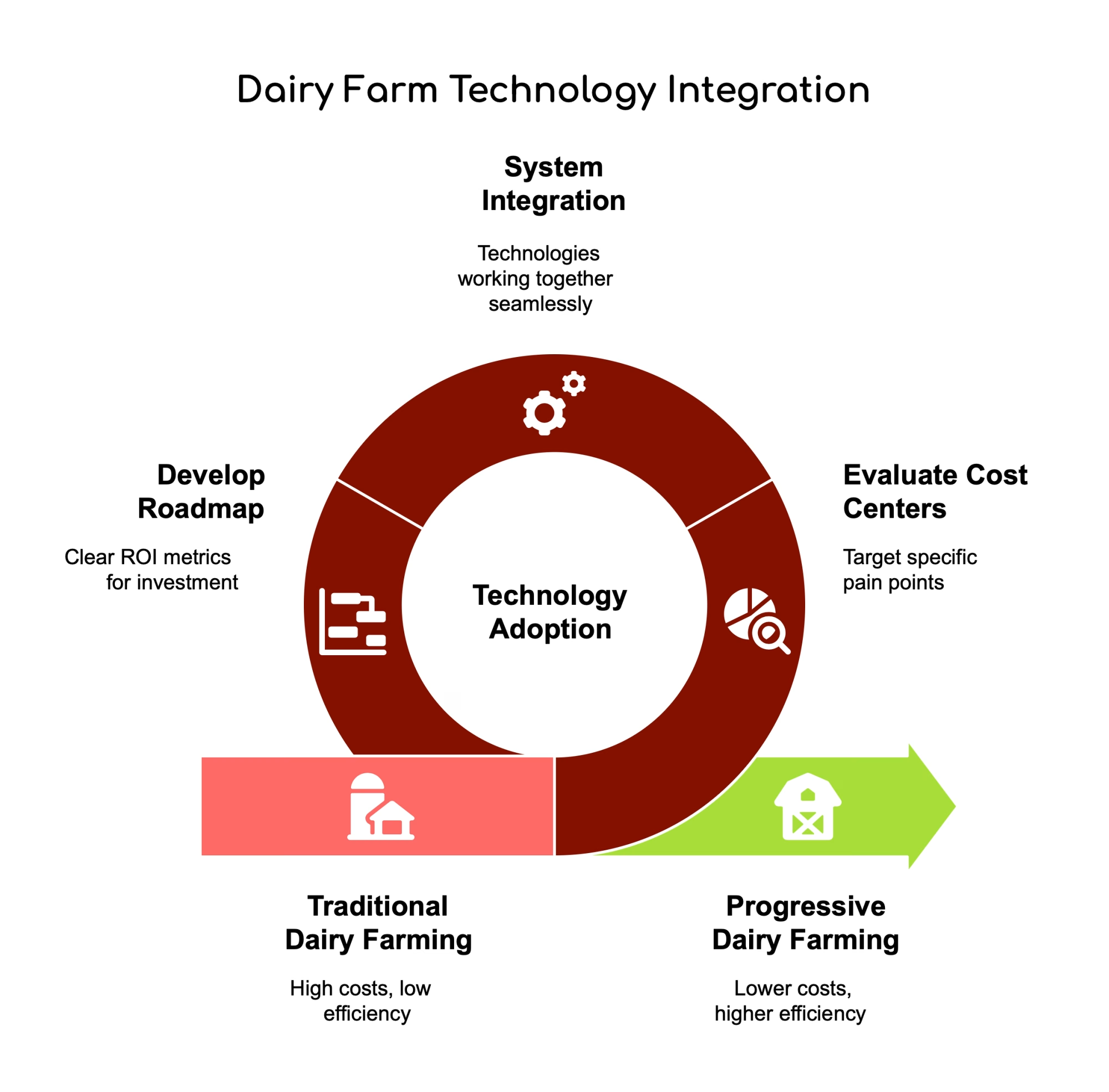
  1. Evaluate your largest cost centers and bottlenecks first, and target technologies that specifically address these pain points
  2. Consider how different technologies work together as a system rather than in isolation
  3. Develop a 3–5-year technology adoption roadmap with clear ROI metrics for each investment

Beyond the Milk Check: Diversification as Strategic Imperative

For decades, dairy farming meant one thing: selling milk. Today, however, most successful operations view themselves as milk producers and diversified agricultural enterprises. This shift from single-commodity focus to multiple revenue streams isn’t just a hedge against price volatility; it’s becoming a cornerstone of modern dairy business models.

The Beef-on-Dairy Phenomenon

Perhaps no diversification strategy has gained more traction than beef-on-dairy (BoD) crossbreeding. According to comprehensive industry surveys, an impressive 72% of U.S. dairy farms now incorporate beef genetics into their breeding programs. This represents a fundamental shift in breeding philosophy, evidenced by semen sales data: 7.9 million units of beef sires were sold for use in dairy cattle in 2023, representing 31% of total dairy semen sales.

Yet I’m still encountering producers who view dairy and beef as separate enterprises, refusing to consider how strategic crossbreeding could transform their bottom line. When was the last time you critically evaluated your breeding program’s economic impact beyond producing replacement heifers?

The economics are compelling. According to market analyses from three major land-grant universities, crossbred calves command premiums of $350-$700 per head compared to straight Holstein bull calves, with 80% of participating farmers receiving such premiums. A 500-cow dairy breeding 200 cows annually to beef sires represents potential additional revenue of $ 70,000- $ 140,000, similar to improving your milk price by $0.70-$1.40 per cwt across your entire production.

The beef-on-dairy trend also benefits from favorable market conditions. U.S. cattle inventory recently hit a 73-year low, supporting strong beef prices. The impact on the beef supply chain is already substantial, with BoD cattle accounting for 7% of total U.S. cattle slaughter in 2022 (approximately 2.6 million head), and projections from the USDA Economic Research Service indicate this share could rise to 15% by 2026.

James Thornton, who operates a 400-cow dairy in Pennsylvania, began breeding the bottom quartile of his herd to Angus sires four years ago. “Initially, we were just looking to get better value for our bull calves,” he explains. “But we’ve since expanded into raising some crossbreds to finishing, and now we’re selling branded beef direct to consumers. What started as a minor sideline now accounts for about 15% of our total farm revenue; it’s like adding a profitable heifer-raising enterprise without the same headaches.”

Creating Value on Your Terms

While selling day-old crossbred calves represents the entry point for many, other producers are moving further up the value chain. Recent industry data shows that while the number of producers raising beef-on-dairy animals to finishing weight has moderated, there has been a notable increase in the sale of branded beef products directly from dairy farms.

This follows broader consumer trends showing increased demand for branded beef, particularly high-quality products with specific breed claims and traceability stories. Sophisticated dairy producers are capitalizing on this trend by developing their own branded products and marketing channels, similar to how some have succeeded with farm-branded artisanal cheese.

Let’s be brutally honest: Clinging to a “we just milk cows” mentality in today’s market environment isn’t loyalty to tradition; it’s a failure of imagination that’s leaving money on the table.

Beyond beef-related ventures, successful diversification strategies include:

  • On-farm processing: Converting raw milk into cheese, yogurt, ice cream, or flavored milk products to capture retail margins exceeding $20 per cwt equivalent.
  • Agritourism: Farm tours, educational workshops, on-farm stores, and event hosting provide additional revenue and valuable community connections, turning your operation’s daily routines into experiences consumers will pay for.
  • Crop and forage sales: Leveraging existing land and equipment to produce feed for sale to other operations, particularly in regions with high land values and favorable growing conditions.
  • Energy production: Methane digesters and solar installations turn waste products and underutilized space into revenue-generating assets, harvesting manure twice: once for energy and again for fertilizer.

The Bullvine Bottom Line for Your Operation:

  1. Conduct a resource inventory and identify underutilized assets (land, livestock, skills) that could generate additional revenue.
  2. Start small with diversification-test, test market demand before major investments
  3. Consider your competitive advantages- what makes your farm uniquely positioned for specific alternative ventures?

Environmental Sustainability: From Regulatory Burden to Competitive Edge

The concept of sustainability in dairy has evolved dramatically. What was once viewed primarily as an ecological obligation or regulatory burden is increasingly recognized as a business imperative with potential economic benefits. Today’s most progressive producers find that sustainable practices can drive efficiency and market advantage.

Adoption Trends and Business Benefits

Recent industry research reveals that 63% of U.S. dairy producers now implement at least one sustainable practice, according to comprehensive national surveys. However, this statistic masks significant variation in depth and breadth of adoption. Leading operations are going beyond piecemeal approaches to implement comprehensive sustainability strategies that deliver multiple business benefits:

  • Water recycling and conservation: On advanced dairy farms, water is recycled up to six times, used for cooling milk in plate coolers, cleaning equipment, flushing barn lanes, and ultimately irrigating crops. According to research from the Innovation Center for U.S. Dairy, this reduces both utility costs and environmental footprint.
  • Manure management and nutrient cycling: Beyond regulatory compliance, sophisticated manure handling systems capture value through biogas production while reducing fertilizer expenses. Studies from the University of Wisconsin Dairy Innovation Hub show some operations report annual savings of $70-100 per cow through optimized nutrient management, turning what was once considered a waste disposal problem into a valuable farm resource.
  • Precision feeding: Advanced ration formulation and TMR management reduce feed waste and minimize excess nutrient excretion. Cornell University research shows this can decrease nitrogen and phosphorus output by 15-20% while improving feed conversion efficiency.

The industry’s collective progress is measurable: producing a gallon of milk in 2023 required 30% less water, 21% less land, and generated a 19% smaller carbon footprint compared to 2007, according to lifecycle assessments published in the Journal of Dairy Science. These efficiency gains represent both environmental progress and economic savings, like how genetic improvements have simultaneously increased production efficiency and reduced resource intensity.

Global Context: The Dutch Experience

In the Netherlands, where environmental regulations are among the strictest in the world, dairy farms have pioneered circular farming practices that integrate crop production, livestock management, and energy generation. Dutch farms utilizing closed-loop nutrient management systems have demonstrated that sustainability can drive profitability, reducing purchased fertilizer inputs by up to 65% while maintaining or increasing forage yields. This model of regenerative dairy farming offers valuable lessons for U.S. producers facing increasing environmental scrutiny.

The Market Incentive

Forward-thinking producers recognize that sustainability credentials are increasingly valuable in the marketplace. Major processors and retailers are establishing sustainability requirements for their supply chains, and some offer premiums for verified sustainable production practices.

The sustainability divide is widening while some producers view environmental initiatives as costly distractions, others use them to secure price premiums and preferential market access. Which side of this divide will your operation be on five years from now?

“We initially implemented our methane digester because of regulatory pressure,” admits David Keller, who operates an 850-cow dairy in New York. “But we’ve since discovered it’s also a marketing advantage. Our processor’s sustainability program pays a $0.15 per hundredweight premium for farms that meet certain environmental metrics. That’s adding about $45,000 annually to our bottom line, similar to boosting components across the herd.”

Despite these opportunities, a significant awareness gap persists. Many producers implement sustainable practices without connecting them to broader industry programs or failing to document and communicate their efforts for potential market benefit. This disconnect is particularly pronounced among smaller operations and those outside the Western U.S., where sustainability programs have gained stronger traction.

The Bullvine Bottom Line for Your Operation:

  1. Identify which sustainability practices you’re already implementing but not getting market credit for
  2. Research processor sustainability programs that offer premiums or preferential contracts
  3. Start measuring and documenting your operation’s environmental impact; you can’t improve or market what you don’t measure

The Human Element: Solving Dairy’s Most Critical Challenges
With all the advancements in technology and business models, the future of dairy ultimately depends on the people who manage the operations and those who will lead them tomorrow. Two interrelated human capital challenges threaten the industry’s continued evolution: workforce shortages and succession planning gaps.

The Workforce Dilemma

The dairy labor landscape has transformed dramatically. Many operations now rely on non-family employees for at least half their workforce, with immigrant labor particularly vital. A comprehensive national survey found that immigrant workers account for 51% of all dairy labor nationally and produce 79% of America’s milk supply. In Western and Southwestern regions, this dependency approaches 80% according to analyses from the National Milk Producers Federation.

Let’s confront an uncomfortable truth: our industry has become utterly dependent on a workforce that lacks secure legal status or reliable pathways to obtain it. We can’t claim to be strategic business operators while ignoring this existential threat to our labor supply.

Despite this reliance, hiring and retention remain persistent challenges. The physically demanding nature of dairy work, often involving early hours and weekend shifts, makes attracting domestic workers difficult even at competitive wages. Meanwhile, immigration policies add another layer of complexity, as the H-2A agricultural guest worker program is poorly suited for year-round dairy labor needs, unlike seasonal harvests.

Economic modeling published in the Journal of Agricultural Economics demonstrates the potential severity of labor disruptions: a 50% reduction in immigrant dairy labor could result in a $16 billion hit to the U.S. economy. In comparison, complete elimination could increase retail milk prices by as much as 90%.

Innovative producers are responding with multi-faceted solutions:

  • Strategic automation: Beyond labor savings, technology investments are reshaping the nature of dairy work. “Our robotic milking system didn’t eliminate jobs-it transformed them,” explains Miguel Rodriguez, herd manager at a 600-cow operation in Idaho. “We now need fewer people in the parlor but more skilled technicians and cow managers. The jobs are less physically demanding and more intellectually engaging, more like herdsmen than milkers.”
  • Enhanced compensation strategies: Leading operations are moving beyond competitive wages to comprehensive packages including quality housing, flexible scheduling where operationally feasible, and performance-based incentives tied to milk quality or reproductive efficiency, similar to how premium genetics command higher prices.
  • Professional development pathways: Structured training programs and clear advancement opportunities improve retention by showing employees they have a future in the operation. “When we implemented our three-tier advancement program, turnover dropped by 40%,” notes Amanda Chen, HR director for a multi-site dairy enterprise. “People want to know there’s a path from milker to herdsman to manager, just like we develop heifers into productive cows.”

The Succession Imperative: A Step-by-Step Framework

Parallel to workforce challenges is the critical need for effective succession planning. Industry data from multiple national surveys indicates that approximately 25% of current dairy operators plan to retire within the next five years, yet nearly half lack a formal succession plan or are uncertain about their transition strategy.

The numbers are stark: less than one-third of family agricultural businesses survive the transition from first to second generation, and only about 16.5% make it to the third generation. Are we honestly prepared to confront that most dairy farms are one generation away from extinction?

Financial and family dynamics often complicate transitions. Modern dairy operations represent substantial capital investments- land, facilities, equipment, and livestock can easily total millions of dollars. Navigating fair distribution among multiple heirs while maintaining operational viability requires sophisticated planning and open communication.

“My parents avoided the succession conversation for years,” recounts Thomas Weber, a 32-year-old who recently took over management of his family’s 280-cow dairy. “When we finally engaged a transition specialist, we discovered the process would take far longer than anyone expected. Start five years before you think you need to, then double that timeline, much like how you’d begin breeding and raising replacements long before your herd needs them.”

Initial Framework for Kickstarting Your Succession Plan

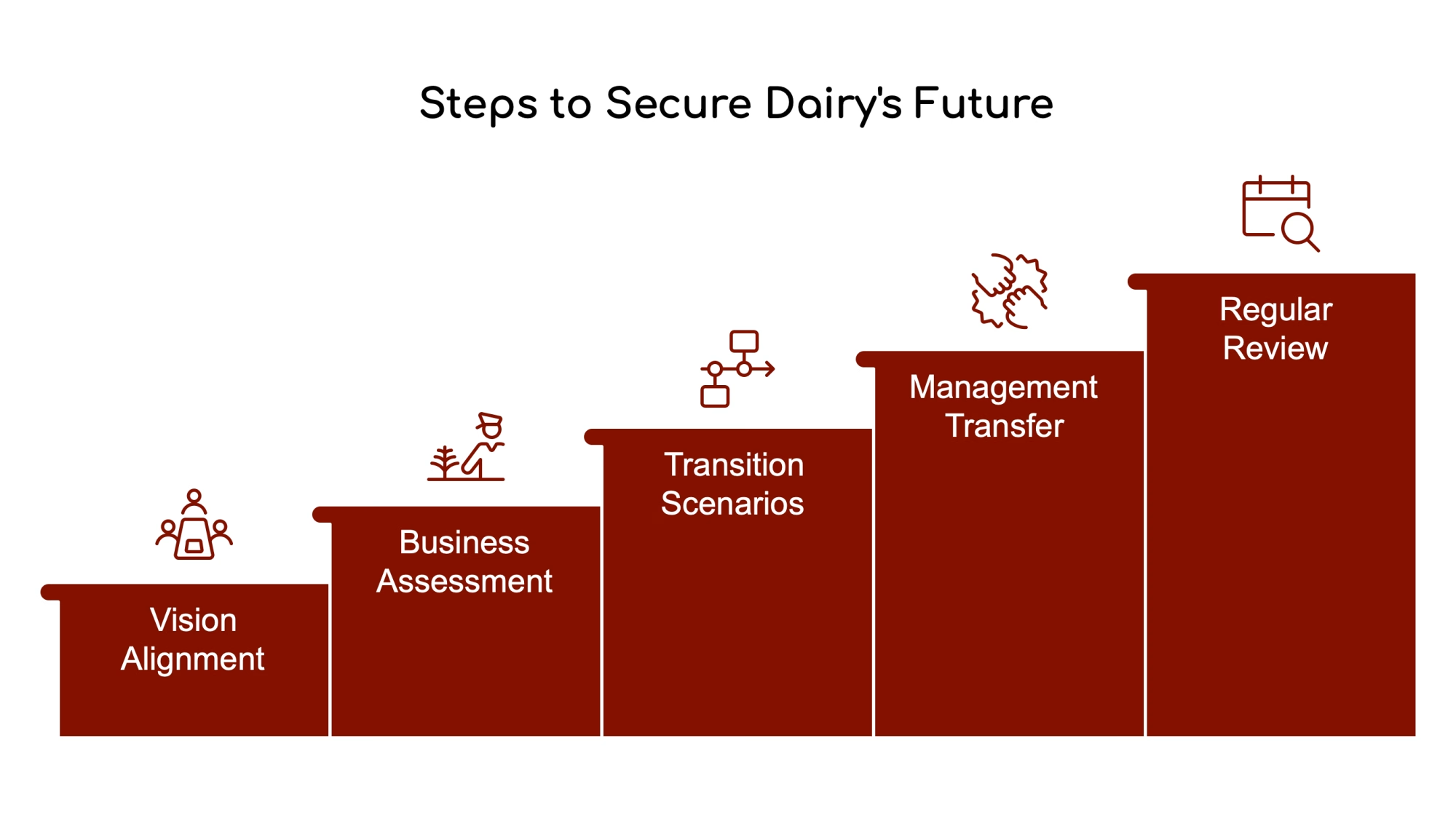
  1. Start with vision alignment meetings: Before discussing financial or legal details, gather all potential stakeholders (on-farm and off-farm family members) to discuss values, goals, and aspirations. Use a neutral facilitator to ensure all voices are heard.
  2. Conduct comprehensive business assessment: Work with agricultural financial specialists to determine true farm value, operational efficiency, and viability. This provides the factual foundation for all future decisions.
  3. Develop multiple transition scenarios: Develop 2-3 potential transition models with your advisors rather than assuming a single pathway. These might include gradual transfer of management/ownership, partnership structures, or innovative approaches like equity partnerships with non-family members.
  4. Create a management transfer timeline: Successful transitions typically separate management transfer from ownership transfer, with the next generation assuming increasing management responsibilities before financial ownership changes hands.
  5. Establish regular review and adaptation processes: Once initiated, commit to reviewing the succession plan quarterly during the transition period and annually thereafter, adapting to changing circumstances, tax laws, and family dynamics.

Despite these challenges, there are encouraging signs. A new generation of dairy leaders is emerging, characterized by technological savvy, business sophistication, and environmental awareness. Various programs, including university extensions, dairy producer organizations, and private foundations, offer these aspiring dairy professionals educational resources and financial support.

The Bullvine Bottom Line for Your Operation:

  1. Schedule your first succession planning meeting within the next 30 days, even if just to establish timeline goals
  2. Build your advisory team, identify legal, financial, and farm transition specialists with specific dairy experience
  3. Conduct an honest assessment of your operation’s transferability, and what changes would make it more attractive to the next generation?

The Next Frontier: Integrating Innovation Across Your Operation

The most successful dairy operations recognize that individual technological advancements, diversification, sustainability, and workforce management don’t exist in isolation. The true pioneers are creating integrated systems where these elements work synergistically, amplifying benefits and creating resilient business models that can withstand market volatility.

The Systems-Thinking Advantage

Ryan Kimball, whose family operates a 750-cow dairy in Wisconsin, describes their approach: “We stopped thinking about ‘projects’ and started thinking about systems. Our robotic milkers weren’t just a labor solution; they generated data that improved our nutrition program, reducing feed costs while enhancing cow health and reducing veterinary expenses. Everything connects, much like how a well-balanced ration addresses multiple nutritional needs simultaneously.”

This systems thinking extends to business models as well. Operations that successfully integrate milk production, value-added processing, and direct marketing create multiple revenue streams while building a buffer against price fluctuations at any point in the value chain, similar to how genetic diversity in a herd protects changing market demands.

Is your operation still addressing challenges in silos, or have you begun to recognize the interconnected nature of modern dairy management?

Consider how these elements might work together in your operation:

  • Technology investments that simultaneously address labor challenges, improve animal welfare, and enhance sustainability metrics, like how automated calf feeders improve growth rates while reducing labor and enabling precise nutrition
  • Diversification strategies that utilize existing assets and capabilities while creating new market opportunities, similar to how crossbreeding leverages your dairy herd for beef production
  • Sustainability initiatives that reduce costs while positioning products for premium markets, such as precision manure application that saves on fertilizer while improving environmental credentials
  • Workforce development approaches that combine competitive wages with meaningful work and growth opportunities, creating career paths, not just jobs

Case Study: The Integrated Operation

The Sanchez family dairy in California exemplifies this integrated approach. Their 900-cow operation combines robotic milking technology, intelligent feeding systems, and advanced health monitoring. They’ve installed solar arrays that supply 80% of their electricity needs and implemented water recycling that reduces consumption by 40%.

On the diversification front, they breed 35% of their herd to beef sires, raising some animals to finishing weight while marketing others through regional beef brands. They’ve also developed a small on-farm creamery producing specialty cheeses sold through local retailers and direct-to-consumer channels.

“Each piece reinforces the others,” explains Maria Sanchez. “Our sustainability practices reduced costs while creating a marketing advantage for our specialty products. Our technology investments addressed labor challenges while improving animal welfare, which became part of our brand story. It’s all interconnected how cow comfort simultaneously impacts production, reproduction, and longevity.”

The Bottom Line: Your Blueprint for Future Success

The dairy industry is experiencing evolution and revolution in technology, business models, sustainability practices, and human capital approaches. While challenges abound, so do unprecedented opportunities for operations willing to break from convention and embrace strategic change.

As you consider your operation’s future, focus on these key principles:

  1. Think systems, not silos: Look for synergies across different aspects of your business, from production practices to marketing approaches-just as you’d view herd health as an integrated system rather than isolated treatments.
  2. Invest strategically in technology: Prioritize investments that address your specific pain points and offer multiple benefits across the operation, similar to focusing breeding decisions on your herd’s limiting factors.
  3. Diversify thoughtfully: Explore alternative revenue streams that leverage existing assets and capabilities while creating resilience against market volatility, creating enterprise diversity just as you’d diversify your genetic program.
  4. Embrace sustainability as an opportunity: Move beyond compliance to view environmental stewardship as a potential source of competitive advantage, turning potential regulatory burdens into marketable attributes.
  5. Prioritize people: Develop comprehensive workforce development and succession planning strategies to ensure long-term continuity, investing in human capital with the same diligence you apply to herd improvement.

Challenge yourself today: What conventional practice on your farm most deserves critical reevaluation? Whether it’s your breeding program, labor management, or business model, commit to an honest assessment of one area where innovation could transform your operation’s trajectory.

The dairy producers who will thrive in this new landscape combine operational excellence with strategic vision, maintaining the best traditions of animal husbandry and land stewardship while embracing innovations that enhance efficiency, sustainability, and profitability.

The industry’s transformation presents challenges, but for those willing to adapt and innovate, it also offers a pathway to renewed prosperity and purpose. Like the cow that peaks early in lactation with proper transition management, those who invest in preparation and adaptation now will enjoy stronger performance in the years ahead. The future of dairy belongs to the bold.

What’s one bold change you’ve implemented in your operation that’s paying dividends? Share your experience in the comments below; your innovation could be exactly what another producer needs to hear right now.

Key Takeaways:

  • Tech is non-negotiable: Two-thirds of dairies use advanced feeding systems, with robotic milkers cutting labor costs by 29% while boosting yields.
  • Diversification dominates: 80% of operations now earn beyond milk sales, led by beef-on-dairy crossbreeding ($350–$700 premiums per calf).
  • Sustainability pays: Farms using precision nutrient management cut nitrogen waste by 15–20% and tap into $0.15/cwt processor premiums.
  • Labor & succession crises: 50%+ of workforces rely on non-family labor, while 46% lack succession plans despite 25% retirements looming.
  • Growth mindset wins: 44% of producers plan to expand, blending tradition with tech to future-proof their operations.

Executive Summary:

The U.S. dairy industry is undergoing rapid transformation, driven by technological adoption (robotic milking, AI health monitoring), revenue diversification (72% use beef-on-dairy crossbreeding), and sustainability initiatives (63% of farms implement eco-practices). Despite labor shortages and a looming retirement wave (25% of operators plan to exit in 5 years), younger innovators are leveraging data-driven strategies and alternative revenue streams to boost resilience. While consolidation continues, proactive operators are redefining success through efficiency gains, branded products, and holistic integration of systems-proving adaptability is key to thriving in dairy’s new era.

Learn more:

Join the Revolution!

Join over 30,000 successful dairy professionals who rely on Bullvine Weekly for their competitive edge. Delivered directly to your inbox each week, our exclusive industry insights help you make smarter decisions while saving precious hours every week. Never miss critical updates on milk production trends, breakthrough technologies, and profit-boosting strategies that top producers are already implementing. Subscribe now to transform your dairy operation’s efficiency and profitability—your future success is just one click away.

NewsSubscribe
First
Last
Consent

Trump’s Dairy Empire: How The Donald Would Revolutionize American Milk Production

Imagine Donald Trump swapping his golden tower for a dairy farm. What if the president decided to “Make American Milk Great Again”? From robot milkers to Twitter-famous cows, we explore how Trump might revolutionize the dairy industry. It’s a udder-ly wild ride you won’t want to miss!

Picture this: Donald Trump, his famous hair hidden under a worn John Deere cap, leaning against a fence post, surveying a sea of black and white Holsteins. It’s 2025, and the former president has traded Trump Tower for a milking parlor, ready to “Make American Milk Great Again.” Let’s churn through this idea and see how Trump might transform the dairy industry.

Trump’s Super-Farm: Bigger and Fancier than Your Average Barn 

If Trump got into the dairy business, you can bet your bottom dollar that it wouldn’t be your run-of-the-mill family farm. He’d go big—huge. 

High-Tech Cow Care 

“We’re gonna have the smartest cows, folks. Believe me,” Trump might boast. His farm would use fancy gadgets to keep tabs on his herd. Cow Fitbits, similar to fitness trackers for cows, would monitor each cow’s health status and milk production. This high-tech approach could potentially lead to healthier cows and increased milk production. He’d probably brag about his “Trump Dairy Brain” – a fancy computer system running the show.  Trump would undoubtedly strive for even better outcomes. 

“We’ve got the best udders, folks. They’re huge!”

Trump would be all about breeding super-cows. He’d team up with cow scientists (yeah, that’s a real job) to create cows that make more milk than ever before. He might even try to patent “Trump Cows” – with gold-plated ear tags. 

Milking Robots and Fancy Barns 

Trump loves building things, so he’d construct state-of-the-art barns with robotic milkers. These metal milkmaids can work around the clock, which means more milk and fewer sore human hands. The barns would be climate-controlled to keep the cows comfy year-round. “It’s like a five-star hotel for cows,” Trump might say. 

Making Dairy Great Again: Trump’s Milky Game Plan 

As a businessman turned farmer, Trump advocated for changes that could significantly impact American dairy farmers. These included imposing stricter regulations on imported milk. His policies could reshape the industry for better or worse. 

America First Milk Policy 

Trump might boldly proclaim, “We’re going to build a wall and make the Canadian cows foot the bill!” He would also advocate for higher taxes on milk from other countries and promote the sale of more American milk overseas. He’d probably also ask for more government help for dairy farmers, saying, “We need to support our great American milk heroes!” 

Cutting the Bull… I Mean, Red Tape 

Trump would try to eliminate rules he thinks are holding farmers back. One example is loosening environmental regulations. “We’re gonna drain the swamp… and use it to water our fields!” he might quip. 

Trump’s Milk Diplomacy: Taking on the World, One Udder at a Time 

Trump is known for his tough talk in business deals, and he would probably apply that same style to selling milk worldwide. 

He might aim to renegotiate trade deals to boost the export of American milk, particularly to countries like Canada. “Time to milk this deal for all it’s worth,” he might say. He’d also likely pick fights with Europe over cheese names, arguing that American farmers should be able to call their cheese whatever they want. “We’re gonna make American Parmesan great again, even if we have to call it Trump-esan!” 

The Trump Touch: Making Dairy Cool Again 

Trump’s a marketing whiz, so he’d go all out to promote his dairy products. His marketing prowess could potentially make dairy farming more appealing to the public, sparking a new interest in the industry. 

“Trump Milk: The Gold Standard in Dairy” 

Imagine milk cartons featuring Trump’s image and catchy slogans like “The Finest Milk Money Can Purchase.” He’d probably use Twitter to tell everyone how great his milk is: “Just had a glass of Trump Milk. It’s fantastic. Makes all other milk taste like water. Sad!” 

Celebrity Milk Mustaches 

Trump might get his famous friends to appear in ads drinking his milk. Picture Kim Kardashian or Tom Brady sporting a Trump milk mustache, exclaiming, ‘Got Milk, Trump Style!’ “Tom Brady drinks Trump Milk. That’s why he’s a champion. Be like Tom and taste victory with every sip!” 

The Milky Way Forward: Would Trump’s Dairy Dream Float or Curdle? 

While the idea of Trump running a dairy farm might seem as likely as a cow jumping over the moon, it does make us chew our cud about the future of dairy farming. Trump’s business smarts and love of new gadgets could shake things up in the industry. 

But let’s not kid ourselves – dairy farming is more challenging than a two-dollar steak. Even someone like Trump, with all his money and famous friends, would find it’s not all smooth sailing. Farmer Bob, who’s been milking cows for 40 years, told me, “Running a dairy farm is harder than teaching a cow to dance. Trump might be in for a real kick in the pants!” This cautionary note reminds us that even with the best intentions, the dairy industry is not without its challenges. 

Bottom Line:

Trump’s taking over a dairy farm would undoubtedly be the cream of the crop in terms of news. While his ideas might cause some controversy, they remind us that dairy farming requires innovative thinking to remain competitive. The future of dairy farming involves discovering more efficient methods to work intelligently, not just diligently while maintaining the well-being of our cows and land.

So, what do you think? Could Trump’s business know-how help dairy farmers, or would he be utterly out of his depth? How can we make sure American dairy stays strong for years to come? Let’s milk this conversation for all it’s worth!

Key Takeaways:

  • Trump’s hypothetical entry into dairy farming would likely emphasize cutting-edge technology and innovation.
  • Potential policies may focus on promoting American milk domestically and internationally while reducing regulations.
  • Advanced farming techniques and robotic technology are expected to boost production efficiency and cow comfort.
  • Trump’s marketing prowess could significantly reshape the dairy industry by glamorizing milk commodities.
  • The venture raises important questions about balancing business interests with sustainable agricultural practices.

Summary:

Imagine Donald Trump leaving politics to start a dairy farm. This article explores how he might change the dairy industry with his big ideas and love for technology. It talks about using fancy gadgets to watch cows, robots to milk them, and creating “Trump Cows” that produce more milk. Trump would likely push policies that favor American milk and take on foreign competition. Plus, his marketing skills would make his products stand out. While this idea is playful, it also highlights serious topics like innovation and staying competitive in farming. The article ends by asking us to think about how these bold ideas could help improve American dairy.

Learn more:

Join the Revolution!

Bullvine Daily is your essential e-zine for staying ahead in the dairy industry. With over 30,000 subscribers, we bring you the week’s top news, helping you manage tasks efficiently. Stay informed about milk production, tech adoption, and more, so you can concentrate on your dairy operations. 

NewsSubscribe
First
Last
Consent

Why Milk Components Trump Production in Unlocking Profits

Are milk components driving your profits? Focus on the right metrics and unlock your herd’s potential now.

The race to fill the milk tank has long dominated the dairy discourse, but a seismic shift is underway. Today, the stakes aren’t just in how full that tank gets but in the quality of the liquid it holds. Could this be the revolution the dairy industry never saw coming? Let’s dive deeper into how focusing on milk’s innate treasures—its butterfat and protein—could redefine success for dairy farmers everywhere.

The Evolution of Dairy: From Quantity to Quality

The landscape of dairy farming has undergone a profound transformation, echoing the rapid pace of technological and genetic advancements. Historically, the primary focus was on maximizing milk volume, with little regard for the composition or the components of the milk produced. This approach treated cows as mere ‘milk-producing machines’ focused on sheer output. However, as markets and consumer demands evolved, the emphasis gradually shifted toward the quality and components of milk, specifically its butterfat and protein content. 

YearOverall Production Change (%)Butterfat Change (%)Protein Change (%)
20172.11.31.4
20182.51.41.5
20192.71.51.6
20202.41.61.7
20212.31.81.9
20222.02.02.1
20231.92.32.2

Genetic advancements have played a pivotal role in this transformation, offering a beacon of hope for the future of dairy farming. The advent of genomics has been a game changer, allowing for far more precise genetic selection. Through mapping and understanding the bovine genome, dairy farmers can now select specific traits that enhance the quality of milk components rather than just quantity. This has led to the development of cows that are more efficient ‘component-producing machines.’ Today’s desired component levels have surpassed what producers aimed for two decades ago, signaling a promising future for the industry. 

Moreover, the introduction of sexed semen technology has been revolutionary. By enabling dairy farmers to selectively breed females with superior genetics, this technology accelerates the improvement of a herd’s genetic profile. Used effectively, sexed semen quickly elevates a herd’s genetic quality, as it effectively minimizes the reproduction of cows with lesser advantageous traits. Geiger’s work underscores how this, combined with genomics, has propelled the industry forward. 

These tools have collectively enabled dairy farming to progress towards more efficient milk production and a more strategic focus on milk components. As the industry continues to evolve, integrating these technologies promises further enhancements in dairy productivity and profitability, setting new benchmarks for quality in milk production. Such innovation challenges us to consider the future trajectory of dairy farming and how these advancements will continue to shape the industry. What could be next on the horizon?

Genetic Correlations: Navigating the New Landscape of Dairy Farming

Genetic correlations, which represent the relationships between traits crucial when making informed breeding decisions, are a fundamental cornerstone in understanding both the past and future trajectory of dairy farming. In simpler terms, they are like the connections between different traits in cows that farmers need to consider when  breeding. In a landscape that has evolved dramatically over recent decades, these correlations have shifted, providing opportunities and challenges for the industry. 

Trait PairCorrelation
Milk Production (PTAM) and Fat (PTAF)0.00
Health Traits (Longevity, Fertility, Disease Resistance)Strong Correlation
Conformation TraitsHigh Correlation
Overall Conformation (PTAT) – Net Merit-0.44
Net Merit and TPI0.44
Body Weight Composite (BWC) and Strength0.95
Body Weight Composite (BWC) – Net Merit-0.56
Strength – Net Merit-0.52

Historically, dairy farming focused predominantly on optimizing milk volume. However, the changes in trait relationships have redirected focus towards milk components like butterfat and protein. Changes in genetic correlations underpin this shift. For instance, the relationship between breeding for milk yield (PTAM) and fat volume (PTAF) has been notably disrupted. Where once there might have been a modest interplay between these traits, they now exhibit almost zero correlation. This detachment incentivizes farmers to prioritize breeding for component percentages to enhance milk quality rather than quantity. 

Another striking deviation is between Net Merit, an index that measures the overall economic value of a cow, and TPI, an index that measures a cow’s genetic potential for producing milk, fat, and protein. Historically, these two indexes correlated closely at over 0.80 but have now split to 0.44. This reflects a broader shift within the industry towards evaluating individual traits that contribute to economic returns. As these indexes deviate, breeding strategies must be adapted to maintain economic viability while managing genetic diversity. 

The implications of these exceptions for breeding strategies are profound. Farmers are now challenged to adopt a more tailored approach, focusing less on traditional metrics and more on the specific genetic attributes that will enhance the efficiency and profitability of their herds. The emphasis is increasingly on balance—ensuring that other beneficial characteristics are not inadvertently diminished in pursuit of one trait. This nuanced understanding of genetic correlations allows the industry to sustain current production and explore innovations in milk component enhancement.

Milk’s Hidden Treasure: Why Butterfat and Protein Are the Real MVPs

In today’s dairy industry, the value of milk components, rather than just the raw volume of milk, captures the spotlight. Why? Because butterfat and protein are the moneymakers, not the water content that bulks up milk production statistics. These components are essential for the dairy products that dominate our market shelves. 

Consider this: U.S. milk production has risen 16.2% since 2011, but the component growth tells a more compelling story. Protein content surged by 22.9%, and butterfat saw an impressive increase of 28.9% by 2023. These figures demonstrate a significant shift towards higher-yielding component production, driven by advancements in genetic selection and improved herd management. 

YearFluid Milk Production (%)Butterfat Production (%)Protein Production (%)Cheese Yield (per 100 lbs of milk)
2010100%100%100%10 lbs
2023116.2%128.9%122.9%11 lbs

Why does this matter economically? Over 80% of U.S. milk is destined for manufactured dairy products such as cheese, butter, and yogurt. Each of these products relies heavily on milk components. The rise in butterfat and protein directly impacts cheese production, for example. In 2010, 100 pounds of milk produced just over 10 pounds of cheese. Fast forward to 2023, and that same 100 pounds, thanks to higher component yields, delivers nearly 11 pounds of cheese. 

The implications are clear. By focusing on component growth, dairy farmers are not only optimizing their production but also enhancing the economic value of their output. This strategic shift aligns with market demands as consumers favor nutrient-dense dairy products. So next time you think about boosting production, remember it’s not just about the gallons. It’s about the goldmine inside every drop, and the potential for increased profitability that comes with it.

Navigating the Challenges of Component-Focused Dairy Production

As we delve into the evolving dynamics of dairy production, it’s important to acknowledge that the pivot toward enhancing milk components is not without its challenges. One such challenge is the unintended impact on cow strength and overall efficiency. Breeders who maximize component yields might inadvertently select cows with traits compromising physical robustness. The correlation between body weight composite (BWC) and cow strength is significant, and a narrower perspective on genetic selection may overlook crucial physical attributes. This can lead to reduced cow strength, a scenario no farmer desires. Understanding these challenges is the first step towards finding solutions and ensuring the sustainability of the industry. 

Furthermore, the shift towards increased efficiency in milk production could lead to a potential trade-off between cow vitality and durability. As dairy systems strive for optimal component production, the intricate balance between physical capacity and milk output becomes even more critical. 

Refine genetic evaluations to navigate these complexities. Accurate metrics are crucial in preventing the dilution of essential traits like strength and robustness. This calls for a departure from traditional estimates and a movement towards incorporating actual body weight measurements into genetic assessments. Relying solely on linear trait predictions can be as speculative as estimating milk yield by sight. Embracing tangible measurements ensures more precise evaluations and helps balance component efficiency and cow health. 

These challenges underscore the importance of a comprehensive approach to genetic selection, one that does not just chase numbers but also values the holistic nature of dairy cattle. By adopting improved practices, we can harness the opportunities presented by component-focused strategies while safeguarding our herds’ structural and functional integrity.

Beyond the Gallons: Embracing the True Value of Dairy Production

It’s no longer enough to measure milk production by volume. While historically valuable, the USDA’s Milk Production reports now need to capture modern dairy output’s true essence fully. Why? Because the liquid volume of milk is just one part of the story. The magic lies in the components—those precious pounds of butterfat and protein that have surged in importance. 

For decades, these reports were the gold standard, the one-stop shop for anyone wanting to understand trends in milk production. However, as the milk composition evolves, so must our reporting methods. Milk today isn’t just about how much is produced; it’s about what it’s made of. Yet, as it stands, the USDA reports are like a story with missing pages. Essential details about the richness and value of the milk are glossed over. 

The urgency for updated reporting is not a minor issue; it’s central to understanding the industry’s dynamics. Recent trends—where component growth has outpaced volume—have left us relying on data that doesn’t tell the whole story. Such insights could inform better decision-making at numerous levels, from farm operations to policy development. A revised reporting framework could bridge this gap, providing a dual lens on volume and component growth. This would offer a more nuanced picture of how well dairy production aligns with market demands. 

Imagine reports that delve into the intricacies of components, giving producers data that matters. Producers could benchmark their herds’ component production directly against industry standards, finding immediate areas for improvement. Processors, too, would benefit from a clearer understanding of the potential yield from their milk supply in terms of cheese, butter, and other manufactured products. 

The time has come for an upgrade, not just to conform to a changing industry but to lead it with insights that drive progress. Let’s push for milk production reports that not only count gallons but also account for the cream of the crop.

The Bottom Line

The shift in focus from sheer milk volume to milk components like butterfat and protein marks a significant evolution in dairy farming. These elements are not merely byproducts but the driving force behind many lucrative dairy products. As U.S. milk production on a liquid basis declines, the growth in milk components underscores the shift towards quality over quantity. The remarkable improvements in genetic selection and the use of new breeding technologies like genomics and sexed semen have made these strides possible. Dairy farmers should contemplate how these transformations impact their current practices. Leveraging such advancements can lead to significant gains in production efficiency and profitability. 

It’s time to rethink your approach: Are you maximizing the potential of your herd’s genetic makeup? How can you integrate the latest breeding technologies to enhance component yields? Engage with this new perspective and explore ways to align your operations with these industry insights. Don’t keep this conversation to yourself; share your thoughts and experiences in the comments below, or spread the word by sharing this article with your fellow dairy professionals.

Key Takeaways:

  • The shift from milk volume to component production has significantly changed dairy farming goals and outcomes.
  • Technological advancements like genomics and sexed semen have propelled genetic progress and increased component yields.
  • Genetic correlations have revealed changes in trait relationships, influencing breeding strategies.
  • Despite historical trends, the current focus is on butterfat and protein, which drive the dairy industry’s economic value.
  • Indexes like Net Merit and TPI are evolving, affecting breeding choices and herd management decisions.
  • Producers should consider actual body weights over linear traits for an accurate assessment of maintenance costs.
  • Understanding the true value of milk components versus volume is crucial as over 80% of production supports manufactured dairy products.

Summary:

The world of dairy farming is witnessing a substantial shift from prioritizing milk volume to valuing milk components like butterfat and protein. Advances in genetic selection and technologies such as sexed semen have turned cows into efficient “component-producing machines,” revolutionizing dairy production. This transformation underscores the importance of understanding genetic correlations to better navigate the evolving landscape of dairy farming. With over 80% of U.S. milk used in manufactured products, the emphasis on milk components over sheer volume becomes clearer. This evolution prompts farmers to adopt a tailored approach, thereby aligning production with market demands. However, it also brings challenges, such as potential impacts on cow strength and efficiency. Recognizing these dynamics calls for a revised reporting framework, offering insights into the growth of both volume and components.

Learn more:

Join the Revolution!

Bullvine Daily is your essential e-zine for staying ahead in the dairy industry. With over 30,000 subscribers, we bring you the week’s top news, helping you manage tasks efficiently. Stay informed about milk production, tech adoption, and more, so you can concentrate on your dairy operations. 

NewsSubscribe
First
Last
Consent

Brace for Impact: The Future of Dairy in an Era of Seismic Change

See how big changes in dairy farming, like new FMMO rulings and biosecurity measures, might affect your farm. Get insights and strategies here.

Summary:

In a world where change is inevitable, the dairy industry stands on the brink of revolutionary shifts. At the recent annual meetings in Phoenix, leaders like Randy Mooney of the National Milk Producers Federation emphasized the critical need for unparalleled cooperation among dairy stakeholders. The imminent FMMO rulings promise to reshape market navigation, demanding adaptability and unity from producers. As these transformations loom, the challenges of evolving biosecurity protocols and extreme weather events call for resilient strategies. With $7 billion funneled into processing expansions, the industry’s future hinges on advanced technology and improved efficiency. Dairy’s narrative now weaves through tradition, innovation, and strategic adaptation, urging stakeholders to steer through uncharted waters with determination and foresight.

Key Takeaways:

  • Dairy farming is on the brink of significant change, driven by evolving industry dynamics and regulatory actions like the Federal Milk Marketing Orders (FMMO) rulings.
  • The cooperation and coordination among stakeholders in the dairy industry are crucial to navigate these changes effectively.
  • Farmers display remarkable resilience in facing challenges such as the farm bill expiration, adverse weather conditions, and disease outbreaks like H5N1.
  • Biosecurity programs, such as those under the National Dairy FARM Program, play a vital role in safeguarding dairy farms from threats like H5N1.
  • Substantial investments, approximately $7 billion in new processing infrastructure, are paving the way for future growth and expansion in the dairy sector.
  • Dairy farming continues to be integral to the global food supply chain, emphasizing its importance in providing nutrition worldwide.
dairy industry transformation, Federal Milk Marketing Orders, dairy farmers challenges, National Dairy FARM Program, biosecurity measures in dairy, dairy processing plant expansions, sustainable dairy farming, dairy supply chain improvements, advanced dairy technology, consumer demands for dairy products

Randy Mooney of the National Milk Producers Federation (Photo: NMPF)

In the wake of unprecedented change, the dairy industry stands on the brink of transformation more significant than any recent memory. This was the powerful message conveyed by Randy Mooney, Chair of the National Milk Producers Federation, during the recent annual meetings with the United Dairy Industry Association and the National Dairy Promotion and Research Board in Phoenix, AZ. Alongside him, Gregg Doud, President and CEO of the National Milk Producers Federation, underscored the need for strategic adaptation in response to these seismic shifts. Together, they laid the groundwork for discussing the future of dairy production in the United States, urging stakeholders to consider the evolving dynamics poised to reshape their industry. 

Navigating the Waves: How FMMO Rulings Reshape the American Dairy Landscape 

The implications of the Federal Milk Marketing Orders (FMMO) rulings herald a significant shift in the dairy sector, with effects that ripple through the industry in varied ways. For dairy producers, these rulings are not a one-size-fits-all solution. Instead, they will manifest differently depending on geographical location and market conditions. This nuanced impact is crucial because where farmers ship their milk can substantially alter the financial landscape they navigate. Consider for a moment: how will the small-scale farmer in Vermont compare to the expansive dairy operations in California? Each scenario presents unique challenges and opportunities. 

Cooperation and coordination emerge as pivotal elements in this evolving narrative. Stakeholders across the board—from producers to processors—must align their efforts to ensure successful adaptation. Gregg Doud, President and CEO of the NMPF, underscores the critical need for unprecedented collaboration, a sentiment echoed by NMPF leadership. This call to action isn’t merely about survival but thriving amidst transformative change. It’s about all of us, as a united community, working together to shape the future of the dairy industry. 

As these changes unfold, the overarching goal is to equip the dairy industry with a robust framework that safeguards its future and enhances its efficiency and sustainability. Navigating this complex terrain will require resilience, innovation, and a shared commitment to adapt to new market realities. 

Weathering the Storm: Challenges and Resilience in Dairy Farming

Amid this seismic shift, dairy farmers face numerous challenges threatening their livelihoods. The farm bill’s expiration looms large over the industry, casting uncertainty over future policies governing agricultural practices and subsidies. These policies are crucial lifelines for many farmers, and their potential absence creates an air of unpredictability. 

Adding to the strain, extreme weather events have become more frequent and severe, with natural disasters like hurricanes wreaking havoc in the Southeast. Farms, their infrastructure, and the families that rely on them endure devastating impacts in the wake of these occurrences. Reflecting on the situation, Randy Mooney noted, “We’ve had hurricanes, tornados, and droughts that test the foundation of our operations.” 

Additionally, the H5N1 outbreak has forced dairy farmers to adapt swiftly, enforcing rigorous biosecurity measures to prevent the spread of the disease among livestock. This constant vigilance demands time, resources, and resilience—qualities Mooney deeply recognizes within the farming community. “Through facing these challenges, I’ve continually seen incredible resilience in each of you,” Mooney shared, underscoring the determination of farmers who persist against such formidable odds. This resilience is a testament to the strength of the farming community and a source of inspiration for all of us.

Biosecurity: The Silent Guardian of Dairy Farms

The National Dairy FARM Program is pivotal in safeguarding dairy farms against diseases like H5N1. Its robust biosecurity protocols aim to minimize the risk of disease introduction and spread. Emily Yeiser Stepp, the program’s Executive Director, highlights the collaboration among dairy farmers and cooperatives in embracing these measures. The practices entail stringent hygiene standards, controlled access to farms, and regular health monitoring of livestock. This program’s comprehensive approach and the industry’s commitment to it should reassure us all about the safety and stability of the dairy industry.

Stepp elaborates on how these protocols are systematically implemented across U.S. dairy farms, emphasizing their adaptability to suit varied operations. Farms are equipped with comprehensive guidelines to manage farm-specific biosecurity risks, reflecting the program’s flexibility and responsiveness to farmers’ needs. By promoting a culture of biosecurity, the National Dairy FARM Program ensures that dairy farming remains resilient in the face of potential outbreaks, safeguarding both the health of the herds and the industry’s stability.

The Future Beckons: Navigating Dairy Industry Transformations 

The seismic shift in the dairy industry isn’t solely about overcoming present challenges; it’s about strategically paving the way for the future. The recent influx of $7 billion into new processing and manufacturing plant expansions marks a significant milestone in this journey. But how do these investments impact the future of dairy

Consider the vast scale of these investments. They aren’t just about expanding capacity; they’re about reimagining what the dairy industry can be. New plants mean advanced technology, better efficiency, and the ability to produce more diverse dairy products. This is about meeting the changing consumer demands and ensuring that dairy remains a staple on grocery shelves across America and beyond. 

Moreover, such financial commitments indicate a robust confidence in the sector’s future. At a time when many industries face uncertainty, dairy’s willingness to invest speaks volumes. It’s not just about survival; it’s about thriving in a future landscape that values sustainability and innovation. These expansions represent new job opportunities at these plants and the local communities they serve, driving economic growth and stability. 

Furthermore, these developments will likely benefit every link in the dairy supply chain, from dairy farmers to transport logistics. With modern facilities, the industry can reduce waste, improve product safety, and increase the overall quality of dairy products. This fosters trust and reliability among consumers, which is paramount in today’s market. 

As we approach these transformations, we must recognize what they symbolize: a commitment to building a resilient industry capable of withstanding future downturns and capitalizing on emerging opportunities. As stakeholders across the dairy landscape reflect on these changes, How will they harness these investments to ensure the sector’s continued prosperity?

The Beating Heart of Global Nourishment: Dairy’s Indelible Role in Feeding the World

In the intricate web of global food production, dairy farming is a linchpin, delivering sustenance and nourishment far beyond geographical boundaries. Mooney articulates the depth of this industry’s contribution, describing it as a commitment to provide and serve humanity. This perspective underscores the immense privilege and responsibility that dairy farmers shoulder. 

Each drop of milk, each block of cheese, is part of a broader narrative that feeds millions worldwide, a testament to the relentless dedication and resilience in the face of ever-present obstacles. Mooney’s insights resonate deeply, speaking to the heart of what it means to be entwined in such a vital industry. There’s no denying the unique position dairy farming holds within the global food supply chain—one that continues to be a pillar of nutritional security and a beacon of agricultural devotion. As dairy farmers navigate these evolving landscapes, their role as stewards of this essential resource remains steadfast, a service to humanity that transcends mere commerce.

The Bottom Line

As we reflect on the changing landscape of dairy farming, it’s clear that the road ahead is rife with both challenges and opportunities. The impact of the Federal Milk Marketing Orders rulings will undoubtedly reshape the industry, driving the need for unprecedented collaboration. Strengthening biosecurity measures remains crucial to protecting our resources. At the same time, substantial investments signal a bright future for dairy processing and production. We must consider the pivotal role dairy farming plays in global nourishment and the responsibility it entails. How will these seismic shifts influence your farm’s future? We encourage you to comment, share your insights, and engage in this conversation. Your thoughts are welcome and essential as we navigate these transformative times together.

Learn more:

Join the Revolution!

Bullvine Daily is your essential e-zine for staying ahead in the dairy industry. With over 30,000 subscribers, we bring you the week’s top news, helping you manage tasks efficiently. Stay informed about milk production, tech adoption, and more, so you can concentrate on your dairy operations. 

NewsSubscribe
First
Last
Consent

How U.S. Dairy Farms Are Adapting: Structure, Costs, and Technology Innovations

Explore the evolution of U.S. dairy farms. Ready to embrace change and succeed?

The U.S. dairy industry is dramatically transforming, with fewer farms increasing milk production. How is this evolution reshaping the landscape? This article examines the industry’s dynamic changes, exploring evolving farm structures, fluctuating production costs, and the adoption of advanced technologies. We aim to shed light on this new era of U.S. dairy farms and challenge all dairy professionals to think critically about the industry’s future.

YearNumber of Dairy FarmsTotal Milk Production (billion lbs)Average Herd Size
200270,375169.3135
201249,331200.3179
202131,657223.2312

The Consolidation Trend in the U.S. Dairy Industry: Reshaping the Landscape

The consolidation trend in the U.S. dairy industry has been gaining momentum. Farms are growing in size but dwindling in number. This movement towards fewer, larger farms is not just about scale—it’s reshaping the industry’s landscape. 

Today, fewer farms are responsible for meeting milk demand. This shift towards more extensive operations has advantages and challenges. Larger farms tend to benefit from economies of scale. They are often more specialized and quicker to adopt advanced technologies, which can translate into increased efficiency and reduced production costs per unit of milk. 

However, the rise of mega-dairies is putting pressure on smaller farms. Many of these smaller operations struggle to compete, facing higher costs and limited access to technology. The economic pressure can be immense, often leading to the difficult decision of expanding, selling, or shutting down. The consolidation trend leaves some smaller producers vulnerable, needing to adapt swiftly or risk falling by the wayside. 

The reality is stark for those who work in the shadow of these more giant agribusinesses: Adaptation is critical to survival. This situation calls for innovation and grit to thrive amid industry shifts.

Rising Stars and Fading Giants: The New Geography of U.S. Dairy Farming 

U.S. StateDairy Cattle NumbersAverage Herd Size
California1,720,0001,300
Wisconsin1,270,000160
Idaho630,0001,500
New York620,000210
Texas580,0001,800
Pennsylvania470,00090
Minnesota450,000210
Michigan430,000330
New Mexico315,0002,300
Iowa215,000250

The geographic shifts in dairy production across the United States have been significant and telling of broader industry trends. Texas and Idaho have become key players, gaining a substantial production share. This shift correlates with their favorable economic conditions and increased investment in dairy infrastructure. These states offer extensive grazing lands and have implemented policies that support large-scale dairy operations, attracting farmers seeking profitability and growth.

Contrasting this, California, once the dairy powerhouse, has experienced a decline in production share. Several factors contribute to this shift. Water scarcity and persistent drought conditions have complicated dairy farming in the region, increasing operational costs and logistical challenges. Environmental regulations have become more stringent, adding layers of compliance that strain smaller operations. Additionally, urbanization pressures push agricultural zones into industrial and residential developments.

This redistribution of dairy production is not occurring in a vacuum. Instead, it reflects broader economic and environmental paradigms shaping modern agriculture. The dairy sector’s relocation underscores a tactical response to shifting resource availability, regulatory frameworks, and the search for efficiency. As the landscape evolves, one must consider the long-term impacts. Will these shifts lead to sustainable practices and economic stability, or will new challenges arise on the horizon?

Automation and Algorithms: The Heartbeat of Modern Dairy Farms

Technological innovations have long been a beacon of change in the dairy industry, propelling farms toward greater productivity and efficiency. Central to this transformation are automated systems like automatic take-offs, computerized milking systems, and efficient milking parlor designs. These tools are no longer just additions; they’re becoming the backbone of modern dairy operations. 

Automatic take-offs have streamlined the milking process, reducing the physical labor required and minimizing the risk of overmilking, which can lead to mastitis. This safeguards animal welfare and enhances milk quality. By curtailing human error in the milking routine, these systems ensure consistency and reliability in production, two pivotal factors for maintaining the high standards dairy farms strive for. 

Computerized milking systems take data-driven insights to a new level, integrating sensors and software to monitor each cow’s health and productivity. Farmers can now collect and analyze milk yield and composition data and detect early signs of illness. This level of precision allows for more informed decision-making, enabling farmers to optimize individual cow performance, thus elevating overall herd output. 

The implementation of milking parlors complements these technologies by maximizing operational efficiency. Designed to cater to specific farm scales and layouts, milking parlors facilitate a smoother, faster milking process, accommodating more cows in a shorter time. This is vital for larger farms managing extensive herds without compromising milk quality or cow comfort

These technological innovations are not just tools; they are catalysts for efficiency. They allow dairy farms to scale operations while controlling costs, reflecting a modern agricultural era in which data and technology drive success. As farms adopt these advancements, the ripple effect on productivity and efficiency is undeniable, promising a robust future for the dairy sector.

Decoding Cost Dynamics: Feed, Labor, and Ownership in the Dairy Industry 

Within the intricate realm of dairy farming, cost dynamics emerge as a pivotal factor distinguishing the giants from the smaller operations. At the heart of this issue, feed costs present a stark contrast between the two. With their sprawling herds, larger dairy farms often purchase feed, resulting in higher associated costs than their smaller counterparts. In contrast, smaller farms emphasize homegrown feeds, reducing expenses in this area. 

Labor costs further exacerbate the divide. Larger farms frequently incur elevated paid labor costs, relying heavily on a workforce to sustain their operations. This reliance contrasts with smaller farms, where unpaid or family labor is more prevalent, significantly lowering labor expenses per unit of milk sold. The disparity in labor strategies between large and small farms translates into varied cost structures, impacting their overall profitability and efficiency. 

Finally, when scrutinizing the overall economic costs per unit of milk sold, larger farms typically demonstrate a reduction in ownership costs attributable to economies of scale. This advantage allows them to amortize investments in infrastructure over a larger volume of milk production, thus spreading fixed costs more effectively than smaller operations. These cost efficiencies in ownership present an economic edge, contributing to lower total costs and solidifying larger farms’ competitiveness in the marketplace.

Regional Contrasts: The Diverse Landscape of U.S. Dairy Farms

Regional differences paint a vivid picture of the contrasting characteristics of dairy farms across the United States. In the sprawling landscapes of the western U.S., dairy farms are generally larger, embracing vast expanses that accommodate thousands of cows. This sheer size often correlates with higher specialization in dairy production, allowing Western farms to focus exclusively on milk production. The Western farms are not merely larger in physical size but in embracing technology. Advanced technologies, including computerized milking and automated feeding systems, are more prevalent here, setting the stage for a highly efficient operation. 

Conversely, eastern U.S. farms tend to be smaller and somewhat less specialized. While size might often suggest outdated techniques, eastern farms frequently combine traditional farming charm with selective modern advancements. Some incorporate technology, albeit more measuredly, balancing tradition with innovation. 

These regional distinctions have profound implications for cost efficiency. Because of their size and technological investments, Western farms often exhibit lower per-unit production costs. Their economies of scale allow them to spread operational costs over a larger output, reducing cost per gallon of milk. Additionally, the reliance on advanced technology enhances efficiency, minimizing labor costs and maximizing production output. 

On the other hand, eastern farms, with their smaller scale, face higher per-unit costs. The limited size restricts their ability to achieve the same economies of scale as their Western counterparts. However, smaller operations can mean more intimate herd management, sometimes translating into premium milk products that fetch higher market prices. 

This stark regional contrast challenges the notion of a one-size-fits-all approach to dairy farming. The balance between size, specialization, and technology adoption ultimately crafts a diverse tapestry of practices that drive the economic efficiency of U.S. dairy farms.

The Bottom Line

The U.S. dairy industry’s shift towards more extensive, technologically advanced farms is undeniable. Thanks to innovations in automation and region-specific practices, fewer farms now produce more milk with increased efficiency. Yet, this consolidation brings challenges, from balancing feed costs to managing labor dynamics. 

As you ponder these trends, consider their implications for your dairy operations or the products and services you provide. How might these changes affect your strategy and decision-making? Feel free to share your thoughts, questions, and experiences in the comments below. Engaging in this conversation is crucial for navigating the evolving landscape. Let’s explore how we can learn from these shifts and innovate our practices together for a more sustainable dairy future.

Key Takeaways:

  • The U.S. dairy industry continues to experience a trend of consolidation, with fewer dairy farms but increased milk production per cow.
  • States like Texas and Idaho are increasing their share in dairy production, while California is declining.
  • Technological advancements, such as computerized milking systems and milking parlors, are becoming more prevalent on dairy farms.
  • While operational costs are often covered, total economic costs were only covered in two years from 2000-2022.
  • Larger farms are more specialized, adopting advanced technologies and achieving lower unit costs than smaller farms.
  • Western U.S. dairy farms typically use more advanced technologies and incur lower costs per unit of milk sold than their eastern counterparts.

Summary:

The U.S. dairy industry has seen a drastic transformation over two decades, with a decrease in dairy farms but a rise in milk production. Larger farms leverage advanced technologies like automated milking and computerized systems, improving efficiency and reducing costs. Geographic shifts show Texas and Idaho rising as key dairy regions, while California’s share declines due to water scarcity, drought, and urban pressures. Despite these advances, smaller farms face cost challenges and tech limitations. Regional contrasts are evident, as Western farms are generally larger and more milk-specialized than their Eastern counterparts. This ongoing evolution presents challenges and opportunities in shaping the future of U.S. dairy farming.

Learn more:

Join the Revolution!

Bullvine Daily is your essential e-zine for staying ahead in the dairy industry. With over 30,000 subscribers, we bring you the week’s top news, helping you manage tasks efficiently. Stay informed about milk production, tech adoption, and more, so you can concentrate on your dairy operations. 

NewsSubscribe
First
Last
Consent
Send this to a friend





