Stop waiting for conventional breeding to solve disease resistance. FDA’s gene-editing approval just unlocked $1.2B in savings potential for dairy.
EXECUTIVE SUMMARY: The dairy industry’s biggest productivity breakthrough isn’t coming from nutrition or management – it’s sitting in research labs right now, waiting for farmers to embrace gene editing technology. The FDA’s April 30th approval of PRRS-resistant pigs using CRISPR technology represents a $1.2 billion annual savings opportunity for livestock producers and establishes the regulatory framework that will govern dairy applications within the next 3-5 years. Slick-coat cattle genetics are already FDA-approved and commercially available today, delivering measurable heat tolerance improvements for operations dealing with climate stress, while disease-resistant cattle targeting BVDV and mastitis are moving through development pipelines. Countries like Brazil and Argentina require no additional regulation for gene edits that could occur through conventional breeding, creating competitive advantages for international producers while U.S. farmers wait for regulatory clarity. University of California-Davis research shows homozygous polled animals typically fall 0 less in genetic merit compared to horned animals – a trade-off that gene editing eliminates completely by introducing polled traits into elite genetic lines. Smart dairy farmers need to start planning gene-editing integration into their breeding strategies now, because the technology that’s transforming pork profitability is about to do the same for dairy operations worldwide.
KEY TAKEAWAYS
Heat Tolerance Available Today: FDA-approved slick-coat genetics are commercially available right now, delivering lower body temperatures, reduced respiration rates, and improved reproductive efficiency in tropical conditions – providing immediate productivity gains for operations dealing with increasing heat stress in 2025.
Disease Resistance Pipeline Ready: Gene editing applications targeting BVDV resistance and mastitis prevention are moving through development pipelines, potentially eliminating diseases that currently cost operations thousands in treatment expenses, reduced milk yield, and premature culling within the next 3-5 years.
Polled Genetics Without Merit Sacrifice: Gene editing can introduce polled traits into high genetic merit sires without the typical $150 drag on productivity, eliminating dehorning costs and welfare concerns while maintaining elite milk production capabilities from top genomic bloodlines.
Global Competitive Disadvantage Risk: Brazil, Argentina, and other countries require minimal regulation for gene-edited traits, meaning international producers will deploy disease-resistant, heat-tolerant cattle years before U.S. operations if current FDA regulatory delays continue through 2025.
Economic Impact Beyond Production: Early adopters of gene-editing technology will gain multi-generational competitive advantages in feed efficiency, environmental sustainability metrics, and premium market access as consumer preferences shift toward welfare-friendly and environmentally responsible dairy products.
The FDA just approved the first gene-edited livestock designed to prevent viral disease, and while everyone’s talking about pigs, the real story is what this means for your dairy operation. The April 30th approval of PRRS-resistant pigs using CRISPR technology isn’t just a win for pork producers – it’s the regulatory green light that dairy farmers have been waiting for to deploy disease-resistant, heat-tolerant, and productivity-boosting cattle that are already sitting in research labs worldwide.
The numbers tell the story better than any press release. PRRS costs the pork industry $1.2 billion annually, according to Iowa State University’s 2024 study. But here’s what should grab every dairy farmer’s attention: the same CRISPR technology that just eliminated this massive economic drain is already being used to create cattle resistant to bovine viral diarrhea virus (BVDV), equipped with heat-tolerant slick coats and producing hypoallergenic milk.
Why This FDA Decision Changes Everything for Dairy
Let’s face it – the FDA has been treating gene editing like it’s genetic modification on steroids. Until now, every gene-edited animal had to go through the same regulatory nightmare as a new pharmaceutical drug. That meant years of testing, mountains of paperwork, and costs so high that most innovations never made it past the lab.
Matt Culbertson, chief operating officer at Genus PIC, confirms the significance: “The challenges the industry is experiencing today and the specific strains of the virus that seem to be causing those challenges, the pigs do appear 100% resistant to those strains”. The technology could save the pork industry an estimated $2.5 billion yearly.
The PRRS pig approval changes that equation fundamentally. The FDA used CRISPR technology to “switch off” the CD163 gene that allows the virus to enter cells, slamming the door shut on infection. This isn’t introducing foreign DNA; it’s precision breeding that accomplishes in months what conventional breeding would take decades to achieve if it could accomplish it at all.
The Cattle Technologies Ready for Prime Time
Slick-coat cattle are already FDA-approved and commercially available. In March 2022, the FDA made a “low-risk determination” for gene-edited beef cattle with the slick hair coat, declaring them safe for human consumption. Acceligen can now market these cattle, their genetic material, and their offspring without further regulatory approval.
The performance data is compelling. Mississippi State University and the University of Puerto Rico studied 84 Holsteins with the naturally occurring slick gene and found lower body temperatures, reduced respiration rates, and improved reproductive efficiency in tropical conditions compared to traditional hair coats.
But slick coats are just the beginning. Researchers at the U.S. Meat Animal Research Center in Clay Center, Nebraska, have successfully produced cattle with dramatically reduced susceptibility to BVDV through targeted gene editing. The genome alteration was shown to inhibit infection with no discernible effects on animal physiology during the first 20 months of life.
Disease Resistance: The Billion-Dollar Opportunity
Here’s where the economics get really interesting. If gene editing can save the pork industry $1.2 billion annually by preventing one viral disease, what’s the potential for dairy operations dealing with mastitis, BVDV, and other endemic challenges?
Climate change isn’t waiting for regulatory approval, and neither should your heat mitigation strategy. New Zealand researchers are taking a different approach to heat tolerance by using gene editing to change Holstein hides color from heat-absorbing black to silvery-gray.
They’ve successfully swapped the black gene with a color dilution trait from Galloway and Highland cattle, creating calves with typical spotted patterns but dramatically reduced solar radiation absorption. The science is straightforward: black absorbs more solar radiation, contributing to heat stress.
Every dairy farmer knows the polled genetics dilemma. University of California-Davis researcher Alison Van Eenennaam explains the challenge: “Homozygous polled animals in both Holstein and Jersey breeds typically fall about $150 less in genetic merit compared to horned animals”.
Gene editing solves this trade-off completely. Van Eenennaam notes: “We have the ability to precisely knock out undesirable traits and knock in desirable traits like polled. This technology has the potential to impact global agriculture for the better dramatically”.
The Global Regulatory Race Creates Winners and Losers
Here’s where the story gets frustrating for American dairy farmers. While the U.S. treats gene editing as a “New Animal Drug Application,” requiring case-by-case approval, countries like Brazil and Argentina require no additional regulation for traits that could be produced through conventional breeding.
Van Eenennaam warns that the FDA’s current approach is “an awkward fit, costly, and excessively time-consuming.” The National Pork Producers Council has repeatedly called for USDA to assume regulatory oversight, with NPPC president Jim Heimerl stating: “The pace of FDA’s process to develop a regulatory framework for this important innovation only reinforces our belief that the USDA is best equipped to oversee gene editing for livestock production.”
Dr. Liz Wagstrom, NPPC chief veterinarian, emphasizes the stakes: “FDA wants to regulate gene-edited animals as new animal drugs. It is an approval process that is onerous—it is over-the-top—and it has a lot of potential repercussions”.
Recent developments offer hope. USDA has proposed taking primary oversight over gene-edited livestock, potentially ending the regulatory tug-of-war that has put U.S. agriculture in a holding pattern while competitors like China, Brazil, and Canada moved ahead.
What This Means for Your Operation
Start planning now. Gene editing isn’t science fiction anymore – it’s commercial reality being deployed globally. The FDA’s approval of PRRS-resistant pigs establishes the regulatory framework governing dairy applications.
Immediate Actions You Can Take:
Evaluate Slick-Coat Genetics Today: The technology is FDA-approved and commercially available now. For operations dealing with heat stress, this represents immediate productivity improvements. Contact your semen supplier about the availability of slick-coat genetics.
Assess Your Disease Challenges: Identify your farm’s biggest disease-related costs. Mastitis, BVDV, and other endemic problems that currently require treatment and cause production losses could be prevented through genetic resistance within the next 3-5 years.
Plan Your Breeding Strategy: Consider how gene-edited traits align with your operation’s goals. Will polled genetics reduce labor needs? Could mastitis-resistant genetics reduce treatment costs and improve milk quality premiums?
Engage Your Industry Representatives: Contact your cooperative, breed association, and industry representatives to push for accelerated development. NPPC’s advocacy helped secure the approval of the pig, as dairy needs similar pressure.
Prepare Your Consumer Story: Start developing messaging about animal welfare improvements, reduced antibiotic usage, and environmental benefits. The farms that thrive will be those that can tell compelling stories about why technology adoption aligns with consumer values.
The Bottom Line: Embrace the Revolution or Get Left Behind
The FDA’s approval of gene-edited pigs isn’t just news – it’s the starting gun for a transformation that will reshape dairy farming within the next decade. The technology works, the economics make sense, and regulatory barriers are falling worldwide.
Dr. Steven Solomon, director of the FDA’s Center for Veterinary Medicine, said: “We expect that our decision will encourage other developers to bring animal biotechnology products forward for the FDA’s risk determination in this rapidly developing field, paving the way for animals containing low-risk IGAs to reach the marketplace more efficiently.”
This Month: Contact your genetics supplier about slick-coat availability
Next Quarter: Evaluate which diseases cost your operation the most annually
This Year: Engage with industry organizations advocating for streamlined regulation
Long-term: Develop breeding plans that incorporate gene-edited traits as they become available
The future belongs to farmers who understand that gene editing isn’t about playing God with genetics – it’s about using precision tools to solve real problems faster than ever before. From disease-resistant herds to climate-adapted cattle, the technology is ready. The only question is whether you’re ready to embrace it.
Gene-Edited Bananas Unlock Dairy Innovation Roadmap – Reveals how plant gene editing breakthroughs are accelerating dairy applications, with timeline predictions showing commercial availability within 3-5 years and consumer acceptance strategies for market success.
Join the Revolution!
Join over 30,000 successful dairy professionals who rely on Bullvine Weekly for their competitive edge. Delivered directly to your inbox each week, our exclusive industry insights help you make smarter decisions while saving precious hours every week. Never miss critical updates on milk production trends, breakthrough technologies, and profit-boosting strategies that top producers are already implementing. Subscribe now to transform your dairy operation’s efficiency and profitability—your future success is just one click away.
Meet the 2025 Dairy Shrine Pioneers – visionaries whose breakthroughs in genetics, tech, and marketing are redefining dairy’s future.
The 2025 National Dairy Shrine Pioneer class isn’t just about celebrating past achievements; it’s a masterclass in where the dairy industry is headed. From genomics revolutionaries to reproductive science pioneers, these visionaries remind us that true innovation never stops at the award ceremony, lives on in the day-to-day operations of progressive dairy farms worldwide.
The Pioneer Effect: Why This Year’s Class Matters to Your Bottom Line
When the National Dairy Shrine announced its 2025 Pioneer Award recipients, they didn’t just select five industry legends who transformed dairy’s past- they spotlighted the architects whose blueprints continue to shape our industry’s future.
This year’s honorees, Dr. Joseph Lineweaver, the professional photographers of Agri-Graphics, the late Dr. David Selner, and the geneticist duo of Dr. Paul VanRaden and Dr. George Wiggans, represent far more than gold watches and congratulatory plaques. They’re living proof that dairy’s most powerful innovations never stay in the laboratory-they evolve, compound, and transform everyday farm operations for generations.
What makes these pioneers particularly fascinating isn’t just their impressive individual accomplishments, but how their work intersects to create a multiplier effect across the industry. When reproductive technology (Lineweaver) meets genomic evaluation (VanRaden/Wiggans), accelerated by effective visual marketing (Agri-Graphics) and translated through education and leadership (Selner), the result isn’t just incremental change, it’s exponential progress.
Dr. Joseph Lineweaver: The Embryo Transfer Revolution Still Expanding
From laboratory breakthrough to barn-level routine
When Dr. Joseph Lineweaver helped deliver the first registered Jersey calf via embryo transfer, he didn’t just notch a scientific milestone, he fundamentally changed the economics of genetic dissemination. Today’s advanced reproductive technologies enable rapid genetic advancement in your herd, which can be traced directly back to Lineweaver’s pioneering protocols developed during his Virginia Tech days and later at Blue Ridge Embryos.
What’s easy to overlook is how Lineweaver approached innovation differently than many of his contemporaries. While others focused solely on the science, he understood that technological breakthroughs mean nothing without industry adoption. His ability to translate complex reproductive physiology into practical protocols simultaneously advanced the science and its commercial application.
“The embryo transfer technologies he pioneered didn’t just create new scientific possibilities- they created new business models,” notes one industry observer. “When elite genetics could be multiplied efficiently, the entire calculus of genetic improvement changed.”
Even into his 90s, Lineweaver hasn’t stopped mentoring the next generation. His Lineweaver Scholarship ensures future dairy scientists receive financial support and the benefit of his accumulated wisdom, a reminder that true pioneers understand innovation is a relay race, not a solo sprint.
What this means for your operation:
The reproductive efficiency you take for granted today, from everyday AI protocols to advanced embryo work, builds directly on Lineweaver’s foundation. When you flush that genetically superior cow or implant high-value embryos, you’re leveraging technologies that started with his meticulous work on semen and embryo handling. The compounding returns of these technologies continue to accelerate genetic progress in commercial herds worldwide.
Agri-Graphics: When a Picture Drives a Thousand Sales
More than photographers, they’re brand architects
Few Pioneer Award recipients have had a more visible yet underappreciated impact than the team at Agri-Graphics. Founded by Danny Weaver in 1963 and later led by Kathy DeBruin in 1990, this collective transformed cattle photography from simple documentation into sophisticated visual marketing that drives genetic sales worldwide.
Their unofficial motto-“We don’t take pictures, we make them!”-reveals everything about their approach. Agri-Graphics didn’t just point cameras at cows; they created visual narratives that made genetic potential tangible and marketable. Through meticulous staging, lighting, and composition, they helped breeders translate abstract genetic data into compelling visual stories that could command premium prices.
What’s particularly groundbreaking about Agri-Graphics was their role in breaking gender barriers in agricultural media. As the first female dairy cattle photographers in what was then an exclusively male field, Kathy DeBruin and Maggie Murphy didn’t just take pictures; they opened doors for generations of women photographers who followed, including Cybil Fisher, Sarah Damrow, Beth Herges, and many others.
Why your marketing materials still reflect their influence:
Today’s digital marketing of genetics, from sales catalogs to social media, still follows the visual language Agri-Graphics helped establish. The compelling cow imagery driving your purchasing decisions likely traces its stylistic DNA back to their innovative approaches. In a global marketplace where buyers rarely see animals in person before purchasing, the power of professional imagery remains as crucial as ever.
Smart breeders understand that superior genetics alone doesn’t maximize value; superior presentation does. The difference between average and exceptional marketing imagery can mean thousands of dollars in sale prices, something Agri-Graphics understood decades before digital marketing existed.
Dr. David Selner: The Voice and Vision That Connected Science to Farmyard
Translating genetics into a language farmers could use
The late Dr. David Selner, who passed away in 2023, exemplified something increasingly rare in today’s specialized world: the ability to excel across multiple domains. Raised on a Wisconsin Holstein farm, Selner combined deep scientific expertise, practical farm experience, and exceptional communication skills, making him uniquely effective.
His technical contributions were substantial, spearheading the first Multiple Ovulation Embryo Transfer (MOET) program in the U.S. and holding key roles in genetic evaluation and sire development. But what made Selner truly exceptional was his talent for explaining complex genetic concepts in what colleagues called “a cowman’s language.”
“Although he was a Ph.D. geneticist, he had the gift of talking to breeders about good cows and breeding programs in a language they understood,” noted one recommendation letter. This translation skill helped bridge the gap between academic research and barn-level implementation, accelerating the industry’s adoption of new genetic technologies.
Selner’s legacy extends far beyond genetics. His founding role in the North American Intercollegiate Dairy Challenge helped shape thousands of dairy students. At the same time, his nine-year tenure as Executive Director of the National Dairy Shrine transformed the organization. Under his leadership, the Shrine expanded its scholarship programs, digitized historical archives, and modernized museum exhibits, ensuring dairy history remained accessible for future generations.
The Selner Effect on today’s dairy education:
The educational programs Selner helped build continue shaping dairy’s talent pipeline. Students competing in today’s Dairy Challenge develop problem-solving skills using the framework he helped establish. His voice became synonymous with dairy excellence during his years announcing at World Dairy Expo, where his advocacy for show ethics helped maintain the integrity of dairy’s biggest showcase.
VanRaden and Wiggans: The Algorithm Architects Still Driving Your Breeding Decisions
When two scientists doubled the rate of genetic progress
If you’ve made a breeding decision in the last decade, you’ve almost certainly relied on tools developed by Dr. Paul VanRaden and Dr. George Wiggans. This research duo, whose names appear on hundreds of scientific papers, developed much of the statistical framework that powers modern dairy cattle genetic evaluation.
Their collective impact is staggering: the genomic selection tools they pioneered have effectively doubled the rate of genetic progress in North American dairy cattle. Their development of Net Merit (NM$), a comprehensive economic index integrating production, health, fertility, and longevity traits, fundamentally changed how the industry selects animals, moving from single-trait selection toward balanced, lifetime profitability.
Their work is particularly influential because it emerged from the USDA’s Animal Genomics and Improvement Laboratory (AGIL), ensuring their innovations became public goods rather than proprietary technologies. This democratized access to cutting-edge genetic evaluation tools, leveling the playing field for breeders of all sizes.
“For an entire generation of geneticists, the byline ‘Wiggans and VanRaden’ or ‘VanRaden and Wiggans,’ depending on the paper, has been iconic,” reflects John Cole, Senior VP of Research and Development at PEAK and former Research Leader at USDA ARS. “It’s difficult to think of another pair of animal breeders who were so influential as a team.”
How their algorithms shape your herd today:
The genomic revolution that these scientists helped launch continues to accelerate. Identifying elite animals earlier in life, selecting more accurately for low-heritability traits like fertility and health, and managing genetic recessives trace back to their pioneering research. Every time you receive genomic test results or select a young genomic bull; you’re benefiting from statistical methods they developed and refined.
The Pioneer Multiplier Effect: How These Innovations Compound
The true power of these pioneers’ contributions isn’t found in isolation; it’s in their interaction. Consider how these innovations build on each other:
VanRaden and Wiggans develop statistical methods that identify superior genetics with unprecedented accuracy.
Lineweaver’s reproductive technologies enable rapid multiplication of those superior genetics.
Agri-Graphics creates powerful visual marketing tools to showcase these elite animals globally.
Selner translates complex genetic concepts into practical knowledge farmers can apply, while building educational platforms for the next generation.
This interconnectedness creates what economists call a network effect; innovation becomes more valuable because of the others. Modern genomic selection identifies superior embryos with greater accuracy; advanced reproductive technologies disseminate those genetics more widely; compelling visual marketing increases their perceived value; and effective education ensures wider adoption of these technologies.
What Does a 21st Century Pioneer Look Like?
As we celebrate the 2025 Pioneers, it’s worth asking: Who are tomorrow’s pioneers, and what problems are they solving?
The next generation of dairy pioneers will likely focus on challenges barely visible when today’s honorees began their careers:
Climate resilience: Developing genetics and management systems for extreme weather volatility
Carbon sequestration: Transforming dairy production from carbon source to carbon sink
Precision agriculture: Leveraging AI and robotics to optimize individual cow management
Alternative business models: Creating new paths to profitability beyond commodity production
Consumer engagement: Building direct connections between farmers and urban consumers
What will remain consistent is the pioneer mindset, a willingness to question assumptions, challenge conventional wisdom, and pursue improvements that others consider impossible.
The Bottom Line: Pioneers Don’t Just Make History: They Make Profits
The 2025 Dairy Shrine Pioneers didn’t just contribute to dairy history; they created tools and technologies that continue generating returns on dairy farms worldwide. Their collective legacy demonstrates that true innovation isn’t measured by academic citations or industry awards, but by practical, lasting impact at the farm level.
The lesson for today’s dairy farmers is clear: The most valuable innovations combine scientific breakthroughs with practical application, effective communication, and industry-wide adoption. Whether managing embryo transfer programs, making breeding decisions based on genomics, or marketing elite genetics globally, you’re building on the foundations these pioneers established.
The Pioneer Award isn’t just about honoring the past; it’s about recognizing the architects who designed dairy’s future. Their portraits may hang in the Dairy Hall of Fame in Fort Atkinson, but their real legacy lives in the daily operations of progressive dairy farms worldwide.
Want to learn more? The formal induction of these pioneers will occur at the National Dairy Shrine Awards Banquet on Monday, September 29, 2025, in Madison, Wisconsin. For more information about the National Dairy Shrine and its programs, visit www.dairyshrine.org or contact info@dairyshrine.org.
Executive Summary: The 2025 National Dairy Shrine Pioneer Award spotlights industry trailblazers whose innovations continue to transform the global dairy landscape. Honorees include Dr. Joseph Lineweaver, a leader in reproductive science and mentorship; the Agri-Graphics team, who revolutionized dairy cattle photography and marketing; the late Dr. David Selner, a champion of genetics, education, and youth leadership; and the dynamic research duo Dr. Paul VanRaden and Dr. George Wiggans, whose genomic evaluation tools have doubled the rate of genetic progress. Their collective achievements span scientific discovery, practical technology adoption, marketing artistry, and the development of future leaders. The article explores how these pioneers’ interconnected legacies drive profitability, accelerate genetic gain, and inspire new generations. By honoring both individual brilliance and collaborative teamwork, the Shrine sets a bold standard for what it means to innovate in dairy. Their stories are a call to action for every farmer to embrace change, leverage technology, and invest in people for a thriving future.
Join over 30,000 successful dairy professionals who rely on Bullvine Weekly for their competitive edge. Delivered directly to your inbox each week, our exclusive industry insights help you make smarter decisions while saving precious hours every week. Never miss critical updates on milk production trends, breakthrough technologies, and profit-boosting strategies that top producers are already implementing. Subscribe now to transform your dairy operation’s efficiency and profitability—your future success is just one click away.
Dairy’s profit paradox: GDT prices rise, but are farmers cashing in? Explore how genetics and global trends redefine milk margins in 2025.
EXECUTIVE SUMMARY: The latest Global Dairy Trade auction broke a months-long losing streak with a 1.1% index rise, yet the results reveal deeper industry challenges. While skim milk powder surged 5.9%, butter and other key commodities fell, highlighting uneven recovery across dairy markets. Meanwhile, genetic advancements are reshaping profitability by prioritizing component yields like butterfat and protein over raw volume. Countries like New Zealand and Australia showcase contrasting models of crisis response, from cooperative stability to retail-driven vertical integration. However, escalating feed costs threaten to erase gains for high-genetic herds, exposing the disconnect between commodity price increases and farmgate profitability. Dairy producers must navigate volatile short-term markets while leveraging genetic strategies to secure long-term margins.
KEY TAKEAWAYS:
Auction Insights: GDT index rose 1.1%, but uneven product performance signals fragile market recovery.
Global Models: NZ’s cooperative pricing vs Australia’s retail-driven vertical integration offer contrasting solutions.
Profit Disconnect: Rising feed costs threaten margins even as auction prices climb.
Action Plan: Producers should focus on genetic audits, contract flexibility, and component-focused production strategies.
The dairy sector’s opening months of 2025 have revealed a stark contradiction – while global commodity markets wobble, genetic breakthroughs are quietly rewriting milk’s economic DNA. This collision of short-term volatility and long-term transformation demands urgent analysis from every producer holding a milking claw.
Breaking News: Q1 Auction Sets Stage for Turbulent Year
January’s Global Dairy Trade auction delivered a 1.4% index decline, continuing 2024’s downward trend despite pockets of strength in mozzarella (+3.6%) and butter. With 143 successful bidders moving 17,643 tonnes, the results confirmed three critical realities:
Protein Power: Skim milk powder’s 5.9% drop contrasts sharply with cheese gains, exposing shifting demand patterns
Geopolitical Drag: China’s uneven recovery and Southeast Asia’s import fluctuations continue destabilizing traditional markets
Processor Calculus: Rabobank’s “balanced but brittle” assessment masks looming supply chain reconfigurations
The real story lies beneath these numbers – a fundamental mismatch between commodity pricing mechanisms and on-farm profitability drivers.
Feature Deep Dive: Genetics Rewrite the Profit Equation
While markets falter, U.S. herds are achieving once-unthinkable component averages – 4.23% butterfat and 3.29% protein – through genomic leaps accounting for 70% of recent gains . This revolution demands recalculating every aspect of dairy economics:
The New Milk Math
This updated genetic index prioritizes component value over raw volume, reflecting market realities where 1lb of fat now outearns 2.3kg of protein . Western Megadairies and Midwest family farms converge on three strategies:
Sexed Semen Stratification: 61% of U.S. herds now use elite genetics on the top 30% of cows
Embryo Acceleration: The top 5% of females contribute 40% of genetic progress through IVF programs
While GDT’s mozzarella bounce made headlines, feed costs have erased 63% of those gains for component-focused herds. This equation explains why 41% of high-genetic herds maintained profits despite Q1’s index drop – their component surge offset stagnant prices.
Your Profit Playbook
Genetic Audit
Re-run breeding decisions through NM$ 2025’s feed efficiency lens
Target 4.5% butterfat thresholds through genomic culling
Contract Calculus
Weigh Fonterra-style risk sharing against Coles-like vertical offers
Model 5-year feed cost scenarios against component potential
Market Hedge
Allocate 30% of production to cheese-focused components
Explore specialty fat premiums through AMF partnerships
The Bullvine Bottom Line
Dairy’s 2025 inflection point demands a dual vision: navigate quarterly auctions while building a decade-long genetic advantage. As markets reward component density over raw volume, the herds that thrive will treat every heifer as a futures contract and every AI straw as a strategic asset.
Are Dairy Genetics a Commodity? This article examines whether dairy genetics have become a commodity, balancing cost-efficiency with the pursuit of top-tier breeding goals.
How Beef Semen is Revolutionizing Dairy Farming Discover how beef semen is reshaping dairy herd strategies, boosting profitability, and unlocking new revenue streams through crossbreeding.
How the 1900s ‘contented cows’ sparked a dairy revolution: Carnation Farms blended animal welfare with cutting-edge science to create genetics that still shape modern herds.
A Pastoral Legacy: Holstein dairy cattle graze peacefully on Carnation Farms’ expansive pastures in Washington’s Snoqualmie Valley, with the farm’s impressive complex of barns and buildings nestled against the forested hillside. This historic image captures the essence of E.A. Stuart’s “contented cow” philosophy that revolutionized dairy breeding in the early 20th century, where scientific breeding practices merged with compassionate animal care to create one of America’s most influential dairy operations.
Elbridge Amos Stuart’s vision transformed a patch of Washington farmland into a dairy empire. 1908, he planted Carnation Milk Farms, a pioneering operation that reshaped Holstein dairy cattle genetics worldwide. Carnation Farms bred superior Holstein bloodlines for nearly a century, shattering milk production records and leaving an indelible mark on the dairy industry. Their “contented cow” philosophy wasn’t just clever marketing—it was a revolutionary approach that paired scientific breeding with compassionate animal care.
“The RULE to be observed in this stable at all times, toward the young and old cattle, is that of patience and kindness… Treat each cow as a mother should be treated.”
The Vision of E.A. Stuart: Founding and Early Years
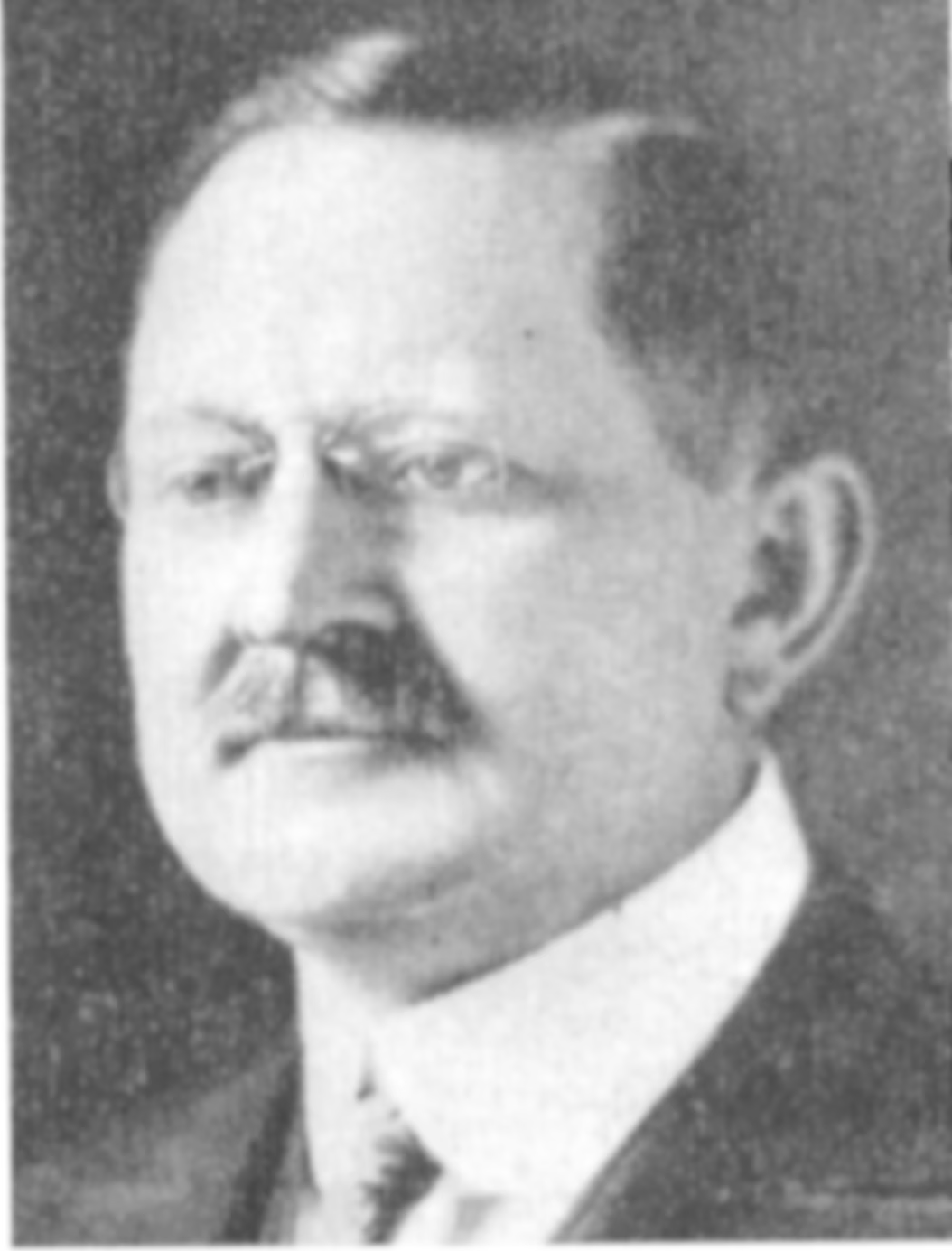
Elbridge Amos Stuart (1856-1944): Visionary founder of the Carnation Company and pioneer of modern dairy farming. This formal portrait captures the determined gaze of the entrepreneur who transformed a bankrupt condensery into a global dairy empire. In 1908, Stuart established Carnation Farms in Washington’s Snoqualmie Valley, where he revolutionized Holstein breeding while championing his famous “contented cow” philosophy—believing that humane treatment of animals improved milk production. His innovative approaches to both marketing and animal husbandry created a lasting legacy that continues to influence dairy practices more than a century later.
E.A. Stuart took a leap of faith in 1908. He bought 360 acres of Snoqualmie Valley farmland sight unseen, banking on a tip from his childhood buddy Sam Hill about an upcoming railroad connection. Stuart, who’d already founded the Pacific Coast Condensed Milk Company (later Carnation Milk), faced a milk supply crisis. He needed more cows to produce more milk and fast.
Stuart’s solution? Create his dairy wonderland. By 1910, he’d expanded to 750 acres and established Carnation Stock Farms as a showcase facility. He spared no expense, bringing in top-notch Holstein-Friesian cattle and hiring the cream of the crop in animal husbandry experts.
What set Stuart’s approach apart was his unique blend of science and compassion. While he meticulously tracked bloodlines and started a selective breeding program, he also developed a radical philosophy about animal treatment. Stuart firmly believed that happy cows were productive cows—a notion that would become the cornerstone of Carnation’s breeding program and brand identity.
This was the birth of an operation that would grow to 1,400 acres and turn the dairy world on its head.
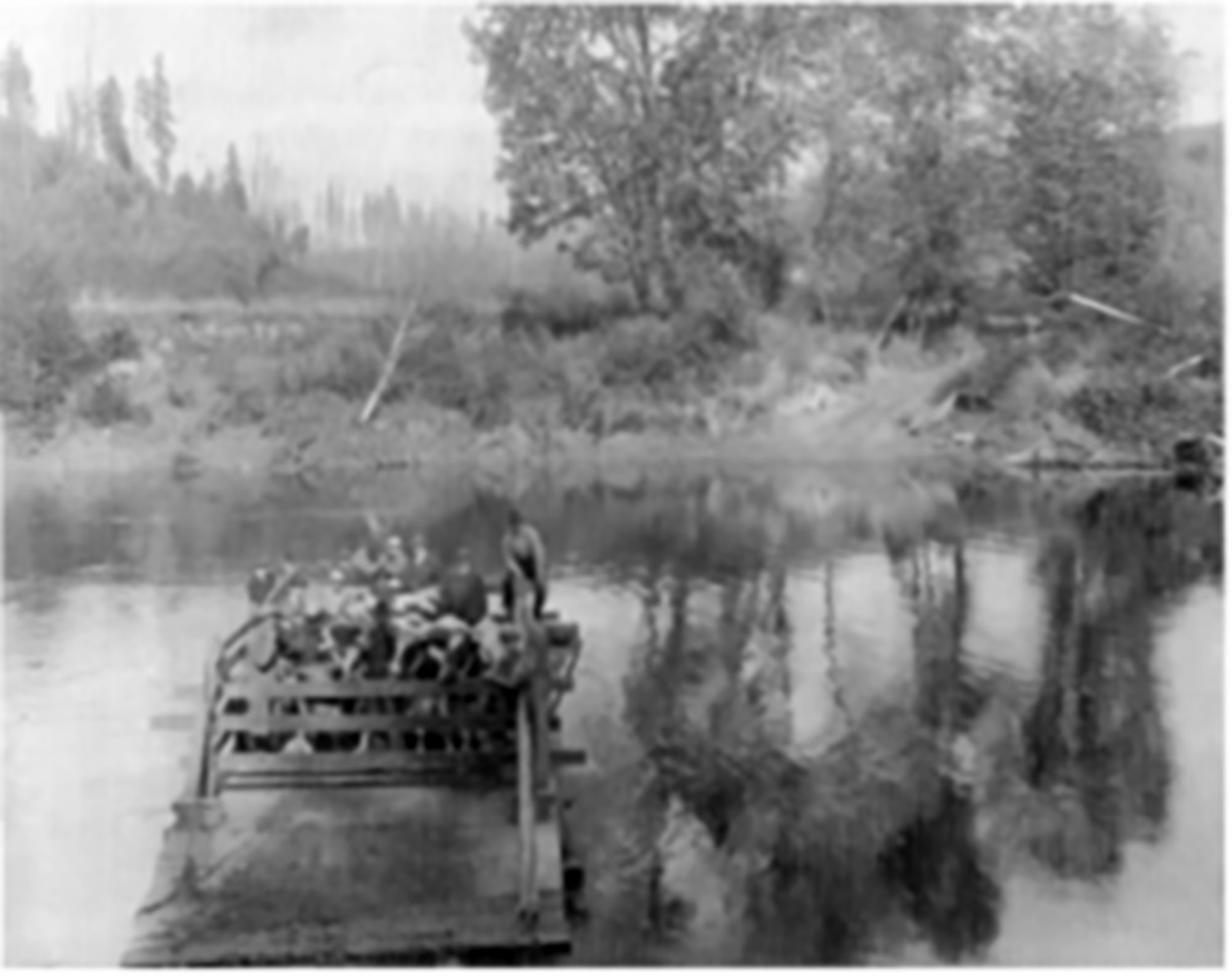
Historic Transport to Carnation’s Dairy Empire: This rare photograph from circa 1910 captures a cable ferry crossing the Snoqualmie River, the lifeline for E.A. Stuart’s fledgling Carnation Farms. Before railroads reached the valley in 1911, boats and ferries provided the only connection between Stuart’s ambitious dairy operation and the outside world. Milk produced at the farm traveled by river to processing facilities, while livestock and supplies made the reverse journey. The surrounding landscape shows the partially cleared wilderness that greeted Stuart when he purchased the property sight unseen in 1908—a purchase he initially called “a disgrace for a Stuart to be connected with.” This ferry crossing marked the beginning of what would become one of America’s most famous agricultural enterprises, home to record-breaking “Contented Cows” and revolutionary breeding practices that transformed dairy farming worldwide.
The “Contented Cow” Philosophy: More Than Just Marketing
Carnation’s iconic “Contented Cows” slogan was born in a lightbulb moment during a 1906 Chicago marketing meeting. As Stuart waxed poetic about his cows’ royal treatment, someone quipped that “they must be very contented cows.” Little did they know, they’d just coined one of history’s most memorable agricultural taglines.
But this wasn’t just clever wordplay. Stuart put his money where his mouth was, instituting concrete policies ahead of their time. In the main barn’s breezeway, a sign still hangs today, laying out the farm’s animal welfare guidelines:
“The RULE to be observed in this stable at all times, toward the young and old cattle, is that of patience and kindness… Remember that this is the home of mothers. Each cow should be treated as a mother should be treated. Giving milk is a function of motherhood; rough treatment lessens the flow. That injures me as well as the cow. Always keep these ideas in mind when dealing with my cattle.”
Workers were even banned from cursing at the cows. This wasn’t just about being nice—Stuart understood that stress could seriously dampen milk production, a connection that modern dairy science would later confirm.
Modern studies back up Stuart’s hunch: stress hormones can put the squeeze on milk production
Carnation’s 6x/day milking schedule for champion cows hit the sweet spot for optimal production.
Their approach was decades ahead of the curve in dairy welfare practices
Holstein History in the Spotlight: E.A. Stuart proudly stands with his dual National Dairy Show champions at Syracuse, NY in 1923. On the left is Tillamook Daisy Butter King DeKol, the highest-producing cow ever to win the National championship with her remarkable 4-year-old record of 32,488 pounds of milk and 1,247 pounds of butterfat. On the right stands Carnation Matador Adelina Segis, Junior Champion female and daughter of the influential Matador Segis Walker bull. This historic photograph captures a pivotal moment in Holstein breeding history, showcasing Carnation Farms’ rising dominance in both show ring excellence and production records that would help establish their “contented cow” breeding program as one of the most influential in American dairy farming.
Breeding Program Development and Methodology
Carnation’s breeding program was a game-changer in the dairy world. Stuart zeroed in on purebred Holstein cattle, investing big bucks in premium breeding stock and top-tier personnel.
The goal? Crank up milk production through selective breeding. Carnation attacked this challenge with scientific precision, keeping meticulous records of bloodlines, production data, and offspring performance to guide their breeding decisions.
What set Carnation apart was its commitment to research. By the 1950s, it had built a million-dollar research lab dedicated to cracking the code of cow contentment and productivity. This scientific approach to breeding went hand in hand with its focus on animal care and nutrition.
But Carnation didn’t keep their genetic gold to themselves. They actively spread the wealth by crossbreeding their prize Holstein bulls with independent dairymen’s stock, increasing milk production efficiency throughout the industry.
The results spoke for themselves: Carnation became America’s undisputed champion of prize-winning Holstein cows, consistently raising the bar for milk production and butterfat content.
“Many of today’s Holsteins carry ‘Carnation genetics’—a living testament to their century-long pursuit of excellence.”
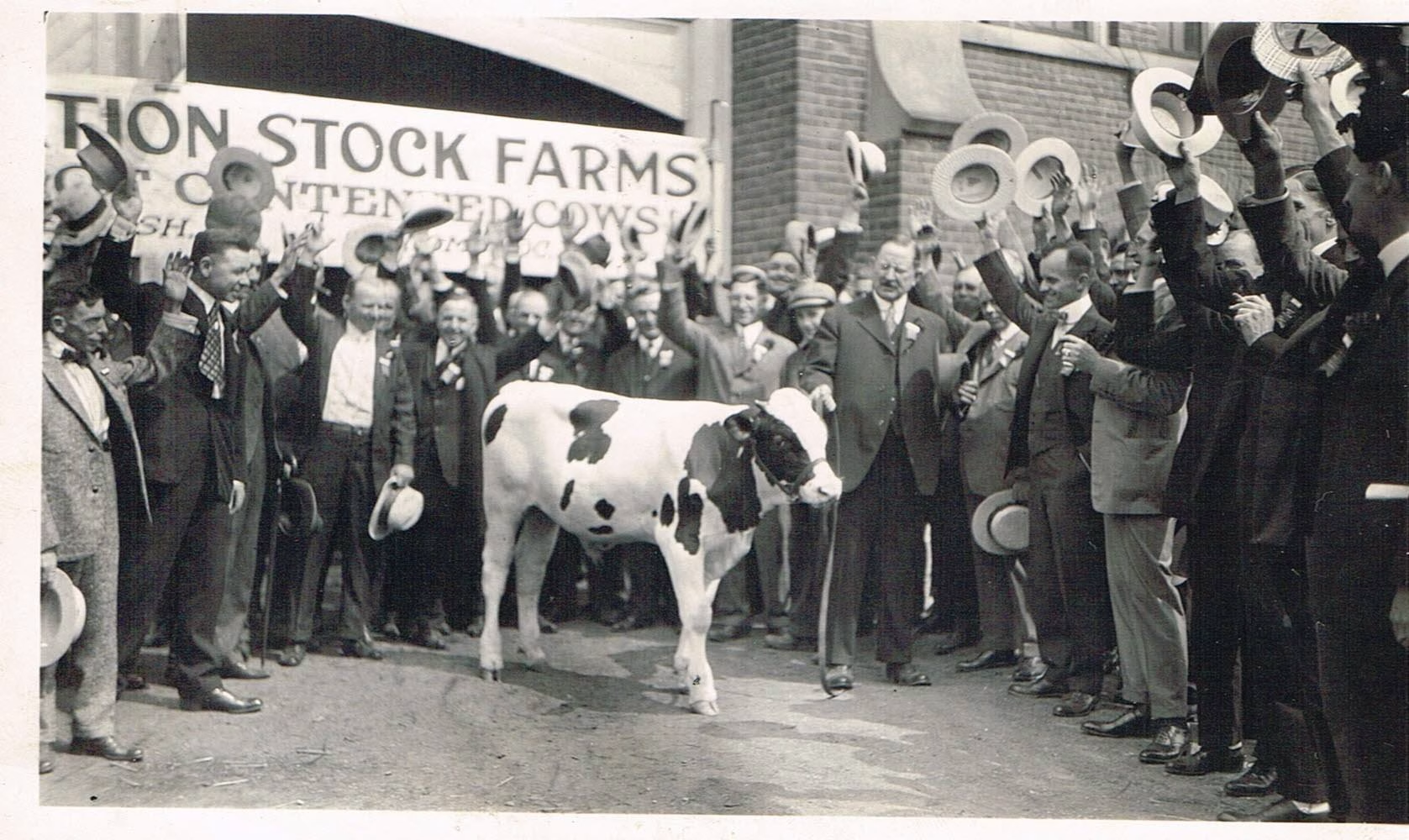
Historic Dairy Milestone: Carnation King Sylvia’s Celebrated Tour (1918). This remarkable photograph captures the fanfare surrounding Carnation King Sylvia, the Holstein bull calf that shocked the dairy world when E.A. Stuart paid an unprecedented $106,000 (equivalent to $1.9 million today) for him at the National Holstein Sale in Milwaukee. The crowd of cheering men, raising their hats in celebration beneath the “CARNATION STOCK FARMS” banner, demonstrates the celebrity status this purchase created. Stuart brilliantly transformed this acquisition into a nationwide marketing campaign, parading the valuable calf at whistle-stops across America during its train journey to Washington. This carefully orchestrated publicity tour not only promoted Carnation’s “Contented Cows” philosophy but established the farm as a serious player in elite Holstein breeding circles. The investment would pay dividends far beyond publicity—King Sylvia’s genetics would help shape Carnation’s superior Holstein bloodlines, contributing to their record-breaking milk production achievements in subsequent decades and cementing Stuart’s reputation as a visionary in dairy cattle breeding.
Record-Breaking Champions: Notable Cows and Bulls
Carnation’s breeding program produced some real bovine superstars. They churned out more prize-winning Holstein cows than any other U.S. breeder, with several achieving legendary status in dairy breeding history.
The cream of the crop was Segis Pietertje Prospect, affectionately known as “Possum Sweetheart.” She embodied everything Carnation’s breeding philosophy aimed for. With skilled milker Carl Gockerell, who milked her six times daily like clockwork, Segis Pietertje Prospect shattered production records.
Metric
Segis Pietertje Prospect (1920)
Average Cow (1920)
Modern Holstein (2017)
Annual Milk Production
37,381 lbs
4,000 lbs
77,480 lbs (record)
Milking Frequency
6x daily
2-3x daily
2-3x daily
Production vs. Body Weight
Produced her weight in milk every ~3 weeks
N/A
N/A
Segis Pietertje Prospect’s production was off the charts—nearly ten times that of an average cow in 1920. She became a global sensation, with newspapers worldwide singing her praises. Even celebrities got in on the action, with heavyweight champ Jack Dempsey and French General Marshal Joffre stopping by to pay their respects.
When Segis Pietertje Prospect passed away in 1925 at the ripe old age of 12, both Stuart and Gockerell were heartbroken. In 1928, they erected a monument in her honor at the entrance to Carnation Farms—believed to be the world’s first statue dedicated to an individual Holstein cow. You can still see this tribute to bovine excellence at the farm today.
Monument to Milk Majesty: The statue of Segis Pietertje Prospect (“Possum Sweetheart”) stands proudly at Carnation Farms, immortalizing the Holstein cow who shattered production records on December 19, 1920. Her unprecedented yield of 37,381 pounds of milk in 365 days—nearly tenfold the era’s average—revolutionized dairy breeding and cemented Carnation’s reputation for elite genetics. This bronze tribute honors not just an individual cow, but the enduring legacy of E.A. Stuart’s “contented cow” philosophy, which paired humane care with scientific rigor to redefine global dairy standards. Visitors today still marvel at her story, a testament to how one extraordinary animal helped shape modern agriculture.
While Segis Pietertje Prospect’s record was mind-blowing for her time, dairy genetics have come a long way. In 2017, a Wisconsin Holstein named Ever-Green-View My Gold-ET set a new national milk production record of 77,480 pounds in 365 days—more than double Segis Pietertje Prospect’s achievement and triple the 2015 U.S. Holstein average of 24,958 pounds.
Carnation’s Record Holders
Cow Name
Production Record (lbs)
Year
Achievement
Segis Pietertje Prospect
37,381 milk
1920
First world record
Carnation Ormsby Butter King
38,607 milk, 1,402 fat
1936
First 38,000-lb milk record
Carnation Ormsby Madcap Fayne
41,943 milk
1942
First 20-ton milk record
Carnation Homestead Daisy Madcap
36,414 milk, 1,511 fat
1951
First 1,500-lb fat record
Holstein Excellence on Display: This historic photograph showcases the Get of Carnation Madcap Butter Boy (EX-96-SMT), a premier Carnation Farms sire born in 1951. This impressive group earned Reserve All-American Get of Sire honors in 1958, exemplifying the elite breeding program that made Carnation Farms a dominant force in Holstein genetics. The cow nearest the camera is Carnation Sally Lola Princess (EX), who herself earned All-American Three-Year-Old recognition that same year. These daughters demonstrate the consistent type, dairy strength, and production capacity that characterized the Madcap family—one of Carnation’s most influential bloodlines. This quartet represents a pivotal moment in Holstein history, when breeding emphasized both show ring excellence and production capabilities, helping establish standards that would influence dairy cattle genetics for generations.
Research and Innovation: Beyond Traditional Breeding
Carnation’s success wasn’t just about traditional breeding methods—they poured serious cash into research and innovation. By mid-century, they’d unveiled a state-of-the-art, million-dollar research laboratory in Van Nuys, California, dedicated to pushing the boundaries of dairy science.
Their research went beyond breeding, diving into nutrition, welfare, and management practices. One standout innovation was Calf Manna, a specialized livestock feed cooked by nutritionists from Albers Milling (a Carnation subsidiary) at Carnation Stock Farms. Introduced in the early 1930s, this wonder feed boosted animal consumption and productivity, starting with dairy cows but eventually benefiting all livestock.
Elbridge Hadley Stuart, the founder’s son and Carnation’s president, was dead set on keeping the company at the cutting edge of dairy science. This drive for innovation created a culture where pushing boundaries was the norm.
This approach showed a remarkably modern understanding that milk production is a complex dance of genetics, nutrition, welfare, and management—all requiring scientific study. A holistic view put Carnation far ahead of many operations stuck in their ways.
A Vision Takes Root: Carnation Farms, 1907. This remarkable photograph by Lester Rounds captures Carnation Farms in its formative years, showcasing E.A. Stuart’s ambitious dairy enterprise nestled against the forested hillsides of Washington’s Snoqualmie Valley. Holstein cattle—the cornerstone of Stuart’s breeding revolution—graze contentedly within meticulously maintained white-fenced pastures, embodying the farm’s famous “contented cow” philosophy before it became a marketing phenomenon. In the background, the impressive complex of barns, housing facilities, and processing buildings demonstrates the scale of Stuart’s investment, transforming wilderness into what would become America’s most influential dairy breeding operation. This rare image documents the pastoral beginnings of an agricultural enterprise that would fundamentally reshape dairy genetics worldwide and establish breeding practices still influential in today’s industry.
Global Impact: Spreading Genetic Excellence Worldwide
Carnation’s influence spread like wildfire, reshaping dairy genetics across the globe. Their cows became hot commodities worldwide, with many of today’s dairy cattle tracing their family trees back to Carnation bloodlines. This wasn’t by accident—Carnation made a concerted effort to share their genetic gold with the broader industry.
One key strategy was crossbreeding their purebred Holstein bulls with independent dairymen’s stock. This supercharged the productivity of dairy herds far beyond Carnation’s fences, spreading superior genetics throughout the industry. The results were game-changing: dairy farmers worldwide could get more milk from fewer cows, boosting food security, cutting labor needs, and shrinking the environmental hoofprint per gallon of milk.
Decade
Canadian Milk Production (hl)
% Change vs. 1920s
Notable Events
1920s
54,405,972
Baseline
Segis Pietertje Prospect’s record (1920)
1950s
70,434,711
+29.5%
Peak of Carnation’s breeding influence
1980s
73,618,046
+35.3%
Post-Carnation sale to Nestlé (1985)
2020s
95,125,258
+74.8%
Modern genomic-era production
Using Canadian milk production data (which mirrors broader North American trends), this table shows a significant jump in milk production between the 1920s and 1950s. This perfectly contrasts with the period when Carnation’s Holstein genetics spread like wildfire. The upward trend continued in later decades, showcasing the lasting impact of improved dairy genetics.
The numbers tell a compelling story. When Carnation started its breeding program in the early 1900s, the average cow pumped a modest 1,500-1,900 pounds of milk annually. Production levels skyrocketed through selective breeding and improved management, with Carnation’s elite animals producing many times this amount. This efficiency revolution turned the economics of dairy farming on its head, allowing producers to maintain or boost milk supply with smaller herds.
Carnation’s breeding achievements also left their mark on Holstein breed standards internationally, helping shape the characteristics of the modern Holstein cow. Their focus on high production combined with functional conformation created a template for breeding objectives that still sway today.
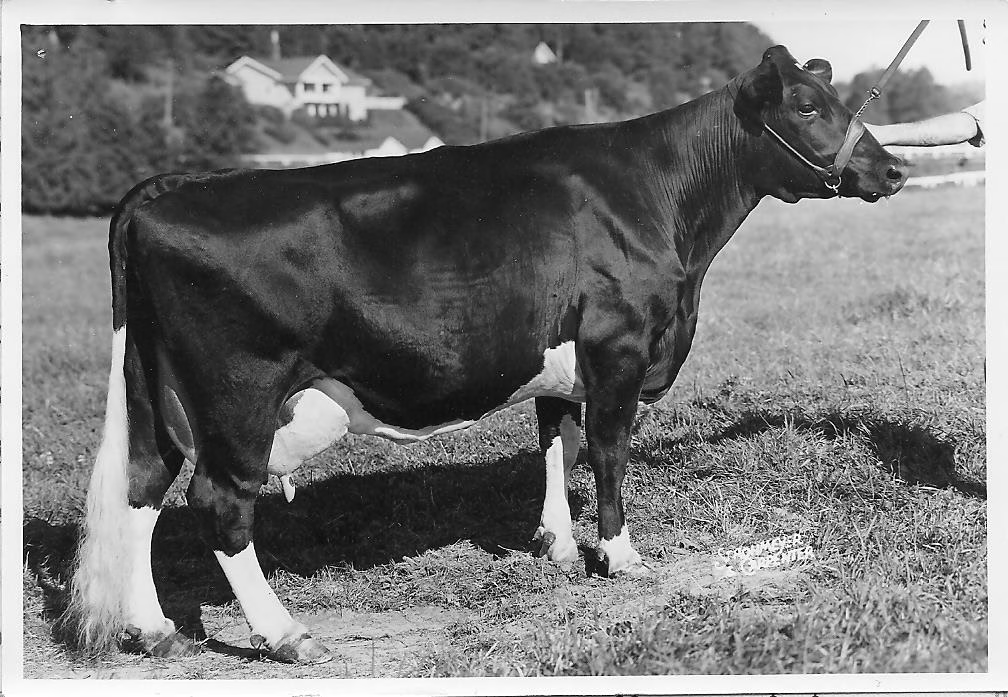
Carnation Heilo Violet: A Holstein Legacy on Display. This striking Holstein cow exemplifies the meticulous breeding program that made Carnation Milk Farms a world leader in dairy genetics. Photographed at the farm’s picturesque Snoqualmie Valley location, Heilo Violet showcases the ideal dairy conformation prized in Carnation’s selective breeding program. With her strong topline, deep body capacity, and well-attached udder, she represents the physical traits that supported exceptional milk production—the hallmark of the farm’s Holstein breeding success. Developed under E.A. Stuart’s famous “contented cow” philosophy, Carnation’s Holstein breeding lines produced numerous champions whose genetics continue to influence modern dairy herds worldwide. This classic black and white portrait captures not just a prize animal, but a living testament to the revolutionary approach to dairy breeding that transformed milk production efficiency throughout the 20th century.
Business Evolution and Corporate Context
You can’t tell the story of Carnation Milk Farms without understanding its role in the more prominent Carnation Company. The farm started to support Stuart’s evaporated milk business, addressing the chronic milk shortage plaguing his processing plants.
But it quickly became much more than a supplier. It evolved into a corporate showpiece, a cutting-edge research center, and a powerful marketing tool that brought the “contented cow” slogan to life. Stuart spared no expense, turning the farm into a showcase by acquiring top-notch Holstein-Friesian cattle and recruiting the best animal husbandry experts money could buy.
“If we somehow stumbled on a hair tonic that worked, Carnation would sell it.” – E.H. Stuart.
The relationship between Carnation Milk Farms and its parent company evolved. Carnation Company expanded far beyond evaporated milk, diversifying through strategic acquisitions. In 1929, they scooped up Albers Milling Company, allowing them to dip their toes into the cereals and animal feed market. This move supercharged their research capabilities, leading to nutritional studies for a menagerie of animals, with companion animals eventually becoming a significant focus. This research spawned consumer products, including the Friskies brand.
This diversification reflected the research-driven culture established at Carnation Farms. Their entrepreneurial spirit led to products like Friskies dog food, which, in 1934, grew directly out of the company’s dairy nutrition research.
The Carnation Company remained a Stuart family affair until 1985, when it was sold to Nestlé. In 2008, the original farm was sold to a nonprofit, and eight years later, the Stuart family established a new nonprofit called Carnation Farms on the historic site.
From Cows to Kibble
Carnation’s Unexpected Legacy
1934: Friskies dog food developed from cattle nutrition research
1950: Albers Milling (acquired 1929) becomes the top US animal feed producer
1985: Nestlé buys Carnation for $3 billion, seeking both dairy and pet food operations
Holstein Excellence Personified: C GRILLSDALE ROZ COUNSELOR EX-95, pictured here in her prime, represents the pinnacle of Carnation Farms’ genetic influence through her sire, Carnation Counselor-ET. This magnificent Holstein achieved 1st Aged Cow and Honorable Mention Grand Champion at the 1999 World Dairy Expo. Born December 9, 1991, she exemplifies the balanced type and production characteristics prized in Holstein breeding. Her deep maternal line through Grillsdale Heidi Tim 2E-EX showcases multi-generational excellence extending back to VG-86 Nelacres Johanna Senator. Bred by Clifford Grills of Campbellford, Ontario, and later owned by Larry Mohrfield of Pleasant Plain, Ohio, this cow demonstrates how Carnation Farms’ bloodlines continued to impact elite show rings decades after the farm’s golden era. Her powerful frame, exceptional mammary system, and overall dairy strength illustrate the enduring legacy of strategic Holstein breeding.
Legacy and Lasting Influence
Carnation Milk Farms’ legacy continues to shape modern dairy breeding and production. Their nearly century-long quest for genetic excellence created bloodlines that still run through dairy herds worldwide, with many contemporary Holsteins tracing their ancestry to Carnation-bred animals.
“Possum Sweetheart’s 1920 output wouldn’t make today’s top 100—but her genetic legacy does.”
Beyond genetics, Carnation’s dual focus on scientific breeding and animal welfare established principles that have become mainstream in modern dairy farming. Their “contented cow” philosophy was decades ahead of its time, anticipating the contemporary understanding of how animal welfare impacts productivity. This approach has shaped industry attitudes about dairy cattle management ever since.
Their methodical approach to genetic improvement through selection, record-keeping, and progeny testing laid the groundwork for practices that still inform breeding programs today. While contemporary dairy breeding now incorporates genomic selection—analyzing DNA directly rather than waiting for production records—the fundamental goal of identifying superior genetics for productivity remains unchanged from Carnation’s heyday.
The physical legacy of Carnation Milk Farms lives on, too. Visitors to the original farm in Carnation, Washington, can still see the historic barn with its famous kindness sign and the statue honoring Segis Pietertje Prospect. These artifacts preserve the tangible history of an operation that revolutionized dairy breeding while embodying values that continue to resonate with dairy professionals and the public.
Championship Lineage: PRICE-VIEW ANNIE (EX-94), born March 15, 1995—a testament to Carnation breeding’s enduring genetic influence. Sired by Carnation Counselor and out of GLENALCOMB BROKER ANN EX-92, Annie’s exceptional dairy conformation earned her ALL-AMERICAN Junior 3-Year-Old honors in 1998 while representing Carrousel Farms of Wisconsin. Her beautifully balanced body structure, capacity, and well-attached mammary system exemplify the traits dairy breeders strive for in modern Holsteins. Annie’s pedigree demonstrates how Carnation’s breeding philosophy continued to shape elite show ring winners decades after the farm’s heyday, with her maternal lineage tracing to the influential Hanoverhill Starbuck. This image represents the pinnacle of Holstein breeding excellence—a harmonious blend of production capacity and show ring style.
Connecting Past to Present: The Evolution of Dairy Breeding Principles
Carnation Milk Farms’ pioneering work in the early 20th century laid the groundwork for modern dairy breeding, bridging hands-on husbandry and today’s genomic revolution. While the tools have changed dramatically, the core principles of selective breeding, animal welfare, and data-driven decisions continue to steer the industry—proving that some strategies stand the test of time even as new challenges emerge.
From Eye-Appraisal to Algorithms: The Tools of the Trade
In the 1920s, Carnation’s breeders played a high-stakes game of genetic guesswork. They selected bulls based on pedigree records, milk yield of female relatives, and physical traits like udder conformation. Fast-forward to 2025, and farmers use genomic predictions to screen embryos for 50+ traits before implantation. What once took 5–7 years (waiting for a bull’s daughters to lactate) now takes months, with AI and embryo transfer accelerating genetic gains by 400%.
Timeless Principle: “Measure what matters”—whether tracking butterfat in ledger books or analyzing SNP markers, successful breeding hinges on robust data.
Solving Tomorrow’s Problems with Yesterday’s Wisdom
Modern dairy farming faces a double-edged sword: the need to slash methane emissions by 30% by 2030 while meeting skyrocketing global demand. Here’s where Carnation’s legacy offers unexpected solutions:
The “Contented Cow” 2.0 Carnation’s stress-reduction ethos (think: no swearing near cows) aligns with genomic insights linking cortisol levels to 20% lower milk letdown. Today, wearable sensors monitor real-time stress in herds—a high-tech twist on Stuart’s philosophy.
Efficiency as Sustainability While 1944’s cows produced 2,074 kg/year versus 9,193 kg in 2007, modern Holsteins now exceed 12,000 kilograms. Yet Carnation’s focus on efficient production (more milk per feed unit) remains critical—today’s dairy sector uses 35% less water and 23% less feed per liter than in 1944.
Genetic Diversity Dilemma The push for hyper-productive Holsteins has narrowed gene pools, risking inbreeding. Carnation’s strategy of crossbreeding bulls with diverse herds offers a blueprint to reintroduce hardy traits without sacrificing yield.
The Hybrid Future: Marrying Old & New
As climate change intensifies, the industry is returning to pasture-based systems—but with a genomic edge. Studies show pasture-raised cows have 30% lower hoof disease rates, while CRISPR-edited heat-tolerant embryos thrive in warm climates. It’s a full-circle moment: Carnation’s holistic care meets 21st-century precision.
The ghosts of Carnation’s contented cows still walk modern barns. Their legacy reminds us that the next agricultural revolution won’t come from tech alone—but from blending innovation with timeless respect for animals and land.
Breeding Metrics: 1920 vs. 2025
Metric
Carnation Era (1920s)
Modern Practice (2020s)
Improvement
Annual Milk Yield
4,000–8,000 lbs
22,000–26,000 lbs
450%
Breeding Cycle
5–7 years
1–2 years
70% faster
Key Selection Criteria
Udder shape, milk fat %
Hoof health, methane efficiency
Holistic focus
GHG Emissions/Liter
2.4 kg CO₂e
0.9 kg CO₂e
63% reduction
Cow Lifespan
10–12 years
3–5 years
Welfare concern
Sources:[1] Weller et al. 2021; Capper et al. 2009; Schaeffer 2006; The Bullvine 2024;PMC 2022
This table underscores a critical tension: while modern breeding achieves staggering efficiency, the halving of cow lifespans clashes with consumer demands for ethical treatment. The path forward may lie in Carnation’s forgotten metric—longevity—now being revisited through genomics to identify durable, climate-resilient cows.
Banners of Breeding Excellence: This remarkable collection showcases Carnation Farms’ show ring dominance from 1921-1926, a testament to E.A. Stuart’s revolutionary Holstein breeding program. These prestigious awards—including Grand Champion Holstein honors from the Pacific International Livestock Expositions (1922-1923) and multiple Premier Breeder banners from National Dairy Expositions—represent the pinnacle of dairy achievement during this golden era. Each fringed banner displays Carnation’s unrivaled success at America’s most respected cattle shows in Minnesota, New York, Detroit, and Waterloo, Iowa. These accolades weren’t merely decorative; they validated the farm’s “contented cow” philosophy and scientific breeding approach that was transforming milk production efficiency nationwide. The collection represents a dynasty in the making, as Carnation’s genetics would soon influence Holstein bloodlines throughout North America and beyond.
The Bottom Line
Carnation Milk Farms stands as a testament to how scientific advancement and compassionate animal care can work together to revolutionize an industry. From E.A. Stuart’s initial vision in 1908 to its enduring legacy today, the farm proved that genetic improvement and animal welfare aren’t competing priorities—they’re two sides of the same coin.
Through selective breeding of Holstein cattle, Carnation developed bloodlines that dramatically boosted milk production efficiency worldwide. Their approach allowed dairy farmers to produce more milk with fewer cows, changing the game in dairy production. Their record-breaking champions like Segis Pietertje Prospect pushed the boundaries of what was thought possible in dairy production. At the same time, their research deepened our understanding of the complex factors affecting milk yield.
Carnation’s approach—blending genetic selection with top-notch nutrition and humane treatment—created a blueprint for productive and ethical dairy farming that’s still relevant in today’s sustainability-focused agricultural landscape. The lasting influence of their breeding program on Holstein genetics worldwide is a living tribute to E.A. Stuart’s vision and the excellence of the operation he built over a century ago.
Key Takeaways:
Compassion as Strategy: Carnation’s “contented cow” philosophy (no swearing near cows, 6x daily milkings) increased yields by reducing stress—a practice validated by modern cortisol studies.
Genetic Gold Standard: Their Holstein breeding program produced record-breaking cows like Possum Sweetheart (37,381 lbs milk/year in 1920), whose descendants still dominate herds.
Sustainability Blueprint: Carnation’s focus on efficient milk-per-feed ratios (1,900s) aligns with today’s push to cut dairy’s carbon hoofprint by 30% by 2030.
Corporate Evolution: What began as an evaporated milk supplier became a research powerhouse, spinning off innovations like Friskies dog food via nutrition studies.
Legacy in Stone: The original farm’s barn signs and cow statues remain pilgrimage sites for dairy professionals, symbolizing agriculture’s humane-tech balance.
Executive Summary:
In 1908, Washington’s Carnation Milk Farms revolutionized dairy breeding through a unique blend of compassionate animal care and rigorous genetics. By treating cows as “mothers” deserving of patience, founder E.A. Stuart boosted milk yields while pioneering humane practices—his prize Holstein Segis Pietertje Prospect (“Possum Sweetheart”) produced 10x the era’s average. Carnation’s data-driven breeding and stress-reduction strategies predated modern welfare science, creating genetics that underpin 30% of North American herds. Their legacy—spanning corporate evolution into pet food giant Friskies—proves ethical farming and productivity aren’t mutually exclusive, offering lessons for today’s climate-smart dairies.
Demystifying Sustainability in Dairy Farming Connects Carnation’s “contented cow” philosophy to modern sustainability efforts, emphasizing how humane practices and genetic efficiency align with today’s environmental goals.
Holstein Breeding’s 16-Year Revolution This paper analyzes the shift from narrow “super-sire” genetics to diverse, health-focused breeding—a modern echo of Carnation’s balanced approach to herd improvement.
Join the Revolution!
Join over 30,000 successful dairy professionals who rely on Bullvine Daily for their competitive edge. Delivered directly to your inbox each week, our exclusive industry insights help you make smarter decisions while saving precious hours every week. Never miss critical updates on milk production trends, breakthrough technologies, and profit-boosting strategies that top producers are already implementing. Subscribe now to transform your dairy operation’s efficiency and profitability—your future success is just one click away.
To provide the best experiences, we use technologies like cookies to store and/or access device information. Consenting to these technologies will allow us to process data such as browsing behavior or unique IDs on this site. Not consenting or withdrawing consent, may adversely affect certain features and functions.
Functional
Always active
The technical storage or access is strictly necessary for the legitimate purpose of enabling the use of a specific service explicitly requested by the subscriber or user, or for the sole purpose of carrying out the transmission of a communication over an electronic communications network.
Preferences
The technical storage or access is necessary for the legitimate purpose of storing preferences that are not requested by the subscriber or user.
Statistics
The technical storage or access that is used exclusively for statistical purposes.The technical storage or access that is used exclusively for anonymous statistical purposes. Without a subpoena, voluntary compliance on the part of your Internet Service Provider, or additional records from a third party, information stored or retrieved for this purpose alone cannot usually be used to identify you.
Marketing
The technical storage or access is required to create user profiles to send advertising, or to track the user on a website or across several websites for similar marketing purposes.
To provide the best experiences, we and our partners use technologies like cookies to store and/or access device information. Consenting to these technologies will allow us and our partners to process personal data such as browsing behavior or unique IDs on this site and show (non-) personalized ads. Not consenting or withdrawing consent, may adversely affect certain features and functions.
Click below to consent to the above or make granular choices. Your choices will be applied to this site only. You can change your settings at any time, including withdrawing your consent, by using the toggles on the Cookie Policy, or by clicking on the manage consent button at the bottom of the screen.
Functional
Always active
The technical storage or access is strictly necessary for the legitimate purpose of enabling the use of a specific service explicitly requested by the subscriber or user, or for the sole purpose of carrying out the transmission of a communication over an electronic communications network.
Preferences
The technical storage or access is necessary for the legitimate purpose of storing preferences that are not requested by the subscriber or user.
Statistics
The technical storage or access that is used exclusively for statistical purposes.The technical storage or access that is used exclusively for anonymous statistical purposes. Without a subpoena, voluntary compliance on the part of your Internet Service Provider, or additional records from a third party, information stored or retrieved for this purpose alone cannot usually be used to identify you.
Marketing
The technical storage or access is required to create user profiles to send advertising, or to track the user on a website or across several websites for similar marketing purposes.









 Join the Revolution!
 Join the Revolution!