Archive for China dairy imports

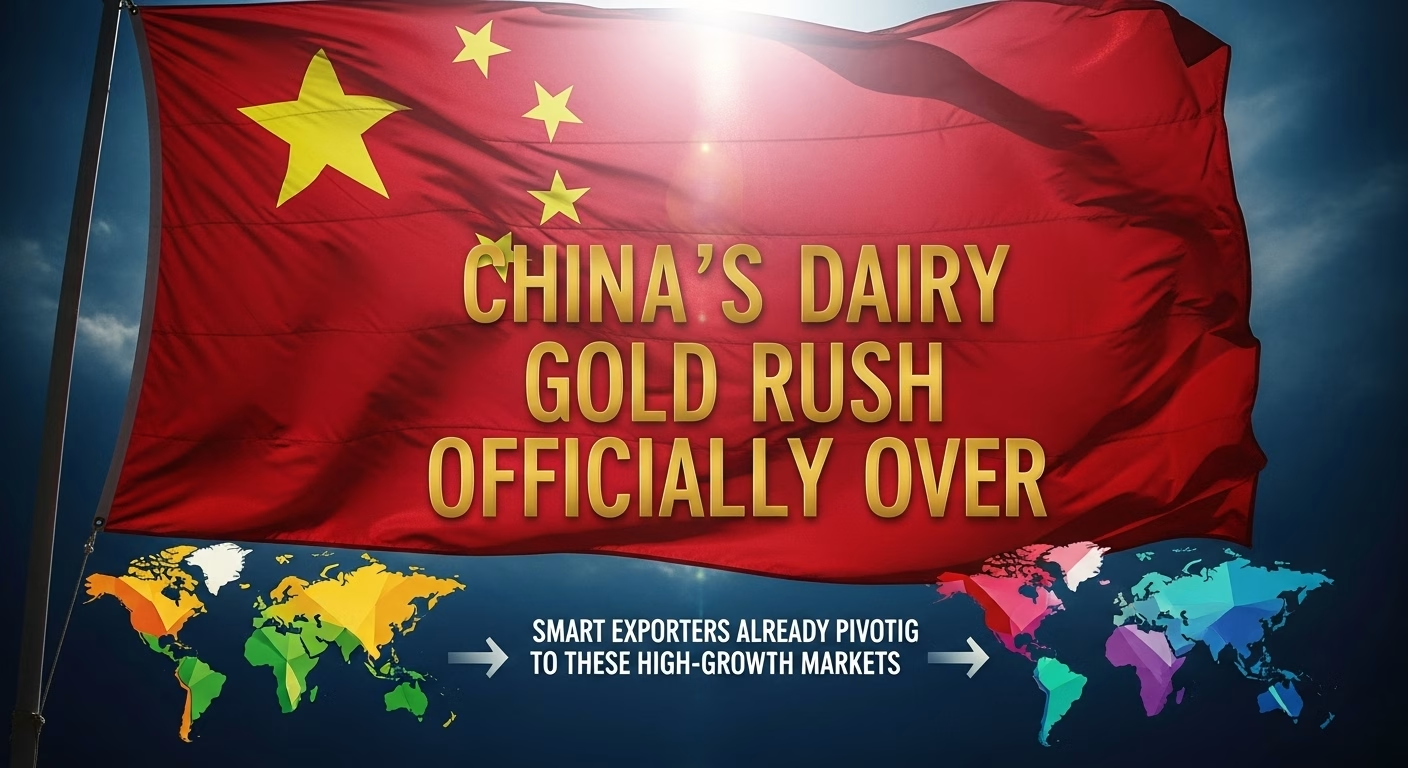
China’s Dairy Gold Rush Officially Over: Smart Exporters Already Pivoting to These High-Growth Markets

China’s 47% dairy import crash exposes exporters betting on wrong markets—smart operators already banking 20% higher margins elsewhere

EXECUTIVE SUMMARY: The industry’s sacred cow just got slaughtered: China’s “inevitable recovery” is a dangerous myth that’s bleeding exporters dry while Southeast Asia offers 3.14% annual growth and genuine import demand. The data destroys conventional wisdom—China’s milk powder imports crashed 47% since 2021, with 80% of Chinese farms now selling below their cost of production due to government-subsidized oversupply. Meanwhile, progressive exporters are capturing 15-20% higher margins in growth markets where structural milk deficits create sustainable pricing power instead of taxpayer-funded competition. Southeast Asia’s 3.14% CAGR and the Middle East’s 4.6% growth represent $3.3 billion in redirected revenue that China’s structural decline is permanently redistributing to operators smart enough to pivot. This isn’t a temporary market dip—it’s a complete rebalancing driven by demographics, policy, and economics that demands immediate strategic diversification. Stop chasing China’s shrinking margins and start banking profits in markets that actually want your milk equivalent instead of trying to replace it with subsidized domestic production.

KEY TAKEAWAYS

  • Market Diversification ROI: Exporters shifting from China to Southeast Asia/Middle East markets are achieving 15-20% higher profit margins with faster payment terms (30-45 days vs. China’s 60-90 days), creating immediate cash flow improvements and reduced political risk exposure
  • Strategic Pivot Framework: The 90-day diversification blueprint redirecting 25-30% of marketing resources toward growth markets delivers measurable revenue protection against China’s structural $3.3 billion import contraction while competitors fight over subsidized scraps
  • Alternative Market Fundamentals: Southeast Asia’s structural milk production deficit and 3.14% CAGR growth, combined with Middle East’s 4.6% expansion driven by health campaigns, creates genuine import demand versus China’s policy-driven substitution of foreign supply with domestic surplus
  • Technology Integration Advantage: North American exporters leveraging genomic testing expertise, precision agriculture systems, and processing technology partnerships can capture defensible high-value niches worth $2,000-4,000 per MT premiums versus commodity powder’s break-even margins in oversupplied Chinese markets
  • Implementation Urgency: The 18-month competitor lag time for market diversification creates a critical advantage window for exporters who establish distributor relationships in Indonesia, Malaysia, Saudi Arabia, and Mexico before intensified competition arrives from redirected New Zealand and EU volumes
China’s dairy import collapse isn’t a temporary dip—it’s structural devastation. With milk powder imports crashing 47% since 2021 and 80% of Chinese farms selling below cost, the exporters still chasing Beijing’s “recovery” are about to get crushed by operators who’ve already captured Southeast Asia’s 3.14% annual growth.

Here’s the brutal truth your industry consultants won’t tell you: China’s era as the volume-driven growth engine “capable of absorbing near-limitless quantities of commodity dairy products” is definitively over. The numbers don’t lie—total milk powder imports collapsed from 2.58 million metric tons in 2021 to just 1.36 million MT by 2024, representing a catastrophic 47% market contraction.

But while your competitors fight over China’s shrinking margins, the smartest operators are already banking serious profits in markets that actually want what you’re selling.

The Demographic and Policy Reality That Killed China’s Appetite

Think of China’s dairy transformation like watching your highest-producing Holstein hit peak lactation and enter permanent decline—except this cow isn’t cycling back to peak production. The fundamentals have shifted permanently.

The Birth Rate Catastrophe China’s demographic collapse has demolished the foundation of dairy demand growth. Infant formula imports plummeted 37.1% from 350,000 MT in 2021 to just 220,000 MT in 2024. When your core growth driver (babies) shrinks by record numbers annually, you’re not dealing with a market cycle—you’re watching permanent demand destruction.

The Self-Sufficiency Sledgehammer Beijing’s food security obsession created something exporters never saw coming: a policy-driven supply glut so severe that 80% of Chinese dairy farms are now selling milk below their cost of production. Raw milk prices crashed 30% from their 2021 peak by mid-2024, forcing processors to convert surplus milk into powder with government subsidies.

The government of Xinjiang alone offered subsidies of 4,000 RMB per metric ton for whole milk powder production starting in mid-2024. Translation? China is now competing against its own imports with a taxpayer-funded domestic product.

The Economic Slowdown Reality China’s economy entered “a period of protracted slowdown, marked by a deep crisis in the real estate sector, high youth unemployment, and persistently weak consumer confidence”. Cautious consumers began cutting back on premium-priced imported dairy products, creating a perfect storm of reduced demand and increased domestic competition.

Where the Real Money Is Moving: Verified Growth Markets

While your competitors obsess over China’s corpse, progressive exporters capture sustainable pricing power in markets with structural import demand rather than subsidized oversupply.

Southeast Asia: The Premier Growth Engine Southeast Asia represents the strongest fundamentals for long-term success, with a projected 3.14% CAGR growth through 2033. Unlike China’s policy-driven self-sufficiency push, Southeast Asia has structurally low domestic milk production, unable to meet escalating demand.

The region’s demand is powered by fast-paced urbanization, a growing middle class with rising disposable incomes, and heightened consumer consciousness around health and nutrition. The Philippines exemplifies this opportunity—local production accounts for only 1% of domestic requirements, creating massive import dependency.

Middle East: Health-Driven Premium Demand The Middle East offers even stronger growth at 4.6% CAGR through 2030, driven by government-led health and wellness campaigns to combat high rates of lifestyle diseases and a growing affluent expatriate population. Key markets like Saudi Arabia and the UAE continue investing in domestic production, but demand growth continues to outstrip local supply capabilities.

Latin America: The Steady Recovery Play Latin America’s dairy market projects steady growth at +0.4% CAGR through 2035. The region is emerging from a period of significant volatility caused by severe weather events and economic instability, with Mexico representing a large, stable import market for North American exporters.

The New China Strategy: Defensible High-Value Niches Only

Here’s where conventional industry wisdom gets dangerous. Most exporters still believe they can “pivot to premium products” in China. According to the research data, this advice isn’t just wrong—it’s catastrophic.

The Premium Product Myth Destroyed Cheese, long touted as the “next high-growth frontier,” has faltered dramatically. Cheese sales value declined for three consecutive years through the first half of 2024. This collapse occurred despite years of industry predictions about China’s premium product opportunity.

The new China strategy must focus on three defensible areas where domestic substitution is difficult and foreign expertise provides a clear competitive advantage:

  • Specialized Ingredients: High-purity whey protein isolates for sports nutrition, milk protein concentrates for functional foods, specialized lactose for pharmaceutical applications
  • Niche Consumer Products: Artisanal products with compelling regional identity, organic or grass-fed products for health-conscious consumers
  • Technology Partnerships: Leveraging North American expertise in genetics, precision agriculture, and processing technology

Your 90-Day Market Diversification Blueprint

Month 1: Intelligence Gathering & Risk Assessment

  • Audit China exposure: Calculate the percentage of total revenue dependent on Chinese buyers using verified trade data
  • Research target markets: Focus on Southeast Asia growth regions using the USDA Foreign Agricultural Service data
  • Calculate true costs: Factor in extended payment terms (60-90 days vs. 30-45 days in growth markets), tariff risks, margin pressure

Month 2: Market Testing & Relationship Building

  • Ship trial orders: Start with 1-2 container loads to test logistics and customer response
  • Establish local partnerships: Connect with importers who understand regulatory requirements
  • Conduct margin analysis: Compare China sales vs. alternative market opportunities using verified pricing data

Month 3: Strategic Reallocation

  • Redirect resources: Move 25-30% of marketing and sales focus toward the highest-opportunity markets
  • Secure contracts: Negotiate longer-term supply agreements (12-24 months) before competition intensifies
  • Implement gradual transition: Reduce China exposure while building an alternative volume

Global Impact: How Major Exporters Are Already Adapting

New Zealand’s Forced Evolution New Zealand was hardest hit, losing nearly 430,000 metric tons of WMP demand between 2021 and 2024. The country accounted for 46% of China’s total dairy imports by volume in 2024 and an astonishing 92% of its WMP imports, making it the epicenter of the shock.

European Union’s Diversification Success The EU experienced a massive 31% drop in dairy product volumes shipped to China in 2022 alone. However, exporters with diversified portfolios maintained better overall performance, particularly Danish and Dutch cooperatives leveraging specialty cheese expertise in Middle Eastern markets.

United States’ Strategic Focus U.S. dairy exports to China peaked in 2022 at over $800 million before falling to an estimated $583 million by 2024. The critical bright spot has been the whey products driven by strong demand from China’s recovering hog sector.

Market Comparison: Where Your Margins Thrive vs. Die

Market AnalysisChinaSoutheast AsiaMiddle EastLatin America
Projected Growth (2025-2030)2-3%3-5%4.6%~1.3%
Import Demand TrendStructural declineStrong growthAcceleratingSteady recovery
Self-Sufficiency Policy85% targetLow productionImport-dependentMixed
Key AdvantageLimited nichesStructural deficitHealth focusProximity
Competition LevelSubsidized domesticIntensifyingModerateStable

Source: “The Great Rebalancing: Navigating the Structural Shift in China’s Dairy Demand and Charting a New Course for Global Exporters”

Why This Matters for Your Operation: The ROI Reality

Current China Strategy Costs (Verified Data):

  • Payment terms: 60-90 day cash flow impact vs. 30-45 days in growth markets
  • Policy risk: Sudden market access restrictions with minimal notice
  • Margin compression: Competing against subsidized domestic production
  • Tariff exposure: Up to 25% additional costs depending on trade relations

Alternative Market Benefits (Research-Backed):

  • Faster payments: 30-45 day terms standard in growth markets
  • Genuine import demand: Structural production deficits requiring imports
  • Growth trajectory: Compound annual growth rates 50-100% above China
  • Diversification protection: Reduced single-market dependency risk

The Bottom Line: Your Export Future Depends on This Pivot

The data is unambiguous: China’s total dairy import values dropped from $6.8 billion in 2021 to an estimated $3.5 billion in 2024—a staggering $3.3 billion market contraction. This isn’t a temporary dip; it’s a structural rebalancing driven by policy, economics, and demographics.

China’s dairy market’s compound annual growth rate over the next two decades is projected at just 2-3%, half the pace of the previous 20 years. Meanwhile, Southeast Asia offers 3.14% CAGR, the Middle East delivers 4.6% CAGR, and these markets actually need your imports instead of trying to replace them.

Research from leading dairy economists confirms that exporters with diversified portfolios performed better during China’s downturn than those with concentrated exposure. The evidence is overwhelming—diversification isn’t just a smart strategy, it’s survival.

Your competitors won’t make this pivot for another 18 months—that’s your advantage window. The operators who establish positions in Southeast Asia, the Middle East, and Latin America now will capture the revenue that China’s structural decline is permanently redistributing.

Here’s your immediate next step: Contact three distributors in Southeast Asia or Middle East markets this week. Request current pricing for SMP, WMP, and specialty products. Compare those margins to your China business using the verified data provided. The numbers will make your decision obvious.

The dairy gold rush isn’t over. It just moved to markets that actually want what you’re selling instead of trying to replace you with subsidized domestic production.

The structural shift is permanent. The question isn’t whether China will recover—it’s whether you’ll still be waiting for that recovery while your smarter competitors are banking profits elsewhere.

Complete references and supporting documentation are available upon request by contacting the editorial team at editor@thebullvine.com.

Learn More:

  • Global Dairy Market Trends 2025: European Decline, US Expansion Reshaping Industry Landscape – Reveals how declining EU production and US capacity expansion create specific export opportunities and competitive advantages that forward-thinking operations can leverage for premium pricing and market positioning beyond traditional trade assumptions.
  • Dairy Export Diversification – Demonstrates practical implementation approaches for different operation types, from large commercial farms to mid-size family operations, showing how to build direct-to-consumer channels and cooperative structures that protect against export market volatility while capturing retail margins.
  • The Future of Dairy Farming: Embracing Automation, AI, and Sustainability in 2025 – Explores how emerging technologies like indwelling sensors, computer vision, and AI-driven analytics can optimize genetic potential for export competitiveness while meeting sustainability standards that emerging markets increasingly demand from international suppliers.

Join the Revolution!

Join over 30,000 successful dairy professionals who rely on Bullvine Weekly for their competitive edge. Delivered directly to your inbox each week, our exclusive industry insights help you make smarter decisions while saving precious hours every week. Never miss critical updates on milk production trends, breakthrough technologies, and profit-boosting strategies that top producers are already implementing. Subscribe now to transform your dairy operation’s efficiency and profitability—your future success is just one click away.

NewsSubscribe
First
Last
Consent

Dairy Trade War: Beijing Slams Door on US Suppliers As New Zealand Profits from Tariff Chaos

China’s dairy imports inch up as trade wars reshuffle global suppliers. New Zealand wins big while US struggles with tariff whiplash.

EXECUTIVE SUMMARY: China’s dairy powder imports showed modest growth in early 2025 (+2% YoY), driven by declining domestic milk production and strategic stockpiling ahead of volatile US-China tariffs. New Zealand captured 46% of imports through duty-free access, while US suppliers faced near-exclusion during peak 125% tariffs. Chinese domestic consumption remains tepid, whey imports surged 42% as buyers raced tariff deadlines. The 90-day tariff reprieve in May offers temporary relief, but long-term trade uncertainty favors diversified sourcing and geopolitical stability over traditional market fundamentals.

KEY TAKEAWAYS:

  • Trade wars redefine suppliers: New Zealand dominates with duty-free access; US whey exports collapsed under 125% tariffs.
  • Domestic pressures: China’s milk production declines (-1.5-2.6% forecast) and 24-month price slump drive import needs.
  • Strategic stockpiling: March whey imports hit 4-year highs as buyers rushed to beat tariff deadlines.
  • Global ripple effects: Modest import growth (+2% YoY) masks permanent supply chain shifts favoring stable trade partners.
China dairy imports, US-China trade war, dairy tariffs, global dairy market, whey powder

China’s dairy import landscape turned upside down in early 2025, with imports surging 23.5% in March amid unprecedented market chaos. Forget the modest 2% projected growth figure – the real story lies in the violent reshuffling of suppliers as Chinese buyers scramble to adapt. The market fell when Beijing hammered US dairy with punishing 125% duties before May’s reprieve. New Zealand emerged as the clear winner, snatching nearly 46% of China’s total dairy imports after securing duty-free access in January 2024. Meanwhile, US suppliers watched helplessly as their previously dominant position in China’s critical whey market evaporated overnight. For dairy producers worldwide, the rules have changed: trade policy now trumps quality, efficiency, and even price in a market increasingly driven by geopolitics rather than traditional fundamentals.

Tariff Whiplash Reshapes Global Dairy Supply Chains Overnight

The first half of 2025 delivered a gut punch to the US-China dairy trade. Starting with a seemingly manageable 10% tariff on US dairy products in March, tensions exploded when Beijing slapped 125% duties on American dairy by early April. Though mid-May negotiations yielded a 90-day reduction to approximately 20%, the damage to long-established trade relationships appears irreversible.

US dairy exporters took a direct hit. SMP exports to China vanished, plummeting to zero in February 2025. Considering the US previously directed 42% of its whey exports to China and controlled nearly half the Chinese whey market, this collapse represents nothing short of a disaster for American producers.

“We’re not just seeing a temporary trade hiccup,” warns Dr. Michael Harvey, Senior Dairy Analyst at Rabobank. “What’s happening is a fundamental realignment of global dairy flows that could outlast the current tensions. Chinese buyers have made it clear – they’ll pay premiums for supply stability and predictability, regardless of product quality or price advantages.”

Meanwhile, New Zealand dairy farmers are laughing to the bank. With complete duty-free access to China since January 2024 through their Free Trade Agreement, Kiwi producers now control an astonishing 46% of China’s dairy import market. This dramatic shift proves how rapidly trade policy can render traditional competitive advantages irrelevant, leaving producers at the mercy of political negotiations rather than rewarding efficiency or quality.

Strategic Stockpiling Drives Explosive Import Surge Despite Tepid Demand

China’s whey imports skyrocketed a staggering 41.7% in March to 67,812 metric tons – the highest monthly volume in nearly four years – as panicked buyers raced against crushing tariff deadlines. This frenzied stockpiling pushed cumulative whey imports up 35.8% above last year’s levels. WMP imports jumped 30.7% to 43,232 metric tons, helping drive a remarkable 23.5% surge in total March dairy imports.

What makes this buying spree particularly remarkable? It happened despite sluggish domestic consumption, creating a market paradox where overall dairy demand remains weak yet import volumes temporarily explode. The pattern reveals how powerfully trade policy fears now override traditional market signals.

“Look at the whey market to understand what’s happening,” notes Wei Zhang, Asian Dairy Market Analyst at Global Dairy Intelligence. Despite weak overall consumption in China, whey imports shot up 41.7% in March. Trade policy concerns are now trumping traditional market signals, creating pitfalls and opportunities for producers who can read these new dynamics.”

This import surge doesn’t signal a return to China’s glory days. WMP imports are projected at 460,000 metric tons for 2025, but they still lag well below the historical average of the past decade. Instead, it highlights a market where success demands precise timing and category-specific strategies rather than broad expansion across dairy products.

Chinese Milk Production Crisis Creates Targeted Import Openings

China’s domestic milk production is taking a nosedive, projected to fall 1.5-2.6% in 2025 after dropping 0.5% in 2024. Farmgate milk prices have crashed for 24 straight months, hitting brutal lows around .40/cwt by early 2025 – a crushing 15% below last year and well under production costs for many farmers.

This price collapse has forced countless smaller operations to shut down while driving significant herd reductions. Curiously, China’s National Bureau of Statistics reported milk output increased 1.7% in Q1 2025 compared to Q1 2024 – a puzzling contradiction highlighting the challenges in getting reliable data on China’s dairy sector.

China’s production woes create specific opportunities for global producers despite lackluster overall consumption. WMP stockpiles have dwindled to their lowest stocks-to-use ratios on record for March – a whopping 76% below the five-year average – creating supply gaps imports must fill.

“Finding new markets isn’t enough anymore,” warns Jennifer Smith from the US Dairy Export Council. “Today’s challenge is building resilience against politically driven disruptions that can vaporize demand overnight. American producers must face reality – the days of counting on China as a guaranteed growth market are over. Even if tariffs eventually normalize, the damage to buyer confidence can’t be undone.”

Success now demands precision rather than broad-brush approaches. While overall dairy consumption remains subdued, Chinese consumers increasingly favor health-oriented, functional, and premium dairy products, creating pockets of strong demand amid general weakness.

Chinese Buyers Radically Rethink Sourcing Strategies

The market chaos of early 2025 has forced Chinese importers to implement fundamentally different risk management approaches with lasting implications for global dairy trade. Beyond the March stockpiling frenzy, the more profound shift involves aggressive supplier diversification to reduce vulnerability to geopolitical flare-ups.

European suppliers gained ground in specific categories, particularly whey alternatives, when US supplies became prohibitively expensive. However, they face challenges with Beijing’s ongoing anti-subsidy investigation launched in August 2024. Australia, enjoying favorable trade status with no current Chinese tariffs on its dairy products, has also captured expanded market share, with notable gains in cheese exports to China in early 2025.

For dairy exporters worldwide, this fundamental rethinking of Chinese sourcing signals a new market reality where policy stability outweighs price advantages. Even with May’s tariff reduction dropping US rates from 125% to approximately 20%, industry experts doubt the 90-day window suffices to rebuild disrupted supply networks.

Once Chinese buyers establish alternative procurement channels, they rarely return to previously disrupted suppliers if uncertainty lingers. This reluctance creates potentially permanent shifts in global dairy trade patterns, favoring suppliers with stable market access, forcing exporters to develop risk strategies focused on political volatility rather than traditional market factors.

Key Questions for Dairy Leaders Amid China’s Market Upheaval

Reshaping China’s dairy import landscape poses existential challenges for dairy producers worldwide. Can traditional production efficiencies guarantee future profitability when geopolitical factors increasingly dictate market access? China’s situation suggests that strategic agility has become essential for dairy exporters.

The July 9 expiration of the current US-China tariff truce looms as a critical turning point. If negotiations yield a lasting, favorable arrangement, US suppliers might slowly rebuild their market position. However, returning to prohibitive tariffs would cement the migration to alternative suppliers, permanently altering global dairy trade patterns.

New Zealand stands poised to remain the prime beneficiary of China’s import demand, particularly for WMP and milk fats, leveraging its duty-free access secured in January 2024. EU suppliers could increase whey and SMP exports to China by filling gaps left by US producers, though the anti-subsidy investigation creates significant uncertainty.

For global markets, China’s recent import patterns point toward a dramatic reshuffling of market share among exporting countries rather than lifting global powder prices. China’s forecasted 2% overall dairy import increase looks modest against increasing global milk production, projected at 0.8% growth from major exporting regions in 2025.

As Chinese buyers increasingly value supply chain resilience over price, successful producers must integrate trade policy risk assessment alongside conventional market analysis. The challenge couldn’t be clearer: diversification across markets and products, combined with heightened attention to geopolitical developments, has become essential for survival in the world’s most significant dairy import market, now driven more by political calculations than traditional dairy market forces.

Learn more:

Join the Revolution!

Join over 30,000 successful dairy professionals who rely on Bullvine Weekly for their competitive edge. Delivered directly to your inbox each week, our exclusive industry insights help you make smarter decisions while saving precious hours every week. Never miss critical updates on milk production trends, breakthrough technologies, and profit-boosting strategies that top producers are already implementing. Subscribe now to transform your dairy operation’s efficiency and profitability—your future success is just one click away.

NewsSubscribe
First
Last
Consent

China Cranks Up Dairy Imports as Tariff War Rocks Global Supply Chains

Chinese buyers stockpiling dairy as tariffs hit! Whey imports explode 41.7% while New Zealand celebrates and US suppliers face extinction from 125% tariffs.

EXECUTIVE SUMMARY: China’s dairy import landscape has dramatically shifted in early 2025, with March data showing explosive growth in whey (41.7%), cheese (8.6%), and whole milk powder (30.7%) as buyers race to beat crushing new tariffs. This surge comes amid a perfect storm: Chinese domestic milk production has plummeted below cost at .40/cwt, the recovering hog industry is driving unprecedented whey demand, and trade wars have created clear winners (New Zealand with duty-free access) and losers (US facing prohibitive 125% tariffs). The timing couldn’t be more critical – China implemented initial 10% tariffs on US dairy products on March 10th before escalating to levels that effectively slam the door on American suppliers, reshaping global dairy supply chains virtually overnight. While most categories show strength, infant formula remains the exception with imports plummeting 35% due to China’s birth rate collapse, creating a market where overall volume shrinks yet premium segments thrive.

KEY TAKEAWAYS

  • Chinese buyers are stockpiling whey at record levels – March imports reached 67,812 metric tons, the highest monthly volume in nearly four years, driven by both tariff fears and surging demand from China’s recovering pig industry following African Swine Fever
  • New Zealand dominates as US faces extinction in China – With duty-free access as of January 2024, New Zealand has captured nearly 46% of China’s dairy imports and dominates growing butter/cheese segments, while American suppliers face devastating 125% tariffs that effectively eliminate export opportunities
  • Domestic production crisis creates import opportunities – Chinese milk prices have fallen to $19.40/cwt (15% below last year), well below production costs, forcing smaller operations out of business and creating a supply gap that imports must fill
  • Trade policy now outweighs market fundamentals – Geopolitical tensions have replaced traditional economic signals as the primary driver shaping dairy trade flows, requiring exporters to develop new strategic approaches focused on policy risk rather than just price competitiveness
  • Category-specific approach critical for success – While overall dairy imports grow, the infant formula market has collapsed by 35% due to demographic challenges, highlighting how success requires targeted strategies for specific segments rather than broad-brush approaches
China dairy imports, dairy trade war, global dairy market, New Zealand dairy exports, US dairy tariffs

Chinese buyers are scrambling to secure dairy supplies amid escalating trade tensions, with March import volumes surging across most categories. Whey imports exploded to 67,812 metric tons – a stunning 41.7% jump from last year – while cheese imports climbed 8.6% and whole milk powder jumped 30.7%. Behind these dramatic numbers lies a perfect storm of factors: buyers racing to beat crippling tariffs, domestic milk production faltering below cost, and shifting supplier dynamics that have New Zealand dairy farmers celebrating while American exporters face disaster. The new trade landscape creates clear winners and losers that will reshape dairy markets for years.

SupplierMarket PositionKey Trends (Jan-Feb 2025)Key Challenges (as of April 2025)
New ZealandDominant (46% share)Strong growth in butter, cream, cheeseNone – enjoys full duty-free access
European UnionMajor SupplierOverall volume down 16.5%; strength in specific categoriesAnti-subsidy investigation by China
United States#3 SupplierSignificant decline expectedFacing prohibitive 125% tariffs
AustraliaKey SupplierStrong performance in cheeseThere are fewer trade barriers than the US/EU

Chinese Buyers Stockpile Whey as Tariff Deadline Looms

Talk about planning! Chinese importers dramatically accelerated their whey purchases in March, pushing low-protein whey imports to their highest monthly volume in nearly four years.

Why the sudden buying frenzy? It’s simple – they’re racing against the tariff clock. The United States has dominated China’s whey market, supplying nearly 46% of its imports in early 2025. However, with US-China relations deteriorating and new Trump administration tariffs looming, Chinese buyers knew the party wouldn’t last forever.

“This isn’t random stockpiling – it’s calculated risk management,” says dairy market analyst Zhang Wei. “Chinese feed mills and food processors can see the writing on the wall with these trade tensions.”

The timing couldn’t be more critical. It was just the beginning when China slapped that initial 10% tariff on US dairy products on March 10th. By early April, we’d seen those rates skyrocket to a prohibitive 125%, slamming the door on American suppliers. For perspective, China represents about $584 million in annual US dairy exports – making it America’s third-largest market.

African Swine Fever Recovery Drives Whey Demand Surge

Isn’t it interesting how seemingly unrelated factors create market opportunities? The surge in whey imports directly connects to China’s ongoing recovery from African Swine Fever (ASF), which devastated their hog industry starting in 2018.

This highly contagious virus forced the mass culling of infected herds, slashing China’s swine inventory by 40-60%. But here’s what matters now – their pig industry is recovering, driving serious whey demand for piglet feed.

Remember how US whey shipments to China plummeted 41% in August 2023 compared to the previous year? That trend has completely reversed as China’s pig farms rebuild. But there’s another critical factor at work – industry restructuring. After ASF decimated small farms, larger commercial operations gained market share. These bigger farms wean piglets earlier, which means they use more whey per pig throughout its lifecycle.

Before ASF hit, China’s whey consumption averaged about 0.45 kg per piglet. That figure’s climbing as consolidation continues, potentially driving even greater demand as herds fully recover. But here’s the billion-dollar question: where will all that whey come from now that US suppliers face prohibitive tariffs?

Cheese and Milk Powders Also Show Strength

It’s not just whey we are seeing dramatic increases. Chinese cheese imports reached 16,726 metric tons in March, climbing 8.6% above year-ago levels. Unlike whey, where American suppliers dominated, New Zealand has captured the lion’s share of China’s cheese market.

Let’s face it – New Zealand dairy exporters are now drinking champagne. Their free trade agreement gives them duty-free access to China while American suppliers face crushing tariffs. The numbers tell the story – New Zealand and Australia supplied about 80% of China’s cheese imports in early 2025.

New Zealand’s strong milk production season has allowed them to pivot manufacturing toward products that are seeing increased Chinese demand. Their timing couldn’t be better as trade barriers knock out their biggest competitor.

Milk powder imports also rebounded in March, with whole milk powder surging 30.7% to 43,232 metric tons, while skim milk powder eked out a slight 0.7% gain. This marks a reversal from earlier trends, as China reduced powder imports during January and February.

Domestic Production Challenges Create Import Opportunities

Have you noticed China’s domestic dairy sector is caught in a painful price-cost squeeze? Chinese milk prices have been spiraling downward since late 2021, hitting $19.40/cwt in January 2025 – well below the cost of production for many farmers.

Rabobank forecasts a 2.6% decline in China’s milk output in 2025, marking the second consecutive year of contraction. With farmgate milk prices 15% lower year-over-year in February, Chinese farmers have little incentive to expand production.

Many smaller operations are exiting the business entirely, while even larger farms are scaling back production plans. This domestic supply contraction creates a fundamental gap that imports must fill, especially as Chinese consumers show signs of increasing dairy consumption in specific categories.

Early 2025 economic data indicated stronger-than-expected results, potentially boosting consumer purchasing power for dairy products. But here’s the kicker – the escalating trade war threatens to undermine this economic momentum. China exported nearly $440 billion worth of goods to the United States last year, and economists warn the trade war will significantly impact China’s growth prospects.

Infant Formula: The One Category Bucking the Trend

While most dairy categories are growing, infant formula tells a different story. China’s imports fell by a shocking 14.8% in 2024, and the downward trend has only accelerated in 2025, with imports down 35% in the first half of the year compared to 2024.

The reason? It’s simple demographics. China’s birth rate has collapsed, with annual births plummeting by half between 2016 and 2023 – from 18.7 million to just 9 million babies. One food industry analyst bluntly called it a “crisis” for the infant formula industry.

But even within this shrinking market, there are fascinating bright spots. Several foreign infant formula brands achieved double-digit growth in 2024 by focusing on the premium segment, which expanded to 37% of the market from 32.8% in 2023.

Isn’t that typical of China’s evolving consumer landscape? Even as the overall market contracts, premium and specialized segments grow. Health-conscious Chinese parents with means are increasingly seeking specialized formulas like hypoallergenic options and organic products. The lesson here? Companies with the right premium positioning can still win even in challenging markets.

New Supplier Landscape: Winners and Losers

The escalating US-China trade war has completely reshuffled the competitive landscape for dairy exporters to China, creating clear winners and losers overnight.

New Zealand: Popping Champagne

New Zealand couldn’t have scripted a better scenario if they tried. Already China’s largest dairy supplier with a 46% share of total dairy import volume in 2024, New Zealand’s position is further strengthened by its comprehensive free trade agreement. While US products face punishing tariffs of up to 125%, New Zealand’s dairy enters China completely duty-free as of January 2024.

The impact is already visible in trade data. New Zealand dominated China’s growing imports of butter (up 72.6%), cream (up 12.7%), and cheese (up 14.5%) during January-February. Fonterra, New Zealand’s dairy giant, reported January shipments significantly higher in volume and value, driven partly by Chinese demand.

United States: From Leader to Loser Overnight

For US dairy exporters, the situation has turned dire. The initial 10% tariff slapped on US dairy products on March 10th quickly escalated to a prohibitive 125% by mid-April, effectively pricing American dairy out of the Chinese market.

This goes far beyond just lost sales. The damage spreads throughout the supply chain as American processors scramble to find alternative markets for massive product volumes, potentially at lower prices.

The whey category faces the most immediate impact. With nearly half of US whey exports headed to China, processors now face the daunting challenge of redirecting these volumes to other markets. Can they pivot fast enough, or will we see a price collapse in other markets as diverted products flood in?

European Union: Caught in the Middle

The European Union occupies a middle ground in this trade reshuffling. EU dairy exports to China decreased by 16.5% in early 2025, but specific countries and products showed strength. France emerged as a key supplier of butter and cream, while Italy saw its fresh cheese exports to China soar by 38.7%.

A significant win for European suppliers came in March when China lifted restrictions on heat-treated German dairy products that had been imposed due to a foot-and-mouth disease case. This reopened a vital market for Germany, which sent nearly 25% of its non-EU dairy exports to China in 2023.

But can European suppliers capitalize on America’s misfortune? They face challenges with China’s ongoing anti-subsidy investigation into certain EU dairy imports, particularly cream and cheese varieties. This probe creates uncertainty for future EU access to the Chinese market. Are we seeing a pattern of China systematically targeting Western dairy suppliers while favoring New Zealand and Australia?

What This Means for Global Dairy Markets

The shifts in China’s import patterns have significant consequences for the Chinese domestic market and the broader global dairy landscape.

For US dairy farmers, the situation is harrowing. Not only are exports to China effectively blocked, but the redirection of products to other markets will likely pressure domestic prices. The USDA has slashed milk price forecasts for 2025, with analysts projecting Class III milk prices could drop by 35¢/cwt due to trade disruptions.

New Zealand and Australian producers stand to benefit as they fill the gap left by American suppliers. European exporters may find opportunities in specific categories like whey and lactose, which the US previously dominated, though they must navigate their trade tensions with China.

For Chinese consumers, the long-term impact will likely be higher prices for certain dairy products as tariffs force a shift to potentially more expensive suppliers. The country’s efforts to increase domestic production self-sufficiency may accelerate in response to these trade disruptions.

The Bottom Line: Navigating the New Dairy Order

Let’s face it – the surge in China’s March dairy imports reflects both opportunistic buying ahead of tariffs and genuine need driven by domestic production shortfalls. This short-term boost masks more profound structural changes in the global dairy trade that will persist long after the headlines fade.

Understanding these shifting trade patterns for dairy farmers worldwide is crucial for navigating the reality of the new market. Those in tariff-affected regions must explore alternative markets and possibly adjust production plans. At the same time, those with favorable access to China should capitalize on the opportunity while remaining vigilant about potential policy changes.

The dairy industry has always been cyclical, but today’s challenges extend beyond normal market fluctuations. The current trade war has fundamentally altered competitive dynamics in ways that will reshape dairy supply chains for years, requiring unprecedented adaptability from all market participants.

Are you positioned to thrive in this new landscape, or will you be caught flat-footed as markets shift? The winners will recognize these structural changes early and adapt their strategies accordingly. The losers? Those who expect things to go back to “normal” once this trade dispute resolves. The harsh reality is that we’re looking at a permanently altered dairy trade landscape – and the time to adjust is now.

Learn more:

Join the Revolution!

Join over 30,000 successful dairy professionals who rely on Bullvine Daily for their competitive edge. Delivered directly to your inbox each week, our exclusive industry insights help you make smarter decisions while saving precious hours every week. Never miss critical updates on milk production trends, breakthrough technologies, and profit-boosting strategies that top producers are already implementing. Subscribe now to transform your dairy operation’s efficiency and profitability—your future success is just one click away.

NewsSubscribe
First
Last
Consent

China’s Dairy Imports Expected to Surge in 2025, Ending Three-Year Slump

Find out how China’s increase in dairy imports in 2025 might change global markets. Could this comeback open new chances for farmers around the world? Learn about the effects now. 

Summary:

The article explores China’s anticipated rebound in dairy imports in 2025 following a three-year decline. With a projected 2% year-on-year growth and a specific 6% increase in Whole Milk Powder imports, this shift could significantly alter global dairy markets. China’s domestic milk production is declining, contributing to lower farmgate milk prices and industry consolidation. Meanwhile, global milk supply from leading exporters is expected to rise by 0.8%. These factors suggest a potential balance in global dairy supply and demand. Despite this, China’s economic challenges and low consumer confidence may hamper a full recovery in dairy consumption, prompting caution among industry stakeholders.

Key Takeaways:

  • China is expected to see a 2% annual increase in dairy imports in 2025.
  • Whole Milk Powder (WMP) imports are projected to reach 460,000 metric tons in 2025, indicating a 6% growth.
  • Chinese milk production decreased by 0.5% in 2024 and is predicted to drop by 1.5% in 2025.
  • Low farmgate milk prices in China, close to 10-year lows, have reduced herds and farm closures.
  • Global milk supply from major exporting regions is expected to grow by 0.8% in 2025
China dairy imports, milk production decline, global dairy market impact, whole milk powder imports, economic pressure on dairy farmers

China’s import growth could increase demand for various dairy products, impacting global markets.

According to a recent Rabobank report, China’s dairy imports, which had been decreasing for three years, are forecasted to rise in 2025. This change could strongly affect global dairy markets and prices, bringing hope to farmers who have experienced lower demand from the world’s largest dairy importer. 

China’s Dairy Market At a Crossroads: A Pivotal Moment Amidst Rebound 

China’s dairy sector is undergoing a significant transformation, signaling a profound shift in its dairy import practices. Milk production fell by 0.5% in 2024, and experts say it will drop by another 1.5% in 2025, according to Rabobank predictions. This drop matches consumer demand, meaning dairy imports could increase by 2% in 2025. China is changing to deal with supply problems and meet consumers’ wants. This shift in China’s dairy market is set to impact global dairy markets considerably, potentially influencing prices and trade dynamics significantly. 

The expected increase in China’s dairy imports in 2025 represents a notable departure from historical trends. The projected 2% increase in imports for 2025 contrasts with the substantial amounts purchased in 2021, where China acquired around 3.95 million tons of dairy products. In 2023, imports fell by 12% to 2.6 million tons. The predicted 6% rise in whole milk powder (WMP) imports to 460,000 metric tons in 2025 is still below the average of the last ten years. This shows how China’s dairy market has been up and down over the past ten years and hints it might be settling down at lower levels than before.

YearDairy Imports Growth (%)Whole Milk Powder Imports (metric tons)Chinese Domestic Milk Production Change (%)
2023-8%430,000-0.5%
2024-5%435,000-0.5%
20252%460,000-1.5%

Domestic Struggles Propel China’s Dairy Import Surge

These domestic challenges have increased the economic pressure on Chinese dairy farmers, making it harder for them to keep up production levels. Small to medium-sized farms are struggling, leading to more farms joining together. This shows not only the struggles of individual farmers but also a significant change in the country’s farming scene

Lower milk production in China is a key reason for the increase in dairy imports. Persistent economic challenges, such as low consumer confidence, exacerbate this decline and hinder recovery initiatives. The situation is primed for a significant shift, and problems at home might offer international dairy producers a chance to step in and meet the rising demand. 

Global Dairy Dynamics: A World of Change Amid China’s Growing Demand

As China’s demand for dairy imports grows, the world will increase milk production to meet this rising demand. Rabobank says the milk supply will increase by 0.8% by 2025. This is important because all the significant milk-exporting areas are expected to grow simultaneously for the first time since 2020. This could help balance the world dairy market, with supply and demand coming together well.

Whole Milk Powder Imports: A Shifting Landscape for China

China imports a lot of whole milk powder (WMP) and is expected to increase by 6% to 460,000 metric tons in 2025. This shows that China is changing how it buys dairy products, which could affect global markets that depend on these imports.

Economic Challenges and Consumer Sentiment in China’s Dairy Landscape

While there is optimism for an increase in China’s dairy imports, several notable economic challenges remain. The main problems are low consumer confidence and weak income expectations, which cause people to spend less on dairy products. As the middle-class expansion in China slows, less extra money is available to buy more dairy products, making it harder for the market to bounce back. 

Amidst the challenges, a ray of hope shines through. Rabobank predicts a slight increase in dairy consumption in 2024 and a projected drop in domestic milk production. This could lead to a surge in imports. With China’s milk output potentially decreasing by 1.5% in 2025, there could be a greater need for imports to meet consumer demands, offering a promising outlook for the future market. 

The delicate balance between local constraints and global market trends suggests a cautious but optimistic view for those observing China’s dairy market recovery. Recognizing these economic factors is essential for effectively navigating evolving market dynamics and capitalizing on new prospects for global dairy sellers and producers.

The Bottom Line

As the world’s largest dairy importer, China’s resurgence in the dairy market presents a promising opportunity for farmers worldwide. This expansion has the potential to reshape the market landscape significantly, opening up novel and enticing avenues for global dairy product sales. Farmers facing reduced demand from China can now ramp up production and explore new product markets, igniting a sense of excitement and motivation for the future. 

How could this change help your dairy business? What plans do you have to take advantage of this change?  

Learn more:

Join the Revolution!

Bullvine Daily is your essential e-zine for staying ahead in the dairy industry. With over 30,000 subscribers, we bring you the week’s top news, helping you manage tasks efficiently. Stay informed about milk production, tech adoption, and more, so you can concentrate on your dairy operations. 

NewsSubscribe
First
Last
Consent

China’s Dairy Dilemma: October Import Slump Raises Red Flags for Global Markets

Discover how China’s October dairy import decline affects global markets and your business. Learn about potential impacts on the dairy industry.

Summary:

As China navigates the delicate terrain of economic recovery and geopolitical challenges, its dairy import patterns paint a picture of unmet demand and market volatility. In October, significant declines were noted across various dairy categories; skim milk powder (SMP) imports plunged by over 53% year-over-year and marked a fourteenth consecutive month of decline despite a slight uptick from the previous month. Whole milk powder (WMP) imports mirrored this downward trajectory, falling nearly 16% compared to the prior October, tallying 34.2 million pounds in October 2024, which improved by 11 million pounds from September. However, imports provided a glimmer of positivity by increasing by 4.6%, reflecting the United States’ stable market share. The implications of these import slumps point to a complex dilemma of domestic herd management and international trade tensions, with looming tariff threats potentially compounding future uncertainties. Industry experts predict China’s diminished dairy herd and milk powder reserves might trigger a rebound in demand and import volumes. Still, external economic pressures could further strain global trade dynamics.

Key Takeaways:

  • China’s skim and whole milk powder imports continued to decline year-over-year in October, persisting a long-standing trend of weakened demand.
  • Whey imports surfaced as a positive standout, with a modest increase compared to the previous year.
  • China’s dairy herd reductions and lower whole milk powder inventories may catalyze increased import activity in future months.
  • Potential US tariff hikes on Chinese goods could disrupt trade dynamics, possibly affecting China’s dairy inventory replenishment strategies.
  • The United States maintained its market share for whey imports, aligning with its average from previous years.
  • Despite slight improvements in some areas, overall dairy import volumes for butter and cheese in China remained low, further exacerbating concerns over demand stability.
China dairy imports, global dairy market, skim milk powder decline, whole milk powder imports, China demand trends, dairy-exporting countries, dairy herd reduction, milk powder stockpiles, international trade relations, global dairy supply chain

China’s position as the world’s largest dairy importer casts a long shadow across global markets, making its purchasing power a critical barometer for industry health worldwide. However, the October dip in dairy imports isn’t just a blip on the radar; it’s a glaring red flag that demands attention. The figures paint a stark picture of declining demand, with skim milk powder and whole milk powder imports plummeting to record lows. This trend raises a critical question for dairy farmers and industry professionals: What does this mean for the future of the global dairy market? The declining imports reflect underlying challenges that could reshape market dynamics, pointing to a potential ripple effect across international markets. For those with a stake in the dairy industry, the implications of these figures are profound, demanding a strategic reevaluation of market forecasts and supply chain decisions. Adapting to the changing market conditions is crucial. How will this import slump influence your business strategies?

Dairy Declines and Economic Entanglements: Navigating China’s Import Challenges 

China’s recent dairy import figures are challenging, particularly for skim milk powder (SMP) and whole milk powder (WMP). As of October 2024, the figures reveal a significant year-over-year decline in SMP imports, falling over 53% to a mere 23 million pounds. While this marks the fourteenth consecutive month of decline, it’s noteworthy that there was a slight improvement from September, with an increase of nearly 2 million pounds

The situation is similar for WMP imports, which decreased by nearly 16% year over year. Despite this drop, there was a noticeable month-over-month recovery, with imports reaching 34.2 million pounds in October, an increase of 11 million pounds from September’s figures. 

The implications of these declining import trends extend beyond China’s borders, impacting the global dairy market. As the world’s largest dairy importer, China’s demand trends can significantly influence global prices and trade dynamics. Persistent declines could suggest weakening demand in China, potentially affecting export volumes and prices for major dairy-exporting countries. 

On the other hand, industry insiders anticipate that China’s smaller dairy herd and reduced milk powder stockpiles might soon lead to increased demand and a rebound in import volumes. However, external economic factors, such as proposed tariffs, could further complicate the picture by affecting international trade relations and access to Chinese markets. The potential for trade tensions exacerbating the situation underscores the need to navigate these challenges carefully.

Butter and Cheese Imbalance: Is China’s Dairy Demand Drying Up?

The data indicates an apparent stagnation in these markets when examining the performance of China’s butter and cheese imports. With butter imports slipping by 3% and cheese imports seeing a more pronounced decline of 12% compared to October of the previous year, these figures mark the smallest import volumes in recent history. The reduction in butter imports is especially notable as it represents the smallest quantity imported in three years. Meanwhile, cheese imports have been relatively high for over two years, indicating a significant downturn. 

The reasons behind these declines are multifaceted. On the domestic front, reducing consumer demand, possibly influenced by changing dietary preferences and economic uncertainties, could contribute. Additionally, the ongoing challenges in China’s dairy sector, specifically the reduced herd size and depleted milk powder inventories, might further suppress the need for imports. On a broader scale, geopolitical tensions, such as the potential imposition of tariffs by the US, could exacerbate the situation, threatening to constrict trade flows further. 

Historically, China’s dairy import levels have been a barometer of its economic health and consumer behavior. China’s demand for imported dairy products surged during previous economic expansion and rising consumer affluence. However, the current contraction in butter and cheese imports suggests a shift in this trend, raising concerns among international dairy exporters aiming to tap into the Chinese market. 

These import contractions also have significant ramifications for the global dairy trade. Exporting nations, mainly those heavily reliant on the Chinese market, might experience surplus stock or price pressures as demand wanes. Furthermore, the global dairy supply chain, already reeling from disruptions over the past few years, could face additional challenges if China’s demand does not recover promptly. 

Butter and Cheese: The Slipping Pillars of China’s Dairy Imports

The data indicates an apparent stagnation in these markets when examining the performance of China’s butter and cheese imports. With butter imports slipping by 3% and cheese imports seeing a more pronounced decline of 12% compared to October of the previous year, these figures mark the smallest import volumes in recent history. The reduction in butter imports is especially notable as it represents the smallest quantity imported in three years. Meanwhile, cheese imports have been relatively high for over two years, indicating a significant downturn. 

The reasons behind these declines are multifaceted. On the domestic front, reducing consumer demand, possibly influenced by changing dietary preferences and economic uncertainties, could contribute. Additionally, the ongoing challenges in China’s dairy sector, specifically the reduced herd size and depleted milk powder inventories, might further suppress the need for imports. On a broader scale, geopolitical tensions, such as the potential imposition of tariffs by the US, could exacerbate the situation, threatening to constrict trade flows further. 

Historically, China’s dairy import levels have been a barometer of its economic health and consumer behavior. China’s demand for imported dairy products surged during previous economic expansion and rising consumer affluence. However, the current contraction in butter and cheese imports suggests a shift in this trend, raising concerns among international dairy exporters aiming to tap into the Chinese market. 

These import contractions also have significant ramifications for the global dairy trade. Exporting nations, mainly those heavily reliant on the Chinese market, might experience surplus stock or price pressures as demand wanes. Furthermore, the global dairy supply chain, already reeling from disruptions over the past few years, could face additional challenges if China’s demand does not recover promptly.

Sounding the Alarm: The Shrinking Dairy Herd and Rising WMP Import Necessities

Industry insiders are warning about the notable reduction in China’s dairy herd, a move driven by the pursuit of short-term cost efficiencies. This strategic culling directly correlates with reduced dairy output, resulting in dwindling inventories of whole milk powder (WMP). As these inventory levels shrink, the necessity for increased imports becomes more pronounced. Analysts speculate that this trend could have significant implications for global dairy producers. 

An uptick in China’s WMP imports could spell lucrative opportunities for dairy exporters worldwide, particularly in countries like New Zealand and the United States. The need to replenish China’s depleted stockpiles could spur a surge in demand, potentially offsetting recent declines in import volumes. However, geopolitical factors like evolving tariff policies remain a wildcard that could bolster or hinder this anticipated increase. 

Global dairy markets are closely monitoring these developments. Any significant boost in demand from China could influence international milk powder prices, benefiting producers by lifting profit margins. However, such dependency also carries risks; an overreliance on China’s buying behavior could expose global producers to volatility stemming from regional policy shifts. The unfolding scenario underscores an intricate balance of supply, demand, and international trade relations that dairy stakeholders must navigate vigilantly.

Tariff Turmoil: Navigating the Coming Storm in Global Dairy Trade 

As the Trump administration moves toward imposing substantial tariffs on Chinese goods—potentially exceeding 60%—the ripple effects could severely impact the global dairy trade, especially between the United States and China. Such aggressive tariffs could trigger retaliatory measures from China, potentially escalating into a full-blown trade war restricting US exports across multiple sectors, including dairy products. This scenario would directly affect American dairy farmers and the broader agricultural economy, which relies heavily on Chinese purchases to maintain market stability. 

Moreover, imposing these tariffs might reduce the competitive edge of US dairy products by inflating their prices in the Chinese market and encouraging China to seek alternative dairy suppliers. Such a shift could have a long-lasting impact on US dairy exporters who have heavily invested in establishing and expanding their presence in the Chinese market. For those in the dairy industry, it begs the question: How resilient are your supply chains and market strategies in the face of such volatile geopolitical factors? 

The potential trade tensions underscore a broader issue: the interconnectedness of global markets and the delicate balance required to maintain healthy trade relationships. Dairy professionals and agricultural business leaders need to consider long-term strategic planning that accounts for possible political and economic disruptions. Could diversification into other markets or developing new product offerings provide a buffer against such uncertainties? 

In this context, industry stakeholders are encouraged to remain vigilant and proactive, assessing not only the immediate impacts of changes in trade policy but also preparing for the broader implications. The complexity of today’s global supply chains demands foresight and adaptability, placing a premium on informed decision-making and strategic agility.

China’s Strategic Diplomacy: An Olive Branch Amid Economic Crosswinds

China extends an olive branch to the United States amid growing global economic uncertainties. Vice Commerce Minister Wang Shouwen emphasized China’s willingness to engage in active dialogue with the US, anchored in the principles of mutual respect. This move aims to foster the development of bilateral economic and trade relations. Wang articulated China’s intent to “expand areas of cooperation and manage differences” with Washington, reflecting a proactive stance in fortifying economic ties. Addressing concerns over impending tariffs from US President-elect Donald Trump, Wang remarked that China possesses the capability to “resolve and resist” the impact of external shocks. 

The Blacklist and Beyond: Navigating the New World of Dairy Trade Amidst Geopolitical Tensions 

The implications of these developments extend beyond political rhetoric, signaling a critical shift in international trade dynamics. The expansion of the blocklist to over 100 entities is not just a number; it’s a clear testament to escalating tensions and a deepening divide between two of the world’s largest economies. How will this affect the dairy trade, especially for those companies striving to navigate these choppy waters? As agricultural entities in China face increasing scrutiny, could there be ripple effects that influence global markets, potentially altering supply chains and trade agreements? 

For the dairy industry, particularly those engaged in exporting to China, this blocklist expansion means more than just heightened awareness. It could necessitate reevaluating market strategies and supply networks. The agricultural sector, heavily implicated by this blocklisting, will face increasing pressure to address ethical production practices or risk losing critical partnerships. Yet, there’s also an opportunity here. Companies demonstrating compliance and ethical sourcing could position themselves as preferred partners amid geopolitical uncertainties. 

This move highlights the intricate interplay between ethics and economics. Understanding these nuances could be pivotal for dairy professionals in decision-making processes. As the US tightens its stance, will companies be prepared to innovate and adapt, ensuring resilience against such geopolitical shocks? It’s a challenge worth contemplating, as the implications could reshape dairy exports and the fabric of global agricultural trade.

The Bottom Line

The global dairy market faces uncertainty as China’s import patterns fluctuate, with notable declines in crucial commodities like skim and whole milk powder, butter, and cheese. Imports have waned due to diverse factors, ranging from domestic herd reductions to economic and political intricacies. Meanwhile, potential trade tensions, such as the looming tariffs from the US, could further disrupt supply chains and market dynamics

The notable exception remains in whey imports, suggesting a silver lining with potential for growth and adaptation. This raises a critical question: Are dairy producers and allied businesses prepared to navigate the unpredictable waters of international trade amidst these shifting currents? The future of dairy trading hinges on this preparedness, urging industry stakeholders to remain vigilant, strategic, and innovative in the face of evolving challenges.

Learn more:

Join the Revolution!

Bullvine Daily is your essential e-zine for staying ahead in the dairy industry. With over 30,000 subscribers, we bring you the week’s top news, helping you manage tasks efficiently. Stay informed about milk production, tech adoption, and more, so you can concentrate on your dairy operations. 

NewsSubscribe
First
Last
Consent

China’s Dairy Market Struggles: Imports Plummet While Whey Demand Surges

Why are China’s dairy imports falling while whey demand rises? Discover the impact on global dairy markets and your business strategy. Read more.

Summary:

Despite being the world’s largest dairy importer, China’s demand lags behind expectations. August saw a significant drop in milk powder imports, with whole milk powder down by 31.7% and skim milk powder falling by 23.5% year-over-year. While cheese imports also declined, the market for whey products presents a contrasting story. Driven by a recovery in the Chinese hog sector, low-protein whey imports surged by 25.7%, and high-protein whey products saw an impressive 60% increase. The underperforming Chinese economy, marred by weak retail sales and industrial production, casts a shadow over future dairy demand. However, as the domestic dairy sector struggles, there might be room for a rebound in imports.

Key Takeaways:

  • China’s dairy imports significantly declined across categories, with milk powder and cheese imports falling sharply in August.
  • Despite the overall downturn, whey imports surged due to increased demand from the recovering hog sector.
  • China’s economic challenges impact dairy demand, including weak retail sales and industrial production.
  • The government is striving to meet its GDP growth target of 5% for 2024 amidst financial turmoil.
  • There is cautious optimism for a rebound in dairy demand as margins deteriorate and milk production slows.

Consider the world’s most populated nation striving to satisfy its desire for milk. It’s hard to believe. Yet, this is precisely what is occurring in China. Despite being the world’s largest dairy importer, China’s demand for milk products has dropped unexpectedly. In August, the country’s dairy imports fell sharply, with whole milk powder (WMP) dropping by an astounding 31.7%. At the same time, imports of cheese and skim milk powder fell sharply. But here’s an intriguing twist: as demand for milk and cheese fell, China’s imports of whey products increased considerably. Shipments of low-protein whey products, such as dry whey and permeate, increased by 25.7% as the hog industry recovered. Still, high-protein whey products increased by an astounding 60%. This creates an exciting contrast and highlights the intricacies of the Chinese dairy industry. Can China’s dairy industry recover from weak economic indicators and a volatile real estate market?

China’s Dairy Slowdown: A Wake-Up Call for Global Markets 

China, the world’s largest dairy importer, is showing symptoms of significant slowing. August revealed alarming trends: whole milk powder (WMP) imports fell to a paltry 19,657 metric tons (MT), a shocking 31.7% year-on-year reduction—the lowest result for August since 2016. Similarly, skim milk powder imports fell 23.5% to 16,133 MT. Even cheese imports fell 20.1% to 14,060 MT.

The decrease in these imports causes ripples across the global dairy industry, underscoring the interconnectedness of the global economy. For nations that rely primarily on dairy exports, the fall in China—their biggest market—could pose economic concerns. Lower demand from such a large customer may result in excess supply in the global market, thus pushing down dairy prices globally. The consequences are far-reaching, ranging from lower profitability for dairy producers to future global trade policy alterations. This emphasizes the global economy’s interconnectivity, with a glitch in one place triggering broad turmoil.

Observing these patterns, we must evaluate how countries will manage this slump. Will they look for alternate markets or change production levels? These strategic decisions will determine the future of global dairy commerce, affecting everything from pricing structures to trade policy. Finally, the present status of China’s dairy imports is a wake-up call, prompting players to reconsider their strategy in a volatile global market.

Whey Demand Surges Amidst China’s Dairy Slump: The Hog Sector’s Influence

Whey imports have increased significantly, an intriguing exception to China’s typically slow dairy consumption. This spike is mainly driven by a resurgence in China’s hog industry. Low-protein whey products play an essential part in piglet diets. This demand drove imports of low-protein whey products, including dry whey and permeate, to 63,561 MT in August, a significant 25.7% rise over the same month last year. Additionally, demand for high-protein whey products has increased significantly. In August, high-protein whey purchases totaled 3,945 MT, a staggering 60% increase over the previous year. So, why is demand for whey increasing amid a generally poor dairy market? The solution lies in the unique characteristics of whey as a product. Unlike other dairy products, whey is vital in traditional human diets and animal feed. The revival of China’s hog industry after African Swine Fever has fueled this need. While economic fluctuations may influence family dairy consumption, the demands of agriculture and livestock remain critical and largely inelastic.

Economic Ripples Beyond Dairy: The Bigger Picture 

The Chinese economy’s problems extend beyond the dairy industry, and comprehending these more significant economic concerns is critical for anybody monitoring global demand. First, examine the sluggish retail sales. With Chinese consumers tightening their wallets, discretionary expenditures are inevitably declining. That implies fewer consumers are ready to spend money on luxury dairy products such as cheese or high-quality milk. It’s a straightforward cause-and-effect.

Then there’s the problem of slow industrial output. When manufacturers slow down, the consequences spread far and wide, affecting every supply chain section, including the dairy industry. Many dairy products, particularly value-added ones, depend on vigorous industrial activity. Yogurt and cheese production, for example, necessitates the use of specific equipment and materials that are part of larger industrial systems. A hitch in the system affects everything, even your local dairy aisle.

Perhaps the most destabilizing aspect is the continuous turbulence in China’s real estate market. Real estate has always been a critical driver of economic development in China, acting as a reservoir for large amounts of wealth. So, when this sector falters, it shocks the economy, making consumers and companies nervous. This uncertainty reduces consumer confidence and overall expenditure, notably on dairy goods.

These variables create a challenging environment for China’s dairy demand and import patterns. When the economy suffers, demand falls, as seen by import data. The declining trends we witness are not simply statistics but indications of more significant economic problems. However, these problems also provide opportunities. Improved economic circumstances or specific government measures might reverse the trend, leading to a recovery in demand for imported dairy products.

China’s Dairy Market: Cautious Optimism Amid Economic Uncertainty 

Several crucial elements influence the prospective future of China’s dairy business. Will the apparent resurgence in dairy demand, fueled by decreasing margins and slower milk output, continue? Recent involvement at Global Dairy Trade meetings offers a ray of hope. Chinese purchasers have been noticeably more active, indicating possible changes. But does this activity suggest an actual recovery? Given current economic conditions, the rise may be more about strategic repositioning and inventory management than a full-fledged market revival. Dairy experts should pay careful attention to these changes. A prolonged rise in dairy imports may indicate better demand as economic circumstances improve. Until then, the tale is one of cautious hope and strategic watch.

The Bottom Line

Despite the considerable hurdles China’s dairy imports face, including significant reductions in whole milk powder, skim milk powder and cheese imports, there is still room for hope. The significant increase in whey imports, driven by the revival of the Chinese hog sector, is a testament to the market’s resilience.

Despite the more considerable economic challenges, there is a sense of cautious optimism that China’s dairy consumption will recover. As dairy industry margins narrow and milk output slows, there are signs of potential recovery, as indicated by recent participation at Global Dairy Trade events. However, it is still too early to declare it a trend.

The critical issue remains: Will China’s dairy sector regain its former splendor, or are these recovery signals temporary? The response will have far-reaching consequences, not just for China’s dairy industry but also for global dairy markets. Stay tuned.

Learn more:

Join the Revolution!

Bullvine Daily is your essential e-zine for staying ahead in the dairy industry. With over 30,000 subscribers, we bring you the week’s top news, helping you manage tasks efficiently. Stay informed about milk production, tech adoption, and more, so you can concentrate on your dairy operations. 

NewsSubscribe
First
Last
Consent

China’s July 2024 Dairy Imports Plummet Amid EU Anti-Subsidy Probe

Find out why China’s dairy imports nosedived in July 2024 amid an EU anti-subsidy investigation. What does this mean for dairy farmers and industry pros? Read on to learn more.

Summary:

China’s dairy import volume displays a troubling decline in July 2024, mainly affecting fluid milk, cream, and certain milk powders. A newly initiated anti-subsidy investigation targeting EU dairy products threatens further complications. The growing middle class and urbanization in China have increased dairy consumption, making imports necessary to bridge the gap between local production and consumption. Whole Milk Powder shows slight improvement, but imports from major suppliers like New Zealand and Australia suffer notable drops, particularly in fluid milk and cream. The global dairy market, closely tied to China’s demand, faces significant ripple effects. The EU anti-subsidy probe could potentially lead to tariffs or restrictions, straining China-EU trade and impacting global pricing. This shift opens opportunities for countries like Australia, New Zealand, and the United States to fill the gap left by the EU.

Key Takeaways:

  • China’s dairy import volume declines significantly in July 2024, with fluid milk, cream, and certain milk powders hit the hardest.
  • An anti-subsidy investigation into EU dairy products introduces additional complications for the market.
  • China’s growing middle class and urbanization drive higher dairy consumption, necessitating imports.
  • Whole Milk Powder shows slight improvement, but fluid milk and cream imports from New Zealand and Australia see notable drops.
  • The global dairy market, tied to China’s demand, experiences significant ripple effects from these changes.
  • Potential tariffs or restrictions from the EU anti-subsidy probe could strain China-EU trade relations and impact global pricing.
  • Countries like Australia, New Zealand, and the United States may find opportunities to fill the gap left by the EU in China’s dairy market.
China dairy imports, EU anti-subsidy probe, global dairy market, dairy consumption in China, tariffs on dairy goods, dairy export opportunities, New Zealand dairy exports, Australia dairy market, US dairy industry growth, milk powder import trends

Imagine learning that China’s dairy imports in July 2024 had collapsed, causing waves across the global dairy business. This position becomes even more critical with the European Union’s unexpected anti-subsidy probe into dairy goods, which adds another degree of complication to an already unpredictable market. What does this signify for the global dairy market? “China’s dairy imports fell further in July, with fluid milk and cream being the hardest hit.” The EU’s anti-subsidy inquiry is an important aspect to monitor.” This essay delves into the substantial cutbacks in quantities of dairy imports. It examines the global consequences for dairy farmers and industry experts.

ProductImport Volume (tons)Year-on-Year Change (%)Major Suppliers
Fluid Milk & Cream120,000-35%Germany, Poland, Australia, Belgium
Skimmed Milk Powder (SMP)50,000-28%New Zealand, Australia
Anhydrous Milk Fat (AMF)30,000-22%New Zealand, Australia
Whole Milk Powder (WMP)70,000-0.6%New Zealand, Australia

China’s Crucial Role and The Potential Impact of Recent Developments 

China’s role in the global dairy sector is not just significant; it’s pivotal. As one of the world’s top dairy importers, its buying actions profoundly influence global dairy pricing and trade dynamics. For the last decade, China has been a beacon of development for dairy exports, consuming massive amounts of fluid milk, cream, and powders.

But why is China so important? Its growing middle class and urbanization boost dairy consumption. Dairy is no longer a luxury; it is become a daily need. As demand has risen, imports have become necessary to bridge the gap between local production and consumption.

Against this backdrop, China’s recent anti-subsidy inquiry into European Union dairy goods can shift the game. This investigation examines whether EU subsidies have unjustly undermined domestic manufacturers, possibly leading to tariffs or restrictions. The result may change trade routes and influence global market pricing.

For anyone involved in the dairy sector, this is a topic that demands constant oversight. The rippling effects of these developments could either open up new possibilities or tighten the screws on export-dependent areas. What does this imply for your business? It’s a call to stay aware and prepared to respond to market trends, to be vigilant and adaptable in the face of potential opportunities and challenges.

The Numbers Speak: China’s Dairy Import Volumes in Detail

So, what is the present scenario with China’s dairy import volumes? Let’s go into the details. Fluid milk and cream imports have been hurt the worst, with significant losses from essential producers such as Germany, Poland, Australia, and Belgium. This isn’t a trickle but a considerable reduction requiring attention. For example, Australia’s fluid milk and cream exports fell 42% from the previous year.

Skim milk powder (SMP) prices continue to decline, although not as much as fluid milk and cream. The stats remain gloomy, with imports falling month after month. Anhydrous Milk Fat (AMF) significantly reduced, impacting the same central exporting nations.

The ramifications are extensive. Germany and Poland’s dairy industries are brutally hit, with sharp losses that might have long-term consequences. The bleak picture in these categories emphasizes the significant obstacles that global dairy exporters confront in the Chinese market.

Whole Milk Powder: Marginal Gains, Persistent Woes 

Whole Milk Powder (WMP) imports have improved significantly from the disappointing Q2 data, although overall volumes remain low. The data provide a plain narrative. New Zealand’s WMP exports to China remained unchanged, falling at 0.6% YoY. In comparison, Australian exports fell 42% from the previous year.

This dramatic gap in export success reveals a significant trend. Despite the minor increase, China’s demand for WMP is still far from rebounding fully. New Zealand has stabilized considerably, but Australia’s significant fall suggests that several reasons continue to constrain China’s WMP import levels.

When China Sneezes, the Global Dairy Market Catches a Cold 

When China sneezes, the global dairy market gets a cold. And now, China’s dairy import downturn is sending shivers worldwide. How, you ask?

First, let’s discuss pricing. Global dairy prices are under pressure as China’s consumption slows. This is not simply hypothetical; consider New Zealand, a prominent dairy exporter. Their July shipments to China fell 29% yearly, illustrating how severely China’s curtailed imports have grown. When a behemoth like China cuts down, prices fall worldwide as the excess supply tries to find consumers.

Then there is the supply chain. Countries that rely primarily on dairy exports to China, such as Australia and Europe, deal with surplus inventory and disturbed supply chains. Excess supply forces manufacturers to seek alternate markets or risk waste and financial loss. If the situation continues, it’s a cascade effect—inventory buildup, storage expenses, and a possible reduction in dairy output.

International trade dynamics are no less impacted. With China launching anti-subsidy probes into European goods, trading pathways are getting even more complex. The EU may seek other markets, resulting in more global competition. Countries in Africa, the Middle East, and Southeast Asia may become battlegrounds for dairy domination, with new trade agreements and collaborations influencing future market dynamics.

Is the global dairy business about to undergo a dramatic shift? Only time will tell, but one thing is sure: China’s import volumes are causing ripple effects throughout the market.

Trade Tangles: The Potential Impact of the EU Anti-Subsidy Probe 

Let’s discuss the potential long-term consequences of the current EU anti-subsidy investigation on global dairy markets. If this probe continues or results in significant trade barriers, it could strain commercial ties between China and the EU for years. This could have a significant impact on the EU’s dairy industry, potentially leading to a decrease in exports and a need to seek other markets. This could also lead to more global competition, with countries in Africa, the Middle East, and Southeast Asia becoming battlegrounds for dairy domination.

If China chooses to apply tariffs or restrict EU imports, European dairy farmers may find themselves in a difficult situation. They would have to accept more extraordinary expenses or seek alternate markets, neither of which is an easy process. On the other hand, this could open up opportunities for different nations. Could Australia, New Zealand, or even the United States close the gap? Possibly. These nations want to increase their dairy market share, and a decrease in EU shipments to China may give them an opportunity. However, it’s important to note that these countries also have their own restrictions, whether it’s on manufacturing capacity or current trade agreements.

Of course, only some things are complex. Countries like Australia and New Zealand have restrictions, whether it’s manufacturing capacity or current trade agreements. However, disturbances often lead to opportunity. For example, if you are a dairy producer outside of the EU, now may be the moment to consider entering the Chinese market. Diversifying export markets may help EU manufacturers manage risks.

This scenario is highly fluid and requires constant observation. Decisions made in the following months can shape global dairy commerce for the next decade. It’s a reminder to keep your eyes open, and always have a backup plan. After all, in the dairy sector, anticipating unexpected interruptions is not just a strategy, it’s a necessity.

Opportunities Amidst the Downturn: How Major Dairy Exporters Can Capitalize 

Given the decrease in EU dairy shipments to China, other major dairy-exporting countries such as New Zealand, Australia, and the United States may see this as an excellent opportunity. But how can they benefit from this shift?

New Zealand: Historically, New Zealand has been a significant participant in the Chinese dairy industry, although it has also seen decreases in recent months. With the EU possibly out of the picture, New Zealand might step up its attempts to regain lost territory. This might include aggressive marketing efforts or renegotiating trade agreements to gain market share. Could New Zealand dairy co-operatives increase output and concentrate on premium quality to entice Chinese customers?

Australia: The picture for Australia is mixed. Given the recent sharp fall in their shipments to China, this may be an essential time to reconsider their approach. We should see a drive to broaden their product line, perhaps concentrating on niche markets like organic dairy or value-added items like cheese and yogurt. Additionally, developing direct contacts with Chinese distributors may provide a competitive advantage.

United States: The US dairy business may see this as an ideal opportunity to grow its presence in China. Given the continued trade complications, American dairy exporters may need to fight for more favorable trade policies or consider forming joint ventures with Chinese enterprises to overcome tariff hurdles. In a market eager for alternatives, how imaginative and adaptive can the United States dairy industry be to fulfill China’s ever-changing needs?

Each of these answers will significantly impact the global dairy scene. It’s a high-stakes game in which adaptation and strategic insight decide who benefits the most from the altering dynamics. Keep an eye out for quick developments.

The Bottom Line

China’s recent anti-subsidy inquiry and the ongoing fall in dairy imports, notably from key suppliers such as Germany, Poland, Australia, and Belgium, offer a bleak picture of the global dairy market. Imports of fluid milk, cream, SMP, and AMF have consistently decreased year after year, highlighting changing dynamics and possible concerns. Even WMP, despite a little uptick, is still under pressure from lower demand.

Given this setting, how equipped are you to manage these rough waters? Staying educated and adaptive will be critical in reacting to market volatility. Join our daily professional network to stay ahead of the curve and make educated choices.

Learn more:

Join the Revolution!

Bullvine Daily is your essential e-zine for staying ahead in the dairy industry. With over 30,000 subscribers, we bring you the week’s top news, helping you manage tasks efficiently. Stay informed about milk production, tech adoption, and more, so you can concentrate on your dairy operations. 

NewsSubscribe
First
Last
Consent

China’s Dairy Dilemma: Imports Plummet While Domestic Supply Soars

Why are China’s dairy imports dropping while domestic production rises? Learn how this shift affects global dairy markets and your farm’s future.

Summary: China’s dairy imports are on a downward slope, with significant declines in both whole milk powder (WMP) and skim milk powder (SMP) imports in July 2024. This drop reflects a broader shift in China’s domestic dairy production strategy. Despite diminished demand from China, other markets are slowly picking up the slack, helping to stabilize global prices. With China’s overall meat and dairy consumption falling due to economic pressures, the government is implementing measures to curb production and stabilize prices. Wang Lejun, the agriculture ministry’s Chief Animal Husbandry Officer, noted that beef and raw milk prices fell by 12.1% and 12.5%, respectively, causing losses for breeders. Global markets are adjusting to the drop in Chinese demand, with nonfat dry milk (NDM) prices rising to $1.2825 a pound, their highest level since January 2023, while emerging markets in Southeast Asia and the Middle East absorb the surplus production.

  • China’s dairy imports, particularly WMP and SMP, significantly declined in July 2024.
  • WMP imports dropped 3.5% year-over-year, and SMP imports plummeted 38% compared to July 2023.
  • Other dairy product imports, including fluid and UHT milk, also fell by 38%.
  • China’s increased domestic dairy production has lessened the need for imports, causing a surplus in the global market.
  • Government measures are being implemented to curb dairy and beef production to stabilize prices amid economic pressures.
  • Despite China’s drop in demand, other markets, such as Southeast Asia and the Middle East, are helping to stabilize global dairy prices.
  • Nonfat dry milk (NDM) prices in the U.S. rose to $1.2825 a pound, their highest level since January 2023.
  • Emerging markets are starting to absorb the excess production, easing the global supply glut.
  • Beef and raw milk prices in China have decreased by over 12%, causing financial losses for breeders.
China dairy imports, decline in whole milk powder imports, decline in skim milk powder imports, implications for global dairy producers, strengthening domestic dairy sector, global dairy market dynamics, peak in WMP and SMP imports in 2021, decrease in WMP imports, decrease in SMP imports, excess of WMP and SMP worldwide, resilient spot CME nonfat dry milk prices, seeking alternate markets, rising demand in Southeast Asia and Middle East, stabilizing global prices, decreasing milk production from major exporters, tightening supply circumstances, boosting prices, China reducing dairy and beef output, downward spiral of meat prices, overproduction and declining consumer spending, strategic steps to avoid further price drops, optimizing herd structure, eliminating old and low-yielding cows, matching production with market demand.

Have you ever wondered why Chinese dairy imports are down while local production is rising? China’s formerly unquenchable thirst for foreign dairy products is waning in an unexpected development. The July numbers reveal a sharp decline in whole milk powder (WMP) and skim milk powder (SMP) imports into China, with WMP imports down 3.5% from July 2023 and SMP imports down 38%. Meanwhile, China’s domestic dairy output continues to expand, changing global markets and producing rippling effects among foreign dairy producers. The ramifications of this trend are considerable, not just for Chinese producers but also for global dairy farmers who have long depended on China as a critical market. This article digs into the causes behind China’s shifting dairy environment and its implications for the global dairy business.

China’s Dairy Import Decline: A Deep Dive into Whole and Skim Milk Powder Trends 

China’s dairy import scene has suffered notable damage, which has attracted the attention of industry watchers. Let’s examine the details.

Whole Milk Powder (WMP) 

WMP sales to China declined by 3.5% in July 2024 compared to the same month last year, reaching 95 million pounds. The drop becomes much more pronounced when we look at the year-to-date numbers. Through July, China’s WMP imports fell 9% from the same month in 2023, putting 2024 on track to be the lowest year for WMP imports since 2015.

Skim Milk Powder (SMP) 

The situation with SMP imports is much more extreme. In July 2024, China imported just 44.9 million pounds of SMP, representing a 38% decline year on year. The cumulative figures through July show a similarly gloomy picture; at 336.8 million pounds, China’s SMP imports are 36% lower than the same month in 2023.

China’s Domestic Dairy Boom Reshapes Global Market Dynamics 

China has been working to strengthen its domestic dairy sector, and the figures show a significant shift. The country has intentionally reduced its dependency on imported dairy products, expanding its dairy herd from 5.7 million in 2001 to 7.1 million in 2023. Increased local output has impacted the global dairy market.

In 2021, China’s imports of whole milk powder (WMP) and skim milk powder (SMP) peaked. However, this high was short-lived. Fast forward to 2023, and these import statistics have plunged dramatically—WMP imports have almost halved, while SMP imports have dropped by more than 100 million pounds.

So, how does this affect the global dairy market? The ripple effects are significant. As China’s demand for imported dairy declines, an oversupply of these goods floods the international market, looking for new clients. Oversupply has positively impacted markets and placed pressure on global dairy prices.

China’s Dairy Demand Drop: Surplus to Resilience in Global Markets 

China’s declining demand for dairy products, notably whole milk powder (WMP) and skim milk powder (SMP), is changing global dairy pricing. WMP sales to China fell 3.5% from July 2023, while SMP imports dropped by 38%. Naturally, this has resulted in a significant excess of these items worldwide. However, not all is doom and gloom.

Despite China’s decreasing hunger, prices for some commodities remain surprisingly resilient. For example, spot CME nonfat dry milk (NDM) prices have risen to $1.2825 a pound, their highest level since January 2023. In the most recent Global Dairy Trade auction, WMP prices reached a high of $3,482 per metric ton, the highest level since October 2022.

So, what’s keeping these costs up? First, dairy exporters are seeking alternate markets to absorb surplus production. Emerging markets in Southeast Asia and the Middle East are seeing rising demand, helping stabilize global prices. Second, decreasing milk production from other major dairy exporters has tightened supply circumstances, further boosting prices.

Despite China’s decreasing demand, the global dairy industry is proving its resilience by attracting new consumers and adjusting to changing conditions. This adaptability is crucial for preserving market stability and stabilizing pricing levels in the face of variable demand, reassuring industry stakeholders.

China’s Strategic Measures to Stabilize Meat and Dairy Prices Amid Economic Slowdown

According to Wang Lejun, Chief Animal Husbandry Officer at the Agriculture Ministry, China’s decision to reduce dairy and beef output is a vital reaction to the downward spiral of meat prices. With a mix of overproduction and declining consumer spending, China plans to avoid further price drops by deploying several strategic steps.

Wang brought out the need for urgency: “For beef and dairy cows, we want to guide farms to optimize and adjust the herd structure, moderately eliminate old and low-yielding cows, and better match production development with market demand.” This strategy balances supply with lower demand, so stabilizing the market.

The larger backdrop for this shift is a significant drop in beef and raw milk prices, which decreased 12.1% and 12.5% in the year’s first half. This price drop has left beef and dairy cow producers in financial distress, emphasizing the crucial need for action.

While pig companies had already started to reduce their sow numbers after restrictions were released in March, the new recommendations for beef and dairy farms aim to address similar dangers. As meat consumption continues to decline due to a sluggish economy, these actions are critical to avoiding additional market excess.

China’s efforts to improve herd structure and cull less productive cows are part of a deliberate strategy to match supply with more sluggish market demand. This intervention is designed to help farmers experiencing low prices while stabilizing the meat and dairy market, providing a sense of industry-wide cooperation and support.

Slowing Economy Tightens Consumers’ Purse Strings, Impacting Meat and Dairy Demand

The larger economic environment influencing China’s meat and dairy consumption fall is multidimensional. One of the crucial elements is China’s continued economic downturn, which directly influences consumer spending behavior. As economic development slows, disposable incomes fall, making consumers more cautious about spending, particularly on higher-cost food goods such as meat and dairy products. In this financial situation, the year’s first half saw significant output shifts across various industries. According to current statistics, hog output increased somewhat, but beef, mutton, and poultry production increased by 0.6%. Egg and milk output increased by 2.7% and 3.4%, respectively. However, this increasing supply occurs when demand declines, aggravating pricing pressures and producing producer losses.

The Bottom Line

China’s continual swings in dairy imports and local production significantly impact dairy producers worldwide. As China’s declining demand for whole and skim milk powder continues to disrupt global market dynamics, producers must negotiate a world where historical dependence on Chinese consumption is no longer guaranteed. When combined with China’s deliberate initiatives to stabilize dairy prices during an economic downturn, it’s evident that adaptation is essential in this changing market situation.

Understanding the market movements is critical for dairy producers. Embracing technological developments, broadening export markets, and optimizing manufacturing to meet shifting demand are all positive measures. As the global economy shifts in reaction to China’s internal policies, proactive methods will be critical to preserving competitiveness.

So, how can dairy producers adjust to shifting market conditions and remain competitive? Dairy producers can handle the difficulties and possibilities by being educated, embracing innovation, and remaining nimble in their business processes. Stay informed, proactive, and ahead of the curve in the ever-changing dairy industry.

Learn more: 

Send this to a friend