






Inside Calves for a Cause—the Canadian Dairy XPO charity auction born in a NICU chair
He heard the text before he heard the alarm.
Lying there in the dark, somewhere between sleep and the first vague thoughts of morning chores, Darryl Markus reached for his phone. The message was from his dad.
“Cows are covered. You stay with Sarah and the baby.”
He didn’t know it yet, but that text—and the community instinct behind it—would eventually grow into Calves for a Cause, a dairy charity auction at the Canadian Dairy XPO that has now raised more than $170,000 for Children’s Health Foundation and put the heart of this industry on national display.
But all that came later.
That morning, the only thing that mattered was a baby who wasn’t breathing right and a family that didn’t know what was coming.
Raising Kids, Cows, and Community
Most mornings before all this, if you’d turned down the right concession near Ingersoll, Ontario, you’d have seen a pretty familiar scene: yard lights on, a line of boot tracks in the snow or mud, and the Markvale Holsteins crew already moving.
The Markus family is one of those dairy families that seem stitched right into the map. Markvale Holsteins—two-time Master Breeder, cows that have stood in the biggest rings, and a name that still makes people at Holstein meetings nod when they hear it. Darryl and his twin brother, Gary, grew up there, “basically out in the barn” as long as they can remember, halter-breaking calves for 4-H and judging schools while most kids their age were still figuring out how to ride a bicycle.
This year’s sale will be missing one of Brooks’s biggest supporters. Grandma Wendy, who passed away unexpectedly in September, adored Brooks and all her grandkids—covered a lot of the babysitting so Darryl and Sarah could be at the hospital, and most importantly, she celebrated every single one of Brooks’s wins. The 2026 sale will be the first without her in the crowd, and that absence will be felt. (Read more: A Life Well-Lived: Remembering Wendy Markus of Markvale Holsteins)
They didn’t start with big numbers. By twenty-one, the twins were milking together on a rented place with 40 kilograms of quota, building from the ground up the way a lot of young farmers still do. Over time, life took Darryl and the Markridge prefix east to a farm near Belleville. But in 2018, an opportunity arose to move closer to the family hub in Ingersoll. He took it.
That brought his cows and quota into a 60-cow herd on about 180 acres. Not a mega-dairy. Not a showpiece. Just a solid, working family dairy like you’ll find on every third concession road in Oxford County.
Here’s the part that really matters for this story: if you drop a pin on Markvale, you almost don’t need to zoom out. Within about five minutes’ drive, you’ve got Gary’s Markhill farms a stone’s throw down the road, brother Mark running Markvale, and their sister with her own dairy a couple of minutes from there. Cousins run a custom-cropping business that tends the fields. Cows, equipment, and kids float between lanes the way other families trade casserole dishes.
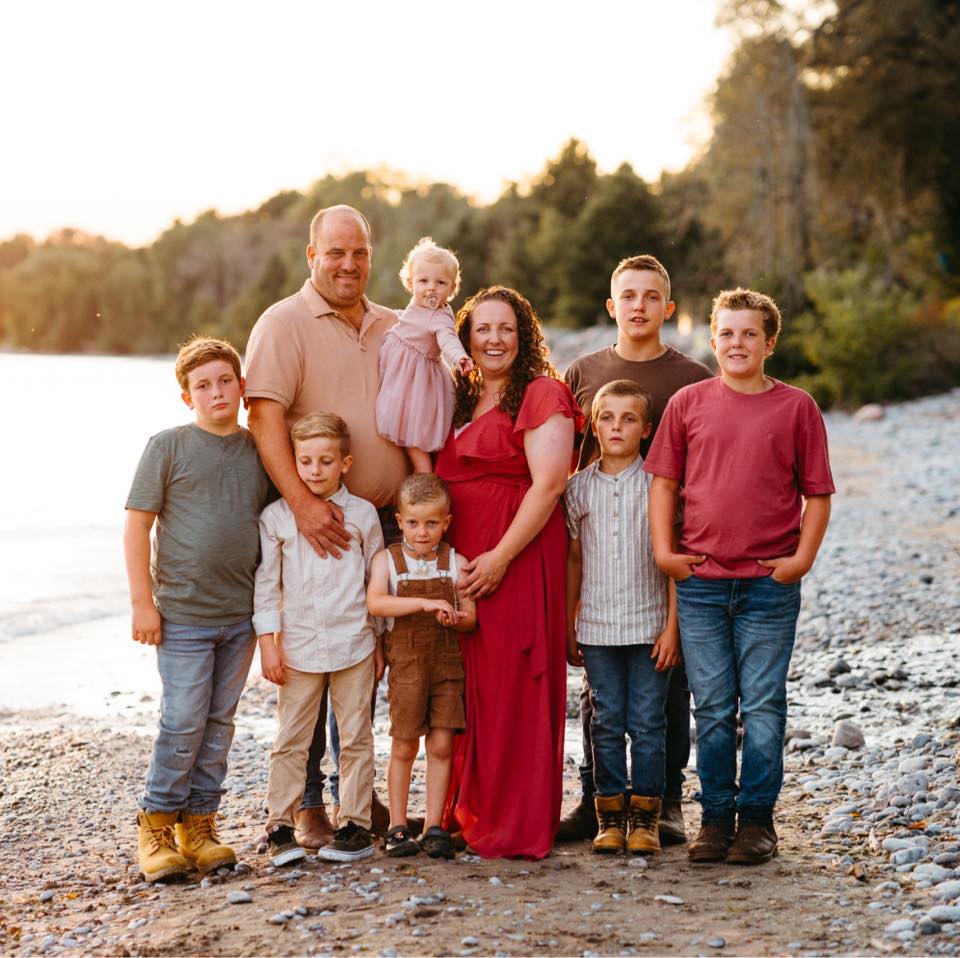
At home, Darryl and Sarah’s place is one of those houses that always sounds like somebody’s arriving or leaving. They’ve got seven kids now—six boys and one girl. The girl came last, after Darryl joked he was “good till four” with the kids and then got “forced into the next three” to finally get their daughter. The boys help with milking and calves, then trade the barn for hockey bags and baseball gloves. There are butterfat numbers on the whiteboard and practice schedules on the fridge. The rhythm is simple and relentless: cows, kids, church, community. Repeat.
And underneath all that, quietly, there’s faith. Not the loud kind. The kind you see in how a family treats people—in the way Clarence Markus always had time for a kid with a calf at a fair, or how the Markus’ open their table when someone’s having a rough week. “I’m not a huge faith talker,” Darryl says. “I typically show my faith through how I behave”.
None of them knew how much all that groundwork was about to matter.
When the World Tilted Toward London
Brooks was born on October 28, 2019.
The sixth child. Another boy. He should’ve slotted right into the chaos of barn boots and brothers.
Instead, he arrived bluish-gray and silent.
It took about half an hour to get him breathing properly. The doctors picked up a heart murmur. “He’ll grow out of it,” they said. They put him in Sarah’s room for the night.
He never really woke up to eat.
The next morning, when Sarah tried to feed him, he threw up pure bile. Nurses moved fast—stomach tube, X-rays, worried faces. An intestinal blockage showed on the images. Woodstock wasn’t equipped for what they were seeing. Within hours, Brooks was emergency transferred by ambulance to the London Children’s Hospital.
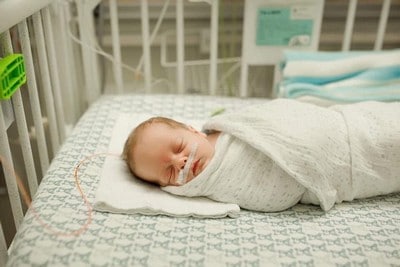
Brooks in those first days at London Children’s Hospital — tiny, tubed and swaddled in a NICU crib — the moment when one ordinary farm family’s life tilted toward a children’s ward and, eventually, Calves for a Cause.
For a family used to measuring time in milkings and crop stages, the switch was jarring. At home, the day starts with cows at six, kids on the bus by seven-thirty, and maybe a coffee in the milk house if you’re lucky. In London, time was rounds, test results, and the space between beeps on a monitor.
“Your typical child is born and you get to hold them and love them,” Darryl says. “Sarah couldn’t hold Brooks for ten days. We were only able to look through an isolette. You can sit there and wonder what’s going to happen with your child.”
Back home, there were still 60 cows that didn’t care what was happening in London. They needed to be milked twice a day. Five older boys still needed breakfasts and school notes signed. But because of a barn project, Darryl’s cows and quota were temporarily at his dad’s place. The timing felt almost suspiciously perfect.
“If we’d still been in Belleville, we would’ve had to go to Ottawa,” he says. “That’s a really long drive. Instead, we were twenty minutes from London. You can see God’s providence in that”.
That providence looked a lot like a grandpa and an uncle just quietly doing what needed to be done. Clarence and Mark never staged a family meeting. They just stepped in. The text that morning—”Cows are covered”—said all that needed to be said.
Against all odds, before anyone else even knew what was happening, the community had already shown up.
120 Days: The Diagnosis That Changed Everything
Two weeks in, Darryl and Sarah were sitting in one of those small hospital rooms that always seem to have a box of tissues and a window that doesn’t quite open.
Surgeons laid it out plainly. Brooks had Hirschsprung’s disease. His colon didn’t work. They’d have to remove his entire large intestine and create an ostomy.
But there was more. Doctors suspected a related breathing disorder and sent blood to a lab in California. Then they drew blood from Darryl and Sarah as well. If both parents carried the same genetic marker, their son would dodge this particular bullet.
Six weeks is a long time in a dairy family. It’s a whole forage fermentation cycle. It’s a dry period. It’s the gap between breeding and preg-check.
It’s forever when you’re waiting to find out how your child is going to live.
The results came back. Neither Darryl nor Sarah carried the marker. Which meant Brooks had Congenital Central Hypoventilation Syndrome—CCHS. Sometimes called “Ondine’s Curse.” His brain doesn’t reliably signal his body to breathe, especially during sleep. According to the National Organization for Rare Disorders, there are an estimated 1,000 to 1,200 known cases worldwide, though recent work out of Great Ormond Street Hospital in London, England, suggests the true number may exceed 5,000, given how often milder cases go undiagnosed. It’s lifelong. Many kids need ventilators to make it through the night.
Hirschsprung’s turned out to be part of the CCHS picture—about 1 in 6 CCHS kids have both, according to European rare-disease data. Brooks is in that small, unlucky overlap.
He spent his first 120 days entirely in the hospital, split between the NICU and the Pediatric Critical Care Unit. He came home on February 22, 2020. Two weeks later, COVID shut everything down.
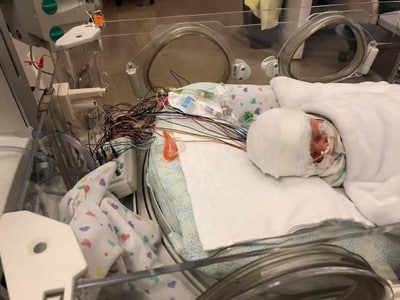
Brooks in the NICU, wrapped in wires and monitors during those first 120 days — the kind of scene that makes a dairy dad in a hard plastic chair start asking how he’ll ever repay the people keeping his son alive.
The next two years were rough. There’s no pretty way to say it.
His ostomy outputs were too high. He spent long stretches on TPN—nutrition pumped straight into his veins because his gut couldn’t keep up. Four or five ostomy revisions. Sarah and Darryl tracked diets like a nutritionist tracks fresh cow intakes—switching formulas, logging every reaction. “Our first year was a mess,” Darryl says. “We were probably in the hospital close to half of the year. The second year was almost the same”.
“In a house full of big, sturdy farm kids, having a two-year-old who’s maybe twenty pounds…” He doesn’t finish that one.
One night, driving home late on the 401 past the dark outline of his own barn—cows inside being milked by his brother, porch light left on by whoever had put the boys to bed—Darryl’s phone buzzed. Gary, texting a photo of a heifer calf born that afternoon. “Looks just like her dam.” Life on the farm didn’t pause. It just kept rolling alongside the hospital world, whether you had the energy for both or not.
At one point, a good ostomy finally held.
Brooks had six or seven months where he looked like a different kid—gaining weight, smiling more, acting as if he’d finally gotten the memo that he was allowed to feel good. They tried a reversal surgery to eliminate the ostomy for good.
It failed.
For nine months, he woke most nights screaming in pain. “It was terrible for him. Terrible for us,” Darryl says.
In June 2023, when Brooks got dangerously ill again, the family—with the help of doctors and nurses at London Children’s—pushed to see Dr. Romao, Canada’s top Hirschsprung’s specialist at SickKids in Toronto. After a week of tests, the specialist made the call: redo the ostomy.
And that, strangely enough, was the turning point.
Since going back to the ostomy, Brooks has taken off. He’s gaining. He’s got energy, opinions, and a grin that fills every room he walks into.
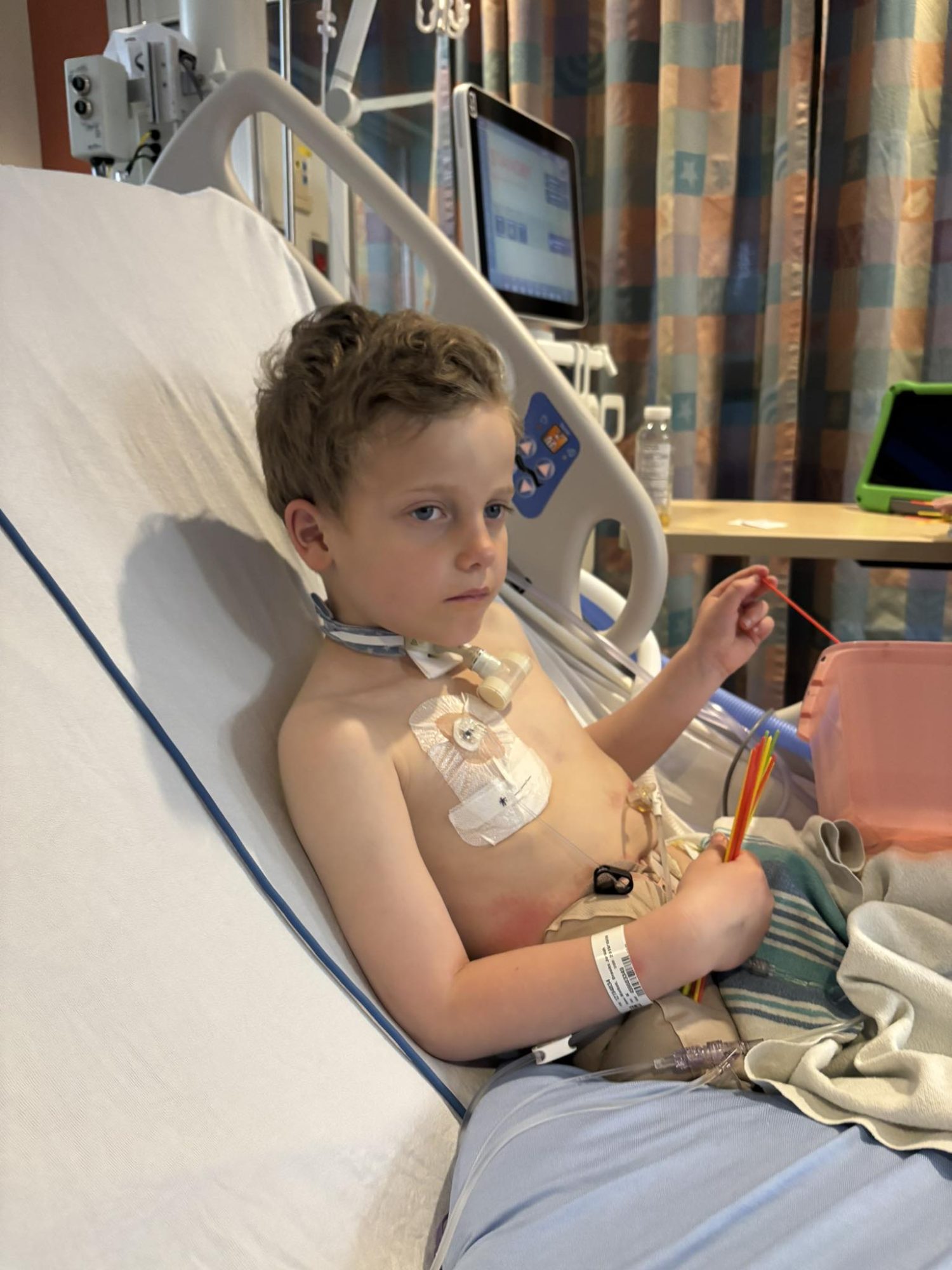
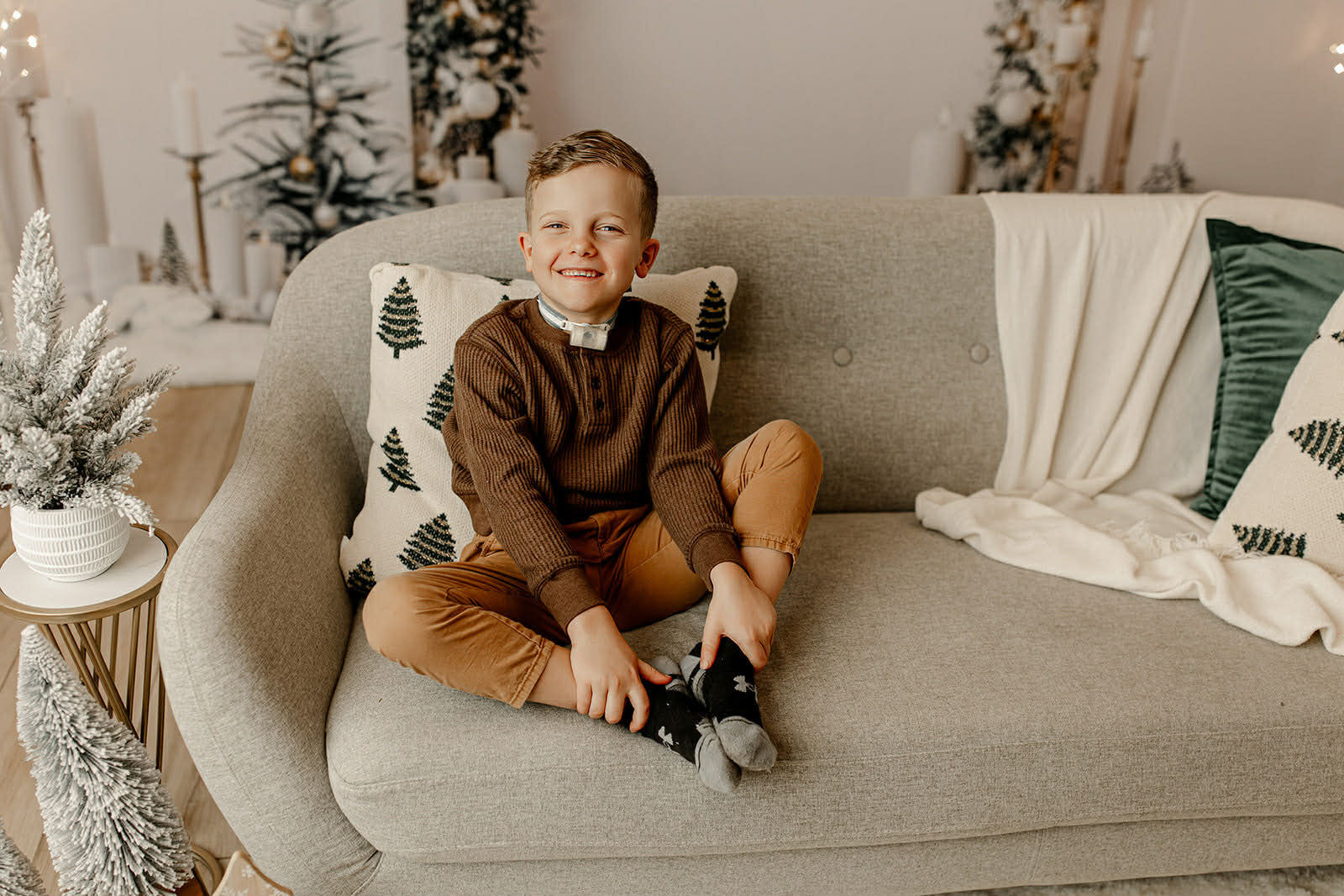
Easter weekend 2025 finds Brooks back in a hospital bed with another infected port — colouring sticks in his hands, trach at his neck, and a procedure coming that will remove the “safety net” his parents had quietly come to rely on.
But CCHS hasn’t gone anywhere.
Brooks will likely face hospital stays, surgeries, and equipment for the rest of his life. The Markus family still lives in that tension—juggling cows, kids, appointments, and the kind of chronic stress that organizations like the Do More Agriculture Foundation have been sounding alarms about across Canadian agriculture for years. There is no tidy bow on this story.
What changed wasn’t the diagnosis.
It was what the people around them decided to do with it.
When Nurses Become Family
Standing at the nurses’ station one afternoon, watching Brooks “help” sort paperwork like he owned the place, Sarah turned to one of the charge nurses and said, “You know you’re basically raising him with us, right?”
The nurse laughed. She didn’t argue.
“If you spend any time talking to us about London Children’s, you’ll very quickly hear about our appreciation for the nurses,” Darryl says.
“Within a couple of days of Brooks being inpatient in the NICU, we were very fortunate to have two core nurses sign up to watch him, which meant they were watching him on all of their shifts”.
Brooks celebrates a nurse’s birthday in the NICU with cake and cuddles — a glimpse of the “second moms” on night shift whose walks, notes and quiet kindness turned a scary unit into a place he felt held, not just treated.
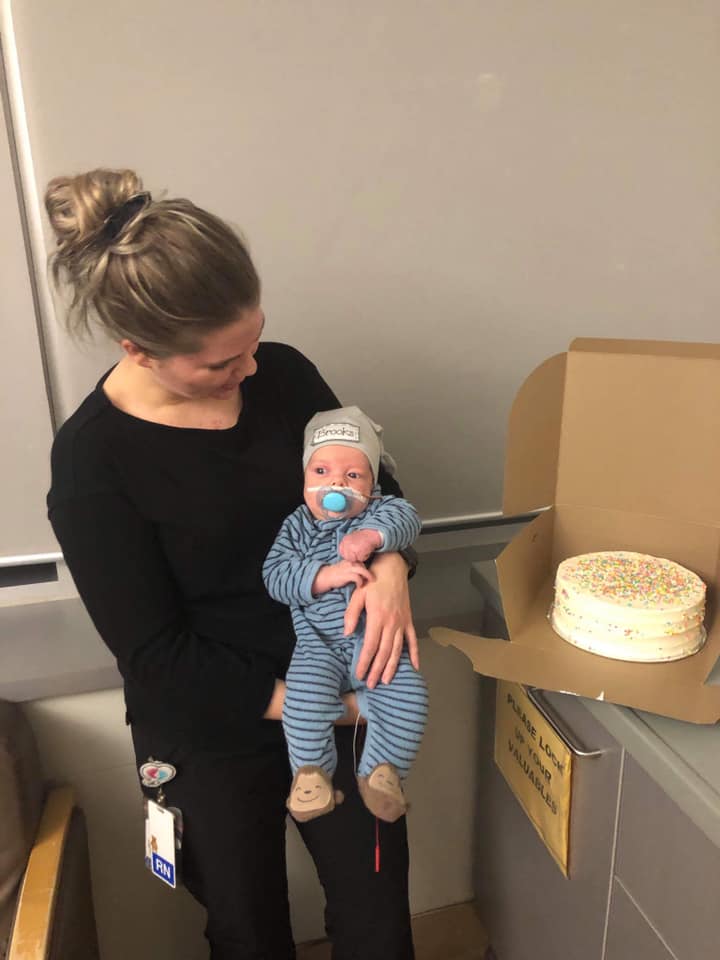
The NICU and PCCU became a second home—right down to knowing which window had the best afternoon light and which chair hurt your back the least. Over time, it stopped being about vitals. Nurses learned the brothers’ names and asked how hockey was going. They learned which farm the family was from. The Markus’ responded by treating them like extended family—bringing treats to the PCCU on holidays, and they’ve got a birthday tradition now where Brooks goes out with his two core nurses to celebrate. Whenever he’s in for appointments, he makes sure to go back and visit.
Brooks’s CCHS means he always lands in that same unit. Same nurses, same hallways. When he’s well enough, he’s not stuck in bed—he’s out walking, popping behind the nurses’ station, “helping” with jobs.
“They treat him like he’s the king,” Darryl says.
“We both just want people to see the good in this,” Sarah has told friends. “All those nights at the hospital—this makes some of that feel… not easier, but like it meant something more than just our own little bubble”.
The Children’s Health Foundation, which raises and grants funds to the hospital, knows how important those relationships are. Their child-life program alone has grown to more than twenty specialists working across the hospital—every position donor-funded. Their whole job is making sure kids like Brooks can still be kids in a place full of wires and alarms. Turning scary procedures into games. Handing art supplies to little hands that can’t grip a fork yet.
Brooks doesn’t know the funding structure behind any of it. He knows the people. And they know him.
The Question in the Hard Plastic Chair
One night, maybe four or five weeks into that first marathon hospital stay, Darryl was sitting in one of those hard plastic NICU chairs. The kind that never feels right, no matter how you shift. It was late. Machines hummed. Nurses worked in that quiet, efficient way you only really notice when you’ve been there a while.
He watched a nurse lean over a baby that wasn’t his. Watched a child-life specialist kneel on the floor to talk to a toddler who didn’t want to be there. Watched doctors make rounds, adjusting meds and plans for kids whose families were probably scattered across hospital cafeterias and Tim Hortons drive-throughs.
“You just realize what they’re doing. How amazing the nurses are. The programs going on. The childlife stuff. You see all this, and all I could think was, ‘How do I ever repay these people for what they’re doing for our son?'” — Darryl Markus
It wasn’t a polished idea. It wasn’t even a plan. Just a question hanging in the air, a tired dairy farmer, and a plastic chair.
Here’s the thing about dairy people, though. When our backs are to the wall, we don’t suddenly become different people. We fall back on what we know.
Darryl knew cows. He knew sales. He knew breeders. He knew that when this community believes in something, they can fill a sale ring and drive an auctioneer hoarse.
His first idea was honestly pretty modest: put one calf on Facebook. Let people bid. “If you get six hundred bucks, you get six hundred bucks,” he figured.
Before he did anything, he called Russell Gammon.
When Neighbours Became a National Network
Russell isn’t a PR guy or a board chair. He’s a friend—one of those steady, “call him at midnight, and he’ll show up” kinds of people. He’d walked with the Markus’ through all of it: the diagnosis, the surgeries, the quiet hallway moments when the weight of everything got heavy.
“Russell played a very supportive role while we were going through everything with Brooks,” Darryl says. “He was my first discussion about the sale”.
On the phone, Darryl laid it out. One calf, online, might raise a bit of money as a thank-you.
Russell didn’t give him a ten-point plan.
“If you don’t risk, you’ll never know.” — Russell Gammon
That was all it took.
The first message went to Kingsway, through Ethan McMillan—an old connection from Darryl’s Belleville days. No long pitch. Just here’s what we’re thinking: would you put in a calf?
“Absolutely, we’ll do that for sure. Don’t even think about it—we’ll do that for sure,” came back almost immediately.
Then Darryl made his first public post.
Within an hour and a half, the phone rang. It was Julie Ashton, a dairy marketer and sales manager. She wanted in—and has remained a major part of the sale ever since. Not long after, another message—this time from Nick Sawbacher. He didn’t just talk calves. He offered his entire Cattleclub online sale platform, giving the idea a backbone without costing the Markus family a cent.
“I literally just started reaching out to people I knew through shows, on Facebook,” Darryl says. “I wasn’t expecting donations. I just asked what they thought of putting a calf in. Everybody kept saying yes”.
And it wasn’t just the big prefixes. In year one, 62 lots came in. Twenty-one consignors gave 100% of their proceeds. Breeders like Nathan Wade of Hird’s Jerseys shared their own Children’s Hospital stories in the catalog—his daughter Lexi had been cared for there, too—and explained why he was “100% on-board” with supporting a place that had carried his family through hard times.
These weren’t consolation calves, either. Consignors sent real quality—animals like Beslea Kingsdale VIP Datsun-ET, who topped that first sale at $9,000, and Knonaudale Lite The Way, a full sister to the Unanimous All-American Lite My Fire . When you’re asking the dairy community to bid for a cause, the cattle have to earn their place in the ring. These did.
On March 28, 2021, smack in the middle of COVID, when live shows were still on ice, the first Calves for a Cause sale went live online. Families watched from kitchen tables and farm offices as bids flashed across screens.
By the time the last lot closed, nearly $75,000 had been raised for The Children’s Health Foundation of London. Sixty-two lots averaged $2,535. Every cent of commission went straight to the foundation.
Down in the PCCU, staff printed an article from the Ontario Farmer about Brooks and the sale and pinned it at the entrance. Families walking past that clipping on the ward wall now stop and ask nurses about the dairy sale.
From Kitchen Table Idea to Arena Lights
After that first year, Darryl did what a lot of us would’ve done—he thought about taking a break.
He was exhausted. Even with the online format, running a sale on top of milking, seven kids, and hospital runs had worn him down to the studs. The original plan was maybe every other year.
Then December rolled around.
One evening after chores, his phone buzzed. A breeder he hadn’t talked to much since the sale. “I’ve got a calf for you. When are we doing this again?”
Then another text. And another. In a few weeks, fifteen to twenty-five consignors reached out—completely unprompted—saying they already had lots in mind.
That was the moment that changed how the Markus’ saw their neighbours. This wasn’t one family’s project anymore. The community had decided it belonged to all of them. The Markus’ just had to catch up.
The second year, Darryl added a live component. Online bidding stayed, but people could also show up, lean on the rail, and watch calves circle the ring. It felt a little like the old Tavistock days—faces you hadn’t seen since the last show season, coffee in hand, kids running up and down the bleachers.
After that second sale, CDX president Jordan Underhill picked up the phone.
He’d been watching.
“Calves for a Cause is exactly the kind of grassroots, heart-driven story that shows what this industry is really about,” Jordan later said. “We wanted CDX to be part of amplifying that”.
Now, keep in mind what CDX has become. In April 2025, the show drew 17,600 visitors and more than 350 exhibitors from 35 countries, according to DLG—yes, the same DLG that runs EuroTier—who came on board as show organizer. An on-site survey found 82% of attendees were active quota-holding producers, with 98% planning to return. By fall 2024, the 2025 floor was already 90% sold. This isn’t a little county fair. This is the Canadian dairy showcase.
And Jordan was offering Calves for a Cause the prime slot: first night, WeCover Cow Coliseum.
He could’ve filled that with any commercial event in the country. Instead, he handed the mic to a charity auction born in a NICU chair.
By the time Calves for a Cause moved into the Coliseum in 2023, it had legs. That third sale raised $65,000 for The Children’s Health Foundation and another $6,500 for Stratford General Hospital. By 2025, cumulative donations had cleared $170,000.
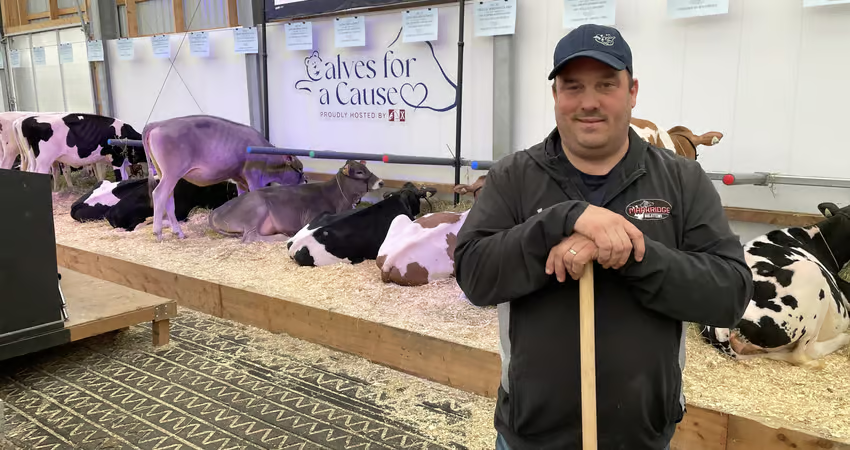
$170,000+ raised. 100% of commission to The Children’s Health Foundation. Five years. One community.
The 2025 sale, though—that’s the one a lot of us still talk about.
When the auctioneer opened Lot 5—Hodglynn Alpha Mapleton, a Red Holstein, maternal sister to the 2022 Royal Winter Fair Supreme Champion, you could feel the energy shift. Bids didn’t just climb; they leapt. When the gavel fell at $20,500 to MMH Vaessen from the Netherlands, the crowd did that thing where everyone half-whispers and half-grins at once.
A charity calf sale. In Stratford, Ontario. Sending heifers to Europe at an average of $7,200 a head—with individual lots ranging from early semen packages up to that $20,500 sale-topper—is a significant jump from 2024’s $4,800 average.
In a year when Canadian dairy was fielding the tariff noise out of Washington—245% over-quota rates, reciprocal threats, Trade Minister Ng calling the whole thing “completely unjustified”—here was a story nobody could spin negatively.
Here was dairy showing its heart.
Making It the Sale of the Stars
As the numbers climbed, so did the expectations.
“For the first two years, I didn’t have expectations for calf quality,” Darryl says. “I just sold what people were giving. Now with CDX, my goal is to make it the sale of the stars”.
To get there, he brought in Jeff Stephens—sales manager, respected judge, and another dairy dad who didn’t need a long explanation for why any of this mattered.
“Jeff gets around a lot,” Darryl says. “He has a ton of connections. I don’t have time to drive around the countryside looking at heifers. Bringing Jeff on has been one of the best decisions we’ve ever made”.
Jeff knows pedigrees, sure. But he also knows people. “When you’ve got kids of your own, you don’t have to imagine very hard what it would be like,” he’s said at the sale. “Using what we know—good cattle—to help, that’s something the whole industry can get behind”.
With about 40 stalls available in the Coliseum and upwards of 70 calves offered, the team has to be selective. And here’s the part that doesn’t get said enough: sending a calf with a $15,000 market value to a charity sale where you see none of that return—that’s not a small decision. It’s why the quality of each consignment says as much about the breeder’s character as it does about their genetics program. These consignors aren’t clearing out the back pen. They’re picking from their best.
Behind the ring, the crew grows every year. Ring staff. Fitters. Photographers. Catalog people. Sponsors who cover expenses so every possible dollar flows to The Children’s Health Foundation.
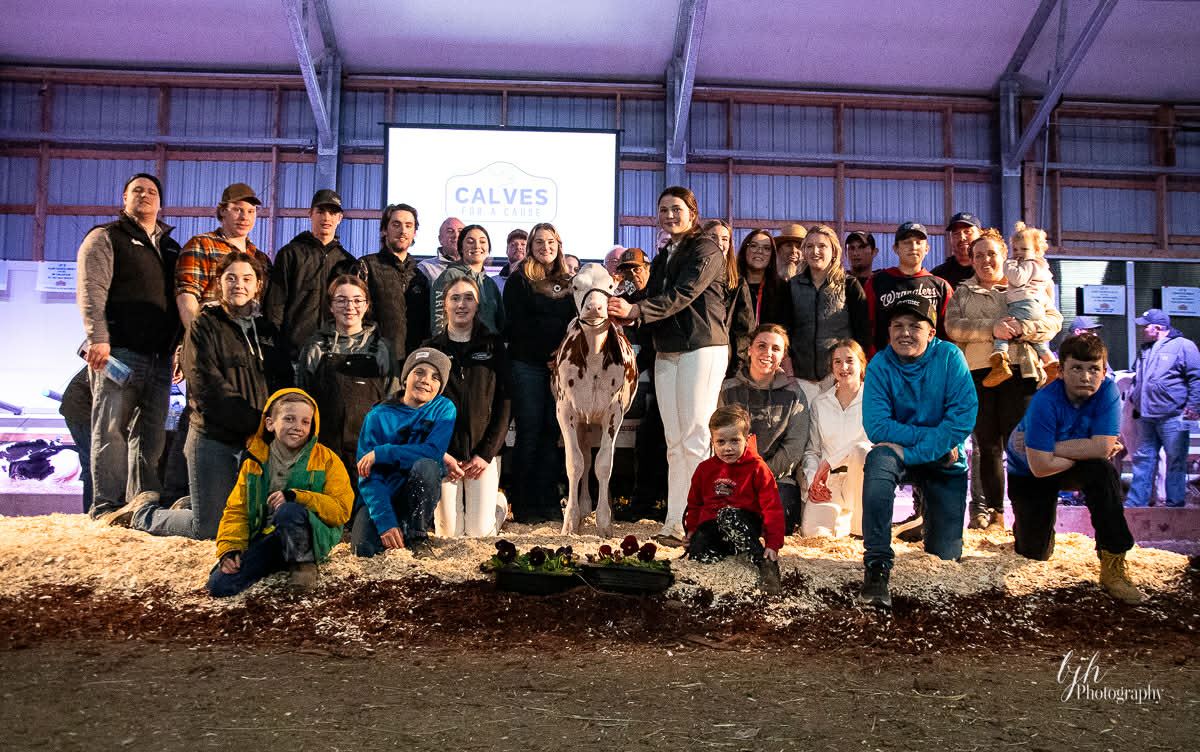
And in the middle of all of it, the original crew is still there.
Grandpa Clarence works the ring like he was born doing it—the same guy who taught his kids to shake hands properly is now shaking bids loose for a cause he believes in. Gary is still the sounding board when Darryl’s wondering if they’re pushing too hard. And Sarah—”She’s the one who keeps reminding us this isn’t about the numbers,” Darryl says. “She holds the whole thing together while carrying her own emotions about what it all means”.
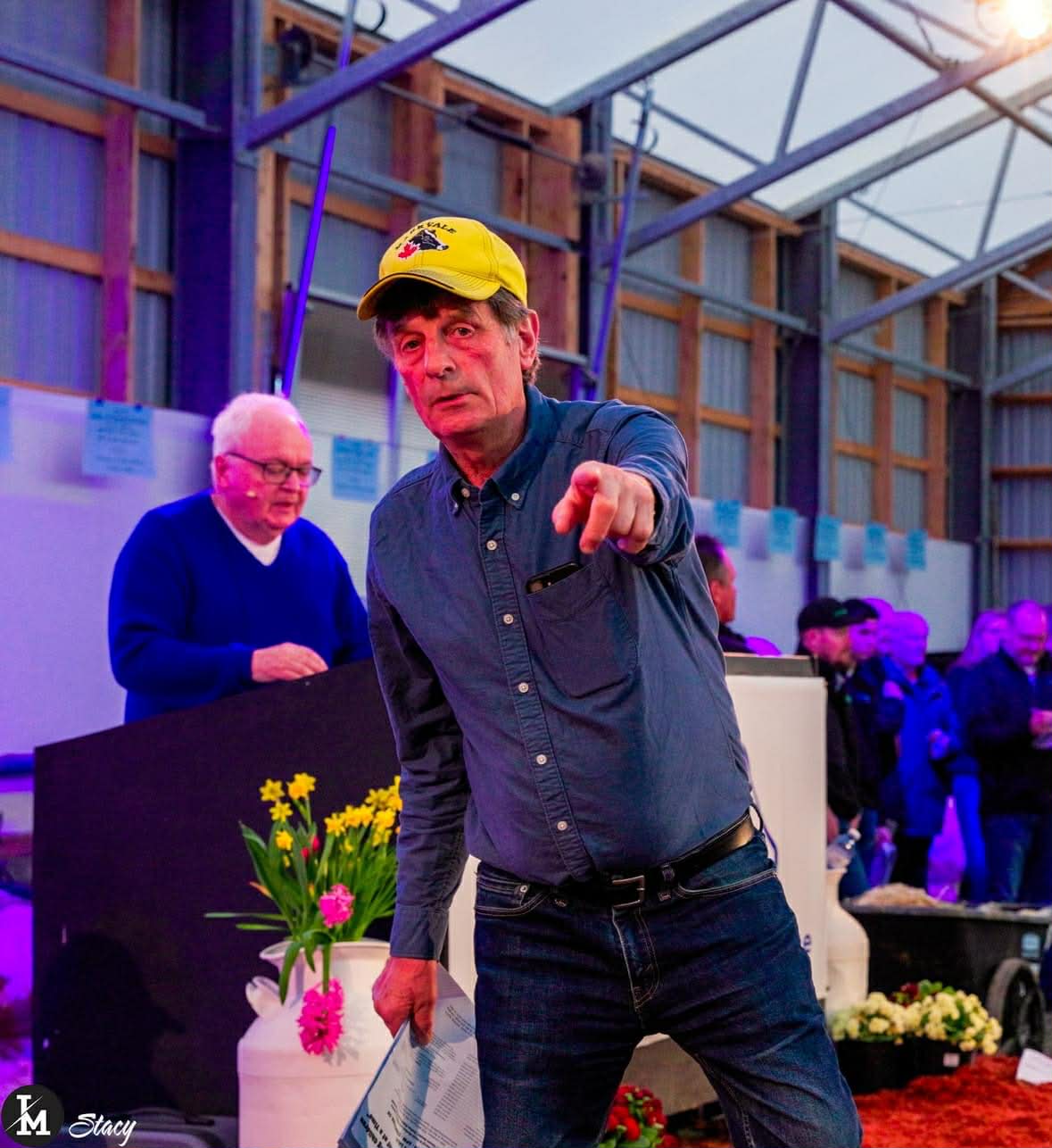
Grandpa Clarence works the ring at Calves for a Cause, finger in the air and grin on his face, still doing what he’s always done best—pulling one more bid out of a neighbour for a good calf and a great cause.
The kids get pulled right into the middle of it. All seven. They get days off school around the sale, help in the barn, and see Mom and Dad writing cheques instead of just signing show entries.
“I like it for my kids,” Darryl says. “They get to see Mom and Dad doing something to give back, and they’re all part of it”.
The weeks before the sale, the house is a chaos of catalogs, school forms, and half-packed hospital bags—because life doesn’t schedule itself neatly around charity auctions. But if you ask the Markus kids what Calves for a Cause is, they won’t describe the stress. They’ll say, “Our sale.”
The Night the Calf Led the Boy
Nobody expected the crowd to go that quiet.
In the weeks before the 2024 sale at CDX, Brooks would march into the barn, grab a halter almost as big as he was, and insist on “practicing.” He’d walk calves back and forth in the yard, copying the older kids he’d watched in the ring his whole short life. In his head, there was no question—he was leading a calf at the sale.
Then he landed back in the hospital. Again.
Plans shrank overnight. The talk went from “which calf he’ll lead” to “how long are we going to be here” and “what’s next with his breathing.” If you’ve ever tried to juggle farm chores with hospital visits—and plenty of dairy families reading this know exactly that feeling—you know how fast your world narrows to the next set of test results.
On the day of the sale, Brooks was discharged.
They drove straight from the hospital to the Coliseum.
By the time they pulled in, the WeCover Cow Coliseum was already buzzing. Lights on. Auctioneer warming up. Breeders lining the rail in ball caps and hoodies, some dressed up a notch because—let’s be honest—sale night’s still an event.
Brooks walked in wearing a tiny show outfit that looked like it had been bought with faith more than a tape measure. He grabbed a halter.
“Gonna make me cry,” Darryl says when he talks about it. He takes a breath. “He’d wanted to do it so bad. He wouldn’t stop talking about it. And then to have him get out of the hospital that day and lead that calf… He was grinning ear to ear. It didn’t look like we were gonna get him out of there too easily”.
He didn’t just lead one calf.
He led three.
Once that halter was in his hands, he wasn’t giving it back. He circled the ring while the auctioneer called bids, lost in the moment. For him, it was simple: calf, rope, ring. For everyone watching—breeders, neighbours, CDX visitors, hospital staff who’d made the drive—it was something else entirely.
In a way, Brooks was doing what Markus’ kids have always done—learning to lead, one calf at a time, the same way his dad and uncle started in 4-H three decades ago. But every step was a reminder of why this sale exists.
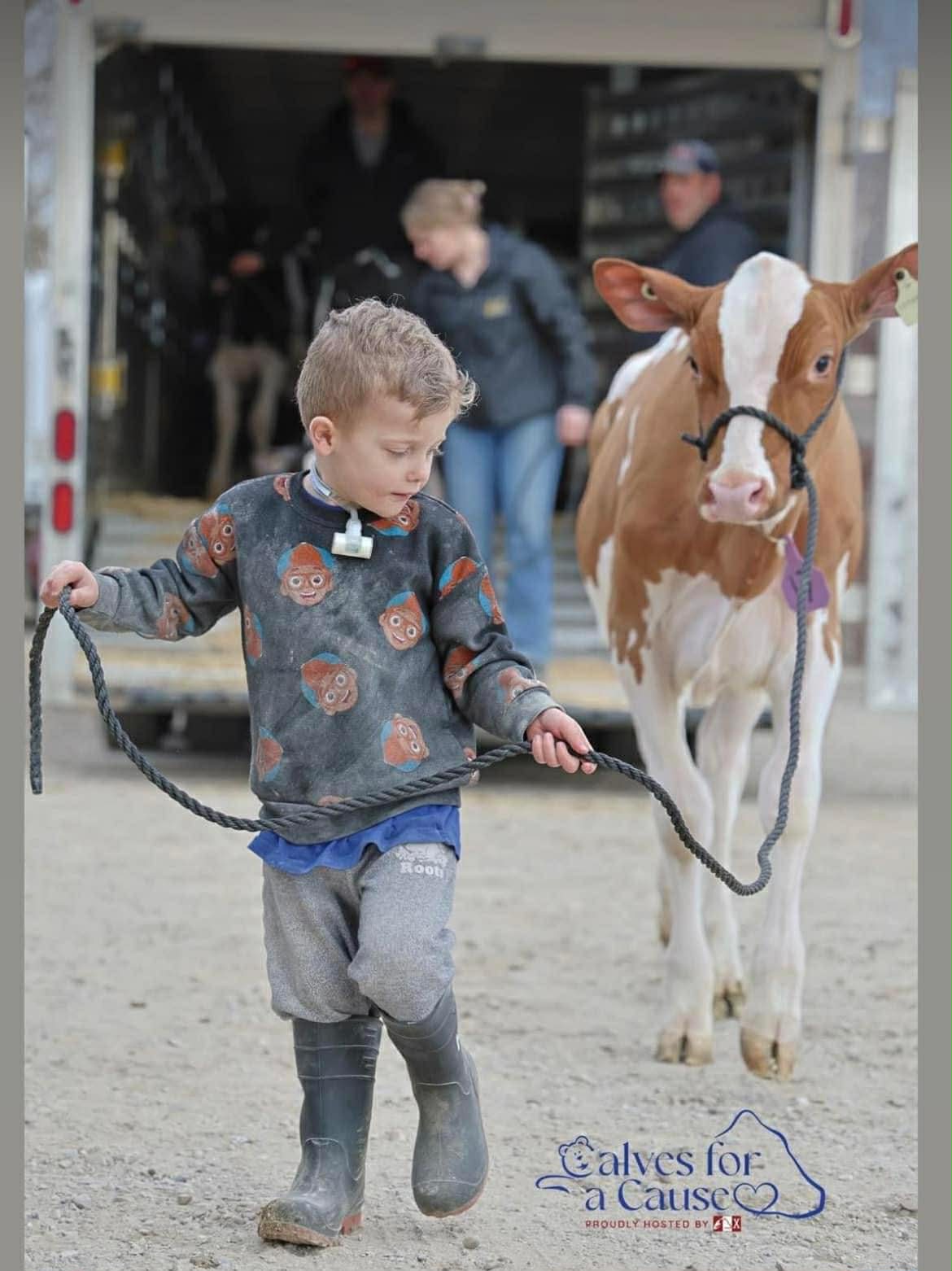
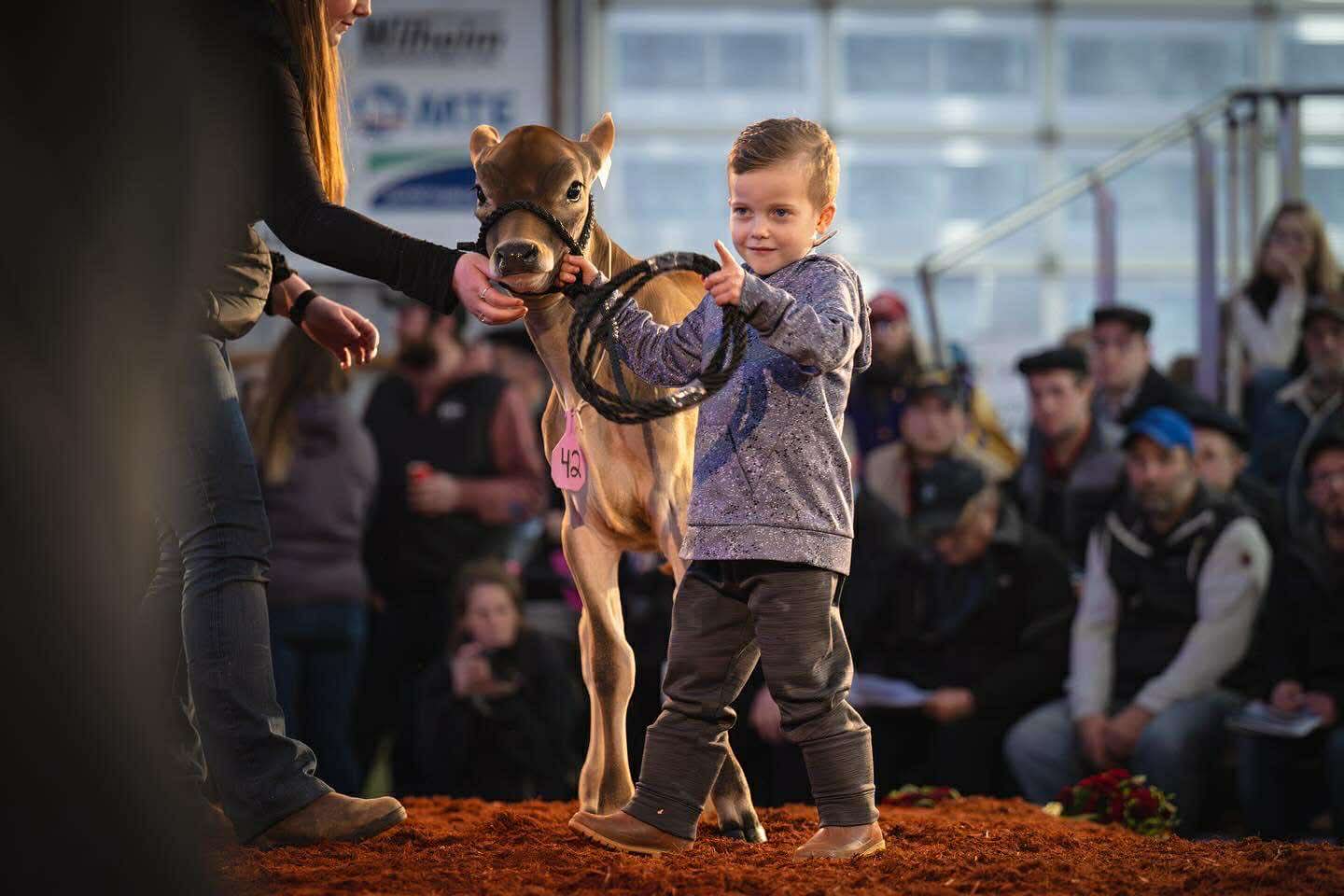
Brooks leads a red-and-white calf off the trailer at the 2024 Calves for a Cause sale — muddy boots, trach tube and all — a small farm kid doing a big job for other kids who need the hospital as much as he once did.
The next year, he was back. Leading Lot 33, Liberty Gen Chocolate Mousse, through that same ring while cameras flashed and people who’d come “just to watch” found themselves leaning in, cheering, blinking a little harder than usual.
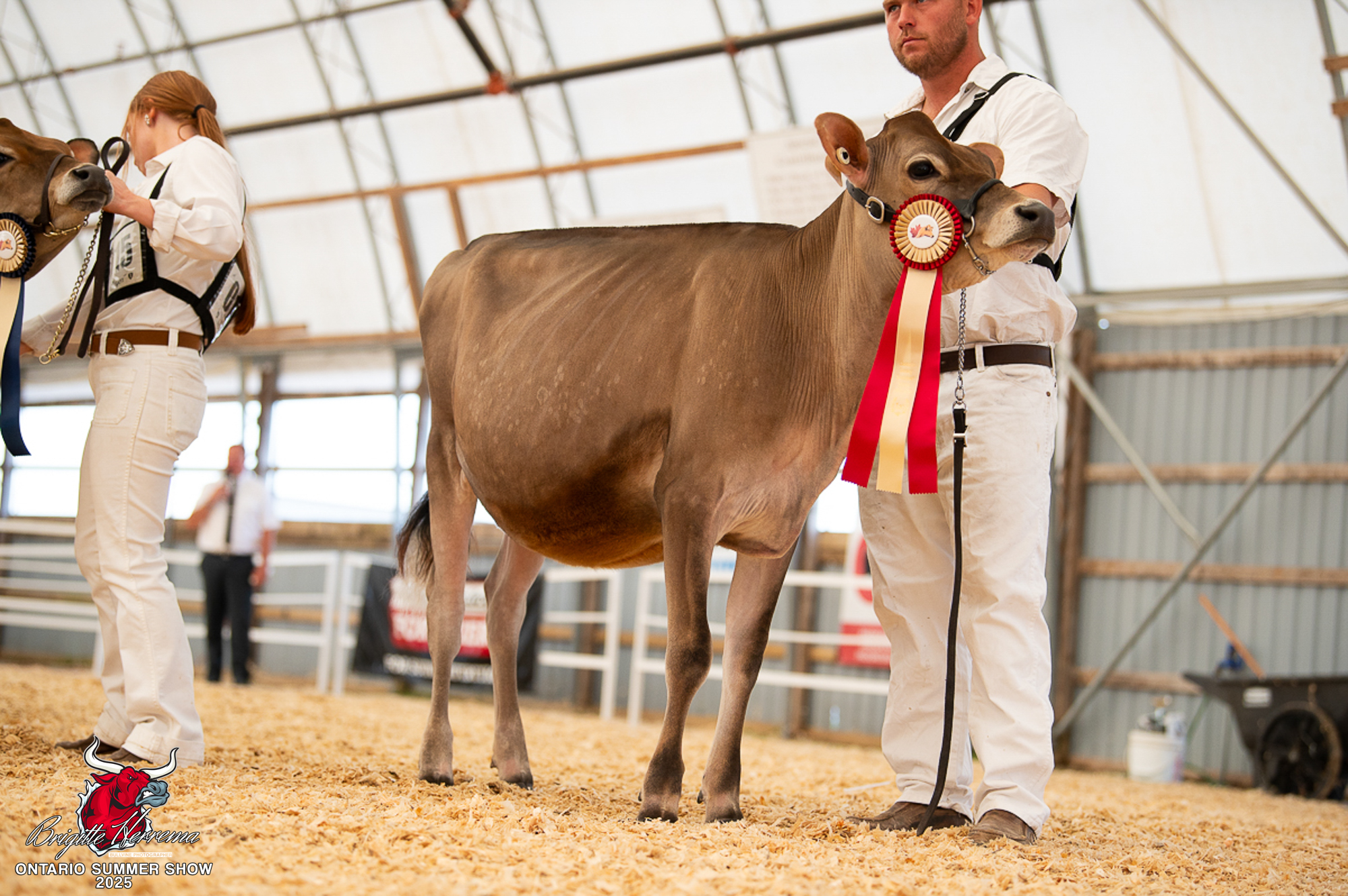
What kept that crowd there three hours past closing wasn’t the pedigrees on the screen.
It was that little boy, and the people who refused to let his family walk this road alone.
Supporting Children, One Calf at a Time
Here’s what’s actually happening when a heifer sells on a Thursday night in Stratford.
One hundred percent of the sale commission goes straight to The Children’s Health Foundation in London. That foundation funds equipment, programs, and research for the Children’s Hospital at London Health Sciences Centre, Thames Valley Children’s Centre, and Children’s Health Research Institute—serving tens of thousands of kids every year across southwestern Ontario.
Almost all the equipment at the Children’s Hospital is donor-funded. Ventilators sized for tiny lungs. Monitors. Child-sized surgical tools. The stuff that kept Brooks alive when he was blue and wired and too small for any of it.
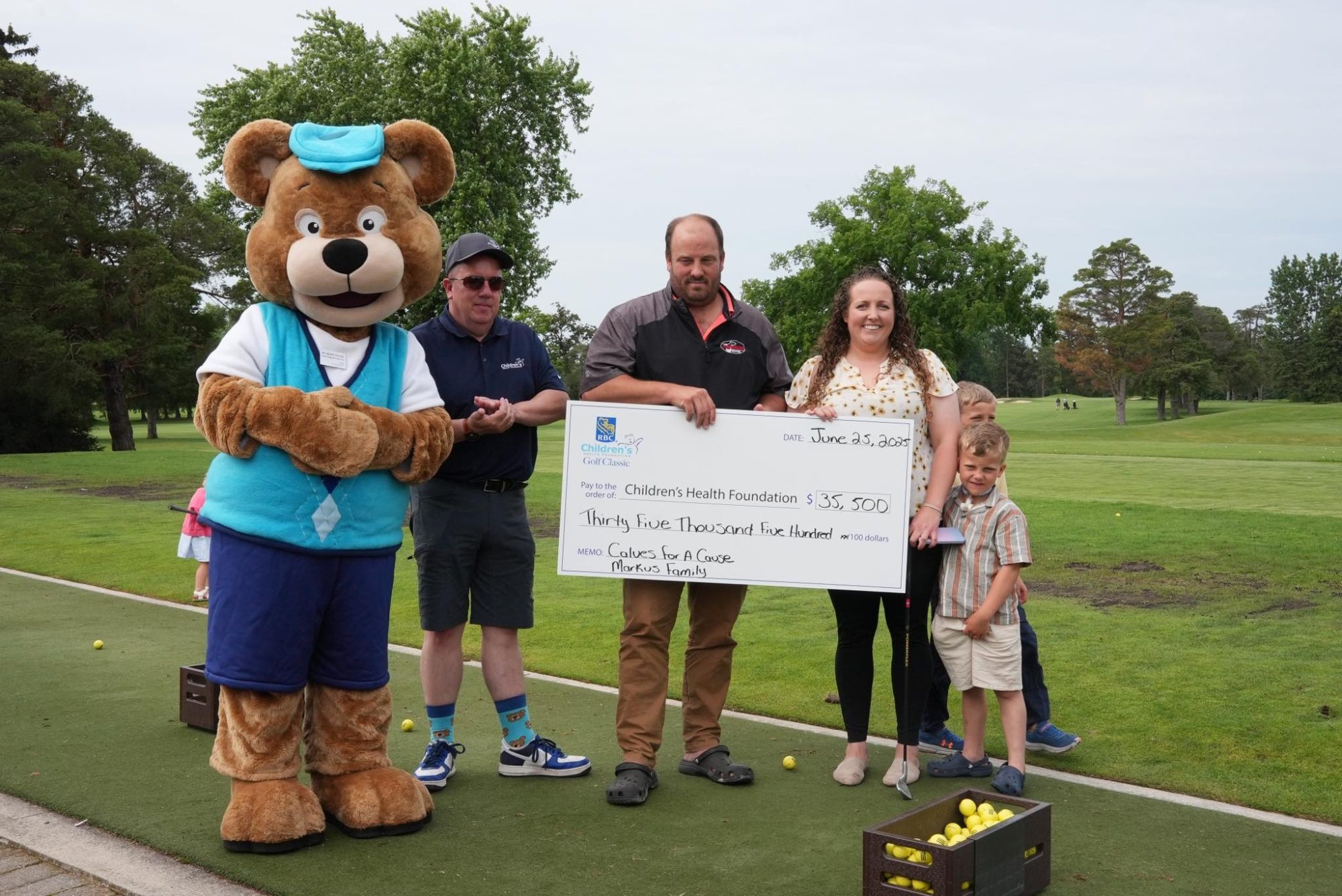
But ask the Markus’ what they think of when they hear “donations,” and they won’t start with machines.
They’ll tell you about the child-life specialist who sat cross-legged on the floor beside Brooks and turned a frightening procedure into a game. The art cart rolled into his room so he could paint with IV lines taped to his arms. The music therapist with a guitar who showed up on a day when nothing else could get a smile.
Those programs don’t run on government budgets. They run on dollars from people like the dairy producers in those Coliseum seats and the ones bidding online from their barns across the country.
“The London Children’s Hospital is our second home,” Darryl says. “This is our way of saying thank you and helping other families who find themselves needing care there”.
One calf at a time, the same community that once kept their barn running so they could sit in those hospital chairs is now sending help back through those same doors.
What Every Dairy Community Can Take From This
The thing about Calves for a Cause that should get the rest of us thinking is this: it didn’t start with anything fancy. No committee. No grant. No corporate sponsor sliding a cheque across a boardroom table.
It started with what every dairy community already has. People who know how to show up.
A dad and brother quietly cover milking so a young couple can be at the hospital—not once, but as many times as it takes. Cousins make sure the crops still get in when everybody else is driving back and forth to London. A friend like Russell, who listens and then says the right thing: “If you don’t risk, you’ll never know”. A breeder who sees a Facebook post and doesn’t just hit “like”—they pick up the phone and say, “We’re in. Here’s our calf”. A show organizer like Jordan, looking at a jammed CDX schedule and carving out first-night prime time for a sale that won’t add to his bottom line but says something about who we are as an industry.
And then there’s the practical side. Start small—Darryl started with “one calf on Facebook.” Maybe where you live, it’s a heifer jackpot for a neighbour going through chemo. Not far from Shelburne, a community once threw a spaghetti dinner after a barn fire that blew past its $5,000 goal and landed at $14,000—because that’s just what farm towns do. You don’t need a CDX-sized stage. You need ten or fifteen consignors, one online platform, and enough stubborn optimism to hit “post.” If you clear $10,000 in year one, you’ve got proof of concept. Build from there. (Read more: Your Barn Is On Fire!)
Use the networks you already have—4-H clubs, county Holstein branches, show committees, co-ops, feed reps, that WhatsApp group with your milk truck buddies. And let kids see it. The Markus kids get days off school around the sale. Brooks, who’s spent more time in the hospital than any kid should, now knows what it feels like to lead a calf for someone else’s benefit. That’s 4-H in action, even if there’s no judging card involved.
Pick partners who already know what they’re doing. The Children’s Health Foundation had the infrastructure to turn dollars into programs. In your community, it might be the local hospital foundation, hospice, food bank, or a mental health initiative like the Do More Agriculture Foundation, which has been building community-level resources for farmer mental health across Canada since 2019. You don’t have to build the whole pipeline. You have to feed it.
And if you’re still renting, still paying off quota, still sweating the winter feed bill—none of this requires writing a big cheque. Sometimes the most important contribution is the neighbour who covers chores so someone can get to a counselling appointment. Or the young farmer who sets up a group text with two or three nearby operations so there’s one place to say “this week was rough” without anyone thinking less of you.
What kept the Markus’ going wasn’t just the cows. It was the people around them.
Community and Legacy: What This Means for All of Us
What’s happening across the dairy landscape right now is that we’re being asked—from the outside and the inside—who we really are.
The USMCA review timeline is ticking. U.S. challenges to Canada’s TRQ allocation are still unresolved, and tariff rhetoric isn’t cooling off. Cost pressures haven’t let up, with the Bank of Canada rate still above pre-pandemic levels and feed costs yet to fully correct. And public debates about how we raise animals, how supply management works, and what our environmental footprint looks like—those aren’t going away.
Every hour a dairy farm spends on a community event is an hour away from production. That’s a real trade-off. But in a year when public trust in this industry matters more than ever, that hour might be the best investment you make. And every time a story like this gets really shared—not just scrolled past—it does more for dairy’s public image than a hundred industry ad campaigns ever could.
Calves for a Cause puts that quiet community DNA under the lights.
It doesn’t pretend community fixes everything. Brooks still has CCHS. He’ll likely face more hospital stays, more equipment, and more hard days. The Markus’ still carry exhaustion, appointment calendars that don’t care about haylage windows, and the kind of chronic stress that groups like Do More Ag are working to address across the industry.
What the sale does is make that weight shareable.
It turns one family’s crisis into something a whole community picks up a corner of. It turns a NICU chair question—”How do I ever repay them?”—into a ring full of people answering together: “We’ll help”.
When a young farm couple can stay on their operation because neighbours covered chores during a medical crisis—that’s sustainability, too. Not the kind that fits on an emissions report. The kind that keeps rural communities alive.
Legacy in dairy has always been about more than a good cow. We care about pedigrees and production records. We always will. But the stories that stick—the ones we tell at the back of the sale barn or in the bleachers at the Royal—are usually about people.
A neighbour showing up with a tractor after a barn fire. A line of silage trucks running for a family after an accident. A community hall full of folks eating spaghetti on hard benches to help someone stay afloat.
Calves for a Cause is a more organized, more visible version of what dairy people have been doing for generations.
Darryl has a number in his head now: one million dollars.
“My end goal is probably a million bucks,” he admits. “As long as there’s interest in it, I’m all in. You don’t want it to get old. But right now, there’s still a ton of interest”.
He doesn’t say “my sale.” He talks about the herd of people that make it go. The breeders who keep sending their best. The buyers who keep showing up. The CDX crew who keep making room. The hospital staff who show up in the Coliseum stands and cheer alongside everyone else.
For the Markus family, “community” means something different now than it did before that ambulance ride.
It looks like a nurse who stays late to check on a little boy one more time. A Children’s Health Foundation team member sitting in the stands, clapping as calves sell. Kids growing up knowing that “going to the sale” isn’t about business—it’s about belonging.
Wherever you’re reading this—milking 40 cows or 400, renting your first tie-stall or managing a multi-family partnership—you’re part of that same story.
You might never host an auction at CDX. You might never sell a heifer to the Netherlands at a charity sale. That’s fine.
You can still notice when a neighbour’s truck hasn’t left the laneway all week.
You can still say, “Drop your kids here, go. We’ll do chores tonight.”
You can still bring coffee to the barn on a hard day instead of texting, “Let us know if you need anything.”
You can still look at the young people in your community—your barn, your 4-H club, your county—and say, “There’s a place for you here. And it’s not just behind a pitchfork.”
That’s what this story is, in the end.
A family’s world tilts in a NICU. A tired farmer in a hard plastic chair asks the only question that makes sense: “How do we ever repay them?”
A friend says, “If you don’t risk, you’ll never know.”
A community says, “We’re in.”
Key Takeaways
- A NICU crisis, a rare CCHS diagnosis, and a little boy leading calves in the ring turn one family’s ordeal into a story the whole dairy world can feel.
- Calves for a Cause has grown from a one‑calf Facebook idea into a CDX‑headline sale, raising $170,000+ for Children’s Health Foundation on the strength of true “sale of the stars” cattle.
- The Markus family’s network—parents, siblings, cousins, nurses, and breeders—shows how dairy communities quietly keep barns running so families can survive long hospital seasons.
- The piece doubles as a playbook for other regions: start small, lean on your show/4‑H networks, partner with a credible local foundation, and be willing to donate real value, not culls.
- In a 2025 dairy environment of tariff fights, tight margins, and mental-health pressure, this kind of story is reputational gold for the entire industry, not just a feel‑good read.
 The Sunday Read Dairy Professionals Don’t Skip.
 The Sunday Read Dairy Professionals Don’t Skip.
Every week, thousands of producers, breeders, and industry insiders open Bullvine Weekly for genetics insights, market shifts, and profit strategies they won’t find anywhere else. One email. Five minutes. Smarter decisions all week.
Continue the Story
- Love for Lexi: A Heartfelt Journey of Courage, Community, and Hope for a Young Dairy Farm Kid – Walking a path that mirrors the Markus family’s own, the dairy community again rallies around one of its youngest members. This story proves that when a family faces the steepest climb, the industry’s heart only beats louder.
- Calves for a Cause 2025: Dairy Industry’s $170K+ Legacy Shines at Canadian Dairy XPO – To understand the high-stakes world this family navigates, you have to see the results. This piece explores the elite genetics and global passion that fueled the latest record-shattering chapter of the charity auction born in a hospital chair.
- Hearts of the Heartland: Young Dairy Farm Girls’ Extraordinary Battles for Life – The narrative of resilience carries forward through these young leaders who wrestled with similar questions of survival. Their journey shows how personal crisis evolves into a shared mission, defining the next generation’s strength, advocacy, and spirit.





 Every dairy family builds their agricultural legacy over time. For Bram Prins it started in the Netherlands over forty years ago. “In 1968 our family decided to move to county Groningen. As the oldest of seven children I worked with my father to start farming 54 ha of arable land where we had 100 cows. “

 Advantages of Automatic Calf Feeders


