


Archive for butter price surge

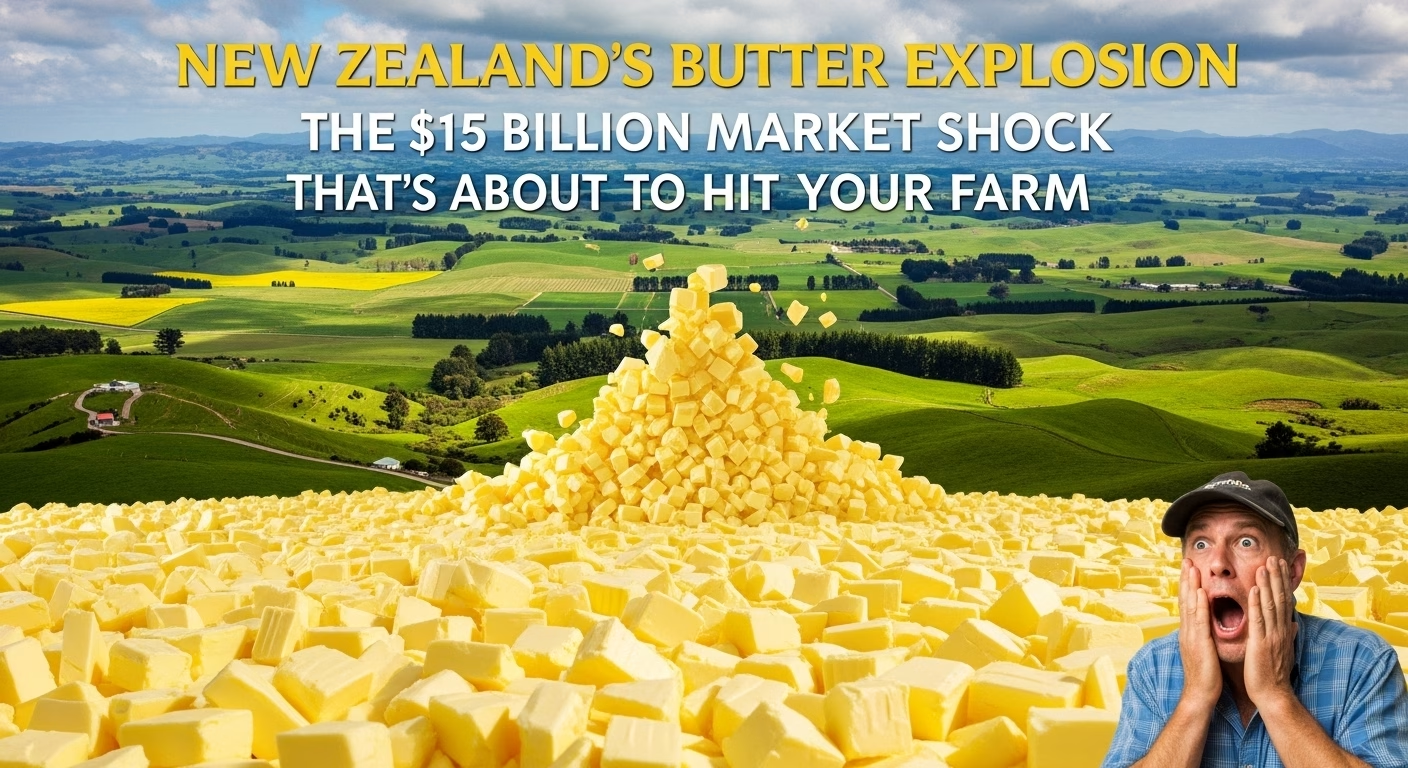
New Zealand’s Butter Explosion: The $15 Billion Market Shock That’s About to Hit Your Farm

New Zealand’s 65% butter surge exposes the profit paradox killing dairy margins worldwide. Why celebrating $10/kgMS might bankrupt your operation.

EXECUTIVE SUMMARY:  While New Zealand farmers celebrate record $10.00/kgMS milk prices from the 65% butter price explosion, smart operators know this market shock reveals a devastating truth: 87% of increased revenue is getting devoured by input cost inflation, leaving net margins thinner than ever. This isn’t just regional volatility—it’s a global wake-up call that’s reshaping international dairy trade flows, with US butter surplus creating $2,500/MT arbitrage opportunities while European processors abandon butter for cheese production. The real winners aren’t those riding today’s high prices, but farmers implementing precision feeding systems (7-12% cost reductions), automated milking technology (5-8% yield improvements), and comprehensive risk management strategies before volatility crushes unprepared operations. With feed costs climbing 37% per tonne and geopolitical tensions driving Middle Eastern stockpiling that consumed one-third of recent Global Dairy Trade auctions, traditional market fundamentals have been obliterated. Andrew’s controversial analysis exposes why Fonterra’s export-first strategy—while generating $15 billion for New Zealand’s economy—is creating domestic affordability crises that could trigger regulatory backlash across the industry. Every dairy farmer worldwide needs to stop celebrating superficial price surges and start building systems that profit regardless of where volatile commodity markets head next.

KEY TAKEAWAYS

  • Implement comprehensive hedging strategies immediately: With DairyNZ’s breakeven costs hitting $8.68/kgMS (up from $8.41), farmers using Fonterra’s new Price Risk Management Services can lock Fixed Milk Prices for two seasons, protecting against the inevitable price corrections while maintaining upside potential during continued volatility.
  • Capitalize on precision agriculture ROI during high-margin windows: Operations investing in precision feeding systems are achieving 7-12% feed cost reductions while automated milking systems deliver 5-8% milk yield improvements—critical advantages when feed costs have spiked 6-37% per tonne and every pound of milk solids matters for survival.
  • Diversify market exposure through export arbitrage opportunities: US farmers with export access can exploit the $2,500/MT price differential between American butter ($5,500/MT) and New Zealand product ($7,992/MT), while international buyers must develop alternative sourcing strategies to avoid dependency on constrained New Zealand supplies.
  • Prepare for geopolitical demand disruption: With Middle Eastern buyers suddenly consuming one-third of Global Dairy Trade butter auctions, traditional supply-demand fundamentals no longer apply—smart farmers are building operational resilience through genomic testing programs for component optimization and activity monitoring systems to maximize breeding efficiency during high-cost periods.
  • Challenge the export-first profit illusion: Operations focusing solely on gross revenue from record milk prices without addressing input cost inflation are setting themselves up for devastating losses when commodity prices inevitably correct—the future belongs to farmers building systems that deliver consistent profitability regardless of market direction.
Here’s what’s got me fired up: While New Zealand butter prices exploded 65.3% and Fonterra’s celebrating $15 billion flowing into their economy, you’re about to get blindsided by the biggest dairy market upheaval in decades. And most farmers don’t even see it coming.

Listen, I’ve been tracking dairy markets for years, but this New Zealand situation isn’t just another price spike – it’s a complete game-changer that’s about to reshape how you think about risk, pricing, and profit in this business.

The Numbers That’ll Keep You Awake Tonight

Let’s cut the BS and talk real numbers. Stats NZ data revealed a 65.3% increase in butter prices in the 12 months leading up to April 2025, with the average price for 500g reaching NZ$7.42 – nearly NZ$3 more expensive than the previous year. By June? We’re looking at NZ$8.42 per block, with Stats NZ confirming a 51.2% annual increase and a 13.5% monthly jump.

But here’s where it gets interesting – and why you should care even if you’re not selling butter. The Global Dairy Trade butter price rose from US$6,631/MT in December to US$7,992 in recent auctions, representing a 16% increase since January 2025 and sitting 40% above five-year averages. When the world’s fourth-largest dairy exporter sees prices move like this, ripple effects are inevitable.

What’s Really Driving This Madness?

Don’t buy the simple “supply and demand” explanation everyone’s peddling. This is way more complex:

  • Chinese demand jumped 10% year-on-year for January-March 2025, and they’re not slowing down
  • Hot and dry North Island conditions in February 2025 adversely affected pasture availability
  • Feed costs climbed between 6% and 37% per tonne over the past year
  • GDT offer volumes were stripped back significantly below 5-year averages, with WMP volumes over 40% lower than historical levels

Here’s the kicker: New Zealand butter contains 82% butterfat compared to your typical 80% US butter. When global buyers want premium quality, they’re paying premium prices.

The Profit Paradox That’s Fooling Everyone

Everyone’s celebrating Fonterra’s farmgate milk price forecast of $10.00/kgMS for both 2024/25 and 2025/26 seasons – the highest on record. Sounds amazing, right?

Wrong. Here’s the math nobody wants to talk about:

DairyNZ’s breakeven milk price jumped to $8.68/kgMS for 2025/26, up from $8.41/kgMS. That means 87% of the increased revenue is getting eaten by rising costs.

Your Reality Check: 500-cow operation producing 200,000 kgMS annually:

  • Gross revenue at $10.00/kgMS: $2.0 million
  • Production costs at $8.68/kgMS: $1.736 million
  • Net margin: $264,000 ($528/cow)

You’re making record gross income but keeping less of it than ever. Sound familiar?

The Global Arbitrage Opportunity Everyone’s Missing

Here’s where this gets controversial – and where smart farmers can capitalize. While New Zealand’s going crazy, US butter stocks hit 305.53 million pounds in February 2025 – the highest February level since 2021. CME spot butter dropped to $2.30/lb.

Current Global Butter Pricing Reality:

RegionPrice (USD/MT)Market Status
New Zealand (GDT)$7,992Supply constrained
European Union~$8,500Processors prioritizing cheese
United States~$5,500Massive surplus

Look at that spread! US farmers, you’re sitting on a goldmine if you can crack export markets. Everyone else? You’re about to feel the squeeze.

Why Smart Farmers Are Panicking (And You Should Too)

The real story isn’t butter prices – it’s what this volatility means for your operation. Here’s what pisses me off most: Nearly one-third of butter sold at recent GDT auctions went to Middle Eastern buyers – a region that previously bought zero. When geopolitics starts driving dairy demand, traditional fundamentals go out the window.

Here’s what most analysts won’t tell you: This isn’t temporary. Fonterra introduced new Price Risk Management Services in June 2025, offering farmers the ability to lock fixed milk prices for two seasons, establish minimum price floors, and create price bands.

If the world’s largest dairy exporter is rolling out comprehensive hedging tools, what does that tell you about future volatility?

The Technology Revolution You’re Missing

While you’re celebrating high milk prices, smart operators are using this window to invest in game-changing technology. Here’s what the winners are doing:

Precision Feeding Systems delivers 7-12% reductions in feed costs while improving milk components. With feed costs up 37%, that’s the difference between profit and survival.

Automated Milking Systems (AMS) show 5-8% milk yield improvements through optimized milking frequency and reduced stress. When you’re paying record-breaking breakeven costs, every pound of milk matters.

Activity Monitoring and Sensor Technology help optimize reproduction efficiency during high-cost periods. Smart farms use heat detection systems with 95%+ accuracy to maximize breeding success when every day open costs serious money.

Genomic Testing Programs for component optimization are paying dividends. Operations focusing on EBVs for butterfat percentage are capturing additional $0.15-0.25 per kgMS in premiums during current market conditions.

What You Need to Do Right Now

Stop Celebrating, Start Hedging

Get your risk management sorted immediately if you’re with Fonterra or any other processor. The farmers who’ll thrive aren’t the ones celebrating today’s prices – they’re the ones preparing for tomorrow’s inevitable swings.

Diversify or Die

That $2,500/MT price differential between US and New Zealand butter won’t last once arbitrage kicks in. Smart operators are investing in precision technologies and efficiency improvements while margins allow.

Get Your Export Game Right

US farmers with export access need to move fast. European processors prioritize cheese production over butter, creating artificial scarcity and opening market opportunities.

The Controversial Truth Nobody’s Discussing

Here’s what really pisses me off: While Fonterra reported $1.158 billion profit after tax for nine months ended April 2025 and celebrates injecting $15 billion into New Zealand’s economy, ordinary Kiwi families can’t afford butter for their toast.

Food prices increased 4.4% in the 12 months to May 2025, significantly outpacing general inflation. When did maximizing farmer returns become more important than feeding the community that supports these operations?

This export-first mentality might maximize farmer returns in the short-term, but it’s creating domestic affordability crises that could trigger regulatory backlash. Smart processors need to balance global opportunities with local market stability – or risk political intervention that could reshape the entire industry.

The Bottom Line

New Zealand’s 65% butter price surge isn’t just regional news – it’s your wake-up call. Three critical actions you must take:

  1. Lock in your risk management strategy – Futures, options, processor programs – get your downside protection before volatility hits your market
  2. Invest in operational efficiency NOW – Precision feeding, automated systems, and genomic programs are your only defenses against input cost inflation
  3. Diversify market exposure – Don’t put all your eggs in one pricing basket when geopolitics are driving commodity demand

The $15 billion flowing into New Zealand proves that high dairy prices can transform entire economies. But here’s the brutal truth: most of that windfall is getting absorbed by rising costs, and farmers who don’t adapt their risk management will get crushed when prices inevitably correct.

Your move. Make it count.

The farmers winning in this new reality aren’t hoping prices stay high forever – they’re building systems to profit regardless of where prices go next. And they’re doing it while they can still afford the upgrades.

Complete references and supporting documentation are available upon request by contacting the editorial team at editor@thebullvine.com.

Learn More:

Join the Revolution!

Join over 30,000 successful dairy professionals who rely on Bullvine Weekly for their competitive edge. Delivered directly to your inbox each week, our exclusive industry insights help you make smarter decisions while saving precious hours every week. Never miss critical updates on milk production trends, breakthrough technologies, and profit-boosting strategies that top producers are already implementing. Subscribe now to transform your dairy operation’s efficiency and profitability—your future success is just one click away.

NewsSubscribe
First
Last
Consent

CME Dairy Report March 5, 2025: Butter Surges, Cheese Markets in Turmoil

Butter soars, cheese plummets: CME dairy markets in turmoil. Discover how savvy producers are turning market chaos into a strategic opportunity.

EXECUTIVE SUMMARY: The March 5, 2025 CME dairy report reveals a market in flux, with butter prices surging while cheese markets face a dramatic downturn. The unprecedented 9-cent premium of barrels over blocks signals a fundamental shift in cheese demand patterns, challenging traditional production strategies. Class III milk futures plummeted to .36/cwt, squeezing producer margins as feed costs continue to rise. Global factors, including increased New Zealand production and competitive EU butter prices, add further complexity to the U.S. dairy landscape. This market volatility demands immediate action from producers, with opportunities emerging for those willing to adapt their component strategies and explore Class IV markets.

KEY TAKEAWAYS:

  • Butter prices climbed 3.25¢ to $2.2825/lb, defying overall market weakness
  • Cheddar blocks fell 11.23% week-over-week, reflecting significant inventory pressures
  • The block-barrel price inversion (-9¢) signals a shift towards processed cheese demand
  • Class III milk futures dropped sharply to $17.36/cwt, while Class IV held relatively steady at $18.48/cwt
  • Rising feed costs (corn +4¢, soybean meal +$6) further challenge producer margins, necessitating proactive risk management strategies
CME dairy prices, cheese market volatility, butter price surge, Class III milk futures, dairy producer strategies

Today’s CME dairy markets delivered mixed signals, with butter prices climbing sharply while cheese markets continued their downward spiral. The block-barrel price inversion deepened, signaling a fundamental shift in cheese demand dynamics. Meanwhile, Class III milk futures plummeted to multi-month lows, and rising feed costs are squeezing margins. Dairy producers must adapt quickly to navigate these challenging conditions.

Key Price Changes and Market Trends

ProductClosing Price ($/lb.)Change (¢/lb.)TradesBidsOffers
Butter2.2825+3.25172
Cheddar Blocks1.6150+1.00541
Cheddar Barrels1.7050-2.50211
NDM Grade A1.1800NC011
Dry Whey0.4900-2.00513

Commentary:

  • Butter prices surged by 3.25¢ to $2.2825/lb on strong buyer interest and limited offers, reflecting tight supply dynamics.
  • Cheddar blocks rebounded slightly (+1¢) after Tuesday’s sharp decline but remain under significant pressure due to weak demand.
  • Cheddar barrels fell another 2.50¢ to $1.7050/lb, deepening the unusual block-barrel price inversion.
  • Dry whey dropped by 2¢ to $0.4900/lb, continuing its downward trend and further pressuring Class III milk values.

Weekly Price Comparison

ProductCurrent Week Avg. ($/lb.)Prior Week Avg. ($/lb.)Change (%)Weekly Volume
Butter2.29252.3480-2.36%9
Cheddar Blocks1.64671.8550-11.23%26
Cheddar Barrels1.73921.7945-3.08%7
NDM Grade A1.18421.2065-1.85%6
Dry Whey0.50330.5280-4.68%5

Why This Matters:

Cheddar blocks have seen a staggering weekly decline of over 11%, reflecting broader market weakness and growing inventory pressures across the cheese complex.

The Block-Barrel Inversion Explained

The current block-barrel spread is an unusual -9¢, with barrels trading at a premium over blocks—an anomaly that has occurred less than 5% of the time in the past decade.

MetricCurrent Value (¢/lb.)Historical Avg (2016–2021) (¢/lb.)Deviation (¢/lb.)
Block-Barrel Spread-9+12-21

What This Means for Producers:

This inversion signals a fundamental shift in cheese demand patterns. There is a stronger demand for barrel-intensive processed cheese than natural block cheddar varieties.

Futures Settlement Prices

ProductWednesday ($)Tuesday ($)Change ($)
Class III Milk17.36/cwt18.15/cwt-0.79
Class IV Milk18.48/cwt18.64/cwt-0.16
Cheese1.7700/lb1.7550/lb+0.015
Butter2.4150/lb2.3800/lb+0.035
Dry Whey0.4900/lb0.4975/lb-0.0075

Implications:

Class III milk futures dropped sharply to .36/cwt, reflecting ongoing cheese market weakness and declining dry whey prices. Class IV milk held relatively steady due to more pungent butter and powder markets.

Global Context

International factors are adding pressure to U.S dairy markets:

  • New Zealand’s milk production increased by over 2% year-over-year in February, boosting global supply and putting downward pressure on export prices.
  • European Union butter prices remain competitive at $2,200/metric ton, limiting U.S. export opportunities despite domestic butter strength.

Strategic Recommendations for Producers

Rethink Component Strategies

Producers should consider adjusting their component profiles to align with this shift with processed cheese demand outpacing natural cheddar.

Explore Class IV Opportunities

The unusual premium of Class IV over Class III creates opportunities for producers with flexibility in milk marketing or component advantages aligned with butterfat production.

Plan for Rising Feed Costs

Corn futures rose to $4.4125/bu today (+4¢), while soybean meal surged to $300/ton (+$6). Locking in feed costs now could protect margins as input prices climb further.

The Bottom Line

Today’s dairy markets are anything but business as usual:

  • Butter prices surged on tight supplies while cheese markets continued their collapse.
  • The block-barrel inversion highlights shifting demand dynamics that could reshape producer strategies.
  • Falling Class III prices and rising feed costs are squeezing margins, demanding proactive risk management.

Producers who adapt quickly—aligning components with market needs and securing feed costs—will be best positioned to weather this storm and emerge stronger.

Stay ahead of the curve with daily insights from The Bullvine.

LEARN MORE:

Join the Revolution!

Join over 30,000 successful dairy professionals who rely on Bullvine Daily for their competitive edge. Delivered directly to your inbox each week, our exclusive industry insights help you make smarter decisions while saving precious hours every week. Never miss critical updates on milk production trends, breakthrough technologies, and profit-boosting strategies that top producers are already implementing. Subscribe now to transform your dairy operation’s efficiency and profitability—your future success is just one click away.

NewsSubscribe
First
Last
Consent

Understanding the Differences Between Cheese and Butter: Pricing Trends, Production, and Market Dynamics

Learn the main differences between cheese and butter pricing, production, and market dynamics. See how these factors affect Class III milk prices.

Ever wonder why your food bill swings? Knowing the variations between cheese and butter and how they affect Class III milk pricing—can provide insightful analysis. This essay seeks to analyze cheese and butter price patterns so that you can better understand dairy economics.

The fundamental variation in price patterns between butter and cheese is pronounced. Cheese costs have remained constant over the last five years while butter prices have skyrocketed. These developments are vital for customers and everyone working in the dairy sector.

Let us explore the figures’ background and their implications for you.

Cheddar Cheese Pricing: A Beacon of Stability Amid Inflation

YearRetail Price ($/lb)Wholesale Price ($/lb)
2019$5.50$1.85
2020$5.55$1.80
2021$5.60$1.82
2022$5.54$1.84
2023$5.56$1.83
2024$5.37$1.87

Over the last five years, cheddar cheese prices have been remarkably stable. Retail prices averaged $5.57 per pound; in May 2024, specifically, they were $5.37 per pound. Wholesale prices in May 2024 were $1.87 per pound, averaging $1.83 per pound in 2019. This stability, even in the face of inflation, is a testament to the well-managed Class III milk and cheese manufacture.

The Stability Powerhouse: Understanding the Dynamics of Wholesale Cheese Inventories 

YearInventory (Million Pounds)
202055
202157
202256
202356
202456

The predictability of wholesale inventory levels, especially for cheddar, is a cornerstone in determining the price of American cheese. Stable inventory levels provide a predictable supply environment that results in consistent pricing. The above table demonstrates, discounting the COVID era, that the constancy in days’ supply of American cheese over the previous five-plus years has been around 56 million pounds.

Because manufacturers and stores can depend on a constant inventory level, this consistency helps reduce price fluctuation. Well-matched supply to demand helps avoid abrupt price swings. Maintaining the stability of Cheddar cheese pricing depends mostly on tightly controlled inventory levels.

Knowing this impact enables one to understand why outside inflation does not change Cheddar cheese prices. Reasonable inventory control guarantees a balanced market, acting as a buffer against unanticipated changes in demand and supply.

Strategically Managed Factors Behind Cheese Pricing Stability 

Thanks to well-controlled variables, cheese prices stay constant. Consistent Class III milk output guarantees a consistent raw material supply, avoiding unneeded price swings.

In cheese manufacture, advanced processing methods and inventory control prevent overproduction and shortages, preserving steady wholesale and retail prices.

Understanding customer demand is crucial for manufacturers to match their production plans, particularly during high-spending seasons like holidays. This customer-centric approach is a key factor in maintaining the stability of Cheddar cheese pricing.

Even with outside economic forces like inflation, coordinated efforts from first Class III milk production to final retail sales help maintain cheese price stability.

Unpacking the Divergence: Butter’s Rise Amid Cheese’s Calm

YearRetail Price per PoundWholesale Price per Pound
2020$4.50$2.00
2021$4.70$2.10
2022$5.10$2.30
2023$5.40$2.60
2024$5.60$2.72

Trends in butter price provide a different picture from cheese pricing stability. Butter prices have risen dramatically starting in 2022. Retail costs have increased 13%, but wholesale prices have jumped 36%.  This volatility emphasizes the significance of knowing what is causing these fluctuations in the butter market compared with the consistent tendencies of cheese.

Inventory Consistency vs. Pricing Volatility: Unraveling the Butter Conundrum

YearInventory (Million Pounds)
201962
202070
202165
202268
202371

Examining the wholesale butter supply levels reveals an exciting narrative. This table shows a constant trend in the days’ butter supply from 2019 forward. People starting to eat at home caused a notable rise in supply during the COVID-19 era.

Post-pandemic inventory levels steadied even with this increase. Chart IV’s start and finish show constant days’ supply when compared. A consistent supply may indicate consistent pricing. Chart III, however, demonstrates that, despite continuous inventory levels, retail and wholesale prices of butter have fluctuated significantly.

Unlike the steadiness in the cheese market, this mismatch implies that other factors are pushing butter prices upward. Awareness of these elements helps one appreciate the general patterns in dairy prices.

Decoding the Butter Price Surge: An Intricate Web of Influencing Factors

Knowing why butter and butterfat prices have skyrocketed requires looking at numerous elements. USDA butter prices are complicated and dependent on many factors, making navigation difficult.

Butter prices have gradually climbed over the last 25 years, clearly displaying a consistent trend of ongoing increases.

Minimal Global Impact: The Predominance of Domestic Dynamics in Butter Pricing

Exports or imports do not influence butter prices much. While imports are higher and result in net imports exceeding net exports, butter exports account for about 4% to 5% of total output. This demonstrates how mostly domestic factors affect butter prices.

Complicating matters include consumption trends and packaging. The change from dining out to home cooking during COVID raised demand for residential butter packaging. This shift upset supply systems, driving retail and wholesale prices and emphasizing how much consumer behavior influences the butter market.

The Bottom Line

The price dynamics of cheese and butter are essentially different but equally crucial for Class III milk pricing. Well-managed inventory levels and consistent customer demand have helped cheddar cheese prices stay constant, therefore shielding them from inflation. On the other hand, butter has demonstrated notable price fluctuation, driven by variations in packaging, COVID-related demand changes, and butter manufacturing complexity. Even with constant supply levels, deeper market factors have increased butter prices.

These observations show that while more general factors, cheese benefits from organized manufacturing and inventory policies influence butter’s price. Stakeholders all over the dairy supply chain depend on an awareness of these distinctions. Whether your role is customer, distributor, or manufacturer, understanding the elements behind these patterns can help you to negotiate the market. Keep educated and proactive in changing the dairy scene. Strategic choices. Keep updated.

Key Takeaways:

  • Cheddar cheese prices have showcased remarkable stability both at retail and wholesale levels despite inflationary pressures.
  • Wholesale cheese inventory levels, particularly for American cheese, have been consistent, ensuring stable supply and pricing.
  • Advanced management practices in Class III milk production and inventory control have contributed to this pricing steadiness for cheese.
  • In contrast, butter prices have experienced significant increases, particularly since 2022, driven by complex market factors.
  • Butter inventory levels have also been stable, but unlike cheese, butter prices have increased markedly over the years.
  • Factors influencing butter pricing include long-term trends, minimal impact from global trade, and fluctuating demand between home and restaurant consumption.

Summary:

This essay explores the price patterns of cheese and butter, focusing on the impact of inflation on dairy economics. Cheese prices have remained stable over the last five years, with retail prices averaging $5.57 per pound and wholesale prices at $1.87 per pound in May 2024. Stable inventory levels, particularly for cheddar, are crucial for determining American cheese prices. Strategic factors behind cheese pricing stability include well-controlled variables, consistent Class III milk output, advanced processing methods, inventory control, and understanding customer demand. However, butter prices have risen dramatically since 2022, with retail costs increasing 13% and wholesale prices jumping 36%. Understanding the butter price surge requires examining various elements, including USDA butter prices, which are complex and dependent on various factors. Understanding these price dynamics is crucial for stakeholders in the dairy supply chain to negotiate the market and make strategic choices.

Learn more:

Send this to a friend




