







Stop throwing antibiotics at problems. Smart farms use data, not desperation, to beat superbugs
EXECUTIVE SUMMARY: Look, here’s what’s happening in barns right now — superbugs aren’t just a lab problem anymore, they’re hitting your milk check hard. With Class III sitting around $17.32 and prime at 7.5%, every repeat mastitis case is costing serious money through dumped milk and extended treatments. But here’s the kicker… farms running targeted PCR testing and tightened biosecurity protocols are seeing mastitis drop by 50% — that’s real cash back in your pocket. The Danes figured this out years ago, New Zealand’s all over it, and even Australia’s proving that smart biosecurity beats blind antibiotic use every time. This isn’t about spending more on drugs; it’s about working smarter with the bugs you’ve got. Trust me, if you’re not thinking strategically about antimicrobial resistance right now, you’re leaving money on the table.
KEY TAKEAWAYS
- Deploy targeted PCR testing now — cut repeat mastitis cases by 50% and stop throwing good money after bad treatments when milk’s trading in the high teens
- Switch to selective dry cow therapy with your vet — slash antibiotic use by 40-60% without sacrificing udder health, plus you’ll breeze through those FARM audits
- Map your trouble zones and swab monthly — stop guessing where bugs live and start cleaning where they actually are (calf pens, sick areas, parlor lanes)
- Get your records audit-ready today — with BC rolling out new protocols and buyers getting pickier, clean documentation saves your bacon when the inspector shows up
- Train your crew on outbreak SOPs — turn those good intentions into muscle memory because when superbugs hit, you need everyone moving fast and smart

Thin margins are forcing a tough conversation in barns across North America, but it’s not just about feed costs or milk prices—it’s about the rising threat of superbugs. Repeat mastitis cases, milk in the drain, and sudden stoppages in animal movements are hammering producers just as Class III holds around $17.32 per cwt and—with the prime rate at 7.5%—financing any setback from a herd health crisis is more punishing than ever.
The manager of a 1,500-cow herd in Wisconsin put it perfectly: “It’s not the first shot that burns your pocket, it’s the second one, plus the dumped milk and the auditor knocking on your door.” He was discussing how quickly today’s health events can spread to every corner of your farm when good protocols are not followed.
The New On-Farm Threat: Why Biosecurity Is Now a Financial Strategy
British Columbia isn’t just talking tough—they’re running the Salmonella Dublin Investigation and Management Program (SDIMP), launched out of immediate concern that this pathogen’s making barn life riskier and costlier each year.
Meanwhile, fresh research from the Journal of Dairy Science delivers a hard dose of on-farm reality: the real chokepoints in biosecurity aren’t the paperwork or signs—it’s where people, feeders, and vendors cross tracks, or bottlenecks at the calf pen, that keep letting bugs in. Fixing the “sweat-level stuff” isn’t an easy walk.
One operator in a lower-prevalence county in New York, running 800 cows, grumbled that “These new rules feel like a big-city solution to a rural problem—tying us up and costing extra vet time without a clear payout.” That’s a sentiment you hear in a lot of barns off the interstate routes.
The evidence is tough to ignore. For example, Danish researchers recently confirmed why proactive biosecurity matters: herds scoring higher on traffic management, visitor logs, and feed storage biosecurity had a significantly reduced risk of testing positive for Salmonella Dublin. Extension offices now offer outbreak playbooks with practical, not theoretical, steps—these can make the difference between a close call and a costly shutdown.
Connecting Biosecurity to Your Bottom Line
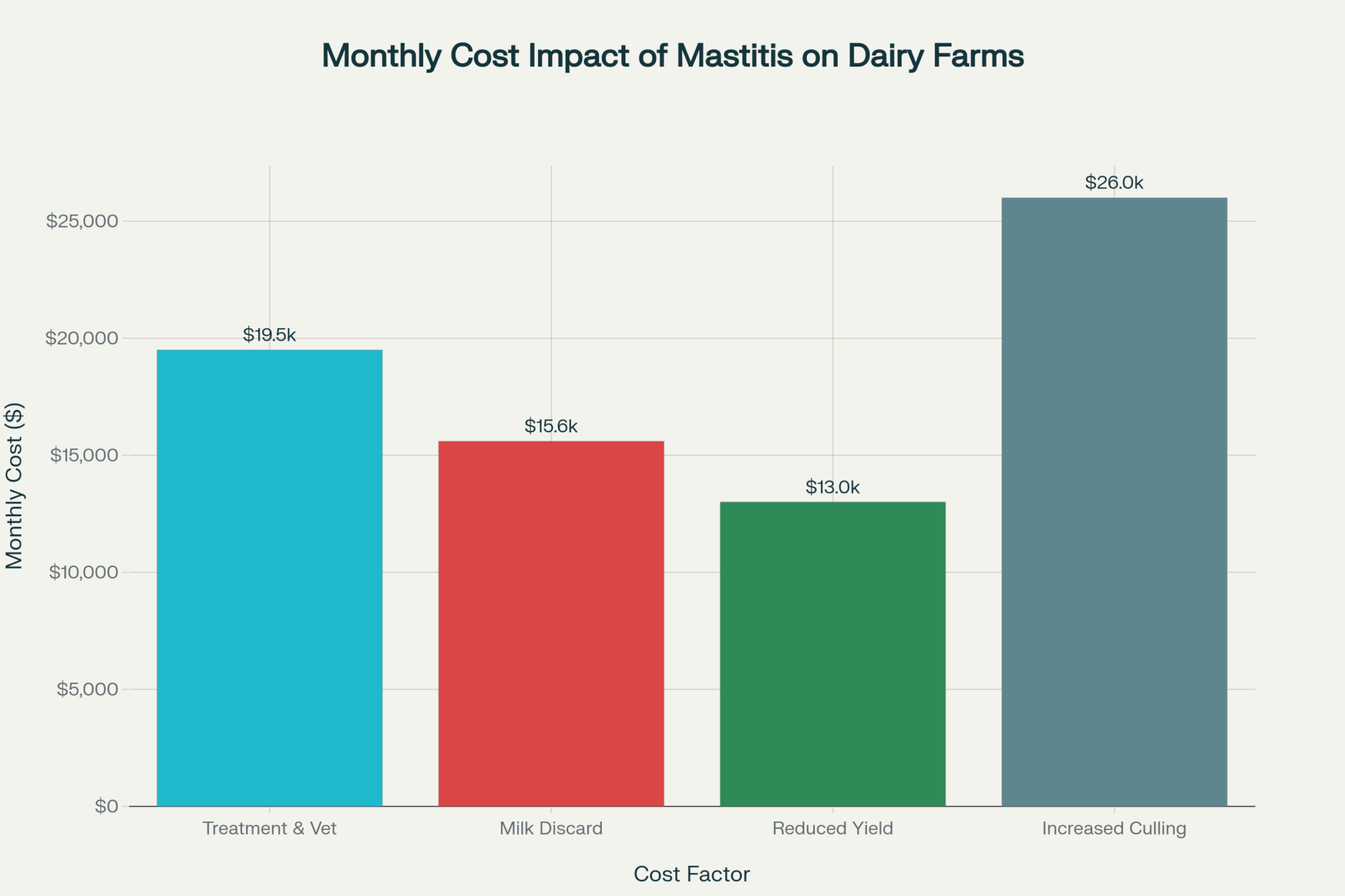
Higher butterfat pulls from firm butter, but soft block cheese markets are squeezing those who rely on component premiums, which is the reality for most producers. That spread can make or break your margin if your quality or volume takes a single health-related hit: a ten-cent loss on milk dumped, or a 20% cull spike, suddenly tips the cashflow balance. And feed? The USDA reported a national average corn price just shy of $3.90/bu at the end of August 2025, but the basis is a roll of the dice everywhere except in the Midwest heartland.
A 2,000-cow dairy in the Texas Panhandle, for instance, switched to targeted PCR testing and cut repeat mastitis cases by half after spring freshening. That’s not a fluke—that herd’s profit and parlor time both showed a jump as soon as repeat treatment costs decreased.

Producers ask if the added step for diagnostics is worth the hold-up, especially during fresh cow rushes. The reality is that most labs now deliver results in 2–5 days. The herds that plug those results straight into their cleaning maps wind up moving sooner on emerging problems, not after the fact. That’s actual cash in the tank instead of poured on the floor.
The Producer’s Playbook: 5 Steps to Bulletproof Your Barn
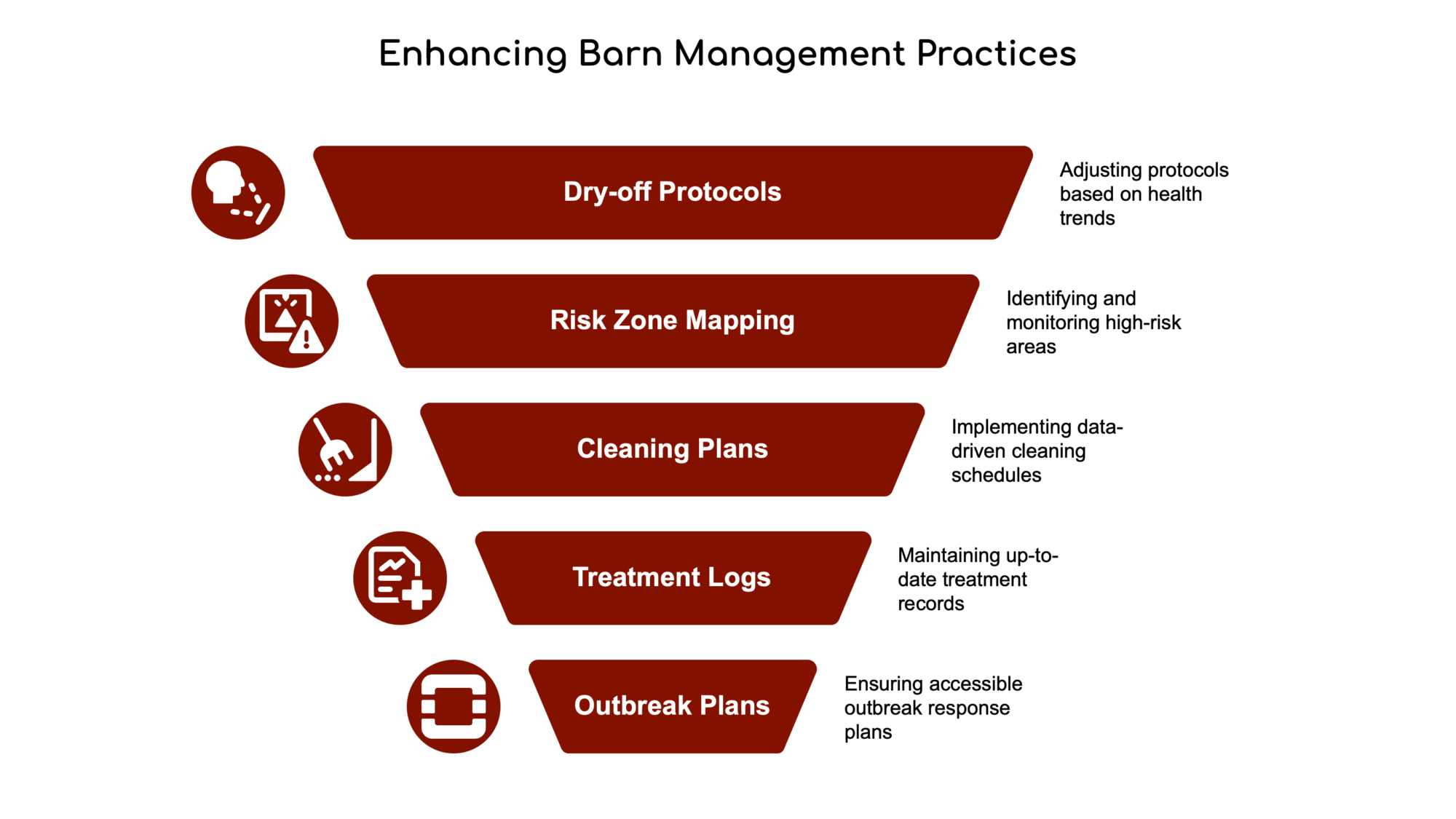
If you’re juggling a 500- or 1,000-cow herd, here’s what sharp operators are doing:
- Dry-off protocols are set and recalibrated in consultation with the herd veterinarian, always tied to the last quarter’s SCC and mastitis culture trends.
- Barn maps target known risk zones, including calf pens, sick lines, and parlor passes. Swabs and PCR tests should be conducted every month, not just at audit time.
- Cleaning and isolation plans rely on live lab data—when a trouble zone arises, it’s already on the rota.
- Treatment logs? They’re updated every shift, printed, and hung up where anyone can check before a FARM Program audit rolls in.
- Outbreak plans are posted by the loading dock, not locked in a desk.
All of it comes back to muscle memory—turning those SOPs into habit. The Wisconsin manager put it plain: “We stopped getting caught off guard when SOPs became second nature.”
Learning from the global leaders
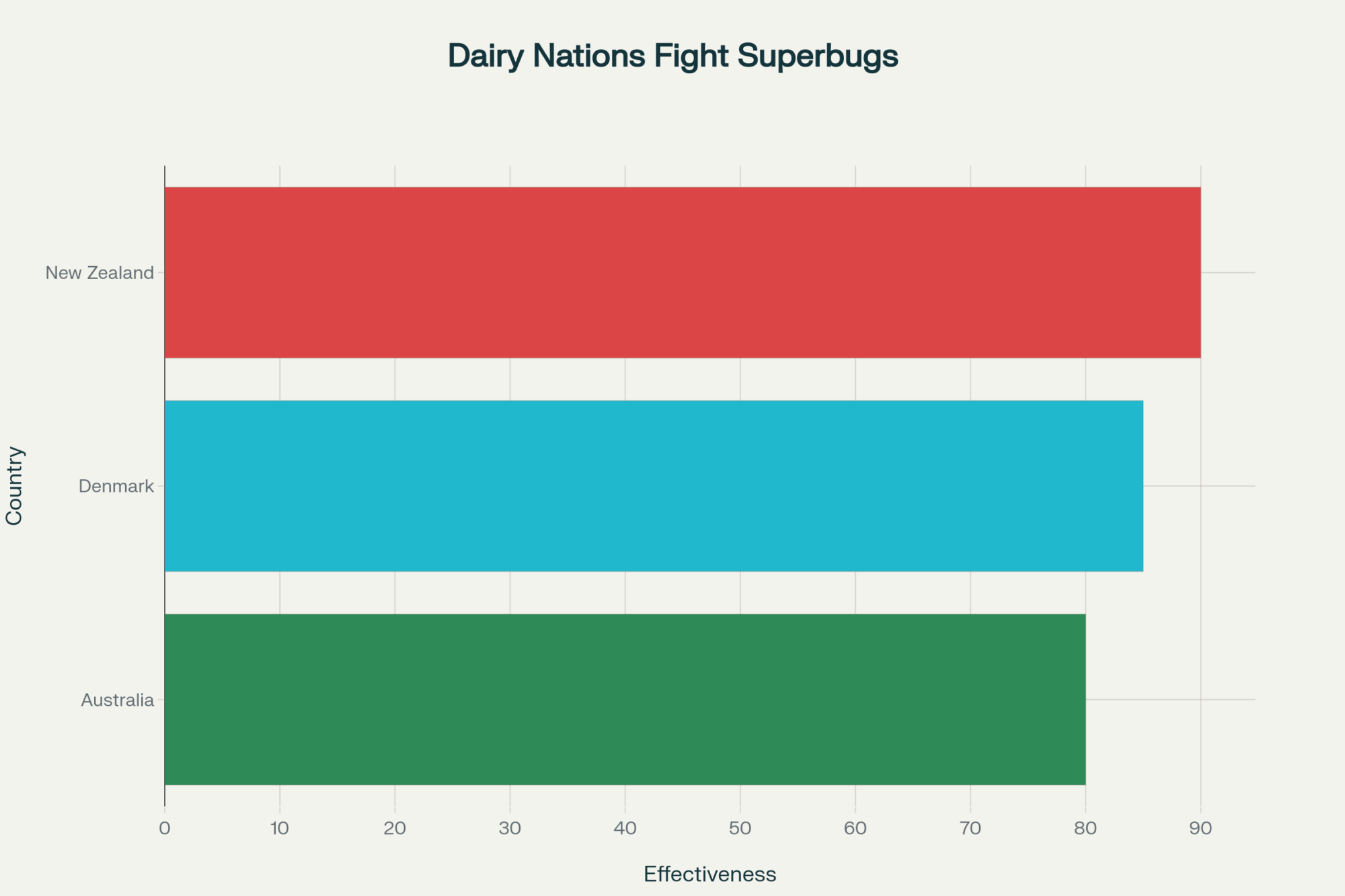
Australia? It’s not just talk. Dairy Australia’s Antimicrobial Resistance Guidelines demonstrate that the industry is actively reviewing on-farm antibiotic use, working with veterinarians to maintain low resistance and ensure access to critical medications remains open. That’s action beyond the poster.
New Zealand goes further: DairyNZ’s Smart Dry-Off podcast features South Island operators sharing exactly how team training on SDCT, real-time culture results, and peer accountability have not only reduced antibiotic use but also improved cow health and year-end numbers. The manager of a 600-cow Kiwi-cross herd in Southland told me, “When we made SDCT a priority, training was hard at first—especially with the rush at calving. But by October, our SCCs dropped, and our vet bills looked a lot less frightening.”
Danish data goes even further—biosecurity scores remain the single strongest predictor of staying negative on S. Dublin. Simple fixes, repeated with discipline, work. For insights into how UK dairy farms have successfully slashed antibiotic use by 19% while maintaining herd health, The Bullvine’s recent coverage offers valuable lessons for North American operations.
What’s coming down the pipeline
Let’s talk about the future. What are the most promising alternatives to traditional antibiotics? Phage therapy is in the news, and the science is catching up. It’s not quite in your parlor yet, but it’s showing real potential to mitigate multi-drug resistance in mastitis.
On the prevention and audit front, MSU Extension’s Farm Outbreak Response Plan offers the best step-by-step protocols—from staff communication to animal isolation to emergency supply checklists. Worth bookmarking, especially given how fast these events seem to come.
A recent visit to a dairy in Ohio, as part of their preparation for their FARM Program audit, tells the story—the crew had mapped every PCR result directly into the cleaning schedule, and the auditor’s grin said it all. “Wish this was standard,” he muttered. It’s not about paperwork; it’s about demonstrating you know your on-the-ground risks.
For producers seeking to comprehend the broader context of antimicrobial resistance challenges in US dairy operations, The Bullvine’s comprehensive analysis offers crucial background on the factors driving resistance and practical steps for mitigation.
The New Baseline for Survival and Success
Margins are tight, health risks are up, and nobody can afford to lose product or credibility with the plant, inspector, or lender. Proving stewardship, tightening diagnostics, and making traffic flows unbreakable—these aren’t extras. They’re the new baseline.
It starts with mastering the fundamentals: refining dry-off procedures, mapping every barn zone, documenting protocols, training your team, and executing the plan. The industry is evolving fast, and the producers who master this new reality won’t just survive—they’ll lead. The choice is yours.
Ready to turn this superbug threat into your competitive advantage? The farms that nail this strategy won’t just survive the next few years—they’ll dominate.
Complete references and supporting documentation are available upon request by contacting the editorial team at editor@thebullvine.com.
Learn More:
- The Ultimate Guide to Selective Dry Cow Therapy – This guide moves from theory to action, providing a practical framework for implementing SDCT on your farm. It details how to use data like SCC and clinical history to make profitable, health-positive decisions cow by cow.
- The Future of Dairy Farming: How Technology is Shaping the Industry – This article explores the innovative technologies that underpin modern stewardship. It reveals how precision tools, from automated sensors to data analytics, are helping producers prevent disease, optimize treatments, and secure a competitive edge in a demanding market.
- The Dairy Industry’s Evolution: Navigating a Changing Marketplace – Zooming out from the barn, this piece analyzes the market forces and consumer trends driving the push for antibiotic stewardship. It provides the strategic context you need to align your on-farm practices with evolving global demands and opportunities.
 The Sunday Read Dairy Professionals Don’t Skip.
 The Sunday Read Dairy Professionals Don’t Skip.
Every week, thousands of producers, breeders, and industry insiders open Bullvine Weekly for genetics insights, market shifts, and profit strategies they won’t find anywhere else. One email. Five minutes. Smarter decisions all week.




