



Archive for AI in agriculture

Beyond the Hardware: How Smart Software Is Driving Dairy Profits in 2025

Think robots run the dairy game? Think again. The real power’s in your data and feed.

EXECUTIVE SUMMARY: Hey, here’s the scoop from down the road. Dairy farming isn’t what it used to be — and that’s actually good news for your wallet. The real money now comes from software that weaves together genomic info, feed data, and health insights — not just fancy robots. Farms trimming feed waste by just 10% are saving about $200 per cow annually and adding more than 300 lbs of milk per cow. We’re talking about a market that has already surpassed $7 billion globally and is growing rapidly. Smart farms are using AI to identify mastitis days in advance and link genetic testing with actual production records. If you want to stay ahead of the pack instead of playing catch-up, start blending genomics with smarter feeding programs today — your bank account will thank you.

KEY TAKEAWAYS:

  • Cut feed waste by 10% — track your forage quality weekly and tweak rations accordingly. Small steps, but we’re talking real cash savings that add up fast.
  • Don’t wait on genomic testing — get it done early and link it with your milk records to unlock your herd’s true potential. Call your vet or advisor this week.
  • Leverage AI-powered health monitoring to catch issues like mastitis 2-3 days earlier, cutting treatment costs by hundreds per case and preventing lost milk.
  • Choose software that integrates with everything — your robots, feeders, and health monitors — so you see the complete picture instead of juggling multiple systems.
  • Roll out tech in stages with clear ROI tracking — invest in proper training and gradual implementation. That’s the playbook winners are using right now.

Walk through any major dairy expo and you’ll be bombarded by shiny new gadgets — robots humming, sensors monitoring, and apps promising insight. But here’s the truth the savvy farmers already know: the real payoff isn’t in the machinery itself. It’s in how you tame the deluge of data those tools generate.

The precision livestock farming market is experiencing significant growth, with a recent valuation of approximately $5.6 billion in 2025, and projections indicating a rise to nearly $7.9 billion by 2029. Growth rates remain impressively in the double digits, signaling clear momentum. Yet, hardware still accounts for the majority of upfront spending, while the true engine of profit lies in software’s ability to extract meaning from raw data.

Let’s pull up a chair in the barn and explore three software strategies that are shaping dairy profitability worldwide — and how each fits different farm ambitions.

The Digital Frontier: Why Software Strategy Defines Success

Across the dairy industry, data-savvy farms are outperforming their peers by 15–25%, with the overall market projected to climb toward $9.7 billion by 2032.

Three strategic archetypes dominate:

  • Universal Integrators: Platforms connecting diverse systems into seamless workflows
  • Specialized Analysts: Tools digging deep into critical cost centers, especially feed
  • Hardware-Enabled AI Ecosystems: Proprietary sensor networks powering predictive intervention

Choosing the right path hinges on your farm’s size, resources, and current technological maturity.

Strategy 1: Universal Integration Platforms — Orchestrating the Digital Symphony

Imagine your barn tech as a complex orchestra, each instrument playing a different tune. Universal integration platforms like UNIFORM Agri, with over 17,000 farms on board, act as the conductor, bringing harmony to the different data streams without forcing you to swap out your favorite instruments.

Consider this: your morning routine could begin with a single dashboard that summarizes all critical alerts — including health flags, reproduction status, and milk yield trends. Picture a manager starting their day at the milk parlor, scanning through UNIFORM’s consolidated morning report to quickly identify which specific cows need attention today. Instead of juggling multiple systems and clipboards, everything is streamlined through a single interface.

This isn’t just about seeing data. These platforms empower farms to embed custom protocols — such as drying off schedules, hoof health checks, or early lactation monitoring routines — ensuring that consistent, repeatable management actions are triggered and tracked digitally. No more relying on memory or hoping the weekend crew remembers the special protocols.

What sets UNIFORM apart is their philosophy of practical service built by experienced ag personnel who speak the farmer’s language and understand daily rhythms, making technology approachable rather than intimidating. As their leadership puts it, it’s easier to teach computer systems to agriculture people than to teach IT specialists the nuances of animal husbandry.

Strategic partnerships also enhance the platform’s capabilities; for instance, integrating with Zoetis enables farms to combine genetic potential data with real-world performance tracking, thereby accelerating breeding progress informed by comprehensive data.

Strategy 2: Specialized Analytics — Illuminating the Feed-to-Milk Nexus

Feed dominates your cost sheet, accounting for 50–70% of expenses, and peeling back the layers to find inefficiencies is a challenge that generic platforms often overlook.
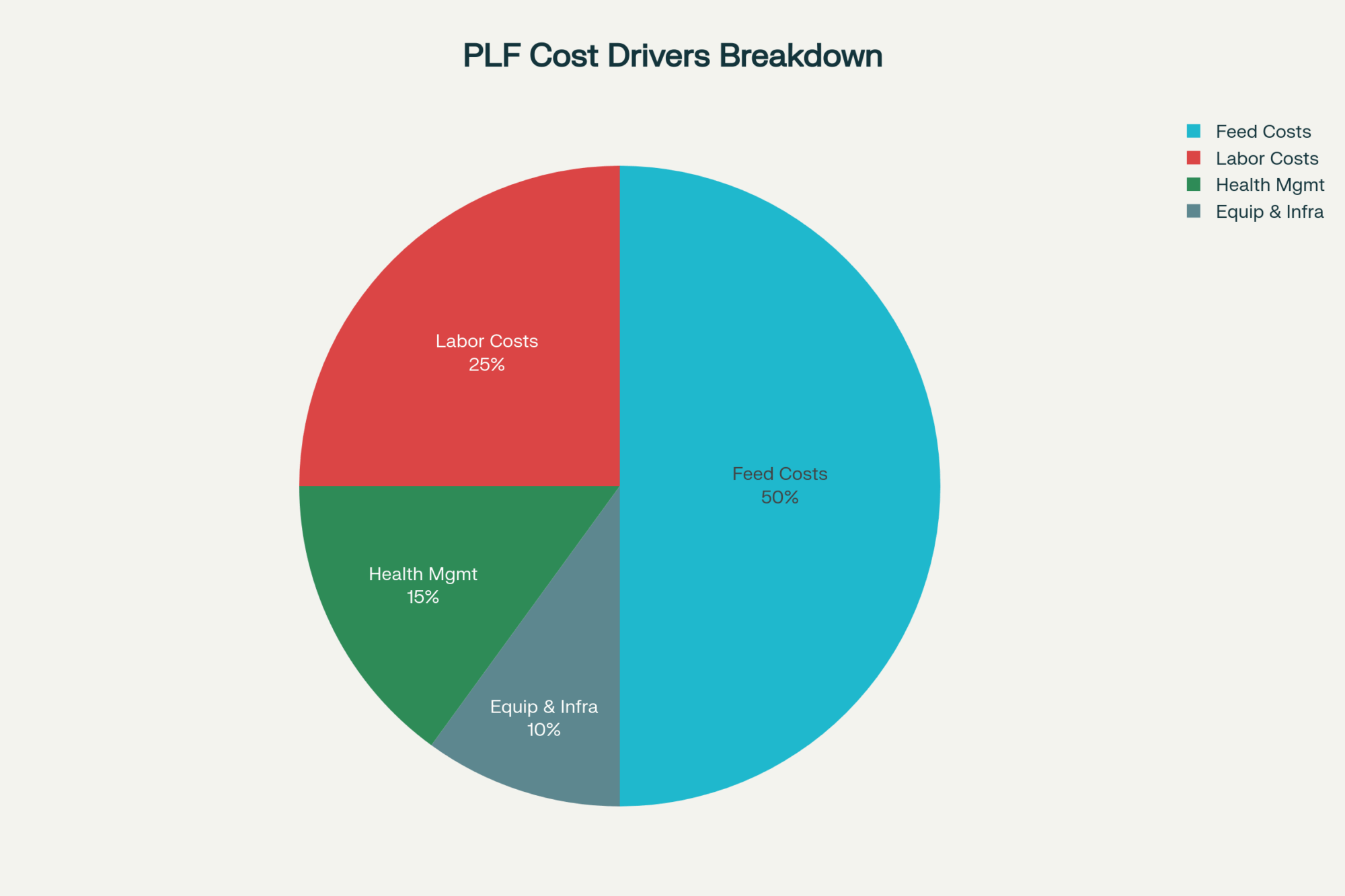
Pie Chart: Typical Cost Distribution in Dairy Farm Precision Technology Adoption

Enter MyDairyS, which boasts a fascinating origin story that lends credibility to its brand. Born from a nutrition company’s internal quest to understand better the direct connections between feed adjustments and herd performance, what started as an internal tool evolved into a sophisticated platform that makes complex feed-to-milk relationships crystal clear.

The platform excels as a collaborative tool across your advisory team. Feed consultants use it to graphically demonstrate the impact of their ration recommendations, while veterinarians can analyze health trends and metabolic patterns without needing deep nutrition expertise themselves. It bridges the gap between different specialists working with your herd.

By linking ration changes, forage quality analyses, and milk component data in intuitive visualizations, it transforms complexity into actionable insight. A farm that optimizes feed efficiency by just 7–10% reclaims significant margins — tens of thousands of dollars on larger operations — a crucial leverage in today’s volatile input markets.

Strategy 3: Hardware-Enhanced AI — The Sensor Inside the Cow

The cutting edge? Hardware and AI fused intimately.

smaXtec‘s small ingestible sensor nests in the cow’s reticulum, delivering real-time data on body temperature, rumination, water intake, and optional rumen pH for up to five years with precision few external devices can match.

Behind the scenes, their AI engine — TruAdvice™ — represents a continuously learning system that gets smarter over time. Rather than static programming, it constantly refines its disease detection algorithms by analyzing millions of new data points and incorporating feedback from veterinarians and scientists across their network. This means that the system you install today will become more accurate and valuable over time.

But smaXtec’s philosophy goes beyond impressive technology. They position themselves as a genuine partner in the barn, not just another complex gadget. Their approach focuses on delivering concrete, actionable recommendations that benefit farm staff of all experience levels — from seasoned managers to newer team members who might not have years of animal health expertise. This addresses the real-world challenge of empowering your entire crew to make better decisions.

The real-world impact, verified by an independent IFCN study, is a financial uplift of $210 in returns plus $190 more in income per cow annually, including a 330 kg increase in solids-corrected milk. A 2,100-cow operation reported a remarkable 7.8x ROI — over $500,000 saved primarily by reducing costly health incidents and improving reproductive efficiency.

Early mastitis detection alone justifies the investment, as clinical cases average $300 in direct costs, plus $180 in lost milk, while sensor systems typically cost $45-$ 65 per cow annually, with payback periods averaging just 2.1 years.

Bridging the Tech Divide — Overcoming Integration Challenges

More than half of dairy farmers cite incompatible technology as their primary barrier to adoption. Legacy farm networks, proprietary hardware locks, and diverse software landscapes create data silos and information overload that frustrate even tech-savvy operators.

I’ve walked through operations where managers juggle four different tablets for different systems, manually transferring data between platforms. That’s not efficiency — that’s digital chaos that undermines the value proposition of technology investment.

Emerging interoperability standards, such as ICAR ADE and open APIs, are crucial for sustainably integrating diverse systems. Hands-on support and intuitive interfaces remain paramount to drive adoption beyond early enthusiasts to mainstream farm operations.

Planning for Success — Avoiding Common Pitfalls

Implementation data reveals that unrealistically high ROI expectations account for 58% of technology failures, while inadequate training contributes to 47% of failures, with infrastructure gaps causing another 34%. The technology itself rarely fails; implementation and change management are the issues.

Successful farms follow structured rollouts with measurable milestones and dedicated user training. They start with pilot programs on portions of their operation before full deployment, maintaining realistic expectations while tracking meaningful metrics that demonstrate value.

Scaling Technology — The Role of Herd Size

Your optimal strategy depends heavily on operational scale:

  • Small herds (1000 cows): Combined approaches maximize returns across multiple operational areas
  • Medium herds (300-1,000 cows): Leverage integrated platforms for best ROI
  • Large herds (>1,000 cows): Combine all three approaches strategically

Geographic and climate factors, such as feed price volatility, labor availability, and regional market premiums, should inform the timing and investment priorities for technology deployment.

A Glimpse Ahead — AI Evolution & Industry Consolidation

The future promises integrated animal records combining genetic data, nutritional inputs, real-time health biometrics, welfare indicators, and lifetime production history — the holy grail for precision livestock management.

Artificial intelligence will advance from current diagnostic capabilities to prescriptive decision-making and eventually automated farm operations. We’re moving from systems that tell you what happened to systems that recommend what to do next.

Industry consolidation continues to accelerate as technology leaders acquire specialized platforms to build comprehensive solutions. The acquisition of UNIFORM-Agri by DeLaval exemplifies this trend toward integrated equipment and software offerings.

Your Strategic Action Plan

The digital divide in dairy is real and growing. Data-driven operations consistently outperform traditional approaches by significant margins, and this gap is expected to widen.

Start with an honest assessment of your most expensive operational challenge. Is it feed efficiency, health management, reproductive performance, or labor productivity? Focus there with proven solutions rather than trying to solve everything simultaneously.

Match your strategy to your operational philosophy and scale, then implement systematically with realistic timelines and comprehensive training. The successful farms aren’t rushing — they’re being methodical about change management while maintaining a focus on measurable outcomes.

The Bottom Line

In this rapidly evolving digital age, the gap between technology leaders and laggards continues to widen daily. The precision livestock farming market continues expanding at double-digit rates, with software representing the fastest-growing segment.

The three software strategies — universal integration, specialized analytics, and hardware-enabled AI ecosystems — each offer proven pathways to improved profitability and operational efficiency. Success depends on matching your strategy to operational reality and implementing systematically with realistic expectations.

The digital barn isn’t coming — it’s already here. The only question is whether you’re driving the transformation or getting swept along by it.

Complete references and supporting documentation are available upon request by contacting the editorial team at editor@thebullvine.com.

Learn More:

Join the Revolution!

Join over 30,000 successful dairy professionals who rely on Bullvine Weekly for their competitive edge. Delivered directly to your inbox each week, our exclusive industry insights help you make smarter decisions while saving precious hours every week. Never miss critical updates on milk production trends, breakthrough technologies, and profit-boosting strategies that top producers are already implementing. Subscribe now to transform your dairy operation’s efficiency and profitability—your future success is just one click away.

NewsSubscribe
First
Last
Consent

BANNs CRUSH Traditional Models: The AI Secret Weapon Reshaping Dairy Genetics

AI crushes tradition: BANNs boost dairy genetics accuracy by 5%+. Will your herd lead or bleed?

EXECUTIVE SUMMARY: A groundbreaking AI model called Biologically Annotated Neural Networks (BANNs) is revolutionizing dairy genetics, outperforming traditional methods like GBLUP and BayesB by up to 7.46% accuracy in key traits such as mastitis resistance and milk yield. By analyzing DNA in 100kb “genomic neighborhoods,” BANNs capture complex gene interactions that linear models miss. While the tech promises massive gains—like 14% fewer mastitis cases per herd—it risks overfitting and demands heavy computing power. Industry giants like CRV and ABS Global are already racing to adopt it, but experts warn farmers to balance AI’s power with genetic diversity. The question isn’t if to adopt BANNs, but how fast before competitors leave you behind.

KEY TAKEAWAYS:

  • 5% Accuracy Edge: BANNs outperform GBLUP/BayesB in milk yield, mastitis resistance, and conformation.
  • DNA Neighborhoods: 100kb genomic windows reveal hidden gene interactions traditional models ignore.
  • Risks vs. Rewards: Overfitting threatens genetic diversity; compute costs may strain small farms.
  • Industry Arms Race: CRV and ABS Global are piloting BANN integrations by 2025–2026.
  • Farmer Action Plan: Demand transparent AI tools and diversify breeding to hedge risks.
BANNs genomic prediction, dairy cattle genetics, AI in agriculture, SNP analysis accuracy, genomic selection models

Dairy genetics just took a quantum leap forward. A groundbreaking study published in the Journal of Animal Science and Biotechnology (2024) reveals that Biologically Annotated Neural Networks (BANNs) outperform traditional genomic prediction models like GBLUP and BayesB by up to 7.46% accuracy in key traits such as milk yield and mastitis resistance. This isn’t incremental progress—it’s a seismic shift in how we understand cattle DNA. With over 6,500 Chinese Holsteins analyzed (sharing 78% of SNPs with North American herds per CDCB’s 2024 genomic survey), the findings have immediate relevance for dairy operations worldwide. As Dr. Li Chen, lead researcher, starkly notes: “We’ve been using oversimplified models for decades. BANNs force us to confront the messy reality of how genes actually interact.”

Why 100kb Windows Are Changing the Game

At the heart of BANNs’ success is their unique approach to genomic analysis: dividing the genome into 100kb windows (100,000 DNA base pair segments). Unlike traditional gene-based models that treat genes as isolated units, this method mimics biology’s complexity by analyzing how SNPs interact across functional genomic neighborhoods.

Accuracy Gains by Trait

TraitBANN_100kb vs. GBLUPBANN_100kb vs. BayesB
Milk Yield (MY)+7.46%+6.93%
Fat Yield (FY)+5.42%+5.21%
Somatic Cell Score (SCS)+4.20%+3.75%
Conformation Score+5.36%+5.68%
Source: Journal of Animal Science and Biotechnology, Table 2 (2024)

The results speak for themselves. For milk yield, BANN_100kb achieved a 7.46% accuracy boost over GBLUP, while mastitis resistance predictions jumped 4.2%—a critical gain given that mastitis costs the U.S. dairy industry over $2 billion annually (USDA, 2023).

This breakthrough matters because it finally bridges the gap between statistical models and biological reality. As the study shows, BANNs capture non-additive genetic effects—synergies and antagonisms between genes that linear models ignore. For instance, a SNP influencing milk yield might only show its full effect when paired with another SNP 50kb away. Traditional methods miss these interactions; BANNs exploit them.

SNP-Set Performance Comparison

MetricBANN_gene (Gene-Based)BANN_100kb (100kb Windows)
Phenotypic Variance Explained73.8%75.4%
Top SNP-Set PIP*0.0910.096
Source: Journal of Animal Science and Biotechnology, Table 3 (2024)
PIP = Posterior Inclusion Probability (measure of genetic influence)

The Risks Lurking Behind the 5% Advantage

While the accuracy gains are undeniable, the study issues stark warnings. BANNs’ ability to model complex interactions comes with a catch: overfitting. The AI may prioritize short-term prediction accuracy at the expense of long-term genetic diversity, potentially creating herds optimized for today’s traits but vulnerable to tomorrow’s challenges. Researchers explicitly caution against applying BANNs to breeds like Jerseys without further validation, as the model was trained exclusively on Holstein data.

Computational Demands

MethodAvg. Training Time per Trait
GBLUP42 minutes
BayesB132 minutes
BANN_100kb285 minutes
Random Forest274 minutes
Source: JOURNAL OF ANIMAL SCIENCE AND BIOTECHNOLOGY Supplementary Materials, Table S2 (2024)

Industry experts echo these concerns. Dr. Chad Dechow, a dairy geneticist at Penn State, warns: “A 5% accuracy gain only matters if it translates to real-world ROI. Farmers need solutions they can trust, not black-box algorithms”. Computational demands also pose hurdles—BANNs require 2.8x more processing power than GBLUP, which could strain smaller farms or AI providers slow to upgrade infrastructure.

How the Industry Is Responding

Major players are already mobilizing. CRV announced plans to trial BANN-integrated indexes by late 2025, while ABS Global emphasizes a hybrid approach: “AI should enhance breeder expertise, not replace it”. Meanwhile, the CDCB hints at U.S. evaluations rolling out by 2026, pending further validation.

These developments signal a critical juncture. Brian Van Doormaal, Chief Services Officer at Lactanet and architect of Canada’s genomic evaluation system, emphasizes practicality: “Dairying is a difficult business. Farmers need solutions that deliver clear ROI, not just technological hype”.

Economic Impact: Connecting Genomics to Profit

Mastitis Resistance Savings

Accuracy GainReduction in Clinical MastitisAnnual Savings per 100 Cows
+4.2% (BANN_100kb)14%$2,100–$3,800
Source: USDA Mastitis Cost Analysis (2023)

For dairy farmers, the stakes are clear. A 14% reduction in mastitis cases could save thousands annually—money that flows directly to the bottom line.

Your Path Forward in the BANN Era

For dairy professionals, the message is clear: complacency is riskier than change. Start by grilling genetics providers about their BANN adoption timelines—CRV’s public commitment sets a benchmark others must match. Diversify breeding strategies by pairing BANN-selected bulls with proven sires, creating a genetic safety net against overfitting pitfalls. Most crucially, demand plain-English explanations of how these models work. The era of blindly trusting genomic predictions is over; the winners will be those who marry AI’s power with human wisdom.

The Bottom Line

BANNs aren’t a distant promise—they’re rewriting dairy genetics today. Farmers who dismiss this 5% gap risk obsolescence, while early adopters could secure generational advantages. As the Journal of Animal Science and Biotechnology team concludes: “This isn’t an evolution. It’s a revolution.” The question isn’t whether you’ll join—it’s how quickly you’ll turn this disruption into profit.

Learn more:

  1. Longevity: The Hidden Profit Center In Your Barn
    Explore how breeding for longevity—like the record-breaking Canadian Milking Shorthorn with 100,000kg lifetime milk—reduces replacement costs and maximizes ROI, aligning with BANNs’ potential to enhance genetic durability.
  2. AI vs. Breeders: Who Really Drives Genetic Progress?
    Dive into the debate over AI’s role in modern breeding, featuring insights from top geneticists on balancing cutting-edge tools like BANNs with traditional breeder expertise.
  3. Smart Barns 2030: How Sensors Are Revolutionizing Herd Health
    Discover how IoT sensors and predictive analytics (like Cornell’s CAST project) work alongside genomic tools to optimize mastitis detection, feed efficiency, and cow longevity.

Join the Revolution!

Join over 30,000 successful dairy professionals who rely on Bullvine Daily for their competitive edge. Delivered directly to your inbox each week, our exclusive industry insights help you make smarter decisions while saving precious hours every week. Never miss critical updates on milk production trends, breakthrough technologies, and profit-boosting strategies that top producers are already implementing. Subscribe now to transform your dairy operation’s efficiency and profitability—your future success is just one click away.

NewsSubscribe
First
Last
Consent

How Large Dairies Are Leading in Precision Tech Adoption

How is precision agriculture reshaping farms? Are larger farms setting the pace? Dive into USDA insights on growth and tech trends.

Envision a world where every drop of milk is crafted with precision, every acre of farmland is optimized to its full potential, and yields are maximized. This is not a distant dream, but a reality we live in, thanks to the transformative power of precision agriculture. These cutting-edge technologies are ushering in a new era in the dairy industry, a sector traditionally steeped in age-old practices. The latest reports from the USDA reveal a fascinating trend: as farms expand, they increasingly embrace precise technologies such as autosteering systems and robotic milking setups.

Precision agriculture is not just a buzzword. As the 2024 USDA report highlights, it’s a game-changer, especially for larger farms that leverage these technologies to stay ahead in a competitive market.

The numbers show that bigger farms are at the forefront of this technological change, which opens the door for a more in-depth discussion of how these new technologies affect farming. These technologies promise to make farming more efficient, but they could also change what it means to farm, which has led to a debate about what that means for farmers of all sizes.

Farm Size CategoryAdoption Rate of Precision Technologies (%)Growth Since 2000 (percentage points)
Midsize Farms52+44
Large-Scale Crop-Producing Farms70+61
Large Farms with Yield Monitors68+60
Small Family FarmsVaries by TechnologyN/A

Precision Farming: A 20-Year Odyssey from Fiction to Essential Practice 

Precision agriculture has advanced dramatically in the last twenty years, with rapid innovation and significant changes in the farming industry. As technology improved, farms that used old-fashioned methods and new digital tools also improved. This change wasn’t just aimed at new tools; it also meant changing how farming was done to fit an era that was becoming more focused on efficiency and sustainability.

One thing that makes this shift stand out is guidance autosteering systems. Twenty years ago, the idea of a tractor or harvester being able to steer itself precisely was a science fiction idea. These systems are now not only accurate but also widely used. With GPS technology at their core, they have reduced human mistakes and improved field operations, saving fuel and time and keeping the soil from getting too compact.

Yield monitors and technology for mapping yields have also become essential to modern farming. A yield monitor measures crop yield during harvest and is now essential to many large-scale operations. Farmers have a good understanding of their fields when they use yield maps broken up into sections that are easy to use. With this level of detail, they can make smart choices about using resources and getting the most work done.

And then there are soil maps, handy tools that go deep. Soil maps show essential details about the fertility and makeup of the soil. This information is beneficial because it helps with precise fertilization, which gives plants precisely what they need to grow well without wasting anything or hurting the environment.

Large farms often have trouble managing large areas with different soil and crop conditions, so these precision agriculture technologies are essential. Larger farms can buy these high-tech tools better because they have more money to spend. With this investment, they can run their business more efficiently and become leaders in using sustainable farming methods. These technologies must now be used together in modern agriculture; not doing so is not an option. This marks the beginning of a future where digital precision drives productivity and sustainability.

Unequal Technological Terrain: Why Large Farms Leap Ahead While Smaller Farms Linger

New data from the USDA shows a big difference in how farms of different sizes use precision agriculture technologies. Smaller family farms are slower to adopt these new ideas than larger farms. Why this difference? The answer lies in the complicated worlds of work, ability, and economics. Small farms often have limited resources and face challenges adapting to new technologies due to their traditional farming methods and the financial risks of investing in new equipment.

Because they are bigger, farms can afford to buy new technologies like GPS-guided tractors and advanced soil mapping tools at first. This is called ‘economies of scale, a concept where the cost per unit of output decreases as the scale of production increases. Their large production makes the investment worthwhile, and they expect to get it back through higher efficiency and lower operating costs. According to the USDA’s 2023 report, 70% of large farms that grew crops used autosteering systems. This significant increase turned these farms into centers of technological progress [USDA Data, 2023].

On the other hand, small farms are having trouble with this digital transformation. It’s not just technology stopping them; it’s also money. Small farms often have Gross Cash Farm Income (GCFI) of less than $350,000, making it hard to justify the costs when their sales don’t promise a proportional return. This hesitation makes them more determined to stick to traditional farming methods, where costs and possible increases in yield must be carefully weighed.

These problems are made worse because most people on small farms are older. Many of the major operators are retired or close to retirement, and they are often wary of the complicated technology that they think is only for the more prominent players. This difference in how different generations use technology is a good example of more significant problems with modernizing agriculture. It makes you wonder how small farms can stay competitive in a world where things change quickly.

To ensure fairness, targeted support and educational initiatives are crucial to empower these smaller businesses. This will help bridge the technological gap and ensure that all farms, regardless of their size, have the opportunity to thrive in today’s farming landscape.

Precision Agriculture: Maximizing Yields, Minimizing Waste, and Mending Ecology

Precision agriculture involves many technology-based practices that help farmers in many ways, including increasing crop yields, saving money, and protecting the environment. It tries to improve field-level management by giving farmers valuable data that they can use to innovate and sustain their farming. By reducing the use of water, fertilizers, and pesticides, precision agriculture can help minimize environmental impact and promote ecological balance.

First, consider the significant boost to yield enhancement. Farmers can monitor their crops’ health in real time using data from sensors and satellites. They can also precisely change what they put into the plants to meet their changing needs. This targeted approach helps farmers achieve the best growth conditions while minimizing waste and producing the highest yields using the proper water and fertilizers.

One of the best things about precision agriculture is that it saves time and money on labor. Technologies like self-driving tractors and robotic systems make farming tasks easier without people. For example, automated guidance systems remove the need for constant human supervision during planting and harvesting. This lets farm owners focus on long-term planning instead of doing manual work.

Precision farming also reduces input costs by using precise input application maps to apply seeds, fertilizers, and pesticides only where needed. Farmers can use fewer seeds, fertilizers, and pesticides correctly. This saves money, makes crops healthier, and reduces input costs; precision agriculture is good for the environment, which is a big reason to do it. It helps balance the ecosystem by reducing the chemicals in nearby waterways and greenhouse gases released during farming. Soil-focused strategies improve soil health, such as crop rotation, cover crops, and minimal disturbance. In the long run, this benefits both the environment and farming output.

Small Farms, Big Challenges: Bridging the Gap to Precision Agriculture

It is hard for small family farms to get to the point where they can use precision agriculture. The prohibitively high costs of high-tech equipment are the most important of these. Often, small farmers need help to afford the high prices of advanced guidance systems and robotic milking machines, essential tools for modern farming. This problem with money is made worse because small businesses need help getting credit and capital, making it hard for them to invest in upgrades that could significantly improve their efficiency and productivity.

Furthermore, technological know-how, or the lack of it, is a significant problem. Many small farm owners might need help understanding how to use precision agriculture technologies. It can be hard to learn how to set up and maintain these systems, which keeps farmers from getting involved in this technologically advanced part of farming.

Small family farms may also have logistics problems because of their size. Because precision agriculture tools are usually made for bigger jobs, they might not work as well or be as easy to use on smaller farms. This mismatch can make these technologies less valuable when they are finally used.

Targeted support systems could be the answer to these problems. Government grants and subsidies to make precision technologies more affordable could be significant. Small farmers with financial incentives can access these technologies more quickly. Adding educational programs and technical support services could also help close the knowledge gap by giving farmers the tools to run more advanced farming systems.

Working together could also make the distribution of technology more fair. Small farms could collaborate to form cooperatives or partnerships and share costs and resources. This would create an economy of scale that let members use precision farming technologies they couldn’t afford. These partnerships could also make sharing technical knowledge and experience easier, making the transition even more straightforward.

Precision farming may be difficult for small family farms to start, but with strategic help and teamwork, the path can be made clear. As the farming world changes, farms of all sizes must use new technologies to ensure a sustainable future. Small family farms can survive and even thrive if they take the proper steps. They can turn problems into chances for growth and new ideas.

Tech Providers: Guardians of Farming Innovation or Keepers of the Status Quo? 

Technology providers are very important to the complex web of precision agriculture. They designed and made the tools that make modern farming possible. For dairy farmers, especially smaller ones, these companies do more than handle transactions. It becomes a partnership that depends on the farms’ survival and success.

Still, do the tech companies we use do enough to help small dairy farmers? Because of their significant purchasing power, the focus has been on more extensive operations in the past. However, the chance to reach the small farm market grows as the landscape changes. Companies need to change how they do things to help these farmers. This means providing solutions of the right size and strong support systems for setting them up and using them.

Getting educated is very important. Technology companies should invest in complete training programs designed for small businesses. Removing the mystery of precision farming technology allows these farmers to use it to its fullest without feeling overwhelmed. Companies could also consider flexible pricing models or financing options, allowing small farms to afford advanced technologies. This would make access more open to everyone.

The farms are as big as the innovations just around the corner. The time is right for more user-friendly interfaces to ensure that technologies are robust and easy for everyone to use. Putting artificial intelligence and machine learning together can improve farming by giving each farm specific advice based on its data.

Companies could also make it easier for people in rural areas to connect to the Internet, a significant problem that makes precision agriculture more challenging. Satellite internet or other new ways to connect can help close the technology gap, allowing farms in the most remote areas to join the revolution in precision agriculture.

Ultimately, technology providers are not just sellers but essential allies in the quest for a sustainable agricultural future. By changing their strategies to include the smallest farms, they can get a more significant market share and help make farming more fair and effective. Innovation is on the horizon, and it’s time to ensure everyone can use it.

The Digital Dawn: Emerging Technologies Reshaping the Farming Horizon

As we look toward the future of precision agriculture, we see new technologies ready to transform farming methods. These changes aren’t just dreams; they are the future of farming, powered by advances in Artificial Intelligence (AI), Machine Learning (ML), and the Internet of Things (IoT).

  • AI and Machine Learning: Smartegaing Up Farms
    AI and ML will soon be central to farming, going from futuristic ideas to everyday tools. They help process large amounts of data to give helpful advice, helping dairy farmers make better choices about growing crops, caring for animals, and managing resources. Automated systems can predict soil needs and weather, bringing new accuracy to planting and harvesting. 
  • The IoT: Connecting the Farm
    The IoT, working with AI and ML, creates a network of devices across farms. These gadgets, like soil sensors and temperature collars for cows, constantly send data. This ongoing feedback helps improve every aspect of dairy farming, from tracking animal health to saving water. This connectivity improves operations, cuts costs, and boosts output. 
  • The Next Step: Clever Data and Self-Running Machines
    Using innovative data with self-running machines could ease the workload on dairy farms. Imagine machines that independently plow, plant, and harvest, learning to adjust to each field’s needs. This tech could significantly cut down on labor, allowing people to focus on strategy while boosting productivity and efficiency.
  • Managing Farms with Blockchain
    While primarily used in finance, blockchain technology could benefit agriculture by improving transparency and tracking. Applying blockchain could transform supply chains, ensuring each step from farm to customer is recorded and trustworthy, which is crucial for dairy producers aiming to uphold high standards. 
  • The Future of Farming: Focusing on Sustainability
    The merging of these new technologies points to a shift towards sustainable farming centered on conserving the environment and using resources wisely. Future dairy farms could reduce their environmental impact by cutting waste and using resources more effectively, even as global milk demand rises. 

As we progress with precision agriculture, the path ahead is filled with technological possibilities and the duty to improve dairy farming. The farm of the future is about innovation, intelligence, and sustainability, designed to tackle the challenges of a growing world with limited resources.

The Bottom Line

As we’ve seen, precision agriculture is changing how farming is done, going from being a concept for the future to an essential practice. Larger farms have been ahead of this change because they have the resources and size to do so. On the other hand, smaller farms face problems that need creative and cooperative solutions. The new technologies in this area are not just options; they are necessary to boost crops, cut down on waste, and adopt environmentally friendly methods that are good for business and the environment. Precision agriculture is an example of how new ideas can be used to solve significant problems in agriculture, leading to increased efficiency and resilience.

But the trip is still ongoing. This is a call to action for everyone involved in agriculture to consider using precision technologies in their work to benefit everyone. As landowners, it is our job to push this necessary change forward and ensure that farming in the future is productive but also sustainable, flexible, and open to everyone.

Key Takeaways:

  • Adoption of precision agriculture technologies is strongly linked to the size of the farm, with larger farms leading in utilization.
  • Guidance autosteering systems and yield mapping technologies are commonplace on large-scale farms.
  • Small family farms show the lowest adoption rates, particularly those with retired operators or low sales.
  • Technologies are adopted primarily to enhance yields, save labor, reduce costs, and mitigate environmental impacts.
  • The high cost of advanced technologies like robotic milking systems is a barrier for smaller farms.

Summary:

Over the past two decades, American farms have experienced a remarkable shift with the adoption of precision agriculture technologies, particularly by large-scale operations. As reported by the USDA, tools such as guidance autosteering systems and yield maps have transitioned from niche applications to standard practice, showcasing the technological divide between farm sizes. While larger farms utilize these advancements to enhance efficiency and boost yields, smaller farms face barriers in integrating these innovations, highlighting a persistent technological gap. Precision agriculture is revolutionizing the dairy industry, introducing efficiency-driving technologies like autosteering and robotic milking. These advancements reduce human errors and enhance operational decisions. Yet, smaller family farms often lag in adoption due to complex issues of capability and resources, underscoring the need for targeted support and education. With emerging technologies like AI, Machine Learning, and IoT transforming agricultural methodologies, there’s a pressing need for equitable access to these cutting-edge tools.

Learn more:

Join the Revolution!

Bullvine Daily is your essential e-zine for staying ahead in the dairy industry. With over 30,000 subscribers, we bring you the week’s top news, helping you manage tasks efficiently. Stay informed about milk production, tech adoption, and more, so you can concentrate on your dairy operations. 

NewsSubscribe
First
Last
Consent
Send this to a friend





