Archive for A2A2 genetics

Ginger Rogers: The Oscar Winner Who Bet It All on Golden Guernseys

Think an “outsider” can’t build a serious dairy? An Oscar‑winner with Golden Guernseys proved otherwise — right up until the war took her help away.
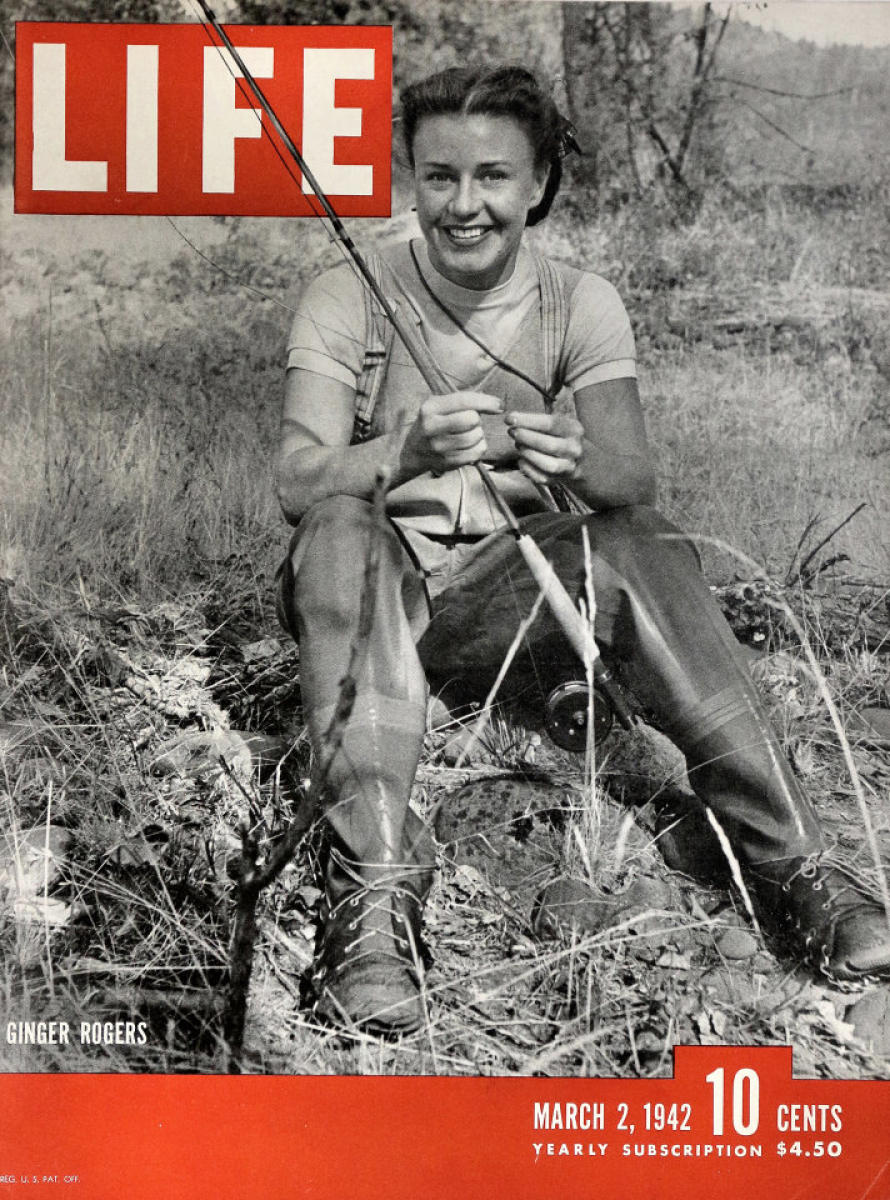
The cover that started this story. LIFE Magazine, March 2, 1942: Ginger Rogers in angling gear on the banks of the Rogue River — a 15-hour drive from Hollywood, and she made the trip as often as her filming schedule allowed. Inside the issue, three photographs told the rest: Rogers feeding wildflowers to her cows, surveying 1,000 acres from the ranch-house roof, and watching the Guernseys come home at dinnertime with Lela at her side.

On March 2, 1942, LIFE Magazine hit newsstands with Ginger Rogers on the cover. Not in a sequined gown. Not mid-pirouette with Fred Astaire. She was in fishing gear — rod in hand, somewhere on the banks of her own river in southern Oregon. 

Inside the magazine, the photographs told a deeper story. One showed Rogers on the roof of her ranch house, surveying more than 1,000 acres of the Rogue River Valley — the LIFE caption noted it took her 15 hours to drive here from Hollywood, but she went there often “for a taste of honest country life.” In another, she was feeding wildflowers to one of her 22 cows. And in a third, she leaned against a fence rail with her mother, Lela, and their farm manager, watching the cattle at dinnertime — with a Jersey and a Guernsey looking straight at the camera. 

The fence-rail moment. From LIFE Magazine, March 2, 1942: Ginger (left), the farm manager, and Lela Rogers (right) watch the cattle come in at dinnertime on the Rogue River Ranch, Eagle Point, Oregon. In the foreground, looking straight at the camera — a Jersey and a Guernsey. Remember this scene. It comes back at the end.

This wasn’t a photo op. By the spring of 1942, Virginia Katherine McMath — the girl from Independence, Missouri, who’d tap-danced her way to an Academy Award — had sunk serious money into Guernsey dairy cattle, purebred Angus beef, and a milking parlor built to standards that meant business. Barely a year off her Oscar win for Kitty Foyleat the 13th Academy Awards on February 27, 1941 — she’d beaten Katharine Hepburn, no less — and still only 30 years old, she was RKO Studios’ hottest commodity. 
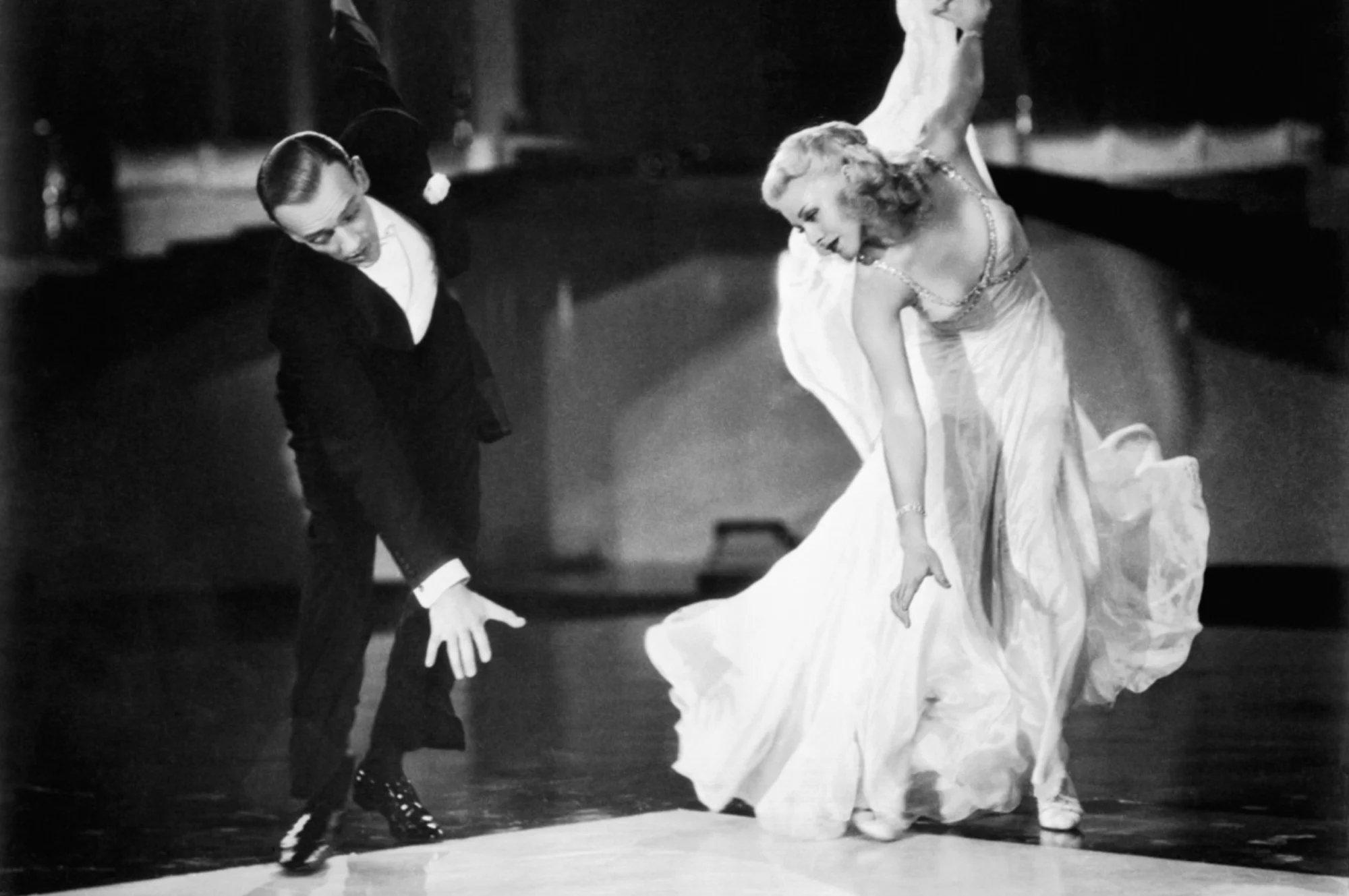
The day job. Fred Astaire and Ginger Rogers in the iconic “Cheek to Cheek” number from Top Hat (1935). By 1942, the woman in the white gown was the highest-paid star in Hollywood — and spending every free hour driving 15 hours north to build a Guernsey dairy from scratch on the banks of the Rogue River.

And she was pouring it all into a dairy.

The Ranch That Wasn’t a Playground

The purchase happened in 1941, the same year as that Oscar. Rogers and her mother bought what would become Rogers’ Rogue River Ranch — locally known as the “4R” — near the hamlet of Eagle Point, about 17 miles north of Medford. Two parcels combined: 470 acres on the east side of the Rogue River, 380 on the west. Eight hundred fifty acres to start. 

By 1942, additional purchases pushed the holding past 1,050 acres, with more than 2.5 miles of river frontage on both banks. 

Now, the thing about Lela Rogers — she wasn’t some Hollywood stage mother content to ride her daughter’s fame. She’d been a newspaper reporter, a screenwriter, a Marine Corps publicist during World War I. The kind of woman who ran a household like a business long before there was a ranch to manage. When the Medford Mail Tribune came calling, Lela didn’t gush about views or country air. She gave them numbers. 

“We will have possibly 50 dairy cows and as many blooded cattle as the ranch will accommodate,” she told the paper. The plan: purebred Angus east of the river, an ultra-modern dairy on the west side, and full stocking within two years. 

Two women. A thousand acres. A river between the beef and the milk.

And every skeptic in Jackson County watching to see how fast the movie star would get bored.

The Joke About Bees

The skepticism came fast. When Dr. W. H. Lytle of the Oregon State Department of Agriculture needed to remind celebrity landowners about brand registration, he passed the word through fellow actor Eugene Pallette — a character actor who actually did ranch in eastern Oregon — and cracked that Rogers’ livestock would “probably consist of nothing but bees.” 

If you’ve ever been the outsider at a breed association meeting — the one without three generations of family history in the barn — you know exactly the weight behind a joke like that. In rural Oregon in the early 1940s, the idea of a tap-dancing Academy Award winner running a real cattle operation ranked somewhere between unlikely and laughable.

Lela answered in writing. Her daughter had already purchased Golden Guernsey cattle. The brand was decided: “4R.” The letter was firm, factual, and entirely devoid of Hollywood charm. 

Then Ginger shut the conversation down herself. When a reporter asked if she really expected the ranch to pay, she didn’t finesse it:

“You’re joking, aren’t you? Why, darn it, I am making it pay. That ranch is no hobby with me. I have enough hobbies. It’s my insurance, and when I’m through in films, I’m going up there to live. I spend all the time I can there now.” 

The woman they thought was joking. Ginger Rogers in a studio publicity portrait, circa late 1930s — Hollywood’s highest-paid actress, diamonds on both wrists, with a gaze that dared you to underestimate her. While skeptics cracked that her livestock would “probably consist of nothing but bees,” she’d already applied for membership in the American Guernsey Cattle Club.

That word — insurance — tells you everything. She’d watched Hollywood careers flame out overnight. She’d seen what happened to stars when the box office turned cold. And somewhere in the back of her mind, the daughter of a woman who’d already reinvented herself half a dozen times decided that land and livestock were the only assets a studio couldn’t take back.

Why Golden Guernseys?

Here’s the breed question, and it’s the one most people skip right over in the “movie star buys a farm” version of this story.

Rogers didn’t fill her parlor with Holsteins. She could have. Holsteins were already the volume leaders by the early 1940s — the safe choice, the breed any co-op fieldman would’ve recommended without thinking twice. Instead, she went looking for Guernseys. And this was back when you could still find them everywhere, before the black-and-white tide swept the breed landscape clean.

The nucleus of her herd traces to breeders in Skagit County, Washington; local Shady Cove historians point to the Tillamook dairy country of northern Oregon. She may have bought from both — a woman stocking a thousand-acre ranch from scratch doesn’t always stop at one sale barn. What we know for certain: by 1942, she had applied for membership in the American Guernsey Cattle Club, formally tying the “4R” brand into the registered breed community. 

That wasn’t a casual move. Joining the breed association meant committing to registration, to recordkeeping, to the long game of documented genetics.

What nobody standing in those Rogue River pastures could have known — what Rogers herself couldn’t possibly have predicted — was that the very traits pulling her toward Guernseys in 1942 would, eight decades later, become the foundation of a multibillion-dollar premium milk market. The rich golden color, caused by high beta-carotene that passes directly into the milk. The butterfat that routinely runs above 4.5%, with protein over 3.4%. And a trait nobody had a name for yet: the breed’s extraordinary proportion of A2 beta-casein protein — a genetic characteristic that would eventually reshape how consumers choose their milk. 

She picked the golden milk breed before “golden milk” was a marketing phrase. She chose the A2 cow before A2 was a line item on a genomic test.

Twelve Cows, 150 Gallons, and a War

A 12-cow milking parlor with electric milkers — no hand milking, no romance about it. A 40-cow feeding barn adjacent to the parlor. An eight-stall hospital barn — and that’s the detail worth pausing on. She built dedicated space for fresh cows and sick cows, the kind of investment that says somebody on this ranch understood cow care isn’t optional. The woman who fed wildflowers to her cattle also built them a hospital. A 150-ton corn silage silo. A hay-keeper rated for about 100 tons of haylage. 

The LIFE photographs show approximately 22 cows in early 1942, with the herd growing to 32 Guernseys at peak capacity. At least one Jersey appears in the LIFE photos alongside the Guernseys — so the dairy may not have been exclusively one breed, though Guernseys clearly dominated and carried the brand identity. 

Between filming Roxie Hart — which premiered at the Craterian Theater in Medford in April 1942, the same stage she’d first danced on as a 14-year-old vaudeville performer on April 21, 1926 — Rogers commuted those 15 hours from Hollywood to work the ranch. After gas rationing kicked in later that year, that drive became even harder to justify. She kept making it. She admitted she kept the chores light: no plowing, no hoeing. The electric milkers and the hired crew handled the heavy fieldwork. 

And then, in January 1942, the U.S. Army started building a city nine miles from her front gate.

Camp White rose from the Agate Desert in six months flat. A $27 million construction project — more than 1,300 buildings thrown up around the clock, designed to house and train tens of thousands of soldiers. By that August, the 91st “Fir Tree” Division reactivated at a camp that hadn’t existed eight months earlier. At its peak, more than 40,000 soldiers were stationed there, with a training pipeline that would process well over 100,000 during the war years. 

Think about that for a second. A military installation the size of a small city, materializing overnight in the Rogue Valley. And a small city needs milk. A lot of it.

The 4R dairy stepped into that gap. Rogers’ Guernseys shipped approximately 150 gallons per day to Camp White, helping supply more than 2,000 soldiers. Run the math: 150 gallons is roughly 1,300 pounds of milk daily. Spread across 32 cows, you’re looking at about 40 pounds per cow per day — solid, honest Guernsey production for the 1940s, right in line with what the breed could deliver under competent management. 

The milk had to be clean. Military contracts meant rigorous bacteria-count standards, and the parlor’s infrastructure — electric milkers, dedicated hospital barn, proper feeding facilities — suddenly makes even more sense as equipment designed for consistency and sanitation, not show. 

For one brief, brilliant window, the 4R dairy had the best possible setup for a small Guernsey operation: a captive institutional customer with an enormous appetite, a product that stood apart — golden, rich, high in components — and a brand that no other farm in Jackson County could match.

Those embossed Duraglas quart bottles told the whole story. On the glass: “Golden Guernsey (Trade Mark), America’s Table Milk.”
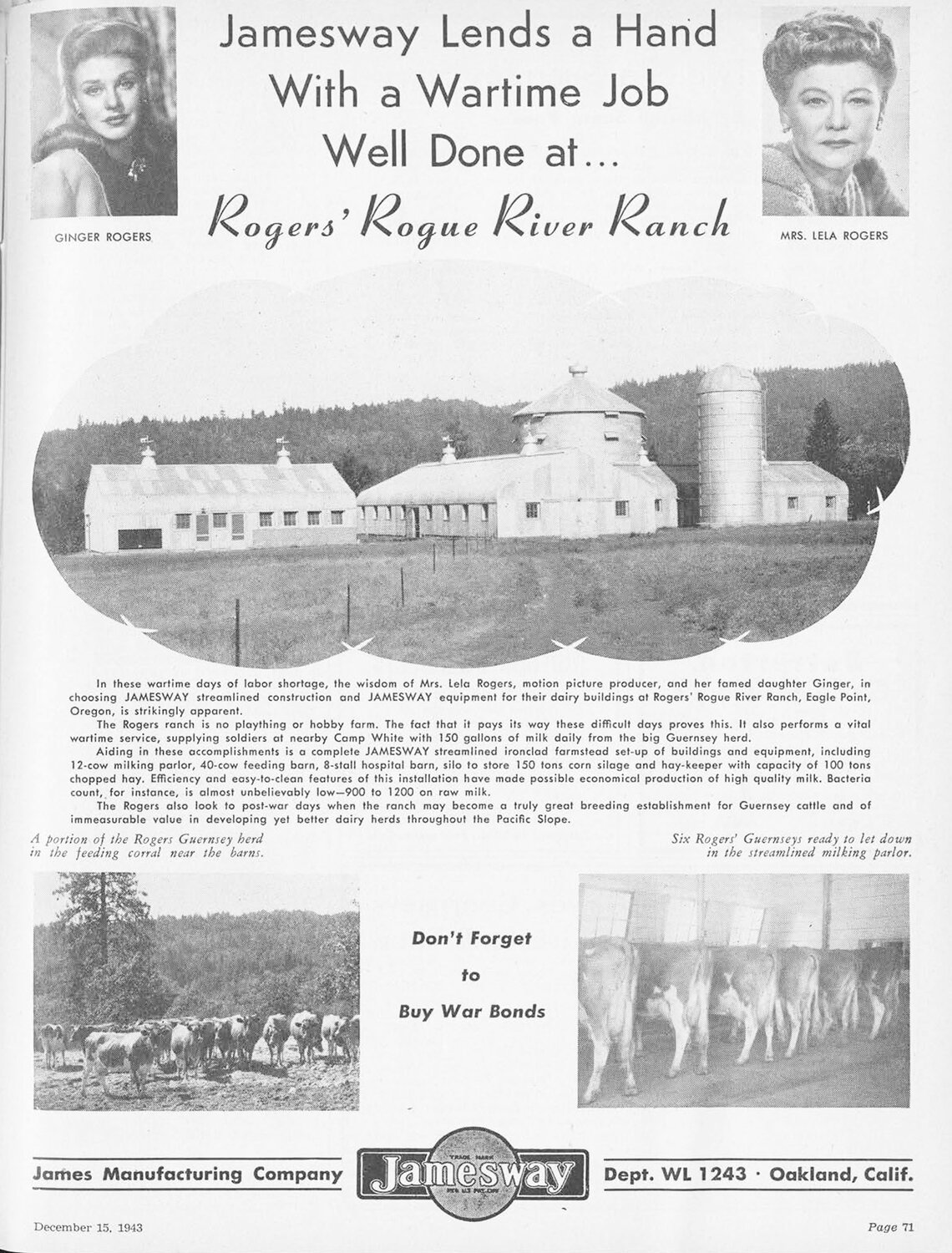
Not bad for a “hobby farm.” This December 15, 1943 Jamesway ad in the Western Livestock Journal featured Ginger and Lela Rogers alongside the streamlined dairy complex at Rogers’ Rogue River Ranch, Eagle Point, Oregon. The ad copy confirms 150 gallons shipped daily to Camp White — with bacteria counts of just 900 to 1,200 on raw milk, numbers that would impress any inspector today. Bottom left: the Guernsey herd at the feeding corral. Bottom right: six Guernseys in the milking parlor. Image courtesy of the Western Livestock Journal.

When the War Took the Help Away

Here’s where the story hits the fencepost.

The same war that gave Rogers Camp White as a customer gutted her labor supply. Young men who might have run hay crews, cleaned the parlor, and managed irrigation were shipping out to the Pacific or building Liberty ships in Portland. Rural Oregon was emptying out, and a ranch that needed hands to function was competing for workers against a war economy that paid better and wrapped itself in patriotism besides. 

Rogers sold animals from the herd. She entered a profit-sharing arrangement with a partner to keep the operation running. Every dairy farmer who’s ever had to let a hired man go because the margins couldn’t carry the payroll knows exactly what those decisions feel like. These aren’t hobby-farm problems. These are the desperate, 2 a.m. math problems of someone fighting to hold a real business together. 

And then — around 1943, barely two years after those first Guernseys arrived — the dairy herd was sold. 

Let that land for a moment.

The woman who’d stood in front of reporters and declared “darn it, I am making it pay” watched her Golden Guernseys leave the property. The parlor went quiet. The bulk tank went dry. The “4R” brand stayed on the Angus, but the dairy — the thing she’d joined the American Guernsey Cattle Club for, the thing she’d built a hospital barn and a silage silo for — was done.

She never said publicly how that felt. But remember what she’d told writer Jack Holland: the ranch was her “biggest thrill,” her “secret desire.” She’d confessed she never told anyone about wanting it — “Perhaps because I didn’t want to listen to a lot of idle talk and advice as to why I would be foolish to buy a ranch.” 

Selling those Guernseys must have tasted like proving every skeptic right. Even though the real enemy wasn’t bad judgment. It was a world war.

Holding On

A lesser person walks away. Rogers held the land.

The Angus stayed. The river kept running. She fished steelhead on drift boats with Glen Wooldridge — the pioneer whitewater guide who later said she was one of the best guests he ever took on the Rogue. She took camping trips without leaving her own property. A thousand acres was enough wilderness to get lost in, if getting lost was what you needed. She climbed her own silo — a photograph that still circulates on the internet eight decades later, showing an Academy Award winner in work clothes scaling a concrete tower like she owned the place. reddit

Because she did.
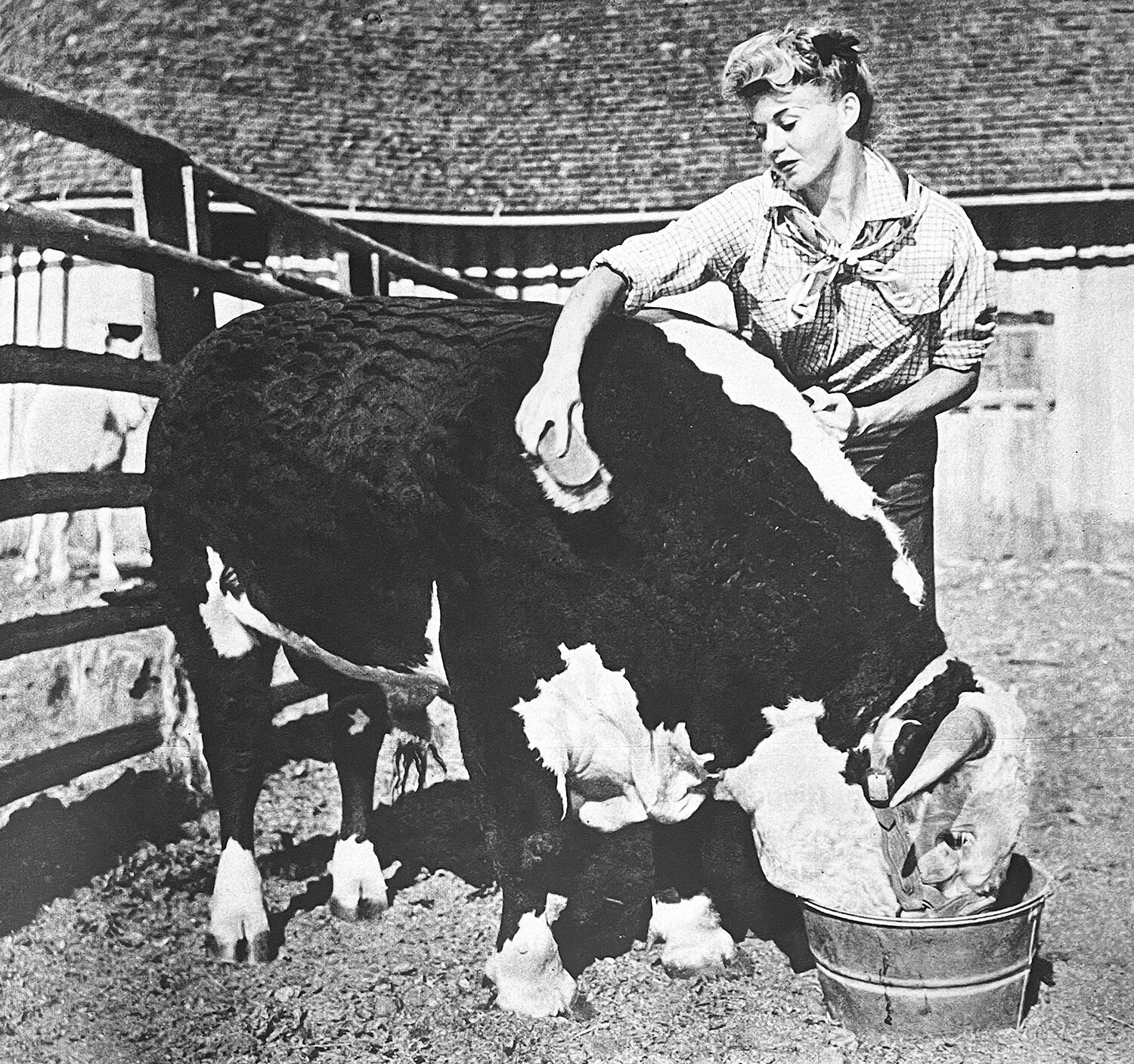
No sequins required. Ginger Rogers grooms Prince Domino XVII — a Hereford bull from one of the most famous sire lines in beef cattle history — at the Blue Moon Ranch near her 4R property in Eagle Point, Oregon. She looks every bit as at ease with a curry brush and a feed bucket as she ever did under the studio lights. Photo by Earl Theisen for Look Magazine; image courtesy of the family of Earl Theisen.

In 1948, three years after the war ended, she started restocking the ranch with cattle, aiming for another run at the vision she and Lela had sketched in 1941. 

But the dairy world she re-entered was shifting underneath her. Artificial insemination was gaining traction. Holstein dominance was accelerating. The breed landscape that had been a patchwork of Guernseys, Jerseys, Ayrshires, and Brown Swiss was beginning its long consolidation into the black-and-white monoculture that would define the next half-century. Decades later, a woman from Tillamook County who’d raised a Guernsey 4-H calf named Java Jive in 1962 would look around her community and mourn: “Those were the days when Jerseys and Guernseys were everywhere. Now, Tillamook is a black and white landscape of Holsteins.” 

Rogers’ Guernseys had already become part of that disappearing world.

By 1959, a portion of the ranch went up for sale — the first crack in the thousand-acre footprint. She held the rest for three more decades, finally selling the remaining parcels in 1990. She kept a home in the area — a resident of nearby Shady Cove, according to local records. On November 21, 1993, just over a year before her death, the 82-year-old Rogers stood on the stage of the Craterian Theater, the same house where she’d danced as a teenager in 1926 and premiered Roxie Hart in April 1942, and urged the crowd to help save the aging building. She re-introduced what she called her favorite film and helped raise more than $100,000 for the theater’s restoration. 

For half a century, the communities along the Upper Rogue knew her not as the woman who danced backwards in high heels, but as the neighbor who ran a ranch as a business, fished the river like she meant it, and never treated southern Oregon like a set that could be struck after the cameras stopped rolling.

On April 25, 1995, Ginger Rogers died at her home in Rancho Mirage, California. She was 83. She was cremated and interred at Oakwood Memorial Park in Chatsworth — next to Lela. 

Mother and daughter, together at the end. The way they’d been together at that fence rail, watching cattle come in at dinnertime on the Rogue. 

After her death, more than 3,000 locals signed a petition to rename the Craterian Theater in her honor. The Medford City Council agreed. It became the Craterian Ginger Rogers Theater — and the stage carries her name to this day. 

The Milk Bottle That Outlasted the Parlor

You can still hold one of Ginger Rogers’ milk bottles in your hands.
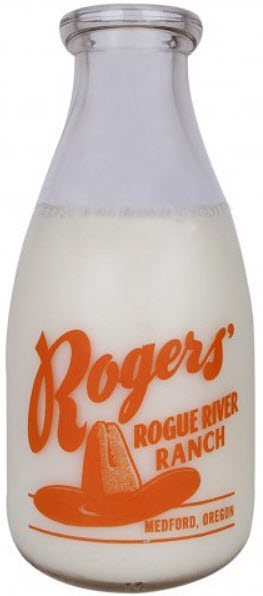
1940s — cowboy hat logo, “Medford, Oregon,” and that unmistakable orange print. Flip it over and you’ll find the words: “Golden Guernsey (Trade Mark), America’s Table Milk.” These bottles, donated by Rogers’ longtime secretary Roberta Olden, are still available through the Owens-Rogers Museum in Independence, Missouri — the town where Ginger was born.

The Owens-Rogers Museum in Independence, Missouri — the town where she was born — has sold original 4R Dairy Duraglas quart bottles, donated by Rogers’ longtime secretary, Roberta Olden. Turn one over and you’ll find the words that mattered: “Golden Guernsey (Trade Mark), America’s Table Milk.”

That phrase — embossed in glass, surviving decades after the cows that filled those bottles were sold, after the parlor that processed their milk went silent, after the woman who built it all was laid to rest — carries more weight now than it did in 1942.

Because the bet Ginger Rogers placed on Golden Guernsey milk has turned out to be exactly right.

The Breed She Saw Before Anyone Else

Of all tested Guernseys in the American Guernsey Association database, over 80% carry the A2A2 genotype for beta-casein — and every Guernsey sire currently in AI service tests 100% A2A2. That’s not an accident. Decades of selection by breeders who understood that what makes Guernsey milk different is what makes it valuable produced a breed now sitting at the front of a consumer revolution. 

The global A2 milk market — driven by buyers seeking milk they believe is easier to digest — is projected to grow from roughly $3 billion to over $7 billion by 2034. Guernseys, with their naturally dominant A2 genetics, own the inside lane. 

Layer on butterfat above 4.5%, protein over 3.4%, and that unmistakable golden color — the same color that made Rogers’ bottles look different from every other quart in Jackson County in 1942 — and you’ve got a breed that seems purpose-built for the premium, direct-to-consumer, story-driven dairy model attracting a new generation of farmers. 

Farms like Promise Valley Farm & Creamery on Vancouver Island are the living proof. Mark and Caroline Nagtegaal — both first-generation dairy farmers — tried conventional Holsteins first. Struggled financially. Dispersed the herd in 2015 and sold their quota. But they still had the dream. They connected with Leon Zweegman at Rozelyn Farm in Lynden, Washington, a passionate Guernsey breeder who sold them their foundation animals. Today, their 14-cow registered Guernsey herd is 100% A2A2 and certified organic — the only certified organic Guernsey herd in Canada. They process on-farm into yogurt, whole milk in branded glass bottles from a self-serve dispenser, and feta in traditional whey brine. 

In Idaho, Paul Herndon at Pleasant Meadow Creamery runs a similar operation: all registered Guernseys, every animal A2A2, raw milk sold direct to consumers who drive to the farm specifically because they want what Guernseys produce. 

Rogers didn’t have yogurt cups or self-serve dispensers or Instagram. But she made the same fundamental move these operations are built on: pick a breed that produces something visibly, measurably different. Find a customer who values that difference. Build the infrastructure to deliver it every single day.

What Ginger Rogers Left the Dairy Industry

She didn’t leave a prefix in the herdbook. The 4R Guernseys, dispersed around 1943, are too far back and too few in number to trace forward into modern pedigrees or sire catalogs. Her genetic footprint in the breed is, honestly, invisible. 

But the legacy that matters here isn’t written in bloodlines. It’s written in conviction.

Rogers proved — in 1941, when the notion was laughable — that someone from entirely outside the industry could enter dairy farming with serious intent, build a real operation, join the breed community, and produce milk that met the standards of a wartime military contract. She didn’t succeed permanently. The dairy lasted barely two years before economics and labor broke it. But she tried with everything she had. And when the herd was gone, she held the land for five more decades because she believed in what it represented.

Every time a career-changer walks into a Guernsey breeder’s barn and says “I want to build something different,” they’re walking a path she helped beat through the skepticism. Every time a 14-cow Guernsey dairy stamps “A2A2” and “Golden Guernsey” on a glass bottle and sells it for three times the conventional price, they’re reaching for the same thing an Oscar-winning actress and her mother reached for on the banks of the Rogue River, 85 years ago.

Her Place in Dairy History

The bottles are still out there. Heavy Duraglas quart glass, embossed with the 4R logo and the words that told the whole story. 

The woman who filled them is gone. The cows are gone. The parlor is gone. The ranch itself has been carved into pieces and sold to strangers. But the bet she placed — that golden milk from a breed most people overlooked could be worth more than a studio contract — has never looked smarter.

Somewhere in southern Oregon, the Rogue River still runs past the ground where an actress decided her real life wasn’t on a soundstage. It was in a barn, at dawn, with Golden Guernseys breathing steam into the morning air.

For a woman who spent her whole career proving she could do anything Fred Astaire did — backwards, and in high heels — this might have been the role she was proudest of.

Key Takeaways

  • Ginger Rogers didn’t play “hobby farm.” She poured Oscar money into 1,000 Rogue River acres, a 12-cow Guernsey parlor, and real, working-dairy infrastructure. 
  • At its peak, her 4R Guernseys shipped about 150 gallons a day of Golden Guernsey milk to Camp White, helping fuel over 2,000 WWII soldiers on the Agate Desert. 
  • The same war that created that market stripped her labor and forced a painful herd dispersal after just a few years — yet she held the land for roughly 50. 
  • Today’s A2A2 Guernsey micro-dairies — from Promise Valley in Canada to Pleasant Meadow in Idaho — are finally monetizing the golden milk and components she chose. 
  • For modern producers, her legacy isn’t in pedigrees but in mindset: premium milk, clear breed identity, and the guts to build a serious dairy as an “outsider” can still pay.

Continue the Story

The Sunday Read Dairy Professionals Don’t Skip.

Every week, thousands of producers, breeders, and industry insiders open Bullvine Weekly for genetics insights, market shifts, and profit strategies they won’t find anywhere else. One email. Five minutes. Smarter decisions all week.

NewsSubscribe
First
Last
Consent

The 18-Month Protein Window: $11 Billion in New Plants Signals It’s Time to Rethink Your Sire Lineup

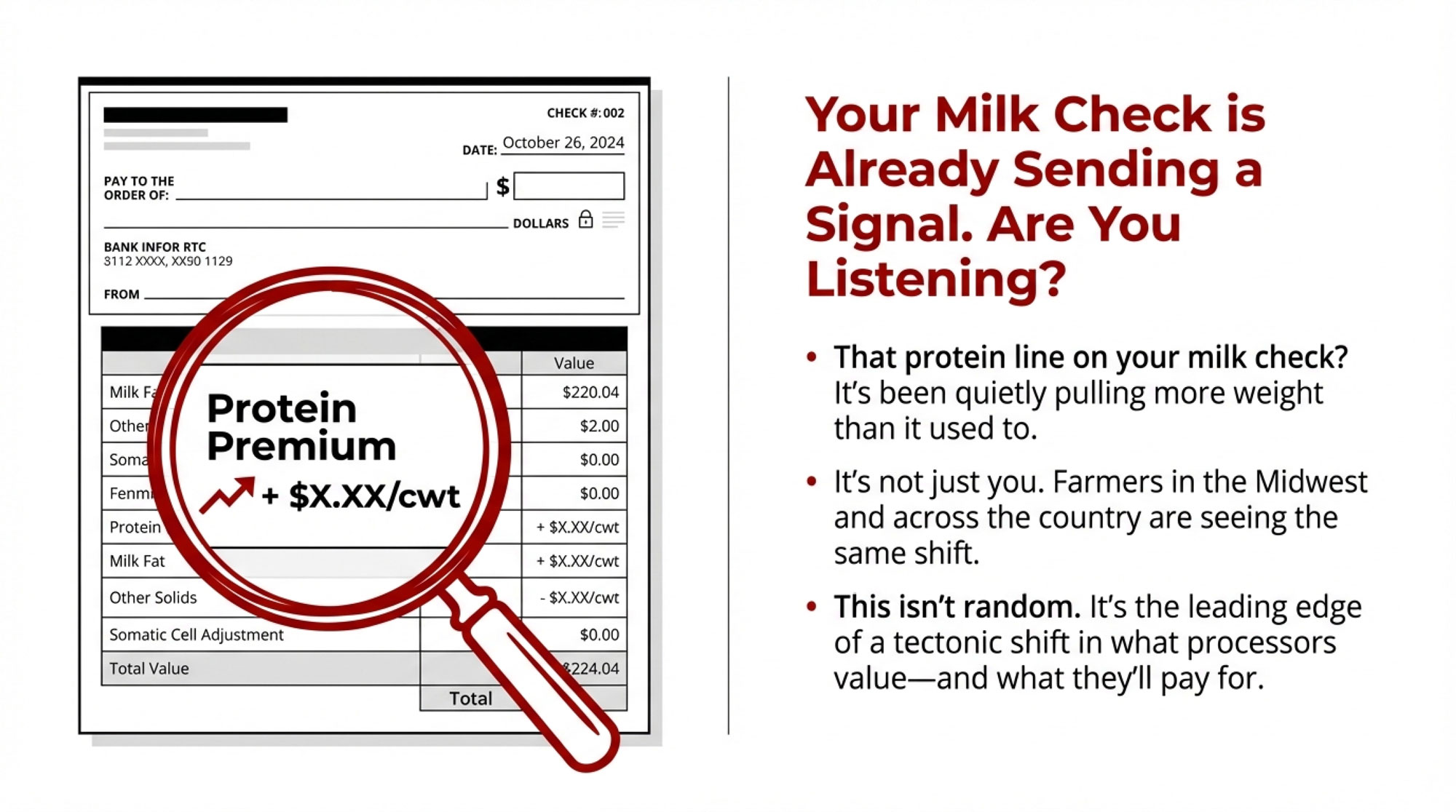
$11 billion in new processing capacity. A protein-hungry consumer base. And an 18-month breeding window that will shape your milk check through 2030.

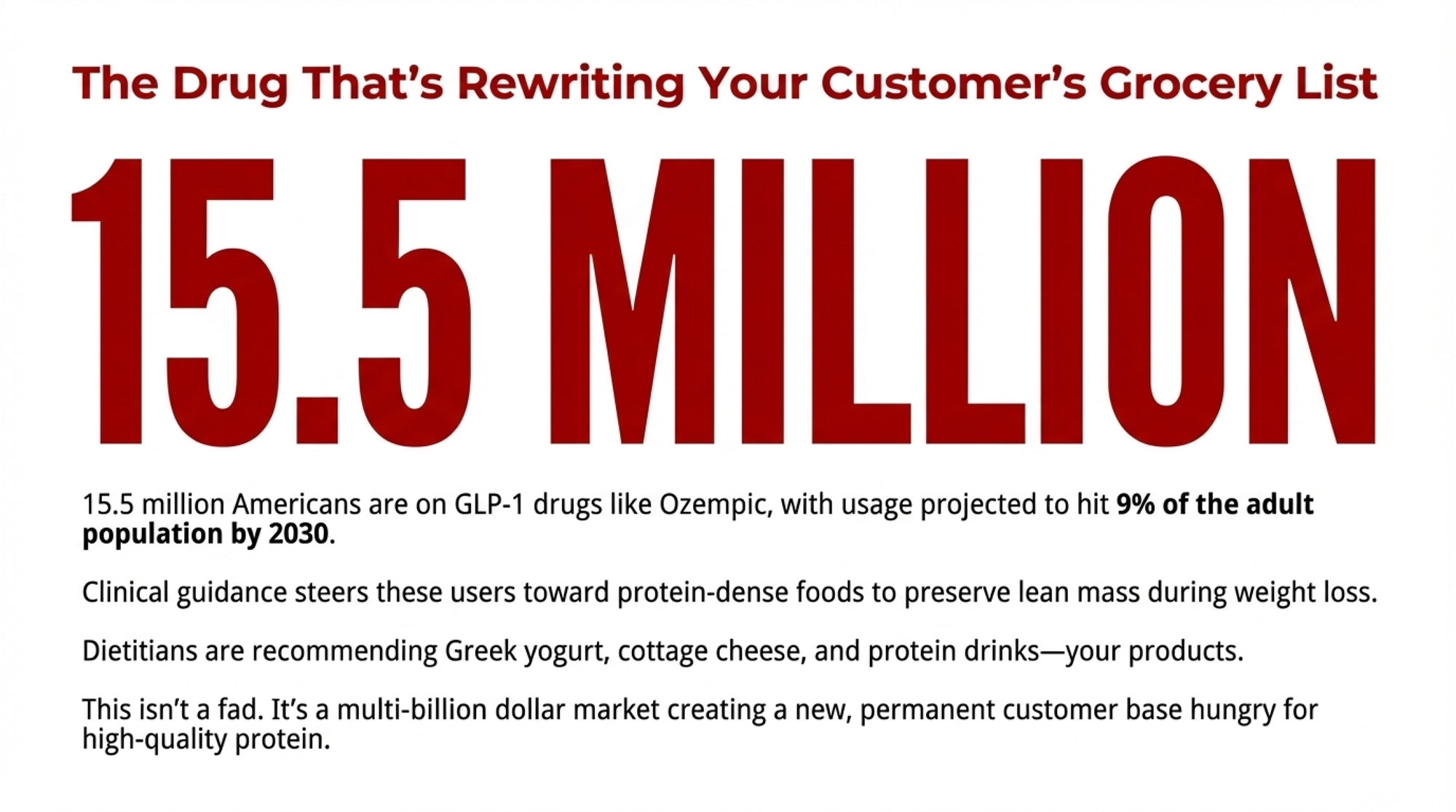
Executive Summary: The protein line on your milk check is about to matter more—and your next 18 months of breeding decisions will determine whether your herd is positioned to benefit. GLP-1 weight-loss medications now reach 15.5 million Americans, with clinical guidance steering patients toward protein-dense dairy like Greek yogurt and cottage cheese. Processors have responded by locking in $11 billion in new cheese and cultured capacity across 19 states, scheduled to come online by 2028. University of Minnesota research shows many Holstein herds already carry significant A2 and favorable kappa-casein genetics without active selection, and genomic testing at $30-50 per head makes it practical to know where you stand. The timeline is clear: calves from 2026 matings will hit peak production just as this new capacity reaches full stride. Whether you’re scaling for growth, navigating mid-career capital decisions, or planning a clean exit, the protein opportunity is real, and the window to position for it is now.

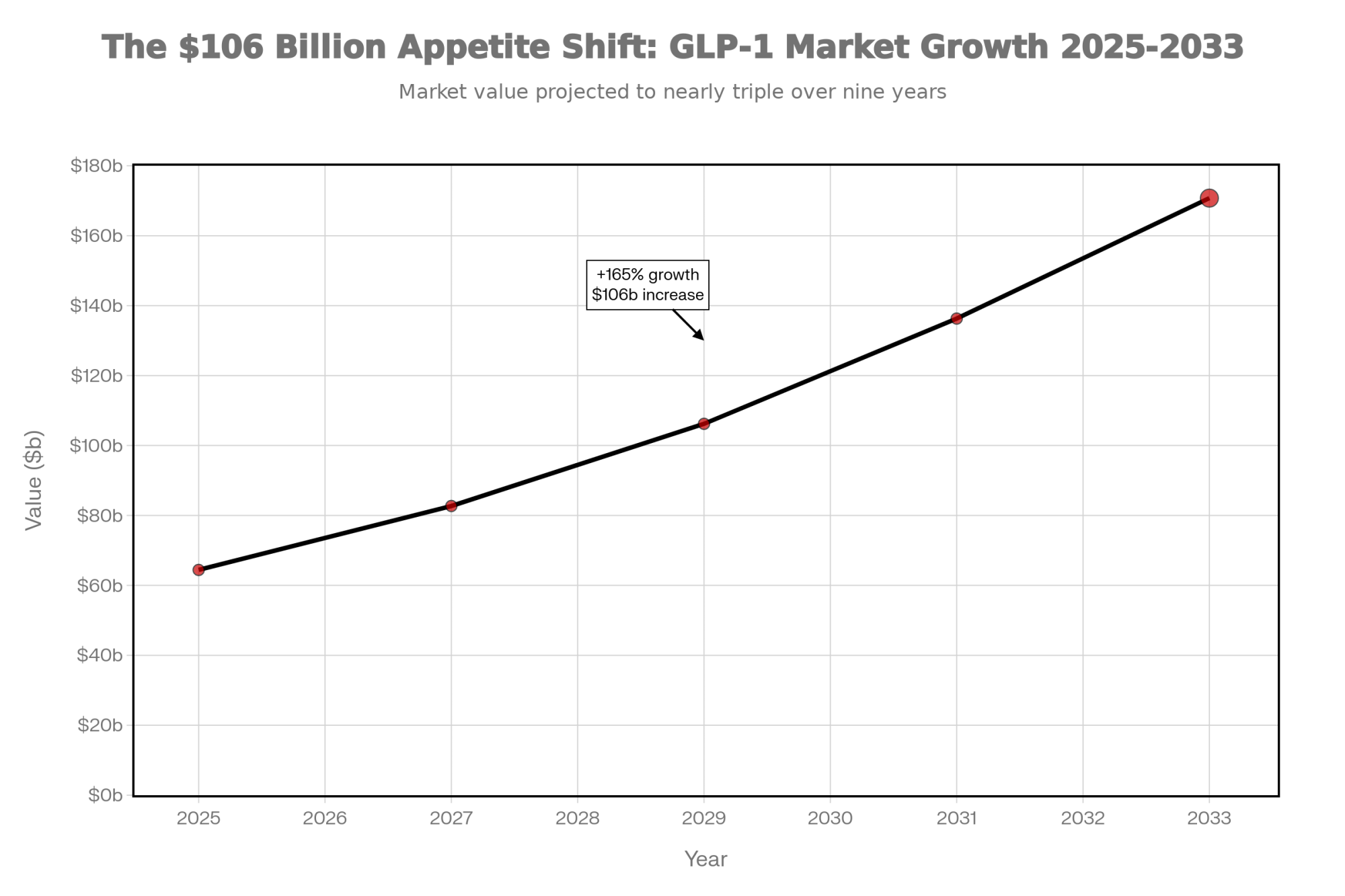
Healthcare analysts tracking GLP-1 medications like Ozempic, Wegovy, and Mounjaro are projecting that this class of drugs could grow from about 64.42 billion dollars in annual sales in 2025 to roughly 170.75 billion by 2033—around 13 percent growth per year, according to MarketsandMarkets’ latest global forecast. And that number may have more to say about your protein line than any milk market report you’ve read this year.

Here’s what’s interesting: analysts have been telling food and agriculture reporters that a market that big doesn’t just change what’s in the pharmacy aisle. It spills over into what people put in their carts and on their plates, because these drugs influence appetite, satiety, and what doctors and dietitians tell patients to look for in the grocery store.

And that’s where our dairy conversation really starts to get interesting over coffee.

Why Protein Seems to Be Doing More of the Work

Not long ago, I was at a winter meeting in Wisconsin and a producer leaned over between sessions and said, “You know, I’m starting to see protein doing more of the heavy lifting on my milk check than it used to. It’s not huge yet, but it’s moving.” In a lot of Midwest herds, when folks actually line up a few years of milk cheques, they see the same thing—the protein line quietly pulling a bit more weight relative to butterfat performance than it used to.

If you look north of the border, the Canadian Dairy Commission has adjusted support prices and farm-gate returns to reflect rising feed and operating costs, and those decisions feed into the detailed component-based payment formulas that provincial boards publish. When you study those formulas in Ontario or across Western Canada, you can see that protein and other non-fat solids account for a substantial share of the value, especially in classes tied to cheese and yogurt.

On the U.S. side, federal order component pricing and plant pay schedules in cheese-oriented markets show the same general pattern: butterfat still matters a lot, but protein has become more important as plants capture value from cheese, powders, and high-protein ingredients.

The thing that jumps out to me is that this shift at the pay-stub level isn’t happening in isolation. If you step back and connect a few dots—the GLP-1 story, a growing stack of gut-health research around yogurt and fermented dairy, and more than 11 billion dollars in new processing investments that IDFA says are already locked in—you start to see a pretty coherent picture pointing toward solids, and especially protein.

That’s why I keep coming back to this simple idea: the bulls you pick over the next 18 months are a direct bet on what your milk check looks like in 2029.

GLP-1: The Drug Class Turning Up the Volume on Protein

Looking at this trend, we’ve got to spend a little time on GLP-1 drugs, even though they can feel a long way from the parlor.

Peer-reviewed clinical reviews published in PubMed-indexed journals describe how these medications mimic incretin hormones and work on several fronts: they reduce appetite, slow gastric emptying, improve insulin secretion, and lead to substantial weight loss in people with type 2 diabetes and obesity when used as prescribed.

What the clinical literature also shows—and this is where it becomes relevant for us—is that rapid weight loss can involve loss of lean mass if patients don’t maintain adequate protein intake and engage in some resistance activity. That’s why many clinicians now emphasize maintaining a solid protein intake, or even increasing it, when patients start GLP-1 therapies.

Dairy-focused outlets have begun connecting that clinical guidance to what’s happening in the dairy case. Analysis that combined polling and retail data showed that around 15.5 million U.S. adults were using GLP-1 injectables as of 2023, with adoption expected to reach roughly 9% of the adult population by 2030. Those users reported cutting daily calories by about 20 percent—roughly 800 kilocalories—while shifting away from high-sugar products toward lean proteins.

Registered dietitians explained that they often recommend Greek yogurt, dairy-based protein drinks, and cottage cheese to patients on GLP-1s because these foods deliver convenient, high-quality protein and align with satiety- and gut-friendly patterns supported by the clinical literature.

Now, it’s worth saying out loud that not every GLP-1 user suddenly becomes a model high-protein eater. Real-world adherence, side effects, out-of-pocket costs, and insurance coverage limits all affect how many people stay on these medications and how they actually use them.

But when you put tens of billions of dollars in current GLP-1 sales together with a well-publicized forecast that the market could more than double, and you pair that with a consistent medical message—”eat less overall, but don’t short yourself on protein”—it’s not surprising that food companies and retailers are re-examining their high-protein offerings.

If your cows are producing the milk that ends up in those products, that’s a signal worth keeping in mind the next time you’re standing in front of the semen tank.

Gut Health, Fermented Dairy, and the Slow Burn That’s Paying Off

At the same time, yogurt and fermented dairy have been building their own steady momentum, well before GLP-1 became a household word.

Large prospective nutrition cohorts, such as the Nurses’ Health Study and the Health Professionals Follow-up Study, have tracked people’s diets and health outcomes for decades. Analyses of those cohorts published in journals like the American Journal of Clinical Nutrition have repeatedly found that higher yogurt consumption is associated with a lower risk of type 2 diabetes, even after adjusting for body mass index, smoking, and physical activity.

Umbrella reviews that pool data from multiple observational studies have reached similar conclusions, reporting that yogurt intake tends to align with modestly lower diabetes risk and somewhat better cardiometabolic profiles overall.

On the intervention side, randomized controlled trials have tested yogurt enriched with prebiotic fibers, such as inulin and konjac glucomannan, in adults with type 2 diabetes. Over a few weeks to months, those enriched yogurts improved insulin sensitivity, fasting glucose levels, lipid profiles, and, sometimes, inflammatory markers compared with control products.

Reviews of fermented dairy and the gut microbiome describe how specific cultures and fermentation processes can shift gut bacteria toward profiles that appear beneficial for metabolic and digestive health.

So what do shoppers do with all that? Market research shows that consumers consistently rank yogurt, kefir, and other cultured dairy products among the foods they see as “good for their gut,” and sales data indicate these categories have grown into multi-billion-dollar markets with high single-digit or better growth in many recent years.

Put that together with the GLP-1 protein push, and you can see why there’s so much interest in milk that shows up with consistent protein and butterfat performance, not just volume.

What Jumps Out: The 11-Billion-Dollar Vote for Components

One of the clearest signals in all of this isn’t in survey data at all; it’s in concrete and stainless.

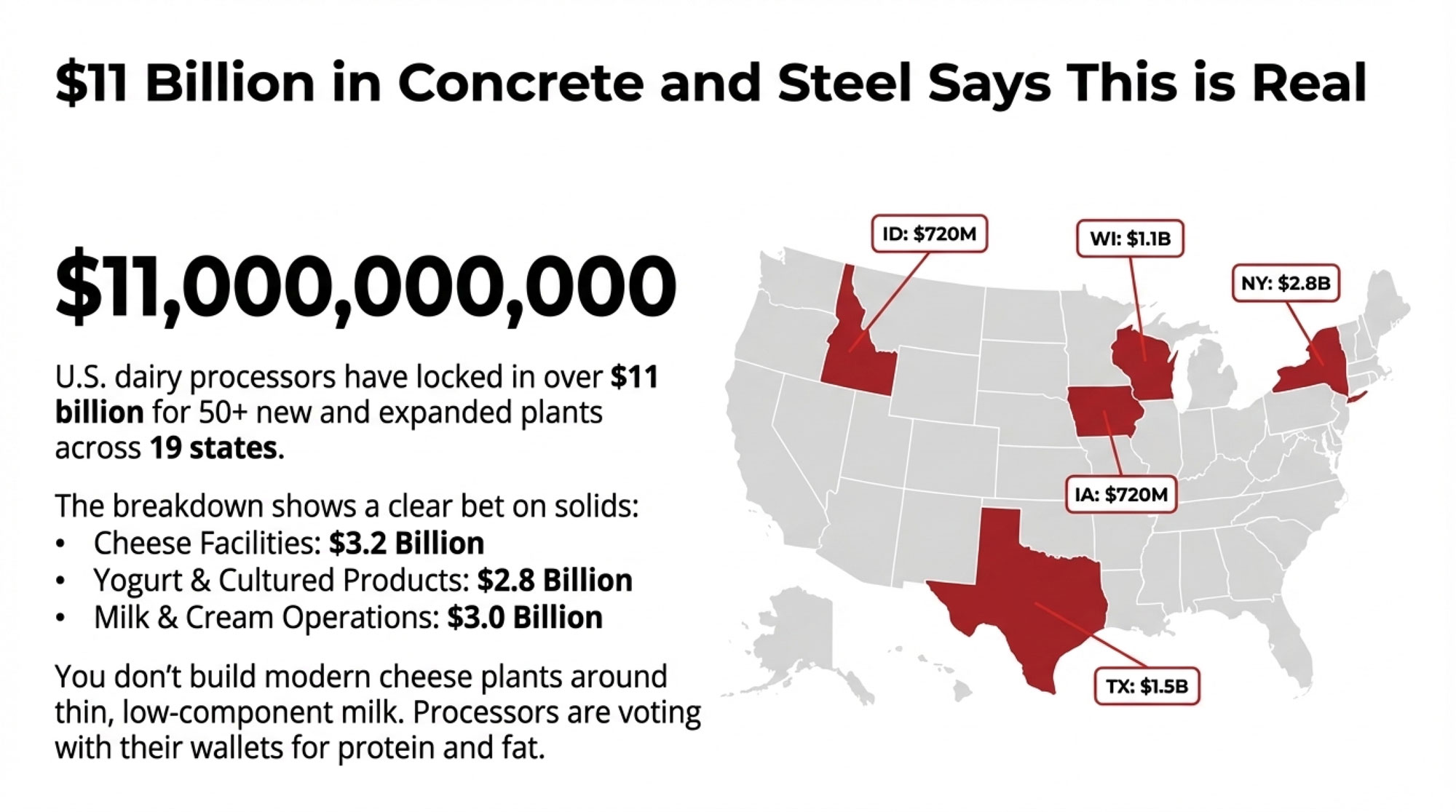
In October 2025, IDFA kicked off Manufacturing Month by highlighting that U.S. dairy processors are investing more than 11 billion dollars in new and expanded processing capacity across 19 states, spread across more than 50 individual building projects scheduled between 2025 and early 2028.

IDFA president and CEO Michael Dykes, D.V.M., has said this reflects a “growth mindset” among processors who expect U.S. milk production to rise by about 15 billion pounds by the end of the decade and want to be ready to turn that milk into higher-value products rather than dumping it into lower-value uses.

When you look at the breakdown, cheese facilities are attracting about $ 3.2 billion. Milk and cream operations account for nearly 3 billion, while yogurt and cultured products draw another 2.8 billion.

By state, New York is slated to receive about 2.8 billion in projects, Texas roughly 1.5 billion, Wisconsin around 1.1 billion, and Idaho and Iowa about 720 million each, making those states some of the biggest beneficiaries of this capex wave.

In New York, those projects layer onto a milk shed already producing roughly 16 billion pounds of milk per year, according to USDA NASS data. Texas has climbed into the top three milk-producing states, anchored by large dry lot systems in the Panhandle and High Plains. Wisconsin continues to deepen its role as a cheese and whey hub, while Idaho and Iowa are adding cheese and powder capacity that fits their existing dairy and feed bases.

You can see where this is going: when processors put that kind of money into cheese vats, separators, and dryers, they’re voting for solids. You don’t design a modern cheese plant or whey protein line around thin, low-component milk. You design it around protein and fat. That doesn’t mean volume suddenly doesn’t matter—but it does change what kind of volume they value most.

The Genetics: You Might Be Closer Than You Think

Now, at this point, somebody usually asks, “Okay, but how far behind am I really?”

Here’s where the data is a bit more encouraging than a lot of folks expect.

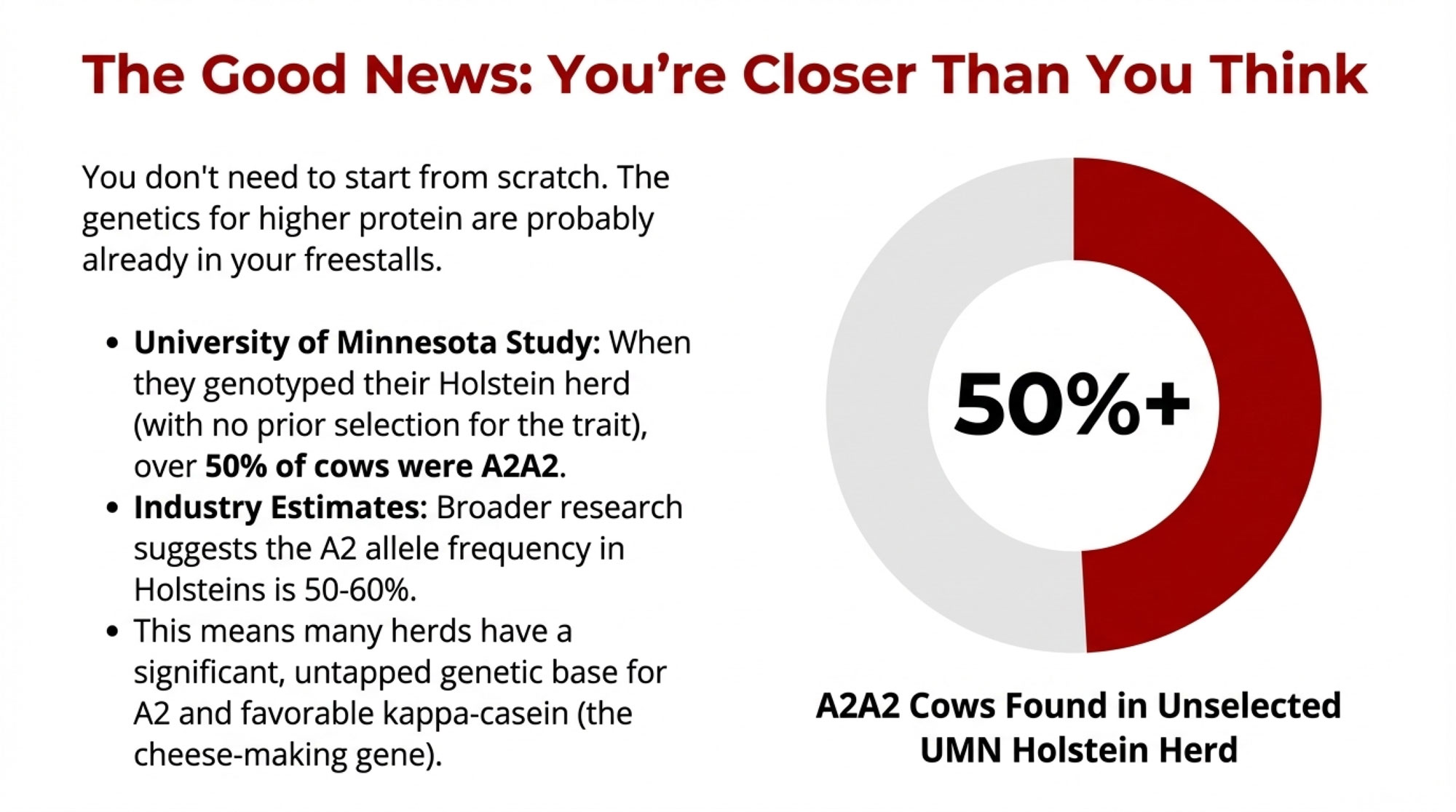
When the University of Minnesota genotyped its entire research herd in 2019, more than 50 percent of the Holstein cows turned out to be A2A2 for beta-casein, even though the herd hadn’t been selected for that trait. A separate 1964 Holstein genetic line in the same project had only 26 percent A2A2, showing how selection can shift things over time, and their crossbred cows and heifers ranged from 36 to 50 percent A2A2.

Herd Type / PopulationSelection Pressure for A2?A2A2 Frequency (%)Key Insight
UMN Holstein Research Herd (2019)None50%Half the herd was A2A2 without trying
UMN 1964 Genetic LineNone (frozen 1964 genetics)26%Shows effect of modern selection drift
General Holstein Population (est.)Minimal to moderate~33%Roughly 1 in 3 Holsteins could be A2A2
Jersey / Guernsey / Brown SwissLow to moderate70%+Heritage breeds carry higher baseline
UMN Holstein-Jersey CrossesNone (F1 crosses)36-50%Crossbreeding can accelerate A2 shift

Broader genetic research published in peer-reviewed animal science journals suggests the A2 allele frequency in Holsteins runs somewhere in the 50 to 60 percent range, which mathematically implies that roughly a third of Holsteins in general might be A2A2, with the rest mostly A1/A2.

Jersey, Guernsey, Normande, and Brown Swiss populations tend to carry higher A2 frequencies—often 70 percent or more in Swiss breeds and even higher in some heritage populations.

Now, that doesn’t mean every commercial Holstein herd is sitting at UMN-level A2A2 percentages. Actual numbers vary with sire usage and the age of sire lines. But the university data and industry allele estimates suggest that many herds probably have more A2 genetics—and more favorable kappa-casein genotypes—walking around than you’d guess just by looking at cows in the freestalls.

Over the past 10 to 15 years, genomic testing has really changed how we can use that information. Modern genomic panels routinely report beta-casein type, kappa-casein genotype, predicted transmitting abilities for fat and protein yield and percentages, and indices for health, fertility, and even feed efficiency.

In practical terms, most commercial genomic panels used on heifers and cows today cost between $ 30 and $ 50 per head, depending on the panel and the volume of samples. Holstein Canada’s 2024 fee schedule shows base animal testing at $ 33, which aligns with what extension budgets and on-farm case studies report.

AI catalogs from major studs show that A2A2, high-component, favorable kappa-casein bulls often carry a small price premium over more “average” Holstein sires, but still sit within what most breeding programs can handle.

This suggests that for many herds, this isn’t a “start from scratch” situation. It’s more a case of figuring out what you already have and then nudging your breeding decisions in a direction that lines up with where the plants and the people seem to be going.

A Wisconsin Coffee Shop Scenario

Let’s ground this with a scenario that’ll feel familiar to a lot of Midwest producers.

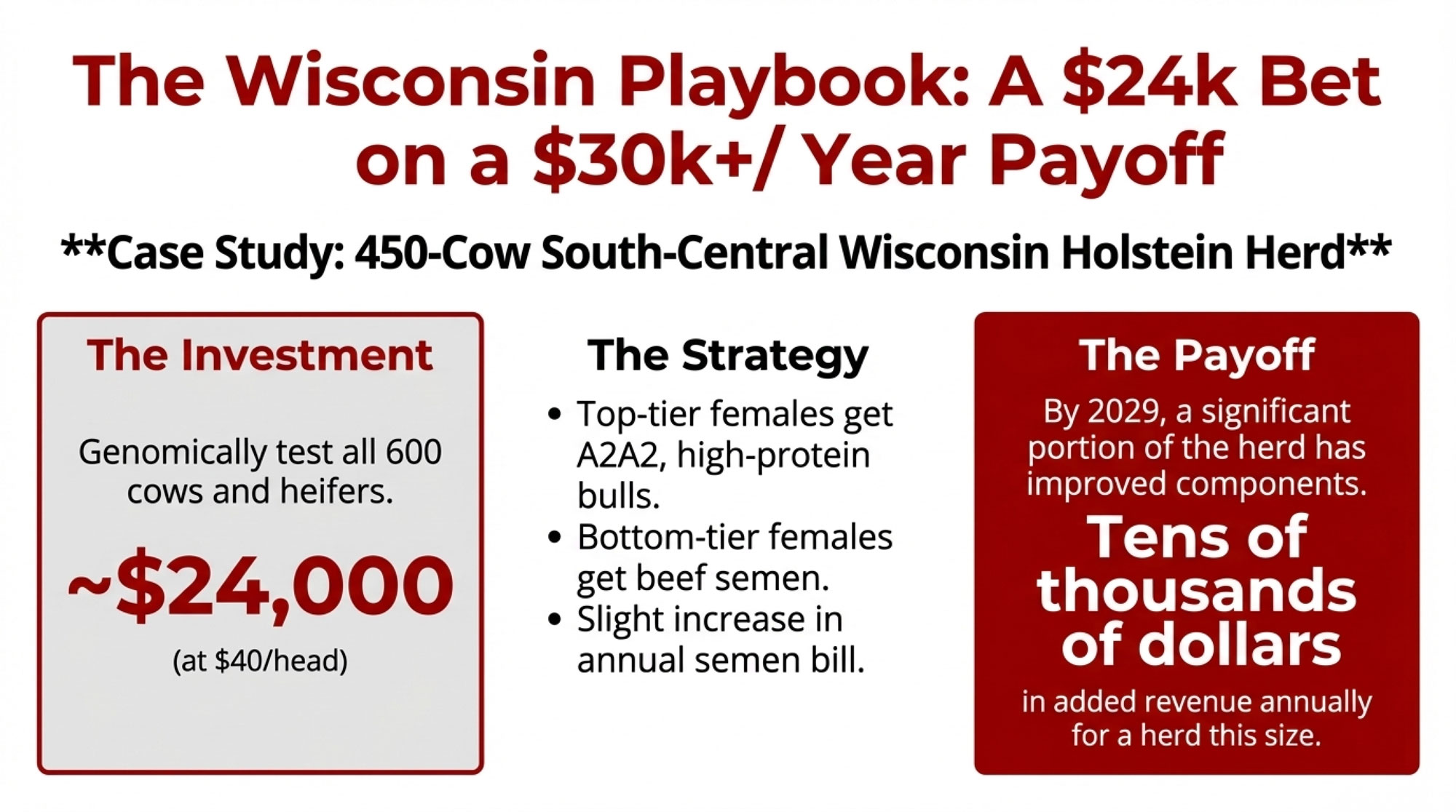
Say you’re running 450 Holstein cows in south-central Wisconsin. You’re milking in a double-12. You’ve got sand-bedded freestalls, respectable butterfat performance, and good enough fresh-cow management in the transition period that you don’t dread opening the DHI packet. At the same time, your stall bases and manure system are over 20 years old, and every January you catch yourself wondering which piece of steel or concrete is going to cause trouble this year.

If you look at UW-Extension summaries and USDA cost-of-production data for similar-sized freestall herds in Wisconsin, total economic breakevens often fall in the mid- to high-teens per hundredweight, once you account for hired labor and realistic debt service. Let’s say your true breakeven is around 17 dollars. A lot of Wisconsin operations would recognize that as a believable number when they work through their own books.

You’re 48. Your daughter is finishing a dairy science degree and wants to come back, but she wants to see a path that looks like building a business for the next 15 to 20 years, not just hanging onto tired infrastructure.

In that position, here’s the kind of path I’ve seen work in real herds:

  • You decide to test all milking cows and heifers genomically. At roughly 40 dollars a head and 600 head total, that’s about 24,000 dollars—a noticeable check to write, but still a fraction of any major building project.
  • The results come back and, like UMN, you discover a decent chunk of your Holsteins are A2A2 and that a meaningful fraction carry kappa-casein genotypes that cheese makers like.
  • You sit down with your genetics advisor and draw up a simple plan: the top tier of heifers and cows on components and health get bred to A2A2, high-protein, favorable kappa-casein bulls; the bottom tier gets beef semen. Your overall semen bill goes up a bit—maybe a thousand or two a year—but you stop multiplying the genetics that hold back components and cow health.
Investment ItemCost / ValueTimelineNotes
Genomic Testing (600 head)$24,000One-time upfrontTests all cows + heifers; identifies A2, kappa-casein, component PTAs
Premium A2/High-Component Semen+$1,500-$2,000/yearOngoingSmall incremental cost vs. standard Holstein semen
Total First-Year Investment~$26,000Year 1One-time test + first year of premium semen
Milk Production (450-cow herd)20-22 million lbs/yearBaselineTypical for well-managed Midwest freestall herd
Component Value Improvement (conservative scenario)+$0.15-$0.25 per cwtYears 3-5+Even modest protein % gains + favorable casein = higher pay
Annual Return (conservative)$15,000-$30,000+/yearOngoing after calves freshenBased on 20M lbs at $0.15-0.25/cwt improvement
Simple Payback Period<2 years$26K investment / $15-30K annual return
10-Year Net Benefit (conservative)$120,000-$270,000Years 1-10Assumes modest component gains hold across herd lifecycle

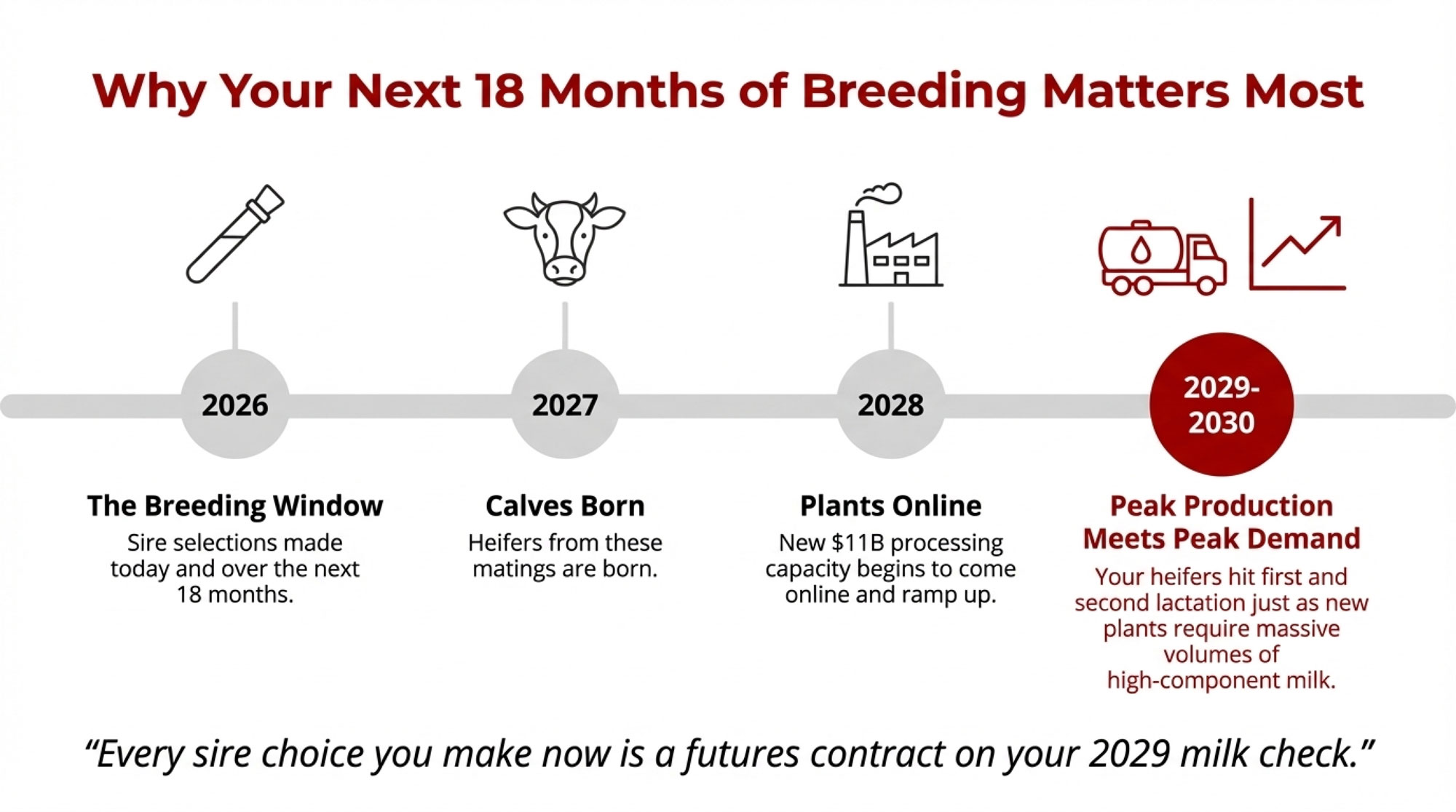
On the calendar, calves from those matings in 2026 are born through early 2027. Those heifers freshen in your parlor in 2028. By 2029-2030, a big slice of your herd is in second lactation with more consistent protein percentages and solid butterfat performance, as long as your nutrition and cow comfort keep pace.

A 450-cow herd milking well could easily be shipping on the order of 20 to 22 million pounds of milk a year. In some component pay systems used by cheese-oriented plants, even a small improvement in how protein is valued—a couple of cents per pound of protein, depending on the exact formula—can turn into tens of thousands of dollars a year for a herd that size when you run real solids and volume numbers through actual federal order and plant pay schedules.

Nobody can guarantee exactly what your protein line will look like in 2030. Pay formulas and markets change. But when the cost side of the strategy is a one-time genomic investment and a modest ongoing semen premium, and the upside sits in that “tens of thousands per year” range in a world that’s clearly leaning into protein-dense dairy, you can see why more producers are at least sharpening their pencils.

Western Dry Lot Systems: When Components Become “Exported Water”

Now, slide that coffee mug over to a friend running 3,000 cows in a dry lot system in the Texas Panhandle or eastern New Mexico, and the conversation sounds a little different. The underlying theme is the same, though.

In those systems, water and purchased feed are usually the top two headaches.

U.S. Geological Survey data on the Ogallala Aquifer shows that in heavily irrigated parts of western Kansas and the Texas High Plains, groundwater levels have dropped significantly over the past several decades—in some areas, declines of 50 to 70 feet or more in the most heavily pumped townships. USDA Climate Hubs data shows similar patterns in Texas and Oklahoma. That’s a long-term structural issue, not just a “bad year.”

Climate and hydrology work on the Colorado River basin tells a similar story. Multiple research studies and federal data confirm that since about 2000, average river flows have been roughly 20 percent below the 20th-century average. The Nature Conservancy, Colorado State University researchers, and coverage in High Country News all point to reduced snowpack and higher temperatures—a “hot drought” pattern that’s likely to persist under current climate projections.

At the same time, USDA hay market reports and Western extension bulletins regularly show Supreme and Premium alfalfa in states like California, Arizona, Idaho, and New Mexico, bringing noticeably higher prices per ton than comparable hay in Wisconsin or Minnesota, reflecting irrigation costs and freight.

Delivered costs for corn and other concentrates are also higher when you’re far from the Corn Belt, something our previous coverage has been highlighting in its pieces on regional profitability and the “processing gap” between where milk is produced and where it’s processed.

So in that context, when Western producers talk about components, they’re often thinking less about a formal protein premium line on the cheque and more in terms of “How many pounds of fat and protein can I ship for each unit of water I’m legally and affordably pumping and each ton of feed I’m buying?”

That’s what people really mean when they talk about components as a way of “exporting water.” You’re not literally putting your irrigation water in the tanker, but the more solids you produce per acre-inch of water and per ton of dry matter, the more value you’re effectively moving off the farm with each load of milk.

In practical terms, that’s where genomic selection for traits like protein percentage, feed efficiency, and health, paired with sharp ration work and solid fresh cow management during the transition period, becomes a survival tool rather than just a nice genetics project.

Why the Next 18 Months Matter More Than They Seem

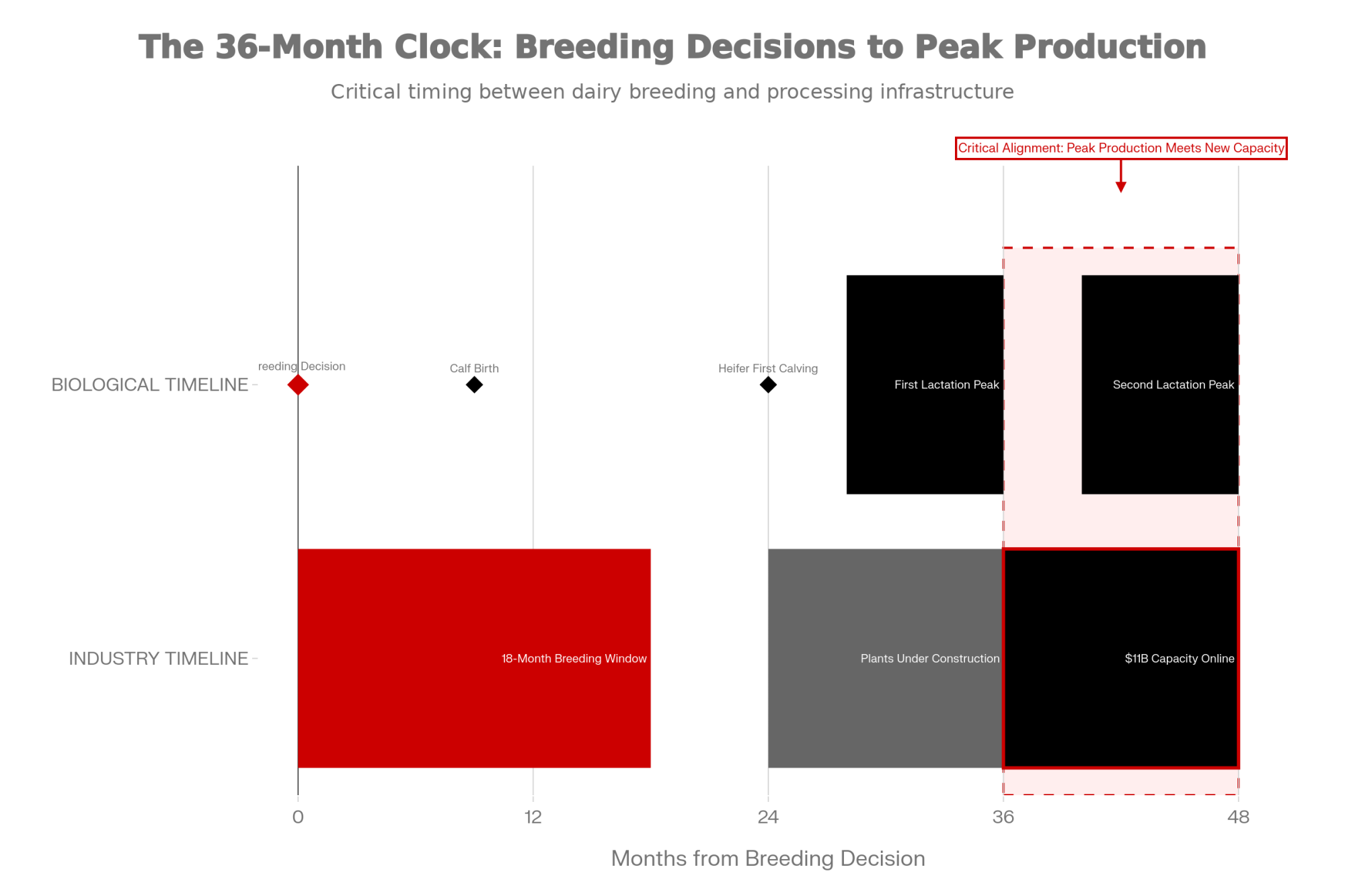
If you lay all this out on a simple timeline, you can see why a lot of conversations keep circling around an “18-month window.”

From breeding to first calving is about nine months of gestation. Then you’ve got a couple of months for the heifer to get through the transition period and settle in, and at least one full lactation before you really know who she is in terms of components, health, and fertility. Realistically, it takes several years of consistently breeding in a chosen direction before that genetic shift really shows up in the bulk tank.

On the processing side, most of the projects in that 11-billion-dollar wave are slated to start up between now and the end of the decade. If they stay roughly on schedule, the new cheese, yogurt, and ingredient plants will be running full out right when the calves you breed in the next 18 months are in their first and second lactations.

GLP-1 use and gut health awareness aren’t expected to disappear over that same period, either, based on current clinical and market outlooks.

So, whether you think about it this way or not, every sire selection you make today is a kind of futures contract on your 2029 milk check. You’re deciding how much of your herd, three to five years from now, will be built mainly for volume, and how much will be built for components that match the products and markets your milk will flow into.

Talking With Your Processor: Three Questions Worth Asking

I’ve noticed that the farms that navigate this best aren’t just tweaking genetics in a vacuum; they’re also having better conversations with the folks who cut the checks.

If you pick up the phone or catch your field rep in the yard, three simple questions can open up a lot:

  • First: “Looking at the new plants we’re building into, how do you expect protein and butterfat to be valued over the next five to ten years compared to today?”
  • Second: “Are there specific quality or composition targets—like protein percentage, A2 status, or other specs—that you expect to reward more as these projects come online?”
  • Third: “Based on your data, where does my herd stand today on components and quality relative to your overall supplier base?”

Processors and co-ops often have more visibility into future product mix than we do from the farm side. Asking these questions doesn’t mean you’ll get a perfect forecast—nobody has that—but it can help you decide how aggressively to steer your genetics, nutrition, and fresh cow management toward components.

And honestly, that’s the kind of conversation that separates the farms steering the bus from the ones just along for the ride.

Different Farms, Different Plays—And That’s Okay

As many of us have seen over the years, there’s never just one “right” answer that fits every farm.

If you’re a younger operator—say under 45—with a competitive cost of production and a realistic plan to be milking for another 15 to 20 years, this protein-heavy future probably looks more like an opportunity than a threat. Genomic testing a meaningful share of your herd, tightening sire selection around protein, butterfat, and casein while still protecting fertility and cow health, and working with your nutritionist to support solids as well as volume, are all moves that research and extension work suggest can pay back over a longer time horizon.

If you’re in that mid-career zone—mid-40s to mid-50s—and staring at a parlor, freestalls, or manure setup that’s near the end of its useful life, your decisions get more complicated. Industry data shows robotic milking units typically ranging from 150,000 to 230,000 dollars per unit, and full conversions for 400- to 600-cow herds can easily clear a million dollars once buildings and support systems are included. Payback estimates often fall in the seven- to ten-year range, depending on actual labor savings, component shifts, and day-to-day management.

In that situation, what a lot of mid-career producers are doing is leaning first on lower-capital levers: improving genetics for components and health, tightening fresh cow management in the transition period, putting serious effort into forage quality and consistency, and, where appropriate, using tools like Dairy Margin Coverage or private revenue protection to soften some of the income swings while they make those improvements.

If you’re closer to retirement and there’s no clear successor ready to step in, the smartest move may be different again. USDA and land-grant land value reports show that farm real estate in good dairy regions—especially around the Great Lakes—has held value well and, in many cases, has increased substantially over the past 15 years. In some strong dairy counties, values have doubled or more.

In that context, it often makes sense for someone in their late 50s or 60s to focus on maintaining cow health and respectable components, avoid taking on major new debts that won’t realistically be paid off during their working years, and keep the place clean and marketable so they can sell or rent out on their own terms when the time feels right.

None of these paths is “better” in every situation. They’re just different ways of responding to the same set of signals, depending on where you and your family are in your own story.

A Note for Canadian Producers

For those of you milking under quota north of the border, the component picture plays out a little differently—but the underlying direction is similar.

Canadian Dairy Commission support prices and provincial board formulas have always valued butterfat heavily, and that hasn’t changed. But the rising importance of protein in cheese yields and in high-protein consumer products is shaping how milk classes are structured and valued.

If you’re considering A2 or kappa-casein genetics, the economics work a bit differently under quota than under U.S. federal orders, but the potential for premium marketing channels—particularly for fluid A2 milk and specialty cheese—is growing in Canada too.

Reports show that in early 2025 that Minnesota dairy farmers are increasingly interested in A2 milk, and that interest is mirrored across the border as Canadian processors explore differentiated product lines.

The strategic question is similar: know your herd’s genetic profile, understand where your processor is headed, and make breeding decisions that line up with both.

The Long Game: Water, Land, and Where Dairy Stands

Before we drain the coffee pot, it’s worth zooming out one last time and thinking about the long game.

Those water trends I mentioned earlier—the Ogallala declines, the Colorado “hot drought”—are already forcing Western agriculture, including dairies, to adjust cropping patterns, scale back irrigated acres, and in some cases rethink long-term viability.

RegionPrimary Water SourceStatus / TrendLong-Term OutlookStrategic Implication
Texas / Kansas / Oklahoma High PlainsOgallala Aquifer-50 to -70 feet in heavily pumped areas since 2000Continued decline; fossil waterRisk: Rising costs, limited expansion, potential exit
Southwest / Colorado River BasinColorado River-20% avg. flow since 2000; persistent “hot drought”Likely permanent reduction per climate modelsRisk: Competing demands, regulatory limits on ag water
Great Lakes Region (WI, MI, NY, PA, OH)Great Lakes + groundwaterStable; 20% of global fresh surface water; renewableSecure; regulated but abundantOpportunity: Water-secure base for high-component dairy
Northeast / Upper Midwest (MN, IA)Surface + renewable groundwaterGenerally stable; localized stress in some areasSecure to moderately secureOpportunity: Can support expansion near processing hubs
Idaho / Pacific NorthwestSnake River, Columbia BasinModerate stress; dependent on snowpack trendsVariable; snowpack declines a concernMixed: Secure short-term; watch long-term snowpack

Meanwhile, regions around the Great Lakes and much of the Northeast, while facing their own regulatory and environmental pressures, sit over comparatively robust and renewable water supplies.

In outlook meetings and trade coverage, economists from places like UW-Madison and the Food and Agricultural Policy Research Institute have pointed out that, over the long term, water-secure regions in the mid-section and upper Midwest are likely to remain very competitive bases for high-value, component-dense dairy production, especially as water limits and climate volatility tighten elsewhere.

So when you put all of this together—GLP-1 nudging people toward higher-protein diets, gut-health research backing fermented dairy, processors pouring billions into cheese and cultured capacity, herd genetics already carrying more A2 and kappa-casein variation than many of us realized, and export demand for high-protein powders and cheeses continuing to grow in markets like Asia and the Middle East—it’s not surprising that so many barn-office and meeting-hall conversations keep circling back to components.

Key Takeaways for Your Farm

If you like things boiled down, here are a few questions and actions worth mulling over in the next 18 months:

  • Know your genetics: Do you actually know your herd’s A2, kappa-casein, and component profile, or are you guessing? A targeted genomic test can answer that.
  • Align sires with where plants are going: Are you picking bulls that match the protein-heavy, cheese-and-cultured future your local plants are investing in?
  • Talk to your buyer: Have you asked your processor how they expect to value protein and fat over the next five to ten years, and how your herd stacks up today?
  • Match strategy to stage: Given your age, equity, and family plans, are you better off leaning into growth, tightening the current system, or focusing on a clean exit with strong land value?

The Bottom Line

If we were actually sitting at your kitchen table, I wouldn’t pretend there’s an easy, one-size-fits-all answer.

What I’ve seen, watching a lot of different farms, is that the ones that come through big shifts like this in the best shape aren’t always the biggest or the fanciest. They’re the ones that stay curious, pay attention to where the science and the money are pointing, and then make a handful of well-timed, thoughtful decisions instead of either doing nothing or trying to change everything at once.

When you lay the GLP-1 billions, the 11-billion-processor bet, and your own protein line side by side, it’s hard to argue that this is just another passing fad. The genetics are already in your pens, at least to some degree. The concrete is being poured at the plants. The health trends aren’t evaporating next week.

The real question is how you want to position your herd—and your milk check—for the chapter that’s already starting to unfold.

Complete references and supporting documentation are available upon request by contacting the editorial team at editor@thebullvine.com.

Learn More

The Sunday Read Dairy Professionals Don’t Skip.

Every week, thousands of producers, breeders, and industry insiders open Bullvine Weekly for genetics insights, market shifts, and profit strategies they won’t find anywhere else. One email. Five minutes. Smarter decisions all week.
NewsSubscribe
First
Last
Consent
Send this to a friend