
Archive for Management – Page 62

Better Data Better Management to Improve Competitiveness

Agriculture is at the start of a digital revolution, and to advance it will need to embrace and understand the increasing amount of data that is being collected, writes Chris Harris.

Speaking at the National Farm Management Conference in London, organised by the Institute of Agricultural Management, Mark Suthern, the head of agriculture at Barclays, said that the industry in the UK is facing a number of head winds, including the challenges of exchange rates, farm gate prices, customer confidence and political and public relations campaigns including the current debate about the exit of the EU from the EU.

However, he said that the modern farmer is having to adopt skills of a computer scientist and digital engineer and biotechnology, advances in biometrics and powerful computers play an increasingly more important role in farming.

“The farmer needs to understand the data,” Mr Suthern said.

He added that to become world class, farming needs to adopt a proactive focus and it needs to bring new people into the sector.

And he called on the UK farming sector to communicate to the public to tell consumers about the important role it plays in the economy.

“We need to explain the importance of agriculture to the UK economy and the importance of food to the UK economy,” Mr Suthern said.

Jane King, the chief executive of the Agricultural and Horticultural Development Board said that a world class farming industry needs to be inspired by and competing with the best.

This she said, was the vision of the AHDB and she called on the industry to focus on what the UK farming industry’s competitors are doing and doing well to improve its own competitiveness.

She said the aim of the AHDB is to make British agriculture more competitive and resilient and to accelerate innovation and productivity through research and knowledge exchange.

She said the AHDB needs to help the industry to understand and deliver what consumers will trust and buy both at home and internationally.

Mrs King said that this will mean adapting and also developing new products.

She added that UK agriculture is also facing a consumption challenge.

“The UK consumer base is growing, which is exciting for us,” she said.

However, Mrs King told the conference that while the consumer base is growing eating patterns for many core products, except poultry are declining and she said that consumer behaviour is shaping the retail landscape, in particular through top up shopping.

She added that the rising middle class both in Europe and in Asia presents an opportunity for UK agriculture and Brexit will see a more liberal trading environment.

“We should be excited by the opportunity. We need to be ready and we need to be fitter quicker,” she said.

Agricultural productivity needs to keep pace with the competition, and while there
will be more consolidation in the industry and the supply chain will change, there will be a need for more technology skills to grow the opportunities that will be presented.

She told the conference that through benchmarking and having access to the best science and sharing knowledge UK agriculture will be able to take advantage of the opportunities on offer.

However, she added that the best farmers were concentrating on the details and making marginal improvements over a wide spectrum.

“It is attainable and reachable for everyday farmers. It’s about marginal gain,” she said.

Richard Tiffin, the chief scientific officer at Agrimetrics and professor of applied economics at Reading University showed how new developments are staring to make more and more data available, understandable and useful to the agricultural sector.

He said that a new data platform is being developed by the Agrimetrics – an Agritech Centre of Excellence founded by the University of Reading, Rothamsted Research and NIAB, to help farmers produce food more efficiently and to better respond to food consumers changing needs.

Prof Tiffin, said: “The food system is facing unprecedented challenges as a result of demographic and climate change.

“At the same time, in some cases, the system’s foundations – its primary producers are under increasing economic pressure.

“Many of these challenges can be characterised as being able to better meet the demands of consumers for more, increasingly healthy food.

“However, the growing complexity of the food system means that it is often hard for farmers to understand the demands of the ultimate consumer as well as making the system more vulnerable to unexpected shocks.

“Agrimetrics is building a data platform that will make it easier to access and use data. In this way data can become the currency which enhances knowledge of the system we are all part of. Farmers can be reconnected to consumers, they’ll be able to better meet their needs and procure a larger share of the value in food.”

Martin Dyke, the business development director at AB Agri and John McCurdy the company‘s head of Agri Data Services said that the UK agricultural food supply chains will need to improve their performance to simply stand still and by connecting supply chains from origin, supplier, producer, processor to consumer will help unlock duplicated and non-value adding costs while helping target innovation investment.

They said that leveraging data and technology can accelerate the alignment and the connections between individual parts of the supply chain and help realise these benefits.

However, a threat is being posed by the blind pursuit of Big Data with no real vision for how this might be practically used and applied on farm.

They said that more attention should be given to the interpretation of data to create real insight; the use of this insight to enable smarter decision making and perhaps most importantly, the application and implementation of appropriate actions taken on farm.

“The bottom line – if it’s too time consuming or complicated it won’t get used; there needs to be some alignment in the supply chain between the value delivered by these technologies and the cost of implementation,” said Mr Dyke.

Mr McCurdy added: “If you can’t act on what the data is telling us, then it is useless.”

He said there are plenty of technology and data capture systems but they need to be able to talk to each other to profit the farmer.

Ed Salt, the managing director at Delamere Dairy told the conference that the success of his company has come through investing in people and building a map to attain the “big goals”.

He said it is essential to develop a culture where people can excel and he said for his company management had been a question of stewardship rather than leadership to ensure that everyone who works for the company is profitable.

He said that if a market is attractive, “be prepared for competition” and he added that entrepreneurial companies should not be afraid of changing what most people believe is the norm.

The importance of the role and personality pf the manager to move the modern agricultural business forward was also emphasised by Ekkehard Herrmann, a farmer and manager of co-op farms in eastern Germany and Neil Adams, Agri-food business consultant at Promar International.

Mr Adams said: “There’s more to managing a successful dairy business than monitoring cash flows, planning the breeding strategy and winter feeding regime.

“Interpersonal sensitivity, personal flexibility and emotional resilience are equally important according to a recent Promar study of 65 producers in England and Wales that focused on leadership and leader capabilities within their dairy farming businesses and the influence of their emotional intelligence.

“It concluded that those with the highest level of emotional and social competence made £739 profit per cow compared with £366 for the average and those in the lowest group, £117.

“Those more likely to run more profitable farms were farmers with staff or family teams who had a people oriented personal style combined with a decisive command role.”


Source: The Pig Site

Robotic dairy delivers increased milk production and training challenges for electrical apprentices

Milking robots at a New South Wales Mid North Coast dairy are contributing to an increase in milk production of 25 per cent over the last 12 months, according to Manning Valley dairy farmer Adrian Drury.

But as well as improved efficiencies and a happier healthier herd, the innovative milking technology has delivered a new dilemma facing manufacturers across the board.

Who will train the technicians to program and service the growing number of automated technologies?

“It’s revolutionised the way we do farming, but with that, it’s meant that we need a different breed of worker,” Mr Drury said.

Designers of electrical trades courses from the Newcastle campus of TAFE NSW are working on a solution to the problem, common across the manufacturing sector.

However, it is good news for apprentices who are getting exposure to real world problems and cutting edge technology.

Robotic dairy is like ‘sophisticated traffic control system’

On the surface, Drury Farm looks like any other — a herd of 430 milking cows heading to the milking shed, nestled in the Manning Valley.

But robots built by Sweden’s DeLaval are revolutionising milk production, effectively enabling the dairy cows to turn up at any time of the day or night for milking.

Many of the components of the dairy are familiar: cows are still identified by numbered ear tags, and suction cups attached to a cow’s teats convey milk to large temperature-controlled vats, awaiting collection by milk tankers.

But, at the Drury’s farm, an automated system works like a sophisticated traffic control system.

It decides whether to allow a cow into the dairy for milking or send it back out to pastures, based on the cow’s milking permissions, set by the farmer.

Pointing to a pie chart on a computer display, Mr Drury demonstrated access to real-time data, which helped farm workers plan their day strategically.

“The red cows are the cows that need attention in the next couple of hours,” he said.

“The green portion is the dry cows, and the yellow is the number of cows that need to be milked in the next six hours.”

He said other benefits of the system were real-time snapshots about the herd status, manual selection of cows for express lane milking, a holding function for specific cows at the dairy after milking, and an alert delivery and data via mobile devices.

“When there’s a problem with the cow, it sends us that signal — to our mobile phones,” Mr Drury said.

With a price tag of around $2 million, which Mr Drury said ws comparable to building a traditional rotary-style dairy, the Drury’s system is one of an estimated 50 in operation around Australia.

TAFE NSW adapting to industry demand

Head teacher of electronics and advanced manufacturing at TAFE NSW Newcastle campus David Leask said the dairy industry’s shift towards automation mirrored a wider shift in manufacturing and technology.

“We have students in class that are working for a diverse range of companies, from flight simulator maintenance to over-the-horizon radar and big data analytics companies,” Mr Leask said.

“And the common theme for all of those companies is electronics. What we’re seeing is a dramatic shift away from consumer electronics and a huge influx of people in industrial control systems.”

TAFE NSW is adapting to industry demand for specialised knowledge by pulling certain skill sets from certain traditional qualifications.

Mr Leask said they were: “piecing together a beautiful mix of skill sets from different areas to create outcomes specific to the needs of people”, such as Mr Drury.

Clinton Burgess, apprenticed as an electrical engineer to Hunter-based company Dexata with contracts with defence and which is working on big data analytics, is applying field learning to his training.

“It was actually quite amazing to see it all working. We’ve seen it all in theory but actually, out here in a real world operation, I was gobsmacked to see it all work,” Mr Burgess said.
Conrad Neilands, apprenticed to Novecom, which manufactures and maintains dust and noise monitoring systems, loves the real world exposure he is getting to cutting edge technology.

“It was really amazing to see the cupping machine in action,” he said.

“It’s really incredible, the way it scans and sees the teat, and the way it can adapt to the way the cow is moving in real time is quite amazing.”

Cows ‘rewarded in the paddock’

Mr Drury said the robot milking system had resulted in “a really positive impact on the yield of the cows”.

“The initial stages were a bit touch and go but certainly we’ve seen that once the cows [had learned] they could be rewarded in the paddock,” he said.

“If she’s giving a reasonable a level of production, she can actually turn up to have a feed and that machine will automatically reward her.”

Mr Drury said the incentive-based system and computer program was “there to encourage that to happen”, but farmers still needed to be on the farm every day, and willing to work directly with the cattle.

After two years working with the robotic dairy, the Drurys are still fine-tuning the automated system.

“We certainly went through a few hurdles to start with, but now we’re seeing a 20 to 25 per cent increase in production on where we were last year,” Mr Drury said.

“So, it’s really starting to kick some goals now.”

Mr Drury’s daughter Tiffany Sagar said the robotic dairy gave workers “more time to focus on the herd as individual cows, whereas, with the old systems, we’d only see them for three hours”.

“You’re actually watching the cows behaviour a lot better so, on a daily basis, we’ve got that hands-on contact with the cows as well,” she said.


Source: ABC

Daily observation is key in animal health and wellbeing

Breaking News ScreenDaily observation helps animal owners properly monitor their animal’s health and wellbeing.

One of the most overlooked practices among animal owners is daily observation. Daily observation will help owners properly monitor their animal’s health and wellbeing. We often get caught up in the routine of making sure our animals have feed and water and forget to examine some other equally important things that are happening in our barns.

First, know the signs and symptoms of a sick animal as they are key in monitoring the animal’s overall health. Animal owners develop a baseline knowledge for each animal and how they act and react during interactions. Mentally taking note of a few things can help you be aware of how your animal may be feeling. Michigan State University Extension suggests noting the following observations:

Are your animals’ eyes bright?
Is your animal alert?
Is your animal up and moving around with normal locomotion or laying down?
Is there anything that seems abnormal in your animal’s behavior that would make you question if they are feeling normal?
Second, inspect the animal thoroughly daily for cuts, abrasions, rashes, fungus and external parasites. It is important to make it a daily habit to individually inspect each animal for any injuries. It is a skill that may take time to develop, but after it has become part of a routine, you will find the time it takes decreases. With tame animals, it is always helpful to have an individual interaction with them where you can run your hands over their top lines, down their legs and under their bellies. This will allow you to have a good look at the animals’ body up close. During this time, you can address any issues such as an unexplained lameness, cut or abrasion.

It is essential to monitor daily intake of water and feed. Typically, an animal losing its appetite and becoming lethargic is the first symptom of illness and a cue for owners to contact their veterinarian. When you are aware of what the animal or herd normally consumes, this will give you clues of additional body characteristics to look for when you are inspecting the animal. For example, if you observe the water tank is not as empty as it typically is at evening or morning chore time, indicating animals aren’t drinking appropriately, you can check each animal for classic signs of dehydration such as sunken sides and poor capillary refill.

Daily observation of our animals is the most important, yet most overlooked, task animal owners can do to help keep their stock healthy.


Source: MSU Extension

Calculate heifer rearing costs with AHDB calculator

Dairy farmers can now access the online version of AHDB Dairy’s heifer rearing cost calculator to work out how much it is costing to rear heifers on their specific farm.

Speaking at a recent Calf to Calving event, Dorset, AHDB Dairy’s dairy senior scientist Dr Jenny Gibbons said farmers had much to gain from calculating costs for their farm, particularly as a recent Royal Veterinary College and AHDB study revealed that rearing costs varied anywhere from an average of £1,800/heifer, up to £3,000/heifer.

The calculator splits out the rearing period into three stages: birth to weaning, weaning to conception and conception to calving.

Farmers can then input various parameters such as target age at first calving, average heifer first lactation yields, forage growing inputs, forage quality and milk and concentrate use.

A cost for each stage and a total cost is then calculated.

Dr Gibbons said: “The more informed you are, the better business decisions you can make and this calculator enables you to work out your costs, allowing you to focus on specific areas where you can make savings.”

The emphasis was placed on achieving the following growth rates:

  • Double birth weight at weaning.
  • Target an average daily live weight gains from birth to conception of 800-900g/day.
  • Heifers should be 50 per cent of mature cow body weight by 12 months.
  • Calve down at 90 per cent of mature body weight at 24 months.

Dr Gibbons noted that good husbandry and nutrition were key to hitting these targets, which could potentially bring significant cost savings if adhered to.

In the future, AHDB is aiming to use the calculator as a benchmarking tool as part of AHDB Dairy’s Calf to Calving initiative.


Source: FG Insight

Challenging short-term future for dairy industry

The next year will be difficult for milk producers as the cuts and efficiencies made during the dairy crisis affect technical and financial performance, according to agri-consultant, Promar.

The outlook came following its release of annual farm business accounts results for the year ending March 2016, in which profits in their sample were down 48.8% on the previous period.

Despite suffering the worst dairy conditions for 30 years, the UK is yet to see a mass exodus of dairy farmers, with numbers shrinking just 1.6% over the past 12 months.

However, the consultants said some producers could be waiting for notice periods or contracts to run out, as well as the end of the EU milk reduction scheme before leaving the industry in 2017.

Efficiency savings, particularly lower calf numbers and retained youngstock made during the previous dairy cycle beginning in March 2014, would start to tell by the end of next year, said Promar.

Sample figures show that increases to youngstock in relation to herd size slowed over the last two cycles and genetic progress may have slowed due to reducing the use of AI to reduce costs.

Although farmgate milk prices rose by 12.95% in the three months from June 2016, the reduction in national herd size, (down 2% between July 2015 and July 2016) and a fall in UK milk production, down 8.05% over the same period, meant producers wouldn’t be able to simply turn the taps back on moving into 2017.

Capital investment in the year to March 2016, which restricted the ability for herds to pick up production swiftly.

Savings struggle
These large savings could not continue indefinitely, said farm consultancy manager at Promar, Nigel Davies.

“These big cuts can be sustained for a few years but they can’t be put off forever. In the next two to three years producers will be forced to address these costs.”

Mr Davies said that current milk price increases would not be enough on their own to lead to a recovery in farm finances.

Brighter future
“With evidence of poorer quality forages and increasing feed prices, dairy margins will probably only hold in this year, but with prospects improving in the next financial year.”

Those who weathered the recent crisis and are most equipped moving into 2017 are producers who had reacted to the economic environment, pursued technical efficiencies and taken tough decisions, said Mr Davies.

“The crisis has left us with far more efficient dairy sector, with lots of producers making the most of forage and minimising bought in feed.”

“The best will plan ahead not just on the basis of this year’s expectations, but also the year beyond and the associated twists and turns of volatility.”


Source: Farmers Weekly

Optimising Oats for Use as Dairy Forage

Planting oats in early to mid-August and either allowing cattle to graze them through late November or harvesting the crop in early November for later use, makes economic and environmental sense, according to the US Department of Agriculture’s Agricultural Research Service (ARS).

The strategy allows production of an additional forage crop before winter. The oats also “scavenge” excess nitrogen from the soil, and the plant residues enrich the soil.

Dairy producers, however, need guidance on when to allow their cattle to start grazing the fall oats and which oat cultivars to use. If they allow cattle to graze forage too early, the heifers quickly eat up whatever is available and get less forage than if the oats were given more time to grow. Putting the heifers out to graze later in the fall means running the risk of inclement weather and losing oats under snow cover.

Agricultural Research Service (ARS) dairy scientist Wayne Coblentz and his colleagues at the US Dairy Forage Research Center planted two types of oat cultivars (an early- and a late-maturing variety) in August and put dairy heifers out to graze for six hours a day at two different starting dates: in late September and mid-October.

They weighed the cattle at the beginning and end of the grazing periods and evaluated the oats for their nutritional value and the amount of forage mass produced. All of the animal care and handling procedures were approved by a University of Wisconsin oversight committee.

After two years of grazing, the results showed that it’s better to put the cattle out early in the fall rather than later, and it often is better to use late-maturing cultivars. The heifers put out to graze early gained twice as much weight per day as the heifers put out later.

The late-maturing oat variety also produced higher quality forage, with greater energy density in the plant stems and leaves, and greater concentrations of water-soluble carbohydrates that support cattle growth. The results should prove useful to Wisconsin’s $43.4-billion dairy industry.


Source: The Cattle Site

DAIRY TECHNOLOGY: Is There Too Little or Too Much?

More and more often these days you will spot a little bracelet on the arms of friends, neighbors, and strangers.  The health trend for monitoring daily footsteps is catching on. Since I now sport one of these, I have the advantage of having actual proof that I am not moving around enough.  Ironically, before I ever was gifted with this performance monitor, I was fascinated at more than one dairy trade show to see the growing number of activity monitoring systems which have been developed for use on dairy farms. In fact, activity monitors are just the tip of the dairy tech iceberg.0914ca_drankhan_smartphone1

When you’re in the barn, how much technology should you use?

There is always the need to improve reproduction, reduce labor and lower costs. Is technology this generation’s miracle worker?  We are told, it can make managers faster, smarter and more profitable.  The promise is that technology brings myriad benefits to dairy progress but where is the line between too little and too much.  Growing demand means that an ever-increasing number of companies see the potential in developing and marketing these systems.

The Million Dollar Question

“When does a greater technology presence provide the most benefits.”

The 21st Century Answer

Our dairies aren’t using too much technology.

They’re not using enough!

If we intend to be relevant for future generations of consumers and farmers, we have to prepare ourselves for the world that is going to exist.  To put it simply.  It’s all about evolution. As you read this, children are growing up with technology.  We are moving into a futuristic dairy world. Fewer and fewer producers are having to produce more and more products.  This agricultural shift alone means that we need to understand and use technology. Admittedly ongoing economic situations in Europe and fluctuating or declining markets in other countries have some feeling reluctance to invest in the future.  But if there is to be a viable future for dairying, investing is exactly what must happen.

How Do These Systems Transform Dairy Processes?

When you work in an industry with as much passion and persistence as the dairy industry has, you don’t have to go far to hear find partnerships of – breeders- science- and business people who are creating new products that are revolutionizing day to day performance.

“No one is talking about what their product might do, they’re talking about what it does.”

Like a well-oiled team, technology developers send out their most charismatic people with videos, brochures, and hands-on displays.  If you are exposed to one of these presentations, it’s hard not to feel that you have had a peek into the future.  But there is no cause for trepidation.  Even though the technology is leading edge, the best presenters keep the explanations (and implementation) grass roots simple. They know that information is key to being successful and profitable in the modern dairy business.  They say, “The better you align your goals with your profitability, the clearer your technology needs will become.  Whether it’s labor, nutrition, production or genetics, technology can assist the potential in each area.”

Do Monitors Eliminate Interaction with The Cows?

The goal is not to eliminate the need for interaction with the dairy herd. It is to make it easier to focus effectively on priorities.

“Now your cows can talk to you!”

And it isn’t just the dairy manager that gains an advantage. There are applications for consultants and nutritionists too.  Modern technology is putting tech in the hands of every person who is on the dairy team.

“Like all tools, the technology works best when it is properly implemented.”

Tech is ready to change the way we think about making thousands of daily management decisions.  The great thing with most of the new products is that the learning curve for anyone interested is almost instant and is well supported by the developers.  We have all wanted to take advantage of new technology and had to work through the slow process of learning, re-learning and fixing the accompanying software.  Dairy technology companies that will have an impact and thrive in today’s market know that solving learning hurdles is key to everyone’s success.

Know What to Ask Before Making the Decision to Purchase a Technology Monitoring System

  • Is training or support is provided with the system?
  • What warranty period is there on the system and its components?
  • How large an area is covered? Can the system read activity tags in all parts of the barn or pasture?
  • How large of an area will the tag reader or antenna cover?
  • How long will it take to pay back the cost of the system?
  • What is the warranty period on the system and/or its components?
  • Is there another farm in the area using the system that I could visit?
  • Is the activity system compatible with my current herd management software?
  • What other technology will I need (i.e. Internet connection) for this system to work?
  • When you talk to users of the technology, be sure to ask them what problems they had and how they overcame them.

You are now prepared for the fun of taking a day (or more) away from the farm to bring yourself up-to-date on the latest innovations in livestock production. Here are some that catch the interest of The Bullvine.

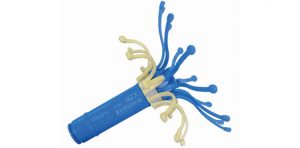
0914ca_drankhan_medriha1vetMEDRIA SENSOR – Cow Monitoring System is Dedicated to Reliable Real-Time Data
The Medria system provides information on heat detection, rumination, feeding behavior, health monitoring and calving time monitoring.  It uses cellular communication instead of the internet, and it is an integrated system- HeatPhone, FeedPhone, VetPhone, SanPhone.  They system sends text messages about group changes in water or feed consumption and rumination. It reports cows at risk due to changes in behavior, as well as cows in heat, etc.  When I first learned about this system in 2015, there was tremendous interest around the World Dairy Expo booth. At that time Medria Technologies founders Jean-Pierre Lemonnier and Emmaneul Mounier (2004 in Brittanny France) pointed out, “Medria Technologies has a full line totally oriented to farm management.” and they reported that over 4000 farmers in more than 10 European countries were already using Medria’s monitoring solutions. Those first eleven years were providing positive results, proving “how need this device is and how successful it can be in the monitoring and early detection of reproduction and animal health problems.”

Now WIC has Been Added to the GEA MixFeeder

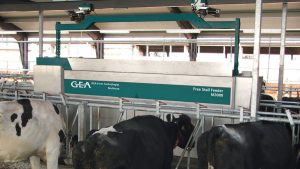
DairyFarming_FreeStallFeeder_1_1200x675px.jpgIn July of 2016, GEA introduced the Wireless Integrated Control (WIC) system which is an intelligent software for its proven MixFeeder.  The new system ensures that every performance group receives the optimal mix ration of raw feed, concentrated feed and minerals in the right volumes at the most appropriate intervals. The WIC delivers the feed precisely and reliably around the clock.  This benefits milk producers and herd managers as it ensures that their cows are always performing at their full potential, thereby improving milk volumes and quality and reducing workload and costs.
The WiIC software enables staff to access the system from the PC, touch panel or their smartphone, wherever they happen to be, via the local network or the internet.  This gives producers and herd managers greater freedom, while still enabling them to have full control over the entire feeding process. The system can also send alerts via SMS if required.  These messages can then be acknowledged with a simple reply text.  Staff can also manage individual functions and get basic information on the touchscreen on the feeder itself.

There are numerous great products on the market and many more that will be introduced and demonstrated at upcoming shows.  EuroTier is held every two years in Hanover, Germany and from November 15 to 18 this year, there will be exhibitors highlighting products to support breeding, feeding, husbandry, management, logistics and animal health.  Once again, the future beckons!

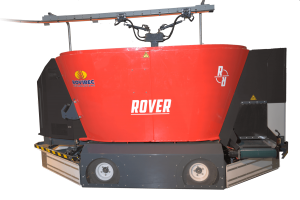
rover-robots-alimentation-produits-rovibec1Introducing the Robot Named, “ROVER!”
Rover is a new self-propelled robot whose debut appearance will be at EuroTier.  Rover will show how it can not only automatically mix and feed and dispense it to the cows but also push up that feed as it passes. This new robotic feeding system was developed by Rovibec in Quebec, Canada and will be distributed in parts of Europe by Schauer Agrotronic in Austria.

The Bullvine Bottom Line

Modern technology developers are just like every one of us who has a piece of dairy in their DNA.  They are eagerly taking a bold and imaginative place in the product line between the stable and the table. Whether you walk the aisles of World Dairy Expo in Madison or the Euro-Tier Show in Hanover Germany, you will be inspired by visionary companies with the courage to lead.  Technology is an area of dairying that is moving at the speed of change and helping dairy operators to take a progressive, sustainable and profitable step into the future. Where are you? Too much?  Or Not enough?


Get original “Bullvine” content sent straight to your email inbox for free.


[related-posts-thumbnails]

A genetic approach to improved fertility

We’ve all heard the statement, “genetics don’t matter without first creating a pregnancy.”

This insightful truth has shifted our global breeding strategy to a stronger focus on fertility. When improved fertility is one of your ultimate goals, you can use genetics to help get you there – both now and into the future.

Get more pregnancies now

If you’re looking for a fertility advantage on inseminations today, sire fertility rankings are where you’ll want to focus. Alta’s ConceptPlus evaluation ranks each sire on his ability to get cows pregnant. Sires with the high fertility ConceptPlus status will give you a 3%-4% conception rate advantage over the average service sire.

Why should you trust Alta’s ConceptPlus rankings? They are based on real pregnancy check results from herds in the US, Canada and Germany. The evaluation also maintains accuracy by accounting for factors like number of times bred, month/season, technician and breeding code effects.

If you’re more familiar with sire conception rate (SCR), keep in mind that Alta’s ConceptPlus evaluation served as a basis for SCR, and the table below compares what’s included in Alta’s ConceptPlus evaluation and SCR.

Comparing the different factors accounted for within Sire Conception Rate and Alta’s ConceptPlus sire fertility evaluations.

You can see that both fertility evaluations include a great deal of factors and information, but ConceptPlus takes it a few steps further for greater accuracy. If improved fertility is your current goal, ConceptPlus sires will provide that boost to improve your herd’s conception rates. But it doesn’t stop there.

Create more fertile cows for the future

While sire fertility selection can get you more pregnancies now, it takes genetic selection for female fertility to ensure your herd’s reproduction continues to improve.

Daughter pregnancy rate (DPR), heifer conception rate (HCR) and cow conception rate (CCR) all provide a genetic basis for creating more fertile females. Emphasizing one, or any combination, of these traits within your customized genetic plan means you are breeding a next generation of cows with a greater ability to conceive.

Daughter pregnancy rate is defined as the number of non-pregnant cows that become pregnant within each 21-day period. When a sire has a DPR of 1.0, it means that his daughters are 1% more likely than the average herdmate to become pregnant in a given 21-day window. And each added point of DPR equates to 4 fewer days open.

When referring to HCR and CCR, these traits are defined respectively as a virgin heifer or lactating cow’s ability to conceive. For each of these traits, when a sire has a value of 1.0, it means that his daughters are 1% more likely to conceive than daughters of a sire with an HCR or CCR of 0.0.

While DPR is a slightly different calculation than HCR or CCR, all three are a way to measure the fertility of the female herself.

Improve fertility results – now and into the future

So if you’re looking to improve fertility and reproduction in your herd, take these steps for best results:

1. Improve conception rates now by using sires with the high fertility ConceptPlus ranking to get a 3-4% boost on current breedings.

2. Improve fertility for the future of your herd by including DPR and/or HCR and CCR in your customized genetic plan to create a next generation of more fertile females.

Source: AltaGenetics

Antibiotics : What’s the Alternative?

We know that antibiotics are those miracle drugs Alexander Fleming stumbled upon in the 1920’s when his lab was left untidy. Since that happy accident, scientists have identified additional naturally-occurring antibiotics and developed synthetic drugs to add to our arsenal to combat bacterial infections.

So we’ve had bacteria, through their need to survive, learning how to develop resistance to naturally occurring antibiotics in the environment for eons; long before we started purposefully adding more antibiotics to the mix. So though we need antibiotics, it would be really nice if we could find ways to rely on them less.

How about preventing disease to start? Preventing disease could take the form of finding ways to enhance the immune system or identifying better strategies to target animals at risk, such as improving vaccines. We can also look for other types of treatments to address disease.

That’s just what the scientists at USDA’s Agricultural Research Service (ARS) and National Institute of Food and Agriculture (NIFA) do. ARS conducts innovative research and NIFA awards grant funds to ensure that groundbreaking discoveries in agriculture-related sciences and technologies reach the people who can put them into practice. For example:

  • How can we improve immunity?
    • We could enhance a pig’s immune response during times of peak disease incidence. ARS scientists are evaluating the use of immune-derived substances that supplement animals’ innate defense mechanisms.
    • NK-lysin is an antimicrobial peptide/protein that is an important part of the inborn immune system. A NIFA Agriculture and Food Research Initiative (AFRI) – funded study, found these proteins can kill both Gram-positive and Gram-negative bacteria.
  • How can we make the bacteria sick like they make us sick? How about viruses that infect the bacteria? ARS researchers are exploring the use of destructive enzymes from viruses that infect bacteria such as those causing udder infections in dairy cattle, thereby reducing the use of antibiotics in dairy cattle.
  • Haven’t vaccines been around forever? What more can we learn?
    • We still struggle with understanding all of the ways we can enhance an animal’s adaptive immune response to a vaccine so that its ability to fight disease improves. ARS scientists are improving their understanding of stimulating multiple arms of the immune system to increase efficacy, safety, and cost-effectiveness.
    • And why stop at conventional vaccines? Why not nanovaccines? NIFA is funding University of Wisconsin-Madison researchers to evaluate nanoparticles to fight respiratory disease in poultry where there is no effective vaccine because of the many strains of circulating virus. Success could serve as a model for addressing other animal diseases.
  • What else can we do to improve preventive management practices beyond vaccine protocols? Well, NIFA asked the country’s scientists just that question. As part of a five-year AFRI Food Security Challenge award initiated in 2013, scientists focus on extension-driven solutions to reduce mastitis on Southeast U.S. dairy farms, thus reducing the need for antibiotics and improving the quality of milk.

As USDA scientists continue to work with their partners to look for ways to preserve the efficacy of medically important antibiotics that address the most critical needs for human and animal health with a focus on public health outcomes, USDA scientists look forward to working with their partners to concurrently find ways, through sound science, to address agricultural productivity, sustainability, and resilience.

Source: USDA

Improve Genetics With Powerful Indexes

CLARIFIDE® Plus presents comprehensive ways to combine wellness and other genetic trait predictions into economic-based indexes that measure profitability. The two indexes are Wellness Trait Index™ (WT$™) and Dairy Wellness Profit Index™ (DWP$™).

First, what is a selection index? Selection indexes help producers select for several traits at once, taking into account genetic relationships and economic values. A selection index, such as DWP$, provides comprehensive and specific information on wellness and other performance traits to provide clarity and opportunity to make more profitable animal rankings and decisions.

To learn more about this new offering and set of indexes, let’s zoom in to take a closer look at the two indexes, WT$ and DWP$, to see how they differ and learn the benefits of each.

Focus on wellness, with Wellness Trait Index
The Wellness Trait Index (WT$) focuses exclusively on wellness traits — mastitis, lameness, metritis, retained placenta, displaced abomasum, ketosis and polled — and quickly estimates expected differences in lifetime profitability related to those traits. For example, clinical mastitis is reported to be the most common and overall costly disease condition of dairy cows and, as such, makes up 41% of the relative selection emphasis in the WT$.1

Summary:

  • WT$ estimates genetic differences in lifetime profitability attributed to differences in risk of six common disease conditions plus an economic value for carrying the polled gene.
  • Animals with higher WT$ are expected to be more profitable due to lower expected disease risk.
  • WT$ is best used within a genetic selection index, such as the most comprehensive profitability index, DWP$, or as part of a custom index selection tailored to breeding goals on the dairy.
  • WT$ explains economic differences in disease risk and is not designed to address differences in other areas or traits, such as fertility.

Focus on profit, with Dairy Wellness Profit Index
Dairy Wellness Profit Index (DWP$) describes variation in expected profitability of dairy animals attributed to genetic potential differences for production, fertility, longevity, health and wellness traits. DWP$ differs from other economic indexes because it includes direct predictions for economically important diseases via the addition of wellness traits. By including more characteristics affecting profitability, DWP$ describes more genetic variation in profitability than other indexes.

Summary:

  • DWP$ is an all-encompassing index that makes ranking animals much easier for the dairy operation. 
  • DWP$ includes production, fertility, type, longevity, health and wellness traits, and includes the economic value for official polled test results.
  • A higher DWP$ value is more desirable and indicates, genetically, an overall more profitable animal.
  • Producers can confidently use DWP$™ to make all selection decisions, including heifer and bull selection, plus make breeding type decisions, such as when embryos, sexed, conventional or beef semen may be used.
  • DWP$ accounts for disease traits and helps explain the profitability of the animal, thus advancing herds much faster toward overall profitability.

Learn more about the indexes used in CLARIFIDE Plus by watching the educational videos The CLARIFIDE Plus Wellness Trait Index™ (WT$™) and The Power of the Dairy Wellness Profit Index™ (DWP$™).You also can find more information at CLARIFIDEPlus.com or by contacting your local Zoetis representative.

Fire Yourself!! 8 Signs That Your Time Has Come!

We talk about the way family farm founders, dairy managers, consultants and suppliers need to be passionate, committed and courageous in leading their dairy businesses. We enjoy giving glowing praise to those who have inspired us to take exceptional action or to dig deeper to solve a problem or gave us the guts to make uncomfortable changes. We include ourselves in that group of aging role models. But what happens when there is an ever-widening gap developing between the measurable achievements? Indeed, what happens when those who lead the pack are not ready or willing to hand over the baton.

These Days Are We Still Proud or Are We Just Loud?

When we start something, and grow it into a successful enterprise, we are justifiably proud of the distance we have come.  We know how much hard work, inspiration and vision went into getting the operation off the ground. We are proud of growing and maintaining the legacy of those before us.  But sometimes we get so hung up on simply hanging on that we are a detriment to continued growth. Loud whining is very different from proud leading.

Sometimes Taking the Most Important Step Means Stepping Away

There are definitely times when you look back and congratulate yourself on taking center stage.  Tough or easy, you had the target painted on your back, and you accepted responsibility.  Being in the driver’s seat of a dairy business means traveling down a long and winding road. We sometimes need to be reminded that, on any journey, it’s important to pay attention to the stop signs! Here’re eight stop signs that you may be missing or ignoring.

129495-simple-red-square-icon-signs-road-stop-sign-sc441 #1: “No one could do what I do as well as I do it!”

If you just shouted “Right on!”, then please step away from your computer! It’s wonderful to have a great track record but what does the record show recently, when it comes to moving ahead with new technology, new management methods, new breeding strategies and a new nutrition program?  The belief that the status quo is the way to go just means that YOU need to go. And furthermore-  If you use the phrase: “By the time I show someone how to do it, I could just do it myself” Step aside. If your team really can’t do the work as well as you can, whose fault is that? Did you fail to train them? Or train them to fail?  Fire yourself!

129495-simple-red-square-icon-signs-road-stop-sign-sc441

#2: You resent young upstarts who haven’t struggled like you did and yet seem to feel that they are entitled to be your equal.

This is a big one.  If you hold resentment toward people (family, staff, partners or consultants) who haven’t been through what you have and who, heaven forbid, rely on book learning instead of years of experience, this could be a sign that you have passed your own best-before date. The measure of success isn’t the path taken or the length and bumpiness of the road.  Success is measured in results.  Are you interested in results or longevity?  Progress or control?  What are you afraid of.  If you answer is “I am afraid of retirement!”  Fire yourself!

PS If the only ones you resent are “those girls” or “the women” who aspire to work in your exclusively male domain.  Fire yourself!  Do it now!

129495-simple-red-square-icon-signs-road-stop-sign-sc441

#3: You’re worried about the financial Implications.

Are you waiting for the economy to improve, before you’ll give up control? You have come through challenges. Have a little faith that others can do the same. You may not be ready to let others make financial decisions, but are your decisions making or breaking the bank?  Do you find yourself cutting corners to save money, doing the best you can on your own in order to avoid paying someone else for services? Are you cutting costs on feed or supplies even though it may affect your herd health and production and therefore reduce your actual profits? Cutbacks can be costly.  At the other extreme, when seeing ourselves in the role of “top” boss, we give ourselves permission to break some rules by giving bigger discounts for our products or services to our “special” customers?  Do you find your customers or suppliers always asking for a deal? Are you demonstrating your power or are you eating away at your margins?  You need to recognize that your control may be inefficient, wasteful, and inducing costs that work against the very profitability you are hoping for. If you don’t fire yourself at this point, you will eventually be out of work.  Fire yourself!

129495-simple-red-square-icon-signs-road-stop-sign-sc441

#4: You think long hours are a measure of success.

Dairying is 24/7, but burnout is not a benchmark for success. Past a certain point, working more hours rarely makes you more productive. A study showed that, if you’re regularly working past 50 hours a week, your productivity is likely going to drop. That same study from Stanford also reported that people who work as much as 70 hours (or more) per week actually get the same amount done as people who work 55 hours. “But” you object, “they’re probably not farmers!”  You’re right.  That is why pacing yourself and delegating and strategically planning workloads is something that successful dairy farmers become very good at. There is no point in becoming an ornery, grumpy curmudgeon just because your martyr complex won’t let anyone else share the load. If you feel like you’re carrying the weight of the world on your shoulders – fire yourself.

129495-simple-red-square-icon-signs-road-stop-sign-sc441

#5: You expect praise for your efforts but don’t hand much of it out.

Do you insist on doing your job and other people’s jobs too? We all have strengths and when you have capable family or staff, let them lead with theirs. Strong leaders recognize where others add value, and make space for true collaboration. Don’t try to do it all. Especially when someone else might do it better. Do you find yourself detouring around family or staff in any meeting with suppliers, customers, or strategic partners?  If you are the only star, what does that make your staff.  Do you feel frustrated with staff who are not proactive, who only do what they’re told, who depend on you for decisions and seem unable to think strategically? Do customers always ask to speak to you instead of your staff? If you’re the reason, fire yourself!

129495-simple-red-square-icon-signs-road-stop-sign-sc441

#6: Everything has to go through you.

If your team can’t make a decision, or work is held up because you’ve not yet reviewed or approved it, it’s time to question how enabling you really are. You may not even be conscious of the tone you set, but sometimes a team’s hesitancy to make a call stems from your bad habit of reversing decisions. It’s either that or they’re unclear about what you want. Do people know what you expect? It’s great to be a champion, a guide, and even a director when needed. But don’t be a bottleneck. Learn to be clear on your expectations. Learn to take a backseat in decision making.  If you’re hired as “Manager,” you may not be prepared to or able to fire yourself. But you should always have the best interests of the dairy business at heart. Learn to appreciate the new technology and ideas that the younger generation may bring. If you own the operation, learn to change your title from “Farm Manager” to “Farm Owner.”     For those of you who are at this stage, Congratulations!!  You’ve built your dairy business.  Now it’s time to enjoy seeing it evolve further.  I hope you can let go quickly enough to take advantage of it. Fire yourself!

129495-simple-red-square-icon-signs-road-stop-sign-sc441

#7: You don’t trust your team to represent your work.

Clarifying roles and responsibilities is helpful. Once you’ve done this, it’s important to stay in your lane. If a project is heading into a ditch, by all means, step in. Otherwise, clarify your goals and expectations, then trust people to get the job done. Don’t insert yourself just because you can, or because you feel the need to appear in control. Leading from the sidelines has its place. If we want to enable meaningful contributions from everyone and maximize the talent available, it’s important that you either find your correct place…and learn to occupy it gracefully … or fire yourself!

129495-simple-red-square-icon-signs-road-stop-sign-sc441

#8: You are not ready or willing to change roles.

When you first started out in farming, you handled everything: chores, milking, breeding; finances; planting and harvesting; buying and selling; builder; plumber and all round handyman.

Over time and with the changing nature of modern dairying, you were probably required to focus on other things, and you coped with that.  Now changes include team building, training, and management, to name a few things that need to be on the priority list. When we as owners or managers refuse to relinquish control, we negatively affect growth. Call it fear or call it pride; that hesitation causes harm.  We have now become stumbling blocks.  Don’t get me wrong!  Many of us have used our strengths and still have some to offer. But if we are not very good at running today’s operations under changed circumstances we have to admit it. Change happens whether we are ready or not.  For many of you, your operation still needs you… For some of you, your business can do without you.  Either accept your new role or fire yourself!

8 STOP SIGNS PLUS ONE!!

So, there you have it.  If you read through this list of stops signs and recognized yourself —- check, check, check, check, check —then it’s time for you to check out. Fire yourself!! 

THE BULLVINE BOTTOM LINE

Don’t make your biggest regret that you waited too long to fire yourself. If you have the best interest of your dairy operation at heart, then you will be wise enough to know when the time has come to be the “wind beneath the wings” of the next generation.  Are you ready to give your dairy an advantage?


Get original “Bullvine” content sent straight to your email inbox for free.


[related-posts-thumbnails]

Robotic dairy farming: a better life for man and cow

Alvin and Judith Reid have been dairy farmers since 1978, starting off as sharemilkers. Today they own one of New Zealand's few robotic dairy operations.

Alvin and Judith Reid have been dairy farmers since 1978, starting off as sharemilkers. Today they own one of New Zealand’s few robotic dairy operations.

A farmer runs his dairy operation several hundred kilometres away with the aid of technology.

It’s the dead of night and Alvin Reid sits in his office, lit up by a flat screen television. A cow wanders across the screen, pauses to sniff the air, before sauntering into a milking bail. Reid is in Wanaka and the cow is on his Riverholme Farm at Pleasant Point, 270 kilometres away.

Reid is doing his “shift” on the 125-hectare robotic dairy farm. He shares the work with two other staff and chooses to do this via the internet from his new Central Otago home. Technology, which Reid revels in, has allowed him to work remotely.

“I have always been interested in technology,” he says. “I’ve had a fascination with electronics since the 1980s when I bought my first computer.”

Cows run the farm now, says Alvin Reid.

Tony Benny/FairfaxNZ.

Cows run the farm now, says Alvin Reid.

 Riverholme Farm was converted from a run-off block and opened as a robotic dairy farm in 2013. It is now in its fourth season of milking and third full calving.


Alvin Reid is content to manage his shifts from his computer in Wanaka.

Alvin Reid is content to manage his shifts from his computer in Wanaka.

It’s been a steep learning curve to reach this stage, Reid says. Training the cow’s to milk voluntarily has required time and patience. Never will a motorbike chase these cows up a lane, he adds. 

“Changing our mindset from a conventional farming system to a voluntary milking system (VMS) was the hardest thing,” Reid says.

A DeLaval milking bail. There are six of them in the Reid's robotic operation.

John Bisset

A DeLaval milking bail. There are six of them in the Reid’s robotic operation.

“It’s been a huge change of attitude; to be honest it’s more about changing the farmer than the cow.”
 
About six weeks passed before the cows got the hang of milking themselves. At the time Reid slept in the shed until the cows were settled. By day 66 every cow was voluntarily moving from the paddock and into the shed for milking by a robot.

Reid and wife Judith have been dairy farming since 1978 and began share milking before buying their first farm at Winchester. Today they own Riverholme Farm plus have shares in five others, three of which are operated by their children.

What makes the Riverholme Farm so special is that the 480 cows graze year round, not in dairy barns, but on open pasture. They walk up to three kilometres a day to get themselves to one of the six DeLaval robotic milkers and at  peak lactation will milk more than twice a day.

“New Zealand’s strength is in its pastoral farming. Our feeding system is no different than other farms – 80 per cent pasture,” Reid says.

Feeding costs are kept extremely low with this system and robotic milking can be introduced without adding to pasture management or feeding costs. 

Reid says the drop in labour costs and animal health costs are balanced out with the higher capital investment. However, he believes the potential in increased cow longevity, proactive farm management and labour retention makes the system worthwhile.

Robotic technology starts at the gate with each animal ear tagged. The tag sends a signal to the central computer that stores information on each cow’s milk production flow. The computer’s memory then guides the animal through a series of gates to milk or graze.

The DeLaval VMS robot comes with a “herd management system” (HMS). This collates a comprehensive record for each cow and allows Reid and his staff to follow each cow’s milking performance and milk quality.

The herd management technology also keeps track of the cow’s milk production and number of visits to the VMS. The optimal time for the next visit is automatically calculated, based on the time elapsed since the previous milking and the amount of milk expected.

“The HMS logs milk quality for each cow and sends alarms if threshold levels have been breached,” Reid says. “It alerts the VMS which automatically diverts abnormal milk and alerts staff via mobile phone and computer.”

Cow traffic at the milking machines is controlled by a smart selection gate. Reid says this helps to get more milkings per cow per day, more regular milking intervals and high feed intake. Traffic is greatest from midday until 7pm and tails off as the night goes on.

“Eventually I don’t want people here,” Reid says. “Most days between 7pm and 5am there is no staff here. The plan is to get exceptional reporting systems in place and if the farm is running the way it should I don’t want to know about it. But if something is wrong I want to know about it straight away.

“When I get a text I bring up the robots on the screen. If the text is about teat cup grip then I bring up the robot and can see the teat cup hanging; from my computer, I can control the robot and fix it.” 

The robotic farm project has cost Reid about $2.5 million and a rotary milking shed would have cost less. But they will get that back, he says.

“The milking shed probably cost $350,000 – $400,000 above the cost of a conventional 50 bail rotary shed. But it uses only 2.5 labour units compared with a rotary’s three labour units. A conventional farm of the same size would take 3.5 staff.”

 Animal health costs have dropped. Despite extensive walking, there has been a decrease in cow lameness and Reid expects cow longevity will improve to perhaps an extra lactation because of the new system. Cows  have less mastitis and produce more milk with less staff.

“We have about 4.5 lactations per cow and we think we will be able to extend that to about 5.5 lactations, time will tell.” 

Well acquainted with the technology now, he does not believe the system is especially difficult to operate.

“You don’t have to be a computer whiz,” he says.

But he thinks its widespread adoption will take time.

“Will it become mainstream? Probably not. Will all farmers want to handle this sort of technology? Probably not.

“But our cows are back to being individuals, not a herd. Our cows run the farm now, not us.”

Source: Stuff

LOCOMOTION – Are we solving the PUZZLE?

For years, we have listened to breeders, show judges and trained experts talk about the way our cows move. Each authority focusses on a different outcome: winning in the show ring; producing in the milking line or remaining healthy in the barn or pasture. To name a few. We have many pieces from a lot of sources, but we still are unable to fit all the pieces of the puzzle together to improve bovine locomotion. Are we so focused on our own piece, or even lack an interest in locomotion, that we are failing to see the big picture?

By Nature

If man had not domesticated bovines, they would still most likely have a mature size of 660-880 pounds (300 – 400 kgs) and would have been able to leap over rocks, and bushes like our deer in the wild can do. But I am thinking it is more than the larger size that has slowed down today’s bovines. Some breeds, especially, are less mobile that would be ideal.

Mankind – A Help or a Hindrances?

Perhaps there is not one answer that applies to all breeds of dairy cattle. Some have straighter and some more sickled legs. Foot structure, bone quality, and strength of pasterns vary from breed to breed.

Over a pan of more than three centuries breeders have changed the cow from only being able to feed her calf with perhaps a little extra milk for the owner’s household to being able to produce large volumes of nutritious milk that can feed many families. But at what price? Shorter lifespans? Perhaps! And now we have animals with much less ability to move, run and jump freely.

Many Experts have Opinions

Show judges a few times, at every show, will comment on how one cow moves compared to another. Their comments are usually about gait and strength of pasterns.

Classifiers have, for over ninety years, looked at feet and legs and evaluated them compared to the breed ideal. Most frequently, in the past, they would only see the cow standing in a stall. How can they know how a cow will move from only looking at form and not looking at and recording an evaluation on function? With so many parts to feet and legs evaluation and by not recording movement, it is little wonder that the heritability for feet and legs, using type classification data, is less that 10%. Knowledgeable breeders have told me that they feel the heritability of feet and legs is like udders at 30%.

Hoof trimmers mainly see only the bad feet of a herd, but they do not record that feet form information or do animal movement coding for genetic evaluation purposes. Of course, to get the full range of feet in a herd, they would also need to evaluate the good feet that they do not trim. For trimmers to go one step further and record data on locomotion may not be totally objective as the feet, just trimmed, are not likely to immediately function properly. One promising note is that Canadian hoof trimmers and CDN are currently working together on capturing data on cow’s feet as they are trimmed. By default, they will be able to identify sires and cow families that have feet problems.

Researchers, both veterinarians, and geneticists are interested in locomotion, and there have been studies, reports and videos to rate cows from excellent to poor for locomotion. But, beyond showing animal differences, little is known for breeders to use to improve the ability of their cattle, when it comes to locomotion.

It’s a Big Puzzle

Legs are large appendages that are attached mainly by muscles, ligaments, and cartilage. And while we know a considerable amount about the genetic improvement of skeletal structure, we know relatively little when it comes to the genetics of the function of feet and leg parts.    

Type classification programs observe, capture and analyze large volumes of data on leg and foot form. But not on leg function. With more and more animals housed in a non-tied format, there must be a way to also capture data on leg and foot function.

Judges appear to be paying more attention, than in the past, to dairy animal leg movement in the show ring.  Definitely, in the beef animal show rings animals are expected to be able to walk smoothly at a fast gait. However, for either dairy or beef, so few animals ever see the show ring, and those animals that make it there will have had their feet trimmed and be trained to walk unnaturally slow …. the result being that breeders cannot depend on the show ring for the evaluation of locomotion.

It is very costly to video a large number of animals moving in barns or on pastures and after that ’translate’ the results into actual sire rankings for locomotion. Perhaps someone will develop a means by which stationary or drone cameras can capture accurate mobility data. Now, that is a challenge for a scientist to develop an evaluation method. For another scientist, the challenge is to link the mobility index to the DNA and produce genomic mobility indexes.

Certainly, it is a big puzzle at this time. However, big challenges require big picture thinking.

Why Bother to Solve the Puzzle?

There are many things that “don’t” happen when locomotion is poor. In short cows that can’t or don’t walk properly don’t spend as much time foraging or at the feed bunk. They don’t come into heat or don’t mount to show heats. If they don’t move forward (i.e. have good locomotion), your dairy operation is probably slowing down or standing still too!

Recently Dr. Jeff Bewley and Associates at the University of Kentucky have documented that cows with poor mobility do not consume as much feed and lay for longer time periods. Less dry matter intake results in less production and long laying times, also exposing teat ends to more bacteria.

With over 10M dairy cows in the US and Canada and with an estimated 40% with minor to severe mobility problems even a $250 reduction in annual net income for those affected cows equates to annual losses of $1B. Additionally adding even half a lactation to every cow’s lifetime, that is going from 2.7 to 3.2 lactations, is worth billions.

Now, it is not possible to estimate what it would cost the dairy cattle industry if people outside of our industry were to stop buying our end products because the milk or milk products they consume could possibly come from lame cows.

The Bullvine Bottom Line

The challenge to improve the genetic merit of dairy animal mobility cannot be ignored. It is a necessity! Resources have been allocated to less important issues. The global dairy cattle improvement industry needs to stop saying that the challenge is too big, too costly, that there is no data or there are too many unknowns. Poor animal locomotion is a puzzle that must be solved!


Get original “Bullvine” content sent straight to your email inbox for free.


[related-posts-thumbnails]

When Research Meets Real World

Animal and agronomic research has provided many tools and practices over the past decades that have assisted producers in doing their job better and easier. A direct transfer of the results to real world does not always equate to the same positive results. It is easy to get caught up on the potential benefits conveyed from research in either increased milk production, improved health, higher crop yields, better fiber digestibility and the list could go on. There are several key factors that come into play when determining how much a farm may benefit from a new product or management practice.

Production Perspective

The words research and control are synonymous. In animal research best management practices are implemented. Typically animal research projects are conducted using greater than lactation one animals that are similar days in milk; dry matter intake is monitored daily; many people (students) are feeding and handling the animals; feed and forage quality is consistent; and projects are limited in their duration (i.e. 3 months). Almost all of these conditions do not happen on a real dairy operation. Even when on-farm trials are conducted they utilize very well managed farms and are closely monitoring performance to pick up differences.

Agronomic research is conducted using plots that are usually on small acreage. Depending on what is being evaluated best management practices are implemented to control weeds and pests. However, agronomic research is at the mercy of weather conditions and thus can have a significant effect on the outcome. Extrapolating results relies heavily on the correct equipment being used, soil conditions, soil types, temperature, moisture, and application of fertilizer and chemicals. It is not surprising that incorporating research practices may not transfer directly to the farm’s operation without some adjustments.

A positive research result does not equate to a financial positive. Historically the one main component missing from animal and agronomic research is the economic component. Recently researchers have begun examining income over feed cost affects between treatments or partial budgets for various cropping strategies. However, the bottom line is there are interactions at the farm level that only a whole farm analysis can detect. This is the best approach for realizing the benefits (or not) of a new product or management practice. This is the missing link when transferring research to real world application.

Poor management will trump positive results with any new product, additive, or practice most every time. If a dairy operation does not have a solid foundation regarding forage quality, cow comfort, and best management practices then the product or practice being utilized may not be able to overcome those obstacles. To truly observe the benefits cows and crops should be monitored to document that the desired outcome is really occurring. Based on the dairy’s breakeven cost of production, how is the product or practice measuring up? Rarely is there any follow-up to evaluate the effectiveness of the new practice or product. Also, an immediate response does not always occur, in some cases the benefits are realized over a certain period of time. Depending on the farm’s situation it may be necessary to make adjustments in protocols to reap the true effectiveness of the product or practice.

The bottom line is not every research result will work on every farm operation. Make sure good management practices are in place, monitor the animals or crops to demonstrate the product or practice is working and evaluate the effects to the cash flow plan.

Action plan for incorporating a new product or management practice

Goals

Evaluate the potential benefits of any new product or practice on the cash flow plan before making a decision.

Steps

  • Step 1: Investigate the research by discussing the pros and cons with the advisory team and by talking with other producers who have utilized the product or practice. Search the internet for information and reviews on how they have worked.
  • Step 2: Examine a budget, such as a partial budget, to evaluate if the product or practice makes economic sense for the operation. Account for intangibles such as improved time management or animal well-being.
  • Step 3: Once the decision has been made to try the product or practice, develop a plan for monitoring the cows or crops to determine its effectiveness. Make sure to document animal or crop performance prior to implementing the change.
  • Step 4: Allow several weeks or months to document results.
  • Step 5: At the 3 month and 6 month time point, evaluate the effects on the cash flow plan and the impact to the farm’s breakeven cost of production.

Economic perspective

Monitoring must include an economic component to determine if a management strategy is working or not. For the lactating cows income over feed costs is a good way to check that feed costs are in line for the level of milk production. Starting with July’s milk price, income over feed costs was calculated using average intake and production for the last six years from the Penn State dairy herd. The ration contained 63% forage consisting of corn silage, haylage and hay. The concentrate portion included corn grain, candy meal, sugar, canola meal, roasted soybeans, Optigen (Alltech product) and a mineral vitamin mix. All market prices were used.

Also included are the feed costs for dry cows, springing heifers, pregnant heifers and growing heifers. The rations reflect what has been fed to these animal groups at the Penn State dairy herd. All market prices were used.

Income over feed cost using standardized rations and production data from the Penn State dairy herd.

Note: October's Penn State milk price: $17.07/cwt; feed cost/cow: $5.76; average milk production: 81 lbs.

Note: October’s Penn State milk price: $17.07/cwt; feed cost/cow: $5.76; average milk production: 81 lbs.

Feed cost/non-lactating animal/day.

Source: PennState Extension

Today’s farm economy more like 1970s than 1980s

Because interest rates remain low and farm debt isn’t highly leveraged, today’s low commodity prices don’t mean the farm economy is headed toward a debt crisis like in the 1980s, a nationally recognized authority on agriculture and lending told the National Agricultural Bankers Conference in Indianapolis Monday.

“If we don’t get rampant inflation and we don’t get skyrocketing interest rates, this is just going to be a speed bump and adjustment,” said Jason Henderson, associate dean and head of Extension at Purdue University. Before taking that job, Henderson led the Omaha branch of the Kansas City Federal Reserve Bank, where the agricultural economist tracked the agricultural and rural economy.

Henderson said farmers currently are in a liquidity crisis and that those with enough collateral will be able to weather low prices. Henderson doesn’t expect farm income to rebound much through 2018 or 2019, which will be difficult for younger farmers without equity, as well as main street business in small towns as farmers reduce personal spending.

 Henderson sees similarities between today’s farm economy and that of the 1970s, not the 1980s. In the late 1970s and today, prices were declining and exports were declining.The U.S. economy already is growing and Henderson expects both baby boomer retirees and millennials to drive consumer demand.

“I’m extremely optimistic about the U.S., even after an election that brought out the worst of us,” he said. A recovering real estate market is already showing up at Purdue, which sees good job prospects for students studying landscaping and horticulture, he pointed out.

For agricultural exports, Henderson sees possibilities and challenges.

“I think the future of agriculture is not going to emerge from China. It’s going to emerge from who’s the next China. Is India going to be that opportunity?” he asked.

With an aging population, China’s working age population is projected to fall by about 100 million people by 2040, Henderson said. India, on the other hand, will see its population of working-age people rise by 200 million by 2030.

A big difference between today and the 1980s is that the Federal Reserve’s tighter monetary policy that raised interest rates came at a time of high inflation, which isn’t the case now.

Before the 1980s debt crisis, the Fed raised rates suddenly with little warning. Today, “they’re telegraphing their moves. And they understand that speed kills in the financial markets. Slow and steady wins this race,” he said.

Wage pressure from a smaller U.S. workforce could make inflation worse, especially if the Fed and other policies seek to make the U.S. economy grow at rates much above 2%, he said.


Source: Successful Farming

Which Cows in Your Herd Are Making You Money?

Breaking News ScreenWhich cows in your herd are making you money and who is losing you money? Every year, the cow-calf producer needs to critically evaluate each animal in the herd and decide if she is paying her upkeep.

Open cows (those that are not pregnant) at the end of breeding season obviously are the top of the cull list. With variable costs running $400-$500 per year per head and an additional $100-$300 in fixed costs, keeping open cows is a financial black hole. Beyond pregnancy status, what other variables are important to evaluate? Structural soundness, body condition score, age, performance, and disposition are vital components in developing a culling order specifically for your farm. This culling order is exceptionally important during times of drought or a year with marginal hay production as you may have to cull deeper to manage through a difficult season. To begin, it is best to think about who in the herd has the least chance of being productive in the long term or is farthest away from being productive. Equally important are factors such as disposition and phenotype that affect the marketability of offspring. The following is a list of factors to consider when deciding who to cull this year.

Example of a Culling Order

  1. Mean Disposition
  2. Open Females
  3. Structurally Unsound/Chronic Condition
  4. Age
  5. Poor Performance-Records
  6. Phenotype-color, stature
  7. Replacement Heifers
  8. Bred cows over 9 years of age
  9. Bred Cows 3-9 years of age
  • Disposition – A cow’s attitude is an important consideration in any cattle operation. Bad behavior has both a genetic component and is also learned by calves at an early age. Mean cattle are dangerous to people, damage facilities, tear up fences and make gathering and working cattle a nightmare. Remember a good cow can be protective without being dangerous and destructive.
  • Pregnancy Status – A cow should produce a calf at least once a year and the sale of that calf needs to pay her way. Diagnosing a cow as “open” (not pregnant) is as simple as veterinarian palpating for pregnancy at least 40 days after breeding or removing the bull. A simple, inexpensive blood test can also be used 28 days post-breeding to determine pregnancy status. If many cows are found open at pregnancy check, work with your veterinarian to determine if reproductive disease, poor nutrition, bull infertility or inability was the cause. Remember that cows that calve late in the season have less opportunity to breed back in a controlled (for example, 90 day) breeding season. Summer heat and fescue toxicosis can be important contributors to low conception rates.
  • Structural Soundness – Bad hooves or claws, lameness due to hip/knee injury, eye problems, and poor udder conformation are all examples of structural problems that adversely affect performance.  Good feet and legs are essential for weight maintenance, breeding, calving, self-defense, and raising a calf.
  • Cows with chronic conditions that will not improve such as progressive weight loss, early cases of cancer eye, repeated episodes of vaginal prolapse during pregnancy, and extreme sensitivity to the effects of fescue toxicosis should be removed from the herd as soon as the calf is weaned. Cows with confirmed disease conditions such as Johnes disease, bovine lymphoma, or advanced cancer eye should not be returned to a commercial market. The most common reasons for carcass condemnation at slaughter include emaciation, lymphoma, peritonitis, cancer eye, blood poisoning, bruising, and other cancers.
  • Age – Cows are considered most productive between 4-9 years of age. Look at the teeth to assess the age but evaluate them in light of diet-cows that eat gritty or sandy feeds and forages have increased tooth wear beyond their years. Cows with badly worn or missing teeth will have a hard time maintaining body condition. Older cattle die of natural causes, too.
  • Poor Performance – Record keeping is an invaluable tool for evaluating performance. Readable visual tags on both the cow and calf allow you to match calf sale weights to the dams and identification of cows that did not produce a calf. Inferior genetics and poor milk production produce lightweight calves that do no grow well. An overweight cow or large framed cow with a small calf that doesn’t gain weight usually means the cow is not producing much milk. Sick baby calves may be an indication of poor quality colostrum and poor mothering ability.
  • Phenotype – These are cows that do not “fit” the herd because of external features such as unusual breed, size, muscling and color. These challenges may be overcome to some degree by choice of sire to balance out the unwanted traits. Remember that buyers of commercial calves look for uniformity in color, weight, and frame in a set of calves.
  • The last ones to go – Hopefully culling will never have to go this deep in your herd. Bred cows over 9 years old, replacement heifers (especially those that did not breed in the first 30 days), and bred cows 3-9 years old should be the last sold. Thin cows that conceive late in the breeding season should go first.


Since 20% of gross receipts in a typical cow-calf operation come from the sale of cull animals, pay attention to price seasonality and body condition score before sending these animals to market. Prices are highest in spring and lowest in late fall/early winter when spring born calves are weaned & culls sent to market. Adding weight and body condition to culls is an opportunity to increase profitability but can be expensive. Work with a nutritionist to come up with realistic cost projections before feeding cull cattle for a long period of time.

When it comes to making decisions on who to cull, remember to consider functionality in your environment. Is she an “easy keeper”? Does she keep flesh and condition and raise a good calf, even when feed and forage is limited? On the opposite side, does she give too much milk or is her frame size so large that you can’t keep weight on her, even when pasture is plentiful? Is her pelvis so small and tight that calving is a problem and will be a problem in her offspring?

Functionality leads to longevity and improved efficiency. By retaining more young cows in the herd, you can decrease the number of replacement heifers needed and cull cows that are only marginally profitable. Young cows also increase in value as they mature because the body weight of the cow and her calf’s weaning weight will continue to increase from 2-5 years of age. Longevity may also be improved through crossbreeding because hybrid vigor adds essentially 1.3 years of productivity or one more calf per cow.

In summary, a herd of easy-keeping, efficient cows is possible through rigorous culling and careful selection of replacements.  Match your genetics to your management and environment for maximum efficiency, longevity, and ultimately, maximum enjoyment of cattle production.

Cull Cow Language

Breakers (75-80% lean)- Highest conditioned cull cows (BCS ≥ 7), excellent dressing percentages

Boners or “boning utility” (80-85% lean)- Moderately conditioned (BCS 5-7), well-nourished commercial beef cows (usually highest price cull)

Leans (85-90%)- Lower BCS (1-4), lower dressing percentages, susceptible to bruising during transport and expect more trim loss.  Moving cows from lean to boner status can usually be done efficiently.

Source – Farms.com

Dairy farm Petter is using Triomatic automatic feeding system for over a decade

“That much yield with so little feed?”

Sitting round the kitchen table, Henry Petter tells us proudly about the figures that his partner Herman van Dijk showed people at a meeting of their study club. “They were so amazed, they could barely believe it. You should have seen them. Herman told them the feed rations and the milk yield. ‘That much yield with so little feed?’, they asked in amazement.” The business produces an average of 9,500 kg of milk per cow per year, with 4.34% fat and 3.5% protein and a BSK (business standard cow) of 47.8. The feed efficiency number is between 1.55 and 1.57, while the average feed efficiency in Western Europe is 1.30. So a good number. “We are currently feeding 21.9 kg of concentrate per cow per day. We can do this because we are feeding each group twelve times per day. That is possible thanks to the automatic feeding system”, explains Henry Petter.

Diary Farm Petter now has ten years’ experience with using the Triomatic automatic feeding system. Henry Petter is one of the dairy farmers who was in from the outset, the development of the first Triomatic automatic feeding system. It was he who explained to us what he wanted, as a pioneer, and fed back his reactions to the Trioliet development team. Although he had no interest in a milking robot (the reason being: “I want to see my cows twice a day”), he saw many benefits in automated feeding. In the meantime, the benefits have turned out to be greater than he expected. Henry: “It has done more for us than we could ever have imagined. In particular, the flexibility in setting the timing is a major plus. We can now plan a few days ahead, without having to come back and check on it. And we can now make the silage ourselves instead of outsourcing it like we used to. In addition, there is now no hierarchy in the group, because there is always fresh feed available and the fixed feeding times and the high frequency of feeding is important. This means the cows are more relaxed. The calves do better than average in with the flock.”

Not more, but better
The dairy farm managed by Herman van Dijk, Henry Petter and his son, Arie, owns 250 dairy cows. The benefit of the automatic feeding system is that it can be controlled with an accuracy of two decimal places, which means you can get the best returns. Henry: “The high level of feed efficiency is of course due to a number of different factors. It is not just a question of feeding, but the whole range of costs. We try to be self-sufficient in terms of raw feeds, and we buy less phosphate-rich products. That way we can also reduce the quantity of phosphate that needs to be disposed of. This allows you to work with a high level of accuracy and you get a high yield from the way you run your whole business. We try to do not more, but better. The automatic feeding system means that you have flexibility.”

Previously, we spent two hours a day feeding, or around fourteen hours a week. “Right now, feeding only takes us about 4.5 hours per week. About 80 tonnes of raw feed is handled each week, and about 15 kg of left-over feed. What’s more, it is also possible to feed multiple groups, several times a day, so they always have fresh feed. Even preparing a small ration for three dry cows is possible. That is an important factor. The better you can treat the dry cows, the better they deliver and the less problems you get later on. At this level, the automatic feeding system is definitely competitive compared to paying someone because we now feed the dry cows twice a day instead of once every other day. That is what is best for the animals. But it is not only the cows who benefit from this. I have some hobbies myself, and now I can find some free time for them. That is also important, of course”, says Henry with a laugh.

You can also go out
The times for the feed rounds can be moved if necessary. For example, in hot weather it is useful to be able to change the feeding rounds. Herman van Dijk: “We feed more often at night during the summer. With the night-time feeding rounds the system uses the night electricity rate, so that is an added benefit. Personally, I find the flexibility really good and it soon pays for itself.” Arie Petter adds: “The biggest benefit for me is that I have more free time. You have the freedom to go out, you no longer need to live by the clock. None of us even wear a watch any more. That says plenty,” Arie laughs.

Investment
The dairy farm is depreciating the investment in the automatic feeding system over twenty years. “The investment for the Triomatic T40 automatic feeding system was around EUR 200,000. We are now halfway through this and the system can easily run for another ten years. In terms of maintenance, we have had to buy a new set of knives now and again. But if you compare that to the diesel costs of a feeder vehicle or tractor, then it comes out well.” They do not deny that it is a major investment. Henry: “We are using it to feed 250 cows. You need to look at the big picture. What do you put in and what do you get out? You have to look below the line, that is what matters. With a cost price of 0.5 cents per litre of milk (maintenance costs, depreciation and a quota of 2.5 million litres of milk), we are doing really well. As a farmer with livestock, you need to be able to think and act long term.”


Source: Trioliet

How Long Can You Hang On?

A farm management specialist says all sectors of agriculture are facing declining farm incomes.

Adam Kantrovich with Michigan State University tells Brownfield farmers need to update their balance sheets at the end of every year.  “If I can’t pay my bills and every month I’m seeing that I’m having to owe more and more money to the local feed elevators and other suppliers—it’s really time to take a serious look at my farm business and my productivity.”

He says reaching out to consultants or extension specialists can help farmers dissect how every cost of production may be adjusted.  “We really need to determine ‘How long can I hang on if it looks like for the next year or two my net worth is going to continue going backwards?’ and make some decisions.”

He says while there are some bullish indicators in the market, the downward trend in the ag economy is expected to last longer than in previous cycles.

Source: Brownfield

Calf Scours Dehydration Product For Preweaned Calves with Diarrhea

THE PROBLEM:
Dehydration from scours, diarrhea, or other digestive problems poses a significant threat to the health and future productivity of newborn calves, and significantly increases the expenses and labor required to care for the animals. Current products cannot help calves retain fluids quickly enough to avoid severe dehydration—the ultimate goal in managing scours.

THE SOLUTION:

Neonorm Calf is a new product to help dairies and calf farms proactively retain fluid in calves—helping the animals avoid debilitating, dangerous levels of dehydration.
Calves that avoid severe dehydration before it occurs are better equipped to fight off the infection that led to scours.
Neonorm Calf is an advanced product that operates at the cellular level to inhibit the flow of fluids into the intestines—the location where vital fluids leave the body during scours. It is not an electrolyte or a nutritional supplement.

A Clinically Proven Solution
A study evaluating the effect of Neonorm Calf on diarrhea in newborn calves was published in Journal of Dairy Science, the official, peer-reviewed journal of the American Dairy Science Association, in 20151. The study was conducted by researchers from Cornell University College of Veterinary Medicine.

The study results suggest that Neonorm Calf can significantly increase the fecal dry matter of neonatal calves with experimentally-induced enterotoxigenic E. coli diarrhea. Higher fecal dry matter is an indication of less water loss and lower dehydration risk.


Source: Jaguar Animal Health

The high value of low heritability

he brutal fact is that heritability is often misunderstood.

The traits most commonly referred to as low heritability are the health traits – Productive Life (PL), Daughter Pregnancy Rate (DPR), and Somatic Cell Score (SCS). The most common misconception is that although the predicted transmitting ability (PTA) for PL or DPR is high for particular bulls, the heritability is so low that progress will be minimal in a single generation and slow over time.

Even among those in the AI industry, heritability has been described as the probability that the resulting progeny will inherit a trait. So it’s no surprise that dairy producers push back on what benefits even exist for them by selecting for low heritability traits.

Common adverse reactions include statements like, “We will make less progress,” or “We won’t make a noticeable difference,” or “It takes so many generations to actually change those traits.”

This hesitance means it’s time to clear up the confusion on low heritability traits. To do that, we’ll take a look at what heritability actually means, and prove that the economic value of a trait is much more important than the heritability.

What is heritability?

Heritability is the proportion of the total amount of variation in a trait between groups due to genetics.

In the simplest terms, think about two cows in two different herds. How much of their milk production difference is due to genetics, and how much is due to management? It turns out that about 30 percent is due to genetics and 70 percent is due to management and environment. Therefore, milk has a heritability of 0.30.

What about pregnancy rate differences? Management and environment account for the 96 percent majority of variation between daughters, so the influence of genetics is minor at just 4 percent. Thus, DPR has a heritability of 0.04. But in spite of this, it would be wrong to conclude that DPR is insignificant as a result.

Perspective is important

When dealing with genetics, we need to remember that accuracy shows through when we evaluate within a herd. From there, we evaluate within a specific lactation group, and then within a specific time of freshening. This means that we reduce the impact of management and environmental differences in our comparison. We effectively have more control over the evaluation to better isolate the real impact that genetics makes.

Even though the overall heritability is low for a trait like DPR, within a given environment and situation where all cows are managed exactly the same, the true differences between genetic lines is much clearer.

The proof sheet & heritability

The genetic traits for all animals already take heritability into account. This means the PTA values for both the low- and high-heritability traits indicate the amount of gain or loss that can be made in a given generation. So the PTA is the progress you can expect to make with your selection. And when referencing DPR specifically, one added point of sire DPR equates to an average of four fewer days open.

Think of a herd with a 22 percent preg rate and an average of 130 days open. If this dairyman selects AltaBOWIE just because of his favorable DPR of +5.1, then we expect those AltaBOWIE daughters to have an average 27 percent pregnancy rate within his herd, and therefore, an average of 110 days open.

It isn’t just theory, either. Take this real life example from a 1,500 cow dairy with very good reproductive performance. We’ve separated out first lactation cows into quartiles by their sire’s DPR. It’s clear to see that the high DPR sires like AltaBOWIE create daughters that become pregnant more quickly than the daughters of low DPR sires.

Pregnancy rate comparison between daughters of high DPR sires and low DPR sires

The same goes for Productive Life. Despite the low heritability at less than 9%, PL can make a real, noticeable difference in your herd.

This table compares how long the daughters of the industry’s best ten PL bulls and daughters of the industry’s bottom ten PL sires will last in a given herd. You can see that a higher percentage of high PL daughters, represented by the dark blue bars, remain in a herd than their low PL counterparts. Selecting for the lowly heritable PL will certainly create healthier, longer-living cows in your herd.

Percentage of daughters remaining in herd by top 10 and bottom 10 industry sires for Productive Life

Focus on economic value

As a progressive dairy producer, don’t let confusion about heritability prevent you from using the genetic tools to make improvement in your herd. Health traits are economically important, and can have a huge economic impact on your dairy’s bottom line.

There are many traits that have a very high heritability, but no economic importance. In other words, we can make a lot of progress for these traits very quickly, but it will not make a more profitable cow.

A couple of examples are coat color and stature. Coat color has a heritability of 100 percent because it is completely controlled by genetics. Another example is stature, which has a heritability near 0.50. Even though we can make cows a lot bigger, or a lot smaller, or red in one generation, what is the economic value of that?

By comparison, the economic value of more fertile cows that last longer because of fewer metabolic problems, fewer cases of mastitis, and easier calvings is clear to see. These genetic features make a more profitable production unit for each and every farm.

Management tips for selection

When you set or reevaluate your genetic plan, take the following tips into account to maximize progress in the direction of your goals.

Define your goals
You can start by identifying the most common reasons for culling in your herd to determine the most significant health problems on your dairy. Is it reproduction, milk production, mastitis? This information gives you the basis to make breeding decisions that will have a positive impact.

Choose your tools
Health traits offer dairy producers some powerful tools to help correct for low reproduction, metabolic problems, high incidences of dystocia and the like. Identify how important each is to you, and place a proportionate emphasis on these traits when choosing the group of sires to use on your dairy.

Customize the solution
Because industry standard selection indexes put different and continually changing weights on health traits, don’t assume they reflect your individual goals and needs. Work with your Alta rep to make sure your genetic plan is customized to your situation and goals.

Source: Alta Genetics

Preparing for Winter

The winter wind and snow will be blowing soon. Now is the time to consider any issues that could occur on your farm in wintertime, and be proactive to prevent costs of frozen water hoses, cords and water troughs. All of these issues which can affect your cows’ behavior, yield and your workload and efficiency. Dec30Number5

Leah Lange, a Farm Management Support (FMS) advisor for Fitzgerald Inc., a Lely Center in eastern Iowa, recommends a good barn cleaning before winter.

In addition, make sure your rodent control plan is in place before they start eating wires.

“Rodents have been a problem on many farms this fall, so be extra vigilant in checking for problems with mice before the cold temperatures set in,” she said. “Assess whether you have already have a problem and then get bait and traps set throughout the barn.”

Below is a checklist with tips to prepare you for winter.

  • If you use heaters within your robot area, test them in advance.
  • If your robot area is sensitive to cold airflow, think ahead about how to stop this and what kind of materials you might need. Purchase these materials in advance.
  • Typical rough or worn out cup cords are more sensitive to frost. Check your cup cords and replace them when necessary.
  • Spray the cords with silicone if needed. Vaseline works well too.
  • Check and calibrate the correct proportion of water and chemicals for cleaning.
  • If you are using a ‘heating ribbon’ for your water supply, check its function.
  • If you have insulated water pipes, visually check the insulation.
  • Check that the water boiler is working properly and keeps reaching the desired temperature.
  • Ask yourself whether your footbath management should be adjusted to wintertime.
  • If alarms occur, act upon them promptly so the system does not shut down.
  • Adjust the automatic ventilation control and put fan covers on to make sure barn curtains are in good shape.
  • Chose a teat dip that has additional skin conditioners to protect the cows’ teats from little cracks and frost damage.

For more information on Lely products visit www.lely.com

Hay Quality Could Be an Issue

A University of Nebraska-Lincoln Extension forage specialist says high quality hay could be in short supply this winter.

Bruce Anderson says frequent rains this summer in many parts of the Midwest caused delays in getting the hay put up.

“Hay that is being designed specifically for dairies or for a specific type of livestock–hay that needs to be very high quality–is certainly pretty limited out there this year with the weather that we’ve had, and that’s caused some problems,” Anderson says.

Supplies of medium- to low-quality hay—the type used for grinding in feedlots and feeding to beef cows—should be ample. But Anderson says some of it “may also have questionable characteristics—some heating or some mold development in that hay that we’ve got to be a little bit careful of, and judicious in how we use it with those livestock”

Anderson says hay testing is always important, but especially in a year when there might be quality problems.

Source: Brownfield

Compost Bedding Better for Cows’ Foot Health, Researchers Find

A study conducted by researchers from Vetmeduni Vienna has shown that the use of wood shavings and sawdust in dairy barns instead of straw bedding is especially good for claw health.

Dairy cows kept in barns often develop claw damage because of humid and unsuitable roaming areas. These disorders can affect the animals’ fertility or their milk production.

But a comparison with other barn types demonstrated that cows kept in compost bedded barns exhibited a lower frequency and lesser severity of claw disorders. The results were published in The Veterinary Journal.

Compost bedded barns use wood chips or sawdust as bedding instead of straw. The wood residue binds the excrement and daily aerating incorporates the manure and starts the composting process.

A team of researchers from Vetmeduni Vienna, led by Johann Burgstaller from the Clinical Unit of Ruminant Medicine, has for the first time compared the frequency of claw disorders and lameness in compost bedded barns and the more common freestall cubicle barns in Austria.

The researchers investigated the frequency and severity of claw lesions in five compost bedded barns and five freestall barns. “Lesions of low severity were categorised as grade 1, severe lesions as grade 3. The results for the individual lesions were weighted and subsequently added together to calculate an index value for the claw health per barn,” Mr Burgstaller explains. “A high value indicates poor claw health; a low value indicates good claw health. This value, however, is also influenced by factors such as frequency of care, feeding and genetics.”

The compost bedded barns exhibited about one half the number claw disorders, such as foot rot or white line disease, as the freestall barns. Both the frequency and severity were lower.

Lesions of grades 2 and 3 were seen only rarely. The compost bedding thus has a beneficial effect on claw health. Lameness, on the other hand, occurred at nearly the same frequency in both barn types. At about 18 per cent, however, the average of the freestall and compost bedded barns was below the international and previous Austrian level of 25 per cent.


Source: The Cattle Site

Using rumination sensors to monitor heat stress in dairy cows

Temperature Humidity Index (THI) combines air temperature and relative humidity to calculate an index value to better represent the environmental conditions a cow or other animal feels. Dairy cows begin to experience heat stress when THI exceeds 68 (Figure 1). When cows experience heat stress, behavioral (decreased feed intake, increased standing time) and physiological (increased respiration, decreased rumination) changes occur in an attempt to mitigate the stress. Even low levels of heat stress can negatively impact milk production and reproductive performance in dairy cows. As heat stress levels increase, the impacts on cow performance and health become more extreme. The effect of THI on rumination and milk production were looked at on a dairy farm in Southeastern Pennsylvania; the results are presented below.

Case Farm and Data Collection

An average of 104 lactating Holstein cows were housed in a tunnel ventilated tie-stall barn. Over the past 12 months, cows averaged 92.4 pounds of milk per day with 3.8% fat and 3.0% protein based on DHIA data. Rumination data was collected using a Heatime HR Stanchion Barn activity system (SCR by Allflex). Temperature Humidity Index (THI) was calculated from temperature and humidity sensors located in the barn and integrated with the activity system software. Daily milk production was calculated from every other day bulk tank milk weights; bulk tank weights were divided by 104 cows and two days of milk in the bulk tank per pick-up. Rumination, THI, and milk production data were collected from July 7 through October 15, 2016.

Case Farm Results

During the course of the study, maximum daily THI ranged from 60 to 85, minimum daily THI ranged from 46 to 75, and average daily rumination ranged from 311 to 497 minutes per day (Figure 2). In general dairy cows will spend about 8 hours (480 minutes) per day ruminating. Cattle experienced at least some level of heat stress every day from July 7 through September 24. Through the end of September and even into October there were days when the THI passed the level that cattle experience heat stress. The impact of heat stress on rumination is clearly shown in Figure 2, especially for a period in mid-August when even the minimum THI value for the day remained above the heat stress threshold. Regression analysis of rumination versus THI showed that for every one point increase in maximum daily THI, dairy cows spent a little over 6 minutes less time ruminating each day (Figure 3). This one-point increase in maximum daily THI also resulted in a 0.6-pound decrease in milk production per cow per day (Figure 4).

Figure 2. Temperature Humidity Index (THI) and rumination of dairy cows in a Southeastern Pennsylvania herd from July 7 through October 15, 2016.

Figure 2. Temperature Humidity Index (THI) and rumination of dairy cows in a Southeastern Pennsylvania herd from July 7 through October 15, 2016.

Figure 3. Regression of maximum daily Temperature Humidity Index (THI) and average rumination time of dairy cows in a Southeastern Pennsylvania herd from July 7 through October 15, 2016.

Figure 3. Regression of maximum daily Temperature Humidity Index (THI) and average rumination time of dairy cows in a Southeastern Pennsylvania herd from July 7 through October 15, 2016.

Figure 4. Regression of maximum daily Temperature Humidity Index (THI) and average daily milk production of cows in a Southeastern Pennsylvania herd from July 7 through October 15, 2016.

Figure 4. Regression of maximum daily Temperature Humidity Index (THI) and average daily milk production of cows in a Southeastern Pennsylvania herd from July 7 through October 15, 2016.

This article has focused on the use of rumination sensors and weather station data to demonstrate the effects of heat stress in dairy cattle. However, the more important thing to take away is that all the data presented in this paper were collected with technologies that are commercially available to dairy farmers today. These and other precision dairy technologies offer a wide range of detailed information that impact productivity, efficiency, and profitability on the dairy farm. In the current case farm example, the dairy farmer knows the impact of heat stress on his cows in his facilities, allowing him to make a more informed decision about potential heat abatement methods. Producers, nutritionists, veterinarians, and other consultants within the dairy industry could make better use of the data already being generated on farms by existing technologies and should be prepared to take advantage of new technologies as they become available.


Source: PennState Extension

Dairy farmers reveal their next step to higher production

Every dairy farmer wants to maximize milk production, but the pathway to achieving it is unique for each herd. Purina Animal Nutrition conducted an informal survey to discover the management areas dairy farmers are focusing on to reach their goals.

At World Dairy Expo, dairy farmers were asked to vote by placing a ping-pong ball in the management area that best represents their herd’s greatest opportunity to increase milk production. Votes were collected in person at the Purina Animal Nutrition booth and online.

More than 1,000 dairy farmers voted, and three management areas quickly rose to the top:

1.    Facilities and cow comfort

2.    Feeding and nutrition

3.    Calf and heifer raising

Tim Servais, a dairy farmer from Studdard, Wis., who milks 380-cows, cast his vote for feeding and nutrition. He explained, “We recently updated our facilities, and I’ve been pleased with the resulting increase in cow comfort and milk production. Now, I see room for improvement in feeding and nutrition. I’m working closely with my nutritionist to continue my herd’s progress.”

As dairy farmers placed their votes,Purina Animal Nutrition experts were on hand to offer insight on tools available to help define pathways to greater milk production.

Twenty percent of dairy farmers agreed with the vote that Servais cast. The other results show that 20.3 percent felt calf and heifer raising was their next opportunity; 29.1 percent voted for facilities and cow comfort; 13.5 percent herd health and reproduction; 13.5 percent for labor and management; while 3.3 percent felt another factor was their next step to higher milk production.

“Many dairy farmers want to optimize their herd’s performance,” said Kevin Dill, Ph.D., dairy technical services manager with Purina Animal Nutrition. “Purina is here to help dairy farmers focus their efforts on areas where they can make the greatest impact. Then, we can develop a specific action plan.”

Source: Wisconsin State Farmer

Manure Storage Safety Should Be Priority On Farms

Breaking News ScreenWith harvest winding down and manure application underway, it’s a good time to remember manure safety, says Rich Gates, professor and Extension specialist at the University of Illinois.

“Any liquid/slurry stores, when agitated, will release toxic hydrogen sulfide and methane gasses that can be lethal. Last summer, during agitation of a large manure storage tank in Wisconsin, a young farmer was killed from manure gas, along with 16 cows.

“This past weekend in mid-October there were three more incidents, with at least 61 cattle reported to have been killed in four incidents in the tri-state area.”

It is important to remember the key safety rules when agitating and emptying manure stores. These rules include taking steps to promote ventilation, removing workers and if possible animals, from buildings or nearby downwind structures, starting the agitation slowly, and watching for any harmful effects. Never enter an enclosed manure store without appropriate precautions, and be mindful that you can be overcome with a single breath if concentrations are high.

Facts surrounding the most recent incidents are sketchy, but custom applicators reported high to dangerous levels of hydrogen sulphide on the ground near tankers and in the cab of tractors during filling, according to a news release from Kevin Erb, University of Wisconsin Extension.

“Levels of hydrogen sulphide over 10 parts per million (ppm) should be considered dangerous, with most personal alarms set at 10 to 20 ppm,” said University of Illinois Extension educator Jay Solomon.

“Levels of 1-10 ppm cause irritation, 10-50 ppm cause more serious problems with eyes and respiratory tract, and above 50 ppm can be lethal quickly.” He also noted that this latest set of mortalities occurred in naturally ventilated deep-pit beef operations.

“Don’t forget the importance of ensuring that new or inexperienced workers are also trained in safety,” Mr Gates concluded.

Source: The Dairy Site

Manage to improve profits

To manage your dairy’s profitability while enduring low milk prices, here are some areas I’ve been coaching customers to help them manage their herd for the best return:

  • Cull earlier and smarter. The fastest way to improve cash flow is to identify and sell the unneeded, low-end calves based on genomic testing results, such as CLARIFIDE® or CLARIFIDE Plus. The cost to raise excess heifers far outweighs the cost of genomic testing. Identify the potential of heifers early on to improve cash flow opportunities that come from saving costs of raising unneeded heifers that have lower chances of being productive and profitable and selling young calves with low genetic merit.
  • Manage somatic cell counts (SCC). Know the cost of high somatic cell counts. The implication of high first-test SCC are real and expensive. Cows with individual SCCs in excess of 200,000 cells/mL may indicate a subclinical mastitis infection. A recent study that examined the health and lactation records of 164,423 Holstein cows reported significant losses attributed to high first-test SCC, including 1,583 pounds of lost milk production, plus increased days open of 17 days and increased culling in the first 60 days in milk (DIM).1
  • Evaluate vaccination programs. Closely examine your vaccination program to determine if you are vaccinating at the right time with the right product. Often, producers may double up on vaccinations, when administering one product would have been sufficient. This can quickly multiply costs.
    • Handling and storing vaccines. A vaccine program is only as effective as your dairy’s storage and handling protocols. Ensure vaccine effectiveness by conducting a thorough vaccine audit monitored by your veterinarian.
  • Manage silage areas and monitor rations. Feed costs represent up to 60% of milk production cost.2 To avoid unnecessary costs from feed waste and mold or mildew spoilage, your silage space should be clean and dry. A clean silage area saves and presents more nutritional rations for the cattle. In addition, monitor silage intake and the number of cows in each pen to ensure you’re not overfeeding and wasting feed.

Source: Dairy Wellness

Hot Temps Still Challenging Reproduction?

There’s no question hot temperatures can take a toll on Dairy Wellness. Excessive heat can cause cows to produce less milk and become harder to breed.

High-producing dairy cows produce a large amount of internal heat and have trouble dissipating it when temperatures are high. This causes negative impacts on fertility:

  • Decreased estrous expression, making it difficult to identify cows in heat and inseminate them in a timely manner
  • Lower reproductive performance, including changes in follicular waves, reduced fertility, delayed conception and higher embryonic death1

Knowing this, you likely took preventive measures with cooling systems and ensured your cow pens weren’t overcrowded. But there may have been an impact on the reproductive performance of your cows. The negative impacts of hot temperatures on fertility can last well after summer has come and gone.

To keep cows on track and to help avoid delays in rebreeding dairy cows, work with your veterinarian and Zoetis representative to establish an on-label synchronization program that best fits the needs of your herd. They can tell you about these programs:

  • Fixed-time artificial insemination using FACTREL® Injection (gonadorelin injection) and LUTALYSE® Injection (dinoprost tromethamine injection) or LUTALYSE® HighCon Injection (dinoprost tromethamine injection)
  • Estrous synchronization using LUTALYSE or LUTALYSE HighCon and EAZI-BREED™ CIDR®

These programs allow for more efficient breeding, saving time and helping you protect your bottom line.

If you want to learn more, read about managing breeding on your time.

IMPORTANT SAFETY INFORMATION FOR LUTALYSE/LUTALYSE HIGHCONWomen of childbearing age and persons with respiratory problems should exercise extreme caution when handling LUTALYSE/LUTALYSE HighCon. LUTALYSE/LUTALYSE HighCon is readily absorbed through the skin and may cause abortion and/or bronchiospasms, therefore spillage on the skin should be washed off immediately with soap and water. Aseptic technique should be used to reduce the possibility of post-injection clostridial infections. Do not administer LUTALYSE/LUTALYSE HighCon in pregnant cattle unless cessation of pregnancy is desired. See full Prescribing Information for LUTALYSE. See full Prescribing Information for LUTALYSE HighCon.

IMPORTANT SAFETY INFORMATION FOR FACTREL: FACTREL is for use in cattle only. See full Prescribing Information.

Avoid contact with skin by wearing protective gloves when handling EAZI-BREED CIDR inserts. Do not use in heifers of insufficient size or age for breeding or in cattle with abnormal, immature, or infected genital tracts. Do not use inserts more than once.

Source: Dairy Wellness

Watch Newborn Calves for Signs Of Abomasal Bloat

Keeping new calves healthy means watching closely for signs of sickness shortly after birth.  Dr. Geof Smith is a veterinarian and professor at North Carolina State University.  He told a group of Wisconsin dairy producers to watch for signs of abomasal bloat.  Smith says, “What we see is calves go off milk, they look depressed, they’re droopy, sometimes they don’t want to get up, and they have abdominal distensions, so they have gas in their abomasum, so they’re distended on their right side or sometimes on both sides.”

Smith says it’s unclear what exactly causes abomasal bloat.  “It probably involves a bacteria, but mostly, we think it is a nutritional problem associated with things that slow abomasal emptying.”Smith says this is different from adult cattle with rumen bloat.  He says this usually happens within the first several days when gas accumulates in the last chamber of the stomach and there is very little in the first three chambers.  Smith says calves often die if not treated promptly.

Dr. Smith says larger, more concentrated meals take longer to pass through a calf’s stomach, and that doesn’t help the young calf.  “If we feed very concentrated solutions, that’s going to stay in the stomach longer periods of time, so if you do have bacteria present, they now have time to multiply and produce gas, and they have a very energy-rich substance to grow on, whether that’s milk, could be milk replacer, or it could be oral electrolytes.”

Smith says measuring total solids and consistent mixing of milk supplements or replacers is important to keep food moving quickly through a new calf’s system.

Dr. Smith is also a proponent of getting as much colostrum into newborn calves as possible in the first feeding to strengthen its immune system.  He tells Brownfield he commonly gets a gallon of colostrum into newborn jersey calves in the first feeding, saying they may not be as hungry in the second feeding, but they benefit from the absorption of more antibodies to fight off disease.

Source: Brownfield

Cutting Back On Costs

To conserve costs and keep your dairy as profitable as possible while enduring low milk prices, put your dairy under a microscope. Closely study potential areas where dollars can be cut and returned to your bottom line.

Here are some common areas I’ve been coaching dairy customers to monitor without impacting dairy health and wellness:

  • Cull earlier and smarter. The fastest way to improve cash flow is to identify and sell the unneeded, low-end calves based on genomic testing results, such as CLARIFIDE® or CLARIFIDE Plus. The cost to raise excess heifers far outweighs the cost of genomic testing. Identify the potential of heifers early on to improve cash flow opportunities that come from saving costs of raising unneeded heifers that have lower chances of being productive and profitable and selling young calves with low genetic merit.
  • Manage somatic cell counts (SCC). Know the cost of high somatic cell counts. The implication of high first-test SCC are real and expensive. Cows with individual SCCs in excess of 200,000 cells/mL may indicate a subclinical mastitis infection. A recent study that examined the health and lactation records of 164,423 Holstein cows reported significant losses attributed to high first-test SCC, including 1,583 pounds of lost milk production, plus increased days open of 17 days and increased culling in the first 60 days in milk (DIM).1
  • Evaluate vaccination programs. Closely examine your vaccination program to determine if you are vaccinating at the right time with the right product. Often, producers may double up on vaccinations, when administering one product would have been sufficient. This can quickly multiply costs.
    • Handling and storing vaccines. A vaccine program is only as effective as your dairy’s storage and handling protocols. Ensure vaccine effectiveness by conducting a thorough vaccine audit monitored by your veterinarian.
  • Manage silage areas and monitor rations. Feed costs represent up to 60% of milk production cost.2 To avoid unnecessary costs from feed waste and mold or mildew spoilage, your silage space should be clean and dry. A clean silage area saves and presents more nutritional rations for the cattle. In addition, monitor silage intake and the number of cows in each pen to ensure you’re not overfeeding and wasting feed.

Source: Dairy Wellness

Does TMR Sampling Provide Useful Nutrient Composition Data?

Laboratory data from total mixed ration (TMR) samples have potential value when evaluating consistency and accuracy of the diet that was delivered to a pen of cows including:

  • Assessing within bunk variation in nutrient delivery. When evaluating consistency of TMR mixing and delivery, samples are taken at various locations across the bunk, analyzed for nutrients or particle size, and then some measure of variation, such as coefficient of variation (CV) or standard deviation (SD), is calculated and compared to a benchmark.
  • Assessing day-to-day consistency of TMR delivery. The same basic approach as above except the TMR is sampled over multiple days and then variation is calculated among the daily samples.
  • Determining whether the delivered ration matches the formulated one. Because of normal variation in ingredient composition and random or systematic errors associated with the individual doing the feeding and the scales on the mixer wagon, the delivered diet may differ markedly from the formulated diet. To evaluate accuracy (how close the delivered diet matches the formulated diet), samples are taken and results are compared to the specifications of the formulated diet.


Although using TMR composition data to evaluate diets and troubleshoot nutritional problems has potential, to be useful TMR data must meet the following to criteria:

  • Sampling variation (e.g., variation among results from samples taken at the same location within a feedbunk on a given day) must be known. Without knowing sampling variation, you might conclude that mixing is poor because you have a high CV across the feedbunk (or across days), but in reality, the high CV might have been caused by poor sampling technique.
  • The nutrient composition of the sample must accurately reflect what was delivered to the pen (i.e., sample results must be accurate). If sample results do not match formulated expectations, you might assume ingredients have changed or blame the feeder for not following the recipe, when in reality, it might be the sample (or the sampler) that is to blame.


Should sampling error be a concern for TMR data?

Sampling error (or sampling variation) simply means that if you take multiple samples from the same population, you obtain different values. A TMR is comprised of particles that vary in density, size, shape, and nutrient composition. A stem of hay is light, long, and is generally high in fiber; whereas, a grain of salt is heavy, small, and has no fiber. The extreme heterogeneous nature of TMR makes them extremely difficult to sample accurately, thus sampling error is indeed a major issue with TMR data. In a field study (conducted by The Ohio State University) of commercial dairy farms across the U.S., sampling variation contributed 36 to 70% of the total within farm variation in TMR composition over a 12-month period.

Bottom Line:

  • When assessing day-to-day variation, duplicate samples should be taken and then averaged.  Variation among the daily averages should be calculated.
  • When evaluating within bunk variation, the process should be replicated and results averaged.
  • For example, you could take 5 samples across the bunk, measure particle size on those samples, and calculate the CV; that entire process should be repeated and the 2 CV should be averaged.


Comparing TMR sample results to the formulated diet

An experiment was conducted at Ohio State to determine whether TMR sample results accurately reflect the TMR that was delivered. The TMR was sampled immediately after it was delivered to the pen using the protocol outlined below. Three different TMR mixes were sampled over 6 days. One TMR mix contained only silages and concentrate; another contained dry hay, silages, and concentrates; and the third contained hay, silages, whole cottonseed, and concentrate.  Type of TMR did not have much effect so data from individual TMR will not be discussed.  Each day ingredients were sampled and analyzed and amounts of each ingredient put into the mixer was electronically recorded using commercial TMR software. Actual inclusion rates and ingredient composition data were used to calculate the ‘true’ composition of the TMR which was compared to composition determined on TMR samples.

Are TMR samples accurate?

Accuracy has a flexible definition depending on how good is good enough. If you were constructing a nuclear submarine, tolerances might be expressed in nanometers, but if you are digging a hole for a fence post, tolerances may be several inches. For this project, if a sample result was within 5% of the true value, the result was considered accurate.  Using that definition, a single TMR sample can accurately reflect the TMR for some nutrients but for other nutrients, even averages of multiple samples are unlikely to be accurate.

Dry Matter (DM) Comparisons:

For DM, a single sample of TMR (using the protocol outlined below) was almost always within 5% of the true value (Table 1) and no sample was more than 10% away from the true value. Although a TMR sample was accurate for DM, the value of knowing the DM concentration of a TMR is questionable because diets are usually not formulated to a specific DM percentage.

Crude Protein (CP) Comparison:

A single TMR sample was usually accurate for CP, but occasionally (approximately 1 out of every 15 samples) sample values were really wrong.

NDF Comparison:

A single TMR was not reliable to evaluate NDF concentration of TMR with approximately 1 out of every 6 samples being more than 10% wrong.

Mineral Comparisons:

A single TMR sample had no value in estimating the mineral concentrations of the delivered TMR. This finding may have practical implications for phosphorus-based nutrient management plans. If phosphorus intake is calculated by multiplying TMR delivery rates by phosphorus concentration of a TMR sample, estimated phosphorus intake could often be wrong by more than 20%.

Single versus duplicate samples of TMR:

For NDF and all minerals, single TMR samples were not accurate. But, what about means of duplicate samples? Taking 2 TMR samples and averaging them greatly improved the accuracy for NDF. The mean of duplicates were accurate 75% of the time and only about 1 out of 12 times was the mean more than 10% wrong.  Averaging TMR samples, however, did not greatly improve accuracy for minerals. Less than 20% of the averages of duplicate samples were accurate for any mineral and between 1 out of every 2 means to 1 out of every 5 means were wrong by more than 10%.

Table 1. Sampling accuracy of TMR based on analytical data of various dietary components. Values represent the percentage of TMR samples (36 samples were taken) that were within 5% of the true values or more than 10% away from the true values1.


Nutrient < 5% Deviation >10% Deviation
Dry matter, % 95% 0
CP, % 75%   6%
NDF, % 58% 17%
Phosphorus, %   3% 83%
Sodium, %   8% 67%
Copper, ppm 14% 86%


Recommended TMR sampling protocol

Another objective of the projected outlined above was to test different sampling protocols. Details are available in the paper discussed above but based on results from that study the following sampling protocol is recommended.

  • As you walk the feedbunk carrying a clean container such as a 5 gal bucket, take a handful of TMR approximately every 10 to 30 ft and place it into the bucket. For shorter bunks sample at 10 ft intervals but for very long bunks sample at 30 ft intervals. You want to have at least 10 handfuls by the time you reach the end of the bunk.
  • Alternate samples so that the top, middle and bottom third of the TMR is sampled.
  • When taking the handful, ensure that your palm is facing up to avoid dropping small particles.
  • After you have walked the entire feedbunk, mix the contents of the bucket and then dump the contents onto a clean floor or large piece of plastic.
  • Spread the contents out into a circle, divide the circle into quarters and then using a scoop to ensure you get all the particles, place one of the quarters into a sampling bag and send to the lab. The sample should be larger than a softball but smaller than a volley ball.


Conclusions

Using a simple, yet good sampling technique for obtaining TMR samples was generally accurate for DM and CP; however, using results from a single sample had a high risk of being wrong (>10% different) with respect to NDF and minerals. Taking duplicate samples and averaging NDF values reduced the risk of being wrong to an acceptable level. Sampling TMR did not accurately assess mineral delivery and should not be used.


Source: eXtension

Calving Success Depends On What You Know, What You See and What You Do

On a dairy farm, delivering a calf is a normal, healthy process.  But, if the health of the cow and calf are to be assured, all that normality cannot be left to nature.  Poor preparation, unsanitary conditions, and unidentified problems can result in weak or dead calves or injured and sick cows. Calvings are one of those dairy journeys where the road to hell can be paved with good intentions.  All the good intentions in the world won’t make up for poor training, inadequate observation or badly executed assistance.

KNOWLEDGEABLE TEAM:  Must recognize risks and potential problems

How your employees deal with cows and heifers that are in labor is one of the most important things you must prepare them to handle well. There can be many problems that can arise during a delivery, but the first step is to avoid assisting when assistance is not actually needed. Cows will deliver without any assistance 70% of the time.  Even 50% of heifers will do that.  From that basic understanding, the team needs to be well versed in recognizing an abnormal or difficult delivery.  Patience and training can tip the process toward success and make sure that nothing staff does contribute to the injury or death of the animals involved. Knowing if the service sire is rated easy or difficult for calving ease is often another very useful piece of information. As well, it is increasingly helpful to know the dam’s sire’s rating for maternal calving ease.

PROPERLY TRAINED: Correctly Identify the Stages of Calving Training

There is heightened attention on farm, whenever a calving is about to happen. Rather than anticipating the worst, calving teams must learn how to work with the calving instead of against it. It starts with recognition of the signs of parturition.  But it doesn’t stop there.  Every stage in the calving process must be handled well in order to reduce negative outcomes ranging from stillbirths to inflammation of the uterus (metritis). Improper management of calving always has a negative impact on the health of your cows and calves.  Of course, there is a correspondingly negative impact on the financial success of the dairy as well. Accepting a 505 calf death loss or a 10% slow down in recovery should never be acceptable. As dairy farms become larger and new staff originate from non-bovine backgrounds, a trained team is a dairy operation necessity.

USE TECHNOLOGY: Observation and Monitoring are Indispensable

Even the best training program won’t be effective if the dairy staff doesn’t put what they know into action.  Not being attentive enough to catch the calving signals, whether they are early, on time or overdue, is a costly mistake.  This is one place where modern technology can be a very useful tool in the close-up pen.  Tools have been developed to monitor rumination and activity.  A cow commonly decreases feed intake before calving and monitoring rumination can signal calving. As well, a cow may show more up and down movement as she moves toward calving and then, no movement, as she starts into final labor. By using video monitoring, producers can be much more thorough in their calving preparation.  Multiple members of staff can view from different locations using cellphones or computers. The entire process is less intrusive on the cows and, provided the proper viewing angles are available; technology makes it easier to keep track of the stages of labor.

MANAGE EACH STAGE: Recognize.  Assess.  Act.

Be ready for the start of calving. Typically, cows go into labor on approximately the 280th day of gestation. Make sure your records are accurate and giving you the best information on which animals are ready to begin the process. 

STAGE ONE: Pre-calving Preparation

Stage one coincides with the calf moving into position, and the cervix begins to dilate. Observable signs are frequent changes from standing to lying down, raised tail head, vocalization, increased urination and defecation, full udder and mucus discharge. Typically stage one lasts for two to six hours.  If there has not been any progress in four hours, then the cow should be examined. 

STAGE TWO:  Calf is Born

In stage two labor, the cow or heifer is fully dilated, and the calf is born. Normal presentation is front feet first with the head between the knees and shoulders.  Any other presentation is a signal that assistance is needed. Stage two normally can last from 30 minutes to 2 hours.

STAGE THREE: Passing of the Afterbirth

In stage three labor, the placenta is expelled eight to 12 hours post-calving. If it takes more than 24 hours, it is considered a retained placenta and a veterinarian should be contacted. Years ago it was considered necessary to manually remove the attached membranes.  Modern best practices have shown that his can be detrimental to uterine health and could have a negative impact on future conception rates.

SIX CRUCIAL SKILLS YOUR CALVING TEAM MUST HAVE

At this point we have looked at what you see and what you know.  These are vital skills but the rubber really hits the road with what you “DO.”  When everything goes smoothly, there is nothing more beautiful than welcoming a healthy calf onto your dairy operation.  But, as we all know, there are many things that can go wrong and the skills needed to respond to those challenges are the ones that will determine the success or failure of your calvings.

SKILL 1: VAGINAL EXAMINATION 

Early in the labor process, a skilled person should examine the cow to determine if there is a need to correct an abnormal position or if assistance will be needed. There are exceptional practitioners who are skilled in distinguishing between front or rear legs. Employees can gain valuable experience in how to reposition a calf by learning from a veterinarian or skilled independent consultant.

SKILL 2: ASSISTING LABOR  

Knowing how and when to assist a cow is one of the most important SOPs (Standard Operating Protocol).

Assistance may be needed if:

  • The cow is straining, but no part of the calf is showing after two hours.
  • The feet and/or nose are showing, but the calf is not delivered after two hours.
  • Rest periods between laboring are lasting more than 20 minutes.
  • The cow or calf is showing signs of stress or fatigue.

SKILL 3: USE OF CHAINS OR STRAPS   

Assistance in these situations may require proper placement of chains or straps.  This should always be done in a manner that does not cause injury to the calf.

Important considerations are:

  1. Calf jacks and manual extraction can easily exceed 600 pounds of force and break leg bones or vertebra or permanently injure the cow.
  2. Sterile chains and straps are best, but they should at a minimum be thoroughly cleaned and disinfected between uses.
  3. Farms that do not have proper equipment should contact a veterinarian for proper assistance.
  4. Improvising, such as using twine, can result in injury to the calf. 

SKILL 4:  Know the Right Person to Call   

Contact your veterinarian if you cannot assess what is wrong during a delivery, you do not know how to correct something or if you have been assisting for more than 30 minutes and have not yet made any progress. If you find yourself in a situation that is beyond your capabilities, do not hesitate to seek help.  Make sure you and your team are prepared with contact information for a veterinarian or someone with more calving experience than you have.  A little research and taking the time to have them provide necessary training is well worth it. 

SKILL 5: Proper Moving of Cows   

Moving cows when they are in labor can have a major detrimental impact according to recent research. “When cows were moved during late stage one labor, they had 40 minutes longer stage two labor and spent 50 percent less time lying down,”  “This longer stage two labor was associated with increased inflammation post-calving, and in other studies, it has been associated with stillbirths and dystocia [difficulty calving].”

Moving cows early in stage one labor typically does not have an impact on calving time. Closely monitoring close-up pens is very important, as is moving cows calmly during active signs of labor.

SKILL 6: Proper Assistance to Prevent Metritis.  

Metritis is an inflammation of the uterus, caused by a bacterial infection, following calving. It most commonly occurs after difficult calvings, retained placenta, twins or stillbirths. Metritis can range from mild to severe and includes symptoms such as a fever, a foul uterine discharge, depressed attitude and decreased appetite.  Metritis can result in lower feed consumption, decreased milk production, increase days to conception and increased services per conception, leading to longer calving intervals and higher breeding costs. Fertility can be affected and result in a higher culling rate. Even mild cases can cost producers up to 350 dollars from these losses in milk production and cow health. 

The Bullvine Bottom Line

The process of delivering a calf is a natural one. That said, this is not the place to leave everything to nature.  Proper preparation, planning, and training is necessary for everyone on the calving team. At every stage, they must thoroughly monitor, assist, record and provide optimal care. The goal is to create a safe and healthy environment that supports the best health of the cow and the arrival of her healthy newborn calf. Know it.  See it.  Do it.


Get original “Bullvine” content sent straight to your email inbox for free.


[related-posts-thumbnails]

European Sales of Animal Antibiotics Continue to Decline

The European Medicines Agency (EMA) has published today the sixth report on the sales of veterinary antibiotics in Europe, highlighting a continuing downward trend between 2011 and 2014.

The report covers the period between 2011 and 2014. A total of 25 countries have provided data for the entire timespan.

A decrease of 2.4 per cent in total sales (mg/ population correction unit – PCU, PCU meaning the estimated weight of livestock and slaughtered animals) of antimicrobial veterinary products was observed between those years, despite a considerable increase in one of the European countries in which the most sales were registered due to an improvement in data collection system. In 24 of these countries that provided data for this four-year period a decrease of 12 per cent was noted.

The trends give reassurance that Member States continue to adopt a more responsible attitude towards the use of antibiotics in animals, EMA said.

Substantial antimicrobial usage declines in some countries means there is further potential for a decline in other countres, EMA added. Despite low overall decrease in sales of veterinary antimicrobial products, data demonstrate that actions taken in the fight against antimicrobial resistance by the Member States are making a difference.


Source: The Cattle Site

Water for calves is important

Water is essential to raising healthy calves and must be provided separate from milk from an early age.

Water plays essential roles in hydrating a calf and also in rumen development. Baby calves are on a liquid diet, so it may seem that offering water is not necessary, but that is not true. Offering water separate from milk will increase weight gains by increasing dry feed intake.

According to the National Dairy FARM program Animal Care Manual Version 3.0 (2016), best practice is to provide calves access to clean, fresh water from the first day of life. However, according to the National Dairy Health Monitoring System (USDA, 2014), the average age of heifers when first offered water in the United States is 17.3 days. The age when first offered water tends to go down as herd size increases (see table), however no category of herd size is (on average) offering water the first day of life.

Average age (days) of heifers when first offered water by operation size (NAHMS 2014)

Very small(less than 30 cows) Small(30-99 cows) Medium(100-499 cows) Large(500 + cows) Average of all operations
15.6 20.0 15.4 7.8 17.3

One very important role that water plays is in rumen development. When a calf drinks water, the water goes into the rumen, as does the starter feed. Milk, fed from bottle or bucket, by-passes the rumen via esophageal groove, and is deposited into the abomasum of the calf. Water in the rumen provides a medium for ruminal bacteria to live in. To ferment grain and hay, rumen bacteria must live in water. Without water ruminal development is slowed.

In 1984, the Journal of Dairy Science published a study examining the growth, health and starter intake of calves fed free choice water, or no water throughout the milk feeding period of only 4 weeks. Prior to this study, it was not common to offer pre-weaned calves water. The researchers found that when no fresh water was offered, starter intake was 31 percent less and weight gain was reduced by 38 percent.

Offering fresh water is particularly important in situations where milk total solids are high (under 15 percent). High total solids in milk or milk replacer can create a situation where the osmotic balance in the calf is out of equilibrium and water is pulled out of cells resulting in diarrhea and dehydration, even in a calf drinking plenty of milk. Providing fresh water will allow the calf to self-adjust to some degree, lessening the severity of dehydration.

It is commonly thought that calves prefer warm water over cold water. This theory was verified in a Finnish study published in the Journal of Dairy Science in 2011. The study found that water consumption of pre-weaned calves was higher in calves offered warm water compared with those offered cold water. However, the increased water intake of the calves offered warm water did not equate to increased weight gains, although it is important to note that calves were raised nutritionally very different than typically seen in the United States. It is worth considering starting baby calves on warm water to encourage water consumption.

A final note on water for calves is to ensure the quality of the water. Michigan State University Extension recommends periodically testing water sources for bacteria and mineral content. In general, livestock guidelines provided with water analysis are applicable to calves with the exception of sodium. Calves are very sensitive to sodium and do not tolerate excess sodium well. Water that has passed through a water softener can have very high concentrations of sodium and should not be used to mix milk replacer or used as a source of drinking water unless it has been tested and verified to have low levels of sodium (≤ 100 ppm).

In addition, keep water buckets free from environmental contamination – dirt, feed, manure, algae. Researchers out of Utah State University found increased daily gains and weaning weights when water buckets were dumped and rinsed daily compared to weekly or every 14 days. It is helpful to have a divider between the water and starter buckets in the calf pen so that the calf cannot slop back and forth between buckets.

Water is essential to raising healthy calves. Ensure that it is clean, fresh, and always available beginning at an early age to get the best growth and health of your future herd.


Source: MSU Extension

Red Clover Forages For Lactating Dairy Cows

Red clover is a legume that is well adapted to poorly drained soils and more tolerant of lower soil pH and fertility than alfalfa.
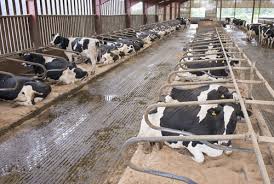
The yield potential of red clover is excellent and red clover varieties can have higher forage yields than alfalfa. Red clover is considered a short-lived legume, but new modern varieties are productive for three full seasons after establishment.

Red clover is most commonly grown for silage or pasture in Wisconsin. It is not commonly harvested and stored as dry-baled hay due to its slow drying rate. A number of research studies evaluating utilization of red clover by lactating dairy cows have recently been conducted at the University of Wisconsin, and the USDA-ARS, US Dairy Forage Research Center (DFRC). This Focus on Forage highlights findings of these research efforts.

Nutritional comparison of alfalfa and red clover for lactating dairy cows

From a nutritional standpoint, red clover and alfalfa are different types of forages that should not be considered equal. In a general sense the nutrient contents of alfalfa and red clover such as crude protein (CP; 16-22%), acid detergent fiber (ADF; 25-35%), neutral detergent fiber (NDF; 35- 45%) and mineral concentrations are similar. However, a number of major nutritional differences exist between red clover and alfalfa.

One of the big differences is that red clover contains polyphenol oxidases. These are enzymes that play a role in inhibiting plant proteases (protein degrading enzymes) and proteolysis (protein breakdown) in the silo. As a result of the action of polyphenol oxidases, red clover protein is not broken down during silage fermentation to the extent of alfalfa protein. Therefore, red clover has more undegradable protein (bypass protein = 25-35%) than alfalfa (15-25%).

In addition research has shown that when red clover and alfalfa are of similar fiber content red clover may be more digestible than alfalfa providing a more energy dense forage to the diets of lactating dairy cows.

Wisconsin studies on milk production potential of red clover

Although lactation performance has varied among trials, the analysis of seven experiments conducted at the University of Wisconsin and the US Dairy Forage Research Center comparing red clover with alfalfa shows that red clover inclusion in the diet reduced dry matter intake, and has a slight suppressing effect on milk production.

In some studies milk protein percentage was reduced when red clover replaced alfalfa in the diets of lactating dairy cows. However, when all trials were considered together there was no net effect on milk protein and fat percentages. In other experiments dry matter intake and milk production of lactating dairy cows was improved by replacing red clover with normal or brown midrib corn silage in the diet.

The magnitude of milk yield reduction in cows fed red clover as compared to other forages has been relatively small (1.0-3.0 lb/cow/day), and in some cases feed efficiency was improved.

A common observation in all lactating dairy cow experiments conducted in Wisconsin has been a reduction in feed intake when red clover was fed. The reasons for feed intake reductions in cows fed red clover based diets have not been determined. No studies have been conducted to determine the effect of feeding red clover to transition and very early lactation cows (< 60 days in milk) where the effects of reduced feed intake may be more severe.

Is red clover an inferior forage for lactating dairy cows?

No. In experiments red clover has supported very good levels of milk production, but research indicates that different diet formulation strategies may be needed when red clover forages are fed. For example, red clover has more bypass protein than alfalfa but in an experiment cows fed red clover and supplemented with a bypass protein supplement (fish meal) still had improved milk yields. In another experiment, cows fed red clover based diets containing 20.0% crude protein produced more milk than cows fed red clover based diets containing 17.5% protein.

So, despite laboratory evidence suggesting red clover may be a better protein source than alfalfa, cows fed red clover seem to respond with improved milk production to additional protein supplementation. In other experiments, feeding combinations of red clover/corn silage or red clover/brown midrib corn silage resulted in improvements in feed intake and milk production indicating that red clover/corn silage mixtures are well suited in a forage program for lactating dairy cows. In another study, feeding a combination of red clover and alfalfa that were grown and ensiled together reduced non-protein nitrogen in the silage and had positive effects on feed intake and milk production.

Do cows really have black loose manure when fed red clover?

Yes. In the past, this effect was considered to be of no important biological significance. While the reasons for black loose feces in cows fed red clover is still unknown the effect is now at least considered in the scheme of red clover utilization. For example, the effect may be related to feed intake suppression. However, a mechanism that explains the black feces and laxative effect in cows fed red clover is unavailable.

Tips for diet formulation when using red clover forages

Understanding that red clover is different than alfalfa is important when formulating diets for lactating dairy cows. Most importantly it should be remembered that feeding cows red clover based diets might limit feed intake as compared to alfalfa of similar quality. Below is a list of important diet formulation concepts to consider when feeding red clover forages.

  • Harvest and feed red clover of very high quality. Harvest recommendations are similar to alfalfa. The best forage quality and milk yield potential occurs when red clover is harvested at the late bud or early bloom stages of maturity. Delayed harvest of red clover, while showing only minor declines in laboratory assessed forage quality, has resulted in dramatic declines in milk production. Delaying harvest of the first cutting red clover can also result in severe lodging and potential rapid decline in forage quality and milk yield potential.
  • To enhance feed intake blend red clover with another forage such as alfalfa, conventional corn silage, or brown midrib corn silage.
  • Conduct complete laboratory analyses to evaluate red clover prior to feeding. Use wet chemistry laboratory methods to evaluate red clover for ADF, NDF, NDF digestibility, and protein solubility. In addition, the bypass protein content of red clover should be analyzed using NIRS techniques.
  • Use supplemental protein to maintain good milk yield when using red clover forages.
  • Red clover can be high in energy (TDN, NEL), but feed intake may be limited. Therefore, for early lactation high producing dairy cows it is advisable to maximize dietary energy using strategies such as fat supplementation or high energy grains.


Conclusion

While recent investigations have found differences between red clover and alfalfa utilization in lactating dairy cows it should be remembered that differences mainly apply to the nutrition programs for early to mid lactation dairy cows. Red clover has been and is an excellent feed for many classes of livestock including dry dairy cows, dairy heifers, dairy beef, or beef cows.


Source:uwex.edu

Heat Stress Can Cause Permanent Production Losses

An animal science professor says heat stressed dry cows can have long-term negative impacts on dairy herds.

Speaking with Brownfield at World Dairy Expo, Jeff Dahl with the University of Florida says heat stress can cause dramatic effects on a dry cow’s productivity in the following lactation, but the greatest impact is to her calf.  “When she’s heat stressed, that animal ends up being less likely to make it through her first year of life on the farm, less likely to become a productive cow on the farm and produces a lot less milk than the calf that’s dam was cooled during the dry period.”

He says heat stress starts in dairy animals at a humidity index of 68 degrees and above, and monitoring respiration rates is an easy way to determine if animals are heat stressed. Dahl says while the effects to the calf may be permanent, farmers can cool cows by using fans, soakers, shade and sand bedding.

Source: Brownfield

Think Hard About Winter Nutrition for Cows for Long-Term Benefits

Providing forage and feed supplies with the proper nutritional value for cows is an important consideration for producers as winter approaches, said Dr Jason Banta, Texas A&M AgriLife Extension Service beef cattle specialist.

Testing hay for quality can provide information producers need to meet the nutritional requirements of cows and keep them in good condition through the winter, Dr Banta said.

By determining the hay supply’s crude protein content and total digestible nutrients, or TDN, which is the measurement of available energy in the forage, producers can determine whether supplemental feed will be necessary, Dr Banta said. Knowing what type and how much supplemental feed is needed can save producers money long term.

“Sometimes we find hay is better than we thought, and we can save some money on supplementation,” he said. “At other times we find the hay wasn’t as good as we wanted, so we do need to provide our cows with some more protein and energy supplements to make sure they are in the condition we want before calving so we optimise their pregnancy rates in the future.”

Nutritional needs vary for various animals in a herd, Dr Banta said. For instance, lactating cows require more protein and TDN than dry cows.

Tested hay should show a minimum of 11-11.5 per cent crude protein and 63 per cent TDN on a dry matter basis to maintain most lactating cows, he said.

Dr Banta said producers should test each cutting and pull samples from at least 10 per cent of the bales. Bales should be picked at random whether in the field or stacked. Producers should also sample 10 per cent of each load when buying hay.

He recommends using a probe that can be inserted into the hay bale to collect a good cross section of hay for sampling.

The cost of testing hay can range from $25-$60 per sample, but Dr Banta said it’s an investment that will help producers optimise their cows’ nutrition and future breeding success.

“It may sound like a lot of money, but if we can do a better job feeding cattle, you’re going to make that money back on calves in the long-run,” he said.


Source: The Cattle Site

Cutting costs in calf raising

The U.S. dairy industry is under extreme financial pressure. Producers are analyzing every aspect of the farm business during these tough times, and calves are an expensive area of the farm. Calves have high labor requirements and feed costs with little short-term income opportunities. It is important to remember that today’s heifer calves are the milking cows in two years. It may be easy to think that you can shave costs in this area without negative impact. However, if calves are short-changed in areas that will result in increased calf loss or illness, reduced farm profitability will extend for much longer.

In evaluating where to cut costs in calf raising, first start with the basics that pay big returns. Proper colostrum management is essential to raising healthy calves. Every calf should be hand-fed 10 percent of its body weight (1 gallon for typical Holstein calf) of high-quality, clean colostrum as soon as possible after birth. Michigan State University Extension recommends a second colostrum feeding within the first 24 hours of life. The second feeding of colostrum can be of lesser quality, however still free of bacterial contamination. Colostrum delivers antibodies from the cow. Calves that receive sufficient antibodies that are absorbed into their bloodstream are said to have “passive (acquired) immunity”. By getting calves enough passive immunity through colostrum feeding, sickness will be reduced and gains will be improved. This equates to less labor, feed and drug costs.

Equipment needs for calves can be costly. While you may have to delay replacement or purchases, evaluate what you have and make modifications, clean ups or rebuilds until margins improve. Some things are necessary to replace, like worn-out esophageal tube feeders, but maybe milk replacer mixers or hutches that were planned to be replaced can be cleaned up and repaired instead.

Evaluate your milk feeding program. If you are on a high milk program, do calves drink all of the milk you offer in the first 10 days? If not, there may be an opportunity to reduce milk waste. While we want to provide all that calves will drink, especially in the first days of life, we also need to be realistic. Are calves weaned on time for your farm goals? Heifers can be weaned as soon as they are consuming adequate starter to maintain their growth, typically two to four pounds per day. Current recommendations are to begin weaning heifers at six weeks of age. According to the most recent National Animal Health Monitoring System (USDA, 2014), average age at weaning for heifers was nine weeks, and 18.9 percent of operations are weaning heifers at 13 or more weeks of age. In many operations, there is likely an opportunity to wean heifers earlier, thus saving costs, without detriment to long-term growth.

Reducing starter waste can cut calf raising costs. Calves should be given a small handful of starter to begin with on day three to five of life. Too often, calf raisers will fill the bucket up with starter and wait for the calf to finish the entire bucket before offering more. Calf starter gets stale, heats and molds when left out, reducing intake. Feeding fresh starter daily, only the amount she will clean up, will promote starter intake, resulting in a calf that is ready to be weaned sooner. If it fits into your herd health plan, starter refusals can be fed to older heifers to reduce wastage.

Now is a good time to discuss your calf and heifer herd health plan with your veterinarian to ensure that all vaccines, treatment protocols and feed additives are up-to-date. It is important not to cut out items that are beneficial to the animals, but there may be opportunities to cut something that was added in response to a specific problem in the past, or as “extra insurance” when milk price was high.

Finally, there can be some income from calves. The majority of dairy producers sell bull calves at a very young age. Evaluate the arrangement you have to sell bulls, and see if there are opportunities to receive a premium. For example, if you currently haul calves to a livestock market, can you sell calves to an individual that would pay a premium and pick up calves themselves? Can you get a premium by showing proof to the buyer that bull calves receive adequate colostrum by blood sampling calves for serum IGG or total proteins? Evaluate if you are selling bulls at the optimal age. If you have housing, labor and excess waste milk, there may be an opportunity to raise some bull calves past weaning to optimize profits. Conversely, if on-farm resources are maxed out, selling extra heifer calves preweaning may optimize labor and housing.

Calves are a large expense to the dairy operation and, with current milk prices, it is wise to evaluate every aspect of calf raising to ensure costs are under control. Work with your MSU Extension personnel, nutritionists and veterinarians to fine-tune calf raising on your farm.


Source: MSU Ext

Take a ‘Fresh’ Look at Transition Cow Nutrition

Minimizing stress during a cow’s transition period by managing the environment surrounding her is always top-of-mind. Beyond the external environment, it’s just as critical to understand how to support a fresh cow internally, through proper nutrition.

Understanding the specific nutritional needs of fresh cows gives us the opportunity to fully unlock potential milk production.

Fresh Cow Nutritional Needs

When formulating fresh cow rations, here are four insights into how you should be examining the diet differently:

1. Instead of crude protein, focus on the numbers that help manage the protein fractions in the ration. Understand the rate and extent of protein digestibility of what is available as this helps to predict how much metabolizable protein will be supplied to the fresh cow, and therefore available for milk and milk protein production.

2. Rumen function research has increased the understanding of neutral detergent fiber digestibility (NDFd) and indigestible NDF or uNDF. Forage samples should no longer be evaluated on just how much acid detergent fiber (ADF) and NDF they contain. Make sure you know the NDF digestibility at different time points and uNDF in order to more precisely evaluate the fiber’s value in the transition cow’s diet and understand the potential energy contribution of that feedstuff.

3. Starch as a percent of dry matter has been an important number in forage analysis for years. Instead of only looking at starch content, understand how degradable that starch is and how quickly it will ferment in the rumen. This is especially important for fresh cows because of their low dry matter intake. They need a certain amount of starch and fiber to manage glucose demand and stay healthy, so it is important to include more quickly degradable starches.

4. Cows need to have the right balance of the different types of fatty acids in their diet to manage energy balance and milk fat production. Research has shown that Omega 3 fatty acids fed to fresh cows can increase milk production.

By having a better understanding of the nutrition they need, we can get fresh cows off to a good start and optimize cow health and performance.

Source: Purina

Can you be the hired man again?

One of the tricks of a great farm succession is the ability of the founder to let go of management, and ultimately ownership. There are many 60 something and 70 something farm dads on the bald prairie that just don’t know how to change from being the main manager to “the hired man.”  I know hired man is not the politically correct term,  I should say “employee”.  Employees make a wage, and I don’t know if Dad is getting a paycheque!


When you started farming for your dad you were labour, then you gained skill to manage, and then you took over the operation by buying shares, or land, or assets.

Now at age 67 or 72 you are wanting to step back,  and only work when you feel like it. You are again the labour component.

Do you take instruction well ?

Can you be self-motivating ?

Will you have a learner mindset, instead of a judger mindset if your son does things differently than you would ?

Do you have interests outside of your role on the farm ?

Are you paying attention to what your wife needs now ?

Some farmers don’t have a clue how to see something from another’s perspective. They are strong- minded talented entrepreneurs who are used to calling the shots. Now may be the time to do some thinking on the back deck about what you really want your life on the farm to look like. Are there plans for travel and recreation?

Do you have your personal finances in order ? Are you cherishing your marriage?

Do the far away grandkids get many chances to see you ?

Everyone wants to be loved and be needed. Lack of appreciation is a big stumbling block to successful farm transfers. Don’t wait until Father’s day to be appreciated.

Let the folks on your farm team  know the struggles and fears you are having about being useful in your old age.  If you are a “grumpy old man” they will know by your behaviour that something isn’t right, and you are obviously not happy.

By the way, you are not old, you are  “young-old” if you are still active. You really need to create fun things and purpose for the next 2 decades of your life.

Don’t put off having fun, as health may change, and you have the time and finances now to explore creative ventures.

Find some great causes to volunteer for. Mentor a younger farmer if you have sold your farm. Adopt grandkids who need grandparent influence in their lives. Ask your local town if they need a talented re-invented farmer to fix, maintain, and go for coffee.

Let your farming adult children make mistakes and grow the business the way they want to. You can be a source of wisdom and experience as you make sure you are perceived as helpful, and not interfering. Ask if you can partake in the family business meetings, so that you feel in the loop of communication.

Ask yourself what you want your legacy to be. I hope that when I am 65 I can be encouraging the next generation, help do yardwork, play with grandchildren, volunteer fully in my town, and enjoy some short term mission work with MEDA, Mennonite Economic Development Associates ( www.meda.org) where they use economic development to alleviate poverty.

Can you be the hired man again?

Test it out. Talk about what is working and what isn’t. Teach the next generation with courtesy and respect for their talents.

I would be deeply honoured to hear your story. We all need role models to look up to and encourage us to succeed in new, creative ways. Elderhood is not a highly respected role in our society, but one by one, we can change that perception.

All the best as you labour in love.

Source: Elaine Froese

Send this to a friend