







On a dairy farm, delivering a calf is a normal, healthy process. But, if the health of the cow and calf are to be assured, all that normality cannot be left to nature. Poor preparation, unsanitary conditions, and unidentified problems can result in weak or dead calves or injured and sick cows. Calvings are one of those dairy journeys where the road to hell can be paved with good intentions. All the good intentions in the world won’t make up for poor training, inadequate observation or badly executed assistance.
KNOWLEDGEABLE TEAM: Must recognize risks and potential problems
How your employees deal with cows and heifers that are in labor is one of the most important things you must prepare them to handle well. There can be many problems that can arise during a delivery, but the first step is to avoid assisting when assistance is not actually needed. Cows will deliver without any assistance 70% of the time. Even 50% of heifers will do that. From that basic understanding, the team needs to be well versed in recognizing an abnormal or difficult delivery. Patience and training can tip the process toward success and make sure that nothing staff does contribute to the injury or death of the animals involved. Knowing if the service sire is rated easy or difficult for calving ease is often another very useful piece of information. As well, it is increasingly helpful to know the dam’s sire’s rating for maternal calving ease.
PROPERLY TRAINED: Correctly Identify the Stages of Calving Training
There is heightened attention on farm, whenever a calving is about to happen. Rather than anticipating the worst, calving teams must learn how to work with the calving instead of against it. It starts with recognition of the signs of parturition. But it doesn’t stop there. Every stage in the calving process must be handled well in order to reduce negative outcomes ranging from stillbirths to inflammation of the uterus (metritis). Improper management of calving always has a negative impact on the health of your cows and calves. Of course, there is a correspondingly negative impact on the financial success of the dairy as well. Accepting a 505 calf death loss or a 10% slow down in recovery should never be acceptable. As dairy farms become larger and new staff originate from non-bovine backgrounds, a trained team is a dairy operation necessity.
USE TECHNOLOGY: Observation and Monitoring are Indispensable
Even the best training program won’t be effective if the dairy staff doesn’t put what they know into action. Not being attentive enough to catch the calving signals, whether they are early, on time or overdue, is a costly mistake. This is one place where modern technology can be a very useful tool in the close-up pen. Tools have been developed to monitor rumination and activity. A cow commonly decreases feed intake before calving and monitoring rumination can signal calving. As well, a cow may show more up and down movement as she moves toward calving and then, no movement, as she starts into final labor. By using video monitoring, producers can be much more thorough in their calving preparation. Multiple members of staff can view from different locations using cellphones or computers. The entire process is less intrusive on the cows and, provided the proper viewing angles are available; technology makes it easier to keep track of the stages of labor.
MANAGE EACH STAGE: Recognize. Assess. Act.
Be ready for the start of calving. Typically, cows go into labor on approximately the 280th day of gestation. Make sure your records are accurate and giving you the best information on which animals are ready to begin the process.
STAGE ONE: Pre-calving Preparation
Stage one coincides with the calf moving into position, and the cervix begins to dilate. Observable signs are frequent changes from standing to lying down, raised tail head, vocalization, increased urination and defecation, full udder and mucus discharge. Typically stage one lasts for two to six hours. If there has not been any progress in four hours, then the cow should be examined.
STAGE TWO: Calf is Born
In stage two labor, the cow or heifer is fully dilated, and the calf is born. Normal presentation is front feet first with the head between the knees and shoulders. Any other presentation is a signal that assistance is needed. Stage two normally can last from 30 minutes to 2 hours.
STAGE THREE: Passing of the Afterbirth
In stage three labor, the placenta is expelled eight to 12 hours post-calving. If it takes more than 24 hours, it is considered a retained placenta and a veterinarian should be contacted. Years ago it was considered necessary to manually remove the attached membranes. Modern best practices have shown that his can be detrimental to uterine health and could have a negative impact on future conception rates.
SIX CRUCIAL SKILLS YOUR CALVING TEAM MUST HAVE
At this point we have looked at what you see and what you know. These are vital skills but the rubber really hits the road with what you “DO.” When everything goes smoothly, there is nothing more beautiful than welcoming a healthy calf onto your dairy operation. But, as we all know, there are many things that can go wrong and the skills needed to respond to those challenges are the ones that will determine the success or failure of your calvings.
SKILL 1: VAGINAL EXAMINATION
Early in the labor process, a skilled person should examine the cow to determine if there is a need to correct an abnormal position or if assistance will be needed. There are exceptional practitioners who are skilled in distinguishing between front or rear legs. Employees can gain valuable experience in how to reposition a calf by learning from a veterinarian or skilled independent consultant.
SKILL 2: ASSISTING LABOR
Knowing how and when to assist a cow is one of the most important SOPs (Standard Operating Protocol).
Assistance may be needed if:
- The cow is straining, but no part of the calf is showing after two hours.
- The feet and/or nose are showing, but the calf is not delivered after two hours.
- Rest periods between laboring are lasting more than 20 minutes.
- The cow or calf is showing signs of stress or fatigue.
SKILL 3: USE OF CHAINS OR STRAPS
Assistance in these situations may require proper placement of chains or straps. This should always be done in a manner that does not cause injury to the calf.
Important considerations are:
- Calf jacks and manual extraction can easily exceed 600 pounds of force and break leg bones or vertebra or permanently injure the cow.
- Sterile chains and straps are best, but they should at a minimum be thoroughly cleaned and disinfected between uses.
- Farms that do not have proper equipment should contact a veterinarian for proper assistance.
- Improvising, such as using twine, can result in injury to the calf.
SKILL 4: Know the Right Person to Call
Contact your veterinarian if you cannot assess what is wrong during a delivery, you do not know how to correct something or if you have been assisting for more than 30 minutes and have not yet made any progress. If you find yourself in a situation that is beyond your capabilities, do not hesitate to seek help. Make sure you and your team are prepared with contact information for a veterinarian or someone with more calving experience than you have. A little research and taking the time to have them provide necessary training is well worth it.
SKILL 5: Proper Moving of Cows
Moving cows when they are in labor can have a major detrimental impact according to recent research. “When cows were moved during late stage one labor, they had 40 minutes longer stage two labor and spent 50 percent less time lying down,” “This longer stage two labor was associated with increased inflammation post-calving, and in other studies, it has been associated with stillbirths and dystocia [difficulty calving].”
Moving cows early in stage one labor typically does not have an impact on calving time. Closely monitoring close-up pens is very important, as is moving cows calmly during active signs of labor.
SKILL 6: Proper Assistance to Prevent Metritis.
Metritis is an inflammation of the uterus, caused by a bacterial infection, following calving. It most commonly occurs after difficult calvings, retained placenta, twins or stillbirths. Metritis can range from mild to severe and includes symptoms such as a fever, a foul uterine discharge, depressed attitude and decreased appetite. Metritis can result in lower feed consumption, decreased milk production, increase days to conception and increased services per conception, leading to longer calving intervals and higher breeding costs. Fertility can be affected and result in a higher culling rate. Even mild cases can cost producers up to 350 dollars from these losses in milk production and cow health.
The Bullvine Bottom Line
The process of delivering a calf is a natural one. That said, this is not the place to leave everything to nature. Proper preparation, planning, and training is necessary for everyone on the calving team. At every stage, they must thoroughly monitor, assist, record and provide optimal care. The goal is to create a safe and healthy environment that supports the best health of the cow and the arrival of her healthy newborn calf. Know it. See it. Do it.

Get original “Bullvine” content sent straight to your email inbox for free.
[related-posts-thumbnails]
 The European Medicines Agency (EMA) has published today the sixth report on the sales of veterinary antibiotics in Europe, highlighting a continuing downward trend between 2011 and 2014.
 Water is essential to raising healthy calves and must be provided separate from milk from an early age.
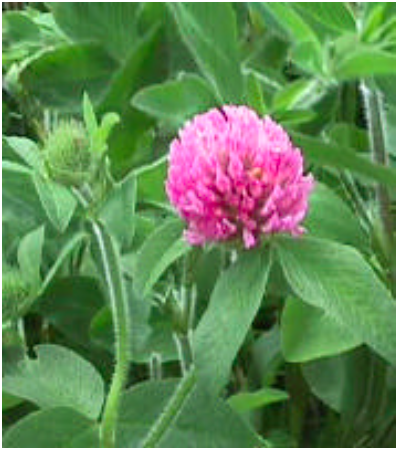 Red clover is a legume that is well adapted to poorly drained soils and more tolerant of lower soil pH and fertility than alfalfa.
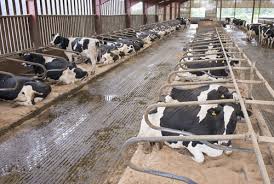 An animal science professor says heat stressed dry cows can have long-term negative impacts on dairy herds.
 Providing forage and feed supplies with the proper nutritional value for cows is an important consideration for producers as winter approaches, said Dr Jason Banta, Texas A&M AgriLife Extension Service beef cattle specialist.
 Minimizing stress during a cow’s transition period by managing the environment surrounding her is always top-of-mind. Beyond the external environment, it’s just as critical to understand how to support a fresh cow internally, through proper nutrition.
 One of the tricks of a great farm succession is the ability of the founder to let go of management, and ultimately ownership. There are many 60 something and 70 something farm dads on the bald prairie that just don’t know how to change from being the main manager to “the hired man.” I know hired man is not the politically correct term, I should say “employee”. Employees make a wage, and I don’t know if Dad is getting a paycheque!
 Despite improvements in milk quality management, mastitis continues to challenge herd health and dairies’ profitability goals. Mastitis is the most costly disease in U.S. dairy herds, costing producers $155-224 for each mastitis case and a significant increase in the risk of culling.1,2,3 It has been estimated to cost the dairy industry over $1 billion per year.
 This is National Farm Safety and Health Week. In light of the recent deaths caused by manure gases in central Wisconsin, John Shutske, PhD of the University of Wisconsin-Madison has issued five things farmers should know about deadly manure gases.
 Cows are suffering and dying from bovine anaemia because farmers are being denied access to a drug which has been approved in at least 20 countries, dairy owners and a veterinary doctor in eastern Victoria say.
 ANALYSIS – Dr Pamela Ruegg, extension milk quality veterinarian for the University of Wisconsin-Madison, speaks about new concepts in the use of dry cow therapy, especially the concept of selective dry cow therapy
 UK – The UK’s government has pledged to continue the fight against antimicrobial resistance to drugs by working together with other countries to create a global strategy to tackle the problem and investing in research to find new antibiotic substances.
 UK – Plans to engage with younger dairy farmers have been unveiled by the National Farmers Union NFU with the launch of its new Dairy Development Group.
 Cows that have a compromised or poorly functioning immune system are more prone to illness in early lactation than at any other time in the production cycle, with immunity dipping by up to 40% during the transition period.
 Jersey calves are gaining popularity across dairy and calf raising operations in many parts of the country. Similar to all calves, the first 60 days of a Jersey’s life is critical to the future of their performance. But Jerseys have the following unique characteristics that raisers should keep in mind to help optimize their lifetime potential.
 COMMAND CENTER
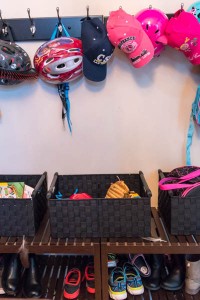 CONTROL CENTER
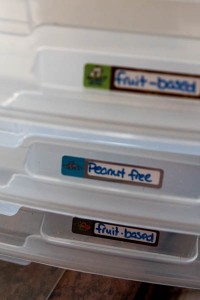 THE LUNCH CENTER
 The Dairy Farmer, Gianantonio Locatelli climbed up the steel ladder and peered over the brim of a large corrugated vat, about the size of a very deep above-ground swimming pool. “It’s full!” he exclaimed, with warbling joy. “It’s beautiful!”
 Maximizing dry matter intake (DMI) is essential in allowing dairy cows to perform to their potential. Cows need to eat the ration as formulated, in the quantity required for their production level, and in a manner that ensures a healthy rumen.
 More dairy farms are using technology originally developed for municipal waste treatment systems.
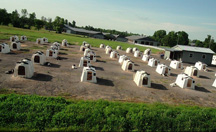 With funding from the farmer-driven Northern New York Agricultural Development Program, a project is underway to evaluate ways that dairy farmers can manage calf nutrition to reduce the impact of heat stress on the young animals. According to Ohio State University and the University of Illinois, the economic impact of heat stress can result in annual losses of $253,000 with dairy animals up to 1 year of age in New York State.
![hay_fire_1410543471829_7976841_ver1.0_640_480[1]](https://www.thebullvine.com/wp-content/uploads/2016/08/hay_fire_1410543471829_7976841_ver1.0_640_4801-300x225.jpg) This week’s high temperatures are a concern for livestock and forage producers. It is very important to remember what to do in order to avoid major damage to our production and stored forages.
This week’s high temperatures are a concern for livestock and forage producers. It is very important to remember what to do in order to avoid major damage to our production and stored forages. As technology improves, larger dairies are beginning to transition to robotic milking. An upcoming installation in Ancali, Chile will contain





