Sandy Chen, senior dairy analyst at the bank, said just a 1 per cent decrease in annual total dairy demand would lead to a 11 per cent decline in dairy imports, our sensitivity analysis shows.
Mr Chen said: “A five per cent year-on-year reduction in total dairy demand would lead to dairy imports falling 25 per cent in 2020.”
Restrictions on movement was hitting demand in food service outlets and the distribution of goods, with reports showing restocking was not taking place.
“This is causing disruptions to inter-provincial logistics around China and even within provinces, affecting raw milk shipments in various regions,” he added.
“Small and medium-sized farms appear to be more impacted than large farms, leading to some milk dumping.”
Mr Chen said the downturn in Chinese dairy demand could prompt a global shift away from the production of cheese, butter and cream into whole milk powder, increasing global supply of the commodity and reducing values.
Meanwhile, restocking of the Chinese pig industry following the African swine fever outbreak was continuing but at a slower pace than previously expected.
“Currently, restocking efforts are still ongoing and are largely being driven by large companies,” Chenjun Pan of Rabobank told Farmers Guardian’s sister news service Feedinfo.
“The amount of damage to the industry really depends on how long the coronavirus spread can be contained.
“If the turning point could be hit in the next few days, then I would say the impact on the pork industry could still be quite limited.
“But if the virus continues to spread and impact the country in the next month, even until April, then I would say that the impact could be quite significant.”
It is with great sadness that the family of Marcia F. Molesworth (Kepler) announces her passing on Sunday, February 16, 2020, at the age of 63.
Marcia will forever be remembered by her daughter, Heather (Ben) Rudman, and her grandson, Connor. Marcia is survived by her siblings, Richard (Patti) Kepler, Brenda (Robert) Feazell; nieces, Stephanie and Ashley; nephew, Matthew; and great-niece, Carly. She is also survived by her longtime partner, Wayne Stiles, and the Stiles and Heath families. She was predeceased in death by her parents, William and Frances Kepler.
Marcia retired from the National Institutes of Health as a computer specialist after over 40 years of service. She lived life to the fullest through simple pleasures — being with friends and family, cooking amazing meals for others, and helping anyone in need, but her most treasured times were spent with Connor, the grandson she adored. She was also very much looking forward to meeting her new grandson, Emmett.
Marcia belonged to many organizations and took leading roles in the Middletown Valley 4-H Dairy Club, Maryland Dairy Shrine, Maryland Jersey Cattle Club, Frederick County Dairy Advisory Committee, and the Maryland Purebred Dairy Cattle Association among others. She also served as 4-H Dairy Cattle Superintendent at the Great Frederick Fair for many years. She was always ready to take on new projects and volunteer her time.
Marcia was a longtime member of the Harmony Community Lutheran Church where she formerly sang in the choir. She will be deeply missed by her friends, family, and all that knew her.
The family will receive friends from 2 to 4 and 6 to 8 p.m. Thursday, February 27, 2020 at the Donald B. Thompson Funeral Home, 31 East Main Street, Middletown, MD. Funeral services will be held at 11 a.m. Friday, February 28, 2020 at Middletown Zion Lutheran Church, 107 W. Main St., Middletown. Interment will be in the Zion Lutheran Church Cemetery.
In lieu of flowers, contributions may be made in her memory to the Living Legacy Foundation of Maryland, which supports organ and tissue donation at www.thellf.org; or to the Marcia Molesworth Memorial Scholarship Fund, which is being established in her memory c/o Heather Rudman.
Everyone at The Bullvine would like to send our deepest condolences and thoughts to the family and friends of Marcia Molesworth.
Now that the United States-Mexico-Canada-Agreement (USMCA) has been officially approved by the U.S. and Mexico, Canada is the next signatory that needs to do so before final enactment. But the new accord still has a complicated process ahead of it.
After the U.S. Senate approved the USMCA, the last obstacle to its ratification in the U.S. after a lengthy negotiating process, Prime Minister Justin Trudeau reiterated his commitment to getting the agreement, called the Canada-United States-Mexico Agreement (CUSMA) in Canada, passed during his time in office. The three member countries approved the agreement back in December before their respective ratification processes.
However, Trudeau’s Liberal Party lost 20 Parliamentary seats in the October federal elections, though they won enough seats to form a minority government. That means the Liberals must work in collaboration with fellow parties to agree on the North American Free Trade Agreement (NAFTA) replacement.
This week, the New Democratic Party (NDP) in the Canadian House of Representatives (where CUSMA currently sits with the Standing Committee on International Trade) agreed to work with the Liberals on expediting the passage of Bill C-4, which would officially put CUSMA into force, in exchange for hashing out new procedures on how Canada negotiates trade deals in the future.
Justin Trudeau
✔@JustinTrudeau
Workers across the country, like those I met at ABC Technologies in Brampton today, keep our economy strong & growing. The new NAFTA means they can feel more confident about their jobs because it removes the threat of auto tariffs & protects our supply chains.
The fully ratified agreement will take effect on the first day of the third month after all three countries’ approval.
Deputy Prime Minister Chrystia Freeland introduced Bill C-4 on Jan. 29. For almost two years, she spearheaded Canada’s trade negotiations for the revamped NAFTA. “It is in the national interest for us to finish this process, to put this process behind us, to have the economic and political certainty that ratification will bring,” she said the same day outside the House of Commons in Ottawa. “But I am far from thinking that the debate we’re hearing in the House now, the discussions we’ll hear in committee, are pointless.”
Chrystia Freeland
✔@cafreeland
This morning in @OurCommons, I introduced a Ways and Means Motion for the new #NAFTA. I ask that all parliamentarians work together to put Canada and Canadians first, and get this important work done without undue delay. #CdnPoli
Opposition in Parliament, including from those in the Bloc Québécois (dedicated to Quebec nationalism and sovereignty), have raised objections to the agreement, particularly in the area of labor protections. Bloc Québécois is especially concerned that the Quebec aluminum market is not sufficiently protected by the agreement, which they say could result in the loss of tens of thousands of jobs in that industry.
After witnesses have had their say before the Foreign Affairs and International Trade Committee, the CUSMA will be considered “clause by clause” and voted on. It then goes back for final readings in the House and Senate and must be approved by both before it can receive royal assent by Governor General Julie Payette before being officially approved.
However, with this week’s deal worked out between the Liberals and the NDP, the “clause by clause” process will be finished by the end of February. CUSMA will then be sent back to the House for a vote by early March.
Dan Ujczo, international trade and customs lawyer with cross-border firm Dickinson Wright, told ASI Canada he expects there will be a vote in the House in about a month, followed by the Senate. While the trade deal negotiation agreement made this week between the Liberals and NDP guarantees passage in the House, “the Senate is a bit of a wildcard, but it’s a matter of when, not if,” he said.
Ujczo expects the agreement to be officially ratified between mid-March and early April, taking into account the Senate’s approval process and March break and holidays. “The USMCA will be fully in force sometime between Fourth of July Picnics and Labor Day,” said Ujczo.
The Canadian promotional products industry is particularly eager for final ratification and to move on with more economic and trade certainty after several years of cross-border wrangling and delays. “The signing will remove a huge level of uncertainty, which is never welcome in a stable, flourishing economy,” Daniel Baker, marketing manager at Toronto-based Debco (asi/48885), part of HPG (asi/61966), told ASI Canada. “That’s particularly true when those two countries are as intricately linked as the U.S. and Canada.”
While the new agreement may not have huge impacts on daily operations for promo firms, the ambiguity surrounding it over the past several years has certainly had an effect. “The time between the suspension of NAFTA and now came with a slew of emergency procedural changes for us, like temporary tariff calculations and temporary stock suspensions, that increased costs and affected efficiencies to the benefit of no one, especially U.S. distributors,” Baker said. “The negotiations probably cost our American distributor partners more than they gained, which is the exact opposite effect the Trump administration was looking for.”
Dairy State Cheese in Rudolph, Wis. Jan. 30, 2020. (WSAW)
The man accused of defrauding 83 farmers is scheduled to reach a plea deal in the case in April 20.
Last month, the Attorney General filed criminal charges against Michael Moran– the owner of Dairy State Cheese Company in Rudolph for taking money belonging to farmers.
The complaint alleges that Moran forged the names of farmers on underpayment checks and converted the funds for his own use or the use of others.
The attorney for Dairy State Cheese Company told NewsChannel 7 last month, the corporate structure of the business has been restructured and steps have been taken to ensure that nothing like this happens again.
“Mike is no longer president. He’s no longer on the board of directors. You know, anything to do with the direction of the company. And we further understand that in connection with the DOJ’s action, that anybody who incurred losses will be compensated,” attorney Stew Etten said.
Processors, such as cheese plants, write underpayment checks to producers, such as dairy farmers, when the U.S. Department of Agriculture sets the price of milk higher than what a processor initially paid for the milk. USDA auditors determine the amount of underpayment and order processors to issue the underpayment checks.
A witness reported to the USDA that Moran would never send out the check to the milk producers. According to court documents, the witness said after the auditor would leave, Moran would forge the payees’ signatures on the back of the checks and place them in the cash register at the cheese store. The checks would then be taken to the bank at the end of the week.
“The company’s obviously saddened by the allegations against the former President Mike Moran. He had given his whole life to the business and the surrounding community,” explained Etten.
The witness told investigators Moran said, “I’ve been doing this for many years and the Federal Order auditors have never caught on to this.”
Investigators identified 83 victims from January 2012 to April 2018. Twenty-one alleged victims are over the age of 60. The amount lost is believed to be $21,250.97.
A criminal charge of theft was filed Jan. 28 in Wood County. The USDA received its first complaint in February 2017.
Moran also waived his right to a preliminary hearing Monday.
President Donald Trump suggested on Twitter that he would give more bailout payments to farmers this year as they wait for trade deals to boost agricultural exports. According to Politico, the president’s dangling of extra bailout money stands in contrast to his recent boasts that farmers should start buying more land and “bigger tractors” to keep up with the historic boom that he promised his new trade agreements would deliver.
“If our formally targeted farmers need additional aid until such time as the trade deals with China, Mexico, Canada and others fully kick in, that aid will be provided by the federal government,” Trump tweeted in all-caps. He also added, erroneously, that the money for the aid would come from tariffs his administration has slapped on billions of dollars of imported goods. Economists have shown that U.S. businesses and consumers are paying those duties, rather than China.
Additional aid could also draw some criticism from Democrats in Congress who have questioned the fairness of how the funding is distributed geographically and among commodity sectors.
The Agriculture Department has already paid farmers more than $23 billion to offset their financial losses under Trump’s trade war since 2018, on top of other tariff relief measures like commodity purchases and marketing assistance.
Secretary Sonny Perdue has repeatedly said farmers should not expect another round of aid for 2020, now that the U.S. and China have reached a deal to boost American farm exports.
“I would not anticipate it,” Perdue said Thursday at USDA’s annual Agricultural Outlook Forum in Arlington, Va. Farmers have “got to farm for the market and what it’s telling them and what their capabilities are from a production perspective.”
Trump’s latest comments caught the department off-guard, Politico reports.
“The president’s tweet was a surprise to us,” Ted McKinney, USDA undersecretary for trade and foreign agricultural affairs, said Friday at the conference. When asked about the USDA’s opinion on more payouts to farmers, McKinney noted that the president “will make that decision, and we’ll go with that decision.”
“Right now though, we are [going] full out to make and take advantage of the agreements we already have,” McKinney added, noting that both the department and the farmers would prefer to see “trade not aid.”
The department on Thursday projected that farm exports to China would total $14 billion this year, up from $10 billion in fiscal 2019. That estimate was far short of the $40 billion in U.S. farm goods that Beijing agreed to purchase under the phase one trade deal that took effect last week. Perdue said the planned increase in Chinese purchases was not fully factored into USDA’s export forecast.
Amid reports that the visit of US President Donald Trump will be an occasion to ask India to open itself to dairy (and poultry) imports from the US, a long-standing US demand, it is good to look at the global and notably the US dairy industry and its practices. The US has had a thriving dairy industry that traditionally focused on its domestic market. This changed in the early 2000s. In the decade from 2004 to 2014, for example, US dairy exports grew four-fold, from $1.6 billion to almost $6.8 billion, according to the US Department of Agriculture (USDA), riding on free trade agreements and opening up of world markets. This made the US the world’s third-largest dairy product exporter, behind New Zealand and the European Union (EU). But the story took a turn in 2015, when US dairy exports fell by almost 30% for a variety of reasons. Among them was a Russian ban on dairy imports and changes in milk supply quotas in the EU. As the USDA put it: “The US dairy industry will be challenged to increase market share in the years to come.”
The challenges continue to this day. For example, skimmed milk powder (SMP), which is among the top two products of dairy exports from the US (the other being cheese) faced some resistance in 2019. A USDA circular notes that SMP “faced strong competition in the global market that, coupled with retaliatory tariffs imposed by several major importing countries, undercut shipments.”
Access to the vast Indian market is therefore an important concession that the US would look to push for. However, they pose many unique problems for India, the first of which is that Indians have a special relationship with milk as food, seen as not only wholesome nourishment for children and adults alike but much more. Milk is also used to celebrate many Indian festivals, as offering to gods, an important part of the tradition of temple foods, used in ‘mithai’ and ‘prasad’, going all the way to a long tradition that celebrates stories of Lord Krishna, the ‘maakhan chor’, who feasted on butter, milk and cream.
Milk therefore has an air of “purity” in the hierarchy of India’s preferred food choices. India remains the world’s largest producer and consumer of milk. This is not to speak of ‘Amul’ being among the most loved Indian brands, so much so that many attempts by multinational competition to seize its leadership position have failed repeatedly.
It is not that Indian milk is wholesome today. Like a large part of our chemicalised food chain, milk in India from various sources also has dangerously high levels of chemicals that should have no place in the food supply chain. Further, there is the problem of ‘synthetic milk’, which is “an artificial imitation of natural milk with a high degree of adulteration (“pulverised detergent or soap, sodium-hydroxide, vegetable oil, salt and urea,” according to a paper published in Gujarat) to increase the volume of milk and thereby the profit.” The response has been a booming business in organic milk, priced often at Rs 100 and more a litre, which is more than double the rates of other (non-synthetic) milk.
But milk from the US has very different problems that will make it unacceptable to many consumers in India. It is milk from an industrialised system of large farms where cows are used as nothing more than milk-producing machines, kept in tight spaces, artificially inseminated to produce calves in quick succession so that they continue to lactate, with the young snatched from them in a few days. Images and videos of mothers crying for their calves are not uncommon. The female calves will go on to lead this exact life till their yield reduces and they are sent for slaughter; the male calves are slaughtered in a few months for producing veal. The blood and remains of the cows that die in this horrific cycle are often fed to the calves under a system that, in sum, delivers industrial efficiency and optimum production at the cost of unending misery and unimaginable pain to the cows.
The cruelty of the global dairy industry has been well documented, but it has moved very little in practices on the farm. The very idea of “blood meals,” or remains and parts of animals fed to milk-producing herbivores to reduce costs and maximise yield, is in many ways nauseating but has been standard practice across the West and particularly in the US.
After the mad cow disease, there were some restrictions but “blood meals” are still a part of the cow’s diet in industrialised dairy farming. The entire approach revolts against nature, is highly distressing to hear of but has been a part of standard operating practice for years and is said to be one cause of the mad cow disease. Consider this line from the New York Times of 2014: “For years, calves have been fed cow’s blood instead of milk…” Milk, the wholesome food to the Indian mind, becomes in industrialised dairy farming a picture not of natural goodness but of the enormous human capacity for immorality, cruelty and exploitation at its worst.
This milk must not be allowed to arrive on Indian shores, whatever the Modi-Trump combine may want. The opposition can take many forms – religious, as the RSS may seek; moral, as any humane and sane thinking person would seek; environmental, as millions of green campaigners would seek; on health grounds, as people who see milk as vegetarian would seek; or from animal rights groups, who will not stand for practices that inflict pain on animals so that we can eat butter on our toast, and wash it down with a glass of milk.
The message to the Trump administration should be swift, clean and clear. US milk shall not be allowed into India. We should back up the position on US milk with strong regulation on practices in the Indian dairy industry, which is not far behind the US in its practices and standards of operation.
Wisconsin experts disagree on how the sale of the nation’s largest milk processing company will impact the dairy industry.
Dairy Farmers of America (DFA), a national milk marketing cooperative, announced in a press release this week that it had reached an agreement to purchase “a substantial portion” of Dean Foods’ assets and business. Dean Foods filed for bankruptcy in November, citing the impact of continued declines in milk consumption.
DFA said in the press release it had agreed to purchase 44 of the company’s facilities and the associated store delivery system for $425 million.
“As Dean is the largest dairy processor in the country and a significant customer of DFA, it is important to ensure continued secure markets for our members’ milk and minimal disruption to the U.S. dairy industry,” said DFA President Rick Smith in the press release.
But Peter Carstensen, professor emeritus from the University of Wisconsin-Madison Law School, said the deal could end up hurting dairy farmers by giving DFA too much power over the market.
“We’re going to see, if this merger goes through, a very, very dominant milk handler, which will give you enormous power over dairy farmers,” Carstensen said. “There are some farmers who really admire DFA and feel it’s done well by them. But for many other farmers, it’s going to put them at risk because they’re going to have no other outlet for their milk.”
Carstensen said the cooperative could decide to lower what they pay farmers to keep their processing costs down or they could raise their pay price to drive other milk processing companies out of business.
He said the consolidation could drive other milk processors to try to get bigger in order to compete.
“This is not efficiency, this is not trying to find a better way to process milk,” Carstensen said, “It’s all about trying to manipulate the market to make more money for the processor.”
Mark Stephenson, director of dairy policy analysis at UW-Madison, disagrees. He said DFA has been criticized in the past for controlling much of the processing capacity in certain regions of the country, making it harder for non-member farmers to sell their milk.
“I think the concern would be whether there’s a handful of producers, you know, who may ultimately have problems,” Stephenson said. “I’m not sure that I feel that that’s warranted yet. We don’t necessarily know that DFA would behave badly under this circumstance.”
Stephenson also pointed out that the purchase isn’t a merger of two healthy companies, but is a deal for a company facing bankruptcy.
“It’s my understanding that DFA is considered to be what they call a stalking horse bidder, which means that they’ve put out the first bid in the process out here. It’s not to say that it’s the only one, but it kind of tests the marketplace for the value of the company,” Stephenson said.
Stephenson said other beverage milk processors could want some of the plants, especially regionally operated companies that are close to the Dean plant. He said foreign investors could be interested in getting into the U.S. dairy market.
“But there are probably relatively few buyers who could or would be interested in buying the whole thing. That’s a big bite to take,” Stephenson said.
Dean Foods has one milk processing plant in De Pere and Stephenson said some Wisconsin farmers ship their milk to other Dean plants in northern Illinois.
But he said Wisconsin’s dairy industry likely won’t be impacted because the beverage milk market has a small presence in the state.
“I think the impact to dairy producers in this area is likely to be almost insignificant,” Stephenson said.
But Carstensen said Wisconsin consumers could feel the impact. He said fewer competitors in the beverage milk industry will mean less competitive milk prices.
This week, James Warden (25) and Arkadiusz Swiebodzinski (26) were allowed to walk free from court after being found guilty of invading a farm in Western Australia and stealing a calf.
The pair pleaded not guilty to charges of stealing and aggravated burglary at the White Rocks farm near Brunswick, Western Australia in October 2018, but were both deemed to be guilty by the magistrate.
Warden received a 12-month suspended sentence while Swiebodzinski was fined $5,000. The magistrate stated that a line between animal activism and criminality had been crossed.
“Actions speak louder than words,” National Farmers’ Federation President Fiona Simson said.
Until serious punishments such as custodial sentences are introduced, there will continue to be a minority of extremists who think they have a right to invade and terrorise farmers on their own property.
Fiona Simson, NFF President
“Farmers are rightfully concerned about the fact that their farms can be invaded in the dead of night and streamed live on the internet and that offenders are able to walk away with a slap on the wrist,” Ms Simson said.
“We’re talking about private property, often a stones’ throw from family homes where farmers and their families are sleeping.
“This is not just a matter of basic privacy. These intruders are placing the biosecurity of our farms and the welfare of our animals at risk.”
Map targets grain and cotton growers
Also, this week The Weekly Times revealed that a little-known anti-GM map was live and contained the personal information of grain and cotton growers from all across the country.
The website was created back in 2008 by activist organisation, Gene Ethics, who describe themselves as an anti-GM group.
Alarmingly, 12 years on from the site’s inception, the map remains live and is being updated yearly in hopes of ‘exposing’ Australian farmers growing GM crops.
The news of the website came as further disappointment to farmers given that many are still calling on Government to take the damaging Aussie Farms map down and farmers in South Australia still battling for the right to produce GM crops.
GrainGrowers Chairman Brett Hosking said that the organisation was aware of the map being online but that they would prefer to have open conversations with the community about the work behind genetically modified crops.
“It’s important growers, customers and the community are able to have conversations about the ways and whys of farming and how food is produced so that we are better able to understand each other’s expectations and choices,” Mr Hosking said.
“We welcome opportunities to talk about grain farming in Australia and think that’s more useful than a one-sided map.”
And on the ninth day, God looked down on his planned paradise and said, “I need someone to have a kind heart full of compassion and a spirit as free as a wild mustang and as old as time.” So, God made a farmer’s daughter.
God said I need somebody to sit on the armrest of the tractor while her father runs the disc, get up before school to feed the animals and listen to her teachers’ lessons, bring the cattle in from pasture, help her mother cook supper and then go to town to her high school FFA meeting and stay up past midnight working on homework. So, God made a farmer’s daughter.
I need somebody with a strong mind and gentle soul. Strong enough to hold a kicking calf to tag, yet gentle enough to calm a heifer delivering her first baby and get it to nurse. Somebody to call in cattle by yelling “boss,” lighten the mood between tired farm hands after a long day, come home to hug her mother and help with her siblings and set the table and clean the dishes. So God made a farmer’s daughter.
God said “I need somebody who gets knocked down by a horse and stands up, dusts off the dirt from her jeans and the tear from her eye and climbs back in the saddle. Someone to return to the field after school to plant seeds, drive from field to field with only a farmer’s driving permit and a phone book to sit on. And who, during harvest season, will sacrifice nights out with friends and days by the pool to help her dad cut crops, sweep out grain bins in triple-digit heat, deliver meals to the field, and finish a forty hour week by Tuesday noon. So, God made a farmer’s daughter.
God had to have somebody patient enough to halter break a new colt and spend countless hours training a show steer for months to prepare for the county show, and still be understanding enough to accept the way of life as she loads him into the buyer’s trailer, gives him one last pet, and wipe the tears off her face as she watches the headlights disappear down the road. So, God made a farmer’s daughter.
God said, “I need somebody strong enough to build a fence, heave bales and yet gentle enough to tame lambs and wean pigs and tend to the calf who lost his mother and his foot to that winter’s frost…and who will stop the combine for an hour to mend the baby deer hiding in the wheat field despite knowing her father will be yelling on the two-way to keep the machinery running. So, God made a farmer’s daughter.
I need someone who won’t back away from a challenge and will face her fears head on and learn from failures and not give up. Somebody unafraid of getting dirty and cleans up well before going to church and volunteer for the town’s pancake feed. And who keeps involved in her community and knows her priorities and stays disciplined enough to know her chores must be done before the evening activities. So God made a farmer’s daughter.
It had to be somebody who’d keep on the straight and narrow, not cut corners, and stay hard-working and determined and restore faith in her generation into the minds of elders. Somebody to speak, share, and advocate for agriculture and farmer’s rights …and show the world the truth behind the lies of animal activists groups. Somebody not easily discouraged and mindful of others and who’d bond a community together with the heart of sharing and compassion for thy neighbor, who’d laugh and then sigh…and then tell her dad with bright eyes and a proud smile, she wants to spend her life “supporting what dad does”. So, God made a farmer’s daughter.
Clever use of an X-box sensor and specialised software has resulted in a young Sydney student winning a young scientist award at the Australian Dairy Conference.
John Gardenier has invented a device which can detect lameness in dairy cattle.
Considered as an esteemed pathway for aspiring early-stage scientists, the Young Dairy Science Award sponsored by Boehringer Ingelheim, provides early-age scientists an environment to present, discuss and connect with leading dairy farmers and industry from around the country.
Mr Gardenier was one of six young students who presented their work to 500 delegates at the conference.
His presentation, ‘How now lame cow – automatic lameness detection’ looked at taking existing technologies and machine vision, such as used in an X Box, to track and scan the gait of dairy cows to detect and monitor lameness.
Mr Gardenier is about to complete his PhD with Sydney University.
He has spent a number of years working on the project and sees the next phase of its development would require trials on dairy farms.
ADC Scientific Director and ‘Young Dairy Scientist Award’ Coordinator Richard Rawnsley said the Award has become a notable high-level tertiary competition for emerging researchers offering an opportunity to showcase their research at a broader industry level and to the ultimate end-users, dairy farmers.
“The intention of the Young Dairy Scientist Award is to put the spotlight on new and emerging research that has the capacity to contribute to the future competitiveness of the Australian dairy industry,” he said.
“The Award is designed to nurture scientific excellence and the young scientists must convince fellow dairy farmers and scientists that their research is soundly based and has exciting implications for the future of the dairy industry,” he said.
A silo exploded at the Comley’s Country Creamery dairy farm in Mexico, NY last Saturday night, destroying an estimated $10,000 worth of grain and causing damages to the facility, company officials told local news organizations.
“Last night at 11:15 tragedy struck. Our silo caught fire [and] exploded with a boom that rocked the area, ruining the feed to last until summer crops,” Comley’s Country Creamery said in a post to its Facebook page on Sunday. “It took 30 ft off the silo, but by God’s hand no people or animals were injured by the heavy debri[s].”
In addition to the lost feed, the company said the creamery received damages, a wall was cracked in a house on the site, and a wall moved in the store. Parts of the silo were thrown 400 ft to 500 ft into a nearby pasture during the blast, the facility’s owner, Will Comley, said in coverage by Syracuse.com.
“It must’ve caught fire in there, and the pressure and heat, and it was really cold out, and, you know, exploded,” Comley said in an interview with CNYCentral.com.
The farm does not have insurance on the silo and replacing the silo would be costly, the owner said in a report by Spectrum News.
Comley’s Country Creamery was opened in Mexico in 2008 by Will and Vanessa Comley, according to an earlier NNY360.com article.
No information was available on whether or not dust played a role in the explosion or not.
When you’re heading south on state Route 117 toward Indian Lake, it is hard to miss the big “Got Milk?” sign.
It is planted on Roger Sanders’ farm, shortly after you cross the Allen-Auglaize County border. It’s been there for years.
Today, it’s a sign of the past.
Sanders, a proud dairy farmer for 42 years, sold all of his cows — close to 100 of them — just over a year ago. Got Milk, no more.
It’s something the 67-year-old farmer never imagined could happen. Yes, dairy farming is hard work — and it likely had something to do with Sanders’ two hip replacements, as well as a knee replacement — but hard work has always been the engine that drives Roger’s life. Up early in the morning, going at it until dusk. He would have it no other way.
“For days, I was physically sick about selling the cows, but that’s what needed to be done,” Sanders said.
Change after change did him in.
It started with people drinking less milk, with 2015 being especially tough as milk consumption decreased by almost 7% from the previous year. With an influx of milk on the market, places such as Walmart began selling a gallon of milk for just under a dollar, a practice which continues today.
“A small dairy farmer cannot even produce milk for a dollar,” Sanders lamented.
The hurt was only beginning.
If a farmer raised cows on genetically modified feed, many consumers wanted nothing to do with their milk, places like Dannon Yogurt insisted. They wanted to make sure the labels on their products reflected its non-GMO content.
“Our costs went up,” Sanders said.
Meanwhile, products such as soy, almond and coconut milk became more popular thanks to warnings — not proof — that linked high dairy intake to heart disease, cancer and weight gain. The environmentalists even brought their fear-mongering to the party, claiming the manure, belching and flatulence by cattle omitted greenhouse gases.
If all that wasn’t enough to sour a dairyman’s milk business, it also became harder to find farmhands.
“I had a super-duper guy working with me, but eventually he moved on,” Sanders said.
Today, the dairy farms making it are the larger operations, but even those big guys are scrambling.
“I guess it shouldn’t be surprising. You don’t see hen houses behind someone’s barn anymore. The chicken operations followed the hog farms … both swallowed by bigger operations, which have their own issues. Now it’s the dairyman being hit,” Sanders said.
More than 2,700 family dairy farms went out of business last year, and 94,000 have stopped producing milk since 1992, according to the United States Department of Agriculture. The nation’s largest milk producer, Dean Foods, filed for bankruptcy last November. Even Elsie the Cow, the trademark of the Borden Dairy Co., has been treated horribly. Last month, Borden Dairy, one of America’s oldest dairy companies, joined Dean Foods in bankruptcy court.
Sanders sold his cows to Natural Choice Dairy in Alger, an operation that milks 7,500 to 15,000 cows at any given time.
“They have robots milking cows,” Sanders pointed out.
A few weeks after the sale, Natural Choice came back to Sanders and offered to hire him to raise heifers, young female cows that have yet to give birth to calves.
“There was about a two-week period I didn’t have an animal on the farm. I’ve been feeding 140 or so heifers since. It keeps me busy,” Sanders said.
The industry hasn’t been sitting around crying over spilled milk. It’s been trying to grow profits with new products. Check out the dairy cases at Meijer, Aldi’s, Walmart and Chief Super Market, and you’ll find milk flavors ranging from banana and strawberry to blueberry and orange, not to mention all the coffee creamers, cheeses and chip and vegetable dips.
Borden Dairy, meanwhile, is ripping a page out of the dairy industry’s 1990s marketing playbook, which saw the likes of Bill Clinton and Britney Spears wearing white beverage mustaches in the “Got Milk?” advertisements. But instead of “Got Milk?,” it will be along the line of “got cookies with milk.” By next year, Borden plans on selling cartons of milk with cookies attached.
“People love cookies in milk. It will be a size that you can actually eat in the car. Put it in the cup holder — and you can dip the cookie,” Tony Sarsam, chief executive officer of Borden Dairy Co., told Bloomberg News.
Roger Sanders says he cannot wait to see that. He hopes the cookies will be good because he knows the milk will be.
“No one produces milk as good as the United States dairy farmer,” he said. “Absolutely no one.”
ROSES AND THORNS: The rose garden is leaping into action as it prepares itself for a possible world’s record.
Rose: On Saturday, the Wapakoneta First on the Moon committee will try to set a Guinness world record for the “largest gathering of people dressed as astronauts.” It picked Saturday because Feb. 29 is the leap day of leap year. The record-breaking attempt will include a leap for posterity at 10:56 a.m. at the downtown parkway. Why 10:56 a.m.? That’s the time Neil Armstrong made his giant leap onto the moon on July 20, 1969.
Rose: Columbus Grove is quickly becoming known as the home of Pluggers, as Barbara Griffith became the third person from the village this year to have her idea featured in the nationally-syndicated comic strip. She joined Keith Bolyard Jr. and Mary Kay Verhoff. Griffith’s definition of a Plugger appeared Friday. She noted a Plugger can dial a wrong number on a landline (of course) and still have a 15-minute conversation.
Thorn: To yours truly for stating last week that Shawnee and Columbus Grove finished the regular season in boys’ basketball unbeaten. There was still a week of the regular season left. Fortunately, I didn’t jinx either team, as they each head into the tournament with perfect 22-0 records.
Thorn: No end is in sight for a $3.9 million sewer project in the area of Jameson Avenue and High Street. Construction has been going on for more than a year, and a new contractor has been hired, but there is no estimated completion date given the many problems workers have already experienced.
PARTING SHOT: “I would have answered your letter sooner, but you didn’t send one.” – a mother’s note to a daughter in college.
A dairy farmer who left 35 cow carcasses to decay at his Cheshire farm has been banned from keeping livestock.
Ian McGrath, 45, also left six animals in such a poor condition at Grange Farm in Peover that they had to be put down.
Crewe Magistrates’ Court heard it was “the most horrific thing [a council inspector] had ever seen”.
McGrath admitted causing unnecessary suffering after a 2018 inspection by Cheshire East Council found some animals had no access to food or water.
Attempts had also been made to cover some of the 35 dead carcasses at the farm, which is now run by people who have no connection to this case.
Dairy farmer McGrath had suffered mental health problems since his father died in 2014, court told
Rachel Cooper, prosecuting, said that an experienced dairy farmer like McGrath must have known his actions were causing suffering to his animals.
‘Appalling case’
But Adrian Roberts, defending, said McGrath had suffered with mental health problems since his father died in 2014.
He was also under financial pressure because of bovine tuberculosis in his herd and the falling price of milk.
District Judge Nicholas Sanders described the case as “appalling” and sentenced McGrath, who also admitted failing to dispose of dead cattle properly, to 18 weeks in jail which was suspended for 18 months.
He also banned McGrath from owning or keeping livestock for life but this can be reviewed in five years.
McGrath, of Sandy Lane, Cranage, near Holmes Chapel must also pay more than £17,000 in fines and costs, and carry out 300 hours of unpaid work.
The Sloan family from Darnlaw Farm, Cumnock, Ayrshire, has been a warded the UK’s most prestigious dairy industry award, The NMR RABDF Gold Cup (National Milk Records & Royal Association of British Dairy Farmers) The award was presented to Robert Sloan and his wife, Emma, on behalf of the Sloan family at a presentation ceremony at Stoneleigh, Warwickshire.
The NMR RABDF Gold Cup recognises la-crème-de-la-crème of British dairying and the award is the culmination of 47-years of pedigree Holstein cattle breeding according to Robert Sloan. He said: “It’s a tremendous honour to be awarded the Gold Cup and something we did not envisage happening when my father moved into pedigree Holsteins during the 1970s. However, its’s a dream come true for the family and our dedicated staff.”
The Sloan family run two dairy enterprises; a Holstein herd under the Townlaw prefix and a recent Jersey herd addition under the Darnlaw prefix. The 190-cow Holstein herd averages 11,910kgs milk at 3.99% fat and 3.14% protein with the Holstein section being milked through three robots. Cell count recordings are 116,000 and 79,000 for Holsteins and Jerseys, respectively.
Four years ago, the Sloan family introduced Jersey animals into the business in order to fulfil a milk contract opportunity with Scottish milk-buyer, Graham’s Dairies. To supply the contract, thirty Jersey heifers were imported from Denmark alongside 25 animals from renowned UK herds. The 60-cow Jersey herd currently averages 7,115 kgs at 6.05% fat and 4.00% protein.
The Townlaw and Darnlaw herds are fed Mole Valley Feeds, from the company’s new £6million mill at neighbouring Coylton. Robert comments: “Mole Valley Farmers’ feeds are high in quality and extremely consistent. It’s important to have a top-quality ration and having a ‘hard’ concentrate nut being fed through the robotic system. This helps entice the cows to visit the robot to get milked on at least three to four occasions per day.
“The Jerseys are milked on a traditional twice per-day routine and receive Mole Valley Feeds through the milking parlour. The Jersey herd is housed in a separate cubicle-housing system and bedded with rubber matting and sawdust. Correct nutrition; cow comfort and animal health and welfare are important considerations as part of our overall management strategy,” he said.
Commenting on the award, Mole Valley Farmers CEO Andrew Jackson said: “On behalf of the company, I’d like to congratulate the Sloan family on winning the prestigious NMR RABDF Gold Cup. As a local Coylton-based supplier, we are delighted to be associated with the family’s outstanding success and look forward to our continued involvement.”
Robert pays particular attention to the breeding-programme with Holsteins targeted for 24months age-at-first calving. North American genomic sires are predominantly used across the herd and including Pharo; Bloomfield, Tatoo, and Secretariat. Jerseys heifers freshen at 23-months with the Sloan’s own home-bred Jersey animals now coming on-line states Robert.
“We use sexed Jersey semen and tend to buy a large batch from one particular sire for predominant use. We’ve used a lot of FDL Barcelona as he’s got good type, increases production and offers positive percentages. We’ve got 16 heifers in the pipeline – and we’ve also used another Barnabas son, River Valley Victorious.”
The Sloan family; Bryce, Anne and son, Robert and his wife, Emma, farm in partnership under the Bryce Sloan company name. Eight years ago, the family invested in a “state-of-the-art” greenfield dairy facility incorporating the latest technology. The unit includes automatic-scrapers and fully integrated computerised technology for milk-recording and animal-health management.
The past two-years have resulted in further business investment with a specialist calf-rearing unit being built. The building is high, wide, light and airy and incorporates automatic milk-feeders. In 2018, the family also received another accolade by being awarded the prestigious status of “Master Breeder” by breed society, Holstein UK. The Townlaw Holstein herd currently comprises 43 Excellent and 74 Very Good cows.
Dairy Farmers of America, the US-based cooperative, this week put in a bid for certain assets of loss-making milk processor Dean Foods, which has struggled to attract a buyer since filing for bankruptcy in November. Simon Harvey looks at the implications.
The planned purchase of a “substantial” part of Dean Foods’ assets by Dairy Farmers of America leaves more questions unanswered than the current state of affairs addresses while any deal will undoubtedly require a significant financial outlay to turn the business around.
Competition authorities will surely scrutinise the proposed deal but it will be against a backdrop of jobs in the US needing to be protected and ensuring that local dairy farmers still have access to an outlet to process their fresh milk, without the added expense of travelling further afield.
Dean Foods, one of the largest fresh-milk processors in the US, has been struggling financially for years and posted its largest annual loss in 2018 in seven years before filing for bankruptcy last November. In the months since, no potential buyer had emerged, until an announcement on Monday (17 February) that Kansas-based cooperative Dairy Farmers of America (DFA) had bid US$425m for certain assets, including 44 plants.
DFA said its bid acts as the “stalking horse”, leaving the door open for any counter offers, which seems unlikely for the assets in question given the time that has passed since the bankruptcy filing. Borden Dairy Company, another US milk processor, recently ruled out any interest.
Rick Smith, the chief executive of DFA, said on Monday: “As Dean is the largest dairy processor in the country and a significant customer of DFA, it is important to ensure continued secure markets for our members’ milk and minimal disruption to the US dairy industry.”
Preben Mikkelsen, a dairy industry analyst with his own firm, PM Food & Dairy Consulting, correctly predicted last year that Dean Foods would at some point end up in the hands of a new owner, but says the deal now on the table still leaves questions to address.
He tells just-food: “If they [DFA] get a monopoly, well okay. Dean Foods has about 10% of the milk intake from the farmers. It has a huge share of the fresh-milk market and then DFA supplies them with a substantial amount of that milk. So that’s also the tricky thing, that DFA will now get a processor and supplier, and that’s also what the competition authorities will be looking at. Will supply be more favoured than others when they take over some of the plants?
“I think the authorities will look quite critically on this as it means the end result could be a little bit more grey.”
Challenge is to restructure
But even if DFA’s bid is successful, what then for the other Dean Foods assets and will there be enough value left to make it worthwhile for any other party to take up the slack?
Many of Dean Foods’ problems lay in the huge number of processing plants and the absence of a well recognised national milk brand, preferring instead to focus on localised brands, which recently numbered around 60 spread across 50 states.
However, the DairyPure milk owner had been making efforts to trim its milk-processing plants to cut costs, and at the last count had about 60, down from in the 100s around a decade ago. But that still leaves scores of facilities unaccounted for by the DFA bid. And DFA itself runs 42 plants across the US, so even an additional 44 would be a big chunk to manage.
Mikkelsen continues: “The challenge is they have to restructure and they have to concentrate the production significantly to make money. There will be more plant closures because that has been the Achilles heel for Dean Foods for decades. They have not made the restructuring and the concentration.
“Compare with Arla Foods for example. They have about four of five fresh dairy plants processing more than Dean Foods. If you want to make profits in the fresh-milk sector you really have to make big operations.”
And then there’s been no mention of the fate of the businesses acquired by Dean Foods over the past few years or so – a majority stake in Good Karma Foods, a flaxseed milk and alternative yogurt producer, and US-based Uncle Matt’s, an organic juice manufacturer. There’s also a joint venture with CROPP for Dean Foods Organic Valley dairy brand.
The DFA deal also calls into question the future of Dean Foods’ other dairy categories outside of the dominant milk sector. In 2018, ice cream made up 15% of sales, fresh cream 6% and creamers 3%.
Would DFA be interested in keeping those given the fierce competition in the US ice-cream segment, from which another food major, Nestle, recently pulled out? And dairy isn’t exactly free from its own challenges on price and gaining or keeping market share.
“I don’t think Dean Foods has made all that much money in the ice-cream business,” Mikkelsen notes. “I think you have to look straight at the core business of Dean Foods and that’s processing drinking milk. And DFA has to make the investments to restructure and lower the cost and then try to launch some regional, nationwide brands, if DFA wants to invest in that.
“They [DFA] could also get into financial problems by financing the restructuring, so they have to focus on the core business and sell off some of the side businesses of Dean Foods.”
Fresh milk a declining market
Mikkelsen again compares Dean Foods current scenario with Denmark’s Arla Foods, which he says had many fresh milk brands some years ago but then consolidated those under one name, a process that took about five years. Should DFA choose to do that, it would obviously be a significant challenge too, he says.
Dairy-free could be an area for Dean Foods to get in on to provide added value for DFA outside of milk. But that would be a trip back in time given the company sold off its plant-based and organic business in a deal in 2016 with France’s Danone for Dean Foods’ WhiteWave Foods.
“They have tried to go into plant-based but they sold off some of the best assets to Danone (WhiteWave),” Mikkelsen says. “So that means they have to go back into plant-based, and plant-based has increased in price significantly in the last two years, so it will be difficult and very expensive to expand into that area.”
However, it could be costly for DFA if it stays the course in milk alone without some sort of reshaping or restructuring at Dean Foods, although plant sales would generate income if buyers can be found.
In 2018, milk sales accounted for 67% of Dean Foods total revenue, down from 74% in 2011. And it’s also very much reliant on private label, which is fast gaining prominence in the US and made up half of the company’ sales that year.
“They have to do something because the way Dean Foods has been operating for the last four or five years has been terrible, they are losing money in a declining market,” Mikkelsen says. “Demand for fresh milk in the US is declining by about 1% to 2% a year. It has done for the last ten years and it’s not going to change.
“The benefit for DFA is that they will improve the value chain and secure processing for more of the milk, and marketing more of the milk. I think they supply 60% of the milk today so they only collect it and supply to processors.”
The future of Dean Foods chief executive Eric Beringause also looks bleak. He only joined the TrueMoo flavoured milk brand owner last summer and Mikkelsen believes he will leave under mutual agreement with DFA. “He’s done his job now and made it ready for this takeover and bankruptcy and all the formal things in the process.”
There are some weeks to go until the outcome of DFA’s bid for the Dean Foods assets is known, unless another potential buyer emerges before the Bankruptcy Court holds a hearing on 12 March. The deadline for any counter bids for the DFA proposition has been set for 31 March and 13 April for any other assets.
Mikkelsen says Canadian dairy giant Saputo could show an interest in the remaining parts of the business, and also Land O’ Lakes, given they are linked one way or another with Dean Foods in the supply chain.
“I don’t think the competition authorities will block it because DFA seems to be the obvious choice because they are so inter-linked with Dean Foods, but their requests could be rather strict. This could lead to a pretty messy picture where DFA could get some of what they want but not all of what they want, and then it’s very difficult to make a business out of it. And then others will may be grab some of the fruits.
“The breakdown of Dean Foods will be a game changer but how it will change the game is rather unclear.”
India Offers Dairy, Chicken Access in Trade Negotiations with the U.S.
In a bid to land a limited trade pact with the U.S., Reuters says India has offered to partially open up its poultry and dairy markets just as it readies for President Donald Trump’s first official visit to the country at the end of this month.
No country produces more milk than India, which has traditionally restricted dairy imports to protect the livelihoods of the 80 million households involved in the industry. Last year, Trump suspended India’s special trade designation that dated back to the 1970s. That move came after India put price caps on medical devices, such as cardiac stents and knee implants, as well as introduced new data localization requirements and e-commerce restrictions.
The U.S. is India’s second-largest trading partner, trailing only China. India has offered to allow imports of U.S. chicken legs, turkey, and produce like blueberries and cherries, while also cutting tariffs on chicken legs from 100 percent to 25. U.S. negotiators would like that cut to ten percent.
The Indian government is also offering to allow some access to its dairy market, but with a five percent tariff and quotas. However, dairy imports would need a certificate saying they aren’t derived from animals that have consumed feeds containing internal organs, blood meal, or tissues of ruminants.
It’s a familiar tale of small town New Zealand versus a government rulebook, and both of them refusing to blink. And all for a bit of raw milk.
MPI’s current regulations state raw milk must be delivered by a driver to customer’s homes. Photo: 123rf.com
There’s a stand-off between the Ministry for Primary Industries (MPI) and family-owned Hawke’s Bay raw milk supplier Lindsay Farm.
It follows raids in December when MPI confiscated milk from eight unregistered suppliers in six regions around the country after a year-long investigation.
Lindsay Farm supplies unpasteurised milk to local shareholders. Its 1700 customers are scattered from one end of Hawke’s Bay to the other, so it uses refrigeration collection points across the region where its shareholder customers can pick up milk.
But MPI’s current regulations state raw milk must be delivered by a driver to customer’s homes. So as far as MPI sees it, Lindsay Farm is operating outside the law.
But Lindsay Farm director Paul Ashton said doorstep deliveries would be too costly, and if the customer wasn’t home, leaving the milk on the doorstep would increase the health risks.
His customers are spread all over Hawke’s Bay, so refrigerated collection points make the most sense – and it’s a system that’s worked for 12 years.
“If I get to someone’s home and nobody’s there, what do I do with the milk? It’s all very well to say leave it in a chilly bin…
“There’s absolutely no way it’s going to be economical for me in any way, shape or form to deliver to 1700 homes.”
MPI’s food compliance manager, Melinda Sando, would not comment on whether unregulated suppliers would be prosecuted as the investigation was ongoing.
But she confirmed there were no plans to change the regulations, which she said were in place for good reason.
“We know that there are 26 suppliers of raw milk that are registered so to us that’s an indication to us that those suppliers are making it work.”
It’s understood there are six unregulated remaining – including Lindsay Farm.
“The regulations are in place to manage risks to public health and at the moment indications are that they are working.”
MPI has a factsheet online that cautions people against raw milk, which says there were 46 cases where raw milk was a “risk factor” in people getting sick between 2009 and 2016.
Ashton said since 2008 Lindsay Farm has supplied about 5000 litres of milk to people every week. That’s a million litres a year, every year, for 12 years. He said he had never heard of anyone getting sick from his milk.
“To the best of my knowledge, we’ve not had a problem. So if the risk is so high, where’s the problem? The numbers don’t add up.”
He said the only time the milk was not refrigerated was when it’s picked up from the collection point by the customer, and driven back to their home.
Despite the December raids, it appears no charges have been laid.
Ashton is still sour about the raids, and claims MPI acted unlawfully when it seized milk that had been paid for by customers.
“That milk does not belong to Lindsay Farm, it actually belongs to those individual people. And they [MPI] took it. And as far as we’re concerned, they stole it.”
Minister for Food Safety, Damien O’Connor, declined to be interviewed for this story and directed queries to MPI.
National’s horticulture spokesperson, Lawrence Yule, said MPI has got it wrong, and believed the regulations should be changed.
He said of course there were risks associated with drinking raw milk, but people who did took those risks into account.
“If the raw milk production is managed properly, as I believe Lindsay Farms are and a number of other suppliers are, then that risk is very, very small.
“If we’re not careful we’ll regulate it out of existence, and I don’ think that’s the right outcome.”
Sando could not give a timeframe on when MPI’s investigation would be complete, so there’s no telling when this raw milk shake-up will move along.
Dairy Farmers of America is buying a substantial portion of Dean Foods, including its South Pymatuning milk processing plant in Mercer County, for $425 million.
Based in Kansas City, Kansas, DFA operates a plant in New Wilmington that produces cheese. The company’s West Middlesex plant uses some of that cheese to be shredded.
Under the deal, DFA will buy 44 of Dean Foods processing centers, including Dean’s South Pymatuning plant, said Kim O’Brien, a DFA spokeswoman.
In November, Dallas-based Dean Foods declared bankruptcy, so the deal is subject to approval by the bankruptcy court and regulatory permission from the U.S. Department of Justice. Dean is America’s largest milk processor.
DFA is a milk marketing cooperative and dairy foods processor owned by more than 14,000 dairy farmers nationwide.
Canon Diary Farm in Shenango Township is among those farms, said Marie Canon, whose family owns and operates the farm. Canon said DFA’s deal doesn’t result in overlapping operations in the area.
“DFA’s New Wilmington plant just makes cheese, and the West Middlesex plant shreds cheese,’’ she said. “And the South Pymatuning plant processes milk.’’
Canon Dairy Farm sends all of its milk to DFA’s New Wilmington cheese plant, she said.
“We’re a drop in the bucket for the New Wilmington plant,’’ Canon said of the amount of milk their farm sends to the plant. “They take milk from all over — as far as Michigan.’’
A Dean’s spokesman didn’t immediately return a message Tuesday.
In the second quarter of last year, the latest figure available, Dean Dairy was listed as Mercer County’s 26th largest employer, according to the state Department of Labor and Industry.
While the state doesn’t release employment numbers in its report, a South Pymatuning Township supervisor said last year that the Dean processing plant, located on Oneida Lane, is the township’s largest employer with an estimated 100 workers.
The Vice President of the Canadian Global Affairs Institute is confident the United States-Mexico-Canada Agreement will be approved by the House of Commons by Easter.
The USMCA has been ratified by the United States and Mexico with hopes of implementation by 1 July leaving only Canada to finalise the agreement. Colin Robertson, the Vice President and a Fellow of the Canadian Global Affairs Institute notes the Trudeau Government has identified ratification as a top priority but the Liberals do not hold a majority and will need to pick up additional votes.
“The Conservatives have said they will not obstruct the current and interim leader, Andrew Sheer, who has resigned as leader and there will be a Conservative leadership in June to replace him,” says Robertson.
“He has declared that the Conservative party will support the legislation and not hold it back. He’s doing so in part because of strong encouragement from all of the premiers.
“The premiers have written to all of the parties saying they would like to have this passed as quickly as possible. My sense is that it will go through fairly quickly because the official opposition supports it, as does the government.
“As for the other parties, the next largest party is the Bloc Quebecois with 32 seats and they are all based out of Quebec. Their leader has said they want to see better compensation for dairy farmers. The NDP has never met a trade deal that they liked, at least federally.
“This is interesting because all provincial premiers, including the NDP Premier of British Columbia support this agreement, as did previous NDP premiers from Saskatchewan and Manitoba from in an earlier time with NAFTA, so they’ll oppose it.
“The Greens will likely oppose it but it shouldn’t have any problem getting through the House of Commons before or just after Easter.”
Robertson says, assuming the deal is approved in the House if Commons, it is then likely to spend a couple of months in the Senate. He expects it to receive Senate approval in mid-June at which point it will be given Royal Assent by the Governor General.
Recently, 58 members of the House of Representatives who wrote FDA Commissioner Stephen Hahn, urging the agency to quickly finish and act upon its examination of how to enforce regulations defining what may be labeled a dairy product.
“The deception caused by mislabeling of imitation products is both unfair to our hardworking dairy farmers and problematic for consumers, making it harder for Americans to make educated decisions about what they feed themselves and their families,” wrote the lawmakers in the bipartisan letter, which was led by Reps. Peter Welch (D-VT), Mike Simpson (R-ID), Anthony Brindisi (D-NY), and John Joyce (R-PA).
Citing public health concerns expressed by medical groups including the American Academy of Pediatrics, the American Heart Association, the Academy of Nutrition and Dietetics, and the American Academy of Pediatric Dentistry, the members of Congress said they appreciated that Hahn saw the topic of fake dairy labeling as “a public health and nutrition matter” while calling action on it “long overdue.”
“FDA knows this is a problem, and now is the time to solve it,” said Jim Mulhern, president and CEO of the National Milk Producers Federation. “Dr. Hahn has shown his interest in resolving it, public-health professionals have spoken out, and more and more members of Congress are as well. Agency inertia shouldn’t jeopardize public health. We applaud the efforts of lawmakers to prod FDA into action.”
Many letter-signers are also co-sponsoring the DAIRY PRIDE Act, introduced by Representatives Welch and Simpson in the House and Senators Tammy Baldwin (D-WI) and Jim Risch (R-ID) in the Senate. That legislation would designate foods that make an inaccurate claim about milk contents as “misbranded” and subject to enforcement of labeling rules. It would require FDA to issue guidance for nationwide enforcement of mislabeled imitation dairy products within 90 days of its passage and require FDA to report to Congress two years after enactment to hold the agency accountable in its enforcement.
Hahn has voiced his support for “clear, transparent, and understandable labeling for the American people.” Given the agency’s inability to follow up on earlier pledges to act, NMPF supports DAIRY PRIDE’s passage.
Cooperatives Working Together (CWT) member cooperatives accepted 18 offers of export assistance from CWT that helped them capture sales contracts for 1.166 million pounds (529 metric tons) of Cheddar cheese, 79,366 pounds (36 metric tons) of butter, 112,436 pounds (51 metric tons) of cream cheese, and 1.323 million pounds (600 metric tons) of whole milk powder. The product is going to customers in Asia, Central and South America, and the Middle East. The products will be delivered from February through July 2020.
CWT-assisted member cooperative export sales contracts for 2020 total 2.736 million pounds of American-type cheeses, 407,855 pounds of butter (82% milkfat), 757,288 pounds of cream cheese and 3.307 million pounds of whole milk powder. The product is going to eleven countries in five regions. These sales are the equivalent of 64.5 million pounds of milk on a milkfat basis.
Assisting CWT members through the Export Assistance program positively affects all U.S. dairy farmers and all dairy cooperatives by strengthening and maintaining the value of dairy products that directly impact their milk price. It does this by helping member cooperatives gain and maintain world market share for U.S dairy products. As a result, the program has significantly expanded the total demand for U.S. dairy products and the demand for U.S. farm milk.
The amounts of dairy products and related milk volumes reflect current contracts for delivery, not completed export volumes. CWT pays export assistance to the bidders only when export and delivery of the product is verified by required documentation.
All dairy farmers and dairy cooperatives should invest in CWT. Membership information is available on the CWT website.
The Cooperatives Working Together (CWT) Export Assistance program is funded by voluntary contributions from dairy cooperatives and individual dairy farmers. The money raised by their investment is being used to strengthen and stabilize the dairy farmers’ milk prices and margins. For more information about CWT, visit www.cwt.coop.
The two cows were in a pasture in rural western Pa. when someone sighted them with a rifle, then pulled the trigger, killing them.
One of the cows, together valued at $3,800, was pregnant and initially survived the shooting, according to WJAC-TV in Johnstown, citing the state police news release, adding:
The the 85-year-old farmer found the pregnant cow ‘crying’ when it finally fell dead right in front him.
Now, Pa. state police are hunting for a cow-killer.
The pair of Hereford cows were shot and killed sometime between 6 p.m. last Friday and 6:30 a.m. Saturday on a farm in Jenner Township, Somerset County, along Mastillo Road.
Troopers say the other shot cow was found dead near the roadway.
Troopers ask anyone with information on this incident to call the Somerset state police barracks at 814-445-4104.
UPDATE: As of Friday morning, police had no suspects in the case. Their hunt for the cow-killer remained active and the investigation, ongoing.
State regulators say that Miyoko’s Creamery can’t use dairy-related words or photos for its plant-based butter and cheese.
Petaluma-based Miyoko’s Kitchen has built quite a name for itself since it was founded in 2014, making artisanal, plant-based cheeses that have attracted investors like Ellen Degeneres and Portia de Rossi. But now the company is squaring off against California’s Department of Food and Agriculture, saying that the agency is attempting to stifle their freedom of speech.
At issue are words like “butter,” which Miyoko’s uses to describe their non-dairy goods. In a letter sent by the Food and Agriculture Department and reported on by the East Bay Times, the agency said of Miyoko’s spread that “the product is not butter,” as butter “is made exclusively from milk or cream and must contain at least 80 percent milk fat.” Also a problem for the agency are words like “lactose free,” the Chron reports, and photos of cows that Miyoko’s uses in its marketing, as “dairy-related imagery can’t be used to promote non-dairy goods that resemble dairy products,” the EBT reports.
So now Miyoko’s is suing the agency, claiming that it is attempting to restrict the plant-based company’s First Amendment right to free speech. “Products like peanut butter and apple butter, and all sorts of other fruit and nut butters have used the term ‘butter’ for well over a hundred years without any hint of consumers confusing them for butter from cow’s milk,” Miyoko’s said in a suit filed Thursday in Northern California’s U.S. District Court. Barring the use of butter and other dairy-related terms could “significantly obstruct plant-based producers’ ability to convey their message,” Miyoko’s says. (For their part, the Food and Agriculture Department has declined comment on the matter.)
According to Miyoko’s, to remove all the dairy-style verbiage from their packaging could cost them about a million dollars. But founder and CEO Miyoko Schinner already has a plan should her company lose their suit against the state regulators, telling the Chron that Miyoko’s will then rebrand their plant-based spread as “They Say We Can’t Call it Butter.”
U.S. farm bankruptcy rates jumped 20% in 2019 – to an eight-year high – as financial woes in the U.S. agricultural economy continued in spite of massive federal bail-out funding, according to federal court data.
According to data released this week by the United States Courts, family farmers filed 595 Chapter 12 bankruptcies in 2019, up from 498 filings a year earlier. The data also shows that such filings – known as “family farmer” bankruptcies – have steadily increased every year for the past five years.
Farmers across the nation also have retired or sold their farms because of the financial strains, changing the face of Midwestern towns and concentrating the business in fewer hands.
“I just had a farmer contact me last week, telling me he can’t get financing for his inputs this year and he doesn’t know what to do,” said Charles E. Covey, a bankruptcy attorney based in Peoria, Illinois.
Chapter 12 is a part of the federal bankruptcy code that is designed for family farmers and fishermen to restructure their debts. It was created during the 1980s farm crisis as a simple court procedure to let family farmers keep operating while working out a plan to repay lenders.
The increase in cases had been somewhat expected, bankruptcy experts and agricultural economists said, as farmers face trade battles, ever-mounting farm debt, prolonged low commodity prices, volatile weather patterns and a fatal pig disease that has decimated China’s herd.
Even billions of dollars spent over the past two years in government agricultural assistance has not stemmed the bleeding.
Nearly one-third of projected U.S. net farm income in 2019 came from government aid and taxpayer-subsidized commodity insurance payments, according to the U.S. Department of Agriculture.
The court data indicates those supports did help prevent a more serious economic fallout, said John Newton, chief economist for the American Farm Bureau Federation.
Some of the biggest bankruptcy rate increases were seen in regions, such as apple growers in the Pacific Northwest, that did not receive much or any of the latest round of trade aid from the Trump administration.
The bankruptcy data “signals that things have not turned around,” said John Newton, chief economist for the American Farm Bureau Federation. “We still have supply and demand uncertainty. If we see prolonged low prices, I wouldn’t expect this trend to slow down.”
Sunny skies, large crowds and optimistic attendees defined the 53rd edition of World Ag Expo®. The world’s largest annual outdoor agricultural exposition came to a close on Thursday, February 13 and boasted 1,442 exhibitors on 2.6 million square feet of exhibit space. The three-day show hosted 106,357 attendees representing 46 states, the District of Columbia and 56 countries.
Exhibitors reported high traffic, quality leads and a well-organized event. First year exhibitor Agland Management Consulting, Inc. was in the Hemp Education & Marketing Pavilion and their team was pleased with their first trip to World Ag Expo®.
“It was great. We’re excited hemp was part of the show. We got multiple good leads and will be working with new counties on regulations,” shared Josiah Thomas of Agland. “The second day was the best and the show was better than we could have imagined.”
Attendees came from all over the world to network and learn about the newest ag equipment, services and technology. More than 130 educational seminars, demonstrations and workshops were held over three days and covered a variety of topics ranging from irrigation to hemp, livestock to international trade.
“What a fantastic show!” said Jerry Sinift CEO of the International Agri-Center®. “There were 124 international business matchmaking sessions, hemp was included as a new option for farmers, new products were launched – there are just so many good things to say. Our exhibitors step up their game every year and it creates an even better business platform for our attendees.”
American Farm Bureau Federation President Zippy Duvall kicked off opening day with a well-received speech and took a tour of his first World Ag Expo® that focused on technology, the international flavor of the show, hemp and dairy.
Other popular attractions at the 2020 World Ag Expo® included the Ride & Drive areas, Wine and Cheese, and the Demonstration Pavilion.
The 2021 World Ag Expo® will be held February 9-11. Space renewals are now being accepted from 2020 exhibitors. Potential exhibitors can begin requesting space on March 1, 2020 at www.worldagexpo.org.
In addition to producing World Ag Expo®, the International Agri-Center® is also home to the AgVentures!® Learning Center and Museum, the California Antique Farm Equipment Show®, and the Harvest Festival, and has a wide range of facility rentals available for any size event. Learn more at www.internationalagricenter.org.
The study is important because Holsteins — traditionally considered dairy cattle — now supply up to 20% of the beef market in the United States. Image: Penn State
Holstein steers that get hormone implants grow faster than those that do not receive the implants, and they get as big as beef cattle breeds, according to Penn State researchers, who say that’s good news for dairy farmers struggling to keep their operations financially viable.
In one of the first studies to track the effects of hormone implants in Holsteins — and in what is believed to be the only study to track hormone levels in their blood and muscles — researchers closely followed the development of 70 Holstein steers in an experiment at the Pennsylvania Department of Agriculture’s Livestock Evaluation Center.
The study is important because Holsteins — traditionally considered dairy cattle — now supply up to 20% of the beef market in the United States, said researcher Tara Felix, assistant professor of animal science in the College of Agricultural Sciences. The research was aimed at determining the effect of steroidal implants on growth performance, carcass characteristics and estradiol-17 beta concentrations in the blood and muscles of Holstein steers fed a grain-based diet.
A Holstein steer gets a hormone implant in its ear. Hormone implants have been used in beef cattle production to improve growth performance and feed efficiency for more than 50 years, and 90% of all feedlot cattle in the U.S. receive implants.
The research team, led by Pedro Henrique Vilela Carvalho, a doctoral student in the Department of Animal Science, also assessed how long and how strongly the hormones influenced the growth of Holstein steers after implantation — evaluating the so-called payout period when producers can expect the hormone to boost growth.
Hormone implants have been used in beef cattle production to improve growth performance and feed efficiency for more than 50 years, and 90% of all feedlot cattle in the U.S. receive implants, noted Felix, also the beef cattle specialist for Penn State Extension. “But most of the available data on implants was collected in studies conducted on beef breeds,” she said. “So, we focused on technology to enhance Holstein beef production.”
In findings recently published in the Journal of Translational Animal Science, the researchers reported that Holstein steers responded to hormone implants very similarly to beef breed steers. The study revealed that implanted Holstein steers had about a 10% increase in weight gain and feed intake over Holstein steers that were not implanted. In addition, carcasses from implanted Holstein steers were about 10% heavier on average, and loin muscle area increased when compared to carcasses from nonimplanted steers.
That additional 10% meat yield from Holstein steers can be the difference between surviving and going under for a dairy farm grappling with low milk prices and declining demand, Felix pointed out.
Lead researcher Pedro Henrique Vilela Carvalho talks to dairy farmers about the benefits of hormone implants in Holstein steers raised for beef.
“Dairy steers are a byproduct of milk production,” she said. “A cow has to have a calf to produce milk. If it’s a female, a heifer, we use it as a replacement animal to make more milk. If it’s a male, or a bull calf, then we feed it a high-grain diet to improve its beef qualities.”
Steers are bull calves that are castrated to reduce their aggression to farm staff and to each other. Holstein steers have become important to U.S. beef production over the last decade. In 2011, just 5% of the cattle finished in the United States were Holsteins. But in 2016, that figure had risen to 20% of finished cattle — a 400% increase in just five years.
“There are a number of reasons for this, but one of the biggest reasons was that dairy producers were struggling during that same time frame, and they were looking for ways to make more money on these steers,” Felix said. “And beef from Holsteins is not just ground — more than 80% of the animals that were in this trial, regardless of whether or not they received an implant, graded USDA choice or above, which means they likely became premium steaks.”
Hormone used in beef cattle production continues to be an uncomfortable topic for Americans, Felix explained. The average consumer doesn’t understand the production supply chain, she argued, and they are subjected to misinformation.
“There are always hormones in food we eat — all living things have hormones,” she said. “There is even a difference in hormone levels, depending on whether beef comes from a steer or a cow. Beef from females often has twice the hormone activity.”
Also, Felix added, something as common as a potato has 300 times the hormone activity as a serving of beef. Other foods that have more estrogenic activity than beef are beans, peas and tofu — common protein substitutes for meat in the human diet.
“All of these hormones are ‘natural,’ and there is no such thing as hormone-free when it comes to the meat we eat. But that doesn’t mean any of these foods are dangerous because of the hormone activity, and that includes meat.”
Also involved in the research was George Perry, South Dakota State University.
The research was supported by JBS USA, the Pennsylvania Beef Producers Working Group and the Pennsylvania Department of Agriculture staff at the Livestock Evaluation Center.
Hormone-implanted Holstein steers, fed a high-grain diet, get just as big as beef breed steers and provide high-quality cuts of meat. They are providing an important revenue stream for struggling dairy farms.
NMPF commends the 58 members of the House of Representatives who wrote FDA Commissioner Stephen Hahn today, urging the agency to quickly finish and act upon its examination of how to enforce regulations defining what may be labeled a dairy product.
“The deception caused by mislabeling of imitation products is both unfair to our hardworking dairy farmers and problematic for consumers, making it harder for Americans to make educated decisions about what they feed themselves and their families,” wrote the lawmakers in the bipartisan letter, which was led by Reps. Peter Welch (D-VT), Mike Simpson (R-ID), Anthony Brindisi (D-NY), and John Joyce (R-PA).
Citing public health concerns expressed by medical groups including the American Academy of Pediatrics, the American Heart Association, the Academy of Nutrition and Dietetics, and the American Academy of Pediatric Dentistry, the members of Congress said they appreciated that Hahn saw the topic of fake dairy labeling as “a public health and nutrition matter” while calling action on it “long overdue.”
“FDA knows this is a problem, and now is the time to solve it,” said Jim Mulhern, president and CEO of the National Milk Producers Federation. “Dr. Hahn has shown his interest in resolving it, public-health professionals have spoken out, and more and more members of Congress are as well. Agency inertia shouldn’t jeopardize public health. We applaud the efforts of lawmakers to prod FDA into action.”
Many letter-signers are also co-sponsoring the DAIRY PRIDE Act, introduced by Representatives Welch and Simpson in the House and Senators Tammy Baldwin (D-WI) and Jim Risch (R-ID) in the Senate. That legislation would designate foods that make an inaccurate claim about milk contents as “misbranded” and subject to enforcement of labeling rules. It would require FDA to issue guidance for nationwide enforcement of mislabeled imitation dairy products within 90 days of its passage and require FDA to report to Congress two years after enactment to hold the agency accountable in its enforcement.
Hahn has voiced his support for “clear, transparent, and understandable labeling for the American people.” Given the agency’s inability to follow up on earlier pledges to act, NMPF supports DAIRY PRIDE’s passage.
The National Milk Producers Federation, based in Arlington, VA, develops and carries out policies that advance dairy producers and the cooperatives they own. NMPF’s member cooperatives produce more than two-thirds of U.S. milk, making NMPF dairy’s voice on Capitol Hill and with government agencies. For more, visit www.nmpf.org.
It’s no wonder he chose to skip the Iowa caucus, given that former NYC Mayor Mike Bloomberg apparently thinks farmers and manufacturers all across America lack “gray matter.”
In a clip just now circulating online, Bloomberg, while speaking at Oxford’s Said Business School back in 2016, explained that “anybody [can] be a farmer,” but that it takes “a lot more gray matter” to “think and analyze” enough to work in the tech field.
“I could teach anybody – even people in this room, no offense intended – to be a farmer,” Bloomberg explained. “It’s a process. You dig a hole, you put a seed in, you put dirt on top, add water, up comes the corn. You could learn that.”
Bloomberg then switched to insulting manufacturers and tradesmen.
“Then we had 300 years of the industrial society. You put the piece of metal in the lathe, you turn the crank in direction of an arrow, and you can have a job,” he said.
Having a job in information technology, he said, is “fundamentally different, because it’s built around replacing people with technology and the skill sets you need to learn are how to think and analyze and that is a whole degree level different, you need to have different skill set. You have to have a lot more gray matter.”
If you give Americans a cookie, will they finally start buying milk again?
Dairy producers are betting on it. Facing an unprecedented and protracted slump in demand, the industry is coming up with all sorts of innovations. That includes new flavors like wild blueberry, dips like fiesta sour cream, new packaging and, sometime next year, cartons with cookies attached.
“People love cookies in milk,” said Tony Sarsam, chief executive officer of Borden Dairy Co., which is planning the cookie-marketing strategy for 2021. “It will be a size that you can actually eat in the car. Put it in the cup holder — and you can dip the cookie.”
Sure, it might be a bit of a long shot — trying to lure people with cookies when they’re ditching milk to be healthier. But for an industry that pumps out about $35 billion of the stuff annually, the bid to win back demand is starting to get a bit desperate. Producers are pushing more flavored options, creating new dairy-based products, re-branding to boast about dairy’s benefits, basically pulling out all the stops to try to rescue the troubled industry. Two of its giants filed for bankruptcy reorganization in recent months: Dean Foods Co. and Borden.
It’s hard to say if that will be enough.
U.S. consumption of cow milk has fallen about 2% each year since the 1970s, government data show. The industry’s been saddled with consumer concerns over health and environmental impact. Plus, in the last decade plant alternatives swooped in to capture the zeitgeist.
Some expect things will only get worse. A 2019 Statista report forecasts consumption in the U.S. will drop further to 155.3 pounds per person in 2028 from an estimated 161.7 pounds last year. The tally was 194.9 pounds in 2010.
Milk used to have superstar status in the U.S. Hark back to the “Leave It to Beaver” days, when a frothy glass was as ubiquitous on dinner tables as it was poured over cereal and served alongside dessert.
But even by the time the “Got Milk?” ads rolled out in the 1990s, with celebrities from Bill Clinton to Britney Spears and Dennis Rodman donning a white beverage mustache, consumption was flagging. There were warnings of the links between high dairy intake and heart disease, cancer and weight gain.
Big Dairy and Plant-Based Working Together as Cow Milk Flounders
In the last decade, environmental concerns mounted — cattle emit the greenhouse gas methane as part of their digestive process (think cow burps, farts and manure). Starbucks Corp. just announced a shift to emphasize non-dairy options to reduce its carbon footprint.
Producers say innovation is the cure to all this negative sentiment. Borden has a series of new products in the pipeline, with seven dairy dips hitting the market this month, and new light chocolate-flavored and vanilla-flavored beverages that target adult women will be launched by the end of the year. The company plans to double its spending on product innovation over three years, CEO Sarsam said without providing a dollar figure
Dairy Farmers of America, the cooperative that plans to buy some of Dean’s assets, is investing in manufacturing plants to make more shelf-stable products, which can be stored at room temperature until they’re opened. The group also sees flavors as a key area for growth and has experienced recent success with wild blueberry and coffee under its Oakhurst brand, according to Doug Dresslaer, director of cultural innovation. Last year, they launched a beverage branded Dairy Plus Milk Blends, which blends cow and plant products.
“Consumers demand for energy, comfort, health — you will see a lot more products introduced to meet those needs,” said Paul Ziemnisky, executive vice president of global innovation partnerships for marketing group Dairy Management Inc. “Valued-added beverages are in that arena, like high protein and low sugar.”
Big Beef Battles to Scrub Polluter Image as Faux Meat Booms
Dairy is also trying to win back consumer trust. While that means working to showcase the benefits of the beverage, a high source of protein, calcium and a host of vitamins and minerals, it also includes going on the attack against plant-based beverages, or impostors, as the industry sometimes calls them.
Groups like the National Milk Producers Federation are fired up about the Dairy Pride Act, legislation introduced in Congress to force the Food and Drug Administration to police labels. Under the proposal, labeling something “milk,” for example, must mean the product comes from a “hooved mammal.”
“Consumers are being misled into believing that these imitation products are as healthy as their dairy counterparts,” Eric Beringause, president and CEO of Dean Foods, said in a statement in response to questions from Bloomberg. “It is time we stood up for the dairy industry, for our nation’s dairy farmers, for the integrity of our milk products, and for the families who rely on them for adequate nutrition.”
Meanwhile, marketer Dairy Management is emphasizing the innovative farm practices and new technologies that have helped make the industry greener. Dairy accounts for only about 2% of total greenhouse gas emissions in the U.S., according to the group.
“Milk has better nutrition components than alternative competitors, it does better in a taste study and is significantly cheaper — so it’s just about reinventing itself,” said Tom Bailey, a senior analyst at Rabobank.
Go big or go out of business. That was Sonny Perdue’s message to dairy farmers last fall at the World Dairy Expo in Wisconsin. Or at least that’s how the message was perceived. The U.S. agriculture secretary was asked by a reporter if the loss of small farms is inevitable, or if there’s something that can stem the flow.
“The big get bigger, and the small will go out, and that is what we’ve seen here. It is very difficult with economy of scale and capital needs and all of the environmental regulations and everything else today, to survive milking 40, 50, 60 or even 100 cows, and that’s what we’ve seen.”
“I don’t think in America for any small business we have a guaranteed income or guaranteed profitability of survival,” he said.
Whether or not you agree with Perdue’s assessment, it’s true that the average dairy herd size is increasing. It’s one of the ways dairies are able to support their families. More cows equals more milk equals more money. At a certain point, the cost of production decreases with increased scale of production.
For the Andreas family, going big was a way to stay in business. They weren’t always milking 1,200 cows, like they are now. When Dan Andreas came back to the Tuscarawas County farm in 1978 to take over from his father, they were milking about 140 cows.
“In order to increase cash flow, you add more cows. We could, so we did,” Dan said. “As prices increase, what’s your alternative? It’s a leap of faith or a calculated business plan that you start the snowball rolling.”
That snowball grew from 140 to 400 cows at first when they put up another free stall barn in 1980. At that time, Dan’sbrother, Bill, handled the crops. And Dan handled the cows and the one employee.
The farm went through a big upgrade and expansion in the 1990s. The new milking center was built in 1992. It enabled them to milk more cows and milk three times a day. More barns went up. Before long, they were up to about 1,200 cows and four barns.
His Andreas ancestors settled in the area in 1853. The current farm, in Sugarcreek, Ohio, was bought in 1881. Several years ago, the Andreas family bought a nearby farm. Turns out, it was their ancestral land.
“When I was growing up, we had pigs, chickens, cows, horses. It was a general farm. But it migrated toward dairy when I was 10 or 11,” Dan said.
Dan taught high school chemistry for 11 years at a school outside Columbus before returning to the farm. He holds bachelor’s and master’s degrees in education and a bachelor’s in animal nutrition.
He came back to the farm after his father, Paul, asked if he was interested. If not, Paul was going to sell the cows.
“I always liked the cows. I wanted to be a large animal vet. I knew I wanted to live in the country and not the city,” Dansaid. “I talked it over with my wife. I promised to give her a new house if we moved back.”
History repeated itself when Dan’s son, Matt, came back to the farm around 2008. Matt went to college, got degrees in business administration and history and then coached college football for seven years. For his part, Dan never wanted either of his sons to come back to the farm. His other son, Jason, works at Google and lives in Michigan.
“I think I’m intelligent enough to know that there are easier ways to make a living than dairy farming,” Dan said. “It really ties you down.”
But when Matt heard his dad and uncle were talking about selling out, he wanted to get in. Matt bought out his uncle’s share.
“When I came back home, I came home with the idea that not only did I want to raise a family in this area, because I think it’s a pretty darn good area, but the farm was a neat asset,” Matt said. “The history that comes with it is important to me.”
Matt considers himself part football coach, part businessman and part farmer. All three help him run an operation that includes nearly 3,000 acres of land and about 20 employees.
The crops are Matt’s domain. Dan is semi-retired, but is still at the farm almost every day. He’s still involved in reproduction and genetics.
Dan was able to use the scales of efficiency to his advantage, his son said. That made them successful and helped them sustain their growth through the 1990s.
That changed when Matt came in. Part of it was due to the world around them. It became a lot harder to get a loan after the Great Recession of 2008. You couldn’t just borrow money on a handshake anymore.
The other part was how Matt wanted to run things. He came in wearing his business cap. He made the farm a comprehensive budget for the first time. He incorporated technology, like bringing in software to track feed usage and costs. Instead of an annual profit-and-loss report, he runs one at the end of each month and compares it to the budget.
It wasn’t all big picture stuff. It was the little stuff too.
“I’m an old football coach, so whiteboards went up everywhere.” Matt said. “It started in the parlor. I put daily tasks up for what everyone was doing.”
They worked on better communication – text messages work great for that – since their operation is geographically spread out. Milk cows are on the main farm. Calves are raised at another farm. Dairy beef feeders are on pasture elsewhere.
Managing the cows is the easy part, Dan said. Something farmers often don’t take into account when increasing production is how to successfully manage people. You can’t do all the work after a certain point.
Dan quit milking sometime around 2005. He worked in the “ICU” barn taking care of sick cows and assisting with calvings. He milked cows there as well until he was needed more in the office.
“I miss it a lot. I like animals. But it’s a business,” he said. “People tell you it’s not, but they’re lying. You have to run it like a business, or you won’t make it.”
Matt doesn’t mince words. Their size hasn’t made them immune to the dairy industry’s issues. It’s tough losing money for five years. Some years, they were closer to the break-even line than others.
The farm is run as efficiently as possible, but there’s only so much you can do on farm. They’ve sold some land in the last few years to make ends meet, Matt said. They know that’s not a sustainable strategy.
But things are looking up. The last milk check they put in was the best they’ve had since January 2015, he said. The 2020 budget looks good. If things keep up this way, they should be able to recover from the downturn.
“This year I have forecasted as a decent year. That does make it a little brighter every morning to come into work,” he said.
Who knows what the future holds. Maybe it’s more dairy cows. They’ve considered adding another free stall barn. But then you need to consider manure management and added labor costs.
Maybe it doesn’t hold dairy cows at all. If it comes down to it, what’s more important: keeping the cows or keeping the family land? Matt said they’ve always talked about not running their equity down until the farm is worthless.
The Andreases have a line. Once they hit it, they know they need to make a big change. That could be in 30 years. Or in six months. Either way.
“We know what that number is and know where it’s at,” Matt said. “It doesn’t mean we’d stop farming, but maybe it means the cows leave.”
Matt tries to remain open-minded. They have land. They could just be grain farmers. They have barns and pastures. They could do more beef cattle. With an operation as large as theirs, the options are more limited than small farms. Bigger ships are harder to turn.
“The cows have given us a good lifestyle and a good living,” he said. “Dairy is so labor-intensive. But there’s nothing in ag that’s easy.”
Inside the small Franklin barn, about a dozen cattle wait with varying levels of patience for their first meal of the day.
Most mornings, a group of young people comes out here before school to feed the animals. They provide water, bedding, and spend a little time showing some love for their animals. In the evening, they’ll do it all over again.
Raising cattle is hard work. But for this group of kids, they’re learning important lessons about responsibility and time management. They’ve been working with farmers Steve Williams and Susan Hart, who have served as mentors and guides through showing cattle.
Story continues below gallery
The Brown Swiss cow being shown by Trevor Sichting nuzzles his head during the Johnson County fair. Sichting, now 15, has been working with local farmers Steve Williams and Susan Hart to raise and show cattle, a program they’ve implemented so that young people can learn to work with the animals. Submitted photo.
A weeks-old dairy cattle at the farm of Steve Williams and Susan Hart. Williams and Hart have been raising cattle for years, and over the past decade, have started working with area youth interested in raising and showing the animals in 4-H. Submitted photo.
Adam Jordan poses for a photograph with all of his winning banners from showing cattle with 4-H. Jordan, who lives in Franklin, worked with Franklin farmers Steve Williams and Susan Hart to learn how to raise and show the animals. Submitted photo.
Trevor Sichting works with a Brown Swiss cow during the Johnson County fair. Sichting, now 15, has been working with local farmers Steve Williams and Susan Hart to raise and show cattle, a program they’ve implemented so that young people can learn to work with the animals. Submitted photo.
Steve Williams comforts one of the Brown Swiss cows at his and Susan Hart’s Franklin farm. For the past decade, the couple has implemented a program helping area youth raise and show cattle, so that they can learn to work with the animals. Submitted photo.
A Brown Swiss cows pokes his head through a barn window at Steve Williams’ and Susan Hart’s Franklin farm. For the past decade, the couple has implemented a program helping area youth raise and show cattle, so that they can learn to work with the animals. Submitted photo.
Steve Williams and Susan Hart pose with a group of youth that they had been working with at the 2019 Johnson County fair. Williams and Hart, who own a Franklin farm, implemented a program helping area youth raise and show cattle through 4-H, so that they can learn to work with the animals. Submitted photo.
Adam Jordan leads a cow at the Franklin farm of Steve Williams and Susan Hart. Jordan, who lives in Franklin, worked for years with Williams and Hart to learn how to raise and show the animals. Submitted photo.
Calves being fed at the Franklin farm of Steve Williams and Susan Hart. Williams and Hart have implemented a program helping area youth raise and show cattle in 4-H, so then can learn to work with the animals as well as develop important skills such as responsibility and time management. Submitted photo.
Adam Jordan leads a cow at the Franklin farm of Steve Williams and Susan Hart. Jordan, who lives in Franklin, worked for years with Williams and Hart to learn how to raise and show the animals. Submitted photo.
Trafalgar resident Ella Burgett shows off the awards she won showing her Brown Swiss steer during the 2019 Johnson County fair. Ella has worked for years with Franklin farmers Steve Williams and Susan Hart to learn how to raise and show the animals through a unique program the couple started. Submitted photo.
Steve Williams poses with Ella Burgett, right, and Emily Carter after ribbons were awarded for steers at the 2019 Indiana State Fair. The girls have worked for years with Williams, a Franklin farmer, and his wife Susan Hart to learn how to raise and show the animals through a unique program the couple started. Submitted photo.
Steve Williams walks with Ella Burgett at the Indiana State Fair. Ella has worked for years with Williams, a Franklin farmer, and his wife Susan Hart to learn how to raise and show the animals through a unique program the couple started. Submitted photo.
“They’ve helped me be a good person in and out of the barn,” said Ella Burgett, a 15-year-old Trafalgar resident who has worked with Williams and Hart for the past six years. “They treat me like one of their own. They support me in everything I do.”
For the past 10 years, Williams and Hart have been using their cattle to help local youth take part in 4-H. The kids commit to caring for a calf for 18 months, coming over to the couple’s Franklin farm multiple times during the week to feed and clean the animals.
Over that time, they’ll be able to take part in the Johnson County 4-H Fair twice, as well as show their calves in other shows such as the Indiana State Fair.
The project was envisioned as a way to instill important life skills in kids.
“We’re not training them to be farmers or cattle people. We’re teaching them to be better human beings, using cattle as a tool,” Williams said. “What better way to teach responsibility and commitment than using these animals?”
But at the same time, Williams and Hart have found working with young people to be incredibly rewarding.
“It’s hard work, but it’s a lot of fun,” Hart said. “The kids learn a lot. We’ve been through a lot together.”
Both Williams and Hart grew up on farms, and raised animals themselves throughout their childhood. On their rural Franklin farm, they raise crops as well as a herd of Brown Swiss dairy cattle.
With their background in agriculture, it made sense that they’d have experience with 4-H. Hart’s son was active in the organization, showing animals all 10 years until he graduated from high school in 2009.
After her son finished his 4-H career, Hart and Williams wanted to find a way to stay involved in showing animals.
“I kind of got that empty nest syndrome, and thought, well, it’d be fun to do this. The rest is history,” she said.
The first kids who Williams and Hart started working with were Adam and Matt Jordan. The boys were Williams’ nephews, sons of his sister, who lived in Franklin Township.
“They lived in town, and they weren’t on a farm. It was another kind of the deal where their parents wanted them to do it,” Williams said. “It gave them some foundation and structure in their life.”
Caring for the cattle was hard work. Adam and Matt Jordan would wake up in the early morning to come feed his calf before going to school, then would do it again at night. He would have to scoop manure and clean out their pen, dirty tedious work.
When the weather warmed in the spring, he would take more time to wash and clean the animal, walking it around the yard and preparing for showing it in the summer.
There weren’t very many days off, but you learned responsibility and time management.
The project has laid the foundation for both Jordan brothers to find success. Adam Jordan is a project manager for Piper Construction, while Matt Jordan is attending school at Vincennes University at its fire science and safety program.
“The reward is what’s nice. You get them when they’re two weeks old, and it’s a two-year-long project. It’s great to see them grow, and you’re growing yourself,” he said. “I takes determination and a strong work ethic to do this.”
Those who have taken part in the project are either neighbors or family friends of Williams and Hart.
Some of their families have agricultural backgrounds, but no longer farm. Others show different animals, such as hogs or goats, but want to try their hand at raising cattle.
Ella and her family had cattle of their own, but not dairy cattle. So this was an introduction to an entirely new type of animal.
“I thought it would be a good responsibility, and a way to learn time management,” Ella said. “And, of course, they’re cute.”
She has learned how to take care of the cattle, learned about their biology, feeding and other aspects of the animal. Ella works with the animals every day, feeding before and after school.
When the animals are babies, she makes bottles for them so they can feed properly. She and Williams have worked out a chart system, to keep track of how much food different calves need at different times.
On occasion, she has very carefully given the animals medication or shots to keep them healthy.
“It’s an everyday thing,” she said. “You can’t just not do it. You have to go out and take care of these animals. And you have to love the animals.”
Trevor Sichting had been in 4-H for a year before he started working with Williams and Hart. He had shown pigs, but wanted to branch out and show cattle the following year.
“I wanted to get into cattle, and pretty much they let me come and see how I like it. I’ve shown with them ever since,” Trevor said. “It was a responsibility thing, learning the work ethic.”
Jasper and Natalie Carter are going through the project currently. They worked with their parents, Jesse and Amy Carter, to venture out into raising cattle a few years ago, but having never done it before, they had a lot of questions. A mutual friend suggested they contact Williams and Hart, who they knew from 4-H.
The two families worked together on issues such as what supplies to bring to shows, what to do when one of their cattle was sick or had a medical issue, and how to transport the animals.
They’ve been showing animals with Williams and Hart for the past three years. Jasper, 15, and Natalie, 12, work together caring for the animals, sharing responsibilities such as feeding, washing, cleaning stalls and showing the animals.
“Cows are work,” Natalie said. “At first, I thought showing cows would be boring. But it’s really fun.”
But while participants in the program learn important lessons about hard work, responsibility and perseverance, they also develop a bond with the cattle that they otherwise would never realize.
Cows have their own personalities, and those unique traits shine through the more you get to know the animals.
“The kids, when they’re first or second or third year 4-H members, they don’t really notice it. But when they get older, the kids really start to realize how they are,” Williams said.
Often times, caring for the animals goes well beyond feeding, cleaning or administering medicine. When the animals get seriously ill, Williams and Hart take them to the Purdue University Large Animal Hospital.
For example, they thought that one cow named Elliot was suffering from bloat. A local veterinarian examined him, thought it was also bloat or acidosis, and treated him.
Two days later, Elliot was in even worse shape. At that point, they loaded him up and took him to Purdue.
“Not many people would have loaded a steer up and taken it to Purdue. The moment we put him on the trailer, we were losing money, but we were going to lose money anyway,” Williams said. “We kind of turned it around to be a lesson in compassion.”
Veterinarians at the hospital were able to treat Elliot, and he survived.
“When we got home, he had to get his feed rationed and his water measured and his hay intake watched closely,” Hart said. “But he loved us. I didn’t even need to put a halter on him; he’d follow me around everywhere.”
Another time, one of Ella’s cows had an umbilical hernia, a condition where fatty tissue or part of the intestine bulges through the umbilical ring. They were able to take the animal to Purdue get surgery to correct the issue.
“That was a learning experience for her, to see that you have to invest into these animals to get them to finish out for you,” said Thomas Burgett, Ella’s father.
The cattle they raise gets to be almost like family. That can lead to emotional goodbyes at the end of the 18 months with their animal, when the cows are sold in the annual livestock auction at the county fair.
“You’re able to see them grow up, and you’re babying them. It can be pretty sad to get rid of them,” Sichting said.
Those moments are difficult. But for Williams, it reveals something important about the kids’ time with their animals.
“That’s one thing about the project — there is an endgame. That’s the reality of it. Sale night at the fair, there’s a lot of crying,” he said. “It’s hard, but it also tells you they did the project right. If you look at sale night, the kids who came out and have no emotion, they didn’t really take care of their calves. There wasn’t that connection.”
Though the project only lasts as long as the kids are in 4-H, the bonds that have formed often last even longer. Ella refers to Williams as “grandpa,” and considers him and Hart as family.
Adam Jordan often comes back to the farm to help with caring for the animals throughout the year, and takes time before and during the fair to help with transportation, grooming and other chores.
“To me, that is our biggest accomplishment. He’s gone through the project, we’ve helped him, and now in turn, he’s coming back to help these kids. That made it all come around, which is what we wanted to do,” Williams said.
“Patriot is one of our most special cows here at the farm. A normal cow will live to be 9-10 years old, something like that, and now she’s 19, which is roughly 85 in human years,” said Jake Ledoux, Old McDonald’s Farm management assistant.
Patriot has been a hard worker at Old McDonald’s Farm. When she was 13, she was the second top milk-producing cow in the world!
“By the time she retired she produced over 400,000 pounds of milk, which equates to about 46,000 gallons of milk, which is an awesome number,” said Ledoux.
Patriot’s milking days are long behind her. Now, she’s living the retired celebrity life.
“She is at Old McDonald’s Farm in the summertime where she gets to see thousands and thousands of guests, adoring fans, and then she gets to live here in the dry cow barn in the wintertime,” said Ledoux.
At North Harbor Dairy, it’s not uncommon to see ear tag numbers well into the 7,000s. Patriot’s ear tag number on the other hand is 1035.
She’s been at Old McDonald’s her whole life and has lived to see her great, great, great granddaughters live and work there as well.
“She’s a great cow to have; she’s docile, she’s friendly, she contributed to the farm genetics-wise, milk-wise, and we’re returning the favor by giving her a great retirement life,” said Ledoux.
Patriot enjoys eating at her leisure, sleeping in her sand bed and, like any other grandma, she loves meeting children in the summer.
Katelyn and Chad Crest are the fifth generation to farm at Skycrest Holsteins near Athabasca, Alta. The brother and sister team have shown cattle successfully across the country and work with their parents to manage the farm and dairy. | Barbara Duckworth photo
Congratulations to Skycrest Holsteins on being named the 2019 Alberta Breeder of the Year at yesterday’s Alberta Holstein AGM.
Skycrest Holsteins is tucked away in north-central Alberta but has built a strong reputation across the country.
The farm is owned by Rob and Sue Crest and their adult children, Chad and Katelyn, and they can sometimes be found showing their elite Holsteins in Alberta and as far away as the Royal Agricultural Winter Fair in Toronto or the World Dairy Show in Wisconsin.
The farm was homesteaded in 1913 and the land was covered with bush and rocks that had to be cleared away with horses and by hand. Keeping the land clear continues in the fifth generation.
“Most of our land was bush. We own a Cat and push the bush back and break the land,” said Rob.
Today they milk 66 purebred Holsteins and farm about 2,000 acres as well as 500 acres of hay. While some of the neighbours have tried growing corn, they have decided not to take the risk in an area with fewer heat units and unpredictable harvest weather. The last couple years have been wet at harvest time and some crop had to be left behind.
Rob and Sue met through 4-H, where they were both enthusiastic show people. They started with a commercial cow unit and began the transition to a registered herd in the early 1980s.
Rob and Sue Crest own Skycrest Holsteins. | Barbara Duckworth photo
The cows are housed in a tie-stall barn.
Everything is designed for cow comfort, says Chad.
“We breed more for type and high proofing cows. My biggest hope is if the cow comfort is good you’ll get the production,” he said.
The cows yield 39 to 42 kilograms of milk per day with 4.4 to 4.5 percent butterfat. They milk twice a day and the milk is picked up every other day.
Choosing the annual show string is a family effort.
“Everybody has their favourites and we are usually on the same page,” said Sue, who was named modern farm woman of the year by Athabasca County in 2018.
The industry has been generous with its accolades, and the office is lined with ribbons, championship banners and plaques.
Skycrest was Alberta Holstein breeder of the year in 2013, an award based on annual accomplishments of the herd including production, classification and show records. Further recognition came from their regional organization, Country Roads Holstein Club, which named Skycrest breeder of the year in 2017.
In the past Farmfair International has recognized them as an outstanding farm family. Chad and Katelyn have had 4-H champions and won showmanship awards at major events.
There are no plans to expand at this time. Land is reasonably priced in the area but buying more milk quota is expensive.
“We are comfortable right now and with the extra grain land we are doing OK,” said Rob.
“Dairy is Scary,” a billboard at Ashland and Lombardi avenues announces in big, white capital letters on a black background. There’s no further explanation.
The message is part of a campaign, in the United States and Canada, to draw attention to what the principals say are issues of animal cruelty, health dangers and other “scary” elements of the dairy industry.
Billboards have gone up as far away as Los Angeles, Atlanta and eastern Canada. The Atlanta billboards were posted before the 2019 Super Bowl.
“We are aware of the billboard but haven’t paid much attention to it,” he said in an email. “I would imagine a vegan group or other organization that’s against animal agriculture is behind the gimmick but might be too ashamed to say so. Regardless, I doubt the message is going to move the needle in a state where we love our farmers, guzzle our milk and wear cheese wedges on our heads.”
Janus’ video had been on the web for several years, but began spreading widely when 60 anti-dairy billboards went up in Los Angeles in June 2018. June is “Dairy Month” in the U.S.
Not surprisingly, the message has gotten attention — much of it negative — in Wisconsin, where milk and cheese production are pillars of the state’s economy. The state Legislature decreed more than 75 years ago that the state’s license plates would bear the phrase “America’s Dairyland.”
Dairy farmer Josh Salentine said he was shocked when he learned about the billboard.
Salentine is the fourth generation of his family to operate Salentine’s Homestead Dairy, a Luxemburg farm his great-grandfather launched 100 years ago. His farm, which milks 290 cows, will host Kewaunee County’s Breakfast on the Farm event this June.
“Milk is one of the best and safest food products on the market,” Salentine said Friday. “If you have questions about the nutritional values, talk to your doctor. If you have them about how animals are treated, talk to your local farmer. But don’t spread misinformation about farms or farmers.”
The “Dairy is Scary” campaign has branched out to include animal-welfare organizations like a California-based group called In Defense of Animals. The group was inspired by the message behind the billboards, spokeswoman Fleur Dawes said, and decided to partner with Janus.
“Dairy is scary for so many reasons,” she said, citing animal-welfare concerns, and manure runoff that can create problems in rivers and lakes. “Once they watch Erin’s video, many people will want to move away from dairy.”
She said her organization urges people to consume almond milk and other substitutes rather than milk from cows.
Actor Joaquin Phoenix also prompted outrage from Wisconsin farmers this week after he used his Oscars acceptance speech to rip the dairy industry. His speech prompted the National Milk Producers Federation to weigh in.
“We have a free country, with freedom of expression, but we do wish that Joaquin Phoenix would talk with us, rather than at us, because if he did he would learn a lot about the commitment that dairy farmers have for animal welfare,” federation spokesman Alan Bjerga said.
“This isn’t the first time he has made remarks like this,” he added, “but it gets more prominence because it was in an Oscars speech.”
The NSW Food Authority has advised the community of the supermarket’s product recall of three-litre Farmdale Full Cream Milk which was sold in stores throughout the ACT and NSW.
The product, which has a use by date of February 25, may be contaminated by e.coli which can cause illness if consumed.
7-Eleven also issued a product recall on Thursday for its 7-Eleven Full Cream Milk two-litre product, with the use by date of February 24.
The product was available at stores in NSW and the ACT.
Here is the full list of milk currently recalled in NSW and the ACT:
Dairy Farmers Full Cream Milk 1L with Use By date 25 FEB 2020
Dairy Farmers Full Cream Milk 3L with Use By 26 FEB 2020
7-Eleven Australian Full Cream Milk 2L with Use By 24 FEB 2020
Dairy Choice Full Cream 2L with Use By 25 FEB 2020
Community Co ‘The Good Drop’ Full Cream 2L with Use By 25 FEB 2020
Farmdale Full Cream Milk 3L with Use By 25 FEB 2020
“Consumers should not consume this product but return it to the place of purchase or contact Aldi for a full refund,” the NSW Food Authority said in a statement on Friday.
“Any consumers concerned about their health should seek medical advice.”
Lion Dairy & Drinks, issued the recall of its Dairy Farmers brand on Thursday over concerns the one and three litre full cream milk manufactured at its Penrith site was contaminated.
A further recall of two-litre full cream varieties of Dairy Choice and Community Co The Good Drop took place on Friday.
Waikato dairy farmer Philip Dench says the annual dry spell has arrived a month earlier than previous years.
Extreme dry conditions and the extended holiday season in China are combining to force a “perfect storm” on Waikato farmers.
With just light rain forecast next week , many farmers are trying to destock, but the extra supply is flooding meat processors.
Some face a three-week wait to have their animals sent to the works.
The wait is also due to the extended Chinese New Year, prompted by the coronavirus disease. It has slowed produce including meat from entering China, New Zealand’s key export market, until the workforce there restarts.
Some dairy farmers, like Matamata’s Jersey Girl Organics, are drying off their cows early while others are harvesting arable crops ahead of schedule as measures to deal with the dry weather.
Jersey Girl is a family farm on Hinuera Rd and is home to about 220 jersey cows, half of which have already been dried off, farm owner John Vosper said.
The organic dairy farm had limited suppliers to source extra feed.
“It [the dry spell] has come quite early and quite quickly. We had rain after Christmas and it was all looking nice and green and then very quickly the feed has dried up,” Vosper said.
“It’s a bit of a challenge because we calf in the autumn as well, so we’ve got cows that are calving and we’ve got no fresh feed for them.”
The herd grazes on organic pasture, supplemented with hay, silage and maize cut from the farm’s own paddocks.
The farm normally had about three weeks of extra feed on standby. It also planted diverse pastures which could handle different weather conditions.
Vosper said continued dry weather could reduce the farm’s supply of good quality supplements for cows and their calves.
“It’s not as easy for organic farmers to source high quality feed as it is for conventional farmers.”
Waipā dairy farmer Philip Dench is also watching his feed levels and among those waiting to destock.
“Basically we have to book in today at the works, to get the stock in before March, that’s a hell of a long time to wait.
“It’s only going to get worse, the coronavirus is something that’s out of our hands.”
Dench runs about 700 cows on his Crossroads dairy farm, at Te Kawa, south of Te Awamutu.
“The number one rule around planning for summer is to make sure there is enough feed supplements on hand.
“It’s part and parcel of farming but the dry weather has hit us a bit earlier this year.”
Managing water supply is another challenge.
“Sometimes you do go over your resource consent, but what else can you do?
“You need to look after your stock, that’s where our income is coming from next year, it’s just bloody hard.”
A dairy plant upgrade in 2017 made the farm more efficient.
“We use a lot of green [effluent] water, to flood-wash the yard and feed pads.
“We only use fresh water to clean the hoses and cups on the milking platform.”
Further south in the King Country, Mitchel Hoare agreed the combination of an early dry season and the economic fallout from the coronavirus made for a “perfect storm”.
Hoare is second in charge on Moketenui Station about 26km south of Te Kuiti.
He is also the Waikato Regional Young Farmer of the Year competition winner and heads to Christchurch in July to contest the final.
For now, matters are a bit closer to home, managing the farm through to autumn.
“We are trying to get rid of as many prime stock as we can but the extended Chinese New Year meant the market was closed and now the meat processors are being flooded with stock.
“We’re running out of places to send our stock, everyone is in the same boat.”
Moketenui Station is on steep high country so feeding out supplements isn’t an option.
A river running through the heart of the station is also lower than normal for this time of the year.
“The only tools we have are reducing stock or relocating feed to top priority stock.
“You can look after the soil, don’t over graze it and just hope things are going to turn around.”
NIWA meteorologist Seth Carrier said soil moisture levels across the North Island were well below normal.
Much of Waikato is scorched brown, but northern Waikato, Auckland and Northland are suffering the most, Carrier said.
“All of Waikato, other than the south-east sections, vary between extremely dry soil to severe drought condition.
“Generally speaking it gets worse the further north you go. Northern Waikato is looking at between 30-60mm of rainfall below normal.”
The region has experienced on and off showers, but Carrier said at least for the next 10 days, it’s very unlikely conditions will change.
A tropical cyclone in New Caledonia is expected to blow over New Zealand, but much of that rain will only reach the South Island.
There may, however, be “hope on the horizon” going into March.
“We may have a better shot of a couple of instances of rain coming through perhaps in the early weeks of March, but this far out, it’s hard to tell which part of the island that will effect.”
Matapouri dairy farmer Matt Long has spent $200,000 on feed but worries even his dried-off cows will not have enough to eat.
A drought is declared in Northland as the town of Kaikohe starts to run out of water.
The Government’s support for drought-stricken Northland farmers is just a drop in the bucket compared with costs, farmers say.
Agriculture Minister Damien O’Connor declared the drought an adverse event on Tuesday, unlocking $80,000 worth of Government support for the region.
But Matapouri dairy farmer Matt Long said the declaration would make little difference to the majority of farmers in the area.
He said: “$80,000 is about what Northland farmers run through in probably half a day. But it is helpful for the Rural Support Trust and various community activities.”
The Federated Farmers Northland’s dairy chairman said the drought declaration would give farmers a slight psychological boost, knowing thier concerns had been heeded.
The drought was the sixth in Northland in 10 years. Droughts were also declared in January 2010, December 2010, April 2014, February 2013 and February 2017.
Animal welfare was starting to become a concern, Kaikohe farmer Russell Horsford said.
“It’s getting quite grim – there’s just no growth, no feed for the animals.
“If it doesn’t break soon there will be a lot of diary cows sitting on the hill, hoping for something to eat,” he said.
“We’ve got to be mindful of animal welfare but when you can’t get them slaughtered, it really puts you in a tight spot.”
Silver Fern Farms in Dargaville was having to cut its production because of water shortages in the town. Prices were also low due to a cut in exports to China due to coronavirus, Long explained.
While Kaikohe and Kaitaia were desperately short of water, rural residents who relied on tank water were also struggling, with long waits and costs of up to $400 to get their tanks refilled.
Far North District councillor Kelly Stratford said she knew of families who were already on their third refill and couldn’t afford to get more.
South of Kaikohe, a local stream was busy in the evenings as families came down to bathe, bringing soap and shampoo along with their swimming togs.
Mother Jess Fawcett said it was all about saving precious water for drinking.
“It’s really hot and it’s really dry, and to conserve water we bring the kids down here for a wash and a swim at the same time.”
Matt Long thought there was not much the Government could do about the drought, other than being generally more positive of farming.
“Maybe they could generally be more supportive – especially in an election year – have a more supportive dialogue of agricultural primary industries.”
Long said comments about farmers being the main contributor to climate change could lead to serious psychological distress.
Firefighters worked for hours Thursday to extinguish a fire that raced through a bank barn at a dairy farm northeast of Mercersburg, according to a fire official.
When firefighters arrived at the scene at 10139 Church Hill Road, most of the building was engulfed in flames, said Dale Carbaugh, chief of the MMP&W Volunteer Fire and Ambulance Co.
Carbaugh said he thinks the cause of the fire might have been an electrical problem. There was old wiring in the barn and workers were making some repairs in the structure earlier in the day, he said.
Carbaugh said most of the fire, which was reported about 11:35 a.m., was brought under control in about 20 minutes.
The rest of the work involved pulling debris like a tin roof from the ruins and removing hay that was inside, Carbaugh said.
“You will never get these things out until you get all the hay out of them,” Carbaugh said.
A piece a construction equipment was brought to the scene to remove the hay and other debris.
One of the main objectives in battling the blaze was protecting a milking parlor attached to the barn and another structure. Carbaugh said firefighters were able to do that, and farm workers were able to resume milking operations at the site Thursday evening.
A Wisconsin dairy farmer took umbrage at actor Joaquin Phoenix’s Oscar acceptance speech slamming the dairy industry by pointing out that dairy farmers “feed the world.”
Phoenix, whose performance in Joker earned him an Oscar for best actor, used part of his speech to criticize the dairy industry.
“We go into the natural world, and we plunder it for its resources,” Phoenix said. “We feel entitled to artificially inseminate a cow, and, when she gives birth, we steal her baby, even though her cries of anguish are unmistakable.”
“Then we take her milk that’s intended for her calf, and we put it in our coffee and our cereal,” the 45-year-old actor added.
Wisconsin dairy farmer Tom Oberhaus objected to the actor’s comments and said Phoenix did not know enough about the subject to speak with such conviction.
“We just wave it off and go, ‘Hey, ding-dong, you don’t have any idea what’s going on out here at the farm,'” Oberhaus, who holds a dairy science degree from the Ohio State University and was director of the Waukesha County farm bureau, told WISN-TV.
“I mean, I’d love it if he’d come out here for a couple hours — that would be awesome. That’s an invite, Mr. Phoenix. Come on out. See what life is like on the farm.”
Oberhaus added that he believes his job is an important one.
“You know, we feel we have real important jobs in the world. We help feed the world. It’s kind of important that people have food to eat, and what do you do, Mr. Phoenix? Oh, yeah, you entertain people. OK,” the Wisconsinite added with a shrug.
Oberhaus added that he did not watch the awards show but heard about Phoenix’s comments from other farmers in the following days.
Phoenix’s anti-dairy speech also caught the attention of at least one member of Congress.
Republican Pennsylvania Rep. Fred Keller, who represents a largely agricultural region, also defended the dairy industry.
“Phoenix’s rambling remarks about America’s dairy industry prove how out-of-touch he is with the hardworking Americans who grow our food and create healthy communities,” he said. “Phoenix’s Hollywood elite worldview has clearly blinded him to the sacrifice and struggles of America’s dairy farmers.”
A spokesperson for the National Milk Producers Federation also responded to the controversy by assuring the public that dairy farmers across America are committed to the ethical treatment of the animals they own.
“If [Phoenix] studied the commitment of dairy farmers to animal welfare and had a fuller understanding of the contribution of dairy products to a nutritious diet, especially for children, he might have a different perception of the value that dairy contributes to global health and the importance of the dairy sector to global livelihood,” spokesman Alan Bjerga told Fox Business on Monday.
To provide the best experiences, we use technologies like cookies to store and/or access device information. Consenting to these technologies will allow us to process data such as browsing behavior or unique IDs on this site. Not consenting or withdrawing consent, may adversely affect certain features and functions.
Functional
Always active
The technical storage or access is strictly necessary for the legitimate purpose of enabling the use of a specific service explicitly requested by the subscriber or user, or for the sole purpose of carrying out the transmission of a communication over an electronic communications network.
Preferences
The technical storage or access is necessary for the legitimate purpose of storing preferences that are not requested by the subscriber or user.
Statistics
The technical storage or access that is used exclusively for statistical purposes.The technical storage or access that is used exclusively for anonymous statistical purposes. Without a subpoena, voluntary compliance on the part of your Internet Service Provider, or additional records from a third party, information stored or retrieved for this purpose alone cannot usually be used to identify you.
Marketing
The technical storage or access is required to create user profiles to send advertising, or to track the user on a website or across several websites for similar marketing purposes.
To provide the best experiences, we and our partners use technologies like cookies to store and/or access device information. Consenting to these technologies will allow us and our partners to process personal data such as browsing behavior or unique IDs on this site and show (non-) personalized ads. Not consenting or withdrawing consent, may adversely affect certain features and functions.
Click below to consent to the above or make granular choices. Your choices will be applied to this site only. You can change your settings at any time, including withdrawing your consent, by using the toggles on the Cookie Policy, or by clicking on the manage consent button at the bottom of the screen.
Functional
Always active
The technical storage or access is strictly necessary for the legitimate purpose of enabling the use of a specific service explicitly requested by the subscriber or user, or for the sole purpose of carrying out the transmission of a communication over an electronic communications network.
Preferences
The technical storage or access is necessary for the legitimate purpose of storing preferences that are not requested by the subscriber or user.
Statistics
The technical storage or access that is used exclusively for statistical purposes.The technical storage or access that is used exclusively for anonymous statistical purposes. Without a subpoena, voluntary compliance on the part of your Internet Service Provider, or additional records from a third party, information stored or retrieved for this purpose alone cannot usually be used to identify you.
Marketing
The technical storage or access is required to create user profiles to send advertising, or to track the user on a website or across several websites for similar marketing purposes.







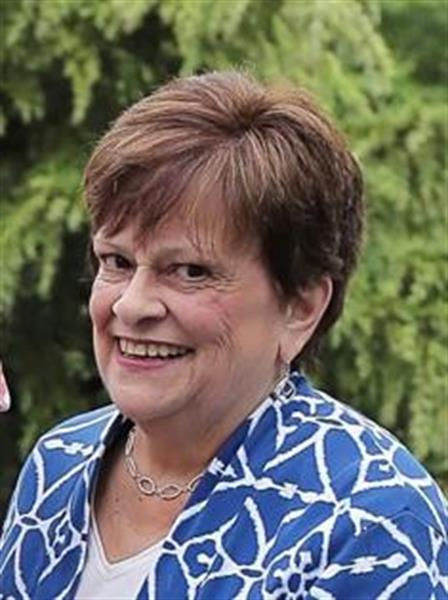 It is with great sadness that the family of Marcia F. Molesworth (Kepler) announces her passing on Sunday, February 16, 2020, at the age of 63.
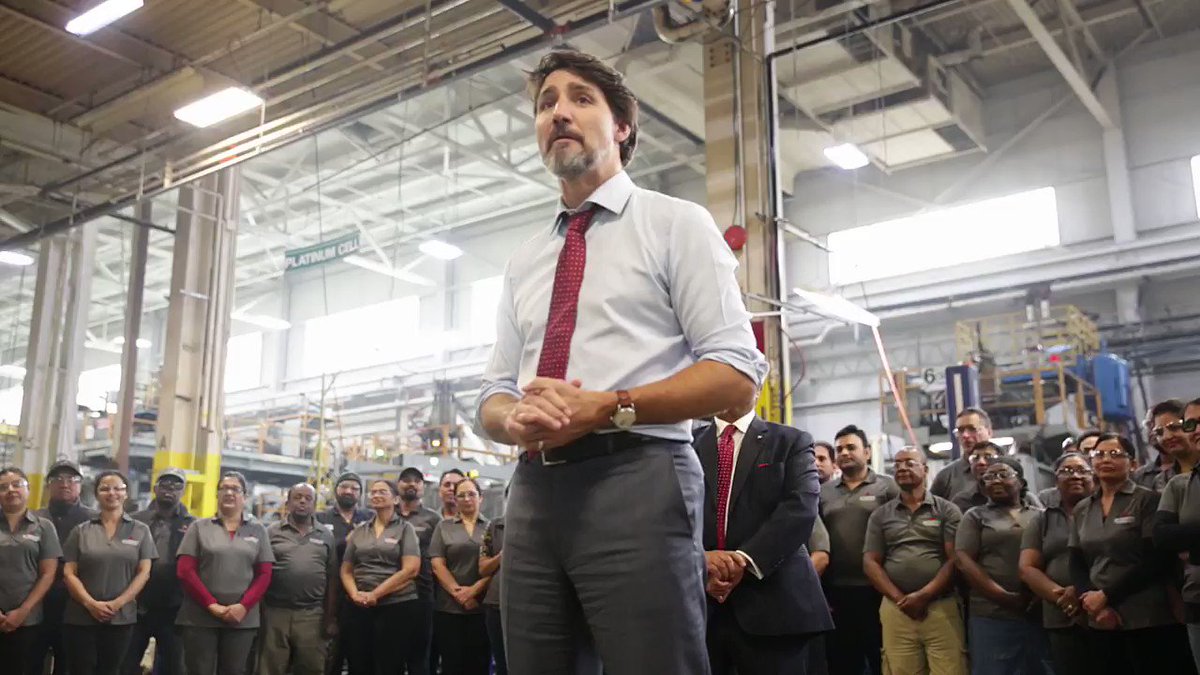

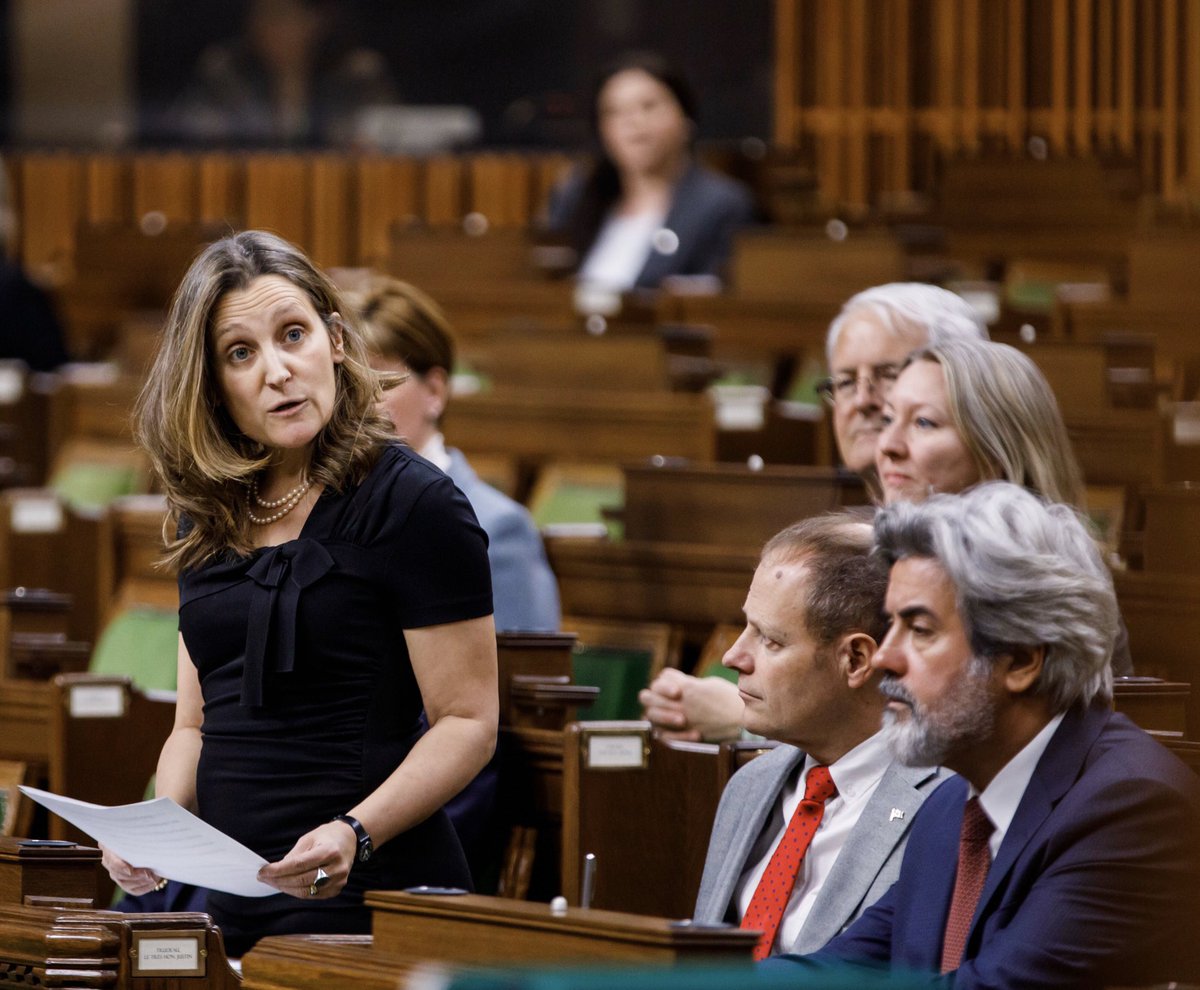

 President Donald Trump suggested on Twitter that he would give more bailout payments to farmers this year as they wait for trade deals to boost agricultural exports. According to Politico, the president’s dangling of extra bailout money stands in contrast to his recent boasts that farmers should start buying more land and “bigger tractors” to keep up with the historic boom that he promised his new trade agreements would deliver.
 Amid reports that the visit of US President Donald Trump will be an occasion to ask India to open itself to dairy (and poultry) imports from the US, a long-standing US demand, it is good to look at the global and notably the US dairy industry and its practices. The US has had a thriving dairy industry that traditionally focused on its domestic market. This changed in the early 2000s. In the decade from 2004 to 2014, for example, US dairy exports grew four-fold, from $1.6 billion to almost $6.8 billion, according to the US Department of Agriculture (USDA), riding on free trade agreements and opening up of world markets. This made the US the world’s third-largest dairy product exporter, behind New Zealand and the European Union (EU). But the story took a turn in 2015, when US dairy exports fell by almost 30% for a variety of reasons. Among them was a Russian ban on dairy imports and changes in milk supply quotas in the EU. As the USDA put it: “The US dairy industry will be challenged to increase market share in the years to come.”
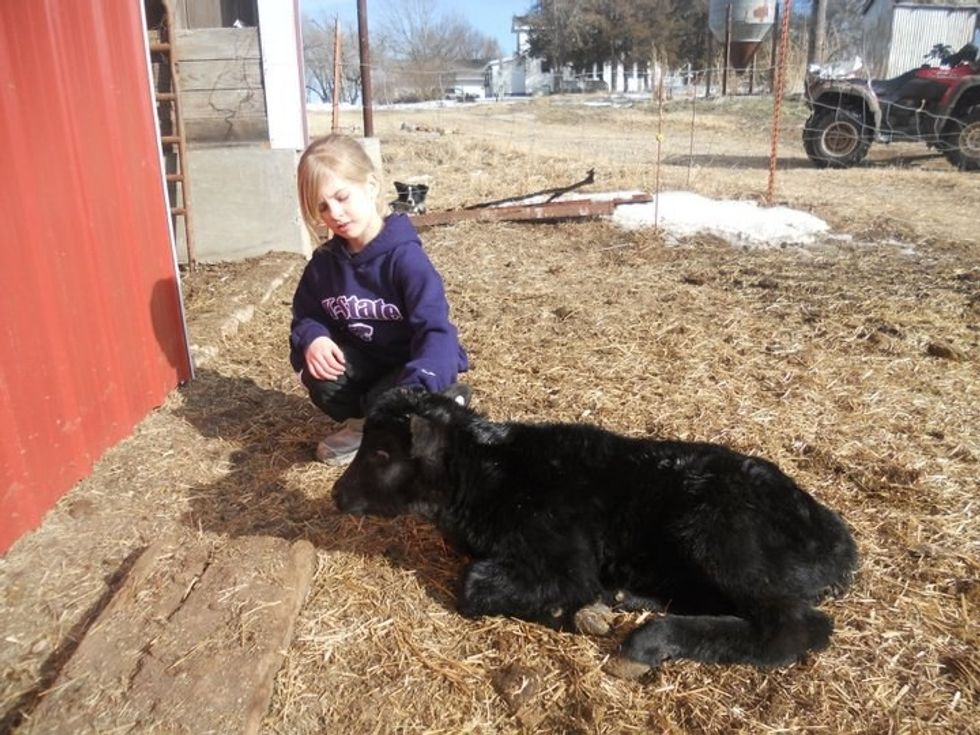 And on the ninth day, God looked down on his planned paradise and said, “I need someone to have a kind heart full of compassion and a spirit as free as a wild mustang and as old as time.” So, God made a farmer’s daughter.
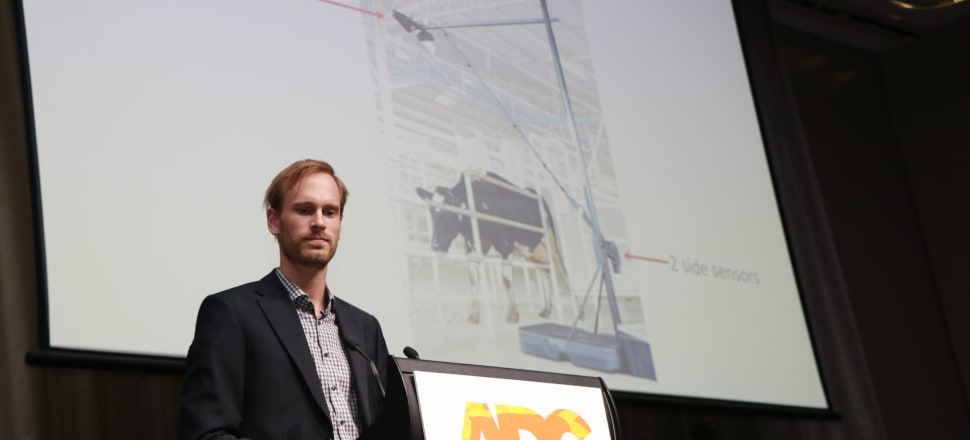 Clever use of an X-box sensor and specialised software has resulted in a young Sydney student winning a young scientist award at the Australian Dairy Conference.
 A silo exploded at the Comley’s Country Creamery dairy farm in Mexico, NY last Saturday night, destroying an estimated $10,000 worth of grain and causing damages to the facility, company officials told local news organizations.
 When you’re heading south on state Route 117 toward Indian Lake, it is hard to miss the big “Got Milk?” sign.
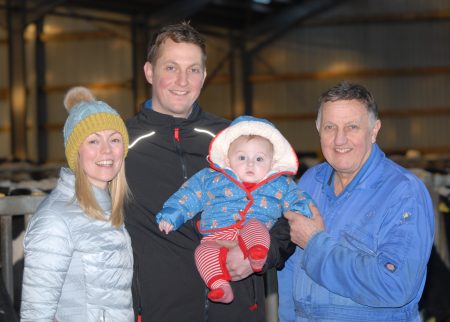 The Sloan family from Darnlaw Farm, Cumnock, Ayrshire, has been a warded the UK’s most prestigious dairy industry award, The NMR RABDF Gold Cup (National Milk Records & Royal Association of British Dairy Farmers) The award was presented to Robert Sloan and his wife, Emma, on behalf of the Sloan family at a presentation ceremony at Stoneleigh, Warwickshire.
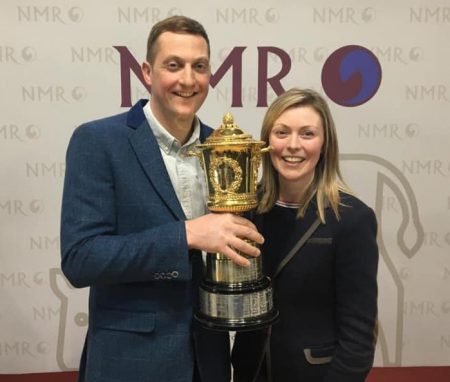 Four years ago, the Sloan family introduced Jersey animals into the business in order to fulfil a milk contract opportunity with Scottish milk-buyer, Graham’s Dairies. To supply the contract, thirty Jersey heifers were imported from Denmark alongside 25 animals from renowned UK herds. The 60-cow Jersey herd currently averages 7,115 kgs at 6.05% fat and 4.00% protein.
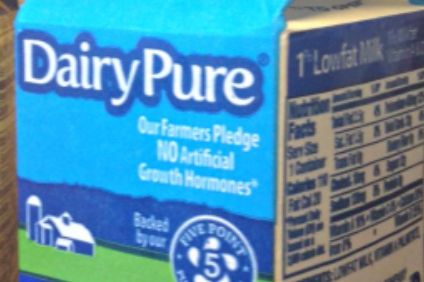 Dairy Farmers of America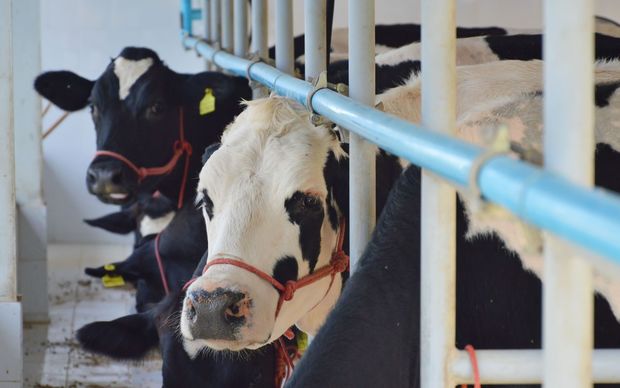
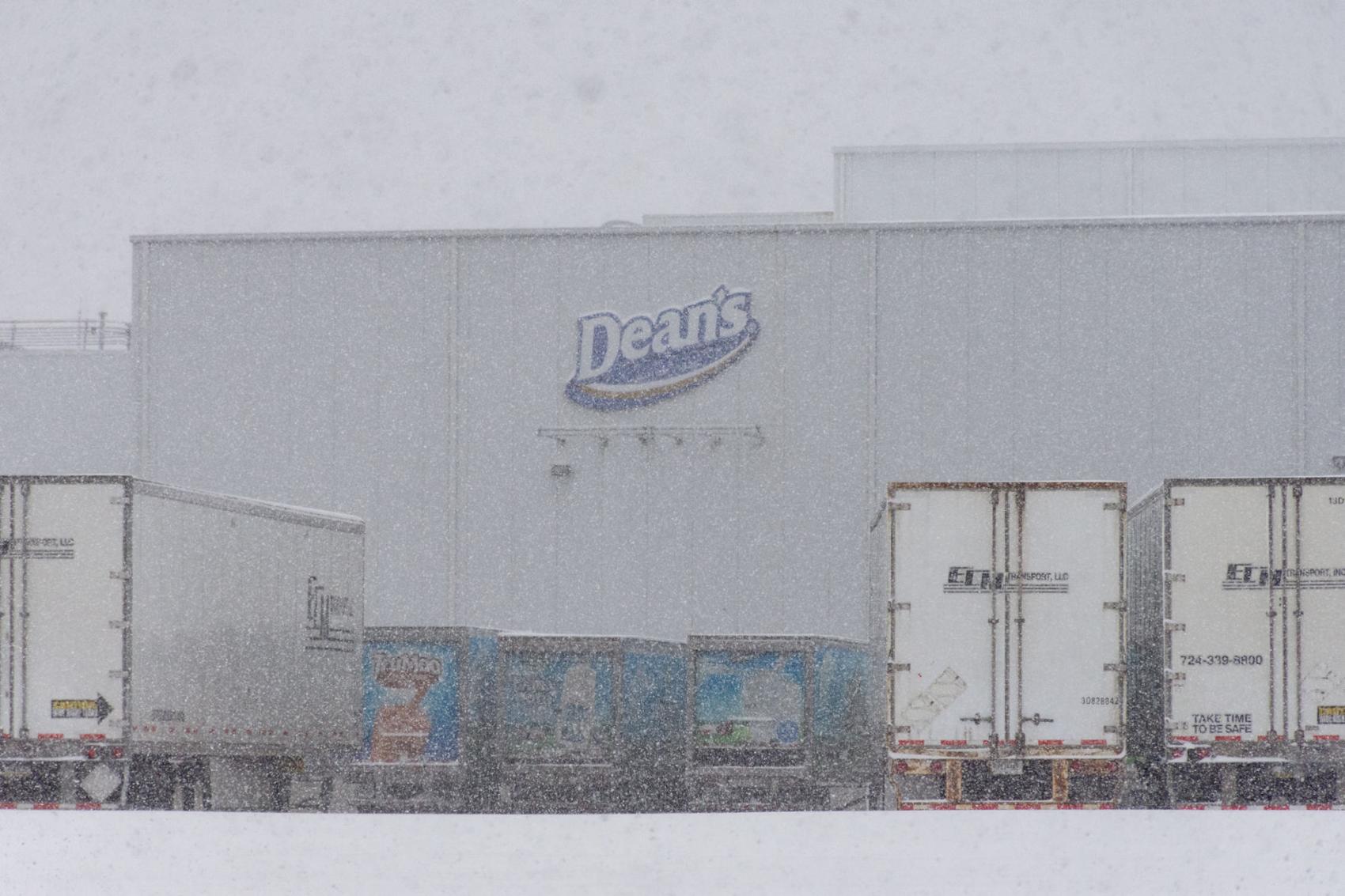 Dairy Farmers of America is buying a substantial portion of Dean Foods, including its South Pymatuning milk processing plant in Mercer County, for $425 million.
 Recently, 58 members of the House of Representatives who wrote FDA Commissioner Stephen Hahn, urging the agency to quickly finish and act upon its examination of how to enforce regulations defining what may be labeled a dairy product.
 The two cows were in a pasture in rural western Pa. when someone sighted them with a rifle, then pulled the trigger, killing them.
/cdn.vox-cdn.com/uploads/chorus_image/image/66284889/miyoko_cow_2048x.0.jpg) State regulators say that Miyoko’s Creamery can’t use dairy-related words or photos for its plant-based butter and cheese.
State regulators say that Miyoko’s Creamery can’t use dairy-related words or photos for its plant-based butter and cheese.
 If you give Americans a cookie, will they finally start buying milk again?



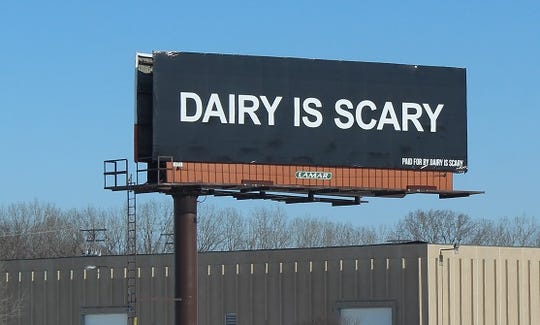 The message is cryptic, yet attention-grabbing.
 the scene at 10139 Church Hill Road, most of the building was engulfed in flames, said Dale Carbaugh, chief of the MMP&W Volunteer Fire and Ambulance Co.
 A Wisconsin dairy farmer took umbrage at actor Joaquin Phoenix’s Oscar acceptance speech slamming the dairy industry by pointing out that dairy farmers “feed the world.”



