Archive for News – Page 75

Corona virus impacts on Australian dairy industry

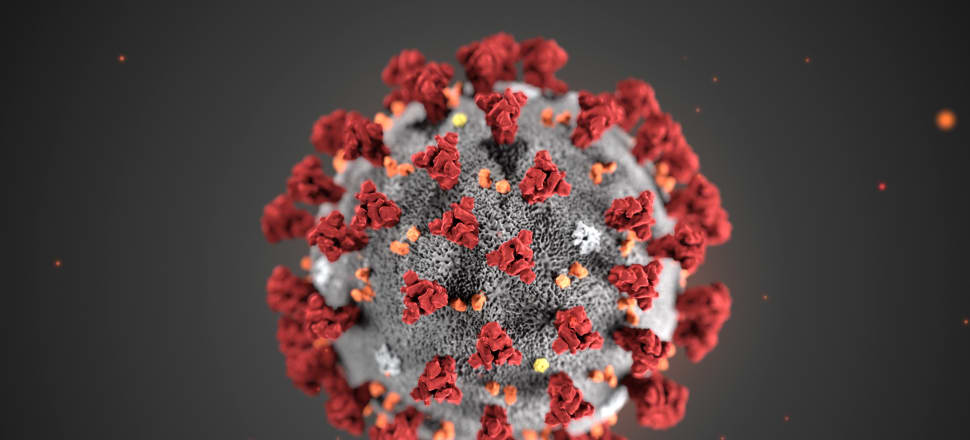
The spread of the deadly Corona virus could have a mixed impact on Australia’s dairy industry.

On the one hand the quarantine of a whole region in China is restricting the consumption of food in public restaurants, while an influential Chinese leader is encouraging the Chinese population to eat well to support personal immunity, including eating dairy products.

China is Australia’s biggest export destination for dairy products and last year we sent 245,000 tonnes of product into the country.

About 30 per cent of Australia’s dairy production in terms of volume, goes into China.

Dairy Australia senior analyst Sofia Omstedt said the evidence on impacts from the Corona virus, is largely anecdotal at this stage  because there is little data available.

“The ultimate impact depends heavily on how long it takes to get the virus under control.’

She believes there will be an impact on the food service sector because of the number of people no longer eating out.

She also pointed to the most recent global dairy trade auction which fell 4.7 per cent as a result of a market driven decline from buyers worried about the impact of the virus.

But she said there was also some evidence of an increase in demand for specific dairy products.

“Infant formula and specific health products have reported an increase in sales within China.

“A leading medical doctor who is well regarded in China and has the support of the government is encouraging people to protect their immunity through better diet and that has included a recommendation for dairy products,” Ms Omstedt said.

“This could lead to an increase in consumption of dairy products.”

She said the virus could be a mixed bag for the dairy industry.

The Kyvalley Dairy business based in Kyabram, which exports fresh milk into Asia, says they are monitoring the situation and so far there has been minimal impact on their business.

International Bank, Rabobank reports the extent of the impact on Australia’s agricultural sector will be limited in the short-term and will depend on how quickly the virus is contained.

Fonterra New Zealand, managing Director of Co-operative Affairs, Mike Cronin, said Fonterra’s operations have not yet been significantly disrupted by the outbreak of coronavirus, but they were monitoring the situation closely.

“Our scheduling, logistics and delivery activities to all markets are largely operating as normal. We are keeping a close eye on the situation as it develops.

“If there is a sustained drop in consumption in China, for example fewer people eating in restaurants, then that could have an impact on our sales,” Mr Cronin said.

“We’ll be watching GDT results and our Foodservice business over the coming month to get an indication.

“The GDT results last week showed us there is volatility in the market, but it’s too soon the gauge the real impact of coronavirus on demand from one GDT event.”

In a report by the bank’s China-based research team,  Rabobank said disruptions were being experienced across the entire food and agriculture supply chain, with the virus disrupting trade, production and supply chains as well as having a significant impact on out-of-home food consumption with the closure of many foodservice outlets.

With the virus outbreak arriving at the peak of 2020 Chinese New Year activities, it has had a large impact on out-of-home dining in the country, the report said.

Source: dairynewsaustralia.com.au

Mad cow fright keeps EU cautious on food rules

The specter of the 1990s BSE crisis means the European Union is likely to reject U.S. demands it ease strict food safety rules, even with President Donald Trump threatening car tariffs if EU countries do not start importing more U.S. farm products.

FILE PHOTO: A young calf looks out from a truck January 12, 2001 in Westerheim, Germany as he is transported to be slaughtered with the rest of his herd after an animal suffering from BSE was found in a farm in this small village./File Photo

With European food and farming exports to the United States worth up to $12 billion a year more than imports, U.S. Secretary of Agriculture Sonny Perdue told the EU last month it should adapt its food regulations to reflect “sound science”.

But there seems little prospect Brussels will agree.

Europeans who remember BSE, nicknamed mad cow disease, will not accept any lowering of food standards and no politician could support a trade deal perceived as doing so, said Johan Bjerkem, trade specialist at the European Policy Centre.

“On top of that, you’re negotiating with Trump, for whom not many Europeans have great sympathy,” he said. “Combine these things and it will be very difficult to accept a deal on those issues.”

Trump, who has long complained that the EU’s position on trade is “worse than China,” said on Monday he was training his sights on Europe, raising the prospect of a new trade war.

The EU bans imports of meat treated with growth hormones or poultry washed with peracetic acid, often dubbed ‘chlorinated chicken’. Both are standard U.S. farming practices.

Washington points to inconsistencies — EU salad leaves are regularly washed with chlorine — and says EU rules are a smokescreen for protectionism. They undoubtedly do benefit EU farmers.

Brussels’ response is that antimicrobial poultry washes mask otherwise far less strict and hygienic standards.

The European Food Safety Authority (EFSA) has concluded that the various washes are not a safety concern, but do not replace the need for good hygienic practices during processing of poultry carcasses.

The agency’s study of hormone-treated meat similarly does not conclude that it is unsafe, but says there is insufficient data to prove it is safe.

CAUTIOUS EU APPROACH

The distinction is important, highlighting the “precautionary principle” that guides EU food safety law.

“The U.S. has strict liability for lawsuits, which we don’t have so much in the EU … Here, the sense is more wanting to minimize the risks,” said Mute Schimpf, food specialist at Friends of the Earth Europe.

Bovine spongiform encephalopathy (BSE), which passed to humans and resulted from cattle being fed the remains of other livestock, led to a worldwide ban on British beef exports and the culling of millions of animals. It and other food scandals, such as dioxin in feed in Belgium, led to the founding of EFSA in 2002 and inform its safety-first approach.

“It led to the introduction in Europe of the precautionary principle, the idea that if you’re not certain, don’t take unnecessary risks,” said Erik Millstone, professor of science policy at the University of Sussex.

Instead of reporting to agriculture ministries or commissioners also concerned about the welfare of farmers and the food industry, food safety agencies became part of policy on health and consumer protection.

EU labeling laws also tightened at a similar time. In 2003, labels were required to show the presence of more than trace elements of genetically modified (GM) crops. The result was that, while millions of tonnes of GM animal feed are imported into Europe, there are no GM food items on sale to EU consumers.

The United States does not require labeling of GM food and some of its farming lobbies believe Europe is unfairly stigmatizing their products with labels.

FILE PHOTO: The carcass of a cow suspected of having BSE hangs from a crane over a container at the knacker’s yard in Herzberg, about 120 km north of Berlin, January 30, 1997./File Photo

The restrictions though are not only in Europe.

The United States bans cheese made with unpasturised milk unless it has been aged for 60 days, ruling out imports of French brie and camembert. Kinder Eggs, a chocolate encasing a plastic toy, are also banned.

A lot of standards essentially boil down to local customs and a suspicion of standards elsewhere, particularly practices promoted by big foreign business.

“We work on the principle that if we don’t do it, it must be bad. Whether that is protectionist or not I leave for others to dwell on,” said Hosuk Lee-Makayama, director of trade think tank ECIPE.

Source: uk.reuters.com

Former US Ag Secretary, Tom Vilsack, wins $150,000 lottery prize

Former Gov. Tom Vilsack is $150,000 richer after claiming a lottery prize Monday.

Vilsack won the money playing Powerball in January, when the jackpot climbed to about $347 million before the drawing Jan. 22.

“I forgot about the ticket,” Vilsack said in a news release from the Iowa Lottery. “Then I woke up 10 days later, on a Saturday morning, and I said, ‘Oh, geez, I wonder how I did?’ ”

Vilsack served as governor of Iowa from 1999 to 2007. He served as the U.S. secretary of agriculture from 2009 to 2017 in President Barack Obama’s administration.

He is CEO of the U.S. Dairy Export Council, whose parent company, the nonprofit Dairy Management, promotes milk and other dairy products.

Ten Dairy Management executives made more than $800,000 each in 2017, even as more than 1,600 dairy farms closed nationwide, according to the Milwaukee Journal Sentinel.

In 2018, Vilsack earned salary and bonuses totaling $930,090, more than quadruple the $200,000 salary he received as a member of President Obama’s Cabinet, according to the Journal Sentinel.

Vilsack donated some of the proceeds to St. Boniface Catholic Church in Waukee, split some of the money with his two sons and used the rest to pay down his mortgage, he said. In 2015, he bought a home next door to one of his sons in Waukee.

A friend of his who served on his security team while he served as agriculture secretary was a regular lottery player and won a lottery prize in a similar way, Vilsack said.

“We used to joke about what we’d do (with lottery winnings),” Vilsack said.

Vilsack plays regularly for fun when jackpots get above $250 million.

“I do it primarily because I know it continues to support schools and other educational needs, infrastructure,” Vilsack said. “Knowing full well that you’re never going to win.”

Source: usatoday.com

What Mongolia’s Dairy Farmers Have to Teach Us About the Hidden History of Microbes

In the remote northern steppes of Mongolia, in 2017, anthropologist Christina Warinner and her colleagues were interviewing local herders about dairying practices. One day, a yak and cattle herder, Dalaimyagmar, demonstrated how she makes traditional yogurt and cheeses.

In spring, as livestock calve and produce the most milk, Mongolians switch from a meat-centered diet to one based on dairy products. Each year, Dalaimyagmar thaws the saved sample of the previous season’s yogurt, which she calls khöröngo. She adds some of this yogurt to fresh milk, over several days, until it is revived. With this “starter culture,” she is then able to make dairy products all summer.

Afterward, as the anthropologists drove their struggling vehicle up steep hills back to their camp, graduate student and translator Björn Reichardt had a realization. Khöröngo is also the Mongolian word for wealth or inheritance.

In Mongolia, dairy products are vital dietary staples—more than 70 are made and consumed. From a certain perspective, then, the double meaning of khöröngo was unsurprising.

But there was some irony at work. In Mongolia, most herders have no idea that the khöröngo is, in fact, made up of a wealth of microbes. And that lack of knowledge could be a problem. Not only do these microbes bring benefits to the health, diet, and food practices of Mongolians—as well as a distinctive taste endemic to their cuisine—but they could be lost as Western industrial practices come to the country.
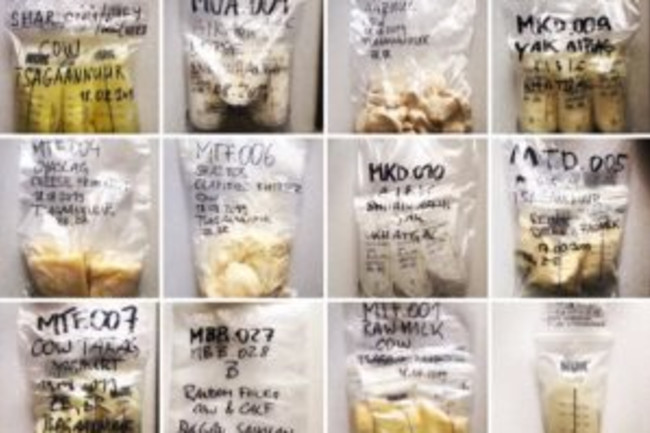
02-Mongolian dairy products-1-e1580844823469

The Heirloom Microbes project has sampled a range of Mongolian dairy products, several of which are shown here. (Heirloom Microbes Project.)

It’s become a dual mission of Warinner’s to not only help Mongolians value their microbial riches, but also explore the impact these regional microbes have had on human history. “Bacteria are amazing, overlooked, and misunderstood,” says Warinner, who splits her time between the Max Planck Institute for the Science of Human History in Jena, Germany, and Harvard University in Cambridge, Massachusetts.

Warinner and her collaborator, Jessica Hendy, an archaeological scientist at the University of York, started the Heirloom Microbes project in 2017 to identify and preserve rare microbes, specifically the bacteria that turn lactose into lactic acid, the first step in transforming milk into yogurts and cheeses. In the process, they hope to understand which microbes were unique to specific early dairy communities—and how they spread from one region to the next.

Combining interests in ancient diets, traditional cultural practices, and gut microbiomes, the Heirloom Microbes project collaborators are blazing a trail that traces the origins of dairying—and promises to reveal previously unknown microbial influences on human culture. The project has sampled dairy products from several parts of the world, including the European Alps and Jordan.

Endangered Microbes

But the project team has focused on Mongolia, a country where traditional dairying practices from nomadic herding communities remained largely intact. Along the way, they have realized they may be sampling what are effectively endangered microbes if the world’s remaining traditional dairying societies industrialize.

Warinner, who calls herself a molecular archaeologist, set out to investigate past human diets more than 10 years ago. She found a goldmine of information trapped in the tartar on skeletal teeth, including the individual’s DNA, the oral bacteria they carried, and clues to that person’s eating habits.

That’s why Warinner teaches her archaeology students to wield an unusual tool: a dental scalar. Researchers use this hooked metal instrument, commonly found at dentists’ offices, to scrape ancient tartar from exhumed remains. The calcified microbial biofilm on teeth effectively offers researchers dietary sedimentary layers for each individual that can be preserved for centuries.

When the decayed plaque is particularly tough to dislodge, Warinner pops the ligament-free tooth out, cleans it, and puts it back—without damaging the skeleton itself. (Following training, her students receive a “Dental Hygienist to the Dead” certificate.)

Warinner first started scraping the hardened calculus from medieval skeletons in England, Germany, and Greenland to study ancient periodontal disease. Results from Greenland, however, yielded truly unbelievable results: milk proteins on teeth from Vikings who lived roughly 1,000 years ago. Convinced it must be a mistake, Warinner ignored the Greenland data for a year.

When she eventually re-ran the samples and got the same exact results, Warinner was flummoxed. “When I realized it might be real, I almost scared myself,” she says. “What if we could reconstruct dairying in the past?” Dairy, she realized, could serve as a window into human diets—and the practices supporting those diets—through time.

Milk proteins trapped in layers of tartar would allow Warinner to not only determine which animal produced the milk, but also date milk consumption across space and time, something that had previously only been attempted by tracing milk fats in ancient pottery. This new approach provided scientists with a way to “extract evidence of milk directly from the mouths of past people,” Hendy notes.

Milk and the microbes behind dairy products are intriguing objects of study on many levels, say Hendy and Warinner. For one, Hendy says, “Humans are the only species to drink another mammal’s milk.”

Even more intriguing is why early societies would practice dairying for thousands of years when they could not easily digest lactose, the sugar in milk. For decades, scholars thought that dairying increased after humans evolved a gene to digest milk.
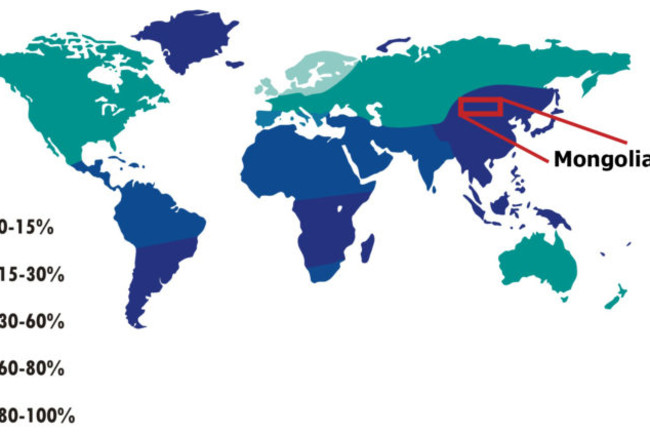
04-lactose intolerance map adjusted-1-e1580845034455

The majority of the world is lactose intolerant (map percentages indicate the overall rate of lactose intolerance in each region). (NmiPortal/Wikimedia Commons)

But that presumption was overturned once the extent of lactose intolerance was documented. In fact, research suggests that dairying was practiced for 4,000 years before the emergence of a mutation that allowed lactose digestion.

Lactose Intolerance

Even today, the majority of people around the planet—65 percent—are lactose intolerant, meaning their bodies struggle to break down the sugar lactose found in fresh milk. (Mongolia offers a stark example: Consumption of dairy products in Mongolia remains extraordinarily high, despite the fact that 95 percent of Mongolians are lactose intolerant.)

Milk continues to be an incredibly fraught food, a lightning rod for discussions around nutrition and health. “It’s either a superfood or the worst thing in the world,” Warinner says.

“Dairying is this amazing invention that people came up with in prehistory,” she adds, “but it’s a complete puzzle why and how it worked.” In addition, dairy products were among the earliest manufactured foods.

And that is the work of microbes. “Cheese doesn’t exist in the wild,” Warinner says. Milk itself is highly perishable and goes bad in hours.

Through trial and error, humans figured out how to harness bacteria to consume the lactose—and thereby acidify and ferment milk into cheeses and yogurt, respectively.

“People from deep prehistory, millennia ago, were domesticating microbes they didn’t even know existed,” Warinner says. “It must have seemed magical to them.”

In fact, Warinner notes, this microbe-driven approach was likely among the earliest—and most important—food storage mechanisms in ancient times. Warinner and Hendy soon turned their interest to identifying early dairy microbes. If they could find milk proteins in skeletal tartar, they hoped to find DNA from the lactic acid bacteria.

In arid or grassland steppe regions like Mongolia, there would have been few shelf-stable foods several millennia ago. Dairying proved transformative. Given the harsh and arid environment, barren landscape, and limited foodstuffs, it is hard to imagine how Genghis Khan could have conquered Asia and Eastern Europe without portable, probiotic-rich, high-calorie cheese, explains Warinner.
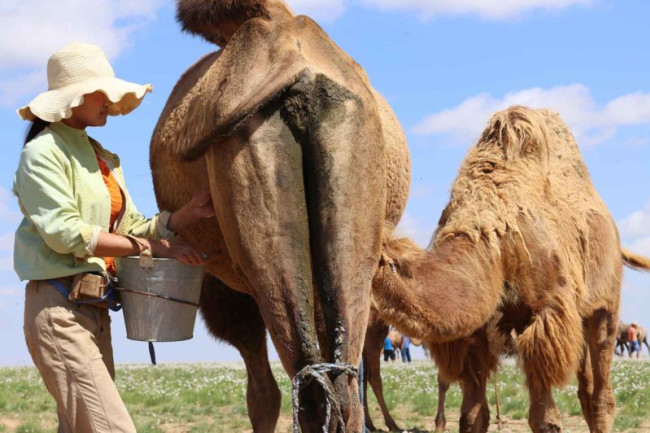
05-IMG 2735 compressed-1-e1580845134185

Mongolians milk all seven livestock species in the country: cows, sheep, goats, horses, yaks, reindeer, and—as shown here—camel. (Heirloom Microbes Project.)

And the menu of dairy options is vast. Mongolians milk every one of the seven livestock species in the country: cows, sheep, goats, horses, yaks, reindeer, and camel.

From that native diversity, Mongolian milk products have a distinctive terroir, or characteristic flavor infused by the environment producing the food. Aaruul, which are dried, hardened curds eaten as a snack, have a pungent, tangy flavor. Shimiin arkhi is yogurt made from yak’s or cow’s milk that is distilled to make a vodka. Airag is a fermented mare’s milk liquor that is light and bubbly. “People listen to mare’s milk ferment and say, ‘It’s alive’ when they hear it fizzing,” Hendy says.

Mongolians hand down starter bacterial cultures, the khöröngo, from generation to generation—and typically the work is carried out by women. “They often receive starter cultures from their mothers, who received it from their grandmothers,” Reichardt says. “There is a chance that these microbes are hundreds of years old and still alive today.”

But when Warinner and Hendy first asked to collect dairy microbes in Mongolia, the nomadic herders denied their products had any bacteria in them. “In Mongolia, microbiology is taught from a clinical perspective—namely, that bacteria only cause disease,” Warinner says.

She found that herders were unaware of beneficial or food microbes. They also did not know that the hides and wooden vessels used to store starter cultures were crucial to maintaining these bacterial populations over time. Unbeknownst to contemporary and early herders, the porous, organic materials used as containers were inadvertently inoculated with the lactic acid bacteria over and over again. As a result, the containers themselves helped desirable microbial populations persist over time—in part because nothing else, including pathogens, could grow in the containers.
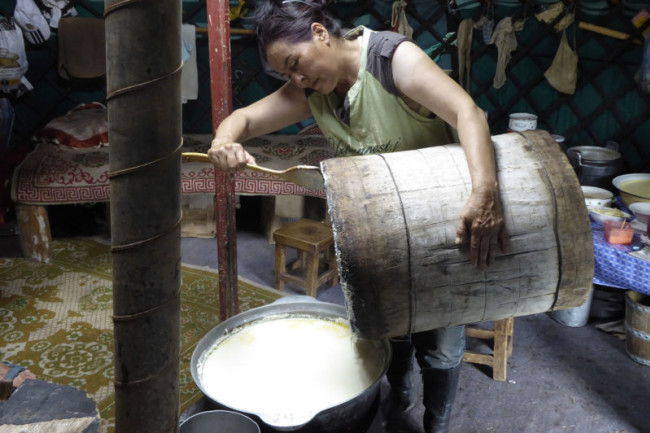
06-P1010290 compressed-1-e1580845415380

In Khövsgöl, Mongolia, herder Gerel scrapes curds from the inside of her century-old still after making shimiin arkhi, a vodka from distilled cow or yak yogurt. (Heirloom Microbes Project.)

“Pathogens are like weeds, they are the first to grow, whereas lactic acid bacteria are like old-growth trees,” Warinner explains. “If you get the lactic acid bacteria established, they’ll prevent weeds from growing.” In short, the traditional nomadic dairy model promotes the growth of “good” bacteria that naturally outcompete pathogens.

Western Ways

Still, that hasn’t stopped the spread of western practices, including industrialized dairy cultures. The Heirloom Microbes project has not found traditional practices to be as prevalent in the other regions the team has studied, such as Jordan and the European Alps, as compared to Mongolia. The concern, as stated in their project grant, is that with “contemporary food globalization and industrialization, traditional methods of dairying and their unique microbial cultures are being lost at an alarming pace.”

While traditional practices continue in isolated pockets in Jordan and the Alps, those practices can be, in part, a tourist attraction. European countries largely industrialized their dairying procedures in the 1970s and 1980s. In contrast with traditional methods using heirloom bacterial cultures, industrial practices begin with sterilization and then introduce lab-grown, high-performing bacterial cultures. In these industrialized systems, everything has to be constantly killed in large part because the first things to come back are pathogens.

For Warinner and her colleagues, helping Mongolian herders and policymakers understand the benefits of the traditional methods has become even more urgent as the first steps toward dairy industrialization begin in Mongolia. Most notably, European lab-grown starter cultures are being introduced into the region.

“Bacteria are amazing, overlooked, and misunderstood,” says anthropologist Christina Warinner.

Warinner does not think the lab-grown strains, produced under highly controlled conditions, will fare well in Mongolia simply because they lack the region’s traditional diversity. “These are cultures developed in a completely different environment,” she says. “Industrial methods of sanitation are not easily implemented on the steppe and doing so would disrupt the microbial ecologies that support traditional Mongolian dairying,” she notes. “I fear that well-intentioned attempts to introduce such techniques—without consideration of their cultural context—would actually reduce the safety of the dairy products and radically transform and undermine the lives of nomadic herders.”

Hendy adds that microbes may not only support the process of dairying but also play a role in people’s health and digestion. Microbes in traditionally made dairy foods help maintain a healthy gut microbiome, which could be altered—to unknown effect—by a switch to industrialized microbial cultures.

Over the past three years, the Heirloom Microbes project team has scraped tartar from roughly 200 skeletal remains around the world. As they piece together ancient microbial sequences in the tartar, they will start this summer to sample the microbiomes of both Mongolian nomadic herders and urban dwellers to determine whether herders’ gut microbes have played an unrecognized role in their dairy digestion.

As a growing body of research makes clear, the gut microbiome exerts a shocking degree of control over many aspects of our health—from mood to immune function to pain. It may even shape seemingly unrelated aspects of our behavior, including social interactions.

Mongolian researcher Soninkhishig Tsolmon has documented nutrition in her homeland for the last 20 years. It has not been easy. With few resources or existing studies available, Tsolmon has focused on the dietary differences between nomadic and urban people.

Science and Tradition

Tsolmon suspects that many traditional foods could reveal intriguing health and microbial connections—but time is running out. In addition to looming industrialization, climate change is transforming the landscape under herders’ feet.

“We’re starting to lose traditions,” Tsolmon says. “Mongolians have traditional ways of using meat and milk.” The traditional meat-based diet in the winter is replaced with fermented dairy products in the summer that, elders say, eliminate the toxins from a winter’s worth of meat eating. She adds, “I’m afraid that some bacteria are disappearing.”

To help stem the loss, Tsolmon, Warinner, and their colleagues created opportunities to share knowledge between the scientists and the herders. In July, for example, the researchers held a Seeing Microbes workshop in villages near Mongolia’s Lake Khuvsgul.

There the group showed local herders microscopic images of the bacteria in their dairy products. “We explained how their practices maintain plenty of good microbes in their products—and that microbes don’t just cause disease,” explains translator and graduate student Zoljargal Enkh-Amgalan. “They were proud of their way of life and how pastoralism and dairying still exist,” she adds.

At another meeting earlier last summer, traditional steppe herders, cheesemakers from the Swiss Alps, the Heirloom Microbes team, businesspeople, and government officials came together for a traveling conference held in both Mongolia and Kyrgyzstan. The German Federal Ministry of Education and Research and the European Research Council funded the meetings.

These disparate groups shared their insights on traditional practices and the science underpinning their success. While traditional dairying practices, which go back at least 5,000 years, have not been studied intensively, they are clearly adapted to the Mongolian landscape and sustainable, explains Warinner.

Warinner believes the deep time emphasis that her discipline brings to such discussions is especially valuable. “Anthropology matters. Archaeology matters,” she says. “We work to understand humans in the past and how we are today—in order to inform public opinion and government policies.” That perspective can help counterbalance the ways in which globalization and well-intentioned interventions may, intentionally or not, threaten traditions, with complex consequences.

In addition to educating Mongolians about the science underpinning their ancestral practices, Warinner and colleagues hope they will take stock of the microbes that have played a starring, yet unsung, role in their nutrition and health. It is ironic that Mongolia has this very deep tradition of dairying that is so central to identity, culture, and history—and yet possesses no archive or any centralized collection of the many bacterial cultures. The Heirloom Microbes project collaborators hope to develop and maintain a storehouse of these resources for Mongolia.

“We live in a microbial world,” Warinner says. “We are only now realizing how integral microbes are to being human.” Put another way, science is just starting to uncover the degree to which microbial cultures have shaped human cultures.

This work first appeared on SAPIENS. Read the original here.

‘Hollywood-elite world view’: Pennsylvania congressman slams Joaquin Phoenix for speech targeting dairy industry

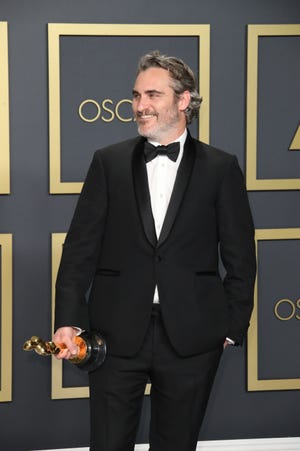
Rep. Fred Keller trashed actor Joaquin Phoenix for his “detestable” remarks about the dairy industry during his acceptance speech at the Academy Awards.

Keller, a Pennsylvania Republican, defended his state’s agriculture workers after Phoenix criticized those who “feel entitled” to cow’s milk. The congressman released a statement saying, “Joaquin Phoenix winning Best Actor for playing the Joker fits him to a T because his comments would have been laughable were they not so offensive.”

“Phoenix’s rambling remarks about America’s dairy industry prove how out-of-touch he is with the hardworking Americans who grow our food and create healthy communities,” Keller said. “Phoenix’s Hollywood-elite world view has clearly blinded him to the sacrifice and struggles of America’s dairy farmers.”

Keller, 54, represents a part of northern Pennsylvania with a large agricultural economy. He claimed Phoenix was out of touch with working Americans, adding that “the callousness he showed in his speech proves he needs to get out of his Hollywood bubble to see how real Americans make a living. His remarks were detestable not just to me, but to the many hardworking family farmers.”

On Sunday, Phoenix argued during his Oscars speech that people were ignoring injustices throughout the country. He focused on animal rights and criticized the dairy industry for its treatment of cows.

“I think that we’ve become very disconnected from the natural world. Many of us what we are guilty of is an egocentric world view: the belief that we’re the center of the universe,” Phoenix explained. “We go into the natural world, and we plunder it for its resources. We feel entitled to artificially inseminate a cow, and when she gives birth, we steal her baby, even though her cries of anguish are unmistakable. Then we take her milk that’s intended for her calf, and we put it in our coffee and our cereal.”

Pennsylvania is the seventh-largest producer of milk in the United States. California and Wisconsin lead the nation in dairy production.

Source: washingtonexaminer.com

Opinion: Dairy farmers like me can learn a lot from vegans

As a dairy farmer I actually agree with Joaquin Phoenix’s comments that people have become disconnected from the natural world, but his call to switch to completely plant-based has environmental and nutritional consequences, so I believe we have to strike a balance.

As interest in veganism surges it’s easy for livestock farmers like me to get defensive, but building walls between polarised points of view will achieve nothing. There are no simple solutions to sustainably feeding our population in aclimate conscious way, which is why sharing ideas, points of view and experiences is so important.

When we – a dairy farm – announced a tour we are organising specifically for vegans, it raised a few eyebrows, but it shouldn’t. We want to break down barriers and recognise that there are many different reasons why people make the dietary choices they do. As producers of food we welcome the learning that comes from listening to those with other points of view.


Twenty years ago we started regularly opening our farm to the public. We were proud of our organic dairy farm and happy to show people round. However, when we got to the calf shed part of the tour it became clear that standard farming practice was very different from what people want and expect.

In almost every dairy farm in the world, calves are separated from their mum within a few hours of birth. This is how dairy farms have been run for decades because to get milk in the tank you need to take the calf away – it’s obvious isn’t it? Clearly it wasn’t obvious at all. Our visitors asked us challenging questions about why we separated the calves, which caused us to wonder what would happen if we didn’t.

Leaving the calf with its mum sounds like a simple change, but it completely alters the production system. No one had made cow-with-calf dairy farming work at a commercial scale before, such as our traditional, tenanted, family farm size. Dairy farmers will naturally pick holes in this approach, because if someone can demonstrate that cow-with-calf can work, even at a modest scale, then the pressure will be on for others to follow.

In 2005 we began the long journey towards it, keeping the cows and calves together. We built a brand new dairy so the calves could stay with their mum, and we redesigned our entire milking system. We ran a pilot in 2012 which taught us a great deal, but nearly bankrupted us. Bruised but not beaten we remodelled the system, re-financed and in late 2016 gave ourselves a three year deadline to either prove cow-with-calf could work, or to quit.

Last November our three years were up and we announced to the industry, with absolute certainty, that this system does indeed work. It works for the cows who have a marked reduction in stress, improvement in health and higher than expected levels of productivity. It works for the calves who thrive being reared by their mothers, growing twice as quickly as before. It also works for us and the farm staff, with reduced costs and a highly motivated farm team.

Our cow-with-calf dairy farming system is very different to a conventional dairy farm. The most obvious difference is that the calves stay with their mum for around five months – the male calves too. During this time we milk the herd only once a day and the cows and calves are out on organic pasture as much as possible.

The calves are drinking about a third of the milk, but they thrive within this system, growing twice as fast as before. What we lose in milk volume is balanced against improved health and reduced inputs, like feed, labour and antibiotics.

We have been surprised to find that around a fifth of our customers are themselves vegan, often mums seeking out high welfare dairy for their children and partners. When we ran a crowdfunder to help fund the expansion we were inundated with comments and emails of support and thanks from people, mainly women, who expressed deep gratitude that we have created a dairy system they are comfortable with.

Comments such as: “Your cheese is the only concession I make to my otherwise vegan diet, and it’s the only cheese I buy for my family”, “I’ve tried veganism but I love cheese too much and this concept would make me feel a little bit better” and “Love what you are doing and I am vegan but my son is not so to find places that I can back and believe in is amazing”, filled our inboxes.

‘Vegan activism is right to bring bad practice in the farming industry to public attention.’

In contrast, the strength of the criticism, from both the conventional dairy industry and vegan fundamentalists, has been staggering in its anger. We recently had to introduce language moderation to our Facebook page to protect our team and our page followers from being exposed to violent and aggressive comments.

Yes, we are trying to start a dairy farming revolution from one wee farm in south west Scotland, but the surge in veganism proves that change in this industry is long overdue. There are many, many people following plant-based diets who are opposed to conventional dairy farming practices, but not necessarily opposed to dairy produce itself; people for whom the method of production really matters. These are the people we expect to take part in our vegan farm tour.

Vegan activism is right to bring bad practice in the farming industry to public attention and it is up to the industry to get its house in order. We want to play our part by explaining why we think there is still a place for livestock farming, by demonstrating how ruminants on the land can deliver positive environmental benefits and by showing that there is a viable alternative to intensive dairy farming.


In simple terms what we are doing here is de-intensifying dairy farming. We are working with nature and with the animals’ natural instincts to create an ecological, grass-based farming system, producing highly nutritious food with a positive environmental impact. Our farm tours are designed to explain that approach, and it does take a bit of explanation.

Our experience of human technological intervention is that it often delivers short term benefits but at some considerable societal cost further down the line. Nature got us to where we are with millennia of trial and error and the least harmful systems are those based around nature; and so it is with food production. Those complex interactions of symbiotic microbes, plants and livestock throughout our food system can’t be replaced by technology. What we’re doing on this farm is simply helping nature do its job.

While our typical farm tour includes discussion of food production and samples of our cheese, our new vegan farm tour will not. Instead it will focus on the fairly complex environmental issues around livestock farming, and on animal welfare and sentience. The intention is to create a safe space where people with concerns about farming can ask frank questions directly to the farm team. It’s not about converting people to our cause, it’s simply about dialogue.

It is our experience that talking with people from outside our bubble challenges our assumptions and provokes us into doing better. Questions from visitors to our farm 20 years ago are what nudged us on the path to cow-with-calf dairy farming. I have no doubt that the questions from our vegan visitors in May will be illuminating and thought provoking too.

David Finlay is an organic dairy farmer and owner of The Ethical Dairy

Source: inews.co.uk

New Zealand drought keeps floor under dairy prices, despite coronavirus fears

Concerns around the coronavirus outbreak drove global dairy prices lower last week, but prices didn’t fall as far as feared.

ey whole milk powder (WMP) prices slid 6.2pc, while overall prices fell a more moderate 4.7pc.

However, speaking to the Farming Independent Nate Donnay, Director of Dairy Market Insight at INTL FCStone since the auction powder prices in the US bounced higher and some slight firming in spot prices in the EU.

“Coronavirus continues to spread, and cases probably won’t peak until April or May, but a combination of supply concerns in New Zealand and traders waiting to get a feel for actual demand impacts gave some support to prices this week,” he said.

Donnay added that history  has taught us that our fear tends to take over while we’re in an outbreak and we tend to  overestimate the impact. 

“For reference a 3pc change  in New Zealand milk production is a 5-10pc change  in global dairy prices. So  some  mildly  adverse  weather in one of the major dairy exporting countries could quickly negate any negative price impacts of this outbreak,” he explained.

These sentiments were echoed by Nathan Penny analyst with ASB bank in New Zealand, who said  Chinese buyers were still active, with the number of buyers from North Asia bang on the average number for the last three months.

“Nonetheless, we remain vigilant. The outbreak situation is very fluid and, with that in mind, dairy price implications are subject to change. Over the coming days, we will monitor the dairy futures market for further market developments ahead of the next auction in two weeks’ time,” he explained.

Penny also said traders had also begun to return our gaze to New Zealand drought conditions.

In particular, the key Waikato region is very dry in parts, while the Taranaki, Northland, Nelson and parts of Canterbury are also very dry.

“If drought conditions continue to worsen over coming weeks, dairy prices have the potential to swing quickly back the other way,” he said.

Source: independent.ie

Saputo revenues up but two plants to close

And while revenues rose by 8.8%, and adjusted EBITDA by 29.8%, Saputo employees in Trenton, Ontario, and Saint John, New Brunswick won’t be celebrating, as the company is to close its plants in both communities, with the loss of around 280 jobs.

The closures are scheduled in September 2020 and January 2021, respectively. Saputo said production at both these sites will be integrated into other Saputo facilities across Canada.

It added that affected employees will be provided with severance and outplacement support, and some will be offered the possibility of transferring to other Saputo locations within the Dairy Division (Canada).

Saputo said the measures are aimed at improving operational efficiency and right-sizing its manufacturing footprint and sales force in Canada.

The company also announced it would be stepping in to the plant-based arena.

Financials

Consolidated revenues for the three-month period ended December 31, 2019, totalled C$3.891bn (US$2.927bn), an increase of C$313.6m (US$235.9m) or 8.8%, on the same period in 2018.

For the nine-month period ended December 31, 2019, revenues totalled C$11.225bn (US$8.44bn), an increase of C$959.4m (US$721.6m) or 9.3%.

Revenues increased due to the contribution of recent acquisitions, including C$534.5m (US$402m) from the acquisition of UK company Dairy Crest.

Consolidated adjusted EBITDA for the three-month period ended December 31, 2019, totalled C$417m (US$313.7m), an increase of C$95.8m (US$72.1m) on the same quarter last fiscal year.

2020 plans

In fiscal 2020, Saputo said it will continue to focus on the execution of the Saputo Promise three-year plan, including ramping up its commitment to responsible environmental practices with a key focus on climate, water and waste.

Saputo said it is committed to diversifying its product portfolio by pursuing more plant-based opportunities. The company aims to capitalize on consumer demand, and to leverage a common customer base, technology, manufacturing expertise, assets and supply chain.

Saputo will look to increase its presence in this category through a series of investments in manufacturing, sales and distribution. To lead its plans, the company has appointed a senior vice-president, business development, plant-based food.

For fiscal 2020, Saputo said it expects its business operations to deliver slightly higher adjusted EBITDA when compared to fiscal 2019.

While benefiting from the contribution of other recent acquisitions, the company said it expects to continue facing competitive market conditions in the US, unsettled economic conditions in Argentina, volatility in international selling prices of cheese and dairy ingredients, and reduced availability of raw milk due to extreme weather in Australia.

The Company expects, through increased efficiencies and pricing initiatives, to mitigate the impact of elevated costs in warehousing, logistics and transportation.

Source: dairyreporter.com

Ontario Spring Discovery Show Committee Announces 2020 Judge

The Ontario Spring Discovery Show Committee is excited to announce that Nathan Thomas of Ohio, will be the judge for both the Jersey & Holstein Show at the 2020 Ontario Spring Discovery Show!

Nathan, along with his wife Jenny, children Colton, Kendall, and Camryn own in partnership Triple-T Holsteins and Jerseys, where they milk 35 cows and raise an additional 60 head of young stock. Since their establishment in 2006, the farm has bred, owned, or sold over 100 All-American and All- Canadian nominations in the Holstein, Jersey and Red and White breeds including 12 Champions or Reserve’s at World Dairy Expo. Nathan has served as an official judge across North America, South America, Mexico, and Australia. Most notable shows include being the lead judge for the Holstein, Jersey, and Red and Whites at World Dairy Expo and the Jersey show at the Royal Winter Fair.

Follow the Ontario Spring Discovery Facebook page here.

Three Holstein Canada Recognition Awards to be handed out at the 2020 National Holstein Convention

Three of Holstein Canada’s most prestigious recognition awards will be handed out at the 2020 National Holstein Convention in Regina, Saskatchewan. The Association will be awarding the Certificate of Superior Accomplishment Award to Keith Flaman; the Certificate of Recognition Award to Lorne Loveridge; and the Century of Holsteins Award to the Descendants of James C. Jenkins.

The Certificate of Superior Accomplishment Award: Keith Flaman

The Certificate of Superior Accomplishment Award is awarded to a person or group whose achievements are based on, but not limited to: enhancing working relationships both domestically and internationally; marketing and promoting the breed, the Association and/or Association programs; mentorship and leadership; education (best farm management practices, conformation, animal health), and outstanding business achievements.

Keith Flaman has served many areas of Canada’s dairy industry. He has acted as the President of Holstein Canada in 1991; the CEO of Holstein Canada from 1993 – 2010; the Chair of the World Holstein-Friesian Federation from 2000 – 2008; and the Chair of the Canadian Livestock Identification Association from 2004 – 2006, where he worked to reinstate export markets for Canada during the BSE crisis. Keith is currently the Chair of the 2020 National Holstein Convention Committee.

Keith also worked internationally to improve the exchange of information regarding genetic recessives, Classification traits, and guidelines for reciprocal registration between WHFF members. His many accomplishments have influenced both the Canadian and international Holstein industries, and we will have the pleasure of presenting this much-deserved award to Keith in his home province.

The Certificate of Recognition Award: Lorne Loveridge

The Certificate of Recognition recognizes qualities and activities such as enhancing working relationships; promoting the breed, the Association, and/or Association programs; mentorship and leadership; education; and time and contribution over and above what is considered “part of the job.” These qualities and activities will have had a regional and/or provincial impact.

Lorne Loveridge has been instrumental in the success of the breed and is involved in many other aspects of the dairy industry. A three-time Master Breeder recipient, he is responsible for the world-famous Glenridge Citation Roxy, a seventh-generation animal bred on the Loveridge Farm. Roxie’s accomplishments include winning International Cow of the Century in 1999, being voted Queen of the Breed twice in 1986 and 2001, and being named All-Time All-American Produce in 1984 covering the period 1922 to 1984. Her legacy lives on in herds all over the world.

Lorne has also acted as both the Director and President of three organizations: the Saskatchewan Holstein Branch, the Regina and District Milk Producers Association, and the Saskatchewan Dairy Association. He also acted as the Director and Vice President of the Dairy Producers Co-operative Limited, the Director of Dairy Farmers of Canada, and as a member and Chairman of the Holstein Canada Research Committee. He also served as an official judge for Holstein Canada. We will also have the pleasure of presenting Lorne with this award in his home province.

Century of Holsteins Award: The Descendants of James C. Jenkins, 1920 – 2019

The Century of Holstein award recognizes the dedication and contribution of Holstein families through their long-standing membership with our Association. If a family’s relationship with the Association can be traced to 100 years of active, continuous membership, then it is eligible for this distinction.

This year, the award goes to Charles Jenkins of the prefix MONOAK in Belmont, Ontario. The Jenkins family has been a member of Holstein Canada since James C. Jenkins joined in 1920. We will be celebrating their deep commitment to our Association at the Annual General Meeting on April 18.

National DHIA honors students with $1,000 scholarships

The National Dairy Herd Information Association (DHIA) Scholarship Committee awarded $1,000 scholarships to 14 high school seniors and college students. Judges evaluated applicants on scholastic achievements, leadership in school and community activities, and responses to DHI- and career-related questions. To be eligible for a National DHIA scholarship, applicants must be a family member or employee of a herd on DHI test, a family member of a DHI employee, or an employee of a DHI affiliate. The DHI affiliate for the herd or affiliate employee must be a National DHIA member.

This year’s National DHIA scholarship winners are Jared Baudhuin, Brussels, Wis.; Dylan Duncan, Meadville, Pa.; Tessa Flournoy, Orland, Calif.; Chelsie Fuller, Newark Valley, N.Y.; Grace Haase, Somerset, Wis.; Ross Herber, Utica, Minn.; Brooklynn Hollis, German Valley, Ill.; Mary Holtz, Maquoketa, Iowa; Shelby Kuechle, Eden Valley, Minn.; Laura Littrell, St. Johnsville, N.Y.; Calissa Lubben, Edgerton, Minn.; and Justin Thomforde, Goodhue, Minn.

For the 12th year, National DHIA has awarded scholarships in memory of Joe Drexler, who worked for NorthStar Cooperative DHI Services (now known as CentralStar Cooperative Inc. – DHI Services). Sanne de Bruijn, daughter of Bert and Annette de Bruijn, Vicksburg, Mich., and Tyler Schroepfer, son of David and Jolynne Schroepfer, Birnamwood, Wis., are this year’s recipients. NorthStar members and employees, friends and family contributed nearly $10,000 to establish this scholarship fund.

Money generated from the annual National DHIA Scholarship Auction primarily funds the organization’s scholarship program. Investments and donations also help build the fund. Plus, proceeds from “The Big Book of Moo” sales support the scholarship program. Go HERE to order the 160-page book. To donate to the National DHIA Scholarship Fund, contact Leslie Thoman at 608-848-6455 ext. 108 or lthoman@dhia.org.

On July 1, 2020, the 2021 National DHIA Scholarship application will be posted on the National DHIA website.Applications are due Nov. 30, 2020.

National DHIA, a trade association for the dairy records industry, serves the best interests of its members and the dairy industry by maintaining the integrity of dairy records and advancing dairy information systems

Connecterra teams up with Lely on data sharing

Connecterra has signed a data-sharing agreement with Lely, a robots and data systems compant. Unlocking data from Lely’s T4C (Time for Cows) into Connecterra’s IDA platform will push for a more connected dairy industry that supports farmers in their decision-making.

With the agreement, both companies will explore how to increase the value and application of the available data on the farm by sharing the information from T4C with the IDA-platform.

Optimising the farm

Serving the farmer with innovative technology to optimise their farm in a sustainable way is part of the company’s drive at both Lely and Connecterra. The data-sharing agreement between Lely, a global leader in robotics and data management for the dairy farm, and agtech company Connecterra, is therefore a logical decision. The agreement will become applicable to Lely clients in Europe. As the farmer remains owner of the data, the data between T4C and IDA (single way) will only be shared once the farmer allows the integration to become active in T4C.

New data sets

Yasir Khokhar, CEO of Connecterra comments: “IDA already integrates with various farm management software programs. The Lely integration is real-time and quicker and can bring a new data set to IDA of high-quality information from Lely’s milking robots. We believe that this integration will further enable farmers to use the generated insights of this collaboration.”

Timo Joosten, Head of Product Management Customer Solutions at Lely adds: “More and more data is becoming available on the farm. Not only from our robots, but also data from other parties like feed suppliers, veterinarians, weather services companies, insemination partners, and so on. Our goal is to make better use of this data and, with their permission, to assist farmers in their complex decision-making process. The cooperation with Connecterra is an important step in this.”

Source: thedairysite.com

Farmers respond to Joaquin Phoenix’s anti-dairy best-actor acceptance speech

Somewhere between referencing the fight against injustice and recalling his late brother’s plea for love, actor Joaquin Phoenix spent a chunk of his Academy Award acceptance speech talking about cows. Dairy cows, to be specific.

On Monday, dairy farmers pushed back.

“You should get out of Hollywood for a while,” dairy farmer Carrie Mess from Lake Mills, Wisconsin, wrote on her blog. “The natural world isn’t there, it’s out here and it’s a beautiful day in the neighborhood.”

Phoenix, who on Sunday night took home the best-actor award for his role in “Joker,” used his speech to rip on the dairy industry and the breeding of cows. 

“I think that we’ve become very disconnected from the natural world and many of us, what we’re guilty of is an egocentric world view — the belief that we’re the center of the universe,” he said.

Joaquin Phoenix was named best actor for his work in "Joker."

“We feel entitled to artificially inseminate a cow, and when she gives birth we steal her baby, even though her cries of anguish are unmistakable. And then we take her milk that’s intended for her calf and we put it in our coffee and our cereal.”

That didn’t go over well with dairy farmers, who would have been happier if the actor had just jumped to the part where he acknowledged, “I have been a scoundrel.” 

A newborn calf is taken from its mother, about 20 minutes after birth, but it’s for the calf’s own safety, Wisconsin dairy farmer Tina Hinchley told the Milwaukee Journal Sentinel, part of the USA TODAY network. 

“If that mom had manure on her, we would risk that calf, our best genetics on the farm, getting contaminated with salmonella, E. coli or listeria, along with tetanus and all the other stuff that hangs out on the farm as well,” Hinchley said.

Instead, the calf is given colostrum from its mother, and is then bottle fed with a milk-replacement formula.

“Milk replacer is the best baby formula you can get. It’s powdered milk with all the vitamins and nutrients that a calf needs,” Hinchley said.

As for the “cries of anguish,” Hinchley said: “She’s going to moo for that calf a little bit, but she’s not charging at us or anything. It’s almost like ‘Woo hoo, the babysitter is here. Now I can go eat.’ And that is what she needs to do.”

For thousands of years, cows have been bred to produce milk for people.

“Today’s modern dairy cow isn’t all that maternal,” Mess said. “Occasionally we will have a cow that shows a little more maternal instinct, but it’s pretty rare.”

Mess has a blog called Dairy Carrie, stemming from her experiences as a farmer. Monday, on her blog, she wrote an open letter to Phoenix — and took a shot at the actor’s supposed connection to the “natural world.”

Part of it says: “Joaquin, you don’t need to drink milk. You don’t need to use or consume animal products. I respect your beliefs. But understand that there is no one more connected to the natural world than the farmers who are out here in the places you’ve never heard of, caring for the land and the animals. We’ve been sustainable and green since long before it was cool.” 

Phoenix has spoken out against the wool industry as being cruel to sheep.

To protest fishing, “He’s ‘drowned’ to show how fish typically suffer in their last moments of life,” the group People for the Ethical Treatment of Animals says on its website. A vegan since he was a child, Phoenix was PETA’s 2019 Person of the Year.

Nielsen estimates 23.6 million people watched the Oscars, which makes dairy farmers cringe at the harm that Phoenix’s remarks could have as more consumers turn to soy milk, almond milk and other dairy alternatives.


“We have a free country, with freedom of expression, but we do wish that Joaquin Phoenix would talk with us, rather than at us, because if he did he would learn a lot about the commitment that dairy farmers have for animal welfare,” said Alan Bjerga, spokesman for the National Milk Producers Federation.

“This isn’t the first time he has made remarks like this, but it gets more prominence because it was in an Oscars speech,” Bjerga said.

Source: usatoday.com


Coronavirus and a tale of two milks, in Italy and China

The deadly spread of the coronavirus is casting an enormous shadow, with the World Health Organization (WHO) having declared it a global emergency. Its spread seems to be extremely fast although its mortality rate does not appear to be too high.

The consensus on the virus is that it came from the hotbed of Chinese wet markets, where common people buy wild animals and eat them without great sanitary precautions.

However, behind the spread of the virus and the conditions of the wet markets looms a larger picture of China’s patchy agricultural development. And here it may be useful to compare China and Italy, both greedy societies made up of people who love their food.

Parmesan or baby formula

In Italy, the production of the huge business of parmesan cheese relies on a small number of suppliers of quality milk. They number about 700 and the parmesan consortium buys their milk at a premium. The smaller suppliers have a few hundred cows, the larger a few thousand. Cows are raised in strictly monitored sanitary conditions and the consortium randomly checks on the quality of the milk. If the consortium finds at one time that the milk is not up to standard, the supplier is simply dropped – and therefore loses this premium on their milk.

In this situation, no supplier has much incentive to cheat on the quality of the milk, and all the suppliers are conversely incentivized to produce higher quality foodstuff.

Italian cattle farmer Simone Minelli, whose milk is used to make the world-famous Parmesan cheese, poses by cheeses stored at his 300-cow dairy farm in Motteggiana. Photo: AFP / Miguel Medina

The situation is very different in China. In 2008, Chinese mothers found that the milk formula for their children had been topped up with melamine, an artificial substance that increases the protein in milk, but can damage babies’ kidneys.

It was not a simple case of some milk suppliers cheating a baby formula company. The company bought its milk from tens of thousands of farmers, most of whom had just a few cows. Farmers sold the milk to intermediaries who then sold it to the formula companies.

Chinese cow milk has little protein and therefore somebody added melamine to fit the nutritional requirements. But it is unclear who added the melamine: there were too many suppliers and they didn’t have any direct link with the ultimate manufacturer of the baby formula. The supply chain was too long and large for quality to be effectively checked.

The only way would be if the state were to check the milk from each farmer, but this would require a monumental effort that would be extremely costly and would not guarantee an outcome that avoided the possibility of bribery.

To really guarantee supply quality, one would have to adopt the parmesan system – that is, have a smaller number of suppliers who have an economic incentive to keep standards high. But to get to this stage, lots of farmers who now raise just a few cows would need to lose their jobs and their land and leave a few large cow breeders.

This could happen in two ways: fast or slow. If slow, one would have to wait for urban development to absorb some 30-40% of the extra jobs in the countryside to the cities – but this would take decades. It took over 30 years to get the current proportion of over 50% of the Chinese population to the cities. To relocate over 90% of the population to the cities at the present rate could take some 30 years.

Or there could be a faster way. The state could provide a welfare system to the farmers who have been moved out of their jobs. The welfare system would be costly, and the state would need to raise taxes to pay for it. But if you force people to pay taxes, those people would want to know how the state spends their money and approve or disapprove of the state’s plans.

That is, citizens would objectively pressure the state for some rights to oversee and vote on the government’s plans for spending taxpayers’ money. Here we are back at the old slogan: No taxation without representation.

Of course, Chinese leaders could force people to pay taxes without conceding representation, but this would make taxpayers more hostile towards the government. They would then try to evade taxes, and the government would have to push harder on repression, to force people to cough up their cash.

More importantly, this would break the social contract the Chinese government established with its own people after Tiananmen in 1989. In the wake of the crackdown, Chinese leaders established a pact with the students: they could do business as they wanted, pay no taxes, as long they didn’t meddle with politics. They could get rich but they had to keep out of politics.

If the Chinese government now breaks that social contract, it must also establish a new contract or its position would be severely weakened.

A 2008 misunderstanding

Perhaps, around 2007, China was also considering the idea of setting up a welfare system and moving toward greater democratization – adapting a western economic and political model. However, in the aftermath of the 2008 financial crisis, China felt that the American system was no longer working; there was little or nothing to learn from Western countries, and China would rather carry on with its own system without rocking the boat too much.

Then, plans for a welfare system and democratization were simply withdrawn. With this, indirectly through a long but very tight chain of consequences, the problems of unsanitary agriculture – which were behind the Avian flu that disrupted poultry supply in the late 1990s and behind the 2003 crisis of SARS – were simply shelved.

Certainly, many countries have unsanitary agriculture, but their people are less mobile than the Chinese population. Chinese are extremely mobile in their country thanks to a very modern and efficient system of roads, railways and airways.

Moreover, unlike other countries where there are dietary taboos, such as India – Hindus don’t eat beef, Muslims don’t eat pork, many are vegetarians – the Chinese notoriously eat everything.

In this situation, for many farmers access to sales at wet markets is a convenient way to increase their thin income. Thus, although in a quick simplification, here we can see some of the crucial elements behind the present outbreak: a primitive agricultural system, with no dietary restrictions and a population with extreme mobility.

The combination of these three elements seems to be the systemic backdrop producing a unique event in contemporary history – the outbreak of two dangerous pandemics in the same country only 17 years apart.

Global impact of China’s agriculture

Other countries have primitive agriculture but they have either dietary restrictions or a low mobility in their domestic population. Or if they have little or no dietary restriction and high people’s mobility, they have a very modern agriculture.

In China we can also see the coincidence of animal epidemics with the outbreak of SARS in 2003 and the coronavirus in 2020. In 2003, before SARS, there was a massive outburst of avian flu. Before the coronavirus, in the spring of 2019, China was swept by an epidemic of swine flu in which half the pig population – about a quarter of the total world pig population – had to be culled.

The pig flu is still ongoing and it’s not clear when and if it will be overcome. On February 1, in the southern Chinese province of Hunan, next to Hubei, cradle of the coronavirus, there was a new massive outbreak of bird flu.

Here there are two issues to consider: One is the solution of the present coronavirus outbreak – and certainly the whole world will have to try to collaborate to come to stop the virus. The second is a larger systemic issue: how to modernize Chinese agribusiness to prevent a massive spread of animal and people’s diseases in the future.

Farm production and meat sales must be modernized and carried out according to modern sanitary conditions. But this has also large political implications.

Clearly, SARS and the coronavirus prove that these issues are not just Chinese but, because they have a massive health insecurity impact on all the world, they are also global issues.

This article originally appeared in Settimana News.

Trump’s Budget Shortchanges Farm Programmes for Fourth Year in a Row

President Donald Trump yesterday released his proposed spending for fiscal year 2021. The $4.8 trillion budget would cut both mandatory and discretionary funding for the US Department of Agriculture (USDA) and other federal agencies while boosting spending on infrastructure and defense initiatives.

In a statement, National Farmers Union (NFU) President Roger Johnson said the “hypocritical” proposal overlooks the economic difficulties in farming communities.

Mr Johnson said: “As both a presidential candidate and now as president, Donald Trump has repeatedly expressed his appreciation for and dedication to American farmers. Yet year after year, his budget has failed to address the very real economic challenges facing rural communities.

“Farm debt and farm bankruptcies have skyrocketed, crop prices remain low, climate change is disrupting food production, and rural economies continue to lag behind their urban counterparts. There are a number of programmes and agencies that can help farmers and rural residents with these difficulties – including the Conservation Stewardship Programme, the Agricultural Research Service, and the Supplemental Nutrition Assistance Programme – but the Trump administration is looking to cut funding from all of them.

“Despite our deep frustration with this budget’s indifference to the plight of rural America, at least one of the proposed changes is warranted. For many decades, farm programmes have disproportionately benefited the largest and wealthiest farms, something that National Farmers Union has long opposed.

“President Trump’s budget would address this problem by lowering the adjusted gross income eligibility threshold for crop insurance and commodity programmes from $900,000 to $500,000.

“We are pleased that this change would likely direct more support to the farmers who need it most; however, this gesture seems hypocritical following the USDA’s recent doubling of payment limitations for trade assistance payments.

“We are similarly ambivalent about the proposed expansion of infrastructure spending. Time and time again, this administration has made big promises to improve national infrastructure, particularly in rural areas, but they have yet to deliver on those promises.

“We hope that this year’s budget indicates that President Trump will finally invest in our roads, bridges, rails, locks and dams, water and waste systems, and rural broadband.”

Source: thedairysite.com

Couple gift rare $12,000 diamond to show their love for NZ dairy farmers

An Auckland couple has made the unusual move of giving away a rare $12,000 green diamond to show their support for dairy farmers.

The diamond is now being used as the prize in a promotion organised by DairyNZ, the industry group representing New Zealand dairy farmers.

Jewellers Mark and Pamela Beckett said they wanted to show their support for dairy farmers and their appreciation for the work they do every day of the year, and in all weather.

 “Our lives over the past 40-plus years have revolved around precious gems and we believe Kiwi dairy farmers are gems too,” said Mark Beckett.

 “We reckon this rare green diamond is the perfect way to celebrate our dairy farmers who are committed to caring for our land and environment, and, we believe, just like diamonds, that they are here forever.”

DairyNZ’s general manager of farm performance Vanessa Winning said she was touched by the Becketts’ appreciation for dairy farmers.

“This is such a thoughtful gift – a true surprise and delight for farmers. 

Jewellers Mark and Pamela Beckett said they wanted to show their support for dairy farmers.
Jewellers Mark and Pamela Beckett said they wanted to show their support for dairy farmers. Photo credit: Supplied

“While we receive praise and recognition for the work our farmers and their teams are doing on-farm and in their surrounding communities, this is the first time anyone has expressed their admiration and thanks in this way,” said Winning.

The Becketts both hail from dairy farming families. 

Mark Beckett was raised on a dairy farm in Matamata in the dairy heartland of the Waikato, while as a child Pamela often visited her grandparents’ dairy farm – land that is now part of Auckland Airport.

“Even back then, our farming families had a long-term view of environmental stewardship – everything my father did on the farm was to care for the land and his animals,” said Mark Beckett.

“We see some dairy farmers getting bad press for allegedly stuffing up the streams and their cows get the blame for global warming. We saw the opportunity to give away this appropriately green coloured diamond to thank the good farmers for their hard work, both as stewards of the land and also in bringing us milk.

“It feels like the natural thing for us to do.”

Anyone can nominate a dairy farmer they feel is worthy of receiving the diamond until March 10.

The winner will be announced between March 16 and 18.

Source: newshub.co.nz

Update on the All-Canadian Contest

Peter English, Holstein Journal owner, was working on the 2019 All-Canadian Holstein and Red & White contests when he died unexpectedly on November 29, 2019. All work on the competitions stopped with his untimely passing. To honour and fulfill Peter’s wishes, the English family has given the go ahead for the All-Canadian contests to resume. Bonnie Cooper, former editor of the Holstein Journal, along with help from France Lemieux of Quebec and administrative assistance from Holstein Canada, will now be completing the contests. All-Canadian Holstein nominations will be published on the Holstein Journal’s website, www.holsteinjournal.com, by the end of February, with winners in the All-Canadian Holstein and Red & White contests being announced on the Holstein Journal website by mid-March.

Exhibitors with questions about the contest may contact Bonnie Cooper (English) at 416-579-6572 or becooper2010@gmail.com, or France Lemieux (French) at 819-795-5213 or francelemieux18@gmail.com.

The family of Peter English would like to thank the Holstein community for the phone calls, cards, emails, industry articles and donations. Tributes to Peter expressing respect over the decades for his promotion and dedication to the Holstein industry, and praise for his character, are so heartwarming and treasured by the family.

Kerry, Colleen, Julie, Barb and Margie

New method can detect pesticide residue in milk

A student of the dairy chemistry division of the National Dairy Research Institute (NDRI) has developed a nano-particle-based colorimetric method to detect pesticide residue in milk.

It is reportedly a first-of-its-kind nano-particle-based method for milk as according to the student, it is cost-effective, rapid and easy to use.

At present, sophisticated instruments are being used to detect pesticide residue in milk, which require trained technicians.

For developing this method, the student has been awarded first prize in the national conference on “Emerging trends for development of functional food” at MAFSU-Nagpur Veterinary College in Nagpur on February 7.

Wangdare Sachin, presently pursuing PhD in food safety and quality assurance of the dairy chemistry division under the guidance of Dr Raman Seth, principal scientist, worked for around four years on this project and developed this method using gold particles.

“The gold nano-particle method is an alternative to conventional methods for detection of pesticide residue in milk. Pesticide residue in food has become a big challenge for society. I decided to develop nanotechnology-based method so that detection can be done easily,” said Sachin.

“In my method, we can determine pesticide residue visually using gold nano-particles as an analytical tool. We can determine pesticide residue in 20 to 25 minutes compared to around two hours while using sophisticated machines,” he said.

“Nanotechnology is very easy to handle. It involves mixing supernatant of pesticide-containing milk in nano-particle solution. If there is pesticide in milk, red nano particles turn blue,” he explained.

Dr MS Chauhan, Director NDRI, praised the student for developing this method. He said pesticides were being extensively used in agricultural fields to control pests and increase yield, leading to exceeding the maximum residue limit set by regulatory bodies like the Food Safety and Standard Authority of India.

“There are several ways of exposure to pesticides that may lead to skin problems, dermatitis, respiratory problems, reproductive problems, asthma, problems involving the nervous system and various cancers,” he pointed out.

Source: tribuneindia.com

Dairy Herd Management Market Witness Highest Growth in near future| DeLaval Inc., GEA Group Aktiengesellschaft, Afimilk Ltd.

The latest report introduced by MarketResearch.Biz gives deep insights into the drivers and restraints in the Worldwide Dairy Herd Management Market. The analysis report Global Dairy Herd Management Market Size and Growth Forecast to 2029 offer an extensive take on the overall market. Analysts have cautiously evaluated the milestones completed by the international Dairy Herd Management market and the recent trends which might be likely to shape its future. Primary and secondary research methodologies have been used to prepare an exhaustive report on the subject. Analysts have provided an unbiased outlook on the Dairy Herd Management market to guide clients closer to a nicely-informed business decision.

According to the report the Global Dairy Herd Management Market Foresight via 2020 2029 DeLaval Inc., GEA Group Aktiengesellschaft, Afimilk Ltd., BouMatic LLC, Fullwood Ltd., SCR Dairy Inc., Lely Holding S. r.l., VAS, Farmtec B.V., FarmWizard Ltd.

The analysis document on Dairy Herd Management Market is a complete study of the contemporary scenario of the market. The report moreover presents a logical analysis of the key demanding situations moon-faced via the leading pioneers operational within the market, which helps the contributors in know-how the difficulties theyll face in the coming period whereas functioning inside the worldwide market over the forecast period.

Grab Free Sample PDF of this Report @ https://marketresearch.biz/report/dairy-herd-management-market/request-sample

(Our FREE SAMPLE COPY of the report gives a brief introduction to the research report outlook, TOC, list of tables and figures, an outlook to key players of the market and comprising key regions.)

The Dairy Herd Management Market report gives in-depth analysis and insights into trends impacting agencies and corporations on a worldwide and regional level. The report covers the worldwide Dairy Herd Management Market performance in terms of revenue contribution from various segments and consists of a detailed evaluation of key trends, drivers, restraints, and opportunities influencing sales growth of the worldwide consumer market. This report research the global Dairy Herd Management Market size, industry fame and forecast, competition scenario, growth opportunity. This research report categorizes the international Dairy Herd Management Market via companies, region, type and end-use enterprise.

Dairy Herd Management Market research report primarily based on type, application, and region. Market size through cost is expected and forecasted with the sales of leading companies operating within the Dairy Herd Management Market with key developments in businesses and market trends.

Segmentation by type: Automated dairy management systems, Milk management systems, Reproductive health management systems, Feeding/Nutrition management systems, Cattle management systems, Herd disease management systems, Standalone software, On-premise software, Web-based/Cloud-based software. Segmentation by application: Milk harvesting, Cow comfort and heat stress management, Breeding, Feeding, Health management, Other Applications (health management, cattle sorting, genetic management, weighing, and data analysis)

The Dairy Herd Management Market record mainly includes the most important companies proreports with their annual income sales, commercial enterprise strategies, employer fundamental products, profits, enterprise boom parameters, industry contribution on worldwide and nearby level. This research covers the international Dairy Herd Management Market overall performance in phrases of price and extent contribution. This segment additionally includes most important organisation analysis of key trends, drivers, restraints, challenges, and opportunities, that are influencing the worldwide Dairy Herd Management Market. Impact evaluation of key boom drivers and restraints, based totally on the weighted common model, is protected in this report to better equip clients with crystal clear decision-making insights.

Any Questions? Feel Free To Enquire Here. Well Put You On The Right Path: https://marketresearch.biz/report/dairy-herd-management-market/#inquiry

Furthermore, Dairy Herd Management Market studies following factors are included together with an in-depth examine of each point:

Competitors In this part, key players were studied relying on product portfolio, their Dairy Herd Management employer proreport, capacity, price, rate, and earnings.

Production Analysis Generation of Dairy Herd Management Industry is tested regarding applications, types, and areas with charge analysis of players which might be coveInformative Report on.

Sales Revenue Evaluation Revenue, sales are studied for this Dairy Herd Management market, implying with diverse elements alongside but another facet is appraised on this phase for main areas.

Supply and Effectiveness In continuation using earnings, this department studies consumption, and Dairy Herd Management market. This vicinity also sheds mild on the distinction between ingestion and distribution. Export and Dairy Herd Management import information are provided in this part.

Investigations and Analysis Dairy Herd Management market investigation aside from commerce, the information, and supply, contact facts from manufacturers, customers and providers can also be awarded. Additionally, the feasibility analysis of funding and SWOT analysis for endeavors has been comprised.

Leading Geographical Regions in Dairy Herd Management Market: North America, Asia-Pacific, UK, Europe, Central South America, Middle East Africa

To Purchase This Premium Report Click Here: https://marketresearch.biz/purchase-report/?report_id=6264

Benefits of buying Dairy Herd Management Market Report:

Analyst Support: Get your question resolved from our team earlier than and as soon as getting the report.

Customers Satisfaction: Our team can help with all of your evaluation desires and customize the report.

Irreproducible Expertise: Analysts can offer deep insights into the reports.

Assured Quality: we have a propensity to specialize within the widespread and accuracy of the report.

Report Answers Resulting Questions:

Que 1. Which are the maximum dynamic groups with portfolios and up to date development at intervals Dairy Herd Management enterprise until 2029?

Que 2. What are the critical RD factors and understanding insights to answerable for growing market share?

Que 3. What are future investment opportunities inside the Dairy Herd Management landscape reading cost trends?

Que 4. What are the key factors that may influence rise, as nicely as future revenue projections?

Que 5. What are market possibilities and potential threats associated to Dairy Herd Management by means of latest trends?

Que 6. How is that the market estimated to grow in the future years 2020-2029?

Browse Full Summary of Dairy Herd Management Market Enabled with Respective Tables and Figures at: https://marketresearch.biz/report/dairy-herd-management-market/

Dairy farmer unwrapping hay goes viral on Tik Tok


Kent Peters said he thinks the reason why his videos received millions of views in seven days on the social media platform is because people find it satisfying.2:38

A Cape Breton man’s videos of unwrapping bales of hay are a social media hit.

Kent Peters, who goes by @thekentpeters on TikTok, uploaded a 15-second video of him cutting open a bale of hay at Dream Stables in Albert Bridge, N.S. It was viewed more than five million times in seven days.

“Yeah, it’s wild and a lot of the comments are funny,” Peters told CBC News.

@thekentpeters0% chance this goes viral…. again #fyp #viral

♬ Lose Control – Meduza & Becky Hill & Goodboys

“I didn’t know, but satisfying videos are interesting to people these days, so like cutting open things, playing with slime, playing with sand — so the sound of cutting open the bale, people love it.”

Peters is a martial arts instructor and he also spends his days working at his wife’s ranch feeding horses and cleaning up around the stables.

“I’m a farmhand at Dream Stables so I just put the hay out and clean the poop for my beautiful wife,” he said.

He began posting the videos last week while he was getting ready to feed the horses.

“The most common [comment] is that it was a marshmallow and why is there grass in the marshmallow. A few people thought it was weed, which I mean — that’s a lot of weed,” Peters joked.

“Some people thought it was cheese. I mean, if it was cheese it would arguably be worth more than weed because, I mean, cheese is expensive.”

Joaquin Phoenix Speaks Out Against Dairy Industry and Cancel Culture in Oscars Acceptance Speech

Joaquin Phoenix won the Best Actor tonight for his mesmerizing portrayal of the iconic villain in Joker, and used his time on Hollywood’s most prominent stage to rail against prejudice, the dairy industry, and cancel culture.

Phoenix has given his share of oddball interviews over the years, and tonight’s acceptance speech was in character for him, a meandering trip through multiple topics.

He began expressing his gratitude for “the love of film and this form of expression [that] has given me the most extraordinary life,” a feeling he said he shared with his fellow nominees.

The “greatest gift” that being in the film industry had given him, continued Phoenix, was “the opportunity to use our voice for the voiceless.” He then segued from a discussion of racism and other civil rights into a detailed discussion of animal rights, specifically targeting the dairy industry:

I think whether we’re talking about gender inequality or racism or queer rights or indigenous rights or animal rights, we’re talking about the fight against the belief, one nation, one race, one gender, or one species has the right to dominate, control and use and exploit another with impunity.

I think that we’ve become very disconnected from the natural world and many of us, what we’re guilty of is an egocentric world view, the belief that we’re the center of the universe. We go into the natural world and we plunder it for its resources.

We feel entitled to artificially inseminate a cow and when she gives birth, we steal her baby. Even though her cries of anguish are unmistakable. And then we take her milk that’s intended for her calf and we put it in our coffee and our cereal.

Phoenix’s anti-dairy diatribe spawned numerous jokes on social media, but the next segment of his speech struck a very different tone, advocating for forgiveness and redemption, expressly denouncing the idea of “cancel[ling] each other out for past mistakes.”

Now, I have been — I’ve been a scoundrel all my life. I’ve been selfish, I’ve been cruel at times, hard to work with, and I’m grateful, that so many of you in this room have given me a second chance. And I think that’s when we’re at our best, when we support each other, not when we cancel each other out for past mistakes, but when we help each other to grow, when we educate each other, when we guide each other toward redemption. That is the best of humanity.

Phoenix closed his speech with a touching tribute to his brother River Phoenix, who died of a drug overdose in 1993. Phoenix was visibly emotional as he quoted a song lyric his brother had written when he was 17, “Run to the rescue with love and peace will follow.”

Source: mediaite.com

Raised on a Dairy Farm, Elle Purrier smashes American indoor mile record

Elle Purrier set the track world ablaze on Saturday.

The Vermont native pulled off a stunning performance at the 113th Millrose Games, smashing the American record in the indoor mile with a furious kick to capture the event in 4 minutes, 16.85 seconds.

Purrier lowered Mary Slaney’s 37-year-old national record by nearly four seconds while her 4:16.85 is the world’s second-fastest time in history, according to NBC Sports.

Ethiopian Genzebe Dibaba owns the world’s fastest women’s indoor mile time, a 4:13.31 effort from 2016.Germany’s Konstanze Klosterhalfen was second (4:17.26) while the next American to finish was Nikki Hiltz, who placed fifth.

In third place at the bell lap, Purrier quickly moved into second and then out-kicked Klosterhalfen in the final straightway to seize the historic victory. Purrier also established a meet record at the storied competition held at The Armory in New York City.

Embedded video
 
Since signing with New Balance in 2018, Purrier has been ascendent as a professional. She made the U.S. national team for last summer’s IAAF world track and field championships in Qatar, where she qualified for the 5K final and placed 15th.

Prior to turning pro, Purrier wrapped a decorated collegiate career in 2018 at the University of New Hampshire, where she captured the NCAA indoor mile as a senior, earned 11 All-American honors and claimed 16 conference titles.

Raised on a dairy farm in Montgomery, Purrier was a record-setting champion for Richford High School.

Donald Edward Wright Obituary

It is a with great sadness we announce the passing of our caring husband and Father Donald E Wright. Surrounded by love and family Don left us on Feb 4, 2020 after his battle with cancer joining an astute group of cow people.

In 1968 Don married the love of his life, Carol Wright (nee McNiven) and working together they took over the Wright family farm (Wrighthome) in 1971 and established their own prefix Wrightside Holsteins. For over 25 years they worked side by side running Wrightside Holsteins. During this time children Lexi, Ella and Casey entered the picture and became his pride as they became competitive 4-H’ers sharing his passion for cows and farming. This homebred herd was well known in Western Canada for their deep pedigrees and had numerous successes in the show ring. Some of these accomplishments included winning All-Western Breeders herd 6 times and 12 Premier Breeder banners at a variety of shows across the prairies with several Grand Champions over the years.

After selling the herd in 1993 Don started the Alberta Dairy Connection Sales service and for many years ran monthly dairy sales out of Lacombe as well as a couple of elite sales and herd dispersals throughout the year. Doing what he loves most in a true wheeler and dealer fashion Don was constantly helping to sell boots, supplies, advertising and subscriptions to the family run magazine and show supplies business Cowsmopolitan and continued to sell cows and quota right up until this past year.

Don will be remembered for his passion for cows, sales ability, socializing with friends, along with his love and admiration for his wife, children and grand children.

We would like to thank Dr. Vervaek and the nursing staff at the Didsbury hospital as well as all our close friends and family, near and far, for all the support in the past few months. A special mention to the friends and family that reached out or visited often it meant the world to Don and his family.

Don is survived by his wife Carol, daughters Lexi (Jamie), Ella (Sheldon), son Casey (Lory), Peter & Rebekah Mathers and grand children, Oliver, Brynn, Charlie, Archie, Brandon, Morgan and Taylor, extended family Linda (Cliff) Todd, Patty (George) Weigel, Dorothy (Jerry) Bischke, Marg Pearse, Gale Parchoma, Mike (Denine) Lucas, Brenda (Don) Prestie, Bob (Fran) Wright, and numerous, cousins, nieces, nephews and grand nieces and nephews. Predeceased by his parents Francis and Helen Wright, sister, Betty Lucas and granddaughter Fay Wright.

We welcome you to celebrate Don’s life on Thursday February 13, 2020 at 11am at the Zion Community Church, Didsbury, Alberta. In lieu of flowers donations can be made to the Wright Youth Scholarship Fund. 

State-of-the-Art Premixing: New Facility Supports Growth of Feed and Pet Food Businesses Nationwide

D&D Ingredient Distributors, Inc. announces the full-scale operation of its new premix plant at the company headquarters in Delphos, Ohio. The high-tech, state-of-the-art facility features automated micro ingredient proportioning, blending, and precision mixing technology to serve D&D’s expanding range of customers. D&D already supplies premixes and blends going into products sold throughout the U.S. and nearly 30 other countries.

“Demand is growing for the reliable supply of precision formulated and manufactured custom premixes,” says Arnie Miller, D&D’s President and CEO. “We’re helping our partners in the feed and pet food industries to streamline their supply chains.”

“We specialize in the micro ingredients they need,” adds Ted Williams, D&D’s Chief Operating Officer. “By taking advantage of our ingredient knowledge, formulation expertise, and premixing technology, our customers can better optimize their manufacturing operations. We’re helping them concentrate even more on what they do best.”

D&D’s new premix facility consists of highly specialized equipment, including a precision-automated micro-proportioning system and a 4-ton twin-shaft horizontal ribbon-paddle mixer. The system combines precise amounts of vitamins, minerals, and other micro ingredients in homogenous premixes that blend uniformly in manufactured feed or pet food products. Products manufactured by D&D customers support the health, growth, and active life of dairy animals, beef cattle, pigs, poultry, horses, dogs, cats, and many other species.

“Our vision is to be the partner-of-choice for outsource manufacturing services for the feed and pet food industries,” says Mike Wright, Director of Operations & Business Development. “That means we must hold ourselves accountable to the highest standards of product quality and service, which requires continuous improvement through education and training programs — for both our own employees as well as for participating industry partners.”

Founded in 1976 by Doc and Dorothy Miller, D&D continues to grow as an independent, family-owned business serving the feed and pet food industries from its home in Delphos, Ohio. The company has extensive experience manufacturing a wide range of vitamin premixes, mineral premixes, VTM premixes, nutritional health products, and specialty blends. In addition to premixing and blending, D&D’s capabilities include custom formulation, custom grinding, co-packing, warehousing, trans-loading, and distribution.

For more information, please contact Mike Wright by phone 419-692-3205 ext. 1014 or email mike@d-dfeed.com.

Oceania Dairy pipeline proposal labelled a “cultural abhorrence”

Oceania Dairy’s proposed ocean outfall will discharge up to 10 million litres of treated wastewater per day.

Oceania Dairy’s proposal to build a pipeline to discharge treated wastewater into the Pacific Ocean has been labelled a “cultural abhorrence” by Arowhenua Runanga. 

The company, whose factory is based in Glenavy and is owned by the Inner Mongolia Yili Industrial Group Co Ltd, wants to build a 7.5 kilometre pipeline to discharge up to 10 million litres of treated wastewater a day.

It has applied to Environment Canterbury (ECan) for the necessary consents. The factory currently discharges all wastewater to land via irrigation, but has argued a treated wastewater pipeline would be more environmentally sustainable. 

In its submission to ECan, Arowhenua Runanga forthrightly oppose the proposal, saying “there is a cultural abhorrence to the discharge of treated wastewater to natural water regardless of the level of treatment of the wastewater”.

“For Arowhenua, an ecosystem is a dynamic and complex community consisting of plants, animals, micro-organisms, and the non-living environment. All aspects of the community interact as a functional unit.”

The group also expressed concern that the “combined effect of all discharge structures along with run off from farms along the coast has the potential to significantly impact the quality of natural resources and marine life”.

“Arowhenua do not believe that there should be a choice between a highly valued natural environment or a high performing economy.”

Arowhenua’s submission is echoed by that of Te Runanga o Waihao, who say “any discharge of contaminants to any water is highly offensive and can cause ill cultural health”.

“Te Runanga o Waihao considers the information included in the application thus far is insufficient to fully understand the adverse effects on the environment, and therefore on mana whenua values,” it says. 

“The lack of information and inability to identify effects is of significant concern.”

Te Runanga o Waihao’s membership centres on Wainono and extends inland to Omarama and the Main Divide. 

Oceania Dairy has said its proposal to build a pipeline to the Pacific Ocean for its treated wastewater is more sustainable than depositing it onto the land.

BEJON HASWELL/STUFF

Oceania Dairy has said its proposal to build a pipeline to the Pacific Ocean for its treated wastewater is more sustainable than depositing it onto the land.

Of great concern to Te Runanga o Waihao was the fact that part of the pipeline construction would occur through an indigenous skink habitat, while it also noted that “the discharge, disturbance of the seabed and occupation of the seabed will occur within the proposed marine protection network between Timaru and Waipapa Point”.

The submission urged ECan to decline Oceania Dairy’s consent application. However, it wanted several mitigation measures should ECan approve it.

These included a 10-year consent timeframe (as opposed to the 35 years Oceania Dairy have applied for), regular water quality monitoring, and a management plan to detail the procedure for containing spills, and emergency response plans.

It also asks that Oceania Dairy be required to notify Te Runanga o Waihao of any ‘unplanned’ wastewater discharges where “the contaminant level exceeds the consented volume, or the discharge contains additional contaminants not originally applied for”.

Ngai Tahu’s submission says it “supports the submissions of Te Runanga o Arowhenua and Te Runanga o Waihao in their entirety and wishes to adopt them as their own”.

Of the 126 submitters, 117 opposed the proposal, six were in favour and three were neutral.

Several submitters expressed strong personal disapproval of the proposal. 

“Oceania Dairy has no social licence to send its wastewater into the ocean,” submitter Ruth Bonita says.

“They must find an alternative solution or else respect the natural limits of our environment and choose not to expand the factory.”

Fellow submitter Vera Huehn also expressed concerns, asking the company to find a more sustainable alternative to discharging treated wastewater into the Pacific Ocean.

“If consent is granted New Zealand’s environmental future commitment is just a PR stunt and sadly so,” she said.

Submitter Karin Cockroft implored ECan to decline the application and asked Oceania Dairy to consider other options.

“You owe this to me and to my children,” her submission says.

ECan will host a hearing later this year.

Source: Stuff

Announcing the 2019 Canadian Champions for Production

Holstein Canada is pleased to announce that four animals achieved eight new Canadian Champion records for production in 2019:

  • BERGITTE BIG KAHUNA HOTMAIL, bred and owned by Bertrand Boutin & Fils Inc., is the new Canadian Champion as a 4-year old for Fat.
  • ROYOLAIT MARIJO LAUTHORITY, bred and owned by Ferme Royolait Inc., is the new Canadian Champion as a 5-year old for Milk, Protein and Total Performance.
  • KNONAUDALE ATWOOD KNOT, owned by Ferme Des Trèfles Inc. and bred by Knonaudale Farms Inc., is the new Canadian Champion as an 8-year old for Milk and Total Performance.
  • FARNEAR BROCADE P BUFFY-ET, owned by Ferme Parkhurst Inc. and bred by Rick & Tom Simon, is the new Canadian Champion as a 9-year old for Fat and Total Performance.

Canadian Champion distinctions are awarded to Holstein cows (75% pure or higher) that surpass the previous all-time highest performance for milk, fat, protein, or total BCA in their age at calving category. If more than one animal in a given year exceeds the previous highest level, only the top individual will be recognized as a new Canadian Champion.

If you wish to view the current list of the all-time highest production Canadian Champion cows, visit Holstein Canada’s website under Awards and Shows – Cow Award Lists.

Congratulations to the breeders and owners of the new Canadian Champions for 2019!

HOCANF108497613 BERGITTE BIG KAHUNA HOTMAIL VG-87-4YR-CAN

Born: 02 Mar 2014

Owners: Bertrand Boutin & Fils Inc., St. Georges, Qc
Breeders: Bertrand Boutin & Fils Inc., St. Georges, Qc

New Canadian Champion as a 4-year old for Fat

      Milk Fat Protein Total
Production (kg) 04-00 305 21912 1249 5.7 695 3.2  
BCA (Deviation)     450(+148) 698 (+332) 451 (+146) 1599 (+626)

HOCANF107163548 ROYOLAIT MARIJO LAUTHORITY VG-88-4YR-CAN

Born: 12 Dec 2012

Owners: Ferme Royolait Inc., L’Ange-Gardien, Qc
Breeders: Ferme Royolait Inc., L’Ange-Gardien, Qc

New Canadian Champion as a 5-year old for Milk, Protein and Total Performance

      Milk Fat Protein Total
Production (kg) 05-05 305 25476 1119 4.4 835 3.3  
BCA (Deviation)     510 (+211) 605 (+263) 528 (+219) 1643 (+693)

HOCANF9959028 KNONAUDALE ATWOOD KNOT EX-90-3E-CAN

Born: 02 Jun 2010

Owners: Ferme Des Trèfles Inc., Sainte-Victoire-de-Sorel, Qc
Breeders: Knonaudale Farms Inc., Crysler, On

New Canadian Champion as an 8-year old for Milk and Total Performance

      Milk Fat Protein Total
Production (kg) 08-00 305 23950 1166 4.9 682 2.9  
BCA (Deviation)     476 (+205) 634 (+351) 432 (+162) 1542 (+718)

HOUSAF66840544 FARNEAR BROCADE P BUFFY-ET VG-88-6YR-CAN

Born: 24 Sep 2009

Owners: Ferme Parkhurst Inc., Saint-Patrice-De-Beaurivage, Qc
Breeders: Rick & Tom Simon, Farley, IA

New Canadian Champion as a 9-year old for Fat and Total Performance

      Milk Fat Protein Total
Production (kg) 09-00 305 20733 1306 6.3 690 3.3  
BCA (Deviation)     403 (+131) 684 (+365) 423 (+142) 1510 (+638)


Jersey Canada Announces Master Breeder Recipient

Jersey Canada is pleased to present our 2020 Master Breeder award to the Sayles family at Spruce Avenue. The Master Breeder award recognizes long-term excellence in breeding Jersey cows. Spruce Avenue is a 3-time Master Breeder winner, first in 1972 and recently in 2001.


James Maroney Jr.: Vermont dairy needs complete overhaul

The Agency of Natural Resources and the Vermont Agency of Agriculture, Food and Markets have just published their latest Farm to Plate Food System Plan and I cannot understand how 130 people could produce a report that chooses — not fails, but chooses — not to speak plainly to farmers. 

The chief reason farmers are in crisis is that they operate in a system that encourages them to deploy the conventional, i.e. chemical-intensive, modality, which by design overproduces Federal Milk Marketing Orders (FMMO) markets, which keeps milk prices low for consumers and manufacturers, and is indifferent to its social, economic and ecological consequences.

The report is brimming with colorful photographs all showing how wonderful life on the Vermont farm is in spite of the grim statistics and charts about failing farms that it suggests can be addressed through education or by enlisting in this or that new Vermont program.

The 2020 Food System Plan correctly says that “the number of dairy farms [in Vermont] has decreased by 91% over the past nine decades …The downside of dairy’s dominant role in Vermont’s food systems is that when dairy suffers the entire food system economy of the state suffers too.” 

But it also says: “The primary challenge facing the dairy industry is the lack of price stability … Most Vermont dairy farmers believe a fundamental restructuring [of the price mechanism] is required to better cover the real costs of production and to minimize price volatility.” 

It is fundamentally incorrect to suggest – or to cite others who suggest – that the price of milk should take the cost of production into consideration. The plan fails to acknowledge that Vermont hasn’t the competency to control supply, and even if we could, the federal system allows farmers to expand whenever they choose thereby mooting supply control’s effectiveness.

As the authors surely know, the only way conventional Vermont dairy farmers have had to hold their costs down was by deploying the conventional model, which means consolidating and expanding into CAFOs (concentrated animal feeding operations) housing between 800 and 5,000 cows. But the authors do not tell the farmers that the conventional modality is the primary cause of 45-50% of the pollution entering Lake Champlain or that by following this path they are making their own dire situation worse.

The Food System Plan admits that “Unlike the federal system or the conventional cooperatives, organic cooperatives exercise supply control management … In 2009 the New England net average cost of production for a conventional dairy farms was $16.19/cwt but the price paid in Middlebury was $12.41 … Milk prices declined sharply in 2009 as a result of oversupply and a decrease in domestic and international demand for dairy products … but [as a result of supply control] Vermont organic milk producers had an estimated average cost of production of $25 but still received a price of $27.75.” 

This is where the plan leaves off its discussion of dairy price and cost of production but then goes on to suggest that the state should commission a study to “… recommend methods for improving the marketing of Vermont agricultural products … [or] … assist in the diversification of agricultural products produced on a farm; [or] … increase the amount of Vermont agricultural products that are purchased by school nutrition programs in the State … where demand from schools would create a viable market for Vermont farmers.”


But the plan does not say that the national supply must rise or fall at least 2% just to move the FMMO price by even a penny. Even if all Vermont consumers, including students and institutions, were to suddenly raise their consumption by 20x, effectively removing the entire Vermont supply (which would mean that every man, woman and child would have to consume more than a gallon per day), the national supply would be reduced by 1%, which is below the 2% threshold. The FMMO price would still be $2-5/cwt below the median Vermont dairy farmer’s cost, and the economic, ecological and social consequences of conventional dairying in Vermont would still be ruinous. And even if all Vermont consumers were to raise their consumption by 40x or more than two gallons for every man, woman and child per day thereby meeting the 2% threshold, the first thing conventional U.S. dairy farmers would do – with the full support of USDA and VAAFM – would be to go back to the bank, take on more debt, with which to buy more cows and equipment, to build bigger barns and to acquire more land on which to apply more of the substances that pollute the lake and flood the milk markets.

Notably, VAAFM and the Vermont Sustainable Jobs Fund wrote a Farm to Plate Strategic Plan in 2011, when the situation was precisely the same — same pretty pictures, same depressing facts, same useless advice. Notwithstanding, it boldly set these two goals that we would if we followed the plan meet in 2020:

Goal 10: Vermont’s dairy industry will support supply control management policies, instate processing infrastructure and diversification opportunities.

 Goal 11: The majority of Vermont farms and food processing facilities will be profitable with a stable cash flow and increased returns to producers.

This is 2020 and these goals have not been met. And now just as then they cannot be met and here are the reasons, which have also not changed:

1.     Vermont dairy farms are controlled by the federal milk marketing order system and it is beyond Vermont’s competency to control supply and, therefore, beyond its competency to control price.

2.     The state of Vermont obstinately refuses year after year after year to acknowledge that the conventional farming paradigm is the principal driver of overproduction, rural economic decay, low milk prices, farm attrition and lake pollution.

If, on the other hand, the state were to manage the conversion of Vermont’s entire dairy industry to organic Vermont could, in three years, convert an industry presently losing $100 million/year from operations into an industry making a taxable profit of $78 million/year; it could in three years cut Vermont agriculture’s 45-50% contribution to lake pollution by half and at the same time reduce by half the taxpayers’ $135 million/year cost of myriad state programs, all intended on their faces to “save agriculture and protect the lake” and all failing to do either.  

The plan would not save the CAFOs; for that, a buyer must be found willing to buy 2.2 billion pounds of milk for $25/cwt when the same product can be purchased for $18. 

But conversion to organic would save those farmers milking fewer than 200 cows, the majority, and those who would rather change than die. The plan is described in my letter to Gov. Phil Scott on Jan. 26, 2019.

Source: vtdigger.org

European Brown Swiss Championship Made in Italy

The enthusiasm of the Italian Brown Swiss breeders and a beautiful pavilion welcomed the European Brown Swiss Championship from January 29th to February 1st. The long-awaited European Championship for adult animals was organized by the ANARB – the Italian Brown Swiss Breeders Association – and by Veronafiere, with the support of the European Brown Swiss Federation. The Italian Brown Swiss breeders were able to show how to live and arouse intense emotions through their full involvement, which resulted in a very high-quality show.

With its 67,000 sqm of exhibition space, Fieragricola is one of the most important events of this sector at National and European level as this year’s over 132,000 visitors proved.

About a hundred Brown Swiss breed exhibited their 220 animals at the Show.

The Show Official Judge of the European Championship was Mr Daniele Galbardi, who judged the best milking cows from the most advanced herds in the European countries. Mr Daniel Gasser judged the National Young Cattle Show and the National OB Original Bruna Show.

The President of the ANARB, Mr Silvano Turato, expressed his great satisfaction for the success of the Show and after greeting the authorities, he thanked the Italian and foreign breeders who participated, and all those who had contributed to the success of the event especially the Judges and the sponsors.

The Executive Manager of the ANARB, Mr Enrico Santus, stressed the importance of the international value of the show reporting also the favourable comments of the Executive Managers of the Swiss, Austrian and French Associations who attended the show.

Mr.Norman Magnussen, the Executive Manager of the American Brown Swiss Association officially announced that the next international Brown Swiss appointment will take place in Madison, US during the World Brown Swiss Conference in October 2020.

The Executive Manager of Fieragricola, Mr Luciano Rizzi, greeted and congratulated the breeders and the organizers and confirmed the importance of the excellent cooperation existing between the ANARB and Veronafiere assuring the complete availability of Veronafiere also for the future events.

The President of the Italian Livestock Breeders Association (AIA), Mr.Roberto Nocentini, stressed the significance of such an important event and guaranteed the AIA cooperation also in the future.

The characteristics of the Italian Brown Swiss breed, its strong link to the territory and its local products promoted by the disolabruna® trademark were presented to the Mr Giuseppe L’Abbate, Undersecretary of Agriculture, Food and Forestry Policies and to Mr Federico D’Incà, Minister of Reforms and Relation with Parliament during their visit to the ANARB pavilion.

The event was closed by a party, specially dedicated to the numerous young breeders.

Photo Gallery on Facebook EuropeanBrownSwiss Championship 2020

ON-LINE: official ranking lists

THE CHAMPIONS

52nd National Show Italian Brown Swiss Cattle Herdbook

Heifers Champions

  1. BODENGO MUSA (PHIL X PAYSSLI) – AZ. AGR. BODENGO DI GAETANO QUAD – SO
  2. (BIVER X POSTER) – TINELLI VITO – TA
  3. BONITA (FRY X JEANS) – LOSAVIO FRANCESCO SAVERIO – BA

Cows Champions

1_Young LOCA GAIA VILENO (VILENO X AGENDA) – AZ. AGR. LOCATELLI GUGLIELMO & C – BG

2_Young GLORIA (SALOMON X BROOKINGS) – S.A. S. GIORGIO & PONTE VECCHIO –

3_Young ALBON BLOOMING KIRA (BLOOMING X ALIBABA) – BONOMI ENNIO – BS

1_Ad. FREE WIND BLOOM COLUMBIA (BLOOMING X AGENDA) – AZ AGR LA GIAVERA DI PEDRETTI GA – SO 2_Ad. P.V. MACOL SELE (MACOL X POTASSIO) – PONTE VECCHIO S.S. SOC. AGR. DI – TV

3_Ad. LOCA EVA ALINO (ALINO X JONGLEUR) – AZ. AGR. LOCATELLI GUGLIELMO & C – BG

Camp. LOCA GAIA VILENO (VILENO X AGENDA) – AZ. AGR. LOCATELLI GUGLIELMO & C – BG

Ris. FREE WIND BLOOM COLUMBIA (BLOOMING X AGENDA) – AZ AGR LA GIAVERA DI PEDRETTI GA – SO

Men. GLORIA (SALOMON X BROOKINGS) – S.A. S. GIORGIO & PONTE VECCHIO –

Best Udders

Young: BBS BABY (BLOOMING X EINSTEIN) – BRAUNHOFER ADALBERT – BZ –

Adult: P.V. MACOL SELE (MACOL X POTASSIO) – PONTE VECCHIO S.S. SOC. AGR. DI – TV –

Best animal – Italian Total Genomic Index (ITE)

TAVERNA ZULEIKA (BENDER X HARLEY-DE) – CIAPPESONI S.S.A. – LC

Best Breeder of the Show

AZ. AGR. LOCATELLI GUGLIELMO & C – VEDESETA – BG –

Progeny Prize

Madre: CASTELGOLASO RIVAL-PAY0 TELLY; Nipote: CASTELGOLASO BLUM-MIKE FRIDAY – CORSINI GIUSEPPE E FRANCESCO – PR

Anarb Presidents Award

1^cl. SONDRIO-COMO-LECCO-VARESE

2^cl. BERGAMO-MILANO-LODI.MONZA-BRIANZA

3^cl. BELLUNO-TREVISO

European Brown Swiss Championship / Classifications

Show Champions

1_Gv. H.U. HUSER’S BLOOMING PALMA (BLOOMING X JOLDEN) – HANSUELI HUSER – CH

2_Gv. FLORIN’S NORWIN GENTEL (NORWIN X GLENN) – GEORG FLORIN – CH

3_Gv. LOCA GAIA VILENO (VILENO X AGENDA) – AZ. AGR. LOCATELLI GUGLIELMO & C – BG

1_Ad. SORAYA (JONGLEUR X BIG BOY) – FRANZ UND PASCAL FELDER – CH

2_Ad. GANTENBEIN’S EDGARD JUPITA (EDGARD X JOLDEN) – THOMAS GANTENBEIN-BOESCH – CH 3_Ad. ADRIAN’S EDINBURGH LINA (EDINBURGH X JONGLEUR) – ADRIAN ARPAGAUS – CH

Camp. H.U. HUSER’S BLOOMING PALMA (BLOOMING X JOLDEN) – HANSUELI HUSER – CH

Ris. SORAYA (JONGLEUR X BIG BOY) – FRANZ UND PASCAL FELDER – CH

Men. FLORIN’S NORWIN GENTEL (NORWIN X GLENN) – GEORG FLORIN – CH

Best Udders

Giovane: FLORIN’S NORWIN GENTEL (NORWIN X GLENN) – GEORG FLORIN – CH –

Adulta: ADRIAN’S EDINBURGH LINA (EDINBURGH X JONGLEUR) – ADRIAN ARPAGAUS – CH –

Best cheesemaker

PETRA (PETRONAS X MOIADO) – PINTO DOMENICO – BA

Nations Cup

1^ cl. SVIZZERA

2^cl AUSTRIA

3^cl ITALIA

4^cl FRANCIA

OB-Original Braunvieh Contest

Heifer Champion:

ORELIO GENNI (ORELIO OB X RINO) – MICHELETTI SIMONE – SO

Cow Champion:

DESY (MN KOBI X – ) – CARRARA IGNAZIO – BG

Minnesota Family Farm Takes on Big Dairy

Paul, Fran, and Andrew Miron on their fourth-generation family dairy farm in Hugo.

Weathered work boots crackle on icy crushed gravel as Fran Miron and his son Andrew trudge up to their newest pole barn. A group of masons on the far end pours a section of new concrete flooring while Fran’s brother, John, a retired electrician, oversees the process.

It’s early in an unseasonably cold November, and the Mirons are converting what was a “bedded pack” barn into a more advanced “free-stall” dairy dorm. As Fran explains the functional differences between the two (you’re going to have to look it up), Andrew notices something amiss.

“They definitely hit that tube down there,” Andrew declares as he passes through the barn’s shadow and gets a clearer view of the workers on the other end. 

“He what?” Fran says.

“That’s not how that was,” Andrew continues, pointing to a protuberance of some sort, which he calls “the Sonotube.” 

“No, it’s up in the air,” Fran says matter-of-factly. “Yeah. He said they had to pull it up in the air because your measurements were a little bit off.”

Father and son rib each other about measuring twice and boring your water-supply line once—dairy humor! But the barn conversion is no laughing matter. Fran, the fourth generation of Mirons to farm this 800-acre farm in Hugo, estimates the project will end up costing $150,000. And they’re investing that sum in an era when other family farms are taking out high-interest loans just to stay afloat. 

As for what’s going wrong on small Minnesota dairies, the short answer is almost everything: feed-crop failures due to weather (likely caused by climate change), a trade war that’s shrinking markets, etc. Farming times are so tough that over a five-year span (starting in 2012), 1,100 Minnesota dairy farms closed, according to the USDA’s most recent farm census. And in the past year, the dairy busts have accelerated. One grim sign of the times: Nationwide, farmer suicides are spiking.

For those farmers like the Mirons who have somehow managed to maintain their 125-cow operation, there’s the Goliath market force of massive factory farms. Addressing economies of scale recently at the World Dairy Expo, in Wisconsin, U.S. Secretary of Agriculture Sonny Perdue offered little solace. “In America, the big get bigger and the small go out,” Perdue said. 

That calculus must be especially tempting for Miron Dairy Farm, which lies just a half hour northeast of Minneapolis in Hugo. The city has seen its population swell in the past few decades from around 3,000 to 16,000. The real cash crop in the neighborhood appears to be housing. 

“Back in 1976, when I took over the dairy, we had 268 dairy farms in Washington County, and today I think we’ve got eight,” Fran says. “There are still a few of us that believe we can farm in this area.”

Fran acknowledges that the family venture has recently experienced “some of the toughest times in my 46 years on the farm.” One of the secrets to the farm’s ability to employ Fran and two of his four sons, Andrew and Paul? Both Paul and Andrew’s wives maintain off-farm jobs, which provide (vaguely) affordable health insurance. Fran and his wife, Mary Ann, get their coverage through his full-time gig as a Washington County commissioner—and as Hugo’s mayor before that. 

Eventually, Fran and Andrew invite us down to the house to warm up. Save for a couple of modest additions, it’s the same brick farmhouse that Fran’s great-grandfather built more than a century earlier. It’s where Fran grew up with his eight siblings, and where he and Mary Ann raised their six kids.

As the coffee percolates, we talk about the random business of the farm—things like how they sell the bulk of their milk to Ellsworth Cooperative Creamery, in Wisconsin. Eventually, Fran suggests some cheese curds to go with our coffee. Yes to that. 

When Mary Ann turns to the fridge, I realize that the cream in front of us is store bought, as is the empty gallon milk jug on the counter by the sink. Fran notices me noticing.

While the Miron Dairy (and its cows) may look the same, the business of farming keeps changing. “I grew up drinking raw milk, but our pediatrician told us that a child should be at least two years old before being exposed to raw milk,” says the lifelong dairy farmer. “I haven’t drank a glass of raw milk for ages.” 

Source: mspmag.com

Vermont’s Last Dairy Farmer-Lawmaker Is Selling His Cows

When Rodney Graham sells his small herd of Holsteins and Jerseys in the coming weeks, it will mark more than the end of his family’s century of milking cows in Williamstown. For the first time in modern Vermont history, not a single active dairy farmer will be serving in the state legislature.

Unable to absorb the latest cut in what he is paid by his organic cooperative, the fourth-generation dairyman and third-term Republican state representative says he’s being forced to find another way to make a living.

“We’ve barely been surviving, and now this,” the 56-year-old farmer said as he did the morning milking last week in the frigid barn on his 200-acre property. “We’d have to borrow money to continue to operate. I just can’t do it.”

The pending retirement of Vermont’s last dairyman-lawmaker underscores the painful consolidation under way in the state’s most iconic industry, as well as growing concern about the ability of shrinking rural communities to shape the politics and policies that affect their livelihoods.

“There’s a shift in the winds, for sure,” said Roger Allbee, former secretary of the Vermont Agency of Agriculture, Food and Markets. “It used to be legislators and even the governor took an active leadership role in agriculture. In this day and age, you don’t even see agriculture being mentioned by candidates for office.”

Allbee, an expert on the history of the state’s dairy industry, said he can’t be certain Graham’s retirement marks the first time the 180-member legislature will have no working dairy farmers. But the arc of the state’s politics and economy since Vermont became a state in 1791 makes him fairly certain that’s the case.

“It doesn’t surprise me at all,” Allbee said. “We have people who are dedicated legislators, but we don’t have the inside knowledge there of what’s happening on the farm that existed years ago.”

Depressed milk prices and increasing competition from industrial-scale dairies mostly in the West have driven the number of Vermont dairy farms to a modern low of 652, a 36 percent culling over the last decade, according to the Agency of Agriculture. Milk production is up slightly over that same period, however, as the consolidation has increased the average dairy herd size by 39 percent.

Vermont dairy remains a formidable economic sector, producing two-thirds of the milk consumed in New England and generating an estimated $2.2 billion in economic activity each year, according to the state.

Those numbers, however, mask a deeply human story of loss and upheaval for families who have helped make the Vermont landscape what it is today, said Alyson Eastman, Vermont’s deputy secretary of agriculture and a former state representative.

“It affects me emotionally,” Eastman said. “We sold our cows 13 years ago, and it’s a day you don’t forget.”

Dairy farmers were a force in the Statehouse not long ago, said Sen. Bobby Starr (D-Essex/Orleans). He recalls when 15 to 20 lawmakers kept herds. “Years ago, when we had, like, six farmers on the [House agriculture] committee, they would argue between themselves about best practices, and say, ‘Aw, you guys are all wet,'” Starr recalled with a chuckle.

Starr has served in the General Assembly for more than 40 years, starting as a state representative and becoming a senator in 2004. He grew up on a dairy farm but made his living in trucking. Having farmers in the building has been vital when crafting legislation for a specialized industry with complex regulations, Starr said.

“If you really wanted to know how it is on the farm, you could just go upstairs and say, ‘Hey, Rodney, I got a question for ya,'” Starr said.

Graham, who serves as vice chair of the House Committee on Agriculture and Forestry, said he’s always tried to advocate for farmers, working to keep taxes low and regulations to a minimum.

“There’s a big lack of understanding about agriculture as a whole in the Statehouse now,” Graham said. “If we had a few more hands-on people that are in the business, it would be a help.”

When Graham says “hands-on,” he means it.

He rose before dawn last Thursday morning in Williamstown, bundled up against the single-digit temperature and drove his pickup down a hill. Passing a “Be Healthy. Drink Milk” sign at the farmyard’s entrance, Graham pulled up outside a warren of buildings ranging from recently renovated to ready to collapse.

Wearing a tattered blue sweatshirt, knit cap and pair of Dickies tucked into muck boots, Graham coaxed his herd of 35 milkers from the frigid, manure-filled barn into the warmer and decidedly cleaner milking parlor. There, as he methodically sterilized and wiped teats, attached suction cups, and dodged streams of cow piss and worse, Graham explained why his modest dairy can’t survive.

click to enlarge Rep. Rodney Graham at his dairy farm in Williamstown - JEB WALLACE-BRODEUR

  • Jeb Wallace-brodeur
  • Rep. Rodney Graham at his dairy farm in Williamstown

Founded in 1916 by his Scottish immigrant great-grandfather, Norman Graham, the farm transitioned to higher-priced organic milk in 2007, selling to the Wisconsin-based co-op Organic Valley. In 2013, the co-op started a line of milk from grass-fed cows and offered Rodney Graham a price bump — $6 extra per hundredweight. Cows on a grass-only diet produce less milk; the premium prices compensate farmers for the volume drop.

Graham owns plenty of pastureland and was already feeding his cows mostly hay, so he happily agreed to participate in the program. Milk prices held up well enough that, in 2016, he decided to upgrade his modest milking parlor, sinking $250,000 into the building and equipment.

The expansion doubled the number of milking stalls to 16, which reduced milking time by about a third, and reaped energy savings of several hundred dollars per month, he said. But it also saddled him with significant debt just before organic prices took a hit, falling 15 percent over two years. A drought followed in 2018, which reduced the yield and quality of hay. Then, last fall, he lost more than a dozen cows to mastitis infection.

The final blow fell four weeks ago. Organic Valley canceled his grass-fed contract because, the co-op informed him, the milk truck that came every other day was unable to safely navigate the mile-long dirt road to Graham’s farm. Truckers who didn’t put chains on their tires in winter would sometimes get their rigs stuck on a hill as they left the farm, and Graham would have to pull them out with his tractor.

Organic Valley’s trucks “have slid dangerously” on the hill to Graham’s farm, and the hauler wasn’t willing to accept that continued risk, John Cleary, the co-op’s New England regional manager, said in an email.

“Safety is our priority,” Cleary wrote.

Organic Valley continues to buy Graham’s milk, picking it up in a smaller truck more suited for the route. But the co-op no longer pays him those top-tier grass-fed prices, he said. The loss of the premium penciled out to about a $25,000 drop in annual revenue, he said.

“They’re still buying the milk at the lower price,” he said, “but I can’t pay my bills at the lower price.”

Fuel, insurance and energy costs are all on the rise. Just last year, Graham had to install a device that records the temperature of the bulk tank. It’s basically a $1,500 thermometer. On top of that, a new co-op production cap makes it impossible for him to offset those higher costs by expanding his herd, he said. He can’t save much money on labor, either. It’s just him and his nephew, Matt, running the place most days.

“I don’t see a light at the end of the tunnel that’s going to get dairy out of this crisis,” Graham said.

Farms such as Graham’s shaped the identity and landscape of Vermont for so long that there’s a “certain wistfulness” to losing the last dairy farmer-legislator, retired state archivist Greg Sanford said.

The citizen legislature was set up to convene from January to May to accommodate farmers’ planting schedules. Still, it hasn’t exactly been easy for them to serve under the golden dome that has been graced since 1858 by a statue of Ceres, the Roman goddess of agriculture and fertility.

“There’s a lot of barriers to dairy farmers being there,” said Michael Sherman, coauthor of a seminal history of Vermont, Freedom and Unity. “They can’t really afford to be away from their farms because they’ve got to milk their cows twice a day.”

Sanford stressed, however, that many legislators have, and will likely continue to have, strong ties to the state’s increasingly diverse agriculture landscape.

Lt. Gov. David Zuckerman operates an organic vegetable farm in Hinesburg. House Speaker Mitzi Johnson (D-South Hero) worked on farms in Burlington’s Intervale and in Grand Isle County after college, helping build interest in farmers markets and community-supported agriculture programs. Lawmakers such as Sen. John Rodgers (D-Essex/Orleans) are joining the ranks of farmers raising hemp. Rep. Tom Stevens (D-Waterbury) worked as a laborer at a Richmond poultry farm last summer.

Sanford also noted that voters go to the polls every two years, and although there won’t be a working dairy farmer in the legislature this year, that could change after future elections.

But Allbee noted that it’s troubling that a dairy farmer like Graham, who made many of the changes he was told he should, can’t make a living anymore.

“Here is a farmer who switched to organic for a higher price and small scale, which is a model that many said is more sustainable — even that model is having economic problems,” Allbee said.

He’s been preaching for years for farmers to embrace valued-added products, like the cheese and meats produced by farms such as Jasper Hill in the Northeast Kingdom. “I tell people that commodity agriculture has never been something that Vermont farmers have been able to survive on,” Allbee said.

Graham is still trying to figure out what to do but says he doesn’t have any interest in making cheese or milking goats. After selling his herd and the milking equipment, he said, he may expand his maple sugaring operation, cut and sell hay, and maybe even branch out into minor car repair.

“It might be a tough couple of years, but we’ll work it out,” Graham said.

As for being the last dairyman-lawmaker, he recognizes that Vermont is changing.

“When everything started, centuries ago, it was mostly farmers in the Statehouse because we had mostly farmers in the state,” Graham said. “That’s slowly been going down, so it’s kind of an end of a tradition.”

The original print version of this article was headlined “Lactose-Free Legislature | Vermont’s last dairy farmer-lawmaker is hanging up his muck boots”

Source: sevendaysvt.com

NMC names J. Eric Hillerton as 2020 Award of Excellence recipient

This award recognizes an NMC member who has provided sustained contributions to mastitis prevention and control through research, extension and/or education, clinical practice or service to dairy producers. Boehringer Ingelheim sponsors the award and presented Hillerton with a $2,500 honorarium.

Hillerton’s mastitis career has spanned 40 years and two continents. Despite his deep commitment to academia, Hillerton takes a practical approach when presenting at conferences, giving farmer talks and interacting with veterinarians and company representatives. He has contributed to mastitis knowledge at the academic and governmental levels, and helped influence pivotal decisions in the United Kingdom, Europe and New Zealand.

Hillerton kicked off his mastitis research career with summer mastitis, using his doctorate degree in entomology. Then, he worked with the National Institute for Research in Dairying and Biological Biotechnology Science Research Council – moving on to milking machine interactions and epidemiology.

Next, Hillerton moved to New Zealand as chief scientist for Dairy NZ and continued contributing to extension and research. This included the SAMM (smart approach to minimizing mastitis) plan format and numerous mastitis-related research projects.

Hillerton’s research revolved around a variety of milk quality topics, including milking frequency studies that helped pave the way for robotic milking systems, intricate studies on teat skin and teat canal keratin formation, early evaluation of cow-side mastitis tests, effect of flow rate on incidence of mastitis, effect of recombinant growth hormone on milk yield, field tests on the value of pre-milking teat disinfection, practical implementation of the 5-point Mastitis Control Plan, the importance of biosecurity on dairy farms, investigation on selective dry cow therapy and antibiotic prudence (back in the 1990s), dry cow therapy options, the association between over-milking and teat condition, post-milking efficacy and the use of polymer chain reaction-based methods for pathogen identification in milk samples for mastitis detection and management.

For 14 years, Hillerton was involved in the British Mastitis Conference as both an organizer and speaker. After moving to New Zealand, he chaired the organizing committee for the 5th International Dairy Federation Mastitis Conference in 2010.

NMC is indebted to Hillerton for his many contributions, including 10 years of service on the board of directors and authoring informational material originating from NMC’s Research, Teat Dip (Health), Milk Monitoring and Machine Milking committees. Also, he was a major contributor to the latest edition of NMC’s Current Concepts of Bovine Mastitis (now available in four languages). Hillerton has spoken at several NMC events and served as a short course instructor and webinar presenter.

NMC is a professional organization devoted to reducing mastitis and enhancing milk quality. NMC promotes research and provides information to the dairy industry on udder health, milking management, milk quality and milk safety. Founded in 1961, NMC has about 1,000 members in more than 40 countries throughout the world

Dairy Industry Recognizes Cary Frye for Her Legacy of Service

The International Dairy Foods Association (IDFA) today recognized and celebrated the career of Cary Frye, IDFA’s Senior Vice President for Regulatory Affairs, at the annual Dairy Forum in Scottsdale, Arizona. Before a ballroom of more than 1,200 attendees and viewers via livestream from around the world, IDFA acknowledged Ms. Frye’s outstanding contributions to the dairy industry throughout a career that has spanned more than 35 years.

Ms. Frye leads IDFA’s regulatory team covering the areas of food safety, food defense, federal standards of identity, labeling, international Codex Alimentarius standards, nutrition policy, and environmental and worker safety. With extensive experience in dairy product processing and quality assurance, she has served IDFA member companies for 20 years, representing companies on food labeling and standards of identity, ingredient technologies, nutrition and health issues, and product safety.

Ms. Frye is an active participant of the International Dairy Federation (IDF), chaired the U.S. affiliate to IDF and is a member of the IDF Standing Committee on Standards of Identity and Labeling. She has been active in international standard-setting, advising U.S. delegations on Codex standards and has served as the head delegate for IDF at the Codex Committee on Food Labeling. She has also served on the National Conference on Interstate Milk Shipments’ Executive Board and Liaison Committee.

Her work has been published in professional journals and textbooks and she is a lead voice in the media on dairy and nutrition regulatory issues.

Ms. Frye is a co-founding member of IDFA’s Women in Dairy Network, which brings established leaders together with young professionals to create a forum that fosters mentoring, supports development, builds networking opportunities, and encourages leadership.

“Cary’s personal fortitude, integrity and knowledge of dairy labeling and regulation are simply unapproached in our industry,” said Michael Dykes, D.V.M., president and CEO of IDFA. “When questions arise on complex matters, there is a saying in the dairy industry: Call Cary. Call Cary because she is a wonderful person and wonderful to work with. Call Cary because she will get you a detailed answer to your question or challenge. Call Cary because you trust and value her judgement. Cary Frye has made huge contributions to the success of U.S. dairy and today we celebrate her legacy. Thank you, Cary.”

Ms. Frye will retire from IDFA at the end of June 2020.

Dairy Women’s Network Trustee Tracy Brown steps down

Waikato dairy farmer Tracy Brown has stepped down from her role as a Trustee of the Dairy Women’s Network.
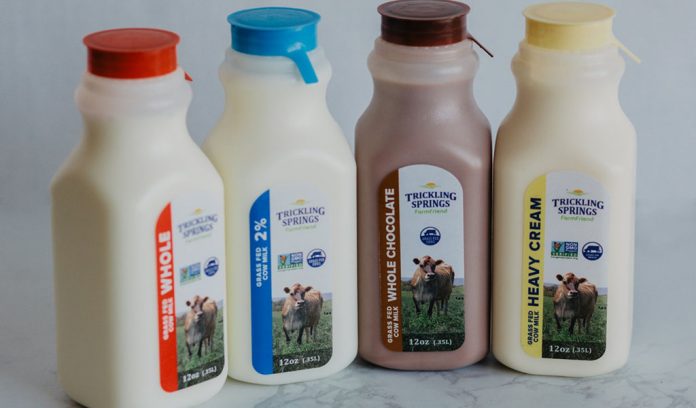
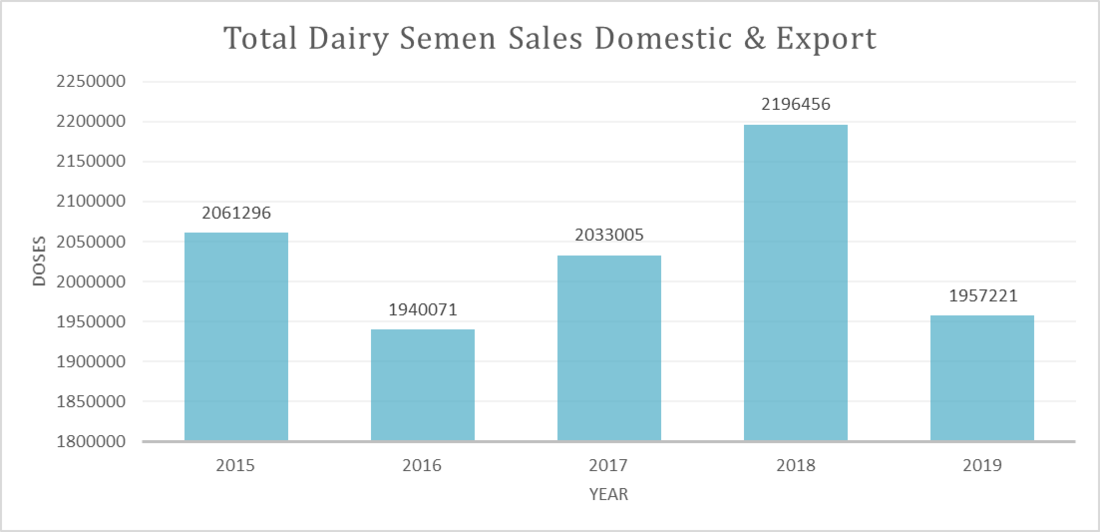
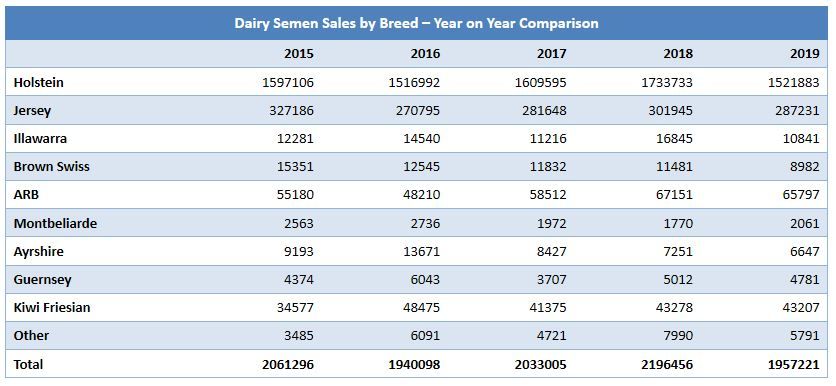
Brown, who farms with her husband Wynn at Tiroroa Farms near Matamata, said the time was right to move on after over four years on the Trust Board.

«I joined in November 2015 with a vision to provide support to women in the dairy industry to better reach their potential and to help Dairy Women’s Network become an organisation which could help drive transformational change for our industry,» Brown said.

«I feel I have had a big input into both of these areas.»

Brown was awarded a Nuffield Scholarship for 2020 which will involve significant international travel over the next 12 months.

A Dairy Women’s Network member since 2000, Brown has been leading environmental change for dairy through her roles as Chair of the DairyNZ Dairy Environment Leaders Programme, Chair of the Ballance Farm Environment Awards Alumni, and as farmer representative on the Dairy Environment Leadership Group (DELG) which oversees the Water Accord.

She was also elected to the DairyNZ board in late October last year.

An Agri-Women’s Development Trust «Escalator» Alumni and winner of the «Sustainability Superstar» in the 2018 Sustainable Business Network Awards, Brown was also a finalist in the 2017 Westpac Women of Influence Awards.

A former economist at the NZ Meat and Wool Boards Economic Service (now Beef + Lamb New Zealand) she was also involved with setting the future direction for dairy as a farmer rep on the «Dairy Tomorrow» Working Group.

Most recently Brown was appointed by Cabinet to the Essential Freshwater Independent Advisory Panel to advise the Government on the proposed NPS, NES and proposed stock exclusion regulations.

The Brown’s 700 cow, 310ha (240ha milking platform) system three farm «Tiroroa» won the Waikato Ballance Farm Environment Supreme Award in 2010 and the Fonterra Farm Source Responsible Dairying Award in 2018.

Dairy Women’s Network Trust Board Chair Karen Forlong said Brown had a wealth of knowledge that enabled her to contribute from the onset «adding depth and understanding around the changes, challenges and opportunities confronting the dairy industry.»

«The Board wish her well on her new journey with DairyNZ and as a Nuffield scholar. DWN will still be her tribe and I am sure we will all no doubt see much more of Tracy in the future.»

Brown’s departure opens up an opportunity for two positions around the DWN Board table said Forlong.

Applications for the vacant Trust Board position opened today. Find out more information here.

Source: NZ Herald

Owner of shuttered organic dairy ran $60M fraud

Philip Riehl, the majority owner of Trickling Springs Creamery, in Pennsylvania, is accused of milking investors to the tune of nearly $60 million. (Trickling Springs Creamery Facebook photo)

The owner of an award-winning organic dairy in Pennsylvania that abruptly closed its doors last fall is accused of milking investors to the tune of nearly $60 million.

Philip Riehl, the majority owner of Trickling Springs Creamery, ran a long-running fraud scheme that preyed on hundreds of Amish and Mennonite investors, according to federal prosecutors. Riehl was charged this week with securities and wire fraud.

A message seeking comment was left with his attorney Jan. 31.

The Chambersburg-based dairy opened in 2001 and produced milk, cream, butter, ice cream, yogurt and cheese. The dairy’s products were sold up and down the East Coast. Court documents said Riehl lured investors to a fund that made most of its loans to Trickling Spring and paid off older investors with money from new investors.

As of December, investors had lost $59.7 million through the Riehl Investment Program and Trickling Springs, according to court documents.

Trickling Springs closed its plant and retail location in Chambersburg last fall, writing on its Facebook page: “We would like to express appreciation to our wonderful employees for their dedication and hard work as well as the farmers who stood beside us and supported our mission. We are especially grateful to the community who has supported and loved our products throughout the past 18 years.”

The dairy filed for bankruptcy in December. Pennsylvania banking regulators previously filed a civil complaint against the dairy, Riehl and its other owners, alleging 370 violations of state securities law. Riehl and the other defendants have been excommunicated by the Mennonite church, The Washington Post reported last month.

Source: kticradio.com

Rural America Hasn’t Felt the “Great American Comeback” Touted by Trump

Citing stock market gains, recent trade deals, and low unemployment rates, U.S. President Donald J. Trump tonight touted a “great American comeback” in his third State of the Union address. But as rural communities lag behind in many respects, this hardly paints the whole picture of the American economy.

In response to the President’s address, National Farmers Union President Roger Johnson issued the following statement:

“President Trump’s rosy outlook for the American economy is not just inaccurate – it’s insensitive to the millions of rural Americans who are struggling every day just to scrape by. Farm debt crept up to $416 billion in 2019, the highest it’s been since the 1980s farm crisis. Despite trade assistance payments, many farmers haven’t been able to withstand the financial pressures: nearly 600 farmers filed for Chapter 12 bankruptcy last year ­– a shocking 20 percent spike – while thousands more decided to leave the business entirely.

“And while newly established trade deals are a bright spot for American agriculture, any tangible benefits for family farmers and rural communities are likely a long way off. This administration’s trade wars have caused real, lasting damage, both to agricultural export markets and to our reputation as a trading partner, and it will take time for both to recover. In fact, crop prices have dropped since USMCA and the phase one deal with China were signed, a strong indication that any improvements will be gradual, if at all.

 “By ignoring these problems, President Trump isn’t making them go away ­– instead, he should work to include rural America in his great comeback by rebuilding our reputation as a reliable trading partner, establishing fair and stable agricultural markets, and addressing the root causes of our current farm crisis.”

 ###

About NFU
National Farmers Union advocates on behalf of nearly 200,000 American farm families and their communities. We envision a world in which farm families and their communities are respected, valued, and enjoy economic prosperity and social justice.


WI Dairy Operations Among Top NMC Dairy Quality Winners

The National Mastitis Council has honored six producers with Platinum National Dairy Quality Awards last week, of which two are from Wisconsin. The honors were presented during a program held in conjunction with the NMC 59th annual meeting last week in Orlando.

Wisconsin recipients include Fischer-Clark Dairy Farm of Hatley and Maple Ridge Dairy in Stratford.

In addition, there were 18 gold-ranked herds recognized, including Wisconsin’s Dorner Farms, Luxemburg; Gold Star Dairy Farm, New Holstein; Kaufman Farms, Porterfield; and Kleinhans Dairy Farm, Kiel.

Silver-ranked farms for milk quality from the Badger State were Abel Acres, Loyal; Nor Family Farms, Peshtigo; and Stahlbusch Farms Eau Claire.

Now in its 26th year, the NDQA program’s purpose is to recognize dairy producers across the United States who have successfully placed a high priority on producing high-quality milk. Veterinarians, dairy plant field staff, dairy suppliers and Extension agents nominated more than 120 dairy producers for the awards.

Source: Wisconsin Ag Connection

USDA issues third and final round of trade assistance

US National Farmers Union lobbies for long-term solutions for the farm economy’s woes.

In an effort to assist farmers and ranchers affected by international trade disputes, the US Department of Agriculture (USDA) today announced that it will issue the third and final tranche of 2019 Market Facilitation Program (MFP)payments.

As family farmers face record levels of debt and depressed crop prices, these payments will help stem the tide of farm bankruptcies and closures. National Farmers Union (NFU) has consistently urged USDA to both address the programme’s inequities as well as establish more permanent mechanisms to ensure the financial viability of family farm agriculture, neither of which were included in today’s announcement. In a statement, NFU President Roger Johnson thanked USDA for the much-needed support and again pushed for longer-term solutions:

“The pain and uncertainty wreaked by President Trump’s trade wars cannot be overstated. Family farmers lost hard-won markets, millions of dollars, and countless nights of sleep agonising about how to make ends meet. While trade assistance payments have been a crucial and much-appreciated bandage for this self-inflicted wound, they aren’t a panacea – farmers will still likely be feeling the aftermath of this trade war for many years to come. Nor are these payments sustainable; the USDA can’t and shouldn’t have to help farmers just barely eke out a living. Instead, this administration should look for ways to provide certainty and fair prices so that family farmers can thrive on their own.”

Source: thedairysite.com

Australian sexed and export semen sales increase in challenging domestic market

For the first time in Australia sales of sexed semen has passed the 200,000 unit mark, increasing 12.8% year-on-year in 2019 according to the National Herd Improvement Association of Australia’s (NHIA) 2019 Semen Market Survey. Sexed semen sales now represent over 10% of semen sold domestically.

While total sales declined 10.9% from the record 2,196,456 doses sold in 2018 to 1,957,221, export sales increased by 7.8% from 263,940 to 284,658 units.

Commenting on the trends revealed in the annual Semen Market Survey, which is based on data supplied by NHIA members, Chief Executive Officer, Stephen Carroll believes external factors are responsible for the overall sales decline.

“The downturn in the market, the drought and the knock on effect on water and fodder costs has had a significant impact on the number of dairy cows being joined. Factor these higher input costs alongside the declining national dairy herd and I don’t think the headline figures are a surprise.

“After the milk price crash in 2016 we saw many people clearing out their tanks leading to a drop off in sales, and I think we are seeing a similar pattern repeated.”

An increase in sales of beef semen by 12.1% to 280,539 units mirrored the 12.8% increase in sexed semen sales to 201,356 doses.

“If you look at sexed semen and beef semen sales together, I think it highlights that Australian breeders are working smarter. The growth in both markets is something I expect to see continue.

“The reliability of sexed semen is now at a very high level and we are seeing breeders across the board focus on the top end of their herds with these products. With the current strong export market many breeders are also using sexed semen around the mid-point of their herds as well. And don’t forget that animal welfare, particularly in relation to bobby calves, is also a driver.

“With what I would call more targeted breeding, the increase in beef semen sales is to be expected. Sexed semen top end, beef semen bottom end is a breeding strategy that works for many people. At the other end of the supply chain there is an increasing demand for dairy-beef cross animals and meat which is reflected in these figures.”

Export sales have now increased year-on-year from a low of 127,998 doses in 2016 to 284,658 in the period covered by the latest NHIA survey.

“Developing an export market in any field takes a lot of time and effort. Since 2015-2016 there has been a 122.3% increase export sales of Australian semen. We are certainly becoming a more significant player in the international market, with the long-term investment approach of our export focussed members starting to pay dividends. Overseas buyers are starting to take note of Australian breeding values,” says Stephen.

In other headline figures, the high demand for A2 products by dairy consumers and premium paid for A2 progeny saw A2 sires represent 49% of the total semen sold, underlining this important selection criteria.

Sexed and export semen sales increase in challenging domestic market

Polled semen sires represent 5.4% of total semen sales with this slow increase reflective of the number of high genetic merit polled bulls available currently.

The Semen Market Survey 2019 participants were:

Dairy:ABS Australia | Agrigene | Alta Genetics | Genetics Australia | LIC/CRV | Semex | ST Genetics Australia | Total Livestock Genetics | Viking Genetics | World Wide Sires

Beef:ABS Australia | Agrigene | Alta Genetics | Genetics Australia | LIC | Semex | ST Genetics Australia | Total Livestock Genetics | World Wide Sires

About NHIA

Formed in 1995 as the successor to the Herd Improvement Organisation Victoria, The National Herd Improvement Association of Australia Incorporated (NHIA) is the industry organisation that promotes herd improvement within the Australian dairy industry, providing a range of services to its membership, and through that membership, to benefit Australian dairy farmers.

The member base includes organisations involved directly in the provision of herd improvement services, a range of activities that lead to productivity gains to farmers as well as herd industry improvement suppliers.

Dairy Industry Applauds Secretary Perdue’s Commitment to Protect Common Names; Perdue Points at GIs as Trade Barriers

The U.S. Dairy Export Council (USDEC), the National Milk Producers Federation (NMPF) and the Consortium for Common Food Names (CCFN) expressed appreciation for Agriculture Secretary Sonny Perdue’s denunciation of geographical indications (GIs) as trade barriers.

During recent meetings with European agriculture and trade officials, Secretary Perdue made it clear that the European Union (EU) must drop its aggressive campaign to confiscate common food names in order to successfully negotiate a trade deal with the U.S.

In response, USDEC, NMPF and CCFN issued the following joint statement:

“The EU’s patently unfair trade policies, including the misuse of GI protections, have resulted in a lopsided trade dynamic where trade benefits only flow one-way: toward Europe. As Secretary Perdue rightly noted, Europe’s unfair trade barriers have less to do with preserving the rights of legitimate GIs than with restricting competition from exceptional U.S. products.

“We commend Secretary Perdue for his firm stance defending the rights of U.S. farmers and food producers to use the common names consumers know and love. Dismantling EU trade barriers that drive the dairy deficit and cause undue harm to our industry must remain a top priority in negotiations with the EU.”

The National Milk Producers Federation, based in Arlington, VA, develops and carries out policies that advance dairy producers and the cooperatives they own. NMPF’s member cooperatives produce more than two-thirds of U.S. milk, making NMPF dairy’s voice on Capitol Hill and with government agencies. For more, visit www.nmpf.org.

The U.S. Dairy Export Council (USDEC) is a non-profit, independent membership organization that represents the global trade interests of U.S. dairy producers, proprietary processors and cooperatives, ingredient suppliers and export traders. Its mission is to enhance U.S. global competitiveness and assist the U.S. industry to increase its global dairy ingredient sales and exports of U.S. dairy products.

The Consortium for Common Food Names (CCFN) is an independent, international non-profit alliance whose goal is to work with leaders in agriculture, trade and intellectual property rights to foster the adoption of high standards and model geographical indication guidelines throughout the world. Those interested in joining can find information at www.CommonFoodNames.com.

Send this to a friend