Archive for News – Page 73

Fonterra chairman to step down

The chairman of dairy giant Fonterra has confirmed that he will retire from the position in November.

In a note to the co-operative’s farmer-owners and unitholders, John Monaghan said the decision was the next step in the Fonterra board’s development and succession planning.

“After 11 years as a director, and having seen through the introduction of our new strategy, operating model, and with our debt reduction efforts well progressed, the timing is right for me and for the co-op.

“The board is committed to a planned chair succession that provides Miles (Miles Hurrell) and his senior management team with the governance stability and confidence they need to maintain the co-op’s momentum”, said Monaghan.

Fonterra would announce a chair-elect by no later than August this year. 

The timeline would allow for a period of handover before Monaghan retired from the board, it said.

Under Fonterra’s constitution, its chairman must be selected from its pool of seven elected farmer directors on the board. 

Fonterra said it was also making good progress on securing a replacement for former independent director Simon Israel, who retired from its board in November last year.

Source: newshub.co.nz

EXPO Bulle Announces 2020 Cancellation

Due to the health situation in connection with the coronavirus, the organizing committee was forced to cancel the 2020 edition from March 27th and 28th, 2020 at Espace Gruyère in Bulle.

EXPO Bulle, the rendezvous of Holstein and Red Holstein breeding, had announced an exceptional 2020 edition. For the first time, the best of the Swiss Fleckvieh breed should have been judged.

On March 9, the organizing committee met for an extraordinary meeting and made the difficult decision to cancel the 2020 edition. This decision was made after a survey among breeders which animals had registered. They were able to comment on whether they would participate in an exhibition “closed to the public”. The exhibition falls under the decision of the Federal Council, which prohibits events with meetings of over 1,000 people. The feedback from the breeders was clear: the presence of over half of the registered animals could not be guaranteed.

Under these circumstances and because the health situation does not suggest that the preventive measures will be relaxed, the organizing committee had to regret this “dairy cattle breeding festival” with great regret.

The Organizing Committee is particularly saddened by this situation, but believes that protecting the population must be a priority. It hopes to see breeders, sponsors and spectators again on March 26th and 27th, 2021. This 2021 edition will be the highlight of the World Holstein Conference, which for the same reasons was postponed to the end of March 2021 in the 2m2c congress center in Montreux.

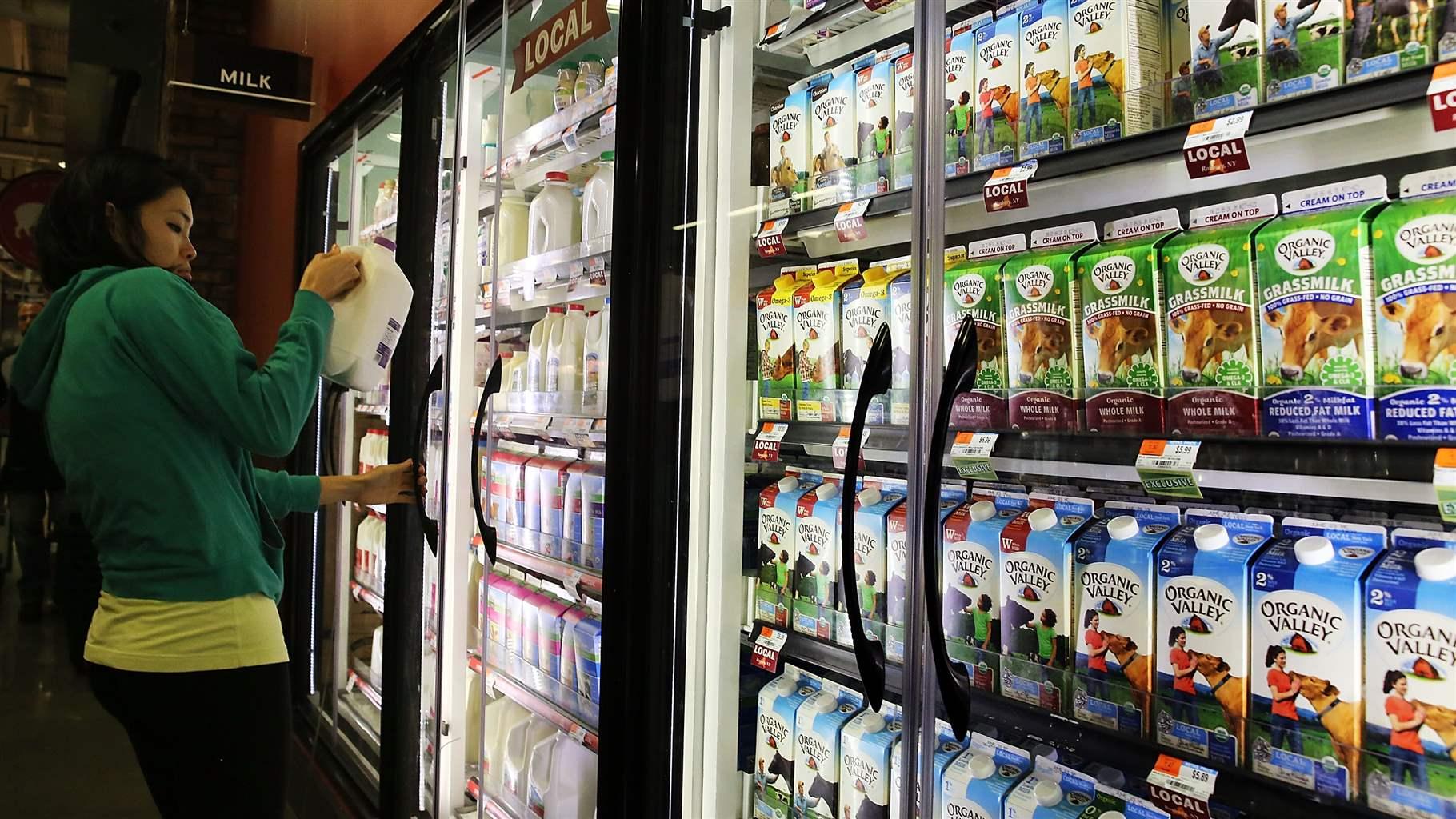
Stop milking it, dairy farmers tell plant-based competitors

What’s milk? For Jason Gallion, the only full-time farmer serving in the Maryland state Senate, the question is a no-brainer.

“It’s always been assumed the definition of milk is that it’s from a mammal,” said Gallion, 43, whose first job at age 15 was milking cows on his uncle’s dairy farm.

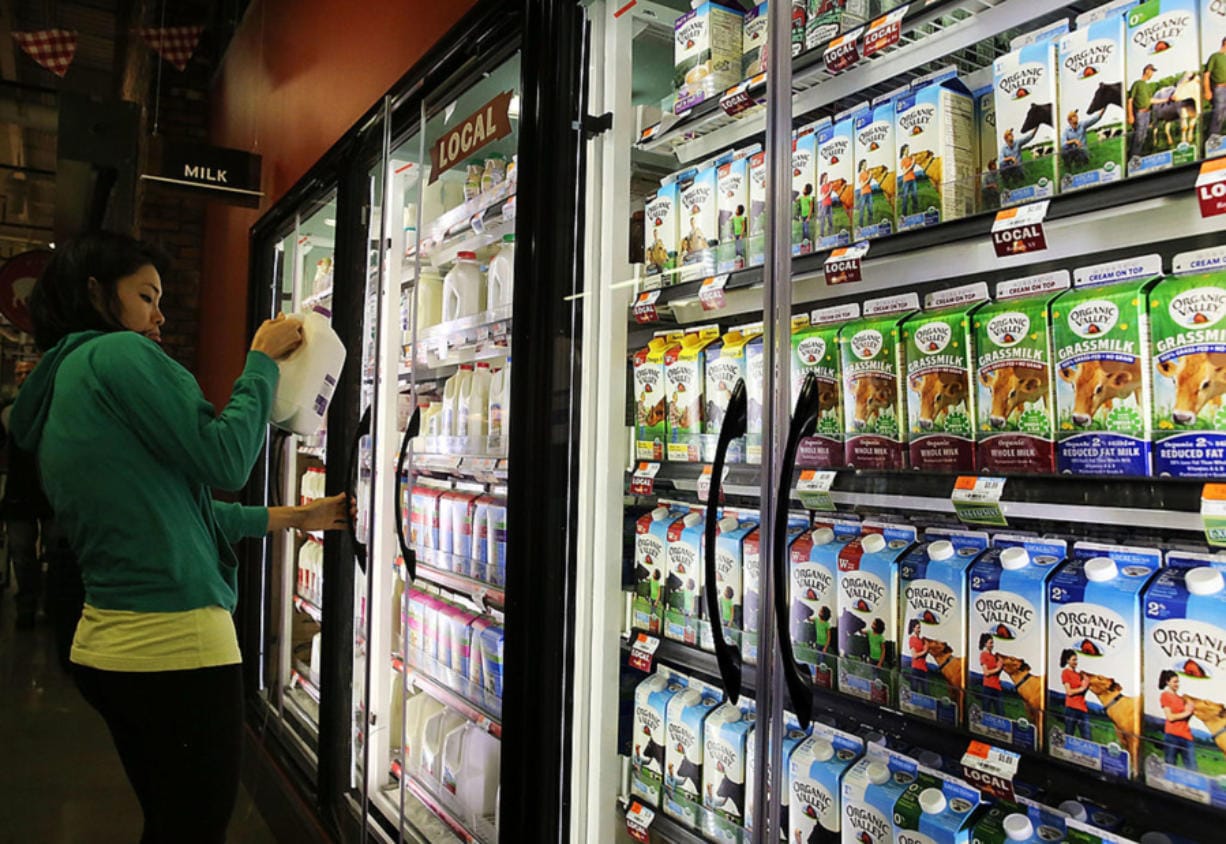
But defining “milk” has become more complicated and contentious as almond, oat, soy and other plant-based alternatives compete for customers and dairy farmers struggle.

The dairy industry wants the federal government to restrict use of the “milk” label to fluid “obtained by the complete milking of one or more healthy cows.” Legislation is pending on Capitol Hill, and the U.S. Food and Drug Administration is investigating the issue. In the meantime, dairy advocates are pressing their cause in state legislatures.

North Carolina was the first state, in 2018, to enact a law that could limit — eventually — what can be called milk. To avoid disruption of interstate commerce, the law won’t take effect unless 11 of 14 other states pass similar measures.

“If there’s anybody in the whole wide world who deserves to make a living, it’s dairy farmers,” said North Carolina Agriculture Commissioner Steve Troxler, who took the idea for a state labeling law to lawmakers. “They milk cows two or three times a day, every day. They’re very devoted to what they do.”

There’s no intention to take plant-based beverages off shelves, Troxler said, but “‘milk’ needs to come out of the label. That’s the first step. There also needs to be clear nutritional labeling.”

In Maryland, Gallion, a Republican, was in office only a few months last year when he heard about North Carolina’s law. He had milked 60 Holsteins and Jerseys on his farm from 1999 to 2004 before switching to farming beef cattle and hay. Maryland’s dairy farmers, he decided, needed protection, too.

“I’m for truth in labeling,” Gallion said. “Plant-based companies are making their money off the good name of milk. It’s a fairness thing.”

Gallion’s bill passed 36-10 in the Senate and 118-21 in the House, after the addition of the contingency that it will not take effect unless 11 other states pass similar measures by 2029.

But some lawmakers staunchly oppose the bills.

“Most consumers are intelligent enough to know it’s coming from plants, not a cow,” said Indiana state Rep. Justin Moed, a Democrat who represents an urban district in Indianapolis. He was an outspoken opponent of an Indiana milk and meat labeling bill last year that failed.

“Who is being confused that oat milk is coming from a cow?” Moed said in an interview. “Is peanut butter coming from a cow? Valvoline could be mad ‘olive oil’ is called oil. Who’s to say what oil is? I don’t know where this ends.”

Milk labeling bills made it to several state legislatures this year, including Kentucky, New York, Oklahoma, Virginia and West Virginia. The Wisconsin Assembly passed two milk labeling bills last month, after holding them over from last year. They are pending in the state Senate.

Last year, Louisiana, Nebraska and Pennsylvania passed resolutions urging the federal government to act, according to the National Conference of State Legislatures.

Almost every year since 1975, Americans have drunk less cow milk than the year before, often because they believe plant-based milks are healthier, kinder to animals or more environmentally friendly.

The average U.S. resident consumed 146 pounds of milk in 2018, according to the USDA, down from 247 pounds in 1975.

Lower consumer demand for cow milk and generally lower prices paid to farmers for milk have forced many to leave the dairy business. Nationally, the number of dairy farms fell to 54,599 in 2017 from 64,098 in 2012 — a decline of nearly 15%, according to the USDA.

But Clay Detlefsen, senior vice president for regulatory and environmental affairs for the National Milk Producers Federation, said the goal of the labeling effort is not to aid dairy farmers. “This is about consumers and nutrition,” he said.

U.S. Department of Health and Human Services and Department of Agriculture guidelines call for adults to consume the equivalent of 3 cups of dairy products a day. The government recommends “fat-free and low-fat (1%) dairy, including milk, yogurt, and cheese, or fortified soy beverages (commonly known as ‘soymilk’).”

The guidelines note that “other products sold as ‘milks’ but made from plants” such as almond, rice, coconut and hemp, may “be consumed as a source of calcium.” But “their overall nutritional content is not similar to dairy milk and fortified soy beverages (soymilk).” The guidelines are updated every five years and a review is underway.

instagram

A survey conducted by market research firm Ipsos in 2018 for the milk producers group found consumers mistakenly believed dairy milk and plant-based milk alternatives have the same nutritional content. Asked about protein, 77% of respondents thought plant-based milk had the same or more protein than dairy milk.

In fact, the nutritional content of plant-based beverages sourced from nuts, legumes, seeds and grains varies depending on the source and the amount of water and other additives used in preparation. Fat-free and lactose-free milk typically have 9 grams of protein in a cup, compared with 1 gram of protein in a cup of almond milk. Soy milk, however, has almost the same nutritional value as cow milk.

But cow milk typically has more sugar than unsweetened plant-based milks. In addition, some people are allergic to cow milk or find it hard to digest, so they choose plant-based milks. Nutritionists advise consumers to compare nutrition labels for calcium, Vitamin D and other nutrients.

“Everybody realizes you can’t milk an almond, but they’re not aware of the nutritional differences,” said Steven C. Ingham, administrator of Wisconsin’s Division of Food and Recreational Safety.

The Plant Based Foods Association, headquartered in San Francisco, actively fights meat and milk labeling efforts on behalf of producers of alternative foods.

“I’ve never seen an issue take off like this one,” longtime food issues lobbyist Dan Colegrove said of milk and meat labeling efforts. As a consultant to the association, Colegrove testifies at legislative hearings around the country.

He argues labeling regulations for plant-based milks are unnecessary, “a solution in search of a problem,” and violate First Amendment free speech protections for companies to label their foods with “clear, non-misleading terms.”

The association’s voluntary guidelines for labeling recommend that labels clearly identify the main ingredient as part of the word milk and be labeled as “plant-based milk,” he said.

“Our member companies selling milk alternatives already use qualifiers such as ‘non-dairy,’ ‘dairy-free,’ ‘plant-based,’ and-or ‘vegan’ to make their labels clear to consumers,” Colegrove said in written testimony to a Virginia Senate committee in February.

But Vermont dairy farmers believe plant-based milk labels, marketing and even placement in grocery stores are confusing to consumers, said Vermont Agriculture Secretary Anson Tebbetts, who grew up listening to Red Sox games while milking cows on his family dairy farm and had a career in TV broadcasting before state government.

“They don’t need to be chilling products that don’t need to be chilled. It’s wasted energy, if nothing else,” he said. “Labels should be accurate and truthful.”

Source: columbian.com

NE Iowa Dairy Invites Guests To ‘Sleep With The Cows’

Lynn Bolin and her husband Dan operate New Day Dairy GuestBarn near Clarksville in Northeast Iowa. It’s a dairy that invites visitors to almost literally sleep with the cows.


“I grew up in the city and so when I married Dan, I was introduced to the farm life and when came back to the farm after living abroad and traveling around the world, we realized that we wanted to share  a piece of the farm with others,” Lynn Bolin said.  “And so when we were building our new farm facility in 2015, this idea kinda came to be.”

It’s fairly easy to find a bed and breakfast somewhere in Iowa that’s housed in a former dairy barn, but this may be one of the very few where you can actually spend the night in a guest room at a working farm overlooking the cows.

This is one of two viewing stations in a loft overlooking the herd of cows at New Day Dairy GuestBarn. (Photo by Pat Blank, Harvest Public Media)

Iowa dairy farmers, like the rest of the agriculture community, had a challenging year in 2019. That’s caused some to rethink their operation in order to stay in business.  The Bolins represent a growing number of Iowa dairy producers trying to match their income with the cost of production. 

Dairy Program Manager for the state Department of Agriculture, David Brown, said they’re battling low milk prices, large supplies, and lost export markets. On top of that many consumers have taken traditional milk off the menu, especially for breakfast.

“They grab a protein bar or something and out the door they go, they just don’t have, like we used to when we were younger, we sat down with the family and all our brothers and sisters, now that’s changed quite a bit,” Brown said.

Another thing that’s changed is many dairies have now incorporated robots to help on the farm.

“We have five different types of robots in the state of Iowa and it’s a way for these younger families to have a family life. Let’s say their daughter or their son has a concert or a basketball game or whatever, they have the opportunity to go to those now, the robots, the automation, frees up some family time,” said Brown.

That’s certainly true back a New Day Dairy where Dan, aka “Dairyman Dan,” said they’ve affectionately named their robot Rita.

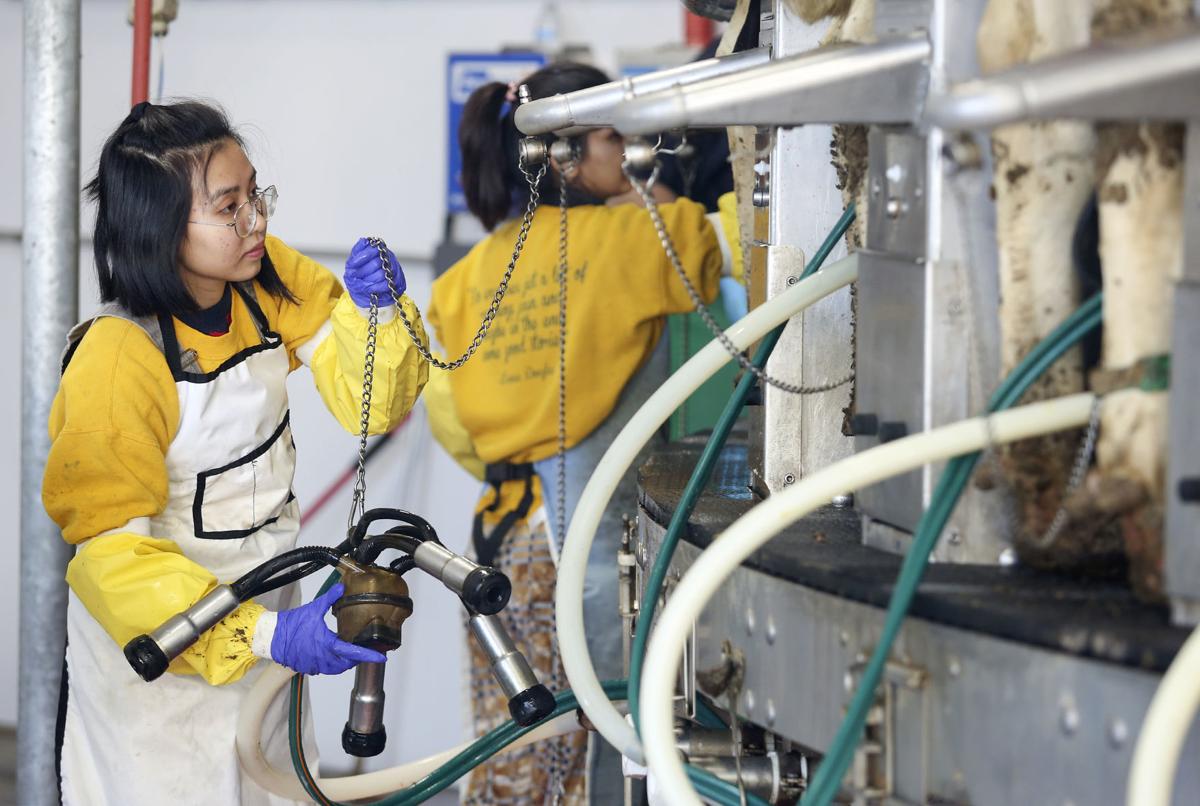
“And Rita is really better than any employee because she’s 24/7, all the time, consistently exact, milkin’ the cows which is great for the cows and great for me,” he said.

And Lynn Bolin added those who stay at the guest house can see Rita in action. 

“Because in the loft space, there’s two large loft windows that look directly into the barn, so it’s 24/7 cow gazing and at 3 a.m. if you get up to go to the bathroom, you can wander out and find out what the cows are doing,” she said. “We have six cows that are painted six different colors so that you can follow where they’re going in the barn and kinda their life.  Because even those each one of our cows has a name, I don’t even know each one of them by looking at them.”

An area near one of the bedrooms at New Day Dairy GuestBarn. (Photo by Pat Blank, Harvest Public Media)

And if just looking at the herd of 150 cows isn’t enough, guests can take on the 90-minute “Be a Dairy Farmer Challenge.”

“Looking under the hood of Rita the milking robot and seeing all the chips and air valves behind that automated milking,” said Dan Bolin. “It’s going out in the tractor, feeding a bottle to a newborn calf, it’s getting to scrape manure off the crossovers and the walkways, the constant keeping the barn clean. It’s basically walking with me and getting up close and personal, it’s probably scratching a few cow heads, patting necks, and getting licked.” 

The Bolins welcomed their first overnight guests in January and Lynn says in the coming months they hope to triple the space with two additional bedrooms and baths.

“And so through the summer we’re hoping to reach a 30 percent occupancy, kinda this summer into next fall once we have all of the spaces open and then grow by 10 percent the next two years with a 50 percent occupancy which is an industry standard a lot of times in that lodging, so on the business side of things that’s kind of our goal for growth,” said Lynn Bolin.

Some other Iowa dairy producers have been able to grow their operation by using the milk to make cheese, ice cream and butter. All hoping to avoid being like one of the 97 dairies in the state that went out of business last year.

Source: netnebraska.org

225 animals perish in the fire of a farm in Kamouraska

Yvan Drapeau owns the farm with his brother Christian. he says he was awakened by an alarm message from one of his buildings. Resident nearby, the farmer was quickly on site. The building housing part of his cows was in flames. Strong winds propagated tysons to a 2nd building in which was another part of his herd. A total of 225 animals perished in the flames.

At the height of the fire, some 50 firefighters were deployed to the scene. The barracks of Saint-Philipe-de-Néri, Saint-Pascal and Sainte-Hélène intervened first. The director of the Intermunicipal Fire Safety Service of St-Pascal Éric Lévesque explains that he called on the KamEst management grouping together the barracks of Saint-Joseph, Saint-André and Saint-Alexandre since the farm is located outside the aqueduct network.

Yvan Drapeau added that the fire could have been started by welding work currently underway on his farm. The fire chief is more cautious, believing that there are several hypotheses as to the origin of the incident but that the criminal track has been ruled out.

Jeannicole Farm won the prestigious title of Commander of the National Order of Agricultural Merit in 2014.

Source: TVA

Cache-Valley LHeros 2331 “Dezi” Passes

The extremely popular show cow Cache-Valley LHeros 2331 “Dezi” passed away this past weekend.  One of her very passionate former owners Norman Nabholz shares his thoughts:

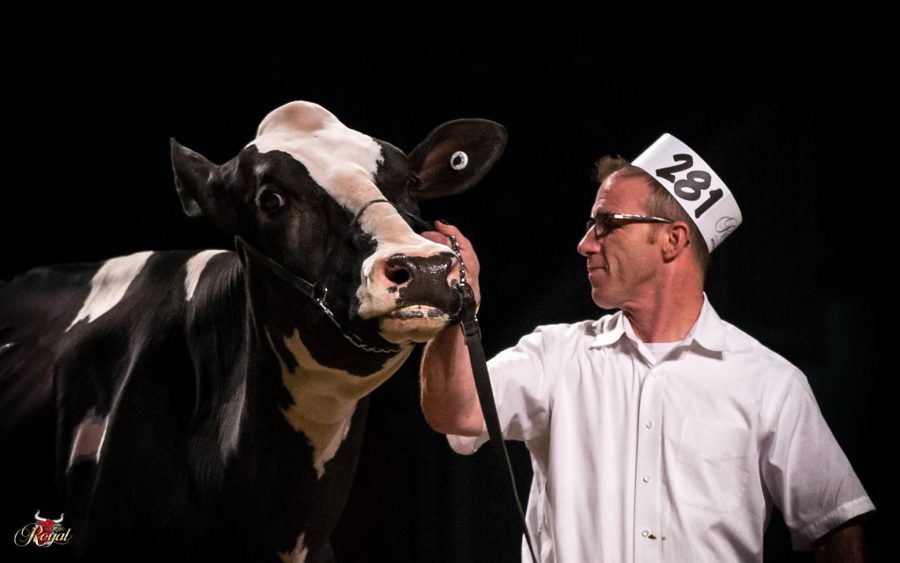
There are certain times that are ingrained in memory and this past Wednesday morning is one of them. Terminal 1, gate B28, O’hara airport ready to board my plane to Virginia and received a text from Ernie informing me that Dezi had passed away in the night. I am sure the lady on my flight thought I had lost a loved one (I had) . Every cow that we have owned has a story with several chapters and Dez was no different. From the first time, we saw her (what is that cow, Mandi is leading at Madison) to seeing her win that year at the Royal, thinking damn she is good. In Las Vegas, we had the chance to buy her. Thank You cousins Patti and Larry for helping us. God has blessed us more than he should have with some great cows. None have we adored as much as Dez. To us she was our ideal cow. Per breakdowns, we have never had one with fewer faults than Dez. EVER! While she never stepped foot on Neon Road, we knew she was getting the care afforded to very few cows. There is no place where a cow gets better care than at Ernie and Terri’s from the beautiful pastures and the unreal barn. It ain’t luck. No cow was ever doted on by her caretakers as Dez. NONE. We took and shared more pictures of Dez than any cow we have ever owned. Thank You phone cameras. You couldn’t get a bad picture of her. She never had a bad moment. Winning a show is irrelevant to us but being a part of a great cow is rewarding. Whenever we own a cow we always have a prevailing thought. What would dad have thought of her.? Oh my god, he would have loved that cow. As Gert says “What’s not to love ?” Our partnerships with Ernie have lasted now more than twenty-five years and with each partnership, we have agreed that they should be finite so a couple of years ago we divided up Dez and her family. We received two daughters that are now both beautiful young cows (one is scored VG 88 at 2Yrs. and the other will be scored this Spring and is so much like her momma it is kinda scary). We own our branch of the Dezi’s with cousins Larry and Patricia Corki Larsen and we look forward to trying to recreate one just like Dez herself. So will we ever have another like her ? Chances are slim but we will sure keep trying and when we see one we will compare her to our Dez. So for now, thanks pretty lady for the memories. You were one in a million to us.

‘This isn’t the way I wanted it to end’: Dairy farm shuts down after 148 years

One at a time for six days, the 27 livestock trailers pulled up to the barn at Adams Dairy Farm, as if part of an extended funeral receiving line. 

They came from other parts of Wisconsin, and Iowa and New York, picking up youngstock first, then their share of 600 cattle.

When the last rig eased over to State Highway 93 on Tuesday, dairy farming ceased on this expanse of Trempealeau County land that’s been in Paul Adams’ family since shortly after the Civil War. 

“It’s amazing how long it takes to wind something like this down,” he said while watching the farm’s last milking session before those cows were sorted and walked up ramps into the trailers. 

Adams Dairy went organic in 2002, so most of the tractor-trailer rigs were headed to an organic operation east of Dallas with about 2,000 cattle. The last four rigs headed to a slaughterhouse in Omaha, a move Adams said was upsetting but unavoidable because he couldn’t find another buyer for those cows. 

Equipment on the farm, which is about $8 million in debt, is going up for auction and the land will be listed for sale with a real estate firm.

“This isn’t the way I wanted it to end, but at least it’s a definite stop,” Adams said.

At 68 years old, he has been a dairy farmer since he graduated from high school in 1970 and completed the industry’s “short course” at the University of Wisconsin-Madison. Back then, his parents milked 30 cows.

Today, he and his wife JoAnn live in a home they inherited that overlooks the farm but isn’t part of it. Their daughter Becky lives in the farmhouse where she grew up. She has worked with her father for 15 years and was poised to take over the business as he neared retirement. She managed the herd and supervised nearly 20 employees.

“Becky has been pretty amazing, watching out for everybody,” Adams said.

Now, she and her two children will lose their home. The plan is to move to Altoona, closer to Eau Claire, and figure the next steps out.

“Everything she had worked for, the equity in the farm, is gone,” Adams said. 

Even then, there might not be enough revenue from the liquidation to pay off the crushing debts. If that happens, a bankruptcy filing could be in order.

“I’m at the point where I’m not trying to save anything,” Adams said.

Taking the right steps 

The collapse of family dairy farms has been changing the landscape of Wisconsin — literally and figuratively — for years. Wisconsin branded itself America’s Dairyland 80 years ago, and family farms are ingrained in the state’s identity.

But many of those operations have been losing money or are barely hanging on. In 2019, about 820 dairy farms shut down in the state, a rate of more than two a day. Low commodities prices, intense competition, declining consumer interest in milk and an oversupplied marketplace have conspired against farmers.

The collapse of Adams Dairy, however, generated some shock waves given it had followed the script for survival.

Through the years, the Adamses grew the size of their herd to take advantage of economies of scale. They also added land; today they own 800 acres and lease 300 more. They found a niche to specialize in, and their Holsteins and Brown Swiss were from award-winning genetics. The family invested in new machinery and kept the farm modern. They did everything by the book and then some.

Becky Adams even traveled to Mexico to better understand where many of her workers came from — the families they left behind, the dreams they had of returning, the challenges they faced so far from home.

“When you see the quality of the barns, the cattle and everything going on here, this was clearly a family farm that was looking to the future,” said Danielle Endvick, communications manager for the trade group Wisconsin Farmers Union, as she watched the cows being loaded onto the trailers. 

Even as the milk price improved some this year, more dairy farmers have called it quits, too deep in the hole to benefit.

“It’s hard to watch these losses and have a lot of hope,” said Endvick, whose family lost its dairy farm years ago. 

“There was no doubt that I would be the next generation running that farm. But I remember my dad telling me point blank, ‘These are the numbers and here’s why it’s not going to pencil out,’ ” Endvick said.

For a time, outlook was bright

Not long ago, the market for organic milk was growing at a rapid clip. Adams raised cattle feed on land where the nutrients and natural processes were kept in a careful balance. His cows grazed on postcard-perfect hillsides. 

“I saw a beautiful future in organic,” Adams said. “I learned that if you manage the soils right, you’re going to have healthier crops, healthier cows and healthier people.”

For quite a while, the business thrived. The price the farm received for its milk was high enough to cover the additional costs of organic farming — mostly higher feed costs — and assure a nice profit. The milk was shipped to a bottler in New Jersey, and the farm kept growing.

Then, in November 2017, Adams lost his contract with that processor when it found it could get milk cheaper from farms with thousands of cows in Texas. 

He found another milk buyer, in Rochester, Minnesota, but the price kept falling as the organic market became saturated by big farms in the Southwest. At least once at the Rochester plant, he saw tanker trucks with Texas license plates. 

A handful of mega-sized dairies in the Southwest now produce more certified organic milk than all of Wisconsin’s 450 organic dairies combined, according to U.S. Department of Agriculture data.

Critics contend the industrial farms skirt the rules calling for, among other things, a minimum amount of grazing time for cows in order for the milk to be certified organic.

“It’s really hurting the organic label, which is bad because it took many years to get it where it was three or four years ago,” said Darin Von Ruden, an organic dairy farmer from Westby and president of Wisconsin Farmers Union. 

“As the industry got bigger, I thought that some of the rules would save us from the competitive downhill rush. But it hit us anyway,” Adams said.

“The system is broken. We can’t modify it. There has to be an overhaul,” he added.

‘We have pretty well lost everything’

Two years ago, Adams put the family farm up for sale. But there were no offers and the farm’s outlook worsened as the milk price remained below the cost of production amid a deep industrywide slump.

Adams drained his retirement savings to plant corn for the cattle and keep the business afloat. Then his local bank sold his loans to an out-of-state investment firm that demanded higher monthly payments and he lost another milk contract.

Earlier this year, “it became impossible to continue,” Adams said. “We dragged down our equity to the point where we are now hoping to sell the entire business and come out at net zero.”

It bothers him that the industrial dairies have come to control much of the organic milk market by hauling in massive amounts of organic cattle feed from other places and getting around the grazing requirements. Yet he understands the cost pressures; his own farm nearly qualified as a concentrated animal feeding operation, or CAFO, and the rules that come with that designation.

“I am not really that negative on the organic CAFOs,” he said. “I just thought that consumer demand for better milk would stay ahead of the demand for cheaper milk. But it didn’t.”

Lowering standards was unacceptable

 He might have saved the business by lowering his expenses and standards over the years. But that would have gone against what he believes in, Adams said. 

“I have never been a low-cost producer,” he said. “I want to treat my cows right and my people right. I know the quality of the milk we are producing.”

Adams says he doesn’t know what he’s going to do now that he isn’t working on the farm seven days a week. 

“One thing I will miss is harvest time … getting to play with the big toys,” he said. 

At one time, there were four other dairies on a mile stretch of road between his place and Eleva, a village of about 650 people on the Buffalo River. Now there are none.

Becky Adams, who studied dairy science at UW-Madison, says she may pursue a career in natural health practices for people, not livestock. 

“My original plan was to become a veterinarian and not come back to the farm. But while I was at UW, I realized I wanted to work with the healthy cows on our farm rather than everyone else’s sick cows,” she said. 

At one point, tears welled up in her eyes while she helped sort and load the cows onto the caravan of trailers leaving the farm for the 16-hour trek to Dallas.

“I will miss the friendly ones, my pets,” she said.

Will the 36-year-old dairy farmer who worked 15 years on her parents’ farm ever get back into the business? 

“Right now I am pretty emotional,” she said. “I don’t think so, but time heals wounds. We’ll wait and see.”

Join us at the Midwest Dairy Symposium March 16 in Platteville

Gov. Tony Evers, Journal Sentinel reporter Rick Barrett and dairy experts from across the state will meet March 16 at the University of Wisconsin-Platteville to discuss the dairy crisis and — just as important — solutions for Wisconsin farmers. Travis Forgues of Organic Valley Cooperative will be the keynote speaker.

Source: Milwaukee Journal Sentinal

World Holstein Conference postponed until March 2021

Due to current developments relating to the new Coronavirus, it has been necessary to postpone the 15th World Holstein Conference, General Assembly and Classifier Workshop by one year to 21-27 March 2021.

The WHFF Council and the Swiss Federations, Holstein Switzerland and swissherdbook, have today assessed the current world situation regarding coronavirus and regret to inform you that the WHFF Conference, General Assembly and Classifiers workshop planned for 23-28 March 2020, will be postponed until March 2021.

Details will follow in the coming weeks, however, rest assured that the Council is working towards the best outcome possible for registered participants.

While both the organizing associations Holstein Switzerland and swissherdbook, and the WHFF, greatly regret having been obliged to make this decision, they consider it to be the most appropriate solution.

The existing registrations for the 2020 conference remain valid for the 2021 conference. Although, in accordance with the Terms & Conditions, it is not possible for any refunds to be made, registration fees, which have already been paid, are to be credited to their respective participants for the following year. While no statement can be made at this point with regard to hotel costs, the organizers are presently in negotiation with local hotel providers.

We would like to offer our sincere thanks to all organizers, breeding associations, partners, and sponsors for their extensive involvement in the planning of the conference up to this point, and look forward to continued mutual cooperation for the delivery of the 15th World Holstein Conference, General Assembly and Classifier Workshop on 21-27 March 2021!

Thank you for your understanding and support of this difficult decision. Protecting human health concerns during the current issue is a larger priority.

The organizers:
World Holstein Friesian Federation
Holstein Switzerland
Swissherdbook

Top Dairy Industry News Stories from February 29th to March 6th 2020

Feature Article:

Top News Stories:

Environmental groups hit another Washington dairy with intent to sue letter

Another dairy in the Lower Valley has been threatened with a lawsuit over allegedly contaminating the environment.

Environmental groups CARE, Friends of Toppenish Creek and the Center for Food Safety have sent View Point Dairy in Sunnyside a letter of intent to sue in federal court.

The environmental groups accuse the dairy of mismanaging animal manure. Dairies typically store animal waste in lagoons and apply it to land as fertilizer.

The Monday letter triggers a 90-day period in which the dairy can respond by agreeing to fix the alleged problems or be sued.


Dairy owners Bill and Lisa DeRuyter couldn’t immediately be reached for comment.

Several dairies have been threatened with litigation or sued by the environmental groups in recent years.

They’ve sued two Outlook dairies — SMD LLC and DBD Washington LLC — and threatened to sue Sunnyside Dairy.

Those dairies have entered settlement negotiations with the groups.

In January, the groups sent a letter of intent to Majestic Dairy in Outlook.

The environmental groups accuse dairy operators of contributing to high levels of nitrates in Lower Valley groundwater.

Dairy industry officials dispute that, saying the high nitrate concentration here existed long before the industry became a major footprint in the agriculture industry.

Nitrates naturally occur in soil but heavy use of fertilizers — including animal waste — and leaky septic tanks can lead to higher nitrate concentrations.

The ongoing litigation involving dairies tipped off in about 2015, when an EPA study linked a handful of Lower Valley dairies to groundwater contamination.

Those dairies, known as the dairy cluster, agreed to sweeping changes in the way they operate under a federal consent decree after being sued by CARE.

Industry leaders now question the study, saying that it wasn’t given a full peer review and unfairly blames the dairies.

Industry leaders are asking the EPA for a full peer review or to conduct another study.

U.S. Rep. Dan Newhouse also has asked for a full peer review.

Source: Yakima Herald

What Is ‘Let Dairy Die,’ and Why Is It All Over the Democratic Race?

In Nevada, the protesters took the stage and interrupted Senator Bernie Sanders as he addressed a crowd of supporters last month.

In Los Angeles, they disrupted Senator Elizabeth Warren’s stump speech this week.

And on Super Tuesday, activists campaigning against the dairy industry had their highest-profile moment yet when two women rushed onstage and crashed former Vice President Joseph R. Biden Jr.’s rally in Los Angeles, screaming and holding images of a wide-eyed calf.

Photos and videos of Mr. Biden’s wife, Jill, and a senior campaign adviser, Symone Sanders, pulling the women offstage circulated online and on television morning shows, leading perplexed viewers to ask, “What is ‘Let Dairy Die,’ and why is it all over the Democratic primary race?”

It is a campaign led by Direct Action Everywhere, a coalition of animal rights activists who are trying to stop an industry that they say enslaves and tortures animals at the expense of the environment. The group has for years released videos, many taken surreptitiously, trying to expose bad practices in the meat industry.

“The dairy industry is one of the cruelest forms of animal exploitation and our governments are endorsing it,” a Facebook post that describes the organization’s mission statement says. “We must call attention to this injustice.”

The group encourages “rescues” of animals in captivity and public protests, like the one on Tuesday. Activists have chained themselves together in front of Whole Foods Market grocery stores and staged “die-ins” at Chipotle restaurants, stormed food courts around the world and chanted in the streets to get attention for their cause.

But the race for the Democratic presidential nomination has given the activists an especially public platform, and many of them have risked arrest and vitriol to broadcast their message.

“Last night was the perfect place and the perfect time to get eyes on a really troubling issue that is almost entirely overlooked in the political discourse of the nation,” said Matt Johnson, a spokesman for Direct Action Everywhere.

It was the sixth political campaign event in three weeks the group disrupted, Mr. Johnson said. The activists have focused on Mr. Sanders, Mr. Biden and Ms. Warren because of their past support for the dairy industry, he said.

The disruption at the Biden rally raised concerns that the major candidates in the race were not getting enough security.

On Wednesday, Representative Bennie Thompson, the chairman of the House Committee on Homeland Security, called on House leaders and the acting secretary of homeland security to meet immediately about setting up Secret Service protection for Mr. Biden and Mr. Sanders.

“Americans deserve to know that the major candidates for president are protected from all threats to their safety,” wrote Mr. Thompson, a Democrat from Mississippi.

In Carson City, Nev., Mr. Sanders was forced to step aside when a woman grabbed a microphone from him. He yanked it back, but she grabbed a different microphone.

Mr. Sanders walked away from the lectern as she said, “Bernie, I’m your biggest supporter, and I’m here to ask you to stop propping up the dairy industry.”

Three other women, one of them topless, walked up to the lectern holding photographs of animals, and then were shooed offstage. Mr. Johnson said that three women who appeared without shirts and bras at the event were arrested and charged with indecent exposure; they were each freed on $2,500 bail.

In Los Angeles, Ms. Warren appeared more accommodating when two women rushed onstage to hold up signs. Shesmiled at them, perhaps a little tightly, as they yelled from the stage.

The two protesters who stormed the stage at Mr. Biden’s rally on Tuesday were identified as Sarah Segal 48, and Ashley Froud, 21, by Direct Action Everywhere in a statement.

“We’re asking him to stand with animal rights advocates, environmental activists and ordinary citizens — and against the inherent violence of the dairy industry,” Ms. Segal said in the statement. Mr. Johnson said she and Ms. Froud were let go after being removed from the stage.

A spokeswoman for Dairy Management Inc., which represents dairy farmers, said on Wednesday that rushing a political candidate onstage was “unsettling and counterproductive to finding shared ground.”

She added that the activists were misrepresenting dairy farming, which she described as “a community comprised of farms of all shapes and sizes that share a commitment to caring for their animals, the land and producing nutritious dairy foods for families worldwide.”

The activist campaign comes as the dairy industry has struggled against many factors, including the rise in dairy-free and plant-based alternatives and a nationwide drop in milk consumption.

And the issue has become more prominent with the backing of the actor Joaquin Phoenix, who provoked the ire of dairy farmers last month when he railed against the industry during the Academy Awards.

“We go into the natural world and plunder it for its resources,” he said as he accepted the Oscar for best actor. “We feel entitled to artificially inseminate a cow and when she gives birth, we steal her baby even though her cries of anguish are unmistakable. And then we take her milk that was intended for her calf and we put it in our coffee and our cereal.”

Source: NY Times

Dairy Industry Urges FDA to Prohibit the Use of Traditional Dairy Terms on Plant-Based Products

  • In a February 2020 letter, a group of 58 lawmakers urged FDA Commissioner Stephen Hahn to prohibit plant-based alternatives from labeling their products with traditional dairy terms.  The lawmakers noted that, unless FDA starts enforcing its existing standards of identity for milk and prohibit the use of terms, such as “milk” on plant-based products, the agency will only reinforce consumers’ misconceptions that plant-based milks provide the same nutritional content as animal-based milk.
  • In their letter, the lawmakers referenced recent opinions, which warned the public not to use plant-based substitutes in place of cow’s milks for young children.  For example, a report issued by the American Academy of PediatricsAmerican Heart AssociationAcademy of Nutrition and Dietetics, and American Academy of Pediatric Dentistry urged parents to avoid feeding young children plant-based milk products, as they do not contain the same nutrients as cow’s milk.  In addition, USDA guidelines have noted that plant-based products sold as “milks” may be consumed as a source of calcium; however, USDA also stated that their overall nutritional content is not similar to dairy milk.
  • Many of the lawmakers who signed the letter to the FDA also support the Dairy Against Limitations and Replacements of Yogurt, Milk, and Cheese to Promote Regular Intake of Dairy Everyday Act (“DAIRY PRIDE Act”). The DAIRY PRIDE Act, introduced in March 2019, would designate foods that make an inaccurate claim about milk contents as “misbranded” and subject them to enforcement of labeling rules.  Moreover, the DAIRY PRIDE Act would require FDA to issue guidance for nationwide enforcement of mislabeled imitation dairy products within 90 days of its passage and would require FDA to report to Congress two years after enactment.  In late January, Tom Balmer, the Executive Vice President of the National Milk Producers Federation, testified before a congressional subcommittee on behalf of the bill.  We will continue to monitor any developments.

Source: The National Law Review

Wisconsin Holstein members celebrate Registered Holsteins in Fond du Lac

The Fond du Lac County Holstein Breeders, in coordination with the Wisconsin Holstein Association (WHA), hosted the annual Adult Holstein Convention at the Radisson Hotel & Convention Center in Fond du Lac. More than 150 Holstein breeders from across the state were in attendance for meetings, speakers and tours, and to receive recognition for outstanding accomplishments in 2019.

The convention kicked off Friday afternoon with WHA committee meetings. Following these meetings, Jodi Hoynoski, Executive Director of Holstein Identification and Member Services at Holstein USA, along with Holstein USA Board Members, Bob Webb and Pete Dueppengiesser, hosted a Holstein USA town hall forum. Members heard updates from the national association and were able to ask questions about programs and industry topics.

At the Friday evening meal, the 2019 Wisconsin Top Performer cows were announced. Recognized were cows owned by Tom Kestell, Ever-Green-View, Waldo; Wargo Acres, Lodi and Legacy Farms, Rueben Schloneger, Shell Lake. The overall Top Performer was Ms Arjeta-ET EX-91, owned by Tom Kestell, Waldo. Ms Arjeta-ET produced 60,239 pounds of milk, 1,994 pounds of fat (4.1 percent) and 1,663 pounds of protein (2.9 percent) in 305 days at 7-06.

Also recognized were owners of cows that have produced more than 300,000 and 400,000 pounds of lifetime milk. There were 73 new 300,000-pound cows and four 400,000-pound cows in 2019.

This year during the Friday night banquet, the association honored the 2020 Wall of Fame Inductees. This year’s inductees were person, William Hageman, Sr.; bull, Jenny-Lou Mrshl Toystory-ET; and cow, Wesswood-HC Rudy Missy-ET.

The late William Hageman, Sr., Fond du Lac, was honored as the Wall of Fame person. Hageman and his wife Saloah, farmed in Fond du Lac until 1992. After that time, Hageman worked with area farmers as a nutritionist and had a passion for working with young dairy farmers.

As a Wisconsin Holstein member, Bill was a devoted director and served as board President in 1988 as well as a delegate to the National Convention many times. In 1960, Bill was honored as the Wisconsin Holstein Outstanding Holstein Boy and runner-up on the national level. The family had many All-Wisconsin winners and bred the 2007 Wall of Fame sire, Hagemans Tempo, who was a popular bull in the Tri-State line-up. He and Saloah bred 62 Excellent cows including Hagemans Top Citron EX-95.

Bill also volunteered on the World Dairy Expo ethics committee where he helped measure topline hair for cattle entering the showring for more than 20 years.

This year’s Wall of Fame bull was Jenny-Lou Mrshl Toystory-ET bred by Jenny-Lou Holsteins, the Breunig family of Sauk City. Toystory set milestones at Genex Cooperative where he produced 2.4 million doses of semen worldwide. He has more than 500,000 daughters in over 50 countries across the globe. Today, his sons, like Domain, are still in pedigrees throughout the industry. Along with being a great producer, Toystory created high customer satisfaction. He had exceptional sire fertility and created daughters that milked well and looked good doing it, something dairy breeders appreciated.

His dam, Jenny-Lou Patron Toyanne, scored VG-89 GMD DOM and made more than 160,000 pounds of milk lifetime. She also produced 20 VG and 3 EX daughters. About 20 percent of the Jenny-Lou herd traces back to Toyanne.

Wesswood-HC Rudy Missy-ET, EX-92, is the 2020 Wall of Fame Cow. Missy was bred by Steve Wessing and Steve Hayes of Fond du Lac County. Steve and Cheryl Wessing started farming when they purchased 18 cows. One of these, Milkstsein Citation Della, was their first Very Good cow. The Della cow family was very influential in the Wessing herd with generations of high scoring, high producing cows.

The Wessings sold their herd in 1994 following a barn fire. The first lot in this sale was a VG-87 Elton 2-year-old that went back to Citation Della. Their neighbor, Steve Hayes, took interest in the cow and the Wessings and Hayes partnered on the young cow who later developed into an EX GMD DOM cow with sons in AI and Japan. Elton Mimi was contracted to Startmore Rudolph but a heifer calf was born, Wesswood-HC Rudy Missy-ET.

Missy was sold to Pine-Tree Dairy of Ohio on the 2003 Wisconsin Holstein Convention Sweetheart Sale. Here she would make exceptional records, move up to 92 points and put 18 sons into AI. Sires like Supersire, Mogul, Sid, Headliner, Monterey, AltaOak, Achiever, Silver and Balisto, as well as polled sires Relief-P, Shine-P and Powerball-P, come from the maternal line founded by Missy.

Missy also produced 42 EX or VG daughters, who in turn have produced multiple generations of contract cows. The current generation of Rudy Missys, both male and female, continue to meet the demands of the market.

The rest of the program was devoted to motivational speaker Bill Jartz, the voice of Lambeau Field. Jartz entertained the crowd with stories of growing up in the country, sporting events and what it’s like working at Lambeau Field. Following the guest speaker, an all-ages Dairy Bowl contest took place with seven teams competing in the event. The teams had a variety of age range and skill level and provided fun for all involved.

Attendees at Saturday morning’s early bird session heard about the scoring experiences of former Holstein USA classifiers Dan Cnossen and Roy Hetts. The two discussed cows and bulls they’ve scored and sires that have had the most impact on the Holstein breed. Everyone in attendance enjoyed hearing from these highly regarded classifiers.

The annual WHA business meeting was held and included committee reports from board members. Rick Adams of Delavan was newly elected to serve a three-year term on the WHA Board of Directors. Erica Ullom, Bloomer; Craig Krohlow, Black Creek; and Sara Feldmann, Howards Grove, were all re-elected to a second three-year term.

Following an awards luncheon to recognize 40- and 50-year members of the association and distinguished junior members, the afternoon was highlighted by a farm tour to Kampy Holsteins, Brandon. The Kamphuis family milks 300 Registered Holsteins and in 2018 had the top BAA herd in the nation for their herd size of more than 150 cows. Tour attendees also saw some of the inner workings at STgenetics and one of the bulls housed on-site, as well as a tour of Agromatic.

Honored at the Saturday evening banquet was this year’s Distinguished Young Holstein Breeder, Marlowe Nelson Distinguished Service, and Distinguished Holstein Breeder award winners. This year’s Distinguished Young Holstein Breeder award recognized Trent and Kelsey Hendrickson, Blanchardville.

The couple started their Trent-Way Genetics herd with just 20 cows and a partnership with Registered Holstein breeder Dave Erickson in 2011. Today, the couple milks 259 cows that are housed in a freestall barn. The breeding focus at Trent-Way Genetics is high type animals that are very functional with good production for all dairying styles.

Trent and Kelsey use the top 10 percent of their herd to continue growth and development of future generations with the remaining animals used as recipients for IVF/ET calves. This top 10 percent includes animals that are high-type, show choice, or high genomic females in the red or red carrier selection.

The Hendricksons have had success in the show ring and in putting bulls into stud. Along with this, the herd as a rolling herd average (RHA) of 24,868 with 3.9% fat and 3.2% protein. Their current BAA is 109.5 and the herd has 40 Excellent, 97 Very Good and 46 Good Plus cows with none lower.

This year’s Distinguished Holstein Breeder was Emerald Acres, the Ossmann Family, and Dr. Scott Armbrust. Paul and Debbie Ossmann, Ted and Lana Ossmann, Don and Joyce Ossmann, from Emerald Acres, and Dr. Scott Armbrust, De Pere, have bred and worked with a number of high-profile cow families while focusing on cows with high production, components, and characteristics like good feet and legs and udders.

Over the years, Emerald Acres has grown from within through strategic breeding from a number of purchases. The group has bred 87 Excellent females, 10 Excellent males, 25 multiple “E” females and has had 304 animals produce more than 100,000 pounds of lifetime milk. The nearly 500-cow herd at Emerald Acres has an RHA of 27,518 pounds of milk, 4.6 percent and 1263 pounds of fat, and 3.2 percent and 882 pounds of protein.

One of the most notable cows to call Emerald Acres home was Ripvalley NA Bell Tammy EX-94-2E DOM GMD. Since 1988, 1500 descendants of Tammy have been born at Emerald Acres.

Some of Tammy’s most well-known sons include Curtmaid Emerald Target, Emerald-Acr-SA Tonic, Emerald-Acr-SA Tribute, Trump (Japan), Emerald-Acr-SA Techniq, Mulatte (Germany) and Emerald-Acr-SA Titan. Another notable descendant is Emerald-Acr-SA T Baxter, a Blitz son x VG-87 Mtoto x EX Mandel x Emerald-Acr-SA Tulip EX-94, a granddaughter of Tammy. Both Tammy and Baxter were inducted into the Wisconsin Holstein Association’s Wall of Fame in 2018.

Emerald Acres has worked with a number of other notable cows with mating from these families reaching across the nation and around the world.

Kevin Jorgensen, Waupun, was honored with the Marlowe Nelson Distinguished Service Award. Jorgensen has spent 28 years in the AI industry and now serves as a Senior Sire Analyst covering the Midwest and Western States for Select Sires Inc. He also oversees the Showcase Selections and Red & White programs.

Jorgensen is a former president of the Wisconsin Holstein Association, serving from 2016 to 2018. During this time, he helped boost the scholarship program to what it is today while unifying representatives from the Holstein, Jersey and Red & White breeds to form the executive show committee. This group oversees the execution of the spring and championship shows. In 2008 he was a valuable part of the National Convention Tour Committee and this past summer was a driving force for a successful National Convention Sale.

He has generously donated time to youth throughout his life and currently serves on the World Dairy Expo board.

Also honored at the Saturday evening banquet were the committees and volunteers who helped make the 2019 National Holstein Convention a success. Outstanding advertisements in the Wisconsin Holstein News in 2019 were also recognized. Taking top ad honors for the year was the Hildebrandt Family Farm.

The WHA Board of Directors met at the conclusion of the convention to elect officers for the upcoming year. Pam Selz-Pralle of Humbird will serve as president. Vice President will be Steve Endres, Waunakee, and Erica Ullom of Bloomer will serve as secretary for a fourth year. Sara Feldmann, Howards Grove, and Ryan Weigel, Platteville, were also elected to serve on the Executive Committee.

The Wisconsin Holstein Association holds its annual convention each year in February. For more information on this or other events, visit www.wisholsteins.com, or contact Director of Communications, Mara Budde, at 1-800-223-4269 or marab@wisholsteins.com.

About Us

Wisconsin Holstein is a not-for-profit membership organization with the purpose of promoting the Wisconsin Registered Holstein Breed and its breeders and owners. For more information visit the WHA website at www.wisholsteins.com.

Holstein Foundation Graduates Young Dairy Leaders Institute Class 11

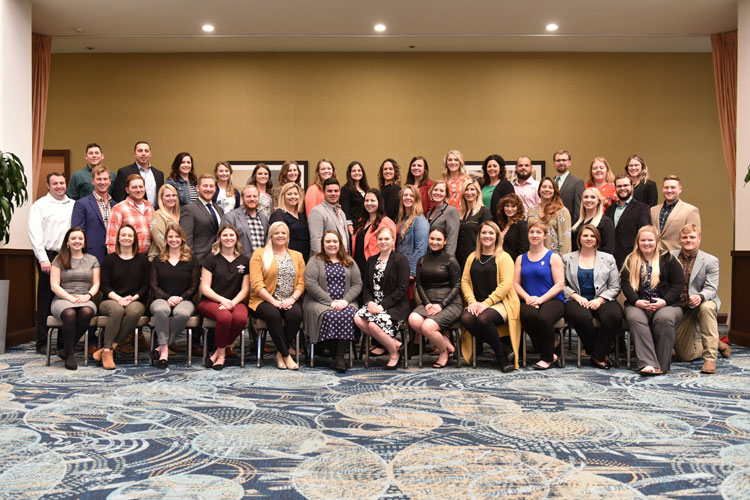
More than 45 young adults from across the U.S., Canada and Puerto Rico recently graduated from the Holstein Foundation’s eleventh Young Dairy Leaders Institute class, with Phase III being held February 5-8, 2020 in Phoenix, Ariz. Building on the skills they learned during their first meeting last February, along with what they have practiced and accomplished over the past twelve months, the class participated in workshops covering topics such as advanced media relations skills, conflict management, and the public policy process.

On their final feedback survey, participants were asked to write one sentence about what YDLI meant to them. Following are just a few of the comments that summarize the YDLI experience:

  • YDLI has been an impactful experience that has challenged me to go out of my comfort zone and be a lifelong advocate for the dairy industry.
  • YDLI has expanded my network as well as my personal skills not only for dealing with telling our story but also skills applicable for taking home to the farm.
  • Inspiring and impactful, a program that makes me want to go out and do more. The confidence gained has been unbelievable.

The theme for this YDLI Class was “Ready, Set, Grow.” During the Phase III program, each class member gave a presentation on the leadership and advocacy assignments they completed in their home communities in the past 12 months. Featured guest speakers and workshops included:

  • Joan Horbiak conducted advanced media training, focused on mastering interviews with the media and telling dairy’s story to consumers
  • Dr. Wes Jamison led a session on conflict resolution, teaching attendees several effective strategies for communicating with others who may have opposing viewpoints. Dr. Jamison also moderated a session with guest Gene Baur on the topic of animal welfare. Baur is the president and co-founder of Farm Sanctuary, the nation’s largest farm animal rescue organization.
  • Pete Kappelman, YDLI Class 1 alum, provided an evening keynote, encouraging class members to use their untapped leadership potential to make an impact. He inspired the class to take on new leadership roles and to get involved in organizations. The next day, he led a workshop on becoming an effective board member.
  • Bonnie Burr, YDLI Class 1 alum, led a session on understanding and influencing public policy and gave participants hands-on experience with the policy process.
  • Ty Bennett led a powerful closing session, with his talk about “The Power of Influence.” His message left the class inspired and feeling empowered to continue their leadership journey and have a lasting influence on those they interact with.

The Holstein Foundation and Young Dairy Leaders Institute participants would like to sincerely thank the many gracious sponsors who made the experience possible.

Platinum sponsors: Allflex USA, Inc., CHS Foundation, Holstein Association USA, Northeast Agricultural Education Foundation, Inc., and Zoetis.

Gold-level sponsors: Cargill, Farm Credit Northeast AgEnhancment, Hoard’s Dairyman, Farm Credit, John Deere, and Land O’Lakes, Inc.

Silver-level sponsors: Amaferm – A BioZyme Brand, and Dairy Management Inc.

Bronze-level sponsors: COBA/Select Sires and GEA Farm Technologies, Inc.

Dairy Producer Scholarships are presented on behalf of Center of Dairy Excellence, Dairy Farmers of America, Horace Backus Scholarship Fund, Pennsylvania Dairymen’s Association, and Robert Cain Scholarship Fund.

Read more about Class 11’s YDLI journey on the official YDLI blog at www.ydli.blogspot.com/

With questions or for more information about YDLI, visit www.holsteinfoundation.org, or contact Holstein Foundation Programs Manager Jodi Hoynoski at 800.952.5200, ext. 4261 or by email, jhoynoski@holstein.com.

The Holstein Foundation is a 501(c)3 organization founded in 1989. It is headquartered in Brattleboro, Vermont, and shares office space with its parent organization, Holstein Association USA, Inc.

The Holstein Foundation’s education, leadership development and outreach programs serve both youth and young adults across the country who are involved with all breeds of dairy cattle.

Spring Dairy Carousel is April 4-11

Time to plan for the New York Spring Dairy Carousel April 8-11 in Syracuse at the New York State Fairgrounds. The 45th edition, sponsored by the New York Holstein Association, will include shows for all major dairy breeds along with top-notch Holstein and Protein Breed sales.

Cattle can begin arriving on Monday, April 6.  All cattle must be in place by Wednesday at 1:00 p.m.  The Best of Blackfire Tag Sale will take place Wednesday April 8 at 7:00 p.m.-Friday April 10 at 8:00 p.m. 

Thursday morning at 8:00 a.m. the New York Juniors take center stage with the New York Spring Junior Holstein Show judged by Pat Lundy of Granville, NY.  Continuing on Thursday are the youth contests sponsored by Farm Credit East. The Showmanship Contest will begin at 11:00 a.m. with two rings running simultaneously.  The Richard Keene Memorial Judging Contest will start at 2:00 p.m.  Both the Showmanship and Judging contests are open to any and all youth attending Carousel.   The Protein Breeds Sale will be held in the Poultry building at 3:00 p.m. An exhibitor dinner sponsored by American Dairy Association Northeast in partnership with Dominos will take place at 5:00 p.m. in the Dairy Cattle Barn.  Rounding out the evening will be the Hall of Fame Collection Sale at 6:30 p.m. featuring Holsteins and Jerseys managed by Eaton Holsteins and Borderview Genetics.

Friday morning 8:00 a.m. finds the Red & Whites in the Coliseum for Keith Topp of Botkins, OH to evaluate.  At 8:00 a.m. Yan Jacobs of Quebec will place the Ayrshire Show. Pat Lundy will return to the ring at 10:30 to judge the Milking Shorthorn Show. In the afternoon at 1:30 p.m. Topp will be placing the Brown Swiss and Jacobs will be judging the Guernsey Show at 2:00 p.m.

The Carousel culminates on Saturday, April 11 with the Northeast Spring National Holstein Show judged by Yan Jacobs and the Jersey Spring Show judged by Keith Topp both starting at 8:00 a.m.

Cattle will again be released at the end of each breed show. A list of classes and the entry forms are available online at http://nyspringdairycarousel.fairentry.com OR by calling the New York Holstein Association office at 607-273-7591. Information is also available on New York Holstein’s website, www.nyholsteinevents.com. Early entry deadline is March 17th.

If you’re planning to attend, hotels in the area include: Clarion Fairgrounds, 315-457-8700; Best Western Fairgrounds, 315-484-0044; Comfort Inn Fairgrounds, 315-453-0045;; and Western Ranch Motel, 315-457-9236. Make your reservations as soon as possible since rooms sell out quickly. Mention the New York Spring Dairy Carousel for special rates.

Camper/RV hookups are available at $35 per day. Reservations, camper license number, and pre-payment are required. 

Food is available in the Coliseum and admission is free, so come one and all to the 2020 New York Spring Dairy Carousel.

For any other questions or for online entries & information go to  http://nyspringdairycarousel.fairentry.com or contact Cattle Superintendent Alan Danforth at 518-231-6597 or New York Holstein Association Executive Manager Kelly Reynolds at 920-728-1596.

Monday, April 6

8:00 am Barns open- Cattle may move in

Wednesday, April 8

1:00 pm- All cattle in place

7:00 pm- Best of Black FireTag Sale opens

Thursday, April 9

8:00 am- NY Jr. Holstein Show

11:00 am- Youth Showmanship Contest

2:00 pm- Richard Keene Memorial Judging Contest

3:00 pm- Protein Breeds Sale

6:30 pm- Hall of Fame Collection Sale featuring Holsteins & Jerseys, managed

    by Eaton Holsteins & Borderview Genetics

Friday, April 10

8:00 am- Red & White Show & Ayrshire Show

10:30 am- Milking Shorthorn Show

1:30 pm- Brown Swiss Show

2:00 pm- Guernsey Show

8:00 pm- Best of Black Fire Tag Sale closes

Saturday, April 11

8:00 am Northeast Spring National Holstein Show & Jersey Show

Cattle released at conclusion of show


Judges:

Yan Jacobs- Cap Sante, Quebec………………….. Holstein/Ayrshire/Guernsey

Keith Topp- Botkins, OH………………….. Jersey/ Red & White/Brown Swiss

Pat Lundy- Granville, NY………..………….NY Jr. Holstein/Milking Shorthorn


Area hotels:

(Hotels may recognize special Carousel rates with the words “Spring Dairy Carousel”)

Clarion Fairgrounds…………(315)-457-8700

Best Western Fairgrounds….(315)-484-0044

Comfort Inn Fairgrounds…..(315)-453-0045

Western Ranch………………(315)-457-9236


Camper hookups -$35/day each:  Reservations, camper license # and prepayment required.


Contact information:

Alan Danforth, Cattle Superintendent: (518)-231-6597

Kelly Reynolds: (920)-728-1596

Information: www.nyholsteinevents.com

Online entries:  http://nyspringdairycarousel.fairentry.com

Who Are the Anti-Dairy Protesters Who Interrupted Joe Biden’s Big Night?

A coalition of activists determined to end the dairy industry has been using the Democratic primaries to get attention.

A protester against the dairy industry was dragged offstage in Los Angeles by Symone Sanders, a senior campaign adviser for former Vice President Joseph R. Biden Jr.
Credit…Josh Haner/The New York Times

In Nevada, the protesters took the stage and interrupted Senator Bernie Sanders as he addressed a crowd of supporters last month.

In Los Angeles, they disrupted Senator Elizabeth Warren’s stump speech this week.

And on Super Tuesday, activists campaigning against the dairy industry had their highest-profile moment yet when two women rushed onstage and crashed former Vice President Joseph R. Biden Jr.’s rally in Los Angeles, screaming and holding images of a wide-eyed calf.

Photos and videos of Mr. Biden’s wife, Jill, and a senior campaign adviser, Symone Sanders, pulling the women offstage circulated online and on television morning shows, leading perplexed viewers to ask, “What is ‘Let Dairy Die,’ and why is it all over the Democratic primary race?”

It is a campaign led by Direct Action Everywhere, a coalition of animal rights activists who are trying to stop an industry that they say enslaves and tortures animals at the expense of the environment. The group has for years released videos, many taken surreptitiously, trying to expose bad practices in the meat industry.

“The dairy industry is one of the cruelest forms of animal exploitation and our governments are endorsing it,” a Facebook post that describes the organization’s mission statement says. “We must call attention to this injustice.”

The group encourages “rescues” of animals in captivity and public protests, like the one on Tuesday. Activists have chained themselves together in front of Whole Foods Market grocery stores and staged “die-ins” at Chipotle restaurants, stormed food courts around the world and chanted in the streets to get attention for their cause.

But the race for the Democratic presidential nomination has given the activists an especially public platform, and many of them have risked arrest and vitriol to broadcast their message.

“Last night was the perfect place and the perfect time to get eyes on a really troubling issue that is almost entirely overlooked in the political discourse of the nation,” said Matt Johnson, a spokesman for Direct Action Everywhere.

It was the sixth political campaign event in three weeks the group disrupted, Mr. Johnson said. The activists have focused on Mr. Sanders, Mr. Biden and Ms. Warren because of their past support for the dairy industry, he said.

In Carson City, Nev., Mr. Sanders was forced to step aside when a woman grabbed a microphone from him. He yanked it back, but she grabbed a different microphone.

Mr. Sanders walked away from the lectern as she said, “Bernie, I’m your biggest supporter, and I’m here to ask you to stop propping up the dairy industry.”

Three other women, one of them topless, walked up to the lectern holding photographs of animals, and then were shooed offstage. Mr. Johnson said that three women who appeared without shirts and bras at the event were arrested and charged with indecent exposure; they were each freed on $2,500 bail.

In Los Angeles, Ms. Warren appeared more accommodating when two women rushed onstage to hold up signs. Shesmiled at them, perhaps a little tightly, as they yelled from the stage.

The two protesters who stormed the stage at Mr. Biden’s rally on Tuesday were identified as Sarah Segal 48, and Ashley Froud, 21, by Direct Action Everywhere in a statement.

“We’re asking him to stand with animal rights advocates, environmental activists and ordinary citizens — and against the inherent violence of the dairy industry,” Ms. Segal said in the statement. Mr. Johnson said she and Ms. Froud were let go after being removed from the stage.

A spokeswoman for Dairy Management Inc., which represents dairy farmers, said on Wednesday that rushing a political candidate onstage was “unsettling and counterproductive to finding shared ground.”

She added that the activists were misrepresenting dairy farming, which she described as “a community comprised of farms of all shapes and sizes that share a commitment to caring for their animals, the land and producing nutritious dairy foods for families worldwide.”

The activist campaign comes as the dairy industry has struggled against many factors, including the rise in dairy-free and plant-based alternatives and a nationwide drop in milk consumption.

And the issue has become more prominent with the backing of the actor Joaquin Phoenix, who provoked the ire of dairy farmers last month when he railed against the industry during the Academy Awards.

“We go into the natural world and plunder it for its resources,” he said as he accepted the Oscar for best actor. “We feel entitled to artificially inseminate a cow and when she gives birth, we steal her baby even though her cries of anguish are unmistakable. And then we take her milk that was intended for her calf and we put it in our coffee and our cereal.”

Source: nytimes.com

Wisconsin 2030: Can the family farm survive?

It’s been challenge after challenge for Northeast Wisconsin’s dairy farmers.

“Right now, we’re kind of in the economic downturn,” fourth-generation farmer Kelly Oudenhoven said.

She and other farmers are pushing through tough times, hoping for better ones.

“You have to stay optimistic because if you don’t stay optimistic, you won’t survive,” Oudenhoven said.

She’s optimistic to one day pass her farm to a fifth generation – her kids. Others have seen that dream fade.

“There’s been a huge exit out of the dairy industry because of the tough times,” Extension Brown County’s Liz Binversie said.

When Binversie started at Extension Brown County, there were roughly 190 dairy farms in the county. Five years later, there are now between 120 and 130.

“It’s just been really tough,” Binversie said. “All sorts of industries, whether it’s beef farm or dairy farm, anything like that, cropping, cash cropping, the prices that farmers are getting for their crop isn’t that great.”

The question becomes, ten years from now, can Wisconsin’s family farm survive? Experts think it can if farmers adapt.

“It takes a lot of family members to run a larger farm, so it’s not that we’re seeing these corporate farms where there’s no family tie whatsoever,” Binversie explained. “What we’re seeing more and more are multi-generation farms. We’re seeing the grandpa, dad, and son or daughter on the same farm.”

“I think you’re still going to see the family dairy farm, but i think you’re going to see more multi-family dairy farms,” Oudenhoven said.

Moving forward, efficiency could help farmers greatly. Technology is now a key part of the industry.

“Looking back to where we came from, not that long ago farmers were using horses to plow the fields, and now we’re looking at having tractors that can drive themselves,” Oudenhoven said. “That’s not too far off in the future.”

Oudenhoven has already implemented GPS technology on her cows and is exploring more technology like robotic milking. Those measures help reduce manual labor..in an industry where the average farmer’s age is 57 years old.

“I think we’re going to see more technical things, more robotics, to take the ease of that manual labor,” Oudenhoven said.

It’s something the next generation will need to continue i the farming industry is to move toward ‘Wisconsin 2030.’

Source: nbc26.com

MASTERRIND Exclusive Sale – The Recipe for Success

The stables, hallways, and seats of the exhibition hall “Niedersachsenhalle” were crowded with approximately 3,500 visitors for the top-event MASTERRIND EXCLUSIVE AUCTION on the night of February 26th, 2020.

All 44 animals offered were sold at the auction. Visitors came from Germany, Russia, Spain, the Netherlands, Denmark, Switzerland, and Austria.  The sales quota of 100% confirmed the ideal selection of sales animals. Outstanding first-calf heifers, highly interesting type animals, and excellent genomic animals left nothing to be desired for the customers.

Not only the buyers but also the onlookers got their money’s worth.  The show started with a spectacular Blind Audition. An impressive silhouette video was another highlight of the show.

The true highlight of the show was, however, the phenomenal sales pice of the top-seller Amber, a homozygous polled red Holstein sired by Solitair P with a gRZG of 165. She was sold for 75,000 Euros to a visitor from the Netherlands. Amber descends from the breeding farm Thun GbR, Loxsted.

The second-highest sales price was achieved by WEH Lana from Jürgen Hintze’s dairy operation in Trebel. She is truly an exceptional animal with her gTPI of 2,869, her gRZG of 158 and her interesting pedigree. On top of that, she brings embryo contracts worth 30,000 Euros to the table. She was purchased by a buyer from Lower Saxony.

Cocktail P, sired by Builder P and descending from the Lacrest Cosmopolitan VG-87 maternal line, was another top-selling animal. She was sold by Hermann & Jörg Ekkel GbR from Itterbeck to a Danish customer.

Red Holstein heifer Safira (sired by Redburst) from Frank Nesslage in Nortrup was the best first-calf heifer of the event. A dairy farmer from Lower Saxony won the exciting bidding duel and purchased this promising heifer for 8,000 Euros.

Due to the outstanding interest of the customers and the excellent auction contingent, an average sales price of 9,045 Euros was achieved.

Gold Chip from Prelude Spottie Family Wins Grand at Schau der Besten in Germany

Grand Champion Fux Seattle and Reserve champion Loh Lilli Brax (photo: Masterrind)

Fux Seattle has won the Schau der Besten in Verden, Germany. A fith calf Gold Chip daughter, Seattle is a daughter of the well-known DT Spottie, from the Prelude Spottie family. Reserve Grand went to the Braxton daughter Loh Lillie Brax, while Intermediate Champion was OHB Dream, an Atwood daughter. 

Dairy giant Fonterra chairman to retire

Struggling New Zealand dairy giant Fonterra announced Thursday that chairman John Monaghan will retire in November at the end of his three-year term.

Monaghan said he was departing as part of succession planning at the world’s largest dairy exporter, which posted a record NZ$605 million ($380 million) net loss last financial year.

“Having seen through the introduction of our new strategy, operating model, and with our debt reduction efforts well progressed, the timing is right for me and for the co-op,” he said in a statement.

Fonterra, a collective that buys milk and dairy products from New Zealand farmers then sells them on to foreign firms, is refocusing on its core business after a string of poorly performing offshore investments.

It has resulted in huge writedowns on underperforming overseas assets, particularly in China. Fonterra said a chairman-elect would be named by August, allowing a handover period before Monaghan’s departure.

In its latest market update released last month, Fonterra said underlying earnings were “tracking well,” but warned novel coronavirus was creating a “very fluid and uncertain” situation.

It also warned there could be further one-off writedowns as it reviews its assets.

Fonterra is due to release interim results on March 18.

Source: news.yahoo.com

Two dairy protesters storm stage during Biden’s Super Tuesday speech in California

A pair of anti-dairy protesters nearly barreled into Joe Biden on stage during the Democratic presidential candidate’s Super Tuesday speech in Los Angeles.

“Let dairy die!” chanted the two the women who stormed the stage, holding signs with the slogan as the crowd rained down boos.

While a security guard swarmed the first protester, yanking her off stage, the second appeared to be wrangled by Biden’s senior advisor, Symone Sanders.

Animal rights protesters have made the rounds on the democratic campaign trails, pushing for candidates to end their support of the industry.

Two protesters, including a topless woman with “let dairy die” painted on her bare chest, confronted Bernie Sanders in Nevada last month, with one swiping a mic from his podium.

“Bernie, I’m your biggest supporter, and I’m here to ask you to stop pumping up the dairy industry and to stop pumping up animal agriculture,” one said. “I believe in you…”

Sanders quipped, “This is Nevada. There’s always a little excitement — at no extra cost.”

Biden on Tuesday picked up from where he left off of his speech celebrating a host of victories across the country, as viewers on social media commended Biden senior adviser Symone Sanders’ swift spring to action.

“Y’all see Symone Sanders come off the line like a pro bowl linebacker. Geesh,” one Twitter user, BIlly Honor, wrote.

“Symone Sanders for Secretary of Defense,” another joked.

Source: NYpost

Dairy farm to host vegan-friendly farm tour

The Ethical Dairy, the UK’s largest cow with calf dairy farm, is to host a farm tour specifically designed for vegans and people following plant based diets. 

The one-off event has been developed to create a ‘safe space’ where visitors with concerns about farming can ask questions directly to the farm team. 

It’s part of a programme of events and workshops created by the farm and cheese maker in response to requests from members of the public for more information and hands-on experience. Other events include cheese making workshops, a milking viewing and a farm tour. 

Wilma Finlay, of The Ethical Dairy, said: “This event is about breaking down barriers and recognising that there are many different reasons why people make the dietary choices they do, and as producers of food we are respectful of the choices our customers make. For example, we have many regular customers who are themselves following plant-based diets but buy dairy produce for their children or partner.

“The idea behind these events is basically to share our experience, explain why we do things the way we do and, where possible, to share our skills. We have welcomed visitors onto our farm for many years, in fact it was feedback from the Cream o’ Galloway visitors that encouraged us to try cow with calf farming in the first place.

“So we are very much looking forward to running these new in-depth farm events, explaining our approach and creating a safe space where people can ask questions about our farm.”

Rainton Farm, home of the brand, committed to permanently following cow with calf farming last autumn after successfully concluding a three-year pilot.

While conventional dairy farming practice separates cows and calves within a few hours of birth, the Rainton model sees male and female dairy calves remain with their mothers for five to six months before being weaned.

The innovative approach to dairy farming, which is claimed to deliver environmental and animal health benefits, has attracted widespread interest, so much so that the Scottish Government recently announced funding for research into their farming system by Scotland’s rural college, SRUC.  

David Finlay, who pioneered Rainton’s cow with calf farming system commented: “Food production and land use has never been more political or contentious. 

“For as long as the media and big commercial interests continue to whip up conflict and opposition between people who hold different points of view, agreeing a pathway to sustainability and net zero production will be impossible. It’s time everyone started listening to each other.

“It’s time we cut the crap, stopped the propaganda and starting working together on practical solutions to feeding our population in a climate conscious way.”  

The Farm Tour for Vegans takes place on May 21, at 11am at Rainton Farm, in Dumfries and Galloway.

Visitors will go on a tour of the farm led by David, and will have the opportunity to meet the cows and calves. It costs £30 per person and includes a vegan lunch.

Source: The Scottish Farmer

China remains New Zealand’s top trade partner for 2019 – dairy products lead the way

China was New Zealand’s top trading partner in 2019, the statistics department Stats NZ said on Tuesday.

Since 2017, China has been New Zealand’s top trading partner.

In the year ending December 2019, 23 percent of New Zealand’s total goods and services exports and 16 percent of imports by value were with China. Two-way trade in goods and services with China was worth 33.4 billion NZ dollars (20.9 billion U.S. dollars) in 2019, with a trade surplus of 6.8 billion NZ dollars, statistics showed.

New Zealand’s trade surplus with all countries was 2.6 billion NZ dollars at the end of 2019, Stats NZ said.

New Zealand’s top four exports to China were dairy products, wood, meat, and travel services, it said.

“The latest annual figures, from before the outbreak of the COVID-19, show that China is an important market for both goods and services. About a third of our dairy exports go to China, almost 60 percent of our forestry products and over 40 percent of our meat,” international statistics senior manager Peter Dolan said in a statement.

“Nineteen percent of spending by overseas visitors in New Zealand was by Chinese visitors,” Dolan said.

Meanwhile, China is New Zealand’s second-largest source of imports.

“New Zealand imports from China include a wide range of products for our homes and businesses. Nearly two-thirds of cellphones and over 70 percent of computers were imported from China in the December 2019 year,” Dolan said.

Source: xinhuanet

Dairy Calf and Heifer Association attains RACE-approved status

The American Association of Veterinary State Boards (AAVSB) named Dairy Calf and Heifer Association (DCHA) a Registry of Approved Continuing Education- (RACE) approved provider. RACE is one of the four key programs provided by AAVSB. The RACE program’s purpose is to develop and apply uniform standards related to providers and programs of continuing education (CE) in veterinary medicine. Consequently, veterinarians and veterinary technicians may now earn CEs at DCHA meetings.

“Continuing education is such a critical part of the veterinary culture,” said TJ McClure, DCHA president. “Similarly, education is a crucial part of DCHA’s culture. Thus, we’re extremely pleased to be named a RACE provider.”

In addition, the AAVSB RACE committee approved the 2020 DCHA Annual Conference as meeting the standards adopted by AAVSB. The program is approved for 17 CE credits, with 14 being the maximum available to any one veterinarian or veterinary technician. This RACE approval is for the categories of scientific, non-scientific clinical and non-scientific practice management/professional development. The DCHA Annual Conference is set for April 7-9, at the Alliant Energy Center in Madison, Wis.

Furthermore, the American Registry of Professional Animal Scientists (ARPAS) approved the 2020 DCHA Annual Conference for 15 CEs. ARPAS provides certification of animal scientists through examination, continuing education and commitment to a code of ethics. ARPAS members are responsible for reporting CEs earned at the DCHA Annual Conference.

DCHA provides a forum for education and global exchange of information on dairy calf and heifer best management practices and relevant research. “We welcome veterinarians and animal scientists to join us in Madison to enhance their animal health knowledge and skills, and then communicate that information to their clients,” said McClure.

To view the DCHA Annual Conference agenda and to register, go HERE. 

The Dairy Calf and Heifer Association was founded in 1996 based on the mission to help dairy producers, calf managers and those professionally focused on the growth and management of dairy calves and heifers. With a national membership of producers, allied industries and research leaders, DCHA seeks to provide the industry’s standards for profitability, performance and leadership, serving as a catalyst to help members improve the vitality and viability of their individual efforts and that of their business.

Students from India learn US dairy practices

When they first set foot in Iowa, Ankita Rani and Arubam Mona quickly realized they were about to experience something entirely new.

Rani and Mona were born and raised in India and each aspires to run a dairy farm in their home country.

The young women will spend the better part of a year living and working at Brimeyer Farms, an expansive dairy operation located in Sherrill. In both its scope and sophistication, Rani quickly realized the farm was unlike any she had seen before.

“Where we did our training, it was small. We have never been to a farm this big,” said Rani. “And in India, more of their work is manual. They don’t have these automatic systems.”

The two women were introduced to agriculture at a young age. Rani’s father owned a small dairy farm, and Mona’s family operated a modest poultry operation.

They studied agriculture at the same college and became roommates. Each graduated in 2019, and they now plan to helm separate dairy operations with their families in India.

Both women realize that a visit to agriculture-rich America could give them a leg up.

They came to the U.S. thanks to Communicating for Agriculture Education Programs, commonly referred to as CAEP. The organization offers paid international agriculture exchange programs that facilitate the spread of ideas and agriculture practices.

Based in Minnesota, CAEP was founded in the 1980s and has placed tens of thousands of international exchange visitors at farms in the U.S. and other host countries.

Farm owners and operators Rick and Judy Brimeyer typically hire local high-school students to lend a hand on their farm, an approach that has yielded inconsistent results over the years. Eager to try something new, they began working with CAEP in hopes of finding international workers.

The Brimeyers reviewed student resumes and selected Rani and Mona as their preferred candidates.

However, they had never met or even spoken to the young women before they landed in Iowa four months ago. They recall waiting for Rani and Mona at the Dubuque Regional Airport with a sign bearing their visitors’ names — the only way to ensure the two parties connected.

In addition to working together, the Brimeyers also share a house with Rani and Mona. It’s been a surprisingly seamless transition.

“You have to learn who they are and develop a certain amount of trust,” said Rick. “But it didn’t take long to realize the kind of people they are. They are very honest and respectful.”

In addition to teaching them about agriculture, Judy is hoping to expose the visitors to life and culture in the United States.

The Brimeyers have taken their guests to multiple events and attractions, ranging from an apple orchard to a local concert. Judy is already looking forward to bringing Rani and Mona to county fairs this summer.

The personal touch doesn’t go unnoticed by the Brimeyers’ guests.

“They consider us part of their family, and that is the best thing about staying here,” said Mona.

The exchange program requires long days and hard work.

Brimeyer Farms has 450 dairy cows that are milked twice per day.

Rani and Mona wake up at 3 a.m. each day and begin their early shift by 3:30 a.m. The women spend the next-three-and-a-half hours milking cows, as well as carrying out setup and cleaning duties in the milking facility.

The women work a second shift from 3:30 p.m. to 7 p.m.

Rani and Mona have more than eight hours of free time in between shifts and usually pass it by reading or chatting with friends or family members. They avoid the outdoors as much as they can.

“We have never been in a place where there has been this much snow,” Rani explained. “Where I came from, the weather is mostly humid and hot.”

CAEP programs require that participants receive a well-rounded experience that exposes them to a breadth of industry knowledge.

To this point, the visit has focused largely on milking procedures.

The latter part of their stay will focus more intently on topics such as breeding and nutrition, the latter of which is particularly intriguing to Rani.

“People here (in the U.S.) talk about nutrition and balancing the diet for the cows. I had never heard about this before,” she said. “In India, they only talk about nutrition for humans.”

Mona is hoping to soak up as much information as possible, and she’s confident her host family will help her at each stop along the way.

“Everything we need, they are willing to help us,” she said. “I know there are a lot of things I can learn here and apply them back at home.

Source: NCN Press

Foreign investment is ‘important’ for the future success of the Australian dairy industry

The ACCC have cleared the Chinese takeover of companies such as Dairy Farmers, a decision Nationals MP David Gillespie says is “important” for the success of the industry. “Export industry prices are delivering farm gate prices which are absolutely record high,” Mr Gillespie told Sky News Host Peter Gleeson. “We’ve had a massive exit of producers and we want to get people back into the industry.” Mr Gillespie insisted that foreign investment would be “important” in the industry leading into the future. “Having foreign investment is the important thing because it’s investment”.

Source: Skynews

Dean Foods bankruptcy plan faces hurdles, controversy

Dairy Farmers of America has agreed to buy assets from Dean Foods, which filed for Chapter 11 bankruptcy in November. While the plan represents a major step for the stabilization of a large component of the U.S. milk processing sector, Cornell University agricultural economist Andrew Novakovic says there are hurdles to overcome before this proposal would become a reality.

Novakovic says: “The much-awaited confirmation that Dean Foods has negotiated a plan with their major supplier, Dairy Farmers of America, represents an important step forward in not only resolving the Dean Foods bankruptcy but also providing some idea of how this important component of the U.S. milk processing sector could stabilize and move forward.

“Nevertheless, this needs to be understood as a plan but not yet a done deal. Under U.S. law, there are two hurdles before this plan would become a reality.

“First, the judge presiding over the case in the U.S. Bankruptcy Court in Houston is obliged to review the plan put forward by Dean Foods, but an entity called the Creditors Committee can also put forward a plan. The Creditors Committee is composed of the largest groups to whom Dean Foods owes money. This includes its chief financial liability, the pension fund pertaining to many of its employees. Generally speaking, the plan put forward by the company that filed bankruptcy is considered the plan to beat, but the judge is responsible for assessing what is the best deal for the owners of Dean Foods debt, considering the viability of the reorganized company as well as the current value of the assets.

“The second hurdle is not a part of bankruptcy law but rather U.S. law pertaining to competition. The Justice Department had previously indicated that it was considering the competitive implications of the largest marketer of farm milk, and a major processing entity unto itself, acquiring the assets of the country’s largest dairy product processor. There has been some controversy about the merits of this plan even within the dairy farm community. Whether the Justice Department will intervene remains to be seen. If it did, it would more likely require some adjustments to the DFA plan, not prevent it altogether. There are precedents for this in the past, including previous transactions involving DFA and Dean Foods.

“The current announcement is a major step forward in providing a path for this major component of the U.S. dairy sector to stabilize and continue to provide a source of milk and other dairy products for U.S. consumers, but it isn’t quite yet a done deal.”

Source: HPJ

Ancestral farm leads dairy into future

For 26 years Altfrid Krusenbaum operated Krusen Grass Farms, a 470-acre, 140-cow grazing-based dairy farm near Elkhorn, Wisconsin. But he now works for the Dairy Grazing Apprenticeship program as an on-farm education coordinator. That’s how he came to work with Drew and Ashley Votis, dairy farmers from Coleman.

Drew Votis is now a journey grazier; he completed his Dairy Grazing Apprenticeship apprenticeship in 2013. He and his wife own 20 acres of land and a dairy farm where they milk about 50 cows in a comfort stall barn.

“I’m impressed with how Drew and Ashley make a small dairy work,” Krusenbaum said. “I organized a pasture walk on his farm shortly before he brought the cattle there. We helped him lay out his paddocks. His grazing management is impressive and he’s getting a lot of milk for a grazier.”

The Votis farm is on what was once Ashley Votis’ grandfather’s farm.

“He sold his cows when I was 4 years old, but I always loved the farm,” she said.

The younger couple began dating in high school; both worked on local farms throughout their high school years. Both attended college at the University of Wisconsin-Green Bay where she earned a degree in education and he earned a degree in biology and environmental science.

As Drew Votis entered his final year of college he began to realize what he really wanted was to gain more experience in grass-based dairying. He soon discovered the Dairy Grazing Apprenticeship program. The fully accredited two-year national program gives inexperienced beginners the chance to learn while working as paid employees for master graziers with established grass-based dairy farms.

“We considered a few farms,” he said. “We really hit it off right away with Jim and Tammy Schreiner of Athens, Wisconsin. I graduated from college in December 2011 and started my apprenticeship with them in January 2012. We had an arrangement where I bought every third heifer that was born.”

That resulted in the Votises owning 14 head at the end of two years. They still are in contact with the Schreiners.

“About once a month we check in with each other to see how things are going,” Ashley Votis said.

After completion of his apprenticeship Drew Votis worked for Jim Schreiner’s brother Tom Schreiner for nine months. That led to an opportunity for Votis to rent a dairy facility in Athens and to milk his own herd of cows beginning in September 2014. He added 18 cows from a small local herd to his 14 as well as a modest line of equipment.

“That was when milk prices were really good,” Votis said with a smile. “By January 2015 milk prices had pretty much tanked.”

Ashley Votis said, “We learned really quick how to be efficient.”

The couple agreed they are improving their efficiency every year.

In 2017 the Votises were committed to improving the dairy barn on her grandfather’s farm so they could go on their own. Drew Votis made the drive from Athens to Coleman whenever possible to make the barn usable again for a herd of cows. New comfort stalls and a tiled manger are just part of the results of his work. The couple moved their herd the farm in spring 2018 after purchasing the buildings and home along with 20 acres of land once owned by her grandfather, who has since died. The Votises rent the farm’s remaining 120 acres from her aunts.

The Votises are currently hauling manure daily during the non-grazing season when the barn is in full use. Recently the temperature was in the single digits.

“One of the biggest issues when it’s really cold is thoroughly cleaning the apron on the spreader floor after you haul,” he said.

The couple plans to add a manure pit to their barn this summer.

“It’s important to spread manure on living plants instead of snow,” he said. “A manure pit will make that possible.”

Drew Votis is a big fan of corn silage.

“I feed a low level when the cows are on pasture, and as much as I can during the winter,” he said.

His herd average is at 21,000 pounds of milk with his predominantly Holstein herd, based on his sampler testing. The test averages 3.6 percent butterfat and 3 percent protein; it decreases slightly in the grazing season.

Votis isn’t considering organic production, he said. He loves grazing his cattle and no-tillage practices but it’s not on his concern list to convert to certified-organic production. He was motivated by reading Joel Salatin of Polyface Farm near Swoope, Virginia. And he cited John Seymour as a big influence, who wrote “Self Sufficient Farming.”

“What I had envisioned for my farm was actually much different than what I have today,” Votis said.

Originally he considered a diverse grass-fed operation that would self-market everything from eggs to grass-fed meats. But he decided dairying was a more secure way to make a living and raise a family. The couple has three children – Amelia, 4, Abigael, 3, and Richard, 2.

“This farm is our business and our hobby,” he said. “It’s what we do for fun. We’re very content with our life right now.”

For the Votises, farming on ancestral property and raising their children is exactly what they want to be doing.

Visit www.dga-national.org for more information.

Greg Galbraith and his wife, Wendy, sold their dairy farm after 30 years of grazing cattle. He now has 20 acres of his grandfather’s original farm with a sugar bush and cabin. From there he writes about the evolving rural landscape. Visit www.poeticfarmer.com for more information.

5 Reasons Why Life on a Farm Is the Best Medicine for Children

Life among animals is often just what kids need.

There is no way around it, life on a farm can be rough. Taking care of animals, especially livestock, can be hard on your body as well as your social life, and it is the rare person who comes out of it unscathed.

Yet, farm life also has many inherent benefits, too, and a number of lessons to teach. In fact, for children, there may be no better way to grow up.

Here are five good reasons to sell the condo and move the family to a farm right now, kids and all.

Farm Animals

1. Because once you can catch a goat that doesn’t want to be caught, you can do anything.

Confidence is a vital life skill, and life among livestock provides many challenges to overcome, from catching a determined goat to coaxing a reluctant pig.

The best part is that there’s really no choice in the matter — these things have to be overcome one way or another, so giving up is not an option. And, every time your child succeeds, his or her confidence will grow.

Farm Animals

2. Your kid will grow up humble, the horses will see to that.

Confidence is important, but humility is, too, and no one is better at bringing us down a peg or two than farm animals.

Horses are probably the acknowledged master at reminding us that we still have a lot to learn. It’s almost like they can sense our growing ego, as they never cease to get the timing right, throwing in a buck or stomping on a foot just when we were congratulating ourselves.

Kid With Farm Animals

3. There’s no work like farm work for staying in shape.

If your child grows up on a farm, he or she will be physically fit. There is always physical labor to be done, whether that involves stacking hay bales, chopping wood, or wrestling some uncooperative animal for the vet.

You can bet that neck and back problems from too much computer time will never plague your children if they live on a farm. Now, back problems from being thrown or trampled by that aforementioned horse are a different story…

READ MORE: Urban Riding Program Makes Big Difference for City Kids

Farm Life


4. They will have a practical, working knowledge of most things.

They may not be a vet or accountant, but children who grow up on farms will have a knowledge of medicine, biology, finances, and time management from an early age.

Before they are ten years old they will have treated wounds and birthed baby animals, and chances are they’ll have a better sense of money and time management than many adults.

There is never enough of either when you’re living on a farm!

Farm Life

5. Life on a farm will make them better people.

Life among animals means that children learn to care for someone other than themselves.

Interacting with animals teaches responsibility, communication and patience, and provides a positive model for future human relationships. And perhaps that is the best benefit of all.

Source: WideOpenPets

Largest Decline in U.S. Dairy Farms in 15-Plus Years in 2019

USDA’s National Agricultural Statistics Service’s monthly Milk Production report, released on Feb. 20, showed the largest annual decline in the number of licensed dairy operations since 2004. Since the end of 2014, dairy farmers have struggled with low prices resulting from large supplies outweighing demand, in the U.S. and around the world.  While we have historically seen year-over-year declines in the number of dairy operations, the data from 2019 shows this challenging price environment proved to be too much for many operations throughout the country.

Dairy Herd and Milk Production

The report showed that annual milk production in the United States in 2019 was 218.4 billion pounds, increasing 0.4% from the 217.6 billion pounds produced in 2018. Milk production in the U.S. has grown every year over the past decade, but that growth has somewhat leveled off the last few years. 2019 year-over-year growth represents the slowest growth since 2013, when production grew 0.3% from 2012. Over the past few years, we have also seen a pullback in the number of milk cows in the U.S., with 2019 averaging 9.34 million head, down 0.7% from 2018. However, even with the recent pullback in cow numbers, the average annual number of milk cows has increased 2.3% from 2010.

Expand Image

Annually, the U.S. has seen the average number of milk cows decline since 2017, from an average of 9.406 million head to an average of 9.336 million head in 2019. However, the growth in milk production has only slowed, not declined. This is due to the ever-increasing productivity of the milking cows. Milk produced per cow in the U.S. averaged 23,391 pounds for 2019, 241 pounds above 2018’s 23,150. Unlike the fluctuating overall number of cows, milk production per cow has steady increased approximately 10.6% from 2010.

Expand Image

California is the largest milk-producing state in the U.S., clocking in at 40.6 billion pounds. The state is followed by Wisconsin, Idaho, New York and Texas, with 30.6, 15.6, 15.1 and 13.8 billion pounds, respectively. Growth in production over the past decade has not been evenly distributed; While production has grown in most of the country, it since 2010 is has declined in certain regions, such as much of the Southeast. Colorado has experienced the largest growth in percentage terms, growing 71%, albeit from a smaller base production number. Growth in Texas has been stupendous, rising 57% since 2010 into the fifth largest milk-producing state in the country.  

The Decline of Licensed Dairy Herds in the U.S.

This Milk Production report also showed the largest year-over-year decline in the number of licensed dairy operations since 2004, and the largest year-over-year percentage decline since 2003, the first year for which the data is available. There were 3,281 fewer licensed dairy operations in 2019 than in 2018, when the number dropped by 2,731. The overall number of licensed operations in the U.S. has marched steadily downward since data collection began, declining by more than 50%, from 70,375 in 2003 to 34,187 in 2019. 

Expand Image

The recent acceleration of the decline reflects how difficult it is to operate a dairy, particularly in the last several years. Since the end of 2014, dairy farmers have struggled with low prices resulting from large supplies outweighing demand, in the U.S. and around the world. However, toward the end of 2019, milk prices surged to levels not seen since 2014. These prices were a function of increasing milk powder prices along with higher cheese prices helping to lift both Class III and Class IV milk prices. Unfortunately, this surge happened too late to assist many of the producers who had already reached a breaking point. 


No state registered an increase in licensed dairy operations from 2018 to 2019. In terms of the decrease in the number of licensed operations, Wisconsin led the country with 780 fewer operations in 2019 than a year earlier. Following Wisconsin was Pennsylvania, New York, Ohio and Minnesota, with declines of 470, 310, 260 and 250, respectively. The Upper Midwest and the Eastern Corn Belt lost the most licensed dairy farms.

Expand Image

Summary

NASS’ most recent monthly Milk Production report showed the largest decline in the number of licensed dairy operations since 2004, and the largest year-over-year percentage decline registered since 2003, when the data was first collected. Much of this was driven by large supplies outweighing demand and pushing prices down. While year-over-year declines in operations are nothing new, the striking increase in the loss of dairy farms in 2019 shows this challenging price environment proved to be too much for many operations throughout the country.

Source: FB

Stop Milking It, Dairy Farmers Tell Plant-Based Competitors

A customer selects milk at a Brooklyn supermarket in New York City. Defining “milk” has become more complicated and contentious as almond, oat, soy and other plant-based alternatives compete for customers.

What’s milk? For Jason Gallion, the only full-time farmer serving in the Maryland state Senate, the question is a no-brainer.

“It’s always been assumed the definition of milk is that it’s from a mammal,” said Gallion, 43, whose first job at age 15 was milking cows on his uncle’s dairy farm.

But defining “milk” has become more complicated and contentious as almond, oat, soy and other plant-based alternatives compete for customers and dairy farmers struggle.

The dairy industry wants the federal government to restrict use of the “milk” label to fluid “obtained by the complete milking of one or more healthy cows.” Legislation is pending on Capitol Hill, and the U.S. Food and Drug Administration is investigating the issue. In the meantime, dairy advocates are pressing their cause in state legislatures.

North Carolina was the first state, in 2018, to enact a law that could limit — eventually — what can be called milk. To avoid disruption of interstate commerce, the law won’t take effect unless 11 of 14 other states pass similar measures.

“If there’s anybody in the whole wide world who deserves to make a living, it’s dairy farmers,” said North Carolina Agriculture Commissioner Steve Troxler, who took the idea for a state labeling law to lawmakers. “They milk cows two or three times a day, every day. They’re very devoted to what they do.”

There’s no intention to take plant-based beverages off shelves, Troxler said, but “‘milk’ needs to come out of the label. That’s the first step. There also needs to be clear nutritional labeling.”

In Maryland, Gallion, a Republican, was in office only a few months last year when he heard about North Carolina’s law. He had milked 60 Holsteins and Jerseys on his farm from 1999 to 2004 before switching to farming beef cattle and hay. Maryland’s dairy farmers, he decided, needed protection, too.

“I’m for truth in labeling,” Gallion said. “Plant-based companies are making their money off the good name of milk. It’s a fairness thing.”

Gallion’s bill passed 36-10 in the Senate and 118-21 in the House, after the addition of the contingency that it will not take effect unless 11 other states pass similar measures by 2029.

But some lawmakers staunchly oppose the bills.

“Most consumers are intelligent enough to know it’s coming from plants, not a cow,” said Indiana state Rep. Justin Moed, a Democrat who represents an urban district in Indianapolis. He was an outspoken opponent of an Indiana milk and meat labeling bill last year that failed.

“Who is being confused that oat milk is coming from a cow?” Moed said in an interview. “Is peanut butter coming from a cow? Valvoline could be mad ‘olive oil’ is called oil. Who’s to say what oil is? I don’t know where this ends.”

Milk labeling bills made it to several state legislatures this year, including Kentucky, New York, Oklahoma, Virginia and West Virginia. The Wisconsin Assembly passed two milk labeling bills last month, after holding them over from last year. They are pending in the state Senate.

Last year, Louisiana, Nebraska and Pennsylvania passed resolutions urging the federal government to act, according to the National Conference of State Legislatures.

Drinking Less

Almost every year since 1975, Americans have drunk less cow milk than the year before, often because they believe plant-based milks are healthier, kinder to animals or more environmentally friendly.

The average U.S. resident consumed 146 pounds of milk in 2018, according to the USDA, down from 247 pounds in 1975.

Lower consumer demand for cow milk and generally lower prices paid to farmers for milk have forced many to leave the dairy business. Nationally, the number of dairy farms fell to 54,599 in 2017 from 64,098 in 2012 — a decline of nearly 15%, according to the USDA.

But Clay Detlefsen, senior vice president for regulatory and environmental affairs for the National Milk Producers Federation, said the goal of the labeling effort is not to aid dairy farmers. “This is about consumers and nutrition,” he said.

U.S. Department of Health and Human Services and Department of Agriculture guidelines call for adults to consume the equivalent of 3 cups of dairy products a day. The government recommends “fat-free and low-fat (1%) dairy, including milk, yogurt, and cheese, or fortified soy beverages (commonly known as ‘soymilk’).”

The guidelines note that “other products sold as ‘milks’ but made from plants” such as almond, rice, coconut and hemp, may “be consumed as a source of calcium.” But “their overall nutritional content is not similar to dairy milk and fortified soy beverages (soymilk).” The guidelines are updated every five years and a review is underway.

A survey conducted by market research firm Ipsos in 2018 for the milk producers group found consumers mistakenly believed dairy milk and plant-based milk alternatives have the same nutritional content. Asked about protein, 77% of respondents thought plant-based milk had the same or more protein than dairy milk.

In fact, the nutritional content of plant-based beverages sourced from nuts, legumes, seeds and grains varies depending on the source and the amount of water and other additives used in preparation. Fat-free and lactose-free milk typically have 9 grams of protein in a cup, compared with 1 gram of protein in a cup of almond milk. Soy milk, however, has almost the same nutritional value as cow milk.  

But cow milk typically has more sugar than unsweetened plant-based milks. In addition, some people are allergic to cow milk or find it hard to digest, so they choose plant-based milks. Nutritionists advise consumers to compare nutrition labels for calcium, Vitamin D and other nutrients. 

“Everybody realizes you can’t milk an almond, but they’re not aware of the nutritional differences,” said Steven C. Ingham, administrator of Wisconsin’s Division of Food and Recreational Safety.

Consumer Confusion?

The Plant Based Foods Association, headquartered in San Francisco, actively fights meat and milk labeling efforts on behalf of producers of alternative foods.

“I’ve never seen an issue take off like this one,” longtime food issues lobbyist Dan Colegrove said of milk and meat labeling efforts. As a consultant to the association, Colegrove testifies at legislative hearings around the country.

He argues labeling regulations for plant-based milks are unnecessary, “a solution in search of a problem,” and violate First Amendment free speech protections for companies to label their foods with “clear, non-misleading terms.”

The association’s voluntary guidelines for labeling recommend that labels clearly identify the main ingredient as part of the word milk and be labeled as “plant-based milk,” he said.

“Our member companies selling milk alternatives already use qualifiers such as ‘non-dairy,’ ‘dairy-free,’ ‘plant-based,’ and-or ‘vegan’ to make their labels clear to consumers,” Colegrove said in written testimony to a Virginia Senate committee in February.

But Vermont dairy farmers believe plant-based milk labels, marketing and even placement in grocery stores are confusing to consumers, said Vermont Agriculture Secretary Anson Tebbetts, who grew up listening to Red Sox games while milking cows on his family dairy farm and had a career in TV broadcasting before state government.

“They don’t need to be chilling products that don’t need to be chilled. It’s wasted energy, if nothing else,” he said. “Labels should be accurate and truthful.”

Former FDA Commissioner Dr. Scott Gottlieb cited the “proliferation of products made from soy, almond or rice calling themselves milk” when the agency announced its guidelines review in 2018. Gottlieb said the alternative products “are not the food that has been standardized under the name ‘milk’ and which has been known to the American public as ‘milk.’”

The FDA solicited public comments until January 2019, “and we are continuing to review the approximately 13,000 comments we received from a wide variety of stakeholders, such as plant-based food industry, dairy industry, public interest groups, and individual consumers,” Nathan Arnold, FDA press officer, said in an email.

“Until we finish reviewing, we don’t have additional comment on the labeling of plant-based food product. In general, we expect all labeling to be truthful and not misleading,” Arnold said. He said he did not know how long the review would take.

Dr. Stephen Hahn has replaced Gottlieb as FDA commissioner. Asked about dairy labeling at his Senate confirmation hearing last November, Hahn said, “I’m in favor of clear, transparent and understandable labeling for the American people.” He has made no other public statements on the topic since then.

Source: PEW

Tories call on feds to compensate Canadian dairy farmers ‘left behind’ in CUSMA

The Conservative opposition says the government must compensate dairy farmers within 90 days of the new North American trade deal becoming law, saying the sector is the biggest loser in the renegotiated continental trade pact.
The recommendation comes in a letter to Deputy Prime Minister Chrystia Freeland from Conservative MPs, a copy of which was obtained by The Canadian Press.

Dairy was one of the most contentious sectors under discussion during the acrimonious renegotiation of the North American Free Trade Agreement that U.S. President Donald Trump foisted on Canada and Mexico in 2017.

The sector also has major domestic political considerations in all trade negotiations, and Canada and the U.S. are no exceptions.

Trump vilified Canadian farmers for putting American farmers out of work with what he deemed to be unfair practices in Canada. Trump pledged to fight for American farmers, and whether or not he is seen to have delivered will affect his re-election chances, especially in key midwestern states such as Wisconsin.

Quebec and Ontario — Canada’s two most vote-rich provinces — are the main homes of the country’s dairy farmers.

The Canadian dairy industry has raised concerns about how trade deals were eroding its share of the Canadian market not only during the renegotiation of NAFTA, but in the previous trade talks that led to Canada’s comprehensive pact with the European Union.

“The largest group left behind by your government during the CUSMA negotiations is Canada’s dairy sector,” says the letter, which cites a 3.6% loss of market share in Canada due to the deal.

That and the elimination of classifications of milk protein concentrates, skim milk powder and infant formula “all combine to make the dairy sector the biggest loser of this deal,” says the letter.

The Conservatives also ask the government to delay implementation of the new deal for the auto industry to January 2021 “to allow them to adjust to the new climate of the deal.”

The impasse around autos was one of the biggest hurdles during the renegotiation of NAFTA because the United States insisted on new rules to increase the North American content automobiles.

The government’s own economic impact assessment of the new deal, released this week, predicted that Canadian auto exports to the U.S. would decline by US$1.5 billion, the Conservative letter notes.

But the government’s analysis said the deal was better for Canada overall and was better than no trade deal at all.

The Conservatives also raise concerns about the impact of the new deal on the ability of Canadian firms to bid on U.S. infrastructure projects, on digital trade, culture and forestry.

The U.S. and Mexico have formally ratified the new deal, but it is still before Canada’s Parliament.

Canadian business groups have urged politicians to set aside political differences and the get the new Canada-United States-Mexico Agreement — as it is called in Canada — to passed into law as quickly as possible to end the economic uncertainty that threatens trade and investment.

The Liberals have negotiated separate deals with the NDP and Bloc Quebecois to win their approval for a quick ratification of the deal in the current minority Parliament.

The Conservatives say they support the deal too, but say it is crucial to more closely examine its winners and losers so that the pact remains strong in the future.

The letter also shoots back at past criticism by Freeland that the Conservatives are stalling the ratification of CUSMA.

“This is patently false. In fact, we have offered repeatedly to expedite our study of the legislation to ensure swift ratification, but at every stage your government has chosen to play politics,” the letter says.

“Conservatives have always been clear that we will support CUSMA’s swift passage.”

The letter is signed by four Conservative MPs, including trade critic Randy Hoback and the Colin Carrie, the party’s critic for Canada-U.S. relations.

A spokeswoman for Freeland said Friday the government is focused on ratifying the new deal quickly.

“We remain committed to fully and fairly compensating our dairy farmers and processors in the supply managed sectors,” Katherine Cuplinskas said in a statement.

Source: Toronto Sun

More farms powering local communities with manure

The Crave brothers have been farming in Wisconsin all their life, starting out on a small farm in Beloit with their mother and father.

Now, they have over 2,000 cows on their dairy farm and cheese factory in Waterloo. Because managing the business means using a good deal of energy, sustainability has been an ongoing goal.

“Sustainability for us means repeatability,” George Crave said. “It means what we’re doing today we can do in the future, we can do in five or ten years from now. “

One of the ways they’re doing that is by converting manure into electricity.

The anaerobic digester on their farm takes the methane from cow manure and produces enough electricity to power not only their farm and cheese factory but 300 local homes.

“Farmers are always looking at … how we can do things better for the future and maintain really profitable levels, yet still be responsible for our community and our employees and the Earth,” Crave said.

Dane County Executive Joe Parisi says digesters are a type of clean energy-producing technology important in sustainability efforts — and a way both farmers and communities are adapting to changing weather conditions brought about by climate change.

“Digesters are a solution that can help farmers remain viable, that can contribute to water quality and that can contribute to our efforts to reduce greenhouse gas emissions,” he said.

While the digester on the Crave farm primarily produces electricity, the county is working to adopt a new, more lucrative focus: natural gas production. The digester near Waunakee is currently under construction to make the switch.

Parisi says the natural gas produced by the Waunakee digester is expected to be sold as transportation fuel, which would offset the carbon emissions of around 4,000 cars each year.

“It’s not only a very good way to offset greenhouse gases, but it makes the economic model even stronger for the digesters,” he said.

Making digesters more financially viable is key to growing their popularity. The U.S. has already seen a huge rise in its number of digesters.

According to data from the Environmental Protection Agency, there were just 25 digesters in 2000. By 2019, there were more than 250 — an over 900 percent increase.

And in Wisconsin, the number has more than doubled within 10 years, going from 18 in 2009 to 39 in 2019.

Parisi says he hopes to see even more in the future. But for the Crave brothers, it’s about making a difference at home.

“Farmers are doing a good job,” Crave said. “We’re out here every day, working with the soil, working with our cattle and always trying to do the best job we can for our environment and the consumers.”

Source: WKOW

China uses dairy factory to show it’s getting back to work

As milk bottles and yogurt six-packs zipped past on a conveyor belt at a state-owned dairy, reporters heard a sales pitch from a Communist Party official: China Inc. has reopened for business.

The government invited reporters to a Beijing factory of China Mengniu Dairy Co. Ltd. this week to see how companies are getting back to work after unprecedented anti-virus measures shut down much of the world’s second-biggest economy. It also brought them to see a power plant.

The ruling party is striving to restore public and business confidence and avert a deeper economic downturn and politically risky job losses after weeks of disruptions due to the viral outbreak that has sickened more than 82,000 people worldwide and killed more than 2,800.

Mengniu’s sales fell 20% in February due to travel and other anti-disease controls, but its sales of milk, yoghurt and other dairy products are back to 80% of normal levels and production is at 70%, said Meng Fanjie, of Mengniu’s Party Work Department.

“Also there is an opportunity brought by the virus outbreak,” he said. “People want to improve immunity by eating more dairy.”

The effort to get the economy back on track comes as anxiety is mounting that the spread of the new virus overseas might derail global trade, industry and economic growth. Forecasters expect the economy to slow in the current quarter, though though officials insist the ruling Communist Party’s annual growth targets still can be attained.

The most sweeping anti-disease controls ever imposed suspended most access to Wuhan, a major city at the center of the outbreak, and extended the Lunar New Year holiday, usually just a week or two long for most people, to keep factories and offices closed.

Tourism plunged after authorities canceled group tours and told businesspeople to avoid travel. Sales of real estate and autos evaporated.

President Xi Jinping has put his personal authority behind getting business moving again. He has publicly ordered areas deemed to be at low risk to work on reviving their businesses while high-risk areas focus on fighting the outbreak. The government is promising tax breaks, low-interest loans and other aid.

When Mengniu’s shipments were suspended in Hubei, where Wuhan is located, factories in the neighboring provinces of Hunan and Anhui stepped up production to supply virus-stricken cities.

During the tour in Beijing, the company showed reporters workers monitoring enormous machines filling bags and bottles with yogurt and different types of milk.

Dairy employees are checked for fever before putting on white gowns, hair nets and blue plastic gloves and beginning work.

Under a photo of Xi visiting the dairy, visitors spin in place to be sprayed with disinfectant.

Delivery trucks are disinfected every four hours. GPS devices allow the dairy to keep track of where drivers go. Banners hanging from the trucks said: “The truck is disinfected. The driver’s body temperature is normal.”

At a news conference Thursday, officials expressed confidence the small, mostly private companies that power China’s economy are recovering quickly.

That category includes most of the privately-owned restaurants, factories, stores and other companies that generate China’s new jobs and wealth. It includes thousands of small companies that supply components, from zippers to microchips to auto parts, to factories that assemble the world’s smartphones, toys and other consumer goods.

Zhang Kejian, an official of China’s main planning agency, the National Development and Reform Commission, acknowledged that activity of small and medium-size businesses was only at one-third of normal levels.

Activity is increasing gradually, he said.

“Many companies want to resume work as soon as possible,” said Zhang. “But they also worry about risks due to the spread of the epidemic. There is a dilemma.”

Source: News4Jax

Owner of shuttered dairy pleads guilty in $60M fraud

The owner of an award-winning organic dairy in Pennsylvania that abruptly closed its doors last fall pleaded guilty Thursday to running a Ponzi scheme that bilked investors of nearly $60 million.

Philip Riehl, an accountant and the majority owner of Trickling Springs Creamery, ran a long-running fraud scheme that preyed on hundreds of Amish and Mennonite investors, according to federal prosecutors. He pleaded guilty in federal court to securities and wire fraud and conspiracy in what prosecutors call one of the largest Pennsylvania-based Ponzi schemes ever.

Sentencing was scheduled for June. Riehl, 68, faces a maximum of 45 years in prison.

“Riehl’s victims trusted him to handle their investments with honesty and integrity. Instead, he took advantage of their trust based on their mutual religious affiliation,” U.S. Attorney William McSwain said in a written statement. “In some cases, the defendant swindled individuals out of millions of dollars. It is only natural for members of a tightly knit community to want to take care of one another, but Riehl wasn’t concerned with taking care of anyone but himself and he doesn’t deserve the loyalty of his victims now.”

Chambersburg-based Trickling Springs Creamery opened in 2001 and produced milk, cream, butter, ice cream, yogurt and cheese. The dairy’s products were sold up and down the East Coast.

Court documents said Riehl lured investors to a fund that made most of its loans to Trickling Springs and paid off older investors with money from new investors. He and a co-conspirator also sold promissory notes in an effort to prop up the struggling creamery, lying to investors that it was profitable when in reality it was losing money, according to court documents.

As of December, investors had lost $59.7 million through the Riehl Investment Program and Trickling Springs, falling victim to one of the largest Ponzi schemes in state history, authorities have said.

Trickling Springs closed its plant and retail location in Chambersburg last fall and filed for bankruptcy in December.

Riehl previously apologized in a letter to investors.

Source: Le High Valley

Fonterra says China dairy imports may be impacted by coronavirus

The world’s largest dairy exporter Fonterra FCG.NZ, FSF.NZ said on Friday that the coronavirus outbreak in China “will potentially impact” dairy imports in the country.

The New Zealand dairy company also said exports from Australia dropped 9.5% in December as the country suffered devastating bushfires.

Source: Nasdaq


Selz-Pralle Elected President of Wisconsin Holstein Association

A Clark County dairy producer has been elected president of the Wisconsin Holstein Association. Pam Selz-Pralle of Humbird was chosen by her peers during the organization’s 103rd annual meeting in Fond du Lac last week.


Selz-Pralle and her husband, Scott, own and operate Selz-Pralle Dairy, where they milk 450 Registered Holsteins and manage 1,000 acres of crop land with the assistance of a multi-cultural staff.

Steve Endres of Waunakee was re-elected vice president of group, with Erica Ullom, Bloomer, re-elected secretary. Sara Feldmann, Howards Grove; and Ryan Weigel, Platteville, were also elected to serve on the Executive Committee.

Meanwhile, this year’s Wall of Fame Cow inductee was ‘Wesswood-HC Rudy Missy-ET.’The Wall of Fame Sire was ‘Jenny-Lou Mrshl Toystory.’ And William Hagaman, Sr. was the Wall of Fame Person.

The 2020 Distinguished Young Holstein Breeder award recipients were Trent and Kelsey Hendrickson of Trent-Way Genetics of Blanchardville. And the team of Emerald Acres–including Paul and Debbie Ossmann, Ted and Lana Ossmann, Don and Joyce Ossmann–as well as Dr. Scott Armbrust, De Pere, received the prestigious Distinguished Breeder honors.

Source: Wisconsin Ag Connection

Coronavirus could have impact on dairy industry

Being a dairy farmer is a hard life, but now there’s an added hurdle, with milk prices threatened at the international level. Woodland Dairy Farmer Tom Drew says there’s more milk available than the market can handle.

“The opportunity to expand that to ship a little more is non-existent at the moment, until the supply and demand problems are, you know, solved,” says Tom Drew.

Source: WGAMTV

Can the dairy industry survive against milk alternatives?

There’s been a lot of talk recently about meat alternatives, but dairy alternatives are also gaining popularity. And when it comes to dairy in Canada, given our quotas and high tariffs, the stakes are significantly higher.

Dairy alternatives such as rice milk, soy milk, oat milk, almond milk, cashew milk, coconut milk, and even hemp milk are no longer confined to the dusty shelves of speciality food and health stores. They can be found in most grocery stores and coffee shops and their widespread appeal certainly spells trouble for the dairy industry.

Dairy supply management in Canada uses quotas to help ensure production and supply matches consumer demand. However, recent trade deals signed with Asia and Europe allows more dairy products to enter the Canadian market, tariff-free. These measures created a breach in our supply management system, which is why the federal government opted to throw nearly $2 billion over eight years at dairy farmers. But the real menace may be on the domestic front, with consumers clearly longing for choice.

Alternatives will likely chip away at some of our dairy industry’s market share. As domestic demand for milk and dairy products drop, so will the number of farms and processing plants. In fact, Saputo recently announced the closure of two plants, one in New Brunswick and the other one in Trenton, Ontario. Meanwhile, Canada’s largest dairy cooperative Agropur is facing financial headwinds. Difficult decisions are looming at Agropur and the storyline is all about how the market is flirting with plant-based alternatives.

These dairy alternatives are becoming more popular. Oat milk is a good example. According to Bloomberg Business, retail sales of oat milk in the U.S. soared from US$4.4 million in 2017 to $29 million in 2019, surpassing almond milk as the fastest-growing dairy alternative. The same market reaction is being reported in Canada.

Even if milk scores well on nutrition, these alternatives are gaining traction for two reasons: Their impact on the environment and animal welfare.

An increasing number of consumers are seeing the planet in their glass, or on their plate. A University of Oxford study published in 2018 suggested greenhouse gas emissions used in the production of plant-based milks are lower than for dairy milk. The study, however, does not consider the energy required to get products on shelves. Almond milk sold in Canada, for example, can be taxing on the environment because we don’t produce almonds.

The other hot-button issue is animal welfare. Most Canadians don’t understand how dairy production works. Why should they? So, it’s a bit jarring if they catch a glimpse at how cows are impregnated, for example. In fact, 24% of Canadians under 39 question the ethics of dairy farming. With Gen Z, that number goes up to 30%, according to a study that will soon be released by Dalhousie University. And these numbers are unlikely to drop anytime soon. The dairy industry, for all intents and purposes, is slowly being trampled by a wave of consumers who see dairy as one of many options.

To make things even more complicated for our dairy sector, lab grown proteins could become a reality at some point. Some lab grown milk and dairy products are already being sold in the United States. Only 26% of Canadians would be willing to taste a product made in a laboratory, based on a recent survey. But with clear environmental benefits and no impact on animal rights, lab grown proteins are building a case for themselves.

The Dairy Farmers of Canada is aggressively advertising to show that dairy farming is ethical and responsible. In an era in which consumer choice is becoming the norm, this recent campaign signifies how out of touch dairy farmers are from consumers right now. The unwillingness and inability of dairy farmers to engage in new platforms and mediums, to control the direction of the conversation, is astoundingly short-sighted. The dairy industry has rarely shown any interest in listening to consumers, and the sector is paying for it now.

Dairy farming is in trouble, and our current supply management regime is not helping. The sector’s infatuation with farm gate price fairness needs to give more space to innovative solutions to make milk a pluralistic ingredient. Consumers will always look for things they know, understand and need. Food innovation is about finding the unknown while providing an intuitive, valuable solution to a changing marketplace. So what else can we do with milk?

Source: Canadian Grocer

Coronavirus outbreak impacting milk prices, causing trade uncertainty

Milk prices dropped dramatically last month and dairy policy experts believe it could get worse if the virus continues to spread.

Mark Stephenson is the Director of Dairy Policy Analysis at the University of Wisconsin-Madison and his latest data shows the milk prices took a big hit on January 27 as the number of coronavirus cases increased across the globe.

“It dropped 70 cents per hundredweight of milk in one day, it’s declined further since that time period,» said Stephenson.

Graph courtesy: MARK STEPHENSON, UNIVERSITY OF WISCONSIN-MADISON.

The decline comes after Stephenson said the dairy industry was slowing recovering from low prices over the last five years.

In December 2019, things were improving for farmers as dairy production slowed down and stocks tightened, but things took a turn creating trade uncertainty as the virus spreads.

“If coronavirus puts a cap on that (markets).. We’re going to have another year of poor prices and that’s going to be devastating on farms that are very financially stressed right now,» said Stephenson.

The United States, New Zealand and the European Union are the largest milk producers — selling most of its products to China. Stephenson said if China stops importing as much as it used to because of the virus it will create an oversupply of product, pushing milk prices down even more.

«If all of those marketing chains are disrupted, then that means that those milk and dairy products in New Zealand or in Germany or France that would have been making their way to China are going to look for new customers, and they’ll compete for export sales with products from the U.S.”

Stephenson said it’s unclear how long it could take for milk prices to recover but fears if the virus becomes a pandemic it will become a “bigger problem” for farmers.

Source: eDairyNews

Send this to a friend