The Brown Swiss Cattle Breeders’ Association recently recognized Cozy Nook Farm of Waukesha, WI as the recipient of two National Awards for their Brown Swiss dairy herd. Operated by Tom and Joan Oberhaus along with their son Charlie, the family has been milking cows full-time since 1985. They have approximately 63 milking Brown Swiss, 65 up-and-coming Brown Swiss heifers and a handful of Guernseys on the farm.
Cozy Nook Farm received the Ira Inman PTPR Trophy, which is based on a total progressive dairy program including breeding, feeding and management. Winners are determined by assigning point values to protein, butterfat, milk, classification, percentage records received and number of years on DHIR official test.
Cozy Nook Farm was also awarded the Protein Genetic Herd Award. This award is presented to the herd with the top genetic level in the past year based on Actual PTA protein of all cows with the same herd code calving within the past two years.
Both of these awards have four divisions, based on herd size. Cozy Nook falls into Group 3, milking 50-99 cows. Since 2014, Cozy Nook Farms has won the Ira Inman PTPR Trophy three times, the Protein Genetic Herd Award six times and the Progressive Genetic Herd Award once.
According to Tom, he realized in the early 1980s that protein numbers are very important to maintaining a profitable farm. He also knew that Brown Swiss cattle are the best at producing high numbers of protein, which was his main reason for owning and breeding Brown Swiss cattle. Tom’s advice to others is to “have a goal and keep striving for it.” While he focuses on genetics, he says he always remembers his main goal, which is to breed for longevity.
The brand Avocadomilk posted an update to their Instagram page, letting avocado lovers know to look out for it in many U.S. supermarkets.
“Thank you very much to everyone that asked for avocadomilk to come to your town,” read the message posted May 4. “We have just been picked up by a major distributor called KeHE and included into their elevate program. we will be in your town soon. thanks very much and stay healthy.”
Avocadomilk is made primarily of freeze-dried avocados and oats, and the brand just came out with a vegan version of the drink, which is basically the same as the original except without any animal products, like honey. At the same time, the company also launched a low-sugar chocolate version of the drink.
The drink is selling for $3.99 per 12.8-ounce bottle, $7.99 per 27-ounce bottle and, on its website, $23.94 for a 6-pack of 12.8-ounce bottles.
“We created the new vegan version of avocadomilk because we listened to our customers,” Terry Daly, President and CEO of Avo88 and avocadomilk told TODAY Food. “We have been selling avocadomilk in the USA since last November and it has been going really well. We wanted to move our production to the USA and it gave us a chance to review the formulation. We have amazing customers who talk to us and give us lots of feedback and when we asked what they wanted most, it was a 100% vegan product. The new formulation, is a bit smoother and actually has come out tasting a little bit sweeter (but still low sugar). Our customers keep a bottle in the fridge and add it to their cereal in the morning or make a smoothie out of it.
“We introduced a chocolate version as well. That one is designed to drink as a guilt-free chocolate milk.”
And you don’t have to worry about it going brown and mushy, like the avocado that’s probably sitting for a little too long on your kitchen counter. According to the company’s website, “avocadomilk has a 11 month shelf life.”
But what exactly does Avocadomilk look and taste like? The website explains that the makers sought to create “something that looks like avocado, tastes like avocado and is good for you like avocado.”
Avocadomilk is, according to the company, “dairy free, preservative free, artificial colours and flavors free, cholesterol free, lactose free, vegetarian milk, that contains a minimum of 20% of the goodness of an avocado in every bottle.”
The brand says they are socially-conscious, making their drink with “ugly” avocados — imperfect-looking fruits that otherwise would not be sold. Its bottles are made from 100% recycled plastic, too.
Available in original and cacao flavors, the beverage can be used anywhere you’d normally use soy, oat or nut milk — in cereal, smoothies and beyond. At 2 grams of protein per cup, the drink has more protein than almond milk but less than its soy or oat counterparts.
The National Dairy Shrine is pleased to announce the recipients of the 2020 Maurice Core Scholarships. These $1000 scholarships are given in honor of Maurice Core, the long-time Executive Secretary of the American Jersey Cattle Association, and former Executive Director of the National Dairy Shrine. The funds for this award were donated by the friends of Maurice Core. The Core Scholarships are given to freshman status students working toward a degree in dairy/animal science or related majors and demonstrating growing leadership skills.
Receiving Maurice Core $1000 Scholarships are:
Ashley Hagenow of Poynette, Wisconsin. Photo provided.
Ashley Hagenow of Poynette, Wisconsin, is a student at the University of Minnesota, where she is majoring in Agricultural Communications and Marketing with a minor in Animal Science. Ashley has been very active in 4-H and FFA attending leadership conferences and participating in dairy judging and showing. She spent a year serving as the Wisconsin State FFA Reporter. On campus she has been active in the Gopher Dairy Club, Midwest SAD, Agricultural Education, Communication & Marketing club, and NAMA. Ashley plans on a career as an editor or as a communications specialist.
Mikara Anderson of Three Springs, Pennsylvania. Photo provided.
Mikara Anderson of Three Springs, Pennsylvania who is a student at Penn State University majoring in Animal Science with a Business Option. Mikara was named the 2019 Pennsylvania FFA Star Farmer, 2019 Pennsylvania Fair Queen, and has been active in Huntington County 4-H, FFA, and County Fair organizations. At college she is a member of the Dairy Club, Northeast SAD, and an active Junior Holstein Association member. Mikara plans on becoming an agricultural lawyer and work with the Pennsylvania Department of Agriculture.
Kendra Waldenberger of Spring Grove, Minnesota. Photo provided.
Kendra Waldenberger of Spring Grove, Minnesota, is majoring in Animal Science and Agricultural Communications & Marketing at the University of Minnesota. Kendra did not grow up on a dairy but started her dairy career by leasing Brown Swiss calves to show. She quickly developed a passion for dairy and has been involved in Brown Swiss activities as well as Houston County Dairy Activities (serving as Houston County Dairy Princess). Kendra has had numerous leadership roles in youth organizations and loves being a mentor to younger members. Kendra has a goal of attending graduate school and becoming a dairy cattle geneticist.
Alexis Payne of Glenfield, New York. Photo provided.
The final recipient is Alexis Payne of Glenfield, New York who is majoring in Animal Science at the State University of New York-Cobleskill. Alexis served as President of the New York Junior Holstein Association, a New York State Dairy Princess and as an Ambassador for the New York State Agricultural Society. At school Alexis is involved in the Dairy Club, Agricultural Business Club, and the NE American Dairy Association’s Dairy Food Advocacy Program. Ms. Payne is going to follow her passion by enjoying a career in the dairy industry either in dairy management or communications.
For more information about the students being recognized by National Dairy Shrine or details about a future NDS Awards Banquet, contact the NDS office at info@dairyshrine.org.
Additional information on National Dairy Shrine membership or other activities is also available HERE. Dairy enthusiasts are encouraged to become a part of the most important dairy organization helping to inspire future dairy leaders, honor current or past dairy leaders and preserve dairy industry history.
Dairy farmers are seeing some relief in wholesale milk prices after hitting five-year lows during shutdowns.
The price of wholesale milk has nearly doubled, going from $13 per cwt. to $24 per cwt.
Mark Stephenson, the director of dairy policy analysis at the University of Wisconsin-Madison, said the increase in prices is due to government buying food boxes, restaurants opening back up and low cheese prices driving up the export market.
Now, wholesale cheese prices have tripled what they were.
ADVERTISING
“We are expecting that those prices are going to moderate fairly rapidly on into the fall but to prices that are more normal for us, not that are necessarily low,” Stephenson said. “These are very high prices right now.”
Before prices go down to $16 to $18 per cwt. Stephenson said farmers should think about refilling cash reserves and paying off some debt, but he said this is good relief for now, especially since 2020 was projected to be a recovery year before the pandemic hit.
Stephenson said the price fluctuations are not expected to be very noticeable to consumers.
A 71-year-old man was rescued Monday morning after being trapped in a Grant Co. grain bin for approximately two hours.
According to the Grant Co. Sheriff’s Office, deputies responded around 8:20 a.m. to reports of a man, who was identified as David Reiter, trapped in a grain bin in Stitzer.
When rescue teams arrived at the farm, in the 3200 block of Grandview Road, they found Reiter trapped in a bin that was half-filled with approximately 10,000 bushels of shelled corn. The Sheriff’s Officer report the corn came up to his chest and he was unable to get out.
Rescuers say Reiter was conscious and alert the entire time he was stuck in the bin. He was pulled to safety around 10:20 a.m. and flown by helicopter to UW-Madison hospital.
The Sheriff’s Office did not release any other information on his condition.
The ADC is calling on the U.S. Department of Agriculture (USDA) and U.S. Department of Health and Human Services (HHS) to listen to the concerns of farmers before publishing the Dietary Guidelines for America (DGA) which sets policies. The DGA -published once every 5 years- is set for another publication and could continue its stance regarding saturated fatty acids.
According to the DGA, there is “strong evidence” which demonstrates “diets lower in saturated fatty acids and cholesterol during childhood result in lower levels of total blood and low-density lipoprotein cholesterol throughout childhood, particularly in boys.” Given the recommendations specify childhood, the American Dairy Coalition says these policies influence public policy including WIC, SNAP, school programs, and hospital nutritional programs.
“Despite an abundance of science that demonstrate that full-fat dairy products reduce chronic disease in children and adults and promotes learning readiness in children, the DGA continue to set caps on saturated fats, effectively banning whole milk from daycares and school nutrition programs,” the DGA says.
The organization has sent letters to the heads of the USDA and HHS, asking them to intervene and delay the publication of the new DGA since it would set the tone for another five years. They also add the most recent evidence shows there are health benefits to saturated fats. ADC points to reports from The Nutrition Coalition (TNC), a non-profit, non-partisan educational organization focused on U.S. nutrition. In June, the organization cited a study published in the Journal of the American College of Cardiology which found recommendations to limit saturated fatty acid intake has “persisted despite mounting evidence to the contrary.”
Nothing screams rock star like getting your own line of chocolate milk!
Alice Cooper has really softened up in his old age. He spent decades beheading himself on stage…and now he’s ready to settle down with a nice cold glass of chocolate milk.
He’s getting his own brand of chocolate milk. Cooper has teamed up with Danzeisen Dairy to produce the beverage and it’ll be available solely in Arizona at stores and for home delivery come the fall. Maybe if it does well, he’ll bring it to Canada.
Cooper’s face will be featured on the bottles and proceeds will be going to his nonprofit Solid Rock.
Cooper mentioned in a comment on this post that they’re working on an empty bottle promotion, which would allow people to order the bottles online.
NCBA CEO Colin Woodall highlights the misleading claims of Burger King’s #CowsMenu campaign.
Members of the National Cattlemen’s Beef Association are disappointed by the release of Burger King’s #CowsMenucampaign today. The nation’s burger restaurants can, and many of them do, play a vital role in helping improve beef’s sustainability and reducing its environmental footprint. Unfortunately, Burger King has chosen a different path, relying on kitschy imagery that misrepresents basic bovine biology – cattle emissions come from burps, not farts – and on the potential impact of a single ruminant nutrition study that was so small and poorly conceived, it was dismissed by many leading NGOs and beef industry experts.
The US is already a leader in sustainable beef production. The EPA attributes just 2 percent of greenhouse gas emissions to the American cattle industry, and yet cattle farmers and ranchers remain committed to continuous improvement and producing beef more sustainably. America’s cattle producers are disappointed that Burger King has decided to follow a path that is misaligned with those who are already making real-world efforts to reduce beef’s environmental footprint, opting instead to score easy points with consumers by launching a misleading public relations campaign.
The Brown Swiss Cattle Breeders’ Association recently recognized Hilltop Acres Farm of Calmar, IA as the recipient of three National Awards for their Brown Swiss dairy herd. The family, Dennis and Barb Mashek along with their sons, Josh and Tanner, milk 400 registered Brown Swiss three times a day. The passion for Brown Swiss runs deep in this family as Dennis and Barb’s grandchildren will be the 8th generation of dairy farmers. According to Dennis, the fat to protein ratio; longevity; sound feet and legs; as well as their temperament are the best-selling reasons to own a brown swiss.
The Mashek family received the Ira Inman PTPR Trophy, which is based on a total progressive dairy program including breeding, feeding and management. Winners are determined by assigning point values to protein, butterfat, milk, classification, percentage records received and number of years on DHIR official test. This award has four divisions based on herd size. The Mashek’s fall into Group 4, milking 100+ registered Brown Swiss cows.
Tanner Mashek’s cow, Spring Acres Joel Petra, was awarded J.P. Eves Trophy. This award is given to the highest 305-day actual milk record of all DHIR records received during 2019 regardless of times milked. His cow, Petra, was recorded at 5-03 305d 3x 42,100m 5.7% 2,414f 3.5% 1,465p. This is the second year in a row that one of Tanner’s cows has earned this award.
Dennis Mashek’s cow, Hilltop Acres Cad Angel, was awarded the White Cloud Award. This award is presented to the cow that has calved at 1-11 or less with the highest 305d ECM record completed in 2019 regardless of times milked. Mashek’s cow recorded 1-11 305d 3x 30,430m 4.6% 1,410f 3.2% 984p ECM: 35,737m. This is the second year in a row that Dennis has won this award with one of his cows.
Dennis strongly believes that milking his cows three times a day is the reason for his cows having high production. “We strive for cow comfort,” says Dennis and he attributes that as the reason they are still milking 10 or so cows between the ages of 10-15 years old.
A new lawsuit filed against 75 members of the Dairy Farmers of America’s leadership claims that the co-op has been operating “a milk cartel which has shattered our nation’s crucial dairy industry.”
A Dean Foods shareholder, 17 farmers and a supply business argue in the complaint that the U.S. dairy industry was already facing a collapse with a record amount of farms drowning in red ink and rural communities suffering before the pandemic hit. Now, the plaintiffs claim DFA is unfairly expanding its reach even further with its recent acquisition of the majority of Dean Foods’ assets.
“During the height of the pandemic, this collapse spread from Main Street, Rural America to Wall Street, New York City as Defendants extorted substantially all assets from publicly-traded Dean Foods Company after forcing its Bankruptcy,” the lawsuit said. “Defendants’ solution to the failed U.S. milk system presents the ultimate extortion: either the federal government subsidizes the production and sale of the cartel’s product, or the cartel oversees the collapse of the centralized U.S. consumer dairy supply chain.”
Attorney Joshua Haar filed the complaint under the Racketeer Influenced and Corrupt Organizations Act seeking divestiture and dissolution with all available damages. It was filed last week on behalf of 19 plaintiffs, including dairy supply business New York Animal and Farm, in the U.S. District Court for the Northern District of New York.
Monica Massey, executive vice president and chief of staff at Dairy Farmers of America, told Food Dive in a statement that the complaint is “ridiculous and without merit.” Massey said DFA is proud of its staff and will vigorously defend them.
“It is yet another frivolous filing and allegation the plaintiffs’ attorney, Joshua Haar, has made in relation to DFA and the dairy industry, as he searches for others to support his personal agenda,” Massey said. “It is unfortunate that farmer time and money must now be spent defending claims made by someone with an agenda to try to dismantle the Cooperative.”
Dean Foods filed for bankruptcy in November, and announced then that it was in advanced talks to sell to Dairy Farmers of America. About five months later, DFA bought the majority of Dean’s assets for $433 million in a bankruptcy sale.
“With DFA’s takeover of the Dean plants, their ability to continue the extortion, which they’ve already been up to as detailed in the complaint in new ways and more extensively, is tremendous,” Haar told Food Dive.
Concerns continue to mount
Antitrust concerns have cloudedDFA’s purchase of Dean Foods since before the sale was approved. Despite the issues raised and DFA losing its position as lead bidder in the auction after complaints, the Justice Department approved the deal, and only required the co-op to divest three Dean plants.
Get food news like this in your inbox daily. Subscribe to Food Dive:
DFA has about 14,000 members, which is nearly half of all U.S. dairy producers, that produce more than 30% of U.S. milk. Farmers have sued DFA and Dean before for monopolizing the milk market, including Haar, who is the son of dairy farmers Jonathan and Claudia Haar.
The complaint says that DFA’s sales personnel used “predatory pricing to eliminate competition from smaller cooperatives and secure control of milk plants in Midwestern states,” which gave them the funds to buy Dean.
“DFA was financially able to undertake this purchase due to income and assets obtained through extortion of milk income from dairy farmers including Plaintiff Dairy Farmers,” the complaint said.
The suit claims that since Dean gave up most of its assets to DFA, its bankruptcy estate was nearing insolvency and its shareholders, bondholders and unsecured creditors were left with hundreds of millions in losses.
The complaint is seeking divestiture of all processing operations owned by DFA, damages and costs for all fees accrued by the defendants and for DFA to be dissolved with any equity returned to its member farmers.
Dean Foods shareholder Susan Poole, who is a plaintiff on the complaint, previously told Food Dive the Dean sale would create a “monopoly on milk prices.” Poole said that she and other shareholders believe DFA and Dean pre-planned the bankruptcy. Poole said the filing was not necessary because the company had liquidity and stockholders’ equity.
“Dairy Farmers of America, basically, I think they were in collusion to have this bankruptcy and it wasn’t warranted,” she said before the deal was approved.
Chapter 11 bankruptcy protection is usually a voluntary filing intended to help struggling businesses restructure financially. According to the company’s most updated quarterly report before the sale, Dean had more than $1.1 billion in long-term debt. Many in the milk space are struggling, Borden Dairy filed for bankruptcy just two months after Dean.
This isn’t the first suit filed after the sale closed. An antitrust lawsuit was filed against DFA in federal court last month challenging its acquisition of the majority of Dean’s assets. Food Lion and the Maryland and Virginia Milk Producers Cooperative Association filed the suit in North Carolina. In June, DFA urged the court to toss the suit, arguing it was too speculative.
“With capability to wield market power at two levels of the supply chain, DFA now has both the ability and the incentive to wipe out any remaining pockets of competition,” the suit filed in North Carolina said.
Farmer sentiment rebounds amid ongoing COVID-19 concerns. (Purdue/CME Group Ag Economy Barometer/James Mintert)
Farmer sentiment improved in June for the second month in a row, rebounding from sharp declines that took place in both March and April, according to the Purdue University/CME Group Ag Economy Barometer. The index was up 14 points from May to a reading of 117. The Ag Economy Barometer is based on responses from 400 U.S. agricultural producers with this month’s survey conducted June 22-26.
Ag producers became more optimistic about both their current and future farming operations compared with a month earlier. The Index of Current Conditions rose 19% from May to a reading of 99, and the Index of Future Expectations climbed 12% from May to a reading of 126. Over the last two months, farmers’ perspective regarding making large investments in their farming operations improved markedly. The Farm Capital Investment Index recovered to a reading of 60 in June, compared with just 50 a month earlier and a reading of 38 in April. Although much improved since bottoming out in April, the recovery still left the Farm Capital Investment Index 12 points below the 2020 high established in February, before coronavirus impacted markets.
“This month’s survey was conducted after the USDA announced details regarding the Coronavirus Food Assistance Program (CFAP),” said James Mintert, the barometer’s principal investigator and director of Purdue University’s Center for Commercial Agriculture. “A more favorable spring planting season combined with assistance from CFAP helps explain this month’s improvement in farmer sentiment, yet a majority of producers believe additional economic assistance will be needed in 2020.”
Despite their concerns, when asked about the impact of the virus on their farms’ profitability, 64% of respondents indicated they were “very worried” or “fairly worried,” down from 71% in May. The June survey provided the first opportunity to survey farmers after details about the CFAP were made available. Sixty percent of surveyed farmers indicated that CFAP “somewhat” (53%) or “completely” (7%) relieved their concerns about the impact of the virus on their 2020 farm income, while just over one-fourth of respondents (26 %) responded “not at all.” However, 64% of farmers surveyed indicated that they think it will be necessary for Congress to pass another bill to provide more economic assistance to U.S. farmers.
When asked about their short-run outlook for land values, farmers’ perspective improved over the last two months. Respondents expecting land values to decline over the next 12 months fell to 21% in June, down from 29% in May and 35% in April. The shift in perspective was even more pronounced when farmers were asked about farmland values in five years. Fifty-five percent of respondents said they expect farmland values to rise over the next five years, up from just 40% in May. Meanwhile, just 17%of farmers surveyed who rent farmland said they expect to ask their landlords to lower their cash rental payments in 2021 as a result of COVID-19, down from 27% that planned to do so in May.
Read the full Ag Economy Barometer report at https://purdue.ag/agbarometer. This month’s report includes insight into farmers’ profitability expectations, their plans for machinery purchases in the upcoming year and their concerns about the ethanol industry’s future. The site also offers additional resources – such as past reports, charts and survey methodology – and a form to sign up for monthly barometer email updates and webinars. Each month, the Purdue Center for Commercial Agriculture provides a short video analysis of the barometer results, available at https://purdue.ag/barometervideo. For even more information, check out the Purdue Commercial AgCast podcast. It includes a detailed breakdown of each month’s barometer, in addition to a discussion of recent agriculture news that impacts farmers. It is available now at https://purdue.ag/agcast.
The Ag Economy Barometer, Index of Current Conditions and Index of Future Expectations are available on the Bloomberg Terminal under the following ticker symbols: AGECBARO, AGECCURC and AGECFTEX.
About the Purdue University Center for Commercial Agriculture
The Center for Commercial Agriculture was founded in 2011 to provide professional development and educational programs for farmers. Housed within Purdue University’s Department of Agricultural Economics, the center’s faculty and staff develop and execute research and educational programs that address the different needs of managing in today’s business environment.
About CME Group
As the world’s leading and most diverse derivatives marketplace, CME Group (www.cmegroup.com) enables clients to trade futures, options, cash and OTC markets, optimize portfolios, and analyze data – empowering market participants worldwide to efficiently manage risk and capture opportunities. CME Group exchanges offer the widest range of global benchmark products across all major asset classes based on interest rates, equity indexes, foreign exchange, energy, agricultural products and metals. The company offers futures and options on futures trading through the CME Globex® platform, fixed income trading via BrokerTec and foreign exchange trading on the EBS platform. In addition, it operates one of the world’s leading central counterparty clearing providers, CME Clearing. With a range of pre- and post-trade products and services underpinning the entire lifecycle of a trade, CME Group also offers optimization and reconciliation services through TriOptima, and trade processing services through Traiana.
CME Group, the Globe logo, CME, Chicago Mercantile Exchange, Globex, and E-mini are trademarks of Chicago Mercantile Exchange Inc. CBOT and Chicago Board of Trade are trademarks of Board of Trade of the City of Chicago, Inc. NYMEX, New York Mercantile Exchange and ClearPort are trademarks of New York Mercantile Exchange, Inc. COMEX is a trademark of Commodity Exchange, Inc. BrokerTec, EBS, TriOptima, and Traiana are trademarks of BrokerTec Europe LTD, EBS Group LTD, TriOptima AB, and Traiana, Inc., respectively. Dow Jones, Dow Jones Industrial Average, S&P 500, and S&P are service and/or trademarks of Dow Jones Trademark Holdings LLC, Standard & Poor’s Financial Services LLC and S&P/Dow Jones Indices LLC, as the case may be, and have been licensed for use by Chicago Mercantile Exchange Inc. All other trademarks are the property of their respective owners.
About Purdue University
Purdue University is a top public research institution developing practical solutions to today’s toughest challenges. Ranked the No. 6 Most Innovative University in the United States by U.S. News & World Report, Purdue delivers world-changing research and out-of-this-world discovery. Committed to hands-on and online, real-world learning, Purdue offers a transformative education to all. Committed to affordability and accessibility, Purdue has frozen tuition and most fees at 2012-13 levels, enabling more students than ever to graduate debt-free. See how Purdue never stops in the persistent pursuit of the next giant leap at purdue.edu.
Iowa-based seed companies owned or partially owned by billionaire Harry Stine won approval for at least six loans from the US Paycheck Protection Program.
Reuters reports that government data shows that the companies received loans totalling between $2.55 million to $6.35 million in the first round of the federal government’s pandemic aid programme for small businesses.
Stine Seed, one of the largest independent US seed companies, produces and sells corn and soybean seeds to farmers around the Midwest. So far, the coronavirus outbreak has not caused serious disruptions for commodity seed companies or dealers, trade groups and industry analysts said.
“I genuinely don’t know what challenges they could have faced in general,” Bernstein analyst Jonas Oxgaard said, adding, “as far as I know, corn and soybean dealers weren’t really impacted by corona at all.”
The loans to Stine’s companies, which have not been previously reported, highlight broader concerns about how the Trump Administration has managed the $660 billion Paycheck Protection Program (PPP) and how wealthy individuals and well-connected companies had greater access.
Stine, chief executive of Stine Seed Company, told Reuters the loans were appropriate because they were used to retain employees, including those who stayed home because they were afraid to go to work during the pandemic.
Stine did not know how many jobs were saved by PPP funding.
“Because of this deal, we paid every single one of our people all the time,” Stine said.
Stine Seed Company and Stine Seed Farm Inc had loans approved on 16 April, the data show. Midwest Oilseeds Inc, a soybean plant breeding company that Stine controls; Eden Enterprise Inc, a corn breeding company that Stine controls; MS Technologies, in which Stine has a financial interest; and Cheesman Seed Company, a subsidiary of Stine, also had PPP loans approved in April, according to information from Stine and the federal government.
Applicants to the taxpayer-funded aid programme, such as Stine Seed, had to certify they needed the cash to cover basic needs like salaries and rent. The government disclosed recipient names for PPP loans of $150,000 or more, and ranges for loan sizes.
US seed companies in general did not face many problems from the initial blow of the pandemic, said Bethany Shively, spokeswoman for the American Seed Trade Association.
Stine said he did not know exactly how much money his company and its related entities received from the programme, and that his banks encouraged them to apply.
Stine said a slowdown in international shipping due to the pandemic created headaches for Stine Seeds, which grows seeds in Argentina, Chile and Uruguay while it is winter in the United States. Cargo ships that normally transport these seeds from South America were cancelled, forcing Stine Seed to send them to the United States.
The U.S. Department of Agriculture’s Farm Service Agency (FSA) today announced that the May 2020 income over feed cost margin was $5.37 per hundredweight (cwt.), triggering the third payment of 2020 for dairy producers who purchased the appropriate level of coverage under the Dairy Margin Coverage (DMC) program.
“This payment comes at a critical time for many dairy producers,” said FSA Administrator Richard Fordyce. “DMC has proved to be a worthwhile risk management tool, providing dairy producers with much- needed financial support when markets are most volatile.”
To date, FSA has issued more than $176 million in program benefits to dairy producers who purchased DMC coverage for 2020.
Authorized by the 2018 Farm Bill, DMC is a voluntary risk management program that offers protection to dairy producers when the difference between the all-milk price and the average feed price (the margin) falls below a certain dollar amount selected by the producer. Over 13,000 operations enrolled in the program for the 2020 calendar year.
Although DMC enrollment for 2020 coverage has closed, signup for 2021 coverage will begin October 13 and will run through December 11, 2020.
All USDA Service Centers are open for business, including some that are open to visitors to conduct business in person by appointment only. All Service Center visitors wishing to conduct business with the FSA, Natural Resources Conservation Service, or any other Service Center agency should call ahead and schedule an appointment. Service Centers that are open for appointments will pre-screen visitors based on health concerns or recent travel and visitors must adhere to social distancing guidelines. Visitors may also be required to wear a face covering during their appointment. Field work will continue with appropriate social distancing. Our program delivery staff will be in the office, and they will be working with our producers in office, by phone, and using online tools. More information can be found at farmers.gov/coronavirus.
New Zealand’s first carbon-zero milk launched on Tuesday.
A collaboration between Fonterra and Foodstuffs North Island, Simply Milk was certified carbon-zero through the purchasing of carbon credits from Toitū Envirocare, a wholly-owned subsidiary of Manaaki Whenua – Landcare Research.
The product is the first of its kind in the Southern Hemisphere and one of just a handful worldwide.
Becky Lloyd, chief executive of Toitū Envirocare, said the certification comes after an analysis took into account the carbon footprint of producing the milk.
“First, we evaluate the carbon emissions of making Simply Milk. Right from the farm via store fridge to the customer’s home – the footprint includes farming, production, distribution as well as eventual consumption and disposal,” said Lloyd.
“Fonterra and Foodstuffs North Island then worked with Toitū to identify projects to offset the emissions.”
Carolyn Mortland, director of global sustainability at Fonterra, said the milk will support the regeneration of 7.5 square kilometres of native forest near Kaikoura, as well as renewable energy programmes in overseas markets where Fonterra sells its products.
The Brown Swiss Cattle Breeders’ Association recently recognized Jenlar Holsteins and Brown Swiss, of Chilton, WI as the recipient of a National Award for their Brown Swiss dairy herd. Operated by Larry and Jennifer Meyer, the family has been milking cows for more than four generations. While they milk a total of 130 head, only about 20 of them are Brown Swiss using robots.
This is the second year in a row that the Meyers have received the Ira Inman PTPR Trophy, which is based on a total progressive dairy program including breeding, feeding and management. Winners are determined by assigning point values to protein, butterfat, milk, classification, percentage records received and number of years on DHIR official test. This award has four divisions based on herd size. The Meyer’s fall into Group 1, milking 10-29 registered Brown Swiss cows.
According to Jennifer, the brown swiss are a part of their family heritage as the family descended from Switzerland, where Brown Swiss originated. “We enjoy showing the Brown Swiss,” says Jennifer. “The kids love working with them.” The Meyers believe in breeding for a balanced cow. They like to see high type with the ability to perform. “They need to work hard and produce well in order to stay in the herd,” adds Jennifer.
CentralStar researchers recently developed a new test to identify cows with the highest probability of transmitting Bovine Leukemia Virus (BLV), a virus that causes bovine leukosis and negatively impacts profitability in 89 percent of U.S. dairy herds.
The BLV Super-Shedders (SS1) polymerase chain reaction (PCR) assay determines the concentration of the proviral DNA of BLV in a cow’s blood, identifying the most infectious cows (super-shedders) in a herd. In collaboration with Michigan State University (MSU) and funded by grants through the United States Department of Agriculture (USDA) and the Michigan Alliance for Animal Agriculture (MAAA), CentralStar research demonstrates that identifying and prioritizing management of super-shedders is an effective strategy in a BLV control program.
The BLV SS1 PCR measures proviral load (PVL), an indicator of how many viruses a cow is shedding. Test results rank cows in order from highly infectious, with advanced disease, to non-infectious herdmates. Animals with a BLV DNA:cow DNA ratio >1.0 are considered super-shedders with advanced disease and are most likely to transmit the virus to herdmates.
BLV influences herd profitability by reducing milk yield, altering cow immunity, and shortening productive lifespan. BLV hijacks a cow’s white blood cells, mainly B-lymphocytes, and incorporates its own DNA into the bovine DNA, therefore allowing detection in the animal’s blood. According to the USDA, BLV in the U.S. has an average herd prevalence of 45 percent.
“The ‘test and cull’ method previously used for BLV eradication in other countries is not feasible in the U.S., given that almost half of U.S. dairy cows are infected,” said Dr. Kelly Sporer, Research Scientist and Diagnostic Technical Specialist, CentralStar Cooperative. “Using results from the BLV SS1 PCR test, we have been able to work hand in hand with producers to implement effective management decisions and practices to significantly lower the risks of transmission within their herd.”
Data collected through a seven herd, 3,000-cow, field trial were used to identify super-shedders using the BLV SS1 PCR assay. Test results used in combination with prioritizing segregation or removal of the most infectious animals, resulted in several study herds decreasing prevalence to levels at which “test and cull” strategies can be implemented toward full eradication. With over 10,000 tests in validation studies, the BLV SS1 PCR assay has shown to be an effective tool to detect advanced disease in BLV antibody-positive cows, allowing rapid implementation of management decisions for the control of BLV.
CentralStar Cooperative Inc was established May 1, 2019 as a result of the merger between NorthStar Cooperative Inc. and East Central/Select Sires. The cooperative’s goal of enhancing producer profitability through integrated services is fulfilled by incorporating an array of products and services critical to dairy and beef farm prosperity. CentralStar’s product and service offerings include Accelerated Genetics, GenerVations and Select Sires genetics; extensive artificial-insemination (A.I.) service; genetic, reproduction, and dairy records consultation; DHI services; diagnostic testing; herd-management products; research and development; and more. CentralStar’s administration and warehouse facilities are located in Lansing, Mich., and Waupun, Wis., with laboratories in Grand Ledge, Mich., and Kaukauna, Wis. For more information, visit CentralStar Cooperative Inc. at www.mycentralstar.com.
My day-to-day work with family dairy farmers keeps me in touch with some of the finest people you can imagine. They produce wholesome food and provide social benefits we all enjoy. Family dairy farms are good for rural economies, good for food security and good for the environment.
But all of this is in danger of being lost forever. Family farmers have been enduring an economic pandemic for decades. Poor prices and lack of markets have had us measuring dairy losses in farms per day long before COVID-19 was in the news. The get-big-or-get-out perspective is ushering in a system in which remaining farmers are losing their independence in ways that are encouraged by agribusiness, ignored by our political system and lost to the American public. Already, pork and poultry farmers raise animals they do not own in ways determined by multinational corporations. I worry the dairy stage is being set for business models in which we have plenty of milk but no independent family farmers.
Each of the farm families that, through no fault of their own, is pushed aside by the corporate bulldozer has a tragic story to tell. I remember one, in particular, that finally gave up long after the economy left them with no other choice. When the truck came to take the cows, the family was heartbroken by the way the frightened and confused cows, those beautiful animals that had provided the family with an honest living, were being prodded and forced onto the truck. Finally, the farmer couldn’t take it anymore and insisted he be allowed to load the cows in a gentler and more respectful way. As he led them up onto the truck, he wept. When will we come to our senses?
Unlike giant, investor-owned operations that buy direct from remote Big Ag sources, each family farm supports local implement dealers, animal sales, truckers, veterinarians, seed sales, grain elevators, fuel and oil dealers, insurance companies, equipment repair shops, building maintenance operations and farm suppliers of all types. I recently did a rough spending survey of four family dairy farmers. Together, they invested more than $2 million into our local economy. One already has gone out of business. That alone meant our local economy was reduced by the roughly $265,000 the family invested annually. Multiply this loss by the several thousand dairies we lose every year, and the scope of the economic hit to rural America starts to sink in.
We also compromise our food security as Big Ag pushes a business model best described as putting all our eggs in one basket. Family farms I work with are scattered across the countryside. Each herd and each family works at what we now call a (generous) social distance from each other. Compare this to some of the largest farms I have seen. More cows are on one site than I see on dozens of family dairies combined. More animals and more workers confined in such cramped quarters multiply our chances of diseases spreading unchecked among both cows and those who care for them. We are seeing the awful consequences of this as livestock processors are shut down by COVID-19 infecting workers.
More animals on fewer farms means more manure in one place. When spills and other accidents happen on very large farms, the environmental consequences are widespread and severe. Admittedly, smaller farms can have manure spills. But damage of these spills is more confined and not to broad watersheds.
We must begin by recognizing past policies have not been up to the job of saving the family dairy farm. Family farmers need a level playing field in the market and a government that does more than give them lip service while promoting larger and larger farms. If giant corporate / investor-owned factory farms continue to go unchecked, both rural and urban Americans will lose a unique and vitally important human and natural resource. Our leaders can no longer afford to ignore the family farm. They must act before it’s too late.
Michael Mackey is dairy field operations director for National Farmers. National Farmers is a member organization that markets milk, livestock and crops for thousands of American farmers.
After years of negotiations, the U.S.-Mexico-Canada Agreement (USMCA) has finally replaced NAFTA.
One of the biggest agricultural sticking points between the U.S. and Canada was dairy. U.S. Trade Representative Robert Lighthizer said that he will ensure Canada will live up to its promise for dairy reforms.
That sentiment is backed by U.S. Dairy Export Council (USDEC) CEO and former Secretary of Agriculture Tom Vilsack.
“He needs to keep a close eye on the Canadians because what they have announced and what they intend to do with reference to these tariff quotas does not appear to us to be consistent with the spirit of the letter of the USMCA.”
In June, both USDEC and the National Milk Producers Federation (NMPF) criticized Canada’s allocation of tariff-rate quotas under the agreement. Vilsack said the goal of USMCA was to open the market to U.S. products for retail and the food chain.
“It appears as if the Canadians are trying to steer these quotas into the current system that provides for a limited number of purchasers of products who don’t potentially need the product that we are now having a greater access for. The result would mean potentially fewer sales anticipated.”
The Dairy Export Council and NMPF are asking the U.S. government to hold Canada accountable to enforce USMCA provisions as they were intended.
“There’s demand out there for our product, but if we have to funnel it through the existing system, essentially we don’t necessarily get our product sold in the levels we think they’ve been called for. This is a wake-up call—this is an opportunity for us to see how the USMCA is different than NAFTA in the sense that there is a provision that allows our government to call into question the performance and implementation.”
The dairy industry is looking for business opportunities across the world. However, Vilsack said there is an air of caution within the industry on USMCA.
“The bottom line here is that we’re excited about the implementation of USMCA,” he said. “We think that if it’s implemented as intended, it will result in additional market access. It’s important to keep an eye on our Canadian friends because they’ve done this before with other trade agreements where they’ve redefined the implementation stage in agreement which gives us less access than we thought.”
The National Dairy Shrine is pleased to announce the recipient of the Kildee scholarship for 2020. This scholarship has been awarded since 1950 to an outstanding graduate student in a dairy related field. Dean H.H. Kildee was a renowned educator at Iowa State University and this scholarship honors his great service to the future of the dairy industry.
Receiving a H.H. Kildee Graduate Studies $3,000 Scholarship is Madison Dyment of Lexington, Kentucky. Laura attended the University of Kentucky and will be entering graduate school at the Ohio State University in Agricultural Communications. Madison has been very successful in dairy cattle judging as a youth and in 2019 was the high individual in oral reasons and high individual overall at the National Intercollegiate Dairy Cattle Judging Contest. Ms. Dyment has been an excellent student belonging to the Phi Sigma Theta Honor Society and the UK Chellgren Fellows Honors Program. Madison’s ultimate goal is to become a professor in agricultural communications at a Canadian University. She would like to train future agriculture communication advocates throughout Canada.
For more information about the students being recognized by National Dairy Shrine or details about a future NDS Awards Banquet, contact the NDS office at info@dairyshrine.org. Additional information on National Dairy Shrine membership or other activities is also available HERE. Dairy enthusiasts are encouraged to become a part of the most important dairy organization helping to inspire future dairy leaders, honor current or past dairy leaders and preserve dairy industry history.
The Red & White Dairy Cattle Association would like to welcome their new board members, Nick Randle, and Graisson Schmidt. With these new board members joining, we thank Bonnie Van Dyk, and Jason Miley for their six-year commitment to the breed and the RWDCA members.
Nick Randle, Sterling, Massachusetts
Nick is a Red and White breeder from central Indiana now residing in Massachusetts with his wife, Ashley. Growing up on a dairy farm in Indiana is where he established his passion for Holstein genetics. Nick and his family own and operate Starlight Genetics (Prefix: STAR-GEN). They exhibit their cattle Nationally and are fortunate to have achieved success in their breeding stock and in the show ring. Nick is a graduate of Cornell University and works for Zoetis as their Marketing Manager of Dairy Genetics in the US. When not attending cattle events, Nick and Ashley enjoy traveling the country and abroad.
Graisson Schmidt, Riverdale, California
Graisson is from Riverdale, Calif., where he lives with his wife Mandy. They own and operate Grai-Rose Cattle Co. where they have bred, owned, or sold numerous All-American and All-Canadian Holstein and Red and White Holstein Nominees. Graisson manages the show cattle and boarding business for RuAnn Genetics. He is a big part of their genetic marketing team and works very closely with donors and individual matings in the RuAnn Genetics herd.
Prior to being employed at RuAnn Genetics, Graisson worked as a professional cattle fitter for ten years. As a fitter, Graisson traveled throughout North America preparing some of the top cattle in the industry. He was honored at the 2019 Western Spring National Holstein Show as the recipient of the Al Hay Memorial Award. Graisson grew up on his family’s 50 cow Registered Holstein farm, Indies-View Holsteins, in Melrose, Wis. Indies-View exhibited their cattle at the county, state, and national level; which helped Graisson develop his passion for the Holstein Industry.
Holstein Marketplace Sires, which provides a unique avenue for Holstein breeders to market their own genetics, is seeking potential new bulls for their line-up. Under the program, bull owners retain ownership of the bulls, and Holstein Marketplace Sires coordinates marketing and sales.
Ideal candidates are genomic tested bulls with strong genetic merit, deep maternal pedigrees, and free of haplotypes impacting fertility and any other undesirable genetic conditions. Holstein breeders with interest in submitting a bull for consideration should contact Jodi Hoynoski (jhoynoski@holstein.com or 800.952.5200 ext. 4261) with the bull’s name and registration number by August 1.
To see the strong line-up of Holstein Marketplace Sires available today, visit www.holsteinusa.com/marketplacesires. The site features complete pedigree and genetic information with many generations of photos from their maternal lines, and commentary from the bull owners.
A group of cheesemakers and cheesemongers from Virginia and West Virginia is organizing a week-long fundraising effort to support the social justice movement rising across in the country. Drawing inspiration from Bakers Against Racism, the worldwide virtual bake sale that started in D.C. and collectively raised more than $1.85 million, members of the Virginia Cheese Guild are pledging to donate a portion of their sales from July 12 through July 18 to support Black farmers and other anti-racist causes of their choice.
“We have a major racial justice issue in this country, one that we all must pitch in and deal with before it gets worse,” says Kat Feete, a cheesemaker at Meadow Creek Dairy in southwestern Virginia. “We live in a rural community, so spreading the word and donating is our best option [for] showing our support for this necessary change.”
According to research Megan Horst conducted at Portland State University, from 2012 to 2014 white people in America generated 98 percent of all farm-related income from land ownership and 97 percent of the income that comes from operating farms. From 1920 to 2012, the percentage Black owner-operators dropped from 14 percent to 1.5 percent. Structural racism against Black farmers has manifested in the form of discriminatory laws, a lack of labor protections, and unequal funding.
In Virginia, each cheesemaker and monger has come up with their own giveback. Meadow Creek will donate 20 percent of sales of its newest cheese, an extra-aged Appalachian, to F.A.R.M.S., a nonprofit dedicated to helping Black farmers keep their land. The Appalachian cheese is made with the milk of Jersey cows that roam the mountainous region. It debuts in Meadow Creek’s online store next week.
Cheesemaker Molly Kroiz, an eighth-generation farmer at George’s Mill in Loudoun County, says supporting the Black farming community feels especially important right now. The farm will donate a quarter of its sales at the Takoma Park Farmers Market to the Southeast African American Farmers Organic Network (SAAFON), an organization that supports Black farmers in the South. Sara Adduci, cheesemonger at Belmont Butchery in Richmond, will give SAAFON 100 percent of proceeds from sales of its Jùscht, a tender, rich, raw cow’s milk cheese from Switzerland.
Ballerino Creamery in Staunton will donate proceeds from sales of its Starfall cheese to Soulfire Farm, a which has an anti-racist mission and claims a BIPOC (Black, indigenous, or other people of color) ownership group. Twenty Paces, a four-person, raw-milk dairy and creamery in Charlottesville, will donate 25 percent of sales of its Round Bale cheese to Sylvanaqua Farms, a BIPOC-owned farm in Virginia’s Northern Neck.
Caromont Farm cheesemaker Gail Hobbs-Page, who first came up with the idea for the fundraiser several weeks ago, pledges 5 percent of next week’s total sales to the Randolph Farm at Virginia State University, a historically black, land-grant university in Petersburg, just south of Richmond. She hopes the effort won’t end there.
“This is just the beginning of a sustained initiative to support people of color in our industry,” Hobbs-Page says. She points out she doesn’t know of a single Black cheesemaker in America with ownership stake in a creamery, and she’s been a fixture on the artisanal cheese scene since 2007.
Hobbs-Page is hoping this fundraiser will shine a light on the issue and encourage people within the industry to create more opportunities for Black cheesemakers, cheesemongers, and dairy farmers. She also plans to work with VSU to provide education and mentoring, including learning days on the farm for BIPOC students who are interested in tending to animals and cheesemaking.
This grassroots approach relies on each participant to identify their own way to make a meaningful contribution toward identifying and dismantling systemic racism. To that end, queer-owned Clover Top Creamery in Charlottesville will take a different approach: For the week of the fundraiser, cheesemaker Madison Horn will use her platform on social media to highlight Black-owned businesses in her area. Horn says by dedicating her accounts to representing others, she can make an impact “without centering myself and without being performative.”
At the end of the week, Clover Top will make a donation to The Okra Project, which funds meals for the Black trans community, regardless of the week’s sales.
The owner of Wisconsin Dairy State Cheese Company was convicted in federal court for stealing $21,250.97 from 83 farmers in Wood County.
Michael Moran was sentenced to one year of probation, 100 hours of community service, and more than $9,000 in fines and other costs.
The clerk of courts received the money Moran stole, which will go back to the farmers who are owed the restitution. Moran then owes a $5,000 fine, plus applicable fees, costs, surcharges, which total about $9,442.65.
“I’m proud of the work Wisconsin Department of Justice did to get justice for these hard-working Wisconsinites,” said Attorney General Kaul. “This case has ensured that 83 farmers got the money they were owed and hopefully will deter future theft from Wisconsin dairy farmers.”
Moran was convicted of forging the names of farmers on underpayment checks. He then would take the checks and put them in the cash register at the cheese store in Rudolph and use them for himself.
“Processors, such as cheese plants, write underpayment checks to producers, such as dairy farmers, when the U.S. Department of Agriculture (USDA) sets the price of milk higher than what a processor initially paid for the milk. USDA auditors determine the amount of underpayment and order processors to issue the underpayment checks,” the Wisconsin Department of Justice stated.
Many of his herd are related to the original cow that started the farm, Reese said. And that cow’s DNA was shared around the world — its offspring were shipped all over the U.S. and overseas to Ecuador, Trinidad, Chile, Puerto Rico, Mexico and Turkey. Reese hopes with more time in retirement, he might be able to visit the farms where his herd has landed. At the very least, the ones in the U.S., he said.
“Running a dairy farm is a seven-days-a-week operation,” Reese said. “I never had a day off. Now I’d like to go see some bigger farms out west.”
Reese is also looking forward to fewer 2 a.m. calls when there’s trouble during the early milking.
Over the decades, Reese Dairy Farm weathered many changes to the dairy industry and a decline in the industry in North Carolina. Milk prices have dropped, making it difficult to make a living, Reese said. Still, the toughest challenges have come from changing and increasing regulations, Reese said.
“The regulations have taken a lot of fun out of it,” he said.
The farm let him spend time with his family. Wanda helped out whenever she was needed and even his young granddaughter took an interest in the animals, he said. But the decision to close means even more time for friends and family.
“At some point I knew that it had to go and I wanted to do it while I was still able to do things,” Reese said.
Everyone at The Bullvine would like to send our condolences to the family and friends of Mike.
Michael Herbert “Mike” Hellenbrand, age 67, of Cross Plains, WI, passed away peacefully on Wednesday, July 1, 2020, after a long illness. Mike was born on Aug. 1, 1952, in Verona, WI, the son of Charles and Shirley (Paradise) Hellenbrand. Growing up in Cross Plains, Mike cultivated his passion for baseball, business, and bovines. In his youth, spending time on his grandparents’ dairy farm sparked a desire that would later become his second career. Mike loved playing baseball. With his father’s coaching Mike became an accomplished pitcher. Newspapers headlined his no-hitter games played at MATC and with local Home Talent Leagues.
Mike graduated from Middleton High School and received a bachelor’s degree from University of Wisconsin-Whitewater. His successful career began in the banking business in Madison. Mike’s hard work, expertise, and high standards of excellence and integrity, qualities that were a constant in all his endeavors, quickly led to promotions and seats on community boards. His career ambitions took him to Boston, then New York City, where for the next 10 years Mike led the Mortgage Securitization Group at Bear Stearns, a major Wall Street investment bank. At his wedding in NYC where he married his wife, Linda Brown, Mike danced and sang with the band playing “New York, New York.” He made it there, now he could make it anywhere.
Following the events of Sept. 11, 2001, Mike and Linda decided to move back to his early roots of Cross Plains. Mike gave up the “rat race” of Wall Street for the “cattle race” and a budding new dairy cattle technology called embryo transfer. Their farm called “City Slickers” with a prefix of “Hillpoint” on the cattle registration papers became widely known throughout the industry in a remarkably few short years. Journalists intrigued with the success of the city to farm career shift would often ask Mike during interviews what was most challenging. He would say, “In my old life, I could always negotiate a transaction… but with farming, you are up against Mother Nature, and she doesn’t negotiate.”
Mike’s unbridled Wall Street energy was transferred to creating some of the dairy breed’s best calves that went on to be show and genetic winners in the US and internationally. City Slickers Farm owned Jr. and Grand Champions at the World Dairy Expo along with countless All-American nominations. Yet, Mike’s real joy was helping youth get into the dairy industry through the competitive showing of their animals. Aspiring dairymen and women point to Mike as their “inspiration” in starting their dairy future.
For those that had the fortune of visiting City Slickers Farm at calf feeding, those gentle moos are now silent on the passing of Michael Hellenbrand, a man that achieved astounding accomplishments for the US dairy industry in a short 17 years. Mike had an infectious love of cows. The health, well-being and promotion of dairy cattle were priorities on the farm, with his cattle partnerships, veterinarians, and in his position on the Executive Board of World Dairy Expo. Combine these traits with his leadership, vision, decisiveness, and his tireless support of youth in agriculture and you begin to realize the breadth of Mike’s impact on the lives he touched. He made so many wonderful friends who he would describe as “great people who I learned so much from”.
Mike will be greatly missed by his wife and her family; mother; brothers, Tom (Patti Woodman) Hellenbrand, Paul (Sandy) Hellenbrand, Ken (Beth) Hellenbrand, Greg (Sherri) Hellenbrand and Scott Hellenbrand; seven nieces and nephews; a great-niece and nephew; and many friends, partners, and colleagues. He was preceded in death by his father.
Due to COVID-19, there will be a private family Mass. A celebration of life is being planned at City Slickers Farm for the fall. Please return to the Gunderson webpage for updated details.
In lieu of flowers, please consider a memorial in Mike’s name to Agrace HospiceCare or an organization that supports and inspires youth in agriculture. Online condolences may be made at www.gundersonfh.com.
Neal Smith, Executive Secretary and CEO of National All-Jersey Inc., recently announced changes in the Southeast and Deep South area representative territories.
Effective July 1, 2020, Jason Robinson assumed the Southeast territory vacated by Erica Davis. In this full-time position Robinson will provide on-farm service in Alabama, Florida, Georgia, Louisiana, Mississippi, North Carolina, South Carolina, Tennessee, east Texas, and Virginia.
Robinson has worked for the American Jersey Cattle Association and National All-Jersey Inc., since December 2011 in strong roles with Jersey Marketing Service and most recently as an area representative in the Deep South.
Prior to beginning his career with the USJersey organization, Robinson had more than 20 years experience in livestock marketing. He established Orion Cattle Services as a professional service provider to purebred cattle marketers in 1998, and steadily grew the business to work from 30 to 35 tie-up and commercial sales annually. Clients of the company included: Guernsey Breeders Association; Modern Associates, St. Paris, Ohio; Brown Swiss Sale Service LLC, Lake Mills, Wis.; and since 2005, Jersey Marketing Service.
Jason has served as a 4-H leader and as secretary-treasurer for the livestock and sale committees in Fayette County, Ohio, and a director of the Ohio Milking Shorthorn Society. He bred and owned the unanimous 2010 All American Junior 3-Year-Old, Blue Spruce HTA Melody Mya. She was Reserve Intermediate Champion of the 2010 International Milking Shorthorn Show at World Dairy Expo.
The American Jersey Cattle Association, organized in 1868, compiles and maintains animal identification and performance data on Jersey cattle and provides services that support genetic improvement and greater profitability through increasing the value of and demand for Registered Jersey™ cattle and genetics. National All-Jersey, formed in 1957, works to increase the value of and demand for Jersey milk and to promote equity in milk pricing. For more information about services offered by AJCA and NAJ, visit USJersey or connect on Facebook at USJersey.
I’m feeling confident about the future of the Australian dairy industry.
Yes, there are a lot of issues affecting us, such as the lingering impact of drought, production costs, discount dairy products, the misleading labelling of non-dairy alternatives as “milk”, and shifts in the global market.
But if there is one thing the COVID-19 pandemic has showed us, with all the panic buying that occurred earlier this year, it is that dairy will always be a staple household item.
And it appears confidence is rising across the industry.
The National Dairy Farmer Survey, conducted annually by Dairy Australia, has confirmed that farmer confidence in their own businesses and the future of the Australian dairy industry as a whole has risen over the past 12 months.
While overall confidence remains lower than in 2018 and 2017, 44 per cent of farmers reported feeling good about the future of the industry.
This is a marked improvement from last year, when just 34pc felt positive about the industry’s future in the survey’s worst ever result, but still far below the historic high of 78pc recorded in the 2008 survey, before the Global Financial Crisis.
Even more encouragingly, more than two-thirds of farmers surveyed (67pc) reported feeling positive about their businesses, a massive 22pc jump from last year.
This is the highest level reported since Dairy Australia started measuring own business sentiment in 2017.
We can feel buoyed by the fact there has been an improvement in farmer sentiment on every score since last year, when the ballooning cost of feed and water eroded farm profitability despite stronger than average opening milk prices.
Nearly two-thirds of farmers surveyed in 2019 said they were concerned about the cost and availability of feed, while just 43pc expect to make an operating profit.
Encouragingly, 70pc of farmers surveyed this year expected to make a profit, while 48pc of farms anticipated an increase in production volumes for the year ending June 2020.
Significantly more farmers in all but one region reported they were expecting higher profits in 2020 than have been achieved on average over the past five years.
Unsurprisingly, regions with the largest share of profitable farmers also reported the highest levels of confidence in their own business.
All of this comes even as prolonged drought, bushfires and high feed and water costs continued to be major concerns prior to the survey.
It seems farmers are ready to invest in their businesses, buoyed by a favourable start to the season.
As has been reported, these statistics show a dairy industry in recovery, although it is unclear whether this confidence will continue to grow in a post-pandemic environment.
What has been confirmed by Dairy Australia’s June Situation & Outlook Report is that demand for dairy remained strong during the panic buying that accompanied the COVID-19 pandemic.
But while farmers are feeling more positive about their individual businesses, there has only been a modest boost in confidence since last year for the future of the industry.
Last year, just 34pc of farmers surveyed felt optimistic about the industry’s future – the worst result in the survey’s history.
While there has been a 10pc jump in overall confidence this year to 44pc, there is still a long way to go before we can approach pre-GFC levels of confidence.
That is the challenge facing the Australian Dairy Plan.
A confident industry is one of the Dairy Plan’s key objectives, with a goal to boost milk production up to 9.3 billion litres per year by 2024-25.
This would generate more than $600 million annually in extra value at the farm gate and stimulate the growth of at least 1000 direct new jobs, mostly in rural and regional areas.
There are a lot of factors involved in sustaining a confident industry.
But if the trend in farmer confidence continues, I have no doubt that we will go a long way towards achieving our goal over the next fi ve years.
National Dairy Shrine is recognizing four respected individuals this year with their Pioneer Award. An award honoring an individual’s significant contributions to the dairy industry, they join a distinguished group of industry leaders whose portraits are displayed at the National Dairy Hall of Fame at the National Dairy Shrine Museum in Fort Atkinson, Wisconsin.
Among the Pioneer honorees in 2020 is Harold J. Barnum (1902-1981), a leading authority on milk sanitation and the inventor of the Whirl-Pak® sterilized sample collection and processing bag which transformed quality assurance systems in the dairy and food industry.
Born in Colorado, Harold Barnum earned a Bachelor of Science degree in Agriculture from the State College of the University of Montana (now Montana State University) where he majored in Dairy Manufacturing. He went on to get a Masters’ Degree in Dairy Husbandry from Michigan State University in 1929. Following graduation, for the next 26 years he served as Milk Sanitarian for the cities of Detroit and Ann Arbor, Michigan. In 1947, he became Chief of the Health and Hospitals, Milk Sanitation Division for the city and county of Denver, Colorado. Barnum retired from this position in 1969 but remained actively involved in promoting dairy sanitation all across the country.
Before the 1950s, milk was being delivered from farms to processing plants in “cans” where samples of the milk were then taken for testing purposes. With the advent of bulk milk tanks in the early 1950s, and the co-mingling of milk in large transport trucks, the identity of the milk was being lost when it left the farm. This resulted in milk plants having to send representatives out to each farm to collect milk samples for testing. Barnum began studying this problem in 1954. His vision and leadership led to the “Universal Sampling Procedure” in which the milk truck driver picked up the samples of milk at each farm for use in testing for butterfat, protein, Somatic Cell Count, sediment, added water, etc.
Glass bottles were used initially to collect these samples, but keeping the bottles sterilized and unbroken was a problem. In 1957, Barnum consulted with many authorities in the dairy field to ascertain if they could help him develop a single service, sterile container for milk sampling that would be inexpensive, non-breakable, and meet all the sanitary requirements. Barnum became the “driving force” behind the effort which eventually led to the development of the Whirl-Pak® Sampling Bag. “This revolutionized the entire industry!” says Arthur W. Nesbitt, retired CEO of Nasco International, the company that still markets the product. “This world class system significantly reduced costs for obtaining and transporting samples to testing laboratories. Whirl-Pak bags soon became the iconic, Universal Sampling System.” John Meyer, CEO of Holstein Association USA, says, “Today, the Whirl-Pak Bag is used by dairy farms, food and dairy food processors, hospitals, medical labs, water testing systems and veterinarians. Nasco’s Whirl Pak bags come in 100 different options providing the consumer an opportunity to choose the one for his special needs. Over 30% of Whirl Pak production is exported globally.” As Phil Niemeyer, another nominee supporter, states, “Anywhere a sterile container is needed for lab analysis you will find the product Harold helped design and promote.”
Barnum moved to Fort Atkinson, Wisconsin, in 1973, where he worked as a consultant for Nasco on Whirl-Pak until his death in 1981. Whirl-Pak marked its 60th anniversary in 2019.
An accessory to Whirl-Pak that Barnum was instrumental in creating was the Nasco Milk Sampling Ice Chest that ensures that farm milk samples are maintained at a constant temperature from the farm to the laboratory. Almost every milk transport truck now has one of these ice chests in their truck.
Barnum was highly respected by his peers in milk sanitation, dairy foods and food quality assurance, and health departments. He was widely acknowledged as a national authority on milk sanitation. He was appointed to the committee that revised the U.S. Public Health Services Milk Code, and in 1962 led a nationwide study of milk standards and regulations. A leader and active member of many organizations in his sector, Barnum was president of the International Association of Milk, Food and Environmental Sanitarians in 1953. In 1957, he was recognized with that organization’s “Sanitarian of the Year” award. He served as secretary-treasurer of the Michigan Association of Milk Sanitarians for ten years and authored many articles and papers.
For more information about National Dairy Shrine, the banquet, or the students and dairy industry leaders being recognized this year, contact National Dairy Shrine’s office at info@dairyshrine.org or visit their website.
The U.S. Dairy Sustainability Awards, which honor dairy farms, businesses and partnerships whose practices improve the well-being of people, animals and the planet, have recognized six winners for 2020.
The program is managed by the Innovation Center for U.S. Dairy, which was established under the leadership of dairy farmers (through their checkoff) and dairy companies. Winners represent U.S. dairy’s commitment to sustainability and demonstrate how transparency and ingenuity lead to sustainable and scalable practices that benefit their businesses, communities and the environment.
More than 70 U.S. dairy farms, businesses and collaborative partnerships have been honored since 2011.
“This year’s winners add to our rich history of recognizing the true innovators and visionaries of U.S. dairy,” said Dairy Management Inc. (DMI) Executive Vice President of Global Environmental Strategy Krysta Harden. “The program shines a light on the many ways our industry is leading the way to a more sustainable future.”
The awards are judged by an independent panel of dairy and conservation experts who consider innovation, scalability and replicability when choosing winners. Among the criteria to apply for the awards is participation and good standing in the Farmers Assuring Responsible Management (FARM) animal care program and use of the FARM Environmental Stewardship online tool for determining their GHG and energy footprint. Both initiatives are part of the U.S. Dairy Stewardship Commitment, U.S. dairy’s social responsibility pledge to consumers, customers and other stakeholders.
“Now more than ever we are recognizing the value and the fragility of supply chains, and both companies and producers are looking for ways to reduce their environmental impact while building resiliency,” said World Wildlife Fund-U.S. Senior Vice President, Fresh Water and Food Melissa Ho, who served as one of this year’s judges. “These award winners show that the dairy community is actively working to put its commitment to environmental stewardship into action with the ultimate goal of achieving a healthy and sustainable future for people and planet.”
Added Marilyn Hershey, Pennsylvania dairy farmer and chair of the DMI board of directors: “This class of winners once again exemplifies how farms and companies of all size, scope and philosophy can make a difference that benefits dairy, the planet and our communities. U.S. dairy is more than rising to the occasion to provide consumers and customers with products and practices that meet their expectations.”
The 2020 U.S. Dairy Sustainability Awards winners are:
Twin Birch Dairy of Skaneateles, New York (Outstanding Dairy Farm Sustainability)
Dirk Young relies on a combination of practices to maximize his operation’s resources—from using an anaerobic digester to make cow bedding and crop fertilizer out of cow manure to using no-till and strip cropping in his fields. Young explores ways to better adapt to climate change, and the results of his work are evident. He partnered with an environmental group to ensure good water quality in New York’s Finger Lakes. The findings? Water quality immediately downstream of his dairy farm was generally the same, if not slightly better than, upstream water quality. He collaborates with researchers and elected officials—and the next generation of dairy farmers—on sustainable farming.
Rosy-Lane Holsteins of Watertown, Wisconsin (Outstanding Dairy Farm Sustainability)
Healthy cows and a healthy planet go hand-in-hand at Wisconsin’s Rosy-Lane Holsteins dairy. The emphasis on cow health started with incorporating cattle genetic technologies, breeding cows that live longer and are less susceptible to disease and illness. Genetics has helped the farm produce 1.7 pounds of milk for every 1 pound of feed for the milking herd. The average U.S. dairy attains 1.5, according to Cornell University. Rosy-Lane is at 1.67 for 2019, meaning it produces about 70 more semi-tankers of milk a year using the same inputs as other dairy farms. Another benefit is the farm has not used antibiotics on its milking herd in over seven years.
Threemile Canyon Farms of Boardman, Oregon (Outstanding Dairy Farm Sustainability)
Oregon’s largest dairy farm produces food with little to no waste, thanks to its closed-loop system. This has been achieved in part with setting high standards in animal care and ensuring the wellbeing of Threemile’s employees and their families. Highlights from the operation’s system include: mint harvest byproducts are included in the cows’ feed, manure is used as fertilizer, and its methane digester produces renewable natural gas. It powers natural gas vehicles, which reduce fuel emissions by 80% compared to diesel fuel. And the farm’s reputable internship program ensures dairy community leaders for the future.
Turkey Hill Clean Water Partnership, Pennsylvania (Outstanding Supply Chain Collaboration)
Runoff and pollution from six states including Pennsylvania was severely affecting the Chesapeake Bay’s habitat. Turkey Hill Dairy partnered with the Alliance for the Chesapeake Bay and the Maryland & Virginia Milk Producers Cooperative to bring together local farms and the private and public sectors to help dairy farmers develop and adopt conservation plans to better manage soil and water on their farms. Solutions like modern housing for cows, manure storage, tree planting, stream fencing, cover crops, conservation tillage and nutrient management will improve the farms’ soil, water and manure management, improving local waterways and the Chesapeake Bay.
Sustainable Conservation, Netafim, De Jager & McRee Dairies, Western United Dairies of California (Outstanding Community Impact)
California dairy farmers are always innovating ways to re-use water. One of those methods includes flood irrigation, where water is applied to the soil surface and distributed throughout a crop using gravity. But applying manure nutrients in this method can be tricky and even pose a risk to groundwater supplies. In 2014, Sustainable Conservation, Netafim and De Jager Dairy got together to develop a new way: a subsurface drip irrigation that uses manure effluent. This system means crops can benefit from manure’s nutrients, which are applied closer to the rootzone for improved growth. It also means less water is applied and drinking water is protected.
This dairy plant exemplifies environmental sustainability with replicable processes that ensure all precious resources are maximized. Built on an abandoned sugar-processing factory’s site, it relies on a combined heat and power system with electricity from two natural gas turbines—meeting about 75% of the plant’s power needs. The plant also employed technology that uses water from milk during the cheesemaking process to clean the facility, reducing the need for fresh water. Further, that recycled water goes through treatment that results in feedstock for the plant’s anaerobic digester—which in turn creates renewable biogas. This and more adds up to $4.5 million in estimated annual energy cost savings from onsite natural gas turbines after a five-year payback.
Generous sponsors of the U.S. Dairy Sustainability Awardshelp make it possible to recognize farmers, companies and organizations for their commitment to improving communities, the environment and their businesses. The Innovation Center for U.S. Dairy is pleased to recognize the following companies and organizations for their support of this year’s awards program: DeLaval, Zoetis, Phibro Animal Health, Syngenta and USDA.
Members of Congress representing dairy districts from across the country joined together today to send a letter to U.S. Trade Representative Robert Lighthizer and U.S. Secretary of Agriculture Sonny Perdue asking them to work together to build upon the successes secured in a Phase One agreement with Japan and swiftly pursue a Phase Two agreement that addresses any remaining gaps and inequalities in market access and establishes robust commitments on nontariff issues that can significantly impact dairy trade.
This bipartisan letter was led by Reps. Ron Kind (D-WI), Lloyd Smucker (R-PA), Josh Harder (D-CA) and Roger Marshall (R-KS). They were joined by numerous House colleagues, amounting to 51 in total, writing, in part:
“Given the fact that our domestic market is a top destination for Japanese exports, Japan must ensure that the terms of trade offered to the United States are better than those offered to other, less valuable, markets. We wholeheartedly endorse Ambassador Lighthizer’s assessment during his testimony before the House Ways and Means Committee in June 2019: ‘You cannot treat your best customer worse than you treat people from all these other countries in Europe and all the other TPP countries.’”
“America’s dairy industry is ready to meet Japan’s growing demand for wholesome dairy products. However, in order to fully secure necessary market access, the U.S. must act swiftly to break down the remaining trade barriers that have left our producers at a disadvantage in this important dairy market. America’s dairy farmers applaud the leadership and engagement of Congressmen Kind, Smucker, Harder and Marshall and their colleagues as they advocate for America’s dairy industry in a fully comprehensive agreement with Japan,” said Jim Mulhern, president and CEO of NMPF.
“Congress has made their message clear: A comprehensive agreement with Japan is needed to secure additional opportunities for U.S. dairy and progress should resume on its pursuit,” said Tom Vilsack, president and CEO of USDEC. “The Japanese market is too valuable to America’s dairy farmers and processors to let trade negotiations continue to idle. We appreciate this bipartisan coalition for their robust support of securing additional tariff concessions, science-based sanitary and phytosanitary measures, and enforceable commitments to protect common cheese names.”
A 2019 U.S. Dairy Export Council study underscored the importance of a strong comprehensive trade agreement with Japan, finding that if the U.S. were given the same market access as our competitors, we could roughly double our share of the dairy market.
Virginia’s dairy industry has been declining in recent years as consumer preference has changed.
“Paying bills was an issue and I guess the biggest one, the next generation, my sons, said they really didn’t want to be tied to this lifestyle for the rest of their lives,” Leigh Pemberton, a former dairy farmer, said. “We’ve been milking cows as a family since 1898, so long history……..to see the cows go was emotional, but in the end it was the right decision.”
Leigh and his sons now raise hay and beef cattle and say they now have less financial worries.
Hundreds of other families have been like the Pemberton’s and gotten out of the dairy business, and those who haven’t, have been forced to make changes.
Ingleside Dairy Farms is one of those making changes. They have used technology by installed the state’s first robotic milking system.
Jennifer Leech, one of the dairy farmers, said they were initially skeptical of robotic milkers until seeing how they worked on farms. The high-tech approach has allowed them to milk more cows and lower labor costs.
Four respected individuals are being honored this year with National Dairy Shrine’s Pioneer Award in recognition of their significant contributions to the dairy industry. They join a distinguished group of industry leaders whose portraits are displayed at the National Dairy Hall of Fame at the National Dairy Shrine Museum in Fort Atkinson, Wisconsin.
Photo supplied.
Among the Pioneer honorees is Dr. Allan N. Bringe (1935-2018), a Dairy Extension Specialist and Professor for the Dairy Science Department at the University of Wisconsin (UW) in Madison, who helped drive the adoption of somatic cell testing by dairy producers.
Allan Bringe grew up on a dairy farm in Wisconsin. He earned his Bachelor of Science, Master’s and Ph.D. degrees from the UW-Madison.
From 1959-66, Bringe served as Wisconsin’s Dairy Youth Specialist, conducting education programs through 4-H, FFA and dairy breed organizations. He developed the District 4-H Dairy Days program that continues to flourish and from 1965-73 was coordinator of the National 4-H Dairy Conference.
After completing his Ph.D. in 1968, Bringe transitioned to work in the areas of milk quality, mastitis, herd health, and milking management as Wisconsin’s Milk Quality Specialist. Under his leadership, Wisconsin became the pioneer in the development of monthly somatic cell testing of individual cows in collaboration with the Wisconsin Dairy Herd improvement (DHI) Cooperative. Dr. L.H. Schultz of the UW Dairy Science Department had developed a novel, low-cost method for determining somatic cell concentration (SCC) in milk. Bringe and Schultz worked together to prototype the test in DHI labs. By 1976, four DHI labs had implemented the test. Bringe worked with DHI staff to develop effective methods of reporting SCC results to dairy producers. Through Bringe’s tireless promotion and education, the program grew rapidly and within 10 years SCC testing had been adopted by 85% of the herds in Wisconsin’s DHI program. Wisconsin was the first to offer statewide somatic cell testing in DHI. As Dr. Mark Mayer, Professor Emeritus, UW-Extension, says, “Bringe was very instrumental in getting dairy producers to adopt SCC testing in Wisconsin. The impact of his actions resulted in the average SCC in Wisconsin dairy herds being reduced by over 50%. This reduction has resulted in higher milk production, better quality milk and increased profits for both dairy producers and cheese makers.” As nominator Dr. George Shook, Professor Emeritus, UW Dairy Science Department, states, “Although Allan did not accomplish this change single-handedly, it is clear that through his vision, energy and position as Extension Dairy Specialist, he mobilized the industry to attain this change.”
Bringe was instrumental in helping Wisconsin Dairies Cooperative become the first U.S. dairy cooperative to implement milk quality premium payments to producers based on SCC in 1976, and then in making both quality premiums and protein payments on a differential basis in 1983. These milk quality premiums were a strong contributor to the rapid growth of monthly SCC testing in DHI herds.
Bringe’s ability to take university research and apply it in a practical way that farmers could understand, and use was one of his greatest strengths. He was a tireless supporter of ongoing professional development for county extension agents. From 1975-87, Bringe conducted milking management seminars in all of Wisconsin’s major dairy counties. In 1987, Bringe created Milk Quality Councils to promote and provide education in quality milk production. Thirty-six Wisconsin counties organized a council. These councils, which utilized local expertise and developed valuable contacts for participants, proved highly effective in changing producers’ management practices. Also, extremely beneficial was Bringe’s approach of bringing together advisory teams of people to solve udder health problems on individual farms.
Late in his career, Bringe became actively involved at the national level in working on drug residue avoidance programs in milk. He was a key player in the development of the Milking Research and Instruction Laboratory that opened at UW-Madison in 1992. The only laboratory of its kind in the U.S., it remains a leading center for research, instruction, and outreach on the principles of milking system function, sanitation, and operation.
Bringe was active in many organizations. He was President of the National Mastitis Council in 1983 and Founding Chair of their Research Foundation. He was presented with the National Mastitis Council’s Distinguished Service Award in 1984. He received the American Dairy Science Association’s Dairy Extension Award in 1988 and the UW Extension Career Excellence Award in 1992.
For more information about National Dairy Shrine, the banquet, or the students and dairy industry leaders being recognized this year, contact National Dairy Shrine’s office at info@dairyshrine.org or visit their website www.dairyshrine.org.
During National Dairy Month in June, American Dairy Association North East joined the Milk Processor Education Program (MilkPEP) and Feeding America to support the Great American Milk Drive that raised $381,926 to get about 96,000 gallons of milk to local families.
“Families need milk all year long, not just during a pandemic, and programs like the Great American Milk Drive help make that happen,” said ADA North East CEO Rick Naczi. “By combining efforts with national organizations and local retailers, we can keep those dollars here to help in our local communities.”
The milk drive secured funds from consumer donations at Safeway stores in the District of Columbia, Maryland, Virginia and Delaware during June. Last year, Safeway donations totaled $193,000, which is approximately 48,350 gallons of milk.
Dairy farmer Walter Rutledge of Jarrettsville, Md., participated in a video to help promote the campaign in Safeway stores, helping shoppers make the connection between the product on the shelves and the farmer who produces it.
“Local dairy farmers like me are committed to working every day to provide our communities with a nutritious and wholesome product,” Rutledge said. “During this challenging time, we are working harder than ever to ensure that your local dairy aisle and food pantry is stocked with fresh, local milk.”
Since 2014, the Great American Milk Drive has delivered more than 2 million gallons – or more than 33 million servings – of milk to children and families in need through member food banks and pantries, soup kitchens, shelters and feeding programs.
For more information about American Dairy Association North East, visit AmericanDairy.com, or call 315.472.9143.
Recently had a request from Brian Van Doormaal who many of you may know from Lactanet and for many years Canadian Dairy Network, for his granddaughter who is in need of your help.
Lucy was born on April 1st and at 5 weeks of age was diagnosed with a genetic disorder called SMA1, which has a normal life expectancy of 18-24 months. They were devastated! Recently, Scott and Laura learned that Lucy qualifies for a single-dose gene therapy treatment called Zolgensma. While excited about that outcome, that treatment is known as the most expensive treatment in the world. As a consequence, they have come to the conclusion that they have no choice but to start a national fundraising campaign to raise $3 MILLION to save Lucy’s Life. They are looking for hundreds of thousands of people to each give a bit, which means they need Lucy’s campaign to get huge visibility and to go viral.
Elizabeth “Betty” Conant died in her sleep Saturday at her Canton home.
Conant was known as the matriarch of Conant Acres, a leader within the community and an accomplished seamstress and cook. She was 78.
Her granddaughter, Natalie Sheller, said Conant was the hardest worker at the farm, equally capable of running a sewing machine or using a jackknife or a whisk.
Conant was dedicated to her family, always making time to attend her children’s or grandchildren’s games, fair showings and graduations, despite seemingly endless work at the farm, Sheller said.
With her death, family and friends are celebrating her long life on the farm and legacy within the community. Those celebrations are in person, over the telephone and on Facebook.
Conant grew up in Canton and graduated in 1960 — as valedictorian — from the local high school. She married classmate Duane Conant shortly after they finished high school.
Conant and her husband began working the family farm established by her in-laws in the 1930s. Sheller said her grandparents worked for years to cultivate a herd of dairy cattle known for their pedigree and conformation.
Sheller said her grandparents would rise at 2 a.m. to begin their work on the farm. They began so early so they could be free later in the day to support their children’s extracurricular activities and athletic pursuits.
Betty Conant Submitted by Natalie Sheller
Conant was involved with every aspect of the farm, from managing the paperwork to feeding livestock.
“Her calloused hands raised babies, prepared delicious meals for our family table, literally built a home and farm, cared for thousands of calves, threw hay bales, tended gardens, picked acres of sweet corn and did anything and everything else that needed to be done,” read a message posted by the family on Facebook.
The only thing she refused to learn was milking the cows.
“She always joked that she didn’t want to learn how,” Sheller said. “If she learned how, then she could be left alone to run everything for the day. It was the one job she wasn’t interested in learning.”
In addition to her work on the farm, Conant was actively engaged in the local community as a 4-H leader, an avid supporter of local sports teams and a caring neighbor.
Nicole Knowles, a family friend and former member of 4-H, knew Conant for more than 30 years. Knowles said she and many other children in the community learned about agriculture, sewing and cooking from Conant.
“There’s not much that we didn’t learn from Betty,” Knowles said. “She had a very influential part in a lot of the young children (lives).”
As Knowles grew older, Conant remained an important person in her life, even sewing her wedding dress.
“It was pretty amazing in 2009 to be fitted and have her work on my dress in the very place that I started sewing with her,” Knowles said.
Sheller said her grandparents have been “cheerleaders” within the community, attending basketball games and other sporting events to cheer on the kids, even after their own children and grandchildren graduated.
“Tournament week was almost like a holiday week for them,” Knowles said. “They made sure everything was done in time to go to Augusta to watch the girls play.”
Beyond supporting local youths, Conant and her husband have also worked to help the community in times of need. According to Knowles, when the COVID-19 pandemic hit, Conant and her husband gathered people together to raise money so they could provide milk for local food pantries.
Knowles remembers Conant as an independent, strong-willed woman.
“Right up until a couple of years ago,” Knowles said, “you would drive through during harvest, and there’s little old Betty driving a great big truck, like a tractor-trailer body, with a dump on the back filled with corn.”
Although Conant’s eyesight deteriorated in recent years and she was no longer able to drive on the road, she was never one to sit still, Sheller said.
In her final years, Conant would ride around the farm on her John Deere side-by-side to oversee the work being done on the farm.
“Even as recently as a couple weeks ago, it was very common for members of the family to be working in the field and to hear the side-by-side coming,” Sheller said. “Betty wanted to see how things were going and help in any way she could.”
The Ayrshire Breeders’ Association awarded one of its 2020 Master Breeder Awards to the late Linwood “Lin” Huntington Jr. and his son Gordon Huntington of Newbury, VT.
The Huntington family’s involvement with the Ayrshire breed spans almost 90 years with four generations caring for the cows. The Chestnut Ridge herd originated with Lin’s father, Linwood Sr., in Amherst, NH and grew to more than 150 animals. The partnership between Lin and his father developed an Ayrshire herd that earned numerous Constructive Breeder and French Trophy awards as well as grand champion banners at national shows.
Lin moved a portion of the herd to the Connecticut River Valley in Newbury, VT where the CR Farm prefix was born. A partnership was formed between Lin and his eldest son, Gordon. This successful enterprise was built upon mutual respect and acknowledgement of their individual strengths. Lin was the “cow man” focusing on the breeding of the cattle while Gordon’s efforts were devoted to growing crops to provide feed for the herd. Gordon says he provided the labor to allow for his father to participate in Ayrshire activities off the farm.
Throughout the years, the Huntingtons bought and sold many animals. Lin assisted Tom Whittaker with many Ayrshire auctions over time, and then became the manager of the New England Quality Sales. His keen eye for cattle and willingness to share and help others provided guidance to many new Ayrshire breeders spanning decades.
Lin served as director and Vice President of the Ayrshire Breeders’ Association, as well as being a leader in the New England and Vermont Ayrshire Clubs. He was presented with the Ayrshire Breeders’ Association Distinguished Service Award in 2006.
Lin and Gordon Huntington are credited with setting a “Gold Standard” for Ayrshire breeders to focus on breeding a profitable cow while being outstanding stewards of the breed. Dairy producers across the nation knew if they purchased a CR Farm bred animal, they were buying genetics almost guaranteed to provide improvements in their own herds.
Walker,John Matthews ofAylmer passed away at his residence on Sunday, July 5, 2020 in his 87th year. Beloved husband of the late Patricia Anne Walker(2013). Dear father of Shelley Doan and husband Randy of R.R.1, Aylmer, Jon Walker and wife Linda of R.R.1, Aylmer and Judy Killough and husband Larry of R.R.1, Aylmer. Predeceased by his daughter Chris McNeil(2018). Father-in-law of Larry McNeil of Lyons. Loving grandfather of Jim(Nicole), Adam, Maggy, John(Ginna), Dayna(Jordan), Scott(Jill), Clint, Jane, Matt(Kyla), Michael(Dayna), Mark(Ashlan), Katie(Justin), Brett(Holly), Kyle(Sarah) and Troy. Great-grandfather of Solon, Brooks, Kellar, Gaby, John Thomas, Lachlan, Holden, Owen, Carson, Madison, Payton, Rieley, Charlie, Hudson, Emma, Mya, Nolan, Jack, Sophia, Hayden, Ava and Vivian. Predeceased by his sister and brother-in-law Marjorie and Bus Johnson and a grand-daughter Chloe. Born in Springfield, Ontario on July 8, 1933, son of the late Solon and Hazel (Matthews) Walker. John and Anne Walker founded Walker Farms east of Aylmer in 1958. Since then, Walker Farms has continued to flourish as a cherished family tradition. In John’s words: “Every day is a holiday when you do what you love.” For John, that was making connections with people. When John made a connection, it was for life. John was inducted into the Canadian Agricultural Hall of Fame in 2008. A private family funeral will be held at the H. A. Kebbel Funeral Home, Aylmer and a celebration of John’s life will be held at a later date. Interment, Aylmer Cemetery. Donations to Ronald McDonald House or the Aylmer-Malahide Museum would be appreciated. Share memories or condolences at kebbelfuneralhome.com
“Special thanks to Dr. Anne Howe, VON and all who cared for John.”
To send flowers to the family or plant a tree in memory of John Walker, please visit Tribute Store
Michael, Mark and Evan Creek of Palmyra Farm in Hagerstown, MD were honored as the 2020 Outstanding Young Ayrshire Breeders by the Ayrshire Breeders’ Association. This award annually recognizes young breeders who are making significant contributions to the Ayrshire breed and dairy industry.
Each member of the trio plays an integral part in the operation of Palmyra Farm in some manner. All participate in mating decisions, and all share enthusiasm in exhibiting Palmyra Farm cattle. Evan is a professional cattle fitter, sale manager and cattle hauler. On the farm, he is in charge of the show string management, the cattle that are boarded at Palmyra for others, the reproductive program and management, and is an important part of the day-to-day operations when he’s home. Mark’s responsibilities at the farm include helping manage the feeding programs and assisting with general operations such as milking and maintenance. He also works off the farm in landscape concrete and finishing. Michael is the Regional Operations Manager at Trans Ova Genetics in Boonsboro, MD, the majority owner of the Prohibition Hub Bar & Restaurant in Hagerstown, MD, and majority owner of Palmyra Farm Cheese, the cheddar cheeses made from Palmyra Farm milk. He helps to manage the
marketing of the Palmyra brand, manages their milk market through Palmyra Cheese, and helps with some business planning for Palmyra Farm. Michael also judges dairy cattle shows from local to international levels.
Each of the brothers has bred and owned animals that have achieved recognition for outstanding production, leaders on genetic index lists, and show winners and All-Americans. They have been the breeders of cow families that have put numerous bulls into A.I. studs, with the most notable being Palmyra Tri-Star Burdette-ET and Palmyra Berkely Reagan-ET.
As fourth-generation Ayrshire breeders, the brothers see a bright future for the breed. The moderate size of the Ayrshire gives her an advantage of allowing her to fit into many different management structures. “Burdette” had a hand in turning feet and legs into a strength for the breed, and they feel the Ayrshire remains one of the best uddered breeds.
The brothers feel the breed needs to work to increase the national herd average to high component milk production, avoid haplotypes, increase and promote genomic testing to improve its accuracy, and increase the percentage of the national herd that carries the A2A2 gene. They say we must also continue to find inventive and inclusive ways to market the adaptive abilities of the breed to commercial dairymen, small dairies looking to enter direct-to-consumer markets, or youth who are interested in a new dairy project for 4-H and FFA.
The dairy industry in Australia has struggled in recent years due to drought but Tasmania has bucked the trend with a record year for milk production.
Key points:
Tasmania set a new record for milk production with 950 million litres
The growth means millions of extra dollars flowing back to regional communities
A recent survey found Tasmanian dairy farmers are the most confident and profitable in the country
In the financial year just passed Tasmania’s 394 dairy farms produced 950 million litres of milk.
The total is a 4.5 per cent increase on the year before and beat the previous record of 913 million litres set in 2018.
Joe Hammond from Legana was one of many farmers who made use of high rainfall and record milk prices and increased his own production by 8 per cent.
“We’ve been increasing about 10 per cent year on year for the last five years,” he said.
The state’s continued success is matched against an industry that has struggled nationally.
National production is expected to remain steady this year following an 8 per cent reduction the year before.
Jonathon Price, chief executive of Dairy Tasmania, said a wet autumn helped to break the record.
“I suggest it probably added somewhere in the vicinity of 30-40 million litres of milk on last year,” he said.
The positive state
Tasmanian farmers are also the most positive and profitable in the country according to the latest figures.
A June survey found Tasmanian farmers were the most optimistic in the country with 90 per cent feeling positive about their own businesses, compared to 67 per cent nationally.
The survey also found that Tasmanian dairy farmers are the most profitable with 91 per cent expecting to make a profit this year, compared to 70 per cent nationally.
The statistics were echoed by farmer Joe Hammond.
Tasmanian dairy farms are now the biggest in the country with an average herd size of 450 cows.
Mr Price said the continued investment of dairy farmers has been rewarded.
“There’s been significant investment in irrigation so we’ve seen a significant growth in cow numbers,” he said.
To provide the best experiences, we use technologies like cookies to store and/or access device information. Consenting to these technologies will allow us to process data such as browsing behavior or unique IDs on this site. Not consenting or withdrawing consent, may adversely affect certain features and functions.
Functional
Always active
The technical storage or access is strictly necessary for the legitimate purpose of enabling the use of a specific service explicitly requested by the subscriber or user, or for the sole purpose of carrying out the transmission of a communication over an electronic communications network.
Preferences
The technical storage or access is necessary for the legitimate purpose of storing preferences that are not requested by the subscriber or user.
Statistics
The technical storage or access that is used exclusively for statistical purposes.The technical storage or access that is used exclusively for anonymous statistical purposes. Without a subpoena, voluntary compliance on the part of your Internet Service Provider, or additional records from a third party, information stored or retrieved for this purpose alone cannot usually be used to identify you.
Marketing
The technical storage or access is required to create user profiles to send advertising, or to track the user on a website or across several websites for similar marketing purposes.
To provide the best experiences, we and our partners use technologies like cookies to store and/or access device information. Consenting to these technologies will allow us and our partners to process personal data such as browsing behavior or unique IDs on this site and show (non-) personalized ads. Not consenting or withdrawing consent, may adversely affect certain features and functions.
Click below to consent to the above or make granular choices. Your choices will be applied to this site only. You can change your settings at any time, including withdrawing your consent, by using the toggles on the Cookie Policy, or by clicking on the manage consent button at the bottom of the screen.
Functional
Always active
The technical storage or access is strictly necessary for the legitimate purpose of enabling the use of a specific service explicitly requested by the subscriber or user, or for the sole purpose of carrying out the transmission of a communication over an electronic communications network.
Preferences
The technical storage or access is necessary for the legitimate purpose of storing preferences that are not requested by the subscriber or user.
Statistics
The technical storage or access that is used exclusively for statistical purposes.The technical storage or access that is used exclusively for anonymous statistical purposes. Without a subpoena, voluntary compliance on the part of your Internet Service Provider, or additional records from a third party, information stored or retrieved for this purpose alone cannot usually be used to identify you.
Marketing
The technical storage or access is required to create user profiles to send advertising, or to track the user on a website or across several websites for similar marketing purposes.







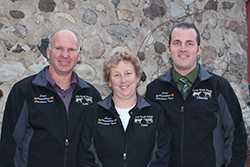

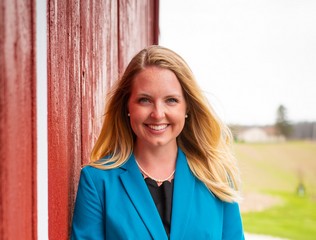


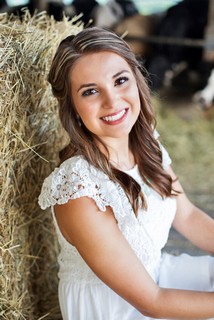
 A 71-year-old man was rescued Monday morning after being trapped in a Grant Co. grain bin for approximately two hours.
 The American Dairy Coalition (ADC) is calling on the federal government to reconsider its stance on saturated fats, specifically whole milk.
 Nothing screams rock star like getting your own line of chocolate milk!

 A new lawsuit filed against 75 members of the Dairy Farmers of America’s leadership claims that the co-op has been operating “a milk cartel which has shattered our nation’s crucial dairy industry.”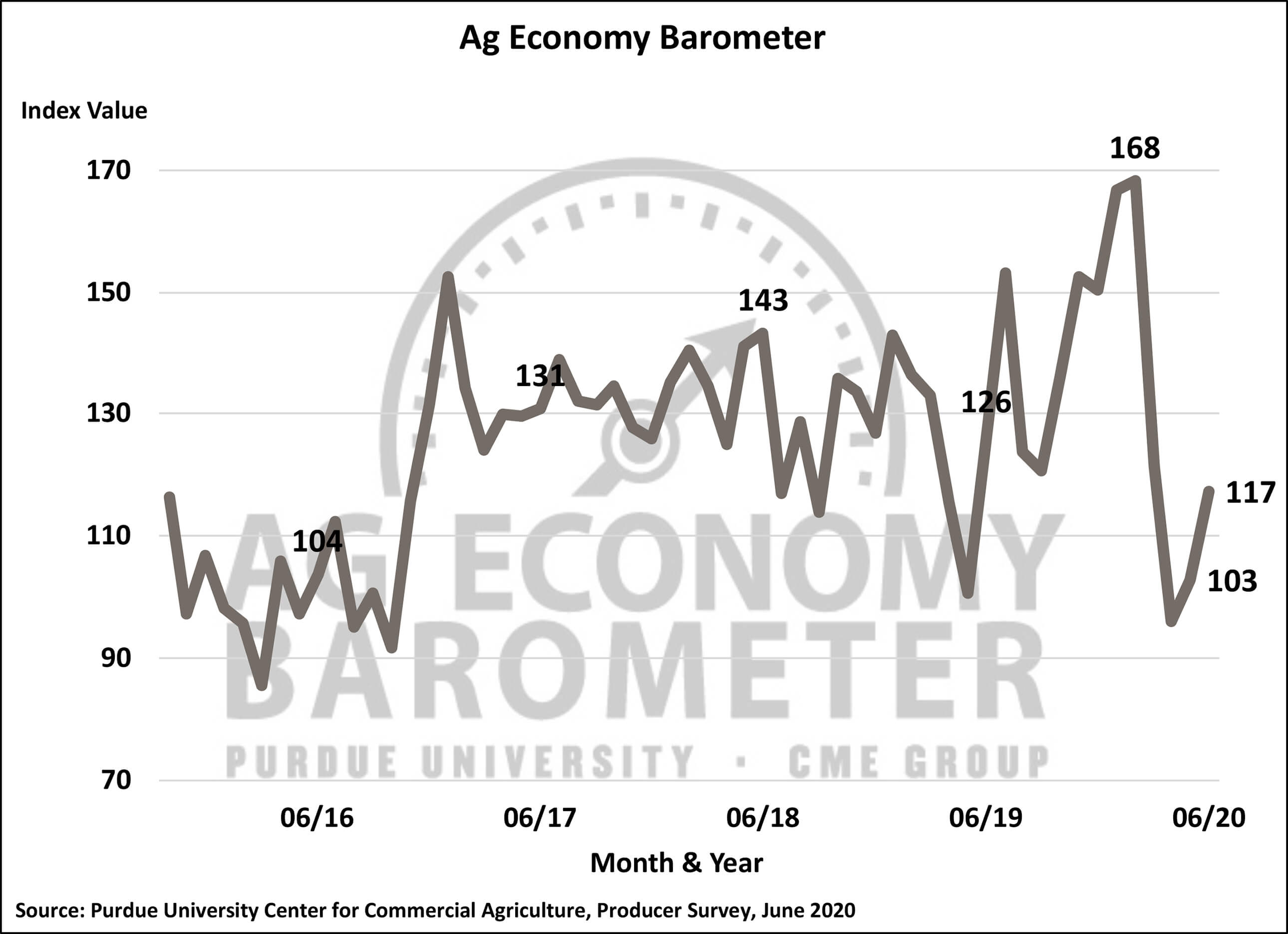

 The U.S. Department of Agriculture’s Farm Service Agency (FSA) today announced that the May 2020 income over feed cost margin was $5.37 per hundredweight (cwt.), triggering the third payment of 2020 for dairy producers who purchased the appropriate level of coverage under the
 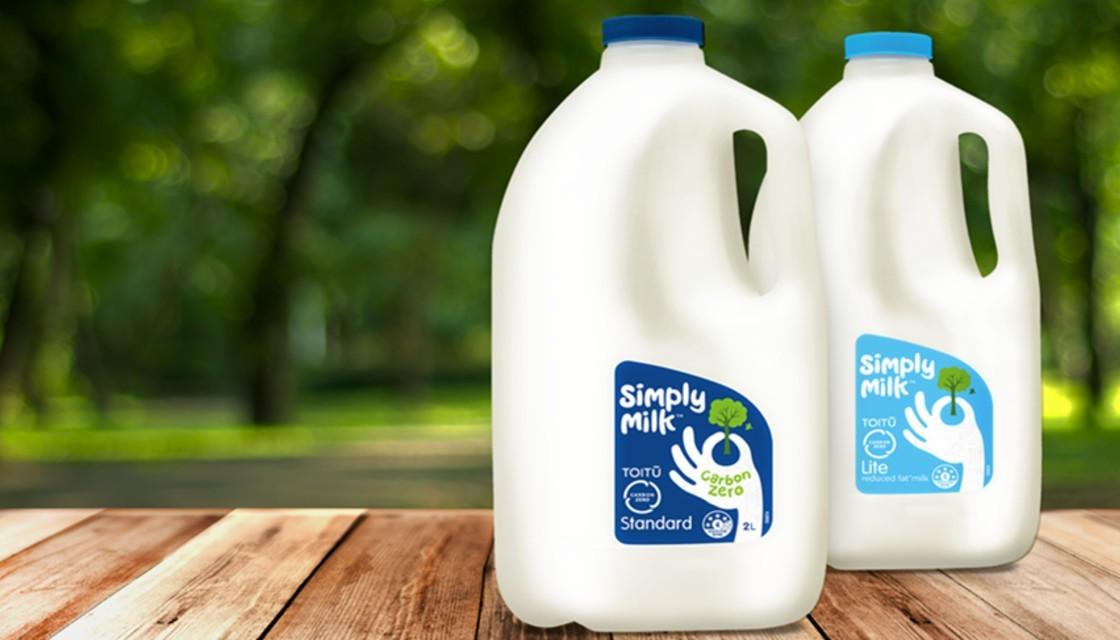 New Zealand’s first carbon-zero milk launched on Tuesday.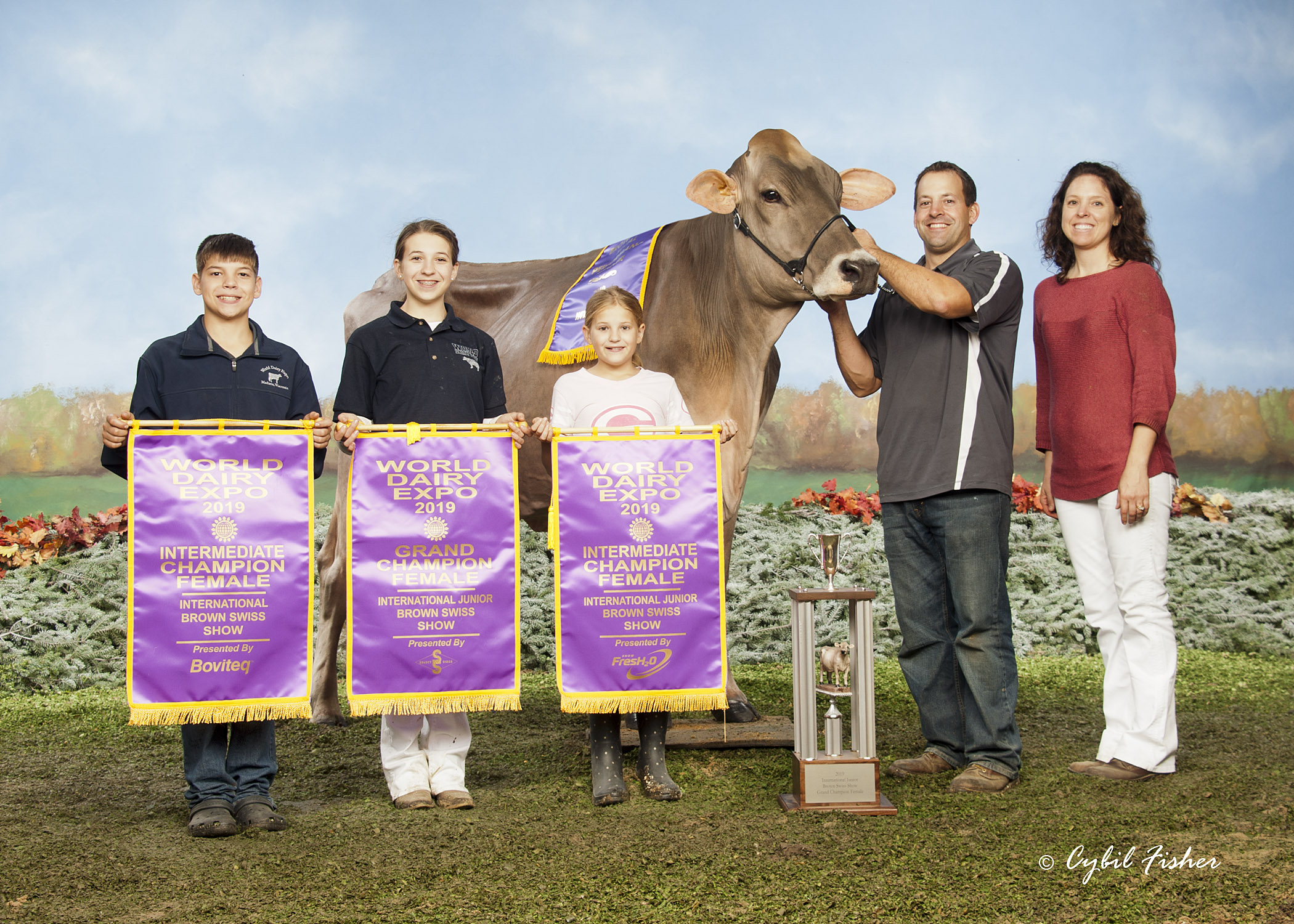
 After years of negotiations, the U.S.-Mexico-Canada Agreement (USMCA) has finally replaced NAFTA.
 The National Dairy Shrine is pleased to announce the recipient of the Kildee scholarship for 2020. This scholarship has been awarded since 1950 to an outstanding graduate student in a dairy related field. Dean H.H. Kildee was a renowned educator at Iowa State University and this scholarship honors his great service to the future of the dairy industry.
 The owner of Wisconsin Dairy State Cheese Company was convicted in federal court for
 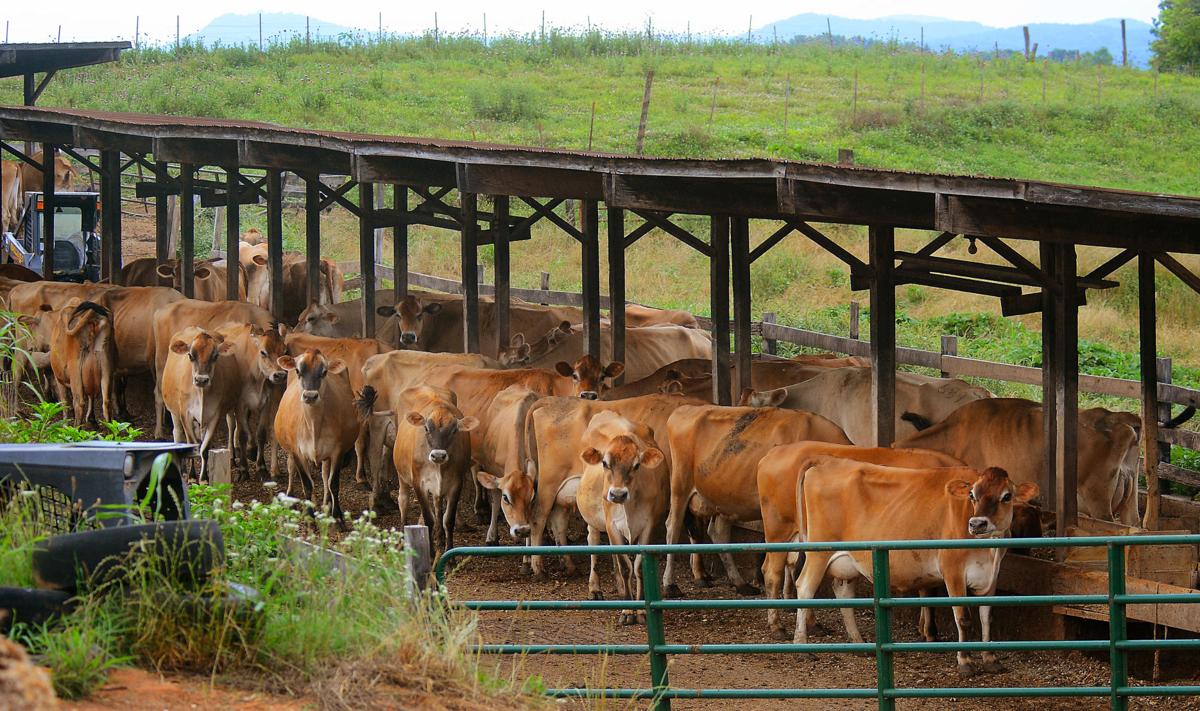 Many of his herd are related to the original cow that started the farm, Reese said. And that cow’s DNA was shared around the world — its offspring were shipped all over the U.S. and overseas to Ecuador, Trinidad, Chile, Puerto Rico, Mexico and Turkey. Reese hopes with more time in retirement, he might be able to visit the farms where his herd has landed. At the very least, the ones in the U.S., he said.
 Everyone at The Bullvine would like to send our condolences to the family and friends of Mike.
 I’m feeling confident about the future of the Australian dairy industry.
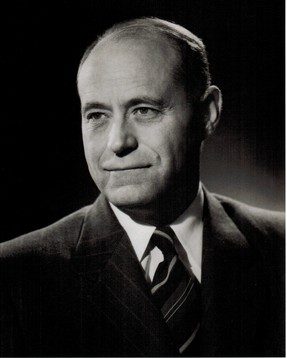 National Dairy Shrine is recognizing four respected individuals this year with their Pioneer Award. An award honoring an individual’s significant contributions to the dairy industry, they join a distinguished group of industry leaders whose portraits are displayed at the National Dairy Hall of Fame at the National Dairy Shrine Museum in Fort Atkinson, Wisconsin.
 Four respected individuals are being honored this year with National Dairy Shrine’s Pioneer Award in recognition of their significant contributions to the dairy industry. They join a distinguished group of industry leaders whose portraits are displayed at the National Dairy Hall of Fame at the National Dairy Shrine Museum in Fort Atkinson, Wisconsin.
 Walker, John Matthews of Aylmer passed away at his residence on Sunday, July 5, 2020 in his 87th year. Beloved husband of the late Patricia Anne Walker(2013). Dear father of Shelley Doan and husband Randy of R.R.1, Aylmer, Jon Walker and wife Linda of R.R.1, Aylmer and Judy Killough and husband Larry of R.R.1, Aylmer. Predeceased by his daughter Chris McNeil(2018). Father-in-law of Larry McNeil of Lyons. Loving grandfather of Jim(Nicole), Adam, Maggy, John(Ginna), Dayna(Jordan), Scott(Jill), Clint, Jane, Matt(Kyla), Michael(Dayna), Mark(Ashlan), Katie(Justin), Brett(Holly), Kyle(Sarah) and Troy. Great-grandfather of Solon, Brooks, Kellar, Gaby, John Thomas, Lachlan, Holden, Owen, Carson, Madison, Payton, Rieley, Charlie, Hudson, Emma, Mya, Nolan, Jack, Sophia, Hayden, Ava and Vivian. Predeceased by his sister and brother-in-law Marjorie and Bus Johnson and a grand-daughter Chloe. Born in Springfield, Ontario on July 8, 1933, son of the late Solon and Hazel (Matthews) Walker.
  Michael, Mark and Evan Creek of Palmyra Farm in Hagerstown, MD were honored as the 2020 Outstanding Young Ayrshire Breeders by the Ayrshire Breeders’ Association. This award annually recognizes young breeders who are making significant contributions to the Ayrshire breed and dairy industry.
 The dairy industry in Australia has struggled in recent years due to drought but Tasmania has bucked the trend with a record year for milk production.



