

Archive for News – Page 42

Big genomics data milked to feed the future

With support from the Bill & Melinda Gates Foundation, University of Queensland researchers are assisting smallholder milk producers in India with AI-based breeding technology.

With more than 1.3 billion people in India, the country’s milk producers are focussed on maintaining supply.

Professor Ben Hayes, who co-developed the big data genomic breeding technology, said India relied on cow and buffalo milk as an important source of nutrients – especially for children.

“Most of Indian’s milk is produced by small holder farmers with as few as two animals,” Professor Hayes said.

Their income from milk is often the difference between ‘getting by’ and poverty.”

The smallholder producers deliver to a sophisticated and integrated supply chain, which includes a massive distribution arm that can reach nearly all Indian households.

The production arm of the system is facing the same crisis that afflicts agricultural systems globally – more milk is needed to keep pace with growing demand.

However this extra milk needs to be supplied from the same amount of land, water, labour and animal feed.

Professor Hayes is familiar with the issue of increasing supply from the same resource base, having previously addressed similar constraints in the Australian dairy industry.

“The solution lies in taking advantage of existing genetic variation between animals in how efficient they are at turning feed into milk,” Professor Hayes said.

“The trick is to establish a breeding program that identifies these animals, and to use them for breeding the herds of the future.”

However achieving this goal in a production system dominated by smallholder farmers introduces its own challenges.

Past breeding efforts in India have seen milk production rates stall at about four to five litres per animal per day.

In the Australian dairy industry, Professor Hayes was able to apply one of the most advanced breeding technologies currently available – a technology he co-developed called ‘genomic selection’ – to make rapid and efficient gains possible.

Genomic selection uses big data bioinformatics derived from genome-wide analysis of performance recorded cows to detect gene effects associated with the desired trait.

The technology enables modelling to predict the genetic combinations, and therefore the stud bulls, best suited to achieving genetic gain in the breeding target.

As a world-leading expert in genomic selection and its application to cattle-based industries, Professor Hayes was recently recruited by the Bill & Melinda Gates Foundation to revisit the stalled genetic gain, and the associated food security and poverty reduction implications, of India’s milk industry.

“With this project we are aiming to double milk production to about 10 litres a day and achieve it with a modest increase in feed,” Professor Hayes said.

The project is being undertaken in collaboration with Indian smallholder farmers who are already logging the milk production rates in order to generate data vital to Professor Hayes’s computing algorithms.

Also taking part are two Indian organisations that are essential to the development of an integrated milk supply chain that seeks to pull smallholder farmers out of poverty.

The first is the BAIF Development Research Foundation, an organisation committed to promoting sustainable livelihoods among the rural poor through climate-resilient agriculture.

The second is the Amul cooperative, which was founded to stop the exploitation of milk producers by middlemen.

Amul-branded milk forms an important cornerstone of the milk supply chain and has a handling capacity of five million litres per day.

The project is also recording fertility traits associated with the genotyped cows and buffalos to ensure, in pushing more energy into milk production, the breeding program doesn’t accidentally reduce fertility.

“From experience we know that if you select really hard for gains in milk production, fertility will decline,” Professor Hayes said.

“We know that from 40 years of industries in other countries moving in the wrong direction.

“We are not going to make that mistake with the Indian cattle, so we are selecting for both milk production and fertility at the same time.”

Source: TheCattleSite News Desk
Texas has become the 4th Leading Milk Producing Nation in the U.S.

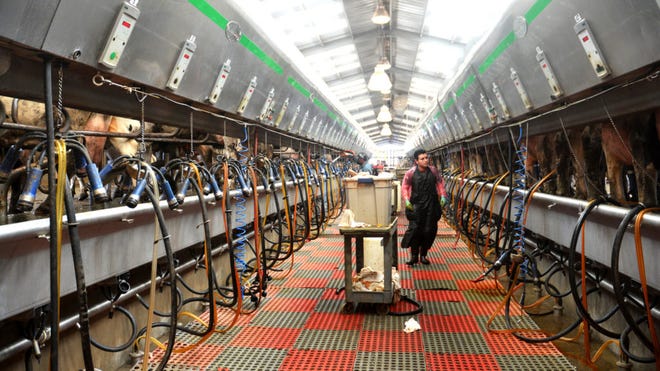
Texas dairy producers are experiencing better prices and improving market conditions as the economy continues to emerge from the pandemic, but processing limitations are holding them back, according to a Texas A&M AgriLife Extension Service expert.

Prices have rebounded compared to a year ago, said Jennifer Spencer, Ph.D., AgriLife Extension dairy specialist, Stephenville, and demand continues to be high for milk and milk products from cheese to ice cream.

Spencer said Texas has surpassed New York to become the nation’s fourth-leading milk producer with 1.32 billion pounds. But a lack of processing plant capacity has limited dairy expansion.

“It’s good and bad news,” she said. “Prices are good, but processors are overloaded with milk and a tiered program has been implemented giving producers an allotment of milk production before receiving a discount, so they’ve in turn had to pull back on production for now.”

Spencer said producers would like to be maximizing on the excellent crop production fueled by rains this spring but will have to wait.

Ongoing expansion of the state’s processing capacity with a new cheese processing facility in Amarillo will help to reduce the duration of the allotment program, she said. Spencer suspects the state will quickly move into third place ahead of Idaho for U.S. dairy production once processing volume allows Texas dairy producers to operate at maximum capacity and/or expand.

Texas dairy outlook good after ugly year
The good news is the Texas dairy industry overall emerged from more than a year of adversity, Spencer said. Unfortunately, some dairy operations didn’t. She said there were approximately 400 registered dairies in the state in 2019. There are now 351.

Texas dairy producers faced challenging times as COVID-19 disrupted the market destinations for milk, cheese and butter due to school and restaurant closures. Uniform milk prices fell after March and April and dropped from $19 per hundredweight to around $14 per hundredweight. For the year 2020, the average price was $15 per hundredweight.

Dairies also dumped around 14 million gallons and incurred losses of around $8 million in February as Winter Storm Uri brought the logistical chain from raw milk pick up to processing and product delivery to a virtual standstill.

Prices slowly recovered as the pandemic wore on but have yet to reach pre-pandemic levels – around $19 per hundredweight, Spencer said. Milk prices were around $17 per hundredweight and could be poised to climb during the summer.

“There are a lot of creative milk products, which helps demand, but there is also that summer demand for ice cream,” she said. “That and the drop in milk production by cows during the summer, and we could see prices climb a bit more.”

Increased export demand adds another element to price forecasts being good for producers, Spencer said, adding the future for Texas dairy production appears much brighter than in 2020.

“There have been positive developments lately,” she said. “Once the additional processing is available, it’s possible that Texas could move into third place, but the two top producers – California and Wisconsin – are way ahead. But, over the next decade with all the growth in the Panhandle, who knows?”

Source: Amarillo Globe News

Tentative Schedule Announced For 2021 All-american Dairy Show

The Pennsylvania Dairy and Allied Industries Association board of directors released the tentative schedule for the 2021 All-American Dairy Show and Premier National Junior Events, set for September 18-22, at the Pennsylvania Farm Show Complex and Expo Center, Harrisburg, Pa.

“While this year’s schedule will look different than in the past, we’re excited to be able to offer all the breed shows and supreme champion pageants for the All-American and the Premier National Junior Show,” said Board President Michelle Cornman. “We plan to hold a safe, enjoyable and competitive show, and remind everyone to note the changes in the schedule.”

The most notable change is the Invitational Youth Dairy Cattle Judging Contest will be held on Sunday, September 19, rather than Monday of show week, as in the past.

The Premier National Junior Events will take place from September 18-20, and will feature the youth art contest, pizza social, showmanship contest, and all seven breed shows. Due to space requirements, only four rings will run simultaneously, and all junior shows will start with milk cows, followed by calves and heifers. The Supreme Pageant is set for 6 p.m., which will be a milk-out for all champion cows.

Pennsylvania Junior Holstein exhibitors will be recognized during the Premier National Junior Holstein Show on Monday, September 20, and not during the All-American Holstein Show and the Pennsylvania Fall Holstein Championship shows.

All open shows for the All-American will start with calves and heifers, with Holsteins being the only split show on Tuesday, September 21 and Wednesday, September 22. The week wraps up with the selection of the All-American Dairy Show Supreme Champion Pageant at 2 p.m., on Wednesday, September 22.

The Pennsylvania State Junior Dairy Show will not be held during the All-American Dairy Show.

The complete schedule is listed at allamericandairyshow.com. Please follow the All-American Dairy Show Facebook page and allamericandairyshow.com for up-to-date information and details regarding the 2021 show.

For more information, contact the show office at 717.787.2905, or email aads@pa.gov.

Martha Scott Poindexter Chosen as USDEC Chief Operating Officer

The U.S. Dairy Export Council (USDEC) today announcedthe appointment of Martha Scott Poindexter as Chief Operating Officer. As COO, Poindexter reports to USDEC President and CEO Krysta Harden, effective July 8, 2021.

Among other duties, Poindexter will be Harden’s strategic thought partner, provide oversight of USDEC’s senior leadership team and lead the organization’s efforts to accelerate growth, strengthen operational performance, and foster innovation.

Harden said USDEC would benefit from Poindexter’s strong global agriculture and management experience and her established reputation of managing people’s strengths to promote collaboration, consistency, and synergy.

“We are pleased that Martha Scott will take on this major leadership role at USDEC,” said Harden. “Martha Scott has already demonstrated leadership and success in executing strategies that have had major impacts in the private and public sector. I look forward to having Martha Scott’s skill, expertise, and knowledge impact the success of our members and the dairy industry more broadly.”

Poindexter brings high-level global business experience to USDEC. She spent six years at agribusiness giant Bunge as Vice President of Government and Industry Affairs. There she navigated a complicated web of U.S. policy issues, legislation, and regulation with China, the EU, Southeast Asia, and other regions to advance the company’s export and commodity trading operations. Poindexter also worked with Monsanto (before its acquisition by Bayer) as Director of Government Relations.

Poindexter’s government experience is just as impressive. She most recently served as Minority Staff Director for the U.S. Senate Committee on Agriculture, Nutrition, and Forestry, working for Sen. John Boozman of Arkansas. She has also served as Majority and Minority Staff Director of the Senate Agriculture Committee and as Staff Director for the U.S. Senate Select Committee on Intelligence.

Poindexter is the first female to lead both the agriculture and intelligence committees, writing numerous farm bills and other significant agriculture, nutrition, and intelligence legislation.

“I am delighted to join USDEC to leverage my global affairs experience on behalf of USDEC’s member companies and the entire U.S. dairy industry,” said Poindexter.

Poindexter has deep agricultural roots, growing up in the Mississippi Delta on a cotton, rice, and soybean farm. She is a graduate of Mississippi State University and currently lives in Alexandria, Va.

Chobani leans into demand for healthier foods with no-sugar yogurt

Chobani is rolling out a Greek yogurt without sugar as the food maker doubles down on healthier offerings in demand with consumers who are more closely watching what they eat and drink.
The company said Chobani Zero Sugar, shipping to retailers this month, is the first nationally distributed product in the U.S. yogurt aisle that has no trace of sugar. Each serving has 60 calories, uses only natural ingredients, is lactose-free and contains six live and active cultures including probiotics.

“This was a gap in our portfolio. It’s a segment we weren’t competing in directly,” Niel Sandfort, chief innovation officer at Chobani, said of the more than $1 billion diet and reduced sugar yogurt category. “We have very high hopes that it’s going to not just take share, not just premiumize and trade up the consumer, but bring in new consumers who may have walked away from the yogurt set because of sugar.”

To create Chobani Zero Sugar, the Greek yogurt maker used milk that’s been filtered to reduce naturally occurring sugar. Chobani then uses what it calls “cutting-edge” natural fermentation methods that allow yogurt cultures to fully consume the remaining sugar. It then adds monk fruit and allulose to give the yogurt a sweet taste. Chobani Zero Sugar comes in four flavors: Vanilla, Mixed Berry, Strawberry and Blueberry.

Sandfort said Chobani’s no-sugar offering was a “very challenging product” to develop and was subjected to the most amount of testing in the company’s history for a new launch. Unlike other low-calorie, low-sugar options that use artificial ingredients and create an off-putting flavor, Sandfort said Chobani stuck to its mantra by using only natural ingredients.

“We didn’t walk away from any of the things we believe in,”  he said. “To get to [zero sugar] there’s lots of easy ways to do that. And there’s only one really hard way, which is doing it naturally through fermentation.”

The food maker has “been on this path” to no sugar for much of its history, Sandfort said. When Chobani debuted, its yogurt had fewer than 15 grams of sugar compared to the 30 or 40 grams in its competitors’ products. It has since launched a reduced-sugar yogurt and a zero-sugar oat milk.

Chobani established its dominance in the Greek yogurt space not long after it launched. But in recent years, it has moved aggressively to tailor its product portfolio to cater to many of the hot trends in the food space. Chobani launched a probiotic yogurt line in January and last summer introduced its protein-laden Chobani Complete. In late 2019, Chobani made its first foray into plant-based dairy with Non-Dairy Chobani made from coconuts.  

“We are consciously being more overt with the functionality of the food,” Sandfort said. 

The New York-based Chobani has not only focused its innovation prowess in dairy but also ventured outside the category with the launch of cold brew coffees.

The suite of new product launches should help Chobani expand its presence in grocery stores and increase its revenue, which totals more than $1.5 billion annually

The sales growth would undoubtedly be looked upon favorably by perspective investors as Chobani is reportedly considering an IPO later in 2021. The Wall Street Journal reported in February Chobani is looking at a listing that it hopes would value the company at $7 billion to $10 billion.

Chobani’s latest product roll out comes as the company further expands its presence in the yogurt category. In the last 52 weeks ended May 29, total yogurt sales have increased 2.5% as the category benefited from people spending more time at home snacking, while Chobani’s growth during the same period was 7.4%, according to Nielsen U.S food channels data shared by the company. 

Chobani’s Zero Sugar offering will further intensify pressure in the ultra-competitive yogurt space, where companies have been racing to lower the sugar content of their products. 

General Mills has introduced YQ by Yoplait where the plain variety has one gram of sugar, and the flavored options have 9 grams. In April, the food manufacturer introduced a high-protein yogurt to its keto-friendly Ratio product line that contains 3 grams of sugar. It joins the original line of Ratio yogurts, which contain 15 grams of protein and 1 gram of sugar per serving.

Dairy and plant-based food giant Danone boosted its presence in the low-sugar space with the introduction of Two Good, a Greek low-fat yogurt with two grams of sugar, in 2019. The offering from the French company has proven to be a hit. Sales more than doubled in 2020, and the brand posted $111 million in revenue during its first 16 months on the market, according to Danone. 

Source: fooddive.com

Wisconsin bills target milk, meat, dairy labeling

Vegetarian and vegan foods sold in Wisconsin could not be labeled as meat, milk or dairy if they don’t contain those products, under bills up for votes Tuesday in the state Assembly.

The “truth in labeling” measures are supported by the state’s agriculture and dairy industries as a way to combat what they say are misleading products that are marketed as “Impossible burgers” and use other words such as “cheese” and “milk” but don’t actually contain meat, milk or dairy. Bill supporters say they will help protect Wisconsin’s agriculture economy while putting pressure on the federal government to take action.

Opposition to the bills came from a variety of groups that promote plant-based food, such as soy and nuts, as an alternative to meat and dairy products. They argue that the bills are unnecessary, bad for Wisconsin businesses and consumers, and an unconstitutional infringement on free speech rights.

A federal judge in 2019 blocked Arkansas from enforcing a ban on using such terms as “burger” or “sausage” to sell vegetarian and vegan products because it likely violated the First Amendment’s free speech rights. There are similar lawsuits against food labeling laws in Missouri and Mississippi.

One of the Wisconsin bills up for a vote Tuesday would ban labeling a beverage as milk unless it comes from cows, goats and other hooved mammals. Another would prohibit selling a product as cream, yogurt or cheese unless it includes dairy.

Those would only take effect if 10 states out of a group of 15 approve similar bans by 2031. The move is designed to make sure the bills don’t violate the Constitution’s commerce clause, which gives Congress — not states — the right to regulate interstate commerce.

Only two states in the group, Maryland and North Carolina, have passed milk labeling laws, but those laws haven’t taken effect because of similar provisions requiring other states to follow suit.

A third bill before the Assembly would ban the labeling or selling of a product as meat, bacon or a similar term unless it includes animal flesh. It would apply to packaging on products in stores and restaurant menus.

Seventeen other states have enacted some type of meat labeling law in recent years, according to the National Conference of State Legislatures.

The Wisconsin Assembly passed the bills last session, but they were never taken up in the Senate. If approved Tuesday by the Assembly, the proposals would go again to the Senate.

Source: wjfw.com

Irish project to make 5,000 dairy farms climate neutral awarded €2 million

Minister for Further and Higher Education, Research, Innovation and Science Simon Harris today (Monday, 21 June 2021) awarded the Science Foundation Ireland (SFI) Future Innovator Prize to a project that will help a dairy farm achieve net-zero emissions by 2027.

The prize also awards €2 million to the winner, Professor Kevin O’Connor and his Farm Zero C team at University College Dublin (UCD). This money is to help deliver the climate-neutral farm in Cork. There are plans to extend the strategy to a further 5,000 farms within five years.

  • planting different types of grasses and clovers on pastures and supporting hedgerows can boost biodiversity and soil health
  • using renewable energy that reduces greenhouse gas emissions
  • changing what we feed livestock affects how much methane gas they produce

Farm Zero C is using Shinagh Farm near Bandon, County Cork, owned by the farmers of four West Cork co-ops, as a demonstrator for this project. The goal is that Shinagh will achieve net-zero emissions by 2027. A mobile app will achieve wider deployment. This will integrate farm and satellite data, habitat mapping and natural capital accounting, to provide users with information on the carbon footprint of their activities and to develop strategies to reduce these.

Speaking today, Minister Harris said:

“Congratulations to Professor Kevin O’Connor and the Farm Zero C team. Innovative and disruptive ideas like the Farm Zero C project will become increasingly important as we deliver the government’s ambitious Climate Action Plan and significantly reduce our carbon emissions.

“My department’s support for projects like this one, that have real world impacts, really gives me not only pride, but confidence, as we strive to reduce our carbon emissions by 50% over the next decade.”

Minister of State with special responsibility for Agri-Food Research and Development, the Bioeconomy, Farm Safety and New Market Development, Martin Heydon added:

“Congratulations to the Carbery Group and the Farm Zero C team for developing this pioneering and holistic approach to reducing greenhouse gas emissions and increasing the health and resilience of a working farm. This is the Irish bioeconomy in action safeguarding farmers’ livelihoods whilst protecting our climate and environment.”

“Agriculture is a critically important sector for Ireland socially and economically and dairy farms have huge potential to help Ireland to address two existential challenges, climate change and biodiversity loss. Farm Zero C is building a holistic plan to progressively bring farm emissions to net-zero, enhance biodiversity, and integrate natural capital and digitalisation into the farm business. We have brought the very best national and international partners together to address the challenge. From the outset, Carbery group and the Shinagh farm in West Cork have been incredible societal champions, and we look forward to working together to roll out the findings to as many farmers as possible.”

CEO of Carbery Group, Jason Hawkins, added:

“Sustainability is one of our core business priorities at Carbery and, as a co-op, has always been intrinsic to how we operate. We work in partnership with our community to solve problems, and our relationship with BiOrbic is a good example of business and academia working together with farmers to create a sustainable future for dairy farming. With Farm Zero C, our emphasis is on the practical – the solutions we find have to be implementable on the typical Irish family farm. With this project, our partners and the support from Science Foundation Ireland, we are confident that we can achieve this aim.”

Professor Mark Ferguson, Director General of SFI and Chief Scientific Adviser to the Government of Ireland, said:

“The SFI Future Innovator Prize is part of an approach to cultivate challenge-based funding in Ireland to accelerate and validate excellent and innovative solutions to critical societal and global issues. The Farm Zero C project, led by Professor Kevin O’Connor, epitomises this ethos as it provides a solution that can enable Ireland’s important dairy farming industry to become carbon neutral.”

The SFI Zero Emissions Challenge also awarded a special prize of €500,000 to Dr Tony Keene and his team at LiCoRICE , UCD. This award was in recognition of the potential impact of their project to bring lithium cobalt batteries into the circular economy, to decarbonise road transport.

Another special prize of €500,000 went to Dr David McCloskey’s team at Trinity College Dublin (TCD), for their SolarCool project , which is a cost-effective technology that improves efficiency of existing and future solar PV technologies.

Notes

Farm Zero C project

Agriculture makes up 35.3% of Ireland’s greenhouse gas (GHG) emissions, of which 95% are emissions from livestock agriculture.

The proposed solution from the Farm Zero C team in UCD involves a combination of diverse climate mitigation strategies that, when combined, reduce the greenhouse gas emissions of farms:

  • increase biodiversity
  • calculate the value of natural capital
  • lower the farm’s operational cost
  • grow the value of its products

Each of the strategies has been either experimented, tested or modelled to find ways for dairy farms to achieve net-zero emissions.

The Farm Zero C project team worked with a wide range of stakeholders from the farming community, government and the agri-food industry over the course of the project.

SFI Future Innovator Prize

The SFI Future Innovator Prize is a challenge-based prize funding programme that aims to:

  • support Ireland’s best and brightest
  • develop novel, potentially disruptive, technologies
  • address significant societal challenges

The Department of Further and Higher Education, Innovation and Science funds the prize.

Source: gov.ie

UK Dairy farmers warn new rules ‘leave no choice but to reduce herd’

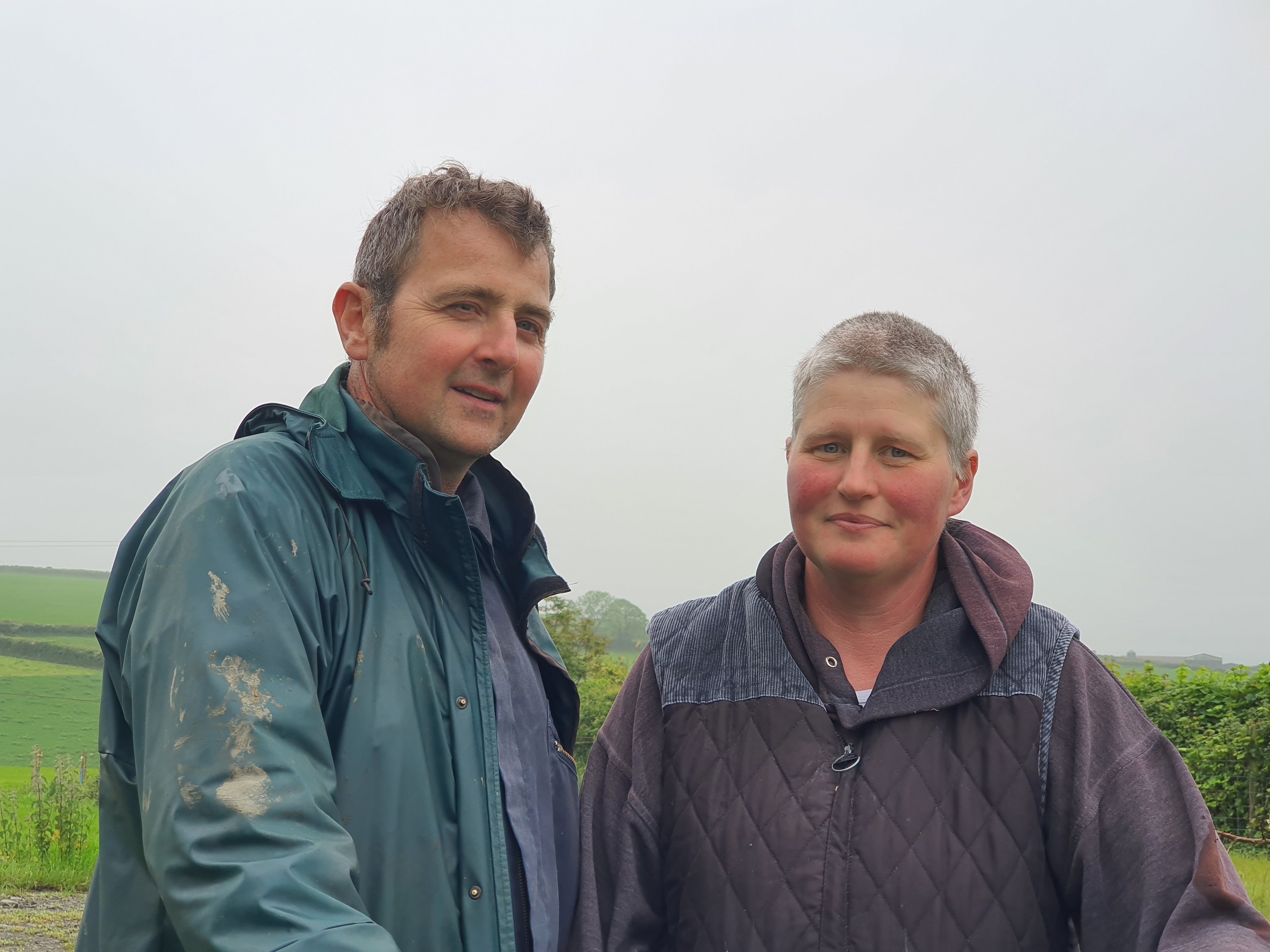
Pembrokeshire husband and wife team Jeff and Sarah Wheeler, who farm at Clyngwyn, Efailwen, Clynderwen, feel the current Control of Agricultural Pollution Regulations are going to make their business unviable and are asking the Welsh Government to take a hard look at what they’re asking the industry to do. The third generation to farm here, the couple milk150 cows on a spring calving system, looking after 195 acres which is down to grass land (of which 35 acres is rented), plus 50 acres of woodland. 

Under current NVZ regulations in other UK and EU Nations and previous regulations in Wales, farmers with more than 80% of their holding designated as grassland had the ability to apply for a derogation to increase the annual livestock manure Nitrate whole farm limit from 170kg N per ha to 250kg N per ha.

Despite the same option being included in Welsh Government’s draft Water Resources regulations published in 2020, it was omitted from the regulations before being laid in front of the Senedd in 2021 without any form of warning or explanation. 

Jeff says: “We’ve got enough storage for slurry but the stocking rates will hit us badly. They’ve brought in the nitrate limit, which wasn’t in the initial ‘draft regulation, it came out of the blue. Any other country with such regulations has a derogation on the nitrate limit. If you’re 80% down to grassland, which we are, you can keep more stock in other countries. Why is that not the case here now?”

The decision by Welsh Government to remove the option of applying for a derogation will restrict the ability of Welsh farmers to maintain milk and beef production levels from 1 January 2023, while further eroding the ability of Wales’  farmers  to compete on a level playing field with the rest of the UK – where it is understood that derogation provisions are continuing.

“Welsh Government has not included such a derogation, so we will be forced to reduce the stock down to unsustainable levels. For us that means we’ll only be able to keep about 120 cows and lose a fair bit of our milk income. The 170kg N per ha whole farm limit with increased slurry storage requirements and consequent reduction in stocking rates will make a large proportion of dairy farm businesses financially unviable and will prevent them from optimising the use of slurry as a natural fertiliser,” he added.

The family are also worried about the wider impact on the rural economy. Sarah says: “We have good grass growing land for dairy here. Pembrokeshire is a dairy county. With everyone looking for more land to keep their dairy herds, there will be problems, big ones. People will have to cut back, because they can’t afford the land or can’t get hold of it, so the milk is going to be lost to other countries as well. 

“Think of the economic impact and the ripple effect that will have. Loss of revenue, loss of money going to contractors, the wider rural economy is going to feel the impact of this just as much as farmers are.” 

Farmers like the Wheeler family are looking to buy or rent additional land in preparation for when the nitrogen limit is imposed on 1 January 2023 to be able to maintain livestock levels by having enough land area available to spread the amount of slurry produced.  

“We had a sustainable production grant 4 years ago to build extra slurry storage with the cubicles on top. We submitted a business plan for that to the Welsh Government and that was based on 150 cows. Now they turn around and tell us we can’t keep 150 cows unless we take on more land. 

“If we took on more land, either rented or bought, to meet the nitrates limit we would be ok but try getting hold of more land, it’s impossible. We’re surrounded by dairy farms who all have the same problem. There are some big dairy farms around here and competition for land is fierce. Even if you find the land, it’s not going to be cheap,” explains Sarah Wheeler. 

The question for the family business is whether or not to reduce the number of cows or find the land. But the price of the land, they fear, would not leave them with a profitable business. 

‘If you keep the extra cows, all the money would be going on paying for the extra land, which makes no sense.  We would be allowed to spread nearly the same amount of artificial fertiliser as we did before to produce the same amount of grass but our stocking rate has to go down.  If we reduce cow numbers we lose income which jeopardises the economic viability of the business,” said Jeff Wheeler.

Despite the decision of the Senedd to review the current Control of Agricultural Pollution Regulations, Jeff and Sarah are concerned about their livelihood and the future. 

“We know that there is going to be a review but we are not hopeful at the moment. Such draconian regulations will in the end achieve the exact opposite of what they set out to achieve. Farmers are being used as a scapegoat for all the problems and I can’t see how anything will positively change for us. I am worried about the future. It’s very stressful. 

“We knew there was a change coming, and we’ve prepared for it as best as we can but they said they weren’t going to bring these rules in while the covid pandemic is on-going and they have gone back on their word. What else will they go back on? It’s very difficult for the industry to trust them. I worry what they will throw at us from one day to the next,” says Sarah Wheeler. 

Jeff adds: “In a way we’re lucky as we are an established business but where does that leave younger businesses and the next generation? Those who have started in the last 10 years for example and have borrowed huge amounts of money to set up their business and then they are forced to pay for this – it could well be the end for some of those young businesses. It’s going to hit every dairy farm. 

“We borrowed the money to build the slurry store and yard coverings 4 years ago with the assistance of the sustainable production grant, which also paid for calving pens, feed areas etc.  The business plan which was agreed by the Welsh Government was based on 150 cows.  Where do we go from here?  We were trying to prepare for the potential of NVZs and we borrowed a lot of money to make this happen but with the reduction in cow numbers how are we going to pay that back?  The business plan, drawn up by a business consultant, was based on a 10 to 15 year repayment period but we won’t have the same income from our milk now due to us being forced to reduce the size of the dairy herd.”

Frustrations with the Welsh Government’s approach is clear here, with the family questioning the rationale behind the regulations. Jeff said: “ We have a devolved government so what are they doing copying regulations that are out of date, have been proven to be ineffective and are not specific to Wales. They will not achieve with this regulation what they have set out to, unless they are set to destroy our farming industry and the environment at the same time.” 

In preparation for the next phase of the regulations and the required reduction in livestock numbers, the family have started to sell off their dairy herd. Sarah said: “ We have already sold a few cows, the price for them at the moment is fairly good, and we are keeping less heifers from this year and are putting less cows in calf. We will gradually have to let the numbers fall. It’s not what we want to do but there isn’t much other choice.”

“The trouble is we don’t really know what’s going to happen. You can’t just say let’s get rid of these 20-30 cows instantly, because maybe next year things will change. The uncertainty is not workable. At the moment the price for cows is good, but when everyone realises that they have to get rid of their livestock at the same time, the price is not going to be so good. So what do you do? Nobody is going to want the cows in 2 years time. 

“I’m the third generation to farm here and have been doing this for over 20 years. The way things are at the moment, I’d sell the farm tomorrow but Sarah wants to keep going. It has gone too far. These regulations are going to be the end of the industry, there is no doubt in my mind,” added Jeff.

Sarah, who grew up on a dairy farm in Canada, says their whole lives are being turned upside down and put in jeopardy. “Farming is my life. I come from a dairy farming background in Canada, I grew up on a farm, my father and grandfather milked and we sold the cows there when I was about 10 years old because the quota system came in in Canada. Then we kept suckler cows and I was a vet for over 15 years. I love farming more than Jeff does I think. It’s just in you. We want to be outside, work with the animals. 

“We are trying our best to look after the countryside, look after our animals and produce healthy and safe food for people to eat. Why are they making it so hard? Rules and regulations from all corners, our milk buyer wants us to do one thing, Welsh Government wants us to do another thing, keep fewer cows and everything else. 

“All we want to do is do our job. At the end of the day people need to eat and we’re being made to look as if we’re the villains in all of this. Our intentions are good and it’s our way of life. I’d like to know what the farming industry has ever done to the Minister. Why does she feel so much hate for us? Because that’s what it looks like. TB policy isn’t working and it’s horrendous, now the extra regulations on top. It’s one thing after another with this government. There is just no light at the end of the tunnel.”

Source: fuw.org.uk

Drought spreads in key U.S. crop states

A harsh drought grew more severe across major parts of the U.S. farm belt this week, threatening recently planted corn, soybean and spring wheat crops in Iowa, Minnesota and the Dakotas, meteorologists and climatologists said on Thursday.

Rains forecast for the northern Midwest and Great Plains this weekend and next week will bring relief to some areas. But the severe moisture deficits suggest crop yields in key U.S. production areas remain at risk.

Drought has already scorched much of the U.S. West, prompting farmers in California to leave fields fallow and triggering water and energy rationing in several states.

Crop development in the central U.S. is highly watched this year as grain and oilseed prices hover around the highest in a nearly a decade and global supplies tighten.

“It’s certainly causing some stress there, especially to the spring wheat,” said Don Keeney, senior agricultural meteorologist with Maxar Technologies.

About 41% of Iowa, the nation’s top corn producer and No. 2 soybean state, was under severe drought as of Tuesday, up from less than 10% a week earlier, according to the weekly U.S. drought monitor published on Thursday.

Cooler weather this weekend and some rain through next week will bring some relief to crops in the western Corn Belt, although far northern areas may see less rain.

“Montana, Nebraska, Minnesota and even northern Iowa would still be a little shortchanged, especially the Dakotas,” Keeney said.

Conditions in North Dakota, the top producer of high-protein spring wheat that is used in bread and pizza dough, remained dire, with about two-thirds of the state under extreme or exceptional drought, the most severe categories.

October to April was the driest stretch in North Dakota history since record keeping began 127 years ago, Gov. Doug Burgum told a town hall meeting in Washburn, North Dakota, on Wednesday.

“We know that we’ve got a full-blown crisis in the state,” Burgum told the meeting.

More than 100,000 acres, or 156 square miles, of North Dakota have already burned in wildfires this year, up from about 12,000 for the entire fire season last year, Burgum said.

Farmer and North Dakota Grain Growers Association Director Cale Neshem called the heat and dryness a “double whammy” that will slash his wheat harvest.

“There’s not going to be much there,” he said.

Drought in the western Corn Belt has already likely trimmed the U.S. corn yield average by 2 to 4 bushels per acre, said Dan Basse, president of AgResource Co in Chicago.

However, conditions in July and August, critical months for corn and soybeans, respectively, will determine the extent of yield losses and the price response, he said.

Grain and soybean futures on the Chicago Board of Trade fell sharply on Thursday as rain in the near-term forecast triggered risk-off selling.

“If we don’t get the rain, it’s going to be something to behold on the upside (for prices) because the yields will fall off the table,” Basse said. (Reporting by Karl Plume, Tom Polansek and Julie Ingwersen in Chicago; editing by Jonathan Oatis)

Source: reuters.com

Brazil considers law to track cattle suppliers as part of efforts to curb deforestation

Brazil, home to the world’s largest commercial cattle herd, will propose a new law to track cattle suppliers that sell animals to meat producers like JBS and Marfrig, as ranching is a key driver of deforestation.

Reuters reports that in an online event on 21 June, Agriculture Minister Tereza Cristina Dias told a group of journalists that the current system is ineffective to track a myriad of suppliers in the world’s largest beef exporter.

“We need a system which is effective and brings the security that the consumer needs,” Dias said.

The minister was referring specifically to Brazil’s indirect cattle suppliers, an industry of farmers who pass animals to other farms while they are still growing and before they are sent to the slaughterhouse.

Because often there is no information on the properties where the animals have passed through, Brazil cannot ensure that all laws were followed.

JBS, the world’s largest meat company, did not have a comment on the government’s initiative. But it had previously said it is using blockchain technology to control the origin of cattle, vowing to eliminate deforestation on its supply chain by 2025.

Its rival Marfrig, which also operates in the United States and Argentina, welcomed the move.
“Marfrig supports passage of a new law to track indirect cattle suppliers in Brazil and is available to collaborate on the project,” it said in a statement.

The company, which pledged to end deforestation by 2030 on its supply chain, said this is key to mitigate social, environmental and governance risks associated with the meat industry.

Brazil’s current system to monitor the so-called indirect cattle suppliers was created in 2009, she said. But it was designed only to monitor suppliers that sell animals to companies that export beef to the European Union, according to the minister.

She said currently 2,000 properties are monitored while Brazil has 5 million rural properties.

Dias said she would present the proposal soon but did not provide a timeline or details of the new law to track ranchers in Brazil, home to more than 207 million head of cattle.

Read more about this story here.

Source: Reuters

Feeding cows seaweed could cut their methane emissions by 82%, scientists say

Researchers found cows belched out 82% less methane after putting small amount of seaweed in their feed for five months

Feeding seaweed to cows is a viable long-term method to reduce the emission of planet-heating gases from their burps and flatulence, scientists have found.

Researchers who put a small amount of seaweed into the feed of cattle over the course of five months found that the new diet caused the bovines to belch out 82% less methane, a potent greenhouse gas, into the atmosphere.

The finding builds on previous research that showed that seaweed could reduce cows’ methane output over a shorter timespan. “We now have sound evidence that seaweed in cattle diet is effective at reducing greenhouse gases and that the efficacy does not diminish over time,” said Ermias Kebreab, director of the World Food Center and an agricultural scientist at University of California, Davis.

Kebreab conducted the research, published in Plos One, with Breanna Roque, a PhD graduate student.

Cows produce methane via microbes in their stomachs as they digest their fibrous food, in a process a little like fermentation. Methane is shorter-lived in the atmosphere than carbon dioxide but is more than 30 times as effective in trapping heat, making it a major greenhouse gas. A type of seaweed called Asparagopsis taxiformis can partially counteract these emissions from cows.

Agriculture makes up about 10% of emissions in the US, much of it from cows that belch, and to a lesser extent, fart out methane. This has led to some climate campaigners to urge people to eat less meat but the UC Davis researchers said that existing meat production could be made better for the climate by putting seaweed on the menu for cattle.

Two years ago, separate research by Kebreab and Roque found that the seaweed supplements reduced methane in dairy cows, with a blind taste test of milk finding that it didn’t affect the milk output of the ruminants. The latest research, this time on beef cattle, similarly found no difference in the taste of the meat from seaweed-consuming animals.

The next challenge, according to the researchers, will be finding ranchers enough supply of Asparagopsis taxiformis, a crimson marine grass that drifts on waves and tides, given there isn’t a bountiful supply of it available to farms.

“There is more work to be done, but we are very encouraged by these results,” Roque said. “We now have a clear answer to the question of whether seaweed supplements can sustainably reduce livestock methane emissions and its long-term effectiveness.”

Source: The Guardian 

Polluting New Zealand dairy farmer ‘own worst enemy’ during court proceeding, ordered to pay $103k fine

A polluting dairy farmer who boasted the court “is not going to get a dime out of me” has been told to pay a $103,500 fine.

Derek Aaron Berendt​​ and his company Huka View Dairies​ unsuccesfully appealed against the fine they were jointly given for breaching the Resource Management Act.

He is a 50 per cent shareholder and one of two directors of the company.

He and the company admitted the same charges, relating to management of silage and effluent on an Eketāhuna farm in 2018, the day he was supposed to have a trial.

He did not, however, turn up to his sentencing.

They appealed the fine, saying it was far too large considering Berendt only took an income of $30,000 a year and the farm had run at a loss.

His lawyer argued a community based sentenced such as community detention or community work was more appropriate.

But Justice Matthew Palmer​ disagreed, deciding the fine did fit the crimes.

In his written decisions released on Friday, the judge noted Berendt’s conduct throughout the court case.

He did not turn up to his first pre-sentence report appointment, and told the writer of the second he blamed the offending on his neighbour.

He also told the report writer “they’re not going to get a dime out of me”.

The judge said the fine was a normal punishment for environmental cases, and was especially appropriate for Berendt due to his “consistent attitude of flouting authority”.

He disregarded warnings and had poor conduct in court and with corrections, the judge said.

“Mr Berendt has been his worst enemy.”

His behaviour and a statement he would put his farm first, raised doubts about how well he would comply with community work or detention, the judge said.

Berendt’s income may have been low, but milk solid prices had increased and the farm had a net equity of as much as $2.9 million, the judge said.

Together, we can keep it that way.

Our wonderful region faces some complex issues. The GP shortage, Māori wards debate and earthquake strengthening battle affect all of us. Ensuring accurate, independent reporting of those stories is essential to keep our community thriving.

Source: stuff.co.nz

Why do four large companies control the US beef and meat industry?

US lawmakers are seeking increased oversight of the beef sector as concerns about anticompetitive behavior increase after the pandemic and a cyberattack on a major meat company, JBS USA.

An in-depth article from Reuters explains that agriculture officials are simultaneously pushing for more processing capacity and ranchers are opening new slaughterhouses after plant shutdowns highlighted the industry’s reliance on large facilities run by four main processors.

How concentrated is the US beef sector?

Four companies slaughtered about 85% of U.S. grain-fattened cattle that are made into steaks, beef roasts and other cuts of meat for consumers in 2018, according to the most recent data from the US Department of Agriculture (USDA).

When factoring in other cows used to make hamburger meat, the companies comprise about 70% of total US beef production, according to the North American Meat Institute, an industry group.

Which companies control the sector?

The big four processors in the US beef sector are: Cargill, a global commodity trader based in Minnesota; Tyson Foods Inc, the chicken producer that is the biggest US meat company by sales; Brazil-based JBS SA, the world’s biggest meatpacker; and National Beef Packing Co , which is controlled by Brazilian beef producer Marfrig Global Foods SA.

When did these companies gain control of the sector?

The amount of cattle slaughtered by the four firms rose from 25% in 1977 to 71% in 1992, according to USDA data. Increases were also posted for other animal proteins like chicken and pork. A shift toward larger processing plants led to sharply increased concentration in cattle slaughtering, the USDA said in a 2000 report.

Why did plants get bigger?

Meatpackers are able to lower the cost of processing each animal by running bigger operations instead of smaller facilities.

In 1977, 84% of US steers and heifers were slaughtered in plants that killed fewer than half a million cattle a year, according to the USDA. By 1997, plants in that category saw their share drop to 20%.

Why is industry consolidation in the spotlight?

Three separate events in 2019, 2020 and 2021 highlighted the country’s reliance on large beef plants run by the four biggest processors.

First, a large Tyson Foods plant in Holcomb, Kansas, closed for four months following a fire on 9 August 2019, that reduced US beef production and removed a market where farmers could sell their cattle.

The second disruption occurred as COVID-19 spread last year, causing slaughterhouses nationwide to close to contain outbreaks of the virus among workers.

On 30 May 2021, JBS detected a ransomware attack on its systems that temporarily closed its US beef and pork plants.

What are cattle ranchers worried about?

Ranchers are frustrated that cattle prices drop when major plants close, while meat companies still benefit from rising meat prices. After the Tyson plant fire and the start of the pandemic, the difference between prices for cattle and beef rose to record levels, according to the USDA.

Plant shutdowns remove markets for ranchers to sell their animals and tighten meat supplies by reducing production. Ranchers say there is too little competition among beef processors to buy cattle.

What is being proposed?

Lawmakers have proposed legislation to create an office for a special investigator within USDA to address concerns about anticompetitive practices in the meat and poultry industries.

USDA has said it plans to strengthen enforcement of a 100-year-old federal act intended to protect farmers and ranchers from unfair trade practices. The agency pledged to support increased processing capacity as part of a $4 billion initiative to strengthen the country’s food system.

A group of US governors is pushing the Justice Department to continue an investigation into anti-competitive practices in the meatpacking industry.

The North American Meat Institute, which represents meatpackers, said processors and ranchers “benefit from a fair and competitive market.”

Read more about this story here.

Source: Reuters

Top Dairy Industry News Stories from June 12th to 18th 2021

Feature Article:

Top News Stories:

Devin Nunes’ family dairy must produce workers’ citizenship records in lawsuit, judge orders

A federal judge Thursday ordered employees at an Iowa dairy owned by Rep. Devin Nunes’ father and brother to produce whatever documents they have about their immigration status for a long-running defamation lawsuit the family filed against Esquire magazine.

The order followed a complaint from Hearst Magazines in which the company contended Nunes’ family attorney, Steven S. Biss, was making it difficult to find out more about the status of the employees.

Mark Roberts, a U.S. magistrate judge for the northern district of Iowa, said that in the future, Biss or any attorney representing dairy employees “will inform the employees of their obligation to search for the requested documents and bring the documents to the deposition, if they still possess them.”

They also will have to advise the employees that the court has ordered this action, “and employees may be asked about their efforts to comply at the deposition.”

The case centers on a 2018 article published by Esquire Magazine that detailed the family dairy’s move from the San Joaquin Valley to Iowa and said the farm likely employs undocumented immigrants, which the headline described as a “politically explosive secret.” Rep. Nunes, R-Tulare, is not an owner of the dairy.


Nunes and his family members in 2019 filed separate lawsuits against Esquire, its parent company and Ryan Lizza, the journalist who wrote the piece. Nunes and his family members share the same attorney, Biss, and Nunes and his family members claim the article defamed them.

A federal judge dismissed Nunes’ lawsuit over the story in August. Nunes has appealed the ruling, putting it before the 8th Circuit Court of Appeals.

It’s one of nine lawsuits Nunes and his campaign have filed against media organizations, online critics and the social media giant Twitter. Biss has represented Nunes in all of the cases, as well as in other lawsuits against news organizations filed by people who have worked for Nunes.

The new ruling in the family case noted that the magazine’s attorney complained that Biss “asserted argumentative objections that were disruptive and intended to intimidate or coach the witness.”

Biss said his objections were proper and “intended to call out the defendants’ overt harassment of the employee.”

Roberts called Biss’ explanation on this issue “puzzling and troubling.”

Roberts described a deposition of one employee in which Biss interrupted questions from Hearst attorneys to a dairy worker about government documents the employee had signed.

Biss, according to the judge, objected to the questions, calling them “harassment.”

Roberts wrote, “Here, where the identity and immigration status of the employees is a central issue, it is not harassing or irrelevant to ask questions about such documents. In the context of this case, it is not conducive to obtaining truthful answers from an employee … to have his employer’s lawyer making lengthy, animated objections to those questions.”

Source: The Fresno Bee

Entries Kick Off for the 2021 World Forage Analysis Superbowl

Entries are open for the 38th annual World Forage Analysis Superbowl. The 2021 contest, held in conjunction with World Dairy Expo, is set to award over $26,000 in cash prizes, made possible by generous award sponsors. The World Forage Analysis Superbowl is open to all forage producers across North America.

The deadline to submit corn silage samples is July 15, while all other entries must be submitted by August 26. The $35 entry fee provides entry into the contest along with a detailed sample analysis that will be emailed or mailed to entrants after all samples have been judged. Entry forms are available by visiting foragesuperbowl.org or by calling 920-336-4521.

The World Forage Analysis Superbowl includes eight divisions that evaluate samples on lab and visual analyses. The winning entry of each division earns a cash award of $2,500, with additional cash prizes presented to second through fifth place. The divisions and their sponsors are: Dairy Hay, sponsored by W-L Alfalfa; Commercial Hay, sponsored by NEXGROW Alfalfa; Grass Hay, sponsored by Barenbrug USA; Alfalfa Haylage, sponsored by Ag-Bag by RCI; Mixed/Grass Haylage, sponsored by Lallemand Animal Nutrition; Baleage, sponsored by Agri-King, Inc.; Standard Corn Silage, sponsored by Scherer Inc.; and Brown Midrib (BMR) Corn Silage, sponsored by Brevant seeds.

A Grand Champion Forage Producer is also named in the contest and receives a check for $2,500, sponsored by Kemin Animal Nutrition & Health. The Grand Champion First-Time Entrant is presented a $2,000 cash award courtesy of New Holland. Special awards also presented in the contest are the $1,000 Quality Counts Award for Hay/Haylage sponsored by CROPLAN By WinField and the $1,000 Quality Counts Award for Corn Silage sponsored by Silostop.

Additional support for the 38th annual World Forage Analysis Superbowl is provided by general sponsors, Passion Ag, Inc., Provimi and Micro Technologies, and the contest’s platinum sponsor, Brevant seeds.

All award winners will be recognized at the Brevant seeds Forage Superbowl Luncheon on September 29, 2021 at World Dairy Expo in Madison, Wis.

The World Forage Analysis Superbowl is organized in partnership between Dairyland Laboratories, Inc., Hay & Forage Grower, US Dairy Forage Research Center, University of Wisconsin, and World Dairy Expo. To learn more, visit foragesuperbowl.org.

Perham family dairy farm, Sandhill Dairy, now on third generation

COVID-19 impacted the prices of Sandhill Dairy’s products, but the outlook for dairy farmers is improving as things begin to open up in 2021. (Elizabeth Vierkant / Rural Living)

COVID-19 impacted the prices of Sandhill Dairy’s products, but the outlook for dairy farmers is improving as things begin to open up in 2021.

From grandfather to son to grandson, Sandhill Dairy Inc. of Perham has been in the Dombeck family for three generations as of 2021.

Bob Dombeck, 40, the current general manager of the dairy farm, works alongside his brother, Steve, and brother-in-law, Jeremy Lachowitzer, to produce dairy products and crops.

Bob grew up at Sandhill Dairy, located on County Highway 60 just a few miles north of town, and has been working there since he was young. He now has three young daughters, who are the fourth generation of Dombecks to grow up on the farm.

“It’s pretty rewarding that we can keep (Sandhill Dairy) going and hopefully pass it on to the future generations,” Bob said.

He’s seen quite a few changes over the years: The family used to milk cows in an old stanchion barn with a pipeline, for example; now, they milk in a parlor. Soon, they hope to purchase robots for milking the cows so they won’t have to search for labor.

Bob’s general job is to oversee the cows and farm the crops alongside Steve and Jeremy. Steve’s main duties are with crop work, and Jeremy’s are with feeding and taking care of the cows. Sandhill has about 350 milking cows on its property.

When the cows aren’t being milked, they’re kept in a building with large fans to keep them from getting too hot. Machines also spray cool water on the cows on particularly sweltering days.

Blue tags are placed on the ears of each cow. These tags, Bob said, function like Fitbits, tracking the cows’ activities. This is particularly helpful with breeding, as the farmers are able to tell when a cow is in heat. It is also helpful with calving, which typically happens between 4 a.m. and 8 a.m.; the tags alert workers when a cow is calving.

On top of breeding and milking cows for dairy products, Sandhill Dairy has 2,000 acres of cropland. The operation grows corn, alfalfa, soy beans, wheat and kidney beans.


The farm’s dairy products go to a few different places, mainly Bongards Creameries and the Lakes Area Coop. Bob said his location in Perham is nice because it doesn’t cost a lot to ship the farm’s dairy products.

“Everybody uses dairy products, whether it be cheese or ice cream or to drink,” he said.

Despite this, however, Sandhill Dairy and most other dairy farms in the Perham area struggled during the COVID-19 pandemic.

“Prices dropped substantially for a while,” Bob said. Things are starting to recover now, as everything is starting to open up in 2021, he added: “Prices have bounced back up. If everything keeps opening back up, everything should be okay.”

While quite a bit has changed since Bob’s grandfather purchased the dairy farm — and even since Bob’s father took over it in the 1970s — Sandhill Dairy remains a big part of the Perham community, and the Dombeck family.

Source: perhamfocus.com

Dave Fischer Honored with Distinguished Leadership Award

David Fischer is the deserving recipient of Holstein Association USA’s 2021 Distinguished Leadership Award. He spent his career helping dairy farmers while working in extension for the University of Illinois. Dave’s passion for the people, the dairy industry, and the Holstein cow shines through in everything he does.

Dave’s career as an Agricultural Advisor and State-wide Dairy Educator with the University of Illinois Extension spanned four decades. His work has touched the lives of many dairy enthusiasts, young and old, in Illinois and across the nation. Speaking at Dairy Day workshops, serving as a consultant for farmers, and developing educational programs were all part of his role.

Working with 4-H youth programs has always been important to Dave. He coached highly successful dairy quiz bowl and dairy judging teams for over 30 years and served as a judge for many shows. He also spearheaded youth development programs such as the Superior Young Producer Award and Illinois 4-H Quality Assurance and Ethics program.

Dave was raised on a farm in the heart of dairy country in southern Illinois, where participation in the 4-H dairy program sparked his interest in dairy. He received his bachelor’s degree in animal and dairy science from Southern Illinois University – Carbondale in 1971. Ten years later, he earned his master’s degree in Environmental Studies with an emphasis on livestock waste management from Southern Illinois University – Edwardsville.

He stayed true to his early interest in Holsteins, remaining active in the Clinton County Holstein Club and Illinois Junior Holstein Association. Dave was recently named to the Holstein Foundation board of trustees and 2021 will mark his tenth year serving as the moderator of the dairy bowl contest at National Holstein Convention.

Dave is a member of the American Dairy Science Association and has served on the board and committees for the Midwest Section. Over the years, Dave’s selfless leadership has been recognized with numerous dairy, agricultural, and extension awards.

Just as influential as the incredible service Dave has given during his career, is his character. Dave brings joy to every situation, is known as a confidant and friend, and is a spokesperson for dairy youth. Dave’s impact on the dairy community has been seen for many years and will continue through his service and cultivation of future dairy leaders.

About the Award

The Distinguished Leadership Award recognizes an individual who has made a career of providing outstanding and unselfish leadership for the betterment of the dairy industry. Dave Fischer will be recognized during the 2021 National Holstein Convention in Lancaster, Pennsylvania.

Holstein Association USA, Inc., provides programs, products and services to dairy producers to enhance genetics and improve profitability — including animal identification and ear tags, genomic testing, mating programs, dairy records processing, classification, communication, consulting services, and Holstein semen.

The Association, headquartered in Brattleboro, VT., represents approximately 25,000 members throughout the United States. To learn more about Registered Holsteins® and the other exciting programs offered by the Holstein Association, visit www.holsteinusa.com, and follow us on InstagramFacebook, and Twitter.

Carbon neutral dairy farming in 2050 is possible

This is the promising result of the 22nd Online Dairy Conference of the International Farm Comparison Network (IFCN). The event connected over 1000 dairy experts from 81 countries.

Carbon dioxide levels in the air are at their highest level in 650,000 years and we have seen 19 of the warmest years since 2000. Livestock and thus dairy farming undeniably contribute to greenhouse gas emissions (GHG). Torsten Hemme, founder of IFCN, states: “The GHG emissions of dairy farming account for about 2.2% of global GHG emissions. IFCN research shows that emerging countries account for 75% of those e missions and for approximately 100% of its growth over the past 20 years”. However, the dairy sector plays a vital role in providing high quality protein to billions of people and livelihoods to millions of farmers.

By focusing on climate neutrality, the IFCN wants to provide a basis for decision-making and discussion through well-founded data and facts. The IFCN Dairy Baseline 2050 shows that GHG emission per kilogram of milk globally will decline by 28% worldwide, driven by the observed trend towards higher milk yields. As a result, growing global milk demand of + 50% will only cause + 8% additional GHG emissions in dairy farming in the next 30 years.

So what does it take to reduce these GHG emissions in dairy farming? The Dairy Conference aimed to provide answers by inviting speakers from leading global institutions and companies. The panellists came to the conclusion that carbon neutral dairy farming will become possible with fitting farming systems, improved farm management, better access to financial resources in combination with new technologies and a common dairy initiative. Donald Moore (Global Dairy Platform), stated:
“By launching the Net Zero, Pathways to Low-Carbon Dairy initiative, the global dairy sector will demonstrate leadership in tackling climate change while protecting the vital role dairy plays in nutrition, and socio-economic outcomes.”

The good news is that the large majority of participants (81%) agrees that dairy farming can become carbon neutral by 2050. However, it is more likely that developed countries will get there first, so it is important to find a collaborative approach. Jason Clay from WWF recommends: “Let’s build better knowledge sharing platforms – on how to reduce carbon emission in dairy. We need to learn faster”. IFCN would like to thank all participants, panellists and sponsors for their contributions that will help dairy on its way into the future.

Picture 1: Dairy greenhouse gas emissions by segments
Picture 2: Poll results from participants on the question: Carbon neutral dairy farming in 2050 – will this be possible?
Source: IFCN Dairy

Emerald Acres Chosen as Elite Breeder Award Recipient

The positive impact the 2021 Elite Breeder Award recipient has had on the Holstein breed reaches across the United States to Japan to Germany and back again. Holstein Association USA is pleased to give the 2021 Elite Breeder Award to Emerald Acres: Paul and Debbie, Ted and Lana, and Don and Joyce Ossmann, and Dr. Scott Armbrust. 

Located in DePere, Wisconsin Emerald Acres was established by the Ossmann brothers’ parents, Emerald and Luella, in 1942. Paul and Debbie, Ted and Lana, and Don and Joyce became partners in the farm in 1973. In 2006, they built a free stall barn and parlor for their 400 cows and continue to milk 70 cows in a separate tie-stall barn.

Everyone has their own area of expertise, with Ted and Lana managing the books, Don and Joyce working with the heifers, and Paul and Debbie focusing on the cows. All three brothers work together on land and crop management, concentrating on growing high quality feed. Dr. Armbrust’s international connections, ET work, and friendship has also been an invaluable part of Emerald Acres.

The Ossmanns breed high type cows with strong production and an emphasis on components. More than 300 of their cows have produced over 100,000 pounds of Lifetime Milk. Over the years they have bred 90 Excellent females, 10 Excellent males, 54 Gold Medal Dams, and 49 Dams of Merit. Emerald Acres’ genetics have influenced Holsteins worldwide through superior cows and sires alike.

The lives of the Ossmann family and Dr. Armbrust were forever changed by one cow, purchased at the 1986 National Holstein Convention sale in Milwaukee, Wisconsin. The friends walked away from the sale with a partnership on Ripvalley NA Bell Tammy EX-94 2E, GMD, DOM. Tammy would go on to become Bell’s highest scoring daughter, produce 160 embryos, and have over 30 bulls in A.I. nationally and internationally.

They have had several special cows over the years, including Paul’s first Registered Holstein purchase, Milkmaid Clover Monica-TW. Paul continued to use his keen eye to find heifers to add to the herd and develop into exceptional cows. Other farm favorites that have impacted their herd include Fischer-Heights Elton Crown VG-88, GMD, DOM, Mayerlane-SA BWM Misty-ET EX-94 3E, GMD, DOM, and Kuipercrest Valiant Ann-ET EX-91, DOM.

Whether on a local or global scale, the Ossmanns have been known to demonstrate top-notch hospitality while showcasing the best in Holstein genetics. Emerald Acres has been committed to Registered Holsteins for more than 40 years. The Ossmann family and Dr. Armbrust are tremendous stewards and spokespeople of the Holstein breed. 

About the Award

The award is bestowed annually upon a living Holstein Association USA, Inc. member, family, partnership, or corporation who has bred outstanding animals and thereby made a notable contribution to the advancement of the Holstein breed in the United States. Emerald Acres will be recognized during the 2021 National Holstein Convention on June 24th in Lancaster, Pennsylvania.

John Meyer Named National Dairy Shrine Guest of Honor

John M. Meyer, Chief Executive Officer/Executive Secretary of Holstein Association USA, Inc., Brattleboro, Vermont, is being presented with National Dairy Shrine’s highest recognition, the Guest of Honor award. This annual award recognizes a contemporary dairy leader for their outstanding accomplishments and contributions to the dairy industry.

Meyer was born and raised in Fort Atkinson, Wisconsin. His late father, Eugene C. Meyer, Managing Editor of Hoard’s Dairyman, achieved the Dairy Shrine Guest of Honor award in 1986. The Meyers are the first father and son in the history of Dairy Shrine to have won Guest of Honor and were the first to serve as Dairy Shrine presidents, Eugene in 1981 and John in 2004. After graduating from the University of Wisconsin-Eau Claire, John became Director of Sales and Marketing for NASCO (1981-90) and then Terry Printing (1990-96) in his home state.

For the last 25 years, John Meyer has held leadership roles with breed associations, first with the Brown Swiss Cattle Breeders Association and now Holstein Association, USA. In his roles he has had an enormous, positive impact throughout the dairy industry. At both organizations, he leveraged his astute business acumen and people skills to create significant financial turnarounds, while introducing new programs and being a strong advocate of breed associations and other dairy organizations working together for the benefit of all dairy producers.

As nominator Steven Larson, retired Managing Editor of Hoard’s Dairyman, says, “To each position John has held, he brought business savvy, a penchant for hiring and motivating good people, a spirit of industry cooperation, and, above all, dedication to improving the lives and livelihoods of his organization’s members and others in the dairy industry.”

As CEO/Executive Secretary of the Brown Swiss Cattle Breeders’ Association from 1996 to 2001, Meyer initiated members’ hands-on involvement in the bull selection process with A.I. organizations through the development of two young sire sampling programs, Swiss Pride and Swiss Progress Sires. He strengthened the breed’s youth programs, helped enhance the joint classification program involving Brown Swiss, Guernsey and Milking Shorthorn, fostered the joint office occupancy arrangement with the Milking Shorthorn Association, and outsourced publication of the Brown Swiss Bulletin. While working for the Brown Swiss Association, Meyer also developed the Exclusively Swiss Baby Swiss cheese program. These initiatives brought about renewed enthusiasm for the Brown Swiss breed and resulted in a significant gain in new members during his tenure.

In 2001, Meyer was appointed CEO/Executive Secretary of Holstein Association USA, Inc. (HAUSA), the world’s largest dairy breed organization. At that time, the organization had lost money on operations for 13 consecutive years. In just two years under Meyer’s leadership, the Association went from continual losses to a profit on operations of $200,000 and has remained financially sound ever since. In Meyer’s second year, HAUSA launched Holstein COMPLETE, a program which bundles registrations, classification, production records, genetic reports, pedigrees, and membership into one package.

Under Meyer’s direction in 2004, HAUSA acquired AgriTech Analytics, a Dairy Records Processing Center in Visalia, California. Also in 2004, HAUSA and National DHIA announced a cooperative agreement to begin initial implementation of premise and animal identification using the Association’s National Farm Animal Identification and Records (FAIR) program. In 2006, Meyer worked with other dairy organizations to form IDairy™, a coalition designed to bring segments of the dairy industry together and move forward on animal identification. In 2014, under Meyer’s purview, HAUSA and Zoetis introduced Enlight®, a comprehensive online management tool to help Holstein producers more efficiently manage herd genetics. With Meyer at the helm, HAUSA successfully completed agreements with the Brown Swiss, Guernsey, Milking Shorthorn and Red & White dairy cattle associations for HAUSA to provide breed registry and genetic services, and developed a partnership with the American Guernsey Association for HAUSA to classify that breed’s animals. In 2018, Meyer’s vision became reality when the Holstein Association’sHolstein America program premiered on RFD-TV. These biannual shows feature stories of excellent dairy cattle breeders and the role those breeders play in producing the most nearly perfect food…milk.

“By applying the ‘what gets measured gets done’ approach to developing goals, creating action plans, expecting accountability and communicating progress and results, John’s leadership has turned HAUSA into the shining example of a serviced based, member focused organization adding value for those who participate in its programs,” says Randy Gross of South Dakota, 2006 HAUSA President. Corey Geiger, Hoard’s Dairyman Managing Editor and 2019-21 HAUSA President, agrees saying, “With a sure and steady hand and quiet demeanor, Meyer has played a major role in applying a management-by-objective approach to breed organizations, in launching landmark achievements in animal identification technology, in working towards industry cooperative agreements, and in adding value to the label ‘registered’.”

Over the years, Meyer has lent his considerable talents to other industry boards as well. He has been President of the National Pedigreed Livestock Council; Chairman of the Council on Dairy Cattle Breeding; a Board member on the National Mastitis Council; member of the Animal ID Task Force of the National Institute for Animal Agriculture; a Councilor for the World Holstein Friesian Federation; and a member of World Dairy Expo’s Dairy Cattle Committee. In 2010, he received the National Pedigreed Livestock Council’s “Continuous Service” Award.

John Meyer will be presented with the Guest of Honor award at National Dairy Shrine’s Awards Banquet on Thursday, September 30th in Madison, Wisconsin. His portrait will then be displayed in National Dairy Shrine’s Dairy Hall of Fame and Museum in Fort Atkinson, Wisconsin. For more information about National Dairy Shrine, the banquet or this year’s award winners, please contact National Dairy Shrine at info@dairyshrine.org or visit their website at www.dairyshrine.org.

Checkoff expands efforts with Middle East Domino’s partnership

As part of USDA’s Pandemic Assistance for Producers initiative, USDA announced additional aid to agricultural producers and businesses within 60 days to include support to timber harvesters, biofuels, dairy farmers and processors, livestock farmers and contract growers of poultry, assistance for organic cost share and grants for PPE.

“These investments through USDA Pandemic Assistance will help our food, agriculture and forestry sectors get back on track and plan for the future,” says Secretary of Agriculture Tom Vilsack. Since January, USDA has provided more than $11 billion of assistance directly to producers and food and agriculture business, he explains.

In March, USDA announced $6 billion in available funds to support a number of new programs or to modify existing efforts. The latest announcement specifies the following amounts for specific sectors:

  • Timber industry: $200 million for small, family-owned timber harvesting and hauling businesses
  • Biofuels producers: $700 million
  • Dairy farmers and processors: $400 million for a new Dairy Donation Program to address food insecurity and mitigate food waste and loss; additional pandemic payments targeted to dairy farmers who have demonstrated losses that have not been covered by previous pandemic assistance and $580 million for Supplemental Dairy Margin Coverage for small and medium farms.
  • Poultry and livestock growers: assistance for poultry and livestock producers left out of previous rounds of pandemic assistance specifically contract growers of poultry. In addition, livestock and poultry producers forced to euthanize animals from March 1, 2020 through December 25, 2020, will be offered payments.
  • PPE funding: $700 million for Pandemic Response and Safety grants for PPE and other other protective measures to help specialty crop growers, meat packers and processors, seafood industry workers, among others.
  • Organic producers: up to $20 million for additional organic cost share assistance, including for producers who are transitioning to organic.

Through USDA’s Build Back Better initiative, the agency has already announced $5 billion in a mix of loans, grants and innovative financing to make meaningful investments to build a food system more resilient against shocks, delivers greater value to growers and workers and offers consumers an affordable selection of healthy food produced and sourced locally and regionally by farmers and processors from diverse backgrounds.

Related: USDA embarks on adding resilience to food system

“We have more work to do to build back a better food system, strengthen our supply chains and make sure American agriculture gives our farming and ranching families every opportunity to earn a good living,” says Vilsack. “As the economy continues to bounce back, USDA will ensure American agriculture is ready to seize the moment.”

Industry praises new COVID relief

Renewable Fuels Association President and CEO Geoff Cooper says they are pleased to see $700 million in emergency relief for biofuel producers included in the USDA announcement, and happy to hear USDA intends to administer the aid in the next 60 days.

“This assistance comes at a critical time, as ethanol producers are still struggling to recover from COVID-related market losses and are now facing historically high feedstock costs,” Cooper says. “Many plants remain offline or are operating at reduced output rates. We look forward to receiving additional details on the program from USDA, and we are eager to work with the department to ensure smooth and successful implementation.”

FarmFirst Dairy Cooperative President John Rettler, a dairy farmer from Neosho, Wisc., says FarmFirst appreciates USDA’s commitment to support agricultural producers and businesses that are still recovering from all the uncertainty from last year. “The funding from the Pandemic Assistance package will address any disruptions experienced in our supply chains, as well as provide investments that can lead to long-term improvements in our supply chain as a whole,” he says. “Building these long-term solutions and farmer resources, USDA is creating a foundation that will prepare U.S. agriculture to be ready to meet the demands of a recovering economy. FarmFirst looks forward to building this success for the future.”

Rachel Gantz, communications director for the National Pork Producers Council, says assistance for hog famers dealing with COVID-related challenges has been helpful. The hog sector was especially hit hard when packing plants were forced to shutdown due to high number of COVID cases among plant workers.

“While it won’t make producers whole, many are still struggling with losses incurred last year,” says Gantz. She adds NPPC’s top issue right now is urging the administration to intervene in the federal district court decision that struck down the line speed provisions of the USDA’s New Swine Inspection System.

As revealed during the pandemic, a loss in capacity directly results in lower prices for farmers or the inability to market hogs. “Not intervening in this matter will result in a loss of 2.5% of overall U.S. pork harvest capacity (a loss of up to 25% for impacted plants,” Gantz says. “Small hog farmers, in particular, will be hurt the most and it will lead to further industry concentration and placing more market power in the hands of packers.”

Source: Dairy Management Inc.

Mike Wilson of Wilsondale Farm Obituary

Michael “Mike” M. Wilson, 79, passed away unexpectedly on June 5, 2021, at his farm in Gray. Mike was born March 13, 1942, in Portland, to Mabel I. (Rodden) Wilson and Melville Morrison Wilson. He was raised on his family’s poultry farm in West Cumberland, along with his two brothers and two sisters. He graduated from Greely Institute in June 1960, and in November 1960 he married his high school sweetheart, Marilyn Jean Lailer.

Mike’s dairy farming career began in 1961 when he and Marilyn purchased a 900-acre farm and registered Holstein herd in Gray from Karl Merrill. Karl owned the “Springdale” herd and his family had farmed with registered cattle since 1881. He was particularly fond of a sun bleached brown Holstein cow named “Trina”, and advised Mike to “never sell that brown cow”. This cow, Mike would learn, traced 16 generations back to one of the first cows imported into the United States from Holland. Trina became a central figure in Mike’s future life as a registered breeder of Holstein cattle. In the decades since 1961, hundreds of superior cows in the “Wilsondale” herd can be traced directly back to “old Trina,” so much so that her descendants have become known as a distinct cow family within the Holstein breed. On the day Mike passed he attended a 4-H show where he proudly watched his eight year old great granddaughter parade a little brown Holstein calf that completes another 10 generations of this special cow family.

The success of Mike’s breeding program resulted in international exposure to his small New England herd. Mike exported nearly 1000 cattle embryos internationally, primarily to the United Kingdom, resulting in Wilsondale Trina descendants grazing the pastures of England and Scotland to this day. Pineland Farms in New Gloucester acquired the Wilsondale herd from Mike in 2001 and continues to breed some of the very best registered Holsteins. Mike continued with Pineland in an advisory role and was a dedicated employee for nearly 20 years. Mike lent his expertise to others as well. He was a managing partner in the Juniper Farm Cattle enterprise, an elite collection of Holstein dairy cows, during its reign in the 1980’s and early 1990’s. He purchased and developed some extraordinary cows for the farm during that time.

Mike received numerous accolades over his long and storied career in dairy farming. Mike and Marilyn were the first recipients of New England’s Young Breeder Award in 1975, and were awarded “Master Breeder” designation in 1999. In 2005 he received a Lifetime Achievement Award from the Libra Foundation in recognition for his outstanding contribution to dairy farming. Among other awards, Mike was added to the Eastern States Exposition (Springfield, MA) “Wall of Fame” in 2007 and was named Premier Breeder 20 times at the Maine State Holstein Show. Exhibiting cattle at local and regional shows was a passion for Mike. His favorite fair was Fryeburg, and it was always a family affair. He exhibited there for over five decades and his cattle received Grand Champion and Supreme Champion honors multiple times.

Mike was a longtime 4-H leader and ardent supporter of youth activities. He mentored his children, grandchildren and many other youth through successful 4-H and Junior Holstein careers. Mike was a colorful character who spoke his mind and was true to his convictions. He was quick with a smile, or a sly grin depending on the circumstances. Mike was a bit of a prankster and loved to instigate mischief. Whenever Mike leaned in to whisper a few words to a lending ear, shenanigans often ensued. Above all Mike was a family man. He sincerely believed in the goodness of life on the farm as a wonderful basis for family life and career. The pride and joy of his life were his wife, children, grandchildren and great grandchildren. His most treasured memories were time spent with his family, from simple family gatherings to fun family adventures. Mike’s favorite family adventure destination was “Wilsondale North”, his camp in Eustis. Four generations of family and countless family friends have enjoyed all seasons of adventure on the miles of trails in these western Maine woods and mountains. Outdoor recreation included snowmobiling, “rangering”, searching for wildlife and exploring back roads.

Mike’s memory is carried on by his beloved wife of 60 years, Marilyn, daughter, Sheryl A. Wilson of Gray, daughter, Julie Wilson Martin and husband Norman A. Martin III of Gorham, daughter, Vicky L. Wilson of Gray; five grandchildren, Michaela E. Skelton and husband William H. Skelton of Gray, Alyssa J. Herling and husband Abraham Q. Herling of Durham, Ashley M. Martin of Gorham, Evan Michael Kenney and wife Mikkayla L. Kenney of Gray, Aryn Martin Prestia and husband Brett M. Prestia of Savannah, Ga.; and eight great-grandchildren, Hadley Alyssa, Henry Abraham, Hayden Alyvia and Hunter Asher Herling, William Richard Skelton, Emery Jane and Isla Quinn Kenney, and Parker Otto Prestia.

He is also survived by a sister, Elinor Wilson Pearson and husband Charles Pearson of Wisconsin, a brother, Peter E. Wilson and wife Lise of Cumberland Center, and numerous nieces, nephews and their families.

He was predeceased by his parents, Mabel I. and Melville M. Wilson of West Cumberland, a brother, James H. Wilson of West Cumberland, and a sister, Doris Wilson of Cumberland Center.

A tribute to Michael Wilson will be held Saturday June 19, at the Cumberland Fairgrounds at 5 p.m., in the show arena. Casual attire is encouraged.

Memorial donations may be made in Michael’s memory to the Cumberland County All Star 4-H Dairy Club in care of Connie Wood

West Road

Parsonsfield, ME 04047

Judge halts billions in debt relief for farmers of color as conservative group for White farmers sue

In the months since Congress included around $4 billion in the latest stimulus bill to forgive loans for Black and other minority farmers, thousands of them have been pushing to finally see the money. The Department of Agriculture promised to start paying for loans this month.

But now, that relief is again on hold thanks to a lawsuit brought by a conservative group on behalf of White farmers, who argue the program is unconstitutional because it discriminates against them.

On Thursday, a federal judge in Wisconsin sided with the plaintiffs and issued a temporary restraining order on the program.

“The Court recognized that the federal government’s plan to condition and allocate benefits on the basis of race raises grave constitutional concerns and threatens our clients with irreparable harm,” Rick Esenberg, president and general counsel with the Wisconsin Institute for Law and Liberty, which filed the lawsuit, told the Milwaukee Journal Sentinel.

Department of Agriculture officials vow to defend the effort in the courts.

“We respectfully disagree with this temporary order and USDA will continue to forcefully defend our ability to carry out this act of Congress and deliver debt relief to socially disadvantaged borrowers,” Matt Herrrick, USDA director of communications, told The Washington Post. “When the temporary order is lifted, USDA will be prepared to provide the debt relief authorized by Congress.”

USDA officials are saying borrowers can continue submitting paperwork and that currently 17,000 farmers of color qualify for this assistance.

The assistance program, which was passed by the Senate in March as part of the Biden administration’s $1.9 trillion stimulus relief package, sought to correct long-standing disadvantages faced by Black, Latino, and other minority farmers in getting loans from banks and the government. As covid-19 disproportionately affected communities of color, those groups also had a more difficult time accessing relief programs due to systemic racism and other issues, the Biden administration argued.

“Over the last 100 years, policies were implemented that specifically twisted in a way that disadvantaged socially disadvantaged producers,” U.S. Secretary of Agriculture Tom Vilsack said. “There’s no better example of that than the covid relief efforts. Billions of dollars went to White farmers, because the system is structured in a way that gives them significant advantages.”

When the package passed, advocates told The Post that it was a major step toward correcting a century of mistreatment of Black farmers, with some describing it as reparations for a long history of racial oppression.

“This is the most significant piece of legislation with respect to the arc of Black land ownership in this country,” said Tracy Lloyd McCurty, executive director of the Black Belt Justice Center, which provides legal representation to Black farmers.

But the program, which was opposed by all 49 GOP senators, faced quick legal challenges. In April, the Wisconsin Institute for Law and Liberty, a conservative group based in Milwaukee, sued on behalf of five White farmers and ranchers, including Adam Faust, a double amputee and the owner of a dairy farm near Chilton, Wis. (The suit has since grown to include 12 farmers as plaintiffs.)

“There should absolutely be no federal dollars going anywhere just based on race,” Faust told the Journal Sentinel after joining the suit.

White farmers in other regions of the country have also sued against the debt relief program.

In April, former Trump adviser Stephen Miller formed the America First Legal Foundation to sue in Texas on behalf on behalf of Sid Miller, a White farmer who is also the Texas agriculture commissioner. The lawsuit claimed that the USDA program “disrupts our common progress toward becoming a more perfect union.”

The Wisconsin group’s lawsuit noted that the White farmers could make additional investments in their property, expand their farms, and purchase equipment and supplies if they were eligible for the loan forgiveness benefit.

“Because plaintiffs are ineligible to even apply for the program due solely to their race, they have been denied the equal protection of the law and therefore suffered harm,” according to the lawsuit.

On Tuesday, Judge William Griesbach of Wisconsin’s Eastern District, who was appointed by George W. Bush, issued the temporary restraining order.

Source: washingtonpost.com

Dairy Fire burns south of Red Bluff (CA)

A few miles south of Red Bluff, the Dairy Fire ignited Tuesday evening.

As of 7:15 p.m., the fire was 150 acres and burning on East Canal Road, near Tyler Road. Crews have managed to contain 20 percent of the fire.

Cal Fire around 5 p.m. first reported the fire had burned between 7-10 acres.

By 5:20 p.m, Cal Fire said the fire had burned 10-15 acres. A little more than 10 minutes later, Cal Fire said the fire grew to 20-30 acres.

The National Weather Service forecasts temperatures will drop to around 64 degrees later in the night, with north-northwest winds reaching between 9-11 mph.

The cause of the fire is unknown.

Early in the afternoon, Cal Fire responded to a vegetation fire in Lake California. This fire partially damaged a house before it was fully contained.

Source: Red Bluff Daily News

NY Bill Banning Key Agriculture Tool Is Bad Policy For Farmers And Consumers

S.699-B prohibits use of neonicotinoid treated seeds statewide; will negatively impact farmers, the environment, soil health, raise food costs and limit availability for consumers

(Albany, N.Y.) Today, the New York State Senate voted to advance a bill that would cause serious problems for farmers ability to grow food in New York state by eliminating use of a critical production technique for farmers—treated seeds.

Seed treatments play a critical role in agriculture and the production of healthy crops. Coating seeds with a small amount of pesticides before they are planted protects them when they are first planted in the ground and at their most vulnerable from diseases and insects. The use of treated seed can also reduce the need to treat crops later.

New agricultural technologies, like treated seeds, have greatly improved farmers ability to directly target pests, and reduce the need for additional spraying of pesticides. Because seed treatments are attached to the seed, rather than sprayed, treated seeds eliminate exposure to non-target plants, animals and humans.

“If vegetable growers are not able to employ neonics, New Yorkers will see less and less of the quality local produce they’ve come to expect from local farms, “ said Brian Reeves of the New York Vegetable Growers Association. “New York’s $166 million vegetable industry depends upon neonicotinoid pesticides products to assure a viable crop, free of insect damage and acceptable to produce buyers.”

Contrary to statements made by some legislators, seed treatments are regulated and the pesticide products applied to seed undergo rigorous testing and EPA review for those applications prior to being approved for use commercially. The EPA carefully considers effects on non-target pest organisms, including honeybees, when they approve new insecticides for use. EPA data has shown low risk to pollinators from treated seed in recent assessments.

New York has a rigorous review and regulatory process. A complete elimination of a class of agricultural products will cause undue complications for New York farmers, who already operate on razor thin margins and many of whom are still recovering from the economic impact of the COVID-19 pandemic.

“At a time when we’re trying to jump start the economy and begin a new planting season, Albany lawmakers should be looking to enact legislation that will help agriculture, not tie the hands of farmers who are working each day to bring safe, nutritious food to all New Yorkers, much like we did during the pandemic,” said David Fisher, New York Farm Bureau President.

Some opponents of the bill have also raised concerns about the impact S.699-B could have on food security-a major issue that faces parts of the state each day, but was especially highlighted in 2020.

“Last year, New York farmers and food producers rallied together to bring caravans of produce, dairy products and other essentials to areas of New York City that were facing serious food shortages during the pandemic,” said John Dickinson, Northeast Dairy Producers Assoc. Chair. “That food was available due to the safe and effective use of agricultural technologies by farmers across the state. Taking away the ability to use these products puts farmer’s livelihoods and the ability to access nutritious, local food for all New Yorkers at risk. “

In fact, millions of pounds of food shipments were sent to New York City from upstate farms as part of the Nourish NY program during the pandemic. In the first round alone 10 million pounds of produce, dairy and other products totaling nearly $11 million dollars was sent to feed residents of New York City.

Prohibiting technological innovation for agriculture moves counter to New York’s broader climate and sustainability goals. Removing these tools would impact our carbon footprint, requiring additional tractor passthroughs or product to be applied. The increased tillage to fight pests would also release more carbon into the air, a step backwards on the soil health initiatives that farms are increasingly adopting and that lawmakers are promoting with soil health legislation.

“New York is one of the most stringent states when it comes to pesticide regulations,” said Danielle Penny Stroop, Northeast agribusiness and Feed Alliance President. “Our scientists review the safety of all pesticides and their use and impact on the environment and human and animal health. New York lawmakers need to trust the experts and not unnecessarily legislate the existing regulatory process.”

“We are extremely supportive of birds and bees, as pollinators are fundamental to the health of the agriculture industry,” said Jay Swede, New York Corn and Soybean Growers Association President. “However, this bill would eliminate an important and environmentally sound tool New York farmers depend on to protect crops against pest damage. This is particularly troubling as New York farmers continue to struggle while working diligently to provide food to New Yorkers in their time of need during the pandemic. We hope the legislature does not advance the bill further and instead works with the agriculture community to find an environmentally and scientifically sound way to enhance pollinator populations.”

S.699-B introduced by Senator Brad Hoylman (D-Manhattan) was advanced on a 43-20 vote.

The above organizations call on the New York Assembly to reject this measure.

Source: New York Farm Bureau 

New sheep milk processing centre opens near Toronto

Ovino is a new venture that houses more than 2000 sheep. It employs state-of-the-art feeding, bedding and milking automation technologies. The sheep are fed and bedded by electrically powered TKS feeding and bedding machines that hang on the ceiling and travel along structural steel rails. The sheep are milked twice a day in a rotary parlour that can milk up to 1000 sheep per hour. The sheep milk is then processed on-farm to produce fresh sheep milk and sheep yogurt.

“There is significant and growing demand for sheep milk from consumers that like its nutritional value, flavour and digestibility,” said Jay Akras, business development manager, Ovino.

Source: foodincanada.com

Expo en Espanol Opens the Door for New Opportunities

World Dairy Expo® is pleased to announce its 2021 educational program line-up now includes Expo en Español, a new experience presented exclusively in Spanish. Expo en Español will be hosted Wednesday through Friday during World Dairy Expo in Mendota 1 of the Exhibition Hall at 2:00 p.m. Each session includes a presentation and a question-and-answer segment.

“Expo en Español is designed for Spanish-speaking dairy owners, managers and mid-managers who are seeking new tools for their operation’s success,” shares Cassi Miller, World Dairy Expo International & Youth Specialist. “We are excited to offer new opportunities to these key industry members at Expo this year and for years to come.”

World Dairy Expo thanks Progressive Dairy for sponsoring the complete 2021 Expo en Español schedule.

Wednesday, September 29, 2:00 p.m.
Improving Cultural Understanding Between Farm Employees and Farm Management
Elsie González, M.S., Motiva Consulting

Thursday, September 30, 2:00 p.m.
How to Excel to a Leadership Position
Santiago Ledwith, DVM, MSc, Action Dairy

Friday, October 1, 2:00 p.m.
How Mid-managers Deal with Trouble Employees, Training Protocols and Tactics for Success – Panel
Juan Quezada, Milk Source, LLC
Santiago Ledwith DVM, MSc, Action Dairy
Carolina Pinzón MSc., FORTE Dairy Consulting

Serving as the meeting place of the global dairy industry, World Dairy Expo brings together the latest in dairy innovation and the best cattle in North America. Crowds of 60,000 people, from nearly 100 countries, will return to Madison, Wis. for the 54th event, September 28 – October 2, 2021, when the world’s largest dairy-focused trade show, dairy and forage seminars, a world-class dairy cattle show and more will be on display. Download the World Dairy Expo mobile event app, visit worlddairyexpo.com or follow WDE on Facebook, Twitter, LinkedIn, Spotify, Instagram or YouTube for more information. 

Australian government backs smart collars to get dairy industry moving ahead

The Semex Ai24 collars use real time data for whole herd management – informing farmers with vital information on their cattle’s health and nutrition.

A nifty buckled device to help you better manage health and productivity sounds like a slick watch you’d see on a busy person’s wrist.

But thanks to a state government grant, more of Queensland’s dairy cows will be sporting the modern look.

‘Smart collars’ are being rolled out by the Queensland Dairyfarmers’ Organisation under a $200,000 digital transformation grant by the Palaszczuk government.

The Semex Ai24 collars use real-time data for whole herd management – informing farmers of vital information on their herd health and nutrition.

Semex Australia’s national dairy manager Vaughn Johnston said the collars completely change how cow health is managed and allow for greater reproduction performance.

The collars can reduce cow stress by lowering lock-up times.

The collars can reduce cow stress by lowering lock-up times.

“With the collars, we can identify illness up to 48 hours before a we would usually see a clinical case,” Mr Johnston said.

“We can analyse the outliers from a health perspective.

“This technology means farmers can opt for a preventative treatment rather than a responsive treatment.”

Mr Johnston said the collars are designed to be practical rather than just looking good.

A transitioning industry

QDO president Brian Tessmann said the government grant will support a $646,880 digital herd monitoring project that will provide financial assistance and support for 10 producers to implement the technology and establish producer demonstration sites where farmers can share learning and see the technology in action.

The project will also deliver regional industry training workshops in the Darling Downs, Scenic Rim, Sunshine Coast, Burnett and Tablelands Region.

“This is a great advance in animal health and welfare for the dairy industry and a valuable tool for farmers as the technology monitors individual cows and the herd to provide health and reproduction alerts, allowing for the early detection of anything that may be making the animal uncomfortable,” Mr Tessmann said.

The story Dairy’s digital transition first appeared on Queensland Country Life.

CalBio Brings Two Major RNG Projects Online

California Bioenergy LLC (CalBio) announced that it has brought online two new dairy biomethane clusters, the South Tulare and North Visalia clusters, both located in Tulare County, California. CalBio is a leading dairy digester developer in the U.S. with over 90 projects operating or in development.

The South Tulare and North Visalia projects are the third and fourth dairy biomethane clusters brought online by CalBio in California, joining clusters in Kern County (Bakersfield, CA) and Tulare County (Visalia, CA).  In addition, CalBio has new cluster projects in development in California and elsewhere in the country.

The South Tulare cluster will collect, condition, and inject gas into the SoCalGas pipeline from digesters built at nearby dairies.  By year end 15 dairy digesters will be in operation, connected by 41 miles of gathering pipeline. When fully built out, the cluster is anticipated to connect 30 or more dairies to the pipeline.  The North Visalia cluster will collect gas currently emitted from 12 dairies by year end, adding more dairies in 2022. The dairy biomethane will similarly be injected into the SoCalGas system for delivery to natural gas vehicle fleets.

The South Tulare and North Visalia clusters are majority owned by local dairy farmers. CalBio has developed a unique ownership structure for dairies to benefit both as investors in multiple clusters and from manure feedstock supply payments.   

The dairy families ship milk to three of California’s leading dairy cooperatives, California Dairies, Inc., Land O’ Lakes, Inc., and Dairy Farmers of America, Inc.  “Land O’Lakes member-owners have long paid thoughtful attention to stewarding the land for their communities and future generations, so it’s no surprise that nine of our members have joined in the latest CalBio expansion to reduce their environmental footprints in an economically viable manner,” said Pete Kappelman, Land O’Lakes Senior Vice President. “In alignment with our Dairy 2025 Commitment, our member-owners are continually working to stay on the cutting-edge of sustainable farming.”

The South Tulare and North Visalia clusters received incentive funding from the California Public Utilities Commission (CPUC) and the California Department of Food and Agriculture, through programs focused on dairy manure methane reductions. The South Tulare cluster is projected to reduce methane emissions by the end of 2021 at a rate of 250,000 metric tons of CO2e per year and the North Visalia cluster by 150,000 metric tons. Together the two clusters will soon be producing approximately 8 million diesel gallon equivalents of compressed renewable natural gas (RNG).

“California Dairies, Inc. and its member-owned family farms are helping lead the way in pursuing and implementing sustainable dairy practices. The joint investment by CDI’s member farms and CalBio represents another significant step forward in the California dairy industry’s ongoing effort to support the Golden State’s ambitious climate goals,” said Brad Anderson, President and CEO of California Dairies, Inc.

In addition to substantial greenhouse gas reduction benefits, when used to replace diesel fuel in heavy-duty trucks, dairy RNG also provides substantial air quality benefits by reducing oxides of nitrogen (NOX) emissions by 90 percent and other criteria pollutants, particularly important reductions for California’s San Joaquin Valley. “We’re happy to be partnering to enhance California’s clean transportation future,” said Jawaad Malik, chief environmental officer with SoCalGas.  “Our pipelines enable clean, renewable, negative carbon transportation fuels to replace diesel in heavy duty trucks and greatly improve air quality and supports our net zero climate commitment.”

“We began CalBio nearly 15 years ago, with a triple bottom line focus” according to Neil Black president and co-founder of CalBio. “First, we help protect the environment by achieving methane emission reductions while protecting local air and water quality. Second, we support the community by creating good local jobs, establishing scholarship programs, and supporting renewable energy for rural homes.  Third, we help advance the sustainability of family dairies, who produce nutritious dairy products for Americans.”

CalBio is a leading developer of dairy digesters for generating renewable vehicle fuel and electricity. Founded in 2006, CalBio works closely with the California Air Resources Board, California Department of Food and Agriculture, the California Public Utility Commission, the California Energy Commission, USDA, and the dairy industry to develop projects to help the state achieve its methane reduction goals, protect local air and water quality, while creating local jobs and a new revenue stream to dairies. In partnership with its affiliates, Midwest Bio, Northwest Bio, and Southwest Bio, it is developing projects across the country. For more information call CalBio or visit: www.calbioenergy.com.

Source:CalBio Brings Two Major RNG Projects Online 06-08-2021

Australia touts “great win” in UK’s first post-Brexit trade deal

Britain and Australia have agreed a trade deal after talks between their prime ministers ironed out outstanding issues, Australian Minister for Trade Dan Tehan said on Tuesday 15 June.

Reuters reports that the agreement will be Britain’s first trade deal since Brexit, and comes as London seeks to expand commercial and diplomatic links in the Indo-Pacific region.

Australian Prime Minister Scott Morrison and his British counterpart Boris Johnson overcame sticking points during talks after the Group of Seven meeting in Britain over the weekend, which Morrison had attended as a guest.

“Both prime ministers have held a positive meeting in London overnight and have resolved outstanding issues” in relation to the trade pact, Tehan said in a statement.

Britain is Australia’s eighth-largest trading partner, with two-way trade worth A$26.9 billion ($20.7 billion). Prior to Britain joining the then European common market in 1973, Britain was Australia’s most lucrative trading market.

A formal announcement would be made later on Tuesday, Tehan said.

The deal will be keenly scrutinised by British farmers, who fear they could be forced out of business if the deal eliminates tariffs on lamb and beef imports from Australia.

Australian Minister for Trade David Littleproud declined to reveal specifics but said Australian farmers would benefit from the deal.

“Overall, this is going to be a great win for Australian agriculture,” Littleproud told 4BC Radio.

Though details have still to emerge, some official estimates say the agreement could add 500 million pounds ($705.7 million) to British economic output over the long term.

For Australia, however, analysts questioned the importance for an economy already focused on Asia.

“This free trade agreement is more about symbolism than immediately tangible material benefits,” said Ben Wellings, senior lecturer in politics and international relations at Monash University.

($1 = 0.7086 pounds)

($1 = 1.2970 Australian dollars)

Source: Reuters

Semex Renews National Sponsorship of Holstein Young Breeders

Holstein UK are delighted that Semex have renewed their sponsorship of Holstein Young Breeders (HYB) for the eighth year.
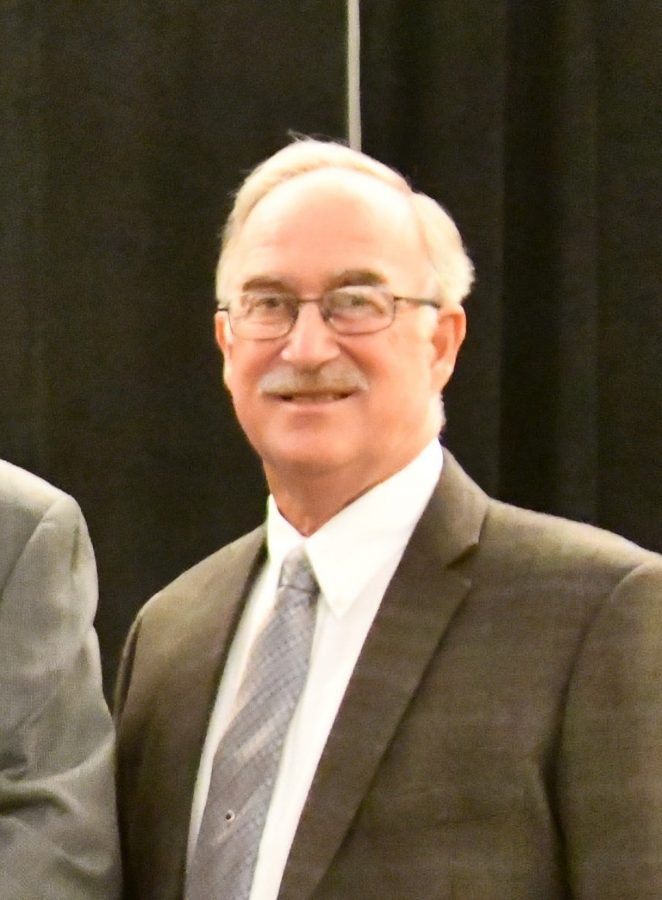
Leading genetic company Semex have been the Principal Sponsors of HYB since 2014 and have greatly assisted with the advancement and success of the young breeders during this time. Not only do Semex provide a substantial monetary contribution as part of their sponsorship package which benefits the whole of the membership, they also fund other annual events including the Semex Conference for the President’s Medal finalists and the Royal Winter Fair in Toronto for the President’s Medal winner.

Representatives from Semex often sit on judging panels for various HYB awards and have an active presence at all national HYB events as well as frequently supporting individual Clubs at a regional level. During the pandemic, Semex have supported the young breeders by hosting webinars and providing prizes for virtual HYB competitions.

On the renewed sponsorship package, Michael Dennison, National Sales Manager for Semex UK, said: “Semex is delighted to sponsor HYB again this year and we are looking forward to supporting the enthusiastic youngsters, who are the future of our dairy industry, back out at organised shows and events”.

“We are extremely thankful that Semex have invested in HYB for another year,” says Hannah Williams, Holstein UK. “It has been a challenging year and without being able to meet with our members face to face, we have hosted a range of virtual events online which Semex have supported. Semex’s continuous sponsorship enables us to work together to support the next generation of dairy farmers and help to shape the future of the industry. We look forward to hosting events again once restrictions allow.”

HYB is part of the wider Holstein UK Group and aims to educate, inspire and support young dairy breeders. Boasting over 1,500 members aged under 27, the organisation provides a wide range of practical learning opportunities, knowledge and networking experiences to prepare young breeders for the future.

Brazil’s Amazon deforestation surges 67% in May as Bolsonaro pledges fall flat

Deforestation in Brazil’s Amazon rainforest rose for a third consecutive month in May, preliminary government data showed on Friday 11 June, with President Jair Bolsonaro yet to follow through on his April pledge to boost funding for environmental enforcement.

Reuters reports that deforestation soared 67% in May from the same month last year, according to Brazil’s national space research institute Inpe, with much of the land targeted for cattle ranches, farms and logging.

For the first five months of the year, the data show deforestation was up 25% compared with a year earlier, with 2,548 square km destroyed – an area more than three times the size of New York City.

Deforestation peaks during the dry season from May to October, when it is easier for illegal loggers to access the forest.

Bolsonaro pledged at an Earth Day summit in April to double funding for environmental enforcement. The next day, he signed the 2021 federal budget that slashed environmental spending.

Environment Minister Ricardo Salles immediately submitted a proposal for the Economy Ministry to increase environmental spending, but that request that has gone unanswered for more than a month.

Bolsonaro’s office did not respond immediately to a Reuters request for comment.

US President Joe Biden’s administration has been negotiating with Brazil on potentially funding efforts to conserve the Amazon. But US officials say they do not expect immediate action.

“Unfortunately the Bolsonaro regime has rolled back some of the environmental enforcement,” US climate envoy John Kerry told a Congressional hearing last month. “We’ve had this conversation. They say they are committed now to raise the budget.

“If we don’t talk to them, you’re guaranteed that that forest is going to disappear.”

Bolsonaro’s strategy to protect the Amazon has relied heavily on expensive military deployments that first began in late 2019. But the government withdrew the armed forces at the end of April, having failed to return deforestation to pre-Bolsonaro levels.

Environmental agencies like Ibama are again taking the lead on protecting the forest, but the government has not increased their funding or staff.

Marcio Astrini, head of the Climate Observatory environmental advocacy group, said rising deforestation is proof that Bolsonaro’s recent promises to protect the Amazon should not be taken seriously.

“It seems to be more empty talk,” Astrini said.

Read more about this story here.

Source: Reuters

Steve Maddox Named 2021 Livestock Man of the Year

The California Holstein Association recently congratulated their member Steve Maddox on being named the 2021 Livestock Man of the Year by the California Chamber of Commerce. Steve is an owner of Ruann and Maddox Dairy located in California. He has dedicated many years serving the dairy industry he loves while building a strong family business.

Australian firm eyes seaweed as global warming game changer

Could a species of seaweed that flourishes around Japan’s Pacific coast and regions of Oceania prove a game changer in the fight against global warming?

That is the hope of those involved in an innovative project under way in Australia, who say a genus of edible red algae called Asparagopsis drastically reduces emissions of methane, one of the major greenhouse gases, from ruminant livestock when used as a supplement in feed.

“Inquiries have been pouring in from livestock farmers all over the world,” says Sam Elsom, CEO of Sea Forest, an environmental biotechnology company in Tasmania that is cultivating the seaweed.

Photo taken on April 21, 2021, shows Sam Elsom, CEO of environmental biotechnology company Sea Forest, viewing water tanks used to cultivate Asparagopsis, a genus of edible red algae, in research in Tasmania. (Kyodo)

Methane, released in the belching and flatulence of livestock animals such as cows and sheep, accounts for more than 20 percent of the world’s heat-trapping gas emissions and has 28 times the greenhouse effect of carbon dioxide, according to the Commonwealth Scientific and Industrial Research Organization, an Australian government agency.

In Australia, with its huge livestock industry, methane accounts for nearly 10 percent of greenhouse gas emissions.

The CSIRO found that methane emissions can be reduced by more than 80 percent when a small amount of Asparagopsis is added to feed for livestock because a chemical compound in the seaweed blocks the generation of methane by curbing the work of an enzyme in the digestive system. The seaweed also contains salt and mineral content indispensable to the growth of livestock.

Masayuki Tatsumi, a 35-year-old Japanese working as a researcher at Sea Forest, says he wants his compatriots back home to stop thinking of seaweed just as a source of food.

“Japanese people are very familiar with seaweed, but I want them to understand that it can also contribute to environmental protection,” he said.

Asparagopsis is extensively found along the Pacific coast of Japan as well as in the Oceania region, including Australia and New Zealand. In Tasmania, the seaweed can be gathered all year round.

Sea Forest, which has both offshore and onshore cultivation facilities, plans to expand its sea cultivation with an eye toward boosting annual production to 7,000 tons by next year.

Photo taken on April 21, 2021 shows Sam Elsom (R) and Sea Forest researcher Masayuki Tatsumi sitting on the edge of farm tanks used to cultivate Asparagopsis in Tasmania. (Kyodo)

Since seaweed captures enormous amounts of CO2 in seawater through photosynthesis and releases oxygen, the cultivation of large amounts of Asparagopsis itself will help reduce greenhouse gasses in the atmosphere, Elsom stressed.

The CSIRO estimates that if 10 percent of livestock breeders in the world use Asparagopsis as a feed supplement, greenhouse gas emissions can be reduced by the equivalent of the amount produced by 50 million motor vehicles.

Fonterra Co-operative Group Ltd., a top producer of dairy products in New Zealand, started a trial last year in cooperation with Sea Forest using Asparagopsis in cows’ feed.

Undated photo shows cows eating feed with Asparagopsis supplement. (Photo courtesy of Fonterra Co-operative Group Ltd.)(Kyodo)

The trial includes checking the safety of milk from some 600 cows fed with the seaweed and measuring the amount they produce in comparison with milk from as many cows given food without the seaweed.

Helping cows produce milk at scale more sustainably is a top priority for the company, says Jack Holden, a 55-year-old senior official at Fonterra. He said he is hopeful the results of the trial will bear fruit.

Source: Kyodo News

Top Dairy Industry News Stories from June 5th to 11th 2021

Top News Stories:

How Midwest dairy farmers are cashing in on California’s clean fuel standards

There’s a boom in renewable natural gas happening in the Midwest right now — and it is all fueled by cows.

According to Energy News Network contributor Frank Jossi, farmers in the Midwest can turn manure into natural gas using a biodigester, which is a tank that breaks down organic material.

“Bacteria degrades the manure into essentially what’s methane and that is then tapped into a natural gas line,” he said. “There’s no separate natural gas line for renewable natural gas. It just goes into the typical natural gas lines that cover the country.”

The only problem? Most of that biofuel is going to California to help the state meet its clean car standards. Minnesota lawmakers are still trying to hammer out a deal on similar rules here.

MPR chief meteorologist and Climate Cast host Paul Huttner spoke with Jossi about this market for biofuels and how it can help the planet and farmers alike.

Source: mprnews.org

JBS says it paid equivalent of $11 million in ransomware attack

Meatpacking giant JBS USA says it paid a ransom equivalent to $11 million following a cyberattack that disrupted its North American and Australian operations, the company’s CEO said in a statement on 9 June.

Reuters reports that the subsidiary of Brazilian firm JBS SA halted cattle slaughtering at all of its US plants for a day last week in response to the cyberattack, which threatened to disrupt food supply chains and further inflate already high food prices.

The cyberattack followed one last month on Colonial Pipeline, the largest fuel pipeline in the United States. It disrupted fuel delivery for several days in the US Southeast.

Ransom software works by encrypting victims’ data. Typically hackers will offer the victim a key in return for cryptocurrency payments that can run into hundreds of thousands or even millions of dollars.

The FBI said earlier this month that the agency was investigating about 100 different types of ransomware.

The JBS meat plants, producing nearly a quarter of America’s beef, recovered faster than some meat buyers and analysts expected.

“This was a very difficult decision to make for our company and for me personally,” said Andre Nogueira, CEO of JBS USA on the ransom payment. “However, we felt this decision had to be made to prevent any potential risk for our customers.”

The Brazilian meatpacker’s arm in the United States and Pilgrims Pride Corp, a US chicken company mostly owned by JBS, lost less than one day’s worth of food production. JBS is the world’s largest meat producer.
Third parties are carrying out forensic investigations and no final determinations have been made, JBS said. Preliminary probe results show no company, customer or employee data was compromised in the attack, it said.

A Russia-linked hacking group is behind the cyberattack against JBS, a source familiar with the matter said last week. The Russia-linked cyber gang goes by the name REvil and Sodinokibi, the source said.

The Wall Street journal reported on Wednesday that the JBS ransom payment was made in bitcoin.

The Justice Department on Monday 7 June recovered some $2.3 million in cryptocurrency ransom paid by Colonial Pipeline Co, cracking down on hackers who launched the attack.

Read more about this story here.

Source: Reuters

A new $4 billion investment from the USDA aims to make the U.S. food system more resilient

Producing more has always been the primary goal of the U.S. food system. “We’ve been incredibly efficient, but it’s come at a cost,” says U.S. Secretary of Agriculture Tom Vilsack. The emphasis on productivity above all else has contributed to everything from the erosion of soil health and water quality to the demise of small and midsize producers to an emphasis on producing food that may be nutritionally lacking, he notes.

During the pandemic, as Americans faced supply chain disruptions and millions went hungry, Vilsack tells Fortune that there was a broader recognition that “now is the time to really focus on a system that is not only productive and efficient but also resilient.”

To help transform the food system, the U.S. Department of Agriculture announced this morning a plan to invest $4 billion through the Build Back Better initiative, the Biden administration’s COVID-19 relief plan. The funding also comes out of the administration’s work on strengthening supply chains.

The USDA investment will go toward shoring up weaknesses in food production, processing, and distribution and is designed to address existential issues like the climate crisis and inequity.  

Many of the problems the investment is attempting to ease were highlighted and exacerbated by the pandemic. For example, a consolidated meat processing system meant that as COVID-19 closed slaughterhouses, a major bottleneck hurt small farmers the most. The new funding will go toward supporting small and regional meat processing facilities to prevent this kind of disruption in the future.

Other issues the funding will address: offsetting an aging farm population by assisting beginning farmers; supporting local and regional food systems to reduce the distance goods need to travel; cutting greenhouse gas emissions; protecting against the major supply chain disruptions Americans experienced during the pandemic; and assisting farmers in the investment needed to transition to organic production, which will make them more profitable and deemphasize commodity crops.

When the pandemic first hit, Vilsack was working as president and CEO of the U.S. Dairy Export Council. He says dairy farmers were dumping milk because it costs about $1.50 a gallon to get milk into a jug, and it was challenging to ask farmers to suffer that additional loss. “What we needed was a system that would at least allow producers and processors to break even so there wasn’t a disincentive to donate,” he says.

The experience made him realize that the current model “isn’t particularly resilient, because it can’t make the shift from food service to food assistance quickly.” Diverting food intended for food service venues like restaurants proved difficult because food banks lacked adequate refrigeration and storage capacity, he says.

In addition to the $4 billion announced today, last week the USDA said it would spend $1 billion on healthy food for food insecure Americans and building food bank capacity, including the infrastructure to support food assistance programs.

“I think we have to plan as if there is going to be another disruption,” Vilsack says.

Vilsack says the USDA will learn from this initial funding and continue to invest. “This isn’t a one-shot deal,” he says. “You can’t transform a system with one investment, no matter how large it is. This requires multiple investments over multiple periods over multiple years.”

Source: fortune.com

Wisconsin is the land of milk and cheese. But we have far more beef farmers.

Wisconsin may be America’s Dairyland, but there’s another bovine-related food abundant here: beef. In fact, the number of beef farms here is growing even as the number of dairy farms is declining. The state has nearly 14,000 beef farmers,
“Beef can be a staple for any meal enjoyed year-round, but summer months are special for Wisconsin residents who want to spend more time outdoors with family and friends,” said Kaitlyn Riley, communications director with the Wisconsin Beef Council. 

Beef farming grows in state

Unlike small dairy farms, small beef farms are proliferating in Wisconsin. The number of beef farms in the state grew about 7%, from about 13,000 to 14,000, from 2012 to 2017, the latest figures available from the U.S. Department of Agriculture. 

In sheer numbers, there were 310,000 cattle to produce beef in the Dairy State in January, according to the USDA. Nearly all of Wisconsin beef farms had fewer than 50 head of cattle. 

Just nine Wisconsin farms had 500 to 999 beef cattle, and only one was listed as having more than that, according to 2017 figures, the latest available.

The state’s beef trends are apparently the opposite of what’s happening with dairy farms and different from other states. 

“While it can be difficult to pinpoint all contributing factors, we do know that dairy farmers diversifying their farms or converting to beef production certainly is playing a part in Wisconsin growing their beef herd,” said Jeff Swenson, livestock and meat specialist at the Wisconsin Department of Agriculture, Trade and Consumer Protection, in an email provided by the Wisconsin Beef Council.

Many of the state’s smaller dairy farms have been drying up, with remaining ones getting larger. Wisconsin has 1.26 million head of dairy cows as of the start of 2021, about four times the number of beef cattle. Yet, only 6,800 dairy farms remain, about half the number of beef farms. 

Another stark contrast is that less than half of the remaining dairy farms have fewer than 50 cows, according to Riley at the Wisconsin Beef Council and census data.

The number of cattle in Wisconsin has grown consistently in the past decade, even as the number has decreased in many states, Swenson wrote in the email.

Doug Ney, beef farmer and owner of Ney’s Premium Meats, looks over his angus cows on pasture in Hartford.

Beef is big in summer

The increase in local beef farms is good news for Wisconsin’s beef lovers. In summer, ground beef and steaks rule.

One of Wisconsin’s beef farmers is Doug Ney (rhymes with pie), a fifth-generation farmer and owner of Ney’s Premium Meats in Hartford, formerly known as Ney’s Big Sky. Ney, who raises Angus and Angus-cross cattle, has built a following for his bone-in rib-eye, filet mignon and custom burger grinds.

Ney’s free-range beef is entirely sourced and processed in Wisconsin, from Ney’s friends, uncles and other family members.

One notable selection is their prime rib burger, using ground rib-eye. The burgers come three patties to a 1-pound package for $9 at neysbigsky.com. The burger is about 92% lean, Ney said; burgers typically can be 20% or 30% fat.

Ney’s also grinds its custom Bloody Mary burger, corned beef burger and whiskey peppercorn burger, to name a few others. The uniform size and thickness of pre-formed patties can help with even cooking on the grill.

Ney’s meats are sold at the South Shore and Brookfield farmers markets plus stores including Metcalfe’s Market in Wauwatosa and Madison, Woodlake Market in Kohler, Good Harvest Market in Waukesha and The Organic Market in Slinger.

A red angus grazes at the Kerstiens family ranch in Lancaster, which grows cattle for Strauss Brands meats.

For Strauss Brand meats based in Franklin, ground beef is the bestseller during grilling season.

“Ground beef — hard to beat a burger on those hot days. Rib-eye steaks and strip steaks are also popular choices this time of year,” said Devin Kulla, marketing director at Strauss.

At home, Kulla said, he enjoys grilling a marinated flank or skirt steak for tacos.

“A little brown sugar in the marinade helps get a nice sear on the outside,” he said.

Strauss gets about 15% of its beef from Wisconsin producers, with the remaining primarily coming from the rest of the Upper Midwest and South Dakota.

“Our cattle are born and raised in the USA, where they are always free to roam on pasture. Our ranchers utilize pasture management practices like rotational grazing that helps restore our soil, therefore reducing erosion and improving water quality,” Kulla said. 

Strauss beef is all grass fed with no antibiotics or added hormones, he said.  Strauss beef is available at Pick ‘n Save, some Piggly Wiggly, Meijer, Woodman’s Market and Sendik’s Food Market. 

Wisconsin Meadows is another option for pasture-raised beef. A co-op based in Viroqua, Meadows’ beef cattle are rotationally grazed on Wisconsin family farms across the state, according to wisconsinmeadows.com. Its cows are treated humanely, born and naturally raised without synthetic growth hormones or antibiotics.

The cattle are never put in feedlots, and calves are left with their mothers to learn grazing and social behaviors. Wisconsin Meadows beef can be found at its website and throughout the Midwest in stores including Albrecht’s Delafield Market, Outpost Natural Foods, Metcalfe’s Market, Riverwest Co-op, Health Hut and Glenn’s Market in Watertown.

Another farmer co-op, Organic Prairie, based in La Farge along with Organic Valley, provides more beef options, available at Health Hut, Woodman’s Market, Whole Foods, Outpost Natural Foods, Woodlake Market, Metcalfe’s Market and Sendik’s Food Market.

At Sendik’s Food Market, with 17 locations around southeastern Wisconsin, steaks are the “big focus” for Father’s Day weekend, according to Brian Schroeder, meat and seafood director.

He predicted increased demand on Father’s Day and through summer for rib-eyes, T-bones, filets, porterhouse and New York strip steaks. Also popular are marinated beef tenderloin kebabs, gourmet burgers and marinated beef skewers.

 The stores carry mostly USDA choice or higher-grade beef, including American Wagyu beef, grass-fed and grass-finished beef.

Source: jsonline.com

Send this to a friend