Some of the organic dairy farmers who found out last summer that they were losing their contract with an international company may have a new way to stay in business.
Organic Valley, a farmer-owned cooperative based in Wisconsin, announced Tuesday that it was reaching out to up to 80 farms in the Northeast that were dropped by the company, Horizon Organic, in August.
Organic Valley CEO Bob Kirchoff said the company has been working since the announcement was made this summer to find a solution for the farm.
“We are the only national brand still fighting for small family farms because we know that the best quality food is ethically sourced from small family farms,” Kirchoff said in a press release. “With the help of consumers and customers across the country, we are helping solve the crisis of disappearing small family farms. We are creating the food system we all want—one that regenerates soil, cares for animals, nourishes people, and strengthens communities.”
Organic Valley currently picks up milk from 99 Vermont farms.
Horizon Organic, which is owned by the international food company, Danone, said it would be ending its contracts with the organic family farms due to “growing transportation and operational challenges in the dairy industry, particularly in the Northeast.”
Danone said the contracts would end during the summer of 2022, and then extended that deadline until the end of the year.
But the announcement Tuesday by Organic Valley means the farms now have an option to sell their milk to a new dairy company.
Organic Valley said it already signed new contracts with 10 farms in New England.
The Osgood family at their farm in Corinth, Vt. The Osgoods were one of the first to sign on with Organic Valley in Vermont.
“My family began farming this land over 65 years ago. I’m glad to partner with Organic Valley to continue our family farm,” said George Osgood of Corinth, Vermont, who joined Organic Valley earlier this month. “A cooperative owned by small family farms is the perfect fit for us. It gives us the chance to keep doing what we love.”
When Horizon made the surprise announcement last year the Vermont Agency of Agriculture, Food and Markets formed a task force with to help the 28 organic farms that would have no place to send their milk when their contracts with Horizon ended.
In December, the task force made a series of recommendations to the U.S. Department of Agriculture (USDA), which included providing grants to incentivize more organic dairy sales, starting a pilot program to encourage schools purchase more organic milk, and setting up a new federal grant program to support existing and new dairy processors.
Last week, the USDA announced an additional $20 million investment into the Northeast Dairy Business Innovation Center.
“Today’s action by Organic Valley is the outcome that we hoped for when we created the task force,” said Vermont Secretary of Agriculture Anson Tebbetts. “Now we must build upon this development and make sure we continue to secure a long-term market for farmers.”
The additional funding will be used to expand capacity
The US Department of Agriculture (USDA) announced an investment of $80 million in the Dairy Business Innovation (DBI) Initiatives. In November 2021, DBI awarded $18.4 million to three current Initiatives at University of Tennessee, Vermont Agency for Food and Marketing and University of Wisconsin, and $1.8 million to a new initiative at California State University Fresno.
According to a USDA press release, each initiative will now have the opportunity to submit additional proposals for up to $20 million in American Rescue Plan funds to further support processing capacity expansion, on-farm improvements, and technical assistance to producers.
“The pandemic has demonstrated that dairy producers and regional dairy processors, particularly those engaged in value-added production, faced systemic shocks over the past several years,” said Agriculture Secretary Tom Vilsack. “We have heard directly from producers and processors – particularly organic producers and processors in the Northeast – on how we can work with the industry to build long-term resilience of regional dairy supply chains.”
“The Dairy Business Innovation Initiatives have supported regional-focused efforts tailored to the needs of dairy farmers and businesses locally,” he added. “This additional funding will expand the capacity of the four initiatives to provide technical assistance and sub-grants exponentially.”
Jersey Ontario President, Theo Elshof, and the Kawartha Jersey Club would like to invite all Jersey breeders and enthusiasts to the 2022 Jersey Ontario Farm Tours, Awards Banquet and Management Symposium being held in Peterborough, ON Friday March 25th and Saturday March 26th, 2022.
The weekend will start with Barn Tours on Friday March 25th, a bus leaving the will depart the Otonabee Inn and Suites Peterborough, ON at 9:30. Tour stops are still being added and the order will be confirmed, but include:
Irchel – Kurt & Alison Schmid & Family, 383 Ramsey Rd., Little Britain, ON K0M 2C0
Ashtonia – Robert Ashton, 126 Medd Rd., Port Perry ON L9L 1B2
Sunset Ridge – Adam Vervoort, 277 6th line Rd S Dummer, Norwood, ON K0L 2V0
Enniskillen Jerseys, Tim & Sharyn Sargent & Family, 8800 Old Scugog Rd, Enniskillen, ON L0B 1J0
Lunch will be provided.
The Jersey Ontario Awards Banquet, recognizing the winners of the 2021 All-Ontario Awards and 2021 Production Awards, will take place at the Otonabee Inn, starting at 6:00 p.m. on Friday, March 25th.
Jersey Management Symposium takes place on Saturday, March 26th, beginning at 10:00 a.m. Sessions include:
Alternative Forages
Return Over Feed
Inbreeding
Economics of Genomics
Accommodations: Rooms can be booked at the Otonabee Inn, 84 Lansdowne Street E., Peterborough, ON, by calling 705-742-3454 and asking for “Jersey Ontario” rate. Traditional Room cost is $135 + HST. The rate is available only through direct reservation with the hotel. Book early, rooms are limited.
Click here for the registration form, register early as space is limited.
If you have any questions, please feel free to contact Jersey Ontario (519) 766-9980.
It was all dairy farmer Paul Weir could do – video dozens of his herd being swept away in brutal floods.
Lismore farmer Mr Weir helplessly watched a quarter of his 300-strong herd were swept away.
“I watched about 70 or 80 go that morning, the gate was open and there was nothing I could do,” he told AAP.
An emotional Mr Weir described the moment on Monday as “one of the worst experiences I’ve ever had”.
“To see your life’s work, the genetics of your herd – helpless, I couldn’t get to them, and just had to sit there and watch.”
Since then, Mr Weir has been searching for his lost cows and managed to locate about 15 of the total of 150 animals washed away, but the majority are gone.
“It’s about trying to get as many of them back as I can, when you see them it’s a great feeling,” said Mr Weir.
Late last week, he learnt another of his cows had been found eight kilometres away, alive.
“We’ve fed these cows from day two of their life, and they’re part of the family … these animals are no different to your dog, it’s only we’ve got hundreds of them,” he said.
A screen grab from the distressing footage. Image: Paul Weir
Since then Mr Weir has been overwhelmed by the help he’s received. His remaining herd is being milked at a nearby property, while strangers have turned up unannounced with food.
“Those little moments of a day, that actually pick you up, it’s very humbling,” he said.
“I’m just overwhelmed at the support … my phone just rings constantly.”
Mr Weir’s dairy farm is one of 15 in the Lismore region to suffer “catastrophic” damage due to the floods, according to the vice-chair of dairy advocacy group, eastAus Milk, Graham Forbes.
Mr Forbes, a dairy farmer from Gloucester in NSW, is helping to co-ordinate recovery efforts for farmers in need.
“We’ve organised helicopters to take supplies in to some of the farms, they’ve needed generators and electric motors to get their dairies going again,” Mr Forbes told AAP.
“…these animals are no different to your dog, it’s only we’ve got hundreds of them.
Paul Weir
Getting cows milked and fed, as well as removing the carcasses of dead animals, are the main priorities.
“There are dead cows sitting around on some people’s lawns in Lismore, they’ve got to be disposed of,” he said.
eastAus Milk CEO Shaughn Morgan said it will be years before the affected dairies are back on their feet.
Milk production to be impacted
“Farmers are resilient, they will get back on to their farms and they will want to restore production to provide food security for Australians,” he said.
Because NSW and Queensland provide the bulk of fresh domestic milk on the east coast, “this will have an impact upon milk production.”
NSW Farmers dairy chair Colin Thompson is urging farmers to reach out for help, noting the NSW government has set up a state co-ordination centre to assist those affected.
“Farmers affected by the floods should complete the NSW Department of Primary Industries natural disaster damage survey … so the government can get a good idea of what’s needed and where,” he said.
American Farm Bureau Federation President Zippy Duvall sent a letter today to President Joe Biden asking him to take the necessary steps to address high energy costs impacting all Americans. Over the past 15 months, oil prices have increased by 130% to more than $120 per barrel.
President Duvall wrote, “As Russia’s harmful actions in Ukraine continue and further sanctions are imposed against Russia, oil prices will likely continue to rise, creating even higher consumer costs and threatening U.S. energy and economic security.”
AFBF is asking the administration to remove barriers to domestic energy production including increasing the production of biofuels, which have reduced America’s dependence on foreign crude oil while creating jobs in rural America.
“By displacing imported petroleum, increased biofuel use and domestic energy production will enhance U.S. security and independence while supporting America’s farmers and rural economies,” President Duvall wrote.
Achieving domestic energy independence through comprehensive energy sources remains a priority issue for Farm Bureau. AFBF is committed to working with the administration and leaders in Congress to address the energy crisis.
International Women’s Day is an opportunity to recognize the achievements of women and the pursuit of gender equality.
This year, we’re proud to share stories of inspiring women conquering challenges and breaking barriers across the globe, writes Elizabeth Hefron and Alyssa Cogan with Heifer International.
We have the honor of working with dedicated, brilliant female farmers, entrepreneurs and artisans all around the world — women who, every day, are overcoming odds, defying limitations and blazing more prosperous trails for themselves and their communities.
International Women’s Day is recognized globally as a celebration of the social, economic, cultural and political achievements of women, and this International Women’s Day, March 8, we’re proud to share the stories of some of the women who have inspired us in this work — our partners in the fight for equality, inclusion and progress for all, without bounds and regardless of gender.
Together we can break barriers — and #BreakTheBias.
Panchu in India
A woman stands with her goats in India. Photo by Russell Powell/Heifer International.
After marrying at just 17 and with little schooling, Panchu Devi finally learned to write after joining a Heifer India project, confronting long-held cultural beliefs that restrict the rights of girls and women in the household and society at large. Now better educated and earning income, she is carving a new path of hope for herself — and her daughters.
Lilian in Kenya
A Kenyan woman stands for a portrait at her home poultry farm. Photo by Francis Mwangi/Heifer International.
Lilian Ocholla survived 17 years of domestic abuse before separating from her husband — and dedicating herself to building a better future for her family. Today, with support from Heifer and Cargill’s Hatching Hope Kenya program, Lilian is challenging gender-based violence by running what is fast becoming a successful poultry business.
Grace in Uganda
A Ugandan woman watches from afar as her cattle graze. Photo by Fábio Erdos/Heifer International.
In Uganda, where poverty, malnutrition and a lack of education and economic opportunities can hold women back, Grace Atusimirwe is breaking the mold. With support from Heifer, dairy farmers like Grace are raising healthier animals, connecting to new markets, earning more income and fostering a future in which prosperity is possible.
Tulsi in Nepal
A woman sits at her desk for a portrait in Nepal. Photo by Joe Tobiason/Heifer International.
Tulsi Thapa once depended on her husband for income. Now, she’s a founding member of Bihani Dairy, an exclusively women-led social enterprise that supports local farmers and invests much of its earnings back into the community.
Mónica in Ecuador
A female Ecuadorian farmer stands for a portrait in her garden. Photo by Isadora Romero/Heifer International.
When the COVID-19 pandemic battered jobs and food systems in Ecuador, Mónica Tigse and hundreds of other female farmers stepped up to keep their communities fed, developing a delivery system for locally grown produce baskets — and even launching an online marketplace to safely bring nutritious food from farm to doorstep.
Khean and Heng in Cambodia
Two Cambodian women pose together while harvesting rice. Photo by Phillip Davis/Heifer International.
In rural Cambodia, where many smallholder farmers don’t have knowledge or tools to maintain productive farms, women like Khean Saron and Heng Orea are joining agricultural cooperatives, banding together to grow more food, provide for their families and build thriving businesses.
This International Women’s Day, you can make a difference in the lives of women around the world. All funds raised will help provide more Heifer families with nutritious food, shelter, clean water and a decent education so that they can thrive, not just survive.
Sales in Russia last year amounted to 55 million euros
Dairy cooperative Arla Foods said on Monday it would suspend its business in Russia after the country’s invasion of Ukraine, reported Reuters.
This would include imports to Russia and local operations in the country, where Arla operates one dairy and employs 70 people, it said in a statement.
“The impact and consequences of Russia’s invasion of Ukraine are tragic … We are now taking action to suspend our operations in Russia,” Chief Executive Peder Tuborgh said.
Arla, owned by more than 9,400 farmers in Denmark, Britain, Sweden, Germany, Belgium, Luxemburg and the Netherlands, had sales of 55 million euros in Russia last year which amounts to roughly 0.5% of its total 2021 sales.
French food group Danone, the world’s largest yoghurt maker, said on Sunday that it would continue to sell dairy and baby food in Russia.
Danone SA has suspended its plans to invest in Russia following the invasion of Ukraine, said General Secretary Laurent Sacchi.
The world’s largest yogurt maker will continue to sell dairy and baby food however, Sacchi said in a statement on the company’s website on Sunday. Danone will continue to monitor the situation, and would apply any decisions made by the French authorities.
Danone Chief Executive Officer Antoine de Saint-Affrique was among CEOs and chairmen of some of France’s biggest companies who met with Emmanuel Macron on Friday, according to Le Figaro. The French president urged them not to leave Russia hastily, and in any case not without consulting the government, the newspaper reported.
“We have decided to suspend all investment projects in Russia but currently maintain our production and distribution of fresh dairy products and infant nutrition to still meet the essential food needs of the local population,” Sacchi said.
One of Danone’s two factories in Ukraine has closed, while the second has resumed operations, he said.
Wisconsin’s milk production in the last couple of years has been around 30 billion pounds per year — an all-time high.
Yet, the state has lost about 40,000 dairy farms over the last four decades. And that number continues to rise by about one farm per day, said Daniel Smith, president and CEO of Cooperative Network, a large national cooperative trade association headquartered in Madison.
America’s Dairyland has kept up a multi-year trend as the state with the largest number of farm bankruptcy filings. Between 2010 and 2019 Wisconsin totaled the second-most Chapter 12 farm bankruptcy filings in the nation — 375 — behind California’s 388, according to the Farm Bureau and court data.
“I often say that Wisconsin has done a really good job of keeping the cows,” Smith told WPR’s “Central Time.” “We didn’t do a very good job of keeping the farmers.”
Between 2010 and 2019 Wisconsin totaled the second-most Chapter 12 farm bankruptcy filings in the nation — 375 — behind California’s 388, according to the Farm Bureau. Image courtesy of AFBF
We received a question about this from Ryan Warwick in Fond du Lac County. He asked WPR’s WHYsconsin: “What’s happening to all the farms that go under, and who is profiting?”
Smith addressed some of the reasons why people end up shuttering a farm, the mechanics of the process and the familial and emotional tolls that come with ending an ancestral way of life and leaving an ancestral home.
Smith previously served as administrator for the Division of Agricultural Development at the Wisconsin Department of Agriculture, Trade and Consumer Protection. He also served several years as a counselor and financial advisor to farm families in crisis through a DATCP program, so he’s heard stories of farms closing and seen the impact of the loss.
There are a couple of reasons farms are going under in Wisconsin, Smith said. An aging population of farmers, with younger people opting for other careers, is one. Rising land, equipment and feed costs is another. Then there’s consolidation and specialization in agriculture.
“When I started farming in 1978, the average herd size in Wisconsin was 36 cows,” Smith said.
After graduating from the University of Wisconsin-Madison, Smith returned to his family’s dairy farm in northwestern Illinois, near Freeport, and worked on it for three decades.
“Today, it’s almost 200. And many of our farms milk far more than that,” he said.
Smith said Wisconsin has about 6,500 dairy farms remaining in the state. That’s down from 47,700 permitted dairy farms in 1978, he said.
Behind the growth in herd size is what Smith refers to as consolidation — smaller farms becoming part of larger and larger farms. And that answers both the “what’s happening” and the “who profits” part of the WHYsconsin question.
When one dairy farm closes, its assets and land get sold off, in sum or in parts, to larger operations with more capital. Some of its land may also go into different types of farming, Smith said, such as corn and soybeans. Farms pick up more and more land becoming larger and larger.
Land on the margins of closing farms can also get sold for someone to build a house or subdivision on, or get used for recreational hunting. The last two years have seen a rise in this type of turnover: The Wisconsin Agricultural Land Prices Report showed 2020 and 2021 had more agriculture land sales than the six years prior.
“But good, tillable land is usually absorbed by an existing farmer, and then expands their operation,” Smith said. “And now where you had two or three or four farms, farm families living — maybe now you have one.”
The Krueger farm
In the 1990s, the Krueger family had a 300-acre farm in Fond du Lac County that daughter Patty Dolph said she worked on with her parents, four siblings and one employee. They milked 65 cows and raised Hampshire hogs, including 35 sows.
In 1994, Dolph’s father had a heart attack and required triple-bypass surgery. He spent an entire month away from the farm. Her three older sisters went off to college, leaving just Dolph, her mother, brother and their employee to work the farm.
An extremely cold February in 1995, plus mounting bills from the hospital and livestock feed, forced Dolph’s parents to sell the cows. Then they had to sell off land as well to pay debts, downsizing by 250 acres. Dolph said she was in high school at the time, and land prices didn’t afford the family as much as they would’ve liked. Even with the sales, they ended up with little extra money.
“I was devastated. I loved the cows,” Dolph said. “I had numerous pets. I knew all of them by name and their personalities. On the day the cattle left, I couldn’t be there. At night, there was an eerie stillness with no milking pump going on or cows rattling in their stanchions.
“For the next few months after this ordeal, I feel my family came together,” she continued. “We appreciated the good times in the barn. Also, I feel there might have been a little depression among us. Also, there was the feeling of fear: What were my parents going to do?”
Dolph now lives and milks 500 cows with her husband, two daughters, and his parents on their 850-acre farm in Jefferson County. Her brother and his family are the only ones still living on the remaining acres of the Krueger family farm, where they now raise hogs and beef.
Smith said he’s heard numerous stories like Dolph’s in his time working for DATCP’s Wisconsin Farm Center, counseling families who were trying to sort out their finances and decide what to do next. Those emotions of depression and fear that Dolph expressed are common. And Smith said whole communities have been impacted as well.
I’m not sure the state of Wisconsin has really addressed the cultural and the society cost, the social cost of losing all those farms,” Smith said. “We lost a lot more than that. We lost the families that filled our rural schools, businesses on Main Street that supported those families and those farms. We lost the people who serve on our cooperative boards and our town boards and our school boards — really depopulated the rural area as these farms went away.”
The Smith farm
Smith himself once reached that same difficult position of having to decide whether to continue farming. After graduating from UW-Madison, he worked for more than three decades on his family’s land in Illinois. He experienced emotional and physical costs of that year-in-year-out work, and he said constant changes in the farming industry led to a breaking point. He decided to leave his ancestral home, and in 2008 he and his family moved to the Driftless area of Wisconsin.
It fell to Smith to close up the farm that he’d worked on since he was a kid, five decades in total. First he sold the cow herd, 101 animals, to a farm by Stevens Point. Smith said the day they left was the first day since his parents took over from his grandfather in 1941, that they didn’t ship milk from the farm.
Then he spent a year sorting through three generations of tools, machine parts and other equipment that needed to be either recycled, auctioned off, or relocated to his new home. Finally, Smith sold the farmland itself. A family from town bought the house, other buildings and a few acres. Another farmer bought the remaining tillable land for raising corn and beans.
“It was physically and emotionally draining,” Smith said about the move. “But it is one that cannot be avoided if one is going to move on with life,” he added later in an email. “We could have stayed on the farm and rented the land out, but we felt a fresh start somewhere else (would) be better. I am confident now that was a good decision.”
‘It really gets into your blood’
Smith said growing up on a farm that’s both a home and a business, and taking it all over, is simultaneously an uncommon and profound experience.
“Your father and mother are working in the business right outside,” he said. “You learn to fall in love with farming and with the senses that come along with it, with just the job of the changing of the seasons, and it really gets into your blood.
“And that is why it is so difficult, when times change,” Smith continued. “It could be financial, it could be family strife, it could be a physical problem. It could be just at the point that you get in your life where you need to do something else — that it’s very hard to let go of what I call both the ancestral home and ancestral way of life.”
Smith has also been a poet for decades, as a way to capture both the joy and difficulties of farm life — including the human toll that making decisions like closing down a farm can take. His latest book of poetry written across those decades is called “Ancestral.”
“What I wanted to do was peel back the cultural and the emotional component of agriculture, because it’s every bit as important as the economic and the business and the industrial changes that are taking place,” he said.
Smith shared a poem he wrote just after moving away from his family’s farm. The poem is called “Anvil”:
I’ve hauled my father’s anvil due north up out of the black Illinois farm ground he and I together worked, decades our home.
Set down sixty pounds onto the floor of this old barn, new only to me.
All around, our bewildered tools hang in the strange light of the cracked windowpane
where I stand looking out over land not yet home.
It is growing late on a late winter’s day.
At my feet, my father’s anvil, his striking song of steel on steel still hammering home.
The Canadian proposal is a direct result of a panel decision in December that ruled in favor of U.S. complaints that Canada is manipulating the quotas negotiated in the U.S.-Mexico-Canada Agreement.
“For us, this is just moving the chairs around, but it’s the same chairs,” stressed Jaime Castaneda, executive vice president of the National Milk Producers Federation and the U.S. Dairy Export Council. He said the proposal offers the same opportunities to Canadian processors to dominate the quotas.
“The USMCA makes clear that the parties must try to resolve a dispute after a panel report,” Assistant U.S. Trade Representative for Media and Public Affairs Adam Hodge told Agri-Pulse Thursday in a statement. “The United States has not agreed to a resolution with Canada, but we continue to talk about implementation of the panel’s findings and hope to reach a resolution.”
A core component of the NMPF and USDEC rejection is Canada’s insistence that major Canadian dairy processors would maintain control over their ability to use the quotas for U.S. cheese, condensed milk, skim milk powder, yogurt, buttermilk, whey, ice cream and other products.
U.S. industry representatives complain under the current quota policy, it is far too hard to export higher-value dairy products like cheese to Canada because Canadian processors have too much control over importing licenses. Canadian cheese importers have similar complaints, saying the process handicaps their ability to get U.S. products.
As the situation stands now, Canadian processors get 85% of the quota for cheese and Canadian distributors get just 15%. Furthermore, the processors get access based on market share, meaning the biggest companies get the biggest share. Distributors, meanwhile get allocations on a straight “equal share basis.”
The Canadian proposal would alter the cheese quota to give 100% of the allocation to both processors and distributors. The problem, says Castaneda, is that it would all be on a “market share basis” and that means the large processors would again have control by the reason of their size. The quota also does not include Canadian retailers, who are major sellers of U.S. dairy products in Canada.
It is unclear if the Canadian proposal will have any benefit for U.S. dairy exporters or Canadian food service companies who use lots of dairy products, said Castaneda.
“This could be manipulated in such a way that they are doing the same thing as before,” he said.
US-based agribusiness Land O’Lakes, Inc., owner of Land O’Lakes Dairy Foods, reported record net sales totalling $16 billion with net earnings of $295 million for the year ending 31 December 2021, compared with net sales of $14 billion and net earnings of $266 million in 2020. The company continued to leverage its differentiated insights, strong supply positions and iconic, beloved brands to deliver strong performance across all business units.
“Land O’Lakes 2021 performance was most directly the result of the incredible work and resilience of our teams,” said Beth Ford, president and CEO of Land O’Lakes, Inc.
Within the Land O’Lakes businesses, Crop Inputs saw significant volume increases as farmers leveraged insights from ag-tech platforms and invested in their crops given improved commodity market pricing driven by short supply globally. Crop Inputs also benefitted from improved product mix in Crop Protection and higher margins in Crop Nutrients. At the same time, the business realized supply chain efficiencies from strategic actions including location consolidations and structured deliveries that provided offsets to increased transportation and handling costs.
Dairy Foods retail volumes remained elevated from pre-pandemic levels and Foodservice volumes saw a strong recovery as the economy re-opened in 2021. Dairy earnings were below prior year levels due to higher supply chain costs, partially offset by improved margins on both cheese and nonfat dry milk.
Animal Nutrition continued to grow its Lifestyle feed volumes but overall earnings were below prior year levels, also due to higher supply chain costs, in addition to higher ingredient costs.
“We move into our next 100 years with confidence for the future, our business positioned for the long-term, continuing to serve our members and advocate for their communities,” Ford said.
Asia Pacific is anticipated to grow the fastest in the coming years
The global veterinary artificial insemination market size is anticipated to reach USD$7.4 billion by 2030, according to a new report by Grand View Research, Inc. The market is expected to expand at a compound annual growth rate of 6.5% from 2022 to 2030.
Key factors driving the market growth include increasing consumption of animal protein, growing demand for livestock productivity, and adoption of sexed semen. In September 2021, LIC- an agritech co-operative based in New Zealand launched a sexed semen lab in the country to meet the growing demand. This boosted the co-operative’s capabilities to artificially inseminate about 4.5 million cattle between Spring mating season of September to December 2021.
The market was valued at $4.2 billion in 2021 and is expected to expand at a compound annual growth rate of 6.5% during the forecast period.
By animal type, the cattle segment held the largest share of the market in 2021 owing to rising consumption of beef, milk, and milk products.
The swine segment is projected to grow the fastest owing to the rising adoption of AI techniques and growing consumption of pork in key markets.
The normal semen segment accounted for the largest revenue share in the products segment in 2021, owing to the low cost of the product compared to sexed semen and wide availability.
The sexed semen segment is expected to show the fastest growth during the forecast period. In 2016, ST Genetics produced 4 million X chromosomes into an AI straw. The company sells sexed semen for five species of animals, including cattle, deer, sheep, horses, and goats. The rate of semen straws ranges between $65 and $250 for apiece as of 2018, depending on the quality, species, and use of the animal.
The animal husbandry segment accounted for the largest revenue share in 2021 and is expected to maintain its dominance throughout the forecast period. The growth can be attributed to most semen collection as well as artificial insemination procedures performed on-site on farms.
North America dominated the market in 2021 while Asia Pacific is anticipated to grow the fastest in the coming years.
Building on the success of the On the Farm STEM Beef experiences, the American Farm Bureau Foundation for Agriculture is expanding its free professional development lineup to include an immersive program focusing on dairy.
At the first-ever On the Farm STEM Dairy event, teams of science educators will travel to Minneapolis, Minnesota, to see firsthand how science is brought to life through the food production system. They will meet with local dairy farmers, researchers, nutritionists and veterinarians to learn how animals are cared for and how technology and innovative practices are advancing sustainability.
“The Foundation is thrilled to offer another opportunity for outstanding science educators to experience farming up close, and we are looking forward to featuring another type of animal agriculture in our programming,” said Daniel Meloy, executive director of the American Farm Bureau Foundation for Agriculture. “On the Farm STEM is an excellent opportunity for teachers and classroom leaders to see how agriculture can fit into their existing curriculum and illustrate how they can encourage students to explore where their food comes from.”
The experience begins with a two-part webinar series to lay the groundwork for a four-day immersive experience, during which participants will use what they learn during the event to craft lessons and activities to take back to the classroom. The curriculum designed during the event will empower students to explore the science and engineering practices associated with sustainable food practices.
Teams will be made up of three to five members including high school science educators, instructional leaders who support science educators, administrators who support science-based career and technical education or community partners with a passion for improving agricultural literacy.
The Foundation for Agriculture, in partnership with Dairy Management Inc. and Midwest Dairy, will cover up to $750 of travel costs as well as meals and accommodations during the event for selected participants. Interested educators are encouraged to apply now, with applications closing April 8.
On the Farm STEM Dairy expands on the Foundation for Agriculture’s already-successful work in science education that has been funded by the Beef Checkoff for On the Farm STEM Beef, which launched its 2022 applications in January. Applications remain open through March 11.
Visit onthefarmstem.com to learn more about both opportunities and apply today.
he National Milk Producers Federation (NMPF) and the U.S. Dairy Export Council (USDEC) commend President Biden for outlining a new initiative to assign Department of Justice (DOJ) attorneys and litigators to the Federal Maritime Commission (FMC) to jointly improve enforcement of the Shipping Act. The initiative also directs the DOJ to pursue further actions to increase competition in the ocean shipping industry.
NMPF and USDEC strongly endorsed these efforts as a means of promoting increased competition and better services for American dairy exporters from the ocean freight transportation system. Disruptions in the export supply chain have cost U.S. dairy shippers over $1.5 billion in 2021 due to reduced value, higher direct costs, and lost export sales.
“We are grateful to President Biden and his administration for bringing the Department of Justice and the Federal Maritime Commission together in a partnership to better enforce the Shipping Act and promote competition in the ocean carrier market,” said Krysta Harden, president and CEO of USDEC. “Laws that protect shippers are only as good as their enforcement. We urge the DOJ and the FMC to move swiftly in pursuit of steps that will help deter unreasonable ocean shipping practices that harm U.S. dairy exporters.”
“Throughout 2020 and 2021, American dairy producers and cooperatives have faced unprecedented challenges in moving dairy exports from plants to ships due in key part to the actions of the ocean carrier industry,” said Jim Mulhern, president and CEO of NMPF. “The last year has clearly shown that changes are needed to tackle the unreasonable power shipping vessel owners have over America’s agricultural exporters working hard to get their goods to foreign markets. U.S. dairy exporters have been forced to endure unfair practices, including last minute changes, increased costs, and other unwarranted charges and penalties. Effective enforcement of the Shipping Act is long overdue particularly as ocean carriers enjoy record profits.”
The White House also called on Congress to address the present antitrust immunity for the predominantly foreign-owned ocean shipping alliances. On Monday evening the House moved quickly to advance reforms in this area by introducing the Ocean Shipping Antitrust Enforcement Act (H.R. 6864), which would repeal certain antitrust exemptions for ocean common carriers. Introduced by Rep. Jim Costa (D-CA), Adrian Smith (R-NE), John Garamendi, (D-CA), and Dusty Johnson (R-SD). NMPF and USDEC expressed support for the legislation and urged further action by Congress to advance it.
The National Milk Producers Federation, based in Arlington, VA, develops and carries out policies that advance dairy producers and the cooperatives they own. NMPF’s member cooperatives produce more than two-thirds of U.S. milk, making NMPF dairy’s voice on Capitol Hill and with government agencies. For more, visit www.nmpf.org.
The U.S. Dairy Export Council (USDEC) is a non-profit, independent membership organization that represents the global trade interests of U.S. dairy producers, proprietary processors and cooperatives, ingredient suppliers and export traders. Its mission is to enhance U.S. global competitiveness and assist the U.S. industry to increase its global dairy ingredient sales and exports of U.S. dairy products.
Are you looking to make an improvement to boost efficiency on your dairy operation? Whether you want to install a fan or sprinkler system in your freestall barn, upgrade your feed mixer in your feeding system, or replace your milker units with a more efficient system, consider applying for a Dairy Excellence Grant. The Center for Dairy Excellence leverages funds provided through the Commonwealth of Pennsylvania to provide Dairy Excellence Grants to support improvement projects on the farm. If you are approved for the grant, you will receive a 50 percent match, up to a maximum matching level of $5,000.
The application period opened TODAY (March 1) and will close on March 31, 2022. This is a competitive grant for Pennsylvania dairy farms only, and limited grants are available. Recipients will receive committee approval before grant awards will be made.
Keep reading to learn more about the grant opportunity, how to apply, and how other dairy producers have used the grant to benefit their dairy operations.
Siemers Holstein Farms have acquired Sandy-Valley Farms. Sandy-Valley, located in Wisconsin was founded in 1963 by the Bauer family and has developed into one of the most influential Holstein herds in the US. This was especially thanks to Dellia descendant Sandy-Valley Planet Sapphire. Siemers Holsteins is located in northeastern Wisconsin on beautiful Lake Michigan between Milwaukee and Green Bay. They are currently a 4th, 5th, and 6th generation family farm with many family members contributing to the dairy. Siemers Holsteins is among the absolute elite in the US in terms of genetics and management.
Russia’s invasion of Ukraine will have serious knock-on effects that could be “painful” for Europe’s farmers and the broader food system, a senior EU official warned in the European Parliament on Monday.
The EU’s heavily subsidized farming system is an exporting powerhouse, but livelihoods could be threatened because much of the EU’s meat and dairy industry relies on imported feed crops from Ukraine, and the bloc is also hooked on Russian gas and fertilizers.
“The consequences of this Russian aggression will have a major impact on our agri-food sector and it will be painful. But we have to suffer that pain,” Michael Scannell, the second most senior civil servant at the Commission’s agriculture department, told MEPs on the farm committee.
Russia and Ukraine jointly account for more than 30 percent of the world’s trade in wheat and barley, 17 percent of corn and over 50 percent of sunflower oil, seeds and cakes for feeding animals — but all Ukrainian exports from the major trade route via the Black Sea ports have stopped because of the war, Scannell said.
“That trade has now been essentially entirely frozen,” Scannell said. “There are no ship movements in or out of these ports. Moreover, the expectation is that that situation will not change for the very obvious reason that there’s a war in progress.”
If Ukraine’s farmers are unable to plant crops like corn for harvesting in the summer, then it could push the crisis into the medium term, the EU official warned.
Many MEPs stressed the need to strengthen internal food security, given that EU food production is heavily dependent on imported fertilizers, natural gas and animal feed. “In all these areas, the Commission is orientated to addressing these weaknesses,” Scannell told lawmakers.
Italian European People’s Party MEP Herbert Dorfmann said that Ukraine was one of the EU’s main sources of non-GMO soybeans, which are also key for feeding animals. When it comes to trading with Russia, the EU farming system will have to take the hit, Dorfmann suggested, saying: “You can’t trade with pariah states.”
“With Russia, trade will collapse, but we haven’t caused this,” Dorfmann added.
German Green MEP Martin Häusling suggested the EU should use the Ukraine trade disruption to change its animal-centric agricultural model, asking: “Can we afford to feed 70 percent of our cereals to pigs and poultry? We have to think about building up a sustainable agricultural system.”
Agri-food trade with Russia has already massively slumped in recent years after Moscow imposed an embargo on many EU foodstuffs in response to sanctions the EU slapped on Russia after its annexation of Crimea in 2014.
Despite the embargo, Russia remains Europe’s sixth-largest trade partner in terms of value when it comes to buying EU agri-food goods. But the EU’s fresh sanctions on Russia will likely disrupt EU exports of luxury foodstuffs, like wines, spirits and chocolates, and disincentivize Russia from doing trade of any kind, Scannell said.
Nonetheless, the top official appeared to play down fears of food shortages, describing the EU’s agri-food system as “hugely resilient and powerful,” and that it had proven as much during the pandemic.
As the COVID-19 pandemic continues to claim lives around the world, dairy scientists may have a surprising role to play. In a new report published in the Journal of Dairy Science®, scientists from the University of Michigan (Ann Arbor, MI, USA) and Glanbia PLC Research and Development (Twin Falls, ID, USA) have collaborated to investigate the antiviral properties of cow milk protein against variants of SARS-CoV-2, the virus behind the illness.
The protein in question is lactoferrin, found in the milk of most mammals. Bovine lactoferrin, from cow milk, has bioactive characteristics against many microbes, viruses, and other pathogens and has been found to inhibit SARS-CoV-2 infection under experimental conditions by blocking the ability of the virus to enter target cells, as well as by supporting cells’ antiviral defense mechanisms.
“Bovine lactoferrin has shown antiviral activity in human clinical trials,” says lead investigator Jonathan Sexton, PhD, of the University of Michigan Department of Internal Medicine. “For example, orally administered bovine lactoferrin has been shown to improve the severity of viral infections, including rotavirus and norovirus. Given the broad antiviral efficacy and safety, minimal side effects, and commercial availability of bovine lactoferrin, several review papers have suggested using it as a preventive or post-exposure treatment for SARS-CoV-2 infection.”
With the goal of improving clinical relevance and translatability, the team tested bovine lactoferrin against some of the most common SARS-CoV-2 variants of concern from around the world, including the WA1 variant representative of the United States outbreak in 2020, the B.1.1.7, B.1.351, and P.1 variants, and the Delta variant. Sexton explains, “Each of these variants includes modifications to the SARS-Cov-2 spike protein that reduce the efficacy of newly produced vaccines. Furthermore, each of these strains shows reduced neutralization by vaccination sera.”
The team’s aims for this study were to expand upon the observation of the potent in vitro anti-SARS-CoV-2 efficacy that bovine lactoferrin has demonstrated with a more thorough examination, as well as to screen commercially available milk products for antiviral activities, which may be enhanced by the presence of other ingredients in addition to lactoferrin. Finally, they investigated whether dextrose and sorbitol, commonly used in the manufacture of tablets for oral medications, would interfere with the ability of bovine lactoferrin to inhibit SARS-CoV-2.
The researchers found that bovine lactoferrin was effective against all the strains that were tested in vitro, and they expect it would also have activity against additional emergent strains. The other components in commercial milk products did not appear to offer antiviral protection, confirming that that the efficacy of these products does appear to be entirely dependent on bovine lactoferrin. Moreover, the team found that dextrose and sorbitol did not reduce bovine lactoferrin’s effectiveness against SARS-CoV-2 – suggesting the feasibility of developing an anti-COVID pill.
A key benefit of the broad antiviral efficacy of lactoferrin is its potential for the prevention or treatment of emerging diseases. Sexton emphasizes, “This is especially important when there are limited treatment options, or when the treatment options are too costly for widespread use. An orally available therapeutic that covers emerging strains would be ideal for treating SARS-CoV-2 in areas without widespread vaccination or if new strains escape the vaccine.”
Although future work is needed to fully understand the antiviral potential for bovine lactoferrin in a clinical setting, this in vitro study represents promise for another tactic in the fight against the global COVID-19 pandemic.
Source: Ken Olson, PHD, PAS, American Dairy Science Association®
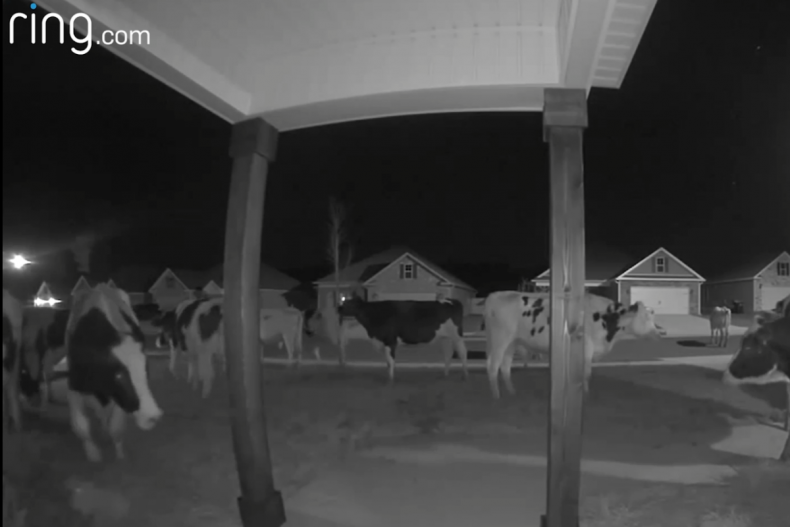
Alisha Cooper of Warner Robins, Georgia, had an unusual group of visitors show up outside her new home recently.
It was all caught on video — and the images and story behind it offer a lighter moment for anyone curious about what some sophisticated home security systems can pick up these days (or nights!) when people least expect it.
Holy cow
“I have the Ring chime indoors because my phone is constantly on silent,” said Cooper.
“And at about 3 a.m. one night recently, the chime started going off and woke me up.”
“I’m thinking somebody is trying to break into my house at 3 a.m.”
Cooper, a single mom, said that once she realized what was happening, “I checked my Ring notification and it said there was a person — or something! — at my front door. I wanted to know what I was dealing with.”
So she “opened the live feed in the mobile app to see what was going on,” she said.
Once she did, she said she was “greeted by cows. I was shocked!”
A herd of dairy cows had not only shown up in front of her house, they actually wound up hanging around for a while — and ate bushes, trampled on new plants and, yes, left a few cowpies.
“I’m thinking somebody is trying to break into my house at 3 a.m.” said Cooper about the alarm. But seeing the dairy cows outside “was shockingly awesome,” she said.
A Georgia homeowner was surprised to see some unexpected visitors on her front lawn one night at 3 a.m. (Ring/Alisha Cooper)
She had just “moved into the house three weeks before” the incident, she said. “I got the Ring doorbell from my parents for Christmas.”
After she had it installed, “this was the first thing the doorbell caught on camera.”
And “literally, the first thing I see [on the Ring app] is a cow licking my camera,” she said about her initial check that night.
The herd of cows “ate my plants,” she said. “I’m like, OK, that’s what I get for saying ‘I don’t like these plants,’” said Cooper, laughing.
It’s not every day that a herd of cows makes an appearance at your home, as one Georgia woman who recently moved into a new house discovered. (Ring/Alisha Cooper)
One cow was caught trying to eat the Ring doorbell — but “it [the doorbell] held strong throughout the whole ordeal. The cow eventually gave up — and went off to enjoy a plant instead.”
‘Mooove’ over
The dairy cows that showed up in her new housing community were likely from a location about a mile or two away.
“To get to my house,” said Cooper, “the cows had to trample through some new houses that are in the process of being built. I am in the most recent [group] of houses completed — and there are a few closer down the street that are unoccupied [and] being built. So these cows had a nice leisurely stroll.”
“Literally, the first thing I see [on the Ring app] is a cow licking my camera.”
Cooper said the cows ultimately “ended up wandering back home. And I kid you not, one cow mooed — then the other cows mooed.”
She continued, “After that, they started walking back [to the farm] they came from. They destroyed some fresh landscaping and left some lovely things behind. But, you know, I’d like some grass,” said Cooper, laughing and taking it all in stride.
“It was an experience. If you own a house, definitely invest in some type of camera system,” she said.
The fact that the Ring chime and doorbell system “woke me up to alert me of the commotion outside makes me feel safer.”
She also said she’ll likely “invest in the Ring floodlight” as well. “The cows ended up destroying my side yard, too, and I’m sure the floodlight would have startled them enough to go home.”
Breeding for better cows “started as a part-time hobby,” said David King, co-owner of Midas-Touch Genetics/AOT. “It was for the kids, to breed better show calves.
“I wanted my kids to be able to have a chance to learn how to raise and work with really nice cattle,” he explained, adding he and wife LouAnne started with a couple cows – and their genetics business built from there.
The New York Holstein Association will honor the couple with its 2021 Master Breeder award in January.
The Kings have bred 15 Excellent and 79 Very Good cows with the Midas-Touch prefix and had animals in the champion circle at World Dairy Expo more than once. Notable animals include Midas-Touch Jedi Jangle, Miss Champion Mitzi-ET, Regancrest Chanel, Gen-I-Beq Snowman Akilaiane and Ellbank Cherry Coke.
In addition, Midas-Touch has 170 animals on the Holstein USA Locator List and is co-breeder of the #1 proven bull, AOT Silver Helix. Genomic families include Habitan, Supersire Has and Seagull-Bay S Jillian.
David and LouAnne met at Cornell University; he grew up on Kings-Ransom Farm and she, at Mapleview Dairy. David became a nutrition and ag consultant, while LouAnne worked for extension and Farm Credit. In 1995 they bought their own farm, but she also continues to work as co-owner of Mapleview, while he is with Holtz-Nelson Dairy Consultants.
In 1998 the Kings went into business as Midas-Touch Genetics, and about eight years ago David and AOT owner Tom Kugler started a partnership when they wanted to buy the same heifer, Cookie-Cutter Supersire Has. She is the dam of AOT Silver Helix. Midas-Touch/AOT now has an extensive IVF program with many partner herds.
King and Kugler purchase and consign at every state-sponsored sale and encourage other breeders to do the same, trying to give farms not in the Registered Holstein business a chance to get in on quality genetics through embryo transfer partnerships.
“We have a wicked passion for what we’re doing,” David noted. “We just love good cows and we want to make better cows, and we want others to share that passion.”
He credits his Uncle Bill for teaching him about bulls and his father, Edgar, whose work away from Kings-Ransom as state deputy commissioner of Agriculture & Markets gave his son freedom to breed cows and observe the results of his dairy genetics.
In addition to picking good cows, LouAnne said, “David has the most creative ads in all of New York,” referring to his 2015 scheduling of a tag sale the day after their daughter Sara’s marriage to dairy farmer Matthew Bull.
David dryly noted “Vows & Cows” was an effort to come up with a way to pay for the wedding, asserting, “Everybody loved it.”
The couple are also parents to Kristin, Laurie and Jennifer, and have three grandchildren with two more on the way. David serves as an Ogdensburg Bridge and Port Authority board member, while LouAnne is a Farm Credit East Board director; both are members of the St. Lawrence County Holstein Club.
“I’m kind of stunned,” he said of the award. “I feel a little weird because I don’t milk; but I probably breed more than others do.”
Farmer sentiment continues to fluctuate month-to-month as the Purdue University/CME Group Ag Economy Barometerrose 6 points to a reading of 125 in February, a mirror image of the previous month. The Index of Current Conditions was down 1 point to a reading of 132, while the Index of Future Expectations improved 10 points to a reading of 122.
The Ag Economy Barometer is calculated each month from 400 U.S. agricultural producers’ responses to a telephone survey. This month’s survey was conducted between 14-18 February 2022, days prior to Russia’s invasion of Ukraine.
The Farm Financial Performance Index remained unchanged in February at a reading of 83. However, the sharp drop in the index, down 27% from late 2021 to 2022, indicates producers expect financial performance in 2022 to be worse than in 2021. The financial index is generated based upon producers’ responses to whether they expect their farm’s current financial performance to be better than, worse than or about the same as the previous year.
“These survey responses suggest that concerns about the spike in production costs and supply chain issues continue to mostly outweigh the impact of the commodity price rally that’s been underway this winter,” said James Mintert, the barometer’s principal investigator and director of Purdue University’s Center for Commercial Agriculture.
Higher input costs have consistently been the number one concern identified by farmers over the past six months, according to results from the Ag Economy Barometer survey. To gain additional insight into the concerns of producers, this month respondents were provided with a more detailed set of possible responses when answering this question. While a majority still consider input costs as their number one concern (47%), it was followed by lower output prices (16%), environmental policy (13%), farm policy (9%), climate policy (8%), and COVID-19’s impact (7%).
Tight machinery inventories continue to be a problem. In February, over 40% of producers stated that low farm machinery inventories are holding back their investment plans. While plans for farm building and grain bin construction were more optimistic this month, 56% still said their plans for new construction are below the previous year.
Thirty-percent of corn and soybean producers say they’ve had difficulty purchasing crop inputs from their suppliers. In a follow-up question posed to corn and soybean producers who said they experienced difficulty procuring inputs, herbicides are the most problematic input to source followed by fertilizer and farm machinery parts. To learn more about how crop producers are responding to surging fertilizer prices, corn producers were again asked if they plan to change their nitrogen fertilizer application rate in 2022 compared to the rate used in 2021. One-third of corn producers in this month’s survey said they plan to use a lower nitrogen application rate this year than in 2021, compared to 37% of corn producers who said they planned to reduce their nitrogen application rate when surveyed in January.
Each winter, the barometer survey asks producers to project their farm’s annual growth rate over the next 5 years. In 2022, 53% stated they either had no plans to grow or plan to retire/exit in the next five years, 19% expect their farm’s annual growth rate to range from 5-10%, while 18% expect their farm’s annual growth rate to be less than 5%.
The need for better broadband coverage in rural areas has been highlighted in several legislative proposals at both the state and national level. The February barometer survey included a question asking respondents to characterize the quality of their farm’s internet access. Just three out of ten respondents said they had “high quality” internet access, 41% said “moderate quality,” 16% chose “poor quality” on the survey, while 12% stated that they did not have internet access at all. Responses to this question suggest that nearly three out of ten farms in this month’s survey are unable to take advantage of many applications and services which require reasonable quality internet access.
Shortly after crisis escalated, prices for corn, soybeans, wheat were limit-higher
The unprecedented actions by Russia on Ukraine could have major implications for Ohio farmers and American agriculture as a whole in a number of different ways.
“Russia and Ukraine account for about 29% of global wheat production,” said Ian Sheldon, professor and Andersons chair of agricultural marketing, trade and policy at Ohio State’s Department of Agricultural, Environmental, and Development Economics. “Beyond agricultural commodities, Russia is a major supplier of natural gas, which is an important input into fertilizer production. That means we could see things happening on the input side of agriculture, as well as the commodity export and international trade side of things.”
The input aspect could accentuate an already tight supply and demand picture for fertilizers and other 2022 inputs, but Sheldon said the crisis in Ukraine could act as a double-edged sword for farmers in Ohio, as corn and wheat are major commodities exported by Ukrainian farmers.
“Obviously you don’t want to benefit from other people’s pain, but if you want to see a good side of this for American exporters, if the world corn price goes up that is potentially beneficial to Ohio corn farmers and the same goes for wheat,” Sheldon said. “I think we will see prices firm up and remain firm, especially if the invasion leads to major destruction of farmland and obstacles for farmers to bring their corn to market. A lot also depends on how Russia treats any exports leaving Ukraine and the extent of sanctions against Russia as punishment for their actions.”
Without hesitation, as tensions between Russia and Ukraine escalated to a full invasion by Russian forces, world markets reacted sharply. Due to the nature of today’s global economy, U.S. agriculture markets quickly followed suit. Shortly after the crisis escalated, prices for corn, soybeans and wheat were trading limit-higher overnight.
“Prior to the conflict escalating, everyone assumed that if an invasion did occur that the market would be bullish, figuring that there would be less supplies available on the world marketplace because of Ukraine’s importance in the global corn and wheat trade, specifically,” said Bailey Elchinger, risk management consultant and regional director with StoneX. “The speed at which this has happened over the past few days is a little bit shocking to the markets though. When you look back through history, an invasion of this nature is not a common thing.”
Just as grain prices quickly climbed, so did other agricultural products.
“Global fertilizer prices also reacted strongly,” Elchinger said. “Urea was trading $160 higher per ton on Thursday morning and that was a direct reaction to fears of Ukraine and/or Russia limiting fertilizer or natural gas out of those countries.”
Many farmers found it hard to sit on their hands as the markets offered an opportunity to sell old crop
corn above $7 a bushel, while other farmers wondered what the longer term scenarios might entail. Elchinger said there are important things to consider for new crop sales.
“First and foremost, know your cost of production and what price you have your inputs locked in for,” she said. “If you know those things, really start to study what your profit margin is today and know the amounts of which you are willing to sell ahead of harvest and probably take some risk off of the table.”
Elchinger said a good relationship with your commodity buyer is key and to continue to stay in contact with them when it comes to your marketing plan. They can keep you accountable and will be able to shed some light on what may happen in the days ahead.
“It is bound to be volatile,” Elchinger said. “You need to be sure that you are not open to too much risk in times like this.”
There is a 15% to 33% tax rate on federal income in Canada. In the U. Those earning $9700 are subject to the lowest tax bracket of 10%; those earning $39,476 are subject to the highest bracket of 22%. A bracket corresponding to 15% will remain in place until ($47,630).
are I taxed in Canada rection on US income? It is possible for Canadian freelancers working for customers in the United States and as independent contractors working with US companies to avoid paying taxes in the United States. The CRA believes that regardless of where in the world you file your tax return, you are a self-employed individual and must maintain all of your income.
How Does Dairy Quota Work In Canada?
Farmers are only paid for what their milk meets with their quota. A dairy farmer who is subject to his/her monthly quota temporarily allocates his or her remaining quota to the other dairy farmers in his or her province. With this supply plan, consumers will have access to fresh milk on demand all the time.
Does Canada Subsidize Dairy?
During last year’s supply management period, 16,351 dairy, poultry, and egg farms participated in the program. A supply management initiative has kept government subsidies at a distance through the controls, as opposed to the general practice in countries such as the EU and the U.S.
How Much Is Dairy Quota Worth In Canada?
We purchase and sell quota today. A dairy quota in Ontario, which once had a price per kilo of butterfat (roughly), now has a capped and capped price of $24,000, or approximately $ 34,785 per cow. Alberta’s free trading quota allows for a price of more than $40,000 per year.
How Much Do Dairy Farmers Make In Canada?
According to the Census of Agricultural Statistics, dairy farms in Canada generated an average net income of 163,970 Canadian dollars in 2019. In 2018, the figure reached around 145,000 Canadian dollars, yet the figures increased again in 2019. This figure has fluctuated in recent years, dipping to around 145,000 Canadian dollars in 2019.
How Much Dairy Does Canada Produce?
Farm
Dairy cattle population (dairy cows and heifers)
1.405 million head (July 1, 2020)
Number of dairy farms
10,095 ( Aug. 1, 2020)
Milk production
93.51 million hl
Organic milk production
1.44 million hl (dairy year 2019/20)
How Much Income Tax Do I Pay In Canada?
You are not required to pay any taxes on the first $49,020 of your taxable income, but we expect you to do so. 5% of income greater than $49,020 can be applied to higher income, with a rate of 26%, and an individual rate of 21% over income greater than $151,978 that can be applied to lower income.
Who Pays Income Tax In Canada?
Canadians who file a tax return (taxable or ineligible to file tax returns) are almost 85 percent of the Canadians who pay federal income tax; nearly 86 percent of provincial income tax is paid by the higher income group.
Is Income Taxable In The Year It Is Earned Or When It Is Paid Canada?
Those who live in Canada are subject to Canadian income tax on their employment compensation, as long as the compensation was earned in Canada or was paid in Canada regardless of where it was earned, or whether it was located where their employer is.
How Does The Dairy Quota System Work In Ontario?
Quota holders receive allocation shares based on the total amount of fluid and industrial milk produced by Ontario. It is allocated kilograms of butterfat per producer per day. According to DFO, all raw milk produced in the province, including those purchased by DFO, are processed and sold.
What Is Quota In Dairy?
Governments at the level of the European Union were known to have set milk quotas, which were more accurately called dairy production quotas. As part of agricultural quotas, farmers could not sell more milk per year without collecting a levy. They provided information about the amount of milk raised each year.
How Much Does The Government Subsidize Dairy?
Agriculture Act of 2014 resulted in reform of commodity and crop insurance programs, which contributed an estimated $24 to federal revenue one year later. Subsidies totaling $7 billion in direct and indirect methods. As well, the dairy industry earned $36.3 billion in 2016 and $43.6 billion in 2018. More than $3 billion in sales were recorded in 2017.
Does The Government Subsidize Dairy?
Since the federal government allowed excess cow milk production to occur for decades, with American consumers consuming less of it on account of obesity, we are now in an excess of 1 billion gallons of dairy. The amount of cheese stored in this country is 4 billion pounds. Besides government assistance, the revolving door between businesses and the government has been a major asset.
Is The Any Subsidy For Dairy Farming?
I’m looking forward to hearing about schemes from Nabad’s dairy farm subsidy program. A subsidy of rsit for Dairy Farming scheme:. 25% of the expenditure (33) may be provided by federal funds. A back-ended capital subsidy of Rs 1% is granted to SC / ST farmers after the limit. A unit of 10 animals costs Rs 25 lakh. Farmers in the South/Central region (SC or ST).
Consumers’ renewed focus on health, immune system support fuels growth for whey protein products
The COVID-19 pandemic has fundamentally altered the global market for high-protein whey products, which have now entered the mainstream as a super food for health-conscious consumers. Global demand for high-protein whey has grown exponentially during the pandemic as consumers around the world sharpened their focus on health and nutrition.
As the global leader in high-protein whey production and exports, the U.S. stands to benefit from the increased demand. Despite record cheese production in the U.S., global supplies of whey products remain tight which has resulted in significant price premiums for high-protein whey products.
According to a new report from CoBank’s Knowledge Exchange, whey prices are expected to persist at historically strong levels until new cheese and whey processing capacity comes online over the next five years. In the longer term, further-processed fractionated whey protein products are expected to become the bigger value-drivers of the whey stream.
“High-protein whey products come with risks of increasing price volatility that’s endemic of niche and diverse product mixes with limited market players,” said Tanner Ehmke, lead dairy economist with CoBank. “To meet the growing demand for diverse whey products while covering the risk of higher volatility, dairy processors will need to invest in processing technologies that allow flexibility in production.”
While high-protein whey will continue to grow in demand and offer higher returns, low-protein whey will still offer the appeal of stability and price hedging for processors, added Ehmke. The dairy industry of the future will need to meet growing demand for low-protein whey for both human consumption and animal feed and for high-protein whey for consumer products.
Total U.S. cheese and whey processing capacity in the U.S. is expected to increase by an estimated 10% in the next 5 years. Increasing whey production means an increasing commoditization of all whey products, including high protein concentrates and isolates.
Whey production will become increasingly stratified across products and prices, requiring processors to invest in processing technology to allow for flexibility in production for a variety of whey products spanning dry whey to fractionated whey. The high costs of membrane technology required for further processing of whey will limit growth opportunities to larger cheese and whey processors that have economies of scale.
Plant-based alternative sources of protein like soy protein and pea protein are not expected to disrupt the high protein whey market due to nutritional deficiencies compared to whey.Watch a video synopsis and read the report,COVID-19 Spiked Demand for High-Protein Whey, but is Growth Sustainable?
CoBank is a $170 billion cooperative bank serving vital industries across rural America. The bank provides loans, leases, export financing and other financial services to agribusinesses and rural power, water and communications providers in all 50 states. The bank also provides wholesale loans and other financial services to affiliated Farm Credit associations serving more than 76,000 farmers, ranchers and other rural borrowers in 23 states around the country.
CoBank is a member of the Farm Credit System, a nationwide network of banks and retail lending associations chartered to support the borrowing needs of U.S. agriculture, rural infrastructure and rural communities. Headquartered outside Denver, Colorado, CoBank serves customers from regional banking centers across the U.S. and maintains an international representative office in Singapore.
The Dairy Shrine is again looking for applications for its annual scholarship program. Applications are accepted from March 1 until the deadline of April 15. Official scholarship application award forms are available on the Dairy Shrine web site, www.dairyshrine.org/youth.
The National Dairy Shrine Student Recognition Program recognizes and rewards graduating seniors planning a career in the dairy industry. There will be a $2,000 cash award given to the top selection, a $1,500 award for second place, and three to seven $1000 cash awards depending on the number and quality of applicants.
National Dairy Shrine/Dairy Management, Inc. (DMI) Milk Marketing-Dairy Products Scholarships are available to encourage students to pursue careers in the marketing or development of dairy products. The highest selection receives a $1500 scholarship while the other selectees receive $1000 scholarships. Up to five scholarships are awarded annually.
National Dairy Shrine/Dairy Management, Inc. (DMI) Education & Communication Scholarships are available to encourage students to pursue careers in the education or communication of the value of dairy products and the dairy industry. The highest selection receives a $1500 scholarship while the other selectees receive $1000 scholarships. Up to five scholarships are awarded annually.
Kildee Scholarships are offered for Post Graduate study. Qualified applicants may include the top 25 All-American contestants in one of the past three National Intercollegiate Dairy Cattle Judging Contests plus members of the First and Second Place teams in the North American Intercollegiate Dairy Challenge National contest. These students are eligible to apply for up to two $3000 graduate school scholarships.
NDS Merton Sowerby Junior Merit Scholarship recognizes and rewards current college juniors planning a career in the dairy industry. There will be a $1,500 cash award given to the top selection and two to five more $1000 cash awards depending on the number and quality of applicants.
NDS Mike Lancaster Sophomore Merit Scholarship recognizes and rewards current college sophomores planning a career in the dairy industry. There will be a $1,500 cash
award given to the top selection and two to five more $1000 cash awards depending on the number and quality of applicants.
Depending on number and quality of applicants there will be two to four Maurice Core Freshman Scholarships awarded in the amount of $1,000 to a freshman college student attending a four year agricultural college. This scholarship is sponsored from a fund created in honor of Maurice E. Core long-time industry leader and past Executive Director of National Dairy Shrine.
Up to Two NDS Marshall McCullough scholarships of $1000 are awarded annually to college freshmen attending a four-year college or university and majoring in: Dairy/Animal Science with a Communications emphasis or Agriculture Journalism with a Dairy/Animal Science emphasis. This scholarship fund was created by Dr Marshall McCullough of Athens, Georgia.
Up to two NDS Iager Dairy Scholarships will be awarded in the amount of $1,000 to second year college students enrolled in a two-year agricultural college. This scholarship is sponsored by a fund created by Mr. and Mrs. Charles Iager of Fulton, Maryland.
There are three Klussendorf scholarships given in the amount of $1,500 to students in their first, second, or third year at a two or four year college or university. Applicants need to major in Dairy or Animal Science with intentions to enter the dairy cattle industry. These scholarships are funded by the Klussendorf Association.
There are four McKown scholarships given in the amount of $1,500 to students in their first, second, or third year at a two or four year college or university. Applicants need to major in Dairy or Animal Science with intentions to enter the dairy cattle industry. These scholarships are funded by the Klussendorf/McKown Fund.
If you would like to apply for any of these scholarships, please visit the Dairy Shrine website at www.dairyshrine.org/youth to download the applications. If you have any questions, please contact the Dairy Shrine office at info@dairyshrine.org. Recipients of these awards will be announced this summer, with the presentation of scholarships to be made at the annual Dairy Shrine awards banquet in Madison, Wisconsin on Monday October 3, 2022.
As the COVID-19 pandemic continues to claim lives around the world, dairy scientists may have a surprising role to play. In a new report published in the Journal of Dairy Science®, scientists from the University of Michigan (Ann Arbor, MI, USA) and Glanbia PLC Research and Development (Twin Falls, ID, USA) have collaborated to investigate the antiviral properties of cow milk protein against variants of SARS-CoV-2, the virus behind the illness.
The protein in question is lactoferrin, found in the milk of most mammals. Bovine lactoferrin, from cow milk, has bioactive characteristics against many microbes, viruses, and other pathogens and has been found to inhibit SARS-CoV-2 infection under experimental conditions by blocking the ability of the virus to enter target cells, as well as by supporting cells’ antiviral defense mechanisms.
“Bovine lactoferrin has shown antiviral activity in human clinical trials,” says lead investigator Jonathan Sexton, PhD, of the University of Michigan Department of Internal Medicine. “For example, orally administered bovine lactoferrin has been shown to improve the severity of viral infections, including rotavirus and norovirus. Given the broad antiviral efficacy and safety, minimal side effects, and commercial availability of bovine lactoferrin, several review papers have suggested using it as a preventive or post-exposure treatment for SARS-CoV-2 infection.”
With the goal of improving clinical relevance and translatability, the team tested bovine lactoferrin against some of the most common SARS-CoV-2 variants of concern from around the world, including the WA1 variant representative of the United States outbreak in 2020, the B.1.1.7, B.1.351, and P.1 variants, and the Delta variant. Sexton explains, “Each of these variants includes modifications to the SARS-Cov-2 spike protein that reduce the efficacy of newly produced vaccines. Furthermore, each of these strains shows reduced neutralization by vaccination sera.”
Caption: Infected cells shown in magenta (Credit: Jonathan Z. Sexton).
The team’s aims for this study were to expand upon the observation of the potent in vitro anti-SARS-CoV-2 efficacy that bovine lactoferrin has demonstrated with a more thorough examination, as well as to screen commercially available milk products for antiviral activities, which may be enhanced by the presence of other ingredients in addition to lactoferrin. Finally, they investigated whether dextrose and sorbitol, commonly used in the manufacture of tablets for oral medications, would interfere with the ability of bovine lactoferrin to inhibit SARS-CoV-2.
The researchers found that bovine lactoferrin was effective against all the strains that were tested in vitro, and they expect it would also have activity against additional emergent strains. The other components in commercial milk products did not appear to offer antiviral protection, confirming that that the efficacy of these products does appear to be entirely dependent on bovine lactoferrin. Moreover, the team found that dextrose and sorbitol did not reduce bovine lactoferrin’s effectiveness against SARS-CoV-2 – suggesting the feasibility of developing an anti-COVID pill.
A key benefit of the broad antiviral efficacy of lactoferrin is its potential for the prevention or treatment of emerging diseases. Sexton emphasizes, “This is especially important when there are limited treatment options, or when the treatment options are too costly for widespread use. An orally available therapeutic that covers emerging strains would be ideal for treating SARS-CoV-2 in areas without widespread vaccination or if new strains escape the vaccine.”
Although future work is needed to fully understand the antiviral potential for bovine lactoferrin in a clinical setting, this in vitro study represents promise for another tactic in the fight against the global COVID-19 pandemic.
About the Journal of Dairy Science
The Journal of Dairy Science® (JDS), an official journal of the American Dairy Science Association®, is co-published by Elsevier and Fass Inc. for the American Dairy Science Association. It is the leading general dairy research journal in the world, and as of January 2022, it is an open access journal. JDS readers represent education, industry, and government agencies in more than 70 countries, with interests in biochemistry, breeding, economics, engineering, environment, food science, genetics, microbiology, nutrition, pathology, physiology, processing, public health, quality assurance, and sanitation. JDS has a 2020 Journal Impact Factor of 4.034 and five-year Journal Impact Factor of 4.354 according to Journal Citation Reports (Source: Clarivate 2021). www.journalofdairyscience.org
About the American Dairy Science Association (ADSA)
The ADSA is an international organization of educators, scientists, and industry representatives who are committed to advancing the dairy industry and keenly aware of the vital role the dairy sciences play in fulfilling the economic, nutritive, and health requirements of the world’s population. It provides leadership in scientific and technical support to sustain and grow the global dairy industry through generation, dissemination, and exchange of information and services. Together, ADSA members have discovered new methods and technologies that have revolutionized the dairy industry. www.adsa.org
About Fass Inc.
Since 1998, Fass has provided shared management services to not-for-profit scientific organizations. With combined membership rosters of more than 10,000 professionals in animal agriculture and other sciences, Fass offers clients services in accounting, membership management, convention and meeting planning, information technology, and scientific publication support. The Fass publications department provides journal management, peer-review support, copyediting, and composition for this journal; the staff includes five BELS-certified (www.bels.org) technical editors and experienced composition staff. www.fass.org
About Elsevier
As a global leader in information and analytics, Elsevier helps researchers and healthcare professionals advance science and improve health outcomes for the benefit of society. We do this by facilitating insights and critical decision-making for customers across the global research and health ecosystems.
In everything we publish, we uphold the highest standards of quality and integrity. We bring that same rigor to our information analytics solutions for researchers, health professionals, institutions and funders.
Elsevier employs 8,100 people worldwide. We have supported the work of our research and health partners for more than 140 years. Growing from our roots in publishing, we offer knowledge and valuable analytics that help our users make breakthroughs and drive societal progress. Digital solutions such as ScienceDirect, Scopus, SciVal, ClinicalKey and Sherpath support strategic research management, R&D performance, clinical decision support, and health education. Researchers and healthcare professionals rely on our 2,500+ digitized journals, including The Lancet and Cell; our 40,000 eBook titles; and our iconic reference works, such as Gray’s Anatomy. With the Elsevier Foundation and our external Inclusion & Diversity Advisory Board, we work in partnership with diverse stakeholders to advance inclusion and diversity in science, research and healthcare in developing countries and around the world.
A company that operates a dairy farm near Summerberry has been fined $80,000 in connection with the death of a worker in November of 2020.
Jimlee Farms Ltd. pleaded guilty in Fort Qu’Appelle Provincial Court on Feb. 17 to one charge under The Occupational Health and Safety Regulations.
It admitted to contravening a clause of the regulations for failing to provide “an effective safeguard where a worker may contact a dangerous moving part of a machine, resulting in the death of a worker.”
The charge arose from an incident on Nov. 19, 2020.
According to court documents, Jesus Heinar Zavala Guevara — a 34-year-old temporary foreign worker from Veracruz, Mexico — worked at the farm near the town about 120 kilometres east of Regina.
The farm milks approximately 230 dairy cows twice daily and maintains a herd of other dairy cattle for breeding purposes.
The court’s decision said Guevara was feeding the cattle and processing barley for feed by running or rolling grain through a grain mill powered by a tractor via a power take off.
“It appears that while Jesus was attempting to visually inspect the rolling process, his clothing became snagged by the unguarded PTO shaft running between the tractor and the mill,” the decision read.
“His clothing was wrapped around the PTO shaft several times. His hands and face had come into contact with the chain and the gears driven by the PTO shaft.”
The decision said the likely cause of death was asphyxiation secondary to chest compression.
Court heard there wasn’t guard in place to prevent contact with the power take off shaft, input gears and chains. There had been one in place when the equipment was manufactured, but it was removed in July of that year so repairs could be completed.
The company was fined $57,143 plus a surcharge of $22,857.
Fonterra has suspended shipments of dairy products to Russia, citing “the rapidly changing situation and sanctions being taken against the country”.
Dairy products had accounted for the bulk of New Zealand’s exports to Russia.
The OECD reported that in 2019, New Zealand’s total exports to Russia were worth $211m, of which $114m was accounted for by butter and $16m by milk powder.
Fonterra’s director of global stakeholder affairs, Simon Tucker, said food, including dairy products, were generally exempt from international sanctions.
But Fonterra had suspended shipments of product to Russia “while we continue to monitor developments”, he said.
He described Fonterra’s exports to Russia as small, saying they accounted for less than 1 per cent of Fonterra’s total exports.
The company has seven staff based in Moscow and another 35 at its Unifood joint venture in St Petersburg.
Tucker said both entities were continuing to operate.
“However, we are keeping an eye on the situation and will take actions as required. The businesses do not supply sanctioned individuals or entities, including Russian military or security forces,” he said.
The safety of its people in Russia was Fonterra’s top priority, he said.
Whether you’re investing, hiring, expanding, buying, financing, starting-up or diversifying, our business reporting helps you make smart, informed decisions.
At heart, we’re a big bunch of nerds. It’s fun for us to analyse the markets, delve into data and check the trends for you.
Agriculture in the Classroom Canada (AITC-C) and Dairy Farmers of Canada (DFC) have announced a new joint scholarship.
The DFC Here for Tomorrow Scholarship, powered by thinkAG, is open to students in grades 10-12 across Canada.
The scholarship directly connects students with the multitude of important roles and professions that exist within the agriculture and food sector, helping them recognize how their interests and skills can be utilized in this evolving industry.
“Food is, and always will be necessary. This means that those who produce food and ensure it’s on the plates of Canadians, and those around the world, will forever be essential workers. Right now, we don’t have enough people to fill food-producing jobs. Agriculture careers are as abundant as they are important. The industry needs dynamic and fresh perspectives as it continually grows in complexity and as the need for safe, affordable food continues to remain on the minds of every person in this world. At AITC-C, we want to help youth understand that people’s career paths are all unique, and that agriculture needs people from all backgrounds, with different skill sets and perspectives, to work in our important industry.” said Shayla Wourms, AITC-C’s thinkAG Manager.
The scholarship encourages career exploration in agriculture by providing students with unique perspectives on how to make an impact in sustainable farming both locally and nationally.
Prospective applicants will need to submit one of the following: a written essay (1,500 words), a video (3 mins), or a visual arts piece (ceramics, drawing, painting, sculpture, design, craft, photography, architecture), answering three key questions pertaining to their interests, agriculture and food careers, and global sustainability. Submissions are to be completed independently; however, teachers or career educators can support students in the scholarship application process by assigning it as a classroom project for course evaluation. For its pilot year, two deserving students will be awarded $2,500 CAD, with plans to grow to more recipients in future years.
“Dairy farmers have a long history of environmental stewardship and are eager to pass these values on to the next generation as we pursue a goal of net-zero emissions from dairy production by 2050,” said Pierre Lampron, president of Dairy Farmers of Canada. “We hope that this scholarship will embolden students to consider a career in agriculture and become stewards of the land, helping to care for our planet and feed our nation for years to come.”
The scholarship will officially open for applications on April 4 and will be accepted until June 1, 2022.
Livestock farmers expect rising energy prices to continue to cut margins
The war in Ukraine, and heavy sanctions Western powers have taken against Russia, will have long-lasting and serious consequences for the French farming sector, the European Union’s biggest, French President Emmanuel Macron said on Saturday.
“If you ask me to share one conviction with you this morning, it is that this crisis is here to stay, this war is here to stay,” Macron told the Paris farm show on Saturday.
Trade restrictions resulting from EU sanctions on Russia will weigh on French exports such as wine and grains, Macron said, while a further rise in energy prices will hit livestock farming.
“We are building a resilience plan,” Macron said, adding measures would be taken to protect farmers from cost pressures and compensate lost revenues.
A surge in commodity prices in the past year has benefited grain producers but squeezed livestock farmers for whom grain feed is a major cost. The government announced at the end of January a 270 million euro ($304 million) relief package for the pork sector, reported Reuters.
The crisis in Ukraine is increasing volatility in agricultural markets, with Paris wheat futures hitting a record high on Thursday. Farmers are also worried the crisis could exacerbate supply tensions in fertilisers and disrupt the spring growing season for crops.
The annual Paris farm show, the Salon de l’Agriculture, is a major occasion in France and, coming less than two months before the first round of presidential elections, has drawn the major candidates.
French commentators long expected Macron could use his presence at the show to officially announce he will be running for a second term, a fact nobody in France doubts.
But international crises, above all Russia’s invasion in Ukraine, have thwarted the president’s calendar several times.
While Macron spent over 12 hours at the Salon’s last edition in 2020, trying to reassure farmers over the impact of Brexit and a reform of the EU’s farm policy, he only spoke on Saturday for about 15 minutes.
William Paul Yarosh, 77, of New London, died Friday, February 18, 2022 at The Laurels of New London. Born on September 17, 1944 in Oberlin, he was the son of Marie (nee Remen) and the late Mike Yarosh. William grew up in Penfield and was a 1962 graduate of Keystone High School.
William’s life revolved around dairy cows regardless of breed. He worked with dairy farmers from Canada to Mexico and everywhere in between. You could always find Wild Bill fitting cattle for shows and sales. He had an eye for cows, a memory for pedigrees and a story to go with everything.
He is survived by his children, Matt (Christine) Yarosh, of Nova, and Audrey (Kyle) Hutton, of Georgia; 4 grandchildren, Addison Hutton, Bailey Yarosh, Renee Hutton, and Jakob Yarosh; his mother, Marie Yarosh, and siblings, Ken Yarosh and Pat Gill.
The family is coordinating a story hour to commemorate Bill’s life at a later date. Memories and condolences may be shared with the Yarosh family online at www.eastmanfuneralhome.com
To send flowers to the family or plant a tree in memory of William Paul Yarosh, please visit our floral store.
The breed show schedule aligned with Expo’s new event schedule announced last fall was modified this winter following feedback from exhibitors and observations during the 2021 show. If you are planning to exhibit or are interested in watching the Dairy Cattle Show at WDE 2022, here are dates you should be aware of:
Dairy Cattle Show:
Monday, October 3 – Friday, October 7 Day Shows Junior Holstein: Monday, October 3rd Milking Shorthorn: Monday, October 3rd Guernsey: Tuesday, October 4th
Day Shows Jersey: Monday, October 3rd & Tuesday, October 4th Brown Swiss: Tuesday, October 4th & Wednesday, October 5th Red & White: Wednesday, October 5th & Thursday, October 6th Ayrshire: Wednesday, October 5th & Thursday, October 6th Holstein: Thursday, October 6th & Friday, October 7th
ANZ sees a positive future for the Australian dairy industry despite competition for land from the beef and sheep sectors.
ANZ sees a positive future for the Australian dairy industry despite ongoing competition for land from the beef and sheep sectors.
The dairy herd could be heading to its lowest point in the past 30 years, the bank said in its ANZ’s latest Agri Commodity Report.
The 2021/22 forecasts are for a dairy cattle herd of 2.3 million head and a milking herd of 1.4 million head.
But the bank pointed to increased average milk yields per cow and adoption of technology on farm as positive trends.
“To the industry’s credit, it is admirable that the forecast average yield for 2021/22 of around 6600 litres is more than double the average figure in 1983/84,” the report said.
ANZ Head of Agribusiness Mark Bennett said the domestic dairy production sector might be reaching a structural floor.
“In the same way that Australia’s sheep industry has done over the past decade, this could see dairy herd numbers flatten out, before potentially starting to rise again,” Mr Bennett said.
“While sheep and beef cattle prices remain high, there will still be competition for some dairy country, but this may well also level out, given the strength of today’s farmgate milk prices.
“Additionally, while labour availability will also be a challenge for some dairy producers, technological advances in the industry are likely to reduce this in the long term.”
Mr Bennett was upbeat about the outlook for the industry.
As the dairy industry headed into 2022, a combination of global and domestic factors had combined for a positive outlook.
“In terms of global competition, not only are the major competitors producing less milk, for a range of reasons, but the biggest exporter, New Zealand, may be past ‘peak milk’, reducing Australia’s competition in the long term,” he said.
“This long-term reduction in supply could support sustained higher prices for our producers.”
Mr Bennett said dairy demand would be sustained by consumers increasingly pursuing healthier diets, especially in the wake of COVID-19 pandemic,
“These factors also mean that the flow of outside investment into both dairy production and processing could well grow in 2022, ” Mr Bennett said.
Registration is now open for the Holstein Association USA 2022 Judges Conferences. Individuals interested in attending can pick from two conference options in 2022.
The first conference will be held in conjunction with the Northeast Spring National Holstein Show at the Erie County Fairgrounds in Hamburg, New York. The judges conference will start at 11:00 a.m. on Friday, April 1, 2022.
A second conference will be held in conjunction with the Southern Spring National Holstein Show on Thursday, April 7, 2022. The conference will start at 1:30 p.m. and will held at the Payne County Expo Center in Stillwater, Oklahoma.
Interested participants can register for the conference of their choice on the Holstein Association USA website with a credit card. The pre-registration fee is $50 and late registrants and walk-ins will pay a $100 fee. Pre-registration will close two weeks before the conference, on March 18 for the New York conference and March 24 for the Oklahoma conference.
Individuals currently on the Holstein Association USA Judges List must attend and receive a satisfactory rating at a Holstein Association USA Judges Conference every five years. Those interested in applying for the list in the future must attend and receive a satisfactory rating at a Holstein Association USA Judges Conference before submitting an application.
Participants must be 22 years old by the day of the conference to attend. To register online, visit www.holsteinusa.com/shows/judges_preregister.html. For more information contact Jodi Hoynoski at 800.952.5200 ext. 4261 or by email.
###
Holstein Association USA, Inc., provides programs, products and services to dairy producers to enhance genetics and improve profitability — including animal identification and ear tags, genomic testing, mating programs, dairy records processing, classification, communication, consulting services, and Holstein semen.
The Association, headquartered in Brattleboro, VT., represents approximately 25,000 members throughout the United States. To learn more about Registered Holsteins® and the other exciting programs offered by the Holstein Association, visit www.holsteinusa.com, and follow us on Instagram, Facebook, and Twitter.
I reached out to some friends in the industry to gather perspectives about dairy’s sustainability journey — and more importantly, the lessons we have collectively learned. The hope is that others can look to dairy’s example and shorten their own sustainability journeys.
I am passionate about dairy — whether a glass of milk, cup of yogurt, or bowl of ice cream, I love it all. I’m also passionate about the people and families involved in getting those products to table, and working with them to ensure dairy is produced responsibly. In some circles lately, dairy’s been getting a bad rap. In reality, dairy contributes less than 2 percent to US GHG emissions, and it’s on a strong downward trajectory.
This isn’t an accident. What you may not realize is that dairy farmers — and all members of the dairy supply chain — have been quietly leading in the sustainability space for over a decade. I reached out to some friends in the industry to gather a range of perspectives about dairy’s sustainability journey — and more importantly, the lessons we have collectively learned — to share them with other industries and groups.
Dairy leadership in sustainability
Dairy farmers have always taken pride in providing a highly nutritious product while being responsible with resources. As part of this responsibility, dairy was the first agricultural commodity to perform a life cycle assessment — in 2008.
“Our farmers and industry understood that we needed to be able to chart our progress — both in our ability to move things forward — but also to make sure that we were pursuing practices and technologies that were financially feasible,” says Lisa Watson of the Dairy Innovation Center. “We were going to be able to go further faster if we pulled our whole chain together in those areas that were pre-competitive. … And that’s really the foundation upon which the Innovation Center for US Dairy was formed.”
Dairy has since pioneered a series of pre-competitive collaborations that encompass all elements of the value chain — from farmer coops and processors, to not-for-profit groups and retailers. Here are some key examples:
The Dairy Sustainability Alliance: Founded in 2008, the Alliance recognized that “no one company or sector can address sustainability alone.” It now comprises 160+ members at the corporate level who strive to further the dairy community’s social responsibility goals.
2018 — US Dairy Stewardship Commitment: This commitment makes it possible for U.S Dairy to publicly measure and track its progress. 34 Companies representing 75 percent of US milk production have adopted this action-oriented pledge.
2020 Net-Zero Initiative: US Dairy founded this initiative to accelerate voluntary action on farm to reduce environmental impacts, by making sustainable practices and technologies more accessible and affordable to US dairy farms of all sizes and geographies.
“The farmers, cooperative members and processors came to alignment and agreement over a common goal — one that is time-bound, quantitative and public,” says Emily Johannes, Sustainable Sourcing Manager at Nestlé. “I think that’s a real demonstration of leadership.”
The industry is already taking this leadership approach to other areas. In 2020, Dairy Farmers of America co-founded the Farm Powered Strategic Alliance (FPSA), along with Vanguard Renewables, Starbucks and Unilever. It is a collaboration to accelerate long-term commitments to avoid or eliminate food waste first, and repurpose what can’t be eliminated into renewable energy. Membership now includes Cabot Creamery, Stonyfield Organic, Smithfield Foodsand Kikkoman; another dairy company will be announced in 2022 that will make FPSA 50 percent dairy members, which is no surprise to me.
Lessons for others
The biggest lesson learned from dairy’s example is the importance of including all stakeholders along the supply chain, including competitors. As Watson emphasizes: “To build trust, you have to be willing to listen. You can’t be afraid to bring people together, to hear each other out and to better understand others’ priorities. When you focus a little more on listening versus talking, you’re likely to learn something that’s actually going to help you to move that ball forward.”
The second lesson is the importance of gathering data to measure and show what we’re doing now and to track our progress with integrity. Johannes agrees: “The key for dairy is that we now have an alliance that is backed up by action, by tools, and by verification systems. And I think that’s really what other industries can learn from. Quite frankly, I hope the advantage to other industries is to leverage the work that dairy has done and go even faster.”
All three of us agree that there’s no “silver bullet” solution.
Watson adds: “We focus on working with people to identify a range of options that are going to work best for different situations.”
“We want the best solutions we can get, but we also recognize that things may need to be adjusted and some things may fail,” Johannes says. “And we’re okay with the fact that this is a learning process.”
Final thoughts
The hope is that others can look to dairy’s example and shorten their own sustainability journeys. We can already see sustainability becoming inherent to the business strategy of many companies.
For Stonyfield Organic, sustainability has always been core to its business.
“’Healthy food, healthy people, healthy planet, healthy business.’ Other companies have used these words to describe their purpose, but few were founded on those values — and even fewer have stayed true to them for decades the way we have here at Stonyfield Organic,” says Gary Hirshberg, Stonyfield’s co-founder and Chief Organic Optimist. “We’re honored to work collaboratively across the dairy industry to drive further environmental change and protect our resources for generations to come.”
As food sustainability moves from how we tell stories to how we sell products — and ultimately, how we finance changes in practices — the US dairy industry is prepared to be a leader in delivering sustainable nutrition to consumers around the world.
If you’ve ever driven through Lowville, you’ve probably seen her: Lady Lewinda Milkzalot, the champion of Lewis County’s dairy industry.
“So, she is New York’s largest dairy cow,” Lowville Producers dairy store manager Lynn Cole said. “She is 10 feet high and 15 feet long. Her name, Lady Lewinda came from a naming contest. The ‘le’ stands for Lewis County, the ‘win’ stands for windmills and the ‘da’ stands for dairy.”
She watches over the co-op owned by local farmers and grabs the attention of passersby.
“She does make people stop and come into the store,” Cole said. “All year long they’re taking pictures with her. We dress her up to go along with the holidays, special occasions, stuff like that.”
Lowville’s superstar even has her own merchandise: t-shirts, postcards, stress balls, candies, pamphlets — even soda bottles and tote bags.
But her best sellers? More than 75 flavors of cheese. All Lewinda-approved.
“The ag industry and dairy is what we’re really big with up here,” Cole said, “and she’s part of what Lewis County is known for.”
More than just a pretty face, the colossal cow is watching over the ag industry, one accessory at a time.
Fertiliser prices were climbing even before the conflict
Brazilian agricultural exports may lose their competitive edge due to a scarcity of fertiliser and soaring prices for the key material if Russia’s invasion of Ukraine triggers Western sanctions on Russian fertiliser exports, according to analysts.
Brazil relies on imports for about 85% of its fertiliser needs. Russia is its biggest supplier of the NPK mixture of nitrogen, phosphorus and potassium, reported Reuters.
Even before the Ukraine conflict, fertiliser prices were climbing due to global logistics issues, US sanctions on Belarus and China’s absence from the market since October.
The Ukraine crisis means Brazilian growers of soybeans and other agricultural commodities are potentially in for a rough time.
“It is the perfect storm,” said Jeferson Souza, an analyst with Agrinvest Commodities.
“Brazil has the most to lose among the world’s largest producers of soy,” he said, adding that competitors such as the United States and Argentina do not use as much potassium fertiliser as Brazil.
The situation raises doubts about whether Brazil can expand its area planted with soy for the 2022/2023 crop, as costs may become prohibitive, Souza said.
ANDA, an association representing fertiliser companies in Brazil, said in a statement it is early to assess the impact of international sanctions stemming from Russia’s attack on Ukraine, adding it is still evaluating the effects on the fertiliser market and on the food supply chain as a whole.
ANDA acknowledged risks regarding the lack of inputs to produce fertilisers as the conflict develops, and said it will work to create alternatives to ensure supplies.
Brazil bought about 40 million tonnes of fertiliser products in 2021, a record high, with Russia accounting for some 9 million tonnes of imports, according to data compiled by Agrinvest.
There is a real possibility of Brazil having an immediate “potassium supply crisis,” said Marcelo Mello, head of the fertiliser desk at StoneX, referring to the commodity that has farmers the most worried.
He said simultaneous sanctions on Russia and Belarus would leave farmers without enough of the fertiliser.
“The impact can be felt already, as the supply of fertilisers has been hampered by the low availability of maritime transport,” said agribusiness lawyer Frederico Favacho.
Favacho noted that other areas of trade will also be affected by an escalation of the Ukraine conflict, as Russia is a big buyer of Brazilian meats.
Potential financial sanctions against Russia would hamper that trade too, he said.
Many dairy farmers in Iowa need to upgrade their equipment to ensure future generations won’t turn away from the labor-intensive industry, according to the Iowa State Dairy Association.
The association is pushing legislation to create a state grant or forgivable-loan program to help dairy farmers automate various aspects of their unrelenting work. The proposed bills — House File 2433 and Senate File 2290 — would also seek to create educational programs that show farmers how to process their milk into cheese, ice cream, yogurt and other products.
There are about 850 dairy farms in Iowa, ranging in size from 25 to 10,000 cows. A typical dairy in the state milks about 250 cows.
“The next generation, when we’re looking at bringing them into the operation, having that quality of life — that ability to go to your kids’ events, be there for your daughter’s birth — that can all be made possible through robotics,” Mitch Schulte, executive director of the dairy association, told lawmakers last week.
Dairy cattle are often milked at least twice a day, every day of the year. The ability for many of the farmers to be away from their cattle is largely dependent on other workers being available to help. Even supper can take a backseat to the dairy.
“All through my youth, we never had supper at 6 o’clock at night. It was usually later, between 8 and 9 (o’clock),” said John Maxwell, who operates Cinnamon Ridge Farms northwest of Davenport. “After school, it was: you get home, you do chores, you help with the dairy, eat supper, do homework and go to bed. I played very little sports.”
Maxwell is a fifth-generation farmer who has run the gamut of dairy technology. He knows from his childhood what it’s like to milk a cow by hand into a bucket. Now he has robotic equipment to do it.
In 2012, he built a cutting-edge dairy facility with machines that automated much of the milking, feeding and manure cleanup. There’s even a device to scratch the animals’ backs.
Before that facility, his farm was milking about 40 cows at any given time with a crew of three or four people. Now Maxwell milks about 220 cows with a similarly sized crew, although he said it’s possible for one person to run the operation.
His eldest daughter maintains the robots. Without the automation, it might have been difficult to convince her to stay with the dairy after high school.
“It’s a big deal if we want to keep the young or the next generation in Iowa,” Maxwell said. “It’s also a big deal if we don’t want to be an industry or a nation where three or four or five big conglomerations own everything.”
He sells most of his milk to Brewster Cheese in Illinois, which turns it into Swiss cheese. A small percentage of his milk is processed into cheese on-site: flavored cheese curds, blocks of cheddar, smoked Gouda.
Basically, Maxwell’s operation is a prime example of what the new legislation wants to copy.
Schulte said he hopes the state will offer up to $100,000 per dairy farm to help pay for the new technology, in the form of a forgivable loan or grant that would be matched with an equal amount of money from another funding source. That won’t cover the total cost of the upgrades, but it would help farmers get loans or other funding to pay the rest. The bills would also create a task force to help develop the educational programs, which could be offered by community colleges or the state’s regent universities.
“We need to teach our farmers how to make a product they can sell to the local community,” Schulte said.
The task force would identify those products that are most likely to succeed and decide whether farmers can be taught to make them with a few weeks of training or a full-fledged degree.
The House and Senate bills gained approval in each chamber’s agriculture committees last week. It’s unclear when they might be considered by the full chambers.
The bills have the support of several agricultural groups, including the dairy association and the Iowa Farm Bureau Federation, along with Sierra Club’s Iowa Chapter.
“We’re extremely optimistic,” Schulte said of the bills’ futures. “We know there’s support for locally produced products and help for dairy farmers out there.”
It will come as no surprise to anyone reading this that inflation’s eating away at pocketbooks. The most recent Consumer Price Index is reporting the fastest retail price increases in costs in 40 years, with a hot economy and tight supply chains pushing up everything from cars to coffee.
And when consumers (and media outlets) focus their frustration, it tends to be on the prices that are most widely noticed. Gasoline’s the best example – what other product routinely posts its price on big signs next to highways? A gallon of milk is another one – when you’re in 94 percent of households, you can safely assume that a big part of the consuming public knows exactly what milk costs – and notices when it rises.
This is the most recent year-over-year Consumer Price Index covering overall inflation, food and beverage inflation, and dairy categories. A gallon of whole milk (the most popular variety in a jug) is going up, but it’s in line with other foods and beverages and lower than overall inflation. Subcategories fare even better. Cheese costs to consumers have barely budged. Ice cream remains an affordable (and relative to other categories, becoming even more so) treat. And yogurt, butter, et. al remain a compelling choice of affordable, high-quality nutrition for households.
So what’s going on with the inflation gap? A few things. Dairy supply chains tend to be more local and predominantly domestic, meaning some factors driving price gains in imported goods don’t apply. Dairy farmers have also done a great job of keeping markets adequately supplied, even in a year of record dairy export sales.
But whatever the reasons — if you’re frustrated with your grocery bill, dairy’s a place to find value. Dairy farmers are doing their part in keeping food prices under control. So much so, in fact, it might be worth slowing down a little bit the next time you’re pushing your cart past the dairy case. You might just want to take advantage of the opportunity dairy provides to nourish your family, without emptying your wallet. That’s not to be taken for granted these days.
Eerie footage showing a herd of escaped dairy cows descend on a neighborhood in Georgia has been captured on a Ring doorbell in Warner Robins, Georgia.
Dozens of cows can be seen walking down a residential street before congregating around a woman’s front door.
Warner Robins resident Alisha shared the footage from her Ring device, saying she was shocked when she saw what the camera had captured.
“The cows completely destroyed my new landscaping and ate my bushes,” she said in a statement emailed to Newsweek. “There are deep holes from the cows walking in the grass, along with some lovely cow pies, but overall fixable damage.”
Ring doorbells are fitted with a camera and microphone and work using motion sensors that trigger audio and video recording when movement is detected up to 30 feet away. The devices have grown in popularity recently and are designed to allow homeowners to monitor activity outside their properties.
Alisha said she had moved into the house just three weeks prior to capturing the footage and was given the Ring doorbell as a Christmas gift. She said it was “shockingly awesome” that this was the first thing the camera had recorded.
Alisha said the alarm rigged up to her phone via the doorbell woke her up around 3 a.m. local time to alert her to the activity. “There was one cow in particular that I caught on camera trying to eat the Ring Video Doorbell, but it held strong through the whole ordeal,” Alisha said. “The cow ended up giving up and enjoyed a plant instead.”
There are over a million cows in Georgia according to the U.S. Department of Agriculture. Warner Robins is home to several dairy farms. It is thought the cows escaped from one about two miles from Alisha’s home.
Alisha said she believed the cows made their way onto the street across a nearby building site. How the cows managed to escape the dairy farm remains a mystery.
“This is the first time the cows have migrated over here in the neighborhood,” Alisha said. “The next morning when the sun was up, I reached out to the builder’s agent on site in the model home asking for the farmers’ information and sent them the video of the rogue cows. It was the first time anyone has had this happen.”
Ring screenshot of cows in Georgia. Dozens of the animals were filmed walking down a residential street in Warner Robins around 3am at night. Ring devices
To provide the best experiences, we use technologies like cookies to store and/or access device information. Consenting to these technologies will allow us to process data such as browsing behavior or unique IDs on this site. Not consenting or withdrawing consent, may adversely affect certain features and functions.
Functional
Always active
The technical storage or access is strictly necessary for the legitimate purpose of enabling the use of a specific service explicitly requested by the subscriber or user, or for the sole purpose of carrying out the transmission of a communication over an electronic communications network.
Preferences
The technical storage or access is necessary for the legitimate purpose of storing preferences that are not requested by the subscriber or user.
Statistics
The technical storage or access that is used exclusively for statistical purposes.The technical storage or access that is used exclusively for anonymous statistical purposes. Without a subpoena, voluntary compliance on the part of your Internet Service Provider, or additional records from a third party, information stored or retrieved for this purpose alone cannot usually be used to identify you.
Marketing
The technical storage or access is required to create user profiles to send advertising, or to track the user on a website or across several websites for similar marketing purposes.
To provide the best experiences, we and our partners use technologies like cookies to store and/or access device information. Consenting to these technologies will allow us and our partners to process personal data such as browsing behavior or unique IDs on this site and show (non-) personalized ads. Not consenting or withdrawing consent, may adversely affect certain features and functions.
Click below to consent to the above or make granular choices. Your choices will be applied to this site only. You can change your settings at any time, including withdrawing your consent, by using the toggles on the Cookie Policy, or by clicking on the manage consent button at the bottom of the screen.
Functional
Always active
The technical storage or access is strictly necessary for the legitimate purpose of enabling the use of a specific service explicitly requested by the subscriber or user, or for the sole purpose of carrying out the transmission of a communication over an electronic communications network.
Preferences
The technical storage or access is necessary for the legitimate purpose of storing preferences that are not requested by the subscriber or user.
Statistics
The technical storage or access that is used exclusively for statistical purposes.The technical storage or access that is used exclusively for anonymous statistical purposes. Without a subpoena, voluntary compliance on the part of your Internet Service Provider, or additional records from a third party, information stored or retrieved for this purpose alone cannot usually be used to identify you.
Marketing
The technical storage or access is required to create user profiles to send advertising, or to track the user on a website or across several websites for similar marketing purposes.










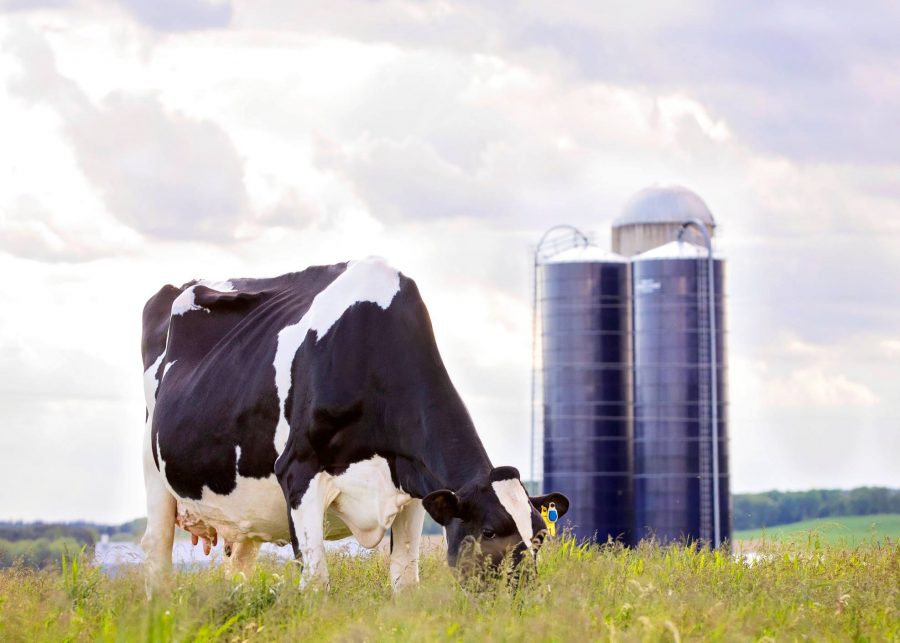


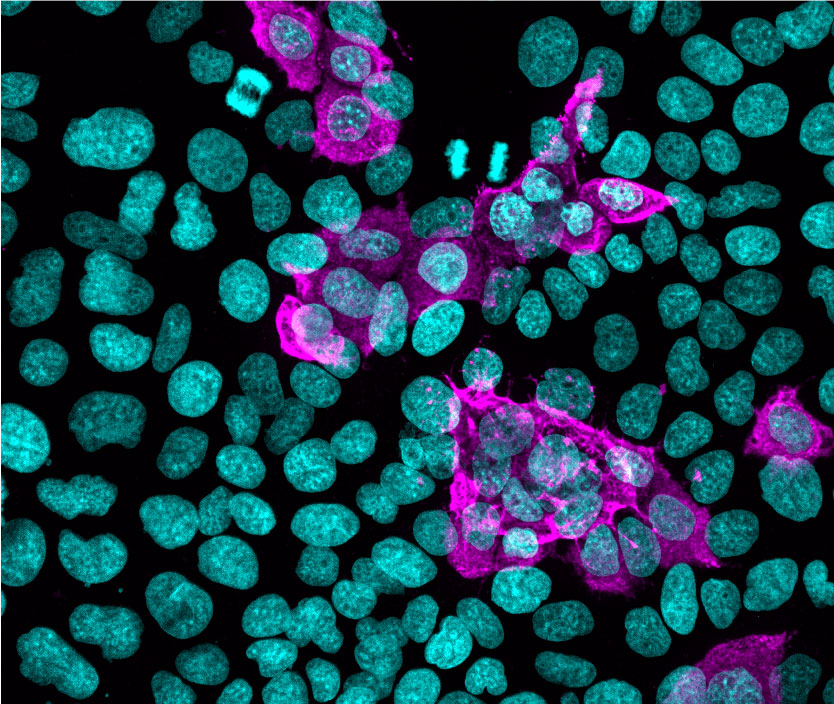
 William Paul Yarosh, 77, of New London, died Friday, February 18, 2022 at The Laurels of New London. Born on September 17, 1944 in Oberlin, he was the son of Marie (nee Remen) and the late Mike Yarosh. William grew up in Penfield and was a 1962 graduate of Keystone High School.
 ANZ sees a positive future for the Australian dairy industry despite competition for land from the beef and sheep sectors.
 If you’ve ever driven through Lowville, you’ve probably seen her: Lady Lewinda Milkzalot, the champion of Lewis County’s dairy industry.