Five dairy farmers and allied industry professionals received recognition for completing all three pillars of leadership training in the Professional Dairy Producers Wisconsin’s Cornerstone Dairy Academy. The application-based professional-development program is designed to build the skills of dairy producers and industry professionals who want to expand their skills to lead with purpose, character and integrity.
The two-day program focuses on enhancing the skills of communication, visionary thinking, ethical leadership, servant-oriented leadership and professional etiquette. The presenters also equip attendees with tools to work through workplace challenges caused by generational differences and varying types of emotional intelligence.
The Cornerstone Dairy Academy graduates who have completed all three pillars include Sara Griswold, Beaver Dam; Kalista Hodorff, Eden; Michael Kortuem, Marshfield; Brooke Trustem, Evansville; and Danielle Warmka, Fox Lake.
The PDPW Cornerstone Dairy Academy is funded in part by a grant from the Professional Dairy Producers Foundation.
Earlier this month, the US Food and Drug Administration (FDA) announced that beef from two gene-edited cattle and their offspring is safe to eat and said gene-edited beef could be on the market in as little as two years. The cattle were designed using the gene-editing tool CRISPR to grow shorter hair to better tolerate heat, which makes them more efficient for meat producers in hotter climates. An FDA spokesperson said the agency expects the announcement will encourage more companies to bring forward gene-edited farm animals for marketplace approval in the near future.
Products from such animals aren’t going to appear on grocery shelves or restaurant menus overnight; the FDA has generally moved slowly on approving new gene-edited or engineered animals. But in the coming decades, gene editing could usher in a new era for meat production, and one that, depending on the paths taken by genetics companies and the meat producers to whom they’ll aim to sell these new animals, could have lasting consequences for animal suffering on factory farms.
Down one path lies a future where industrial agriculture uses the technology of gene editing to push chickens, pigs, fish, and cows to grow bigger and faster. It would be a future of factory farming on overdrive, and a future almost certainly to the detriment of animal welfare.
Down the other path lies a more positive possibility: the use of genetic tools to alleviate some animal suffering. Editing for disease resistance, for instance, could reduce sickness as well as the need to breed more animals as replacements for those who die, while the creation of hornless calves would eliminate the need for a painful yet common farm procedure known as dehorning.
Based on what some animal genetics companies and researchers have told us — and on the hundreds of such projects underway — it’ll likely be a mix of both approaches.
“Gene editing in relation to current farming systems is interesting because there are ways in which it might alleviate suffering, but there are also ways in which it might exacerbate different aspects of the current system,” Adam Shriver, a bioethicist at the University of British Columbia, told me. “It’s something that has the potential to really profoundly affect” farm animal welfare.
The potential of gene editing has led the animal agriculture sector to largely embrace the possibilities of the technology and for some in the industry to callfor a faster regulatory approval process, which could be achieved in part by granting oversight to the more agribusiness-friendly USDA.
Animal welfare advocacy groups, on the other hand, view the technology more warily. The Humane Society of the United States supports gene editing farmed animals when it’s specifically used to reduce animal suffering, while Dena Jones of the Animal Welfare Institute worries that it “allows the industry to mitigate some of the criticisms of animal farming and keep costs low in the process,” as she told me in an email.
It’ll likely be decades — if ever — until gene-edited animals become a significant part of industrial agriculture, given the current slow pace of regulation and potential scientific hurdles. But it could be speeding up. The FDA and Recombinetics, the company that made the short-haired, heat-tolerant cattle, declined to comment for this story when questioned about how many years it took for the FDA’s “safe to eat” determination. But in January 2021, Recombinetics published research on the short-hair cattle and wrote it is “currently being prepared for regulatory review in multiple countries and commercialization.”
If it only took Recombinetics around one year to earn the FDA’s “safe to eat” determination, it would stand in stark contrast to the odyssey of the AquAdvantage salmon. Genetically engineered to grow twice as fast and year-round — unlike a natural Atlantic salmon, which primarily grows in the spring and summer while out at sea — it took some two decades before AquAdvantage was finally approved in 2015.
After several more years of deliberation on how to properly label it and FDA environmental review, it’s now sold through one seafood distributor, while 85 companies, including Walmart and Kroger, have pledged never to sell it after pressure from environmental and anti-GMO activists, though the company saysit has relationships with some large-scale retailers.
Public opinion, meanwhile, remains mixed on gene editing animals, with more support for approaches that promote heat tolerance or reduce pain than for interventions that can make animals grow faster.
The uncertain approval process and lingering consumer skepticism means there’s still time to shape how gene editing will be used on the farm. No one doubts the power of gene editing, nor its potential to help determine the quality of life of billions of animals in the future. But whether gene editing is predominantly employed to maximize production at all costs or as a scientific corrective to ethical woes is up to the editors — meaning us.
How gene editing could be used to reduce — or increase — animal suffering on the farm
Factory farms are often characterized as inhumane because of the conditions in which animals are forced to live: in a tiny cage or a crate, overcrowded in a dark warehouse, and often fed a steady diet of antibiotics as a way to increase growth rates and prevent disease in unsanitary conditions, not because the animals are sick.
But a significant portion of farm animal suffering is set before they’re ever born, thanks to the way that they have been bred.
For centuries before scientists even understood the existence and function of genes, farmers selectively bred animals to produce certain traits, such as faster growth rates or resistance to disease, that would yield more meat at a lower cost. Starting in the late 1940s, animal breeders became more sophisticated and eventually figured out how to push animals to their biological limits, a project that has led to a hellish existence for most of America’s 9 billion farmed land animals (and, increasingly, for the farmed species that provide more than half the world’s seafood).
Chickens raised for meat today grow to be much larger and grow at a much faster pace than chickens did in the 1950s, causing a laundry list of welfare issues, such as leg and foot injuries, lesions, and heart and lung problems. As chickens get closer to “market weight,” many of them have difficulty even walking since their legs can’t support their unnaturally large bodies.
The left-hand chicken is a breed from 1957. The middle chicken is a breed from 1978. The right-hand one is a breed from 2005. They were all raised in the same manner for this paper and were photographed at the same age. Vox added the dates to this image.Zuidhof, MJ, et al. 2014 Poultry Science 93 :1–13/Numbers added by Vox
Creating rapid-growth chickens took breeding companies decades since they mostly relied on old-fashioned selective breeding. Genetic engineering came next in the 1970s as scientists figured out how to transfer genes from one organism into another, which led to the creation of the fast-growing AquAdvantage salmon in 1989. But newer biotechnology tools, like CRISPR, are faster and more precise because scientists can edit an animals’ genes rather than move a gene from one animal into another.
“The beauty of the newer techniques is the ability to precisely introduce a particular characteristic into already elite germplasm” or heritable genetic material, says Alison Van Eenennaam, an animal geneticist at University California Davis.
Alison Van Eenennaam, an animal geneticist at the University of California Davis, feeds alfalfa to two hornless offspring of a gene-modified bull and a horned control cow, at the university’s farm in Davis, California, in 2019. Eenennaam has been working for several years on the hornless gene.Juliette Michel/AFP via Getty Images
The promise of the technology is obvious for agribusiness, which naturally wants to use these new tools to boost profits by designing bigger, faster-growing animals with higher fertility rates.
But that’s not the only use of the technology. It could also be deployed to eliminate many sources of animal suffering on today’s factory farms by editing genes in ways that would make painful procedures unnecessary.
Hornless calves are just the start. For instance, male piglets are castrated, usually without pain relief, shortly after birth. If they aren’t, their meat will emit a terrible odor when cooked, leading to what the pork industry calls “boar taint.” So scientists are working on a male pig that never reaches puberty, eliminating the need for castration.
A similar advance could be made with poultry. Each year at America’s egg hatcheries, as many as 300 million male chicks are gruesomely killed — usually by being ground up alive or gassed — since they can’t lay eggs and have been bred to be too small to be worth the effort of raising for meat. Researchers around the world are using transgenic engineering and gene-editing tools in an attempt to solve this chicken and egg dilemma.
Each year, approximately 300 million male chicks are ground up alive or gassed in the US egg industry because they can’t lay eggs and have been bred to be too small to be worth the effort of raising for meat. Researchers are using genetic engineering and gene editing to eliminate the need for male chick culling.Andrey Rudakov/Bloomberg via Getty Images
A team in Australia is using CRISPR to insert a gene from a sea anemone into a chicken that expresses a particular protein; if it’s a male, the inside of the egg will glow red when a laser is shined on it, enabling egg producers to destroy the eggs before the chicks are hatched. A team in the UK is working to stop the development of male embryos.
Straight out of a Black Mirror episode, the bioethicist Shriver has argued — in a paper that asks if “technology can succeed where morality has stalled” — for creating genetically engineered farmed animals that can’t feel pain. It’s a still-theoretical intervention that shows that the extreme environment of factory farming might demand equally extreme technological solutions.
Using gene editing to eradicate animal diseases
Breeding disease-resistant animals could also reduce animal suffering in the short term and lead agribusiness to breed fewer animals overall.
In 2014 and 2015, outbreaks of the Highly Pathogenic Avian Influenza (HPAI) virus across the US resulted in more than 50 million chickens and turkeys killed or culled, using cruel methods like suffocating foam and “ventilation shutdown” — industry jargon for essentially cooking the animals alive.
Seven years later, the disease is wreaking havoc on the US poultry industry yet again; since February of this year, 4 million chickens and turkeys in the US have been destroyed due to a new HPAI outbreak. Epidemiologists worry the growing outbreak increases the chance of the virus mutating and infecting humans. A different strain of the virus, Asian H5N1, has only infected around 700 people since 2003, but it has a disturbingly high mortality rate of 60 percent.
Fake birds in cages at North Carolina’s Cabarrus County Fair in 2015. Real birds were banned due to the bird flu that was ravaging the poultry sector at the time.Elizabeth W. Kearley/Moment Editorial via Getty Images
The global spread of African swine fever has caused the death or culling of millions of pigs in recent years, while other diseases are routine problems in the industry, such as tuberculosis and mastitis for dairy cows, and PRRS, a respiratory disease that affects pigs. Researchers have created gene-edited animals immune to all of these diseases as pilot projects, but none have been approved to be raised commercially.
“Disease resistance is the big target that everyone’s after because we lose about 20 percent of animal production to disease,” Van Eenennaam told me.
While creating disease-resistant animals would certainly fatten agribusiness’s bottom line, as meat, dairy, and egg producers lose billions of dollars each year to disease, it could also reduce animal suffering in two ways.
The first is obvious: Disease and culling are painful, and eliminating them would be good. The second is that it could result in fewer animals needing to be bred in the first place because when animals die from disease, the industry has to replace them.
But the fact that such innovation could improve animal welfare and the bottom line of agribusiness is one reason why many animal advocates hesitate to buy into it as a viable solution to factory farming.
“Through genetic engineering, the animal agriculture industry can increase efficiency, all the while claiming their motivation is to improve animal welfare,” says Jones of the Animal Welfare Institute. “GE allows the industry to mitigate some of the criticisms of animal farming and keep costs low in the process. Because of this, it absolutely poses a threat to making a transition to alternative protein sources.”
There’s good reason to worry gene editing could result in further harm to animals just as much as it could be used to ease some of the pain that comes from being a cog in the industrial agriculture system. The first genetically engineered animal to be approved by the FDA for human consumption, the AquAdvantage salmon, was created to grow twice as fast as conventional salmon, and animal advocates argue the engineered fish are prone to a number of welfare issues, like jaw deformities, lesions, and higher mortality rates.
Environmentalists worry the engineered salmon could escape into waterways and disrupt wild salmon populations by outcompeting them for resources and pollute wild salmon’s gene pool, affecting their survivability, though an FDA spokesperson told me that the abnormalities “do not differ appreciably from those in comparable farm-raised Atlantic salmon.”
The former CEO of Recombinetics, the company that created the recently approved heat-tolerant cattle and is working on a hornless calf, told the Associated Press in 2018 that the firm was focused on easing animal suffering because “it’s a better story to tell.” But she added that once gene-edited farm animals are more accepted by the public, farmers will be more interested in traits that increase “productivity” — often a euphemism for animals that either grow faster or bigger, produce more milk, or have higher fertility rates.
“I don’t want to assume that I can peer into [Recombinetic’s] mind,” says Shriver. “I definitely am extremely worried about the idea that the initial genetic modifications that are approved are ones that are either welfare neutral or welfare positive, but they’re going to open up the floodgates for a lot of gene interventions that have very negative impacts on animal welfare.”
Recombinetics declined to comment for this story.
Despite Shriver’s fear over how the technology could be used in the future, he notes that public support for the technology is higher when it’s being used to improve animal welfare. But public support isn’t enough. The future of farmed animal gene editing will be largely shaped by the FDA and genetics companies, two bodies that animal welfare advocates have largely neglected to lobby on the matter.
Regulating animal welfare into gene-edited meat
One thing to keep an eye on is how the regulatory landscape for gene editing animals shakes out. In 2017, the FDA announced plans to treat gene-edited animals designed with newer technology, like CRISPR, the same way they treat new veterinary drugs, which means the approval process is slow. According to the Animal Health Institute, an organization that represents veterinary drug companies, it takes around 8.5 years for a livestock drug with a new active ingredient to come to market.
Animal geneticists like Van Eenennaam argue that this classification doesn’t make sense. “They’re regulating all alterations in DNA as a drug, and DNA is not a drug,” she says. “If that’s the only way [the FDA] can regulate it, then everything that’s genetically altered is a drug because then” the agency can maintain oversight.
The seemingly quick “safe to eat” determination of the short-haired cattle could portend a faster process moving forward, but it’s “a bit wobbly,” Van Eenennaam says. That’s because the FDA didn’t say all heat-tolerant cattle designed in the way Recombinetics did are safe to eat — just the two cattle and their offspring that Recombinetics brought forward before the agency. If the FDA handles other projects the way it did Recombinetics’ cattle, the process will be “one by one by one. … It’s not sustainable.”
Instead of regulating gene-edited animals as drugs, she says products should be regulated on the basis of safety to animals, consumers, and the environment — not on the type of technology being used. “Regulations should be risk-proportionate. They shouldn’t be triggered by the use of a [specific] technology.”
The slowness cuts both ways. “This protracted process is a good thing if you want to delay or stop potentially harmful uses of GE,” says Jones of the Animal Welfare Institute. “But it also means a very lengthy process for beneficial applications, such as hornless cattle or eliminating males from [egg] layer breeding.”
In the final weeks of the Trump presidency, USDA Secretary Sonny Perdue proposed a rule change that would give the agriculture agency primary oversightof gene-edited farmed animals.
That hasn’t happened, but if it does, it would likely speed up the approval process, potentially in ways that bode poorly for animal welfare. The USDA is notoriously industry-friendly, which explains why groups like the National Pork Producers Council ardently support the USDA taking over the regulation of gene-edited animals raised for food, and why groups like the Animal Welfare Institute just as ardently oppose such a move.
Van Eenennaam is cautiously optimistic that handing over the regulatory job to the USDA would lead to a more streamlined process, mostly because the USDA wouldn’t regulate genetic alterations in farmed animals as drugs. Rather, according to Van Eenennaam, it would look more like its process for approving genetically altered crops: conducting a safety assessment with a focus on whether the genetic alteration could increase the animal’s susceptibility to pests or diseases, and then a pre-slaughter food safety assessment to ensure slaughter and processing doesn’t result in unsafe food products.
But animal welfare advocates worry the treatment of animals isn’t likely to be a top priority in the review process no matter which agency oversees it. “I have little to no confidence that a case-by-case review of the impacts of proposed GE applications on animal health and welfare will occur under either the FDA or the USDA,” says Jones.
When questioned about how the FDA factors animal welfare into its review process for genetic alterations to farmed animals, a spokesperson told me, “Our review includes an evaluation of animal safety in which we take into account physical health and, to the degree that it can be measured in a species, behavioral health. To the extent that animal health encompasses animal welfare, our approval process does include it.”
Shriver hopes that, at the very least, there’s more public discussion about gene editing farmed animals.
“There are a lot of these technological solutions on the horizon: Plant-based alternatives are getting better every year, and cultured meat is something that’s being worked on and gets a lot of discussion in the press. But I feel like gene editing is not debated as much in public, yet it also could have really dramatic implications,” he says. “There needs to be a robust debate about what the future could look like.”
Despite more awareness than ever of the ills of industrialized farming, and increasingly stronger moral pleas to end it, it pushes forward unabated: US meat consumption is at an all-time high, and the United Nations anticipates the global appetite for meat is expected to rise 73 percent by 2050. Gene editing animals to reduce their suffering may appear to be an extreme response to an extreme situation, but it’s one that should at least be on the metaphorical table — and perhaps, the dinner table too.
The world loves cheese: last year, more than 21 million metric tons of it were produced globally. But to make cheese, you end up with a lot of whey, and that can be a problem.
Producing one pound of hard cheese creates nine pounds of whey — the liquid byproduct that’s left when milk is curdled and strained — and while large-scale cheesemakers often turn that into animal feed or whey protein, with small cheesemakers, much of it can go to waste.
Enter Wheyward Spirit. Its California distillery is taking leftover whey from local cheesemakers and turning it into an alcoholic spirit. It has just partnered with Ben & Jerry’s to replace the Irish cream liqueur in its Dublin Mudslide flavor — offering “the same taste with less waste,” according to the ice cream maker.
“Our big thing is to keep [whey] in the food system,” says Emily Darchuk, owner and founder of Wheyward Spirit.
Darchuk founded Wheyward Spirit in 2017 and spent several years developing its distillation process. Liquid whey is 95% water, but contains enough lactose sugar to ferment into alcohol. While this helps to save on water during distillation, it’s a more complex process than using conventional ingredients.
Emily Darchuk says her whey spirit saves on water and waste.
Since launching in September 2020, the artisanal spirit has been awarded a double-gold medal at the New York World Wine & Spirits Competition and a Good Food Award. Working with nearby small-scale cheesemakers, Wheyward says its two-person team has processed 500,000 pounds of whey that would otherwise have been wasted.
Containing 40% alcohol and retailing from $54.95 for a 750 ml bottle, it is priced for the premium market — but Darchuk says that consumers are curious to try the product and are on board with the zero-waste concept.
“People get the impact of it,” she says. “It’s that next movement in sustainable food.”
“A drop in the bucket”
Based on cheese production figures from the US Department of Agriculture, more than 100 billion pounds of liquid whey was produced in the United States in 2020. For most large-scale cheesemakers, this isn’t a problem, says Lisbeth Goddik, a food science professor at Oregon State University, with much of it converted into products like protein powders and animal feed.
“The challenge is that the smaller cheesemakers can’t afford to build these whey processing centers,” she tells CNN Business.
These smaller cheesemakers account for less than 1% of the market, by Goddik’s estimates, and their whey production is “a drop in the bucket” compared to bigger outfits. But they must pay for the whey to be treated before it is disposed of, which can be a significant additional expense, she says. Some supply the whey to local farmers to use as fertilizer, but if this isn’t well managed, it can pollute water sources.
“It matters a lot to the people at the small scale, and it certainly matters in the environment around them,” Goddik says. That’s where fermenting and distillation can be a useful innovation. “It’s less capital intensive than trying to process and dry the whey,” she explains.
Proving the market
Wheyward isn’t the only company transforming whey into alcohol: Bertha’s Revenge Irish Milk Gin and French vodka producer Lactalium Velvet both use whey as the main ingredient for their base spirit.
Distillation could be especially useful for acid whey, the byproduct of Greek yogurt. For every pound of yogurt, three to four pounds of acid whey are produced, which unlike sweet cheese whey, cannot be used in protein powders. Goddik has researched fermenting and distilling acid whey and says it “performed very well.”
To date, Wheyward Spirit’s two-person team has converted 500,000 pounds of whey into its signature distilled spirit.
Creating a high-value secondary market for whey could help the dairy industry, says Samuel Alcaine, a food scientist at Cornell University. His startup Norwhey makes an alcoholic seltzer from acid whey, which he says retains a lot of its nutritional value and minerals.
“Making sure that we’re recapturing every drop, and then utilizing that in a way to help human nutrition, I think is important,” says Alcaine. He points to others who are making whey-based alcohol-free tonics, such as Superfrau! and Spare Tonic, which tout whey’s health benefits.
He believes it could offer a win for dairy processors, who can offload their excess whey for free, as well as beverage makers, who only have to pay the price of transport for their base ingredient. In the long run, dairy processors could even produce these drinks themselves, says Alcaine. In Australia, one artisan cheesemaker already has: Grandvewe is creating small batches of whey-based spirits alongside its sheep cheese products.
The whey-based drinks industry is still in its early days, says Alcaine, adding “there needs to be time to prove the market.” But Wheyward Spirit’s partnership with Ben & Jerry’s shows that whey spirits can make it into supermarket aisles, familiarizing shoppers with these unconventional products.
“Hopefully it gets people to dig deeper and think about their food differently,” says Darchuk.
Dairy Farmers of America’s (DFA) Members of Distinction program honors members who embody the Cooperative’s core values and excel on their operations, in their communities and in the industry. Each year, one member farm from each of DFA’s seven regional Areas is honored.
Because we held virtual Annual Meetings in 2020 and 2021, we are honoring our 2020 and 2021 Members of Distinction farm families at this year’s in-person meeting. More details about the 2020 Members of Distinction honorees can be found here. Our 2021 Members of Distinction honorees are:
Central Area The Haase family, DaBru Dairy — Parker, S.D.
A sense of continuous improvement and community runs through the Haase family farm as thirdgeneration dairy farmers and brothers Bruce and Dustin and their families continue their legacy of dairy. Milking 600 Holstein cows and farming 7,000 acres, the Haases are invested deeply in the genetics of their herd with a focus on genomics and implanting embryos almost daily. From hosting
farm tours to showing Holsteins at World Dairy Expo, the Haase family strives to continue feeding the world while telling a story of animal care and milk quality.
Mideast Area The Haines family, Haines Farms — Stockport, Ohio
Located in the small community of Stockport, Ohio, the farmland that Haines Farms sits on traces its roots back to the early 1900s, and the dairy itself got its start in 1959. Today, the farm is run by brothers Jim and Richard, and Jim’s son, Gary Haines, who will be the fourth generation interested in continuing the tradition. With 140 Holsteins on 700 acres, the brothers ensure they are producing the highest-quality milk and are conscientious of routine expectations, consulting regularly with their vet and nutritionist.
Mountain Area The Koolstra family, Daisy Lane Dairy — Cope, Colo.
Wilbert and Marie Koolstra started their family’s dairy with just one cow given to Wilbert by a farmer who couldn’t pay him any other way. Wilbert and Marie continued to grow the operation to 250 cows. When Wilbert developed a degenerative eye disease, his son, Dennis, took over, and now he and his
wife, Jennifer, have grown the farm to over 3,200 cows. They opened a church and nonprofit organization on the dairy to assist their surrounding rural community with legal work, child care, education, counseling and more. The Koolstras are passionate dairy farmers and take every opportunity to advocate for the dairy industry and improvement in their community.
Northeast Area The Smiley family, Russell Smiley Dairy Farm — Middletown, N.Y.
The Smileys’ dairy farm has been a part of a cooperative community for more than 60 years — first as members of Dairylea Cooperative and now DFA, after Dairylea merged with DFA in 2013. While the herd size, barn and fields are the same today as they were when his parents bought the farm in 1959, Russell Smiley, his sister, Edith, and nephew, Lee, are continuously improving their farm operations and technology. With a longstanding tradition of milk quality and stewardship for their animals and land, the Smiley family are pillars of their community, hosting meetings, judging competitions and educating youth about the goodness of dairy.
Southeast Area The Chapman family, Chapman Jersey Farm LLC — Taylorsville, N.C.
Brothers Daniel and Gary Chapman are continuing the legacy started by their father, Bill, by running the dairy he founded in 1967. Today, the brothers run a diversified operation with beef cows, poultry houses and row crops in addition to dairy, and are strong advocates for agriculture. The house and farm in North Carolina have been in the family for four generations, built by Bill’s great-grandfather. Despite Bill telling his sons to pursue other career options after attending college, both Daniel and Gary wanted nothing else but to return to the dairy. The farm is run mostly by the family with few outside employees.
Southwest Area The Collier family, T&K Dairy — Snyder, Texas
As a third-generation farmer, Will Collier, and his wife, Lauren, have been DFA members since 1998. Since 2008, Will and Lauren have grown their farm from 60 to 3,300 cows and invested in various technology to improve production and labor efficiency on the farm. They understand that in order to thrive and create an enduring legacy, they need to evolve with the dairy industry. In 2016, they implemented rumination collars to manage their herd, which led them to installing a robotic barn, with hopes to double its size in the future. Lauren and Will have three children, with their oldest going off to college soon.
Western Area The Carvalho family, Carvalho Dairy Farms — Crows Landing, Calif.
After immigrating from Portugal, Michael Carvalho’s grandparents, Augustino and Joe, bought land they could afford and started dairying in Crows Landing, Calif. Today, alongside his parents, Michael and his family carry on the legacy with 650 Holsteins. They stay true to their cultural roots by staying active in the community and keeping family traditions alive, while ensuring the future of their farm by investing in their land by double cropping and ensuring the health of the soil that their grandparents first bought.
Taco Bell restaurants nationwide have rolled out a dairy-based coffee creamer and a new coffee drink with support from dairy checkoff food scientists.
The vanilla creamer replaces a non-dairy product and will become a permanent offering at more than 7,500 Taco Bell locations in the United States. The shelf-stable creamer also was used in the checkoff-created Pineapple Whip Freeze and Island Berry Freeze beverages that previously appeared on Taco Bell’s menu.
Taco Bell consumers who order 12-ounce hot or 20-ounce iced coffee drinks have the option of adding the creamer. The Dairy Management Inc. (DMI) product research team worked with the checkoff-funded Midwest Dairy Center at the University of Minnesota to create the creamer in 2020.
The creamer also is featured in the Cinnabon Delights® Coffee, which is available at participating U.S. locations for a limited time. DMI dairy scientist Kimber Lew led the creation workstream and said it demonstrates the chain’s desire to grow its breakfast business.
“We’re really excited for this because we are putting a lot of emphasis into getting consumers to think more about starting their mornings at Taco Bell,” Lew said. “Creating a coffee that has dairy and the iconic, crave-able Cinnabon Delights® flavor was a no-brainer.”
Lew said the creamer and Cinnabon Delights® Coffee are further proof of Taco Bell’s openness to menu innovations featuring dairy.
“This demonstrates how Taco Bell is leaning in on dairy in multiple avenues,” Lew said. “It’s not just about cheese and reduced-fat sour cream use; it’s about exploring other ways to elevate the consumer experience with the deliciousness of dairy. This shows the strength of our partnership.”
Heather Mottershaw, vice president of pipeline innovation and product development for Taco Bell, said these additions greatly enhance the chain’s breakfast menu.
“These fit very well with our strategy of growing our breakfast business and offering a premium coffee drink and creamer made from dairy,” Mottershaw said. “We are very grateful for the checkoff’s continued support to lead the way with dairy innovation that resonates very well with our consumers.”
For information about the dairy checkoff, visit www.usdairy.com.
New York is ending its Dairy Princess program to focus on bringing gender inclusivity to representing the dairy industry.
American Dairy Association North East has officially launched its Dairy Ambassador Program, moving away from Dairy Princesses to include youth across different genders.
According to ADANE, it was asked in the Fall of 2021 to expand the Dairy Princess Program to include both young men and women, which eventually formed the Ambassador Program.
ADANE said that the New York State Dairy Ambassador Program will aim to build critical professional skills and confidence of young individuals who show passion for the dairy industry.
Similar to the previous Dairy Princess Program, Ambassadors will be involved in statewide promotions and events. The program changes will continue to roll out this spring when young men will be able to compete for county Dairy Ambassador positions and ultimately for the state title next winter.
New York’s first Dairy Ambassadors were named in late February during a live-streamed ceremony in Syracuse, New York.
Wayne County’s Gabriella Taylor was given the title of New York State Dairy Ambassador, and Katie Jasmin from Madison County and Annika Donlick from Cortland County were named the first and second Associate Ambassador respectively.
Contestants in the February 2022 competitions were judged on a personal interview, impromptu questions, a prepared speech, a product knowledge exam, writing skills and information interactions with others.
New York Dairy Ambassador program changes will continue to roll out this spring when young men will be able to compete for county Dairy Ambassador positions and ultimately for the state title next winter.
“We have been working on an exciting new development consistent with this vision that aims to enhance liquidity in GDT for the benefit of both buyers and sellers by providing price discovery on a more frequent basis, called GDT Pulse,” a statement from the platform said.
A trial version of GDT Pulse with sufficient features to meet the needs of early customers will launch in 2022, and customer feedback will inform further development.
Initially, GDT Pulse will offer auctions on alternate weeks between GDT Trading Events for a trial period of six to 12 months. The auctions will initially have one product specification to bid on: Fonterra Whole Milk Powder Regular Contract Period 2. This will ensure a short total duration of 15 to 30 minutes, which GDT said provides a convenient option for bidders.
If the trial is deemed successful, GDT said it is envisaged that GDT will invest in platform upgrades to automate GDT Pulse processes and enable daily auctions; and other sellers will be invited to offer product.
“The trial will provide us with valuable bidder feedback and insight into the needs of bidders and financial market participants. After the trial period, we will assess the merit of GDT Pulse and the future potential for more frequent price discovery from Global Dairy Trade,” GDT said.
GDT Pulse will fall under the governance of the GDT Events Oversight Board, which has reviewed a set of draft rule changes.
A paper outlining the concept of GDT Pulse, including a summary explanation of the proposed changes to the GDT Trading Event Rules is available here.
The Dairy Business Association (DBA), Wisconsin’s leading dairy advocacy group, applauded the signing into law two bills that will help preserve Wisconsin’s farming legacy.
Last week, Gov. Tony Evers signed into law a bill that makes it simpler for farm families to transfer costly farm equipment outside the probate process. Rep. John Macco, R-Ledgeview, drafted the bill with Sen. Joan Ballweg, R-Markesan.
This week, Gov. Evers signed into law a bill that provides additional funding to boost Wisconsin’s dairy exports. The bill was co-authored by Sen. Joan Ballweg, R-Markesan, and Rep. Tony Kurtz, R-Wonewoc. Both bills enjoyed strong bi-partisan support.
“These efforts by our lawmakers are important steps to preserving Wisconsin’s place as America’s Dairyland,” DBA President Amy Penterman said. “The lawmakers leading these efforts understand the significance dairy plays for our state’s farmers, food processors and rural communities.”
The probate issue was initially brought forward by a DBA member, marking the second consecutive session where DBA has shepherded an idea brought forward from membership into law.
“The farm estate transfer bill serves as a shining example of how our farmers can drive legislative solutions in Madison,” Penterman said. “I challenge our members to get engaged with DBA and continue leading common-sense change.”
The National Milk Producers Federation (NMPF) and the U.S. Dairy Export Council (USDEC) lauded today’s passage by the Senate Commerce Committee of the Ocean Shipping Reform Act (OSRA). The approval establishes Senate committee support for action to address shipping supply chain challenges as Congress prepares to commence conference procedures on the Senate-passed U.S. Innovation & Competition Act (USICA) and the House-passed America Creating Opportunities for Manufacturing, Pre-Eminence in Technology, and Economic Strength (COMPETES) Act in the coming weeks. The House COMPETES Act includes the House-passed version of OSRA.
“Today’s action by the Senate Commerce Committee brings the Ocean Shipping Reform Act one step closer to passage,” said Jim Mulhern, president and CEO of NMPF. “Export supply chain issues continue to pose immense challenges to dairy exporters, which is why this legislation remains so critical as part of a broad-based approach to tackling those problems. Dairy farmers appreciate the leadership of OSRA sponsors Senators Klobuchar and Thune as well as Commerce Chair Cantwell and Ranking Member Wicker on this issue. We urge the Senate and House to expeditiously advance the conference process and ensure that the final text includes a strong focus on the needs of American agricultural exporters.”
“America’s dairy farmers and manufacturers are delighted to see the Ocean Shipping Reform Act continue to move forward and thank the many Senate Commerce Committee members who supported its approval today,” said Krysta Harden, president and CEO of USDEC. “Dairy exporters need the changes OSRA would deliver. As such, we encourage Congress to swiftly move the COMPETES/USICA conference work forward and send a bill that prioritizes the export shipping needs of U.S. agricultural exporters to the President’s desk.”
Some oppose the plan, calling it counter-productive
The European Commission is set to delay the publication of proposals on sustainable farming and nature that were expected this week, with the impact of the war in Ukraine on food supply leading some countries to question the European Union’s environmental push, reported Reuters.
The EU’s “Green Deal” is overhauling all sectors, including agriculture, which produces roughly 10% of EU greenhouse gas emissions. Brussels has targets that include halving chemical pesticide use by 2030, and is drafting laws to make them a reality.
The European Commission (EC) was due to have made public on Wednesday two new proposals – binding targets to restore nature and a more sustainable pesticides law.
However, EU agriculture commissioner Janusz Wojciechowski on Monday said that the EU would not discuss pesticides at its meeting this week, meaning that the proposal’s publication would be pushed back. He did not comment on the nature restoration plan.
Earlier, EU food safety commissioner Stella Kyriakides told national agriculture ministers in Brussels that the bloc had to shift to sustainable pesticide use but that the Ukraine crisis did not give the “political space” for a proper discussion now.
The EC will put forward measures to deal with the impact of Russia’s invasion of Ukraine, which has driven up prices of wheat and barley, and raised fears of shortages.
Russia and Ukraine make up more than 30% of global trade in wheat and more than 50% for sunflower oils, seeds and meals.
One proposal will be to allow cultivation on land lying fallow, a practice that allows the environment to recover between farming cycles.
The measures are also set to include help for pig farmers, given pork exports to Ukraine are now cut off, and greater freedom to provide state aid.
A group of 400 scientists and food sector experts on Friday said abandoning sustainable farming practices would be counter-productive.
“These measures would not move us toward but further away from a reliable food system that is resilient to future shocks, and delivers healthy and sustainable diets,” their statement said.
They called instead for a shift to crops less reliant on fertilisers produced using Russian gas, and more plant-based diets to cut the amount of grain needed for animal feed.
A milk truck looks like a big silver tube on wheels. And on an early winter day, one backed up into the dirt driveway of Gervais Farm in Enosburgh.
The truck’s driver was Ben Kane, who hopped out to be greeted by Tala the farm dog. Kane was there to pick up a load of milk.
The first thing he did was walk into the milk parlor to check the tank.
“Pretty full today,” he said. “I’ll be here for awhile.”
Kane walked out to the back of his truck and opened the doors of the metal tube, aka the trailer. He uncoiled a long blue hose, which he passed through a round hole in the milk parlor wall and hooked up to the milk tank. Then he started pumping the milk into the trailer.
On this particular day, Kane said he would stop by 11 farms total. Once the trailer was full, he’d pass it along to another driver, who’d take it down to a processing plant in Agawam, Mass.
Elodie Reed
/
VPR
Milk hauler Ben Kane finishes up the process of pumping milk into his truck during a stop at Gervais Farm in Enosburgh earlier this winter.
Kane says he hauls milk about six days a week. And according to Gervais Farm co-owner Kati Lawyer-Hale, Kane’s role is absolutely vital to the farm’s operations, where they milk about 1,000 cows a day.
“Farming is a business,” Lawyer-Hale said. “We make a product — a product with a very, very short life — we have to trust our drivers to be here. They come here twice a day to pick up our milk. And so when it’s icy roads, it’s Christmas, they’re here. They’re picking up the milk, and we are trusting them with our livelihood, basically.”
Ben Kane is among the 4,000 or so heavy truck drivers in the state of Vermont. The state doesn’t keep data for how many of those drivers are specifically hauling milk, but according to Vermont’s Labor Department, not only will the industry lose about 60 jobs between 2018 and 2028, but more than 400 positions will also open up each year.
In other words, there will be fewer jobs overall, and a lot of turnover.
Elodie Reed
/
VPR
Once the cows are milked at Gervais Farm in Enosburgh, their milk is kept in a tank, where it’s then picked up by a milk hauler to go to a processing plant.
Challenges with transportation — and a lack of nearby processing plants — were the main reasons why Danone North America, parent company of Horizon Organic, decided to pull out of the Northeast.
People in the dairy industry say the pandemic exacerbated transportation issues, but not having enough milk haulers is a longstanding problem.
Barney McConnell is the director of transportation for Dairy Farmers of America, a dairy cooperative that coordinates milk hauling for nearly 300 Vermont farmers. He says DFA’s Vermont trucking company, Northeast Logistics, has about 80 trucks in its fleet, and he could easily hire eight or 10 more drivers.
“It’s not just the dairy industry, obviously, but here we are trying to compete with nondairy industries for these drivers,” McConnell said.
McConnell says while DFA does what it can to bring on more people — including offering good benefits, emphasizing work-life balance and partnering with driving schools to bring on more people — there’s only so much a dairy cooperative, which is made up of farmer members, can do.
“With, you know, high sign-on bonuses and wages, it’s just — I think we all understand that all this money comes from our members, and you know, you can only go to the well so many times,” he said.
Elodie Reed
/
VPR
Mike Weld owns Vaillancourt Transport in Enosburg Falls, a company subcontracted by dairy cooperatives to haul milk. Since the pandemic, Weld says he’s been working about seven days a week due to a shortage in labor.
Along Route 105 just north of St. Albans, milk trucks barrel down the road every day. If you sit and watch for 10 minutes, you’ll likely see four or five trucks pass. It’s the route Mike Weld was driving when he gave me a call — which, he assured me, was hands-free.
“Well I’m headed back, I just left the plant — I’m heading back to the yard,” he said.
Weld owns Vaillancourt Transport, based in Enosburg Falls. The company is sub-contracted by Agrimark dairy cooperative as well as DFA to haul milk in Vermont. And at the moment, Weld told me he has at least a couple open positions.
“Oh I don’t know, ever since I think COVID start, I’ve been pretty much seven days a week, myself,” he said. “I do a lot of my spare work setting behind the wheel.”
Elodie Reed
/
VPR
Mike Weld, owner of Vaillancourt Transport, says he could currently fill a couple positions.
Weld said he was making calls from the cab of a truck — and not his office — for several reasons.
Reason number one: Weld says there are too many regulations for drivers. Young drivers need to have experience before insurance will cover them. Older drivers need to stay healthy enough to meet federal standards.
Reason number two: Weld thinks unemployment benefits are keeping people from applying for jobs. Economists are split on whether that’s true nationally — but Weld says he’s heard at least one anecdotal instance locally.
Reason number three: According to Weld, the lifestyle that milk hauling in particular requires — the seven days a week, weekends and holidays part — is not attractive to the newest generation of would-be truck drivers.
“It’s an industry, you almost got to have been brought up into,” Weld said. “Like ex-farmers, that knows what it’s like to work seven days a week and think nothing of it, and you just do it, you know?”
Elodie Reed
/
VPR
State and federal officials are working to increase dairy processing capacity in the Northeast, which dairy cooperatives say could help with the milk hauling issue.
Solutions for dairy industry transportation problems are tough to come by, partly because they’re systemic in nature. A good portion of Vermont’s milk needs to go over state lines to be processed. And even for the milk processed in-state, drivers can end up sitting in the driveway, waiting, due to labor shortages at the plant.
In the short-term, dairy cooperatives are trying to meet hauling demand with more efficiency: updating equipment, sharing milk truck loads and making work schedules more predictable.
In the long-term, they’re part of working groups with state and federal officials to increase processing capacity in the Northeast. The USDA, for instance, recently granted the Northeast Dairy Business Innovation Center an extra $20 millionto help with those efforts.
Organic Valley’s Shawna Nelson, who oversees milk hauling for that dairy cooperative, says it comes down to ensuring infrastructure exists to support the dairy industry overall — transportation and processing included.
“To have the infrastructure from a processing standpoint, so that we can have local options to deliver local Vermont milk,” she said.
“We then suspended shipment of product to Russia while we assessed the impact of economic sanctions and discussed our long-term plans with our customers and joint venture partner.
“Following careful consideration of the impact on our people and our long-term plans for the Russian market, we will now close our office in Moscow, re-deploying staff where possible, and withdraw from our joint venture Unifood.”
Fonterra exports a small amount of product to Russia, primarily butter, totalling about 1% of our annual exports.
“Given the current strong demand for New Zealand dairy, we are confident in our ability to re-allocate this product to other markets,” says Mr Hurrell.
New Zealand has been exporting butter to Russia for more than 40 years. Fonterra entered the joint venture Unifood in December 2018.
The Holstein Foundation will host its first ever virtual Spring into Action Seminar on April 12, 2022, at 7 p.m. EST. The hour-long session titled, Think Outside the Milk Bottle – Bringing Dairy Innovation to Life, is sponsored by Dairy Management Inc. (DMI).
“We are excited to be partnering with the Holstein Foundation on the Spring into Action Seminar to share consumer trends and show how dairy product innovation comes to life,” says Nate Janssen, Vice President of Farmer Relations at DMI.
The session will focus on understanding today’s consumers, dairy innovation, and career opportunities within the food science field. Experts from DMI will lead participants through an interactive case study on a dairy product innovation during the seminar.
“The virtual format of the seminar will allow youth from across the country to come together and learn about a unique aspect of the dairy industry in a fun and engaging way,” says Kelli Dunklee, Holstein Foundation Youth Programs Specialist.
Key information from the Spring into Action Seminar will also be incorporated into the Holstein Foundation’s Dairy Bowl and Dairy Jeopardy contests in 2022. All youth with an interest in the dairy industry, Junior Holstein members, coaches, parents, and advisors are encouraged to attend the seminar.
Youth interested in attending the seminar can register using this link. Participants who register for the seminar by the April 8, 2022, deadline, attend the session, and complete the follow-up survey after the seminar will be eligible for fun prizes.
Contact Kelli Dunklee at 800.952.5200 ext. 4124 or by email with questions about the Spring into Action Seminar. For more information about the Holstein Foundation visit www.holsteinfoundation.org.
###
The Holstein Foundation’s education, leadership development and outreach programs serve both youth and young adults across the country who are involved with all breeds of dairy cattle.
The Holstein Foundation is a 501(c)3 organization founded in 1989. It is headquartered in Brattleboro, Vermont, and shares office space with its parent organization, Holstein Association USA, Inc.
The Dairy Girl Network (DGN), an organization supporting all women in dairy by enhancing lives and creating opportunities, is excited to announce a DGN Connect Networking Event taking place at the Central Plains Dairy Expo.
The Connect Event during Central Plains Dairy Expo will be held in Ballroom A of the Sheraton Sioux Falls, Sioux Falls, South Dakota on Wednesday, March 30, 2022, from 11:30 a.m. to 1 p.m. A short program will be held at 12 p.m. Join other dairywomen for a quick recharge to talk about your lives involving dairy farming. The event is for all women involved with any part of dairy – whether as a calf feeder, dairy owner, marketing or sale consultant servicing dairy farms or cheese producers, veterinarian, researchers, etc. If there is a dairy cow involved in what you do, you’re invited. The DGN Connect event price for Central Plains Dairy Expo is $20.00. Attendees will enjoy lunch and receive a DGN special gift.
Registration for the Central Plains Dairy Expo DGN Connect Event is open. Those interested can visit DairyGirlNetwork.com/connect to learn more and to register. DGN asks that those who plan to attend pre-register for the event.
The Dairy Girl Network is supported by Sustaining sponsor: Dairy Management, Inc. Catalyst sponsors: Cargill, Diamond V, The National FARM Program, Farm Credit Systems, Land O’ Lakes, Merck Animal Health, and Michael Best, in addition to contributions by event sponsors. Event sponsors for the Central Plains Dairy Expo Connect event: Farm Credit Services, NovaMeal, and Sioux Nation Ag. Learn more about the organization and sponsorship opportunities at DairyGirlNetwork.com.
Hosted by the Agriculture Council of America and sponsored by dozens of other agricultural groups, Ag Day this year will focus on “Growing a Climate for Tomorrow,” highlighting farmers’ efforts to protect the environment. Because of COVID restrictions, most of the Ag Day events in Washington, DC, will be virtual.
The Celebration of Modern Agriculture on the National Mall, which runs March 21-22, will be live.
To get there I endured four hours in a mask on a Southwest Airlines flight. The airline attendants continuously reminded all passengers to keep their masks on during the flight, but on my return trip they hinted the mask mandate might soon be lifted in airports and onboard planes. I understand now the mandate has been extended another 30 days.
Salt Lake City is a beautiful city any time of the year, but especially in winter. It is surround by snow covered mountains, and the air is crisp and clean. The day I flew in the overnight temperature was 17 degrees, and barely made it above freezing the next day.
I stayed at the Marriott Hotel City Center. I was delighted to find a full-scale ice skating rink in the plaza just below my sixth floor room.
My client described the audience to which I would be speaking as in an age range of 20 to 45 years, and from working dairies of from as few as 50 cows to as many as 5,000. I was delighted to see so many young couples representing the dairy industry.
Prior to my presentation I had the privilege of sitting in on a couple of very enlightening panel discussions. These people know their stuff. I still haven’t gotten my mind around the concept of robotic milking machines.
It was a pleasure presenting to this young audience. They were very engaging and laughed easily.
After my presentation I joined the group for lunch. When my work is done, I usually like to sit alone as it gives me a chance to unwind. As I was focusing on my lunch, a young couple approached my table and asked if they could join me.
“Sure,” I said.
We shared casual conversation for a bit. I inquired about their families. We especially talked about their children. Then I popped the inevitable question.
“How many cows do y’all milk?” I asked.
“Fifty-six hundred,” the young husband replied. “Actually, my brother-in-law is in charge of the milking. I take care of the cropping end.”
I had heard much talk of alfalfa during the day, so I quizzed him a little further.
“How many acres of alfalfa do you grow,” I asked.
“Six thousand,” he replied.
“SIX THOUSAND!” I repeated. “All irrigated?”
“Yes, sir,” he answered.
“How many times do you cut it,” I asked.
“Four or five times, depending on how it is growing,” he continued.
I must admit I was in awe of his operation. We finished our lunch and our conversation, and I headed back to my room to take a nap.
That night I could not help but think about 5,600 dairy cows and 6,000 acres of alfalfa. And I told myself:
“Jack, you are a long way away from a time when a farmer hand-milked a few cows and sold Grade B milk to a local cheese factory – a time when a two-ton milk truck with a tall, box-bed ran a route every morning, and a young man with arms like jack hammers hoisted up 10-gallon milk cans like they weighed nothing.”
I’m glad I knew of that time. But I am also glad I met some very fine young people who are providing milk for our nation in a way I once could not have imagined.
Jack McCall is a motivational humorist, Southern storyteller and author. A native Middle Tennessean, he is recognized on the national stage as a “Certified Speaking Professional.” He can be reached at jack@jackmccall.com Copyright 2022 by Jack McCall.
Workers at a Sioux County dairy farm noticed that manure water was overflowing from a barn and into a storm drain on Friday but did nothing to prevent the leak because they were unaware it would flow into a nearby creek, according to the Iowa Department of Natural Resources.
An undetermined amount of manure escaped from Black Soil Dairy — which has about 4,500 dairy cows about three miles south of Granville — before the dairy owner noticed and stopped the leak Monday morning.
The dairy farm has a flush flume system to clean manure from its three barns. It works by cascading a shallow stream of fast-moving water to wash manure from barn floors. Part of the system in one of the barns became clogged by sand that is used for bedding last week and caused the overflow.
There was no easy way to quantify the amount of manure that had leaked because it didn’t spill from a storage container with a known capacity, said Jennifer Christian, a senior environmental specialist for the DNR.
“It was a significant spill, which caused a fish kill,” Christian said.
On Tuesday, DNR investigators noticed the manure had gone five miles downstream of the dairy farm in Deep Creek, which is populated by small fish such as chubs and minnows. The full extent of the environmental impact of the leak was unclear because ice covered parts of the creek, Christian said.
It’s possible the dairy farm’s owner, Nate Zuiderveen, will attempt to pump contaminated water from the creek, Christian said.
Measures to make Daylight Savings Time year-round are getting bipartisan support from state and national legislators.
The U.S. Senate on Tuesday unanimously approved a bill that would make Daylight Saving Time permanent. The bill came days after the nation turned its clocks forward one hour this week, and as the Michigan Senate is sitting on a bill that would do the same thing and passed the House in March 2021.
Sen. Jeff Irwin, D-Ann Arbor, who sponsored the Senate’s version of the bill, said changing the clock does more harm than good. Irwin’s bill encompasses both the part of Michigan that operates in the Eastern Time Zone and the four Upper Peninsula counties that operate in Central Time.
“The tradition of changing our clocks twice a year is anachronistic,” Irwin said. “The switching of the clocks twice a year is causing real disruption in people’s lives.”
Americans alternate between standard time and Daylight Savings, which countries like Germany and the United States implemented to save energy during World War I. It became a national practice in the United States in the 1960s.
Irwin is referring to studies that showed an uptick in traffic crashes, workplace injuries and productivity loss that occur when Americans change their clocks.
According to 20 years of data analyzed by federal officials, the first week of Daylight Savings Time is linked to a 6 percent increase in car crashes. There’s also a link to workplace mishaps: the Occupational Safety and Health Administration analyzed data from 1983 to 2006 that showed “Daylight Savings Time results in people getting 40 minutes less sleep, a 6 percent increase in workplace injuries and nearly 68 percent more workdays lost to injuries.”
Irwin said those problems would be mitigated if lawmakers stuck with one time.
If they did, people would first notice sunlight — as the sun wouldn’t rise until about 9 a.m. during the winter and set an hour later, around 6 p.m., said Martin Baxter, an earth and atmospheric professor at Central Michigan University.
Opponents of keeping Daylight Savings Time argue it will result in icier road conditions because of the late sunrise, more cars on the road and colder mornings.
“A lot of this is a matter of opinion and based on people’s unique schedules,” Baxter said. “Weather-wise, I don’t think there would be that many more impacts, with just an hour’s difference and considering that when we go to work now it’s already dark.”
The measure has support from one constituency: dairy farmers, whose cows are used to being milked at specific times.
“When you change the time, typically their production backs off for a period until they settle into their new routine,” said Bob Thompson, president of the Michigan Farmers Union.
“Having a stable timeframe is much better than just switching back and forth. Just set the time and leave it.”
An extra hour of sunlight in the evening could help people cope with seasonal affective disorder, a type of depression related to changes in the seasons and daylight hours.
Jacob Rivard of Romeo has the condition and said it can be especially hard at the start of winter when the sun sets at 5 p.m.
“There’s a two to three month period where I just completely shut down,” Rivard said. “In recent years, I’ve planned trips to warmer places to temporarily recharge the battery when things get bad.”
If the U.S. House of Representatives follows the Senate’s lead and passes the bill, Michigan would not need to pass its own legislation to keep the summer schedule of Daylight Savings Time year-round.
More than 1,000 farmers, workers in the ethanol industry, and other biofuel supporters sent a clear message to President Biden today: The solution to record-high gas prices is to immediately allow broader use of lower-cost ethanol blends like E15.
“Simply allowing gasoline blenders to sell E15 year-round would instantly help moderate prices at the pump and deliver relief to American families,” the letter states. “Today, E15 is selling for 10-25 cents per gallon less than standard gasoline, meaning year-round use of the fuel would save the average American household at least $125-200 on its annual gasoline bill. Those savings would accrue immediately while also providing energy, environmental and economic benefits for the long-term.”
The letter, signed by farmers and biofuel supporters from 30 states, stated “Biofuels like ethanol are underutilized in today’s fuel market, largely because outdated government regulations handcuff market access and deny consumers choice at the pump.” The signers of the letter specifically urged President Biden to take emergency action to allow the uninterrupted sale of E15 throughout the upcoming summer.
“We stand ready to unleash the power of American agriculture to enhance our nation’s energy and environmental security,” the letter concluded.
The letter, which was delivered to the White House today, is available here.
Russians fear loss of foreign business amid backlash to invasion of Ukraine
As foreign companies like McDonald’s suspend or withdraw their business from Russia and local authorities crack down on dissent, many residents fear their country is slamming the door on moving forward with the rest of the world.
Fonterra’s business in Russia is probably worthless and the company should walk away from it, an industry leader says.
The dairy co-operative, which is the world’s biggest dairy exporter and New Zealand’s largest company, has suspended shipments to Russia but continues to operate its entities in the country at this stage, said Fonterra’s director of global sustainability, stakeholder affairs and trade, Simon Tucker.
Fonterra has seven staff based in Moscow and another 35 at the Unifood joint venture it operates with its Russian distributor Foodline in St Petersburg. The safety of its people is Fonterra’s top priority, Tucker said.
“I can only imagine they are busy trying to work out how to extract themselves from Russia,” said Federated Farmers president Andrew Hoggard, who is a dairy farmer and a Fonterra shareholder.
“It’s going to be pretty pointless having any business in Russia because they are basically going to become a pariah state – what money we do have tied up there now is probably lost. There’s not much point of having either operating.”
Russia’s invasion of Ukraine has prompted an exodus of about 300 Western companies from the country, according to Yale University professor Jeffrey Sonnenfeld. Companies have cited sanctions, logistical disruptions and concerns about the safety of staff as reasons for pulling out and staying there is also a reputational risk. Russia’s economy ministry has warned it may nationalise foreign companies that exit.
Hoggard said it seemed there was no point in Fonterra continuing to operate in Russia, as the economy was going to collapse and the co-operative should wind down its operations, rescue what it could, and extract itself from the country.
Visar Kryeziu/AP
Refugees are fleeing Ukraine following the Russian invasion.
For Fonterra shareholders, the Russian investment was not large, he said, describing it as “chicken feed” compared to the amount of money the co-operative had lost through its investments in China.
“Most people would realise the reality of the situation that even if they wanted to try and stay there, they’re cut off from international banking and even if the business were in some magical way going to make money, there’s no way of getting any money back to New Zealand. The economy is collapsing,” he said.
“It’s one of those situations where, you know, you have good investments, and then you’ve got investments you have just got to walk way from, and this is probably going to be one of those ‘walk away from’ jobs.”
Sanctions against Russia were likely to ramp up, causing further damage to the country’s economy and it could be down in the dumps for a decade or more, he said.
“It is kind of a case of just washing your hands of it really.”
Warwick Smith/Stuff
Federated Farmers president Andrew Hoggard says Fonterra needs to walk away from its investment in Russia.
On personal level, Hoggard said he agreed with the world’s move to cut off Russia to make everyone in the country understand that its actions in Ukraine were unacceptable.
“If they want to be part of this planet, they need to get rid of the little d…head of a dictator of theirs,” he said, referring to Russian President Vladimir Putin.
Still, Hoggard didn’t blame Fonterra for entering the Russian market, noting there was only a small part of the world open for New Zealand to trade with and Russia had a large population who were big consumers of dairy products.
Fonterra declined to comment on the value of its investment in Russia, whether its employees remained in Russia and if they were safe, and whether there was a risk that Unifood could be nationalised.
The company did not answer questions on whether it had any employees or operations in Ukraine, or exported to the country, or whether it was sending any food aid to Ukraine or to the Ukrainian people impacted by the war.
Fonterra’s Tucker has said that the company’s businesses in Russia do not supply sanctioned individuals or entities, including Russian military or security forces.
“While food, including dairy, is generally exempt from international sanctions regimes and can be traded, we have suspended shipments of product to Russia while we continue to monitor developments,” Tucker said. “This includes assessing the impact on both payment infrastructure and our supply chain to Russia.”
“We have people and customers in Russia who we need to think about. Any decision to exit would need to be thought through carefully. We are continuing to assess the situation and develop our long-term plans,” he said.
Gene J. Puskar/AP
McDonald’s has chosen to withdraw from Russia even though it cost it US$50 million a month.
AUT professor of ethics and sustainability leadership Marjo Lips-Wiersma said companies weighing up whether to stay in Russia would be considering their long-term strategy, public opinion and their social licence to operate, consumer boycotts and their social responsibility.
“While there is much more self-sanctioning than might initially have been expected, and the collective effect is significant, some companies cannot or will not bear the costs or are afraid of the long-term strategic implications if Putin takes revenge,” she said.
However, by doing business with Russia at present companies were playing a part in keeping up Putin’s reputation, supporting the Russian economy, possibly indirectly sponsoring the war and maintaining ‘business as usual’ for the Russian people.
“Moral means doing the right thing in spite of the costs,” she said, noting that McDonald’s had chosen to withdraw from Russia even though it cost it US$50 million a month while Dunkin Donuts and Subway had not.
Some companies tried to take a “middle road” but this might also backfire, she said, citing the example of Heineken which first decided to donate to the war victims and when public opinion indicated that was not enough, also removed the Heineken brand (but not yet its other brands), and Bvlgari jewellery first said it would stay but under public pressure closed its shops.
Some, such as Philips, had opted for partial removal considering themselves what might be ‘nice to have’ (they removed electric toothbrushes) vs ‘need to have’ (they did not remove electric breastpumps and medical equipment), as they argued that while the war in the Ukraine was terrible they could not lose sight of the needs of the Russian people.
A spokesperson for the Ministry of Foreign Affairs and Trade did not respond to a question about whether Fonterra had taken enough action over Russia’s invasion of Ukraine.
The spokesperson said New Zealand had joined the international community in sanctioning Russia, which was already having an impact on companies’ ability to sell into Russia and on the Russian economy’s ability to purchase on international markets.
MFAT was updating New Zealand companies and industry bodies on the situation in Ukraine, the spokesperson said, adding that questions about specific commercial interests should be directed to the relevant businesses.
ACC, which invests in Fonterra through the co-operative’s NZX listed fund, was among a group of crown financial institutions that last week excluded Russian Federation sovereign debt and the securities of majority Russian state-owned enterprises from its investment portfolios, said chief investment officer Paul Dyer.
The institutions do not apply country-wide company exclusions, and companies are not excluded based solely on their Russian domicile as they may have no links or contribution to the aggression of the Russian state, he said.
ACC had spoken with Fonterra to better understand the actions taken in relation to Fonterra’s business and trade in Russia, Dyer said.
“ACC understands shipments of product into Russia have been suspended, but will continue to monitor the situation,” Dyer said.
DH Gold Chip Darling EX-96-CH, the European Superstar has passed away. Winning at numerous shows, she was unbeaten in 2017 and 2018 when she became Grand Champion at the Swiss Expo and Grand Champion Expo Bulle 2018. Darling was favourite the world over and caught the eye of any who saw her.
Denmark has breached European Union law by failing to prevent local companies from making and exporting outside the EU white cheese labelled as “feta”, an adviser to Europe’s top court said on Thursday.
The opinion by Advocate General Tamara Capeta at the Luxembourg-based Court of Justice of the European Union (CJEU) came three years after the European Commission, the EU’s executive, sued Denmark over the issue, reported Reuters.
“Feta” has been a registered Protected Designation of Origin (PDO) since 2002 in the EU and can only be produced in Greece according to a set of production specifications.
Greece says feta is its cultural heritage because it has made the sheep and goat milk cheese for 6,000 years.
“By failing to stop the use by Danish producers of the registered name ‘Feta’ for cheese intended for export to third countries, Denmark has failed to fulfil its obligations under EU law,” Capeta said.
She dismissed Denmark’s argument that an export ban could be seen an obstacle to trade.
“The main idea behind that regulation is the improvement of the situation of EU agricultural producers through providing intellectual property protection to products involving traditional ways of production,” Capeta said.
The CJEU, which will rule in the coming months, follows such non-binding recommendations in four out of five cases.
The International Dairy Federation (IDF) has announced the launch of the IDF Dairy Innovation Awards, which is designed to encourage and celebrate innovative practices across the dairy sector.
“Dairy actors around the world have been actively engaged over the years in improving farming and processing of milk and dairy foods. It is important for IDF to stimulate and share light on innovative practices and processes in the global dairy sector. IDF Board is thrilled to present the IDF Dairy Innovation Awards 2022 which will demonstrate the engagement and dynamism of our sector”, said Piercristiano Brazzale, IDF President.
The awards will be hosted by the IDF in partnership with world-leading food and drinks consultancy Zenith Global, supported by Headline sponsorship from Tetra Pak, a world leading food processing and packaging solutions company.
“Over the last few decades, we have played a leading role together with our customers, in helping make nutritious dairy products safe and available for consumers everywhere. But with the ongoing pandemic, consumer lifestyles, purchase patterns and needs have shifted significantly, and the sustainability demands on the industry are higher than ever before. We are keen to continue playing our part in this challenging evolution, working in collaboration with the dairy industry to be agile and innovate with technological advances, in order to meet the growing consumer demand in a secure and sustainable way” said Adolfo Orive, President & CEO, Tetra Pak.
Entries will be invited in twelve awards categories, focusing on sustainable and community-led initiatives as well as new product development:
Innovation in sustainable farming practices:
a) environment, b) animal care, c) socio-economic
Innovation in sustainable processing
Innovation in research and development:
a) farming, b) collecting & processing, c) new product development, d) food safety e) consumer nutrition
Innovation in sustainable packaging
Innovation in school milk programmes
Innovation in Climate Action
The IDF World Dairy Innovation Awards 2022 will be open for entries from 1 April to 1 July 2022. The award winners will be announced on 12 September 2022 in an awards ceremony at the IDF World Dairy Summit in Delhi, India.
IDF members are invited to participate in the awards free of charge, with paid entry available to non-members. For further details and to register your interest, please visit the website.
About IDF (International Dairy Federation) Helping nourish the world with safe and sustainable dairy The IDF is the leading source of scientific and technical expertise for all stakeholders of the dairy chain. Since 1903, IDF has provided a mechanism for the dairy sector to reach a global consensus on how to help feed the world with safe and sustainable dairy products. A recognized international authority in the development of science-based standards for the dairy sector, IDF has an important role to play in ensuring the right policies, standards, practices and regulations are in place to ensure the world’s dairy products are safe and sustainable.
About Tetra Pak Tetra Pak is a world leading food processing and packaging solutions company. Working closely with our customers and suppliers, we provide safe, innovative and environmentally sound products that each day meet the needs of hundreds of millions of people in more than 160 countries. With more than 25,000 employees around the world, we believe in responsible industry leadership and a sustainable approach to business. Our promise, “PROTECT WHATS GOOD”, reflects our vision to commit to making food safe and available, everywhere.
The dairy exporter posted NZ$364 million in profits after tax
Dairy giant Fonterra Co-operative Group Ltd on Thursday reported a 13% fall in half-year profit as significantly higher input costs squeezed its margins, while a weak milk collection in New Zealand impacted sales volumes, reported Reuters.
The Auckland-based dairy exporter posted an underlying profit after tax of NZ$364 million ($248.36 million) for the six months ended 31 January, compared with NZ$418 million last year.
Dairy MAX is committed to strengthening agriculture and sustaining a viable future for dairy farming. One way that Dairy MAX follows through this commitment is the Dairy MAX scholarship program, which supports local dairy farm families while investing in future generations. Dairy MAX will continue that program this spring and award three $2,500 academic scholarships. Scholarship applications are now open until March 31, 2022.
“Dairy MAX’s commitment to giving back to dairy farm families sets this scholarship apart,” said Marty McKinzie, Dairy MAX’s vice president of industry image and relations.”Not only is this scholarship a way to help students committed to the future of agriculture, but it also strengthens relationships with future industry leaders.”
To be eligible for the Dairy MAX scholarship, students must reside in the Dairy MAX region, be a graduating high school senior or an undergraduate student currently enrolled in college and be a child of a dairy farmer, child of a dairy farm employee, or an FFA/4-H dairy show participant.
“It is clear the future of our industry is bright and we are pleased to support these students with roots in our industry and such big plans to ensure its growth and success,” said McKinzie.
Investing in the recipients’ education propels dairy to feed the world while nourishing communities. The 2022 scholarship applications are now open and will close on March 31, 2022. For a full list of eligibility requirements and information about applying, visit DairyMAX.org/dairy/scholarships.
A Cumbrian farmer has won the 2022 John Dennison Lifetime Achievement Award.
At the 10th Borderway Dairy Expo, Harry Hodgson, from Wormanby Farm in Burgh by Sands, was announced as the 2022 recipient of the award on March 12.
The accolade was established in 2013, in memory of well-known dairy farmer John Dennison, with the aim of recognising a dairy cattle breeder who is judged to be an exemplary role model and high achiever in the dairy industry.
Well known and highly respected, Harry Hodgson has been a keen Holstein breeder all his life. He has overseen the expansion of the Wormanby Herd alongside his son David and today they have one of the top herds in the UK.
On announcing this year’s winner, Harrison & Hetherington’s Senior Pedigree Dairy Auctioneer, Glyn Lucas said: “The John Dennison Award is always one of the highlights of Borderway UK Dairy Expo, and this year we received many fantastic nominations. However, the committee voted unanimously for Harry as they felt he has been an excellent role model for many aspiring young breeders and for his outstanding skills as a farmer and breeder.
“He is very like John Dennison himself, both in terms of personality and the way he encourages the next generation of dairy farmers. What was absolutely clear is that the younger breeders look up to Harry and respect his input and knowledge.
“Yes, this award is for Harry and his lifetime’s commitment to the dairy industry, but we must also mention his wife Margaret, who has continuously played an integral role on the farm, supporting Harry and the rest of the family.”
This year marks 50 years since the start of the Hodgson family’s tenancy at Wormanby Farm. Harry farmed in partnership with his brother John until 1988 when their father retired, and by this time the Wormanby Holstein Herd – which had secured pedigree status – was well established.
With his son David, Harry continued the expansion of the herd, and today they have several accolades under their belt, including winning the Holstein UK Premier Herd Competition in 2015 and having won the Master Breeder Shield twice in 2009 and 2019.
The Hodgsons are not ones to stand still, and today the herd totals 550 and has several prolific cow families that include the Mahala, Gloriette, Flo, Redrose and Melody lines.
Harry has a keen interest in tapping into new cow families and in recent years has invested into the Camomile, Allie, O’Kalibra and Jasmine families.
A keen member of the Border & Lakeland Holstein Club Harry has held the position of Chairman and President over the years, as well as being a former Board Member of Harrison & Hetherington. He continues this involvement today as well as encouraging and assisting his grandchildren with calf training on a regular basis.
With so many benefitting from his encouragement, cow knowledge, and enthusiasm for the breed, these are just some of the attributes that helped contribute to Harry receiving the John Dennison Lifetime Achievement Award.
On receiving this prestigious accolade Harry said: “This is the biggest surprise of my life, and this award is not just for me it is for the entire family. John Dennison was a great friend and someone I admired hugely. He has been and still is missed by all within the dairy farming community.”
Previous winners of the John Dennison Lifetime Achievement Award are as follows:
2021 – David Yates, from Meikle Firthhead Farm, Castle Douglas
2020 – Blaise Tomlinson, owner of the pedigree Sandyford herd in Loughborough
2019 – Bill Nadin, from the Sterndale Holstein herd
2018 – Jimmy Wilson, from the Tregibby Herd in Cardigan, Wales
2017 – Mark Nutsford, from the Riverdane Herd
2016 – Alister Laird, of Blyth Bridge
2015 – Sam McCormick, owner of the Hilltara Herd
2014 – Mr John Gribbon, noted UK and international figure in the dairy industry
Threatened species have returned to Jenny and Bill Marshall’s Otautau property since they protected their land in the QEII Trust.
Jenny and Bill Marshall’s son calls his dairy farmer parents tree huggers, which does not bother them one bit.
The Marshalls began formally protecting native bush on their Otautau farm 20 years ago, and spend still Southland nights basking in the bird calls and wildlife shows which are the fruits of their labour.
As they have been putting almost a third of their 16 hectare property into the QEII Trust, native trees have flourished, the avian acquaintances are active and the Marshall’s are proud of what they have achieved.
“Our son calls us tree huggers. What’s wrong with protecting it for our grandchildren?,” Jenny said.
“If everyone does a little something towards protecting what we’ve got left, we will be OK.”
The Marshalls have two covenanted areas. There are 4912 registered and formalised covenants in the country, plus 299 approved but as-yet unregistered covenants, according to QEII’s latest annual report.
Of Southland’s total 3.1 million hectares, 10,270ha are in approved or formalised covenants.
“Our piece of paradise”
“All you hear is birds. It’s just beautiful, I love it,” Jenny said.
From their deck, the Marshalls can see the Kepler and Eyre mountains, Mount Hamilton and Mid Dome.
It is a relaxing and grand vantage point.
“The view is magic from here,” Jenny said.
The wood pigeons fly down along their covenant gully, among the willows and kahikatea.
They lived in a caravan after they subdivided and sold some of the property in 2014.
The temporary lodgings were a stop-gap for their home overlooking the mountains. They celebrate their 45th wedding anniversary this month.
Bill is quick to list the trees the covenants guard; native fuchsia, pittosporum, mingimingi and kahikatea among others, “all important food, or nectar-bearing plants, for the tui and bell birds”.
“The trees are great habitat for warblers and wax-eyes. In the winter-time especially we find a lot of wax-eyes come down from higher up on The Longwoods,” Bill said.
“I can sell this place with a QEII [covenant] and whoever buys the place can’t touch it,” Bill said.
“Once you put a bulldozer into that, it’s gone, it’ll never come back again. So it makes sense to hang onto the little bits we’ve got.”
There are 405 approved or formalised covenants in Southland. That is the sixth most of the 16 regions.
Northland has the most with 781, Nelson the least with 19.
The catalyst for the Marshalls putting their land in the covenant was protecting it for the betterment of the environment.
When it came time to sell, a property with a new house and protected QEII areas could also attract attention from buyers, Bill said.
“I’m not a tree-hugger in any shape or form, but I’m just trying to be practical.”
Before the sections were put in the covenant, someone could easily walk through the bush, now the undergrowth was thick.
“If you’ve got a bit of land that’s not productive land, and it’s in native bush, it’s just as easy to fence it off as do anything else with it,” he said.
QEII Trust 2021 financials
$5.3m operating revenue
$7.1m operating expenditure
Net pre-1995 fencing provision and costs of $1m
$1.6m investment income
Equals $815,554 profit
“It might not be pristine, prime bush, but it will come. Give it time. It’s certainly prettier to look at than pine tress.”
If a Southlander had the opportunity to covenant their land, Bill said “it’d be silly not to do”.
They keep the gorse down from the edges of the covenant areas, and shoot possums with their grandchildren.
QEII Trust Soutland representative Jesse Bythell said a rich diversity of birds use the Marshall’s forest remnant, including kererū, shining cuckoo and moreporks.
There were several sensitive invertebrates living in the waterways inside the forest including caddisflies and South Island freshwater crayfish, whose conservation status is at risk and declining, she said.
These forest remnants were classified as chronically threatened which meant only between 10 and 20 per cent remained, Bythell said, as most of the original podocarp-hardwood forest in the Otautau area had been removed.
Of the 16 regional council areas, Southland’s median covenant area is third highest at 8.9ha, ahead of only Gisborne and Hawke’s Bay.
Otago is an outlier in terms of average covenant area. One 21,909ha covenant makes Otago’s standard covenant about eight times the national average.
Forest makes up 45 per cent of registered covenants. Twenty-seven per cent in grass or tussock land. The rest consists of wetland, exotic cover, scrub or other.
The vast majority of the covenanted grass or tussock land, 93 per cent, is in the country’s 17 largest covenants, each more than 1000ha.
In the 2019/20 year QEII approved 120 covenants, that increased to 134 the following year.
The trust recorded a $1.8m net operating deficit in 2021, but a total comprehensive profit of $815,554.
The trust’s annual operating budget is about $6m, of which about 80 per cent is government-funded through Vote Conservation and administered through a letter of expectation from the Minister of Conservation.
The rest comes from investment income, contestable funding, other grants, and donations.
New Zealand dairy giant Fonterra Co-operative Group Ltd will wind down its 2018 joint venture with Future Consumer Ltd in the wake of COVID-led disruptions, Future said on Thursday.
India’s growing number of dairy consumers remains a viable market for Fonterra and it will continue to have a presence and explore opportunities, Future said.
“The last few years have been challenging for the joint venture with COVID-19 causing significant disruption to the Indian market,” Future said in a regulatory filing.
In its lifespan of over three years, the JV launched the “Dreamery” range of dairy goods, products made using Indian milk, and distributed some of Fonterra’s products for the food service sector, reported Reuters.
Future said there would be no material impact on it following the termination.
The company could be valued at over $10 billion in the IPO
Greek yogurt maker Chobani has delayed its plans for an initial public offering in the United States until at least the second half of 2022 or even 2023, the Wall Street Journal reported on Friday.
Chobani’s Chief Operating Officer Peter McGuinness is also leaving the company effective Friday, the report said citing sources, adding that three more executives are also departing.
Chobani had previously planned to go public in the fall of 2021, and then in January, the Journal reported, citing people close to the company.
The New York-based firm could be valued at over $10 billion in the IPO, Reuters had reported in July.
Net sales jumped 13.8% to about $1.21 billion for the nine-months ended 25 September, Chobani disclosed in a regulatory filing late last year.
Chobani, which rejected a bid for a majority stake from PepsiCo Inc in 2016, makes yogurt, oatmilk, and dairy- and plant-based creamers and probiotic beverages.
The Great Plains — an area of the world named for the vast rolling hills covered with tallgrass or shortgrass prairies.
However, during the last two centuries, these native ecosystems have changed from grasslands to woodlands.
These landscapes are undergoing the phenomenon of woody plant encroachment — a problem The Prairie Project is working to tackle.
“Many of the species of woody plants we have are native to the states they are in,” said Laura Goodman, Oklahoma State University Extension range specialist and assistant professor in natural resource ecology and management. “These plants are just growing in locations where they didn’t grow historically.”
This phenomenon is not a new concept in the natural resource management industry, said Sam Fuhlendorf, Groendyke chair in wildlife conservation and OSU Regents professor of natural resource ecology and management.
“Woody plant encroachment has been studied for a long time, but what do we do about it?” Fuhlendorf asked.
With help from a Sustainable Agricultural Systems grant from the U.S. Department of Agriculture and the National Institute of Food and Agriculture, The Prairie Project is designed to answer this question and enhance livestock production in the Great Plains.
“The Prairie Project is a collaboration of research, teaching, and extension to educate students, ranchers, and teachers about woody plant encroachment, mitigating wildfires, and lessening the effects of a more extreme climate,” said Ryan Reuter, OSU animal and food sciences associate professor.
This project began as a partnership among OSU, Texas A&M University and the University of Nebraska.
“We convinced the USDA that the greatest threat to livestock production in the region is woody plant encroachment as it leads to essentially almost complete loss of livestock production on rangelands,” Fuhlendorf said. “This encroachment also has a lot of impacts on wildlife and causes endangered species in the region.”
So, who cares? What if a few trees grow in historic grasslands? According to The Prairie Project faculty, everyone should care.
“This is not only detrimental to the prairies, but it is detrimental to a rancher’s livelihood,” Goodman said. “So, we, The Prairie Project, are looking for solutions.”
As part of the project, two potential solutions are presented to ranchers and educators to fight this invasion, Goodman said.
“We came up with two economically viable solutions — pyric herbivory and multi-species grazing — that work,but they both have social constraints,” Fuhlendorf said.
OSU has several research facilities dedicated to multi-species grazing, patch burn grazing and more. Some of these research opportunities have been in action for several decades. (Photo by Breanna Barker)
Pyric herbivory is the interaction between grazers and fire, often through patch burn grazing, Fuhlendorf said. Ranchers burn portions of rangeland pastures, resulting in increased grazing while other unburned areas accumulate fuel to burn next. The idea is grazing driven by fire, Fuhlendorf said.
“The idea is to use fire to control the woody plants but also to make animals focus on the recently burned area where grazers get better forage quality,” Fuhlendorf said. “It’s a way to integrate the use of fire with livestock production and actually helps livestock production.”
Fire is a touchy subject for many people, Goodman said, but The Prairie Project staff works with ranchers to explain how to use fire properly in their operation.
“A lot of it is just fear that you’re going to set the world on fire if you start a fire,” Goodman said. “The reality is, if you prepare for the fire and burn under certain weather prescriptions, you will not have many issues.”
The use of fire is not the only solution available to control woody plants, but it has been readily used in Oklahoma, Fuhlendorf said. The other aspect of this project is spreading awareness about multi-species grazing — specifically the addition of goats into cattle operations.
“Many smaller landowners are more willing to try multi-species grazing,” Fuhlendorf said. “Also, in many landscapes, human population is too high to welcome the frequent use of fire so browsers could be more effective.
“We are not suggesting that ranchers should stop raising cattle and switch to goats,” Fuhlendorf added. “We are suggesting that a cattleman could have a few goats, and it could help to control the woody plants.”
Goats and cattle have different diets, but research about goats and their impact against sericea lespedeza is limited, Reuter said.
Sericea lespedeza is an invasive woody plant species encroaching on native rangelands and spreading rapidly in range pastures when only grazed by cattle, Reuter said.
“The long-term impact of this project is to maintain the services that benefit from these native rangelands,” Reuter said. “Plants like sericea lespedeza infest these rangelands and invade and take over, disrupting this natural ecology of these rangelands.”
Goodman works heavily with the OSU Extension aspect of The Prairie Project, specifically outreach.
One of her projects included attaching a GoPro camera to a goat to observe its eating patterns to post on social media.
“The video shows the goat eating different plants,” Goodman said. “There are plants in the pasture that the cows don’t eat, but the goats will.”
The Prairie Project is not specifically about fire or about goats, Goodman said. The Prairie Project is about individuals working together to find what works against woody plant encroachment and how to educate others about it, she added.
“If we want to help the landowners, we have to learn the barriers that limit their adoption,” Fuhlendorf said.
Omkar Joshi, NREM assistant professor, works through The Prairie Project to complete this goal.
“Omkar will teach us how the public thinks about these management tools, what their concerns are and potentially how to alleviate the concerns and increase options for landowners,” Fuhlendorf said.
The role of social science is critical for the aspect of public perception of The Prairie Project, Joshi said.
“At the end of the day, the social acceptance is critically important to make this a reality,” Joshi said. “The research will not translate into actionable science unless people accept it.”
New details are emerging about a fire that broke out at a dairy farm in Longswamp Township, Berks County.
The dairy farm barn unfortunately was a total loss, but the positive was that the 42 cows inside the barn all managed to get out safely.
1 cow sadly died of stress in transport to another farm along Topton Road, according to officials. The state police fire marshal was on scene earlier Monday morning to pinpoint the cause of the fire.
Local Trending News
State Police Fire Marshal Janssen Herb is ruling a Sunday evening Longswamp Township barn fire accidental.
He says it started due to electrical activity.
“The fire does appear at this point to start on the roof, an open void space area of the roof of what we’re calling the milk house. That is a small building that’s somewhat attached to the main barn,” said Herb.
He says it can be difficult to get in and pinpoint the exact location of the start of a fire, but due to the fire department’s quick actions in putting the fire out it made his job much easier..
“The evidence that was left as a result of the fire, that the patterns and all that kind of things that we look for really displayed a significant amount of evidence to indicate that the fire definitely starts in this building here and keep in mind it’s important that that building did not collapse,” Herb noted.
The Topton Fire Company Chief was back on scene Monday morning to work hand in hand with Herb.
He was greeted with a busy visual of friends and family chipping in to help.
“The farming communities here to support this family. This will probably be cleaned up this afternoon and it’ll be back building in no time,” said the Chief.
The dairy farm is a total loss.
Damages were estimated at $150,000, police said.
Robinson says once a fire starts in a building like a barn structure- it can be hard to fight.
“You have hay in the barn you have dry bedding materials in a barn typically, any type of small fire becomes a very large fire pretty quickly,” he said.
He says the quick response by tankers and crews on the grounds helped knock the aggressive flames out, and get all cattle to safety.
People have been pitching in to help rebuild as quickly as possibly. There’s plans to have a wedding here in roughly two weeks, and those plans aren’t changing.
Six women have been selected to compete for the title of Wisconsin’s 75th Alice in Dairyland. During a candidate briefing forum in Dane County on Friday, the Wisconsin Department of Agriculture informed the finalists about what the position entails and how to prepare for the finals event, which will be held in the county May 19-21.
“The Alice in Dairyland selection process takes your communication, interpersonal, and public speaking skills to the next level,” said current Alice in Dairyland Julia Nunes. “This process helps the top candidates refine their communications skills that will not only be pivotal in their journey to the 75th Alice in Dairyland Finals, but also in their future careers.”
The 2022 Alice in Dairyland candidates include Amber Cafferty, Amelia Hayden, Courtney Moser, Taylor Schaefer, Samantha Schuessler, and Charitee Seebecker.
The public is welcome to attend various public events during the finals week in Dane County, including the Finale Program on May 21 at the The Monona Terrace in Madison.
Alice in Dairyland is a full-time public relations professional employed by the DATCP Division of Agricultural Development for a one-year term. Each year, Alice travels more than 40,000 miles throughout the state and nation, promoting Wisconsin products to audiences of all ages and types. She educates the media, youth and civic groups about the many facets of the state’s agricultural industry.
Charitee Seebecker of Mauston learned first-hand the work ethic and dedication of Wisconsin farmers. Growing up on her family’s registered Holstein dairy farm, feeding calves and milking were just a couple of things that helped keep her busy. After a farm setback and having to transition away from the farm, she turned to FFA and 4-H to continue igniting her passion for agriculture. Wanting to share agriculture’s story and the impact that growing up on a farm had on her, Seebecker obtained a bachelor’s degree in agriculture business with an emphasis in communications and marketing from the University of Wisconsin-Platteville. In 2016, she shared her knowledge of agriculture while serving as the Juneau County Fairest of the Fair. Throughout college, she was very active in the Pioneer Dairy Club, Agriculture Business Club, Ceres Women’s Agricultural Fraternity, and served as co-president of the National Agri-Marketing Association. Upon graduation in May 2018, Seebecker served as an Ameri-Corps Farm to School Specialist for Juneau County. She currently works at the Wisconsin Holstein Association as the director of sales and membership and as a news broadcaster at Hometown Life News in Tomah.
Amber Cafferty grew up on her family’s dairy and poultry farm in western Wisconsin, where many of her childhood memories included summer days training heifers for the county fair, unloading small hay bales, and feeding calves with her siblings. Growing up, she was active in 4-H and FFA, which helped develop her love for agriculture into lifelong leadership and communication skills. Cafferty attended the University of Minnesota-Twin Cities, where she was involved in the Gopher Club, Beta of Clovia sorority, National Grocers Association, and Agriculture Education and Agricultural Communicators of Tomorrow Club. Internships with Minnesota 4-H – Wright County, The Dairy Alliance, and the Minnesota State Fair Competition Department allowed her to further develop her agriculture knowledge. Cafferty graduated in May 2019 with bachelor’s degrees in agricultural communications and marketing and animal science. After graduation, she returned to her family’s farm before accepting a full-time position with Professional Dairy Producers of Wisconsin as a marketing and development coordinator.
Amelia Hayden has always loved finding ways to give back to her community through agriculture. She credits her time in 4-H and FFA with showing her the value of service and giving her opportunities to serve the agriculture community. Hayden grew up showing at the Walworth County Fair and was an officer in her local 4-H club and the Walworth County 4-H Junior Leaders’ Association. In FFA, Hayden sought out every opportunity to inform others about agriculture. This work led her to become a national winner for her projects related to agri-science research and agriculture education. Hayden served as the 2017-2018 Wisconsin State FFA Vice President and 2018-2019 Wisconsin State FFA President. In these roles, she delivered workshops, keynote speeches, and interviews promoting Wisconsin agriculture and youth involvement to thousands of students and stakeholders. As a student at the University of Minnesota-Twin Cities, Hayden has served as president of the Agriculture Education, Communication and Marketing Club, an active member of the Agricultural Business Club, and a Teach Ag Ambassador. While in college, she interned with Vivayic, Inc., which included developing agriculture literacy resources, planning training webinars, and collaborating on media campaigns for numerous national agriculture clients. She is graduating in May 2022 with a bachelor’s degree in agriculture education. Hayden intends to become a high school agriculture teacher, where she can continue to serve agriculture and inspire students to become the next generation of Wisconsin agriculturists.
Courtney Moser grew up on her family’s registered Holstein dairy farm, Dream Prairie Holsteins, and it was there her love for the dairy industry and wider agriculture community began. Her passion further developed through her dedicated involvement with 4-H, FFA, and the Wisconsin Holstein Association (WHA). At the age of 12, she earned first place in the WHA junior speaking contest where the assigned topic was ‘Your Future in Agriculture.’ In the contest, Moser spoke about the integral role of Alice in Dairyland and her dream to represent Wisconsin’s diverse agriculture industry as the 75th Alice. Her interest continued to grow as she promoted registered Holsteins and the dairy industry as the 2017 WHA Princess. After graduating from Westby Area High School in May 2017, Moser furthered her education at Wartburg College in Waverly, Iowa. Her studies included an internship in Jerome, Idaho with Progressive Publishing as an editorial intern for Progressive Dairy. In December 2020, she earned her Bachelor of Arts in journalism and communication, concentrating on multimedia journalism and organizational and public relations, and receiving a minor in leadership. She is currently serving as the 2021 Vernon County Fairest of the Fair. For the past year, she has been employed as the digital marketing strategist for Valley Fudge & Candy in Coon Valley, Wisconsin. Moser describes her job as ‘sweet’ as she combines her love for agriculture and passion for sharing the story of how Wisconsin butter is used to create deliciously creamy fudge.
Taylor Schaefer’s fondest memories stem from her family’s beef and crop farm, where raising livestock and serving as a youth leader in the Racine County 4-H program ignited her passion for agriculture. Schaefer went on to study at the University of Wisconsin-Madison, where she was involved in the Association of Women in Agriculture, Badger Dairy Club, and the University of Wisconsin Marching Band. In 2021, she interned with Mayer Beef and Folk Song Farm, where she broadened her knowledge of the Something Special from Wisconsin program and connected with consumers. She has since joined the Animal and Dairy Sciences Department at the University of Wisconsin-Madison as a digital media intern and the Mid-West Farm Report as a farm assistant. In May 2022, she will graduate with bachelor’s degrees in animal sciences and life sciences communication and a certificate in digital studies. Upon graduation, she accepted a position with the Mid-West Farm Report in Madison.
Samantha Schuessler enjoys sharing her agriculture story with everyone she meets. Schuessler has a passion for agriculture that was cultivated on her family dairy farm in Antigo, Wisconsin. Her favorite memories were feeding the calves and having her kittens follow her around the barns during chores as a young girl. Growing up she was heavily involved with 4-H and FFA and was often showing horses, sheep, swine, and dairy cattle. Samantha graduated from California Polytechnic State University in June 2020 with a bachelor’s degree in dairy science and a minor in agricultural communications. During college, Samantha was on the Cal Poly Dairy Judging Team, involved in the Los Lecheros Dairy Club, and interned for CentralStar Cooperative in the summer of 2019. Samantha has experience in all aspects of the food chain from working on the farm, making cheese, and selling chocolate. Samantha worked for Sartori Cheese making wheels of cheese and sales in the Midwest. She now works for The Hershey Company as a retail sales representative.
Grocery store food prices are rising, but at an accelerated rate, USDA said this week following the release of the latest Consumer Price Index (CPI). Food prices were 1.4% higher in February but 8.6% higher than February 2021, the largest 12-month increase since the period ending April 1981.
“These are very large changes when you think of the 20-year historical average for an annual change in food prices is about 2.5%,” said Matt MacLachlan, economist at USDA.
While meat prices have been seeing substantial hikes, almost every food category saw a price increase in February, he said. When this happens, “it’s a fairly safe bet to think that it has to do with input prices that affect all of the food categories.”
Energy prices, cost of labor and transportation costs are all high right now.
The index for meats, poultry, fish, and eggs increased 13% over the last year. Beef prices alone increased substantially, up 16.2% year over year in February. Dairy and related products prices rose 5.2% year over year. Pork rose by 14%, poultry by 12.5%, fish and seafood by 10.4% and eggs by 11.4%.
The index for food away from home rose 6.8% over the last year, the largest 12-month increase since December 1981. The index for limited service meals rose 8.0% over the last 12 months, and the index for full service meals rose 7.5%.
How the current Ukraine situation will affect food prices is still unknown since the Russia invasion began at the end of February, MacLachlan said.
FAO Food Price Index registers all-time high
The United Nations Food and Agriculture Organization’s Food Price Index (FFPI) averaged 140.7 points in February 2022, up 5.3 points (3.9%) from January and as much as 24.1 points (20.7%) above its level a year ago. This, FAO said, represents a new all-time high, exceeding the previous top of February 2011 by 3.1 points.
The February rise was led by large increases in vegetable oil and dairy price sub-indices, FAO said, adding that cereals and meat prices were also up.
The FAO Dairy Price Index averaged 141.1 points in February, up 8.5 points (6.4%) from January, marking the sixth successive monthly increase and placing the index 28.0 points (24.8%) above its value in the corresponding month last year. In February, international quotations for all dairy products represented in the index firmed, underpinned by the continued tightening of global markets on the back of lower-than-expected milk supplies in Western Europe and Oceania.
“Besides tight global supplies, persistent import demand, especially from North Asia and the Middle East, led to steep increases in whole milk powder and cheese price quotations,” the FAO noted. “International skim milk powder prices rose significantly as well, reflecting a lower volume of milk deliveries for drying plants in Western Europe, while butter prices received a boost from high demand for spot supplies.”
The FAO Meat Price Index averaged 112.8 points in February, up 1.2 points (1.1%) month-on-month and 15.0 points (15.3%) from its level a year ago.
In February, international bovine meat prices reached a new record high, driven by strong global import demand amidst tight supplies of slaughter-ready cattle in Brazil and high demand for herd rebuilding in Australia.
FAO reported that pork prices also edged up, reflecting increased internal demand and scaled-back hog supplies in the European Union and the U.S.
Poultry meat prices, however, fell slightly due to reduced imports by China following the end of the Spring Festival and lower domestic demand in Brazil.
The rise in disposable income and preference for high-protein diets have created a consumer base for such niche dairy products
The India visit of the Australian trade minister in February 2022 has expedited the early harvest trade deal between both countries. An interim agreement which is expected in about a month’s time would be a major leap towards the signing of a Comprehensive Economic Cooperation Agreement (CECA) between India and Australia later this year.
In 2020, India was Australia’s seventh-largest trading partner and sixth largest export destination. The two-way goods and services trade between the countries was worth $24.4 billion. While India’s export basket to Australia majorly comprises petroleum products, medicines, polished diamonds, gold jewelry and apparel, Australian exports to India include coal, liquefied natural gas (LNG), alumina and gold. There is a huge demand for Australian premium alcoholic beverages and wines, health supplements, cold-pressed juices and trans-fat-free products in India.
The trade ministers of India and Australia stated in a joint press meet that the sensitivities of both countries will be ‘accommodated and respected’. It is likely that Australia will not seek market access for dairy, beef and wheat which are sensitive sectors for India. Earlier this year, the Commerce Ministry of India had indicated that the interim agreement would focus on labour-oriented sectors like textiles, pharmaceuticals, footwear, leather products and agricultural products, and ruled out the inclusion of dairy and agriculture items.
This statement underpins India’s commitment to protecting its agriculture and dairy sectors, which was one of the reasons for its exit from the Regional Comprehensive Economic Partnership (RCEP) negotiations, back in 2019. Indian dairy farmers, cooperative societies, and trade unions have taken a strong stance against the opening of sensitive sectors such as dairy and agriculture to the Australian giants.
The Indian dairy industry is the largest globally with milk production of 198.4 million tonnes in 2019-20. It provides livelihood to a large number of people and is dominated by milk cooperatives and small and medium-size dairy farmers, who face challenges towards achieving economies of scale in their operations. Dairy is not considered a separate enterprise in most rural households. Instead, it is well integrated with the farming system. Dairy not only supplements the agricultural incomes of farmers, but also provides a regular income and helps them overcome financial crisis during the off-season and thus, a valuable asset.
Approximately 35 percent of the dairy sector is organised in India with more and more private companies investing in developing an efficient milk procurement network, and marketing liquid milk and value-added products. The National Dairy Development Board projects a demand for milk and milk products at a pan-India level to reach 266.5 million metric tonnes in 2030.
Out of the total milk produced in India, 48 percent is consumed in the rural areas and the rest is marketable surplus for consumers. Despite being the largest producer, India’s share in the global milk trade is small. India exports dairy products to the United Arab Emirates, Bangladesh, the United States of America, Bhutan and Singapore. Skimmed milk powder accounts for 30 percent of total dairy exports. Butter, butter oil, cheese, ghee and buttermilk also form a part of the export basket. India imports (as well as exports) buttermilk, curdled milk, cream and kephir from Australia. Milk non-concentrated, cheese of all kinds, milk and cream powder are also among the dairy products imported from Australia in 2020.
The Indian dairy industry supports around 70 million rural households, which consist of mostly small and marginal farmers. The milk cooperatives, dairy farmers, and trade unions have opposed Free Trade Agreements with milk surplus economies such as Australia and New Zealand. Assuming that a lowering of tariffs may lead to dumping of cheap imported products and resultant disruption of the domestic dairy industry, several industry spokespersons have taken a stringent position against the opening of this sector.
The majority of large dairy importing nations across the world have applied various tariff and non-tariff measures to protect imports. The European Union, for instance, has not granted export clearance to Indian dairy plants under the pretext of veterinary control, levels of antibiotic and pesticide residues, etc. Even Australia permits only retorted products to be imported. While countries like the EU and USA give massive export subsidies to their dairy farmers, in India, no such support is provided to dairy farmers, making them uncompetitive in global trade.
The government has assured the dairy farmers that it will protect their interests. At the same time, the possibility of giving greater market access, by reducing tariffs or other import restrictions, to select agriculture and dairy products that are neither produced nor consumed in great quantities domestically, has been kept open. This is a sensible step, considering the growing domestic demand and consumer preference for premium, high value processed products. Furthermore, this can also be seen as a window for structural reforms to make the sector more competitive.
These reforms, particularly in supply chain management, are crucial and should comprise enhancing the quality of cattle feed, procuring quality milk, instituting rigorous quality controls, and cold chain management to increase shelf life. All with huge investment opportunities.
As per the projections on dairy demand in India, it is evident that production needs to be increased to meet the domestic demand. There is also need for investment in educating and training dairy farmers, and providing better infrastructure for the collection, transportation, and processing of milk to augment milk productivity and improve the quality of processed milk. Foreign investment, including that in agriculture and dairy services, can be sought for cold chain establishment, distribution and marketing.
It is also important to remember that foreign dairy players in the country prefer partnerships with local entities and avoid backward integration of direct procurement from farmers. Such backward integration could have benefitted our dairy farmers a lot. Another step could be to move forward and lower tariffs on dairy products not produced in India or those having high domestic demand. The rise in disposable income and preference for high protein diets has created a consumer base for such niche products. These steps may be small, but would provide a significant change in the dairy landscape of India.
The forest is being removed to make way for soybean, livestock production
Deforestation in Brazil’s Amazon rainforest hit record levels for the month of February, preliminary government data showed on Friday, as a scientific study indicated the jungle is nearing a tipping point after which it could no longer sustain itself, reported Reuters.
Forest clearing in the region totalled 199 square kilometres (77 square miles) for February, up 62% from the same month a year ago, according to data published by national space research agency INPE.
In the first two months of the year, destruction was three times higher than the same period in 2021. About 629 square kilometres (243 square miles) were deforested, an area roughly the size of Chicago.
Brazil is home to around 60% of the Amazon, the world’s largest rainforest, whose preservation is vital to curbing catastrophic climate change because of the vast amount of greenhouse gas it absorbs.
Deforestation in Brazil has surged since right-wing President Jair Bolsonaro took office in 2019 and weakened environmental conservation, arguing for more commercial farming and mining in protected areas to help lift the Amazon region out of poverty.
Bolsonaro’s office and the Environment Ministry did not immediately respond to requests for comment on Friday’s data.
Some scientists fear the destruction is pushing the Amazon toward a tipping point, after which the jungle would dry out and become savanna, releasing huge amounts of greenhouse gas.
A study published in the journal Nature Climate Change earlier this week found that in the last two decades, more than three-quarters of the Amazon has already lost some of its ability to bounce back from disruptions like drought and fire.
“Deforestation and climate change, via increasing dry-season length and drought frequency, may already have pushed the Amazon close to a critical threshold of rainforest dieback,” the authors at the University of Exeter wrote.
The amount of carbon lost by tropical forests each year – which ultimately returns to the atmosphere as climate-warming carbon dioxide – has doubled since the early 2000s, a separate study in the journal Nature Sustainability found last month.
Some scientists suspect deforestation will rise further ahead of Brazil’s October election, as it did in the last three election years. Authorities are likely to enforce environmental laws less rigorously for fear of upsetting voters, said Carlos Souza Jr, a researcher at environmental institute Imazon.
At DFA, we strive to live our value of community by bringing nourishment to people in need through our DFA Cares Foundation. With the current invasion and attacks in Ukraine, we are donating $50,000 to American Red Cross to assist in its relief efforts, as well as donating dairy products to Convoy of Hope® to be sent to Ukrainian refugees.
Through Friday, March 11, all donations to DFA Cares will go toward Ukraine relief efforts. If you would like to take part in our efforts to support Ukraine and other communities down the road and across the world, you can donate to DFA Cares here.
Chief Veterinary Officer (CVO) of Canada, Mary Jane Ireland and United States CVO, Dr. Rosemary Sifford, issued a joint statement yesterday regarding new protocol to guide the cross-border transit of animals in emergency situations.
“We are pleased to announce that the Canadian Food Inspection Agency (CFIA) and the United States Department of Agriculture’s Animal and Plant Health Inspection Service (USDA APHIS), have officially agreed to implement an Emergency Transit Policy for Regulated Animals,” the statement said.
The policy makes it easier and faster to evacuate regulated animals, such as livestock, birds, pets and companion animals, across the border during emergencies such as flooding, forest fires, extreme weather conditions or disasters, or when routine transportation routes are impaired without feasible alternatives. Animals transiting through the other country during an emergency will be instructed when and where they will have to re-enter their country of origin.
Under the joint policy, the country declaring an emergency will inspect animals, apply official seals to transport conveyances, and issue a simplified export health certificate either at the port(s) of exit by an official veterinarian or at the premises of origin by an accredited veterinarian or official veterinarian.
This joint policy exemplifies Canada and the United States’ commitment to protect their animal population and it also shows the continued cooperation in supporting producers in both countries.
The policy was developed by the CFIA and USDA under the umbrella of the Canada-US Regulatory Cooperation Council (RCC) which is intended, amongst others, to maintain and enhance the health, safety and security of Canadians and the environment.
To provide the best experiences, we use technologies like cookies to store and/or access device information. Consenting to these technologies will allow us to process data such as browsing behavior or unique IDs on this site. Not consenting or withdrawing consent, may adversely affect certain features and functions.
Functional
Always active
The technical storage or access is strictly necessary for the legitimate purpose of enabling the use of a specific service explicitly requested by the subscriber or user, or for the sole purpose of carrying out the transmission of a communication over an electronic communications network.
Preferences
The technical storage or access is necessary for the legitimate purpose of storing preferences that are not requested by the subscriber or user.
Statistics
The technical storage or access that is used exclusively for statistical purposes.The technical storage or access that is used exclusively for anonymous statistical purposes. Without a subpoena, voluntary compliance on the part of your Internet Service Provider, or additional records from a third party, information stored or retrieved for this purpose alone cannot usually be used to identify you.
Marketing
The technical storage or access is required to create user profiles to send advertising, or to track the user on a website or across several websites for similar marketing purposes.
To provide the best experiences, we and our partners use technologies like cookies to store and/or access device information. Consenting to these technologies will allow us and our partners to process personal data such as browsing behavior or unique IDs on this site and show (non-) personalized ads. Not consenting or withdrawing consent, may adversely affect certain features and functions.
Click below to consent to the above or make granular choices. Your choices will be applied to this site only. You can change your settings at any time, including withdrawing your consent, by using the toggles on the Cookie Policy, or by clicking on the manage consent button at the bottom of the screen.
Functional
Always active
The technical storage or access is strictly necessary for the legitimate purpose of enabling the use of a specific service explicitly requested by the subscriber or user, or for the sole purpose of carrying out the transmission of a communication over an electronic communications network.
Preferences
The technical storage or access is necessary for the legitimate purpose of storing preferences that are not requested by the subscriber or user.
Statistics
The technical storage or access that is used exclusively for statistical purposes.The technical storage or access that is used exclusively for anonymous statistical purposes. Without a subpoena, voluntary compliance on the part of your Internet Service Provider, or additional records from a third party, information stored or retrieved for this purpose alone cannot usually be used to identify you.
Marketing
The technical storage or access is required to create user profiles to send advertising, or to track the user on a website or across several websites for similar marketing purposes.








:format(webp):no_upscale()/cdn.vox-cdn.com/uploads/chorus_asset/file/2316904/giant_chickens.0.jpg)
:format(webp):no_upscale()/cdn.vox-cdn.com/uploads/chorus_asset/file/23343129/GettyImages_1174220747.jpg)
:format(webp):no_upscale()/cdn.vox-cdn.com/uploads/chorus_asset/file/23343123/GettyImages_487197792__2_.jpg)
:format(webp):no_upscale()/cdn.vox-cdn.com/uploads/chorus_asset/file/23343115/GettyImages_582537669.jpg)


 Hosted by the Agriculture Council of America and sponsored by dozens of other agricultural groups, Ag Day this year will focus on “Growing a Climate for Tomorrow,” highlighting farmers’ efforts to protect the environment. Because of COVID restrictions, most of the Ag Day events in Washington, DC, will be virtual.


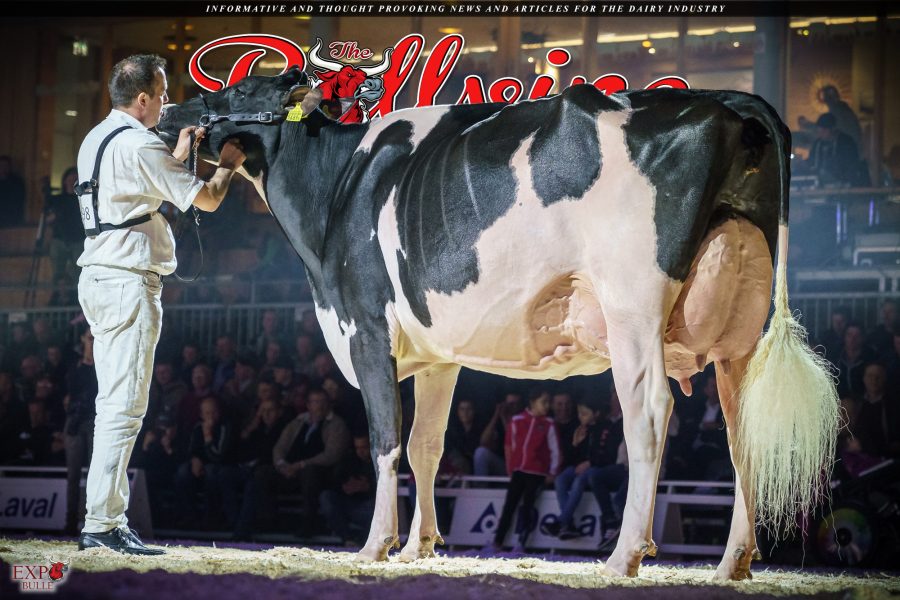
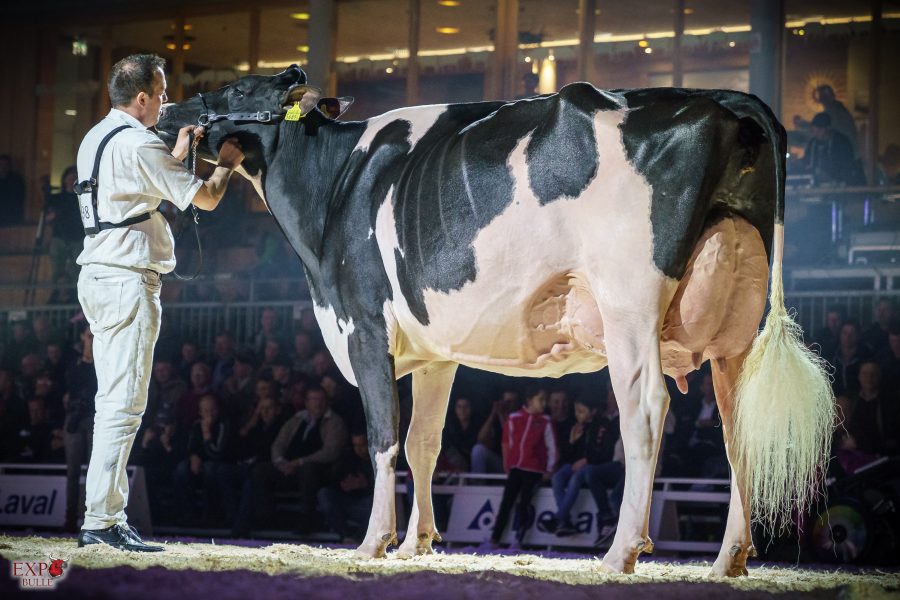
 Threatened species have returned to Jenny and Bill Marshall’s Otautau property since they protected their land in the QEII Trust.