Archive for supply management system

Canadian Agriculture at War: How Bill C-202 Splits the Farm Gate

Canada just built the world’s first dairy trade fortress—but protection might be killing the innovation that built your industry’s success.

EXECUTIVE SUMMARY

Parliament just handed Canadian dairy farmers unprecedented legislative protection, but here’s the uncomfortable truth: this $36.9 billion fortress might be creating the very complacency that destroys long-term competitiveness. Bill C-202 legally shields your $27,640-per-cow quota investment from trade negotiations while Canadian operations average $246,264 in net farm income—nearly double U.S. competitors. But, research shows farms facing competitive pressure adopt productivity-enhancing technologies 23% faster than protected operations, raising critical questions about innovation stagnation. With genomic testing costing just $45 to identify elite genetics at two months and precision agriculture driving measurable improvements in feed efficiency and milk production, the question isn’t whether protection preserves stability—it’s whether guaranteed returns are slowly eroding the innovation edge that built Canadian dairy dominance. While your neighbors celebrate legislative victory, the global dairy innovation race continues, and standing still behind legal walls means moving backward against competitors who face daily pressure to optimize genomics, precision feeding, and automated systems. Stop assuming protection equals progress—assess whether your operation’s innovation trajectory matches the intensity of market-driven farms because the fortress is built, but what’s inside better be worth defending.

KEY TAKEAWAYS

  • Innovation Gap Risk: Farms under competitive pressure adopt advanced monitoring systems, genomic testing, and precision agriculture 23% faster than protected operations—your $27,640 quota cost exceeds many U.S. operations’ entire genomic testing budgets, potentially creating “genetic stagnation traps.”
  • Technology Adoption Imperative: With $45 genomic tests identifying elite milk producers at two months and precision livestock farming reducing carbon footprint by 6-9% while improving welfare, Canadian farmers must self-impose the innovation pressure that protection removes
  • Feed Efficiency Vulnerability: Supply chain retaliation could increase TMR costs while your guaranteed milk prices remain static—track residual feed intake (RFI) and gross feed efficiency (GFE) aggressively to maintain profitability margins regardless of input cost fluctuations
  • Consumer Cost Reality Check: Canadian families pay $276 annually to support your protected market position—maintaining political sustainability requires demonstrating that legislative privilege enables operational excellence, not comfortable complacency
  • Strategic Positioning Urgency: Conduct immediate assessment of your somatic cell counts, component levels, and TPI score advancement rates—if your metrics aren’t improving as aggressively as competitive market operations, protection becomes your biggest competitive disadvantage
Canadian dairy farming, supply management system, dairy innovation technology, precision agriculture adoption, dairy farm profitability

Parliament just handed Canadian dairy farmers the world’s first legislative guarantee against trade concessions—but this unprecedented protection comes with hidden costs that could reshape everything from your quota values to your genomic testing investments. Here’s what every dairy producer needs to know about the $36.9 billion decision that split Canadian agriculture down the middle.

You’re analyzing your latest genetic evaluations, optimizing dry matter intake (DMI) for peak lactation curves, and pushing for higher Total Performance Index (TPI) scores when Ottawa drops a legislative bombshell that fundamentally alters your operation’s competitive landscape. On June 17, 2025, Bill C-202 blazed through Parliament in just 19 days, creating an impregnable legal fortress around Canadian supply management that no future trade negotiator can breach.

But here’s what the celebration in dairy barns across Quebec and Ontario is missing: this legislative victory was built at the exact moment your grain-growing neighbors—the ones supplying your corn and barley—face their biggest trade threat in decades. The same Parliament that unanimously protected your $27,640-per-cow quota investment just handed ammunition to trade partners who’ve been targeting Canadian agricultural exports worth $45 billion annually.

The $27,640 Innovation Challenge: Understanding Your Stake in Legislative History

Let’s cut through the political rhetoric and examine what Bill C-202 means for your genetic advancement programs and operational efficiency. In Manitoba, the right to milk a single cow costs $27,640—more than most dairy operations invest in their entire genomic testing program. That quota represents your share of a $36.9 billion national asset that Parliament just made legally untouchable.

Here’s the protection formula that now governs your livelihood:

  • Canada’s trade minister cannot increase tariff rate quotas for dairy products
  • No reduction of tariffs on dairy imports above existing quota limits
  • Complete legal immunity from future trade negotiations

Think of it this way: if your operation runs 100 milking cows, you’ve got $2.76 million in quota value that’s now protected by federal law. But that protection comes with a price tag affecting everything from your feed suppliers to your precision agriculture investments.

Why This Matters for Your Operation

Canadian dairy farmers average $246,264 in net farm income—nearly double many U.S. operations. That stability isn’t market-driven; it’s legislatively guaranteed through supply management’s three-pillar system that Bill C-202 just made bulletproof. Your milk price stability depends on 200-300% import tariffs that crush foreign competition, and those barriers are now permanent.

But consider this uncomfortable reality: while you’re celebrating legislative protection, your feed corn suppliers face potential retaliation that could drive up your total mixed ration (TMR) costs. The Canadian Agri-Food Trade Alliance warns that providing “sectoral carveouts for Canada’s trade negotiations will put our trade objectives at risk.”

The Genomic Selection Paradox: When Protection Threatens Innovation

Here’s a question that should concern every progressive dairy farmer pushing for higher Net Merit (NM$) scores: Does legislative protection create complacency that undermines genetic progress?

Research shows that genomic testing can identify poor milk producers as early as two months of age, with simple genomic tests costing as little as $45. These tests examine 12,000 genetic markers in each animal’s DNA to determine which calves are most likely to become elite milk producers with superior volume, fat content, and protein levels.

The Competitive Pressure Analysis:

Why This Matters for Your Operation: Dairy farmers typically raise young cows for over two years at a cost of about $2,500 each before determining which animals can produce superior milk. Genomic testing identifies promising animals at two months, potentially saving thousands in raising inferior genetics. Are you maintaining the same drive for genetic excellence when your returns are guaranteed?

The Precision Agriculture Reality Check: Technology Adoption Under Protection

American dairy operations pushing 80+ pounds per cow daily face constant pressure to optimize metabolizable energy (ME) levels and improve feed conversion efficiency through precision agriculture tools. Precision dairy farming involves collecting real-time data on milk yield, feed consumption, cow health, and environmental conditions to make informed decisions that improve farm productivity and sustainability.

Technology Investment Comparison:

  • Competitive markets: Market pressure drives automated milking system (AMS) adoption, activity monitoring systems, and precision feeding
  • Protected markets: Reduced pressure for efficiency-driving technology adoption
  • Innovation gap: Risk of falling behind in dairy technology advancement

Research from Wisconsin shows that sensors placed in collars or embedded in wearable devices can track movement patterns, rumination, temperature, and activity levels, allowing early detection of heat cycles and illnesses like mastitis or metabolic disorders.

Why This Matters for Your Operation: The ruminal microbiome has been linked to milk production efficiency, and research demonstrates that oral swabs can effectively characterize the microbiome and its associations with milk production metrics. Are you investing in these cutting-edge technologies to optimize gross feed efficiency (GFE) and residual feed intake (RFI)?

Feed Efficiency and Supply Chain Vulnerability: The Hidden Costs of Protection

Recent research correlating oral swab microbial communities with milk production metrics in Holstein dairy cows shows significant associations between bacterial communities and production efficiency. This precision approach to feed efficiency becomes critical when feed costs represent 50-60% of total expenses.

The Supply Chain Reality: Canadian grain farmers export over 70% of their production, generating $45 billion annually. These same farmers supply your TMR’s corn, barley, and soybean meal. Michael Harvey from CAFTA explains, “when you legislatively handcuff [negotiators], it will lead to less comprehensive trade outcomes, which means you’re hurting the entire Canadian economy.”

Why This Matters for Your Operation: Calculate your annual feed costs as a percentage of milk income. Even modest increases in feed costs due to restricted grain export markets could significantly impact your profitability despite protected milk prices. To optimize performance, are you tracking residual feed intake (RFI) and gross feed efficiency (GFE)?

Trade War Mathematics: What CUSMA 2026 Means for Your Milk Check

The timing of Bill C-202 couldn’t be worse for Canadian agricultural exports. Canada is the second largest market for U.S. dairy exports, with 221,883 metric tons of product at a value of US$1.14 billion shipped across the border in 2024. Bill C-202 just made those import barriers legally non-negotiable.

The Retaliation Scenario:

  • Your protected status remains legally untouchable
  • U.S. could target Canadian grain exports worth $45 billion annually
  • Feed costs could rise as suppliers lose export markets
  • Equipment suppliers face higher input costs from trade restrictions

Why This Matters for Your Operation: Your stable milk pricing structure depends on consumer willingness to pay premiums. With Canadian milk averaging higher prices than U.S. markets, that price differential funds the system protecting your quota investment. Bill C-202 makes this trade-off permanent and non-negotiable.

The Consumer Cost Calculation: Your Protection, Their Premium Price

While celebrating legislative victory, examine the foundation supporting your protected market position. The Fraser Institute estimates that Canadian households pay $300-560 annually in higher food costs due to supply management, while the Conference Board of Canada estimates $2.6 billion annually, or approximately $276 per family.

These aren’t abstract economic costs—they’re political vulnerabilities. When consumers understand they’re paying premium prices for dairy products, support for the system protecting your operation could erode. The political sustainability of supply management depends on consumer acceptance of higher prices in exchange for food security and rural economic stability.

Precision Management in a Protected Environment: Strategic Positioning for Excellence

Bill C-202 is law, and your operation exists within its protective framework. The question isn’t whether this was right or wrong—it’s how to maximize genetic progress and operational efficiency when competitive pressure is artificially reduced.

Innovation Implementation Strategy:

1. Genomic Testing Excellence

  • Implement $45 genomic tests to identify elite genetics at two months
  • Focus on the genetic merit advancement that market-driven operations pursue
  • Track TPI scores and Net Merit improvements aggressively

2. Precision Agriculture Adoption

3. Feed Efficiency Optimization

  • Track gross feed efficiency (GFE) and residual feed intake (RFI) metrics
  • Optimize dry matter intake (DMI) and metabolizable energy (ME) levels
  • Implement precision feeding systems for component optimization

Why This Matters for Your Operation: Without market pressure for continuous improvement, you need self-imposed discipline to maintain competitive genetics and operational efficiency. The protection Bill C-202 provides could become a competitive disadvantage if it breeds complacency in precision agriculture adoption and genetic advancement.

The Innovation Imperative: Maintaining Excellence Despite Guarantees

Technology adoption becomes a differentiator. In a protected market, operations investing in precision agriculture, automated systems, and data analytics will capture disproportionate returns while others coast on guaranteed margins.

Consumer relationships matter more than ever. With higher prices built into your market structure, investing in consumer education about dairy nutrition, farm sustainability, and food quality isn’t optional—it’s essential for maintaining political support for supply management.

The Bottom Line: Your Fortress is Built, Now Prove It’s Worth Defending

Remember that opening scenario about analyzing genetic evaluations while politicians reshaped your competitive landscape? That fundamental alteration is complete, and the implications will define your farm’s trajectory for decades.

Bill C-202 delivered unprecedented protection for Canadian dairy operations. Your quota values are legally shielded from trade negotiations. Your market share is protected from foreign competition. Your pricing structure is insulated from international pressure.

But protection without purpose becomes a prison. The legislative fortress surrounding your operation will only remain politically sustainable if Canadian dairy farmers prove worthy of the privilege. That means continuous innovation in genomic programs, precision agriculture adoption, and operational excellence that justifies the $276 annual cost every Canadian family pays to support your protected market position.

The export-oriented sectors of Canadian agriculture are watching, international trade partners are calculating their responses, and consumers are increasingly aware of the premium they pay for domestic dairy products. Your industry’s future depends on demonstrating that legislative protection enabled excellence, not complacency.

Here’s your immediate action step: Conduct a brutally honest assessment of your operation’s precision agriculture trajectory over the past five years. Are you implementing $45 genomic tests to optimize genetics? Are you tracking feed efficiency metrics through oral swab microbiome analysis? Are your somatic cell counts, component levels, and TPI scores advancing at rates that justify premium consumer pricing?

If not, the protection Bill C-202 provides could become the very thing that undermines your long-term competitiveness. The fortress is built. Your job now is making sure what’s inside—your genetic advancement programs, precision management systems, and production efficiency—is worth protecting.

Because the rest of Canadian agriculture, international trade partners, and domestic consumers will be watching closely to see if legislative privilege translates into industry leadership or comfortable stagnation. The choice, as always, is yours to make.

Complete references and supporting documentation are available upon request by contacting the editorial team at editor@thebullvine.com.

Learn More:

Join the Revolution!

Join over 30,000 successful dairy professionals who rely on Bullvine Weekly for their competitive edge. Delivered directly to your inbox each week, our exclusive industry insights help you make smarter decisions while saving precious hours every week. Never miss critical updates on milk production trends, breakthrough technologies, and profit-boosting strategies that top producers are already implementing. Subscribe now to transform your dairy operation’s efficiency and profitability—your future success is just one click away.

NewsSubscribe
First
Last
Consent

Canada’s Dairy Fortress: Protectionism vs. Innovation

Stop believing the “competitive markets drive innovation” myth. Canada’s $28B protected dairy system proves higher farmer profits AND better tech adoption rates.

EXECUTIVE SUMMARY: What if everything you’ve been told about “free markets” driving dairy success is completely backwards? Canada just legally handcuffed its own trade negotiators with Bill C-202, protecting their $28 billion dairy fortress—and the results challenge every assumption about competition versus protection. Canadian dairy farmers earn an average net income of $246,264, nearly double their U.S. competitors operating in “competitive” markets, while achieving 7% Automated Milking System adoption rates compared to just 3% in the supposedly innovation-driven United States. Yet this stability comes at a steep consumer cost: Canadian families pay $276-560 more annually for dairy products. This isn’t just Canadian policy—it’s a revolutionary template that could reshape global agricultural trade and force every dairy strategist to recalculate their competitive positioning. Are you prepared for the trade war implications and market disruptions that could impact your operation’s feed costs, export opportunities, and long-term strategic planning?

KEY TAKEAWAYS

  • Protection Enables Strategic Investment: Canadian farms demonstrate 7% AMS adoption rates versus 3% in the U.S., proving stable cash flow can drive technology adoption more effectively than survival-based competitive pressure—challenging the fundamental assumption that open markets drive innovation faster.
  • Economic Reality Check Required: Canadian dairy farmers average $246,264 net income (double U.S. competitors) through guaranteed cost-plus pricing, but consumers pay $276-560 more annually per family—revealing the true cost of agricultural stability and forcing strategic questions about market structure optimization.
  • Sustainability Paradox Exposed: Canada achieves 0.94 kg CO2 equivalent per liter (half the global average) yet systematically wastes up to 6% of production due to quota constraints—demonstrating how different market structures create vastly different efficiency patterns that affect environmental stewardship approaches.
  • Trade War Positioning Critical: With Bill C-202 legally prohibiting future dairy concessions and U.S. exports to Canada reaching $1.14 billion annually, potential retaliation could impact Canada’s $45 billion agricultural export sector—requiring immediate strategic planning for multiple trade scenarios affecting feed costs and market access.
  • Innovation Investment Strategy Rethink: Canadian quota costs of $27,640 per cow create asset preservation priorities that may reduce genetic risk-taking, yet enable long-term technology investments—forcing dairy operators to evaluate whether their innovation decisions are driven by survival necessity or strategic positioning for future competitive advantage.
 dairy trade policy, supply management system, Canadian dairy strategy, agricultural protectionism, dairy competitive positioning

Here’s a question that’ll shake up your strategic planning: What if everything the industry’s told you about “competitive markets” driving dairy success is completely backwards? Canada just proved it with a $28 billion decision that’s about to turn North American dairy strategy on its head.

While you’ve been optimizing production efficiency and managing market volatility, Canada just made the most audacious move in modern agricultural trade policy. On June 18, 2025, Bill C-202 sailed through both the House and Senate, making it illegal—not just politically difficult, but actually illegal—for Canadian trade negotiators to reduce dairy tariffs or increase import quotas in future trade deals.

Think about that strategic bombshell for a moment. Canada didn’t just say “we prefer to protect our dairy farmers.” They literally handcuffed their own negotiators with legislation that survives political changes. And here’s the kicker that should grab every dairy operator’s attention: it’s working brilliantly.

The numbers don’t lie. Canadian dairy farmers pocket an average net income of $246,264—nearly double what many U.S. competitors earn in our supposedly “superior” competitive market. Meanwhile, U.S. dairy exports to Canada hit $1.14 billion in 2024, but American producers have captured only 42% of their negotiated quota access because Canada’s over-quota tariffs reach 298% for butter.

Why Should This Keep You Up at Night?

Are you prepared for the trade war that’s coming? Canada just threw down the gauntlet in a way that could reshape everything you think you know about North American dairy markets. They’re heading into USMCA renewal talks this summer with their negotiators legally prohibited from making dairy concessions. This isn’t just political positioning—it’s a constitutional-level commitment that trading partners must now navigate around, not through.

The U.S. Trade Representative’s office has already filed multiple dispute cases against Canada’s dairy practices, winning some and losing others. But here’s the strategic intelligence you need: in November 2023, a dispute resolution panel ruled “clearly in favour of Canada” in the latest trade dispute, rejecting three of four principal U.S. claims. Canada’s sophisticated market protection strategies allow technical compliance with trade agreements while limiting actual market penetration.

Why This Matters for Your Operation: If you’re competing with Canadian dairy imports or positioning for Canadian market access, understand that the rules just became legally immutable. Your competitive advantages now need to work within this permanently altered landscape, not wait for policy changes that can no longer happen.

What’s This “Innovation Under Protection” Story Really About?

Is everything you’ve been told about protected markets stifling innovation dead wrong? The evidence might shock you. Critics have argued for years that Canada’s quota system—with costs reaching $27,640 per cow—creates “genetic stagnation traps” where farmers prioritize asset preservation over productivity breakthroughs.

Yet here’s the data that’ll make you rethink everything: Canadian dairy farms using modern technology have seen up to 30% increases in milk production efficiency. Canadian farms demonstrate a 7% adoption rate for Automated Milking Systems, which is actually higher than the U.S. rate of 3%.

Wait—what? The supposedly “competitive” U.S. market is slower to adopt labor-saving technology than the “protected” Canadian system?

Here’s the strategic insight that changes everything: Lower U.S. milk prices and labor costs actually deterred AMS adoption because the return on investment didn’t justify the expense. Canada’s stable cash flow from protected pricing enabled strategic technology investments that survival-focused competitive markets discouraged.

Why This Matters for Your Strategic Planning: Are your innovation decisions driven by survival necessity or strategic positioning? Canadian producers prove that stable cash flow can enable longer-term technology investments that competitive pressure might prohibit. Understanding these different innovation drivers helps you position your operation’s technology strategy for maximum impact.

How Much Are Consumers Really Paying for This “Stability”?

What if I told you that Canadian families pay between $276 to $560 annually more for dairy products than their international counterparts? The Conference Board of Canada and Fraser Institute studies consistently show this consumer burden.

But here’s where the sustainability debate gets really controversial. Research from Dalhousie University reveals that Canadian dairy farms dumped 6-10 billion litres of perfectly good milk since 2012—worth approximately $15 billion. That’s enough milk to feed over 4 million Canadians annually, literally poured down the drain due to quota constraints.

Dr. Sylvain Charlebois, who co-authored the study, calls this “not just a problem of inefficiency, it’s a critical sustainability issue” that “reflects an outdated system that misaligns with today’s environmental imperatives and market demands.”

Yet here’s the paradox that should grab your attention: Canadian dairy production achieves a carbon footprint of 0.94 kg CO2 equivalent per liter—less than half the global average of 2.5 kg calculated by the FAO.

Why This Matters for Your Operation: This reveals how different market structures create different optimization patterns. Protected markets may optimize for per-unit efficiency while tolerating system waste. Competitive markets may optimize for system efficiency while accepting per-unit variations. Your strategic positioning should account for these different optimization patterns when competing across market structures.

What Does This Mean for Your 200-Cow Operation Right Now?

Let’s get specific about how this affects your operation. If you’re running a 200-cow operation, here’s your strategic intelligence breakdown:

Competitive Advantage Analysis: Canadian 200-cow operations operate with guaranteed profit margins despite quota costs of roughly $5.5 million for production rights. Your advantage lies in operational efficiency and scale economics that protected markets can’t easily replicate.

Technology Investment ROI: Canadian farms demonstrate that stable cash flow enables strategic technology investments. Calculate whether your AMS or precision agriculture investments are driven by survival necessity or strategic positioning for future opportunities.

Market Access Strategy: U.S. exports to Canada grew 34% since USMCA implementation, reaching $1.14 billion in 2024. However, over-quota tariffs of 241-298% effectively price out additional market penetration. Focus on maximizing efficiency within current access rather than expecting expansion.

90-Day Strategic Response Plan:

  • Days 1-30: Complete vulnerability assessment of your operation’s exposure to Canadian markets and cross-border supply chains
  • Days 31-60: Develop contingency plans for three trade scenarios: status quo, escalated tensions, breakthrough agreements
  • Days 61-90: Implement risk mitigation strategies and establish alternative supplier/buyer relationships

Are You Ready for the Trade Retaliation That’s Coming?

What happens when the U.S. decides to hit back hard? Trade experts warn of potential “massive retaliation” during the 2026 USMCA review, potentially leading to “fragmentation of North American agriculture.” Such retaliation could involve the U.S. targeting other Canadian agricultural exports, which are valued at $45 billion annually.

Strategic Risk Assessment Framework:

Scenario 1 – Status Quo: Current trade tensions continue with periodic disputes but no major escalation. Impact: Gradual increase in compliance costs, stable but limited market access.

Scenario 2 – Trade Escalation: U.S. targets broader Canadian agricultural exports. Impact: Potential feed cost increases, supply chain disruptions, equipment pricing volatility.

Scenario 3 – Breakthrough Agreement: Negotiated solution that respects Canadian legal constraints while providing alternative concessions. Impact: New competitive dynamics in non-dairy agricultural sectors.

Why This Matters for Your Bottom Line: If trade tensions escalate, the interconnected nature of North American agriculture means impacts won’t stop at borders. Feed costs, equipment pricing, and export opportunities could all face disruption. The operations that thrive will be those prepared for multiple scenarios.

The Bottom Line: Your Competitive Intelligence Advantage

Remember that provocative question about competitive markets being backwards? Canada just provided the definitive strategic answer: legislative protection can work when properly designed and politically sustained. The unanimous passage of Bill C-202 proves that even in 2025, agricultural protectionism remains not just viable but politically bulletproof when it delivers tangible benefits to producers.

Your Strategic Advantage: The North American dairy landscape just became permanently more complex. Canadian producers gained unprecedented legal protection but face potential trade isolation. American producers have structural competitive advantages but must navigate potential retaliation effects.

The operations that will thrive: Those who understand that innovation under protection follows different patterns than innovation under competition. Competitive markets drive innovation through survival necessity. Protected markets can enable innovation through stable cash flow. Your optimal strategy combines both approaches.

Intelligence-Based Action Plan:

  1. Vulnerability Assessment (Complete within 30 days): Calculate your operation’s exposure to Canadian markets, North American supply chains, and cross-border trade dynamics. Compare your cost structure against both competitive and protected market models.
  2. Technology Strategy Audit (Month 2): Evaluate whether your innovation investments combine competitive-market urgency with protected-market investment capacity. Canadian farms prove that stable cash flow can enable transformative technology adoption.
  3. Scenario-Based Planning (Month 3): Develop strategic positioning for status quo, escalated trade tensions, and breakthrough agreements. The farms that succeed will be those prepared for multiple futures rather than betting on current conditions continuing.

Ready to turn this intelligence into competitive advantage? Start with your vulnerability assessment this week. The dairy fortress just got legally reinforced, and the strategic aftershocks are only beginning. Position your operation to thrive regardless of which trade scenario unfolds—because the landscape just shifted permanently, and the smartest operators are already adapting.

Your Next Move: Download our free Trade Exposure Assessment Worksheet and calculate exactly how these changes affect your operation’s profitability over the next 24 months. Don’t wait for the trade wars to hit—start positioning now.

Complete references and supporting documentation are available upon request by contacting the editorial team at editor@thebullvine.com.

Learn More:

Join the Revolution!

Join over 30,000 successful dairy professionals who rely on Bullvine Weekly for their competitive edge. Delivered directly to your inbox each week, our exclusive industry insights help you make smarter decisions while saving precious hours every week. Never miss critical updates on milk production trends, breakthrough technologies, and profit-boosting strategies that top producers are already implementing. Subscribe now to transform your dairy operation’s efficiency and profitability—your future success is just one click away.

NewsSubscribe
First
Last
Consent

Is Trump’s Dairy Trade War with Canada Doomed Before It Begins? The $17 Billion Standoff You Can’t Afford to Miss

Trump’s bid to crack Canada’s $17B dairy market faces political landmines. Why new tariffs may backfire—and what producers should do now.

EXECUTIVE SUMMARY: Despite Trump’s threats of retaliatory tariffs, Canada’s bulletproof supply management system, entrenched political interests, and pending legislation (Bill C-282) make major dairy concessions unlikely. The USMCA’s limited 3.5% market access has boosted exports by 81% in key categories, but unfilled quotas and restrictive TRQ rules persist. With Canada’s April election amplifying dairy’s political clout and US tariffs risking $285M in self-harm, experts urge producers to focus on quota optimization and diversification rather than relying on political breakthroughs.

KEY TAKEAWAYS

  • Structural Barriers: Canada’s $30k/cow production quotas and TRQ administration costs create effective tariffs of 19-27% beyond listed rates.
  • Political Ticking Clock: April’s election and Bill C-282 could permanently shield Canada’s dairy policies from US demands.
  • USMCA’s Double-Edged Sword: While fluid milk exports surged 81%, 58% of quotas go unfilled due to processing requirements.
  • Survival Strategy: Smart producers target underutilized categories (yogurt/ice cream) and diversify to Mexico’s +22% growth market.
  • 2026 Countdown: USMCA renegotiation begins July 2026—documenting TRQ barriers now is critical for future leverage.
Canada dairy trade, USMCA dairy quotas, Trump dairy tariffs, supply management system, Canadian dairy market

Here’s the cold truth: The second Trump administration faces the near-impossible task of prying open Canada’s dairy market. Despite threatening 25% retaliatory tariffs set to drop on April 2nd, 2025, our investigation reveals why political realities and bulletproof Canadian policies might leave American dairy producers empty-handed…again.

The $1.1 Billion Paradox: Why Record Exports Still Leave US Dairy Hungry

Let’s cut through the noise with complex numbers that tell the real story:

Metric2024 ValueGrowth Since USMCA
U.S. Exports to Canada$1.14 billion+34%
Canadian Exports to US$250 million-18%
Unfilled US Quotas58% averageN/A

America’s dairy trade surplus with Canada keeps growing, yet producers rage about “stolen” market access. Why? Because Canada’s supply management system remains the ultimate gatekeeper.

“Think of it like winning permission to enter a fortress, but finding the drawbridge only lowers halfway,” explains Christopher Wolf, Cornell agricultural economist and co-author of groundbreaking USMCA research. “Our study shows TRQ administration costs add 19-27% to effective tariffs – that’s the real trade barrier”.

Decoding Canada’s Dairy Fortress: How 9,400 Farms Control a $17B Market

The Three Pillars of Protection

  1. Production Quotas: Farmers buy rights to produce milk at $30,000/cow – creating $3M entry fees for 100-head herds
  2. Cost-Plus Pricing: Milk prices cover production + profit margins guaranteed by the government
  3. TRQ Artillery: 298% butter tariffs, 241% milk tariffs blast imports exceeding quotas

Quebec’s $6B GDP Hammer: With 47% of Canada’s dairy farms, Quebec’s 80,000 supply management jobs make it political kryptonite. “No party dares touch supply management here – it’s third rail politics,” says McGill’s Pascal Theriault.

“Our system isn’t about protection – it’s about survival. Without it, 90% of Quebec dairies would fold within 5 years.”
– Unnamed Dairy Farmers of Canada Executive

The Election Wildcard: Why April 28th Dooms Trump’s Demands

Canada’s federal election timing creates a perfect storm:

  • 12 Marginal Rural Ridings where dairy votes decide winners
  • Bill C-282 progressing through Senate – would ban future TRQ increases
  • Lobbying Blitz: 647 DFC meetings with officials in 2024 alone

“Politicians would rather face Trump’s tariffs than lose Quebec,” says C.D. Howe Institute trade analyst Meredith Lilly. “Supply management isn’t policy – it’s national identity.”

USMCA’s Bittersweet Victory: The 81% Surge That Changed Nothing

While Trump touts USMCA as “fixing” dairy, the data reveals Schrödinger’s trade deal – simultaneously successful and inadequate:

Post-USMCA Wins

  • Fluid milk exports: +81% value
  • Butter shipments: +81% unit value
  • Monthly trade boost: +$12M

Persistent Roadblocks

  • 85% of TRQs are reserved for Canadian processors
  • “Further processing” requirements on 50-85% of quotas
  • Export caps on SMP (35,000MT by 2026)

Texas Tech researchers calculated the grim reality: “Even if filled, USMCA quotas only cover 3.2% of Canada’s dairy consumption. It’s crumbs from their table”.

The Trump Card: Will April 2nd Tariffs Backfire?

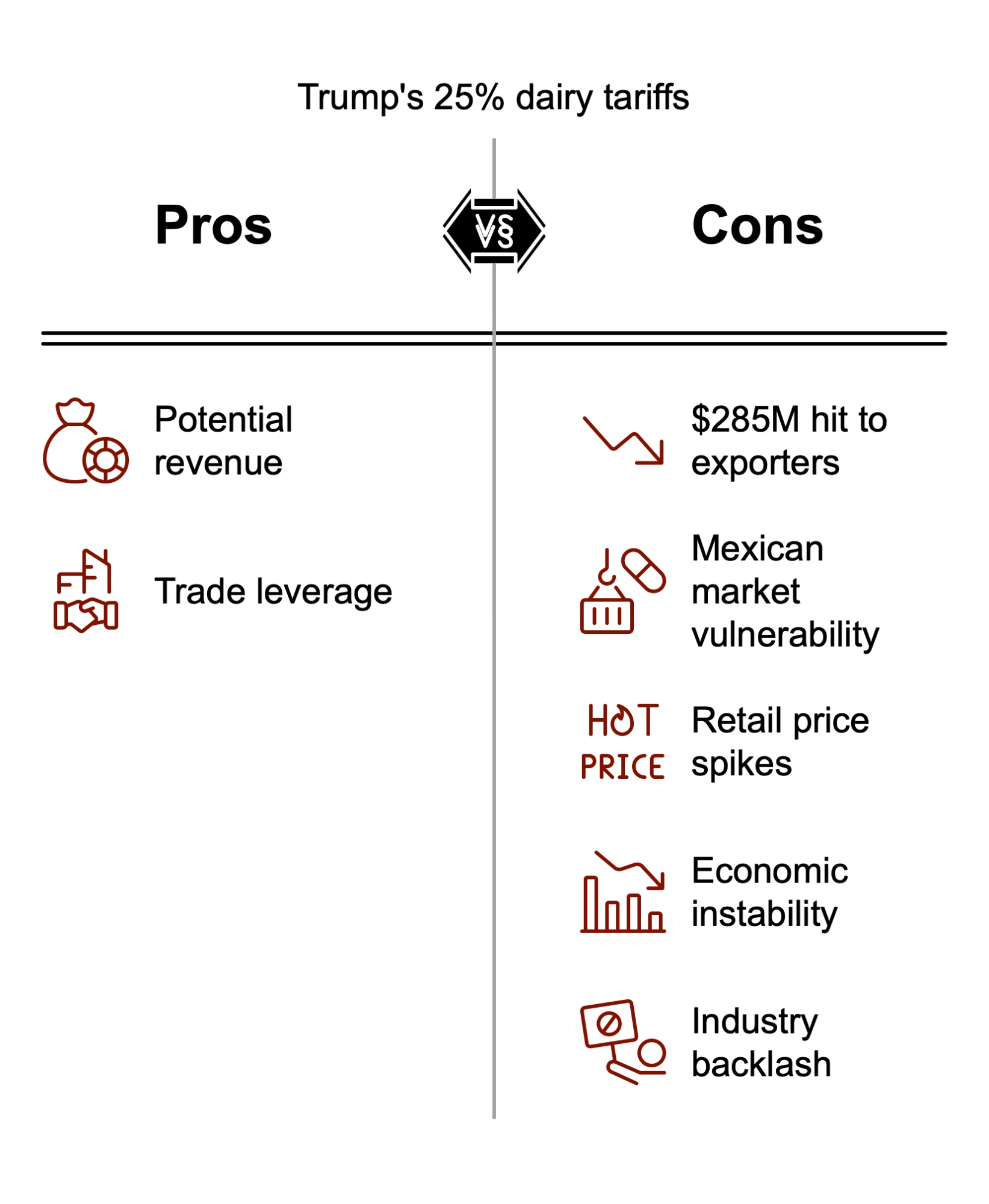
Trump’s threatened 25% dairy tariffs risk a dangerous game:

Potential Impacts

  • $285M immediate hit to US exporters (25% of 2024 exports)
  • Mexican market vulnerability (43% of US dairy exports)
  • Retail price spikes in border states

“Tariffs are a shotgun approach to a scalpel problem,” warns IDFA CEO Michael Dykes. “We need surgical enforcement, not trade wars”.

3 Strategic Moves for Smart Producers

  1. Quota Maximization: Target underfilled categories like ice cream (+690MT quota) and yogurt (+4,135MT)
  2. Product Reformulation: Develop “further processing” compliant items for TRQ eligibility
  3. Diversification Play: Shift focus to Mexico’s booming dairy imports (+22% since 2020)

The 2026 Countdown: With USMCA review looming, the real battle begins July 1st. Winners will be those using the next 18 months to:

  • Build coalitions with Canadian processors
  • Document every TRQ obstruction
  • Prepare WTO challenges on quota administration

As Texas Tech’s trade team bluntly states: “Complaining about Canada’s 300% tariffs misses the point. The real game is mastering their quota maze –where the $519M opportunity lives”.

Final Thought: In this high-stakes dairy poker game, Trump holds a pair while Canada sits on a royal flush. Savvy players aren’t waiting for political miracles – they’re adapting to win within today’s rules. Will you?

Learn more:

Join the Revolution!

Join over 30,000 successful dairy professionals who rely on Bullvine Daily for their competitive edge. Delivered directly to your inbox each week, our exclusive industry insights help you make smarter decisions while saving precious hours every week. Never miss critical updates on milk production trends, breakthrough technologies, and profit-boosting strategies that top producers are already implementing. Subscribe now to transform your dairy operation’s efficiency and profitability—your future success is just one click away.

NewsSubscribe
First
Last
Consent

Trade War or Opportunity? Trump’s Dairy Tariff Threat Impacts Farmers on Both Sides of the Border

Trump’s tariff tantrum exposes the dairy dilemma: Can two nations with completely different systems avoid a trade war that hurts farmers on both sides?

dairy tariffs, Trump Canada dairy, supply management system, CUSMA dairy, US-Canada dairy trade

The fat lady is warming up to sing for the North American dairy trade relationship, and her name is Donald Trump. On March 7, 2025, the U.S. President threatened to impose identical reciprocal duties on Canadian dairy products, declaring, “Canada has been taking advantage of us for years with their tariffs on lumber and dairy.” This isn’t just another Trump temper tantrum – it represents a critical moment for dairy farmers on both sides of the 49th parallel who face very different but equally challenging realities.

Canada’s supply management system has provided stability for its dairy farmers for decades, while America’s market-driven approach has created a landscape of brutal competition, consolidation, and overproduction. As international pressure mounts and CUSMA negotiations loom, both nations’ dairy sectors face a stark choice: evolve together or continue a damaging cycle of retaliation.

TARIFF THEATRICS: WHAT’S REALLY AT STAKE

“Canada must immediately drop their Anti-American Farmer Tariff of 250 percent to 390 percent on various U.S. dairy products, which has long been considered outrageous,” Trump wrote on Truth Social this March. In the Oval Office, he doubled down, claiming these tariffs “go up to 400 percent — you never hear of that.”

What Trump doesn’t mention – and most Americans don’t realize – is that these prohibitive Canadian tariffs only kick in after the U.S. has hit its negotiated tariff-free quota amounts under CUSMA. The most striking fact? According to Philippe Charlebois, spokesperson for the Canadian Dairy Commission: “To date, 100 percent of U.S. dairy imports to Canada were made free of tariff.”

“To date, 100 percent of U.S. dairy imports to Canada were made free of tariff.” — Philippe Charlebois, Canadian Dairy Commission

THE TARIFF TRUTH: BY THE NUMBERS

Dairy ProductWithin-Quota TariffOver-Quota TariffTrump’s Claim
Milk & Cream (most types)7.5%241.0%“390-400%”
Some Milk-based Fats/OilsVaries313.5%“390-400%”
Butter0%298.5%“390-400%”
Cheese0%245.5%“390-400%”

Sources: Global Affairs Canada Tariff Schedule, Global News reporting

THE 2026 CHESS MATCH: WHO BENEFITS?

The April 2 tariff deadline isn’t about immediate retaliation—it’s about positioning for the CUSMA review coming in 2026. For Canadian farmers, the stakes are existential—preserving a system that has maintained rural communities and stable prices. For American producers, it’s about gaining greater access to a profitable market at a time when they face massive challenges at home.

A February 2025 Texas Tech University study found that U.S. dairy exports to Canada increased by 34% ($519 million) since CUSMA implementation—significant growth but below the 43% increase initially forecast by the U.S. International Trade Commission. The difference? “Canada kept its commitment partially, not fully,” according to researchers, with quota allocations “mostly favoring its processors over U.S. exporters targeting the retail market.”

US DAIRY’S REAL CRISIS: NOT JUST ABOUT CANADA

Because of Trump’s focus on Canadian tariffs, America’s dairy farmers face much more significant problems at home. The National Farmers Union’s President, Rob Larew, recently stated: “Policymakers are focused on U.S. trade policy without solving the underlying problems in the dairy industry—corporate consolidation and continued overproduction.”

Larew points to a sobering statistic: “The number of U.S. dairy farms has plummeted by 84% since 1992, and tariffs only add to the uncertainty, making it even harder for family farmers to stay in business.”

“Policymakers are focused on U.S. trade policy without solving the underlying problems in the dairy industry—corporate consolidation and continued overproduction.” —National Farmers Union President Rob Larew.

Even Washington State dairy farmers, who would theoretically benefit from increased Canadian market access, are skeptical about the impact of Trump’s tariff threats. “I think it’s a matter of access to their market more than being concerned about how they compete in our own,” explains Dan Wood, Washington State Dairy Federation Executive Director.

SIZE MATTERS: THE SCALE DISPARITY

MetricCanadaUnited StatesWisconsin Alone
Total Milk Production (2024)9.4 billion liters103.4 billion liters14.5 billion liters
Number of Dairy Farms9,95230,0856,953
Average Herd Size104 cows316 cows191 cows
Average Production Per Farm945,000 liters/year3.4 million liters/year2.1 million liters/year
Average Farm Gate Price (2024)$0.88 CAD/liter$0.52 CAD/liter*$0.52 CAD/liter*

Sources: Canadian Dairy Commission, USDA, Dairy Farmers of Canada, Statistics Canada
*Note: US prices converted to CAD and liters for comparison purposes

This table reveals the fundamental challenge: The state of Wisconsin alone produces more milk than all of Canada. As Pascal Thériault of McGill University points out, “Thinking you will open the Canadian market to U.S. milk and it will solve the U.S. farmers’ problem in dairy doesn’t stand.”

RURAL REALITIES: DIFFERENT SYSTEMS, SHARED CONCERNS

On both sides of the border, dairy farmers worry about the future of rural communities.

For Canadian farmers like Quebec’s Markus Schnegg, nearly all domestic dairy production is consumed within Canada, meaning Trump’s tariffs would affect only a tiny fraction of the market. Their genuine concern is the potential dismantling of supply management – the system that has preserved small and medium-sized dairy operations across rural Canada.

Labor analyst Thomas Fellows paints a concerning picture for U.S. farmers: “One thing that could happen is that with fewer export opportunities, U.S. dairy farmers may face an oversupply, which could push down milk prices domestically, hurting smaller farms in particular. In the long run, however, if low prices persist, small and medium-sized dairy farms may shut down due to financial losses.”

A FOUR-POINT PLAN FOR NORTH AMERICAN DAIRY COOPERATION

Rather than a destructive tariff war, both American and Canadian farmers could benefit from a cooperative approach:

  1. Gradual Market Evolution: A long-term transition (15-20 years) that gives farmers on both sides time to adapt without sudden shocks.
  2. Addressing Overproduction: Collaborative policies to tackle the real crisis in U.S. dairy – chronic overproduction that devastates farm prices.
  3. Value-added Focus: Joint initiatives to develop specialty products where North American dairy can compete globally against European and Oceanian producers.
  4. Rural Transition Support: Programs that help dairy-dependent communities on both sides of the border build resilience through diversification.

“A prolonged tariff war with our top trading partners will continue to create uncertainty and additional costs for American dairy farmers, processors, and rural communities. We urge Canada and the United States to negotiate a resolution to these issues.” — International Dairy Foods Association.

THE BOTTOM LINE: FARMERS OVER POLITICS

The dairy industries in both countries stand at a crossroads. Trump’s April 2 tariff deadline is just the beginning of what could be years of destructive trade tension.

The hard truth is that neither blunt force tariffs nor rigid protection of the status quo will serve farmers well. As the International Dairy Foods Association stated, “A prolonged tariff war with our top trading partners will continue to create uncertainty and additional costs for American dairy farmers, processors, and our rural communities.”

The absolute priority shouldn’t be scoring political points but creating dairy systems on both sides of the border that ensure family farmers can thrive in rural communities while adapting to 21st-century market realities. The question isn’t whether Canada’s system or America’s approach is superior – it’s how we can learn from each other to create something better for farmers in both nations.

KEY TAKEAWAYS

  • Scale disparity is fundamental: Wisconsin alone produces more milk than all of Canada combined, meaning Canadian market access can’t solve America’s overproduction crisis
  • Both systems have failed farmers differently: Canadian supply management creates millionaire farmers but locks out new entrants, while America’s free market approach has eliminated 84% of dairy farms since 1992
  • Political rhetoric masks economic reality: Trump’s tariff threats focus on high over-quota tariffs that have never actually been paid, as U.S. exports haven’t exceeded duty-free quotas
  • Rural communities are the real stakeholders: Dairy farmers in both countries share concerns about preserving rural economies despite different regulatory approaches
  • The path forward requires cooperation: A gradual 15-20 year transition with policies addressing overproduction, value-added product development, and rural support would benefit farmers on both sides more than tariff wars.

EXECUTIVE SUMMARY: As Trump threatens 250% retaliatory tariffs on Canadian dairy imports, farmers on both sides of the border face a pivotal moment in North American dairy trade relations. While Canada’s supply management system has created stability at the cost of innovation, America’s market-driven approach has produced scale but devastating overproduction that crushes prices. The article reveals that despite Trump’s claims, 100% of U.S. dairy imports to Canada currently enter tariff-free under negotiated quotas, with exports to Canada increasing 34% since CUSMA implementation. Neither system is working perfectly for farmers, and the upcoming 2026 CUSMA review presents an opportunity to develop collaborative solutions that preserve rural communities while addressing chronic market failures rather than engaging in destructive tariff wars.

Learn more:

Join the Revolution!

Join over 30,000 successful dairy professionals who rely on Bullvine Daily for their competitive edge. Delivered directly to your inbox each week, our exclusive industry insights help you make smarter decisions while saving precious hours every week. Never miss critical updates on milk production trends, breakthrough technologies, and profit-boosting strategies that top producers are already implementing. Subscribe now to transform your dairy operation’s efficiency and profitability—your future success is just one click away.

NewsSubscribe
First
Last
Consent

Waste Not, Want Not: The Untold Story of Canada’s Dairy Surplus

Why do Canada’s dairy farms waste 7% of their milk? Is it time to revamp supply management? Dive into the impact and explore solutions now.

Summary:

Imagine pouring billions of liters of milk down the drain while families struggle to stock their pantry. That’s the stark reality facing Canada’s dairy supply management system. Over the past decade, up to 10 billion liters of milk have been wasted on Canadian farms. This waste, which costs billions of dollars, raises environmental concerns and questions the efficiency and legitimacy of our current agricultural systems. The system balances supply and demand by imposing quotas to ensure consistent farmer income. However, it sometimes causes unintended waste when excess milk is discarded. The Canadian Dairy Commission and Farmers of Canada have argued that alternative methods, like distributing milk to other provinces or donating it, mitigate waste. However, estimates highlight that more comprehensive reforms and transparency are required to address these inefficiencies. Redesigning the supply system, implementing thorough reporting and documentation methods, and potentially strategic exports could rectify this issue, ensuring Canada’s dairy practices align with changing dietary preferences and societal needs.

Key Takeaways:

  • Canada’s dairy farmers have reportedly wasted 6.8 to 10 billion liters of milk from 2012 to 2021, raising financial and environmental concerns.
  • The supply management system, meant to balance supply with demand, is criticized for inefficiencies that lead to overproduction and waste.
  • The study by multiple academics highlights significant resource misuse and environmental impact, including land and water usage and greenhouse gas emissions.
  • The Canadian Dairy Commission and Dairy Farmers of Canada dispute the study’s findings, suggesting disposal is rare and done only when necessary.
  • Amendments to the current system, such as increased transparency and updated quotas, are recommended to align with modern consumer preferences and reduce waste.
  • Proposed reforms include making milk waste illegal, exploring surplus export options, and enhancing transparency for more responsible dairy production.
  • Bill C-282, which aims to protect supply management from trade reforms, has been controversial. This has prompted calls for its reevaluation to benefit all Canadians.
Canada dairy industry, milk waste, supply management system, environmental concerns, Canadian Dairy Commission, Dairy Farmers of Canada, milk production quotas, sustainability in dairy, dairy industry inefficiencies, strategic milk exports

Did you realize Canada’s dairy farmers have wasted almost 6 billion liters of milk since 2012? It’s an incredible figure that may make you question the entire foundation of the nation’s dairy business. Sylvain Charlebois, a Dalhousie University professor, argues, “If you’re wasting 7% of the milk you produce, you can only conclude that milk is too expensive in Canada.” At the core of this eye-opening discovery is a system meant to balance supply and demand—but, ironically, it wastes essential resources. The amount of this waste raises serious environmental issues, with up to 10 billion liters possibly discarded over the previous decade, leaving an enormous environmental legacy. It’s not just about money; it’s about the unsustainable toll on our world. So, how does this affect you and the industry’s future?

Unpacking the Paradox of Canada’s Dairy Supply Management System 

Have you ever wondered how the Canadian dairy supply management system works? It’s a unique design that aims to balance milk supply and demand. Founded in the 1970s, the system’s goal is straightforward: to maintain prices and provide farmers with a consistent income. But how does it plan to strike this delicate balance?

The system centers on the distribution of production quotas. These restrictions limit the amount of milk producers produce, presumably balancing supply and customer demand. The goal is to avoid dramatic price volatility in other agricultural sectors and guarantee Canadian dairy producers a consistent salary.

This system’s assumption on paper should imply no excess and no waste. Waste should be a theoretical term when production is aligned with market needs. However, as subsequent discoveries have shown, the truth is considerably more convoluted and frightening.

Despite these well-laid strategies, waste is widespread. Farmers sometimes exceed their output limitations to protect against unpredictability, such as cow lactation rates, or to maximize profitability. This overproduction is not anecdotal; we now know that it has resulted in the dumping of massive volumes of milk over the years.

So, where is the disconnect? Unfortunately, ideals may not always translate precisely into reality. While quotas are intended to avoid waste, they might accidentally increase it. An inflexible system needs more transparency and dynamic adaptation to deliver on its promises. The old system’s incapacity to adapt to market circumstances or alter consumer preferences has led to this paradox, which an anti-waste system has contributed to. It’s crucial for all stakeholders, including you, to be fully informed and involved in reforming this system.

Billions of Liters Down the Drain: Uncovering the Financial and Environmental Toll of Canada’s Dairy Waste

The research, published in the prestigious Ecological Economics journal, reveals an astonishing fact: an estimated 6.8 billion to 10 billion liters of milk have been lost on Canadian dairy farms since 2012. This is more than a number statistic; it represents a substantial financial drain, with wasted milk worth between $6.7 billion and CAD 14.9 billion.

Dr. Thomas Elliot, an academic from Aalborg University, said, “The magnitude of this waste highlights a systemic issue in Canada’s dairy supply management.” It’s not only about squandered milk; resources—and potential income—are routinely wasted. His thoughts and facts highlight the need to tackle this pervasive inefficiency.

Defending the System: CDC and DFC’s Stance on Milk Waste Controversy

The Canadian Dairy Commission (CDC) and Dairy Farmers of Canada (DFC) have taken a defensive stance regarding research results. The CDC claims that the report is based on problematic data and assumptions. They argue that when milk cannot be processed due to unforeseen circumstances, alternatives such as exporting milk to neighboring provinces, giving it to food banks, or utilizing it as animal feed are often used, disputing the perception of widespread waste. Philippe Charlebois, the CDC’s executive director, highlighted that sustainability is a top emphasis, and large-scale milk disposal is uncommon.

Meanwhile, Jacques Lefebvre, CEO of DFC, criticized the research for relying on estimations rather than actual data and urged independent confirmation of the results. According to him, milk dumping occurs only as a last option. It is regulated by norms, with farmers bearing the consequences.

The debate derives from the study’s findings that the system’s inefficiencies cause considerable economic and environmental losses. This finding calls into question the legitimacy of the present supply management system, raising questions about whether these practices are consistent with stability and sustainability objectives. The problem of openness and the probable need to reevaluate output objectives add layers to the discussion with requests for more precise reporting standards and prospective changes.

Did You Know? Exploring the Overlooked Environmental and Social Impact of Canada’s Dairy Waste 

Did you realize that the milk waste problem in Canada’s dairy sector has severe environmental and social consequences? Let’s examine it.

On the environmental front, the amount of milk spilled annually results in an astounding 8.4 million tons of CO2 emissions, equivalent to putting 330,000 automobiles on the road. Greenhouse gases are just one part of the equation. Producing this discarded milk consumes between 930 million and 1.9 billion cubic meters of water per decade, a staggering quantity in an age of increasing water scarcity. We’re talking about a valuable resource being squandered: water that might have maintained ecosystems or met agricultural demands in drought-prone areas.

Furthermore, the lost milk represents the waste of 920 to 1,900 square kilometers of fertile land during ten years. Land and water, two of our most valuable resources, are being exploited, yielding nothing but liters upon liters of undrunk milk. This is a typical example of inefficiency in conflict with the urgent worldwide need for sustainable resource management.

But let’s not forget the societal consequences of this colossal waste. These leaked resources are increasing food insecurity. It is disturbing that discarded milk might feed 11% of Canada’s population. While dairy companies discard excess milk, many Canadians depend on food banks to satisfy their daily nutritional requirements. The stark contrast between tremendous waste and widespread need is a logistical failing and a moral one. This should evoke a sense of empathy and concern in all of us.

The disparity between plenty and shortage is stark in Canada’s dairy industry. It raises an important question: What efforts should the business take to guarantee that no gift from the soil, laboriously cultivated by our farmers, goes to waste?

Redesigning Canada’s Dairy Future: Addressing Waste and Embracing Change

The moment for reform of Canada’s dairy supply management system has come. It is becoming clear that the system needs a redesign to accommodate contemporary difficulties and conform with current environmental and nutritional realities. The need for change is evident, and here’s how it might be addressed:

Increasing openness: Openness is essential. The absence of trustworthy statistics on wasted milk impedes knowledge and action. Implementing thorough reporting and documentation methods comparable to those used in US markets may reveal the degree of waste and drive more sustainable practices. After all, you cannot manage what you do not measure.

Rethinking Quotas: It is time to reconsider output quotas. The premise that everyone needs a particular quantity of milk daily is no longer valid in an age when plant-based alternatives are gaining popularity. By upgrading quotas to reflect current consumption patterns, Canadian dairy better matches consumers’ wants and needs.

Strategic Exports: While the objective is always to reduce excess, we must recognize the possibility of ethically exporting surplus milk. A system that carefully regulates exports without jeopardizing local supply or ethical standards might offer a market for surplus produce while increasing Canada’s contribution to global food security.

The next step is to modify the supply management system to include sustainable agriculture methods. Aligning with current eating habits benefits the environment and reflects our society’s growing ideals. If Canadian dairy wants to stay relevant, it must embrace these developments. Your comments on these concepts may encourage additional discussion; please share them!

The Bottom Line

Canada’s dairy supply management system, intended to regulate supply and demand, has resulted in enormous milk waste—more than 6 billion liters over the last decade. This inefficiency severely impacts the environment and the economy, underscoring the critical need for change.

The repercussions go beyond lost milk. We must consider the massive waste of resources like water and arable land, even while many Canadians are food insecure. The call to action is clear: the sector must be more open and accountable.

Addressing these inefficiencies is a moral, environmental, and economic imperative. To keep up with changing dietary tastes and societal demands, we must have open debates about altering obsolete quotas and increasing transparency.

Please consider the more significant implications and join the discussion. What improvements do you want to see in Canada’s dairy industry? Share your ideas in the comments section below, and remember to share this article to increase awareness and encourage community engagement.

Learn More:

Join the Revolution!

Bullvine Daily is your essential e-zine for staying ahead in the dairy industry. With over 30,000 subscribers, we bring you the week’s top news, helping you manage tasks efficiently. Stay informed about milk production, tech adoption, and more, so you can concentrate on your dairy operations. 

NewsSubscribe
First
Last
Consent

The Future of Dairy Farming: Insights for US and Canadian Farmers!

Uncover the future of dairy farming in Canada and the US. How will trends and tech reshape your farm? Stay ahead with expert advice and insights.

Summary: In an era where the dairy farming industry faces increasing environmental and economic pressures, the future of dairy farming in Canada and the US stands at a crossroads. Competing approaches in these neighboring nations present both challenges and opportunities. While Canada adheres to a regulated dairy supply management system, the US capitalizes on economies of scale, impacting herd size, sustainability, and technological integration. Expert insights from Dr. Jack Britt and Carlyn Peterson reveal how these differing methodologies shape the landscape, with Canada’s costly entry hindering expansion despite profitability and the US’s larger, more efficient farms driving growth. Advancements in data analytics, AI, and sustainable practices, like reducing protein in cow diets and enhancing manure management, are pivotal for the future. The dairy industry in North America must embrace innovative technologies while considering the unique economic frameworks of each country to ensure a sustainable and profitable future.

  • Canada’s regulated dairy supply management system ensures balanced milk production but imposes high entry costs, hindering expansion.
  • The US dairy industry leverages economies of scale, resulting in larger, more efficient farms that drive growth despite market fluctuations.
  • Environmental and economic pressures are significant challenges for the dairy farming industry in both Canada and the US.
  • Technological advancements such as data analytics, AI, and automation are revolutionizing dairy farm management, improving efficiency and sustainability.
  • Expert insights emphasize the importance of integrating sustainable practices, such as reducing protein in cow diets and enhancing manure management.
  • Adopting innovative technologies is crucial for ensuring a sustainable and profitable future for the dairy industry in North America.

Warning: The Dairy Farming Secrets That Could Make or Break Your Future! The dairy industry in North America is at a pivotal crossroads, brimming with potential for growth and innovation. With rapid technological advancements and evolving market dynamics, Canadian and American dairy farmers face an unprecedented wave of change.  Two leading experts shared their insights at the Animal Nutrition Conference of Canada. Dr. Jack Britt, professor emeritus at North Carolina State University and chair of the Advisory Committee at the North Carolina Biotechnology Center, and Dr. Carlyn Peterson, dairy technical manager at Selko, a Nutreco brand specializing in specialty feed additives, delved into what lies ahead for the industry with a strong focus on sustainability. Here’s a glimpse into their visionary take on where dairy farming is headed.

Spotlight on Herd Size: A Comparative Analysis by Dr. Jack Britt 

“Currently, the average herd size in the USA is about 350 cows and in Canada about 90 cows,” notes Dr. Jack Britt, Professor Emeritus at North Carolina State University and Chair of the Advisory Committee at the North Carolina Biotechnology Center. 

Canadian Approach to Dairy Farming 

According to Britt, the US and Canada approach herd size management quite differently:  

“Canada has a system focused on balancing supply and demand by making it very expensive to start a dairy farm or increase herd size. This supply management system makes dairying profitable but creates a strong hindrance for farmers or families wanting to start new dairy herds. The quota fee for adding one new cow to a herd in Canada varies among provinces but can reach CAD$40,000 per head or more. This is not a true free-market system, but it meets the needs of the dairy industry and Canada’s population.”

Britt further explains this through a conversation with a young Canadian dairy farmer using a robotic milking system for almost 40 cows, the maximum the robot can service:  

“If he added a robot, he could nearly double his herd size, but the fee to add 30 cows would be two to three times the cost of the cows and the new robotic milking unit,” says Britt. 

US Dairy Farming Dynamics 

However, in the US, the startup costs are generally tied to land, cows, and facilities. US dairy herds tend to be larger, especially west of the Mississippi River, with New Mexico’s average milking herd size now at around 2,500. 

Britt notes, “Most larger dairy farms in the US milk cows three times per day around the clock, using land, animals, and equipment to their fullest extent, thus minimizing the cost of milk production.” 

Future Projections and Technological Integration 

Britt expects US dairy farms to continue growing in size due to increased efficiency and profitability per unit of milk. He also anticipates using more robot milking systems as farm labor becomes more costly.  

He notes, “We may have to start recruiting from other parts of the world. “Hourly pay is increasing quickly on farms.”

Carlyn Peterson Sheds Light on the Sustainable Transformation of Dairy Farming 

Dr. Carlyn Peterson, Dairy Technical Manager at Selko—a Nutreco brand specializing in feed additives—recently shared insights at the Animal Nutrition Conference of Canada, emphasizing the future of dairy farming with a sustainability lens. She highlighted the exceptional efficiency of the US dairy herd, which ranks fourth most significant in size globally but second in production levels, a testament to ongoing advancements. 

Peterson attributed these productivity gains to several factors: increased heifer growth rates, reduced age at first calving, optimized total mixed rations tailored for age and lactation stages, strategic genetic selection for enhanced productivity, longevity, and efficiency, and the widespread application of artificial insemination. 

On the sustainability front, dairy farmers are making strides by reducing protein in cow diets, utilizing more effective feed additives, and improving crop production and manure management. Peterson remarked, “I think small changes implemented together will continue to enhance the efficiency of our dairy systems, leading to better environmental sustainability. Additionally, many promising technologies to reduce enteric methane are still on the horizon. Precision feeding optimally meets animal requirements, and practices like increasing the average number of lactations and improving animal handling and husbandry will further progress environmental sustainability.” 

However, Peterson acknowledged the challenges in operationalizing these strategies, especially for enteric methane mitigation. “We are largely unaware of how additives combine, whether their results are fully additive or a mix of addition and subtraction,” she pointed out. “Research is crucial for understanding how to integrate these technologies into diverse individual systems, as variations are significant.”

The Bottom Line

The future of dairy farming in Canada and the US is set for a major shift thanks to technological advancements and sustainable practices. Canada focuses on sustainability and community, using smaller herd sizes to emphasize quality. In contrast, US farms operating on a larger scale prioritize high production with advanced technologies. Both countries are adopting data analytics and AI for optimal dairy farm management. This tech integration boosts productivity and aligns with ethical, sustainable farming demands. Canada and the US are setting global benchmarks by embracing innovation. As we look ahead, industry stakeholders must invest in R&D, innovative solutions, and collaborations, pushing the dairy sector toward a greener future. Each tech upgrade and sustainable practice adopted today brings us closer to tomorrow’s more ethical and efficient dairy farming landscape.

Boosting Farm Safety: Understanding Biosecurity in Canadian Dairy Farming

Uncover the crucial role of biosecurity in enhancing farm safety within the Canadian dairy industry. Explore the myriad benefits, navigate the unique challenges, and discover strategies for effective implementation on your farm.

Imagine a dairy farm where animals are healthy, production is high, and infectious diseases are rare. Strong biosecurity measures can make this a reality. Biosecurity is the invisible shield protecting your herd from dangerous pathogens. For Canadian dairy farmers, adopting these practices can make the difference between a thriving operation and one facing setbacks. 

In this piece, we’ll examine the state of biosecurity in Canada’s dairy industry, examine the impacts of these measures, and understand the views of producers and veterinarians. The aim is to highlight the importance of biosecurity, discussing its benefits and the challenges farmers encounter. This is especially pertinent for Canadian dairy farmers under a unique supply management system, who face specific hurdles and perceptions regarding biosecurity. 

“Biosecurity isn’t just about animal health; it’s about securing the future of farming and ensuring food safety for all.”

Join us as we explore this crucial topic, offering insights and practical advice to help build a more resilient dairy industry in Canada.

Fortifying Farm Defenses: The Vital Role of Biosecurity in Dairy Farming 

Biosecurity in dairy farming involves practices that prevent the introduction and spread of diseases, pests, and contaminants. This includes controlling farm access and maintaining high hygiene standards, all crucial in managing the movement of animals, equipment, and personnel. Effective biosecurity reduces the spread of diseases and improves overall herd health. 

Healthy cows lead to higher milk yields and better quality production, benefiting farmers economically. Moreover, strong biosecurity measures protect human health by reducing the risk of zoonotic diseases and ensuring a safer working environment and food supply.

Tailoring Biosecurity in the Context of Canada’s Dairy Supply Management System 

Biosecurity practices on Canadian dairy farms vary widely due to regional differences and Canada’s unique supply management system. Unlike other countries where market forces drive strict biosecurity, Canada’s stable milk pricesand predictable farm income create different challenges and opportunities. 

In countries like the United States and New Zealand, competitive markets and international trade expose producers to rigorous biosecurity due to higher disease risks. These nations often adopt stricter measures because of increased animal movement and trade activities. 

Canada’s system allows for more farm-specific biosecurity strategies. While this flexibility benefits some, it also leads to inconsistent adoption. Producers may not see the immediate need or financial payoff, viewing biosecurity as costly and time-consuming. 

In volatile dairy markets, the threat of economic loss from disease is a strong motivator for adhering to strict biosecurity. Canadian farmers, with stable markets, may not feel this urgency despite the long-term benefits. 

Ultimately, Canada’s system requires targeted education and incentives to improve biosecurity practices. This approach makes biosecurity essential and feasible within Canada’s unique dairy farming framework.

Bridging the Gap: Addressing Perceptions and Realities of Biosecurity Among Canadian Dairy Farmers 

Among Canadian dairy producers, perceptions of biosecurity vary widely. Often, biosecurity measures are seen as costly or burdensome. The belief that these protocols are financially draining and time-consuming is common, deterring many from adopting them. Yet, such views can overshadow the benefits like improved herd health and reduced disease outbreaks. 

For many, the upfront costs—from equipment to additional labor—and the time required to educate and enforce practices can be daunting. These factors make it seem like the immediate costs outweigh the long-term benefits. However, this fails to fully account for the economic gains of disease prevention, which can lead to lower veterinary costs, increased productivity, and better milk quality. 

Overcoming these perceptions requires clear, evidence-based financial and operational benefits information. Producers need practical solutions to integrate biosecurity into their routines. Education campaigns should focus on cost-effective strategies and time-efficient practices to address objections related to expense and labor. 

Fostering dialogue between producers and veterinarians is also crucial. As trusted advisors, veterinarians can shape producers’ attitudes by emphasizing preventative measures and offering tailored advice. Creating a shared understanding of biosecurity’s importance can lead to widespread adoption, benefiting herd health and farm productivity.

Decoding the Drivers: Incentives and Barriers Shaping Biosecurity Adoption Among Dairy Farmers

Understanding why dairy producers implement biosecurity measures requires a detailed look at several factors. The perceived value is crucial—producers who see benefits like better herd health, fewer disease outbreaks, and improved milk production are more inclined to adopt these practices. But if these benefits aren’t clear, adoption rates drop. 

The risk of disease is another significant influence. Producers who have dealt with or are aware of nearby outbreaks may be more motivated to adopt strong biosecurity measures. The fear of costly disease events can drive proactive behavior. However, some might consider biosecurity unnecessary if there’s no visible threat. 

Financial factors are also crucial. The costs of biosecurity can be high, especially for smaller operations, covering equipment, upgrades, and maintenance. Without immediate economic returns, producers may hesitate. However, financial incentives like subsidies, tax breaks, and insurance benefits can encourage adoption. Also, educating producers about long-term savings from avoiding disease outbreaks can lead to more proactive investments.

Harnessing Veterinary Expertise: The Key to Effective Biosecurity Implementation in Dairy Farming 

Veterinarians play a crucial role in implementing biosecurity practices on dairy farms. Their deep understanding of animal health and disease prevention makes them invaluable advisors, helping design and recommend biosecurity measures for each farm. As trusted sources of information, their guidance is essential for motivating farmers to adopt and maintain strict biosecurity protocols. 

Challenges arise when veterinarians and producers have differing views. Veterinarians focus on the long-term benefits of strict biosecurity to prevent outbreaks and ensure herd health. Producers, however, may worry about immediate costs, labor, and logistical challenges. Effective communication is critical; veterinarians need to educate on biosecurity’s importance while addressing economic and practical concerns. Bridging this gap fosters collaboration, making biosecurity measures practical and effective, thus safeguarding livestock health and farm viability.

Building Bridges: The Crucial Role of Communication in Advancing Biosecurity Practices in Dairy Farming 

Effective communication between veterinarians and producers is crucial for solid biosecurity practices on dairy farms. Clear dialogue can bridge knowledge gaps, leading to better adherence and innovative solutions. 

Veterinarians should act as consultants, regularly meeting with producers to discuss biosecurity. These structured sessions can foster respect and open dialogue, allowing vets to share updates and best practices, positioning themselves as partners in farm health rather than mere service providers. 

A conversational approach encourages producers to express their concerns and preferences, making the exchange more interactive. Farm management software for tracking biosecurity measures can offer a common discussion platform, aiding quick, informed decisions

Understanding individual farm challenges allows veterinarians to offer personalized advice. Workshops and field days provide hands-on experience, demonstrating the benefits of solid biosecurity measures. 

Continuous education through newsletters, webinars, and training sessions can sustain high awareness and preparedness. By prioritizing these communication strategies, the dairy industry can achieve a unified, practical approach to biosecurity, safeguarding animal and human health.

Tackling Biosecurity in Canadian Dairy: A Multifaceted Strategy for Success 

An effective strategy for boosting biosecurity in Canadian dairy farming must be multifaceted, addressing each farm’s unique challenges while fostering proactive health management. Here’s a streamlined approach: 

  1. Individualized Education:Personalized training, workshops, and on-farm consultations are essential. Use technology like mobile apps and online courses to provide ongoing learning opportunities.
  2. Research on Efficacy and Barriers:Conduct detailed research to evaluate the effectiveness of biosecurity measures and identify obstacles. Collaborate with institutions, government, and industry stakeholders.
  3. Effective Communication Strategies:Enhance communication between farmers and veterinarians. Regular forums, explicit language, and training in communication skills can bridge gaps and ensure biosecurity measures are valued and adopted.

Adopting this multifactorial approach can realize biosecurity’s full potential, safeguarding Canada’s dairy farms and fostering a resilient, sustainable industry. 

The Bottom Line

Understanding and implementing biosecurity is critical for the well-being and productivity of the Canadian dairy industry. This article outlines how biosecurity reduces the spread of diseases, enhances animal health, and safeguards human safety. Recognizing the unique challenges within Canada’s supply management system is essential, as it influences how dairy farmers perceive and adopt biosecurity. Addressing both the incentives and barriers to biosecurity, from financial costs to disease risks, provides a more straightforward path for farmers to follow. 

By leveraging veterinarians’ expertise and fostering open, effective communication channels, farmers can improve their biosecurity measures, directly benefiting their farms. A multifaceted approach is imperative to achieve robust biosecurity, including targeted education, continual research, and collaborative strategies between key stakeholders. 

In conclusion, dairy farmers must prioritize and enhance biosecurity practices. The collective effort to fortify farm defenses not only secures the health of their herds but also ensures the longevity and resilience of the dairy industry as a whole. Adopting better biosecurity practices is an investment in the future, promising a safer, more productive agricultural landscape for all.

Key Takeaways:

  • Biosecurity is crucial for reducing pathogen spread, enhancing animal health, and ensuring human safety in dairy farms.
  • Canadian dairy farmers face unique biosecurity challenges due to the nation’s supply management system.
  • Perceptions of biosecurity among dairy farmers can vary widely, with some viewing it as costly or time-consuming.
  • Effective biosecurity adoption hinges on multiple factors including disease risk perception and financial incentives.
  • Veterinarians play a pivotal role in influencing farmers’ biosecurity practices due to their trusted status.
  • There are notable differences in how veterinarians and farmers view and discuss biosecurity measures.
  • Comprehensive strategies combining education, research, and improved communication are essential for enhancing biosecurity on dairy farms.

Summary:

Biosecurity is a crucial aspect of dairy farming, preventing the introduction and spread of diseases, pests, and contaminants. It involves controlling farm access and maintaining high hygiene standards to manage the movement of animals, equipment, and personnel. Effective biosecurity reduces disease spread, improves herd health, and ensures a safer working environment and food supply. However, biosecurity practices on Canadian dairy farms vary due to regional differences and Canada’s unique supply management system. In volatile dairy markets, the threat of economic loss from disease is a strong motivator for adhering to strict biosecurity. Canadian farmers, with stable markets, may not feel this urgency despite the long-term benefits. To overcome these perceptions, clear, evidence-based financial and operational benefits information is needed. Producers need practical solutions to integrate biosecurity into their routines, and education campaigns should focus on cost-effective strategies and time-efficient practices. Fostering dialogue between producers and veterinarians is crucial, as they can shape producers’ attitudes by emphasizing preventative measures and offering tailored advice. Financial incentives like subsidies, tax breaks, and insurance benefits can encourage adoption. Building bridges between veterinarians and producers is essential for solid biosecurity practices.

Learn More:

Send this to a friend