Archive for small farm profitability

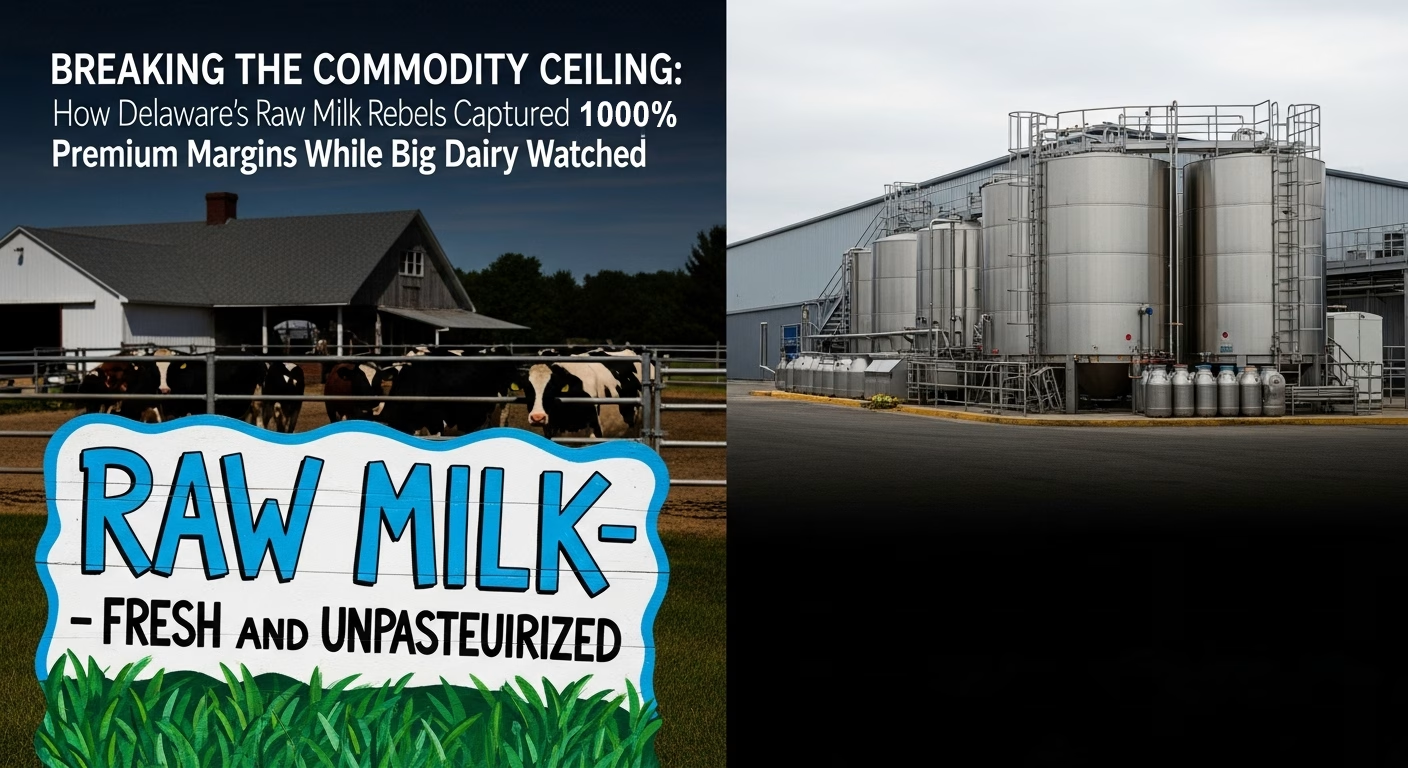
Breaking the Commodity Ceiling: How Delaware’s Raw Milk Rebels Captured 1000% Premium Margins While Big Dairy Watched

While consolidation crushes small dairies, Delaware’s 13 farms captured 1000% premiums through regulatory embrace – proving compliance beats confrontation

EXECUTIVE SUMMARY: Delaware’s dairy revolution just shattered the industry myth that government regulation kills farm profitability. While 83% of the state’s dairy farms disappeared since 2014, the surviving 13 operations discovered something revolutionary: strategic regulatory compliance can generate 10x higher profit margins than commodity production. Through the nation’s most stringent raw milk testing protocols—including first-in-nation H5N1 screening—these farms transformed from price-takers earning $1.13-2.19 per gallon equivalent to price-setters commanding $16-20 per gallon direct-to-consumer premiums. The $15.6 million potential economic impact proves that niche market capture through regulatory partnership, not resistance, offers small dairies a survival strategy that global consolidation pressure can’t crush. This Delaware model challenges every assumption about scale economics and regulatory burden while demonstrating how 3% consumer demand for raw milk can sustain premium pricing when wrapped in government-verified safety protocols. Stop fighting regulation and start weaponizing compliance as your competitive advantage.

KEY TAKEAWAYS

  • Transform Regulatory Compliance Into Revenue Multiplier: Delaware’s comprehensive pathogen testing protocols (including monthly third-party screening for E. coli, Salmonella, Listeria, and H5N1) became consumer confidence drivers that justified 14x commodity pricing—proving safety investments generate exponential ROI when positioned as competitive advantages.
  • Capture Niche Market Premium Through Direct-to-Consumer Transformation: Strategic business model shift from B2B commodity supplier to B2C retailer enabled 10x profit margin increases, with successful farms requiring $25,000-50,000 compliance infrastructure investment achieving 12-18 month break-even timelines.
  • Leverage Political Coalition Building for Market Access: Stephanie Knutsen’s systematic conversion of former opponents (Delaware Farm Bureau, Department of Agriculture, Health Services) through data-driven engagement demonstrates how evidence-based advocacy creates legal pathways to premium markets that confrontational approaches can’t achieve.
  • Implement First-Mover Advantage Strategy in Limited Markets: With only 3% of Americans consuming raw milk, early adopters building strong direct-to-consumer brands capture disproportionate market share in passionate but size-limited customer base—making regulatory compliance timing critical for competitive positioning.
  • Evaluate Market Size vs. Implementation Costs Before Entry: Delaware’s potential $15.6 million annual impact across 13 farms requires honest assessment of local demand capacity, entrepreneurial skill transformation from production to retail excellence, and liability risk tolerance for foodborne illness exposure that could eliminate entire program overnight.
raw milk dairy, direct-to-consumer dairy, dairy premium pricing, small farm profitability, dairy regulatory compliance

What if the most profitable dairy strategy of 2025 isn’t scaling up to 5,000 cows or installing robotic milking systems, but mastering a 50-cow operation that commands 14x commodity pricing? Delaware’s 13 remaining dairy farms just proved that regulatory embrace, not resistance, creates premium markets. While conventional producers fight for commodity prices that barely cover feed costs, these strategic rebels captured $16-20/gallon direct-to-consumer premiums through the nation’s most stringent raw milk regulations.

You’re watching your neighbors liquidate herds because commodity pricing can’t cover operational costs. Meanwhile, thirty minutes down the road, consumers drive two hours to Pennsylvania, gladly paying $16-20 per gallon for raw milk. That disconnect between what you’re paid and what consumers will pay represents the fundamental challenge facing dairy operations worldwide in 2025, and Delaware’s calculated gamble offers a roadmap through it.

Why This Changes Everything You Know About Farm Survival

Let’s be honest about what’s happening in dairy right now. Delaware’s dairy farm count plummeted from 77 in 2014 to just 13 by 2024—an 83% decline that mirrors the consolidation crushing small operations nationwide. The conventional wisdom says get bigger, get more efficient, or get out.

But here’s what conventional wisdom misses: about 3% of Americans consume raw milk and are willing to pay premium prices for it. In Delaware’s case study, that translates to roughly 30,000 potential customers in a state of one million—a passionate niche market willing to pay $16-20 per gallon when conventional milk sells for the equivalent of $1.13-2.19 per gallon.

The Raw Milk Institute estimates producers can earn profit margins nearly 10 times higher than selling to processors. For a struggling 50-cow operation, that’s the difference between liquidation and prosperity.

Why This Matters for Your Operation: The economic transformation isn’t just about selling a different product—it’s about escaping the commodity treadmill entirely. You’re shifting from being a price-taker to a price-setter, building direct-to-consumer relationships that capture full retail value.

How Delaware Farmers Became Political Masterminds

Here’s where Delaware’s story gets brilliant—and completely different from the confrontational raw milk movements you see elsewhere. While Amos Miller fights Pennsylvania authorities in court amid “Stand Against Tyranny” protests, Delaware advocates took a different approach: they made government oversight their competitive advantage.

Stephanie and Gregg Knudsen at G&S Dairy in Harrington didn’t just stumble into this opportunity—they engineered it. Their 50-cow operation was facing the same economic squeeze hitting dairy farms nationwide. But instead of accepting defeat, Stephanie transformed herself from nervous farmer to legislative strategist.

Her approach was methodical and brilliant:

Step 1: Address the Fear Factor “Would we be setting ourselves up to lose the farm in a lawsuit while trying to save it with raw milk sales?” she wondered. “How could we live with ourselves if someone got really sick?” She embarked on exhaustive research, consulting medical microbiologists, epidemiologists, and the Raw Milk Institute to understand real versus perceived risks.

Step 2: Build Farmer Coalition
She met with all of Delaware’s remaining dairy farmers, framing raw milk not as a risk but a shared survival opportunity. Result: unanimous support from the state’s entire dairy community.

Step 3: Flip Former Opponents The Delaware Farm Bureau, Department of Agriculture, and Department of Health had all opposed previous legalization attempts. Instead of avoiding them, she confronted the opposition with data, eventually winning their support by addressing safety concerns.

Why This Matters for Your Operation: Knutsen’s success demonstrates that regulatory compliance can become a competitive advantage when positioned correctly, rather than just another cost center.

The Testing Gauntlet That Builds Consumer Confidence

Delaware’s regulations, finalized March 1, 2025, require the most comprehensive testing regime in the nation:

  • Monthly third-party pathogen screening for E. coli, Salmonella, and Listeria monocytogenes
  • Specific H5N1 avian influenza testing (the nation’s first such requirement)
  • Bacterial standards matching post-pasteurized milk requirements
  • Veterinary certification for brucellosis and tuberculosis

The Hidden Economics: These compliance costs aren’t cheap. Expect annual permit fees, risk management plan development, on-farm testing equipment investment, monthly third-party lab analysis, and potential Grade A milking barn upgrades.

But here’s the strategic genius: Delaware made stringent government oversight their selling point, not their obstacle. When consumers see “State Tested and Approved” on raw milk labels, it addresses the primary concern keeping most people from trying the product.

Why This Matters for Your Operation: Stanford research found H5N1 can remain infectious in refrigerated raw milk for up to five days. Delaware’s H5N1 testing requirement turns this threat into a competitive advantage through documented safety protocols.

What the Numbers Really Tell Us About Market Opportunity

Let’s talk real economics. Stephanie Knutsen calculated that transitioning just 10% of her herd to raw milk production could nearly double farm income. She estimated a potential statewide economic impact of $15.6 million annually for Delaware’s dairy sector.

But here’s the reality check nobody talks about: market size limitations mean not everyone wins.

Government surveys estimate that only 3% of Americans consume raw milk. Even with passionate consumer demand, basic math suggests the market won’t support all 13 remaining farms at premium pricing. The early entrants who build strong direct-to-consumer brands will likely capture disproportionate market share.

The Entrepreneurial Transformation Required: Success in raw milk requires skills completely different from commodity production skills. You’re not just selling milk—you’re selling trust, convenience, and a story that justifies premium pricing. Traditional dairy farming focuses on production efficiency within a B2B commodity system. Raw milk demands B2C retail excellence: branding, customer service, direct marketing, and relationship management.

Why the Scientific Opposition Won’t Go Away

While Delaware’s legislature embraced regulated raw milk, the scientific establishment remains unmoved. Dr. Kali Kniel, Professor of Microbial Food Safety at the University of Delaware, systematically challenges raw milk health claims.

Her data-driven arguments include:

  • Raw milk consumers are 840 times more likely to contract foodborne illness
  • 45 times more likely to be hospitalized than pasteurized milk consumers
  • CDC reports 202 outbreaks linked to raw milk between 1998 and 2018, causing 2,645 illnesses and 228 hospitalizations

The State’s Internal Contradiction: Delaware created a fascinating policy paradox. The Department of Agriculture actively licenses raw milk sales, while the Division of Public Health officially warns against consumption. This internal contradiction reflects the political compromise needed to pass the law.

Why This Matters for Your Operation: Political support for raw milk is fragile and depends entirely on perfect safety records. One outbreak could eliminate the entire market overnight.

How Delaware’s Model Compares to Other States

Delaware’s highly regulated approach positions it uniquely among the 34 states permitting raw milk access:

StateSales VenueTesting RequirementsKey Distinctions
DelawareOn-farm; Farmers’ marketsMonthly pathogen + H5N1 testingMost comprehensive U.S. regulations
PennsylvaniaRetail stores, On-farmColiform bacteria standardsBroader product range allowed
ColoradoHerd shares onlyNo state testing requiredMinimal oversight model
MarylandIllegalN/ATotal prohibition maintained

Why This Matters for Your Operation: Delaware’s “regulated access” model demonstrates that compromise with health authorities can achieve legal market access without confrontational politics.

The Political Fragility That Could Kill Everything

Even in victory, political fragility remains. Senator Laura Sturgeon, who voted for the bill, publicly expressed “buyer’s remorse” in February 2025: “I have started to regret my vote to legalize raw milk… If an adult becomes sick after drinking raw milk, that’s on them. But children depend on adults to make good decisions for them.”

Delaware’s own cautionary tale reinforces these concerns. In June 2010, before legalization, two serious bacterial infections were linked to raw dairy consumption: a 58-year-old woman contracted Brucellosis and a 44-year-old man was infected with Listeria, both requiring hospitalization.

Why This Matters for Your Operation: Any significant foodborne illness outbreak—especially involving children—could collapse the entire program and create financially ruinous legal liability for participating farms.

The Bottom Line: Strategic Differentiation That Actually Works

Delaware’s raw milk experiment proves something revolutionary: sometimes, regulatory compliance creates competitive advantages rather than operational burdens. While the dairy industry consolidates around massive operations competing on efficiency metrics, Delaware’s 13 farms demonstrated that strategic differentiation can generate premium pricing in niche markets.

The three critical lessons for your operation:

First, premium pricing opportunities exist but require premium compliance costs and retail transformation skills. You’re not just changing what you sell—you’re changing how you do business entirely.

Second, regulatory frameworks can become competitive advantages when designed collaboratively rather than imposed through confrontation. Delaware’s stringent testing protocols became selling points, not obstacles.

Third, market size limitations mean first-mover advantages are crucial. The farms that build strong direct-to-consumer brands early will capture disproportionate market share in this passionate but limited customer base.

Your Strategic Assessment Framework: Before pursuing raw milk opportunities, evaluate these critical factors:

  • Can your operation invest in compliance infrastructure while maintaining current operations?
  • Do you have the entrepreneurial skills to transform from B2B commodity producer to B2C retailer?
  • Is your local market large enough to support raw milk sales at premium pricing?
  • Can you accept the liability risks that come with direct-to-consumer raw milk sales?

Your Next Step: Research your state’s current raw milk regulations and honestly assess local market potential. Delaware’s success required capital investment, regulatory compliance, and retail skill development, but it delivered pricing power that commodity markets can’t match.

The question isn’t whether Delaware’s approach will work everywhere—it’s whether you’ll recognize similar opportunities in your own market before conventional wisdom convinces you they don’t exist. Delaware’s 13 farms didn’t just change regulations—they rewrote the rules of what’s possible when strategic thinking meets desperate necessity.

Complete references and supporting documentation are available upon request by contacting the editorial team at editor@thebullvine.com.

Learn More:

Join the Revolution!

Join over 30,000 successful dairy professionals who rely on Bullvine Weekly for their competitive edge. Delivered directly to your inbox each week, our exclusive industry insights help you make smarter decisions while saving precious hours every week. Never miss critical updates on milk production trends, breakthrough technologies, and profit-boosting strategies that top producers are already implementing. Subscribe now to transform your dairy operation’s efficiency and profitability—your future success is just one click away.

NewsSubscribe
First
Last
Consent

The New Math of Dairy Expansion: Why “Bigger Land” Is Bleeding Your Profits Dry

Ditch land, boost profits: Small dairy farms thrive with capital-smart expansion and tech. New research reveals how.

dairy farm expansion strategies, small farm profitability, robotic milking systems, capital-efficient dairy growth, value-added dairy strategies

Think the traditional path to dairy expansion is your only option? Think again. Research from Michigan State University exposes the fatal flaws in the “buy more land” model, revealing how smarter small farms are ditching conventional wisdom and doubling profitability with half the risk.

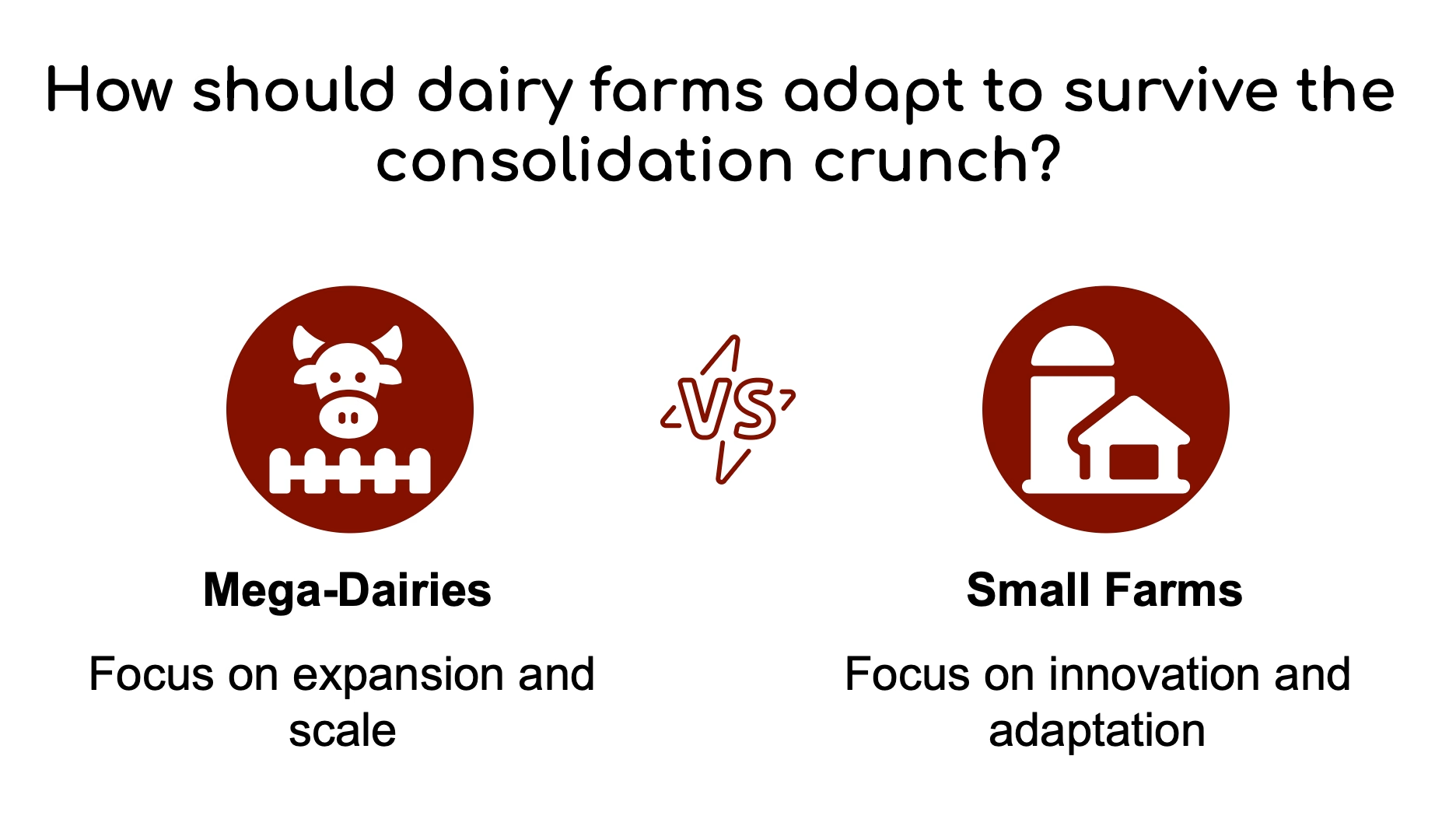
THE CONSOLIDATION CRUNCH: THE BRUTAL TRUTH ABOUT SMALL FARM SURVIVAL

Let’s cut through the industry BS and face facts: the U.S. dairy sector is undergoing the most brutal consolidation in its history. Nearly 40% of American dairy farms have vanished since 2017, yet milk production continues to climb. This isn’t just evolution; it’s a systematic reshaping of who gets to survive in this industry.

The numbers don’t lie. The 834 largest dairies (2,500+ head) now produce over half of America’s milk by value, while farms with fewer than 100 cows cling to a measly 5% market share, down from 8% in 2017. With industry projections showing another 2.6% decline in dairy farm numbers by 2025, the message is clear: adapt or disappear.

But here’s what your banker won’t tell you: this “get big or get out” mantra is built on outdated assumptions actively destroying family farms. Think the only path forward is doubling your land base alongside your herd? Michigan State University research has just blown that theory to smithereens.

Are you still trying to compete with mega-dairies using their playbook? That’s like bringing a butter knife to a gunfight. The game has changed, and those clinging to Dad’s expansion strategy are signing death warrants.

While 15,000+ dairy farms disappeared between 2017 and 2022, milk production INCREASED by 5%. The consolidation isn’t slowing, it’s accelerating. Your expansion strategy must be fundamentally different from that of mega-dairies to survive.

EXPANSION MYTHS EXPOSED: WHAT THE RESEARCH ACTUALLY SHOWS

Michigan State’s Lynn Olthof and team put four real-world expansion strategies for 250-cow operations under the microscope. What they discovered should send shockwaves through the industry:

Myth #1: To expand properly, you must buy more land. REALITY: The most profitable expansion scenario avoided land acquisition entirely, focusing investment on productive assets while purchasing feed. According to the MSU study, this “no-land” approach delivered the highest annual net profit, lowest debt utilization, and most reliable positive cash flow across various market conditions.

Myth #2: Owning your feed base provides security and cost control. REALITY: The capital tied up in land (national average: $5,570 per acre in 2024) creates a massive opportunity cost that outweighs any feed security benefits. Cash flow keeps the lights on, not paper equity in land that doesn’t produce direct revenue.

Myth #3: Traditional expansion is the safest bet. REALITY: The conventional “double everything” approach leaves farms dangerously overleveraged and vulnerable to market downturns. It’s like overstocking your freestall barn during a heat wave, creating multiple stress points that eventually break your system.

Myth #4: Robots are too expensive for smaller farms. REALITY: While robotic milking systems require substantial upfront investment (5,000-0,000 per unit), they delivered the greatest operational predictability and lowest labor costs per hundredweight in the MSU study. Robots can reduce direct milking labor by approximately 60% for farms bleeding out from labor shortages and generate annual labor cost savings approaching $44,000.

Consider this: If your expansion strategy is the same one your grandfather would recognize, you’re planning to fail. The industry has been fundamentally transformed; yesterday’s winners are today’s casualties.

THE CAPITAL ALLOCATION REVOLUTION: WHERE SMART MONEY GOES

So, where should your hard-earned capital flow if the MSU numbers are flipping conventional wisdom?

At $5,570 per acre (national average for cropland), doubling your land base for a 250-cow expansion means sinking $1-2 million into dirt before buying a replacement heifer or building the first stall. Add another $1.5-$2 million for facilities and $1.3 million for cattle (with replacement heifers fetching a staggering $2,660-$4,000 per head in recent markets, according to USDA and market reports), and you’re looking at $4+ million of capital-much of it producing zero direct daily revenue.

Here’s where Andrew drops the truth bomb: Land acquisition is the silent killer of dairy farm expansions. It’s the financial equivalent of subclinical ketosis- quietly draining your profitability while you focus elsewhere.

Think of it this way: Every dollar tied up in land does not generate milk revenue. The Michigan State research confirms what forward-thinking farmers have discovered: redirecting that capital toward income-producing assets delivers substantially better returns. Their study conclusively demonstrated that the no-land expansion approach (Scenario B) yielded higher profits and, critically, the lowest debt utilization of all expansion strategies tested.

So, where should your capital go? Prioritize:

  1. Productive livestock – The engine of daily cash generation
  2. Efficient facilities – Focus on cow comfort and labor efficiency
  3. Strategic technology – Target bottlenecks with precision solutions
  4. Risk management – Protect your margins in volatile markets

Are you still building your expansion plans around land acquisition because “that’s how it’s always been done”? Wake up and smell the silage!

The MSU study revealed that farms focusing capital on productive assets rather than land acquisition consistently delivered higher profits, lower debt, and more reliable cash flow. Your most valuable asset isn’t dirt, it’s operational efficiency.

TECHNOLOGY DEPLOYMENT: THE NEW COMPETITIVE EDGE

Technology isn’t just for the big boys anymore. It’s the most powerful equalizer for smaller operations fighting to survive.

Activity monitors and health sensors ($75-$150/cow) deliver early disease detection and 35% improved heat detection accuracy. That’s like having a world-class herdsman monitoring every cow 24/7, but without the overtime pay or attitude problems.

Precision feeding systems slash feed waste by 10-20%. When feed represents 55-65% of your production costs, that’s not trivial; it’s the difference between profitability and writing farewell letters to your banker.

Genomic testing of heifer calves delivers net gains of $7-$259 per selected female after accounting for testing costs. Are you still selecting replacements based primarily on dam performance and “eye appeal”? That approach is as outdated as tie-stall barns and open-air milk cans.

But here’s the hard reality check: Technology without a strategy is expensive hardware collecting dust in your milkhouse. Small farms must target their tech investments at their specific pain points, not play follow-the-leader with the 10,000-cow operation down the road.

Have you crunched the numbers to determine which tech offers the highest ROI for YOUR operation? Or are you still making decisions based on what looks impressive at the equipment dealer’s booth?

THE VALUE-ADDED IMPERATIVE: STOP COMPETING ON VOLUME

Trying to out-produce mega-dairies on volume alone is a losing game, period. It’s like challenging a Holstein to a milk production contest when you’re a Jersey-you’re fighting a battle you’re physically incapable of winning.

The sustainable path forward requires capturing more value from each pound of milk you produce:

  • The organic dairy market will hit $45.46 billion by 2033 (CAGR: 5.82%), according to verified market research
  • The grass-fed dairy market is forecast to reach $6.98 billion by 2031 (CAGR: 6.01%)
  • On-farm processing keeps more consumer dollars on your farm
  • Direct-to-consumer models build loyal customers who don’t abandon you when milk prices tank

Bold truth: If you’re still viewing yourself as a milk producer rather than a food company with dairy expertise at its core, you’re planning your obsolescence. The successful small dairies of 2025 aren’t just producing more milk, they’re rethinking what business they’re actually in.

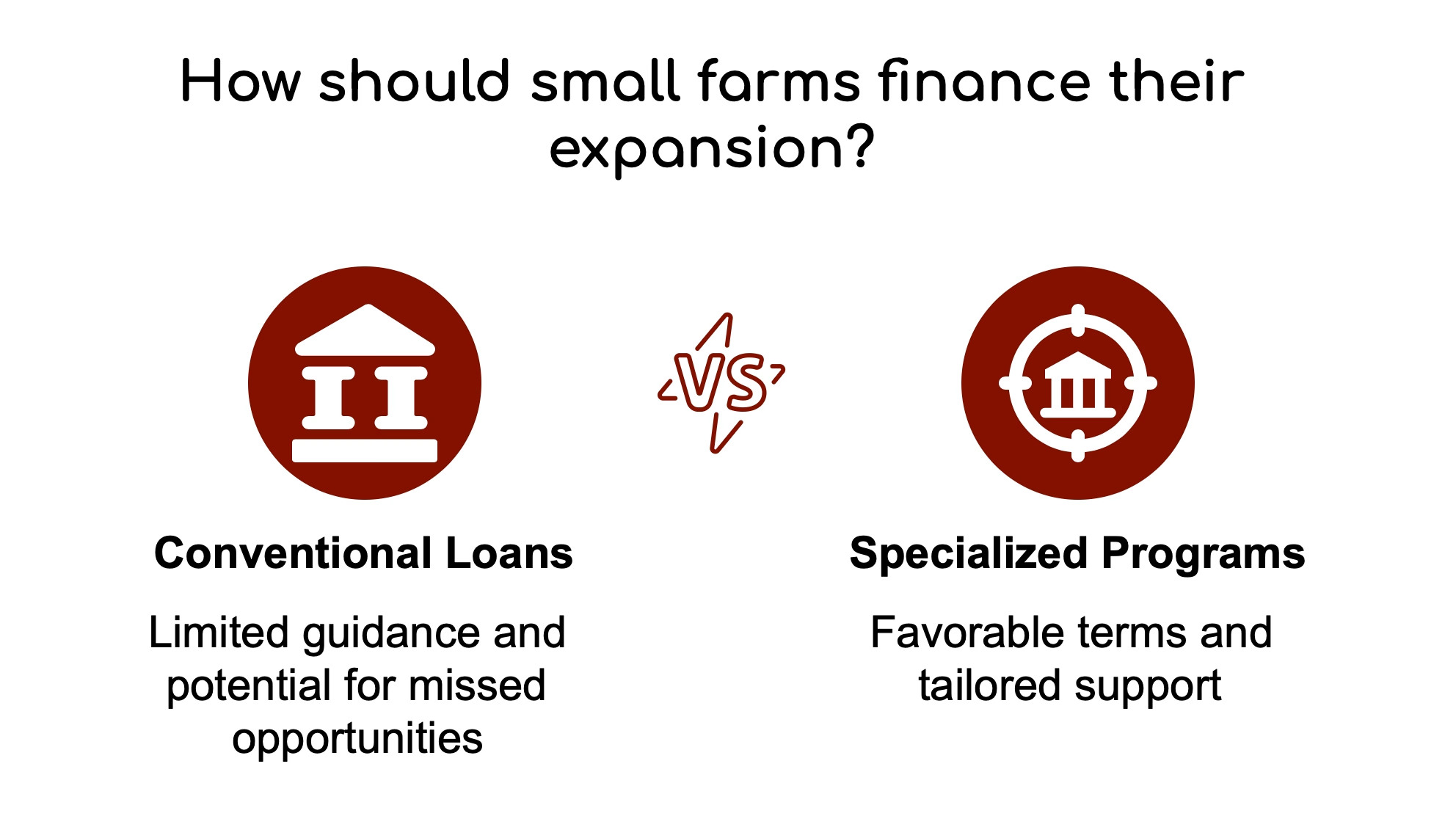
FINANCING THE FUTURE: BEYOND CONVENTIONAL LOANS

Expansion requires capital, and most small farms are capital-constrained. But too many farmers leave money on the table by not exploiting available programs:

  • USDA FSA loans (Farm Ownership up to $600,000, Operating up to $400,000, Microloans up to $50,000) offer favorable terms specifically designed for agricultural operations
  • USDA Value-Added Producer Grants provide up to $250,000 in working capital to develop and market value-added products like cheese or yogurt
  • The Environmental Quality Incentives Program (EQIP) offers financial assistance for implementing conservation practices
  • Risk Management Tools, including Dairy Margin Coverage (DMC), provide essential protection against margin compression, crucial for farms under 200 cows

The harsh reality: Your local commercial lender probably isn’t equipped to guide you through these specialized agricultural programs. And let’s be brutally honest, many small farms are leaving hundreds of thousands in potential support untapped because they don’t want to deal with the paperwork or “government involvement.”

Is your pride worth more than your farm’s future? Are you willing to let your operation fail rather than navigate some paperwork for programs specifically designed to help farms like yours?

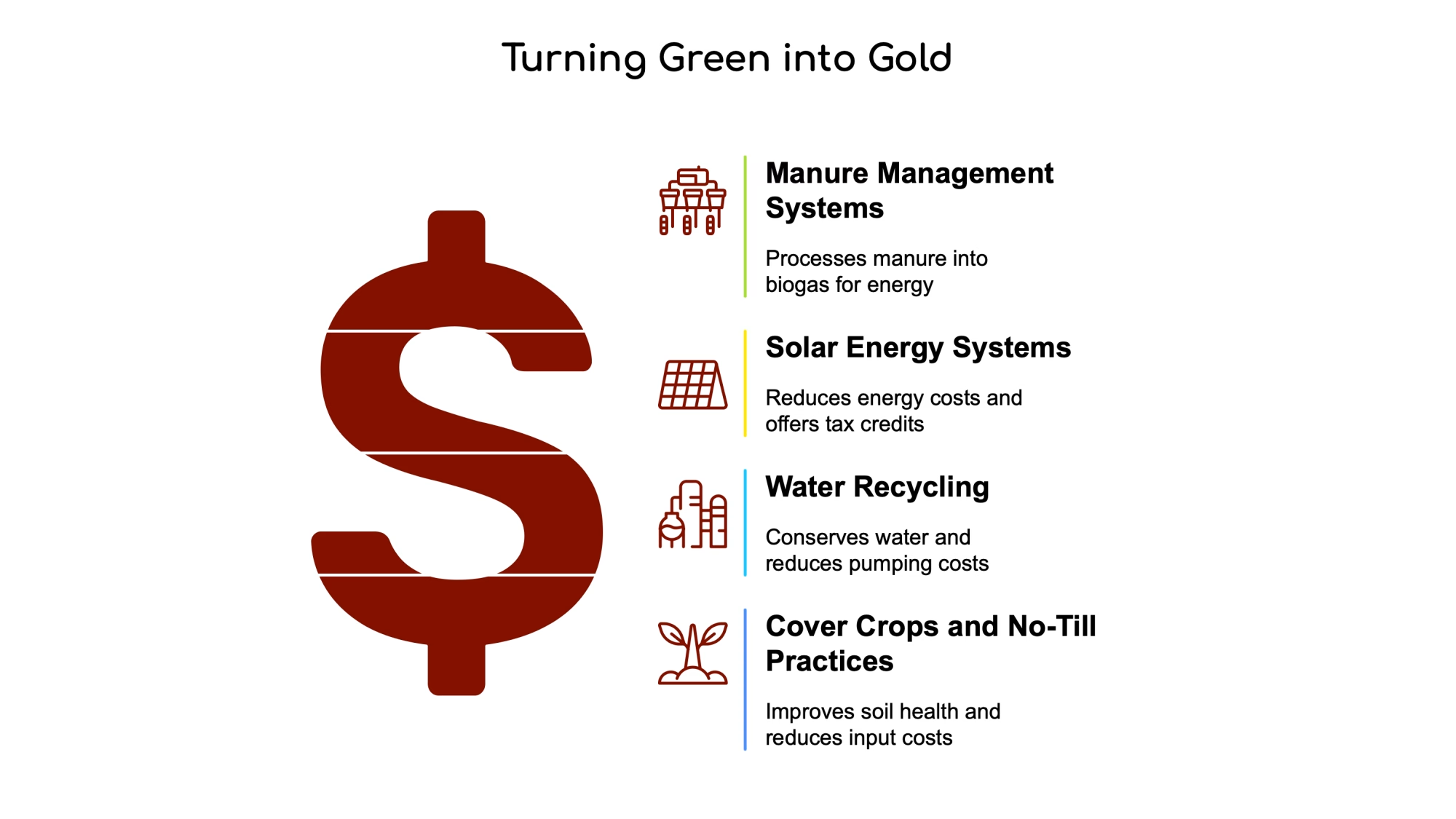
THE SUSTAINABILITY ADVANTAGE: PROFIT FROM BEING GREEN

Environmental compliance isn’t optional anymore, but smart operators are turning regulatory requirements into competitive advantages:

  • Manure management systems like anaerobic digesters process manure while producing biogas for energy. While substantial investments ($400,000 to $5 million) can offset significant energy costs or generate revenue if biogas is sold to the grid
  • Solar energy systems can save mid-sized farms $3,000 annually and larger operations $100,000+, with payback periods typically 5-7 years and investment tax credits covering 26% of installation costs
  • Water recycling reduces both freshwater consumption and energy costs for pumping
  • Cover crops and no-till practices improve soil health while reducing input costs, with long-term use of cover crops yielding net benefits of $20-$90 per acre annually when forage benefits are included

Let’s be frank: Those viewing sustainability as an added cost or regulatory burden are missing the forest for the trees. The most progressive operations are discovering that sustainable practices are unlocking new revenue streams and slashing input costs.

Think of sustainability as preventative maintenance for your business, not immediately necessary to keep running today, but critical for long-term performance.

Environmental practices aren’t just compliance costs-they’re profit opportunities. Farms implementing comprehensive conservation practices are seeing enhanced operational efficiency, reduced input costs, and premium market access.

THE BOTTOM LINE: GROW SMARTER OR DISAPPEAR

The consolidation pressure reshaping America’s dairy landscape isn’t slowing down. The choice for small and mid-sized producers isn’t whether to change, but how quickly you can adapt to a transformed industry reality.

Research conclusively proves that the traditional expansion model, proportionally scaling land, animals, and infrastructure, delivers poorer financial results than more capital-efficient approaches.

For America’s small dairy farms, survival requires evolution beyond the mindset and methods that worked for previous generations. Those who embrace this transformation won’t just survive- they’ll redefine dairy’s future.

What This Means for Your Operation

  1. Challenge your assumptions about capital allocation. Is land acquisition really your best use of limited capital?
  2. Target technology investments at your specific bottlenecks, not what looks impressive to the neighbors.
  3. Explore value-added strategies that capture more consumer dollars rather than chasing volume.
  4. Build your expansion around workers’ strengths and weaknesses. Labor is now often the limiting factor, not land or capital.
  5. Think beyond production to embrace your role as a food producer, not just a raw material supplier.

Have you got the courage to break from convention? The dairy industry is littered with the remains of farms that followed the traditional playbook right into bankruptcy. Will you be next, or will you be bold enough to forge a different path?

The future belongs to those who understand that expansion isn’t about getting bigger, it’s about getting smarter. The question isn’t whether you can afford to change your approach. The real question is: Can you afford not to?

To watch the PDPW “Dairy Signal” podcast: The Dairy Signal | PDP

Key Takeaways:

  • Skip land, buy feed: Expanding herds without land purchases (Scenario B) yields the highest profits and lowest debt.
  • Robotics beat labor woes: Automated milking cuts labor costs 60% and boosts milk yield 5-10%.
  • Niche markets pay premiums: Organic and grass-fed dairy markets are growing 5-6% annually.
  • Sustainability = profit: Manure digesters and solar energy slash costs while meeting consumer demands.
  • Grants over loans: USDA programs like VAPG and EQIP fund expansion without drowning farms in debt.

Executive Summary:

The U.S. dairy industry’s rapid consolidation is forcing small farms to rethink expansion. Michigan State University research proves traditional “buy more land” strategies underperform capital-efficient models, with farms avoiding land purchases achieving higher profits, lower debt, and better cash flow. Robotic milking systems address labor shortages, while niche markets (organic, grass-fed) and sustainability practices unlock premium pricing. To survive, small farms must prioritize strategic tech adoption, value-added diversification, and USDA grant programs-proving growth isn’t about scale, but smarter resource allocation.

Learn more:

Join the Revolution!

Join over 30,000 successful dairy professionals who rely on Bullvine Weekly for their competitive edge. Delivered directly to your inbox each week, our exclusive industry insights help you make smarter decisions while saving precious hours every week. Never miss critical updates on milk production trends, breakthrough technologies, and profit-boosting strategies that top producers are already implementing. Subscribe now to transform your dairy operation’s efficiency and profitability—your future success is just one click away.

NewsSubscribe
First
Last
Consent

BEEF-ON-DAIRY REVOLUTION: Former Dairy Farmers Finding Gold in the Beef Market Corporate Giants Overlooked

While mega-dairies grabbed headlines, small farmers quietly hijacked beef genetics – creating a stealth revolution corporate giants never saw coming.

The dairy establishment missed it completely. While industry leaders were busy building mega-dairies and multinational processing plants, America’s dairy farmers quietly changed the genetic foundation of their industry. In just five years, beef-on-dairy has exploded to 7.9 million semen units annually – now breathing down the neck of gender-selected dairy semen as the dominant breeding choice in U.S. dairy herds. This isn’t just a breeding trend; it’s an agricultural insurgency creating an unexpected lifeline for the family farms that industry consolidation was supposed to eliminate.

BREEDING BOMBSHELL: 7.9 Million Reasons Small Farmers Are Winning

The scale of this transformation is undeniable. According to the National Association of Animal Breeders (NAAB), domestic beef semen sales hit a new high of 9.4 million in 2023, marking the sixth year of record sales. Of those, 7.9 million units were used in dairy herds – up nearly 1 million from the previous year.

“In just five years, beef-on-dairy has exploded from a niche practice to 7.9 million semen units annually – representing a fundamental shift in how America’s dairy farmers approach breeding decisions.”

This represents a complete reshaping of dairy breeding practices.

Semen Category2023 Units (millions)Market PositionTrend
Gender-Selected Dairy8.4#1 PositionStable leader
Beef-on-Dairy7.9#2 Position↑ 1 million units from previous year
Conventional Dairy7.0#3 PositionDeclining
Heterospermic Beef*1.8 (1.3 domestic)#2 Among beef breedsEmerging category

*Second largest ‘breed’ of beef semen sold, following only Angus

Gender-selected dairy semen now leads with 8.4 million units, followed closely by beef-on-dairy at 7.9 million units, with conventional dairy semen falling to third place at 7 million units. Less than a decade ago, in 2015, the all-time high for beef semen sales was just 2.5 million units.

Perhaps most telling is the emergence of heterospermic beef products – a mixture of multiple sires in a single straw – which has become the second largest “breed” of beef semen sold at 1.8 million units (with 1.3 million domestic sales), trailing only Angus. This innovative approach allows producers to maximize genetic diversity while maintaining the beef-on-dairy advantage.

FROM PARLOR TO PROFIT: The Edenfield Family’s Successful Transition

Logan Edenfield knows firsthand the challenges and opportunities of transitioning from dairy to beef. He grew up on a 50-cow dairy operation in Ohio that successfully made the switch to beef production. Edenfield now shares his expertise with Equity Livestock in Stratford.

“Farmers exiting dairy and going into beef must change their thinking,” Edenfield explains. His family’s approach focused on strategic breeding decisions that maximized calf value while creating a clear timeline for the transition. “Those still milking cows and looking to retire should breed everything to an Angus bull, which will result in black-hided calves that tend to be worth the most,” he advises. “Then, you automatically have put a date on when you won’t have replacement heifers. It gives you a deadline and, in the meantime, gets you more value out of the calves you are selling.”

The Edenfield family discovered that timing is everything. “Sell those calves at 3 to 5 days of age to reap the most benefit,” Logan recommends based on his family’s experience. This approach minimizes input costs while capitalizing on the significant price premium for beef-cross calves. While conventional Holstein bull calves might bring just $60 at the market, black beef-cross calves from Holstein dams can command $100 to $300 – a value proposition transforming his family’s operation during the transition period.

SMALL FARM REVENGE: Outflanking Corporate Giants With Crossbred Efficiency

The performance metrics of beef-on-dairy crosses create the perfect foundation for former dairy farmers to establish profitable, small-scale finishing operations. Texas Tech University research confirms that the average daily gain and feed-to-gain ratio of crossbreds is significantly better than that of Holsteins and is similar to that of conventional beef cattle.

For small-scale producers, these efficiency gains translate directly to profitability. Crossbred finishing times are about 20% faster than Holsteins, which means these animals produce the same beef in a shorter timeframe and on less total feed. This efficiency creates the perfect scenario for former dairy farmers with limited facilities and labor.

“Crossbred finishing times that are about 20% faster than Holsteins create the perfect scenario for former dairy farmers with limited facilities and labor – delivering the same beef in less time with lower input costs.”

What makes these crossbreds particularly suited for minor operations is their temperament. Having been bottle-raised in the dairy system, beef-on-dairy calves are typically docile and easy to handle – eliminating the need for extensive handling facilities or specialized equipment. For retired farmers or those balancing off-farm employment with farming, this management reality is dramatically different from conventional beef production.

ECONOMIC REALITY CHECK: The Numbers Behind The Transition

Understanding the financial implications is essential for dairy farmers considering a transition to beef production. A comparative analysis of continuing dairy production versus transitioning to beef-on-dairy reveals compelling differences:

FactorStaying in DairyTransitioning to Beef-on-Dairy
Initial InvestmentOngoing facility upgrades ($500-1,500 per stall)Minimal conversion costs ($100-300 per head capacity)
Labor Requirements40-60 hours/week (50-cow herd)10-15 hours/week (same facilities)
Return TimelineImmediate but thin margins12-18 months to first finished cattle
Profit Margin Potential$1.50-$2.50/cwt milk$300-$600/head (direct marketed)

According to farm financial consultants at Cornell PRO-DAIRY program, transitioning dairy facilities to beef production typically requires minimal investment when existing infrastructure is utilized. Their analysis suggests that the decreased labor requirements alone can make the transition attractive for farmers nearing retirement or seeking off-farm employment.

The University of Wisconsin Center for Dairy Profitability notes that while dairy provides immediate cash flow, beef production offers significantly reduced stress levels and labor flexibility that many former dairy farmers find equally valuable. Their research indicates that the lower input costs and facilities investment required for beef production can deliver higher returns on assets, particularly for small-scale operations that develop direct marketing channels.

EXTENSION EXPERTISE: What The Specialists Are Saying

The growing interest in beef-on-dairy has caught the attention of agricultural extension services. Ryan Sterry, UW-Extension agriculture agent for St. Croix County, has observed the trend firsthand. “It’s getting to be a more popular topic for us,” Sterry notes, pointing to increasing attendance at workshops titled “So You Want to Raise Beef?” in dairy-heavy regions.

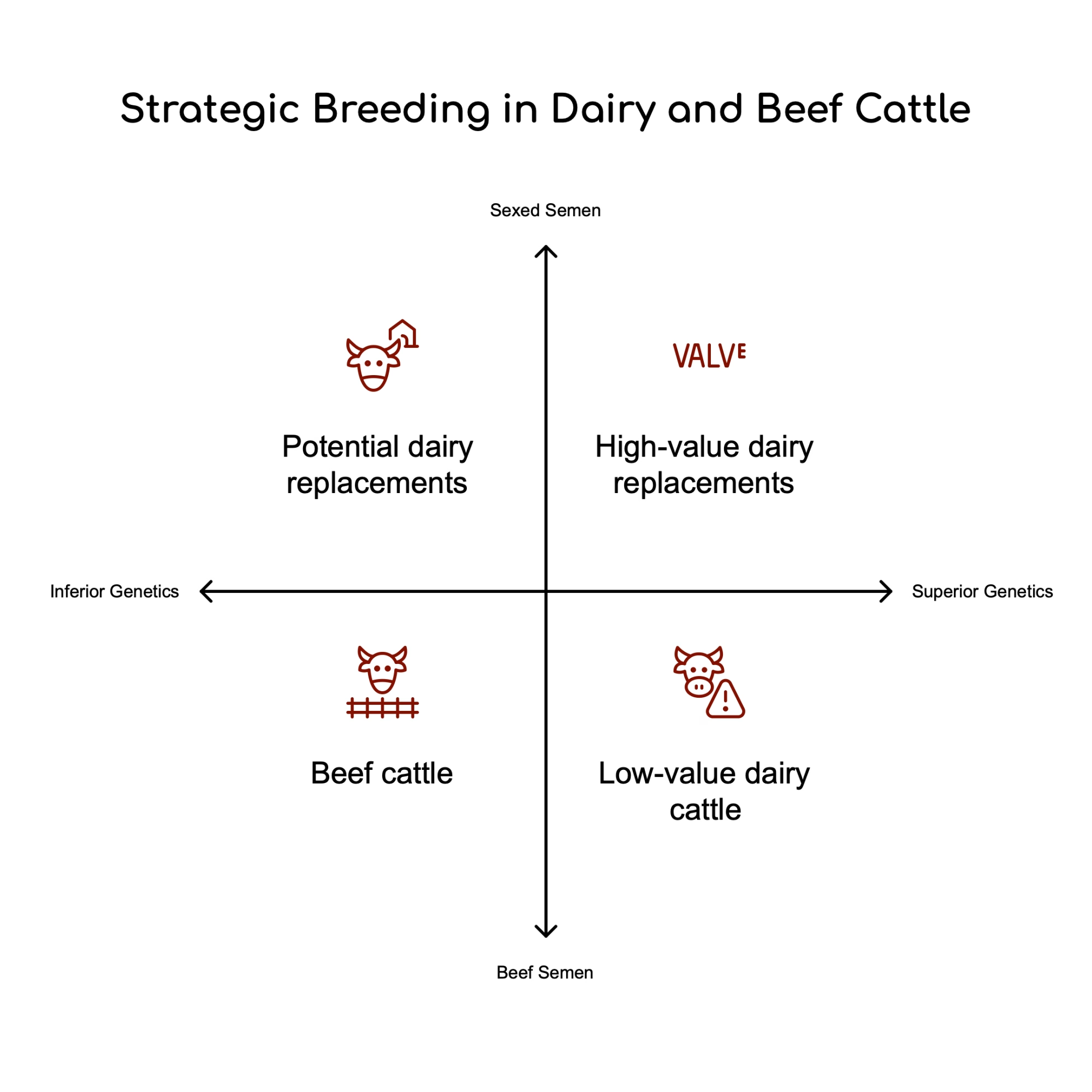
Scott Ellevold of NorthStar Select Sires, who also raises beef cattle north of New Richmond, has witnessed this shift from the genetic supplier side. “Not only are more people breeding their whole herd over to beef as they exit dairy altogether, but many dairy farmers are breeding their best cows with sexed semen to increase their odds of getting heifer calves that will grow into replacement animals and their lower-end cows to beef bulls,” Ellevold explains.

This strategic approach – using genomic testing to identify superior heifers for dairy replacements while applying beef semen to genetically inferior animals – maximizes the value of each pregnancy. It contradicts traditional advice but accelerates genetic progress by ensuring only top genomic animals produce dairy replacements.

PROFIT PIPELINE: How Small Producers Cut Out Middlemen

While large industry players chase incremental efficiency improvements, former dairy farmers around urban centers sell beef directly to consumers at premiums that would make a corporate accountant’s head spin. These producers aren’t competing on efficiency but on story, transparency, and relationship.

The direct-marketing model typically involves consumers purchasing a whole, half, or quarter animal, which is then processed at a small local slaughterhouse. This approach eliminates multiple intermediaries, allowing producers to capture a significantly higher percentage of the end consumer dollar while delivering what consumers increasingly demand: knowing exactly how their food was raised.

This vertical integration model – from calf to consumer – represents the antithesis of the industry’s push toward specialized, fragmented production models. Family farmers are discovering they can generate higher margins with fewer animals by controlling more of the value chain.

REGIONAL OPPORTUNITIES: Location Matters In The Beef-on-Dairy Game

The beef-on-dairy opportunity isn’t distributed equally across all regions. According to data from the USDA’s Economic Research Service and the Niche Meat Processor Assistance Network, certain areas offer distinct advantages for farmers pursuing this transition:

Northeast & Mid-Atlantic

These regions benefit from the country’s highest concentration of small USDA-inspected processors, with New York, Pennsylvania, and Vermont leading in facilities per capita. Additionally, the Northeast features densely populated urban areas with high consumer incomes and strong interest in local food, creating premium direct marketing opportunities. According to Cornell Cooperative Extension research, direct-marketed beef commands 15-30% higher prices in this region than conventional channels.

Upper Midwest

Wisconsin, Minnesota, and Michigan combine strong processing infrastructure with dairy farming expertise. The University of Wisconsin Center for Dairy Profitability highlights that these states have maintained more small to mid-sized slaughter facilities than other regions. The Wisconsin Farmers Union notes that the cultural heritage of meat processing in these areas creates infrastructure and consumer awareness advantages for small-scale beef producers.

Challenges in Other Regions

Western and Plains states face significant processing bottlenecks, with USDA data showing fewer small-scale processors per cattle producer. According to University of Georgia research, Southern states generally have lower direct marketing premiums, though urban markets like Atlanta, Nashville, and Charlotte buck this trend with strong local food movements.

PREMIUM ADVANTAGE: The Quality Edge Big Beef Can’t Match

Initial research by Texas Tech University indicates hybrid cattle produce more and higher-quality beef products without impacting milk production efficiency compared to purebred dairy calves. This quality advantage creates a compelling narrative for direct marketing: premium eating experiences from small-scale, locally raised animals.

Lisa Pederson, North Dakota State University beef quality assurance specialist, notes that “dairy steers are well known for their ability to produce the highest quality grades of beef (Prime and High Choice).” This quality potential gives former dairy farmers a significant marketing advantage when positioning their beef-on-dairy crosses in premium direct markets.

These aren’t just marketing claims – beef-on-dairy crosses deliver superior meat quality in critical consumer metrics. The research shows these crossbreds appear to inherit their Holstein ancestors’ marbling capability but finish faster, creating the perfect foundation for premium marketing messages that small producers can leverage in direct-to-consumer channels.

DAVID VS. GOLIATH: The Economic Numbers Don’t Lie

For former dairy farmers, the economics present a stark contrast to conventional commodity production:

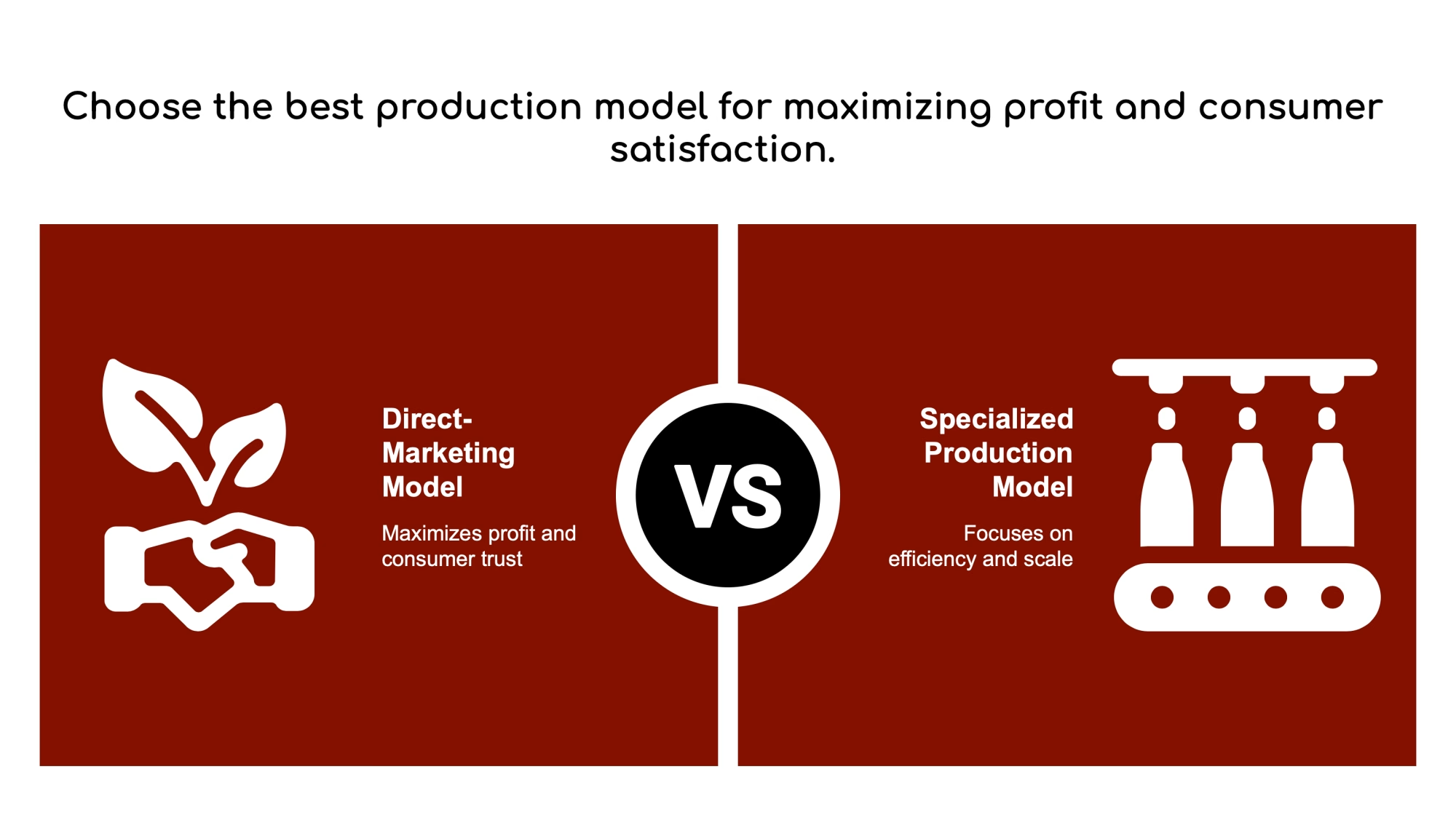
Production ModelAdvantagesEconomic Impact
Conventional CommodityScale efficiencyThin margins, high volume required
Beef-on-Dairy Direct20% faster finishing
Lower capital requirements
Premium direct marketing
Higher margins
Viable at smaller scale
Control of value chain

When marketed directly to consumers, these producers can capture premiums that commodity channels cannot match. This approach transforms a marginal enterprise in conventional marketing channels into a highly profitable specialty business.

CORPORATE SCRAMBLE: Industry Giants Playing Catch-Up

The remarkable success of this grassroots movement hasn’t gone unnoticed forever. Industry giants scramble to understand and capitalize on what small producers have already discovered. Cargill has launched a three-year “Dairy Beef Accelerator” program in collaboration with industry partners, including Nestlé, to research the benefits of cattle crossbreeding.

Initial research from this corporate-led initiative confirms what small producers already know: “beef on dairy” calves exhibit greater feed efficiency, which lowers greenhouse gas emissions while producing more and higher-quality beef products.

“Achieving the most from the valuable resources used in beef production is a key part of Cargill’s BeefUp Sustainability initiative,” notes the company – an implicit acknowledgment that this model represents a fundamental shift in how beef production can be structured.

The question is whether small producers can establish their market position before corporate interests attempt to scale and commoditize the approach.

“While corporate agriculture spent decades telling small farmers to ‘get big or get out,’ those same farmers discovered a market opportunity that big players missed entirely – and now industry giants are scrambling to understand what small producers already know.”

NAVIGATING REAL CHALLENGES: Beyond The Hype

Despite its promise, this model faces several significant challenges that farmers must address:

1. Processing Access Bottleneck

Small-scale beef producers face a critical infrastructure challenge: limited access to USDA-inspected slaughter facilities. The consolidation of meat processing has left many rural areas without local plants capable of handling direct-to-consumer orders. This bottleneck can create scheduling delays of 6-12 months at some facilities, making consistent supply difficult for producers selling directly to consumers.

2. Residue Management Requires Vigilance

Lisa Pederson of North Dakota State University warns that residue management requires particular attention when transitioning dairy animals to beef production. “Dairy cows had a residue violation rate nine times higher than beef cows,” she notes, highlighting that about 20% of violating dairy carcasses tested positive for more than one product residue. Former dairy farmers must implement strict withdrawal protocols and maintain meticulous records to avoid costly violations.

3. Market Saturation Concerns

As more dairy operations adopt beef-on-dairy breeding strategies, the market could become saturated with crossbred animals. This potential oversupply could erode the price advantage enjoyed by beef-cross calves, which Edenfield noted was $100-300 versus just $60 for straight Holstein calves. Producers entering this space must develop marketing strategies differentiating their product beyond simply being a beef-dairy cross.

4. Consumer Price Sensitivity

While direct marketing offers premium prices, consumer willingness to pay these premiums may fluctuate with economic conditions. Direct marketers must constantly demonstrate value through quality, storytelling, and relationship-building to maintain price points that make their business model viable. This requires marketing skills and customer service that differ significantly from conventional dairy production.

5. Capital Requirements For Transition

Adapting existing dairy facilities for beef finishing often requires capital investments at a time when many existing dairy farmers face financial constraints. Strategic phasing of the transition and carefully selecting which modifications to prioritize are essential for managing this challenge.

SUSTAINABILITY DOUBLE WIN: Economic and Environmental Gains

Recent research on beef-on-dairy systems reveals a compelling sustainability story beyond economics. A 2024 case study published in Semantic Scholar titled “Beef on dairy: A case study of sustainable animal protein production” highlights how these production systems provide both economic sustainability for producers and environmental benefits for society.

“Human society has evolved over thousands of years, but in the last 35 years, we have gained access to multiple advanced technologies that can change how animal protein is produced,” the researchers note. “For the producers of animal protein, it is the economic sustainability of the farmer producers. For the consumers of animal proteins, it is the production of that protein in a manner that derives in a highly nutritious product produced in an environmentally friendly system.”

This dual sustainability – supporting farmer livelihoods while improving environmental performance – creates a powerful narrative for positioning beef-on-dairy products in today’s values-driven marketplace.

THE TIME IS NOW: Your Roadmap to Beef-on-Dairy Success

The beef-on-dairy revolution is happening with or without you. For former dairy farmers or those considering an exit from dairy production, the window of opportunity won’t remain open indefinitely. Here’s how to determine if this path is right for your operation and how to get started:

Action Steps for Dairy Farmers:

  • Contact your regional extension office about beef production workshops – University extension services across dairy states are responding to increased interest with targeted education programs
  • Research local processing options and their waitlists – Secure processing access before investing in finishing facilities by contacting USDA-inspected processors in your area
  • Consider genomic testing to identify lowest-merit dairy animals – Strategically apply beef semen to animals with lower genetic merit for dairy traits.
  • Connect with direct marketing networks in your region – Resources like the National Farmers Market Directory can help identify local marketing opportunities.
  • Investigate USDA Value-Added Producer Grants – These programs fund farmers transitioning to value-added enterprises like direct-marketed beef.

Questions to Ask Before You Start:

  1. Processing Access: Are USDA-inspected facilities available within a reasonable distance?
  2. Market Potential: Is there sufficient local demand for direct-marketed beef?
  3. Facility Adaptability: How easily can existing dairy facilities be adapted for beef production?
  4. Cash Flow Bridge: Can you manage the transition period before beef income begins?
  5. Marketing Skills: Do you have the skills or partnerships needed for direct marketing?

The rise of beef-on-dairy represents more than just a profitable niche – it’s a potential pathway to resurrect thousands of small family farms pushed out of dairy production by consolidation. While industry giants fixate on massive production systems, the humble crossbred steer quietly creates an alternative path that leverages America’s former dairy farmers’ knowledge, facilities, and grit.

The question isn’t whether this model works – the data clearly shows it does. The question is whether enough former dairy farmers will seize the opportunity before corporate interests attempt to scale and commoditize the approach. For those who do, it represents perhaps the most promising pathway to resurrect small-scale livestock production in an era of relentless consolidation – and reclaim their place in an industry that once left them behind.

Key Takeaways

  • Strategic breeding decisions create clear transition paths – breeding lower-genetic-merit dairy animals to beef bulls captures immediate calf value premiums ($100-300 vs $60 for Holstein bulls) while establishing a timeline for a complete transition out of dairy.
  • Regional advantages matter. The Northeast and Upper Midwest regions offer superior processing infrastructure and stronger direct-marketing opportunities, with processing access being the critical factor in a successful transition.
  • Minimal investment, maximum leverage – Existing dairy facilities can be adapted for beef production at 1/5 the cost of new construction, with labor requirements reduced from 40-60 hours weekly to just 10-15 hours for comparable herd sizes.
  • Docility creates management advantages – Beef-on-dairy crosses retain the temperament of bottle-raised dairy calves, eliminating the need for specialized handling equipment while providing quality grades that frequently reach Prime and High Choice.
  • Direct marketing captures the premium – By selling directly to consumers through whole, half, or quarter animal purchases, former dairy farmers can maintain viable margins on smaller herds while telling a compelling local food story.

Executive Summary

America’s dairy farmers have orchestrated a remarkable shift in breeding practices, with beef-on-dairy semen usage skyrocketing to 7.9 million units annually and becoming the second most common breeding choice in U.S. dairy herds. This transition offers former dairy farmers a unique opportunity to leverage existing facilities and expertise with minimal modifications while benefiting from crossbreds that finish 20% faster than purebred Holsteins and produce higher-quality beef. By selling directly to consumers, small producers can capture premium prices that commodity channels cannot match, particularly in regions with strong processing infrastructure like the Northeast and Upper Midwest. The economic advantages are compelling – reduced labor requirements, lower capital investment, and potentially higher margins than conventional dairy – but the window of opportunity may narrow as corporate interests catch up to what small farmers discovered first. For dairy farmers considering exit strategies or diversification, beef-on-dairy represents a proven pathway to resurrect small family farms pushed aside by industry consolidation.


Download “The Ultimate Dairy Breeders Guide to Beef on Dairy Integration” Now!

Are you eager to discover the benefits of integrating beef genetics into your dairy herd? “The Ultimate Dairy Breeders Guide to Beef on Dairy Integration” is your key to enhancing productivity and profitability.  This guide is explicitly designed for progressive dairy breeders, from choosing the best beef breeds for dairy integration to advanced genetic selection tips. Get practical management practices to elevate your breeding program.  Understand the use of proven beef sires, from selection to offspring performance. Gain actionable insights through expert advice and real-world case studies. Learn about marketing, financial planning, and market assessment to maximize profitability.  Dive into the world of beef-on-dairy integration. Leverage the latest genetic tools and technologies to enhance your livestock quality. By the end of this guide, you’ll make informed decisions, boost farm efficiency, and effectively diversify your business.  Embark on this journey with us and unlock the full potential of your dairy herd with beef-on-dairy integration. Get Started!

Learn More

Join the Revolution!

Join over 30,000 successful dairy professionals who rely on Bullvine Daily for their competitive edge. Delivered directly to your inbox each week, our exclusive industry insights help you make smarter decisions while saving precious hours every week. Never miss critical updates on milk production trends, breakthrough technologies, and profit-boosting strategies that top producers are already implementing. Subscribe now to transform your dairy operation’s efficiency and profitability—your future success is just one click away.

NewsSubscribe
First
Last
Consent

Send this to a friend