Archive for replacement heifers

The Great Heifer Gamble: Why 2025’s Replacement Crisis Demands a Complete Strategy Overhaul

Stop maintaining 100%+ replacement rates. Smart producers achieve 54% cost savings while traditionalists pay $4,000+ per heifer in 2025’s tightest market since 1978.

EXECUTIVE SUMMARY: The dairy industry’s sacred 90-110% replacement rate gospel just became financial suicide, and progressive producers are already capitalizing while traditionalists scramble. With heifer inventories at 47-year lows and 72% of operations shifting to beef-on-dairy breeding, internal heifer production now delivers up to 54% cost savings compared to market purchases exceeding $4,000 per head. University of Florida research involving 1,019 Holstein heifers proves precision breeding timing achieves 62.8% conception rates versus industry-average mediocrity below 45%. While conventional wisdom preaches surplus strategies, exceptional herds require only 65-80% replacement rates through improved genetics and reproductive efficiency. Canadian research from 87 Quebec Holstein farms confirms that operations in the “Low rearing cost cluster” achieved $4,145 CAD per heifer versus industry averages of $4,870 CAD—proving efficiency trumps volume. Global trends show New Zealand’s genomic selection delivering $45.58 additional value per animal annually, while U.S. producers cling to outdated strategies. Stop accepting industry averages and start calculating your true replacement needs using research-backed formulas that separate tomorrow’s dairy leaders from today’s struggling operations.

KEY TAKEAWAYS

  • Master the 62.8% Conception Advantage: University of Florida’s proven 13-23 day heat cycle timing protocol delivers 17+ percentage point improvements over conventional <45% rates, saving thousands in replacement costs when each failed conception represents $4,000+ in lost value.
  • Capture the 54% Cost Savings: Internal heifer production costs $2,034-$2,510 per head versus $2,870+ market prices, with premium genetics exceeding $4,000—progressive operations are banking massive savings while competitors pay premium prices for basic replacements.
  • Eliminate the 14% Failure Rate: Research-backed colostrum management using the “Five Q’s” protocol prevents passive immunity failures that cost thousands in future asset value, with precision timing and IgG monitoring replacing hope-based management.
  • Deploy Precision Replacement Calculations: Ditch obsolete 90-110% replacement rate recommendations for data-driven formulas that account for modern efficiency gains—exceptional herds now operate at 65-80% rates while maintaining optimal productivity.
  • Leverage Technology ROI: Smart calf sensors detect illness 48 hours before visible symptoms, reducing mortality by 40% with 7-month ROI at $120-$160 per calf, while activity monitoring systems achieve 78.3% conception rates versus 56.8% with traditional timing protocols.
replacement heifers, dairy heifer shortage, heifer costs, dairy profitability, beef-on-dairy breeding

The dairy industry’s most sacred assumption—that replacement heifers will always be available—just shattered. With inventories at 47-year lows and beef-on-dairy breeding consuming 72% of dairy operations, the traditional “buy versus raise” playbook is obsolete. Smart producers are already rewriting the rules while others scramble to understand why a $4,000 heifer represents the new normal.

Picture this: You’re sitting across from your neighbor who just paid $4,000 for a springing Holstein—more than double what you paid two years ago. Meanwhile, his day-old crossbred calves are bringing $1,000 each, and he’s wondering if anyone should bother raising dairy replacements anymore. This isn’t a hypothetical scenario—it’s playing out in auction barns across America every week.

Welcome to 2025’s dairy reality, where the fundamental economics of herd replacement have been turned upside down, and the producers who adapt fastest will own the next decade.

The Numbers Don’t Lie: We’re Living Through Historic Scarcity

The brutal mathematics of America’s heifer crisis demand immediate attention:

Crisis Indicator2025 RealityHistorical Context
Total Dairy Heifers3.9 million headLowest since 1978
Expected Calvings2.5 million heifers0.4% decline from 2024
Year-over-Year Drop0.9% decreaseSteepest decline in decades

But here’s what makes this crisis different from previous market cycles: it’s not driven by high milk prices spurring expansion. The current shortage stems from a perfect storm of strategic decisions fundamentally altering the industry’s replacement pipeline.

The Beef-on-Dairy Revolution Has Arrived

Oklahoma Farm Report’s comprehensive analysis reveals that 72% of dairy farms now incorporate beef genetics into their breeding programs. This isn’t a fringe movement—it’s a wholesale transformation. Day-old crossbred calves command $675 per head at auction, with premium animals reaching $1,000 per head.

The math is devastating: analysis confirms that almost 4 million crossbred calves were born in 2024, potentially reaching 6 million in the next two years. At that point, dairy-beef animals could represent almost one-sixth of the fed beef cattle market.

Challenging the Sacred Cow: Why Traditional Replacement Rates Are Economic Suicide

Here’s the controversial truth that industry traditionalists refuse to acknowledge: the standard recommendation to maintain 90-110% of cow numbers as replacements isn’t just outdated—it’s financially destructive in today’s market.

The Replacement Calculation Revolution

USDA’s 2025 dairy outlook projects that despite favorable margins, “a challenge to potential herd expansion” exists due to reduced replacement heifer inventories. The agency forecasts annual milk production growth of just 0.5%—constrained entirely by heifer availability.

Modern operations demand precision thinking: research emphasizes that producers must “think of your heifer raising program as a funnel” where only a certain percentage will enter the milking herd due to mortality, infertility, and other losses.

Why Industry “Experts” Are Wrong About Surplus

While consultants still preach traditional surplus strategies, progressive producers are discovering that efficiency beats volume every time. Every excess heifer you raise instead of selling as a crossbred calf represents $1,000+ in immediate foregone revenue—money you’ll never recover from future milk production.

The Real Cost of Complacency: Record Prices Signal Permanent Shift

Current market data reveals the staggering new reality of replacement heifer economics:

Regional Price Breakdown (2025 Market Data):

Historical analysis shows that auction market reports reached $2,800 in some regions by early 2024—and prices have only climbed since then.

Why This Time Is Different

Unlike 2014’s price spike driven by record milk prices, today’s heifer shortage occurs while milk prices remain modest. This scarcity-driven pricing suggests structural changes rather than cyclical market forces.

The Reproductive Efficiency Revolution: Precision Timing Changes Everything

Smart producers aren’t just adapting to heifer scarcity—they’re leveraging it to force improvements in reproductive efficiency that should have happened years ago.

The University of Florida Breakthrough

Groundbreaking research involving 1,019 Holstein heifers fitted with activity monitoring collars revealed critical timing insights for prostaglandin treatments:

“Heifers that were in heat 13 to 23 days before a prostaglandin injection had greater conception rates (62.8%) than heifers that were in heat four to 12 days before injection (<45%).”

This isn’t theoretical—it’s actionable intelligence that can immediately improve breeding efficiency by over 17 percentage points.

The Industry’s Dirty Secret About Heat Detection

Here’s what reproductive “experts” won’t tell you: peer-reviewed research demonstrates that timing prostaglandin injections during late diestrus (cycle days 12-15) achieves 78.3% conception rates versus only 56.8% during early diestrus (days 5-7).

Yet most operations still use arbitrary timing protocols that ignore individual cow cycles. When each failed conception costs $4,000+ in replacement value, this negligence is economically catastrophic.

Performance Benchmarks That Separate Winners from Losers:

  • 90% of heifers are pregnant within 100-150 days of entering the breeding pen
  • 62.8% conception at first service using precision timing protocols
  • 90% of heifers inseminated within the first 21 days of breeding pen entry

The Colostrum Management Crisis: Your Future $4,000 Assets at Risk

An uncomfortable truth directly impacts your replacement program: veterinary research reveals that approximately 14% of calves fail to achieve adequate passive transfer of immunity despite industry advances in colostrum management.

When each calf represents a potential $4,000+ future asset, this failure rate represents massive economic losses that most operations completely ignore.

The Research-Backed Protocol

University of Minnesota research by Dr. Sandra Godden confirms that colostrum management is “the single most important factor determining calf health and survival.” The protocol demands:

  1. Feed 10% of birth weight within first feeding
  2. Complete first feeding within 4 hours of birth
  3. Maintain IgG levels above 10 mg/mL through testing
  4. Monitor absorption efficiency rather than assuming success

Why Most Operations Fail

The industry’s casual approach to colostrum management made sense when replacement costs were $1,500. Every management failure at $4,000+ per heifer represents catastrophic economic loss that progressive operations can’t afford to accept.

Economic Reality Check: The New ROI Calculations

The economic foundation of heifer raising has fundamentally shifted, and the data proves internal production now offers substantial advantages:

Verified Cost Analysis:

  • Penn State Extension: $2,026 total rearing cost
  • Iowa State analysis: $2,241 total rearing cost
  • Midwest operations: $1,662 average cost

Market Purchase Costs:

The 54% Cost Advantage

Internal heifer production now offers up to 54% cost savings compared to market purchases—a competitive advantage that progressive operations are already exploiting while traditionalists continue buying at premium prices.

The Beef-on-Dairy Gamble: Industry Lemming Behavior or Strategic Evolution?

Here’s the industry’s biggest controversy: Is the widespread rush to beef-on-dairy breeding a smart diversification strategy or a dangerous herd mentality that will create long-term vulnerabilities?

Oklahoma Farm Report’s analysis reveals a troubling trend: 72% adoption rates suggest industry groupthink rather than strategic thinking. When three-quarters of an industry suddenly adopts the same strategy, contrarian analysis becomes essential.

The Strategic Implications

Hoard’s comprehensive review projects that beef-on-dairy animals could represent almost one-sixth of the fed beef cattle market within two years. This fundamental shift may help stabilize milk markets by naturally curbing oversupply, but it comes at the cost of future expansion flexibility.

The Contrarian Question

What happens when beef prices inevitably decline, and dairy expansion becomes profitable again? Operations maintaining replacement production capability will capture market share while beef-on-dairy converts scramble to rebuild their genetics programs.

Future-Proofing Your Operation: Why Conventional Wisdom Is Wrong

USDA projections confirm that milk production growth will remain constrained at just 0.5% annually due to replacement heifer shortages. This creates unprecedented opportunities for operations that can efficiently develop their own replacements.

The Technology Integration Imperative

Research on reproductive management documents unprecedented improvements in dairy reproduction over the past 20 years, with cow conception rates improving from 35% to nearly 50%.

This “reproduction revolution” was driven by automated activity monitoring systems and improved fertility programs—technologies transforming from luxuries to necessities when replacement costs exceed $4,000.

Risk Management in the New Era

Comprehensive risk management strategies become critical, with individual animals representing $4,000+ investments. Traditional “hope for the best” management is financially irresponsible when replacement failures cost thousands rather than hundreds.

The Bottom Line: Adapt or Face Extinction

The heifer shortage of 2025 isn’t a temporary disruption—it’s a permanent reshaping of dairy economics that demands immediate strategic response.

Your Strategic Action Plan:

  1. Calculate True Replacement Needs: Use research-backed formulas rather than outdated industry averages that ignore modern efficiency gains
  2. Implement Precision Breeding: Deploy the University of Florida’s proven 13-23 day timing protocols to achieve 62.8% conception rates
  3. Master Colostrum Management: Eliminate the 14% failure rate that’s costing thousands in future asset value
  4. Leverage Cost Advantages: Capitalize on the 54% cost savings of internal production versus market purchases

The Critical Questions:

With USDA confirming the smallest heifer inventory since 1978, can your operation deliver the precision required when mistakes cost thousands? Are you positioned to achieve 62.8% conception rates through proven protocols or accept industry-average mediocrity?

Your future depends on decisions made today. With heifer inventories at 47-year lows and no relief projected, tomorrow’s dairy leaders are being determined by today’s strategic choices.

The farms that master these research-backed principles won’t just survive the current crisis—they’ll dominate their markets for the next decade while competitors struggle with obsolete strategies and premium replacement costs.

Learn More:

Join the Revolution!

Join over 30,000 successful dairy professionals who rely on Bullvine Weekly for their competitive edge. Delivered directly to your inbox each week, our exclusive industry insights help you make smarter decisions while saving precious hours every week. Never miss critical updates on milk production trends, breakthrough technologies, and profit-boosting strategies that top producers are already implementing. Subscribe now to transform your dairy operation’s efficiency and profitability—your future success is just one click away.

NewsSubscribe
First
Last
Consent

How Beef Sire Semen is Transforming Dairy Herd Profitability and Genetics

Explore how beef semen is transforming dairy herds and increasing profits. Ready to enhance your breeding strategy?

Summary:

Integrating beef semen into dairy breeding has revolutionized genetic strategies, allowing farmers to blend dairy and beef traits, enhancing profitability and herd performance while reducing disease risks through decreased reliance on purchased animals. Strategic choices between sexed dairy and beef semen across different lactation stages underscore the significance of these advancements. Selecting suitable beef sires focuses on traits like calving ease and carcass quality, fostering a lucrative beef-on-dairy market. The rapid evolution of genetic strategies, bolstered by genomics and sexed semen technology, enables farmers to selectively breed top-performing cows selectively, enhancing the genetic quality of future generations and ensuring a steady supply of replacement heifers. With cost differences and factors such as the lactation stage influencing the decision between dairy and beef semen, innovative tools like the ‘Beef-on-Dairy Query’ empower farmers to make data-driven decisions, paving the way for resilient and economically viable dairy operations.

Key Takeaways:

  • Integrating beef semen into dairy breeding programs has significantly changed dairy herd management, enhancing genetic strategies and profitability.
  • Increased use of sexed and beef semen in dairy herds has optimized replacement heifer quality and sale value of crossbred calves.
  • Factors like lactation number, insemination number, and the genetic potential of the breeding stock influence the rise in beef semen use.
  • Farmers have leveraged the genetic evaluations available for beef bulls, using Expected Progeny Differences (EPDs) to predict offspring performance and optimize breeding.
  • Lactanet and Angus Genetics Inc. developed the new “Beef-on-Dairy Query” tool to enhance dairy farmers’ sire selection decisions.
  • Strategic selection of beef sires based on traits such as calving ease and carcass quality aligns breeding programs with market demands.

Who would have thought that beef could be the secret ingredient in optimizing dairy herd profitability and genetics? Integrating beef sire semen into dairy herds is not just a breeding choice; it’s an industry game-changer. This practice is revolutionizing how dairy farmers approach herd management, transforming the traditional dairy operation into a more diversified and profitable enterprise by diversifying revenue streams through beef-on-dairy calves, enhancing genetic quality to improve herd performance, and reducing disease risks by minimizing the need for purchased animals. By strategically using beef sire semen, farmers can enhance the value of their herds while maintaining genetic quality, paving the way for a future where dairy operations are more resilient and economically viable. Let’s delve into the dynamics of this transformative trend and explore how it’s reshaping the fabric of the dairy industry, one calf at a time. It’s not just about producing milk anymore; it’s about maximizing the genetic and economic potential of every calf born on the farm.

Figure 1. Breakdown in Type of Semen Used in Canada Since 2021 by Lactation Number

beef sire semen, dairy herd management, genetic quality, herd performance, disease risk reduction, sexed semen technology, replacement heifers, Expected Progeny Differences, genomic strategies, dairy industry evolution

Unleashing the Bull: How Beef Genetics are Redefining Dairy

The rapid evolution of genetic strategies within the dairy industry has marked a significant turning point in herd management and breeding precision. At the forefront of this transformation is the application of genomics, which entails analyzing cows’ genetic makeup to identify desirable traits. This innovative approach allows dairy farmers to decide which animals to breed, leading to healthier and more productive herds. 

Furthermore, the integration of sexed semen technology has empowered farmers to selectively breed their top-performing cows with a higher probability of producing female offspring. This focus enhances the genetic quality of future generations and guarantees the availability of the desired number of replacement heifers. As a direct consequence, dairy farms are experiencing elevated levels of genetic improvement and overall herd performance. 

Including beef sire semen in the breeding, regimen has also shaped modern dairy herd genetics. This practice enables farmers to utilize less valuable females for beef production, enhancing the economic returns from calf sales. Dairy farmers can effectively manage and optimize their herd composition by expanding into beef markets, aligning with broader market demands. 

These advancements afford a new dimension of precision in breeding strategies, allowing for more targeted genetic progress and streamlined herd management. As these practices become increasingly integrated into the dairy industry, they offer a paradigm shift toward maximizing profitability and efficiency in dairy farming operations worldwide. 

Figure 2. Breakdown in Type of Semen Used in Canada Since 2021 by Insemination Number

beef sire semen, dairy herd management, genetic quality, herd performance, disease risk reduction, sexed semen technology, replacement heifers, Expected Progeny Differences, genomic strategies, dairy industry evolution

Strategic Breeding Choices: The Evolving Role of Beef Semen in Dairy Herds 

In today’s evolving dairy industry, the decision to use dairy or beef semen is more consequential than ever. Several key factors, notably the stage of lactation and the number of inseminations, influence the decision. As cows progress through multiple lactations, dairy farmers must adapt their breeding strategies

The statistics paint a clear picture of this trend. Since 2021, 85% of first-time calves have been inseminated with dairy semen, primarily due to the drive to enhance the genetic quality of replacement heifers. However, as cows advance through subsequent lactations, the preference shifts. By the eighth parity or higher, 38% of breedings are conducted with beef semen. Similarly, as cows approach their seventh or higher inseminations, the inclination for beef semen rises, composing 55% of breedings. 

Moreover, beef semen is gaining significant momentum across various dairy breeds. Notably, in Canada, 39% of Ayrshire, 29% of Holstein, and 25% of Jersey cows were bred using beef semen in 2023. This inclination towards beef semen usage is not just a statistic; it reflects a transformative impact on herd dynamics, allowing farmers to manage low-producing cows more economically and enhance the value of non-replacement calves through beef crossbreeding. These statistics reveal that the shift towards beef semen reshapes dairy herd composition while bolstering profitability and adaptability in a competitive industry landscape.

The Dollars and Sense of Semen Selection: Navigating Economic Choices in Dairy Breeding

When examining the economic considerations between dairy and beef semen, it’s evident that the cost differences can significantly impact profitability. Dairy semen, especially with advances in genetic selection, commands a higher price, averaging around $45 for conventional and $64 for sexed semen in 2023. This increase since 2010 necessitates judicious use to optimize expenses and focus resources on top-performing animals. 

In contrast, beef semen offers a more cost-effective alternative, with conventional options costing an average of $22. This price difference presents an opportunity for strategic financial management. By utilizing beef semen on cows that are either repeat breeders or possess less superior genetics, farmers can effectively reduce breeding costs while simultaneously generating additional revenue by selling beef calves. 

Moreover, the use of beef semen aligns with market demands, as crossbred calves hold substantial value in the beef market. This strategic approach minimizes costs and capitalizes on an additional revenue stream, positioning dairy farmers to boost their profitability by catering to the growing demand for beef-on-dairy progeny. As the market for these crossbred calves continues to expand, the financial benefits of using beef semen as part of a comprehensive breeding strategy are expected to increase.

Choosing Winners: Aligning Beef Sire Selection with Genetics and Market Demands 

When it comes to selecting the right beef sire for your dairy herd, the importance of aligning your choice with both genetic evaluations and market demands cannot be overstated. Each beef breed offers its own set of strengths and attributes that may suit different aspects of your dairy herd’s needs and the end market for crossbred calves. In this competitive landscape, leveraging the power of Expected Progeny Differences (EPDs) and Genomic Enhanced EPDs (GE-EPDs) becomes a pivotal aspect of making well-informed sire selections. 

EPDs provide a quantitative metric for predicting how a sire’s future offspring will perform compared to other sires’ progeny. They encapsulate genetic potential in traits such as ribeye area or conception rate. These evaluations offer a comparative framework crucial for optimizing outcomes, especially in beef-on-dairy programs aiming to maximize terminal progeny’s performance and quality. 

When these EPDs are enhanced with genomic data, they transform into GE-EPDs, dramatically increasing accuracy. This genomic integration allows for more precise predictions regarding desired traits tailored to dairy and beef production parameters. The result? A finely tuned balance between maintaining dairy herd efficiency and meat production excellence, which ultimately aligns with market preferences and profitability targets. 

Therefore, the discerning dairy farmer and beef producer must consider the inherent characteristics of various beef breeds and dive deep into the genetic evaluations provided by EPDs and GE-EPDs. This dual approach ensures that the selected sires will produce offspring that meet specific market demands—for carcass quality, growth efficiency, or other economically significant traits. By doing so, you sustain and enhance profitability while meeting the evolving needs and expectations of the beef market.

The Cutting-Edge Evolution: Introducing the Game-Changing ‘Beef-on-Dairy Query’ Tool

The dairy industry is about to welcome an innovative technological leap with the upcoming ‘Beef-on-Dairy Query’tool, a collaborative development by Lactanet and Angus Genetics Inc (AGI). This tool is poised to be a game-changer in beef sire selection for dairy farmers, offering a nuanced approach to integrating beef genetics with dairy herds. By providing access to genetically evaluated data, the tool empowers farmers with enhanced decision-making capability. 

This cutting-edge tool will showcase selection indexes like the Angus-on-Holstein ($AxH) and Angus-on-Jersey ($AxJ), which predict profitability differences in progeny. These indexes highlight critical traits such as calving ease, growth, feed intake, and muscling, helping farmers align their breeding strategies with economic goals. Through these metrics, dairy farmers can gain insights into how different sires will influence the productivity and profitability of their herds. 

Moreover, the ‘Beef-on-Dairy Query’ tool details Canadian and American Angus bull traits, allowing farmers to confidently tailor their sire selection to meet specific herd requirements and market demands. With access to genomically enhanced Expected Progeny Differences (GE-EPDs), farmers can ensure the production of terminal progeny that aligns with their buyers’ preferences, optimizing both herd management and economic outcomes. 

As the tool is implemented, it will become an essential resource for farmers who aim to strategically navigate the complexities and opportunities presented by beef-on-dairy breeding. This tool promises to redefine efficiency and profitability in dairy herd management.

The Bottom Line

As we’ve explored, the strategic use of beef semen significantly transforms the dairy industry, offering a viable pathway to enhance genetic diversity and economic gains. The choice between sexed and beef semen is increasingly critical, with the data strongly supporting tailored breeding programs to maximize herd efficiency and profitability. From the rising usage statistics to the innovative selection tools being developed, it’s clear that the integration of beef genetics in dairy breeding isn’t just a trend—it’s the future. By carefully selecting suitable beef sires, dairy farmers can effectively convert earlier concerns into substantial profits, optimizing the quality of terminal progeny and the overall herd health. 

I invite you to delve deeper into these strategies and perhaps share your experiences or insights in the comments below. How have beef-on-dairy strategies worked for you? Let’s keep the conversation going—after all, staying informed means staying ahead. And remember, exciting tools like the “Beef-on-Dairy Query” are on the horizon, offering even more resources to refine and enhance your breeding decisions. Share this article with fellow farmers and industry professionals who might benefit from these insights, and stay tuned for more cutting-edge developments coming your way!


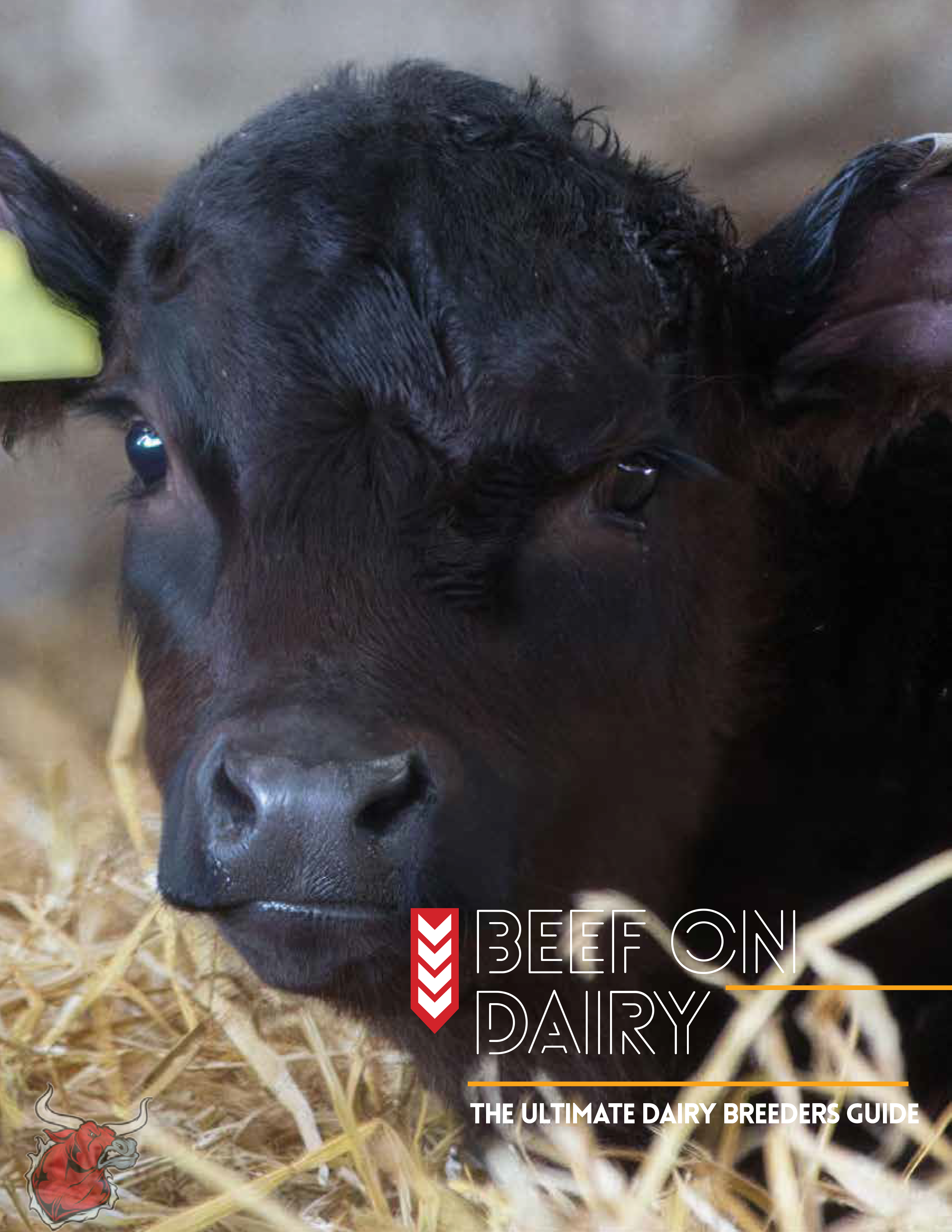
Download “The Ultimate Dairy Breeders Guide to Beef on Dairy Integration” Now!

Are you eager to discover the benefits of integrating beef genetics into your dairy herd? “The Ultimate Dairy Breeders Guide to Beef on Dairy Integration” is your key to enhancing productivity and profitability. This guide is explicitly designed for progressive dairy breeders, from choosing the best beef breeds for dairy integration to advanced genetic selection tips. Get practical management practices to elevate your breeding program. Understand the use of proven beef sires, from selection to offspring performance. Gain actionable insights through expert advice and real-world case studies. Learn about marketing, financial planning, and market assessment to maximize profitability. Dive into the world of beef-on-dairy integration. Leverage the latest genetic tools and technologies to enhance your livestock quality. By the end of this guide, you’ll make informed decisions, boost farm efficiency, and effectively diversify your business. Embark on this journey with us and unlock the full potential of your dairy herd with beef-on-dairy integration. Get Started!

Learn More:

Will the U.S. Dairy Industry Thrive? Insight into Future Milk Production and Profits

Will the U.S. dairy industry thrive? Let’s explore future trends and profit margins and what this means for dairy farmers. Can profits keep rising?

Summary: Have you been wondering why milk production seems to be stuck in a rut even though prices remain profitable? You’re not alone. The American dairy market is currently in a delicate balance, with low output and modest demand resulting in lucrative margins. Despite a 0.4% decrease in milk output in July and a reduction of 15,000 head in the U.S. dairy herd in June, component-adjusted production has increased the milk’s fat and protein content. This boost has facilitated more cheese and butter manufacturing, increasing efficiency and profitability. Factors like heifer shortages and avian influenza continue to challenge the industry. However, as feed supply interruptions decrease and the spread of bird influenza slows, milk output per cow may stabilize. With the CME futures market predicting milk prices over $20 per hundredweight, it remains a potentially profitable time for dairy farmers.

  • The American dairy market enjoys profitable margins despite low production and modest demand.
  • July saw a 0.4% decrease in milk output, with a reduction of 15,000 head in the U.S. dairy herd in June.
  • Component-adjusted production has increased milk’s fat and protein content, boosting cheese and butter manufacturing.
  • Heifer shortages and avian influenza pose ongoing challenges to the industry.
  • Stabilization in milk output per cow is possible as feed supply interruptions decrease and influenza spread slows.
  • The CME futures market predicts milk prices over $20 per hundredweight, presenting a potentially profitable period for dairy farmers.
American dairy market, low output, small demand, lucrative margins, milk production patterns, impact on revenues, dairy farmers, volatile market, milk output decrease, U.S. dairy herd, reduced size, component-adjusted production, fat and protein content, cheese manufacturing, butter manufacturing, increased yields, profitability, challenging environment, replacement heifers, avian influenza, milk supply, feed supply interruptions, avian influenza spread, stabilize milk output, boost milk output per cow, stable milk prices, CME futures market, milk prices exceeding $20 per hundredweight.

Consider owning a dairy farm where each gallon of milk may be the difference between profit and loss. The dairy market in the United States is in a precarious equilibrium, with low output and small demand, resulting in lucrative margins. But will these advantageous circumstances continue? Understanding current milk production patterns and how they affect revenues is critical for any dairy farmer hoping to remain competitive in this volatile market. Are you prepared for what comes next?

MonthMilk Production (Million Pounds)Year-over-Year ChangeComponent-Adjusted Production (% Change)
January18,400-0.6%0.8%
February17,600-0.7%0.9%
March19,000-0.5%1.1%
April18,800-0.4%1.3%
May19,200-0.3%1.2%
June18,600-0.9%1.0%
July18,500-0.4%1.4%

Challenges and Silver Linings: Understanding Current U.S. Dairy Trends

The present situation of the American dairy sector is a mixed bag, with substantial difficulties and some rays of promise. Recent statistics suggest that milk output is declining. As of July, U.S. milk output was 0.4% lower than the previous year. This is consistent with earlier projections.

The USDA has updated prior output estimates, suggesting even more significant losses. For example, June’s output was lowered initially by 1% but then amended to a 1.7% decrease. Furthermore, the size of the U.S. dairy herd was reduced by 15,000 head in June, the smallest herd size in almost four years. These data should be cautiously approached despite a minor rise of 5,000 cows between June and July. Previous studies showed comparable growth, only to eventually adjust the figures down.

Component-Adjusted Production: The Unsung Hero of Dairy Efficiency 

While “headline” milk production figures have fallen, the component-adjusted output shows a different reality. Milk’s fat and protein content has increased, facilitating cheese and butter manufacturing. For example, component-adjusted output increased by 1.4% in July despite a 0.4% decline in the headline. This sophisticated viewpoint describes the dairy industry’s present status and identifies areas with opportunities for recovery.

Understanding the dynamics of milk production requires going beyond the top-line figures. What you see published often focuses on headline milk output, quantifying the milk produced. However, there is another critical metric: component-adjusted production. This evaluates milk’s fat and protein levels, which are vital for dairy products like cheese and butter.

Why does this matter? Increased fat and protein levels increase yields for goods like cheese and butter. For example, although headline milk output may fall, component-adjusted production might rise. This increase corresponds to increased production from less milk, a considerable gain in profitability [USDA].

Milk’s fat and protein composition has continually grown over time. This is an essential consideration for dairy producers looking to optimize their productivity. Tracking headline and component-adjusted output provides a more comprehensive view of agricultural efficiency and market potential. With milk fat and protein levels increasing, your production may remain high even if milk volume decreases, keeping those cheese and butter lines running smoothly.

Challenges Facing Dairy Production 

It’s no secret that the dairy business operates in a challenging environment. The present lack of replacement heifers and the effect of avian influenza are two significant hurdles to milk supply. But how much do these elements affect milk output per cow and herd size?

  • Heifer Shortage: A Bottleneck for Growth
    Replacement heifers are critical for sustaining and growing herd levels. Their scarcity is extreme, and it is causing a bottleneck in growth. Fewer heifers imply that fewer cows are developing into milk producers, directly affecting the total milk supply. Smaller farms, which rely on purchasing heifers to support their operations, are severely affected by the shortfall. However, the situation could be better. Some closed herds rely on something other than foreign heifers and are developing methods to keep their numbers stable inside. Furthermore, enormous greenfield farms are growing to get the required cows.
  • Avian Influenza: An Unexpected Challenge
    Another unexpected problem has been avian influenza. While it mainly affects poultry, the effects also extend to dairy farms. The spread of the virus disrupts feed supply systems, affecting milk output. It’s reassuring that avian influenza spreads are decreasing, with fewer new cases being recorded lately. Nonetheless, the dairy sector remains alert, with programs such as bulk milk sampling at processing facilities being implemented to understand the virus’s presence better.
  • Impact on Milk Production Per Cow and Herd Size
    So, how does this affect milk output per cow and total herd size? The scarcity of heifers restricts herd expansion, so we may not see significant increases in cow numbers very soon. On the other hand, as feed supply interruptions decrease, the slowing spread of avian influenza may help stabilize and boost milk output per cow.

Although issues like heifer shortages and avian influenza are accurate, the dairy industry’s resilience and adaptation provide promise. By effectively negotiating these obstacles, there is potential for long-term efficiency and profitability.

What Lies Ahead for Milk Production? A Cautiously Optimistic Outlook

So, what are the prospects for milk production? Although herd growth is in the future, it will take work. Heifers are in tight, confined herds; big greenfield farms may give a silver lining. These new farms are expected to have plans for obtaining cows, which might help mitigate the heifer shortage. This potential for growth in the dairy industry should give you a sense of optimism and hope for the future.

Regionally, there is some encouraging news. Take Texas as an example. This year, they added 18,000 cows to prepare for expanded cheese production capacity. This might serve as a model for other states to follow, resulting in regional variances in cow numbers that could together increase national milk output. This regional growth should encourage and inspire you about the potential for growth in the dairy industry.

But let us speak about milk yield per cow. I’m cautiously hopeful here. While avian influenza has been a drag, its expansion looks to be decreasing. This, paired with reduced feed costs, puts us in a better position to improve. Higher fat and protein levels are also beneficial. Component-adjusted output has increased, which is great news for cheese and butter.

Barring unexpected problems, the future seems reasonably bright. If margins remain strong through herd expansion or per-cow improvements, farmers will find methods to increase output levels. Finally, this balanced market may continue to provide solid margins and more excellent prospects for profitability. This reassurance about the dairy industry’s future should make you feel secure and confident in your business.

A Sweet Financial Spot: Corn Prices and Milk Futures Point to Profitable Margins 

The dairy industry’s economics are complicated, particularly given the importance of feed costs and milk pricing. Lower feed prices have relieved some of the burden on farmers’ budgets lately. For example, maize futures are below $4 per bushel, lowering input prices. This significant decline in feed costs provides a financial buffer, enabling farmers to fine-tune their feeds and increase milk output without exceeding their budgets.

In contrast, milk prices have remained stable and lucrative. The CME futures market has predicted milk prices exceeding $20 per hundredweight. These strong pricing and low feed costs provide a golden spot for profit margins. Farmers can better handle operating expenditures and even reinvest in their fields.

Given these favorable margins, dairy producers are incentivized to increase output. Whether it’s boosting milk per cow, extending their herds, or increasing fat and protein content, the financial circumstances are ideal for expansion. When margins are thus good, farmers often discover efficient methods to increase production and profit under market circumstances.

As we negotiate these economic concerns, it is essential to monitor key market indicators regularly. If current trends continue, the dairy sector may witness continuous increases in productivity and profitability, portraying a positive picture for the future.

Global Market Dynamics: The Hidden Influences on Your Dairy Farm 

Global market dynamics significantly impact the U.S. dairy industry. International trade agreements, tariffs, and patterns in overseas milk production may all substantially influence U.S. dairy product pricing and demand.

Take trade deals first. These might help American dairy products break into previously difficult-to-enter markets. For example, the United States-Mexico-Canada Agreement (USMCA) provided more stability and improved access to Canadian and Mexican markets. This access immediately translates into new cash sources and expanded markets for American dairy producers.

However, the ride is only sometimes smooth. Tariffs have the potential to be both beneficial and detrimental. For example, trade disputes with China resulted in retaliatory tariffs on U.S. dairy exports, increasing the cost of American goods and making them less competitive in one of the world’s major marketplaces. This kind of restriction may stifle export development and hinder long-term planning.

Furthermore, global milk production patterns must be noticed. The international market becomes more competitive when nations such as New Zealand and the European Union boost their milk output. This puts pressure on U.S. dairy export prices as more excellent milk supply competes for the same demand.

However, don’t be discouraged. There are bright spots on the horizon. The Middle East and Southeast Asia are seeing expanding middle-class populations and increased dairy product consumption. Tapping into these markets may lead to significant growth prospects. The goal is to navigate the intricate web of global trade policies efficiently.

While worldwide competition creates obstacles, it also fosters innovation and efficiency. Because of modern technology and managerial approaches, U.S. dairy businesses are among the most productive in the world. Leveraging this competitive advantage will be critical in the global game.

So, when you plan, keep an eye on the worldwide market. Your capacity to react to worldwide trends and regulations may significantly impact your profitability and long-term success.

The Bottom Line

The dairy business in the United States has reached a crisis point. Milk production has fallen lately, but the component-adjusted output growth presents a more positive picture. Feed prices are decreasing, providing a profit margin for farmers. Despite constraints such as a tight heifer market and avian influenza, expansion prospects exist. If we adapt and use existing situations, the future can be bright.

With promising profit margins and innovations on the horizon, can we boost the U.S. dairy sector to new heights together? The potential is there; it is only a question of realizing it. What are your next steps to ensure your farm’s success?

Learn more:

Join the Revolution!

Bullvine Daily is your essential e-zine for staying ahead in the dairy industry. With over 30,000 subscribers, we bring you the week’s top news, helping you manage tasks efficiently. Stay informed about milk production, tech adoption, and more, so you can concentrate on your dairy operations. 

NewsSubscribe
First
Last
Consent
Send this to a friend