







Small farm. Big dreams. Historic achievement. How 72 cows beat every Holstein powerhouse on Earth—twice.

Look, I get it. When you hear a tie-stall operation from Saskatchewan—Saskatchewan!—just bred their second World Dairy Expo Grand Champion, your first thought is probably “that can’t be right.” Mine was too.
But here’s what nobody in the industry wants to admit: While their fancy mating programs and big marketing budgets were chasing genomic rabbits down expensive holes, Michael and Jessica Lovich were quietly proving that old-school cow sense still beats computer algorithms.
And while they don’t have the purple banners to show for it—those hang in other people’s barns—they’ve got something better: their prefix in the history books.
The Day That Changed Everything (Again)
October 3, 2025. Michael Lovich was in the stands at World Dairy Expo, his heart feeling like it was gonna pop out of his chest.
You know that spot, right where you can see everything? That’s where he sat, watching Judge Aaron Eaton work through that incredible five-year-old class. You’d think after breeding one WDE champion a decade earlier, he’d have nerves of steel.
Not even close.
“I was probably the most nervous guy in the barn because I was shaking so bad I couldn’t even hold my phone for pictures,” he told me later.
Back home near Balgonie—that’s about 30 minutes east of Regina, for those keeping track—Jessica had given up pretending to eat lunch. She was puttering around the kitchen, laptop streaming the show, while their three daughters huddled around various screens in their car at school. The smell of morning silage still hung in the air from chores, mixing with untouched sandwiches.
School? Yeah, they got permission to skip class. Some things matter more than algebra.
“Somebody tapped me and said, ‘Are you happy?'” Michael recalls about that first pull. “I said, ‘Nope, not until we’re in the final lineup.’ There’s no sitting down until he does his reasons, and we get the nod for first place. It’s only the first pull.”
That’s the difference between people who’ve been there and wannabes. Michael knew that the first pull meant nothing, as he had changed his mind several times earlier in the day. But the judge, Aaron Eaton, had made up his mind, as he would say in his reasons: “When she came in the ring, it was game over.”
And let me tell you, in a class that deep—every single cow could’ve been champion at most other shows—nothing was guaranteed.
The Ornery Heifer Nobody Else Wanted
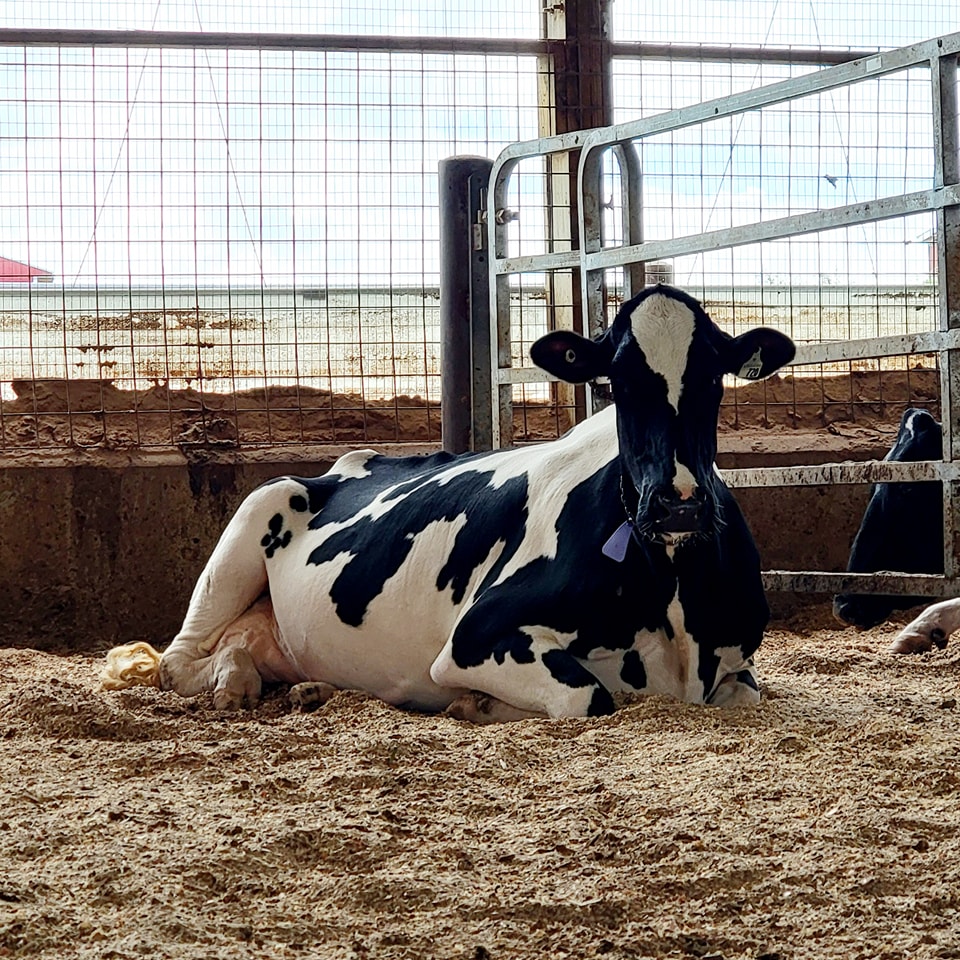
Here’s the kicker about Kandy Cane: she wasn’t even supposed to be their keeper.
“She was always that cow,” Jessica laughs, and if you’ve ever had one of those in your barn, you know exactly what she means. Born October 20, 2020, headstrong from day one. The kind that makes you check the calendar when she’s due to calve because you know she’ll pick the worst possible night.
They’d actually assigned her as a 4-H project calf to a local town kid. Their own daughters picked different heifers—ones that looked more promising, walked better, didn’t fight you every step to the milk house.
But Jessica’s dad saw something when she was boarding at his place in Alberta: he spotted her out on the pasture as a bred heifer, standing apart from the others, her deep body already showing, even though she was immature.
“He’s like, ‘I really like that heifer. Who is she? What is she? How much do you want for her?'” Jessica remembers.
“She’s not for sale, Dad. She’s got to come home.”
Fast forward to Saskatoon Dairy Expo 2024. Kandy Cane’s being her usual difficult self in the ring—with the Lovichs themselves trying to keep her moving forward. Interested buyers approach with decent offers—we’re talking decent money, the kind that pays for half a year’s worth of grain—but not quite what they were asking.
Then boom—she wins the four-year-old class.
After that win, suddenly everyone wanted to pay. Michael’s response? “That’s like betting on a hockey game and waiting for the third period to be done before you place your bet.”
Price had gone up.
Most walked away. But when the Lambs from Oakfield, New York, finally came calling—after a fateful bus conversation would seal the deal—they paid it.
The Partnership That Actually Worked
The real magic started on a bus, of all places.
You know those convention buses—too hot, smells like coffee and exhaustion. Michael found himself sitting next to Jonathan Lamb, heading to a Master Breeder banquet during the 2024 National Holstein Convention.
They got to talking—not about indexes or genomics, but about honest cows. Real cows. The kind that work in anybody’s barn, whether you’re milking in a brand-new rotary or your grandfather’s tie-stalls.
That conversation planted the seed. When the Lambs decided they wanted Kandy Cane after Saskatoon, the relationship was already there. The trust was built.
“The coolest part of the whole Kandy Cane story?” Jessica tells me. “We gained a friendship out of the deal.”
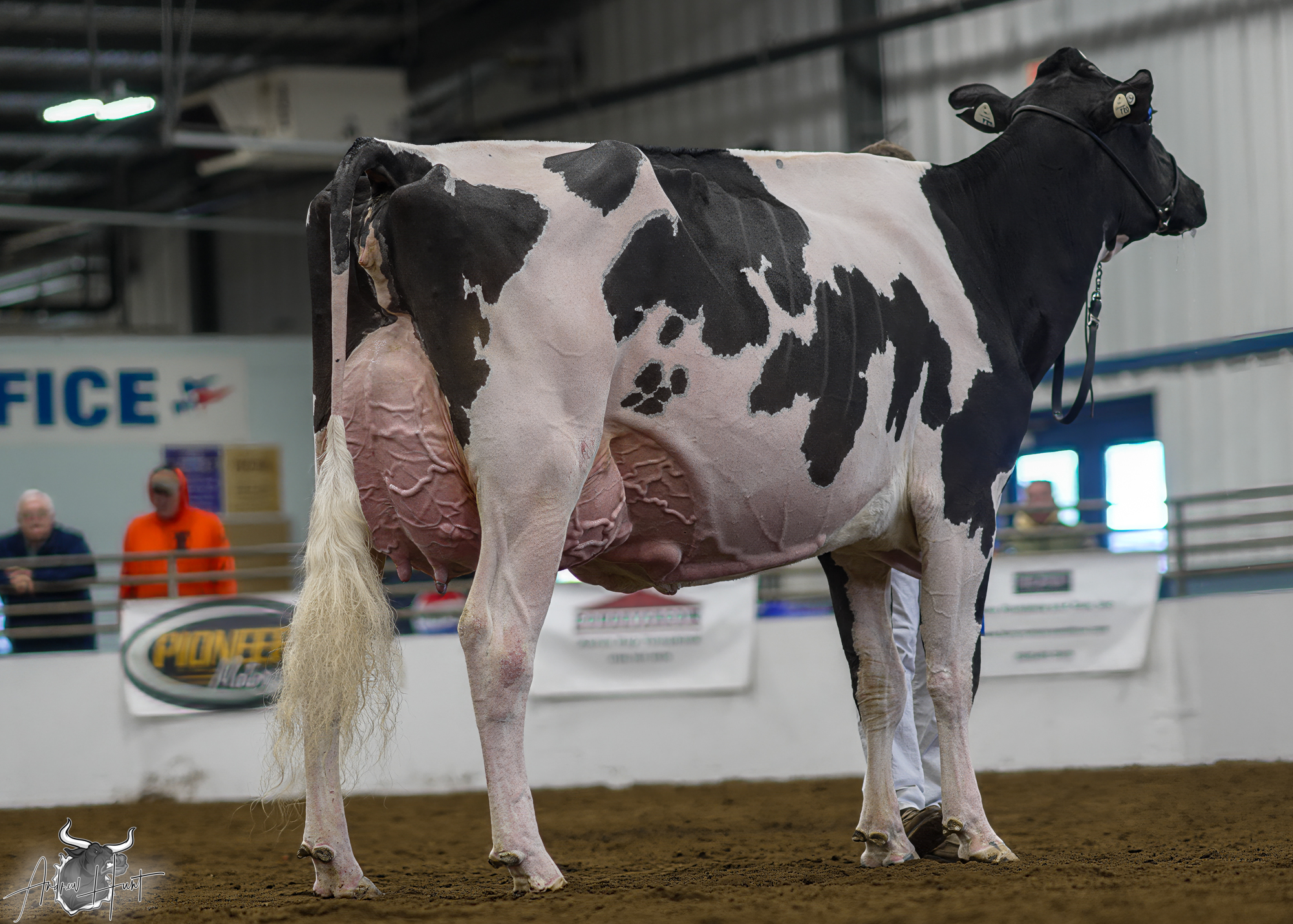
Under the Lambs’ management, with Jamie Black finally getting his hands on the halter, Kandy Cane transformed. She filled out, gained that bloom that separates good cows from champions. The kind of condition where the hair shines like silk, and every step looks purposeful.
But here’s what matters: she stayed honest.
The Breeding Philosophy Nobody Wants to Hear

“Genomics? What are those?” Michael jokes when I ask about his breeding strategy.
Except it’s not really a joke.
“Cow families are probably number one,” Michael states flatly. “If I don’t like the cow family the bull comes from, we won’t use him. When I see bulls that are out of three unscored dams, I don’t care what the numbers are.”
Think about that for a second. In October 2025, when we have genomic testing on 10 million cattle globally and everyone’s breeding for indexes that change every four months, these individuals are breeding the way their parents (Ev and Marylee Simanton and Garry and Dianne Lovich) and their closest mentors taught them twenty years ago.
And they’re beating everyone.
The Lovichs’ cows typically have an average productive lifespan of 8-10 years. Industry average? Four to five, if you’re lucky. That’s five extra years of milk checks versus the cost of replacement. Do the math on that ROI—it’s not about peak lactation, it’s about lifetime profitability.
Saskatchewan: The Last Place You’d Look (Which Is Why It Works)
When Michael and Jessica left Alberta in 2015 to buy Prairie Diamond Farm, people thought they were crazy. Leaving established dairy country for… Saskatchewan?
The succession plan with Michael’s parents hadn’t worked out. “We don’t dwell on it,” Jessica says diplomatically. “And you know what? Maybe it was the best move that could have ever happened to us.”
Saskatchewan offered something unexpected: freedom to farm their way.
The Dairy Entrant Assistance Program gave them 20 kilos of free quota if they matched it. The Strudwick farm was available, and they were seeking someone to carry on their legacy.
“People think we’re out here on the prairies completely alone,” Jessica explains. “But there’s 10 or 12 of us that are quite close together. We help each other. And a three-hour drive to go visit a friend? That’s nothing.”
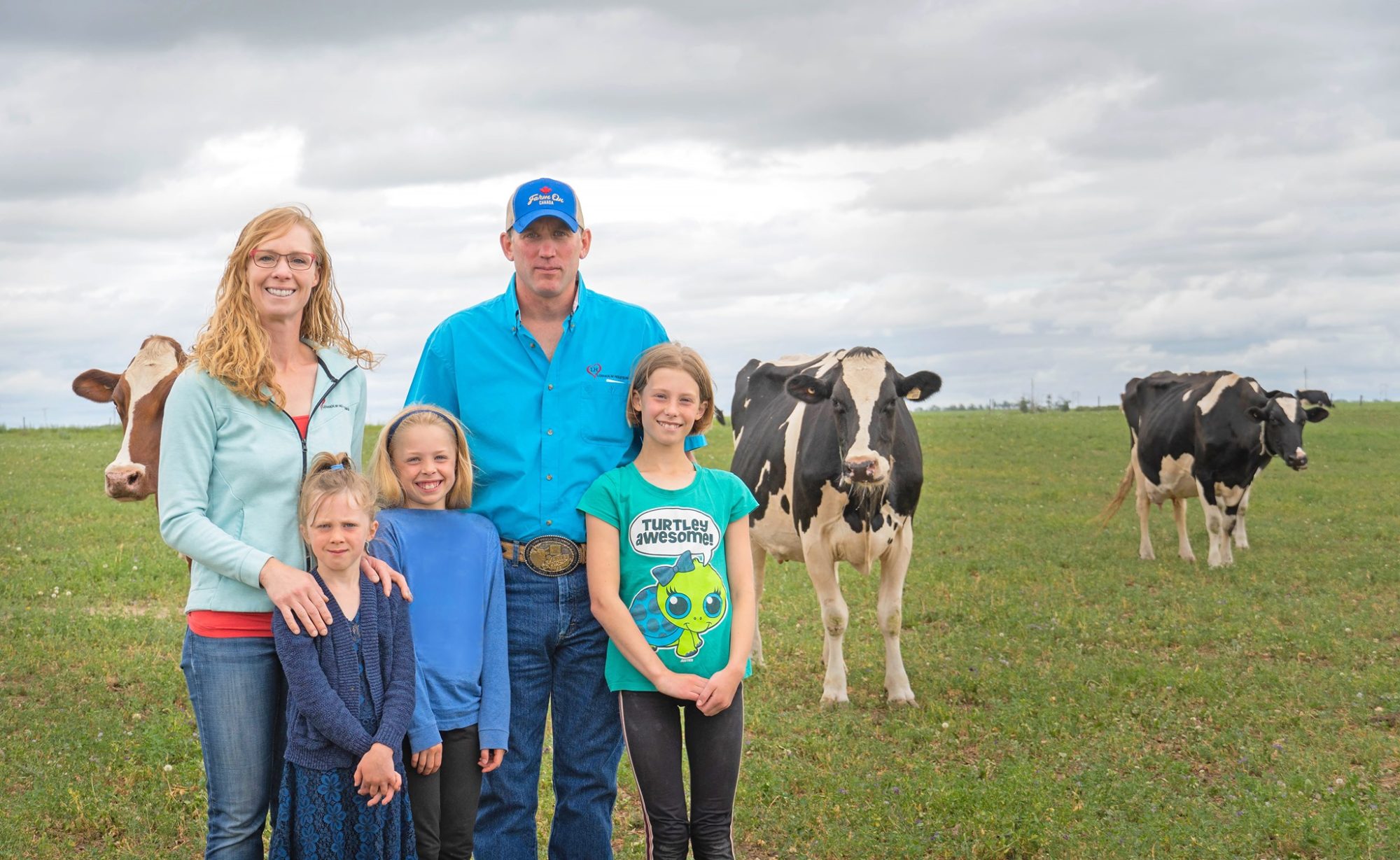
Here’s what gets me: 72 cows in tie-stalls. Every cow gets individual attention. Nobody’s pushing for 40,000-pound lactations that burn cows out by third calving.
They’re growing as much of their own feed as possible on 500 acres. Selling some straw and compost to neighbors. Building a sustainable operation that works with the land, not against it.
Three Daughters and the Farm’s Future
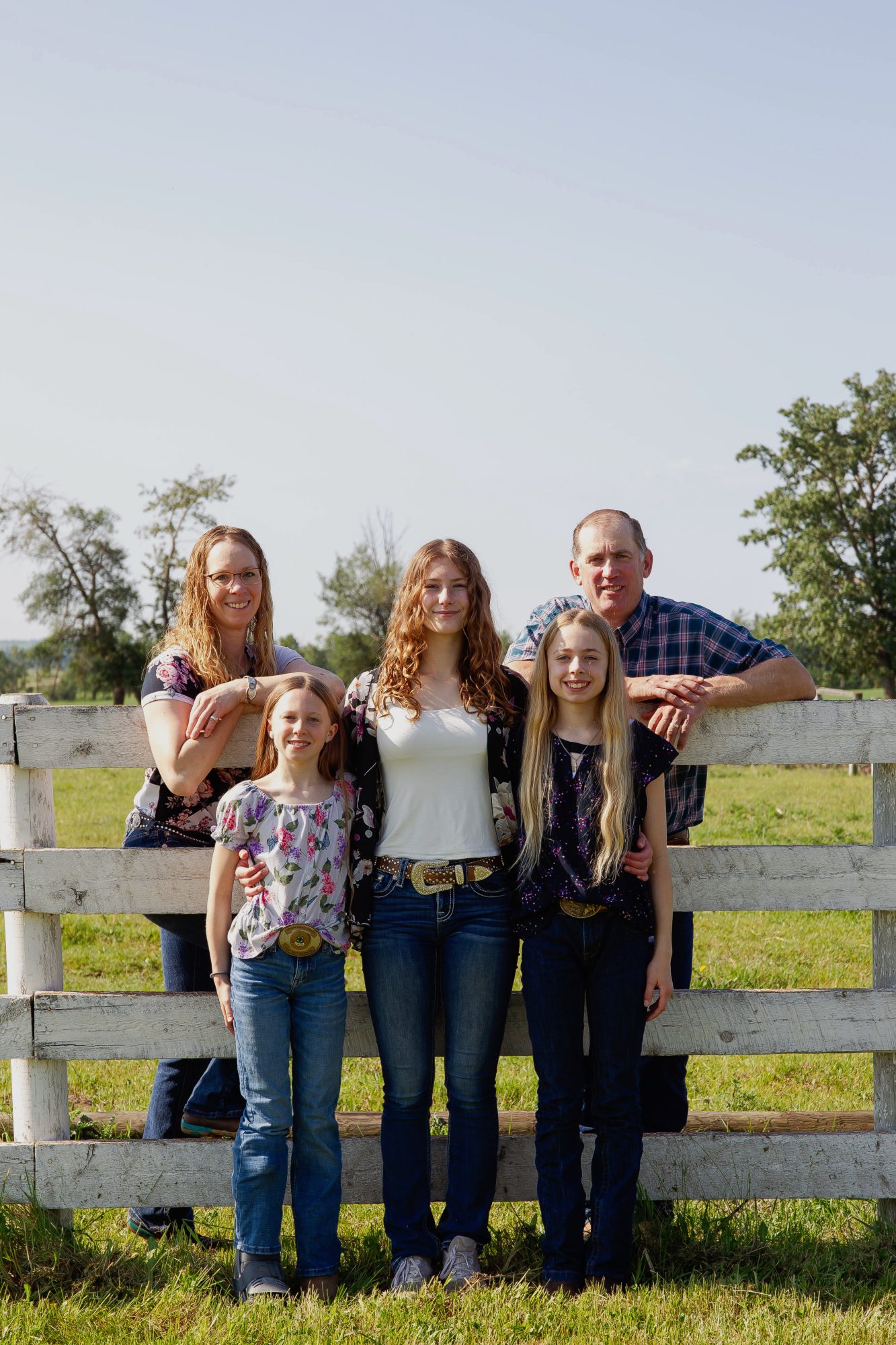
The Lovich girls—Reata, Renelle, and Raelyn—aren’t just farm kids. They’re the next generation of this breeding philosophy.
“It’s a matter of survival around here,” Jessica laughs. “If you’re not in the barn doing chores, you’re in the kitchen cooking supper.”
Reata’s planning to be the farm vet. Renelle will handle the cropping. Raelyn? She’s already declared herself future farm manager “because she knows all the cows already.”
They’ve got their own cattle—including a Jersey their Uncle Jon and Auntie Sandy sent for Christmas. “Now I’ve got to keep Jersey semen in the tank,” Michael grumbles, but you can see he’s proud.
When Kandy Cane won at Expo? They were crying, they were laughing, they were super excited,” Jessica recalls. “They’ve been coming with me to shows since they were born. They’ve slept on hay bales at shows for 14, 16 years.”
These kids aren’t learning dairy from textbooks. They’re learning it at 5 a.m. before school, one cow at a time.
The Faith Component Nobody Talks About
“You can’t take any of this with you when you leave this earth,” Jessica says, and she means it. “But all of it can be taken from you in an instant. So every day, we just give God the glory.”
It is evident in how they conduct business. They price cattle fairly. Sell to people who’ll treat them right. Maintain relationships long after cheques clear.
When Jessica mentions that Jonathan Lamb “just happened” to sit next to Michael on that bus? She sees providence.
Either way, it worked.
The Numbers That Should Terrify Every Mega-Dairy
Let’s talk brass tacks. In a 72-cow herd, the Lovichs have built this:
LOVHOLM BY THE NUMBERS:
- 19 Multiple Excellent cows
- 14 Excellent
- 38 Very Good
- 11 Good Plus
- 2025: 1 Super 3
- 12 Superior Lactations
- 12 * Brood Cows
- 11 Longtime production awards, including 1- 120 000kg
- Average productive life: 8-10 years (vs. 4-5 industry average)
- 2 World Dairy Expo Grand Champions bred
- 72 total milking cows
Bulls like Sidekick were used—not because of genomics, but because “he had what we figured we needed.”
That’s the difference. They’re breeding for their barn, their management, their future. Not for some index that’ll change next proof run.
What This Really Means (The Part That’ll Piss People Off)
Two World Dairy Expo Grand Champions from one prefix. Nobody else has done it.
Not the operations that have been breeding Holsteins for 100 years. Not the genetic companies with donor programs. Not the show string specialists.
A 72-cow tie-stall farm in Saskatchewan did it. Twice.
The industry’s consolidating faster than ever. Three farms close daily, while mega-dairies expand. Operations with 2,500+ cows control nearly half of milk production.
But when you can breed cows that last twice as long? Your economics change completely.
Lower overhead. Fewer replacements. Less transition cow drama.
Suddenly, that 72-cow operation doesn’t look so backward.
The Morning After Nothing Changed (Everything Changed)
The morning after Kandy Cane won, Jessica was back in the barn at 5 a.m. with the girls. Michael was still in Madison, probably hadn’t slept.
But back home? Same 72 cows needing milked. Same routine.
“For all the acclaim we have, we still don’t have a grand champion banner hanging anywhere on our farm,” Jessica points out.
No bitterness. Just a fact.
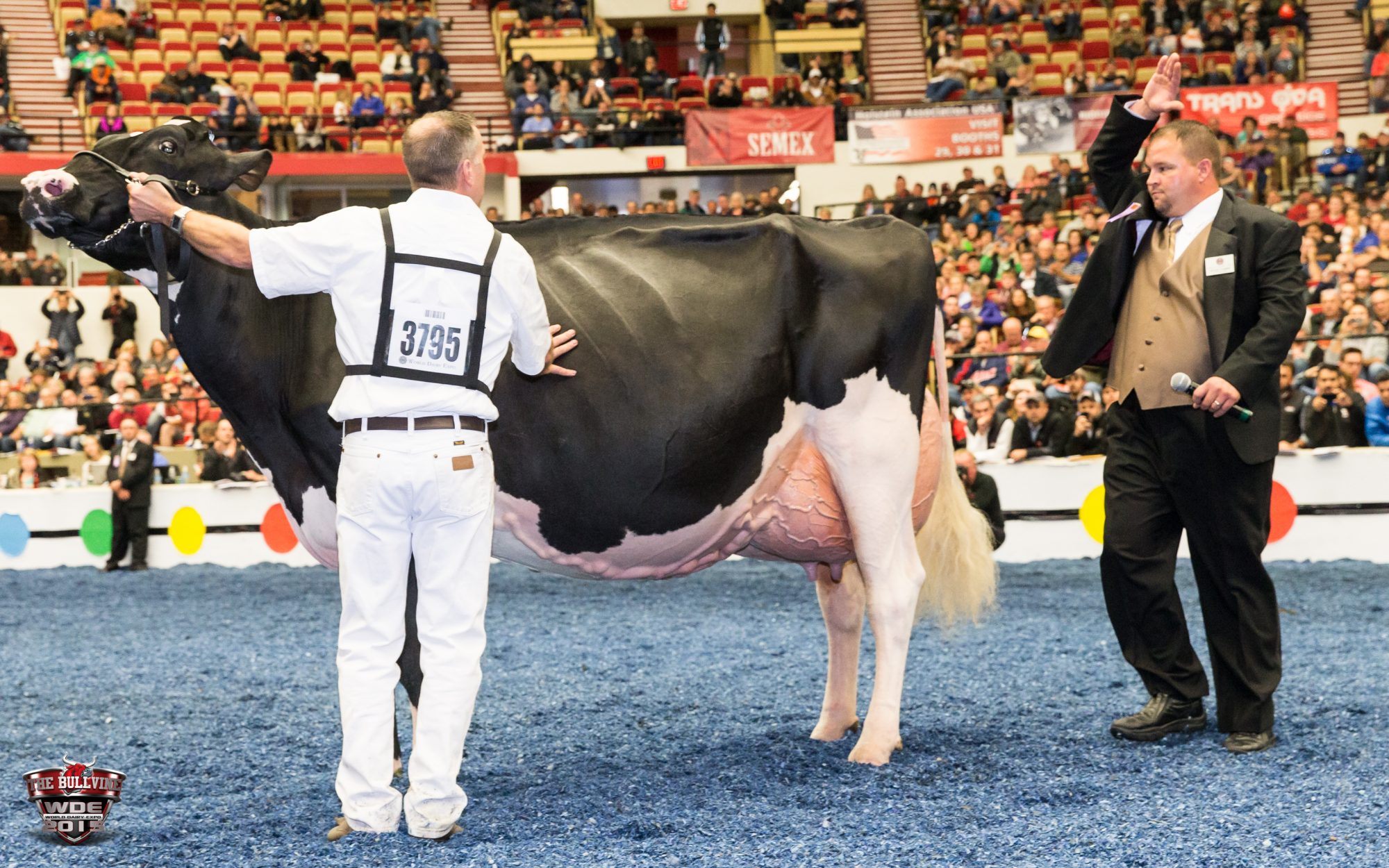
Both champions’ banners hang in other people’s barns. Kandy Cane’s purple and gold heads to New York. Katrysha’s from 2015? Hangs proudly at MilkSource Genetics.
They bred Holstein history twice, but don’t have the banners. Because sometimes you sell your best to keep the lights on. That’s dairy farming in 2025.
But breeding great cattle is its own reward. The Lovholm name in those pedigrees? Worth more than any banner.
So What’s Next?
“Is there a third one coming?” I had to ask.
Jessica laughed. “We always got to dream bigger, right?”
Then she got serious: “We want to keep breeding functional cows. Cows we enjoy milking. Cows that can maybe have a little bit of fun at shows.”
Not world-beaters. Not genomic wonders.
Functional cows.
And that’s exactly why they’ll probably breed another champion.
The Lesson Nobody Wants to Learn
Here’s what bothers me: We all know this story. Small farm beats big guys. David and Goliath, dairy edition.
We love these stories at Expo, standing around at 2 a.m. with a beer, talking about the good old days.
But come Monday morning? We go right back to chasing the newest index. The hottest sire. The genomic flavor of the month.
The Lovichs aren’t just breeding better cows. They’re proving there’s another way.
Not backwards. Different. Focused on what actually matters when you’re trying to make a living milking cows.
You want to know why a 72-cow farm just schooled the entire Holstein industry?
Because they were actually farming. Not playing a genetic lottery. Not building cow factories. Farming.
And twice now, when the best cattle in the world stood in Madison, their way won.
The Walk We All Need to Take
The longest walk isn’t from barn to show ring. It’s from yesterday’s assumptions to tomorrow’s reality.
Michael and Jessica Lovich have walked it twice. With Saskatchewan stubbornness and the radical belief that good cows, raised right, still matter most.
The question isn’t whether they’ll breed a third champion. They probably will.
The question is whether the rest of us will finally realize what they’ve been showing us: Sometimes the future of dairy farming looks a lot like its past.
Just with better cattle, stronger families, and the courage to trust what you see in your barn more than what you read on a screen.
And if a 72-cow farm from Saskatchewan can breed two World Champions by ignoring what everyone else is doing, maybe we’ve all been looking in the wrong places.
KEY TAKEAWAYS
- First in History: Lovholm is the ONLY prefix to breed 2 World Dairy Expo Holstein Grand Champions—from a 72-cow tie-stall operation in Saskatchewan
- Longevity = Profitability: Their 8-10-year productive average vs. the industry standard of 4-5 means 2x the lifetime profit per cow. Do that math on your replacements.
- Banners vs. Legacy: They sold both champions to survive and don’t own the banners—but “Lovholm” in those pedigrees forever proves that excellence transcends ownership
- Your Wake-Up Call: If a 72-cow farm can beat every unlimited-budget operation twice, maybe it’s time to stop looking at screens and start looking at cows
EXECUTIVE SUMMARY
What farmers are discovering through the Lovich story: everything you think you know about breeding champions is wrong. Michael and Jessica Lovich just became the first and only breeders to produce TWO different World Dairy Expo Holstein Grand Champions—from a 72-cow tie-stall operation in Saskatchewan. They achieved this by completely rejecting genomics in favor of cow families and visual appraisal, the same approach their parents taught them 20 years ago. Their cows average 8-10 productive years, versus the industry standard of 4-5, transforming the economics of their operation through longevity rather than peak production. Despite having to sell both champions to keep their farm afloat (the banners hang in other barns), the Lovholm prefix now stands alone in Holstein history. While the industry consolidates into mega-dairies chasing quarterly genomic updates, this couple proved that 72 cows, managed right, can beat operations with unlimited budgets—twice.
Learn More:
- The Maternal Mastermind: How Douglas Dunton’s Breeding Philosophy Revolutionized Holstein Genetics – This profile provides a tactical playbook for implementing a breeding program focused on maternal lines and patient development. It demonstrates how to build profitable, sustainable herds by prioritizing cow families and balanced traits over chasing fleeting genomic numbers.
- The Red & White Revolution: Molly Westwood’s Journey Building Panda Holsteins – This case study reveals an innovative business strategy for a small herd, focusing on elite genetics and embryo sales over milk production. It shows how integrating robotic technology can enable a one-person operation to achieve global market influence and profitability.
 Join the Revolution!
 Join the Revolution!
Join over 30,000 successful dairy professionals who rely on Bullvine Weekly for their competitive edge. Delivered directly to your inbox each week, our exclusive industry insights help you make smarter decisions while saving precious hours every week. Never miss critical updates on milk production trends, breakthrough technologies, and profit-boosting strategies that top producers are already implementing. Subscribe now to transform your dairy operation’s efficiency and profitability—your future success is just one click away.




