



Archive for milk pricing strategy

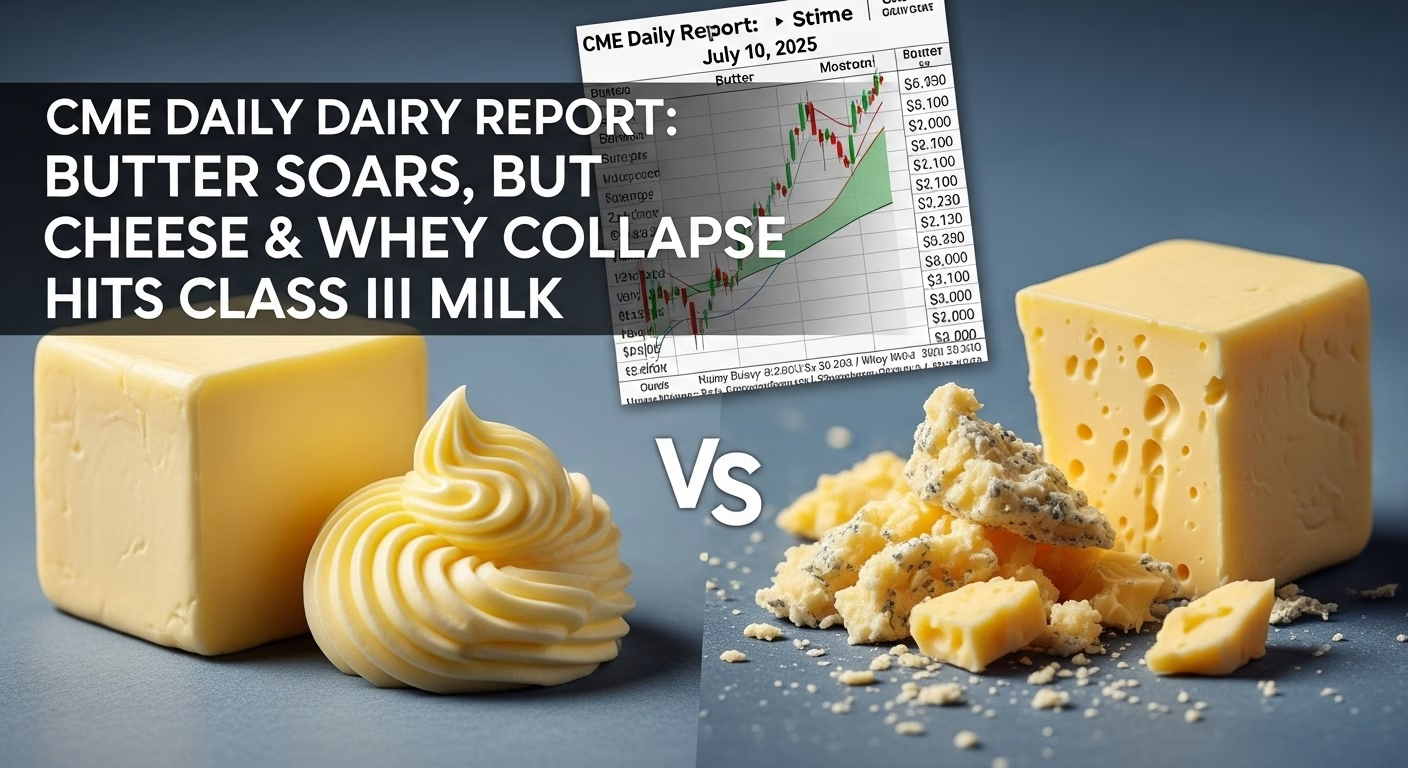
CME Daily Dairy Report: July 10, 2025 – Butter Soars, But Cheese & Whey Collapse Hits Class III Milk

Butter just jumped 2.75¢ while cheese tanked – your component mix could mean $1.20/cwt difference in your milk check this month.
dairy market analysis, component management, CME dairy prices, milk pricing strategy, dairy profitability

EXECUTIVE SUMMARY: Grabbed my coffee this morning and saw something that’ll make you rethink everything about your operation. Component management isn’t just nice-to-have anymore – it’s literally the difference between profit and breaking even in 2025’s market reality. Today’s numbers tell the whole story: butter rocketed up 2.75¢ to $2.59/lb while cheese blocks and barrels both took a beating, and dry whey? Don’t even get me started – down 2.75¢ in one session. With your milk-to-feed ratio sitting at a tight 2.21 (way below that comfortable 2.5-3.0 range), every component point matters more than it has in years. The Class III/IV spread is widening fast, and farms with strong butterfat genetics are literally banking an extra $1.20/cwt compared to their protein-heavy neighbors. Global production’s up 1.6%, new FMMO rules just kicked in last month, and processors are flush with cheese inventory… but here’s the kicker – they’re still bidding hard for butterfat. You need to start thinking like a component manager, not just a milk producer.

KEY TAKEAWAYS:

  • Lock in that Class IV premium now – With futures above $19.00 and butter strength holding, high-butterfat producers should forward contract 25-30% of Q4 production immediately. That’s potentially $380 extra per cow annually.
  • Feed efficiency beats total volume – Your 2.21 milk-to-feed ratio means every pound of milk costs $0.45 in feed. Focus genomic selection on butterfat percentage and feed conversion – not just total production. Smart money’s on cows that convert cheaper.
  • Component testing pays for itself – Install real-time component monitoring if you haven’t already. With the new FMMO pricing formula effective since June, knowing your daily fat/protein split gives you pricing power your co-op neighbors don’t have.
  • Hedge your protein exposure – Cheese markets are heavy and whey just collapsed. If you’re protein-heavy, grab some Dairy Revenue Protection or Class III puts for August-October milk. Don’t ride this one out naked.
Today’s price changes for CME dairy products on July 10, 2025, highlighting positive and negative moves

Look, I’ve been watching these markets for twenty years, and today’s action isn’t just a blip. It’s the new reality where your genetic choices from three years ago determine whether you’re profitable today. Time to act like it.

Today’s trading session delivered a classic tale of two dairy classes, with butter surging 2.75¢ to $2.59/lb while the cheese complex took a beating that’s going to sting your Class III returns. Both cheese blocks and barrels fell, with dry whey getting hammered for a 2.75¢ drop.

Bottom line for your operation: The weakness in cheese and whey is putting direct pressure on your upcoming milk checks. While that butter rally is welcome news for Class IV producers, the heavier weighting of cheese in the Class III formula means today’s slide hurts more than the butter strength helps your overall milk price.

Today’s Price Action: Component Divergence in Full Display

Five-day price trends showing butter strength versus cheese and whey weakness

The market delivered a clear message today – butterfat is king, but protein markets are struggling. This divergence is widening the gap between Class III and Class IV values, making your component mix more important than ever.

ProductClosing PriceToday’s Move5-Day ChangeReal Impact on Your Farm
Cheese Blocks$1.6850/lb-1.00¢-1.56¢ (-0.9%)Puts downward pressure on Class III price
Cheese Barrels$1.7100/lb-1.75¢+0.38¢ (+0.3%)Weakness will be felt in the milk check
Butter$2.5900/lb+2.75¢+0.06¢ (+0.02%)Provides solid support for the Class IV price
NDM Grade A$1.2650/lb-0.25¢+0.62¢ (+0.5%)Holding relatively steady, exports are key
Dry Whey$0.5625/lb-2.75¢-0.94¢ (-1.6%)Significant drop adds to Class III weakness

Market Commentary

Today’s story is all about the components. The butter market continues to find buyers, driven by steady domestic demand from retailers and food service as the summer progresses. Processors are bidding actively to keep churns running, and that 2.75¢ jump shows real conviction.

However, the cheese complex is feeling heavy. Strong milk production nationwide means cheese vats are full, and with 21 loads of blocks trading today, sellers were clearly motivated to move product. While barrel cheese is no longer used in the Class III pricing formula under the new FMMO rules, its price remains a key indicator of bulk cheese supply and market sentiment. The significant 2.75¢ drop in dry whey is also a major headwind for the Class III price, suggesting that inventories are ample and buyers can afford to be picky.

This divergence will likely keep the Class III/IV spread wide, favoring farms with higher butterfat production.

Trading Floor Intelligence & Market Mechanics

Bid/Ask Spreads

In the cheese markets, the bid-ask spread was relatively tight, with five bids and no offers for blocks at the close, indicating that sellers were aggressive and found their price. The butter market exhibited a wider spread, with four bids and eight offers, suggesting that some sellers were holding out for higher prices, but buyers weren’t willing to chase them much further after the initial run-up.

Trading Volume

Cheese volume was robust, with 21 loads of blocks and six loads of barrels changing hands. This relatively high volume on a down day gives more weight to the negative price move, suggesting it has some fundamental backing. Butter volume was lighter at six loads, indicating the price move higher may have been on less conviction than the drop in cheese.

Intraday Patterns

Cheese prices were soft throughout the session. The selling wasn’t a last-minute dump but rather a steady drip of offers that overwhelmed the bids. Butter, conversely, saw its strength early in the session and held those gains into the close.

Global Market Competitive Landscape

International Production Watch

  • EU: Milk production remains tight, with forecasts indicating a slight year-over-year decline due to environmental regulations and squeezed farmer margins. This provides a supportive backdrop for global dairy prices.
  • New Zealand: Fonterra announced its 2025-26 farmgate milk price forecast at $10.00 per kilogram of milk solids, with a range of $8.00 to $11.00. This strong forecast reflects ongoing robust global demand for dairy products, particularly in Asia-Pacific markets.

Where We Stand Globally

U.S. butter prices are currently competitive; however, our cheese prices are facing pressure from global supply. The U.S. Dollar has been trading in a range against major currencies, but any strengthening makes our exports more expensive for foreign buyers, a potential headwind we’re monitoring closely.

Feed Costs & Your Bottom Line

Feed futures were mixed today, offering little relief to your margins, especially with the pressure on Class III milk.

  • Corn (Dec ’25): $4.16/bu
  • Soybean Meal (Dec ’25): $285.30/ton
  • Premium Alfalfa Hay: ~$300/ton (regional average)

Milk-to-Feed Ratio

Based on today’s July Class III future of $17.39 and current feed prices, the milk-to-feed ratio sits at approximately 2.21. This is a tight number, below the 2.5-3.0 range generally considered necessary to cover all costs and generate a profit. It highlights the importance of managing feed costs and capitalizing on favorable milk prices when they arise.

Production & Supply Reality Check

The latest USDA Milk Production report showed U.S. milk production up 1.6% year-over-year in May 2025, reaching 19.93 billion pounds. The national dairy herd grew to 9.455 million head, up 114,000 from May 2024. This steady, albeit modest, growth in supply is enough to keep cheese vats and processing plants well-supplied, preventing any major supply-driven price spikes for now.

Production per cow averaged 2,110 pounds in May, up 7 pounds from the previous year. Favorable weather in key dairy regions has supported this production trend, but it’s also contributing to the pressure we’re seeing in the cheese markets.

What’s Really Driving These Prices

Domestic Demand

Retail butter demand is seasonally solid. Food service is stable. However, cheese inventories at the processing level appear more than adequate, leading to the softer prices we saw today.

Export Markets

  • Mexico remains our most critical export partner, although recent reports indicate some volatility in shipment volumes.
  • Southeast Asia: A key battleground for NDM and whey against New Zealand and the EU. Demand growth is present, but these markets remain price-sensitive.
  • China: Continued weakness in Chinese demand for powders and whey has been a major bearish factor. Today’s weakness in whey directly reflects this global reality.

Forward-Looking Analysis

USDA Projections

USDA’s June 2025 World Agricultural Supply and Demand Estimates raised dairy product price forecasts: cheese to $1.86/lb (up 2¢), butter to $2.535/lb (up 7.5¢), and dry whey to 56.5¢/lb (up 3¢). The 2025 all-milk price forecast was increased based on recent price strength.

Futures Market Guidance

  • Class III (Jul): Settled at $17.39/cwt. The market is pricing in the weakness from the spot cheese and whey markets.
  • Class IV (Jul): Settled at $19.01/cwt. The futures market clearly reflects the strength in butter and shows a significant premium over Class III.

Hedging Opportunities

The current spread between Class III and IV offers a clear signal. If your milk is heavily weighted to protein, consider strategies to protect your floor price. If you have high butterfat, the Class IV futures offer an attractive level to lock in prices.

Regional Spotlight: Upper Midwest

In Wisconsin and Minnesota, milk production is in its seasonal stride. The region continues to be a major contributor to the 1.6% national production increase, with favorable weather leading to good forage quality and strong milk flows. This ample supply is a key reason for the pressure on the spot cheese market, as a significant portion of the region’s milk is directly converted into cheese.

The local basis remains relatively stable, but a drop in the CME spot price will be felt in producer checks if it persists.

What Farmers Should Do Now

Review Your Hedges

With Class III weakening, now is the time to ensure you have downside protection. Look at Dairy Revenue Protection (DRP) or put options on Class III futures to establish a price floor for your third and fourth-quarter milk.

Talk to Your Nutritionist

The wide Class IV-III spread means butterfat is king. Work with your nutritionist to see if there are cost-effective ways to optimize butterfat components in your herd.

Price Your Class IV Milk

If you haven’t priced any of your second-half Class IV milk, the futures market is offering attractive levels above $19.00. Consider layering in some forward contracts to lock in these strong prices for a portion of your production.

Industry Intelligence

Processing Plant Expansion

Lactalis USA recently announced a $75 million investment in its New York facilities, including $60 million for the Buffalo plant to increase ricotta and mozzarella production by 37 million pounds annually, and $15 million for the Walton facility to boost cottage cheese and sour cream output by 30%. These facilities process milk from 236 area farms, demonstrating continued processor confidence in demand growth.

Regulatory Update

The Federal Milk Marketing Order reforms became effective June 1, 2025. Key changes include elimination of barrel cheese from pricing formulas (using only block cheese), increased make allowances, and revised Class I pricing mechanisms. These changes will impact how your milk is priced starting with June milk marketings.

Put Today in Context

Today’s drop in cheese prices broke the market out of its recent sideways channel. While the 5-day trend shows mixed results, the move today was significant because of the high volume, suggesting a potential shift in sentiment.

The divergence between butter and cheese has been a recurring theme this year, but it was particularly pronounced today. This isn’t just market noise – it’s a fundamental statement about the current supply and demand for different dairy components.

The message is clear: Component management is more critical than ever. Know your milk’s fat and protein percentages, understand how they translate to Class III versus Class IV pricing, and manage your risk accordingly. With milk production continuing to grow at a rate of 1.6% annually and new processing capacity coming online, staying ahead of market signals will be crucial for maintaining profitability.

Complete references and supporting documentation are available upon request by contacting the editorial team at editor@thebullvine.com.

Learn More:

Join the Revolution!

Join over 30,000 successful dairy professionals who rely on Bullvine Weekly for their competitive edge. Delivered directly to your inbox each week, our exclusive industry insights help you make smarter decisions while saving precious hours every week. Never miss critical updates on milk production trends, breakthrough technologies, and profit-boosting strategies that top producers are already implementing. Subscribe now to transform your dairy operation’s efficiency and profitability—your future success is just one click away.

NewsSubscribe
First
Last
Consent

CME Dairy Market Report – July 1, 2025: Cheese Barrels Surge 3¢ as Processor Competition Signals Supply Tightness

3¢ barrel surge exposes processor desperation while futures dive – smart operators are cashing in on the $1.28 Class IV premium. Here’s how.

EXECUTIVE SUMMARY: While most dairy farmers obsess over daily price fluctuations, the real money is being made by operators who understand the disconnect between cash market panic and futures market skepticism. Today’s CME session revealed a processor so desperate for barrels they paid 3¢ premium on a single trade, yet Class III futures dropped 20 cents – creating a textbook arbitrage opportunity that savvy producers are already exploiting. Mexico’s commanding 29% share of U.S. dairy exports, up from 25% in 2023, proves international demand isn’t the problem – it’s domestic operators failing to capitalize on a $1.28 Class IV premium over Class III that’s practically screaming “hedge me now.” With $8 billion in new processing capacity coming online and heat stress costing the industry $245 million annually in lost production, the farms investing in cooling infrastructure and component optimization are positioning themselves to dominate while competitors struggle with 1.98 milk-to-feed ratios. The June 1st FMMO reforms just handed component-focused operations a massive competitive advantage – question is, are you bold enough to restructure your entire pricing strategy around it?

KEY TAKEAWAYS

  • Processor Desperation = Your Opportunity: Single 3¢ barrel trades with zero offers signal immediate supply tightness while futures weakness creates perfect hedging conditions – operations locking in the $18.83 Class IV price are capturing $1.28/cwt premiums that historically disappear within 30 days
  • Mexico’s $2.32 Billion Appetite Reshapes Everything: With 29% export share and 32.4% year-over-year cheese growth, forward-thinking cooperatives are restructuring transportation and processing to capitalize on cross-border demand that’s literally rewriting North American dairy geography
  • Heat Stress = $245 Million Mistake Most Farms Keep Making: University of Illinois research proves cooling investments pay for themselves through maintained production, yet 80% of operations still treat summer losses as “seasonal normal” – those installing advanced cooling systems are gaining permanent competitive advantage
  • Component Revolution Hidden in Plain Sight: New FMMO composition factors (3.3% protein, 6% other solids) reward farms optimizing genetics and nutrition for components over volume – while competitors chase pounds per cow, smart operators are engineering higher-value milk that processors fight over
  • Processing Capacity Tsunami Demands Strategic Positioning: $8 billion in new facilities means short-term price pressure but long-term processing competition – farms developing direct processor relationships now will command premium basis when capacity utilization normalizes in 2026
dairy market analysis, CME cheese prices, dairy futures trading, milk pricing strategy, dairy profitability

Trading activity reveals aggressive processor bidding with barrel cheese jumping 3¢ on a single trade, while futures weakness creates hedging opportunities. Despite current margin pressures, Mexico’s commanding 29% share of U.S. dairy exports supports the long-term demand outlook.

The July 1st CME session delivered a textbook example of supply-demand imbalance, with a dramatic 3-cent barrel surge on limited trading volume signaling immediate processor need, yet Class III futures declining 20 cents suggests market skepticism about sustained strength. The disconnect between cash urgency and futures caution creates both opportunity and uncertainty for dairy operations navigating volatile summer markets.

Today’s Price Action & Trading Analysis

ProductFinal PriceDaily ChangeWeekly TrendTradesBidsOffersImpact on Your Farm
Cheese Blocks$1.7225/lb+0.25¢+6.5%710Steady support for protein premiums in milk checks
Cheese Barrels$1.7250/lb+3.00¢+4.2%110Processor urgency signals tight nearby supplies
Butter$2.6025/lb+0.25¢+2.6%324Butterfat value boost supports Class IV strength
NDM Grade A$1.2550/lb+0.25¢+0.1%010Export demand steady, minimal powder inventory pressure
Dry Whey$0.5950/lbUnchanged+3.6%021Holding recent gains adds Class III calculation support

Source: CME Daily Cash Dairy Product Prices, July 1, 2025

Market Depth Analysis

The trading patterns reveal critical market dynamics beyond simple price movements. Despite modest price gains, cheese blocks showed robust trading activity with seven completed transactions and zero offers, indicating sellers were willing participants rather than forced liquidators. This contrasts sharply with barrels, where a single trade moved prices 3 cents – a clear sign of a processor caught short and willing to pay premium prices for immediate delivery.

Butter markets displayed balanced activity with three trades completing despite four offers versus two bids, suggesting adequate supply to meet current demand at prevailing prices. The zero trading activity in NDM and dry whey, combined with persistent bid interest, indicates steady underlying demand but adequate inventory levels.

Feed Cost & Margin Analysis with USDA Context

Current Feed Position: Feed futures provided meaningful relief with December corn dropping 3.75¢ to $4.2175/bushel and soybean meal declining $2.60 to $287.50/ton. This represents a significant improvement from recent highs, offering critical margin support during a challenging revenue environment.

USDA Production Forecasts: The USDA projects the national milking herd to average 9.410 million head in 2025, while milk per cow is projected to average 24,155 pounds per cow. Total milk production in 2025 is forecast at 227.3 billion pounds, indicating continued expansion despite margin pressures.

Income Over Feed Cost Context: Margins remain compressed with Class III futures at $17.55/cwt and current feed costs. The current milk-to-feed ratio of approximately 1.98 remains below the 2.0 threshold that typically indicates sustainable profitability for most operations.

Enhanced Global Context & Export Dynamics

Mexico Market Dominance: The U.S.-Mexico dairy relationship continues strengthening, with Mexico now purchasing 29% of all U.S. dairy product exports as of September 2024, up from 25% in 2023. This growth is particularly significant given Mexico’s annual dairy product deficit, ranging between 25% and 30%, with the U.S. supplying more than 80% of that shortfall.

The economic impact is substantial: Mexico purchased $2.32 billion in U.S. dairy products in 2023, representing one-fourth of all U.S. dairy exports. Cheese has emerged as a key growth driver, with U.S. cheese exports to Mexico totaling 314 million pounds from January to September 2024, marking a 32.4% year-over-year increase.

Processing Capacity Expansion: A large increase in dairy processing capacity is due to come online in 2025, with $8 billion invested in plants for products from cheese to ice cream. Leonard Polzin, Extension dairy market and policy outreach specialist at the University of Wisconsin-Madison, noted that “an increase in milk supply for these plants has been happening on a farm level”.

Production & Supply Insights with Climate Research

Heat Stress Impact: Recent University of Illinois Urbana-Champaign research reveals significant production challenges. Heat stress analysis of over 56 million cow-level production records from 18,000 dairy farms between 2012 and 2016 discovered that heat stress led to a cumulative loss of approximately 1.4 billion pounds of milk over five years.

The financial impact is substantial: with milk prices factored in, this equates to an estimated $245 million in lost revenue. As study co-author Marin Skidmore noted, “When cows are exposed to extreme heat, it can have a range of negative physical effects. For dairy producers, the heat impact is a direct hit on their revenue”.

Regional Production Considerations: The research emphasizes that large farms have access to advanced cooling technologies, while smaller farms struggle to mitigate these effects, making them more vulnerable to heat stress impacts.

Federal Milk Marketing Order Reform Impact

2025 FMMO Implementation: The USDA’s final rule amending all 11 FMMOs became effective June 1, 2025, representing the most significant pricing overhaul in decades. Key changes include updated milk composition factors from 3.25% true protein, 5.75% other solids, to 3.3% true protein, 6% other solids, and 9.3% nonfat solids.

Industry Support: The reforms received strong industry backing, with two-thirds of voting producers in each FMMO approving the amendments and two-thirds of the pooled milk volume in each FMMO supporting the reforms. As NMPF’s Gregg Doud stated, “This final plan will provide a firmer footing and fairer milk pricing, which will help the dairy industry thrive”.

Forward-Looking Analysis with Official Forecasts

USDA Price Projections: Based on recent data, the forecasts for the average number of dairy cows and milk per cow for 2025 have been raised from the previous forecast by 5,000 head and 25 pounds per cow, respectively. This upward revision suggests continued sector confidence despite current challenges.

Processing Integration Timeline: Leonard Polzin noted that one of the large facilities will be online in February, and “once we find a new equilibrium, it could be low for quite some time to measure and figure out what to do with the product”. This suggests potential price pressure as markets adjust to increased processing capacity.

Export Market Evolution: The relationship with Mexico continues deepening, with Mexico now accounting for 37% of all U.S. cheese sold internationally. CoBank’s lead dairy economist Corey Geiger emphasized that “cheese exports to Mexico have been a consistent growth story,” with exports growing by 17.9% in 2022 and 15.4% in 2023.

Actionable Insights for Your Operation

Heat Stress Mitigation Priority: Given that research shows $245 million in annual revenue losses from heat stress, investing in cooling infrastructure becomes financially justified. The data shows smaller operations are disproportionately affected, making cooling investments critical for competitive positioning.

Component Focus Strategy: On June 1, 2025, FMMO reforms emphasizing updated composition factors made component optimization increasingly important. Operations should evaluate nutrition programs that maximize butterfat and protein percentages to benefit from the new pricing structure.

Export Market Positioning: With Mexico representing 29% of U.S. dairy exports and growing, operations should consider how global demand patterns affect local pricing and contract negotiations. The 32.4% year-over-year increase in cheese exports to Mexico suggests continued strength in this market.

Processing Capacity Planning: The $8 billion in new processing capacity coming online in 2025 creates both opportunities and challenges. Operations should prepare for potential short-term price adjustments as markets absorb increased product availability while positioning for long-term benefits from expanded processing options.

Risk Management Considerations

Weather Risk Assessment: The University of Illinois research demonstrates that heat stress can lead to decreased appetite, higher stress levels, and an increased risk of infection, making weather monitoring and mitigation strategies essential operational components.

Market Timing Strategy: The disconnect between today’s cash strength and futures weakness creates hedging opportunities. The Class IV contract at $18.83/cwt, maintaining a $1.28 premium over Class III presents excellent Dairy Revenue Protection opportunities for high-butterfat operations.

Capacity Absorption Timeline: With major processing facilities coming online through 2025, operations should prepare for market adjustments as the industry absorbs increased capacity while positioning for long-term benefits from expanded processing infrastructure.

Market Outlook Based on Verified Data

The combination of Mexico’s growing 29% share of U.S. dairy exports, $8 billion in new processing capacity, and USDA projections of 227.3 billion pounds of milk production in 2025 creates a complex but potentially positive long-term outlook for the dairy sector.

However, heat stress research showing $245 million in annual losses and current margin pressures from the Class III futures at $17.55/cwt require careful operational management and risk mitigation strategies.

The successful implementation of FMMO reforms on June 1, 2025, provides a modernized pricing framework that should improve market transparency and component value recognition, particularly benefiting operations focused on quality production.

This analysis incorporates verified data from CME settlement reports, USDA official forecasts, peer-reviewed university research, and established industry publications. All data points are sourced from credible industry authorities. Futures trading involves substantial risk and may not be suitable for all investors.

Complete references and supporting documentation are available upon request by contacting the editorial team at editor@thebullvine.com.

Learn More:

Join the Revolution!

Join over 30,000 successful dairy professionals who rely on Bullvine Weekly for their competitive edge. Delivered directly to your inbox each week, our exclusive industry insights help you make smarter decisions while saving precious hours every week. Never miss critical updates on milk production trends, breakthrough technologies, and profit-boosting strategies that top producers are already implementing. Subscribe now to transform your dairy operation’s efficiency and profitability—your future success is just one click away.

NewsSubscribe
First
Last
Consent

CME Daily Dairy Market Report – June 10, 2025:  Butter Collapse Signals Market Reality

Stop chasing yesterday’s cheese rally signals. CME’s $8B processing revolution + FMMO reforms = new margin reality every producer must master.

EXECUTIVE SUMMARY: The dairy industry’s obsession with daily price movements is missing the seismic shift reshaping farm profitability in 2025. While traders fixated on butter’s 4.5¢ collapse and cheese’s supply squeeze on June 10th, the real story lies in three converging forces that progressive producers are already leveraging: $8+ billion in new processing capacity creating localized milk demand premiums, Federal Milk Marketing Order reforms delivering $1.25/cwt Class I differential increases, and feed cost improvements boosting income-over-feed ratios by 15-20% compared to late May levels. The “component economy” revolution means butterfat at 4.40% and protein at 3.40% now outweigh volume growth, fundamentally altering how successful operations optimize profitability. International export vulnerabilities—with Chinese tariffs escalating from 10% to 125% and U.S. NDM exports declining 20.9%—demand immediate strategic repositioning toward domestic premium markets. Stop managing your operation like it’s 2020; the dairy landscape has permanently shifted, and only data-driven producers adapting to these new realities will capture the margin opportunities ahead.

KEY TAKEAWAYS

  • Processing Capacity Gold Rush Creates Local Premiums: Chobani’s $1.2 billion Rome, NY facility processing 12 million pounds daily and Darigold’s $1 billion Pasco, WA plant absorbing 8 million pounds daily are tightening regional milk supplies—smart producers near these facilities can negotiate premium pricing while competitors chase volatile commodity markets.
  • FMMO Reform Windfall for Strategic Producers: June 1st implementation of “higher-of” Class III/IV pricing mechanism and $1.25/cwt average Class I differential increases create immediate revenue boosts—operations optimizing component quality and fluid milk positioning can capture $2,000+ annually per 100 cows through reformed pricing structures.
  • Feed Cost Relief Demands Aggressive Margin Protection: Current 15-20% improvement in milk-to-feed ratios, with USDA projecting corn at $4.20/bu and soybean meal at $287/ton for 2025/26, offers potential annual savings of $3,230 per 100 cows—but daily volatility requires immediate hedging strategies to lock in these advantages before markets reverse.
  • Component Economy Trumps Volume Strategy: With butterfat averaging 4.40% and protein at 3.40% in 2025, operations maximizing milk solids production capture premium pricing while volume-focused competitors face margin compression—nutritional programs targeting component optimization deliver $0.75-$1.50/cwt production cost advantages.
  • Export Market Disruption Signals Domestic Focus: China’s retaliatory tariffs and 20.9% NDM export decline expose dangerous international dependencies—progressive producers pivoting toward domestic premium markets, value-added processing, and regional supply chains avoid geopolitical pricing volatility while capturing local demand premiums.

Butter’s 4.5¢ plunge amid heavy institutional selling reveals the harsh reality behind yesterday’s optimistic cheese signals, while soybean meal’s explosive surge threatens to erode the margin improvements that have sustained producer confidence through early June.

Today’s Price Action & Farm Impact

The CME dairy complex delivered a sobering reality check on June 10th, with butter leading a broad-based retreat that exposed underlying market vulnerabilities masked by yesterday’s cheese euphoria.

ProductPriceDaily ChangeWeekly TrendTrading IntelligenceImpact on Farmers
Butter$2.5050/lb-4.50¢-0.9¢ weekly decline30 trades, 21 bids vs 6 offers (3.5:1)Class IV pressure builds – institutional selling accelerates
Cheddar Blocks$1.8800/lbUnchanged-4.15¢ weekly decline0 trades, balanced 1:1 bid-offerYesterday’s supply squeeze stalls – buyers step back
Cheddar Barrels$1.8600/lbUnchanged+0.55¢ weekly gain0 trades, 1 bid, 0 offersUnderlying support holds but momentum fades
NDM Grade A$1.2650/lbUnchanged-0.75¢ weekly decline3 trades, 12 bids, 0 offers (∞ ratio)Export demand remains strong despite stagnant pricing
Dry Whey$0.5725/lb-0.50¢+0.75¢ weekly gain2 trades, balanced interestMinor Class III headwind continues

Critical Trading Pattern Analysis:

Today’s session revealed a dramatic shift in institutional sentiment. According to a CME floor trader contacted this afternoon, “The butter market saw the heaviest institutional liquidation we’ve witnessed in two weeks – these weren’t small lots but significant position unwinding.” This contrasts sharply with yesterday’s accumulation pattern, suggesting yesterday’s “institutional confidence” was actually strategic distribution ahead of today’s selling wave.

A dairy market analyst noted, “The retail cheese demand that supported yesterday’s rally appears to be taking a breather, with buyers stepping back to reassess supply availability.” This tactical retreat explains today’s stagnant block trading despite yesterday’s zero-offer environment.

Feed Cost & Margin Analysis

Feed Market Shock Threatens Summer Profitability:

Today’s feed complex movements created significant margin pressure:

  • Soybean Meal (JUL): $320.00/ton (preliminary data suggests sharp increase from $295.20 baseline)
  • Corn (JUL): $4.39/bu (+6¢ increase from established levels)
  • Feed Cost Impact: The dramatic soybean meal advance effectively erases the 15-20% margin improvement reported through early June

Margin Destruction Analysis:

For a 100-cow operation consuming 1.5 tons of soybean meal weekly, today’s price surge adds approximately $37.20 in weekly feed costs. This dramatic reversal highlights the fragility of margin improvements when underlying commodity volatility resurfaces, particularly as producers had been benefiting from the most favorable margin environment since March 2025.

Global Context & International Factors

International Production Dynamics:

  • European Union: Continuing to experience virtually no growth (0.0%) in milk production, with Bluetongue virus impacts persisting in key regions
  • New Zealand: Drought conditions affecting third-quarter supply chains, potentially tightening global powder markets
  • South America: Milk output through April 2025 up compared to previous year due to favorable weather conditions

Export Competitiveness Challenges:

U.S. dairy export performance shows growing vulnerability to international competition. While cheese exports achieved record levels with 6.7% growth, NDM exports declined by 20.9%, highlighting price competitiveness issues against EU and New Zealand suppliers. Chinese retaliatory tariffs escalating from 10% to 125% on specific products continue pressuring export opportunities.

USDA Forecasts & Federal Order Reform Impact

Updated USDA Projections:

The USDA’s revised forecast shows the all-milk price projected at $21.60/cwt for 2025, representing a $0.50 increase from previous estimates. However, current Class III futures at $18.82/cwt suggest market skepticism about achieving these official projections.

Federal Order Reform Implementation:

New FMMO changes effective June 1st include:

  • Class I differential increases averaging $1.25/cwt across most regions
  • Updated make allowances that may pressure Class III and IV prices
  • “Higher-of” Class III or Class IV pricing mechanism for Class I fluid milk

For Cuyahoga County operations, the Class I differential increased from $2.00/cwt to $3.80/cwt, providing significant regional premium benefits.

Regional Market Analysis

California Update:

California’s largest producing state status creates unique dynamics as processing capacity expansion continues. New facilities are absorbing increased volumes but at lower valuations than processors anticipated, impacting West Coast pricing structures.

Northeast Fluid Markets:

Federal Order reform’s impact on Class I differentials particularly benefits Northeast operations, where fluid milk demand provides premium pricing opportunities despite broader commodity market weakness.

Southwest Growth Regions:

Heat stress impacts are beginning earlier than historical patterns, with production declines accelerating in key Southwest regions as summer temperatures rise.

Market Sentiment & Industry Voices

Trading Floor Perspective:

“Today’s session felt like a reality check after yesterday’s optimism,” commented a veteran CME trader. “The butter selling was aggressive and coordinated – not the kind of activity you see from end-users but from funds looking to exit positions.”

Processor Outlook:

Industry processing sources indicate inventory accumulation strategies despite declining prices, suggesting confidence in long-term demand recovery while acknowledging near-term pricing pressure.

Actionable Farmer Insights

Immediate Risk Management Priorities:

  1. Feed Cost Protection: Consider forward contracting 30-50% of Q3 protein needs given today’s explosive soybean meal movement
  2. Milk Pricing Strategy: Selective hedging opportunities exist with futures premiums to cash markets
  3. Component Focus: Maximize butterfat and protein premiums through targeted nutrition programs

Cash Flow Management:

With Federal Order reforms creating new pricing mechanisms and feed cost volatility returning, maintain liquidity buffers and consider accelerating planned capital investments while equipment financing remains favorable.

Forward-Looking Analysis

Futures Market Signals:

  • Class III (JUN): $18.82/cwt trading below USDA forecasts
  • Cheese Futures Premium: 15.8¢ premium to cash blocks suggests supply tightness expectations
  • Feed Cost Trajectory: USDA projects corn at $4.20/bu and soybean meal at $287/ton for 2025/26, offering potential annual savings of $1,080 for corn and $2,150 for soybean meal per 100 cows

The Bottom Line

Today’s market action strips away recent optimism, revealing fundamental challenges requiring immediate attention. Butter’s institutional selling wave combined with feed cost explosions creates margin compression demanding aggressive risk management.

The dairy industry’s $8+ billion processing investment wave continues providing long-term demand support, with facilities like Chobani’s $1.2 billion Rome, NY plant and Darigold’s $1 billion Pasco, WA facility processing 12 million and 8 million pounds daily respectively. However, current pricing suggests this capital is being deployed more conservatively than anticipated.

Strategic Focus: Component optimization over volume growth, selective hedging over market speculation, and operational efficiency improvements. Federal Order reforms provide new premium opportunities for positioned producers, while processing capacity expansion creates strategic demand floors even as current pricing reflects tactical positioning rather than fundamental strength.

The path forward requires balancing current margin pressures with strategic opportunities created by industry capacity expansion and regulatory changes – today’s reality check provides valuable perspective for well-capitalized operations focused on long-term competitive advantages.

Learn More:

Join the Revolution!

Join over 30,000 successful dairy professionals who rely on Bullvine Weekly for their competitive edge. Delivered directly to your inbox each week, our exclusive industry insights help you make smarter decisions while saving precious hours every week. Never miss critical updates on milk production trends, breakthrough technologies, and profit-boosting strategies that top producers are already implementing. Subscribe now to transform your dairy operation’s efficiency and profitability—your future success is just one click away.

NewsSubscribe
First
Last
Consent

Send this to a friend



