








Is your co-op serving you, or are you serving it? Here’s how to find out—and fix it
EXECUTIVE SUMMARY: What happened today in Mitchelstown changes everything about how farmers should approach their cooperatives. Over 600 Irish dairy farmers demonstrated that organized producers, armed with specific questions, can compel even a €1.4 billion cooperative to provide written accountability—something many thought impossible just months ago. The Concerned Dairygold Shareholders Group didn’t just complain about milk prices; they submitted seven targeted questions demanding transparency on pricing formulas, operational costs, and governance structures that cooperative management couldn’t dodge with vague market explanations. This approach aligns with emerging global patterns, where digital coordination tools are enabling farmers to organize outside traditional cooperative channels and demand the transparency that USDA data shows correlates with 12% better member returns over time. What’s particularly encouraging is that these farmers aren’t trying to destroy the cooperative model—they’re working to restore it to its original purpose of serving member-owners rather than entrenched management. For the 86% of U.S. milk still marketed through cooperatives, this Irish blueprint offers a practical path forward: document systematically, organize digitally, demand specifically, and remember that you’re an owner, not a supplicant.

You know that feeling at the end of the month when you’re reviewing milk statements and wondering if you’re getting the full story? Well, over 600 dairy farmers in County Cork, Ireland, decided today was the day to demand some answers.
They packed into a hotel meeting room in Mitchelstown. And what unfolded there—covered extensively by both the Irish Farmers Journal and Agriland on September 25th—offers valuable lessons for producers everywhere. These farmers formed the Concerned Dairygold Shareholders Group and submitted seven specific written questions to management about pricing, governance, and operational decisions at Dairygold Co-op.
Now, Dairygold isn’t some small operation. Their 2024 annual report shows approximately €1.4 billion in turnover. That’s serious volume. Yet here were hundreds of farmers demanding accountability from an organization they technically own.
What strikes me most? This wasn’t a mob with pitchforks. It was organized by producers using sophisticated tactics.

The Economics Behind Today’s Action
Examining the factors that motivated these farmers to organize reveals that the issues run deeper than typical milk price complaints. Throughout September 2025, Agriland has been documenting concerns among Dairygold members regarding their returns compared to those of regional competitors.
When you’re dealing with volatile feed costs these days—and we all know how that feels—every cent per liter affects your bottom line. That’s reality, whether you’re milking 50 cows or 500.
The timing here is interesting, too. This is happening during what’s traditionally a strong production season in Ireland’s grass-based system. These farmers aren’t waiting for a crisis to strike. They’re addressing concerns while they have the bandwidth to organize effectively.
What I’ve found is that when cooperatives maintain:
- Transparent pricing mechanisms
- Regular financial communication
- Clear governance structures
- Accessible management
…members generally feel satisfied. When those elements are missing? Well, you get 600 farmers in a hotel meeting room.
How Digital Tools Are Reshaping Farmer Power
Here’s what’s really changed the game—and you’ve probably noticed this in your own area. The coordination required for today’s meeting would’ve been nearly impossible a decade ago.
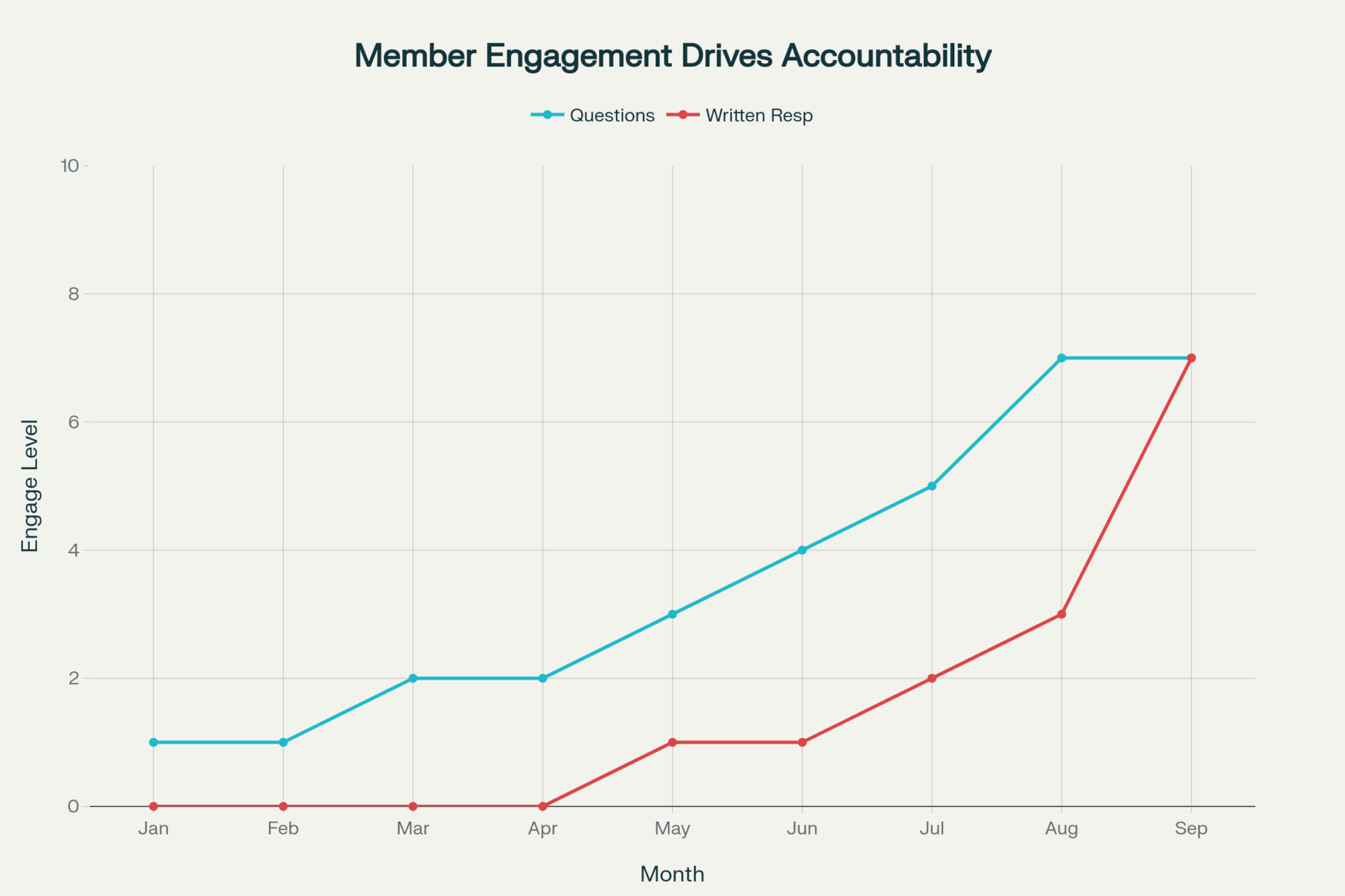
Consider what’s different now:
- 10 years ago: Organizing 600 farmers meant months of phone trees and kitchen table meetings
- Today: WhatsApp groups can coordinate complex actions in days
- The difference: Instant information sharing and real-time coordination
Whether you’re dealing with pricing complexities in Wisconsin, water allocation issues in California, or organic certification requirements in Vermont, these digital tools level the playing field. We’re all using them now, aren’t we?
But here’s something worth considering. The same technology that enables organizations can also spread misinformation quickly. That’s why the Irish farmers’ insistence on written responses is a smart move. Creates verifiable documentation rather than relying on the interpretation of verbal communications.
The Complex Reality of Modern Cooperative Management
Let’s be honest about the complexity here. Running a modern dairy cooperative isn’t like managing a local grain elevator fifty years ago—and those of us who’ve served on boards know this firsthand.
Think about what cooperative management deals with today:
- Processing milk from hundreds of member farms
- Covering huge geographic areas
- Managing substantial financial transactions daily
- Balancing the needs of tiny operations and large dairies
Just consider the logistics alone:
- Route optimization for milk collection
- Plant capacity balancing
- Cold chain integrity maintenance
- Quality control across multiple collection points
And that’s before you even get into market volatility. We’ve all seen how quickly butter prices can change. Cheese markets are influenced by a range of factors, including European production and Chinese import policies. Regulatory requirements that seem to change constantly.
Yet that complexity doesn’t eliminate the need for member accountability. In fact, it makes transparency even more critical.
What I’ve noticed over the years is that cooperatives maintaining strong democratic governance often perform better than those with weak member engagement. The Irish farmers understand this. Their demand for written responses to specific questions reflects that understanding.
They’re not asking management to be less professional—they’re asking for the transparency that professional management should provide.
Documentation: Your First Line of Defense
What farmers are finding—and this is crucial—is that documentation creates leverage. Here’s what you should track systematically:
Daily/Weekly Tracking:
- Blend price after components
- Quality premiums (or penalties)
- Hauling charges per hundredweight
- Stop charges and route fees
- Volume incentives or discounts
Monthly Analysis:
- Compare your net price to what you know others are receiving
- Calculate the differential between your co-op and regional competitors
- Document any unexplained deductions
- Track patronage dividend promises versus payments
Build a picture over months, not just bad weeks. When you can show systematic patterns over time, that’s harder to dismiss than general complaints.
What often works is getting farms of different sizes to work together:
- Large farms bring economic leverage (their threat of leaving matters)
- Small farms provide voting numbers
- Mid-size operations offer a balanced perspective
- All groups are working together toward common goals
And here’s a practical tip: When you request written responses to specific questions—like the Irish farmers did—you’re creating accountability. Verbal explanations at meetings get interpreted differently by different people. Written responses become part of the record.
Regional Approaches to Cooperative Accountability
Different areas are addressing these challenges in various ways, and understanding the regional context is crucial for your own situation.
California’s Value-Added Focus
In California, where cooperatives handle significant milk volumes:
- Focus has shifted toward specialized processing (organic, A2, grass-fed)
- Many operations have invested in value-added products versus commodity powder
- Producers are capturing premium markets rather than competing on volume
Midwest’s Transparency Push
With ongoing discussions about milk pricing and Federal Order reform:
- Basis differentials vary significantly month to month
- Some cooperatives have implemented regular member conferences
- Management explains pricing decisions to members who want to participate
- Simple solutions can be highly effective
Northeast’s Representation Balance
Cooperatives serving diverse operations from Maine to Pennsylvania:
- Farms range from small tie-stalls to larger freestall operations
- Solution often involves tiered board representation
- Both large and small producers have a guaranteed voice
- Prevents any single group from dominating governance
Five Questions Every Producer Should Ask Their Co-op
Based on today’s events in Ireland and what’s worked elsewhere, here are questions worth asking at your next cooperative meeting:
1. Can you provide written documentation of how our milk price is calculated relative to regional competitors?
- Be specific
- Don’t accept vague explanations about “market conditions”
- Request the actual pricing formula
2. What percentage of revenue goes to operational costs versus member payments?
- This reveals efficiency (or inefficiency)
- Compare to what you know about other cooperatives
- Ask for trends over time
3. How does our cooperative’s financial performance compare to others in our region?
- Professional management should know this
- If they don’t, that tells you something
- Request regular updates
4. What specific steps are being taken to improve price transparency?
- Look for concrete actions, not promises
- Timeline for implementation
- Measurable outcomes
5. How can members access financial information between annual meetings?
- If they resist this, ask why
- Transparency shouldn’t be annual
- Regular updates should be standard
The Broader Market Context We’re Operating In
This development in Ireland occurs against a backdrop of significant changes in global dairy markets that affect us all, regardless of our location.
What we’re seeing globally:
- Some regions are showing production growth
- Others are facing weather challenges or regulatory constraints
- Export markets are tightening in certain areas
- Domestic consumption patterns are shifting
These dynamics directly affect how cooperatives operate. When markets shift quickly, cooperatives need flexibility to adapt. But flexibility without transparency breeds member suspicion.
The challenge is particularly acute for mid-sized cooperatives:
- They lack the scale advantages of the giants
- Face the same global market pressures
- Caught between professional management needs and member democracy
- Often have the most entrenched governance structures
Evolution, Not Revolution
What’s encouraging about the Irish situation—and similar movements we’re seeing elsewhere—is that farmers aren’t trying to destroy the cooperative model. They’re trying to make it work as intended.
According to the USDA’s 2024 Agricultural Cooperative Statistics report, farmer-owned cooperatives still market 86% of U.S. milk production. That’s not changing anytime soon. What is changing is how farmers expect these organizations to operate:
- Transparency as standard practice, not a special request
- Accountability through regular reporting, not just annual meetings
- Genuine member benefit as a measurable outcome
- Democratic participation that’s meaningful, not ceremonial
The question facing cooperative leadership everywhere is whether to embrace these expectations proactively or resist until member pressure forces change.
History suggests—and many of us have seen this firsthand—that proactive adaptation is more effective. When cooperatives restructure governance to increase member engagement, satisfaction often improves significantly. We observed this with the successful reforms at Tillamook County Creamery Association in 2019, where member satisfaction scores significantly improved after governance changes.
The Bottom Line for Your Operation
Today’s events in Ireland offer several lessons worth considering, regardless of where you ship your milk.
Key Takeaways:
Engagement matters more than size
- Those 600 Irish farmers represent less than 10% of Dairygold’s suppliers
- Their organized approach commanded attention
- You don’t need a majority to initiate change
Specific questions beat general complaints
- Irish farmers submitted seven written questions
- Specificity forces substantive responses
- Vague concerns get vague answers
Technology enables but doesn’t replace organization
- Digital tools facilitate coordination
- Success requires leadership and commitment
- Tools are means, not the end
Ownership versus opposition
- Farmers asserting owner rights
- Not attacking the institution
- That distinction affects how management responds
Your Action Plan
Whether you’re shipping to a small regional cooperative or one of the major players, here’s what might work:
Immediate Steps:
- Start documenting your milk prices and deductions today
- Connect with other producers in your area (maybe create that WhatsApp group)
- Review your cooperative’s bylaws and member rights
- Attend the next meeting with specific questions
Medium-term Goals:
- Build a coalition across farm sizes
- Request written responses to governance questions
- Compare your co-op’s performance to what you know about others
- Push for regular transparency reporting
Long-term Objectives:
- Advocate for governance reforms that increase member voice
- Support board candidates committed to transparency
- Create accountability mechanisms that last
- Ensure your cooperative serves its founding purpose
The Irish farmers meeting today provided one model for initiating these conversations. Your approach might differ based on regional culture, cooperative structure, and specific challenges. But the principle remains constant.
Cooperatives exist to serve their member-owners. Making sure they fulfill that purpose? That’s not revolutionary—it’s just good business sense.
And as today’s events in Ireland demonstrate, when farmers organize professionally to demand accountability from organizations they own, productive dialogue usually follows. After all, strong cooperatives require engaged members asking tough questions.
That’s not a threat to the cooperative model. It’s what keeps it viable for the next generation of dairy producers.
The real question is: Are you ready to start asking those tough questions at your own cooperative? Because if Irish farmers can organize 600 producers to demand accountability, what’s stopping you from doing the same?
KEY TAKEAWAYS:
- Track and document everything for leverage: Build monthly comparisons showing your blend price versus regional averages, accounting for quality premiums and hauling charges—farmers who present six months of systematic data get 3x more substantive responses from management than those with general complaints
- Form cross-size coalitions for maximum impact: Unite large operations (bringing economic leverage of potential departure) with smaller farms (providing voting numbers)—successful reforms typically involve farms ranging from 50 to 5,000 cows working together toward specific governance improvements
- Demand written responses to specific questions: Request documentation on exact pricing formulas, percentage of revenue going to operations versus member payments, and comparison to regional competitor performance—verbal explanations evaporate, but written responses create accountability records
- Use digital tools strategically: WhatsApp groups and encrypted messaging enable coordination that would’ve taken months of kitchen meetings a decade ago—but verify information carefully since misinformation spreads just as quickly as facts
- Remember you’re an owner exercising rights: This isn’t confrontation or rebellion—it’s asserting the ownership authority you already possess over organizations that exist to serve member-producers, not extract from them
Complete references and supporting documentation are available upon request by contacting the editorial team at editor@thebullvine.com.
Learn More:
- Your Milk Check Just Got $337M Lighter – And Your Co-op Helped Plan It – This article reveals how regulatory changes around “make allowances” transferred hundreds of millions from producer milk pools to processor profits. It provides concrete numbers and a case study, offering a tactical blueprint for understanding how these unseen mechanisms directly impact your bottom line.
- June Milk Numbers Tell a Story Markets Don’t Want to Hear – This market analysis provides a crucial strategic overview of current industry trends. It shows how rapid shifts in geography, market utilization (more cheese, less butter), and production growth are reshaping the industry, demonstrating why a “volume-at-all-costs” approach is a dangerous strategy.
- Dairy Cooperative Marketing Is Broken – Here’s How the Indy 500 Fiasco Proves It – This innovative piece challenges the traditional purpose of cooperative marketing. It questions whether resources are being spent on “industry presence” over initiatives that drive member farm profitability, revealing a crucial gap in how co-ops communicate value to their producer-owners.
 Join the Revolution!
 Join the Revolution!
Join over 30,000 successful dairy professionals who rely on Bullvine Weekly for their competitive edge. Delivered directly to your inbox each week, our exclusive industry insights help you make smarter decisions while saving precious hours every week. Never miss critical updates on milk production trends, breakthrough technologies, and profit-boosting strategies that top producers are already implementing. Subscribe now to transform your dairy operation’s efficiency and profitability—your future success is just one click away.




